Advertisement

Add GIZMOCHINA on Google:

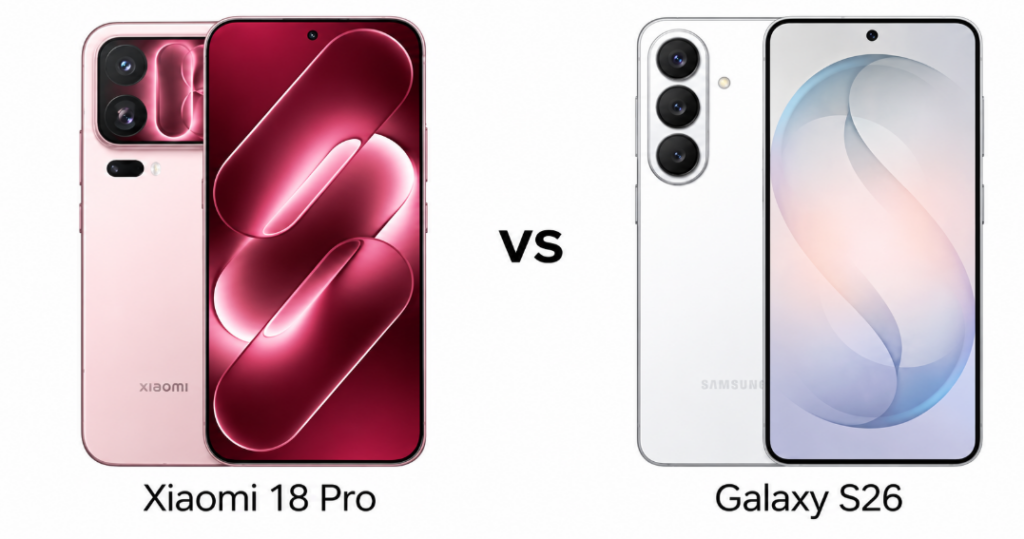
Xiaomi 18 Pro and Samsung Galaxy S26 target buyers who want flagship performance without moving to larger phones. However, they approach the premium experience differently. Xiaomi focuses on advanced camera hardware, a distinctive secondary display, and fast charging, while Samsung prioritizes a refined everyday experience, long-term software support, and a familiar flagship design. The choice ultimately comes down to whether superior hardware capabilities or a more balanced, long-lasting smartphone experience matters more.
Major Features:

CategoryXiaomi 18 ProSamsung Galaxy S26Winner
BuildGlass front, aluminum frame, Dragon Crystal Glass 3Gorilla Glass Victus 2 front and back, aluminum frameXiaomi — Dragon Crystal Glass 3 protection and distinctive rear display
Water ResistanceIP68, up to 6m for 30 minutesIP68, up to 1.5m for 30 minutesXiaomi — Higher specified water immersion depth
Main Display6.4-inch LTPO AMOLED, 120Hz6.3-inch Dynamic LTPO AMOLED 2X, 120HzXiaomi — Higher claimed peak brightness and Dolby Vision
Display Resolution1120 × 2436 pixels1080 × 2340 pixelsXiaomi — Slightly higher resolution
Peak Brightness4,000 nits2,600 nitsXiaomi — Higher claimed peak brightness
Secondary Display2.7-inch rear AMOLED displayNoXiaomi — Additional screen for quick interactions
Operating SystemAndroid 17, HyperOS 4Android 16, One UI 9; up to 7 major OS upgradesSamsung — Longer stated software upgrade commitment
ProcessorSnapdragon 8 Elite Gen 6, 2nmSnapdragon 8 Elite Gen 5 or Exynos 2600, depending on regionXiaomi — Newer-generation Snapdragon option
RAM12GB or 16GB12GBXiaomi — Offers a 16GB RAM configuration
Storage256GB, 512GB, 1TB128GB, 256GB, 512GBXiaomi — Higher maximum storage capacity
Storage TechnologyUFS 4.1UFS 4.XXiaomi — Specifically listed UFS 4.1 storage
Rear Cameras200MP main, 200MP periscope telephoto, 50MP ultrawide50MP main, 10MP telephoto, 12MP ultrawideXiaomi — Higher-resolution camera system
Optical Zoom3.2x3xXiaomi — Slightly higher optical zoom
Selfie Camera50MP with autofocus12MP with autofocusXiaomi — Higher-resolution front camera
Rear Video RecordingUp to 8K at 30fps; 4K up to 120fpsUp to 8K at 30fpsXiaomi — Supports 4K recording at up to 120fps
Stereo SpeakersYes, Dolby AtmosYesXiaomi — Dolby Atmos support
Wi-FiWi-Fi 7, dual-bandWi-Fi 7, tri-bandSamsung — Tri-band Wi-Fi support
BluetoothBluetooth 6.0Bluetooth 5.4Xiaomi — Newer Bluetooth version
USBUSB-C 3.2, DisplayPort, OTGUSB-C 3.2, DisplayPort 1.2, OTGTie — Both support DisplayPort output
Desktop ModeNo dedicated desktop mode listedSamsung DeX and Wireless DeXSamsung — Dedicated desktop experience
Battery7,000mAh silicon-carbon4,300mAh Li-IonXiaomi — Much larger battery capacity
Wired Charging100W25WXiaomi — Faster wired charging
Wireless Charging50W15W Qi2 ReadyXiaomi — Higher wireless charging speed
Reverse Wireless Charging27W4.5WXiaomi — Faster reverse wireless charging
Price / ValuePriced around $1,000 / ₹1,20,000Priced around $900 / ₹88,000Samsung — Lower stated price and extended software support
Overall WinnerHardware-focused flagshipSoftware-focused flagshipXiaomi — Stronger cameras, battery, charging, and display features
Disclaimer: Specs are based on available data. Actual performance may vary. Verify details from official sources before buying.

1. Design and Display

Build and Feel

The Xiaomi 18 Pro combines a premium glass-and-aluminum construction with Dragon Crystal Glass 3 protection and an IP68 rating. Its standout design feature is the secondary display on the rear, which adds functionality beyond the conventional flagship formula. This extra screen gives Xiaomi a distinctive identity and potentially makes quick interactions more convenient without opening the main display.

The Samsung Galaxy S26 adopts a more traditional approach, pairing Gorilla Glass Victus 2 with an aluminum frame and IP68 protection. Its cleaner design prioritizes familiarity and everyday practicality rather than experimenting with an additional screen. Samsung also offers broader SIM flexibility in several markets, including eSIM support. For buyers who prefer an uncomplicated flagship design, Samsung feels like the more straightforward choice.

Display Quality

The Xiaomi 18 Pro features a 6.4-inch LTPO AMOLED display with a 120Hz refresh rate, Dolby Vision, HDR10+, and a claimed peak brightness of 4,000 nits. Its rear AMOLED display adds versatility for notifications, selfies, and quick interactions.

Samsung counters with a 6.3-inch Dynamic LTPO AMOLED 2X panel, 120Hz refresh rate, HDR10+, and 2,600-nit peak brightness. Xiaomi offers the more ambitious display package, particularly for HDR content and outdoor visibility, while Samsung remains well equipped for everyday viewing.

Verdict

Xiaomi wins this section with its brighter main display, Dolby Vision support, and useful secondary screen. Samsung remains attractive for buyers who prefer a conventional, streamlined flagship design.

2. Specifications Including Battery

Performance

The Xiaomi 18 Pro is powered by the Snapdragon 8 Elite Gen 6, built on a 2nm process, paired with up to 16GB RAM and UFS 4.1 storage. This combination positions it for demanding gaming, intensive multitasking, and resource-heavy applications. Its newer-generation platform also gives it a compelling advantage on paper, although real-world performance will depend on thermal management and software optimization.

The Galaxy S26 offers either the Snapdragon 8 Elite Gen 5 or Exynos 2600, depending on the market. Its 12GB RAM configuration and UFS 4.X storage should provide a responsive flagship experience, while Samsung’s One UI 9 adds a polished software environment. Samsung also promises up to seven major Android upgrades, making it a particularly appealing option for buyers who keep their phones for years. Xiaomi looks stronger for raw hardware potential, but Samsung has a clearer long-term software commitment.

Battery and Charging

Xiaomi equips the 18 Pro with a 7,000mAh silicon-carbon battery, 100W wired charging, 50W wireless charging, and 27W reverse wireless charging. This combination should suit heavy users who want fewer charging interruptions and greater flexibility when powering accessories.

Samsung’s 4,300mAh battery supports 25W wired charging, 15W wireless charging, and 4.5W reverse wireless charging. Its battery capacity and charging speeds are considerably more modest, making Xiaomi the more promising choice for endurance and convenience. Actual battery life will still depend on usage and efficiency.

Verdict

Xiaomi wins decisively with its larger battery, faster wired and wireless charging, and stronger reverse charging. Samsung’s software support remains its key advantage for long-term ownership.

3. Camera

Main and Secondary Lenses

The Xiaomi 18 Pro features a 200MP main camera with optical image stabilization, a 200MP periscope telephoto camera offering 3.2x optical zoom, and a 50MP ultrawide camera. Leica lens branding, laser autofocus, and advanced video recording capabilities further strengthen its flagship credentials. The high-resolution telephoto camera is particularly promising for portraits and detailed zoom photography, while the versatile camera system should appeal to enthusiasts who enjoy experimenting with different focal lengths.

The Samsung Galaxy S26 takes a more conservative approach with a 50MP stabilized main camera, a 10MP telephoto camera with 3x optical zoom, and a 12MP ultrawide camera. It supports 8K recording and offers features such as Horizon Lock and Super Steady video. Samsung’s system remains versatile for everyday photography, but Xiaomi has a more ambitious hardware setup, especially for zoom and high-resolution imaging. Actual image quality will depend on processing, exposure, and consistency rather than megapixel counts alone.

Selfie Camera

Xiaomi includes a 50MP autofocus selfie camera with 4K recording, while Samsung uses a 12MP autofocus front camera with 4K video support. Xiaomi offers greater resolution, but Samsung’s processing could still deliver competitive skin tones and exposure.

Verdict

Xiaomi wins on camera hardware versatility, particularly with its dual 200MP rear cameras and high-resolution selfie camera. Samsung remains a capable choice for dependable everyday photography.

4. Pricing

The Xiaomi 18 Pro is priced around $1,000 (₹1,20,000), placing it firmly in the premium flagship category. Its asking price reflects an ambitious combination of camera hardware, a secondary display, a large battery, and high-speed charging. Buyers receive a feature-rich package designed to compete with the most advanced Android smartphones.

The Samsung Galaxy S26 is priced around $900 (₹88,000), making it the more affordable option at the stated prices. It offers flagship processing, a capable triple-camera system, a premium build, and extended software support. However, regional pricing, storage configurations, and taxes can affect the final cost. Samsung’s lower entry price makes it easier to recommend to mainstream premium-phone buyers, while Xiaomi targets those willing to spend more for enhanced hardware.

Is the price justified?

Xiaomi’s premium is easier to justify for buyers who prioritize photography, battery endurance, and charging speed. Samsung offers stronger value for users who want flagship essentials and extended software support without paying as much upfront. For most everyday users, Samsung is the more economical purchase, but Xiaomi delivers more ambitious hardware for enthusiasts.

Verdict

Samsung wins on value for money at the stated prices, offering flagship features and long-term software support for less. Xiaomi justifies its premium through more advanced hardware.

Disclaimer:
Prices are approximate and may vary based on country, region, launch timing, and applicable taxes. Always check whether the listed price is for a China unit or a global/international variant when purchasing.

5. Conclusion

The Xiaomi 18 Pro stands out with its rear secondary display, dual 200MP camera system, 7,000mAh silicon-carbon battery, and 100W wired charging. These features make it particularly appealing to users who want a feature-packed flagship with fewer compromises in photography and battery convenience. Its newer-generation Snapdragon platform also promises substantial performance potential, although independent testing will determine the practical difference.

The Samsung Galaxy S26 counters with a more conventional premium design, a capable triple-camera system, Samsung DeX desktop functionality, and a commitment to up to seven major Android upgrades. Its lower stated price also makes it attractive to buyers who value software longevity and a dependable everyday experience. Samsung’s combination of usability, support, and cost is difficult to overlook, even though its battery and charging specifications are less ambitious. Xiaomi feels more exciting from a hardware perspective, while Samsung makes a stronger case for long-term ownership.

Verdict

Overall winner: Xiaomi 18 Pro. Its superior camera hardware, larger battery, faster charging, brighter display, and secondary screen make it the more compelling flagship. The Galaxy S26 remains the smarter value pick for buyers prioritizing software support and a lower price.

Disclaimer: Prices, specifications, and availability may vary by region and retailer. Recommendations in this article are based on editorial opinion, feature-based value, and market positioning at the time of writing. Readers are advised to do their own research before making a purchase.

Read More:

Comments