Advertisement

Add GIZMOCHINA as Preferred Source on Google

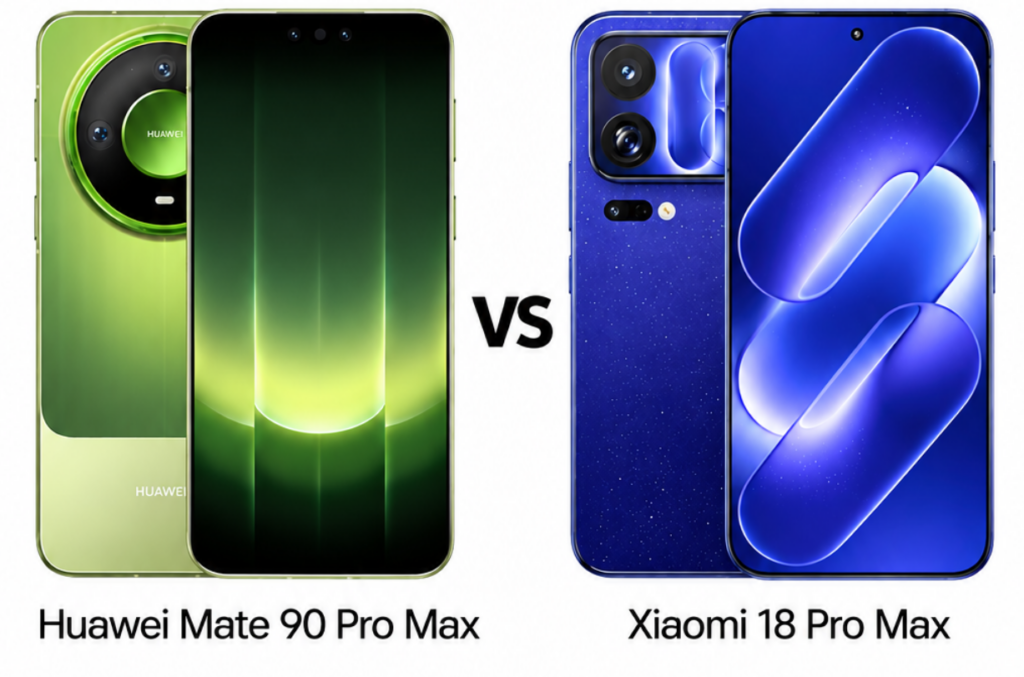
Huawei Mate 90 Pro Max and Xiaomi 18 Pro Max target buyers seeking premium displays, powerful cameras, and flagship performance, but they take different approaches. Huawei focuses on advanced display technology, versatile zoom photography, and satellite connectivity, while Xiaomi combines a Snapdragon flagship chipset, a larger battery, and a secondary rear display. The comparison comes down to camera versatility, software preferences, battery life, and overall value.
Major Features:

CategoryHuawei Mate 90 Pro MaxXiaomi 18 Pro MaxWinner
Design and BuildKunlun Glass 3, aluminum frame, reinforced plastic backDragon Crystal Glass 3, aluminum frameHuawei — Higher IP68/IP69 protection
Water ResistanceIP68/IP69, immersion up to 6m for 30 minutesIP68, immersion up to 6m for 30 minutesHuawei — Additional IP69 protection
Main Display6.9-inch dual-layer LTPO OLED, 120Hz6.9-inch LTPO AMOLED, 120HzHuawei — Dual-layer OLED technology
Display Resolution1320 × 2848 pixels1208 × 2624 pixelsHuawei — Higher resolution
Peak Brightness12,000 nits (claimed, specific conditions)4,000 nits (claimed)Huawei — Higher claimed peak brightness
Secondary DisplayNo2.9-inch rear AMOLED, 120HzXiaomi — Useful rear display
Operating SystemHarmonyOS 7.0Android 17, HyperOS 4Xiaomi — Broader Android app flexibility, subject to region
ChipsetKirin 9050 or Kirin 9050 ProSnapdragon 8 Elite Extreme Gen 6Xiaomi — Stronger gaming platform potential
GraphicsNot specifiedAdreno 850Xiaomi — Dedicated flagship GPU specified
RAM12GB / 16GB12GB / 16GBTie — Comparable memory options
Storage512GB / 1TB256GB / 512GB / 1TBXiaomi — More storage configurations
Storage TypeNot specifiedUFS 4.1Xiaomi — Faster storage standard specified
Main Camera50MP, variable aperture, OIS200MP, f/1.7, OISHuawei — Variable aperture offers greater exposure control
Telephoto Camera200MP periscope, 4x optical zoom, OIS200MP periscope, 3.2x optical zoom, OISHuawei — Longer optical zoom
Ultrawide Camera40MP, 120°50MP, 102°Huawei — Wider field of view
Rear Camera Video4K, HDR Vivid8K at 30fps, 4K at up to 120fpsXiaomi — Higher resolution and frame-rate options
Selfie Camera13MP ultrawide, autofocus50MP wide, autofocusXiaomi — Higher resolution
Selfie Video4K, HDR Vivid4K at up to 60fps, HDR10+Xiaomi — Higher specified frame rate
SpeakersStereo speakers, high-definition audioThree speakers, Dolby Atmos, Hi-Res audioXiaomi — More extensive audio features
ConnectivityWi-Fi 7, Bluetooth 6.0, NFC, infraredWi-Fi 7, Bluetooth 6.0, NFC, infrared, UWBXiaomi — Adds UWB support
Satellite FeaturesSatellite calling and messaging in ChinaNot specifiedHuawei — Satellite communication support
Battery Capacity6,800mAh8,500mAh silicon-carbonXiaomi — Larger battery
Wired Charging100W100WTie — Same rated charging power
Wireless Charging50W50WTie — Same rated charging power
Reverse Charging18W wired, reverse wireless27W reverse wirelessXiaomi — Faster specified reverse wireless charging
Price / ValuePriced around $1,400 / ₹136,000Priced around $1,200 / ₹150,000Xiaomi — Lower quoted dollar price; Indian pricing needs verification
Overall WinnerAdvanced display and zoom photographyPowerful chipset, larger battery, versatile camerasXiaomi — More versatile overall hardware package
Disclaimer: Specs are based on available data. Actual performance may vary. Verify details from official sources before buying.

1. Design and Display

Build and Feel

The Huawei Mate 90 Pro Max combines Kunlun Glass 3, an aluminum frame, and a glass-fiber-reinforced plastic back. Its IP68/IP69 rating provides additional protection against dust, immersion, and high-pressure water jets. The Xiaomi 18 Pro Max uses Dragon Crystal Glass 3 and an aluminum frame, with IP68 protection. Huawei offers stronger water-resistance credentials, while Xiaomi’s premium glass construction creates a similarly sophisticated flagship experience. Both prioritize durability, although Huawei has the advantage on paper.

Display Quality

Both phones feature 6.9-inch LTPO displays with 120Hz refresh rates, delivering smooth scrolling and fluid animations. Huawei’s dual-layer OLED panel offers a claimed peak brightness of 12,000 nits under specific conditions, considerably exceeding Xiaomi’s 4,000-nit rating. Xiaomi counters with Dolby Vision, HDR10+, and support for 68 billion colors. Huawei looks more impressive for extreme brightness, while Xiaomi offers broader HDR-format support and a useful 2.9-inch rear display.

Verdict

Huawei wins on display brightness and water resistance, while Xiaomi offers richer HDR compatibility and a versatile secondary screen. Both deliver premium viewing experiences.

2. Specifications Including Battery

Performance

The Xiaomi 18 Pro Max runs Android 17 with HyperOS 4 and uses Qualcomm’s Snapdragon 8 Elite Extreme Gen 6 chipset, paired with Adreno 850 graphics. Its modern 2nm platform promises strong performance for demanding games, multitasking, and AI workloads. Huawei relies on the Kirin 9050 or Kirin 9050 Pro and HarmonyOS 7.0. However, without comparable benchmark results, a definitive performance gap cannot be established. Xiaomi remains the more compelling choice for buyers prioritizing Android app compatibility and established Snapdragon-based gaming support, subject to regional software availability.

Battery and Charging

Xiaomi packs an 8,500mAh silicon-carbon battery, substantially larger than Huawei’s 6,800mAh unit. Both support 100W wired and 50W wireless charging, although real-world charging times depend on implementation. Huawei adds 18W reverse wired charging, while Xiaomi supports 27W reverse wireless charging for compatible accessories. Xiaomi’s larger battery should provide a meaningful endurance advantage, particularly for gaming, navigation, and extended media consumption. Huawei still offers substantial capacity, but Xiaomi’s combination of battery size and wireless power sharing is more versatile.

Verdict

Xiaomi wins for battery capacity, gaming potential, and software flexibility. Huawei remains competitive with fast charging, but Xiaomi offers the stronger all-round hardware package.

3. Camera

Main and Secondary Lenses

Huawei combines a 50MP variable-aperture main camera with a 200MP periscope telephoto lens offering 4x optical zoom and a 40MP ultrawide camera. Its variable aperture provides additional exposure control, while the telephoto system emphasizes distant subjects. Xiaomi counters with a 200MP main camera, a 200MP periscope telephoto lens offering 3.2x optical zoom, and a 50MP ultrawide camera. Leica optics, advanced video recording, and support for 8K capture give Xiaomi considerable versatility. Huawei’s longer optical reach is attractive for travel photography, while Xiaomi’s high-resolution main sensor and ultrawide camera offer a compelling combination for varied shooting conditions. Actual image quality will depend on processing and testing.

Selfie Camera

Huawei uses a 13MP ultrawide autofocus selfie camera with a TOF 3D sensor for depth and biometric functions. It supports 4K recording and HDR Vivid video. Xiaomi offers a 50MP autofocus front camera with 4K recording at up to 60fps and HDR10+ support. The higher resolution gives Xiaomi more flexibility for detailed selfies and video calls, while Huawei’s ultrawide framing can better accommodate group selfies. Xiaomi’s stronger front-camera specifications make it the more attractive option for content creators who frequently record themselves.

Verdict

Xiaomi wins on selfie resolution and video flexibility, while Huawei offers longer optical zoom and a variable-aperture main camera. Both are well-equipped for serious photography.

4. Pricing

The Huawei Mate 90 Pro Max is priced around $1,400 / ₹136,000, positioning it firmly in the premium flagship category. The Xiaomi 18 Pro Max is priced around $1,200 / ₹150,000 according to the supplied estimates. These figures show a price difference that depends on the currency: Xiaomi is cheaper in dollar terms but more expensive in rupees. Regional taxes, import duties, storage configurations, and official availability can significantly affect final retail prices. Buyers should therefore compare local listings for equivalent memory configurations before making a decision. Huawei’s premium pricing reflects its advanced display and camera hardware, while Xiaomi’s price is supported by its Snapdragon platform, large battery, and versatile imaging system.

Is the price justified? 

Huawei offers compelling hardware for display enthusiasts and photographers who value long-range zoom and variable-aperture photography. However, HarmonyOS compatibility and app availability deserve careful consideration in markets outside China. Xiaomi provides a newer Snapdragon platform, a larger battery, a high-resolution selfie camera, and extensive video features. Its value proposition is stronger for users seeking broad flagship capabilities, provided Google services and local network support are available in the intended region. Neither price should be judged on specifications alone.

Verdict

Xiaomi offers better overall hardware value at its quoted dollar price, while Huawei justifies its premium through display technology and camera versatility. Verify local pricing before buying.

Disclaimer:
Prices are approximate and may vary based on country, region, launch timing, and applicable taxes. Always check whether the listed price is for a China unit or a global/international variant when purchasing.

5. Conclusion

The Huawei Mate 90 Pro Max stands out with its dual-layer OLED display, claimed 12,000-nit peak brightness, variable-aperture main camera, 4x optical zoom, IP68/IP69 protection, and satellite calling and messaging support in China. The Xiaomi 18 Pro Max counters with a Snapdragon 8 Elite Extreme Gen 6 chipset, an 8,500mAh silicon-carbon battery, two 200MP rear cameras, a 50MP selfie camera, and a useful rear display. It also supports 8K video recording and advanced Dolby Vision capture. 

Huawei is particularly appealing to users who prioritize display innovation and long-range photography, while Xiaomi provides a more rounded package for gaming, content creation, and everyday productivity. Software preferences and regional availability remain important considerations, especially for Huawei buyers who rely on Google services.

Verdict

Winner: Xiaomi 18 Pro Max. Its larger battery, Snapdragon platform, dual 200MP cameras, stronger selfie specifications, and rear display create a more versatile flagship package. Huawei remains an excellent alternative for display enthusiasts and zoom photographers, but Xiaomi wins overall on hardware versatility and everyday practicality.


FAQs: Huawei Mate 90 Pro Max vs Xiaomi 18 Pro Max

1. Which phone has the better camera, Huawei Mate 90 Pro Max or Xiaomi 18 Pro Max?

Huawei offers 4x optical zoom and variable aperture, while Xiaomi features dual 200MP rear cameras and advanced video recording.

2. Is Xiaomi 18 Pro Max better for gaming than Huawei Mate 90 Pro Max?

Xiaomi is the stronger gaming candidate thanks to its Snapdragon 8 Elite Extreme Gen 6 chipset and Adreno 850 GPU.

3. Which phone has better battery life?

Xiaomi’s 8,500mAh battery offers greater capacity than Huawei’s 6,800mAh battery, suggesting better endurance under comparable usage.

4. Which smartphone offers better value for money?

Xiaomi offers competitive flagship hardware at its quoted dollar price, while Huawei appeals to buyers prioritizing display and zoom capabilities.

5. Should you buy Huawei Mate 90 Pro Max or Xiaomi 18 Pro Max?

Choose Xiaomi for gaming, battery capacity, and versatile features. Consider Huawei for advanced display technology and longer optical zoom.

Disclaimer: Prices, specifications, and availability may vary by region and retailer. Recommendations in this article are based on editorial opinion, feature-based value, and market positioning at the time of writing. Readers are advised to do their own research before making a purchase.

Read More:

Comments