
Xiaomi has once again piqued tech enthusiasts’ interest with the introduction of the Redmi Note 13 Pro and Redmi Note 13 Pro+. As two flag bearers in the Redmi Note 13 series, they boast impressive specifications.
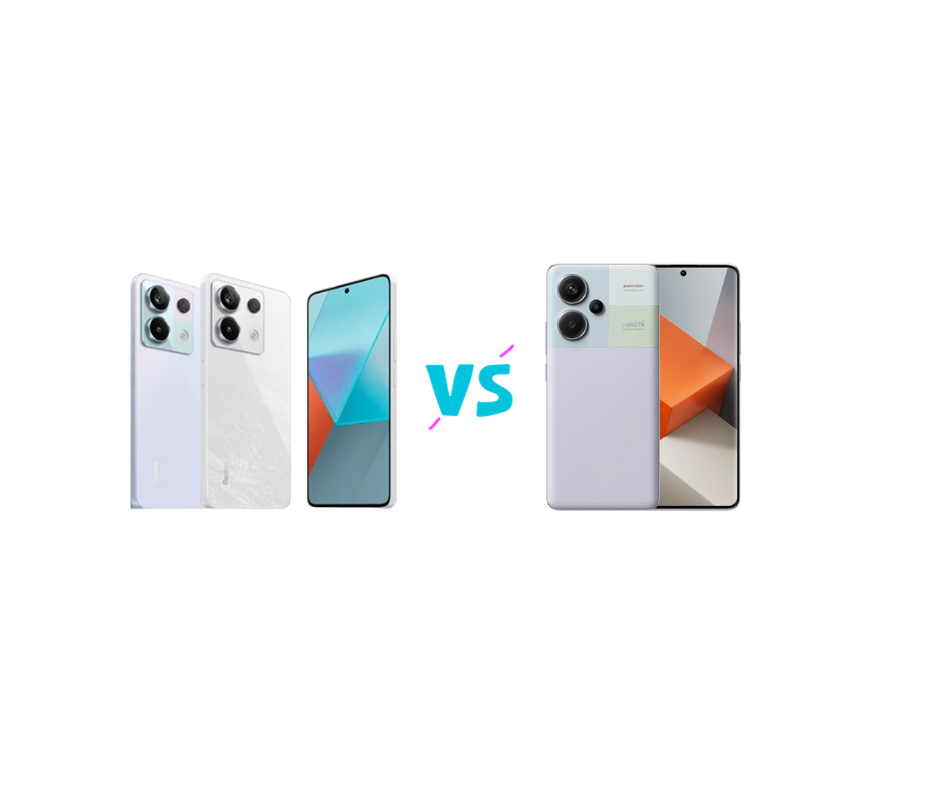
But how do they fare when pitted against each other? Let’s dive into a detailed comparison.
| Specifications | Redmi Note 13 Pro | Redmi Note 13 Pro+ |
|---|---|---|
| Display | 6.67-inch 1.5K OLED, 120Hz refresh rate, 240Hz touch sampling rate, Dolby Vision, HDR10+ | 6.67-inch 1.5K OLED, 120Hz refresh rate, 240Hz touch sampling rate, Dolby Vision, HDR10+ |
| CPU & GPU | Snapdragon 7s Gen 2, Adreno 710 GPU | MediaTek Dimensity 7200-Ultra, Mali-G610 MC4 GPU |
| Memory & Storage | Up to 16GB LPDDR5 RAM, Up to 512GB UFS 3.1 storage | Up to 16GB LPDDR5 RAM, Up to 512GB UFS 3.1 storage |
| Rear Camera | 200MP main, 8MP ultra-wide, 2MP macro | 200MP main, 8MP ultra-wide, 2MP macro |
| Front Camera | 16MP | 16MP |
| Additional Features | 3.5mm audio jack, IP54 rated, In-display fingerprint sensor | IP68 rated, In-display fingerprint sensor |
| Dimensions & Weight | 161.15×74.24×7.98mm, 187g | 161.4×74.2×8.9mm, 204.5g |
| Battery & Charging | 5100mAh, 67W fast charging | 5000mAh, 120W fast charging |
| Starting Price | 1,499 yuan (approx. USD 206 / Rs. 17,300) | 1,999 yuan (approx. USD 274 / Rs. 23,120) |
Design:
The Redmi Note 13 Pro and Pro+ models both possess premium aesthetics, featuring a sleek design protected by the resilient Corning Gorilla Glass Victus. Both models include an in-display fingerprint sensor. However, the Pro variant has an additional 3.5mm audio jack, and while the Pro version boasts an IP54 rating, the Pro+ ups the game with an IP68 water and dust resistance rating.
Display:
The devices sport a 6.67-inch 1.5K OLED display with an impressive 120Hz refresh rate and a 240Hz touch sampling rate. Added to this are features like Dolby Vision, HDR10+, and a peak brightness of up to 1800 nits, ensuring vivid visuals and smooth responsiveness.
Hardware:
While the Note 13 Pro is powered by the Snapdragon 7s Gen 2 and comes in various storage and RAM configurations up to 16GB LPDDR5 RAM and 512GB UFS 3.1 storage, the Pro+ variant boasts the MediaTek Dimensity 7200-Ultra processor, with configurations scaling up to 16GB LPDDR5 RAM and 512GB UFS 3.1 storage.
Cameras:
Camera enthusiasts won’t be disappointed. The Note 13 Pro showcases a 200MP primary rear camera along with an 8MP ultra-wide and a 2MP macro camera. The Pro+ carries similar camera prowess. Selfie aficionados get a 16MP front camera with both models.
Battery Life and Charging:
The Pro model houses a 5100mAh battery with 67W fast charging capabilities, while the Pro+ variant comes equipped with a 5000mAh battery but with an astounding 120W fast charging feature.
Pricing:
The pricing strategy is competitive. The Note 13 Pro starts at 1,499 yuan (approx. USD 205 / Rs. 17,320) with the top-end model priced at 2,099 yuan. The Pro+ version’s pricing commences from 1,999 yuan, stretching up to 2,299 yuan for the highest configuration.
Pros and Cons:
Redmi Note 13 Pro:
Pros:
- Affordable pricing
- Versatile camera setup
- Robust battery life with efficient charging
Cons: - Lacks the ultra-fast charging of Pro+
- IP54 rating is inferior to Pro+’s IP68
Redmi Note 13 Pro+:
Pros:
- IP68 dust and water resistance
- Ultra-fast 120W charging
- Slightly better processor
Cons: - Slightly more expensive
In conclusion, both phones have a lot to offer, and the choice boils down to individual preferences and budget considerations. Whatever your decision, both models are set to provide an impressive smartphone experience.

Comments