Advertisement

iQOO Z9 Turbo Debuts In China With Snapdragon 8s Gen 3, 16GB RAM, And More

The iQOO Z9 Turbo is the top-end model in the Z9 series smartphones that was announced today in China. It is a new addition in the Z9 series. The latest offering packs mid-range flagship specifications. The iQOO Z9 Turbo is also quite different compared to its siblings. Read on to learn more about the device. 

iQOO Z9 Turbo specifications and features 

iQOO Z9 Turbo front design

The iQOO Z9 Turbo sports the same 6.72-inch OLED display with a 1.5K resolution, 4,500 nits peak brightness, and 144Hz refresh rate as the standard model. It has an in-screen fingerprint scanner. The design of the phone is also similar to its siblings with a flat frame and an iQOO 12-like squarish camera island. The device is IP64-rated dust and water-resistant making it usable in wet conditions.
On the optics front, the iQOO Z9 Turbo has a dual rear camera setup of a 50MP Sony IMX882 main sensor with OIS support and an 8MP ultra-wide-angle lens. There is a 16MP front-facing selfie snapper. 

Internally, the iQOO Z9 Turbo houses a Snapdragon 8s Gen 3 processor. It packs up to 16GB LPDDR5x RAM along with 16GB virtual RAM. There is up to 512GB UFS 4 storage. The device is equipped with a large 6K VC liquid cooling for heat dissipation. The phone draws its power from a 6,000mAh battery cell with support for 80W wired charging and 7.5W wired reverse charging. It ships with Android 14 OS with OriginOS 4 skinned on the top. 

The iQOO Z9 Turbo has an X-Axis Linear motor, WiFi-6, Bluetooth 5.4, and a USB-C port.

The iQOO Z9 Turbo carries a starting price tag of CNY 1,999 (~$275) for the base 12GB + 256GB variant and the 12GB + 512GB costs CNY 2,399 (~$331). The 16GB + 256GB and 16GB + 512GB configurations are priced at CNY 2,299 (~$317) and CNY 2,599 (~$358) respectively.

Related:

iQOO Z9, Z9x With 6,000mAh Battery, IP64 Rating Launched In China

At a launch event held today in China. iQOO has unveiled the Z9 series smartphones. The lineup comprises the Z9, Z9x, and Z9 Turbo. These phones arrive as the successor to the last year’s iQOO Z8 series. The The Z9x is the base variant whereas the Z9 Turbo is the top-end model. In between, sits the iQOO Z9. In this post, let’s find out what the Z9 and Z9x offer out of the box. 

iQOO Z9, Z9x specifications and features 

The iQOO Z9, it has a 6.78-inch AMOLED display bearing a 1.5K resolution, 4,500 nits peak brightness, and a 144Hz refresh rate. It is integrated with a fingerprint scanner. Meanwhile, the iQOO Z9x has a stripped-down LCD screen measuring 6.72 inches with a 120Hz refresh rate, 1,000 nits peak brightness, and FHD+ resolution. The iQOO Z9 duo have a flat frame and a squarish camera module with rounded corners that is found on the iQOO 12. The latter looks slightly different on the Z9x. It also has a side-mounted fingerprint scanner embedded in the power button. Both phones are IP64-certified dust and water-resistant. 

On the imaging front, the iQOO Z9 and Z9x feature dual rear cameras. The setup comprises a 50MP main sensor and a 2MP depth lens. The former has a 16MP selfie snapper whereas the latter has an 8MP sensor.

Under the hood, the iQOO Z9 is powered by a Snapdragon 7 Gen 3 whereas the Z9x is equipped with a Snapdragon 6 Gen 1 SoC. Both phones pack up to 12GB RAM and up to 512GB storage on the former whereas the latter maxes out at 256GB. The devices are backed by a huge 6,000mAh battery unit with support for 80W and 44W charging on the Z9 and Z9x respectively. Software-wise, the Z9 duo run on OriginOS 4 based on Android 14. 

The iQOO Z9 starts at CNY 1,199 (~$165) for the 8GB + 128GB whereas the 8GB + 256GB costs CNY 1,299 (~$179). The 12GB + 256GB retails at CNY 1,499 (~$206). On the other hand, the 8GB + 128GB and 8GB + 256GB variants of the iQOO Z9 are priced at CNY 1,499 (~$206) and CNY 1,599 (~$). The 12GB + 256GB and 12GB + 512GB configurations carry a price tag of CNY 1,799 (~$248) and CNY 1,999 (~$275) respectively. The Z9 duo come in White, Green, and Black colors.

Related:

Exclusive: Nubia Z60S Pro is coming, here are the details!

ZTE’s new upcoming smartphone, the “Nubia Z60S Pro,” has been spotted in the database. Last year, ZTE released the phone Nubia Z60 Ultra, which took attention for its impressive specifications. The phone comes with Snapdragon 8 Gen 3 processor and a 6000 mAh battery capacity. The launch date of the Nubia Z60S Pro is not yet known, however, ZTE introduced the Nubia Z50S Pro in July 2023, and you can expect the unveiling of the Z60S Pro in 2024, possibly this summer, even maybe again in July.
The Z50S Pro came with Snapdragon 8 Gen 2, and we expect the Z60S Pro to come with Snapdragon 8 Gen 3. We expect the camera specs of the Z60S Pro to be much better than those of the Z50S Pro, but of course, it won’t be as good as the Z60 Ultra unfortunately. ZTE usually keeps the superior camera features for the Ultra model, as the Z50 Ultra had a 1/2.0″ telephoto camera, while the telephoto sensor size of the Z50S Pro was 1/4.4″, which means nearly as twice as small a camera and slightly more grainy photos. Now, let’s turn back to the Z60S Pro

Nubia Z60S Pro is on the way

We spotted a new smartphone model named Nubia Z60S Pro in the our database. While the specifications of the phone are not yet known, we expect the Z60S Pro to be not as good as the Z60 Ultra for sure, but still expect it to be a powerful device. The model number for the upcoming smartphone is “NX725J.”

The previously introduced Nubia Z60 Ultra was truly impressive upon its market release. With its powerful Snapdragon 8 Gen 3 processor and 6000 mAh battery, the Z60 Ultra also features a main camera with a 35mm focal length, a sweet choice loved by many photographers. This is noteworthy as most modern smartphones typically come with a 23 or 24mm lens, which can result in distortion even in the main camera. It seems that ZTE will be joining the powerful camera hardware trend in smartphones, as evidenced by their recent introduction of the special “Z60 Ultra Photographer Edition.” You can learn more by reading our previous article.

ZTE may surprise us by equipping the Z60S Pro with special camera features, similar to those found in the Ultra model. Note that the camera system of Z60S Pro will be slightly worse. However, it is too early to discuss what the new phone will offer, this is all we know for now.

Related:

iQOO Pad 2 to be released as a rebrand of vivo Pad3 Pro

iQOO is gearing up to unveil its new “gaming tablet” very soon. According to the latest news from ITHome, the iQOO Pad 2 actually will be a rebrand of the vivo Pad3 Pro. It’s worth noting that iQOO’s new tablet boasts some beefy specs.

iQOO Pad 2 had previously appeared on the Google Play Console. While the Play Console details didn’t fully disclose the tablet’s specs, now that we know it’s a rebrand of the vivo Pad3 Pro, we have all the specs of the iQOO Pad 2. Additionally, the iQOO Pad 2 will be available for sale outside of China as well.

iQOO Pad 2 specs

The upcoming iQOO tablet, the Pad 2, will come with the MediaTek Dimensity 9300 chipset, which is quite a powerful processor to be dubbed a “gaming tablet.” The tablet features a 13″ 144 Hz IPS display with a resolution of 2064 x 3096 and a maximum brightness of 900 nits. The specs of the iQOO Pad 2 are quite impressive.

The tablet boasts a sizable 11500 mAh battery and supports 66W wired charging. Additionally, thanks to this large battery, the tablet can perform 5W reverse charging via wired connection. The tablet comes in variations of 8GB, 12GB, and 16GB of RAM, with UFS 4.0 storage available in all options except for 128GB. The tablet also houses a total of 8 speakers and weighs 679 grams.

Related:

Vivo Y18e surfaces online: Upcoming budget phone with the same chip as the Tecno Spark 20

Vivo is apparently gearing up to launch a new Y series smartphone soon. The company’s new Vivo Y18e model was recently spotted in an Indian certification. And now, another online listing has revealed more details regarding this device. So let’s have a look.

Vivo Y18e visits Google Play Console

Vivo Y17s
Vivo Y17s

The Chinese brand’s Y18e model surfaced on the Google Play Console database carrying the V2333 model number. Previously, it was spotted on the BIS certification but with the V2350 model number. The Vivo Y18e’s sighting on Google Play Console confirms that it will offer a 720×1612 or HD+ resolution with 300ppi pixel density. Under the hood, it is equipped with a MediaTek MT6769Z SoC, which is an octa core processor. The chip is paired with Mali G52 GPU.

This chipset is expected to be the MediaTek Helio G85 SoC that is paired with 4GB of RAM. This is the same processor that powers the Tecno Spark 20 that went on sale in India recently. The device also runs on the Android 14 OS out of the box. To recall, the Vivo Y18 model was also spotted on the Google Play Console with the same V2333 model number. So the earlier listing might get updated as the device could launch with the Vivo Y18e moniker.

Vivo Y18e

The certification also had a render of this device, which showcases its waterdrop notch display. We can even see a thick chin on the front and a dual camera setup on the rear. It is also listed with the green color option. This is all the information we have at the moment, so stick around for more updates.

RELATED:

(Via)

Galaxy C55: Top 5 key features of Samsung’s first C-series phone in nearly a decade

Samsung discontinued the C-series of smartphones after launching the Samsung Galaxy C9 Pro back in 2016. Without releasing any official statement to bring back the C-series, the company unveiled the Galaxy C55 without much fanfare in China. The C55 is an interesting mid-range phone that is exclusively available in the Chinese market. Here’s a look at its top five key features:

1. Samsung’s first phone with vegan leather back

The Galaxy C55 5G is Samsung’s first smartphone to feature a premium vegan leather back cover graced with a stitched design. The phone comes in color options, such as Colorful Orange and Stylish Black. It measures 163.9 x 76.5 x 7.8mm and weighs 180 grams.

2. Versatile camera setup

The back panel of the Galaxy C55 features a 50-megapixel primary camera with OIS (optical image stabilization) and VDIS (digital video stabilization) for shooting stabilized videos in up to 4K resolution. An 8-megapixel ultra-wide lens and a 2-megapixel macro camera accompany it. The device features a 50-megapixel front-facing camera for selfies.

The device offers a dual-camera recording function, allowing simultaneous recording from the rear and front cameras. Additionally, the “Clip Object” function enables users to easily separate and edit subjects from the background, enhancing creativity in photo editing and sharing.

3. A bright display

Featuring an immersive 6.7-inch FHD+ Super AMOLED+ display with ultra-thin bezels, the Galaxy C55 supports up to 120Hz refresh rate and up to 1,000nits of peak brightness.

4. Big battery with fast charging

The Galaxy C55 is equipped with a powerful 5000mAh battery. In addition, the mid-range phone comes with support for 45W charging, allowing users to quickly recharge and stay productive or entertained for longer periods.

5. Decent performance

The Galaxy C55 has the Snapdragon 7 Gen 1 processor onboard. In terms of performance, the chip is suitable for casual gaming and high-quality video streaming. With 8GB or 12GB of RAM and 256GB of internal storage, expandable via a microSD card slot, the device offers ample storage options to suit user needs.

Samsung Galaxy C55 price

The Galaxy C55 comes in two options, such as 8GB+256GB and 12GB+256GB. The base model is priced at 1,999 Yuan (~$276), whereas the higher model costs 2,299 Yuan (~$317). The C55 is a rebranded version of the Galaxy M55 available in India. Samsung is also rumored to release the Galaxy F55 in the country. It is said to be a rebranded version of the Galaxy M55 / C55.

Upcoming Phones With the Powerful Snapdragon 8 Gen 4 Chip

Qualcomm Snapdragon 8 Gen 4 Phones

The Snapdragon 8 Gen 4 will be Qualcomm’s most powerful and intelligent chipset for smartphones. It will get new performance cores, which are expected to bring serious improvements over its predecessor, the Snapdragon 8 Gen 3, in terms of performance and AI capabilities.

The US-based chipmaker has confirmed that the Snapdragon 8 Gen 4 is arriving this October during the Snapdragon Summit. However, we already have a handful of information to get excited about. Let’s quickly look at the chip details before I tell you about the smartphones coming with this new Snapdragon performance beast.

Snapdragon 8 Gen 4: Is This the New Powerhouse For Android?

While most details about the upcoming Snapdragon 8 Gen 4 chip are wrapped under the cover, recent leaks and an X (formerly Twitter) post are creating a lot of buzz around this new chip.

The tweet comes from Qualcomm’s CMO Don McGuire, which reveals that the new chip will feature Oryon CPU cores. These CPU cores also power the Snapdragon X Elite chipset for PCs.This is the company’s most powerful chip for PCs, with bold claims around the performance, AI capabilities, and power efficiency.

It will be fascinating to see how these new cores perform in the Snapdragon 8 Gen 4-powered phones. But, we are expecting a massive performance upgrade and better on-device AI capabilities.

Rumors are that the Snapdragon 8 Gen 4 will have six of these new Oryon cores. And the prime core(s) might clock in at 4 GHz (vs 3.30 GHz in its predecessor). This new Snapdragon chip might use TSMC’s 3nm fabrication process.

These Phones Could Come with a Snapdragon 8 Gen 4 Chip

We are still months away from the Snapdragon Summit, but leaks have told us about the devices that might get this upcoming Snapdragon 8 Gen 4 chip.

1. Xiaomi 15 and 15 Pro

Xiaomi has the exclusive first launch rights for the Snapdragon 8 Gen 4 chip, claims a reliable tipster Yogesh Brar. The company also had exclusive first launch rights for the Snapdragon 8 Gen 3 for the Xiaomi 14 series last year.

Xiaomi’s next flagship series will be the Xiaomi 15 series, which might get this new chip. According to the tipster, the vanilla Xiaomi 15 and the Pro model will be the first phones to launch with the Snapdragon 8 Gen 4 chip. The phones are likely to go official in October.

As per the recent leaks, the standard Xiaomi 15 may have a 6.36-inch flat OLED screen with 1.5K resolution; the Pro model with a larger screen and 2K resolution. Both phones could come with a custom-made OmniVision 50MP primary camera and an ultrasonic in-screen fingerprint reader.

Read more about Xiaomi 15 series here.

2. OnePlus 13

OnePlus 13 is reportedly in the works and could be among the first batch of Snapdragon 8 Gen 4-powered phones. According to recent leaks, this new OnePlus flagship will undergo a design change to remove the traditional hinge-style camera module it has been offering for the past few years.

As far as the specs are concerned, it may feature a 6.8-inch OLED LTPO micro-curved display with 2K resolution support. The device is likely to get an ultrasonic in-screen fingerprint scanner. It’s tipped to offer a 50MP primary camera and a periscope lens.
Read more about OnePlus 13 series here.

3. iQOO 13 and 13 Pro

Multiple leaks claim that the iQOO 13 series will be powered by the Snapdragon 8 Gen 4 chipset.

Similar to its predecessor, the iQOO 13 series might include a standard model and a Pro model. We will likely see the exact resolution from last year’s iQOO 12 series – 1.5K resolution on the standard model and 2K on the Pro model.

Although not many spec leaks have surfaced online, we know that the iQOO 13 series phones will sport big batteries, thanks to recent leaks from Chinese tipsters.

Read more about iQOO 13 here.

4. Galaxy S25 Pro and S25 Ultra

Including the Galaxy S25 Pro and Galaxy S25 Ultra on this list was a no-brainer, as Samsung’s latest flagships always boast the most powerful chip from Qualcomm.

However, unlike many Chinese brands, Samsung doesn’t rush to announce new devices with new flagship chipsets. The South Korean giant usually announces new flagships in January or February.

Notably, many reports believe Samsung might go all-in with Exynos for the Galaxy S25 series, but I strongly disagree with this, as it’ll severely impact their smartphone business. Even if they do, this Exynos move will be limited to select regions.

Read more about Galaxy S25 series here.

5. Redmi K80 Pro

Redmi K80 Pro is also rumored to come with the Snapdragon 8 Gen 4 powerful chipset. The K80 lineup is also expected to include a standard Redmi K80, which could feature the Snapdragon 8 Gen 3 SoC.

As per the recent leaks, the Redmi K80 series phones may house a 5,500 mAh battery. They are expected to feature a 2K resolution display like their predecessors, the Redmi K70 and K70 Pro.

Read more about Redmi K80 series here.

We are still months away from the official Snapdragon 8 Gen 4 announcement, but we’ll keep working to bring the latest leaks on this new chip from Qualcomm.

Xiaomi 15 series: Next-gen flagship may feature 50MP telephoto, periscope camera & Snapdragon 8 Gen 4

Xiaomi recently unveiled the Xiaomi 14 Ultra, which is its flagship smartphone model. But now, a fresh leak has revealed more details regarding the next-gen Xiaomi 15 series. The latest info hints at its camera specifications and top-end processor. So here are all the details.

Xiaomi 15 Series Leaked Specs

Xiaomi-14-Xiaomi-14-Pro-limited-edition-colors

The Chinese tech giant will likely unveil the Xiaomi 15 series around the end of this year. According to known tipster Digital Chat Station, the brand is currently working on the upcoming flagship devices and is even testing the devices with new cameras. Apparently, the lineup will get a new 50-megapixel periscope sensor. The tipster further added that the company is even testing a high magnification telephoto shooter for the series as well.

Digital Chat Station claims that the Xiaomi 15 models will be equipped with Qualcomm’s SM8750 processor, which is likely the codename for Snapdragon 8 Gen 4 SoC. Xiaomi is typically one of the first brands to debut flagship processors from the chipmaker. So we can expect it to be one of the first this chip, which is in line with our previous report.

Xiaomi 15 series

Based on our previous reports, the Xiaomi 15 will retain the 6.36-inch flat display. The lineup is expected to feature an ultrasonic in-display fingerprint scanner. It is worth noting that these are still unconfirmed leak so take this report with a pinch of salt and stick around for more updates.

RELATED:

Realme Narzo 70x 5G & Narzo 70 5G with FHD+ 120Hz displays, 45W charging launched in India

Realme has expanded its budget-friendly Narzo lineup with the launch of two new 5G smartphones in India: the Narzo 70x 5G and Narzo 70 5G. Both devices prioritize smooth performance, long battery life, and a stylish design, catering to gamers and users who value affordability.

Realme Narzo 70x 5G Specifications:

The Realme Narzo 70x 5G features a 6.72-inch Full HD+ display with a resolution of 2400 x 1080 pixels. It offers a high refresh rate of up to 120Hz, a screen-to-body ratio of 91.40%, and a contrast ratio stands at 1,500:1. The display also has a peak brightness of 950 nits in High Brightness Mode (HBM) and typically 800 nits, ensuring good visibility under bright conditions. Additionally, the display supports a touch sampling rate of up to 240Hz.

realme NARZO 70X 5G

The device is powered by the MediaTek Dimensity 6100+ 5G chipset, which is built using a 6nm process technology and features an octa-core processor that clocks up to 2.2 GHz. The graphics are handled by a Mali-G57 GPU.

In terms of memory and storage, the device offers 4GB and 6GB RAM with an additional 6GB of virtual RAM. For storage, the Narzo 70x 5G comes with 128GB of internal memory with up to 2TB of external storage support using microSD.

This smartphone is equipped with a dual-camera setup, featuring a 50MP AI main camera and a 2MP mono camera, alongside an 8MP front camera for selfies. It supports various photography and video functions like Night mode, Portrait, Time-lapse, and more, catering to diverse photography needs.

The device offers a battery capacity of 5000mAh, supported by a 45W SUPERVOOC fast charging technology. For connectivity, the Narzo 70x 5G supports dual 5G standby and includes a variety of frequency bands to ensure compatibility with different networks. Additional features include a side-mounted fingerprint sensor, Wi-Fi 5, Bluetooth 5.3, and multiple navigation systems.

Realme Narzo 70 5G Specifications:

The Narzo 70 5G, slightly more premium, features a 6.67-inch AMOLED display with a screen-to-body ratio of 92.65%. It offers a resolution of FHD+ 2400×1080 and boasts a contrast ratio of 5,000,000:1. The display can show 16.7 million colors and covers 100% of the P3 color gamut. It has a high refresh rate of up to 120Hz and a touch sampling rate of 240Hz. The screen is protected by 0.68mm secondary tempered high-strength glass. It also supports a maximum brightness of 1200 nits and can handle touch input even with wet hands.

realme NARZO 70 5G

The device is powered by a MediaTek Dimensity 7050 5G chipset, which uses TSMC’s 6nm advanced process technology for ultra-low power consumption. The processor is an 8-core 64-bit setup with a main frequency of up to 2.6GHz, including 2 ARM Cortex-A78 cores at 2.6GHz and 6 ARM Cortex-A55 cores at 2.0GHz. It also features a Mali-G68 GPU. In terms of memory and storage, the device comes in two configurations: 6GB/8GB of RAM with 128GB of storage. The device also features up to 8GB of virtual RAM and external storage of up to 1TB using microSD.

realme NARZO 70 5G

The Realme Narzo 70 5G boasts a dual-camera setup on the rear, featuring a primary 50MP camera with a Samsung S5KJN1 sensor, an aperture of F1.8, a 77° field of view, and a 5P lens. There’s also a 2MP depth sensor with a 1/5″ sensor size, an aperture of f/2.4. The front camera is 16MP with a 1/3” sensor size, a 24mm equivalent focal length, an aperture of f/2.45, and an 82.6° field of view.

The device is powered by a 5000mAh massive battery that supports 45W SUPERVOOC fast charging and reverse charging capabilities with a power output of 5V1.2A. It comes with IP54 dust & water resistance and features an in-display fingerprint sensor.

Both phones feature a vapor chamber cooling system and run on the Realme UI 5.0 system, which is based on Android 14, and promises three years of software updates and two years of security updates.

Pricing and Availability

Both the Realme Narzo 70x 5G and Narzo 70 5G are available in Misty Forest Green and Snow Mountain Blue colors.

For the Realme Narzo 70x 5G:

  • The 4GB + 128GB variant is priced at INR 11,999, but with a coupon of INR 1,000, it can be purchased for INR 10,999 during the early bird sale on April 24th from 6 pm to 8 pm.
  • The 6GB + 128GB variant is priced at INR 13,499, and with a coupon of INR 1,500, the price drops to INR 11,999. The flash sale is scheduled for 29th April from 12 pm to 2 pm.

For the Realme Narzo 70 5G:

  • The 6GB + 128GB variant is priced at INR 15,999. With an offer of INR 1,000 off and no-cost EMI for up to 6 months, the sale price is INR 14,999. The early bird sale for this variant is scheduled for April 25th from 12 pm to 2 pm.
  • The 8GB + 128GB variant is originally priced at INR 16,999, with an offer price of INR 15,999. The flash sale is scheduled for 29th April from 12 pm to 2 pm.

The phones will be available to purchase on Realme.com and Amazon.in.

RELATED:

Vu Cinema TV 2024 Edition launched in India with 4K display, 50W speakers, webOS

In India, Vu Televisions has launched the 2024 edition of Cinema TV. Specifically designed to enhance the user’s OTT experience, the Vu Cinema TV 2024 Edition comes in two screen sizes: 43 inches and 55 inches.

Vu Cinema TV 2024 Edition specifications

43-inch Vu Cinema TV 2024 Edition

Vu Cinema TV 2024 Edition promises a theatre-like experience at home. It sports a bezel-less design for an immersive viewing experience. The screen uses an IPS panel with 4K resolution and 400 nits of brightness. It uses TruMotion technology with MEMC (Motion Estimation, Motion Compensation). For gamers, there is a dedicated game mode with auto-low latency mode (ALLM).

The back of the TV houses the tube speakers, which fire sideways. The speakers feature Dolby Audio enhancement and produce 50W of output. 4 Edition runs with webOS and comes with 1000+ pre-installed apps, including local and global OTT platforms. This includes all the major video streaming platforms like Netflix, Amazon Prime, and YouTube. 

Devita Saraf, Vu Group CEO poses with 43-inch, 55-inch Vu Cinema TV 2024 Edition

Users can switch between the apps using the voice command feature. There are also dedicated buttons to access certain OTT platforms directly from the remote. There is a Movies hotkey that is said to bring movies from multiple platforms into one place.

The TV is compatible with Apple AirPlay, allowing users to stream media and content from iPhones, iPads, and other Apple devices. With two-way Bluetooth connectivity, you can play music and audio files from your phone on your Vu Cinema TV. Moreover, the TV has dual-band Wi-Fi for wireless connectivity.

Vu Cinema TV 2024 Edition pricing and availability

Vu Cinema TV 2024 Edition is priced at Rs 25,999 (~$315) for the 43-inch variant and Rs 34,999 (~$420) for the 55-inch model. The TV is already on sale in India through Flipkart and local retail stores. Vu also plans to launch the TV in the Middle East and Africa. After India, the TV will now be available in the UAE, Qatar, and Bahrain.

Vivo unveils BlueImage imaging brand: May debut with the Vivo X100 Ultra

Vivo has officially unveiled its BlueImage brand. As the name suggests, it is the company’s proprietary imaging technology, which aims to improve the photography experience on its smartphones. But does this mark the end of the Zeiss partnership? Which device will debut with this tech? Here’s everything we know so far.

Vivo BlueImage Announced: But what about Zeiss?

Vivo BlueImage

The Chinese brand announced the BlueImage with an executive sharing more details on social media. This new imaging tech follows the same blueprint as the brand’s other proprietary tech. Vivo made investment in research and development to bring a system that helps upgrade the pictures you take. This branding will employ the brand’s self developed imaging chips that are currently in the third generation.

However, this does not mean that the company is ending its collaboration with the optical giant Zeiss. Vivo announced that it will continue to cooperate in depth with the lensmaker and will even sign a new joint research and development agreement. The Weibo post shared the BlueImage brand logo, Zeiss strategic cooperation logo, and even offered us a partial view of an upcoming device.

Vivo BlueImage

While the name of this device wasn’t revealed, it is expected to be the upcoming Vivo X100 Ultra model. For those unaware, it is a new flagship smartphone that will be positioned above its existing flagship the X100 Pro. You can click here to check out all the upgrades of the Ultra model over the Pro.

RELATED:

OPPO A60 4G render images revealed, full specs here

OPPO is adding another model to its affordable “OPPO A” series, according to details provided by Sudhanshu Ambhore to 91mobiles. OPPO could soon introduce a new smartphone named OPPO A60 4G. Render images of OPPO A60 4G and many more details are here.

OPPO A60 4G specs

Previously, the OPPO A60 4G was spotted on the Google Play Console, but the design of the phone remained a mystery back then; the newly emerged renders reveal the phone’s design. The rear camera design of OPPO A60 4G looks like the Reno10 series, but we can say it won’t come with as powerful a camera setup as the Reno10 or Reno11 series. The back design of the phone follows classic OPPO design lines, while there is a punch hole cutout on the front of the phone.

The upcoming affordable smartphone will come with a 90 Hz LCD screen, with a resolution of 1604×720 and a pixel density of 264 PPI. The display has a peak brightness of 950 nits. Besides the low resolution, OPPO is offering a somewhat good screen in its entry-level device category.

The phone will feature a Snapdragon 680 chipset, paired with 8GB LPDDR4X RAM and will come with two storage options: 128GB and 256GB. OPPO A60 4G features a triple camera setup, 50MP+8MP+2MP, unfortunately, none of the cameras have OIS.

The phone has a 5000 mAh battery and supports 45W SUPERVOOC fast charging, and also has a fingerprint sensor on the side of the phone. The phone also features a microSD card slot and a 3.5mm headphone jack, which are features we get used to finding in entry-level devices.

The charging port of OPPO A60 4G uses the USB-C 2.0 standard, and the phone supports Wi-Fi 6 as well. The phone weighs 186 grams and is 7.68mm thick. The phone will come with Android 14-based ColorOS 14.0.1 out of the box.

Related:

Oppo K12 launched with Snapdragon 7 Gen 3, 5,500mAh battery, 100W SuperVOOC charging

Oppo has added a new member to its K-series lineup in China. The newly launched Oppo K12 brings a familiar specs sheet as it is based on the OnePlus Nord CE 4 5G that debuted in India earlier this month.

Oppo K12 specifications and features

Oppo K12

The Oppo K12 has a 6.7-inch FHD+ AMOLED display. The screen offers a 120Hz refresh rate, HDR10+ compliance and 1100 nits of peak brightness. For security, it features an optical fingerprint scanner underneath. The centre-aligned punch-hole cutout accommodates the 16-megapixel selfie camera.

Under the hood, the phone packs the Snapdragon 7 Gen 3 chipset. The phone comes equipped with up to 12GB of LPDDR4x RAM and up to 512GB of UFS 3.1 storage. The latter is expandable using the hybrid SD card slot. The phone is equipped with a 15277mm2 graphite cooling system and a 4129mm2 liquid VC.

Fueling the phone is a 5,500mAh battery, which supports 100W SuperVOOC flash charging. Oppo has included its in-house Battery Health Engine, promising a 4-year life span. The phone’s dual-camera setup houses a 50-megapixel image sensor with optical image stabilisation (OIS). It also includes an 8-megapixel ultra-wide camera. The Oppo K12 features a new software tool for object removal, which enables the removal of unwanted people and objects from images after capture.

Oppo K12

The K12 The phone runs on ColorOS 14, based on Android 14.  The phone is certified IP54 against dust and water. It also has SGS Gold Label 5-star drop-resistant certification for accidental falls and bumps. 

The K12 also brings stereo speakers, an x-axis linear motor for 4D game vibrations, a multi-functional NFC, an IR blaster, and 360° 5G coverage with 8 antennas. The device measures 8.37mm in thickness and weighs 186 grams. 

Oppo K12 pricing and availability

In China, the Oppo K12 has arrived in three variants, such as 8GB+256GB, 12GB+256GB, and 12GB+512GB. These models are priced at 1,899 Yuan (~$260), 2,099 Yuan (~$290), and 2,499 Yuan (~$345). The phone is available in Clear Sky and Starry Night colours. 

RELATED:

Snapdragon X Plus, an affordable version of the Snapdragon X Elite, surfaces on Geekbench ML listing

A new Qualcomm SoC build for Windows-on-Arm computers called the Snapdragon X Elite has been on the news for a while now. Qualcomm has also showcased the new chip beating its competitors from both Intel and Apple (Apple Silicon) by a significant margin. We thought the latest Meteor Lake series Core Ultra chips were efficient until Qualcomm showed off what it has under development.

Qualcomm Snapdragon

The Snapdragon X Plus could be an affordable version of the “X Elite” chipset

Although Qualcomm has not talked about a chip called the Snapdragon X Plus, the latest GeekBench ML Score listing spotted by Windows Latest reveals that there is more than just the Snapdragon X Elite. Both the naming and the configuration (revealed so far) hint that this new chip could be a slightly cut-down version of the new premium Snapdragon X Elite chip. Although the company has not talked about the pricing of the new chips, its expected to be quite expensive, especially considering the performance.

The Snapdragon X Plus scored 2410 in the GeekBench ML test when tested on a device codenamed “OEMMN OEMMN”. Windows Latest claims this to be a “mid-range” version of the Surface Pro 10. The full list of current and upcoming Surface laptops also supports this claim. Previous reports claim that Microsoft is working on two new laptops that will be powered by the Snapdragon X series processors – the Surface Pro 10 with an OLED display, and the Surface Pro 6.

Speaking of the new “X Plus” chip, it is powered by 10 Oryon CPU cores, 6 of which are performance cores and the rest of the 4 cores focus on power efficiency. The GeekBench listing shows that the base frequency is 3.42GHz. In comparison, the “X Elite” chipset equips a total of 12 uniform Oryon CPU cores. However, while 10 of them run at a clock speed of 3.8 GHz (which is higher than that of the “X Plus” chip), two cores reach up to 4.3 GHz.

Related:

(Source / via)

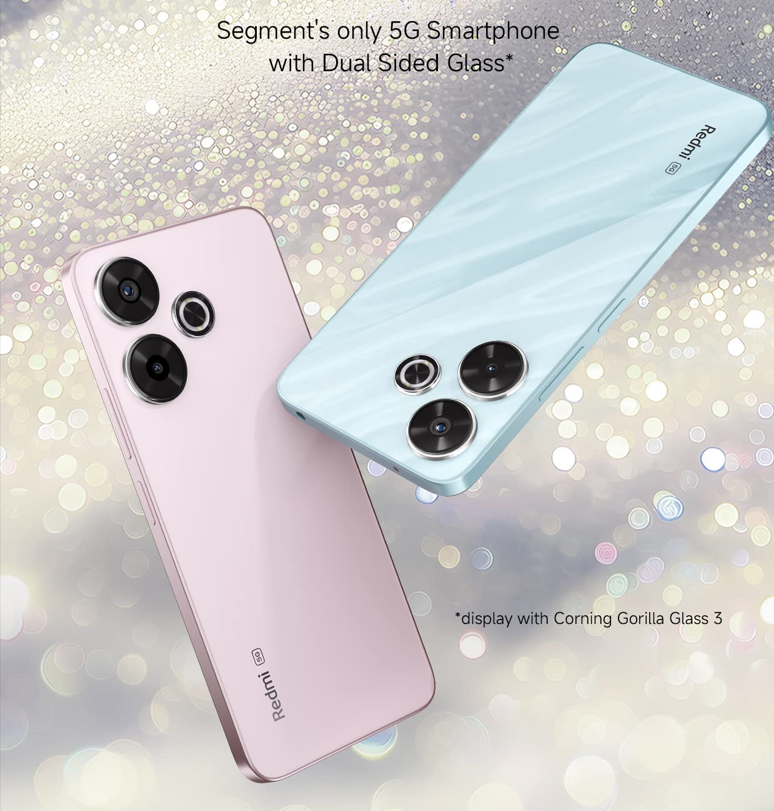
Redmi 13 5G 3C certification confirms 33W charging

Redmi 13 5G has now been spotted on 3C certification, having previously visited the FCC website. In fact, the specifications of Redmi 13 are actually no secret; we shared the spec-sheet of Redmi 13 5G with you before the phone was not unveiled. If you want to read more about the specs of Redmi 13, you can refer to our previous article.

Redmi 13 5G to debut soon

Xiaomi’s new budget-friendly model, Redmi 13 5G, will be introduced as POCO M7 Pro 5G in India, with both phones sharing the same spec sheet. Redmi 13 5G appears with the model number 2406ERN9CC on the 3C certification, confirming the 33W charging support for Redmi 13 5G.

The codename of the upcoming smartphone is “breeze,” with an internal number of N19, while the model number of the upcoming phone’s rebrand, POCO M7 Pro 5G, is 24066PC95I.

In fact, Redmi 13 5G does not bring significant advancements compared to Redmi 12 5G, as the upcoming smartphone shares the same specs with its predecessor. Redmi 12 5G had a Snapdragon 4 Gen 2 chipset, and Redmi 13 5G will also come with Snapdragon 4 Gen 2, which is a low-end processor manufactured using Qualcomm’s 4nm process. The phone will feature a 5000 mAh battery and 33W charging.

Note that both Redmi and POCO phones will be available for sale only in India and China, and these devices will not be introduced to the global market. While Redmi 12 5G was launched globally, it seems a bit different for Redmi 13 5G.

Related:

Huawei is planning to expand globally with HarmonyOS amidst the US sanctions

Last year Huawei unveiled the “HarmonyOS NEXT” operating system exclusively for developers. This operating system does not support Android apps and could be the future of Huawei smartphones and other connected smart devices. A previous report from Nikki Asia claimed that Huawei’s HarmonyOS NEXT (unveiled in January as the newest version of its proprietary operating system) could rival iOS and Android going forward.

HarmonyOS

HarmonyOS NEXT aims to become the third most preferred mobile operating system

Now the latest news is that Huawei is aiming to roll out the HarmonyOS ecosystem globally. As a result of the US sanctions in 2019, the company came up with a new operating system named HarmonyOS for their smartphones, tablets, and other connected smart devices.

Huawei’s proprietary operating system has been limited to the home country so far, but now the company is aiming to expand it globally. During this year’s Analyst Summit Huawei’s current chairman, Xu Zhijun revealed the plans. Huawei believes that it can make it the World’s third-most preferred operating system for mobile devices.

The company is working closely with developers to build a robust app ecosystem for HarmonyOS. The company will first focus on the Chinese market. According to Xu, people in their home country spend most of their time on a collection of nearly 5000 apps. As usual, the company will focus on the availability and seamless performance of those apps at first.

However, building the app ecosystem and competing the established giants like Google’s Play Store or Apple’s App Store can be challenging. According to data from Business of Apps, the Google Play Store currently has a collection of over 3.2 million apps and the App Store also has over 2 million. It will be interesting to see how the global market responds if Huawei becomes successful in building a competing app ecosystem.

Speaking of HarmonyOS NEXT, the company is also reportedly working on a new self-made “Harmony Kernel” instead of using a Linux kernel. For those unfamiliar, the kernel forms the foundation of the operating system. So Huawei is really trying to make its operating system stand out from Android.

Related:

GC Daily: EU’s Right to Repair Bill in 5 Points, EV brand Polestar has an AI Phone

Over the past few years, EU has been at the forefront of sustainable and eco-friendly policies for consumer products.

Yesterday, the EU parliament officially passed the “right to repair“ directive, which aims to increase a product’s lifecycle. This would warrant a number of changes in how consumer products like smartphones are serviced and repaired throughout its life.

Here’s what you need to know about the “right to repair“ directive in 5 points.

The rules will take effect after approval by the Council and publication in the EU Official Journal, with EU members having two years to adopt them as law.

  1. Extended Warranty After Repairs: The right-to-repair rules state that manufacturers should extend a product’s warranty by one year if it is repaired while still under the initial warranty.
  2. Mandatory Repairs and Reasonable Prices: Even after the warranty expires, companies must repair common household products at a “reasonable” price to encourage repairs over replacements. This includes products like smartphones, TVs, washing machines, and vacuum cleaners.
  3. Availability of Parts and Tools: Manufacturers are required to provide spare parts and tools necessary for repairs. They are also prohibited from using contractual clauses or techniques that obstruct repairs.
  4. Third-Party Repairs and Parts: The rules prevent manufacturers from blocking the use of 3D-printed or second-hand parts by independent repair shops. They cannot refuse repairs due to economic reasons or previous repairs by third parties.
  5. Local Repair Shop Finder: An online platform will be launched to help customers find local repair shops, sellers of used products, and buyers for defective items.

OnePlus has a new fancy Watch 2 Edition in the UK and the EU. The edition, known as the OnePlus Watch 2 Nordic Blue, draws inspiration from Scandinavian design and is the only one with a blue chronograph bezel.

It features a light grey casing with a blue leather band with white stitching. Personally, I think this edition looks quite classy, but the real question is whether it’s worth the €50 premium over the regular edition.

More photos and details in our story here.

Heard of the Swedish EV brand Polestar? They have launched a new smartphone!

Geely Holdings is in the process of taking Polestar’s ownership from Volvo in 2024. Polestar has been struggling lately, and Volvo reportedly wants to hand over its responsibility to its parent company (yes, Geely owns Volvo too), which could help revive the brand.

Well, Geely’s first line of action seems to be releasing a Polestar branded smartphone in the Chinese market.

Yesterday, Polestar announced its first smartphone, called simply the Polestar Phone. This device is basically a clone of the Meizu 21 Pro. If you remember, Geely took over majority ownership of Meizu back in 2022, so this clearly was part of its long term plan.

While the specs are exactly the same as the Meizu 21 Pro, the biggest difference on the Polestar Phone is in the UI. It runs on the Polestar Phone OS, which is essentially a customized version of Flyme OS, featuring design elements similar to those found in Polestar electric vehicles’ interfaces.

The phone has AI features such as image search, image production, and text summarization. It also includes the Polestar Link software, which allows customers to control and monitor their Polestar electric vehicles. This is especially useful in China, where Apple CarPlay and Android Auto are not available.

More details on the Polestar Phone here.

⚠️ DEAL ALERT: Pixel 7 Pro retails for an exciting price of $530; Moto Razr+ available for $699

Despite increased US restrictions on the export of advanced Nvidia AI chips to China, ten Chinese entities with government affiliations were able to obtain these AI chips embedded in server products from major suppliers such as Super Micro Computer Inc., Dell Technologies Inc., and Gigabyte Technology.

Nvidia has stated that the products specified in the tenders were exported and available before the restrictions were imposed, asserting that the purchases don’t indicate violations of export control rules. However, experts suggest that chips could have been diverted to China without the manufacturers’ knowledge due to limited visibility into downstream supply chains.

More details on this story here.

🔥 More Headlines Worth Reading!

Redmi Pad SE with 11″ LCD display, Snapdragon 680 processor & an affordable price tag launched in India

Redmi has just launched a new affordable tablet in the Indian market called the Redmi Pad SE. This new tablet is the successor of the Redmi Pad, which launched back in October 2022.

More details can be found in our launch story here.

If you are wondering whether the Redmi Pad SE is better than the regular Pad – here’s what we think.


Canon’s new VR headset brings live concerts to your living room

Canon is breaking new ground in the realm of virtual reality with the development of a hybrid display VR headset designed to revolutionize music experiences. This new technology will transport users who are sitting in their living room, into the heart of live concert halls, redefining the way we enjoy live performances.

More details are here.


Apple acquires Paris based AI startup Datakalab, likely for on-device model for iPhone 16

Apple is reportedly taking a different approach to generative AI. While the generative AI features on devices are currently backed by server-side large language models, Apple wants to run LLMs on-devices. It will help them ensure user privacy since user data does not have to leave the iPhones and reach servers, that can be shared.

However, there’s only so much that can be done with on-device models. Apple needs to develop a decently capable yet power-efficient model. But doing so on their own will require time. And this is exactly where the acquisition of French startup Datakalab becomes relevant.

More details here!


Xiaomi CEO aims to sell more than 100,000 Xiaomi SU7 cars by 2024

Xiaomi Auto began the delivery of its highly anticipated electric car, the SU7 earlier this month. The delivery ceremony was held at the Xiaomi Automobile Factory in Yizhuang, Beijing, where Xiaomi’s founder and CEO Lei Jun opened the doors of each SU7 car and handed them over to their owners. The company planned to sell only 5000 units globally in the first batch.

But the company’s most recent sales target sounds quite ambitious.


Xiaomi Smart Band 9: What you need to know about the next-gen wearable

The Xiaomi Smart Band 9 is expected to be the company’s next gen wearable product. The Chinese tech giant unveiled the Smart Band 8 back in 2023, and it appears that its successor is set to launch soon. We have covered the upcoming smart band recently, so here’s what to expect from the Xiaomi Smart Band 9.


Xiaomi Robot Vacuum Cleaner S10, Handheld Garment Steamer launched in India: Read key features, price, availability 

Xiaomi announced a couple of new products, such as the Redmi Pad SE, the Redmi Buds 5A, the Robot Vacuum Cleaner S10, and the Handheld Garment Steamer in India through the 2024 Smarter Living launch event. Readers can learn about the new tablet and earbuds through their dedicated posts on our site.  This post mainly focuses on Xiaomi’s new robot vacuum cleaner and garment steamer.

Xiaomi Robot Vacuum Cleaner S10

Xiaomi Robot Vacuum Cleaner S10

An advanced laser navigation system equips the Xiaomi Robot Vacuum Cleaner S10 for 360-degree mapping and scanning of the home. It can effectively avoid obstacles within an 8-meter scanning range. There are multiple sensors onboard, which help the robot vacuum cleaner recognise complex environments to prevent collisions or getting stuck.

The S10 offers 4,000Pa suction power and four suction options, such as Silent, Standard, Strong, and Turbo. It has a 300ml dustbin and conducts cleaning in zigzag and Y-shaped patterns for thorough and efficient cleaning. The Xiaomi Home app can be used to control and access various features of the S10. In addition, it supports Google Assistant and Alexa for a hands-free experience.

Xiaomi Handheld Garment Steamer

Xiaomi Handheld Garment Steamer

Equipped with a removable 160-ml water tank and a foldable design, the Xiaomi Handheld Garment Steamer weighs only 775 grams. This not only allows users to use it for longer durations without hand fatigue but also makes it convenient to carry while travelling.

The garment steamer offers 1300W continuous steam capability and a dual-heat ironing plate made of thermostatic aluminium die-casting, which effectively distributes heat and removes wrinkles from the garment. It promises a 26-second pre-heating time. It offers a steam mode with a 16–24 g/min steam rate and a dry ironing mode for ironing without steam.

Xiaomi Robot Vacuum Cleaner S10, Handheld Garment Streamer price in India, availability

The Xiaomi Robot Vacuum Cleaner S10 and Handheld Garment Steamer will be available for pre-booking starting April 29 in India via Mi.com, Flipkart, and Amazon. On April 29, Mi.com will host the early access sale of these devices.

The price of the robot vacuum cleaner and handheld garment streamer is Rs 19,999 (~$240) and Rs 2,299 (~$27), respectively. The former’s price is inclusive of Rs 1,000 discount using HDFC and SBI bank credit cards and credit card EMI transactions.

RELATED:

OnePlus 13 display size, new design tipped in latest leak

Qualcomm is expected to unveil the next-generation Snapdragon 8 Gen 4 chip in October of this year. Likely, the OnePlus 13 could be one of the first smartphones to arrive in the market with the SD8G4 chip onboard. As the launch of the OP13 is several months away, the rumor mill is gradually leaking details about it. Today, reliable leaker Digital Chat Station spilt some new details about the device.

OnePlus 13 display size revealed

According to DCS, the OnePlus 13 will have a 6.8-inch OLED LTPO screen with a micro-curved design. The screen will support a 2K resolution and is likely to be integrated with an ultrasonic in-screen fingerprint scanner. The predecessor OnePlus flagships have optical under-display fingerprint sensors. As per DCS, the company is currently testing an ultrasonic fingerprint sensor. Hence, it remains to be seen whether it arrives on the final device.

The leak states that the OnePlus 13 will be equipped with a multi-focal camera system. Like the predecessor model, the OP13 will continue to feature a periscope telephoto camera for higher optical zoom.

Leaks dating back to February have claimed that the OnePlus 13 will have a new rear design. Today too, DCS claimed that the industrial design of the OP13 has been completely refreshed.

OnePlus Ace 3V
OnePlus Ace 3V

In the past, some of the Ace and numbered series flagship phones from OnePlus have sported similar rear designs. This year, the company has launched two Ace-series phones, named the Ace 3 and Ace 3V in China. The 3V sports a new vertical camera module as compared to the usual round-shaped camera design available on the Ace 3. It remains to be seen whether the OnePlus 13 offers a premium version design of the Ace 3V.

RELATED:

Here’s why Redmi Pad is better than Redmi Pad SE

Redmi has just launched its affordable Redmi Pad SE tablet in India. The tablet has a starting price of Rs 12,999 and is set to go on sale starting today. However, it is worth noting that Redmi Pad, which launched in 2022, is still a better tablet at this price range. If you are planning to buy the new Redmi Pad SE, we recommend that you go through this article before making your decision.

1. Redmi Pad has a better processor

We start with a big deciding factor, which is the processor in these tablets. While the Redmi Pad SE uses the Qualcomm Snapdragon 680 processor, the Redmi Pad uses a comparatively newer MediaTek Helio G99 processor. The Helio G99 isn’t just newer, but it also offers on average about 25% better performance compared to the Snapdragon 680. On AnTuTu, the Redmi Pad (6GB RAM model) scores around 319,077 points (AnTuTu V9), while the Snapdragon 680-powered Redmi Pad SE scores around 242,000 points.

2. It is a lot better for gaming

While both of these tablets aren’t ideal for gaming, if you are thinking of buying the Redmi Pad SE for gaming, the older Redmi Pad has it beat in that department as well. On paper, it has a 30% faster GPU than the one on the Pad SE. In games like BGMI, the Redmi Pad (4GB & 6GB RAM models) is capable of running the game on Ultra FPS mode with smooth and balanced graphics settings, and on High FPS mode with HD graphics. Compared to that, the Redmi Pad SE is capable of running BGMI in High FPS mode with smooth graphics settings.

3. Faster storage

While both the Redmi Pad and Pad SE use LPDDR4X RAM, the Redmi Pad uses a faster UFS 2.2 storage compared to the eMMC 5.1 storage on the Pad SE. To put it into perspective, UFS 2.1 can reach up to 800 MB/s read and 500 MB/s write speeds, while eMMC 5.1 is limited to around 400 MB/s read and 200 MB/s write speeds. Other than file transfers, storage plays a key part in app loading times and smooth multitasking.

4. Faster charging

The Redmi Pad SE has launched with an 8,000mAh battery that supports 10W fast charging. In comparison, the older Redmi Pad has the same-sized battery with 18W fast charging. While this difference isn’t that significant, the Redmi Pad does save some time on charging.

5. Price point

The Redmi Pad SE’s 4GB RAM + 128GB storage is priced at Rs 12,999, with a further Rs with a further Rs 1,000 when using ICICI Bank cards for transactions. The 6GB RAM and 8GB RAM models of the tablet with the same amount of storage have a price tag of Rs 13,999 and Rs 14,999 without discounts.

Interestingly, the 4GB RAM + 128GB storage model of the Redmi Pad is currently selling on Flipkart for Rs. 11,999, and the 6GB RAM model is going for Rs. 13,499. The brand is also currently offering ICICI Bank card discounts on purchases that can further knock its price down by Rs. 1,250.

6. The Tradeoffs

While the Redmi Pad beats the SE model in a lot of areas including the current market price, we would also like to point out some of its strong points. Firstly, it has a slightly larger 11-inch LCD display compared to the 10.61-inch LCD on the Redmi Pad. Both of these panels offer 90Hz refresh rate and support Widewine L1, meaning that you get access to Full HD playback on streaming apps like Netflix.

The Redmi Pad SE has launched with Android 13 installed, and the brand has promised two major Android updates along with three years of software support. This means that the Redmi Pad SE will receive the Android 14-based HyperOS update, as well as Android 15. The older Redmi Pad, released in 2022 under a similar policy, started with Android 12 and has already been updated to Android 14-based HyperOS. As a result, it won’t be getting any further updates.

Please Note: When you buy something using the links in our articles, we may earn a small commission at no cost to you.

RELATED: