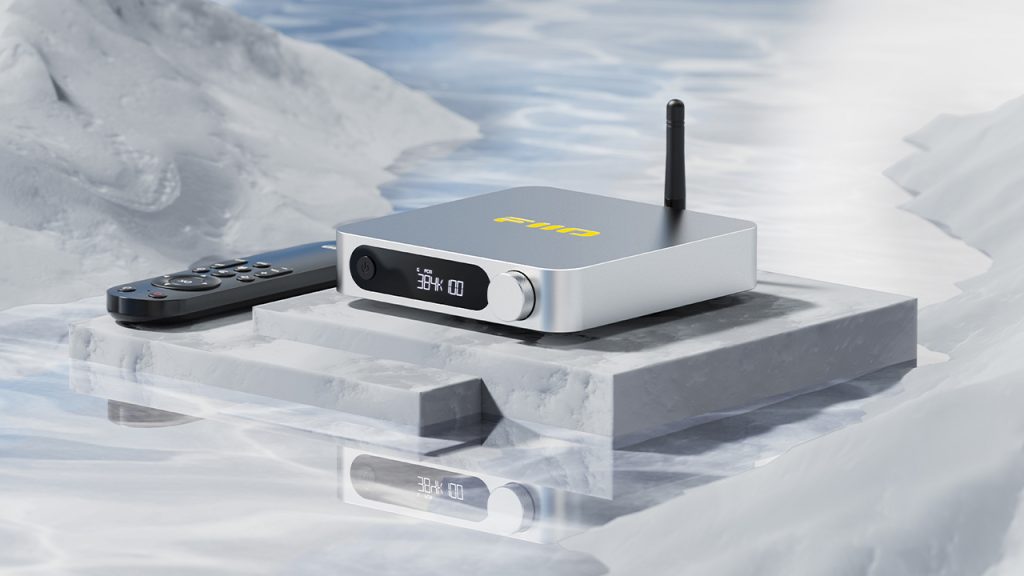
FiiO has launched an affordable audio streamer that brings lossless audio streaming to the table. The FiiO SR11 is seen as a solid competitor to the WiiM Pro and allows the user to stream audio from streaming services like Amazon Music, Spotify, and Tidal.
The SR11 can stream from streaming platforms when connected to a hi-fi system, active speakers, or radio. The gadget supports Roon Ready and Apple AirPlay. Roon Ready support means that the SR11 can stream audio from an offline NAS drive, while AirPlay allows you to stream audio wirelessly from an Apple device. The SR11 can be paired with a tablet, laptop, or phone to control the playback conveniently. You can also use the remote control that comes with the audio streamer.
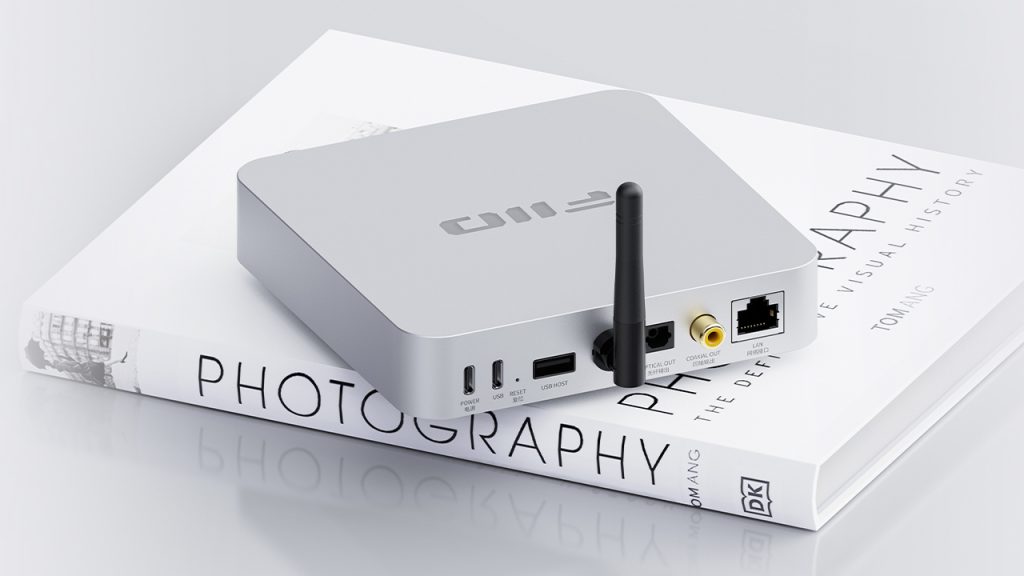
The FiiO SR11 has a dual-band WiFi chip that ensures stable streaming. It also has a built-in Ethernet port for a more reliable connection. The device has USB Type-C, USB Type-A, and an optical coaxial port for output. The gadget has a built-in LCD screen that displays the network status, volume level, and operating mode. The model, however, omits a DAC, unlike the WiiM Pro. The FiiO SR11 is currently priced at $99 and can be purchased directly via the FiiO website.
Valve has just announced details about its much-awaited Steam Summer Sale 2024. As previously planned, the Summer Sale will commence on June 27 at 10 AM Pacific time.
Like every year, Valve is expected to offer heavy discounts on a bunch of games, including fan-favorite titles. Expectations are high since the Autumn and Winter sales were not all that exciting. Gamers can expect discounts on titles like Palworld, Manor Lords, and more.
Some of the games we are most excited about include titles like Elden Rings, which recently received the Shadow of the Eardtree DLC, along with Baldur’s Gate 3, Helldivers 2, Ghost of Tsushima Director’s Cut, Red Dead Redemption 2, and Lies of P. Games like Fallout 4 and Fallout 76 has seen a resurgence in its player base thanks to its recent TV adaptation, so if you haven’t given the games a try before, this sale might be the perfect opportunity to explore the post-apocalyptic wastelands.
Steam has also teased a new category called “Deep discounts” for this sale, which could likely be a neatly compiled list of games with heavy discounts. As mentioned above, the sale will commence on June 27 and go on till July 11, so players will get ample time to pick and choose from a large variety of discounted games.
Do remember that if you don’t like a game that you have purchased or are facing issues running it on your system, you can easily request a refund within 14 days of purchase on the condition that you have less than 2 hours of playtime on the game.
In related news, Steam is currently running a publisher sale for Team 17, the developers and publishers behind some amazing titles like Blasphemous, Overcooked, and Hell Let Loose. The publisher is offering these titles and many more with up to 85% discount.
On June 27, OnePlus will hold a launch event in China to announce multiple devices. These include a performance-focused phone named the OnePlus Ace 3 Pro and the OnePlus Pad Pro tablet. Both devices are expected to feature the Snapdragon 8 Gen 3 chipset. Alongside these devices, the brand will also announce the OnePlus Buds 3 TWS earbuds and a new smartwatch. In China, the watch will have the OnePlus Watch 2 branding, but rumors suggest that its global edition could be called the OnePlus Watch 3. A new leak reveals that the device will be a part of the existing OnePlus Watch 2 series for the global market.
OnePlus Watch 2R branding for the global market tipped
In a recent tweet, reliable leaker Max Jambor mentioned the “OnePlus Watch 2R” name. However, he did not share anything else about the device. Most likely, it could be the final name of the upcoming OnePlus smartwatch’s global edition.
Earlier this year, OnePlus unveiled the OnePlus Watch 2 in the global market, but it was skipped for China. As it has not even been six months since the launch of the Watch 2, the next watch is unlikely to have the OnePlus Watch 3 branding. In other words, the next smartwatch may have the OnePlus Watch 2R branding globally, whereas it could be called the OnePlus Watch 2 in China.
The TENAA certification of the device in China revealed that it will have a 500mAh battery and support LTE connectivity. Unfortunately, nothing else is known about its other specifications.
The Watch 2 has the OPWWE231 model number, whereas the upcoming smartwatch has a similar model number of OPWWE234. This again hints that the forthcoming OPWWE234 could be a new variant of the OnePlus Watch 2.
Usually, OnePlus uses the letter “R” for affordable offerings of their flagship products. For instance, the OnePlus 12 has an affordable sibling named the OnePlus 12R. In the same way, the upcoming OnePlus Watch 2R could be a toned-down version of the Watch 2.
In March, Vivo unveiled the Vivo Pad 3 Pro equipped with the Dimensity 9300 chipset in China. Today, the brand has silently listed the all-new Vivo Pad 3 on its website. The listing has revealed that its pre-sale will begin on June 28. It also mentions its variants and color options.
The Vivo Pad 3’s official listing reveals that it will be available in four variants, such as 8 GB RAM + 128 GB storage, 8 GB RAM + 256 GB storage, 12 GB RAM + 256 GB storage, and 12 GB RAM + 512 GB storage. It will arrive in three shades, such as Spring Tide Blue, Thin Purple, and Cold Star Gray.
Vivo has yet to confirm the Vivo Pad 3’s other specifications. However, it seems to be a rebranded version of the iQOO Pad 2, which made its announcement in May in China. Here is a look at the expected specifications of the Pad 3.
Vivo Pad 3 specifications (expected)
The Vivo Pad 3 will likely feature a 12.05-inch LCD panel that offers a 2.8K resolution, a 144Hz refresh rate, and 600 nits of peak brightness. Under the hood, the tablet may feature the Snapdragon 8s Gen 3 chipset, LPDDR5x RAM, UFS 3.1 / UFS 4.0 storage, and a 10,000mAh battery with 44W fast charging support.
The Pad 3 tablet may arrive with a 5-megapixel front camera and an 8-megapixel rear camera with LED flash. The device may come with other features, such as a six-speaker system, a 3D VC cooling unit, Wi-Fi 6, Bluetooth 5.4, a USB-C (USB 3.2 Gen 1) port, and OriginOS 4-based Android 14.
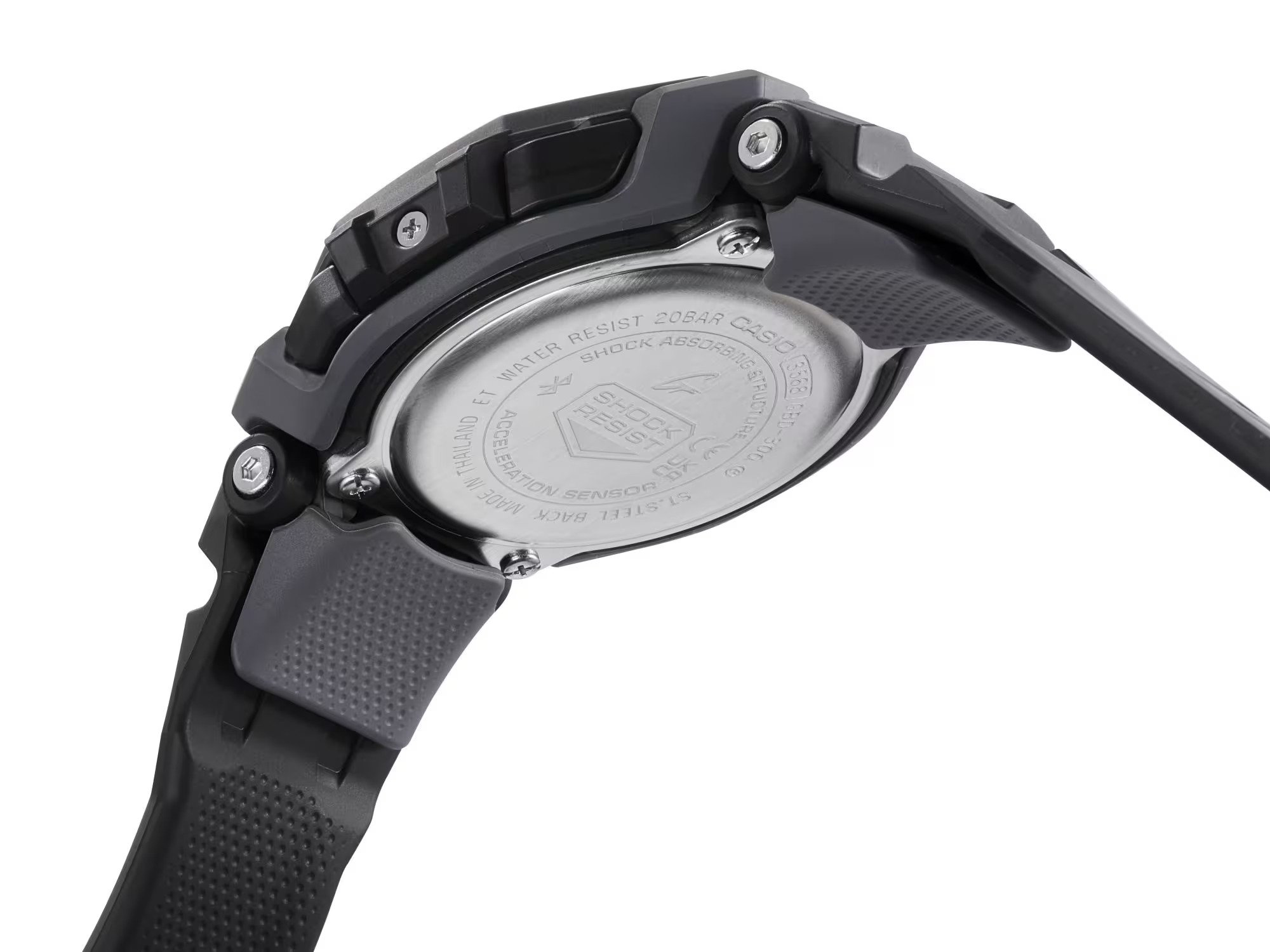
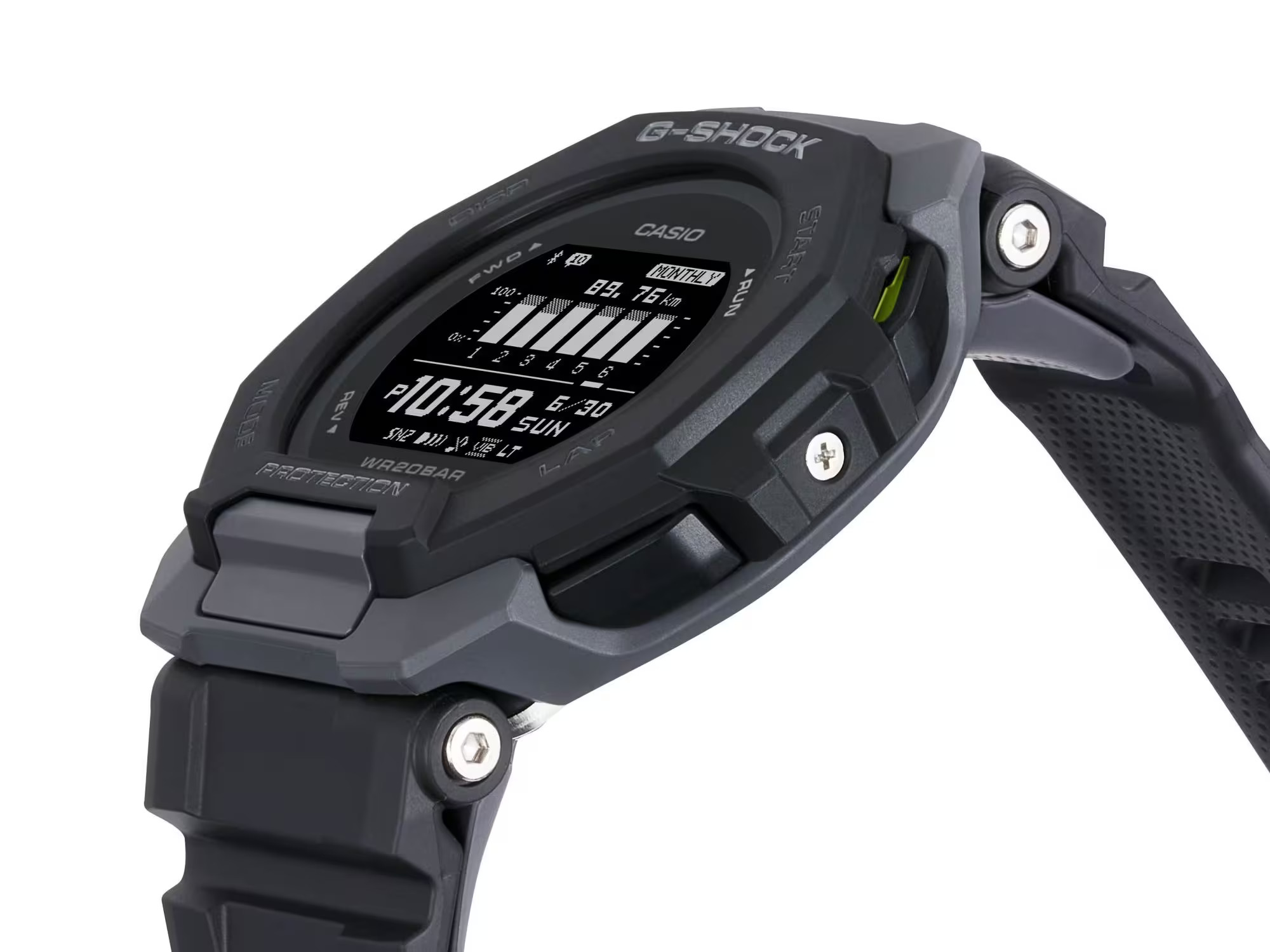
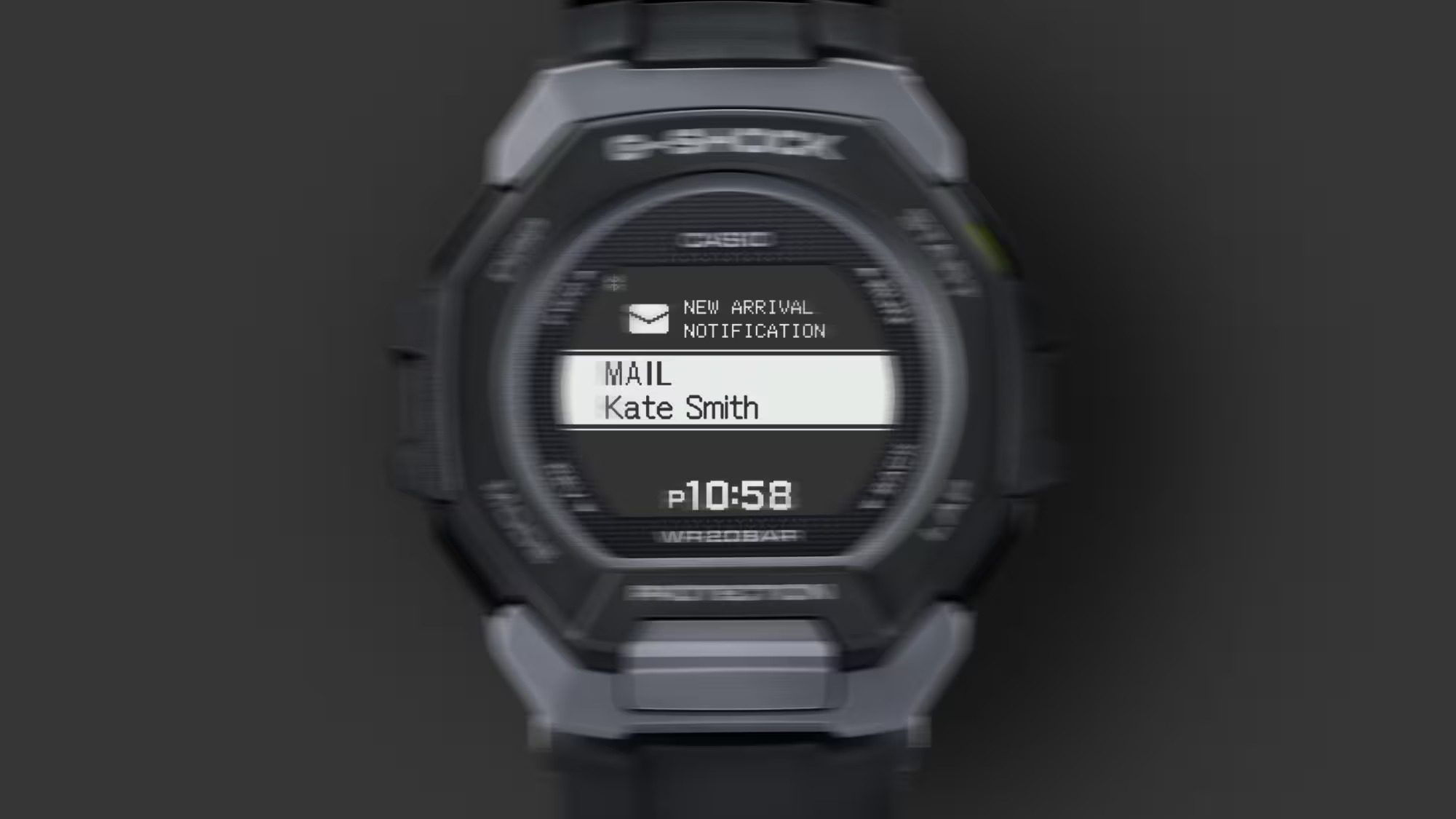
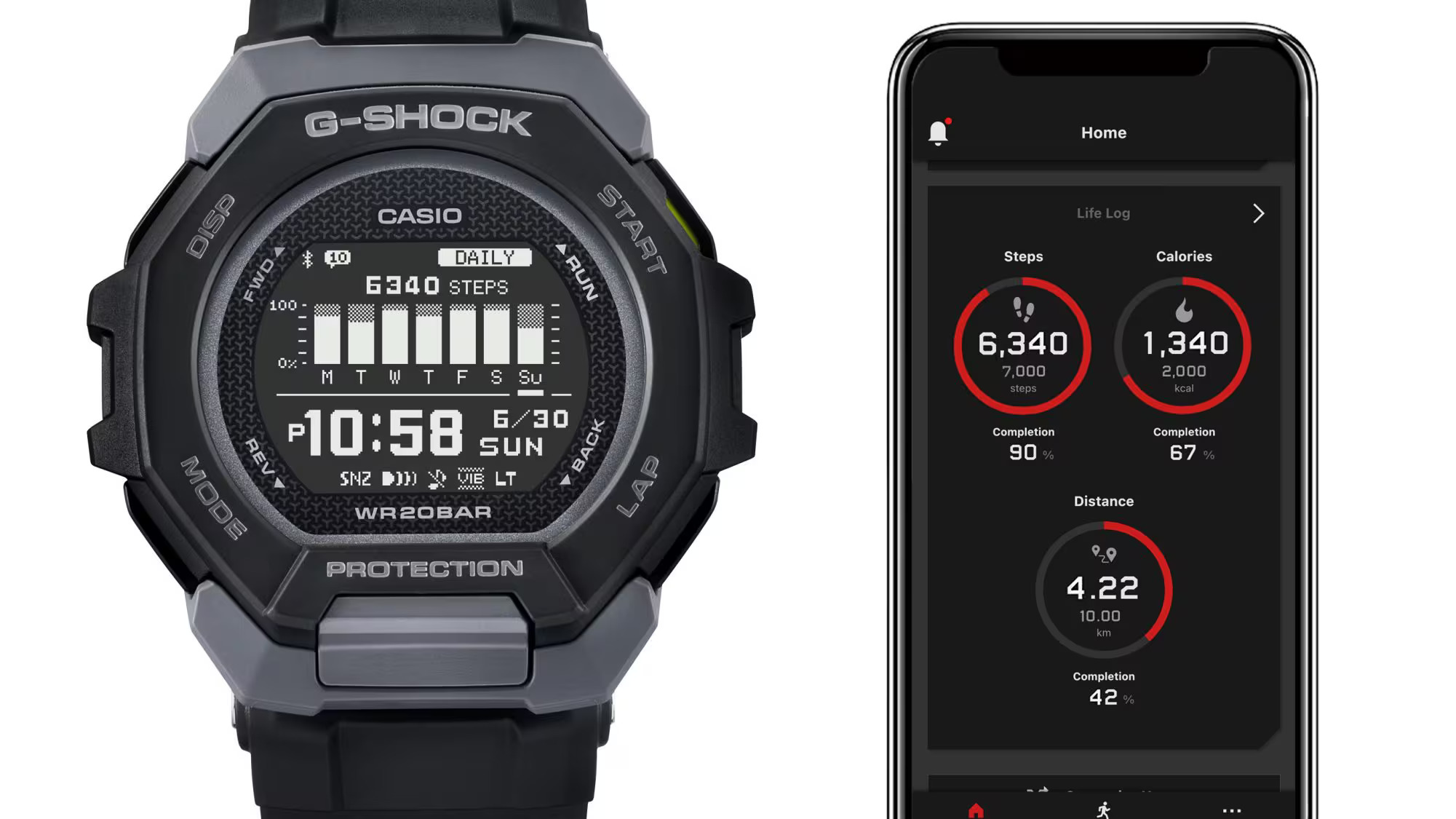
Casio America has added a new model to its G-SQUAD series, the G-SHOCK GBD-300 smartwatch. This new model has a slimmer, more compact design aimed at comfort and resilience, making it great for athletes and fitness enthusiasts.
The GBD-300 has a dual bezel structure that protects its core components, ensuring it can handle significant impacts without damage. It is lightweight, shock-resistant, and features a high-contrast LCD display that shows time, date, and alarms clearly, even in bright light. Additionally, it includes four alarms, a countdown timer, a stopwatch, and 38 world time settings.
The smartwatch comes with advanced fitness tracking features, measuring distance, pace, steps, and calories burned. It stores this data for performance analysis, helping athletes monitor their progress and adjust their training.
With Bluetooth connectivity, the GBD-300 can easily connect to smartphones, allowing users to receive notifications for calls, emails, and social media directly on their watch. The G-SHOCK MOVE app improves the watch’s features with training plan customization and GPS distance correction.
The GBD-300 is built for long-lasting use as it is water-resistant up to 20 bar and comes powered by a CR2032 lithium battery that lasts up to two years. It will be available in July in black, white, and yellow.
In related news, Casio unveiled its Pro TREK PRG-340SC watches earlier this year which come with a built-in digital compass, altimeter, and thermometer. These watches feature solar-powered batteries and can withstand water up to 100 meters deep, as well as cold temperatures as low as 10°C.
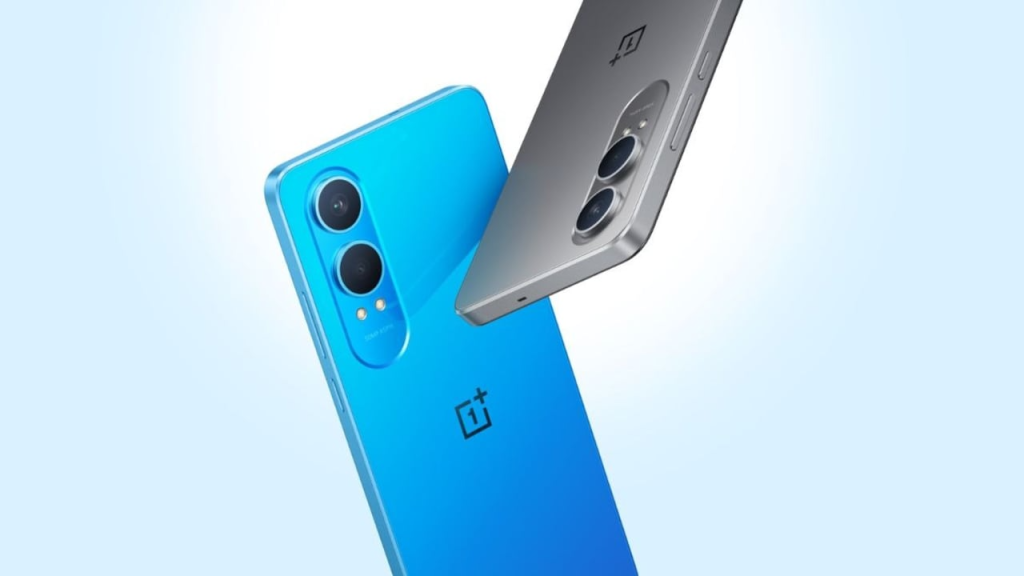
OnePlus has carved a niche for itself in the budget-friendly smartphone segment with its Nord CE series. The “Lite” moniker within the CE range signifies a focus on affordability while retaining some core features. The latest addition, the OnePlus Nord CE4 Lite, builds upon the foundation laid by its predecessors, the Nord CE 2 Lite and Nord CE 3 Lite, while introducing noteworthy upgrades and refinements. Let’s delve into a detailed comparison of these three models to assess how they stack up against each other.
The Nord CE4 Lite takes a clear lead in the display department. It boasts a 6.67-inch FHD+ OLED panel with a 120Hz refresh rate, offering a smoother user experience and deeper blacks compared to the 6.59-inch and 6.72-inch LCD panels found on the CE2 Lite and CE3 Lite respectively, both with 120Hz refresh rates. The CE4 Lite’s display also gets brighter, reaching up to 2100 nits peak brightness compared to the 680 nits of the CE3 Lite and unspecified brightness levels for the CE2 Lite.
2. Design and Other Features
The design language across all three phones is relatively similar, with a punch-hole display and a plastic back. However, the CE4 Lite sheds some weight at 191g compared to the 195g of its predecessors. Another noteworthy addition in the CE4 Lite is the in-display fingerprint sensor, a feature missing in both the CE2 Lite and CE3 Lite, which relied on side-mounted fingerprint scanners.
The CE4 Lite also boasts an IP54 dust and water resistance rating, which is absent in the previous models. All three phones retain the 3.5mm headphone jack, a welcome feature for audio enthusiasts.
The Nord CE4 Lite also introduces a new “Super Silver” color option alongside the standard “Mega Blue” and the India-exclusive “Ultra Orange,” providing users with more choices to personalize their device.
3. Performance and Software
Under the hood, all three models are powered by the Qualcomm Snapdragon 695 5G SoC, ensuring smooth performance for everyday tasks and casual gaming. The Nord CE 2 Lite and Nord CE 3 Lite offer up to 8GB of RAM, while the Nord CE4 Lite is available in 8GB + 128GB and 8GB + 256GB configurations. Software-wise, the Nord CE4 Lite ships with Android 14 and OxygenOS 14, providing the latest features and optimizations compared to the Android 12-based OxygenOS 12.1 on the Nord CE 2 Lite and the Android 13-based OxygenOS 13.1 on the Nord CE 3 Lite.
4. Cameras
The camera department sees a shift in the CE4 Lite. It ditches the triple rear camera setup of its predecessors for a dual camera system. The main sensor, however, gets a significant bump to 50MP with a larger 1/1.95” Sony LYT-600 sensor and f/1.8 aperture. This suggests potentially better low-light performance and overall image quality compared to the 64MP sensor in the CE2 Lite and the 108MP sensor in the CE3 Lite.
Both the CE2 Lite and CE3 Lite retained the 2MP macro and depth sensors. The CE4 Lite keeps the 2MP depth sensor but ditches the macro sensor entirely. The front camera remains consistent at 16MP across all three phones.
5. Battery and Charging
Battery capacity sees a notable upgrade in the Nord CE4 Lite, packing a 5500mAh battery compared to the 5000mAh batteries found in the Nord CE 2 Lite and Nord CE 3 Lite. Moreover, the Nord CE4 Lite supports 80W SuperVOOC fast charging, which significantly outpaces the 33W fast charging in the Nord CE 2 Lite and the 67W SuperVOOC fast charging in the Nord CE 3 Lite.
6. Price
In terms of pricing, the OnePlus Nord CE4 Lite maintains the competitive pricing strategy of its predecessors, offering excellent value for its features and specifications. The base model of the Nord CE4 Lite starts at Rs. 19,999 for the 8GB + 128GB variant, while the 8GB + 256GB variant is priced at Rs. 22,999. This pricing is in line with the launch prices of the Nord CE 2 Lite and Nord CE 3 Lite.
7. Conclusion
The OnePlus Nord CE4 Lite emerges as a compelling upgrade over its predecessors, offering a superior OLED display, enhanced camera capabilities with OIS, a larger battery with faster charging, and the latest Android 14 software. While the processor remains the same, the overall package delivers a more refined and enjoyable smartphone experience. If you’re seeking a budget-friendly device with impressive features and a focus on display quality and camera performance, the OnePlus Nord CE4 Lite is a worthy contender in the market.
Launched on 21st June, Huawei‘s HarmonyOS NEXT includes a user-friendly and secure text input experience. Developers gain more control over input methods in apps with the IME (Input Method Editor) Kit, allowing for custom controls and easier switching. Users benefit from a simplified global method switching system with long presses for selection and short presses for recent input methods. Text previews ensure users see exactly what they’re typing, regardless of input method. Security is addressed with authorization prompts for third-party input methods and reminders for “full experience mode.”
The new NEXT system adapts the text input area across devices for better usability
HarmonyOS NEXT incorporates user research by raising the input area for blind typing and placing function keys at the bottom for easy access. This system adapts across devices, suggesting layouts optimized for different screen sizes and limiting tablet input method panels to 70% of the screen for better usability.
Finally, the input method leverages the user’s clipboard and Huawei account data to suggest text based on context, including past forms, contacts, and account information, all with one-click fill options. These improvements aim to make text input on HarmonyOS NEXT faster, more convenient, and more secure. What do you think?
UGREEN has launched a 200W power bank boasting a massive 25,000mAh battery capacity, ideal for keeping devices powered on the go. It features two USB-C ports and a single USB-A port, allowing you to charge three devices simultaneously. The C1 and C2 ports can deliver a combined 200W output, enough to charge two laptops at once.
The power bank has a 1.5 inch TFT screen for displaying important info
The UGREEN Energy Pro features a unique 1.54-inch TFT color screen that displays charging information, voltage, current, and even plays animated easter eggs. The power bank utilizes “automotive-grade batteries” that are claimed to retain at least 80% capacity after 1,000 charging cycles. With a 90Wh battery cell, it’s also carry-on approved for airplanes.
The UGREEN Energy Pro 200W power bank comes bundled with a 240W dual-head Type-C data cable supporting the PD3.1 protocol. The power bank itself supports 65W fast charging, allowing it to be fully recharged in just 2 hours. It is priced at 349 Yuan, or $48.
Following the OppoA3 Pro 5G’s launch, whispers of a standard A3 5G variant were going around. Now, a listing on China Telecom seemingly validates the existence of the Oppo A3 5G, shedding light on its potential specifications and launch window.
The smartphone is expected to be powered by the Snapdragon 695 SoC
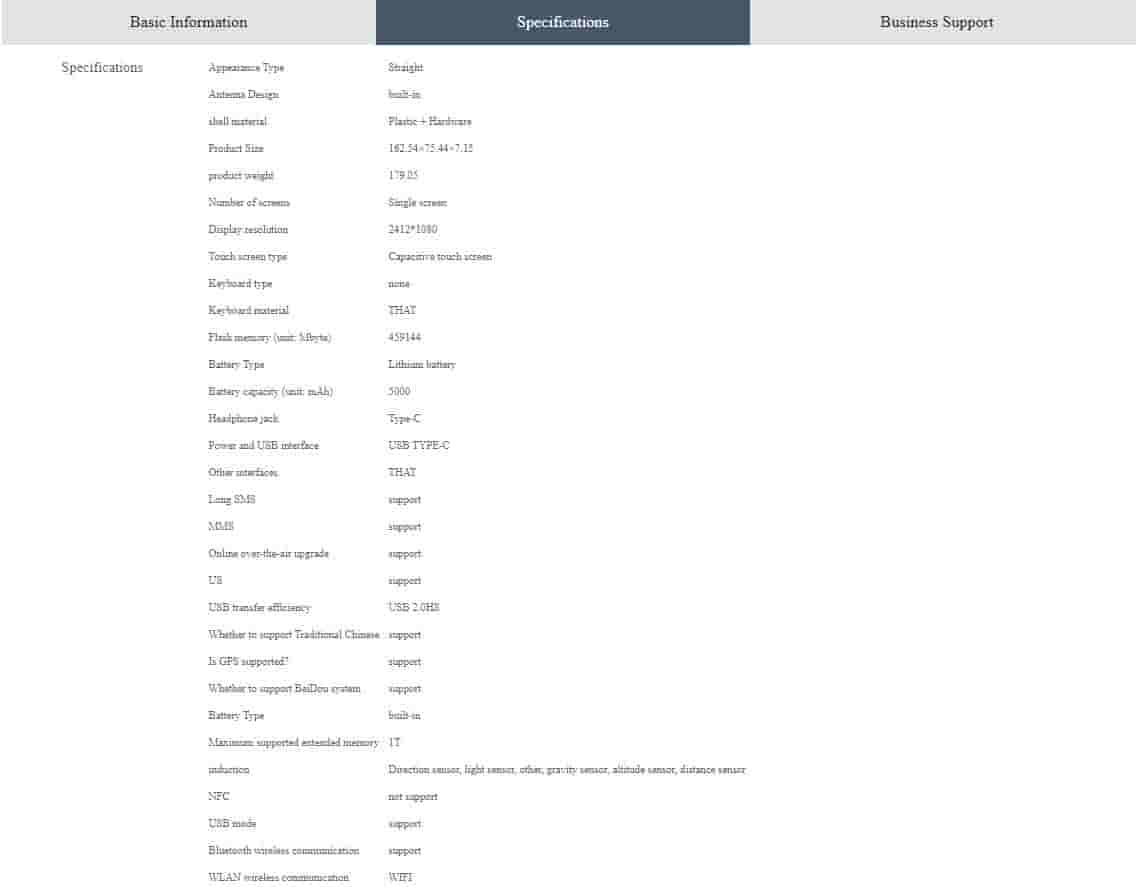
The China Telecom listing reveals the model number “PKA110” and confirms the device’s name as the Oppo A3 5G. This clarifies earlier speculation that this model number might belong to a flat-screen version of the A3 Pro. The listing hints at a July release timeframe in China, but a specific date remains under wraps.
The Oppo A3 5G is expected to be powered by the Snapdragon 695 SoC (model number SM6375). This choice suggests Oppo might be using up existing stock of the SD695 before moving on to newer processors. The phone is rumored to run the latest Android 14 operating system with Oppo’s own ColorOS 14 on top.
The Oppo A3 5G is expected to feature a 6.7-inch flat display with a resolution of 2412 x 1080 pixels. The listing suggests dimensions of 162.54 x 75.44 x 7.15 mm and a weight of around 179 grams.
In terms of design, the China Telecom listing indicates a design language similar to the Pro variant, including a circular camera module with a dual-camera setup and LED flash. However, unlike the rumored leather finish on the Pro variant, the A3 5G is expected to sport a more budget-friendly all-plastic build. The bottom of the phone is likely to house a USB Type-C port, SIM card tray, and speaker grille.
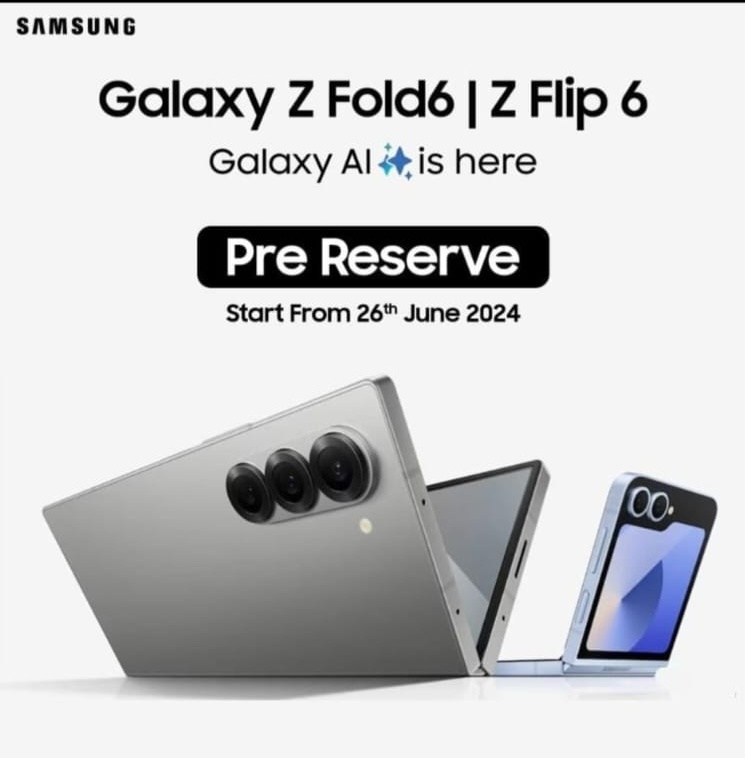
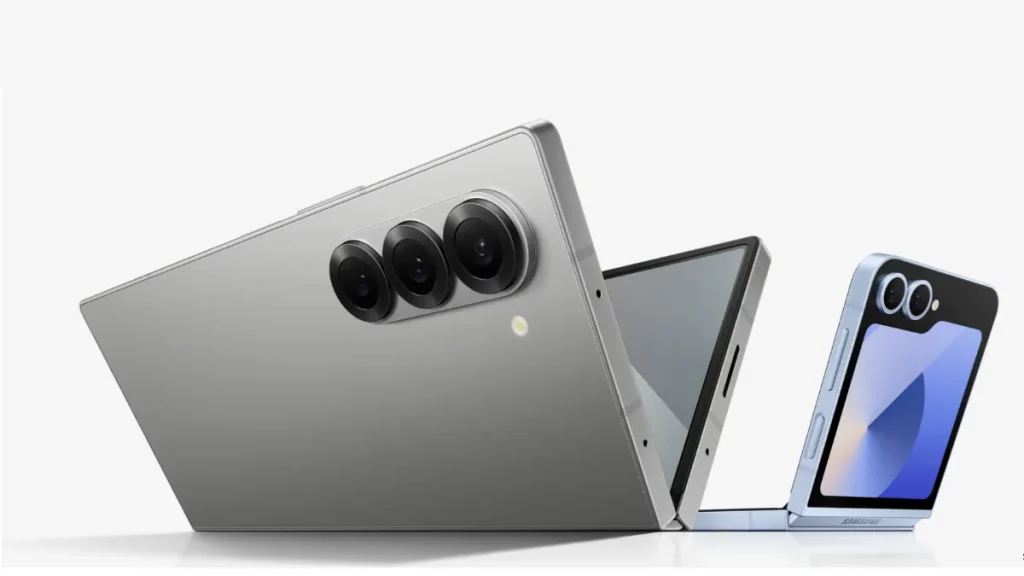
Samsung plans to host the next Galaxy Unpacked event on June 10. At the event, the brand is expected to launch its next generation of foldable smartphones likely called the Galaxy Z Fold 6 and Z Flip 6. Ahead of the launch, Tarun Vats on X (formerly Twitter) has shared a screenshot revealing the reservation date of these smartphones.
As per the poster, the pre-reservation of these devices will kick off on June 26, 2024. Tarun has added that this pre-reservation date is for the Indian region, so we are currently unsure of the reservation windows in other regions. It was recently confirmed via a Geekbench listing that the Galaxy Z Fold 6 unlocked US model will feature the Snapdragon 8 Gen 3 chip. The tipster also spotted a Galaxy Z Flip 6 Indian model on Geekbench equipped with the Snapdragon 8 Gen 3 chip. Keep reading to learn more about these smartphones.
Samsung Galaxy Z Fold 6 specs:
As per leaks so far, the Galaxy Z Fold 6 will feature a 7.6-inch internal Dynamic AMOLED 2X display and a 6.3-inch external Dynamic AMOLED 2X display, both with a 120Hz refresh rate. The internal screen will have a resolution of 2160 x 1856 pixels, while the external screen will offer 2376 x 968 pixels. The outer display will have a 10MP selfie camera in a punch-hole cutout, and the interior display will include a 4MP sensor.
Under the hood, it will house a Snapdragon 8 Gen 3 SoC, paired with 12GB of RAM and 512GB of storage. It is said to feature a 4,400mAh battery with 25W charging speed. For cameras, the Galaxy Z Fold 6 will include a 50MP f/1.8 main OIS sensor capable of 8K video recording, a 12MP ultra-wide-angle lens, and a 10MP telephoto unit with 3x zoom. Connectivity options will likely include a USB 3.2 Gen 1 Type-C port, Wi-Fi6, Bluetooth 5.3, NFC, UWB, and 5G.
Samsung Galaxy Z Flip 6 specs:
On the other hand, the Galaxy Z Flip 6 will have a 6.7-inch Dynamic AMOLED 2X display with a resolution of 2640 x 1080 and a 120 Hz refresh rate. It also features a 3.4-inch cover display with a resolution of 720 x 748. Powered by the Snapdragon 8 Gen 3 for Galaxy chipset, it shares the same clock speeds as the Galaxy S24 series, with cores running at 3.39 GHz, 3.1 GHz, 2.9 GHz, and 2.2 GHz. Storage options are 256 GB and 512 GB.
The camera setup includes a 50 MP f/1.8 main camera, a 12 MP f/2.2 ultra-wide-angle camera, and a 10 MP front-facing camera without autofocus. It supports video recording at 4K 60 FPS, 1080P 60 FPS, and slow motion at 1080P 120 or 240 FPS. Connectivity features include Wi-Fi 6E, Bluetooth 5.3, and USB 3.2 Gen 1.4o
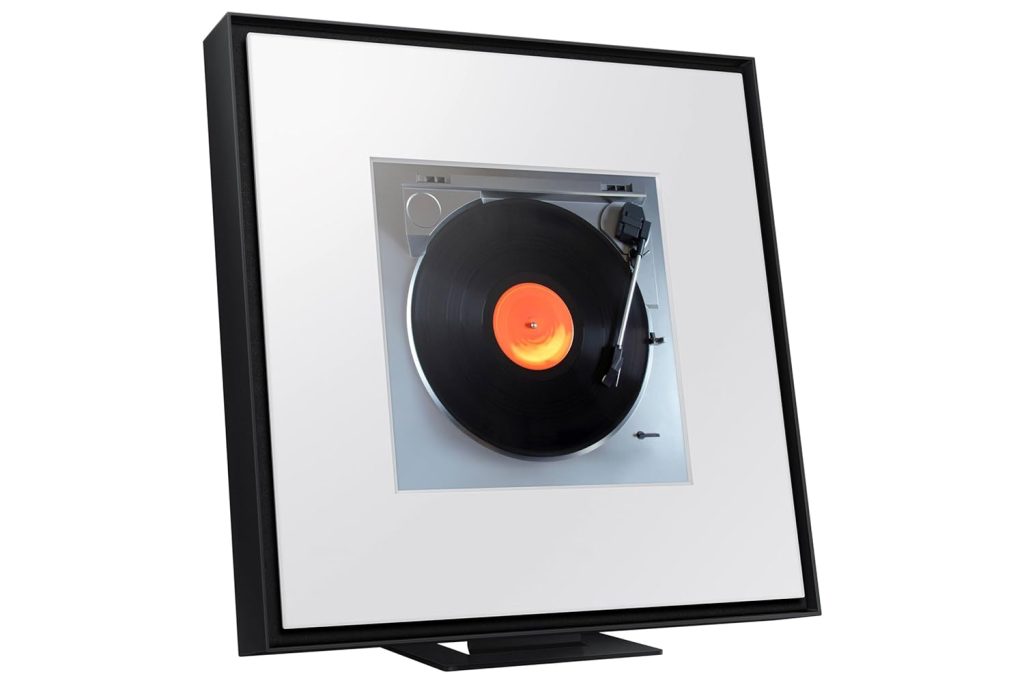
Tech giant Samsung recently unveiled a unique addition to the home audio market in India – the Music Frame. Unveiled earlier this year, this innovative device breaks the mold by seamlessly blending high-fidelity wireless sound with a customizable picture frame. Let’s delve into what makes the Music Frame a standout product.
Samsung Music Frame Specifications:
The Music Frame boasts a customizable design with a color bezel and an art panel. This allows you to personalize the frame to match your existing decor or display a favorite photograph. When not in use as a speaker, the Music Frame transforms into a sleek digital picture frame, elevating the look of your living space.
Despite its focus on design, the Music Frame doesn’t compromise on sound quality. It boasts a powerful 120W output and Dolby Atmos 2.0 channel support, delivering immersive audio for music and movies. It also features six built-in speakers and “Wide Sweet Spot” technology designed to deliver consistent and balanced sound distribution throughout the room. It also comes with SpaceFit Sound Pro which optimizes sound clarity, immersion, and bass by analyzing and tailoring audio to your room’s acoustics.
The Music Frame boasts Wi-Fi 5 and Bluetooth v5.2 connectivity, allowing for seamless music streaming from your favorite services like Spotify Connect, Chromecast, and AirPlay. The speaker also integrates with Samsung’s SmartThings app, making it easy to control and manage playback.
The smart frame comes with built-in support for Google Assistant, Alexa, and Bixby, allowing you to control playback and other functions with your voice. Additionally, the speaker can be integrated with Samsung’s Q-Symphony technology, creating a cohesive and powerful audio experience when paired with compatible Samsung TVs.
Pricing:
The Samsung Music Frame is priced at Rs. 23,990 and it is now available on Amazon.in and select offline stores.
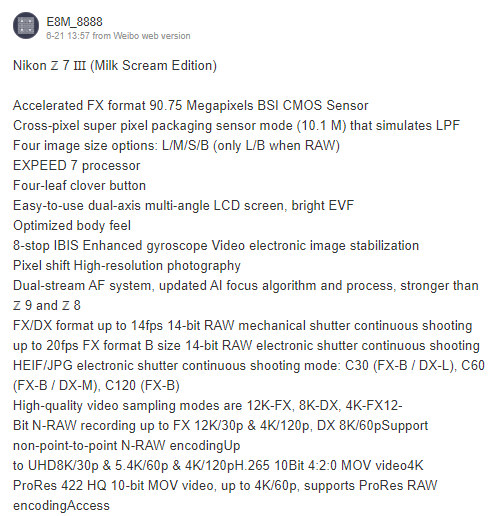
A new leak has revealed some of the specifications of the Nikon Z7 III camera. The latest leak indicates that the Z7 III will come with a 90MP full-frame sensor and 8-stop IBIS. The gadget will also be capable of recording 4K 120 fps and 8K 60 fps videos. The new details indicate that the Z7 III will debut with impressive features and capabilities. A Weibo post by tipster New Camera has provided an alleged specs sheet for the Nikon Z7 III.
The new leaks relating to the Nikon Z7 III are coming on the heels of the recent launch of the Nikon Z6 III. The unveiling of the Z6 III received a positive reception from the market and fans had expected that the Z7 III would have also been launched simultaneously. The Nikon Z6 II and Z7 II were launched at the same time.
The Z7 III is Nikon’s next-gen premium full-frame camera although the leaked specs are seen as tentative at best. As per the leak, the features specified for the Z7 III are an accelerated FX-format 90.75MP BSI CMOS sensor, 10.1 mode with cross-pixel super pixel packing for low-light scenarios, and 8-stop in-body image stabilization. The full-frame camera also features 14fps continuous 14-bit RAW photo capture with a mechanical shutter and 12-bit N-RAW video at up to 8K 60fps, 4K 120fps, and 12K 30fps. The camera is also projected to come with an updated dual-axis articulating screen and possibly a 5.67K-dot, 12Hz, 4,000-nit EVF which was also featured in the Z6 III.
The pixel-shift high-resolution mode will help to further boost the resolution of the Z7 III. The camera will also come with improved autofocus with an upgrade expected from the dual-stream AF system. The model is rumored to have Bluetooth LE and WiFi 6 connectivity. It will come with dual card slots that support CF Express and UHS-II SD cards.
There are no specifics yet on the release and pricing optics of the Nikon Z7 III camera. The model is expected to launch shortly and it is projected to come with a price hike above the Z6 III.
It was rumored that Samsung will hold the Galaxy Unpacked event on June 10 where it will launch a couple of new products. In the latest development, the Dutch e-commerce platform mobile.nl has confirmed the date of Samsung’s upcoming launch event. A banner stated that the event will take place on June 10. Although, the page was quickly taken down.
Samsung will held the event on July 10 in Paris
The banner also includes the stars that represent Samsung’s Galaxy AI hinting that Samsung has developed some new AI features that it will announce in the Unpacked event. We have already seen rumors claiming that Samsung has been working on new AI features. Alongside the Galaxy Z Fold6 and Z Flip6, the Galaxy S24 series is likely to receive the new AI features with the One UI 6.1.1 update.
While mobile.nl didn’t reveal the venue of the event, according to previous reports, it will be held in Paris. This is the same city that will host the 2024 Summer Olympics in July. The venue for the Unpacked event makes sense as Samsung is also an official Olympics partner.
Thanks to numerous leaks and rumors, we already know a couple of things about the upcoming foldables, watches, and other products. However, Samsung has remained tight-lipped about its developments so far. A recent rumor claims that the Galaxy Z Flip6 will cost nearly $100 more in the US and 140 Euros more in Europe as compared to its predecessor. We will need to see if it’s true, and more importantly, how it impacts the market share of Samsung’s next-generation flip phones.
Along with the 6th generation foldables, we could also see a smart wearable ring (called the Galaxy Ring), the Galaxy Watch 7 series, the Galaxy Tab S10 series, and the redesigned Galaxy Buds 3 series of TWS earphones.
Dutch e-commerce platform mobile.nl has reconfirmed that the Galaxy Unpacked event will be held on July 10, where the company will launch the 6th generation foldables. However, the European pricing of the Galaxy Z Flip6 has already been revealed ahead of the launch. The 256GB and 512GB versions of the phone will reportedly cost 1,340 euros (about 10,436 yuan) and 1,467 euros (about 11,425 yuan) respectively. According to a previous rumor, the phone will see a $100 price hike in the US as well.
For context, the same storage variants of the Galaxy Z Flip5 were priced at 1200 euros and 1320 euros respectively. Not to mention, this is a significant price hike.
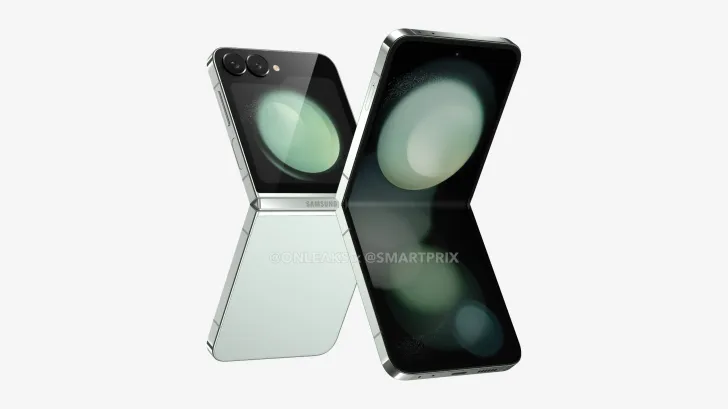
Galaxy Z Flip 6 could offer upgraded internals with a similar design
In terms of the hardware, the Galaxy Z Flip6 has some notable upgrades. The phone will come with the more capable Snapdragon 8 Gen 3 chipset. The RAM is also upgraded from 8GB to 12GB which may help the device to run some on-device LLMs better for a better implementation of on-device AI features besides enabling more room for your apps.
In addition, the device will reportedly equip a 50MP main sensor, that is also used in the Galaxy S24 series. This is expected to offer improved picture quality as compared to the predecessor.
The Z Flip6 is also said to equip a 4000 mAh battery, which is significantly larger as compared to the 3700 mAh capacity of the predecessor.
However, the design appears to be similar to the predecessor with the same 3.4″ external screen and the same camera layout. The inner foldable panel also appears to be of the same size as the predecessor. As the phone sees a significant price hike, Samsung may see greater market challenges in certain regions.
Vivo will launch its new Vivo T3 Lite 5G smartphone on June 27 at 12 PM in India. A dedicated page on Flipkart is live to reveal the phone’s features step-by-step.
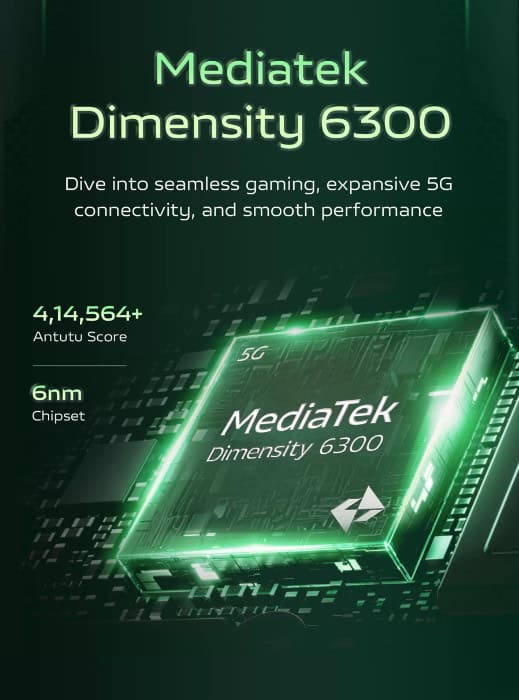
The T3 Lite 5G will use the MediaTek Dimensity 6300 processor, with an AnTuTu score of over 414,564, ensuring good performance and efficiency.
The phone will come in two colors and have a dual-camera setup on the back. It features a flat frame with curved edges. The volume and power buttons are on the right side, and the power button also acts as a fingerprint sensor. The speaker is on the top of the frame. Bluetooth v5.4 is confirmed by its Bluetooth SIG certification.
The T3 Lite 5G is the third model in the T3 series, following the Vivo T3 and T3x smartphones. Vivo will reveal the camera specifications on June 25, with more details to follow. The Vivo T3 Lite 5G will be available on Flipkart.
In related news, Vivo has launched the Vivo Y58 5G smartphone in India, featuring the Qualcomm Snapdragon 4 Gen 2 processor. The device is priced under Rs 20,000 and includes a Full HD+ display with a 120Hz refresh rate, a 6,000mAh battery with 44W fast charging, and a 50-megapixel AI primary camera.
Redmi has announced the upcoming launch of the Redmi 13 5G, the successor to the Redmi 12 5G. This new device will also use the Snapdragon 4 Gen 2 processor and will feature several upgrades, including faster charging.
Smart rings are gaining traction, with new manufacturers like RTECH entering the fray. Their Y-RING boasts a bunch of features beyond just health tracking.
Blaupunkt Y-RING specs:
The Y-RING utilizes NFC technology for contactless payments, eliminating the need to fumble for phones or wallets. This extends to access control, allowing users to unlock smart doors with a simple tap.
For convenience, the ring includes gesture control. You can double-tap to control music playback or take photos. The ring is made from durable titanium and is water-resistant up to 10 ATM, making it suitable for swimming.
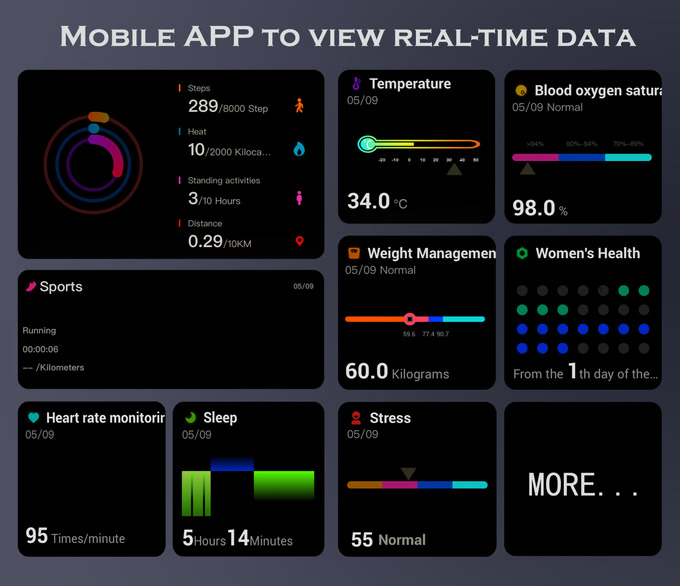
Health tracking features include sensors for temperature, heart rate, activity, and blood oxygen. It also monitors stress levels and sleep quality. The battery lasts up to a week on a single charge.
Pricing & availability
The Y-RING is currently available for pre-order on Kickstarter, starting at $179.
In related news, Amazfit has now made its Helio smart ring available in the US market. This smart ring was initially unveiled at CES 2024, and it was healed at the start of this year. The ring comes with some standout features, such as a titanium alloy unibody that weighs just 3.8 grams, and a PeakBeat algorithm to provide insights like VO2 Max, training load, and training effect.
Other features include comprehensive health tracking including heart rate monitor, SpO2, stress, and sleep tracker. It also provides a readiness score by monitoring the user’s sleep quality and physical exertion levels.
A recent leak on Weibo by tipster @SmartPikachu suggests significant upgrades for the upcoming Huawei Mate 70 series. These advancements may include better display technology, improved charging capabilities, enhanced camera systems, and upgraded software functionalities.
The leak mentions a potential 3D spatial zoom feature, which aims to provide a more immersive video and audio experience, surpassing traditional 2D filters. This feature could come with an improved periscope lens and a new generation of variable aperture technology.
Additionally, the Mate 70 series is rumored to use new OmniVision camera sensors that may elevate overall camera performance. The leak suggests that this camera system might even outperform the Pura 70 series. For security, a 3D face recognition lens is reportedly in development for the front of the Mate 70 smartphones.
The leak also indicates optimized wireless charging for the new lineup. An earlier leak hinted at an ISP imaging chip to enhance video recording capabilities, which the 3D spatial zoom feature could further improve.
Interestingly, the leak suggests that all Mate 70 models might have satellite communication. However, it is unclear if Huawei will include features like satellite image transmission, as seen in the Pura 70 series, or limit the functionality to satellite calls.
Regarding the display, the leak points to a split within the Mate 70 models. Three models, including the “Ultimate Design” variant, might use curved display panels, while the standard versions could have flat screens with a 1.5K resolution.
Details about the new Kirin chips, overall performance improvements, and AI features remain unknown. On the software side, the Mate 70 series will run on HarmonyOS NEXT, as confirmed earlier this week.
While the leak offers a glimpse into the possible features, it’s important to remember that most specifications are not yet confirmed by Huawei. More information is likely to surface in the coming days.
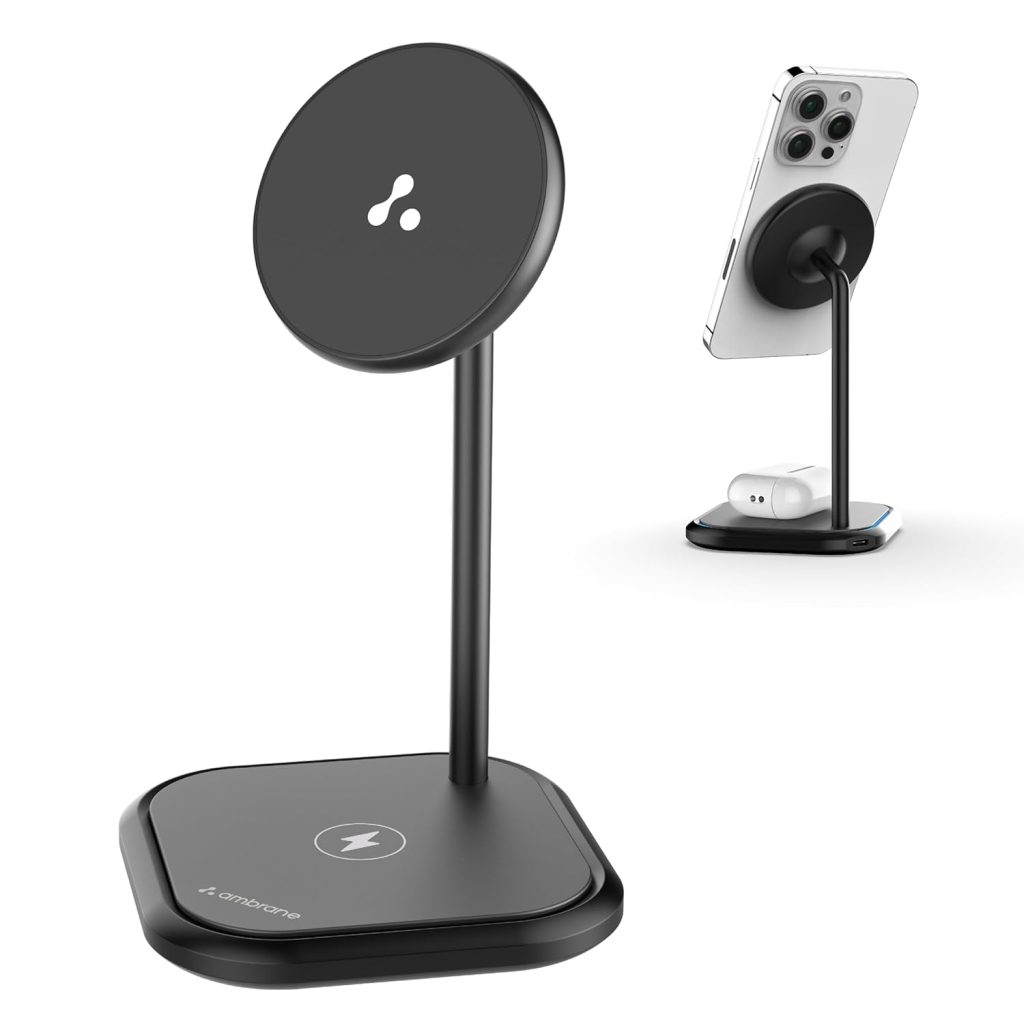
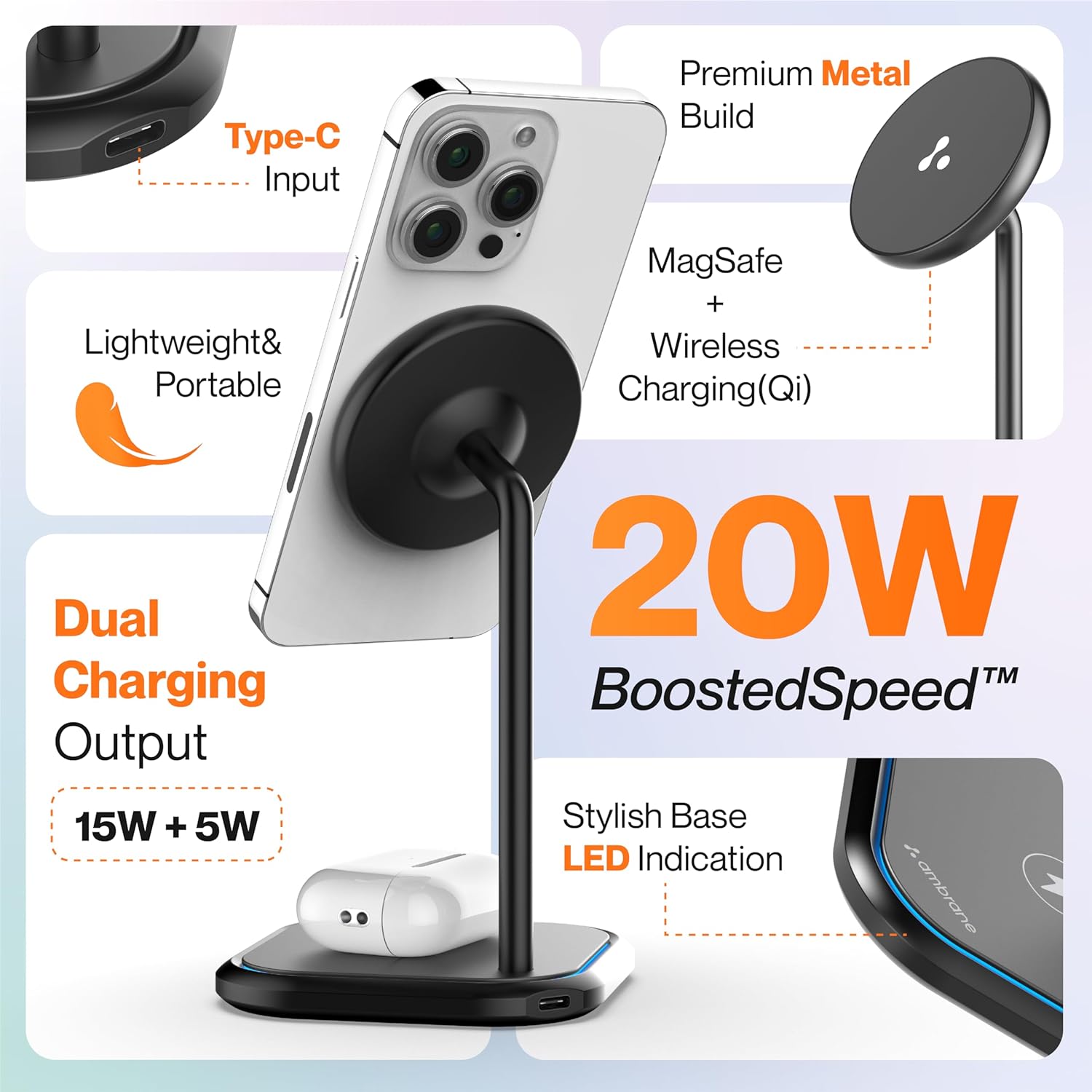
Ambrane has introduced the new AeroSync Duo MagSafe 2-in-1 Wireless Charger Stand, which can charge an iPhone and Apple AirPods simultaneously with a total output of 20W. Made from metal, the charger is durable and stylish, with LED indicators adding a sleek touch. It is lightweight and portable, making it a convenient desk accessory.
The AeroSync Duo offers dual charging with 15W for MagSafe devices and 7.5W for other Qi-enabled gadgets, using a 27W Type-C PD input for fast power transfer. It features SafeCharge Technology, protecting against over-voltage, over-current, overheating, and short-circuiting, ensuring safe charging for all devices.
The charger supports both landscape and portrait modes and includes a magnetic ring for MagSafe compatibility with Qi-compatible Android devices.
Pricing & availability
Priced at Rs. 2,999, the AeroSync Duo is available on Amazon.in and the Ambrane website.
In related news, Xiaomi has also recently launched a Magnetic (magsafe) Power Bank with 5000mAh capacity and 7.5W throughput. With wired charging, it can output up to 18W of power. As for the input, it has a maximum capacity of 20W that can charge it completely in 2.2 hours. It charges the connected device with a single attachment and features USB-C two-way fast charging. The Xiaomi Magnetic Power Bank boasts a slim design, with a thickness of just 12mm.
The number of streaming services available for a monthly subscription, like Netflix and Disney+, continues to rise. Nowadays, many of us can hardly keep track of how much we spend on these services.
However, this situation has a negative economic impact on consumers. The growing competition and the need to save money are pushing users to make cuts, leading to some platforms losing subscribers.
The most affected by this trend is undoubtedly Netflix. Despite nearly a decade of continuous growth, Netflix has been unable to halt the recent decline in its user base.
In the past, the platform attempted to curb this by eliminating account sharing. Now, Netflix is working on a completely free package to attract users. Here are the details…
Free Netflix with Ads? Only Certain Viewers Might Benefit
Netflix aims to regain users lost due to rising subscription fees. Among the company’s plans is a completely free, ad-supported package. Interestingly, this package will not be available to everyone.
Netflix will offer its ad-supported free package to users in Asia and Europe instead of the U.S. This is not the first time the platform has attempted such an initiative. Despite positive outcomes from similar previous trials, the company did not continue with the projects.
Most recently, Netflix introduced an ad-supported plan called “Standard with Ads.” This plan was launched in July 2023, coinciding with the removal of the cheapest ad-free plan. However, this change resulted only in negative feedback.
However, a completely free ad-supported plan might be the solution the company is looking for. As you may know, the quality of content on the platform has been “questionable” for some time. Therefore, many people believe that the platform’s pricing is not justified.
OnePlus recently revealed its plans to launch the OnePlus Ace 3 Pro smartphone on June 27th at 7 PM (CST). The brand has recently confirmed a bunch of its specifications and features. Now, it has also revealed its performance numbers as per the AnTuTu benchmark.
As per a poster shared on the brand’s official Weibo handle, the Snapdragon 8 Gen 3-powered Ace 3 Pro is claimed to achieve an AnTuTu benchmark score of 2,326,659 points. For those unaware, AnTuTu scores are an evaluation of the combined scores of CPU, GPU, RAM, UX, and storage. In comparison, last week’s top-scoring smartphones on AnTuTu managed 2,105,621 points. That being said, this score is more of an average of multiple devices. Still, we can expect the OnePlus Ace 3 Pro to be among the top devices when it comes to raw performance.
Additionally, the brand has also confirmed that the device will feature an ultra-large vapor chamber (VC) spanning 9126mm². It is claimed to provide a 36% improvement in thermal management, which in turn will make the device more stable to operate while running demanding tasks like games.
Other revelations have confirmed up to 24GB of LPDDR5X RAM and 1TB of UFS 4.0 storage onboard the device. We can expect it to maintain up to 59.7 FPS in demanding gaming titles like Genshin Impact even at the highest resolution settings.
More details are expected to be revealed before the June 27 launch date. On the topic of the launch, OnePlus also plans to unveil the OnePlus Pad Pro and a new 100W Super Flash Power Bank on June 27. The tablet is expected to be an ideal machine for gaming and multitasking as it will feature the flagship Snapdragon 8 Gen 3 processor along with a large 12.1 inch 3K 144Hz display.
We use cookies on our website to give you the most relevant experience by remembering your preferences and repeat visits. By clicking “Accept”, you consent to the use of ALL the cookies.
This website uses cookies to improve your experience while you navigate through the website. Out of these, the cookies that are categorized as necessary are stored on your browser as they are essential for the working of basic functionalities of the website. We also use third-party cookies that help us analyze and understand how you use this website. These cookies will be stored in your browser only with your consent. You also have the option to opt-out of these cookies. But opting out of some of these cookies may affect your browsing experience.
Necessary cookies are absolutely essential for the website to function properly. This category only includes cookies that ensures basic functionalities and security features of the website. These cookies do not store any personal information.
Any cookies that may not be particularly necessary for the website to function and is used specifically to collect user personal data via analytics, ads, other embedded contents are termed as non-necessary cookies. It is mandatory to procure user consent prior to running these cookies on your website.