Realme has launched the P4 Lite 5G in India as a budget 5G smartphone focused on battery life, durability, and everyday performance. It is powered by the MediaTek Dimensity 6300 processor, offers up to 6GB RAM with additional dynamic RAM expansion, and packs a large 7000mAh battery. The device also features IP64 protection and MIL-STD 810H certification.
The phone sports a 6.8-inch HD+ IPS LCD display with a 144Hz refresh rate and up to 180Hz touch sampling rate. It supports up to 900 nits of peak brightness, aimed at smoother scrolling and better outdoor visibility.
The Dimensity 6300 6nm chipset includes Cortex-A76 cores clocked up to 2.4GHz and Cortex-A55 cores up to 2GHz, paired with a Mali-G57 MC2 GPU. It comes with 4GB or 6GB LPDDR4X RAM and up to 8GB virtual RAM. Storage options include 64GB and 128GB UFS 2.2, expandable up to 2TB via microSD.
The device runs Android 16 with realme UI 7.0. For cameras, it includes a 13MP rear sensor with f/2.2 aperture and LED flash, supporting 1080p video recording at 30fps. The front houses a 5MP camera with f/2.0 aperture, also capable of 1080p video.
The P4 Lite 5G houses a 7000mAh battery with 15W fast charging and bypass charging support. realme claims up to two days of usage. It includes a bottom-ported speaker with 300% ultra-volume and a 3.5mm headphone jack.
Additional features include a side-mounted fingerprint sensor, 5G SA/NSA support, dual 4G VoLTE, Wi-Fi 802.11 ac, Bluetooth 5.3, and navigation systems such as GPS, GLONASS, Galileo, and QZSS.
Pricing & availability
The phone starts at INR 12,999 ($140), with an effective price of INR 11,499 ($123) after offers. The first sale is scheduled for March 25 via Flipkart, realme.com, and offline stores.
Caviar has announced its latest luxury smartphone collection, led by the Spirit of UAE, a custom iPhone 17 Pro/Pro Max inspired by the culture and essence of the United Arab Emirates. If you’re from the UAE, you will appreciate these exclusive designs.
Design Details
The Spirit of UAE features a detailed image of the UAE President holding the map of the Emirates, symbolizing national unity and care. Caviar says this design is inspired by a viral image that gained popularity on UAE social media. The phone uses 18-karat gold for the bas-relief map and jeweler’s enamel to replicate the President’s white attire. The company priced the model at $10,770 for the iPhone 17 Pro with 256GB of storage.
Caviar also revealed two additional models in the collection. The Falcon, based on the Samsung Galaxy S26 Ultra, features a bas-relief of a soaring falcon. The falcon stands out against a carbon fiber panel enriched with gold accents. Pricing for the Falcon model is available on request.
The third model, Dubai Edition, which is based on iPhone 17 Pro models, highlights the iconic skyline of Dubai. The phone includes a 3D bas-relief of landmarks like the Burj Khalifa, made from a jeweler’s alloy and coated in 24-karat pink gold. Caviar used aviation-grade titanium with a black PVD coating for the body. The company set the price for this limited-edition design at $9,910, with only 19 units available.
In related news, Caviar has recently unveiled a custom Galaxy S26 Ultra featuring 24K gold animal-themed designs starting at $10,490, alongside its ultra-luxury iPhone 17 Pro Valentine’s collection finished with gold and diamond accents.
For more daily updates, please visit our News Section.
One UI 8.5 recently debuted on the Galaxy S26 series, and soon it will start rolling out to older Galaxy devices. This is actually a major upgrade, based on Android 16 QPR2, bringing a range of improvements and several important features, including audio broadcast, storage share, and now nudge.
Now that One UI 8.5 has already debuted, you may be wondering when the update will reach your Galaxy device. We’ll take a look at the rollout status, the eligible devices list, and the major upgrades so you don’t miss out on anything.
When will Samsung roll out the One UI 8.5 update?
Samsung still hasn’t announced a rollout timeline for One UI 8.5. However, the wait shouldn’t be much longer from here, given that the stable version has already debuted on the S26 series and the beta program has already stretched enough.
The beta program for the Galaxy S25 series launched in December 2025 and is still active after seven beta releases. The Galaxy Z Fold 7 and Galaxy Z Flip 7 were recently added to the list, and according to recent reports, the beta program could also expand to the Galaxy S24 series, Galaxy Z Fold 6, and Galaxy Z Flip 6.
Luckily for Galaxy devices other than the S25 series, the beta program won’t go on for months. Samsung would be looking to wrap it up quickly to begin the stable rollout. That seems more likely as Galaxy S25 was recently spotted on the server with a stable firmware. That indicates the stable rollout could be right around the corner.
Is your Galaxy eligible for the One UI 8.5 update?
Samsung hasn’t published a list of eligible One UI 8.5 devices, but it will more or less include the same devices that have received the One UI 8.0 update and the Galaxy devices launched with it.
Here’s a list of Galaxy devices likely to receive the One UI 8.5 update:
One UI 8.5 is still based on Android 16, but it uses a newer QPR2 build that adds extra features from Google, in addition to those developed by the One UI team. The Quick Settings are now fully customizable, allowing users to resize, rearrange, and organize toggles and sliders more freely than before. Samsung has updated app icons, at least for the first-party apps, to feature a bit of a 3D effect.
The lock screen has been updated to automatically adjust the clock and date, so they don’t cover the main subject of your lock screen wallpaper. Additionally, it can now show weather visuals based on the current conditions. An important visual upgrade is the new, modern floating tab bar UI, a pill-shaped UI element with a frosted color scheme. It replaces the traditional plain tab bar at the bottom.
Samsung has improved the Photo Assist feature to let users keep generating and editing AI images without saving every version first. It also introduces a new AI feature, “Now Nudge,” that proactively suggests actions and information based on what is currently on your screen. It works similarly to Google’s “Magic Cue” on Pixel devices.
One UI 8.5 also introduces some important features, such as Partial Screen Recording to record specific areas of your phone, Audio Broadcast to use your phone as a microphone, and Storage Share to access files from other Galaxy devices. The new Failed Authentication Lock feature automatically locks the device after multiple failed unlock attempts. To further strengthen security, it includes features such as Theft Protection and Expanded Identity Check.
Just as the OnePlus Nord 6 recently surfaced on a benchmarking platform, a new leak has revealed what to expect from the upcoming mid-range smartphone. Tipster Yigesh Brar has shared an alleged box image of the device on X (formerly Twitter), along with key specifications and a possible launch timeline.
According to the leak, the OnePlus Nord 6 could feature a 6.78-inch AMOLED display with a 1.5K resolution and a 165Hz refresh rate. Powering the device will be the Snapdragon 8s Gen 4 chipset.
The Nord 6 appeared on Geekbench with the same chip, 12GB of RAM, and Android 16 OS. Its performance scores are 2,040 in single-core and 6,520 in multi-core tests.
In terms of cameras, the Nord 6 is tipped to include a 50MP primary sensor on the rear, accompanied by a 32MP front-facing camera for selfies and video calls.
One of the most exciting claims is the reported 9,000mAh battery. This could probably be the biggest battery OnePlus phone to launch globally. The device is also expected to support 80W fast charging.
The OnePlus Nord 6 may be offered in two configurations: 8GB RAM with 256GB storage and 12GB RAM with 256GB storage. Color options are said to include Black, Mint, and Silver.
OnePlus Nord 6’s possible launch timeframe
As for availability, the tispater says the device could launch in the first week of April. April 7 is the most likely date.
Alongside the Nord 6, OnePlus may also introduce the OnePlus Nord CE 6. It recently appeared in India’s Bureau of Indian Standards certification database. That model is expected to target a more affordable segment of the market.
A report by Counterpoint Research last month revealed that memory prices have jumped between 80% and 90% since the first quarter of 2026, compared with the end of last year. This includes everything from DRAM to NAND and even HBM, all of which are now sitting at record highs.
And guess what? All of these costs will eventually be passed down to consumers. According to industry tipster Digital Chat Station (DCS), the combined cost of 16GB LPDDR5X RAM and 1TB UFS 4.1 storage has now surpassed the price of a flagship processor like the Qualcomm Snapdragon 8 Elite Gen 5.
For years, chipsets have been the most expensive component in a high-end phone. Now, memory and storage are catching up, if not overtaking them.
There’s also no clear sign of relief. According to DCS, the same memory-and-storage configuration is expected to exceed 2,300 yuan by the second quarter. This will add even more pressure on manufacturers already operating on tight margins.
In fact, Meizu has reportedly paused its in-house hardware development for new phones and is exploring partnerships instead. Meanwhile, companies across the board have begun adjusting prices. OnePlus and Oppo, for example, have recently increased smartphone prices in China.
For consumers, this means higher prices are becoming harder to avoid, even outside the premium segment. Both budget and mid-range phones are now being pulled into the same cost pressures.
The only positive
The one silver lining, according to Digital Chat Station, is that newer phones are at least getting more capable hardware. As component costs rise, manufacturers appear to be compensating by upgrading specifications. delivering the hardware users expect and, in some cases, adding new features along the way.
ASUS has refreshed its ROG Strix gaming lineup for 2026, but the spotlight is clearly on the upcoming ROG Strix SCAR 18. It hasn’t fully launched yet, but early details and official renders give a pretty good idea of what ASUS is aiming for this year: more power, even if it comes at the cost of size.
The company announced the new Strix series alongside Intel’s latest Arrow Lake-HX chips, and the SCAR 18 (2026) is shaping up to be the top-end option. Images on ASUS’ ROG website show a familiar aggressive design, though the chassis has grown slightly. The laptop now weighs around 3.73kg and measures 35mm thick, both up from last year’s model. It’s not subtle, but that extra bulk seems to be there for a reason.
One of the more telling upgrades of this gaming laptop is the power adapter. ASUS is bundling a 450W charger, up from 380W on the previous version. That’s a big jump, and it usually points to higher sustained performance. ASUS itself hints at a higher total system power budget this time, which should help the laptop hold peak speeds for longer instead of dialing things back under load.
As expected, the hardware is top-tier. The SCAR 18 is expected to run on an Intel Core Ultra 9 290HX-class chip, paired with NVIDIA RTX 5090 Laptop GPU. That combination should comfortably handle high-end gaming, heavy creative workloads, and pretty much anything else you throw at it.
Memory and storage look flexible as well. There are two DDR5-6400 slots for RAM upgrades and dual M.2 SSD slots with support for PCIe Gen5.
ASUS is sticking with a large 18-inch Mini LED panel with 3840 × 2400 resolution and a 240Hz refresh rate, which should be ideal for both gaming and content work.
The ROG Strix SCAR 18 (2026) is expected to arrive sometime in Q2 2026, with pricing and full configurations still to be confirmed. It’s clearly not trying to be lightweight, but for those chasing maximum performance in a laptop, that trade-off might be part of the appeal.
Canon has announced that 2026 marks 30 years of its PowerShot compact digital camera lineup. To commemorate the occasion, the company will release a limited-edition version of the PowerShot G7 X Mark III with updated design elements and anniversary branding.
Three decades of PowerShot evolution
The PowerShot series was introduced in July 1996 with the PowerShot 600. Over the years, Canon expanded the lineup across multiple segments. Early models included the PowerShot A5 launched in April 1998, and the PowerShot Pro70 in November 1998. The S series debuted with the S10 in October 1999, followed by the G series with the G1 in October 2000.
The company continued to add new categories, including the TX1 in March 2007, SX100 IS in October 2007, and E1 in September 2008. Later models, such as the PowerShot D10 (May 2009) and PowerShot N (April 2013) extended the range further. Most recently, Canon introduced the video-focused V series with the PowerShot V10 in June 2023.
Canon states that the PowerShot lineup has been built around delivering still photography and video in compact, easy-to-use designs. As of December 2025, the company says total global production of compact digital cameras, including the IXUS series, has exceeded 200 million units.
Current lineup structure
The current PowerShot portfolio is divided into three categories. The G series targets users looking for high image quality and advanced controls. The V series is positioned for video-focused use cases such as vlogging. The SX series is aimed at users who need extended zoom capabilities.
PowerShot G7 X Mark III: 30th anniversary edition
Canon will mark the anniversary with a limited-edition version of the PowerShot G7 X Mark III, originally launched in August 2019. The camera features a 1.0-inch stacked CMOS sensor with approximately 20.1 effective megapixels and a lens with 4.2x optical zoom. It also includes a dedicated Video Blog recording mode.
The anniversary model introduces cosmetic and packaging changes. These include a graphite color finish, a knurled control ring, a 30th anniversary logo on the body, and a collector’s edition wrist strap. It will also ship in commemorative packaging.
Canon has confirmed that the model will be released in limited quantities. Pricing and availability details have not been announced yet.
For more daily updates, please visit our News Section.
Battery life hasn’t exactly been a strong point for foldables so far, but that might be starting to shift. A recent comparison test gives a clearer idea of where things stand right now.
The test comes from PhoneBuff, which put the Oppo Find N6, Samsung Galaxy Z Fold 7, and Google Pixel 10 Pro Fold through its usual mixed-usage routine. That includes a bit of everything: gaming, scrolling through social media, web browsing, video playback, basically the kind of usage most people would spread across a full day.
By the end of it, the Find N6 came out on top, lasting 27 hours and 46 minutes. The Pixel 10 Pro Fold followed at 26 hours and 40 minutes, while the Galaxy Z Fold 7 finished at 25 hours and 52 minutes. The gaps aren’t massive, but they’re consistent enough to stand out.
A lot of that likely comes down to the battery itself. Oppo is using a 6,000mAh silicon-carbon battery here. It basically allows more capacity to fit into the same space. For comparison, the Fold 7 packs a 4,400mAh battery, while the Pixel uses a 5,015mAh unit. What’s a bit interesting is that the Pixel doesn’t quite translate its larger battery into better runtime than expected. That could be down to software tuning, or just how the hardware is balanced overall.
There are a couple of smaller details that add to the overall picture. Even after hitting 0%, the Find N6 managed to squeeze out another 18 minutes in a low-power mode. Not something you’d rely on daily, but it could help in a pinch. Charging is also quicker, with 80W wired speeds getting it to around 55% in 30 minutes, which is noticeably ahead of the other two.
It’s just one comparison, so it’s not the final word. Still, it does hint at where things might be heading, especially if more brands start adopting silicon-carbon batteries in foldables.
Vivo has confirmed that the Vivo X300s will debut alongside the Vivo X300 Ultra on March 30 in China. Recent teasers have revealed that the Vivo X300s will be a refined and larger version of the existing X300. Recently, it was spotted with its model number V2548A on the country’s 3C certification platform. Now, the device has appeared in the Geekbench benchmarking database, revealing its chipset ahead of launch.
Vivo X300s Geekbench listing
The above Geekbench listing reveals that the Vivo X300s scored 3,310 in the single-core test and 10,141 points in the multi-core test. These scores are achieved thanks to the inclusion of the Dimensity 9500 chip.
Although the chip’s name is not explicitly mentioned, the CPU and GPU details in the metadata confirm the presence of the chipset. The handset has been spotted with 16GB of RAM and Android 16.
A recent report revealed that the Vivo X300s will arrive in multiple configurations, including 12GB+256GB, 12GB+512GB, 16GB+512GB, and 16GB+1TB. It may be offered in green, purple, white, and black color options.
Recent reports have revealed that the Vivo X300s will feature a 6.78-inch flat AMOLED display offering a 1.5K resolution and a 144Hz refresh rate. For selfies, it will include a 50-megapixel camera, and its rear panel could be equipped with a 200-megapixel main camera, a 50-megapixel ultra-wide lens, and a 50-megapixel periscope telephoto sensor.
Vivo X300s
The X300s will feature LPDDR5x RAM, UFS 4.1 storage, and a 7,100mAh battery with 90W wired and 40W wireless charging. It will also include features such as a large heat dissipation unit, bypass charging, dual speakers, an X-axis linear motor, a USB-C (Gen 3.2) port, a metallic frame, and an IP68/69-rated body.
For more daily updates, please visit our News Section.
After teasing the arrival of the iQOO Z11 for the past few days in China, iQOO has officially confirmed that the Z11 will be introduced on March 26. The brand also confirmed that it will unveil the iQOO Z11x alongside the Z11. Here’s a look at what to expect from the brand.
iQOO Z11, Z11x key specifications and design confirmed
The Z11 series will include two models, with the iQOO Z11 positioned slightly higher in the lineup compared to the Z11x. According to the company, the Z11 introduces two notable firsts for the brand. It will feature the largest battery ever used in an iQOO smartphone, with a capacity of 9,020mAh. The device will also introduce iQOO’s first 165Hz eye-protection gaming display.
Recent reports have revealed that it will also feature a 6.83-inch OLED 1.5K panel, a Dimensity 8500 chipset, 16GB of RAM, 512GB of storage, OriginOS 6-based Android 16, and 90W fast charging. It will be available in silver, black, and light blue finishes and priced at approximately $290 in China.
Alongside the Z11, iQOO will also introduce the Z11x, which will feature a 6.76-inch LCD screen with eye-protection features, a Dimensity 7400 chip, and a 7,200mAh battery paired with 44W fast charging. It will be sold in silver, mint green, and dark blue variants.
The Z11x heading to China appears to be the same device that recently debuted in India. It features LPDDR4x RAM, UFS 3.1 storage, a 32-megapixel front camera, a 50-megapixel dual-camera setup, and OriginOS 6-based Android 16.
For more daily updates, please visit our News Section.
Lenovo has launched the Legion Y700 5th Gen AI Tablet in China, bringing flagship-level hardware, AI features, and high-end gaming capabilities in a compact form factor. The tablet offers up to 24GB of RAM and positions itself as a performance-focused Android tablet. This tablet was recently introduced globally as the Lenovo Legion Tab Gen 5.
The device features Tianxi Personal Super Intelligent Agent, a system-level AI assistant designed to act as a personalised smart agent. It also includes Tianxi AI PadClaw, which works locally without internet and adapts to different use cases such as studying, entertainment, and daily tasks.
The tablet sports an 8.8-inch LCD display with a 3K resolution of 3040 x 1904 pixels. It supports a 165Hz refresh rate, 800 nits brightness, and 12-bit colour depth. The panel offers a 2640Hz instant touch sampling rate and 480Hz multi-touch sampling rate, along with 10X touch precision for improved zoom and stylus accuracy. It is TÜV Rheinland certified for low blue light and flicker-free viewing.
It is powered by the Snapdragon 8 Elite Gen 5 chipset and runs Android 16. The tablet scored 4,532,189 on AnTuTu, putting it ahead of most Android tablets currently on the market. It comes with up to 24GB LPDDR5T RAM and up to 1TB UFS 4.1 Pro storage, expandable up to 2TB via TF card. Cooling is handled by a 3rd Gen Qiankun heat dissipation system with a 17,353 mm² VC.
The tablet includes a 50MP rear camera with a LEGION HALO lighting ring and an 8MP front camera. It packs a 9000mAh battery with 68W fast charging and bypass charging support. Gaming-focused AI features include AI performance scheduling, AI network acceleration, AI sound detection 2.0, and AI aiming assist 2.0.
Pricing & availability
Pricing in China starts at CNY 3,999 ($582) for 12GB + 256GB, CNY 4,799 ($698) for 16GB + 512GB, and CNY 5,999 ($873) for 24GB + 1TB. Subsidised prices drop to CNY 3,499 ($509), CNY 4,299 ($625), and CNY 5,499 ($800), while student pricing goes as low as CNY 3,299 ($480), CNY 4,099 ($596), and CNY 5,299 ($771). The tablet is currently on sale in China.
For more daily updates, please visit our News Section.
OnePlus has started teasing a new Nord phone in India, and all signs point to it being the upcoming Nord 6. Ahead of its official debut, the device has appeared on Geekbench with model number CPH2793.
According to the benchmark listing, the phone is powered by the Qualcomm Snapdragon 8s Gen 4 chipset. The configuration includes a prime Arm Cortex‑X4 core clocked at 3.21GHz, alongside a cluster of Arm Cortex‑A720 performance cores running at different speeds. Graphics duties are handled by the Adreno 825 GPU.
The benchmark numbers themselves look promising. The Nord 6 scores 2,040 in single-core tests and 6,520 in multi-core on Geekbench. Synthetic benchmarks don’t always tell the whole story, but these figures suggest the device should have plenty of horsepower for gaming, multitasking, and heavier apps.
The listing also confirms 12GB of RAM and the presence of Android 16.
OnePlus Nord 6 could borrow from Turbo 6
If earlier reports are accurate, the Nord 6 could borrow several specs from the OnePlus Turbo 6. That may include a 6.78-inch AMOLED display with a 1.5K resolution and possibly a 165Hz refresh rate. Another standout feature could be a massive 9,000mAh battery paired with 80W fast charging.
OnePlus Turbo 6
Alongside the Nord 6, OnePlus may also introduce the OnePlus Nord CE 6. It recently appeared in India’s Bureau of Indian Standards certification database. That model is expected to target a more affordable segment of the market.
OnePlus hasn’t confirmed a launch date just yet, but early reports suggest the Nord 6 series could make its global debut around April 2026. India is likely among the first markets to get it. We will keep you in the loop if we receive new details on it.
At its event in China on March 17, Oppo introduced the Find N6, and during the keynote, it directly compared the device to Samsung’s Galaxy Z Fold 7. In a live demo, presenters showed a freshly unboxed Fold device that had been left folded for about an hour. Once opened, the crease running down the middle was clearly visible under stage lighting.
Oppo then unfolded the Find N6 alongside it. The difference, at least on stage, was noticeable. The inner display looked much flatter, with the company claiming its new hinge design and “Zero-Feel Crease” tech help reduce visible folding marks. Oppo says this involves a mix of redesigned mechanics and updated glass layers aimed at minimizing long-term creasing.
Beyond the demo, the Find N6 also brings top-end specs. It’s powered by the Snapdragon 8 Elite Gen 5 chip and comes with up to 16GB of RAM and 512GB of storage (with higher variants expected). On the camera side, there’s a 200MP main sensor, along with 50MP ultrawide and telephoto lenses, plus dual 20MP selfie cameras for both displays.
Battery life could be another strong point. The phone packs a 6,000mAh battery, with support for 80W wired and 50W wireless charging. It runs Android 16 with ColorOS 16 on top.
The on-stage comparison felt very intentional. Samsung has improved crease visibility over the years, but it hasn’t completely eliminated it. Oppo is clearly trying to position the Find N6 as a step ahead in that area.
With more competition expected in foldables this year, including the long-rumored foldable iPhone, the focus seems to be shifting toward refining the experience rather than just pushing specs. And if Oppo’s demo holds up outside controlled conditions, crease reduction could become a bigger talking point going forward.
Vivo has officially revealed the design of its upcoming X300 Ultra and X300s smartphones after several weeks of teasers. The company has shared the first official images, highlighting a camera-inspired design language and a new film-themed color finish. The announcement offers an early look at Vivo’s next-generation flagship imaging smartphones.
Vivo introduces a camera-inspired design approach
Vivo X300 Ultra with telephoto extenderVivo X300s with telephoto extender
According to Vivo product manager Han Boxiao, Vivo refers to the X300 Ultra as a “professional V camera phone,” while the X300s is positioned as a smaller version called the “super V camera phone”. For those who do not know, “V camera phone” refers to Vivo’s concept of a smartphone designed with a camera-first approach, combining professional camera features with a mobile phone form factor.
Both models feature a new “Film Green” color finish that blends classic photography aesthetics with a modern smartphone design. The company suggests the color and styling aim to deliver a mix of retro and contemporary visual appeal.
Both devices also support a long-range telephoto extender kit. The X300 Ultra will support what Vivo calls the “Cannon 400” telephoto system, designed for extreme long-distance photography with a 400mm focal length. The lineup also supports the “Lipstick 200” telephoto mode, intended to offer a lighter and more portable zoom shooting experience.
Vivo X300 Ultra and X300s with telephoto extender
The X300 Ultra is expected to focus heavily on professional video recording. It will support 4K 120fps 10-bit Log recording across multiple focal lengths, along with Dolby Vision recording and cinematic slow-motion video at the same resolution.
Industry sources suggest that Vivo may officially launch the X300 Ultra, X300s, and the Vivo Pad6 Pro tablet on March 30, with market availability likely beginning on April 3.
For more daily updates, please visit our News Section.
Xiaomi is continuing its steady push into large language models. After introducing MiMo-7B in May 2025 and following it up with MiMo-V2-Flash in December, Xiaomi has now announced three new models: MiMo-V2-Pro, MiMo-V2-Omni, and MiMo-V2-TTS.
All three are already being integrated across Xiaomi’s own ecosystem, including MiMo Studio, Xiaomi Browser, and Kingsoft Office, while also being accessible through developer tools like OpenClaw, OpenCode, and Cline. There’s also a one-week free trial for developers.
Xiaomi MiMo-V2-Pro
The headline model here is MiMo-V2-Pro, which Xiaomi positions as its flagship for what it calls the “agent era.” It’s built for heavy, real-world workloads, with more than 1TB of total parameters and a 1MB context window.
Xiaomi claims MiMo-V2-Pro can handle complex tasks like workflow orchestration and long-term planning without human input, especially within agent frameworks. The company also says its performance is close to models like Claude Opus 4.6, while costing significantly less to use via API. Pricing starts at $1 per million tokens for input within smaller contexts, scaling up for larger ones.
The model is integrated into Kingsoft’s WPS Office tools, where it can work across Word, Excel, PowerPoint, and PDFs.
Xiaomi MiMo-V2-Omni and MiMo-V2-TTS
MiMo-V2-Omni takes a different approach to focus on multimodal tasks. It’s designed to process audio, images, and video together, with Xiaomi claiming strong performance in areas like audio understanding and visual reasoning.
The model can handle long audio inputs, multi-speaker scenarios, and combined audio-video analysis, which points to broader use cases beyond text. Xiaomi says its audio understanding even surpasses models like Gemini 3 Pro in some cases.
Meanwhile, MiMo-V2-TTS is Xiaomi’s speech synthesis model. Here, you can adjust tone, emotion, and speaking style at a detailed level. Xiaomi says it can handle everything from natural conversation to singing, with support for multiple Chinese dialects.
All three models are now available via Xiaomi’s API platform, with relatively aggressive pricing. Most large tech companies are building similar stacks of text, multimodal, and voice models. What stands out is how quickly Xiaomi is iterating and how tightly these models are being woven into its existing software ecosystem.
For more daily updates, please visit our News Section.
Lenovo has unveiled the Xiaoxin Pro 16 2026 AI Yuanqi Edition laptop at its latest product launch event. The laptop is priced between 7,499 yuan ($1,091) and 8,499 yuan ($1,236).
Lenovo Xiaoxin Pro 16 2026 AI Yuanqi Edition Specs
The laptop runs on Intel’s third-generation Core Ultra processors. Lenovo offers two options: the Core Ultra 5 336H and Core Ultra 7 356H. Both processors are built on the Intel 18A process and feature a hybrid architecture with up to 16 cores and 16 threads. These CPUs can reach boost clock speeds of up to 4.7GHz. The integrated GPU supports ray tracing and Intel XeSS 3 technology, making the device suitable for gaming and creative tasks.
Lenovo equips the laptop with 32GB of DDR5 RAM running at 5600MT/s and a 1TB PCIe 4.0 SSD. It offers to expand the memory to 96GB and storage to 6TB with an additional M.2 slot. The device also includes an NPU capable of delivering up to 50 TOPS of AI performance. This allows the laptop to handle AI features like real-time transcription, AI translation, and intelligent content analysis.
The Xiaoxin Pro 16 features a 16-inch OLED display with a resolution of 2880 x 1800 pixels and a 16:10 aspect ratio. The screen supports a 120Hz refresh rate with variable refresh support. Lenovo rates the display for a peak brightness of 1100 nits and a typical brightness of 500 nits.
The laptop also carries VESA DisplayHDR True Black 1000 certification and supports 100% sRGB, 100% DCI-P3, and 99% AdobeRGB color gamuts. The display is factory calibrated with a Delta E of less than 1 and includes TÜV Rheinland certification for low blue light and flicker-free technology.
Lenovo includes an 80Wh battery that delivers up to 22.7 hours of local video playback. The laptop supports fast charging with a 100W USB-C charger. The cooling system features an improved airflow design with a large fan and dual heat pipes to handle sustained performance loads.
The Xiaoxin Pro 16 offers several connectivity options, including two USB-A ports, two USB-C ports, HDMI 2.0, a microSD card reader, and a 3.5mm audio jack. The laptop also supports Wi-Fi 6.
Lenovo includes a full-size keyboard with a numeric keypad and a large precision touchpad. The device features a 1080p webcam, dual microphones with noise reduction, and Dolby Atmos-certified speakers. The laptop measures 16.9mm in thickness and weighs 1.76kg.
In related news, Lenovo has also introduced the Xiaoxin Pro 13 and Pro GT 13 tablets with flagship-grade specifications, alongside the Legion Y700 5th Gen featuring a Snapdragon 8 Elite Gen 5 chip, a 165Hz display, and a 9000mAh battery.
For more daily updates, please visit our News Section.
Lenovo has officially unveiled its latest Xiaoxin Pro 13 and Pro GT 13 tablets at a launch event today. These flagship tablets feature high-performance chipsets, vibrant displays, and advanced software, delivering a premium user experience.
Lenovo Xiaoxin Pro 13
Lenovo Xiaoxin Pro 13 and Pro GT 13 Specifications
Both the Lenovo Xiaoxin Pro 13 and Pro GT 13 tablets feature a 13-inch 3.5K LCD display with a 3504 x 2190 resolution, 144Hz refresh rate, 12-bit color depth, 99% DCI-P3 color gamut, Dolby Vision, and 800 nits peak brightness. The display is TÜV Rheinland certified for flicker-free and low blue light, offering vivid visuals and comfortable extended viewing.
Lenovo Xiaoxin Pro 13
The Xiaoxin Pro 13 is powered by the Qualcomm Snapdragon 8s Gen 4 processor, delivering an AnTuTu score of 2.62 million. Meanwhile, the Pro GT 13 is equipped with the powerful Snapdragon 8 Elite chipset, built on a second-generation 3nm process. This processor achieves an impressive AnTuTu score of over 3.44 million. Both tablets support LPDDR5X RAM and UFS 4.0 storage.
Both tablets run on Android 16 with Lenovo’s AI-powered software suite, including the Tianxi AI assistant and tools for note-taking, translation, and document summarization. They support PC-level apps like WPS Office, offer a desktop-style interface with resizable windows, and feature Super Interconnect 3.0 for seamless collaboration across Android and iOS devices, enabling file transfers, notification syncing, and multi-device workflows.
Lenovo Xiaoxin Pro GT 13
Both tablets feature 13MP rear cameras and a JBL quad-speaker setup with Dolby Atmos. The Xiaoxin Pro 13 houses a 10,200mAh battery with 45W fast charging, providing up to 15 hours of video playback and 72 days of standby time. The Pro GT 13, on the other hand, includes a larger 12,000mAh battery with 68W fast charging, delivering up to 16 hours of video playback and 85 days of standby.
Both tablets feature a premium metal unibody design. They support Wi-Fi 7 and Bluetooth 6.0 for fast connectivity and come with optional accessories like a magnetic keyboard, protective case, and stylus pen.
Lenovo Xiaoxin Pro GT 13
Pricing and Availability
Lenovo Xiaoxin Pro 13 Pricing
8GB + 256GB: 2,499 yuan (~$375)
12GB + 256GB: 2,899 yuan (~$435)
12GB + 512GB: 3,299 yuan (~$495)
Lenovo Xiaoxin Pro GT 13 Pricing
8GB + 256GB: 2,799 yuan (~$420)
12GB + 256GB: 3,199 yuan (~$480)
12GB + 512GB: 3,599 yuan (~$540)
In related news, Lenovo has also unveiled the Legion Y700 5th Gen, featuring the Snapdragon 8 Elite Gen 5 chipset, a 165Hz display, and a 9000mAh battery.
For more daily updates, please visit our News Section.
HUAWEI is set to launch two new tablets in India, the MatePad 11.5 PaperMatte Edition 2025 (review) and the MatePad SE 11″. The company has updated its Flipkart landing page, confirming both models along with their offer prices.
This launch marks HUAWEI’s return to the tablet segment in India after several years. Its last tablet, the MatePad T8, was launched in 2020. Since then, the company has focused on wearables and accessories in the country through RTC India.
Both tablets will run HarmonyOS based on an open-source AOSP version. These devices will not support Google Mobile Services, so Google apps will not run natively. HUAWEI is instead promoting its own ecosystem, including the WPS Office Suite for productivity.
The MatePad 11.5 PaperMatte Edition (2025) is the higher-end model. It features an 11.5-inch 2.5K display with a resolution of 2456 × 1600 pixels. The PaperMatte display uses anti-reflection coatings that reduce light interference by 99 percent and cut screen reflections by 60 percent. The tablet has an all-metal unibody design with a slim 6.1mm profile, a quad-speaker setup, and comes bundled with a HUAWEI Keyboard. It packs a 10,100mAh battery with 40W HUAWEI SuperCharge support. It runs HarmonyOS 4.3 and offers up to 8GB RAM and 256GB storage. For cameras, it has a 13MP rear camera and an 8MP front camera.
The MatePad SE 11″ is an entry-level option. It features an 11-inch WUXGA display and an all-metal unibody design with a 6.9mm profile. It supports the HUAWEI M-Pen Lite. The tablet is backed by a 7,700mAh battery with 22.5W HUAWEI SuperCharge support. It runs HarmonyOS 2.0 and offers up to 6GB RAM and 128GB storage. It includes an 8MP rear camera and a 5MP front camera.
HUAWEI has revealed effective prices of Rs. 27,999 for the MatePad 11.5 PaperMatte Edition with keyboard and Rs. 13,749 for the MatePad SE 11″, including bank offers. Both tablets are listed as coming soon and are expected to be available on Flipkart and the RTC India website with a 6-month no-cost EMI option.
It’s been just three months since Huawei announced the Nova 15 series, but rumors of its successor have already started surfacing on the web.
According to tipster Digital Chat Station, a prototype device from a “certain manufacturer” is currently being tested with a 6.84-inch 1.5K LTPO display.
While the leak doesn’t reveal the name, the hints in the comment section suggest the device could be part of the Huawei Nova 16 series. In particular, the Nova 16 Ultra.
Huawei Nova 16 Ultra Specifications (Expected)
The leak also mentions a “9-series flagship processor,” which likely corresponds to the Kirin 9000 series SoC. Moreover, the device is said to feature a battery capacity of around 7000mAh.
On the camera side, the prototype is said to feature a newly tested 50-megapixel sensor in the 1/1.3-inch range. This is paired with a 50MP periscope telephoto lens, though with a smaller sensor, and a multispectral lens. Rounding out the specs in this leak is wireless charging.
For context, the previous Nova 15 lineup launched late last year with Kirin 8020 and 9010S chipsets, starting at 2699 yuan. The Ultra variant also introduced a distinctive dual “red maple leaf” design across both the front and back.
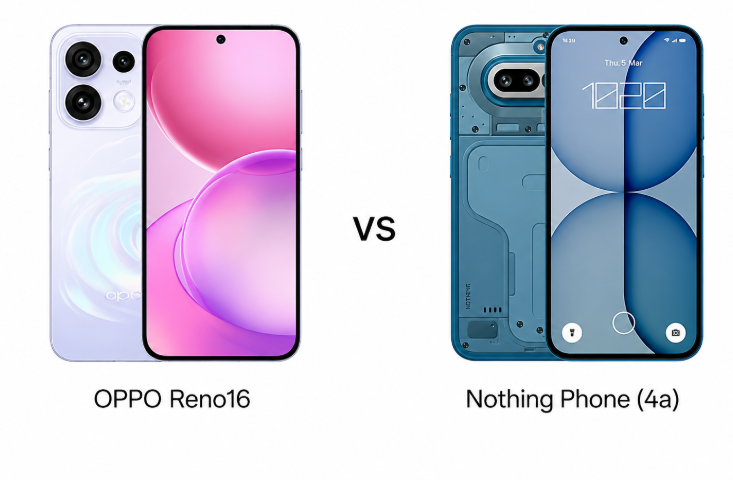
The leak also briefly touches on competitors. In a reply, DCS notes that Oppo is expected to keep its focus on 200-megapixel cameras for the Reno 16 series, along with a more detailed back design. Another comment suggests that at least one manufacturer may revisit curved displays later this year.
As always with early leaks, details could change before launch. So take these details with a pinch of salt.
For more daily updates, please visit our News Section.
Wireless gaming earbuds have quietly become a category of their own. A few years ago, gamers who wanted low-latency audio usually had to rely on bulky over-ear headsets. True wireless earbuds were convenient, but they often struggled with delay, unstable connections, or weak microphones.
Skullcandy Ink’d ANC TWS Earbuds
Things are changing now. Several companies have started building earbuds specifically for gaming, often combining Bluetooth with a low-latency 2.4GHz wireless dongle. This way, you get the portability of earbuds but with the responsiveness of a gaming headset.
If you’re looking for the best gaming TWS earbuds in March 2026, the options are limited, but a few are good at what they promise.
The SteelSeries Arctis GameBuds are an example of how gaming earbuds have evolved in 2026. Instead of relying purely on Bluetooth, they ship with a USB-C dongle that uses a dedicated 2.4GHz wireless connection for lower latency.
Using the dongle, the earbuds can connect to devices like PlayStation, PC, Nintendo Switch, and even some handheld gaming systems. Bluetooth 5.3 is also included for regular phone use, so you can switch between gaming and everyday listening fairly easily.
SteelSeries also leans heavily on software customization. Through its companion app, users get access to parametric EQ settings and over 100 game-specific audio presets designed to emphasize sounds like footsteps or directional cues.
The earbuds deliver around 10 hours on a single charge, with the charging case extending that to roughly 40 hours total. The case supports both USB-C charging and Qi wireless charging.
Add active noise cancellation and spatial audio support, and the Arctis GameBuds start to feel like a full gaming headset in a much smaller package.
2. ASUS ROG Cetra SpeedNova
From the visuals themselves, the ASUS ROG Cetra SpeedNova confirms they are made for gaming.
Like several gaming earbuds, the Cetra SpeedNova uses dual-mode connectivity: traditional Bluetooth for everyday use and a proprietary 2.4GHz SpeedNova wireless connection for gaming. This dedicated wireless mode is designed to reduce delay so audio stays in sync with gameplay.
The earbuds also focus heavily on sound hardware. ASUS is using large 14.2mm drivers with a diamond-like carbon coating to deliver clearer highs and deeper bass than typical earbuds.
The Cetra SpeedNova isn’t just built for competitive play. ASUS has also included sound modes such as Phantom Bass and Immersion Mode, which are designed to enhance low-end audio or reduce environmental noise depending on the situation.
3. Sony Pulse Explore (2026 update)
Sony’s Pulse Explore earbuds were originally designed as companions for the PlayStation ecosystem, but the 2026 update expands their appeal slightly.
The biggest advantage here is Sony’s proprietary PlayStation Link wireless technology, which delivers low-latency audio when paired with compatible devices such as the PlayStation 5 or PlayStation Portal. The goal is to keep audio perfectly synchronized with gameplay without the delay often associated with Bluetooth.
Sony also leans heavily on spatial audio. The earbuds support PlayStation’s 3D audio processing, which helps create directional cues in games.
Another distinguishing feature is the use of planar magnetic drivers. This technology can produce more detailed and accurate sound compared to traditional dynamic drivers. The Pulse Explore is for players who primarily game on PlayStation hardware.
4. Razer Hammerhead Pro HyperSpeed
Razer has been experimenting with gaming earbuds for several years, and the Hammerhead Pro HyperSpeed are ts the company’s most refined version so far.
The earbuds follow the same pattern as many modern gaming models: Bluetooth plus a 2.4GHz wireless dongle. This approach allows them to work with consoles, PCs, and smartphones while keeping latency low enough for fast-paced games.
The earbuds should last around 6 to 7 hours of playback per charge, with the charging case extending total usage to roughly 40 hours.
Razer also includes features that mirror its larger gaming headsets, such as customizable EQ settings, low-latency gaming modes, and RGB lighting on some variants. The Hammerhead Pro HyperSpeed is particularly appealing for players already using Razer peripherals.
5. Audeze Maxwell 2
While most gaming earbuds focus on portability, the Audeze Maxwell 2 takes a slightly different approach. It’s technically a headset rather than earbuds, but it’s still part of the modern wireless gaming audio landscape.
Announced at CES 2026, the Maxwell 2 builds on Audeze’s reputation for high-fidelity audio. It uses large planar magnetic drivers capable of reproducing a wide frequency range. Thus, it delivers extremely detailed sound compared to typical gaming headsets.
The headset also includes several modern wireless features:
Dual connectivity via 2.4GHz dongle and Bluetooth 5.3
Support for LDAC and LE Audio
AI-powered noise cancellation for the detachable microphone
Up to 80 hours of battery life
Those specifications make the Maxwell 2 one of the longest-lasting wireless gaming audio devices currently available.
6. Why gaming earbuds are becoming more common
The rise of gaming earbuds is tied to a few broader trends in gaming hardware.
First, portable gaming devices have become more popular. Handheld PCs, cloud gaming, and gaming phones all benefit from compact audio gear that’s easier to carry than a full headset.
Second, wireless technology has improved significantly. Modern 2.4GHz dongles can reduce latency enough that many players no longer notice delays between sound and gameplay.
Finally, gamers increasingly want multi-purpose audio devices. A pair of earbuds that works with a PC, console, and smartphone is far more convenient than owning separate headsets for each platform.
For more daily updates, please visit our News Section.
We use cookies on our website to give you the most relevant experience by remembering your preferences and repeat visits. By clicking “Accept”, you consent to the use of ALL the cookies.
This website uses cookies to improve your experience while you navigate through the website. Out of these, the cookies that are categorized as necessary are stored on your browser as they are essential for the working of basic functionalities of the website. We also use third-party cookies that help us analyze and understand how you use this website. These cookies will be stored in your browser only with your consent. You also have the option to opt-out of these cookies. But opting out of some of these cookies may affect your browsing experience.
Necessary cookies are absolutely essential for the website to function properly. This category only includes cookies that ensures basic functionalities and security features of the website. These cookies do not store any personal information.
Any cookies that may not be particularly necessary for the website to function and is used specifically to collect user personal data via analytics, ads, other embedded contents are termed as non-necessary cookies. It is mandatory to procure user consent prior to running these cookies on your website.