Advertisement

AnTuTu’s February flagship rankings are out, and iQOO leads the pack

AnTuTu’s Android performance rankings for February 2026 are out, and there’s a new device at the top.

The iQOO 15 Ultra has claimed the number one spot on the flagship list, ending the recent streak of the Red Magic 11 Pro+. With an average score of 4.2 million points, the iQOO phone now sets the pace for Android performance this month. 

iQOO 15 Ultra

The Red Magic 11 Pro+, which had held onto first place in previous rankings, slips to second with an average of 4.16 million. Irrespective of numbers, both phone runs on Qualcomm’s Snapdragon 8 Elite Gen 5 processor. 

In third place is the Vivo X300 Pro Satellite Communication Edition, powered by MediaTek’s Dimensity 9500 chipset. It posts an average score of 4.08 million. Not to mention, it’s also the only MediaTek-powered phone on the list. 

It’s all Snapdragon moving forward

From the Realme GT 8 Pro at fourth to the Redmi K90 Pro Max at tenth spot, all use a Snapdragon 8 Elite Gen 5 chip at the helm.

So it’s unsurprising to say that the Snapdragon 8 Elite Gen 5 has become the mainstream choice for high-end Android devices. Multiple phones powered by the chip are now comfortably crossing the 4 million mark in AnTuTu’s scoring system. 

It’s also worth noting how AnTuTu calculates these rankings. The published score reflects the average of all benchmark results recorded for each model during the month, not the single highest score a device may achieve.

That means the numbers can differ from marketing claims or isolated screenshots circulating online. In theory, the average score should provide a more realistic reference point for day-to-day performance.

For more daily updates, please visit our News Section.

Stay ahead in tech! Join our Telegram community and sign up for our daily newsletter of top stories! 💡
Xiaomi changes plan, Pad 8 to launch before Xiaomi 17 series in India

Xiaomi is readjusting its India launch timeline for the Xiaomi Pad 8 and the Xiaomi 17 series.

The company originally unveiled the Xiaomi 17 series at MWC 2026. Soon after that, it announced that the phones, along with the tablet, would launch on March 11. However, Xiaomi has now confirmed that the India launch has been rescheduled.

According to updates shared on X, the Xiaomi Pad 8 will arrive on March 10, with the Xiaomi 17 series following a day later on March 11.

Xiaomi Pad 8

For India, Xiaomi is keeping the spotlight on the standard Pad 8. It features an 11.2-inch LCD panel with a 3.2K resolution (3200 x 2136) and a 3:2 aspect ratio, which is slightly taller than the usual 16:10 format seen on many Android tablets.

The display supports a 144Hz adaptive refresh rate and peaks at 800 nits of brightness. It also brings Dolby Vision and HDR10 support, along with 12-bit color depth.

Xiaomi Pad 8

Furthermore, the screen supports wet-touch input and carries TÜV Rheinland certifications for low blue light, flicker-free viewing, and circadian-friendly performance. 

Powering the Pad 8 is Qualcomm’s Snapdragon 8s Gen 4 chip built on a 4nm process, paired with LPDDR5X RAM. Storage options include 128GB with UFS 3.1 or 256GB/512GB with faster UFS 4.1.

The tablet runs on HyperOS 3, Xiaomi’s latest software platform, which adds split-screen multitasking, a workstation mode, PC-like drag-and-drop browsing, and AI tools such as AI Writing, AI Translate, and AI Art.

Xiaomi 17 series

On March 11, Xiaomi will launch the Xiaomi 17 and Xiaomi 17 Ultra in India. Notably, the Leica-branded Ultra variant available in some global markets won’t be making its way to India.

There’s also a battery difference depending on the region. While Chinese variants of the Ultra models feature 6,800mAh batteries, the global and Indian versions are equipped with 6,000mAh units. 

The Indian microsite confirms that the Xiaomi 17 Ultra will support 90W wired HyperCharge and 50W wireless HyperCharge. Another feature Xiaomi is highlighting is Offline Communication, which enables network-free voice calls up to 1.9 kilometers using Bluetooth and proprietary protocols.

For more daily updates, please visit our News Section.

Stay ahead in tech! Join our Telegram community and sign up for our daily newsletter of top stories! 💡

Vivo X300 FE launched with compact 6.31-inch display, Snapdragon 8 Gen 5, 50MP triple cameras

Back in December 2025, Vivo unveiled the Vivo X300 and Vivo X300 Pro globally. There have been reports that the X300 FE will be added to the lineup in the coming days. Surprisingly, the device has already gone official in Russia. Here is a look at the specifications, features, and price of the device.

Vivo X300 FE specifications and features

Vivo X300 FE
Vivo X300 FE

The Vivo X300 FE arrives as a compact flagship with a 6.31-inch AMOLED display that delivers a resolution of 2640 x 1216 pixels. The panel supports a 1Hz to 120Hz refresh rate and offers up to 5000nits local peak brightness. It runs OriginOS 6 based on Android 16 and is promised to receive five years of Android version upgrades along with seven years of security updates.

Under the hood, the phone runs on the Snapdragon 8 Gen 5 chip, paired with LPDDR5X Ultra RAM and UFS 4.1 storage, offering configurations of 12GB RAM with up to 512GB storage. It houses a 6,500mAh battery with 90W wired and 40W wireless charging support.

For photography, the device features a triple rear camera system that includes a 50-megapixel Sony IMX921 main camera, a 50-megapixel telephoto lens using the IMX882 sensor with 3x optical zoom, and an 8-megapixel ultra-wide camera. On the front, it carries a 50-megapixel camera for selfies and video calls.

Vivo X300 FE-
Vivo X300 FE

The Vivo X300 FE is equipped with other features, such as an ultrasonic in-screen fingerprint sensor, dual speakers, Wi-Fi 7, Bluetooth 5.4, NFC, an IR blaster, and a USB-C port. The X300 FE has a glass back and measures around 7.99mm in thickness, while weighing about 190 gram.

Vivo X300 FE price and availability

The Vivo X300 FE is offered in color options such as Moonlight White, Cool Purple, and Graphite Black. In Russia, the sole 12GB+256GB trim of the device is priced at RUB 60,124 (~$770).

At the time of writing, Vivo has not publicly revealed the official pricing for the Russian market. As expected, the X300 FE has turned out to be a rebranded version of the Vivo S50 Pro Mini, which debuted in China in December 2025.

For more daily updates, please visit our News Section.

Stay ahead in tech! Join our Telegram community and sign up for our daily newsletter of top stories

iPad Air (2026) arrives in Geekbench with near-Pro performance

Apple’s latest iPad Air refresh has started appearing in early benchmarks, and the numbers suggest the tablet performs closer to the iPad Pro than many might have expected. Shortly after the announcement, the first Geekbench 6 results for the M4-powered iPad Air began circulating online. In the test, the tablet scored 3,714 in single-core and 12,296 in multi-core performance.

Apple-iPad-Air-2026

Those numbers put it surprisingly close to the Apple iPad Pro (M4), which typically lands around 3,691 single-core and 13,663 multi-core in the same benchmark. In other words, single-threaded performance is nearly identical, while the Air trails the Pro by roughly 10% in multi-core workloads.

That gap isn’t particularly surprising once you look at the chip configurations. The iPad Air uses an 8-core version of the M4, with three performance cores and five efficiency cores. The iPad Pro, meanwhile, carries a 10-core variant with four performance cores and six efficiency cores.

The extra cores in the Pro help when software can scale across many threads — things like exporting large video projects or heavy multitasking. But for everyday work, the difference may be harder to notice. Tasks like browsing, media consumption, note-taking, and even most creative workloads rarely saturate all available cores.

That positioning keeps the Air noticeably cheaper than the Pro lineup, while still delivering Apple’s newest silicon. If these early benchmarks hold up in broader testing, the M4 iPad Air may end up occupying a sweet spot in Apple’s tablet lineup — offering most of the performance of the Pro models without the same price tag. For many buyers, the extra cores in the Pro simply won’t make a meaningful difference in daily use.

The M4 iPad Air is already available for pre-orders, with retail availability reportedly scheduled for March 11. Pricing starts at about 4,799 yuan in China (roughly $659) for the 11-inch model with 128GB storage, while the 13-inch version begins around 6,499 yuan (~$899). Pricing and availability may vary by region.

Don’t miss a thing! Join our Telegram community for instant updates and grab our free daily newsletter for the best tech stories!

For more daily updates, please visit our News Section.

(Source: Geekbench)

Vivo X300 Ultra has another teleconverter lens that is not revealed yet

Vivo’s next flagship camera phone, the Vivo X300 Ultra, has started appearing in fresh leaks revealing key details about its display, design, and imaging system. A new tip from Digital Chat Station suggests that the device could bring notable changes compared to the previous generation, particularly in display design and camera capabilities.

Vivo X300 Ultra display and design details tipped

Vivo X300 Ultra’s key details tipped

According to the leak, the Vivo X300 Ultra will feature a 6.82-inch display supplied by BOE. The panel is said to offer a 2K+ resolution with a 120Hz refresh rate and support LTPO technology for dynamic refresh rate adjustment. The screen will reportedly adopt a flat design with regular rounded corners instead of the quad-curved panels used in earlier models.

The tipster also claims the display will have extremely narrow bezels on all four sides, creating a symmetrical look around the panel. This marks a shift away from the equal-depth curved screens that previously appeared on several flagship phones. The change could improve grip, screen protection compatibility, and overall usability.

Vivo X300 Ultra’s display

In addition to the new display design, the Vivo X300 Ultra is said to include a slightly larger battery than the Vivo X300 Pro. However, the battery capacity is not expected to reach the 7,000mAh mark that had been rumoured earlier. Under the hood, it will feature the Snapdragon 8 Elite Gen 5 chipset.

Vivo X300 Ultra camera and imaging upgrades

Vivo X300 Ultra 400mm teleconverter kit-
Vivo X300 Ultra 400mm teleconverter kit

The phone is expected to place strong emphasis on photography, continuing Vivo’s focus on imaging flagships. Reports indicate that the device may feature a triple camera system built around two 200-megapixel sensors and a 50-megapixel ultra-wide camera.

The main camera could use a custom Sony LYTIA 901 sensor with a large 1/1.12-inch sensor size and a 35mm focal length. A second 200-megapixel Samsung HPB periscope telephoto camera with an 85mm focal length and a 50-megapixel Sony LYT-828 ultra-wide sensor are also expected. The setup may be accompanied by a 5-megapixel multispectral sensor designed to improve colour accuracy under complex lighting conditions.

The Vivo X300 Ultra is also expected to support advanced video features such as full focal length 4K 120fps recording with Dolby Vision and optical stabilisation across lenses. Vivo is reportedly preparing a new photography kit as well, including a 400mm telephoto converter and a professional camera grip designed to extend the phone’s long-distance shooting capabilities.

Tipster Digital Chat Station also hinted that, besides the already known telephoto converter, there may be another accessory that has not surfaced yet. According to the tipster, this additional telephoto accessory could be designed to suit regular photography enthusiasts rather than only professional users.

For more daily updates, please visit our News Section.

Stay ahead in tech! Join our Telegram community and sign up for our daily newsletter of top stories

Caviar unveils custom Galaxy S26 Ultra with 24K gold animal designs, starting at $10,490

Caviar, the Dubai-based luxury customization brand, has introduced the Totem Collection, a new series of exquisitely designed Samsung Galaxy S26 Ultra smartphones. Each phone in the collection is inspired by a symbolic animal: horse, lion, wolf, and falcon, and crafted with premium materials like 24K gold, black titanium, and forged carbon.

Caviar Totem Collection

Design Details

Caviar-Galaxy-S26-Ultra-Fire-Horse-edition

The flagship Fire Horse model celebrates the Lunar New Year and the horse as a symbol of energy, vitality, and passion. Caviar designed this phone with a bold 24K gold bas-relief of a rearing horse, framed by red flame motifs hand-filled with rich enamel to create the effect of living fire. The base, crafted from black titanium, adds a touch of heritage and strength. The Fire Horse is priced at $11,490, making it the most expensive in the collection.

Caviar-Galaxy-S26-Ultra-Fire-Horse-edition

The Lion model represents power, courage, and leadership. The phone features a golden bas-relief lion rising against a forged carbon backdrop. Its rimson enamel accents form a radial shield around the lion, emphasizing its regal presence and commanding authority. This model is priced at $11,060.

The Wolf model reflects independence, instinct, and discipline. The centerpiece is a finely detailed bas-relief of a wolf, set against a textured black titanium and forged carbon base. Sharp, radiant motifs surround the wolf, creating a protective symbolic shield that represents resilience and focus. This model is priced at $10,490.

The Falcon model celebrates visionaries and pioneers. It features a sculpted bas-relief of a soaring falcon, placed on a carbon panel enriched with golden inclusions. The radiating pattern surrounding the falcon symbolizes clarity and control, qualities associated with strategic foresight. The Falcon model is priced at $10,910.

Caviar has limited each model in the Totem Collection to only 19 pieces, ensuring unmatched exclusivity. Each phone is delivered in a signature luxury gift box and accompanied by a personalized video greeting.

In related news, Caviar has also unveiled the ultra-luxury iPhone 17 Pro Valentine’s collection featuring gold and diamond embellishments, alongside the Black Edition iPhone 17 Pro Max crafted with titanium, crocodile leather, and gold accents.

For more daily updates, please visit our News Section.

Stay ahead in tech! Join our Telegram community and sign up for our daily newsletter of top stories! 💡

Samsung Galaxy A57 and A37 retailer listing confirms price hike, here are the details

Samsung’s next midrange phones are getting expensive. Tipster Sudhanshu Ambhore on X spotted the upcoming Galaxy A57 and Galaxy A37 on a European retail listing, revealing the price of two phones. And yes, it suggests a price hike.

If the leak is accurate, the Galaxy A57 with 6GB of RAM and 128GB of storage could cost €439. The higher-end model with 8GB of RAM and 256GB of storage may go up to €539.

The Galaxy A37, meanwhile, is listed at €539 for the 8GB RAM + 128GB variant, while the 8GB RAM + 256GB model could reach €609.

For comparison, Samsung launched the Galaxy A36 and the Galaxy A56 at starting prices of €379 and €479, respectively, for the same storage variants. That means Samsung may be planning a €60 price increase across the board without increasing memory or storage. 

What to expect from the Galaxy A37

According to leaks, the Galaxy A37 could be powered by Samsung’s Exynos 1480 chipset, the same processor used in last year’s Galaxy A55. 

Samsung Galaxy A37 5G
Samsung Galaxy A37 in certification listing

It will feature a triple rear camera setup, headlined by a 50-megapixel primary sensor with OIS, an 8-megapixel ultra-wide, and a 5-megapixel macro camera. The phone could pack a 5,000mAh battery with 45W charging support.

Some reports also suggest the device could ship with Android 16 and One UI 8.5, though that may depend on its final release date.

What to expect from the Galaxy A57

The Galaxy A57 is expected to sit slightly higher in Samsung’s lineup. It may feature a newer Exynos 1680 processor and a 6.6-inch AMOLED display with a 120Hz refresh rate.

Samsung-Galaxy-A57-Design
Samsung Galaxy A57 in TENAA listing

It’s also said to come with a 5,000mAh battery and 45W charging. Other possible features include IP67 water resistance and stereo speakers.

Samsung has yet to announce the device officially.

Don’t miss a thing! Join our Telegram community for instant updates and grab our free daily newsletter for the best tech stories!

For more daily updates, please visit our News Section.

(Via)

Here’s when Xiaomi 17T is expected to launch

Xiaomi has just launched the Xiaomi 17 and 17 Ultra flagship phones globally. The brand is known for launching “T”-branded affordable flagships in select markets in the second half of the year. However, rumors surrounding the Xiaomi 17T lineup suggest that it will debut earlier than expected. A new leak by tipster Abhishek Yadav has revealed a more specific timeframe for the 17T series’ arrival.

Xiaomi 17T launch timeframe tipped

Xiaomi 17 in Pine Green

According to the tipster, the Xiaomi 17T will launch by the end of April or in May. This should be accompanied by the Pro model, but in India, the brand may only offer the standard variant, which has already appeared in the IMEI database in the past.

Previous reports have revealed that the Xiaomi 17T and 17T Pro will be equipped with Leica imaging capabilities. Both phones are expected to feature a 50-megapixel + 12-megapixel + 50-megapixel triple camera unit, but the primary and telephoto camera sensors are said to differ from each other. The Pro edition is also said to feature a periscope telephoto camera. For selfies, both phones may feature a 32-megapixel front camera.

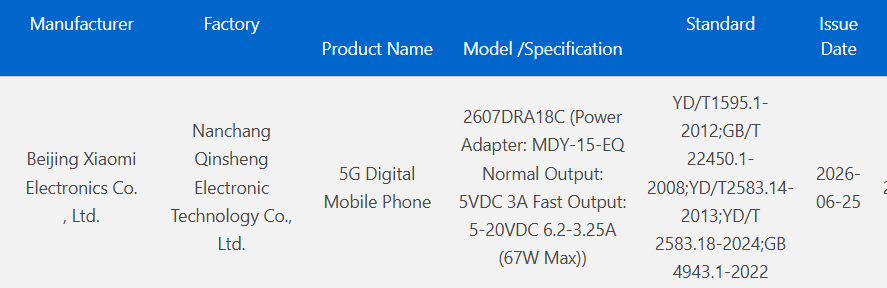
The Xiaomi 17T and 17T Pro are said to have model numbers 2602DPT53G/I and 2602EPTC0G. While the 17T may pack a Dimensity 8500 chip and a 6,500mAh battery with 67W charging, the 17T Pro is said to be powered by the Dimensity 9500. However, there is no information about the Pro model’s battery and charging capabilities.

The 17T Pro is said to be based on the Redmi K90 Ultra, which is also expected to launch in April in China. It is said to feature a 6.8-inch OLED 1.5K 165Hz display, a Dimensity 9500 chip, an 8,500mAh battery with 100W charging, a built-in cooling fan, a metal frame, an ultrasonic in-screen fingerprint sensor, and comprehensive water resistance.

For more daily updates, please visit our News Section.

Stay ahead in tech! Join our Telegram community and sign up for our daily newsletter of top stories

Tecno Pop X debuts with 120Hz display, Ella AI, and walkie-talkie calling feature

Tecno has introduced a new entry-level smartphone in India called the Tecno Pop X. The device arrives with a few features that are uncommon in the budget segment, including a high refresh rate display and a walkie-talkie style communication option that works without a cellular network. Here is a closer look at the Pop X and what it offers.

Tecno Pop X specifications and features

Tecno Pop X
Tecno Pop X-

The Tecno Pop X features a 6.75-inch LCD display that offers an HD+ resolution and a 120Hz refresh rate. The screen is designed to deliver smoother scrolling and improved responsiveness compared to standard budget panels. In terms of design, the phone comes with an IP64 rating for dust and splash resistance and is available in white and green colour options.

On the photography front, the device is equipped with a 13-megapixel rear camera accompanied by a dual LED flash. For selfies and video calls, it has an 8-megapixel front camera. The camera module also houses an infrared sensor, which is integrated into the rear design.

The smartphone runs on HiOS based on Android 15. It also includes Tecno’s Ella AI assistant, which supports several regional Indian languages. Powering the phone is the Unisoc T7250 processor paired with 4GB of LPDDR4x RAM and 64GB of eMMC storage. The device also includes a dedicated microSD card slot for storage expansion.

A 5,000mAh battery powers the Pop X and supports 15W charging. For connectivity, it supports dual 4G LTE, Wi-Fi, Bluetooth 5.2, GPS, a USB-C port, and a 3.5mm audio jack. One notable feature is its “no network communication” capability, which allows walkie-talkie style voice calls between compatible Tecno phones within a range of up to 1.5km.

Tecno Pop X price and availability

The Tecno Pop X has been launched in India in a single configuration with 4GB RAM and 64GB storage priced at Rs 8,499 (~$93). The phone will go on sale starting March 6 at 12 PM (local time) through Amazon and offline retail stores. As part of a launch offer, buyers using select bank cards may be able to purchase the device at a reduced price of Rs 7,749 (~$85).

For more daily updates, please visit our News Section.

Stay ahead in tech! Join our Telegram community and sign up for our daily newsletter of top stories

Vivo V70 FE to debut in three colors with 200MP primary camera

The Vivo V70 FE has largely been revealed ahead of its official debut, thanks to a steady stream of leaks. Now, Vivo has confirmed it’ll launch the phone in Indonesia on March 9. Joining it is the Vivo V70, which has already debuted in India.

Vivo has also started teasing key details ahead of the event. The company confirmed that the V70 FE will ship with a dual rear camera system led by a 200-megapixel primary sensor. 

Teaser images also show off the phone’s slim display bezels and three color options—Muse Purple, Ocean Blue, and Titanium Silver. 

Vivo V70 FE Specifications (Expected)

Alongside the 200MP main sensor sits an 8-megapixel ultra-wide camera for broader scenes. On the front, there’s a 32-megapixel camera designed for selfies and video calls.

The V70 FE is expected to feature a 6.83-inch AMOLED display with a 1.5K resolution and a 120Hz refresh rate. If you notice, the screen also has a gentle curve on the side. 

Powering the device is MediaTek’s Dimensity 7360-Turbo chipset, built on a 4nm manufacturing process. It’s paired with multiple memory options: 8GB of RAM with 256GB of storage, 12GB with 256GB, and 8GB with 512GB.

The phone runs on OriginOS 6 out of the box. Vivo says it will support the device with up to six years of system updates and promises five years of smooth performance.

The V70 FE packs a large 7,000mAh “BlueVolt” battery, paired with 90W FlashCharge support for faster top-ups.

Rounding out the spec sheet are dual stereo speakers and IP68 and IP69 ratings for dust and water resistance.

For more daily updates, please visit our News Section.

Stay ahead in tech! Join our Telegram community and sign up for our daily newsletter of top stories.

OnePlus 16, iQOO 16, and Redmi K100 Pro Max all tipped to launch at higher starting prices

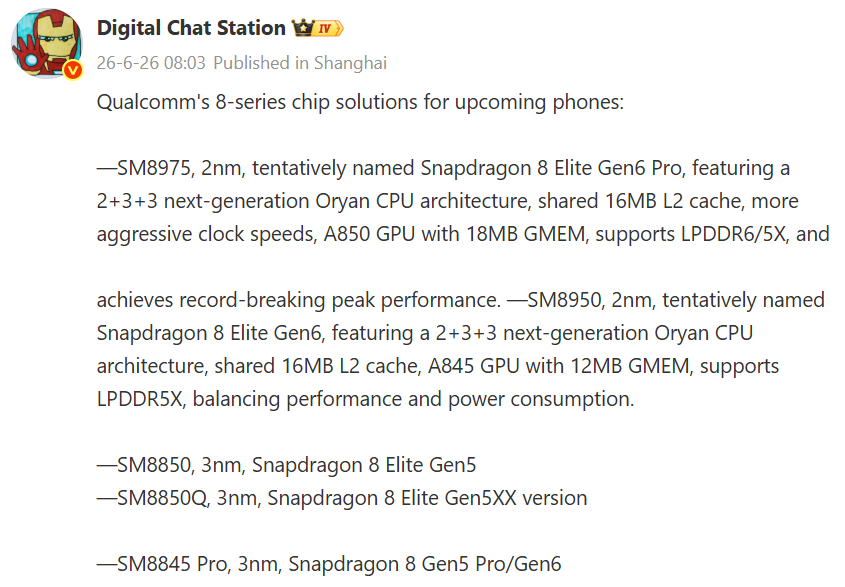
2026 is expected to be the year when Apple, Qualcomm, and MediaTek release their 2nm flagship mobile processors. Apple is reportedly preparing its A20 series chip. Qualcomm is working on the Snapdragon 8 Elite Gen 6 series, while MediaTek is said to be developing the Dimensity 9600.

On paper, this new silicon is expected to deliver a major performance leap across flagship smartphones. But there’s a catch, an expensive one in fact.

According to recent reports, the cost of a single 2nm wafer from TSMC is expected to exceed $30,000. That’s nearly double the price of today’s mainstream 4nm wafers. Manufacturing at this scale is not just technologically difficult; it’s also financially demanding.

Flagship phones from sub-brands will increase in price in 2026

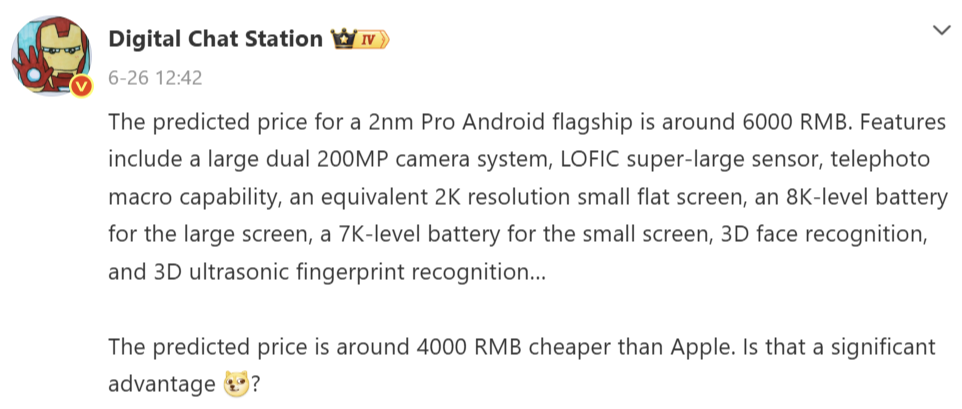
When core components become more expensive, the final product usually follows. A well-known industry tipster, Digital Chat Station, claims that next-generation flagship smartphones from sub-brands like OnePlus, iQOO, and Redmi equipped with 2nm chips will start at 5,000 yuan (~$725). The base variant is said to feature 12GB of RAM and 256GB of storage.

For comparison, current flagships from these brands start at significantly lower prices. The OnePlus 15 starts at 3,999 yuan for the 12GB/256GB variant. The iQOO 15 launched at 4,199 yuan. Likewise, the Redmi K90 Pro Max retails for 3,999 yuan.

Brands are unlikely to absorb higher chip fabrication costs on their own. Instead, many are expected to adopt differentiated strategies within their product lineups. Not every model will ship with a 2nm processor; standard versions may continue using refined 3nm chips, which are more mature and less expensive to produce.

For consumers, the promise of faster speeds and improved battery efficiency is appealing. But so is a reasonable price. If entry-level flagship pricing climbs past 5,000 yuan, the barrier to experiencing cutting-edge hardware will rise significantly.

Don’t miss a thing! Join our Telegram community for instant updates and grab our free daily newsletter for the best tech stories!

For more daily updates, please visit our News Section.

(Source)

Snapdragon X2 Elite Extreme X2E-96-100 impresses in Geekbench CPU, GPU tests

Qualcomm’s next push into high-performance Windows laptops is starting to show up in benchmarks, and the early numbers look promising.

The upcoming Snapdragon X2 Elite Extreme (X2E-96-100) has finally appeared in a leaked Geekbench listing tied to an Asus Zenbook A16 configuration with 48GB of RAM. While the chip was announced earlier and even shown in a few prototype devices at CES 2026, this is one of the first independent benchmark entries to surface publicly.

In Geekbench 6.6.0, the processor reportedly scored 4,033 in single-core and 23,198 in multi-core tests. Those results put it in interesting territory.

On the single-core side, the chip appears to edge past Apple’s Apple M4 Max, which typically lands somewhere around the high-3,800 to low-3,900 range in the same benchmark. Multi-core performance still favors Apple, though, with the M4 Max hovering closer to 25,700.

Compared with current Windows-focused competitors, the results look significantly stronger. AMD’s top Strix Halo configurations generally score around 2,900 single-core and 18,000 multi-core, while Intel’s Core Ultra X9 388H Panther Lake part sits roughly in the 3,000 / 17,800 range. If the numbers hold up, Qualcomm’s new chip would represent a clear step forward for Windows-on-Arm performance.

Graphics performance also appears to have taken a notable leap. The integrated Adreno X2-90 GPU — listed with 16 compute units — achieved 44,786 points in Geekbench’s OpenCL test. That’s almost double what earlier Snapdragon X Elite graphics managed in similar benchmarks.

The Snapdragon X2 Elite lineup is expected to feature Qualcomm’s updated Oryon CPU architecture, with an 18-core design and boost clocks reportedly reaching up to 5.0 GHz on prime cores. The chip also includes an 80 TOPS NPU aimed at accelerating AI workloads.

The leak gives an early glimpse of Qualcomm’s ambitions. The company has spent the past few years positioning Snapdragon chips as a serious alternative to traditional laptop processors, promising much improved power efficiency and battery life.

If production laptops deliver results close to these numbers, the Snapdragon X2 Elite could end up being Qualcomm’s strongest attempt yet at challenging both Apple Silicon and the latest x86 processors.

Don’t miss a thing! Join our Telegram community for instant updates and grab our free daily newsletter for the best tech stories!

For more daily updates, please visit our News Section.

(Sources: 1, 2 | Image: Qualcomm)

Redmi K100 Pro Max chipset, 200MP triple camera setup tipped, Poco F9 Ultra may mirror this

Redmi is expected to unveil the Redmi K90 Ultra and K90 Pro in April this year in China. A couple of months later, the brand may introduce the Redmi K100 lineup, featuring the K100 and K100 Pro Max. The latter could be Redmi’s most powerful flagship phone.

Redmi K100 Pro Max chip, camera details emerge

Redmi K100 Pro Max key details emerge

A report that surfaced last month revealed that the Redmi K100 and K100 Pro Max could both be powered by Qualcomm’s Snapdragon 8-series chipsets. While these devices are expected to remain exclusive to the Chinese market, their rebranded versions, dubbed the Poco F9 Pro and F9 Ultra (or Pro Max), may launch globally.

A new leak by reliable tipster Digital Chat Station talks about an upcoming Redmi flagship phone whose prototype is powered by a 2nm chip. This device appears to be the Redmi K100 Pro Max equipped with the next-generation 2nm Snapdragon 8 Elite Gen 6.

He added that Redmi could be testing a new camera setup featuring a 200-megapixel main camera backed by a 1/1.28-inch sensor and a 50-megapixel mid-tier periscope telephoto lens. In comparison, the Redmi K90 Pro Max has the Snapdragon 8 Elite Gen 5 chip and a triple 50-megapixel camera setup.

Therefore, it is likely that the Redmi K100 Pro Max’s rear camera setup may feature a 200-megapixel main camera, a 50-megapixel ultra-wide lens, and a 50-megapixel periscope telephoto camera. As a rebranded edition, the Poco F9 Ultra may feature the same camera setup and the Snapdragon 8 Elite Gen 6.

The rest of the specifications of the Redmi K100 Pro Max / Poco F9 Ultra remain under wraps. More details about these devices are expected to surface in the coming days. Likely, the K100 series may debut in October this year in China, whereas the Poco F9 lineup may hit the global market by Q1 2027.

For more daily updates, please visit our News Section.

Stay ahead in tech! Join our Telegram community and sign up for our daily newsletter of top stories

DJI Osmo Pocket 4 leak reveals removable LED light, new zoom controls

More details about DJI’s upcoming Osmo Pocket 4 are starting to surface, and the latest leak suggests the small vlogging camera may bring a few more practical upgrades than earlier rumors hinted.

The new information comes from tipster Igor Bogdanov, who shared additional pages from what appears to be the device’s full Quick Start Guide. The document is labeled for the Creator Combo version, which usually includes extra accessories aimed at content creators.

One of the more interesting additions revealed in the new pages is a removable LED floodlight accessory. Instead of building a light directly into the camera body, DJI appears to have designed a small module that attaches to the bottom of the device, likely through a magnetic or mechanical connection.

The light itself includes physical buttons that allow users to adjust both brightness and color temperature, each with three levels. For vloggers filming in dim environments, that could be a handy option without needing to carry separate lighting gear. At the same time, keeping it detachable helps the camera stay compact when the light isn’t needed.

Another tweak involves physical zoom controls. According to the diagrams in the guide, the Osmo Pocket 4 will include a dedicated zoom button that quickly switches between 1×, 2×, and 4× zoom levels. The higher levels appear to rely on digital zoom rather than optical, though earlier leaks have suggested that a separate Osmo Pocket 4 Pro model could introduce optical zoom. The guide also hints at support for a magnetic auxiliary lens.

As for timing, earlier reports indicate the Osmo Pocket 4 could be officially announced in China on March 26 with sales beginning shortly afterward. A global launch may follow soon after, possibly in April, which would match DJI’s typical rollout pattern.

For now, the Osmo Pocket 4 looks like a careful evolution of DJI’s pocket-sized gimbal camera, adding a few thoughtful tools for creators without straying too far from what already works.

Don’t miss a thing! Join our Telegram community for instant updates and grab our free daily newsletter for the best tech stories!

For more daily updates, please visit our News Section.

(Source: Igor Bogdanov)

Modder fits Honor Magic V6 Blade batteries into Galaxy Z TriFold for staggering 9,600mAh capacity

Foldable phones are already engineering puzzles. Now imagine opening one up and trying to nearly double its battery capacity.

That’s essentially what YouTuber Scotty Allen attempted in his latest project. Allen, best known for the Strange Parts channel and its ambitious repair experiments, decided to see what would happen if he replaced the battery inside Samsung’s tri-fold phone with a high-energy-density silicon-carbon battery pack taken from a rival device.

Samsung’s Galaxy Z TriFold ships with a three-cell battery pack with a total capacity of 5,600mAh. Honor’s latest book-style foldable, in comparison, manages a battery capacity of around 6,660mAh. Allen’s idea was simple in theory: take those high-density battery cells and retrofit them into Samsung’s device.

In practice, it turned into a far more complicated job. The Honor Magic V6’s battery cells are slightly larger than the spaces available inside the TriFold, so Allen had to physically modify the phone to make them fit. That meant CNC-milling parts of the chassis, grinding down hinge components, and even removing the bottom speaker to free up room.

There was also the matter of battery electronics. Allen replaced Honor’s battery management system with Samsung’s to ensure the phone could properly recognize and manage the new cells.

The end result, at least on paper, was a 9,600mAh battery pack inside the TriFold. That’s about 71% more capacity than the original 5,600mAh configuration.

The modified phone actually powers on and runs. But the surgery didn’t come without consequences. A visible white line now runs across the display, likely the result of stress during disassembly or reassembly.

Still, the experiment makes an interesting point. Being able to squeeze significantly more capacity into the same physical volume could dramatically improve endurance for these devices.

Samsung, for its part, has been cautious about adopting the technology. After past battery incidents, the company has tended to prioritize reliability over aggressive capacity jumps.

But a recent report suggests Samsung may finally be preparing to use silicon-carbon batteries in future Galaxy phones, possibly starting with slim devices like the rumored Galaxy S26 Edge.

Don’t miss a thing! Join our Telegram community for instant updates and grab our free daily newsletter for the best tech stories!

For more daily updates, please visit our News Section.

(Source)

Oppo Find X9 Ultra’s dual periscope telpehoto camera details emerge again, up to 10x zoom tipped

In a Weibo post, reliable tipster Ice Universe has claimed the upcoming Oppo Find X9 Ultra could feature one of the strongest telephoto systems at the hardware level. In support of this claim, he has reposted a post shared by tipster Digital Chat Station, which reiterates the periscope camera details of the X9 Ultra. Here’s a look at the details shared by him.

Dual periscope telephoto camera details surface

According to DCS, the Find X9 Ultra may arrive with a significantly improved zoom camera configuration. The device is said to feature a 200-megapixel periscope telephoto sensor with a large 1/1.28-inch sensor size and an aperture around F2.2. This lens is expected to deliver stronger light capture compared to most telephoto cameras currently available in flagship smartphones.

Alongside it, the phone could include a second periscope camera designed for extreme zoom. This sensor is tipped to be a 50-megapixel unit with roughly 10x optical zoom and a 1/2.76-inch sensor. The combination of these two lenses could allow the device to cover both mid-range zoom photography and longer focal lengths with improved clarity.

Previous leaks have also outlined that the Find X9 Ultra could be equipped with a new 200-megapixel OmniVision OV52A mid-range periscope lens with 3x optical zoom at 70mm. This could be accompanied by a 50-megapixel Samsung JN5 periscope telephoto camera with 10x optical zoom and 230mm focal length.

For the primary camera, the X9 Ultra may feature the all-new 200-megapixel Sony LYT-901 primary camera with a 23mm focal length. It could be coupled with a 15mm 50-megapixel Samsung JN5 ultra-wide lens. For selfies, it may feature a Samsung JN5 50-megapixel camera with autofocus support.

Oppo Find X9 Ultra launch timeframe

Apart from the camera upgrades, the phone is expected to feature a 2K display along with balanced flagship hardware across other areas. However, the biggest highlight remains the upgraded telephoto system aimed at improving long-range photography.

As for the launch timeline, reports indicate that Oppo may introduce the Find X9 Ultra in China around April this year, possibly alongside the Find X9s Pro. The global debut could follow later in the second quarter, where it may launch together with the Find X9s series.

For more daily updates, please visit our News Section.

Stay ahead in tech! Join our Telegram community and sign up for our daily newsletter of top stories

Lenovo confirms Xiaoxin Pro 13 and Legion Y700 (2026) launch date, here are the specs we know

Lenovo has been teasing the Xiaoxin Pro 13 and Legion Y700 (2026) tablet for quite some time. Now, we finally have a date to look forward to.

Lenovo today confirmed that it will hold an AI-focused tablet launch event on March 18, where it will introduce the fifth-generation Legion Y700 and the Xiaoxin Pro 13.

According to Lenovo, the new Legion Y700 delivers the strongest performance in the lineup’s history. The Xiaoxin Pro 13 series, meanwhile, focuses on its display, which Lenovo says is the largest and best screen the series has offered so far.

If some of this sounds familiar, that’s because Lenovo already showed part of its hand at MWC. 

The company recently introduced the Lenovo Legion Tab (8.8”, 5), which is said to be the international version of the Legion Y700 (2026). It also unveiled the Lenovo Idea Tab Pro Gen 2, which could be the upcoming Xiaoxin Pro 13 for the global market. 

Lenovo Legion Y700 (2026) Specifications

The Legion Tab (8.8”, 5) is powered by Qualcomm’s Snapdragon 8 Elite Gen 5 processor and features an 8.8-inch 3K display with a 165Hz refresh rate and 600 nits of brightness. 

It comes with 16GB of LPDDR5X-10667 RAM and 512GB of UFS storage. There are dual USB-C ports, a 9,000mAh battery, and a total weight of 360 grams.

Lenovo says its upgraded Legion Coldfront liquid cooling system is 32 percent more efficient than the previous generation. The tablet also includes Lenovo’s AI Engine+ software, which uses AI to enhance audio quality, reduce noise, and improve touch responsiveness.

The Legion Tab (8.8”, 5) is scheduled to go on sale in April 2026, with a starting price of €999.

Lenovo Xiaoxin Pro 13 Specifications

On the other side, the Idea Tab Pro Gen 2 runs on Qualcomm’s Snapdragon 8s Gen 4 platform and features a 13-inch 3.5K PureSight Pro display, with an optional matte eye-care panel. It includes a JBL quad-speaker system and supports Dolby Vision and Dolby Atmos.

The tablet is just 6.20mm thick and weighs under 600 grams. Inside, there’s a 10,200mAh battery with support for 45W fast charging. Lenovo is also bundling a 2-in-1 keyboard with a dedicated smart key, and the tablet supports the Lenovo Tab Pen Plus stylus for note-taking and drawing.

The Idea Tab Pro Gen 2 is set to launch in March 2026 with a starting price of €549.

For more daily updates, please visit our News Section.

Stay ahead in tech! Join our Telegram community and sign up for our daily newsletter of top stories! 💡

JBL launches GO 5 Bluetooth speaker with audio tuned by Harman Acoustics

JBL has quietly announced the new JBL GO 5 speaker. The small, colorful Bluetooth speaker builds on the familiar GO design, but this time JBL is layering in a handful of meaningful upgrades.

At first glance, not much has changed about the design. The GO 5 keeps its compact, block-like shape, measuring 101 x 77.4 x 43 mm and weighing about 230 grams. It’s small enough to slip into a bag pocket without much thought. 

JBL is offering it in six color options, including Black, Red, Sky Blue, Pink, Orange, and Deep Blue (Cloisonne). There’s also WINK ambient lighting built in for a subtle visual layer. And as expected, the speaker comes with an IP68 rating for dust and water resistance. 

JBL GO 5 Specifications

Internally, JBL says the GO 5 has been tuned by the Harman Acoustics team. Output power is rated at 4.8W RMS, a modest bump that suggests slightly stronger sound compared to previous models. 

It uses a 45mm driver and offers a frequency response range of 100 Hz to 19 kHz (-6dB), with a signal-to-noise ratio above 85 dB. As expected from a speaker of this size, it’s built more for personal listening and small gatherings rather than filling large rooms.

For connectivity, the GO 5 moves to Bluetooth 6.0 and supports SBC, AAC, and LC3 codecs. JBL is also adding support for Bluetooth AURACAST, a newer feature designed to broadcast audio to multiple compatible devices. There’s an AirTouch one-touch pairing function as well, aimed at simplifying the setup process.

If you own more than one GO 5, you can power them on and have two units automatically connect to form a stereo pair. Multiple speakers can also be wirelessly linked together for a wider sound setup. 

For those who prefer a wired option, the GO 5 supports direct USB-C connection to a computer and includes a built-in DAC chip for digital audio playback.

Inside, there’s a 1000mAh lithium-ion battery (3.85Wh, equivalent to 3.8V/1000mAh). JBL claims up to 8 hours of music playback with lights off, depending on volume level and audio content. Charging takes about three hours using a 5V/1A USB-C input. The maximum operating temperature is listed at 40°C.

The JBL GO 5 is now available for pre-order in China for 399 yuan (roughly $58), with broader global availability expected in the coming days.

For more daily updates, please visit our News Section.

Stay ahead in tech! Join our Telegram community and sign up for our daily newsletter of top stories

(Via)

iQOO 16 tipped to retain 2K display while rivals shift to 1.5K panels

In October 2025, Vivo unveiled the Vivo X300 series, whereas its sub-brand iQOO announced the iQOO 15. It is likely that both companies will apply the same strategy for the next-generation flagships. While the rumor mill has already leaked a few details about the upcoming Vivo X500 series, details about the iQOO 16 have also started surfacing. A new leak, courtesy of tipster Smart Pikachu, has revealed a key detail about the iQOO 16’s display.

iQOO 16 to feature 2K display

According to the tipster, while most next-generation flagships are shifting to 1.5K displays, Vivo is reportedly testing two upcoming phones with 2K screens.

The iQOO 16 hashtag used in the Weibo post suggests that it could retain a higher-resolution 2K display instead of moving to the 1.5K panels many competitors are adopting.

While he has not mentioned the X500 series, a previous leak suggests that the entire lineup would feature 2K resolution displays.

The OnePlus 16 is expected to be one of the major rivals for the iQOO 16. This device is likely to retain the 1.5K resolution and a 165Hz refresh rate that were introduced on the OnePlus 15. Some unconfirmed reports suggest that the iQOO 16’s display refresh rate may upgrade to 165Hz.

At present, there is no information about the iQOO 16’s other specifications. Being a performance-focused flagship, it may feature the next-generation Snapdragon 8 Elite Gen 6 chipset and a massive battery. Hopefully, upcoming reports will shed more details about the iQOO 16’s innards.

For more daily updates, please visit our News Section.

Stay ahead in tech! Join our Telegram community and sign up for our daily newsletter of top stories

OnePlus 15T could be the only compact flagship with IP66, IP68, IP69 and IP69K ratings

For the past few days, OnePlus has been gradually revealing key details about the OnePlus 15T. A new updated released by a company executive reveals that the 15T will offer a comprehensive water resistance. Here is a look at the fresh details that have emerged today.

OnePlus 15T confirmed to arrive with IP68/69/69K rating

OnePlus 15T render
OnePlus 15T AI-generated render

According to OnePlus China president Li Jie, the OnePlus 15T will come with upgraded water resistance capabilities. The device is expected to support IP66, IP68, IP69, and IP69K ratings, which could make it one of the few smartphones in the market with this level of protection. If confirmed, it may also become the only compact flagship currently offering all four certifications together.

These ratings indicate resistance against dust as well as water exposure under different conditions. In particular, the IP69K standard means the device can withstand high pressure water jets and high temperature washing. Under testing conditions, devices with this rating can operate even when exposed to water pressure reaching around 100 bar and temperatures up to 80°C.

This level of durability suggests the phone may handle harsh environments such as heavy rain, hot water splashes, or intense cleaning conditions more reliably than typical smartphones. For everyday users, it could provide additional peace of mind during outdoor use, travel, or accidental exposure to water.

Expected specifications and design details

The OnePlus 15T is also expected to bring flagship hardware. Reports indicate that it will run on the Snapdragon 8 Elite Gen 5 chipset, paired with configurations reaching 16GB RAM and up to 1TB storage. Benchmark listings on AnTuTu reportedly show scores exceeding 4.45 million, hinting at strong performance.

The phone is said to feature a 6.32-inch compact display with extremely narrow and symmetrical bezels. Company executives have suggested that it could have one of the narrowest visual borders seen on a small smartphone.

Battery capacity may reach 7,500mAh, supported by 100W fast charging. Camera hardware could include a 200-megapixel or 50-megapixel main camera accompanied by a 50-megapixel periscope telephoto lens. A tweaked version of the device with the OnePlus 15s branding is expected to release in markets outside of China.

For more daily updates, please visit our News Section.

Stay ahead in tech! Join our Telegram community and sign up for our daily newsletter of top stories