Looking for a high-performance tablet without breaking the bank?
In this article, we have curated some of the best tablet deals available for under $1000 on Black Friday 2023. From the powerful Apple iPad Pro 6th Gen, with its stunning display and advanced features, to the Samsung Galaxy Tab S9 Plus, offering impressive performance and vibrant visuals, you’ll find something to suit your needs.
One standout offer is the Apple iPad Pro 6th Gen, which is currently discounted by $100. This high-performance tablet is now priced at $1899, making it a great time to invest in this powerful device.
Another fantastic deal is on the Samsung Galaxy Tab S9 Plus. With a savings of $120 on the regular price, you can get this top-tier tablet for just $999. The Galaxy Tab S9 Plus is known for its stunning display and impressive performance, making it a great choice for both work and play.
And for those looking for a more affordable option, the Apple iPad Air 5th Gen is currently available at a $100 discount, bringing the price down to just $499. This sleek and powerful tablet delivers excellent performance and a host of features at an unbeatable price.
These are just a few of the best tablet deals, with the biggest discounts available right now. Whether you’re a student, a professional, or simply someone who loves to stay connected on the go, these deals offer excellent value for your money.
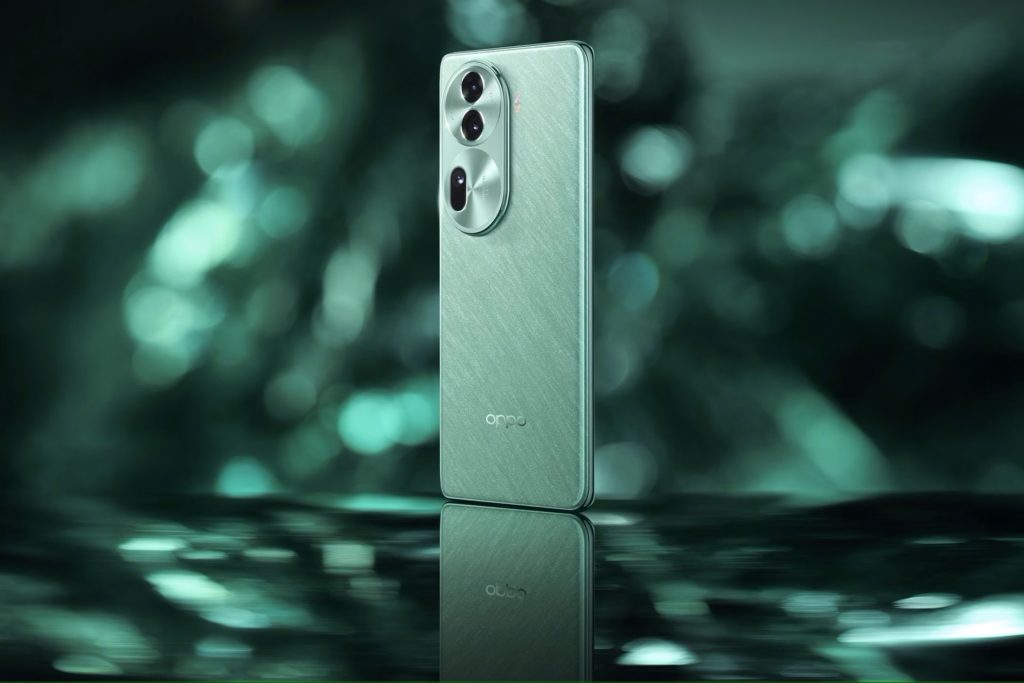
Oppo recently launched its latest smartphone series, the Reno 11, in China. The series has been well-received by buyers, with the standard model seeing a 280% year-on-year growth in pre-orders compared to its predecessor, Reno 10. The “Moonlight Gem” color scheme has also become Oppo’s “best-selling white mobile phone.”
Renowned tipster DCS also shared on Weibo that the Reno11 series is already sold out. DCS further mentioned that the Moonlight Gem model, is in high demand, and retailers are urgently requesting more stock.
The Reno 11 Pro is the top-of-the-line model and comes with a 6.74-inch OLED display with a 120Hz refresh rate, a Snapdragon 8+ Gen 1 SoC, 12GB of RAM, and up to 512GB of storage. It also has a triple-camera system on the back, featuring a 50MP main sensor, a 32MP telephoto sensor, and an 8MP ultrawide sensor. The front-facing camera is a 32MP sensor.
The standard Reno 11 comes with a 6.7-inch OLED display with a 950 nits peak brightness, a MediaTek Dimensity 8200 SoC, 12GB of RAM, and up to 512GB of storage. It also has a triple-camera system on the back, featuring a 50MP main sensor, a 32MP telephoto sensor, and an 8MP ultrawide sensor. The front-facing camera is a 32MP sensor.
Both models are powered by large batteries, with the Reno 11 Pro having a 4,700mAh battery and the Reno 11 having a 4,800mAh battery. Both support fast charging, with the Reno 11 Pro having 80W SuperVOOC charging and the Reno 11 having 67W SuperVOOC charging.
The Reno 11 series is currently available for purchase in China, with prices starting at CNY 2,499 (approximately $350) for the standard Reno 11 and CNY 3,499 (approximately $495) for the Reno 11 Pro. The series is expected to be available in other markets in the coming months.
Volkswagen is making a bold move in the Chinese market by introducing an innovative platform for cost-effective electric vehicles (EVs). This initiative marks a significant step in the company’s strategy to strengthen its presence in China, a country known for its rapidly growing EV sector.
Volkswagen is using locally sourced components to offer more affordable options
At the heart of this plan is the development of a new entry-level platform, tailored specifically for the Chinese market. Dubbed the “A Main Platform,” this project aims to reduce production costs, a crucial factor in the price-sensitive Chinese market. By increasing the use of locally sourced components, Volkswagen intends to offer more affordable EV options to consumers.
The announcement was made by Ralf Brandstaetter, China chief of Volkswagen, during the inauguration of the new EV development and procurement center, the Volkswagen Group China Technology Company (VCTC) in Hefei. This development is a part of a substantial $1.1 billion investment in VCTC, expected to generate over 2,000 jobs.
Volkswagen’s decision to focus on affordable EVs comes at a critical time. The brand has recently been outperformed in China by domestic manufacturer BYD, primarily due to the declining sales of gasoline vehicles. In response, Volkswagen has already reduced the prices of its ID.3 model in China, leading to a significant increase in sales.
The new platform, derived from the existing Modular Electric Drive Toolkit (MEB), is anticipated to be operational by 2026. This accelerated timeline is a testament to Volkswagen’s commitment to rapidly adapting to market demands.
Moreover, Volkswagen plans to launch four models based on this new platform, in collaboration with its existing joint ventures with SAIC and FAW. Additionally, the company has partnered with XPeng to develop two more all-electric models, further expanding its EV portfolio. This strategic move is not just limited to China. Globally, Volkswagen aims to introduce ten new all-electric cars by 2026, showcasing its dedication to electrification and sustainable mobility.
Tesla‘s recent expansion of its Non-Tesla Supercharger Pilot program to South Korea marks a huge step in the electric vehicle (EV) industry. This move opens about half of its Supercharger sites in the country, totalling around 80 locations, to other EVs. This development is noteworthy because South Korea’s EV market predominantly uses the CCS1 connector for DC fast charging, different from Tesla’s proprietary NACS connector used in the U.S. and Canada.
Tesla’s pilot program includes over 20 countries across NA, Europe and Asia Pacific
To accommodate this, Tesla has equipped its charging stations with built-in CCS1 adapters, known as Magic Docks. This adaptation signifies Tesla’s commitment to universal charging solutions, transcending brand exclusivity. The installation of the 1,000th charger in Incheon-Yeonsu highlights the rapid expansion of Tesla’s charging infrastructure in South Korea.
The broader implications of this move are significant. It raises questions about the future of charging standards in South Korea, particularly whether local manufacturers like the Hyundai Motor Group will continue with CCS1 or shift towards Tesla’s NACS. Additionally, it’s interesting to note Tesla’s growing role as an EV charging provider for other networks, with recent agreements to supply charging technology to BP Pulse in the U.S. and EG Group in Europe.
This expansion isn’t just limited to South Korea; Tesla’s pilot program now includes over 20 countries across North America, Europe, and the Asia Pacific. The universal adoption of Tesla’s charging technology, combined with its efforts to adapt to local standards like CCS1 in South Korea and GB/T in China, indicates a strategic move towards a more interconnected and accessible global EV charging network.
Red Magic 9 Pro is now available for pre-order at Giztop. You can get the latest phone for a starting price of $799. Please note that this is a pre-order and the actual shipping will start by November end.
The Red Magic 9 Pro comes with a 6.8-inch AMOLED Full HD+ display with a 120Hz screen refresh rate and a 960Hz touch refresh rate, that delivers an immersive visual experience.
With a 10-bit color depth, 100 percent DCI P3 color gamut, and 1440Hz PWM high-frequency dimming, every detail comes to life on the screen. The Red Magic 9 Pro’s display is not just about vibrant visuals; it also features DC dimming for eye comfort and reaches a peak brightness of 1300 nits.
Under the hood, the Qualcomm Snapdragon 8 Gen 3 octa-core processor clocked at 3.2GHz, coupled with Adreno 740 GPU, ensures seamless performance. Paired with 12GB or 16GB of LPDDR5X RAM and up to 512GB of UFS 4.0 ROM, the Red Magic 9 Pro is a multitasking marvel, handling demanding gaming sessions and apps with ease.
The device’s camera setup is equally impressive, featuring a 50MP Samsung GN5 primary sensor, an 8MP ultrawide angle camera, and a 2MP macro camera on the rear, with a 16MP front-facing camera. These cameras promise detailed and vibrant photos, catering to both gaming and photography enthusiasts.
One of the standout features is the ICE 12.0 liquid-cooling technology, a sophisticated 9-layer cooling system. Components such as the ultra-light nano-centrifugal fan, cooling canyon air duct, superconducting copper foil, thermal gel, graphene, and VC heat sink work in harmony to keep the device cool during intense gaming sessions.
Powering all these features is a massive 6500mAh battery with 80W fast charging support, ensuring minimal downtime. In just 35 minutes, the Red Magic 9 Pro can be fully charged, keeping you in the game without long interruptions.
Gaming-centric features include faster 520Hz touch shoulder keys, providing a smooth multi-finger control experience. The dual stereo speakers with Snapdragon sound, supporting 96kHz lossless audio and offering a 48ms low latency, enhance the audio experience, immersing users in a rich sound environment.
Red Magic 9 Pro is a comprehensive package, not just for gamers but for those seeking a high-performance device with cutting-edge technology. From its powerful processor and advanced cooling system to its impressive display and fast charging capabilities, the Red Magic 9 Pro stands out in the crowded smartphone market.
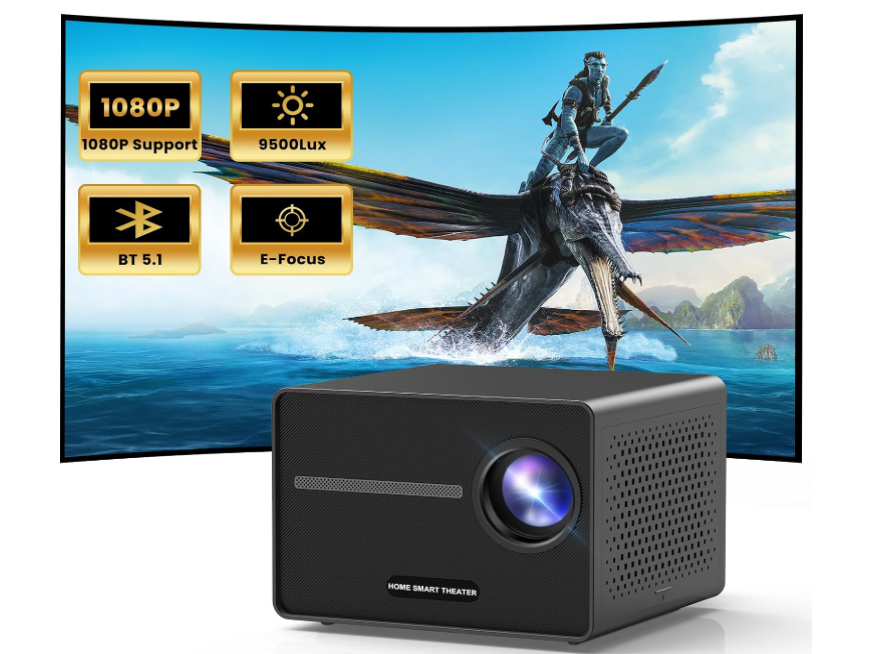
Black Friday is here, and Happrun is offering an incredible deal on the YG291 Mini Projector. Originally priced at $149.99, you can now get it for just $44. That’s a 50% discount off the Black Friday deal price of $87.99, with an additional 50% off when you clip the on-page coupon. This means you save a total of $105.99!
Experience entertainment like never before with the Happrun YG291 Mini Projector. This compact projector boasts impressive features that make it a must-have for your home entertainment setup.
Stunning Visuals: Enjoy crystal-clear visuals with 1080p support and a high dynamic contrast ratio of 8000:1, ensuring vibrant and true-to-life colors for an immersive viewing experience.
Swift Focus: The innovative electric focus allows you to get a clear picture within a mere 3 seconds, saving you time and ensuring every detail is sharp and well-defined.
Portable Design: Measuring only 8.85 x 7.08 x 5.31 inches and weighing just 2.5 lbs, the YG291 Mini Projector is incredibly portable. Take your entertainment on the go and set up a cinematic experience anywhere you like.
Versatile Connectivity: Connect the projector to your PC, TV box, TV stick, Chromebook, tablet, USB flash drive, media player, or smartphone for a seamless and versatile entertainment experience.
Adjustable Size: With a projection size ranging from 35 to 200 inches and a projection distance of 3.7ft to 23.6ft, you can customize the size of your screen according to your space and preference.
Don’t miss out on this limited-time offer! Seize the opportunity to bring home the Happrun YG291 Mini Projector at an unbeatable price of $44. Transform your entertainment setup and save big this Black Friday!
Uncover unbeatable Black Friday savings with Ugreen’s exclusive deals, offering discounts of up to 45% on a vast array of cutting-edge consumer electronics and accessories. Since its establishment in 2012, Ugreen has been a trailblazer in crafting innovative and accessible technology, catering to over 40 million users across 100 countries.
With a commitment to user satisfaction steering their research, design, and customer service, Ugreen brings you a diverse range of products designed to elevate your tech experience. From efficient charging devices to top-notch mobile and computer accessories, each item reflects Ugreen’s dedication to quality.
Don’t miss the chance to seize incredible savings during this Black Friday extravaganza, where Ugreen is offering year-round lowest prices, with discounts soaring up to 45% off. Upgrade your tech arsenal with reliable, high-quality gadgets that enhance your daily life. Mark your calendar for November 24th to 25th, and dive into a world of unparalleled deals that redefine your technology landscape.
Ugreen Nexode 200W USB C GaN Charger
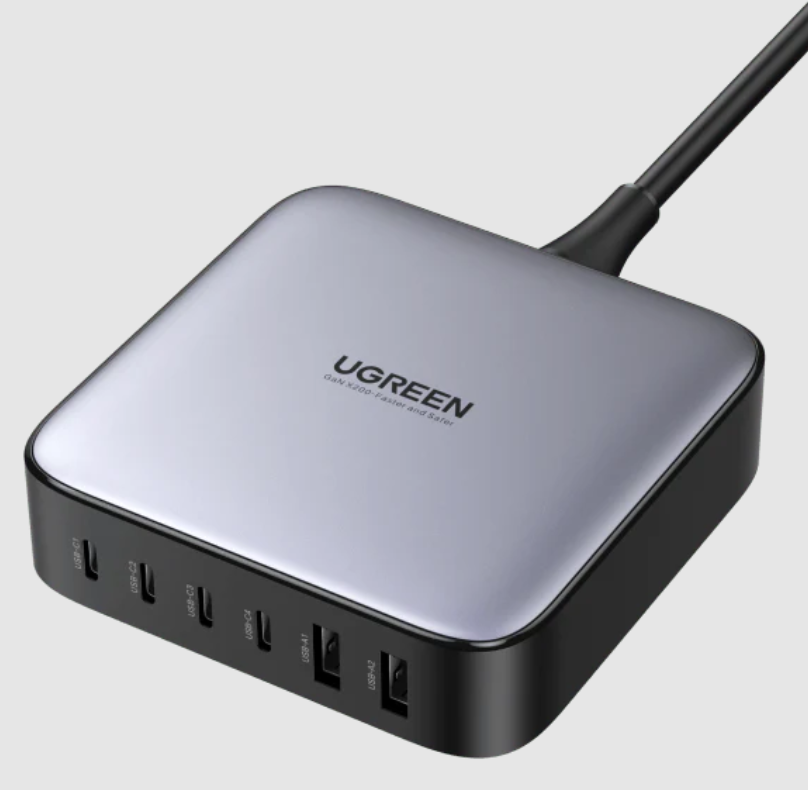
Ugreen Nexode 200W USB C GaN Charger – your ultimate charging solution for multiple devices. Elevate your productivity with the ability to charge up to 6 devices simultaneously, offering a powerful 200W of efficient charging. Experience lightning-fast charging times, such as a full charge for the 16-inch MacBook Pro 2021 in just 1.5 hours, thanks to the cutting-edge GaN chipset, providing a remarkable 3X speed boost compared to the original.
Not only is this desktop charger compact and sleek, but its advanced GaN and SiC chips also enhance heat dissipation, ensuring a reliable and cool charging experience. Compatible with both USB-C and USB-A devices, it caters to your diverse charging needs. Moreover, the charger boasts an impressive 95% power conversion rate, optimizing energy efficiency.
For a limited time, seize the opportunity to own this powerhouse at a discounted price of $119.99, marked down from $199.99, saving you 40%. Don’t miss out on this incredible offer to streamline your charging experience.
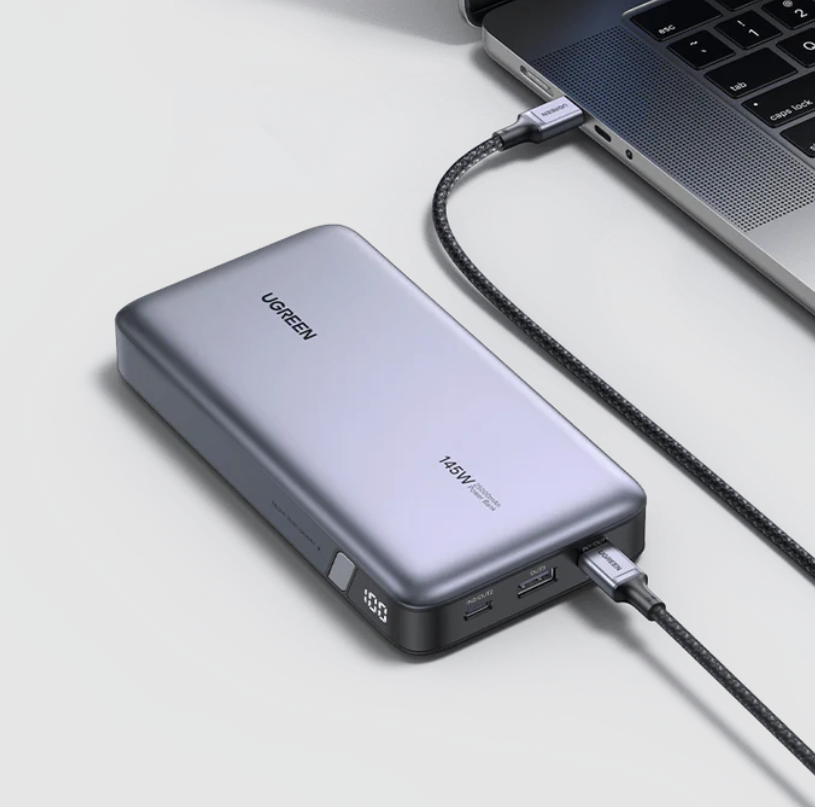
Priced at just $89.99, down from $149.99, this power bank offers a whopping 40% savings, making it a must-have accessory.
Experience lightning-fast charging with PD3.0 and QC3.0 technologies, capable of a 90-minute full charge for the 2022 13″ MacBook Air. With a colossal 25,000mAh battery capacity and 100W output, this power bank charges laptops 1.3 times and devices 5.6 times. The two-way fast charging feature lets you recharge the power bank in just 2 hours using a 65W PD charger, all while charging your devices simultaneously.
Stay informed with the smart digital display, indicating the remaining power for confident use. This power bank boasts wide compatibility, working seamlessly with MacBook, Dell XPS, iPad, iPhone, Galaxy, Switch, DJI, Steam Deck, and more. Note: For optimal performance, fully drain and recharge the power bank for the first use. Don’t miss out on this incredible offer to power up your devices efficiently on the move.
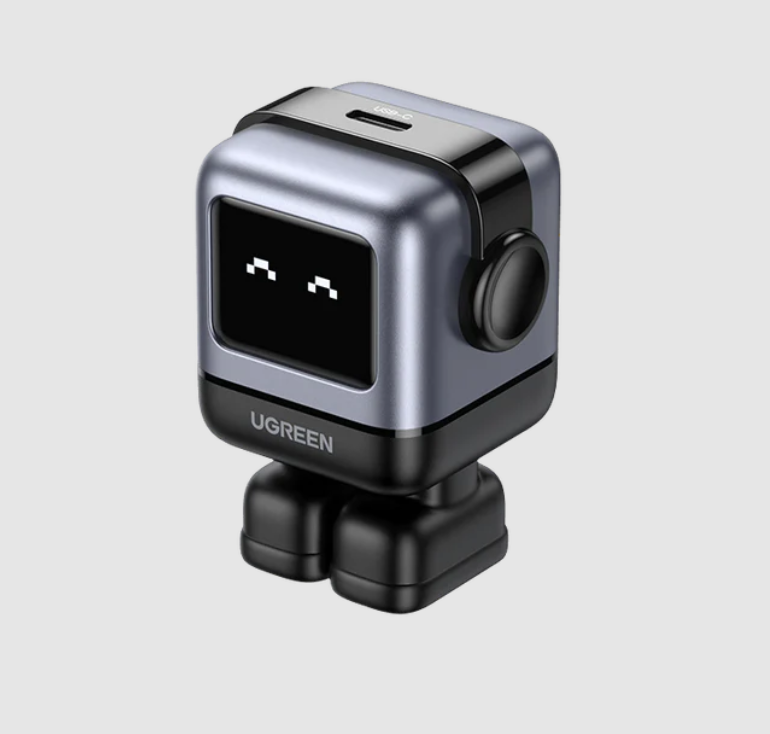
Ugreen Nexode RG 30W USB C GaN Charger – your go-to charging companion that seamlessly combines functionality with a touch of playfulness. Priced at an unbeatable $18.19, down from $25.99, this charger offers a fantastic 30% savings with the exclusive BFCM Deal. Simply use code “RG30W” at checkout.
Experience powerful 30W charging, allowing your iPhone 14 Pro Max to go from 0 to 55% in just 30 minutes. The Robot GaN Charger features an expressive LED display, reflecting different emotions to signify various charging states. Safety is a priority with built-in short circuit, overload, over-temperature, and overvoltage protection, ensuring all-around security.
Versatility is key, as this charger supports multiple fast charging protocols, making it suitable for a range of devices including earbuds, phones, tablets, and even the MacBook Air. Elevate your charging experience with this compact and feature-rich charger, and don’t miss out on the extra 7% off during the BFCM Deal.
The costs of high-budget game development are increasing day by day. The main reason for this is the shift from linear games that used to offer a story of around 10-20 hours to open-world experiences lasting up to 100 hours. However, this change hasn’t managed to offset the costs. Consequently, in the last 1-2 years, we have witnessed new games being released with a price tag of $70 instead of the usual $60. Apparently, even this wasn’t sufficient, as Ubisoft has started to include in-game ads, similar to those found in YouTube videos. Here are the details…
Ubisoft’s Shift to In-Game Ads Raises Concerns Over User Experience
Imagine you’re in the middle of playing an Assassin’s Creed game—eliminating Templars, evading villains, and chasing treasures. What could ruin the experience for you? Let me tell you, in-game ads. It seems that Ubisoft has begun testing pop-up ads in games that users have purchased by paying money.
Il semble qu'Ubisoft expérimente la publicité en jeu chez certains utilisateurs (Xbox et PS).
Vous êtes au milieu de votre jeu, accédez à la pause ou à la Map et vous avez pendant 3sec. une pub pour un autre jeu qui s'affiche. Suffisant pour désinstaller ? 😅 pic.twitter.com/m5S4rEXas5
This situation, revealed through social media posts, occurs as you navigate through menus to look at the map or perform other actions. For instance, you might want to check where you want to go on the map. Great! But first, would you like to buy Ubisoft’s new game?
Although the ad lasts for about 3 seconds, it’s enough to “ruin” the experience. It’s worth noting that there is no mention of such ads or a price adjustment when you purchase any Ubisoft game. If the company had offered a $50 ad-supported package alongside the full gaming experience, it wouldn’t have been an issue. However, this is not the case.
After the incident gained significant attention on social media, Ubisoft officials didn’t stay silent and provided an explanation. According to Ubisoft, everything that happened was just a result of a technical error. Even though it’s not within our expertise as TeknoBurada editors to delve into the game development process, this explanation doesn’t seem very satisfying. Nevertheless, it’s a relief that the company seems to have abandoned such intentions, even if they were genuine.
A new app called Yup is aiming to be your one-stop shop for all things social media. The app allows users to cross-post content across various platforms, including X, Bluesky, Lens, and Threads.
Yup also integrates some of the features that users are familiar with from other social media platforms, such as the ability to like and comment on posts, as well as to repost them. The app also has a “For You” feed that shows users content that they might be interested in, and a “Following” feed that shows posts from people that users follow.
One of the most interesting features of Yup is its support for Threads. Threads is a decentralized social media platform that doesn’t currently have a public API that developers can use to connect their apps to it.
Yup is now live in the App Store!
If you're new here, Yup is the all-in-one social aggregator for Twitter, Farcaster, Lens, Bluesky, Threads, and more.
However, Yup has “informally used the internal API” that Thread’s web client does. When an official Threads API is released, Yup says that it will switch to using that instead.
The developers of Yup believe that their app will make it easier for both regular users and creators to cross-post content to both mainstream platforms like X, as well as to decentralized protocols like Mastodon. Existing tools like Fedica allow some cross-platform posting, but Yup casts a wider net by also supporting Threads.
The platform also aggregates notifications from connected platforms, presenting them in a unified feed. The app is still in its early stages of development, but it has the potential to be a valuable tool for social media users who are tired of juggling multiple apps.
Yup is currently available on iOS and Android, but there is a waiting list that users have to go through before fully accessing the app.
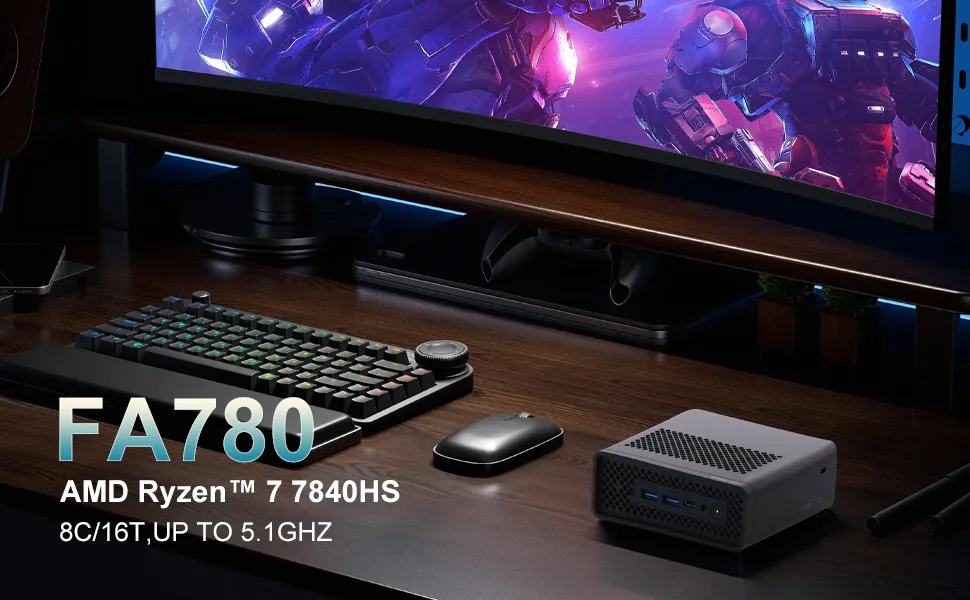
Kingnovy, a China-based electronics manufacturer, has recently introduced a new mini-PC to the market named the Kingnovy FA780. Unlike typical mini-PCs that prioritize functionality and space-saving, the FA780 stands out by offering notable gaming capabilities alongside its compact design.
With its 8 cores and 16 threads AMD Ryzen 7 7840S APU, the mini-PC is claimed to achieve around 102 FPS in PUBG, 175 FPS in League of Legends, and 60 FPS in Honkal: Star Rail. This level of performance, achieved thanks to the Radeon 780M iGPU is comparable to an NVIDIA GTX 1650 mobile GPU. The CPU itself is also quite capable, with a maximum clock speed of 5.1GHz.
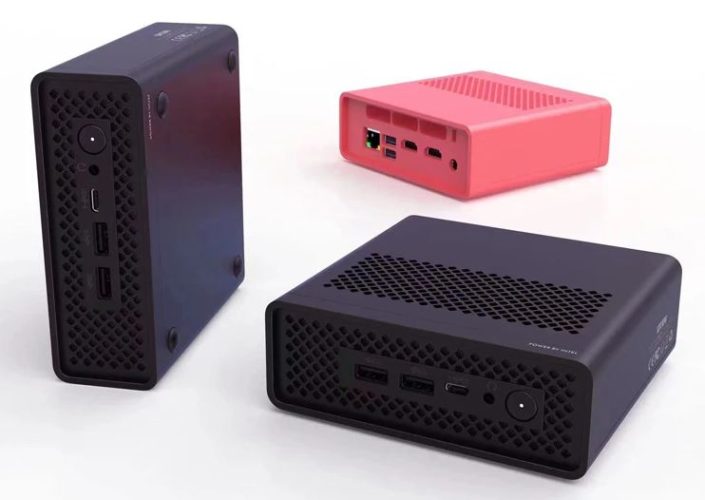
In terms of memory and storage, it supports up to 64 GB of DDR5 RAM at 5600 MHz and a spacious 4 TB PCIe 4.0 NVME SSD. The mini PC is equipped with a variety of ports, including 1 x USB 2.0 Type-A, 3 x USB 3.2 Gen Type-A, 1 x USB 4 Type-C, 2 x HDMI 2.1, 1 x 2.5 GbE Ethernet, and 1 x audio. For wireless connectivity, it features Bluetooth 5.2 and WiFi 6. Notably, the USB 4 Type-C port allows for external GPU support, enabling improved gaming performance.
Price & availability
The barebone kit is competitively priced at $436 on AliExpress. On the other hand, the 64GB RAM + 2TB SSD config costs $645.
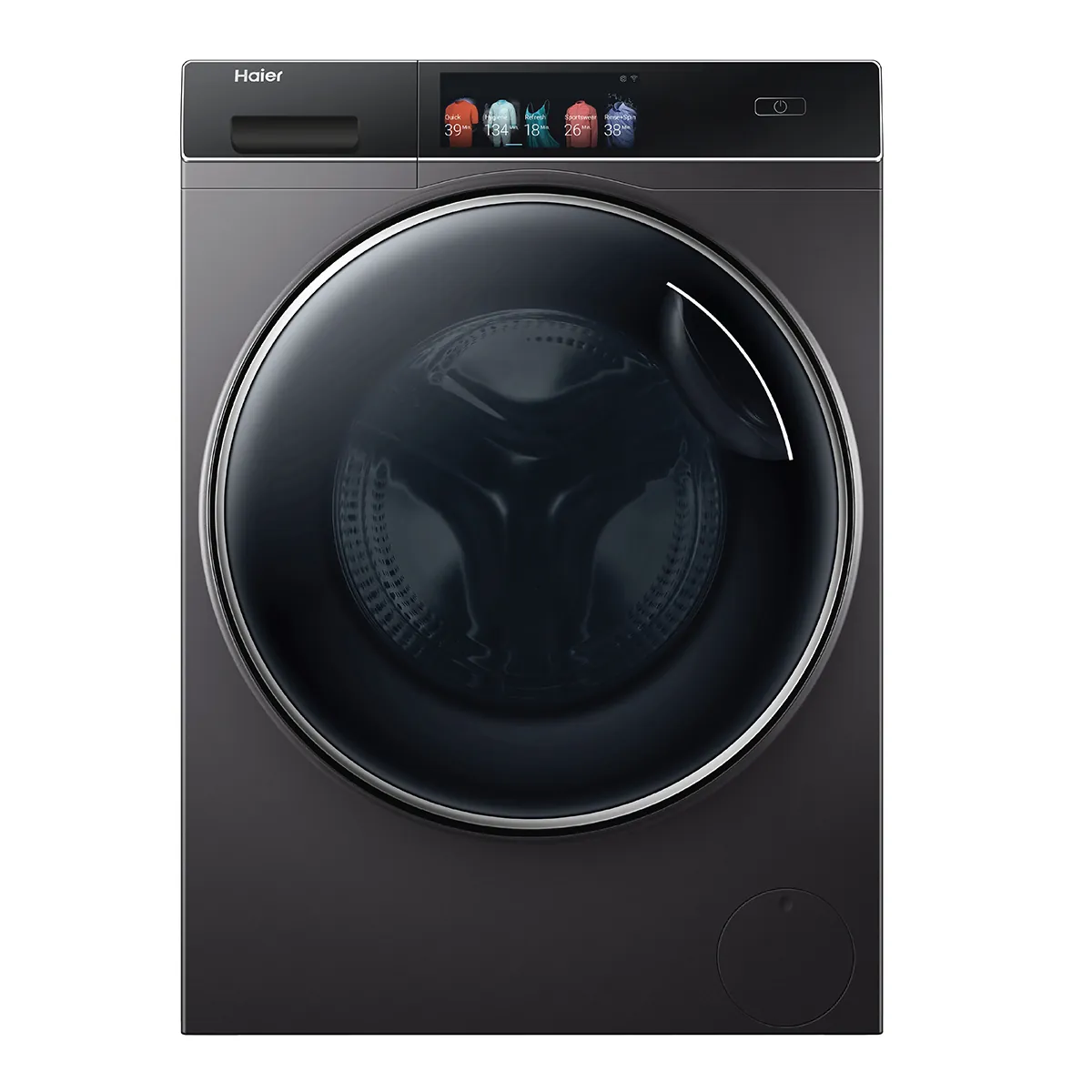
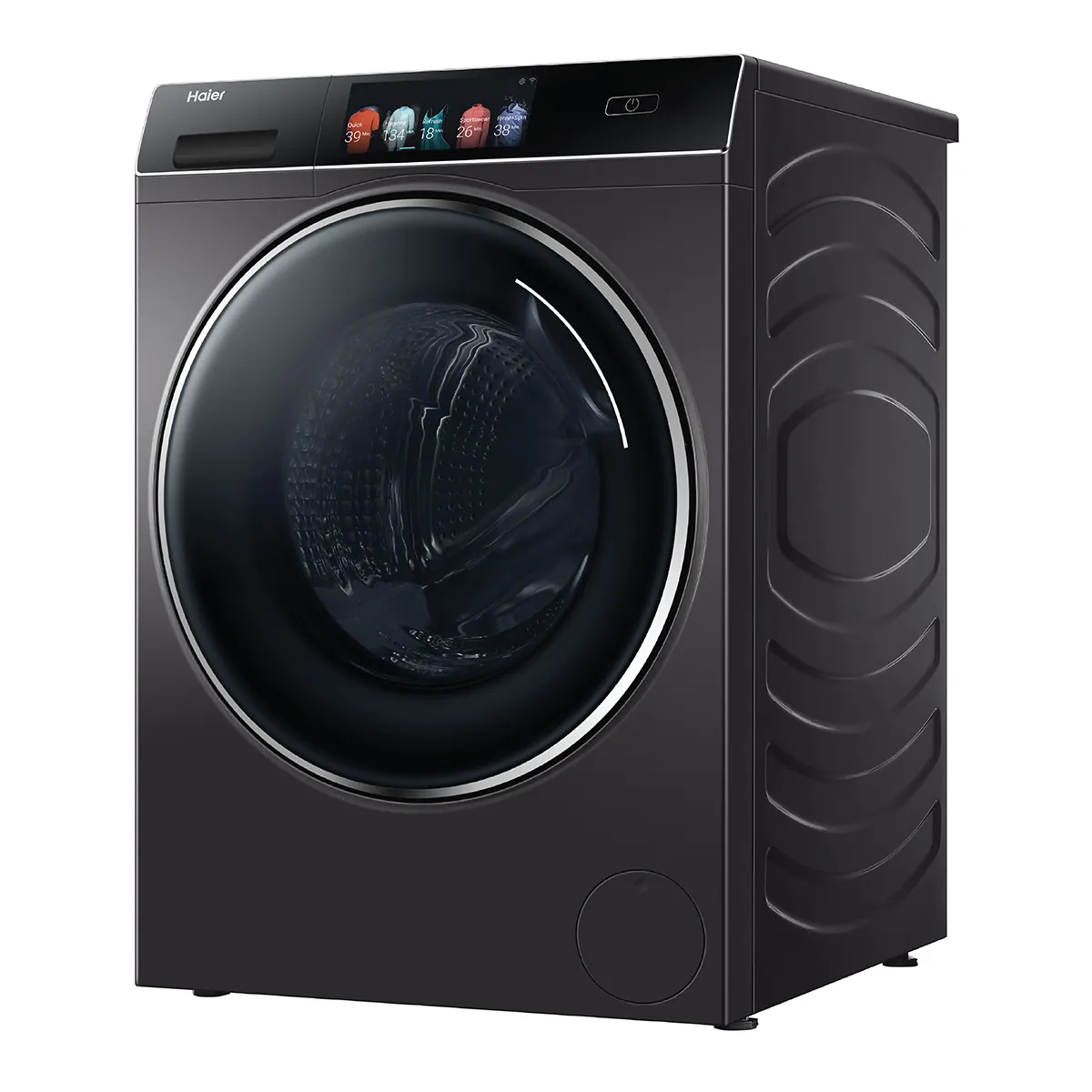
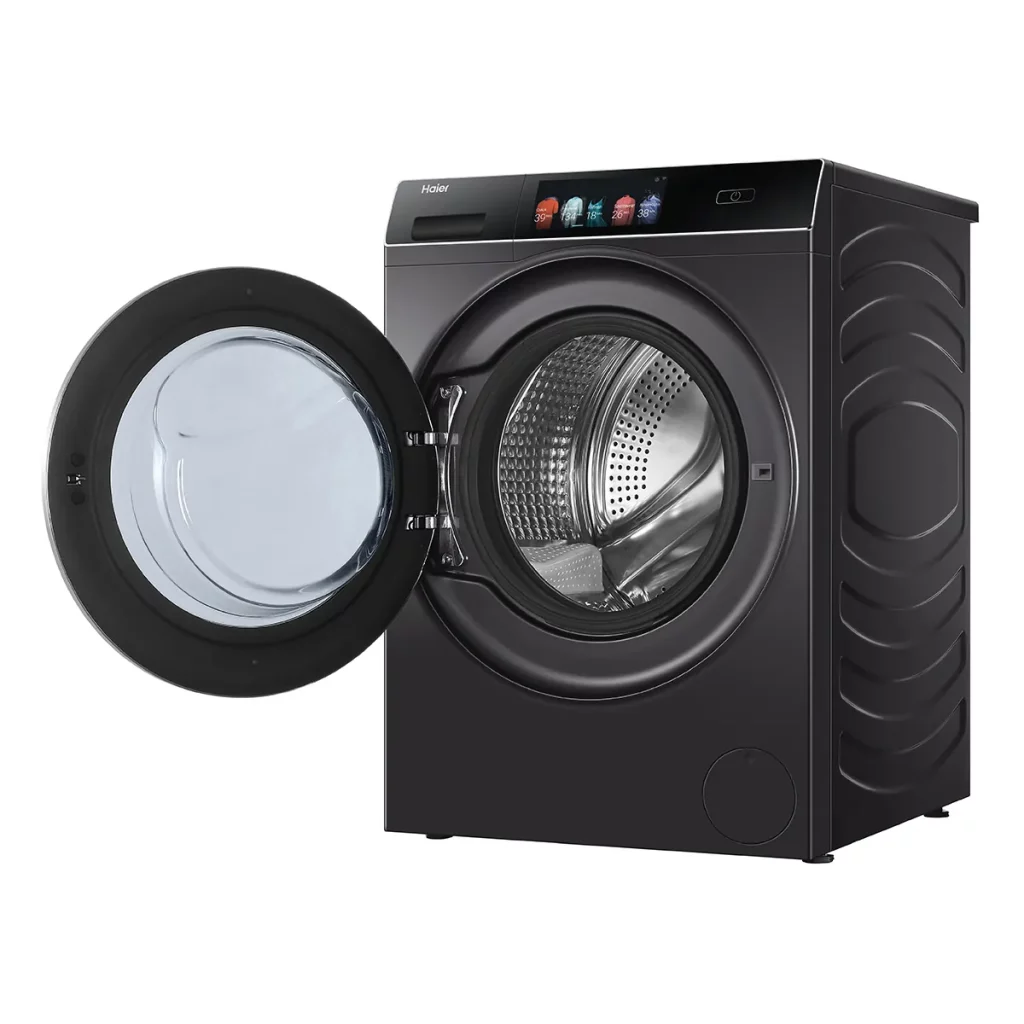
Haier India introduces the HWD105-B14959S8U1, a 10.5 kg/7 kg 5 Star Fully Automatic Front Load Washer Dryer Combo, aiming to redefine the laundry experience. The launch comes after Haier debuted the 959 series washing machine back in September.
An attractive feature of this watching machine is the Dual Cyclone technology that addresses common issues like fluff obstruction and extended drying times, promising improved air quality during drying cycles.
Equipped with ‘Sensor Dry’ and ‘I-Refresh’ functions, the machine enhances garment care by preventing over-drying and addressing odors and wrinkles. The Direct Motion Motor technology ensures a noise level below 53dB, providing a quieter operation for users, particularly during nighttime usage.
In addition to these features, the washing machine has a Puri-Steam function, Dual Spray, and Anti-Bacterial tech to make sure that the clothes that the clothes that enter its large 525 mm super drum are washed thoroughly eliminating any bacteria, allergens, and mites.
Smart connectivity features, including WiFi support and the HaiSmart App, allow users to control laundry routines remotely, adjusting settings and cycles from their smartphones. Last but not least, buyers get a 5-year comprehensive warranty and a 20-year motor warranty, meaning that the company has your back if something goes wrong with your machine.
Pricing & availability
The Haier HWD105-B14959S8U1 Washer & Dryer, with a 10.5kg washing and 7kg drying capacity, is priced at Rs. 84,990 MRP. For a limited time, Haier is offering it at a discounted price of Rs. 42,990 at Croma.
Alibaba Group Holding is developing a native version of its workplace app, DingTalk, for Huawei Technologies’ HarmonyOS. This development is a significant step in Huawei’s journey to lessen its reliance on Google’s Android amidst ongoing US sanctions.
HarmonyOS was unveiled in the year 2019
Huawei, a telecom giant grappling with US restrictions, introduced HarmonyOS in 2019 as an alternative to Android. This was a critical response to being placed on the US government’s Entity List, which limited its access to American software and technologies. HarmonyOS represents Huawei’s ambition to create a self-sufficient ecosystem in the face of these challenges.
The partnership between Alibaba and Huawei extends beyond mere app development. They plan to collaborate in areas of industrial innovation, technology application, and business growth. This collaboration is part of Alibaba’s broader strategy to drive future growth through digitalization and intelligent technology, with DingTalk playing a pivotal role.
Huawei’s move to phase out Android support in its upcoming HarmonyOS Next iteration underlines its commitment to this new path. This decision coincides with the successful launch of Huawei’s Mate 60 Pro, the first 5G-enabled smartphone from the company since 2020, witnessing a significant surge in sales.
DingTalk’s adaptation to HarmonyOS is not just a technological shift but also a business strategy. As one of Alibaba’s key growth drivers, DingTalk’s move to HarmonyOS is seen as a significant step towards “strategic-level innovation.” This step is part of Alibaba’s larger plan to reposition its business units, including DingTalk, as independent entities with their market strategies.
Nissan is making a significant move towards electrifying its vehicle lineup, with a major focus on updating popular models like the Juke and Qashqai, alongside the next generation of the Leaf. This transformation is taking place at Nissan’s Sunderland plant in the UK, a key hub for its electric vehicle (EV) production. What’s intriguing about this plan is the infusion of up to £3 billion (about $3.75 billion) into this project, indicating Nissan’s commitment to electric mobility.
The EV36Zero Microgrid will supply 100% renewable electricity for the production
A unique aspect of this development is the inspiration Nissan is drawing from its ‘Hyper’ series of concept cars. These concepts, showcased at the Japan Mobility Show, are set to shape the design of the new electric versions of the Juke and Qashqai. The Hyper Urban Concept will influence the Qashqai EV, and the Hyper Punk Concept will guide the design of the Juke EV. This approach signifies a fusion of cutting-edge design with practical EV technology.
The investment will also boost the production capacity and infrastructure at the Sunderland plant. This includes the establishment of three battery gigafactories in partnership with Envision AESC, highlighting the importance of sustainable and efficient battery production in the EV ecosystem.
Another key aspect of Nissan’s plan is its commitment to renewable energy. The EV36Zero Microgrid will supply 100% renewable electricity for the production of these EVs and their batteries, showcasing Nissan’s dedication to eco-friendly manufacturing processes.
In recent news, Harley-Davidson has sold its e-bike brand, Serial 1, to Florida-based LEV Manufacturing. This move marks a big change/heading for the iconic motorcycle brand, reflecting the growing interest in electric mobility solutions.
The brand’s second-generation electric bikes all have Google Cloud integration
Serial 1, launched in 2020 amidst the pandemic, started as a small project under Harley-Davidson’s wing in Milwaukee. The brand gained attention for its innovative electric bikes like the Switch/MTB, Bash/MTN, and the second-generation models integrated with Google Cloud. This transition in ownership to LEV Manufacturing, a company known for its lightweight electric vehicles, opens new possibilities for the e-bike brand.
One key aspect of this deal is the potential reshoring of Serial 1’s production to the United States. LEV Manufacturing’s plans to localize manufacturing could lead to more efficient supply chains, potentially lowering retail prices and speeding up delivery times. This shift not only promises better accessibility and service for customers but also indicates a positive impact on the U.S. economy through job creation and local manufacturing.
LEV Manufacturing’s acquisition is seen as a strategic alignment of American branding and manufacturing excellence. The company aims to bolster the premium appeal of Serial 1 while making these e-bikes more attainable for a broader consumer base. This could significantly boost the e-bike market, especially in the U.S., where demand for eco-friendly and efficient transportation solutions is on the rise.
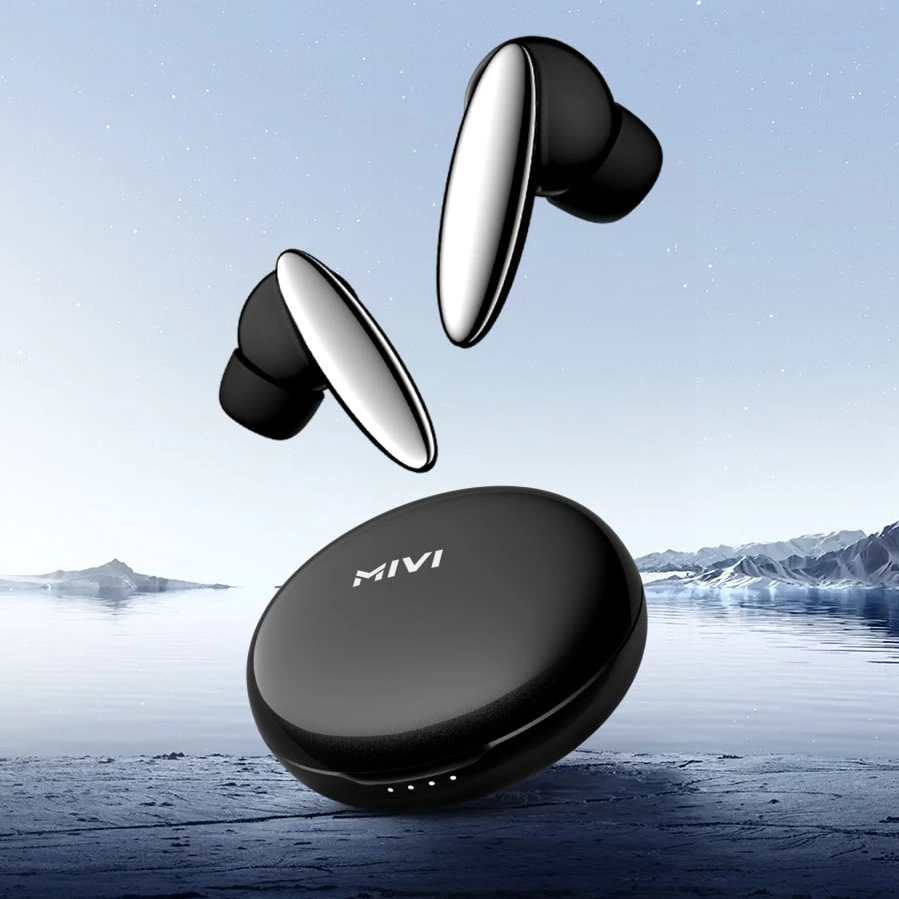
After launching the Mivi Commando Z7 gaming earbuds a couple of months back, the brand has now launched a new pair of earbuds for music enthusiasts called the Mivi DuoPods A750. These earbuds are packed with attractive features and offer an awesome 55-hour total playtime. Here are all the details.
Mivi DuoPods A750 specs:
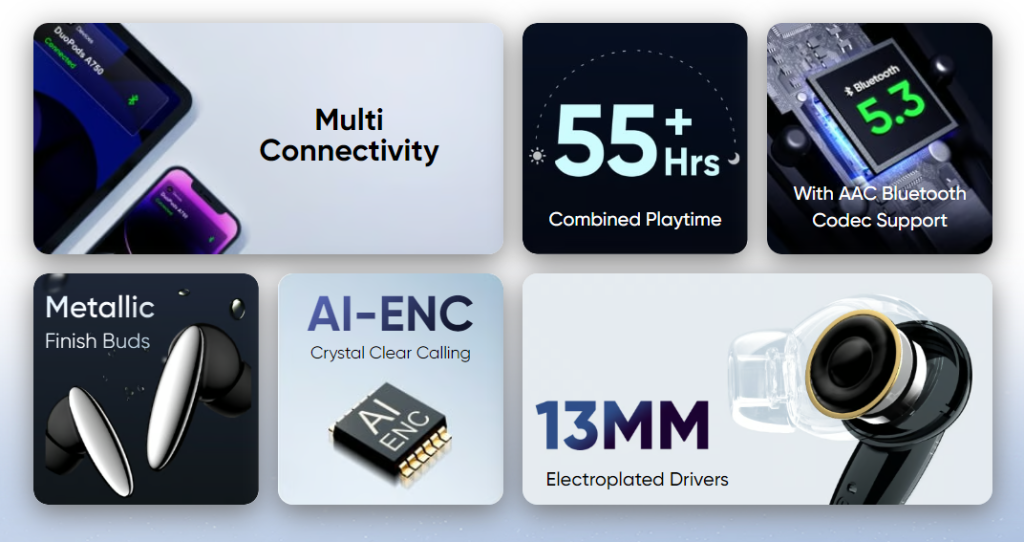
The Mivi DuoPods A750 TWS earbuds boast a sleek and premium design, featuring a glass finish case and metallic accents on the earbuds for an elevated aesthetic. The earbuds offer a comfortable fit, ensuring an enjoyable experience during prolonged use. In terms of audio quality, they are equipped with 13mm electroplated deep drivers and custom amplifiers, delivering powerful highs, clear mids, and crisp lows.
One notable feature is the inclusion of AI-ENC (Artificial Intelligence Environmental Noise Cancellation), which effectively eliminates background noise, enhancing call clarity. The earbuds also excel in battery life, providing an impressive 55 hours of combined playtime. Thanks to Swift Charge Technology, a mere 10 minutes of charging results in 500 minutes of playtime.
Connectivity is seamless with Bluetooth version 5.3, offering a range of up to 240 meters. The earbuds support multi-connectivity with dual pairing capability and include AAC Bluetooth codec support. Additional features include Type C charging, a dual connection mode, and the assurance of being made in India.
Pricing & availability
The Mivi DuoPods A750 will be priced at an introductory rate of Rs. 1,399 and will be available for purchase on Amazon.in starting from November 30th. The available colors include Blue, Black, Green, and White.
Owning an iPhone at an affordable price is undoubtedly a shared dream for many of us. Fortunately, Apple has been making this dream a reality for some time now. Instead of spending 50,000 TL on an iPhone 15, you can opt for the 3rd generation iPhone SE, which costs 25,000 TL and features the same processor as the iPhone 14. However, reports indicate that users are hesitant to buy this phone due to its “outdated” design. Apple aims to address this issue in the upcoming budget-friendly iPhone SE 4 model. A recent concept video has emerged, providing us with a glimpse of the much-anticipated phone’s potential appearance. Here are the details…
iPhone SE 4, The Budget-Friendly Smartphone with a Fresh Design and 48-Megapixel Camera
We’ve heard numerous claims and leaks about the budget-friendly iPhone SE 4 so far. Therefore, we know that the phone will have a notched design similar to the iPhone 14. This means no more Touch ID button or thick bezels. Additionally, drawing inspiration from the iPhone 15 series, the phone will also support innovations like the “Action Button” and a USB-C port. Finally, a designer named 4RMD has combined all this information to create a profile for the phone.
As seen in the video above, the new affordable iPhone SE 4 model will be a truly modern phone in every sense of the word. The only downside is that it will feature a single camera on the back this time. This sensor, claimed to be 48 megapixels, will be capable of recording 4K videos, as clearly shown in the concept.
In the concept video, the phone is equipped with a 6.1-inch OLED screen and a 3240 mAh battery. Of course, the actual specifications may vary a bit. It’s possible that a higher battery capacity or an LCD screen could be chosen instead of OLED. The current SE 3 model, for comparison, has a 2018 mAh battery capacity.
The budget-friendly iPhone SE 4 will likely come with a 4nm A16 Bionic processor, as shown in the video. This implies that it will offer performance similar to the iPhone 15 and iPhone 15 Plus. However, since users may not necessarily need this level of speed, the choice between A16 and A15 processors may not significantly impact the overall result.
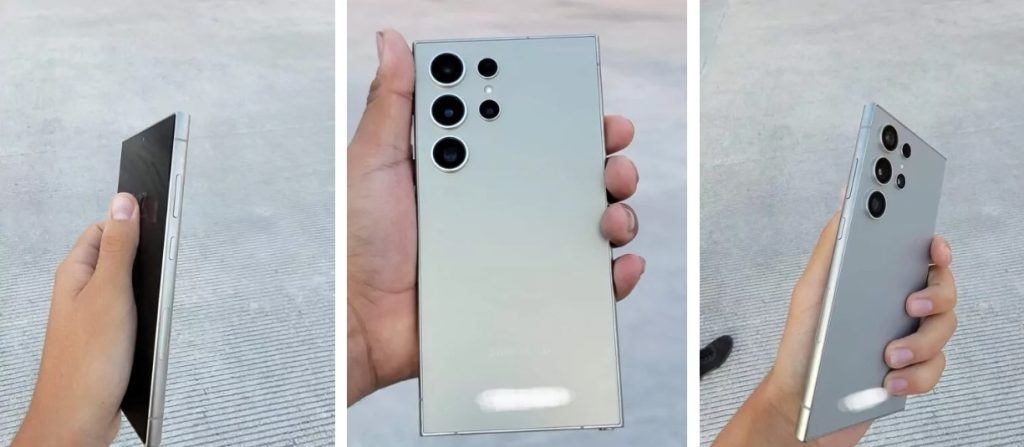
As per a recent report, Samsung is expected to launch its next-generation Galaxy S24 series on January 17, 2024. The report also spilled the beans on the pre-order and sale date details of the upcoming flagships. Leaks and rumors have revealed a host of information of the S24, S24+, and S24 Ultra. Now, way ahead of its official debut, the Samsung Galaxy S24 Ultra has emerged in leaked live images. It gives us a clear glimpse at the device.
Samsung Galaxy S24 Ultra spotted in live images
The leaked live images of the Galaxy S24 Ultra corroborate the previously leaked renders of the smartphone. The phone appears to look quite big in hands with a wider aspect ratio. The device is seen in a Greyish color option. It has a boxy design with power and volume rocker buttons on the right side. Notably, the images also confirm the presence of UWB Antenna. The back panel has three vertically stacked camera sensors along with an additional sensor and a fifth component with an LED flash unit sandwiched between them.
Meanwhile, on the front, we could spot a tiny centre-aligned punch-hole cutout. The images also reveal a flat display. However, it’s not entirely flat as reliable tipster Onleaks had shared comparison between the S24 Ultra and S23 Ultra revealing that the upcoming offering is less curved compared to its predecessor. A closer look at one of the images also reveals the S-pen protruding out of the phone’s slot. However, this may not be the case in the final retail unit.
Previously, it was reported that the Samsung Galaxy S24 Ultra will retain the same 6.8-inch display as its predecessor. But it will have a reduced bezel size resulting in the narrowest bezel on all sides of the smartphone.
We’ve rounded up the best smartphone deals under $1000 for the upcoming Black Friday 2023 sale. Get your hands on the latest technology and features at unbeatable prices. Here are some of the most popular deals.
The iPhone 15 is currently on sale, offering a whopping $310 discount, bringing its price down to just $789. This is a significant markdown on one of the latest models from Apple. But wait, there’s more! The iPhone 14 Pro is also available at a huge discount of $381, now priced at only $718. With these substantial savings, you can get your hands on the latest iPhone without breaking the bank.
If you’re more of an Android enthusiast, we have got you covered too. The Google Pixel 8 Pro is currently on sale, with a $200 discount, making it available for just $799. This high-end Android device is a great alternative for those who prefer the Android operating system. Additionally, the Google Pixel 8 offers a $150 discount, bringing its price down to only $549. With its powerful camera capabilities and sleek design, this phone is definitely worth considering.
Last but not least, the Samsung Galaxy S23 Ultra is available at a massive discount of $300, now priced at only $899. This flagship device from Samsung offers top-of-the-line features and is perfect for those who want the best of the best. With these incredible discounts, now is the perfect time to upgrade your smartphone and take advantage of these amazing deals.
Anbernic recently unveiled its new and improved RG35XX Plus handheld gaming console which is poised to launch in the coming days. The brand has now confirmed all of its specifications along with its pricing.
As per the latest announcement, the Anbernic the base model of the RG35XX Plus console which features a 64 GB MicroSD card will come with a price tag of $57.99. If you are looking for more storage, the brand will also launch a model with a 128 GB MicroSD card for $72.99. These are early bird pricing of the console. Once the offer period is over, its prices will be bumped up to $63.99 and $78.99, respectively. The console will go on sale starting tomorrow and can be purchased via the brand’s website.
Anbernic RG35XX Plus console specs:
The Anbernic RG35XX Plus is available in three distinct colors: transparent black, gray, and white. It features a 3.5-inch IPS screen with full viewing angles, OCA full lamination, and a resolution of 640×480. Powering this handheld console is the Allwinner H700 quad-core ARM Cortex-A53 processor clocked at 1.5GHz. The device boasts a Dual-core G31 MP2 for RAM and LPDDR4 1GB for storage. Running on the Linux operating system, it comes with 64GB of internal storage via TF/MicroSD, expandable up to 512GB. The console supports 2.4/5G WIFI (802.11a/b/g/n/ac) and Bluetooth 4.2 and is multilingual with options like Chinese, English, Japanese, Korean, and Spanish.
The Anbernic RG35XX Plus is equipped with a high-fidelity speaker, dual card slots for TF cards, and a 64GB SD card pre-loaded with 5000+ games. Users also have the option to upgrade to a 64GB+128GB SD card with 10000+ pre-installed games. Charging is facilitated with a 5V/1.5A input and compatibility with C2C chargers. Additional features include support for 2.4G wireless and wired controllers, Bluetooth handle connection, HDMI output to TV, vibration motor, WIFI online pairing, and streaming capabilities. The package includes a USB charging cable, a gift box, a user manual, and a screen protector. The compact dimensions of the device measure 11.7cm in length, 8.1cm in width, and 2.2cm in height, with a weight of 0.186kg.
Steam is a video game digital distribution platform for PC gamers developed by Valve Corporation. It offers access to a wide library of games across genres. Notably, Sony also offers some of its PlayStation-exclusive titles through Steam. According to Valve, the number of people gaming on PC with a controller has tripled in 2023 from 2019. The video game platform already supports Xbox controllers however, it left owners of PlayStation controllers disappointed. On the bright side, this is changing today as Steam is receiving an update.
Steam update brings good news for PlayStation controllers
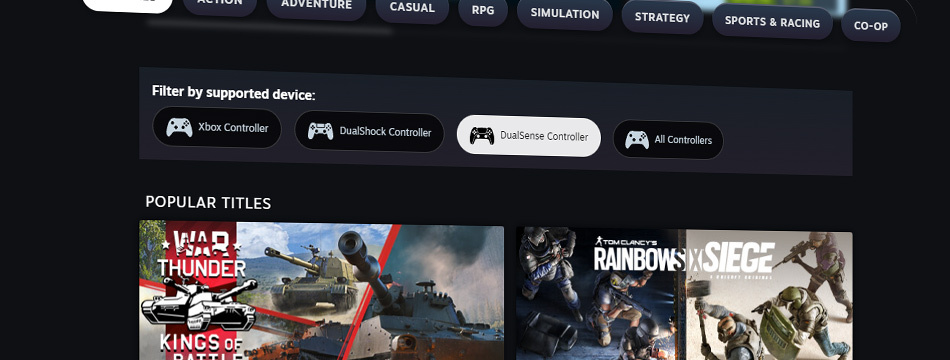
The latest Steam update will allow PlayStation’s DualSense and DualShock owners to find games that fully support the controllers. It simply means that playing games on PC with PlayStation controllers will become accessible and easy. Additionally, the update also brings changes and improvements in navigating the platform.
Steam has updated the dedicated Controller-Hub page that will let users to search games by controller type including Xbox, DualSense, DualShock, or simply all of them. The same filters have also been added to Search while finding games. The library page will also allow users to filter their own games based on the kind of controllers they support. Valve has also updated the store pages for each title that will show compatible controllers for playing the game. It will also display whether the title has full or partial controller support.
Steam also details that full controller support will be able to do almost all of the common actions and interactions that a user would expect to be able to do with a controller. On the other hand, partial controller support means that the game may show a wrong button icon.
Steam’s latest update is a welcomed one as it aims to help PC gamers discover titles that support PlayStation’s controllers.
We use cookies on our website to give you the most relevant experience by remembering your preferences and repeat visits. By clicking “Accept”, you consent to the use of ALL the cookies.
This website uses cookies to improve your experience while you navigate through the website. Out of these, the cookies that are categorized as necessary are stored on your browser as they are essential for the working of basic functionalities of the website. We also use third-party cookies that help us analyze and understand how you use this website. These cookies will be stored in your browser only with your consent. You also have the option to opt-out of these cookies. But opting out of some of these cookies may affect your browsing experience.
Necessary cookies are absolutely essential for the website to function properly. This category only includes cookies that ensures basic functionalities and security features of the website. These cookies do not store any personal information.
Any cookies that may not be particularly necessary for the website to function and is used specifically to collect user personal data via analytics, ads, other embedded contents are termed as non-necessary cookies. It is mandatory to procure user consent prior to running these cookies on your website.