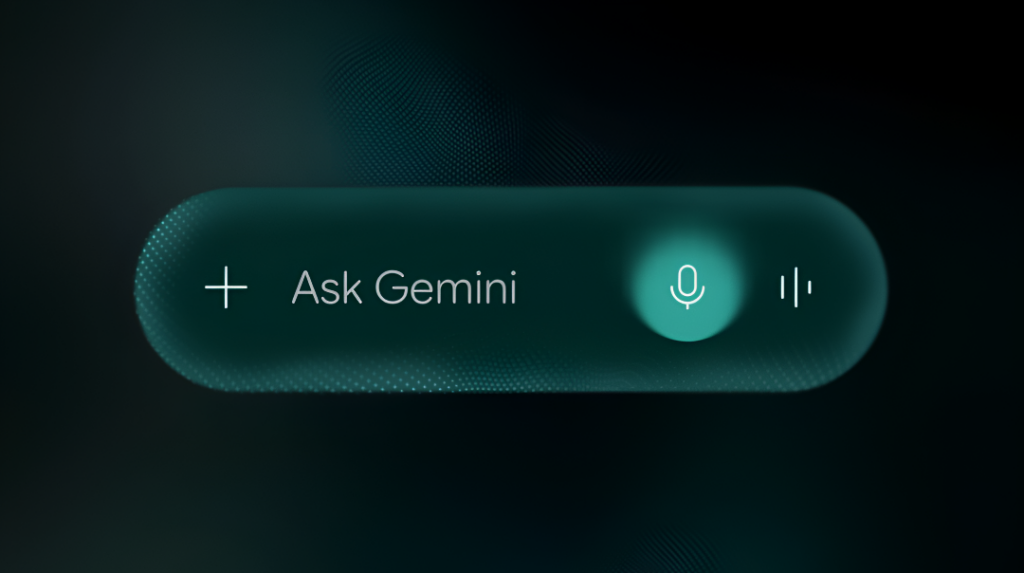
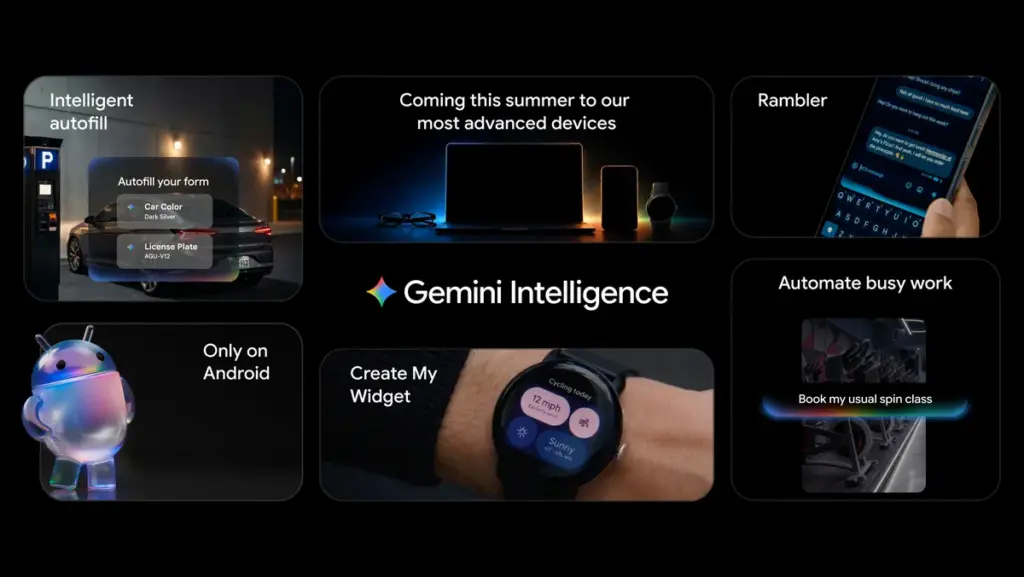
Google just announced a new set of AI tools for Android called Gemini Intelligence. The basic idea is to have your phone handle more of your daily busywork. These features are rolling out this summer, starting with the new Samsung Galaxy S26 and Google Pixel 10, and will eventually come to other Android phones, smartwatches, and laptops later in the year.
The main change is app automation. Instead of just answering questions, Gemini can now navigate your phone to do things like book a workout class or order groceries. You can even long-press the power button over a screenshot of a grocery list, and Gemini will build the cart for you. You can watch its progress through a notification and just confirm the final purchase.
Browsing is getting a similar update. In late June, Chrome for Android will add an auto browse tool to help with routine tasks like reserving parking. Android’s Autofill is also getting a boost, pulling context from your apps to fill out complex forms so you don’t have to type as much.
For texting, Gboard is adding a voice feature called Rambler. If you tend to use filler words, pause, or switch languages while using voice dictation, Rambler will clean up the audio and turn it into a clear text message before you send it.
Google is also adding a text-to-widget tool. You can type a prompt, like asking for a weekly recipe list or a widget that only shows wind speed, and Android will build a custom widget for your home screen.
Because giving AI access to your screen requires trust, Google is keeping these features opt-in. The company says it uses secure environments to process the data, and an upcoming update to the Android Privacy Dashboard will let you see exactly which apps the AI interacted with over the past 24 hours.
And whenever the assistant is doing something in the background, a notification will stay at the top of your screen that you can’t swipe away, so you’ll always know when it’s running.
For more daily updates, please visit our News Section.
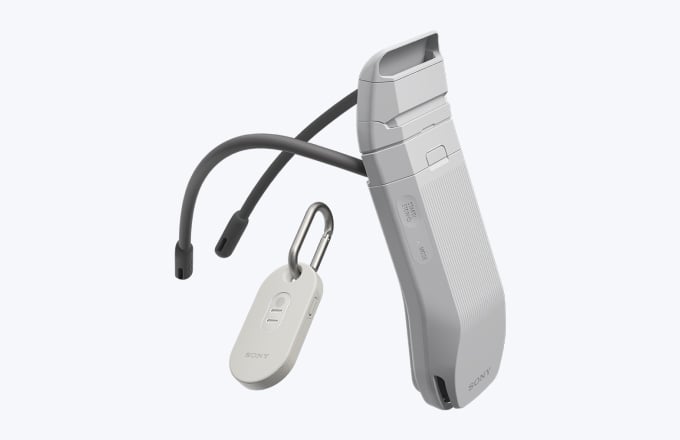
Wearable climate control often feels like a novelty, but Sony has been steadily developing its Reon Pocket lineup in Japan since 2019. Now, the company is launching its latest version, the Reon Pocket Pro Plus, in the US. Retailing for €229 in Europe and £199 in the UK (approximately $268), this compact device is a personal temperature regulator designed to rest on the back of your neck.
Sony Reon Pocket Pro Plus Specifications
According to Sony, this version improves cooling performance by 20% compared to the previous generation. The cooling plate can drop an additional 2 degrees Celsius, which should make a noticeable difference in how cold it actually feels against your skin when you are walking outside.
The physical design has also been tweaked to make it easier to wear. Sony added a flexible neckband that grips your shoulders a bit better, keeping the main unit from shifting around when you walk or bend over. More importantly, the exhaust vent is now adjustable. You can extend it and change the angle so that the hot air blowing out of the device doesn’t get trapped under a high shirt collar or jacket.
Inside, the device uses dual thermo-modules and a sensor system to monitor your skin temperature. If you use the companion app, you can set a target temperature, and the device’s smart modes will automatically adjust its output as your environment changes. If you don’t want to rely on your phone, there are physical buttons on the side to turn it on and switch between heating and cooling modes.
Sony says the battery lasts up to 15 hours on the smart cooling setting, and because it operates quietly, you can wear it indoors or at work without bothering anyone. The company is also offering a companion accessory called the Wearable Sensing Device (or Reon Pocket Tag 2). It is a small sensor you can clip to your bag or belt loop that measures the ambient temperature and humidity, feeding that data back to the main unit so it can adjust itself more accurately.
The Reon Pocket Pro Plus will be sold exclusively through Sony’s online store in the US starting in the summer of 2026. The exact US pricing isn’t announced yet.
In related news, Sony has recently introduced the Sony Bravia 3 II with AI-powered picture enhancements, 4K 120Hz gaming support, and display sizes going up to 100 inches.
For more daily updates, please visit our News Section.
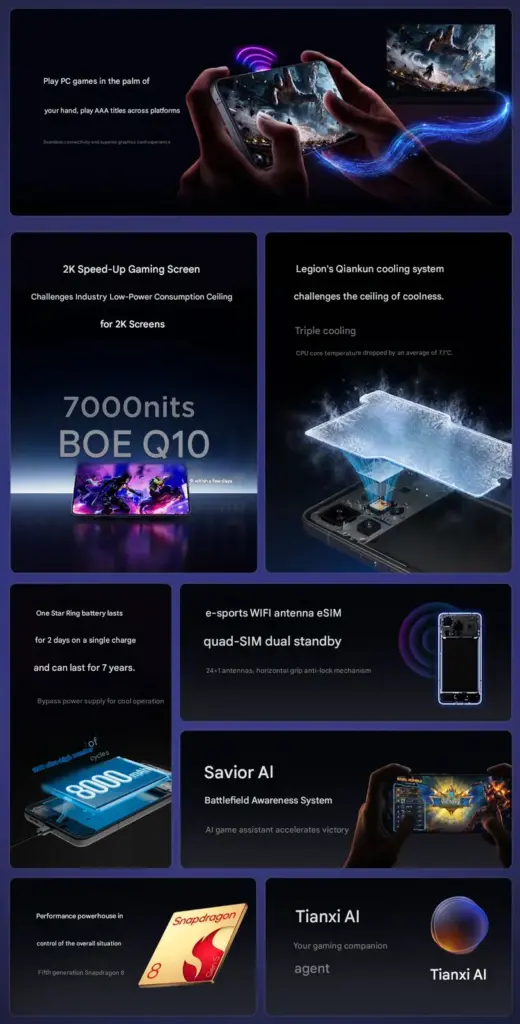
Lenovo is finally returning to the gaming phone market after staying quiet for the last few years, and the new Legion Y70 2026 looks like the company is jumping back in pretty aggressively. The phone is officially scheduled to launch in China on May 19, and based on the early details, Lenovo seems to be focusing heavily on battery life and thermal management rather than just chasing benchmark numbers.
One of the first things that stands out is the display. The Legion Y70 2026 uses a 6.82-inch 2K OLED panel with a 144Hz refresh rate, alongside a claimed peak brightness of 7,000 nits. Lenovo is using BOE’s Q10 display panel, which is claimed to be more power-efficient than many of the 1.5K panels used by competing gaming phones right now.
Under the hood is Qualcomm’s Snapdragon 8 Gen 5 chip, though notably not the Elite version. Even so, performance should still land fairly close to last year’s top-tier flagship processors.
Lenovo also seems to be putting a lot of emphasis on cooling this time around. The company mentions a large vapor chamber cooling system paired with something described as “10W thermal conductivity gel”, alongside gaming-focused network optimizations like a dedicated antenna setup for lower latency and more stable connectivity during online gaming sessions.
But honestly, the battery may end up being the phone’s biggest selling point. The Legion Y70 packs an 8,000mAh battery, which is massive even by current gaming phone standards. Lenovo claims up to 19.3 hours of gaming and over 57 hours of regular use, though real-world numbers will obviously vary quite a bit depending on brightness, game load, and network usage.
Charging is handled through 90W wired fast charging, and the phone also supports bypass charging to reduce heat buildup during extended gaming sessions while plugged in. Other specs include up to 16GB LPDDR5X Ultra RAM, UFS 4.1 storage, Android 16, and surprisingly strong durability ratings including IP66, IP68, and IP69 resistance.
Pricing is expected to start around CNY 3,999 (roughly $588 at the current exchange rate), which could make the Legion Y70 2026 fairly competitive against other gaming-focused devices.
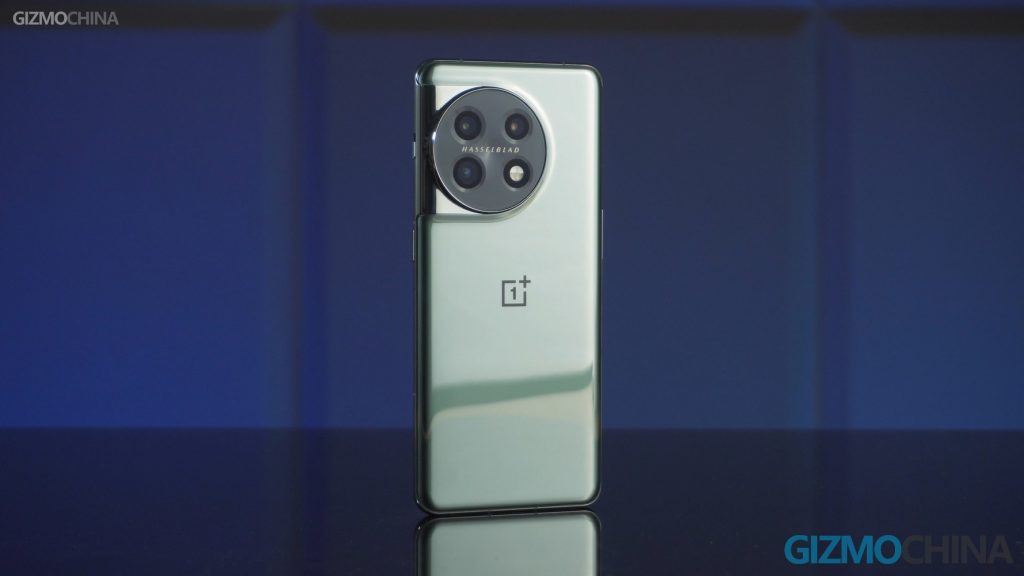
If you have used a OnePlus phone from a few years back (like the OnePlus 11), you might know what OnePlus used to focus on. The company built phones that gave you flagship-level speed, fast charging, clean Android software, and decent cameras without charging Samsung or Apple prices.
Yes, you may have had to compromise on a few things. Like the OnePlus 11 skipped wireless charging, offered only basic water resistance, and missed some premium extras. However, it was a bargain for its launch price.
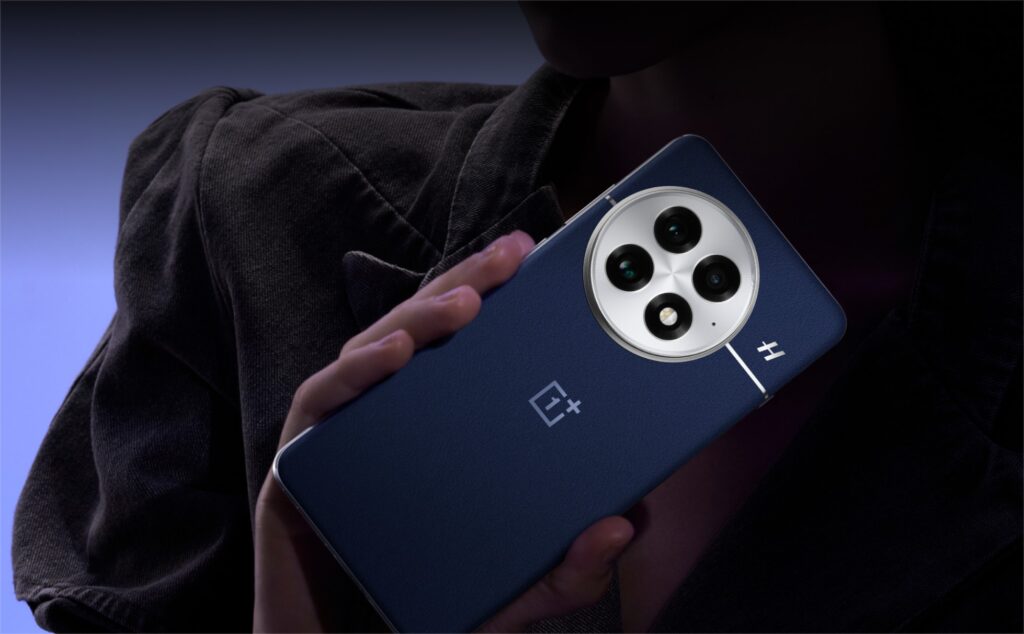
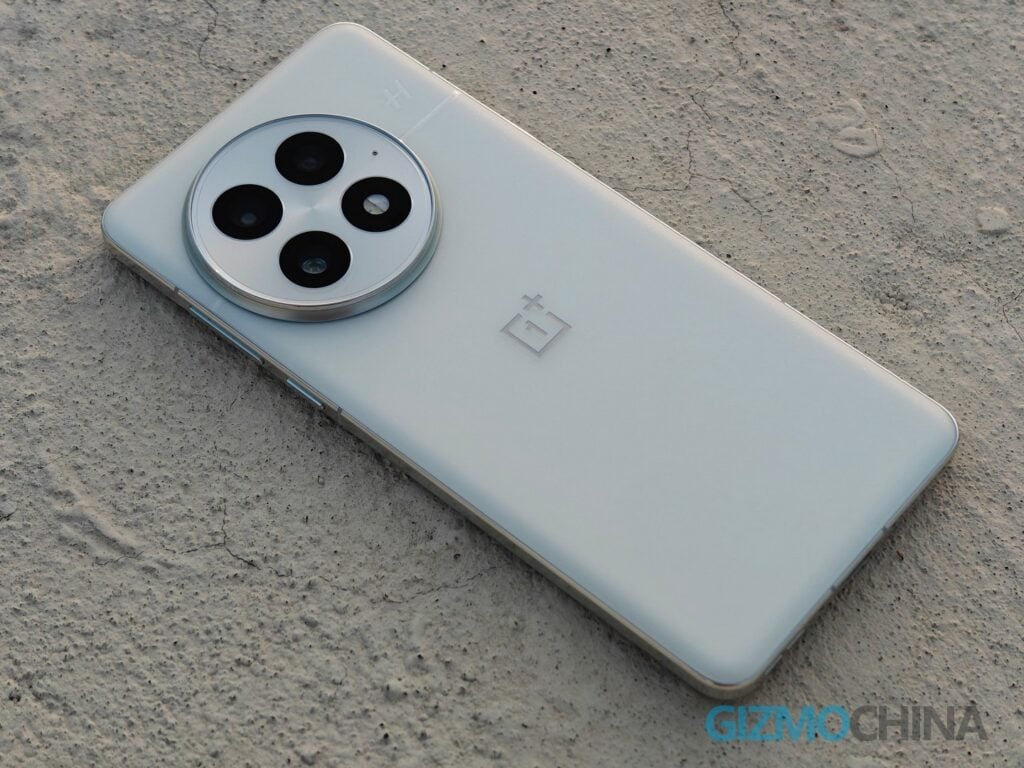
OnePlus 13
Things started to change with the OnePlus 13. It actually fixed most of the missing features of the OnePlus 11 while keeping the same overall idea intact. But it was the start of a change. And the OnePlus 15 finally took the lineup in a different direction.
With its latest generation, OnePlus dropped Hasselblad, lowered the display resolution, used smaller camera sensors, and started focusing on gaming features rather than making an all-around flagship.
So if you still use a OnePlus 11 and are wondering whether you should upgrade, this comparison covers what’s changed across generations, what OnePlus tried to achieve, and which phone actually makes sense for you.
Quick note: We are skipping the OnePlus 12 here because the OnePlus 13 is a bigger jump and still sells in most markets.
OnePlus launched the OnePlus 11 in January 2023 with a simple goal: bring back the kind of phone people expect from OnePlus. As such, we titled our review “OnePlus is getting better.”
The phone runs on Snapdragon 8 Gen 2, has a 6.7-inch QHD+ AMOLED display with a 120Hz refresh rate, a 5,000mAh battery, and 100W charging that can fully charge the phone in roughly 25 minutes. OnePlus priced it at $699, which made it much cheaper than Samsung or Google flagships back then.
The camera has Hasselblad tuning and includes a 50MP main sensor, a 32MP 2x telephoto camera, and a 48MP ultrawide camera. The photos looked good overall, although the 2x zoom felt weaker compared to phones offering 3x or 5x optical zoom.
However, to hit that lower price, OnePlus made a few obvious cuts. It only has an IP64 rating that protects the phone from splashes but not full water immersion. The company skipped wireless charging completely, even though some cheaper phones already offered it. The optical fingerprint sensor also felt slower than the ultrasonic scanners Samsung used. Heavy gaming pushed the phone harder than expected, too, especially in demanding games like Genshin Impact.
That said, even in 2026, the OnePlus 11 still handles daily use well enough. OnePlus is also supporting it with up to Android 16 update, so software is not the problem. The bigger issue is that the hardware now sits two generations behind newer flagship phones. The lack of wireless charging and the weaker water resistance also stand out more today than they did in 2023.
2. OnePlus 13 is a more complete flagship
OnePlus launched the OnePlus 13 in China in late 2024 before bringing it globally in early 2025. Instead of changing everything, the company focused on fixing the weak spots from the OnePlus 11.
The phone now runs on the Snapdragon 8 Elite, which improved both performance and efficiency. OnePlus also increased the battery size from 5,000mAh to 6,000mAh using silicon-carbon battery technology. And… OnePlus finally brought back 50W wireless charging.
We also got an IP rating jump to IP68 and IP69; the fingerprint scanner is now ultrasonic, too.
Moreover, the display also improved in several ways. The 6.82-inch QHD+ AMOLED panel uses LTPO 4.1 technology and reaches up to 4,500 nits peak brightness. OnePlus also moved away from curved edges and switched to a flat display design.
It’s the cameras that have had the biggest improvement. The fifth-generation Hasselblad system used three 50MP sensors, including a proper periscope telephoto camera with 3x optical zoom. The main sensor also grew larger than the one inside the OnePlus 11, so photos looked more natural, with better color balance and less aggressive processing.
Of course, these upgrades mean users had to pay more. The OnePlus 13 launched at $899, which was $200 more than the OnePlus 11. At this point, OnePlus was no longer selling this as a budget-friendly alternative to premium flagships. It was pricing itself alongside them. That said, it still came in below the Pixel 9 Pro and Galaxy S25 at launch.
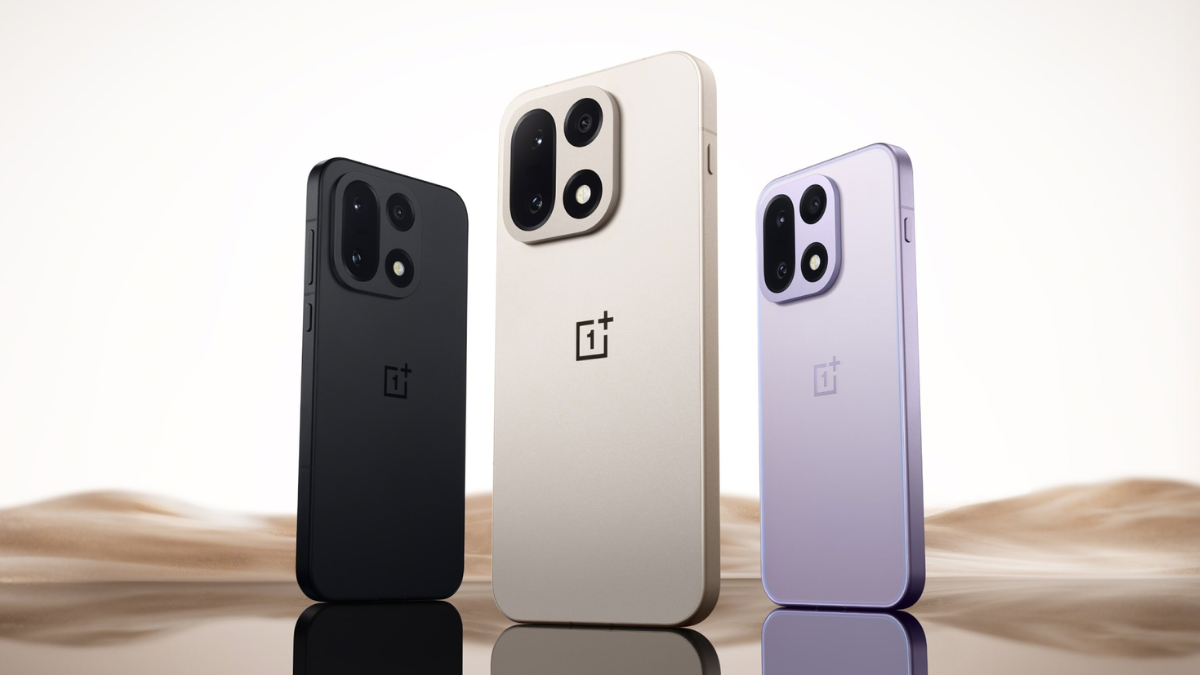
3. OnePlus 15 changed the formula
The OnePlus 15 launched in late 2025, and this is where the lineup changed its direction.
Before launch, OnePlus confirmed that its partnership with Hasselblad had ended. Instead, the company introduced its own image processing system called DetailMax Engine. OnePlus also removed the circular camera design it had used for years and replaced it with a more standard rectangular camera bump.
The display became another major talking point. OnePlus introduced a 165Hz refresh rate; however, to make that happen, the company lowered the resolution from QHD+ to 1.5K.
According to OnePlus, current display panels cannot support both QHD+ resolution and 165Hz refresh rates at the same time. As a result, the company chose refresh rate over resolution, and we think that decision may have influenced the entire phone.
It runs on the Snapdragon 8 Elite Gen 5. OnePlus also increased the battery size again, from 6,000mAh to 7,300mAh, making it one of the largest batteries in a mainstream flagship phone. And the charging speeds increased from 100W to 120W.
The company also added several gaming-focused features, including a UAV-grade gyroscope, a dedicated touch processing chip, improved cooling, and a gaming Wi-Fi chip designed to reduce latency.
The 165Hz display needs some context, though. The phone only reaches 165Hz in supported games like Call of Duty: Mobile, Battlegrounds Mobile India, Clash of Clans, and Blood Strike. Outside of gaming, the system still runs mostly at 120Hz. Even so, the 3,200Hz touch sampling rate makes controls feel more responsive during gaming sessions.
The software side improved further with OxygenOS 16 on Android 16. OnePlus added AI tools for summarizing content, scanning documents, writing assistance, and easier file sharing with iPhones. The company also extended software support to four Android updates and six years of security patches. Despite all these changes, the price stayed at $899.
4. So, should you upgrade?
That really depends on how you use your phone.
OnePlus 11 to OnePlus 13
This feels like the most balanced and straightforward upgrade path. The OnePlus 13 fixes almost every major complaint people had about the OnePlus 11. You get stronger water resistance, wireless charging, a brighter display, faster fingerprint unlocking, better cameras, and much longer battery life.
Since the phone has been out for some time, prices have likely dropped as well. If you find it on sale, the value becomes even better.
OnePlus 11 to OnePlus 15
This upgrade makes more sense if gaming matters more to you than cameras. The larger battery, gaming hardware, cooling system, and 165Hz support all target mobile gamers directly.
You do give up some camera quality and display sharpness compared to the OnePlus 13, though. If you care about photography, the OnePlus 13 still offers a better overall camera system. But if battery life and gaming performance matter most, the OnePlus 15 fits that role better.
OnePlus 13 to OnePlus 15
This one is harder to justify.
Yes, the OnePlus 15 runs faster and lasts longer on a charge. But it also lowers the display resolution, reduces camera sensor sizes, and loses the Hasselblad tuning that made the OnePlus 13 cameras stand out.
Unless gaming or battery life sits at the top of your priority list, the OnePlus 13 still could be a more balanced flagship, if you really wanna upgrade. Waiting another generation might make more sense, especially if OnePlus improves the camera system again.
For more daily updates, please visit our News Section.
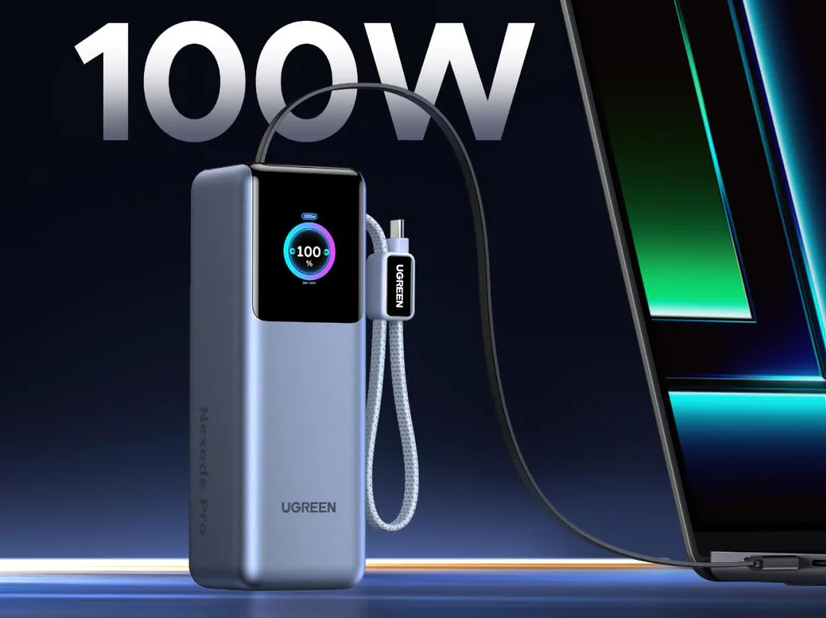
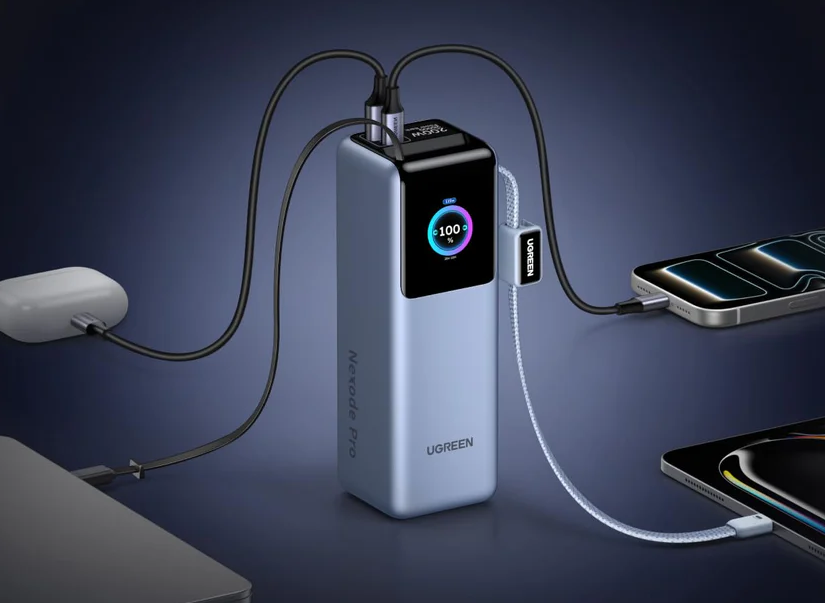
Ugreen has launched its latest power bank in the US market. Previously introduced in Europe, the device is officially listed as the Ugreen 200W Power Bank 25000mAh Fast Charging Built-in Cable. It carries a retail price of $139.99, although Ugreen is currently offering it at a discounted price of $109.99 through its official website.
Ugreen 200W Power Bank Specifications
For the price, you get a 25,000mAh battery with a total power output of 200W. The charging setup consists of four options. There is a 68cm retractable USB-C cable, a shorter 35cm USB-C cable that loops around to function as a carrying handle, a standard USB-C port, and a single USB-A port. According to Ugreen’s testing data, the built-in cables are rated to survive 10,000 bends, while the retractable mechanism is rated for 25,000 pulls.
If you need to charge two laptops at the same time, the power bank can supply 100W to two separate USB-C connections simultaneously. If you plug devices into three USB-C connections at once, the total output drops to 115W.
It supports standard 100W Power Delivery, which Ugreen says will charge a 16-inch MacBook Pro to 43% in 30 minutes. It also supports Xiaomi’s 90W charging protocol. Capacity-wise, 25,000mAh translates to about 1.3 charges for a 13-inch MacBook Air, 3.4 charges for a Galaxy S25 Ultra, or 4.7 charges for an iPhone 17 Pro.
Following a recent trend in portable batteries, this model includes a small TFT smart display on the front. The screen provides a practical breakdown of the battery’s status, showing real-time input and output wattage for each individual port, the remaining battery percentage, and the estimated time until the bank is empty or fully recharged. It also includes a battery health menu that tracks total cycle counts.
When the power bank is depleted, it supports 100W input. If you use a wall charger capable of those speeds, it takes 2.2 hours to recharge from zero to 100%.
It is a relatively heavy device, weighing 631 grams with dimensions of 15.8 x 5.4 x 5.0 cm. Ugreen states the battery cells will maintain at least 80% of their original capacity after 300 charge cycles, and the outer shell is built from V-0 flame-retardant material with standard thermal and short-circuit protections.
In related news, Ugreen has recently launched the P6 45W 10,000mAh power bank featuring a built-in display and integrated charging cable.
For more daily updates, please visit our News Section.
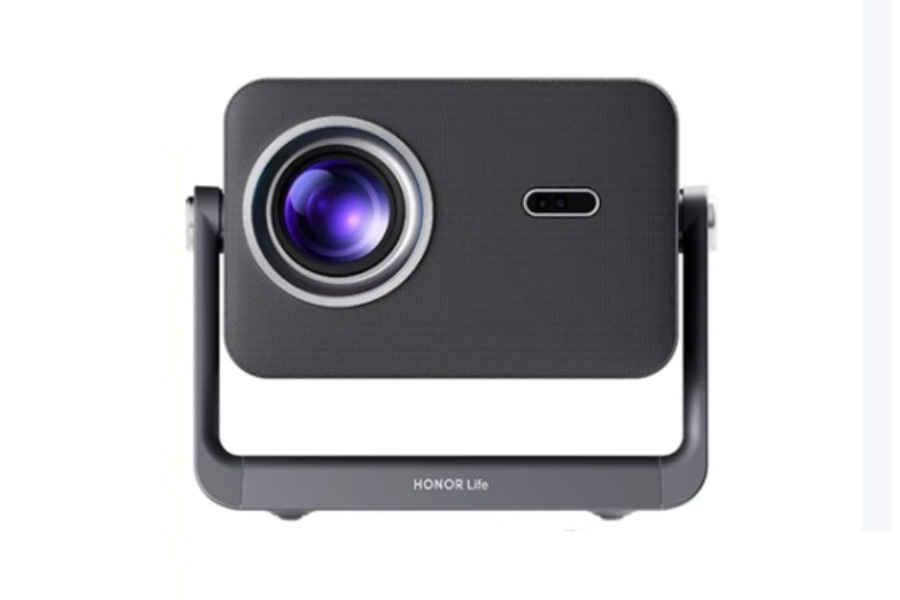
Honor has quietly added a new budget-friendly projector to its portfolio. It’s called Honor Choice AI Projector Pro and is set to launch in China on May 15 at a price tag of 1,410.5 yuan or some $207. You can choose from Titanium Gray and Starlight White color options.
The AI Projector Pro is an incremental step up from the 2025 Honor Firefly AI Projector Air, which launched at a far lower 599 yuan price point. The newer Pro model focuses more on image quality and smarter setup features rather than portability or pricing.
Honor Choice AI Projector Pro Specifications
The projector ships with Android 9.0 pre-installed and promises a cleaner experience than many inexpensive smart projectors by removing startup ads entirely.
It also has automated setup features like intelligent obstacle avoidance, curtain adaptation, automatic focus, and four-way keystone correction. These are becoming increasingly common in portable projectors, but they still matter because they reduce the amount of manual adjustment required when moving the device between rooms.
The projector outputs at a native 1920 x 1080 resolution and supports a maximum compatible resolution of the same size. Honor pairs that with a 2500:1 contrast ratio, a 16:9 aspect ratio, and a 1.2:1 throw ratio. The company lists screen brightness at 750 nits, although we did not find the exact measurement standard being used.
For comparison, the previous Air model was rated at 280 CVIA lumens, suggesting the new Pro version could deliver a noticeably brighter image, at least on paper.
Inside, the projector runs on a HiSilicon V352 chip and includes 2GB of RAM with 32GB of storage. It also features an all-glass lens, a 2.69-inch LCD display chip, and a built-in 5W speaker.
The projector supports near-field voice control, Bluetooth, Wi-Fi connectivity, wireless screen casting, HDMI 2.0, and dual USB ports. There’s no Ethernet port, no optical zoom support, and no Type-C connection. It also skips features like MEMC motion smoothing and 3D playback.
For more daily updates, please visit our News Section.
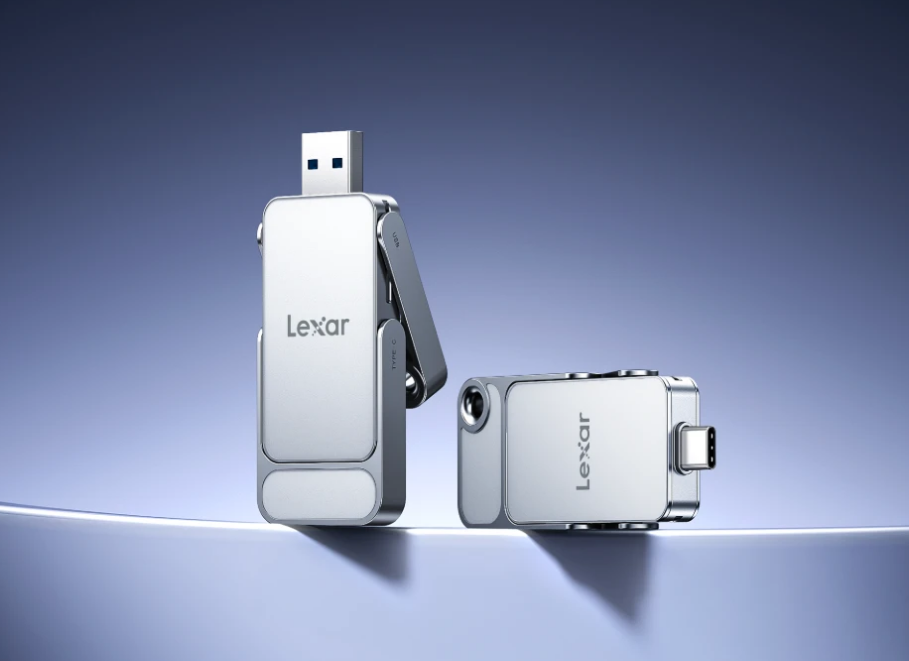
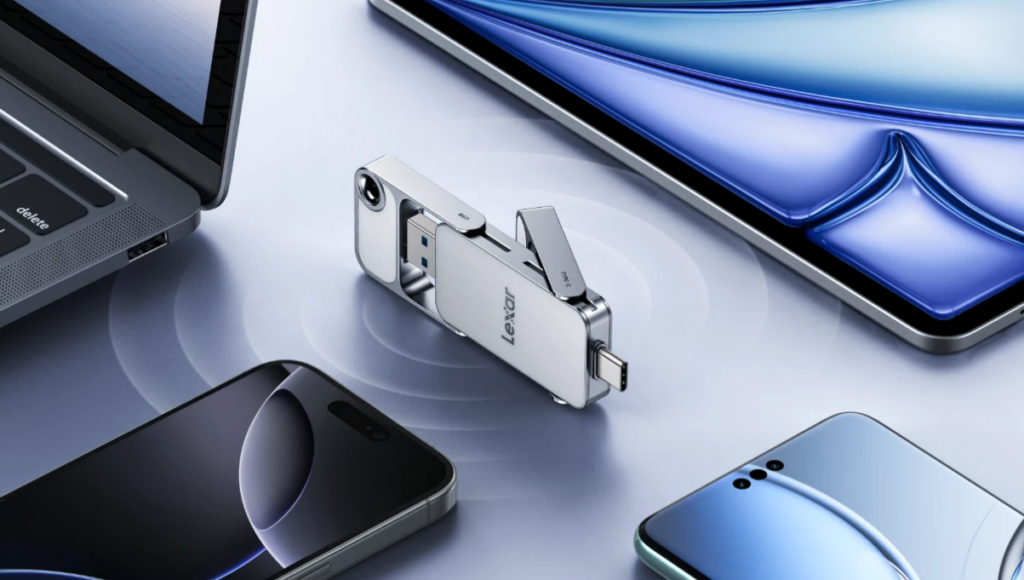
Lexar has released a new portable SSD called the Dual Drive Portable SSD D70E. It comes with both USB-C and USB-A connectors, allowing it to plug directly into computers, tablets, and phones without requiring adapters or extra cables.
Lexar D70E Specifications
The D70E is built with a metal housing and uses a retractable, flip-open mechanism to expose the ports. On one end, there is a USB-C connector that supports the USB 3.2 Gen 2×2 standard.
When plugged into a compatible port, Lexar says the drive can reach sequential read speeds of up to 2,000 MB/s. The write speeds on this connection vary by capacity: the 1TB and 2TB models max out at 1,800 MB/s, while the 512GB version is capped at 1,300 MB/s.
On the other end, the USB-A port runs on the USB 3.2 Gen 2 standard. Because of this interface limit, speeds on the USB-A side are capped at 1,000 MB/s for reads and 900 MB/s for writes across all storage sizes.
It is worth keeping in mind that while 2,000 MB/s is a high ceiling for a drive of this size, you will need a host device that specifically supports USB 3.2 Gen 2×2 to actually see those speeds. Many current devices, including Apple’s entire Mac lineup, do not support this specific standard and will fall back to 10Gbps (1,000 MB/s) speeds even when using the USB-C port.
Beyond standard file transfers, Lexar is pointing to the drive as a tool for mobile backups. It works directly with Android devices, iPads, and recent iPhones with USB-C. The company also provides a companion app designed to automatically back up photos and videos from a phone when the drive is connected.
Pricing and Availability
The D70E is available in three capacities at launch. The base 512GB model is priced at $119.99/£129.99, the 1TB version costs $199.99/£199.99, and the top-tier 2TB drive goes for $299.99/£299.99. All versions of the drive are covered by a five-year limited warranty.
In related news, SanDisk has recently introduced a new 1TB portable SSD offering read speeds of up to 600MB/s, while ADATA recently launched the Urban Tapsafe portable SSD featuring NFC unlocking and transfer speeds of up to 1900MB/s.
For more daily updates, please visit our News Section.
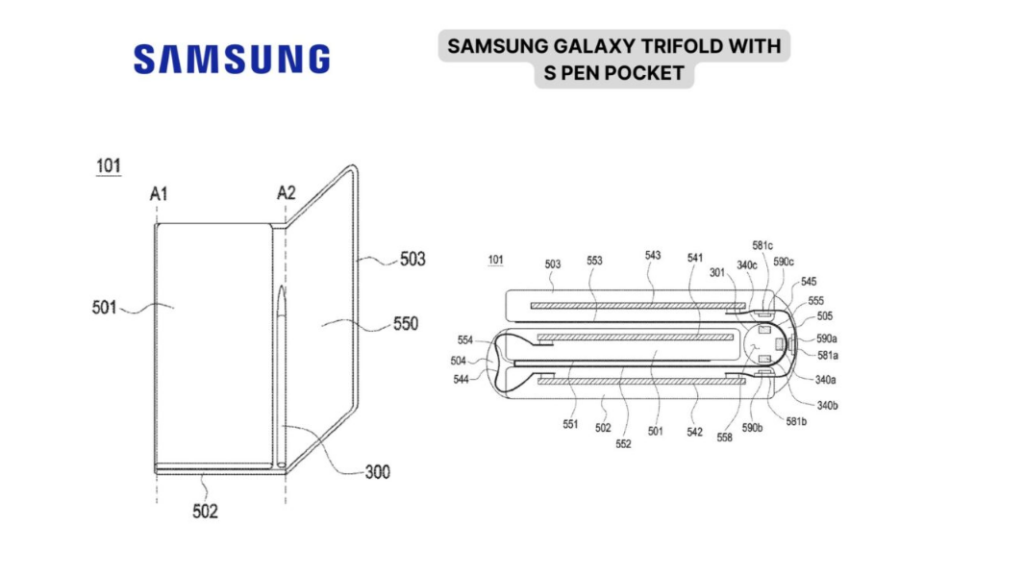
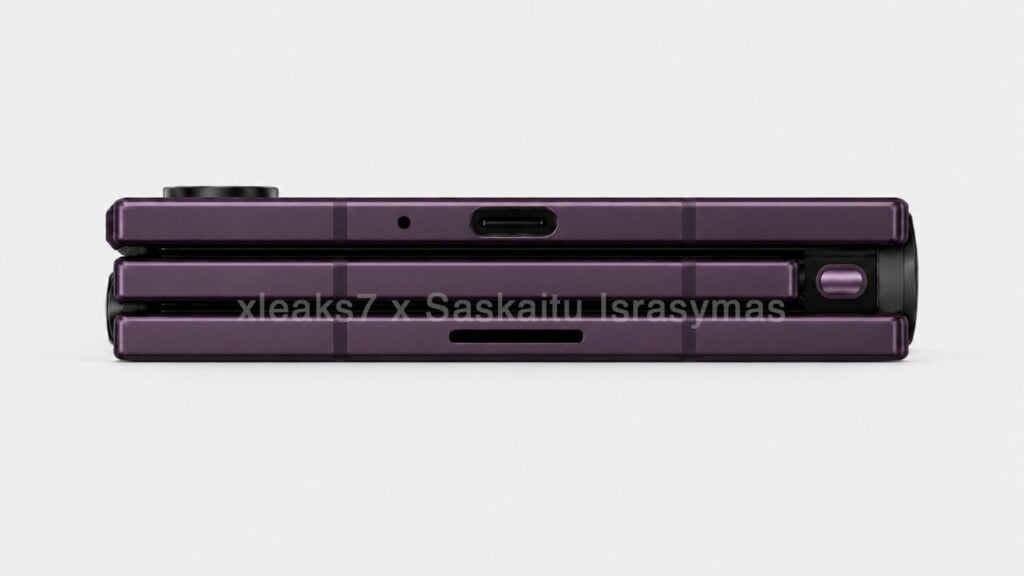
Samsung may have found a way to solve one of the biggest missing features on its tri-fold phones: where to put the S Pen. A newly discovered Samsung patent suggests the company is experimenting with a built-in stylus slot integrated directly into the hinge area of a future tri-fold device, likely something along the lines of a second-generation Galaxy Z TriFold.
The idea itself is actually pretty clever. Instead of storing the stylus inside the main body like the Galaxy S Ultra series, Samsung’s design places the S Pen vertically along part of the hinge structure. Patent illustrations shared by tipster @xleaks7 show the stylus sitting inside a dedicated compartment built into the foldable hinge assembly itself. And it apparently does more than just hold the pen in place. The patent mentions magnetic retention, charging support while docked, and detection systems that can recognize whether the stylus is properly inserted.
That’s important because Samsung’s first tri-fold device skipped S Pen integration altogether, likely due to space limitations and internal complexity. A tri-fold phone already has to manage multiple hinges, flexible display layers, batteries, and cooling systems inside a relatively thin chassis. Finding extra room for a stylus was always going to be difficult.
This new hinge-based approach could help work around that problem, though it may introduce a few compromises of its own. Based on the patent images, the soft inner display itself seems to form much of the storage channel around the stylus on three sides. That could become a durability concern, since repeated insertion and removal of the S Pen may end up rubbing directly against the folding display layer over time unless Samsung redesigns the stylus with a softer exterior material.
There’s also the question of thickness. Samsung has reportedly been trying to make the Galaxy Z TriFold 2 thinner and lighter than its predecessor, but integrating a built-in S Pen system could end up pushing the design in the opposite direction.
Still, for a productivity-focused foldable, built-in stylus support makes a lot of sense. A tri-fold display naturally lends itself to multitasking, note-taking, sketching, and document work far more than a standard slab phone. So the lack of integrated pen support on the first-generation model felt like a pretty noticeable omission.
Of course, this is still just a patent for now, which means there’s no guarantee Samsung will actually ship this exact design. Companies file experimental ideas all the time. But the fact that Samsung is actively exploring ways to integrate the S Pen into a tri-fold device at least suggests the company sees stylus support as an important part of the category going forward.
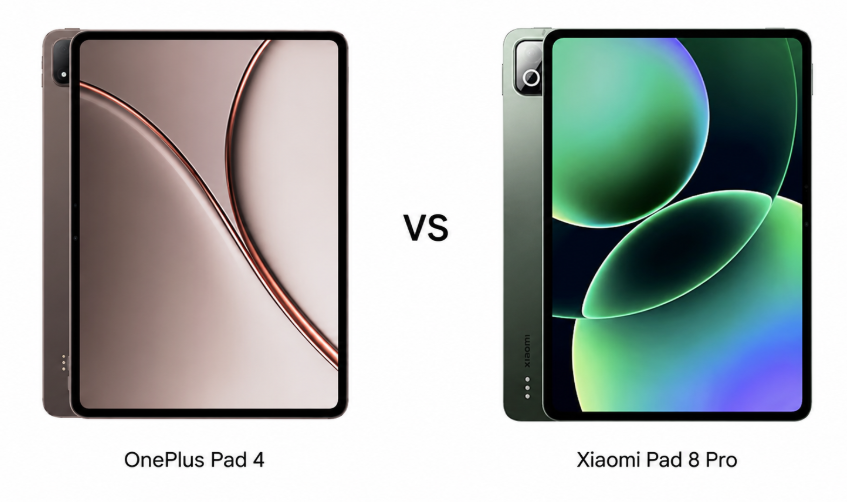
The Android tablet market is finally getting exciting again, and the OnePlus Pad 4 and Xiaomi Pad 8 Pro are proof of that. One focuses on delivering a massive laptop-like experience with flagship power and huge battery life, while the other aims to balance premium performance with portability and value. From gaming and multitasking to media consumption and ecosystem features, both tablets take very different approaches despite sharing high-end hardware.
Major Features:
Feature
OnePlus Pad 4
Xiaomi Pad 8 Pro
Winner
Display Size
13.2-inch IPS LCD, 144Hz
11.2-inch IPS LCD, 144Hz
OnePlus – Larger display feels better for multitasking and entertainment
Resolution & Sharpness
2400 × 3392, 315ppi
2136 × 3200, 345ppi
Xiaomi – Higher pixel density gives sharper visuals
Brightness
1000 nits (HBM)
800 nits peak
OnePlus – Brighter panel for HDR and outdoor use
Multimedia Support
Dolby Vision, 8 speakers
Dolby Vision, HDR10, HDR Vivid, 4 speakers
OnePlus – Superior speaker setup creates a richer media experience
Build
Aluminum frame & back
Aluminum frame & back
Tie – Both offer premium metal builds
Weight
672g
485g / 494g
Xiaomi – Much lighter and easier to carry
Chipset
Snapdragon 8 Elite Gen 5
Snapdragon 8 Elite
OnePlus – Newer and more powerful flagship chip
GPU
Adreno 840
Adreno 830
OnePlus – Better graphics performance for gaming
RAM & Storage
Up to 12GB / 512GB
Up to 16GB / 512GB
Xiaomi – Higher RAM option improves heavy multitasking
Software
Android 16, OxygenOS 16
Android 16, HyperOS 3
OnePlus – Cleaner and smoother UI experience
Rear Camera
13MP
50MP with PDAF
Xiaomi – Significantly stronger camera hardware
Front Camera
8MP
32MP ultrawide
Xiaomi – Better for video calls and online meetings
Video Recording
4K@30fps
4K@60fps
Xiaomi – Higher frame rate recording support
Speakers
Stereo, 8 speakers
Stereo, 4 speakers
OnePlus – Louder and more immersive audio
Battery
13,380mAh
9,200mAh
OnePlus – Much larger battery capacity
Charging
80W wired
67W wired
OnePlus – Faster charging speeds
Reverse Charging
No
22.5W reverse wired
Xiaomi – Extra utility for charging accessories
Fingerprint Scanner
No
Side-mounted
Xiaomi – More convenient unlocking method
Bluetooth
Bluetooth 6.0
Bluetooth 5.4
OnePlus – Newer connectivity standard
Price
~$630 / ₹60,000
~$500 / ₹47,000
Xiaomi – Better overall value for the price
Disclaimer: Specs are based on available data. Actual performance may vary. Verify details from official sources before buying.
OnePlus Pad 4 and Xiaomi Pad 8 Pro both use premium aluminum bodies with slim profiles, but they target different users. The OnePlus Pad 4 feels more like a desktop replacement thanks to its massive 13.2-inch form factor and ultra-thin 5.9mm chassis. However, its 672g weight makes it noticeably heavier during long handheld sessions. The Xiaomi Pad 8 Pro is far more portable at under 500g, making it easier to carry for travel, gaming, and casual use. Xiaomi also adds a side-mounted fingerprint scanner and magnetic stylus integration, which improves convenience slightly.
Display & Multimedia
OnePlus clearly focuses on immersive entertainment. Its 13.2-inch IPS panel offers a sharper cinematic feel with Dolby Vision, 144Hz refresh rate, and up to 1000 nits HBM brightness. The 8-speaker setup also delivers a more powerful media experience. Xiaomi counters with a denser 3:2 display, HDR Vivid support, and better portability for reading and productivity. While the 4-speaker setup is good, it lacks the fuller soundstage of the OnePlus tablet.
Verdict
OnePlus Pad 4 wins for entertainment and large-screen productivity, while the Xiaomi Pad 8 Pro feels more practical for everyday portability and mixed usage.
2. Performance and Software
Processor & UI Smoothness
OnePlus Pad 4 ships with the newer Snapdragon 8 Elite Gen 5 chipset paired with Adreno 840 graphics, giving it a noticeable edge in raw performance. Heavy gaming, AI workloads, and multitasking should feel faster and more future-proof. OxygenOS 16 also tends to deliver cleaner animations and smoother transitions with minimal visual clutter. Xiaomi’s Snapdragon 8 Elite remains extremely powerful, though it sits slightly behind in GPU and CPU capability. HyperOS 3 introduces more ecosystem-focused features, but it can feel visually busier compared to OxygenOS.
Productivity & Multitasking
OnePlus benefits greatly from the larger 13.2-inch display for split-screen work, document editing, and laptop-style multitasking. The wider workspace simply feels better for serious productivity. Xiaomi, however, balances power with flexibility. The lighter chassis, optional 16GB RAM variant, and tighter ecosystem integration make it excellent for students and hybrid users. Both tablets support stylus accessories, though Xiaomi’s magnetic implementation feels slightly more refined.
Verdict
OnePlus Pad 4 offers stronger peak performance and better multitasking potential, but Xiaomi delivers a more balanced experience for users wanting portability alongside flagship power.
3. Battery and Accessories
Battery Life
Battery capacity is one of the biggest differences between these tablets. The OnePlus Pad 4 packs a massive 13,380mAh battery, which should comfortably handle long gaming sessions, media consumption, and full-day productivity workloads. Combined with 80W charging, it is built for power users who rarely want battery anxiety. Xiaomi’s 9,200mAh battery is smaller, but its more compact display helps maintain efficient endurance. The 67W charging remains quick enough for daily use, and reverse wired charging adds extra flexibility.
Stylus, Keyboard & Ecosystem
Both tablets support stylus accessories, but Xiaomi appears slightly more polished for ecosystem usage. HyperOS integration across Xiaomi phones, tablets, and accessories creates a smoother connected experience. The magnetic stylus implementation also feels more seamless. OnePlus focuses more on workstation-style usage with its larger display and accessory connector pins. Users looking for laptop-style workflows may appreciate the extra screen space more than Xiaomi’s ecosystem advantages.
Verdict
OnePlus Pad 4 wins battery life and long-session usability, while Xiaomi offers better portability and ecosystem convenience. The better choice depends heavily on whether mobility or endurance matters more.
4. Camera & Media
Rear and Front Camera
Tablet cameras are rarely a deciding factor, but Xiaomi clearly puts more effort into imaging hardware. The Xiaomi Pad 8 Pro includes a 50MP rear camera with PDAF and a 32MP ultrawide selfie camera, making it much stronger for video calls, scanning documents, and occasional content creation. The OnePlus Pad 4 uses a simpler 13MP rear sensor and 8MP front camera setup that mainly handles basic tasks. For professional meetings and online classes, Xiaomi’s front camera advantage is significant.
Video & Audio Quality
Xiaomi supports 4K recording at up to 60fps and includes HDR features for better dynamic range. However, OnePlus takes the lead in multimedia audio. Its 8-speaker stereo setup creates a far more immersive cinematic experience for movies and gaming. Dolby Vision support on the larger panel also enhances streaming quality noticeably. Xiaomi’s Dolby Atmos tuning is still strong, but the physical speaker limitation is noticeable during louder playback.
Verdict
Xiaomi Pad 8 Pro is the better choice for cameras and video calls, while the OnePlus Pad 4 dominates for movies, gaming audio, and large-screen entertainment.
5. Pricing
Xiaomi Pad 8 Pro delivers stronger overall value at around $500 / ₹47,000. It offers flagship-grade performance, excellent cameras, premium build quality, and multiple RAM/storage configurations at a lower price point. For most users, it hits the sweet spot between portability, power, and affordability.
OnePlus Pad 4 costs around $630 / ₹60,000, but the higher price mainly targets users wanting a larger display, bigger battery, stronger chipset, and superior speaker setup. It feels more like a premium productivity tablet than a traditional multimedia slate.
Users focused on value and portability will likely lean toward Xiaomi, while heavy multitaskers and entertainment-focused buyers may justify the higher OnePlus pricing.
Disclaimer: Prices are approximate and may vary based on country, region, launch timing, and applicable taxes. Always check whether the listed price is for a China unit or a global/international variant when purchasing.
6. Conclusion
OnePlus Pad 4 stands out with its enormous 13.2-inch display, Snapdragon 8 Elite Gen 5 processor, huge 13,380mAh battery, and immersive 8-speaker system. It feels designed for users replacing a lightweight laptop or want a large-screen entertainment device.
Xiaomi Pad 8 Pro shines with portability, stronger cameras, a sharper pixel density, reverse charging, an optional 16GB RAM configuration, and tighter ecosystem integration. Its lighter design makes it more versatile for travel and daily carry.
Verdict
OnePlus Pad 4 is the better premium productivity and entertainment tablet, especially for power users who prioritize screen size and battery life. The Xiaomi Pad 8 Pro, however, offers the smarter overall balance for most buyers thanks to its lower pricing, lighter build, and well-rounded feature set.
Disclaimer: This comparison is based on the specifications provided and is intended for general informational purposes. Actual performance, camera results, battery life, and overall experience may vary depending on real-world usage, software updates, and individual preferences.
Chinese keyboard maker Keychron has recently announced the new Z11 Ultra 8K mechanical keyboard. It uses a 65 percent layout with a split-panel Alice-style design, which slightly angles the keys to make typing feel more natural.
The company says the keyboard will go on sale tonight at 8 PM in China for 849 yuan, or roughly $120, depending on exchange rates.
Visually, the keyboard leans into a retro aesthetic. Keychron says the Z11 Ultra 8K uses a CNC-machined unibody aluminum chassis inspired by 1970s arcade machines.
The lower-left corner includes a metal plate designed to look like a cassette cartridge, and it doubles as storage for the 2.4GHz wireless receiver. On the bottom, there’s also an X-shaped silicone pad that likely helps with desk grip and sound dampening.
Internally, the keyboard uses a gasket mount structure alongside six layers of sound-absorbing material to soften typing noise and reduce harsh vibrations. Keychron has also included a single-key slotted PCB and a PP positioning plate, both of which are often used to create a slightly softer and more flexible typing feel.
The keyboard ships with custom HUANUO mechanical switches and original CHERRY high-profile PBT keycaps with double-shot molding.
One of the more notable features here is the polling rate. The Z11 Ultra 8K supports an 8,000Hz polling rate in both wired USB-C mode and wireless 2.4GHz mode, using the ZMK low-power firmware platform. Higher polling rates reduce input latency, which matters more to competitive gamers than average office users.
Keychron says each side includes a built-in 4,000mAh battery, which should help offset the higher power draw that can come with wireless 8K polling.
There’s no word on global availability yet, though we will keep you in the loop about it.
For more daily updates, please visit our News Section.
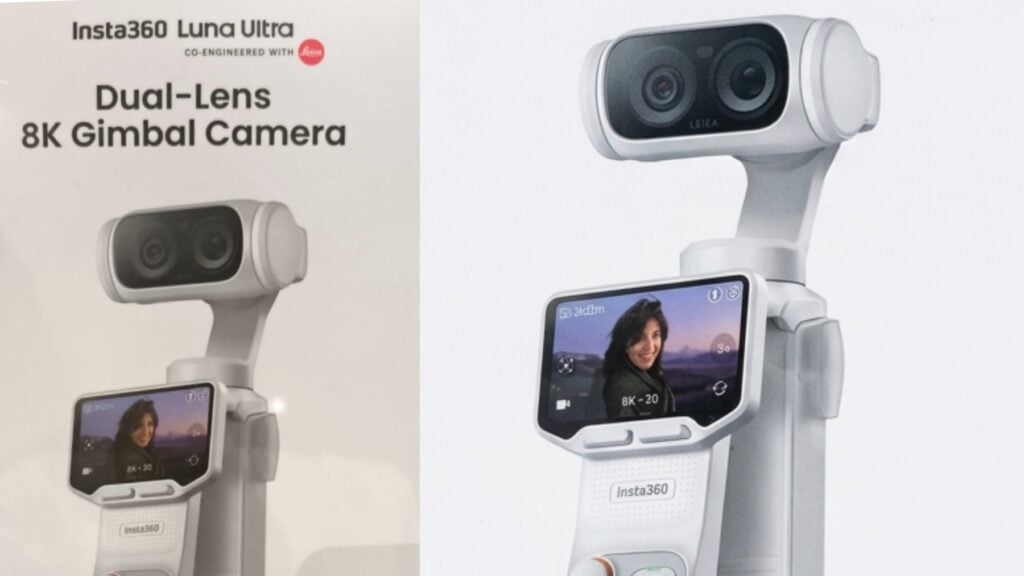
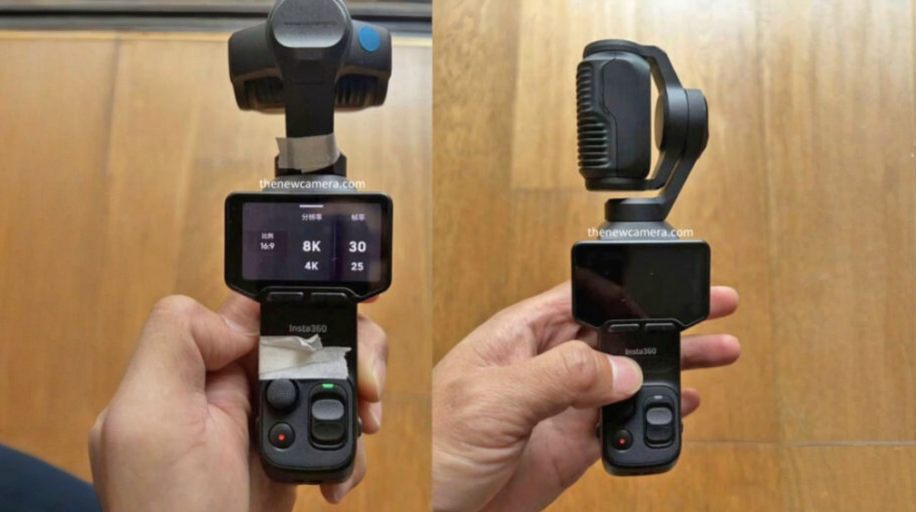
Portable gimbal cameras are starting to get surprisingly expensive, and Insta360’s upcoming Luna Ultra might be the clearest example of that trend yet. New pricing details shared by tipster Digital Chat Station suggest the Luna Ultra could launch at around ¥5,299 (roughly $780 at the current exchange rate) for the standard version, while a larger bundle package may reach ¥6,499 (around $950).
At that point, the device is no longer competing only with DJI’s Pocket lineup. It starts getting dangerously close to actual mirrorless camera territory. According to the tipster, Insta360 is positioning the Luna Ultra more like a compact cinema or creator-focused camera rather than a casual vlogging gadget.
The rumored hardware is fairly ambitious for something this small. Reports point to a 1-inch primary sensor paired with a dedicated 3x telephoto camera, likely sitting around a 70mm equivalent focal length. The main camera is also said to use an f/1.8 aperture, alongside support for around 6x “lossless” zoom and up to 12x hybrid zoom overall.
That setup sounds very similar to the direction DJI is now taking with the Osmo Pocket 4P, which also introduces a telephoto lens for the first time in the Pocket lineup.
But Insta360 seems to be pushing even harder toward premium creator features. One of the more interesting rumored additions is a detachable OLED display that can apparently function as a wireless remote control. There’s also mention of 32-bit audio recording, which would be a pretty major upgrade for creators who care about preserving audio headroom during unpredictable shoots. Leaks have also hinted at Leica-influenced optics and a more modular overall design, though those details still haven’t been officially confirmed.
The timing here is interesting too. DJI is set to officially unveil the Osmo Pocket 4P on May 14 in Cannes, while Insta360’s Luna lineup appears to be surfacing almost simultaneously. So the competition between the two companies is clearly heating up.
A few years ago, compact gimbal cameras were mostly treated as lightweight travel accessories. Now both DJI and Insta360 seem to be trying to turn them into serious filmmaking tools. Whether people are actually willing to spend close to $900 on one is another question entirely.
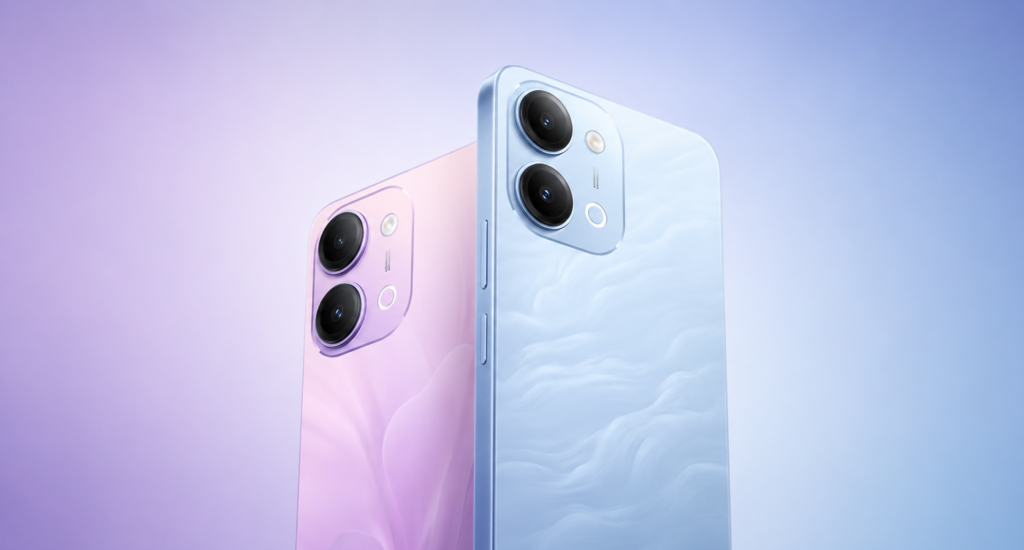
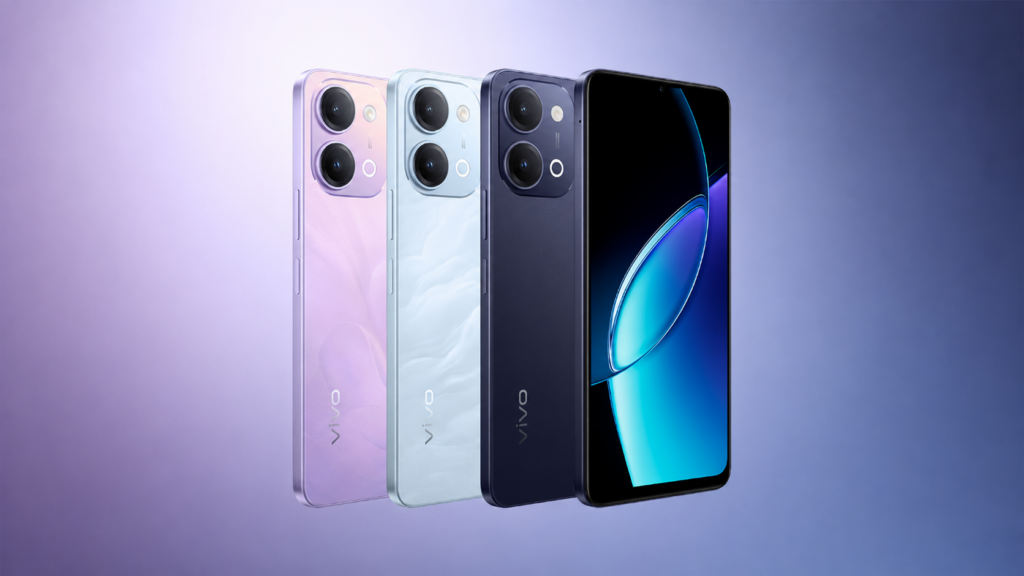
Vivo has silently launched the Vivo Y60 in China as a new budget 5G smartphone in its Y-series lineup. The device arrives with a Snapdragon 4-series chipset, a large 6500mAh battery, a 120Hz display, an IP65 rating and SGS five-star drop and shock resistance certification. Here is everything to know about the Vivo Y60 specifications, features and pricing details.
Vivo Y60 specifications and features
Vivo Y60
The Vivo Y60 features a 6.74-inch LCD waterdrop notch display with 1600 x 720 pixels resolution, 20:9 aspect ratio and support for up to 120Hz refresh rate. Powering the smartphone is Qualcomm’s Snapdragon 4 Gen 2 chipset, paired with 6GB or 8GB LPDDR4X RAM and up to 256GB UFS 3.1 storage.
The Vivo Y60 packs a 6500mAh battery with support for 15W charging and reverse charging. The device runs OriginOS 6 based on Android 16. For photography, the smartphone features a 13-megapixel rear camera with autofocus and LED flash support, while the front houses a 5-megapixel selfie camera.
The Vivo Y60 supports dual 5G SIM cards, Bluetooth 5.1, dual-band Wi-Fi, GPS, USB Type-C, a 3.5mm headphone jack, infrared remote control and a side-mounted fingerprint scanner. The device measures 167.40 x 77.10 x 8.39mm and weighs 209 grams. Vivo has also equipped the phone with IP65 dust and water resistance along with SGS five-star drop and shock resistance certification.
Vivo Y60 price and availability
Vivo Y60
The Vivo Y60 comes in Shanhaiqing Blue, Lucky Purple and Obsidian Black color options. The 6GB + 128GB variant is priced at 1,799 Yuan (~$265), while the 6GB + 256GB model costs 1,999 Yuan (~$300). The top-end 8GB + 256GB version carries a price tag of 2,299 Yuan (~$340). At present, there is no information about the global availability of this device.
For more daily updates, please visit our News Section.
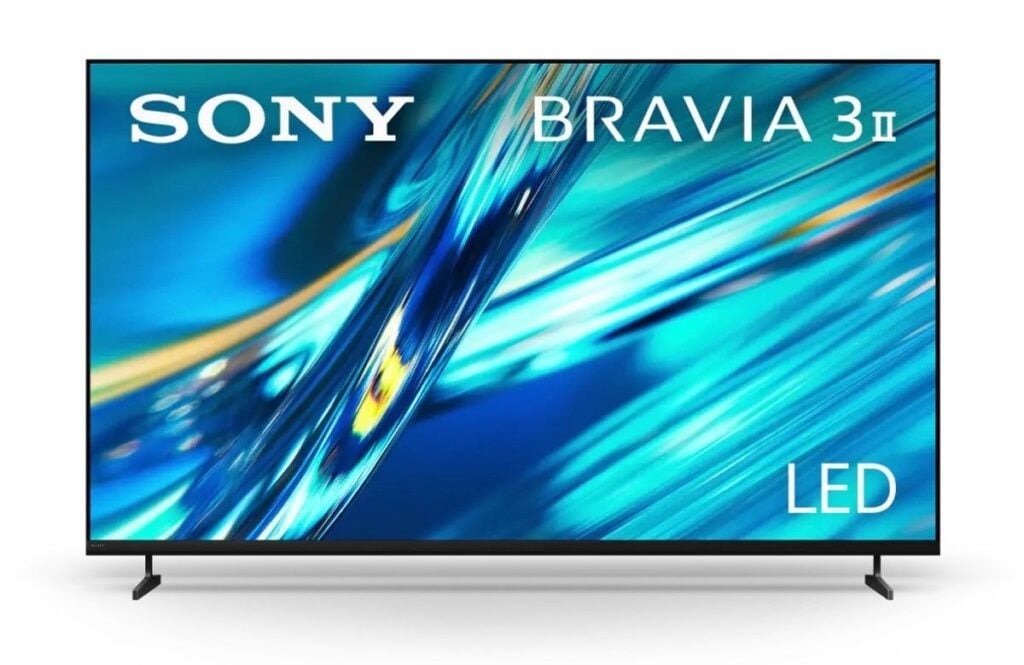
Sony India has expanded its smart TV lineup with the launch of the Bravia 3 II series. The new televisions focus on AI-powered picture processing, immersive sound and gaming-focused features, while also bringing several premium Bravia technologies to more consumers across different screen sizes.
Sony Bravia 3 II key features
Sony Bravia 3II
The Sony Bravia 3 II series is powered by the company’s XR Processor, which analyses visuals and audio in real time to improve depth, colour reproduction, brightness and contrast. The televisions also feature XR Triluminos Pro and XR Clear Image technologies for sharper visuals and smoother picture quality during fast-moving scenes. Motionflow XR support is included to improve sports and action content playback.
Sony has equipped the Bravia 3II lineup with Dolby Vision, Dolby Atmos and DTS:X support for a more theatre-like entertainment experience at home. The TVs also include specially designed speaker systems aimed at improving vocal clarity and reducing sound distortion. For gamers, the lineup supports 4K at 120Hz through HDMI 2.1, alongside Variable Refresh Rate and Auto Low Latency Mode for smoother gameplay and lower input lag.
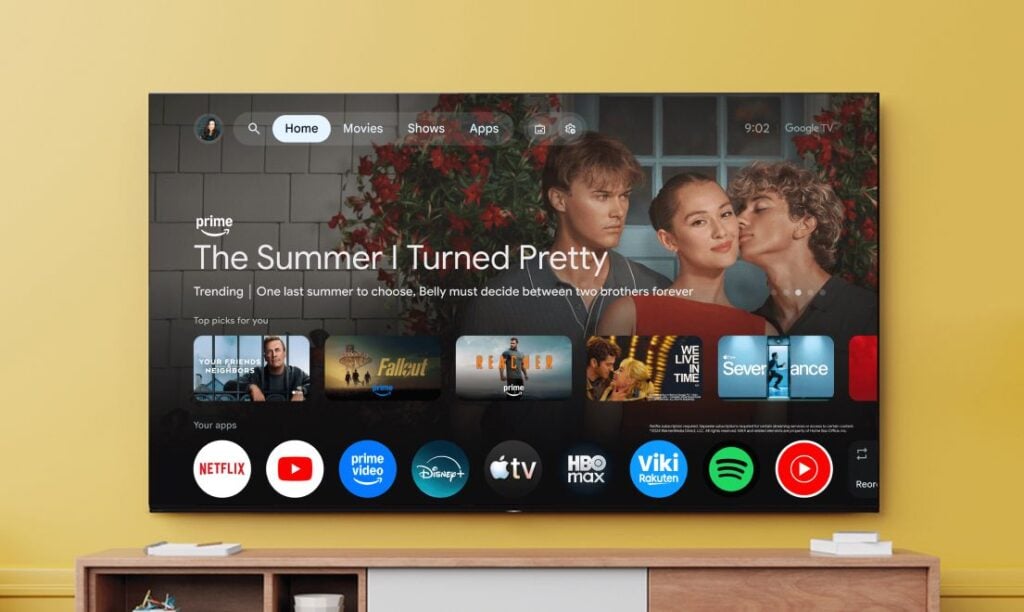
The televisions run on Google TV, giving users access to apps, movies and shows across multiple streaming platforms. Features such as Google Assistant voice controls, Apple AirPlay 2, Apple HomeKit and Amazon Alexa compatibility are also included. Sony has additionally confirmed that the 2026 Bravia models will receive Google Gemini AI support through a future software update.
Sony Bravia 3 II price and availability
Sony will introduce the Bravia 3II lineup in multiple screen sizes, starting with 55-inch and 65-inch variants. The 55-inch model is priced at Rs 99,990, while the 65-inch version costs Rs 1,24,990 (~$1,310). The 75-inch model carries a price of Rs 1,79,990 (~$1,880), and the 85-inch variant is priced at Rs 3,05,990 (~$3,200). Sony also plans to launch a 100-inch model between July and August 2026.
The Bravia 3II series will be available in India through Sony retail stores, ShopatSC, major electronics outlets and e-commerce platforms starting this month.
For more daily updates, please visit our News Section.
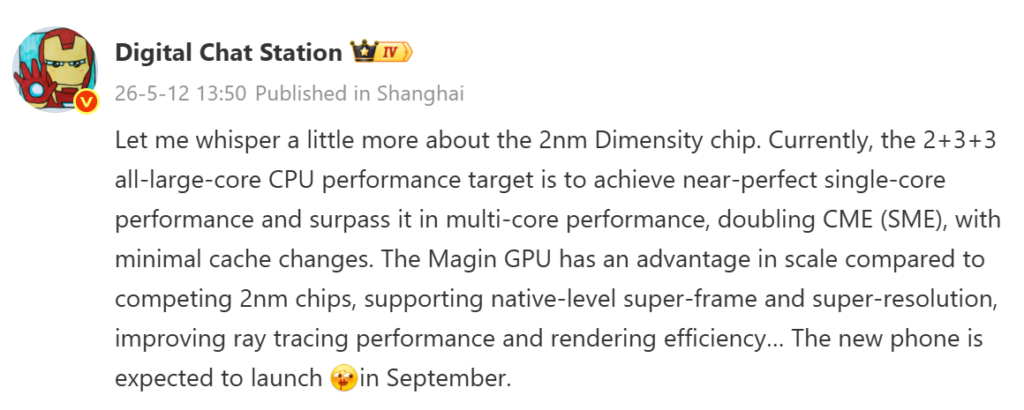
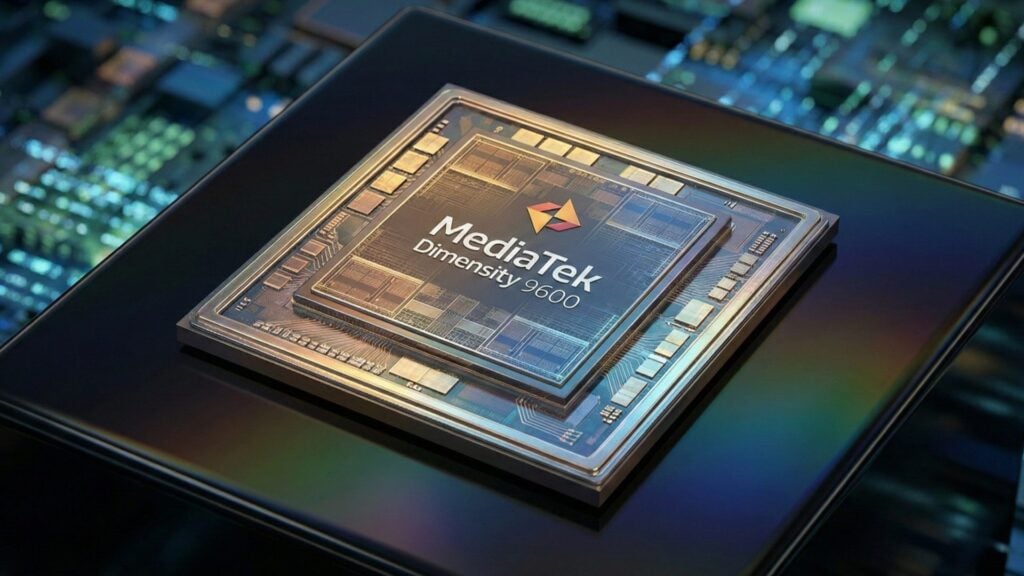
MediaTek is reportedly working on the Dimensity 9600, which is said to be the company’s first-generation 2nm chipset. A new leak, courtesy of reliable tipster Digital Chat Station, suggests that the upcoming chip could deliver a significant performance upgrade and may even surpass Apple’s chips in certain areas. Here’s a look at what the tipster revealed.
Dimensity 9600’s performance tipped
According to the leak, the 2nm Dimensity 9600 chip could arrive with a 2+3+3 all-big-core CPU architecture aimed at delivering single-core performance close to Apple’s chips, while multi-core performance may surpass them. However, the tipster did not specify whether the comparison was being made against the upcoming Apple A20 Pro or the existing A19 Pro.
The tipster also claims that the chipset could bring a major improvement in CME/SME capabilities, potentially doubling compared to the previous generation, while cache changes are said to remain limited.
On the graphics side, the Dimensity 9600 is tipped to feature a larger next-generation “Magin” GPU compared to rival 2nm chipsets. It is also expected to support native-level frame interpolation and super-resolution technologies, alongside improvements in ray tracing and overall rendering efficiency.
MediaTek Dimensity 9600 (AI-generated image)
The tipster added that devices powered by the Dimensity 9600 series chipset are reportedly being targeted for a September debut. Most likely, he could be indirectly referring to the Vivo X500 Pro series, which is expected to break cover during the same month.
The Oppo Find X10 Pro and Find X10 Pro Max are also said to feature the Dimensity 9600 series chipset. However, it remains unclear whether the lineup will debut in September or continue with an October launch timeline like the previous generation.
Speaking of September, Qualcomm is also expected to unveil the Snapdragon 8 Elite Gen 6 and Snapdragon 8 Elite Gen 6 Pro in the same month. The Xiaomi 18 series, which is tipped to feature the said chipsets, is also expected to debut around the same time.
For more daily updates, please visit our News Section.
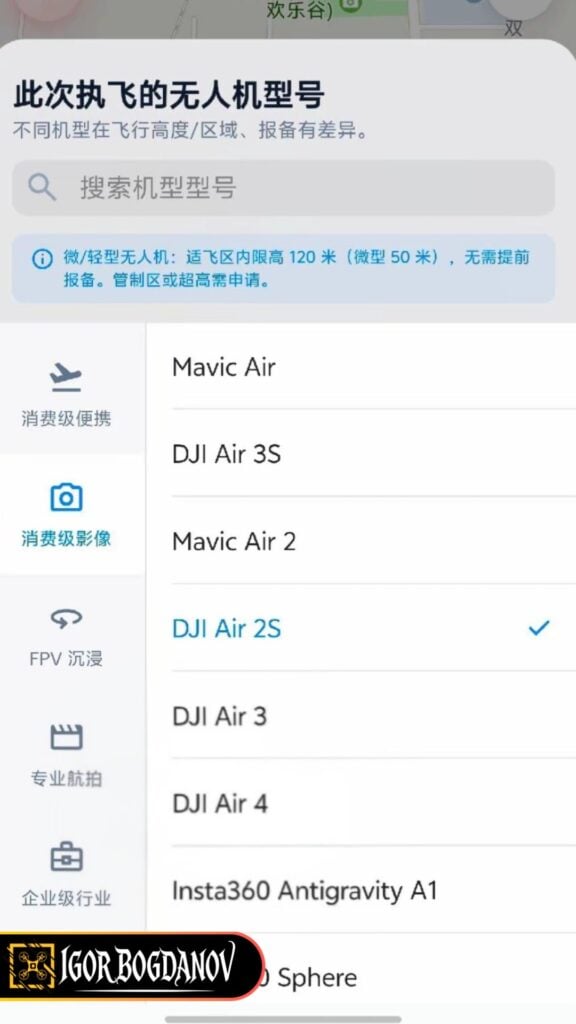
DJI may already be working on the next Air-series drone, and an early regulatory sighting suggests the company could be heading in a very different direction this time.
According to leaker Igor Bogdanov (@Quadro_News), a new listing spotted inside a Chinese compliance-related app references the DJI Air 4. More interestingly, the categorization shown in the app appears to place the drone in the sub-250g class. If that ends up being accurate, it would be a pretty major shift for the Air lineup.
For context, the current DJI Air 3S weighs around 724g, including the batteries, which puts it well above the lightweight Mini series. A sub-250g Air model would basically blur the line between DJI’s compact beginner drones and its more advanced enthusiast lineup.
In many regions, including parts of Europe, drones under 250g face fewer restrictions and simpler registration requirements. That’s one of the biggest reasons DJI’s Mini series has become so popular among casual users and travelers.
The Air series, meanwhile, has traditionally focused more on higher-end imaging and advanced flight features. So if DJI really manages to combine Air-series capabilities with a sub-250g body, it could end up being a pretty compelling middle ground.
This also isn’t the first time the Air 4 has surfaced. Earlier this year, photos of what was reportedly a crashed prototype appeared online, showing a redesigned body with additional sensors mounted around the frame. At the time, it was difficult to tell how far along development actually was, but the newer regulatory listing makes the project feel a lot more real.
The current Air 3S already includes a dual-camera system with a 1-inch primary sensor, a telephoto camera, omnidirectional obstacle sensing, and strong flight times. DJI will likely need to make some careful compromises if it wants to shrink the platform below 250g while keeping the Air branding meaningful.
Still, newer battery tech, lighter materials, and more compact sensors could make that possible. DJI has also been releasing products at a pretty aggressive pace lately, including the Osmo Pocket 4 lineup, Osmo Mobile 8P, Mic Mini 2, and the new Lito drones. So another major launch later this year honestly wouldn’t be surprising.
Rockstar Games’ highly anticipated Grand Theft Auto VI has once again become the centre of attention online after a new retailer listing and multiple leaks hinted that official pre-orders may finally begin soon. While Rockstar has not made any announcement yet, recent developments have triggered widespread discussion among fans waiting for more updates about the game’s launch plans.
GTA 6 page appears on Instant Gaming
A listing, which indicates that the GTA 6 pre-orders will go live soon, recently appeared on Instant Gaming. Although the listing currently appears to be a placeholder, its sudden arrival has led many fans to believe that backend preparations for pre-orders may already be underway. The timing has attracted attention because Rockstar’s parent company Take-Two Interactive is scheduled to hold its earnings call on May 21.
The speculation gained more momentum after social media account “GTA 6 Countdown” claimed that a source close to Rockstar’s marketing division suggested pre-orders could officially open sometime this month. Another discussion circulating on Reddit’s r/GTA6 community also pointed toward May 12 (today) as a possible date for retailers to begin accepting bookings for the game.
Pricing rumors hint at a lower-than-expected cost
This was commented on one of my posts.
Stating that a retailer in the UK has sent out a press pack to their employees confirming GTA 6 pre-orders go live on the May 12th.
Alongside the pre-order talk, another leak has sparked discussion around GTA 6 pricing. A person claiming to work at a major UK game retailer reportedly said that internal press material mentioned a launch price of £69.99. The leak also suggested that only one edition may be available initially, with no PlayStation 5 hardware bundles announced yet.
Earlier rumors had suggested that Rockstar could price GTA 6 as high as $100, raising concerns among gamers worldwide. However, this newer claim points towards a more standard premium game pricing strategy. At the moment, Rockstar Games has not confirmed any details related to pricing, editions, or pre-order dates.
Grand Theft Auto VI is currently scheduled to launch on Nov. 19, 2026, for Sony PlayStation 5 and Microsoft Xbox Series X/S consoles after multiple delays.
For more daily updates, please visit our News Section.
We don’t see this very often, so it’s always a surprise to see an update rolling out to devices added to the EOL list, even though such updates don’t bring major changes. This is currently the case for several Xiaomi, Redmi, and Poco smartphones, where the new update addresses critical issues and improves overall system stability.
When a device is added to the EOL (End-of-Life) list, it means it won’t receive any software updates, including major OS releases and security patches. However, Xiaomi has been seen releasing updates even for EOL devices many times in the past, ensuring the devices remain unaffected from critical issues.
Here’s a list of Xiaomi devices that are receiving new updates despite being out of the support period:
If you have any of these devices, the update may be ready for installation. Check for available updates via the Settings app. It’s recommended to install the update as soon as it’s available on your device, since these updates are released only when the device is affected by critical issues.
While it’s good to have updates on EOL devices, the devices still miss regular security patches and the latest security features released with major HyperOS builds. Therefore, it’s best to upgrade to a newer device with longer software support. Check the list here to find out your next reliable upgrade.
Be sure to visit the Xiaomi section on this website regularly to stay updated. Alternatively, you can join our Telegram channel to get instant notifications when we publish new stories.
Recently, Huawei unveiled the Huawei MatePad Pro Max for the global market. Now, the company is reportedly preparing to launch the tablet in China, possibly in June. Ahead of the expected debut, tipster Digital Chat Station has revealed that the Chinese version will be slightly different from the global edition. The tipster also claims that the Huawei Nova 16 series and new smartwatch models will debut alongside the MatePad Pro Max in China.
Huawei MatePad Pro Max (Chinese edition)
According to the leak, the upcoming MatePad Pro Max for China will feature a 13.2-inch flexible OLED display with a 3000 × 2000 resolution and a 144Hz refresh rate. The tablet is also tipped to offer ultra-slim 3.55mm bezels on all four sides. For photography, it may include a 12-megapixel front camera and a 50-megapixel rear camera.
The tablet is expected to be powered by a flagship Kirin 9-series chipset, likely from the Kirin 9030 series, and pack a 10,400mAh battery with support for 66W and 100W charging adapters. Other expected features include satellite communication support on select variants; Star Flash connectivity, USB 3.2 Gen 1 support, and an optional soft light display version.
The tablet could launch in Obsidian Grey, Glow Blue, and Moon Silver color options. According to another tipster known as Hyperdimensional Realm, the device may arrive in configurations such as 12GB+256GB / 512GB, 16GB+256GB / 512GB / 1TB, and 20GB+512GB / 1TB. The latter is said to be a Collector’s Edition variant bundled with a stylus package. The tablet is also expected to come preinstalled with HarmonyOS 6.1.
Huawei Nova 16 lineup and smartwatches
DCS also mentioned that the engineering prototypes of the Nova 16 series’ top-end variant, likely to be called the Nova 16 Ultra, may receive a major camera upgrade. The device is tipped to feature a 1/1.3-inch large sensor primary camera, front and rear multispectral sensors, a periscope telephoto camera, and wireless charging support.
The standard Nova 16 model is said to feature a new 6.68-inch display.
In addition, Huawei is reportedly preparing new smartwatch models called the Supernova Watch X1 and X1 Pro, along with a children’s smartwatch that may include a built-in camera.
For more daily updates, please visit our News Section.
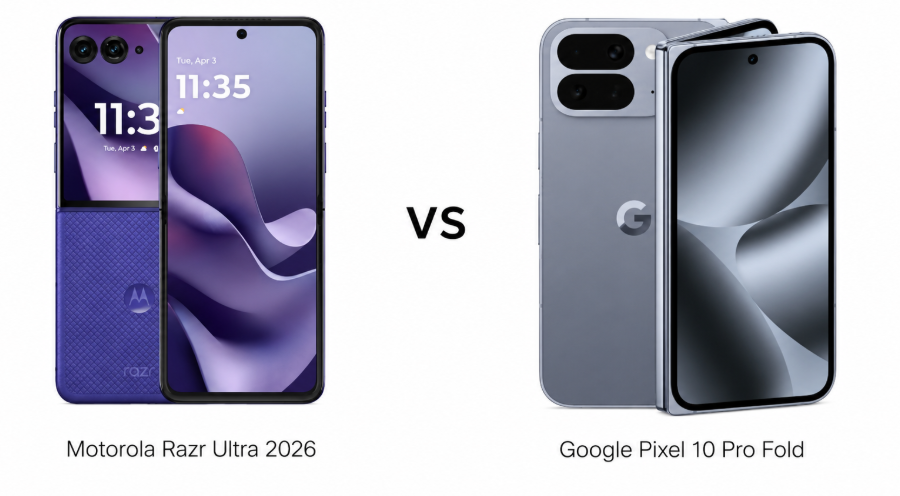
Foldable smartphones are evolving in two very different directions, and the Motorola Razr Ultra 2026 and Google Pixel 10 Pro Fold perfectly represent that split. One focuses on sleek portability, ultra-fast performance, and a stylish flip design, while the other aims to replace a tablet with a larger display, smarter AI features, and productivity-focused software. Both sit firmly in the premium flagship category, but they target completely different types of users.
Major Reason:
Feature
Motorola Razr Ultra 2026
Google Pixel 10 Pro Fold
Winner
Foldable Type
Clamshell foldable
Book-style foldable
Depends – Flip portability vs larger tablet-style experience
Main Display
7.0-inch LTPO AMOLED, 165Hz, 5000 nits
8.0-inch LTPO OLED, 120Hz, 3000 nits
Pixel – Larger inner display for multitasking
Cover Display
4-inch LTPO AMOLED, 165Hz
6.4-inch OLED, 120Hz
Pixel – Bigger and more practical outer screen
Peak Brightness
5000 nits
3000 nits
Motorola – Higher peak brightness
Refresh Rate
165Hz
120Hz
Motorola – Smoother animations and gaming
Resolution Density
~462 ppi
~374 ppi
Motorola – Sharper display
Protection
Gorilla Glass Ceramic
Gorilla Glass Victus 2
Pixel – Stronger overall protection
Water Resistance
IP48
IP68
Pixel – Better dust and water resistance
Chipset
Snapdragon 8 Elite
Tensor G5
Motorola – More powerful flagship chipset
RAM
16GB
16GB
Tie – Same RAM capacity
Storage Options
512GB
256GB / 512GB / 1TB
Pixel – More storage choices
Main Camera
50MP + 50MP ultrawide
48MP + 10.8MP telephoto + 10.5MP ultrawide
Pixel – More versatile triple-camera setup
Telephoto Camera
No
5x optical zoom
Pixel – Dedicated zoom lens
Video Recording
8K@30fps
4K@60fps
Motorola – Supports 8K recording
Selfie Camera
50MP
10MP + 10MP cover camera
Motorola – Higher-resolution selfie camera
Operating System
Android 16
Android 16 with 7 major upgrades
Pixel – Longer software support
Wi-Fi
Wi-Fi 7
Wi-Fi 7
Tie – Same connectivity standard
Bluetooth
5.4
6.0
Pixel – Newer Bluetooth version
USB Port
USB Type-C 2.0
USB Type-C 3.2
Pixel – Faster data transfer
Special Features
Dolby Vision, Pantone validation
UWB, Satellite SOS, Qi2
Pixel – More advanced ecosystem features
Battery
5000mAh
5015mAh
Pixel – Slightly larger battery
Wired Charging
68W
30W
Motorola – Much faster charging
Wireless Charging
30W
15W
Motorola – Faster wireless charging
Reverse Charging
5W reverse wired
Bypass charging
Depends – Reverse charging vs bypass charging
Approx Price
$1500 / ₹143000
$1800 / ₹160000
Motorola – Better value pricing
Disclaimer: Specs are based on available data. Actual performance may vary. Verify details from official sources before buying.
The Motorola Razr Ultra 2026 focuses on style and portability with its clamshell foldable design, aluminum frame, and slim folded profile. The external 4-inch display feels more practical than before, allowing quick replies, navigation, and media controls without unfolding the phone. Motorola’s Pantone-validated finish also gives the device a more premium and fashion-oriented character. Meanwhile, the Google Pixel 10 Pro Fold takes a book-style approach that feels closer to a compact tablet when opened. Its IP68 rating gives it stronger durability confidence, while the wider cover display feels more natural for everyday typing and multitasking.
Display Quality
Motorola clearly pushes visual quality harder with a 165Hz LTPO AMOLED panel and an extremely bright 5000-nit peak output. Animations feel smoother, and the outer display is one of the best on a flip foldable. The Pixel 10 Pro Fold counters with a much larger 8-inch OLED panel that is better suited for productivity, split-screen work, and entertainment. Google’s display feels more immersive for long sessions, even if the refresh rate is lower.
Verdict
The Razr Ultra 2026 feels more stylish and pocket-friendly, while the Pixel 10 Pro Fold feels more productivity-focused. Users wanting a futuristic flip experience may lean toward Motorola, but Google delivers the more practical large-screen foldable experience.
2. Specifications Including Battery
Performance
The Motorola Razr Ultra 2026 is powered by the Snapdragon 8 Elite chipset paired with 16GB RAM and UFS 4.0 storage, giving it flagship-level speed for gaming, multitasking, and AI-heavy workloads. The high refresh rate also makes the phone feel exceptionally fluid in daily use. Google’s Tensor G5 prioritizes AI features and software intelligence over raw benchmark performance. While gaming performance may not match Qualcomm’s latest flagship chip, Pixel-exclusive AI tools and seven years of Android upgrades add strong long-term value.
Battery and Charging
Battery capacity is nearly identical between the two devices, but Motorola gains a major advantage in charging speeds with 68W wired and 30W wireless charging. The Pixel 10 Pro Fold charges much more slowly at 30W wired and 15W wireless, though it adds Qi2 magnetic charging and bypass charging support. Motorola feels better suited for users constantly on the move, while Google focuses more on ecosystem convenience and battery management.
Verdict
The Razr Ultra 2026 delivers stronger raw performance and significantly faster charging, making it the better choice for power users. The Pixel 10 Pro Fold offers smarter software longevity and AI integration, which may matter more for users planning to keep a foldable for several years.
3. Camera
Main and Secondary Lenses
Motorola equips the Razr Ultra 2026 with dual 50MP cameras, including a high-resolution ultrawide lens that captures detailed landscape shots and vibrant colors. Dolby Vision recording and 8K video support also make the device attractive for content creators. However, the lack of a dedicated telephoto sensor limits long-range photography flexibility. The Pixel 10 Pro Fold takes a more balanced approach with a triple-camera setup featuring wide, ultrawide, and 5x telephoto lenses. Google’s computational photography tools such as Best Take and Zoom Enhance, continue to give Pixel devices a strong reputation for consistent image quality.
Selfie Camera
Motorola’s 50MP selfie camera delivers sharper detail and more flexibility for social media creators. The Pixel’s dual 10MP selfie setup is more practical for foldable usability, especially during video calls and cover-display shooting. Google still maintains excellent skin tones and HDR processing.
Verdict
The Pixel 10 Pro Fold feels more versatile overall thanks to its telephoto camera and advanced software processing. The Razr Ultra 2026 wins for selfie quality and video-focused features, making it appealing for users who prioritize content creation and social media photography.
4. Pricing
The Motorola Razr Ultra 2026 is expected to cost around $1500 (approximately ₹1,43,000), while the Google Pixel 10 Pro Fold is priced higher at roughly $1800 (around ₹1,60,000). That price gap creates a noticeable difference in value perception. Motorola delivers flagship hardware, a premium foldable display, fast charging, and top-tier performance at a comparatively lower cost. For users entering the foldable category, the Razr Ultra feels easier to justify financially.
Google positions the Pixel 10 Pro Fold as a premium productivity device with advanced AI tools, longer software support, and a more versatile camera system. The higher price partly reflects Google’s software ecosystem and foldable tablet-style experience. However, the slower charging and less powerful chipset may make the pricing harder to accept for spec-focused buyers.
Verdict
The Razr Ultra 2026 offers stronger hardware value for the money, especially for users focused on performance and charging speed. The Pixel 10 Pro Fold justifies its premium mainly through software intelligence, AI capabilities, and long-term update support.
Disclaimer: Prices are approximate and may vary based on country, region, launch timing, and applicable taxes. Always check whether the listed price is for a China unit or a global/international variant whenpurchasing.
5. Conclusion
The Motorola Razr Ultra 2026 stands out with its stylish flip-fold design, powerful Snapdragon 8 Elite chipset, ultra-smooth 165Hz displays, and very fast charging capabilities. It feels like a foldable designed for users who want flagship performance in a compact and fashionable form. The large external display also improves usability more than previous flip phones. On the other hand, the Google Pixel 10 Pro Fold focuses on productivity, AI-driven software experiences, and a larger inner display that works exceptionally well for multitasking and media consumption. Features like satellite SOS, UWB support, and seven years of Android upgrades strengthen its premium appeal.
Verdict
The Razr Ultra 2026 is the stronger choice for users prioritizing speed, design, portability, and charging performance. The Pixel 10 Pro Fold feels better suited for productivity-focused users who value AI features, camera versatility, and long-term software support. Both devices represent very different approaches to foldables, making the decision largely dependent on lifestyle and usage priorities.
Disclaimer: This comparison is based on the specifications provided and is intended for general informational purposes. Actual performance, camera results, battery life, and overall experience may vary depending on real-world usage, software updates, and individual preferences.
OnePlus has begun rolling out a mid-cycle OxygenOS 16.1 update to its devices, with a major focus on refined animations, a redesigned lock-screen experience, and improved AI processing. The update is currently available for OnePlus 15 users in select regions, with expansion to follow soon.
The update was initially released as a Release Candidate (RC) build, but it started rolling out to a wider audience earlier this week. For OnePlus 15 users, the OxygenOS 16.1 stable update carries firmware version CPH2745_16.0.7.201(EX01) and has a download size of around 2.1GB. It’s currently rolling out to the users in India, but a wider rollout to more regions shouldn’t take long.
To install the latest update on your OnePlus phone, go to Settings > About device, then tap the OxygenOS card at the top to check for available updates. Keep in mind that the update is rolling out in batches, so it may take a few days to reach all the users.
What’s new in the OxygenOS 16.1 upgrade?
One of the biggest highlights of OxygenOS 16.1 is the introduction of Live Space. It’s basically the same feature that’s already available on Samsung phones as “Now Bar”. It’s a capsule-like UI element at the bottom of the lock screen for notifications and live updates, such as timers, music, and match scores. The software now feels more responsive, and so do the animations.
OxygenOS 16.1 introduces a redesigned control center and an upgraded Live Activities feature that now supports ongoing calls, recorder, timer, flashlight, and maps. The update also brings better AI processing for photos, documents, and translation. Read the complete changelog below to see all the changes.
OxygenOS 16.1 update changelog:
[Fast & Smooth]
Luminous Rendering Engine – Smoother, more responsive animations now cover all floating window actions in Livestream Assistant, from launch to resize to full-screen toggle. – Swiping down from the status bar to open the notification drawer or Quick Settings now feels smoother, with more polished pull-down animations.
Trinity Engine – AI-reconstructed touch recognition eliminates scrolling jitter inside apps for a noticeably smoother experience.
[OnePlus AI, Intelligently Yours]
AI Translate – Never struggle with a foreign menu again. Translate menus with AI, complete with dish visuals, allergens, prices with automatic currency conversion, and cart integration. – The Translate app now includes a dedicated on-device AI model, delivering natural, accurate translations even when you’re offline. – Live translation sessions now generate automatic titles and AI summaries, making it easy to review and organize translated conversations afterward. – Live translation now takes context into account to deliver more precise, natural-sounding results in real time.
AI-powered Photos – More flexibility arrives in Collage’s Popout mode, with borders, directions, and subjects all freely adjustable for limitless creativity.
AI-powered Documents – Scanned documents are auto-saved to your Documents app right after capture, keeping everything organized without extra steps (Documents – Recents). – Document scanning is now faster, making back-to-back multi-page captures quicker and more efficient. – Upgraded scanning algorithms remove wrinkles, shadows, and blur in one tap, producing sharp, clean digital documents. – Enhanced text scanning now recognizes handwriting, full paragraphs, and tables, with easy one-tap copy or Word document export.
[Uniquely Yours]
Live Space – Improves the Lock screen with a dual-mode design featuring a notification capsule that displays notifications and Live Updates without covering the wallpaper. View key information at a glance in immersive mode without unlocking your device. – Swipe down to collapse Lock screen notifications and Live Alerts into tidy capsules, and swipe back up to expand the full list. Smooth animations make the whole interaction feel effortless. – Tap the album art or Live Alert capsule on the Lock screen to enter music focus mode, where the album art fills the screen and lyrics appear in full for a fully immersive listening experience. – Stay on top of your timers without unlocking: Tap a timer in Live Alert to expand your countdown to full screen instantly. – Switching between Live Space capsules is now smoother and more dynamic with fluid animations.
Flux Home screen – Organize your Home screen instantly by color or category with a single tap. – Home screen layouts are auto-saved as you go, so you can revert to any earlier setup with just one tap. – Find apps by color in Drawer mode for quicker navigation.
Upgrades light field design – Inspired by how light behaves in the physical world, the new Contour glow option adds organic surface detail to system interfaces, including the Home screen, Lock screen, Quick Settings, Global Search, Quick Glance, Photos, and more. – HDRUI technology brings expanded color range and greater brightness depth to the Lock screen’s large clock display.
[Communication and interconnection]
Network optimization – A Vo5G icon now appears in the status bar whenever your SIM card and current network both support Vo5G calling.
[Attention to detail, everywhere]
Camera – Introduces Master presets. You can now save your custom parameters as presets and share them via watermarks. – Upgrades Camera with cleaner UIs and more natural interactions, resulting in a smoother, more intuitive shooting experience.
Game Assistant – You can now adjust the speaker’s sound effects via the equalizer. Choose from various effects like Pop and Rock, or customize the effects across different frequency bands. You can find this feature in “Settings – Sound & vibration – Sound effect settings – Custom”.
More – Battery stats become more informative with new coverage of personal hotspot usage and activity time at the app level. – Integrates the May 2026 Android security patch to enhance system security.
[Security & privacy]
Others – Better protection against unwanted calls: enhanced caller identification can now recognize telemarketing, spam, and suspected fraud calls.
We use cookies on our website to give you the most relevant experience by remembering your preferences and repeat visits. By clicking “Accept”, you consent to the use of ALL the cookies.
This website uses cookies to improve your experience while you navigate through the website. Out of these, the cookies that are categorized as necessary are stored on your browser as they are essential for the working of basic functionalities of the website. We also use third-party cookies that help us analyze and understand how you use this website. These cookies will be stored in your browser only with your consent. You also have the option to opt-out of these cookies. But opting out of some of these cookies may affect your browsing experience.
Necessary cookies are absolutely essential for the website to function properly. This category only includes cookies that ensures basic functionalities and security features of the website. These cookies do not store any personal information.
Any cookies that may not be particularly necessary for the website to function and is used specifically to collect user personal data via analytics, ads, other embedded contents are termed as non-necessary cookies. It is mandatory to procure user consent prior to running these cookies on your website.