Advertisement

Android Games Now Playable on Windows 10 and 11: Here’s How

After announcing the closed beta back in 2022, Google has now officially released the open beta of its “Google Play Games for PC” desktop application for Windows 10 and Windows 11, promising “bigger, bolder experiences of mobile games on Google’s gaming platform for PC”.

According to the service’s official landing page, “Google Play Games” is a PC application that lets you browse, download, and play select popular mobile games on a Windows desktop or laptop. Besides enjoying your favourite Android games on a PC, you’ll have keyboard and mouse access, seamless sync across devices, and integration with Google Play Points.

Besides the original 3 regions listed in the limited beta (Hong Kong, South Korea, Taiwan), Google Play Games beta has officially been rolled out to more countries and regions worldwide. The open beta has been expanded to 10 more countries, which are respectively Australia, Brazil, Canada, Indonesia, Malaysia, Mexico, the Philippines, Singapore, Thailand, and the United States. Anyone in these regions with an eligible account can download the beta directly from the Google Play Games for PC page. 

Google has outlined several minimum requirements to download Google Play Games on PC, and they are as follows:

  • OS: Windows 10 (v2004)
  • Storage: Solid state drive (SSD) with 10 GB of available storage space
  • Graphics: IntelⓇ UHD Graphics 630 GPU or comparable
  • Processor: 4 CPU physical cores
  • Memory: 8 GB of RAM
  • Windows admin account
  • Hardware virtualization must be turned on
Source: Google

Google clarifies that currently, over 100 games are available across the beta regions. The company is adding games to the service on a regular basis, so it encourages users to check back often to see what’s new.

In addition to the gaming hub service, Google Play Games also offers users to earn rewards as they play. As stated, with Google Play Points, you’ll earn points on everything you buy with Google Play Games, including in-app items and subscriptions. You can rack up and redeem Play Points on your PC through the same process you use on your mobile device.

As for an official release, Google has stated that the official release date of the service will vary according to the region, and the company is looking to expand the service to more regions later this year. And for availability on macOS, Google commented that Google Play Games is not yet available for Mac.

RELATED:

(Source)

WEVC eCV1 Electric Truck is a Tesla Semi Lookalike Out of the UK

The eCV1 electric truck has been announced. It is a commercial electric vehicle with a range of up to 290 miles (around 467 km) developed by WEVC. The WEVC eCV1 is a lightweight and efficient chassis-cab product with commercial implications.

WEVC eCV1 Electric Truck

Watt Electric Vehicle Company (WEVC) is a UK-based manufacturer and the eCV1 bears a striking semblance of the Tesla Semi. It has a similar front bumper, greenhouse, and black lower section. The eCV1 has vertical headlights, as well as a similar side accent as the Tesla Semi. The model also sports wing-like side camera mirrors that are similar to the original model. The camera mirrors on the eCV1 however are in a more forward position.

The WEVC eCV1 has a central driver’s seat and can be configured to have up to three seats overall. The truck has full-standing height headroom for easy ingress and egress. It also has a walk-through cabin, which is well-suited for urban delivery vehicles.

WEVC eCV1 Electric Truck

According to the company, the eCV1 uses the PACES architecture. The PACES architecture supports the three different drive configurations (front-, rear- and all-wheel). The cell-to-chassis system on the eCV1 implies that the batteries are integrated into the structure. The system provides an optimized stiffness, minimized weight, and maximizes payload.

WEVC eCV1 Electric Truck

The WEVC eCV1 is equipped with a 110kWh battery pack that delivers a range of 290 miles (467km) on a full charge. There are differences in the range based on the configurations. WEVC hopes to manufacture up to 5,000 vehicles annually but pricing and release details for the eCV1 are lacking.

RELATED:

Razer BlackWidow V4 Pro Gaming Keyboard With a Wide Board Design Unveiled

Razer has unveiled the BlackWidow V4 Pro keyboard with two programmable dials. The BlackWidow V4 Pro retains a big board design and is a departure from current compact models. The keyboard omits wireless connectivity but has five macro keys, four media keys, and three profile keys.

Razer BlackWidow V4 Pro Gaming KeyboardRazer BlackWidow V4 Pro Gaming Keyboard

The norm currently is to deliver trendy and compact keyboards. Some models are reduced by up to 40% but the BlackWidow V4 Pro goes in the opposite direction. The keyboard combines the features of decades-old designs with mechanical innovations. It offers premium Razer components and a full aluminum deck. In addition, the mechanical keyboard has magnetic wrist rests, Chroma lighting on each key, and underglow strips around the board and wrist rest. It has a dedicated USB-C cable and a pass-through USB port, which is something new with gaming keyboards. The device has a polling rate of 800Hz which can accommodate the twitchiest eSports applications.

Razer BlackWidow V4 Pro Gaming Keyboard

The BlackWidow V4 Pro comes with some advanced mechanical features. The custom hall-effect switches have different tactile levels but lack hot-swapping. The stabilizers are pre-lubricated while the keyboard’s case has sound-absorbing foam. The board’s memory is capable of remembering five different memory profiles. The Doubleshot keycaps are made of ABS plastic, but the Razer PBT caps are more exquisite and sold separately.

The Razer BlackWidow V4 Pro is priced at $230 and is already on sale. The product can be purchased directly from the Razer online store. The earliest deliveries of the product will be in one week.

RELATED:

Meizu 20 Series Will Arrive With an IR Blaster, a First for the Brand

Meizu 20 series will be arriving pretty soon as the latest flagship smartphone lineup from the brand. Recently, Meizu has started teasing the new smartphones on social media, revealing information in bits and pieces. So far, it has been confirmed that upcoming flagships will be powered by the Snapdragon 8 Gen 2 processor under the hood. In the latest development, the OEM has confirmed the Meizu 20 series handsets will be equipped with an IR Blaster. Here are the details.

According to the latest teaser posted by the brand, the Meizu 20 series, which should include Meizu 20 and Meizu 20 Pro, will come with an IR Blaster. For the unaware, an IR blaster (Infrared Blaster) allows a smartphone to function as a remote control for various electronic devices, such as televisions, air conditioners, and set-top boxes. It lets users control these devices using their phones instead of a separate remote control.

Meizu 20 IR blaster

This is the first time Meizu will be using this technology on its smartphones. As you may be aware, Xiaomi smartphones are often equipped with an IR blaster. In the past, Samsung also used to include this convenient sensor in their phones. However, this is no longer the case.

Reports have revealed that Meizu 20 series will run a new Flyme 10 OS and pack a Snapdragon 8 Gen 2 chip. It is reported to adopt a variable flat display (likely a 2K) with a new ultrasonic fingerprint 2.0 that supports 0.075 seconds of fast wet hand unlocking. Further, the lineup is said to be equipped with LPDDR5X RAM and UFS 4.0 storage. The launch date of the new series is still anyone’s guess. We’ll keep you posted.

RELATED

(Via)

Fire Boltt Blizzard With 120 Sports Modes, Bluetooth Calling Launched In India

Fire Boltt has announced a second smartwatch under its Luxe collection. Recently, the brand had launched the Fire Boltt Quantum. The latest offering is called the Fire Boltt Blizzard. It is similar to the Fire Boltt Quantum. Read on to know what it offers out of the box. 

The Fire Boltt Blizzard is a traditional-looking watch with smart features. It is equipped with anti-corrosion properties and dual shades made of high-tech ceramic. There is a rotating crown, a home button, and a back button. It is IP67-certified water-resistant. The smartwatch comes with a circular dial featuring a 1.28-inch display bearing an HD resolution. 

In terms of health, the Fire Boltt Blizzard is equipped with a heart-rate monitor, SpO2 sensor, sleep tracker, and women’s menstrual cycle monitor. It packs support for 120 sports modes. 

The Fire Boltt Blizzard features a built-in speaker and a dial pad for Bluetooth calling directly from the device. There is support for voice assistant and the wearable device offers convenient features like smart notifications, camera control, weather updates, and more. The smartwatch also packs in-built games. The Fire Boltt Blizzard is powered by a 220mAh battery unit that is claimed to deliver up to 7 days of usage.

The Fire Boltt Blizzard is offered in Silver, Silver and Black, Silver and Gold colour options. It carries a price tag of Rs 3,499 and can be purchased from February 23rd from Flipkart and the brand’s official website. 

Related:

Poco F4 Finally Gets the Long-due Android 13 Update With Jio 5G Support in India

Xiaomi and its sub-brands (Poco and Redmi) manufacture some of the best budget and mid-range smartphones that offer a great bounce for the ounce. However, the company falls behind when it comes to providing timely software updates. The brand has started to pick up with its MIUI 14 rollout program and released stable builds of the software to several devices in the global market. The latest smartphone to get the MIUI 14 update is the Poco F4. The handset is receiving the update in India with Jio 5G support.

Poco F4 Android 13 Update

As announced by Poco’s India head Himanshu Tandon, Poco F4 has finally started receiving the Android 13-based MIUI 14 update in the country. The software is rolling out with the firmware version V14.0.2.0.TLMINXM and brings support for Jio 5G. As usual, the update is being released in a staged fashion and will be rolled to every user in some time. This is to ensure that the software remains stable and does not cause any issues. Currently, the MIUI 14 update is being seeded to the Poco F4 devices enrolled in the beta program.

Some beta users have mentioned that the latest update is around 3.5GB in size. So, it’s a good idea to take a backup of your data before installing it, better safe than sorry, right? Also, to avoid any interruption, it’s recommended to have a stable Wi-Fi connection and make sure your F4 5G has more than 50 percent battery life. The new update will bring all the new features introduced with Android 13 and also some Xiaomi-exclusive goodies. Head over here, if you want to learn more about the MIUI 14 update.

RELATED:

(Via)

Samsung Galaxy M14’s Launch Could Be Near as It Gets TKDN & NBTC Certified

Samsung is expected to launch several mid-range smartphones next month. One of these devices could be the long-rumored Galaxy M14. The handset has been making rounds on various certification platforms recently and is expected to pack an Exynos 1330 chipset under the hood. In the latest development, Galaxy M14 has received TKDN and NBTC certifications, hinting at an imminent launch. Here are the details.

Galaxy M14 has received Thailand’s NBTC and Indonesia’s TKDN certificate with model number SM-M146B. For the unaware, these certifications indicate compliance with regulatory safety and quality standards and are mandatory in some cases. While we don’t get any specifications of the device from these listings, they hint at an imminent launch.

Galaxy-M14-5G

Last month, a report shared the detailed renders of the upcoming Galaxy M14. The handset is expected to arrive in dark blue, blue, and silver color options. It could have a familiar design with a waterdrop notch display and thick bezels on the front. The back of the device may feature a triple camera unit with an LED flash.

Further, the smartphone’s Geekbench listing suggests it will pack Samsung’s in-house Exynos 1330 chipset and 4 GB of RAM. It should arrive with Android 13 OS and One UI 5.0 preinstalled. In addition, FCC reveals the Galaxy M14 will support 25W charging. The handset may pack a 5,000mAh battery unit.

It is expected that the Galaxy M14 will be a rebranded or slightly modified version of the Galaxy A14. The latter features a 6.6-inch PLS LCD screen with a Full HD+ resolution and a 90Hz refresh rate. A14 has a 50MP main camera, 2MP macro shooter, and a 2MP depth sensor on the back.

RELATED:

(Via 1,2)

Nubia’s First AR Smart Glasses Officially Confirmed to Arrive at MWC 2023

Just recently, ZTE announced that it would be launching the Nubia Pad 3D at MWC 2023 in Barcelona, specifically on February 28th. The company has now teased another innovative product also launching at MWC 2023. The product is the brand’s first AR smart glasses that would be called Nubia Neovision Glass.

Nubia NeoVision Glass

The details of the AR glasses are not yet revealed but the teasers suggest the pair of glasses will realize the full integration of life, office, sports, and entertainment, in order to open up a new century of laying and playing for users.

The design of the Neovision Glass was also shown in the teasers. The Neovision is similar to most of the AR glasses currently in the market like the TCL NxtWear Air glasses announced at CES 2022. It integrates the display screen through multi-layer lenses making it possible to display content without blocking the line of sight.

Nubia NeoVision Glass

The teaser image does not reveal any connection cable meaning that the AR glasses may likely function without connection to another device. It is also possible that the device will adopt wireless connectivity and may even support wired connectivity.

According to the poster, the launch event will hold at 3 pm on February 28th at 3F30, Hall 3, Fira Gran Via, Barcelona. We also expect to see more innovative ZTE products, including smartphones on the launch day.

RELATED:

(via)

Twitter to Charge Its Users for SMS Two-Factor Authentication

Twitter’s latest announcement has caused quite a stir among its users. It appears that the social media giant will no longer support SMS-based two-factor authentication (2FA) after March 20th, 2023. If users don’t upgrade to Twitter Blue, which costs $8 a month on Android and $11 a month on iOS, or switch to a more secure 2FA method, they will lose access to this feature altogether.

Elon Musk Twitter

Nowadays, SIM swap attacks are increasingly common, and anyone who has fallen victim to one knows how devastating they can be. Even Twitter’s old CEO, Jack Dorsey, fell prey to this technique four years ago. It’s easy to see how someone could gain access to your accounts simply by stealing a phone number, and that’s a risk that’s not worthwhile for a lot of users.

While Twitter’s official reason for this change is to improve security, there may be a more straightforward explanation. Sending SMS messages costs money, and Twitter is not exactly swimming in cash these days. Even before Elon Musk became involved, the company had been phasing out SMS-based 2FA.

So, what should one do if they don’t want to lose the added protection of 2FA? There are other, more secure ways to protect your Twitter account. One option is to sign up for Twitter Blue, which offers additional features in addition to a more secure 2FA. Another option is to use a physical security key, which is a small device that you plug into your computer or phone to authenticate your login attempts. Finally, you can use an authenticator app, which generates a unique code that you enter along with your password to log in.

In conclusion, while Twitter’s decision to discontinue SMS-based 2FA may cause some inconvenience, it’s ultimately a good move for users. By eliminating this less secure option, Twitter is forcing its users to adopt more robust security measures. Whether you choose to upgrade to Twitter Blue or use another form of 2FA, it’s essential to take online security seriously and do what you can to protect your accounts.

RELATED:

(Via)

Japan’s First Manned Flying Car Test Flight Shows Promise for the Future

Flying cars have been touted as the ultimate mode of transportation for the future. They present an innovative solution to address issues of traffic, congestion, pollution, and other problems that plague urban transportation. With their ability to cover shorter distances in a shorter amount of time, flying cars hold the promise of freeing up the roads for pedestrians, cyclists, and long-distance travelers. One of the significant benefits of flying cars is that they require minimal infrastructure and maintenance compared to ground vehicles, making them an attractive proposition.

Japan Flying Car

On Friday, the idea of flying cars came one step closer to reality when a manned test flight was conducted in Oita Prefecture, southwestern Japan. Masc, a research group based in Okayama, carried out the trial using a two-seater flying car built in China based on drone technology. The vehicle flew a pre-programmed route without a pilot at the controls, rising vertically to a height of 30 meters and then circling over the sea at a speed of 36 kilometers per hour for about three and a half minutes. 

Masc’s chairman, Kirino Hiroshi, stated that they aim to turn flying cars into a commercial proposition, and the Transport Ministry noted that this was the first test flight of a manned flying car in an open space in Japan that it is aware of. The future of flying cars is indeed promising, and the successful test flight in Japan is a significant step towards realizing this futuristic vision.

Flying car companies require more time and expertise before they can mass-produce flying vehicles. Design and engineering challenges are not the only problems that the manufacturers of flying cars need to solve. Environmental, regulatory, and safety clearances are also essential factors that need to be taken into account. Issues such as noise pollution, take-off and landing infrastructure, limited carrying capacity, training for new pilots, and high costs present significant obstacles to the widespread adoption of flying cars.

Furthermore, as laws governing flying cars are still in their early stages, they must be developed to accommodate flying traffic. Regulators are currently working to develop laws related to autonomous flying cars and personal air vehicles, which would ensure their safety and regulate their use.

RELATED:

(Via)

Microsoft Limits Bing Chat to 5 Replies, 50 Questions Per Day to Avoid Inappropriate Interactions

In response to recent user reports of inappropriate and concerning behavior from Bing’s chatbot, Microsoft has announced new conversation limits for the AI. The search engine’s chat feature will now restrict users to 50 questions per day and five per session to prevent the bot from potentially insulting or manipulating users. Microsoft’s Bing team explained in a blog post that this move was based on data showing that the vast majority of users only require five turns to find their answers, and only 1% of conversations go beyond 50 messages. If users reach the five-per-session limit, Bing will suggest starting a new topic to avoid excessive and unhelpful back-and-forth sessions.

microsoft bing

Previously, some users reported instances of truly bizarre responses from the AI on the Bing subreddit, which were as hilarious as they were creepy. Microsoft has recently acknowledged that long chat sessions, with over 15 questions, could cause Bing to become repetitive or provide unhelpful responses that don’t match the intended tone. By limiting each session to just five questions, Microsoft hopes to prevent confusion and keep the chatbot’s performance consistent. While Microsoft is continuing to refine Bing’s tone and functionality, it is unclear how long these chat limits will remain in place. The company has suggested that it may explore expanding the caps on chat sessions in the future, depending on user feedback.

Despite the recent reports of Bing’s “unhinged” conversations, Microsoft is continuing to work on improvements for the chat feature. The company has been addressing technical issues and regularly providing fixes to improve search results and answers. However, Microsoft has also noted that it did not anticipate people using Bing’s chat interface for social entertainment or general discovery purposes. Objectively, this seems like a bad excuse for compromising the safety of its users. As such, the company is taking steps to ensure that the chatbot remains useful and safe for all users.

RELATED:

(Via)

Apple’s Latest Press Event Showcases Upcoming Games for iPhone, iPad, Apple TV, and Mac

Recently, Apple hosted a private event exclusively for the press and influencers, to provide an in-depth preview of the games slated for release on iPhone, iPad, Apple TV, and Mac later this year. According to a report by Tom’s Guide, the showcase event exhibited an array of games, from the expansive lineup of Apple Arcade on Apple TV to innovative fitness games by the Apple Entrepreneur Camp and The Medium running natively on M1 and M2-based Macs.

Apple

Apple wanted to provide a more personal and hands-on experience for the press and influencers to explore new products. The event was held at a dedicated venue in New York City where the company occasionally organizes private briefings with members of the press to offer demonstrations and presentations of new products. However, the focus of this event was entirely gaming, with various game developers presenting their product roadmaps for Apple platforms in 2023.

Some of the games showcased at Apple’s event include Call of Duty: Warzone Mobile, Honkai: Star Rail, Lego Star Wars Castaways, Run Legends, and The Medium. Mike Andronico, a writer for CNN, remarked that “2023 is looking like a great time to be an Apple gamer.” He was impressed by Call of Duty: Warzone, which is set to release on iPhone later this year. He shared that “Activision’s latest bite-sized Call of Duty game looked great and ran at a fluid 120 frames per second on an iPhone 14 Pro Max.” The iPhone 14 Pro Max is the company’s flagship smartphone, which features the A16 bionic chip. Mike did however point out that the device became a little warm during his playtime. Also, the game crashed towards the end of his gaming session. In response, Activision stated that all of it was pre-release software, so hopefully, these bugs will be fixed in the not-so-distant future to avoid any hiccups.

Apple also showcased The Medium running on a new M2 Mac mini, which impressed Mike, who stated that the game looked as good as if it was running on a specced-out gaming PC with an RTX 3080 graphics card. He also added that the game ran at an immersive 4K resolution and at least 60 frames per second, apart from some occasional stuttering during intense gameplay sequences. The company highlighted that the game has been tested on both M1 and M2-powered Macs, and should run well on even the basic 2020 MacBook Air

It’s interesting to note that Apple has been leaning more and more towards gaming since the company transitioned to Apple Silicon. Apple has begun advertising the Mac as a gaming platform, alongside its continued focus on games for the iPhone and iPad. All that remains now is to see what Apple’s plans for gaming look like down the road.

RELATED:

(Via)

Trek Announces Fetch Plus 2 and Fetch Plus 4 Electric Cargo Bikes for Families

The Wisconsin-based company, Trek has announced the Fetch Plus 2 and Fetch Plus 4 electric cargo bikes that are well-suited for the family. The Fetch Plus 2 is a long-tail cargo bike while the Fetch Plus 4 looks like a bakfiets box bike. They can serve the purposes of families who want to transit to sustainability vehicles.

Trek Fetch 2

The Fetch 2 Plus has a long tail and also has an extended rear rack that can be used to carry cargo or children. On the other hand, the Fetch Plus 4 has a long wheelbase and a front cargo area. The two new cargo e-bikes with secure cargo compartments that can accommodate kids.

The two Fetch offerings are quite distinct from each other and offer opposite positions for the cargo compartment. The Fetch Plus 4 is a box bike while the Fetch Plus 2 has an extended rear compartment to carry the kids. They enter a market that is yearning for cargo e-bike solutions that trump the continued use of an ICE vehicle. Cargo bikes are increasingly getting popular due to their versatility. They have the unique ability to meet a wide range of customers. Trek says it hopes to attract more customers with the design.

https://youtu.be/Oo9UOGc-14Y

The models use the Bosch BES3 smart powertrain system with a 250W motor that delivers 80Nm of torque. The cargo e-bikes can reach a top speed of 25km/h and are strong enough to transport loads between destinations. The Fetch Plus 2 has a 500Wh battery while the Fetch Plus 4 is equipped with a 750Wh pack. The removable integrated batteries fit inside the bike’s downtube but are more visible on the Fetch Plus 4. The lower model has a load-carrying capacity of 200kg while the Fetch Plus 4 can carry up to 70kg or 60 gallons.

The Trek Fetch Plus 2 will retail at $5,999 while the Fetch Plus 4 comes at $8,499. The pricing of the two bikes is on the higher end when compared with current models. However, cargo bikes are quite expensive due to their versatility and power. The models will go on sale in April.

RELATED:

Lenovo Tab Extreme to Launch as Legion Y900 Tablet in China, Official Teaser Reveals

Chinese PC giant Lenovo first launched the Legion Y900 tablet in February 2022 in China. Recently, there were signs that the company was planning to launch the slate for the global market. While the date for the global launch is still unknown, a fresh set of teasers out of China may have confirmed that the PC giant is planning to release a new, bigger Legion Y900 flagship tablet. Spoiler alert: The tablet is the same as the Lenovo Tab Extreme announced at CES 2023 for the global market.

Lenovo Legion Y900 Tablet

Real-life images of the tablet appeared online recently, showing what the tablet looks like. The Y900 indeed adopts a premium design just like the Tab Extreme. The slate features a 14.5-inch OLED screen with an ultra-high resolution of 3000 x 1876 pixels. The display utilizes a 16:10 aspect ratio and supports 1920Hz high-frequency PWM dimming. It also features support for a 120Hz refresh rate.

Lenovo Legion Y900

The Lenovo Legion Y900 is powered by a MediaTek Dimensity 9000 flagship chip with the option of 12GB LPDDR5X memory and 256GB UFS 3.1 storage. The slate crams a mammoth 12300mAh battery under the hood. It is also equipped with two USB-C ports, which are full-featured USB-C 3.2 Gen 1 and USB-C 2.0, the former supports DP output, and the latter supports DP input.

Lenovo Legion Y900

In other respects, the Legion Y900 weighs 740 grams and has a thickness of 5.85 mm. It is equipped with eight JBL speakers, supports Dolby Atmos (Dolby Atmos), and has four microphones. For optics, there is a front 13MP lens, and at the rear, a dual camera setup made up of a 13MP and a 5MP sensor. The tablet runs on Android 13 ut-of-the-box.

Lenovo is yet to reveal when the tablet will be launched in China.

RELATED

Next PlayStation 5 Indian restock on Feb 22

Sony India has announced that the PlayStation 5 will be restocked on 22 February 2023, marking the second restock this month. The console will be available through various online and offline channels, following reports that Sony imported the largest number of console units to India for the first restock earlier this month.

Sony

Fans of the PS5 can pre-order the console from ShopAtSC, Amazon, Games The Shop, Vijay Sales, Flipkart, Croma, and Reliance Digital starting at 12 PM on 22 Feb. To increase the chances of a successful purchase, it is recommended to log in a few minutes before the restock time.

It is unclear what package will be available during the upcoming restock, although gaming expert Rishi Alwani has suggested that only the standard version will be offered. The standard version costs Rs 54,990 in India, while the previous restock on 7 Feb included the option to purchase the PS5 disc version separately or as part of a God of War Ragnarök bundle for Rs. 59,390.

The PS5 has been in limited supply since its release, which has driven up demand for the gaming device. As a result, obtaining the console during online sales may be difficult. One option for securing the console is to pre-book with a local Sony Center.

RELATED:

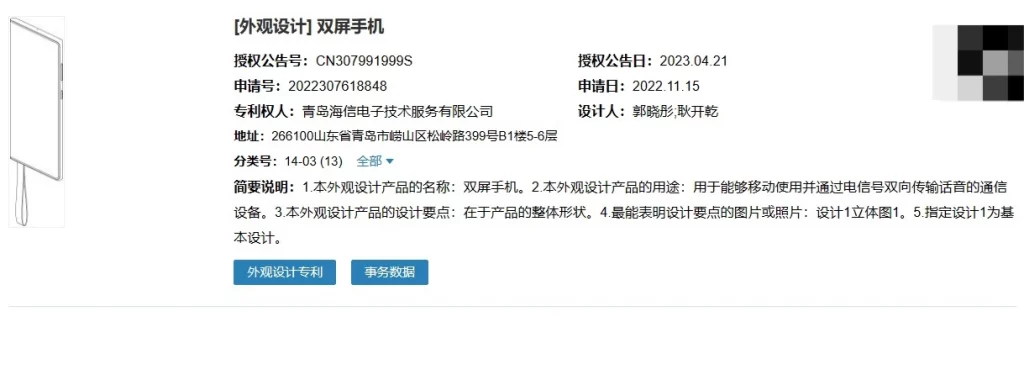
Hisense Patents Unique Smartphone Design with a Surround Screen

On February 17, 2023, Hisense announced a new smartphone patent with a unique design that has caused a buzz in the tech community. The new smartphone design is relatively square, with a straight screen design on the front, very slim borders on three sides, and no holes, providing a clean and minimalistic look. The phone is expected to use an under-screen camera or a pop-up camera design, combined with a right-angle middle frame, giving people a simple and tough look.

Hisense Introduces Square-Shaped Smartphone with Surround Screen

One of the most striking features of the new Hisense smartphone is its surround screen. The screen extends from the bottom to the back of the fuselage, creating a stunning and stylish look, similar to Xiaomi’s surround screen smartphone MIX Alpha, except that the MIX Alpha uses a horizontal surround. The new smartphone is also equipped with a rear four-camera design, with three cameras arranged vertically and a suspected periscope telephoto lens on the side. There seems to be an independent camera on the side of the fuselage, adding to the phone’s overall unique design.

At present, Hisense mainly sells reading smartphone, all of which use custom-made eye-protecting ink screens. The screen of the new patented smartphone is expected to use flexible OLED materials, combined with a surround screen. However, the possibility of actual mass production is unlikely due to the technical challenges involved. It is worth noting that the Xiaomi MIX Alpha launched in 2019 was abandoned due to the difficulty of production, and the price was close to 20,000 yuan. Therefore, the new Hisense smartphone is expected to have a high price tag if it is ever released.

The new Hisense smartphone patent announcement is an exciting development in the smartphone industry, with its unique and stylish design, the surround screen, and the camera module. While it may not be feasible for mass production, it certainly pushes the boundaries of smartphone design and innovation, and piques our interest in what the future of phones could look like.

RELATED:

(source)

Hiace electric SUV showcases BYD family design language and CTB integration technology

BYD Ocean Network, a subsidiary of Chinese electric vehicle manufacturer BYD, is set to launch its first medium-sized electric SUV, the Hiace. Recently, a group of suspected BYD Sea Lion road test spy photos were leaked online, providing a glimpse into what we can expect from the new vehicle. According to reports, the Hiace is expected to be released in the first half of 2023. Here are the details…

Hiace electric SUV to be released in the first half of 2023

From the leaked photos, it’s evident that the Hiace is expected to feature some design elements from the BYD Sea Lion, the company’s first all-electric SUV. The front face of the Hiace is expected to maintain the family design features of the Sea Lion, with angled headlights similar to those of the Sea Lion. The side of the body has a traditional SUV style with a round charging cover, which makes the overall feeling of the vehicle closer to that of a fuel vehicle. With an expected length of around 4770mm and a wheelbase of around 2900mm, the Sea Lion will be positioned as a medium-sized SUV.

Inside the Hiace, the vehicle’s design language continues to follow the BYD family style. The three-spoke multi-function steering wheel and large-size rotatable central control LCD screen all appear on the car. The shift lever is also expected to feature the same crystal style as the BYD Sea Lion, with sufficient details and texture.

According to reports, the Hiace is built on BYD’s e-platform 3.0 and will continue the highlights of the Hiace model. The Hiace will feature an over 700km battery life, which is a significant improvement from the current average battery life of most electric vehicles. Additionally, the Hiace will be equipped with BYD’s innovative CTB body integration technology, which uses a new type of battery cell that is more compact and lighter than traditional battery cells. This technology enables the Hiace to have a lower center of gravity and a more stable driving experience.

The Hiace is an exciting addition to the BYD Ocean Network’s marine life series, and the leaked spy photos suggest that it will feature a sleek and modern design with a spacious and comfortable interior. With its impressive battery life and CTB body integration technology, the Hiace could be a game-changer for the electric SUV market. We look forward to seeing the official release of the Hiace in the coming months and seeing how it performs on the road.

RELATED:

(source)

Xiaomi MIJIA Smart Dehumidifier 50L Goes Official in China

In addition to the MIJIA Three-door Refrigerator 213L, Xiaomi has now launched the MIJIA Smart Dehumidifier 50L. The new 50L smart humidifier comes with 2.27 times more dehumidification power than the MIJIA Smart Dehumidifier 22L that was launched in March last year. The new MIJIA Smart Dehumidifier has a daily dehumidification capacity of 50L, and the amount of water sucked out of the air every day is equivalent to 100 bottles of 50ml mineral water. It has a coverage area of 100 square meters.

MIJIA Smart Dehumidifier 50L

The device adopts a three-dimensional air supply design at the top which should be able to penetrate a multi-storey duplex. The air which can circulate an area of 100 square meters, can quickly dry clothes, walls, furniture, etc. It is suitable for villa duplexes, newly renovated rooms, underground wine cellars, warehouses, and shops.

In addition, the dehumidifier utilizes cross-layer drainage through a high-pressure pump, with a lift height of 5 meters, which solves the problem of no floor drain. It has a built-in 7L large water tank and water flow stops automatically when it is filled with water. The bottom of the dehumidifier is equipped with four sets of universal wheels, making it easy and convenient to move around the home.

MIJIA Smart Dehumidifier 50L

In addition to the dehumidification function, it also has a built-in deep ultraviolet UV-C emission capability, which can kill bacteria in real-time and reduce the growth of bacteria, releasing millions of negative ions.

The MIJIA Smart Dehumidifier 50L can be adjusted via the MIJIA app to maintain the humidity at 40%-70%RH. Users can also customize the exclusive storage environment. At the same time, it can also be linked with purifiers, smart door locks, electric heaters, and other equipment.

MIJIA Smart Dehumidifier 50L

With the support of six noise reduction designs including a brushless DC motor, self-developed mixed-flow fan blades, and a high-efficiency compressor, the running sound of the machine is as low as 41.7dB (A).

Furthermore, the Mijia Smart Dehumidifier 50L has 12 safety protections such as full water shutdown, overload power failure, fire retardant, drainage failure alarm, and dump shutdown.

The MIJIA Smart Dehumidifier 50L is priced at 1999 Yuan ($291) and is presently on pre-sale at Jingdong (JD.com) in China.

RELATED:

Reports Suggest iPhone 15 will Use USB-C, but Compatibility with Android Remains Unclear

The countdown has begun for an iPhone with a USB-C port. The internet has already begun to celebrate this necessary change, thanks to leaked images. The use of USB-C in iPhones and AirPods means a single cable can be used for all devices. Although it is a nice improvement that no more Lightning cables will be needed, iPhone 15 may not be compatible with Android. Here are the details…

The new iPhone is sure to use USB-C, but it may not be compatible with Android

The iPhone 15 Pro is rumored to use the USB-C, marking a significant shift for Apple as it moves closer to Android phones. While this may come as good news for users who have long been clamoring for a universal charging standard, it may not necessarily mean that the iPhone 15 will be compatible with Android devices.

iPhone 15 Pro USB C

According to a recent report from Mobile China News, Apple‘s decision to switch to the USB-C interface may be driven by the pressure from the European Union. The European Council has mandated that all electronic devices sold in the EU must use the Type-C charging interface from 2024. If Apple does not comply, it may not be able to sell the new iPhone in the European market.

This move to USB-C is a departure from Apple’s longstanding use of the proprietary Lightning port, which has been a point of contention for users who have to carry multiple cables or adapters for their devices. USB-C is a popular standard for charging and data transfer, and it is used by most Android devices.

While the move to USB-C is a step in the right direction for Apple, there is still a concern that the new iPhone may not be compatible with Android devices. This may be due to Apple’s desire to keep its data confidential and secure, which has been a key selling point for the company. If the iPhone 15 uses a USB-C interface that is not compatible with Android, it may create a data barrier for users who switch between devices.

From a user’s perspective, the lack of universal compatibility could also be a concern in terms of environmental impact. With the proliferation of electronic devices, there is a growing need to reduce e-waste by using more sustainable charging standards. The use of proprietary charging ports has been criticized for contributing to electronic waste and making it harder to recycle devices.

It remains to be seen how Apple will address these concerns. While the move to USB-C is a positive development, it would be even better if the new iPhone could be universally compatible with Android devices. This would not only make it easier for users to switch between devices but also help reduce e-waste and promote more sustainable practices in the tech industry.

RELATED:

(source)

Budget Redmi 12C Could Launch Globally on February 26, Specs & Pricing Revealed

Redmi 12C debuted as a super-affordable smartphone in China on New Year’s Eve. The handset arrives with impressive specs for the price. For instance, it packs a large display, a massive battery, and a capable chipset. Redmi 12C is also expected to launch in the global market but there’s no official confirmation as of yet. However, a reputed tipster says the handset could debut outside China as early as Next week. The phone’s pricing and specs have also been revealed. Here are the details.

Reliable tipster Paras Guglani claims the Redmi 12C would make its global debut on February 26. You might be aware that Xiaomi 13 series is also launching on the same date. The tipster says the Redmi smartphone will be offered in three colors— Ocean Blue, Mint Green, and Graphite Gray. In addition, the device is tipped to be available in two storage versions. The base model could have 3GB RAM and 64GB storage, while the top-end version could offer 4GB RAM and 128GB storage.

Redmi 12C global

Separately, an Appauls report reveals the base model of the Redmi 12C will be priced at EUR 170, whereas the higher-end variant could cost EUR 200. These prices are for the old continent and may vary depending on the country and applicable taxes. Further, the report also claims that the Redmi 12C arriving in the global market will have the same specs as its Chinese counterpart.

This means the handset could have a 6.71-inch IPS LCD display with an HD+ (720 x 1650 pixels) resolution, 500 nits brightness, and a 20.6:9 Aspect ratio. It may pack a MediaTek Helio G85 processor, paired with LPDDR4X RAM and eMMC 5.1 ROM. There could be a 50MP camera on the rear and a 5MP shooter on the front. It is expected to be backed by a 5,000mAh battery with support for 10W charging.


RELATED:

(Source 1,2)