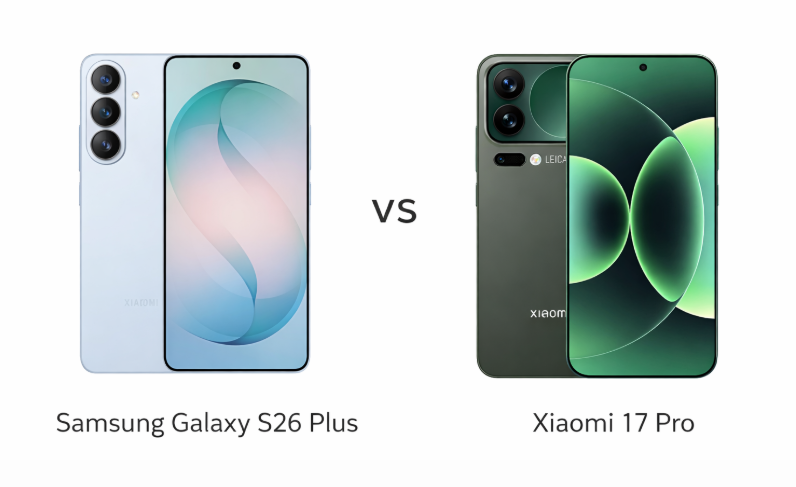
Flagship smartphones in 2026 are no longer just about premium branding; they’re about how much value and innovation you actually get for the price. The Samsung Galaxy S26+ and Xiaomi 17 Pro take two very different approaches: one focuses on refinement, long-term reliability, and ecosystem strength, while the other pushes aggressive hardware upgrades at a far lower price. For buyers deciding between a safe premium experience and a feature-packed powerhouse, this comparison highlights where each device truly stands and which one makes more sense depending on usage priorities.
The Samsung Galaxy S26+ follows Samsung’s refined flagship design with Gorilla Glass Victus 2 on both sides and an Armor Aluminum 2 frame, giving it a polished and durable feel. It also offers broader SIM flexibility and DeX support, adding a productivity edge. Meanwhile, the Xiaomi 17 Pro introduces a more experimental approach with Dragon Crystal Glass and a secondary rear display, making it stand out instantly. It feels more futuristic, especially for users who enjoy unique hardware touches.
Display Quality
Samsung delivers a sharper 1440p LTPO AMOLED panel with excellent brightness and color tuning, making it ideal for content consumption. Xiaomi counters with a brighter panel, Dolby Vision support, and extremely high PWM dimming, which is easier on the eyes. The secondary display also adds functional versatility, especially for quick tasks and camera previews.
Verdict
Samsung feels more premium and balanced, but Xiaomi brings innovation and eye comfort. The better choice depends on whether consistency or creativity matters more.
2. Specifications Including Battery
Performance
Both devices are powered by the Snapdragon 8 Elite Gen 5 in key markets, delivering flagship-level speed and efficiency. Samsung’s optimization with One UI and longer software support gives it an edge in longevity and stability. Xiaomi, however, offers slightly higher RAM options and faster storage, which can feel snappier in heavy multitasking and gaming scenarios.
Battery and Charging
This is where Xiaomi clearly pulls ahead. A massive 6300 mAh battery paired with 100W wired and 50W wireless charging makes it one of the fastest and longest-lasting flagships. Samsung’s 4900 mAh battery is reliable but feels conservative, especially with 45W charging. Daily users may notice the difference quickly.
Verdict
Samsung wins in software polish and long-term updates, but Xiaomi dominates raw battery and charging performance. Power users will naturally lean toward Xiaomi.
3. Camera
Main and Secondary Lenses
Samsung sticks with a proven triple-camera setup, delivering consistent results with strong HDR, stable video, and reliable 3x zoom. It excels in color accuracy and video features like HDR10+ and stabilization. Xiaomi pushes boundaries with a 50MP triple system, including a 5x periscope zoom and Leica tuning. The larger sensors and advanced video modes give it a clear advantage in versatility and detail.
Selfie Camera
Samsung’s 12MP selfie camera focuses on natural tones and consistency, while Xiaomi’s 50MP front camera delivers sharper and more detailed selfies. Xiaomi also supports more advanced video features on the front camera, which content creators may appreciate.
Verdict
Samsung is more consistent and predictable, especially for video, but Xiaomi offers superior hardware and flexibility. Those who enjoy experimenting with photography will likely prefer Xiaomi.
4. Pricing
The Samsung Galaxy S26+ is priced around $1100 / ₹120,000, placing it firmly in the ultra-premium category. In contrast, the Xiaomi 17 Pro comes in at approximately $700 / ₹62,000, making it significantly more affordable despite offering higher-end hardware in several areas.
Is the Price Justified?
Samsung justifies its price with long-term software support, brand reliability, and ecosystem features like DeX and UWB integration. However, Xiaomi delivers exceptional value by offering better battery, faster charging, stronger camera hardware, and more RAM at a much lower price. The gap feels difficult to ignore.
Verdict
Samsung is a safe premium investment, but Xiaomi clearly wins on value for money. The pricing difference alone makes Xiaomi a very compelling choice.
Disclaimer: Prices are approximate and may vary based on country, region, and applicable taxes.
5. Conclusion
Samsung stands out with its polished ecosystem, extended software support, and productivity-focused features like DeX. It feels like a complete, mature flagship designed for long-term use. Xiaomi, on the other hand, pushes hardware innovation with a secondary display, massive battery, ultra-fast charging, and a more ambitious camera system. It feels more exciting and future-forward.
Verdict
Samsung Galaxy S26+ is ideal for users who prioritize reliability, software longevity, and a refined experience. Xiaomi 17 Pro is the better pick for those who want maximum hardware value, faster charging, and cutting-edge features at a lower price. Overall, Xiaomi offers the more aggressive and value-driven package, while Samsung remains the safer flagship choice.
Disclaimer: This comparison is based on the specifications provided and is intended for general informational purposes. Actual performance, camera results, battery life, and overall experience may vary depending on real-world usage, software updates, and individual preferences.
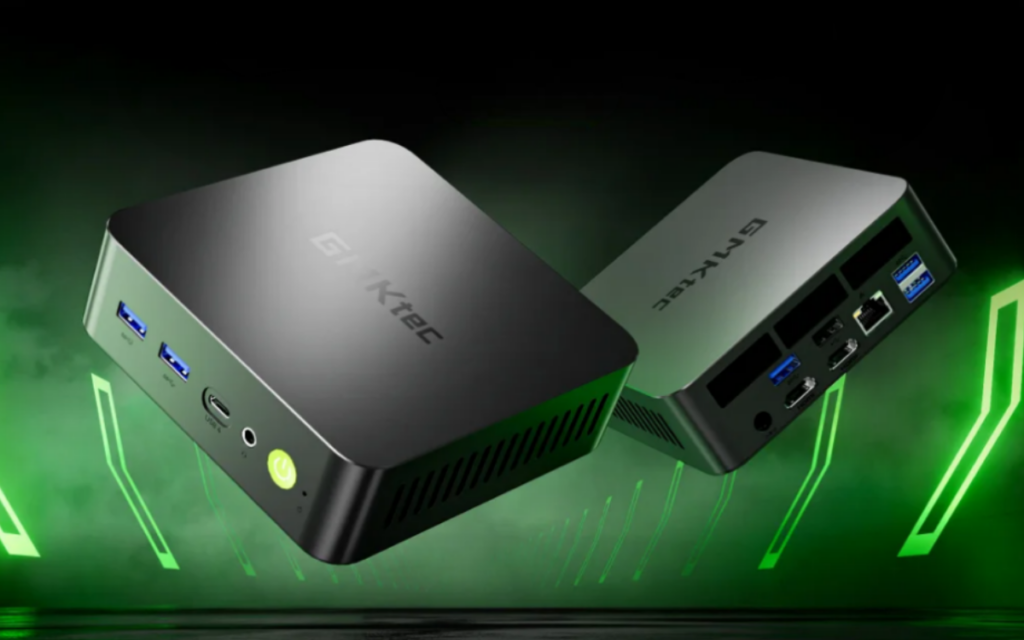
Gmktec has unveiled the NucBox K17, a new mini PC equipped with a Lunar Lake processor, offering advanced AI computing capabilities in an ultra-compact design.
Gmktec NucBox K17 Specifications
The NucBox K17 features the Intel Core Ultra 5 226V processor with 8 cores, 8 threads, a 4.5GHz turbo frequency, delivering 97 TOPS of AI performance alongside the Intel Arc 130V GPU and AI Boost NPU. The Arc 130V GPU offers 53 TOPS of AI performance, supports ray tracing and XeSS, and is optimized for gaming and content creation. The AI Boost NPU adds 40 TOPS of INT8 AI acceleration for machine learning and AI applications.
The mini PC runs Windows 11 Pro, includes 16GB of LPDDR5X memory at 8533MT/s, and offers storage options ranging from 512GB to 1TB SSDs. It supports up to 16TB of expandable storage through dual M.2 2280 slots compatible with PCIe 4.0 and 5.0 SSDs.
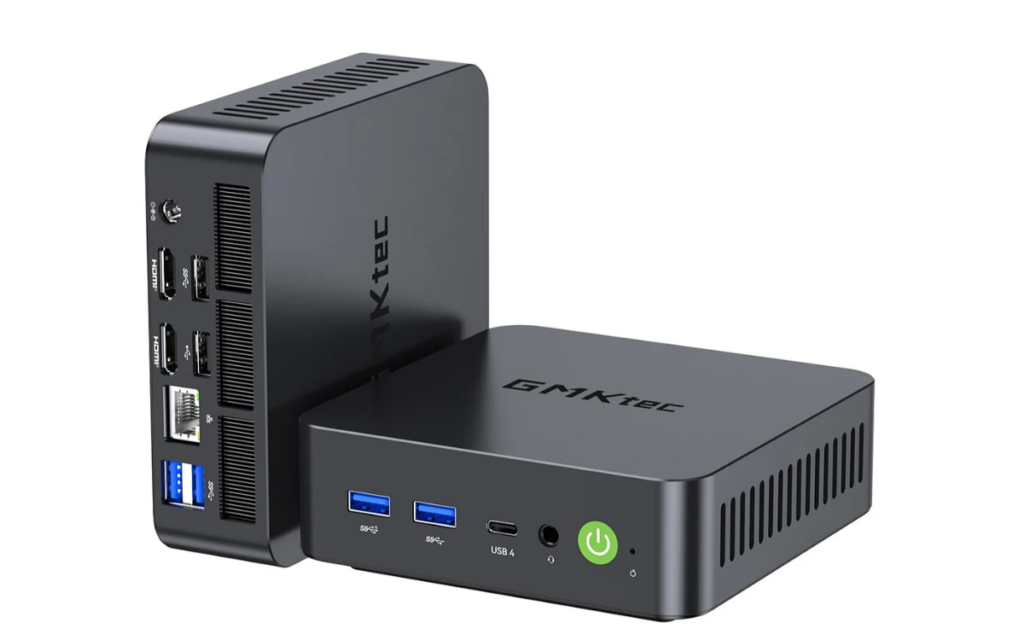
The NucBox K17 offers a wide range of ports for versatile connectivity. On the front, it includes a USB4 Type-C port with 100W Power Delivery, DisplayPort (40Gbps), along with one USB 3.2 Gen2 port, one USB 3.2 Gen1 port, and a 3.5mm audio combo jack.
At the rear, it features one DC IN port (100W), two HDMI 2.1 ports, three USB 3.2 Gen1 ports (5Gbps), one USB 2.0 port, a 2.5G RJ45 LAN port, a lock slot, along with power and reset buttons.
For wireless connectivity, the device supports Wi-Fi 6E and Bluetooth 5.2. The NucBox K17 can handle up to three displays simultaneously, with support for resolutions of up to 8K through its HDMI and USB4 ports.
The mini PC features a dual heat pipe cooling system with a turbine fan and smart thermal management, providing quiet operation even under load. It is highly compact, measuring 127.5 x 127 x 44.5 mm, and weighs just 460g.
Pricing and Availability
The Gmktec NucBox K17 is available now through the company’s official website. The 16GB + 512GB version is priced at $559.99, while the 16GB + 1TB version costs $619.99.
In related news, Lenovo debuts the Yoga Mini i Gen 11 featuring a circular design, Intel Core Ultra, and 4-display support. Topfeel also launches Next 2 Mini PCs with Ryzen 7 H255 and up to RTX 4060 Ti GPU support.
For more daily updates, please visit our News Section.
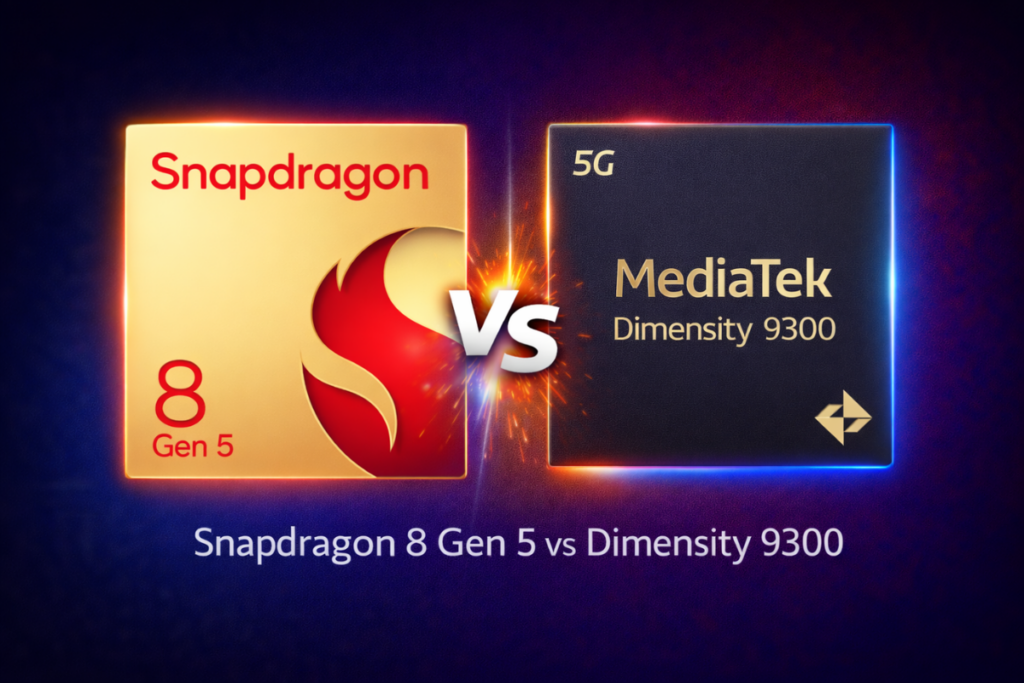
The Snapdragon 8 Gen 5 is the first non-Elite chipset to feature the powerful Oryon cores. The chipset offers solid gaming performance, a flagship-grade ISP, and reliable connectivity, making it a powerful choice among premium mid-range phones.
On the other hand, the Dimensity 9300 is two years older than the Snapdragon 8 Gen 5. Still, it offers smooth performance and excellent efficiency to be considered a reliable choice, and more importantly, at a lower price.
So, the real question is: does it make sense to go with the Snapdragon 8 Gen 5, or is the Dimensity 9300 a solid choice at a relatively lower price? Let’s find out in this detailed comparison.
Quick verdict:
Choose Snapdragon 8 Gen 5 if you want higher CPU performance, sustained gaming performance, flagship ISP, and modern connectivity features. Choose Dimensity 9300 if you want reliable performance and excellent efficiency at a lower price point.
Snapdragon 8 Gen 5 vs Dimensity 9300: Spec sheet
Snapdragon 8 Gen 5
Dimensity 9300
Announced
November 2025
November 2023
Process node
3 nm (TSMC)
4 nm (TSMC)
CPU
2 × 3.8 GHz (Oryon Gen 3 – Prime) 6 × 3.32 GHz (Oryon Gen 3 – Performance)
Adreno 829 ray tracing support Snapdragon Elite Gaming features
Arm Immortalis-G720 MP12 console-level global illumination effects ray tracing support MediaTek HyperEngine Adaptive Gaming Technology
NPU
Qualcomm Hexagon NPU Agentic AI support
MediaTek NPU 790 up to 33 billion parameters on-device LoRA Fusion support
Memory
LPDDR5x, up to 4.8 GHz
LPDDR5T, up to 4.8 GHz
Storage
UFS 4.1
UFS 4 + MCQ
Camera
Qualcomm Spectra triple AI ISP (20-bit) up to 320MP single camera up to 108MP single camera with zero shutter lag, 30fps up to 48MP triple cameras with zero shutter lag, 30fps up to 4K/120fps video recording real-time semantic segmentation (limitless)
MediaTek Imagiq 990 ISP (18-bit) up to 320MP single camera up to 8K video recording AI Semantic Analysis Video Engine
Connectivity
Snapdragon X80 5G modem download speed: up to 10 Gbps upload speed: up to 3.5 Gbps Wi-Fi 7 (peak speed: 5.8 Gbps) Bluetooth 6.0
MediaTek 5G modem download speed: up to 7 Gbps Wi-Fi 7 (peak speed: 6.5 Gbps) Bluetooth 5.4
Snapdragon 8 Gen 5 vs Dimensity 9300: Benchmark numbers
Note: To obtain the benchmark results, the tests were performed using these devices: – OnePlus 15R (Snapdragon 8 Gen 5) – Vivo X100 Pro (Dimensity 9300)
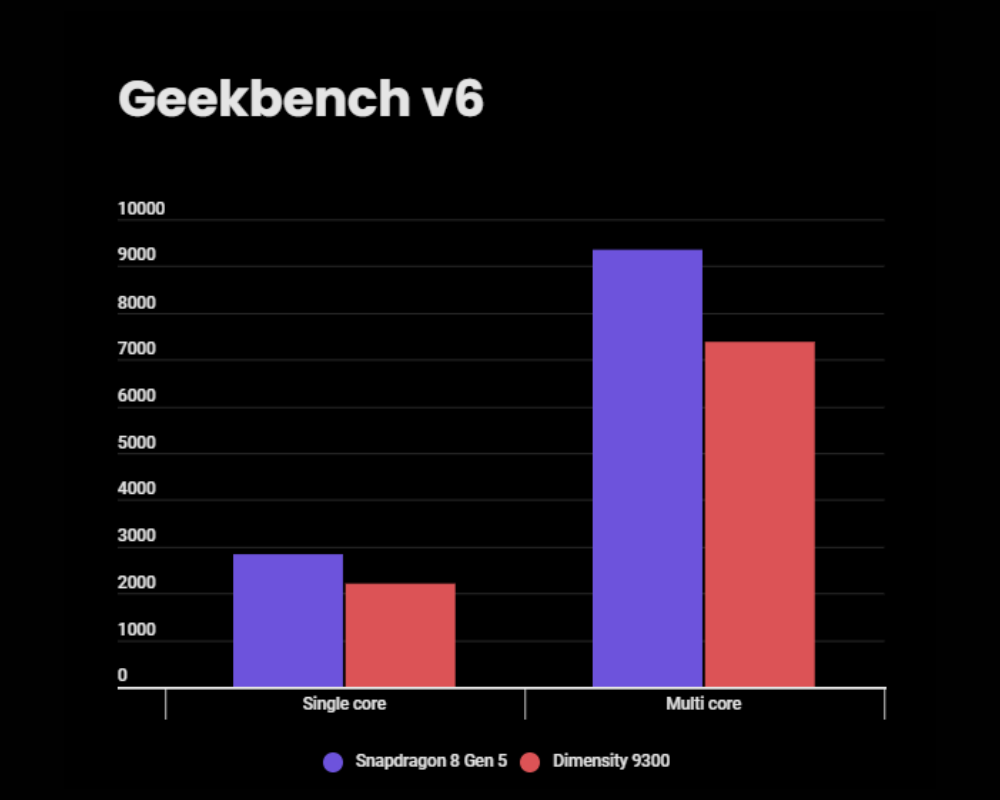
Geekbench score (v6)
The Snapdragon 8 Gen 5 outperforms the Dimensity 9300 in both single-core and multi-core tests. In both tests, the Snapdragon chip achieves about 27% higher score, suggesting a snappier performance, particularly in tasks that require greater CPU resources.
Snapdragon 8 Gen 5
Dimensity 9300
Single core
2,837
2,208
Multi core
9,352
7,380
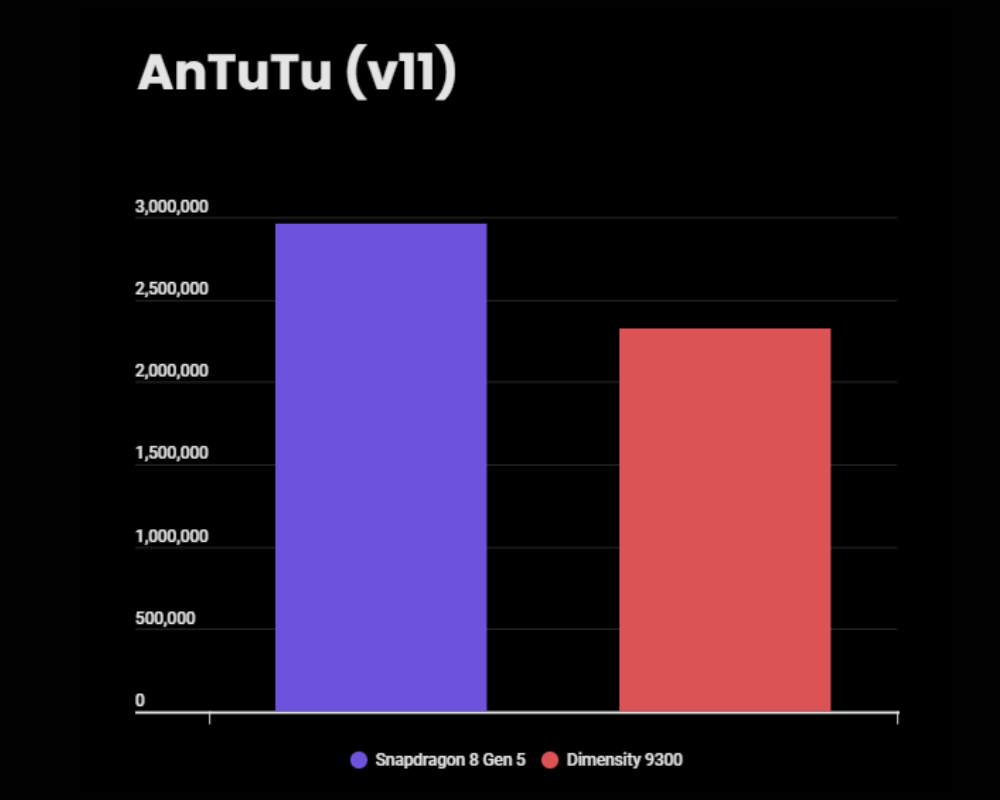
AnTuTu score (v11)
On the AnTuTu benchmark, the Snapdragon 8 Gen 5 scores 2.96 million, while the Dimensity 9300 sits below it with 2.32 million total score. That’s a solid 27% uplift for the Snapdragon chip.
Snapdragon 8 Gen 5
Dimensity 9300
AnTuTu score
2,961,236
2,324,872
CPU
914,878
692,230
GPU
974,402
816,259
Memory
382,729
338,122
UX
689,228
478,261
The breakdown of the AnTuTu score paints a better picture, and unsurprisingly, the Snapdragon 8 Gen 5 dominates all aspects. The CPU gets 32% higher score, the GPU gets 19% higher score, memory performance is up by 13%, and the UX score is up by 44%.
3DMark score
Wild Life Extreme Stress Test
This is a widely popular gaming benchmark, where the Snapdragon 8 Gen 5 outperforms the Dimensity 9300 by a wide margin. It achieves a 23% higher best loop score and a whopping 71% increase in the lowest loop score. So, not just the performance, the Snapdragon chip also maintains higher stability.
Snapdragon 8 Gen 5
Dimensity 9300
Best loop score
5,009
4,062
Lowest loop score
3,321
1,933
Stability
66.30%
47.59%
While benchmarks offer great insights into performance and stability, they don’t focus on other key aspects, including connectivity, camera, and features. To give you a clearer picture, we’ve included them in the following section.
Snapdragon 8 Gen 5 vs Dimensity 9300: Key differences
Process node
The Snapdragon 8 Gen 5 uses TSMC’s newer 3nm node, which offers better performance and power efficiency than the 4nm node used in the Dimensity 9300.
Performance
CPU
Both chipsets feature octa-core CPUs, although their core configurations differ. The Snapdragon 8 Gen 5 uses a (2 + 6) layout, featuring two Oryon prime cores at 3.8 GHz and six Oryon performance cores at 3.32 GHz. The Dimensity 9300 features a (1 + 3 + 4) layout, which includes one Cortex-X4 prime core at 3.25 GHz, three Cortex-X4 performance cores at 2.85 GHz, and four Cortex-A720 efficiency cores at 2.0 GHz.
The Snapdragon 8 Gen 5 prioritizes performance by offering a higher peak clock speed of 3.8 GHz. In fact, all the CPU cores in the Snapdragon chip run at higher clock speeds than those in the Dimensity 9300. This is one of the primary reasons the Snapdragon chip easily outperforms the Dimensity 9300 in benchmarks.
GPU
As for the gaming and graphics rendering, the Snapdragon 8 Gen 5 uses a powerful Adreno 829 GPU featuring Qualcomm’s “sliced” architecture. The GPU offers excellent ray tracing performance, support for Unreal Engine 5, and AI-assisted upscaling. It also bundles a full suite of Snapdragon Elite Gaming features to deliver a smooth gaming performance with consistently high frame rates, low latency, and improved power utilization.
The Dimensity 9300 features a 12-core Arm Immortalis-G720 GPU, promising console-level global illumination effects. The GPU is equipped with a 2nd-gen hardware ray tracing, which is claimed to offer “fast, full raytracing experiences at a smooth 60 fps.” The chip also features MediaTek HyperEngine Adaptive Gaming Technology to deliver flagship performance without slowdowns for up to an hour in top titles, along with better cooling and improved power efficiency.
NPU
The Snapdragon 8 Gen 5 features a very capable Hexagon NPU, which integrates with an Oryon CPU and Adreno GPU to enable on-device agentic assistants, multimodal AI, and heavier gen-AI workloads in high-end devices. It is essentially a slightly binned-down version of the 8 Elite Gen 5 AI platform, with nearly all of the same features but lower peak clocks.
The Dimensity 9300’s AI stack is built around the MediaTek NPU 790, which delivers substantial efficiency and speed gains over the previous generation. It can run LLMs with up to 33 billion parameters and real-time generative AI. The AI stack enables the SoC to run multi-modal, multi-LLMs setups at usable latencies, entirely on-device.
Camera
The Snapdragon 8 Gen 5 features a 20-bit Spectra AI ISP with up to 320MP single camera and up to 4K/120fps video recording, although OEMs can enable up to 8K recording. The chip also supports limitless real-time semantic segmentation for precise optimizations. Plus, it offers a range of camera features (including AI-assisted features) to deliver greater quality with less noise.
On the other hand, the Dimensity 9300 is equipped with an 18-bit Imagiq 990 ISP, supporting up to 320MP single-camera and up to 8K video recording. The chip features an AI Semantic Analysis Video Engine with 16 categories of scene segmentation adjustments for enhanced cinematic video capture. It also features zero-latency video preview and 100% pixel-level autofocus + dual-lossless zoom.
Connectivity
While both chips offer robust connectivity, there are several important differences to consider. On a 5G connection, the Snapdragon 8 Gen 5’s download speed can reach up to 10 Gbps, while the Dimensity 9300 peaks at 7 Gbps. The Dimensity chip bounces back with a higher peak Wi-Fi 7 speed, reaching 6.5 Gbps (vs. 5.8 Gbps on the Snapdragon 8 Gen 5). Another advantage of the Snapdragon 8 Gen 5 is its support for Bluetooth 6.0, while the Dimensity 9300 supports the older Bluetooth 5.3 standard.
Snapdragon 8 Gen 5 vs Dimensity 9300: Which is better?
The Snapdragon 8 Gen 5 is clearly a much better choice over the Dimensity 9300. It offers solid CPU performance, a more consistent gaming performance, and a modern connectivity stack. Plus, it features the advanced Spectra ISP from the Snapdragon 8 Elite Gen 5, integrating the latest camera features and advanced camera optimizations.
That said, the Dimensity 9300 is still a solid mid-range chipset in 2026. It can smoothly run your day-to-day apps while offering excellent efficiency. Gaming performance is also good, but for heavier games and longer sessions, you may want to prefer a more capable chipset like the Snapdragon 8 Gen 5. Perhaps the only advantage it offers over the Snapdragon 8 Gen 5 is its lower price. So, if you’re getting a hefty discount on a Dimensity 9300 phone that makes it much cheaper than a Snapdragon 8 Gen 5 phone, that may be a solid deal. Otherwise, the Snapdragon 8 Gen 5 is a no-brainer choice here.
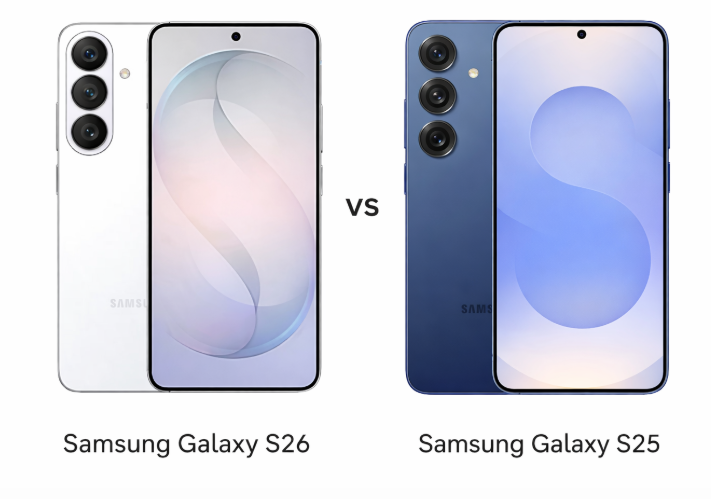
The shift from the Samsung Galaxy S25 to the Samsung Galaxy S26 isn’t about dramatic changes, but meaningful refinements in performance, efficiency, and everyday experience. With a newer chipset, slightly larger battery, and updated software, the S26 aims to feel more future-ready, while the S25 continues to hold strong as a well-balanced flagship, making this comparison important for buyers deciding if the upgrade is truly worth it.
The Samsung Galaxy S26 keeps a familiar flagship design but refines durability with Armor Aluminum 2 and the same Gorilla Glass Victus 2 protection. The overall in-hand feel remains premium and compact, closely resembling the Samsung Galaxy S25. However, subtle refinements in finish and symmetry make the newer model feel slightly more polished. It’s not a dramatic redesign, but it leans toward a more mature flagship identity.
Display Quality
Both phones offer nearly identical AMOLED panels with a 120Hz refresh rate and 2600 nits peak brightness. The S26 slightly increases screen size, making content feel a bit more immersive without changing resolution. Color tuning and brightness remain top-tier, though improvements here feel iterative rather than transformative.
Verdict
The S26 delivers refinement rather than reinvention. The slightly larger display and improved finish give it a more complete feel, but the S25 still holds up extremely well visually.
2. Specifications Including Battery
Performance
The biggest upgrade comes with the new Snapdragon 8 Elite Gen 5 / Exynos 2600 on the S26, delivering noticeable gains in CPU and GPU performance. Compared to the S25’s Snapdragon 8 Elite, multitasking feels smoother, and sustained performance should improve, especially in gaming. The shift toward newer architectures also hints at better efficiency and longevity.
Battery and Charging
Battery capacity increases to 4300mAh on the S26, a meaningful bump over 4000mAh. Charging speeds remain unchanged, which feels conservative, but the efficiency improvements from the new chip should translate into longer real-world usage. Wireless and reverse charging stay identical.
Verdict
The S26 clearly wins in performance and battery life. While charging speeds remain unchanged, the overall experience feels more future-proof and efficient.
3. Camera
Main and Secondary Lenses
On paper, both phones share identical camera hardware, including the 50MP main, 3x telephoto, and ultrawide lenses. However, the S26 introduces new software features like Horizon Lock, which improves video stability and usability. Image processing is also expected to be more refined thanks to the newer chipset, delivering better dynamic range and consistency.
Selfie Camera
The front camera remains largely unchanged at 12MP, but slight adjustments in focal length and processing can improve framing and skin tones. Video capabilities stay strong with 4K support and HDR enhancements.
Verdict
The upgrade is subtle but meaningful. Hardware remains the same, but smarter processing and new video features give the S26 a slight edge, especially for content creators.
4. Pricing
The Samsung Galaxy S26 is priced around $900 / ₹88,000, while the Samsung Galaxy S25 sits lower at $800 / ₹75,000. This creates a noticeable price gap for what appears to be incremental upgrades on paper.
Is the price justified?
The S26 justifies its price mainly through performance gains, improved efficiency, and slightly better battery life. However, since design and camera hardware remain similar, the upgrade may feel less compelling for casual users. The S25 still offers flagship-level value at a lower cost, making it a strong alternative.
Verdict
The S26 is worth it for those seeking peak performance and longevity. The S25, however, remains the better value pick for most buyers.
Disclaimer: Prices are approximate and may vary based on country, region, and applicable taxes.
5. Conclusion
The S26 focuses on refinement, a new chipset, better efficiency, a slightly larger display, and enhanced video features like Horizon Lock. It also launches with Android 16 and newer One UI, giving it a longer software runway. Meanwhile, the S25 still delivers a balanced flagship experience with minimal compromises.
Verdict
The S26 feels like a “performance-first” upgrade rather than a complete overhaul. It is better suited for power users and long-term buyers who value future-proofing. The S25, however, remains a smart and practical choice, especially for those upgrading from older devices.
Disclaimer: This comparison is based on the specifications provided and is intended for general informational purposes. Actual performance, camera results, battery life, and overall experience may vary depending on real-world usage, software updates, and individual preferences.
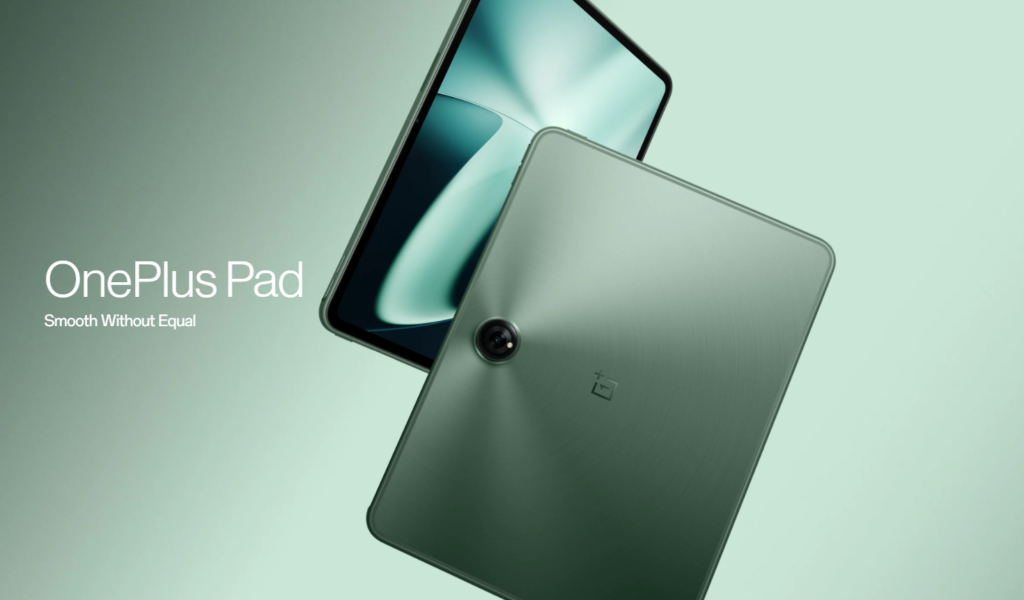
OnePlus has started rolling out the OxygenOS 16.0.5.700 update for the OnePlus Pad, bringing a mix of feature additions, usability improvements, and the latest security patch. The update is being released in batches across India, Europe, global markets, and North America, with the build version OPD2203_16.0.5.700(EX01).
The update focuses on improving everyday usability. Users can now run multiple timers at the same time, making multitasking easier. Timers also show estimated stop times, which helps in better tracking. The Content Portal now supports app clones, allowing easier sharing across duplicate apps. App organization has also been updated in Drawer mode with new “Office” and “Finance” categories for quicker access.
Connectivity features have also been refined. A new option called “Automatically open received files” has been added. This gives users control over whether shared files open automatically when received.
Privacy and file management receive notable upgrades. Users can now browse files in Private Safe using a side slider. Searching within folders in Private Safe is now supported, and files stored there can also be shared directly. These changes improve both accessibility and control over private data.
The update also integrates the April 2026 Android security patch, improving system security and protection against known vulnerabilities.
This rollout is limited to devices already running OxygenOS 16. Users on OxygenOS 15 will need to upgrade to OxygenOS 16 before receiving this build. As with typical OTA updates, the rollout is incremental, starting with a small group of users before expanding to a wider audience in the coming days.
For more daily updates, please visit our News Section.
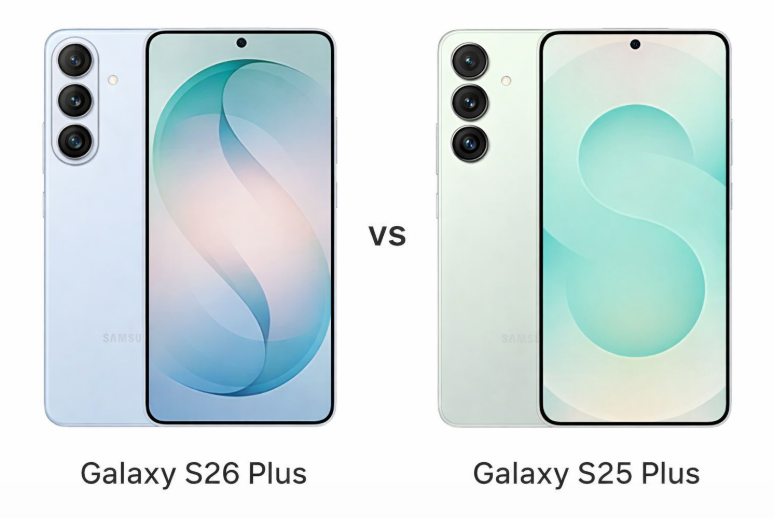
Samsung Galaxy S26 Plus arrives as a refinement-focused upgrade over the Samsung Galaxy S25 Plus, bringing improvements that are subtle on paper but impactful in daily use. While both devices share a similar design and core hardware, the newer model introduces better performance, improved efficiency, and smarter processing. This comparison breaks down the key differences and upgrades that actually matter, helping buyers understand whether the latest generation is worth the extra investment.
The design language remains largely unchanged, but the Samsung Galaxy S26 Plus brings subtle refinements in finish and frame durability. The upgraded Armor Aluminum 2 and improved glass treatment give it a slightly more premium and polished feel. While the Samsung Galaxy S25 Plus still feels flagship-grade, the newer model comes across as more refined in hand, even if the visual differences are minimal.
Display Quality
Both devices share the same core display specs, but the S26 Plus introduces better panel tuning and slightly higher pixel density. Colors appear more vibrant, and brightness handling feels more controlled in extreme lighting. The improvement isn’t drastic, but side-by-side usage reveals a cleaner, more refined viewing experience on the newer model.
Verdict
No major overhaul, but the S26 Plus delivers small refinements that make the display and build feel more premium overall.
2. Specifications Including Battery
Performance
This is where the biggest upgrade lies. The S26 Plus moves to Snapdragon 8 Elite Gen 5 / Exynos 2600, offering a clear jump in performance over the previous generation chip in the S25 Plus. Expect faster app launches, smoother multitasking, and improved gaming stability. The difference feels noticeable, especially under heavy usage, making the newer model more future-proof.
Battery and Charging
Battery capacity stays the same, but efficiency improves on the S26 Plus thanks to the newer chipset. Wireless charging also gets a bump (20W vs 15W), which adds real convenience. Daily usage feels slightly longer-lasting, even without a capacity increase.
Verdict
Performance and efficiency upgrades make the S26 Plus a meaningful step forward over the S25 Plus.
3. Camera
Main and Secondary Lenses
Hardware remains identical, but the S26 Plus benefits from improved image processing and new features like Horizon Lock. Photos show better dynamic range and more consistent HDR, especially in tricky lighting. Video stabilization also feels more refined, making footage look smoother.
Selfie Camera
The front camera is mostly unchanged, but software tuning improves color accuracy and HDR handling on the S26 Plus. The difference is subtle but noticeable in portraits and social media shots.
Verdict
No hardware changes, but smarter processing gives the S26 Plus a clear edge in real-world photography.
4. Pricing
The Samsung Galaxy S26 Plus comes in at around $1100 (₹120,000), while the Samsung Galaxy S25 Plus is priced closer to $1000 (₹100,000). The gap reflects the generational upgrade rather than a complete redesign.
Value for Money
The S25 Plus offers excellent value since most core features remain similar. However, the S26 Plus justifies its higher price with meaningful upgrades in performance, efficiency, and software processing. It feels like a smarter long-term investment rather than just a yearly refresh.
Verdict
S25 Plus wins on value, but S26 Plus is better suited for those wanting the latest performance gains.
Disclaimer: Prices are approximate and may vary based on country, region, and applicable taxes.
5. Conclusion
The S26 Plus stands out mainly through its new chipset, improved efficiency, faster wireless charging, and enhanced camera processing. These upgrades may seem incremental on paper, but they translate into smoother daily usage and better longevity. The S25 Plus, meanwhile, still delivers a flagship experience with fewer compromises.
Verdict
The S26 Plus is a refinement-focused upgrade, not a redesign. It’s the better choice for performance-focused users, while the S25 Plus remains a strong alternative for those prioritizing value over incremental improvements.
Disclaimer: This comparison is based on the specifications provided and is intended for general informational purposes. Actual performance, camera results, battery life, and overall experience may vary depending on real-world usage, software updates, and individual preferences.
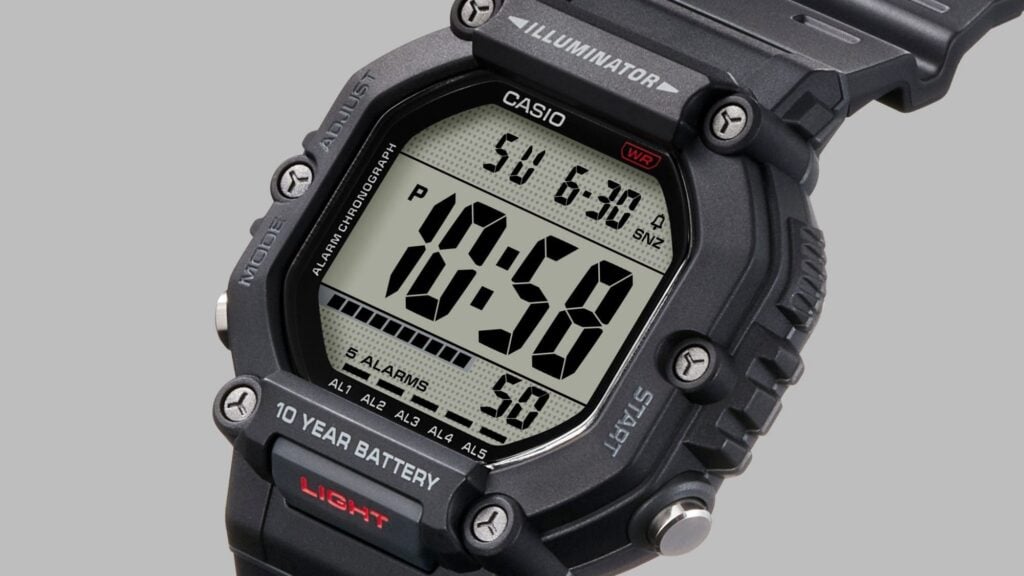
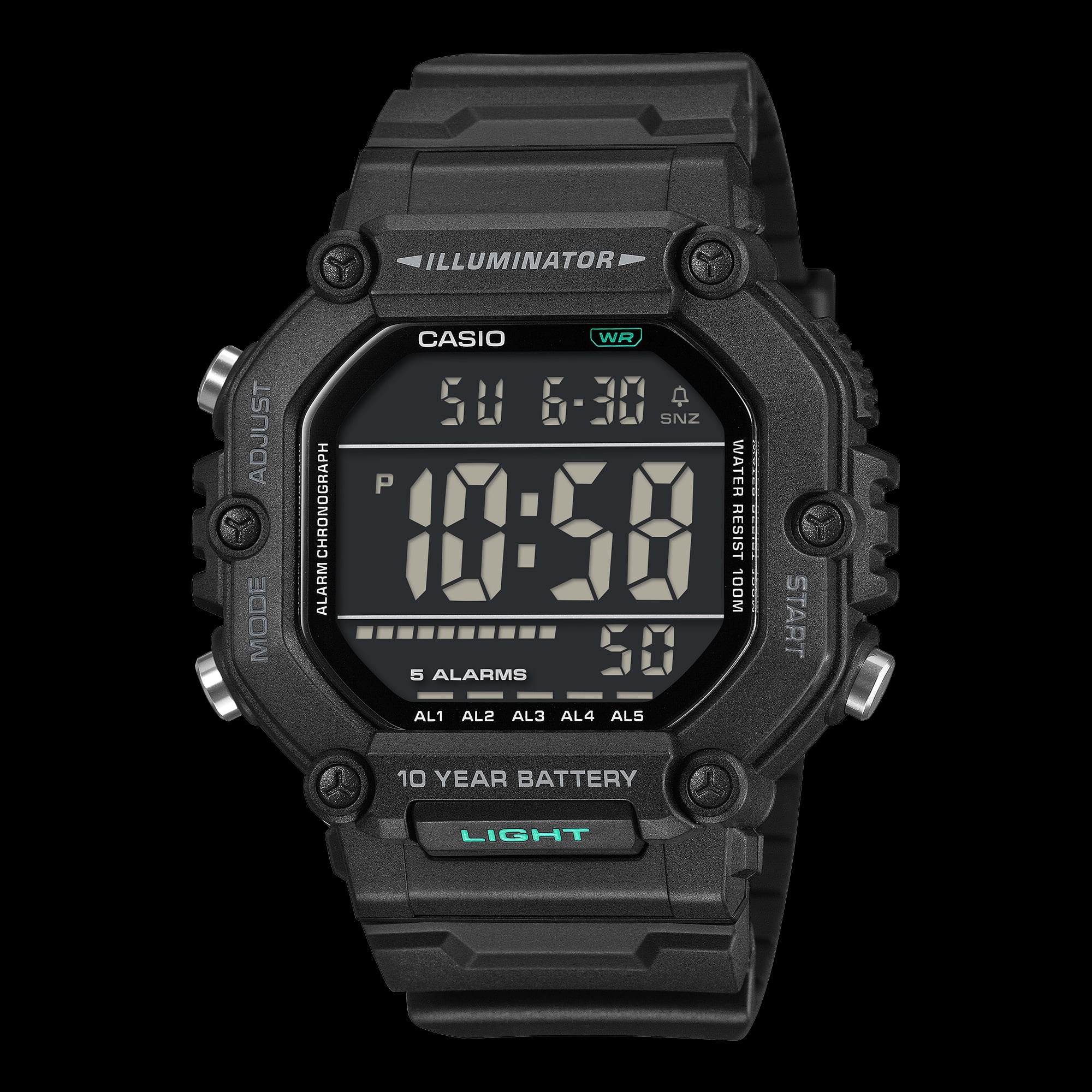
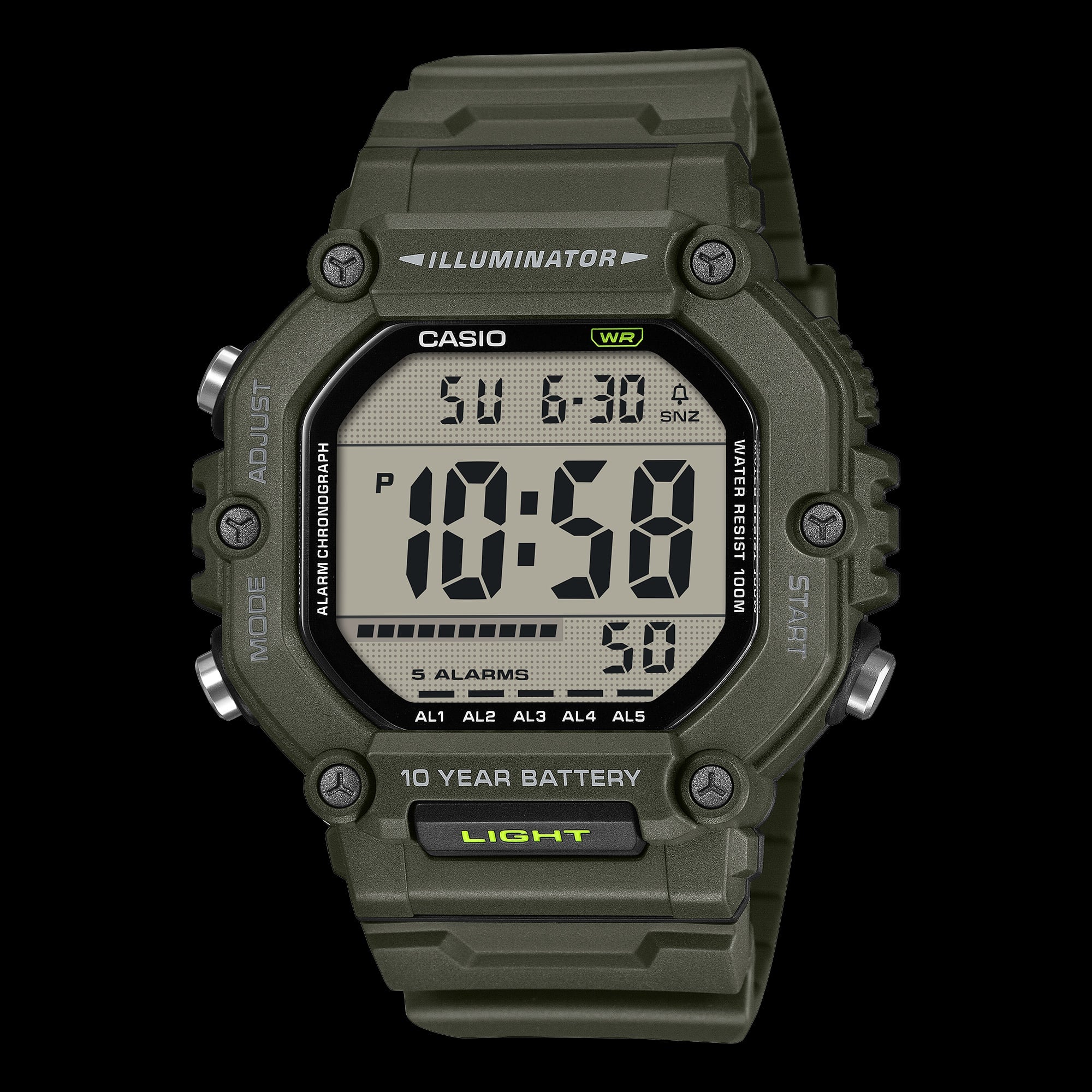
Casio has officially listed the AE-1600HX series on its international website, confirming specifications that had already appeared through retailer listings. The lineup includes the AE-1600HX-1BV and AE-1600HX-3AV, positioned as affordable digital watches with a rugged design and extended battery life.
The watch features a large, angular case measuring 54.1 × 49.7 × 15.9 mm and weighs 55 g. It uses a resin case and bezel with a matching resin band and resin glass covering the display. The design focuses on readability, with a large LCD screen and a front-mounted button for quick access to the LED backlight. The AE-1600HX-1BV uses a negative display with a blacked-out look, accented by light blue labels.
A key highlight is the extra-long strap, which supports wrist sizes from 145 mm to 235 mm. This makes it suitable for users who prefer a looser fit or want to wear the watch over clothing. The rally-style band includes dual holes for better adjustment and a more secure fit.
The AE-1600HX series offers 100-meter water resistance and is powered by a CR2032 battery rated for up to 10 years. It includes dual time, a 1/100-second stopwatch with elapsed, split, and 1st-2nd place timing, and a countdown timer with a range of up to 24 hours. The timer supports auto-repeat and can be set from 1 minute to 24 hours.
Additional features include five multi-function alarms with one snooze alarm, an hourly time signal, and a full auto-calendar that runs until 2099. The watch maintains accuracy within ±30 seconds per month and supports both 12 and 24-hour formats. The LED backlight uses amber illumination with afterglow for visibility in low light.
While Casio has not confirmed pricing, retailer listings suggest a price of around €39.90, with availability expected in April 2026.
You must also check out our best of CES 2025 for all the coolest tech announcements.
Casio has listed its new AQ-240E series in the US, expanding its Vintage lineup with three models scheduled for April 2026. The range includes the AQ-240E-2A, AQ-240E-4A, and AQ-240E-7A2, all built around a hybrid analog-digital format and a retro-inspired design.
The watches feature a rounded square case that softens the sharper edges seen on older models like the AQ-230. The case measures 40.9 × 35.8 × 8.1 mm and weighs 51 g. It uses a chrome-plated resin case and bezel paired with a stainless steel band with an adjustable clasp. The band fits wrist sizes from 150 to 205 mm.
Each model uses a pastel dial finish. The 2A variant comes with a light blue sunray dial, while the 4A uses a matte orange tone, and the 7A2 features an off-white finish. The dial layout remains consistent across all versions, with two analog hands and a slim digital display positioned at six o’clock. The wide dial uses slim indexes and a clean layout to maintain readability.
The AQ-240E runs on Casio’s Module 5154. Core features include dual time, world time, a 1/100-second stopwatch with a measuring capacity of 59 minutes and 59.99 seconds, daily alarm, hourly time signal, and an auto-calendar that accounts for February with 28 days. The watch supports both 12-hour and 24-hour formats. The analog display shows hours and minutes, while the digital screen displays time, seconds, date, and day.
Accuracy is rated at ±30 seconds per month. The watch is powered by an SR920W battery with an estimated life of about three years. It uses resin glass for protection and offers basic water resistance suitable for daily use.
The design focuses on a retro-modern look with gentle curves and warm tones, combined with a simple rectangular profile. Pricing has not been officially confirmed, but earlier information suggests it will be around $60, in line with existing AQ-240E models.
You must also check out our best of CES 2025 for all the coolest tech announcements.
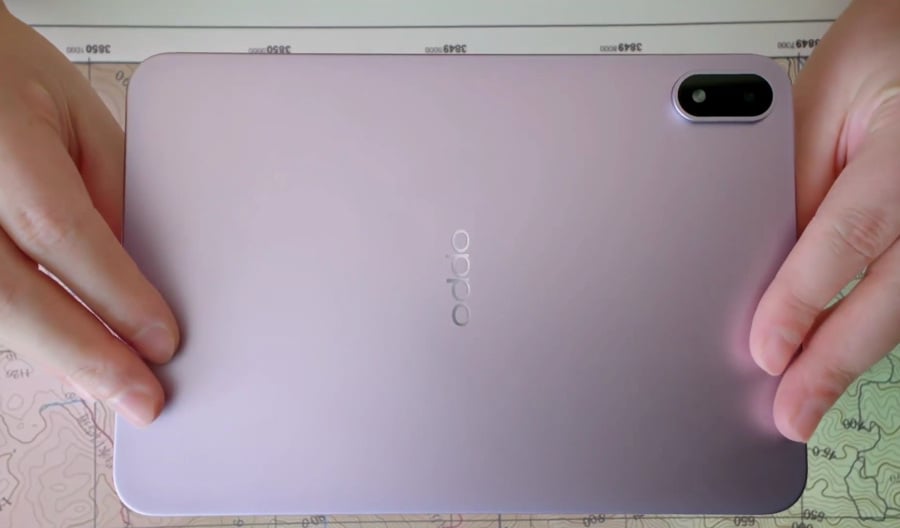
Oppo is seemingly getting ready to step into the compact tablet space with a new device called the Oppo Pad Mini. The leaks revealed so far point to a smaller tablet that still aims fairly high in terms of specs.
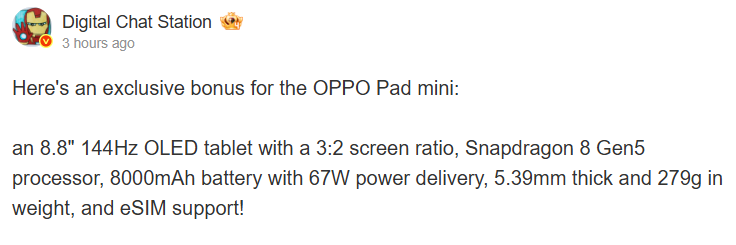
The latest info comes from @DigitalChatStation on Weibo, who shared a set of key details earlier today. According to the leak, the tablet will feature an 8.8-inch OLED display with a 3:2 aspect ratio, which is a bit different from the usual media-focused layouts. It should make more sense for reading and general use.
The panel itself sounds quite strong. It’s said to have a 2880×1920 resolution, along with a 144Hz refresh rate that can scale down to 1Hz thanks to LTPO tech. Peak brightness is reportedly 1800 nits, and it covers the full DCI-P3 color gamut, so on paper at least, it’s aiming for a premium display experience.
Performance is expected to come from Qualcomm’s Snapdragon 8 Gen 5, which would put it in flagship territory. The design seems to be another highlight. The tablet is tipped to use a unibody metal build, measuring around 5.39mm thick and weighing about 279 grams. That’s quite thin and light, even for a compact tablet. Color options are said to include dark gray, purple, and cyan. Lenovo’s 8.8-inch Legion Tab Gen 5, for instance, weighs 360 grams.
On the back of the Oppo Pad Mini, there’s a 13MP camera in a capsule-style module. Not a major focus, but standard for tablets.
Battery capacity is listed at 8000mAh, with support for 67W fast charging. There’s also mention of eSIM support, which could make it more useful as a standalone device without relying on Wi-Fi. Based on what’s out so far, Oppo seems to be aiming for something more than just a “mini” in name.
If the leaks hold up, this could end up being one of the more interesting compact Android tablets to watch this year.
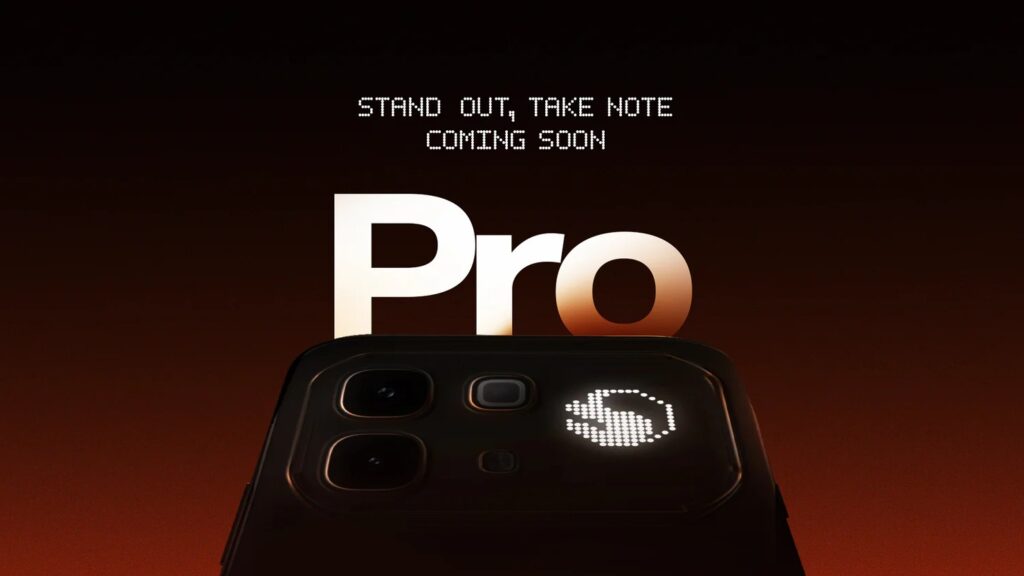
Infinix looks set to bring the Note 60 Pro to India soon, and it’s already starting to tease some of the phone’s more unusual features. The device was announced globally earlier this year.
The company has begun its local campaign by highlighting what it calls the Active Matrix Display on the back. It’s essentially a set of LEDs built into the camera module, somewhat similar in concept to Nothing’s Glyph interface. It can show notifications, battery status, incoming calls, and even simple animations without needing to flip the phone. It’s more of a visual feature than a practical one, but it does help the phone stand out a bit.
Infinix has also confirmed that another feature will be revealed on April 4 at 12 PM, though most of the core specs are already out there from the global launch.
Up front, the phone uses a 6.78-inch AMOLED display with a 1.5K resolution and a 144Hz refresh rate. Local peak brightness is claimed to be 4,500 nits, which sounds impressive, though global peak or full-screen brightness will matter more for outdoor visibility.
Performance is handled by the Snapdragon 7s Gen 4, paired with 8GB or 12GB of RAM and 256GB storage. That should be enough for everyday tasks like browsing, social media, and some casual gaming.
The camera setup includes a 50MP main sensor with OIS, along with an 8MP ultrawide. On the front, there’s a 13MP camera for selfies and video calls.
Battery is one of the stronger points of this phone. It packs a 6,500mAh cell, with support for 90W wired charging and 30W wireless charging, along with reverse charging options. It runs Android 16 with XOS 16, and carries an IP64 rating for basic dust and splash resistance.
Reports point to a mid-April timeline in India, with April 13 being mentioned in a few listings. Pricing hasn’t been confirmed yet, but more details should show up as the teasers continue.
Overall, the Note 60 Pro doesn’t look radically different on paper, but the rear LED system and large battery could give it a bit of an edge in a crowded mid-range market.
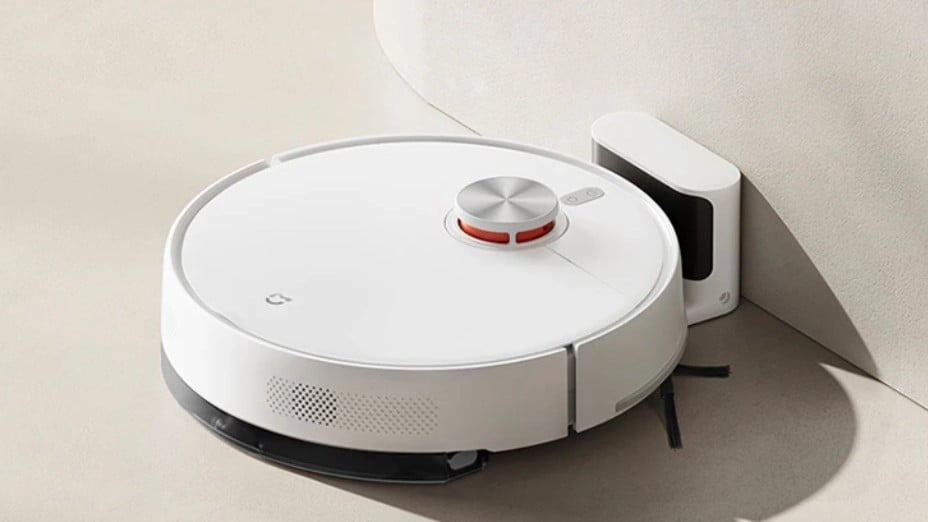
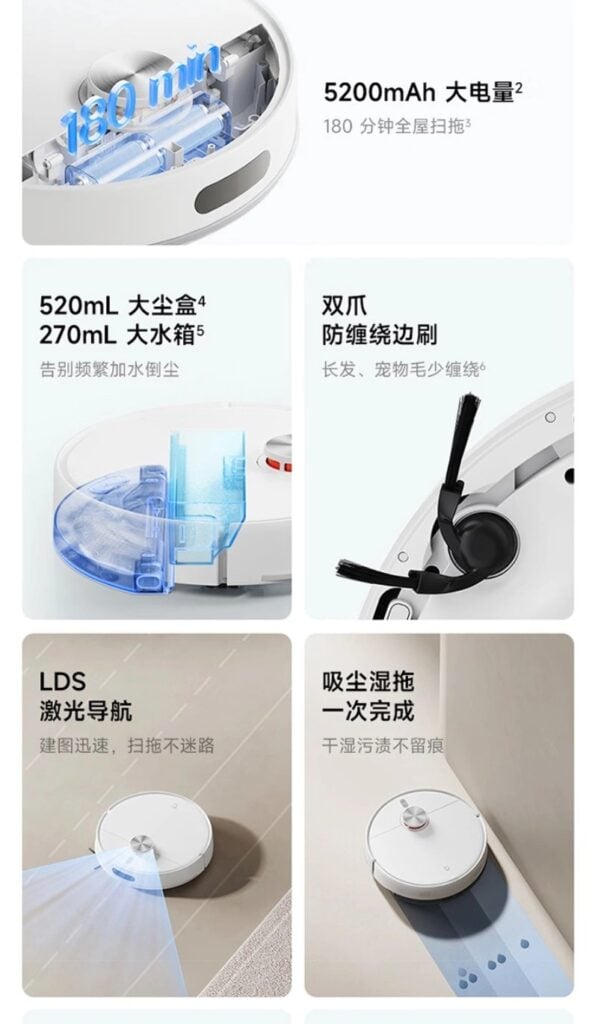
Xiaomi is adding another option to its Mijia robot vacuum lineup, with a model that focuses on strong suction without pushing the price too high. The new Mijia Robot Vacuum and Mop 4 has now been listed in China.
One of the headline features here is the 10,000Pa suction power, which puts it in the higher range for robot vacuums at this price point. Average suction power for modern robot vacuum mops typically ranges between 2,500 Pa and 6,000 Pa. 10,000Pa should be more than enough for everyday dust, pet hair, and even slightly heavier debris
Xiaomi is also sticking with LDS laser navigation, which helps the robot map out rooms and move in a more structured way rather than randomly bouncing around.
The design remains familiar: simple, white, and minimal. For cleaning, there’s a dual-claw anti-tangle brush setup, aimed at reducing hair buildup, especially useful in homes with pets.
It’s a 2-in-1 unit, so it can vacuum and mop at the same time. The dustbin is rated at 520ml, while the water tank comes in at 270ml. Xiaomi says it can cover up to 300 square meters in open areas, though real-world usage will likely vary depending on layout.
There are a few practical touches as well. The robot can climb thresholds up to 20mm, which should help it move between rooms more easily. It runs on a 5,200mAh battery, with a claimed runtime of up to 180 minutes.
Nothing here feels overly experimental, but that’s not really the goal. Xiaomi seems to be focusing on getting the basics right: strong suction, decent navigation, and usable battery life.
Pricing and availability:
The device is priced at 1,443 yuan (roughly $200), and in some regions, subsidies can even bring it down to around 1,299 yuan. Sales are set to begin on April 7.
For users looking for a simple, capable robot vacuum without spending too much, this one could be worth a look once it goes on sale.
OxygenOS has published its March 2026 FAQ update, listing known issues, feature changes, and rollout details based on user feedback.
One issue reported by users is the Gboard keyboard overlapping with the navigation bar. The company said this is caused by a third-party app. The issue has been reported to the relevant team, and a fix will be released in a future update.
Another question relates to downgrade packages not working on some devices. The company confirmed that the affected downgrade versions have known stability issues that may cause system malfunctions. Because of this, downgrade to these versions is currently not supported.
Some users also reported that their devices are not turning on. The company said this issue is under investigation. Users facing this problem are advised to visit an authorized service center for assistance while a fix is being worked on.
The update also introduces a new feature called “Automatically open received files.” This lets users choose whether files received through file transfer should open automatically. The setting can be found under Settings > Device Connect > Share with iPhone or PC > Automatically open received files.
Another addition allows users to run multiple timers at the same time. This can be done by going to Clock > Timer, starting a timer using the play icon, and then adding more timers.
The company also shared rollout details for the B50P01 version. The rollout started on March 16, 2026 and is expected to be completed by March 31, 2026. This version includes the new file opening feature, support for multiple timers, and general improvements focused on usability and system stability.
For more daily updates, please visit our News Section.
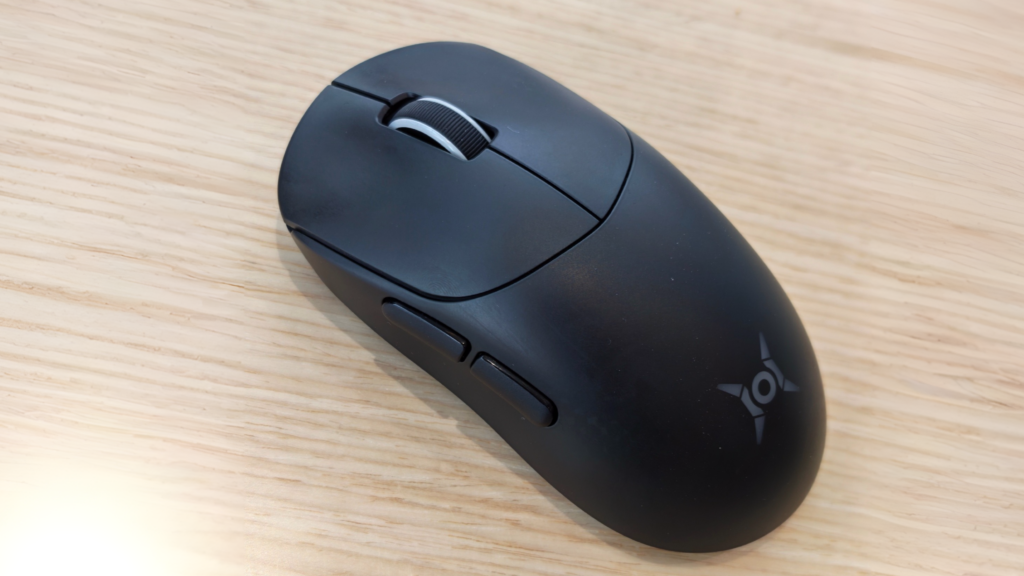
Honor is slowly building out its WIN gaming ecosystem, and it’s not stopping at laptops. Ahead of its upcoming gaming laptop launch in April, the company has now teased a new wireless gaming mouse that seems clearly aimed at competitive players.
The first look comes from Lin Lin, Minister of Smart Life Business at Honor China, who shared images of the device on Weibo. He described it as “GPW like +1,” which is an obvious reference to Logitech’s G Pro Wireless, a mouse that’s already pretty popular in esports circles. The wording suggests Honor is going for a similar formula, but with some tweaks.
Design-wise, the mouse sticks to a safe, familiar shape. It’s symmetrical and fairly minimal. There are two side buttons on the left, and the Honor WIN branding sits toward the rear. Nothing flashy here, which is probably intentional.
The more interesting part is the sensor. Honor is using the PAW3395, which is already found in a lot of high-end wireless mice. It supports up to 26,000 DPI, along with 650 IPS tracking speed and 50G acceleration. The polling rate goes up to 4,000Hz, and with the right receiver, it could potentially go higher. For fast-paced games, that kind of responsiveness does matter.
What’s still unclear is where the “+1” comes in. It could be better battery life, lower weight, or maybe improved switches, but Honor hasn’t shared those details yet. For now, it seems like the company is focusing on getting the fundamentals right first.
This launch also lines up with the Honor WIN gaming laptop expected in April, so it looks like Honor is trying to build a more complete gaming lineup rather than just releasing standalone products.
There’s still quite a bit we don’t know: pricing, weight, battery performance. However, the early details suggest this won’t be an entry-level accessory. If anything, it’s shaping up to compete somewhere in the mid-to-high-end range, which could make things interesting if Honor manages to price it aggressively.
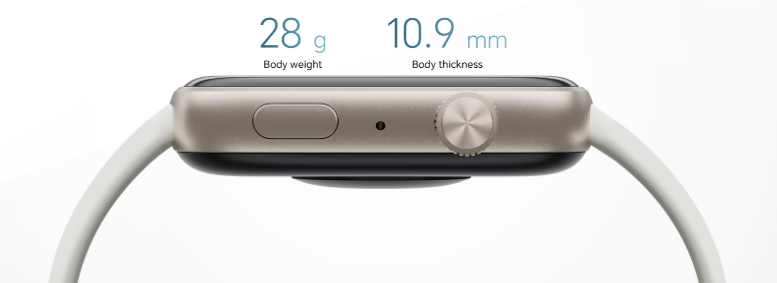
Honor has quietly introduced a new budget smartwatch, and it’s clearly going after a very specific audience. The Watch X5i keeps things simple, keeps things cheap, and leans a lot on design.
At first glance, it looks very familiar. The rectangular shape, curved edges, overall layout, it’s hard not to think of the Apple Watch. But under the surface, this is a much more basic device.
Instead of a full smartwatch platform, the X5i runs on a lightweight RTOS, which means fewer apps and less complexity. That trade-off, though, helps quite a bit with battery life. Honor is claiming up to three weeks on a single charge in typical use, or around six days with always-on display enabled, which is honestly where this kind of watch makes more sense.
The display itself is an AMOLED panel with a 450 x 390 resolution and a 60Hz refresh rate. Nothing cutting-edge, but more than fine for notifications and basic use. There are also over 180 watch faces, so at least there’s some room for customization.
On the health side, it covers the usual basics. Heart rate tracking, SpO2, stress monitoring, plus sleep tracking and menstrual cycle tracking. There are also 109 sports modes to accompany users through their workouts and track progress. It sounds like a lot, though in practice most people will probably stick to a handful.
One slightly unexpected addition is two-way Bluetooth calling support. The watch includes a speaker and microphone, so you can take calls directly from your wrist when it’s connected to your phone, and even make calls when it’s more convenient than reaching for your phone.
Build-wise, it’s fairly lightweight, with a plastic body and IP68 rating for dust and water resistance. That should be fine for everyday use, but it’s not really meant for swimming or anything beyond light exposure.
The Watch X5i works with both Android and iOS, which helps widen its appeal a bit.
At 229 yuan (roughly $33), it’s clearly not trying to compete with premium smartwatches. It’s more about offering the basics in a design that looks more expensive than it is. And for that kind of price, the battery life alone might be enough for a lot of people.
No word yet on when it might launch outside China, but it wouldn’t be surprising to see it show up in more markets soon.
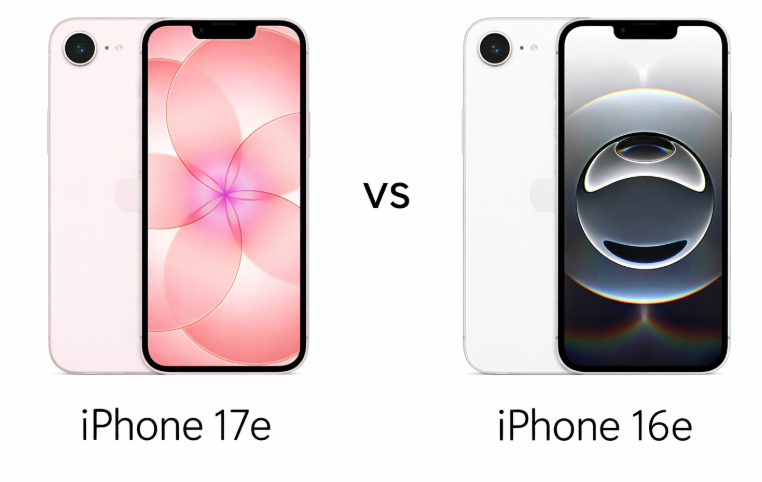
A new “e” generation from Apple usually signals refinement rather than reinvention, and that’s exactly what makes this comparison interesting. The iPhone 17e arrives with subtle but meaningful upgrades over the iPhone 16e, focusing on performance, durability, and everyday convenience rather than dramatic changes. On paper, both phones look nearly identical, but the real story lies in the small improvements that shape long-term usage. This comparison breaks down whether those upgrades actually matter, or if the older model still holds its ground.
The iPhone 17e doesn’t reinvent the design but focuses on refinement. The biggest upgrade is the shift to Ceramic Shield 2, which improves scratch resistance and durability over the older Ceramic Shield on the iPhone 16e. Everything else remains largely unchanged, same premium glass-aluminum build and IP68 rating, but the 17e feels like a more polished, slightly tougher evolution rather than a redesign. It’s a subtle upgrade that matters more over long-term use than on day one.
Display Quality
On paper, there’s almost no change. Both devices carry the same OLED panel, resolution, and brightness levels. The only real upgrade is the improved anti-reflective coating on the 17e, which helps reduce glare slightly in outdoor conditions. It’s not a dramatic shift, but side-by-side, the newer model can feel a bit cleaner and easier to view under harsh lighting.
Verdict
Minimal visual upgrades, but the durability improvements and subtle display refinement give the iPhone 17e a small but meaningful edge.
2. Specifications Including Battery
Performance
This is where the biggest upgrade happens. The iPhone 17e moves to the A19 chip, improving both raw performance and efficiency over the A18 in the iPhone 16e. While everyday usage feels similar, the gains show up in sustained performance, gaming, and future iOS updates. The jump isn’t revolutionary, but it’s the kind of upgrade that keeps the phone feeling fast for longer.
Battery and Charging
Battery capacity remains unchanged, so endurance is nearly identical. The real upgrade is in wireless charging, 15W MagSafe/Qi2 on the 17e versus 7.5W on the 16e. This effectively doubles wireless charging speed, making a noticeable difference in daily convenience. Wired charging stays the same, so the focus here is clearly on improving the wireless experience.
Verdict
The iPhone 17e clearly wins with a newer chip and significantly improved wireless charging, practical upgrades that enhance long-term usability.
3. Camera
Main and Secondary Lenses
There’s no hardware change in the main camera, as both use the same 48 MP sensor. The upgrade comes from processing. The iPhone 17e benefits from the A19 chip’s improved image pipeline, delivering slightly better HDR balance, more consistent colors, and improved detail in complex scenes. It’s not instantly obvious, but repeated shots show better reliability.
Selfie Camera
Again, hardware stays the same, but processing improves. The 17e handles Dolby Vision HDR more consistently and produces slightly cleaner skin tones in both photos and videos. The difference feels more noticeable in video recording than in still shots.
Verdict
No major camera hardware upgrades, but smarter processing gives the iPhone 17e a slight edge in real-world results.
4. Pricing
The iPhone 17e comes in at around $600 (₹65,000), while the iPhone 16e sits closer to ₹60,000 depending on deals. The price increase is relatively small, especially considering this is a generational update.
Is the Price Justified?
The upgrades in the 17e are focused rather than flashy, with better durability, improved performance, and faster wireless charging. These aren’t headline-grabbing changes, but they improve the experience over time. The 16e still delivers nearly the same core experience, making it feel like a value-focused option, especially if priced lower through discounts.
Verdict
The 16e is the better short-term value, but the 17e justifies its price with practical, longevity-focused upgrades.
Disclaimer: Prices are approximate and may vary based on country, region, and applicable taxes.
5. Conclusion
The iPhone 17e stands out by refining key areas rather than changing everything. The A19 chip, Ceramic Shield 2, and faster wireless charging are the main upgrades, all aimed at improving durability, efficiency, and daily convenience. The iPhone 16e, however, remains almost identical in core experience, which highlights how incremental this generation really is.
Verdict
The iPhone 17e is a classic “refinement upgrade”, not essential for 16e users, but clearly the better choice for new buyers. The improvements may seem small individually, but together they create a more future-proof and polished device.
Upgrade Summary:
Major Upgrades: Chipset (A19), Wireless Charging
Minor Upgrades: Durability, Camera processing, Display coating
No Change: Display panel, battery, core camera hardware
Disclaimer: This comparison is based on the specifications provided and is intended for general informational purposes. Actual performance, camera results, battery life, and overall experience may vary depending on real-world usage, software updates, and individual preferences.
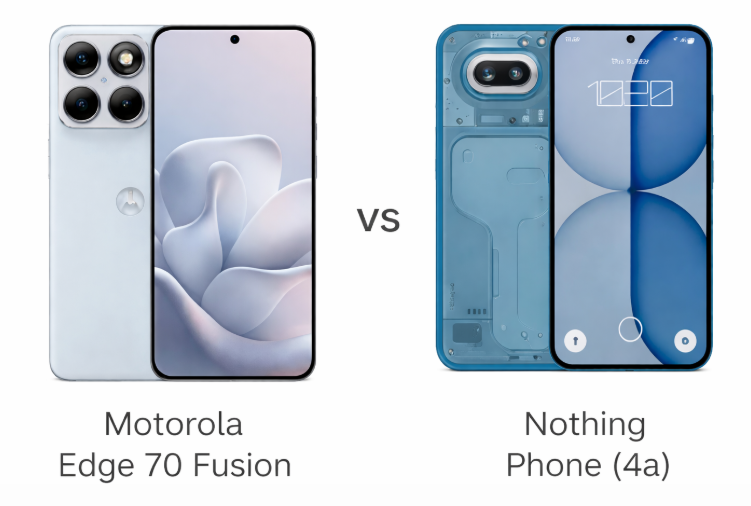
Motorola Edge 70 Fusion and Nothing Phone (4a) target the same mid-range space but take completely different approaches. One leans toward durability and value, while the other focuses on design and innovation. This comparison breaks down which device actually delivers a better everyday experience for different types of users.
The Motorola Edge 70 Fusion focuses on durability with IP68/IP69 protection and a tough, practical build that feels more “ready-for-anything.” It leans toward reliability over flair. Meanwhile, the Nothing Phone (4a) stands out instantly with its transparent back and Glyph lighting system, offering a more expressive and modern aesthetic. It feels more lifestyle-oriented, while Motorola feels more functional and rugged.
Display Quality
Motorola pushes ahead with a 144Hz AMOLED panel and an extremely high peak brightness, making it excellent for outdoor visibility and ultra-smooth scrolling. Nothing counters with a 120Hz AMOLED display featuring better PWM dimming and HDR tuning, which can feel easier on the eyes during long usage. While Motorola is technically brighter and faster, Nothing’s display feels more balanced and refined for daily comfort.
Verdict
Motorola wins for durability and raw display brightness, but Nothing offers a more distinctive design and eye-friendly screen. Choice depends on whether practicality or personality matters more.
2. Specifications Including Battery
Performance
Both phones run on Snapdragon 7s-series chips, but the Nothing Phone (4a) uses the newer Snapdragon 7s Gen 4 globally, giving it a slight edge in efficiency and sustained performance. The Motorola Edge 70 Fusion varies by region, which makes its performance slightly less consistent. In real-world use, Nothing feels a bit more stable during heavy multitasking and gaming sessions.
Battery and Charging
Motorola clearly dominates battery flexibility with options going up to a massive 7000mAh, paired with fast 68W charging. It is built for endurance users who prioritize longevity. Nothing, however, delivers a more balanced setup with around 5400mAh and 50W charging, plus reverse wired charging, adding convenience. Motorola lasts longer, but Nothing feels more versatile.
Verdict
Motorola is the better pick for battery life and fast charging, while Nothing edges ahead in consistent performance and practical charging features.
3. Camera
Main and Secondary Lenses
Nothing Phone (4a) takes a clear lead with a versatile triple-camera setup, including a periscope telephoto lens with 3.5x optical zoom. This adds real flagship-like flexibility for portraits and zoom shots. Motorola sticks to a simpler dual-camera system, delivering solid primary shots but lacking depth in versatility. Nothing’s camera system feels more complete and creative.
Selfie Camera
Both phones feature 32MP selfie cameras, but Motorola allows 4K video recording, giving it an advantage for content creators. Nothing limits selfie video to 1080p, but it maintains good color consistency and HDR.
Verdict
Nothing wins overall due to its telephoto lens and advanced video features like Dolby Vision. Motorola is reliable, but Nothing clearly offers more creative freedom.
4. Pricing
The Motorola Edge 70 Fusion is priced at around ₹27,000 ($250), while the Nothing Phone (4a) sits higher at approximately ₹32,000 ($450). This creates a noticeable gap, positioning Motorola as a value-focused option and Nothing as a mid-premium offering.
Is the Price Justified
Motorola delivers exceptional value with strong durability, a brighter display, and huge battery options at a lower price. It feels like a practical deal for users who want maximum hardware for less money. Nothing justifies its higher price with better cameras, a refined software experience, and a unique design that stands out in a crowded market.
Verdict
Motorola offers better value for money, while Nothing justifies its premium with features that feel more polished and distinctive.
Disclaimer: Prices are approximate and may vary based on country, region, and applicable taxes.
5. Conclusion
Motorola Edge 70 Fusion stands out with its rugged durability, brighter 144Hz display, and massive battery options, making it ideal for heavy users and long-term reliability. Nothing Phone (4a), on the other hand, shines with its Glyph interface, periscope camera, and cleaner Nothing OS experience, offering a more premium and modern smartphone feel.
Verdict
Motorola is the smarter buy for budget-conscious users who want durability and battery life. Nothing is a better choice for those who value design, camera versatility, and a more refined overall experience.
Final Winner: Motorola Edge 70 Fusion – Best for value, battery, and durability Alternative Pick: Nothing Phone (4a) – Better for camera, design, and UI
Disclaimer: This comparison is based on the specifications provided and is intended for general informational purposes. Actual performance, camera results, battery life, and overall experience may vary depending on real-world usage, software updates, and individual preferences.
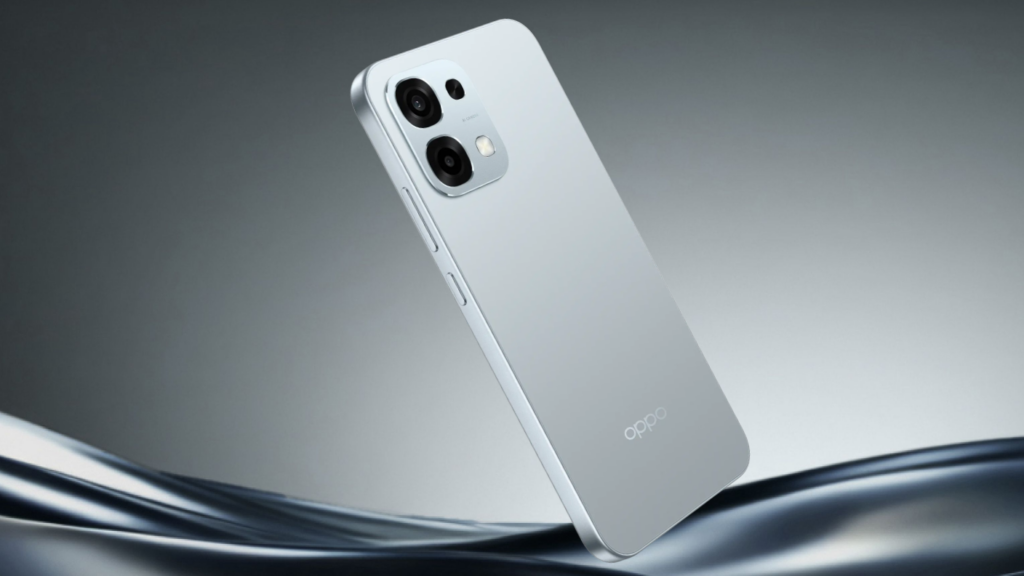
Oppo seems to be getting ready to refresh its F-series in India again. This time with the F33 and F33 Pro, which, according to a recent report from 91mobiles, could show up in the third week of April.
The Oppo F31 series from last year came with 7,000mAh batteries and 80W charging, which is still on the higher side for this segment. They were also certified with IP66, IP68, and IP69 ratings for ingress protection. Oppo was clearly targeting people who just want a phone that lasts and doesn’t need to be handled too carefully.
The rest of the specs were fairly standard. AMOLED displays, mid-range chips, and a 50MP main camera with OIS. Nothing particularly flashy, but that wasn’t really the point.
With the F33 and F33 Pro, it looks like Oppo will stick to the same idea. Probably some upgrades, newer chips, larger batteries, and maybe a few improvements to the camera. But it doesn’t seem like a major shift. Also not clear yet if a Pro+ variant is part of the plan this time.
Pricing is expected to fall somewhere between ₹25,000 and ₹35,000, which is where things get a bit tricky. That segment is already packed, with options from Motorola, Redmi, and Nothing all doing different things.
Still, Oppo’s angle here is slightly different. It’s not really trying to win on specs alone. It’s more about offering something reliable, something that lasts a bit longer.
Launch is only a few weeks away, so more details should come out soon. Right now, it just looks like a continuation of what Oppo has been doing, with a few updates on top.
A few weeks ago, Samsung unveiled the Galaxy S26 trio, which includes the S26, S26+, and S26 Ultra. At present, there is no clarity on whether there will be a successor to the Galaxy S25 Edge this year, but it appears that the brand could be working on the Galaxy S26 FE. The said device has seemingly appeared on the Geekbench benchmarking platform, hinting at its development.
A device believed to be the Galaxy S26 FE, carrying the model number SM-S741, has appeared on Geekbench. The listing indicates a deca-core processor configuration with clock speeds reaching up to 3.30GHz, supported by multiple performance and efficiency cores. Details from the source code also point towards the presence of the Xclipse 950 GPU, suggesting that the phone could be powered by Samsung’s Exynos 2500 chipset.
The benchmark entry further reveals that the device is running Android 17 and is paired with around 8GB of RAM. In terms of scores, it has recorded a single-core result of 2,426 and a multi-core score of 8,004, showing a noticeable improvement over the previous generation, especially in multi-core performance.
The appearance of Android 17 on the test unit suggests that the Galaxy S26 FE could be among the early devices to launch with the next version of Android out of the box. At the same time, the use of the Exynos 2500 aligns with Samsung’s approach of positioning the FE model slightly below its flagship counterparts in terms of raw performance.
Earlier expectations hinted at a possible shift to a newer chipset, but this listing indicates that Samsung may continue with a more balanced hardware strategy. It is also worth noting that benchmark results can vary depending on software versions, and this test was conducted on an older Geekbench build, which may influence the scores.
For more daily updates, please visit our News Section.
Vivo has started teasing its next T series smartphone for India, the Vivo T5 Pro 5G, hinting at a launch in the coming days. While the exact date is still under wraps, early details have surfaced through official teasers and reports, giving a fair idea of what to expect.
Vivo T5 Pro Flipkart listing confirms key highlights
The ultimate powerhouse.. Loading…. vivo T5 Pro coming soon. Search now on Flipkart to know more. pic.twitter.com/ZnE3q1zzSL
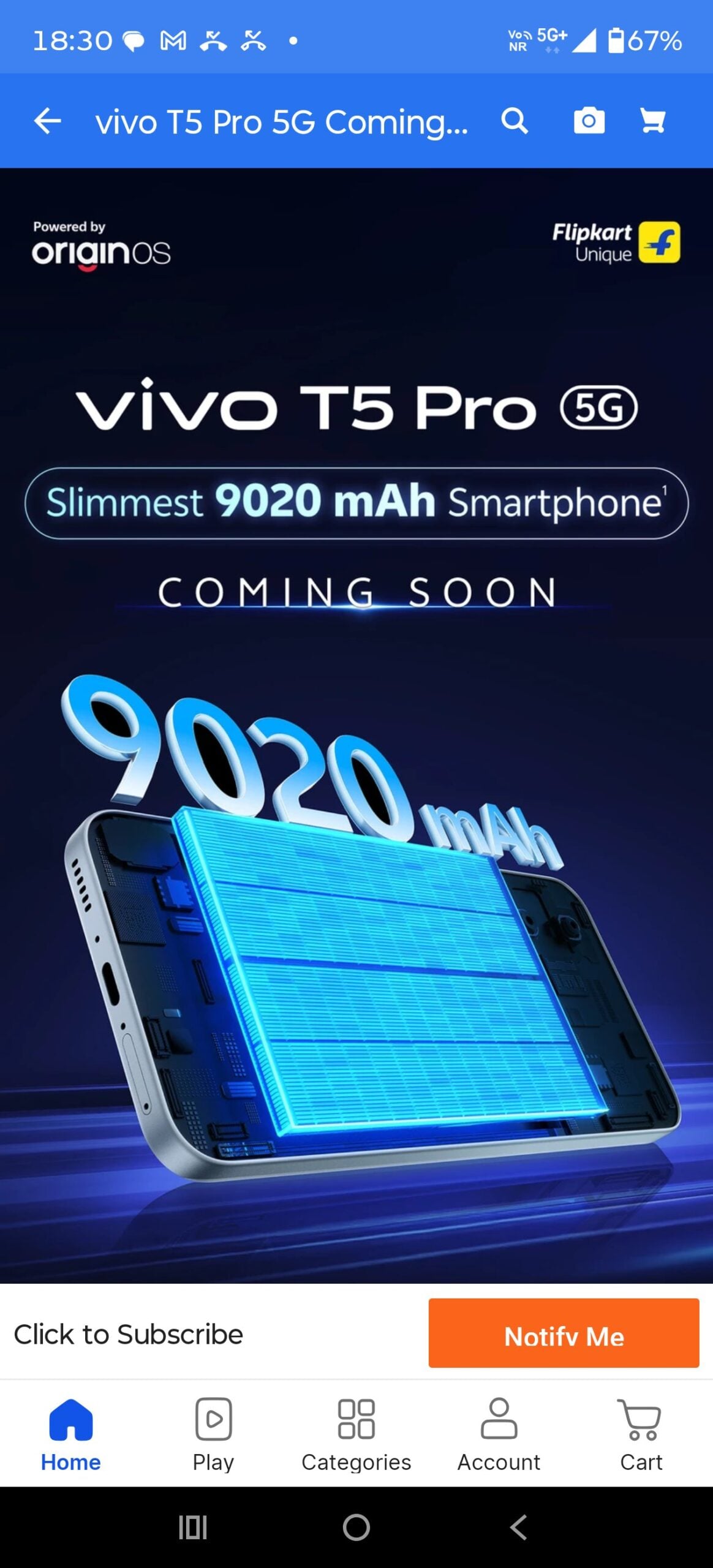
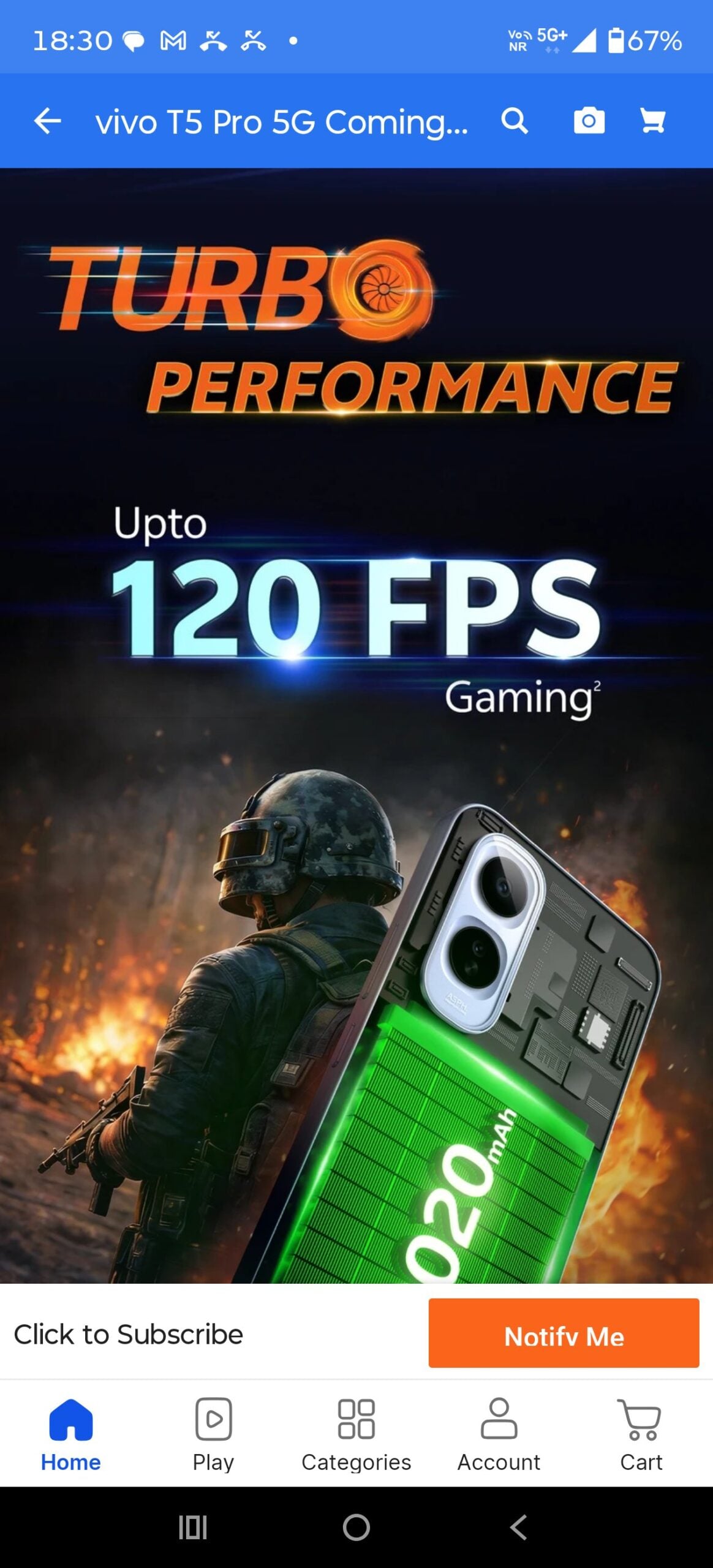
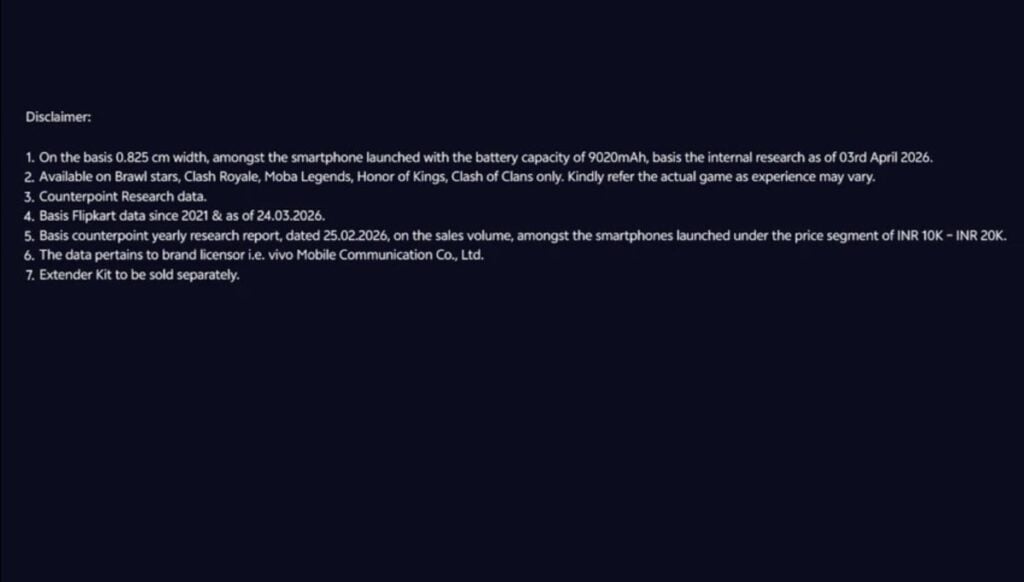
The Vivo T5 Pro 5G has appeared on Flipkart via a dedicated microsite, confirming its availability on the platform once it launches. The teaser highlights a large 9,020mAh battery, with Vivo claiming it could be the slimmest phone in its segment to carry such a capacity. The device is also expected to support up to 120FPS gaming, indicating a focus on performance alongside endurance.
In terms of design, the phone is shown with a dual rear camera setup placed in a pill-shaped module. The button placement appears slightly different, with the power and volume keys positioned on the left side, while the right side remains clean. At the bottom, it includes a USB Type-C port, speaker grille, and SIM tray.
The fine print of the Flipkart listing reveals that it will be priced between Rs 10,000 and Rs 20,000. It also mentions an extender kit that will be sold separately, which could be a game-changer in this segment, as phones under Rs 20,000 rarely offer expandable or accessory-based camera enhancements. If this builds on the idea seen with the Vivo T4 Pro’s periscope-style zoom approach, it could bring more versatile photography to a price range that typically sticks to basic camera hardware.
The handset is tipped to feature a 6.8-inch AMOLED display with 1.5K resolution and a 144Hz refresh rate. It could be powered by the Snapdragon 7s Gen 4 chipset and may run on Android 16-based OriginOS 6. Fast charging support of up to 90W is also expected, along with IP68 and IP69 ratings for dust and water resistance.
For more daily updates, please visit our News Section.
Xiaomi’s next flagship lineup, likely called the Xiaomi 18 series, has started appearing in leaks ahead of its expected September 2026 debut. Early details suggest that the brand is sticking with a familiar design direction while adding deeper AI-driven enhancements to the experience.
Xiaomi 18 Pro series: Rear display to be more powerful than before
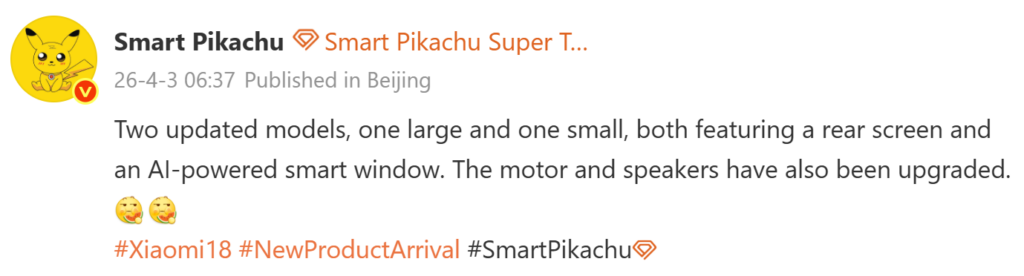
According to tipster Smart Pikachu, the Xiaomi 18 Pro and Xiaomi 18 Pro Max are expected to continue with the rear display concept seen in the previous generation. This secondary screen is said to evolve into an AI-powered smart window, enabling more dynamic and context-aware interactions instead of functioning as a simple auxiliary display.
The tipster has also indicated that the Xiaomi 18 series is likely to be unveiled in September, aligning with Xiaomi’s typical flagship launch cycle. Earlier statements from company leadership had already confirmed continued investment in rear display technology, with a focus on improving usability through frequent feature updates.
Existing features such as live translation, video teleprompter tools, and interactive elements are expected to be further refined with stronger AI integration, making the rear panel a more functional part of the device.
On the imaging side, the Pro model is reportedly being tested with a dual 200-megapixel camera setup, covering both the main and telephoto sensors. This could significantly enhance light capture and detail, particularly for zoom photography. Meanwhile, the standard Xiaomi 18 is expected to introduce a periscope telephoto camera, marking a notable upgrade for the base variant.
Performance improvements are also anticipated across the lineup. The Xiaomi 18 series is expected to debut with the Snapdragon 8 Elite Gen 6 chipset, built on a 2nm process. The Pro and Pro Max versions could feature a more powerful variant of the same chip, along with upgrades to haptics and speaker quality.
In addition, Xiaomi is reportedly testing external optical accessories such as magnetic lenses and clip-on zoom modules, which may further expand the camera capabilities beyond the built-in hardware.
For more daily updates, please visit our News Section.
We use cookies on our website to give you the most relevant experience by remembering your preferences and repeat visits. By clicking “Accept”, you consent to the use of ALL the cookies.
This website uses cookies to improve your experience while you navigate through the website. Out of these, the cookies that are categorized as necessary are stored on your browser as they are essential for the working of basic functionalities of the website. We also use third-party cookies that help us analyze and understand how you use this website. These cookies will be stored in your browser only with your consent. You also have the option to opt-out of these cookies. But opting out of some of these cookies may affect your browsing experience.
Necessary cookies are absolutely essential for the website to function properly. This category only includes cookies that ensures basic functionalities and security features of the website. These cookies do not store any personal information.
Any cookies that may not be particularly necessary for the website to function and is used specifically to collect user personal data via analytics, ads, other embedded contents are termed as non-necessary cookies. It is mandatory to procure user consent prior to running these cookies on your website.