Advertisement

KTC launches Master 27M1 Plus: 27-inch 2K 400Hz Ultra Fast IPS gaming monitor

KTC has launched a new 27-inch gaming monitor called the Master 27M1 Plus, targeting competitive gamers with high refresh rate demands. The monitor is listed on JD.com at a starting price of 2499 yuan ($353), with sales beginning on December 11.

KTC Master 27M1 Plus

KTC Master 27M1 Plus Specifications

The Master 27M1 Plus features a 2K (2560×1440) Ultra Fast IPS panel with a native 360Hz refresh rate. KTC includes an overclocking mode that pushes the refresh rate up to 400Hz. The monitor supports a 1ms GtG response time with OverDrive enabled. It also supports Adaptive Sync to keep gameplay smooth and prevent tearing.

The display supports 99% sRGB and 96% DCI-P3 color coverage and includes factory calibration with Delta E < 2 for color accuracy. It supports HDR400 and offers a peak brightness of 400 nits. KTC equips the panel with DC dimming and hardware-level low blue light features to reduce visual fatigue.

The monitor includes a five-level OverDrive system that lets users fine-tune motion clarity. KTC adds dedicated presets for console play, casual gaming, and competitive FPS scenarios. Its six-axis color calibration system allows precise control over red, green, blue, cyan, magenta, and yellow channels. There is also a dark enhancement feature that improves visibility in low-light scenes without affecting bright areas.

KTC Master 27M1 Plus

The Master 27M1 Plus comes with a fully adjustable stand that supports height, tilt, swivel, and rotation. The display tilts from -5° to +35° and supports portrait orientation. It includes a foldable headphone hook and a precision angle scale. KTC ships the monitor with anti-glare side shields that help reduce reflections in bright environments.

In terms of connectivity, the monitor includes two HDMI 2.1 ports and two DisplayPort 1.4 ports, each capable of supporting 1440p at 400Hz. It also features a 3.5mm headphone jack, a USB 2.0 port, and a Mini USB port. The unit weighs 5.7kg and consumes less than 90 watts during normal use. KTC offers a three-year warranty with the product.

In related news, MSI has launched the MAG 274QP X24 gaming monitor recently with a 2K 240Hz QD OLED panel priced at $499.99, and ViewSonic has debuted the XG323B 4K OLED with a dual mode setup that delivers 165Hz at 4K and 330Hz at Full HD.

For more daily updates, please visit our News Section.

Stay ahead in tech! Join our Telegram community and sign up for our daily newsletter of top stories! 💡

(JD)

Huawei Mate X7 vs Honor Magic V5: The Winner May Surprise You

Huawei Mate X7 and Honor Magic V5 represent two distinct approaches to premium foldable smartphones, making this comparison essential for buyers choosing between durability-focused design and performance-driven innovation. These devices appeal to users seeking a powerful flagship experience with multitasking flexibility, advanced cameras, and long-term usability. Comparing them matters because each model targets a different type of premium user, those prioritizing rugged reliability versus those wanting cutting-edge productivity features, and the right choice depends on which strengths align better with individual needs.

1. Design and Display

Build and Feel

Both foldables bring premium craftsmanship but differ in their design philosophy. The Mate X7 emphasizes durability by using tougher materials and stronger water resistance, giving it an aura of long-term reliability. The Magic V5 feels lighter and more agile in daily use, which makes it appealing for users who prioritize convenience and productivity. Stylus support on the V5 further enhances its versatility, creating a more flexible workflow for professionals and creators. Both hinges feel refined, though the Mate X7 leans toward a sturdier, confidence-inspiring feel.

Display Quality

The Mate X7 delivers excellent color accuracy and supports HDR Vivid, offering a cinema-like viewing experience. Its cover display brightness also helps with comfortable outdoor use. The Magic V5 counters with extremely high peak brightness on both screens, making it one of the most visible foldables in sunlight. Its reinforced inner display protection adds durability for stylus-driven tasks, giving it a slight edge for productivity users.

Verdict

Mate X7 suits users who prioritize durability and premium media quality, while Magic V5 excels for productivity, stylus workflow, and outdoor brightness.

2. Specifications 

Performance

Honor Magic V5 takes a clear lead thanks to the Snapdragon 8 Elite chipset, offering exceptional CPU and GPU power for gaming, editing, and sustained multitasking. Its performance feels more consistent across demanding apps and future software updates. The Mate X7’s Kirin 9030 Pro is well-optimized for HarmonyOS and handles daily tasks smoothly, but it doesn’t match the raw strength of Qualcomm’s flagship silicon. Honor’s extended software support further boosts its longevity, making it a smarter choice for users who value long-term performance stability.

Battery and Charging

Magic V5 features a larger battery in most regions, giving it better endurance during mixed-use days. Both phones offer fast wired and wireless charging, but Honor typically achieves slightly stronger real-world efficiency. The Mate X7 remains dependable, especially for balanced workloads, though users who multitask heavily may notice Honor’s endurance advantage.

Verdict

Magic V5 dominates in raw speed and long-lasting power, while Mate X7 offers stable HarmonyOS efficiency but not the same performance ceiling.

3. Camera

Main and Secondary Lenses

Huawei leans heavily into imaging, offering a variable aperture main camera and advanced periscope capabilities. These allow the Mate X7 to handle difficult lighting transitions more naturally, making it ideal for detailed photography. Higher-tier models even include a larger sensor, which improves depth and low-light clarity. The Magic V5 brings a sharp 64MP telephoto lens and strong stabilization, delivering crisp results with reliable exposure control. It performs impressively for everyday shooting but lacks some of Huawei’s high-end optical flexibility.

Selfie Camera

Honor’s 20MP cameras on both the main and cover screens provide sharper selfies and smoother video call quality. Huawei’s selfie system is more conservative and offers natural-looking tones but lower detail in comparison.

Verdict

Mate X7 is the better pick for serious photography enthusiasts, while Magic V5 wins for sharper selfies and consistent day-to-day shooting results.

4. Pricing

Huawei Mate X7 is priced at around $1800 / ₹1.5 lakh, placing it in the upper premium bracket. Its cost reflects its stronger durability, advanced optics, and premium build quality, ideal for users who prioritize longevity and superior photography. Honor Magic V5, at around $1500 / ₹1.3 lakh, offers a more value-focused flagship foldable experience while still delivering top-tier performance, ultra-bright displays, and long-term software support. 

The price gap feels significant: Honor provides better performance per dollar, whereas Huawei offers a more photography-driven and durability-focused package.

Disclaimer:
Prices are approximate and may vary based on country, region, and applicable taxes.

5. Conclusion

The Mate X7 stands out with top-tier durability ratings, variable aperture optics, and satellite messaging (regional), making it a strong choice for travelers and photography enthusiasts. The Magic V5 brings stylus support, a cutting-edge Snapdragon platform, ultra-bright displays, and extended Android upgrade policies, appealing to users who want productivity, speed, and longevity. Each device targets a different type of premium buyer, which makes the comparison meaningful.

Verdict

Choose the Mate X7 for unmatched durability and advanced imaging. Choose the Magic V5 for superior performance, productivity features, and better overall value.

Read More:

Samsung’s first magnetic wireless battery pack for Galaxy S26 series certified

Samsung may have just tipped its hand on a big change coming to the Galaxy S26 series. A brand-new magnetic wireless power bank has popped up in the Wireless Power Consortium database, complete with a Qi2 certification and a familiar magnet ring on the back. It’s Samsung’s first power bank designed to snap right onto a phone — suggesting that the company is finally ready to embrace magnetic wireless charging.

The accessory, model number EB-U2500, is labeled as the “Samsung Magnetic Wireless Battery Pack.” The listing shows a clean light-gray design and the standard circular magnet layout that aligns with Qi2 chargers. It supports up to 15W wireless output — not blazing fast, but right in line with today’s Qi2 ecosystem. Rumors suggest the Galaxy S26 Ultra could support faster 25W wireless charging, which might make this power bank a little less enticing for Ultra buyers. The standard S26 and S26+, however, would slot in perfectly with its 15W Qi2 speeds.

Samsung phones still don’t have built-in magnets. If you want magnetic charging on a Galaxy S25 today, you’re stuck using a case with magnets glued inside. Meanwhile, Google’s Pixel 10 lineup has already made built-in magnets a standard feature.

Samsung hasn’t publicly committed to that step yet, but the clues are piling up. A magnetic 25W wireless charger recently leaked into retail listings, and now this power bank joins it. It’s hard not to view these accessories as a warm-up act for something bigger.

With the Galaxy S26 reveal only months away, the timing feels too perfect to ignore. If Samsung really is adding internal magnet rings to its next flagships, this EB-U2500 battery pack is clearly built to be ready on launch day. And it would finally make Samsung fully compatible with the growing Qi2 accessory world — no more special cases required.

After sitting on the sidelines while competitors moved ahead with magnetic charging, Samsung may finally be gearing up to jump in properly.

Don’t miss a thing! Join our Telegram community for instant updates and grab our free daily newsletter for the best tech stories!

For more daily updates, please visit our News Section.

(Source)

REDMI Note 15 Pro 4G retailer listing reveals key specs before launch — and it’s packing a 200MP sensor

A European retailer has quietly listed a new version of the Redmi Note 15 lineup: the Redmi Note 15 Pro 4G. It’s not only real — units are apparently already in stock — and Xiaomi clearly isn’t done expanding its mid-range family.

Inside, the phone swaps the Dimensity 7400 Ultra for a MediaTek Helio G200 Ultra — not a powerhouse, but enough for everyday tasks. It comes with 8GB RAM and 256GB storage as standard, and unlike the 5G model, there’s a microSD slot for anyone who prefers expandable storage over cloud subscriptions.

As for imaging, Xiaomi is bringing the same 200MP 1/1.4-inch main shooter found on the 5G Pro model to this cheaper 4G variant.

The display is slightly smaller at 6.77 inches and drops to 1080p+ instead of 1280p+, but it’s still an OLED panel. Battery specs are equally solid: a 6,500mAh cell paired with 45W fast charging should easily last through a long day (or two) on 4G networks.

As for price — that’s the kicker. One Italian retailer lists the 8/256GB configuration at €293.90 (around $320 USD). That undercuts the Redmi Note 15 Pro 5G by a significant margin while keeping most of the headline features intact. Several stores are already teasing a “Coming Soon” launch, which usually means Xiaomi’s official announcement isn’t far away.

If Xiaomi sticks to that price, the Redmi Note 15 Pro 4G could end up being one of the most appealing mid-range phones in Europe this year: a big battery, a true flagship-level main camera, and a price point that feels refreshingly reasonable.

The Redmi Note 15 series reveal might be closer than we think — and the Pro 4G is suddenly the one to watch.

Stay ahead in tech! Join our Telegram community and sign up for our daily newsletter of top stories!
For more daily updates, please visit our News Section.

(Source)

Vivo S50, S50 Pro Mini to go official on December 15

Recent Weibo posts released by Vivo have already confirmed the design of the upcoming Vivo S50 and S50 Pro Mini. The teasers showcase the refreshed look of both models while offering a first look at the hardware included in the Pro Mini edition. Apart from this, the brand has publicly stated some of its core internals. While Vivo has not officially announced the launch date, a circulating Weibo post suggests that the series is expected to be introduced on Dec. 15, setting the stage for the lineup’s arrival.

Vivo S50 specifications (rumored)

Vivo S50 series launch date

The Vivo S50 is expected to arrive with a large 6.59-inch OLED display supporting a 120Hz refresh rate and a 1.5K resolution. The device recently made an appearance on Geekbench carrying the Snapdragon 8s Gen 3 chipset paired with as much as 16GB of RAM.

Vivo has already indicated that it will feature LPDDR5X RAM and UFS 4.1 storage. Photography features may include a 50-megapixel front camera and a triple rear setup highlighted by a 50-megapixel Sony IMX882 periscope telephoto lens. It is also said to run Android 16 with OriginOS 6 and offer 90W fast charging. There is no information available about its battery size. It will be available in four shades, such as black, white, blue, and purple.

Vivo S50 Pro Mini specifications

Vivo has outlined the primary hardware of the S50 Pro Mini through its official teasers. The phone is equipped with a 6.31-inch flat AMOLED display, up to 16GB of LPDDR5X RAM and UFS 4.1 storage. Under the hood, it will feature the Snapdragon 8 Gen 5 chipset.

Its rear camera system includes a VCS light-sensitive main sensor, a Sony IMX882 periscope telephoto lens, an ultra-wide lens. On the front, it will feature a 50-megapixel anti-distortion selfie camera.

Powering the device is a 6,500mAh battery that supports 90W wired charging and 40W wireless charging. Additional features include an ultrasonic fingerprint sensor 2.0, IP68 and IP69 certification and an X-axis linear motor for improved haptics.

For more daily updates, please visit our News Section.

Stay ahead in tech! Join our Telegram community and sign up for our daily newsletter of top stories.

Motorola Edge 70 teasers begin in India, color options, design officially confirmed

In November, Motorola unveiled the Motorola Edge 70 for the global market. The device is now heading to India as its landing page has gone live on Flipkart. The microsite has revealed a few key details about the device.

Motorola Edge 70 color options revealed

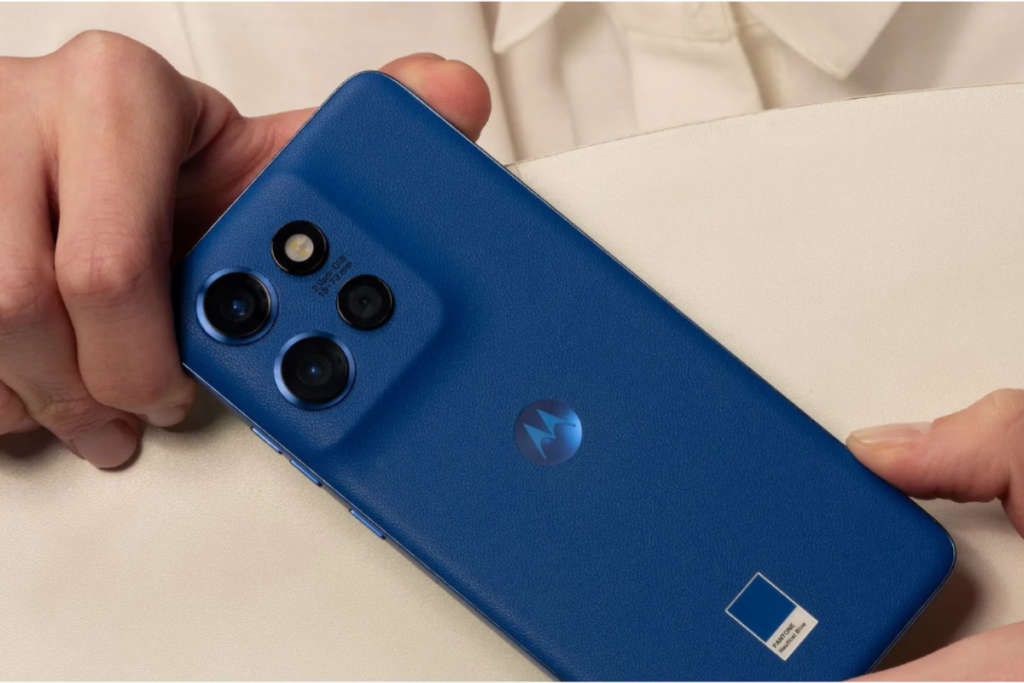
The official teasers of the Motorola Edge 70 have confirmed its design. It has a slim profile of 5.99mm, making it thinner than a pencil. It is also confirmed to arrive in three shades, which appear to be Pantone options, such as Gadget Gray, Lily Pad, and Bronze Green.

Motorola Edge 70 launch date (rumored)

A recent leak revealed that Motorola may announce the Edge 70 on Dec. 15 in India. While the global variant of the device has a 4,800mAh battery, the Indian edition is expected to pack a larger battery, but the slimness will remain 5.99mm, the same as the global version.

The Edge 70 is also expected to feature wireless charging support and three 50-megapixel cameras. In terms of pricing, it is expected to cost under Rs 35,000.

The rest of the specs of the Indian variant could be identical to the Edge 70’s global version. Some of its key specs include a 6.7-inch P-OLED 1.5K 120Hz screen, a Snapdragon 7 Gen 4 chip, up to 12GB of RAM, and up to 512GB of storage,

The Edge 70 features a dual 50-megapixel cameras on the back and a 50-megapixel front camera. The device supports 68W wired charging and 15W wireless charging, and it ships with Hello UX-based Android 16.

For more daily updates, please visit our News Section.

Stay ahead in tech! Join our Telegram community and sign up for our daily newsletter of top stories

Xiaomi 17 Leica Leitzphone Edition rumored for Europe

Xiaomi may be gearing up for one of its most ambitious global flagship pushes yet. New certification listings suggest the upcoming Xiaomi 17 Ultra won’t just launch internationally — it could arrive in Europe with a special Leica-branded edition.

Xiaomi 17 Ultra spy shot-

Up to now, two Xiaomi 17 Ultra models have already appeared in Chinese certification databases under the numbers 2512BPNDAC and 25128PNA1C, lining up with expectations for a Leica co-engineered flagship debuting in China this month. But there’s finally movement outside China. An IMEI database listing revealed 2512BPNDAG, the first clear sign that a global version of the 17 Ultra is in the pipeline. A leaked hands-on photo of this model show a chunky square camera island with three large cutouts. — a notable shift from the back design of the Xiaomi 15 Ultra.

Europe might even get something extra. A second model, 25128PNA1G, has now appeared in GSMA records. According to XiaomiTime, this variant — internally code-named P1S — is expected to launch as a Leica-focused special edition, possibly under a name like “Xiaomi 17 Leica Leitzphone Edition.” It would allow Xiaomi to highlight its Leica partnership more prominently without abandoning the Ultra branding that has become synonymous with its top-tier camera phones.

Specs between the two versions are reportedly identical, but the special edition could differentiate itself with exclusive finishes and officially supported clip-on lens accessories — paying tribute to Leica’s rich optical heritage.

If these listings pan out, Xiaomi could be positioning the 17 Ultra lineup as a photography-first flagship worldwide — not just in China. With launch plans seemingly locked in and two distinct models lined up for Europe, Xiaomi fans and camera lovers alike now have a compelling new device to look forward to in 2026.

Don’t miss a thing! Join our Telegram community for instant updates and grab our free daily newsletter for the best tech stories!

For more daily updates, please visit our News Section.

(Source)

Infinix Note 60, 60 Pro, Note Edge revealed via certification

Infinix is reportedly working on the Note 60 series of smartphones. The brand recently confirmed the existence of the Note 60 Ultra by stating that it will be announced in 2026. In a new development, three upcoming Note series phones have emerged in the database of Indonesia’s SDPPI certification platform, revealing their final monikers and model numbers.

Infinix Note 60 series SDPPI certified

Infinix Note 60 series SDPPi
Infinix Note 60 series SDPPI listing


The above screenshots reveal that the SDPPI platform has approved three upcoming Infinix phones with model numbers such as X6878, X6887, and X6878. These devices will be called the Note 60, Note Edge, and Note 60 Pro, respectively, when they arrive in the market.

A few details of the Infinix Note 60 Pro are already known, as it has appeared in Geekbench’s database. The listing revealed that it will be the company’s first smartphone to feature a Snapdragon chip.

The Geekbench listing revealed that the Note 60 Pro will feature the Snapdragon 7s Gen 4 chip, which was announced in August this year. The only other phone to feature this chip is the Redmi Note 15 Pro+, which is currently only available in China.

The listing also revealed that the Note 60 Pro has 8GB of RAM and Android 16. The rest of its specifications are not known yet. Hopefully, the upcoming reports will reveal more details about the Note 60 lineup.

For more daily updates, please visit our News Section.

Stay ahead in tech! Join our Telegram community and sign up for our daily newsletter of top stories.

Redmi Turbo 5, Turbo 5 Pro could be powered by Dimensity 8, 9-series chipsets

Redmi is reportedly working on the Redmi Turbo 5 series of smartphones. The lineup will include the Turbo 5 and Turbo 5 Pro as successors to the existing Turbo 4 and Turbo 4 Pro, which were powered by the Dimensity 8400 Ultra and Snapdragon 8s Gen 4. A recent leak by tipster Smart Pikachu reveals that Turbo 5 models will be powered by Dimensity chipsets.

Redmi Turbo 5 series incoming

Redmi Turbo 5 series key specs

According to the tipster, the Redmi Turbo 5 series will step up noticeably compared to its predecessor, and it will ship with a metal mid-frame and a large screen with rounded corners. The Turbo 5 models are said to use new MediaTek Dimensity 8 and 9 series chipsets.

He added that the higher-end variant, which appears to be the Turbo 5 Pro, may come with an ultrasonic in-display fingerprint sensor. The battery is claimed to be among the biggest in the brand’s history, reportedly around 8,000mAh or more, with high-speed charging.

Some other leaks suggest that the Pro model may end up as the Redmi Turbo 5 Pro Max. While the standard Turbo 5 could be equipped with the upcoming Dimensity 8500 Ultra, the Pro Max edition could feature the Dimensity 9500e chip, which is also yet to go official.

Redmi Turbo 5 series specifications

According to reports, the Redmi Turbo 5 and Turbo 5 Pro will have a 1.5K LTPS OLED screen and an 8,000mAh to 9,000 mAh battery with 100W charging. Both models are said to feature an IP68/69-rated chassis.

Recent reports have revealed that the Dimensity 8500 is built on TSMC’s 4nm process and uses an 8-core setup based on ARM’s A725 architecture. The prime apparently hits 3.4GHz, which is slightly higher than 3.25GHz on its predecessor. Whereas the remaining cores could also have higher clock speeds than before. On the graphics side, the Mali-G720 GPU is reportedly scaled up and running around 1.5GHz.

According to reports, the Dimensity 9500e leak comprises up to 3.73GHz and features a CPU configuration of 1 x Cortex-X925, 3 x Cortex-X4, and 4 x Cortex-A720 cores. It also includes a G925 MP12 GPU clocked at 1612MHz and is built on TSMC’s latest 3nm N3E process.

As far as the launch is concerned, the Redmi Turbo 5 series will debut in January in 2026.

For more daily updates, please visit our News Section.

Stay ahead in tech! Join our Telegram community and sign up for our daily newsletter of top stories.

Apple, Google and Samsung push back against India’s proposed location tracking rules

A new Reuters report reveals that India is examining a proposal that could significantly expand how phone locations are accessed during investigations. According to the report, the government is weighing a telecom industry request to enable continuous satellite-based tracking on all smartphones. This initial development has prompted strong responses from several major companies and has ignited a deeper national discussion that extends beyond technology.

Tech companies challenge proposed tracking framework

The report states that the idea originated from a telecom association that believes agencies struggle to obtain precise coordinates, as current methods depend on general tower-level information. The new approach would require permanently activated A-GPS features, leaving users with no ability to turn off location services. Apple, Google, and Samsung have reportedly opposed the measure, citing privacy and security implications.

Industry correspondence reviewed by the publication indicates that device makers argue such tracking has no global precedent and could introduce serious risks for individuals whose roles involve confidential or sensitive information. The situation has gained further attention after another recent government directive requiring a state-run app on devices was reversed due to concerns from civil groups and political leaders.

The ministries evaluating the proposal have not issued public statements, and Reuters notes that a high-level meeting with smartphone executives was postponed.

Experts interviewed by the outlet warned that constant, device-level tracing could effectively convert every handset into a monitoring tool, raising questions about proportionality and long-term impact. Technology researchers also pointed out that the capability could theoretically pinpoint users to within a meter, intensifying the debate over surveillance boundaries.

With more than 735 million smartphones in the country and Android commanding over 95 percent of the market, any new rule would have widespread consequences. The broader discussion now focuses on whether stronger investigative capabilities justify altering existing user expectations around control and transparency.

For more daily updates, please visit our News Section.

Stay ahead in tech! Join our Telegram community and sign up for our daily newsletter of top stories.

Rumors around Xiaomi’s trifoldable phone questioned despite new listing

A new Xiaomi device carrying the model number 2608BPX34C recently appeared in the GSMA database, which immediately triggered speculation about whether the company is preparing its first trifoldable phone. Since the listing did not reveal the final moniker of the device, there’s no clarity whether it will really end up as the company’s first trifoldable.

Xiaomi 2608BPX34C may not be a trifoldable phone

Xiaomi-Logo

Mydrivers claims that, according to Digital Chat Station, the circulating claims about Xiaomi working on a trifoldable phone are inaccurate. The outlet states that the tipster described the online chatter as misleading and said that there is no trifold project currently in active planning. However, at the time of writing this post, we could not locate the original Weibo post where he reportedly made these remarks.

What is confirmed, though, is Xiaomi’s past exploration of multi-fold designs through patents. One previously granted patent describes a Z-shaped folding structure with a horizontal rear camera setup and a size comparable to a tablet when fully opened, indicating conceptual research rather than a product nearing launch.

Xiaomi also did not introduce a book-style foldable phone this year, despite expectations surrounding what many assumed would be the Mix Fold 5. With limited information about the final identity of the 2608BPX34C model, it is unclear whether this listing represents a traditional book-style foldable or another type of device. As per reports, Xiaomi plans to launch a book-style foldable in 2026.

For now, there is no verified evidence pointing to a trifoldable phone entering production, even though patents continue to reference such form factors.

For more daily updates, please visit our News Section.

Stay ahead in tech! Join our Telegram community and sign up for our daily newsletter of top stories.

Ayaneo Launches Pocket DMG Silver Limited Edition with Snapdragon G3x Gen 2

Ayaneo has launched a new limited edition of its vertical handheld console, the Pocket DMG, featuring a polished silver finish and Qualcomm’s Snapdragon G3x Gen 2 platform. The new variant, named Pocket DMG Silver Limited Edition, uses the same retro-inspired vertical design as the original model and is now available at a starting price of $339.

Ayaneo Pocket DMG Silver Limited Edition

The silver version joins the existing Arctic Black, Moon White, and Retro Color options but stands out with its metallic aesthetic. This is not a generational upgrade but a new color variant with lower starting prices and added bonus accessories. The company currently lists two configurations for the Silver model: 8GB RAM + 128GB storage for $339 and 12GB RAM + 256GB storage for $419. For comparison, the standard Pocket DMG models start at $449.

Ayaneo Pocket DMG Specifications

The Pocket DMG features a 3.92-inch OLED display with a 1240 x 1080 resolution, 419 PPI pixel density, and 450-nit peak brightness. The screen sits above a redesigned control layout that includes a Hall-effect joystick on the left and a touch-based right stick that can also act as a mouse for PC-style games. The design includes shoulder buttons, a dedicated turbo key, MagicSwitch wheel controls, and a fingerprint sensor built into the power button.

Inside, the device runs on the Snapdragon G3x Gen 2 platform with LPDDR5X memory and UFS 4.0 storage, though the 128GB variant uses UFS 3.1. The handheld supports a performance envelope up to 15W and includes an active cooling system with a 13,330mm² heatsink to handle heat dissipation during long sessions.

Ayaneo equips the device with a 6,000mAh battery that supports 25W PD fast charging. It also features a six-axis gyroscope, an X-axis linear motor for vibration, a USB 3.2 Gen 2 Type-C port with DisplayPort 1.4 output, and a microSD slot. Wireless options cover Wi-Fi and Bluetooth 5.3

The handheld runs on Android 13 and supports the company’s AyaSpace front-end and AyaHome desktop launcher. Ayaneo claims the device can handle demanding 3D Android titles and offers customization for emulator use and Xbox streaming.

In related news, Ayaneo has introduced the Pocket Vert recently with a 3.5-inch LTPS LCD, a dual-mode hidden touchpad, and a 6000mAh battery. Ayaneo has also unveiled the Next 2 handheld with a Ryzen AI Max+ 395 chip, dual touchpads, and Xbox-style controls.

For more daily updates, please visit our News Section.

Stay ahead in tech! Join our Telegram community and sign up for our daily newsletter of top stories! 💡

(Source, Via)

Razer launches Hammerhead V3 White earphones with USB-C DAC & 11mm drivers

Razer has launched a new white version of its Hammerhead V3 wired earphones in China. The earbuds are now available on JD.com for 449 yuan ($64). This follows the earlier release of the same model in Neon Green.

Razer Hammerhead V3

Razer Hammerhead V3 Specifications

The Hammerhead V3 White features 11mm dynamic drivers tuned to deliver clear mids, strong bass, and crisp treble. Razer uses custom-designed acoustic chambers to reduce sound leakage and improve audio quality at higher volumes. The frequency response spans 20 Hz to 20 kHz, covering the full audible range.

The earphones include a standard 3.5mm audio jack and come bundled with a USB Type-C DAC adapter. The DAC supports 24-bit/48 kHz playback and enables plug-and-play compatibility with a wide range of devices, including Android phones, the iPhone 15 series, PS5 controllers, Nintendo Switch, and laptops.

Razer Hammerhead V3

Razer equips the Hammerhead V3 with an in-line control module. It includes physical buttons for volume, mic mute, playback, and voice assistant activation. The built-in microphone uses an omnidirectional pickup pattern to improve voice clarity during calls and game chats.

The earbuds have an ergonomic in-ear design and ship with three sizes of silicone ear tips. This allows users to get a better seal for noise isolation and long-term comfort during gaming or travel. The lightweight design aims to reduce fatigue during extended use.

The cable measures 1.2 meters and uses a TPE material that resists tangling and wear. Razer claims it can withstand daily handling and movement without affecting signal transmission.

On PC, the earphones support THX Spatial Audio through Razer Synapse software. Users can adjust EQ settings and enable positional sound for improved awareness in supported games. Razer includes an activation code for the software via customer support.

In related news, Nubia has introduced its Alien-themed CyberBuds gaming earbuds recently with 50 ms low latency and a 48-hour battery life, and Edifier has rolled out the Auro Clip ear-clip earbuds featuring AI translation, a 35-hour battery life, and Bluetooth 6.1.

For more daily updates, please visit our News Section.

Stay ahead in tech! Join our Telegram community and sign up for our daily newsletter of top stories! 💡
(JD)

OnePlus Releases OxygenOS November 2025 FAQ Addressing NFC Payments, 5G Network, and UI Bugs

OnePlus has released its OxygenOS FAQ for November 2025, addressing common issues reported by users after recent software updates. The company says the FAQ is based on frequent feedback related to bugs, feature behavior, and system compatibility.

One of the key issues covered is NFC payments not working after upgrading. OnePlus confirms that the cause has been identified. Users experiencing this issue are advised to update their phone to the latest software version, which includes the fix.

Another problem affects Live Alerts, where map navigation does not display after an update. OnePlus explains that this is due to a temporary compatibility issue between Live Alerts and third-party navigation apps. Until compatibility is improved, navigation status may not appear within Live Alerts.

Some users reported that tapping the desktop widget menu results in no response. OnePlus acknowledges this issue and says optimization work is ongoing. As a temporary solution, users can go to Settings, open Apps, select App Management, tap the three-dot menu, choose Show System, search for “Shelf,” then disable and re-enable it.

Network issues related to Airtel SIM cards have also been highlighted. Users may experience unusable 5G service or complete signal loss. OnePlus confirms the cause has been found and states that a fix will be rolled out in the next software update.

Another reported issue is wallpapers disappearing after upgrading. OnePlus apologizes for the inconvenience and says the problem has been identified. A fix will be delivered as soon as possible in a future update.

Users have also noticed differences between the lock screen display and preview of the Flux theme after upgrading. OnePlus confirms this is a known issue and will be corrected in subsequent updates.

The FAQ also mentions that the double-click power button shortcut for opening the camera may turn off or appear greyed out after restarting the phone. A permanent fix is planned, but users can manually re-enable the feature by going to Settings, Accessibility and convenience, Power button, and selecting the camera option for double-click.

Lastly, OnePlus addresses reports of the keyboard overlapping the navigation bar. The issue has been traced to the app itself, and a fix is planned for an upcoming update.

OnePlus says it is actively monitoring these issues and will continue to release fixes through future OxygenOS updates.

Don’t miss a thing! Join our Telegram community for instant updates and grab our free daily newsletter for the best tech stories!

For more daily updates, please visit our News Section.

(Source)

Finnish maker Jolla is back with a new smartphone with its own Linux OS

After years of silence, Finnish company Jolla is stepping back into the smartphone market. Today, the company announced on X that the new-generation Jolla Phone is coming soon with fresh hardware, a privacy-first operating system, and a promise to offer something that neither Android nor iOS currently does.

The new Jolla Phone arrives in three “Nordic scenery–inspired” colors: black, white, and a striking orange. Unlike most modern phones glued shut on all sides, Jolla is going old-school: the back cover pops off, and the battery is fully removable. 

Inside, the phone looks much more modern. It supports 5G, carries 12GB of RAM, and includes 256GB of storage with the option to expand up to 2TB using a microSD card. The phone also has dual nano-SIM cards for connectivity.

On the front, there’s a 6.36-inch Full HD AMOLED display, protected by Gorilla Glass. The rear camera system features a 50MP main camera paired with a 13MP ultrawide, while the selfie camera hasn’t been fully detailed yet.

A new Sailfish OS

But hardware is only part of the story. The real heart of this device is Sailfish OS 5, the latest version of Jolla’s Linux-based mobile platform. Jolla calls it “the only commercially successful European mobile operating system,” and it leans heavily into privacy. 

The company says Sailfish contains no trackers, no background data collection, and absolutely no Google Play Services lurking under the hood.

Even so, Jolla knows users still rely on popular Android apps, and fortunately, Sailfish OS supports Android applications. There’s even a physical privacy switch on the phone’s left side that instantly disables the microphone, camera, Bluetooth, and other sensors.

Jolla emphasizes that this release is the result of 12 years of survival in a mobile world that has seen platforms like Symbian, MeeGo, Firefox OS, and Windows Phone disappear. Today, the company says only four major mobile operating systems remain globally, and Sailfish is the lone representative from Europe.

The new Jolla Phone is available for pre-order now with a €99 deposit. Early supporters will pay a discounted full price of €499, while the regular retail price is expected to land between €599 and €699. 

However, the phone will only be produced if at least 2,000 pre-orders are placed by January 4, 2026. The good news is that Jolla has already crossed more than half of that target.

For more daily updates, please visit our News Section.

Stay ahead in tech! Join our Telegram community and sign up for our daily newsletter of top stories! 💡
MSI launches MAG 274QP X24 gaming monitor with 2K 240Hz QD-OLED panel at $499.99

MSI has launched the MAG 274QP X24 gaming monitor in the US market. The monitor features a 26.5-inch QD-OLED panel sourced from Samsung and targets the mid-range segment. It is priced at $499.99.

MSI MAG 274QP X24

MSI MAG 274QP X24 Specifications

The display delivers a 2560 x 1440 resolution and supports a 240Hz refresh rate. MSI uses Samsung’s latest 3rd-generation QD-OLED technology, which improves panel brightness, motion clarity, and overall efficiency. The panel has a 0.03ms GtG response time and holds the VESA ClearMR 13000 certification, ensuring sharp, low-blur visuals in fast-paced games.

The MAG 274QP X24 supports HDR content with a peak brightness of 400 nits. In SDR mode, the brightness reaches up to 200 nits. The monitor also covers 99% of the DCI-P3 color gamut and comes factory-calibrated with a Delta E of ≤2 for color accuracy. MSI includes support for Adaptive Sync to reduce screen tearing during gameplay.

MSI MAG 274QP X24

MSI equips the monitor with its OLED Care 2.0 system to reduce burn-in risks. The updated setup runs a full panel refresh every 24 hours when the display enters standby or powers off. Users receive a 30-minute alert before the process starts, giving them time to pause work or gaming if needed. The company supports the product with a 3-year burn-in warranty.

The monitor includes ergonomic adjustments such as tilt, swivel, pivot, and height. It also supports VESA 100 x 100 wall mounting. The connectivity options include two HDMI 2.1 ports, one DisplayPort 1.4a, and a headphone-out jack. MSI does not include USB ports on this model, which helps keep the price down.

MSI has optimized the monitor for console gamers as well. It supports 1080p and 1440p resolutions at 60Hz and 120Hz, and includes features such as HDMI CEC and VRR for PlayStation 5 and Xbox Series X|S.

In related news, ViewSonic recently introduced the XG323B 4K OLED monitor with dual mode support for 165Hz 4K and 330Hz FHD output, and Xiaomi has refreshed its budget monitor lineup with a set of practical upgrades.

For more daily updates, please visit our News Section.

Stay ahead in tech! Join our Telegram community and sign up for our daily newsletter of top stories! 💡
(Source, Via)

Galaxy S26 Series official renders confirm the biggest redesign

The Galaxy S26 series has been leaking for months, and every reliable render has pointed toward the same shift: the floating camera rings are gone, replaced with a Fold 7-style camera island. Until now, though, it was all just whispers — nothing truly official. That changed this week when Samsung accidentally did the leaking themselves.

Android Authority spotted crude renders of the Galaxy S26, S26+, and S26 Ultra hidden inside a One UI 8.5 test firmware. These aren’t polished marketing images, but they’re more than enough to confirm the new look. All three models — M1 (S26), M2 (S26+), and M3 (S26 Ultra) — feature a protruding, pill-shaped camera bump with circular cutouts for each lens. It’s the same design language Samsung has used on the Z Fold lineup since 2021, and a full departure from the separate floating camera lenses seen on the Galaxy S25 series.

These internal model tags line up with earlier leaks too — the whole lineup is part of Samsung’s “Miracle” project. The phones are also expected to be the first to run One UI 8.5 out of the box, Samsung’s take on Android 16. Meanwhile, Galaxy S25 users should get access to the One UI 8.5 beta sometime in the second week of December.

If earlier leaks are accurate, the S26 Ultra will feature noticeably more rounded corners than its predecessor, bringing it closer to the rest of the lineup and further away from the sharp Note-style look of past Ultra models.

The newly surfaced renders may be rough, but their source is what matters. With Samsung’s own firmware now revealing the design, the guessing game is officially over: the Galaxy S26 family is embracing a unified Fold-style aesthetic. Fans will still argue whether it’s bold or just bulky — but either way, the real launch suddenly feels a lot closer.

Don’t miss a thing! Join our Telegram community for instant updates and grab our free daily newsletter for the best tech stories!

For more daily updates, please visit our News Section.

(Source)

Nubia launches Alien-themed CyberBuds gaming earbuds with 50ms low latency & 48h battery life

After the recent Nubia Fold & Flip 3 Go launch in Japan, Nubia has now introduced a new Alien-themed CyberBuds gaming TWS earbuds in China. The earbuds are available for reservation on JD.com at an introductory price of 199 yuan ($28), with open sales scheduled to begin on December 9.

Nubia CyberBuds

Nubia CyberBuds Specifications

The CyberBuds feature a distinctive two-part mechanical design with an alien aesthetic. The charging case includes RGB lighting and a small integrated display. Both the earbuds and the case support customizable lighting effects through the Nubia Life+ app. Each earbud weighs just 3.6 grams, and the case weighs 58 grams. The case also includes a lanyard slot for easier portability.

Nubia uses Bluetooth 5.4 for wireless connectivity. The earbuds support instant wake and pairing when the lid is opened. Red Magic phone users get a system-level pop-up window that shows battery status and connection details.

The earbuds support Nubia’s FlashLink 2.0 low-latency audio technology. The company claims an end-to-end latency as low as 50 milliseconds, which can benefit fast-paced games that require precise timing.

Nubia CyberBuds

Nubia also focuses on customizable audio. The companion app allows users to switch between audio modes tuned for different game types, such as FPS, racing, or general gaming. There is also a manual EQ mode for those who prefer a personalized sound profile.

Each earbud houses a 35mAh battery, and the charging case includes a 500mAh battery. The earbuds provide up to six hours of playback on a single charge, and the case extends total usage time to around 48 hours.

In related news, Edifier recently introduced the Auro Clip ear-clip earbuds with AI translation, a 35-hour battery, and Bluetooth 6.1, and Honor has debuted the Earbuds S with 49 dB ANC, spatial audio, and a 42.5-hour battery.

For more daily updates, please visit our News Section.

Stay ahead in tech! Join our Telegram community and sign up for our daily newsletter of top stories! 💡
(JD)

Samsung Tab S11 vs S11 Ultra: Is the Ultra Worth the Extra Money?

Samsung Galaxy Tab S11 and S11 Ultra target two very different types of users, making this comparison important for anyone deciding between portability and a premium, near-laptop experience. Buyers who want a lightweight, affordable powerhouse naturally lean toward the S11, while professionals, creators, and heavy multitaskers consider the Ultra for its workstation-level advantages. Comparing them helps clarify which model truly fits each user’s workflow, budget, and expectations.

Major Upgrades:

FeatureGalaxy Tab S11Galaxy Tab S11 UltraUpgrades
Display Size11.0″ AMOLED14.6″ AMOLEDBigger display – More workspace, better media, laptop-like usage
RAM (Max)12 GB16 GBHigher RAM – Smoother heavy multitasking, better pro workflows
Battery8,400 mAh11,600 mAhLarger battery – Longer endurance for work, streaming, travel
Rear CameraSingle 13 MPDual: 13 MP + 8 MP ultrawideExtra ultrawide – More versatile photography & document capture
Productivity FitGood for everyday tasksExcellent for pro-level tasksBigger screen + more RAM – Superior multitasking and DeX usage
PortabilityLighter & compactLarger & heavierBigger size – Less portable, but far better media & work experience
Audio ExperienceStandard quad speakersLarger body, richer soundBigger sound chamber – More immersive audio

1. Design and Display

Build Quality

Both tablets share the same aluminum body, IP68 rating, and slim profiles, but the Ultra feels more premium due to its massive footprint and thinner 5.1 mm frame. The standard S11 is easier to hold, while the Ultra leans toward laptop-class usage because of its larger surface area.

Display & Multimedia

The biggest upgrade is the 14.6-inch Dynamic AMOLED 2X panel on the Ultra. It offers a more immersive canvas for movies, art, and multitasking. Although both use the same peak brightness and HDR10+ support, the Ultra’s size gives it a clear edge for productivity and content consumption. The S11’s 11-inch display is sharper at a higher pixel density, but the Ultra provides a more cinematic and workstation-friendly experience.

Verdict

The S11 is practical and compact, but the Ultra stands out with a superior multimedia and workstation display, making it the stronger choice for creators, designers, and power users.

2. Performance and Software

Processor & UI Smoothness

Both tablets run the Dimensity 9400+, offering flagship-level speed, lag-free navigation, and fast app launches. The Ultra pulls slightly ahead in sustained workloads thanks to its better thermal distribution across a larger body and the option for 16GB RAM, which helps keep more apps alive in the background.

Productivity & Multitasking

Samsung DeX runs smoothly on both, but the Ultra’s huge 14.6-inch screen dramatically boosts split-screen usability. Writing, spreadsheet editing, and note-taking feel closer to laptop territory. The S11 handles everyday work easily, yet the Ultra’s larger display + higher RAM variant makes it better suited for creative suites, coding, and multitasking-heavy users.

Verdict

Performance is similar, but the Ultra’s 16GB RAM option and laptop-like workspace give it the productivity crown, especially for professionals and creators.

3. Battery and Accessories

Battery Life

The Ultra delivers a big upgrade with its 11,600 mAh battery, offering noticeably longer endurance for streaming, editing, and multitasking. The S11’s 8,400 mAh cell is solid but lasts shorter under heavy workloads, especially when using DeX or high brightness. Charging speed remains the same on both (45W).

Stylus, Keyboard & Ecosystem

Both support the S-Pen and Samsung’s accessory ecosystem. However, the Ultra benefits more from these add-ons because its large screen makes S-Pen drawing more natural and keyboard use more laptop-like. The bigger canvas improves handwriting accuracy and gives creators more space to work.

Verdict

While both share the same accessory support, the Ultra offers significantly longer battery life and a better stylus/keyboard experience, reinforcing its productivity focus.

4. Camera & Media

Rear and Front Camera

The S11 includes a single 13MP rear camera, while the Ultra introduces a dual setup with an 8MP ultrawide lens, making it more versatile for document capture and creative shots. Both share a 12MP ultrawide selfie camera, though the Ultra’s larger display makes video calls more comfortable.

Video & Audio Quality

Video capabilities remain similar (4K/30), but the Ultra’s wider rear setup offers more framing flexibility. Audio quality is excellent on both, but the Ultra’s larger chamber speakers produce deeper sound and better spatial output during movies or gaming.

Verdict

The Ultra wins with an extra ultrawide camera and richer audio, giving it stronger media creation and entertainment potential.

5. Pricing

The Tab S11 starts around $700, while the Ultra begins near $1000. The price jump is justified mainly by the massive 14.6-inch display, bigger battery, extra camera, and higher RAM variant. Buyers focused on portability should stick with the S11, while users replacing a laptop or working creatively get far better value from the Ultra.

Disclaimer:
Prices are approximate and may vary based on country, region, and applicable taxes.

6. Conclusion

The Ultra stands out by offering:

  • 14.6-inch AMOLED workstation display
  • Dual rear cameras
  • 16GB RAM option
  • Massive 11,600 mAh battery
  • Better speakers and more immersive multimedia
  • The S11 remains a compact and powerful tablet, but lacks the dramatic upgrades that make the Ultra feel premium and productivity-ready.

Verdict

Go for the Galaxy Tab S11 if you prefer portability, a lower price, and solid all-around performance.

Choose the Galaxy Tab S11 Ultra if you want a laptop-like experience with better media quality, longer battery life, and enhanced creative capabilities. Its upgrades make a noticeable difference in daily use, and if budget isn’t a concern, the S11 Ultra delivers the most complete and premium tablet experience.

Read More:

Galaxy S26 series rumored to finally break 15W wireless charging barrier

Samsung’s upcoming Galaxy S26 lineup may at last fix a pain point that has lingered for years: sluggish wireless charging. The current Galaxy S25 family tops out at 15 W, a limit that feels outdated compared to rival flagships from even half a decade ago. But a new leak suggests Samsung is preparing a meaningful upgrade — complete with magnets.

Retail listings and certifications point to a new accessory called the Samsung Magnetic Wireless Charger (model EP-P2900). It reportedly supports up to 25W wireless charging, making it Samsung’s fastest wireless solution for Galaxy phones yet. The magnet-equipped pad hints at full Qi2/MagSafe-style alignment, ensuring the charger snaps neatly into place instead of requiring guesswork.

The product is described in dark gray and is compatible with Galaxy S and Galaxy Z devices, as well as Galaxy Buds. It’s also expected to replace Samsung’s older square charging pad (EP-P2400) with a new circular design that matches the updated coil layout needed for Qi2.

There is a catch, though. The higher speeds may not be available on every model. Rumors say the Galaxy S26 Ultra will get the full 25W wireless charging upgrade, while the S26 and S26 Plus could remain stuck at the current 15W limit — a move that wouldn’t surprise anyone familiar with Samsung’s strict feature segmentation. It’s also unclear whether Samsung has addressed the S Pen interference issues seen on earlier Galaxy flagships when used with magnetic cases.

A similar pattern is expected on the wired charging front:

  • Galaxy S26 Ultra: up to 60W (Super Fast Charging 3.0)
  • Galaxy S26 Plus: up to 45W
  • Galaxy S26: 25W

We’re still months away from official images and exact specs, but the fact that Samsung has a 25W magnetic wireless charger ready to go is a strong hint of change. If the leaks prove accurate, Galaxy fans who’ve been waiting to cut the cable may finally have a reason — provided they spring for the right S26 model.

Don’t miss a thing! Join our Telegram community for instant updates and grab our free daily newsletter for the best tech stories!
For more daily updates, please visit our News Section.

(Source)