Advertisement

The POCO F8 series design basically confirms its Redmi K90 origins

Poco today confirmed that it’s launching the Poco F8 Pro and F8 Ultra globally on November 26th. The company has also revealed the design of the two phones, confirming one key detail: both are rebranded Redmi K90 models.

The standard Poco F8 Pro comes in three finishes: Black, Grey, and Aqua Blue. Its rear design closely mirrors what we’ve already seen on the Redmi K90 in China, including the same rectangular camera block with rounded corners. 

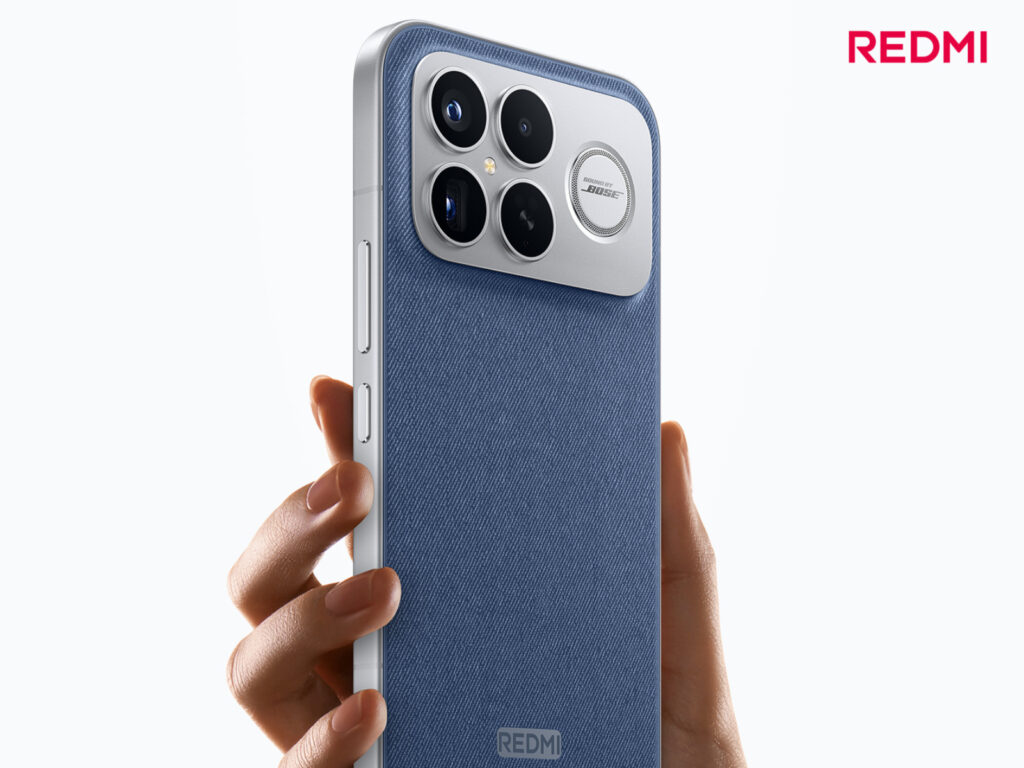
The higher-end Poco F8 Ultra will be available in Blue and Black, but the Blue version stands out with a textured leather-style back panel. The camera module layout follows the Redmi K90 Pro Max pretty closely, and there’s a noticeable “Sound by Bose” badge near the cameras. This confirms the phone uses Bose’s tuning for a more detailed and immersive audio experience. 

None of this is surprising, though. The F8 Pro and F8 Ultra have long been rumored (and in some markets openly acknowledged) to be rebranded versions of the Redmi K90 and K90 Pro Max. 

The biggest difference seems to be battery size, with the POCO models reportedly carrying slightly smaller cells than their Redmi counterparts.

Both devices have already been through several certification listings, and recent Geekbench entries fill in some of the performance details. The F8 Pro appears to ship with the Snapdragon 8 Elite, while the F8 Ultra steps up to the Snapdragon 8 Elite Gen 5. The listings also point to Android 16 out of the box and a 16GB RAM option.

With the design now confirmed, all that’s left is pricing and full specs, and we won’t have to wait long. The POCO F8 series will make its global debut in less than a week.

Don’t miss a thing! Join our Telegram community for instant updates and grab our free daily newsletter for the best tech stories!

For more daily updates, please visit our News Section.

Galaxy S26 series storage, RAM configuration leaks

If you were hoping Samsung would finally break its habit of conservative memory upgrades with the Galaxy S26 lineup, a new leak suggests you might want to dial back expectations. A fresh report from reliable tipster @UniverseIce claims the entire series will ship with the same RAM and storage options as the Galaxy S25 family — down to the exact configurations.

According to the leak, both the Galaxy S26 and S26+ will be available in just two variants:

  • 12GB RAM + 256GB storage
  • 12GB RAM + 512GB storage

The Galaxy S26 Ultra will offer three choices:

  • 12GB RAM + 256GB storage
  • 12GB RAM + 512GB storage
  • 16GB RAM + 1TB storage — but only in China

That means global buyers will once again top out at 12GB of RAM and 512GB of storage, with Samsung keeping the long-requested 16GB/1TB combo locked behind regional availability. Anyone outside China hoping to buy the highest-tier model will likely find themselves out of luck for another cycle.

It’s not all bad news, though. Samsung is expected to use faster memory across the board, bumping speeds from 8.7Gbps to 10.5Gbps. That should help with camera performance — especially in multi-frame processing.

Nonetheless, offering a higher base RAM option would be a good idea, especially since Samsung is leaning heavily on Galaxy AI — and some of those features rely on on-device processing, which significantly increases memory demands.

For years, power users have been calling for 16GB of RAM to be standard on the Ultra — or at least available worldwide — but Samsung seems content to stay the course.

What’s more interesting is the reasoning behind Samsung’s unchanged strategy. According to the leak, Samsung only offers higher-capacity configurations in markets where consumers actively demand them. In regions where buyers settle for 12GB/512GB without much pushback, Samsung sees no reason to increase its bill of materials.

Don’t miss a thing! Join our Telegram community for instant updates and grab our free daily newsletter for the best tech stories!

For more daily updates, please visit our News Section.

(Source)

QRED display tech could make tomorrow’s TVs brighter and more colorful than QLEDs ever managed

The next jump in TV picture quality might come from something a little longer and a little smarter than today’s quantum dots. At the SID-MEC conference in Germany, researchers shared new progress on “quantum rods” — tiny, elongated nanomaterials that could one day bring brighter screens, punchier HDR, and far better energy efficiency to consumer displays.

Jan Niehaus of Fraunhofer IAP-CAN, who has been studying quantum materials for years, presented some of the most detailed updates yet. The idea behind quantum rods (or QRs) is simple: unlike spherical quantum dots, these nanocrystals can be aligned in a specific direction. That alignment lets displays use light far more efficiently, which could translate into lower power draw without sacrificing brightness — something TV makers have been chasing for years.

The research is still in its early days, but results so far are promising. Scientists have managed to transfer a full quantum-rod layer onto a test substrate, and the material held up under high temperatures. According to Niehaus, the basic feasibility is now clear, though realistic products are still some distance away.

Where quantum rods fit into the display landscape is an open question. They could start as an upgrade to today’s QLED LCDs that rely on a backlight and quantum-dot filter. But the more exciting future involves true self-emissive quantum-dot displays — sometimes called QLED, EL-QD, QED, or QE depending on which company is doing the branding. In those future panels, aligned quantum rods could deliver far more light per watt than the quantum dots used today.

Branding, of course, remains as messy as ever. Researchers at the conference noted that the terminology debate remains unresolved — and quantum rods could shake it up again if they live up to their promise.

For now, QRs remain a lab project with a lot of potential. But if the technology matures, the living-room TV of the future could be brighter, richer, and noticeably more energy-efficient — all thanks to these tiny, perfectly aligned nanorods. It will also be interesting to see whether the technology eventually finds its way into smartphone displays as well.

Don’t miss a thing! Join our Telegram community for instant updates and grab our free daily newsletter for the best tech stories!

For more daily updates, please visit our News Section.

(Source)

New Lenovo Legion 5 Launched in India with New Ryzen 7 260 CPU & RTX 5050 GPU

Lenovo has officially launched its Legion 5 (2025) gaming laptop in India, delivering serious performance for gamers and creators alike. This model arrives with Nvidia’s latest RTX 5000 series graphics card, AMD’s latest Ryzen 200 series processor, and much more. So here are all the details.

Lenovo Brings the Legion 5 (2025) Gaming Laptop to India

The Chinese tech giant’s latest gaming laptop sports a full-sized 15.3-inch IPS LCD panel that has a 1920 x 1200 pixel resolution, a 16:10 aspect ratio, a 165Hz refresh rate, 300 nits of peak brightness, Dolby Vision, and Nvidia G-Sync support. The screen also arrives with a TUV Rheinland certification for low blue light emission. Under the hood, the gaming notebook is equipped with AMD’s new Ryzen 7 260 CPU, which is paired with the Nvidia GeForce RTX 5050 GPU.

Lenovo Legion 5 2025 Gaming Laptop

This configuration is paired with 16GB of RAM and 1TB of internal storage. The laptop has a 160W TDP and is cooled using Lenovo’s Turbo fans, copper heatpipes, and an aluminum heat sink. With the new CPU, you also get access to various AI powered tools for Lenovo’s Gaming Zone that is coupled with the Lenovo AI Core, which is another dedicated chip.

A sizeable 80Wh battery pack powers this device that charges via a 245W charging adapter. For audio, you get a twin 2W Harman tuned stereo speakers. Other notable features include MUX switch, Lenovo AI now, HD webcam, Bluetooth 5.2, WiFi 6, and Windows 11 Home OS. Lenovo has just announced this model with a hefty price tag of 137,490 INR (roughly 1,551 US Dollars).

Please Note: When you buy something using the links in our articles, we may earn a small commission at no cost to you.

For more daily updates, please visit our News Section.

Tech enthusiast? Get the latest news first! Follow our Telegram channel and subscribe to our free newsletter for your daily tech fix! ⚡

Exclusive: Wobble’s first phone to feature Sony sensor; supports 4K HDR on both front and rear cameras

Wobble, a brand under Indkal Technologies, is gearing up to launch its first smartphone on Nov. 19 in India. The device’s Amazon landing page reveals parts of its design but offers no major details. However, we have obtained exclusive information about the phone ahead of its official unveiling.

Wobble’s first phone promises stellar photography experience

Wobbe's first phone
Wobbe’s first phone

According to information shared by our source, Wobble’s debut smartphone may feature a camera system capable of 4K resolution (image and video recording) with HDR on both the front and rear sensors. This level of capability is usually found on higher-end devices, making it notable for a first-generation product.

The camera setup is said to use a Sony sensor with Optical Image Stabilization (OIS). The device is also expected to include dedicated on-device AI processing to manage tone, exposure, and dynamic range in real time. This suggests the brand may be aiming for consistent results and stability across both cameras, rather than relying solely on software-based corrections.

On the performance front, the smartphone is expected to come with MediaTek’s Dimensity 7400 chipset, supported by HyperEngine gaming features. As per a previously seen Geekbench AI listing, the device will reportedly feature 8GB of RAM and Android 15.

While the Dimensity 7400 is a capable chip, the brand is said to be focusing on practical aspects such as thermal control, efficient power management, and stable frame rates instead of emphasizing benchmark numbers.

If these leaks are accurate, Wobble appears to be aiming for a flagship-leaning specification sheet for its first smartphone. More details, including its moniker, are expected to surface as the launch date approaches, but the company has yet to officially confirm any of the above information.

For more daily updates, please visit our News Section.

Stay ahead in tech! Join our Telegram community and sign up for our daily newsletter of top stories.

Vivo quietly confirms December launch for the S50 series

Vivo has quietly confirmed that the S50 series is launching in China in December. The company put up a pre-reservation page without any big announcement, but it confirms the phones are coming next month. 

Anyone in China can sign up early, and Vivo is even running a small lucky draw where participants can win the Vivo S50 itself, a 500 yuan travel card, a mystery gift, or some Vivo points.

What to expect?

The lineup is expected to include two models: the Vivo S50 and the Vivo S50 Pro Mini. As the name suggests, the Pro Mini is the compact member of the family, expected to sport a 6.31-inch OLED display with a 1.5K resolution and a 120Hz refresh rate. 

Both devices are confirmed to feature a 9600Mbps LPDDR5x RAM and UFS 4.1 storage. And it was also teased today by a company official that the Snapdragon 8 Gen 5 chipset is coming to the lineup, likely to the S50 Pro Mini.

It is also rumored to include an ultrasonic in-display fingerprint sensor and a 50-megapixel Sony IMX882 periscope telephoto lens. 

Vivo-S30-series
Vivo S30 series

The regular Vivo S50 may also get a Snapdragon 8-series chip, even though early leaks suggest it might run the Snapdragon 7 Gen 4.

In terms of screens, the S50 is expected to go slightly larger with a 6.59-inch OLED panel, again at 1.5K and 120Hz. Both phones may ship with a triple-camera setup featuring a periscope telephoto sensor, along with support for 90W fast charging.

There’s also been some speculation that the global Vivo V70 could be based on the S50 series. However, the former recently ran a Geekbench with a Snapdragon 7 Gen 4 chipset, so the global model may end up quite different.

For more daily updates, please visit our News Section.

Stay ahead in tech! Join our Telegram community and sign up for our daily newsletter of top stories.

Nothing Phone (3a) Lite Coming to India on November 27

Nothing has finally revealed the Indian launch date for the Nothing Phone (3a) Lite. The brand officially unveiled the Nothing Phone (3a) Lite globally a couple of weeks back, and around a month later, Nothing’s cheapest smartphone is heading to India.

Nothing Phone (3a) Lite India Launch Set for November 27

In an official teaser image poster, the company confirmed that the Nothing Phone (3a) Lite will be announced in India on 27th November 2025 at 12PM IST. The teaser also confirms the Flipkart availability, which is a popular e-retailer in the region. To recall, the Nothing Phone (3a) Lite debuted in the UK and Europe near the end of last month, and we can expect the feature set to remain identical to the Indian variant.

Nothing Phone (3a) Lite

Nothing has confirmed the design elements of the Phone (3a) Lite in the Indian market, bringing back the transparent rear glass panel with a Glyph LED Light. The back also has a triple camera setup that consists of a 50MP main camera, along with an ultra wide angle lens and a macro shooter. It also offers up to 2TB of expandable storage with support for dual 5G SIMs. Based on what we know so far, the back has a 50MP (Main) + 8MP (Ultra Wide) + 2MP (Macro) camera setup, while the front houses a 16MP selfie shooter.

Meanwhile, the front sports a tall 6.77-inch AMOLED display with an FHD+ resolution, a 120Hz adaptive refresh rate, 480Hz touch sampling rate, HDR10+, 2160Hz PWM Dimming, and up to 3000 nits of peak brightness. Under the hood, it is equipped with the MediaTek Dimensity 7300 Pro SoC, which is paired with 8GB of RAM and up to 256GB of internal storage. A sizeable 5,000mAh battery pack powers this model, with support for 33W wired fast charging.

For more daily updates, please visit our News Section.

Don’t miss a thing! Join our Telegram community for instant updates and grab our free daily newsletter for the best tech stories!

All Galaxy S26 models rumored to be thinner and lighter than their Apple counterparts

In the contest for the thinnest and lightest flagship phones, Samsung may be gearing up for a big sweep. New leaks suggest that every Galaxy S26 model will be slimmer and lighter than its iPhone 17 counterpart.

Tipster @UniverseIce shared a comparison chart on X showing some surprisingly low numbers. According to the leak, the Galaxy S26 is expected to weigh 164 grams, the S26+ around 191 grams, and the S26 Ultra roughly 214 grams. That makes the standard S26 and the Ultra slightly lighter than their S25 equivalents, while the S26+ gains just a single gram, which is essentially negligible.

What’s more interesting is how these figures stack up against Apple’s upcoming lineup. If the leak is accurate, all three Galaxy S26 phones would come in both a thinner and lighter body than the iPhone 17 models they compete with. Samsung has pulled this off before — including last year — and doing it across the board again reinforces the brand’s push to deliver the best possible in-hand experience. A separate leak from September listed the Galaxy S26 Ultra at 217 grams, creating a minor discrepancy with the new 214-gram claim. It’s not unusual for early figures to vary, and the final number will likely become clearer as more specifications surface closer to launch.

However, these impressive weight and thickness numbers come at a cost: upgrades. Leaks about the Galaxy S26 series have been mostly disappointing so far. Aside from a few minor improvements — like slightly faster wireless charging across the board and faster wired charging on the Ultra — the S26 lineup appears to be retaining most of the internals from this year’s models.

The batteries, for instance, may see a small bump on the base variant, while the Plus and Ultra are expected to stick with the same 4,900mAh and 5,000mAh capacities for yet another year. If that happens, the iPhone 17 Pro Max will actually offer a larger battery (5,088mAh) than the S26 Ultra when it launches in Q1 2026 – and would likely outperform it in battery life as well.

Don’t miss a thing! Join our Telegram community for instant updates and grab our free daily newsletter for the best tech stories!

For more daily updates, please visit our News Section.

(Source)

Unique MagSafe Chargers You Probably Didn’t Know You Needed

MagSafe charging doesn’t have to be boring. Beyond the standard puck or pad, there are some truly creative and offbeat options out there. Whether you want a charger that looks like a Cybertruck or a power station that has a built-in Bluetooth speaker, here are some of the most fun and unusual MagSafe chargers that will make your charging station feel more like a statement piece.

1. Cybertruck-Inspired 3-in-1 Charging Station

Unique MagSafe Chargers
CyberDock Cybertruck-Inspired 3-in-1 MagSafe Wireless Charging Station

If you love Tesla, you’ll probably want to park your iPhone on this charger. The CyberDock 3-in-1 charging station is shaped like a mini Cybertruck and lets you charge your MagSafe iPhone, AirPods, and Apple Watch at the same time. What makes it especially fun are the angular, brutalist design lines and the built-in ambient lights that glow when charging. Apart from a 15W MagSafe charging pad for iPhones, there is also a dedicated Apple Watch dock that folds out from the trunk of the Cybertruck charger and space to charge your Apple AirPods as well.

2. 360° Magnetic Power Bank Chambers From Kuxiu

Unique MagSafe Chargers
Kuxiu K1 Ultra Power Bank

The Kuxiu K1 Ultra power bank is a really wild take on MagSafe. It has a split-and-swivel design: the power bank can rotate to reveal a second MagSafe pad, letting you charge your phone and your watch (or earbuds) at the same time. On top of that, it supports 25W Qi2.2 wireless charging, making it a flexible and powerful power source, and not just a simple battery pack. Qi2.2 also means that it is copativle with the iPhone 17 series and Pixel 10 Pro XL. When folded, it appears like a typical MagSafe power bank, but opening it up, let’s it function as a stand and a 3-in-1 charging station.

3. Charging Station x Bluetooth Speakers

Unique MagSafe Chargers
Vaku Luxos 4-in-1 Triostation Bluetooth Speaker and Charging Station

If a regular charger feels too bland, check out the Vaku Luxos 4-in-1 Triostation—a full-featured charging accessory that doubles as a Bluetooth speaker, ambient night light, and phone stand. It supports 15W magnetic fast charging for iPhones, and can also power your Apple Watch and AirPods. Perfect for bedside use, it creates a relaxing, multi-sensory experience. What sets it apart is the lighting system paired with a Bluetooth speaker setup. This allows you to charge your phone, play your favorite music, and set the mood with custom lighting all in one.

For more daily updates, please visit our News Section.

Tech enthusiast? Get the latest news first! Follow our Telegram channel and subscribe to our free newsletter for your daily tech fix! ⚡

Galaxy S26 Ultra could finally bring faster wired charging

Samsung’s upcoming Galaxy S26 lineup is rumored to retain most of the numbers from the S25 series, but charging might not be one of them. A previous leak pointed to faster wireless charging across the board, but the wired charging story is a bit uneven.

According to a new leak from X user Anthony (@TheGalox_), the Galaxy S26 and S26 Plus are sticking with the same wired charging speeds as last year. That means 25W for the smaller model and 45W for the Plus. No changes there. The Ultra, however, is expected to support 60W wired charging — a noticeable step up from the S25 Ultra’s 45W.

A GSMArena test screenshot shared by the leaker shows last year’s Galaxy S25 hitting full charge 1 minute earlier than the iPhone 17, which packs a very similar capacity (3988mAh) and supports 35W charging. The S26 is rumored to carry a slightly larger 4,300mAh (vs 4,000mAh on the S25) battery this time.

Wireless charging at least gets a uniform bump. The S26 and S26 Plus reportedly step up to 20W, while the Ultra climbs to 25W with a compatible charger — a clear jump over the S25 series’s sluggish 15W limit.

Still, in 2026, 25W wired charging on a flagship feels pretty dated. Brands like OnePlus are pushing 100W+ and still ship a charger in the box. Samsung, of course, doesn’t.

For those confused, the wired charging upgrade for the S26 Ultra came up in leaks earlier this year, and one of the leaks even claimed it wouldn’t happen — that the S26 Ultra would stick with 45W charging. With this latest leak, it seems Samsung is testing the viability of the upgrade, and if thermal management and cost look workable to Samsung, the S26 Ultra could finally bring slightly faster wired charging.

Don’t miss a thing! Join our Telegram community for instant updates and grab our free daily newsletter for the best tech stories!

For more daily updates, please visit our News Section.

(Source)

G-Shock Mudman GW-9502KJ-8: New Earthwatch Japan Edition Releases on November 14

Casio will release the new G-Shock Mudman GW-9502KJ-8 in Japan on November 14. It is a special Master of G-Land model created with Earthwatch Japan and has been open for pre-orders at ¥64,900 (~$420).

Casio G-Shock Mudman GW-9502KJ-8

The design is based on the endangered hippopotamus. The bezel and band use biomass plastic and have a rough, uneven surface to match the texture of hippo skin. The metal parts around the buttons are finished in rose gold ion plating. Earthwatch Japan’s message, “Change the World. Yourself,” is printed on the band, and its logo is on the band ring. The same logo appears when the LED backlight is turned on and is also engraved on the case back. The watch comes in a box made from recycled paper.

Earthwatch Japan is an international NGO founded in 1971. It supports more than 100 field research projects each year and works with researchers and volunteers around the world. Casio has been creating environmental collaboration models since the 1990s, and this edition continues that work.

The GW-9502KJ-8 keeps the full Mudman feature set. It has shock resistance, dust resistance, mud resistance, and a Carbon Core Guard structure. The watch uses Tough Solar and has 20 bar water resistance. It weighs 81 grams and measures 56.7 by 52.7 by 14.8 mm.

Time is controlled through Multi-Band 6 radio signals from Japan, North America, Europe, and China. It includes triple sensors for direction, barometric pressure, altitude, and temperature. Other functions include a barometric trend graph, altitude memory, 14 climbing records, temperature readings from minus 10 degrees to 60 degrees Celsius, sunrise and sunset times, world time for 48 cities, a 1/10 second stopwatch with a 1,000 hour counter, a 24 hour timer, and five alarms. The LED backlight is a white super illuminator.

Battery life is about six months on a full charge without solar input and about 26 months in power saving mode. Accuracy is plus or minus 15 seconds per month when radio reception is not available.

Don’t miss a thing! Join our Telegram community for instant updates and grab our free daily newsletter for the best tech stories!

For more daily updates, please visit our News Section.

(Source, via)

One UI build quietly confirms the Galaxy Buds 4 Pro’s new design

Samsung’s next premium earbuds may not be official yet, but they’re getting harder for the company to hide. 

After first showing up inside the One UI 8.5 code last month, the Galaxy Buds 4 Pro have popped up again, this time with full design animations that confirm the suite of features the earbuds are coming with. 

Galaxy Buds 4 Pro brings a new look and case

Spotted by AndroidAuthority, the Buds 4 Pro is getting a noticeable redesign. Samsung seems to be moving away from the pointy, triangular tip seen on the previous generation. The light bar on the stem is also gone. Instead, the new buds have a flatter stem with a slightly angular top. 

The charging case is also getting a revamp. Samsung is switching to a clamshell-style case that opens from the top, and the earbuds now rest flat with their stems pointing upward.

There’s a small external LED indicator on the front, while the pairing button and USB-C port sit on the back.

The One UI animations don’t just show new hardware, though; they also spoil some new features. The new addition is something called “Head Gestures.” 

As the name suggests, you’ll be able to nod your head to answer calls or respond to notifications. Samsung is also tying this gesture system into accessibility and hands-free controls, letting users hear notifications aloud, stop notification reading, dismiss alarms, or even answer yes/no prompts from an AI assistant without touching their phone.

Other returning and new features seen in the animations include 360-degree audio recording, Adaptive Noise Control, device-finding tools, and the usual pairing flows for phones and tablets.

Samsung Galaxy Buds 4 series will likely launch alongside the Galaxy S26 phones in February next year.

Don’t miss a thing! Join our Telegram community for instant updates and grab our free daily newsletter for the best tech stories!

For more daily updates, please visit our News Section.

(Source)

GoBoult Mustang Thunder launched with 40mm audio drivers, 70hrs battery life, design upgrades

GoBoult (formerly Boult) has announced a new addition to its premium audio lineup called Mustang Thunder. The company shared that this model continues its collaboration with the Mustang brand and introduces a fresh design approach paired with long battery life and enhanced audio output. With features like 40mm drivers and dynamic lighting, the new release aims to strengthen GoBoult’s position in the higher-end audio space. Read on for a closer look at its specifications, features and price.

GoBoult Mustang Thunder specifications and features

GoBoult Mustang Thunder

The Mustang Thunder is designed to blend Mustang-inspired styling with GoBoult’s performance-driven tuning. It comes equipped with 40mm bass drivers engineered to deliver deeper and more immersive sound.

The headphones offer up to 70 hours of playback and support fast charging, providing around 10 hours of use with a quick 10-minute charge. Additional features include Environmental Noise Cancellation for clearer calling, a low latency mode suited for gaming and streaming, Bluetooth 5.4 with SBC and AAC support and IPX5 water resistance.

The model also incorporates dynamic LED breathing lights featuring the Mustang pony logo.

GoBoult Mustang Thunder price and availability

GoBoult has set the Mustang Thunder at an MRP of Rs 7,999, with a special launch price of Rs 2,499 and a Market Operating Price of Rs 2,999. The headphones are available through Flipkart, Amazon and Myntra starting Nov. 16, 2025. It can be purchased in colors like silver and black.

According to the company, the Mustang series is an important part of GoBoult’s premium roadmap. The company expects the range to account for around 15 percent of revenue in Q3 FY26, with the contribution projected to rise toward 25 percent by FY27. GoBoult is planning to expand the Mustang lineup with new headphones, smartwatches and TWS editions as its premium portfolio continues to scale across online and offline channels.

For more daily updates, please visit our News Section.

Stay ahead in tech! Join our Telegram community and sign up for our daily newsletter of top stories.

Vivo S50 Pro Mini to feature Snapdragon 8 Gen 5, 9600Mbps LPDDR5x RAM, UFS 4.1

Vivo is expected to unveil the Vivo S50 series in December in China. Ahead of the launch, the brand is now busy teasing some of its key details. Today, Vivo Product Manager Han Boxiao released a Weibo post to reveal that the entire Vivo S50 series will offer flagship-grade performance.

Vivo S50 series to offer flagship-grade performance

Vivo S30 series
Vivo S30 series

Boxiao revealed that the entire S50 series will offer flagship performance as it will feature 9600Mbps LPDDR5x RAM and UFS 4.1 storage. He reiterated that the series will also feature the Snapdragon 8 Gen 5, which is most likely reserved for the Vivo S50 Pro Mini.

The S50 Pro Mini is also expected to feature an ultrasonic in-screen fingerprint sensor and a 50-megapixel Sony IMX882 periscope telephoto camera. There is a possibility that the Vivo S50 will feature a Snapdragon 8-series chip and not the Snapdragon 7 Gen 4 as some reports claimed.

The Vivo S50 is expected to feature a 6.59-inch OLED screen that offers a 1.5K resolution and a 120Hz refresh rate. On the other hand, the S50 Pro Mini could be a smaller offering featuring a 6.31-inch OLED 1.5K 120Hz screen. Both phones will have a triple camera setup featuring a periscope telephoto camera. Both phones may also support 90W fast charging.

Recent reports suggested that the Vivo V70 heading towards the global market might have some similarities with the China-only Vivo S50. However, a recent Geekbench listing showing the V70 running the Snapdragon 7 Gen 4 paints a different picture.

Reports also suggest that the Vivo S50 Pro Mini will be rebranded as the Vivo X300 FE globally.

For more daily updates, please visit our News Section.

Stay ahead in tech! Join our Telegram community and sign up for our daily newsletter of top stories.

iQOO 12 OriginOS 6 beta update goes live: here’s how to install

iQOO 12 series OriginOS 6 update

The OriginOS 6 update is gradually expanding to Vivo and iQOO devices, as planned. The Android 16-based major upgrade is now rolling out to iQOO 12 users, offering a redesigned visual experience with a host of new features, extended customizations, and plenty of enhancements throughout the system.

The OriginOS 6 update for the iQOO 12 is currently available via the trial program, which essentially means the beta program. The stable rollout, however, shouldn’t be too far. The beta version is tagged with the firmware version PD2307F_EX_A_16.2.10.6.W30 and has a massive download size of 4GB. It’s a good practice to ensure that the device has sufficient storage and is connected to a stable Wi-Fi network before downloading large update packages.

Related:
1. Six major upgrades to OriginOS 6 you must know about
2. Here’s the OriginOS 6 rollout schedule for Vivo and iQOO

Steps to install OriginOS 6 on iQOO 12

The OriginOS 6 is currently available as a trial version for the iQOO 12. Here’s how to download and install it:

  1. Open the Settings app on your phone.
  2. Go to About phone and tap System updates.
  3. Tap the three dots icon in the upper-right corner and choose Trial version.

Since it’s a major upgrade, the installation time may be longer. Therefore, ensure that your device is charged at least 40% before hitting the install button. You can also back up your important data beforehand for additional safety.

iQOO 12 is the second device after iQOO 13 to receive OriginOS 6 beta update from Vivo’s sister brand. The update has now arrived in mid-November, as promised in the official rollout schedule, and will continue to expand to the remaining flagship models, followed by mid-range and affordable devices. The update changelog for the iQOO 12 is the same as that for the Vivo X100, which you can read here.

The iQOO 12 (launched with Android 14) is eligible for two more Android OS upgrades after Android 16. In other words, Android 18 would be its final Android OS upgrade. However, it will continue to receive security patch updates until November 2028.

Be sure to check in with our Android 16 section on this website whenever you want fresh updates. Or, if you prefer your news instant and on-the-go, hop into our Telegram channel for rapid-fire software updates and all the biggest tech headlines.

Star Wars-themed Reno 14F goes official

Oppo has unveiled the Reno 14F Dark Side Limited Edition model in Mexico. The Star Wars partnership brings a themed design, custom elements and themed accessories included in a special package. Here’s a look at the special edition version in more detail.

Star Wars-inspired design and accessories

Oppo Reno 14F Dark Side Limited Editio
Oppo Reno 14F Dark Side Limited Edition

The Reno 14F Dark Side Limited Edition is built around one of the most iconic characters in the Star Wars universe. The back panel features an iridescent stereoscopic relief of Darth Vader’s helmet, paired with a red glow that creates a sense of depth.

The Star Wars and Oppo engravings feature contrasting finishes, giving it a refined collectible appeal. The device ships in a special edition box themed around the Death Star II, complete with unique numbering and gold detailing that reference classic battle sequences. Inside the package, buyers will find several themed accessories, including a Darth Vader helmet charger, a pendant-style SIM ejector pin and a Death Star II phone stand. The phone also includes exclusive wallpapers and animations inspired by key scenes from the franchise.

Oppo Reno 14F Dark Side Limited Edition specifications

Oppo Reno 14F Dark Side Limited Edition

In terms of specs, the Oppo Reno 14F Dark Side Limited Edition is not different from the regular Reno 14F. The special edition phone features a 6.57-inch AMOLED display with a 120Hz refresh rate, 240Hz touch sampling and up to 1400 nits of brightness. It is powered by the Snapdragon 6 Gen 1 chipset paired with 12GB RAM and 256GB storage.

The rear setup includes a 50-megapixel main camera, an 8-megapixel ultra-wide lens and a 2-megapixel macro camera, while the front carries a 32-megapixel shooter. A 6000mAh battery with 45W fast charging keeps it running, and the device also offers an in-display fingerprint sensor and an IP68/69-rated body. At present, there is no information about its price.

For more daily updates, please visit our News Section.

Stay ahead in tech! Join our Telegram community and sign up for our daily newsletter of top stories.

Vivo tops India’s smartphone market in Q3 2025 — the seventh quarter in a row

India’s smartphone market just wrapped up its liveliest quarter in years, thanks to the festive season and a flood of offers that pushed people to upgrade. And once the dust settled, Vivo walked away with the crown yet again.

Vivo X300 Pro

IDC’s latest report shows that Q3 2025 shipments hit 48 million units, up 4.3% year-on-year — the highest third-quarter tally in five years. Vivo held on to its number-one position for the seventh quarter in a row. Oppo, meanwhile, jumped to second place by leaning heavily on its offline network and channel incentives, nudging Samsung down a spot. Motorola had the most eye-catching performance overall, growing 52.4% compared to last year, while Apple followed with a 25.6% rise.

Apple also hit a personal milestone. For the first time, it broke into fourth place in India’s overall rankings. IDC says Apple shipped around 5 million iPhones this quarter — its best ever in the country. The iPhone 16 was the single best-selling model, taking 5% of all shipments, while the new iPhone 17 series and the iPhone Air together made up 16% of Apple’s quarterly volume. It’s the company’s strongest launch window in India since 2021.

The overall average selling price rose to $294 — about 14% higher than last year — showing how strongly mid-to-premium phones are performing. Entry-level devices (under $100) actually grew 35%, now taking 16% of the market, with Xiaomi, realme, and Vivo grabbing most of that pie. The $100–200 segment, long India’s mainstream battleground, slipped nearly 9% as buyers gravitated either lower or higher.

On the premium side, growth was much stronger. Devices priced $400–600 grew 10%, helped by discounts on Samsung’s S24 series. The $600–800 bracket jumped more than 40%, driven largely by Apple. And phones above $800 grew almost 53%, with Apple commanding two-thirds of the segment.

Qualcomm also had a good quarter, with shipments rising nearly 18% to claim 29% share, while MediaTek dipped to 46%. Offline retail was the other big winner, expanding more than 20% to take 56% share, as online sales fell.

IDC warns, however, that this momentum may not fully carry into Q4. High inventory, post-festive price corrections, and rising component costs are expected to slow things down.

Don’t miss a thing! Join our Telegram community for instant updates and grab our free daily newsletter for the best tech stories!

For more daily updates, please visit our News Section.

(Source)

JVC Kenwood Victor SP-WS10BT Launches as New Wireless TV Speaker for Clearer Dialogue

JVC Kenwood has announced the Victor SP-WS10BT, a portable wireless TV speaker made for people who need clearer dialogue without turning up the volume. It is part of the company’s Mimiraku hearing-support line and will launch in Japan in late November for around ¥31,000 (~$200).

JVC Kenwood SP-WS10BT

The SP-WS10BT uses a 2.4 GHz digital wireless system that keeps audio delay low. JVC lists latency at about 30 ms between the speaker and the included TV transmitter. The transmitter connects to the TV through an optical input or a 3.5 mm analog input and is powered by its own AC adapter.

The speaker has a 2-way setup with two tweeters, one woofer, and a large passive radiator. The cabinet is made from MDF to reduce vibration and keep audio clear. JVC says this design improves mid and high frequencies and gives the speaker better low-end output for its size. Users can choose from Clear, Music, and Movie sound modes. Clear Voice focuses on dialogue for easier listening.

JVC Kenwood SP-WS10BT

Bluetooth 5.4 is included for wireless music playback from phones or tablets. It supports SBC and AAC codecs. TV audio and Bluetooth audio can be switched with one button.

The design includes a natural walnut wood top panel and an aluminum folding handle for easy carrying from room to room. The speaker weighs about 1,052 g and offers up to 15 hours of battery life. It can play audio while charging. Three LEDs show the battery level.

Other features include a 3.5 mm external audio input, a headphone jack, large physical volume and control buttons, auto power-off, and a simple setup process with the transmitter. The speaker measures 210 × 85 × 92 mm. The transmitter measures 72 × 20 × 53 mm.

The SP-WS10BT will be available in Japan in late November through authorized retailers.

In related news, JVC has also introduced the Victor HA-S60W foldable on-ear headphones. They weigh 149 grams and feature heat-softening urethane foam ear pads that adapt to the user’s ear shape for better comfort.

Don’t miss a thing! Join our Telegram community for instant updates and grab our free daily newsletter for the best tech stories!

For more daily updates, please visit our News Section.

(Source)

Huawei Mate 80 first look reveals a unique dual-ring back design

Huawei is officially kicking off pre-reservations for its upcoming Mate 80 lineup today at 12:08 PM. The new flagship family can now be reserved through Huawei Mall, major e-commerce partners, Huawei experience stores, and authorized retail locations.

Alongside the announcement, the company also shared the first look at the Huawei Mate 80 phones, including the RS Ultimate Design model. 

Yu Chengdong, Huawei’s Executive Director and head of its smart device division, shared the first look at the Mate 80 Pro Max in a short video posted earlier today. 

Huawei traditionally offered “Pro” and “Pro+” variants in the Mate series, but this year the company is introducing a new “Pro Max” model that will replace the Pro+ entirely. 

Huawei Mate 80 series boasts a new dual ring design

The Pro Max model has a unique dual-ring layout on the back. The upper ring houses a large circular camera module with four lenses, the XMAGE branding at the center, and an LED flash tucked into the outer ring. 

Right beneath it sits a second ring that is nearly the same size, creating a figure-eight-like design. The lower ring is likely for magnetic charging or accessory interface, just like MagSafe for iPhones.

Magnetic accessories for Android phones finally debuted with the Pixel 10 series’ PixelSnap feature, so there’s no reason for Huawei to be left behind. 

For those wanting something even more premium, the Mate 80 RS Ultimate Design edition goes in a different direction. It features an octagonal camera module paired with distinctive Huawei and Ultimate Design branding.

Huawei Mate 80 RS Ultimate Design

Huawei has confirmed that the Mate 80 series, along with the Mate X7 and several ecosystem devices, will debut on November 25th. All the debuting phones are expected to be powered by the new Kirin 9030 processor.

For more daily updates, please visit our News Section.

Stay ahead in tech! Join our Telegram community and sign up for our daily newsletter of top stories.

Official: Poco F8 series is launching on November 26

Poco has finally confirmed the Poco F8 series’ launch date. The below poster confirms that the next-generation F-series phone will be unveiled on Nov. 26 globally. The launch event will be held at Bali, Indonesia.

Poco F8 series: What to expect?

Poco F8 series launch date

The F8 series will include three models, namely the Poco F8, F8 Pro, and F8 Ultra. However, the F8 is unlikely to go official through the Nov. 26 event. The said event will only see the arrival of the F8 Pro and F8 Ultra.

According to reports, the Poco F8 Pro and F8 Ultra will be tweaked versions of the Redmi K90 and K90 Pro Max, which recently debuted in China. While the Poco models will pack the same design and internals as their Redmi counterparts, the F8 Pro and F8 Ultra are said to pack comparatively smaller batteries than the K90 and K90 Pro Max.

Poco F8 series specifications (expected)

The Poco F8 may feature a 6.59-inch OLED display, whereas the F8 Ultra could be equipped with a larger 6.9-inch OLED panel. Both phones are expected to offer a 1.5K resolution and a 120Hz refresh rate. The F8 duo will run on HyperOS 3-based Android 16.

The Poco F8 and F8 Ultra will be powered by the Snapdragon 8 Elite and 8 Elite Gen 5 chipsets, respectively. Both phones will feature a 20-megapixel camera on the front. The Pro model’s rear camera setup will include a 50-megapixel main camera with OIS, an 8-megapixel ultra-wide lens, and a 50-megapixel telephoto camera with 2x optical zoom.

The F8 Ultra’s rear camera will feature three 50-megapixel sensors for primary, ultra-wide, and periscope telephoto cameras. The F8 Ultra is also expected to feature an additional rear speaker apart from the usual top and bottom speakers. Both phones are likely to support 100W wired charging, with the Ultra edition also offering 50W wireless charging.

For more daily updates, please visit our News Section.

Stay ahead in tech! Join our Telegram community and sign up for our daily newsletter of top stories.