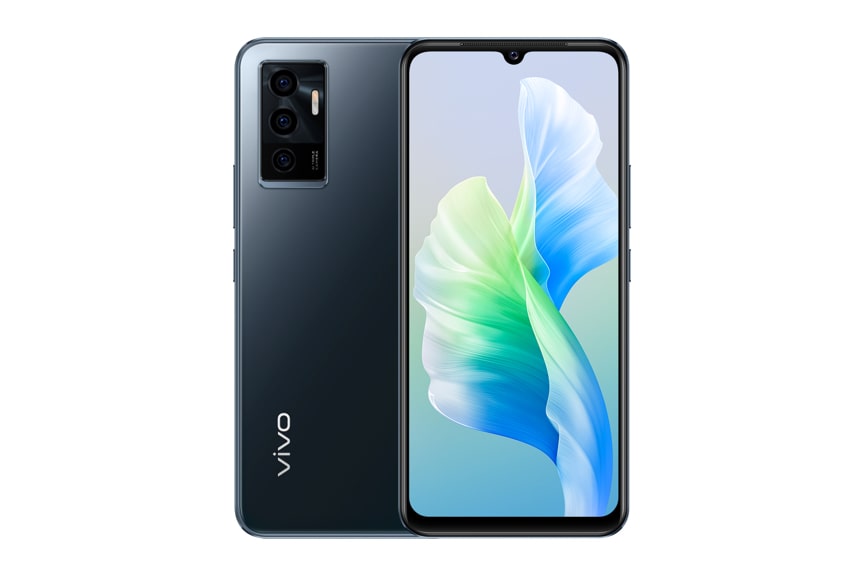
POCO has recently unveiled the POCO M4 Pro 5G in India. The company plans to launch F-series, X-series, and C-series of smartphones in the first half of 2022 in the country. The X-lineup is likely to include models such as POCO X4 5G / NFC variant and the POCO X4 Pro 5G. Now, a Telegram channel (via) has leaked the official wallpaper of the POCO X4 Pro 5G.
Redmi recently released the Redmi Note 11 Pro 5G smartphone in the global markets. It is speculated to get rebranded as the POCO X4 Pro 5G in India. The two phones will come with identical specifications, but they are likely to differ in the main camera department.
The Redmi Note 11 Pro 5G (global) has a 108-megapixel primary camera, but the POCO X4 Pro 5G will be sporting a 64-megapixel main camera. On a side note, the upcoming Redmi Note 11E Pro 5G China-exclusive phone will be a rebranded version of the Note 11 Pro 5G (global).
The POCO X5 Pro 5G is likely to come with a 6.67-inch S-AMOLED Full HD+ display that offers a 120Hz refresh rate. It may feature a 16-megapixel front-facing camera and a 64-megapixel (main) + 8-megapixel (ultrawide) + 2-megapixel (macro) triple camera unit.
The Snapdragon 695 chipset powered device may come with 6 GB / 8 GB of RAM and 64 GB / 128 GB of internal storage. It may house a 5,000mAh battery that offers 67W fast charging. It will come with Android 11 OS with MIUI 13 on top and a side-facing fingerprint scanner.
The TDRA listing of the phone revealed that its model number is 2201116PG. The same model number has been spotted at some other certification sites such as NBTC with the POCO X4 5G name. Hence, it is advisable to wait for further reports to know the final marketing name of the tweaked version of the Redmi Note 11 Pro 5G.
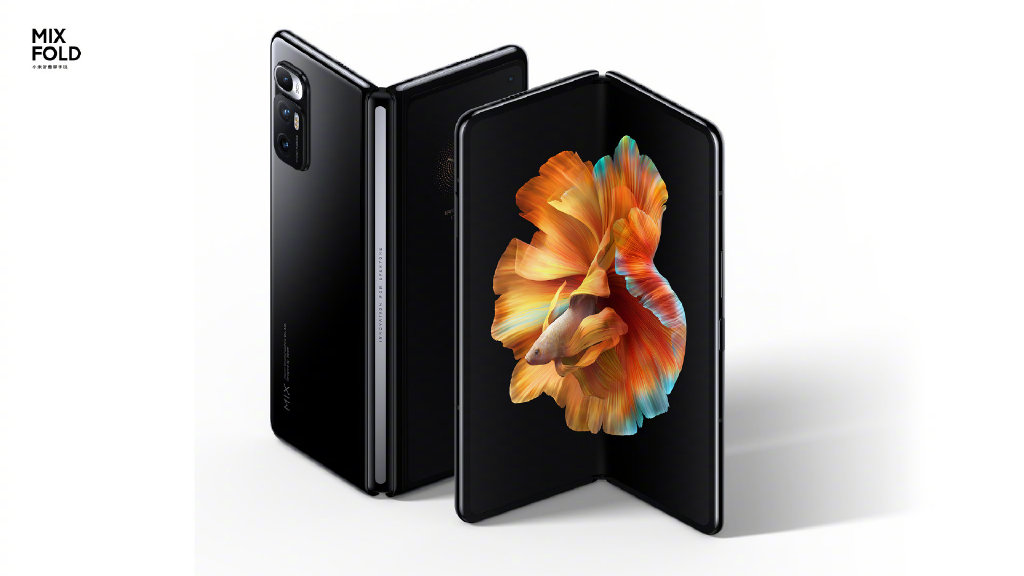
Last year, Xiaomi had launched the Mi MIX Fold as the brand’s first foldable smartphone and now the Chinese company is gearing up to launch its successor, which is likely to be dubbed MIX Fold 2.
Ahead of any such official confirmation from the company, there have been few reports in the past few months shedding light on some aspects of the upcoming foldable smartphone and now we have a possible timeline.
XIaomi Mi MIX Fold
A new report from Digital Chat Station reveals that the MIX Fold 2 foldable smartphone could get launched in the second quarter of this year (Q2 2022) which means that the device will launch before the end of June 2022.
If the previous reports are to be believed, then the upcoming second-generation MIX Fold smartphone will feature an 8.1-inch display with 2K resolution. It is also said that both the inner and the outer display panels on the device will have support for a high refresh rate.
It is also being claimed that this time, Xiaomi will be using new LTPO display panels on this flagship device, which means that there could be support for adaptive refresh rate as well, similar to what Samsung offers on its premium phones.
The device is most likely to come powered by the Qualcomm Snapdragon 8 Gen 1 processor and is expected to have a higher capacity battery and support for fast charging as well as wireless charging.
Apart from the MIX Fold 2, Xiaomi could also launch another foldable smartphone named MIX Flip to take on the likes of the Samsung Galaxy Z Flip series.
Samsung has confirmed that the company will be hosting its next event on 27th February, which coincides with the Mobile World Congress 2022 which is set to kick-off in Barcelona, Spain, and run till 3rd March.
Making the announcement, Samsung revealed that the company will host a fully virtual keynote on 27th February at 1:00 PM ET. The event will be live-streamed by the company on its own website as well as on YouTube.
This will mark the company’s first event after the launch of the flagship Galaxy S22 series smartphones a few days ago. However, there’s no information about what the company is planning to launch at the event.
Given that the Galaxy S22 series smartphones as well as the Galaxy Tab S8 lineup have already been launched, there’s a possibility that the company could focus on its foldable smartphones and reveal details about the upcoming Galaxy Z Fold and Flip phones. There’s also a possibility of the South Korean giant announcing new laptops, including premium Chromebooks or Windows 11-powered devices.
A lot has changed for Samsung when it comes to Mobile World Congress. Till 2018, the company announced its flagship Galaxy S-series phones at MWC but then it shifted the launch to its own Galaxy Unpacked events. In 2020, GSMA canceled the MWC event because of the COVID-19 pandemic, and last year, the event was postponed to June but Samsung didn’t attend the event physically.
Spotify, one of the leading music streaming platforms has been actively trying to expand its business and is focusing more on podcasts. In line with that, the company has announced that it is acquiring two podcast-related companies — Chartable and Podsights.
The company has revealed financial details related to these acquisitions but it marks the first major acquisition this year in the audio-related business.
Podsights’ team of around 40 full-time employees will join Spotify and the company says that it has no plans to adjust that team at this time. On the other hand, Chartable will be added to Spotify’s Megaphone.
Both the companies — Chartable and Podsights operate in the space of podcast marketing and ad attribution. They allow podcasters and networks to include tags in the shows to track details like who listened to the tracks, if they heard the ad or if they took any action upon hearing the advertisement, etc.
Talking more about the acquisition of Podsight, Spotify says that it will use the technology outside podcasting and bring it to the “full scope of the Spotify platform, including audio ads within music, video ads, and display ads.”
As for the Chartable, Spotify plans to focus more on the podcasters instead of advertisers. It will be integrating its audience insights and its promotional tools, SmartLinks and SmartPromos with Megaphone so podcasters can grow their business.
The development comes at a time when Spotify is facing backlash because of Joe Rogan’s podcast which critics say is spreading misinformation related to COVID-19. It has also led to several artists leaving the platform in protest.
It was reported in December that OPPO is gearing to introduce the OPPO F21, F21, and F21 Pro+ smartphones in India. The F21 and F21 Pro+ is likely to launch between March 17 and March 21, whereas the F21 Pro is expected to debut sometime later. Tipster Abhishek Yadav recently shared a live shot of the OPPO F21 Pro+ to give a glimpse at its design.
The OPPO F21 Pro+ real-life image shows that it will feature a triple camera unit. The bottom edge of the device has a 3.5mm audio jack, a microphone, a USB-C port, and a speaker grille. The appearance of the device is like the OPPO A96 5G that debuted in China recently.
The Dimensity 800U powered OPPO F19 Pro+ 5G was announced in March 2021. The same device was rebranded as the OPPO A95 5G in April 2021. The only noticeable difference between the two phones was that the former supports 50W fast charging, whereas the latter offers 30W fast charging. In July 2021, the company unveiled the OPPO Reno6 Z handset in global markets. The device featured a 32-megapixel front camera and a 64-megapixel triple camera unit. The rest of its specs were identical to the F19 Pro+/A95 5G.
Hence, it is likely that the OPPO F19 Pro+ 5G could be a tweaked version of the OPPO A96 5G. It features a 6.43-inch AMOLED FHD+ display, a 16-megapixel front-facing camera, and a 48-megapixel (main) + 2-megapixel (depth) dual-camera unit. It is equipped with the Snapdragon 695 chipset, 8 GB of RAM, 256 GB of built-in storage, and a 4,500mAh battery that supports 33W fast charging. The upcoming Reno7 Z is speculated to be similar to the F21 Pro+ and A96 5G.
Apart from appearing at the Geekbench benchmarking site, the upcoming Moto G22 has been spotted at certification platforms such as NBTC, EEC, and FCC. These listings have suggested that the Lenovo-owned brand may unveil it soon. Today, Nils Ahrensmeier from TechnikNews leaked the entire specifications and pricing of the Moto G22. Here is what to expect from the company’s next mid-range phone.
Motorola Moto G22 specifications (rumored)
The new leak states that the device will come with a 6.5-inch IPS LCD display that will produce an HD+ resolution and a 90Hz refresh rate. The tipster has shared a leaked render of a Motorola phone codenamed “Hawaii+,” which was originally leaked by well-known tipster Evan Blass. According to Blass, the Hawaii+ phone will feature an OLED panel, but the G22 has an LCD panel. Hence, it is likely that either Austin or Rhode (codenames) may launch as the Moto G22.
Motorola Hawaii+
The Moto G22 will be powered by the Helio G37 chipset, which was first seen on the Moto G Power (2022) that debuted last year. The smartphone is expected to offer users 4 GB of RAM and 64 GB of native storage. It may house a 5,000mAh battery that supports 18W fast charging. Despite housing a big battery, the G22 will weigh only 185 grams.
For selfies, the G22 may feature a 16-megapixel front camera with an f/2.45 aperture. The rear side of the device will be fitted with a 50-megapixel primary camera with an f/1.8 aperture, an 8-megapixel ultrawide lens with an f/2.2 aperture and a 118-degree FOV, and a 2-megapixel macro or depth camera with an f/2.4 aperture. It will run on the latest Android 12 OS and will offer users a microSD card slot for additional storage.
Motorola Moto G22 pricing (rumored)
The Moto G22 is likely to arrive in colors like Cosmic Black, Iceberg Blue, and White. The device may carry a price tag of 200 euros (~$228).
OPPO Find X5 series of smartphones will be showcased at the Mobile World Congress (MWC) 2022 tech trade show for the global audience. For China, it will be holding a dedicated unveiling event at 7 PM on Feb. 24. The Chinese manufacturer is likely to announce a couple of devices such as the Find X5 series, OPPO Pad tablet, Enco X2 TWS earbuds, and OPPO Watch 2’s new color variants. Coming back to the Find X5 series, the Find X5 and X5 Pro have appeared at TENAA today to reveal their major specifications before the official announcement.
OPPO Find X5 specifications (rumored)
The OPPO Find X5 has a 6.55-inch AMOLED flat display that offers an FHD+ resolution and it is likely to be powered by the Snapdragon 888 (or 888+) chipset. It may come with 8 GB / 12 GB of RAM and 128 GB / 256 GB of native storage.
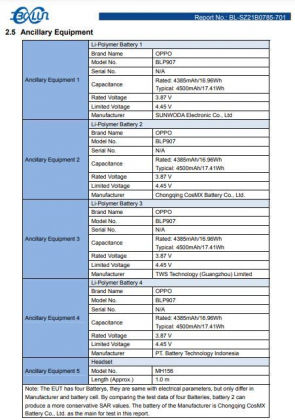
It has a 32-megapixel front camera, which could be a Sony IMX615 lens. It features a 50-megapixel + 50-megapixel + 13-megapixel rear cameras system, which includes two Sony IMX766 lenses for main and ultrawide snappers and a 13-megapixel Samsung telephoto camera. It has a 2,340mAh (rated value) dual-cell battery. Reports have revealed that it will pack a 4,800mAh (typical value) combined capacity battery.
OPPO Find X5 and Find X5 Pro renders by Winfuture.de
OPPO Find X5 Pro specifications (rumored)
The OPPO Find X5 Pro has a 6.7-inch AMOLED curved-edge screen that offers a QHD+ resolution. The 2.99GHz chip mentioned in its TENAA listing seems to be the Snapdragon 8 Gen 1 chip. In China, it will come with 8 GB / 12 GB / 16 GB of RAM and 128 GB / 256 GB / 512 GB of built-in storage.
It will be equipped with a 32-megapixel selfie snapper and a 50-megapixel + 50-megapixel + 13-megapixel triple camera unit. Past reports have revealed that it will feature a Sony IMX709 front camera, and its rear shell will have a pair of OIS-enabled Sony IMX766 lenses for main and ultrawide cameras along with a Samsung S5K3M5 telephoto camera. TENAA mentions that it has a 2,440mAh (rated value) dual-cell battery. Previous reports have revealed that it will be backed by a 5,000mAh (typical value) combined capacity battery.
The Find X5 series is expected to carry support for 80W wired charging and 50W wireless charging. It is expected to run on Android 12 OS and ColorOS 12.1. Both phones have an in-screen fingerprint scanner.
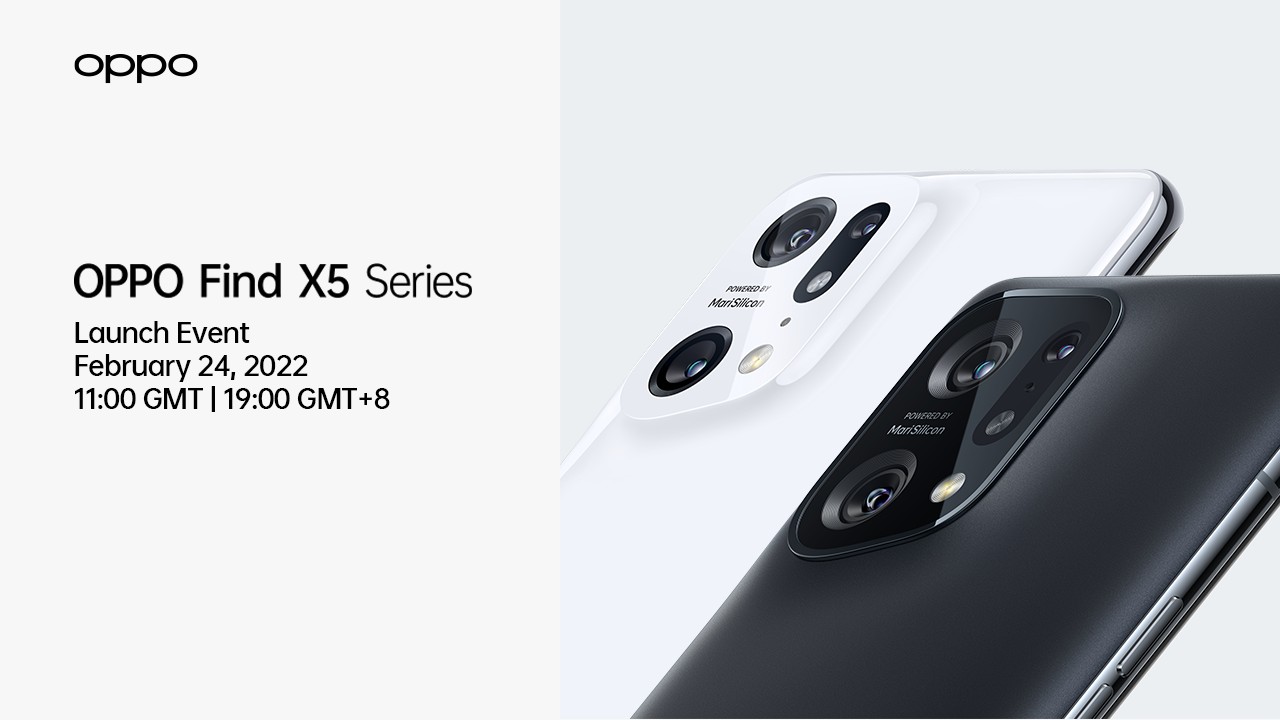
OPPO is gearing up to launch its next-generation Find-series premium smartphones and now the official launch date of the upcoming devices has been confirmed by the company.
The China-based company has sent out media invites confirming that the OPPO Find X5 series launch event will take place on 24th February and the virtual event will be live-streamed at 11:00 AM GMT.
At the same launch event, the company is also expected to announce the OPPO Enco X2 headphones, a tablet named OPPO Pad, and a smartwatch named OPPO Watch2.
So far, the company has confirmed that the flagship smartphones will come powered by the Qualcomm Snapdragon 8 Gen 1 chipset. It has also been revealed that the phone will be running the ColorOS based on the Android 12 operating system.
Recently, OPPO also revealed its partnership with Hasselblad for the development of the camera module used in the Find X5 lineup. It will also use the MariSilicon NPU, which is a 6nm chip for handling image processing tasks.
If the reports are to be believed, then the OPPO Find X5 Pro features a 6.67-inch AMOLED LTPO Quad HD+ display that offers a screen refresh rate of 120Hz and comes with a layer of Corning Gorilla Glass Victus for protection.
The device, powered by the Qualcomm Snapdragon 8 Gen 1 processor, will come packed with up to 12GB of LPDDR5 RAM and up to 512GB of UFS 3.1 internal storage.
In the camera department, the device is said to have a 50-megapixel Sony IMX766 primary sensor, a 50-megapixel Sony IMX766 ultrawide sensor, and a 13-megapixel telephoto) lens completing the triple-camera setup. On the front side, the device will have a 32-megapixel Sony IMX709 lens for snapping selfies and video calls.
It is expected to be powered by a 5,000mAh battery with support for 80W fast charging and 50W wireless charging. We expect the company to reveal more details about these smartphones through teasers in the coming days.
The Redmi Note 11 series recently hitten the shelves in the global market with different specifications if compared to the same lineup for the Chinese market. It is composed of 4 devices: Redmi Note 11, 11S, 11 Pro, and 11 Pro 5G. This is a comparison highlighting the differences between their specifications.
Xiaomi Redmi Note 11 vs Xiaomi Redmi Note 11S vs Xiaomi Redmi Note 11 Pro vs Xiaomi Redmi Note 11 Pro 5G (Global)
Xiaomi Redmi Note 11
Xiaomi Redmi Note 11S
Xiaomi Redmi Note 11 Pro
Xiaomi Redmi Note 11 Pro 5G
DIMENSIONS AND WEIGHT
159.9 x 73.9 x 8.1 mm,
179 g
159.9 x 73.9 x 8.1 mm,
179 g
164.2 x 76.1 x 8.1 mm,
202 g
164.2 x 76.1 x 8.1 mm,
202 g
DISPLAY
6.43 inches, 1080 x 2400 pixels (Full HD+), AMOLED
6.43 inches, 1080 x 2400 pixels (Full HD+), AMOLED
6.67 inches, 1080 x 2400 pixels (Full HD+), Super AMOLED
6.67 inches, 1080 x 2400 pixels (Full HD+), Super AMOLED
Triple 108 + 8 + 2 MP, f/1.9 + f/2.2 + f/2.4
16 MP f/2.4 front camera
BATTERY
5000 mAh, fast charging 33W
5000 mAh, fast charging 33W
5000 mAh, Fast Charging 67W
5000 mAh, fast charging 67W
ADDITIONAL FEATURES
5G, dual SIM, IP53 certification
5G, dual SIM, IP53 certification
5G, dual SIM, IP53 certification
5G, dual SIM, IP53 certification
Design
These three devices do not differ too much in terms of design, but it is pretty evident that the color options and the overall aesthetics of the Redmi Note 11 Pro 5G are more detailed and attractive.
Display
The Redmi Note 11 Pro and the Pro 5G come with a wider display sporting a diagonal of 6.67 inches, as well as a higher 120 Hz refresh rate. For the rest, they are almost the same as the other two variants: AMOLED panels with HDR10 and a Full HD+ resolution.
Specs & Software
The 5G variant is the most powerful thanks to the Snapdragon 695 mobile platform, and it is also the only one to support the 5G connectivity. The vanilla version is less impressive due to inferior memory configurations, while the 11S and the 11 Pro sit in the middle with an Helio G96 and up to 8 GB of RAM. All the phones run Android 11 customized by MIUI 13.
Camera
If we exclude the vanilla version sporting an inferior 50 MP main camera, all the phones come with a 108 MP main sensor alongside an 8 MP ultrawide lens.
The whole series is equipped with 5000 mAh batteries, but the Pro variants provide faster charging speeds thanks to 67W fast charging. Further, the Pro 5G should allow for longer battery life because its chipset is built at 6 nm.
Price
The prices vary depending on the market: in Europe, the prices begin from less than €200/$228 and they go up to €330/$375 for the most expensive configuration of the Pro 5G. If you do not need 5G, it does not make sense to opt for the Pro 5G: you’d better go for the original Note 11 Pro. If you do not even need 67W fast charging, then choose the 11S. The Redmi Note 11 has inferior cameras, so you should think twice before choosing it.
Xiaomi Redmi Note 11 vs Xiaomi Redmi Note 11S vs Xiaomi Redmi Note 11 Pro vs Xiaomi Redmi Note 11 Pro 5G (Global): PRO and CONS
Motorola and Verizon are coming up with a smaller 5G neckband that could create the opening to enable lighter and slimmer AR/VR headset designs going forward. While the trajectory of development of AR/VR headsets has seen a gradual decrease in their sizes, they are still currently quite large. The new design by Motorola and Verizon looks at an innovative approach to the large headset by introducing a 5G neckband that will power such AR/VR headsets or glasses.
The new 5G neckband is the culmination of a joint effort by both Motorola and Verizon and the device is an iPod-like item that can be worn on the neck although it looks quite visible due to its current size. The idea is to free important space in the headset itself, as they will not need to integrate a processor and other components into the headset or glasses, thus freeing up space. The 5G neckband is equipped with a Snapdragon 8 Gen 1 chipset in addition to 5G connectivity support. The 5G support will enable XR processing to be carried out via the cloud.
The new Motorola-Verizon 5G neckband for AR/VR headsets has a 5,000 mAh battery, a touchpad, USB-C support, DisplayPort 1.4 connectivity, an accelerometer, and a gyroscope. These features will ensure the versatility of the device, although there is no word yet about the release date and pricing of the 5G neckband. Both companies are currently working on AR and VR applications and we expect more official details from the duo on the release date for the device and more.
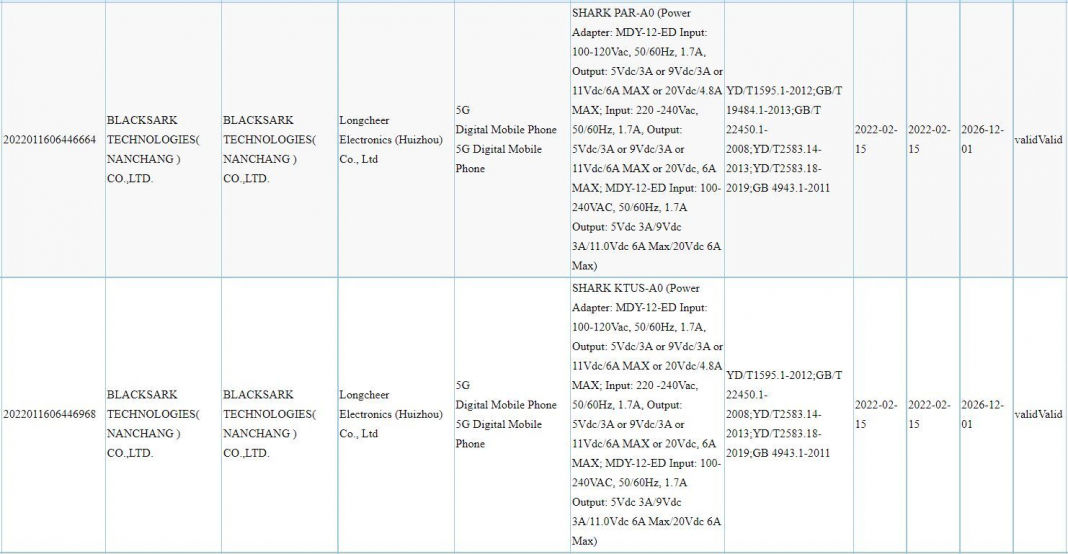
The Black Shark 5 series of gaming smartphones have recently been making rounds of Chinese certification databases hinting at an imminent launch. And now, the Black Shark 5 and the Black Shark 5 Pro have received approval from China’s 3C certification site revealing their fast-charging capabilities.
Both the Black Shark 5 carrying the model number PAR-A0 and Black Shark 5 Pro with model number KTUS-A0 are revealed to carry 120W fast-charging support. This is in line with the previous leaks about the Black Shark 5 series smartphones.
Black Shark 5 specifications (rumored)
A recent TENAA listing of the Black Shark 5 revealed that the smartphone measures 163.83 x 76.25 x 10.37mm and weighs 223 grams. The device will be available in multiple colors such as White, Dawn White, Dark Universe Black, and Exploration Gray.
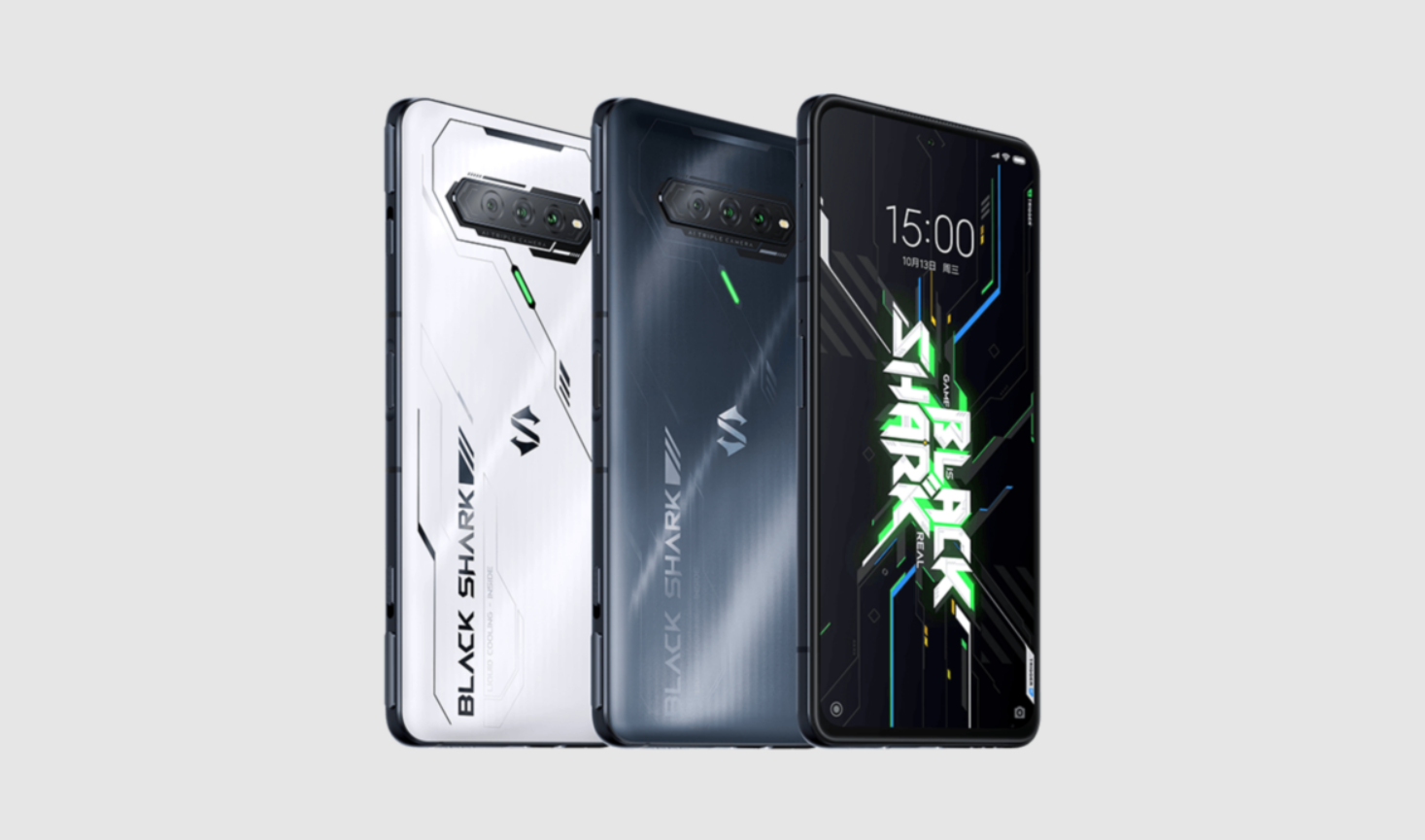
Black Shark 4S Pro
The Black Shark 5 has a 6.67-inch AMOLED FHD+ display with an in-screen fingerprint scanner. It is powered by a 3.2GHz chip, which could be a Snapdragon 8-series chip. The SoC is coupled with 8 GB / 12 GB of RAM and 128 GB / 256 GB of storage. It draws power from a 4,650mAh battery and supports 120W fast charging. For photography, it has a 64-megapixel triple camera unit on the back and a 13-megapixel front camera.
Black Shark 5 Pro specifications (rumored)
The Black Shark 5 Pro is expected to measure 163.86 x 76.53 x 9.8mm and weighs 226 grams. It will feature a 6.67-inch FHD+ AMOLED screen with an in-display fingerprint sensor. It will likely come with a Snapdragon 8 Gen 1 under its hood with 8 GB / 12 GB / 16 GB of RAM. The Black Shark 5 Pro may come in 256GB and 512 storage variants. It features a 4,650mAh battery and will come with 120W fast charging. So far, it is rumored that the Black Shark 5 Pro has a triple camera setup on the rear panel with a 108-megapixel primary sensor while on the front it is said to come with a 13-megapixel selfie snapper.
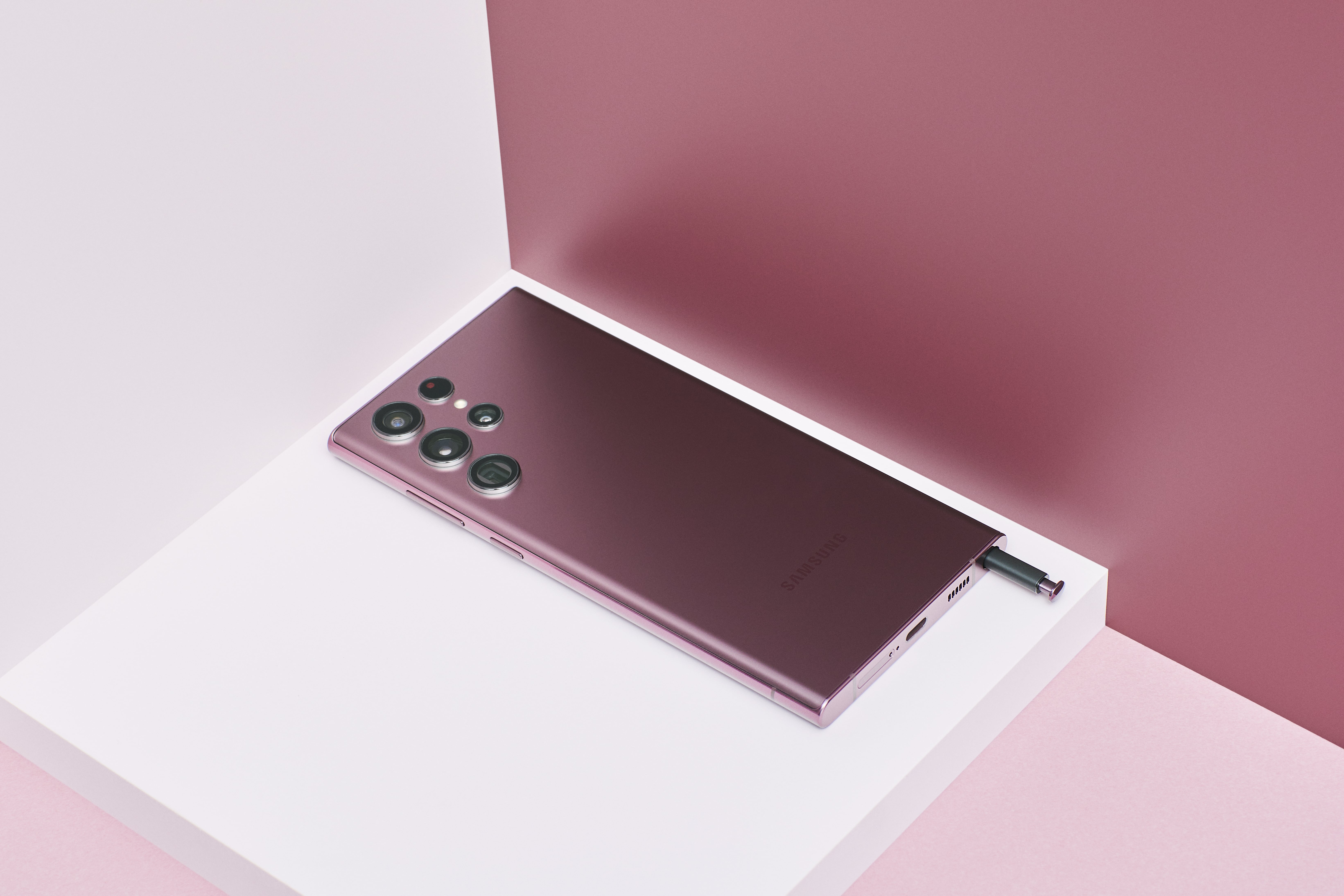
Samsung Galaxy S22 Ultra has been put to an extreme durability test that included being run over by a vehicle and it came out unscathed. The latest details come from a series of tests that the Galaxy S22 Ultra was put through including water resistance and Samsung‘s latest flagship smartphone performed excellently all-round.
A few days back, news surfaced about the rugged performance of the Samsung Galaxy S22+ when it was put through several durability tests. The Galaxy S22 has a tough metal alloy frame made from Armor Aluminum and the device performed impressively. Now, PBK reviews have reported the results from the durability tests that the Galaxy S22 Ultra underwent. We know that the Galaxy S22 Ultra is covered in both sides with Gorilla Glass Victus+ and it is as durable and scratch-proof as hyped.
The new tougher frame of the Galaxy S22 Ultra outshines that of its predecessor, the Galaxy S21 Ultra when put through the same tests, as it showed less scuffing and scratching. The Galaxy S22 Ultra was placed on a concrete surface and ran over by a car without any observable or functional issues thereafter, as it remained operational. The IP68 water-resistance capability of the device was also tested and the Galaxy S22 Ultra was unaffected by being immersed in water. Although being rolled over by a car is not a definitive test of the durability of the smartphone, we are assured that it could outperform its predecessors in drop tests.
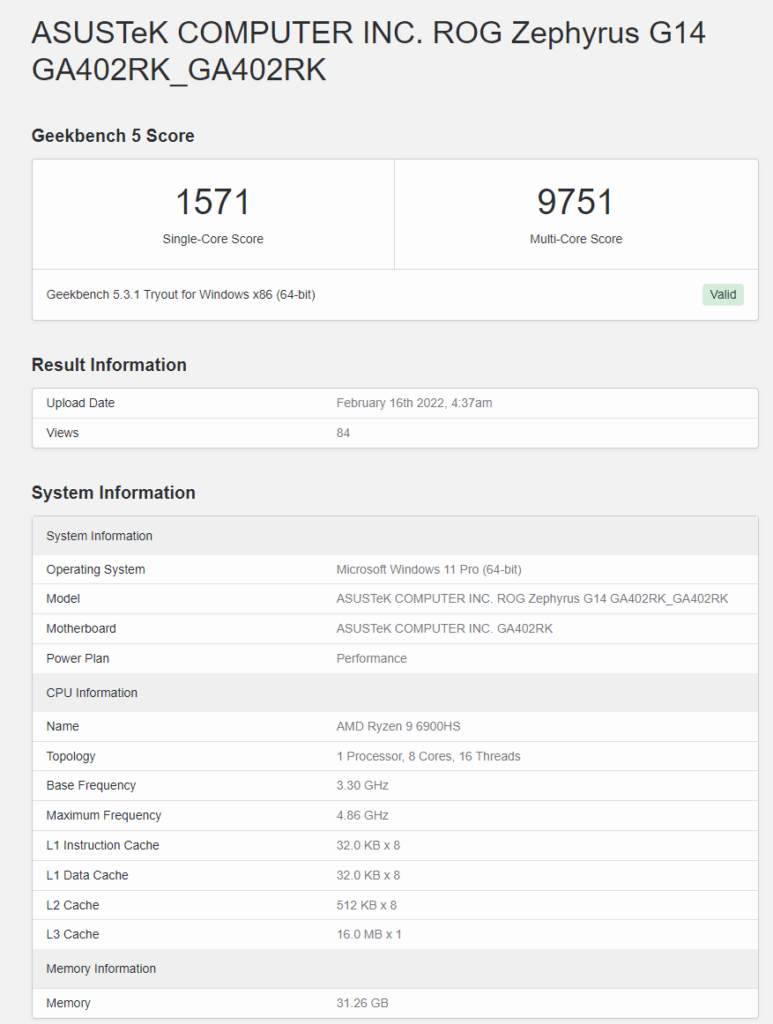
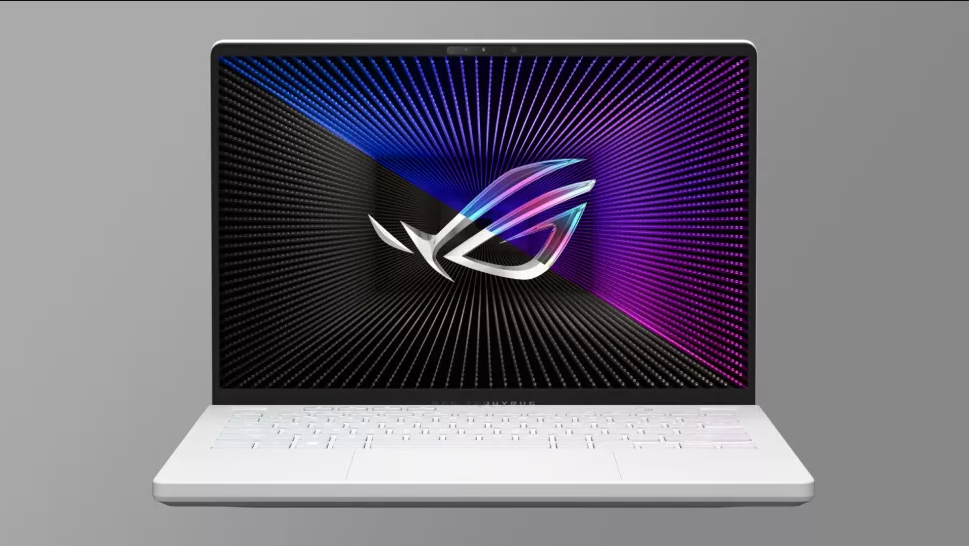
Last month at the MWC event, ASUS announced two new ROG Zephyrus laptops – G14 and G15. The gaming laptops are scheduled to be available in mid to late 2022. Now, ahead of the availability, the ASUS ROG Zephyrus G14 has passed the Geekbench certification.
The ASUS ROG Zephyrus G14 has scored 1571 single-core points and 9751 multi-core points on the Geekbench version 5. The chipset is 6.2% and 24.4% faster than any average Ryzen 9 5900HS(via). The laptop also emerged on the PugetBench’s Photoshop and Premiere Pro benchmarks.
The laptop scored 1,022 points on the Photoshop test and 550 points on the Premiere Pro standard test. Here, the Photoshop score is about 8% faster than the ASUS ROG Flow Z13’s Photoshop score.
Coming to the specs, the ASUS ROG Zephyrus G14 2022 has two display options — a 14-inch QHD panel (120Hz refresh rate) and a 14-inch FHD panel(144Hz refresh rate). Both come with a 91% screen-to-body ratio and an aspect ratio of 16:10.
The laptop comes powered by the new AMD Ryzen 9 6900HS processor that has 8 cores and 16 threads. It has a Radeon RX 6800S GPU paired with 8GB GDDR6 VRAM. It comes with 16GB of DDR5 4800MHz RAM and is expandable up to 32GB. It comes with up to 1TB of M.2 NVMe PCIe 4.0 SSD storage.
As for the connectivity options, it has Wi-Fi 6E, Bluetooth v5.1, 2x USB Type-C ports, USB Type-A 3.2 Gen 2 ports, an HDMI 2.0b port, a card reader, and a headphone jack. The gaming laptop has a 76Wh battery and supports 100W PD charging technology.
The tablet market got a breath of fresh air as a result of the pandemic. Since then, we have seen a number of new tablets including the Xiaomi Pad 5 and more recently, the Galaxy Tab S8. Recently, there have been frequent revelations related to tablet products. While the epidemic is still ongoing, large-screen devices still have considerable market demand.
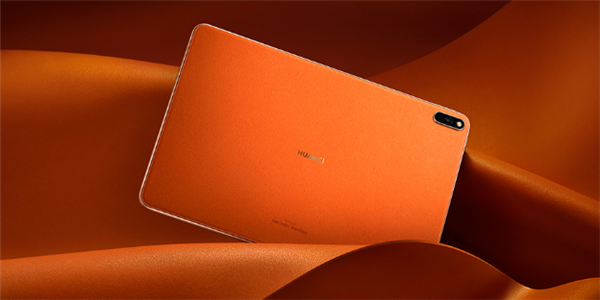
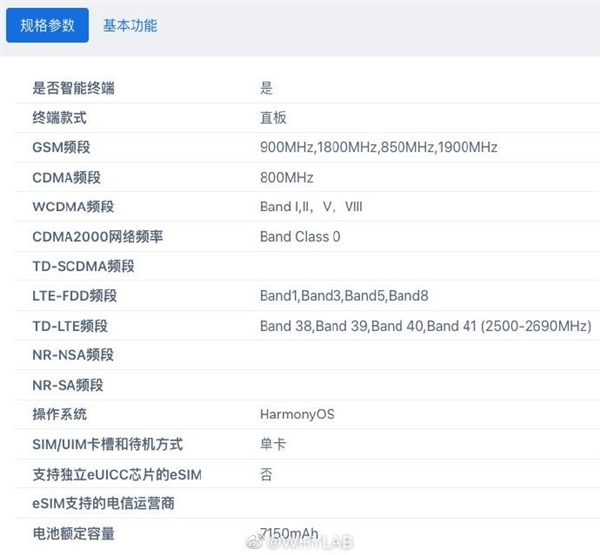
A new tablet product has now reportedly appeared on the official website of the Ministry of Industry and Information Technology (MIIT). This was revealed by Weibo blogger @WHYLAB who thinks the tablet is the Huawei MatePad 10.4 2022 model.
A photo of the tablet showing the front side was also listed by the Chinese certification. The image shows the tablet will have bezels around the screen.
In terms of the specs, the new Huawei MatePad 10.4 2022 model codenamed BAH4-AL10 will be equipped with HarmonyOS and have a 7150mAh battery, which is 100mAh higher than the previous generation.
The slate will be powered by a Qualcomm Snapdragon 778G processor which was found in a number of mid-range mobile phones in 2021. Thus, the tablet looks like a mid-range slate.
The display specification wasn’t listed but the MatePad 10.4 is tipped to packs a 1200P resolution screen which is actually a 16:10 version of 1080P resolution. This screen ratio is in line with Huawei’s consistent product design philosophy.
The tablet will also have a SIM card slot which means it won’t be a WiFI-only tablet but there is no support for 5G connectivity. However, compared to mobile phones, tablets do not seem to be particularly dependent on 5G networks. A large part of the user group will choose a more affordable Wi-Fi version and use mobile phone hotspots to provide the network.
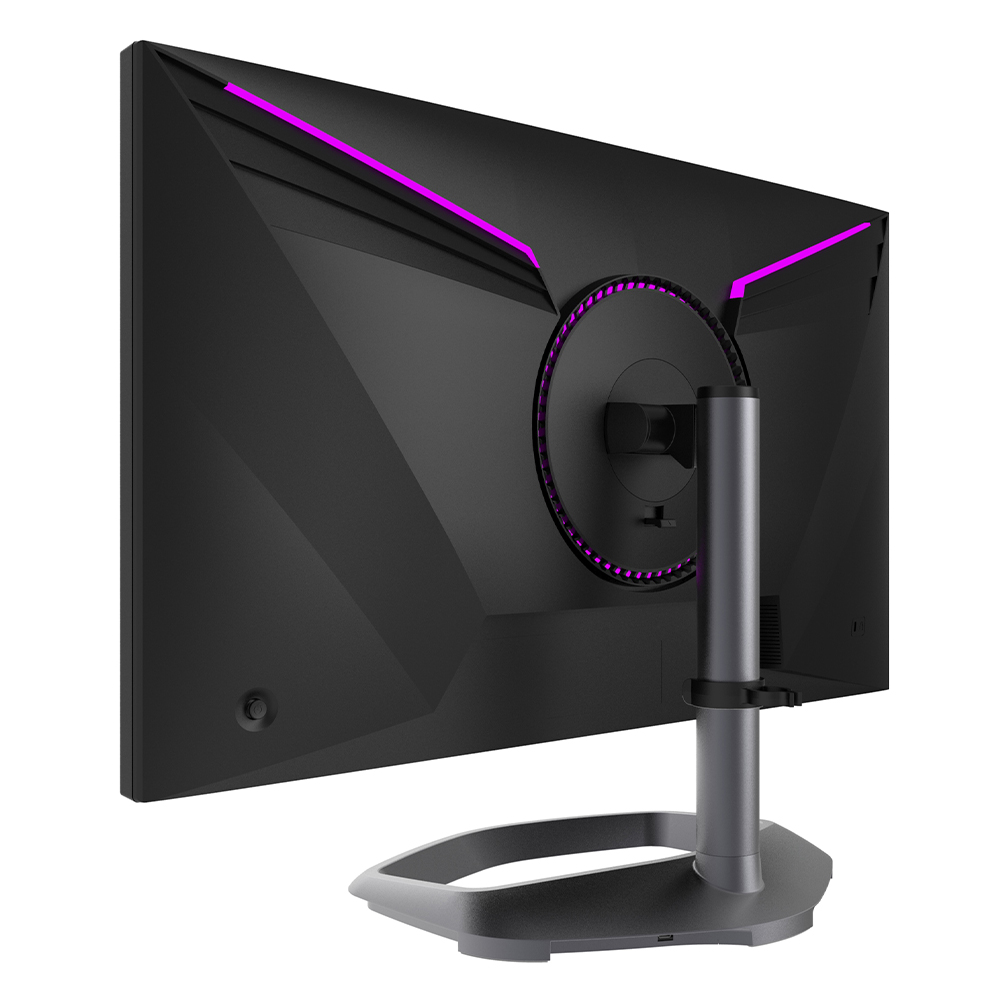
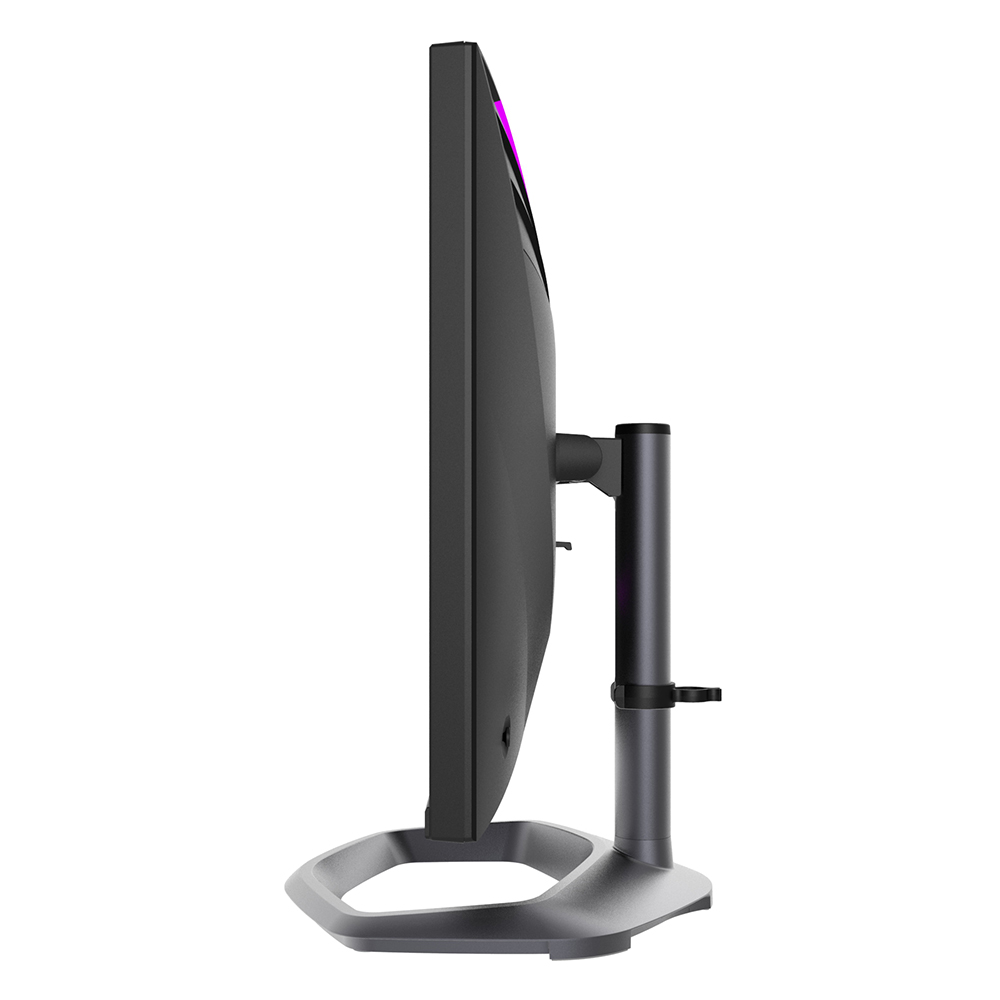
The PC components and peripherals brand Cooler Master has just launched their first mini-LED monitor dubbed the Cooler Master GP27-FQS. It features a 27-Inch 2K screen made by AU Optronics, a Taiwanese display manufacturer.
According to the official spec sheet, it comes with a mini-LED IPS panel with a 2K (2560 x 1440p) resolution which on technicality can be called QHD. The display uses quantum dot technology enabling it to produce an ultrawide color gamut including 100% of Adobe RGB, 97% of DCI-P3, and 83% of BT2020. It offers 600nits of brightness which can be bumped up to 1200 nits in HDR mode and comes with a DisplayHDR1000-certification.
The Cooler Master GP27-FQS sports a 1000:1 contrast ratio. However, using its Mini-LED backlighting’s 576 local dimming zones, the contrast ratio can be further bumped up to 10,000:1.
Cooler Master GP27-FQS
1 of 3
Now for the gaming-oriented specs, this monitor has a 165Hz refresh rate along with a 1ms response time. It also supports Adaptive-Sync via FreeSync Premium. The monitor is also easy on the eyes with Low Blue Light emission and features a customizable LED strip on the back for extra FPS (kidding).
The Cooler Master GP27-FQS has abundant ports including two HDMI 2.1 ports and one DP 1.4 port (with DSC support), as well as one USB Type-C port with 90W USB-PD support, one USB Type-B port, and two USB Type-C ports -A port. It also comes with a built-in pair of 2W speakers. The monitor stand offers tilt, swivel, and height adjustments and supports a 100 x 100mm VESA wall mount.
The GP27-FQS will come with a three-year warranty and is expected to be priced around $699 which is rather affordable for a mini-LED screen.
OnePlus will launch the Nord CE 2 tomorrow in the Indian market. Ahead of its debut, the tipster Ishan Agarwal has shared official renders of the smartphone.
The OnePlus Nord CE 2 renders show the device in the Bahamas Blue color variant. Earlier, we learned that the Nord CE 2 will also have a Gray Mirror Shade. Coming to the renders, the phone has a punch-hole display with narrow bezels on all three sides, but at the bottom, it has a noticeable chin. It has a triple camera system at the rear and a single selfie shooter at the top left.
The smartphone’s specs were leaked previously. The device will come with a 6.43-inch FHD+ AMOLED screen with a 90Hz refresh rate. As for the cameras, it will have a 64MP + 8MP + 2MP triple rear camera system. It will have a 16MP selfie camera.
Powering the smartphone will be the MediaTek Dimensity 900 SoC. The phone will have 6GB of LPDDR4x RAM and 128GB of UFS 2.2 onboard storage. It will pack a 4,500mAh battery and 65W SuperVOOC charging support.
A few days back, a tipster revealed the pricing of the phone. The OnePlus Nord CE 2 is touted to start at Rs. 23,999(~$317) for the 6GB RAM and 128GB storage variant and Rs. 25,999(~$344) for the 8GB RAM and 128GB storage variant.
OnePlus is all geared up to launch their upcoming mid-ranger, the OnePlus Nord CE 2 tomorrow (Feb 17). The brand has already revealed various specs and features of the upcoming smartphone, including its design. And the remaining specs have appeared through leaks and rumors, so let’s take a look at what we know so far.
Design & Display
The OnePlus Nord CE 2 looks quite similar to the Nord CE except for its camera bump design. It’s apparent that the camera bump borrows from the design of the OPPO Find X3 Pro. The Nord CE 2 has the volume rocker located on the left, and the power button on the right side. However, it appears to be missing the iconic OnePlus alert slider.
On the front, it features slim bezzles on three sides with a sizable chin on the bottom. The device is expected to come with a 6.43-inch FHD+ 90Hz AMOLED display featuring a punch-hole cutout located in the top left for the front camera.
Cameras
For photography, the smartphone will house a triple camera system comprising of a 64MP AI primary camera, an 8MP ultra-wide unit (119° FOV), and a 2MP macro snapper. On the front, it will come with a 16MP selfie shooter.
Performance
The device is officially revealed to house a MediaTek Dimensity 900 SoC under its hood. It is also rumored to come with at least 8GB of LPDDR4x RAM and 128GB UFS 2.2 storage.
OnePlus Head of Product Oliver Zhang recently shared in an Interview that the Nord CE 2 will come with a 4,500mAh battery supporting up to 65W fast-charging using SuperVOOC branded technology used by OPPO products.
He also stated that the device will feature a microSD card slot that can expand the memory by up to 1TB using a TF card. The device will also come with a 3.5mm headphone jack for music lovers who don’t like compromising over quality just to go wireless.
Pricing and Availability
The OnePlus Nord CE 2 is said to arrive at a starting price of Rs. 23,999(~$317) for the 6GB RAM and 128GB storage variant and Rs. 25,999(~$344) for the 8GB RAM and 128GB storage variant. It is tipped to have two color variants Bahama Blue and Gray Mirror. The phone will release on February 17, 2021, and will be made available for purchase on February 21 for the Red Cable Club members.
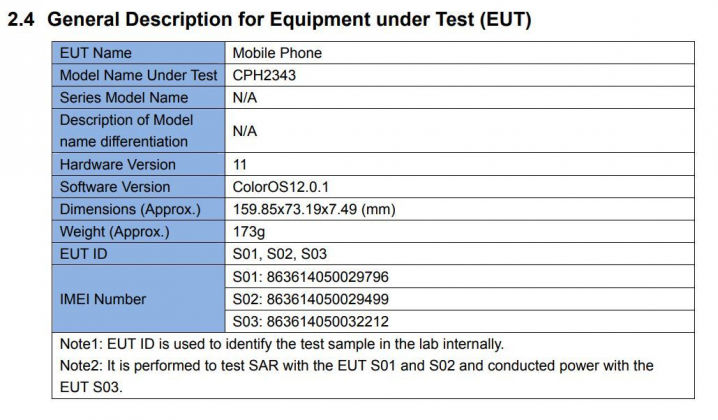
Oppo has already launched the Reno7 and Reno7 Pro in the Indian market. Now, the company is all set to launch another model in the series dubbed Oppo Reno7 Z. The phone has now appeared on the FCC certification site revealing the battery and measurements.
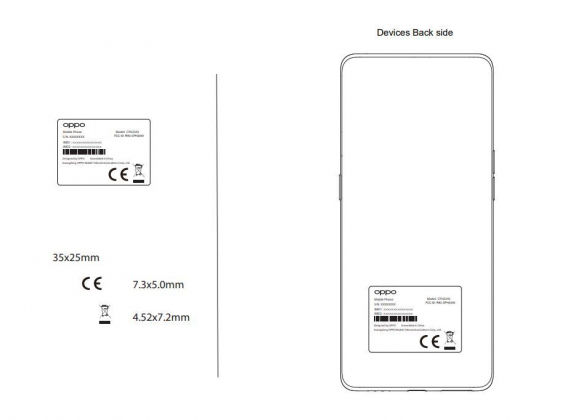
The Oppo Reno7 Z has the model number CPH2343 and it packs a 4,500mAh battery. It will boot on the ColorOS 12.0.1 out of the box. Interestingly, the device will be only 7.49mm in thickness. It weighs 173 grams. As per the images, the phone has a volume rocker on the left side and a power button on the right spine.
1 of 3
Previously, the phone was spotted on Geekbench and it revealed the internals of the device. The Reno7 Z will come powered by the Qualcomm Snapdragon 480+ SoC. To those unaware, it is an octa-core chipset based on the 8nm process. It has Andreno 619 GPU and is paired with 8GB of RAM. The listing revealed that the device runs on Android 11 out of the box.
Other than this, the handset also appeared on the TUV Rheinland certification site. It confirmed that the device supports 33W fast charging technology. Additionally, the renders of the phone were leaked earlier.
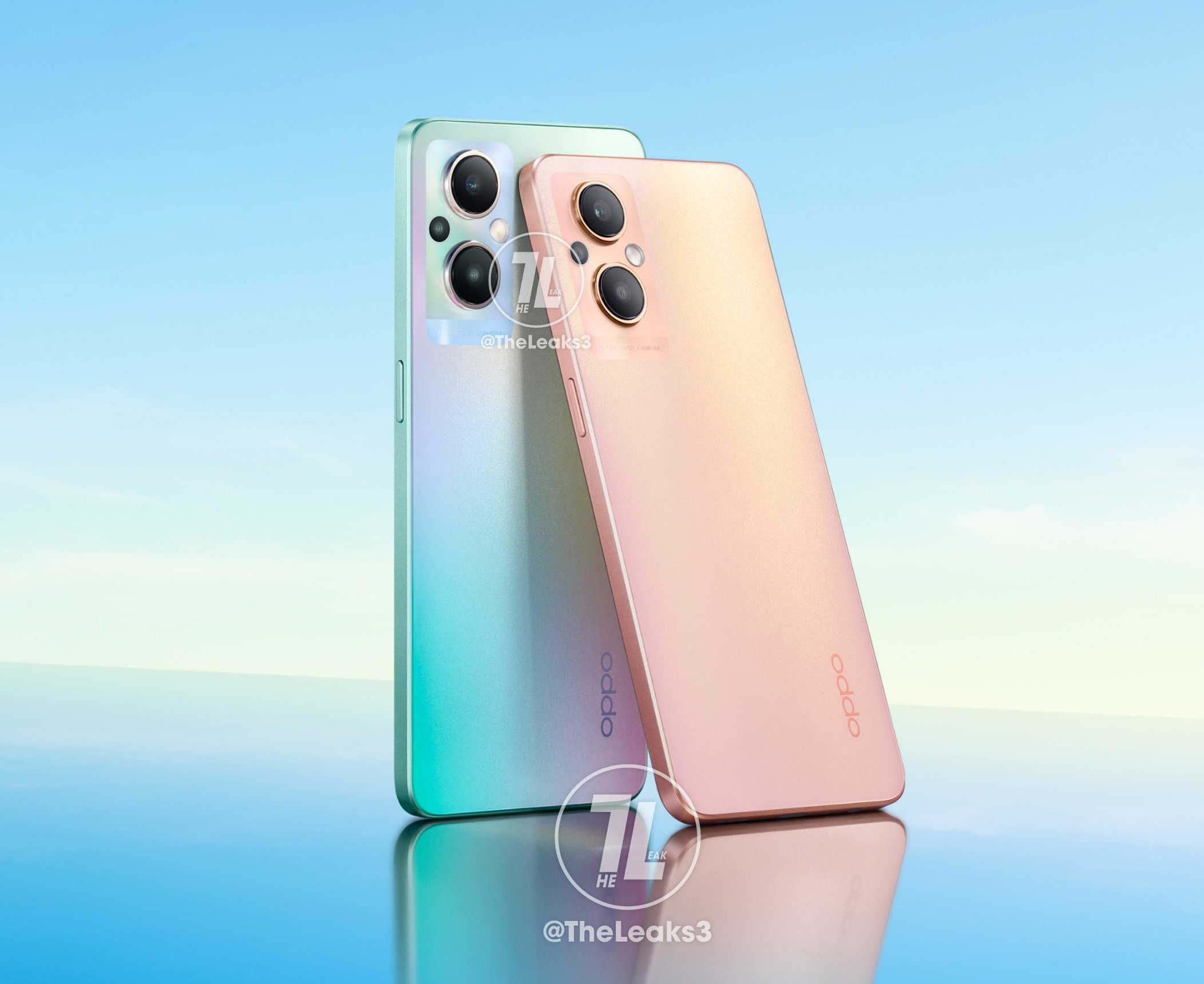
The smartphone seems to feature a sleek design and has a minimal looking back. As per the renders, the phone looks similar to the Oppo A96. It is worth noting that the A96 has dual cameras but the Reno7 Z renders show a triple camera system.
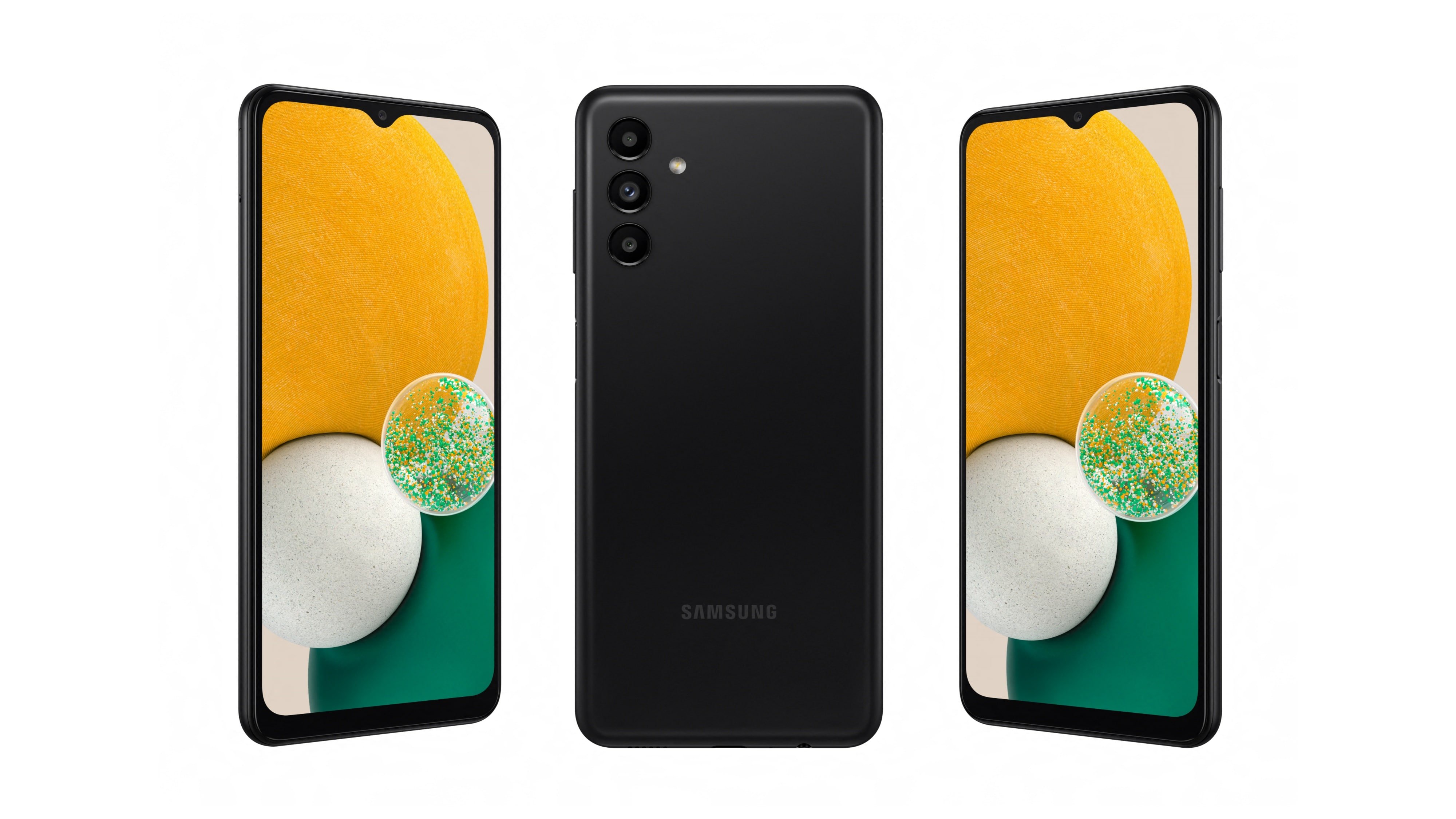
Samsung’s Galaxy A13 4G has been doing rounds on the Internet lately. Previously, it was certified on Bluetooth SIG and now, the phone has emerged on the FCC listing. The listing reveals some significant details of the device. Let’s take a look.
As per FCC, the Samsung Galaxy A13 4G carries the model number SM-A135F/DSN. It houses a 5,000mAh battery with the battery model number – EB-BA217ABY. It supports 15W fast charging technology. Furthermore, it has dual-band Wi-Fi and has 2.4Ghz and 5Ghz support.
The smartphone will come with a microSD card slot and have NFC support. The device has Bluetooth v5.0 support and will be bundled with a travel adapter that has the model number – EP-TA800. The phone will also come with a wired earphone and a USB Type-C cable.
Apart from this, the phone was previously spotted on Geekbench. It scored 152 single-core points and 585 multi-core points. The device is powered by the Exynos 850 octa-core SoC. Interestingly, the phone will boot on Android 12 out of the box and come in a 3GB RAM variant. The phone’s other specs are a quad-camera setup and a side-facing fingerprint scanner.
Regarding its launch, as per a report, Samsung started the production of the device back in November in India.
In related news, Samsung has already launched the Galaxy A13 5G in December last year. It comes with a 6.5-inch HD+ LCD display with a 90Hz refresh rate. It has a 50MP + 2MP + 2MP triple camera system and Dimensity 700 SoC, under the hood.
Yesterday, we reported on the potential pricing of the Vivo V23e 5G in India. The smartphone was rumored to launch on February 21, and now, it has officially been confirmed by the Company.
Vivo V23e 5G Sunshine Coast
To be exact, the device will debut at 12 PM on February 21 as stated on the Vivo India website. The company has also revealed that the upcoming smartphone will have an Ultra-Slim Glass Design along with a triple camera setup comprising of a primary, a super-wide-angle, and a macro camera. However, as the Vivo V23e is already available in Thailand since November 2021, we know almost all of its specifications and features.
Vivo V23e 5G specifications & features
The Vivo V23e sports a 6.44 inch Full HD+ AMOLED display with 2400 x 1080 pixels screen resolution. Under the hood, it houses a MediaTek Dimensity 810 processor, paired with 8GB of RAM. For storage, it packs 128GB of internal storage along with memory expansion support of up to 1TB through a microSD card slot. On the front, the smartphone also features an in-display fingerprint scanner as well as a 44-megapixel eye auto-focus selfie camera on a waterdrop notch.
Meanwhile, the rear features a triple camera setup, which includes a 50-megapixel primary sensor, 8-megapixel ultra-wide-angle lens, and a 2-megapixel macro camera. Other features include Dual SIM, 5G, Wi-Fi, Bluetooth v5.1, USB Type-C port, and GPS. The device runs Android 11 and is powered by a 4,050mAh battery pack that supports 44W fast charging.
A recent report has also revealed that the Vivo V23e will launch in India with a price tag of Rs 25,990 (~$222). This pricing will belong to the 8 GB RAM + 128 GB storage of the phone. It is unclear whether the V23e 5G will be made available in other variants in India. Previous reports have suggested that the handset may come in three colors such as gradient blue, Midnight Blue, and Sunshine Gold.
We use cookies on our website to give you the most relevant experience by remembering your preferences and repeat visits. By clicking “Accept”, you consent to the use of ALL the cookies.
This website uses cookies to improve your experience while you navigate through the website. Out of these, the cookies that are categorized as necessary are stored on your browser as they are essential for the working of basic functionalities of the website. We also use third-party cookies that help us analyze and understand how you use this website. These cookies will be stored in your browser only with your consent. You also have the option to opt-out of these cookies. But opting out of some of these cookies may affect your browsing experience.
Necessary cookies are absolutely essential for the website to function properly. This category only includes cookies that ensures basic functionalities and security features of the website. These cookies do not store any personal information.
Any cookies that may not be particularly necessary for the website to function and is used specifically to collect user personal data via analytics, ads, other embedded contents are termed as non-necessary cookies. It is mandatory to procure user consent prior to running these cookies on your website.