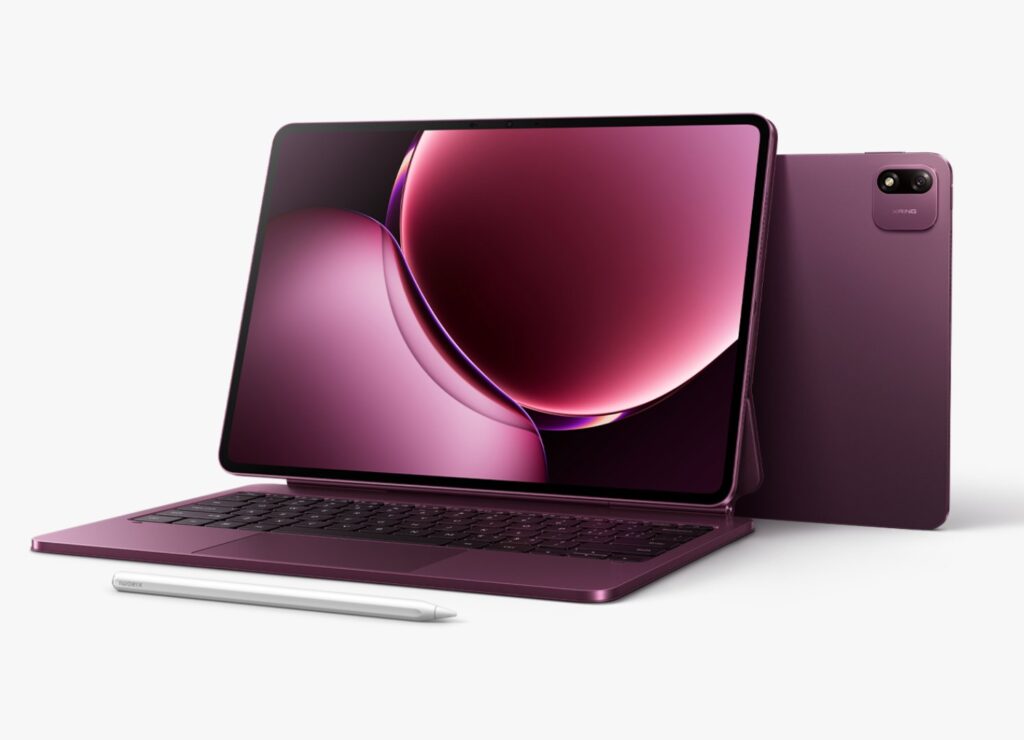
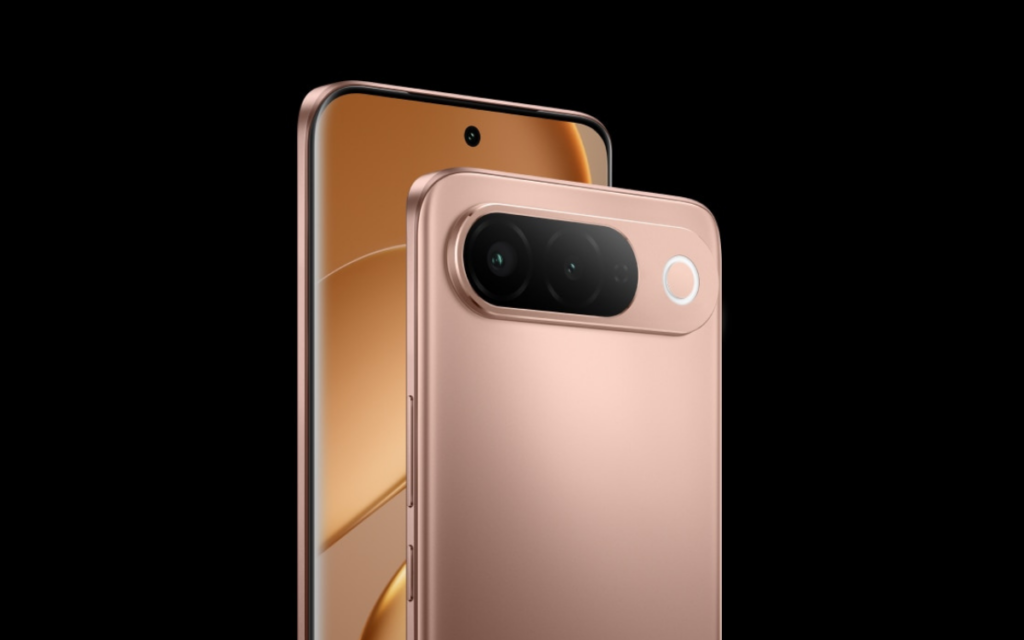
Last month, Xiaomi confirmed that it will unveil the Pad 9 Pro Max flagship tablet alongside the Xiaomi 18 Fold in September. The brand has now revealed the design and some key details ahead of its launch in China. The tablet is also set to introduce several hardware and software upgrades aimed at making it a more capable PC alternative.
Xiaomi Pad 9 Pro Max brings a bigger display and flagship chip
Xiaomi Pad 9 Pro Max
The Xiaomi Pad 9 Pro Max features a 13.3-inch LCD display and is designed to support PC-level applications, giving users a larger canvas for work, content creation and other productivity tasks. It will be the first Xiaomi tablet to feature the company’s in-house Xring O3 flagship processor, which is positioned to deliver desktop-class performance.
The Xring O3 uses a 10-core all-big-core CPU configuration with a maximum clock speed of 4.35GHz. It also introduces a 16-core G2-Ultra NX GPU, which Xiaomi claims delivers an 85% improvement in graphics performance while reducing power consumption by 64% compared with the previous generation. Some reported GPU benchmark results have even surpassed Apple’s A19 Pro, although real-world performance remains to be seen.
The tablet will also debut HyperOS 4, with Xiaomi optimizing the software for large-screen productivity scenarios. Combined with support for PC-level applications, the setup could make the Pad 9 Pro Max more suitable for office work and creative tasks. A soft-light display variant of the tablet is also expected to get unveiled.
The Xiaomi Pad 9 Pro Max is tipped to feature a battery exceeding 10,000mAh with support for 120W wired charging. The device may arrive in 512GB and 1TB storage choices and is expected to weigh around 650 grams. Xiaomi is scheduled to launch the Pad 9 Pro Max in China on September 7.
The software feature, called “Atomic Workbench”, was first introduced on Vivo’s foldable phones and is now coming to the upcoming X500 lineup. Product manager Han Boxiao shared the details yesterday, explaining that it lets you keep up to five apps open and visible on a single screen at the same time, then switch between them almost instantly.
On a normal bar-style phone, this could make everyday work feel a lot smoother. You could have a report, email, messages, and a research tab all appear on screen for quicker app switching. Han Boxiao pointed out that while the idea sounds simple, no other Android brand has actually done this yet. The reason is that it’s pretty demanding on the technical side, the software ecosystem, and ongoing support.
Vivo had to build a multi-level dependency scheduling system that can hand out processing power with very fine precision, instead of just following Android’s usual habit of prioritizing the app in front and freezing everything else.
They also reworked the memory management and worked closely with MediaTek’s Dimensity platform at a deeper level so more apps can stay alive instead of getting killed when things get busy. On the display side, the original system couldn’t handle multi-window rendering properly, so they had to rewrite the compositing logic to let the GPU handle multiple windows in parallel.
Han admitted this is just the beginning. Because they’ve gone so deep into the framework, every major Android update from Google means a lot of fresh adaptation work, which drives up the long-term costs. Still, Vivo says they’re committed to keeping the feature going so users can actually benefit from it.
The X500 series will also support something called interruptible first-frame interactions. That means you can swipe up, down, left, right, or tap without having to wait for the previous animation to finish. This comes from two main changes: a more accurate touch-response system that better reads your finger input, and a rebuilt app-switching scheduler that prioritizes touch commands so the phone reacts immediately.
By bringing Atomic Workbench from foldables to the regular X500 phones, Vivo is trying to give people with standard smartphones a much more practical and responsive multitasking experience than what its competitors currently offer.
The Vivo V80 Lite 5G is now official in Malaysia, giving the company’s V series a new model with a notably different approach. This isn’t the same V80 Lite that recently appeared in Pakistan and Bangladesh, where the phone is essentially a rebranded Vivo S2. The Malaysian version puts cameras, everyday performance and a massive battery at the centre of its package.
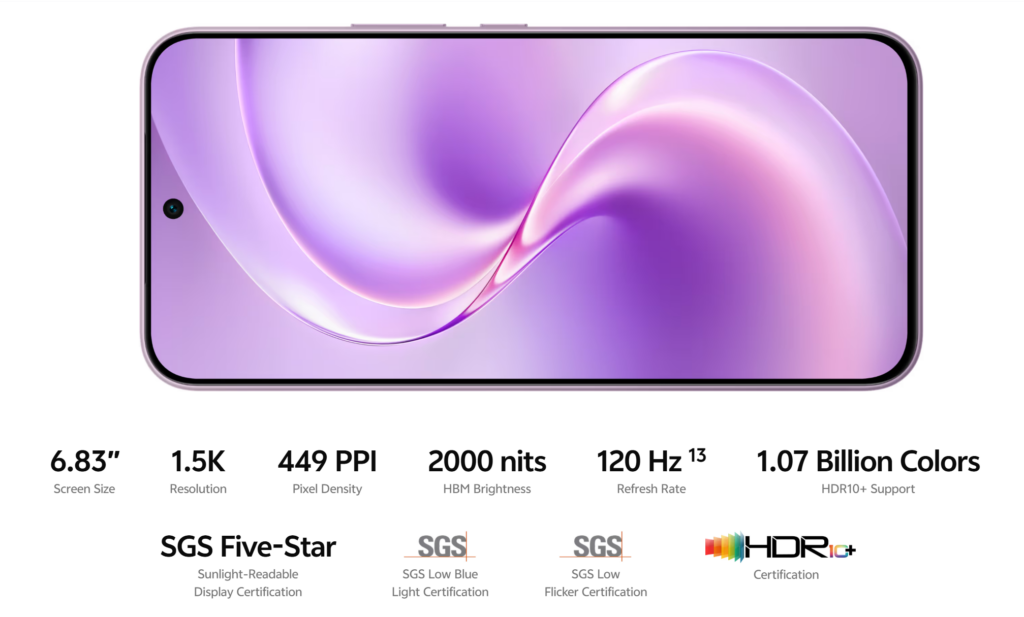
The Vivo V80 Lite 5G comes with a 6.83-inch AMOLED display offering a 1.5K resolution, 120Hz refresh rate, 449ppi pixel density, and up to 2,000 nits of HBM brightness. The panel supports P3 wide color gamut, HDR10+ and 1.07 billion colors. The phone is 8.59mm thick and weighs 224 grams.
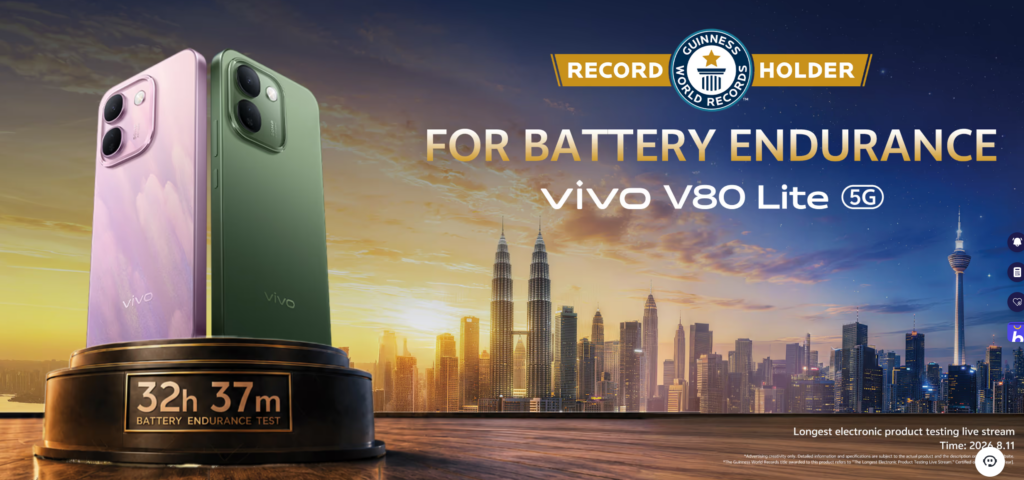
Its biggest talking point is a 10,000mAh BlueVolt battery based on fourth-generation silicon-anode technology, with support for 44W charging and reverse charging. Vivo says the battery can retain at least 80% of its capacity after 1,400 full charge cycles, which it equates to around seven years under simulated usage conditions. Vivo claims the V80 Lite 5G set a Guinness World Record for battery endurance with 32 hours and 37 minutes of continuous livestream testing.
It promises up to 68 hours of phone calls, 30 hours of binge-watching, 30 hours of TikTok playback and 14 hours of Mobile Legends: Bang Bang gaming. Vivo also says the battery can maintain stable power delivery at temperatures of up to 45°C. For heat dissipation, it features a 3800mm2 vapor chamber cooling unit.
Where to buyVivo V80 Lite 5GLatest price on AmazonCheck price →
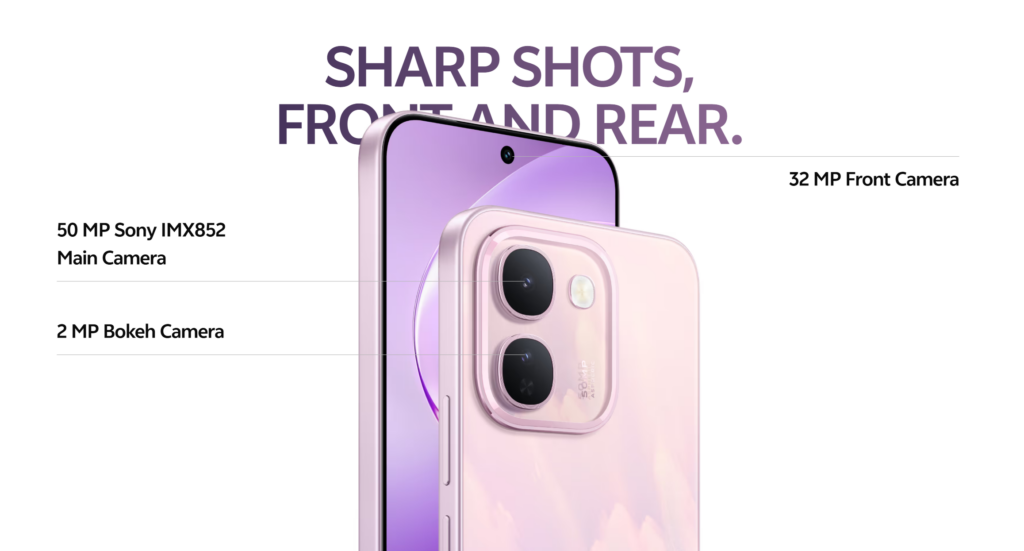
The camera setup includes a 50-megapixel Sony IMX852 main camera, a 2-megapixel bokeh sensor and a 32-megapixel front camera with a 90-degree field of view. Camera features include AI Erase and Check-In Watermark. On the software side, the phone runs Android 16 with OriginOS 6, bringing features such as Origin Island, Drag & Go, Office Kit, Google Gemini and AI Captions.
Under the hood, the phone uses the Dimensity 7300e chipset and comes with up to 8GB RAM and 256GB storage. Connectivity options include 5G, Wi-Fi, Bluetooth 5.4, USB Type-C, GPS, and NFC. The device also carries IP68 and IP69 ratings and has passed five MIL-STD environmental tests.
The Vivo V80 Lite 5G is listed in 6GB+128GB, 6GB+256GB, and 8GB+256GB configurations, priced at MYR 1,499 (~$370), MYR 1,799 (~$445), and MYR 1,999 (~$500), respectively. Color options include Emerald Green, Afterglow Pink, and Dawn Black, and the phone is scheduled to go on sale from September 11. There’s also speculation that this model could arrive in some other markets as the Vivo S2 FE.
What do you think about the Vivo V80 Lite 5G, particularly its 10,000mAh battery?
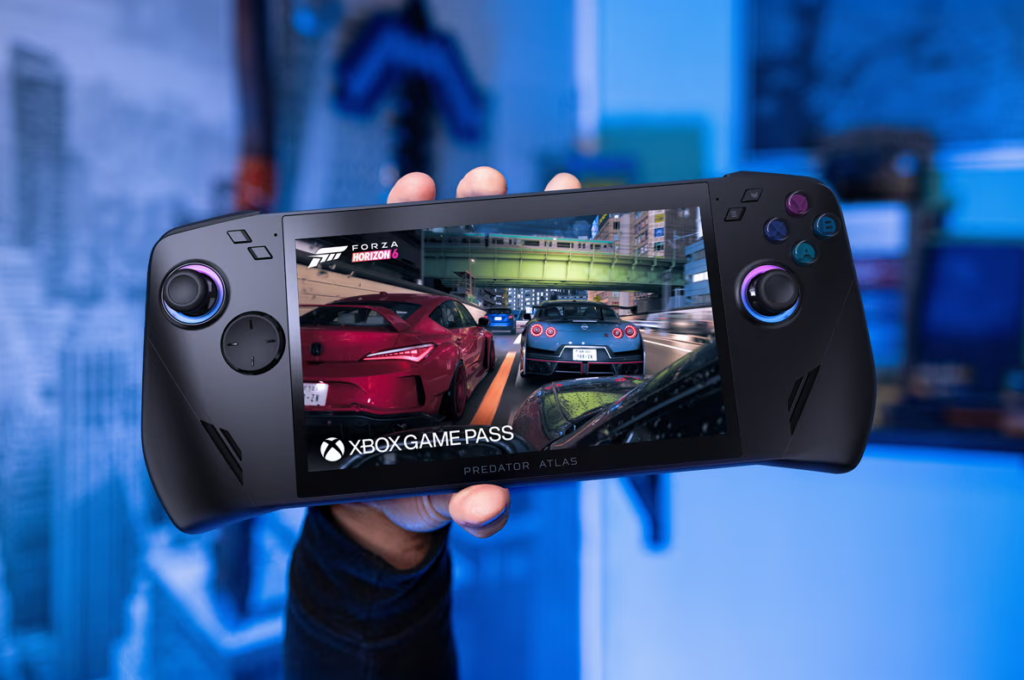
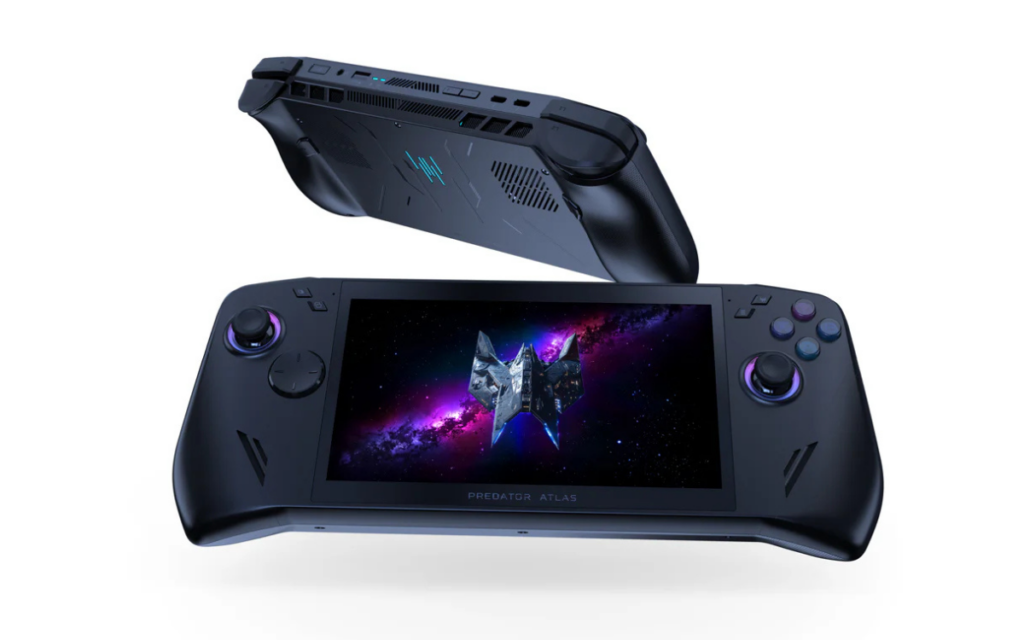
Acer is expanding its lineup of Windows gaming handhelds with the Predator Atlas 7. Announced today at the company’s IFA press conference in Berlin, the new device is a smaller 7-inch alternative to the 8-inch model Acer revealed earlier this year. Alongside it, the company also showed off a concept device called Project DualPlay Mini that tries to merge a handheld console with a tiny productivity laptop.
Acer managed to fit an 80Wh battery inside the chassis, which is unusually large for a 7-inch handheld. The trade-off for that capacity is the weight: the 80Wh model weighs 750 grams. Acer is also offering a smaller 60Wh configuration that brings the weight down to just under 700 grams.
Inside, the Atlas 7 is powered by Intel’s new mobile chips, maxing out with an Intel Arc G3 Extreme processor and Intel Arc B390 graphics. It supports up to 24GB of RAM and uses a standard M.2 2280 slot for up to 1TB of storage, which should make swapping in a larger drive relatively easy. To keep the Intel hardware cool, Acer is using a dual-fan system that pairs a thin metal fan with a standard plastic one.
The screen is a 7-inch 1080p IPS touchscreen with a 120Hz refresh rate, 500 nits of brightness, and support for variable refresh rate (VRR). Acer is also checking the right boxes for the controls, including Hall-effect analog triggers and an option for TMR (tunneling magnetoresistance) joysticks to prevent stick drift. For connectivity, it includes two Thunderbolt 4 ports, a UHS-II microSD slot, Wi-Fi 7, and a fingerprint reader built into the power button.
Acer also brought a concept device called Project DualPlay Mini. It’s an 8-inch handheld with a flip-and-swivel hinge that reveals a built-in backlit keyboard. The idea is that you can use it as a standard controller-based handheld, or swivel the screen to play first-person shooters with a keyboard or use it as a tiny mobile workstation. Since it’s just a concept, there are no release plans, though Acer did include a Morse code message on the back to mark its 50th anniversary.
Pricing and Availability
The Predator Atlas 7 will launch in North America in the fourth quarter of 2026, and in EMEA in November. The larger 8-inch Atlas 8 is still scheduled to arrive this September. Acer hasn’t announced pricing for the Atlas 7 yet.
For more daily updates, please visit our News Section.
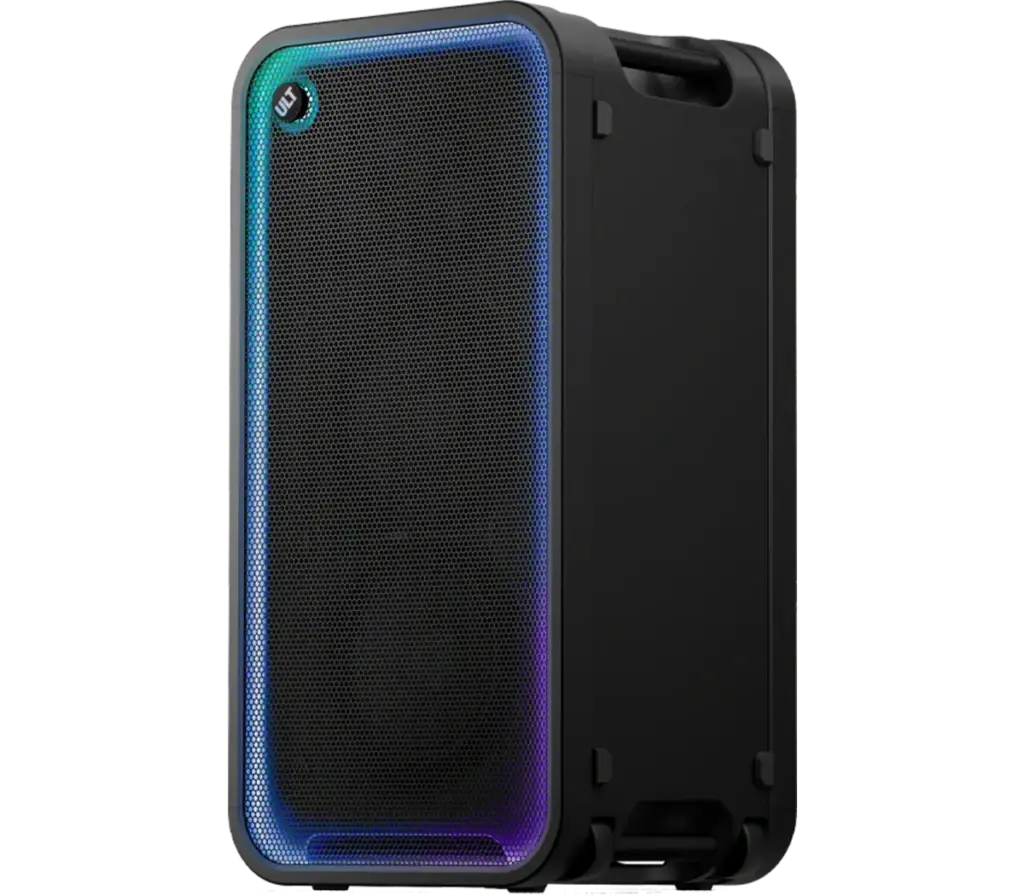
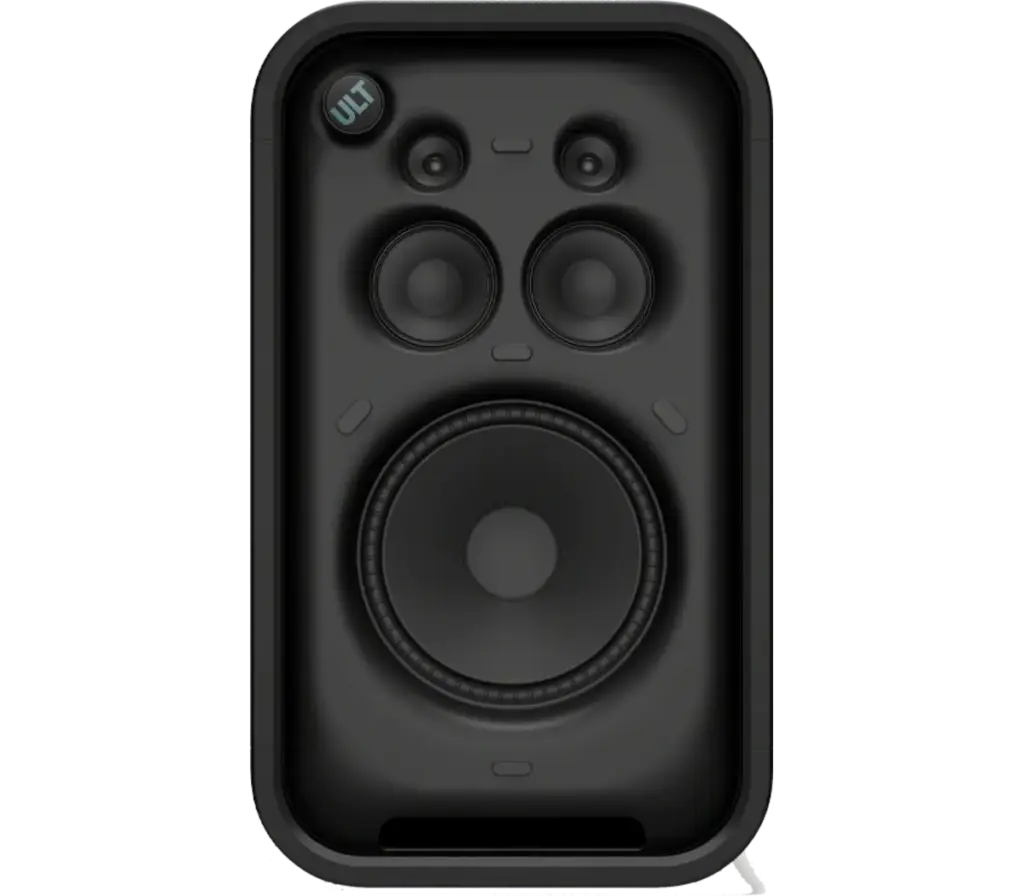
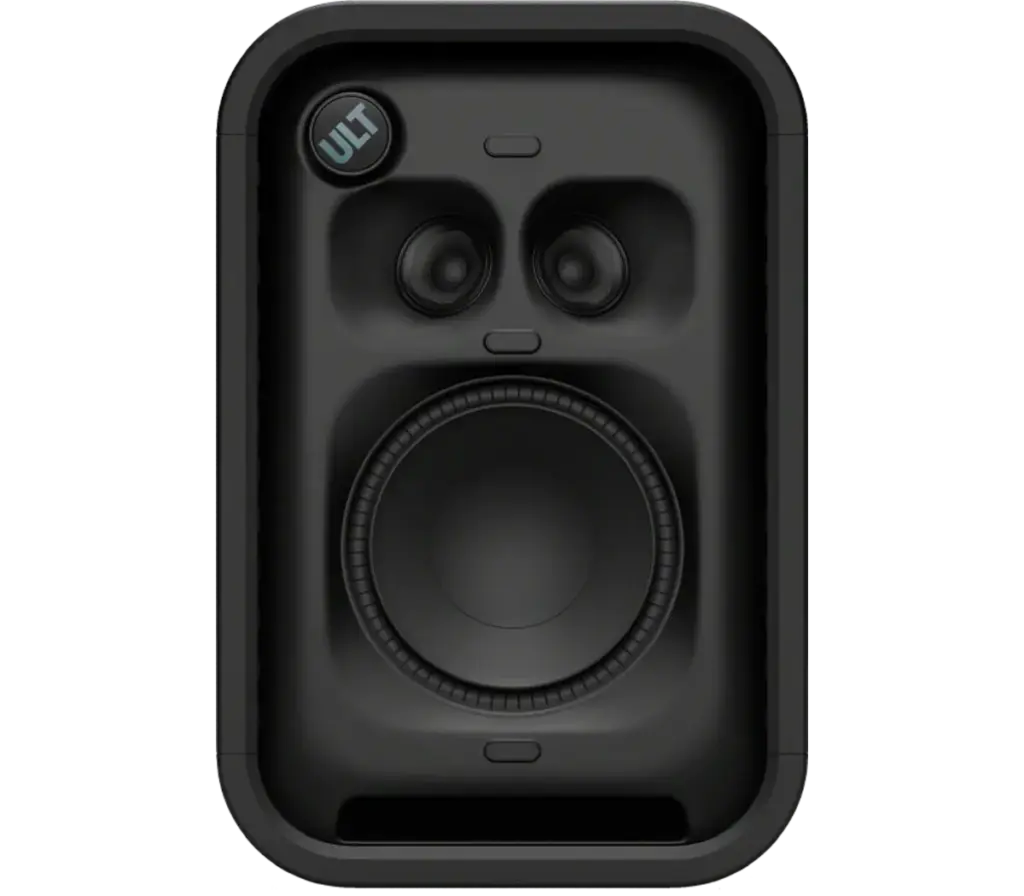
Sony announced the ULT TOWER MAX, ULT TOWER 7, and ULT TOWER 5 earlier this month as the latest additions to its ULT POWER SOUND series. These were developed with input from hip-hop artists and focus hard on deep bass while still offering useful features for DJs, karaoke, and moving the party around.
All three speakers use newly designed large circular woofers and bigger cabinets, along with Sony’s ULT DUCT tech, to push deeper low-end and higher volume. They’re clearly aimed at people who want serious bass without needing a full Public Address system.
The top model is the ULT TOWER MAX. It’s the most powerful bass-focused speaker in the range and comes with DJ connectivity, karaoke features, and built-in wheels so you can actually move it around. Inside you’ll find three low-frequency drivers (two in front, one in the back), four high-frequency drivers, and a midrange unit. Both the MAX and the TOWER 7 also deliver 360° surround sound and use wider casters for easier rolling.
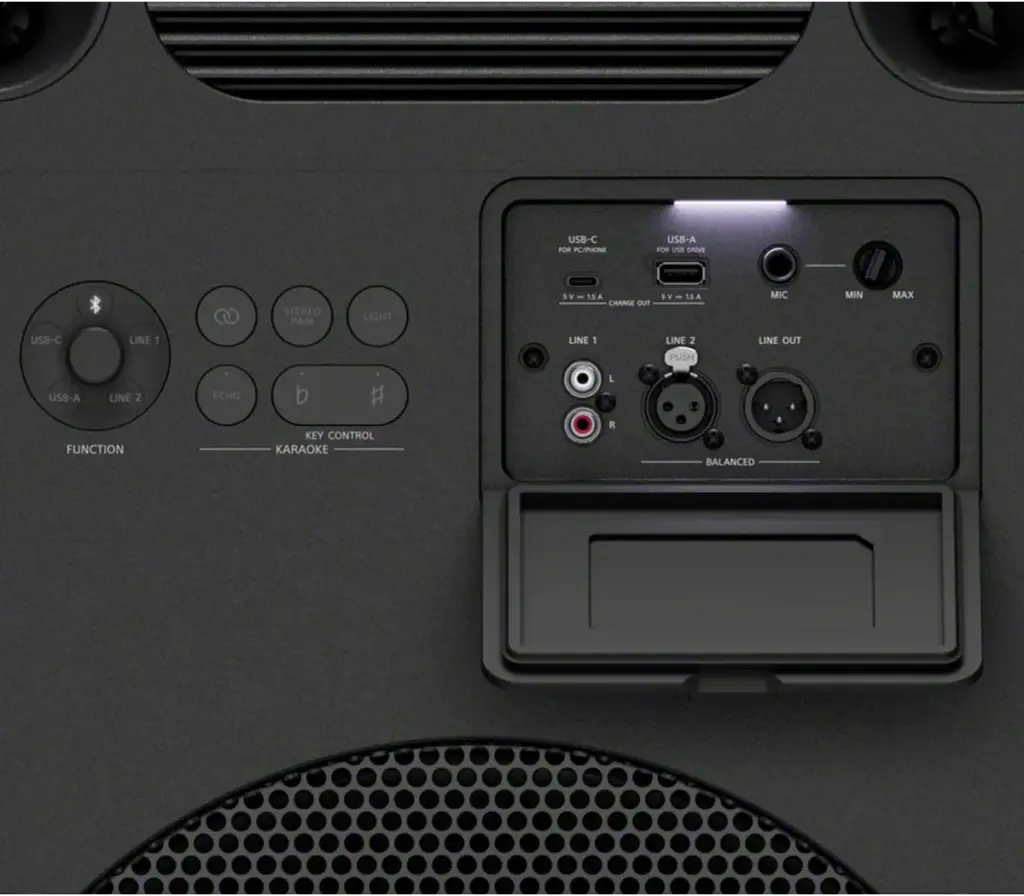
The ULT TOWER 7 is aimed at filling a room with strong, deep bass while still offering DJ inputs, karaoke, and wheels. The more compact ULT TOWER 5 packs similar bass performance, DJ connectivity, and karaoke into a smaller, more portable design that works better for smaller parties. When stood upright, both the TOWER 7 and TOWER 5 carry an IPX4 waterproof rating. Battery life is rated up to 30 hours on the TOWER 7 and 20 hours on the TOWER 5. Across the lineup you get XLR, RCA, and USB-C connections, three lighting modes, and four sound profiles you can switch between using the ULT button.
ULT TOWER 7ULT TOWER 5
Pricing and availability
The speakers start rolling out in September 2026 through Sony’s website, Best Buy, Amazon, and other authorized retailers. Pricing is $1,499.99 for the ULT TOWER MAX, $649.99 for the ULT TOWER 7, and $449.99 for the ULT TOWER 5.
Overall, Sony is giving people more flexible options that combine stronger bass with better connectivity and actual mobility, whether you’re just hosting a casual party or running something a bit more serious.
The anticipated OriginOS 7 software finally has an official launch date, and that is September 16. That’s when the company will announce its rollout plans and highlight major upgrades and new features. Vivo has also published a series of teasers recently, highlighting major design changes coming to OriginOS 7.
The Android 17-based skin will be unveiled at the Vivo Developer Conference in China on September 16. Alongside OriginOS 7, Vivo will also unveil BlueOS 4 at the upcoming event. It’s a new OS build for smart wearables, IoT devices, and smart home hardware.
Recently, Vivo has posted a series of OriginOS 7 teasers highlighting major design upgrades. The teasers heavily focus on translucent materials (also known as liquid glass UI), fluid animations, and lighting effects.
The new translucent material design system has been named “light and shadow aesthetics” for OriginOS. It uses see-through glass effects that blend with the background wallpaper, offering a unique experience while also providing more screen space for apps.
One of the teasers also focuses on Vivo’s pixel-level “see-through colour” technology. It adjusts specific areas in real time to make text easy to read, even when the background is challenging.
The OriginOS 7 also features a new liquid animation system. The Blue River rendering engine has been rebuilt around Virtual GPU 4.0, helping the new OS render 14% faster than OriginOS 6.
To make the UI feel more alive, OriginOS 7 now creates a ripple effect when a button is pressed, while dragging across the screen changes light and shadow along the path. The lock screen gets the Liquid Themes feature, which animates the lock screen wallpaper when you tilt or shake the device. There’s also a new Flash Card Theme that turns photos, characters, or places into lock screen cards.
The OriginOS 7 introduces a new system-wide sticker library. Furthermore, you will be able to put stickers on the desktop, albums, wallpapers, or the Always-on Display (AOD). You can also create your own stickers from photos.
We’ll continue to bring you the latest OriginOS information in our Vivo section. You can visit the page or join our Telegram channel to stay updated.
Bluetooth speakers have become an indispensable part of your tech pack, as they offer loud sound, a portable design, and are quite handy for times you want to take your music wherever you go.
Not to mention how many of them are available online, so many that choosing one for yourself isn’t an easy task. If you still don’t own a Bluetooth speaker in 2026, or want to upgrade to a new one, we’ve scouted through a bunch of options across price segments. These include affordable and portable alternatives, as well as premium, more room-filling options.
The first thing to consider is the size and portability. Small Bluetooth speakers are easier to carry, while larger speakers generally offer punchier sound and are better suited to parties or bigger rooms. If you mainly want something for travel, a compact speaker with a clip or strap can be more useful.
Next, consider the sound quality. Even the tiniest Bluetooth speakers can get surprisingly loud, but don’t judge a speaker by wattage alone. Some speakers also come with different modes, such as indoor and outdoor, letting you adjust the sound based on your surroundings.
Battery life is another important factor to consider. Look for at least 7 to 10 hours of playback for regular use, while bigger models can offer 20+ hours or more. An IP67 rating is also worth looking for if you plan to use the speaker near a pool, beach or outdoors, as it protects against dust and water.
Finally, look for extra features. Bluetooth multipoint is useful if you switch between two devices, while stereo pairing lets you connect two compatible speakers for a wider soundstage.
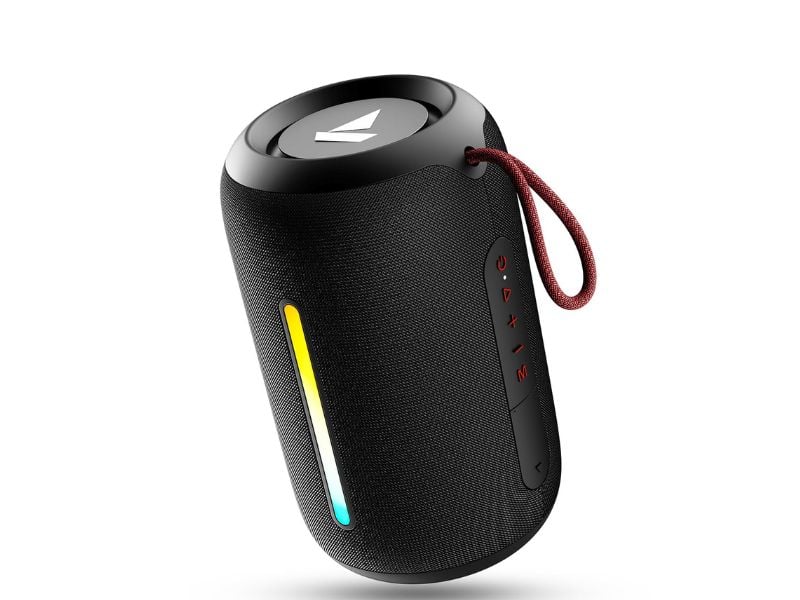
The boAt Stone 352 Pro is a good option if you want a loud Bluetooth speaker without spending too much. It packs 14W of output, up to 12 hours of battery life, and an IPX5 rating for water resistance. It also supports Bluetooth 5.3, AUX, and TF card playback, while the TWS feature lets you pair two speakers for a bigger sound. It’s not the most refined speaker on this list, but for casual listening and small gatherings, it offers plenty for the price.
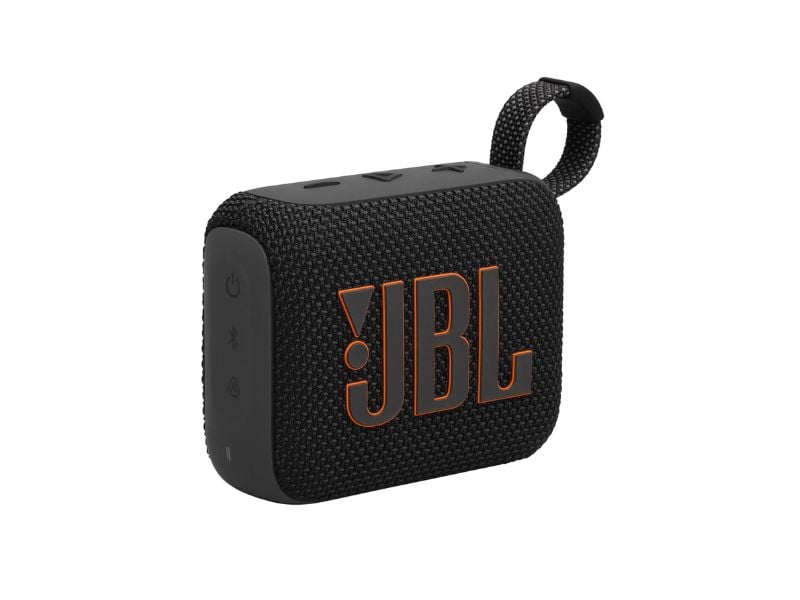
The JBL Go 4 is one of the smallest speakers on this list and is ideal if portability matters more than outright volume. It weighs just 190g, delivers 4.2W of output and offers up to seven hours of playback, with Playtime Boost extending this further. It also gets an IP67 rating, so it can handle dust and water, making it a great little speaker to throw into your tech backpack.
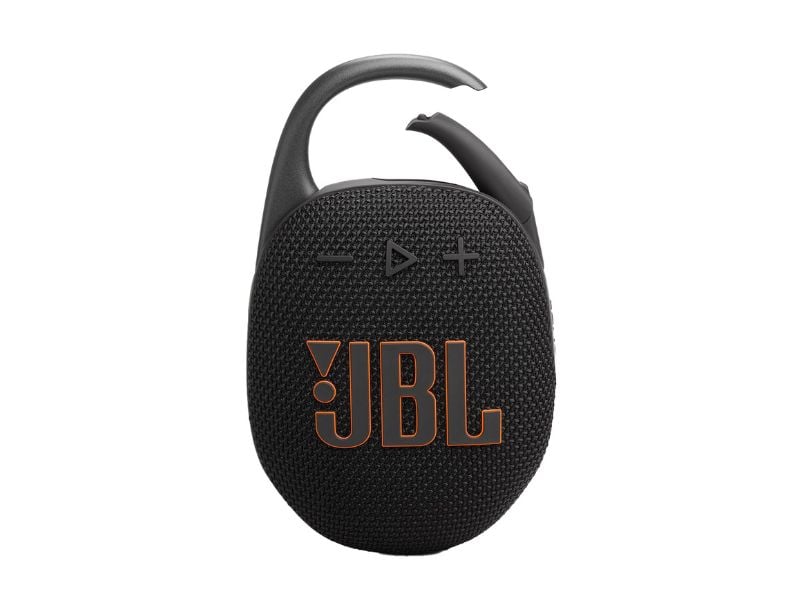
We have another speaker from JBL on this list, and this one’s for the hikers and fellow travellers. The JBL Clip 5 comes witth a built-in carabiner, allowing you to clip it directly onto a backpack or bag. It delivers 7W of output and up to 12 hours of battery life, while the IP67 rating makes it dustproof and waterproof. It is slightly bigger than the Go 4, but that extra size gives it more punch, making it the better choice for travel and outdoor activities.
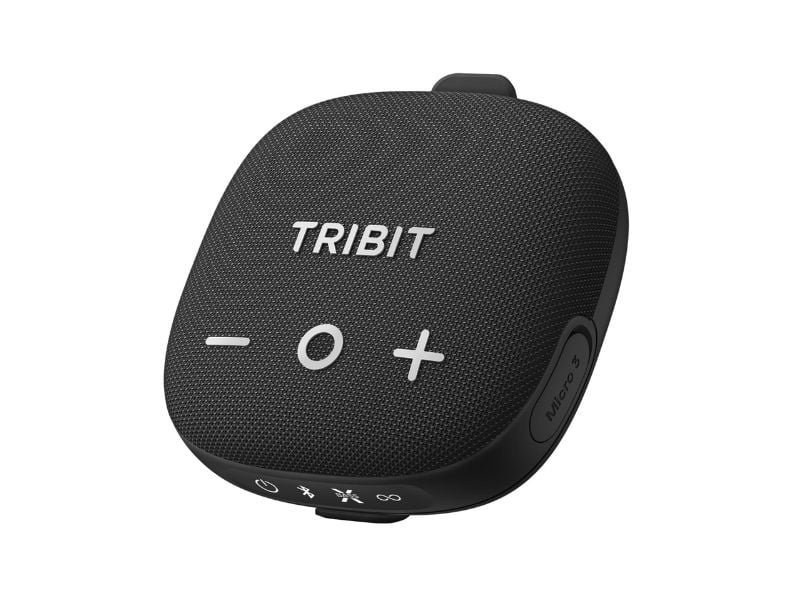
The Tribit StormBox Micro 3 is a popular choice on Amazon, thanks to the amount of thumping bass it offers. It comes with 13W of output, up to 24 hours of battery life, and an IP68 rating, along with the latest Bluetooth 6.0 support. It also doubles as a power bank for your phone and can be paired with another Micro 3 for stereo sound, making it particularly useful for outdoor trips.
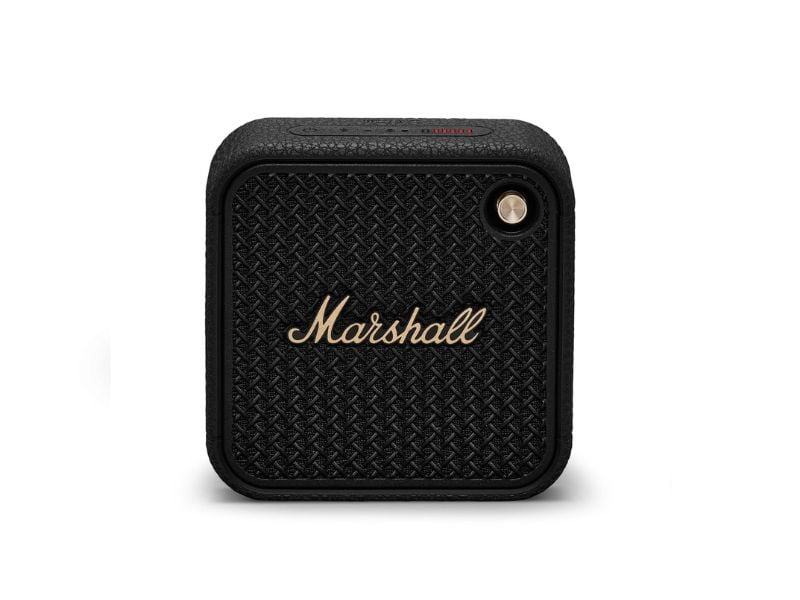
The Marshall Willen II comes with a 10W full-range driver, over 17 hours of battery life, and an IP67 rating, so it can handle outdoor use without much fuss. You also get Bluetooth multipoint, a built-in microphone, and a fastening strap. This one offers a mono output, and is more expensive than the smaller JBL options, but its distinctive design and Marshall’s rock tuned audio make it worth considering.
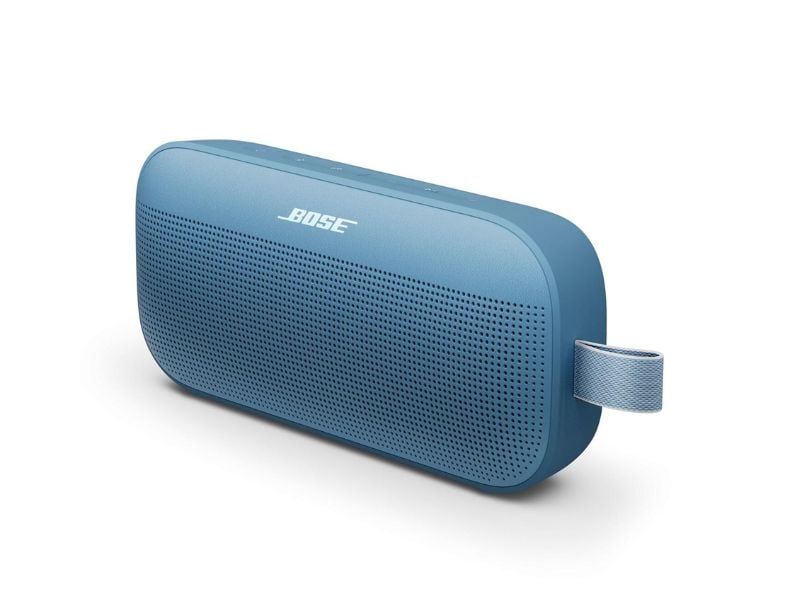
The Bose SoundLink Flex (2nd Gen) is one of the best-selling Bluetooth speakers on Amazon. It offers a bass-heavy output and a tone of features. It supports up to 12 hours of battery life, Bluetooth 5.3, multipoint connectivity, and an IP67 rating. Bose’s PositionIQ technology also adjusts the sound based on how the speaker is positioned. It is compact enough to carry around but powerful enough to work as your main portable speaker at home or outdoors.
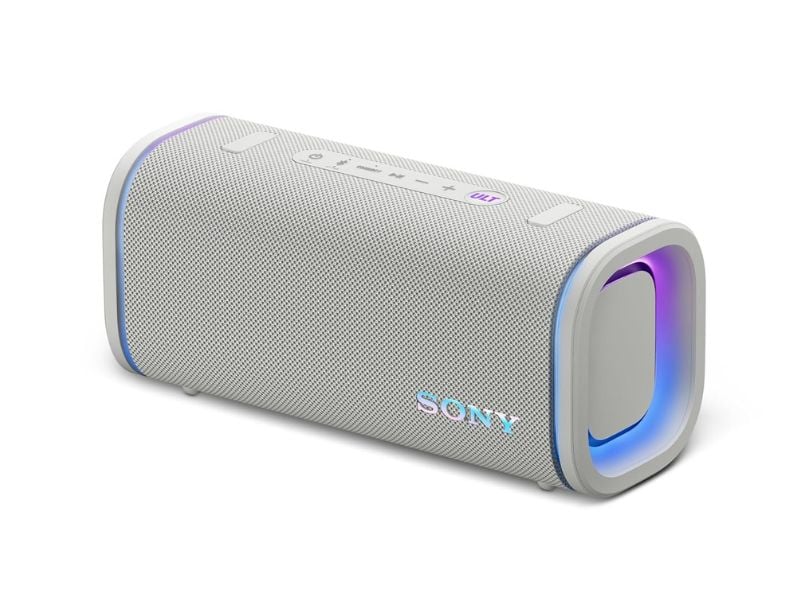
The Sony ULT Field 5 is for bass lovers, thanks to its ULT Power Sound mode that adds extra punch to low frequencies. It uses an X-Balanced woofer and dual tweeters, while offering up to 25 hours of battery life, Bluetooth 5.3, and IP66/IP67 water and dust resistance. Since it’s got all that power, it’s also heavier at 3.3kg, but the powerful bass and long battery life make it a solid pick for parties and outdoor listening.
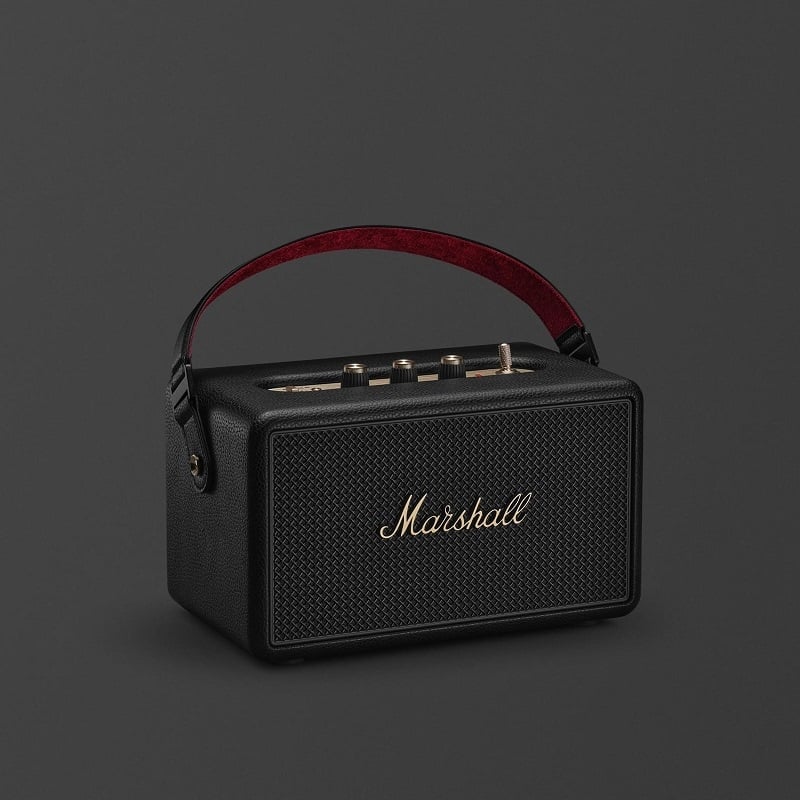
Want portability without giving up the sound output? The Marshall Kilburn III is a great pick. It packs 50W of output with a 30W woofer and two 10W full-range drivers, delivering what Marshall calls “360-degree True Stereophonic sound”. It also offers over 50 hours of battery life, Bluetooth 5.3, IP54 water and dust resistance, and a 3.5mm AUX input.
The boAt Stone 352 Pro is the best budget option, as it offers 14W output, 12-hour battery life, and water-resistant design, all under the Rs 2,000 price segment.
Which is the best Bluetooth speaker overall?
The Bose SoundLink Flex (2nd Gen) is the best overall Bluetooth speaker for its loud and bassy sound output, portability, durability, and useful features like multipoint connectivity.
The Marshall Kilburn III is the best premium pick if you want powerful sound, long battery life, and a rugged design in a portable package. However, for those who want a bass-heavy audio can check out the Sony Ult Field 5.
Which is the best Bluetooth speaker for travel?
The JBL Clip 5 is the best Bluetooth speaker for travel. Its compact design, built-in carabiner, IP67 rating, and 12-hour battery make it easy to take almost anywhere.
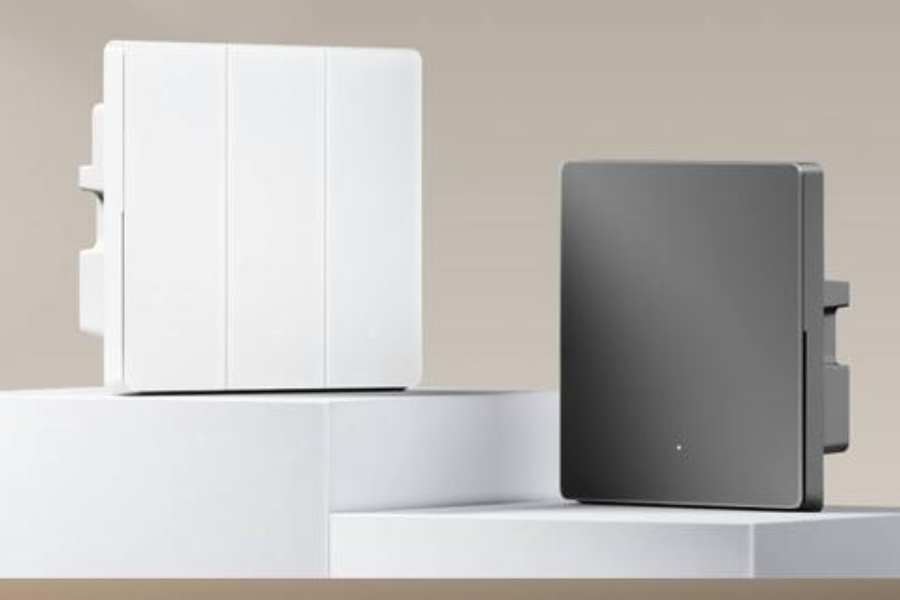
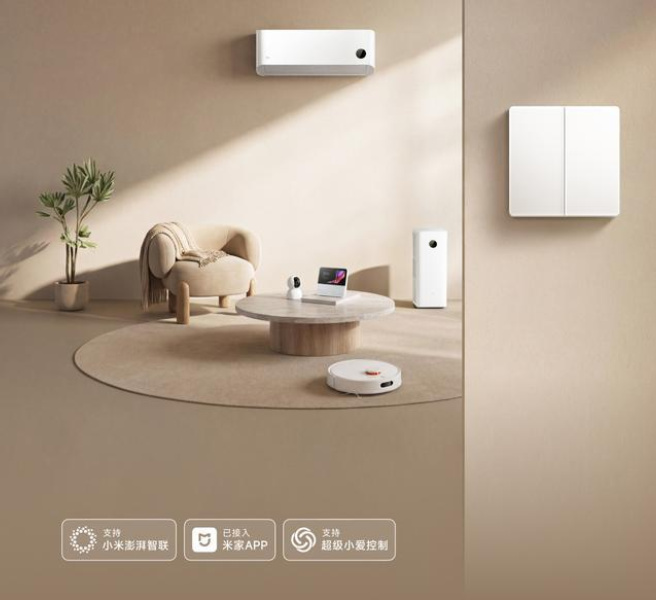
Xiaomi has released the Smart Switch 2, and you can already pre-order it on a crowdfunding platform in China starting at 69 yuan (~$10). The new switch builds on last year’s Xiaomi Smart Switch Pro, with a tougher shell and easier installation for older homes.
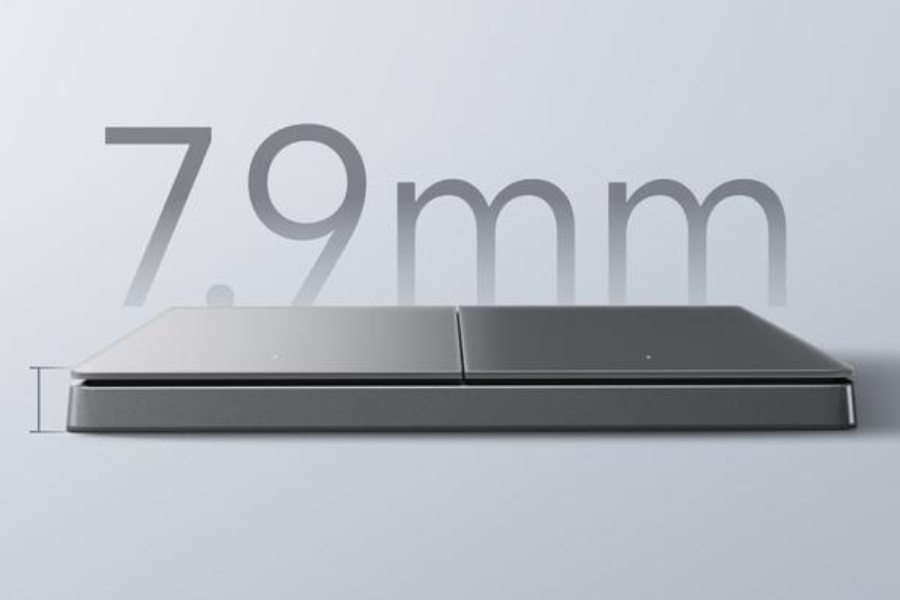
You get three button layouts to pick from — single, double, and triple button panels — in white or space gray. Each panel is made of acrylic glass and fits the standard 86-type wall-mounted junction box used in most homes in China. The panel measures 11mm thick, and the wall-mounting base sits at 21.2mm deep.
Built for older homes
Underneath that glass panel, the shell uses V-0 fire-retardant PC material that Xiaomi says can handle an 850°C flame-retardant test. The buttons themselves use a short-travel silicone buffer, so you get quieter clicks than on a standard switch, and a status light under each button shows you whether the circuit is on or off at a glance.
One of the more practical upgrades here is wiring flexibility. The Smart Switch 2 adapts to both single-live and neutral-wire setups, so you can install it in a newly built home or an older one that only has a live wire. It figures out which setup you have automatically when it powers on, so you don’t need to fiddle with any DIP switches.
Xiaomi also worked on the switch’s internals for longevity. The relay is rated for one million mechanical on/off cycles, and it uses zero-crossing detection to flip the switch at the lowest point in the AC voltage cycle, which reduces wear on the components. The switch is also tuned to cut down on the flickering that LED bulbs sometimes show from standby micro-currents, and there’s a temperature sensor built in that cuts the circuit automatically if things get too hot.
Xiaomi Mesh 2.0 and smart controls
For connectivity, the Smart Switch 2 uses Xiaomi’s Mesh 2.0 system. Xiaomi says it improves switch response by 50% and reduces network setup time by 80% compared with the previous generation.
You can control it locally with the physical buttons, remotely through the Xiaomi Home app, or by voice through Xiao Ai, and each button supports single-click, double-click, and long-press actions you set yourself. There’s also a pure wireless mode, where the buttons stop controlling local power and instead send signals to trigger other Xiaomi Home devices, so you can set up two-way control without running new wires.
As for the price, the single-button version has a suggested price of 79 yuan (~$12) and a crowdfunding price of 69 yuan (~$10). The double-button version goes for 89 yuan (~$13) suggested and 79 yuan (~$12) during crowdfunding, while the triple-button version is priced at 109 yuan (~$16) suggested and 99 yuan (~$15) for crowdfunding backers.
For more daily updates, please visit our News Section.
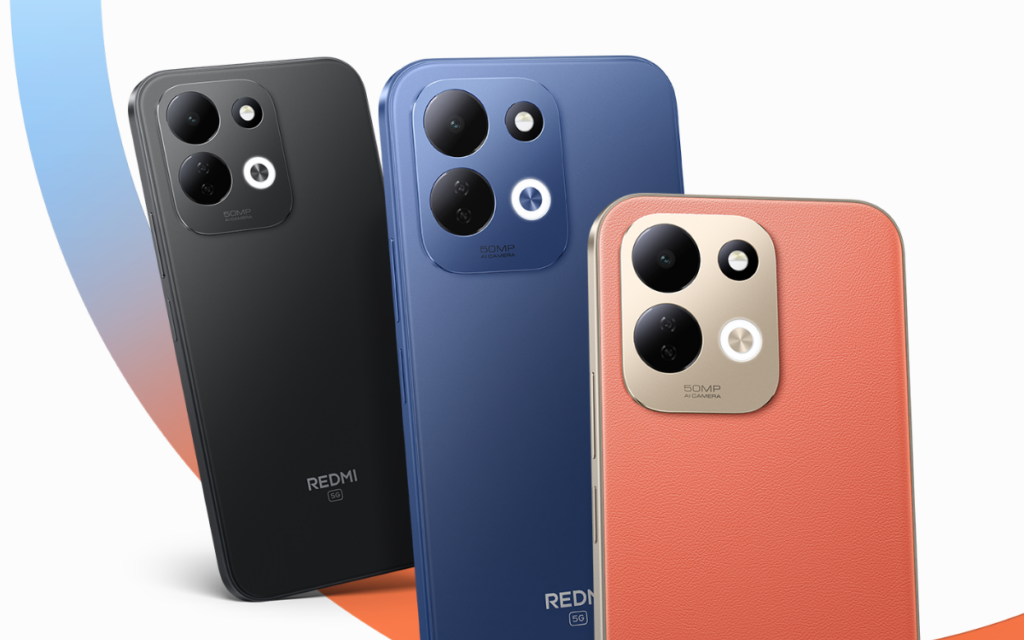
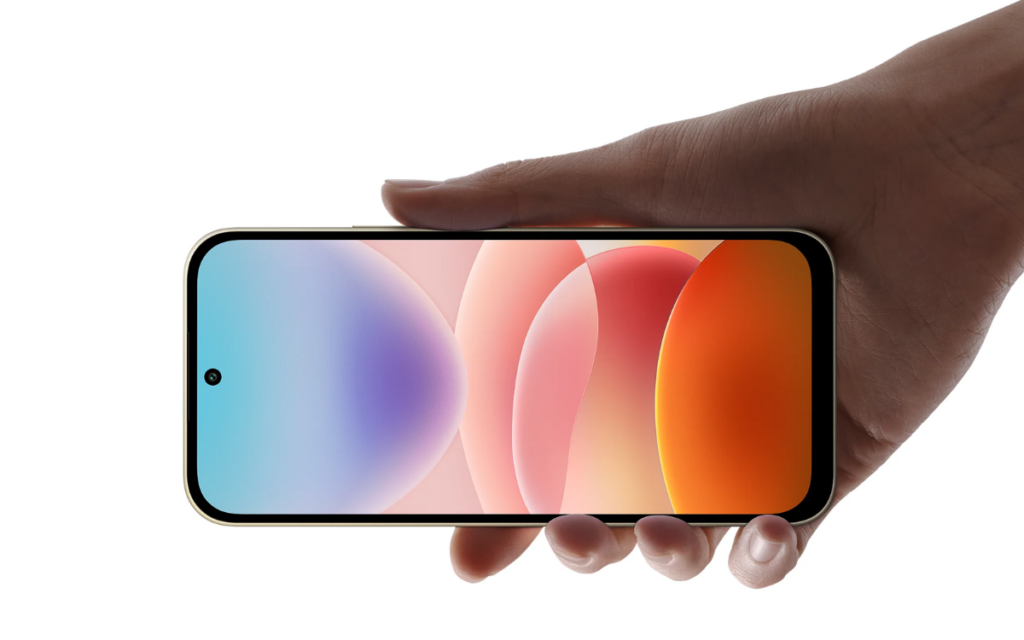
The Redmi 17 5G uses a 6.9-inch LCD with a 1600 x 720 resolution and a refresh rate of up to 120Hz. Xiaomi lists a typical brightness of 675 nits and up to 825 nits in high-brightness mode. The display also carries TÜV Rheinland certifications for low blue light, flicker-free operation, and circadian-friendly viewing.
Under the hood, the device runs on the 4nm Snapdragon 4 Gen 5 with up to 2.4GHz speeds, paired with LPDDR4X RAM and UFS 2.2 storage. It comes with up to 6GB RAM and 256GB storage, expandable by up to 2TB via microSD. The device runs Xiaomi HyperOS 3.
For photography, the phone sports a 50-megapixel f/1.8 primary camera and an 8-megapixel selfie camera, with both supporting 1080p video at 30fps.
The device features a 7,900mAh battery, offering up to 109 hours of music playback, 28 hours of video playback, 53 hours of calling, and 10 hours of video recording. It supports 45W turbo charging and up to 22.5W wired reverse charging.
Additionally, the phone includes dual stereo speakers with a 300% volume boost, a 3.5mm headphone jack, Gorilla Glass 7i protection, and an IP64 rating. It also supports Wet Touch technology for use with wet or oily fingers.
On the design front, Xiaomi has included a customizable dynamic RGB light on the rear panel that indicates notifications, charging status, and camera alerts.
Pricing and Availability
The Redmi 17 5G will be available in India starting September 10th. Pricing starts at ₹23,999 for the base model with 6GB of RAM and 128GB of storage, while the 8GB RAM variant is priced at ₹26,999.
One UI 9.0 is Samsung’s latest custom skin built on top of Android 17. As always, the new software undergoes extensive beta testing before it’s released publicly, which also allows select users to get an early taste of the software.
The One UI 9.0 beta program went live in May, starting with the Galaxy S26 series. After a long wait of three months, Samsung started expanding the beta program to Galaxy S25 series and older Galaxy devices.
Here’s a list of Galaxy devices that are currently eligible for the One UI 9.0 beta program:
Galaxy S26
Galaxy S26+
Galaxy S26 Ultra
Galaxy S25
Galaxy S25+
Galaxy S25 Ultra
Galaxy S25 FE
Galaxy S24
Galaxy S24+
Galaxy S24 Ultra
Galaxy S23
Galaxy S23+
Galaxy S23 Ultra
Galaxy Z Fold 7
Galaxy Z Flip 7
Galaxy Z Fold 6
Galaxy Z Flip 6
Galaxy A57
Galaxy A56
Galaxy A55
Galaxy A37
Galaxy A36
Galaxy A35
Galaxy A25
Galaxy A15
We’ll continue to update the list as and when more Galaxy devices receive One UI 9.0 beta.
The One UI 9 beta program is limited to select regions. For the Galaxy S26 series, it’s available in the US, the UK, India, Poland, Germany, and Korea. For the Galaxy S25 series and remaining devices, the beta program may be limited to the US, the UK, India, and Korea.
If you have a supported Galaxy device and that you belong to a region where the beta program is available, you can head over to the Samsung Members app, tap the beta banner, and enroll in the program. Then, navigate to Settings > Software update > Download and install to get the update.
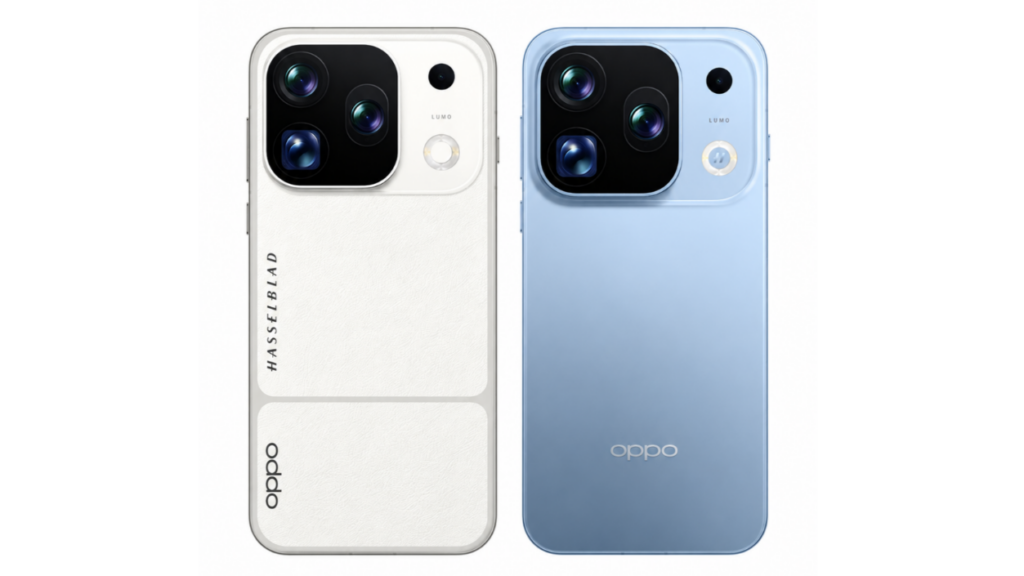
The Oppo ColorOS 17 Launch and Developer Conference is scheduled for September 17, 2026. The new OS is built on Android 17 and will debut on the Oppo Find X10 series, which is also expected to be unveiled at the same event.
One of the more noticeable changes is the new floating island navigation that runs across the system and most built-in apps. It keeps the smooth animation style from ColorOS 16 but adds more flexible feedback.
Elements stretch, compress, and bounce back when you touch them. These improvements are said to bring about 35% better interface smoothness, roughly 20% faster app cold starts, and a 50% increase in how many apps can stay active in the background.
Once it launches, ColorOS 17 is expected to reach more than 130 models across Oppo, OnePlus, and Realme. Closed beta testing already started in early August on some recent devices, so a few users have already gotten a look at the new navigation and animations.
On the hardware side, the Find X10 series is widely expected to include three models this September. The standard Find X10 looks set to come with a more compact 6.59″ 1.5K display, an 8,000mAh battery, and a dual 200MP camera setup (main + periscope telephoto).
The higher-end Find X10 Pro and especially the Find X10 Pro Max should step things up with larger 6.78″ (or bigger) displays, the more powerful Dimensity 9600 Pro chipset, and a more ambitious camera system, with the Pro Max rumored to pack three 200MP sensors covering main, ultrawide, and telephoto. All of them are expected to ship with ColorOS 17 out of the box. As always with pre-launch rumors, the final specs and exact model count could still shift a bit before the event.
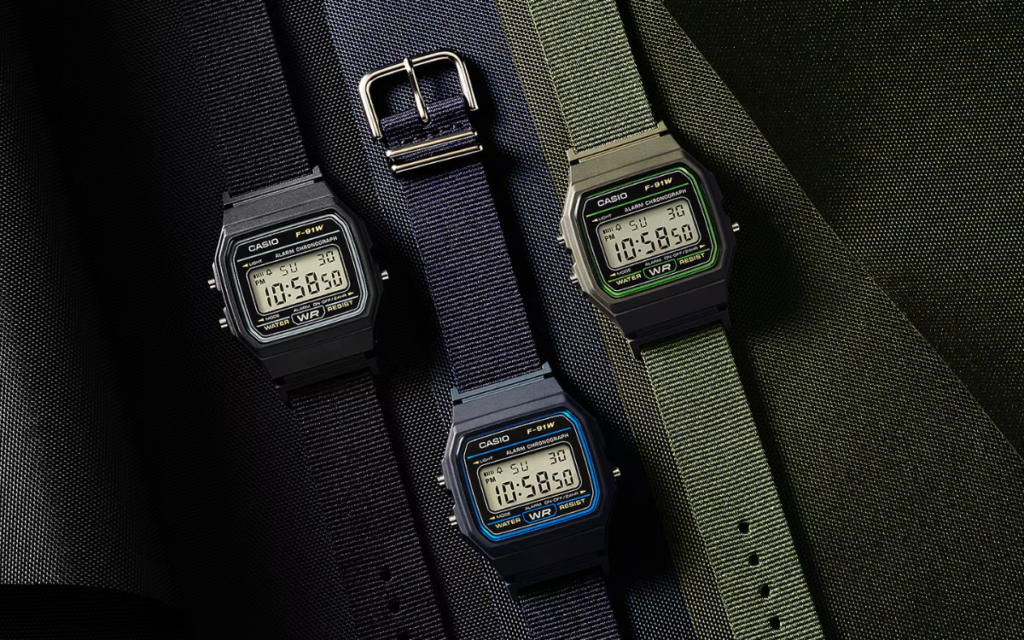
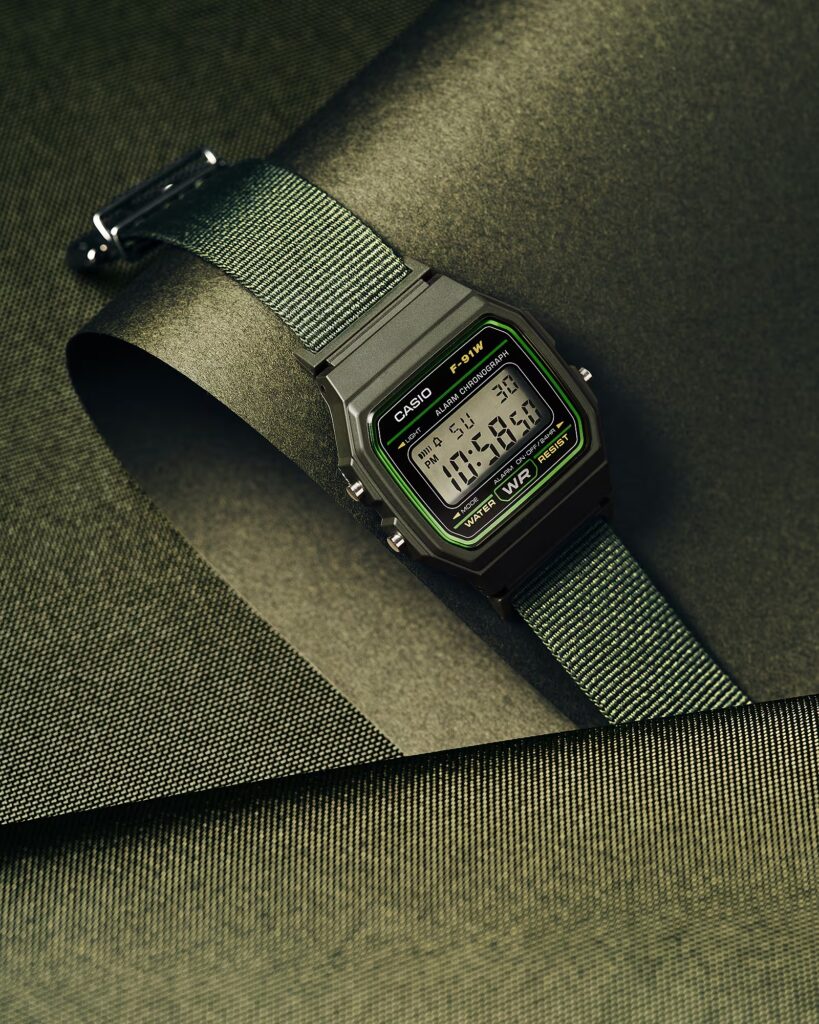
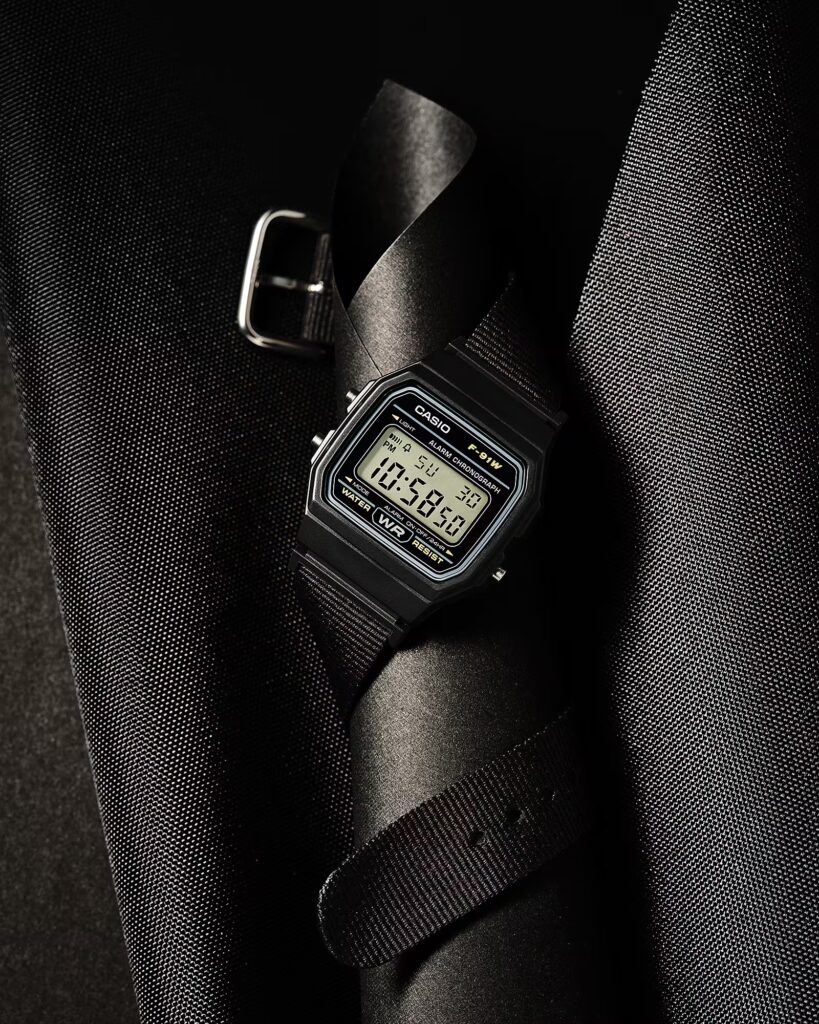
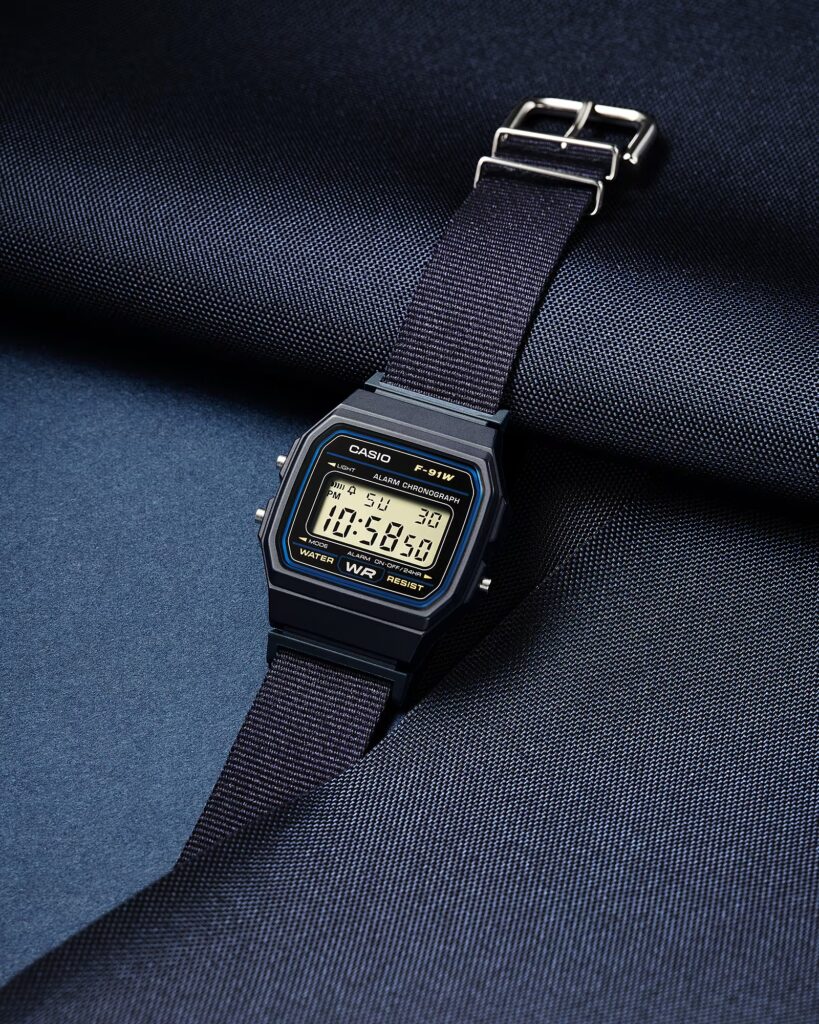
Casio has released a minor update to its long-running F-91W digital watch line in the US. The new F-91WF series is available now on the company’s website for $45.95. The lineup includes three models, the F-91WF-1A, F-91WF-2A, and F-91WF-3A, which correspond to different color accents. The only functional change from the standard version is the inclusion of a cloth band made from recycled materials.
Instead of the usual resin plastic strap that comes with most basic Casio watches, the F-91WF uses a band woven from recycled PET fibers. According to Casio, this cloth material is designed to resist scratches and stains.
From a practical standpoint, a cloth band usually offers a bit more breathability and flexibility than plastic, which can sometimes feel rigid or trap sweat during daily wear. The new band is adjustable and fits wrist sizes between 145 and 215 mm.
Beyond the strap, the hardware remains exactly what you would expect from this series. The watch is highly compact, measuring 38.2 x 35.2 x 8.5 mm, and weighs just 21 grams. The case, bezel, and the glass covering the digital display are all made of standard resin. It is water-resistant, meaning it can handle basic splashes or rain, but it isn’t rated for submersion or swimming.
Inside, the watch runs on a single CR2016 battery. Casio estimates the battery life at roughly seven years under normal use. The feature set is entirely basic: it tells the time in 12 or 24-hour formats, displays the day and date, and includes a green LED backlight for checking the time in the dark.
For utilities, the watch includes a 1/100-second stopwatch. It can track elapsed time, split times, and first- and second-place finishes. There is also a daily alarm, auto-calendar, and an optional hourly time signal. The timekeeping module has an accuracy rating of plus or minus 30 seconds per month.
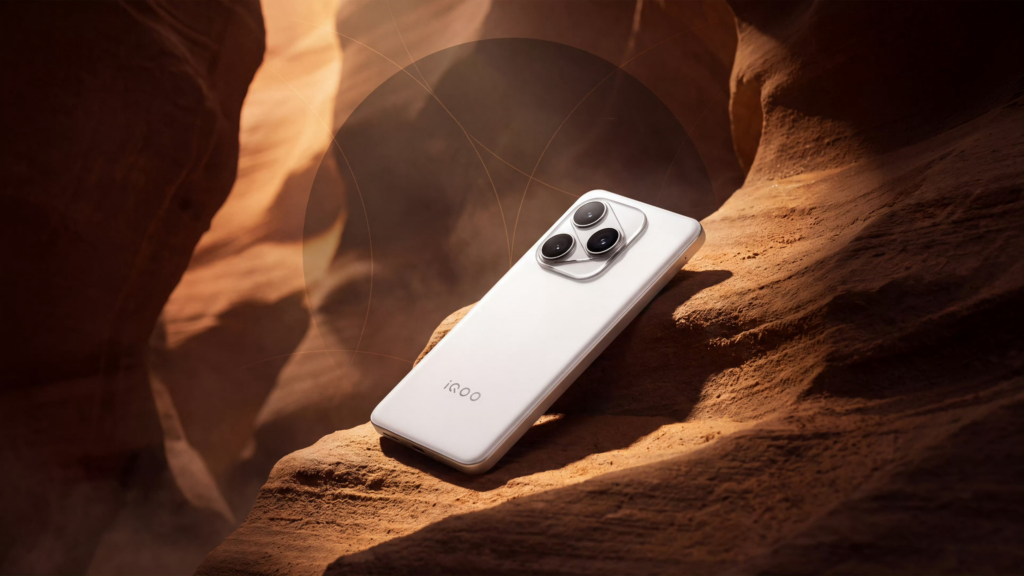
Recently, reliable tipster Digital Chat Station revealed that the upcoming iQOO 16 will arrive with a reworked camera module. While there is no official confirmation yet, fresh images doing the rounds have now revealed the phone’s entire rear design, giving us an early look at what to expect.
iQOO 16 renders reveal a bold new rear design
iQOO 16
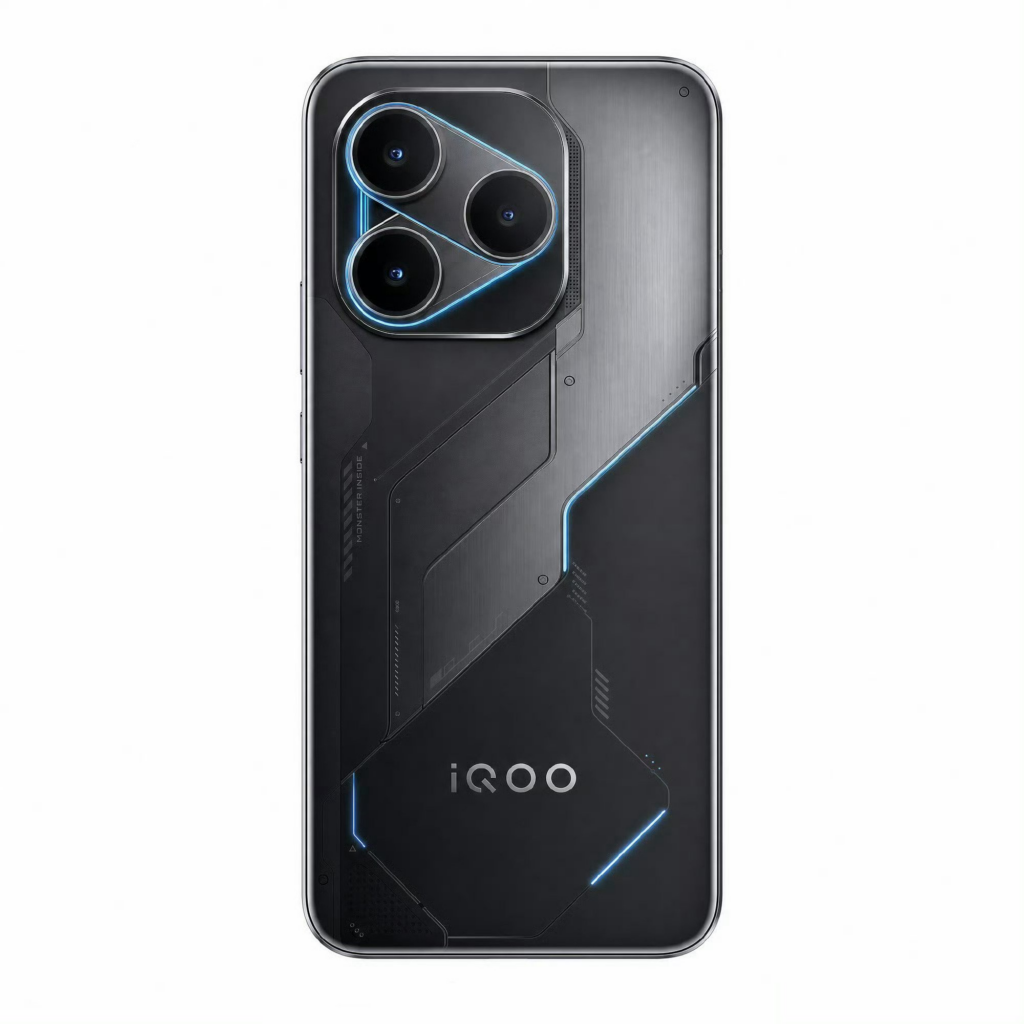
The leaked renders show the iQOO 16 with a large square camera module featuring heavily rounded corners. Three rear cameras are arranged in a connected layout, giving the module a futuristic, almost UFO-like appearance.
The black variant features blue accent lighting around parts of the camera island and the lower section, adding to its gaming-focused look. The frame also appears to have rounded edges, which could make the phone more comfortable to hold during extended gaming sessions.
QOO 16
The other render showcases what appears to be a white variant of the device. However, the exact source of these images is currently unknown, so the design should be treated as unconfirmed for now.
iQOO 16 specifications (rumoured)
Previous leaks suggest the iQOO 16 could feature three 50-megapixel rear cameras. The primary sensor is tipped to measure 1/1.3-inch and could have an f/1.68 aperture, while the other two cameras are expected to include an ultrawide and periscope telephoto sensor.
On the front, the phone is rumoured to feature a 6.85-inch Samsung-made flat 2K display with a 165Hz refresh rate. Other expected specifications include the Snapdragon 8 Elite Gen 6 Pro chipset, an 8,500mAh battery, 100W wired charging, wireless charging, a dedicated display chip, a 3D ultrasonic fingerprint sensor, USB 3.2, dual speakers and IP68/IP69 ratings.
Meanwhile, iQOO has also started teasing its compact tablet, which is expected to feature a Snapdragon 8 Elite Gen 6 series chipset. Both devices are expected to launch in China either by the end of this month or in early October.
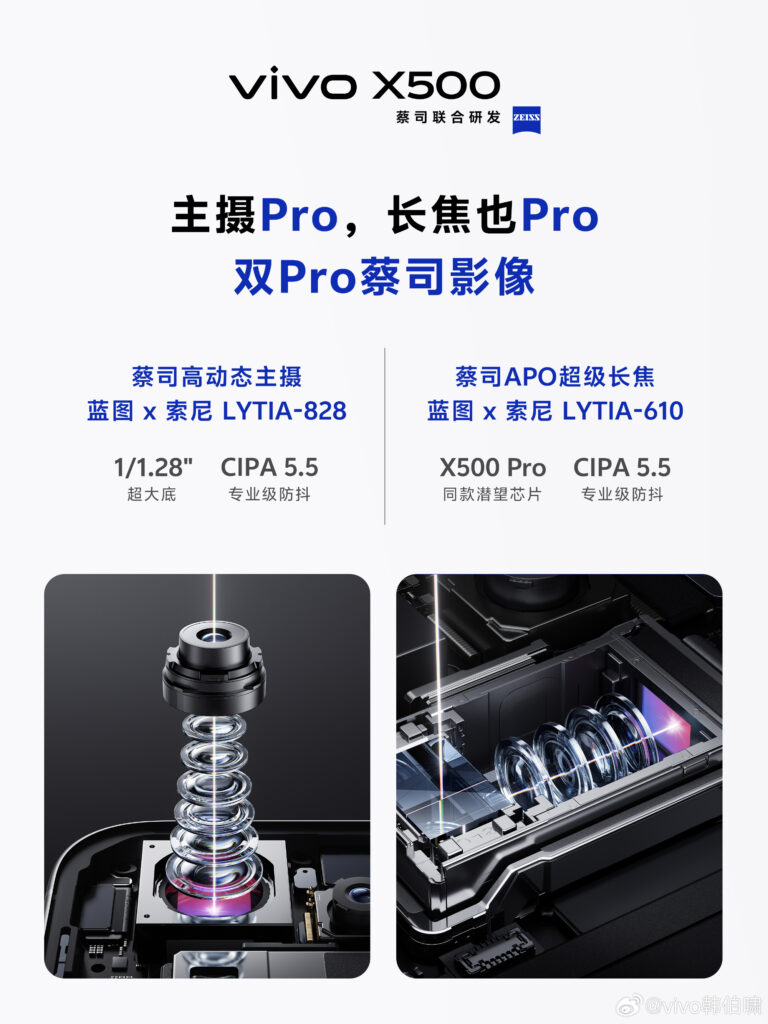
Vivo is expected to unveil the Vivo X500, X500 Pro, and X500 Pro Max later this month in China. Ahead of the launch, the company has already revealed camera details for the X500 Pro and X500 Pro Max. Now, Vivo Product Manager Han Boxiao has confirmed key camera specifications for the standard X500, giving us a clearer idea of what to expect from the upcoming phone.
The Vivo X500 will reportedly bring the same Sony LYT-828 primary sensor used by the X300 Pro to the standard model. The 50-megapixel sensor measures 1/1.28-inch, making it the largest main camera sensor ever used on an X-series standard edition. It will also feature Zeiss gimbal-level stabilization with a CIPA 5.5 rating, which should help with both photography and video recording. This is a notable change from the X300, which featured a custom 200-megapixel HPB main camera.
The telephoto camera is getting similar treatment. Vivo is expected to use the Sony LYTIA-610 sensor found in the X500 Pro’s APO telephoto camera. The 64-megapixel sensor will support CIPA 5.5 stabilization and 4K video recording at 120fps. The phone is also said to support Vivo’s compact Lipstick 200 telephoto extender, potentially making the X500 an interesting option for concert photography.
The official details align with last month’s leak from DCS who claimed that the X500 could feature a 50-megapixel Sony main camera, a 50-megapixel ultrawide camera, and a 64-megapixel Sony periscope telephoto camera with a 1/2-inch sensor and a 70mm equivalent focal length. Telephoto macro support was also said to be under consideration. A 50-megapixel autofocus selfie camera is also rumored, although that detail has not been confirmed yet.
The remaining specifications reportedly include a 6.59-inch 1.5K OLED display, a Dimensity 9500-series chipset, and a 7,500mAh battery. The phone has also received 3C certification with support for 90W wired charging, while 40W wireless charging could return from the previous generation. It is expected to run OriginOS 7 based on Android 17.
Citizen has announced the release of a new model in its aviation watch line, the Promaster Skyhawk A-T (JY8144-50E). The watch is now available for purchase in both the United States and the United Kingdom.
Design Details
The watch operates on Citizen’s Caliber U680 movement, which incorporates two of the company’s standard hardware features: Eco-Drive and atomic timekeeping. The Eco-Drive system uses panels under the dial to convert natural and artificial light into energy, storing it in a rechargeable cell. This allows the watch to run continuously without requiring standard battery replacements.
For timekeeping, the watch uses radio-controlled synchronization. It receives time calibration radio signals from atomic clocks to maintain accuracy. The internal software supports automatic time adjustments for 43 different cities around the world, which is a practical feature for users who travel between time zones and want their watch to update automatically.
Regarding its physical build, the Skyhawk A-T has a 46mm case made of gold-tone stainless steel, featuring a combination of brushed and polished metal finishes. It comes with a matching stainless steel bracelet that fastens with a fold-over clasp and hidden push buttons.
The black dial is covered by a sapphire crystal treated with an anti-reflective coating to reduce glare and resist scratches. It also has a water resistance rating of 200 meters, making it suitable for swimming and snorkeling.
The dial layout is a hybrid design, using standard analog hands alongside digital LCD screens to display additional information. The built-in functions include a perpetual calendar, a 1/100-second chronograph that measures up to 24 hours, a 99-minute countdown timer, two daily alarms, and a dual time zone setting.
Because it is categorized as an aviation watch, it also includes a specific display for Universal Coordinated Time (UTC). An analog gauge indicates the current power reserve of the battery, and the digital screens can be illuminated with a built-in backlight for reading in the dark.
Pricing and Availability
The Promaster Skyhawk A-T is positioned as a limited-production model, with Citizen capping the global run at 5,200 unnumbered pieces. It is available now directly through Citizen’s regional websites, priced at $995.00 in the US and £695.00 in the UK.
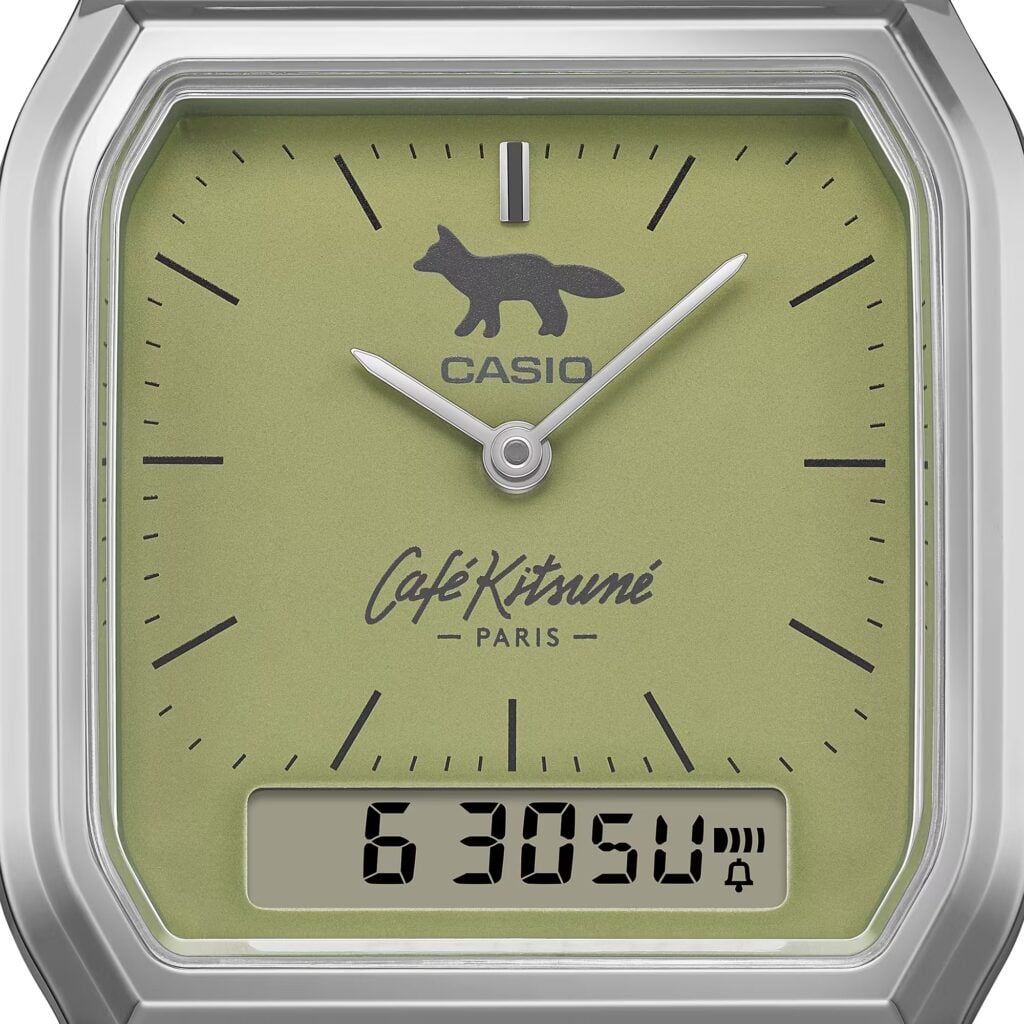
Casio is releasing a new limited-edition watch in collaboration with the coffee and lifestyle brand Café Kitsuné. The AQ230ECK-3A is a modified version of Casio’s standard vintage-style analog-digital hybrid, updated with a matcha green color scheme. It is scheduled to go on sale later this month, priced at $120 in the US and ¥17,600 in Japan.
The main design change from the standard AQ-230 model is the dial color. Casio replaced the usual metallic background with a muted green tone, which is intended to reference Japanese tea culture and Café Kitsuné’s specific branding.
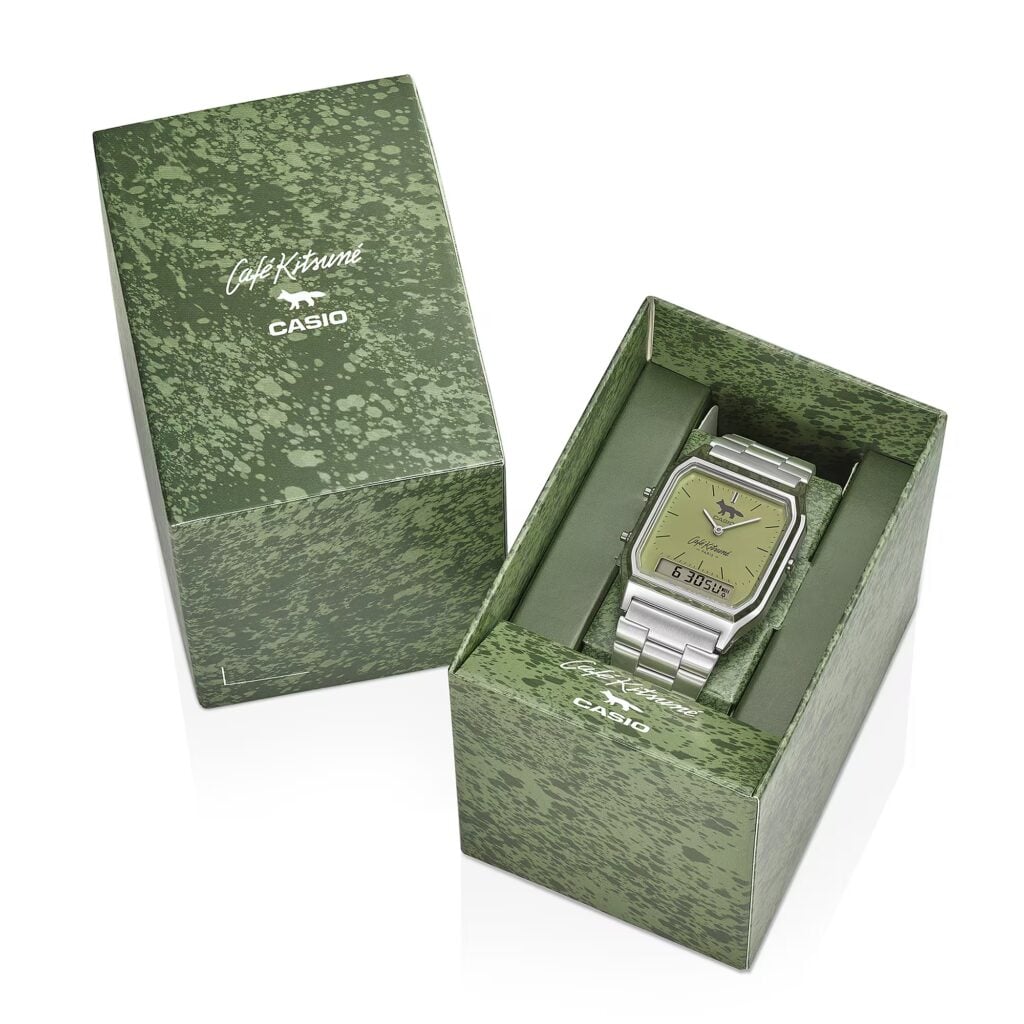
The coffee retailer’s fox logo is printed on the lower half of the dial. Additional branding includes the Café Kitsuné logo engraved on the stainless steel case back and the adjustable clasp. The watch also ships in custom green packaging to match the dial.
Aside from the visual updates, the hardware remains identical to standard Casio Vintage models. The unisex case measures 38.8 x 29.8 x 8.1 mm and weighs 47 grams. The main body is constructed from resin with chrome plating, and a standard resin glass crystal covers the dial. The stainless steel band includes a self-adjustable clasp designed to fit wrist sizes ranging from 150 to 205 mm. The watch carries a basic water resistance rating.
The AQ230ECK-3A uses a hybrid display to separate its functions. The analog section features two hands for the hours and minutes. Below it, a small digital screen displays the hour, minute, second, month, date, and day. Built-in features include dual time tracking, a stopwatch, a daily alarm, and an hourly time signal.
The watch runs on a single SR920W battery, which Casio estimates will last approximately three years, and it maintains an accuracy of ±30 seconds per month.
In related news, Casio has recently launched the new AQ-240E watches with sleek navy and glossy black retro styling, while the company has also introduced the affordable MTP-VT06 watches in India with steel and leather strap options.
For more daily updates, please visit our News Section.
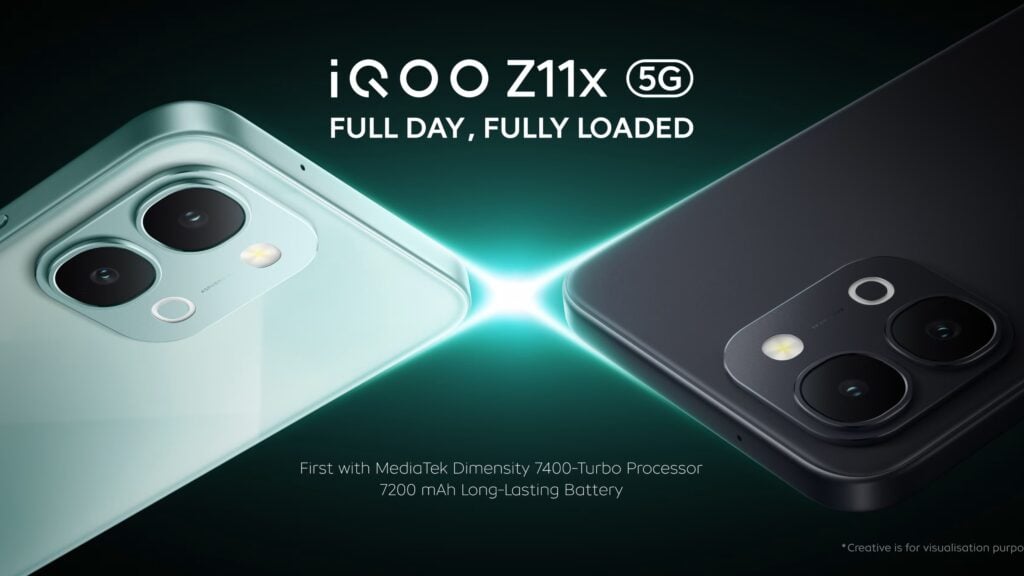
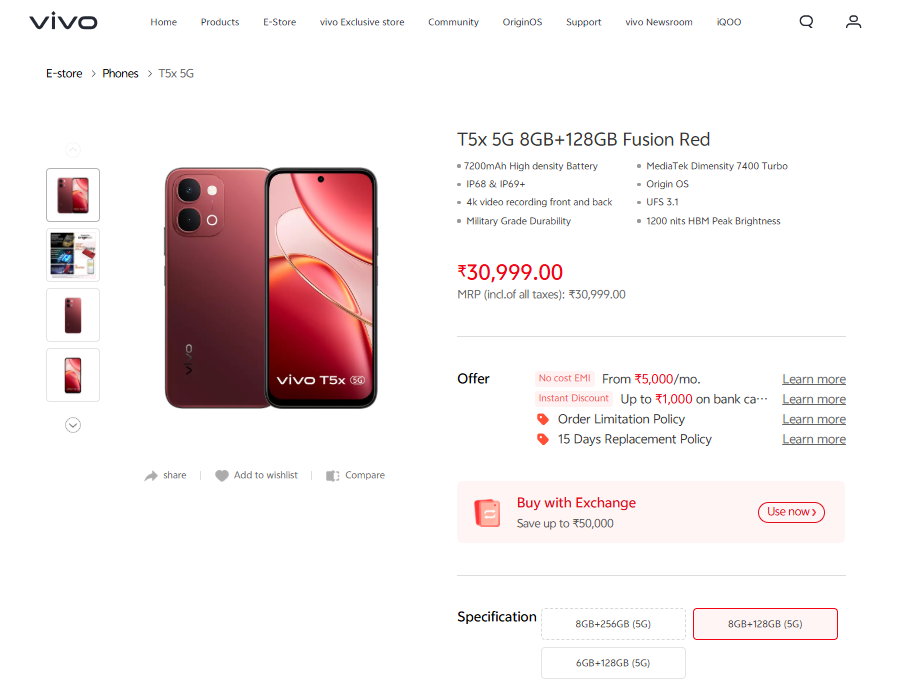
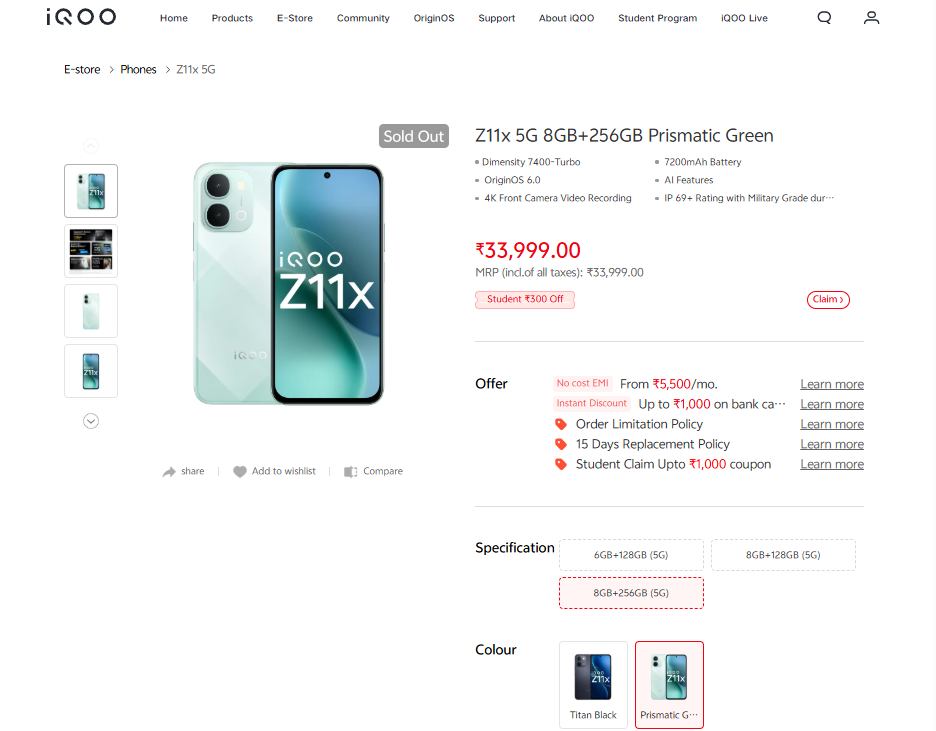
Budget phone shoppers in India just got another price hike to deal with. Vivo and its sub-brand iQOO have raised the prices of the T5x and Z11x (basically the same phone with different branding) starting this September.
The increases aren’t small. The base 6GB + 128GB version is now ₹27,999 (up from ₹24,999). The 8GB + 128GB jumps from ₹27,999 to ₹30,999. The top 8GB + 256GB model has gone up to ₹34,999 on the vivo T5x, while the iQOO Z11x version of the same config is currently listed at ₹33,999. That’s still as much as ₹4,000 more in some cases, and this is at least the third price increase for these two phones in 2026.
When they launched in March, both phones started at ₹18,999. The prices climbed a long way since then. The main reason seems to be the same one hitting a lot of mid-range phones this year: rising costs of RAM and storage. Neither Vivo nor iQOO has put out a detailed explanation for this latest jump.
Both phones run on MediaTek’s Dimensity 7400 Turbo, pack a big 7,200mAh battery (one of the highlights), a 120Hz Full HD+ LCD, a 50MP main camera with a secondary lens, and fast charging support. That large battery remains the main reason a lot of people were looking at these phones in the first place.
These repeated hikes show how tough it is for the entry-level and mid-range devices right now with memory prices bouncing around. If you’re still interested in the T5x or Z11x, it’s worth checking both online and offline stores, some sellers might still have older stock at the previous prices for a short while.
And if these two are now feeling a bit expensive (which they are), there are other options in the same segment with similar battery size or chipsets, though prices across the category have generally been moving up over the past few months.
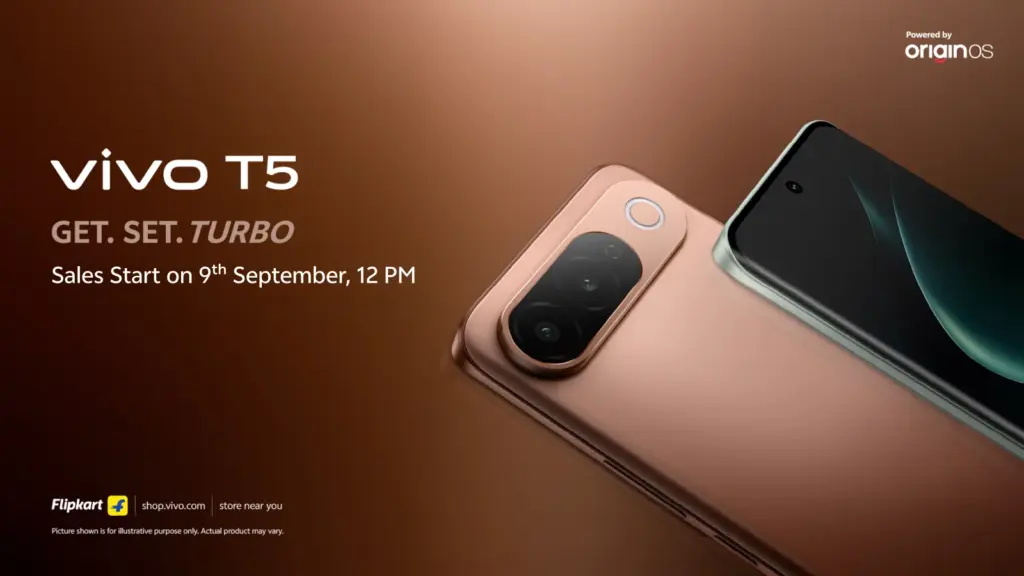
Vivo has announced the T5 5G in India, a midrange smartphone with a large AMOLED display, a high-capacity battery, and MediaTek’s Dimensity 7500 processor.
Vivo T5 Specifications
The Vivo T5 features a 6.83-inch curved AMOLED display with a 2800 x 1260 resolution and up to a 144Hz refresh rate. It offers up to 3,000 nits peak brightness and SGS-certified eye-care features.
The phone is powered by the 4nm MediaTek Dimensity 7500 Turbo chipset. It uses four performance cores clocked at up to 2.6GHz and four efficiency cores running at up to 2.0GHz. Vivo has paired the processor with a 3,800mm² vapor chamber and a larger cooling system intended to manage heat during gaming and other sustained workloads.
There are four memory and storage options: 6GB of RAM with 128GB of storage, 8GB with 128GB, 8GB with 256GB, and 12GB with 256GB. The phone uses LPDDR4X RAM and UFS 3.1 storage. Vivo also supports virtual RAM expansion of up to 12GB, although there is no microSD card slot for adding more storage.
Under the hood, the T5 packs a 7,050mAh battery with 44W charging, offering up to 85 hours of music playback and 34.7 hours of video playback. Vivo claims the battery can retain its health for up to 1,600 charging cycles.
For photography, the phone features a 50-megapixel primary camera based on Sony’s IMX882 sensor, with OIS. It is paired with an 8-megapixel ultrawide camera, while a 32-megapixel sensor handles selfies. Both the front and rear cameras support 4K video recording at 30fps.
The Vivo T5 runs OriginOS 6 based on Android 16. Vivo says it will receive three generations of Android updates and five years of security updates. The phone also includes AI tools for text editing, transcription, captions, document handling, and image cleanup.
Additionally, it includes IP68 and IP69 dust and water resistance, stereo speakers, an in-display optical fingerprint sensor, Wi-Fi 6, Bluetooth 5.4, and a USB-C port. The phone supports two nano-SIM cards and 5G on both SIMs in standby mode. NFC and FM radio are not included.
Pricing and Availability
The Vivo T5 will be available in India in four configurations. The 6GB RAM and 128GB storage model is priced at ₹34,999, while the 8GB/128GB version costs ₹39,999. The 8GB/256GB variant is priced at ₹44,999, and the top-end model with 12GB RAM and 256GB storage costs ₹49,999.
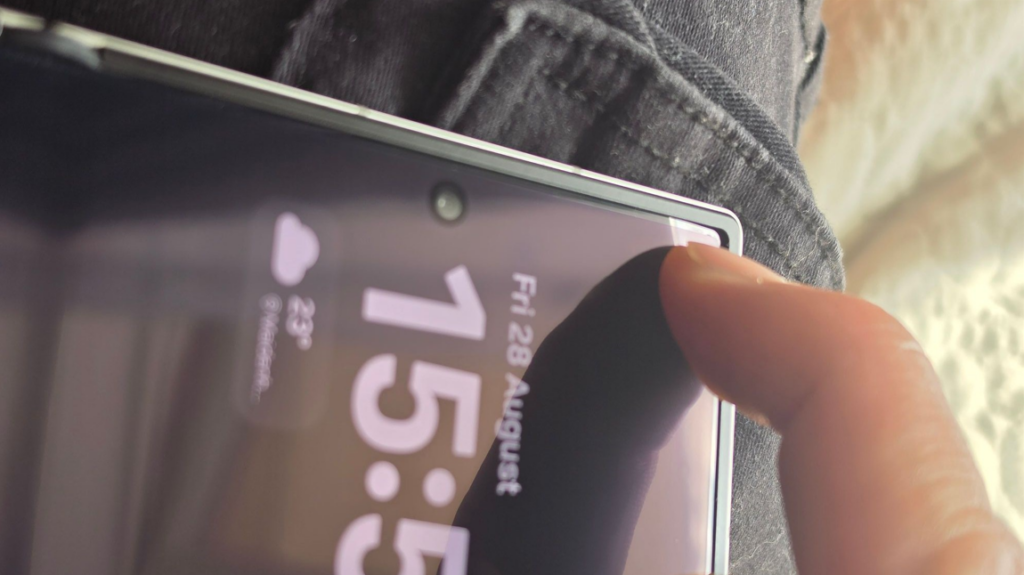
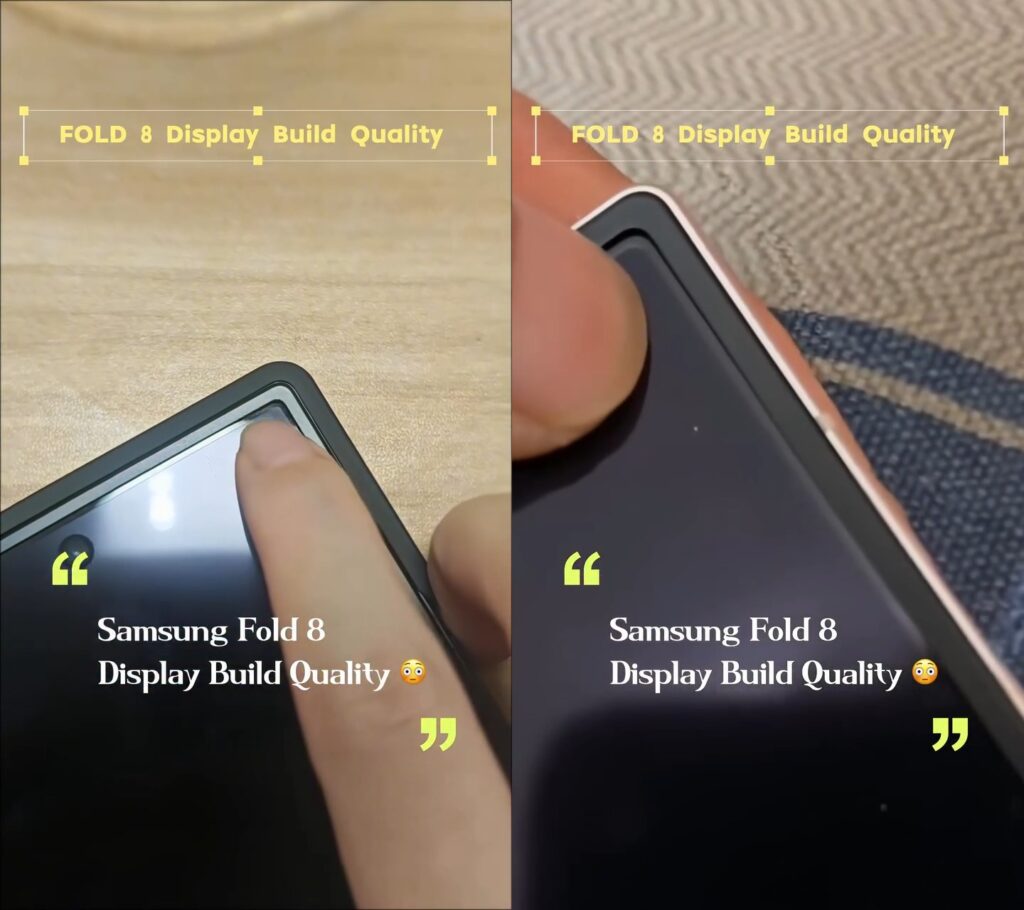
A Galaxy Z Fold 8 user posted on Samsung’s official EU Community forum saying the corners of the inner screen seem to bend or sink in when you push them lightly. They noticed it while wiping the edges with a soft cloth and started wondering if it’s normal or if something’s off with their unit. An Instagram reel showing similar flexing has also been going around.
In the thread, the original poster asked other owners to check their phones and compare. A few replies so far suggest this might just be how the flexible layers behave near the edges, where the structure is a bit less rigid than in the middle. Most people are telling the original poster not to keep pressing on it. Most commenters recommended taking the phone in for a proper look if it feels wrong. So far there’s no flood of identical reports from other owners.
Samsung has been pushing the durability story hard with the Z Fold 8 series, especially the new FlexTitanium display tech. They say it uses a titanium alloy film and a supporting titanium plate under the OLED panel. According to the company, that film is about 20 times stiffer than the older polymer films, helps hide the crease better, and makes the whole panel stronger while keeping it thin. The hinge is rated for 500,000 folds and the phone has an IP48 rating.
Independent tests, including JerryRigEverything’s usual extreme bend tests, showed the Z Fold 8 holding up without the inner screen or frame failing dramatically. However, the Ultra model became the first book-style Galaxy foldable to suffer a non-functional inner display.
The top layer of the inner display is still the soft plastic that scratches easily, same as previous Fold models. Samsung still tells people to leave the factory protector on, handle the screen carefully, and avoid putting pressure on it.
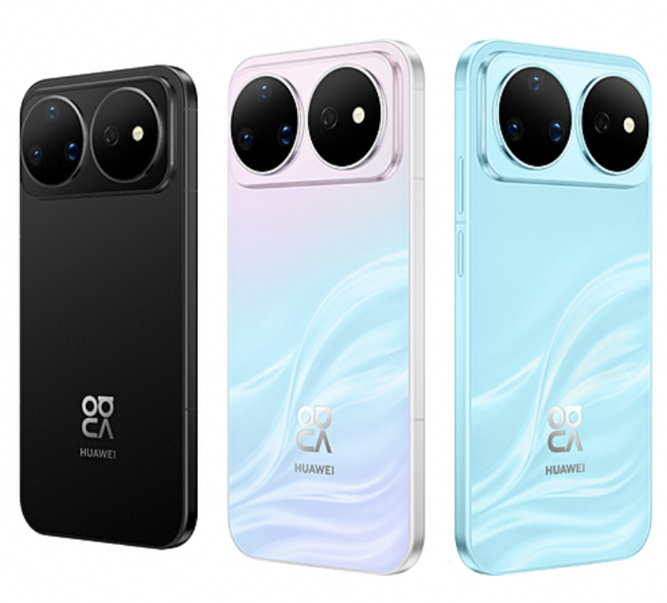
HUAWEI announced the global launch of HUAWEI nova 16s Series in Munich, Germany. The new smartphone series focuses on outdoor photography, True-to-Colour imaging, AI creative tools, design and durability. Designed for young users and outdoor content creators, the series follows the “Chase the Waves” design philosophy and the “Chase the Wild” campaign spirit.
The HUAWEI nova 16s Series is designed to help users capture spontaneous moments during travel, outdoor activities and everyday adventures with professional-level image quality.
200MP True-to-Colour Camera on the nova 16s Pro
The HUAWEI nova 16s Pro features a 200MP RYYB Ultra-Large Sensor Main Camera. Its camera system includes Front and Rear True-to-Colour Cameras, supported by dual 1.5MP multispectral sensors on the front and rear.
These sensors provide scene-specific colour calibration and are designed to improve colour accuracy in challenging lighting conditions. The system can handle harsh midday sunlight, intense seaside backlighting, soft sunset scenes and mixed lighting environments.
The 200MP RYYB sensor is designed to capture more natural light while preserving shadow details, highlight layers and natural colours. It also aims to correct colour distortions caused by changing colour temperatures, including harsh sunlight, cool coastal lighting and warm dusk conditions.
The standard HUAWEI nova 16s features a 50MP Ultra Portrait Camera with a professional True-to-Colour Camera setup. It is designed to deliver natural and eye-accurate colours.
Both models aim to reduce common outdoor photography problems such as overexposed highlights, washed-out skin tones, and flat-looking scenery.
AI Tools for Better Photos
The HUAWEI nova 16s Series includes several AI-powered photography and editing features.
AI Composition provides real-time framing guidance to help users capture more balanced shots. AI Move allows subjects to be repositioned within an image using adaptive lighting and depth matching.
AI De-Glare is designed to remove unwanted reflections from surfaces and glass, while AI Remove allows users to remove distracting people, passersby and environmental clutter with one tap.
The AI Best Expression feature is designed for group photography. It can select the best expression or smile for each person from a series of photos and use one-tap face replacement to improve the final image.
Some AI features may only be available in selected countries and regions, and results may vary.
Slim Design and Large Displays
The HUAWEI nova 16s Pro features a premium frosted glass back with a smooth, velvety finish. It measures 7.1mm thick and weighs 218g, making it relatively slim despite its large display and battery.
The phone features a minimalist 2.5D flat-screen design with symmetrical narrow bezels. The series information lists four colours, Isle Blue, Breathing Crystal, Starry Black and Sky White, although these colours are specifically noted as being available only for the standard HUAWEI nova 16s.
The nova 16s Pro has a 6.84-inch ultra-bright display with an adaptive 1–120Hz LTPO refresh rate. It offers up to 6,000 nits peak brightness at 1% APL and 4,000 nits dynamic peak brightness at 20% APL.
The display also supports AI HDR and 2,160Hz high-frequency PWM dimming, which is designed to improve viewing comfort in low-light conditions. AI HDR is effective when viewing images in the Gallery.
The standard nova 16s features a 6.68-inch high-bright display. Both phones are designed for outdoor visibility, video streaming, travel content and everyday entertainment.
Improved Durability
The HUAWEI nova 16s Pro uses an aerospace-grade aluminium alloy mid-frame and Kunlun Glass with a nano crystal coating.
HUAWEI claims that the phone offers 10 times improved drop resistance compared with the HUAWEI nova 15 regular glass edition. The design is intended to provide better protection against everyday bumps, accidental impacts and scratches.
7,000mAh Battery and 100W Charging
The nova 16s Pro features a 7,000mAh typical battery capacity and a 6,800mAh rated capacity. It supports up to 100W HUAWEI SuperCharge Turbo wired charging.
The maximum 100W charging speed requires an official compatible HUAWEI SuperCharge charger and cable, while actual charging performance may vary.
The large battery is designed for travel, outdoor activities, long photography sessions and all-day use.
Stereo Speakers and Wide Sound
The HUAWEI nova 16s Pro includes symmetrical dual stereo speakers with a 100-degree ultra-wide soundstage. The system is designed to provide crisp and directional audio for music, videos, outdoor entertainment, travel and commuting. The effect may vary depending on the original audio content.
Overall, the HUAWEI nova 16s Series focuses heavily on outdoor photography and content creation. The nova 16s Pro stands out with its 200MP camera, True-to-Colour imaging system, large ultra-bright display, 7,000mAh battery, 100W charging, and improved durability. Meanwhile, the standard nova 16s offers a 50MP portrait-focused camera and a 6.68-inch display.
We use cookies on our website to give you the most relevant experience by remembering your preferences and repeat visits. By clicking “Accept”, you consent to the use of ALL the cookies.
This website uses cookies to improve your experience while you navigate through the website. Out of these, the cookies that are categorized as necessary are stored on your browser as they are essential for the working of basic functionalities of the website. We also use third-party cookies that help us analyze and understand how you use this website. These cookies will be stored in your browser only with your consent. You also have the option to opt-out of these cookies. But opting out of some of these cookies may affect your browsing experience.
Necessary cookies are absolutely essential for the website to function properly. This category only includes cookies that ensures basic functionalities and security features of the website. These cookies do not store any personal information.
Any cookies that may not be particularly necessary for the website to function and is used specifically to collect user personal data via analytics, ads, other embedded contents are termed as non-necessary cookies. It is mandatory to procure user consent prior to running these cookies on your website.