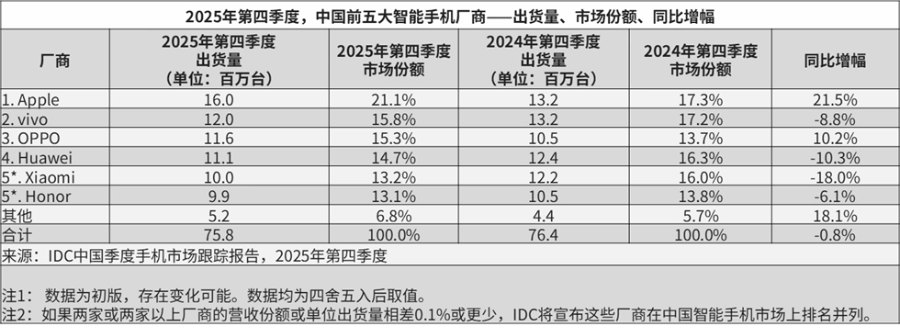
IDC’s smartphone shipment report for 2025 is out, and the overall takeaway is that the market remained mostly stable, both globally and in China. There wasn’t any major growth in shipments, but much of the momentum came from consumers shifting toward higher-end devices like foldables, which is a positive sign.
China’s smartphone shipments in 2025
China’s smartphone market remained largely flat toward the end of 2025. The market traded around 75.78 million units of smartphones, which is a 0.8% decline year-on-year.
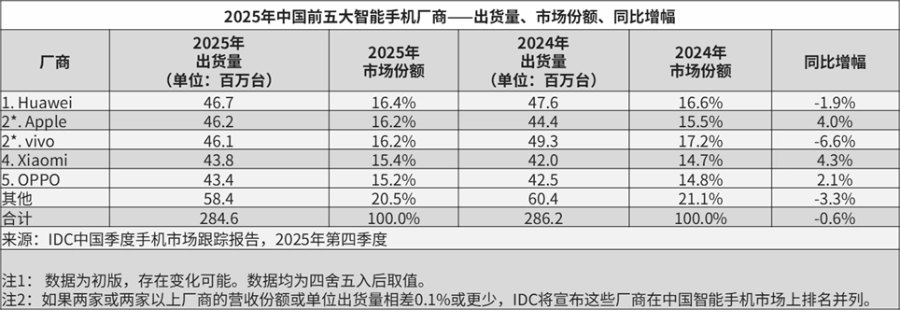
For the full year, smartphone shipments in China totaled approximately 285 million units. But the shipments are still 0.6% less compared to 2024.
Q4 2025 China Smartphone Shipments
As for the brands, Huawei, Apple, and Vivo make up the top three of the leaderboard. The brands shipped a combined total of 139 million smartphone units.
However, Apple was the only one to record year-on-year growth at 4 percent by shipping 46.2 million units. Huawei and Vivo, meanwhile, posted declines of 1.9 percent and 6.6 percent, respectively.
Year 2025 China Smartphone Shipments
Xiaomi and Oppo round out the top five, with a year-on-year increase in market share by 4.3 percent and 2.1 percent, respectively.
Global smartphone shipments in 2025
The global market, on the other hand, saw a modest but consistent growth. In the fourth quarter, the shipment volume reached 336.3 million units, up 2.3% year-on-year. Meanwhile, in the whole of 2025, global shipments totaled 1.26 billion units, which is a 1.9% increase.
Q4 2025 Global Smartphone Shipments
Much of that growth came from the high end of the market. Apple and Samsung were the fastest-growing brands with growth rates of 6.3 percent and 7.9 percent, respectively.
Commendable for Apple is the fact that it’s the world’s top smartphone market for the third year in a row. Samsung also saw a record growth since 2013, largely thanks to foldables and the affordable Galaxy A lineup. Together, Apple and Samsung now make up for 39 percent global smartphone market share, up from 37 percent in 2024.
Year 2025 Global Smartphone Shipments
However, Chinese brands faced challenges in the global market. Xiaomi, Vivo, and Oppo largely held their positions but saw slight declines in market share. Xiaomi’s fourth-quarter shipments fell by double digits as it navigated a shift toward higher-end devices and tougher competition in China, though it still finished the year as the world’s third-largest vendor.
For more daily updates, please visit our News Section.
Nubia has started revealing details about the upcoming Red Magic 11 Air and also offered us a proper look at this new gaming phone. Ahead of its official launch, the Red Magic 11 Air had its full design showcased in three color options along with some of its key features. So let’s check it out.
Red Magic 11 Air
Red Magic 11 Air launches in refreshing new colors
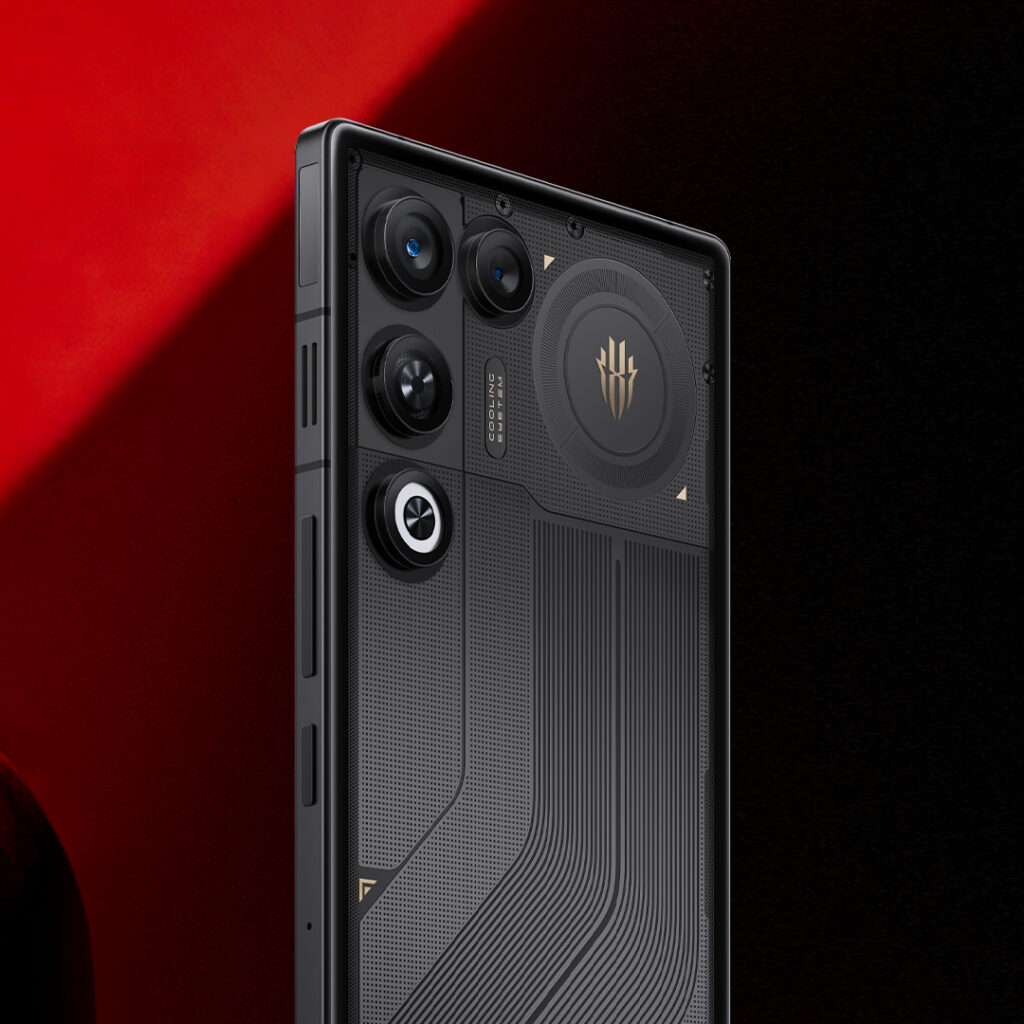
Looking at the official teasers, the new Red Magic 11 Air can be seen with a slightly curved glass back, which is also transparent. So users get a glimpse of the internals as well. The upcoming gaming phone will launch in three colorways, namely Stardust White, Quantum Black, and Aurora Silver. While this includes the classic black and white colors, the gray variant even has orange accents for added depth.
This orange hue is found on the power button, some design elements, and even in the camera rings. Furthermore, the Red Magic 11 Air can be seen with a triple camera setup on the rear along with the company’s brand logo, which houses RGB lighting that complements the gaming aesthetic. Pairing this with the transparent rear panel, you also get a futuristic look.
Based on what we know so far, the Red Magic 11 Air is set to debut in China on 20th January 2026. In the previous teasers, the brand has already revealed a bunch of features to improve the gaming experience, like a an ultra-thick 4D Ice-Step vapour chamber, Red Magic’s Cube gaming engine, a self-developed Red Core R4 esports chip, and a built-in PC emulator. To recall, this device is also relatively thin for its category, measuring just 7.85mm thick.
For more daily updates, please visit our News Section.
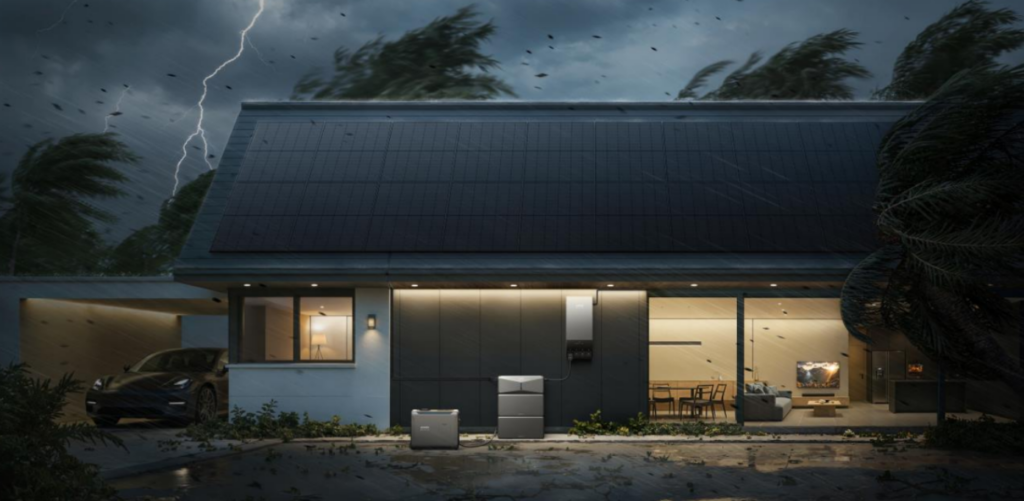
Anker SOLIX has officially introduced the Anker SOLIX E10, a next-generation smart hybrid whole-home backup system designed to keep homes powered during outages, without compromise. The E10 is positioned as the world’s first smart hybrid whole-home backup solution, combining batteries, solar energy, and a smart generator into one unified system. The product is launching across the continental United States, with NFL Hall of Famer Troy Aikman serving as the brand ambassador.
What Makes the Anker SOLIX E10 Different?
Anker SOLIX E10 is built around three core ideas: infinite backup power, true whole-home coverage, and a simplified ownership experience. Unlike traditional backup systems that require users to manually select which circuits to power, the E10 can support every circuit in the home at once, delivering a seamless experience during power outages. The system is designed for both professional installation and DIY users, making advanced backup power more accessible than ever.
Smart Hybrid Energy System Explained
At its core, the E10 is a smart hybrid energy system that intelligently integrates battery storage, solar panels, and a smart fuel generator. The system supports both automatic and manual power switchover, ensuring flexibility based on the user’s setup and budget.
Homeowners can choose between two installation options. The Power Dock offers a fully automatic solution with near-instant switching, while the Smart Inlet Box provides a more affordable manual alternative. Both options are compatible with grid charging and existing solar systems, allowing the E10 to fit into a wide range of homes and energy setups.
Power Without Compromise: Output and Coverage
Anker SOLIX E10 is engineered for serious power demands. A single E10 unit can deliver up to 37.2 kW of surge power, while a dual-unit setup can reach an impressive 66 kW, enough to handle large appliances, HVAC systems, and heavy startup loads.
With 200A true whole-home backup, the E10 powers all household circuits simultaneously. The Power Dock enables an ultra-fast 20-millisecond automatic switchover, protecting sensitive electronics like computers and smart appliances. For users opting for the Smart Inlet Box, manual switching ensures reliable backup at a lower cost.
Turbo Mode for High-Demand Moments
The E10 also features a Turbo Mode, which boosts output to 10 kW per unit for up to 90 minutes. This is ideal for short periods of high energy demand, such as running multiple large appliances at once during an outage.
Massive Energy Through Modular Expansion
Scalability is one of the E10’s biggest strengths. Each battery module offers 6 kWh of capacity, and users can stack multiple modules with ease. Up to three E10 sets can be combined, delivering a massive 90 kWh total capacity.
Depending on household usage, the system can provide up to 15 days of backup power. Solar input further extends runtime, with 9 kW of solar support per unit, scaling up to 27 kW across three units. The E10 works with rigid solar panels, portable solar options, and even third-party AC solar systems.
Smarter Generator Integration
When paired with Anker’s smart generator, the E10 uses direct DC charging, which is far more efficient than traditional AC generator setups. This design can extend backup duration by up to five times, ensuring longer runtimes with less fuel consumption.
Built for Tough Conditions
Durability is a major focus of the Anker SOLIX E10. The system features an all-metal NEMA 4 enclosure with F1 UV protection, making it resistant to harsh weather conditions. It operates reliably in temperatures ranging from -4°F to 131°F, and supports both wall and floor mounting.
The design is also suitable for flood-prone areas, adding peace of mind for homeowners in challenging environments.
Easy Installation
Anker SOLIX offers nationwide professional installation, providing a true one-stop solution for homeowners who want a hands-off experience. For DIY users, the E10 features a stackable, plug-and-play design, allowing batteries to be expanded without complex wiring.
Anker also provides detailed technical documentation and a dedicated customer support hotline, ensuring long-term reliability and support.
Pricing, Pre-Orders, and Availability
Pre-orders for the Anker SOLIX E10 opened on January 12, 2026, through the official website, with a $10 refundable deposit. Early buyers receive a $500 discount coupon and a gift pack worth over $1,500, which includes a 400W solar panel.
Official sales begin on February 4, 2026, with pricing starting at $4,299 for the base system. Bundles with the Smart Inlet Box, Power Dock, and smart generator are available, with the fully loaded package priced at $7,399.
• E10 Base System (1 inverter + 1 battery) priced from $4,299. • E10 + Smart Inlet Box priced from $4,599. • E10 + Power Dock priced from $5,799. • E10, Smart Generator, and Power Dock priced from $7,399.
Warranty and Long-Term Value
Anker SOLIX E10 comes with a 5-year standard warranty, and pre-order customers receive an additional 3-year extended warranty, offering up to 8 years of coverage.
With the SOLIX E10, Anker is redefining what whole-home backup power can be. By combining high output, modular scalability, solar integration, and simplified installation, the E10 is designed for homeowners who want reliable, long-lasting power without complexity. For anyone looking to future-proof their home against outages, the Anker SOLIX E10 stands out as a powerful and flexible solution.
Apple is reportedly moving closer to its long-rumoured foldable iPhone, with fresh information suggesting that internal testing has already begun. While Apple has not confirmed anything officially, recent leaks indicate that the company is planning to unveil it alongside the iPhone 18 Pro lineup. Here is some new information shared about the iPhone Fold (tentative name) by reliable tipster Digital Chat Station.
Apple foldable iPhone enters early testing
iPhone Fold leak by DCS
According to DCS, Apple’s foldable iPhone is expected to arrive as a major industry-level product rather than an experimental first attempt. The device is said to feature a new-generation foldable display design that differs from current foldables on the market. It is expected to break cover in September this year along with the iPhone 18 Pro series.
The inner screen is tipped to measure around 7.58 inches, while the outer display is expected to be approximately 5.25 inches. Interestingly, the engineering prototype is said to be slightly smaller than earlier rumors suggested, which could help improve ergonomics and daily usability.
The tipster also notes that Apple is working on a new in-house application processor specifically designed for this foldable form factor. This aligns with Apple’s broader strategy of tighter hardware and software integration, allowing it to fine-tune performance, efficiency, and thermal control for unconventional designs. Alongside the new chip, the foldable iPhone is said to debut with a new foldable-focused operating system that adapts the interface for multi-screen usage and seamless app transitions.
iPhone Fold design by DCS
Unlike many early foldables that focused heavily on specifications, Apple appears to be prioritizing design maturity, display quality, and in-hand comfort. DCS adds that the grip and overall feel of the device should be notably refined, suggesting that Apple is taking a cautious but deliberate approach.
If these details hold true, Apple’s foldable iPhone could mark a significant turning point for other manufacturers, as rival brands are also said to be working on wider foldable phones. Samsung is rumoured to debut the Galaxy Fold Wide in July this year, whereas Oppo is said to be working on the Oppo Find N7 with a similar design, with a launch expected in September this year.
For more daily updates, please visit our News Section.
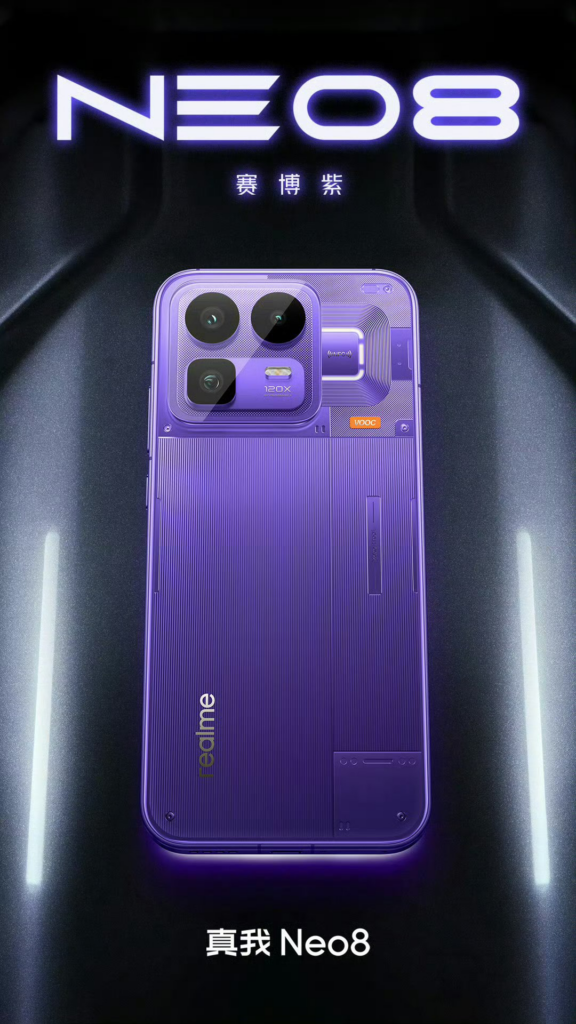
Realme is all set to announce the Realme Neo 8 on Jan. 22 in China. So far, the company has confirmed some of its specs and showcased its purple edition. Today, the brand released the following images to showcase all its colour options.
The above images show the Realme Neo 8 in Origin White, Mecha Grey, and Cyber Purple editions. The device is said to have a glass back and a metal middle frame. A closer look at the phone’s back panel reveals RGB lighting similar to what was seen on the older Realme GT Neo 5.
Realme Neo 8 specifications
Realme Neo 8 – Cyber Purple
According to reports, the Realme Neo 8 will arrive with a 6.78-inch Samsung AMOLED screen offering a 1.5K resolution and a 165Hz refresh rate. For security, it will feature an ultrasonic in-screen fingerprint sensor. It will come preloaded with Realme UI 7-based Android 16.
Under the hood, the Realme Neo 8 will have the Snapdragon 8 Gen 5 chipset. It will be paired with up to 24GB of LPDDR5x RAM and up to 1TB of UFS 4.1 storage. It is expected to pack an 8,000mAh battery with 80W fast charging support.
The Neo 8 will have a 16-megapixel camera on the front for selfies and video calls. Its back panel will feature an OIS-assisted 50-megapixel main camera, an 8-megapixel ultra-wide snapper, and a 50-megapixel periscope telephoto camera.
The Neo 8 will also come with other features such as dual speakers, an IR blaster, and NFC. It will have an IP68/69-rated dustproof and water-resistant chassis, measuring 8.3mm in thickness and weighing around 215 grams.
In China, the Realme Neo 8 will compete with the likes of the iQOO Z11 Turbo and the OnePlus Ace 6T. Rumours are rife that the Neo 8 may get rebranded as the GT 8 in the global market.
For more daily updates, please visit our News Section.
Apple’s upcoming iPhone 18 lineup has reportedly entered the early prototyping stage, offering a preliminary look at how Apple may refine its display design across future models. The information, shared by Digital Chat Station, suggests changes that focus on on-screen layout and differentiation rather than a complete visual overhaul.
iPhone 18 series display details emerge
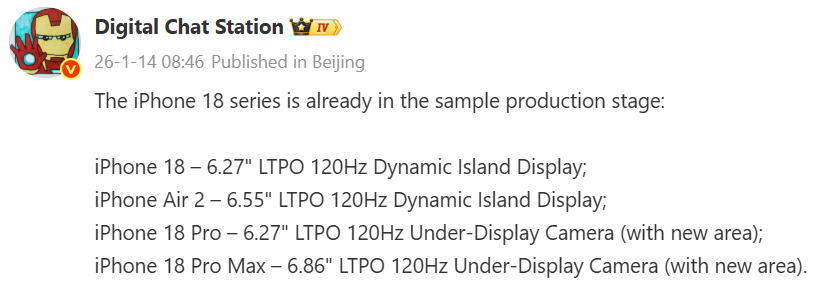
According to DCS, all iPhone 18 models are currently being sampled internally. The standard iPhone 18 is said to feature a 6.27-inch LTPO OLED display with a 120Hz refresh rate and the existing Dynamic Island design. Alongside it, the iPhone Air 2 is tipped to arrive with a 6.55-inch LTPO 120Hz screen, continuing Apple’s push towards a thinner and lighter form factor while retaining a familiar front layout.
The biggest display shift is expected on the Pro models. The iPhone 18 Pro and iPhone 18 Pro Max are reportedly testing 6.27-inch and 6.86-inch LTPO 120Hz panels respectively.
These screens are said to move part of the Face ID system beneath the display, leaving only a small punch-hole for the front camera. As a result, the Dynamic Island area is expected to shrink for the first time since it debuted on the iPhone 14 Pro series.
According to reports, Apple may change its traditional launch rhythm. Instead of unveiling the entire lineup together in autumn, the company could introduce its high-end models first. The iPhone 18 Pro, iPhone 18 Pro Max and a foldable iPhone are expected to arrive in late 2026, while the standard iPhone 18 and a possible iPhone 18e may follow in spring 2027. There’s no specific launch timeframe for the iPhone Air 2.
On the hardware front, the Pro models are tipped to debut the A20 Pro chip built on a 2nm process. Camera upgrades, including a variable aperture system and improved image sensors, are also being tested. Together, these developments suggest Apple is preparing a more distinct split between standard and Pro iPhones in the iPhone 18 generation.
For more daily updates, please visit our News Section.
Garmin is expanding its high-end marine wearables lineup with the launch of the quatix 8 Pro. The flagship smartwatch is designed specifically for individuals who spend a significant amount of time on the water.
The quatix 8 Pro doesn’t stray far from its predecessor’s design language. Garmin has equipped the watch with a 47mm titanium bezel, a scratch-resistant sapphire crystal, and a 1.4-inch high-brightness AMOLED display. The display is readable in direct sunlight and tough enough to withstand saltwater, spray, and extended periods at sea.
Offshore connectivity, 24-hour response center, and more
Where the quatix 8 Pro really separates itself from standard smartwatches is connectivity. Garmin is targeting one of the biggest frustrations of offshore boating: losing signal.
The watch integrates inReach satellite technology alongside an LTE cellular module, allowing users to stay connected even when they’re as far as 50 miles (80.4 km) offshore. As a result, users can send text messages, make voice calls, and check real-time weather updates without needing a phone.
The quatix 8 Pro also includes an SOS emergency rescue function that lets users send a distress signal directly from the watch. That signal goes to Garmin’s 24-hour Response emergency center, which the company says has already coordinated more than 1,200 successful water rescues.
On the software side, Garmin is introducing a new Boat Mode. The interface adapts automatically based on where you are. When you’re on the water, marine tools like autopilot controls, trolling motor status, and vessel data are pinned front and center. Once you’re back on land — at work or at the gym — those tools are replaced by everyday apps and health metrics.
Despite packing a bright AMOLED display and constant connectivity options, Garmin says the quatix 8 Pro can still deliver up to 15 days of battery life in smartwatch mode. Beyond its nautical focus, it also supports all-day health tracking, Garmin Pay, and more than 100 sports modes, including water-specific activities like wakeboarding and waterskiing.
Garmin quatix 8 Pro is priced $1,299.99 for the sole 47mm variant and is scheduled to go on sale starting January 16th.
Apple Creator Studio bundles several of Apple’s professional creative apps into a single subscription, covering video editing, music production, image editing and productivity. While the idea sounds convenient, the service is clearly designed for a specific type of creator. For many users, subscribing may not be the most practical decision.
Apple Creator Studio
1. You create content only occasionally
Apple Creator Studio is built around professional-grade tools like Final Cut Pro and Logic Pro, which are best suited for regular, sustained creative work. If you only edit videos or create music once in a while, paying a recurring subscription can feel disproportionate to actual usage.
2. You depend on just one main app
Many creators rely heavily on a single application and rarely touch others. If your workflow revolves around only Final Cut Pro or Logic Pro, the bundled model may not offer meaningful savings. In such cases, a one-time purchase of the required app can be more sensible over time.
3. You work exclusively on an iPad
Although Apple Creator Studio includes iPad versions of several apps, not all tools are available on iPad. Motion and Compressor remain Mac-only, and some advanced workflows still assume access to macOS. iPad-only users may end up paying for features they cannot use.
4. You are already invested in another ecosystem
Creators deeply embedded in Adobe Creative Cloud, DaVinci Resolve or specialised audio platforms may find little incentive to switch. Adding Apple Creator Studio on top of existing subscriptions can increase costs without improving productivity.
5. You prefer owning software instead of subscribing
Subscriptions offer flexibility but also introduce long-term payments. Creators who value permanent access to their tools, or who dislike ongoing fees, may prefer one-time purchases that continue working without renewal concerns.
6. Your hardware is relatively old
Many of the newer features in Apple Creator Studio are optimised for Apple silicon. Users on older Macs or iPads may not experience the same performance improvements, reducing the overall value of the subscription.
7. You do not need cross-app workflows
Apple Creator Studio makes the most sense when multiple apps are used together. If your creative process does not involve moving between video, audio, image editing and productivity tools, the bundled approach may add complexity rather than efficiency.
That said, for users who genuinely need access to multiple Apple creative apps on a regular basis, Apple Creator Studio can still make practical sense. The subscription provides access to Final Cut Pro, Logic Pro, Pixelmator Pro and other tools under one plan, reducing the need to manage separate purchases. Apple Creator Studio is priced at $12.99 per month or $129 per year, with a one-month free trial for new users. Students and educators can subscribe at a reduced rate of $2.99 per month or $29.99 per year, offering a lower entry point for those learning or teaching creative skills.
For more daily updates, please visit our News Section.
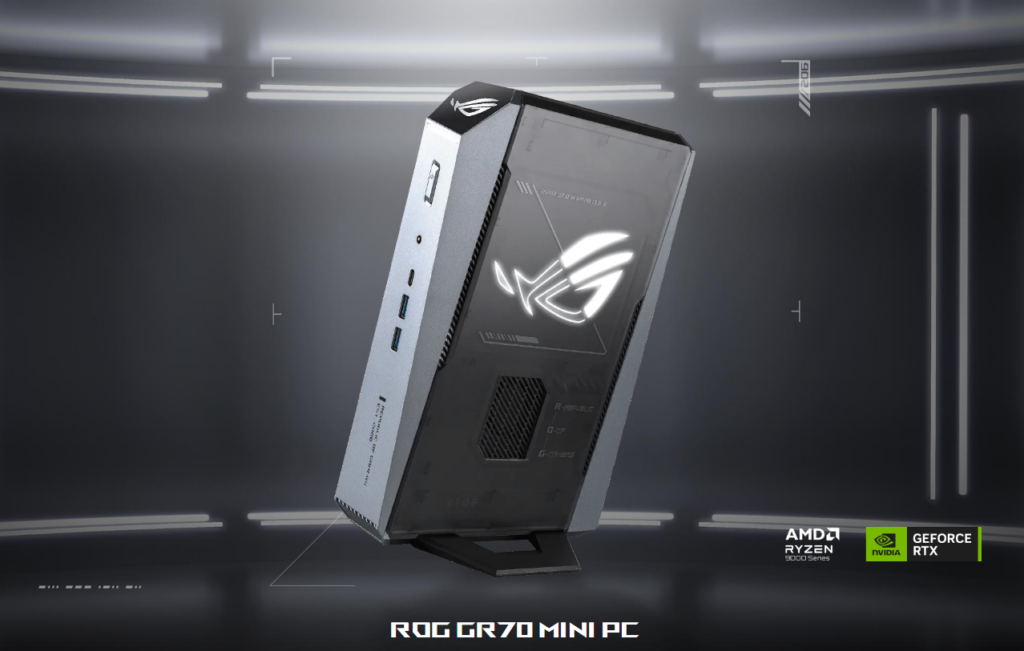
ASUS showed off a new high-end gaming mini PC at CES 2026 called the ROG GR70. It’s the first ROG mini PC to use AMD’s Ryzen 9 9955HX3D processor, which runs at 70W cTDP.
The GR70 pairs AMD’s Ryzen 9 9955HX3D processor at 70W with NVIDIA’s GeForce RTX 5070 or RTX 5060 Laptop GPU. The graphics card draws up to 100W plus 15W via Dynamic Boost, delivering 8GB GDDR6 memory for AAA gaming with ray tracing and AI features.
Memory configurations start at 32GB DDR5-5600 SO-DIMM, expandable to 96GB through dual 48GB modules in dual-channel setup. Storage includes PCIe 4.0 NVMe SSDs up to 2TB, with PCIe 5.0 support available for enhanced speed.
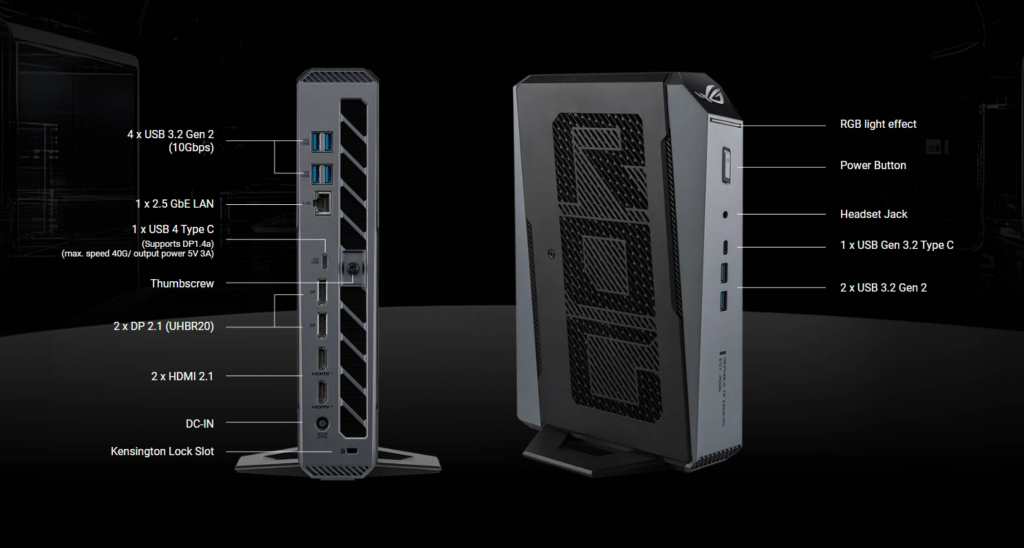
A triple-fan cooling system maintains performance during extended sessions while managing noise levels. Connectivity supports five simultaneous displays through rear I/O featuring USB 4.0 with DisplayPort, dual HDMI 2.1 ports (4K at 60Hz), DisplayPort 2.1 outputs, and 2.5G Ethernet. Wireless options include Wi-Fi 7 and Bluetooth 5.4.
The Star Grey chassis measures 282.4 x 187.7 x 56.6mm and weighs 2.75kg—substantially smaller than conventional gaming desktops. ROG’s gaming aesthetic carries through with ARGB LED side panel and light bar. The system requires a 330W power adapter.
ASUS positions the GR70 between compact consoles and full-sized gaming rigs. Pricing and availability details are yet to be confirmed.
Redmi has started teasing the arrival of the Turbo 5 Max, hinting at a major upgrade for its Turbo lineup. The brand has confirmed that the device will be officially announced soon, with early teasers focusing on performance ambitions rather than detailed specifications. While nothing concrete has been revealed yet, the Turbo 5 Max is already being positioned as a key mid-range contender for 2026.
Redmi Turbo 5 Max teased again
Redmi Turbo 5 Max teaser
According to official teasers and comments from Xiaomi Group President Lu Weibing, the Turbo series has evolved over three generations and is now entering a more aggressive phase. He has repeatedly linked the Turbo 5 Max to the so-called 2.5K Yuan (~$360) segment. This is the space where brands usually balance near-flagship performance with practical compromises.
Leaks indicate that series will include two models, such as the Redmi Turbo 5 Max and Redmi Turbo 5 Pro Max. These devices are said to be powered by the Dimensity 8500 and the upcoming Dimensity 9500s chipset. This would be the first time the Redmi Turbo series launches with a Dimensity 9-series flagship processor.
Built on a 3nm process, the D9500s is said to feature a powerful multi-core CPU configuration and a high-end Immortalis-class GPU. Benchmark data circulating online suggests single-core scores around 3000 and multi-core results crossing 9000, placing it close to top-tier Snapdragon flagship platforms.
Beyond raw performance, the Turbo 5 series is expected to bring meaningful upgrades to everyday usage. Reports point to a 1.5K flat display, paired with up to 16GB RAM for smoother multitasking.
Battery capacity is said to reach close to 9000mAh, alongside support for very fast wired charging and rapid reverse charging. The overall hardware package, including biometrics and build quality, is tipped to align more closely with premium smartphones, reinforcing Redmi’s intent to blur the line between mid-range and flagship devices.
For more daily updates, please visit our News Section.
Lenovo has unveiled the Yoga Pro 27UD-10, a premium OLED monitor aimed at creative professionals. The company announced the display at CES 2026, and it is now listed on Lenovo’s US website with a price of $1499.99.
Lenovo Yoga Pro 27UD-10 Specifications
The Yoga Pro 27UD-10 sports a 26.5-inch UHD (3840 × 2160) PureSight Pro OLED panel with a 120Hz refresh rate and up to 1,000 nits of peak brightness. Lenovo says it meets the VESA DisplayHDR True Black 400 standard, delivers 99% sRGB and DCI-P3 coverage, 96% Adobe RGB, and achieves Delta E below 1 in sRGB and Adobe RGB, and below 2 in DCI-P3.
The monitor supports Dolby Vision and Dolby Atmos, paired with a 34W, 12-driver speaker system tuned by Waves MaxxAudio. Lenovo also bundles a modular 4K HDR camera using Sony’s IMX678 sensor, along with four microphones for video calls and voice capture.
The Yoga Pro 27UD-10 supports USB4 Type-C one-cable connectivity with daisy-chain support. It includes HDMI and DisplayPort inputs. It also features a smart ambient light sensor to adjust brightness automatically.
Lenovo has designed the monitor to work in sync with the Yoga Pro 9i Gen 11 Aura Edition. The company says the two devices can deliver a seamless experience in terms of both video output and audio feedback.
The monitor comes with a height-adjustable stand and supports VESA mounting. It weighs 6.7 kg with the stand and 4.5 kg without. Lenovo lists power consumption at 80W typical and up to 310W at maximum load. The monitor also meets environmental standards for temperature and humidity in operating, storage, and transport conditions.
In related news, AOC has recently launched the Agon Pro AG276QSG2 gaming monitor with a 2K 360Hz panel and G-Sync Pulsar support, while HP has unveiled the Series 7 Pro monitor featuring a 31.5-inch 4K 120Hz display with Thunderbolt 4 connectivity.
For more daily updates, please visit ourNews Section.
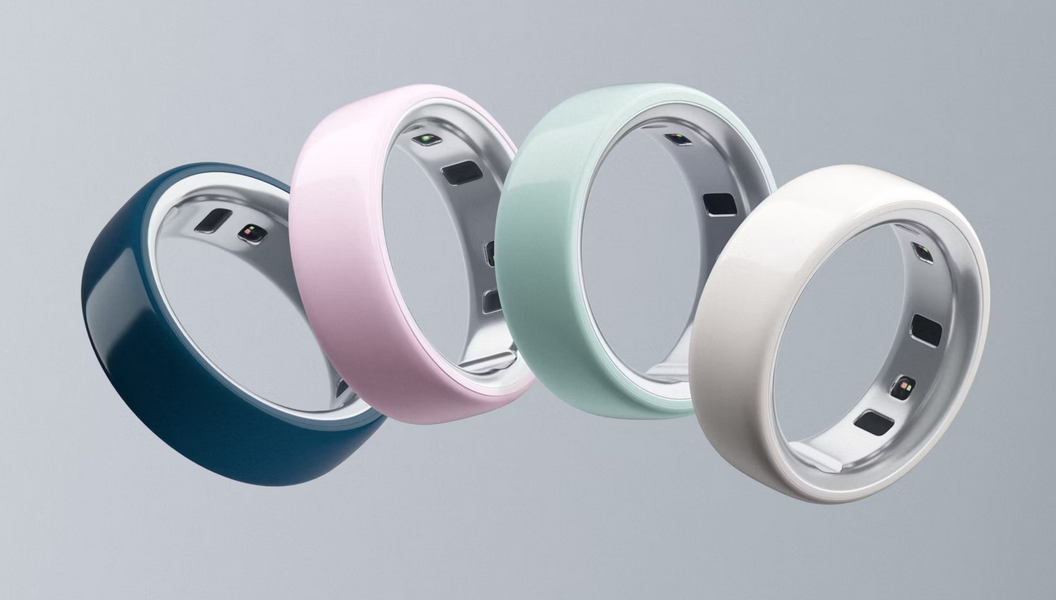
Smart rings have quietly gone from curiosity to credible wearables over the past couple of years. While smartwatches keep getting bigger, brighter, and more distracting, rings have taken the opposite route, with minimal screens, health-first tracking, and designs. As we head into 2026, the big question isn’t whether smart rings will improve, but whether they’re ready to step out of niche territory and into the mainstream. Even though confirmed 2026 launches are still under wraps, here are some of the possible new launches and why they are worth keeping an eye on.
The appeal of smart rings is simple: passive health tracking without constant notifications. Unlike smartwatches that demand attention, rings focus on background metrics like sleep quality, heart rate variability, blood oxygen, stress, and recovery.
By 2025, smart rings have already solved many early-generation problems, like battery life that lasts beyond a week, improved tracking accuracy, and designs that can match more traditional jewelry. For users already overwhelmed by screens, rings started to feel like a more sustainable long-term health companion. That shift sets the stage for 2026 to be a refinement year rather than an experimental one. So let’s check out some of the worthy next-gen smart rings.
2. Samsung Galaxy Ring 2
Samsung Galaxy Ring
Samsung’s first Galaxy Ring laid the groundwork for something bigger, and a Galaxy Ring 2 feels inevitable by 2026. However, the biggest strength here isn’t just hardware, but it’s the ecosystem integration. A next-gen Galaxy Ring could work more seamlessly with Galaxy Watches, phones, and Samsung Health, acting as a silent health tracker while the watch handles notifications and workouts.
We can expect improvements in battery life, more accurate sensors, and tighter AI health summaries powered by Samsung’s growing focus on on-device intelligence. For Android users, especially those already in Samsung’s ecosystem, this could be the most compelling smart ring option.
Please Note: When you buy something using the links in our articles, we may earn a small commission at no cost to you.
3. Ultrahuman Ring Air 2
Ultrahuman Ring Air
Ultrahuman carved out a loyal following in 2025 by offering subscription-free insights and a fitness-forward approach. A likely Ring Air 2 in 2026 could push deeper into metabolic health, recovery scoring, and workout readiness. These are areas where athletes and fitness enthusiasts can benefit without the hassle and inconvenience of monthly fees.
The newer model should offer improved build quality, incremental sensor upgrades, and possibly more regional health insights tailored to different user bases. If Ultrahuman continues refining its software while keeping costs predictable, it could remain the smart ring for users who want control without long-term commitments.
Please Note: When you buy something using the links in our articles, we may earn a small commission at no cost to you.
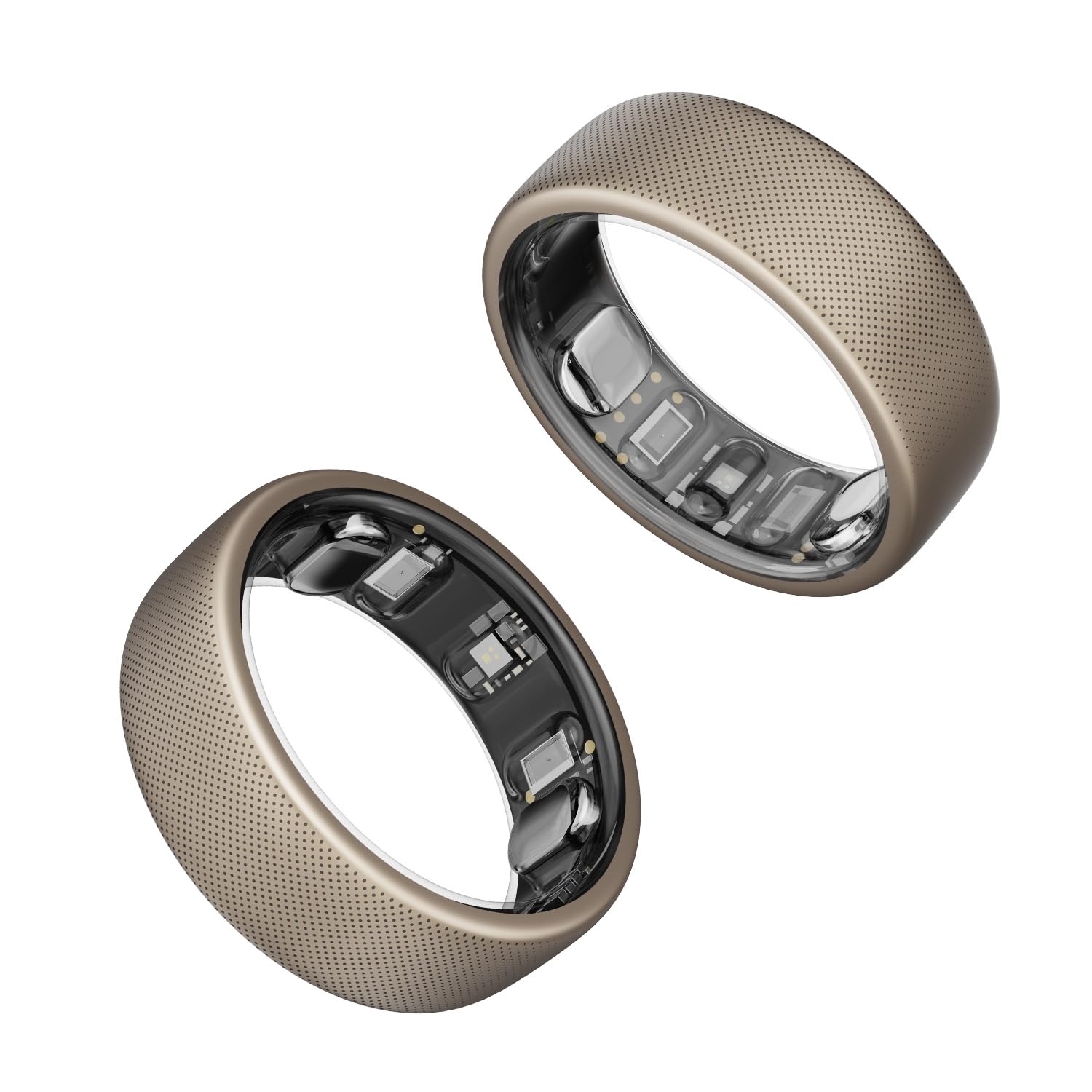
4. Amazfit, RingConn, and Other Budget Rings
Amazfit Helio Ring
Not every smart ring buyer wants premium pricing, and that’s where brands like Amazfit and RingConn could play a bigger role in 2026. Successor models here are likely to focus on longer battery life, lighter builds, and competitive pricing, even if that means fewer advanced insights. As competition heats up, 2026 could be the year smart rings finally become accessible to a wider audience, similar to how fitness bands rose in popularity a decade ago.
Please Note: When you buy something using the links in our articles, we may earn a small commission at no cost to you.
5. Niche Fad or the Next Big Thing?
Smart rings in 2026 won’t replace smartwatches overnight, but they don’t need to. Their strength lies in being quiet, reliable health companions, not attention-grabbing gadgets. With stronger ecosystems, better AI insights, and clearer value propositions, the next generation of smart rings could finally break out of niche status. As with our recent piece about whether smart rings could replace smartwatches, smart rings could complement smartwatches.
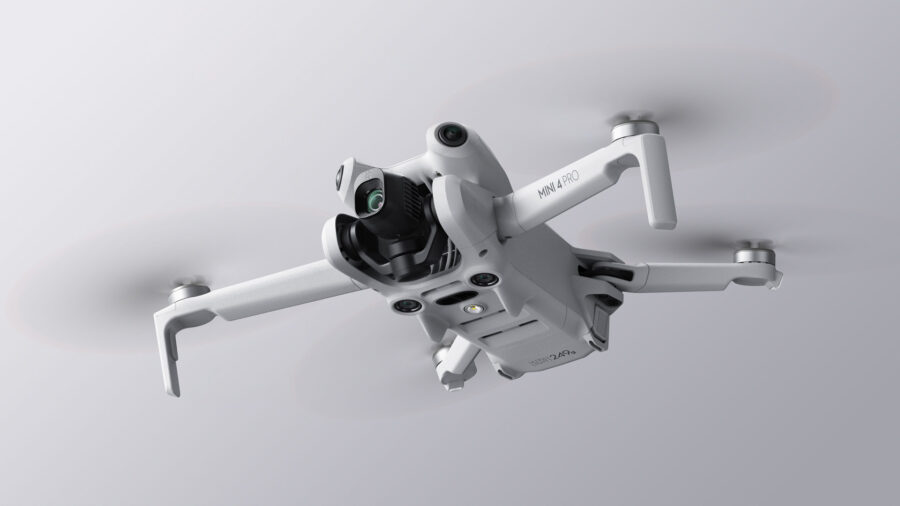
The DJI Mini series has long been a go-to choice for travel shooters, content creators, and hobbyists who want great aerial footage without the bulk of larger drones. In 2025, DJI introduced the Mini 5 Pro, seemingly building on the success of the Mini 4 Pro, which itself was a major contender in the compact drone segment when it launched in 2023.
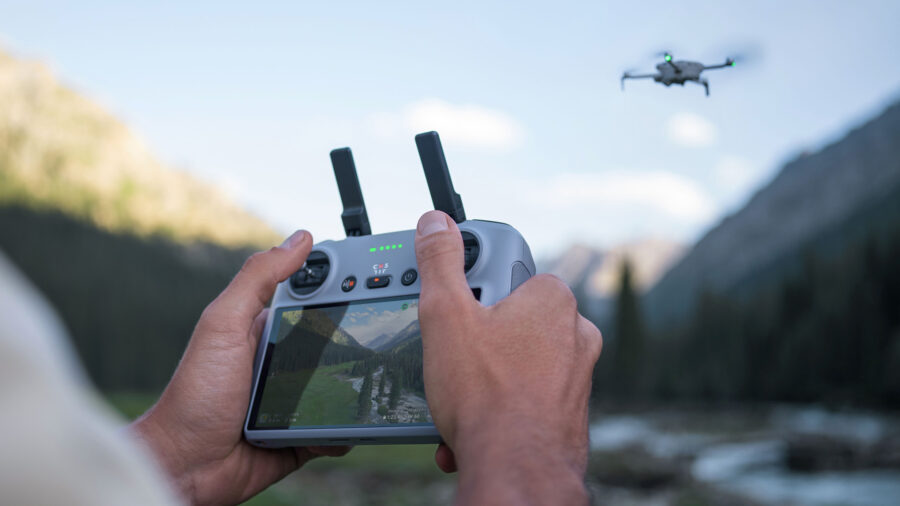
With DJI’s Mini 4 Pro still widely available and highly capable, it raises the question, “Should I upgrade, or is the older model still good enough?” Both drones offer impressive performance in a compact, travel friendly package, but there are clear differences worth checking out. So here’s a quick comparison between the two.
At first glance, the Mini 5 Pro and Mini 4 Pro share the same compact, foldable form factor and weigh in under 250 grams. This keeps them within the lighter-drone regulatory classes in many regions. This means both are easy to travel with and can often be flown with fewer restrictions than heavier drones.
However, the Mini 5 Pro introduces a few subtle practical improvements: it powers on as soon as the arms unfold, and its quick-release propellers are easier to manage compared with the Mini 4 Pro’s screw-based system. Both remain highly portable, but these small design enhancements make daily use smoother for frequent flyers.
2. Camera & Imaging
The camera upgrade is one of the clearest reasons to consider the Mini 5 Pro. DJI’s latest model uses a 1-inch sensor capable of capturing 50MP stills and 4K video up to 120fps, whereas the Mini 4 Pro relies on a 1/1.3-inch sensor with 48MP photo and up to 4K/100fps video. In practical terms, the larger sensor on the Mini 5 Pro delivers better dynamic range, cleaner shadows, and less noise in low light, making it more versatile for shooting in challenging lighting conditions.
It also supports a 48mm “med-tele mode” for tighter framing without flying closer to your subject, which makes it ideal for cinematic shots without risky maneuvers. While the Mini 4 Pro still captures excellent footage that satisfies most content creators, the Mini 5 Pro’s imaging advantage is noticeable when you compare side-by-side results, especially in dimmer conditions or high-contrast scenes.
3. Flight Performance & Features
Both drones provide stable flight, omnidirectional obstacle avoidance, and advanced tracking, but the Mini 5 Pro takes things further in a few key areas:
Obstacle Avoidance: The Mini 5 Pro combines traditional sensors with a forward-facing LiDAR unit plus enhanced infrared detection. This allows safer navigation in low-light or complex environments compared to the Mini 4 Pro’s standard omnidirectional system.
Transmission & Stability: Upgraded O4+ video transmission in the Mini 5 Pro offers a more robust live feed and extended range over the standard O4 system on the Mini 4 Pro, helping maintain connection quality in crowded or high-interference areas.
Flight Time: The 5 Pro can reach up to 52 minutes of flight with the Smart Flight Battery Plus. This offers a couple of minutes higher than the 45 minutes on the Mini 4 Pro.
Altogether, these enhancements make the DJI Mini 5 Pro feel like a more polished and versatile drone that is particularly great for content creators and drone pilots.
4. Price & Value
While the DJI Mini 5 Pro and Mini 4 Pro are quite similar in terms of initial launch prices, the Mini 4 Pro has been available in the market for longer. So you’ll often find it for discounts and bundled deals. This makes it great for beginners and casual flyers. If pricing is a key concern and you’re mainly shooting for social media or travel clips, the Mini 4 Pro still delivers excellent footage and flight performance for its price.
On the other hand, if you need the best of what DJI has to offer from a compact drone, the Mini 5 Pro is definitely the better pick. In many ways, the Mini 5 Pro is the better drone. It is a proper successor to the Mini 4 Pro, and can be considered a worthy upgrade. However, DJI Mini 4 Pro users might not see a massive update and could consider sticking with the older model if they don’t require some of these professional features.
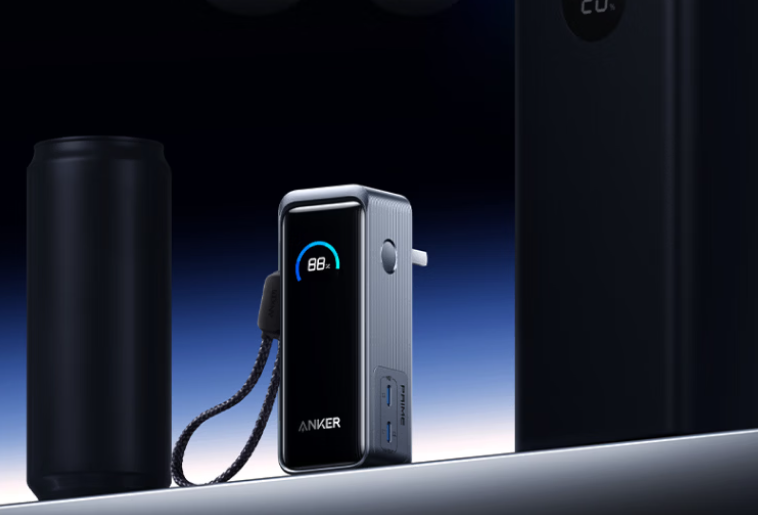
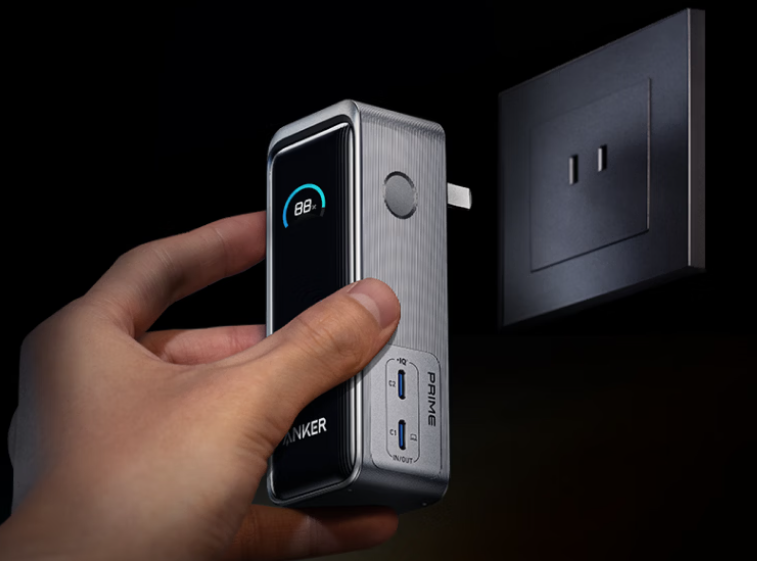
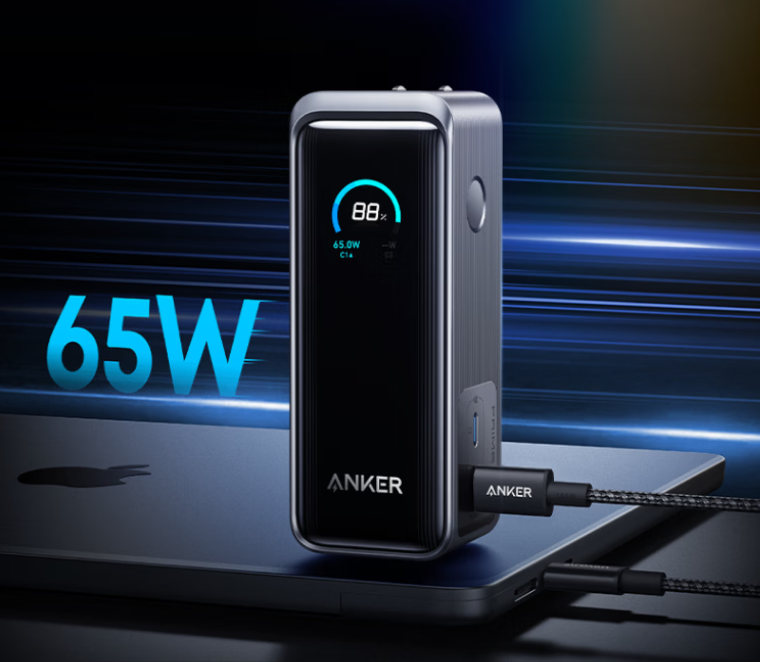
Anker has announced its new Prime 65W 3-in-1 10000mAh power bank, featuring a compact design with a built-in charging cable and support for dual USB-C output. The device combines the functionality of a power bank, a wall charger, and a fast-charging cable into a single unit. It is priced at 369 yuan ($52) and will go on sale beginning January 15 in China.
Anker Prime 65W Power Bank Specs
The Anker Prime 3-in-1 power bank features a 9,600mAh battery and has a rated output capacity of 5,760mAh. It supports a maximum output of 65W across both charging modes. The device measures 43.5 x 42 x 115 mm and weighs 305 grams. It includes a foldable AC plug and can function as a wall charger when plugged into an outlet.
The built-in USB-C cable measures 22cm and supports up to 65W power delivery. Anker has added an E-Marker chip to ensure stable and safe charging. The cable also doubles as a lanyard for easier portability. In wall charger mode, the device can charge two devices simultaneously.
Anker has equipped the power bank with a 1.3-inch color display that shows real-time information such as battery percentage, input/output wattage, charging temperature, battery health, cycle count, and estimated remaining time. Physical buttons on the side allow users to switch between display modes and adjust brightness settings.
The device supports a wide range of fast-charging protocols, including PD, PPS, QC, SCP, and UFCS. It also includes pass-through charging, allowing users to power connected devices while the power bank is charging.
The power bank comes with the latest GaN technology and PowerIQ 3.0 engine, ensuring broad compatibility with over 1,000 devices. The safety system, ActiveShield 3.0, performs millions of temperature checks per day and includes protections against overheating, overvoltage, short circuits, and electrostatic discharge.
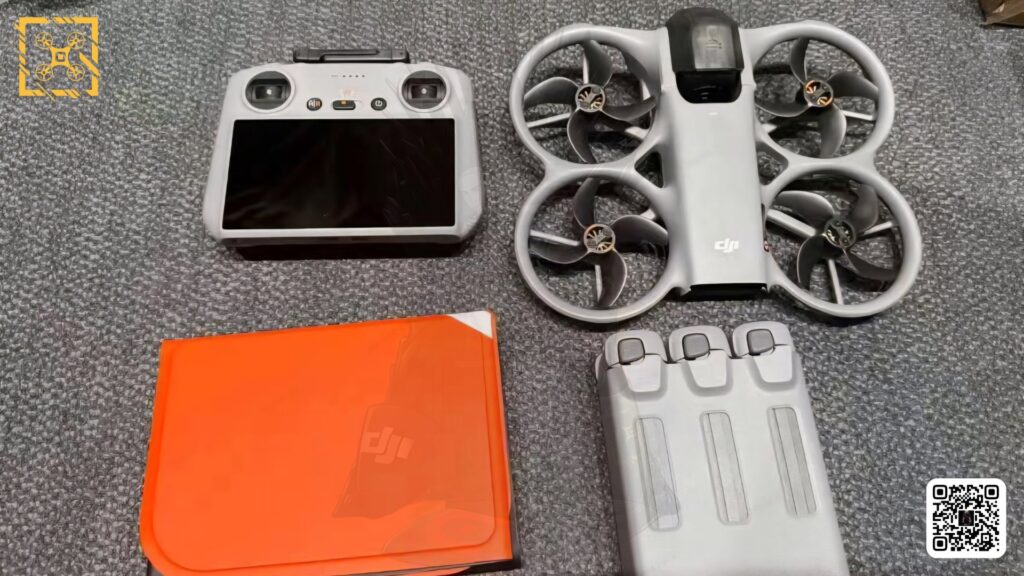
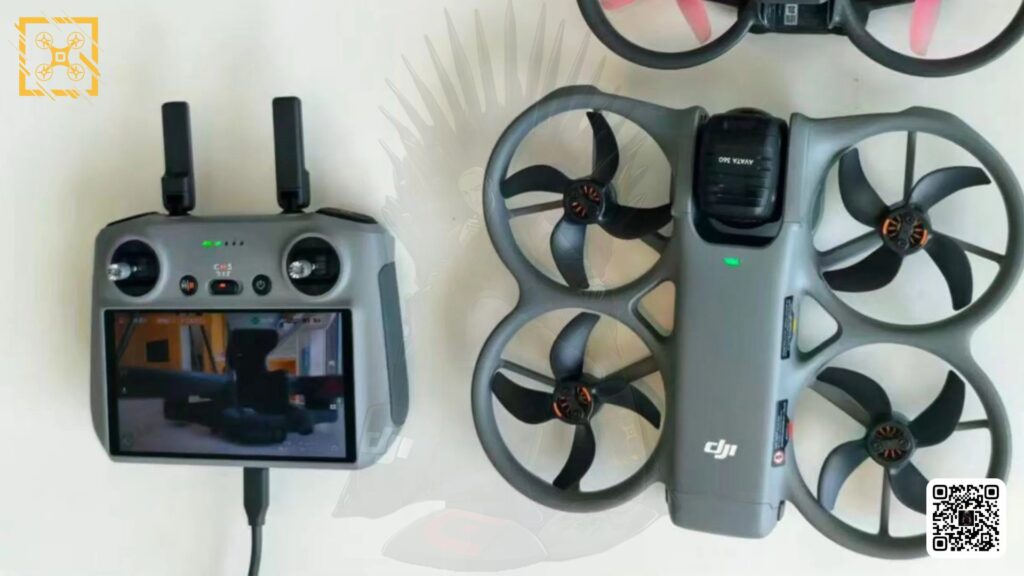
A fresh leak has surfaced online showing DJI’s upcoming Avata 360 drone in more detail. The brand’s upcoming compact drone just had its entire design revealed, showcasing its quadcopter design and remote controller. So let’s check it out.
DJI Avata 360 leaked in all its glory
DJI Avata 360 Leak
Leaked images of the latest Avata series drone just surfaced on X (via Igor Bogdanov). You can see the DJI’s Avata 360 prototype with a camera housing that can rotate, which is a feature not found even on its main competitor, the Antigravity A1. To recall, this is another 360 drone that recently debuted. But shortly after its release, the Avata 360 had its retail box leaked.
While in action, this rotating mechanism for the camera would allow the DJI Avata 360 to offer both 360 degree capture device and even forward facing shooting for typical FPV flight. This technology seemed to draw inspiration from another one of DJI’s popular gadgets, the Osmo 360 action camera. In leaked imagery, one camera lens appears oriented inwards while the other faces outward, suggesting flexibility in how footage is captured. The accompanying controller feed also reportedly shows a traditional FPV view instead of an immediate 360 degree stitch, which further lends weight to the dual shooting mode functionality.
Based on what we know so far, the Avata 360 could record video up to 8K resolution using dual 1/1.1-inch CMOS sensors. These twin large sensors should offer improved low light performance and better dynamic range overall. Older rumors have also hinted at the DJI Avata 360 being an affordable compact drone, which could start from around 2,988 yuan (roughly 426 US Dollars).
For more daily updates, please visit our News Section.
ASUS announced the ExpertCenter PN55 at CES 2026, a mini PC built for business users who need AI features in a small package. It’s a Copilot+ PC running Windows 11 Pro.
The system uses AMD Ryzen AI 400 Series processors. You can get it with a Ryzen AI 5 430, Ryzen AI 7 445, or Ryzen AI 9 HX 470. These chips run at 40W to 45W cTDP. Graphics come from either a Radeon 840M or Radeon 860M. The built-in NPU hits up to 55 TOPS, which powers Copilot and voice processing.
Memory is DDR5-5600 SO-DIMM. ASUS offers 8GB to 32GB configurations, and the system maxes out at 32GB across two slots. Storage uses PCIe 4.0 NVMe M.2 2280 SSDs. Included options range from 512GB to 1TB, but the system supports up to 2TB.
The PN55 has solid connectivity. It includes Wi-Fi 7, Bluetooth 5.4, and either one or two 2.5G Ethernet ports depending on which model you pick.
Front panel has a dedicated Copilot button, power button, USB-C 3.2 Gen 2, two USB-A 3.2 Gen 2 ports, a combo audio jack, and a fingerprint reader. There’s also a built-in microphone and speaker.
The back panel includes USB 4.0 Type-C with DisplayPort 2.1 and power delivery, one USB-A 3.2 Gen 2 port, one USB 2.0 port, HDMI 2.1, two DisplayPort 1.4 outputs, dual 2.5G LAN ports, and a DC-in jack. The system comes with a 120W power adapter.
The PN55 measures 130 x 130 x 34 mm and weighs 0.55 kg as a barebone unit. ASUS says it passed military-grade durability testing, making it suitable for long-term business use where space is tight. Pricing and availability details are expected to be unveiled in the coming days.
For more daily updates, please visit our News Section.
Honor is the next brand working on a super slim smartphone model. The Magic 8 Pro Air has just surfaced in a fresh teaser, confirming its thin design, super light body, and the specs of its telephoto camera. This model was also teased with the new Honor Magic 8 RSR Porsche Design, so here’s what we know.
Honor Magic 8 Pro Air teased with ultra thin and light design
The Chinese brand’s upcoming Magic 8 Pro Air just surfaced in a teaser poster that showcases its design once again. To recall, this model has a 6.1mm body with a triple camera system on the rear. We also get details of one of its camera system, which is the periscope telephoto lens. This sensor will have a 64MP resolution, which is in line with one of our recent reports.
Honor Magic 8 Pro Air
Apart from being thin, this model is also lighter than its competition. While the iPhone Air and Galaxy S25 Edge weigh 165 grams and 163 grams, respectively, the Magic 8 Pro Air comes in at just 155 grams. This makes it one of the lightest current generation smartphones yet. Based on what we know so far, Honor’s upcoming phone will launch in four color options, namely Fairy Purple, Light Orange, Feather White, and Shadow Black. The main camera on the rear is also a large 1/1.3-inch sensor.
The telephoto shooter will reportedly offer 3.2x optical zoom. Under the hood, it is expected to pack the MediaTek Dimensity 9500 SoC, with a massive 5,500mAh battery pack powering this model. You also get 80W wired fast charging, up to 16GB of RAM and 1TB of internal storage.
For more daily updates, please visit our News Section.
At CES 2026, ASUS introduced the NUC 16 Pro, a compact desktop built for businesses that need local AI processing, solid connectivity, and reliable performance in a small package.
The NUC 16 Pro runs on up to an Intel Core Ultra X9 388H Series 3 processor with 65W TDP. Other options include Core Ultra X7, Core Ultra 7, and Core Ultra 5 processors. Some models support Intel vPro. Graphics come from either Intel Arc B390 integrated graphics or standard Intel Graphics. The system has a built-in NPU 5 that delivers up to 180 platform TOPS for AI tasks like local inference, analytics, and automation.
Memory depends on which version you get. The LPDDR5x model supports up to 96GB of dual-channel LPDDR5x memory at 9600 MT/s, but you can’t upgrade it later. The DDR5 version has two DDR5 SO-DIMM slots and supports up to 128GB, giving you more room to expand. Storage includes two M.2 2280 slots. One supports PCIe Gen 5 x4 and the other supports PCIe Gen 4 x4. SSD options range from 128GB to 8TB.
The NUC 16 Pro runs Windows 11 Home or Pro. It also comes as a barebone kit that works with Linux. You can connect up to four 4K displays at once using Thunderbolt 4, HDMI 2.1, or DisplayPort 2.1, depending on the model. For networking, you get dual 2.5G Ethernet ports, Wi-Fi 7, and Bluetooth 6.0.
Front ports include one USB-C 3.2 Gen 2×1 port and two USB-A 3.2 Gen 2 ports. The back has two USB-A 3.2 ports, two Thunderbolt 4 ports, video outputs, and a DC-in jack. Inside, there are headers for RS-232 and PCIe x1 expansion, which makes this useful for industrial setups.
The system uses dual-fan cooling and a tool-less chassis for easier upgrades. It measures 144 x 117 x 42 mm, has a volume of 0.7 liters, and weighs between 750g and 910g. The NUC 16 Pro passed MIL-STD-810H testing for heat, cold, vibration, shock, and humidity.
For more daily updates, please visit our News Section.
Hisense has officially unveiled the X7 Pro, a 27-inch movable smart display, with a launch price of 5,798 yuan (around $831). Pre-orders are now live on JD.com in China. Hisense has not yet shared the complete specifications, but the display will be offered in color options such as Cloud Mist White, Sky Blue, Sprout Green, Aurora Purple, and Peach Pink.
Hisense X7 Pro Specifications
The X7 Pro features a 27-inch screen that follows a paper-like eye-care design to reduce glare and eye strain. Hisense positions the display as suitable for multiple roles, including a portable TV, a learning device, a fitness mirror, a personal karaoke setup, a display monitor, and an ambient speaker. The display supports long-distance viewing, which makes it suitable for shared living spaces.
Hisense has equipped the device with a built-in 15,000mAh battery. The company claims the battery can provide up to 14 hours of continuous usage. The screen attaches to a rolling stand, allowing users to move it easily between rooms without needing to plug it in.
The X7 Pro runs on a flagship-grade octa-core processor paired with 8GB of RAM and 256GB of internal storage. This configuration supports multitasking across apps, offline content, and AI features. The device also supports direct connection with gaming consoles and offers multi-screen interaction, allowing wireless casting from smartphones or other devices.
The display includes AI-driven features such as skeletal point recognition for fitness guidance and motion tracking. These features aim to improve the accuracy of home workouts. The system can also function as a fitness mirror with support for interactive training content.
Hisense has added specialized sound modes and karaoke-tuned audio to enable at-home singing experiences. The integrated speakers aim to deliver clear vocal performance for both music and spoken content. The X7 Pro measures 630 × 430 × 1326 mm and weighs 16.7 kg.
In related news, Hisense has recently unveiled new RGB Mini LED TVs at CES 2026, including the flagship 116UXS model and the more affordable UR9 and UR8 series.
For more daily updates, please visit our News Section.
7-seat option returns, but only on the Premium AWD Long Range Model Y
Third-row seats cost an extra $2,500 and are best suited for children
Premium model now includes a 16-inch display and a black headliner as standard
Tesla has officially launched the 2026 Model Y with a 7-seat configuration in the US. The option is available only on the Premium All-Wheel-Drive Long Range variant, while all other Model Y versions remain limited to five seats. The third row adds two small seats in the rear, designed mainly for children due to limited legroom.
The Premium AWD Long Range Model Y starts at $51,490. Adding the third-row seats increases the price by $2,500. Tesla also now includes a 16-inch high-resolution infotainment screen and a black interior headliner as standard features, previously reserved for the Performance model. Buyers can also choose new 20-inch dark-grey “Helix” wheels for an extra $2,000.
This configuration shows that Tesla is responding to demand for more family-friendly options in a highly competitive SUV market. However, it is not a major leap forward. Other automakers are moving faster in the family-focused electric SUV space. Models like the Kia EV9 offer a true three-row layout with usable space for adults, easier third-row access, and a more traditional large-SUV feel. This makes them more practical for families compared to the Model Y’s small, trunk-based third row, which is mainly suitable for children.
Chinese EV brands are even further ahead. SUVs such as the BYD Tang, Nio/Onvo L-series, and Zeekr 009 already offer proper 6- or 7-seat layouts with longer wheelbases, better rear-row comfort, and more flexible interiors. Even Tesla sells a longer, more practical Model YL in China, but not in the US.
In US, Tesla does face real competition from models like the Kia EV9, Rivian R1S, and upcoming large electric SUVs that offer true three-row seating with better space and comfort. This suggests that while Tesla’s 7-seat Model Y helps fill a gap, it is only a partial solution.
Demand for large family EVs in the US does exist but remains limited, which likely explains Tesla’s cautious approach. However, compared with rivals offering more practical layouts, the new Model Y still feels more like a compromise than a fully developed family SUV.
We use cookies on our website to give you the most relevant experience by remembering your preferences and repeat visits. By clicking “Accept”, you consent to the use of ALL the cookies.
This website uses cookies to improve your experience while you navigate through the website. Out of these, the cookies that are categorized as necessary are stored on your browser as they are essential for the working of basic functionalities of the website. We also use third-party cookies that help us analyze and understand how you use this website. These cookies will be stored in your browser only with your consent. You also have the option to opt-out of these cookies. But opting out of some of these cookies may affect your browsing experience.
Necessary cookies are absolutely essential for the website to function properly. This category only includes cookies that ensures basic functionalities and security features of the website. These cookies do not store any personal information.
Any cookies that may not be particularly necessary for the website to function and is used specifically to collect user personal data via analytics, ads, other embedded contents are termed as non-necessary cookies. It is mandatory to procure user consent prior to running these cookies on your website.