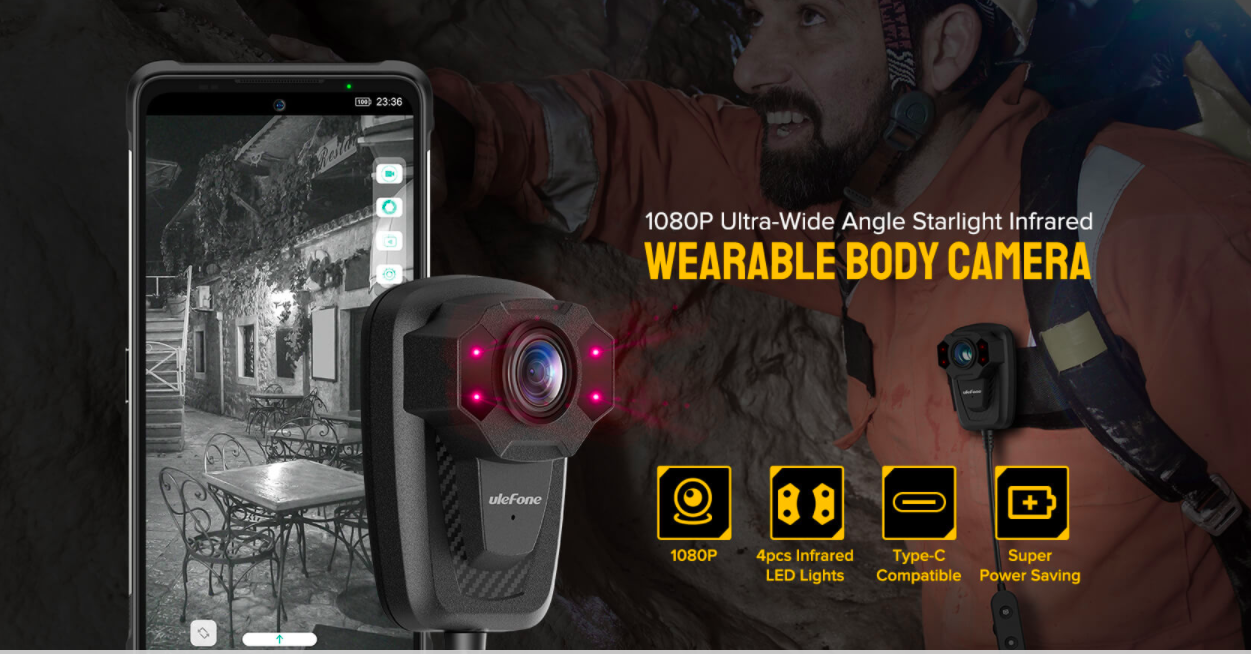
Ulefone has launched a brand new Night Vision Camera. The highly portable device which works as an accessory to your smartphone can be used as a wearable body camera that can easily be fitted onto your jacket, belt, back pocket, etc.
The Night vision camera comes with a Sony STARVIS IMX307 ultra light-sensitive CMOS image sensor which is perfect for taking low light images and night photography and videography. It features a large pixel size of 2.9um, with an f/2.0 large aperture, and supports Full HD 1080P video recording that enables you to take crystal clear images and videos in a low light environment. Also, with a 116-degree ultra-wide-angle camera, you get a significantly expanded view of your surrounding with reduced blind spots, making it perfect for surveillance and security work.
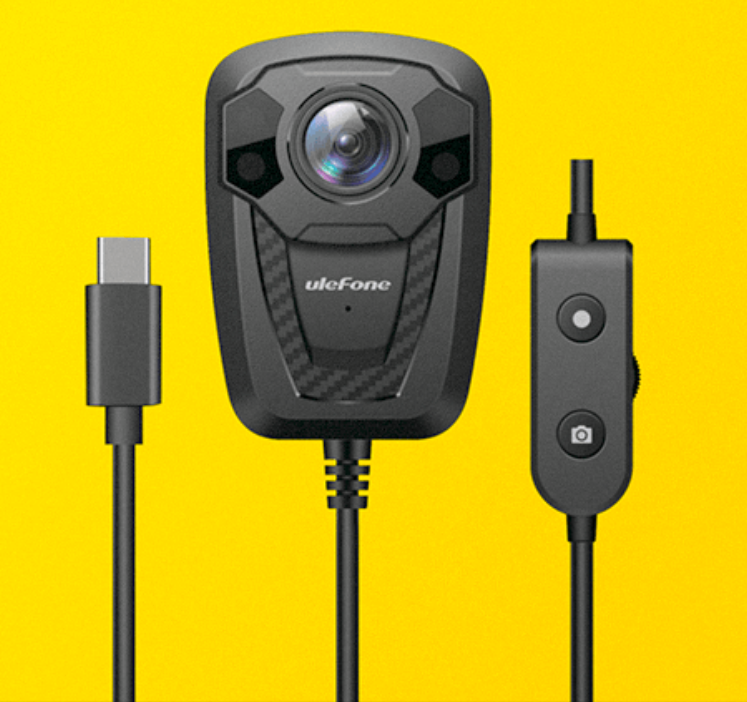
The camera is fitted with 4 high-intensity Infrared LED lights that can capture clear images even in complete darkness and you can freely switch between monochrome and full-color images by switching On/Off your Infrared LED lights. To control the camera, you can use the Infrared light switch fitted onto the cable. This allows you to switch between modes without taking out your phone. Further, you can also use the Ulefone app for the same purpose.
You can use the camera in the outdoors without worrying about the occasional splash and rain as it comes with an IP66 certification, making it waterproof. Ulefone Night Vision wearable body camera uses a Type-C plug to connect with your smartphone. It also comes with a clip and 2-meter long cable on the back that can be used to easily clamp the device to your shirt, pocket, or belt, keeping your hands free for other important work.
This lightweight, compact and portable device can be used as a camera or a recording device for different scenarios and activities like law enforcement, surveillance, emergency rescue, business meeting, patrolling, mining and cave exploring, delivery and logistics, and outdoor and adventure sports like mountaineering, camping, cycling, bungee jumping, etc.
While a traditional sports or night vision camera can cost you hundreds of dollars, Ulefone Night Vision Camera offers a Full HD 1080P video recording for $69.99 only. Please note that the device is not a stand-alone camera but an accessory to your smartphone and is compatible with any smartphone that features Android 7.0 or above.
The Samsung Galaxy Z Fold 2 was an overhaul upgrade over the original Galaxy Fold as it came with better specs, a notch-less display, and a bigger cover screen. A fresh leak reveals that the Galaxy Z Fold3 will also be a major upgrade over the Galaxy Z Fold2.
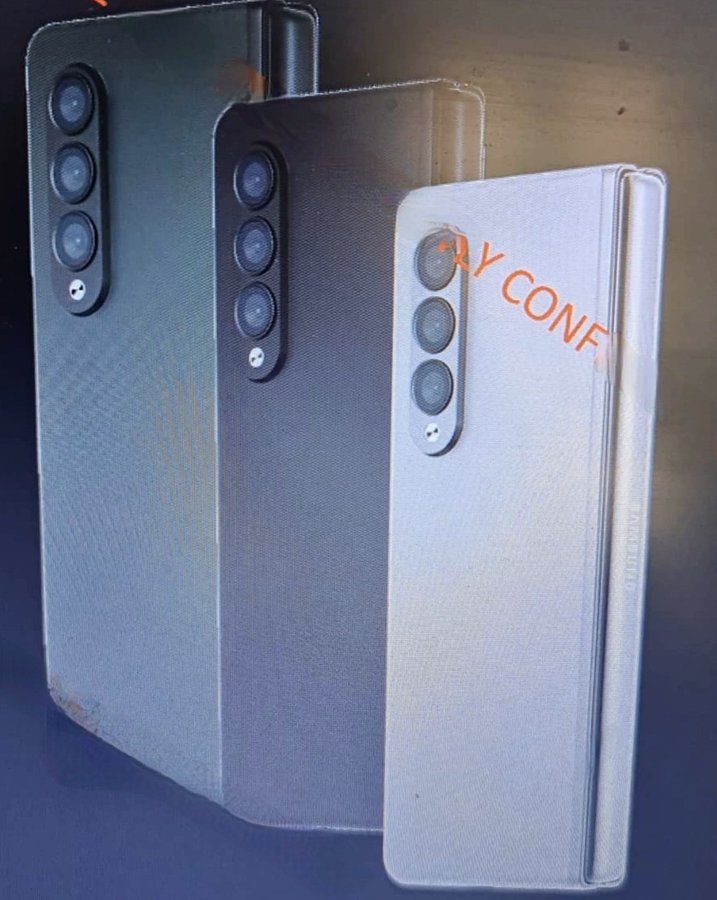
Right off the bat, the Galaxy Z Fol3 can be sporting a new rear camera design, which is different from the Contour Cut camera module found on the Galaxy S21 series. The leaked images show that it has a vertical camera island with three cameras and an LED flash in it.
Multiple reports have claimed that the Galaxy Z Fold3 will carry support for the S Pen stylus. The new leak suggests that the Z Fold3 users will be able to write notes using the S Pen during a video call.
While reports have claimed that the foldable phone will have a dedicated slot for adding an S Pen, it is yet to be confirmed whether the stylus will be sold separately or stored inside the device. The S Pen does not seem to feature a fine tip, which will ensure that the user does not damage the foldable screen while using it.
The Galaxy Z Fold3 is expected to arrive as the world’s first foldable phone with an under-display camera. This will allow the Z Fold3 to offer a higher screen-to-body ratio than the predecessor models. The device is expected to come with Gorilla Glass Victus protection on the outside.
The addition of new features like an in-screen camera and S Pen stylus may result in the Galaxy Z Fold3 arriving with an expensive price tag. Samsung is yet to confirm the arrival of the Z Fold3. Rumors are rife that the company will be announcing the 3rd generation foldable phone as well as the Galaxy Z Flip3 clamshell in July.
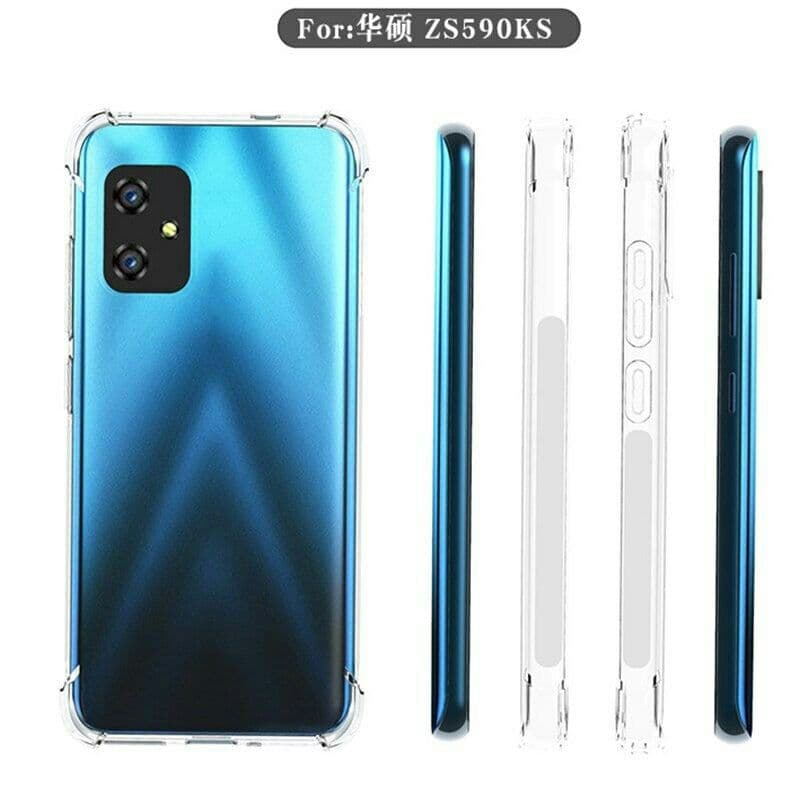
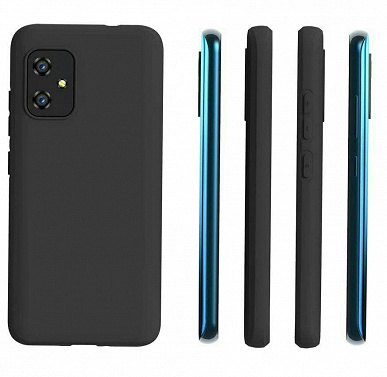
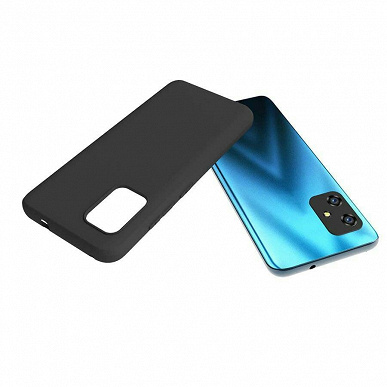
ASUS will be unleashing the ZenFone 8 series of smartphones on May 12. Recent teasers by the company suggest that it will be announcing a compact-sized flagship, which could be called the ZenFone 8 Mini. Gadget Tendencyhas shared the case renders of the smartphone to reveal its front and rear design.
It is already revealed by the Taiwanese manufacturer that the ZenFone 8 Mini will be sporting a punch-hole display. The rear view of the phone shows that it has a rectangle-shaped camera module, which houses two cameras and an LED flash.
The right edge of the ZenFone 8 Mini has a volume rocker and a power key. At the top, it features a 3.5mm audio jack, and its bottom edge seems to be equipped with a USB-C port and a speaker grille.
1 of 3
ASUS ZenFone 8 Mini case renders
ASUS ZenFone 8 Mini case renders
ASUS ZenFone 8 Mini case renders
ASUS ZenFone 8 Mini specifications (Rumored)
The ZenFone 8 Mini is expected to feature a 5.92-inch AMOLED display that offers a Full HD+ resolution of 1080 x 2400 pixels and a 120Hz refresh rate. It is said to debut as the most compact phone powered by the Snapdragon 888 mobile platform.
A recent leak claimed that it will be available in multiple variants such as 6 GB RAM + 128 GB storage, 8 GB RAM + 128 GB storage, 8 GB RAM + 256 GB storage, 12 GB RAM + 256 GB storage, and 16 GB RAM + 256 GB storage. It may draw power from a 4,000mAh battery, which may support 30W fast charging.
There is no word on the front camera of the ZenFone 8 Mini. Its rear camera setup may is expected to feature a 64-megapixel Sony IMX686 primary camera and a new Sony IMX663 lens. It may also house h a Cirrus CS35L45 amplifier.
It is not unusual for a phone to be available in two different chipset versions. Samsung has been offering its flagship phones in Exynos and Snapdragon variants for years. However, this tradition is not common among other manufacturers, which is why when it happens, it is notable. Vivo has decided to jump on this trend with its budget mid-range 5G phone, the Vivo Y52s.
The Vivo Y52s was launched in December 2020 and it had a MediaTek Dimensity 720 processor under its hood. The manufacturer has now quietly announced a new version of the phone with a Qualcomm Snapdragon 480 5G processor.
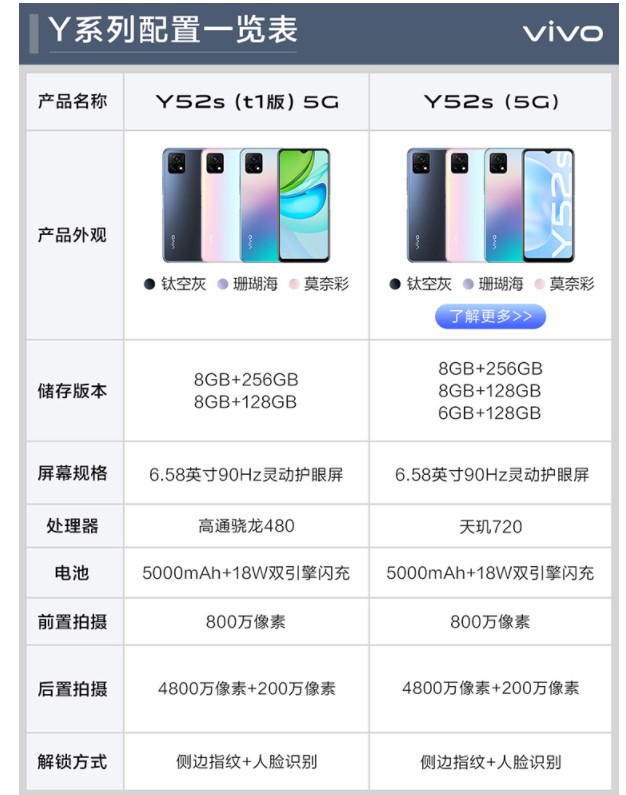
Officially called the Vivo Y52s (t1 edition), the phone has the same specifications as the one that launched back in December save for the MediaTek processor that has now been replaced with a Qualcomm one.
The Vivo Y52s (t1 edition) is priced at ¥1999 (~$309) and has 8GB of RAM and 256GB of storage. There is also an 8GB RAM + 128GB version but it is not available for purchase yet and its price is not known.
The Dimensity 720 version which was launched in 6GB and 8GB RAM variants with 128GB of storage is now available in a new 8GB RAM + 256GB version for the same price mentioned above.
The two versions of the phone have a 6.58-inch LCD display with a waterdrop notch, a 90Hz refresh rate, and a 180Hz touch sampling rate. The display has a DCI-P3 color gamut and is HDR10 certified.
On the back of the Vivo Y52s is a 48MP main camera paired with a 2MP depth sensor. The selfie camera is an 8MP camera and it has a night mode like the rear. The phone has a side-mounted fingerprint scanner, an audio jack, and a 5000mAh battery that supports 18W fast charging. Both phones are available in Coral Sea, Monet, and Titanium Gray, however, the Coral Sea variant of the Snapdragon version is not yet in stock. You can grab the phone on Jingdong.
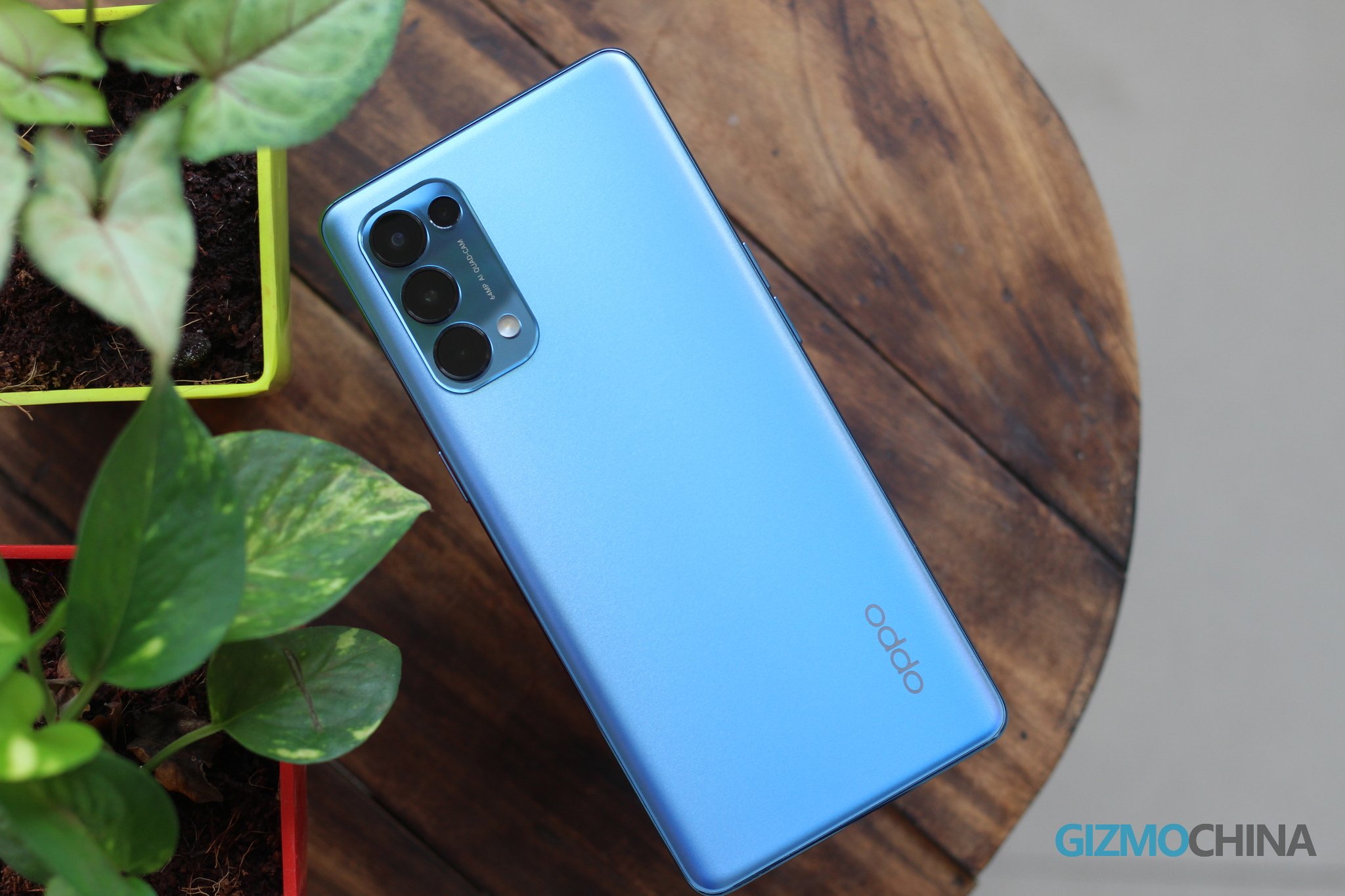
It has been more than four months since OPPO unveiled the Reno5 series in China. News of a successor, the Reno6 series, has been circulating since March, and now there is a chance the new phones will be announced this month.
According to a report from China, OPPO will hold a mid-year gala on May 22. The event will have lots of celebrities in attendance and there are speculations that the event will double as the launch date of the Reno6 series.
OPPO Reno5 Pro 5G
It turns out that OPPO has used this mid-year event to announce some of its phones in the past. The OPPO R15 was announced at the 2018 edition gala while the first-gen Reno series made its debut at the 2019 gala. So it is not far-fetched to presume the Reno6 to be announced at this year’s event.
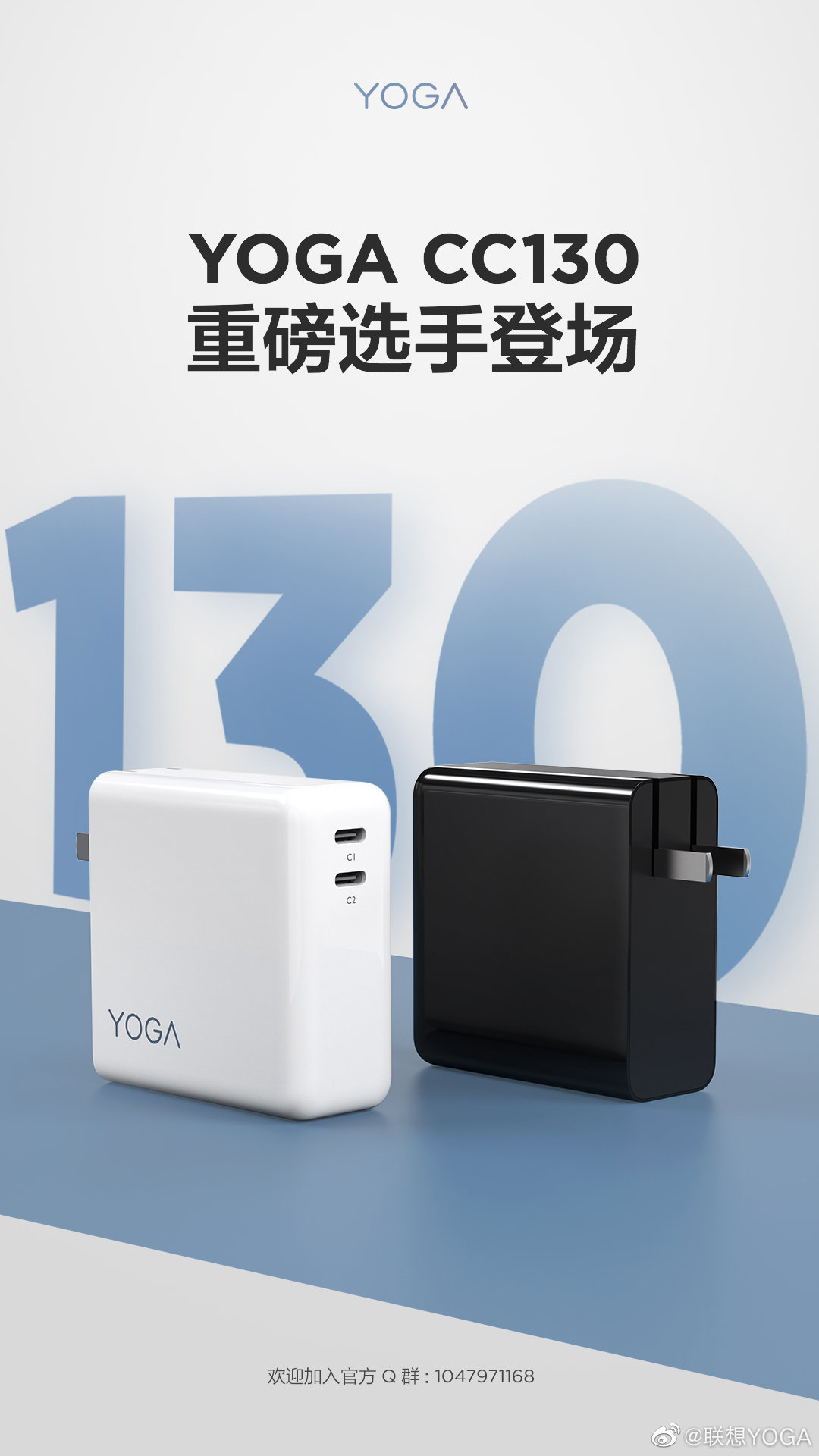
Lenovo recently held the YOGA x Xiaoxin spring product launch event in China where a series of products were released. Apart from the array of notebooks that made their entry, the company also announced a number of accessories. One of them is the YOGA CC65 Dual Port GaN Charger. Lenovo has now silently unveiled a higher model dubbed the YOGA CC130 charger.
The Lenovo YOGA CC130 uses a design similar to the YOGA CC65. However, the maximum output power on this model peaks at 130W, twice that of the YOGA CC65. The charging adapter comes in black and white colors.
The YOGA CC130 charger is equipped with two USB-C ports of which a single port outputs a maximum power of 100W. On the other hand, the charger outputs a cumulative power of 130W when the two ports are in use. This makes it suitable for charging mobile phones and laptops at the same time.
For reference, the YOGA CC65 charger also features a dual USB-C interface design. The YOGA CC65 charger is equipped with two USB-C ports. The first port supports a maximum output of 18W while the second USB-C port supports a maximum output of 65W. Thus, the dual ports simultaneously use a maximum of 18W+45W.
The YOGA CC65 charger adopts the GaN fast charging technology, which brings lower power conversion loss and temperature control level. The charger also has a volume of 0.075L and a weight of 103g. This 130W model equally adopts GaN technology.
Lenovo is yet to release the price and availability details of the YOGA CC130. However, we expect the model to be affordable. The YOGA CC65 carries a 119 yuan (~$18) price tag. So, this model won’t be too expensive. We’ll keep you posted when the price and availability details are made public.
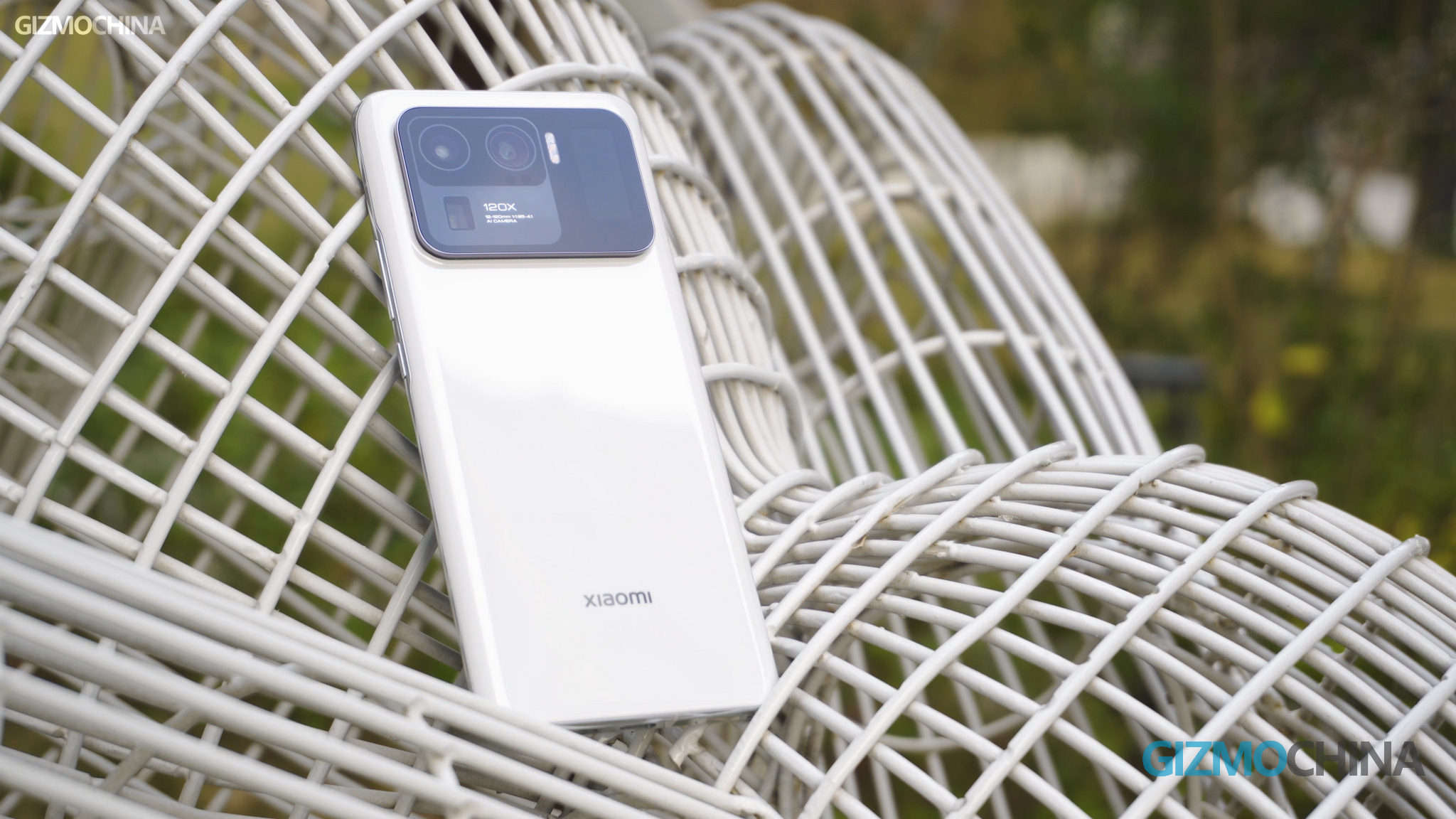
Xiaomi is finally releasing the Mi 11 Ultra European version after its initial unveiling in March this year. The Mi 11 Ultra is Xiaomi’s first flagship offering to the international market and customers in Europe may now have a feel of the impressive features of the smartphone in ten days’ time, that is, May 11.
Xiaomi had previously produced the Mi Ultra series for its Chinese market but the Mi 11 Ultra is taking a different path from its predecessor, the Mi 10 Ultra which was a China-only product. Xiaomi’s official Facebook page for its Dutch market has announced that the Mi 11 Ultra will be officially available on May 11. Although none of the other official Xiaomi European channels have made any announcement relating to the Europe launch, we would expect that if indeed the Dutch launch is slated for May 11, the others would not be far off.
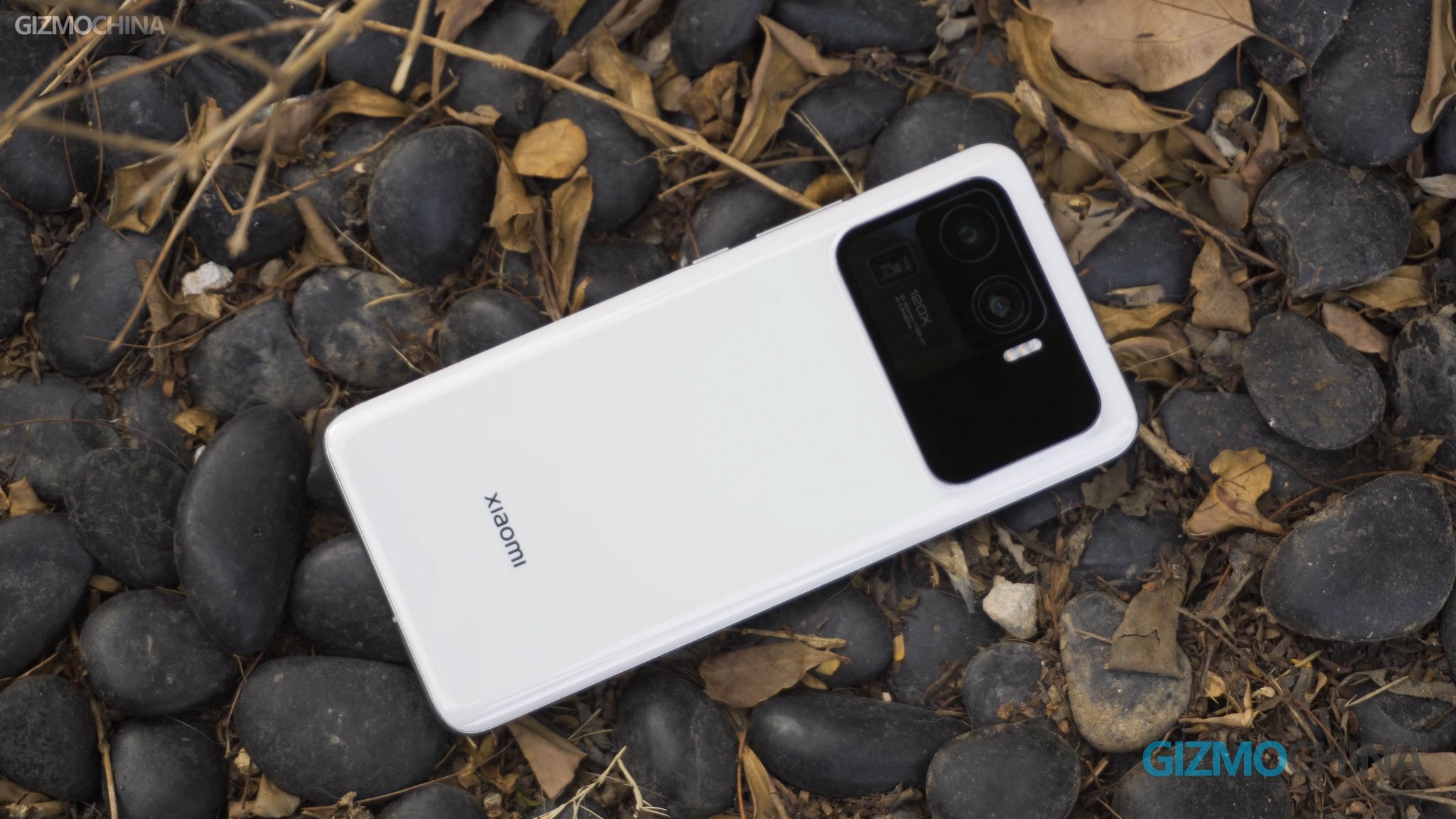
As a reminder, the Mi 11 Ultra features an imposing camera system, reputed to have the largest sensor for a modern smartphone. The phone equally packs an impressive 6.81-inch AMOLED display with a high refresh rate and high resolution, added to a Snapdragon 888 5G chipset which is as powerful as it can get.
The Mi 11 Ultra arrives in two RAM options of 8GB and 12GB in combination with 256GB and 512GB of internal storage. The premium model runs on Android 11-based MIUI 12. Further, the phone gets its power from a 5000mAh battery capable of 67W ultra-fast charging, reverse wireless charging at 10W, and other exciting features. The premium model also comes with dust and water protection with its IP68 rating.
The Mi 11 Ultra had earlier been officially announced with a starting price of €1,199 in Europe.
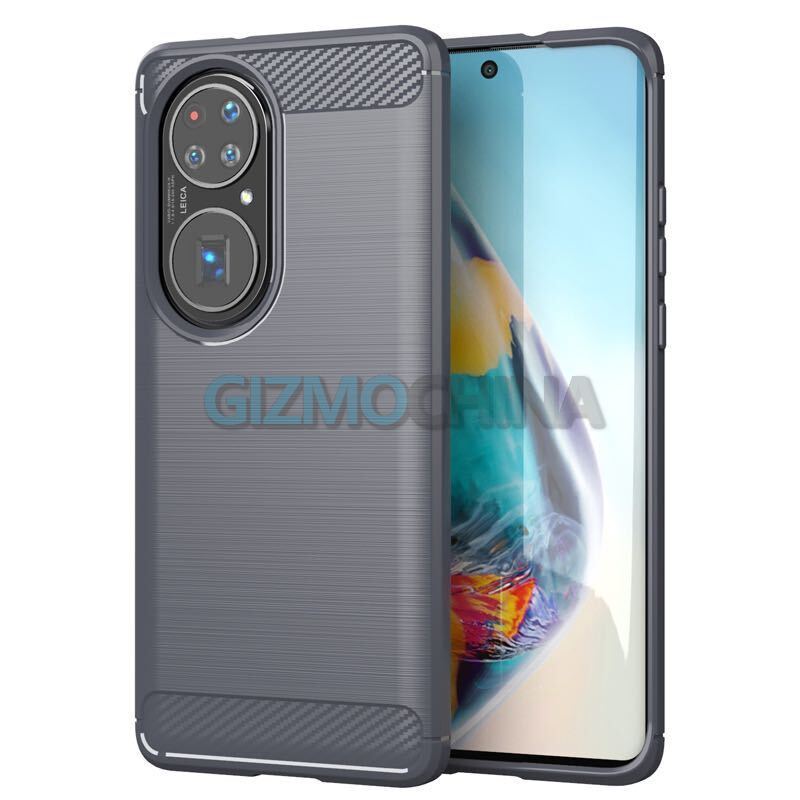
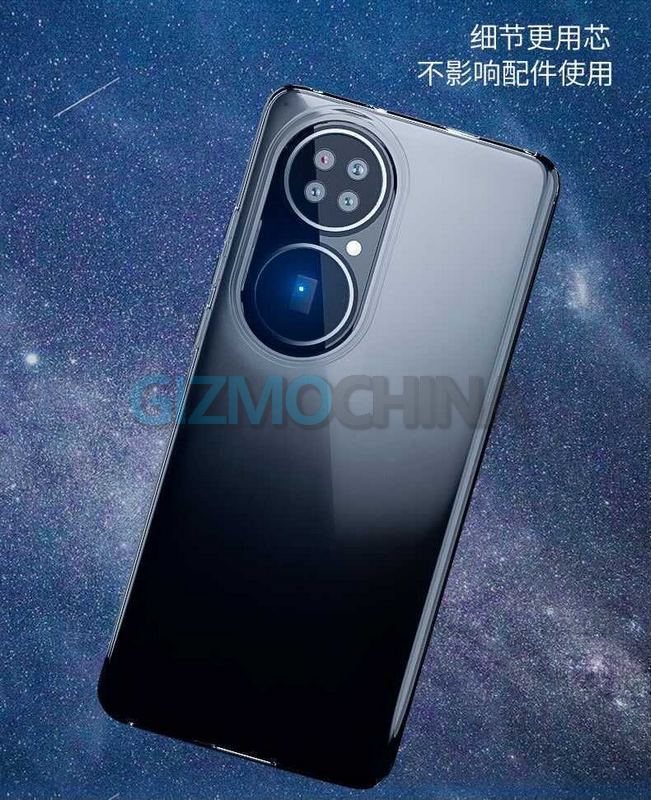
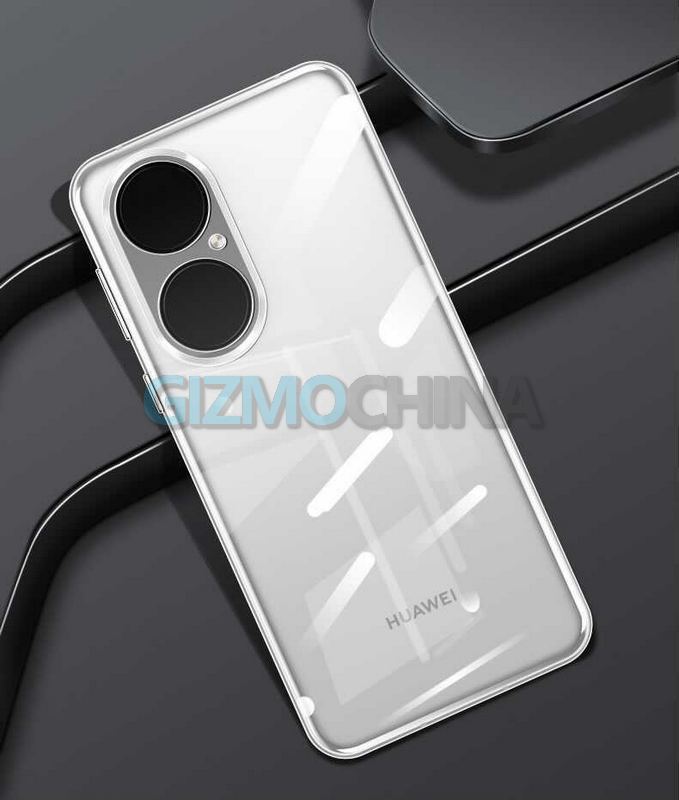
The highly anticipated Huawei P50 series is expected to launch next month. The latest in Huawei’s popular P-series of smartphones has had its launch delayed due to multiple reasons, chief of them being supply chain issues. While we wait for an official release date, we have got our hands on alleged renders of the Huawei P50 that were provided to us by a case manufacturer.
These renders show us that the Huawei P50 will be going for a new look entirely different from that of its predecessor, the Huawei P40, and even the Mate 40 that launched last year. The design matches what we have seen from earlier leaks such as the CAD renders that were released by OnLeaks back in March.
As shown in the images, the Huawei P50 will have four rear cameras. Three of the sensors along with the laser focus module are housed inside the top circle while a single periscope zoom lens sits inside the second circle. There is a LEICA logo and an LED flash inside the oversized pill-shaped camera housing.
1 of 3
The display of the Huawei P50 has a centered punch hole and is curved in these renders, although Onleaks said in his own leak that the screen is flat. Since we are yet to see the device itself, we advise our users to take this leak with a pinch of salt.
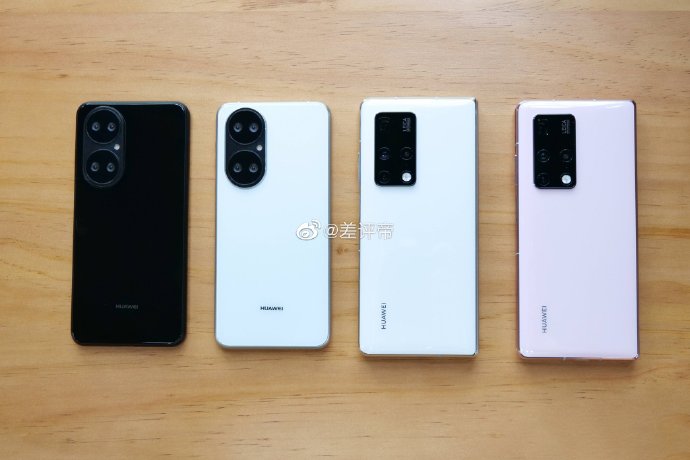
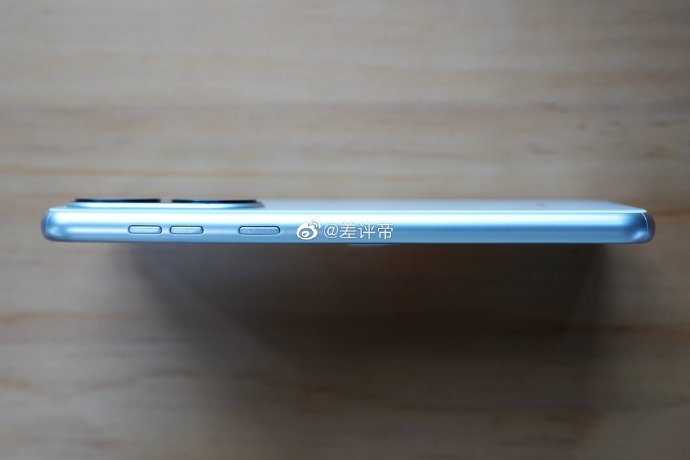
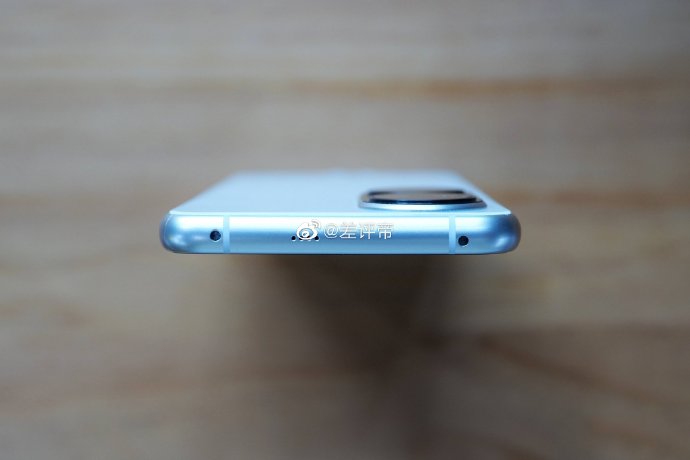
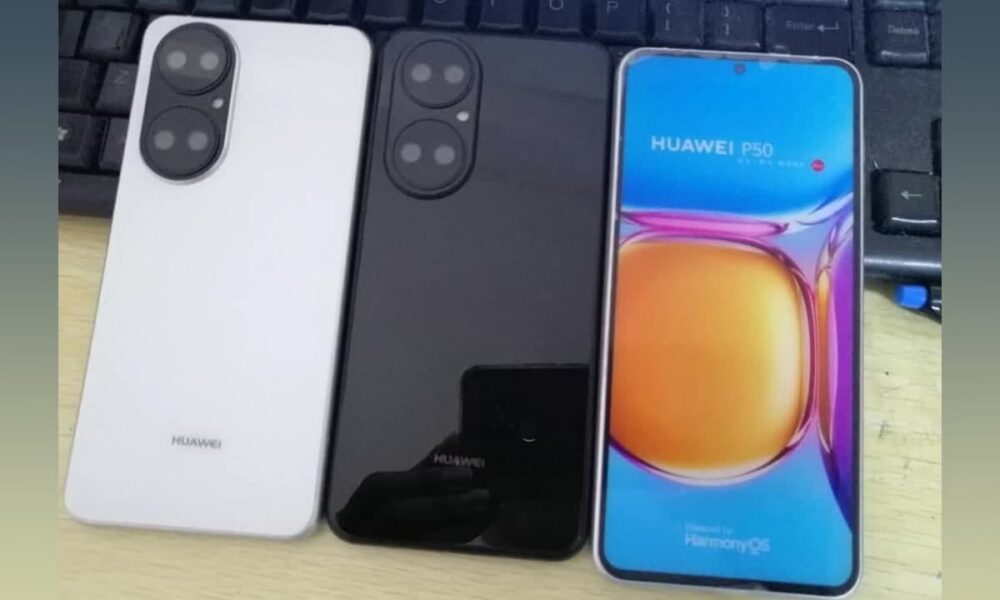
In a related story, a Chinese leaker that goes by “Bad Review” on Weibo also shared images of what appears to be dummy/prototype units of the Huawei P50. While the camera housing design is similar to the case renders above, the sensors are arranged differently with each circle housing two camera sensors – there is no laser focus module. We are not sure if these images are genuine too, so take this leak with a pinch of salt too.
According to the leaker, both the Huawei P50 and Huawei P50 Pro already in mass production but the Huawei P50 Pro+ may be delayed further.
The popular Huawei leaker that goes by @RODENT950 on Twitter revealed yesterday that the P50 series will be announced later in June. Before that launch, it will have two launch events – the first will be on May 19 where it will unveil new monitors, a new smart scale, and a children’s smartwatch. The second launch event will hold on June 2 for the Watch GT 3 series, MatePad Pro 2, and Sound X2 smart speaker.
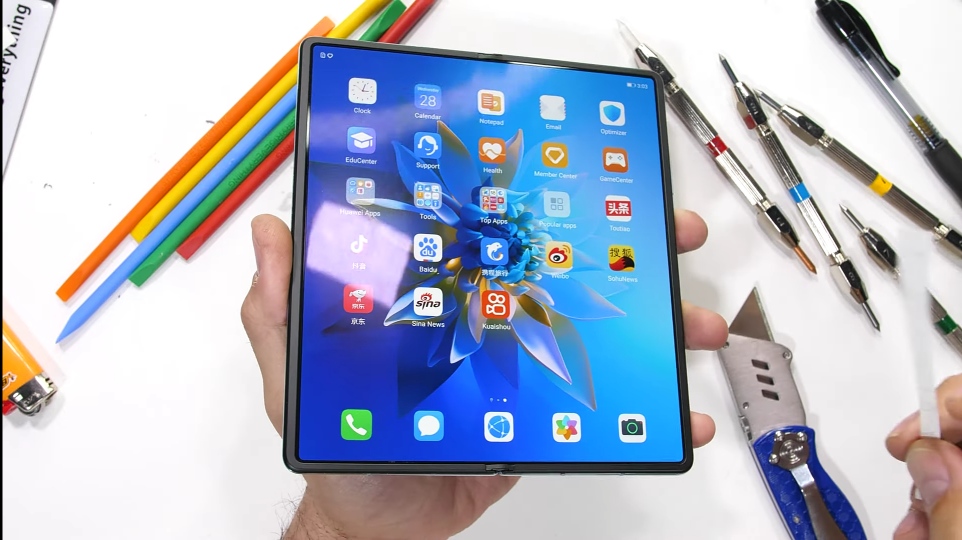
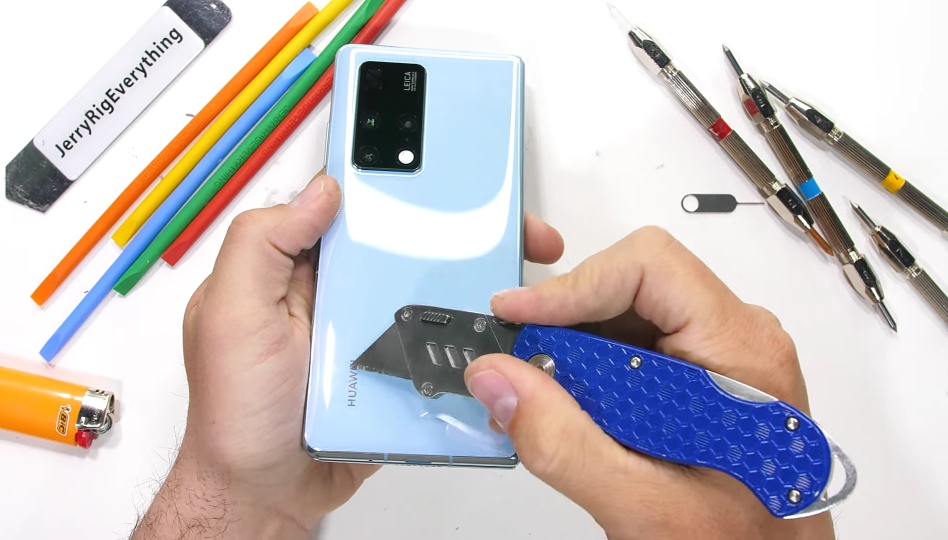
Huawei may be experiencing some difficulty in its smartphone arm but apparently, the company has not lost its Midas touch. The Chinese tech giant recently released the Mate X2 foldable smartphone, a successor to the first-gen Mate X foldable which was released in 2019. The Mate X2 has now been subjected to JerryRigEverything’s durability test.
The test shows the device being subjected to the scratch, burn and bend tests and since foldable phones are known for their fragility, it would interest you to know that the Mate X2 was able to withstand some of the torturous processes.
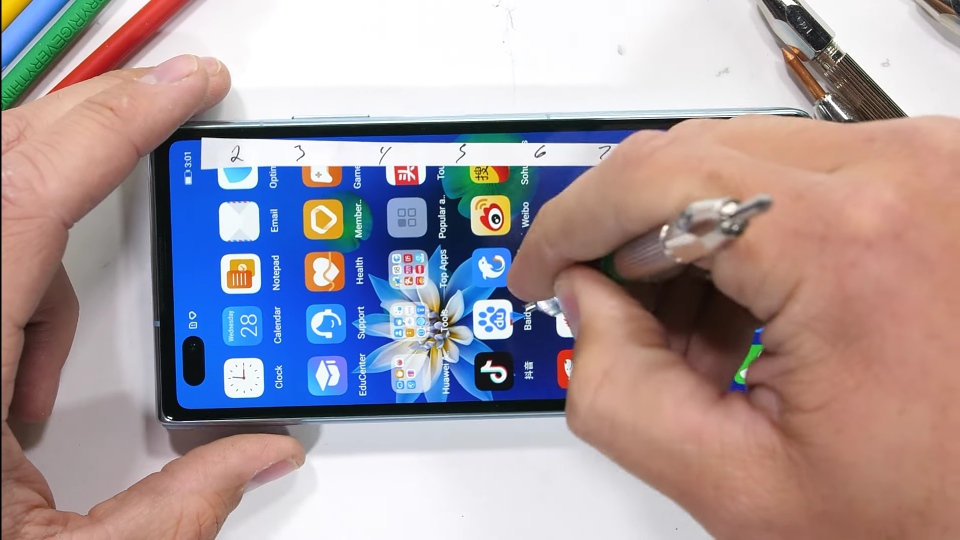
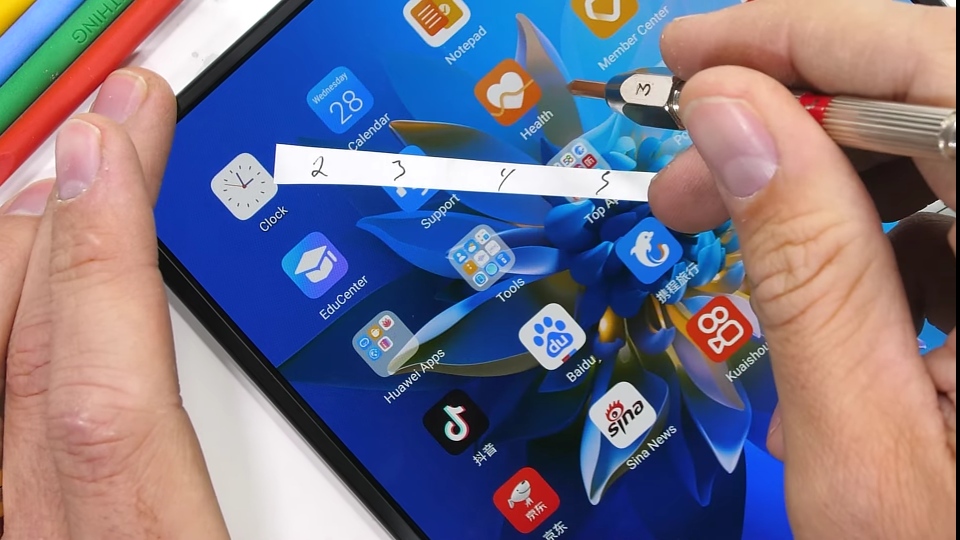
During the scratch test, the outward display is confirmed to have a tempered glass covering as it scratches at level 6 with deeper grooves at level 7 on the Mohs hardness scale. The inner display which is the flexible panel isn’t so lucky. It scratches at level 2 while deeper grooves start appearing at level 3. The fingernails can even make deep grooves on the fragile display panel.
It is usually rare to find a device that the display panel survives JerryRigEverythings’ burn test. The Mate X2 isn’t different but the outer display performs a lot better than the inner panel.
The bend test is what should interest you the most as it shows Huawei has finally gotten the build quality right. The YouTuber applied extreme pressure in bending the device backward and it didn’t snap. It is surprising that the Mate X2 has a better durability outlook than some flagship gaming phones like the Lenovo Legion 2 gaming phone that snapped into two under light pressure. He even applied sand on the crease area of the screen but it turned out that the phone is dustproof.
A tipster has revealed a whole lot about Huawei’s yet-to-be-released flagship model, the Huawei P50. The leak displayed design and specification details of the high-end and much-awaited model, with a few photos of the prototype of the smartphone which is billed for release in June this year.
Popular tipster Digital Chat Station sharing some stunning details and prototype photos of what he insisted was the Huawei P50 series. The details included the design, camera setup, operating system, and a few other features of the model. A follow-up analysis by the concept creator @HoiINDI provided a set of seemingly compelling renders for what he claims are Huawei P50, P50 Pro, and P50 Plus smartphones.
Some earlier leaks relating to the P50 had shown that the flagship smartphone from Huawei will be powered by a Kirin 9000 chipset, a 6.3-inch display, powerful battery life, and fast charging capabilities.
We expect the P50 to be the base model in the P50 series and the details released by the tipster offer a bird’s eye view of what we could expect when Huawei finally unveils the P50 in a few weeks hopefully. The leak reveals that the device will run on Huawei’s homegrown operating system the HarmonyOS, which should be expected, given the problems Huawei had faced in the past year over the US restriction of its access to key suppliers. The P50 prototype photos also reveal a quad-camera system, with a center hole punch display design and a cylindrical camera module. The camera system is equipped with LED flash technology.
There were no details about the price of the Huawei P50 and a few other details and specifications are still lacking. It remains to be seen whether the leaked photos and render details are truly the much-awaited P50. The coming weeks will reveal the authenticity of the leaked details relating to the Huawei P50.
When the Zenfone 7 series was announced last year, the two phones were missing the audio jack that was present on the Zenfone 6. ASUS seems to have realized the error in its ways as its latest teaser for the Zenfone 8 has revealed the return of the 3.5mm port.
As you can see, the audio jack is making a comeback, and from the teaser, it is shown that the port will be at the top of the device. We are not sure if all three Zenfone 8 phones (Mini, Standard, and Pro) will have an audio jack.
Apart from the audio jack, the Zenfone 8 will also have a punch hole at the top left corner of the screen for the front-facing camera which means that the flip cameras of the last two Zenfone generations will not make a comeback. The phone will also have a Snapdragon 888 processor, a high refresh rate, and OLED displays with 1080p resolutions.
Nubia has a few devices coming soon. There is the RedMagic 6 Racing/RedMagic 6R which was certified by the Bluetooth SIG earlier this week and by TENAA last week. There is also the next-gen Nubia Z series smartphone that is expected to launch as the Nubia Z30.
A phone believed to be the Nubia Z30 flagship has been spotted on the Chinese Communications Commission database. The phone has the model number NX667J, and according to the listing, it supports 120W fast charging among other ratings.
The next-gen Nubia Z-series smartphone is expected to come with a lot of upgrades and it appears a faster charging technology is one of the areas that has been upgraded. The Nubia Z20 launched with support for 27W fast charging, so a jump to 120W is a big deal.
If the Nubia Z30 launches with 120W fast charging, it will be the second Nubia phone released this year to support the fast charging technology. The RedMagic 6 Pro gaming phone is the first.
A few days ago, a render alleged to be of the Nubia Z30 was posted on the web, and it showed a device with a curved display with no notch or hole punch, leading to speculations that it has an under-display camera. The phone also has quad rear cameras and up to 100x zoom. For fans of the dual-display design of the Nubia Z20, it appears Nubia has dropped it based on the render of the phone.
With the phone already certified by the 3C, there is a chance the nubia Z30 will be announced this month.
The Mi 11 Lite is the cheapest phone in the Mi 11 series. This phone which combines great specs and an impressive design is already making its way across different markets, and Nigeria is the latest to get it.
According to a tweet by the official Xiaomi Nigeria account, the Mi 11 Lite (4G) is already available in the country. The phone is available in a single configuration – 8GB RAM + 128GB of storage – and is priced at ₦146,000 (~$355). Unfortunately, there is no mention of where you can purchase it.
That price tag is higher than that of the Redmi Note 10 Pro, another Xiaomi (read Redmi) phone with similar specs that launched in the country early last month for ₦135,000 (~$329). When compared, the Redmi Note 10 Pro is the better buy.
The Redmi Note 10 Pro also has an FHD+ AMOLED display but with a 120Hz refresh rate that is higher than the Mi 11 Lite’s 90Hz refresh rate. The Mi 11 Lite has a smaller screen so you get a higher pixel density but both can display 1 billion colors and have Gorilla Glass 5 protection.
The Mi 11 Lite and Redmi Note 10 Pro are powered by the same Snapdragon 732G processor, have the same 8GB of RAM and 128GB of storage, and the same 16MP camera. However, you get a 108MP quad camera on the Redmi Note 10 Pro while the Mi 11 Lite has a 64MP triple rear camera. Another difference is that while they both have support for storage expansion, the Redmi Note 10 Pro has a dedicated MicroSD card slot, but for the Mi 11 Lite, it is a shared SIM slot.
The Redmi Note 10 Pro wins again with a bigger 5020mAh battery as against the Mi 11 Lite’s 4250mAh battery capacity (33W fast charging is available on both devices). It also has an audio jack. The two phones run MIUI 12 based on Android 11 out of the box.
Which will you be getting, the Mi 11 Lite or the Redmi Note 10 Pro?
It is always necessary to have an alternate power source in case of a dire emergency. However, owning a secondary source of power backup is quite prevalent in developing nations where power outages are frequent. But, the power disruptions are quite scary in the developed nation which led to some terrifying experiences like in Texas this year. To overcome such a situation, Bluetti has introduced a new EB70 700W power station.
After the success of Bluetti EP500/Pro the company introduced a smaller power station providing the same usability as the flagship model. Bluetti EB70 supports up to 200 Watts Output power and offers recharging ability via multiple sources. It is an eco-friendly solar generator as it provides a 200W foldable portable solar panel.
Design
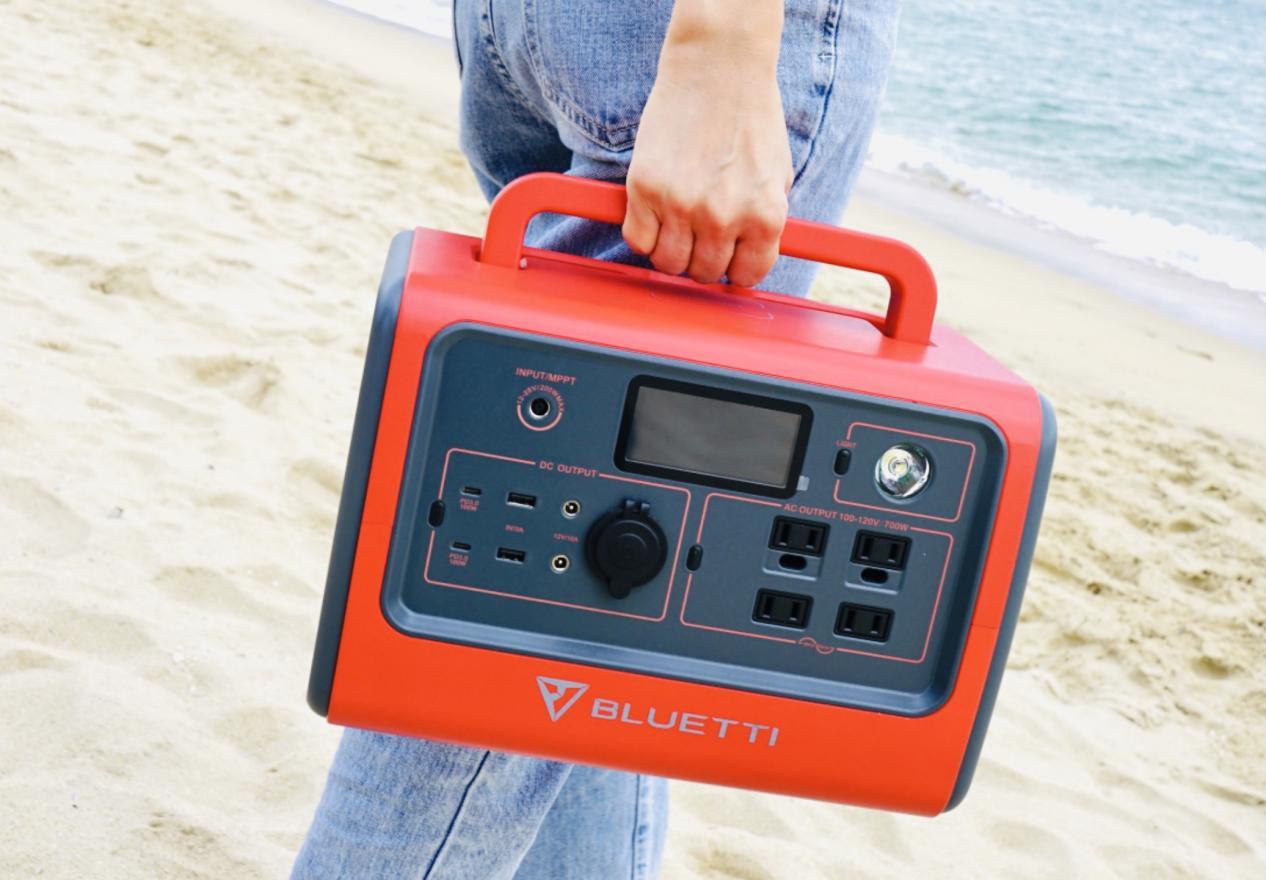
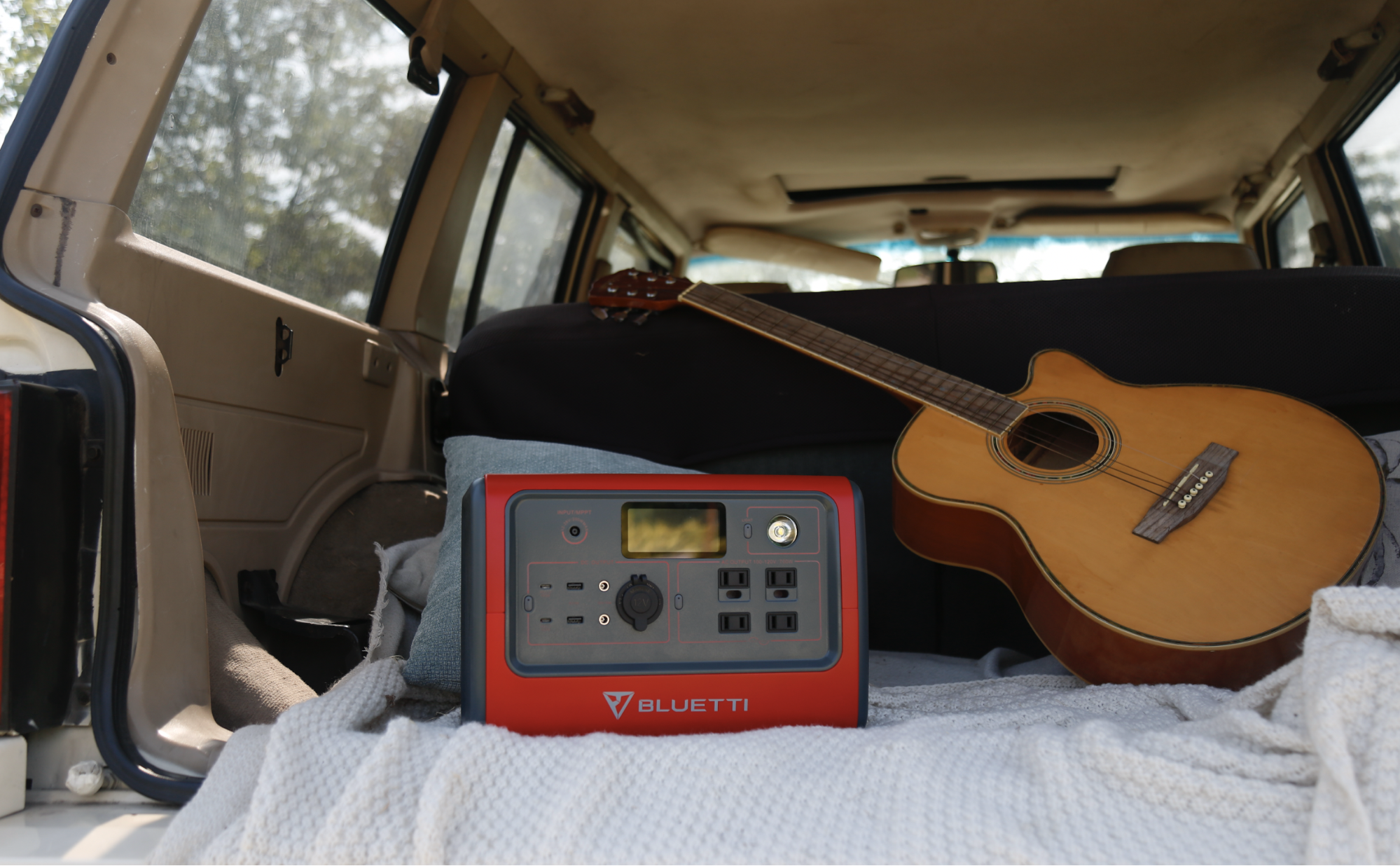
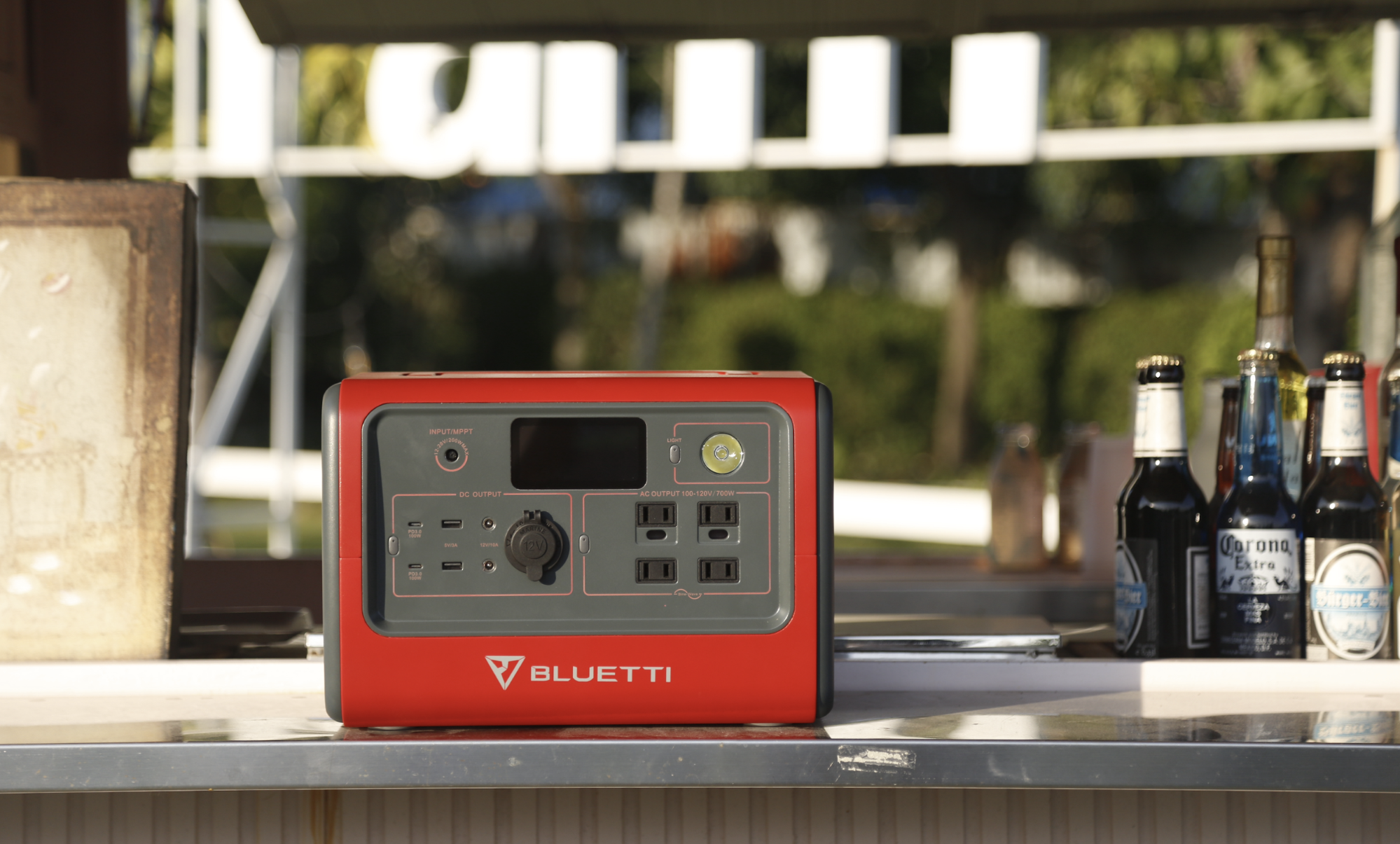
Bluetti EB70 is a compact Power Station that is encased inside a fire-proof ABS + PC material. It comes in three different colors of Steel Gray, Green, and Camine. The box can be easily handled as it houses a dedicated handle to enhance portability. It houses 4 AC outlets with up to 700W power output carrying sine wave power. Bluetti power station is a perfect fit for camping, and while traveling.
Technical Specifications: Hardware, Battery Pack (Input and Output)
Bluetti EB70
Model: Bluetti EB70
Typical Capcity: 716Wh
Output Power: 700W
Wireless Charging: Yes, 15W
USB-C Output: 100W x2(PD3.0)
Peak Power: 1400W
Pure Sine Wave Inverter: Yes
Cell Chemistry: LiFePO4, Up to 2500+ Charge Cycles
Dimensions: 12.6 x 8.5 x 8.7 inch
Weight: 9.7kg
Max Input Power: 200W
Solar Input: 12-28V, up to 200W
Car Charger: Supported
Warranty: 24 months
Bluetti EB70 houses a 716Wh lithium-iron-phosphate battery pack for better sustainability. It supports up to 2500+ charge cycles.
On the Power station, there are multiple AC/DC outlets on the front panel of EB70. It can run all the basic AC appliances present in your home. Apart from that, there are two 100W USB-C ports for charging laptops and all other smart accessories. It will enable the users to get rid of those heavy bulky laptop chargers.
Flexible Recharging
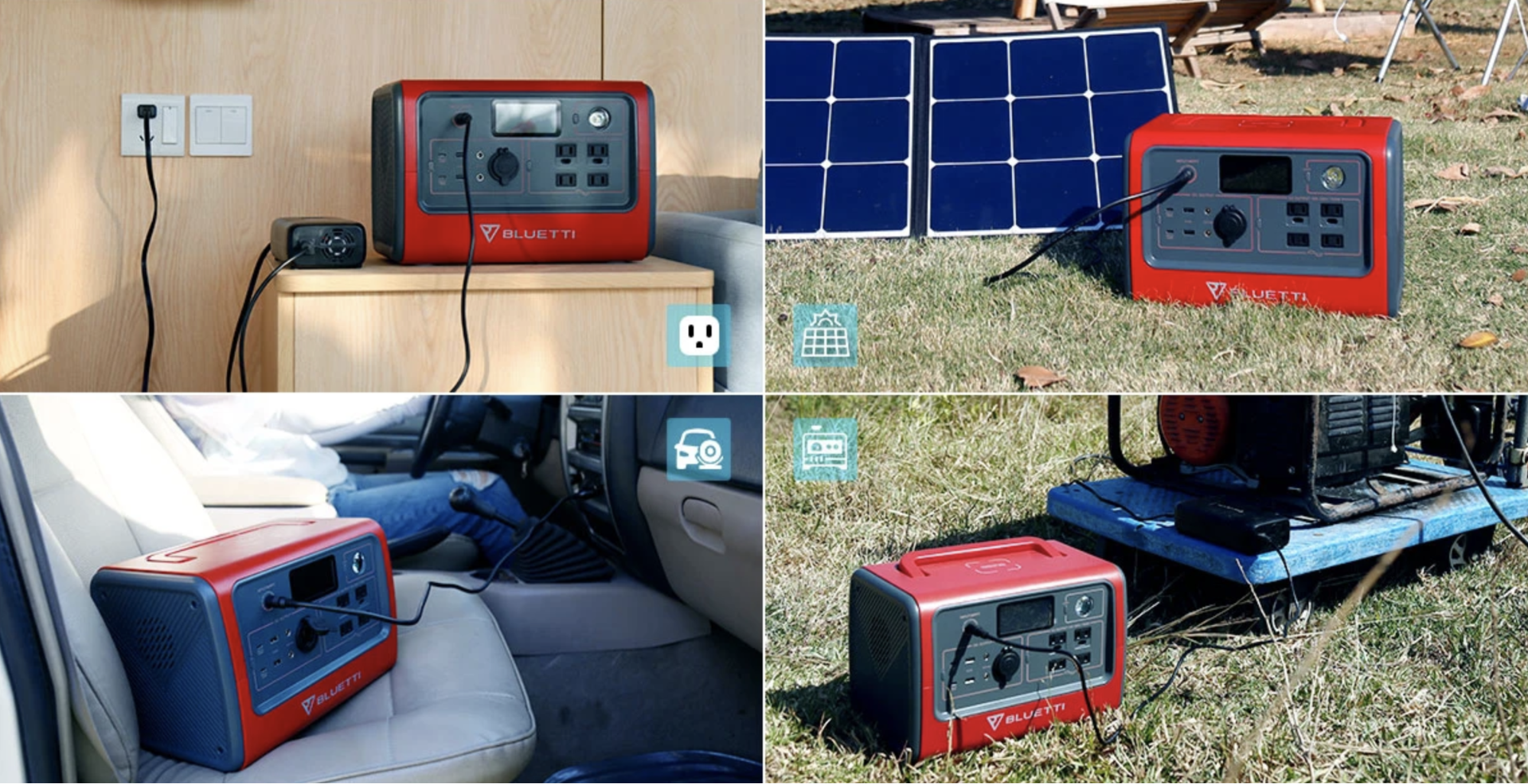
The Bluetti EB70 offers multiple ways to recharge the battery. The user can opt for these ways to recharge the battery:
200W MPPT Solar Charge – It allows the battery to get fully recharged within 4 hours. It houses an MPPT solar charge controller which uses an 8mm input port on the front of the unit. These are separately retailing.
Using 200W AC Adapter – BundledAC Adapter can also be used to recharge the battery in under 4 hours.
12V24 car Charge – A Cig-Lighter port can also charge the battery within a charge time of between 4-8 hours.
Gas Fire generator – Typically, the users can use gas- fire generator to fill the battery within 4-6 hours.
Price
Bluetti EB70 Power Storage typically retails for the price of $599, but for a limited time, it will be available for $499 using a coupon code.
It is the best Power Station considering the Power Output and Capacity. To know more about the product, head over to the official website.
This is a comparison between the latest 5G mid-rangers released in Europe by Xiaomi, TCL, and OPPO. If you are looking for a device with a few premium specifications but you do not want to spend a lot of money, then you should definitely consider the Xiaomi Mi 11 Lite 5G, the TCL 20 Pro 5G or the OPPO Find X3 Lite. They are three devices offering amazing displays, pretty nice cameras, and good designs at modest prices. They are upper-midrange phones which can actually replace flagships for a lot of users. If you want to know which one is the best for you, go ahead with this specs comparison.
Xiaomi Mi 11 Lite 5G vs TCL 20 Pro 5G vs OPPO Find X3 Lite
4500 mAh, fast charging 18W, fast wireless charging 15W
4300 mAh, fast charging 65W
ADDITIONAL FEATURES
Dual SIM slot, 5G
5G, Dual SIM slot
Dual SIM slot, 5G, reverse charging
Design
These phones are built with premium materials, not the most premium ones, but they still have nice designs. They come with a glass back and the TCL 20 Pro 5G is my favorite one because it has a curved edge-to-edge display like flagships and non-protruding cameras. The Xiaomi Mi 11 Lite 5G is the thinnest and most lightweight device of the trio, while the OPPO Find X3 Lite is the most compact one. They all come with good designs including great attention to detail, so it is all about tastes.
Display
On the paper, the most advanced display seems to be the one found on the Xiaomi Mi 11 Lite 5G. It shows up to one billion colors, it has the HDR10+ certification and a 90 Hz refresh rate. But the TCL 20 Pro might surprise you with its NXTVISION 2 technology: unfortunately, it does not provide a high refresh rate, but TCL is able to deliver a stunning image quality as one of the best TV manufacturers out there. The OPPO Find X3 Lite still has a very good display with its AMOLED panel and 90 Hz refresh rate.
Hardware/Software
The most powerful device of this comparison is the Xiaomi Mi 11 Lite 5G for a simple reason: it has a better chipset. It is the first phone in Europe powered by the Snapdragon 780G mobile platform, which is actually the best Qualcomm’s mid-range processor. The chip is paired with up to 8 GB of RAM and 256 GB of UFS 2.2 internal storage. Right after, we have the OPPO Find X3 Lite with a Snapdragon 765G, 8 GB of RAM, and 128 GB of UFS 2.1 native storage. TCL 20 Pro 5G is still great with its Snapdragon 750G, but it has just 6 GB of RAM. Xiaomi Mi 11 Lite 5G and TCL 20 Pro 5G feature expandable storage, while OPPO Find X3 Lite does not. All are based on Android 11.
Camera
If you need the best rear cameras, you should go for the TCL 20 Pro 5G. It is the only one to feature OIS for the main sensor and it even comes with a better 16 MP ultrawide camera. The second place goes to the OPPO Find X3 Lite packing a 64 MP quad-camera and a great 32 MP front snapper.
Battery
TCL 20 Pro 5G has a bigger 4500 mAh battery and it should provide a longer battery life. Further, it is the only one with wireless charging. However, the TCL 20 Pro 5G has slower charging speeds: if you need the fastest charging phone, you should go for the OPPO Find X3 Lite featuring 65W fast charging.
Xiaomi Mi 11 Lite 5G vs TCL 20 Pro 5G vs OPPO Find X3 Lite: Price
TCL 20 Pro 5G is priced at €549/$660 in the European market, OPPO Find X3 Lite costs €499/$600, and Xiaomi Mi 11 Lite 5G carries a €449/$540 price tag. Overall, on the paper, the most advanced device is actually the TCL 20 Pro 5G with its bigger battery, faster charging, unique design, amazing cameras with OIS. But on the software side, Xiaomi and OPPO are better. With the Xiaomi Mi 11 Lite 5G you also get a stronger chipset and amazing display, while OPPO Find X3 Lite has inferior hardware but a faster charging technology and a better camera than Xiaomi Mi 11 Lite 5G.
While a new launch date is yet to be announced, a leaked photo of the phone’s retail box has been posted on Twitter, and it confirms a few specifications. The image was uploaded by @Gadgetsdata and it partially shows the retail box.
😍 Exclusive 🚨 – Here's a portion of live box image of realme X7 Max .
As I told earlier realme X7 Max is TOTALLY SIMILAR to realme GT Neo .
— Gadgetsdata(Debayan Roy) (@Gadgetsdata) May 1, 2021
Based on the photo, the phone will be powered by the MediaTek Dimensity 1200 processor. This is the same chipset inside the Realme GT Neo and the Redmi K40 Gaming Edition sold in China. The retail box also states that the phone will have a 120Hz refresh rate and that the display will be Super AMOLED.
The Realme X7 Max is believed to be a rebadged Realme GT Neo for the Indian market. Based on that, it should have a 6.43-inch display with a punch hole at the top left corner, 64MP triple rear cameras, a 16MP front-facing camera, an in-display fingerprint scanner, stereo speakers, a 4500mAh battery, and support for 50W wired fast charging. The phone is also expected to run realme UI 2.0 based on Android 11 out of the box.
One of the key differences between the Meizu 18 and the Meizu 18 Pro is that the latter has support for wireless charging. The flagship phone can charge at 40W in both wired and wireless charging mode, and if you prefer wireless charging, you can now grab Meizu’s 40W wireless charger specially designed for the phone.
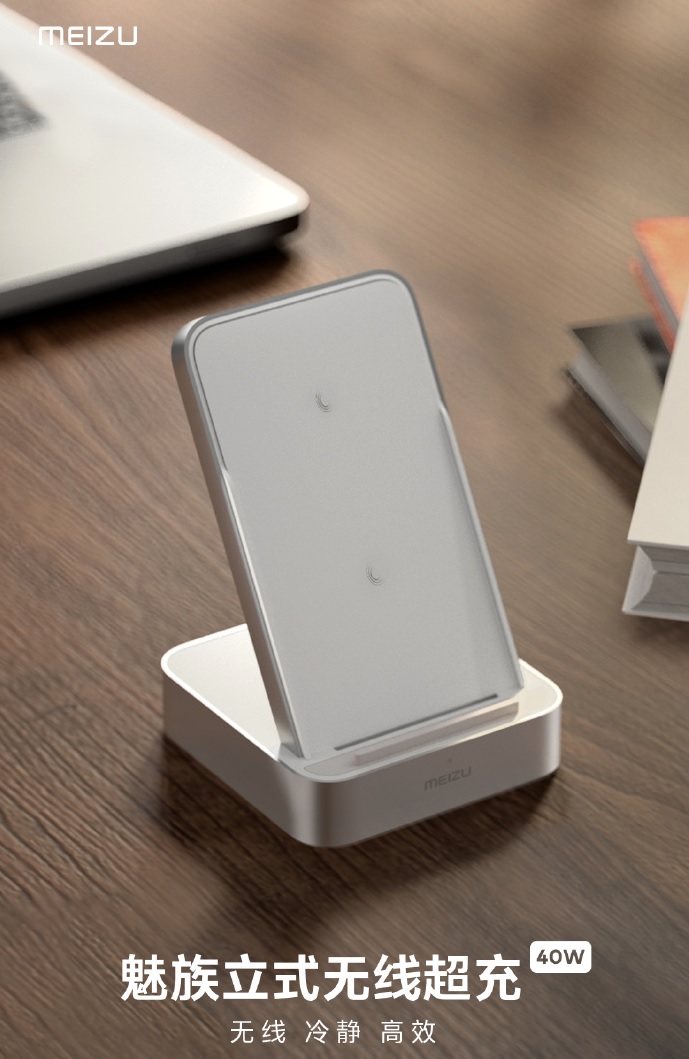
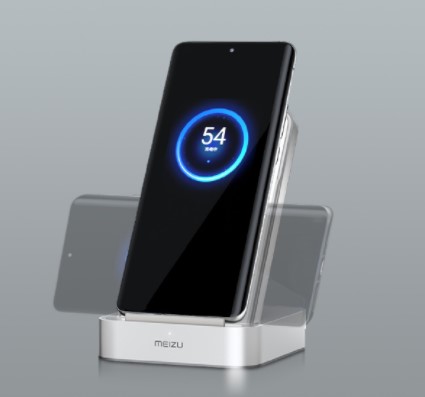
The charger which is officially called the Meizu Vertical Wireless SuperCharger 40W is priced at ¥199 (~$31). Angled at 120° and with a square base, Meizu completes the design with a silver metallic finish. The charger has two charging coils inside and you can place your phone on it in both portrait and landscape orientations.
Meizu says that it has opted for a vertical cooling design that improves cooling efficiency. It also claims that the fan is quiet. The charger has multiple protections built-in including high temperature, high voltage, low voltage, and foreign object detection.
The Meizu Vertical Wireless SuperCharger 40W will charge the Meizu 18 Pro from empty to full in 50 minutes. It is also backward compatible with the Meizu 17 Pro which supports 27W wireless charging.
You can purchase the Meizu Vertical Wireless SuperCharger 40W now from Meizu’s own online store, Tmall, JD.com, and Suning.
Redmi, the sub-brand of Xiaomi launched the Redmi 10X series in China in late May. The lineup includes three devices, namely Redmi 10X 5G, Redmi 10X Pro 5G, and Redmi 10X 4G. All three debuted with MIUI 11 based on Android 10. However, they were soon updated to MIUI 12. But the Android 11 update has only started rolling out now, starting with the Redmi 10X 5G
Redmi 10X 5G
The Redmi 10X 5G models are powered by MediaTek Dimensity 820 SoC and are exclusive to China. There’s only one other phone with this chipset, and that’s none other than the recently launched vivo S7t 5G. This device is also only sold in China.
Thanks to this silicon, the Redmi 10X 5G series has been leading the AnTuTu Benchmark mid-range performance list since its debut. But unfortunately, these smartphones still don’t run the latest version of Android even after nearly a year (11 months) from their launch.
Thankfully, Xiaomi has finally started seeding out the Android 11 update for the Redmi 10X 5G. The new system update for this handset comes with build number V12.0.1.0.RJHCNXM. This software build features April 2021 security patches as well.
Currently, it is in the ‘Stable Beta’ phase, and therefore, it is only available for a select few users. But it should reach all users in the coming days.
Similarly, we can expect Xiaomi to release the Android 11 update for the Redmi 10X Pro 5G as well as the Redmi 10X 4G. Also, these phones are eligible for the MIUI 12.5 update.
OPPO launched the OPPO A53 in India in late August. The smartphone features an entry-level Qualcomm chipset, a high refresh rate display, and a large battery. Eight months after its release, the device gets its first price cut in the country.
OPPO A53
The OPPO A53 comes in two storage configurations in India – 4GB + 64GB and 6GB + 128GB. The company debuted this phone at ₹12,990 and ₹15,490 respectively.
Now, the price of both these variants has been dropped. The base variant has received a ₹2,000 price cut, whereas the price of the higher version has been decreased by ₹2,500.
Hence, the OPPO A53 now costs ₹10,990 and ₹12,990 for the 4GB + 64GB and the 6GB + 128GB memory variants respectively. According to 91Mobiles, the new price is only applicable in offline stores as of now.
We checked the device’s price on India’s two popular online retailers, namely Amazon India and Flipkart. The former has still listed the phone at its old price as of publishing this article. On the other hand, the latter is selling the handset for its new price.
The OPPO A53 launched with ColorOS 7.2 based on Android 10. A few days back, the company had started recruiting beta testers for ColorOS 11 (Android 11). Hence, existing users and new buyers of this smartphone can enroll themselves if they are interested to try out the latest software.
Last month, Vivo silently unveiled the Vivo X60t handset in China. The Dimensity 1100 SoC powered handset arrived as the third X-series phone in the home market after the Exynos 1080 powered Vivo X60 and Vivo X60 Pro. It has been found now that the V2102A phone that has been recently by the 3C authority of China will be debuting in the market as the Vivo X60t Pro.
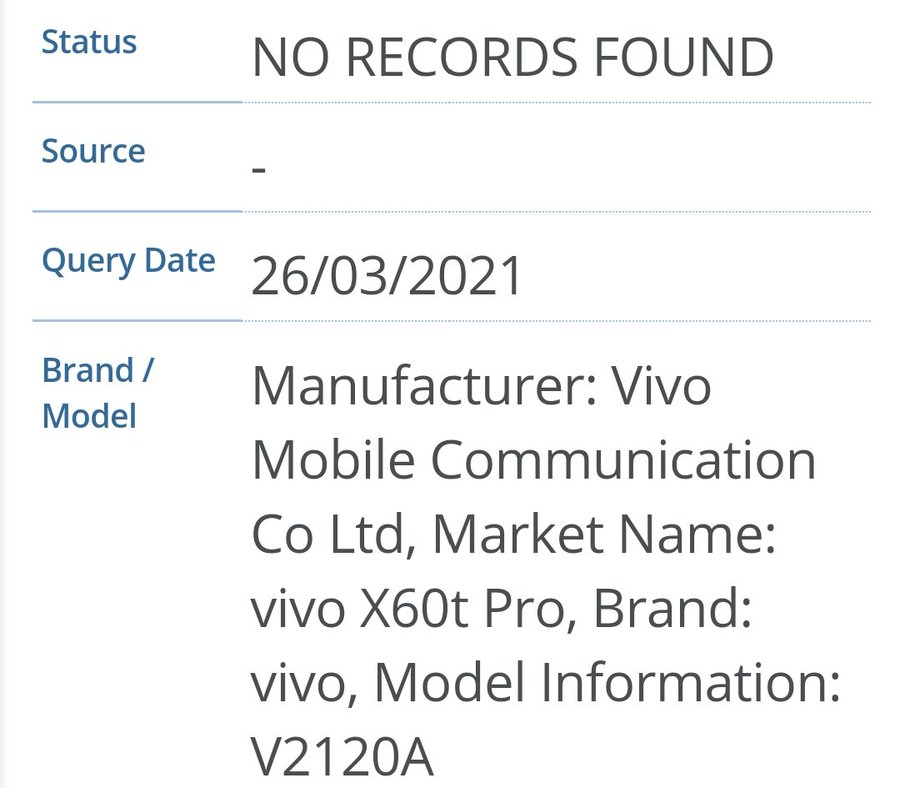
As per the Indian IMEI database site, the V2120A model number belongs to the upcoming Vivo X60t Pro smartphone. The 3C certification of the phone reveals that it carries support for 5G, and it may arrive with a 33W fast charger.
The Vivo X60t has the Dimensity 1100 chip, which suggests that the Vivo X60t Pro could be featuring the Dimensity 1200 chipset. There could be some change in the rear camera setup as compared to the X60t, which features a 48-megapixel triple camera unit with gimbal OIS support. The X60t Pro could be featuring a gimbal OIS-enabled 38-megapixel quad-camera setup.
The Vivo X60t has a 6.56-inch S-AMOLED screen that produces a Full HD+ resolution, a 20:9 aspect ratio, and a 120Hz refresh rate. The OriginOS based Android 11 OS comes preinstalled on the device. The Dimensity 1100 chip fuels the X60t with 8 GB of RAM. The phone offers 128 GB of UFS 3.1 native storage.
The Vivo X60t has a 32-megapixel front-facing camera. Its rear camera setup has a gimbal OIS-ready 48-megapixel main camera, a 13-megapixel telephoto lens with 3x optical zoom, and a 13-megpaixel ultrawide snapper. The 4,300mAh battery carries support for 33W rapid charging.
The Vivo X60t Pro is likely to receive TENAA certification soon in China through which some of its key specs are expected to be revealed. It may break cover later this month in China.
We use cookies on our website to give you the most relevant experience by remembering your preferences and repeat visits. By clicking “Accept”, you consent to the use of ALL the cookies.
This website uses cookies to improve your experience while you navigate through the website. Out of these, the cookies that are categorized as necessary are stored on your browser as they are essential for the working of basic functionalities of the website. We also use third-party cookies that help us analyze and understand how you use this website. These cookies will be stored in your browser only with your consent. You also have the option to opt-out of these cookies. But opting out of some of these cookies may affect your browsing experience.
Necessary cookies are absolutely essential for the website to function properly. This category only includes cookies that ensures basic functionalities and security features of the website. These cookies do not store any personal information.
Any cookies that may not be particularly necessary for the website to function and is used specifically to collect user personal data via analytics, ads, other embedded contents are termed as non-necessary cookies. It is mandatory to procure user consent prior to running these cookies on your website.