Back in 2017, Google released an app called Google Search Lite. This application was later renamed Google Go along with other lite apps by Google. Now, almost four years later, this app has crossed 500 million downloads on the Play Store.
Google Go app comes pre-installed on smartphones running Android Go Edition. Additionally, the application can be also installed on regular Android phones from the Google Play Store.
However, not all Android users could be aware of the Google Go app. Because Android smartphones with GMS (Google Mobile Services) already ship with the regular Google app.
Hence, most of the downloads could have come from the Android Go devices. That means Android Go smartphones are quite popular across the world, given the installation figure.
Since now Google mandates OEMs to release 2GB RAM smartphones with Android Go Edition, we can expect the downloads of Google Go to reach even higher in the coming quarters.
That said, if you live in a region with a slower internet connection, the Google Go app is highly recommended for you. It offers almost all the features of the regular Google app but weighs about only 8MB in size.
The app is even faster in loading results and above all, it consumes fewer data. Hence, you don’t need to worry about your data plan and internet speed while using Google Go or any other Go app for that matter.
Attention all readers! AliExpress is giving out an amazing deal on Huawei FreeBuds Pro under Huawei Brand Fest. Huawei FreeBuds Pro which generally retails at $180 is now available at a heavily discounted price of $139 only.
We loved the Freebuds Pro and its ANC, you can check out our review here.
Huawei FreeBuds Pro in-ear earbuds come with hybrid ANC (Active Noise Cancellation) which reduces noise both in and out of the earphone. The earphone is fitted with inward and outward-facing microphones that can detect residual noise both inside and outside your ear and generate anti-noise signals which cancel up to 40dB of noise thereby giving you a peaceful and tranquil listening experience.
With the Intelligent Dynamic ANC function, Huawei FreeBuds Pro automatically switches its ANC mode depending on its environment. For example, the earbuds will switch to Ultra mode when traveling and Cozy mode while studying or working in a library or office. For other purposes, it will switch on to General mode to remove the daily distractions like noise from bustling streets and honks and blares. With an additional Awareness/Voice mode, you can listen to human voices and conversations without actually removing your earphones.
The built-in dual-antenna gives you a long-range stable connection even if your phone is in your pocket or handbag. Designed for style and comfort the front and rear ear cavity conduction design balances in-ear pressure and ensures air circulation to remove any discomfort.
Huawei FreeBuds Pro gives you 30 hours of music time (with charging case and ANC-OFF ) and 7 hours (with charging case and ANC-ON) on one single charge. With smart finger control, simultaneous dual connection, and SGS Grade 1 Certification( Industry Green Standards), these earbuds bring you real value for money.
Generally retailing at $180, AliExpress is giving Huawei FreeBuds Pro at $139 only. Please note that this offer is applicable on Black, White, and Grey color variants shipped from China, Spain, France, and Poland warehouses. The super deal which ends tomorrow comes with free shipping from China and certain other warehouses. So be sure to check out the shipping and warehouse details before placing your order.
Xiaomi is reportedly planning on sourcing mobile processors for its smartphones from MediaTek, as Qualcomm suffers from constraints over 5G chip supply amid a global shortage of semiconductors.
According to an UDNreport, Qualcomm is facing issues as its foundry capacity is tightly packed at the moment. Similarly, even Samsung faces further delays in production as its Austin plant has yet to resume production due to cold wave in America. In other words, there is a disruption in the supply chain for 5G mobile processors, with delivery times being as along as 30 weeks for Xiaomi, Oppo, and other companies as well.
Thus, the Chinese tech giant is turning towards MediaTek for help, as it aims on reducing the proportion of Qualcomm chips from 80 percent to 55 percent. The lowering of Qualcomm chips order for the company’s smartphones will be transferred over to MediaTek. Due to the influx of new orders, the chip makers revenue is expected to rise to a new high of 100 billion Yuan (roughly 15.3 billion US Dollars), which would also lead to its share price also rising.
Previously, Qualcomm had announced that the chip shortage in the industry will continue till at least the end of this year, with the current predicament being caused by an imbalance between supply and demand. For those unaware, the global semiconductor industry is suffering from a major shortage with various industries being affected by the supply issue. This includes markets like automobiles, smartphones, and others.
realme launched the realme C11 in India back in July 2020 after debuting it initially in Malaysia. Later, it brought the device to other regions like Europe. Now, it looks like the company will launch a 2021 version of this device as it gets Thailand’s NBTC and India’s BIS certification.
Realme C11
A realme Smartphone with model number RMX3231 appears on BIS and NBTC database as noted by influencer Mukul Sharma. Here, the moniker of the device is shown as the “realme C11 2021“.
The listing shows that the device supports network connectivity up to LTE. It’s not clear what will be the change but if the name is carried over from the 2020 version, at least the design could be similar.
At times, companies launch incremental versions of a smartphone by differing the internals and if that’s the case here, expect the chipset, camera, or storage to get a bump. These are just wild guesses and hence, let’s wait for official info.
realme C11- 2020 version Specs, Features
If you look at the specs of the realme C11 that launched in June, July, and August in Malaysia, India, and Europe respectively, the device features a 6.5-inch HD+ LCD display with a dewdrop notch.
Under the hood, the device features a MediaTek Helio G35 chipset paired with a single 2GB RAM 32GB storage on the 2020 version. There is a possibility that the 2021 version might get a 3GB RAM but we will have to wait for it.
For cameras, there is a dual 13MP primary sensor and a 2MP depth sensor, and a 5MP selfie shooter. Other specs include a 5,000mAh battery with support for 10W charging, 2.4GHz WiFi, Bluetooth 5.0, GPS, 3.5mm headphone jack, MicroUSB port, dedicated microSD card slot.
The device debuted with Android 10 OS and realme UI on top. Let’s wait and see what realme brings new in the 2021 version.
Samsung Electronics has just unveiled a new monitor in Vietnam. The company’s S34A650 is a new 34 inch curved monitor, which arrives with 1440p resolution along with support for 100Hz refresh rate.
According to a NoteBookCheckreport, the new curved monitor is only available in Vietnam but it is unknown whether the South Korean tech giant will launch the monitor in other markets. Although, it is expected that the company will be launching the new product in Europe. The model number of S34A650 is also known as LS34A650. It features a VA panel, which has a 21:9 aspect ratio, with a 3440 x 1440px resolution and a 1000R curvature.
Furthermore, the company claims that the monitor offers a high refresh rate of 100Hz and a contrast ratio of 4000:1. Samsung also added that the S34A650 has a 10 bit color depth and AMD FreeSync support as well. The brand has also equipped the S34A650 with a wide variety of ports. This includes ports like an HDMI 2.0 port, a DisplayPort 1.2 connection and an Ethernet port.
Additionally, the company also features three USB 3.0 Type A ports along with a USB Type C connection that supports up to 90W USB Power Delivery. At the moment, it is unknown how much will the S34A650 cost in Vietnam. The same can also be said for its possible pricing in other western markets as well. So stay tuned for more updates regarding the upcoming curved monitor.
Since AirPods first came out in 2016, the wireless earbuds market has exploded with practically every known brand releasing one in the market. But even with so many rivals from formidable brands, the Apple Airpods have managed to beat or at least compare to the best earbuds in the market today.
AirPods Pro
Four and a half years later, Apple is expected to give its legendary semi-in-ear TWS headphones an update, including a refreshed design. Yes, that’s right, we’re talking about the new Airpods that are expected to launch very soon. While we don’t have the real Airpods 3, what we do have is a real-life lookalike of the upcoming Apple earbuds. Anyway, join us for an early look at the exciting possibilities for the new Airpods, which should be called the AirPods 3.
We have to remind you again that this is a clone of the Airpods 3, and not the real Apple earbuds. So in this hands-on, we will not discuss its sound quality, latency, or changes to the chip or power consumption. All subjective inferences are made only from the appearance of the model and interesting information that we’ve got from the industry.
AirPods 3 Clone Design
It’s clear that both the new AirPods and the charging case inherit the design of the AirPods Pro. The case in our hands is not wirelessly chargeable, which does not rule out the possibility of a wirelessly chargeable version like the Airpods 2. The case has a slightly different size from the previous AirPods’, sitting somewhere in between the AirPods 2’s case and the AirPods Pro’s. Other than that it’s hard to tell the difference between them.
AirPods 3 clone alongside Airpods Pro and Airpods
Now let’s take a look at the earbuds themselves. Looking at the notch on the earbuds’ stem, the operation should still be the same as the pressure-sensing style. It has a slightly larger cavity and a shorter headset stem. When you put it on, the fit is definitely tighter. And thanks to the change in the center of gravity, the new Airpods 3 design will be less likely to fall off your ears. Well, this is a smart improvement. But because of this, it’s also not as distinguishable as the wearing experience of the Airpods 1 and 2.
The upcoming AirPods 3 design is nearly identical to the Airpods Pro
Overall, it’s still very comfortable, and this new Airpods design is probably an improvement made by Apple after hearing people’s complaints about the previous generation’s unstable fit. And it looks like this adjustment will help provide a better fit to a larger number of users.
What we’re curious about is that the design of the new earbuds has a near-identical opening of the cavity as the Airpods Pro. Also, the position of the IR sensor and the position of the filter on the buds’ stem are almost the same.
Does this mean Apple might add active noise cancellation to the new Airpods?
It’s not impossible to add active noise cancellation in a semi-in-ear design, like what we’ve seen on Huawei’s Freebuds 3, albeit at 15dB noise-canceling capacity. Or probably Apple is trying to apply the removable ear-tip design for the new AirPods. So the decision is up to users themselves.
Apple AirPods 3 design fit vs Airpods Pro vs Airpods
If you prefer the in-ear design then put on the tips and at the same time enjoy better performance of noise-canceling, or if you cannot tolerate the in-ear tips, just remove them and Apple may have fixed the issue of the noise-canceling for the semi-in-ear design. Of course, this is just speculation at the moment.
Apple AirPods 3 clone
Also, we still think that if Apple adds ANC to Airpods 3, it would overlap with the Airpods Pro’s product positioning.
So why is Apple launching the new Airpods?
We think the new Airpods is trying to solve two problems. An improved design will allow more people to wear the Airpods with a better fit, and the second problem it solves is it will stimulate the semi-in-ear headphone market with a new look, and possibly with a reliable noise cancelation performance. If you’re not in a hurry to buy semi-in-ear earbuds, I think it’s worth waiting for them. After all, if Apple makes them, it means this design is ready.
Apple AirPods 3 clone 14
As for what’s new about the sound and call quality, we don’t have any solid information about it. But we’ll get the real new AirPods as soon as possible after its launch and will bring you guys a full review.
Google Chrome is the most-used web browser on almost all platforms. However, the Android version of the browser has got the 64-bit variant only now. But unfortunately, it is not available for a majority of users.
Last week, Google published a blog detailing the performance improvements in Chrome 89 for Android. In the same post, the search giant mentioned the eligible devices for the latest 64-bit variant of the browser.
As reported by Android Police, Google Chrome for Android 64-bit requires a minimum of 8GB RAM and Android 10. In other words, the better version of Chrome is only available for flagship and premium mid-range smartphones. Hence, millions of mid-range and budget Android users are left out.
Even Google’s own Pixel smartphones don’t come with 8GB RAM except for the Pixel 5. Previously, this amount of RAM was only found in gaming smartphones and select top-end premium flagship smartphones. But now, there are many mid-premium handsets with 8GB RAM. Most of these phones come from Chinese OEMs.
Anyway, since Android smartphones let users install applications from external sources, interested users can try installing Chrome 64-bit APK from reliable websites like APKMirror.
However, it is worth noting that if your device doesn’t match the eligibility criteria, the 64-bit variant of Chrome will be replaced by the 32-bit variant whenever a new Chrome update arrives on the Google Play Store. Hence, those users will have to manually install the 64-bit variant APK with each new update.
Huawei is set to soon start updating its smartphones with HarmonyOS. Although, the exact models that were planned to be updated were not specified. But now, a new leak has suggested that the company will be bringing its proprietary operating system to devices running the HiSilicon Kirin 710 processor and higher.
According to @长安数码君on Weibo, a Chinese microblogging website, the consumer electronics maker will be updating devices that include processors like Kirin 810, Kirin 820, Kirin 820E, Kirin 980, Kirin 990, Kirin 985, Kirin 9000 processors. In other words, any chip above the Kirin 710 SoC might be guaranteed to be upgraded to HarmonyOS. Although, keep in mind that this is just an unconfirmed list, so it is subject to change in the future.
It was previously announced that the Chinese tech giant will cover 200 million smartphones. Furthermore, in the social media post, the tipster also shared images highlighting which processors were eligible for the upgrade. For those unaware, HarmonyOS is the company’s self developed operating system that was announced after the company lost access to Google Mobile Services due to US sanctions.
Lastly, it is still likely that the company would rather include more recently launched devices in the list, since these were the ones that did not ship with Google services out of the box. Unfortunately, this is still just a leak so take this report with a pinch of salt and stay tuned for more, as we will be providing updates when additional information is available regarding the update list.
Signal, one of the most popular encrypted messaging applications, has stopped working in China and is now only accessible using a virtual private network (VPN). It appears that the Chinese government has blocked access to the app.
This is not surprising given that China is known for blocking access to foreign apps and services. Products from tech giants like Google and Facebook are already blocked in China through the so-called Great Firewall.
While the Signal app is still available to download through Apple‘s App Store in China, messages sent by the users don’t go through, suggesting that the access has been blocked by the authorities. Not just the app, it appears that the website has also been banned.
Signal application getting blocked in China highlights the increasing internet censorship. The app got a huge surge in users recently when Facebook updated the privacy policy for WhatsApp and users started shifting towards Signal and Telegram.
It was one of the few Western social networks that remained accessible in China without the use of a virtual private network. But the app seems to have reached a substantial userbase in China and has caught the authorities’ attention.
The first report about the upcoming Galaxy A22 smartphone appeared in December, which claimed that it will be Samsung’smost affordable 5G phone. Recent reports have revealed the model numbers, storage variants, and color options of the handset. A fresh report by the South Korean publication The Elechas revealed a few more key information about the Galaxy A22 smartphone.
According to the publication, the Galaxy A22 is aimed towards emerging markets like India. It claimed that Samsung Electronics will collaborate with Samsung Electro-Mechanics for A22’s cameras. The handset is expected to arrive with a front-facing camera of 13-megapixel.
Samsung Galaxy A32 5G
The quad-camera system of the Galaxy A22 may feature a 48-megapixel main camera, an 8-megapixel secondary lens, and two 2-megapixel snappers. The Galaxy A22 is also expected to arrive in a 4G version. The model number of the 4G variant is SM-A225F, whereas the 5G version has an SM-A226B model number.
Unlike other phones from Samsung, the Galaxy A22 5G will be an ODM handset. It is expected to arrive in two RAM and storage variants, but its details are not known yet. It may arrive in four colors like gray, white, light green, and purple. The device is likely to be priced under 229 euros (~$273).
The Galaxy A22 5G will be positioned lower than the Galaxy A32 5G, which features the Dimensity 800U chipset. Probably, the South Korean company may opt for Dimensity 720 or Dimensity 700 or Snapdragon 480 SoC for the Galaxy A22 5G. The rumor mill will spill more information on the A22 in the coming weeks.
Xiaomi is expected to launch more flagships in the Mi 11 series. Reports say that the company is preparing a ‘Pro'(M2102K11AC) and an ‘Ultra'(M2102K1C) variant of the Mi 11 with significant upgrades in camera, charging. Last week, the Mi 11 Ultra had received the TENAA certification. Today, a new Xiaomi 67W charger has appeared on 3C and it could be for either of these devices.
A Xiaomi charger with model number MDY-12-EF appears on China’s 3C certification authority. It has a maximum output rating of 20V @ 3.25A which works out to about 67W(Max). Apart from this, there’s no mention of any device’s model number associated with the listing.
Last year, Xiaomi brought the Mi 10 Ultra with 120x camera zoom and support for a whopping 50W wireless charging. Likewise, it is expected to bring a Periscope camera with 120x Zoom and 67W wireless charging. In a leaked video last month, the Filipino YouTuber mentioned the same in addition to saying 67W Wired and 10W Reverse wireless charging.
Ascertaining this, the leaker who shared the 3C, Digital Chat Station, also says that the device will come with a dual 67W charging, i.e., 67W Wired and 67W wireless.
1 of 3
Xiaomi MDY-12-EF 67W charger
Whether or not both the Mi 11 Pro and Ultra get the charging tech, it is welcoming to see Xiaomi leaping to higher charging in both and wireless segments. The company also unveiled an Air Charging recently but it is likely that the tech will take a while to reach commercial devices.
Anyway, the Mi 11 Ultra is expected to feature a 6.8-inch QHD+ curved OLED 120Hz screen, a secondary screen beside the camera layout, Snapdragon 888 chipset, 50MP +48MP ultrawide + 48MP Periscope Telephoto rear cameras, 20MP front camera, 5,000mAh battery.
Samsung Electronics has been the market leader for memory chips for almost three decades now. But now, its dominance might not continue for much longer as emerging rivals have intensified competition, while it lags behind other major chip makers in the SoC industry (System on Chip).
According to a BusinessKoreareport, the South Korean tech giant held a market share of 41 percent in the fourth quarter of last year. This was followed by SK Hynix that held 29.3 percent and Micron Technology with 24.3 percent market share. Furthermore, this is indicative of the gaps between Samsung and the other firms narrowing. As per the report, Samsung’s dominance might continue if its performance in the system on chip sector. Although, this would be quite difficult for the company.
An industry source close to the matter said that “Foundry-based ecosystem establishment to cover fabless and packaging is urgent to catch up with TSMC. South Korea’s system-on-chip industry can grow only after global leaders emerge in each of the segments.” In simpler terms, the fabless industry in South Korea is still insufficient as they lack original technology and professional manpower.
Notably, TSMC and Samsung Electronics’ first quarter foundry market shares are estimated to be around 56 percent and 18 percent respectively, with the latter’s market share never crossing 20 percent in the global foundry market. Talking about the former, the Taiwanese chip maker has been more than 300 percent of Samsung’s this year.
Earlier this month, OPPO shared the ColorOS 11 update plan for the month of March 2021. As per the schedule, the company is supposed to open beta registrations for the OPPO Reno2 Z on March 17 in India. However, the brand has started recruiting testers two days early since yesterday.
According to the announcement post on ColorOS Community, users who are on the software build version C.45 or C.47 can apply for the Android 11-based ColorOS 11 beta program in India. The first batch of recruitments will go on from March 15 to March 18.
In order to enroll in the program, interested users will have to navigate to Settings > Software Update > Gear Icon > Apply for Beta Version > Update Beta Version and follow the on-screen instructions. Users who get selected will receive the Android 11 beta update via OTA.
If they don’t get recruited, they can try registering whenever the company opens the next round. Anyway, all users should get the ColorOS 11 stable update in the coming days whether they apply for the beta program or not.
That said, Android 11 should be the last major update for the OPPO Reno2 Z. This smartphone debuted with Android 9.0 Pie-based ColorOS 6 in 2019 and was updated to ColorOS 7 (Android 10) last year.
HMD Global will be announcing a launch event on April 8th. Rumors have it that the company will announce Nokia X10, Nokia X20, and Nokia G10 smartphones. The initial report on G10 claimed that it will be arriving as a gaming-focused phone. However, its Geekbench listing tells a different story as it has been spotted with a low-powered chipset. At the same time, a new report by Nokia Power Userhas revealed the key details of a new phone named the Nokia G20, which may arrive with the G10.
The Nokia G10’s has scored 150 in the single-core test and 858 in the multi-core. The handset recorded such low scores because it is equipped with an Helio P22 chipset, which is mentioned with the MT6762 model number in the listing. The SoC is supported by 4 GB of RAM and it runs on Android 11 OS.
It is speculated that the handset has a 6.4-inch HD+ display, a 48-megapixel quad-camera system, a 16-megapixel selfie camera, 3GB / 4GB RAM, 32 GB / 64 GB storage, a 4,000mAh battery with 10W charging support. It may arrive in blue and purple color editions.
According to NPU, its source has revealed that the Nokia G20, which will be positioned higher than the G10, will feature a more powerful MediaTek chip. Without mentioning the details, it claimed the Nokia G20 will come with better cameras than the G10.
The publication claims that the Nokia G10 and G20 will bear some similarities with the Nokia 5.4. It calls the G10 a low-priced Nokia 5.4 alternative. On the other hand, the G20 is expected to offer a few better specs than the Nokia 5.4.
The Nikia G20 may arrive with 4 GB of RAM and 64 GB of storage. It could be coming in colors like Silver and Blue. The 4G+64GB base model could be priced at 169 euros (~$201).
A few days back, realme C25 got certified by multiple certification bureaus. This smartphone with model number RMX3191 was even spotted on Geekbench. Now, this phone has been listed by a retailer in Indonesia revealing its primary specs, design, and launch date.
1 of 4
According to the listing of realme C25 on Lazada, the smartphone will be launching in Indonesia on March 23. The device will be available in two colors (Water Grey, Water Blue) and in a single 4GB + 64GB storage configuration.
As far as specifications are concerned, the realme C25 will be powered by a MediaTek Helio G70 SoC. However, the handset’s Geekbench listing said it to feature a MediaTek Helio P65 SoC instead.
Further, the phone will sport a 48MP triple camera setup arranged in a matrix-like manner on the rear panel along with a capacitive fingerprint sensor. The device’s back will include a two-tone finish with a vertically placed realme branding.
1 of 4
realme C25
Other features of this handset will include a USB Type-C port, a 3.5mm headphone, and a 6,000mAh battery with support for 18W fast charging. Last but not least, the smartphone will run realme UI 2.0 based on Android 11 out of the box.
We expect to learn other aspects of the realme C25, including its price on March 23 when it will be officially launching in Indonesia.
The global shipments of wearable products reached 153.5 million units in the fourth and final quarter of last year. This marked a year on year growth of 27.2 percent in this period while the annual shipments rose by over 28 percent, reaching 444.7 million units, with Apple leading the market once more.
According to an IDCreport, the holiday season was a big driver for sales, owing to new launches and lowering prices. However, the surging demand is also due to the rising trend of wearable products, especially as disposable income rose due to falling expenditure on leisure activities during the pandemic. Furthermore, the rise in demand also marks a shift in the market trends and increasing popularity of smaller connected devices.
Apple led the market with an overall share of 36.2 percent in the fourth quarter of 2020. Its Watch shipments rose by 45.6 percent during this period, thanks to rising appeal of its three models aimed at different price segments, namely Series 6, Watch SE, and Series 3. Furthermore, even its hearables shipments rose during this quarter, despite its year on year performance showing a slight fall to 22 percent, down from 28 percent and 29 percent in the previous two quarters.
Despite the overall market seeing a rise, the growth was not even across various segments of the market, as companies and brands were also affected by the ongoing issue of global semiconductor shortages. Notably, the wristband category declined by 17.8 percent during the final quarter and only accounted for 11.5 percent of the all wearables shipped. By far, the hearables category accounted for the largest share of shipments, with a 64.2 percent share. This was followed by watches that accounted for 24.1 percent market share.
Realme will be launching the Realme 8 series of smartphones on March 24 in India. Yesterday, Tech Spurt YouTube channel released an unboxing video of the Realme 8 Pro. The video did not reveal the specs of the phone but showcased its design from all angles. In addition, it also revealed what is included in the retail box of the Realme 8 Pro. Tipster Debayan Roy has leaked the key specifications of the Realme 8 Pro today.
The tipster claimed that the Realme 8 Pro will be equipped with a 6.4-inch S-AMOLED display that supports a 60Hz refresh rate. The single punch-hole screen is expected to carry support for a Full HD+ resolution.
The Realme 7 Pro was powered by the Snapdragon 720G chipset. It appears that the company will be using the same chip to fuel the Realme 8 Pro. Recently, a leakster revealed that it will come in variants like 6 GB RAM + 128 GB storage and 8 GB RAM + 128 GB storage.
realme 8 Pro Credit: Tech Spurt
There is no word on the front camera of the Realme 8 Pro. The square-shaped rear camera module of the device may have a 108-megapixel primary camera, an 8-megapixel lens, and a pair of 2-megapixel sensors. The handset will be equipped with a 4,500mAh battery that supports 50W fast charging. In contrast, the Realme 7 Pro offered 65W fast charging.
Earlier this week, a new Xiaomi patent was published online. The company’s mobile software unit published the new patent, which is for a new ‘anti-peeping’ technology to ensure user privacy.
According to an ITHomereport, the patent from the Chinese tech giant describes a dedicated sensor that is constantly working to sense at least one face that might appear within a predetermined range of the sensor. In other words, the sensor will be capable of capturing at least one face, by performing facial recognition on the acquired image. As per the result of the facial recognition software, the algorithm would determine whether there is a person peeping on the user’s smartphone.
Through this technology, the device will be able to ensure user privacy by preventing any confidential data of files from being ‘peeped’ or leaked. In other words, the patent is to help protect sensitive user data. Unfortunately, it is currently unknown if the the company is actually working on such a product or covering all bases for a future iteration of this technology.
In the past, other consumer electronic makers have also patented similar technology as well. Although, a full fledged system has yet to be more widely adopted. So stay tuned for more, as we will be providing updates when additional information is available regarding this patent.
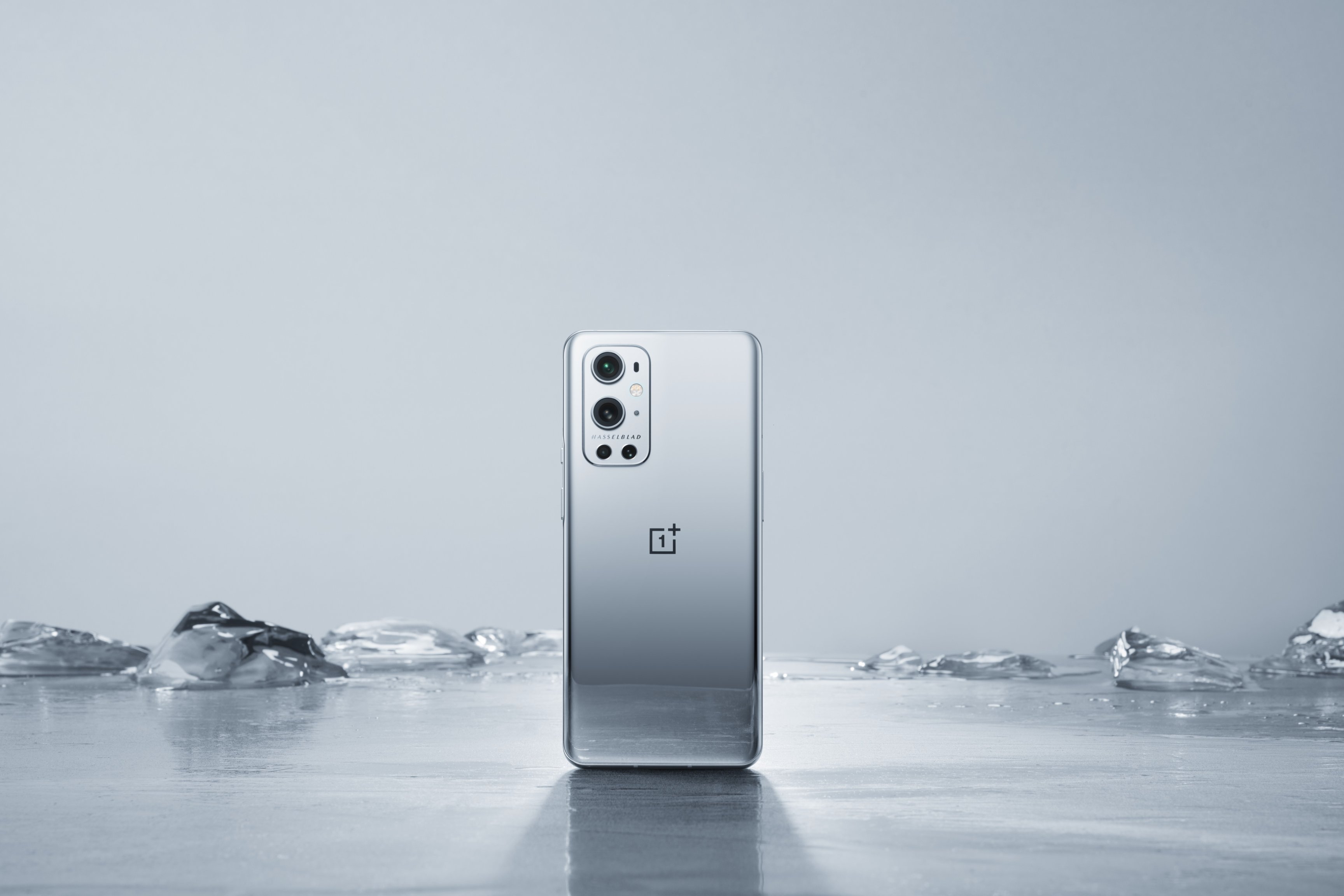
OnePlus will be launching its next-generation flagship smartphones under the OnePlus 9 series next week on 23rd March. Soon after that, the devices will up for sale in several regions. But potential buyers in Europe have a chance to get the device earlier than others.
Deutsche Telekom and OnePlus are partnering for a Blind Box Sale which will take place tomorrow. Users will be paying €1,111 (approximately $1,324) and they will get either OnePlus 9 or OnePlus 9 Pro along with a bunch of accessories.

The OnePlus 9 series smartphones are confirmed to get two years of official warranty. It remains to be seen if this is limited to Chinese users or applicable globally. The company decided to add an additional year of warranty as it found that most users replace their flagship smartphone after two years.
As for the specifications, the OnePlus 9 5G is expected to come with a 6.5-inch FHD+ AMOLED screen that offers a 120Hz refresh rate while the OnePlus 9 Pro 5G may feature a 6.67-inch AMOLED QHD+ screen with support for a 120Hz refresh rate. Under the hood, both the devices will come powered by the Snapdragon 888 mobile platform, coupled with up to 12GB of LPDDR5 RAM and up to 256GB of internal storage.
OnePlus 9 Pro Morning Mist
The smartphones are expected to feature a 16-megapixel front-facing camera. The Hasselblad branded rear camera system of the OnePlus 9 5G includes a 48-megapixel Sony IMX789 primary camera, and a 50-megapixel Sony IMX766 ultrawide snapper, and probably a telephoto lens. The Pro model has a quad-camera setup that includes a Sony IMX789 48-megapixel main camera, a 50-megapixel Sony IMX766 superwide sensor, an 8-megapixel telephoto lens, and a 2-megapixel depth helper.
The OnePlus 9 5G and 9 Pro 5G may feature a 4,500mAh battery with 65W fast charging support. A recent leak claimed that the Pro model will support 50W wireless charging. There is a possibility that the standard variant may come with 30W charging.
Recently, it has been leaked that the OnePlus 9 5G will come in Stellar Black, Arctic Sky, and Winter Mist colors while the Pro variant will be offered in three colors — Astral Black, Morning Mist, and Pine Green. The launch event for the OnePlus 9 series is scheduled for 23rd March and the devices will launch in China on 24th March.
AnTuTu, one of the leading smartphone benchmarking platforms issued an official statement to “fight against counterfeiting”. It said that the app couldn’t reproduce the scores secured by the Realme GT smartphone.
AnTuTu clarified that the Realme GT scores about 750,000 points in the AnTuTu v8. This is a good score among smartphones in the market that are powered by the Qualcomm Snapdragon 888 chipset. However, when the company conducted its own analysis during testing, it found that the score obtained by the phone was not a manifestation of its true strength but was obtained through other means.
Because of this, AnTuTu said that it will remove the Realme GT’s scores for three months from the platform. After three months, the device will be included in the relevant list if Realme takes constructive steps against such practice. If that is not done, then the device could be permanently removed from the platform.
Last month, Xu Qi, Vice President of Realme, had published a screenshot of the test score of the Realme GT smartphone. He claimed that in a random AnTuTu, the phone scored 770,000 points, making it one of the most powerful phones powered by SD888 SoC.
Earlier, a similar spat between Realme and AnTuTu had taken place because of the scoring related to the Realme X50 Pro smartphone. The smartphone maker had claimed that the phone’s AnTuTu score surpassed the 60W mark but AnTuTu refused to acknowledge that as the test wasn’t conducted on the internet.
Realme GT 5G flagship smartphone was launched earlier this month and then soon went on sale in China. With a starting price of 2,899 yuan, the company claimed that it managed to generate a revenue of 100 million yuan in just 10 seconds of the phone going on sale.
We use cookies on our website to give you the most relevant experience by remembering your preferences and repeat visits. By clicking “Accept”, you consent to the use of ALL the cookies.
This website uses cookies to improve your experience while you navigate through the website. Out of these, the cookies that are categorized as necessary are stored on your browser as they are essential for the working of basic functionalities of the website. We also use third-party cookies that help us analyze and understand how you use this website. These cookies will be stored in your browser only with your consent. You also have the option to opt-out of these cookies. But opting out of some of these cookies may affect your browsing experience.
Necessary cookies are absolutely essential for the website to function properly. This category only includes cookies that ensures basic functionalities and security features of the website. These cookies do not store any personal information.
Any cookies that may not be particularly necessary for the website to function and is used specifically to collect user personal data via analytics, ads, other embedded contents are termed as non-necessary cookies. It is mandatory to procure user consent prior to running these cookies on your website.