Advertisement

Apple faces French investigation over Siri voice recordings

Apple is facing an investigation in France over the collection and use of voice recordings made through its Siri voice assistant. The Paris prosecutor’s office confirmed the probe on October 6 and said it has referred the case to the Office for Combating Cybercrime.

Apple Siri

The investigation follows a complaint filed earlier this year by the French human rights organization Ligue des Droits de l’Homme. The complaint is based on testimony from Thomas Le Bonniec, a former subcontractor who worked for Apple’s partner Globe Technical Services in Ireland in 2019. Le Bonniec said he reviewed thousands of Siri recordings during his time with the company, including conversations that involved sensitive personal information.

French authorities are looking into whether Apple collected and processed user voice data without proper consent. Le Bonniec said the recordings could contain intimate details and that some were identifiable. He had previously raised the issue with European data regulators, including France’s CNIL and Ireland’s Data Protection Commission, but those efforts did not lead to an investigation.

Apple declined to comment directly on the case. In a January blog post, the company stated that it does not retain Siri audio recordings unless users explicitly opt in. Apple said it uses those recordings solely to improve Siri and does not share them with marketers or sell them to advertisers. The company also said it had strengthened Siri’s privacy controls in 2019 and again in 2025.

The complaint has also led to a class-action lawsuit in France. The suit follows a similar case in the United States, which ended in a $95 million settlement last year. Apple did not admit to any wrongdoing in that case.

French prosecutors have not disclosed further details about the scope of the current investigation.

For more daily updates, please visit our News Section.

Stay ahead in tech! Join our Telegram community and sign up for our daily newsletter of top stories! 💡

(Source)

Is Now the Right Time to Upgrade Your Gadgets?

If you’re eyeing a new phone, laptop, or gadget upgrade, you might want to hit pause. Several major sales events like Black Friday, Cyber Monday, major Indian festival sales, and year-end discounts are right around the corner. So here’s why waiting could save you significantly more than any small “early-bird” discount you might grab today.

Apple iPhone 17 Pro Max and Xiaomi 17 Pro Max

Upcoming Seasonal Sales Bring Deeper Discounts

Retailers time their biggest discounts to festive or holiday seasons. For example, the biggest festival in India is almost here, so there will be plenty of Diwali discounts in the Indian market. Similarly, Halloween is arriving soon as well, and we can expect a bunch of new deals during this period.

But that’s not all, one of the biggest tech product sales of the year is also coming soon, thanks to the Black Friday 2025 deal. Various gadgets will go on sale during Black Friday 2025, which is set for 28th November 2025. Right after this, we have Cyber Monday just two days later, which is another major discount day for tech.

Avoid Fake Discounts

A common tactic often used by sellers is to hike up the price a few weeks before sales so the advertised “discount” looks bigger. Platforms and independent trackers often catch these fluctuations. So it is often advised to use some form of price tracking before the sale to make sure you’re not getting scammed by a deal that seems too good to be true. So waiting also helps you gain time to monitor genuine price drops and use tools to compare historic pricing to avoid overpaying, even on newly launched gadgets like smartphones, laptops, TWS earbuds, and more.

Newer Tech & Models Debut Soon

If you’re eyeing a premium smartphone today, you may want to hold off just a while longer. The next wave of flagship models powered by next-generation chips is right around the corner, bringing improved performance, battery life, AI powered tools, the latest software, and refined designs. So buying a device right now could make your new smartphone seem obsolete in just a couple of weeks. Waiting lets you see what’s new and whether that shiny thing is actually worth the extra premium.

Better Payment & Bundle Deals

Sale seasons bring more than simple discounts. Expect bank cashback offers, no-cost EMIs, “buy 1 get 1” or bundle deals (for smaller gadgets like accessories), and extra warranty packages. None of this tends to show up during random off-season “discounts.”

When It Might Still Make Sense to Buy Now

While we do urge you to be patient, you can definitely consider an upgrade or buy new gadgets depending on certain circumstances. For example:

  • If your device is failing irreparably or preventing you from working/studying, you might not be able to wait.
  • If a gadget you like will be discontinued soon in favor of the newer, more expensive model.
  • If a one-time offer (e.g., trade-in or upgrade bonus) is only valid now, it won’t reappear.

In the meantime, you can also check out why you should wait on buying a premium phone.

For more daily updates, please visit our News Section.

Don’t miss a thing! Join our Telegram community for instant updates and grab our free daily newsletter for the best tech stories!

This Tiny JBL Go 4 Speaker Is a Great Deal for Under $40

Amazon Prime Day is bringing some serious steals for audio lovers, and one of the best bargains comes from JBL. The company’s ultra-compact Go 4 Bluetooth speaker, known for its pocket friendly design, is selling for dirt cheap right now in the US. So here’s everything you need to know.

JBL Go 4 Speaker Gets a Big Price Cut This Amazon Prime Day

To recall, the popular audio company unveiled the JBL Go 4 as an ultra portable speaker with Auracast support and a weather resistance body back in March 2024. It featured an IP67 rating for a dustproof design and water resistance design. This model connects via Bluetooth 5.3, and brings JBL’s unique acoustic algorithms to deliver reach audio and a wide frequency response.

JBL Go 4
JBL Go 4 Bluetooth Speakers

The JBL Go 4 also features the new Auracast technology, and the brand even lets you connect two Go 4 speakers for stereo sound. These speakers has a tiny 3-inch body with a small loop that you can use to attach your jeans, backpack, and others. It delivers 5W audio output and promises to last for up to 9 hours on a single full charge (with Playtime Boost mode).

JBL initially announced the Go 4 speakers for around 60 US Dollars, so it was already quite affordable. However, the JBL Go 4 typically goes on sale for around 50 US Dollars. But during Amazon’s October Prime Day sale, the JBL Go 4 compact Bluetooth speakers is selling for just under 40 US Dollars. It arrives in multiple color options, with the black, white, and blue variants being priced around 38 US Dollars.

For more daily updates, please visit our News Section.

Tech enthusiast? Get the latest news first! Follow our Telegram channel and subscribe to our free newsletter for your daily tech fix! ⚡

Mercedes-Benz Wireless Headphone 2 Arriving Soon For a Premium Over-Ear Experience

Known luxury car brand, Mercedes-Benz, is working on a new premium over-the-ear audio experience. The Mercedes-Benz Wireless Headphone 2 was just spotted getting a new certification, so here’s everything we know so far.

New Mercedes-Benz Wireless Headphones 2 Poised to Launch After Recent Certification

Mercedes-Benz’s next wireless headphones have just surfaced on the TDRA certification database in UAE. The premium headphone was spotted carrying the MB WHP 2 model number and has been listed as a Bluetooth enabled device. As the name suggests, the Mercedes-Benz Wireless Headphone 2 appears to be the successor to the original Mercedes-Benz Wireless Headphones, which debuted back in 2020. For those unaware, this model was launched with a distinct over the ear design and carried the brand’s iconic logo.

Mercedes-Benz Wireless Headphone 2
Mercedes-Benz Wireless Headphone

So while the display mostly featured a black body, it had a nice contrast with a silver three-pointed star enclosed in a thick circular border. Unfortunately, the TDRA certification did not reveal any details of the Mercedes-Benz Wireless Headphone 2, but it likely brings various upgrades over its predecessors. To recall, the first gen model features Bluetooth 5.0 for wireless connectivity as well as a 3.5mm audio jack for a wired connection.

These also housed an integrated microphone, a touchpad for quick and convenient controls, and support for 3D surround sound. On a single full charge, the first Mercedes-Benz Wireless Headphone could last for up to 1 8hours of battery life. So the next gen model should get improved audio drivers, ANC support, additional mics, and a lot more. Unfortunately, this is all the information we have at the moment, so stick around for more.

For more daily updates, please visit our News Section.

Don’t miss a thing! Join our Telegram community for instant updates and grab our free daily newsletter for the best tech stories!

Huawei Mate 80 Pro Surfaces in the Wild with a Giant Camera Ring

Huawei’s upcoming Mate 80 Pro has just surfaced in what appears to be its first real-world image, giving fans an early glimpse at the flagship’s redesigned rear. Huawei seems to be refining the aesthetics of its next gen flagship, so here’s what we know.

Is This Our First Look at the Huawei Mate 80 Pro?

Huawei Mate 80 Pro
Expected to be the Huawei Mate 80 Pro

Just recently, the Chinese tech giant’s Mate 80 series had one of the first real live images leaked. However, these didn’t showcase the actual device and merely revealed the rear panels. Now, a fresh leak from a Weibo tipster offers us a first proper look at the Mate 80 series. While the actual model number hasn’t been confirmed, this is expected to be the higher end Mate 80 Pro.
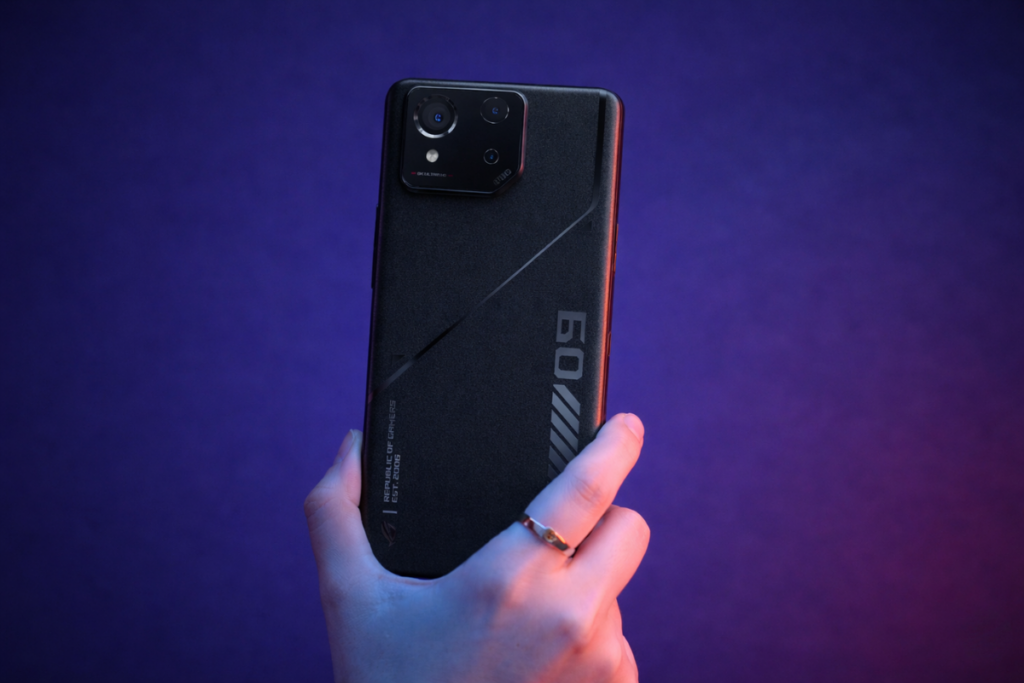
Looking at the images, the Mate 80 Pro features a gigantic circular camera module. This island is surrounded by a shiny metallic ring and houses a triple camera setup and dual LED strips. The triple camera setup forms a triangular pattern with the top lens likely being a periscope telephoto shooter, while the two sensors on the bottom are the primary and ultra wide angle lenses.

Huawei Mate 80 Pro

The leaked real live images also showcase the smartphone in black and gold, while the earlier leak showcased the Mate 80 series in white. So Huawei might be planning on launching the Mate 80 lineup in bright new colors, apart from just the classic white and black colorways. Based on what we know so far, the Mate 80 series will likely include the Mate 80, Mate 80 Pro, Mate 80 Pro+, and even the Mate 80 RS Edition that could offer a titanium frame.

For more daily updates, please visit our News Section.

Tech enthusiast? Get the latest news first! Follow our Telegram channel and subscribe to our free newsletter for your daily tech fix! ⚡

BYD overtakes Tesla in global EV sales through Q3 2025

BYD has overtaken Tesla in global electric vehicle (EV) sales through the first nine months of 2025. The Chinese automaker delivered 1.61 million battery-electric vehicles (BEVs) from January to September, compared to Tesla’s 1.22 million units. This marks a lead of 388,000 vehicles for BYD, based on data released by both companies.

BYD Car

BYD’s sales increased 37% year-on-year, while Tesla’s sales declined by 6%. This is the fourth consecutive quarter where BYD has outsold Tesla in global BEV sales. The data suggests that BYD is likely to finish the year as the top-selling EV brand globally.

Tesla posted a record quarter between July and September with 497,100 global deliveries. However, it still trailed BYD, which shipped 582,500 BEVs in the same period. Tesla’s strong quarter came as U.S. customers rushed to take advantage of federal EV subsidies that expired at the end of September.

Tesla’s performance in China also received a boost with the launch of the Model Y L, a six-seat long-wheelbase SUV. The model reportedly received 120,000 orders shortly after launch. However, Tesla continues to face pressure in Europe and Australia, where competition from local and Chinese brands has intensified.

While Tesla remains a BEV-only manufacturer, BYD continues to sell both BEVs and plug-in hybrids. This strategy has helped BYD maintain high volume despite intense price competition in China. Analysts expect BYD to deliver 2.17 million BEVs by the end of 2025, while Tesla is projected to reach around 1.61 million.

Tesla CEO Elon Musk has warned of a “rough few quarters” ahead. The company has shifted focus to autonomous driving and robotics, though these areas have yet to make a significant financial impact.

BYD’s lower average selling price and broad product portfolio have allowed it to capture market share rapidly. The company’s ability to sustain momentum in international markets will likely determine whether it can retain its lead into 2026.

For more daily updates, please visit our News Section.

Stay ahead in tech! Join our Telegram community and sign up for our daily newsletter of top stories! 💡

(Via 1,2)

Redmi Pad Pro, the budget tablet at Rs. 18999 only

Tablets are the best choice for those who enjoy artistic hobbies, casual gaming, reading, and taking notes, among other activities. It has become an essential must-have device among students, employees and older adults. If you are someone looking for a tablet in the budget segment, then let me introduce you to the Redmi Pad Pro, which costs around Rs. 16999/ after all the discounts.

Redmi Pad Pro

Redmi Pad Pro Deal Details

Earlier Redmi Pad Pro was launched for Rs. 21,999, and is now available at Rs. 18999 only. On top, there are bank offers like an instant discount of Rs. 2000 on any bank debit card or credit card, which brings the effective price around Rs. 16,999. You can exchange your previous device for up to Rs. 17,850, too. The top variant of the device costs around Rs. 23,999/.

Please Note: When you buy something using the links in our articles, we may earn a small commission at no cost to you.

Redmi Pad Pro Specification and Features

Redmi Pad Pro comes powered with the Snapdragon 7s Gen2 chipset. The tablet has a 12.1-inch, 2.5K resolution, 120Hz XL display with peak brightness of 600 nits. Like any other tablet in this segment, the Redmi Pad Pro also comes with a face unlock feature, which is super convenient. For seamless wireless file transfer, it comes with the Wi-Fi 6 feature. To make an entertainment and gaming experience better, the Redmi Pad Pro has AdaptiveSync Refresh and triple eye-care technology.

In terms of audio, the device has Quad Speakers and supports Dolby Vision Atmos. Redmi Pad Pro has a 10000mAh battery, and the company claims the device will give 33.9 days of standby or 16 hours of HD video playback on a single charge. The device comes with 33W fast charging in the box.

If you are looking for an affordable, feature-packed tablet, the Redmi Pad Pro is the best option to go with. Follow for more Deals.

Dimensity 9500 vs Dimensity 9400: real-world upgrades, benchmarks, and specs

Dimensity 9500 vs Dimensity 9400

The Dimensity 9500 is the latest and greatest mobile chipset from MediaTek, promising a significant boost to performance and power efficiency across CPU and GPU. The NPU, camera, and connectivity have also received notable upgrades, making it a well-rounded option for high-end devices.

Built on TSMC’s 3nm (N3P) process node, the latest Dimensity chip adopts a third-generation “All Big Core” CPU design featuring ARM’s latest C1-series processors, which promises a significant boost to performance and power efficiency. The new 12-core Mali-G1 Ultra GPU also delivers notable performance gains and enhancements for ray tracing.

The Dimensity 9500 looks excellent on paper, but how big of an upgrade is it over last year’s Dimensity 9400? Let’s look at the benchmark scores to find out.

Dimensity 9500 vs Dimensity 9400: benchmark score

Note: The benchmark scores were obtained from leaked listings of Vivo X300 Pro (Dimensity 9500). For Dimensity 9400, we used the Vivo X200 Pro.

Geekbench score

Dimensity 9500 vs Dimensity 9400 - Geekbench score

On the Geekbench 6 platform, the Dimensity 9500 gets 3,177 in single core, which is about 18% higher than the Dimensity 9400. The gap widens further in multi-core, where the Dimensity chip has posted a total score of 9,701, while its predecessor couldn’t cross the 8,000 mark. That’s a solid 25% gain in multi-core score for the newer chip.

Geekbench 6Dimensity 9500Dimensity 9400
Single core3,1772,681
Multi core9,7017,752

AnTuTu score

Dimensity 9500 vs Dimensity 9400 - AnTuTu score

On the AnTuTu benchmarking platform, the Dimensity 9500’s total score crosses the 4 million mark, which is a big achievement in itself. This is about 57% higher than Dimensity 9400.

The breakdown reveals that the Dimensity 9500’s CPU achieves a significantly higher CPU score (1,043,247 vs 591,239). That’s a solid 76% increase. The GPU gets a 32% higher score (1,510,982 vs 1,144,638). The memory (667,254 vs. 411,334) and the UX (790,449 vs. 394,544) have also gained about 62% and 100% higher scores, respectively.

The latest advancements to the Dimensity 9500 are the driving factors behind this significant gap, but this is also partly due to differences in AnTuTu versions. The AnTuTu score for the Vivo X200 Pro (powered by Dimensity 9400) is from AnTuTu v10, while the X300 Pro (powered by Dimensity 9500) is tested on a newer version, v11. So, we’ll update the score for Dimensity 9400 after benchmarking on the same AnTuTu version for a fair comparison.

Dimensity 9500Dimensity 9400
AnTuTu score4,011,9322,541,756
CPU1,043,247591,239
GPU1,510,9821,144,638
Memory667,254411,334
UX790,449394,544

Dimensity 9500 vs Dimensity 9400: spec sheet

Dimensity 9500Dimensity 9400
AnnouncedSeptember 2024October 2024
Process nodeTSMC’s 3nm (N3P)TSMC’s 3nm (N3E)
CPU cores8-core8-core
CPU cores1 x 4.21 GHz — C1-Ultra
3 x 3.5 GHz —C1-Premium
4 x 2.7 GHz — C1-Pro
1 x 3.62 GHz — Cortex-X925
3 x 3.3 GHz — Cortex-X4
4 x 2.4 GHz — Cortex-A720
GPUMali-G1 Ultra MP12
120 FPS ray traced mobile gaming
MediaTek HyperEngine Gaming Technology
MRFC 3.0 technology
Vulkan Ray Tracing Pipeline support
MegaLights, Nanite support in Unreal Engine
Mali-G925 Immortalis MP12
Ray tracing support
MediaTek HyperEngine Gaming Technology
NPUMediaTek NPU 990MediaTek NPU 890
MemoryLPDDR5X, up to 5.3 GHzLPDDR5X, up to 5.3 GHz
Storage4-lane UFS 4.1UFS 4.0
CameraMediaTek Imagiq 1190 ISP
Up to 320MP single camera
Up to 8K video recording
4K/120fps video recording (EIS)
4K/60fps cinematic video capture
Supports real-time semantic segmentation
MediaTek Imagiq 1090 ISP
Up to 320MP single camera
Up to 8K video recording
Supports real-time semantic segmentation
Connectivity3GPP Release-17 5G modem
Maximum speed: 7.4 Gbps
Wi-Fi 7 (peak speed: 7.3 Gbps)
Bluetooth 6.0
3GPP Release-17 5G modem
Maximum speed: 7 Gbps
Wi-Fi 7 (peak speed: 7.3 Gbps)
Bluetooth 6.0

Key upgrades to Dimensity 9500

The Dimensity 9500 brings comprehensive upgrades across all major components. It’s built on TSMC’s 3nm (N3P) process node, which offers better performance and power efficiency over the N3E node used for Dimensity 9400.

CPU, GPU, and NPU

The latest Dimensity chip adopts MediaTek’s third-generation “All Big Core” CPU design, featuring ARM’s latest C1-series processors. The chipmaker claims a 32% uplift in single core performance and a modest 17% jump in multi-core performance. Remarkably, the Ultra core achieves 55% lower power consumption at peak performance, while there’s a 37% reduction in power consumption at peak CPU usage. The overall chip is 30% more power efficient during multitasking in gaming and social audio applications.

The Dimensity 9500 also brings significant upgrades to graphics capabilities and gaming experience. The new 12-core ARM Mali-G1 Ultra GPU, combined with MediaTek HyperEngine Gaming Technology, offers 33% faster GPU performance and 42% improved power efficiency at peak performance. Furthermore, the Dimensity 9500 claims a 119% boost to raytracing performance.

The chip introduces MRFC 3.0 technology to upgrade 60fps titles to 120fps. In fact, it’s the first mobile chipset to support 120FPS raytraced mobile gaming. Furthermore, the Dimensity 9500 debuts two first-to-market features: support for the Vulkan Raytracing Pipeline and native Unreal Engine 5.5+ integration, further enhancing the gaming experience. The GPU also supports advanced gaming technologies, including MegaLights and Nanite, enabling console-class rendering and lighting effects on mobile devices.

The Dimensity 9500 introduces the ninth-generation MediaTek NPU 990, paired with Generative AI Engine 2.0 doubles the computer power for seamless and immediate AI execution. Furthermore, it offers 100% faster 3 billion parameter LLM output, 128K token long text processing, and 4K ultra-high-definition image generation on-device. On top of this, the peak power consumption has reduced by 56%.

Storage, Camera, and Connectivity

The storage read/write speed has doubled compared to UFS 4.0 in the Dimensity 9400. This also helps in 40% faster loading of AI models. There’s no change to memory, though — still LPDDR5X at 10667 Mbps.

The Dimensity 9500 still supports up to 320MP camera, but it introduces a new Imagiq 1190 ISP with higher bandwidth and lower latency, and brings support for RAW-domain pre-processing for cleaner detail and color fidelity. It introduces a powerful AI denoise technology, which works with up to 200MP camera capture. The video capture capabilities have also improved, with the inclusion of support for 4K/120fps video capture with EIS and 4K/60fps cinematic video capture. In contrast, the Dimensity 9400 only supports 4K/60fps video capture.

The connectivity part has also received several upgrades, including a 10% reduction in power consumption for 5G, a 20% reduction in power consumption for Wi-Fi, and a 50% reduction in latency, thanks to AI-assisted technologies. The AI also helps to achieve 20% higher signal accuracy. The peak connection speed on a 5G network has increased to 7.4Gbps (up from 7Gbps), while the peak Wi-Fi speed remains unchanged at 7.3Gbps.

Xiaomi 17 Pro series gets HyperOS 3.0.17.0 update with rear display train alerts & optimizations

Xiaomi has rolled out the latest HyperOS 3.0.17.0 update to the Xiaomi 17 Pro series (full review), adding new features and system optimizations. The update (build number 3.0.17.0.WPBCNXM) is around 712MB in size and is now available for users in China.

Xiaomi 17 Pro Max

The new firmware enables dynamic rear display notifications, allowing users to view 12306 train trip reminders on the secondary screen. This feature targets commuters in China who rely on the 12306 service for railway bookings and real-time updates.

Xiaomi has also improved gesture recognition for the panda pet animation in low-light conditions and resolved a bug that caused rear display flickering in some scenarios.

In terms of system improvements, the update enhances overall stability and optimizes power consumption during specific tasks. Xiaomi has also made adjustments to improve gaming performance in select scenarios. The update fixes an issue where dual apps were unintentionally removed and corrects a problem that triggered automatic hands-free mode during incoming calls on third-party live-streaming apps. The October 2025 Android security patch is also included to improve device security.

Xiaomi recently confirmed that the Xiaomi 17 series has crossed one million units sold within just two days of launch. The 17 Pro Max model accounted for more than half of these sales. Both the 17 Pro and Pro Max crossed the 6,000 yuan (~$840) mark, which signals a shift toward a more premium pricing strategy.

Lu Weibing, Partner and President at Xiaomi Group, said the company is increasing production to meet the strong demand. He confirmed that the Xiaomi 17 series is selling faster than the Xiaomi 15 series, which launched last year.

Xiaomi also addressed early user feedback by launching a 1TB variant of the standard Xiaomi 17. This version went on sale on October 5 and is priced at 5,299 yuan (~$745), making it 200 yuan cheaper than the 1TB model of the Xiaomi 15.

Xiaomi said it is working to resolve temporary stock shortages and ensure wider availability. The strong response to the Xiaomi 17 series reflects the company’s continued push toward the high-end smartphone segment.

For more daily updates, please visit our News Section.

Stay ahead in tech! Join our Telegram community and sign up for our daily newsletter of top stories! 💡

(Via)

OnePlus 15 in Sand Storm Brings a Desert-Inspired Look & Ceramic-Like Feel

OnePlus‘ next flagship is right around the corner. The OnePlus 15 has already been seen in various leaks and rumors, and now, we get a fresh look at the premium phone in a set of new teaser posters. It can be seen in the new Sand Storm colorway, so let’s check it out.

OnePlus 15 Gets a New Sand Storm Hue & Textured Back

The Chinese brand just shared a series of images of the upcoming OnePlus 15 on its official Weibo account. Looking at the posters, the next gen flagship can be seen in the new Sand Storm color. This basically brings an off white color, with the new camera module having a darker hue. But it’s not just a new hue, OnePlus is treating the metal frame with aerospace-grade micro arc oxidation.

OnePlus 15 in Sand Storm

This technique allows a premium coating that gives a ceramic like feel to the metal frame, while also adding to its durability. The process is typically employed on aircraft and other industrial machinery, which are designed to be scratch resistant from everyday wear and tear. Apart from the desert inspired design on Sand Storm, the company is expected to release the OnePlus 15 in Black, Purple, and Titanium options as well.

In related news, the OnePlus 15 was recently spotted in a new leak that revealed its massive 7,300mAh battery pack, which supports 120W wired fast charging and 50W wireless fast charging. Despite the huge cell, the device will reportedly measure just 8.1mm thick and weigh either 211 grams or 215 grams, depending on the color variant. Rumors also hint at the OnePlus 15 seeing a global launch on November 13.

For more daily updates, please visit our News Section.

Don’t miss a thing! Join our Telegram community for instant updates and grab our free daily newsletter for the best tech stories!

Itel announces A100C smartphone with a OnePlus 15-like design

Itel has announced its latest budget smartphone, the A100C, and it looks strikingly similar to the upcoming OnePlus 15, right down to the edges and camera housing. 

While the resemblance may grab attention, the A100C is built for a completely different audience. It targets budget buyers who want a long battery life, decent performance, and practical features at an accessible price.

Itel A100C Specifications

The phone sports a 6.6-inch display with a 90Hz refresh rate and a 720×1612 resolution. It’s an 8-bit screen, features 400 nits of typical brightness, and a 90% screen-to-body ratio.

Powering the A100C is a Unisoc T7100 octa-core processor, paired with up to 12GB of memory (4GB physical + 8GB extended RAM) and 128GB of internal storage. It runs Android 15 (Go edition), wrapped in itel OS 15.

Fueling the phone is a 5000mAh unit that is claimed to deliver up to 32 days of standby, 27.7 hours of call time, or 8.5 hours of gaming, depending on use. Charging is handled via USB Type-C.

Itel also emphasizes durability. The A100C has military-grade toughness (certified under MIL-STD-810H) and has been tested against high temperature, humidity, and repeated drops from up to 1.22 meters.

Among its more interesting additions is UltraLink, a feature that allows users to make Bluetooth-based calls and messages without Wi-Fi or cellular connectivity. There’s also infrared remote control support, side fingerprint and face unlock, and DTS-tuned sound for better audio quality.

Its camera setup includes an 8MP rear sensor and a 5MP front camera, standard in this segment. The phone comes in Pure Black, Titanium Gold, Blaze Blue, and Silk Green, with a slim 8.49mm profile. There’s no word yet on pricing.

For more daily updates, please visit our News Section.

Tech enthusiast? Get the latest news first! Follow our Telegram channel and subscribe to our free newsletter for your daily tech fix! ⚡

OnePlus 15T Might Redefine Compact Flagships with Its Insane Battery Capacity

While many were impressed by the pocket friendly design of the OnePlus 13T (OnePlus 13s in the global market), one of its biggest highlights was the massive 6,260mAh battery pack (5850mAh on the 13s). But the brand could be taking battery life to the next level on this model’s successor.

Can OnePlus Really Fit a 7000mAh Battery in a 6.3-inch Phone?

The latest leak from a known tipster Smart Pikachu has revealed battery details of the upcoming OnePlus 15T. This model is rumored to be the brand’s next compact flagship smartphone, with a relatively small 6.3-inch display. The brand is expected to make the display wider and surround it with a metallic frame. It might even bring back the multi purpose button, which was called the Plus Key on the OnePlus 13T.

OnePlus 15T Concept Render

But what really stood out in this leak was the battery capacity. The OnePlus 15T might pack a humongous 7,000mAh+ battery pack. In comparison, the much taller Galaxy S25 Ultra only has a 5,000mAh battery. This is likely thanks to the brand leveraging the silicon carbide battery technology. But even comparing it to the next flagships, this is still an impressively massive cell. The Xiaomi 17 just debuted as the newest compact flagship with a 7,000mAh battery, but the 15T might outclass it.

Apart from this, Smart Pikachu claims that the OnePlus 15T will finally offer an ultrasonic in-display fingerprint scanner and equip it with the Snapdragon 8 Elite Gen 5 SoC. In one of our earlier reports, the OnePlus 15T was rumored battery size that might even beat the OnePlus 15, which is expected to house a 7,300mAh cell.

For more daily updates, please visit our News Section.

Tech enthusiast? Get the latest news first! Follow our Telegram channel and subscribe to our free newsletter for your daily tech fix! ⚡

Portronics launches Toad Ergo 4 vertical wireless mouse for Rs. 899

Portronics has launched the Toad Ergo 4, a vertical ergonomic wireless mouse aimed at users looking to reduce wrist strain during long work sessions. The mouse is available in White and carries a retail price of Rs. 899 ($10). It comes with a 12-month warranty and is now on sale through Portronics.com, Amazon India, Flipkart, and other online and offline retailers.

Portronics Toad Ergo 4

Portronics Toad Ergo 4 Specifications

The Toad Ergo 4 features a vertical design that supports a natural handshake grip. Portronics claims this design helps reduce wrist twisting and muscle fatigue, making it suitable for professionals, students, and remote workers who spend extended hours on their computers.

The Toad Ergo 4 uses an advanced optical sensor and 2.4GHz wireless technology to ensure smooth, lag-free cursor movement on most surfaces.

The company has equipped the mouse with triple-mode connectivity. It can connect up to three devices using Dual Bluetooth 5.3 and a 2.4GHz USB receiver. This allows seamless switching between a laptop, desktop, and tablet across platforms such as Windows, macOS, and Android.

The mouse includes a built-in rechargeable battery that charges via a USB Type-C port. It provides up to 10 meters of wireless range and eliminates the need for disposable AA batteries.

Portronics has included four DPI settings: 800, 1600, 2400, and 4000, for adjustable sensitivity based on the task. The mouse has six buttons in total, including left/right click, scroll wheel, forward/back navigation buttons, and a dedicated DPI switch. These buttons are designed to improve productivity across web browsers, office tools, and creative apps.

Please Note: When you buy something using the links in our articles, we may earn a small commission at no cost to you.

In related news, Portronics has recently introduced the $320 pocket projector capable of producing 100-inch displays, and also launched the Conch One Type-C wired earphones featuring karaoke and EQ modes.

For more daily updates, please visit our News Section.

Stay ahead in tech! Join our Telegram community and sign up for our daily newsletter of top stories! 💡

Samsung’s Galaxy M17 is Coming to India

Samsung is set to expand its popular M-series lineup in India with the launch of the Galaxy M17 soon. The company just shared a teaser that confirmed a new mid range smartphone. This confirms a bunch of its features and a sleek new design. So let’s check it out.

Samsung Galaxy M17 Launching in India This Week: Here’s What to Expect

The South Korean tech giant’s latest Galaxy M smartphone is aimed squarely at the mid range market. The new Galaxy M17 features a slim body that measures just 7.5mm with an IP54 rating for water and dust resistance. Meanwhile, the front also gets Corning’s premium Gorilla Glass Victus panel for protection. Samsung will unveil the Galaxy M17 5G in the Indian market on 10th October 2025.

Samsung Galaxy M17
Samsung Galaxy M17

The Samsung mid range phone will feature a 50MP primary camera on the rear with OIS (Optical Image Stabilization) for blur free pictures and shake free videos. This sensor is paired with a 5MP ultra wide angle lens and a 2MP macro shooter. For selfies and video calls, the Galaxy M17 will house a 13MP shooter. The front also sports a tall 6.7-inch Super AMOLED display that likely offers FHD+ resolution and a 90Hz refresh rate.

While finer details are still at large, the Galaxy M17 5G was recently spotted on the GeekBench platform with the Exynos 1330 SoC and 8GB of RAM. This will also be the first Galaxy M series model that brings native AI support with tools like Circle to Search and Gemini Live. It will be arriving in India in two color options, namely Moonlight Silver and Sapphire Black, via Amazon India, Samsung’s official website, and offline stores.

For more daily updates, please visit our News Section.

Don’t miss a thing! Join our Telegram community for instant updates and grab our free daily newsletter for the best tech stories!

HMD Touch 4G is coming to India with thick bezels and retro design

HMD is teasing the launch of a new phone for the Indian market. Called the HMD Touch 4G, the device is set to debut on October 7th.

What’s interesting is that HMD is touting it as “India’s first-ever hybrid phone.” The company hasn’t officially revealed what that means yet, or even shown the device, but we’ve already got a good look at it, thanks to reliable tipster @HMD_MEME’s on X.

The insider shared multiple images of the phone, real-life and promotional, along with its pricing for India. 

HMD Touch 4G Specs

From the leaked images, the Touch 4G looks oddly familiar. Maybe it’s just me, but I find the design eerily similar to the Nokia Lumia 1020, only in a smaller, more minimal form.

It has a familiar rounded corners and a circular camera housing on the back that encloses both the sensor and LED flash. Up front, you get thick bezels that feel straight out of the early 2010s. The phone will come in blue and black shades at the very least. 

According to the leak, the Touch 4G will feature a 3.2-inch display, with a touch-sensitive home button sitting below it. There’s also a headphone jack on the top and dual-SIM support. 

The box contents have also surfaced online, showing a charger, data cable, protective case, and the usual paperwork. Nothing out of the ordinary.

As for pricing, in a now-deleted X post, the tipster claimed the Touch 4G will launch in India for Rs 4,999. There’s no word yet on RAM or storage variants, but at that price point, it’s clearly aimed at entry-level users.

For more daily updates, please visit our News Section.

Tech enthusiast? Get the latest news first! Follow our Telegram channel and subscribe to our free newsletter for your daily tech fix! ⚡

(Source)

OnePlus Locks In October 16 for OxygenOS 16 Debut

OnePlus has officially announced that OxygenOS 16 will debut on October 16, and the timing seems just right. The company teased the update, hinting at big upgrades in performance, customization, and deeper AI integration. So here’s everything you need to know.

OnePlus OxygenOS 16 Drops October 16

Earlier today (6th October 2025), the Chinese brand announced the official launch date of the OxygenOS 16. The latest software is based on the Android 16 operating system. This announcement also arrives a day after the ColorOS 16 release in China. Looking at the teaser image poster, the company’s latest OxygenOS iteration carries the “Intelligently Yours” tagline along with the new “OnePlus AI” branding. So the OxygenOS 16 is basically bringing deeper AI integration.

OxygenOS 16 release date
OnePlus OxygenOS 16 Custom Skin

Just yesterday, OnePlus shared another teaser talking about Gemini AI integration on the OxygenOS 16 that will make its debut alongside the OnePlus 15. For those unaware, this is the brand’s next gen flagship smartphone that packs cutting edge hardware like Snapdragon 8 Elite Gen 5 SoC. With the new OxygenOS 16, the OnePlus 1 is set to feature on-device AI tools along with the new Mind Space, which will act as a central hub as it functions as a planner, assistant, and manager.

Gemini will reportedly be built into other OnePlus apps as well. There are hints that OnePlus could use it in areas like photo management, call summaries, and smart suggestions inside the Notes app. So OnePlus appears to be making OxygenOS more helpful while keeping the user interface clean and fast. Stick around for more as we will be covering the launch later this month.

For more daily updates, please visit our News Section.

Tech enthusiast? Get the latest news first! Follow our Telegram channel and subscribe to our free newsletter for your daily tech fix! ⚡

Xiaomi 17 Pro vs Huawei Pura 80 Pro: Does Huawei’s $1000 Flagship Fall Short Against Xiaomi?

Xiaomi 17 Pro and Huawei Pura 80 Pro represent two of the most advanced flagships from China’s top brands in 2025. This comparison matters because it highlights two contrasting approaches: Xiaomi’s cutting-edge Snapdragon performance and Leica camera tuning versus Huawei’s powerful imaging hardware and HarmonyOS ecosystem. Both cater to premium users seeking a balance between photography, power, and design finesse.

1. Design and Display

Build and Feel:
Xiaomi 17 Pro uses an aluminum frame with Dragon Crystal Glass, giving it a modern yet durable premium feel. Its IP68 rating ensures strong protection up to 4 meters underwater. The Huawei Pura 80 Pro also features a solid glass-metal build but adds IP69 certification, offering better resistance against high-pressure water jets. However, Huawei’s larger frame feels bulkier, while Xiaomi’s compact form offers better ergonomics.

Xiaomi 17 Pro feels sleeker and more user-friendly, whereas Huawei Pura 80 Pro provides tougher durability. Xiaomi takes the edge for comfort and finish.

Display Quality:
Xiaomi’s 6.3-inch LTPO AMOLED panel boasts HDR10+, Dolby Vision, and an incredible 3500 nits peak brightness. It even includes a 2.7-inch secondary display for rear camera selfies and notifications, a standout feature. Huawei counters with a larger 6.8-inch LTPO OLED display offering HDR Vivid and 3000 nits brightness. The Pura’s screen is slightly lower in brightness but more immersive.

Xiaomi 17 Pro’s dual-display setup and higher peak brightness make it more innovative, while Huawei’s bigger screen suits multimedia users better.

2. Specifications 

Performance:
Xiaomi 17 Pro is powered by Qualcomm’s Snapdragon 8 Elite Gen 5, a 3nm powerhouse with Oryon cores and Adreno 840 GPU. It delivers class-leading AI, gaming, and multitasking performance. Huawei’s Pura 80 Pro relies on its in-house chipset (likely Kirin-based), which, while efficient, cannot match Snapdragon’s raw speed or gaming prowess. HarmonyOS, however, provides smoother ecosystem integration.

Xiaomi 17 Pro outperforms Huawei’s chipset in benchmarks and multitasking, making it superior for performance-driven users.

Battery and Charging:
Xiaomi packs a 6300 mAh silicon-carbon battery with 100W wired and 50W wireless charging, exceptionally efficient for longevity and power. Huawei offers up to 5700 mAh with 100W wired and a faster 80W wireless system, making it excellent for quick top-ups. However, Xiaomi’s larger capacity ensures better endurance overall.

Huawei wins in wireless speed, but Xiaomi 17 Pro’s higher capacity and balanced charging efficiency provide better long-term battery performance.

3. Camera

Main and Secondary Lenses:
Xiaomi’s triple 50MP Leica-tuned setup includes a 1/1.28” main sensor, 5x periscope telephoto, and ultra-wide lens, supporting 8K HDR video and Dolby Vision. The Leica optics enhance color science and tone realism. Huawei’s 50MP 1-inch main sensor, 48MP telephoto, and 40MP ultra-wide deliver impressive detail and low-light performance, though video recording caps at 4K.

Huawei’s 1-inch sensor gives it an edge in still photography, but Xiaomi’s superior video recording and Leica tuning make it more versatile overall.

Selfie Camera:
Xiaomi 17 Pro’s 50MP front sensor supports 4K HDR10+ video, ideal for vloggers and creators. Huawei’s 13MP ultrawide selfie camera is more flexible for group shots but lacks detail and cinematic video features.

Xiaomi’s 50MP HDR-capable selfie shooter easily outshines Huawei’s front camera in sharpness and video quality.

4. Pricing

Xiaomi 17 Pro costs around $800, while the Huawei Pura 80 Pro is priced at $1000. The $200 gap is significant given Xiaomi’s inclusion of a Snapdragon 8 Gen 5 chip, secondary display, and Leica camera system. Huawei justifies its higher price with a larger 1-inch sensor and stronger IP69 protection, but it offers less raw performance for the cost.

Xiaomi 17 Pro provides greater overall value, blending performance and premium features at a lower price point.

Disclaimer:
Prices are approximate and may vary based on country, region, and applicable taxes.

5. Conclusion

Xiaomi 17 Pro stands out with its secondary rear display, Snapdragon 8 Elite Gen 5, and Leica partnership, combining innovation and raw power. The Huawei Pura 80 Pro’s strengths lie in its 1-inch sensor, satellite messaging, and HarmonyOS integration, making it ideal for Huawei ecosystem users and photography purists.

Verdict:
For users seeking maximum performance, longer battery life, and balanced innovation, the Xiaomi 17 Pro is the smarter choice. However, for those prioritizing photography and ecosystem features, the Huawei Pura 80 Pro remains a powerful alternative.

Read More:

Check if your Xiaomi device is eligible for HyperOS 3 upgrade

Xiaomi HyperOS 3 eligible devices

HyperOS 3 is a major upgrade for Xiaomi devices, bringing a refreshed UI with Xiaomi HyperIsland, expanded AI features, and deeper cross-device integration, particularly with Apple devices. There are also dozens of under-the-hood improvements to further improve the software’s smoothness, performance, and battery efficiency.

The Android 16-based update is already rolling out in China, and it will soon begin rolling out to the rest of the world. But obviously, it’s not coming to every Xiaomi device out there. So, we’ve prepared a list of phones, tablets, and other Xiaomi devices that are eligible for the HyperOS 3 upgrade. Review the list below to find out if yours is in for a treat.

Xiaomi HyperOS 3 eligible devices list

[smartphones]

  • Xiaomi 15, 15 Ultra
  • Xiaomi 15T, 15T Pro
  • Xiaomi 14, 14 Ultra
  • Xiaomi 14T, 14T Pro
  • Xiaomi 13, 13 Lite, 13 Pro, 13 Ultra
  • Xiaomi 13T, 13T Pro
  • Xiaomi 12, 12 Pro
  • Xiaomi 12T Pro
  • Xiaomi MIX Flip
  • Redmi Note 14, Note 14 5G, Note 14 Pro, Note 14 Pro 5G, Note 14 Pro+ 5G
  • Redmi Note 14S
  • Redmi Note 13 5G, Note 13 Pro, Note 13 Pro 5G, Note 13 Pro+ 5G
  • Redmi 15, 15 5G, 15C, 15C 5G
  • Redmi 14C
  • Redmi 13, 13X
  • Poco F7, F7 Pro, F7 Ultra
  • Poco F6, F6 Pro
  • Poco F5, F5 Pro
  • Poco X7, X7 Pro, X7 Pro (Iron Man Edition)
  • Poco X6, X6 Pro
  • Poco M7, M7 Pro 5G
  • Poco M6, M6 Pro
  • Poco C85, C75

[Tablets]

  • Xiaomi Pad 7, Pad 7 Pro
  • Xiaomi Pad 6S Pro 12.4
  • Xiaomi Pad Pro, Pad Pro 5G, Pad Mini
  • Redmi Pad SE 8.7, Pad SE 8.7 4G
  • Redmi Pad 2, Pad 2 4G, Pad 2 Pro, Pad 2 Pro 5G
  • Poco Pad

[Wearables]

  • Xiaomi Watch S4 41mm
  • Xiaomi Smart Band 10 Glimmer Edition
  • Xiaomi Smart Band 10 Ceramic Edition
  • Xiaomi Smart Band 10

Xiaomi plans to begin the rollout of HyperOS 3 later this month, starting with the high-end Xiaomi 15 series. The update will quickly expand to cover the Redmi Note 14 series, Poco F7 series, Poco X7 series, and Xiaomi Pad 7 series by next month.

The rollout should cover most eligible devices by December, with the remaining devices getting the HyperOS 3 update early next year. You can look at the complete HyperOS 3 rollout plan here.

Also Read:
1. These Xiaomi devices won’t get updates beyond 2025
2. Here are the five biggest upgrades to HyperOS 3

Xiaomi 17 Pro vs iPhone 17 Pro: One Phone Clearly Wins (And It’s Not Who You Think)

Xiaomi 17 Pro and iPhone 17 Pro represent two flagship philosophies, Android innovation versus Apple refinement. This comparison matters because both devices redefine premium smartphones in 2025, with Xiaomi focusing on hardware breakthroughs like a dual-display design and faster charging, while Apple emphasizes seamless ecosystem integration and professional-grade imaging. Understanding their key differences helps us to choose the phone best suited for our needs.

1. Design and Display

Build and Feel:
Xiaomi 17 Pro uses Dragon Crystal Glass with an aluminum frame, giving it a premium feel with excellent durability. Its secondary rear display is a unique addition, allowing notifications, selfies, and quick interactions without unlocking the main screen. The iPhone 17 Pro features Ceramic Shield 2 on the front and back with an aluminum alloy frame, offering exceptional toughness and resistance against scratches and drops. While both phones feel premium, Xiaomi’s inclusion of a secondary display adds practical multitasking functionality that the iPhone lacks.

Display Quality:
Xiaomi 17 Pro sports a 6.3-inch LTPO AMOLED main display with 3500 nits peak brightness, HDR10+, Dolby Vision, and a 120Hz refresh rate. Its secondary 2.7-inch display also supports HDR10+ and 120Hz. The iPhone 17 Pro has a 6.3-inch LTPO Super Retina XDR OLED display with Dolby Vision, HDR10, and 120Hz refresh rate, with peak brightness at 3000 nits. Xiaomi offers slightly higher peak brightness and HDR capabilities, making it better for outdoor visibility and high-contrast content, while iPhone delivers highly accurate color reproduction and smoother color grading.

Verdict:
For overall innovation and brightness, Xiaomi 17 Pro has an edge, especially with its secondary display. The iPhone 17 Pro excels in color accuracy and durability, making it ideal for professional content viewing. Xiaomi is better for feature-rich display use, while iPhone appeals to users valuing precision and robustness.

Please Note: When you buy something using the links in our articles, we may earn a small commission at no cost to you.

2. Specifications 

Performance:
Xiaomi 17 Pro is powered by Snapdragon 8 Elite Gen 5 with up to 16GB RAM, offering exceptional multitasking and gaming performance. The iPhone 17 Pro runs on the Apple A19 Pro with 12GB RAM, optimized for smooth iOS performance and efficiency. Xiaomi’s chipset is superior for sustained gaming and AI-heavy tasks, while iPhone offers a balanced experience with less power consumption and better long-term software support.

Battery and Charging:
Xiaomi 17 Pro has a 6300 mAh battery with 100W wired and 50W wireless charging, including 22.5W reverse wireless. iPhone 17 Pro offers a 4252 mAh battery with 50% charge in 20–30 minutes via MagSafe or wired PD. Xiaomi clearly leads in capacity and fast charging versatility, ideal for heavy users, while iPhone emphasizes efficiency and ecosystem-optimized charging.

Verdict:
Xiaomi 17 Pro dominates in battery life and charging flexibility. iPhone 17 Pro, while smaller in capacity, maintains efficient battery management, but Xiaomi is better for power users needing long-lasting performance.

3. Camera

Main and Secondary Lenses:
Xiaomi 17 Pro uses a triple 50 MP camera system with periscope telephoto (5x optical zoom), ultra-wide, and Leica optics. iPhone 17 Pro has a triple 48 MP setup with 4x optical zoom and LiDAR scanner. Xiaomi offers higher resolution and versatile optical zoom, while iPhone benefits from sensor-shift stabilization, depth sensing, and optimized video quality.

Selfie Camera:
Xiaomi 17 Pro offers a 50 MP wide-angle selfie camera with HDR10+ support and 4K video at 60fps. iPhone 17 Pro has an 18 MP multi-aspect camera with SL 3D depth sensing for superior spatial video capture. Xiaomi excels in resolution and HDR video, while the iPhone provides better depth effects and ProRes capture for creators.

Verdict:
For photography versatility, Xiaomi 17 Pro is superior with higher resolution and telephoto capabilities. The iPhone 17 Pro shines in professional video capture and depth-aware imaging. Xiaomi is better for zoom and HDR, and iPhone for cinematic and depth-sensitive shots.

4. Pricing

Xiaomi 17 Pro is priced around $800, while iPhone 17 Pro costs approximately $1100. Xiaomi offers more advanced features like a secondary display, larger battery, and higher-resolution cameras at a lower cost, making it a better value for tech enthusiasts. iPhone, though more expensive, focuses on ecosystem integration, long-term software support, and premium material quality.

Disclaimer:
Prices are approximate and may vary based on country, region, and applicable taxes.

5. Key Upgrades and Differences

Feature Upgrade / Difference
Secondary DisplayXiaomi 17 Pro includes a 2.7-inch LTPO rear display (120 Hz, HDR10+, Dolby Vision) for quick interaction and notifications, a feature absent on iPhone 17 Pro.
Peak Brightness / HDR CapabilityXiaomi 17 Pro supports up to ~3500 nits brightness and full HDR10+ support; iPhone 17 Pro peaks ~3000 nits and supports HDR10 / Dolby Vision.
Battery Capacity & ChargingXiaomi 17 Pro has a much larger 6300 mAh battery plus 100 W wired, 50 W wireless & 22.5 W reverse wireless charging. iPhone 17 Pro has ~4252 mAh, supports fast wired / wireless / MagSafe, but at lower rates.
Optical ZoomXiaomi offers 5× periscope optical zoom via a 50 MP telephoto lens. iPhone 17 Pro offers 4× optical zoom with its 48 MP telephoto.
Main Camera ResolutionXiaomi uses three 50 MP sensors for wide, tele, and ultrawide; iPhone uses 48 MP sensors in its triple setup.
Software & CustomizationXiaomi runs Android 16 / HyperOS 3 with more system-level customization. iPhone runs iOS 26 with tighter integration across Apple ecosystem (though less user customization).
Memory Configuration & Storage TechXiaomi offers up to 16 GB RAM and employs UFS 4.1 storage. iPhone offers up to 12 GB RAM with NVMe storage architecture.
Durability / Water ResistanceXiaomi is rated IP68 up to 4 m for 30 min. iPhone 17 Pro improves to IP68 up to 6 m for 30 min.
Video & Professional Capture FeaturesiPhone supports ProRes, spatial (3D) video, Log formats tightly integrated with its ecosystem. Xiaomi supports 10-bit Dolby Vision HDR / LOG capture but lacks Apple’s ProRes/Log workflows.
Charging Ecosystem & Reverse ChargingXiaomi adds reverse wireless charging, which iPhone 17 Pro lacks (or supports minimally).

6. Conclusion

Xiaomi 17 Pro stands out with its secondary display, larger battery, 100W fast charging, and 50 MP triple cameras with Leica optics. iPhone 17 Pro offers ProRes video capture, LiDAR depth sensing, advanced iOS ecosystem features, and Ceramic Shield durability. Xiaomi targets users seeking hardware innovation and all-around power, while iPhone emphasizes content creation, system integration, and longevity.

Verdict:
Xiaomi 17 Pro is ideal for feature-driven users who want high performance, versatile cameras, and long battery life at a lower price. iPhone 17 Pro is suited for those prioritizing ecosystem benefits, premium build, and professional video/photo features. 

Overall, Xiaomi 17 Pro offers better value and innovation.

Read More:

Smartphones with Best Speakers in 2025

Smartphone speakers have evolved far beyond tiny afterthoughts. In 2025, they’re loud, spatially aware, and capable of producing impressive bass from impossibly small chambers.

Whether you’re bingeing Netflix in bed or blasting music on a kitchen counter, these five flagships: Honor Magic 7 Pro, Samsung Galaxy S25 Ultra, iPhone 17 Pro Max, Google Pixel 10 Pro XL, and Sony Xperia 1 VII, represent the best audio experiences you can get on a phone right now. But not all are created equal.

Honor Magic 7 Pro

Honor Magic 7 Pro

Honor designed the Magic 7 Pro with sound in mind. The phone uses its vapor chamber as a waveguide, turning the back panel into a bass amplifier. This setup helps it deliver a fuller low-end response than most other flagships. The stereo speakers mirror each other to create a more spacious effect, and DTS:X Ultra support enhances the sense of directionality in games and movies.

Honor’s tuning emphasizes punch and volume. The sound carries weight, and users can feel vibrations from the bass when holding the phone. Even at max volume, there is no noticeable distortion. Vocals stay clear, and the top and bottom speakers output at balanced levels. This makes the Magic 7 Pro an ideal device for music, action-heavy games, and video playback. The overall speaker experience stands out as the most impactful among current flagships.

Galaxy S25 Ultra

Samsung-galaxy-S25-Ultra

Samsung widened the speaker grille on the Galaxy S25 Ultra and optimized the internal chambers. These changes help the device deliver higher volume with a fuller sound profile than its predecessor. The S25 Ultra reaches nearly 93 dB in tests, placing it among the loudest phones in 2025.

The stereo setup includes a top earpiece and bottom-firing speaker. Samsung uses Dolby Atmos to improve stereo width and add a virtual surround effect. The speakers produce warm mids and clear highs, while bass response stays tighter than average. Distortion at high volume remains minimal, even during heavy playback.

The S25 Ultra suits a wide range of content. It performs well across music, dialogue, gaming, and movie streaming. Its output stays consistent and reliable across all scenarios, and its tuning prioritizes clarity and power without over-emphasizing any specific frequency range.

Please Note: When you buy something using the links in our articles, we may earn a small commission at no cost to you.

iPhone 17 Pro Max

iPhone 17 Pro

Apple continues to refine its stereo audio with the iPhone 17 Pro Max. Both the bottom and top speakers output sound at similar levels, resulting in balanced stereo playback. The phone supports Spatial Audio with Dolby Atmos, which enhances the soundstage for movies and supported content.

The speaker tuning focuses on clarity and instrument separation. Vocals stay crisp, highs sound clean, and bass has just enough presence to avoid sounding flat. Deep bass is limited, as with most smartphones, but mid-bass cues such as drums and lower vocals sound clear.

At high volume, the iPhone 17 Pro Max maintains audio quality with minimal distortion. It works well for video calls, podcasts, and vocal-heavy content, but also holds up with streaming media. The stereo separation and balance make it a dependable option for users who care about clean, natural sound across different listening environments.

Please Note: When you buy something using the links in our articles, we may earn a small commission at no cost to you.

Pixel 10 Pro XL

Pixel 10 Pro XL

Google improved the Pixel 10 Pro XL’s speaker performance with stronger output and better balance between top and bottom speakers. The phone now produces a more even stereo image, which helps with spatial awareness in games and movies.

The Pixel reaches high volumes comfortably. It delivers noticeably less distortion than previous generations. Treble-heavy content sounds smoother, and voice playback gains clarity. Bass response remains modest, but the overall tuning feels more rounded and less tinny than on earlier Pixel models.

The soundstage is not as wide as the iPhone or Galaxy, but it is more open than before. The Pixel 10 Pro XL performs well for podcasts, YouTube videos, and spoken word content. Its clean output and minimal harshness make it suitable for extended listening, especially in quieter environments.

Xperia 1 VII

Xperia 1 VII

Sony launched the Xperia 1 VII in mid-2025 with a focus on premium audio. It features true dual front-facing stereo speakers, a rare design among modern smartphones. Both speakers act as dedicated drivers rather than relying on a hybrid earpiece setup. This results in improved balance, clarity, and stereo separation.

The speakers on the Xperia 1 VII produce strong volume with rich mid-range presence. Vocals and instruments sound full-bodied, and the phone handles high frequencies with control. Sony’s engineering delivers more impactful lows than expected from such a slim device. In real-world tests, the phone fills a room with sound easily and avoids distortion at high volumes.

The phone also supports Dolby Atmos, along with proprietary audio enhancements from Sony’s AV and Walkman teams. The stereo image is wide and immersive, making the Xperia ideal for music, movies, and gaming. Users can clearly perceive directional cues in content, and the overall audio performance stands out as a serious contender among flagship phones. Sony also retains a 3.5mm headphone jack for wired audio enthusiasts.

For more daily updates, please visit our News Section.

Stay ahead in tech! Join our Telegram community and sign up for our daily newsletter of top stories! 💡