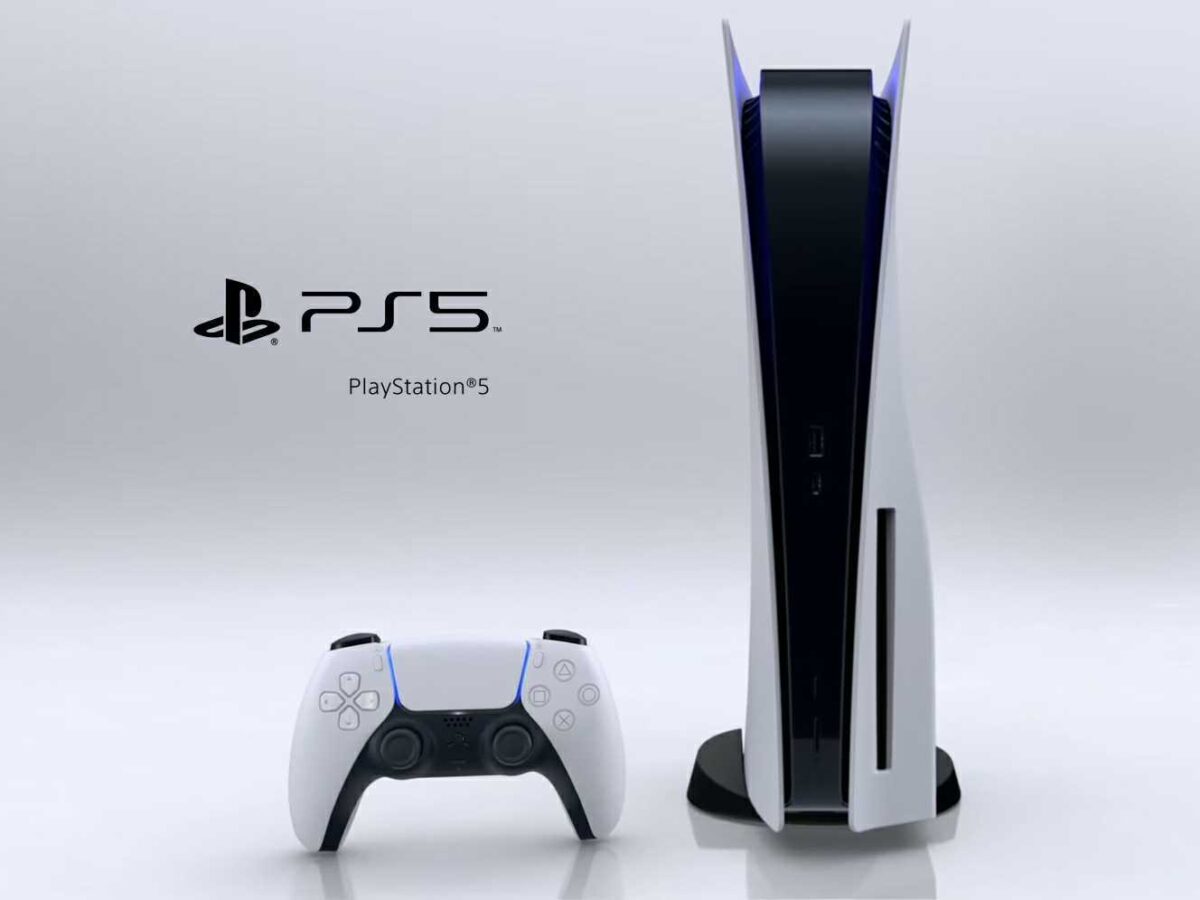
A new Sony patent has revealed a bizarre technology that the company might be working on. Apparently, the brand might be working on a banana as a possible PlayStation 5 controller.
According to a GamesRadarreport, the Japanese tech giant has recently a patent for a new controller device. A patent can carry futuristic or interesting never before seen inventions, but this fruity take on a PS5 controller seems a bit out of place. Looking at the image posters provided by the company, the controller appears to be an actual banana as the firm states that “It would be desirable if a user could use an inexpensive, simple and non-electronic device as a video game peripheral.”
The description of the original patent filing also reads the “The present disclosure seeks to address or at least alleviate some of the above-identified problems.” To tackle this issue, the company is working on a solution that will allow “non luminous passive object being held by a user.” This implies that we might be able to see the application of the controller on other objects as well, like a pen, pencil, orange, or even a banana.
Keep in mind, that the patent from Sony doesn’t offer any details regarding this new technology, only offering loose references to items that can theoretically be used as a simple computer. Unfortunately, it doesn’t seem like the company is actually working on such a product, but stay tuned for more updates.
Recently, we saw signs of POCO prepping the POCO X3 Pro and POCO F3 smartphones. Today, Indian tech influencer Mukul Sharma has come out with exclusive info regarding their Global launch and specs.
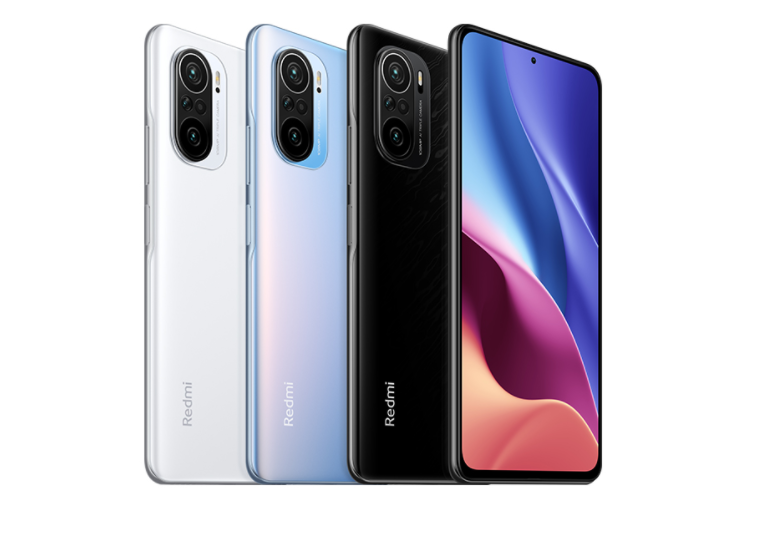
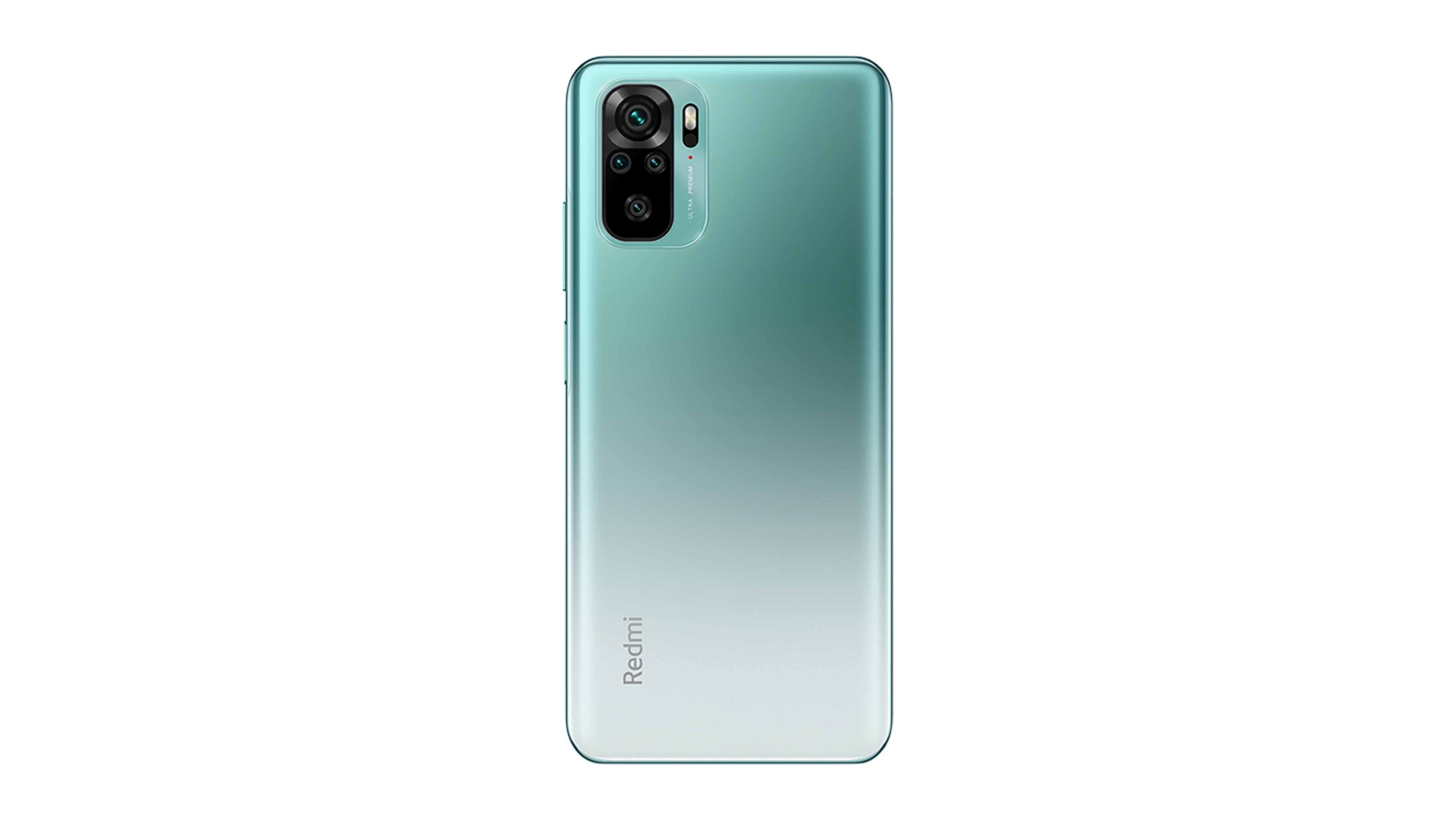
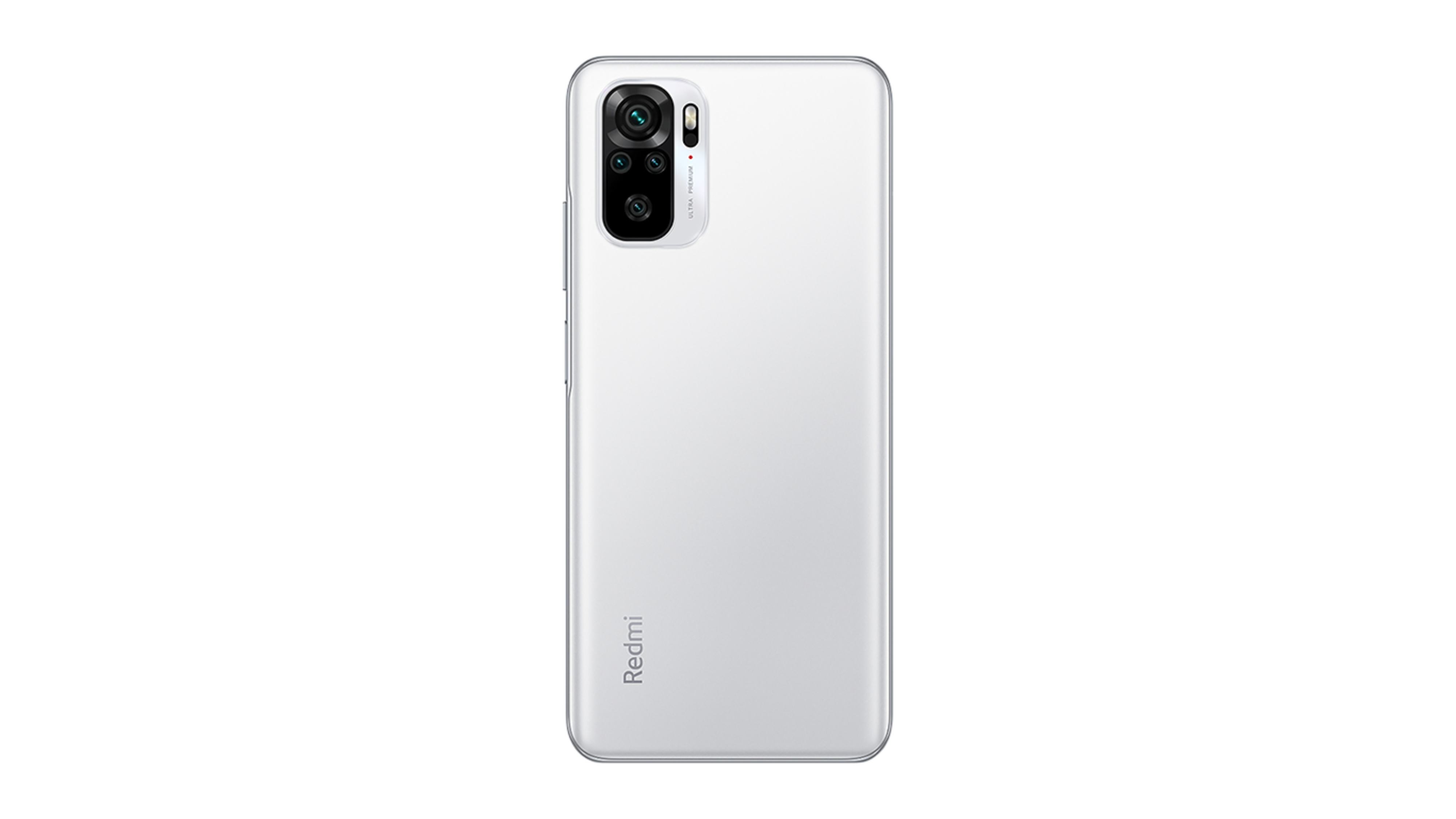
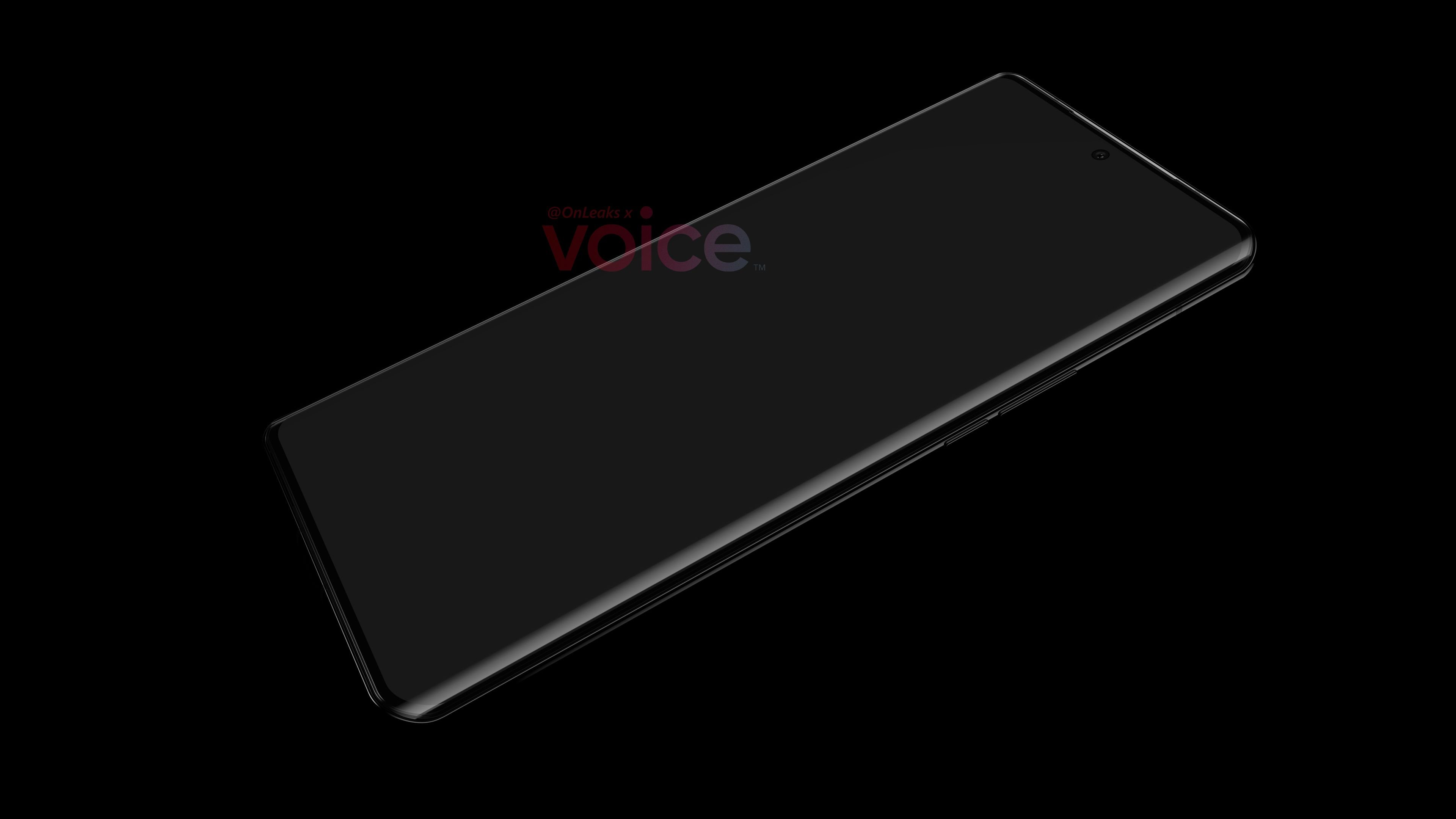
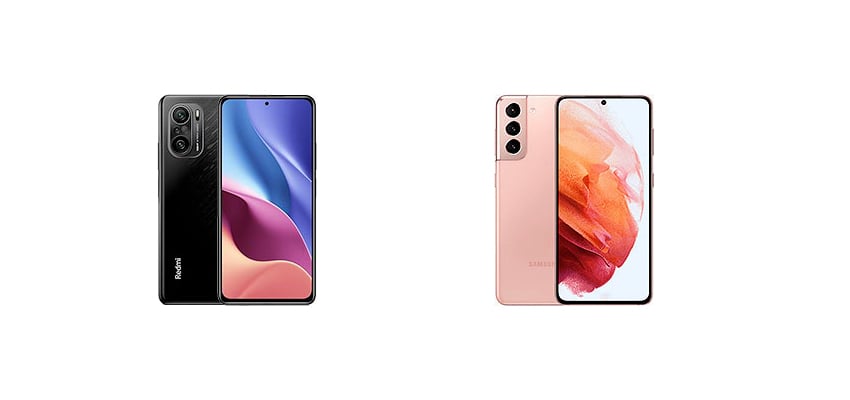
POCO F3 could be a rebrand of Redmi K40(in picture)
Mukul in a Twitter post, says that POCO F3 and POCO X3 Pro Global launch could happen this month, i.e., March. Among these, the POCO X3 Pro is also set to launch in countries like India as per a recent tip by another Twitter user.
To further kindle the rumor of this launch event, POCO Global Spokesperson Angus Kai Ho Ng has already tweeted “March”. Moving on, Mukul says that POCO F3 would be a rebrand of the recently launched Redmi K40 from China.
POCO F3 Specs(Expected)
If this doesn’t ring any bells, the FCC has already certified the POCO F3 and the model number gives away that it is indeed the Redmi K40 rebrand. There are reasons why POCO could have chosen this to be the successor to the POCO F2 Pro. Xiaomi has priced the Redmi K40 aggressively at 1,999 yuan($310) in China.
And for that price, it packs in a 120Hz AMOLED display, Snapdragon 870 flagship chipset, 48MP triple rear cameras, and more. Thus, it makes a perfect combo for becoming a member of the legendary POCO F-series of devices.
POCO X3 Pro Specs(Expected)
Coming back, Mukul also sheds light on the specs of the mysterious POCO X3 Pro smartphone. He says that the device will feature a 120Hz FHD+ display, 5,200mAh battery, Snapdragon 860 chipset.
This is a yet-to-be-released chipset from Qualcomm and rumors say that it could be a boosted version of Snapdragon 855+. Also, the type of the display panel is expected to be an IPS LCD but let’s wait for the official info on that.
POCO garnered a fair bit of attention with the POCO F1 back in 2018. It was the cheapest flagship smartphone with a Snapdragon 845 chipset at that time. After that, the company has launched only a flagship POCO F2 Pro Globally and has been bringing a lot of mid-range and budget devices.
Let’s hope POCO surprises us in 2021 by bringing back the affordable flagship killer hype again.
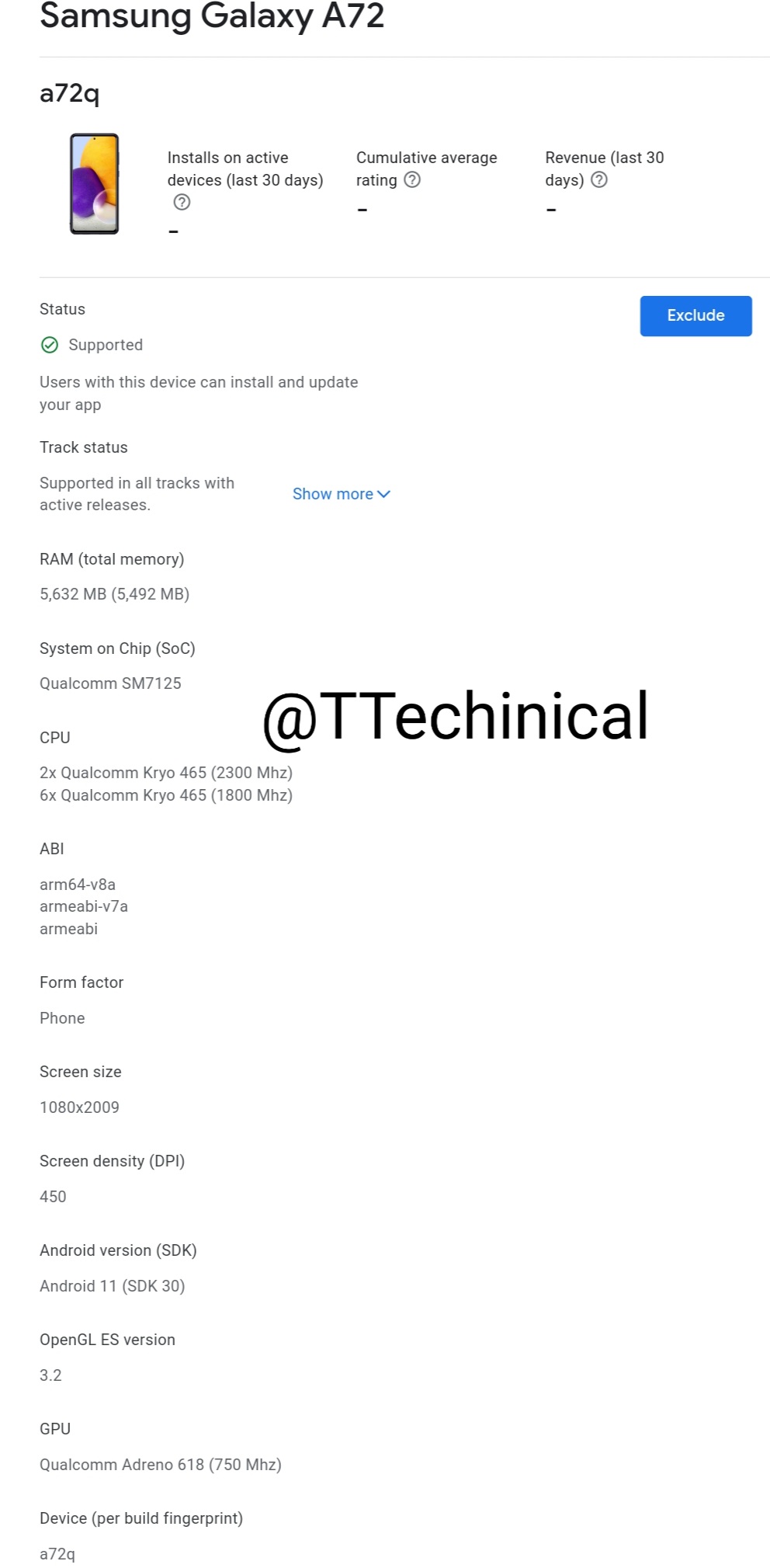
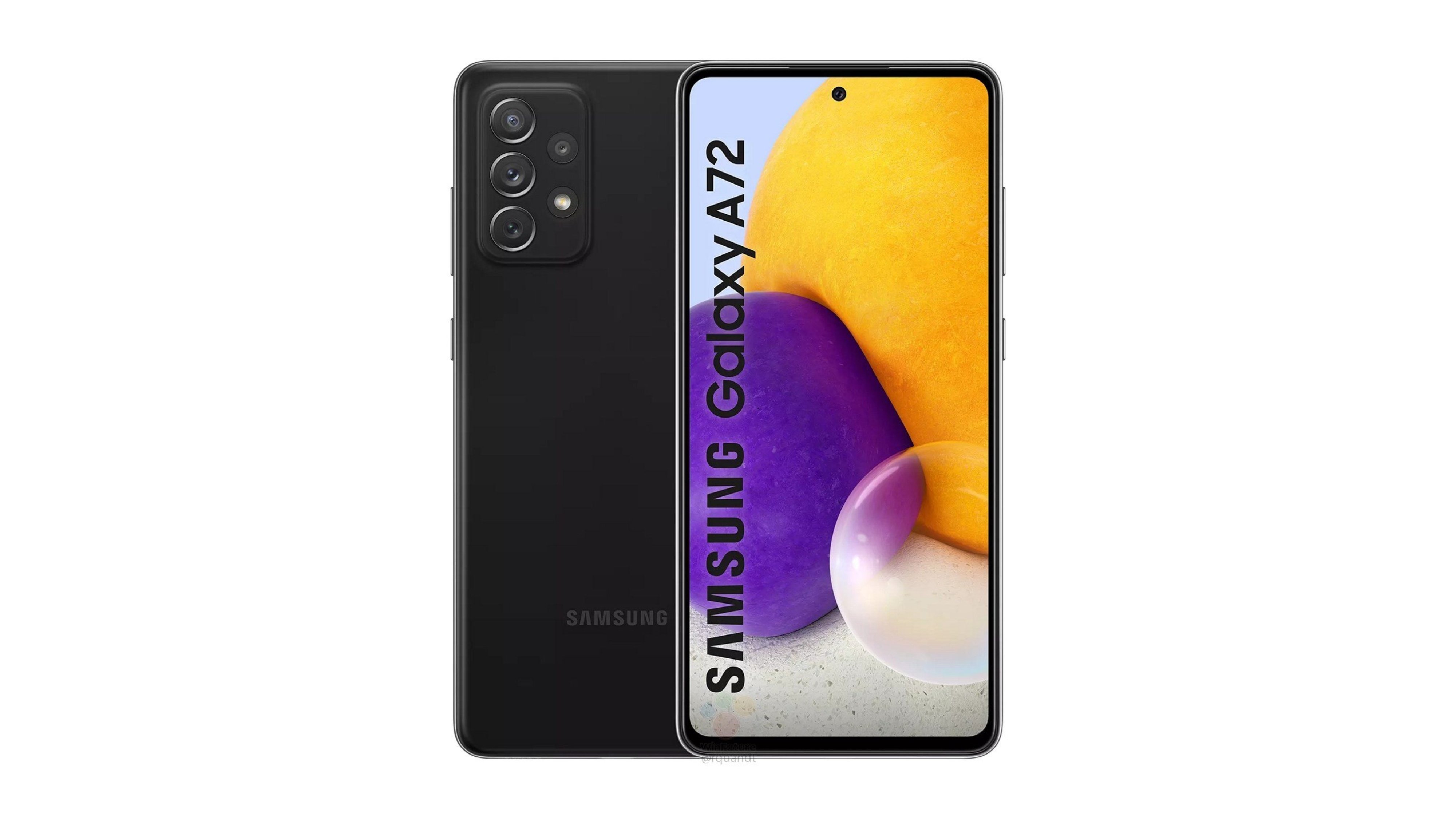
Another day, another finding of the upcoming Samsung Galaxy A72 phone has been spotted. This time, the device has appeared at the Google Play Console. Its appearance at the Play Console is yet another hint it may launch soon. Some rumors have claimed that the Galaxy A72 4G will go official by the second week of March.
The Google Play Console listing of the Galaxy A72 4G shows that it is powered by the Snapdragon 720G. The chipset is mentioned with its SM7125 model number. The variant of the A72 that has surfaced at Play Console has 6 GB of RAM. The handset features a punch-hole screen that offers a Full HD+ resolution and a pixel density of 440ppi. The handset runs on Android 11 OS.
Samsung Galaxy A72 specifications (Rumored)
The Samsung Galaxy A72 is expected to flaunt a 6.7-inch S-AMOLED display that will offer a 20:9 aspect ratio and a refresh rate of 90Hz. It will be equipped with an in-screen fingerprint reader.
The display punch-hole houses a 32-megapixel selfie camera. Its rear camera setup has a 64-megapixel primary camera, a 12-megapixel ultrawide unit, an 8-megapixel telephoto lens with 2x optical zoom, and a 2-megapixel macro sensor.
The Snapdragon 720G chip could be coupled with 6 GB / 8 GB of RAM. It may arrive in 128 GB and 256 GB storage choices. For additional storage, it will feature a microSD card slot. The device will come preloaded with One UI 3.x based Android 11 OS.
The Galaxy A72 will draw power from a 5,000mAh battery that will carry support for 25W fast charging. It is expected to arrive in colors like black, white, blue, and violet.
Samsung Galaxy A72 pricing (Rumored)
The Galaxy A72 variants such as 6 GB RAM + 128 GB storage and 8 GB RAM + 256 GB storage could be priced at 449 euros and 509 euros in Europe, respectively. Recent reports have revealed that the Galaxy A72 will not come in a 5G version.
Samsung Electronics announced earlier this week that it will be launching 21 models of its new Neo QLED TV series, which is three more than LG Electronics’ 18 OLED TV models that it plans on launching.
For those unaware, the Neo QLED TVs arrive with liquid crystal panels that use MiniLEDs as their backlighting. The new model of televisions arrives as an upgrade from the South Korean tech giant’s existing QLED TV lineup, as per TheElecreport. The company made the announcement at its online Unbox & Discover event, in which it said that it applied quantum matrix technology and quantum processors on its Neo QLED TVs. Notably, the new models are offer luminance control in 12 bit and 4,096 steps, which allows for high contrast ratio and detailed blacks.
Furthermore, the TV also has 16 neural engines that allow it to optimize 4K and 8K resolutions. Out of the 21 new launches, 8 will support 8K and will arrive in three series and in four different sizes, including 85, 75, 65, and 55 inch variants. Although, the company will only launch four 8K TVs in its home market, South Korea, along with 9 4K TVs. Samsung also added that the Neo QLED TVs will also feature better gaming performance and improved smart features as well, paired with an artificial intelligence based sound system.
The company also showcased its Micro LED TVs during the online event, which used micrometer sized LEDs that emit light on their own. Similarly, the event also showcased LifeStyle TV series, The Frame, The Serif, The Sero, The Premiere, and The Terrace. For gaming, the 2021 iteration of the Odyssey G9 gaming monitor was also announced, which features MiniLED technology and 240Hz refresh rate and 1ms response time.
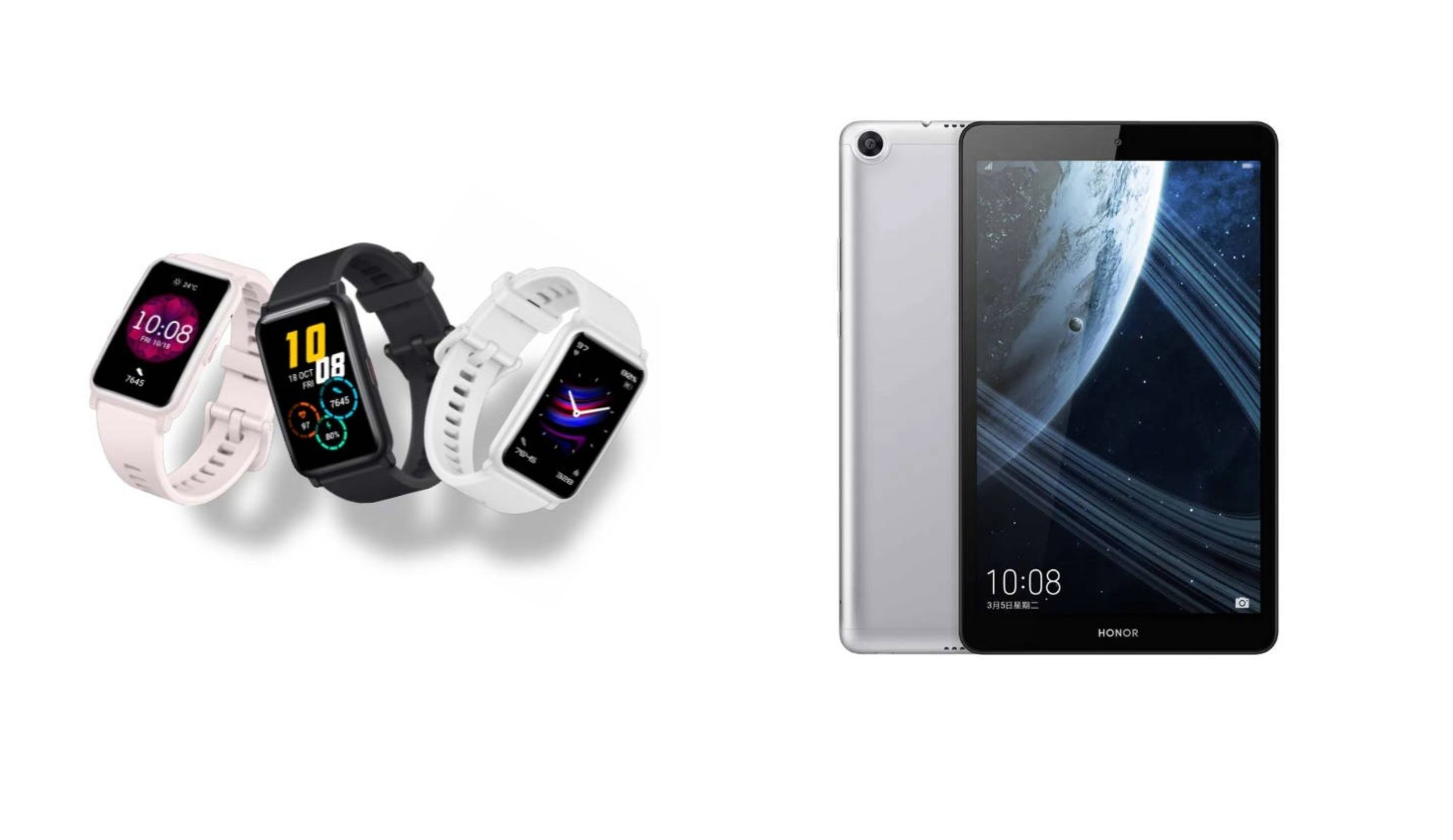
Honor discounted the HONOR Watch ES back in India back in January. It was a limited period offer. Now, the company has once again announced discounts for the Watch ES and HONOR Pad 5 tablet in the country.
For the unware, HONOR Watch ES debuted in India back in October 2020 whereas the HONOR Pad 5(8-inch) launched in July 2019. Honor launched both of these products at ₹7,499 and ₹15,499 respectively.
If you compare it with the launch price, the new price is about ₹2,500 less for the Watch ES and ₹3,500 less for the Pad5. The discount for the Tablet is available on Amazon while the discount for the HONOR Watch ES is on both Flipkart and Amazon.
Anyway, you can look at the new discounted price below:
HONOR Pad 5 (8-inch)(3GB+32GB)- ₹11,999
HONOR Watch ES – ₹4,999
After the launch, the company had reduced the prices of both the HONOR Watch ES and HONOR Pad 5 down the line. That said, the 8-inch Tablet gets a discount of ₹1,000 from the old price which was ₹12,999.
The HONOR Watch ES, on the other hand, was selling at ₹6,499 previously. Hence, it gets a ₹1,500 discount again. Do note that, Honor clearly specifies it as ‘Limited period offer‘ meaning it will last only till the stocks exist.
If you are looking to buy a Smartwatch or a Tablet but are on a tight budget, you can definitely look at these two. In case you don’t know their specs and features, you can read our coverage(HONOR Watch ES, HONOR Pad 5 )on the same.
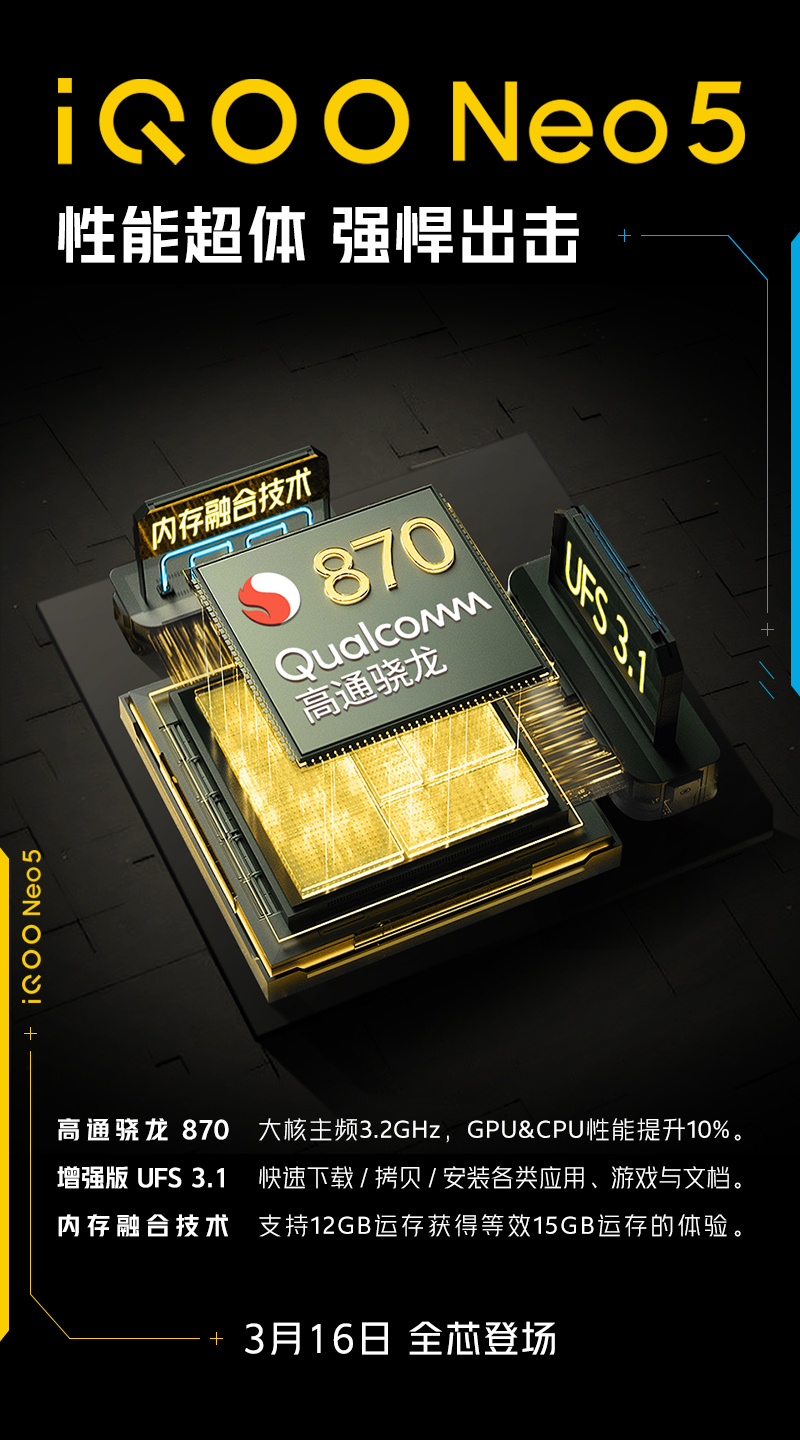
The iQOO Neo5 budget flagship phone is scheduled to break cover on March 16. It seems to be the V2055A Vivo phone that was spotted at Google Play Console last month. A Geekbench listing of its alleged Indian variant was also spotted last month. Both listings revealed that the iQOO Neo5 is equipped with Snapdragon 870. Today, iQOO release an official confirmation that the Neo5 will feature the SD870 chipset.
iQOO is now receiving the reservations for the iQOO Neo5 smartphone in China. The new posters released by the brand show that the iQOO Neo5 will feature the Snapdragon 870 chipset and an enhanced version of UFS 3.1 storage. The company also confirmed today that the display will be equipped with an independent chip that will offer better performance, smoother and more realistic screen output with less power consumption.
iQOO Neo5 specifications (Rumored)
Rumors are rife that the iQOO Neo5 has a 6.61-inch OLED screen that offers a Full HD+ resolution of 1080 x 2400 pixels. It is likely to offer a refresh rate of 120Hz. The circular camera cutout at the top-center position of the screen is said to house a 16-megapixel selfie camera.
The iQOO Neo5’s leaked shot that appeared yesterday revealed that it has a triple camera setup. It is rumored to feature a Sony IMX589 lens with OIS as the primary camera, a 13-megapixel superwide lens, and a 2-megapixel sensor. The phone will come preloaded with OriginOS based Android 11 OS.
The iQOO Neo5 could be backed by a 4,400mAh battery. A recent leak revealed that it could be with a 66W fast charger. The device may come with up to 12 GB of RAM and 256 GB of storage.
iQOO Neo5 pricing
The existing Snapdragon 870 powered phones such as the Motorola Edge S and Redmi K40 are both selling in China with a starting price of 1,999 Yuan (~$309). iQOO may launch the Neo5 at a similar price.
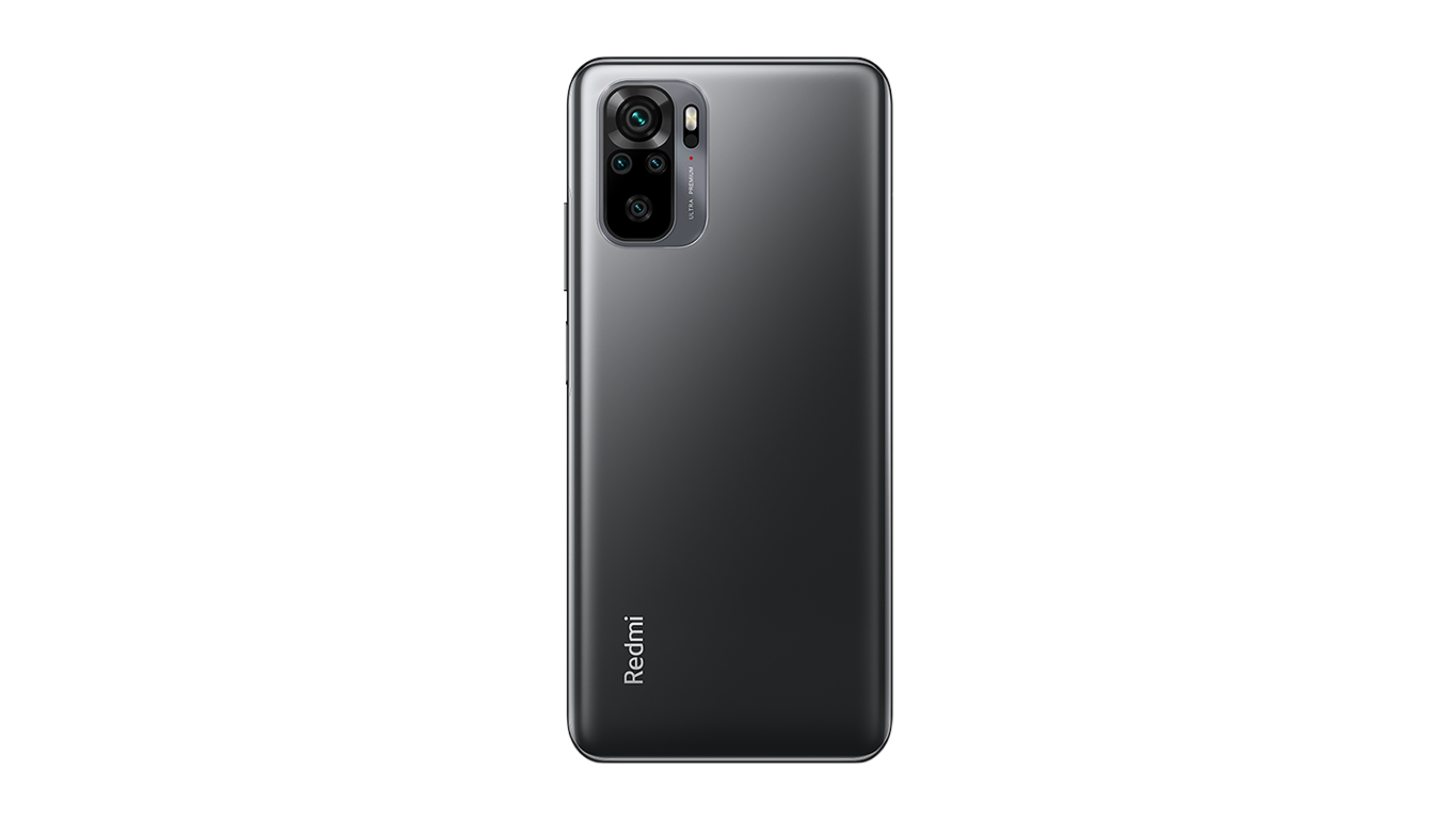
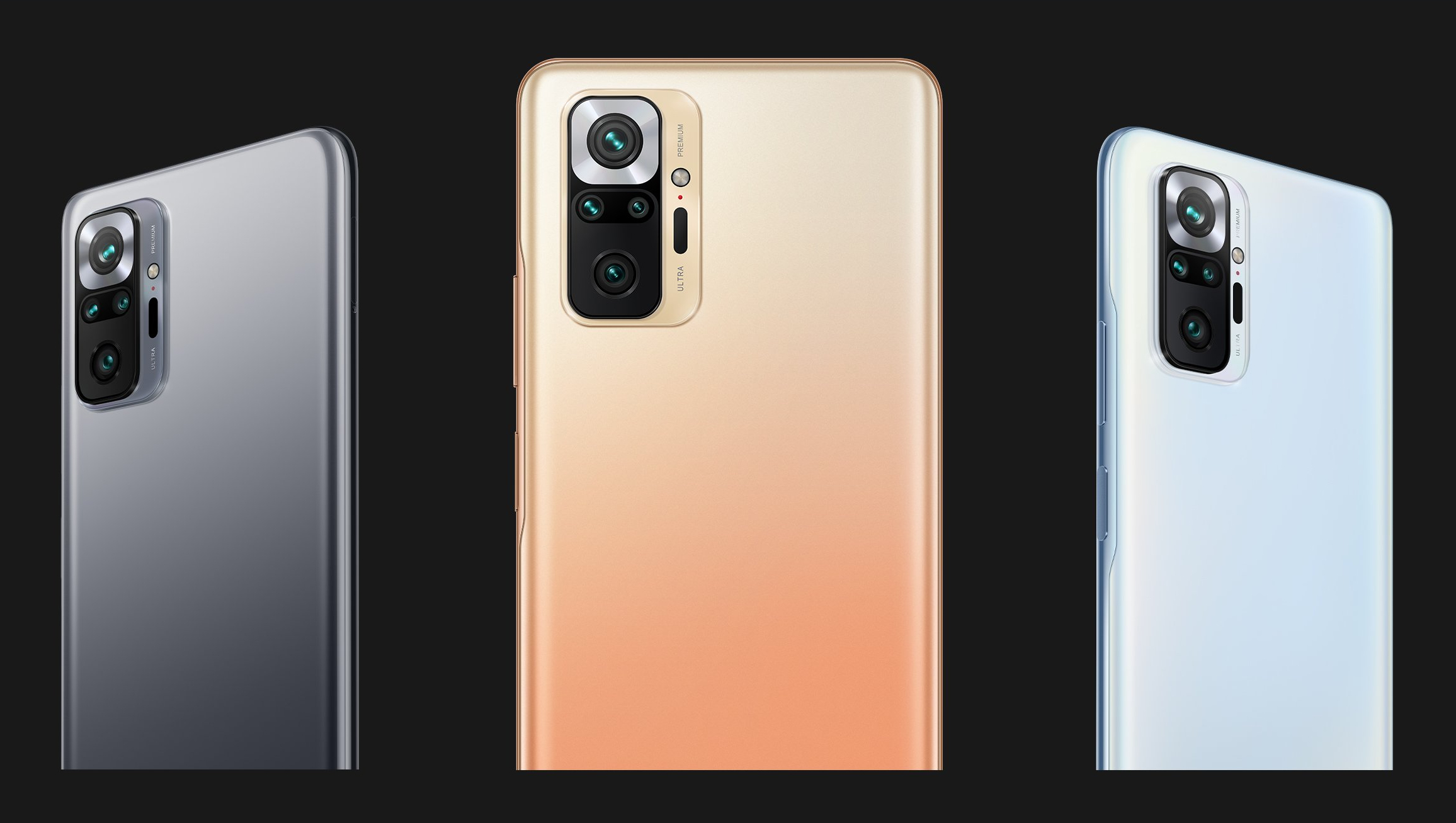
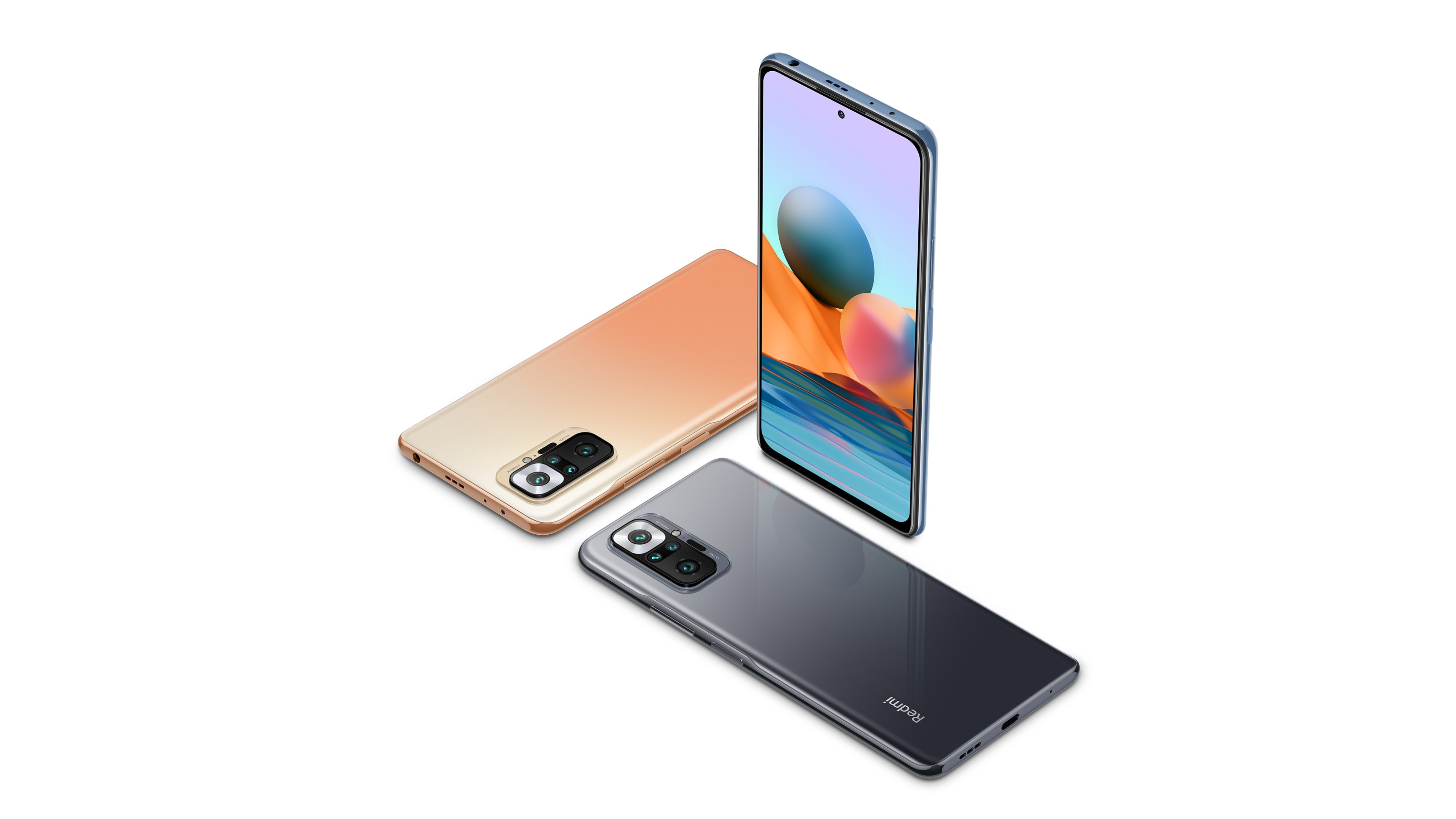
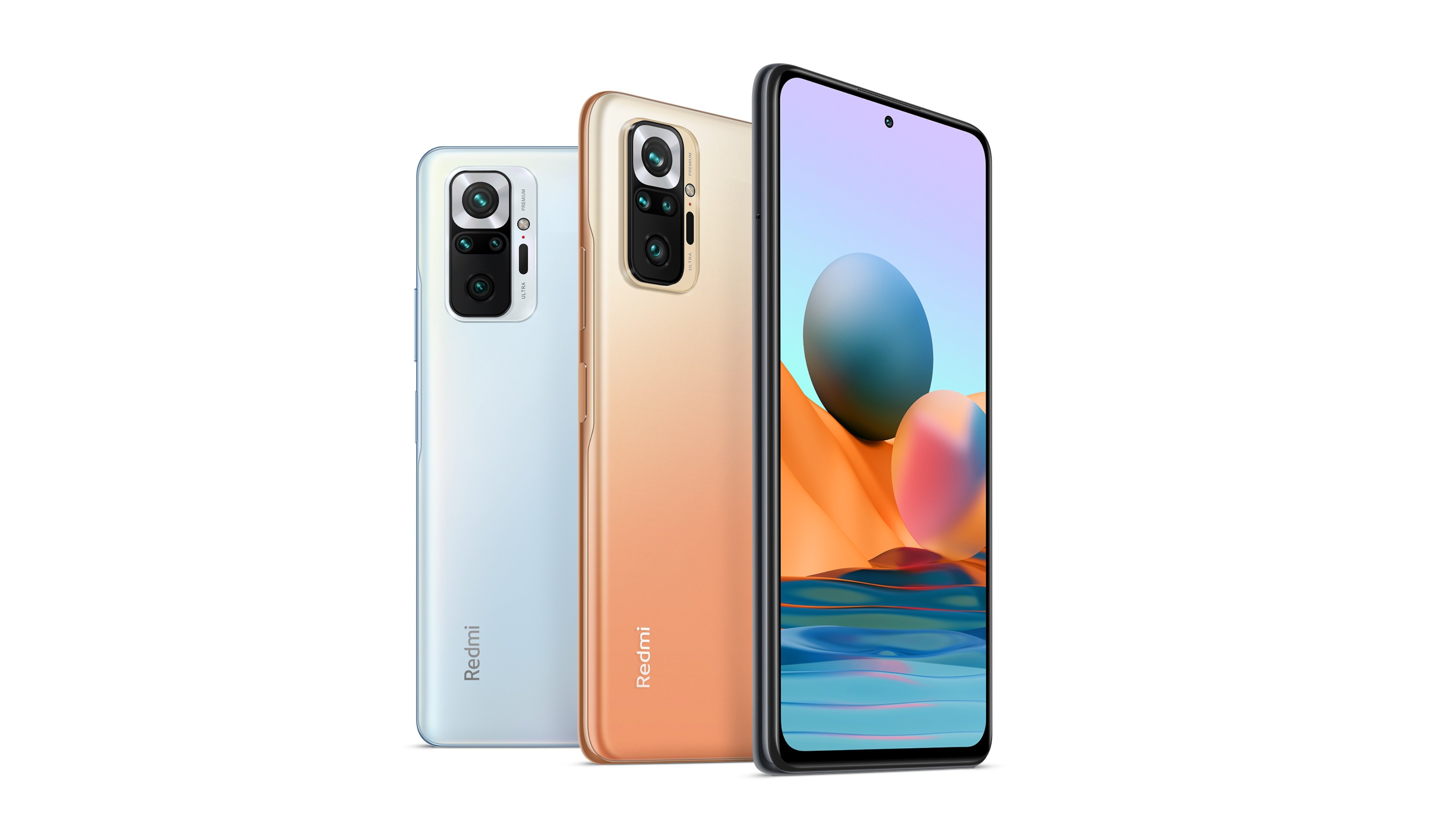
As expected, Xiaomi has officially launched the Redmi Note 10 series in India. The lineup includes a total of three devices, namely Redmi Note 10, Redmi Note 10 Pro, and Redmi Note 10 Pro Max. They flaunt Super AMOLED displays, Qualcomm Snapdragon SoCs, 33W fast charging, up to 108MP camera, and more Let’s take a look at their entire specs and features along with pricing and availability.
Redmi Note 10 Specifications and Features
The vanilla Redmi Note 10 sports a 6.43-inch FHD+ (2400 x 1080 pixels) Super AMOLED display with a 3.54mm centered punch-hole, 60Hz refresh rate, up to 1,100 nits peak brightness level, 100% DCI-P3 color gamut, 4500000:1 contrast ratio, and Corning Gorilla Glass 3 protection. The device is powered by Qualcomm Snapdragon 678 SoC paired with LPDDR4X RAM and UFS 2.2 storage.
Unlike the Pro models, the back of this phone is made of polycarbonate but it retains a similar-styled camera array design. The quad-camera setup includes a 48MP (Sony IMX582) primary sensor, an 8MP ultra-wide unit, a 2MP macro shooter, and a 2MP depth sensor. For selfies and video calls, it comes with a 13MP snapper.
Connectivity options on this handset include dual-SIM, 4G, VoLTE, VoWiFi, dual-band WiFi, Bluetooth, and GNSS (GPS/AGPS, GLONASS, BeiDou). It also features all the required sensors like an accelerometer, 360° ambient light sensor, compass, proximity sensor, and gyroscope.
1 of 3
Other features of the smartphone are self-cleaning dual stereo speakers, dual microphones, 3.5mm headphone jack, Hi-Res Audio certification, dedicated MicroSD card slot (up to 512GB), IR blaster, Z-axis vibration motor, side-mounted fingerprint sensor, 5,000mAh battery, 33W fast charging, MIUI 12 based on Android 11, and three colors (Shadow Black, Aqua Green, Frost White).
Lastly, the Redmi Note 10 measures 160.46 x 74.5 x 8.3mm in dimensions and weighs 178.8g.
Redmi Note 10 Pro/Pro Max Specifications and Features
The Redmi Note 10 Pro and Redmi Note 10 Pro Max have an identical set of specifications, except for the rear camera setup. The Pro comes with a 64MP (Samsung GW3) primary camera, whereas the Pro Max gets a 108MP (Samsung HM2) main sensor. The remaining cameras on both are an 8MP ultra-wide unit, a 5MP telemacro snapper, a 2MP depth sensor, and a 16MP selfie shooter.
On the front, the duo flaunts a 6.67-inch FHD+ (2400 x 1080 pixels) Super AMOLED display with a 120HZ refresh rate and a 2.96mm centered punch-hole. The panel has a peak brightness of 1200 nits, 45000000:1 contrast ratio, 100% DCI-P3 color gamut, TÜV Rheinland certification for low blue light emission, supports HDR10, and is protected by Corning Gorilla Glass 5. Interestingly, Xiaomi has opted to place the fingerprint sensor on the power button instead of below the screen.
Further, the back of the phones features an unspecified frosted (matte) glass panel and a new camera array design. The devices come in three color finishes, namely Vintage Bronze, Glacial Blue, and Dark Night.
Bot the handsets are powered by Qualcomm Snapdragon 732G SoC paired with LPDDR4X RAM and UFS 2.2 storage. On the connectivity front, they support dual-SIM, 4G, VoLTE, VoWiFi, dual-band WiFi, Bluetooth 5.0, and GNSS (GPS/AGPS, GLONASS, BeiDou). They also sport all the essential sensors like an accelerometer, proximity sensor, compass, 360° ambient light sensor, and gyroscope
1 of 2
Other features of these smartphones include a 3.5mm headphone jack, self-cleaning dual stereo speakers, dual microphones, Hi-Res Audio certification, dedicated MicroSD card slot (up to 512GB), IR blaster, Z-axis vibration motor, IP52-certification for splash resistance, USB Type-C port, 5,020mAh battery, 33W fast charging, and MIUI 12 based on Android 11.
Last but not least, the Redmi Note 10 Pro and the Redmi Note 10 Pro Max measure 164.5 x 76.15 x 8.1mm in dimensions and weigh 192g.
Redmi Note 10 Series Pricing and Availability
The Redmi Note 10 series will retail for the following price tags in India.
Redmi Note 10
4GB + 64GB – ₹11,999 ($165)
6GB + 128GB – ₹13,999 ($192)
Redmi Note 10 Pro
6GB + 64GB – ₹15,999 ($220)
6GB + 128GB – ₹16,999 ($234)
8GB + 128GB – ₹18,999 ($261)
Redmi Note 10 Pro Max
6GB + 64GB – ₹18,999 ($261)
6GB + 128GB – ₹19,999 ($275)
8GB + 128GB – ₹21,999 ($302)
All three smartphones can be purchased from Mi.com, Amazon India, Mi Home stores, Mi Studio stores, and offline partner retailer stores. Interested customers can avail a ₹1,500 discount using an ICICI Bank credit card.
Their first sales are scheduled for the following dates at 12 PM.
Apple is facing another lawsuit. This one arrives after an iPhone X model exploded in the pockets of an Australian man. The incident originally occurred back in 2019 but the man is taking legal action now after the company failed to respond to his inquiries about the problem.
According to a 9To5Macreport, the Australian Scientist, Robert De Rose, was sitting in his office when he felt a sudden pain in his leg and heard a fizzing sound from his pocket. As per Robert, “I heard a faint pop sound, followed by a fizz, and then I felt intense pain on my right leg, so I immediately jumped up and realized it was my phone.” After pulling out his iPhone X from his pocket, he noticed that his just one year old device had smoke coming out of it.
The exploding iPhone X caused “second degree burns” on his legs. He further added that “I had ash everywhere, and my skin had peeled back.” Furthermore, De Rose reportedly reached out to the Cupertino based giant multiple times regarding the issue, but was never met with a response. Thus, the Australian scientist has filed the lawsuit working with Carbone Lawyers n taking legal action against Apple over compensation.
Notably, the firm is also representing another person from Melbourne who claims “he was left with a burnt wrist after his Apple Watch overheated.” At the moment, the company is investigating both the complaints, which have been filed with the County Court. Unfortunately, thats all the information we have right now, so stay tuned for more updates.
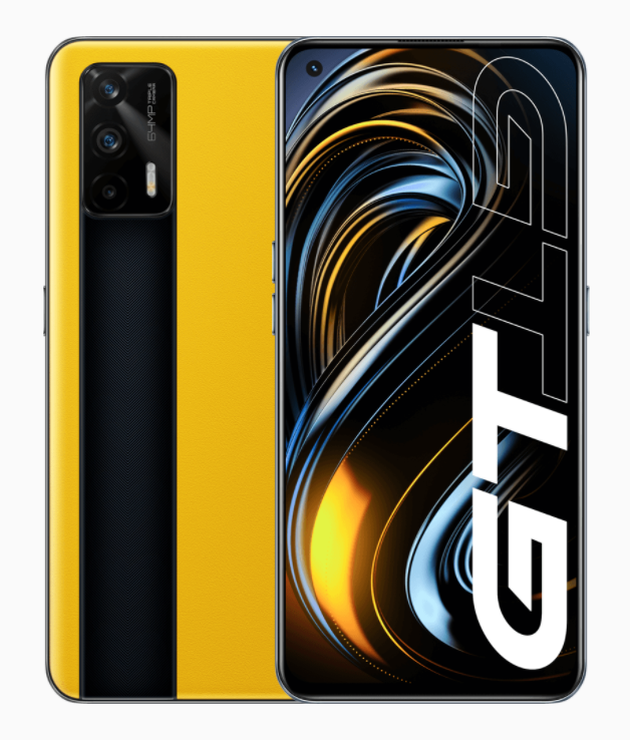
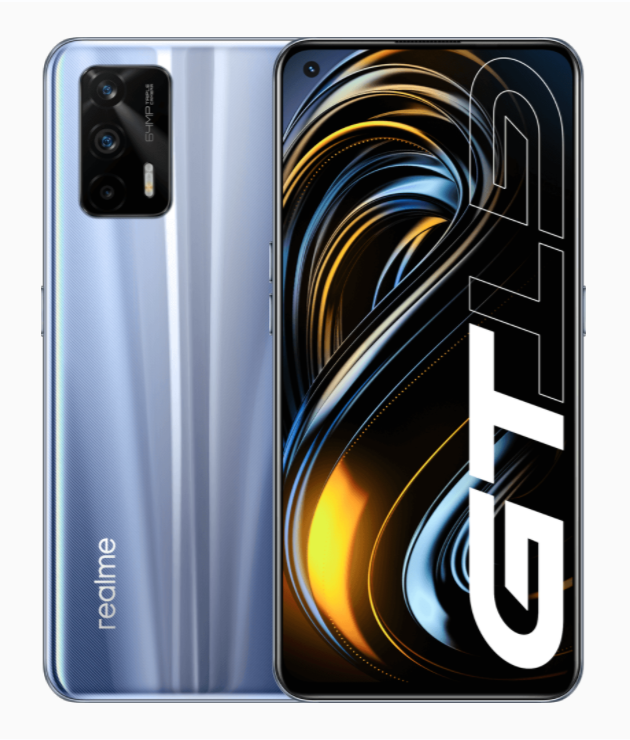
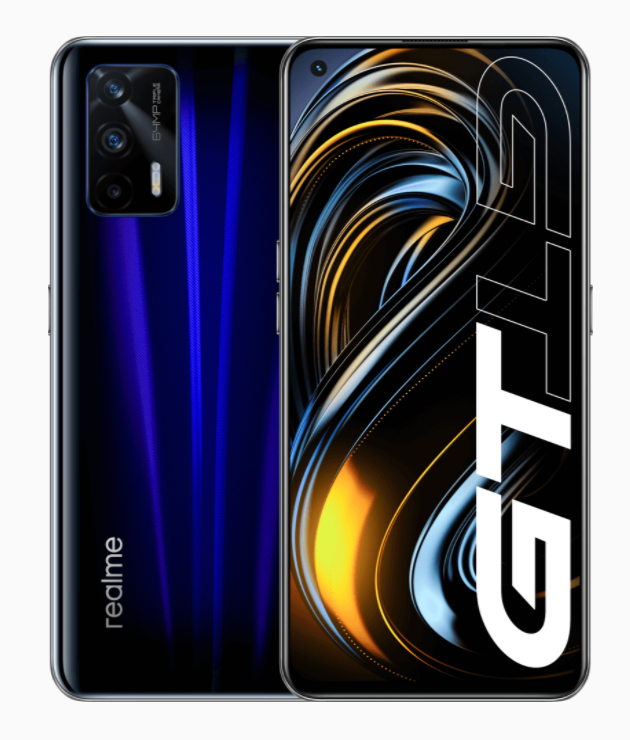
Today, Realme announced the Realme GT 5G has its first flagship phone of the year. The company had been teasing the handset with its ‘Race’ codename since December. The major highlights of the Realme GT 5G include Snapdragon 888 chipset, a 120Hz refresh rate display, LPDDR5 RAM, 64MP triple cameras, and impressive design. It has arrived in China with a starting price of 2,899 Yuan (~$448). With this pricing, the Realme GT 5G will be rivaling with the Redmi K40 Pro smartphone, which carries the same starting price.
Realme GT 5G specifications and features
The Realme GT 5G comes in leather and glass back versions. The glass model measures 158.5 x 73.3 x 8.4mm and weighs 186 grams. The leather model has 158.5 x 73.3 x 9.1mm dimensions and it weighs 186.5 grams. The smartphone is fitted with a 6.43-inch S-AMOLED E4 display with a punch-hole design. The screen offers a Full HD+ resolution of 1080 x 2400 pixels, a 120H refresh rate, and a 100 precent P3 color gamut. The smartphone promises a screen-to-body ratio of 91.7 percent.
Realme GT – Dawn (vegan leather)
The Realme GT 5G is fueled by the Snapdragon 888 mobile platform. It ships with 8 GB / 12 GB of LPDDDR5 RAM and 128 GB / 256 GB of UFS 3.1 storage. It lacks support for external storage. The handset comes pre-installed with Android 11 OS and Realme UI 2.0. There is a dedicated GT mode that offers leapfrog performance while gaming with enhanced image quality, 4D in-game vibrations, faster loading times, dynamic sound effects, and more. The smartphone is fitted with Dolby Atmos and Hi-Res audio certified dual speakers.
Realme GT
For heat dissipation, the Realme GT features a 3D tempered liquid cooling technology that can effectively reduce the phone’s temperature by up to 15℃ while gaming. The phone is backed by a 4,500mAh battery. It takes around 35 minutes for the phone to charge completely through its 65W fast charging technology.
Realme GT
The Realme GT 5G has a 16-megapixel front-facing camera. Its rear-facing camera island has a 64-megapixel Sony IMX682 primary camera with f/1.89 aperture, a 119-degree 8-megapixel ultrawide lens, and a 2-megapixel macro camera. The other features that can be found on the Realme GT 5G include dual SIM support with 5G, Wi-Fi 6E, Bluetooth 5.2, dual-frequency GPS, NFC, GPS, USB-C, and the good old 3.5mm audio jack.
Realme GT 5G pricing and availability
Here is the pricing of the different variants of the Redmi GT 5G smartphone:
8 GB RAM + 128 GB storage – 2,899 Yuan (~$448)
First sale price 2,799 Yuan (~$433)
12 GB RAM + 256 GB storage – 3,399 Yuan (~$525);
First sale price 3,299 Yuan (~$510)
Color variants: Dawn (Vegan leather back), Deep Sea Airship (blue), and Galacticos (blue)
The Realme GT 5G pre-orders have started in China. Its first sale will be carried out on March 10 in China. It is unclear when the company will be releasing the smartphone in markets outside China. The company also confirmed that it will also soon launch a new smartphone called the Realme GT Neo.
The Huawei P50 series of flagship smartphones are expected to launch soon. And now, a new tipster on Weibo, a Chinese microblogging website, has revealed that the device will be launching on the 17th of April 2021.
According to @无然熊猫, the latest entry in the Chinese tech giant’s flagship P series will launch in the second half of next month but shipments are expected to be small. The reason for the limited number of units is currently unknown. Although, it is likely due to the inventory shortage for chipsets. However, this is just speculation, so take it with a pinch of salt for now.
At the moment, the Huawei P50 series is apparently ready for mass production and will arrive in three new variants. This includes the base version, the P50 Pro, and the P50 Pro+. Since these are flagship models, the lineup is expected to arrive with top notch specs like the high end HiSilicon Kirin 9000 series chips, great display, and a capable rear camera module as well.
As per previous reports, the base variant will feature the Kirin 9000E chipset while the two higher end variants will arrive with the Kirin 9000 processor. Furthermore, the standard variant will feature a 6.1 inch display, while the other two versions will sport a 6.6 inch and 6.8 inch panel respectively. Unfortunately, this is still an unconfirmed report so stay tuned for more updates.
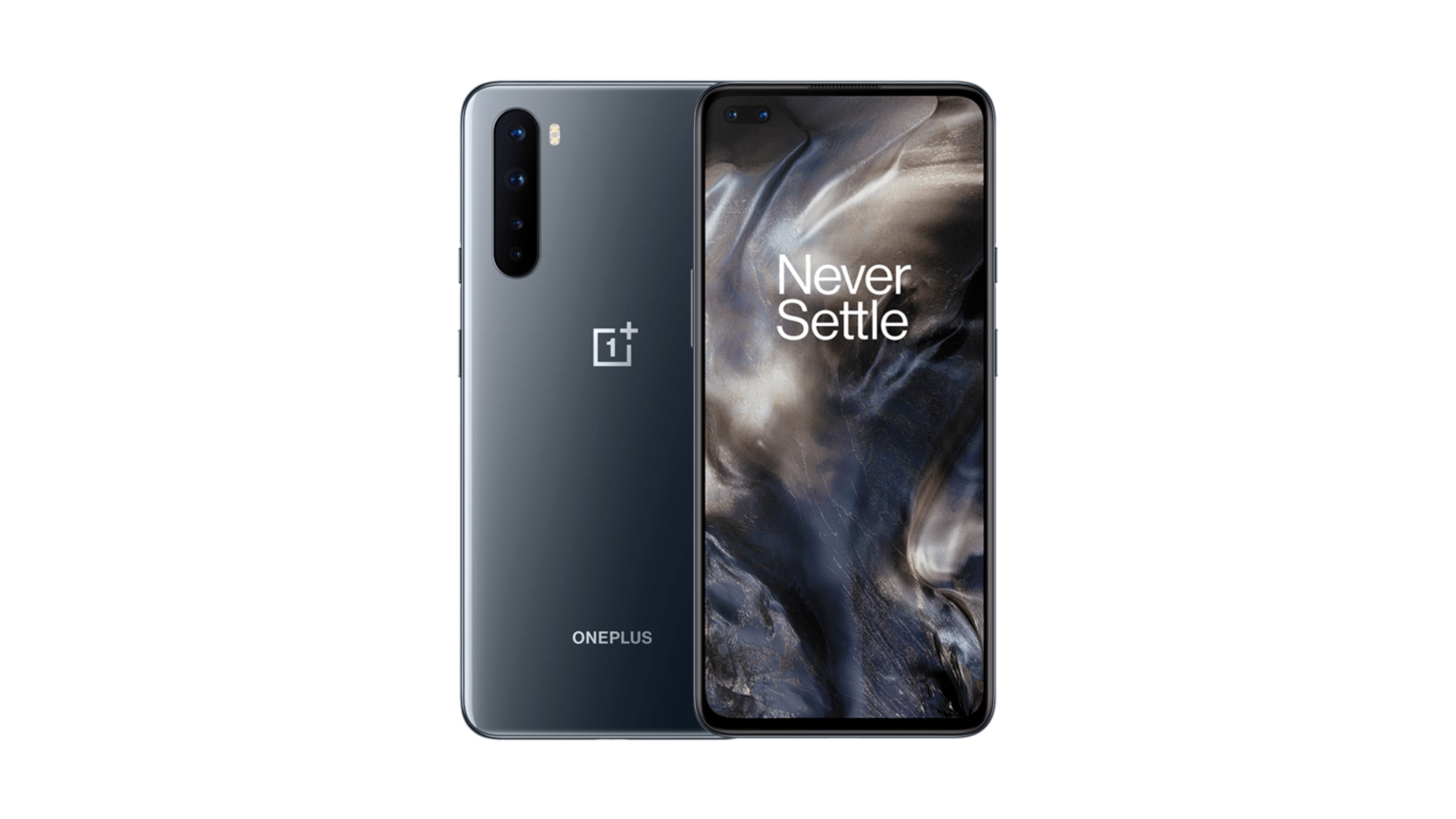
OnePlus, which was focusing only on the premium high-end segment for years, finally re-entered the budget smartphone market with the launch of OnePlus Nord last year. Now, the company is gearing up to launch its successor.
Apart from the OnePlus 9 series flagship smartphones, the China-based company is going to introduce the OnePlus Nord 2 with an aim to cement its position in the competitive mid-range smartphone market.
OnePlus Nord
A latest report coming from Android Central confirms that the device will indeed be called OnePlus Nord 2. It further confirms that the smartphone will be powered by MediaTek’s flagship Dimensity 1200 5G chipset.
This is a major change given that OnePlus has been using Qualcomm chipsets in all of its smartphones so far. In fact, OnePlus Nord was the first device from the company to feature a chipset other than Qualcomm’s Snapdragon 800-series. Later on, the company used Snapdragon 600- and 400-series chips in Nord 10 5G and Nord 100.
With the upcoming Nord 2 adopting Dimensity 1200, the device will come with global 5G connectivity support. The chipset also supports 5G dual SIM dual standby — a feature that Qualcomm is yet to adopt.
As the key details of this upcoming smartphone has been revealed, we expect more information about the device, including specifications, features, variants, pricing, and availability information to soon surface online.
The OnePlus Nord has been successful in the Indian market mainly because of the affordable price tag of Rs 24,999 (~$340). It will be interesting to see how the company prices the upcoming Nord 2 smartphone.
Huawei debuted in the Smart TV market fairly recently and the company already has three series catering to different audiences. The company isn’t calling them Smart TVs but instead, it prefers Smart Screen, implying it is more than a television set.
Now, the Chinese tech giant is expected to launch a new Smart Screen in its home market. While the company has not yet confirmed the date, reports indicate that it could be made official on 25th March.
So far, nothing is known about the device that Huawei is planning to launch later this month, not even the price range it falls under. But we expect to more about this in the coming days, as the launch date nears.
In the two years, Huawei has launched three series of its Huawei Smart Screen — a high-end X-series, a mid-range V-series, and an entry-level S-series. The smart screens for Huawei are focused on four main areas — Smart Interaction, Multi-Screen Experience, IoT Control Center, and Audio-Video Entertainment Center.
Ever since Huawei’s smartphone business has taken a major hit because of the US-China trade war and sanctions imposed against it by the United States, it is struggling to maintain its lead in the industry. In the past few months, the company seems to be shifting its primary focus away from smartphones and expanding its efforts in other product lines.
Apple is gearing up to launch several new products this year, including new MacBook devices and iPads and most of them are expected to pack new technologies and won’t be just an incremental updates.
Last year, it was reported by Ming-Chi Kuo that Apple could release a new iPad Mini in the first half of 2021 and now it appears that the device could get launched in a couple of weeks as Apple iPad Mini Pro.
Ahead of the launch, some key details about the upcoming device as well as its concept renders have surfaced online, shedding light on what we can expect from it. However, we would advise you to take this with a pinch of salt.
As per the recent report, the upcoming iPad Mini Pro could come with the same design as the iPad Mini launched over the years, retaining the bezels on the top and the bottom. It is also expected to have a home button and Touch ID along with Lightning connectivity.
However, there are other reports which points towards Apple adopting a modern design for the upcoming tablet, in line with the iPad Pro and iPad Air 4. If that is the case, then we will finally get iPad Mini with a near bezel-less design and Face ID support.
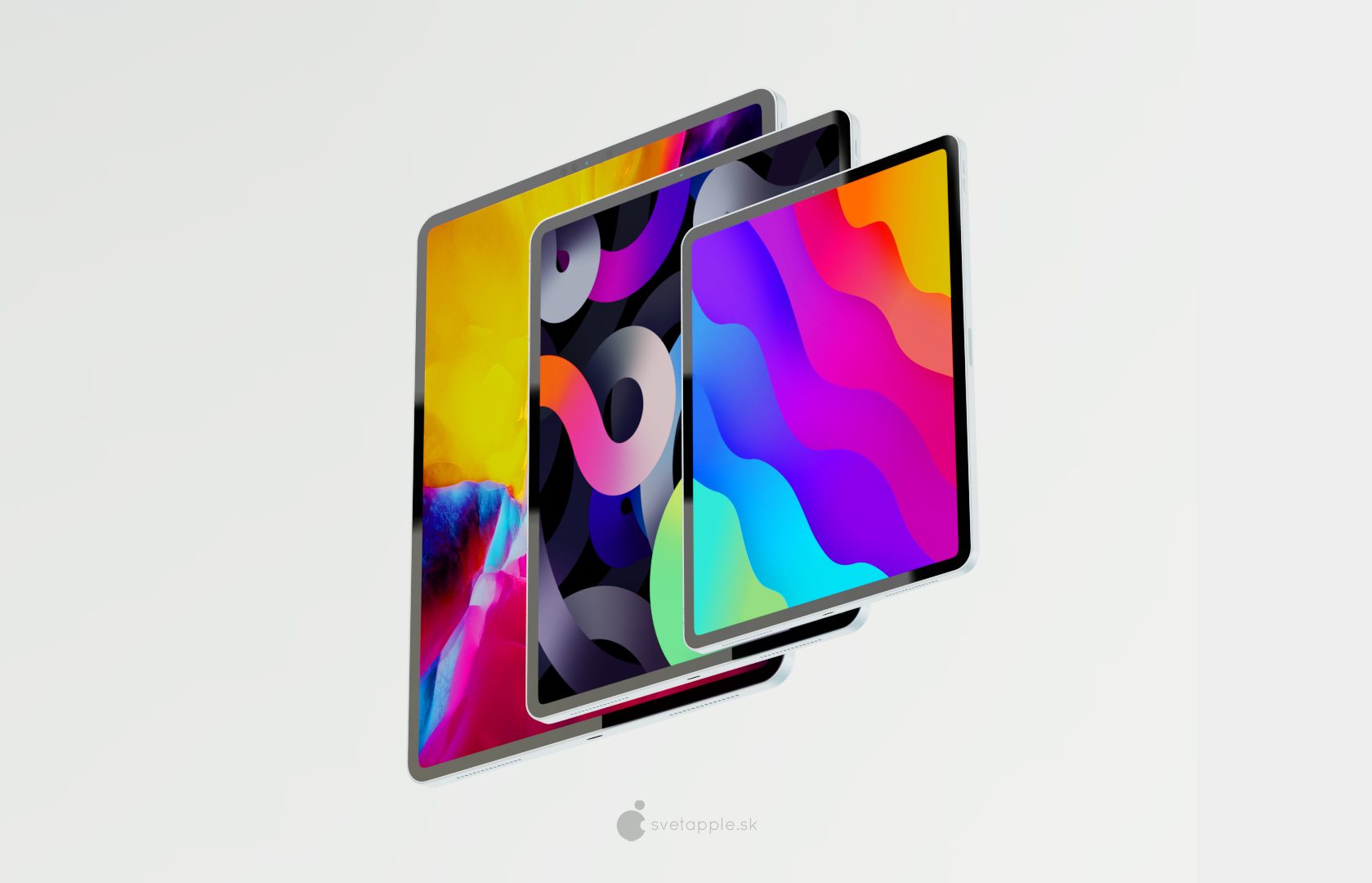
A concept render of the upcoming iPad Mini Pro has also surfaced online, which reveals an 8.9-inch display with minimal bezels. Apart from that, it also showcases support for Face ID as well as USB Type-C for connectivity. It is said to be powered by the Apple A14 Bionic chipset and come in three storage options — 64GB, 128GB, and 256GB.
A few days ago, Xiaomi-backed Redmi officially launched a few products in its home country China, including Redmi K40 series and the Redmi AirDots 3 true wireless earphones. Starting today, the earphones are now available for purchase.
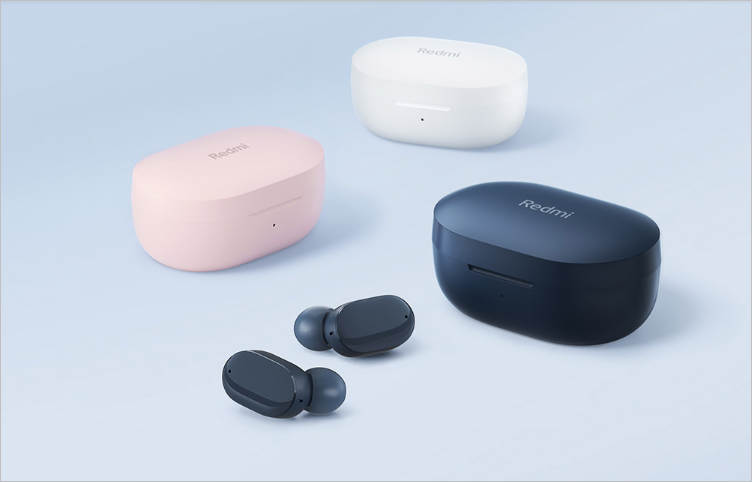
The Redmi AirDots 3 are no up for grabs in China for a price of 199 yuan, which roughly converts to $31. It comes in three color options — White, Black and Pink colours. Compared to its predecessor, the design of this new true wireless earphones remains the same but comes with improved performance.
The TWS earphones are driven by a QCC3040 chipset and the Bluetooth version is upgraded to Bluetooth 5.2 from Bluetooth 5.0. It also brings faster connection speed, improved data transmission rate, and stable connection.
It comes with support for multi-functional touch control, built-in XiaoAI voice assistant, and MIUI compatible pop-up window to enable instant viewing for connection and battery status. The earphones also support Environment Noise Reduction technology to remove unnecessary surrounding noises and also comes with an IPX7 rating.
There is also an aptX Adaptive codec for upgraded sound quality. The company claims that the earphones deliver up to 7 hours of non-stop music playback on a single charge which can be extended to up to 30 hours with the charging case.
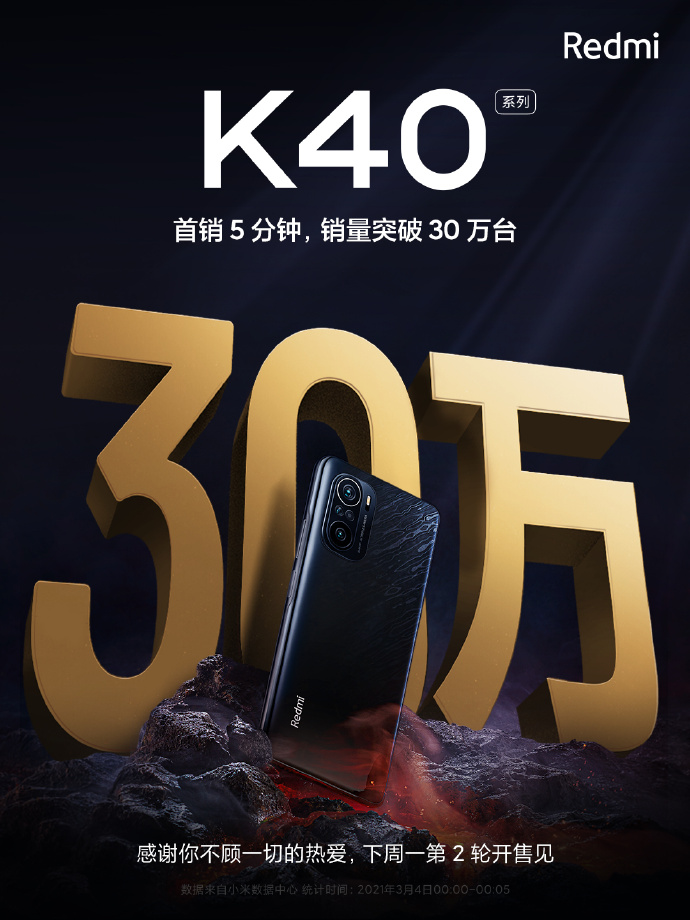
As scheduled, the Redmi K40 and Redmi K40 Pro smartphones were made available for purchase for the first time at 00:00 AM (local time) today in China. Soon after these Redmi devices went on sale, the company confirmed that it sold 300,000 units of the Redmi K40 series.
The Snapdragon 888 powered Redmi K40 Pro is priced at 2,799 Yuan (~$432) for 6 GB RAM + 128 GB storage, 2,999 Yuan (~$463) for 8 GB RAM + 128 GB storage, and 3,299 Yuan (~$510) for 8 GB RAM + 256 GB storage. On the other side, the Redmi K40 that features the Snapdragon 870 SoC costs 1,999 Yuan (~$310) for 6 GB RAM + 128 GB storage, 2,199 Yuan (~$340) for 8 GB RAM + 128 GB storage, 2,499 Yuan (~$386) for 8 GB RAM + 256 GB storage, and 2,699 Yuan (~$417) for 12 GB RAM + 256 GB storage.
The Redmi K40 duo went out of sale just a few minutes their first sale began at 00:00 AM today in China. The next sale will be conducted on March 8. During the launch event of the Redmi K40 series, the company claimed that it will sell the 12 GB RAM + 256 GB storage variant of the K40 for 2,499 Yuan until it goes out of stock.
Regarding the Redmi K40 series, Xiaomi Product Director Wang Teng Thomas said, “We are working hard to stock up, and students who are not in a hurry to change their phones are advised to wait a few days. It is expected that they will be easier to buy in the middle of the month (machine translation).”
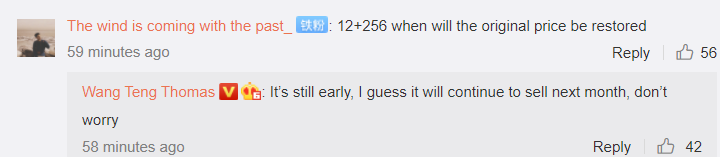
The executive further said in the comments section of the Weibo post, “We chose the former between the possibility of a shortage of the ultimate price-performance ratio and the increase in the price (machine translation).” One of the Weibo users asked him from when the 12GB+256GB will be available with its original pricing of 2,699 Yuan. He responded by saying that it could be available at the same price even in the coming month. This indicates that the company has already prepared enough stocks of the Redmi K40 to encounter the high demand.
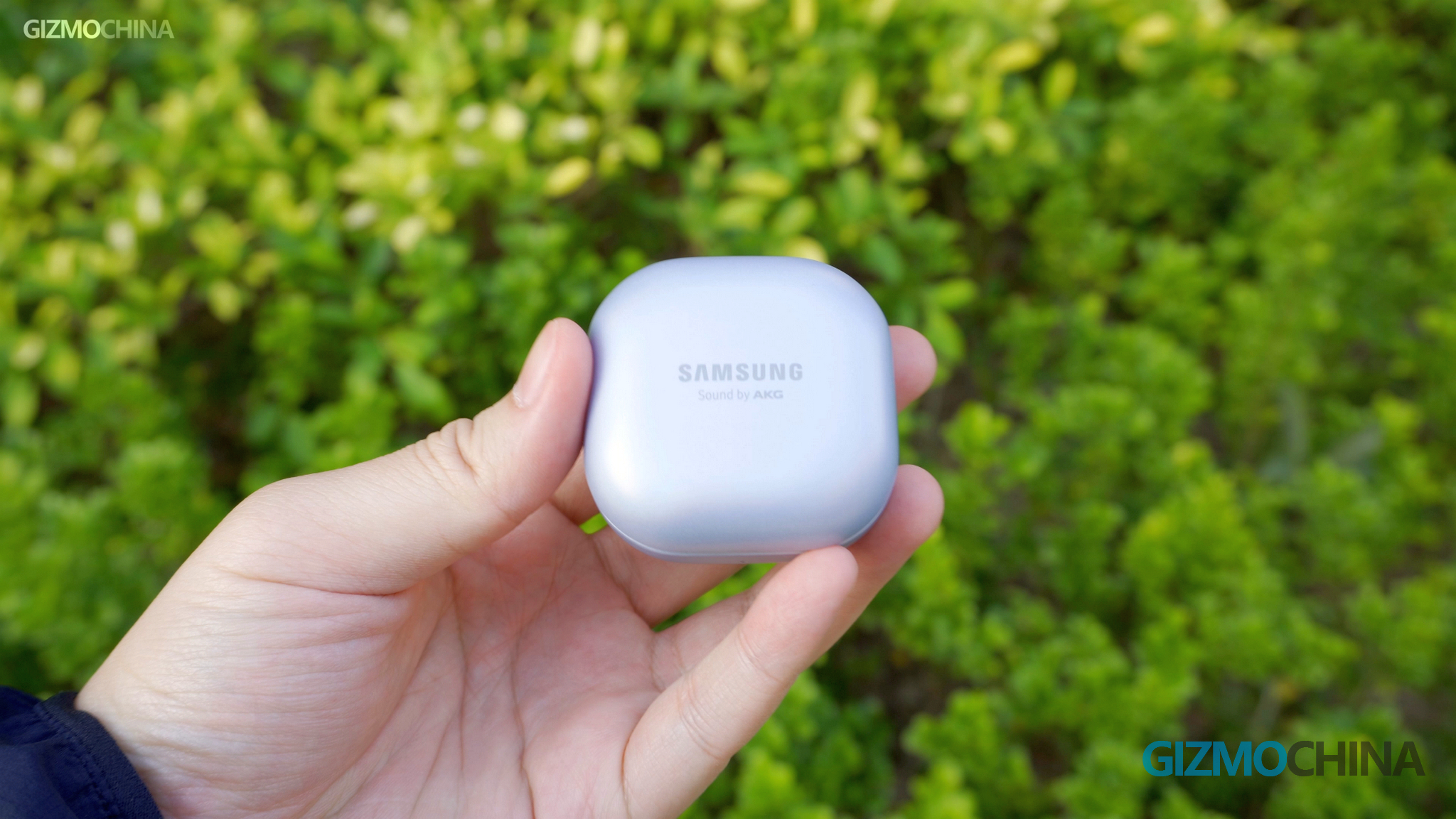
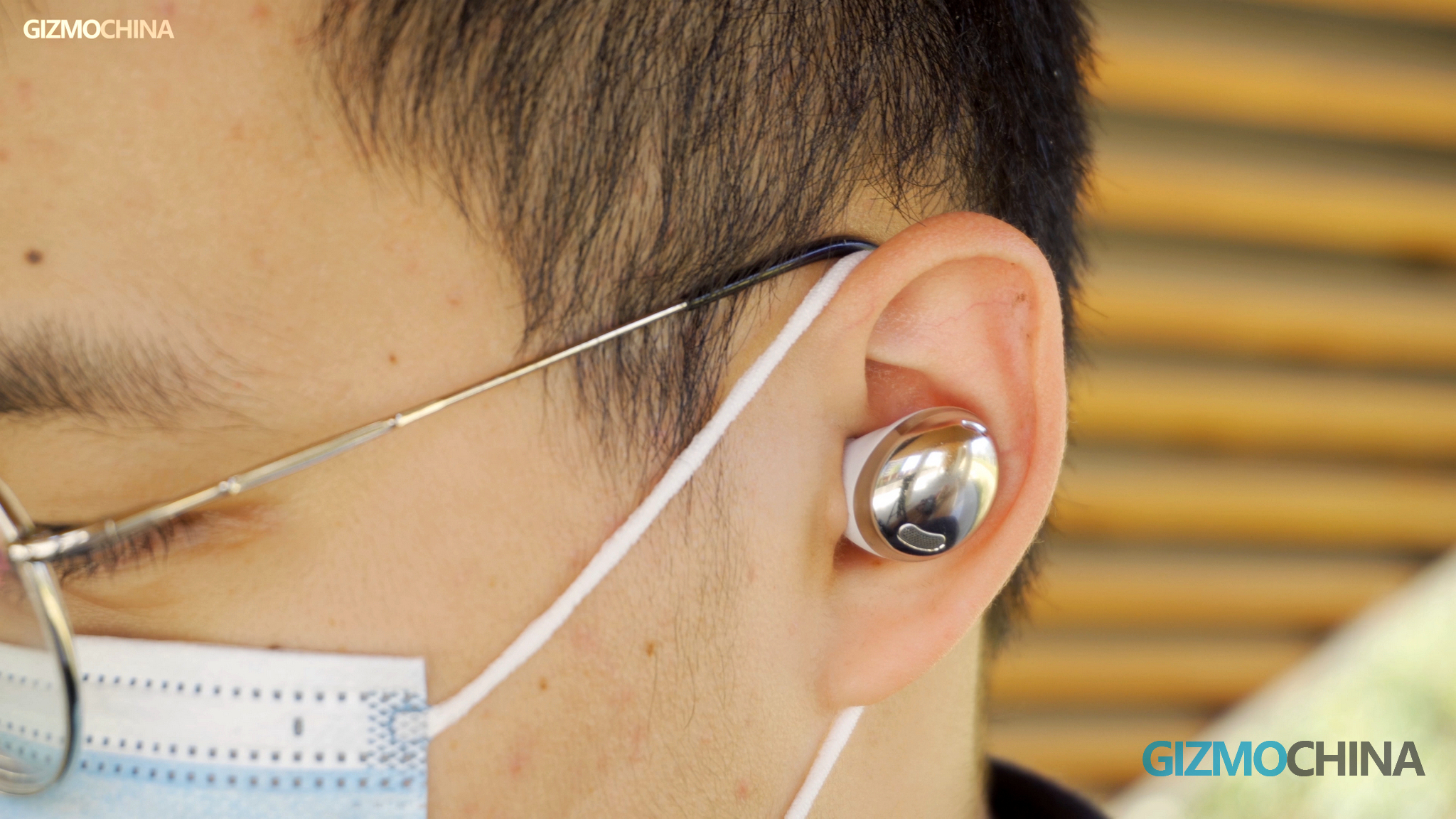
When Samsung launched the S21 series this year, it also launched a new noise-canceling earbuds, the Galaxy Buds Pro. After using these earbuds for nearly two weeks, I have come to the conclusion that they are the biggest surprise from Samsung in the first half of 2021. If you want to know my verdict, then I can tell you this right now — the Galaxy Buds Pro is one of the best all-round noise-canceling TWS earbuds you can buy in the Android market!
Before I expand on why the Galaxy Buds Pro is so good, let’s first talk about some of its shortcomings.
Galaxy Buds Pro Review: Drawbacks
The first thing I’d like to point out is that the lid of the earbuds’ case is quite loose and you can shake it with your hand. It doesn’t seem sturdy enough. This shouldn’t be the case for earbuds in its price range.
Secondly, if you want to buy a TWS for gaming and you are not a Samsung phone user, it’s not recommended to buy it. Because it has quite a bit of a sound delay. But apart from these two issues, the new Samsung earbuds have practically no other disadvantages.
Yes, the Galaxy Buds pro is such a well-balanced TWS that it’s hard for me to pick out its flaws.
So Let’s start with its design and the fit.
Galaxy Buds Pro Review: Design & Fit
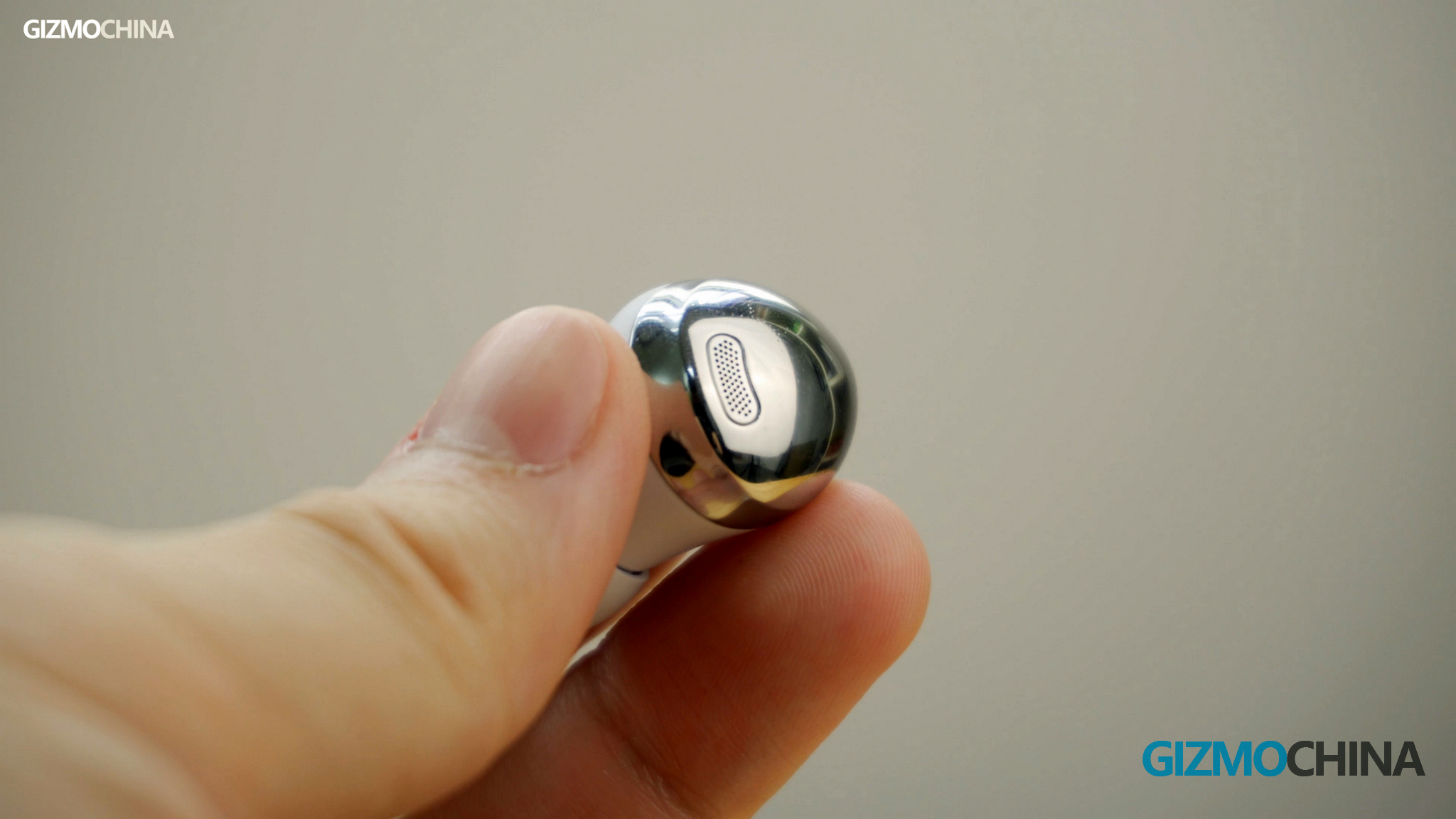
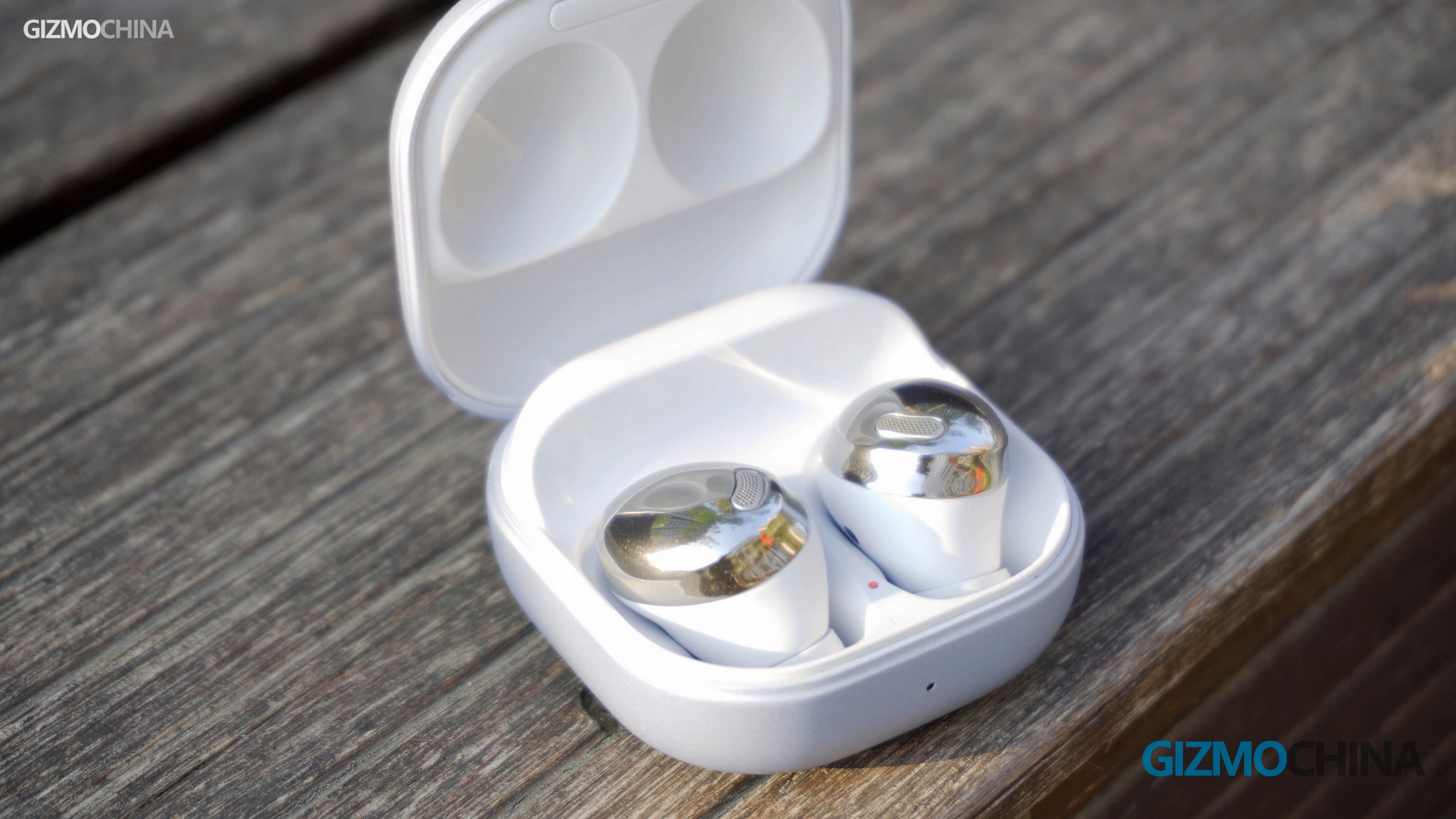
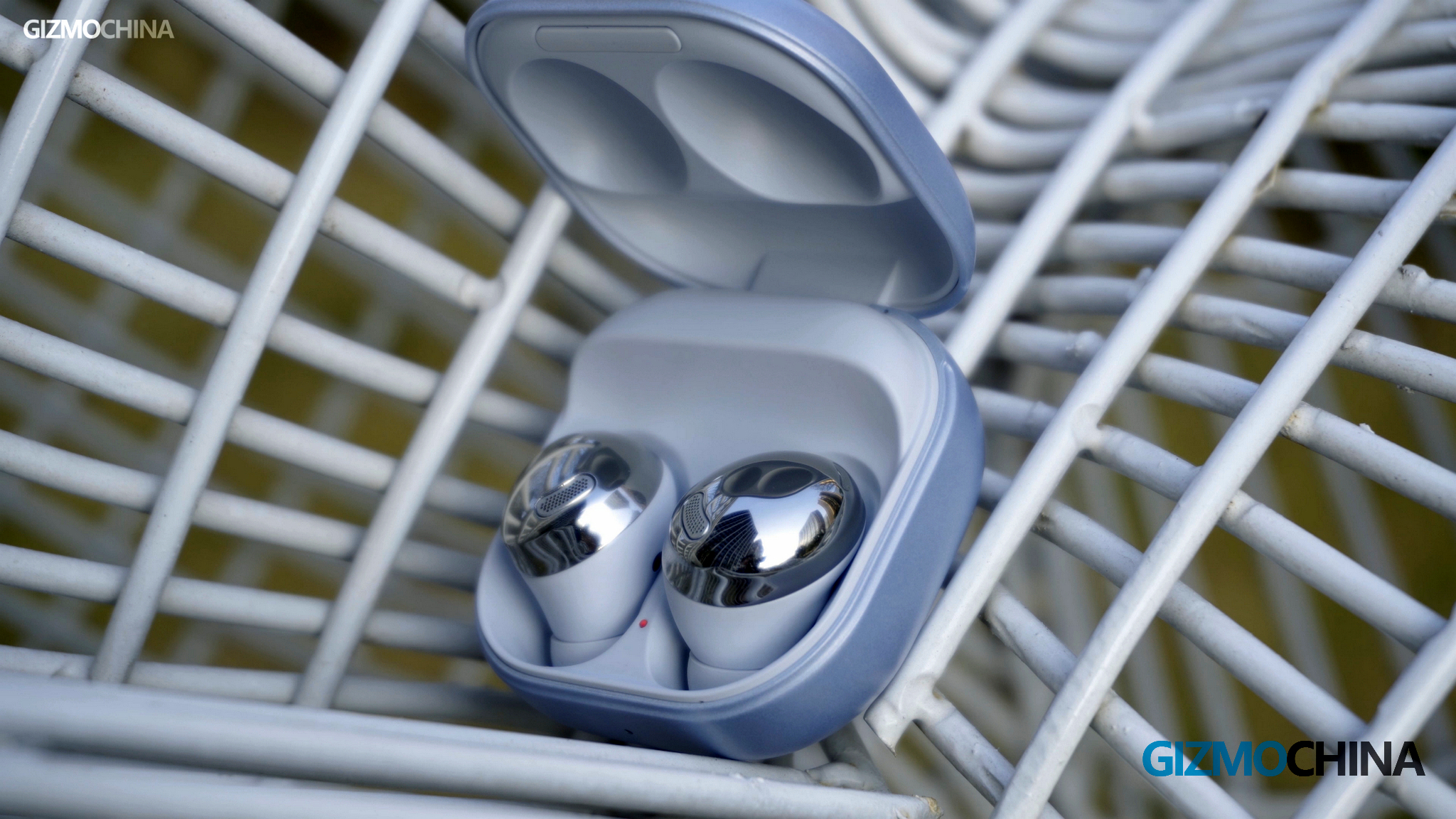
I don’t have to remind you how similar most earbuds from Android phone manufacturers are these days. So the Samsung Galaxy Buds Pro wins in the appearance department over a bunch of Airpods Pro imitators.
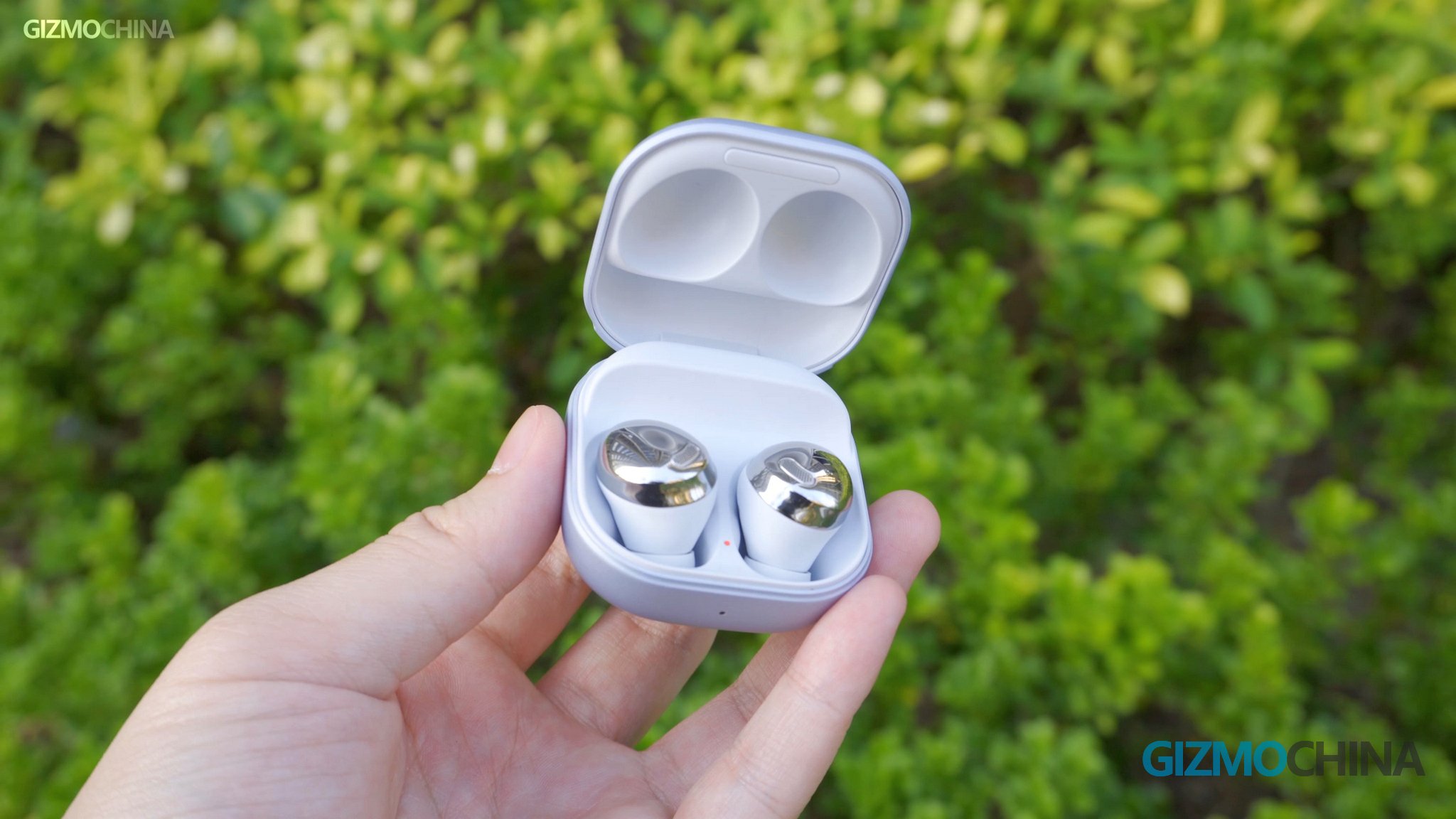
The case is also very compact and very handy to tuck in your pocket. We got the Buds Pro in silver, and the metallic colour finish feels very nice. It’s understated with a bit of flair. The wearing style is the same as other Galaxy Buds. You have to insert the buds into the ear and then rotate it to fit securely. Stability and comfort are also great, and they don’t fall out as easily as some earbuds, say the Xiaomi Air 2 Pro for example. All in all, you don’t need to worry about Samsung’s efforts in terms of design and wearing comfort.
Galaxy Buds Pro Review: Noise Canceling Performance & Sound Quality
The noise-canceling performance of the Galaxy buds pro is even better. It has one of the strongest noise cancellation experiences of any earbuds we’ve tested. It is similar to Huawei’s Freebuds Pro. But unlike Huawei’s earbuds, it doesn’t automatically adjust the noise cancellation level. However, the Galaxy Buds Pro has a lower ear pressure than the Freebuds Pro. So it’s not uncomfortable even if the noise cancellation is set to the strongest setting.
And it has a special feature. It automatically detects when you are speaking and switches to the ambient mode and lowers the volume. This allows you to talk to a person without having to take off your headphones. However, this function is not triggered when the other person is speaking. So if the other person speaks to you first, the first few words will often be inaudible. Other than that, it works fine. It also works on non-Samsung phones. The probability of it being triggered by mistake is also very low. So it’s a feature that can be always turned on when you are wearing the buds.
Although the Galaxy buds Pro’s Bluetooth audio decoding is AAC-only, with AKG tuning and its own experience, the Galaxy Buds Pro’s sound quality is very good. It’s in the top tier segment of the TWS market. There is no need to worry about latency either. Video platforms will synchronize audio and video through algorithms, while games can reduce latency by enabling game mode. With gaming mode on, the experience is almost identical to that of the AirPods Pro, with almost negligible latency. But as I said at the beginning, there is no game mode for non-Samsung phones. So the latency is high enough to affect your gaming experience.
360 audio is also an interesting feature. It’s similar to the Airpods pro with spatial audio. It adds a sense of immersion while watching movies. But the actual experience effect is not so obvious. You need to be very attentive to notice the difference. Of course, this is a feature exclusive to Samsung phone users.
What surprised me most wasn’t the features that Samsung advertised at launch. Rather, it was the ease of switching between multiple devices. Many TWS can only be matched one-to-one. If you want to switch device audio, you need to re-connect, which is a pain. The Samsung Galaxy buds pro only requires you to click on a device that has been successfully matched before and the audio will switch to that device. And there is no limit as to the brand model or the number of devices. It doesn’t matter if you have a Xiaomi phone or a HUAWEI phone, or a PC with windows, you can switch with one click. If you have a multi-device scenario, you’ll know how great this switching experience is. This is the main reason why I liked the Galaxy Buds Pro so much.
Galaxy Buds Pro Review: Battery Life
While the Galaxy buds pro may not be the strongest in every category, it performs well enough in every single one of them. And personally, for me, this makes the Galaxy Buds Pro, the best TWS in the Android camp.
Do you think there is a better noise-canceling TWS headset than this? Share your thoughts with us in the comments section. We’ll try to buy it and review it for you.
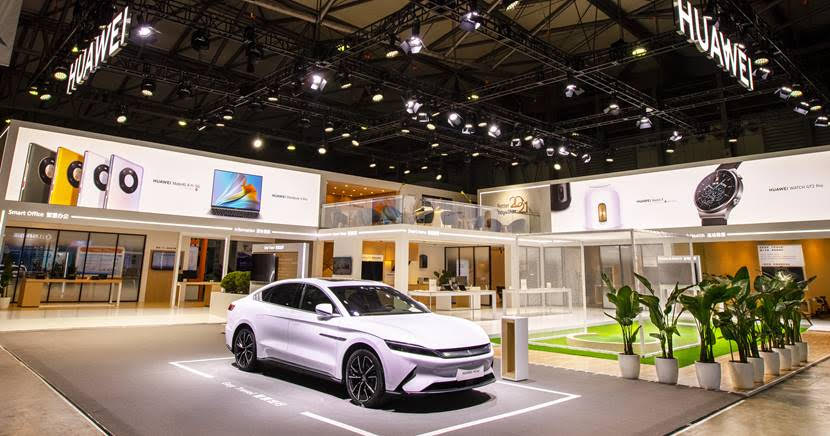
Huawei has over the years established itself as an active player in the car manufacturing industry with several products and solutions aimed at making driving easy and fun. But last month, a report did emerge that the company was planning to make a full entry into the electric vehicles market. The move is said to be part of efforts to cushion the effect of the US ban which has resulted in the near-collapse of Huawei’s smartphone business.
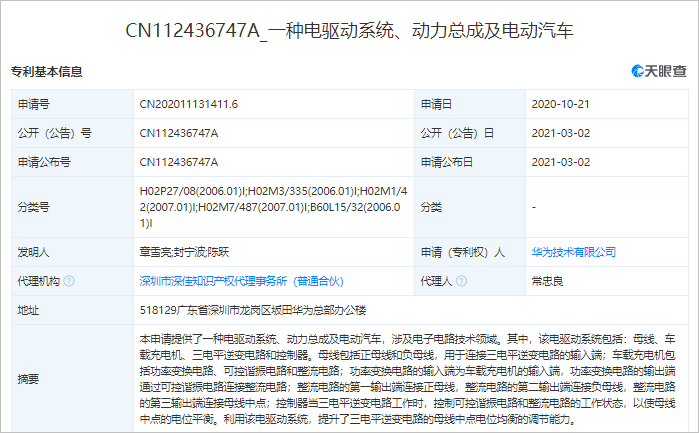
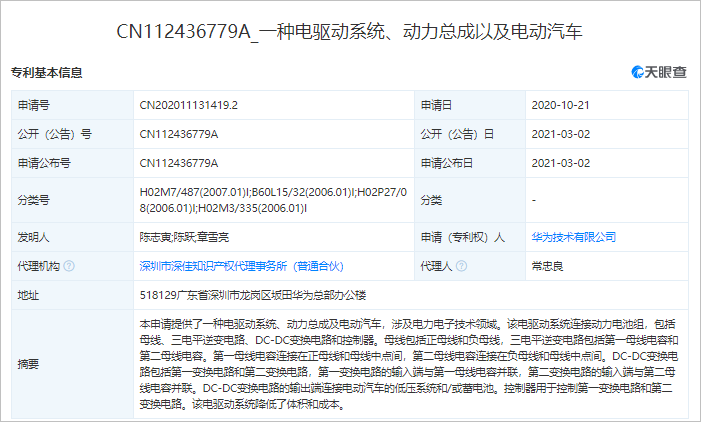
The report may have some truth it after all. A couple of patents relating to EVs have been spotted. Specifically, two patents filed by Huawei Technologies Co., Ltd. titled “An Electric Drive System, Powertrain, and Electric Vehicle”. The patents were both filed on October 21, 2021, and have the application numbers CN112436747A and CN112436779A.
The patent description published with the model bearing the application number CN112436747A shows that this application provides an electric drive system, a powertrain, and an electric vehicle, which involves the technical field of electronic circuits. Among them, the electric drive system includes a bus, an on-board charger, a three-level inverter circuit, and a controller.
The second patent with application number CN112436779A is also for an electric drive system, a powertrain, and an electric vehicle, which involves the field of power electronics technology. The electric drive system is connected to the power battery pack and includes a bus bar, a three-level inverter circuit, a DC-DC conversion circuit, and a controller. The controller is used to control the first conversion circuit and the second conversion circuit. The electric drive system reduces the volume and cost.
These are technical terms that may not make much sense to someone not familiar with EV systems but the bottom line is that Huawei may likely be working on its own EV. Do bear in mind, though, that the EV may not arrive any time soon.
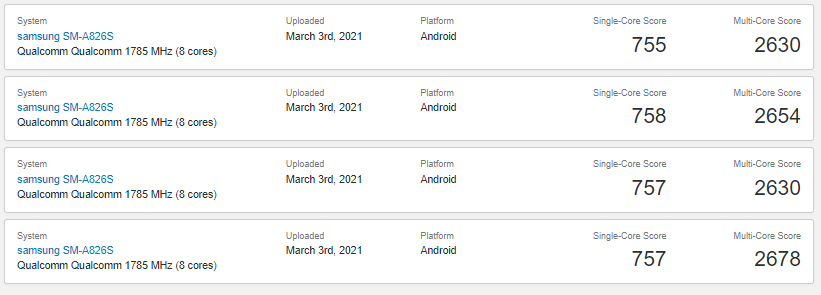
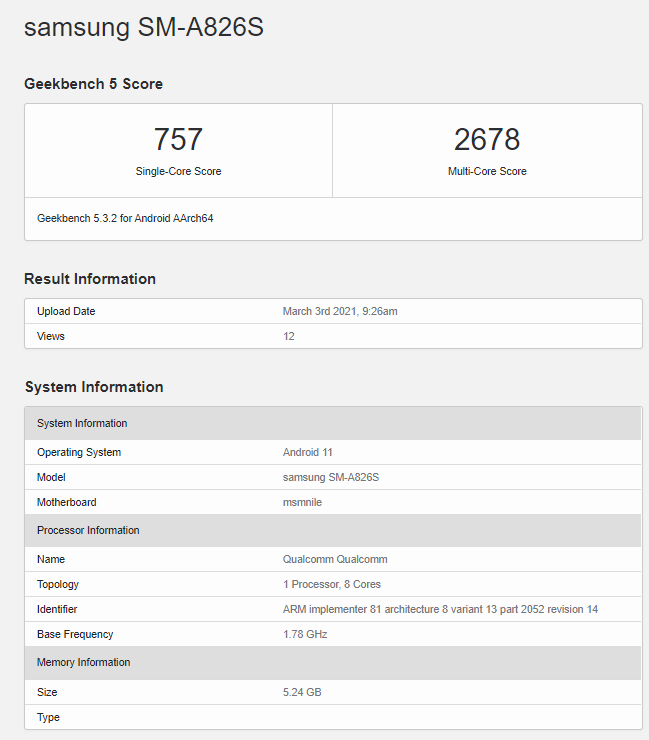
The Galaxy A80 launched in 2019 as Samsung’s first full-screen device with no notch or punch hole. It was able to achieve this by adopting a slider+ rotating camera design. There have been reports of a successor that will launch as the Galaxy A82, and now it has been spotted on Geekbench with an old but powerful processor.
Multiple benchmark results of the upcoming device, first spotted by Ankit, have appeared on Geekbench under the name “samsung SM-A826S”. The scores are similar and all of the results show that the phone’s processor (motherboard) is “msmnile” a.k.a. the Snapdragon 855, Qualcomm’s 2019 flagship processor. This is definitely an upgrade from the Snapdragon 730G which made its debut in the Galaxy A80 but the fact is that it is a two-year-old flagship chipset.
Actually, we should not be too surprised as Samsung has shown more than a few times already that it is comfortable with using chipsets from its flagships a few years ago for newer devices. The recently launched Galaxy F62 is an example as it uses the Exynos 9825 processor that powered the Galaxy Note10. Another example is the Galaxy Note 10 Lite which launched in early 2020 but uses the Exynos 9810 processor found inside the Galaxy S9 from 2018.
Our guess is that Samsung probably has a lot of these old chipsets in stock and the best way to get rid of them is to ship them with new devices.
The Geekbench result shows that the Galaxy A82 will run Android 11 out of the box and have 6GB of RAM. While we know that the Snapdragon 855 doesn’t have a built-in 5G modem, earlier reports have revealed that the Galaxy A82 will have 5G support. This means that it will have a separate 5G modem just like other 5G phones powered by the same chipset.
Samsung is expected to launch the phone in a few months but we expect more details including its design to surface before an official announcement.
Xiaomi released a brand new flagship killer for the Chinese market: the Redmi K40 Pro+. According to rumors, the K40 series will hit the global market under the POCO brand, but the arrival of this device in the global market is yet to be confirmed. Meanwhile, given its amazing specifications, we think it is worth comparing it with one of the latest flagships released by Samsung. Given the specifications and the price range of the K40 Pro+, we decided to compare it with the base variant of the Galaxy S21 series: the vanilla Samsung Galaxy S21.
Xiaomi Redmi K40 Pro+ vs Samsung Galaxy S21
Xiaomi Redmi K40 Pro+
Samsung Galaxy S21
DIMENSIONS AND WEIGHT
163.7 x 76.4 x 7.8 mm, 196 grams
151.7 x 71.2 x 7.9 mm, 169 grams
DISPLAY
6.67 inches, 1080 x 2400p (Full HD+), Super AMOLED
6.2 inches, 1080 x 2400p (Full HD+), Dynamic AMOLED 2X
The Samsung Galaxy S21 has a slightly more futuristic design than the Redmi K40 Pro+, at least in my opinion. I love its minimalistic camera module, but on the other hand, the K40 Pro+ provides great materials including a glass back. The Samsung Galaxy S21 has a plastic back, but it comes with a front panel protected by Gorilla Glass Victus and an aluminum frame. The Samsung Galaxy S21 is even waterproof with the IP68 certification, while K40 Pro+ only offers protection against splashes with the IP53 certification. Last but not least, Samsung Galaxy S21 is way more compact and lighter.
Display
The Samsung Galaxy S21 and the Redmi K40 Pro+ are very close when it comes to display quality. They both feature AMOLED display with vibrant colors, deep blacks, 120 Hz refresh rates, the HDR10+ certification, and a high 1300 nits peak brightness. Note that they have high-end displays, but not the best displays out there. Their resolution is Full HD+ and they provide great image quality, but you can actually find better displays such as the one of the Galaxy S21 Ultra or the OPPO Find X3 Pro. The biggest difference between these displays is the diagonal: you get 6.67 inches with the K40 Pro+ and just 6.2 inches with the Samsung Galaxy S21. Further, the Samsung Galaxy S21 has an ultrasonic fingerprint reader (actually better), while the K40 Pro+ has an optical fingerprint scanner.
Specs & Software
The European version of the Samsung Galaxy S21 is the most disappointing one as it comes with an inferior Exynos 2100 chipset (that is actually inferior especially in terms of power management). The U.S. version of the Samsung Galaxy S21 and the Redmi K40 Pro+ pack a Snapdragon 888 mobile platform, but you actually get a higher amount of RAM with the Redmi K40 Pro+ (12 GB). The phones run Android 11 out of the box and Samsung confirmed that the Galaxy S21 will get three years of major Android updates and four years of security updates.
Camera
The winner of the camera comparison is Samsung Galaxy S21. Unlike the Redmi K40 Pro+, it features OIS and a telephoto lens with optical zoom. It is composed of a 12 MP main sensor, a 64 MP telephoto lens, and a 12 MP ultrawide camera. It also provides a better 10 MP front camera which can record 4K videos at 60 fps. Both the phones support 8K video recording from the rear camera. Do not get fooled by the camera resolutions: as you just read, the fact that Redmi K40 Pro+ has a 108 MP main camera does not mean it is a better camera phone than Samsung Galaxy S21.
The Redmi K40 Pro+ provides a longer battery life thanks to its bigger 4520 mAh battery but, unlike the Samsung Galaxy S21, it lacks wireless charging and reverse wireless charging. With the Redmi K40 Pro+, you get a faster charging speed thanks to 33W wired charging technology, but given that the battery is bigger, the charging time of the two phones is similar.
Price
The starting price of the Redmi K40 Pro+ in China is about €470/$567, while the Samsung Galaxy S21 is priced at about €800/$965 in its base variant. Unfortunately, the Redmi K40 Pro+ is only available in the Chinese market, while Samsung Galaxy S21 is the only one available globally. Overall, the Samsung Galaxy S21 looks like a better device due to the waterproof design, great build quality, compact body, and great cameras. But if you do not like compact phones and you want above-average battery life, you should go for the Redmi K40 Pro+.
Xiaomi Redmi K40 Pro+ vs Samsung Galaxy S21: PRO and CONS
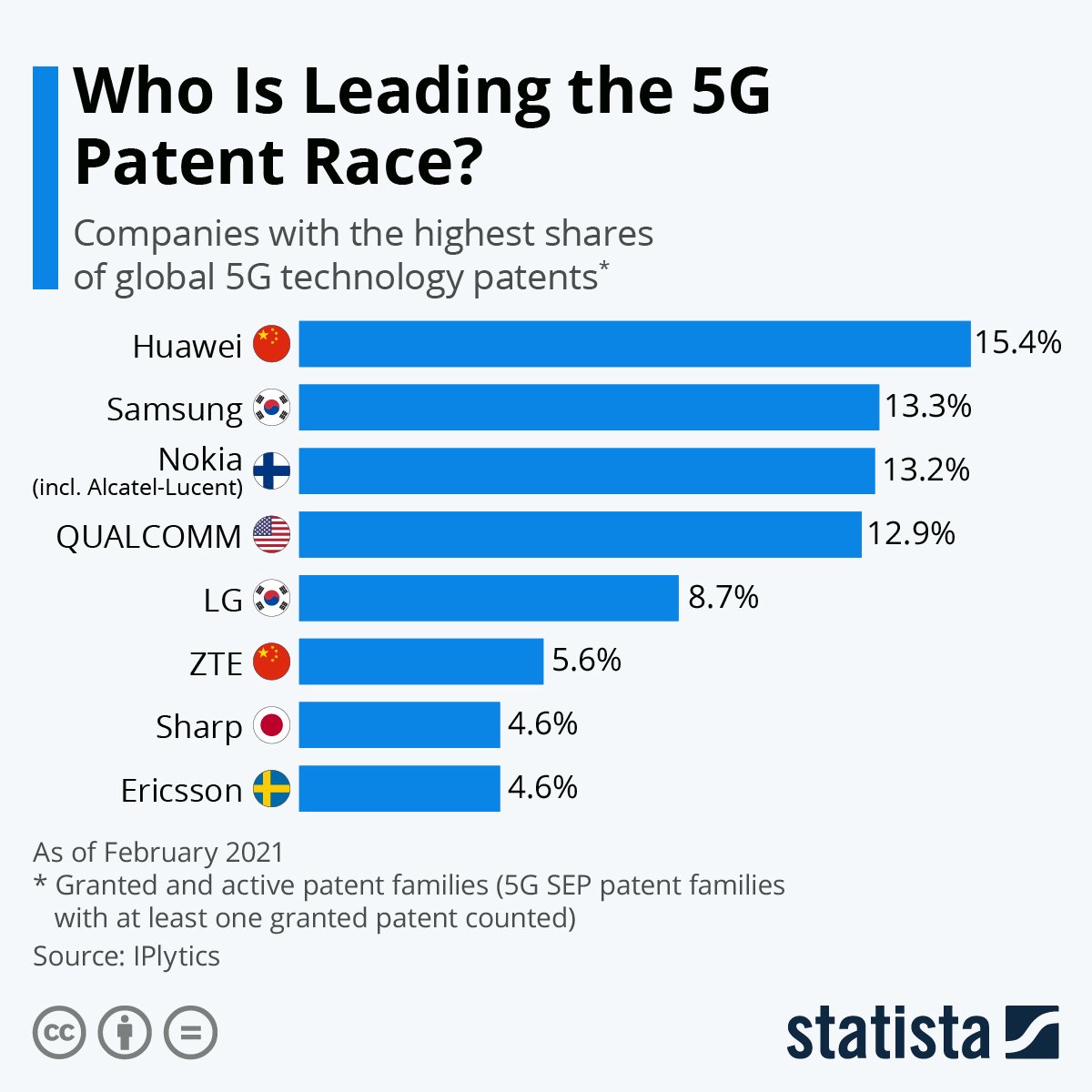
In spite of a very turbulent 2020, coupled with a very vicious sanction regime that had negatively impacted its fortunes, global tech powerhouse Huawei is still high at the leaderboard as far as global 5G technology patents are concerned.
Image source: Statistica
Some industry insiders have said that the US was seriously threatened by the meteoric pace of Huawei in 5G technology and had to act decisively to thwart the growth of the company along these lines. The restrictions notwithstanding, Huawei has continued to develop 5G technology by navigating through the maze of problems that ensued in the aftermath of the US ban.
In a clear indication of its leadership of the 5G race, the list of global patents for 5G technology compiled by IPlytics showed that Huawei is the leading company and accounts for more than 15% of active patents globally as at February 2021. US chipmaker Qualcomm has the next highest number of active patents. Manufacturers from South Korea, as well as Chinese company ZTE also are at the top of the list provided by IPlytics.
However, the process of granting patents is a very rigorous one and the list may be updated when new patents are registered. Patents can take years from application to when the patent is actually granted, so the rankings as compiled by IPlytics are the culmination of serious work in R&D by the companies.
Huawei also tops the global ranking with the most 5G applications overall. The performance of the Chinese tech powerhouse amidst a very large field of powerful competitors from the US, Europe, and South Korea, coupled with its own scars from the US shutdown, maybe the cloud with a silver lining for the company, as it continues to diversify its core operations to meet the challenges of remaining viable.
We use cookies on our website to give you the most relevant experience by remembering your preferences and repeat visits. By clicking “Accept”, you consent to the use of ALL the cookies.
This website uses cookies to improve your experience while you navigate through the website. Out of these, the cookies that are categorized as necessary are stored on your browser as they are essential for the working of basic functionalities of the website. We also use third-party cookies that help us analyze and understand how you use this website. These cookies will be stored in your browser only with your consent. You also have the option to opt-out of these cookies. But opting out of some of these cookies may affect your browsing experience.
Necessary cookies are absolutely essential for the website to function properly. This category only includes cookies that ensures basic functionalities and security features of the website. These cookies do not store any personal information.
Any cookies that may not be particularly necessary for the website to function and is used specifically to collect user personal data via analytics, ads, other embedded contents are termed as non-necessary cookies. It is mandatory to procure user consent prior to running these cookies on your website.