Advertisement

Redmi Note 10 hands-on video reveals AMOLED screen, rear design, key details

Earlier this week, a leaked photo of Xiaomi Redmi Note 10’s retail box was spotted on social sites. Today, an Indian retailer named Anis Mobile released a hands-on video of the device to reveal some of its key features and specs.

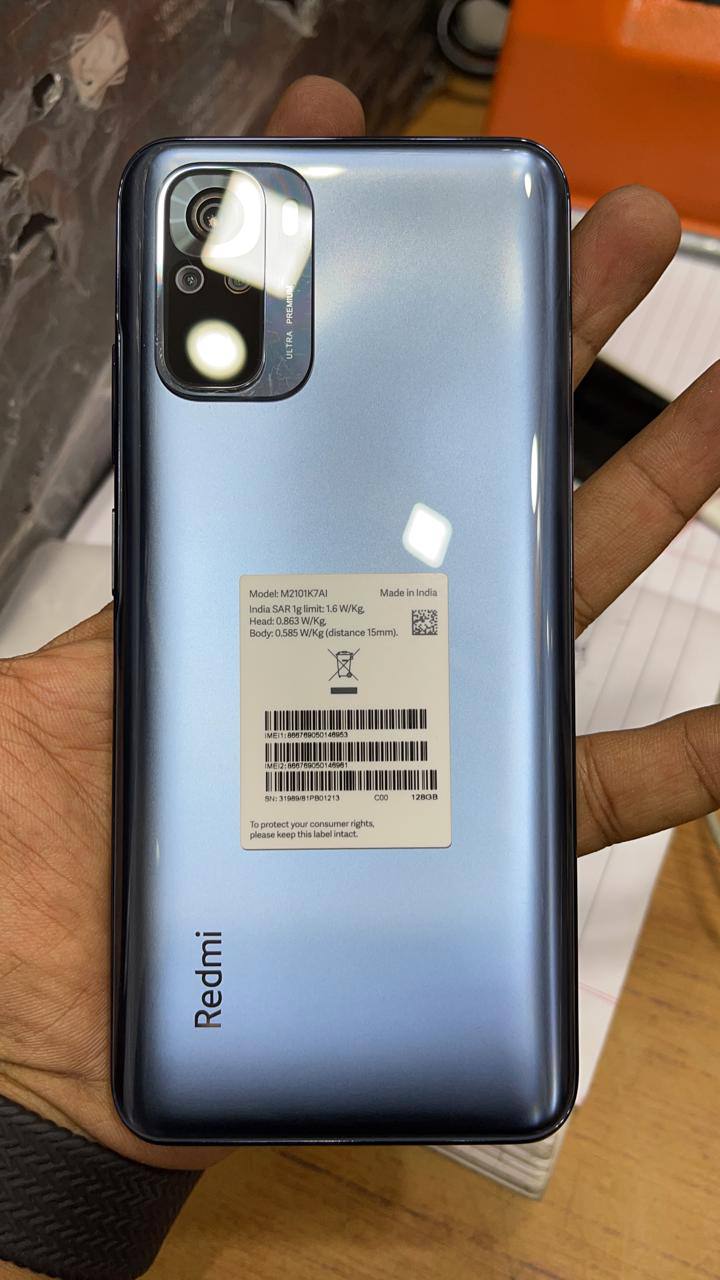
Reports have revealed that the Redmi Note 10 will be available in three colors like green, white, and grey. The hands-on video which has been taken down showcased the grey model with a curved back. It seems that the device could be equipped with a polycarbonate rear.

The M2101K7AI model number which belongs to the Indian variant can be seen mentioned on the label placed on the back panel. At the upper-left corner is a quad-camera module. Speculations are rife that it has a 48-megapixel primary camera.

The Redmi Note 10 will be arriving as the first Note series phone featuring an AMOLED screen. The Settings page reveals that it will come with an Always-on Display function that is found on phones with AMOLED panels. Rumors have claimed that it will offer a conventional refresh rate of 60Hz.
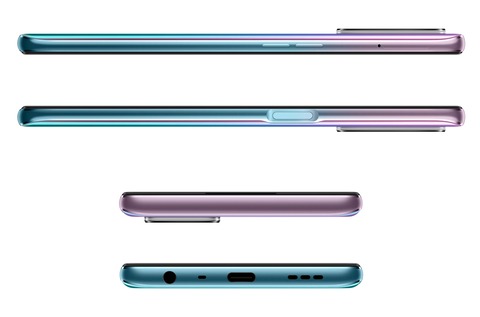
The top edge of the Redmi Note 10 seems to feature a loudspeaker and an IR blaster. Its bottom edge has another loudspeaker, a USB-C port, and a 3.5mm audio jack. It has a side-mounted fingerprint reader.

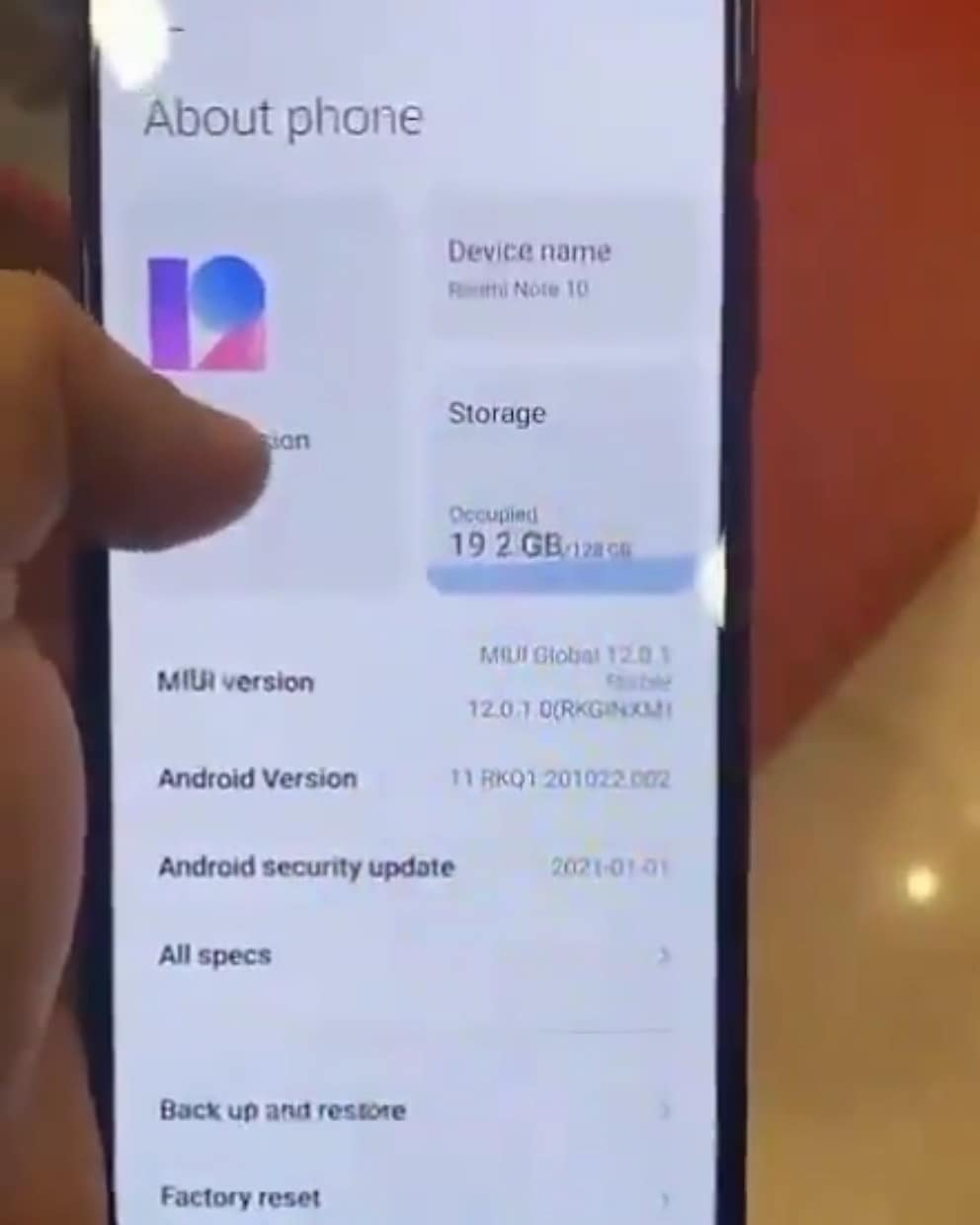
The About phone page reveals that the Redmi Note 10 has an internal storage of 128 GB. The phone is equipped with MIUI 12.0.1 based Android 11 OS and January 2021’s Android security patch.

Rumors have it that the Redmi Note 10 will draw power from Snapdragon 678 chipset. There is no information available on the display size, battery capacity, and fast charging capabilities of the device. According to Anis Mobiles, the Redmi Note 10 is priced at Rs 17,000 (~$235).

The Redmi Note 10 will go official on March 4 along with other models such as Redmi Note 10 Pro and Redmi Note 10 Pro Max.

RELATED:

Huawei Founder seeks to make ‘first-class’ products from ‘third-class’ components

Huawei Founder, Ren Zhengfei, has stated that it seeks to make ‘first-class’ products from ‘third-class’ components, as a part of its efforts to strengthen its position despite the difficult situation it is currently in.

Huawei Logo MWC 2019

According to an SCMP report, the senior executive made the statement to highlight the company’s aim to sharpen its focus to ensure the survival of the brand. Ren said that the company must try to use “third class” components to manufacture “first class” products during an internal meeting, which arrives amid its struggles caused by the US trade restrictions. The Founder stated that “In the past, we have ‘spare parts’ for high-end products. But now the US has completely blocked Huawei’s access [to such components] and even commercialized products cannot be supplied to us.”

He further added that the Chinese tech giant has to “work hard to sell products and services that can be sold and [help] maintain the market position of [its]core business” in 2021. “In terms of market strategy … we must dare to abandon some countries, some customers, some products and some scenarios.” This statement is in line with Ren’s previous speech, in which he said that the company has to decentralize its operations, while also simplifying its product line and focusing on generating profit to survive the US sanctions.

Zhengfei Ren, Huawei founder and CEO

Notably, Nicole Peng, vice-president of mobility at research firm Canalys stated that “It is already very challenging for Huawei to fight to survive, but the burden of developing China’s technology supply chain is way harder for a single company to bear. I believe that’s an area where Huawei wants to position itself to become one of the core pillars in China’s tech supply chain’s independence.” Similarly, Ren further added that “It will be difficult for us to rely solely on hardware to lead the world for a long time. We have to rely on software to remedy it.”

RELATED:


iQOO Neo5 launch date is March 16

iQOO is expected to bring a host of devices like the iQOO 7 to countries like India. In the meantime, it has finally locked the launch date for the iQOO Neo5 smartphone in China.

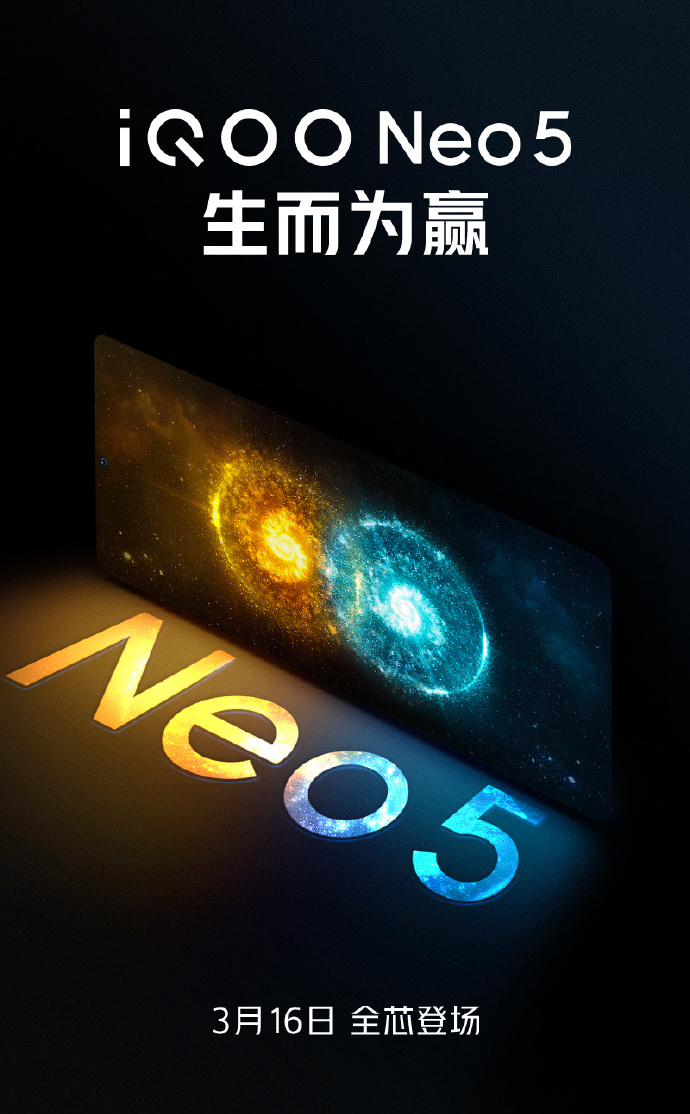
In a Weibo post, the company posted the announcement and confirmed the “iQOO Neo5” moniker. The device will debut in China on March 16. In a teaser poster, the company has also confirmed that the device will feature a centered punch-hole display.
Recently, a smartphone said to be the iQOO Neo5, has been appearing on the radar of leaks. It has a centered punch-hole similar to the one we see on the teaser image however, iQOO hasn’t revealed the complete design and specs yet.

Speaking of which, a retail box and charger leak also briefly showed the front of the Neo5 recently. Anyway, the display said to be an AMOLED panel with a 120Hz refresh rate. The resolution will at least be a 2400×1080(FHD+).

Under the hood, it will surprisingly be powered by Snapdragon 870 chipset, have up to 12GB RAM, 256GB storage, and run Android 11 OS. Other expected specs include a Triple-camera on the back with a 48MP Sony IMX 598 main lens, a 13MP ultra-wide, and a 2MP sensor.

Considering the predecessor, iQOO Neo3 had a 16MP selfie shooter upfront, we can expect the successor to at least have the same if not lower. The iQOO Neo5 will likely have a 4,400mAh battery with 66W FlashCharge support, SA/NSA 5G, Wi-Fi 6, NFC, and more.

Reports also say that iQOO might launch Neo5 at 2,999 yuan($465) which is about 300 yuan more than the predecessor’s launch price. However, we suggest you take this with a pinch of salt and wait for the official word.

RELATED:


Infinix X693 key specs and design revealed by FCC

Inifnix is one of the three Transsion brands other than TECNO and itel. The trio is popular in Africa, thanks to its affordable lineup of smartphones. According to FCC, Infinix may soon release a new handset with model number X693. Let us take a look at the specs and design of this device.

Infinix X693 FCC
Infinix X693 | Source: FCC

An upcoming Infinix smartphone with model number X693 has been certified by FCC (via Abhishek Yadav). The certification reveals the phone’s rear design and some of its specifications.

As per the documentation, this forthcoming device will be a 4G handset. Going by the design sketch for the label, the smartphone will feature a multiple-camera setup and ‘Infinix’ branding on its back. It will also house a 3.5mm headphone jack at the bottom.

On the connectivity front, apart from 4G, it will have support for 3G, 2G, WiFi, and Bluetooth. As for power, the phone will be backed by a 4,900mAh battery with support for 18W fast charging. A charger with model number CQ-18LX will be included in the box.

Lastly, the Infinix X693, whose marketing name is a mystery as of now, will measure 173 x 79 x 9mm in dimensions.

That said, this device could go official as Infinix Note 10. Because the Infinix Note 10 Pro, which is also yet to release, bears the model number X695 that differs by a single digit.

The Pro model is expected to arrive with MediaTek Helio G90T SoC, up to 8GB RAM/256GB internal storage, quad-camera setup, Android 11, and 33W fast charging.


RELATED:


vivo X60 and vivo X60 Pro certified by India’s BIS, Indonesia Telecom, and more

Chinese smartphone maker vivo debuted the vivo X60 series in late December 2020 in China. All the three handsets in the lineup, namely vivo X60, vivo X60 Pro, and vivo X60 Pro+ are reported to launch in India in the coming days. Ahead of their release, the vanilla and the Pro models have been now certified by BIS, EEC, TKDN, and Indonesia Telecom.

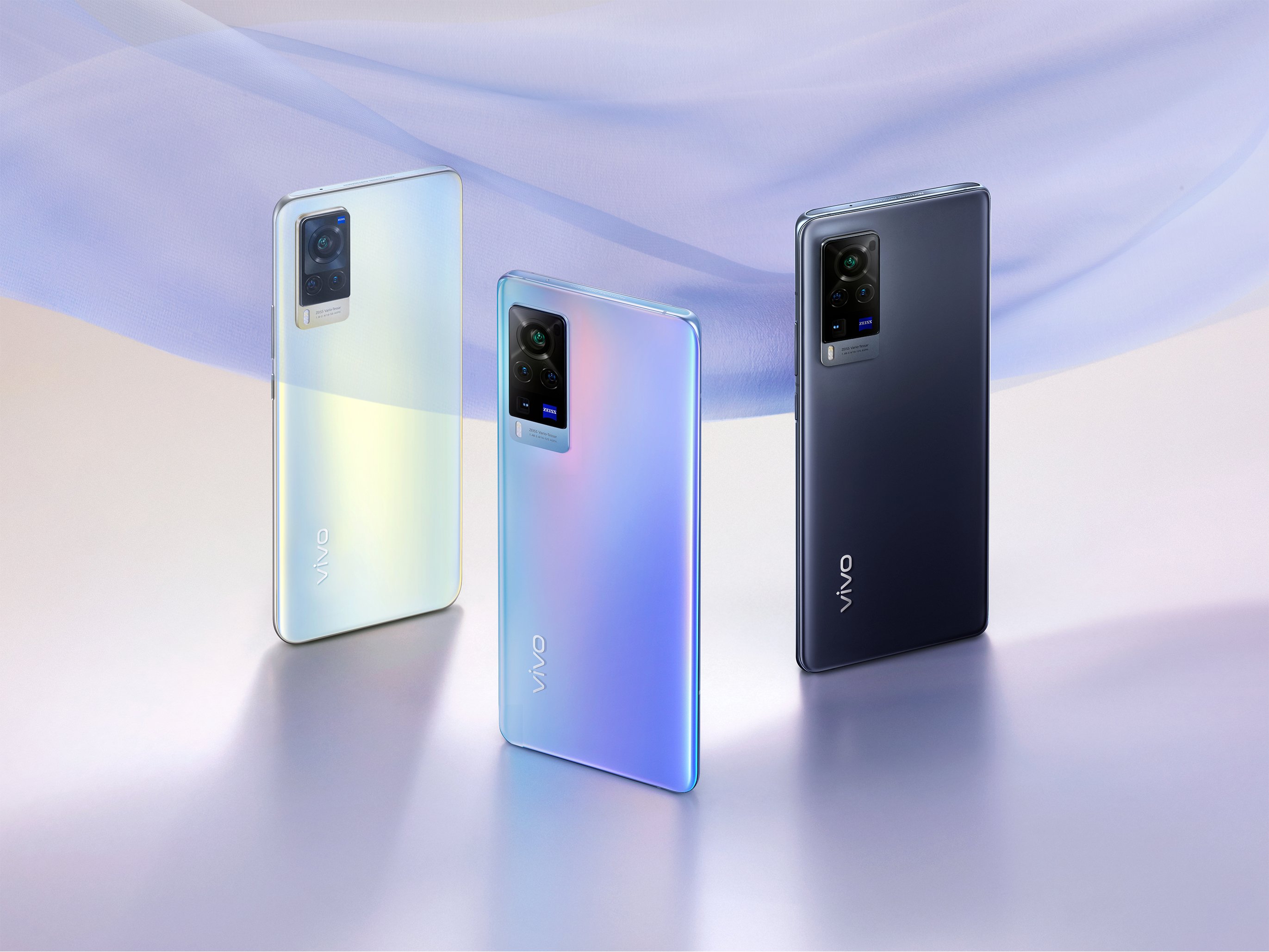
vivo X60 and vivo X60 Pro Featured 01

First and foremost, the standard vivo X60 with model number V2045 has been spotted by 91Mobiles on two certification bureaus, namely BIS and Indonesia Telecom. The certifications somewhat confirm this handset to launch in India and Indonesia respectively.

The same publication has also spotted the vivo X60 Pro with model number V2046 on EEC, TKDN, Indonesia Telecom, and BIS. Hence, we can expect this smartphone to release in Europe, Indonesia, and India respectively.

Since these phones are already official and are being sold in China for quite a while, we know everything about them. The vivo X60 and vivo X60 Pro are identical in terms of specs with some minor differences.
They come with a 6.56-inch FHD+ 120Hz AMOLED display, Exynos 1080 SoC, OriginOS based on Android 11, 32MP selfie camera, and 33W fast charging. But their rear camera setup and battery capacity are different.

The vivo X60 has a 48MP (wide) + 13MP (2x telephoto) + 13MP (ultra-wide) triple camera setup, while the vivo X60 Pro sports an additional 8MP 5x periscope unit. Lastly, the former has a 4,300mAh battery and the latter is backed by a slightly smaller 4,200mAh cell.


RELATED:


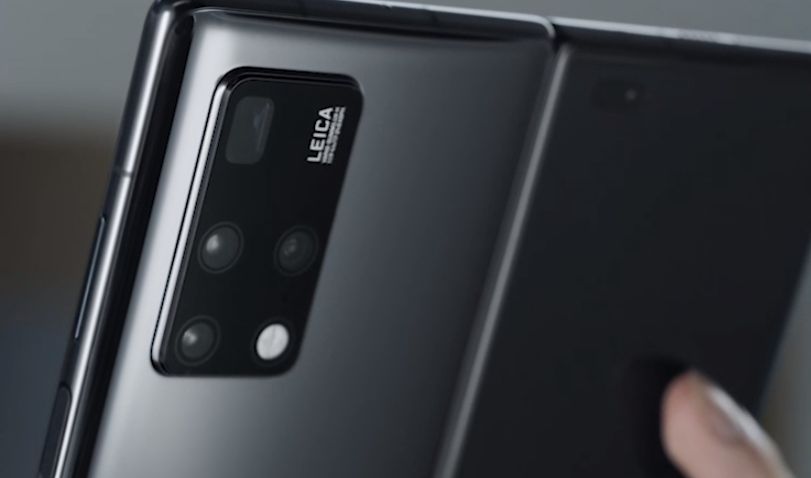
Scalpers are selling the Huawei Mate X2 at a premium of up to $1,500 to $3,000

The Huawei Mate X2, the company’s second generation of foldable smartphone, went on sale earlier today (25th February 2021). However, it seems that scalpers have targeted to the new device as well, selling these smartphone at a high premium.

Huawei

The Mate X2 foldable smartphone is officially priced at 17,999 Yuan (roughly 2,790 US Dollars) for the 256GB storage variant and 18,999 Yuan (roughly 2,944 US Dollars) for the 512GB storage variant. In other words, the new handset is an ultra high end device with a premium price tag. But, despite its high price, many people have already found that the placing an order for the foldable smartphone is not possible at the moment. Apparently, the option to place an order is not working, despite the device being in stock.

Furthermore, scalpers have also started reselling the device on other e commerce platforms at a higher price. These listings have been found in major websites like JD.com, with a premium ranging from 10,000 to 20,000 Yuan (roughly 1,500 to 3,000 US Dollars). Meaning, the 256GB Mate X2 variant that is priced at 17,999 Yuan is being sold for a price of around 28,888 Yuan, while a few other sellers are even pricing the device up to 38,366 Yuan.

Huawei

For those unaware, scalpers are basically people who acquire new products early on in large numbers to create an artificial scarcity, and resell these products on third party websites at a cost much higher than its actual price. This issue has recently been affecting various markets, like the newly launched console generations and even the GPU market as well. It remains to be seen how the Chinese tech giant deals with the situation.

RELATED:


Meizu 18 series teased, Pro variant to feature a 6.2 inch 2K display

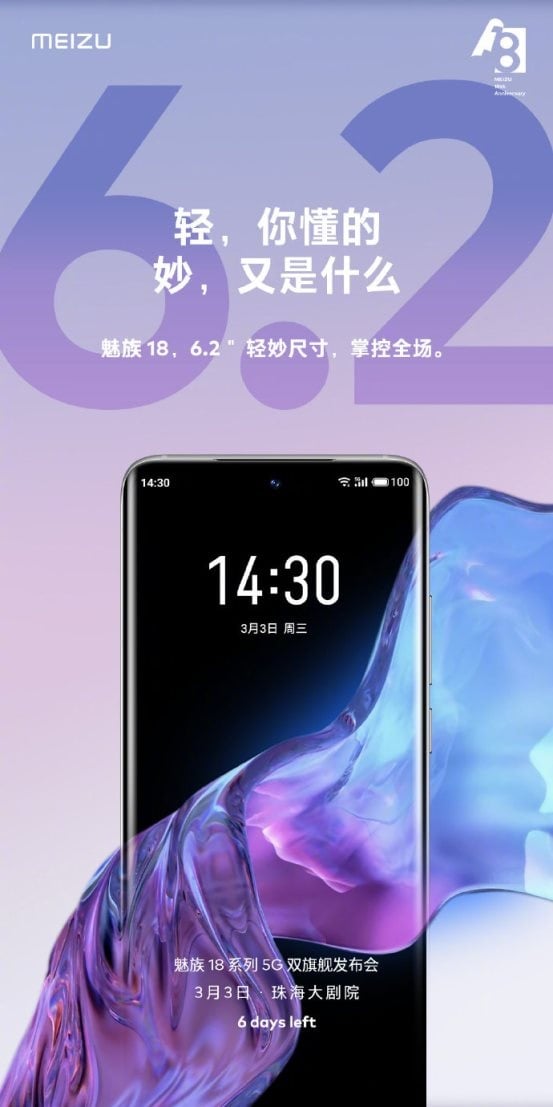
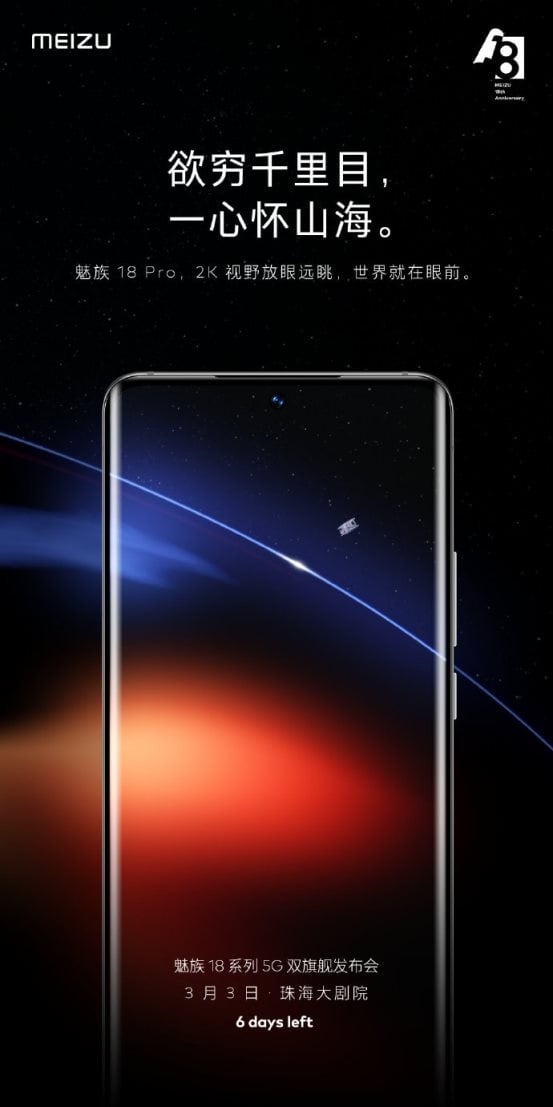
Earlier today (25th February 2021), the Meizu 18 series was officially teased by the company on its official Weibo account, a Chinese microblogging website. The new lineup will include the base Meizu 18 and 18 Pro variant.

Meizu

The Chinese smartphone manufacturer shared two posts online, with both carrying an image poster for both versions of the series. In these posts, the company teased the device’s display and also highlighted their lightweight design as well. Talking about the display, the base variant features a 6.2 inch screen and a punch hole selfie shooter on the front. The Pro version also features a 6.2 inch panel on the front and also arrives with 2K resolution.

At the moment, the finer details regarding the Meizu 18 series are still unknown. Although, it has been rumored that the Qualcomm Snapdragon 870 SoC will be sported under the hood along with 8GB of RAM and up to 256GB of internal storage for the base variant, while the Pro variant is expected to feature a Snapdragon 888 SoC. Furthermore, the former is expected to feature a 64 megapixel triple camera module. On the other hand, the Pro version is said to house a quad camera module.

Meizu

Both the smartphones could be running the latest Android 11 operating system out of the box with the company’s own custom user interface. The Meizu 18 Pro is said to be powered by a 4,500mAh battery with 40W fast charging support. A recent leak suggests that both the smartphones are expected to have Samsung E4 AMOLED display with support for Full HD+ screen resolution and a high 120Hz refresh rate.

RELATED:


Most Shipped Smartphones in 2020: iPhone 11, Galaxy A51, Redmi Note 9 Pro & more

Market research firm Omdia has published a report on most shipped smartphones in 2020. As per the report, only three brands made it to the top 10, just like 2019. These companies were none other than Apple, Samsung, and Xiaomi.

Samsung Apple Xiaomi Logo

According to the chart released by Omdia, the iPhone 11 was the most shipped smartphone in 2020 with 64.8 million units in shipments and $754 ASP (Average Selling Price). For those unaware, this handset’s predecessor (iPhone XR) topped the list in 2019 but the units were less at 46.3 million and the ASP was a bit more at $777.

Further, the second, third, seventh, and tenth positions were also occupied by Apple with the 2020 iPhone SE (24.2 million), iPhone 12 (23.3 million), iPhone 12 Pro Max (16.8 million), and iPhone 12 Mini (14.8 million). The ASP of these models were $451, $896, $1,232, and $796 respectively.

Interestingly, the iPhone 12 Mini shipped more than the iPhone 12 Pro although numerous reports stated poor sales. The latter phone is not even included in Omdia’a top 10 chart.

Further, with Apple sitting in five places, Samsung captured four positions. The South Korean tech giant’s Galaxy A51 ($269), Galaxy A21s ($192), Galaxy A01 ($115), and Galaxy A11 ($158) came fourth, fifth, sixth, and eighth respectively. The shipments of these devices stood at 23.2 million, 19.4 million, 16.9 million, and 15.3 million units.

Lastly, the Redmi Note 9 Pro by Xiaomi was in ninth place with 15 million units in shipments and $161 ASP.

Most Shipped Smartphones In 2020

  1. iPhone 11
  2. iPhone SE (2020)
  3. iPhone 12
  4. Galaxy A51
  5. Galaxy A21s
  6. Galaxy A01
  7. iPhone 12 Pro Max
  8. Galaxy A11
  9. Redmi Note 9 Pro
  10. iPhone 12 Mini


RELATED:


(Via)

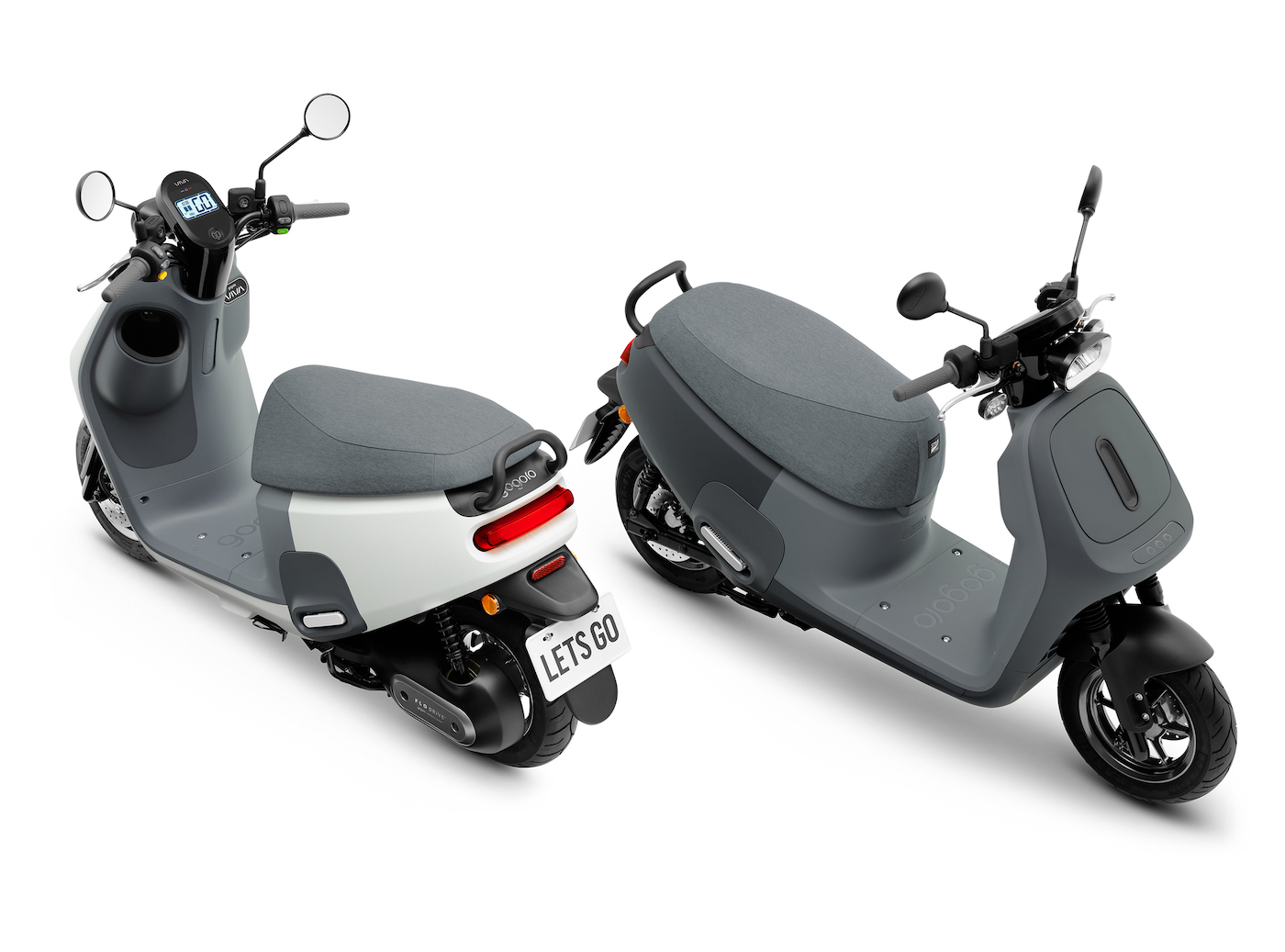
Gogoro VIVA MIX electric scooter offers a 150km range, 90km/h top speed & battery swapping

Just as electric vehicles are gaining grounds, so too electric scooters are becoming extremely popular. One of the market leaders in the electric scooter market is Taiwan-based company Gogoro. The company has now launched the VIVA MIX electric scooter in its home market.Gogoro VIVA MIX electric scooter

The new scooter brings onboard some improvement over the Viva model that was first introduced towards the end of 2019 as a compact and more affordable range of scooter. The new VIVA MIX model features a more powerful motor with improvement in the top speed and range. Gogoro also retains the battery swapping feature.

The VIVA MIX e-scooter packs a 6 kW (8 hp) motor than has a water- cooling design. The drivetrain includes a helical gear setup which teams up with a Gates carbon fiber belt to drive the rear wheel. The setup is known as FLO DRIVE and is touted to be both more durable and easier to maintain. Apart from being powerful, the drivetrain offers a 40% quieter ride experience.Gogoro VIVA MIX electric scooter

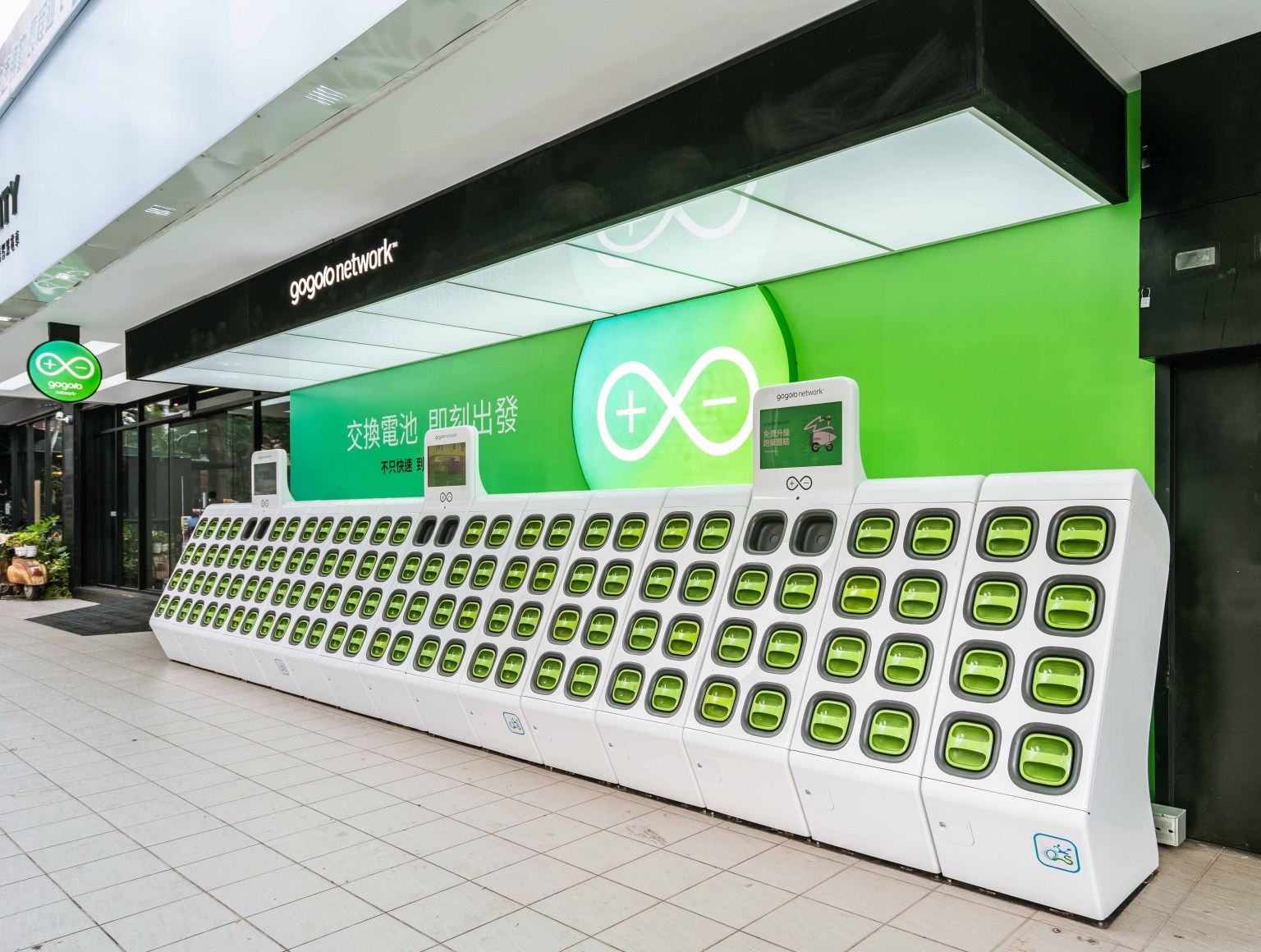
The battery is said to have a range of 150 km on a single charge but with Gogoro’s battery-swapping network of over 2,000 stations across Taiwan, you won’t need to look for a  way to charge the battery. You just have to locate a station and have the battery replaced before it runs out completely. The charging stations are usually within range in cities such as Taipei.

Gogoro VIVA MIX electric scooter
One of Gogoro’s battery swapping stations

The VIVA MIX comes in three-tone colorways of which the body panels are manufactured from durable and recyclable plastic that are scratch-resistant and more environmentally friendly. It features a comfy STYLO fabric seat an under the seat is a 23.9 liter storage area.

The scooter carries a starting price tag of TWD $59,980 (~$2,155) and is only available in Taiwan at present.

RELATED;

Analyst Dan Ives says Apple made a mistake not to have bought Netflix years back

US tech giant Apple would have taken its brand several notches higher if it had bought movie streaming platform Netflix. This is according to respected analyst Dan Ives, who feels Apple would have had a stranglehold in the video streaming segment with Netflix among the leading brands.Apple

Ives was of the view that the decision by founder and former CEO Steve Jobs as well as present CEO Tim Cook not to acquire Netflix several years ago was a huge strategic mistake

While it may be true that Apple could have been better off with the acquisition of Netflix, the company certainly has not fared badly over the years and continues to post great results while it expands to other segments of the tech ecosystem. It remains one of the biggest companies on the planet, posting groundbreaking financials regularly, and it has consistently released premium products from the iPhone, iPod, iPad, Apple TV, and several others.

And this is what Ives has projected, that Apple will continue to perform, as its market capitalization, which is currently about $2 trillion, is expected to hit $3 trillion by the end of 2021. Ives also feels that Apple may ultimately have to buy a Hollywood movie studio and is presently doing catch-up with the big hitters.netflix

According to Ives, the only way for Apple to match the pace of the top dogs in the streaming space is to buy a major Hollywood studio of its own so as to produce content that could square up with the heavy-hitters in the industry.

Apple continues to make inroads into new areas with talk of an Apple car in the works. The iPhone, iPad, AirPods, and other models continue to provide a huge quantum of profit while the outlook for the future remains very bright.

RELATED;

OPPO A54 5G specifications emerge, Snapdragon 480, 48MP quad cameras, 16MP front camera, and more revealed

OPPO is reportedly working on a new phone called the OPPO A54 4G. It is speculated to land in Europe with a pricing of around 200 euros (~$243) to 300 euros (~$365). Fresh information reveals that Japanese operator AU Kiddi (via) has already listed that the OPPO A54 5G with its specifications and images.

OPPO A54 5G
OPPO A54 5G

OPPO A54 5G specifications

The OPPO A54 5G has a 6.5-inch IPS LCD screen with a punch-hole design. It produces a Full HD+ resolution of 1080 x 2400 pixels. The phone runs on ColorOS 11 based Android 11 OS. It has a side-facing fingerprint scanner and AI face unlock support.

The Snapdragon 480 mobile platform fuels the OPPO A54 5G with 4 GB of RAM and 64 GB of built-in storage. It has a microSD card slot for additional storage. The device is backed by a 5,000mAh battery that supports 18W rapid charging.

OPPO A54 5G
OPPO A54 5G

It has a front camera of 16-megapixel and its back panel has a quad-camera setup. The latter includes a 48-megapixel main camera, an 8-megapixel sensor, and two 2-megapixel snappers. Its other features include Wi-Fi 802.11ac, Bluetooth 5.0, USB-C, and a 3.5mm audio jack.

The OPPO A54 5G looks a lot like the OPPO A93 5G that debuted in China last month. Both phones mainly differ in the camera department. The OPPO A93 5G has a 48-megapixel + 2-megapixel + 2-megapixel triple camera system and an 8-megapixel front camera. On the other side, the A54 has a better selfie camera and a quad-camera system. The other specs of the A54 5G match with the A93 5G.
OPPO A54 5G
OPPO A54 5G

OPPO A54 5G pricing

There AU Kiddi listing has no information on the pricing of the OPPO A54 5G. The listing reveals that it will be releasing in Japan after end of May, which suggests it may go on sale in June. It will be available in two colors as Fantastic Purple and Silver Black.

RELATED:

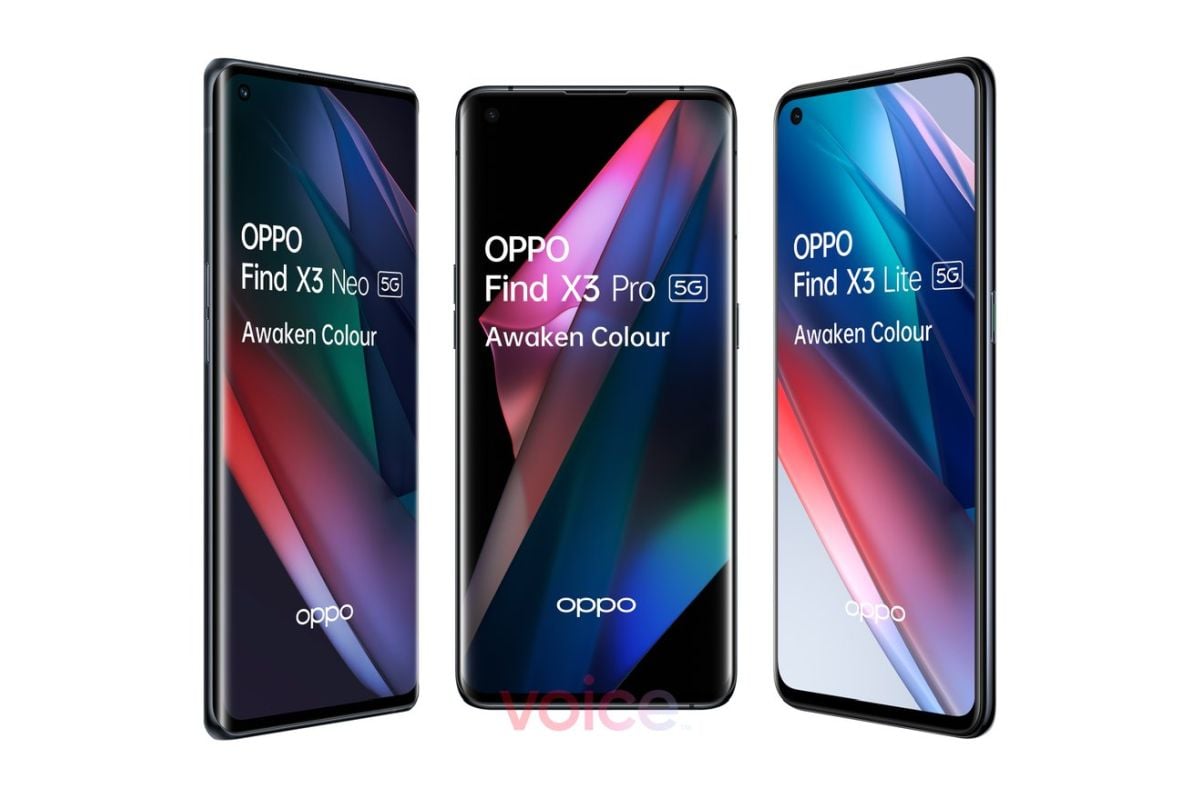
OPPO Find X3 Pro, X3 Neo, X3 Lite prices and color variants leaked before launch

OPPO is speculated to launch the Find X3 series of smartphones such as Find X3 Pro, Find X3 Neo, and Find X3 Lite in Europe on March 11. A fresh leak by 91mobiles has revealed the pricing of the Find X3 models. Also, the publication has shared the leaked pricing of two upcoming A-series smartphones such as OPPO A54 5G and OPPO A94 5G smartphones.

Citing tipster Sudhanshu Ambhore as the source, the publication revealed that the OPPO Find X3 Pro 5G will be in four colors such as blue, white, orange, and black. It will be available in a single variant featuring 12 GB of RAM and 256 GB of storage and it will be priced between 1000 euros (~$1,126) and 1200 euros (~$1,460).

The Find X3 Neo, which is expected to arrive as a rebranded OPPO Reno5 Pro+ handset will be available in Europe in two colors as silver and black. Its 12 GB RAM + 256 GB storage edition will be priced between 700 euros (~$851) and 800 euros (~$973).

OPPO Find X3 Neo, Find X3 Pro, and Find X3 Lite

The OPPO Find X3 Lite will be a rebranded version of China’s OPPO Reno5 5G smartphone. It will land in Europe in two color variants like blue and black. The 8 GB RAM + 128 GB storage edition of the device will be priced between 400 euros (~$486) and 500 euros (~$608).

The OPPO A94 5G could be coming to Europe in blue and black color variants and it could be priced between 300 euros (~$365) and 400 euros (~$487). At present, there is no concrete information on the specs of the device.

The OPPO A54 5G is said to arrive in purple and black colors and it may cost 200 euros (~$243) to 300 euros (~$365). It could be equipped with specs like a 90Hz 6.5-inch FHD+ screen, 48-megapixel quad cameras, Snapdragon 480, 4GB RAM, 64 GB storage, and a 5,000mAh battery with 18W charging support.

RELATED:

OPPO Reno5 K with Snapdragon 750G launched in China

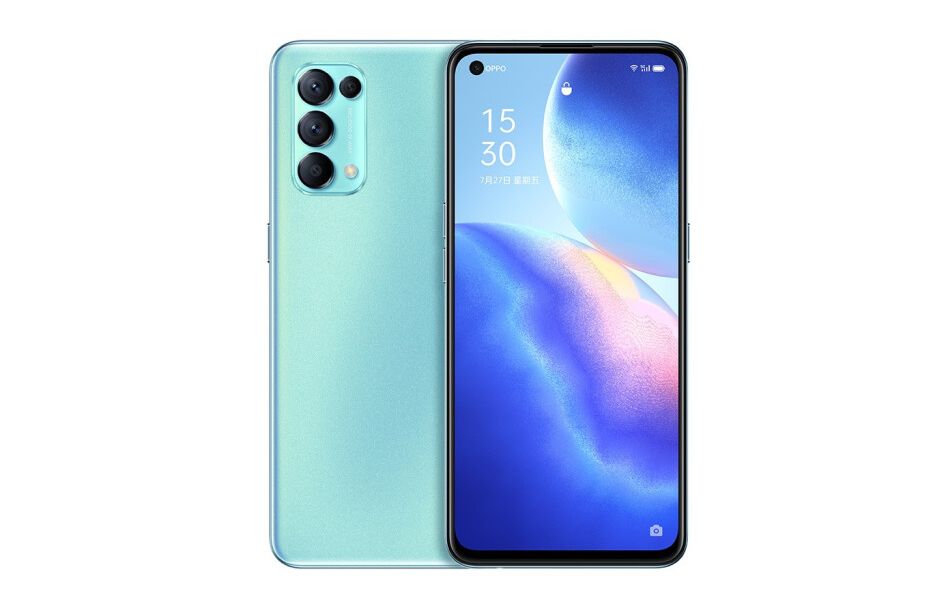
Today, OPPO took off covers from the OPPO Reno5 K smartphone in China. It is new chipset edition of the original OPPO Reno5 5G, which was announced in China back in December. Also, it comes in a new green color.

OPPO Reno5 K specifications and features

The OPPO Reno5 K sports an AMOLED punch-hole display of 6.43 inches. The screen produces a Full HD+ resolution of 1080 x 2400 pixels, a 20:9 aspect ratio, and a 90Hz refresh rate. A fingerprint sensor is embedded under the display of the device.

The Snapdragon 765G fueled the Reno5 5G, while the newly unveiled Reno5 K has the Snapdragon 750G chipset. The SoC is coupled with 8 GB of RAM and 128 GB of storage. It carries support for 65W fast charging for its 4,300mAh battery.

OPPO Reno5 K
OPPO Reno5 K

For snapping selfies, the OPPO Reno5 K possesses a front camera of 32-megapixel. The rear-facing camera module is led by a 64-megapixel camera. It is accompanied by an ultrawide lens of 8-megapixel, a macro lens of 2-megapixel, and a depth helper of 2-megapixel. The device is preloaded with a ColorOS 11 based Android 11 OS.

In terms of design, the OPPO Reno5 K resembles the original Reno5 5G. The device sports a slim profile of 7.9mm and it weighs only 180 grams. It lacks a microSD card slot and a 3.5mm audio jack. For connectivity, it supports dual SIM, 5G, Wi-Fi 802.11ac, Bluetooth 5.0, GPS, and USB-C.

OPPO Reno5 K pricing

OPPO is yet to reveal the pricing of the Reno5 K. The device will be up for purchase from March 6 in China. It will come in three hues such as Green Breeze, Starry Dream, and Midnight Black.

RELATED:

Lenovo Xiaoxin Pad Pro to be available for 1,999 yuan ($310) from March 2

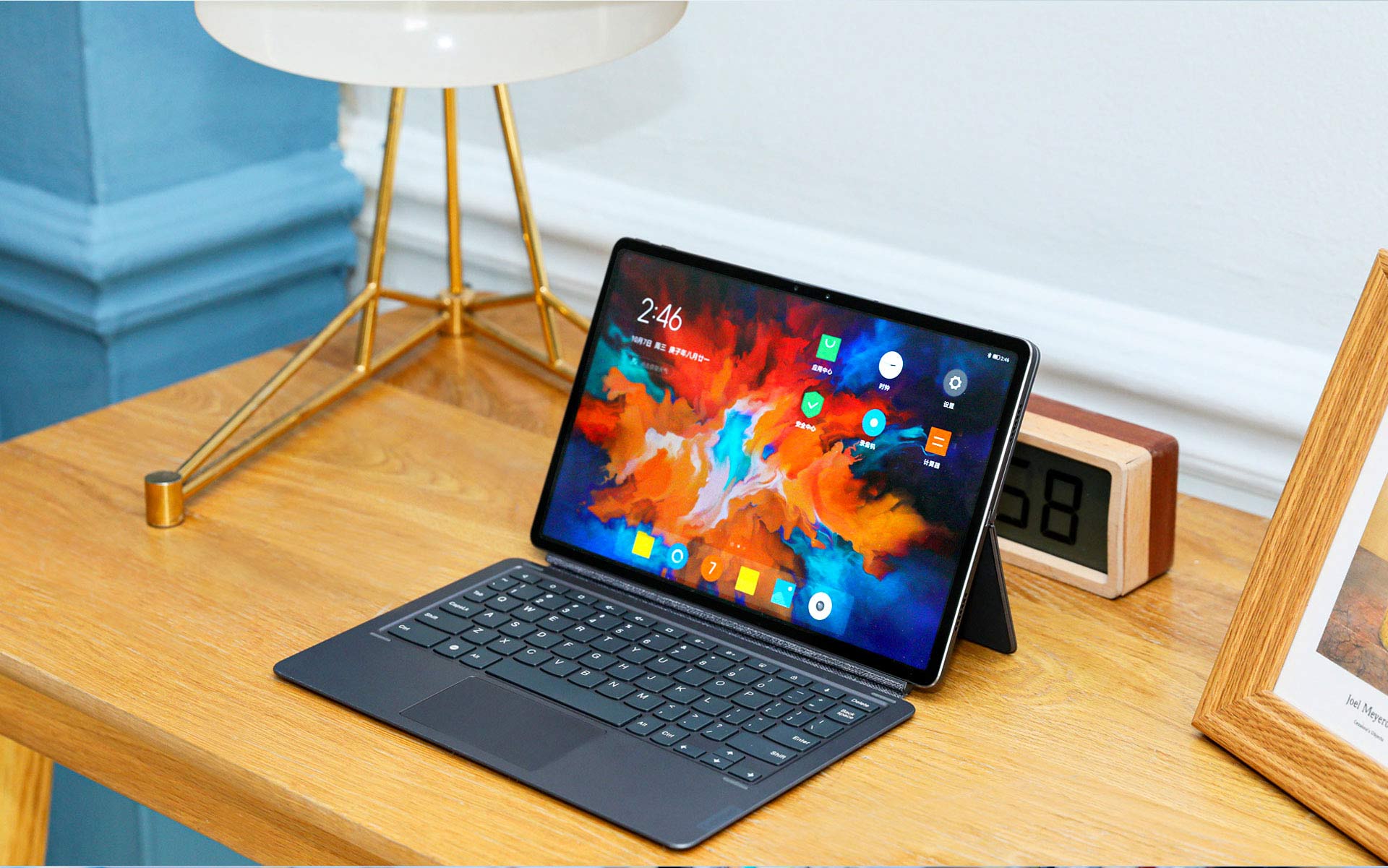
Last year, in October, Lenovo had launched two tablets in its home country China — Lenovo Xiaoxin Pad and Xiaoxin Pad Pro. These are the Chinese variants of the Tab P11 and Tab P11 Pro launched in other markets.

The Lenovo Xiaoxin Pad Pro is priced at 2,499 yuan (~$387) in China but the company was offering the device for 1,999 yuan during the initial sale. Now, the discounted pricing is back and the company has confirmed that the device will be available for purchase at 1,999 yuan (~$310) from 2nd March in China.

Lenovo Xiaoxin Pad Pro Featured

The tablet comes with a 2K 11.5-inch OLED display with a screen resolution of 2560 x 1600 pixels and 350 nits maximum brightness level. The company says that it supports 100% DCI-P3 color gamut and 108% NTSC color gamut.

It also supports Dolby Vision, HDR 10, DC Dimming, and Xiaoxin Stylus for input with 4096 pressure levels. The screen is also TÜV Rheinland-certified for low blue light emission.

Under the hood, the device is powered by the Qualcomm Snapdragon 730G processor, coupled with 6GB of RAM and 128GB of internal storage. In the camera department, there’s a dual-camera setup that includes 13MP + 5MP sensors. On the front side also there are two camera sensors, both of 8MP.

As for the connectivity, it supports dual-band Wi-Fi 5, Bluetooth 5.0, and GPS. It has 4-pin POGO connector for keyboard accessory, 6W JBL quad-speaker with support for Dolby Atmos, and is powered by a 8,600mAh battery that charges via USB Type-C 3.2 and has support for 20W fast charging.

RELATED: 

Apple iPhone 13 to reportedly use Qualcomm Snapdragon X60 5G modem

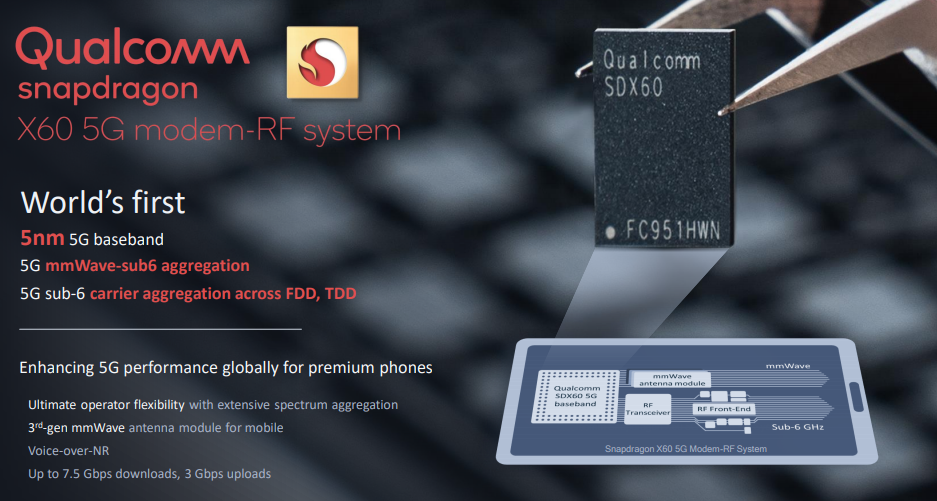
The newly launched iPhone 12 models from Apple come packed with the Qualcomm Snapdragon X55 modem and now as per the latest report, the upcoming iPhone 13 models will come with the Snapdragon X60 5G modem.

Do note that Qualcomm has already announced the Snapdragon X65 5G modem but it seems that Apple won’t be using the latest modem, maybe to keep the cost low. Given that the X60 5G modem is manufactured using Samsung’s 5nm node, it should offer improved battery performance.

Snapdragon X60

With this, the iPhone 13 models will also be able to aggregate 5G data from both mmWave and sub-6GHz bands simultaneously to achieve an optimal combination of high wireless data speeds and low-latency network coverage.

Previous reports have revealed that the iPhone 13 Pro and 13 Pro Max models will come with support for 120Hz refresh rate and the company will use LTPO panels from Samsung which can dynamically switch refresh rate between 1Hz to 120Hz depending on the type of content on the screen, helping save the battery life.

It is also being said that the iPhone 13 Pro models could feature an upgraded ultra-wide-angle lens with a varying aperture of f/1.8 for better low-light photography. A report also says that Apple could be expanding functionalities like LiDAR scanners and mobile image stabilization sensors to more models from this year.

Recently, it was reported that the Pro models in the upcoming iPhone lineup will come with a 1TB storage option. It is not yet known if the company plans to increase the storage capacity in the base model, which is currently at 128GB.

There are also rumors that the upcoming iPhone 13 models will come with a smaller notch on top of the display. The company is also said to include an in-display fingerprint in the iPhone 13 models, along with support for Wi-Fi 6E.

RELATED: 

Indian government approves $1.02 billion incentives to boost local manufacturing

A few days ago, we reported that Apple was in talks with the Indian government to start production of iPads in the country. It was reported that the tech giant is looking to reach a better deal for incentives from the government.

Now, the Indian government has approved a proposal to offer a billion dollars’ worth of incentives. The production-linked incentive (PLI) plan is aimed at manufacturing tablets and computing equipment.

Apple iPad Mini 5th Generation Featured
Apple iPad Mini 5th Generation

Apple was interested in using this incentives plan to begin iPad assembly in the Indian market. This $1.02 billion incentives plan aims to boost local manufacturing and exports of IT products such as laptops, tablets, personal computers and servers. It offers manufacturers cash-backs of between 1% and 4% of additional sales of locally made goods over four years, with 2019-2020 as the base year.

The incentives should help Apple set up its assemble operations for iPads in India through one of its manufacturing partners but it is not yet year if that will be enough. It is likely that Apple continues negotiating with the Indian government for a better deal.

Apple has been trying to diversify its manufacturing which is currently heavily dependent on China. The Cupertino-based giant first started making iPhones in India back in 2016 and has since increased production capacity in India, and is now also manufacturing iPhone 11.

RELATED: 

Apple iMac 2021 models to reportedly come in five color options

There have been several reports about the upcoming Apple devices and people are anticipating the next-generation Mac devices as the company has started shifting away from Intel to its own ARM-based Apple Silicon.

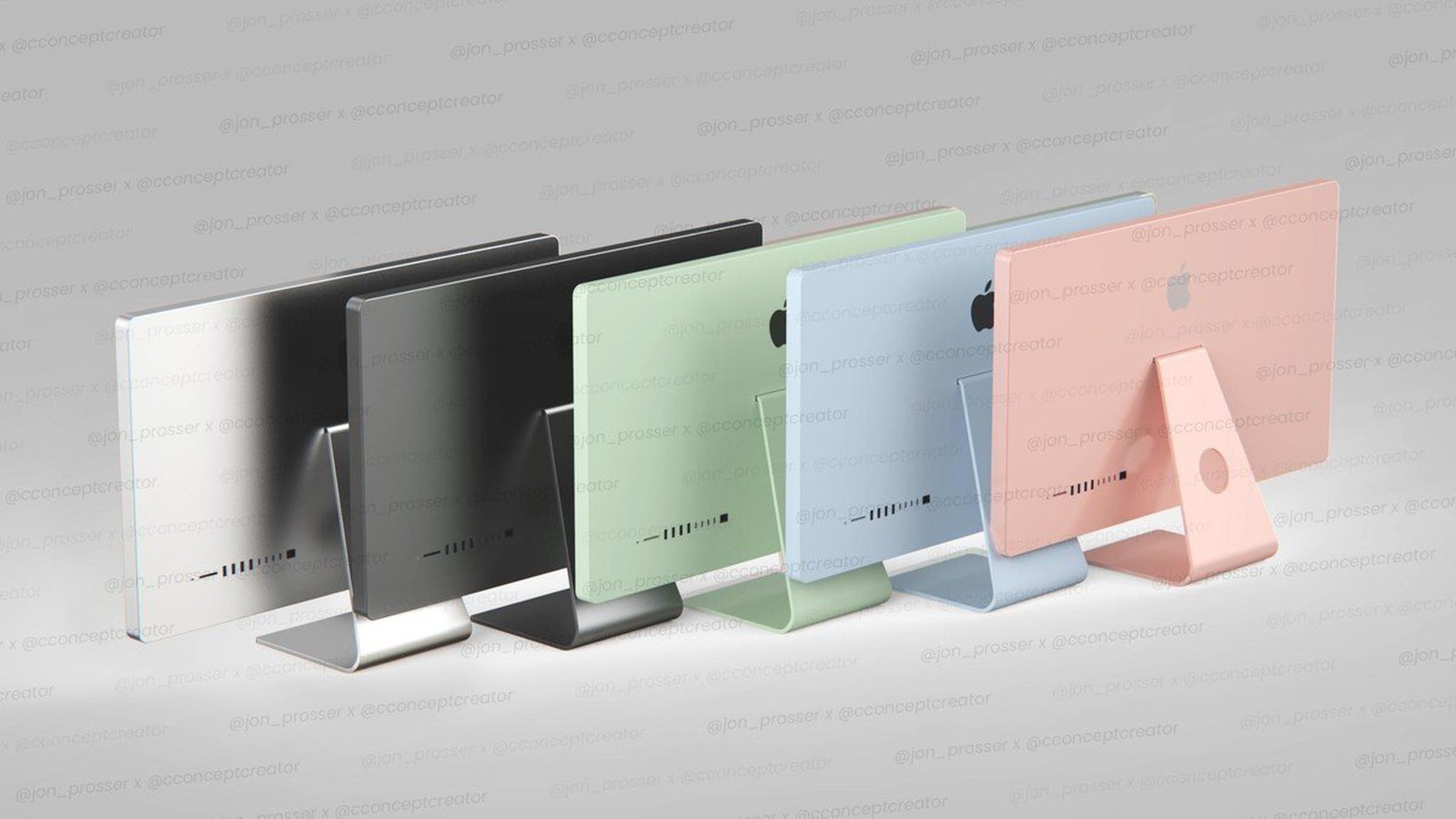
In the latest development, a report from Jon Prosser claims that the upcoming 2021 iMac models will be offered in five color options — Silver, Space Gray, Green, Sky Blue, and Rose Gold. These are the same colors that Apple offers for the fourth-generation iPad Air.

Apple iMac 2021 Color Options Leak

Not just that, he has also shared a render of the new color options, showcasing how the redesigned iMac may look like from the back. It must be noted that the renders are purely speculative to showcase the color options as the new design has not yet leaked.

Jon Prosser believes that with multiple color options for the upcoming iMac, Apple is planning to capitalize on nostalgia for the original ‌iMac‌, which came in a selection of iconic colors such as Lime, Strawberry, Blueberry, Grape, and Tangerine.

The redesigned iMacs are expected to have slimmer bezels and will be powered by the latest Apple Silicon chips, possibly an upgraded M1 chipset or a completely new one. While the device should go official this year, an exact timeline for the same is not yet known.

New Apple Mac Pro Leak

There is also new information coming for the new Mac Pro device. Jon Prosser, describing the design of the device, says that it looks like “three to four Mac Minis stacked on top of each other.” He has also provided a render of the new look.

The device is expected to come with a compute unit at the bottom and a big heat sink on the top. It was initially expected to launch by the end of 2022 but could get launched soon, probably later this year.

RELATED:

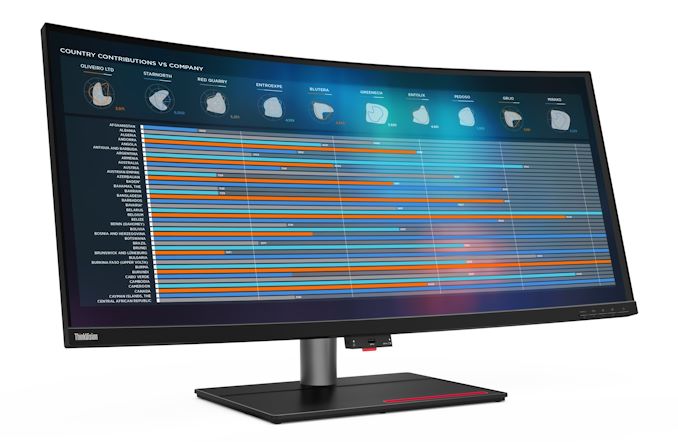
Lenovo ThinkVision P40W 39.7-inch monitor with Intel AMT support launched

Lenovo recently updated the ThinkPad devices and along with that, the Chinese company also launched a new monitor under — Lenovo ThinkVision P40W. It is a premium monitor with some attractive features and a hefty price tag.

It offers a 39.7-inch display with 5120 x 2160 WUHD screen resolution, a 21:9 aspect ratio, 70Hz refresh rate, and 98% P3 color gamut. It also comes with support for 300 nits brightness and 1000:1 Contrast IPS.

Lenovo ThinkVision P40W

There is also a hardware-level blue light reduction which helps to keep the proper white balance while still reducing blue light emissions. It has built-in RJ-45 jack which enable it to be a network hub and supports Wake-On-LAN, PXE, and MAC pass-through.

Lenovo has also became the first manufacturer to retail a professional monitor with Intel Active Management Technology built-in to integrate with vPro on ThinkPads and provide extra management capabilities.

The ThinkVision P40W can also be used to dock laptops with the single-cable Thunderbolt 4 port that can also charge the laptop at up to 100 Watts. The device comes with up to 12 ports, including two Thunderbolt 4 ports, and one USB Type-C.

The company has also included eKVM, which allows users to control two devices from this single monitor and dock combination. The extra Thunderbolt 4 port also allows users to daisy-chain another 5K monitor.

This new Lenovo ThinkVision P40W premium monitor will be available for purchase in the United States from June this year, for a starting price of $1,699.

RELATED: 

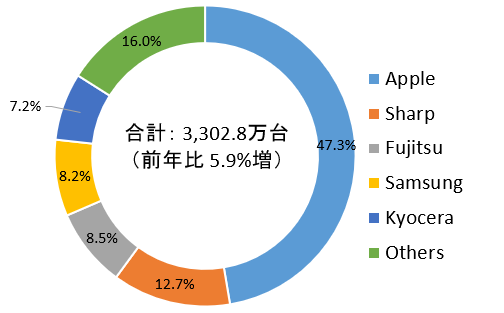
Apple was Japan’s largest smartphone brand in 2020 with a 47.3% market share

International Data Corporation (IDC) has released its report on the Japan Mobile Phone and Smartphone Markets respectively for Q4 2020 as well as the year 2020 as a whole. Unsurprisingly, Apple was the most popular brand. The Cupertino-based tech giant along with four domestic brands and Samsung captured most of the market.

Apple Logo Featured

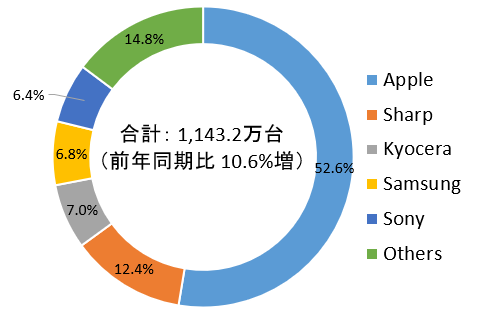
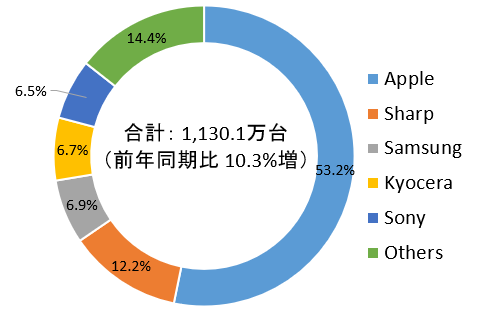
According to the report, the Japan Mobile Phone Market shipped 11.432 million units in the fourth quarter of 2020 with a 10.6% YoY growth. This was mostly due to the release of the 5G-capable iPhone 12 series. Apple’s shipments incremented by 13.8% YoY with 6.015 million units. It had a whopping 52.6% market share.

The iPhone-maker was followed by Sharp with 1.414 million units and 12.4% market share in the second place. Kyocera with a 7.0% market share and 801,000 units in shipments came third, while Samsung obtained fourth position with a 6.8% market share by shipping 781,000 million units. Lastly, Sony was the fifth largest mobile phone brand in Japan in Q4 2020 with 732,000 units in shipments and a 6.4% market share.

Talking about only smartphones, the brands shipped a total of 11.301 million units in the last quarter of 2020 with a 10.3% YoY increase. As far as ranking is concerned, the only difference is that Kyocera came fourth, while Samsung captured the third place.

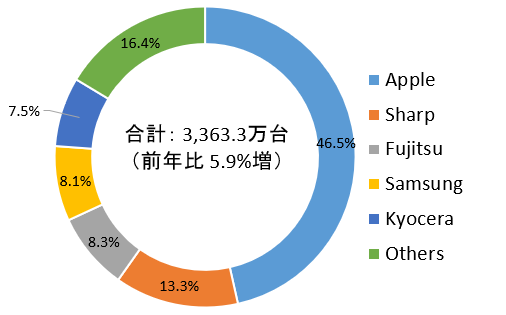
As for the year 2020, Apple was Japan’s largest mobile phone brand with a 46.5% market share by shipping 15.637 million units with an 8.3% YoY growth. It was followed by Sharp, Fujitsu, Samsung and Kyocera with 13.3%, 8.3%, 8.1%, and 7.5% market shares respectively. These companies shipped 4.474 million, 2.794 million, 2.711, and 2.5 million units of handsets.

The report also mentions some of the popular product lineup by these top 5 brands. Such as Sharp AQUOS Sense 3 series, Fujitsu Raku-Raku Smartphone series, 5G-enabled Samsung Galaxy S & Galaxy A series, and Kyocera BASIO series for elders.

Last but not least, the ranking remains the same for only smartphones with some minor differences in the market share, like Apple (47.3%), Sharp (12.7%), Fujitsu (8.5%), Samsung (8.2%), and Kyocera (7.2%).


RELATED:


Facebook backpedals, now allows news sharing in Australia

The back and forth exchanges and actions by Facebook and the Australian government that got to its peak last week with the shutout of news content and several pages of government agencies by the social networking site. The action of Facebook was in response to the government’s proposed legislation that could see Facebook liable to pay news publishers for news content shared on the social networking site. The company had insisted that the Australian government unfairly targeted it in ignorance of how such news content is shared on its platform.

That action by Facebook drew a deluge of reactions from across Australia, with some government officials accusing Facebook of attempting to bully the Australian government. However, it would seem that Facebook’s action may have produced some positive effect, with the amendment of the law in question. The amendment has put in place a two-month mediation period before Facebook can be liable for arbitration with publishers. In addition, it also says the government will look at commercial agreements entered between Facebook and local publishers to establish whether the law is applicable in such instances.

And Facebook has now responded in kind by announcing that it will be restoring news sharing to Australia in the next few days. In a statement by Facebook’s Australia managing director William Easton, Facebook said that the amendments have assuaged its fundamental concerns about allowing commercial deals that reflect the value the Facebook platform provides to publishers to be unfettered and unaltered by the new legislation.

The company continues to insist that the law was driven by ignorance and a poor perception of the importance of Facebook as a news sharing platform. News sharing on the platform has been very beneficial to the news publishers, as well as the government of Australia which has several parastatals and public agencies using Facebook as their media for information dissemination.

It is hoped that Australians do not have to face this trauma again.

RELATED;

(via)