Sony has unveiled a new digital paper color dubbed Sony Digital Paper DPT-CP1 Version 2. The device is a digital note-taking device that has a coloured display instead of the traditional e-ink screen. This is n’t tthe first of suchbut is a second version and it deploys E INK Kaleido 2.5, which is a new technology that Sony is yet to announce.
The new display technology brings the color filter array closer to the e-paper display. This results in richer and deeper colors. The diisplay is also touted to be the first of such products that utilizes E INK Carta 1250, a faster ink which speeds up flipping through pages and accelerates the pen input.
In terms of the main hardware, the Sony Digital Paper DPT-CP1 Color version 2 packs a 10.3-inch E INK Carta 1250 and e-ink Kaleido 2.5 color filter array. The B&W resolution is 1404 x 1872 at 227 PPI but the colour resolution has not been revealed as well as the parts per pixel. With the previous gen Kaleido 2, a screen is capable of displaying 4,096 colors at 100 PPI and so, this should be an improved version.
The device also comes with a new WACOM layer which is compatible with almost all Wacom pen in the market. This is an imrovement over the previous model which has a custom pen that charges via microUSB.
Under the hood, the Sony Digital Paper is powered by a Cortex A53 Quad-core 1.8 GHZ processor. The device comes with 32GB of internal storage, a USB-C port, and Bluetooth 5.0. It runs Android 9.0 Pie out of the box which isn’t bad by e-book standards. There are some customized apps onbard but you can’t sideload other apps. The Digital Paper also comes with an internet browser, so you can surf the web, check email or read news websites. The browser is the standard webkit-based one which gives users control over images and javascript.
Sony is yet to disclose details of the pricing and availability. The product will first be released in Japan.
The ASUS ROG Phone 5 is set to launch on 10th March 2021 and will be the latest flagship gaming device from the company. And now, it has just been spotted on Geekbench revealing its sizeable 18GB of RAM.
According to a MySmartPricereport, the ROG Phone 5 was spotted on the popular benchmarking platform, where its massive RAM offering was revealed. At the moment, the device is expected to launch across the globe in various markets, with pre orders already beginning in China, through JD.com. Although, the listing on the Chinese website does not reveal any finer details regarding the upcoming gaming smartphone.
However, it is known that the ROG Phone 5 will feature Qualcomm’s high end Snapdragon 888 SoC. Looking at the scores, the device scores 1,113 points in single core and 3,468 poitns in multi core tests. Furthermore, this listing also reveals that it would house 18GB of RAM under the hood, running Android 11 OS out of the box. As per previous reports, the device will sport a 6.7 inch FHD+ display with a minimum of 12GB of RAM and 128GB of internal storage.
Additionally, it is also expected to launch in a 16GB RAM variant as well, along with 256GB of internal storage. The ASUS ROG Phone 5 will be powered by a large 6,000mAh battery pack. Unfortunately, we will have to wait for an official company announcement to know for sure. So stay tuned for more, as we will be covering the launch and offer updates when additional information was available.
The rumor mill has already leaked a lot of information about the Xiaomi Redmi Note 10 smartphone. The vanilla model will feature a 6.43-inch AMOLED screen, Snapdragon 678 chipset, a 5,000mAh battery with 33W fast charging support. An Indian YouTuber Sistech Banna has now shared a retail box image of the Redmi Note 10 Pro. The plastic film on the device has revealed the key specifications of the smartphone.
The YouTuber claims that he received an image retail box image of the Redmi Note 10 Pro from an unspecified source. The image reveals that the phone has a selfie camera cutout at the top-center position of the display.
As far as specs are concerned, the Note 10 Pro has a 6.53-inch AMOLED screen with Full HD+ resolution support. It is powered by the Snapdragon 732G chipset. The device is packed with a 5,000mAh battery that will carry support for 30W fast charging.
It is still unclear whether the Redmi Note 10 Pro has a 64-megapixel or 108-megapixel quad-camera system. There is a possibility that the 108-megapixel lens could be reserved for the highest model called the Redmi Note 10 Pro Max.
The YouTuber claims that the Redmi Note 10 Pro may also come in a 5G version. It could be powered by Qualcomm’s 5G chip. Other features that are expected to be available on the Note 10 Pro include a 3.5mm audio jack and an IR blaster. It is expected to arrive with sub-Rs 20,000 pricing (~$272). Past reports have revealed that it could be coming in three options such as 6 GB RAM + 64 GB storage, 6 GB RAM + 128 GB storage, and 8 GB RAM + 128 GB storage. It could be coming in colors like blue, black, and bronze. The base model of the device is expected to cost $279.
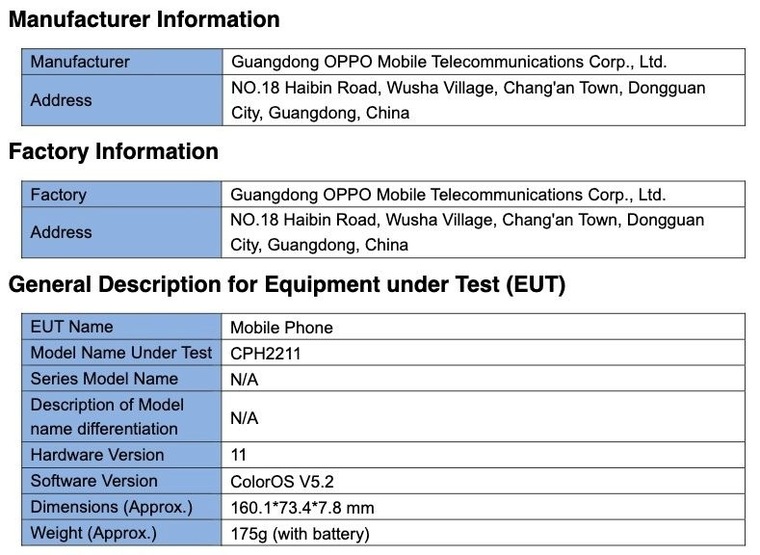
Last year, OPPO launched a smartphone named OPPO Reno4 Z in global markets. Recent reports have revealed that its successor edition dubbed Reno 5Z could be arriving soon. The handset was recently certified by Norway’s NEMKO, Singapore’s IMDA, GCF, and Bluetooth SIG certification platforms. The handset has now received approval from the FCC authority of the US (via. Simran Pal).
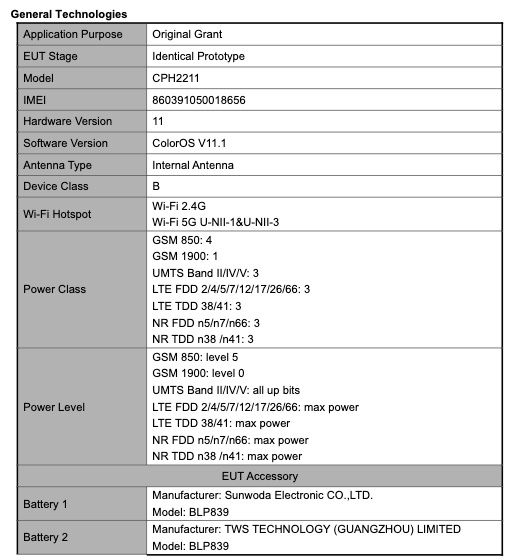
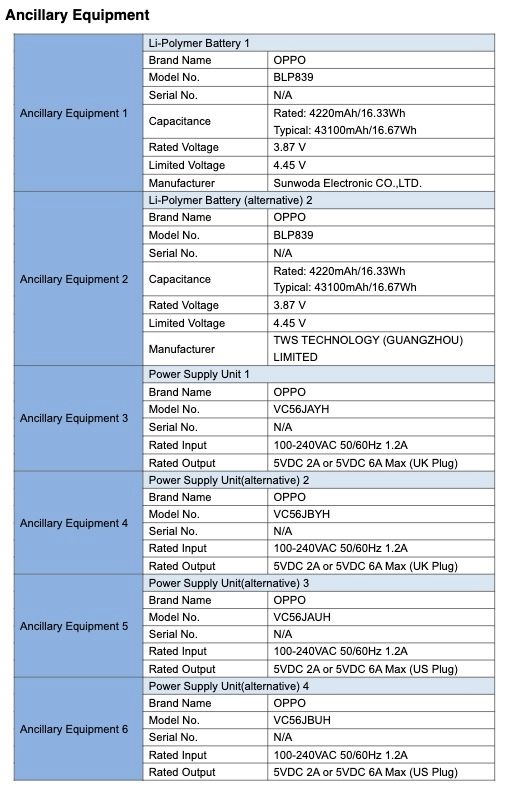
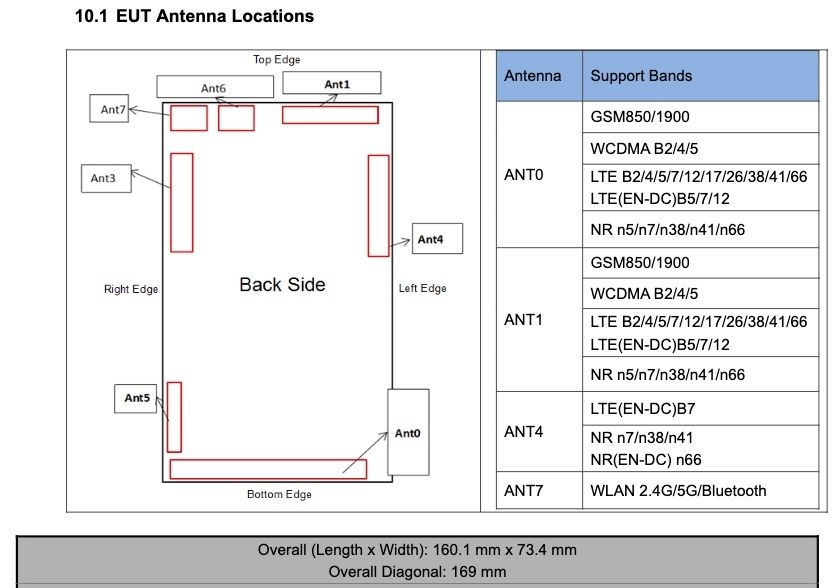
The Reno 5Z has appeared with its CPH2211 model number at FCC. The listing reveals that it measures 160. 1 x 73.4 x 7.8mm and it weighs 175 grams with the battery. Speaking of battery, the FCC documents mention that the device is powered by a 4,220mAh battery (model number BLP839). The phone may ship with a VC56JAYH charger that supports up to 30W charging.
1 of 6
OPPO Reno5 Z FCC
OPPO Reno5 Z FCC
OPPO Reno5 Z FCC
OPPO Reno5 Z FCC
OPPO Reno5 Z FCC
OPPO Reno5 Z FCC
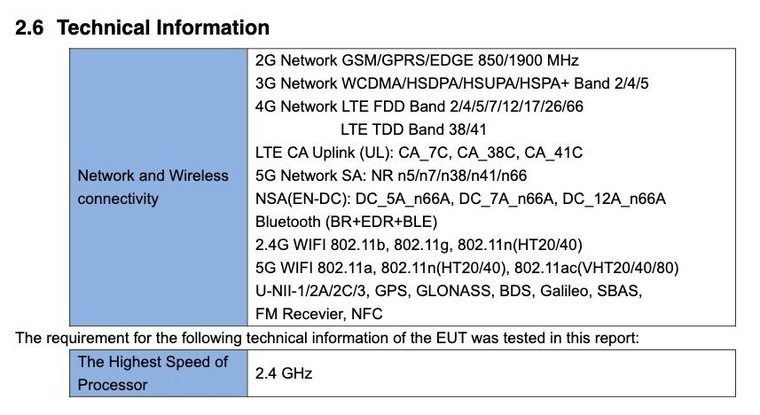
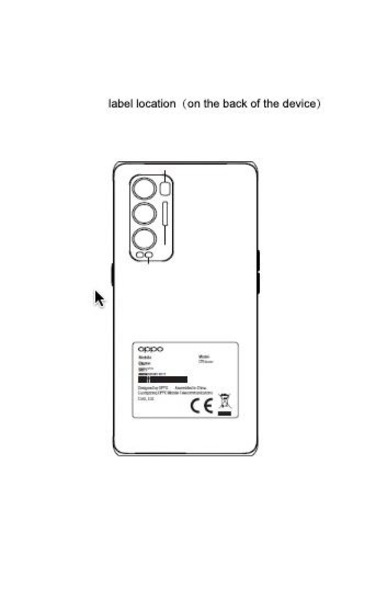
It also states that the Reno5 Z is powered by a 2.4GHz processor. The handset supports dual SIM 5G, Wi-Fi 802.11ac, GPS, NFC, FM receiver, and Bluetooth 5.2. A schematic showcasing the rear side of the device shows that it has a rectangle-shaped camera module that seems to house four cameras, an LED flash, and some other sensors. The specifications of the Reno5 Z are under wraps.
In related news, an OPPO phone with model number CPH2219 was approved by China Quality Certification Center (CQC). It revealed that the device may arrive with support for 33W fast charging.
The handset was also spotted at other certification sites such as Wi-Fi Alliance, BIS (India), TKDN (Indonesia), EEC (Europe), and NBTC (Thailand). The CPH2219 has been approved by the NBTC authority as the OPPO A74 4G. Another phone with model number CPH2197 has been certified as the OPPO A74 5G by the same entity.
OPPO is confirmed to launch the OPPO F19 series of smartphones very soon. The lineup is expected to include three models, namely OPPO F19, OPPO F19 Pro, and OPPO F19 Pro+ 5G. The design and specs of these handsets have already leaked. Now, the Pro+ device has also been spotted on Geekbench.
Yesterday, a teaser page for the OPPO F19 series went live on Amazon India. At the same time, a tipster spilled out the key specifications of the OPPO F19 Pro and OPPO F19 Pro+ 5G. Today, the same teaser page has been updated with a new picture (above), which suggests that the vanilla OPPO F19 may come later to India.
Coming to the Geekbench listing, which was spotted by 91Mobiles, the OPPO F19 Pro+ 5G will bear the model number CPH2213. The listing reveals the phone to be powered by MediaTek Dimensity 800U SoC paired with 8GB RAM and Android 11. This goes in line with yesterday’s leak.
As far as scores are concerned, the handset can get around 596 points and 1767 points in single-core and multi-core tests respectively.
Talking about other features, the OPPO F19 Pro+ 5G is tipped to arrive with a 6.4-inch FHD+ AMOLED display, 64MP quad-camera setup, 32MP selfie camera, 128GB internal storage, 4,5000mAh battery, and 30W fast charging. Last but not least, the device could cost around ₹25,000 ($341).
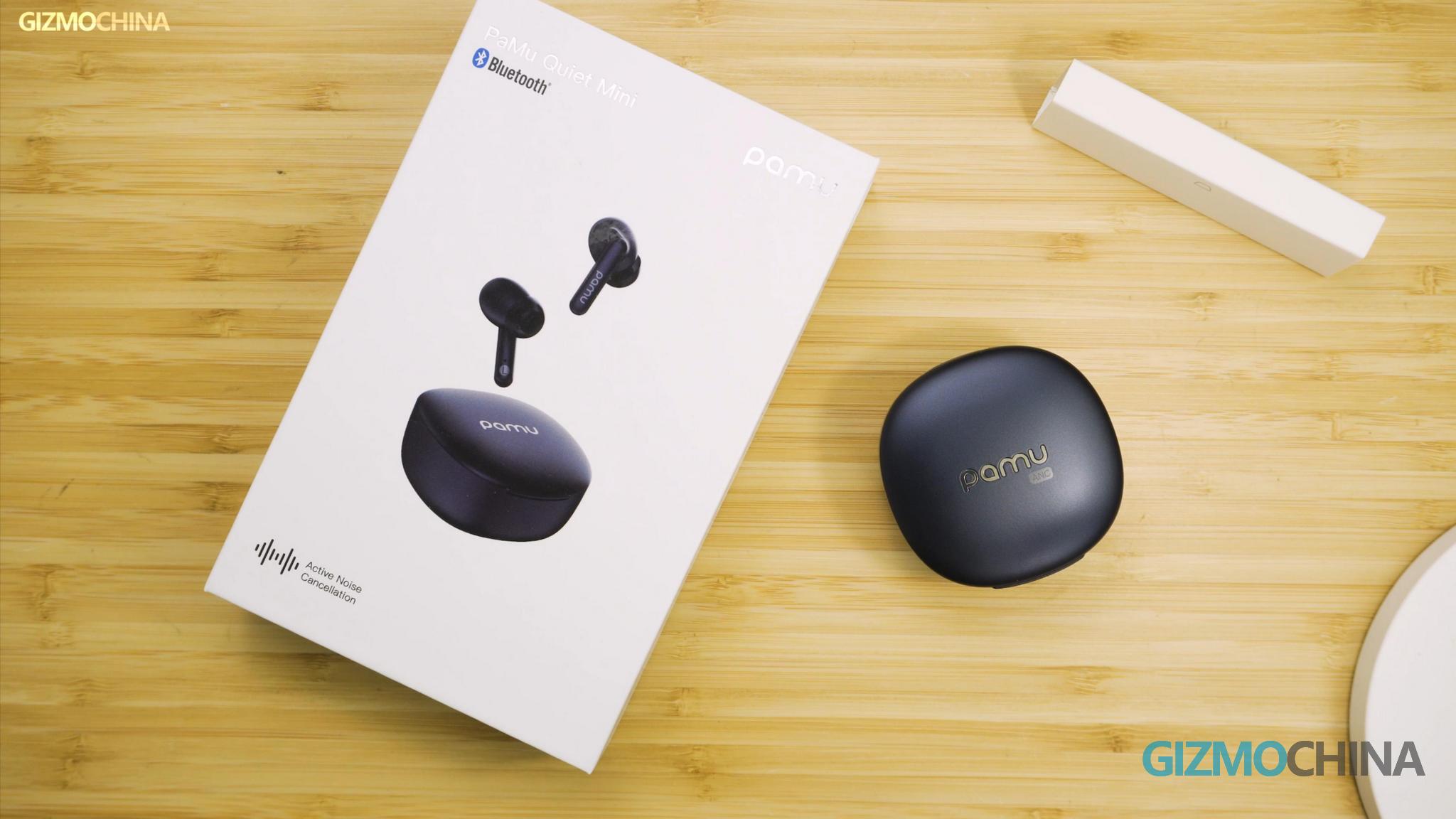
We’ve talked a lot about wireless earbuds in our previous reviews. And today the new buds that we want to share with you is the Pamu Quiet Mini. You may have not heard of the brand Pamu before this. It’s a new company that focuses on affordable performance headsets with good design for the global market. And the first thing that attracts you about the Pamu Quiet Mini is its design.
Pamu Quiet Mini earbuds Review: Design
To be honest, with so many brands focused on bringing out alternatives to the Apple Airpods, it’s hard to differentiate between their products and the Apple earbuds. Therefore, we are glad to have found Pamu, a brand that is not simply copying Apple’s design when it comes to wireless earbuds.
So let’s start with its design. Looking at the Pamu Quiet, it’s quite clear that the lineup focuses on delivering good active-noise-canceling performance with an identifiable design.
The charging case is slightly bigger than other earbuds in the market, but fortunately, it has got good build quality with excellent weight control. Indeed, the charging case is not as ingenious as what we have for the Pamu Quiet standard version, but surprisingly, the mini reserved almost all the essential features from the standard Quiet version and even upgraded it with the Bluetooth 5.2 connection and earbud separated connection.
Coming back to the charging case, once we take out the buds, we can see that the mini also comes with an in-ear design, much like its competitors in the market. Each bud only weighs around 5g, which is almost unperceivable when you wear them even for a long period of time. Besides the default size, Pamu offers 2 more sizes for the ear tips. So once you choose the right tip size, the earbuds will fit your ears pretty well and will guarantee passive noise blocking. Another good detail is that the earbuds support IPX4-rated waterproofing, the same as the AirPods Pro. So wearing it for a sweaty exercise or on a rainy day is pretty safe.
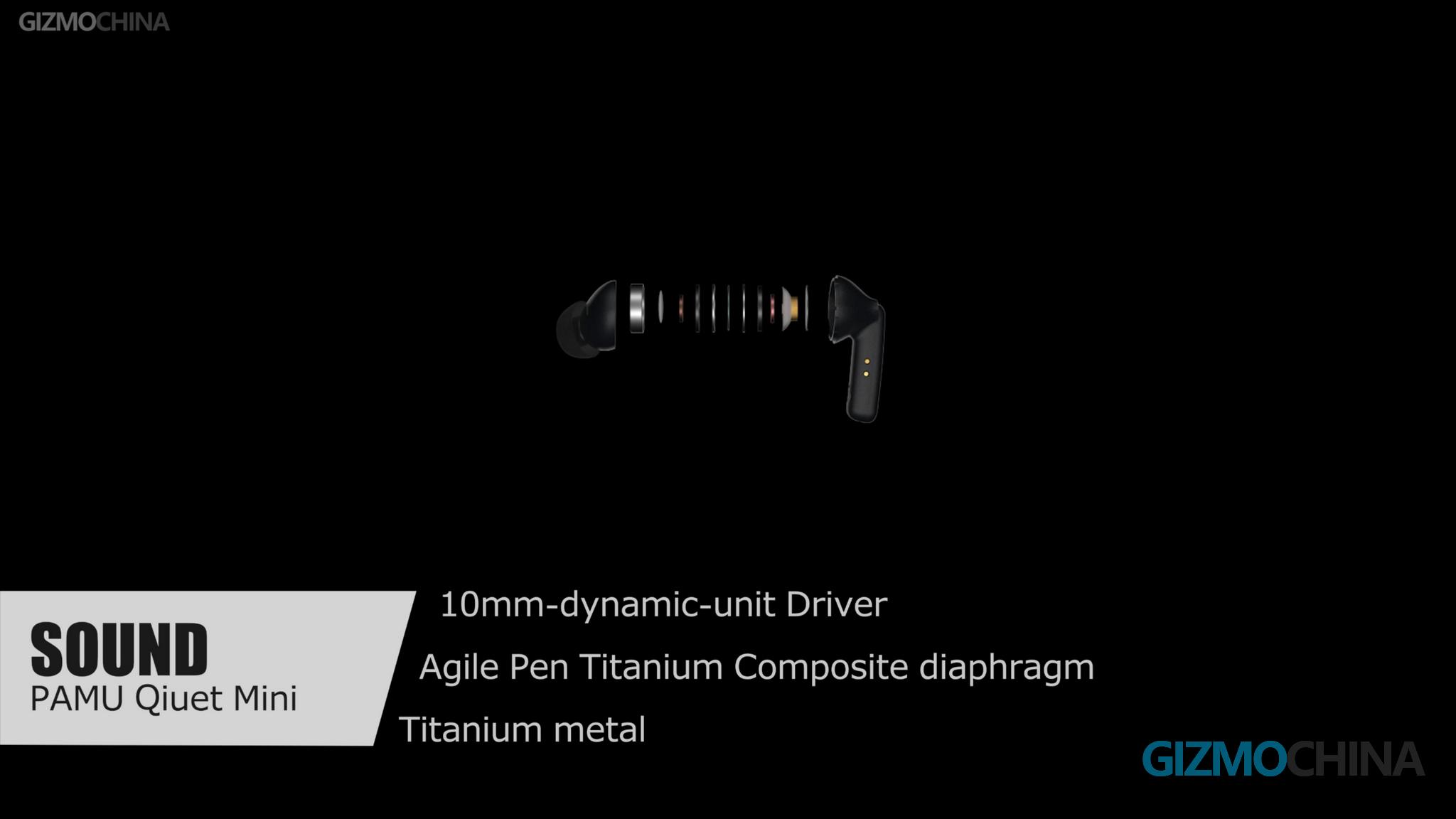
As for the sound quality, the Quiet Mini offers excellent sound output. Each Mini earbud features a 10mm-dynamic-unit driver for enhancing the depth of bass and uses Agile Pen Titanium composite diaphragm for good ductility. And in theory, the titanium metal is also able to produce better sound quality at higher frequencies.
So how does it actually sound?
Pamu Quiet Mini earbuds Review: Sound Quality & Performance
Well, the bass is the part that sounds the most impressive on the Quiet Mini, which is one of the richest and deepest bass that we’ve heard on wireless earbuds. However, the high frequencies are a bit weaker than its performance in the lower end. The buds still surprised us with a good dynamic response and clear gradation in a wide range of frequencies. So generally, it achieves a bright and balanced vibe with a good presentation of instruments, but it may be not so delightful when you focus on the vocals, especially when it comes to a high-pitched female voice. However, we feel the rich bass exceeded our expectations and that kind of set the bar for the high frequencies as well. Overall, I still quite enjoy the sound quality of the Quiet Mini.
Another feature that impressed us was its noise-canceling. To be honest, we are confused as to how a budget wireless earbuds can have such a good noise-canceling effect. Previously, good active noise cancellation was only available on high-end earbuds which cost over 150 USD. However, the Pamu Quiet Mini brings pretty good noise cancellation at only around 60 to 70 USD, which is quite amazing. Pamu claims that the mini reduces noise up to 40dB, which is almost the best figure on paper for most ANC wireless earbuds. In actual tests, the Quiet Mini was capable of handling a wide range of frequencies in most noisy scenarios. After comparison, the de-noised sounds processed by the Quiet Mini is pretty close to what we got on the AirPods Pro. Noticing that the AirPods Pro were much more expensive than the Quiet Mini, such performance from the Mini version is really amazing.
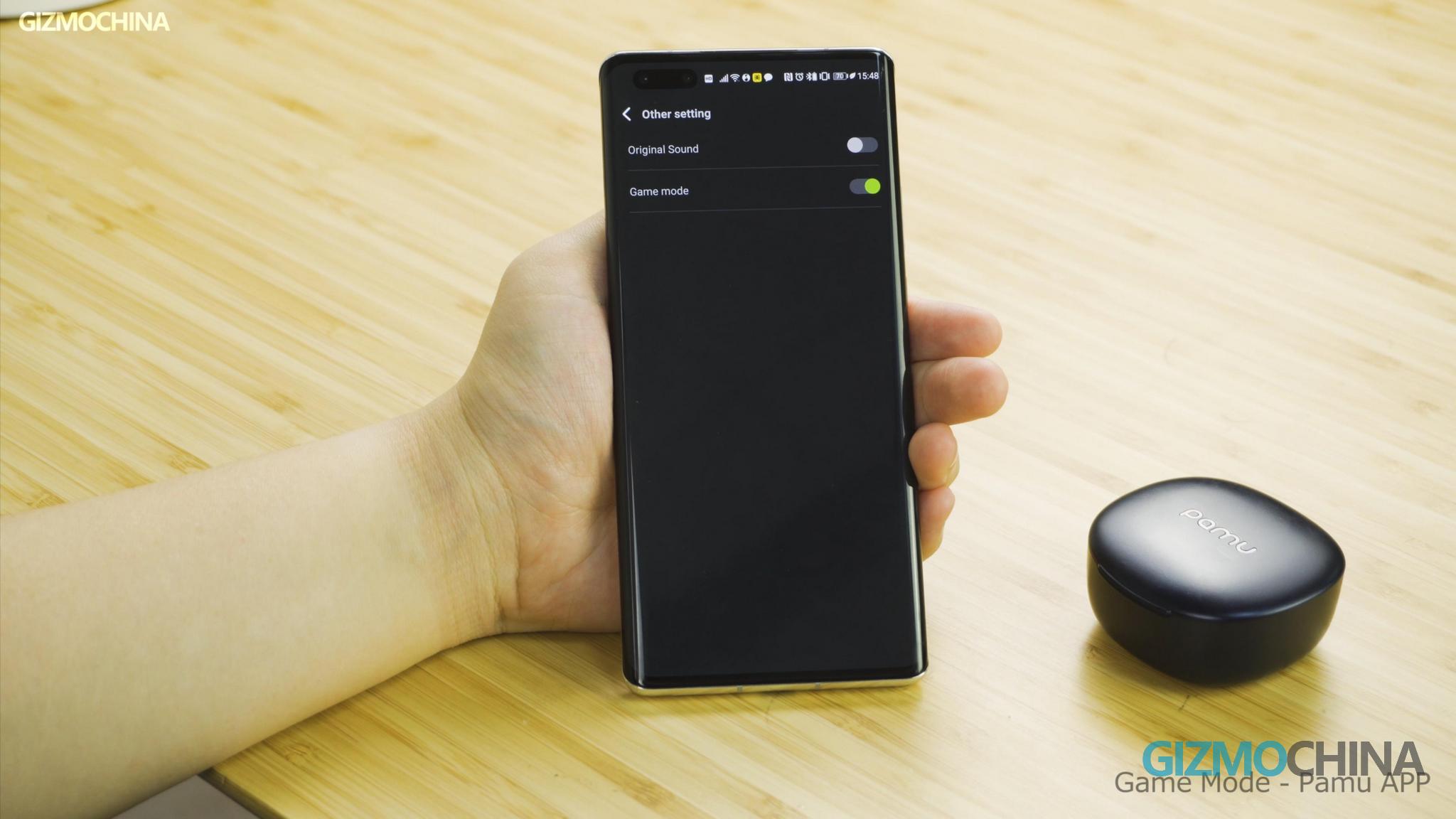
Meanwhile, the Pamu Quiet Mini supports Bluetooth 5.2 connection, which allows the earbuds to deliver sounds with extremely low latency. In actual use, the sound latency was almost unperceivable for us. In addition, Pamu offers a game mode option in their official App, which allows gamers to enjoy immersive gaming sound with a stable connection and extremely low latency. But in the game mode, the sound quality could be affected.
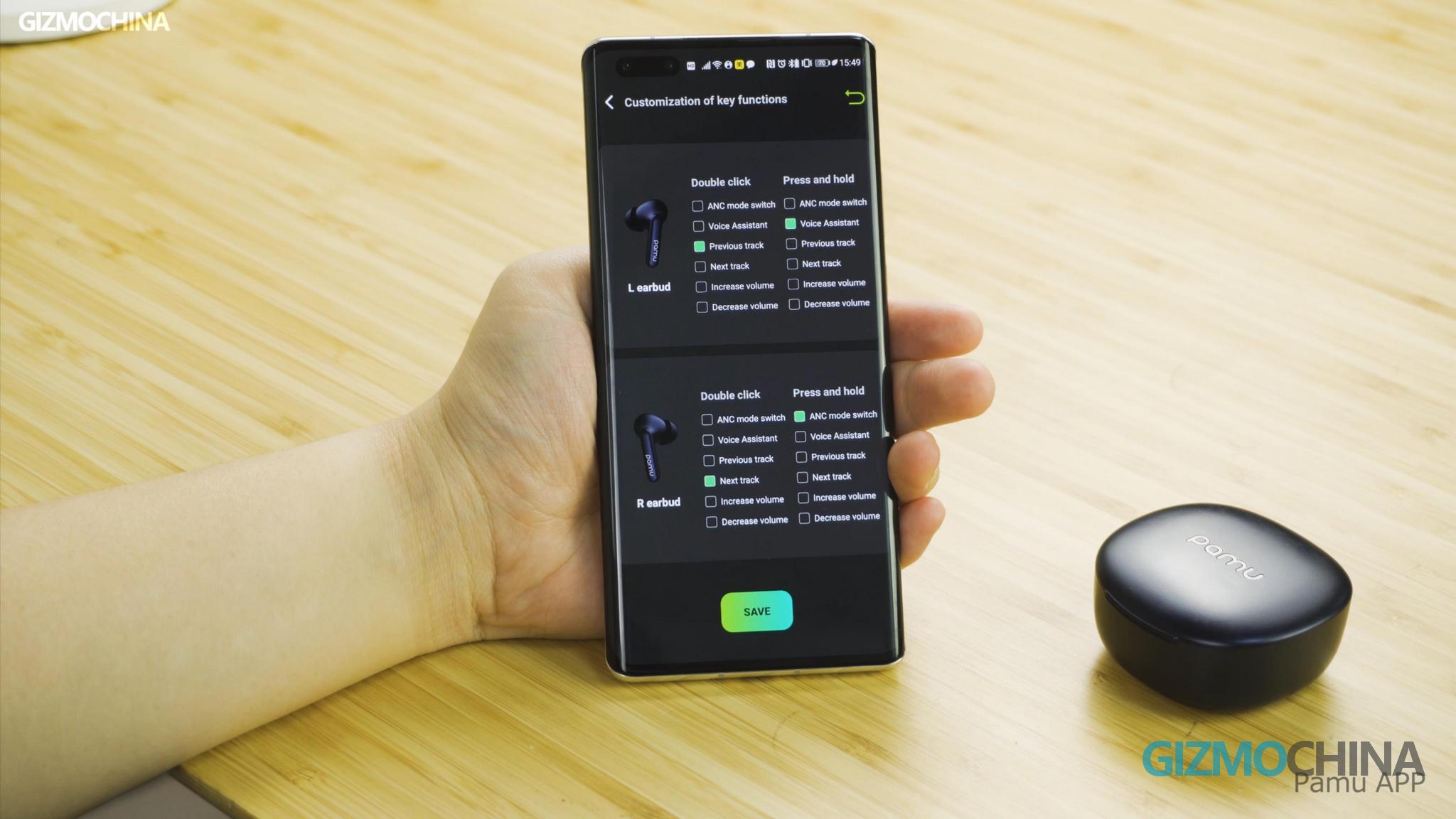
The official app is pretty easy to operate with a very simple interface. You can customize all the buds’ operations on the App and get more information about the earbuds.
Another useful feature is the Dual Master technology. Each bud of the Quiet Mini has independent connectivity and can be used separately, which means that each earbud can connect with two different devices for dual-channel transmission. So if you had issues switching sounds between two devices, it’s definitely going to save you a lot of trouble, as it did for me.
Pamu Quiet Mini earbuds Review: Battery Life
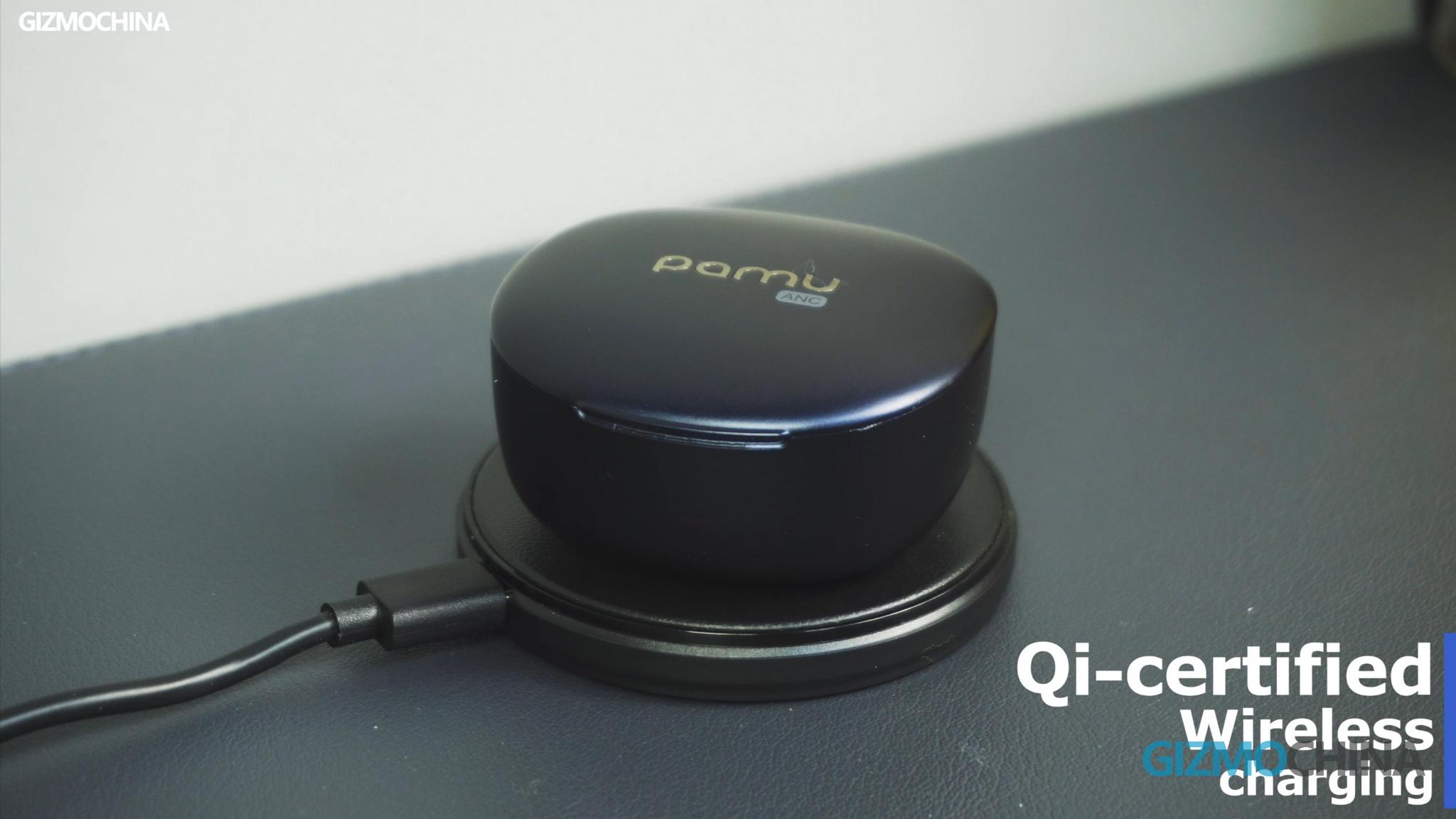
Compared to the Quiet standard version, the Mini also brings better battery performance. The playback time of the Mini can last about 5 hours. And the charging case offers 3 additional full charges for the earbuds. Besides wired charging, the case also supports Qi-certified wireless charging, which is not common for such budget wireless earbuds.
So that’s all about the latest Pamu Quiet Mini earbuds. The Quiet Mini is an impressive option with excellent value, especially considering the price and the performance that it delivers.
So how do you like the Pamu Quiet Mini? If you have any questions or ideas you want to share with us, please leave them down below.
Also, our Samsung Galaxy Buds Pro review will be up very soon. So stay tuned for that in the next couple of days.
Earlier this week, Ni Fei, President of Nubia, shared a new post on his official Weibo account, a Chinese microblogging website, where it showcased its upcoming Red Magic 6 gaming smartphone’s RAM boost technology support.
According to the senior official of the Chinese smartphone maker, the Red Magic 6 will arrive with Magic Write 2.0. This is the company’s fast storage read and write technology and is a part of the Red Magic Arc Reactor performance engine. It combines the Tencent Solar Core game engine along with intelligent scheduling of CPU, GPU, and memory. In simpler terms, the smart optimization of the device’s hardware enables shorted cold starts of mobile games, slashed load times in game, and faster in game click response.
Furthermore, the President of Nubia also added that the RAM boost technology allows the Red Magic 6’s 12GB of RAM to be used “just like 18GB of memory.” In other words, it supports rapid virtual expansion technology that enables the software memory boost. This would further boost the device’s gaming capabilities to offer smoother gameplay experience, faster response time and more. Unfortunately, we are not exactly sure how the company achieves this, but it is likely that it boosting the RAM’s speed to offer higher performance or using its boost engine to perform processes equivalent to a 18GB RAM module.
Talking about the specs of the device, the Red Magic 6 may launch in two versions, Red Magic 6, Red Magic 6 Pro. The devices are expected to arrive with an OLED display with a refresh rate up to 165Hz and a touch sampling rate up to 480MHz. The company is already teasing shoulder touch buttons for gaming. Additionally, it will also sport a Snapdragon 888 chipset with a battery capacity of 4,500mAh and a 120W fast charging under the hood.
Xiaomi India launched the Mi 10T series in October as its cheapest flagship smartphone series of 2020. The lineup consists of three models, namely Mi 10T, Mi 10T Pro, and Mi 10T Lite. But the company only brought the former two to its largest market outside China. Now, a little over four months after their debut in the country, the vanilla Mi 10T gets its first permanent price cut.
The Chinese smartphone maker Xiaomi released the Mi 10T in India in two storage configurations – 6GB + 128GB and 8GB + 128GB. These variants were priced at ₹35,999 and ₹37,999 respectively.
With the new ₹3,000 price drop, the Mi 10T can be now purchased for either ₹32,999 or ₹34,999 respectively. Interested customers can get it in Cosmic Black or Lunar Silver color option from online as well as offline channels. Buyers can even make use of available bank offers to further lower the price.
Talking about the specs, the Mi 10T features a 6.67-inch 144HZ FHD+ LCD panel with a centered punch-hole, Qualcomm Snapdragon 865 SoC, LPDDR5 RAM, UFS 3.1 storage, 64MP (wide) + 13MP (ultra-wide) + 5MP (macro) triple camera setup, 20MP selfie camera, 5,000mAh battery, 33W fast charging, and MIUI 12 based on Android 10.
Lastly, it is worth noting that Xiaomi started rolling out the Android 11 update for this phone earlier last month.
Michael Kors, the company known for making luxury watches, has announced that its smartwatch — Michael Kors Access Gen 5E Darci is now available for purchase in India. For those who are unaware, the device was first announced at CES 2021 in January this year.
It is priced at Rs 25,995 which roughly converts to $354 and can be purchased through online marketplace Amazon. The device is being offered in three color options — Gold, Rose Gold, and Silver.
The Michael Kors Access Gen 5E Darci smartwatch features top ring and a 7-link bracelet. There’s a 1.19-inch touchscreen display with 390 x 390 pixels screen resolution. It is powered by Google’s Wear OS and works with both Android and iOS devices.
As for the connectivity, the device comes with support for Bluetooth 4.2 LE, NFC, and Wi-Fi. It also supports Bluetooth-based calling and there’s a speaker which allows users to converse through Google Assistant or to play music.
It also comes with a new Wellness App that monitors real-time metrics and optimizes battery life by shifting power consumption off the main processor. The company says that it also packs an optimized activity tracker and thus the smartwatch can track heart rate, pace, distance, steps, and sleep.
There is a multi-day battery mode that allows users to choose between four battery settings as per their preferences. It comes with a magnetic USB rapid charger that is claimed to juice up the smartwatch to up to 80 percent 50 minutes.
The Xiaomi Redmi Note 10 series will be announced globally on March 4. A new leak has appeared today to reveal the pricing of the base model of the Redmi Note 10 Pro.
It was revealed in January that the Redmi Note 10 Pro could be arriving in variants like 6 GB RAM + 64 GB storage, 6 GB RAM + 128 GB storage, and 8 GB RAM + 128 GB storage. It is now speculated that the 6GB+64GB edition of the Note 10 Pro may carry a price tag of $279.
Unfortunately, there is no information available on the pricing of the other variants of the Redmi Note 10 Pro. It may arrive in color editions such as bronze, blue, and gray.
Redmi Note 10 Pro specifications (Rumored)
The Redmi Note 10 Pro is speculated to arrive with a punch-hole display that offers a 120Hz refresh rate. It is unclear whether the phone has an LCD or AMOLED display. It is likely to feature a massive battery of 5,050mAh capacity and it is expected to arrive with support for fast charging.
The Note 10 Pro will run on MIUI 12 based Android 11 OS. It may draw power from the Snapdragon 732Ght, which was first seen on the POCO X3 phone that debuted last year. For photography, the handset may flaunt a 64-megapixel quad-camera system. The other specs of the smartphone are yet to be revealed.
In related news, the Redmi Note 10 is expected to arrive with key specs like AMOLED display, 48-megapixel quad-cameras, and Snapdragon 678 SoC. On the other hand, the Redmi Note 10 Pro Max may feature a 120Hz display, a 108-megapixel quad-camera, and Snapdragon 768G chip.
A recent report by the New York Times details how the New York police have been using robot dogs to aid crime fighting in the city. The latest story is that of two men who were kidnapped in an apartment in the Bronx area. The two kidnappers had entered the apartment pretending to be plumber but soon took the occupants hostage and tied them up for several hours. One of the victims successfully escaped from the armed men and then contacted the police.
When the police arrived the scene, because they were not sure if the gunmen were still inside the apartment,they deployed a robotic dog named Digidog. The robot is equipped with a camera and lights and allows the police to remotely view the scene through two-way communication. The police team also disclosed that the robot dog can see clearly in the dark thanks to night vision camera.
In the Bronx case, the police used Digidog to understand that the room was empty as the gunmen had fled the scene. They are still searching for the two robbers who stole a mobile phone and $2,000 in cash and burned one of the victims with a soldering iron.
In an unusual manner, the case has generated some concerns bothering on privacy. Democratic Rep. Alexandria Ocasio-Cortez called Digidog a mobile monitor on Twitter.
Jay Stanley, a senior policy analyst at the American Civil Liberties Union, said that allowing robots to do police work would have an impact on prejudice, mobile surveillance, hacking, and privacy issues. Others worry that robots may cooperate with other technologies as weapons.
“We have seen that many police stations have not explained the situation to the communities they serve when adopting powerful new surveillance technologies and other technologies, let alone soliciting opinions from the public.” He said, “So openness and transparency are of the utmost importance.”
While these concerns raised shows what the emerging robotics technology may face in the future, we can’t throw away the fact that they bring immense benefits. Keith Taylor once served in the SWAT team and currently teaches at the John Jay College of Criminal Justice. He said that a mobile device that can collect intelligence remotely in unstable situations “has great potential” to reduce the number of casualties.
“It is important to question the police, but the benefits of this matter seem obvious,” he said. “Its purpose is to help the police obtain the information they need without a fatal exchange of fire.”
The New York Police Department is one of the three police stations in the United States where this robot dog is deployed. The robot in question is Boston Dynamics’ Spot robot which went on sale last year. New York Plolice chose to name theirs Digidog. nitor. “It’s very noisy and it shines.” He said, “It’s easy to get people’s attention.”
We expect the use of robots to prevent police officers from getting into dangerous situations to become a routine in the near future.
In 2016, the police confronted a gunman who killed five police officers in Dallas and eventually killed him with a robot.
In 2015, a man with a knife threatened to jump off a bridge in San Jose, California. The police used the robot to provide him with a mobile phone and a pizza, and finally arrested him.
The previous year, after a gunman locked himself in a motel room, Albuquerque police used robots to “deploy chemical weapons” and eventually subdued him.
Since the past couple of years, chipset makers have been making their flagship chips based on the 5nm process. However, manufacturers have been working on a more advanced process, using 3nm and 2nm nodes.
Now, it appears that TSMC, the world’s largest contract manufacturer of chips, will start mass production of 3nm chipsets from next year. As per the report, the company will start production in the second half of 2022 with a capacity to process 30,000 wafers.
It further adds that because of the order commitment from Apple, TSMC will expand the monthly production capacity of its 3nm process to 55,000 units in 2022 and within a year after that, it plans to expand the production to 105,000 units a month.
Compared to the current 5nm process, the new 3nm process reduces power consumption by 30 percent and increases performance by 15 percent. Even with orders for 3nm chips, the company will continue to focus on 5nm chips as well.
In this year, TSMC will be expanding its production capacity for the 5nm chips to meet the increasing demand. Currently, it has a capacity of manufacturing 90,000 units a month but in the first half of this year, it will be increased to 105,000 units. By the end of this year, it plans to further expand the manufacturing capacity to 120,000 units.
By the year 2024, the production capacity of TSMC’s 5nm chips is expected to reach 160,000 units. Apart from Apple, the company’s major clients for the 5nm process include AMD, MediaTek, Marvell, Broadcom, and Qualcomm among others.
However, TSMC has allocated most of its resources for Apple as the company is gearing up to launch its iPhone 13 series which will be powered by the A15 chipset, manufactured using the 5nm+ or N5P process. It is basically a performance enhanced process of 5nm node which also brings power efficiency.
Apple recently launched its iPhone 12 lineup and the devices have been well-received in the market. The company is now working on its successor, the iPhone 13 series, which will be officially launched around September this year.
While it is still a long time before we get this new iPhone lineup, some details about the iPhone 13 series have started surfacing online. In the latest report, the upcoming device’s screen details have been revealed.
The report claims that the iPhone 13 Pro will come with a 120Hz refresh rate LTPO OLED display. We expect the company to continue with the same display size as the existing models but the report says that the notch on top of the screen will be smaller.
The company is also rumored to include an in-display fingerprint in the iPhone 13 models, along with support for Wi-Fi 6E. However, a recent report claims that the prototype of the upcoming phones doesn’t include in-display sensor.
It is also reported that Apple could launch a 1TB storage variant of the iPhone 13 Pro this year. This is twice the storage capacity when compared to the highest capacity model in the current iPhone 12 lineup.
It is not confirmed if the company plans to increase the storage capacity in the base model, which is currently at 128GB. A recent report revealed that the company is planning to use the Qualcomm Snapdragon X60 5G modem for the upcoming lineup.
The iPhone 13 Pro models are also expected to feature an upgraded Ultra Wide camera lens with a wider ƒ/1.8 aperture and autofocus, compared to ƒ/2.4 on iPhone 12 models. The devices may be a bit heavier as Apple plans to add higher capacity battery.
OPPO will hold a launch event on March 11 to announce the Find X3 series. The devices that are expected to go official on the said date are Find X3 Pro, Find X3 Neo, and Find X3 Lite. In China, the company is also expected to unleash the Snapdragon 870 powered Find X3. A fresh report by Winfuture has the renders and specifications of the X3 Pro, Neo, and Lite smartphones.
OPPO Find X3 Pro specifications
The Find X3 Pro will come with a 6.7-inch QHD+ (1440 x 3216 pixels) AMOLED display. It will offer features like curved edges, HDR10+ support, 525ppi pixel density, an in-screen fingerprint reader, and Gorilla Glass 5 panel. The Snapdragon 888 mobile platform powers the Find X3 Pro with 12 GB of RAM. It may come with a 4,500mAh battery with 65W fast charging and wireless charging support.
OPPO Find X3 Pro
The IP68 rated Find X3 Pro has a 32-megapixel front camera and a quad-camera system with a 50-megapixel main lens with f/1.8 aperture and OIS support, a 50-megapixel ultrawide lens, a 13-megapixel periscope telephoto snapper, and a 5-megapixel micro lens. It will come in blue and silver colors.
OPPO Find X3 Neo and Find X3 Lite specifications
The Find X3 Neo has a 6.5-inch AMOLED FHD+ screen with curved edges, while the Find X3 Lite features a 6.44-inch AMOLED FHD+ flat screen. Both phones support a 90Hz refresh rate. The Snapdragon 865 fuels the Find X3 Neo and it will come with 12 GB of RAM and 256 GB of storage. On the other side, the Snapdragon 765G drives the Lite model with 8 GB of RAM and 128 GB of storage. Both phones have an in-screen fingerprint reader and a 32-megapixel selfie camera.
OPPO Find X3 Neo (left) and Find X3 Lite (right)
The Find X3 Neo has a quad-camera system featuring a 50-megapixel main camera, a 16-megapixel ultrawide lens, a 13-megapixel telephoto lens, and a 2-megapixel macro camera. It is powered by a 4,500mAh battery. The Find X3 Lite’s quad-camera module has a 64-megpaixel main snapper, an 8-megapixel superwide lens, a 2-megapixel macro camera, and a 2-megapixel depth. As it is known, the Find X3 Neo and Lite are rebadged versions of China’s OPPO Reno5 Pro+ 5G and Reno5 5G. The Find X3 Neo could be available in black and silver hues, whereas X3 Lite could come in three color options like black, silver, and blue.
Motorola recently launched the Moto G10 and Moto G30 smartphones in Europe. German publication TechnikNewshas now shared the key specs of the three upcoming G-series smartphones such as Moto G50, Moto G100, and another phone that is codenamed as Hanoip.
Motorola Moto G50
The publication had previously revealed the specs of a Motorola phone with “Ibiza” codename. Fresh information shared by the publication reveals that the Ibiza handset will break cover as the Moto G50 in Europe. It speculates that the G50 may come with a price tag of 229 euros (~$276).
Mockup Image by TechnikNews
To recollect, the Moto G50 (XT2137 model number) has an HD+ display with a 90Hz refresh rate, a 5,000mAh battery, 4 GB of RAM, 128 G of storage, Android 11 OS, a 13-megapixel front camera, and a 48-megapixel + 2-megapixel (depth) dual-camera system. It is said to be fueled by the Snapdragon 480 5G chipset and it is also rumored to arrive in India.
Motorola Hanoip
The Motorola Hanoip (XT2135-1/2 model number) has a 32-megapixel front-facing snapper. It could be accompanied by a 16-megapixel ultrawide lens. The rear camera system of the phone could be featuring a 108-megapixel HM2 lens by Samsung, a 16-megapixel camera, an 8-megapixel lens, and a 2-megapixel depth sensor. The device may come in variants like 4 GB RAM + 64 GB storage and 6 GB RAM + 128 GB storage. The Snapdragon 732G could be powering the Motorola Hanoip. It may come in colors like Iceberg, Terracotta, and Sangria.
The publication claimed that it had come across another smartphone with a Hanoi codename. However, it now appears that it has been canceled.
Moto G100
Motorola Edge S
In January, Motorola announced the Snapdragon 870 SoC powered Motorola Edge S smartphone with a starting price of 1,999 Yuan (~$276). The same phone will be heading to Europe as the Moto G100 and it could be available in variants like 6 GB RAM + 128 GB storage, 8 GB RAM + 128 GB storage, and 8 GB RAM + 256 GB storage. It may come in two colors like Sky Blue and Violet.
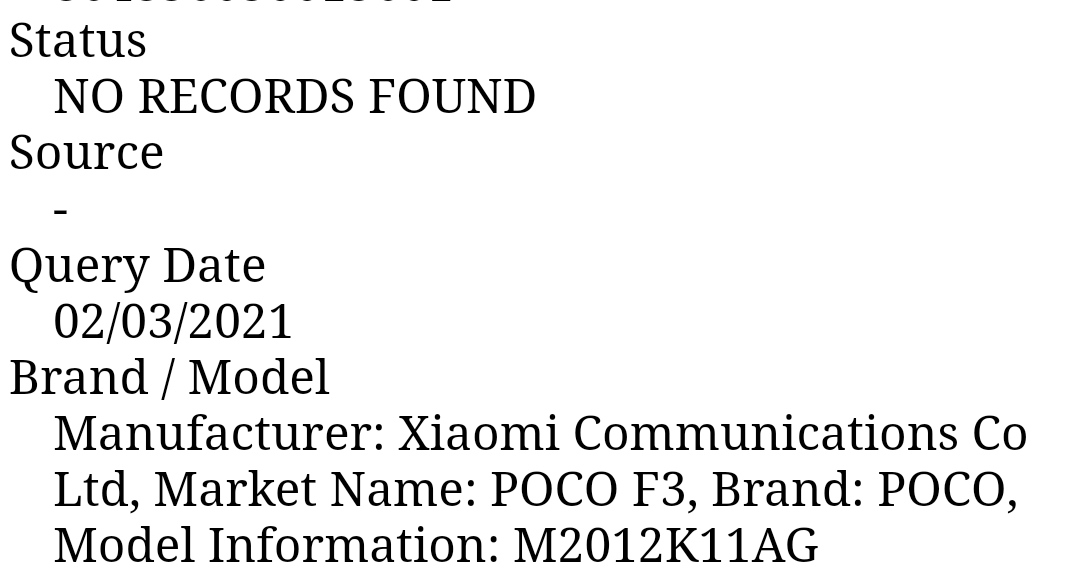
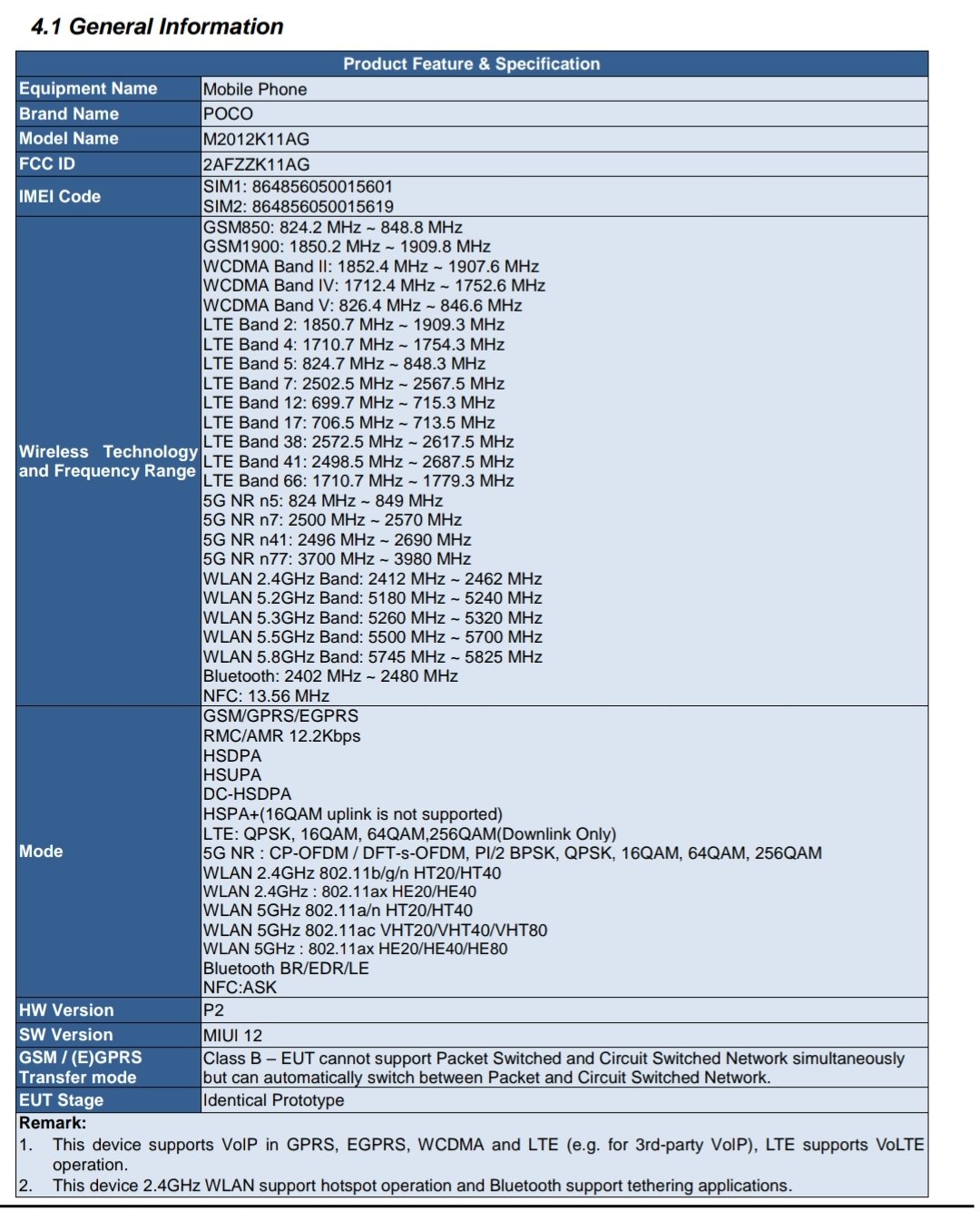
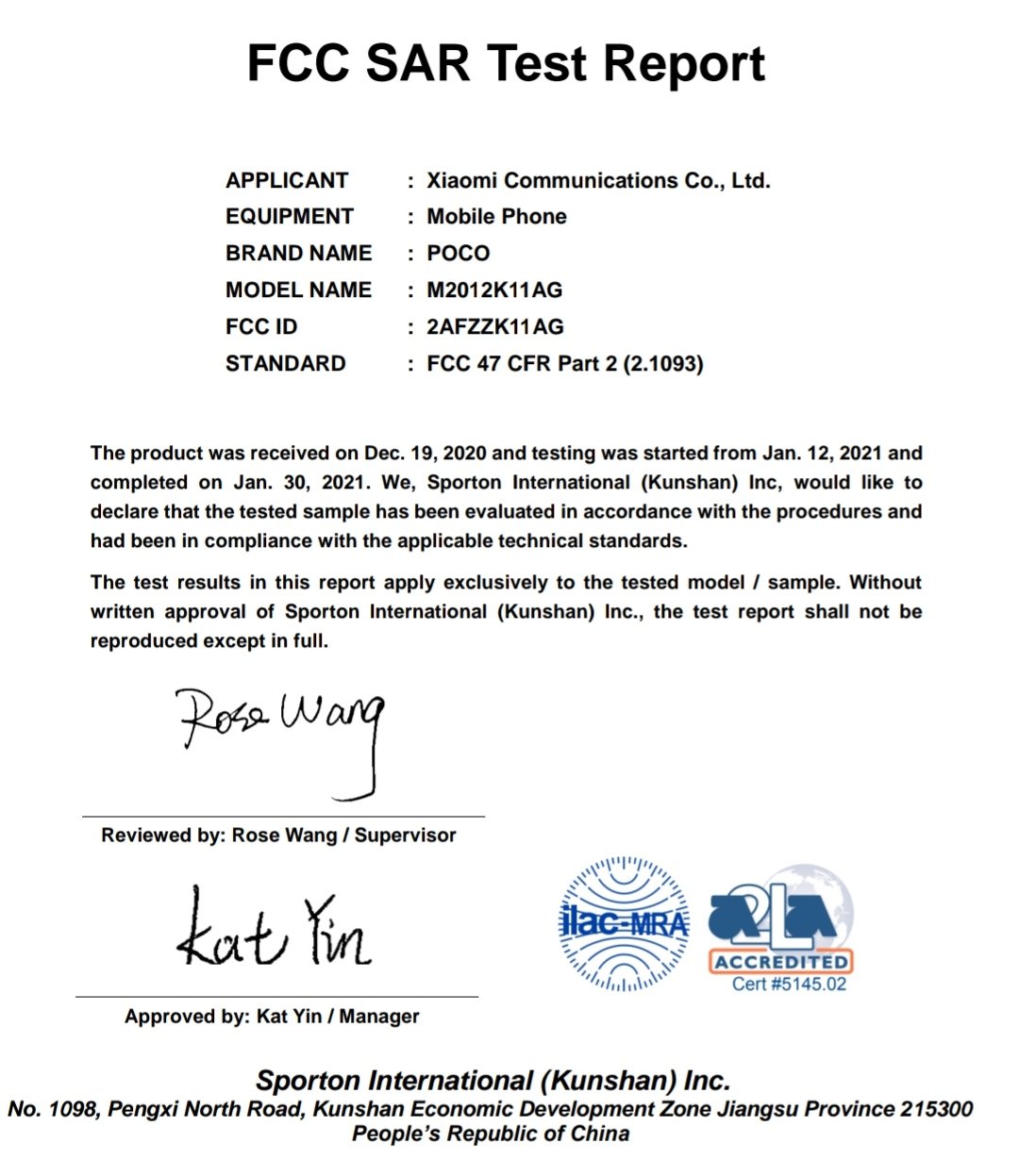
On Feb. 25, Redmi announced the Redmi K40 and Redmi K40 Pro smartphones in China. The model number of the Redmi K40 is M2012K11AC. The model number of its global version is M2012K11AG and its Indian variant has an M2012K11AI model number. A fresh finding reveals that the global edition of the Redmi K40 will arrive in the market with the POCO F3 moniker. The device has now received approval from the Federal Communications Commission (FCC) in the U.S.
Before getting spotted at FCC, the M2012K11AG was seen at certification sites like Indonesia Telecom, Indonesia’s TKDN, Singapore’s IMDA, Europe’s EEC, and TUV Rheinland. Interestingly, the EEC and TUV listings revealed that the M2012K11AG will debut as a POCO branded device. This gave birth to rumors that it could be called POCO F3 in the global markets.
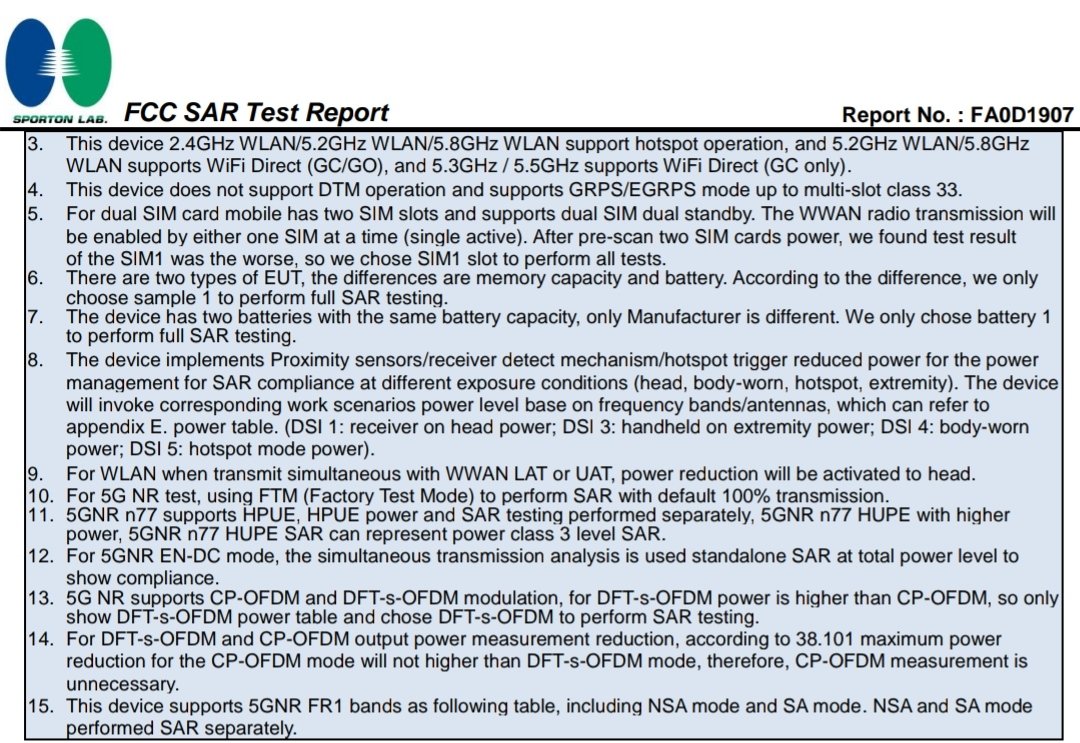
The IMEI database listing of the M2012K11AG shows that the M2012K11AG will indeed launch as the POCO F3. The FCC certification has only revealed only a few pieces of information about the handset. The listing reveals that the device supports 5G, dual SIM, Wi-Fi 6, Bluetooth, NFC, and MIUI 12. Now that the POCO F3 has received FCC certification, it may go official later this month or in April. The IMEI listing suggests that the device could be heading to India soon.
1 of 4
POCO F3 IMEI database
POCO F3 FCC 1
POCO F3 FCC
POCO F3 FCC
Redmi K40 specifications
The Redmi K40 has a 6.67-inch AMOLED screen that produces a Full HD+ resolution and a 120Hz refresh rate. The Snapdragon 870 mobile platform fuels the device with up to 12 GB of LPDDR5 RAM. The phone ships with up to 256 GB of native storage. It has a side-mounted fingerprint scanner.
The K40 has a front camera of 20-megapixel and its rear shell has a triple camera system that comprises of a 48-megapixel main camera, an 8-megapixel superwide lens, and a 5-megapixel macro shooter. It has a 4,520mAh battery that supports 33W fast charging. It carries a starting price of 1,999 Yuan (~$309) in China.
A well-known and reliable Tianfeng International analyst Ming-Chi Kuo has released his forecast related to the Apple iPhone lineup from the next couple of years. In the report, the interesting take is on the smaller iPhone SE.
As per the report, Apple won’t be releasing the next-generation model of the new Apple iPhone SE (2020) this year. Instead, the device will be launched next year.
Apple iPhone SE 2020
He further goes on to mention that there won’t be much change in terms of design of the smartphone and the display size of 4.7-inch could also remain the same. However, the company will be upgrading the processor and add support for 5G connectivity.
While it is mentioned that the chipset in the device will be upgraded, the report doesn’t reveal which processor will be used. Our speculation is that the device could pack the same chipset used in the upcoming iPhone 14 lineup or the current A14 Bionic.
The delayed launch of iPhone SE 3 doesn’t mean there won’t be a new iPhone SE model this year. As per the reports, the Cupertino-based giant is gearing up to launch iPhone SE Plus later this year.
The upcoming iPhone SE Plus is expected to come with a 6.1-inch display with a cutout on top of the screen. In the camera department, there could be a 12-megapixel dual-camera setup. Under the hood, it will pack A14 processor without 5G support and the device is also said to have support for a side-mounted fingerprint sensor.
A few days ago, Lenovo announced its latest laptop in its home country China — Lenovo Xiaoxin Air 14 2021 Ryzen Edition. The company had also started taking reservations of the same soon after the announcement.
Now, from today, the Lenovo Xiaoxin Air 14 2021 Ryzen Edition will be available for purchase in China. Priced at 4,499 yuan (~$696), the device will cost 4,099 yuan (~$643) for the initial sale but those who pre-order the device can get it for 3,999 yuan (~$618).
Coming to the configuration, the Lenovo Xiaoxin Air 14 2021 Ryzen Edition features a 14-inch display with 1920 x 1080 pixels screen resolution, 100% sRGB color gamut, 300nit brightness, and DC Dimming.
Under the hood, the device is powered by the AMD Ryzen R5 5500U processor, coupled with 16GB of RAM and 512GB SSD. The processor is based on the Zen 2 architecture and comes with six cores, 12 threads and a clock speed of 2.1-4.0GHz.
The keyboard has a 1.3mm travel and supports backlight. There’s also fingerprint sensor embedded into the power button. The device comes pre-installed with Windows 10 operating system and is powered by a 56.5Wh large capacity battery.
A couple of days back, we brought you a report that Chinese display maker BOE has edged Samsung Display out of the top spot to become the world’s largest display manufacturer. The brnad’s growth is among other things,, traceable to its high innovativeness. In this light, the display maker has unveiled the world’s first flexible display that folds up to 360 degrees.
The display which is already being mass-produced utilises a flexible screen both on the outside and inside. The flexible display by BOE adopts a multi-neutral layer model design, which effectively reduces the stress of flexible “outside fold” and “inside fold”. The display is also able to realize a low crease effect on both the in-fold and out-fold aspects. The display can be folded up to 200,000 times without an hassle.
Currently, BOE has reportedly achieved mass production of R5 200,000-fold outward-folding displays and R3 200,000-fold in-folding displays, and supplies to domestic first-tier smartphone manufacturers. In addition to the flexible outer-folding and flexible in-folding displays that have been mass-produced, BOE has also deployed flexible sliding roll and now, flexible 360° folding technology.
From the official display, BOE’s flexible 360° folding technology breaks through the limitation of the single-direction folding of the display module, and achieves a 360° folding form whereby it can be folded in, left open and folded out completely.We expect the display to be shipped to manufacturers soon so as to find its way into foldable phones in the near future.
The seemingly unrelenting global shortage in semiconductors, critical for many manufacturing processes has led to massive discontinuities in the supply chain and has affected many carmakers, leading to the temporary closure of some plants and the accompanying job losses.
Industry analysts had predicted that the shortages could extend up to the fourth quarter of the year, as the leading chipmakers continue to expand their production capabilities to bridge the gap. However, because of rising demands, the sales outlook globally for chips in 2021 remains quite strong, according to a piece on EE Times by John Neuffer, president and CEO of the US’ Semiconductor Industry Association (SIA).
“Looking ahead to the long-term, rising demand for personal technology and chip-powered devices will cause the semiconductor market to continue to grow in the years ahead. In addition to personal devices and servers, the long-term applications of semiconductors __ including AI, 5G, autonomous cars, and clean energy __ are quickly gaining steam,” the CEO said. In 2021, sales are expected to rise by 8.4% from a year ago, Neuffer wrote.
A number of governments had made moves to intervene in the chip shortage situation but it is yet to be seen whether such interventions could restore some balance in the semiconductor industry in the short term. Long term, many chipmakers are making investments in new plants to boost capacity.
It is expected that governments should also make investments in this critical component of the tech infrastructure. Last week, US President Joe Biden signed into law, an executive order for a 100-day review of product supply chains, geared towards addressing the chip shortage that has affected the US economy in no small way. This is in addition to a proposed $37 billion budget for the CHIPS for America Act, which is aimed at promoting and incentivizing semiconductor production and research in the US.
The global shortage of chips has been hugely driven by the increasing appetite for personal tech devices, which was further accentuated by the coronavirus pandemic which forced millions across the world to transform their homes to workspaces, with the purchases of personal devices to ensure a seamless work from home. Furthermore, the demand for high-end technology driven by powerful chips needed for 5G and other smart processes is expected to even grow further in 2021.
We use cookies on our website to give you the most relevant experience by remembering your preferences and repeat visits. By clicking “Accept”, you consent to the use of ALL the cookies.
This website uses cookies to improve your experience while you navigate through the website. Out of these, the cookies that are categorized as necessary are stored on your browser as they are essential for the working of basic functionalities of the website. We also use third-party cookies that help us analyze and understand how you use this website. These cookies will be stored in your browser only with your consent. You also have the option to opt-out of these cookies. But opting out of some of these cookies may affect your browsing experience.
Necessary cookies are absolutely essential for the website to function properly. This category only includes cookies that ensures basic functionalities and security features of the website. These cookies do not store any personal information.
Any cookies that may not be particularly necessary for the website to function and is used specifically to collect user personal data via analytics, ads, other embedded contents are termed as non-necessary cookies. It is mandatory to procure user consent prior to running these cookies on your website.