Advertisement

BOE Gen 2 10.5 LCD factory to reach max capacity in first half of 2021

BOE is expected to secure 20 billion Yuan (roughly 3 billion US Dollars) in funds to expands its Chongqing display factory in China, which is also known as the B12 line. This site produces its OLED panels that are used on smartphones, while its 2nd Gen 10.5 LCD factory is also expected to reach its full capacity in H1 of 2021.

BOE

According to TheElec report, local media has revealed that the Chinese display maker will be reaching max capacity on its 2nd gen 10.5 LCD factory within the first half of this year. In other words, the aforementioned funds secured by the company will be used to secure additional shares of Wuhan BOE Optoelectronics, its LCD factory that produces display panels over 32 inches.

Furthermore, BOE had also previously stated that its Wuhan factory will begin to run at full capacity in the first half of 2021. Notably, the factory is the company’s second after its Gen 10.5 CD plant that is situated in Anhui. The factory in Wuhan began operations back in 2019 and the company had planned an expansion in 2020, which got delayed due to the pandemic. During this time, the production had also halted temporarily. Both the Wuhan and Anhui factories have a production capacity of 120,000 substrates per month.

BOE

Additionally, the expanded production will also raise the dominance of BOE and CSOT in the LCD market. Back in 2020, BOE had bought Gen 8.5, and 8.6 LCD factories while CSOT is aiming on purchasing the Suzhou LCD plant of Samsung Display. The company has also told investors that its LCD panel supply will be tight in the first quarter of this year. For those unaware, the prices of LCD display panels have risen since the second half of 2020 and is still rising, as Samsung and LG downscale their respective production.


Honor View 40 (V40) likely to arrive with Google apps and services in Q2

Honor became an independent company in November 2020. Huawei, the former parent brand of Honor, is yet to be freed from restrictions that have been imposed on it due to the US trade ban. Since Honor is free from the ban, it has been busy streamlining relationships with partners and suppliers. It was reported recently that Honor is working on bringing support for Google Mobile Services (GMS) on its devices. Fresh information shared by a Russian publication reveals that the Honor V40 could be the company’s first phone after the US ban to arrive with GMS support.

Honor was previously rumored to launch the Honor V40 smartphone in December. However, the launch date was pushed to January. It is speculated that the launch was delayed mainly because Honor wanted to add support for GMS on the V40.

The V40 with Google apps and services are expected to launch in European markets as the Honor View 40. The handset is expected to launch in Europe at some point in the second quarter of the year. The company is reportedly working on another phone with GMS support. It is unclear whether this device is a V40 series phone or some other handset. With Google apps and services available on Honor phones, forthcoming Honor phones are unlikely to feature Huawei’s AppGallery.

Honor V40 render
Honor V40

Honor View 40 specifications (Rumored)

The Honor View 40 is speculated to feature a curved edge 6.72-inch OLED panel that offers a Full HD+ resolution, a 120Hz refresh rate, and a 300Hz touch sampling rate. The Dimensity 1000+ chipset will be powering the device.

It is speculated to arrive with a 32-megapixel + 16-megapixel dual selfie camera system. The rear camera setup of the phone may feature a 50-megapixel primary camera, an 8-megapixel superwide lens, and a 2-emgaixel macro shooter. Its 4,000mAh could be coupled with 66W rapid charging and 50W wireless charging support.


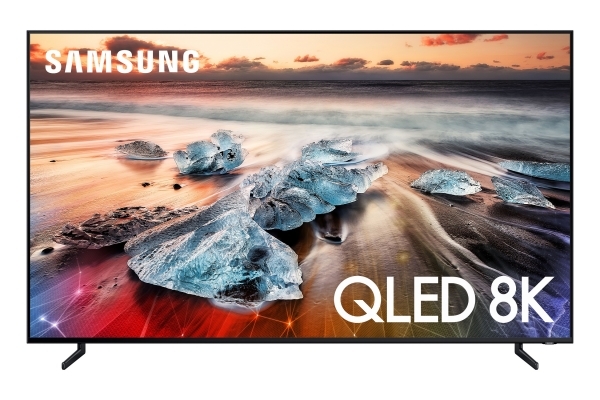
MiniLED TV to overtake OLED TV in high end segments by 2025

A new report has revealed that the MiniLED TVs will soon be leading the high end TV market by the year 2025. This would have it beat the current leader, OLED TVs, within the next couple of years.

MiniLED TV

According to TheElec, a UBI Research report found that China’s TCL will lead the development of MiniLED TVs, although, the market will be led by industry giants like Samsung and LG. The report also adds that after 2024, MiniLED TVs would have essentially overtaken the OLED TVs in terms of market share. For those unaware, MiniLED TVs is an LCD (liquid crystal display) panel that uses micrometer sized LEDs as the backlighting alongside the addition of a quantum dot film.

This leads to an increase in the color gamut range, along with dynamic range advantages as well, in comparison to traditional LCD TVs that are currently available in the market. These TVs can also have up to 3000 local dimming zones, which increases the overall contrast ratio of the panel while also reducing the halo effect. As per the UBI Research report, MiniLED display needs to have as many local dimming zones as the number of pixels to match OLED panel’s performance. However, the size reduction of the LEDs will only allow for 1000 to 3000 dimming zones.

The report also believes that within this year, around 2.5 million MiniLED TVs will be shipped. Notably, the technology behind this technology is expensive with each MiniLED backlight costing anywhere between 250 to 1,100 US Dollars for a 65 inch panel. Meaning, an average MiniLED TV can cost anywhere between 1,500 to 6,000 US Dollars, depending on the size and the number of dimming zones offered by a company as well.


Vivo Y31 with FHD+ display, SD662, 48MP triple cameras and 18W charging launched in India

Vivo has discreetly launched the Vivo Y31 smartphone in India. The phone sports a waterdrop notch display, a massive battery with fast charging support, and a 48-megapixel triple camera system. After the Vivo Y20A, Vivo Y51A, Vivo Y12s, and Vivo Y20G, the Y31 is the first Y-series to launch in the country.

Vivo Y31 specifications and features

The Vivo Y31 mid-range phone has a 6.58-inch IPS LCD Halo FullView screen that produces a Full HD+ resolution of 1080 x 2408 pixels and a 20.7:9 aspect ratio. The display notch houses an 8-megapixel selfie camera with Super Night Selfie support. The rectangle-shaped camera housing placed on the rear shell of the phone has a 48-megapixel main lens, and a pair of 2-megapixel sensors for macro shots and depth effects. The rear cameras support Super Night mode and EIS video stabilization.

The Snapdragon 662 chipset fuels the handset with 6 GB of RAM. The phone ships with a big internal storage of 128 GB. The device boots to FunTouch OS 11 based Android 11 OS.

Vivo Y31
Vivo Y31

The 5,000mAh battery of the Vivo Y31 is coupled with 18W fast charging support. The device is equipped with other features such as dual SIM support, 4G VoLTE, Wi-Fi 802.11ac, Bluetooth 5.0, GPS, USB-C, a microSD card slot, a side-facing fingerprint scanner, and a 3.5mm headphone slot.

Vivo Y31 pricing and availability

The Vivo Y31 carries a price tag of Rs 16,490 (~$225) and it can be purchased in colors like Racing Black and Ocean Blue. Apart from major offline stores, the Y31 can be bought through online platforms like Vivo India’s online store, Amazon India, Flipkart, and Paytm.

HDFC Bank credit and debit users can avail up to Rs 1,000 cashback on the purchase of Vivo Y31. ICICI Bank, Bajaj FinServ, IDFC First Bank, HDB Financial Services, Home Credit, and TVS Credit are offering zero down payment schemes for Y31 buyers.

 

Redmi Note 10/10 Pro and Mi 11/11 Lite India launch details have leaked

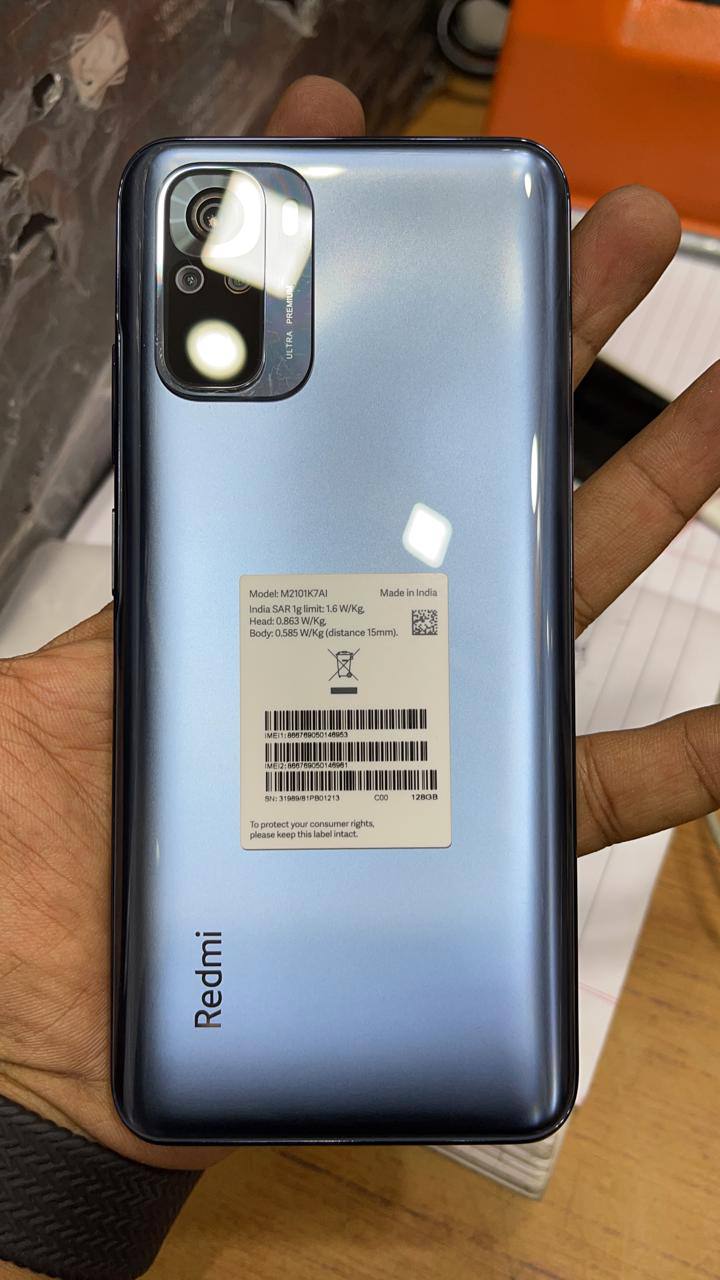
According to well-known tipster Ishan Agarwal, Xiaomi is gearing up to launch the Redmi Note 10 series and Mi 11 series in India starting February. The leakster has revealed the color options and storage variants for some of these devices. He has partnered with 91Mobiles to share this information.

Xiaomi Mi 11 review 08

Redmi Note 10/10 Pro India Launch, Price, and Colors Leak

As per Ishan, Xiaomi will be releasing the Redmi Note 10 series consisting of Redmi Note 10 and Redmi Note 10 Pro in India next month (February) itself. He says that due to Redmi Note 9 series’ poor sales, the company will be pricing these devices aggressively.

Further, according to him, the regular Redmi Note 10 will be available in three colors, namely Gray, White, and Green. However, he did not share anything about the Pro model.

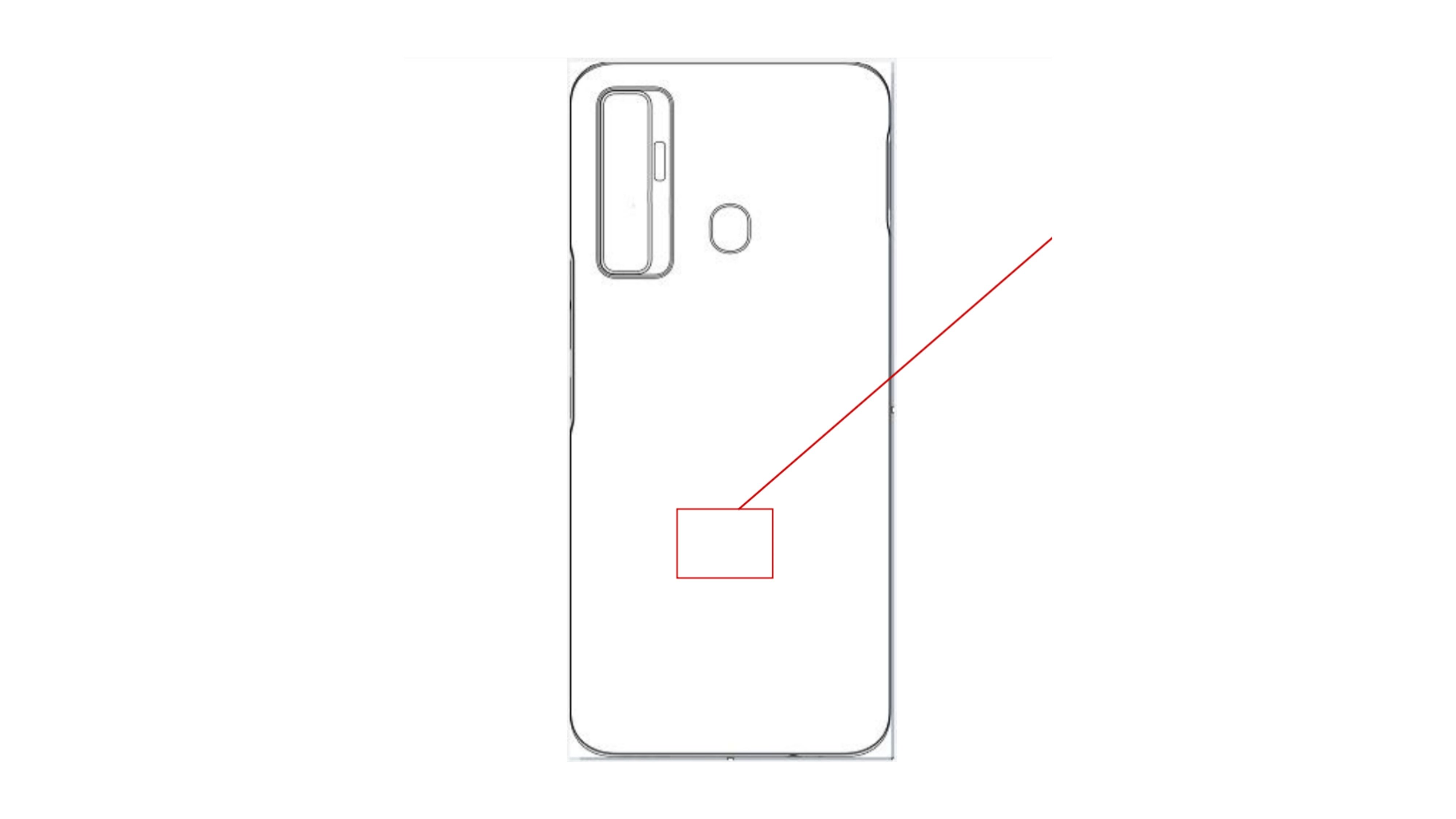
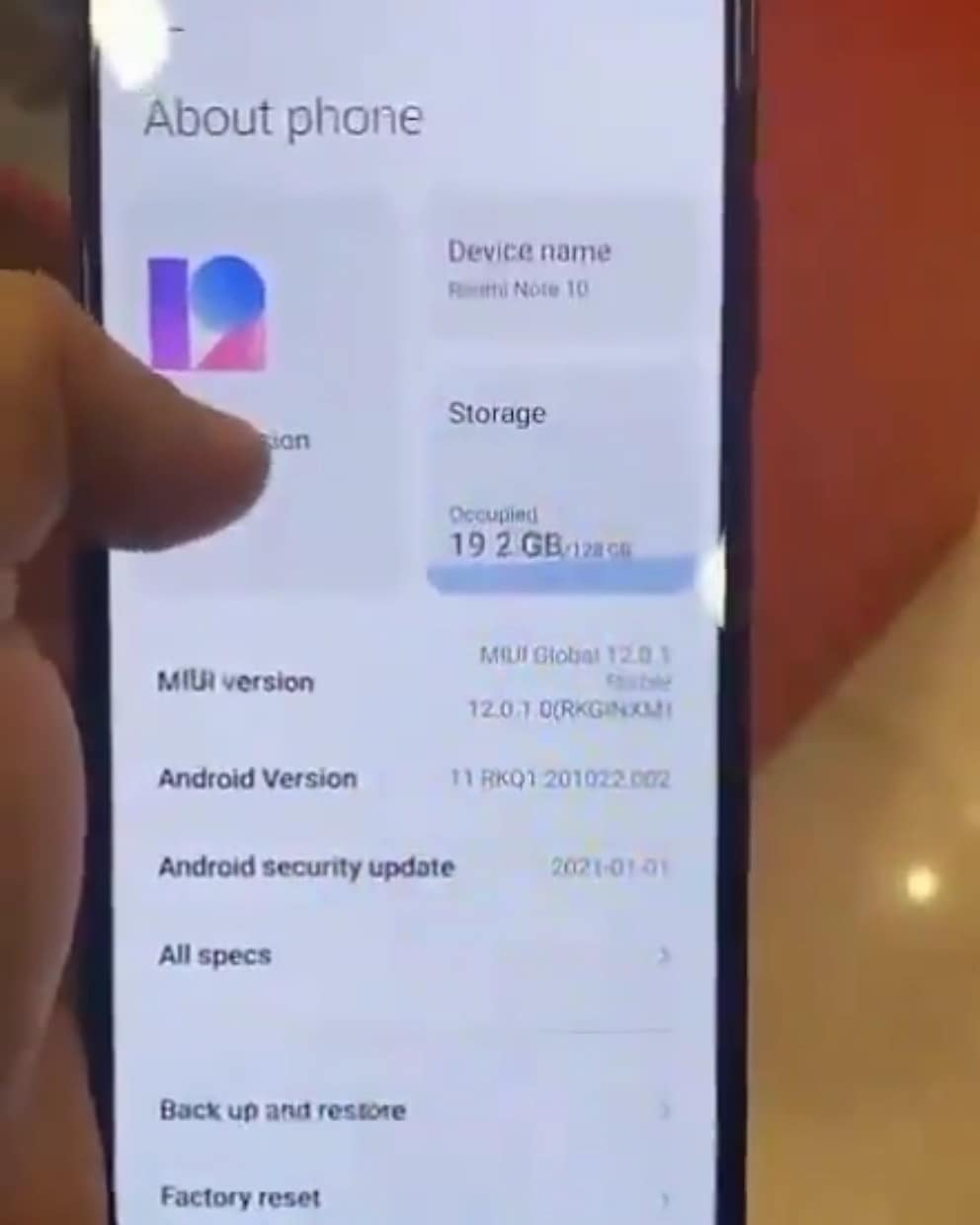
Anyway, thanks to FCC, TÜV Rheinland, IMDA, EEC, BIS, and MCMC certifications, we know that Redmi Note 10 Pro will run MIUI 12 and will come in three storage configurations – 6GB + 64GB, 6GB + 128GB, and 8GB + 128GB.


Xiaomi Mi 11/11 Lite India Launch, Storage, and Colors Leak

On the other hand, Ishan did not expose the launch timeline for Mi 11 series in India. But he has disclosed their storage configurations and colors.

According to him, the Mi 11 and Mi 11 Lite will be available in the following storage variants and color options in India.

  • Xiaomi Mi 11 Storage Variants India
    • 8GB + 128GB
    • 8GB + 256GB
  • Xiaomi Mi 11 Color Options India
    • Gray
    • Blue
  • Xiaomi Mi 11 Lite Storage Variants India
    • 6GB + 64GB
    • 6GB + 128GB
    • 8GB + 128GB
  • Xiaomi Mi 11 Lite Color Options India
    • Black
    • Blue
    • Pink

The Mi 11 is already official and is on sale in China. On the other hand, we exclusively reported that the Mi 11 Lite will be initially unveiled at the Mi 11 global launch event.


Astro Slide 5G is the world’s first 5G handset with a full QWERTY keypad

While the Astro Slide 5G has been on the major crowdfunding website Indiegogo for a while now, the device has now gone official. The device is an attempt to revive the physical QWERTY smartphone market and is the world’s first 5G handset to feature a full keypad.

Astro Slide 5G

According to a PocketLint report, the Astro Slide 5G from Planet Computers is a 5G enabled smartphone, which is possible thanks to the MediaTek Dimensity 800 processor under the hood. Although, the company had originally previously promised to offer a flagship level processor, the Dimensity 1000 chipset. The most notable aspect regarding the device is undoubtedly its full sized QWERTY keyboard, which sits underneath the display and slides across the base.

The keyboard is housed underneath till the time the user slides it out and uses the Astro Slide 5G in landscape mode. Notably, sliding out the keyboard will also have the display incline upwards, offerings a better viewing angle through its hinge mechanism. To put things simply, the device resembles a tiny laptop. Furthermore, the smartphone also plays on nostalgia, when back in the early Android days full sized keyboards usually accompanied smartphones.

Astro Slide 5G

Talking about the specifications, the mid range device sports a 6.39 inch FHD+ AMOLED panel on the front, with 8GB of RAM and 128GB of storage along iwth supprot for microSD card. The device will be charged via a USB Type C port and also support Qi standard wireless charging up to 10W as well. Astro Slide 5G is expected to ship around June 2021 with Android 11 and will be priced roughly around 699 US Dollars.


Microsoft is working on a laptop display that can automatically adjust its viewing angle to meet the users’ gaze

Earlier this month, Microsoft filed for a new patent in Europe for a unique laptop. This device would feature an automatic display that is capable of adjusting its viewing angles to match the gaze of the user.

Microsoft

According to a PatentlyApple report, the American tech giant’s patent details a mechanism for an automatically adjusting display that can correct itself as per the users’ positioning in front of the notebook. This is unique considering the content being displayed on the screen could also have its orientation be changed so as to provide the user with the best possible viewing angle. Its applications in daily multimedia consumption are vast, especially in different settings like traveling or even be useful for differently abled people.

As per the official notes on the Microsoft patent, no user interaction or input is needed to change the orientation or angle of the display. Meaning, it’s a completely automated system that actively monitors and changes the angle of the screen as per the users’ positioning. The mechanism will also be able to measure the distance of the user’s eye from the screen and even process the required alterations based on the mapped data.

Microsoft

At the moment, it is unknown if Microsoft is actually working on such a laptop, or just covering the base towards newer technology. Although, it could be quite useful in the market, for both professional individuals or for users that consume a lot of popular media as well. The company had filed the patent application back in December 2020, which got published on 7th January 2021.


Google Lens reaches over 500 million downloads on the Play Store

Google Lens is one of the many free useful tools provided by Google. A standalone app for this service was released on the Play Store in June 2018. Now, over two and a half years later, this application has reached 500+ million installs on Android’s official app store.

Google Lens Logo Featured

For those unaware, Google Lens is an image recognition tool that was first showcased at Google I/O 2017. Later that year, the search giant integrated this service into Google Assistant on Pixel 2 and Pixel 2 XL.

Then, it became available in Google Photos for both Pixels and other Android devices a few months later in 2018. At around the same time, Google’s partner OEMs began to integrated Google Lens into their smartphones’ camera app.

Only after that, Google Lens debuted as a standalone app on Google Play Store. Despite being an independent app, it depends on Google app for working, just like Google Assistant and Google Podcasts.

Apart from scanning texts and translating them, Google Lens also allows users to copy the scanned text to their computer, search for a particular object, solve maths and science questions, recognize handwritten notes, and more.

That said, it is interesting to note that though Google Lens is available on all Android phones with Google Assistant, users have been downloading the standalone application from the Google Play Store since its debut. As a result, it has hit over 500 million downloads within a short period of time.


(Via)

India asks Facebook to withdraw its updated WhatsApp privacy policy

Facebook recently updated the privacy policy for WhatsApp which was set to go in effect from 8th February but it has now been delayed because of the strong opposition to the new terms by the users. Turkey has even started an antitrust investigation over it.

Now, the Indian government is also getting involved. India’s technology ministry has written to Facebook, asking the company to withdraw the new privacy policy of the WhatsApp messaging platform.

WhatsApp

The ministry says that the new terms are taking away choice from the Indian users. In the letter, it wrote that “the proposed changes raise grave concerns regarding the implications for the choice and autonomy of Indian citizens.”

It also points out that the users don’t have the choice to opt-out of these new data-sharing terms with Facebook and the Indian users are given less choice compared to the app’s users in the Europen market.

EDITOR’S PICK: Honor smartphones may soon get support for Google Mobile Services as it separates from Huawei

The technology ministry has also asked WhatsApp to respond to 14 questions including details on the categories of user data it collected, whether it profiled customers based on usage and cross-border data flows, and more.

In a statement, WhatsApp said that the company is working to address misinformation and remains available to answer any questions. It added: “We wish to reinforce that this update does not expand our ability to share data with Facebook.”

For those who are unaware, WhatsApp recently updated its privacy policy, giving users until 8th February to accept the new terms or lose access to the platform. However, after facing criticism for the move and millions of users switching to its competitors, the company recently announced that it is postponing the rollout of new terms to May.


POCO M3 India launch event could be held in February

The POCO M3 went official in the European markets in November. Tomorrow, the handset will be landing in Asian markets like Taiwan and Indonesia. A tweet by popular tipster Mukul Sharma suggests that the handset could be landing in India in February.

As it can be seen in the tweet, the tipster has not mentioned the exact launch date of the POCO M3, but only revealed that it will land in India in February. If the phone is really set to launch in India in the coming month, the company may start teasing its arrival by the end of January.

The model number of the Indian variant of the POCO M3 is M2010J19CI. It has been spotted at various places like the Bluetooth SIG, Google Play supported device list, the Bureau of Indian Standards (BIS), and TUV Rheinland certification in the recent past. Hence, it appears that the POCO M3’s India launch could be drawing near.

The POCO M3 was introduced with a price tag of $129 (~Rs 9,430) for the 4 GB RAM + 64 GB UFS 2.1 storage model and its 6 GB RAM + 128 GB UFS 2.2 storage variant was priced at $149 (~Rs 10,890). There is a possibility that the POCO M3 may start at Rs 9,999 in India.

POCO M3 specifications

The POCO M3 has a 6.53-inch IPS LCD screen with Full HD+ resolution support. It runs on MIUI 12 based Android 10 OS. The Snapdragon 662 mobile platform powers the device with LPPDR4x RAM and UFS 2.1/2.2 storage. It has a front camera of 8-megapixel and it has a 48-megapixel + 2-megapixel + 2-megapixel triple camera system. The 6,000mAh battery of the POCO M3 supports 18W fast charging.


Apple patents next gen Face ID, which uses facial heat mapping

Apple has just been granted a new patent that is related to its Face ID biometric security system. The patent details a next gen advancement in facial recognition technology, which apparently uses facial heat mapping for authentication.

Apple

According to a PatentlyApple report, the US Patent and Trademark Office awarded the Cupertino based giant the new patent. At the moment, a biometric form of security is a highly common feature in most smartphones and exists in one form or the other. Examples being both fingerprint recognition or facial recognition technology. Now, Apple seems to be working on the next gen Face ID technology, which maps heat on the users’ face for authentication.

Traditionally, the facial recognition technology we see today mostly uses the user’s face in a captured image. However, a major drawback to this method is that any obstruction like glasses, masks, or hair could potentially hamper the authentication process. This is where the new Apple patent comes in, which maps heat from the users’ face. The occlusion heat map may be in the form of a grid that represents different regions of the face’s surface.

Apple

In other words, a determined value of occlusion for these regions might be taken as the unique signature which is recorded by a device. Meaning, each persons’ unique facial heat signature can be used to unlock an Apple device. This could help remove the issues faced by conventional facial recognition technology and also enable the company to continue using its Face ID system, which has become rather impractical after the pandemic due to the more common use of face masks.


Oppo Enco Free up for grabs with 50% massive discount on Giztop

Giztop is offering a massive discount of 50% on Oppo Enco Free under its clearance sale. The interested users can grab these true-wireless earbuds for the effective price of $69. However, it usually retails for $139 n ordinary days. The wireless earbuds offer several useful features such as noise cancellation, open-fit design, Bluetooth 5.0 support and much more. Make sure to grab it soon otherwise it may get out of stock.

oppo enco free

Must See: OPPO Reno5 Pro+ vs iPhone 12 Pro vs Samsung Galaxy Note 20 Ultra: Specs Comparison

Oppo Enco Free is available in three color options of Black, Pink and White. The users need to shell $10 extra if you opt for the white color variant.

The Enco Free are nifty, and lightweight earbuds which are comfortable to wear. The charging case comes with the smooth-matte surface, houses a USB-C charging port at the bottom and it even acts as a charger for the earphones. The device offers seamless connectivity up to a range of 10 metres, thanks to Bluetooth 5.0.

Oppo Enco Free buds packs a 13.4mm dynamic drivers which delivers premium sound. To further enhance the listening experience, the device uses AI uplink Noise cancellation and Wear detection which pauses and resumes playback upon removing it from ears.

It features a useful open-fit design controls enabling touch control using fingers. The user can toggle music and switch tracks using the touch controls. Moreover, the Oppo Enco Free offers 25 hours of battery backup once the case and buds are fully charged. There’s a 31mAh battery in each earbud and a 410 mAh battery capacity is present inside the case.

Overall, it’s worth each cent at the super discounted price of $69. The discount is applicable without any coupon code or any other activity.

Grab Now

Related: Xiaomi Mi Watch global variant gets available on Giztop for $139


Apple AirPods Max teardown by iFixit shows impressive build and possibility of repair

Apple recently launched the AirPods Max headphones in the market, expanding the portfolio of its audio offerings under the popular AirPods lineup. Now, weeks after the device getting launched, iFixit has completed its teardown.

In the teardown overview report, iFixit discovered some interesting details. However, the most surprising thing is the repairability score of six out of ten. This is the only AirPods product has doesn’t have a repairability score of zero.

Apple AirPods Max Teardown

So, why is that? The report reveals that a lot of internal components in the AirPods Max are held together through screws instead of glue, making it easier to swap them out. Also, the ear cushions are attached through magnetics. So, after wear-and-tear, if you want to replace them, that can be done quite easily.

Another thing that impressed the team of iFixit is the headband hinge mechanism which connects the band and the ear cups. It can be detached with just a SIM card removal tool without the need to open the ear cup.

EDITOR’S PICK: Honor smartphones may soon get support for Google Mobile Services as it splits from Huawei

However, not everything is easy and straightforward, as you expect from Apple. Although several components are tied up with screws, there are many different types involved. So, you need to be equipped with several screwdriver heads if you want to open it.

Also, for opening the AirPods Max, you will have to deal with adhesives which isn’t an easy job for everyone and pose a risk of breaking things down when attempting to do so. However, it notes that compared to popular offerings in this space — Sony WH-1000XM4 and Bose NC 700, the AirPods Max from Apple fares well.


POCO M3 smartphone to launch in Taiwan tomorrow

POCO, which started off as a sub-brand of Xiaomi, has today confirmed that the company will be hosting a launch event on 21st January which will be broadcast online. At the event, the company will officially launch the POCO M3 smartphone.

This is the same launch date for the POCO M3 smartphone in Indonesia. For those who are unaware, the smartphone was first launched in November last year as the successor to the POCO M2 and carries a starting price of $129.

POCO M3
POCO M3

The phone features a 6.53-inch IPS LCD waterdrop display and offers Full HD+ screen resolution and Gorilla Glass 3 protection. The phone also comes certified with TUV Rheinland’s Low Blue Light Certification.

Under the hood, the device is powered by the Qualcomm Snapdragon 662 SoC, which is clocked at 2.0GHz. It comes packed with 4GB of RAM and up to 128GB of internal storage. We expect the phone to have multiple variants based on memory configuration in Taiwan.

EDITOR’S PICK: Honor smartphones may get support for Google Mobile Services in the coming months

Coming to the camera department, the device has a triple-camera setup on the back that consists of a 48MP f/1.79 primary camera. It is coupled with a 2MP macro camera and another 2MP depth sensor. On the front, there’s an 8MP f/2.0 selfie shooter.

As for the software, the device comes with an Android 10 pre-installed along with the company’s own MIUI 12 custom user interface on top of it. The phone is powered by a massive 6,000mAh battery and supports 18W charging.


Honor smartphones may soon get support for Google Mobile Services

Honor, the newly independent company in China, is currently streamlining its business and forming new relationships with partners and suppliers. While it is making deals with component suppliers, the company is also working on getting the support of Google.

As per the latest report coming from Russia, Google Mobile Services (GMS) could soon make a comeback on Honor devices. This is primarily because the company is no longer a part of Huawei and thus, sanctions imposed by the United States on the Chinese giant no longer apply to Honor.

Honor Logo

It further mentions that the return of Google services of Honor smartphones could happen around Spring. The company is already working on two new phone lineups that will have support for Google Mobile Services. This should bring back official Android support as well as a host of other Google applications.

With the introduction of Google services on Honor smartphones, new devices getting launched by the company will no longer have Huawei AppGallery pre-installed. However, the older devices will continue to have AppGallery.

EDITOR’S PICK: Tencent bans over 1.2 million hackers from PUBG Mobile in just 6 days for cheating

For those who are unaware, in May 2019, US President Donald Trump signed an executive order banning Huawei from dealing with American companies, cutting off access to Google’s services as well as many others. Since Honor was a sub-brand of Huawei, its devices were also not able to use GMS. To make sure that the brand survives, Huawei sold off Honor in November last year.

Apart from establishing relations with suppliers, the company is also working on establishing its presence in the market. The company has started its own online store named Honor Mall and is planning to launch several offline stores.


Xiaomi Mi 11 Pro flagship smartphone to come with 120x zoom support

After announcing its latest Mi 11 flagship smartphone a few weeks ago, Xiaomi started selling the device earlier this month. Now, the Chinese company is gearing up to launch a new variant in the lineup, dubbed Mi 11 Pro.

Now, the latest report coming from popular leaker ‘Digital Chat Station’ reveals that the upcoming Mi 11 Pro will have support for 120x zoom through its rear-facing camera setup. This seems to be pretty much in line with what has been rumored so far.

Xiaomi Mi 11 Pro 120x Zoom

Instead of the triple-camera setup on the Mi 11, the Pro variant will come with a quad-camera configuration on the back panel. Also, the company seems to have ditched the design of the vertically-aligned sensor found on Mi 10 Pro to a 2×2 grid design.

As for the other specifications, reports indicate that the Mi 11 Pro smartphone will have the same display as the Mi 11. It will feature a 6.81-inch 2K curved display offering a 120Hz refresh rate, 515PPI pixel density, and a peak brightness of 1500nits. Additionally, the device is also expected to have support for MEMC and SDR to HDR conversion.

EDITOR’S PICK: Motorola Edge S confirmed to launch on January 26th with Snapdragon 870 inside

Mi 11 Pro
Xiaomi Mi 11 Pro Render

Given that it’s a flagship offering from Xiaomi and Qualcomm Snapdragon 888 is the most advanced chipset out there in the market, the device will be powered by the Snapdragon 888 chipset, the same as the Mi 11. We also expected to see multiple versions of the phone based on the memory configuration.

In the software department, the phone is likely to be running the latest Android 11 operating system along with the company’s own MIUI custom user interface on top. More information about the device is expected to surface online ahead of its official launch, which will take place after the Spring Festival in China, after mid-February.


Realme Race, RMX3085, RMX3081, RMX2156 receive EEC certification

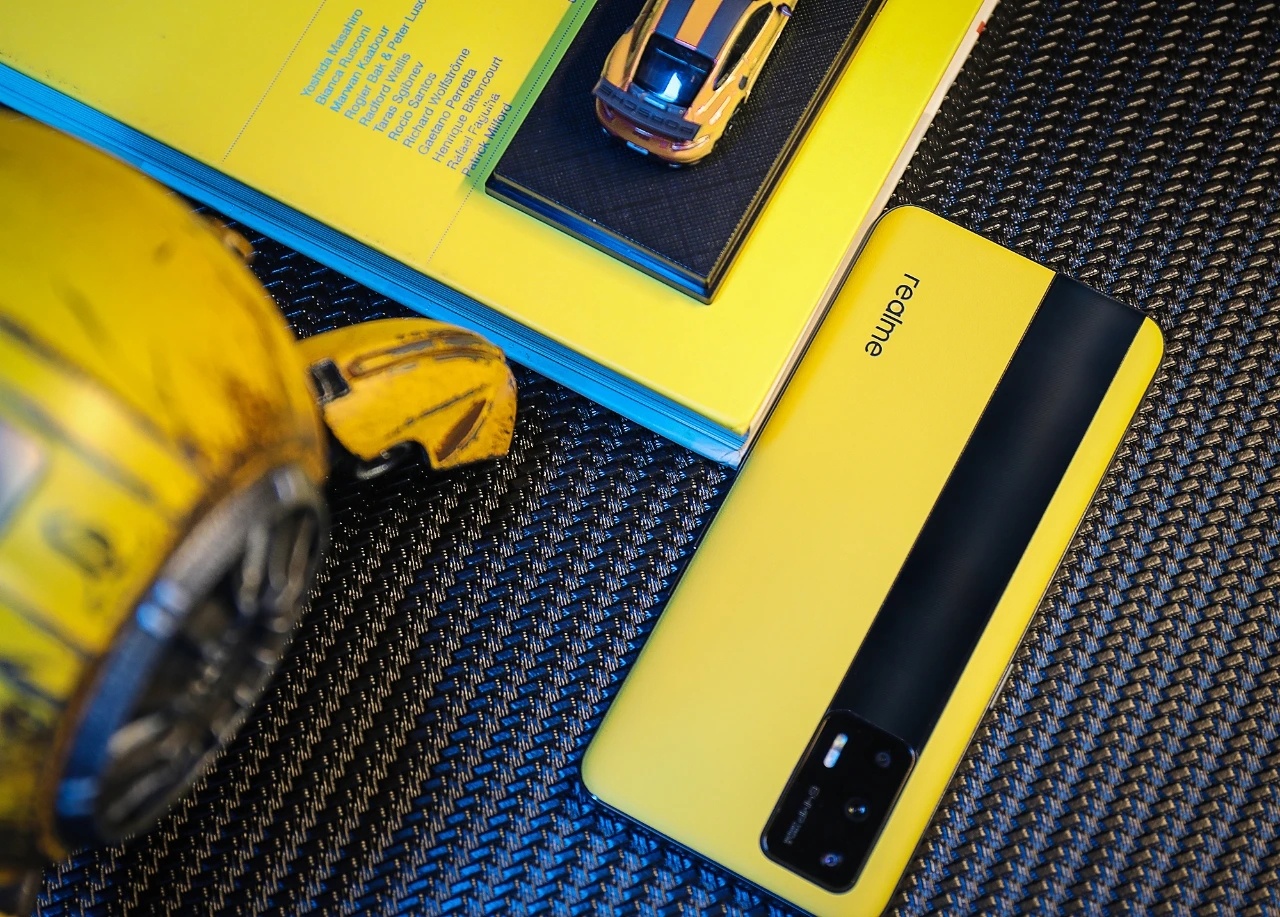
Last month, GSMArena shared the leaked images of the upcoming Realme Race flagship phone. One of the images revealed that its model number is RMX2202. Four new handsets including the Realme Race has emerged in the database of the Eurasian Economic Commission (EEC). The EEC listings suggest that these devices will be heading in the European markets.

Apart from RMX2202, the EEC authority has also approved Realme phones such as RMX3085, RMX3081, and RMX2156. The EEC listings of these phones have not revealed any information on the specs of these smartphones.

The Realme RMX2156 has been previously spotted at other certification platforms such as the FCC (US), TKDN (Indonesia), and BIS (India). The FCC listing of the phone had revealed that it has a 5,000mAh battery and it carries support for dual-band Wi-Fi and Bluetooth 5.0.

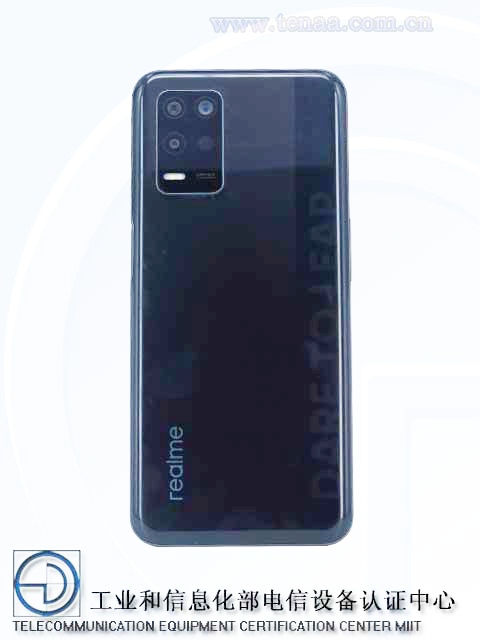
The RMX3085 has appeared for the first time at EEC, whereas the RMX3081 has been previously seen at TKDN. The identity of the RMX3085, RMX3081, and RMX2156 are under wraps.

Coming to the Realme RMX2202 (aka Realme Race) will be arriving with Snapdragon 888 SoC. The handset is expected to offer users other specs like 12 GB of RAM, 256 GB of built-in storage, and Realme UI 2.0 based Android 11 OS.

The image that showcased the rear design of the Realme Race phone revealed that it will be sporting a round-shaped camera module for its quad-camera system. The handset may carry support for 125W rapid charging technology. The device seems to be equipped with an OLED screen and an in-screen fingerprint reader. Rumors are rife that the Realme Race will be debuting as the company’s first Ace series smartphone. It is expected to launch in Q1 this year.


OPPO Find X3 Pro receives FCC certification ahead of March launch

Earlier this month, a mysterious OPPO phone with model number CPH2173 was spotted at Geekbench benchmarking platform. Since it was found with Snapdragon 888 SoC onboard, it was speculated that it could either be the upcoming OPPO Find X3 or Find X3 Pro smartphone. The OPPO CPH2173 has now appeared in the database of the Federal Communications Commission (FCC) ahead of its expected launch in March.

The FCC listing has revealed only a few pieces of information on the specs of the OPPO CPH2173 smartphone. It mentioned that the device may arrive preloaded with the latest ColorOS 11.2 UI and it may ship with a charger that has a model number VCA7JAUH / VCA7DUH / VCA7HUAH. The charger offers maximum charging speeds of up to 65W. The BLP831 battery that powers offer a rated capacity of 2,200mAh could be powering the Find X3 Pro. This indicates that the device is backed by a dual-cell battery.

OPPO Find X3 Pro specifications (Rumored)

Recent leaks by popular tipster Evan Blass have revealed that the OPPO Find X3 Pro is codenamed as Fussi. The handset is expected to house a 6.7-inch OLED display that will offer 1440 x 3216 pixels, a 1.07 billion color support, and up to 120Hz adaptive refresh rate.

The Snapdragon 888 mobile platform along with 12 GB of RAM will fuel the Find X3 Pro. It may come with a 4,500mAh dual-cell battery that will also support 30W VOOC Air wireless charging along with 65W SuperVOOC 2.0 rapid charging. The quad-camera setup of the phone is expected to include a Sony IMX766 50-megapixel primary camera, another Sony IMX766 50-megapixel lens for ultrawide shots, a 13-megapixel telephoto lens with 2x optical zoom, and a 3-megapixel lens that will deliver 25x zoom.

Apart from launching the Find X3 and Find X3 Pro, the company is also expected to announce Find X3 Neo and Find X3 Lite by April. The X3 Lite is believed to be a rebranded version of China’s OPPO Reno5 5G handset.


(via)

Realme X9 image reveals slim design, may lack 3.5mm audio jack

Yesterday, Realme CEO Madhav Sheth shared an image of a new Realme phone alongside a stack of credit cards to tease its slim profile. While Sheth did not reveal the name of the device, GSMArena reported that it learned from internal sources that it will be arriving in the market as the Realme X9.

As can be seen in the image, the Realme X9 is only as thick as six credit cards. The phone sports a colorful rear along with “realme” and “Dare to Leap” brandings. The bottom edge of the Realme X9 has a loudspeaker grille, a USB-C port, and a microphone. There is no 3.5mm audio jack on the bottom edge of the phone. It is unclear whether the headphone slot is available on the top edge of the phone.

Realme X9
Realme X9

The appearance of the Realme X9 is quite like the Realme V15 5G that went official in China at the beginning of this month. The handset is yet to be made available outside the home market. It remains to be seen whether the Realme X9 arrives as a rebranded version of the Realme V15 5G, which neither features a 3.5mm audio jack or a microSD card slot.

Realme V15 5G specifications

The Realme V15 5G has a 6.4-inch S-AMOLED display with a punch-hole design. It offers a Full HD+ resolution of 1080 x 2400 pixels and a 20:9 aspect ratio. The Realme UI based Android 10 OS comes preloaded on the Realme V15 5G.

Realme X9
Realme X9

The Dimensity 800U chip along with 6 GB / 8 GB of RAM powers the device. It has 128 GB of internal storage and it is backed by a 4,310mAh battery that supports 50W fast charging. For photography, it has a 16-megapixel front camera and a 64-megapixel + 8-megapixel + 2-megapixel triple camera system. The handset weighs only 176 grams and it measures only 8.3mm in thickness.


Samsung Galaxy A12 launched in the UK; Galaxy A32 5G and Galaxy A02s coming later

Samsung has announced three new Galaxy A phones for the UK market today. However, only one of them can be purchased right away. The phones are the Galaxy A12, Galaxy A02s, and Galaxy A32 5G.

Galaxy A12 and Galaxy A02s featured

Galaxy A12

The Samsung Galaxy A12 is a 4G smartphone with an Infinity-V display and four cameras that stick out on the back. It also packs a 5000mAh battery that powers the Helio P35 processor under the hood.

The Galaxy A12 rocks a 6.5-inch display with an HD+ resolution. The Helio 035 processor is paired with 4GB of RAM and buyers will be able to choose between having 64GB of storage or 128GB of storage.

There is a 48MP main camera on the rear and it comes along with a 5MP ultrawide angle camera, a 2MP macro camera, and a 2MP depth camera. The notch in the display is for an 8MP camera.

Samsung has added a side-mounted fingerprint scanner and its signature security framework, Knox, for device security. You also get 15W Adaptive Fast Charging and support for storage expansion (up to 1TB). Disappointingly, it ships with Android 10 out of the box.

The Galaxy A12 is available at Samsung channels and major UK retailers for £169. It comes in Black, Blue, and White, all of which have a glossy finish.

EDITOR’S PICK: Samsung Galaxy A32 4G spotted at Geekbench, could be heading to India soon

Galaxy A02s

The Galaxy A02s which was announced alongside the Galaxy A12 will be available “in the coming weeks” in the UK. It also has a 6.5-inch HD+ Infinity-V display but swaps the Helio P35 for the Snapdragon 450. It has 3GB of RAM and 32GB of expandable storage

On the back of the phone are a 13MP primary camera, a 2MP macro camera, and a 2MP depth camera. It also has a 5MP selfie camera, a 5000mAh battery, and 15W Adaptive Fast Charging. It skips the fingerprint scanner and comes in Black and White. It will sell for £139 when it goes on sale.

Samsung Galaxy A32 5G

Galaxy A32 5G

The Galaxy A32 5G launched in Germany last week and now it has landed in the UK. However, just like Germany, it won’t be available for purchase until next month – February 19th to be precise.

The phone also has a 6.5-inch HD+ Infinity-V display and a 5000mAh battery with 15W fast charging support. Its processor is the Dimensity 720 and it is paired with 4GB of RAM and 64GB of expandable storage.

Its camera configuration is almost identical to that of the Galaxy A12 but its macro camera is a 5MP sensor and you get a 13MP camera in front for selfies. It also has a side-mounted fingerprint scanner.

The UK gets the same colorways as Germany – Awesome Black, Awesome White, Awesome Blue, and Awesome Violet. It will sell for £249 when it goes on sale.