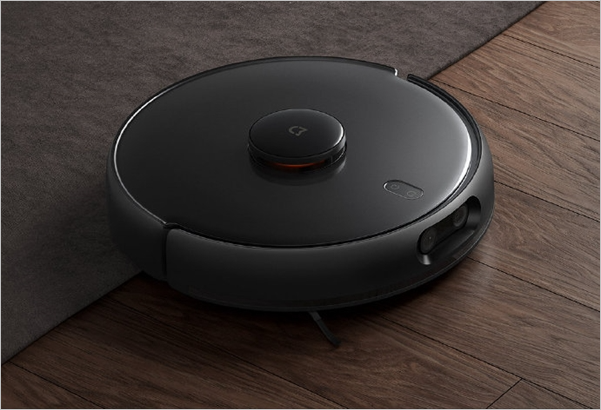
MIJIA Robot Vacuum cleaner is one of Xiaomi‘s top-selling smart home products both in China and overseas. The product has attracted rave reviews such that the original manufacturer Roborock was able to launch its own brand that is also performing well. During the Mi Mix Fold launch conference earlier today, Xiaomi also launched the MIJIA Robot Vacuum Cleaner Pro. The product carries a price tag of 2,999 yuan (~$456).
The MIJIA Robot Vacuum Cleaner Pro is the brand’s strongest robot vacuum cleaner yet and to attain that rating, it features several top-of-the-line hardware and software.
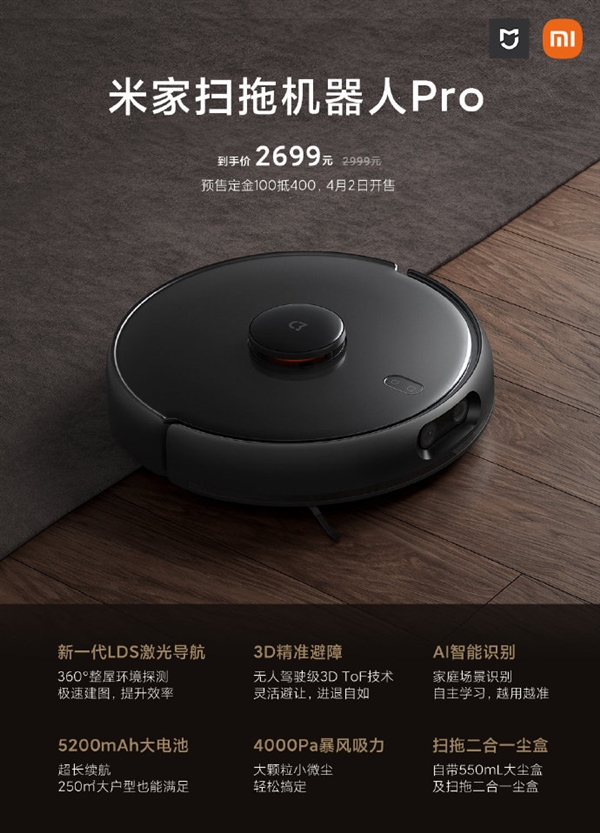
The vacuum cleaner is equipped with multi-dimensional binocular recognition and obstacle avoidance. It also comes with an LDS laser navigation system and a 2-in-1 dust box that handles the sweeping and mopping functions.
The robot vacuum is capable of AI autonomous learning which makes it become smarter as it is used more frequently. The binocular multi-dimensional recognition system can automatically avoid cables, slippers, table legs, and carpets. You also get support for AI scene recognition. The vacuum cleaner will also formulate different water output and sweeping schemes based on the different floor types in order to ensure it is cleaned efficiently.
The MIJIA Robot Vacuum Cleaner Pro uses the industry’s first AIoT flagship dual processor, making it faster to build a whole house map and intelligently plan routes.
Although the previous MIJIA Robot Vacuums can map different rooms, they cannot determine which room is which. As such, the user will need to specify the name of the room from the app. The new Pro version is capable of directly and intelligently identifying rooms. For instance, if it recognizes the bed, it will then automatically determine that it is a bedroom.
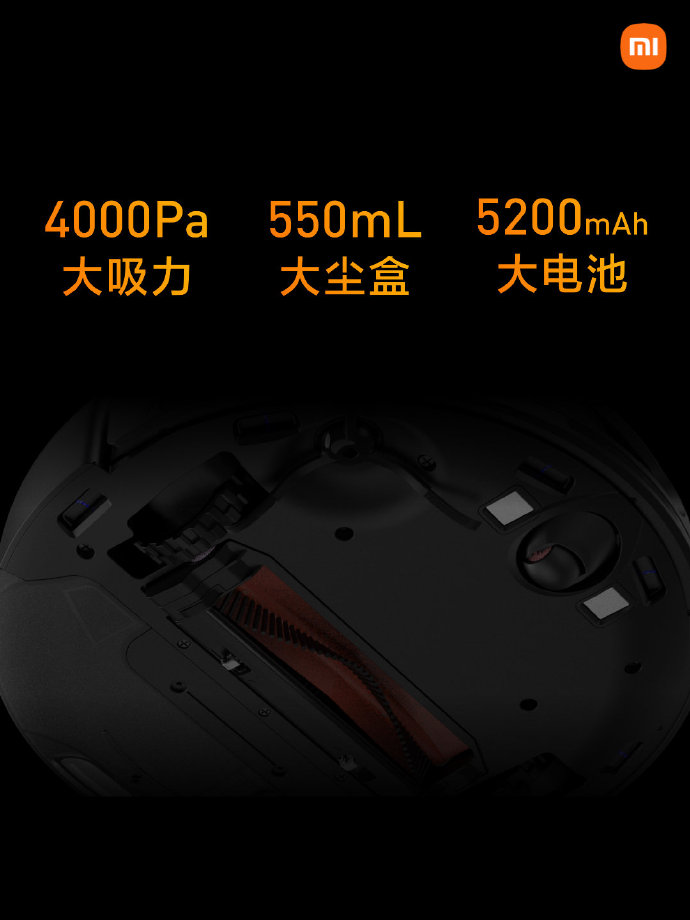
In terms of performance, the Pro model is equipped with a motor capable of 4000Pa output which can pick up both large and small particles. It also crams a mammoth 5200mAh battery under the hood which can adequately clean up a large apartment of up to 250 square meters.
The robot vacuum will be on pre-sale in China from today at a reduced price of 2699 yuan (~$410).
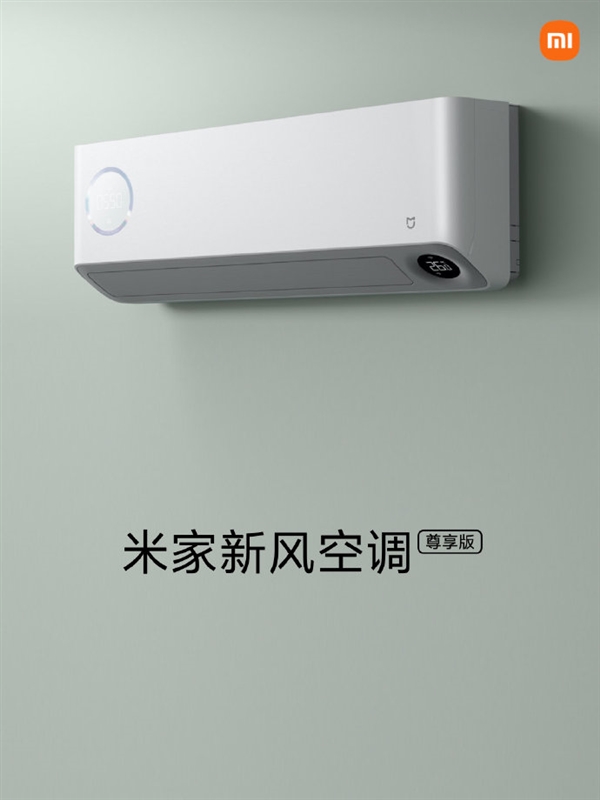
Xiaomi continued its product launch event today with the launch of a number of new products with the major highlight being the Mi MIX Fold. The company also unveiled some smart home products, one of which is the MIJIA Fresh Air Air Conditioner Pro.
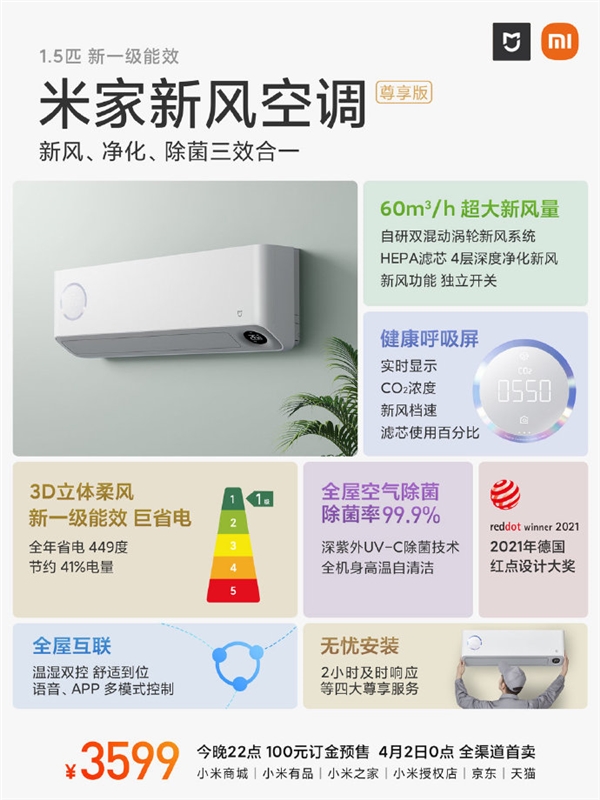
The MIJIA Fresh Air Air Conditioner Premium Edition is a three-effect air conditioner that incorporates the functions of air conditioning, fresh air fan, and air purification functions. There is a miniature health screen on the right side of the air conditioner which among other things displays the concentration of carbon dioxide in the room in real-time. The screen also shows the working temperature.
Compared with traditional air conditioners, the MIJIA Air Conditioner Premium Edition has more functions. As an air conditioner, it has a 1.5-hp first-class energy efficiency, which can reduce electricity consumption.
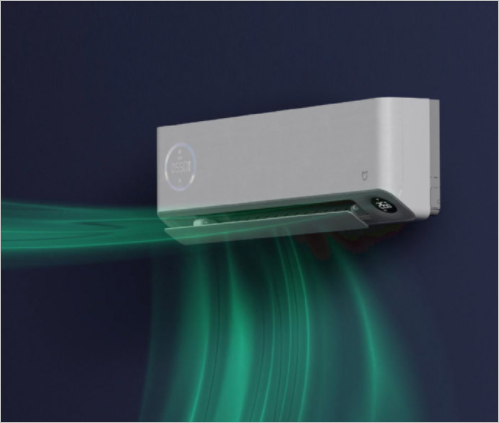
When it is used as a fresh air fan, the MIJIA Air Conditioner Premium Edition uses a dual-hybrid turbine system with an air volume of up to 60m3/h.
Finally, as an air purifier, the device is capable of achieving 99.9% sterilization of the air in the entire house using UV-C deep ultraviolet sterilization.
In terms of the pricing, the exclusive version of the MIJIA Fresh Air Conditioner is priced at 3599 yuan and there are four exclusive installation services including 2 hours of timely response. It will go on sale for the first time on April 2.
As expected, Xiaomi has launched the Mi Notebook Pro 14 2021 and the Mi Notebook Pro 15 2021 on the second day of the Xiaomi Mega Launch event. These two are the most premium laptops (in terms of features) from the company to date. For some reason, the global arm of Xiaomi is calling them Mi Laptop Pro 14 and Mi Laptop 15 Pro respectively. Anyway, let us take a look at their specs, features, price, and availability.
Xiaomi Mi Notebook/Laptop Pro 14/15 2021 Specifications and Features
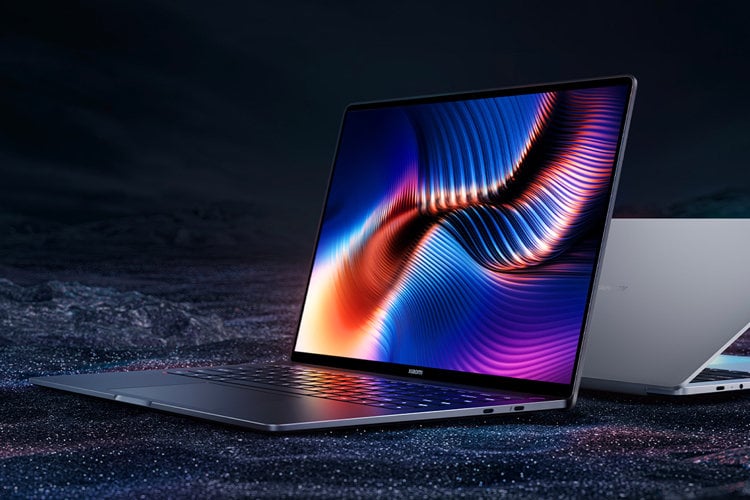
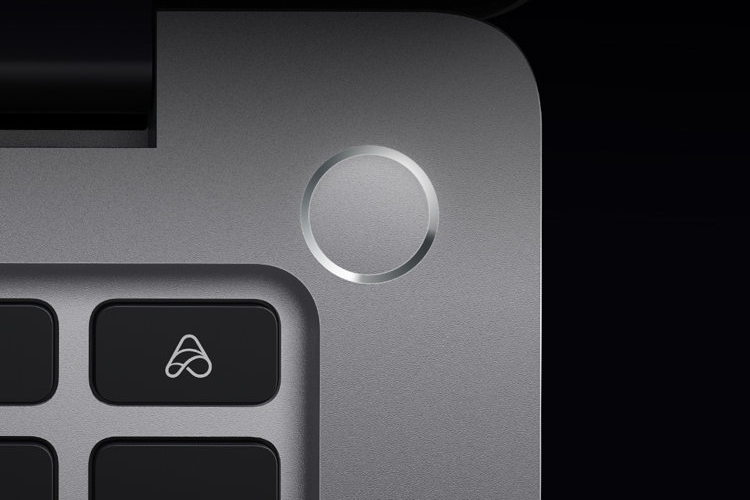
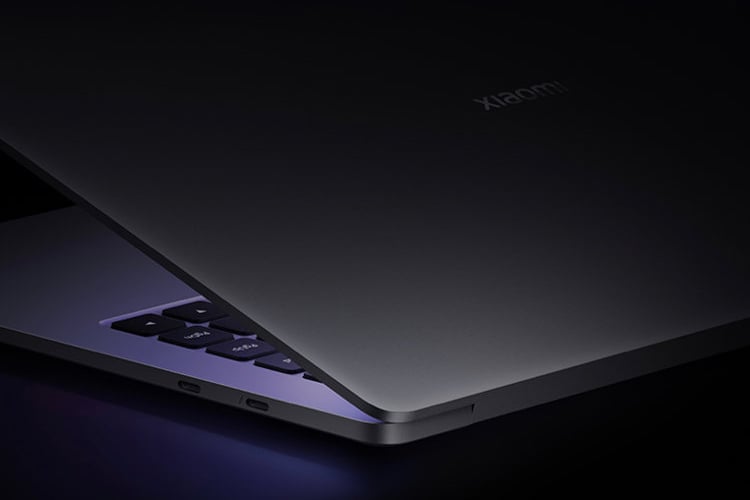
The newly launched Xiaomi high-end laptops feature a metal unibody design made of 600 series aviation-grade aluminum alloy. They look identical to Apple MacBook Pro and come in two colors (Moonstone Grey, Crescent Silver). The 14-inch version is slim at 15.6mm while the 15-inch version is slightly thicker at 15.9mm.
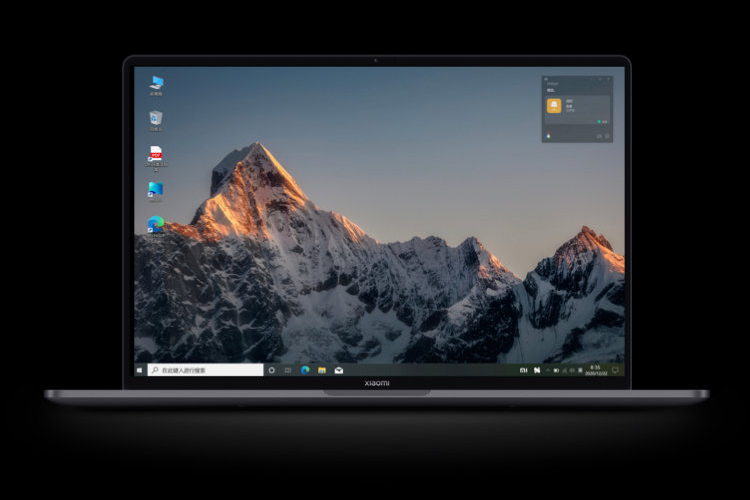
The 15-inch model flaunts a 15.6-inch 3.5K (3456 x 2160 pixels) resolution OLED display with Corning Gorilla Glass protection. This panel has a 1,000,000: 1 contrast ratio, 600 nits peak brightness level, ΔE≈1 color accuracy, 16:10 aspect ratio, and 93% screen-to-body ratio.
Further, this screen can produce 10.7 billion colors, cover 100% of the DCI-P3 color gamut, and supports DC Dimming. Lastly, it also has TÜV Rheinland Low Blue Light Certification and SGS Eye Care Display Certifications.
On the other hand, the 14-inch variant sports a 14-inch 2.5K (2560 x 1600 pixels) resolution LCD panel but with up to 120Hz refresh rate. This display has a 16:10 aspect ratio, ΔE≈1.5 color accuracy, and TÜV Rheinland Low Blue Light Certification.
Under the hood, both of them feature 11th Gen Intel Core processors coupled with 16GB DDR4 RAM and 512GB PCIe SSD. The i5 variant comes with and without NVIDIA GeForce MX450 GPU but the i7 version has this discrete GPU as standard.
1 of 5
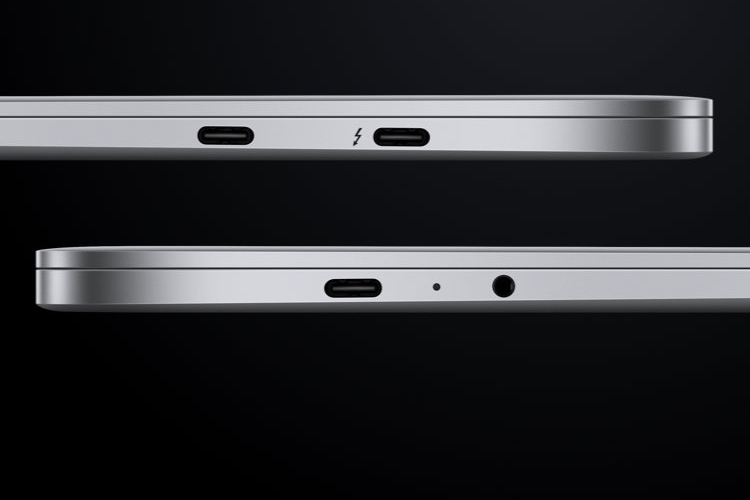
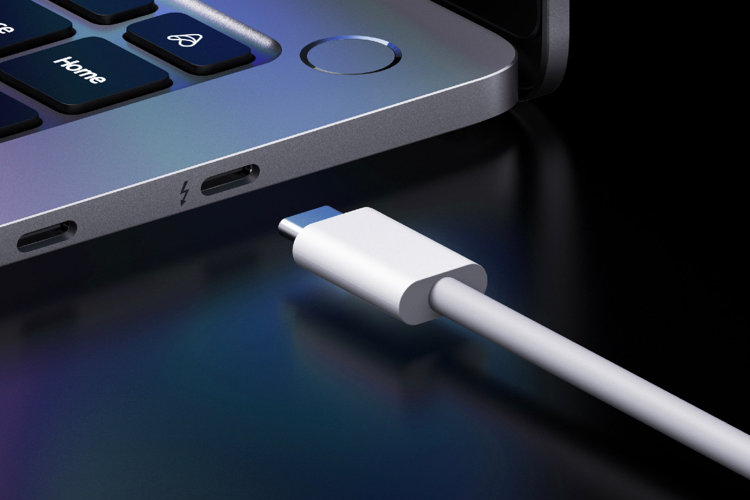
Other features of these laptops include a backlit keyboard, large touchpad, fingerprint sensor, WiFi 6, 3 x USB Type-C (one of them is Thunderbolt), 3.5mm headphone jack, Microsoft Windows 10 operating system, MIUI+, XiaoAi voice assistant, HD webcam, 56Whr (14-inch)/66WHr (15-inch) battery, and 100W fast charging.
Xiaomi Mi Notebook/Laptop Pro 14/15 2021 Price and Availability
The new thin and light premium Xiaomi laptops will retail for the following price tags in China.
Xiaomi Mi Notebook/Laptop Pro 14 2021
i5-11300H, 16GB + 512GB – ¥5,299 ($806)
i5-11300H, 16GB + 512GB, MX450 – ¥5,999 ($913)
i7-11370H, 16GB + 512GB, MX450 – ¥6,999 ($1,065)
Xiaomi Mi Notebook/Laptop Pro 15 2021
i5-11300H, 16GB + 512GB – ¥6,499 ($989)
i5-11300H, 16GB + 512GB, MX450 – ¥6,999 ($1,065)
i7-11370H, 16GB + 512GB, MX450 – ¥7,999 ($1,217)
The 14-inch variant will available for pre-order starting April 26 and will go on sale from May 1. Whereas, the 15-inch version will hit the shelves earlier on April 2 since the company has begun to take pre-orders for it from today itself.
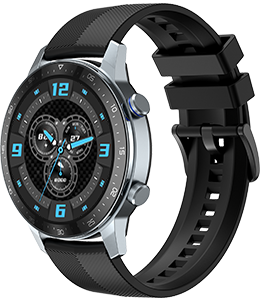
Alongside the new ZTE S30 series featuring the S30, S30 SE, and the S30 Pro, ZTE also announced a new smartwatch for the Chinese market called the ZTE Watch GT.
This is the company’s new round watch featuring a round 1.19-inch AMOLED 2.5D curved display. The body is made out of ultra-light aluminum alloy, weighing only 30 grams which ZTE claims provide a comfortable and light wearing experience.
The ZTE Watch GT supports up to 16 sports modes including outdoor running, indoor running, outdoor walking, outdoor cycling, spinning, hiking, swimming, yoga, strength training, basketball, football, etc. So most of your workout/sports scenarios are covered by the watch.
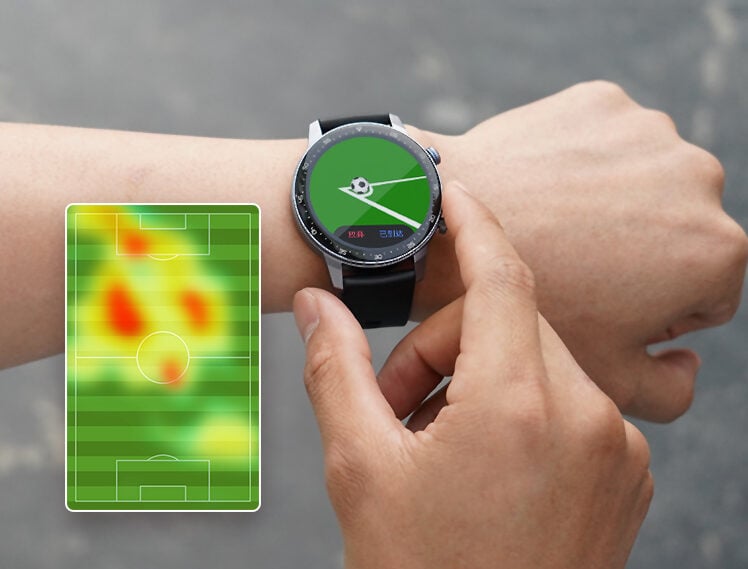
Apart from the usual array of features such as tracking your calories, speed, steps, and sleep monitoring, the ZTE Watch GT also comes with a multi-mode GPS positioning system. Thanks to GPS support, ZTE has added a special heatmap feature in the football mode of its new watch wherein the watch will track your playing positions and reveal a heatmap of the areas where you’ve been busy in the stadium. This can be a really good feature to understand your gameplay and improve it over time. The watch supports 24-hour heart rate monitoring along with abnormal heart rate alerts. It also comes with a Blood Oxygen monitoring sensor.
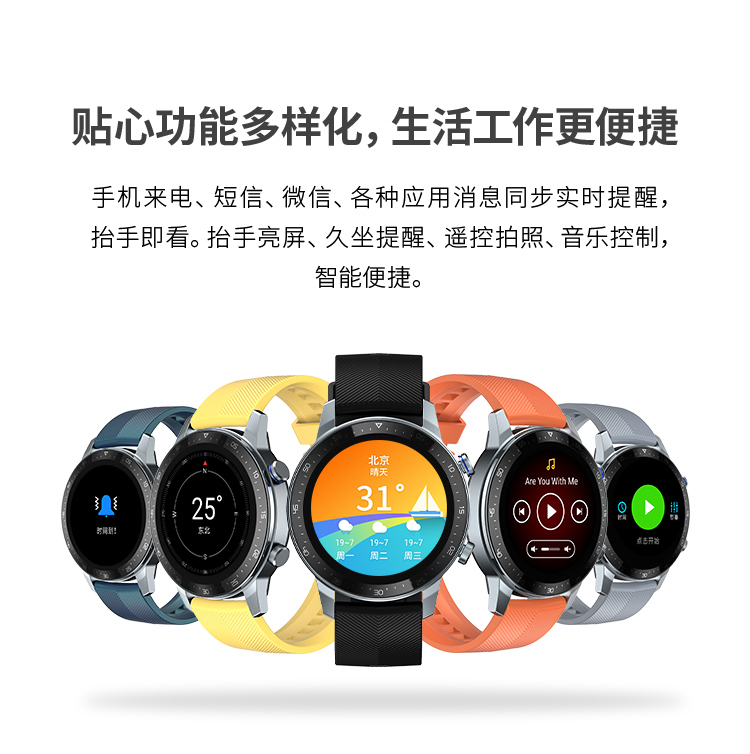
The ZTE Watch GT is 5ATM waterproof certified, so you can even wear it while swimming. The watch can also show notifications like incoming calls, SMS, WeChat in real-time. Other standard features like remote photo capture, music controls and raise wrist to wake screen are all present on the new watch.
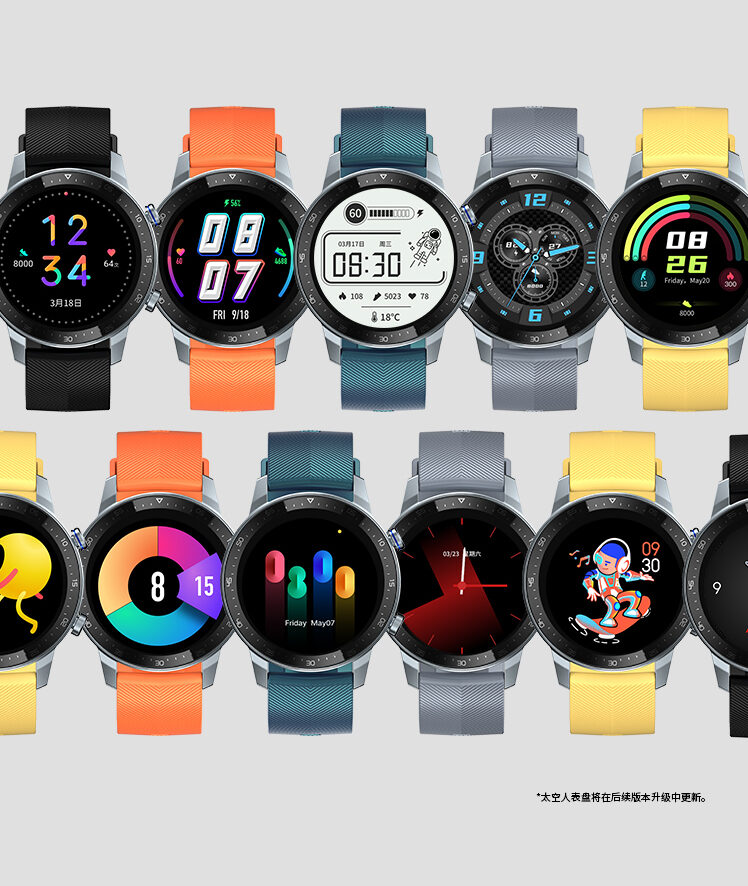
zte watch gt watchfaces
ZTE claims up to 15 days of battery life under normal usage and up to 23 days in the ultra-long battery life mode.
The ZTE Watch GT retails at 599 yuan (~$91), however, the company is offering a discount of 50 yuan until March 31 in China.
Just like last year, Apple has confirmed that the Annual WorldWide Developer Conference will be held as an online-only event. The event will begin on June 7, 2021, and is sure to include a lot of announcements including new iOS, iPadOS, macOS, watchOS, tvOS, and more.
WWDC 2021, Credit: Apple
In a press release, Apple says that it is committing $1 million to SJ Aspires, an education and equity initiative launched by the City of San José. This is to compensate for the virtual event and in turn, support the local economy. This commitment is also a part of its $100 million Racial Equity and Justice Initiative.
Talking about the event itself, the WWDC 2021 will take place as an all-online event from June 7 to June 11. As always, the focus will be on developers and it is likely that Apple may release Developer Betas of the new OS. Speaking of which, we can expect the next iteration of the Apple operating systems at the keynote speech of the event.
That is, the iOS 15(iPhone), iPadOS 15(for iPads), watchOS 8(Apple Watch), macOS 12(MacBooks, Mac mini/Pro/iMac), and tvOS 15(Apple TV) are likely to debut at the event. Although the event is focused heavily on software, don’t exclude a few surprise hardware announcements just yet.
If you recall, back in 2019, Apple surprised everyone with the Mac Pro at the WWDC event, and in previous years like 2017, it has brought HomePod, iMac, and iPad products as well.
Coming back, apart from the new OS, the event is also said to include Swift Student Challenge, online sessions, 1:1 labs for technical guidance, and more. Also, the admissions for all the developers are said to free of cost so you don’t have to shell out big bucks for the entry.
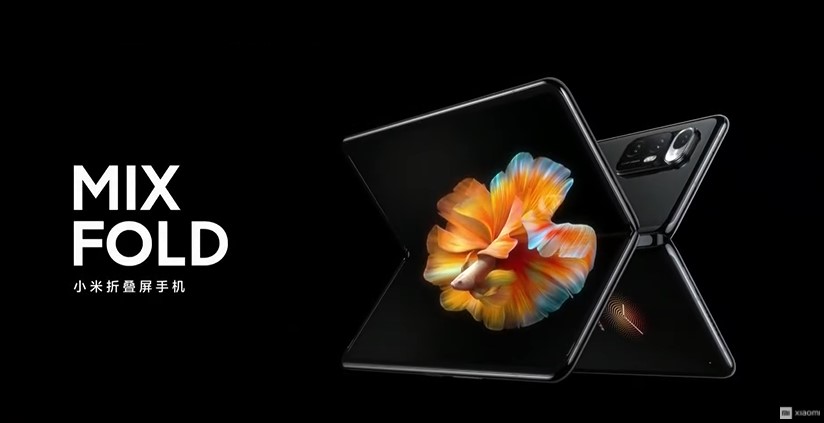
Xiaomi announced the Mi MIX Fold on Day 2 of its Mega Launch. The new Mi MIX device is its first foldable, but that is not the only “first” title it has. It is also the first foldable powered by the Snapdragon 888 processor, the first phone with a liquid lens camera, and the first Xiaomi phone with an in-house image processing chip.
Mi MIX Fold Design
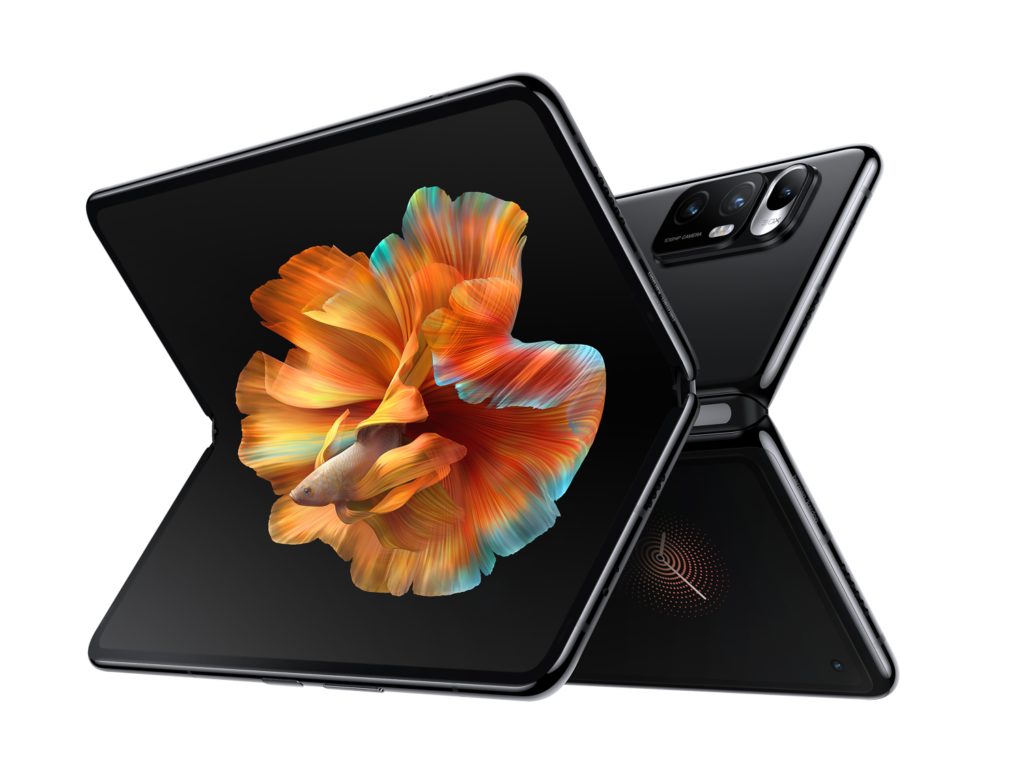
The Mi MIX Fold has an inward folding design like the Samsung Galaxy Z Fold 2 and the Huawei Mate X2. It is covered in Gorilla Glass 5 but has a special ceramic edition with a textured back. This special edition also has a gold middle frame and volume buttons and a special laser engraving on the back.
Xiaomi has settled for a 4:3 aspect ratio for the inner display while the outer display has a 27:9 aspect ratio, thus giving the device in its folded state an elongated form factor akin to some Sony phones. This cover display also has a punch hole at the top left corner of the screen for a camera for video calls and selfies.
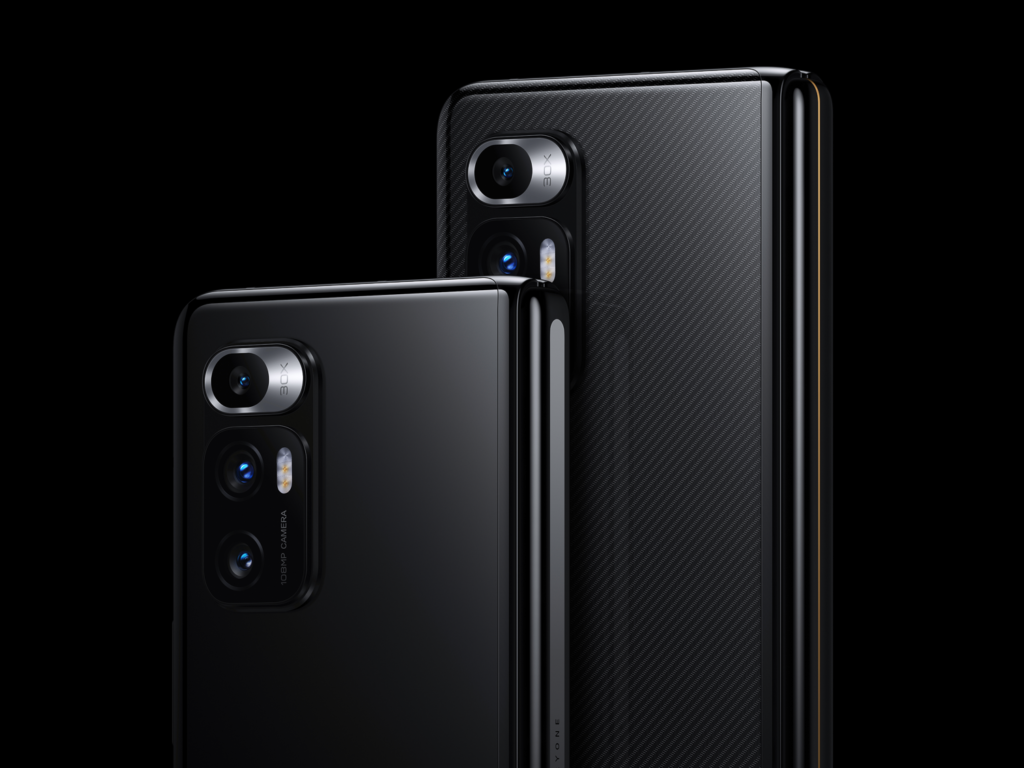
For the rear design, Xiaomi has modified the design of the Mi 10 Ultra. Rather than an elongated camera housing, it is much shorter but wider and protrudes but not as much as the Mi 11 Ultra.
Mi MIX Fold Specifications
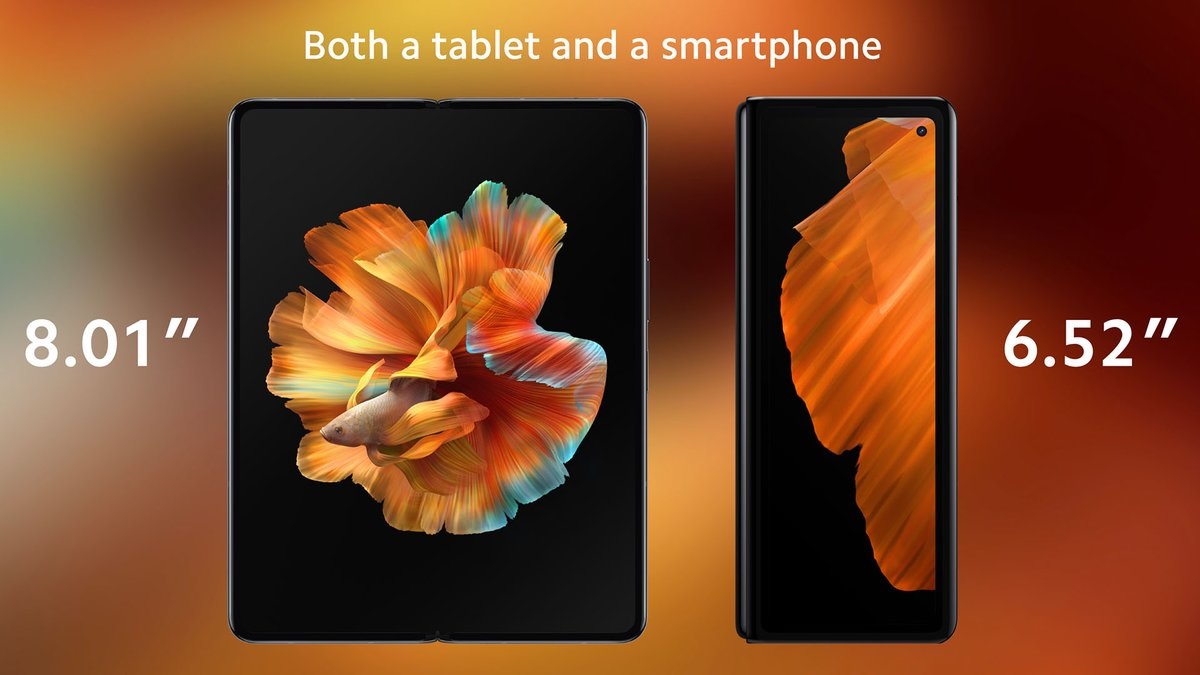
The main foldable display of the MIX Fold is an 8.01-inch WQHD+ OLED panel with a 4:3 aspect ratio. That extra 0.1 inch earns it the title of the foldable with the largest main display as it is just a tiny bit larger than the Huawei Mate X2’s 8-inch display. Xiaomi’s foldable is also the first with a Dolby Vision display.
There are no holes or notches on the main screen neither does it have a high refresh rate like the Samsung Galaxy Z Fold 2 and the Huawei Mate X2. The 1 billion color display has a DCI-P3 color gamut, a 4,300,000:1 color contrast ratio, and a JNCD value and Delta E value of 0.29 and 0.35 respectively
The cover display is a 6.52-inch AMOLED (2520 x 840) HD+ screen with a 90Hz refresh rate and a 180Hz touch sampling rate. It has a 27:9 aspect ratio, a maximum brightness of 900 nits, and HDR10+. Xiaomi says both displays use an in-house algorithm to generate images and videos in super-resolution. They are capable of doubling the resolution of images from 720p to 1440p and the resolution of videos from 480p to 1440p.
Along with the Snapdragon 888 processor, you get up to 16GB of LPPDR5 RAM and 512GB of UFS 3.1 storage. There is no support for storage expansion, so what you buy is what you are stuck with. There is a butterfly-type cooling system that uses a combination of large-area VC liquid cooling, thermal gel, and multiple layers of graphite sheets for heat dissipation
Just like the Mi 11 series (excluding the Mi 11 Lite), the Mi MIX Fold has Harman Kardon tuned speakers. There are quad speakers – two on each side of the screen and they are said to be 40% louder than the Mi 10 Pro thanks to a 15V Smart PA. The speakers can also create a 3D spatial audio experience using Xiaomi’s own quad-speaker array algorithm.
The Mi MIX Fold has a side-mounted fingerprint scanner that doubles as the power button, NFC, Wi-Fi 6, Wi-Fi 6E, Bluetooth 5.2 with support for AAC, LDAC, and LHDC.
The Mi MIX Fold packs a 5020mAh battery (dual battery design – 2460mAh + 2560mAh), the largest in a foldable phone, and also supports 67W fast wired charging, the fastest on a foldable phone. Xiaomi says users will be able to charge the phone from empty to full in just 37 minutes. It also supports Quick Charge 4+ and Power Delivery 3.0 but doesn’t support wireless charging.
Xiaomi ships the Mi MIX Fold with MIUI 12 based on Android 10 (that is what the spec sheet says) and it has features that make using it a breeze. You can run multiple apps at the same time side-by-side, drag and drop content from one screen to another, use a parallel windows mode, and also switch to a desktop mode.
Mi MIX Fold Cameras and Surge C1 Image Sensing Processor
The Mi MIX Fold has three rear cameras. The main camera is a 108MP HM2 sensor with a 7P lens. It is paired with an 8MP camera with a liquid lens that allows it to double as a telephoto camera with 3x optical zoom and up to 30x telephoto zoom and also as a macro camera with a focus distance of 3CM. The third camera is a 13MP f/2.4 123° ultrawide angle camera. The cover display is home to a 20MP front-facing camera.
The Surge C1 Image Sensing Processor provides an improved 3A algorithm and low-light focus capabilities that result in more accurate autofocus, autoexposure, and auto white balance. Xiaomi says the chip provides exceptionally high performance while using low CPU and storage space.
Mi MIX Fold Price
The Mi MIX Fold is available in three variants. The 12GB RAM + 256GB version is priced at ¥9999 (~$1521) and a 12GB RAM + 512GB version that has a ¥10999 (~$1673) price tag. The Ceramic Special Edition which has 16GB of RAM and 512GB of storage is ¥12,999 (~$1976).
Both versions will be available for pre-order starting today and will go on sale on April 16 in China. There is no news of an international release.
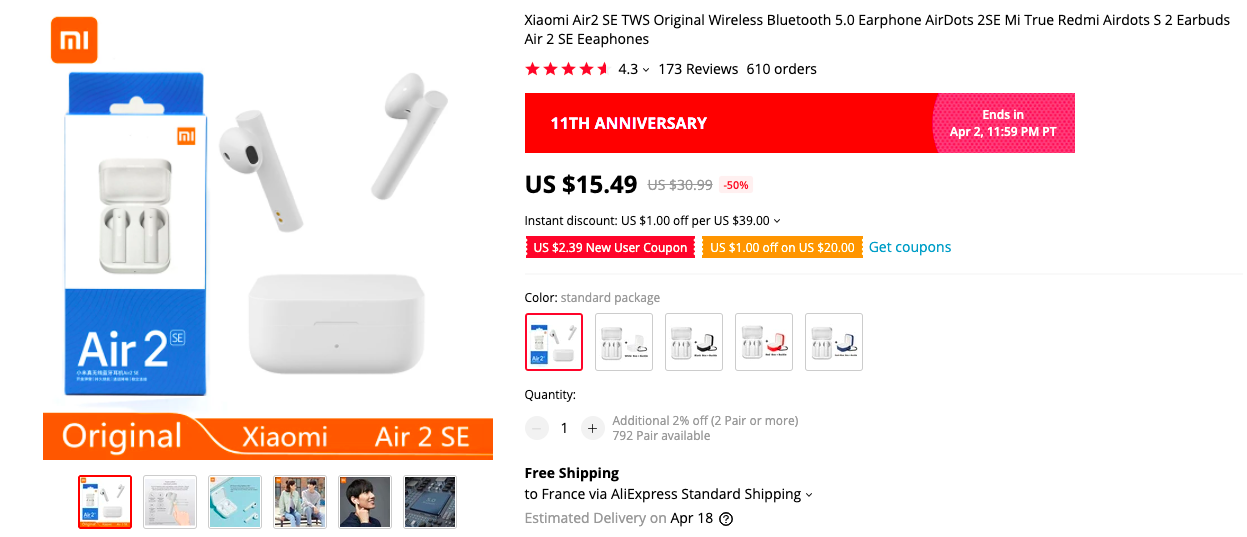
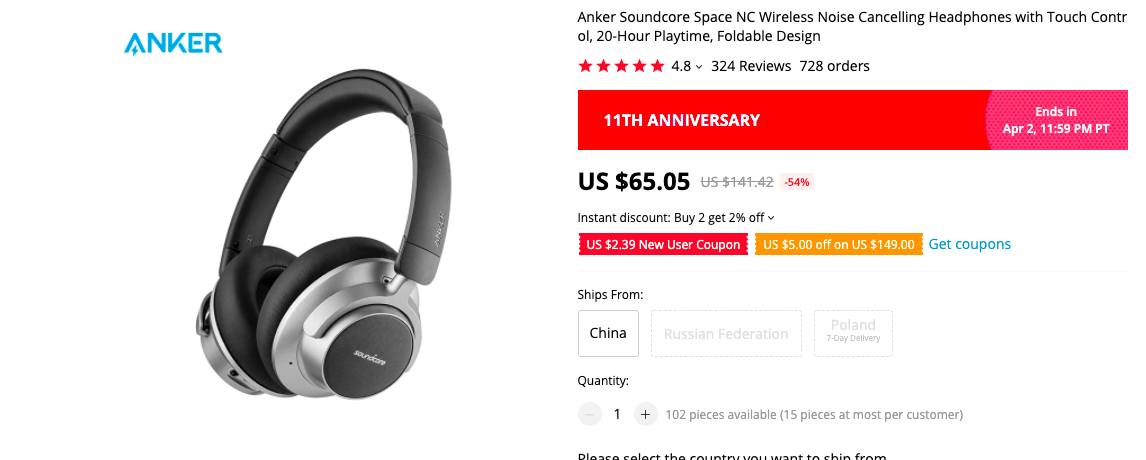
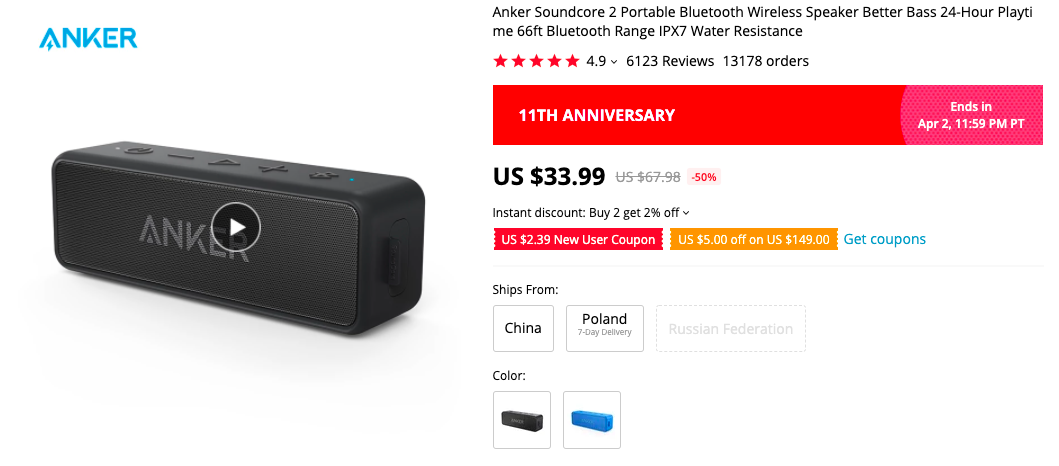
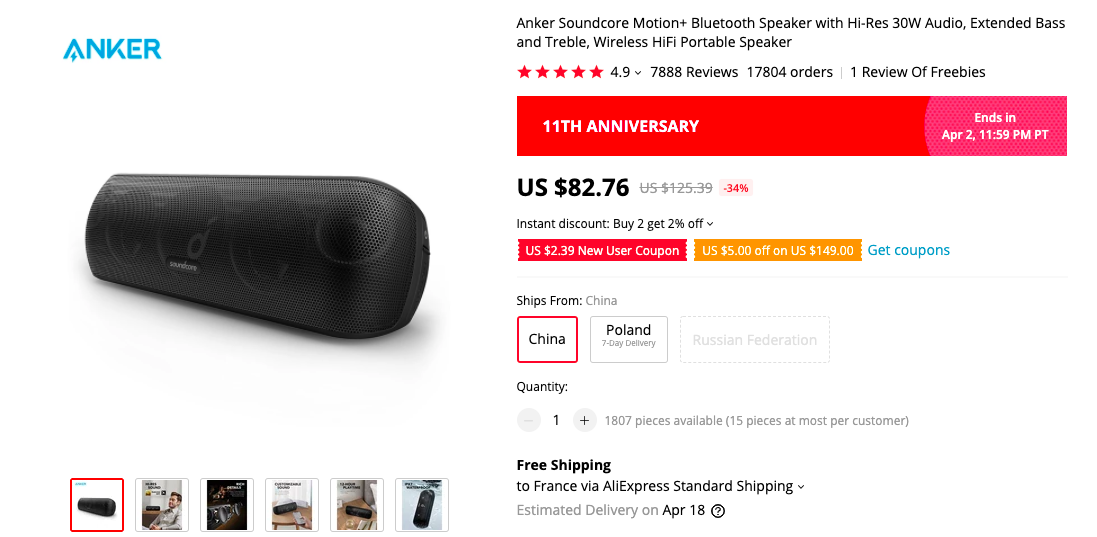
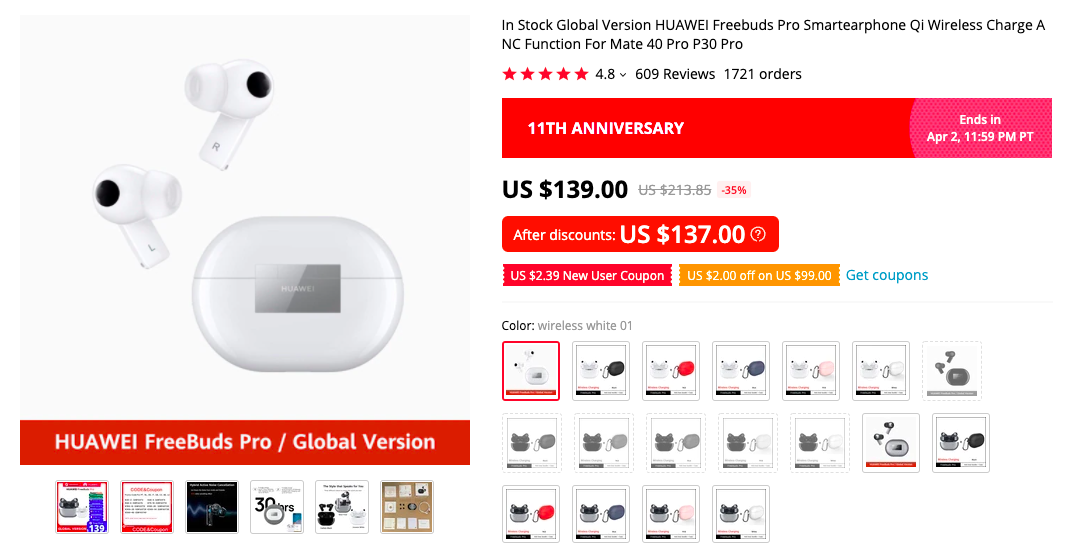
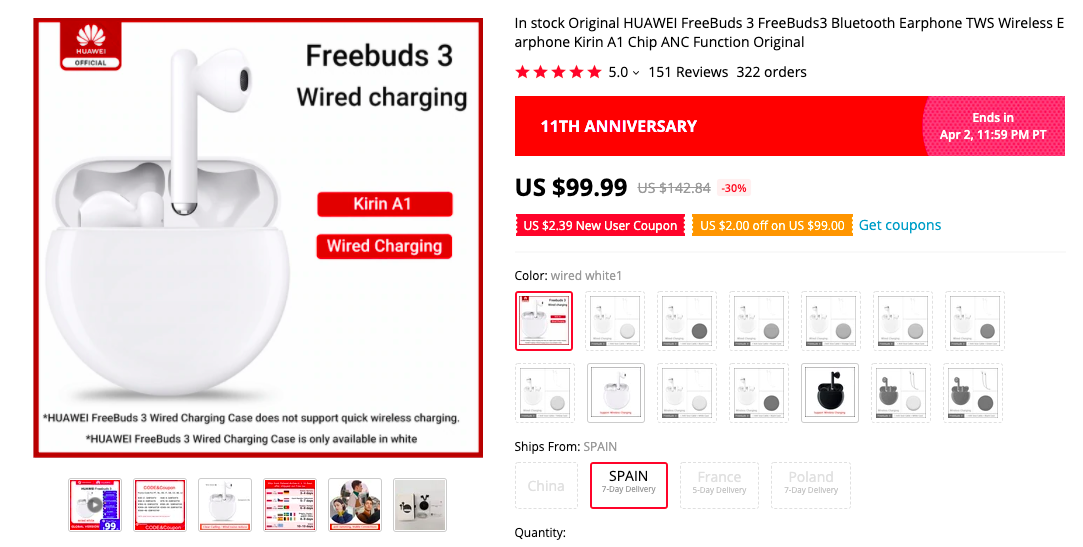
AliExpress Anniversary Sale 2021 is now live. One of the biggest online sales of 2021, here you can find smartphones and other gadgets at never-before-seen prices. The 11th Anniversary Sale starts on 29 March 2021 and ends on 2 April 2021. To help our readers navigate through the thousands of available products and choose the best and most interesting deals we have curated and created a list of the best products in different categories.
So check out the list below to get the best products at a discounted price.
OPPO teased the arrival of the OPPO F19 in India soon after it announced the OPPO F19 Prov and F19 Pro+ 5G smartphones in the country. Since then, the company has been silent on its arrival. Yesterday, the Sri Lanka division released teased the arrival of the F19 handset. It appears that the smartphone may go official early in the coming month.
In the below-shown tweet, OPPO revealed that the OPPO F19 will be available soon. The image reveals that the back panel of the phone curves towards the left and right edges. The triple-camera module placed at the upper-left corner features a 48-megapixel main camera.
OPPO is yet to reveal the front design and the specifications of the OPPO F19. Hopefully, new details of the smartphone will be revealed later this week. In the previous, reliable tipster Ishan Agarwal claimed that the F19 will be the sleekest phone with a 5,000mAh battery. He added that the phone will be priced under Rs 20,000 (~$272).
As the moniker suggests, it will be a less powerful phone compared to the F19 Pro, which offers users a 6.43-inch AMOLED display with a Full HD+ resolution and a regular refresh rate of 60Hz. It has a front camera of 16-megapixel and its rear camera system has a 48-megapixel main snapper, an 8-megapixel superwide sensor, a 2-megapixel macro camera, and a 2-megapixel depth helper.
The Helio P95 chips fuels the F19 Pro with 8 GB of LPDDR4x RAM. It offers users other specs like a 128 GB UFS 2.1 storage, a microSD card slot, ColorOS 11 based Android 11 OS, a 4,310mAh battery with 30W fast charging, and an in-display fingerprint reader.
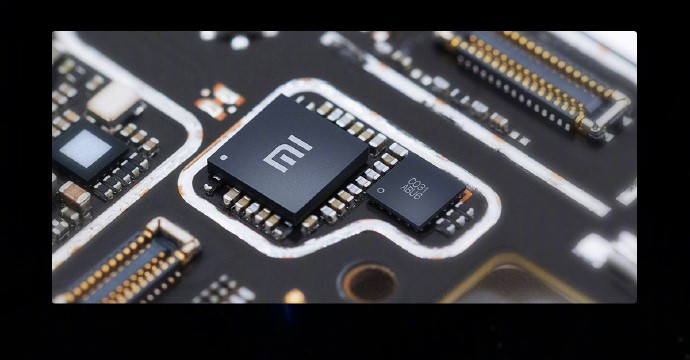
At the Xiaomi Mega launch event today, the company unveiled a new Liquid lens technology on its first foldable, the Mi MIX FOLD. Alongside the product, the company also announced its first self-developed image signal processing (ISP) chip, the Surge C1.
Xiaomi Surge C1 chip
Xiaomi says that the Surge C1 processor is separated from the SoC and independently soldered onto the motherboard. This makes it an independent mobile phone imaging chip from Xiaomi with its own algorithm. Talking about the evolution, the company said that this chip is a result of an investment of about RMB 140 million.
Specifically, the company has worked for two years and invested the money in the R&D department to obtain a chip that uses less processing & memory but yields better imaging results. Speaking of which, the ISP chip uses the combination of the 3A algorithm as shown below:
AF– Auto Focus
AWB– Accurate White Balance
AE– Automatic Exposure
Here, the Auto Focus is for faster focusing of subjects and circumventing the focussing issues on darker scenarios especially when the object in focus is smaller. Next, the Accurate White Balance is useful for correcting the white balance in a frame when you have complex lighting around you.
An illustration of Surge C1 independent from the SoC
Finally, the Automatic Exposure is for hitting the correct exposure levels and improving the dynamic range in the process.
Xiaomi says that the Surge C1 has a dual-filter configuration which helps it process both the low and high-frequency signals parallelly. This, when combined with the effective use of the 3A algorithms, is aimed to get 100% signal efficiency.
Xiaomi’s in-house chip development began way back in 2014 and it debuted the first Surge S1 chip back in 2017. However, not much was heard regarding the Surge and Lei Jun today confirms that despite setbacks, the development of the Surge chips will continue in the future.
Anyway, as mentioned above, the Surge C1 chip will be first deployed on the company’s first foldable phone, Mi MiX FOLD for aiding the lenses to improve the overall image quality.
We can also expect this chip to trickle down to other Xiaomi devices in the future but we will have to wait for the official word.
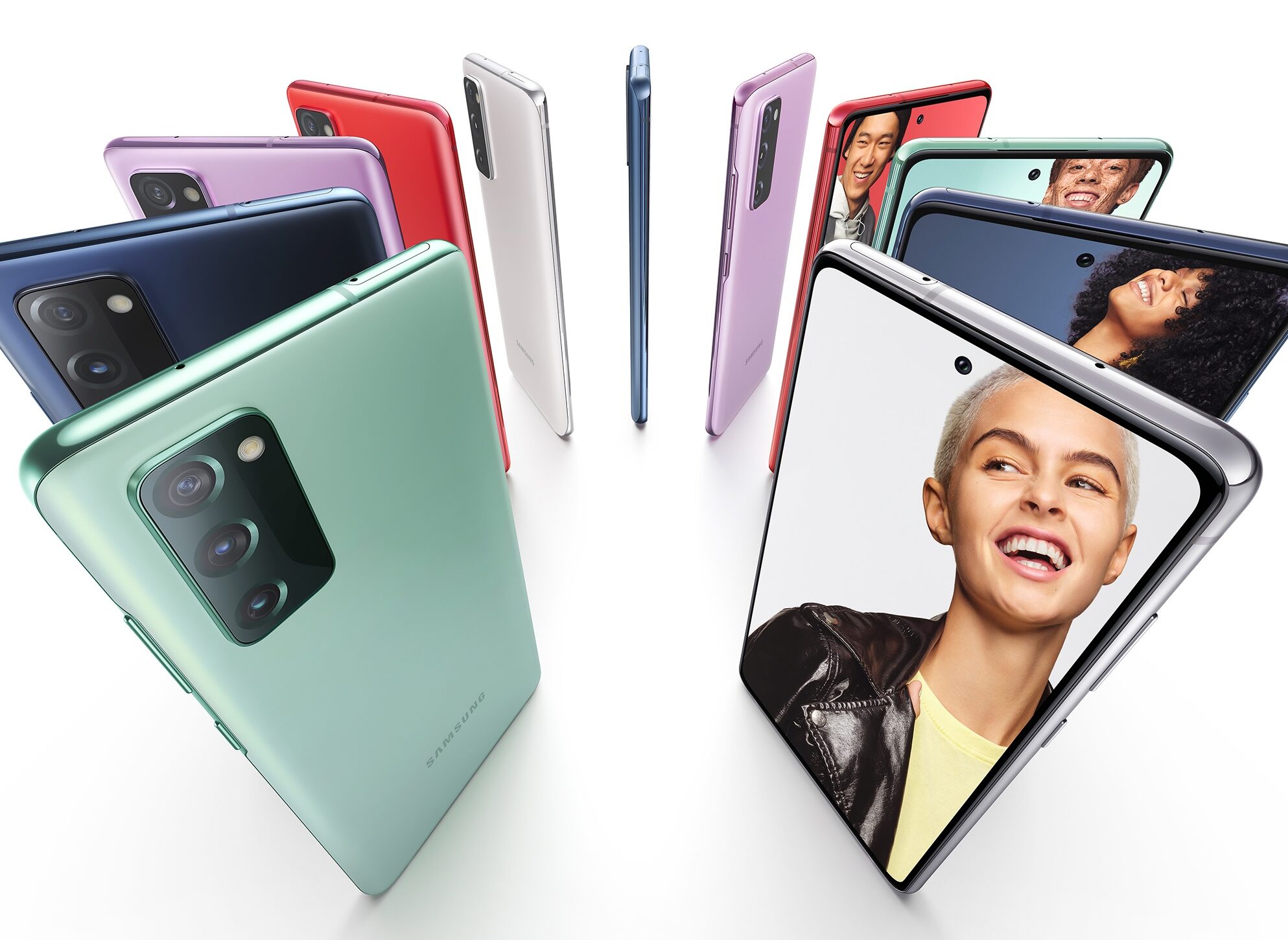
Samsung announced the 4G and 5G variants of the Galaxy S20 FE in October 2020. The Snapdragon 865 SoC fueled the 5G edition, whereas the 4G model which made it markets like India and Europe. The company will be launching the Galaxy S20 FE 5G with SD865 in India today. Fresh information reveals that other markets like the U.K., Malaysia, and the Philippines may soon receive the Galaxy S20 FE 4G.
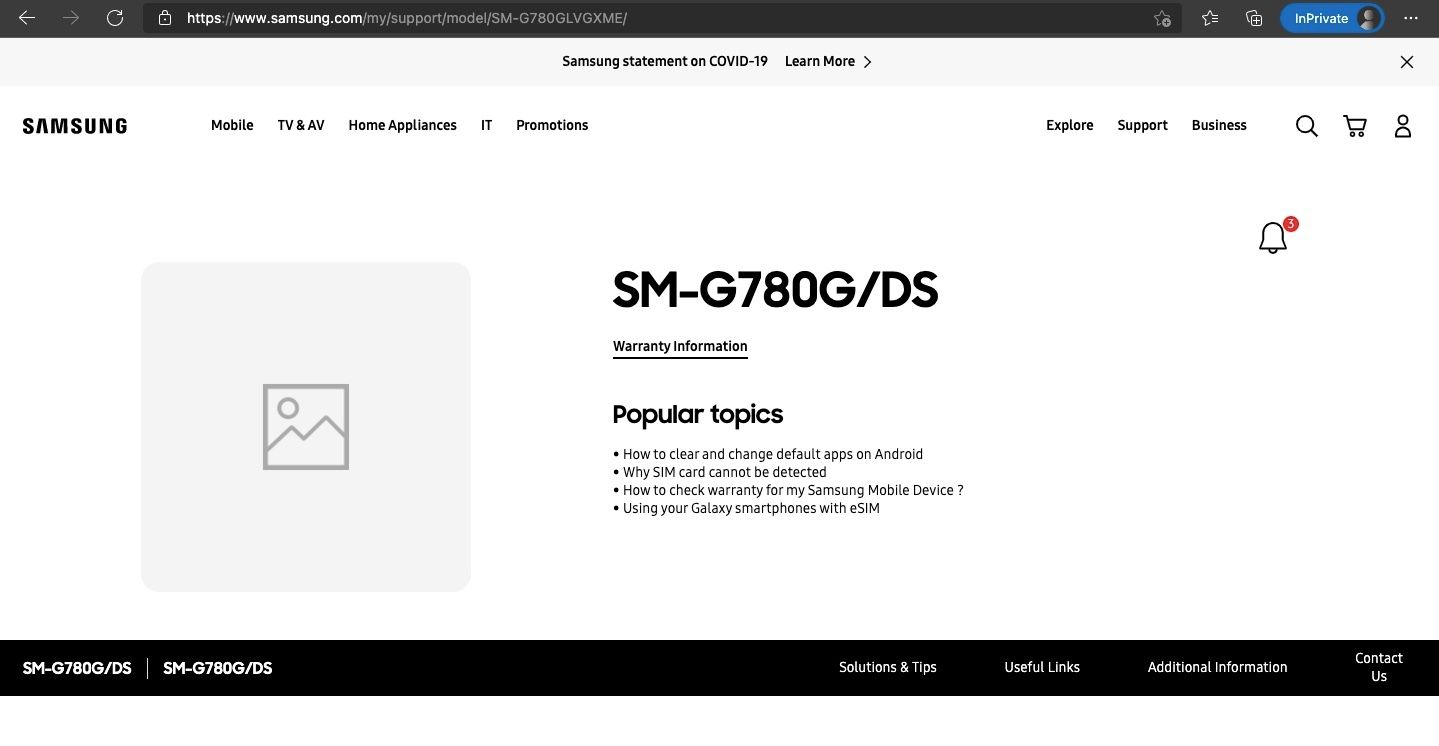
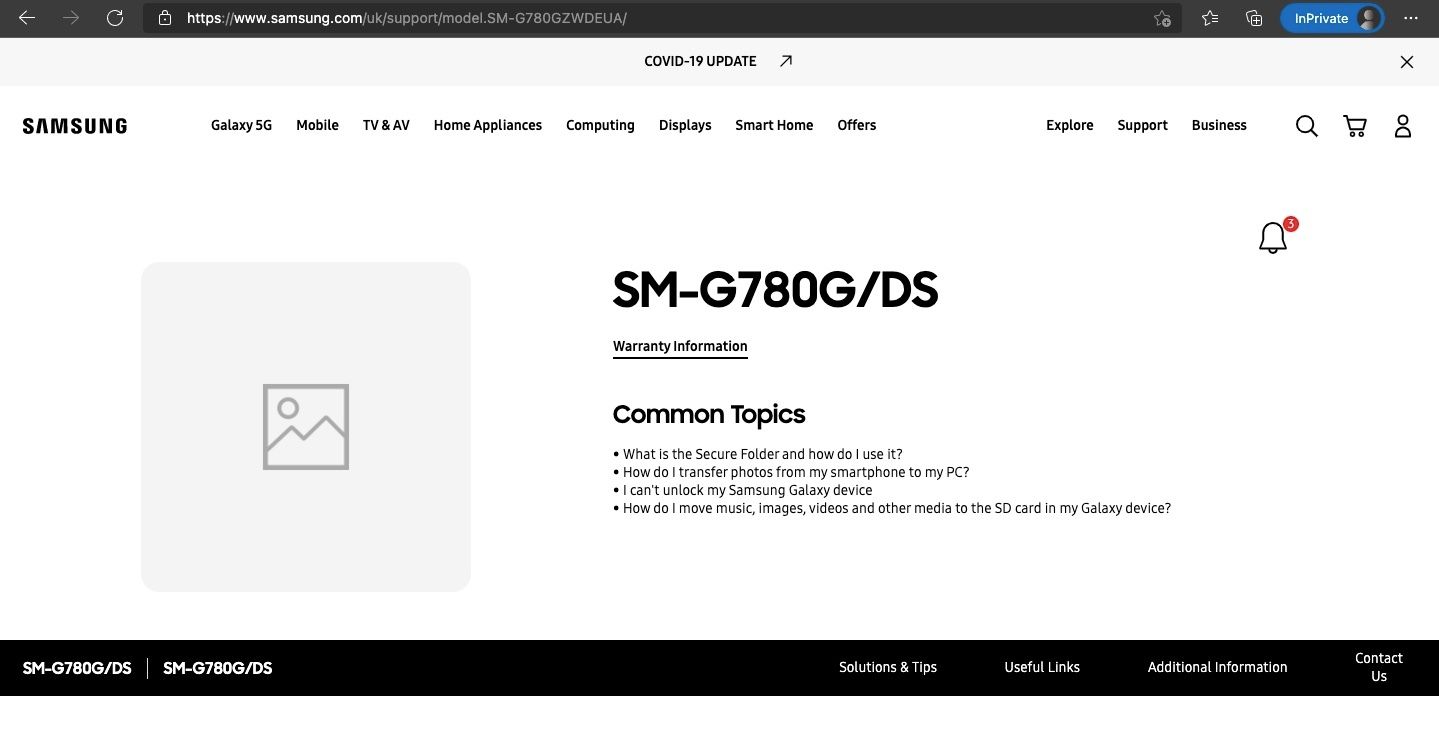
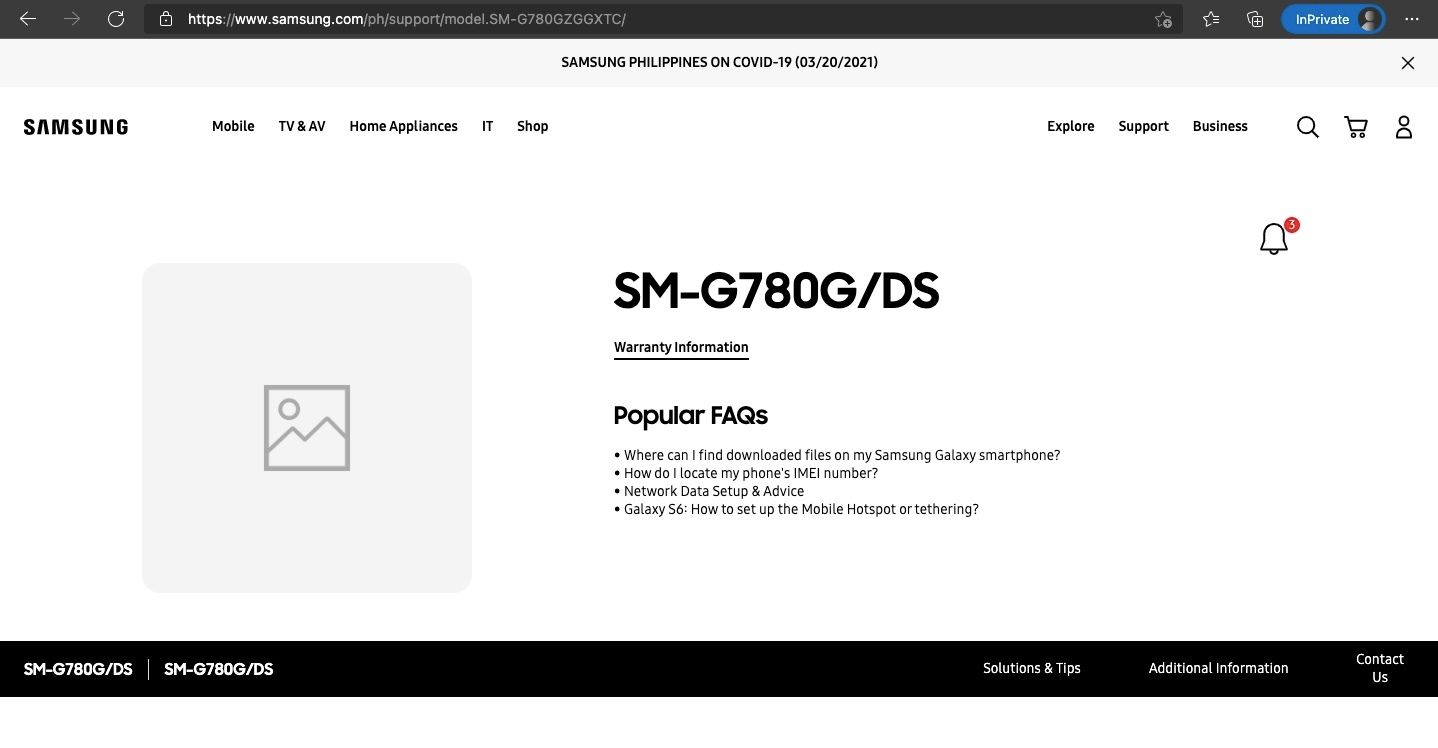
The support pages of the Galaxy S20 FE 4G that has a model number of SM-G780G/DS are now live on Samsung’s website for countries like the U.K, Malaysia, and the Philippines. These countries have already received the S20 FE 5G, and it now appears that these nations will be soon treated with its 4G model.
1 of 3
Samsung Galaxy S20 FE 4G specifications
The Samsung Galaxy S20 FE has an IP68 rated dustproof and water-resistant body. It has a 6.5-inch S-AMOLED display that produces a Full HD+ resolution and a 120Hz refresh rate. The phone runs on One UI 3.0 based Android 11 OS.
The Galaxy S20 FE 4G is powered by the Exynos 990 chipset. It comes with 8 GB of RAM and up to 256 GB of UFS 3.1 storage. It has a 4,500mAh battery that supports 25W fast charging, 15W wireless charging, and 4.5W reverse wireless charging. It has a front camera of 32-megapixel and its rear camera system has a 12-megapixel main lens with OIS support, an 8-megapixel telephoto lens, and a 12-megapixel ultrawide lens with a 123-degree FOV.
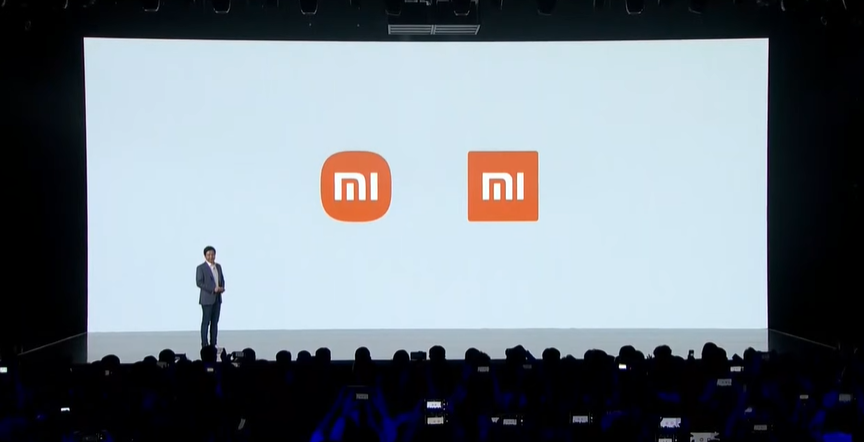
Today is the second part of Xiaomi’s Mega Launch and it has unveiled a new visual identity that includes a redesigned logo and new typography.
The new logo was designed by Kenya Hara, a professor of Musashino Art University and the President of the Nippon Design Center (NDC). For the new logo, Xiaomi has gone with rounded corners much like what you have on some icon packs. So you have a squircle in place of the old logo which is a square.
Unsurprisingly, there are a lot of technical procedures and philosophical explanations behind the design of the logo. Xiaomi says the designer used the “superellipse” mathematical formula for the design and had to adjust the variables to get a visually optimal dynamic balance and a perfect balance between a square and a circle.
Compared with a right-angled object, a circle is a shape that is more agile, which is the perfect representation of Xiaomi’s flexibility, relentlessness, and will to move forward.
Xiaomi says that it will continue to use orange as its corporate color which is why the color of the logo is unchanged. However, it will use Black and Silver variants of the logo as supplemental colors for high-end products.
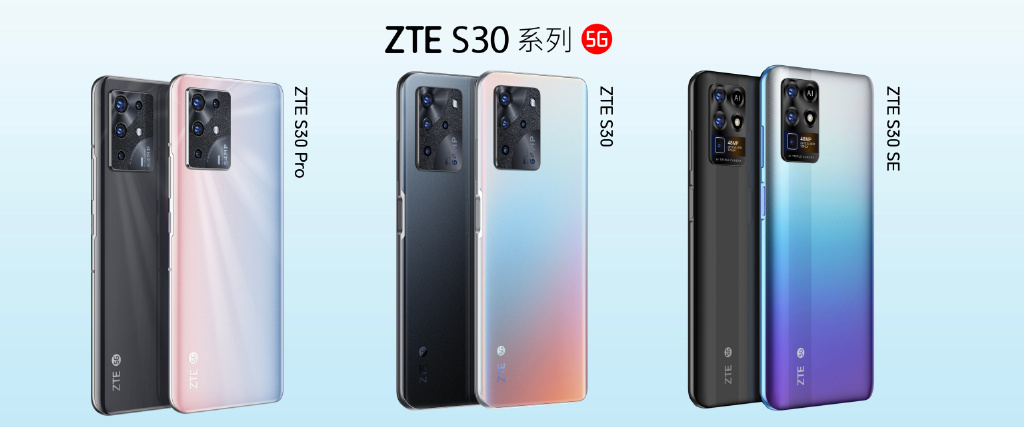
The ZTE S30 series has just been announced in China. The company unveiled its latest lineup today (30th March 2020), which included three models namely, the high end S30 Pro, the base S30, and the S30 SE.
ZTE S30 Pro
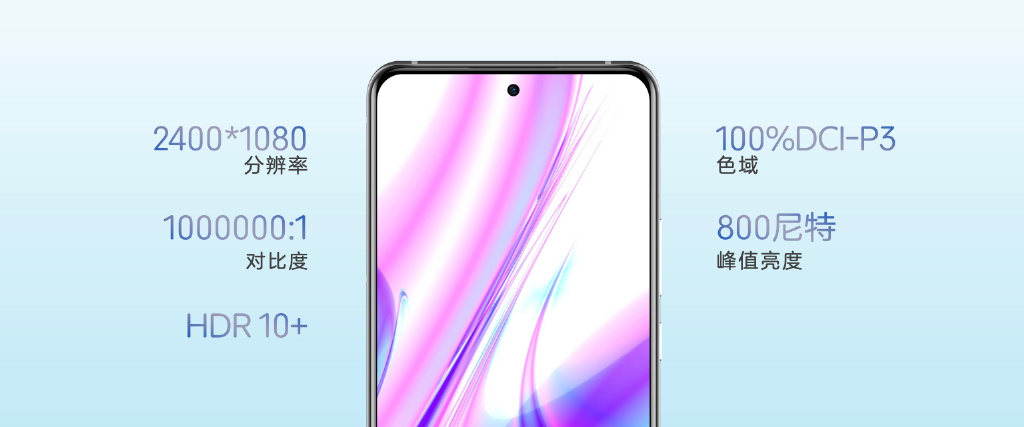
The S30 Pro 5G is the higher end variant within the newly launched series and features a 6.67 inch AMOLED display that features FHD+ resolution (1080x2400px). The display also supports HDR 10+ and offers high refresh rate of 144Hz and touch sampling rate of 360Hz. Its display is also able to output peak brightness of 800 nits and offers 100 percent DCI-P3 color gamut.
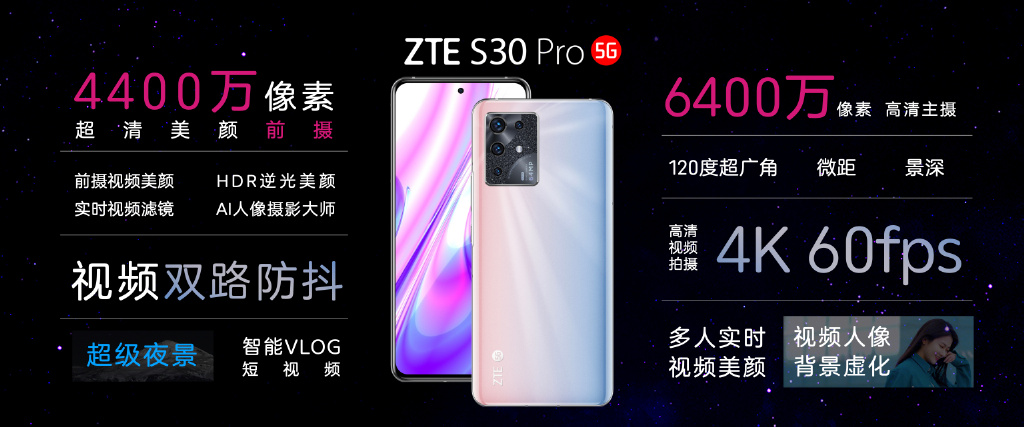
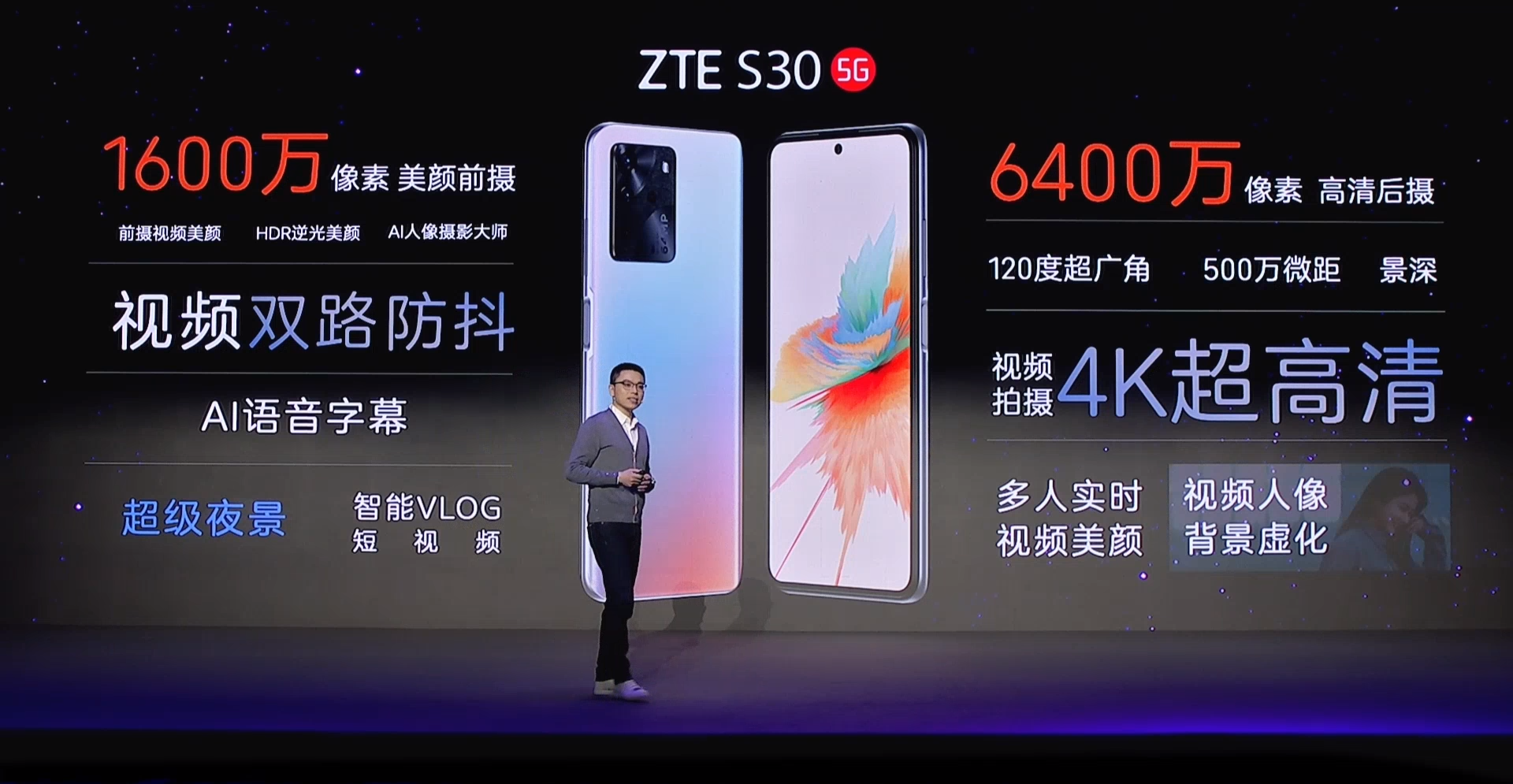
On the front, the screen features a punch hole camera for its 44 megapixel selfie camera that offers AI portrait mode and various filters as well. Moving to the rear, the S30 Pro features a quad camera module (64MP + 8MP + 2MP +2MP), with a primary sensor that is capable of capturing 4K videos at 60fps. This camera system also offers dual channel anti shake for smoother video recordings.
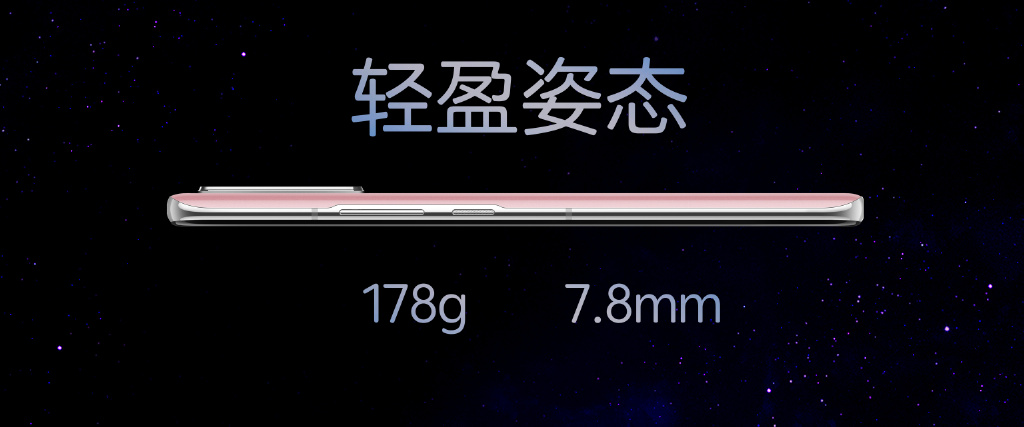
The company also placed an emphasis on the design of the new smartphone, with lightness being the core design concept of the S30 Pro 5G. The OEM used a 3D stacking design on the new device to compress its thickness to just 7.8mm and weighing only 178 grams, making it feel thin and comfortable to be used in the hands of the user.
Under the hood, the S30 Pro houses the Qualcomm Snapdragon 768G SoC, which is a 7nm processor that has an integrated Snapdragon X52 5G modem. The device is powered by a 4,200mAh battery that supports up to 55W fast charging. The S30 5G is available in for 2,998 Yuan (roughly 456 US Dollars) for its single 8GB of RAM and 256GB storage variant and will be available from 3rd April 2021.
ZTE S30
The base S30 5G was also unveiled today, and similar to the higher end variant, it also sports a 6.67 inch display with a FHD+ resolution. It has an aspect ratio of 20:9 and offers 90Hz high refresh rate, with 240Hz touch sampling rate and a 93.1 percent screen to body ratio. The device is equipped with the MediaTek Dimensity 720 octa core processor, which is a 5G enabled chip. For photography, it features a similar quad core camera module on the rear (64MP + 8MP + 5MP +2MP) but with a 16 megapixel front facing punch hole camera.
The S30 5G is powered by a 4,000mAh battery pack, which supports up to 30W fast charging. Along with the S30 series, the company also announced the new MyOS operating system for the lineup, which brings a unique user interface along with a wide variety of attractive wallpapers to choose from. The S30 5G is available in two different memory configurations, namely the 8GB RAM + 128GB storage, which is available for 2,198 Yuan (roughly 334 US Dollars) and the 8GB RAM + 256GB storage version that can be purchased for 2,398 Yuan (roughly 265 US Dollars) from 3rd April 2021.
ZTE S30 SE
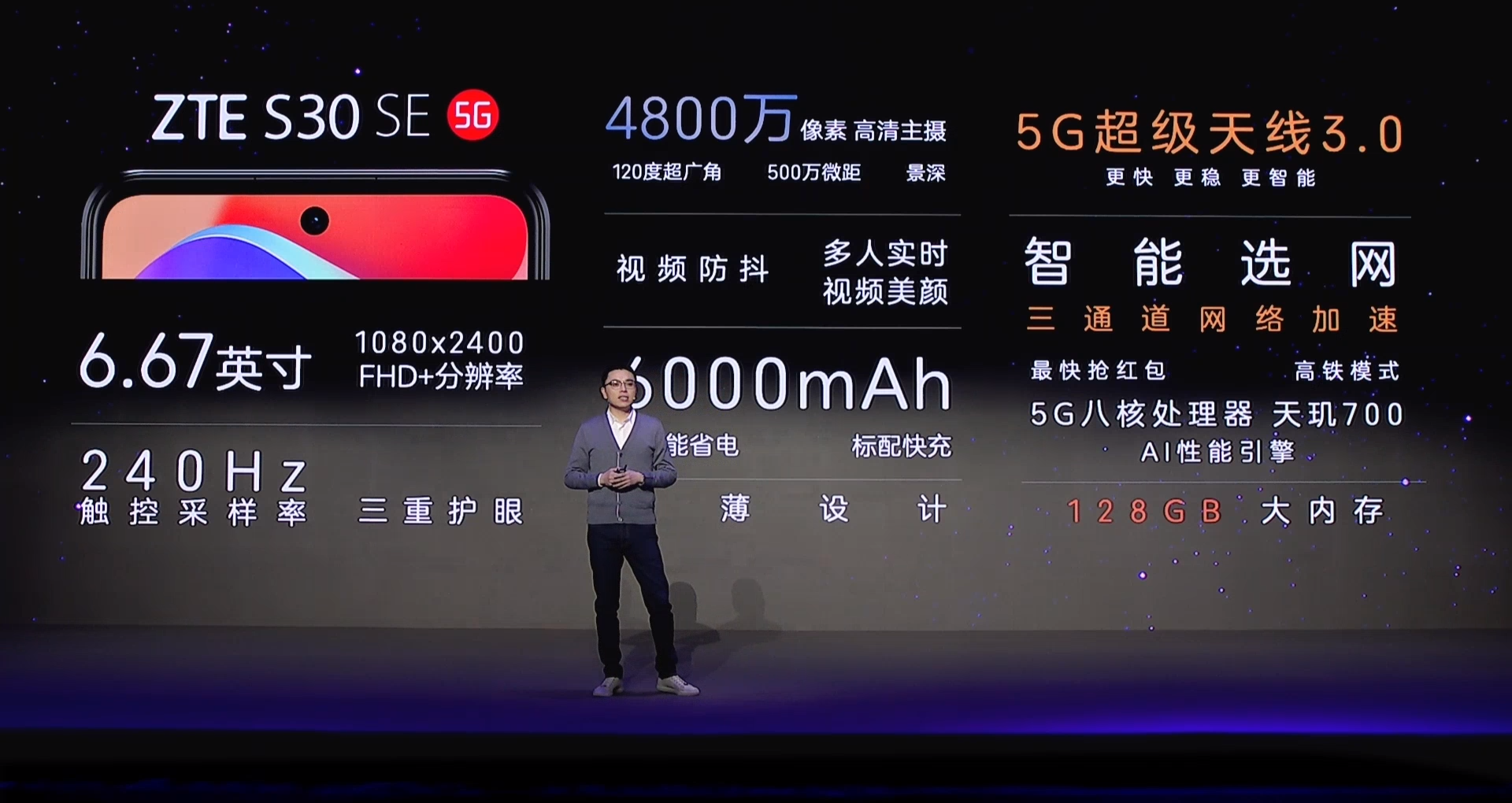
Along with the base and Pro variants, the Chinese tech giant also unveiled the new S30 SE 5G.Similar to the other two models, the SE variant also arrives with a 6.67 inch display that features FHD+ resolution and offers 240Hz touch sampling rate as well. The device has a triple camera setup (48MP + 5MP +2MP) on the rear.
It is powered by a large 6,000mAh battery pack and offers up to 128GB of internal storage. The large battery capacity is one of its highlighting features alongside support for 5G networking. On the inside, the MediaTek Dimensity 700 processor runs the new device, paired with 6GB of RAM and 128GB of storage. The device features a price tag of 1,698 Yuan (roughly 258 US Dollars) and will be available from 3rd April 2021.
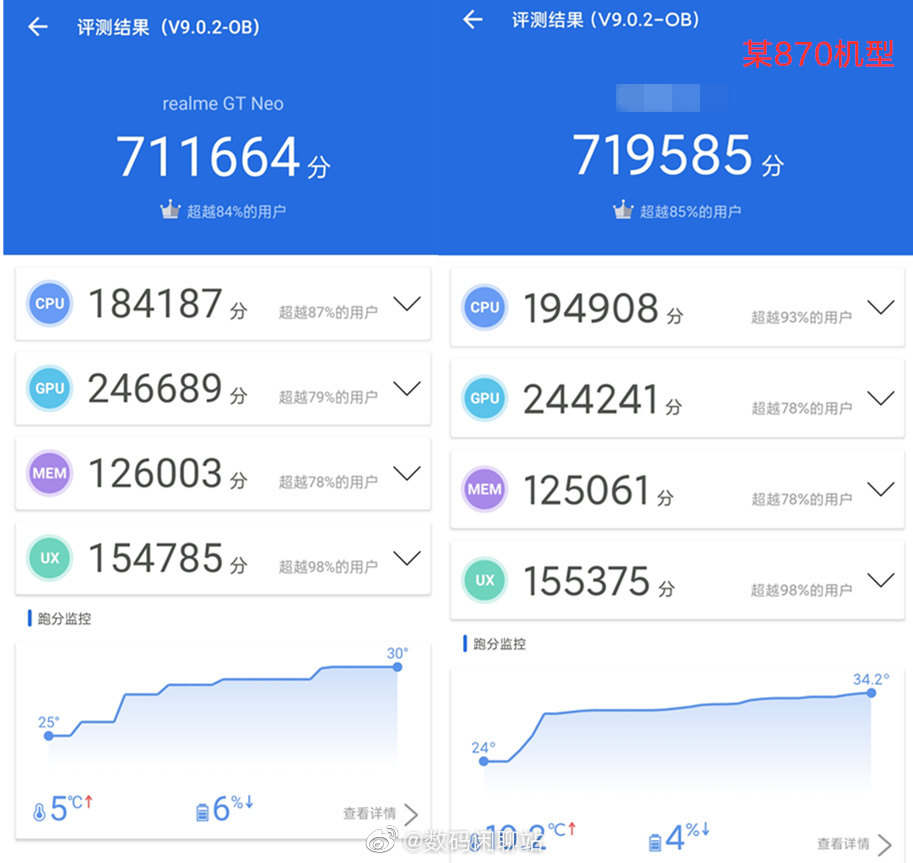
The Realme GT Neo smartphone will be launching tomorrow in China. It will be the first smartphone ever to feature the Dimensity 1200 chipset. Today, a reliable tipster from China shared a screenshot of the Realme GT Neo’s AnTuTu listing. It reveals that the Dimensity 1200 powered handset will be able to offer performance similar to Snapdragon 870 SoC powered smartphones.
As can be seen in the image below, the Realme GT Neo with D1200 chip onboard scored 184,187 points in AnTuTu’s CPU test, 246,689 in the GPU test, 126,003 in the memory test, and 154,785 in the UX test. Hence, it managed to reach a total score of 711,664 on the benchmarking platform.
On the other side, an undisclosed Snapdragon 870 powered smartphone scored 194,908 in the CPU test, 244,241 in the GPU test, 125,061 in the memory test, and 155,375 in the UX test. By this, it reached a total score of 719,585 on AnTuTu benchmarks.
As it can be seen, the SD870 chip performed slightly better than the Dimensity 1200 in the CPU test. On the other side, the D1200 chip outscored Snapdragon 870 in the GPU test. The AnTuTu listings suggest that the Dimensity 1200 will be able to deliver flagship-grade performance.
The Realme GT Neo is expected to be priced lower than the Realme GT, which carries a starting price of 2,899 Yuan (~$441). In China, the Snapdragon 870 SoC powered smartphones are available for as low as 1,999 Yuan (~$304). It remains to be seen whether the GT Neo arrives with similar pricing in the home market.
A few days back, OnePlus rolled out a new OxygenOS Open Beta update for OnePlus 8, OnePlus 8 Pro, and OnePlus 8T respectively. Now, all these three phones have started receiving a new stable update with updated security patches and a plethora of fixes.
Chinese smartphone maker OnePlus is seeding out a new OxygenOS stable update for OnePlus 8, OnePlus 8 Pro, and OnePlus 8T with the following build numbers across the world
OnePlus 8
IN: 11.0.5.5.IN21DA
EU: 11.0.5.5.IN21BA
NA: 11.0.5.5.IN21AA
OnePlus 8 Pro
IN: 11.0.5.5.IN11DA
EU: 11.0.5.5.IN11BA
NA: 11.0.5.5.IN11AA
OnePlus 8T
IN: 11.0.8.12.KB05DA
EU: 11.0.8.12.KB05BA
NA: 11.0.8.11.KB05AA
The latest system update for the trio comes with an identical changelog with one difference. The new build is all about fixes and March 2021 security patches.
The update brings fixes for failure in changing the customized font, Splash Screen Information Service stop working issue, expanded screenshot stop working problem, lagging issue while playing videos recorded by 4K CINE 60FPS, double-tapping is abnormally triggered when typing, and more.
OnePlus 8 / 8 Pro / 8T OxygenOS 11.0.5.5 / 11.0.8.11 / 11.0.8.12 Official Changelog
System
Optimized the position of the EMERGENCY icon in the lock screen
Improved the navigation gestures sensitivity during charging
Fixed the failure issue after changing the customized font
Fixed the issue that the Splash Screen Information Service may stop working
Fixed the small probability issue that the language in Provision does not follow the system language
Fixed the small probability issue that the expanded screenshot may stop working
Fixed the small probability issue with the Recorder that the recording quality may not meet the expected result
Fixed the issue that reusing the wrong fingerprint long press to unlock will cause a flash screen
Fixed the small probability issue that double-tapping is abnormally triggered when typing
Fixed the failure issue when waking the voice assistance in lock screen by swiping the icon
Fixed the issue in which home screen time is displayed abnormally when the system language is Arabic
Updated Android security patch to 2021.03
Camera
Fixed the lagging issue when playing videos recorded by 4K CINE 60FPS
OnePlus Share
Fixed the issue that files sent by other third-party devices cannot be received (OnePlus 8 & OnePlus 8 Pro only)
Clock
Fixed the issue that the alarm clock may not ring as scheduled on workdays
The new system update for the OnePlus 8 series and the OnePlus 8T is being rolled out in batches like any other OTA update. Hence, it may take time to reach every unit around the world.
OnePlus unveiled the OnePlus 9 series in China on March 24. The company had opened the on pre-order and it already crossed 2 million reservations in the country. The devices finally went on sale for the first time earlier today in China and OnePlus has posted the official details on the sales.
In a Weibo post, the company has officially said that the entire OnePlus 9 series has sold for about 300 million yuan worth in the first sale in China. This record, which took place at 10:00 AM Beijing time sale has happened in just 10 seconds.
Back in April 2020, OnePlus unveiled the OnePlus 8 series in China, and the first sale clocked about 100 million yuan worth of sales in 1 minute. Cut back to present times, the first sale of the successors seems to have tripled in the home country.
OnePlus launched two devices under the OnePlus 9 series in China- OnePlus 9 and OnePlus 9 Pro. However, the biggest change this time around is the transition from HydrogenOS to ColoroS 11 in China. That’s not all as the devices are sold with an official 2-year warranty there which doesn’t void even if you root your device.
Apart from bringing the newer devices to the ColorOS, OnePlus has also revealed a list of older devices that would get the update later in the future in China. Talking about the price, the OnePlus 9 starts at ¥3,799 ($582) while the ‘OnePlus 9 Pro‘ variant is sold from ¥4,999 ($766). Both the devices come in 8/12GB RAM and 128/256GB internal storage.
Along with the OnePlus 9 series, the company also launched its first smartwatch, the OnePlus watch(classic edition) for ¥999 ($153) in China.
The world is currently suffering from a major semiconductor shortage, which has impacted various industries across the globe. Now, the latest one is the home appliances industry, with production of products like refrigerators and microwaves being affected as well.
According to a NDTVreport, the shortage of chip supply has been straining the existing stockpiles for consumer electronics manufacturers, with home appliance makers being one of them. As per Jason Ai, President of Whirlpool Corp in China, the company, which is also one of the world’s largest white goods vendors, has fallen behind in terms of exports to regions like Europe and the US from China by as much as 25 percent on certain months.
The senior executive also called this situation as the “perfect storm.” He further added that “On the one hand we have to satisfy domestic demand for appliances, on the other hand we’re facing an explosion of export orders. As far as chips go, for those of us in China, it was inevitable.” At the moment, the company is struggling to secure sufficient microcontrollers, which are simple processors that power more than half of its product ranges includes microwaves, refrigerators, and washing machines.
Notably, chip shortages have affected high end suppliers like Qualcomm, but the issue originated and remains dire for mature technologies like power management chips, which are used in automobiles. Thus, the global shortage have affected car makers worldwide, with certain brands halting production altogether for some of their models. Meanwhile, the smart home market has also been facing issues as these products require chips as well.
Before the year 2021 begun, realme vowed to launch more than 100 AIoT products this year. Accordingly, the company has expanded its portfolio and launched several products like smart scale, smart LED bulb. Now, it is expanding further with MeowBook laptop, Meow AI speaker, and Meow VR glasses.
realme’s realmeow was unveiled as a mascot and was said that it would be in the company’s marketing materials and also be an integral part of the design of products. Now, it looks like the company is launching Smart AI products with the ‘Meow’ on it.
To clear you up, realme TechLife and an account with ‘realme Pakistan’ name on it have posted teasers on Twitter about the upcoming products in April. These include realme’s MeowBook laptop, Meow AI speaker, and Meow VR glasses. Speaking of which, this is not the first time we hear about realme laptops.
Earlier in January, Tech influencer Mukul Sharma said that realme laptops would hit the market as soon as June 2021. However, the company seems to have jumped the timeline and bring it in April. In the teaser page, we see that the laptop has Meow logo with a brushed finish and Black color.
1 of 3
Inside, we see the keyboard which we aren’t sure if it would have the backlit on it. On the side, there are power pin and USB-A ports. Apart from this, we don’t have any other info about the AI speaker or the VR glasses yet.
Smart speaker segment crossed 1 million shipments in 2020 in India and it is understandable that realme wants to grab a bite for itself this year. Let’s wait for more details in the coming days.
Xiaomi, which is currently the world’s third largest smartphone manufacturer, has been itching to enter the smart vehicles market for some time. Today, the company has officially announced the commencement of its smart electric vehicle business.
The company has revealed that it is setting up a new wholly-owned subsidiary to work on the electric vehicles and related business. Initially, it plans to invest around 10 billion yuan (~$1.5 billion) but over a period of 10 years, the company would have invested over $10 billion for this new category of business.
Further, it has also been confirmed that Lei Jun, who is currently the Chief Executive Officer of the Xiaomi Group, will also serve as the Chief Executive Officer for this new smart electric vehicles entity.
Recently, at the fifteenth annual meeting of the China Entrepreneurs Forum, Lei Jun had confirmed that Xiaomi has no plans for the release of an electric vehicle for the next three to five years as it plans to focus on its existing products.
A few days ago, it was reported that the China-based smartphone maker could partner with China’s Great Wall Motor Co Ltd and use its factory for building its own electric car. But both the companies had declined to comment on the matter.
Given the past record of Xiaomi, it’s likely that the upcoming smart car from the company will be a consumer product and will be targeted at mass market. We expect more details related to this new business to be revealed at the Xiaomi Mega Launch Part II event where the company is expected to launch the Mi MIX Fold smartphone.
Didi Chuxing is apparently raising funds for the growth of its autonomous driving unit. The company is seeking to raise 6 billion US Dollars in an attempt to rival Uber, who is trying to diversify beyond its core businesses ahead of an anticipated initial public offering later this year.
According to a SCMPreport, the Chinese ride hailing giant is planning on raising about 500 million US Dollars at a valuation of roughly 6 billion US Dollars. As per sources close to the matter, the funds raised will help Didi speed up its mass production of self driving vehicles and invest in technologies like artificial intelligence chips and more. Although, the plans for this fundraising could still change as considerations are at an early stages as per sources.
Unfortunately, a representative from the company declines to comment on this news. The attempt from Didi is an answer to Uber, as the former tries to grow its presence in strategically important sectors like autonomous vehicles prior to the company going public. This is also possible going to be one of the largest tech IPOs across the globe this year.
Furthermore, the company is targeting a valuation above the 62 billion US Dollars it had secured during its latest funding round by accelerating its pace just prior to its debut as a public company within the next quarter. The company began testing autonomous vehicles back in 2016 before separating the unit as a separate company in 2019 and aims on operating over 1 million self driving taxis by the year 2030.
We learned about the existence of the Samsung Galaxy S21 FE back in November 2020. A few months later, the key specs of this smartphone leaked in February 2021. Now, a month later, more information about this handset emerges.
Samsung Galaxy S20 FE
According to a report by GalaxyClub, the upcoming Galaxy S21 FE will sport a 32MP selfie camera. The publication suggests that it could be the same sensor as found on the Galaxy A52 and the Galaxy A72.
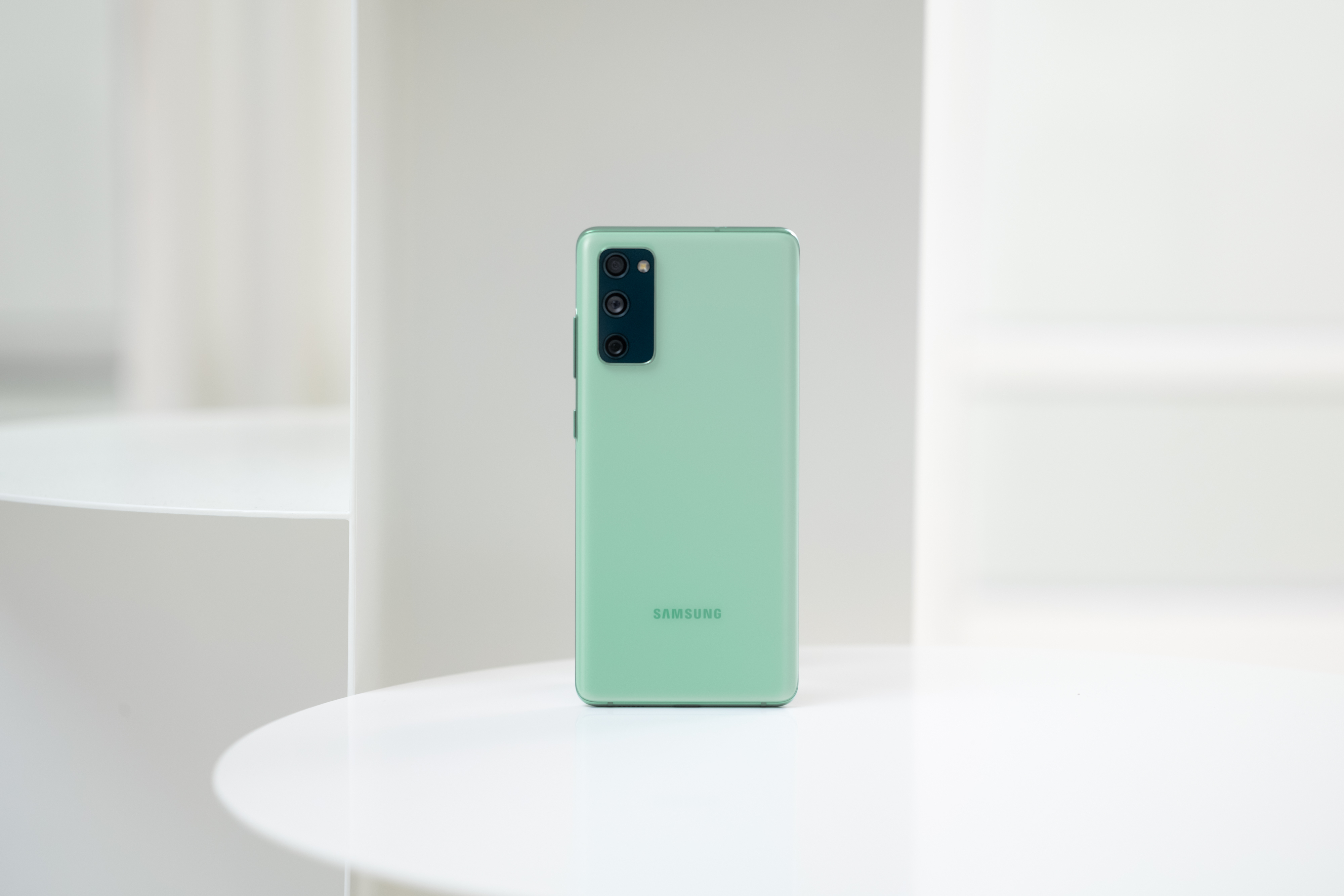
Further, the report says that this phone will be available in a light green color variant, in addition to four colors that were revealed by an earlier report by SamMobile. For those unaware, the other four colors will be gray/silver, pink, violet, and white.
Unfortunately, the new report does not reveal anything else apart from the above-mentioned two specifics. But as per the older report, the Galaxy S21 FE will bear the model number SM-G990B. It will come with 5G connectivity, 128GB/256GB internal storage, and Android 11.
That said, Samsung is expected to launch the Galaxy S21 FE in August. Because there will be no Galaxy Note this year, which is usually introduced at that time of the year. But ahead of this phone’s announcement, the South Korean tech giant will be releasing a new variant of last year’s Galaxy S20 FE.
We use cookies on our website to give you the most relevant experience by remembering your preferences and repeat visits. By clicking “Accept”, you consent to the use of ALL the cookies.
This website uses cookies to improve your experience while you navigate through the website. Out of these, the cookies that are categorized as necessary are stored on your browser as they are essential for the working of basic functionalities of the website. We also use third-party cookies that help us analyze and understand how you use this website. These cookies will be stored in your browser only with your consent. You also have the option to opt-out of these cookies. But opting out of some of these cookies may affect your browsing experience.
Necessary cookies are absolutely essential for the website to function properly. This category only includes cookies that ensures basic functionalities and security features of the website. These cookies do not store any personal information.
Any cookies that may not be particularly necessary for the website to function and is used specifically to collect user personal data via analytics, ads, other embedded contents are termed as non-necessary cookies. It is mandatory to procure user consent prior to running these cookies on your website.