About a month ago, Chinese giant Huawei officially confirmed selling off its sub-brand Honor to Zhixin New Information Technology Co. Ltd. Since then, the company has gone through a lot of structural change, and now Honor is set to launch its first product.
Zhao Ming, CEO of the new Honor band, shared a letter on Weibo, signed as Honor Management Team. In that, he has confirmed that the company will soon launch its first product after going independent from Huawei.
However, he has not revealed much about what the product is and what is the timeline for the launch. There have been reports claiming that the company could launch the Honor V40-series smartphones sometime in early 2021.
Coming back to the letter shared on Weibo, which was written to celebrate the seven-year anniversary of the Honor band, Zhao Ming thanked the company’s users, distributors, retail partners, suppliers, and manufacturers.
It has also been confirmed that the company will be hosting an annual fan meet next month where the future of the Honor brand will be discussed. We expect the company to make an announcement about upcoming products at that event.
Zhao Ming has said that the company’s aim is to become the leading smartphone brand in China, surpassing its former parent company and the current market leader, Huawei. He has also set an ambitious sales target of 100 million units for the upcoming year.
The company has already started working towards that goal. It is currently in the process of getting its supply chain in order and is also expanding the Honor brand’s presence in the offline space. It has already opened stores in cities like Chengdu, Lanzhou, Wuhan, and Xiamen, and plans to keep launching new stores.
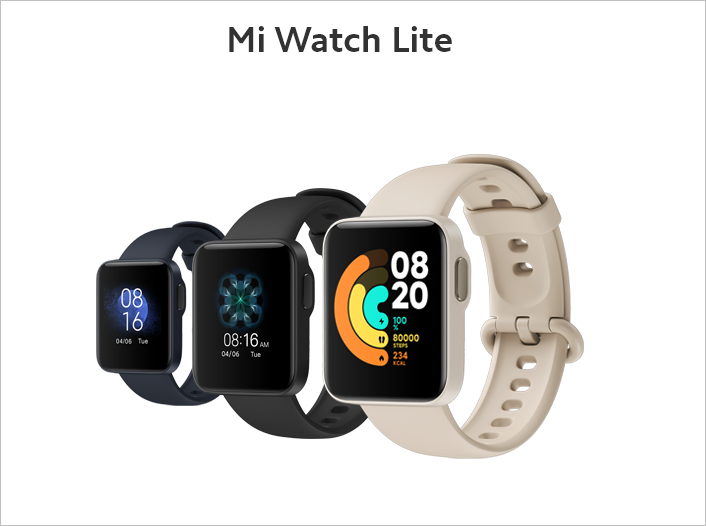
Xiaomi has officially announced the Mi Watch Lite, which is their most affordable smartwatch, that will be available for pre orders in Malaysia on 17th December 2020 for a price of just RM199 (roughly 49 US Dollars).
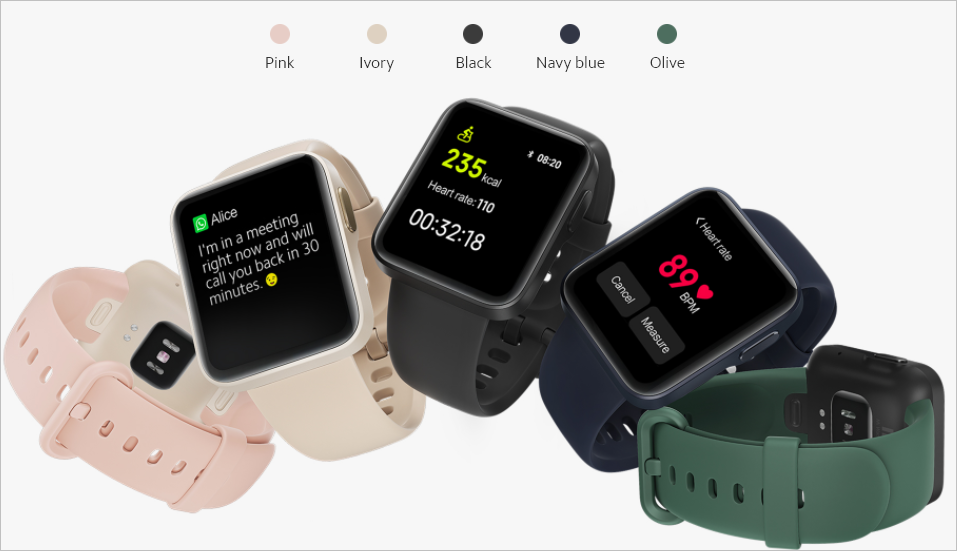
Despite carrying such an affordable price tag, the Mi Watch Lite from the Chinese tech giant arrives with built in GPS, a heart rate sensor and even sleep monitoring. Its battery can have the wearable last till a week and powers its 1.4 inch TFT LCD touch display that features a 320x320px resolution. Additional sensors include accelerometer, gyro, light sensor, e-compass, and barometer. Xiaomi is also offering up to 11 sports modes to its users that can track different types of physical activities.
The Mi Watch Lite also arrives with water resistance and is rated for 5ATM, which means it can be submerged up to 50 meters deep under water. In terms of design, the smartwatch features a single physical button and arrives with 5 different color variants, ranging from Black, Navy Blue, Pink, Olive and Ivory. Notably, the straps are also replaceable and can be swapped as well.
The official price of the Mi Watch Lite is actually RM249 (roughly 61 US Dollars) and it will be available for purchase from the company’s official Xiaomi online store, Lazada, and other authorized Mi Stores and retailers as well, starting from 20th December 2020. But for those interested, you can check out the one day only pre order promotional offer that is offering the affordable smartwatch from just RM199, via the Xiaomi online store or Lazada on 17th December 2020.
Faraday Future, a startup working on an electric vehicle, has announced that the company has partnered with Philips Intellectual Property & Standards for showcasing vehicle features that use a select set of Philips technologies.
In this joint development agreement, Philips will provide its expertise in user wellness monitoring and together with Faraday Future, they will integrate the technologies accordingly in FF’s vehicles.
The company adds that Philips’ health technology and software add significant differentiators to Faraday Future’s product vision and its planned upcoming FF 91 and FF 81 luxury electric vehicles.
Faraday Future has also added that the company plans to kick-off production for FF 91 in about nine months after it successfully closes its funding round. This will then be followed by the FF 81 EV and development preparation of future models.
The company, founded in 2014, has been through a messy situation a few years ago. It has been facing financial issues since 2017 as LeEco, the company it was tied to, started having financial problems, which have been linked to the founder and CEO of both the companies — Jia Yueting, who filed personal bankruptcy earlier this year.
A couple of months ago, it was reported that Faraday Future is planning to go public through a special purchase acquisition company (SPAC) deal. But so far, there has been no announcement from the company regarding the same.
China is expected to tighten its anti trust reins around its technology giants, with its heavy fines being just the beginning. This arrives just after regulators also announced a probe into deals with major brands like Alibaba and Tencent.
Earlier this week, China’s market regulator announced that it would be raising its scrutiny on notable transactions, especially ones backed by internet giants. As per a Reutersreport, the regulator is also looking into making “an example” of a 3.5 billion US Dollars plan for search engine Sogou Inc to be taken private by shareholder, Tencent Holdings. The information arrives from two sources close to the matter.
A third source added that the regulator is also targeting a bid by private-equity firm MBK Partners to buy China’s top online car rental firm. The source believes that the move arrives to address the concern of competition as MBK already owns the industry’s second car rental brand. The State Administration of Market Regulation (SAMR) is planning a a thorough review of the Sogou Tencent transaction, which could even translate to the deal missing its July 2021 completion deadline.
According to one of the sources, “The deal now faces big uncertainty and there’s a big chance that it may not close as planned.” Notably, Internet search is a sensitive issue in China, with SAMR taking special consideration that Tencent is already one of the market leaders in various online sectors and fields that it operates its business in. As per Jiaming Zhang, a senior associate at law firm Allen & Overy, “all these recent developments seem to suggest that SAMR is ready to open a new chapter for its enforcement actions in the internet sector.”
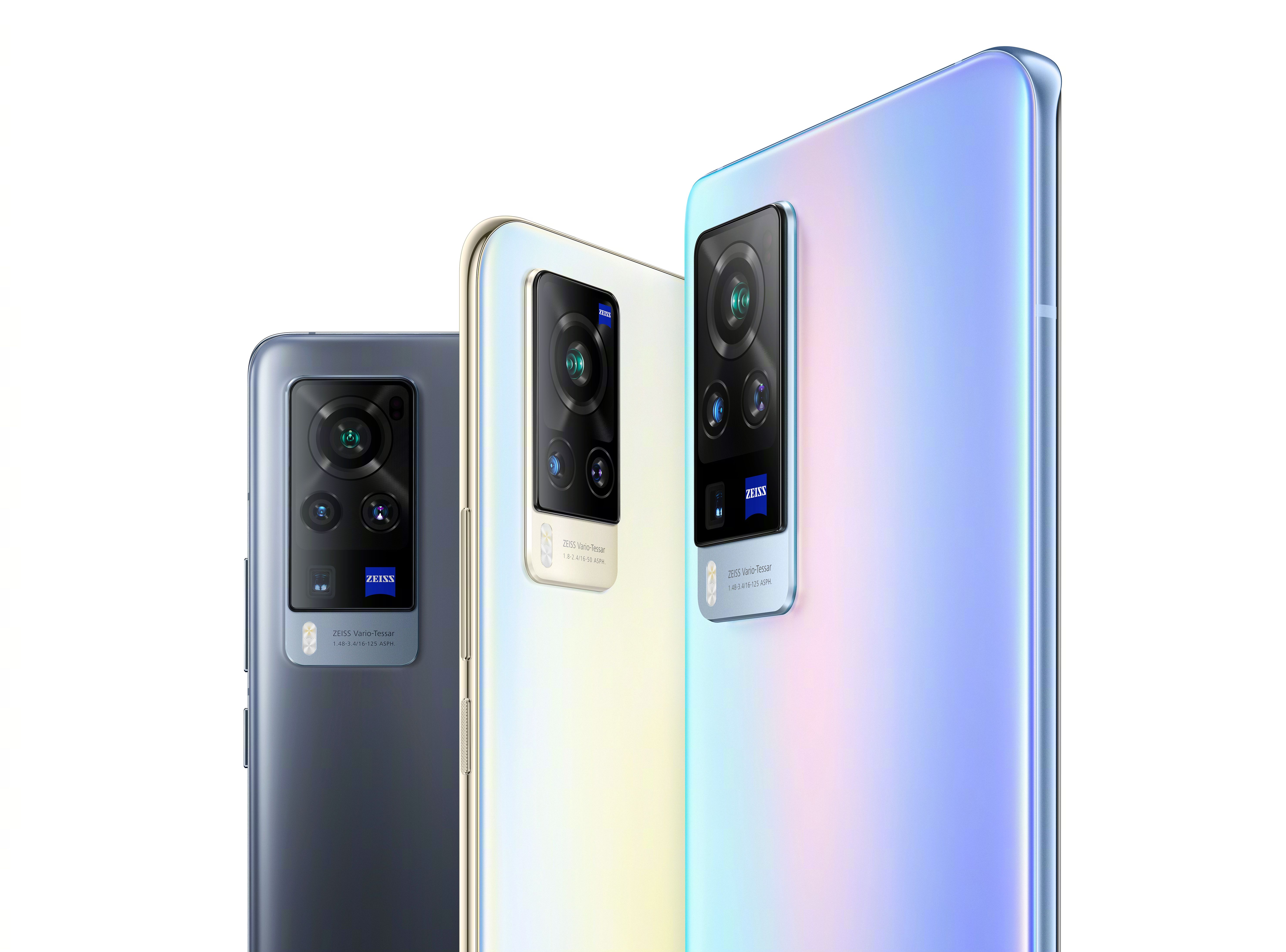
Vivo X60 and X60 Pro smartphones have been leaked for quite some time now and the phones are now expected to go official in China on 29th December. Ahead of the official launch, the company has now started sharing details about the devices.
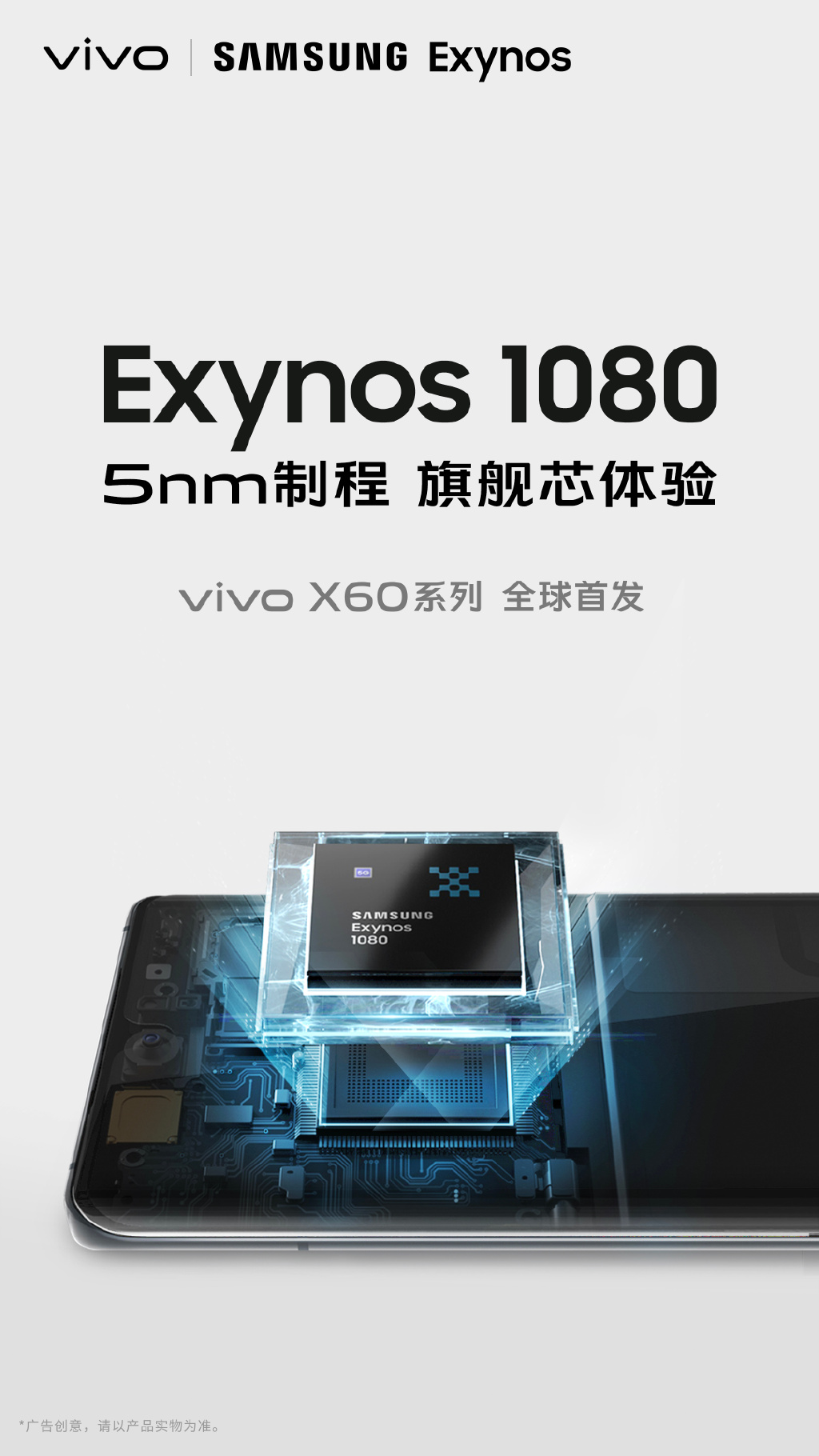
The company has now confirmed that the Vivo X60 smartphone will come powered by the Samsung Exynos 1080 chipset, which is manufactured using the 5nm EUV FinFET process.
As per the company, the Exynos 1080 SoC from Samsung offers a 14 percent improvement in performance and about 30 percent in power consumption when compared to a chipset manufactured using an 8nm LPP process.
It uses the latest generation of ARM‘s Cortex-A78 core and comes packed with a Mali-G78 graphics processor, which is claimed to improve performance by 25 percent when compared to the Mali-G77 GPU.
The company has also confirmed that the Vivo X60 series features a brand-new ultra-stable micro-pan-tilt technology 2.0, which can obtain a larger anti-shake angle than the ordinary OIS technology and offers better night mode shooting.
A recent leak reveals that the Vivo X60 features a triple camera system that includes a 48-megapixel primary camera sensor with an f/1.6 aperture. It will be accompanied by a 13-megapixel super-wide lens, and a 13-megapixel portrait camera. It also features second-generation micro-gimbal stabilization powered by ZEISS optics.
Vivo is expected to launch three smartphones under the lineup — Vivo X60, X60 Pro, and X60 Pro+, all three of which are expected to have a 120Hz refresh rate display, Android 11 operating system with OriginOS, and 33W fast charging technology support.
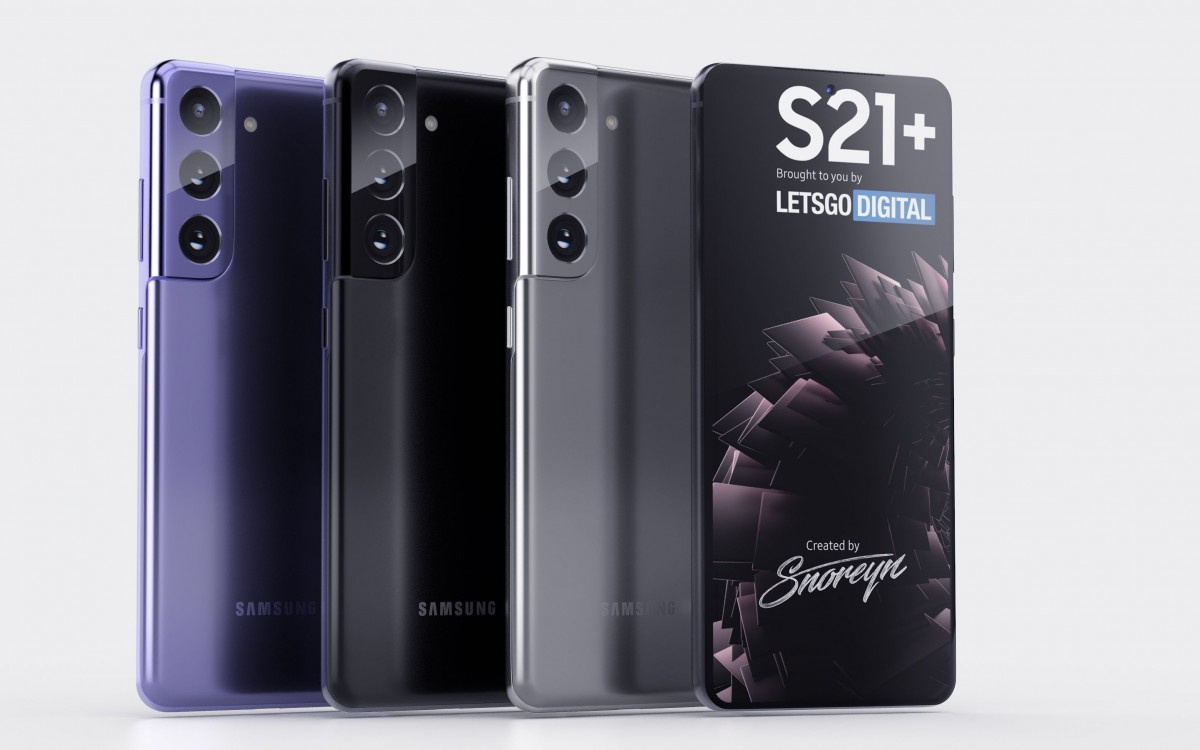
The Samsung Galaxy S21 is set to be given away in Indonesia, with a new dedicated registration page offering customers a chance to win the upcoming premium grade flagship handset.
Samsung Galaxy S21+ 5G render by Letsgodigital
Recently, Samsung Indonesia made the announcement through Twitter that “Something Epic is on its way.” While the company didn’t outright state that it would be giving away the Galaxy S21, a video in the same tweet referred to “The Next Galaxy.” In other words, this more or less confirms the South Korean tech giant’s plans with the new registration page that just went live. This promotional move from the company offers its Indonesian customers a chance to win a free Galaxy S21, while also sharing exclusive updates, and other promotional offers, as per a SamMobilereport.
At the moment, it is unknown how exactly the company will be announcing its winners or how they would be picked either. Samsung is expected to unveil the Galaxy S21 series on 14th January 2020. This launch arrives a bit earlier than its usual release cycle, and in certain markets like India, the company is already taking pre orders for a fee of 2,000 INR (roughly 27 US Dollars).
However, the pre orders are not available everywhere, nor has the registration page going live globally. Furthermore, the company is expected to start launching such registration pages in other regions as well soon, giving many early adopters a chance to win various prizes. So stay tuned for more, as we will be providing more updates when additional information regarding this is available.
Apple Watch lineup is arguably one of the best smartwatches in the world. Recently, the company added two more models to the lineup — Apple Watch Series 6 and Apple Watch SE. The company has been adding more and more features to the smartwatches, ensuring they remain the market leader.
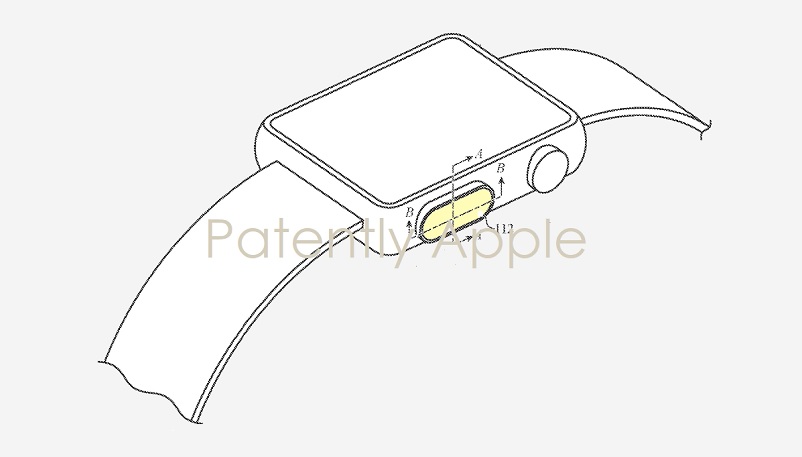
In line with that, it seems that Apple is now exploring the idea of adding Touch ID to the Apple Watch, along with an under-display camera sensor. The company has filed a patent for the same, titled “Electronic device having sealed button biometric sensing system.” This was spotted by Patently Apple.
The patent says that the Touch ID, which is basically Apple’s terms for the fingerprint sensor, can be embedded into the side button on the Watch, allowing users to have biometric authentication for unlocking the device as well as for making purchases.
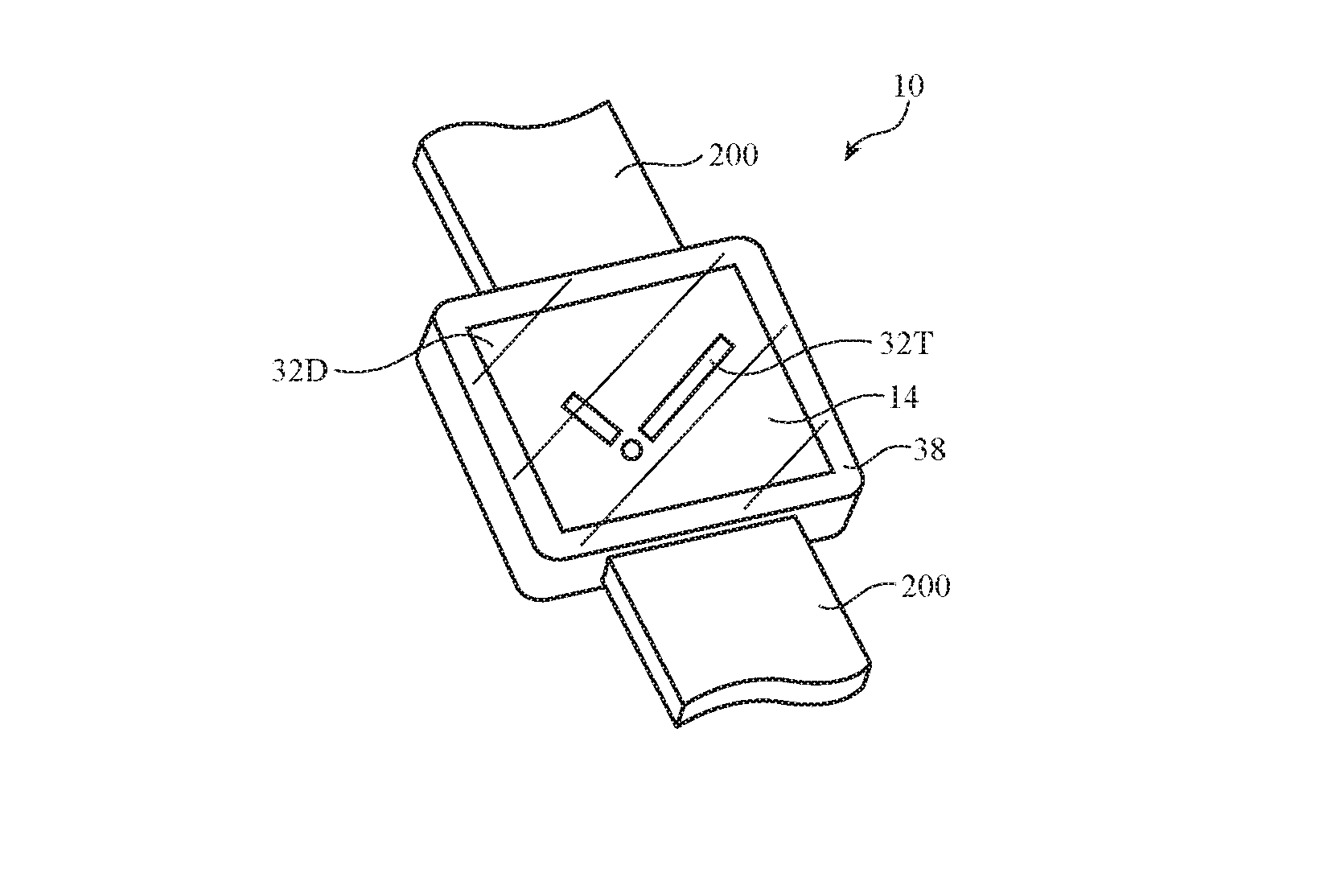
There’s another patent filed by Apple titled “Electronic devices with two-stage display,” reports Apple Insider. It reveals how the company is planning to layer the display panels to include a camera and a flash, which are visible only when needed.
It showcases that one layer will have a pixel array for displaying images while the outer layer will have an array of light modulator cells that can become transparent or block out light when needed to allow the camera to function.
The technology proposed by Apple for the under-display camera should also be working for other devices, including iPhones and iPad, but interestingly, the patent is only focusing on the Apple Watch.
Do note that these are patent filing by Apple and it doesn’t necessarily mean that the company actually has such devices under development. However, this does reveal that Apple is interested in exploring these technologies and there’s a high probability that the features could actually be available in Apple Watch in the coming years.
Smartphones have come to be a favorite companion for many people. It is quite common to see persons using their mobile phones in several places, including odd places like the toilet or bathroom. A Russian woman, however, ran out of luck while using her iPhone in the bathroom. The 24-year-old identified as Olesya Semenova was reportedly electrocuted when her iPhone fell into the water inside the bathtub she was sitting.
Miss Semenova’s lifeless body was discovered by her roommate in their apartment in Arkhangelsk, according to a report on East2West News.
“I screamed, shook her, but she was pale, did not breathe, and showed no signs of life,” her roommate Daria told the emergency operator. “I was really scared. When I touched her, I got an electric shock.”
She added that she found Semenova’s iPhone 8 in the water and it was still charging.
Paramedics who arrived on the scene after the incident confirmed that the clothing store worker had died when the phone fell into the tub while plugged into an outlet.
The Russian emergencies ministry said in a warning after the incident; “The tragedy once again reminds us that water and an electrical appliance connected to the mains are incompatible.”
“The same applies to any mobile device. If you drown a smartphone, the worst thing is its failure,” it added. “But when it is connected to the network, we see what the consequences are,” the agency added.
This is yet another chilling story that should make us more cautious in the way we handle our smartphones and electrical appliances in general. It is the latest of a number of such fatalities that have been reported in Russia. Back in August, a 15-year-old schoolgirl identified as Anna K died in Moscow after suffering an electric shock in her bath. Also, renowned poker star Liliya Novikova was electrocuted last year in her bathroom while using an hairdryer.
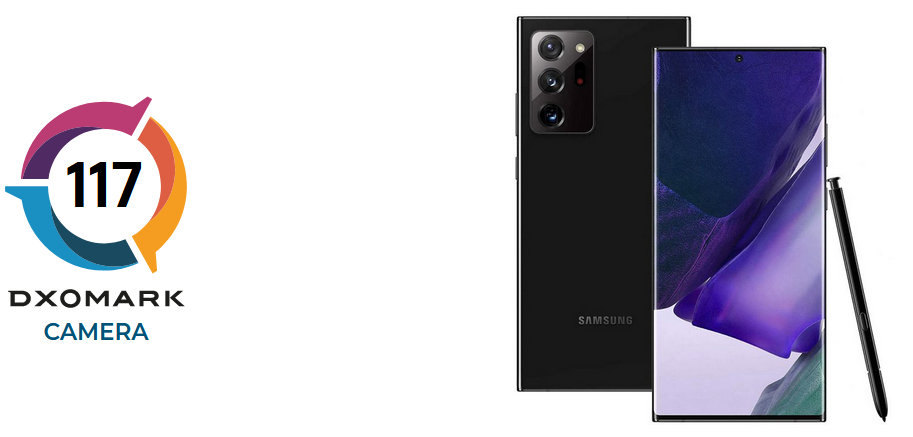
The Samsung Galaxy Note 20 Ultra 5G has just been reviewed again by known camera reviewing brand DxOMark. The tests have revealed that the company’s flagship Snapdragon version has scored lower than its Exynos variant.
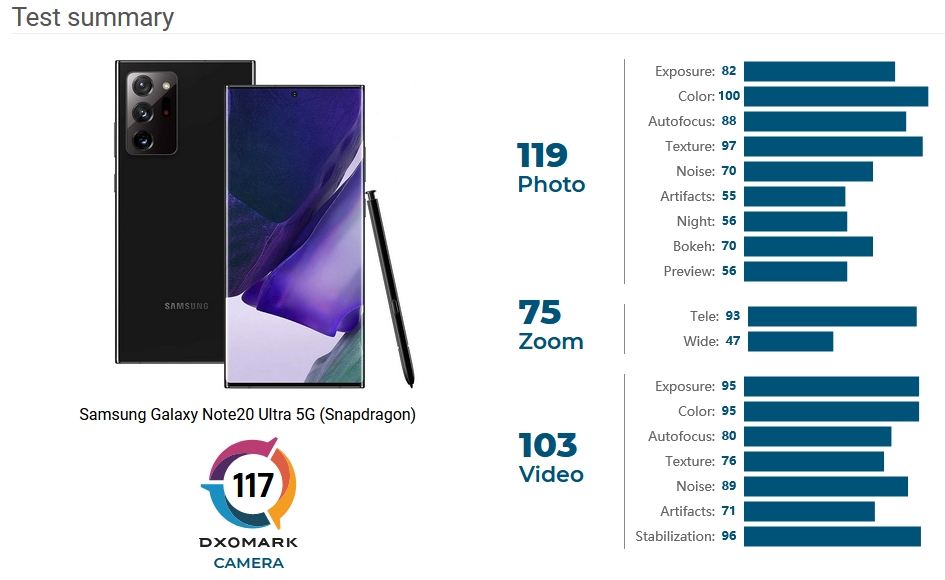
Looking at the scores, the Snapdragon version that got reviewed recently scored 117 points in the DxOMark camera test while the Exynos variant scored 120 points when put through the same tests. The score had the handset receive 119 points for its photography, 75 for its zoom, and 103 points for its video recording. DxOMark noted that while the device offered “competent” performance with good “photographic versatility,” it is still not as impressive as the smartphones on the top of its rankings.
Talking about score, the firm found that it offered vivid colors in most images, with good details in both indoor and outdoor shots. It even praised the device’s bokeh mode and depth estimation, while its long range zoom pictures also retained high levels of details. The stabilization on videos was also quite effective and the white balance was neutral for both indoor and outdoor videos as well. Unfortunately, the flagship suffered from various instances of instability in autofocus both during videos and photos.
Night scenes or other low light scenarios had the device struggle, with noise being noticeable in most images. Furthermore, DxOMark also found a number of inconsistencies in performance while capturing videos, especially in terms of sharpness in between frames while walking. While the Exynos and Snapdragon variants offer comparable performance, the firm still preferred the the former over the latter, due to its more erratic autofocus performance and higher levels of noise.
Samsung is gearing up to launch its next-generation Galaxy S-series flagship smartphones — Galaxy S21. This time, the company is expected to launch the devices a couple of months earlier, most likely around 14th January.
Now, ahead of the official launch of the Galaxy S21 lineup, Evan Blass has shared the render of the upcoming Galaxy S21 5G smartphone, showcasing the device’s front panel.
Just looking at the front side, there is nothing that differentiates the smartphone from its predecessor, Galaxy S20. It features a punch-hole cutout on top of the screen, right in the middle, housing the front-facing snapper.
Evan Blass says that the real design changes are on the back panel of the smartphone. He has promised more leaks related to the Samsung Galaxy S21 lineup ahead of the official launch, which should reveal more information about the phone’s design.
Recently, M Roh, the President and Head of Samsung’s mobile division, almost confirmed that the Galaxy S21 lineup will be the first non-Galaxy Note series from the South Korean giant to have S-Pen support. However, it is likely to be limited to Galaxy S21 Ultra.
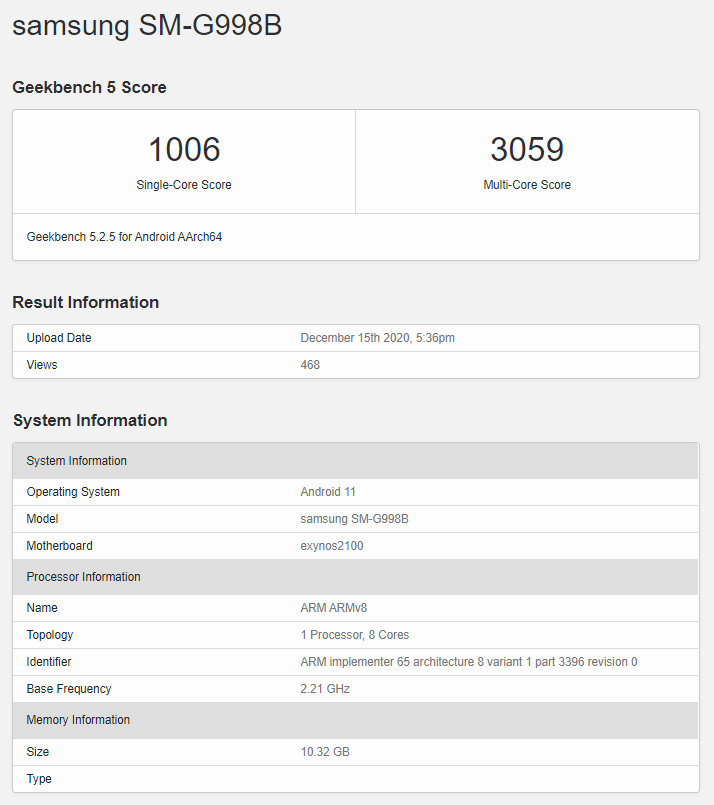
The upcoming flagship smartphones will come powered by either Qualcomm Snapdragon 888 chipset or the company’s own Samsung Exynos 2100 SoC. Recently, the Galaxy S21 Ultra powered by the Exynos 2100, which is set for India and Europe region, was spotted on Geekbench with 12GB RAM and Android 11 operating system.
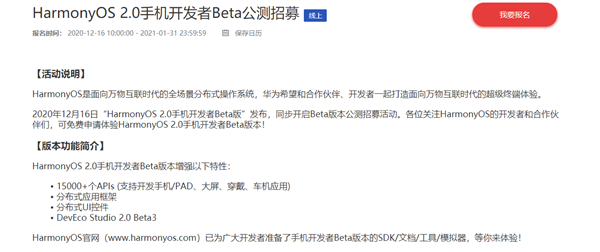
Huawei first unveiled the HarmonyOS 2.0 (also known as Hongmeng OS 2.0) at the Huawei Developer Conference 2020. The tech giant has today officially announced the release of the developer beta version of the new ROM targeted at app developers.
According to Wang Chenglu, president of Huawei’s consumer BG software department, this year, Midea, Joyoung, Boss Electronics, and Puffin Technology have all released products that run on Hongmeng OS. The tech giant’s goal in 2021 is to cover more than 100 million devices from 40+ mainstream brands.
HarmonyOS was conceived originally for the Internet of Everything, with a better experience and more adaptations. For instance, with HarmonyOS, JD’s app can run on TVs, even refrigerators, and other screen-equipped devices. Thus, hundreds of millions of devices including cars equipped with a smart screen can run the JD app or any other app. This opens up several possibilities like allowing payment portals such as UnionPay to be accessed using multi-devices like PC, TV, etc.
At present, the beta version public test recruitment activities have been rolled out and developers and partners can apply to participate for free. However, it is open to just the Mate 40 series and Huawei P40 series as well as the MatePad Pro tablet.
Starting from today (December 16), Huawei will provide developers with two ways to get the beta version on the selected devices. Developers can use the remote simulator in Huawei DevEco Studio by downloading the DevEco Studio 2.0 Beta3 version from the HarmonyOS official website to get it. Alternatively, they can use the exclusive OTA to upgrade their device. First, you have to register and when approved, you will then receive the official Huawei public beta invitation email. According to the email content guidelines, you can get OTA push.
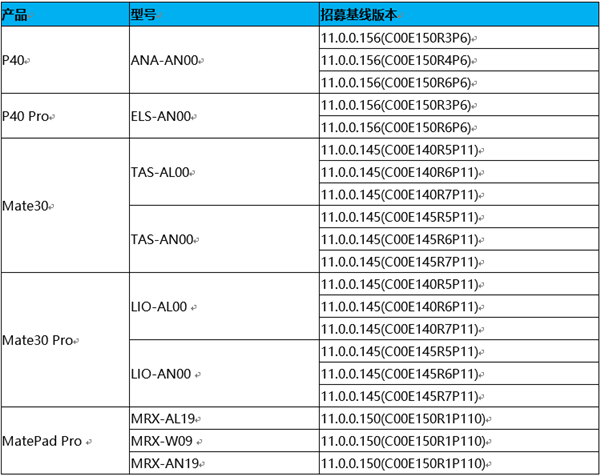
Here are the complete mobile phones and tablet models that the HarmonyOS mobile phone beta supports in China.
For mobile phones, there is the Huawei P40 full Netcom (5G dual card), as well as the P40 Pro Full Netcom version. Others include the Huawei Mate 30, Mate 30(5G), Mate 30 Pro, Mate 30 Pro(5G), the model list is ANA-AN00, ELS-AN00, TAS-AL00, TAS- AN00, LIO-AL00, LIO-AN00.
Tablet: Huawei MatePad Pro Full Netcom version, Full Netcom version (5G), WIFI version. The model list is MRX-AL19, MRX-W09, MRX-AN19.
The company adds that we can expect smartphones running on HarmonyOS in 2021. You can get more details about the schedule on the Huawei developer’s website.
Recent reports have revealed that the Samsung Galaxy S21 trio heading to markets like the U.S. and South Korea will be driven by the Snapdragon 888 chipset. India and European markets are expected to get the Exynos 2100 powered S21 editions. At Geekbench 5, the Galaxy S21 Ultra (mentioned with SM-G998B model number) has been spotted with the Exynos 2100 SoC, 12 GB of RAM, and Android 11 OS. The listing states that the yet to be announced chipset has a base frequency of 2.21GHz.
While the performance of the Exynos 2100 powered device appears to be better than the Snapdragon 888 powered S21, readers should know that the S21 models benchmarked at Geekbench are unfinished prototypes. Recent reports have revealed that the Exynos 2100 is equipped with a Cortex-X1 core clocking at 2.91GHz, a 3 x Cortex-A78 cores ticking at 2.81GHz, and 4-Cortex-A55 efficiency cores working at 2.21GHz. The SoC is also said to include a Mali-G78 GPU.
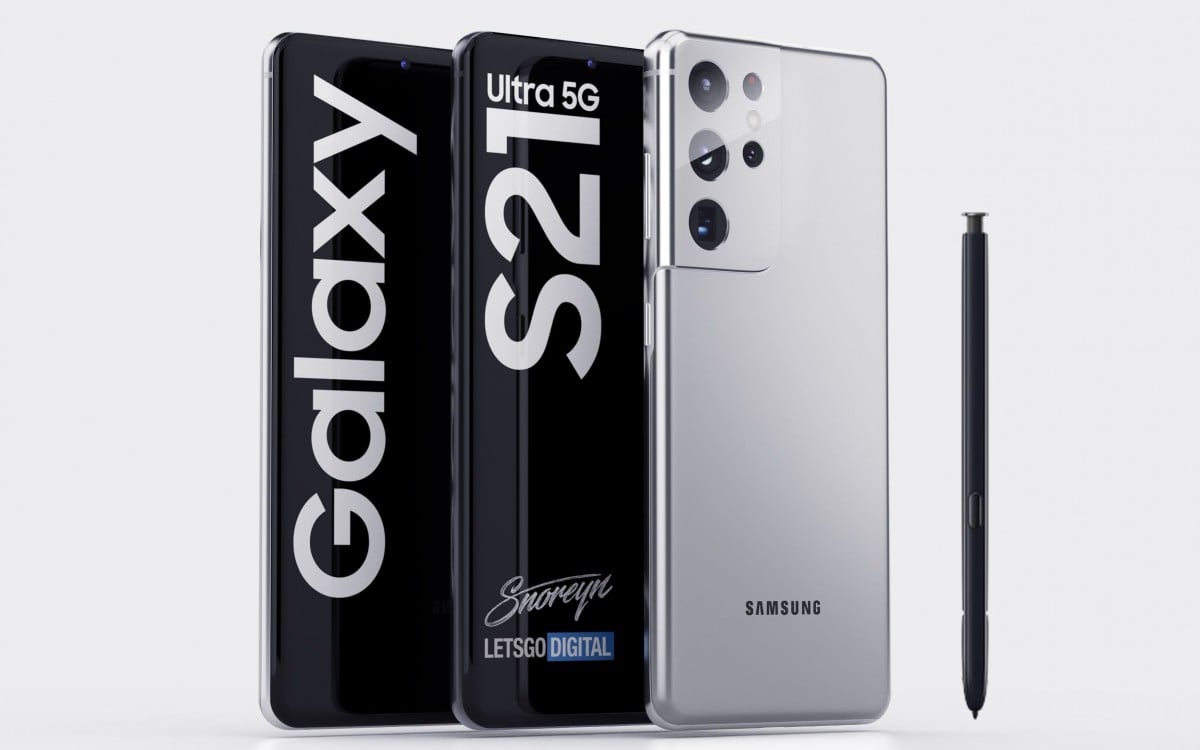
Samsung Galaxy S21 Ultra 5G render by Letsgodigital
Last week, a tipster had claimed that the Exynos 2100 will consume far less power than the Exynos 990 predecessor chip. The Cortex-A78 and Cortex-A55 cores offer faster performance than their counterparts found in the Snapdragon 888 SoC. This may allow the Exynos 2100 to offer marginally better performance than the SD888. Samsung is expected to unleash the Exynos 2100 before the end of this month. It is only then a good comparison can be done between the two chipsets.
Vivo is likely to announce the Vivo X60, X60 Pro, and X60 Pro+ smartphones on Dec. 28 in China. Like the predecessor Vivo X50 series, the Vivo X60 models are expected to deliver a stellar photography experience. Ahead of the official announcement, a reliable tipster from China has shared the camera configurations of the Vivo X60 trio.
According to the tipster, the Vivo X60 will have a triple camera system led by a 48-megapixel main camera with an f/1.6 aperture. It will be accompanied by a 13-megapixel superwide lens, and a 13-megapixel portrait camera.
The Vivo X60 Pro has a quad-camera setup featuring a 48-megapixel main camera, a 13-megapixel superwide lens, a 13-megapixel portrait sensor, and an additional 8-megapixel periscope zoom lens that will bring support for 5x optical zoom and up to 60x digital zoom.
Also, the Vivo X60 Pro’s main camera gets an f/1.48 aperture for the main camera. The Vivo X60 and X60 Pro will feature the second-generation micro-gimbal stabilization powered by ZEISS optics.
Coming to the Vivo X60 Pro+, it is expected to sport an L-shaped camera setup. However, he did not share the configurations of the camera sensors. He added that the Vivo X60 Pro+ will have a centered punch-hole display like the X60 and X60 Pro. It will be driven by the Snapdragon 888v mobile platform, whereas the X60 and X60 Pro will be equipped with the Exynos 1080 chipset.
The Vivo X60 trio is likely to arrive with support for up to 120Hz refresh rate and 33W fast charging. The X60 series will be the first Vivo phones to arrive with OriginOS flavored Android 11 OS. It is speculated that the V2059A, V2047A, and V2046A Vivo phones that were recently approved by the 3C authority of China could be the upcoming X60 series smartphones.
Huawei will be announcing the Huawei Nova 8 series of smartphones on Dec. 23. The upcoming unveiling event could see the arrival of the Nova 8 and Nova 8 Pro smartphones. Leaked posters that surfaced yesterday revealed that the front and rear design of the Huawei Nova 8 Pro. The handset was seen with a unique quad-camera setup that is housed inside an oval-shaped module. A leaked render that gives a closer at the rear camera system of the Nova 8 series smartphone has surfaced on Twitter. The leakster who shared the render also revealed the camera configurations of the Nova 8 series phone.
As it can be seen in the image below, the camera module of the upcoming Nova 8 series smartphone features a main camera at the top. The other three cameras and an LED flash unit are placed below the main lens.
The new leak claims that the camera setup includes a 64-megapixel main camera, 8-megapixel lens, and a pair of 2-megapixel cameras, probably for macro shots and adding depth effects. The Huawei Nova 8 SE that debuted last month came with the same camera setup. A recent leak had revealed that the Nova 8 and Nova 8 Pro will have an identical camera setup.
The predecessor Huawei Nova 7 and Nova 7 Pro smartphones came with different cameras. The Nova 7 came with a quad-camera setup featuring a 48-megapixel main shooter, an 8-megapixel ultrawide lens, a 2-megapixel macro camera, and a 2-megapixel depth sensor. On the other side, the quad-camera setup of the Nova 7 Pro featured a 64-megapixel main shooter, an 8-megapixel periscope telephoto lens, an 8-megaipxel ultrawide lens, and a 2-megapixel macro lens. It can be assumed based on recent reports that all the phones in the Nova 8 series may carry identical camera setup.
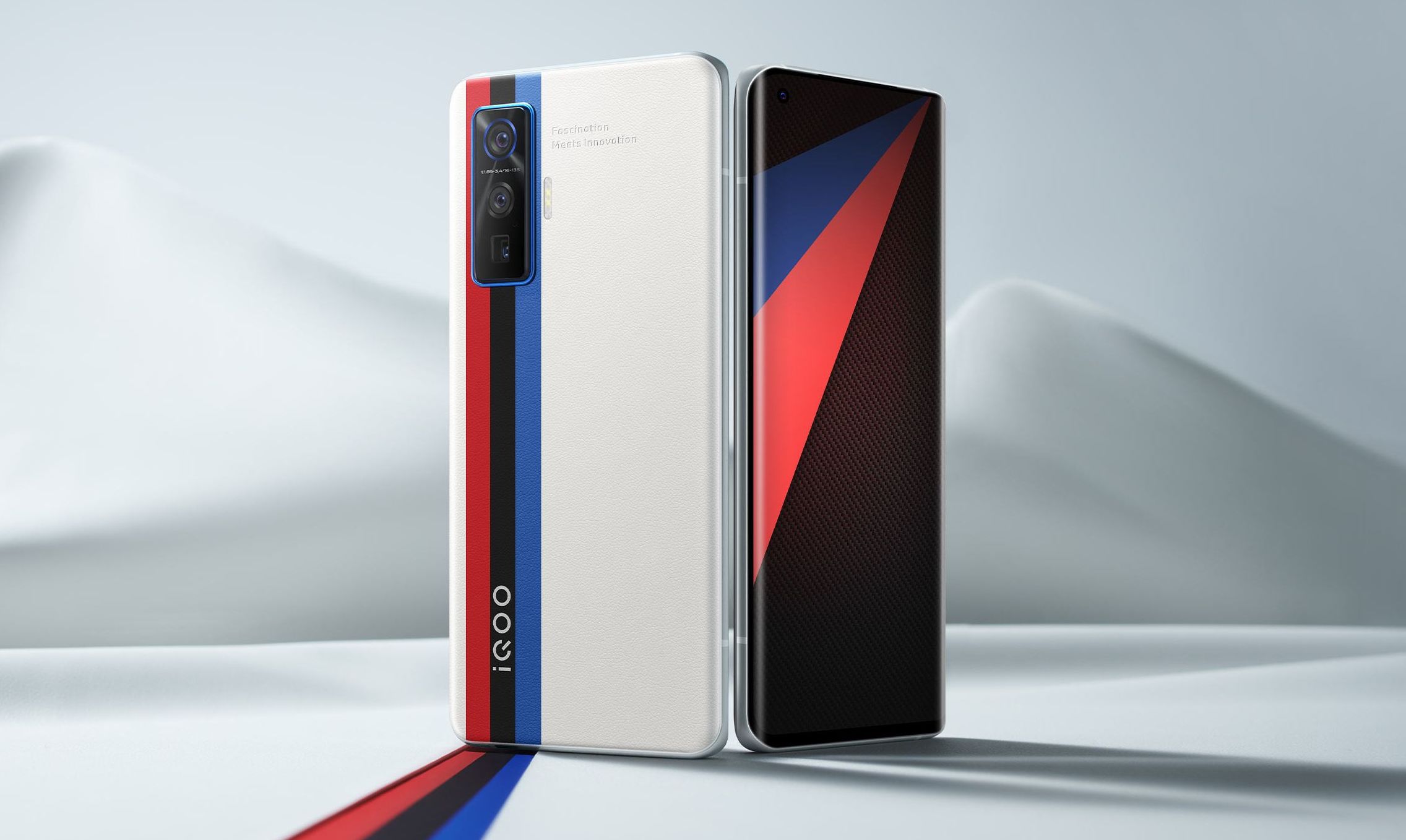
A mysterious 5G phone has appeared in the database of the 3C authority of China with a 120W charger. A reliabe tipster has speculated that this device could be the alleged iQOO 7 flagship phone, which is expected to debut in early 2021.
The 3C listing reveals that the Vivo Mobile Communications Co. Ltd has a new 5G phone for the Chinese markets. The model number of the device is V2049A and it has been spotted with a charger that has a model number of V12060L0C0-CN. The new charger supports charging rates such as 9V/2A, 11V/2A, 11V/3A, 20V/5A, and 20V/6A Hence, the newly spotted V2049A smartphone is likely to support up to 120W fast charging.
While the listing does not directly carry the iQOO branding, a well-known Chinese tipster has speculated that this device could be the iQOO 7. It is not the first time that an iQOO phone has been spotted with the 120W V12060L0C0-CN charger. The iQOO 5 Pro that debuted in August came with support for 120W superfast charging. According to the company, the 120W charger can fully charge iQOO 5 Pro’s 4,000mAh battery in just 15 minutes.
The tipster who spotted the 3C listing had recently shared a few details of the upcoming iQOO flagship. The tipster claimed that the next iQOO flagship will be equipped with the Snapdragon 888 mobile platform. The iQOO 5 Pro featured a curved edge display, but its successor is likely to arrive with a flat-screen. He revealed that it may come with a slightly larger battery as compared to the iQOO 5 Pro.
iQOO 5 Pro
The other specs of the iQOO 7 could be the same as the iQOO 5 Pro. Hence, it is likely to arrive with a 50-megapixel triple camera system and a 16-megapixel selfie snapper. It may arrive preloaded with iQOO UI / Origin OS flavored Android 11 OS.
In October, Vivo unveiled the Vivo Y3s and Vivo Y30 smartphones in China. While the Vivo Y3s arrived as a tweaked version of the Vivo Y17 available in India, the Vivo Y30 debuted as a better version of the Indian Vivo Y20 handset. A new handset named as the Vivo Y30 Standard Edition has silently gone official in China.
Vivo Y30 Standard Edition specifications and features
While the Vivo Y30 for China was fueled by the Snapdragon 460 chipset, the newly announced Vivo Y30 Standard Edition phone is driven by the Helio P35 chipset. The phone ships with 6 GB of LPPDR4x RAM and 128 GB of built-in storage. The handset is preinstalled with FunTouch OS UI 10.5 based Android 10 OS.
The Vivo Y30 Standard Edition has a 6.51-inch IPS LCD display with a waterdrop notch. The phone produces an HD+ resolution of 720 x 1600 pixels and a 20:9 aspect ratio. According to Vivo, the Y30 Standard Edition delivers a screen-to-body ratio of 89 percent.
At the front, the Vivo Y30 Standard Edition has an 8-megapixel selfie camera. The backside of the device is fitted with a vertical camera setup that features a 13-megapixel primary shooter and a 2-megapixel depth assist lens.
The Vivo Y30 Standard Edition has a 5,000mAh battery that supports 10W charging. It has a side-facing fingerprint reader. It comes with connectivity options such as dual SIM support, 4G VoLTE, Wi-Fi 802.11ac, Bluetooth 5.0, GPS, microUSB, and a 3.5mm audio jack. It weighs 191.4 grams and measures 164.41 x 76.32 x 8.41mm. In terms of specs and design, it appears to be a modified version of the Vivo Y12s phone that went official in India last month.
Vivo Y30 Standard Edition pricing
The Vivo Y30 Standard Edition has arrived in China with a pricing of 1,398 Yuan. It comes in two colors such as Aurora and Cloud Water Blue.
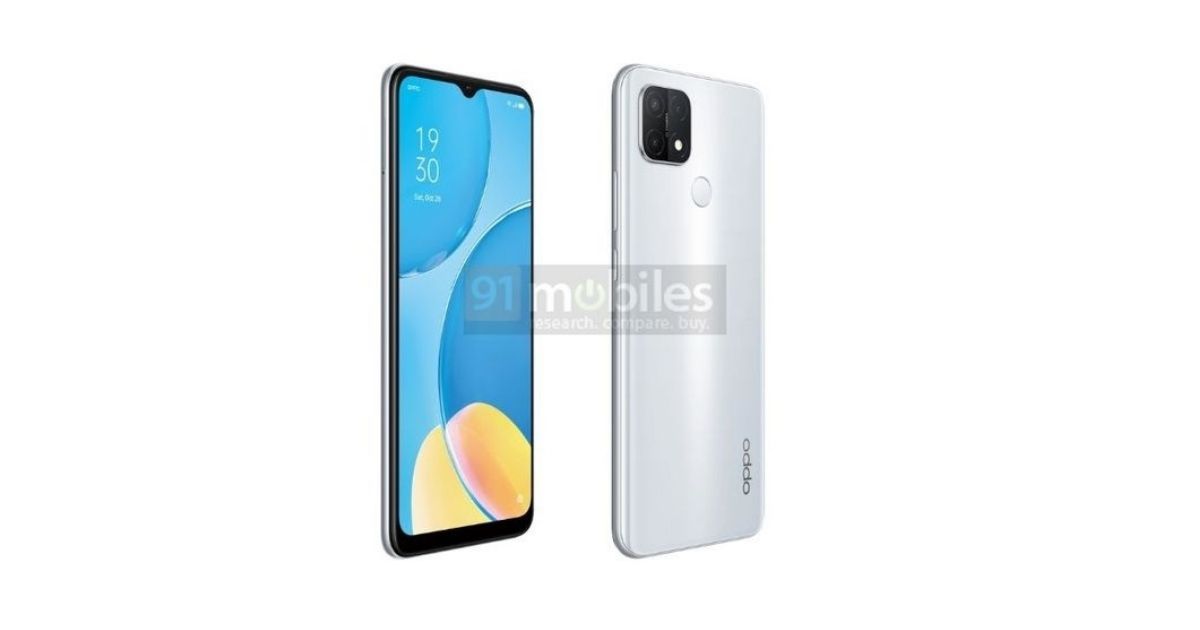
A leaked promo pic of the OPPO A15s was spotted a few days back. Yesterday, another image appeared to reveal the pricing of the smartphone for India. These leaks suggest that the launch date of the A15s may not be far away. Ahead of the impending launch, 91mobileshas collaborated with tipster Ishan Agarwal to share the leaked renders of the OPPO A15s.
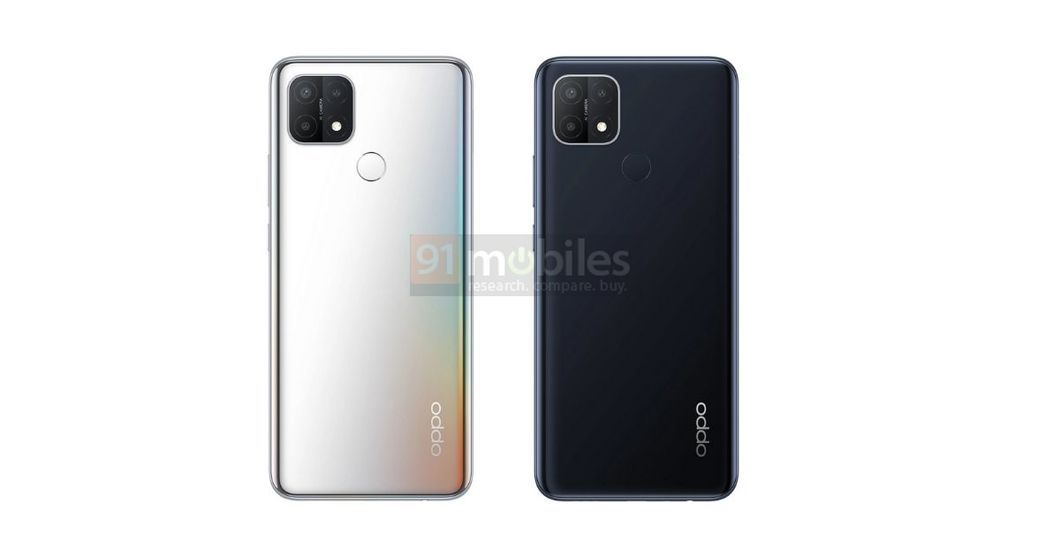
The leaked images that have surfaced recently only revealed the rear appearance of the OPPO A15s. However, the new leak reveals that it features a waterdrop notch display. The other image shared by the publication shows that it will be available in two color variants such as Dynamic White and Dynamic Black.
The previously seen images of the OPPO A15s had showcased its Rainbow Silver color variant. The A15s is a variant of the OPPO A15 phone that went official in October. It comes in Dynamic Black and Mystery Blue. The publication claims that the A15s may not be available in the Mystery Blue edition.
Recent reports have revealed that the OPPO A15s will be arriving in India with 4 GB of RAM and 64 GB of storage and it could be priced at Rs 11,490 (~$156). This indicates that the A15s will be positioned higher than the OPPO A15 that comes in two options such as 2 GB RAM + 32 GB storage for Rs 8,990 (~$122) and 3 GB RAM + 32 GB storage that is priced at Rs 9,990 (~$135).
The OPPO A15s is expected to arrive with a 6.52-inch HD+ display. The rear side of the phone has a square-shaped camera housing that houses three cameras and an LED flash. A fingerprint scanner is also available on the backside of the device.
The 4-minute long animated video titled “Exynos: Thank You” reminds us of the Pixar animated movie, Up. The description for the video is a short letter from the Exynos Team that talks about how the year has been challenging for everyone including the Exynos team.
Dear fans,
Although 2020 will be remembered as a year full of challenges, both global and personal, it also gave people time to reflect and think about what is most important to our lives. In rediscovering these personal values, we’ve learned to cherish every precious moment we have with family and friends, and to believe in our inner strength and ability to tackle life’s challenges head-on.
The same goes for the #Exynos team. Now more than ever, we realize how important the support of our fans is towards going further. With a renewed confidence in the talent of our team, we have refocused our efforts to meet our fans’ expectations by developing a whole new #MobileProcessor.
To all of you, especially our fans that have waited patiently and supported us, we offer a heartfelt thank you. We hope this story will bring you a warm smile and that you have a happy holiday with family, friends, and loved ones.
#ThankYou again for all you have done for us. Stay tuned for more stories.
Sincerely,
The Exynos team
The second paragraph of the letter reproduced above says the team has refocused their efforts to the expectations of fans by “developing a whole new Mobile Processor”. While there is no specific mention of the name of this “whole new mobile processor”, we want to believe it is a teaser for the Exynos 2100.
There have been reports that the Exynos 2100 will be an exceptional chipset and it appears Samsung is taking its time before it officially unveils the new chipset which will power the Galaxy S21 series when it launches roughly a month from today.
The race is on for the OEM that will be the first to launch a Snapdragon 888-powered flagship. Xiaomi had earlier hinted that it would be the first to launch a phone bearing the latest Qualcomm flagship chip. The race is apparently for the swift as Samsung has also hinted that it will announce the Galaxy S21 in January 2021. This has just been confirmed by TM Roh, the President and Head of Samsung’s mobile division.
The Samsung mobile division head wrote a blog post which among other things outlined with admiration what the company accomplished in 2020. He also rolled out the tech giant’s plans for next year. Apart from the Galaxy S21 launch date, the Samsung chief also confirmed that the device will come with S Pen support, something that is associated with the Note series in the past.
Find some important quotes from the post below:
“Thank you to everyone who supported us in 2020. I look forward to sharing more in January!” concludes the post, shortly after this promise: “We’ve also been paying attention to people’s favorite aspects of the Galaxy Note experience and are excited to add some of its most well-loved features to other devices in our lineup.”
While the S Pen support will be one of the features, it will most likely be limited to the Galaxy S21 Ultra. Samsung may also extend it to the foldable Galaxy Z-series but that wasn’t stated.
Further, Roh disclosed that the company will expand its portfolio of foldable smartphones since the Note series will be rested. He hinted that foldables will become more accessible, which seems to affirm rumors that there will be four Galaxy Z foldable smartphones next year.
“Be on the lookout for super-intelligent, pro-grade camera and video capabilities in 2021,” Roh added. There are rumors that the Galaxy S21 Ultra will use a next-generation 108 MP main sensor and will have up to 10x periscopic zoom capability.
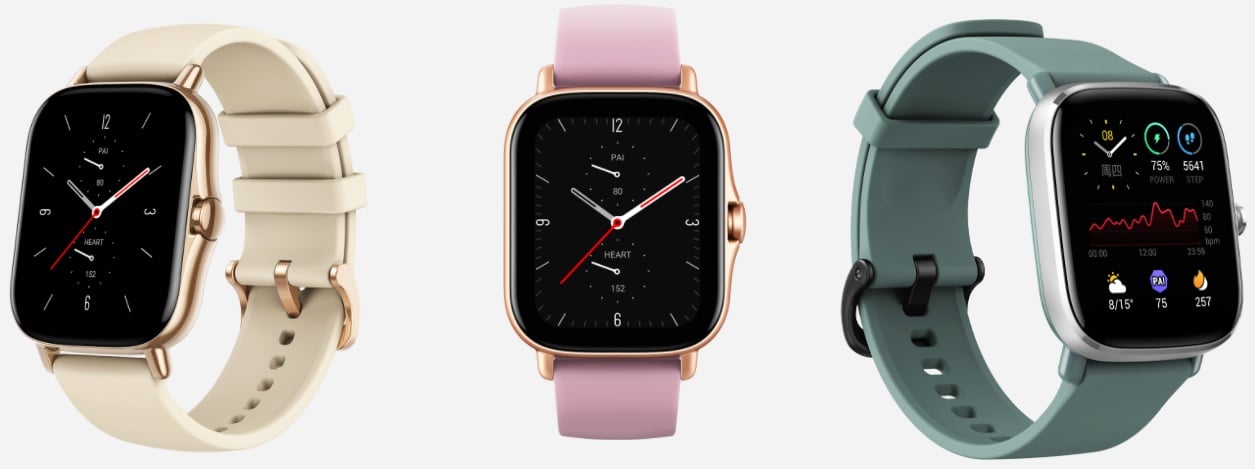
Huami announced two new smartwatches today, one of which is the Amazfit GTS 2e. This new smartwatch brings the models under the Amazfit GTS 2 series to three which is a lot considering last year’s GTS watch was only available in one model.
Amazfit GTS 2 vs Amazfit GTS 2e vs Amazfit GTS 2 Mini
When the Amazfit GTS 2 Mini was announced, I wrote an opinion piece on why the smartwatch was a better purchase than the standard Amazfit GTS 2. Now that there is a third model now, we are sure our readers will want to know which of these three watches is worth purchasing. We hope this post makes it easier for you to choose from the lineup. First, let’s have a spec by spec and features comparison of the features of all three watches:
Amazfit GTS 2
Amazfit GTS 2e
Amazfit GTS 2 Mini
Display and Resolution
1.65-inch Super Retina AMOLED Display with 3D glass
34I PPI
1.65-inch Super Retina AMOLED Display with 2.5D glass
341 PPI
1.55 inch AMOED Display with 2.5D glass
301 PPI
Material
Aluminum Alloy with optical Diamond-like Carbon Coating
Heart rate measurement
SpO2 measurement
Sleep tracking
Temperature measurement
Heart rate measurement
SpO2 measurement
Sleep tracking
Women's health management
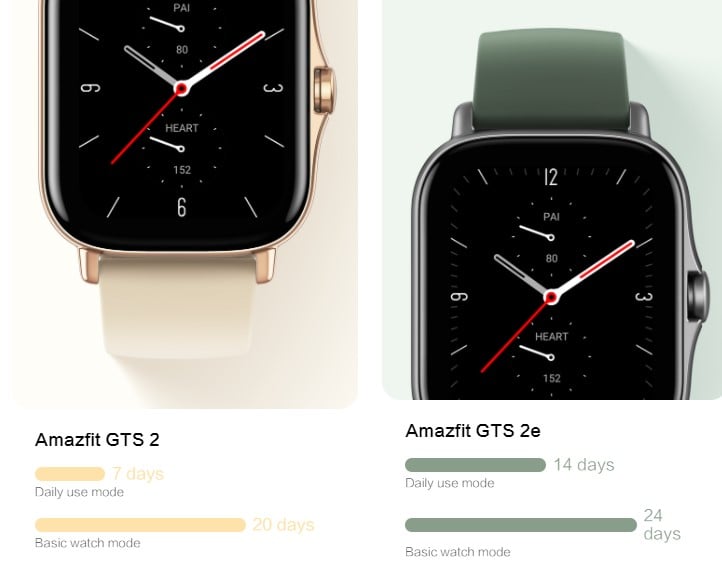
Battery capacity and battery life
246mAh
Typical usage - 7 days
Basic Watch mode - 20 days
246mAh
Typical usage - 14 days
Basic Watch mode - 24 days
220mAh
Typical usage - 14 days
Basic Watch mode - 21 days
Dimensions and weight
42.8 x 35.6 x 9.7 mm
24.7 grams without the straps
42.8 x 35.6 x 9.85 mm
25 grams without the straps
40.5 x 35.8 x 8.95 mm
19.5 grams without the straps
Colors
Obsidian Black, Dolphin Gray, and Streamer Gold
Obsidian Black, Dark Green, Roland Purple
Obsidian Black, Rose Powder, and Deep Pine Green
Price
¥999
$179.99
€169
£159
¥799
¥699
The table clearly shows the differences between the three smartwatches which cuts across multiple areas including the display, features, and price. Below, we will focus on the major differences
Display and Materials
This is the part of the smartwatch users will interact with the most, so it will most likely be the dealbreaker or dealmaker for anyone who is considering any of the three watches.
The Amazfit GTS 2 and GTS 2e both have the same screen which is a 1.65-inch Super Retina Display. Where they differ is in the glass covering the screen – you get a 3D curved glass on the former while the latter has 2.5D glass. Apart from aesthetics, the screens are the same. So you can’t go wrong with either of them.
However, the Amazfit GTS 2 Mini has a smaller and less sharp AMOLED display. It is not bad but it won’t measure up to that of its siblings.
Coming to materials, Huami uses the same material for the case of all three watches which is commendable. It is aluminum alloy but the finish is different and that is one of what makes them different.
The Amazfit GTS 2 lineup supports a plethora of sports modes – 90 modes on the Amazfit GTS 2 and GTS 2e while the GTS 2 Mini has 70, which is more than sufficient if you ask me.
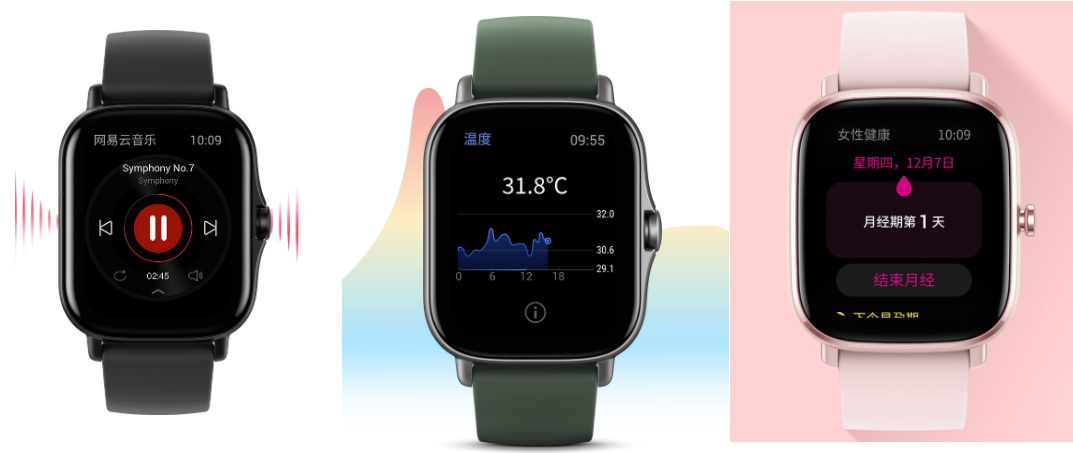
All three of the watches support the basics too such as heart rate measurement, blood oxygen level detection, and sleep tracking. The GTS 2e adds temperature measurement, a feature not available on the more expensive GTS 2 and the more affordable GTS 2 Mini. According to Huami, you can use the temperature sensor to measure ambient temperature and also the skin (surface) temperature of the wearer.
The Amazfit GTS 2 Mini’s own unique feature is support for women’s health and it is surprising it is the only one of the three that has it. This will make it appeal more to women as the menstrual calendar along with reminders for periods and ovulation will surely come in handy.
The Amazfit GTS has its own unique features too, one of which is built-in storage that allows users to store their own songs on the watch. Another feature it has is support for Bluetooth calls, so you can pick calls on it and talk back as it has not only a microphone but a speaker too. It is also the only one that connects via Wi-Fi.
Battery life
The Amazfit GTS 2 and Amazfit GTS 2e have the same battery capacity but the latter has better battery life. The Amazfit GTS 2 Mini which has a smaller battery but of course smaller screen also has a great battery life too that matches that of the Amazfit GTS 2e.
Price
The Amazfit GTS 2 is the most expensive of the three, and Huami may justify that with its sharper display, built-in storage, support for calls, and more premium finish. The Amazfit GTS 2e is more affordable while retaining most of the features of its sibling. It also has a significantly better battery life which is one of the cons of the Amazfit GTS 2.
The GTS 2 Mini is the most affordable of them all and that low price is due to the tradeoffs in the screen size and type, fewer sports modes, and motor type. Its battery life also matches that of the new Amazfit GTS 2e.
Conclusion
I already said there isn’t a compelling reason to get the Amazfit GTS 2 since there is the Amazfit GTS 2 Mini, and the launch of the Amazfit GTS 2e further reinforces that point. The GTS 2e packs the same display as the GTS 2, most of its features, and a way better battery life at just ¥100 more than the Mini model. All of these make the Amazfit GTS 2 a hard sell.
So if you want to pick up a model from the second-gen GTS series, the Amazfit GTS 2e or the Amazfit GTS 2 Mini are what we will consider first before the Amazfit GTS 2.
We use cookies on our website to give you the most relevant experience by remembering your preferences and repeat visits. By clicking “Accept”, you consent to the use of ALL the cookies.
This website uses cookies to improve your experience while you navigate through the website. Out of these, the cookies that are categorized as necessary are stored on your browser as they are essential for the working of basic functionalities of the website. We also use third-party cookies that help us analyze and understand how you use this website. These cookies will be stored in your browser only with your consent. You also have the option to opt-out of these cookies. But opting out of some of these cookies may affect your browsing experience.
Necessary cookies are absolutely essential for the website to function properly. This category only includes cookies that ensures basic functionalities and security features of the website. These cookies do not store any personal information.
Any cookies that may not be particularly necessary for the website to function and is used specifically to collect user personal data via analytics, ads, other embedded contents are termed as non-necessary cookies. It is mandatory to procure user consent prior to running these cookies on your website.