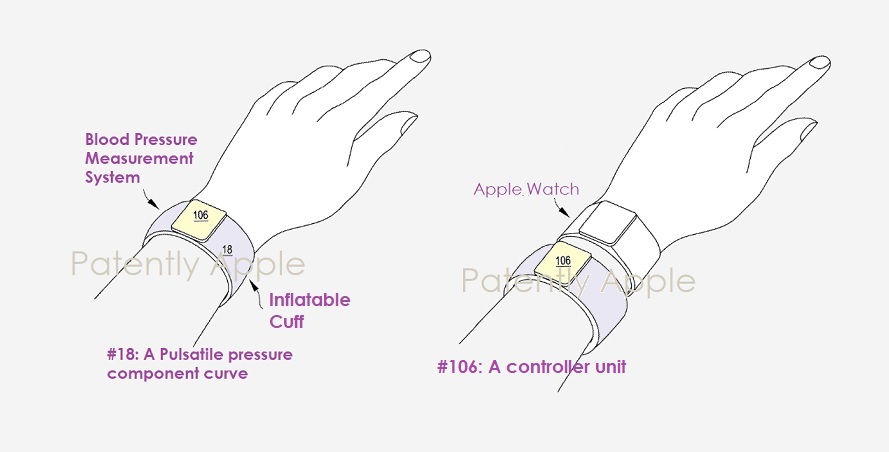
Apple has been actively improving health and fitness-related features for its devices, especially the wearable ones. In line with that, the tech giant has been granted a new patent related to a major blood pressure monitoring system.
Now, a new patent application from Apple, published by the US Patent & Trademark Office reveals a major shift in the company’s blood pressure system. It includes an all-new wearable device, which is separate from Apple Watch.
It seems that instead of a watch interface, the cuff comes with a control unit and the company confirms that the control unit can offer a user interface, including Watch-related functionalities. The product is aimed at estimating the blood pressure value of a patient.
The method covered in this patent includes receiving feature vector data corresponding to a pressure variation of the blood pressure cuff. The data is derived from one or more physiological signals of the patient measured over the pressure variation of the blood pressure cuff.
A first blood pressure value is estimated using the first algorithm with feature vector data as input data. It is then configured to be an estimate of one of the systolic blood pressure of the patient, the diastolic blood pressure of the patient, and the mean arterial blood pressure of the patient.
It is noted that the algorithm is configured to estimate the first blood pressure value of the patient to account for differences between changes in the shape, and/or timing of the one or more physiological signals of the patient measured over the pressure variation of the blood pressure cuff.
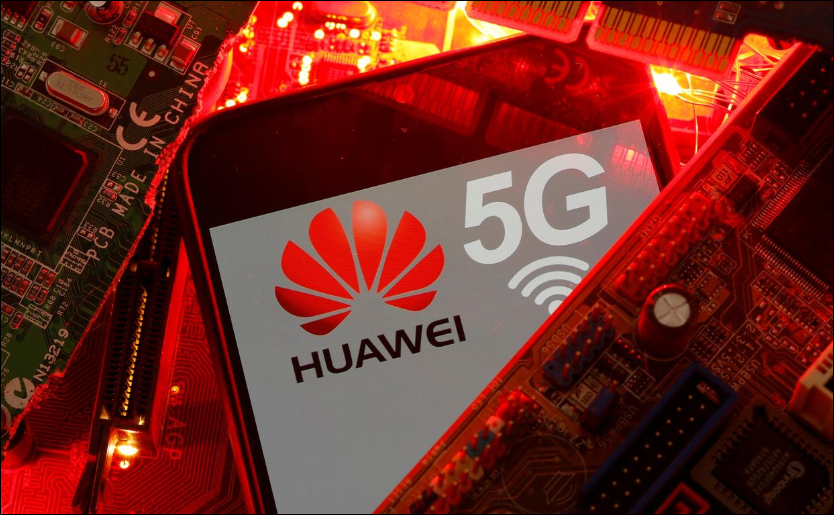
The Brazilian Vice President, Hamilton Mourão, has spoken in support for Huawei, sparking a controversy. The official stated that the cost of 5G networking in the region will significantly rise if the Chinese tech giant is banned from providing its telecom equipment for the newer and faster bandwidth.
Earlier this week, the Vice President attended an industry event held by the São Paulo Trade Association where he revealed an estimate provided by the Brazilian telecommunications agency Anatel, which reported that gear from Huawei represents about 40 percent of the 3G and 4G infrastructure in the country. So, Mourão issued a warning that outright banning the company will have various additional costs, as per a ZDNetreport.
Mourão stated that, “If Huawei can’t supply the [5G] equipment, the cost will be a lot higher.” He further added that an infrastructure review will incur additional costs that would have to relayed to the consumers as well. The Vice President even went on to talk about the Brazil 5G auction that was set to take place in March 2020, but has since been postponed to 2021. Mourão noted that any company that “demonstrate respect to [Brazil’s] sovereignty, privacy and cost efficiency” will be able to carry out operations in the nation.
However, increasing pressures from the US and the Trump administration to ban the Chinese tech giant last year, after the US President met the Brazil President Jair Bolsonaro. The Vice President believes that Brazil “can’t miss out on the 5G opportunity” and that the government should not interfere with Chinese company’s activities as long as the firm creates local jobs and complies with the local laws.
In the voting, the FCC voted 5-0 and ordered telecommunications operators to remove Huawei made equipment from their systems. Similarly, the agency also asked whether to end China Telecom’s permission to operate in the US, as per a Bloombergreport. Both Huawei and China Telecom that have a very small percentage of revenue from the US have yet to respond to this matter at the moment.
According to FCC Chairman Ajit Pai, “Security agencies contend the company hasn’t complied with cybersecurity and privacy laws, and provides opportunities for Chinese state-sponsored economic espionage and disruption of U.S. communications traffic.” He further added that, “the company is owned by the Chinese government.” Back in 2019, the FCC had also barred the use of US subsidies to purchase telecom equipment from Huawei and ZTE. This decision was made over security risk, which both companies have denied.
Now, the unanimous vote in the FCC will have the agency establish a list of banned equipment, and will even setup a fund to reimburse carriers for replacing these scrutinized gear. This will start once Congress presents an estimated 1.6 billion US Dollars. As per FCC Commissioner Brendan Carr, “The record on this is clear. The Chinese government intends to surveil persons within our borders, for government security, for spying advantage, as well as for intellectual property and an industrial or business edge.”
When Samsung first introduced its first foldable smartphone — Galaxy Fold, the company had to recall the units and delay the launch after learning about issues related to the display. The company made some changes and relaunched the device.
Later, when the South Korean giant launched the Galaxy Z Fold 2, it further improved the mechanism and the built-in screen protector was tucked inside the bezels so that the users won’t accidentally remove it.
The company is offering an extra protective layer on top of the display, which can be removed by the users if they want. But many users decided to keep it given that the company recommends visiting the Samsung Store for safe removal.
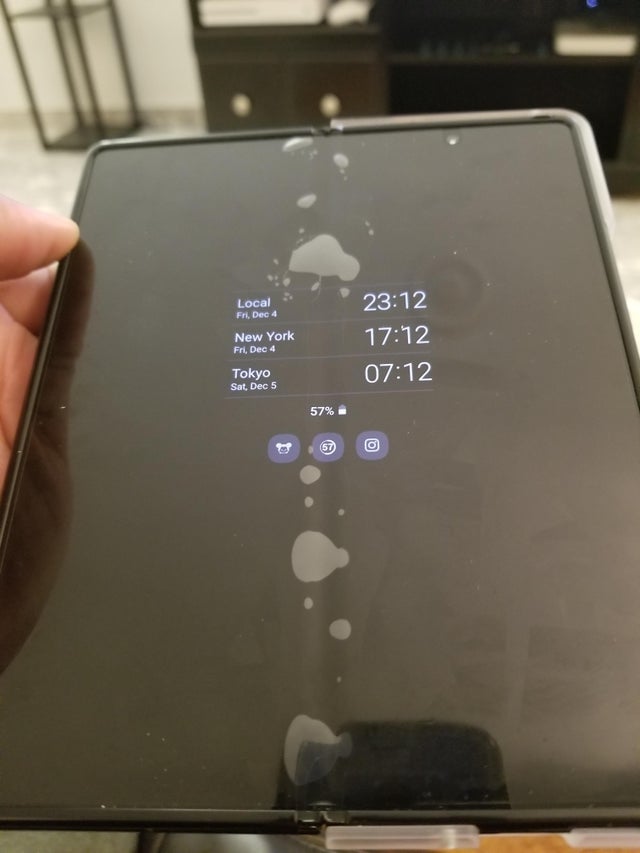
But now, some of the users of Galaxy Z Fold 2 are complaining on Reddit and other forums (via SamMobile) about the foldable smartphone‘s protector layer bubbling up around the crease. While the reason behind this issue is not known, it’s safe to assume that the issue is likely related to the fold/unfold mechanism.
For the bubbling effect, there needs to be a gap for the air to seep through between the display and the protective layer from somewhere. It’s possible that numerous fold and unfold actions could have lead to a gap, allowing air to pass through.
To solve the issue, the user can simply remove the protective layer from the top as the issue isn’t related to the screen itself or hardware. There are also several options available as a replacement for the protective film.
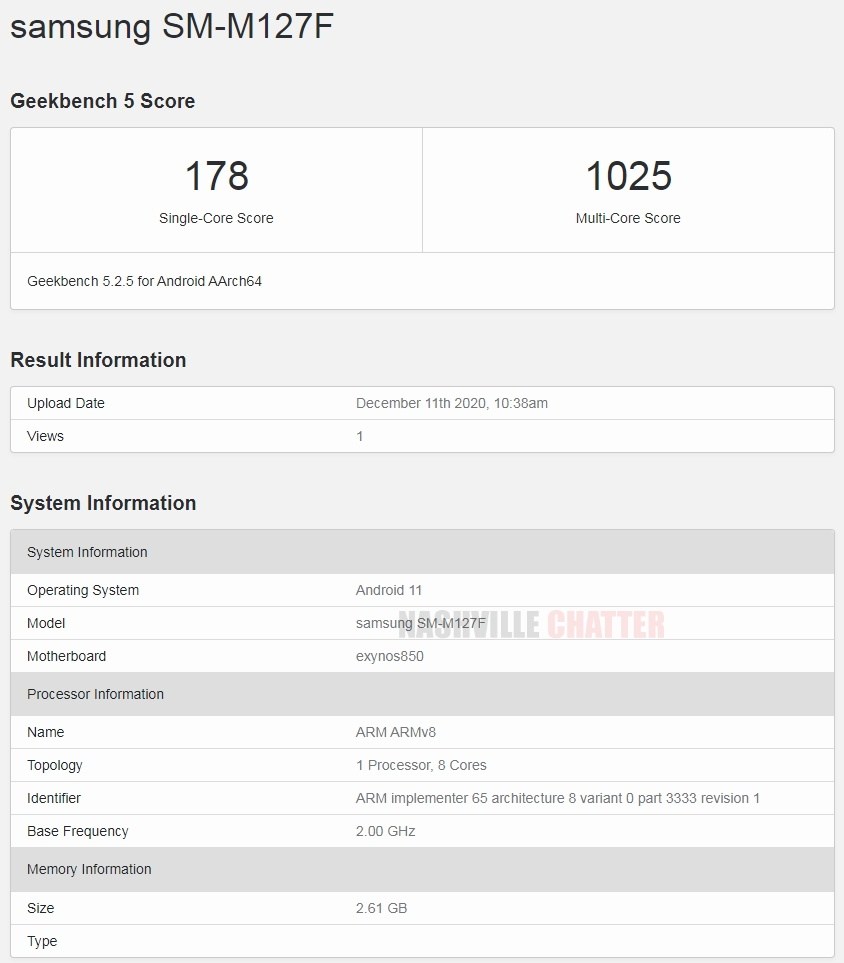
Samsung is reportedly working on the launch of the Galaxy M12. The live shots of the rear shell of the phone had appeared last months. Next came the CAD renders of the Galaxy M12 that revealed its front and rear design. The phone has also been spotted at certification platforms such as Bluetooth SIG, Wi-Fi Alliance, and the Bureau of Indian Standards (BIS). The Galaxy M12 has today appeared on the Geekbench benchmarking platform (via) with its SM-M127F model number.
On Geekbench 5, the Galaxy M12 has scored 178 in the single-core test and 1025 in the multi-core test. The smartphone is fueled by the Exynos 850 chipset and 3 GB of RAM. The handset is loaded with Android 11 OS.
While the BIS listing did not reveal any specs, it served as a good hint that the Galaxy M12 will be launching in India in the near future. The Wi-Fi Alliance and Bluetooth SIG listings revealed support for 2.4GHz Wi-Fi, Android 11 OS, and Bluetooth 5.0. There is a possibility that the phone may get rebranded as Galaxy F12 in some regions.
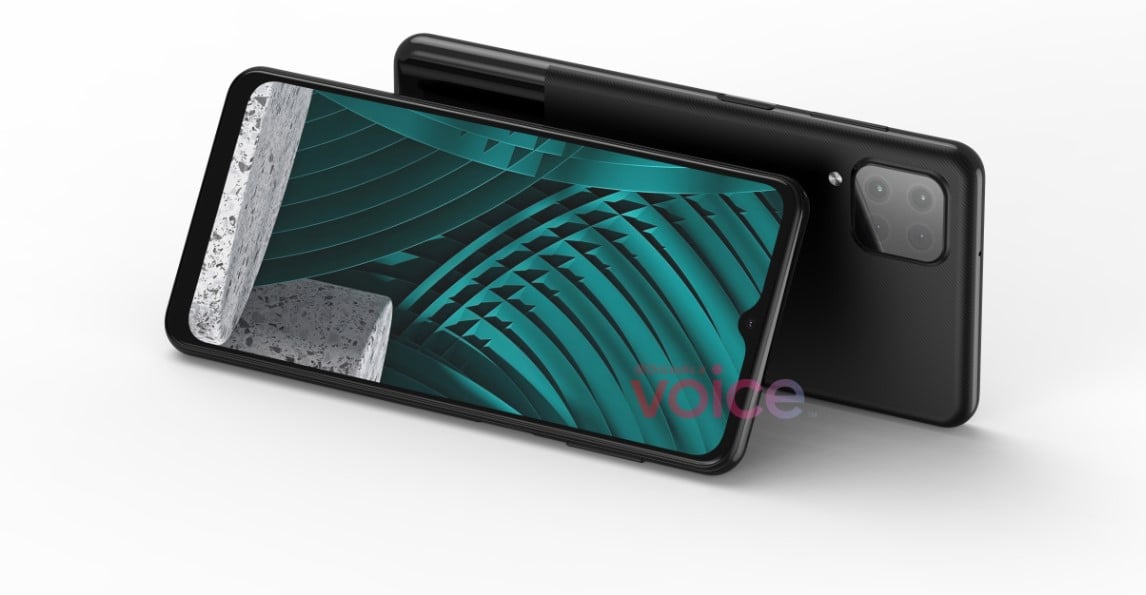
The CAD renders of the Galaxy M12 revealed that it will be sporting an Infinity-V notch display. It is said to be equipped with an LCD panel of 6.5 inches. The handset measures 163.9 x 75.9 x 8.9mm. The rear side of the phone has four cameras arranged in a square-shaped module.
Samsung Galaxy M12 Credit: Steve/Voice
The renders also show that the Galaxy M12 has a side-facing fingerprint sensor. A loudspeaker, a USB-C port, and a 3.5mm audio jack are placed on the bottom edge of the smartphone. It remains to be seen whether the M12 goes official before the end of this year.
A few months ago, Apple unveiled its newly refreshed lineup of iPad tablets in the market, including the eight-generation iPad and the new iPad Air. Now, reports about the next-gen iPad have started surfacing online.
In the latest report, it is being said that the entry-level iPad from Apple, will be getting a few major changes next year. The ninth-generation model will reportedly come with a bigger 10.5-inch display.
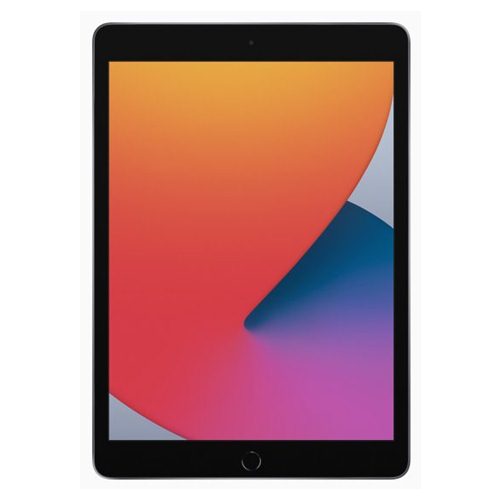
Apple iPad 8th Generation
Further, it is said that the device will be powered by the Apple A13 chipset, which is not surprising as the company usually updates the chipset model with the launch of a new iPad model in the market.
In terms of design, the upcoming iPad, which is expected to launch in Spring 2021, will continue to have the same design as the current model. However, the device could become a bit thinner and lighter.
It will continue to come with a Home button and Touch ID sensor embedded into it for added protection, despite other models supporting Face ID. Also, the company will keep using Lightning connectors and won’t be adopting a USB Type-C port.
The report says that the upcoming ninth-generation iPad could have a starting storage capacity of 64GB instead of 32GB. It also claims that the pricing could lower with the new version, starting at $299. We expect to know more about the device in the coming weeks or months, as the launch nears.
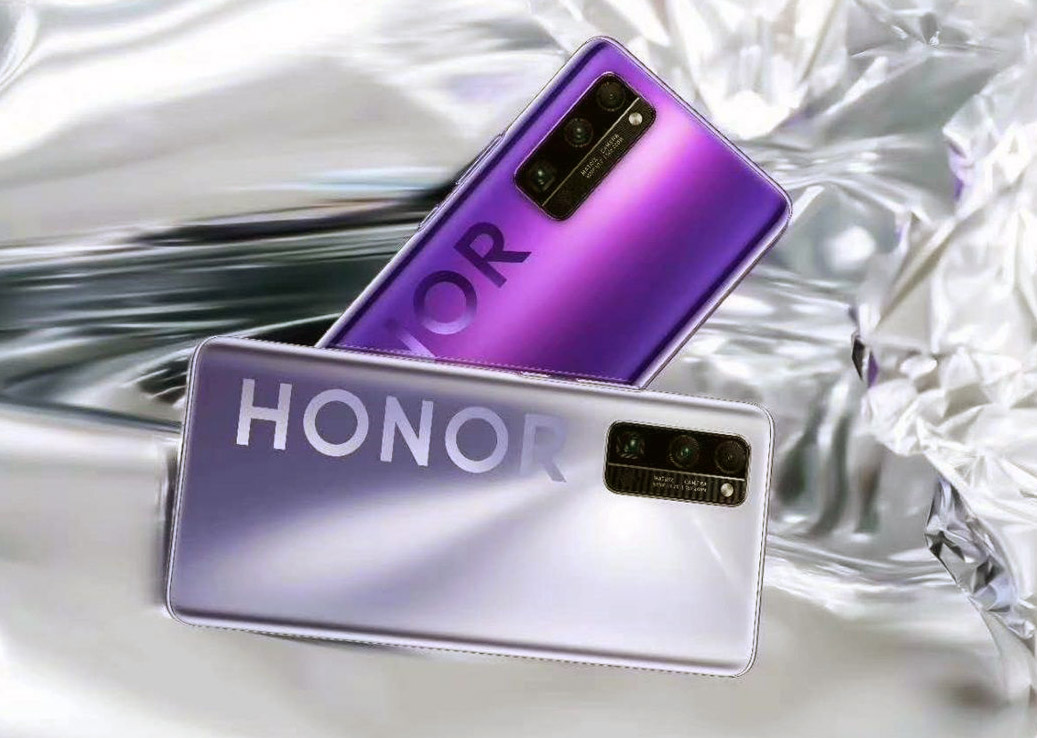
It’s been just a few weeks since Huawei announced selling off the Honor brand and the newly formed entity is already in the process of getting new suppliers for its devices. In line with that, it was recently confirmed that Honor and Qualcomm are in advanced talks to reach a deal for supplying chipsets.
Now, MediaTek, another leading smartphone processor maker, has confirmed that it is in the process of determining and evaluating legal affairs related to the restrictions imposed by the United States on Huawei. If everything works out in its favor, then the company will be able to supply chipsets to Honor.
The development comes at a time when it is important for the Honor brand to establish new supply chain relations with other companies to restart its smartphone production, given that Huawei is now out of the picture.
It is being reported that the company will complete signing new labor contracts for its personnel by the end of this month. So, the new Honor is all set to enter the market in January 2021 and is expected to launch new V40-series smartphones.
The upcoming Honor V-series will be powered by the MediaTek chipset, however, it is said that the company will be using the chips that it already has in stocks and won’t be getting a new lot from the Taiwanese company.
Honor is expected to resume operations in China with full force given that the company’s CEO Zhao Ming recently communicated with all the employees that the aim is for the brand to become a leading smartphone company in China, overtaking Huawei.
Meanwhile, Qualcomm has been issued a license by the United States government to continue doing business with Huawei for several categories of products, including 4G, computing, and Wi-Fi. However, the company says that it is still trying to obtain a license for the other set of products.
Recently, a Chinese tipster known for Huawei leaks had claimed that Huawei will announce the Nova 8 and Nova 8 Pro smartphones in China on Dec. 23. Today, another well-known leakster from China posted on Weibo that Huawei will not only launch Nova 8 series smartphones but also other products on the said date.
In November, Huawei unveiled the Huawei Nova 8 SE in Dimensity 720 and Dimensity 800U chipset variants. It is unclear which chipsets will be powering the Nova 8 and 8 Pro smartphones. The new leak reveals that the company will also take off covers from the Huawei Enjoy 20 SE smartphone and the Huawei Watch Fit.
The Huawei Nova 8 and Nova 8 Pro are speculated to sport a dual punch-hole display design. Both phones are expected to sport high refresh rates. The vanilla model may feature a flat-screen, whereas the display of the Pro model may have curved edges. There is a possibility that the Nova 8 Pro could be driven by Kirin 9000 flagship chipset. These phones arrive with respective starting prices of 3,000 Yuan (~$459) and 4,000 Yuan (~$611).
Nothing much is known about the Huawei Enjoy 20 SE smartphone. The moniker suggests that it will be positioned lower than the Dimensity 720 powered Enjoy 20 5G.
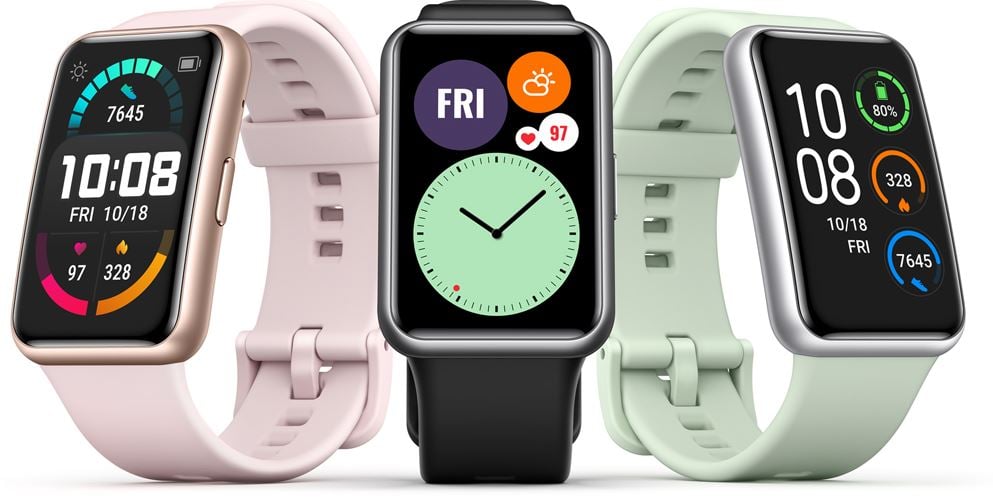
While the company launched the Huawei Watch Fit globally in September, it is yet to be land in the home market. Hence, it appears that the same Watch Fit may land in China on Dec. 23 along with other products. The key features of the Watch Fit include a 1.54-inch AMOLED display, 10-day battery life, and 12 kinds of workout modes. The Watch Fit bears resemblance to the Honor Watch ES, but the major difference between the two is that the Huawei model has built-in GPS.
Xiaomi has reportedly been working on launching its flagship smartphone dubbed Mi 11, powered by the newly launched Qualcomm Snapdragon 888 SoC, later this month in China. At the same time, it’s sub-brand Redmi is also working on its flagship smartphone.
Now, a new report coming from China indicates that the launch of Redmi K40, the brand’s upcoming flagship smartphone, should happen quite soon. In fact, it is expected to go official by the end of this month, just like the Mi 11.
Redmi K40 Pro Display Design Leak
It has been confirmed that the upgraded variant of the same, dubbed Redmi K40 Pro, will be launched in the first quarter of 2021. The Pro variant is expected to be powered by the Qualcomm Snapdragon 888 SoC, given that Lu Weibing had said that the company will be among the firsts to launch an SD888-powered smartphone.
On the other hand, the Redmi K40 is rumored to come powered by the unannounced Qualcomm Snapdragon 700-series chipset. In that case, even though the phone will be announced this month, it will go on sale in 2021.
It seems that the company is following the launch schedule similar to the Redmi K30 and K30 Pro of last year. Redmi had launched its K30 smartphone in December 2019 and then launched the K30 Pro powered by SD865 SoC in early 2020.
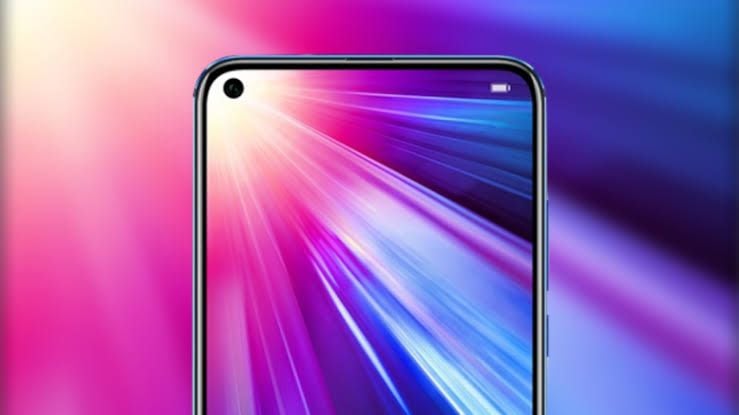
As per the recent reports, the Redmi K40 lineup is expected to ditch the pop-up front-facing camera mechanism and will instead come with a punch-hole cutout on top of the display that is expected to have an OLED screen and 120Hz refresh rate support.
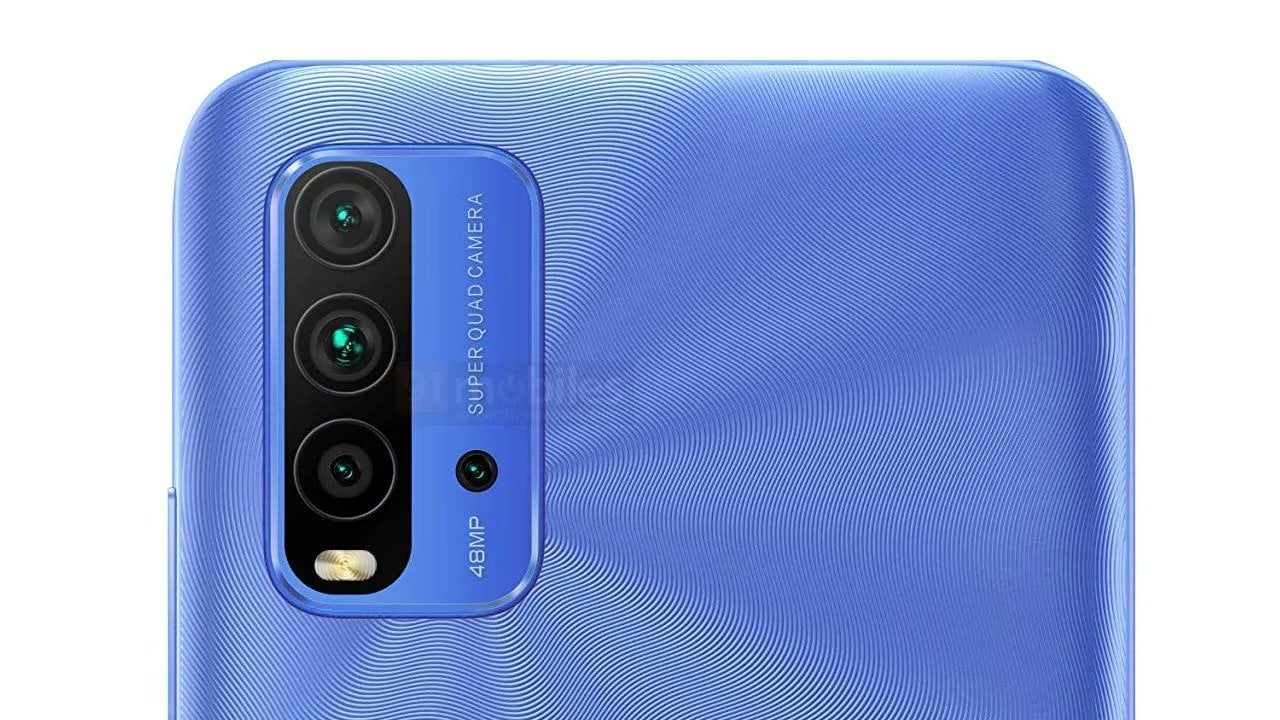
It was officially confirmed yesterday that the Redmi 9 Power will be announced on Dec. 17. Soon after the confirmation, a leak appeared to reveal the configurations of the rear cameras of the smartphone. A microsite for the Redmi 9 Power is now active on Amazon India. This indicates that the phone will be available for purchase through the retailer site after its announcement.
The Redmi 9 Power will debut at 12 PM IST on Dec. 17. There is a “Notify Me” button on the microsite, which users can click to stay updated on its arrival. It is speculated that the Redmi 9 Power will be a slightly modified version of the Redmi Note 9 4G that went official in China last month.
It may arrive with a starting price of Rs 10,999 (~$149) or Rs 11,999 (~$163) in India. It is expected to arrive in variants like 4 GB RAM + 64 GB and 4 GB RAM + 128 GB storage and it could be available in colors like blue, black, and green.
The Redmi 9 Power has a 6.53-inch IPS LCD panel with a waterdrop notch. The phone supports a Full HD+ resolution of 1080 x 2340 pixels and a 19.5:9 aspect ratio. The Snapdragon 662 mobile platform is present under the hood of the device. It may house an 18W fast charging enabled 6,000mAh battery.
For capturing selfies, it may possess a front camera of 8-megapixel. The rear camera setup of the phone may comprise of a 48-megapixel primary shooter, an 8-megapixel ultrawide lens, a 2-megpaixel depth sensor, and a 2-megapixel macro lens. It may come with MIUI Based Android 10 OS and a side-mounted fingerprint sensor.
Soon after the announcement of the Snapdragon 888 mobile platform at the beginning of this month, ZTEconfirmed that its next Red Magic gaming smartphone will be fueled by the Snapdragon 888 5G mobile platform. A leaked photo of the alleged upcoming Red Magic gaming smartphone was shared by a digital blogger on Weibo. The image suggests that the phone will be equipped with electrochromic technology.
In the below-shown video, it can be seen that the alleged next-generation Red Magic smartphone has a dedicated key through which its rear shell can turn transparent or change color. This could be the company’s own version of electrochromic technology.
In September, Vivo had showcased a smartphone prototype with electrochromic glass that could change color. The electrochromic glass can change colors and opacity based on the voltage applied to it. Using electrochromic technology, smartphone makers may launch a phone in a single color and let users change the color of the rear panel according to their preference.
According to MyDrivers, the principle behind the color-changing technology relies on the usage of an alloy called indium tin oxide. When it is applied to the glass, it can make the surface conductive, and the passed charge can change the composition of glass molecules, thereby changing the color of the glass.
It is advisable to wait for further reports to known whether the next Red Magic phone will really arrive with a color-changing rear. Since the authenticity of the above image could not be confirmed, it is advisable to digest the leak with a grain of salt. At present, there is no word on the specifications of the SD888 powered Red Magic gaming phone. Considering the Red Magic 5G was made official in March this year, it is likely that the next Red Magic phone may go official by the end of Q1 2021.
Whenever the story of the Apple brand is told, there is no missing out on the massive role played by the enigmatic Steve Jobs whose innovative ideas saw to the growth of the company to where it is today. The late Apple CEO led the team which developed some of the most iconic devices in smartphone history. This includes the iPhone 4, which is considered by some persons as being Apple’s best work yet.
Apart from his dope ideas, Jobs is well known for his casual dressing style. Whenever he montts the centre stage to unveil a new product, he does that donning his iconic black turtleneck, jeans, and New Balance sneakers.
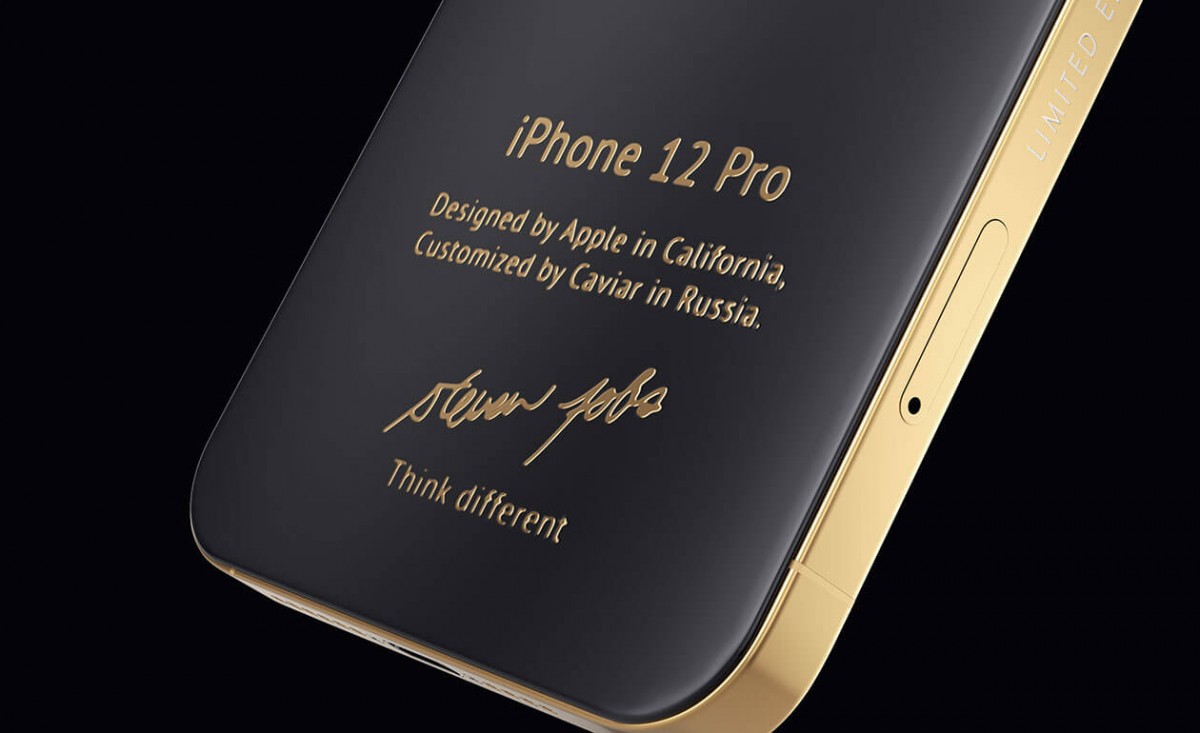
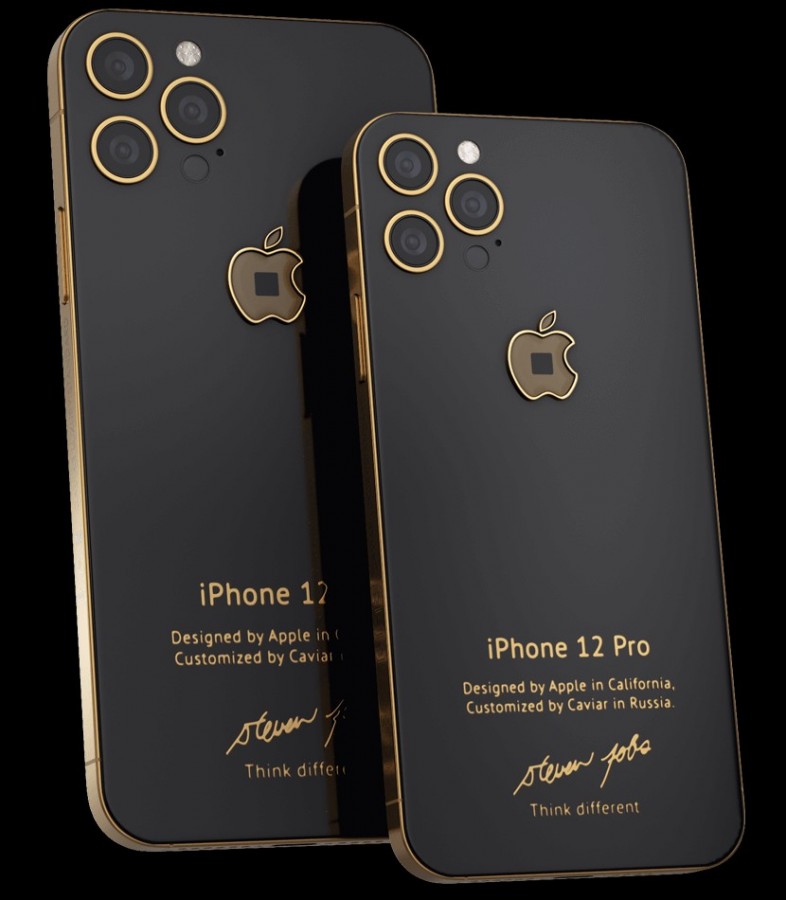
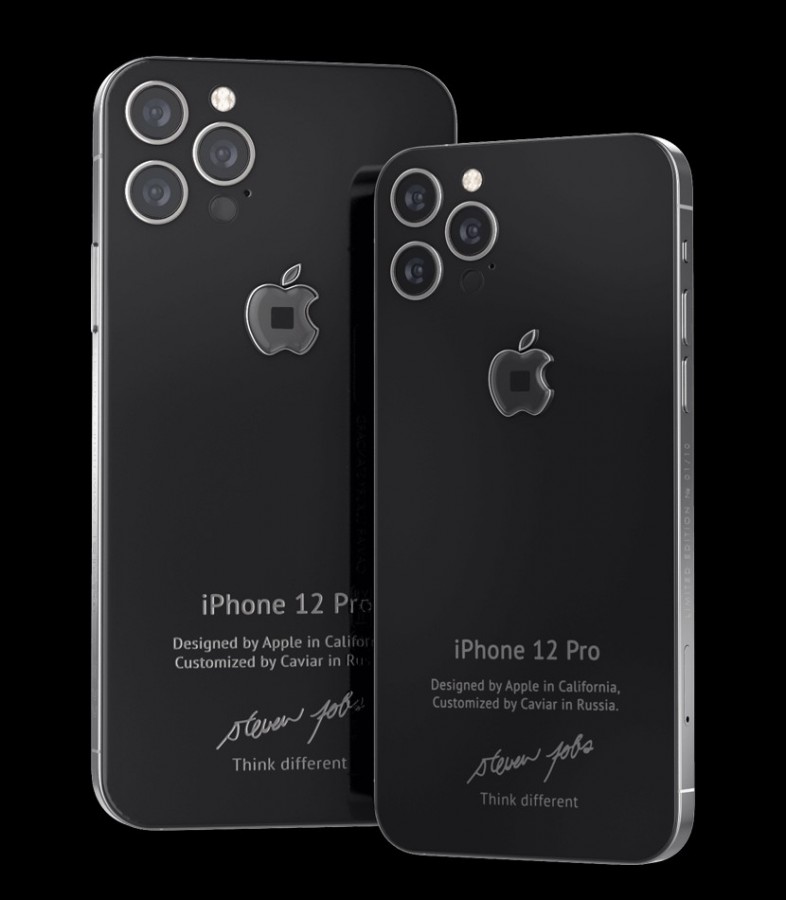
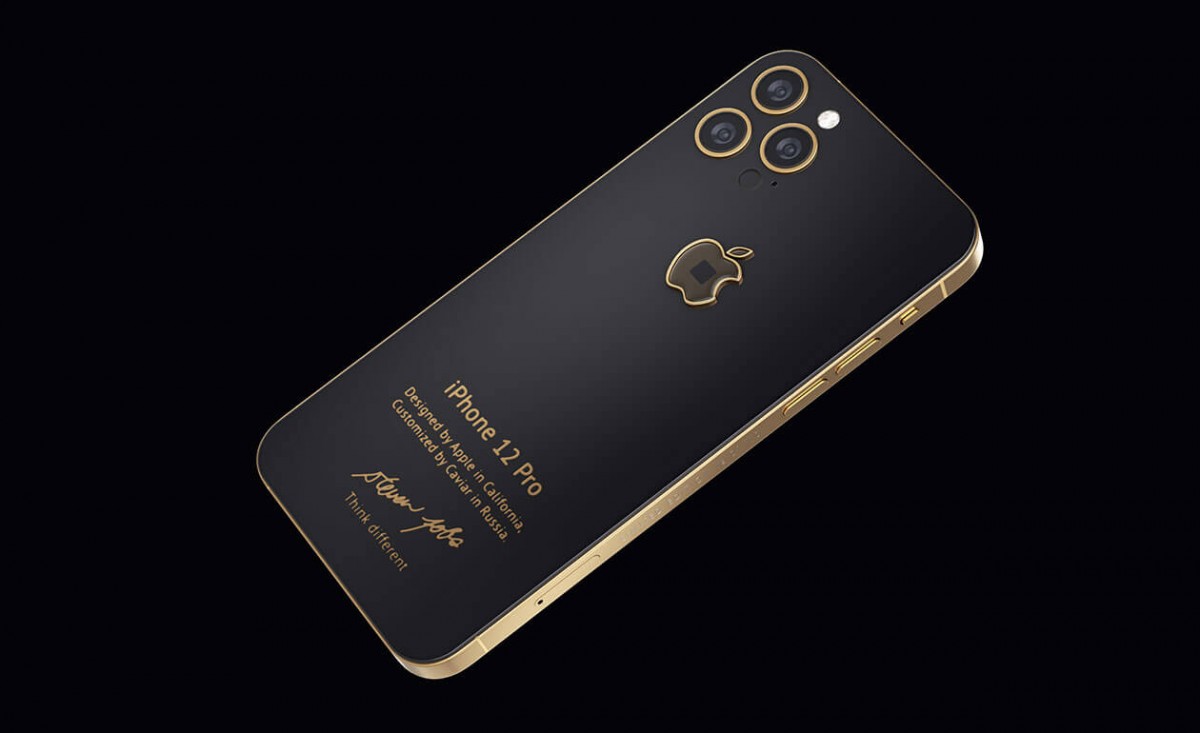
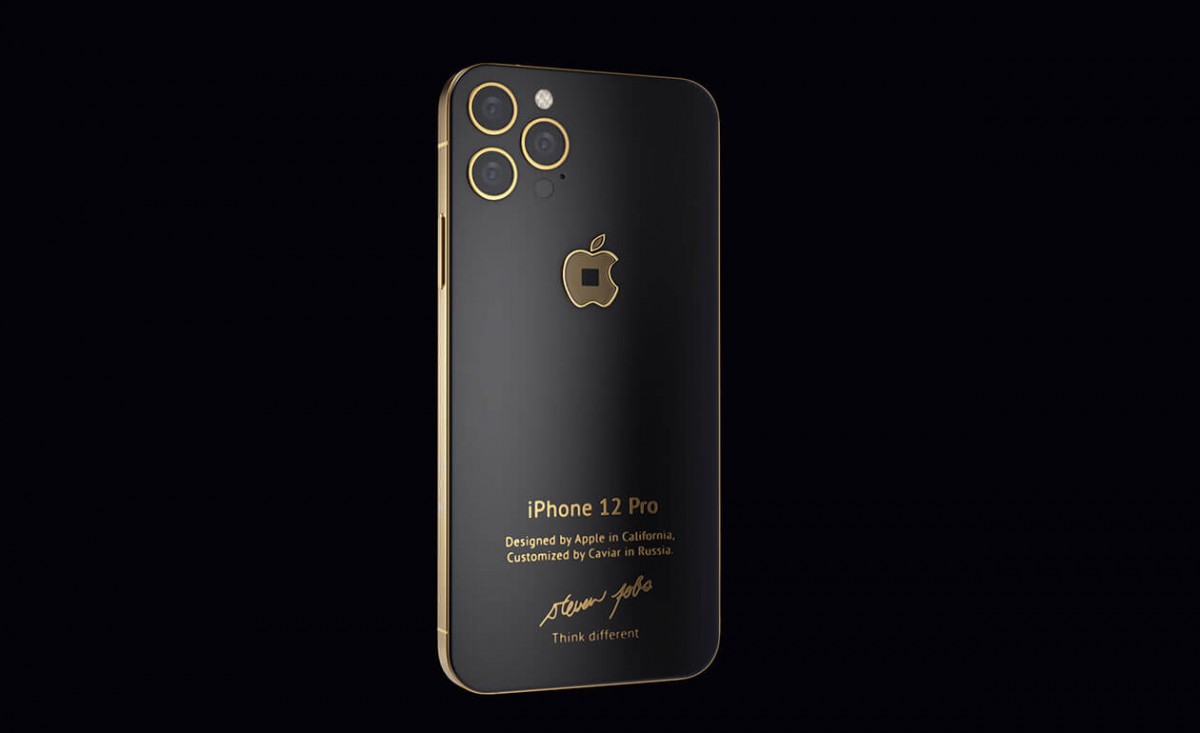
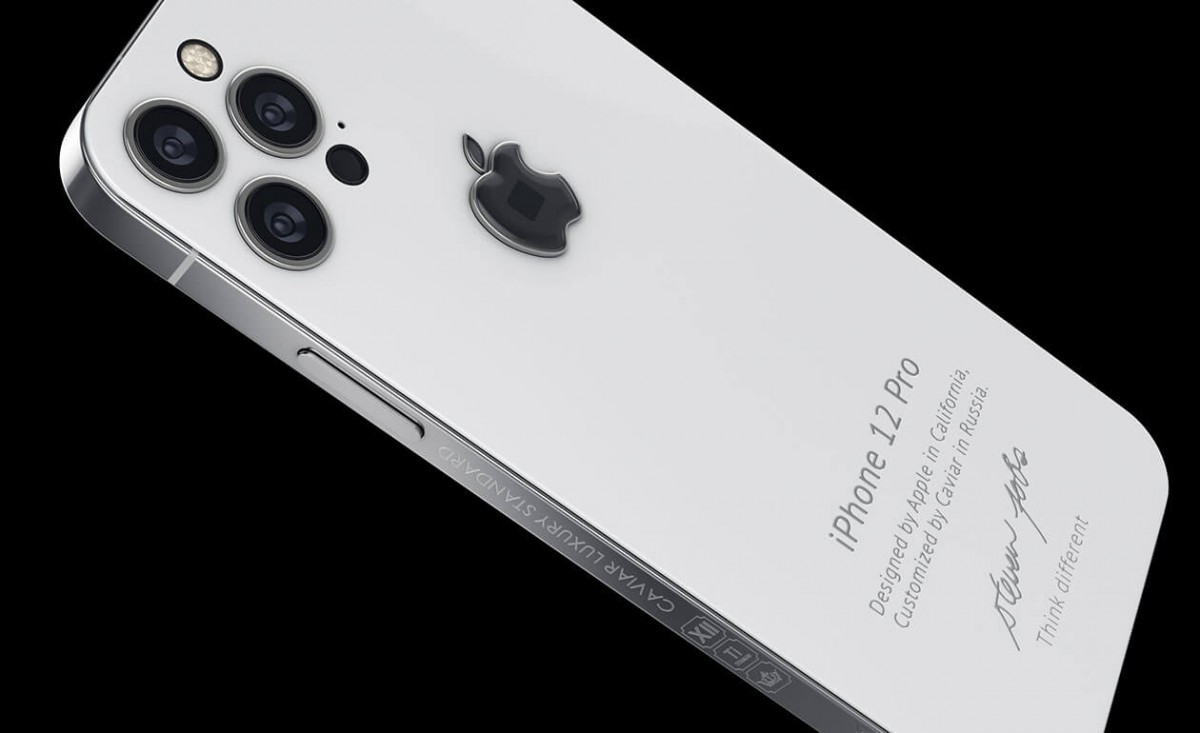
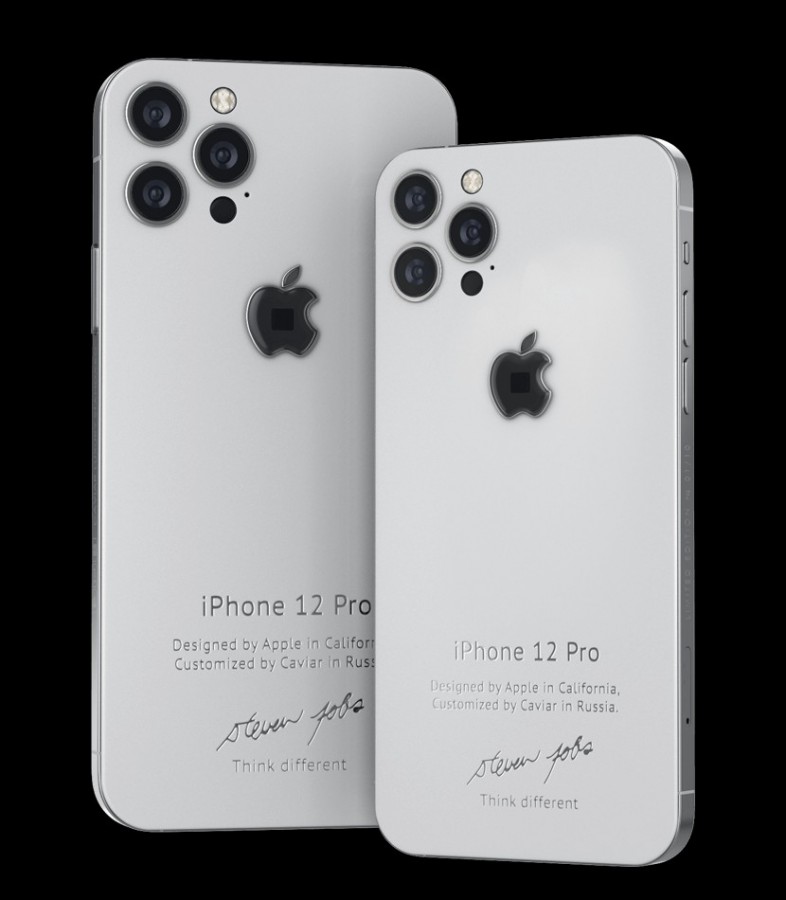
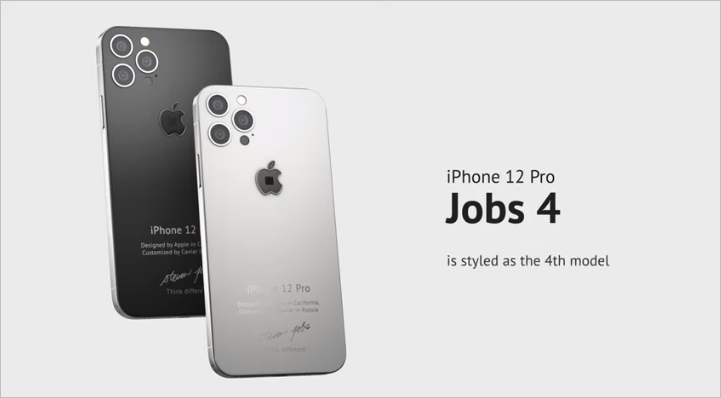
Luxury brand Caviar best known for its premium customizations of various gadgets, is celebrating the historic moment of the release of the iPhone 4 with a custom variant of the latest glagship iPhone 12 Pro dubbed iPhone 12 Pro Jobs 4. There is equally an iPhone 12 Pro Max version.
The design of the premium customised version is said to have been inspired by the iPhone 4. In this regards it bears the design style of the iPhone 4 but packs all the cutting edge tech of the iPhone 12-series.
The customizations on the iPhone 12 Pro Job 4 includes a small piece of Job’s turtleneck housed on the Apple logo at the rear. The Gold-plated version has an 18 karat gold logo and a rear casing made from hardened, blackened titanium. This version starts at just under $9,000.
1 of 7
iphone 12 Pro
iphone 12 Pro
The cheapest version is the Black variant which starts at $6,500. The back panel and Apple logo are both made out of titanium. While there is a mid version available in White and priced a little over $7,000. The back panel of the white varaint is made of G-10 and the Apple logo is 925 sterling silver.
Furthermore, there is a fourth variant known as the Steve Jobs 1st and it looks like a throwback to the original iPhone 4. It has an all-titanium back panel, but with the lower part blackened for a dual-tone finish.
Do note that all the editions will be available in only 10 units each.
Apart from the custom iPhones, Caviar is also selling 30 pairs of custom New Balance 991 sneakers. These also have a piece of turtleneck in them, plus a titanium plate with the famous “Think Different” slogan. The sneakers carry a price tag of $1,830 a pair.
Earlier this week, Huawei announced its first desktop computer – the MateStation B515. The computer which is designed for commercial use comes with a monitor, mouse, and keyboard.
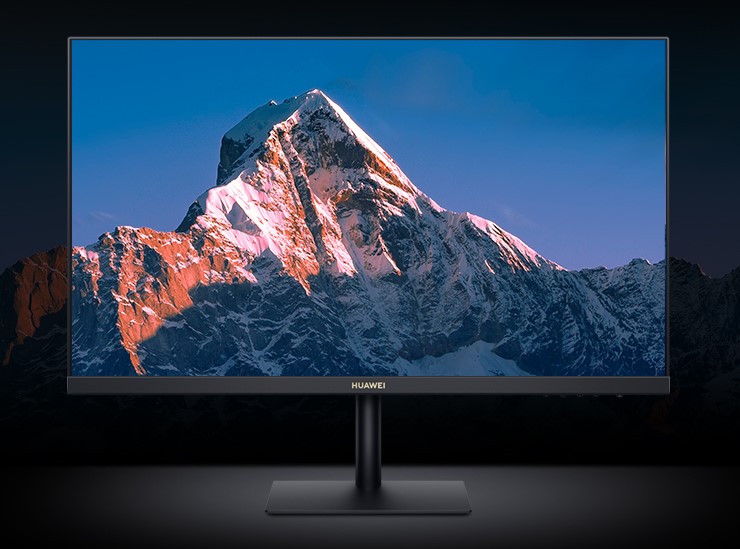
If you already have your own system unit, keyboard, and mouse but need a monitor, you can now purchase the Huawei monitor on its own. Chinese tech blog, ITHome, reports that the monitor is now listed on JD.com for ¥899 (~$137).
That price gets you a monitor with a 23.8-inch screen, 1920 x 1080 resolution, and eye protection. It also has a 178° viewing angle, a 90% screen-to-body ratio, a 1000:1 contrast ratio, and a 72% NTSC color gamut.
The Huawei AD80HW monitor, as it is called, has a full-screen design with top and side bezels measuring just 5.7mm in thickness. The screen can be tilted upwards and downwards to a certain degree. For connectivity, there is an HDMI port and a VGA port.
The monitor is the first from Huawei but will definitely not be the last. We expect the Chinese manufacturer to announce more models with larger screens and even high refresh rates in the coming year.
Huawei will be joining Xiaomi in the computer display market. The latter has announced a handful of monitors in the past year. Its first gaming monitor was announced in October 2019 – a 34-inch curved gaming monitor with a resolution of 3440 x 1440, a 144Hz refresh rate, and a 1500R curvature. Xiaomi’s monitors are also sold outside China; while there is no announcement that Huawei will sell its monitor in other countries, we won’t rule out the possibility.
Another Chinese manufacturer that is expected to make its own entry into the computer display market is Honor, a former Huawei subsidiary. A render of an Honor monitor leaked back in October but it is yet to be announced.
The Huawei AD80HW Monitor is currently listed as “Sold Out” on JD.com but we think it hasn’t even gone on sale yet. Nevertheless, you can sign up to be notified once it is available.
Korean tech giant LG Electronics has introduced a new disinfection robot in South Korea aimed at helping to curb the spread of the COVID-19 pandemic. As you may be aware, a second wave of the COVID-19 pandemic is sweeping through several countries bringing back the need to maintain precautionary measures ranging from the use of nose masks, physical distancing, and other such measures.
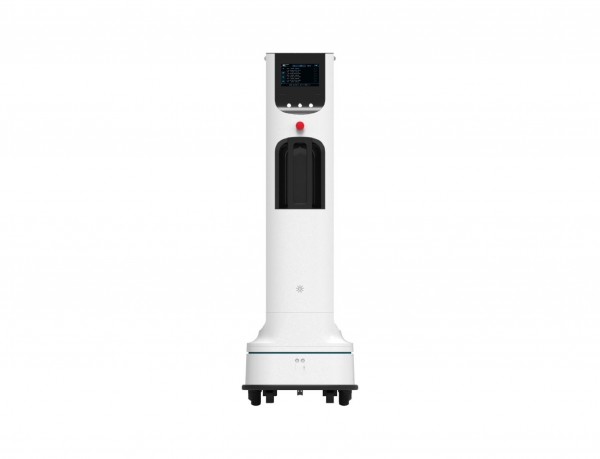
In order to help check the spread of the virus, LG has launched a disinfection robot that is equipped with ultraviolet-C (UV-C) lamps on its sides. LG says the UV-C lamp features an emission wavelength between 100 to 280nm that is effective in killing germs. The company also disclosed that research by the Korea Conformity Laboratories, a national research institute shows that the UV-C lamp on the robot is 99.9% effective in killing bacteria coliform and staphylococcus aureus from within a metre radius.
In terms of the build, LG’s disinfecting robot is 160cm tall and comes with autonomous driving technology so it can wade through obstacles. It was designed to disinfect objects and areas that are reachable by hand. The company plans to deploy them in places such as hotels, hospitals, and schools which contained many separated and independent spaces.
The robots will help to alleviate health workers’ workloads at a time when disinfection is more important than ever due to the COVID-19 pandemic, the company said.
LG is equally developing an alternative version that sprays disinfectants instead of having UV-C lamp. This version will be more suitable for places with more open areas such as offices, restaurants, and transportation stations, the company hinted.
The Korean tech giant is expected to officially display the disinfecting robot at the 2020 Korea Electronics Show in COEX from December 9 to 12.
China was able to contain the novel Coronavirus outbreak with robots playing a big role. Robots ranging from disinfection robots, nursing robots, consultation robots, to transport robots were deployed to fight the disease, in order to prevent the spread.
The FlexPai 2 launched as the second foldable smartphone from the Chinese manufacturer, Royole, a few months ago. When it was announced, the manufacturer said it will be available in two configurations but since it went on sale on September 25, only the base model with 8GB RAM and 256GB of storage has been up for purchase.
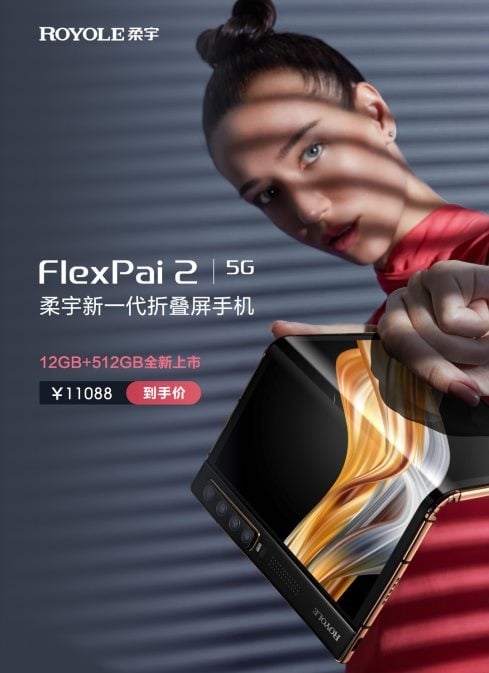
Today, Royole announced that the FlexPai 2 can now be bought in a 12GB RAM + 512GB configuration. This version has a price tag of ¥11088 (~$1694) and it is available for purchase on Royole’s official stores on Tmall and Jingdong.
The FlexPai 2 is a more affordable foldable smartphone when compared to the Galaxy Z Fold 2 which sells for $1899 for the base model with 12GB of RAM and 256GB of storage.
Royole’s tablet has a 7.8-inch OLED display with a 1920 x 1440 resolution. It does not need a cover display as it folds outward. This means when it is in the folded state, you have two screens on each side – a 5.5-inch screen in front and a 5.4-inch screen on the back.
There is a Snapdragon 865 processor powering the FlexPai 2 and it draws power from a 4450mAh battery with support for 18W fast charging. There are four cameras on the tablet – a 64MP main camera, a 16MP ultrawide angle camera, an 8MP telephoto camera with 3x optical zoom, and there is a 32MP for portrait images. Because it folds outwards, you have to close the device to take a picture except it is a selfie you want to take.
The FlexPai 2 runs WaterOS 2.0 based on Android 10. It also has dual SIM support, 5G, stereo speakers, a side-mounted fingerprint scanner, and Bluetooth 5.1. It is available in Sunrise Gold, Midnight Black, and Cosmic Gray.
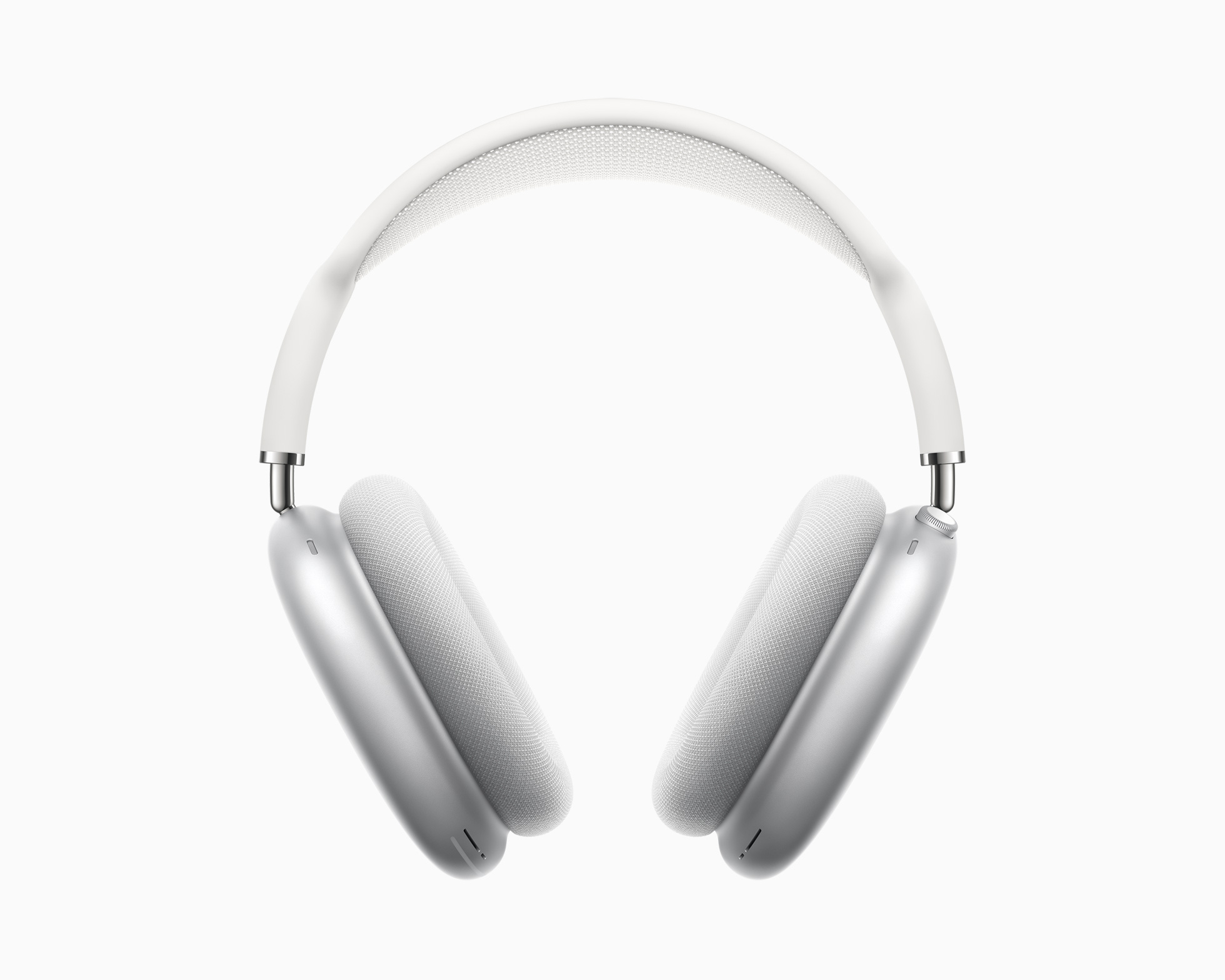
Apple launched its first-ever over-the-ear wireless headphones, AirPods Max yesterday. It is already available for pre-order and Apple said that it will go on sale from December 15. However, it looks like the shipping will get delayed across regions.
Credit: Apple
As reported by 9to5Mac(via Gadgets360), Apple is showing a shipment period of up to 12-14 weeks for certain colors of AirPods Max. If you recall, AirPods Max comes in Space Gray, Sky Blue, Silver, Green, and Pink colorways. However, unlike the reports say, I looked upon Apple’s website and the details have changed for regions. You can look a the shipping estimate(at the time of writing this) for China, USA, UK, Australia, India below:
Do note that, except in India, other regions have Personal Engraving options like etching smileys to the headphones. Hence, their estimate might vary from this. That said, apart from Australia, where the shipping timeline is somewhat acceptable, other regions have it as high as 14 weeks. This means you might be able to get your favorite colors only by March 2021.
Apple has either failed to stock the wireless headphones well across regions due to COVID-19 or it has got overwhelming orders. Either way, Apple has placed the headphones in a premium segment with its pricing. You can take a look at the pricing below:
China- 4,399 yuan
India-₹59,900
USA-$549
UK- £549.00
Australia- A$899(AUD)
Also, do note that the shipping estimates mentioned above are subjected to change further according to stocks in respective regions. Nevertheless, if you are wishing to get your favorite color sooner, the only way is to hope for Apple to reduce the shipping time in your region.
AirPods Max has a unique knit mesh canopy for comfort, memory foam earcups, and stainless steel frame for strength. It has a 40mm dynamic driver, dual neodymium ring magnet motor for THD<1, H1 chip(like AirPods 2), and better software optimization. It has audio features like Adaptive EQ, ANC, Transparency Mode, Spatial Audio, 4xmicrophones.
Additionally, the wireless headphones have a battery life of up to 20hrs, support Apple’s one-tap setup, automatic pairing, wear detection, Siri, and more.
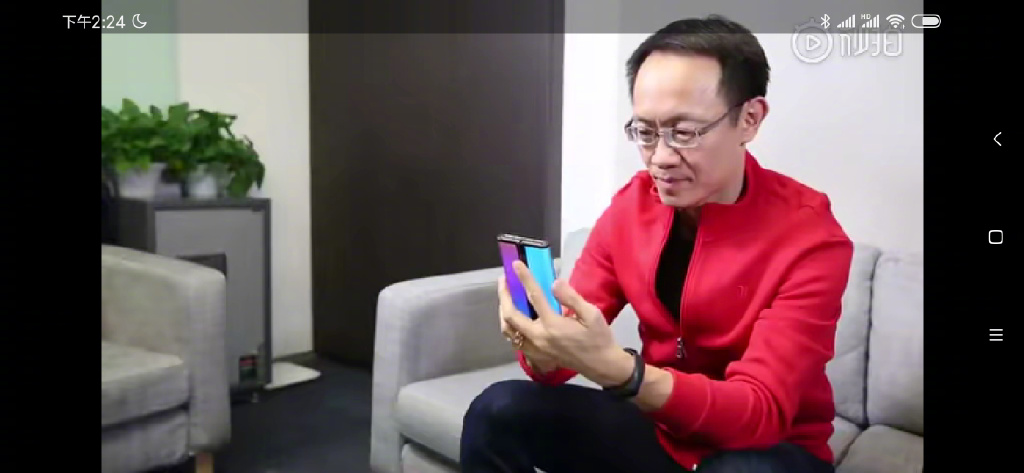
The foldable smartphone market is going to get so much bigger next year if the latest report is true. So far, the key players in the foldable smartphone space have been Samsung, Motorola, Royole, and Huawei but a new leak says that more manufacturers including Google will be joining the list.
The info comes from Ross Young, the founder and lead analyst at Display Search and DSCC. In a tweet posted earlier today, he revealed that the second half of the coming year is going to be an exciting one for the foldable smartphone market. He said Samsung will announce at least three models, OPPO, Vivo, and Xiaomi will announce four models between them, and Google will also announce one model.
Second half of 2021 is going to be really exciting for foldable smartphones. At least 3 models from Samsung, 4 models from Oppo, Vivo and Xiaomi and 1 model from Google…BTW, no Z Fold Lite – Z Flip Lite. Specs for all are in our latest Foldable Report.
We already know Samsung will announce the Galaxy Z Fold 3 and the Galaxy Z Flip 3 in the third quarter of the year from leaks from the past couple of weeks but Ross’s tweet says there will be at least three models. In the same tweet, he says there will be no Galaxy Z Fold Lite but there will be a Galaxy Z Flip Lite.
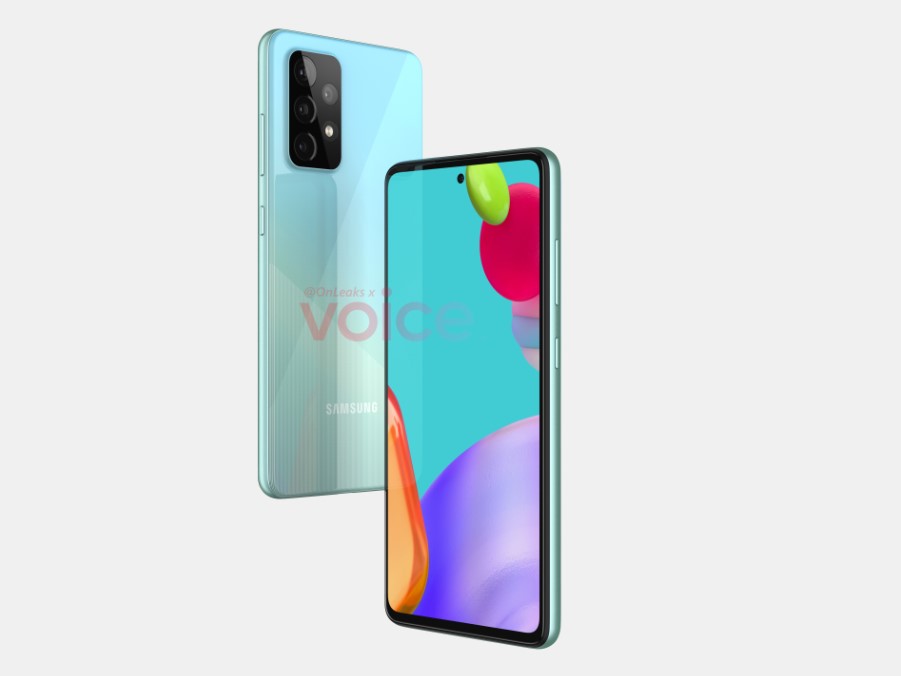
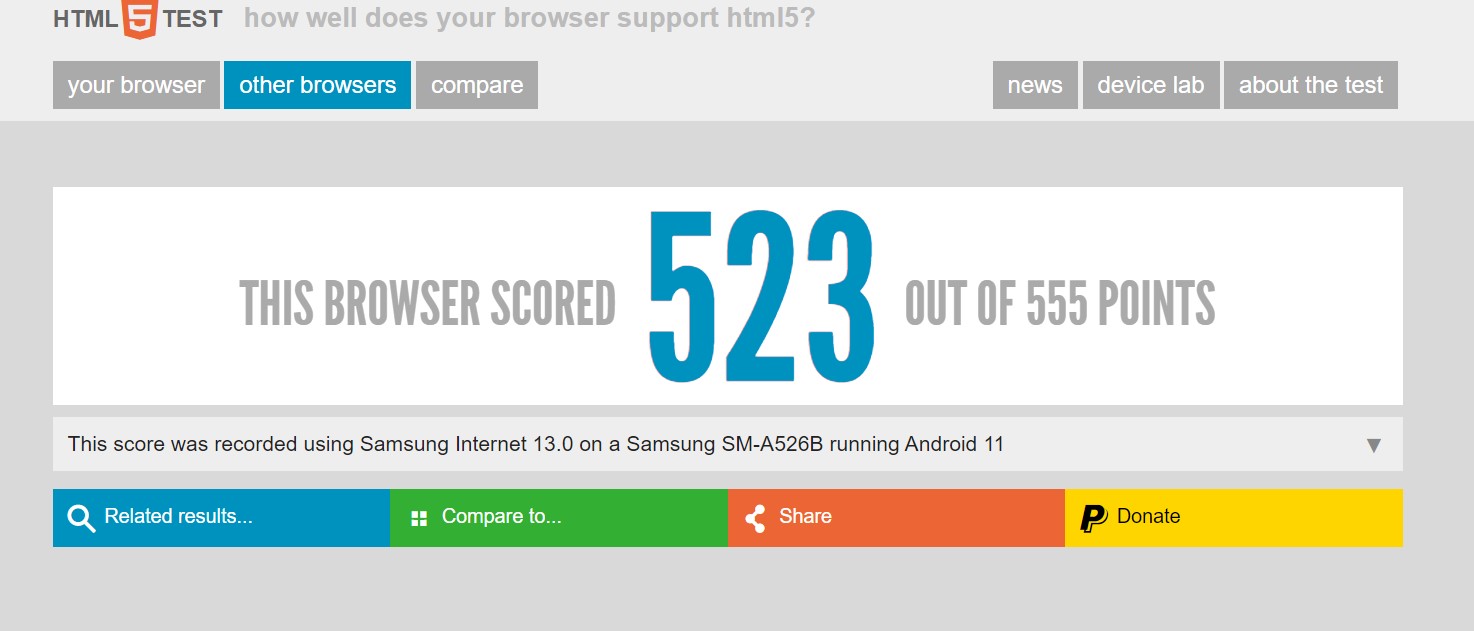
Samsung Galaxy A52 is one of the company’s expected A-series of devices this year. A couple of days back a massive leak revealed the renders and specs of the device. Now, it appears on the HTML5 test page courtesy of the Sammobile report.
Galaxy A52 renders by Onleaks
Accordingly, a Samsung device with model SM-A526B appears on the HTML5 test page. Now, if we recall, a device with a similar model number appeared on Geekbench. The device is likely to be a variant of Galaxy A52 considering Samsung’s pattern of model numbers in the past. That said, the test page shows that the device is tested on Android 11 suggesting that it will debut with the latest OS.
However, if you ask me if it would carry Samsung’s One UI 3.0, or the already in-works One UI 3.1, I will vote for the former. The reason being, Samsung has so far kept new iterations of it’s UI with the flagship launches. And considering the A52 5G is rumored to debut before the Galaxy S21 series, it is unlikely for it to have the One UI 3.1.
That said, these are our speculations, and hence, let’s wait for the official launch. Moving on, the report says that the device will also have an FHD+ display with a resolution of 2,400×1,080 pixels. If you recall, an earlier leak by @Onleaks revealed that Galaxy A52 5G will have a 6.5-inch display with an Infinity-O punch-hole at the center.
As mentioned above, the earlier benchmark indicates that it will feature a Snapdragon 750G SoC. If leaks are true, the device won’t differ much from the predecessor, Galaxy A51. And have a similar GLasstic back(with metallic frame), rectangular layout with quad-cameras, AMOLED display with in-display fingerprint sensor, and 3.5mm audio jack.
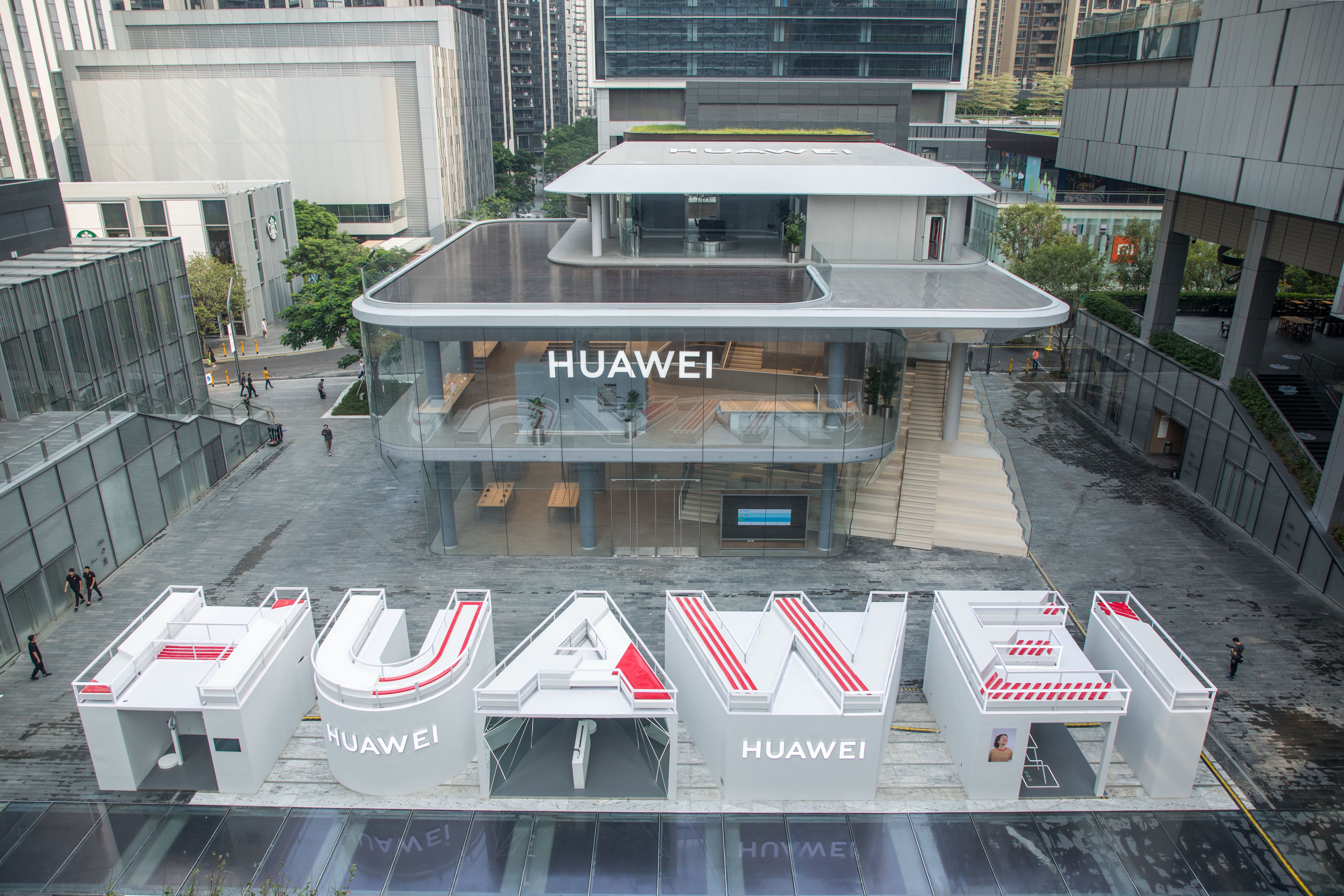
Chinese tech powerhouse, Huawei today announced the implementation of its brand-new Health Lab in the Chinese city of Xi’an. In a press release, the company disclosed that the Health Lab is an innovative facility that provides an avenue for researchers from Huawei, as well as engineers, and developers to cross-fertilize ideas and concepts and jointly explore the innovation and application of emerging technologies in sports and health, bringing a scientific and conducive experience through their smart wearables, which are tiny gadgets that provide consumers with a more comprehensive and scientific exercise experience and healthier living.
Today, Huawei’s smart wearables, as with many other branded products, are very popular and as a response to consumers’ trust and loyalty, Huawei has shown commitment to innovate and enhance its research and development capabilities so as to get a foothold into the budding health technology market.
Huawei launched seven smart wearables this year. These include smartwatches such as Watch GT 2, Watch GT 2 Pro, and Watch FIT, which won accolades from the industry for their extensive professional fitness and health tracking functions. Indeed, a market research report by IDC, showed that Huawei’s wrist wearables ranked No. 1 in Q2, 2020.
In line with the ideals of the company to maintain its excellent momentum, its R&D staff spent nine months integrating existing R&D resources and introducing new professional sports and health research devices to consumers. The Huawei Health Lab was conceptualized and built to further enhance the research capabilities of its smartwatches and other wearables. Dozens of researchers, developers, and testers will work together closely in the Huawei Health Lab to achieve the goal of an active and healthy lifestyle from a wide range of specialized equipment and innovative research methods.
The smart wearables are borne out of rigorous research and testing to provide an excellent user experience. There are complex R&D processes developed from within the Huawei Health Lab aimed at improving health and fitness tracking. According to the Press Release, Huawei says that their devices are a culmination of a comprehensive testing and simulation regimen to provide consumers with the best possible experience while using any of Huawei’s smart wearables.
The Huawei Health Lab, therefore, provides the perfect setting for accurately capturing health data and simulating all possible consumer experience to provide devices that give great value for money spent, as a health and fitness device.
With an array of state-of-the-art research equipment on sports and health, coupled with the creativity and resourcefulness of the researchers and developers from various professional backgrounds, the Health Lab is a breeding ground for more innovative smart wearables from the stables of Huawei. This much was stated by Rico Zhang, President of Smart Wearable and Health Product Line in Huawei Consumer Business Group (BG). The experts working in the Lab span many areas across the spectrum of sports and human health sciences and they are creating new research directions and methodologies in sports fitness and wellbeing.
The Health Lab has an experimental smart wearable product testing area and a sports health innovation area, where extensive and rigorous tests are conducted for extended periods on wearable devices before being released to the market. Using more than 20 professional research devices, the product testing engineers rely on national and international standards of product hardware and software to simulate extreme conditions for these devices as a means of establishing their durability under extreme scenarios.
Huawei says it will continue to scale up investment in sports and health and plans to build another sports health lab in Songshan Lake, Dongguan to interface with Huawei’s science institutes to build an innovative health ecosystem and also provide its teeming consumers with cutting-edge health and fitness products that are easy to use.
With the rapid expansion of Huawei’s sports R&D facilities matching the brand’s growing repertoire of wearable devices to suit different consumer needs, the future certainly looks bright for Huawei’s smart wearable and health product line.
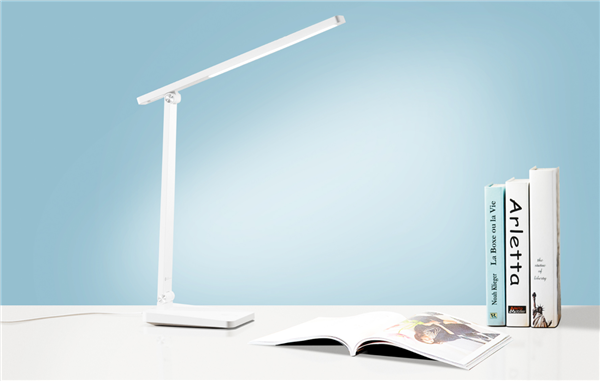
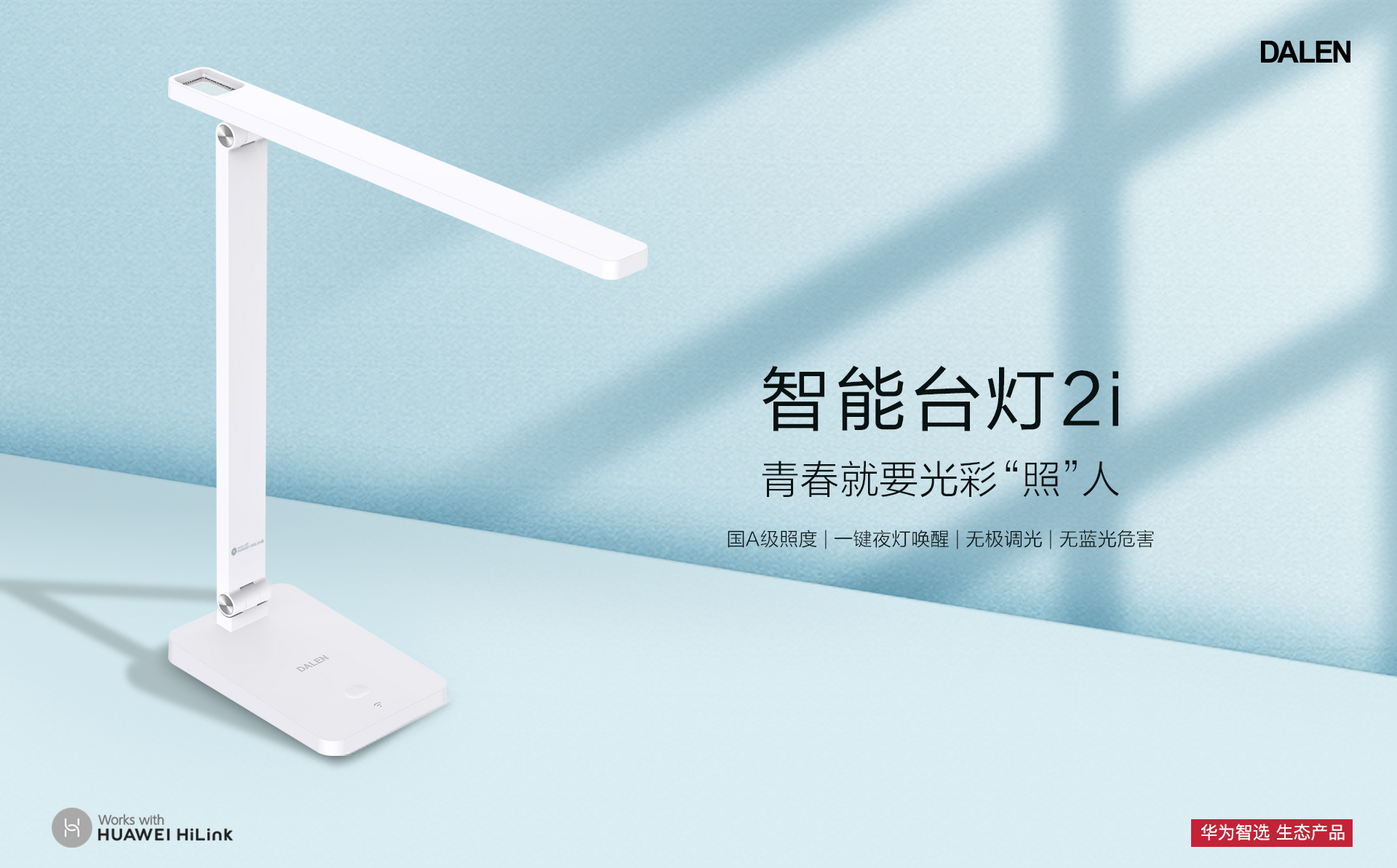
Huawei Smart Selection has launched another smart product, an A-level smart table lamp dubbed Darren Smart Table Lamp 2i. The product carries a price tag of 99 yuan (~$15). This launch comes not too long after a smart air purifier was launched by the brand.
The Darren Smart Table Lamp 2i is a new product jointly developed by Huawei Smart Selection and Jiangsu Dalun Electronics Co., Ltd. It is a table lamp which adopts a stylish design and other smart features.
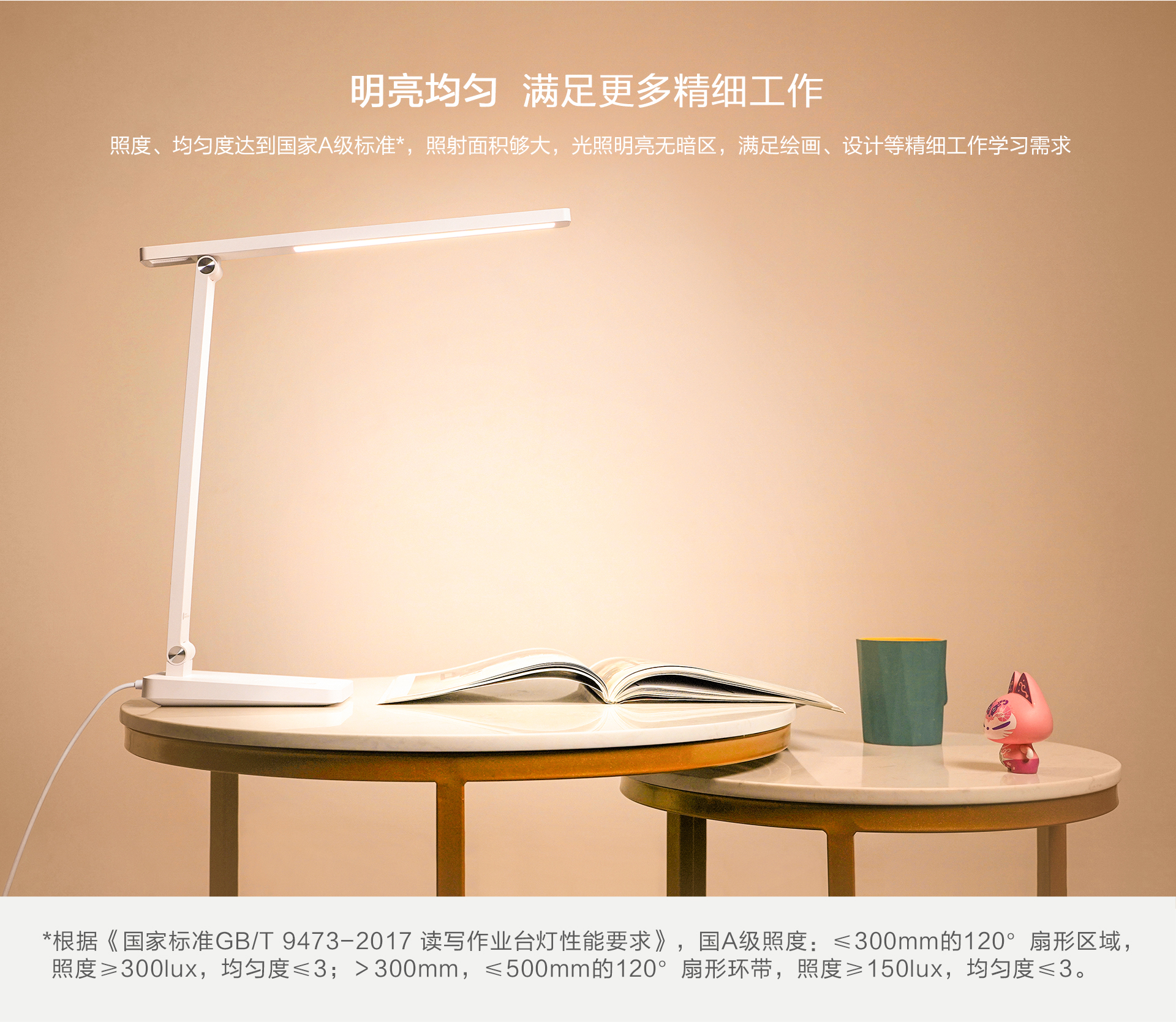
The smart lamp not only has functions such as national A-level illuminance, one-key night light wake-up, intelligent step-less dimming, and no blue light hazard, but also comes with voice control of the desk lamp through Huawei’s smart screen, AI speaker, and voice assistant.
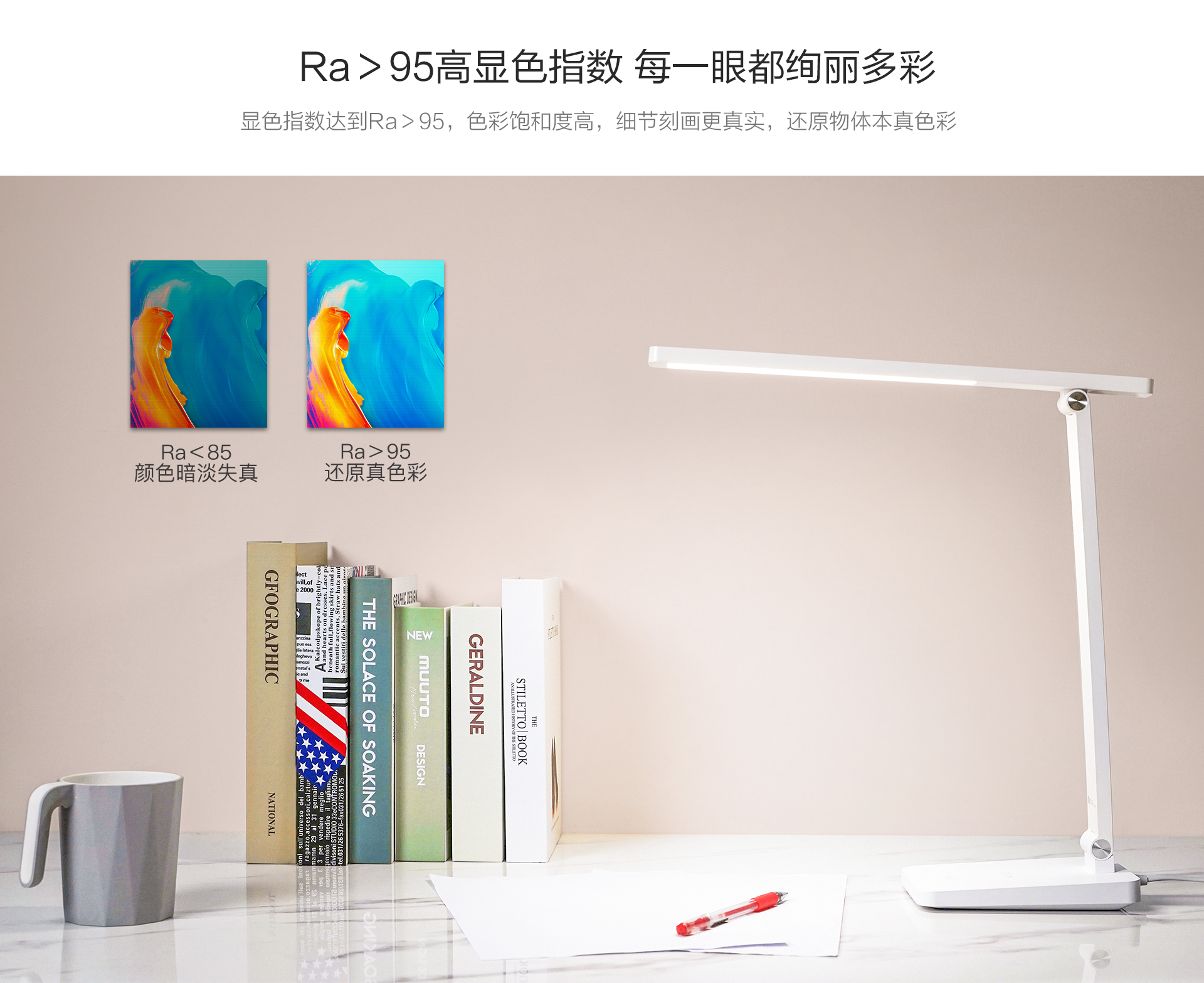
Huawei Smart Select Darren Smart Desk Lamp 2i uses high color rendering lamp beads with low blue light radiation, reaching the high color rendering index of Ra95. The color temperature is controlled at 4000K, reducing blue light to the RG0 non-blue light hazard level. At the same time, the constant current control light technology ensures the stable current, and the large-capacity filter filters out the ripple current that produces the light strobe, and rejects the strobe.
This desk lamp also features innovative side-emitting technology, uniform, and soft light, and the user will not get dazzled when looking directly at the light source, a wide range of light exposure, wide field of vision and no dark areas, color rendering index up to Ra95, high color saturation, learning Work can effectively relieve dry eyes.
In order to take care of the night time, there is also an independent night light, which is turned on with a soft warm yellow light. The light is gentle, comfortable, and not glaring.
Huawei Smart Select Darren Smart Desk Lamp 2i is not only able to adjust the brightness in three levels (dark, medium, and bright) on the touch panel but you can also slide the brightness bar through the Huawei HiLink app to achieve 1-100% brightness step-less adjustment.
We use cookies on our website to give you the most relevant experience by remembering your preferences and repeat visits. By clicking “Accept”, you consent to the use of ALL the cookies.
This website uses cookies to improve your experience while you navigate through the website. Out of these, the cookies that are categorized as necessary are stored on your browser as they are essential for the working of basic functionalities of the website. We also use third-party cookies that help us analyze and understand how you use this website. These cookies will be stored in your browser only with your consent. You also have the option to opt-out of these cookies. But opting out of some of these cookies may affect your browsing experience.
Necessary cookies are absolutely essential for the website to function properly. This category only includes cookies that ensures basic functionalities and security features of the website. These cookies do not store any personal information.
Any cookies that may not be particularly necessary for the website to function and is used specifically to collect user personal data via analytics, ads, other embedded contents are termed as non-necessary cookies. It is mandatory to procure user consent prior to running these cookies on your website.