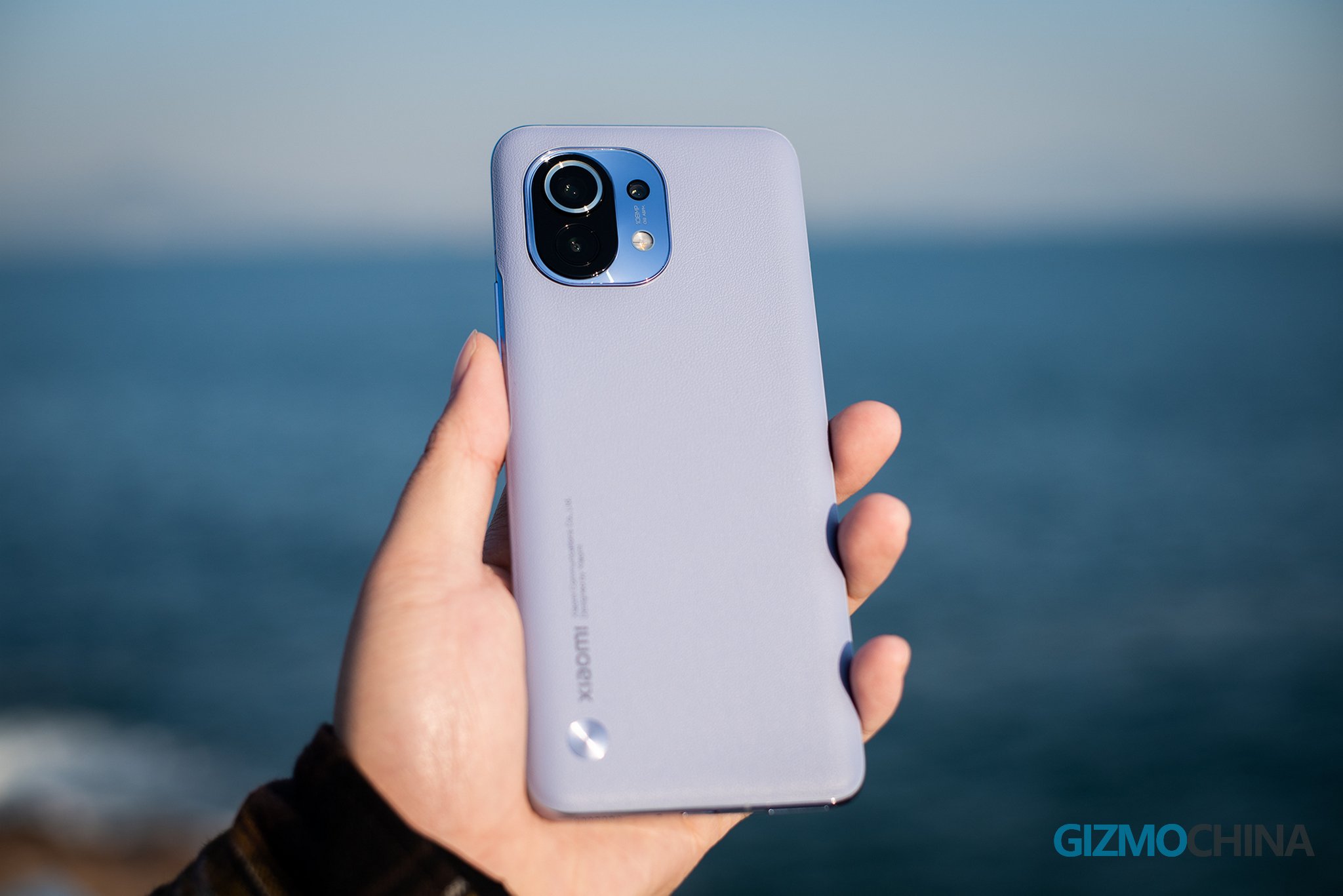
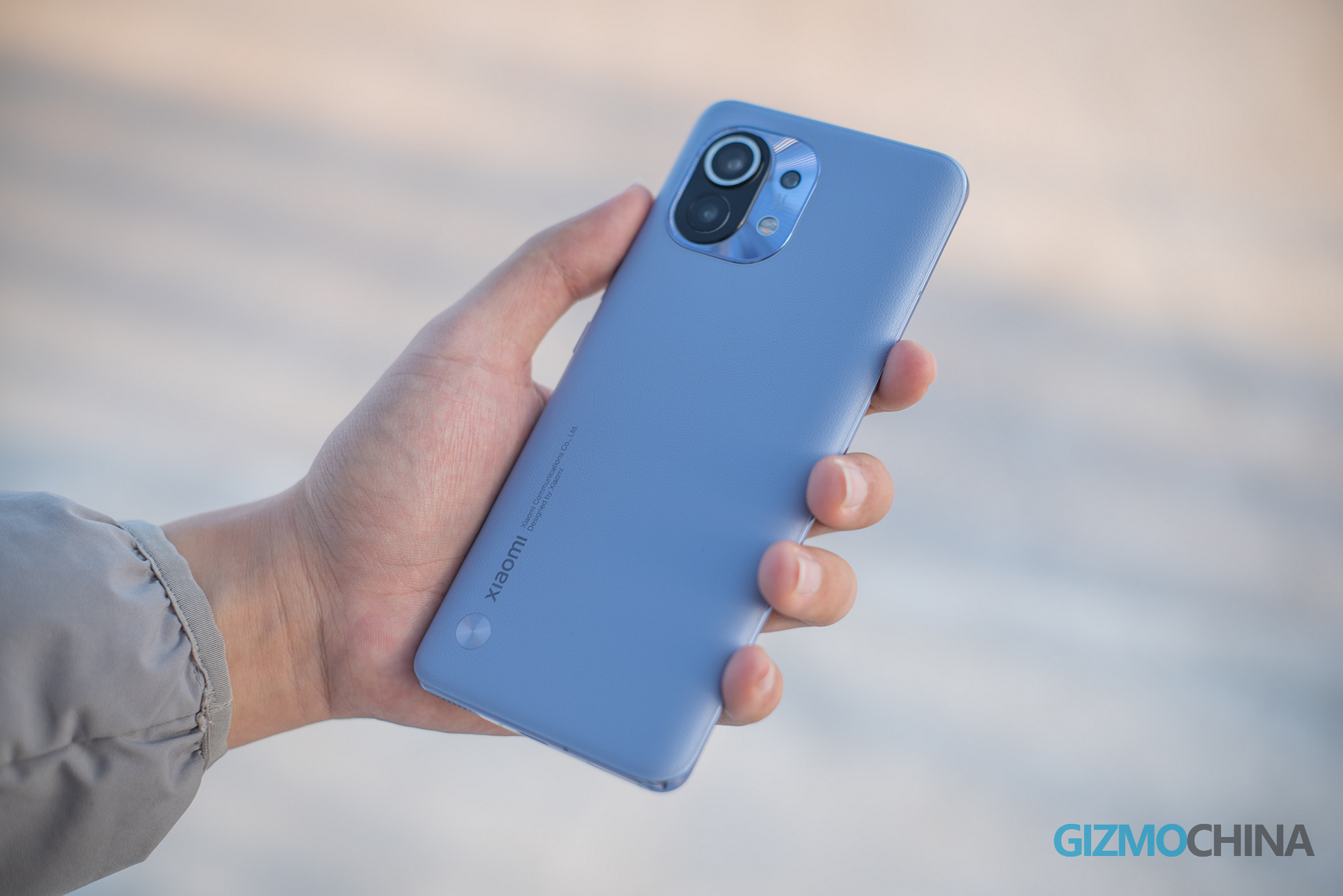
Alongside the Nokia 6300 4G, HMD Global has also announced the Nokia 8000 4G and its design puts it miles ahead of the other feature phones.
The phone has a glass-like shell and a finish that is similar to the NCVM coating we have seen on a lot of smartphones in the past. It also has a curved keyboard that flushes with the display and the frame. Buyers will be able to choose from four colorways – Opal White, Onyx Black, Topaz Blue, and Citrine Gold. Personally, I wish there was a Ruby Red.
With respect to its specs, the Nokia 8000 4G has a 2.8-inch screen, a Snapdragon 210 processor under the hood along with 512MB of RAM and 4GB of expandable storage.
A 2MP camera sits at the back of the phone with a camera flash that doubles as a flashlight. Its removable 1500mAh battery will last up to 28 days on standby and provide more than 3 hours of 4G talk time.
1 of 4
Just like the Nokia 6300 4G, it also has Bluetooth, Wi-Fi with hotspot, FM radio, an audio jack, and comes in single SIM and dual SIM models. It will sell for €79 (~$93) when it goes on sale.
With people continuing their work and education from home, India PC Market grew 9.2% YoY in Q3 2020, as per research firm IDC (International Data Corporation). As companies managed to ship 3.4 million units. the last quarter was the strongest quarter in India in the last seven years. Also, the consumer market recorded its largest quarter ever with 2 million shipments, accounting for 41.7% YoY and 167.2% QoQ growths respectively.
That’s not all, Apple also had its biggest quarter in India by growing 19.4% YoY in Q3 2020. Also, newcomers like Avita and Xiaomi performed well. Since the reopening of schools and colleges is uncertain, the market is expected to remain strong in Q4 as well.
On the other hand, the commercial segment did not see many shipments compared to Q2. Hence, the enterprise market only grew by 3.1% YoY. Also, enterprises preferred notebooks over desktops and therefore, the former’s shipments increased by 70.1% YoY. Lastly, the SMB market witnessed a 5.5% YoY growth as certain businesses have started operating.
Talking about brands, HP led the market with a 28.2% market share with 965,000 units in shipments and 16.6% YoY growth. Lenovo came second with a 21.7% share. It shipped 744,000 units and as a result of this, the company declined the most among the top 5 players by 16.9% YoY.
Then, Dell claimed the third position with 731,000 units in shipments, 21.3% share, and 18.2% YoY growth. Acer in fourth place with a 9.5% market share was the only top brand other than Lenovo to saw a decline, 12.4% YoY to be exact by shipping 327,000 units.
Last but not least, Asus was the fifth largest PC brand in India in Q3 2020 with a 7.5% market share. It was also the best-performing brand as it achieved 55.4% YoY growth by shipping 403,000 units.
The Nokia 6300 4G is the latest classic Nokia phone that has gotten a remake. The original which was announced in 2007 was known for its stainless plates, which, unfortunately, has not been brought back.
The Nokia 6300 4G looks nothing like the original and save for the power button at the top, the design does not evoke a feeling of nostalgia. However, the new model does pack significant upgrades on the inside.
Running KaiOS and powered by a Snapdragon 210 processor along with 512MB of RAM, the Nokia 6300 4G also boasts 4GB of built-in storage, a big boost over the 7.8MB internal storage of the 2007 model. There is also support for storage expansion (up to 32GB) via a MicroSD card slot.
The display is bigger at 2.4-inches and so is the removable battery which has nearly doubled from 860mAh to 1500mAh and charges via a MicroUSB port. HMD Global says the battery will last up to 27 days in standby.
Another big upgrade is the addition of 4G support and a Wi-Fi hotspot. There is a VGA camera on the back with a flashlight that doubles as the camera flash. There is GPS, Bluetooth, dual nano-SIM support (select markets), FM radio, and an audio jack.
The Nokia 6300 4G also comes with a bunch of pre-installed apps including Facebook, WhatsApp, and YouTube. It also has Google Assistant for setting reminders and getting answers to questions.
The phone comes in Light Charcoal, White, and Cyan Green. It will sell for €49 (~$58) in Europe but there is no news on availability at the moment. We will update the post once we have more details.
Google’s Pixel 4a has a single rear camera. Now, if you think that’s pretty dull compared to the 2020 standards, take a look at what DXOMARKhas to say about its rear camera performance.
Credit: DXOMARK
Right off the bat, if we look at the overall score, the Pixel 4a gets 111 points. That’s a pretty good leap from the predecessor(Pixel 3a– 101 points) despite having a similar lens. This is by no means comparable to the top contenders like Huawei, Xiaomi, and Vivo. Still, Pixel 4a reportedly fares well in Camera, Video with just one lens. In fact, it scores a respectable 122 points in the Photo category.
Google’s Pixel 4a was announced back in August. It is a budget offering from Google to compete with the likes of Apple’s iPhone SE 2020. You can take a look at the hardware specs of the Pixel 4a rear camera below:
1×12.2MP 1/2.55-inch sensor with 1.4µm pixels.
f/1.7 aperture with 27mm FL(Focal Length)
LED Flash
Features: Dual Pixel PDAF, OIS, 4K Video at 30fps, 1080p at 30/60fps, gyro-EIS(Electronic Image Stabilization).
So, if you are wondering how to take portrait shots as there is no depth/Telephoto lens here, Google does it via Computational techniques. Also, if you need Portrait photos at night, you can get help from the LED flash. Apart from OIS(Optical Image Stabilization) on the primary sensor, the video mode on Pixel 4A also gets EIS.
Pixel 4A Camera: Pros and Cons
DXOMARK says the image quality of Pixel 4a is similar to yesteryear Pixel 4. It has good color reproduction, autofocus, exposure, and artifacts control. In the video category, it scores 98 points which is better than the Pixel 4. However, despite having good colors, autofocus, and noise levels, overall video quality seems to be well behind the competition.
Overall, if we look at the Pros, it has good exposure, autofocus, white balance(night) in Photos, and good vivid color reproduction(indoor, outdoor), outdoor noise levels in videos.
However, it has Cons like restricted dynamic range, orange color cast, low detail in Photo and video. Additionally, it also produces Autofocus failure in long-zoom, limited Portrait DOF(depth of field).
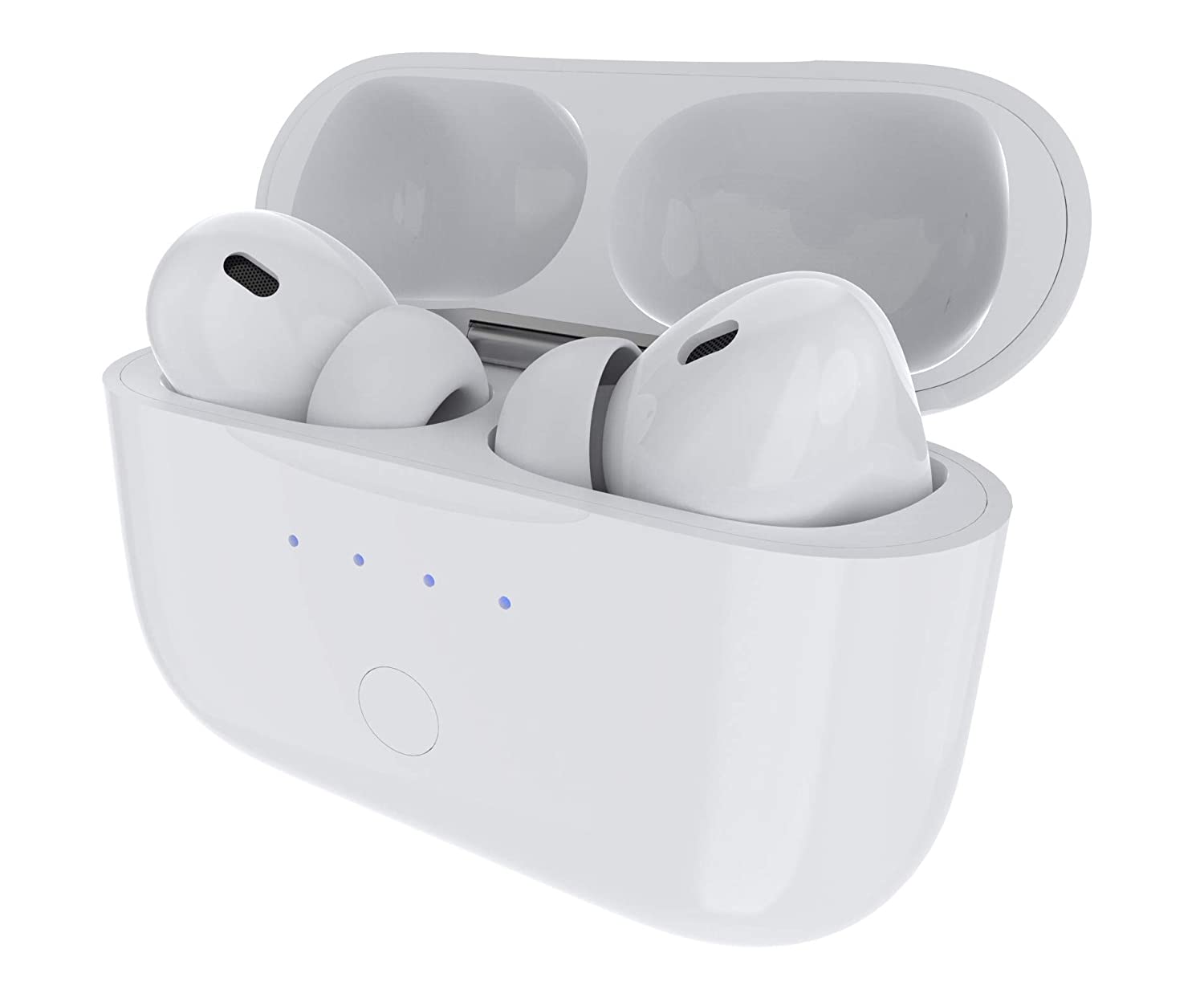
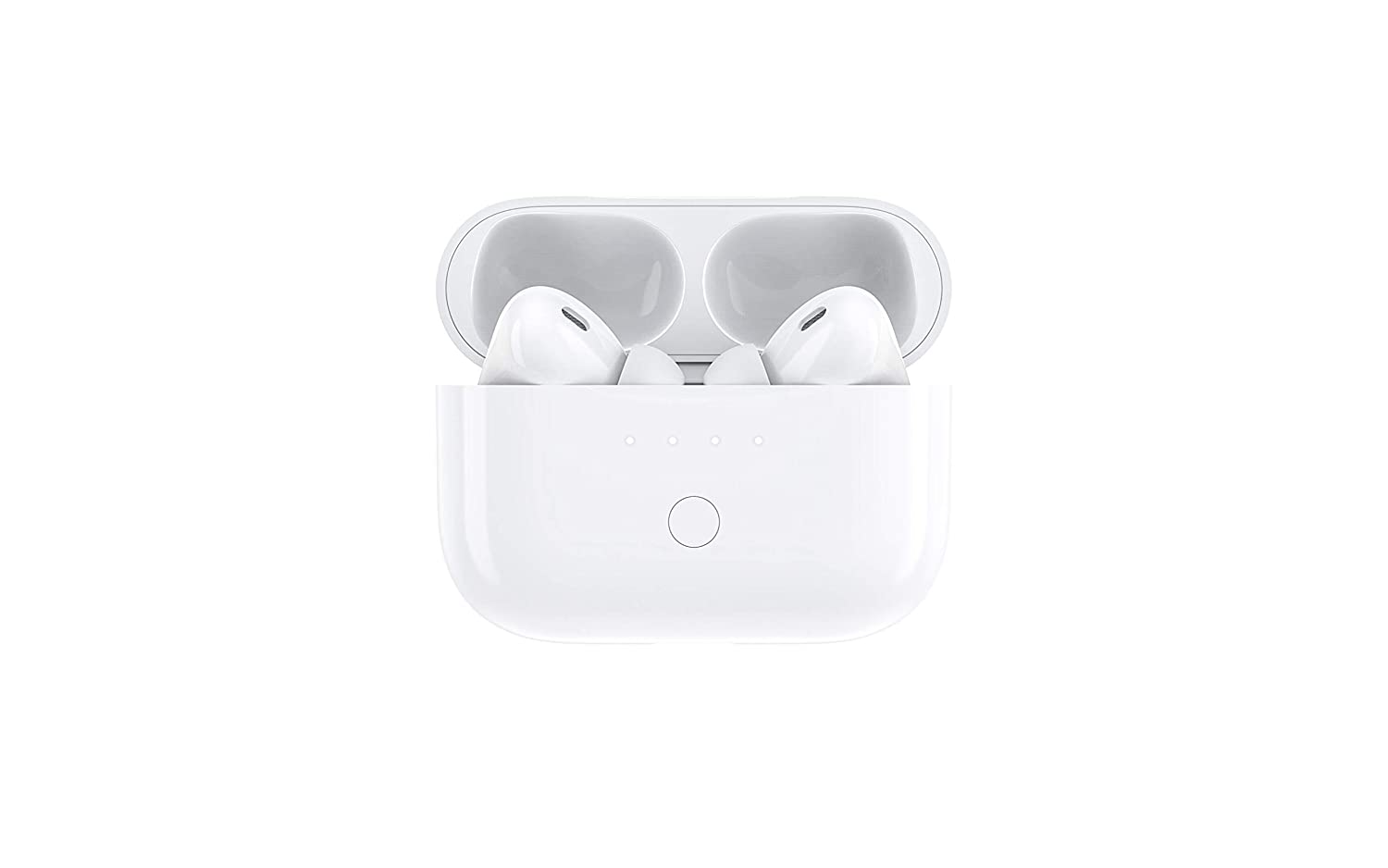
In the past few weeks, we’ve introduced you all to the Huawei Freebuds Pro (review here) and the Xiaomi Air 2 Pro (review here). They are the latest wireless earbuds with active noise cancelation from two of the top smartphone brands in the world. Today, we’ll pit the popular ANC earbuds in the market against each other including big names like the Huawei Freebuds Pro vs Airpods Pro vs Xiaomi Air 2 Pro.
But recently, we received quite a lot of messages from our viewers asking which one among them was the best choice. So we realized it was necessary to make a special video comparing these popular ANC earbuds to help you to find the best one suitable for you.
To make things interesting, we will introduce you to a new earbuds option in this comparison, which was released just recently — the OPPO ENCO X. The OPPO earbuds is quite popular in China at the moment and is also priced similar to the other earbuds in the comparison. And to add a reference point, we will also bring the good old AirPods Pro. So we have shortlisted four earbuds – Huawei Freebuds Pro, Xiaomi Air 2 Pro, OPPO ENCO X, and finally the AirPods Pro. We’ll go through these four wireless earbuds and do a quick comparison of their strengths and drawbacks. I hope you’ll finally be able to make a decision on the best-suited earbuds for you after seeing this video.
Given that we haven’t reviewed the OPPO ENCO X on Gizmochina before, let me introduce you to the earbuds first. Instead of the active noise cancellation, the biggest selling point of the OPPO Enco X is the audio quality. OPPO has claimed that the sound tuning work was done in cooperation with Dynaudio. So we are actually pretty excited to check out its sound performance. And it also supports Bluetooth 5.2 connection, which also allows it to connect to two devices at the same time.
Xiaomi Air 2 Pro vs Huawei Freebuds Pro vs OPPO Enco X vs Airpods Pro: Design
Well, let’s check out their designs first. To be honest, personally, I will pick the Xiaomi Air 2 Pro because of its unique design. The designs of the Enco X and the Freebuds Pro are influenced by the AirPods Pro to some extent. But don’t get me wrong. It doesn’t mean that the design of the other three earbuds isn’t good enough. On the contrary, we have to admit that so far, the AirPods Pro has designed one of the best TWS earbuds shape for active noise cancellation and great wearing comfort. Although the Xiaomi Air 2 Pro’s design distinguishes itself from the others, the bigger size of the earbuds and the case is really not good for convenience. The size limits the items you can keep in your pocket. We found you could only fit one phone in your pocket at max since the case took up additional space.
Air 2 Pro Xiaomi
And talking about the wearing comfort, there’s no doubt that the AirPods Pro has a great fit for different shapes of ears. And the wearing experience of the Freebuds Pro and the Enco X was pretty close to what we have with the AirPods Pro. Notably, Xiaomi’s Air 2 Pro has no advantage in this department. You may experience some discomfort when listening to the Air 2 Pro for a long time.
So if you want the best wearing comfort, the AirPods Pro would be the best choice. But if you don’t want to spend a lot, the Freebuds Pro and Enco X should also be good enough for you in terms of wearing comfort.
Xiaomi Air 2 Pro vs Huawei Freebuds Pro vs OPPO Enco X vs Airpods Pro: Performance
Talking about their noise cancelation performance, we have to admit that the AirPods Pro still is the best Active Noise-canceling wireless earbuds in the market, especially because of its excellent low-frequency noise control. And surprisingly, Enco X also did well at controlling low frequency noise, though it was not as impressive as what we had on the AirPods Pro. However, compared to the Huawei Freebuds Pro, OPPO’s high-frequency noise canceling work loses the advantage. As for the Air 2 Pro, as mentioned in our review last week, it’s no match for the others in terms of ANC. This isn’t really surprising given its price.
For sound quality, we have to acknowledge that this is going to be very subjective. While we’ve done quite a lot of research, our subjective listening still may have a bias in a comparison featuring earbuds from 4 different brands.
First, let’s see what kind of Bluetooth codec support they have. The AirPods Pro and the Freebuds pro support SBC and AAC codec, while the Enco X and the Air 2 Pro support SBC and LHDC codec. Theoretically, the LHDC codec is a better codec to deliver higher sound quality for wireless earphones. But we found that the Freebuds Pro is the one that gave us the most exceptional listening experience. Although OPPO’s Enco X is claimed to be tuned by Dynaudio and Xiaomi has emphasized that they are going to release a firmware update for better sound quality on the Air 2 Pro, right now their audio quality is still not as good as the Freebuds Pro. But to be honest, the gap between the Enco X and the Freebuds Pro is not so obvious: the Enco X is a bit too prominent at high frequencies, which may not be preferred by some users, while the Freebuds Pro is pretty balanced in presenting a wide range of frequencies. So does the AirPods Pro. Its sound quality is pretty balanced. As for the Air 2 Pro, so far we can only put it at the bottom of this list. Honestly, we don’t understand why this product was released without complete software optimization, so the earbuds don’t match up to our expectations.
And now let’s move to the other special features. Except for the Air 2 Pro, all the other three earbuds support the ear tip fit test. Only the Enco X supports customized shortcut mode on the connected phone and both, the Freebuds Pro and the Enco X support volume control on the buds. However, only the Freebuds Pro comes with a smart mode for the ANC, enabling different levels of noise-canceling effect. Enco X also features two levels of noise canceling. While for the AirPods Pro and the Air 2 Pro, there are only On and Off options for ANC.
But NOTE that unlike the other three earbuds, the Air 2 Pro’s menu only supports the Chinese language. There is no other available language. Even for voice alerts, it’s all in Chinese!
Xiaomi Air 2 Pro vs Huawei Freebuds Pro vs OPPO Enco X vs Airpods Pro: Connectivity
All of them support Bluetooth 5.0 connection or above. Specifically, the Freebuds Pro and Enco X support Bluetooth 5.2 and this allows them to connect to two devices at the same time, regardless of operating systems or brands.
But compared to the other three earbuds, the connection of the AirPods Pro is the most stable. Especially when connected to Apple devices, the stable signal and low latency perform well during gaming and video play, while for Android devices, the best option among these four is the Freebuds Pro. It could also deliver pretty low-latency and decent sound. No matter for gaming or video play, the sound delay was almost imperceptible.
On the other hand, although both the Air 2 Pro and the Enco X claimed that they have optimized latency performance for gaming, they both encountered some issues when we tried to access their low-latency mode. For the Air 2 Pro, the latest firmware didn’t include the low-latency mode and all we can do right now is wait for updates. And for the Enco X, the sound delay was more obvious when we applied the LHDC codec. When we changed the Bluetooth codec to the SBC with lower sound quality, then the latency problem finally got fixed,which also enabled lag-free gaming. But it’s still no match to the performance of the Freebuds pro.
Xiaomi Air 2 Pro vs Huawei Freebuds Pro vs OPPO Enco X vs Airpods Pro: Battery Life
As for their battery life, the Air 2 Pro’s battery life was very surprising and exceeded our expectations. The other three were all able to last for around 5 hours under noise-canceling mode in a single charge, but the Air 2 Pro amazingly had 50% power left after 5-hours of usage, which is extremely impressive.
So that’s what we have on these four popular noise-canceling wireless earbuds in the market right now. No doubt the AirPods Pro is still the best choice for Apple devices, while for Android or other platforms, we’d like to recommend the Freebuds Pro as our first choice. We think that Enco X is another good option thanks to its lower price. However, you really need to be careful with the Air 2 Pro. Although it has the most affordable price, the earbuds feels like a semi-finished product without good software optimization. And it only supports Chinese language.
So that’s it for today. If you have anything to share about these earbuds, we look forward to hearing from you in the comments down below. And don’t forget to subscribe to our Youtube channel. We spend a lot of time on these comparisons and your likes and feedback will keep us motivated to do more of these in the coming days.
The iPhone 12 Pro Max is the largest iPhone Apple has ever made. The pre-orders for this giant smartphone opened last week in most regions. Some of the customers have already begun to receive their units, however, the device will be only available in stores starting tomorrow (November 13). Ahead of it, pictures of iPhone 12 Pro Max teardown have emerged on Weibo revealing its battery capacity.
All the major media houses have published their iPhone 12 Pro Max reviews a few days back. But the teardown of the phone has made to the public only now. The pictures of the most-expensive 2020 iPhone’s internals were shared by手机正维修 on Weibo (via SeekDevice).
According to the pictures, the placement of the motherboard in the iPhone 12 Pro Max is on the left side just like the iPhone 12 and iPhone 12 Pro. For the unaware, the previous-generation models had it on the right side.
As a result of this, the battery is now inverted L-shaped. Most importantly, its capacity has been reduced to 3,687mAh from 3,969mAh (iPhone 11 Pro Max). Another interesting thing is that the motherboard of the iPhone 12 Pro Max is shorter than that of the iPhone 12 Pro.
Having said that, despite adding 5G support that requires more power, Apple has reduced the battery capacity across all the models of iPhone 12, compared to the iPhone 11 series.
The latest Apple laptop offerings, the MacBook Pro and MacBook Air come with a powerhouse CPU dubbed m1 whose innovative design and performance could provide a huge boon for Apple and make the M1 laptop a game-changer.
A new listing on Geekbench 5 for the M1-powered MacBook Air posts impressive numbers. The machine handily takes to the cleaners, the Core i9-9880H 16-inch MacBook Pro in both single- and multi-core tests by a mile. In addition, the device uses a 10 Watt CPU that is passively cooled and still dwarfs the most powerful laptop in Apple’s repertoire in terms of performance.
The new listing on the Geekbench 5 database also shows that the M1-powered MacBook Air absolutely out-performs the Core i9 16-inch MacBook Pro in both single- and multi-core performance testing.
This new Apple offering runs macOS 11.0.1 and uses an “Apple Silicon” processor. The sleek laptop recorded an impressive 1687 and 7433 in the single- and multi-core tests, respectively.
Comparatively, the top-of-the-line 16-inch MacBook Pro with a Core i9-9880H performed poorly in Geekbench 5’s single- and multi-core tests in comparison with the M1 MacBook (35% and 15% worse, respectively). Average scores for the Core i9 16-inch MacBook Pro is 1100 for single-core and between 6000 and 6500 for multi-core.
This is quite a huge performance gap, especially considering that this newly-released laptop bears close semblance with the baseline model with 8 GB of RAM. Also, the M1-powered MacBook is fanless, giving the hint that the new 13-inch MacBook Pro will significantly out-perform the best MacBook Pros currently in the market. The MacBook Pro 13 has active cooling, which should allow for longer sustained load operation and enhanced speed performance.
The Geekbench post also provided info on the clock speed of the M1, which was previously unknown. According to the listing, the M1 has a base clock of 3.2 GHz (up about 39%) compared with that of the Core i9-9880H, with 2.3 GHz.
If the Geekbench listing is actually for the M1, then Apple has indeed wrought wonders with the innovative M1 chip. That kind of performance in a passively cooled system with a TDP of 10 Watts is groundbreaking, especially compared to an 8 core/16 thread 45 Watt giant like the Core i9-9880H.
Apple’s statement that the M1 is the fastest CPU in the world may well have been a statement of fact and not just a mere marketing gimmick.
Samsung launched the Galaxy S20+ BTS edition back in June. Later it brought them to countries like India. Now, the company discounts the device for a limited period of time in the country.
The new discount(via Sammobile) is a part of the festive season offer that is already on-going the country. As for the Galaxy S20+ BTS edition, Samsung is giving a huge discount of ₹10,000(~$134) off on the original price. The device launched with a price tag of ₹87,999($1178) for the single 128GB variant. That said, the new Price for the Galaxy S20+ BTS Edition is now ₹77,999($1044).
Additionally, Samsung is also giving various offers while purchasing the device. You can take a look at them below:
10% instant cashback up to ₹1,500 on HDFC Bank Credit/Debit EMI & Credit Cards.
₹200 cashback via Airtel Money/Payments Bank; Min Transaction= ₹2000.
50% off on Samsung Care+ – Protection against Liquid, and Accidental Damage.
₹1,000 cashback on 1st Transaction via Paytm Wallet & UPI.
5% assured cashback up to ₹1,000 while using OlaMoney Postpaid+
5% MobiKwik SuperCash up to ₹1,000; use Coupon: KWIK5.
Get Galaxy Buds+ only @ ₹5999 (43% off).
Apart from this, the Samsung website is also offering exchange offers up to ₹38,130($510) depending on the value of your old device. Hence, if you are a hardcore BTS fan, we suggest to grab one soon before the stock runs out.
For the unware, BTS(Bangtan Boys) is a famous seven-member K-Pop band in South Korea. Accordingly, the Galaxy S20+ BTS edition comes with a special box of Purple accents, BTS photo cards, and stickers. The device also has a purple color back with a BTS logo at the bottom, BTS-exclusive themes, and wallpapers inside the UI.
Apart from the Galaxy S20+ BTS edition, Samsung also has Galaxy S20 FE on offer. However, the Galaxy Buds+ BTS edition price is unchanged as it retails for ₹14,990($200).
Online sales giant Alibaba and JD.com have both disclosed that the United States of America was the number one seller of goods to China during the last Singles’ Day shopping rendezvous that netted an estimated $116 billion in revenue for the two companies.
Singles’ Day has grown to become the world’s biggest one-day sales event and has overtaken Black Friday and Cyber Monday in the United States in terms of volume and revenues. Many online companies globally, offer mouth-watering deals at the event.
This year, several companies including Alibaba Group Holding Ltd and JD.com Inc offered huge discounts and promotions for several days and had tremendous sales over this short period. Industry watchers are of the opinion that massive sales volume of these Chinese brands are a pointer to the rebounding of the Chinese economy as it starts to pick up from the decline occasioned by COVID-19.
Many customers still unable to travel abroad for their holidays and shopping due to the Coronavirus pandemic, latched on to the great deals put forward by Huawei, Fast Retailing and several others to soothe their demand cravings.
Online brand, Alibaba generated an estimated gross 498.2 billion yuan ($75.28 billion) in gross merchandise volume, while JD.com grossed about 271.5 billion yuan in sales. According to JD.com, the leading products that drove the massive sales volume were Apple iPhones, L’Oreal Lancome toner and 60-inch smart LCD TVs from Sharp Corporation.
Alibaba interspersed its promotions between November 1 and November 11, while JD.com offered deals for an unbroken period from November 1 to November 11. Both companies computed their gross merchandise volume on the basis of promotions from Nov. 1 through Nov. 11.
The successful event was later dampened by news that China was about to come out with anti-monopoly rules for online marketing platforms.
Alibaba’s stock on Wednesday, took a 10% plunge at the Hong Kong Stock Exchange again, coming on the heels of its earlier decline when regulators scuttled the listing of fintech offshoot, Ant Group. The stock was however up 3% around midday Thursday, reflecting a possible comeback at the close.
Alibaba, in a statement it released, stated that other top-selling countries this year included Australia, Germany, Japan and South Korea.
More than 470 companies are estimated to have surpassed 100 million yuan in gross merchandise volume (GMV) this year. Last year, Alibaba only listed Japan and the United States as the biggest sellers.
Alibaba ramped a humongous $38.4 billion in GMV in a single day in 2019 and said 299 brands achieved the 100 million yuan benchmark in GMV, including Nestle and Under Armour Inc.
Sony Corp’s PlayStation 5 (PS5) console was launched in leading markets today amidst intense buzz in cyberspace, although real-world sales have been limited to pre-order pick-ups due to the Coronavirus pandemic that has seemingly ramped up demand for gaming consoles and games globally.
The decision of Sony to launch the sale of the PS5 console solely online is to maintain COVID-19 prevention protocols of physical distancing, underlining its mantra on consumer safety, imploring consumers to “be safe, stay home, and place your order online”.
The technologically innovative console, which goes for $500 or $400 (without a disk-drive), was sold out on major online sales platforms in Japan within a short while. In fact, some retailers resorted to conducting lotteries to distribute the limited stock.
In order to modulate demand, Japanese leading flea market site from Mercari Inc was selling the consoles above $900.
There is a massive demand for the PS5, as it offers excellent and eye-catching graphics, improved and substantially faster load times and a new controller with innovative immersive feedback. The demand has been intensified by the Coronavirus pandemic, which has seen consumers resort to gaming to relieve stress. However, this has put a huge dent on supply capability.
Gaming industry watchers project there will be shortages of consoles from Sony and rival Microsoft Corp, which launched its Xbox devices this week. The shortages are expected to extend into the new year.
As expected, PUBG Mobile is coming back to India. The announcement today is good news for all PUBG lovers in the country. The game is also bringing an investment of $100 million along with it to India.
PUBG Corporation, who recently acquired the Indian publishing rights from Tencent, has made the announcement(via XDADevelopers). As per the report, PUBG Mobile in India will now be called ‘PUBG MOBILE INDIA’. The company says it’s ‘specifically for the Indian market’. Accordingly, the developers say that the game will have in-game contents that “reflect local needs”.
Pubg Mobile India: Local Investment, in-game Features & more
For instance, we can expect a “Virtual Simulation Training Ground” setting, “Clothing” for Characters in-game, “Green hit” effects instead of Red while killing someone. Additionally, the game will also have “restrictions of playtime” for the young chaps. We have already come across many instances of death due to PUBG addiction in India. Hence, a restriction or cap on log-in time might help parents recover children from addiction.
Further, the game will also ensure data security by performing regular audits and verification on the storage systems. By following this, the company says it will keep the data secure. That’s not all as the PUBG Corporation, and its parent company KRAFTON Inc., are planning to invest $100 million(₹746 crores) in the country.
By doing this, the company aims to encourage the local video game, e-sports, entertainment, and IT industries. Additionally, it will set up a local office, hire 100 employees in India to improve its services. And also collaborate with local businesses.
If we recall, PUBG Mobile including 118 apps was banned in India back in September. This was in addition to an earlier ban of 59 apps including TikTok, WeChat, UC browser. The govt said the threat to data privacy and security as a reason but it was believed to be a reaction against border disputes with China.
Later, PUBG Corporation, which is the creation or PUBG, took over the Indian publishing rights from Tencent Games. While the game was rumored to come via Jio as distributor, PUBG Corp., has itself come forward to relaunch it confirming the earlier LinkedIn job listing. Having said that, there isn’t a firm launch date but considering the game has already stopped working, we can expect it soon enough.
The Infinix Zero 8 was made official in August in Indonesia. Its toned-down version called the Zero 8i was announced in Pakistan last month. Infinix has started teasing the arrival of Zero series smartphones in India. The teasers showcase the diamond-shaped camera module like the Infinix Zero 8 and Zero 8i smartphones.
The company is yet to reveal the launch date for its upcoming Zero series phones. Also, it is unclear whether the brand will be launching the Zero 8 or Zero 8i or both through the upcoming unveil event.
The time has come to take on the challenges and shine bright in the world.
The Infinix Zero 8 is priced at IDR 3,799,000 (~$268; ~Rs 19,900) in Indonesia whereas the Zero 8i costs PRK 34,999 (~$221; ~Rs 16,500) in Pakistan. These phones are expected to rival mid-range phones from Xiaomi, POCO, Realme, and Samsung in the sub-Rs 20,000 price category.
Infinix Zero 8 and Zero 8i specifications and features
The Infinix Zero 8 has an IPS LCD pane of 6.85 inches. The dual punch-hole screen produces a full HD+ resolution and a 90Hz refresh rate. The Helio G90T fuels the device with 8 GB of RAM. It has a native storage of 128 GB. The phone houses a 4,500mAh battery that supports 33W charging through USB-C.
The Zero 8 has a 48-megapixel + 8-megapixel (ultrawide) dual selfie camera system. It has a 64megapixel + 8-mgeapixel (ultrawide) + 2-megapixel (macro) + 2-megapixel (low-light) quad-camera system. It has other features like a microSD card slot and a side-mounted fingerprint reader.
The Infinix Zero 8i has a 16-megapixel + 8-megapixel (ultrawide) dual selfie camera setup. Its rear has a 48-megapixel + 8-megapixel + a 2-megapixel + AI lens quad-camera system. Its other specs are the same as the Zero 8.
The Xiaomi Mi 8 Pro was one of the three Mi 8 series smartphones launched in 2018. Being a flagship smartphone, the handset has received two Android updates and has now started to get its third and probably the final MIUI update in the form of MIUI 12 in global markets.
The Mi 8 Pro launched alongside Mi 8 Lite in the second half of 2018 after the popular POCO F1. The handset debuted with MIUI 9 based on Android Oreo. It was then updated to MIUI 10 and MIUI 11 along with Android Pie and Android 10.
The company started rolling out MIUI 12 to this phone in mid-August in China. Now, three months later, the global variant of this smartphone has finally begun to receive this update with build number V12.0.1.0.QECMIXM.
The software build released by the firm is currently in the ‘Stable Beta’ stage. That means it is only available for beta testers and select users running the stable build. If there are no major issues with this release, then it will be made available for more users, followed by a wider rollout with the ‘Stable’ tag.
Having said that, Xiaomi is yet to release MIUI 12 for the Russian version of Mi 8 Pro. Also, MIUI 12 could be the last major update for this smartphone as it is neither eligible for Android 11 and there’s a little chance for it to get MIUI 13.
Samsung is expected to announce the Galaxy S21 series in January 2021. The Galaxy S21 Ultra 5G will be the most powerful phone in the series, which also includes the Galaxy S21 and Galaxy S21 Plus phones. It was revealed by a South Korean publication in August that the Galaxy S21 Ultra 5G will come with support for the S Pen stylus. Today, reliable tipster Ice Universe took to Twitter to reveal he is 100 precent sure that the S21 Ultra supports S Pen.
The Galaxy S21 Ultra 5G CAD renders that appeared in October gave a good look at its design. The renders did not show the presence of a dedicated compartment in the device for housing the S Pen. According to tipster Max J, the Galaxy S21 Ultra 5G only supports the stylus but does not have a separate shaft for it.
Important to say here: It only supports it! It does not have a separate shaft for it!
I can imagine that there will be a case similar to the Tab S7 devices that holds the S-Pen on the rear ✍ https://t.co/pOKru7V733
There are chances that Samsung will sell the S Pen as an optional accessory for the buyers of S21 Ultra 5G. It remains to be seen whether the South Korean company announces specially designed cases that can hold the S Pen. There are speculations that bringing support for S Pen could be Samsung’s strategy to discontinue the Galaxy Note lineup.
Rumors have it that Samsung may not launch the Galaxy Note phablets next year. Probably, the Galaxy Z Fold series foldable phones arriving in the coming years could feature a dedicated slot for the stylus.
Google has taken everyone by surprise as it announced a storage cap for Google Photos. Accordingly, from June 1, 2021, Google Photos will also come under the ambit of the free 15GB storage the company already offers.
Google, in a blog post(via The Verge) says that all the photos and videos you upload from June 1 of next year will count towards that 15GB. That is, the free 15GB cloud storage will be shared by Photos, Gmail, and Drive. So far, Google Photos offers unlimited backup of Photos in ‘High Quality’ format. However, the company says the App has 4 trillion photos stored so far. And apparently, about 28 billion new photos, videos are being uploaded every week.
Hence, to keep up with the demand for storage, and make the App sustainable, it is bringing this change. That said, the already uploaded ones, and the contents uploaded before June 1, 2021, are exempt from this change. This means you can upload n number of photos, and videos before the cut-off date as they are free till then.
Although this is a big change, Google says users don’t need to worry about it right now. It assures that it will send alerts via App, email as we approach the 15GB mark. Additionally, it will also introduce features like “Personalized estimates” and a ‘Tool’ inside the Google Photos app from June 2021. This will reportedly help users manage their storage better by deleting dark/blurry images to save space.
Credit: Google
Besides, the change also doesn’t affect ‘Original quality’ photos as Google already counts it under 15GB free storage. Further, Google’s Pixel users(Google Pixel to Google Pixel 5) are immune to this change. This means, if you own a Pixel device, you can continue to enjoy the free ‘High quality’ backup even after the cut-off date.
Google also talks about the in-active policy in this change. Accordingly, it may delete contents of either Drive, Gmail, Photos if users aren’t active for 24 months. A similar action extends to users who cross the storage limit and don’t take any action for 2 years. That said, if the 15GB free storage isn’t enough, you can always try Google One. Currently, it costs $99.99(USA)/₹6,500(India) a year or $9.99/₹650 a month, and includes VPN service for Android as well(2TB Plan).
The machine-translation of the Redmi General Manger Lu Weibing’s recent Weibo post reads “preparing for the next battle.” This indicates that the Redmi is now gearing up to launch new phones in the home market. Since the alleged Redmi Note 9 5G and Note 9 Pro 5G phones have already obtained certification from TENAA authority, it appears that the company may soon announce the Redmi Note 9 5G series.
Rumors are rife that the Redmi Note 9 lineup for China includes three models such as Redmi Note 9 4G, Redmi Note 9 5G, and Redmi Note 9 Pro 5G. The 4G variant has an M2010J19SC model number and Its 3C certification revealed that it may carry support for 22.5W fast charging. Its global variant that has the M2010J19CG model number has been approved as a POCO device by Singapore’s IMDA and Europe’s EEC authority.
The Redmi Note 9 Pro 5G (M2007J17C model number) is believed to be a tweaked version of the Xiaomi Mi 10T Lite 5G. It has specs like a 6.67-inch IPS LCD panel with support for a full HD+ resolution and a 120Hz refresh rate. The Snapdragon 750G SoC may power the device with up to 12 GB of RAM and up to 256 GB of storage. It could be housing a 4,820mAh battery with 33W fast charging support. The handset may feature a front camera of 16-megapixel and its rear may house a 108-megapixel Samsung HM2 triple camera system.
The Redmi Note 9 5G (M2007J22C model number) has a 6.53-inch IPS LCD panel that produces a Full HD+ resolution and a high refresh rate. The Dimensity 800U SoC phone has up to 8 GB of RAM and up to 256 GB of storage. It has a 13-megapixel front camera and a 48-megapixel triple camera setup. The handset houses a 5,000mAh battery with 22.5W rapid charging technology.
After releasing its reports for India and China, Counterpoint Research has now published a report on US Smartphone Market Q3 2020. According to it, the market witnessed a 31% QoQ growth, however, it declined by 6% YoY. In other words, the market is yet to recover completely.
Photo by Brett Sayles from Pexels
The US Smartphone Market rebounded in the third quarter of 2020 as certain OEMs outperformed despite the COVID-19 pandemic. Although the market declined YoY, Apple and Samsung registered YoY growth in the same quarter.
As for carriers, T-Mobile performed the best by beating expectations, whereas AT&T and Verizon also witnessed growth. That said, iPhone 11 was the best-seller, followed by iPhone SE 2020 and iPhone 11 Pro Max respectively.
As states began to ease restrictions in the past few months, retail outlets started re-opening with longer store hours and more occupancy numbers. But still, more than 20% of sales occurred online. This number is expected to hit 40% with the launch of the iPhone 12 series and the upcoming holiday season.
That said, although the numbers seem positive, it may not be the same in the coming months. The 31% QoQ growth was due to the pent-up demand and stimulus money in the month of July.
But sales diminished in August and September, which resulted in a 6% YoY decline. This occurred due to the unemployment in the country, in addition to the lack of another stimulus package.
In Q4, Apple is expected to see growth with the sales of the iPhone 12 series. On the other hand, Samsung has announced a higher storage variant of Galaxy S20 FE and is also promoting Galaxy A and Galaxy Note20 series for the festive season.
Today, Samsung and Vivo jointly held a launch event to announce the Exynos 1080 chipset in China. It the first 5nm chipset from the South Korean company built with EUV (Extreme Ultraviolet Lithography) FinFET technology. Just as predecessor Exynos 980 chipset was first seen on the Vivo X30 last year, the upcoming X-series Vivo phones could be the first phones to feature the Exynos 1080.
It goes without saying that to increase the offer better performance, a chip needs to have a greater number of transistors. Compared to Samsung’s 7nm process, the 5nm processor increases the number of transistors by more than 80 precent. Compared to the 8nm LPP (Low Power Plus) process, the 5nm Exynos 1080 delivers 14 percent improved performance and a 30 percent reduction in power usage. In comparison to 7nm DUV (Deep Ultraviolet Lithography), the new chip offers a 7 precent improvement in performance and an 18 precent reduction in power consumption.
The Exynos 1080 is an octa-core chipset with 1+3+4 tri-cluster architecture. It comprises of Cortex A78 single-core processor that clocks at 2.84GHz, Cortex-A78 triple-core processor that ticks at 2.6GHz, and Cortex-A55 quad-core processor with works at 2.0GHz.
The SoC includes Mali-G78 MP10 graphics and comes with support for LPDDR4x / LPDDR5 RAM and UFS 3.1 storage. As far as performance is concerned, the Exynos 1080 was recently spotted at AnTuTu with a score of 693,600.
The Exynos 1080 with NSA/SA dual modem for 5G connectivity supports both sub-6GHz and mmWave 5G spectrums. It supports other connectivity features like Wi-Fi 802.11ax, Bluetooth 5.2, GPS, GLONASS, BeiDuo, and Galileo.
Phones driven by Exynos 1080 can have WQHD+ resolution display with up to 90Hz refresh rate or Full HD+ resolution screen with up to 144Hz refresh rate. It supports up to a 200-megapixel single camera or 32-megapixel + 32-megapixel dual camera setup or a maximum of 6 cameras. The SoC also supports HDR10+ and 4K 60ffps encoding and decoding with HEVC.
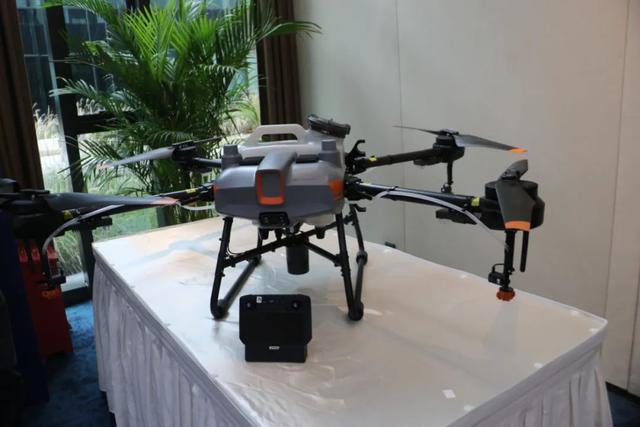
DJI Agriculture yesterday held a new product launch conference in Shenzhen and released two new products in one breath. The products are dubbed DJI T30 and T10 Plant protection drone (UAV).
The two new products, T30 and T10, will bring intuitive efficiency improvements to the field of plant protection, and will also inevitably bring new impacts to industry development. The new flagship DJI T30 Plant Protection Drone is the most powerful plant protection machine on the market, with an operating efficiency of up to 240 acres per hour. Its exclusive deformable wing design can effectively improve the flight control effect of fruit trees and is equipped with a more reliable spreading system. , It can effectively improve the efficiency of spreading. The T10, which is aimed at small plots and small and medium-sized farmers in the south, is mainly cost-effective, lightweight, and can be operated by a single person.
The maximum load of T30 is increased to 30 kg, and the drug-liquid load ratio reaches 46%. it is equipped with a new plunger pump, which can provide a large flow rate of 8L/min. The new 16 nozzle layout ensures the uniformity of spraying drops, and the effective spray range can reach 9 meters. There are 8 groups of solenoid valves that can achieve independent frequency conversion control for each group of nozzles. The real-time flight speed and spraying volume are linked.
The DJI T30 Plant Protection Drone is also equipped with a new branch-to-target technology, which adjusts the spray elevation angle of the front and rear arms to allow the droplets to penetrate the canopy along the oblique angle of the branches, ensuring that the liquid medicine adheres evenly from top to bottom. Test data show that T30 branch-to-target technology can double the adhesion rate of liquid medicine on the back of the bottom leaves of fruit trees.
In order to cope with the complex operating scenarios of fruit trees, the route planning function has also been upgraded. For orchards with flat terrain, T30 can directly imitate the ground with the help of radar; for orchards with complex terrain, with the help of smart cloud platform, cloud mapping and route planning can be used to easily manage your digital orchard.

Previously, fertilizer spreading in farmland was mainly done manually or ground machinery. Compared with manual and ground machinery, drone sowing can not only greatly increase the efficiency, without suppressing the seedlings, but also achieve higher uniformity. The spreading flow rate is as high as 40-50 kg/min, the spreading width is 7 meters and so, 1 ton of fertilizer can be spread in 1 hour.

As we all know, fertilizers are highly corrosive. The new spreading system adopts multi-layer oil seal protection to improve corrosion resistance and can be directly washed with water.
During the operation, pilots are most concerned about flight safety issues. T30 is equipped with the industry’s first spherical radar system, which can detect obstacles in all directions and all-weather, without being affected by light, water mist, and dust, and can bypass or avoid obstacles autonomously, making flying safer.
The T30 is also equipped with dual FPV cameras, so the pilot can easily grasp the scene of the aircraft from the screen during flight, making flying more secure. At the same time, the area of the camera head is increased by 3 times, combined with the bright searchlight, night work is more assured.
DJI T10 Plant Protection Drone can be transported by one person when folded
The T30 uses a truss-type fuselage made of carbon fiber composite materials and a one-key locking folding arm design to achieve a strong and reliable high folding ratio, and the volume is reduced by 80% after folding. Independent cavity protection of the core module, plus triple structure guarantee design, circuit board potting and other treatments, the protection level of the whole machine reaches IP67, so that the T30 is not afraid of liquid medicine, dust, fertilizer, dust, water and corrosion.
On the other hand, the T10 is equipped with a 10L working box, standard with 4 pressure nozzles, and the spray width can reach 5.5 meters. In the main structure, the truss-type fuselage made of carbon fiber composite materials is lightweight and ensures the strength of the whole machine. The new folding structure reduces the volume by 70% after folding. It supports quick insertion and removal of the operation box, simple transportation, and easier transfer operations. The measured field operation efficiency can reach 100 mu per hour.
Compared with other crop protection drones of the same level on the market, the T10 is not only lighter in size, but also leading in safety configuration and reliability. It inherits the “high specifications” of the T30, comes standard with RTK, front and rear dual FPV, spherical radar system, and IP67 protection. In terms of battery chargers, T10’s smart battery also has up to 1,000 safe cycles. When used with a smart charging station, two power sources can be operated continuously.
With the spreading system, the T10 can also implement variable fertilization operations, helping farmland management to reduce costs and increase efficiency and income.
The DJI T30 carries a price tag of 29,999 yuan (~$4526) for only the drone while the all-round kit is priced at 54,999 yuan (~$8298). While the T10 is priced at 19,999 Yuan (~$3017) for the drone only but the all-around set is priced at 34,999 Yuan (~$5280).
On Nov. 17 and Nov. 18, OPPO will hold its INNO DAY 2020 (aka OPPO Future Technology Conference 2020) in Shenzhen, China. The Chinese firm is expected to showcase its innovative technologies at the upcoming event. OPPO Vice President Levin Liu revealed that the company will unveil three concept devices at the INNO DAY 2020. A Chinese tipster has revealed information on the three concept devices that will be showcased at the forthcoming event.
According to the tipster, OPPO will reveal a foldable phone with an infolding design. It could be equipped with under-display camera technology. The company also expected to showcase its advanced camera-related features like 10x optical zoom, 100x digital zoom, and continuous optical zoom module
The Chinese firm is also expected to showcase its 125W wired charging and 65W wireless charging technologies. There is a possibility that some of these innovative features will be made available on the company’s high-end or flagship phones arriving next year.
The theme of the upcoming INNO Day 2020 event is “Leap into the Future,” which indicates that OPPO is gearing up to reveal futuristic technologies. At the event, the company is also expected to talk about its plan for the 5G era.
After the INNO Day 2020 event, OPPO is expected to announce the Reno5 and Reno5 Pro smartphones in China. Recent reports have revealed that the Reno5 will be a Snapdragon 765G SoC powered phone with specs like a 6.43-inch OLED display, 32-megapixel front camera, 64-megapixel quad rear cameras, and a 4,300mAh battery with 65W fast charging. It is speculated that the Reno5 Pro could be driven by the Dimensity 1000+ SoC.
We use cookies on our website to give you the most relevant experience by remembering your preferences and repeat visits. By clicking “Accept”, you consent to the use of ALL the cookies.
This website uses cookies to improve your experience while you navigate through the website. Out of these, the cookies that are categorized as necessary are stored on your browser as they are essential for the working of basic functionalities of the website. We also use third-party cookies that help us analyze and understand how you use this website. These cookies will be stored in your browser only with your consent. You also have the option to opt-out of these cookies. But opting out of some of these cookies may affect your browsing experience.
Necessary cookies are absolutely essential for the website to function properly. This category only includes cookies that ensures basic functionalities and security features of the website. These cookies do not store any personal information.
Any cookies that may not be particularly necessary for the website to function and is used specifically to collect user personal data via analytics, ads, other embedded contents are termed as non-necessary cookies. It is mandatory to procure user consent prior to running these cookies on your website.