TCL looks ready to bring its paper-like display technology to a smaller, more portable device. A new leak points to the company preparing an 8-inch NxtPaper tablet with 5G support, giving fans of the eye-friendly screen tech a new option beyond the larger models already on the market.
Tipster Evan Blass has shared images of the TCL Tab 8 NxtPaper 5G. The tablet will reportedly use TCL’s fourth-generation NxtPaper panel, a display designed to reduce glare and eye strain. Like its bigger siblings, it features low blue light, zero flicker, and the ability to switch between full color and a monochrome E Ink-style mode. A dedicated “NxtPaper Key” on the side makes that toggle quick and easy, and stylus support aims to replicate a true pen-and-paper feel for note-taking or sketching.
The design shown in leaked renders keeps things clean and compact. Slim bezels line the sides, while slightly larger ones frame the top and bottom. Dual speaker grilles sit at either end, and TCL has even kept a 3.5 mm headphone jack. A SIM tray that doubles as a microSD slot points to carrier availability, with Verizon expected to offer the device in the U.S.
While the leak confirms support for 5G connectivity, other details such as resolution, processor, RAM, and pricing have yet to surface. The model is expected to follow on from the TCL Tab 8 4G released back in 2022.
By shrinking its NxtPaper technology into an 8-inch 5G tablet, TCL could attract readers, students, and mobile professionals who want a more comfortable screen for long sessions. If priced competitively, the Tab 8 NxtPaper 5G might become one of the more practical small tablets to watch in the coming months.
Xiaomi is preparing its next flagship launch, and the spotlight this time falls on the huge battery of the compact Xiaomi 16. Fresh leaks suggest the phone won’t just rely on raw performance but will also bring notable improvements in other aspects, including battery life, durability, and cameras. With its debut expected in China this month, the device could prove to be one of the year’s most competitive flagships.
Tipster Yogesh Brar has shared key specifications of the Xiaomi 16, reaffirming recent rumors that point to major changes compared to last year’s Xiaomi 15. The phone is expected to run on Qualcomm’s latest Snapdragon 8 Elite 2 chipset, also referred to in some reports as the Snapdragon 8 Elite Gen 5. In fact, the Xiaomi 16 series is expected to be the first to feature this chip, with the OnePlus 15 likely to follow next month.
But perhaps the most eye-catching rumor about the Xiaomi 16 is the battery: a 7,000 mAh unit that easily outpaces most premium smartphones today. Charging is equally ambitious, with 100 W wired (up from 90W on its predecessor) and 50 W wireless support on board. Xiaomi is also said to be raising the bar on durability with an IP69 water- and dust-resistance rating, a feature more common on rugged devices than slim flagships.
The cameras get some targeted refinements rather than a full overhaul, with the rear setup sticking to three 50 MP lenses — a 50 MP Omnivision primary, a 50 MP ultra-wide, and a 50 MP JN5 telephoto — largely unchanged from the predecessor. Rounding things out is a 6.3-inch OLED display, slightly smaller than the 6.32-inch panel on the predecessor.
If accurate, these upgrades put the Xiaomi 16 in a strong position against the iPhone 17, Galaxy S25, and many other 2025 flagships. A massive battery, faster charging, and improved durability — all wrapped in a refreshed exterior with more rounded corners — could make it a standout option when it launches later this month.
Samsung is expected to take the wraps off the Galaxy S26 series in January 2026, but a new leak has sparked debate among fans who were hoping for another round of camera upgrades. Instead, it seems the Ultra model could take a step backward on one of its telephoto lenses.
According to leaker Ice Universe, the Galaxy S26 Ultra may ship with a 12MP (cropped to 10MP) 3x telephoto camera using a 1/3.94-inch sensor and 1.0µm pixels. On paper, that’s smaller than what the Galaxy S25 Ultra offered — a Sony IMX754 sensor that delivered 12MP (cropped to 10MP) with a 1/3.52-inch size and 1.12µm pixels. The difference might look small, but in camera hardware, sensor size and pixel pitch directly affect how much light is captured, which can impact detail and low-light performance.
The rest of the camera setup appears largely unchanged. The S25 Ultra’s standout 50MP 5x periscope telephoto (1/2.52-inch, 0.7µm, 111mm) remains competitive, though rivals are moving fast. Apple’s iPhone 17 Pro offers a 48MP 5x telephoto, while several upcoming ‘Ultra’ flagships from China are rumored to adopt Sony’s new 200MP sensor. Ice Universe suggests Samsung did consider alternatives — like moving to a 50MP 4x telephoto — but technical and timing issues ruled it out. A 200MP telephoto, meanwhile, seems too expensive to fit into the S26 Ultra.
With the main 200MP wide and 50MP ultra-wide cameras reportedly unchanged, the rumored downgrade raises questions about Samsung’s strategy. The thicker camera bump on leaked renders has fueled speculation about new optics, but so far there’s little detail to support that.
If the leak proves accurate, Samsung may lean more heavily on software tricks and image processing to close the gap with competitors. Whether that will be enough in the flagship camera race remains to be seen.
Baidu is back with another AI announcement, and this time they’re really swinging for the fences. The Chinese tech giant just rolled out Ernie X1.1, which they’re calling a major upgrade to their previous Ernie X1 model.
What’s New Under the Hood?
Wang Haifeng, Baidu’s Chief Technology Officer, presented the new model as something special. Built on their Ernie 4.5 foundation, X1.1 uses what they call a “hybrid reinforcement learning framework”, basically combining different AI training techniques to make the model smarter.
The technical details might sound dry, but the results Baidu is claiming are pretty impressive. They say X1.1 is significantly better than its predecessor:
34.8% more accurate with facts
12.5% better at following instructions
9.6% improvement in handling complex tasks
The Big Claims
Here’s where things get interesting (and a bit bold). Baidu isn’t just comparing their new model to their own previous work; they’re taking shots at the competition. They claim Ernie X1.1 outperforms DeepSeek’s R1-0528 model across multiple tests.
But wait, there’s more. They’re also saying their model can go toe-to-toe with some of the biggest names in AI, specifically mentioning performance comparable to GPT-5 and Google‘s Gemini 2.5 Pro in certain areas.
Where Can You Try It?
If you’re curious to test it out, Baidu has made X1.1 available through their usual channels – the Ernie Bot website and their Wenxiaoyan app. For businesses and developers, they’ve also deployed it on their Qianfan AI Cloud platform.
The Bigger Picture
This launch isn’t happening in isolation. Baidu also updated their PaddlePaddle deep learning framework to version 3.2, making it better for training large AI models and working with different types of hardware. They’ve been busy updating their development tools too.
The numbers they’re throwing around are pretty staggering – apparently, their AI ecosystem now supports over 23 million developers and serves 760,000 companies. That’s a massive user base, especially concentrated in China.
What This Really Means
Let’s be honest – every AI company is making big claims about their latest models these days. But Baidu’s push with X1.1 represents something important: the global AI race is heating up, and Chinese companies aren’t content to just follow along.
Whether Ernie X1.1 actually lives up to these bold comparisons with GPT-5 and Gemini remains to be seen. Independent testing and real-world use will be the real judge. But one thing’s for sure, Baidu is clearly positioning itself as a serious player on the global AI stage, not just in China.
The competition between AI giants is only getting more intense, and that’s probably good news for everyone who uses these tools.
Baseus is rolling out an updated version of its PicoGo 10K slim magnetic power bank, and this time it comes with a notable boost in charging tech. The new model, known as the PicoGo AM52, sticks with the same 10,000 mAh battery capacity but brings faster speeds and a more polished design to the table.
The highlight feature is support for Qi2.2 wireless charging, letting the AM52 deliver up to 25 W. This is more than the Galaxy S25 Ultra can take in wirelessly, and just enough to match the peak speed of Apple’s iPhone 17 models. For wired use, the USB-C port handles up to 45 W, meaning you can quickly top up tablets, laptops, or two devices at once — one on the cable and one wirelessly. The bank itself recharges at 30 W, so downtime between uses should be shorter compared to the older version.
Baseus has also reworked the hardware to keep heat under control. The AM52 uses graphene cooling and temperature monitoring to make sure it runs efficiently even when pushing higher power. On the outside, it carries an aluminum alloy frame with a soft matte silicone finish that resists smudges and improves grip. Its curved, slim shape is designed to sit neatly behind a phone, making it practical for day-to-day carry.
The new PicoGo AM52 is scheduled to launch in November 2025, with an introductory price of $47.99 before it moves back to $59.99. With the blend of faster wireless speeds, higher wired output, and a more durable build, Baseus is positioning this as a strong option for anyone who needs reliable charging on the go without adding too much bulk.
Acer has launched the Connect M4 5G Mobile Wi-Fi hotspot in India. The device supports Wi-Fi 6 and can connect up to 16 devices at the same time. It works with Nano SIM, eSIM, and vSIM, allowing users to access data services in more than 135 countries without changing SIM cards or setting up manually.
The Connect M4 5G is powered by a MediaTek MT8791 octa-core processor with two Cortex-A78 cores clocked at 2.6GHz and six Cortex-A55 cores at 2.0GHz, paired with an ARM G68 MC4 GPU. It has 3GB LPDDR4X RAM and 8GB eMMC storage. A 2.4-inch touchscreen display is included for quick access to settings and connection details.
The device has an 8000mAh battery that offers up to 28 hours of use and supports USB Type-C fast charging. It can also be used as a power bank. Its dimensions are 140x86x19mm, and it weighs 300 grams.
For durability, the hotspot is IP68 rated against dust and water. SIMO SignalScan technology helps it connect to the strongest available network, keeping the device online even in weak-signal zones.
Security features include WPA3 encryption, firewalls, SIM lock, and built-in VPN support. The device also receives automatic software and firmware updates to maintain security standards.
Acer is offering the Connect M4 5G with a 20GB data pack valid for six months. When used abroad, it connects automatically to local service providers, removing the need for manual setup or SIM swaps.
Pricing & availability
The Acer Connect M4 5G Mobile Wi-Fi is priced at Rs. 19,999. It is available on Amazon.in, the Acer India online store, and offline retail outlets.
Xgimi has launched its new Horizon 20 series projectors at the IFA 2025, expanding its home entertainment lineup with improved brightness, image control, and gaming features. The series includes three models: Horizon 20, Horizon 20 Pro, and Horizon 20 Max. All three support 4K Ultra HD resolution and run Google TV with native access to Netflix, YouTube, and other streaming apps.
Xgimi Horizon 20 Series Specifications
The Horizon 20 Max leads the lineup with 5,700 ISO lumens of brightness. Xgimi uses a new triple RGB laser architecture along with its self-developed X-Master Red Ring Lens to achieve this level of luminous output. The company has built the system to support viewing in bright rooms without compromising color accuracy or clarity.
Each model in the Horizon 20 series includes Dolby Vision, HDR10+, Filmmaker Mode, and IMAX Enhanced certification. The projectors use a high-contrast engine rated at up to 1,000,000:1 dynamic contrast. Color accuracy is rated below ΔE 0.8, meeting professional calibration standards across major gamuts.
Xgimi has added several premium features to improve installation flexibility. All three projectors support optical zoom, dynamic lens shift (±120% vertical and ±45% horizontal), and automatic screen alignment. The system uses ISA 5.0 to manage real-time autofocus, keystone correction, obstacle avoidance, and wall color adaptation.
All three Horizon 20 models support a dedicated gaming mode with 1ms input lag at 1080p, 240Hz refresh rate, VRR (Variable Refresh Rate), and ALLM (Auto Low Latency Mode), making them suitable for fast-paced gameplay. Xgimi includes genre-specific picture presets such as FPS, RTS, RPG, Sports, and Assassin’s Creed Mode, the latter tuned in collaboration with Ubisoft to enhance cinematic stealth scenes.
The projectors use MediaTek’s MT9679 processor and include the 8445 image driver. They include 4GB RAM and 128GB storage. For audio, Xgimi uses built-in Harman Kardon speakers, eliminating the need for external audio accessories. The models also offer support for HDMI 2.1 (TMDS), USB 3.0, and eARC passthrough, ensuring broad connectivity for modern devices.
Pricing and Availability
Xgimi has started pre-orders for the series. The Horizon 20 costs $1,699, the Horizon 20 Pro is priced at $2,499, and the Horizon 20 Max is available for $2,999. Shipping begins October 15 via the Xgimi US store.
At the event, Xgimi has also launched its first commercial-grade projector, the Titan, featuring 4K resolution, 5000 ISO lumens brightness, and a dual-laser light engine.
For more daily updates, please visit ourNews Section.
ARM has announced its next generation of CPU and GPU cores, which will power the MediaTek Dimensity 9500 set to launch later this month. The company has introduced several changes this generation, starting with the naming itself.
ARM has retired its familiar Cortex-X and Cortex-A branding in favor of the new C1 family. At the top sits the C1-Ultra, followed by the C1-Premium (a smaller footprint version), the C1-Pro for mid-tier performance, and the efficiency-focused C1-Nano. All of these cores are based on the ARMv9.3 ISA architecture family.
The C1-Ultra is effectively the successor to the Cortex-X925, and ARM claims it delivers 12% IPC gain over last year’s core, scaling up to 25% with higher clock speeds on 3nm. Importantly, the C1-Ultra delivers this uplift while cutting power consumption by nearly 28% at equal performance levels.
Meanwhile, the C1-Pro replaces the Cortex-A725, which can achieve the same performance as its predecessor with 26% less power, or 11% more performance at the same power level.
Finally, the C1-Nano builds on the Cortex-A520 with a focus on branch prediction and cache improvements, yielding a 5–8% performance gain but a 26% efficiency improvement.
ARM C1 CPU Family – Key Specs
Core
Successor to
Process
Clock (max)
IPC Gain
Power Efficiency
Notes
C1-Ultra
Cortex-X925
3nm
4.1GHz
+12%
-28% @ same perf
High throughput, 2,000 in-flight instructions
C1-Premium
Cortex-X925*
3nm
~3.9GHz
Slightly lower
35% smaller area
Cost-conscious version of Ultra
C1-Pro
Cortex-A725
3nm
~3.5GHz
+11%
-26% @ same perf
Larger branch predictor, cache gains
C1-Nano
Cortex-A520
3nm
~3.0GHz
+5–8%
+26% efficiency
Focused on low-power tasks
SME2 instruction set
Perhaps the most notable CPU feature this year is SME2 (Scalable Matrix Extension 2). Unlike previous SIMD extensions such as NEON or SVE, SME2 operates as a shared external accelerator rather than being embedded inside each core. This modular design allows all cores to access SME2 units when needed, while shutting them down entirely to save power when idle.
ARM says SME2 handles AI tasks better with:
4.7× lower latency for speech recognition
2.8× faster Stable Audio generation
3.7× average gain across ML benchmarks
While SME2 won’t replace dedicated NPUs or GPUs for large models, it should enable smoother on-device AI inference for smaller models, particularly in scenarios where the NPU isn’t accessible.
Mali G1 GPU
On the graphics side, ARM is phasing out the Immortalis branding and introducing a new line of Mali GPUs. The first Mali G1 family has Ultra (10+ cores), Premium (6–9 cores), and Pro (1–5 cores) versions.
The flagship Mali G1-Ultra shows a 20% uplift in performance over last year’s Immortalis G925, along with 9% less energy per frame and up to 2× faster ray tracing thanks to dedicated hardware for BVH traversal. Improved cache and memory interconnect bandwidth further reduces bottlenecks and improves utilization.
That said, real-world ray tracing gains may be closer to 40%, as few mobile titles fully exploit the new hardware. Still, ARM’s decision to combine ray casting and intersection testing into a single structure should make the RTU more power-efficient than before.
According to fresh reports from Korean media, the company plans to launch not one but two Galaxy Z Fold models in 2026, including a new “wide-type” version that breaks away from the tall, narrow design of previous Folds.
The wide model is said to use two 18:9 panels, which unfold into a nearly square 18:18 inner display. That’s a clear contrast to the Galaxy Z Fold 7’s 18:20 aspect ratio, and it could make tasks like gaming, multitasking, and video consumption more natural. The second model is expected to act as the direct successor to the Fold 7, likely keeping a similar format. Unlike the 2024 Z Fold Special Edition that was limited to Korea and China, this wider model is reportedly planned for a global release. Samsung is yet to finalize specifications, with the devices lined up for the second half of 2026.
The timing isn’t random — Apple is widely expected to unveil its first foldable iPhone around the same period. Analysts at Omdia forecast foldable shipments could rise from 23.5 million units in 2025 (2.2% of all smartphones) to over 51 million in 2027, with Apple’s entry seen as a catalyst.
Samsung isn’t standing still in the meantime either. Its first tri-fold device, the Galaxy Z TriFold, is said to be on track for late 2025 in South Korea and China, giving the company another form factor to test before Apple introduces its rumored foldable iPhone.
If the reports hold, Samsung’s strategy for 2026 would be clear: diversify its Fold series to appeal to both productivity-focused users and those who want a more tablet-like experience, while keeping its lead in the foldable market as rivals close in.
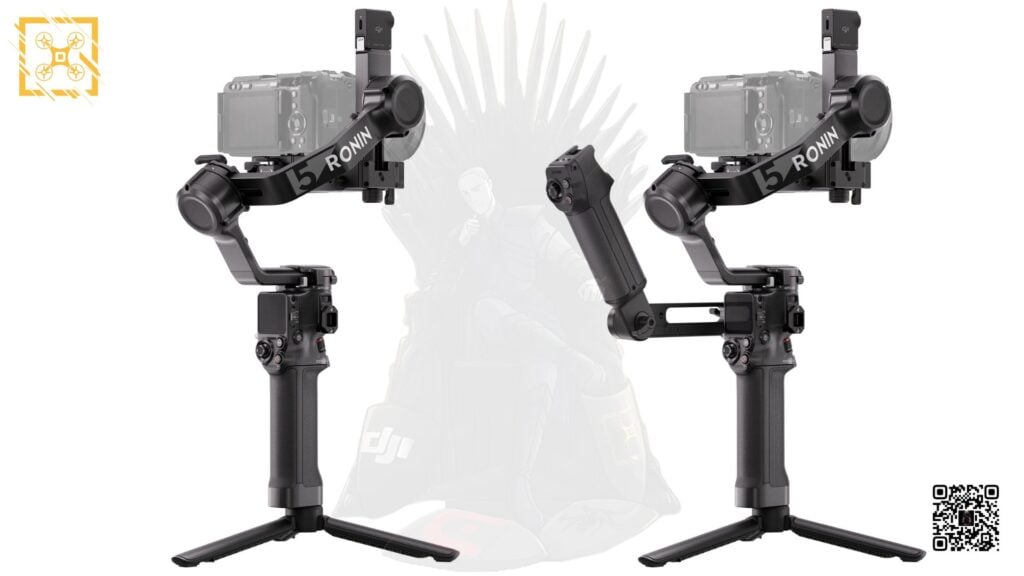
DJI has a packed September ahead, but a last-minute leak has stolen the spotlight from its much-rumored drone. Instead of the expected Mini 5 Pro teaser, a surprise appearance of the Osmo Nano — a new compact action camera — has tech watchers buzzing.
The company is lining up both a new Mini-series drone and the Osmo Nano for launch this month. The Mini 5 Pro is still tipped for a September 16 reveal, yet so far DJI has kept unusually quiet. That silence left room for leakers to step in.
YouTuber The Product Village briefly posted a clip showing the Osmo Nano, which was later reuploaded on X. The short video pointed to 128 GB of built-in storage and hinted at different accessory bundles — in line with DJI’s past strategy for its Action line. For context, the Action 2, the model this Nano seems to replace, is still selling for around $289 on Amazon.
Adding weight to the leak, Roland Quandt shared what appear to be official product renders of the Osmo Nano on Bluesky. The images reveal a slim, modular design, but key details such as camera specs and pricing remain under wraps.
What makes this timing more interesting is what hasn’t happened. DJI usually drops a teaser about a week before unveiling a new drone, yet with the Mini 5 Pro that moment hasn’t come. Despite sightings with influencers, the drone remains under wraps — leaving the Osmo Nano to grab headlines instead.
If the rumors hold, September could mark the Osmo Nano’s official debut, with the Mini 5 Pro following soon after. Either way, DJI seems ready to shake up both the drone and action cam markets once again.
Xgimi has launched the Titan, its first projector built for commercial use. The company unveiled the new model at IFA 2025 and confirmed it is also suitable for high-end home theater setups.
Xgimi Titan Specifications
The Titan outputs 5000 ISO lumens of brightness and supports native 4K resolution. It is designed to deliver sharp, bright, and color-accurate visuals even in well-lit environments.
The Titan features a large 0.78-inch DMD chip that offers 2.8 times more reflective area than the smaller 0.47-inch chips found in most home projectors. Xgimi claims this results in better detail, higher brightness, and improved contrast. The projector uses a self-developed dual-laser light engine and the new Xgimi X1 AI image processor. This chip analyzes and enhances each frame in real time, improving clarity, contrast, and color fidelity.
The projector covers 100% of the DCI-P3 color gamut and reaches a dynamic contrast ratio of 5,000,000:1. It supports Dolby Vision, HDR10+, IMAX Enhanced, and Filmmaker Mode. Xgimi has designed the Titan to perform without requiring a dark room. It maintains brightness and color accuracy in ambient lighting conditions.
Xgimi also includes a motorized lens shift module, allowing precise vertical and horizontal adjustments without distorting the image. The Titan runs at less than 28dB at a one-meter distance in standard mode. The system includes a built-in power adapter for a cleaner ceiling installation. It also supports 3D playback, a feature that is not common in ultra-bright projectors.
The Titan is aimed at both AV enthusiasts and small businesses. It is suitable for conference rooms, retail displays, and immersive installations. It also works as a drop-in upgrade for users with older lamp-based home projectors.
Xgimi has not confirmed the price or release date yet. The company also showcased its recently launched Horizon 20 series at IFA 2025, which targets gamers and home theater users.
In related news, the Lumio Arc 5 is now available for purchase, offering up to 100 inches of Full HD projection at a budget-friendly price. Meanwhile, Tmall has introduced a new portable projector featuring a 360° stand, 4K decoding, and Wi-Fi 6 connectivity.
For more daily updates, please visit ourNews Section.
Apple has announced the Apple Watch Series 11, introducing hypertension notifications, sleep score tracking, and support for 5G connectivity. The new model features a thinner design, longer battery life, and enhanced durability, aiming to serve as a more comprehensive health and fitness device.
Apple Watch Series 11 Specifications
The Series 11 can detect potential chronic high blood pressure by analyzing blood vessel response patterns over 30 days using its optical heart sensor. Apple trained this capability using machine learning on data from over 100,000 participants, and later validated it through a clinical study involving 2,000 users. The feature is expected to help identify over 1 million undiagnosed hypertension cases within its first year. It will roll out later this month in more than 150 countries, subject to regulatory approval.
Apple has introduced a new sleep score system that measures rest quality based on factors like sleep duration, stages, and bedtime consistency. The score is viewable directly on the watch, through Smart Stack widgets, and in the iPhone’s Health app for long-term trend tracking. Apple developed the algorithm using sleep recommendations from leading medical associations and analyzed over 5 million nights of sleep data to build it.
The Watch Series 11 now supports 5G. Apple redesigned the antenna system to improve signal strength, especially in areas with poor coverage. The device also supports fast charging, with a 15-minute charge delivering up to 8 hours of use. Total battery life reaches up to 24 hours in normal use and 38 hours in Low Power Mode.
The aluminum versions of the watch now use updated Ion-X glass, which offers twice the scratch resistance compared to the previous generation. Titanium variants continue to use sapphire crystal displays for enhanced durability. Both models feature an Always-On Retina LTPO OLED screen capable of reaching up to 2,000 nits of peak brightness.
The watch runs on the new S10 SiP with a 64-bit dual-core processor and 4-core Neural Engine. It includes watchOS 26, which adds a redesigned interface with Liquid Glass effects, new watch faces, and updated apps. The update also enables features like Live Translation in Messages, a wrist flick gesture, Workout Buddy with voice-based coaching, and Precision Finding for iPhone.
Pricing and Availability
Apple Watch Series 11 is available in 42mm and 46mm sizes. Pricing starts at $399 for the GPS model and $499 for the GPS + Cellular version. Pre-orders begin today, and availability starts on September 19 across more than 50 countries. Check out the Indian pricing as well.
iPhone 17s are officially out, and new Android flagships won’t be far behind. Vivo looks set to be first out of the gate this month with the X300 and X300 Pro, powered by MediaTek’s Dimensity 9500 chip.
And the Pro model has just shown up on the AnTuTu v11 benchmark with an overall score of 4,011,932 points. Breaking it down, the CPU managed 1,043,247 while the GPU pulled in 1,510,982.
Inside, the Dimensity 9500 is built on a cluster of four Cortex-X930 and four Cortex-A730 cores — in other words, it’s an all big-core design. Vivo today also confirmed its joint partnership with Arm, adding that the chip will support the SME2 instruction set.
The device in this particular test was the Vivo X300 Pro Satellite Communication Edition, which all but confirms satellite connectivity. That same variant also cleared China’s 3C certification last week with support for 90W wired charging.
Vivo is also expected to offer a standard X300 Pro without satellite features, while the satellite edition may only come in a 16GB RAM and 1TB storage configuration.
Vivo X300 Pro Rumored Specifications
On the hardware side, the X300 Pro is rumored to ship with a 6.8-inch flat OLED display at 1.5K resolution and a 120Hz refresh rate.
The phone will have a 50-megapixel Sony LYT-828 main sensor with OIS, a 50-megapixel ultrawide, and a 200-megapixel Samsung HPB periscope telephoto camera with OIS.
Vivo X400 Pro fan made render
As for the battery, it is expected to measure around 6,500mAh, which, apart from supporting 90W wired charging, will also feature 30W wireless charging.
Vivo is also said to be equipping the phone with its V3 and VS1 image processing chips to help squeeze more out of the system.
For more daily updates, please visit our News Section.
Canon U.S.A. has introduced several new products to its cinema and imaging lineup, including the EOS C50 full-frame cinema camera, the RF85mm F1.4 L VCM Hybrid Lens, firmware updates for Cinema EOS cameras, a refreshed PowerShot compact model, and the CINE-SERVO 11-55mm T2.95-3.95 lens.
Canon EOS C50 Cinema Camera
The EOS C50 is Canon’s smallest and lightest cinema camera, weighing about 1.5 pounds. It features a new 7K full-frame CMOS sensor, 7K 60P internal RAW recording, and 32 megapixel still photo capture. The sensor supports Dual Base ISO of 800 and 6400 in Canon Log 2 and can record 12-bit Cinema RAW Light up to 7K 60P. The DIGIC DV7 processor powers the system, and the C50 becomes the first Cinema EOS model with full frame 3:2 open gate recording.
Canon EOS C50 camera – without lensCanon EOS C50 camera – with lens and handle
The camera offers multiple recording formats, including Cinema RAW Light, XF-AVC, XF-AVC S, and XF-HEVC S. These formats are designed to preserve metadata while recording in the MP4 structure. The C50 can also capture simultaneous cropped video in 2K when shooting in 4K DCI or UHD, with crop options of 9:17, 9:16, or 1:1.
Connectivity includes support for XC protocol, remote control over IP via Wi-Fi, or through a third-party USB-C Ethernet adapter. It is also compatible with the Multi Camera Control App and integrates with frame.io Camera to Cloud. The detachable top handle provides two full-size XLR audio inputs, a start-stop button, and a zoom rocker. The RF mount allows use with Canon’s RF lenses, including the new RF85mm F1.4 L VCM Hybrid Lens.
RF85mm F1.4 L VCM Hybrid Lens
Canon RF85mm F1.4 L Lens
This lens is designed for both still and video use. It has an 85mm focal length, F1.4 maximum aperture, controlled focus breathing, and is suited for portrait and cinematic work with smooth background blur.
Firmware and PowerShot Updates
Firmware updates will be released later in 2025 for the EOS C400, C80, C70, and R5C. Updates will add 3:2 open gate recording to the C400, improve focus peaking, add view assist in media mode, and enhance assign buttons and joystick controls on the C80 and C400.
Canon PowerShot ELPH 360 HS A – BlackCanon PowerShot ELPH 360 HS A – Silver
Canon has also refreshed the PowerShot ELPH 360 HS, now named the PowerShot ELPH 360 HS A. The update changes the memory card slot from SD to microSD. It will be available in black and silver.
CINE-SERVO 11-55mm T2.95-3.95 Lens
Canon has also announced the CINE-SERVO 11-55mm T2.95-3.95 lens. It offers a 100 degree ultra-wide angle and covers Super 35mm sensors. A built-in 1.5x extender expands coverage to full-frame, increasing the focal range to 82.5mm. The 11mm wide end is equivalent to 4.1mm on a 2/3-inch broadcast camera.
CINE-SERVO 11-55mm T2.95-3.95 – PL
The lens includes a new drive unit with faster focus and iris speeds, Focus Breathing Compensation, and a USB-C port for personalized settings. A 16-bit encoder supplies precise positional information for virtual production. Available in RF and PL mounts, it supports autofocus with RF, and Cooke/i Technology and Zeiss eXtended Data with PL. It also includes a programmable rocker switch, ARIA compatibility for illumination adjustments, and ALAC support for aberration correction with supported cameras.
Pricing and Availability
EOS C50: $3,899, shipping Q4 2025
RF85mm F1.4 L VCM Hybrid Lens: $1,649, available September 2025
PowerShot ELPH 360 HS A: $379.99, available October 2025
CINE-SERVO 11-55mm T2.95-3.95 Lens: $35,300, available November 2025
For more daily updates, please visit our News Section.
OxygenOS 16, based on Android 16, will be a major upgrade for OnePlus devices, expected to bring tons of enhancements, new features, and visual changes throughout the system. The Android 16 beta has been available to select OnePlus phones since April, and now it appears that the stable release of OxygenOS 16 is around the corner. So, if you have a OnePlus device, here’s what you need to know and what to expect.
When will OnePlus release stable OxygenOS 16?
Google was faster than usual with the Android 16 release this year. It happened in June, and that’s when eligible Google Pixels get the new OS update. We were expecting a quicker release from other Android brands as well, but it’s turning out to be a long wait for the stable release.
OnePlus, however, was one of the first brands to push Android 16 beta earlier this year. It skipped the first beta and released the second beta for the OnePlus 13 in April, followed quickly by the third beta in May. But it has, so far, remained silent about the stable release. OnePlus hasn’t announced when it will release the stable OxygenOS 16 or what the roadmap looks like.
However, it appears we may not be far from the stable release, as the brand has already begun OxygenOS 16 closed beta testing on several devices, including the OnePlus 13 and 13s. This is a rather confidential beta program. OnePlus may soon follow up with an open beta release to a large number of OnePlus users before pushing out the stable build.
The brand is expected to kick off the stable rollout of OxygenOS 16 in October. The OnePlus 13 series will be among the first phones to receive the update, followed by older flagship devices, and gradually covering mid-range and cheaper models. Check out the complete list of OnePlus devices eligible for OxygenOS 16 upgrade.
What to expect from OxygenOS 16?
OnePlus hasn’t shared details about the new features and changes coming to OxygenOS 16. However, we already have a good idea about that, thanks to previous beta builds and recent leaks. The upgrade will offer new features from Google as part of Android 16, along with numerous changes and new features from the OnePlus development team.
OnePlus may integrate many features from Android 16 into its next major upgrade, such as a redesigned quick settings menu, new customization options, notification grouping, and the latest enhancements to security and privacy. The Live Updates feature from Android 16 could also be integrated with Live Alerts for added usefulness.
According to a leak from Smartprix, the OxygenOS 16 is finally bringing the much-awaited lock screen widgets, making the lock screen more useful than ever. There will be numerous widgets, including weather, calendar, and widgets from supported apps. The lock screen is also getting three new clock styles, including a full-width stretched clock inspired by iOS 16.
The Quick Settings panel also gets better with new options. In the Split layout, users can drag and drop toggles anywhere on the screen. There’s also a new scrollable layout for easier access. Additionally, the upgrade introduces many under-the-hood changes, making the software smoother and more responsive.
I’m pretty confident there will be many more exciting features and upgrades when OnePlus releases the final version of OxygenOS 16. With a lot to look forward to, you may want to regularly visit our Android 16 section or consider joining our Telegram channel to stay up-to-date with the latest updates.
Samsung has launched a new 183L Single Door Refrigerator range in India, adding eight models to its line-up. The new refrigerators come in two floral designs, Begonia and Wild Lily, and are available in red and blue. Buyers can choose between 3 Star and 5 Star energy ratings.
The range is designed to fit the needs of Indian households looking for both style and everyday reliability. The Begonia and Wild Lily patterns are made to add a fresh look to kitchens, while the Grande Door design with a bar handle gives the refrigerators a solid and premium feel. According to Samsung, floral designs make up over 70 percent of its single-door refrigerator sales in India.
Ghufran Alam, Vice President, Digital Appliances Business, Samsung India, said, “With this new Single Door Refrigerator range, we are bringing together Samsung’s design expertise and technological innovation to create a product that is both beautiful and efficient. Indian consumers are increasingly seeking appliances that complement their home interiors while delivering strong performance, and this new line-up delivers exactly that.”
The new refrigerators include a Digital Inverter Compressor with a 20-year warranty. It helps in quieter operation, saves energy, and ensures long-term performance. They also come with Stabilizer-Free Operation to handle voltage fluctuations safely. Inside, an LED lamp lights up the interior while using less energy and lasting longer than regular bulbs. Toughened glass shelves can hold up to 175 kg, making them suitable for heavy pots and pans. Some models feature a Base Stand Drawer with 11.8L of additional storage space for items such as onions and potatoes.
Pricing & availability
Prices for the new range start at INR 19,999 ($227) for the 3 Star models and INR 21,999 for the 5 Star models. With these additions, Samsung is targeting households that want modern design, useful features, and reliable performance in an affordable refrigerator.
The Oppo Find X9 series is nearing its official release, with new details coming from Oppo’s product manager Zhou Yibao. He shared a roundup of key features during the iPhone 17 launch period, giving a clearer picture of what to expect from the Find X9 lineup. The most important detail that Yibao confirmed is the battery size of both Find X9 series phones.
Oppo Find X9 series battery size confirmed
Oppo Find X9 series front design
According to Yiiabo, the standard Find X9 will be powered by a 7,025mAh glacier battery, while the Find X9 Pro will house an even larger 7,500mAh unit. Both devices are rumored to support 80W wired and 50W wireless charging. The brand recently confirmed that the Find X9 measures only 7.99mm and weighs around 203 grams. On the other hand, the Pro edition measures 8.25mm and weighs around 224 grams.
Oppo Find X9 series in titanium shade
Both models will feature cold carving technology, a titanium-inspired color option, and straight screen displays with narrow four-sided symmetry. The design approach aims to deliver both structural refinement and visual uniformity.
On the imaging side, both the Find X9 and Find X9 Pro will be equipped with an advanced suite said to be inspired by well-known imaging technology. Video recording is expected to see major improvements, aligning the series more closely with professional-grade mobile photography standards.
The devices will arrive pre-installed with ColorOS 16, which is designed to integrate smoothly with Apple’s ecosystem. Additional highlights include a new eye protection display substrate and a feature aimed at reducing motion sickness during extended viewing.
The Oppo Find X9 series is expected to debut by early or mid-October in China. It is likely to go official on Oct. 28 globally.
For more daily updates, please visit our News Section.
The recently unveiled Apple iPhone 17 series for the first time features a 120Hz display. Soon after the iPhone 17 series launch, OnePlus President Li Jie Louis took to Weibo to state that OnePlus is preparing a new leap in display technology for its upcoming devices. He hinted at a major shift that will impact visual smoothness and user experience.
OnePlus 15, Ace 6 could feature ultra-high refresh rate displays
Upcoming OnePlus devices to feature ultra-high refresh rate displays
Li Jie Louis explained that high refresh displays have already transformed how people interact with smartphones over the past decade. He indicated that the next step will be the ultra-high refresh era and linked this progress to the anticipated OnePlus 15 and OnePlus Ace 6.
Both devices are expected to launch in October in China and could mark the debut of the company’s new display technology. He noted that, similar to the OnePlus 7 Pro’s introduction of higher refresh rates six years ago, the new models could set a fresh benchmark for visual fluidity. Alongside smoother navigation, the emphasis will also be on enabling ultra-high frame gaming, promising faster response and reduced lag during play.
He further suggested that once these devices adopt ultra-high refresh technology, other manufacturers may follow, repeating a pattern where innovations from OnePlus become industry-wide standards.
The JBL Boombox 4 arrives as a major update to one of the brand’s most iconic portable speaker lines. It builds on the Boombox 3’s reputation for big sound and deep bass, but introduces smarter audio processing, more power, and a lighter body. JBL is targeting users who want festival-grade audio in a grab-and-go format that doesn’t compromise on clarity or volume.
The Boombox 4 keeps the familiar cylindrical shape and chunky handle but features a refined design. JBL has reduced the weight by nearly 2 pounds compared to the Boombox 3, making it easier to carry without reducing power.
The speaker delivers 50% more output in battery mode, pushing out 2 x 60W RMS from the woofers and 2 x 40W RMS from the tweeters. The new setup also includes a third passive radiator and upgraded mid-range drivers.
This version is designed to be portable but powerful enough to serve as the main sound source for outdoor events, pool parties, or backyard sessions. The rugged shell is IP68 rated for water and dust resistance, allowing the speaker to survive most environments without damage.
2. AI Sound Boost
JBL has introduced AI Sound Boost to the Boombox 4. This real-time audio optimization technology analyzes the music and adjusts the output to enhance clarity and reduce distortion. The system uses intelligent processing to manage power delivery and dynamic range, especially at higher volumes. The sound remains punchy and full without sacrificing detail.
JBL says this system improves overall audio fidelity and allows the speaker to push its drivers harder without losing precision. It adapts to different genres automatically, giving users consistent sound whether they play electronic tracks or acoustic sets.
3. Bigger Sound, Smaller Footprint
Despite the jump in performance, JBL has trimmed the speaker’s weight to 13 lbs. That’s about 12% lighter than the previous model. The updated handle improves grip and stability during transport. The Boombox 4 is IP68-rated, offering stronger protection than the previous IP67 model. This makes it more resistant to dust and better equipped to handle submersion in water.
The speaker also includes support for Auracast. This protocol allows users to link multiple compatible JBL speakers together in stereo mode or party mode. The setup expands sound coverage across large spaces and syncs playback between units without requiring a complex app pairing process.
4. Audiophile Touches Without the Snobbery
JBL added USB-C lossless audio playback to the Boombox 4. Users can connect laptops or phones via USB-C and bypass Bluetooth compression. This feature is rare in portable Bluetooth speakers and gives the Boombox 4 an edge with users who care about audio detail.
JBL also made the internal battery replaceable. The battery is sold separately and can be swapped in three steps. This adds long-term value to the product, allowing users to extend its lifespan without buying a full replacement.
5. Battery Life That Outlasts the Playlist
The Boombox 4 runs up to 28 hours on a single charge. The battery life can be extended to 34 hours by enabling Playtime Boost, which adjusts internal settings for longer runtime. Charging takes about three hours. The speaker also acts as a power bank, letting users charge other devices through its USB ports.
6. Price and Positioning
JBL has priced the Boombox 4 at $549.95. It comes in Black, Blue, and a camouflage Squad finish. The pre-sale is live on JBL’s website, with general availability starting September 28, 2025.
For comparison, the Boombox 3 currently sells at $399.95 but lacks key upgrades like AI Sound Boost, Bass Boost modes, Auracast, and USB-C audio.
The JBL Boombox 4 offers significant performance and usability upgrades. It delivers a stronger sound signature, smarter audio controls, and a lighter, more durable design. This speaker aims to serve both partygoers and serious listeners with a blend of raw output and refined features.
For more daily updates, please visit our News Section.
Apple has shared the official India pricing for its new smartwatch lineup and the latest AirPods model. The announcement includes the Watch Ultra 3, Watch Series 11, Watch SE 3, and the AirPods Pro 3, all of which will be available from September 19. Here is a complete breakdown of the models, case types, sizes, and corresponding price tags.
4AirPods Pro 3 pricing in India
AirPods Pro 3
Alongside the watches, Apple has also revealed the AirPods Pro 3 will be available at Rs 25,900 (~$295).
With the Sept.19 release date, Indian buyers now have clarity on both pricing and options across Apple’s latest wearables and audio devices.
For more daily updates, please visit our News Section.
We use cookies on our website to give you the most relevant experience by remembering your preferences and repeat visits. By clicking “Accept”, you consent to the use of ALL the cookies.
This website uses cookies to improve your experience while you navigate through the website. Out of these, the cookies that are categorized as necessary are stored on your browser as they are essential for the working of basic functionalities of the website. We also use third-party cookies that help us analyze and understand how you use this website. These cookies will be stored in your browser only with your consent. You also have the option to opt-out of these cookies. But opting out of some of these cookies may affect your browsing experience.
Necessary cookies are absolutely essential for the website to function properly. This category only includes cookies that ensures basic functionalities and security features of the website. These cookies do not store any personal information.
Any cookies that may not be particularly necessary for the website to function and is used specifically to collect user personal data via analytics, ads, other embedded contents are termed as non-necessary cookies. It is mandatory to procure user consent prior to running these cookies on your website.