The gaming smartphones have become a popular category of phones and more and more device makers are jumping in. Now, it seems that the China-based smartphone maker Meizu is also planning to soon launch a gaming smartphone.
The company has renamed its “Meizu Neighbourhood Committee” on Weibo to “Meizu Gaming” which indicates that the company could soon launch a gaming smartphone. Some are speculating that it could mean that Meizu is forming a new e-sports team.
A post on the official Weibo account reveals that Meizu Gaming, in partnership with King of Glory game, is inviting gamers to make a strong team to represent Meizu in a gaming competition. It adds that winners will get five Meizu 17 smartphones along with few more prizes for the participants.
Meizu planning to make a gaming smartphone makes sense given that the company’s co-founder had talked about it last year. Also, with gaming smartphones getting more and more popular for powerful hardware, most manufacturers are expected to join the race to make the most powerful gaming smartphone.
At this time, there’s nothing known about the Meizu Gaming Smartphone but given the new Weibo update, we expect the company to reveal more details about the same in the coming days or weeks.
Currently, Meizu 17 and 17 Pro are the flagship smartphones from the company for this year, available in its home market. It has been releasing new software updates at regular intervals with new features and functionalities.
The company had previously teased that it could launch a smartwatch in Q4 2020 and now it seems that the company is finally ready to do so. It has trademarked the names “Meizu Watch” and “Flyme For Watch” for its upcoming wearable device.
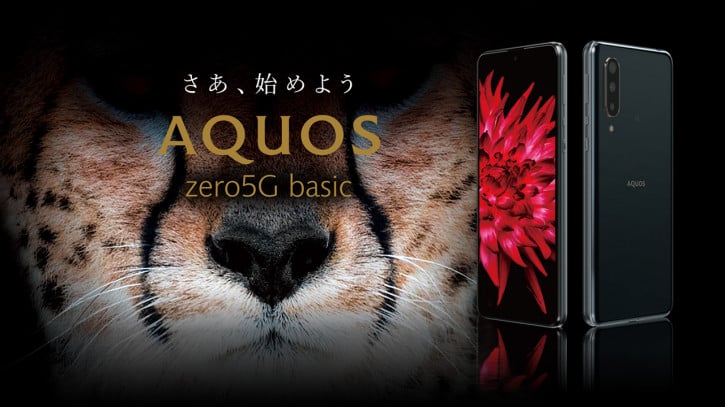
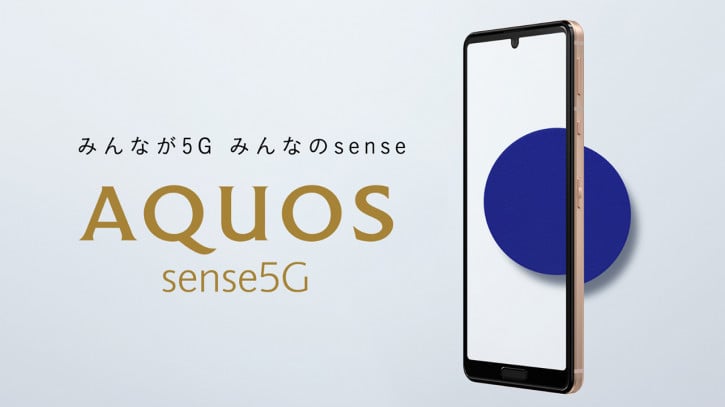
Last year, Sharp’s AQUOS Sense 3 series received a good reception in Japan. Now, the company has unveiled the AQUOS Sense 4 series, which includes three devices such as AQUOS Sense 5G, Sense 4, and Sense 4 Plus. Apart from the 5G-ready AQOUS Sense 5G, the Japanese firm also unveiled the AQUOS Zero 5G Basic upper mid-range 5G phone.
Sharp AQUOS Zero 5G Basic specifications and features
The AQUOS Zero 5G Basic is an IP65/68 rated smartphone that measures 161 x 75 x 9mm and it weighs 182 grams. It has a 6.4-inch OLED display that offers 1080 x 2340 pixels resolution. The waterdrop notch screen supports a 240Hz refresh rate and it comes with an in-screen fingerprint reader. The Snapdragon 765G chipset powers the phone’s two variants such as 6 GB RAM + 64 GB storage and 8 GB RAM + 128 GB storage.
The AQUOS Zero 5G Basic has a 16.3-megapixel front camera with an f/2.0 aperture. Its rear-facing triple camera system has an f/1.8 aperture 48-megapixel main camera with hybrid AF, an f/2.4 aperture 13.1-megapixel ultrawide lens with 125-degree field-of-view, and an f/2.4 aperture 8-megapixel telephoto lens with PDAF. The AQUOS Zero 5G has a 4,050mAh battery and it comes with other features like Wi-Fi 802.11ac, Bluetooth 5.1, GPS, NFC, and USB-C. The device is preinstalled with Android 11 and it lacks a 3.5mm audio jack.
Sharp AQUOS Sense 5G specifications and features
The AQUOS Sense 5G has 148 x 71 x 8.9mm and it weighs 176 grams. It has a 5.8-inch IGZO LCD display with a waterdrop notch. It supports 1080 x 2280Full HD+ resolution. The AQUOS Sense 5G seems is the world’s first phone to be fueled by the Snapdragon 690 5G chipset. The device is equipped with 4 GB of RAM and 64 GB of native storage.
The Sense 5G has a front-facing camera of 8-megapixel with f/2.2 aperture. The back panel of the phone has a triple camera system. It includes a 12-megapixel main camera with f/2.0 aperture, a 12-megapixel ultrawide lens with 121-degree FOV and f/2.4 aperture, and an 8-megapixel telephoto snapper with f/2.4 aperture. It is backed by a 4,570mAh battery that promises a battery life of one week. The device is also equipped with other features like face recognition, front-facing fingerprint sensor, Wi-Fi 802.11ac, Bluetooth 5.1, GPS, NFC, USB-C, and IP65 / 68 rated chassis. The Sense 5G is also loaded with Android 11 and it does not feature a 3.5mm audio jack.
Sharp AQUOS Sense 4 Plus and Sense 4 specifications and features
The AQUOS Sense 4 Plus measures 166 x 78 x 8.8mm and it weighs 198 grams. It has a larger 6.7-inch IGZO LCD notch-less display that offers 1080 x 2400 pixels resolution. The device is flanked with stereo speakers. The Snapdragon 720G chipset ships with Android 10 OS and is accompanied by 8 GB of RAM and 128 GB of storage.
The Sense 4 Plus has a dual selfie camera system that comprises of an f/2.0 aperture 8-megapixel main camera and a 2-megapixel depth sensor with f/2.5 aperture. Its rear-mounted triple camera system comprises of a 48-megapixel main lens with f/1.8 aperture, a 5-megapixel ultrawide lens with 115-degree FOV, and f/2.2 aperture, 2-megapixel macro shooter with f/2.4 aperture, and a 2-megapixel depth sensor with f/2.4 aperture. It has a smaller battery of 4,120mAh capacity. The other features of the Sense 4 Plus include face unlock, rear-mounted fingerprint sensor, IP65 / 68 certified body, Wi-Fi 802.11ac, Bluetooth 5.1, GPS, NFC, USB-C, and 3.5mm audio jack.
The measurements and weight of AQUOS Sense 4 are identical with Sense 5G. It has a 5.8-inch IGZO LCD panel with a waterdrop notch that delivers 1080 x 2280 pixels resolution. The Snapdragon 720G driven handset has Android 10 OS, 4 GB of RAM, and 64 GB of native storage.
It has the same quad-camera system that is available on the Sense 4 Plus. At front, it features a single selfie camera of 8-megapixel with f/2.4 aperture. The phone houses a 4,570mAh battery. Like the Sense 4 Plus, the Sense 4 offers other specs like face unlock, rear-mounted fingerprint sensor, IP65 / 68 certified body, Wi-Fi 802.11ac, Bluetooth 5.1, GPS, NFC, USB-C, and 3.5mm audio jack.
At present, there is no word on the pricing of the AQUOS Zero 5G Basic, Sense 5G, Sense 4, and Sense 4 Plus.
Microsoft’s latest hardware product — Surface Duo has been announced and is now available for purchase in the United States. The early reviews of the device indicate that the product doesn’t live up to the expectations.
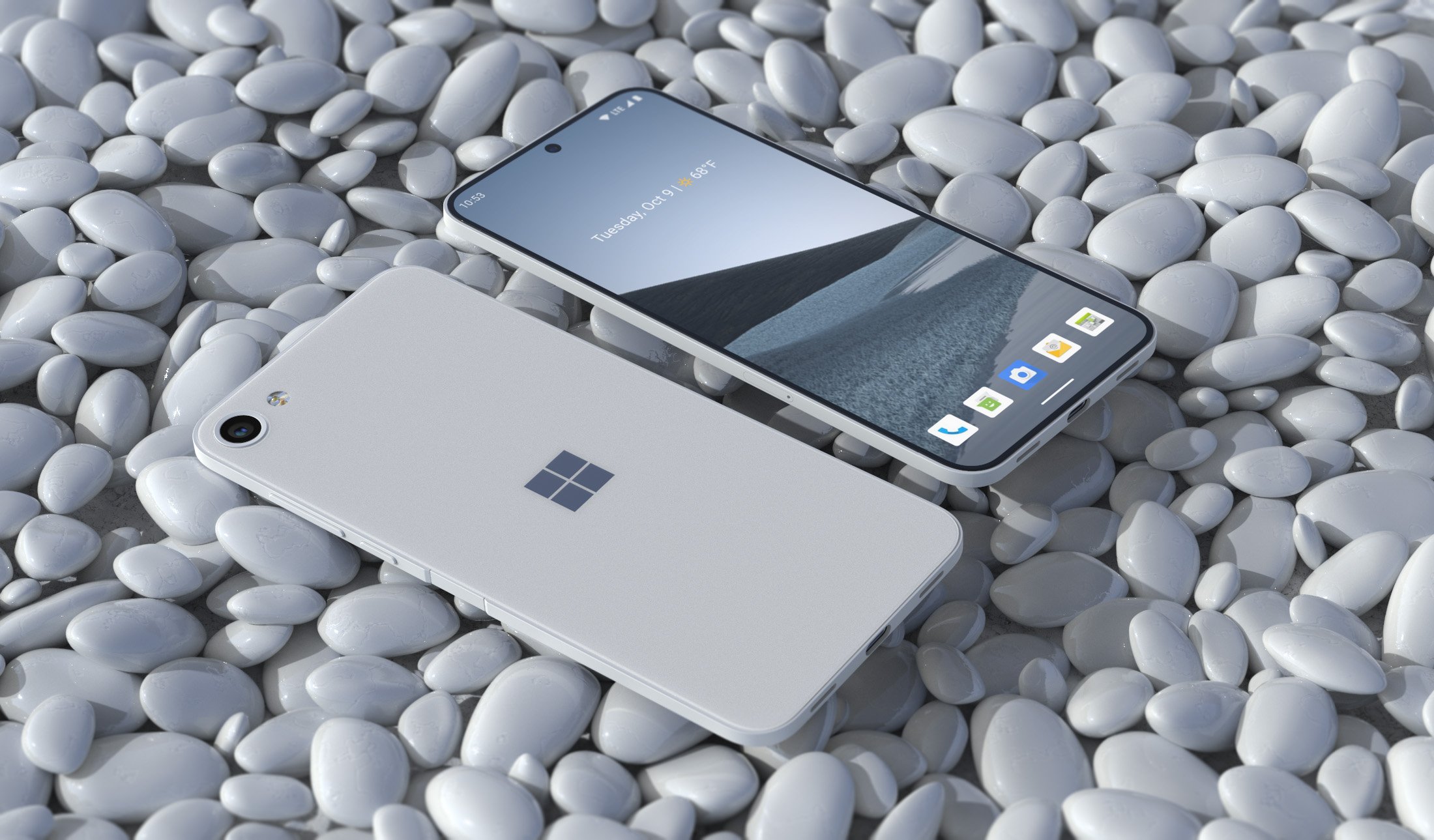
Amid all these, fan-made concept renders of the Microsoft Surface Solo smartphone have surfaced online. It showcases what the company could make as a standalone typical smartphone and not the experimental dual-display device.
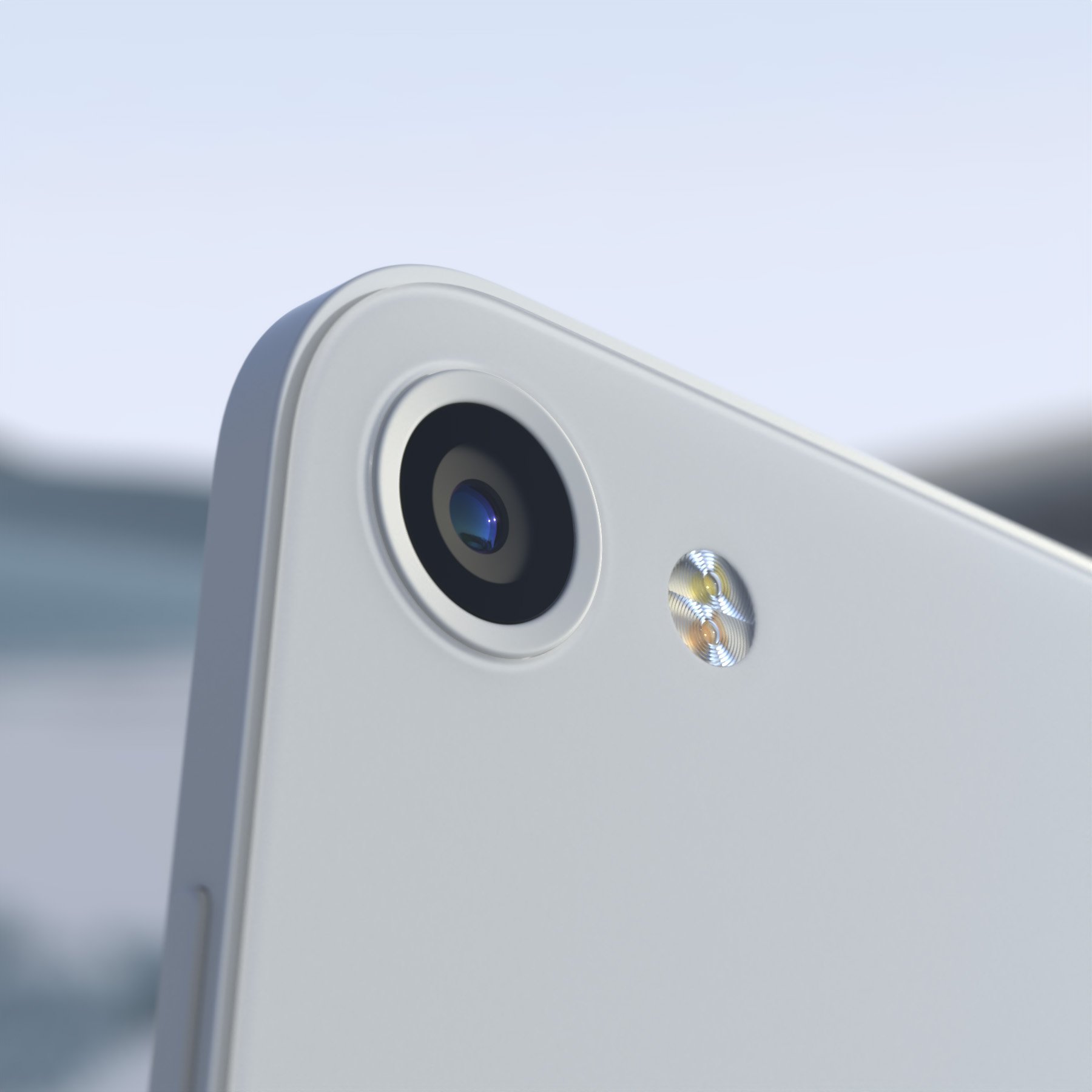
The renders showcase a smartphone with minimal bezels and a punch-hole cutout at the top-center to house the front-facing camera sensor. On the backside, there’s a single camera sensor and an LED flash at the top-left corner. The phone, which features round corners, has a USB Type-C port and dual speaker grille at the bottom. It has a power button and volume rocker keys on the right side.
Do note that these are just concept renders by Jonas Daehnert and the company isn’t working on a Surface Solo smartphone. There are no reports of Microsoft developing a typical Android-powered mobile phone, so even if something like this is to happen, it isn’t happening anytime soon.
While the Microsoft Surface Duo smartphone with dual-display and a customized Android operating system has been launched, the company has delayed the launch of its Surface Neo with a similar dual-display concept.
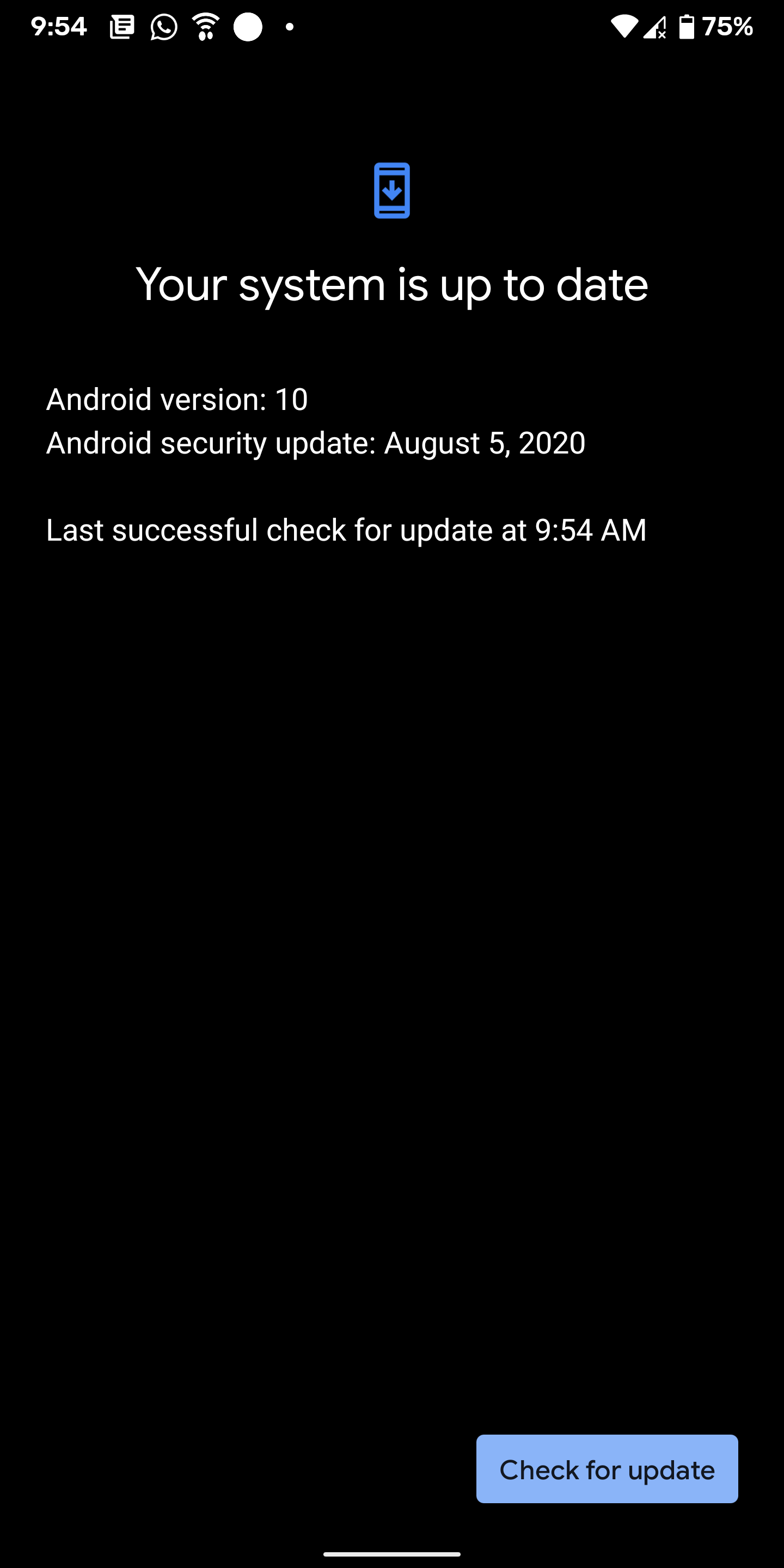
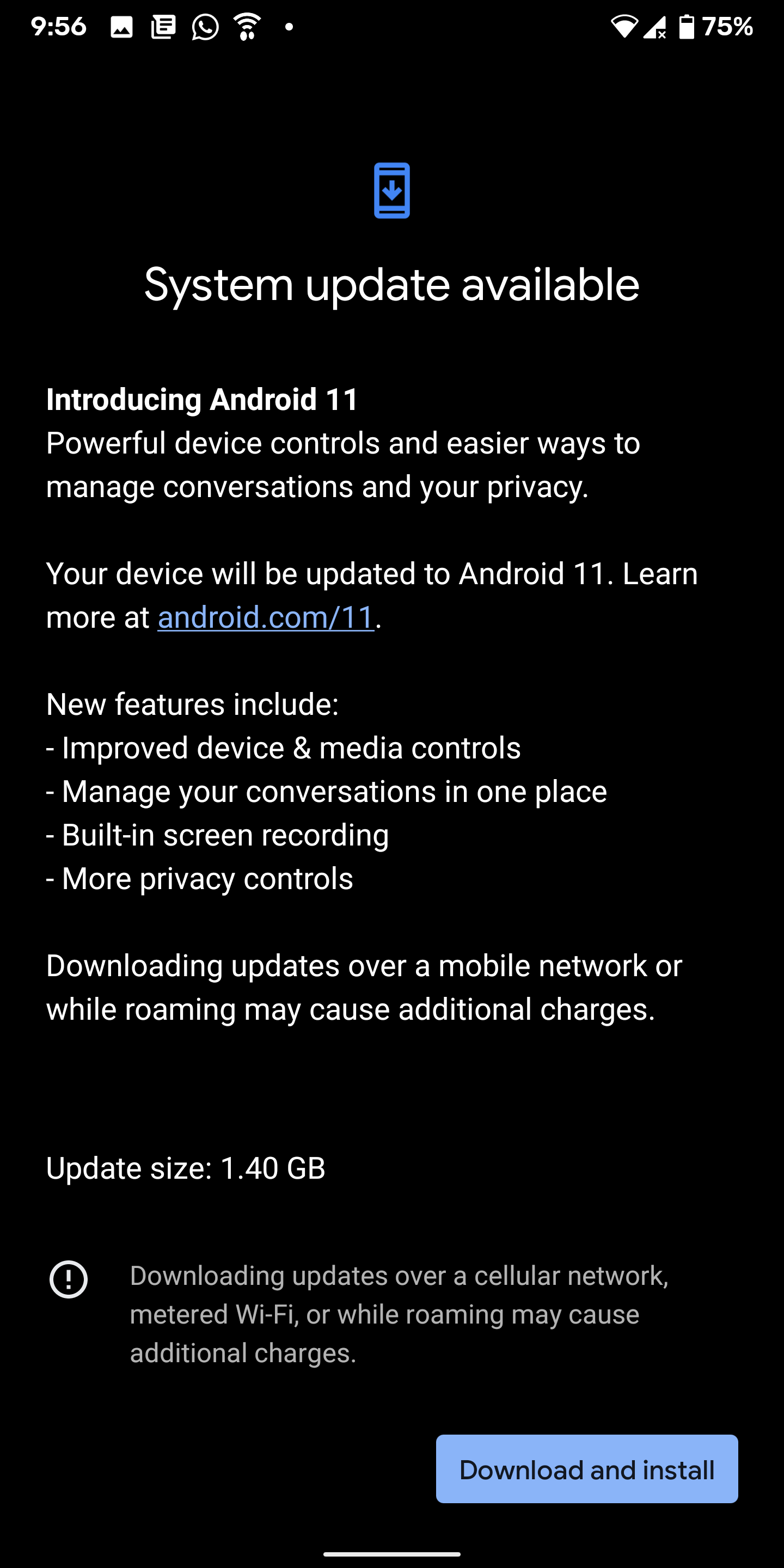
Google has started rolling out the latest Android 11 update to its Pixel series of smartphones. One of the reasons people opt for the Pixel series is that it’s among the first to get the new Android updates.
A report from Android Central reveals that while Android 11 is now officially getting rolled out, Indian users aren’t getting the update. Google‘s OTA images page has download links for the Android 11 stable builds for all Pixels, and the notes suggest the build is available for “all carriers except IN.”
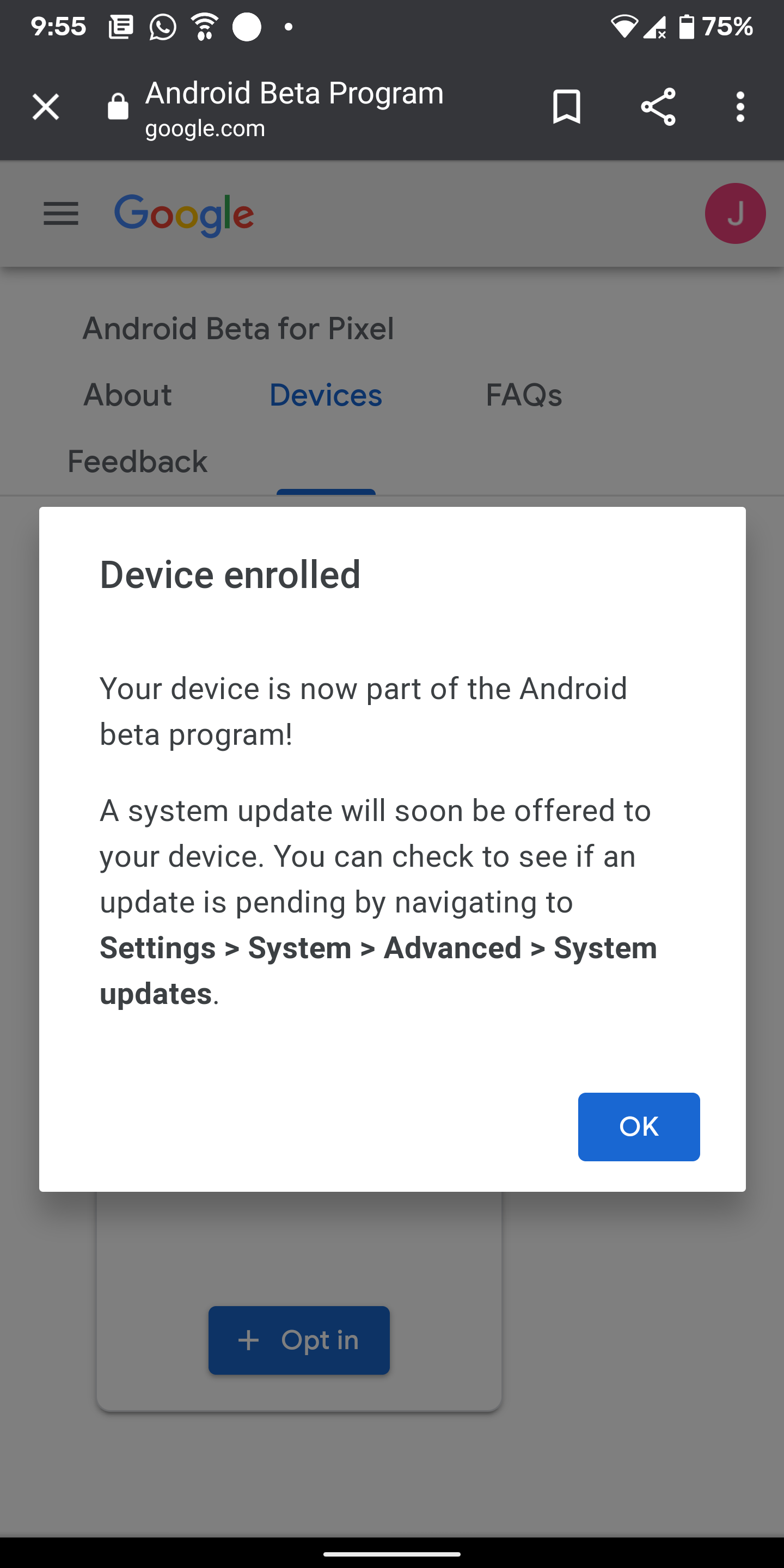
Do note that this is for the stable version only as the beta update is available. So, the workaround to get the latest Android 11 for Pixel smartphones in India is to enroll in the Beta Update program. For more information about this, visit google.com/android/beta.
It is not yet clear why the Android 11 stable update isn’t available to Pixel devices in India but it may have something to do with carrier testing. The reason could be that the company held up the update in India for additional carrier testing to make sure features like Wi-Fi Calling and eSIM work as intended.
In a statement, a Google spokesperson has confirmed to Android Central that the company is working to make the Android 11 update “compatible” with India’s ecosystem requirements and that the stable OTA should be rolling out in the country from next week.
As we mentioned earlier, getting the latest Android updates first is the reason people opt for Pixel phones among so many other options, and it doesn’t look good when the stand-out feature isn’t available for the users in one of the world’s largest smartphone market.
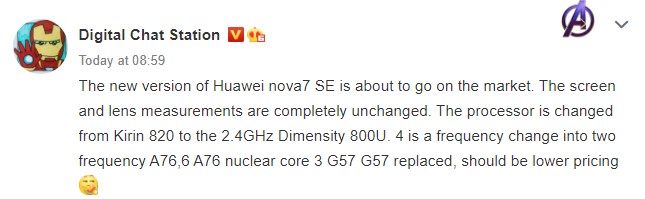
In April, Huawei announced the Huawei Nova 7 SE along with other phones such as Nova 7 and Nova 7 Pro smartphones. According to a Chinese tipster, the company could be soon launching a new version of the Huawei Nova 7 SE smartphone. He revealed that the major change in the Nova 7 SE’s new edition is that it will be equipped with a Dimensity 800U chipset.
The tipster revealed that the new version of the Huawei Nova 7 SE will have the same dimensions, screen, and cameras as the original model. The Nova 7 SE was fueled by the Kirin 820, but the upcoming new variant is expected to feature the Dimensity 800U chipset. He also claimed that the pricing of the Nova 7 SE’s new model could be lower than the original model.
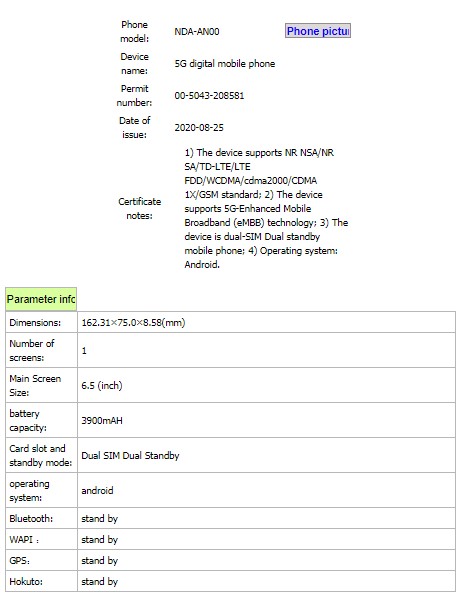
A new Huawei phone with model number CND-AN00 has appeared with initial specs in the database of China’s TENAA regulatory body. It measures 162.31 x 75 x 8.58mm and it is equipped with a 6.5-inch display. The phone houses a rated battery of 3,900mAh, which suggests that its typical size could be 4,000mAh.
The 3C certification of the device has revealed that its retail package may include a 40W fast charger. The CND-AN00 appears to the new version of Huawei Nova 7 SE as its dimensions, screen size, and battery capacity matches with the original model.
Huawei Nova 7 SE specifications
Huawei Nova 7 SE
The Huawei Nova 7 SE has 162.3 x 75 x 8.6mm and it has a 6.5-inch punch-hole display that produces a 1080 x 2400 pixels resolution. The 4,000mAh battery of the device supports 40W fast charging. The Kirin 820 chipset powered comes with EMIUI 10.1 based Android 10 OS. The Nova 7 SE has a 16-megapixel front-facing camera. Its rear side is fitted with a 64-megapixel + 8-megapixel + 2-megapixel + 2-megapixel quad-camera system.
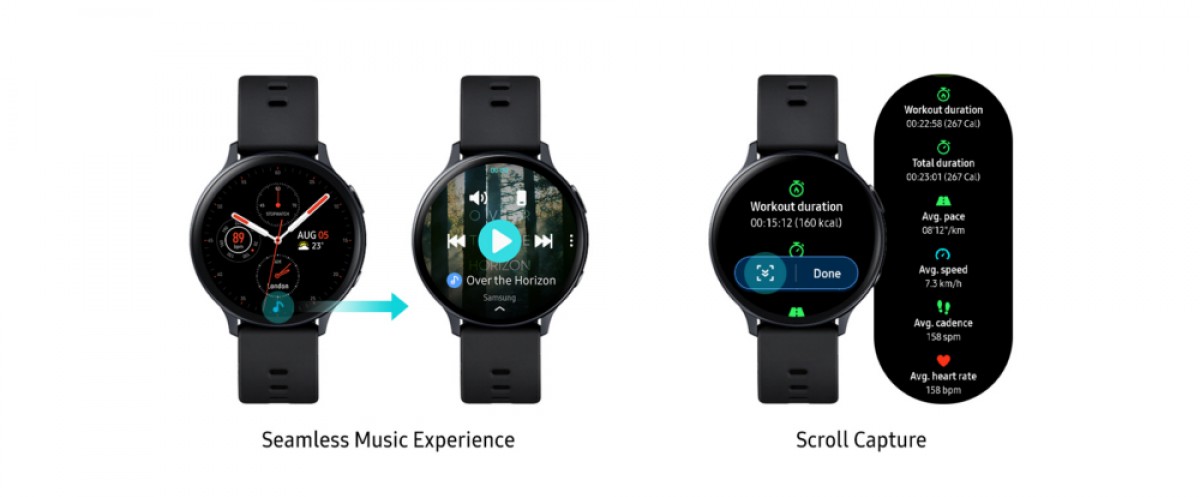
Samsung pushed a new update to the Galaxy Watch3 in early August. The tech giant has started pushing a similar update to the Galaxy Watch Active2. The update greatly enhances its exercise tracking and messaging abilities.
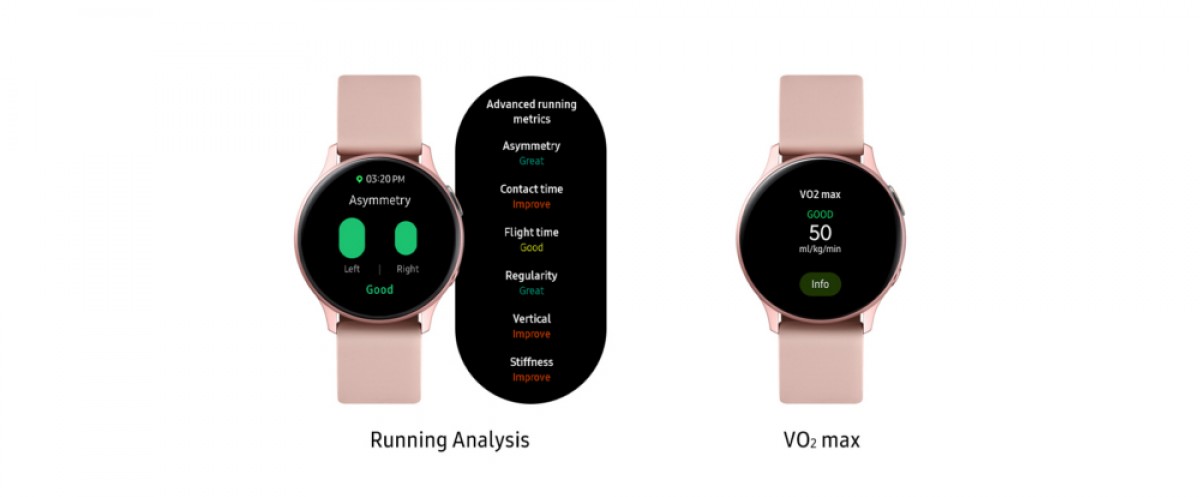
The update will start rolling out for the Bluetooth versions of the smartwatch and later on, it will be pushed to the LTE models. Top among the list of features which the update adds to the smartwatch is the new Running Analysis feature which helps you improve your form and avoid injury. It allows the watch to track and report the following metrics: asymmetry, regularity, stiffness, vertical oscillation, ground contact time.
Another important feature is the improvement of the ability of the watch to now measure VO2 max, which will help you track how your endurance has improved over time.
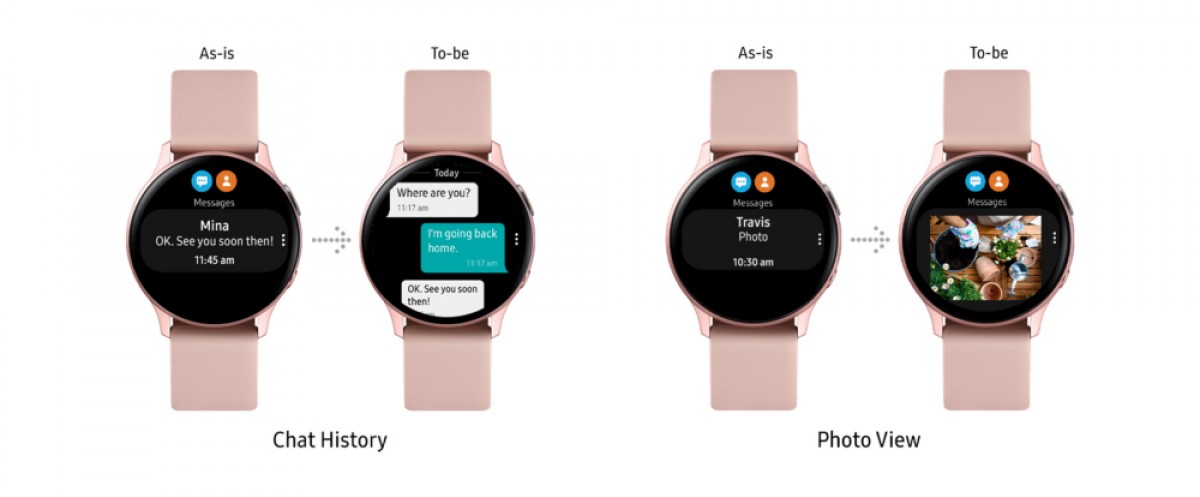
The new update also adds a Smart Reply feature to the Galaxy Watch Active2 which will ensure you don’t have to reach out to your phone often. Smart Reply will suggests responses to incoming messages. It will also show the full conversation thread, not just the last message.
If you receive a photo, you can view it on the watch itself. And if an emoji says more than words can, you can send back an AR Emoji or a Bitmoji sticker.
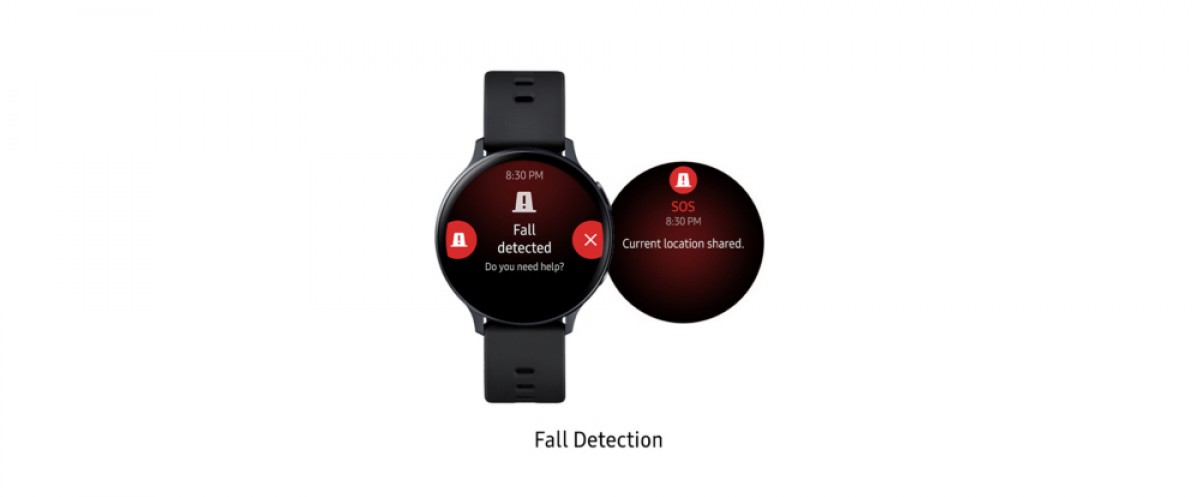
This update also allows you to access music playlists stored on your phone. Additionally, the screenshot feature now supports scroll capture. The new Fall detection feature will send out an SOS message (including your location) to up to four predefined contacts.
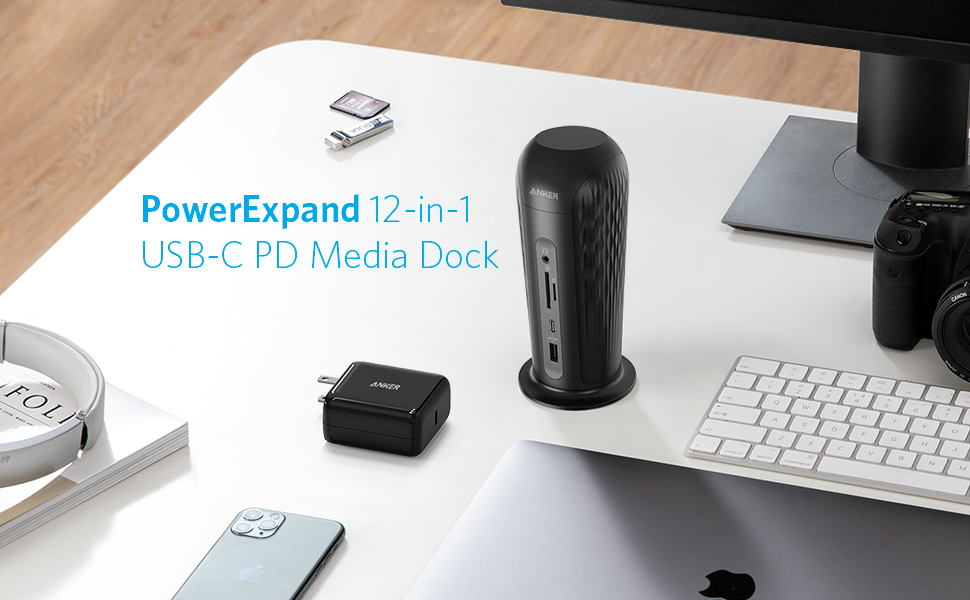
Chinese computer and mobile peripherals manufacturer Anker has unveiled yet another charging accessory designed to make life easy. The device dubbed PowerExpand 12-in-1 USB-C PD media dock is a docking station that helps you perform several functions other than powering multiple devices.
The product carries a price tag of 899 yuan (~$131) now on pre-sale in China via Taobao. At the same time, the docking station is also listed on Amazon, an indication that it would be sold in the US. However, the price is yet to be revealed.
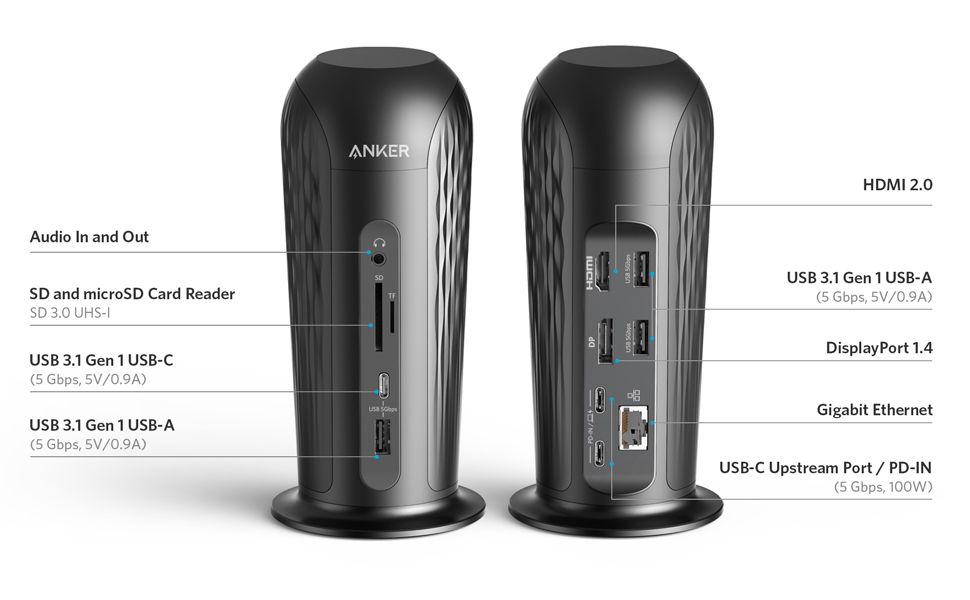
The Anker 12-in-1 docking station adopts a vertical design, equipped with a headset microphone interface, SD/MicroSD card slot, USB-C 3.1 interface, two USB-A interfaces, HDMI 2.0 interface, and DP 1.4 interface, PC input and output interface and a gigabit network port. With a total of 12 ports, you now have the ability to accomplish anything with your computer or laptop. From high-speed charging to high-definition media display, ultra-fast data transfer to crystal clear audio output—PowerExpand can do it all.
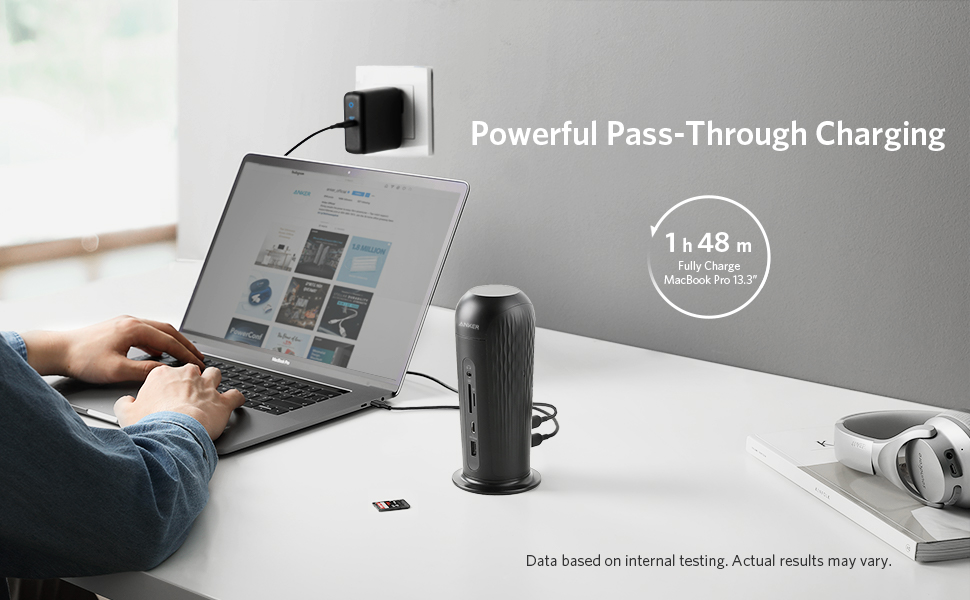
The device is compatible with USB-C Power Delivery to provide high-speed pass-through charging up to 45W. It also enables users to transfer movies, photos, and music at speeds up to 5 Gbps via triple USB-A ports. There are also SD and microSD card slots which support virtually all SD card formats for seamless access to photos and other media files.
Furthere, there is a DisplayPort and HDMI port onboard which allows users to connect to multiple monitors at the same time for an easier and more productive experience. This is dependent on the host device having support for Power Delivery and DisplayPort Alt Mode or USB-C 3.1 (generation 1 or 2). The dock ships with a 60W wall charger, USB 2.0 cable, and a USB 3.1 cable. It is compatible with macOS, Windows, iPadOS, Linux OS and Chrome OS. Curiously, there is no Android OS on the list of supported devices.
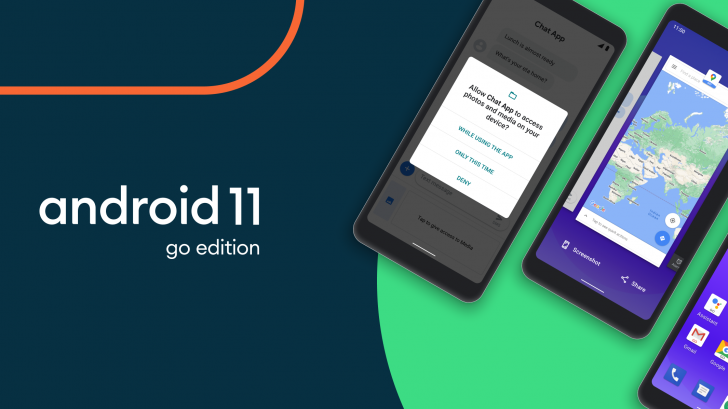
Just a few days after announcing Android 11 stable, Google has announced Android 11 Go Edition for devices with 2GB of RAM and less. The new version of Android for entry-level devices brings improvements in performance and new privacy features.
Google says Android 11 Go Edition will bring a 20% increase in app launch time over Android 10 Go Edition. Android Go devices will also get the same security and privacy features available on those running Android 11 such as one-time permission and permission auto-reset for apps that have been granted permissions before but have not been used in a while.
Android 11 Go Edition now brings support for gesture-navigation, seeing as entry-level phones now sport large displays. For example, the Redmi 9A has a 6.53-inch display. Another feature that is available is Conversations which is under the notification shade. Users will be able to manage and reply to messages easily from there.
Google has raised the support of Android 11 Go to devices with up to 2GB of RAM from the previous limit of 1.5GB. The additional RAM is said to provide up to 900MB of extra storage space for the phones and up to an additional 270MB of free memory which means you can run more apps and games at the same time.
Android 11 Go Edition will be available starting next month. While only a few manufacturers (read HMD Global) will only update their devices to the new version, the new rule that says all new devices with 2GB RAM or less launching from next quarter onwards should launch with Android Go should mean we will see some new Android 11 Go Edition phones hit the markets soon.
CES will be going fully digital next year, no thanks to the COVID-19 pandemic. While that is definitely bad news for those who have made it a ritual to attend the tech show, the switch to an online-only platform will open it up to a larger audience.
Today, the Consumer Technology Association (CTA) which owns and produces CES announced new dates for next year’s edition. CES 2021 will now hold between Monday, January 11, and Thursday, January 14. The show was originally scheduled to hold between Wednesday, January 6 and Saturday, January 9, 2021.
The first day will be exclusive media-only access while January 12 – January 13 will be open to all registered attendees. The last day will be for conference programming. Even with the show going digital, there should still be lots of announcements from several manufacturers.
The press statement also revealed that the kick-off keynote address will be delivered by the Chairman of Verizon Hans Vestberg. His address will discuss 5G as the framework of the 21st century and how it will affect major industries.
We won’t rule out the possibility of next year’s edition of Mobile World Congress (MWC) going fully digital. This year’s edition had to be canceled when manufacturers began pulling out of the show. To prevent a repeat, the organizers may settle for an online-only experience too.
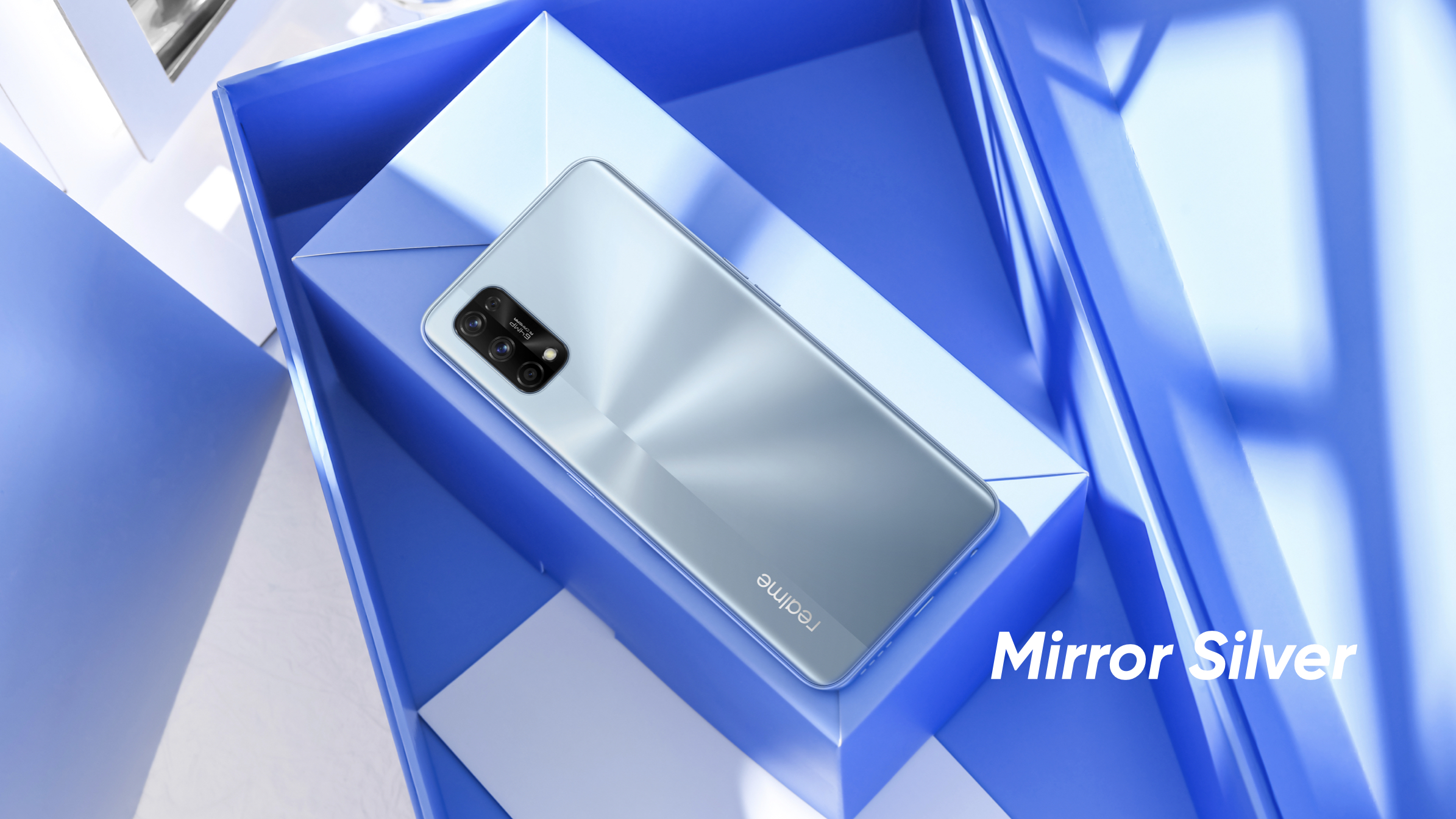
After announcing the Realme 7 and 7 Pro last week in India, Realme today put up the vanilla 7 for sale for the first time. The model went on its first sale on Flipkart and Realme’s official Indian website. According to the company, over 180,000 units of the smartphone were sold during the exercise thereby depleting the stock within a short period. Realme has promised to restock pretty soon ahead of the next sale scheduled for September 17.
Our latest addition to our number series is a sensation! More than 1,80,000 users have selected the faster #realme7. The Most Powerful 64MP Camera Phone is restocking soon. Next sale at 12 PM on 17th September. #CaptureSharperChargeFasterpic.twitter.com/h6ac4vfo1h
The Realme 7 is a premium mid-range model which keeps up with the brand’s affordable phone standing. The device features a 6.5-inch IPS LCD panel with Full HD+ resolution, 20:9 aspect ratio and a screen-to-body ratio of 90.5 percent. It also arrives with support for 90Hz refresh rate. Both devices come with Gorilla Glass protection.
The Realme 7 is powered by a MediaTek Helio G95 paired with 6GB/8GB RAM. The phone also features 64GB/128GB UFS 2.1 storage option alongside a dedicated microSD card slot.
The device packs a 5,000mAh battery and supports 30W Dart Charge technology. Providing the interface is the Realme UI skin based on Android 10 OS.
On September 2, OPPO officially unveiled the F17 and F17 Pro smartphones in India. The entire specifications and features of the models were made bare but the pricing as left out. The Chinese company has now announced the pricngn and availability details of the F17 while we still await those of the F17 Pro.
The details made available by the company shows that the OPPO F17 6GB RAM model with 128GB storage is priced at Rs. 17,990 (~$245 while the 8GB RAM and 128GB storage option is priced at Rs.19,990 (~$272). The device is presently available to pre-order on Amazon.in and Flipkart while the open sale is scheduled for September 21. The device comes in Classic Silver, Dynamic Orange and Navy Blue colors.
The OPPO F17 features an updated design from its predecessor. It packs a 6.4-inch AMOLED FHD+ panel with a single punch hole that is home to a 16MP camera. There is a Snapdragon 662 processor powering the device with RAM starting at 4GB and going up to 8GB while storage starts at 64GB and goes up to 128GB.
With respect to cameras, OPPO F17 sports a 16MP f/2.2 camera as against a 48MP main sensor on the F17 Pro. There is equally an 8MP ultrawide angle camera and two 2MP mono cameras.
The phone draws power from a 4000mAh battery and has support for 30W VOOC Flash Charge 4.0. It also runs ColorOS 7.2 based on Android 10, has Bluetooth 5.0, an audio jack, and has a USB Type-C port.
We expect the pricing and release details of the F17 Pro to be revealed soon.
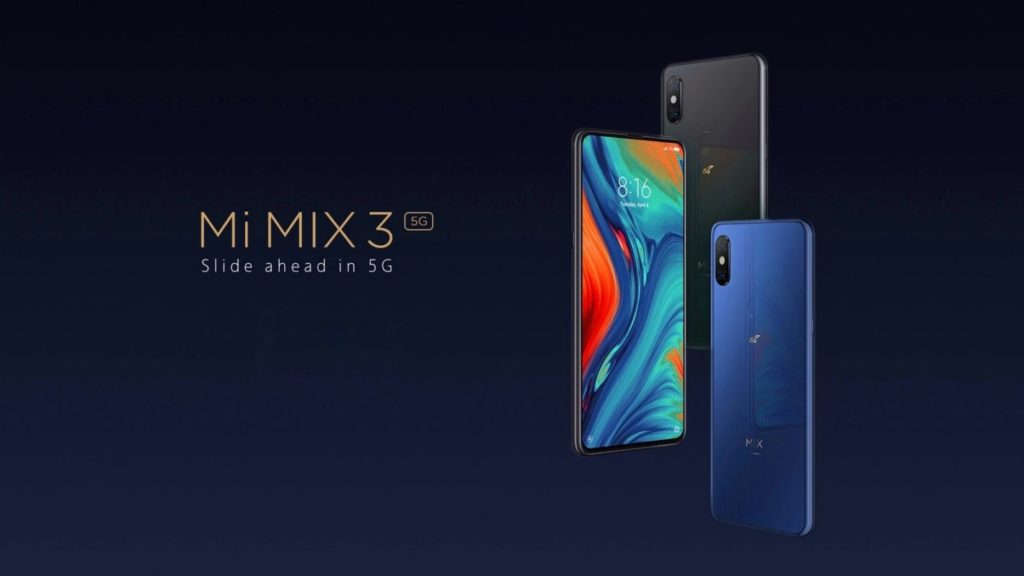
The Mi Mix 3 5G is Xiaomi’s first 5G smartphone. It initially launched in Europe, followed by China. The handset came with MIUI 10 based on Android Pie out of the box. It neither received MIUI 11 nor Android 10. Back in July, the company even said there were no plans for MIUI 12. But we missed out on statements provided by Xiaomi, in which it confirmed Pie-based MIUI 12 for this device. As promised, the firm has been now seeding the MIUI 12 update to users since last week.
The Xiaomi Mi Mix 3 5G did not get proper software support it deserved being the company’s first 5G smartphone as well as a device from popular Mix series due to poor sales figure. But a petition on Change.org and requests from users finally made Xiaomi roll out MIUI 12 for this phone, however, it comes with Android Pie.
The update is currently available for the European (EEA) variant of the handset with build number V12.0.1.0.PEMEUXM (via Xiaomi Firmware Updater). The MIUI builds for this smartphone come in two more versions – Global & China. But they are yet to receive the update.
Though Mi Mix 3 5G has now received MIUI 12, it will be not getting Android 10 as per Xiaomi. It’s ironic because this phone was part of Android Q Beta program earlier last year.
BOE was supposed to supply Samsung with OLED panels for its upcoming Galaxy S21 series but the Chinese manufacturer didn’t meet Samsung’s requirements. It was also revealed that Apple skipped over the Chinese display manufacturer in favor of Samsung Display for the OLED panels it will use in its new iPhones.
A new report now says BOE is still in line to supply Apple with OLED panels for its phones but starting next year. According to the French blog iPhoneAddict, BOE executives revealed to Korean media that they have a production line called B11. This production line is also known as the “Apple line” as it is specifically dedicated to the production of OLED panels for iPhones in the second half of 2021.
Next year’s iPhone should launch as the iPhone 13 but we don’t know how many models there will be. BOE’s panels may be used for just one of the models along with those from LG Display and Samsung Display.
Huawei unveiled EMUI 11 earlier today at the company’s developer conference. It is the ninth iteration of the Chinese telecom giant’s Android skin for its smartphones and tablets. As expected, the brand even released closed beta updates for some of its devices. The total number of eligible devices is 10 as of now but more will be added down the line.
Huawei recruited users for EMUI 11 closed beta testing in China from September 1 to September 8. Those who got selected have received the build today. Now, the company has extended the recruitment for until September 15 so that more users can try out the new software and share valuable feedback on bugs and features.
That being said, here’s the official list of HUAWEI-branded devices that are eligible/supported for EMUI 11 Closed Beta as of publishing this article.
Apart from the above mentioned-devices, HUAWEI nova 7 series has also been confirmed to get beta treatment in the coming days.
On the other hand, EMUI 11 closed beta for HONOR 30 series and HONOR V30 series will be available in the form of Magic UI 4.0 in mid-September.
It is worth noting that these builds are based on Android 10 due to the US ban. But Android 11-based builds should be released in the future. That said, Huawei is yet to announced the closed beta program for global markets.
MediaTek has had a pretty impressive year in the mobile and TV market. A new report says it plans to launch a new processor for affordable Chromebooks that will be similar to Apple’s upcoming Arm-based processors for MacBooks.
The news was reported first by the Taiwanese blog, TechNews. The senior VP and GM of MediaTek’s Smart Device Business Group revealed the info at the Taiwan Educational Digital Transformation conference organized by Acer, Google, MediaTek, and Quanta yesterday.
The company executive had reveled in a joint interview that MediaTek plans to launch a 6nm Arm chipset that will power Chromebooks next year. The Chromebook market has witnessed significant growth especially this year due to the pandemic that has forced several students to attend school remotely.
However, more manufacturers have prioritized making premium models that feature more powerful specs and command a higher price tag. MediaTek says it will announce a 6nm chipset called the MT8195 that will have powerful AI features, have Wi-Fi 6 and 5G connectivity. The processor will be manufactured by TSMC and will be similar to Apple’s Arm-based processors that will power its Arm MacBooks.
Apart from the aforementioned features of the processor, it will be cheaper to produce which should reduce the overall cost of the Chromebooks they will power.
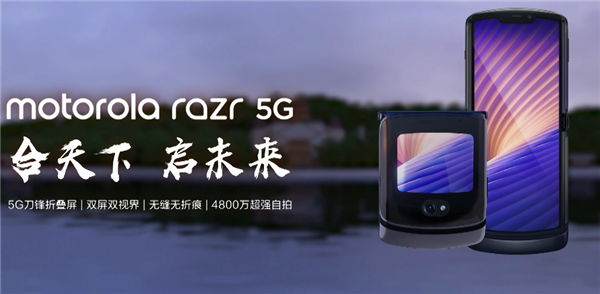
Motorola officially unveiled the Moto Razr 5G for the international market on Wednesday. Lenovo has now launched the Razr 5G in China. The foldable smartphone is a successor to the Moto Razr that was launched last year. This new model comes with some improvements in a number of areas. Curiously, it carries a price tag of 12,499 yuan (~$1830) which is higher than the $1,399 price tag in the US.
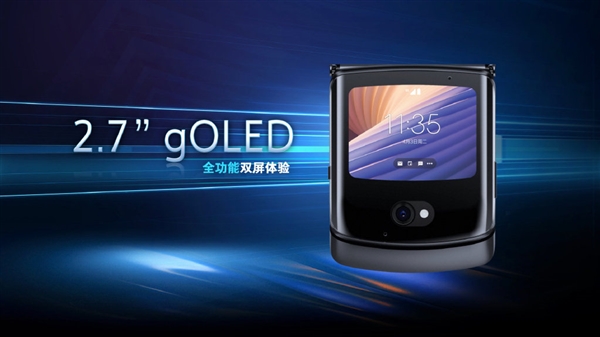
The Moto Razr 5G is powered by a Snapdragon 765G chipset paired with 8GB of RAM and 256GB of storage. The foldable device packs a 2.7-inch gOLED outer screen with a resolution of 800×600 pixels and 370 ppi pixel density. The inner display which is bigger is a 6.2-inch pOLED with a resolution of 876×2142 pixels and 373 ppi pixel density.
The phone features a “water repellant design” and packs a 2,800mAh battery with support for 15W charging. There is a 48MP camera with f/1.7 aperture, OIS, and laser autofocus. The selfie snapper is a 20 MP unit with f/2.2 aperture.
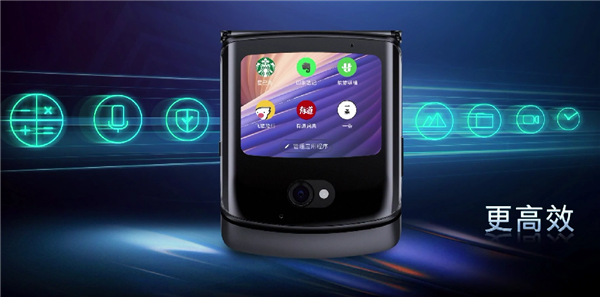
In addition, the external screen is now optimised to work with more apps such as camera, messages, calculator, Google Keep, Google News, Google Home, and YouTube by default. Users can also manually grant permission for any app to do its thing on that screen. This display now has support for gesture navigation too. The phone runs Android 10.
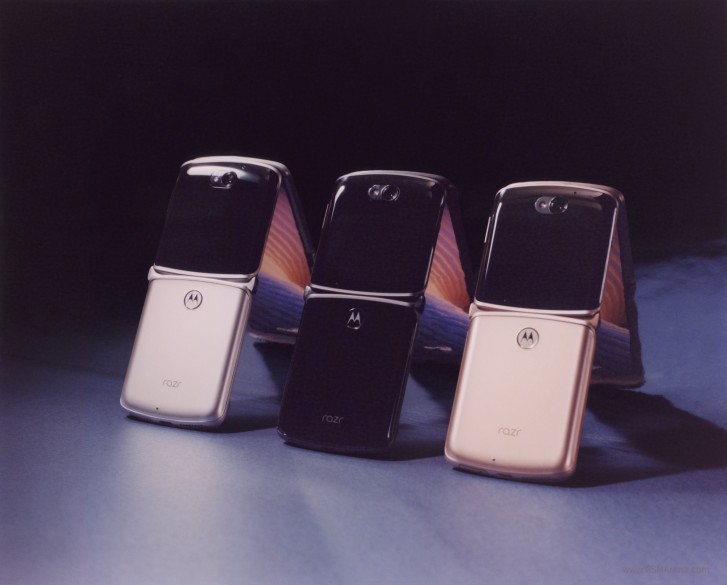
The phone is expected will be out sometime this fall in China and “select European markets” in Polished Graphite (aka black or dark gray), Liquid Mercury (aka silver), and Blush Gold. The Moto Razr 5G will go on sale in China on September 15. It will be sold on Motorola’s flagship store on Jingdong, Suning, and other retail stores in China.
OnePlus announced its first power bank about five years ago but has not followed up with a new model since then. Earlier this year, Carl Pei asked fans to retweet a tweet if they’d like a fast-charging power bank, hinting at the revival of the product line. It has been seven months now and it appears a new OnePlus power bank is about to launch.
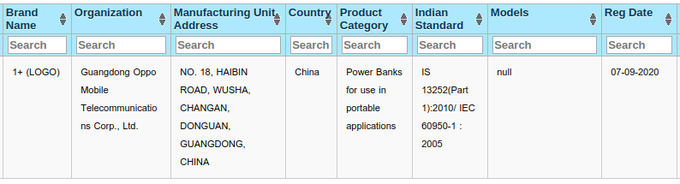
The Bureau of Indian Standards (BIS) has certified a new OnePlus product, and according to the registration page, the product is a power bank. A screenshot of the page posted on Twitter by Sudhanshu Ambhore (@Sudhanshu1414) says the power bank is manufactured in Guangdong, China by OPPO, which should not come as a surprise.
The OnePlus Power Bank may likely be a rebadge of one of OPPO’s existing power banks and will have support for fast charging. It should have a battery capacity of at least 10,000mAh and an expected price tag of about $20 when it launches.
We expect the new power bank will be announced alongside OnePlus’s upcoming smartphones, probably alongside the OnePlus 8T.
Huawei Consumer Business Group today hosted the Huawei Seamless AI Life new products global launch event in China where the company announced six new products that further enrich the 1+8+N all-scenario ecosystem. The new products revealed during today’s keynote cut across audio, wearable and PC products.
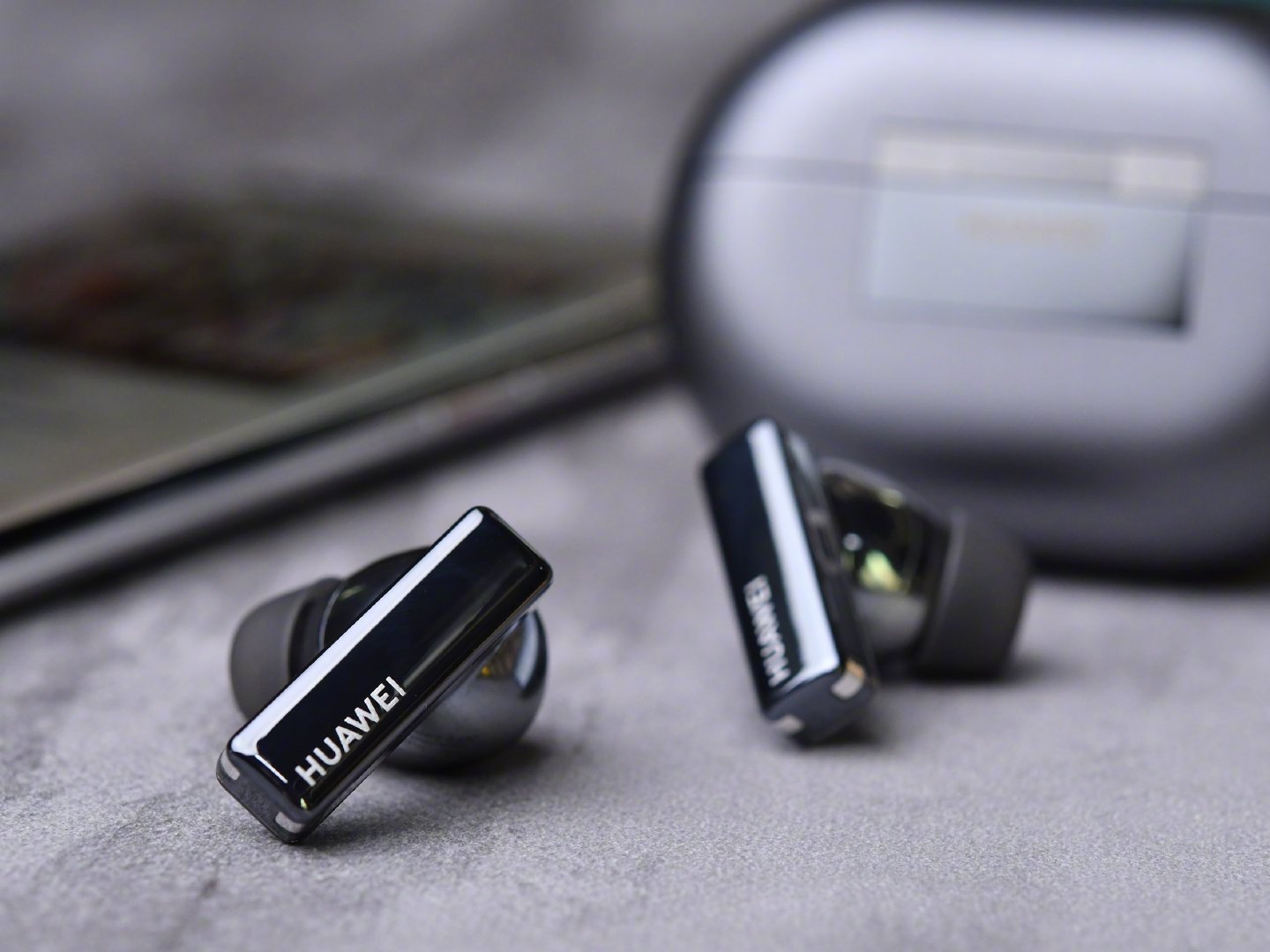
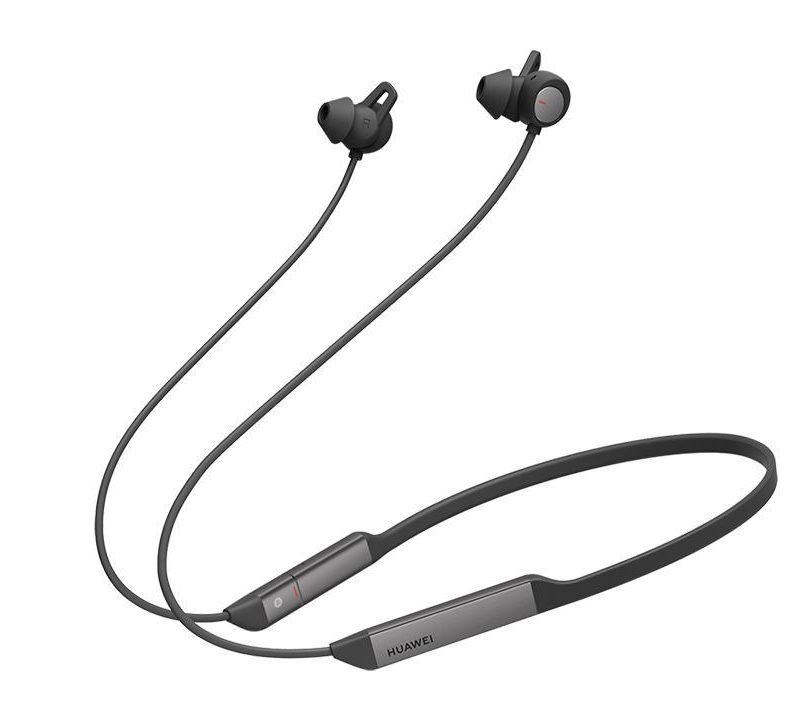
The new products unveiled during today’s keynote include the Huawei FreeBuds Pro and FreeLace Pro, new pro-variants of the highly acclaimed audio products featuring improved Active Noise Cancellation (ANC), new designs and user-centric features.
Huawei FreeBuds Pro is the world’s first true wireless stereo (TWS) earphones to support intelligent dynamic noise cancellation. Featuring hardware and software integrated solution, the new TWS earphones intelligently identify the type of ambient noise based on the user’s immediate surroundings and switch between three profiles – General, Cosy and Ultimate – to offer the optimal noise-cancelling performance. Further, Huawei FreeBuds Pro delivers the best noise-cancelling performance yet on a Huawei audio product with an industry-leading noise cancellation rating of 40dB2. Dual Connection with Android, iOS and Windows smart systems means users can seamlessly switch between devices without being tied to one brand, and the new gesture control enables users to easily take control of the earphones by performing a swipe or a pinch on the cubic earphone stem.
Huawei FreeLace Pro offers great audio and a stylish design. Supporting noise cancellation up to 40dB, the neckband earphones take advantage of industry-leading algorithms to provide stable noise cancelling performance in any situation. Huawei FreeLace Pro features a pair of 14mm aluminium-magnesium alloy dynamic drivers with bass tubes to offer the high fidelity audio for the ideal listening experience. Pairing and charging are as seamless as ever with Huawei HiPair3, a Huawei-developed solution that lets users easily do both at the same time by plugging the earphones to a smartphone with a USB-C port. A five-minute charge gives enough battery to sustain five hours of music playback, and a full charge offers a full day’s use.
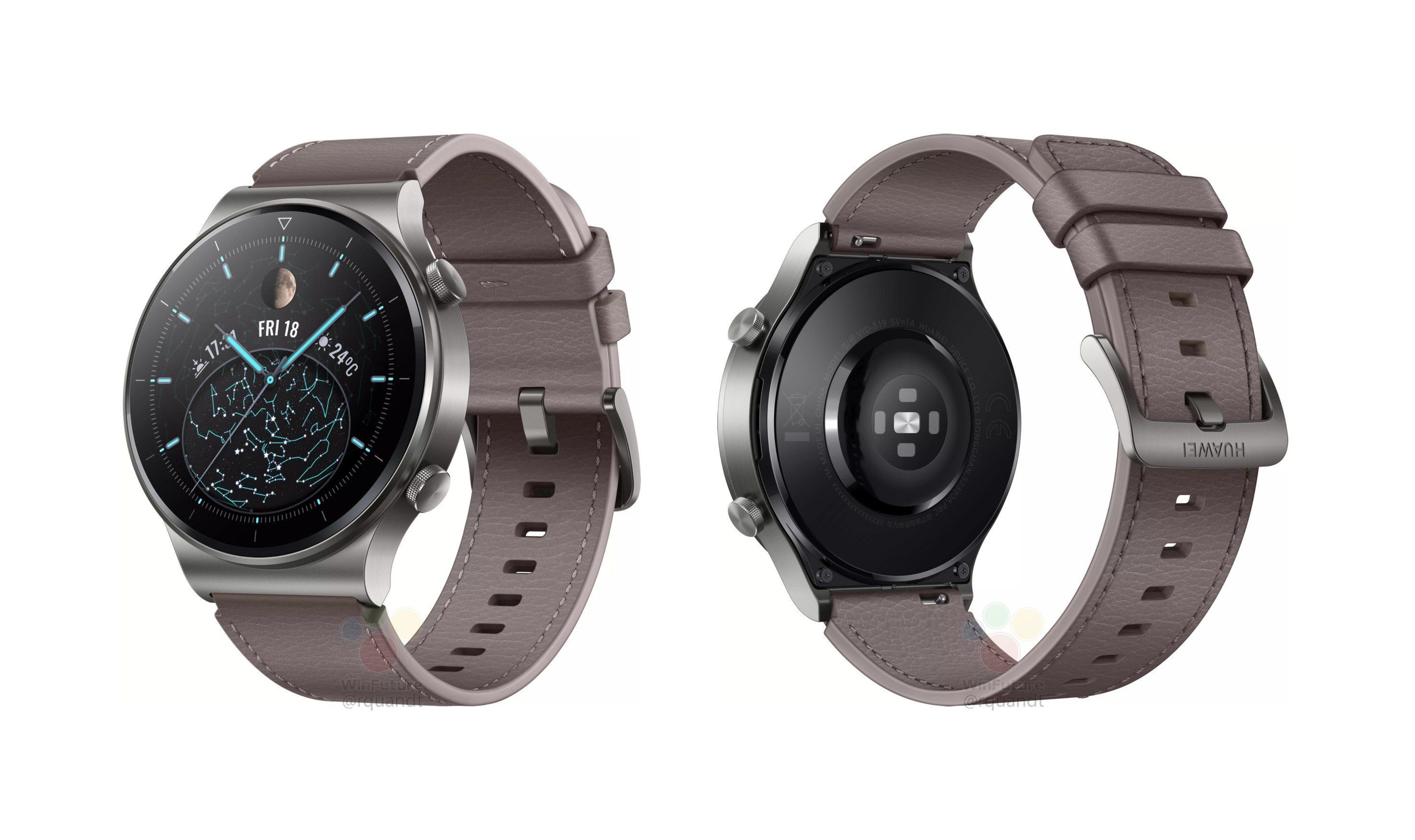
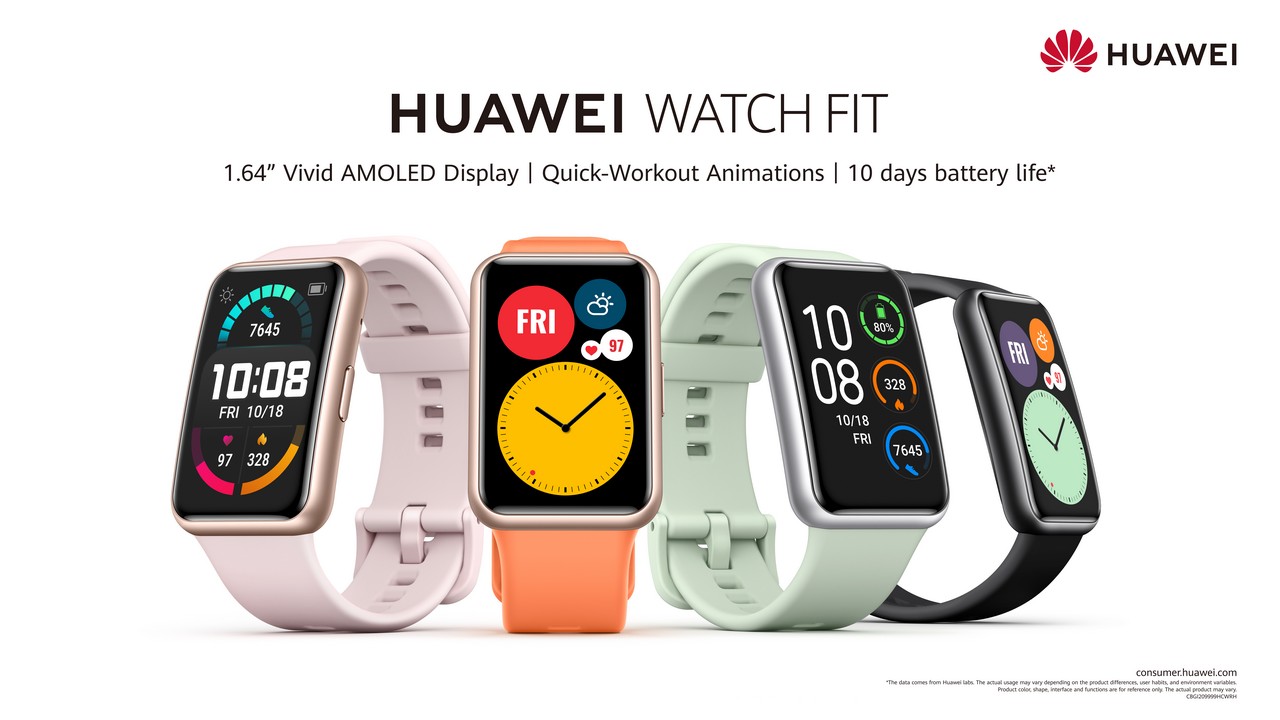
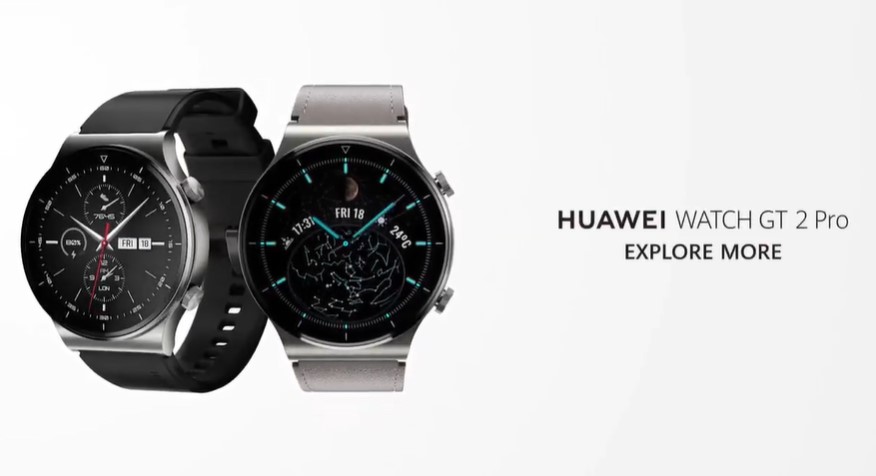
Huawei also launched the Watch GT 2 Pro and Watch Fit. The latest entries to Huawei’s wearable product line-up with striking aesthetics, new fitness data tracking features and workout modes.
The new HUAWEI WATCH GT 2 Pro not only come with features that consumers have come to love on the HUAWEI WATCH GT Series, the elegantly modern smartwatch also offers up to two weeks of battery life, more than 100 workout modes, plus pro-grade fitness data tracking features.
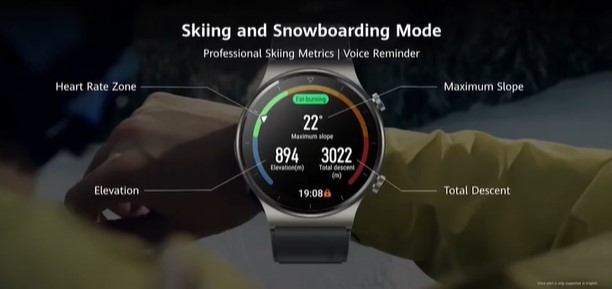
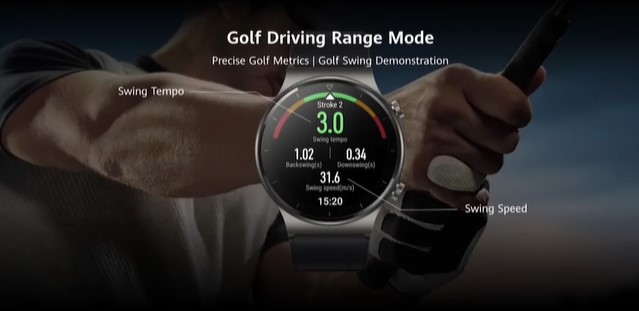
Health tracking features are at their most advanced yet with the upgraded HUAWEI TruSeen™ 4.0+ providing more accurate heart rate readings. Huawei has introduced new workout modes including Skiing, Cross Country Skiing, Snowboarding and Golf Driving Range. These join the existing range to provide users with real-time performance tracking and analyses for professional sports.
The new flagship smartwatch launches with a rugged design featuring premium materials, including a sapphire watch crystal, titanium case and skin-friendly ceramic case back that combines with another sapphire glass black to enhance monitoring accuracy and wearing comfort. Additionally, HUAWEI WATCH GT 2 Pro supports apps to provide a convenient means for users to get even more features. Huawei also plans to further augment the smart experience on offer in the future.
Launched alongside the HUAWEI WATCH GT 2 Pro, HUAWEI WATCH FIT is the first Huawei sports smartwatch to feature a rounded rectangular watch face design. The smartwatch combines a dazzling 1.64-inch AMOLED display, which lends itself to displaying more content and better interactive experience.
At 34g, the HUAWEI Watch FIT feels as light as a sports wristband. The watch features newly upgraded HUAWEI TruSeen™ 4.0 heart rate technology, which leverages Huawei’s own multi-sensor AI neural network algorithm and advanced PPG components to provide more accurate, 24-hour heart monitoring to track changes in blood oxygen, sleep and stress conditions. All the data is also analysed to generate fitness advice that helps users lead better, healthier lives.
HUAWEI Watch FIT is the first Huawei smartwatch to support Quick-workout Animations5. By combining 44 standard fitness routines (including fat burn, shoulder muscle relief, body sculpting and other routines) into 12 animations, this feature provides a quick and easy way for users to work out at a moment’s notice. The smartwatch offers 13 running classes that are specifically tailored for jogging enthusiasts. Running pace is analysed scientifically with results provided in real-time to help users optimise their workout. Further, as the ideal outdoor companion, the smartwatch comes with 96 workout modes, built-in GPS and 5ATM water resistance.
While compact, the smartphone supports up to 10-days battery in typical scenarios. Huawei Watch FIT also supports Huawei’s fast charging technology. Five minutes of charging can provide enough charge to sustain the smartwatch for an entire day of typical use.
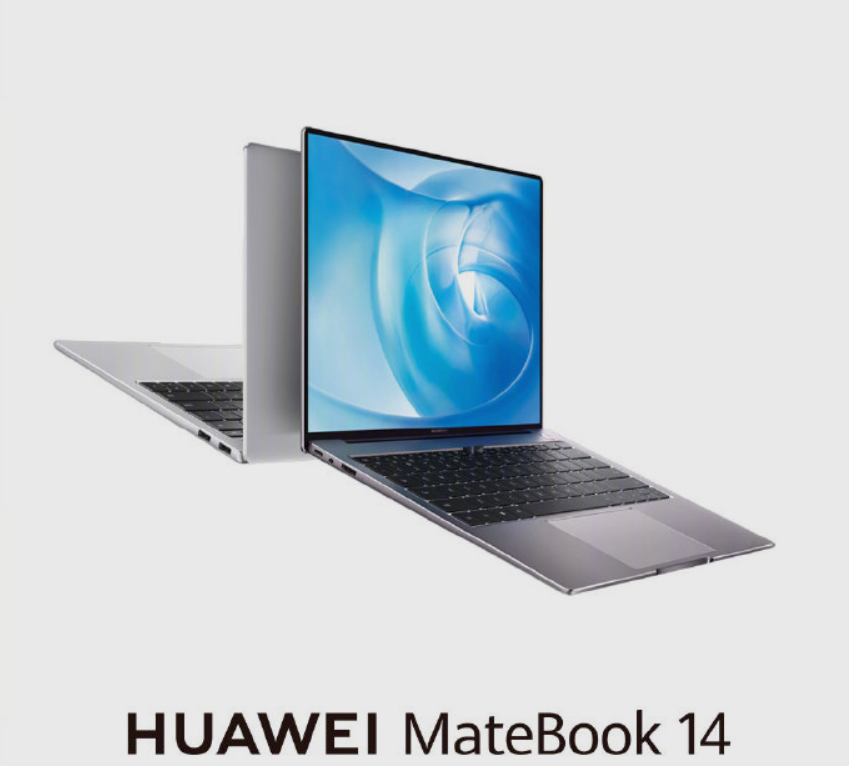
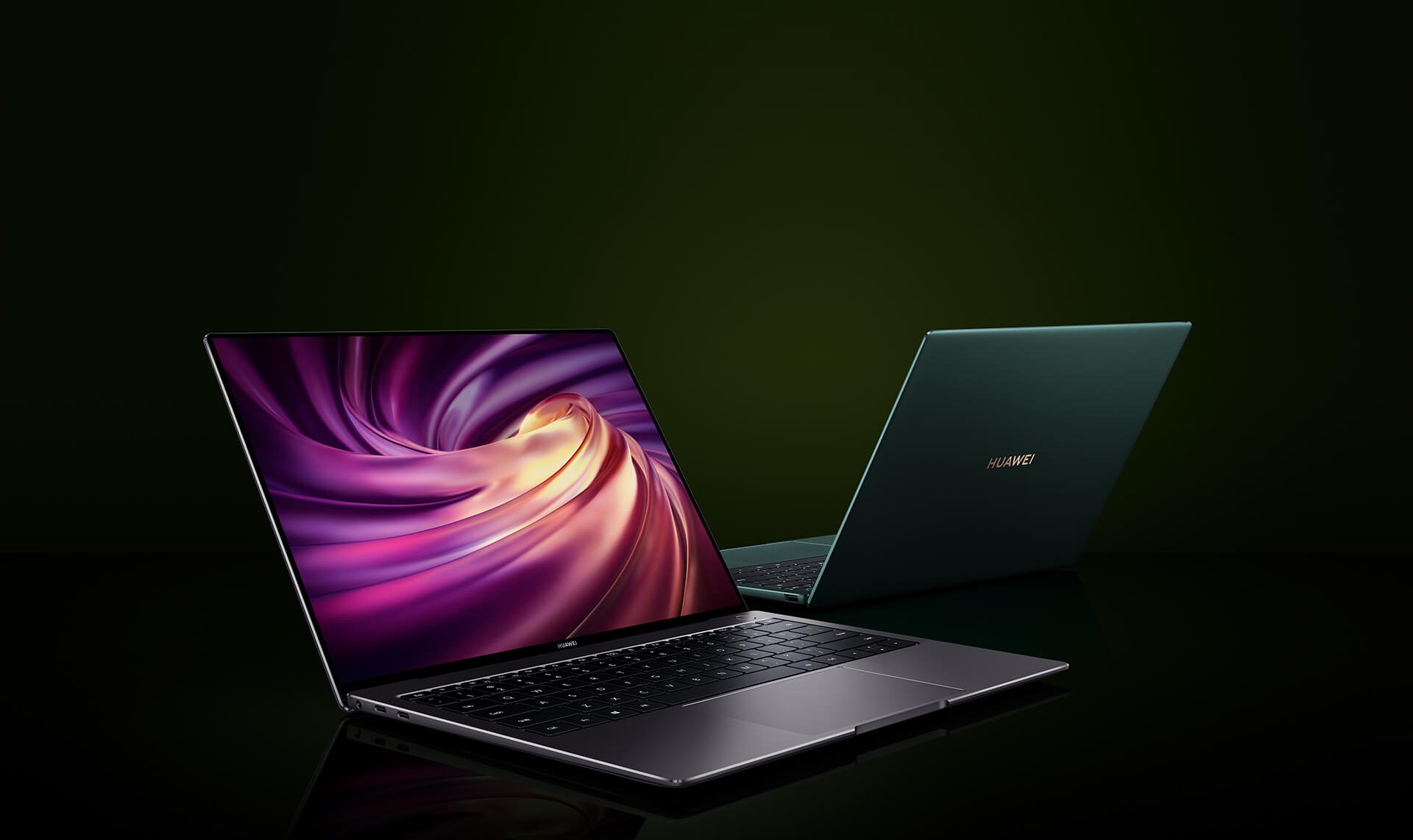
Huawei MateBook X and MateBook 14, two new lightweight notebooks that revolutionise mobile productivity with compact form factors and smart experiences enabled by the innovative Huawei Share feature.
The latest entry to Huawei’s flagship PC product line, HUAWEI MateBook X combines the flagship series’ iconic design and innovative technology with an improved lightweight design and smart features. Weighing just 1kg8, the lightweight notebook measures just 13.6mm9 at its thickest part and is smaller than a piece of A4 paper, so users can easily slide it into a backpack and carry it with them wherever they go.
The new Huawei MateBook X is the first notebook to feature the 3K Infinite FullView Display, realised with a borderless design that offers an immersive viewing experience and stunning image quality. The display is also multitouch-enabled with gesture support such as Fingers Gesture Screenshot, which lets users quickly take a screenshot by swiping downwards on the screen with three fingers, as easy as it is on a smartphone.
Powered by a 10th Generation Intel Core processor, the new flagship notebook delivers the performances needed for daily tasks. The touchpad is 26 percent larger compared to the previous generation for better ease-of-use, and now features HUAWEI Free Touch to offer full haptic feedback. The new full-size keyboard features scissors switches that offer 1.3mm of key travel to make typing a joy and comes with two tweeters and woofers forming a quad-speaker sound system that provides immersive surround sound right in front of the user.
HUAWEI MateBook X is also the first Huawei notebook to support Wi-Fi 6, which features three times the data transfer speed13 of Wi-Fi 5 for faster connectivity and better productivity.
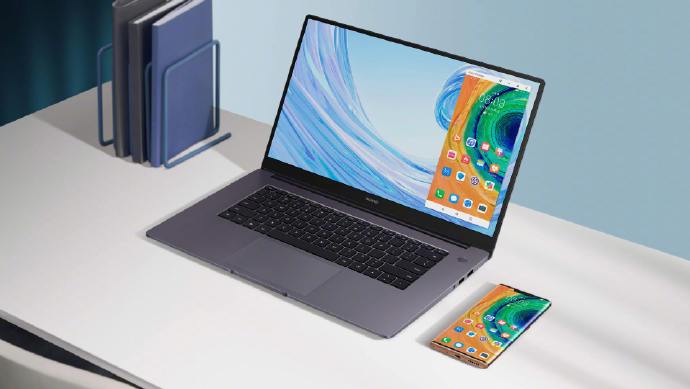
During the virtual launch, Huawei also unveiled HUAWEI MateBook 14, the benchmark of high-performance laptops in the era of mobile productivity 3.0. Featuring a highly portable design and powerful performance, HUAWEI MateBook 14 integrates the AMD Ryzen 4000 H Series processor, with HUAWEI Shark Fin Fans delivering superior thermal performance even under intense workloads. Besides performance, it has a 2K HUAWEI FullView Display14 and supports smart features including Multi-screen Collaboration to help consumers stay productive on the road.
Pricing and Availability
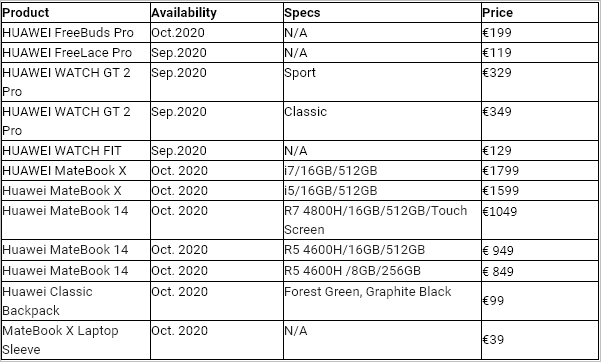
The products will be available in Europe in September and in some cases October this year. As for the pricing, the FreeBuds Pro will retail for 199 Euro. The FreeLace Pro will be sold for 119Euro while the Watch GT 2 Pro Sport comes in at 349 Euro. The Watch GT 2 Pro Classic carries a retail price of 349 Euro.
Check out the complete pricing from the table below.
The second and final part of this interview which talks about transparent OLEDs and foldable has been published. You can check it out here.
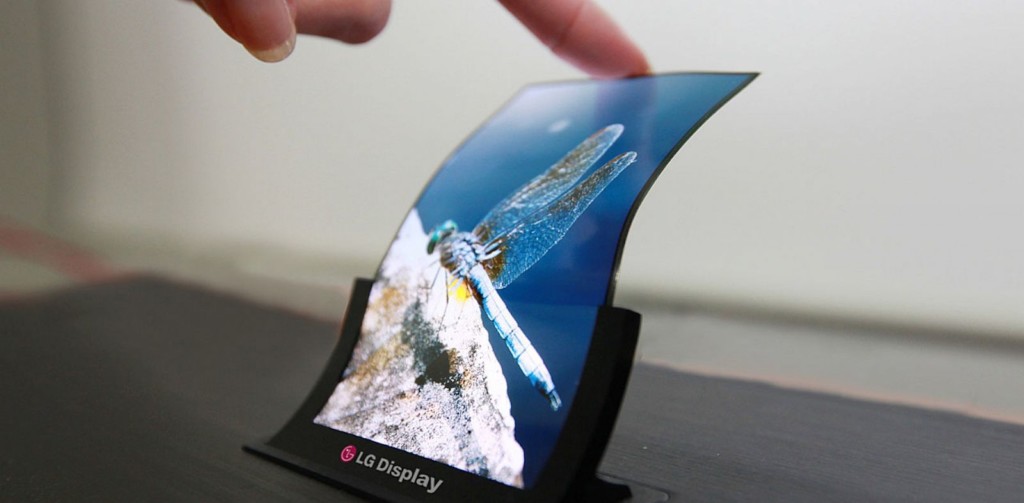
Smartphone and TV displays have become incredibly sharp, bright, and contrasty over the past few years and a lot of this credit goes to the rapid improvement in OLED technology. This display technology has advanced to a level where we have flexible, foldable, and even rollable OLEDs in the market.
LG’s Flexible Display shown off at an event in 2017
But what’s next?
To talk about the future of OLEDs, we needed someone from the inside, an expert who’s actively involved in the development of OLED panels. Last week, I had the opportunity to interview the CEO of OTI Lumionics, Michael Helander.
Michael Helander, OTI Lumionics
Michael has a Ph.D. in Materials Engineering from the University of Toronto. He along with his colleague Zhibin Wang cofounded OTI Lumionics back in 2011 after they made an important discovery that reduced the power consumption of OLEDs while increasing its brightness.
Since then, OTI Lumionics has been fully involved in the research and development of OLEDs. But their most exciting development is the new ConducTorr™ Electrode that brings out new applications for OLED panels.
Conductorr CPM, OTI Lumionics
In my interview last week, Micheal shared his incredible insights about under-display cameras and OLEDs. I learned so much about OLEDs in the interview that even after removing the non-important parts, this article was turning out to be exceptionally long. So, I’ve decided to split this interview story into two parts.
Today’s article will focus on under-display cameras, how they work, its future, and the challenges faced by manufacturers in mass production.
The second part of this interview piece will be published later this week and will focus on transparent OLED TVs and its application, along with a few insights on foldable OLED panels.
Please note that due to the nature of the interview, this article won’t be in a simple question and answer format. Instead, it will focus on specific areas of an under-screen camera like its development and applications. But rest assured, I have tried my level best to retain Michael’s tone and explanations.
I hope this interview turns out to be incredibly insightful and gives you a thorough understanding of how under-screen cameras work and its future applications.
How does OTI Lumionics contribute to the OLED industry?
Most of us have probably never heard of the name OTI Lumionics. This is because it doesn’t make consumer-grade OLEDs like LG Display or BOE. Instead, the company works behind the scenes and helps display makers to manufacture their OLED panels for smartphones, TVs, and more.
OTI Lumionics logo
When asked about OTI’s contribution’s in the OLED scene, Michael explained that OTI Lumionics supplied advanced materials and chemicals to companies to manufacture high-quality OLED panels on a large scale. The company works in synergy with other suppliers like Universal Display Corporation to enable display makers to manufacture panels with higher efficiency, higher brightness, and longer battery life.
Inside OTI Lumionics’ Research Lab
The company has a dedicated Material’s Discovery Team which applies state of the art high-performance computing (HPC) simulations along with machine learning AI algorithms to discover and design production-ready advanced materials.
Their ConducTorr™Electrode for OLED Cathode Patterning, which enables better under-display cameras, is a product of this department.
What is OTI Lumionic’s Conductorr™ Cathode Patterning Material (CPM)?
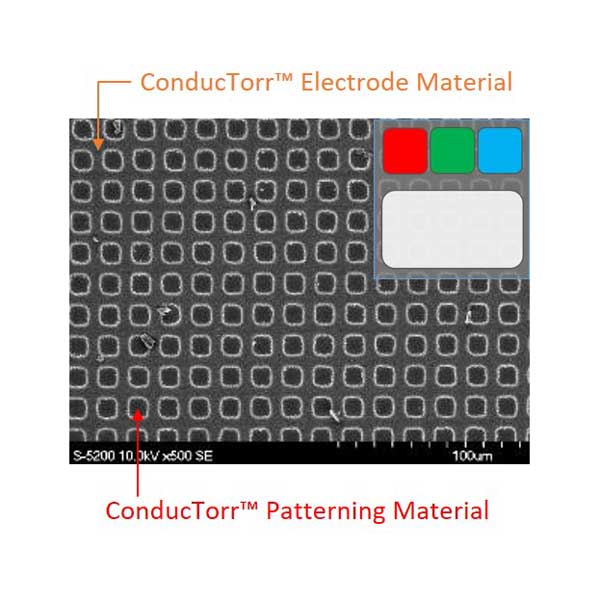
In simple terms, ConducTorr™ CPM enables manufacturers to pattern holes in between the OLED pixels for better transmission of light for the cameras underneath.
To get a better understanding of how under-display cameras work on smartphones and other devices, we need to first understand how camera sensors work and why putting it under a regular OLED panel makes it almost impossible to reproduce images.
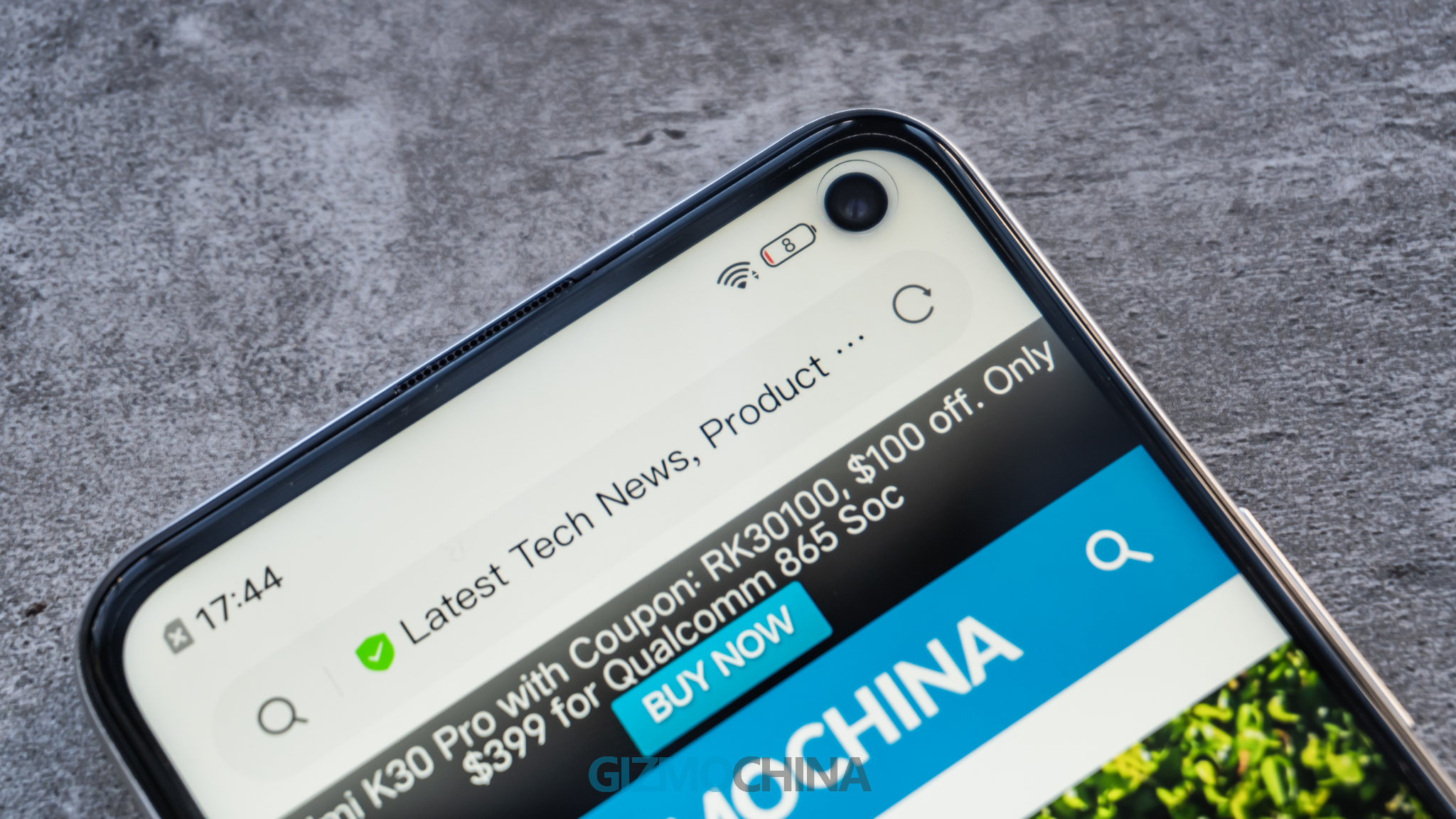
iQOO Z1’s notch camera solution
Our smartphone camera sensors need light to capture images. This means, every camera sensor, including cameras that are hidden under the display, need access to light to process and churn out good quality selfies. But our regular OLED panels are not transparent, which means, it won’t allow light to reach the camera sensor that lies below it.
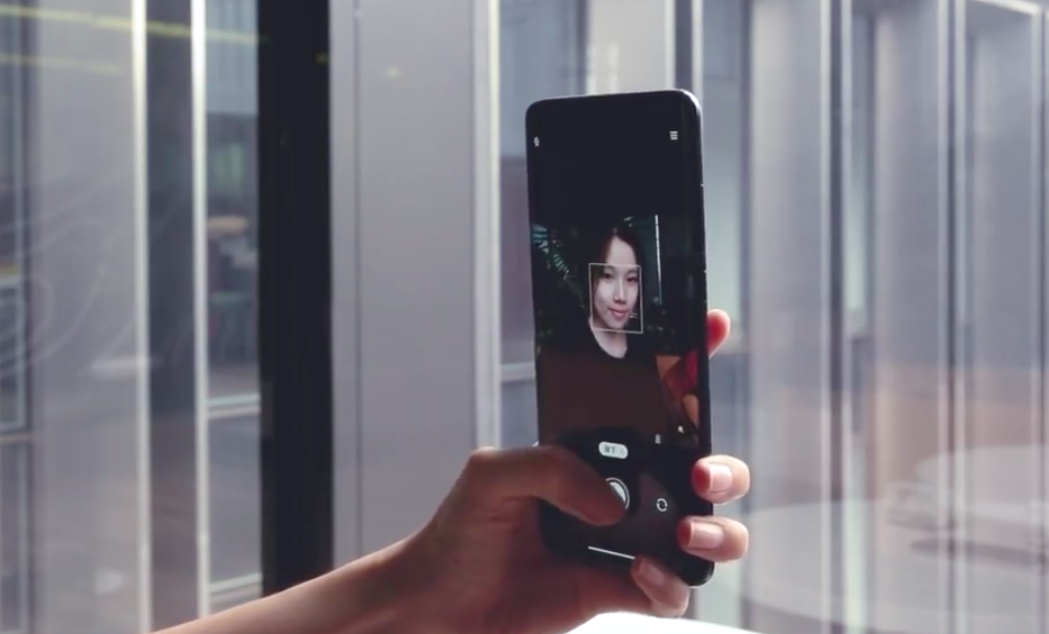
So, in order for the under-display camera to work, you need the display or at least the section above the camera sensor to be relatively transparent and allow light and other signals (like for 3D face recognition) to pass through. This means, the OLED panels used in under-display camera phones have to be customized for this purpose – which is not an easy job, especially when you have to come up with solutions that are scalable for manufacturing millions of such panels.
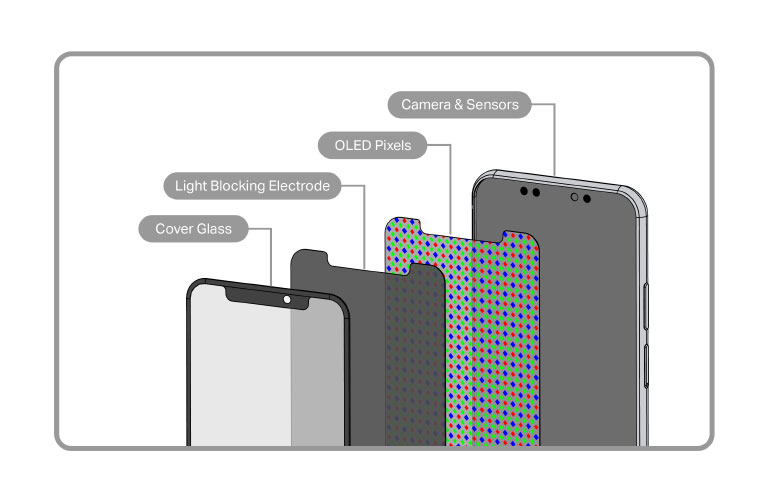
Regular Notch Phone Camera Solution Source: OTI Lumionics
Michael explains, “So if you look at the cross-section of an OLED display, it’s made up of a bunch of different layers, kind of stacked one on top of the other. And at the very top of the display is actually one of the electrodes that’s used to get electricity into the display that’s been converted into light for the direct admission from each OLED pixel. And so, that layer of metal covers the entire surface of the display and it’s very thin. It’s like nanometer-scale thickness.”
He adds, “But because it’s metal, it still blocks a bunch of light, which lowers the brightness. If you’re trying to put a camera under there, it lowers the transparency and could create a bunch of problems. The challenge has been in manufacturing on a very large scale the way that these displays are made. There’s no way to effectively pattern that metal layer to create holes or make it thinner in some areas and thicker in others.”
This is the reason why we didn’t see under-display cameras until 2020. But now, companies have finally managed to improve the transparency of OLED panels for this purpose. And thanks to new solutions from companies like OTI Lumionics, increasing the transparency of a part of the display or the entire OLED panel is not so difficult anymore.
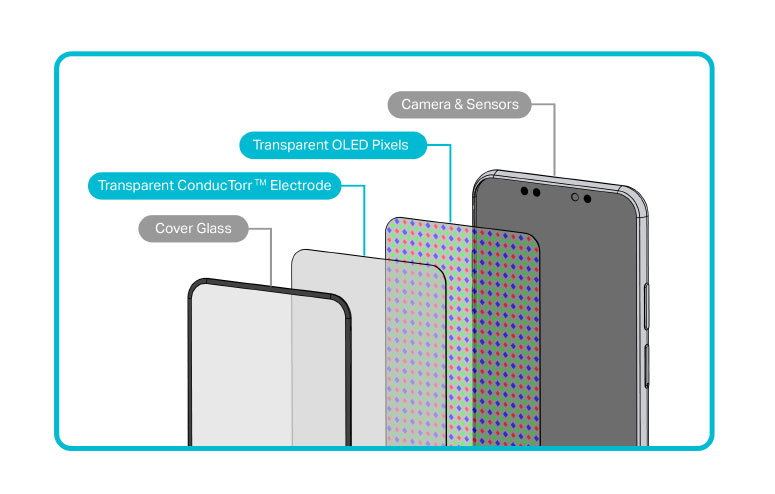
OTI Lumionic’s ConducTorr™ CPM solution increases the transparency of the display during the manufacturing process by patterning holes in between the pixels.
Under Display Camera OLED with Conductorr tech
Michael explains, “So then where we fit in, is our ConducTorr cathode patterning materials (CPM.) You can think of it like an anti-stick coating for metal. So what display manufacturers do is they’ll deposit our material in areas [that] they don’t want any metal to form and then they do the rest of their normal manufacturing process. And they’ll end up with either holes in that metal layer, or some areas can be made thicker [or] thinner. It allows them to do a very high degree of optimization that otherwise is impossible to do in the existing manufacturing process.”
The idea here is to use the space between the pixels, pattern holes in them, and thereby increase the transmission of light and signals. This is similar to the explanation given by Xiaomi on how its own under-display camera was developed (but without the holes).
However, Michael adds that the quality and durability of OLEDs panels are considerably affected by the method used to make holes in these pixels. ZTE, Xiaomi, and OTI Lumionics essentially rely on using the space between the pixels to increase light transmission, but the way they achieve it can significantly impact the overall quality of the OLED display panel on top.
Michael explained that none of the technologies in use right now, may it be ZTE’s under-screen camera solution or even Xiaomi’s solution, can match up to real-world expectations. On the other hand, he was confident that OTI’s ConducTorr™ CPM technology would enable better and more efficient under-display cameras.
To further understand the difference in the approach adopted by different manufacturers, let’s take a closer look at the existing solutions from ZTE and Xiaomi.
ZTE’s Under Display Camera Solution
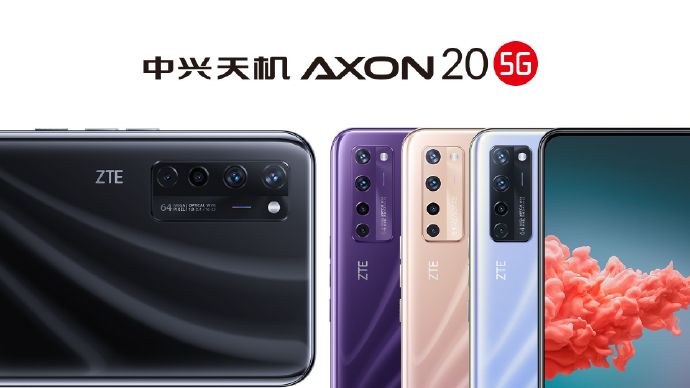
Instead of patterning (or making holes in) the top metal layer of the OLED display on the Axon 20 5G (which was announced earlier this month), ZTE decided to replace the top portion with a material that’s more transparent. So the camera that’s located on the top part of the display gets more light due to the higher transparency.
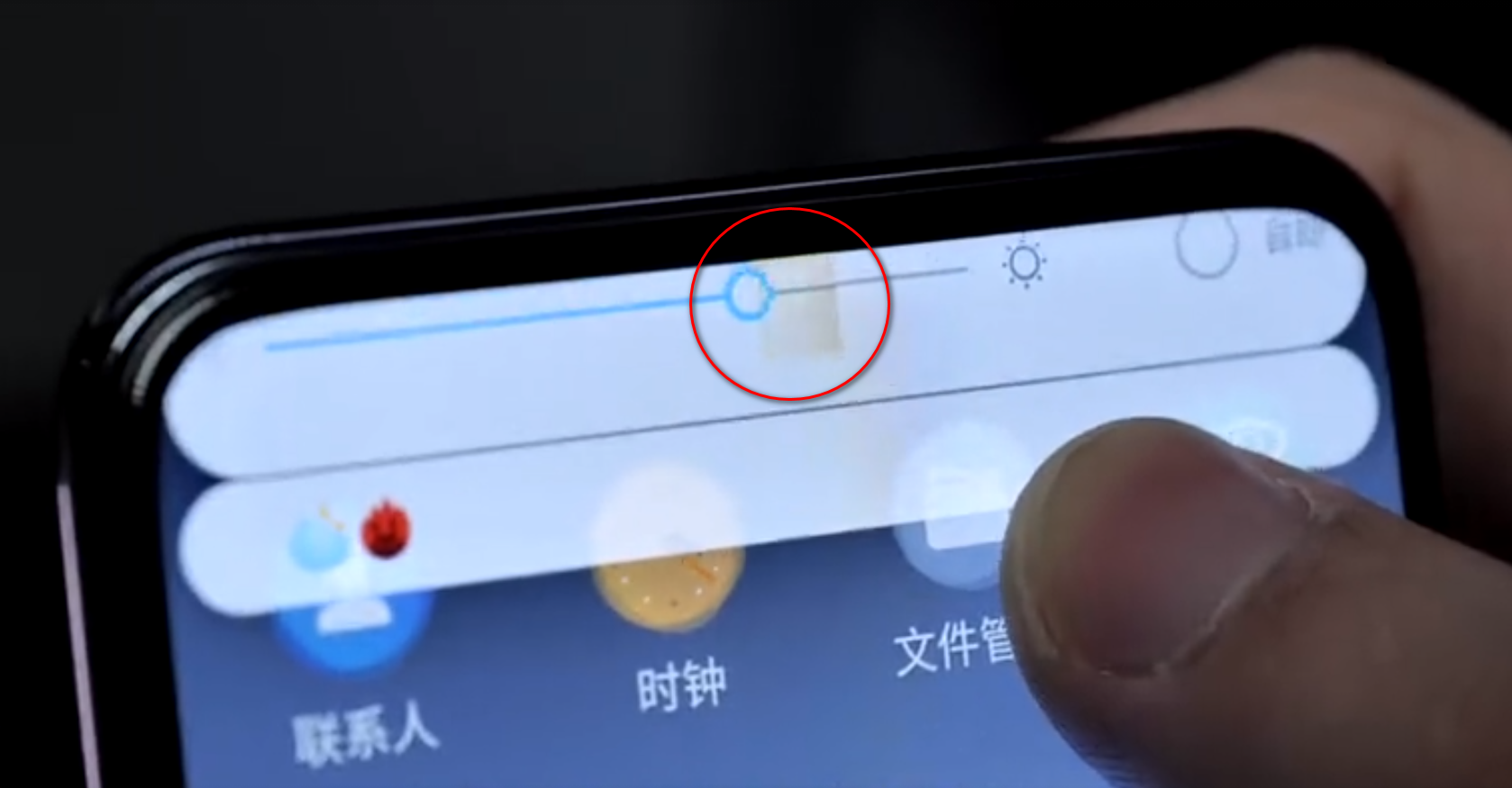
However, in the process, ZTE Axon 20 5G’s display on top of the under-display camera has a lower resolution (so the pixels are more spaced out, which means more space for light to pass). But to ensure that the top portion that features a lower resolution doesn’t stand out significantly, ZTE has to drive the pixels in that area way brighter than the rest of the display. This can potentially affect the reliability of the display area on top of the camera. After all, we all know how OLEDs are susceptible to burn-in.
Another issue with ZTE’s solution is that the color quality of the display won’t be uniform. Since the part above the camera has a different, thinner, and more transparent material than the rest of the display, you’ll notice the slight shift in colors.
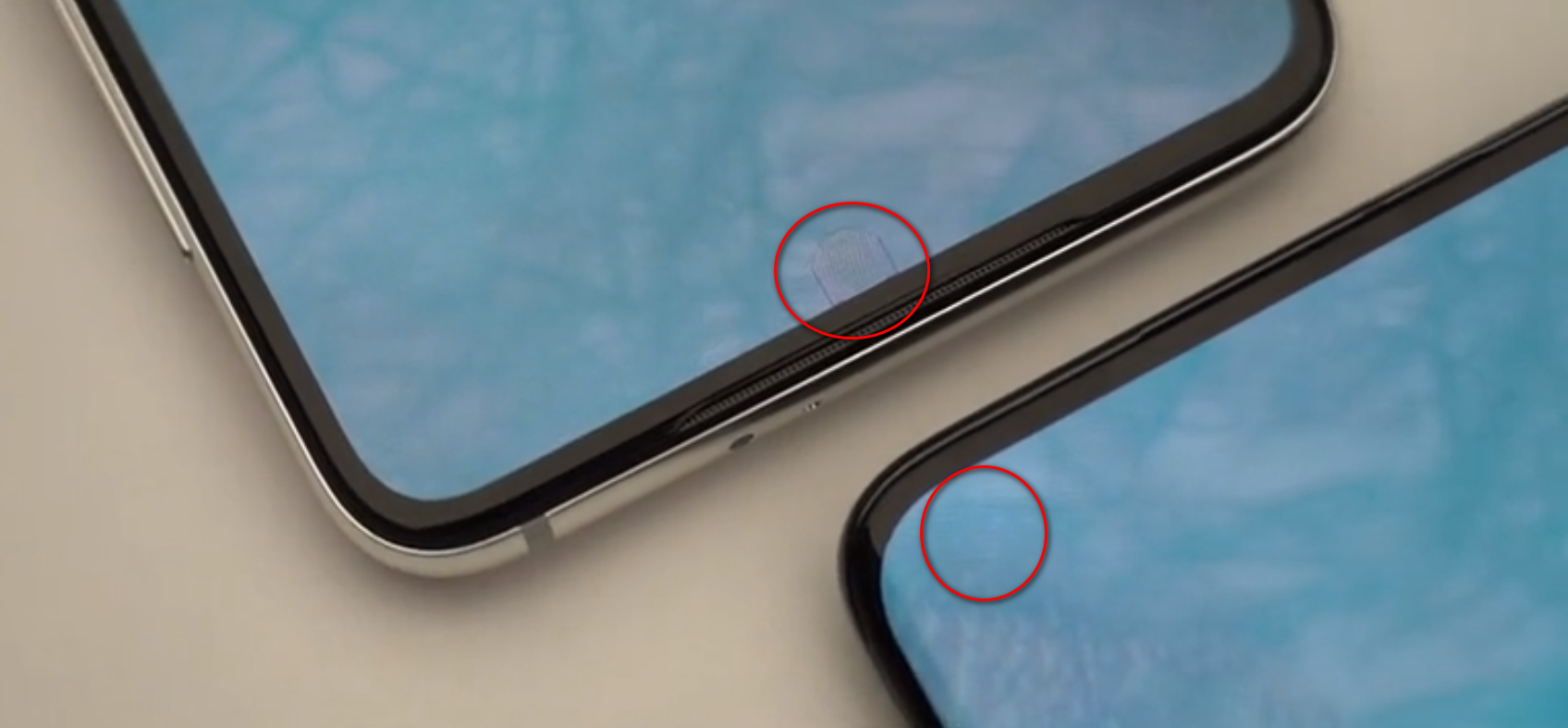
Axon 20’s UI elements on top reveals the difference in the quality of the panel covering the camera
So to get around this drawback, Micheal said that ZTE had to limit the UI to only show notifications and non-important content in the area where the camera lies so that it’s less noticeable to the user. But for different user interfaces and operating systems, this software solution is never going to be sustainable in the long run.
1 of 2
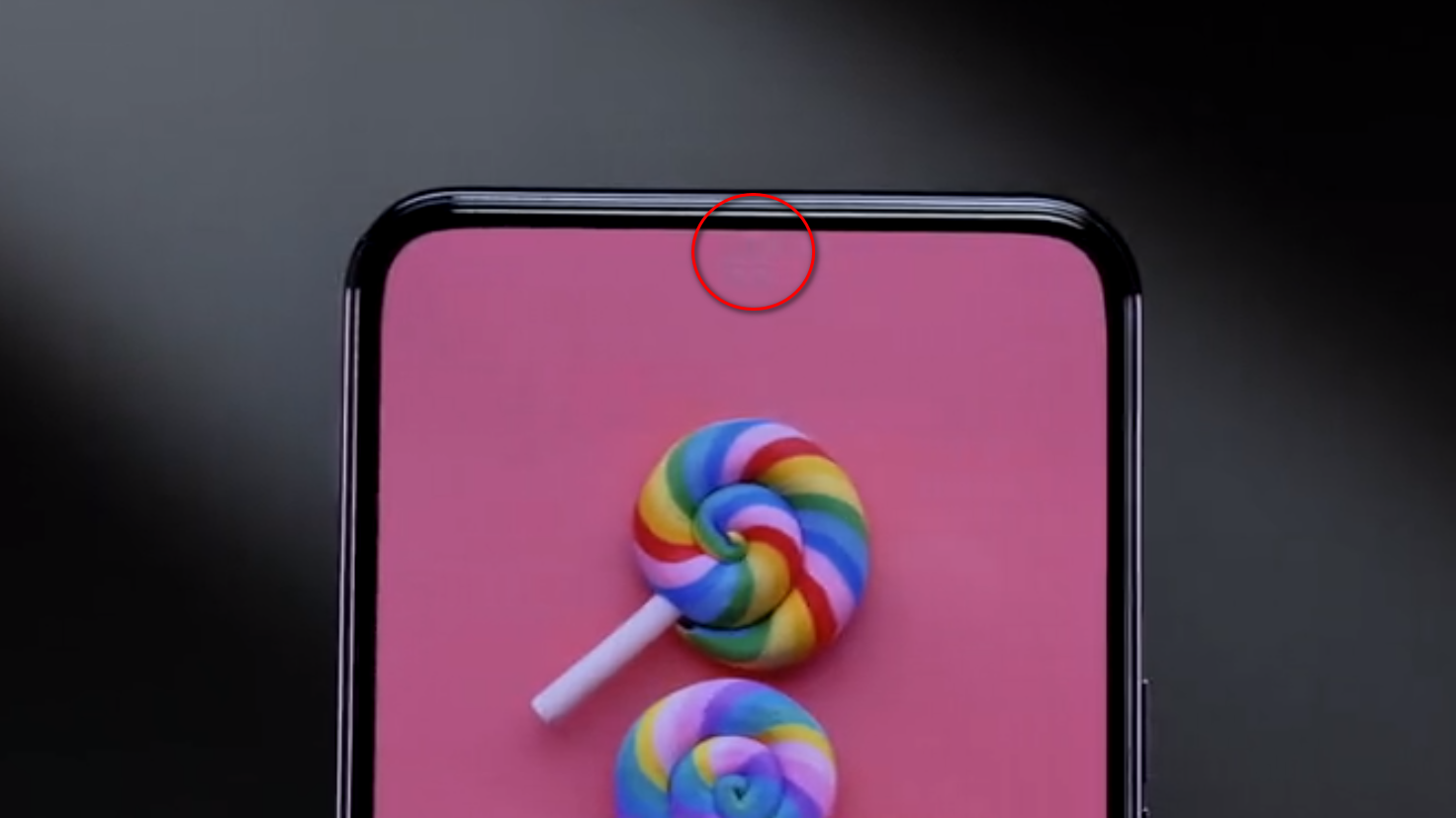
In some cases, even ZTE's UD camera blends in with the display
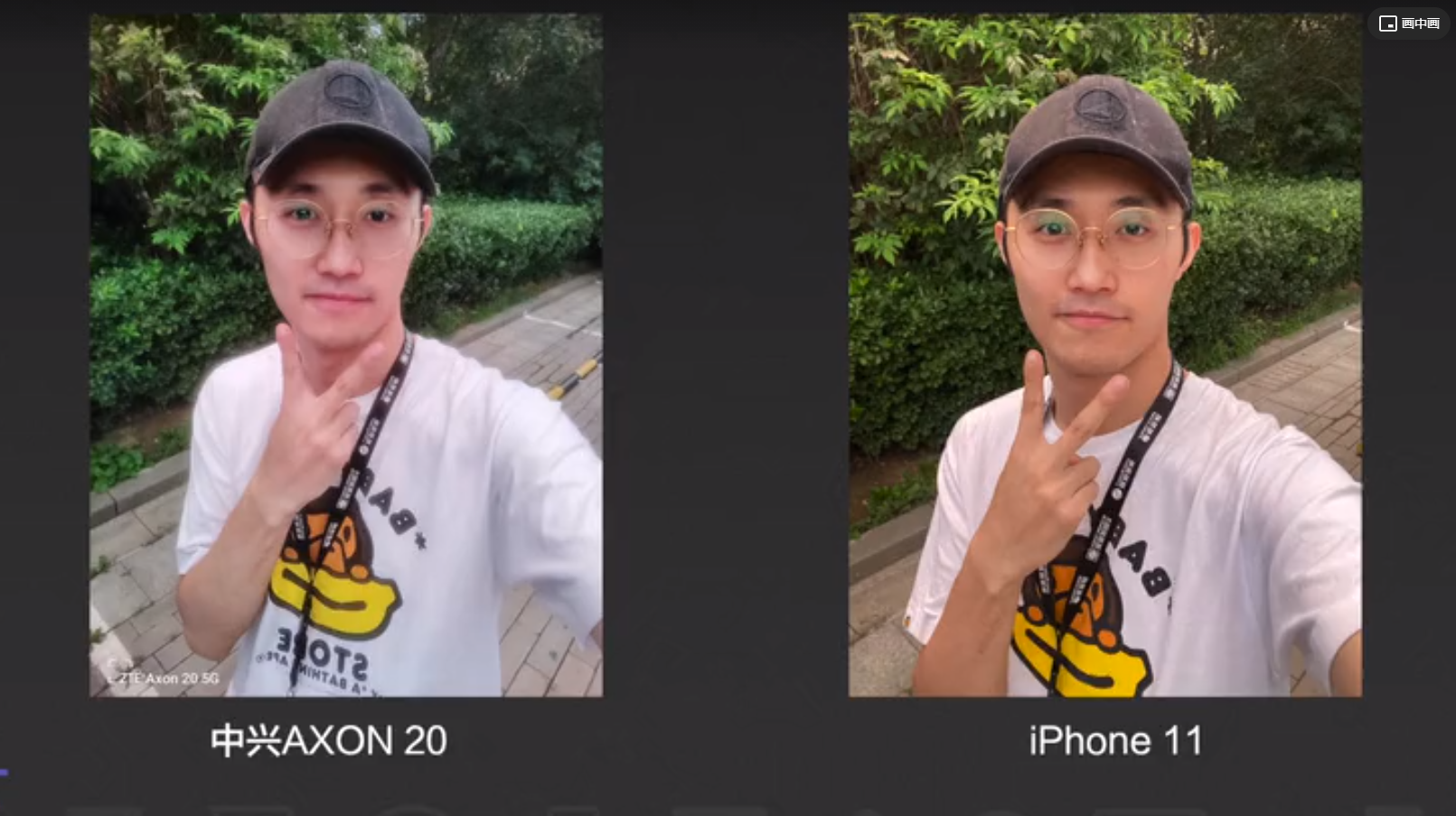
Axon 20's camera quality is also not at par with good 2020 smartphonesSource: Pheonix Lab Review
While we haven’t yet tested the ZTE Axon 20 5G, this difference in quality was clearly highlighted by one of the reviewers (Pheonix Lab) from China.
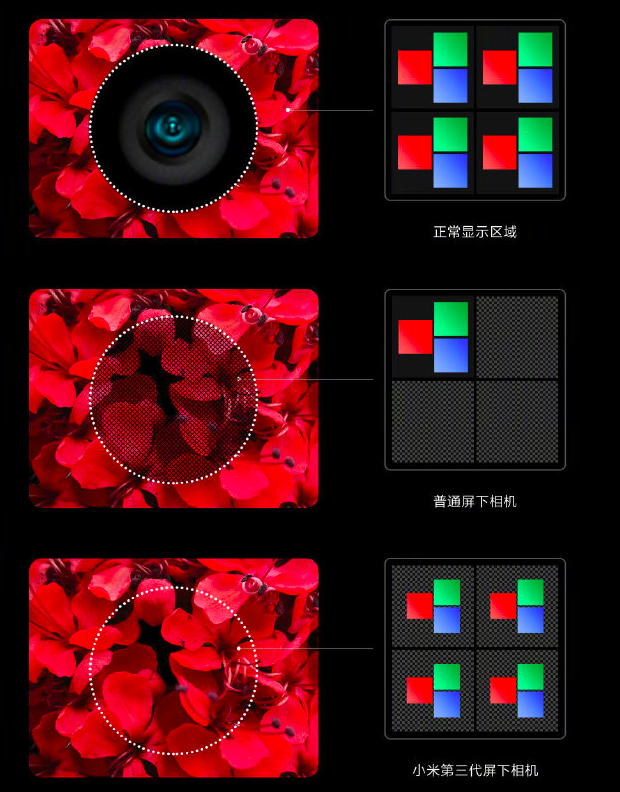
Xiaomi has taken a slightly different approach to this problem. According to the publicly available information, Xiaomi decided to make the pixels in the area above the camera smaller (instead of reducing the resolution) than the rest of the panel. This creates more space between the pixels, allowing more light to pass through. It looks like a slightly better solution than ZTE but it has very similar drawbacks.
Top – Traditional OLED display with 4 RGB subpixels Middle – Early In-display camera tech had only 1 RGB subpixel reserved for the display Last – All four RGB pixels are lit up in the third-gen technology but they are smaller in size creating more space for light to pass through
Michael explained, “And so [reducing pixel size] creates more space between the pixels for light to go through but [Xiaomi] didn’t actually cut holes. So it’s still kind of limited in terms of quality and the problem with making a pixel smaller is…you have to drive them much brighter and so there could be potential burn-in issues.” He adds that there might also be a visible color shift in that area.
1 of 3
Xiaomi's UD camera wasn't visible in the prototype hands on
Xiaomi's first gen UD camera (top) vs third gen (bottom)
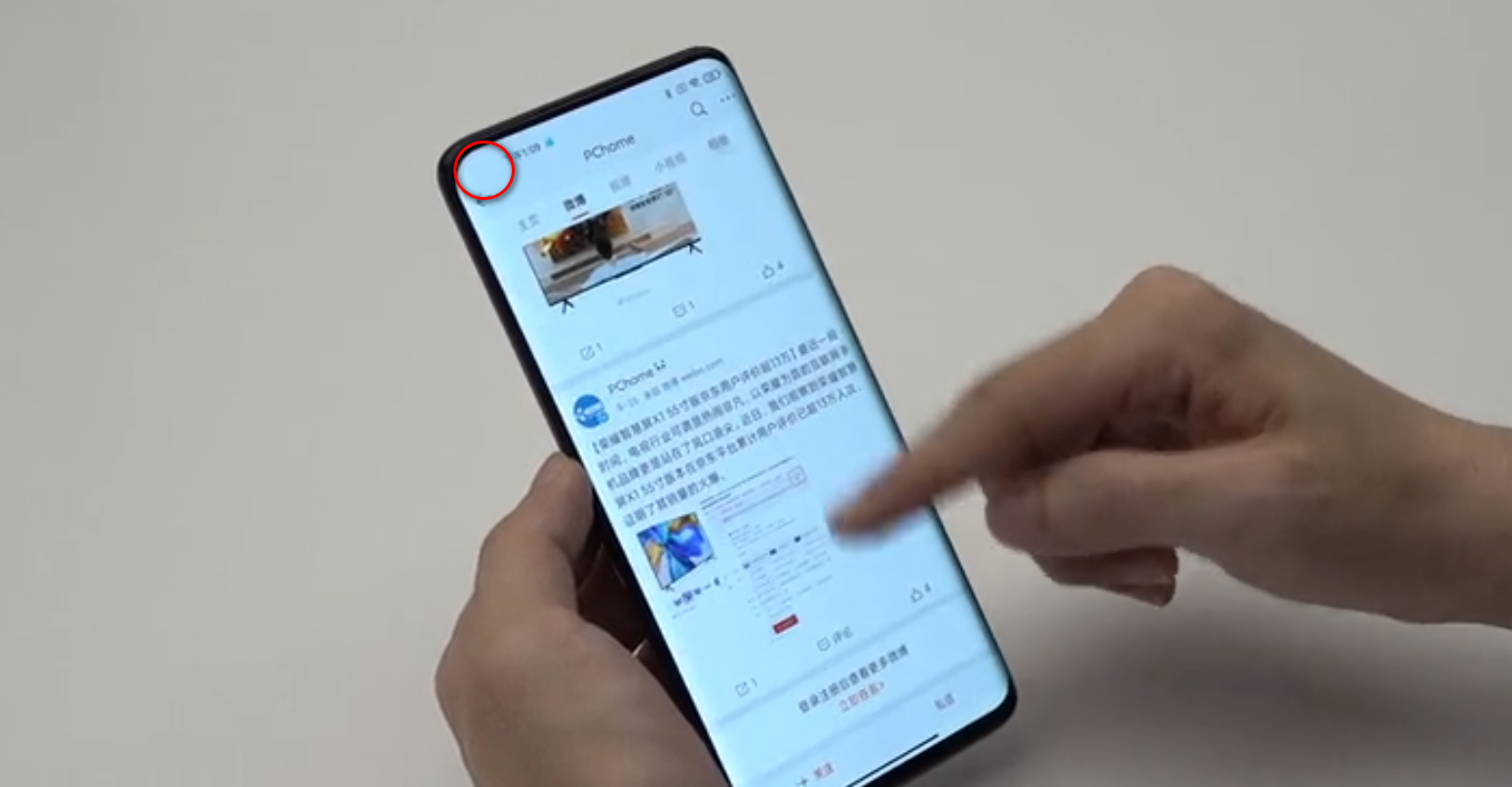
In one hands-on video of the Xiaomi prototype (via PCHome), we couldn’t find any visible difference in the quality of the display in the area (top left) above the camera and the rest of the panel. So Xiaomi’s solution seems to be better than ZTE. However, the phone was a prototype model and the hands-on video didn’t really focus on the UI elements on top of the camera or its selfie quality.
Michael points out that both Xiaomi and ZTE will probably have to rely heavily on post-processing to make the selfies look better. Xiaomi could also leverage its technology acquisition from Meitu 2018. However, not all markets prefer heavily processed, beautified selfies, which is why Michael thinks that it’s going to be difficult to use this solution in the long run.
How is OTI Lumionic’s ConducTorr™ CPM technology different?
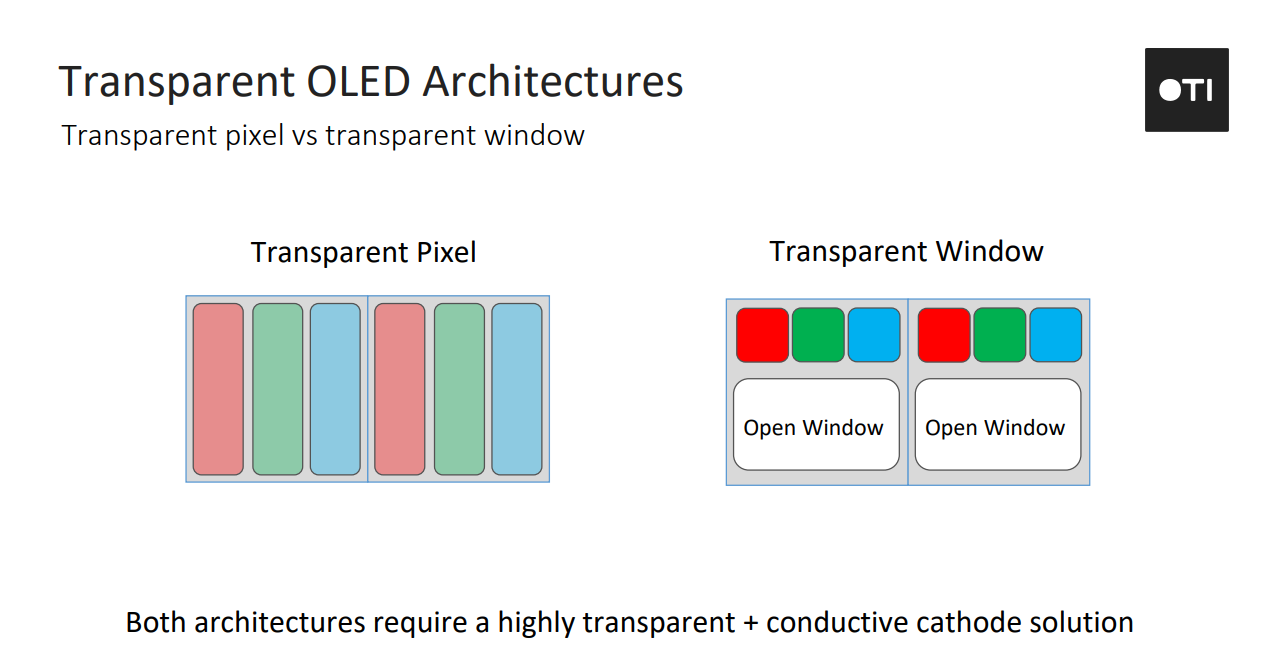
According to Michael, in order to fully explore the potential of under-display cameras and even transparent OLEDs, companies will have to make holes in their OLED displays to achieve a high level of transparency.
But the idea of making holes in between the pixels sounds quite complicated and risky. So I had to ask Michael about the durability of OTI’s solution. OLEDs have their share of drawbacks like dead/stuck pixels, burn-in, and even color shifts. So there’s always the question of how making holes in the panel would affect its durability in the long term.
OLED pixel gap is utilized for increasing transparency – Source: OTI Lumionics
But Michael seemed pretty confident in his technology. He explained, “With our technique, we’re using the same evaporation process that [companies] use to actually make the red green blue (RGB) pixels in the OLED display, but it’s all low temperature. [There’s] no damage to the displays and we can go to any resolution – all the way down to a very tiny pixel size which would be equivalent to like thousand pixels per inch, which is about double the resolution of a normal smartphone display. And then, in that case, all of our data and our customer data show no degradation in the display quality and no long-term reliability issues.”
pattern-top-cathode
His explanation sounds pretty convincing, but of course, without a real-world OLED product manufactured using the ConducTorr™ CPM solution, we will have to wait and see the difference in the quality and reliability of these panels.
Under-Display Cameras are coming to Mid-range phones First
Perfecting the under-screen camera technology will take some time and hence, companies will be hesitant to use it in an expensive model.
Michael said that in the first couple of generations of under-display cameras, manufacturers will have to sacrifice something to get it to work. This also brings us to another major highlight of under-display cameras of 2021. Unlike popular opinion, Michael says that the first generation in-display cameras are likely going to be implemented inside mid-range smartphones. So if you were expecting to see it on a flagship in the first half of 2021, you are set for disappointment.
Michael explained, “We‘ve seen it in the past where Samsung and others have played out [experimental technologies] in some of their mid-tier products first to see how the market accepts it before rolling out across the board.”
“Likely for the first two generations, we’ll have to sacrifice something. Either display [will be] slightly worse, or the camera will be slightly worse,” he adds. “What the early product lets us figure out is, which is more important to the consumer — hiding the camera and making the display perfect or keeping the camera quality as good as possible and if the display is not quite perfect, that’s not a big deal, because it’s still better than a notch.”
So it’s going to be a trial and error for the first few generations until manufacturers gather enough consumer feedback to prioritize what’s more important – camera quality or display quality.
Axon 20 5G teaser
The world’s first under-display camera turned out to be a $320 mid-range Axon 20 5G. So ZTE has set the trend of what’s to come in 2021. We have also heard rumors about Xiaomi’s new in-display camera phone being a mid-range device. So top manufacturers are unlikely to implement an under-display camera solution in their expensive flagships, where there’s no room for mistakes.
But this also tells us that under-display cameras won’t be significantly expensive to mass-produce.
Under Display Cameras aren’t necessarily more expensive than a notch or punch hole solution
According to Michael, it’s still too early to comment on the exact pricing of OLED panels that support under-screen cameras but he is positive that the prices can come close to a traditional punch-hole or notch camera solution.
“No one really knows what the final yield is going to be, and then the yield** directly drives what the panel prices are. One of the promising things is, of course, ZTE is putting [its UD camera panel] in a very low-end phone. It was like $300!”
(**Production yield for a panel manufacturer is the number of good display panels as a percentage of the total number of display panels produced.)
Michael adds,“Our expectation is that once you know the production is scaled, the cost for the panel should not be really that much different than the hole punch or notch displays of today. Because even though they have to add something to make the display semi-transparent they don’t have to cut a hole or cut a notch which has some potential yield loss. So the cost will kind of offset each other.”
His explanation gives us an idea of how under-display cameras can become mainstream in the next few years – possibly as common as a notch or a punch-hole solution. This makes things very exciting, especially because of what comes next after UD cameras become mainstream.
UD camera solution enables Larger Sensors, Multiple cameras, & Better Positioning
The obsession with a full-screen display experience may have driven us to the point of shifting cameras underneath and there are several advantages in this design.
Currently, we are limited by the size of the notch or the punch hole on the display for the camera sensor. Imagine what happens when your camera can hide behind the screen, anywhere.
Xiaomi’s 3rd gen under-screen camera selfie
When I asked Michael about the possibility of adding a larger sensor under the camera for better selfies, he was thrilled to say, “It’s a really great question and I can even take it one step further. We’ve actually seen a number of customers interested in making, potentially, the entire display transparent.”
So are we looking at completely transparent phones anytime soon?
Just as I was about to ask this question, he added that the screen will still look like a regular OLED panel but the benefit of making the entire display transparent is allowing manufacturers to be flexible with the placement of the under-display camera and sensors. A larger transparent area would enable manufacturers to add in a much larger sensor for selfies underneath.
But that’s just one possibility.
They can also add two or three cameras upfront with multiple IR sensors or even something like a Soli sensor without disturbing the full screen, distraction-free visual experience on phones.
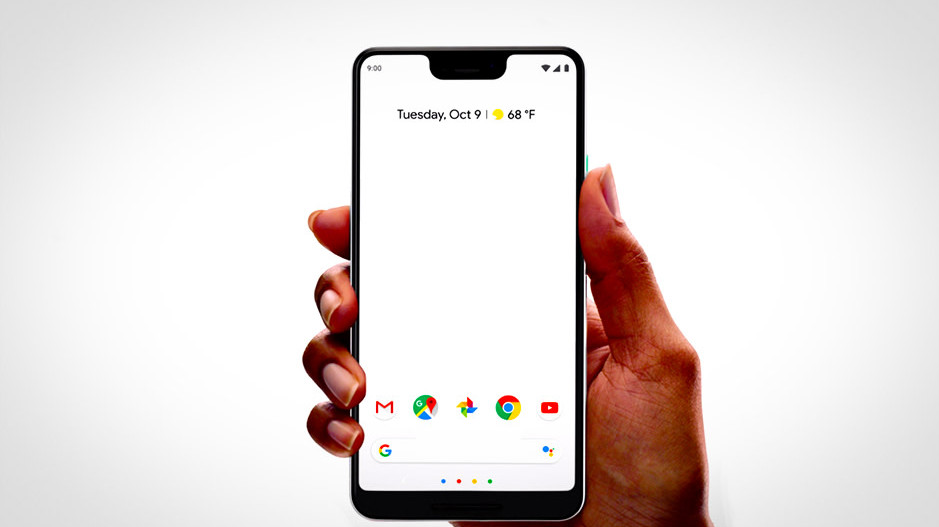
Pixel 3 XL had a large, ugly notch on top of the display
But it’s not just about the number of sensors inside, it’s also about their placement. Michael adds, “[Right] now, I’m limited to only [one or two cameras] at the top bezel. And maybe in terms of the internal design of the phone, that’s actually not the best place. If I could move it somewhere else, I’d have more space for the battery, or I could make the phone thinner or make the phone lighter”.
Another advantage of flexible camera placement on the front is the angle of view. He says that with under-display cameras, camera placement is no longer limited on the top bezel, whether it’s on a phone or even a laptop. This gives them the freedom to place it anywhere on the display like the center of the OLED panel which probably will allow for a more immersive video calling and camera experience.
In order to offer a near bezel-less screen experience on the Matebook X Pro, Huawei had to add a pop-up camera in its keyboard
This is especially true in the case of larger devices such as laptops and TVs. Imagine if you could hide the camera at the center of their screens — it would allow for better quality video calls, especially if it feels like the person on the call is directly looking at you. In the case of existing solutions, if the person on a call is looking at the screen of the device, you’d often find that the camera focuses on his or her forehead, which doesn’t make for an immersive experience. This is particularly true in this age where video calls and video conferencing are becoming a vital part of our personal as well as professional lives.
Talking about video conferencing, Michael says companies like Microsoft are even considering the potential of under-screen cameras inside large TVs that are part of a video conferencing system. He adds, “What if the TV is transparent and then I have a bunch of cameras behind it. And again, it’s much better usability in terms of video call quality and social interaction.”
Huawei Mate 20 Pro with a waterdrop notch
My conversation with Michael made me realize that under-screen cameras are definitely the next step in smartphone evolution. The true purpose of spending millions of dollars and years in R&D of under-display cameras is not just to bring a full-screen experience to the user. But it is to enable manufacturers to be flexible with the front camera solution, thereby opening up a lot of potential new applications, that wouldn’t have been possible before.
The first generation of under-screen cameras won’t be perfect. However, with innovative technologies like OTI Lumionics’ ConducTorr™ CPM, hopefully, within the next couple of years, we’ll meet phones that can match today’s flagships, in terms of both display and camera quality.
OTI recently received a strategic investment from LG Ventures (the investment arm of LG Group) to help accelerate the commercial adoption of its materials and scale up operations. The latest version of OTI’s ConducTorr™ CPM is ready for mass production and will ship to smartphone display customers in Q4 2020. And the first set of under-display camera phones manufactured using this material is expected to hit the markets in 2021.
In the next article, coming up next week, you’ll get to read more about transparent OLEDs, their applications, and foldables. So stay tuned to Gizmochina!
At the Huawei AI Life Product launch today in Europe, the Chinese giant announced two new watches. The first is the luxury Watch GT 2 Pro which boasts some significant upgrades over its predecessors and there is the Watch Fit that was announced in the Middle East a few weeks ago.
Huawei Watch GT 2 Pro
The Watch GT 2 Pro is a premium watch and that shows in the type of materials used. The 1.39-inch 454 x454 AMOLED display is covered in scratch-resistant sapphire glass, the body is made from titanium, and the underside is ceramic.
While there are multiple watch faces to choose from, there are some notable ones such as the Starry Sky Watch Face that show the moon phase. Another feature Huawei announced for the watch is OneHop Watch Face. This feature allows you to take a picture with your phone and use it as a watch face just by touching the phone (Huawei models with NFC and running EMUI 11+) against the dial of the watch and you have a new watch face.
The Huawei Watch GT 2 Pro is available in two variants – Classic and Sport. There are more than 100 workout modes including professional ones such as Golf Driving Range mode and Skiing and Snowboarding mode that show info such as slope and elevation.
Another feature is an offline navigator with a route back mode. Health isn’t left out either as the watch has a stress monitor, sleep tracking, SpO2 monitor, and a heart rate monitor that alerts you when it detects an abnormal heart rate.
The Huawei Watch GT 2 Pro boasts a 14-day battery life in typical usage. It will last 30 hours with GPS enabled and can also provide up to 24 hours of playback on a single charge. One of the major additions to the watch is support for wireless charge and a 5-minute charge will provide up to 10 hours of usage.
The new smartwatch also has support for smart watch apps that bring additional features. There is less than 4GB of storage available, so we don’t expect the watch to be able to take more than a few apps. You can also accept calls with the watch when paired with your phone as it has a built-in microphone and speaker.
The Huawei Watch GT 2 Pro will go on sale this month. The Sport version will sell for €329 while the Classic version will sell for €349. You will be able to choose between Night Black and Nebula Gray color options.
Huawei Watch Fit
The Huawei Watch Fit which was announced a few weeks ago in the Middle East has also received a launch in Europe. The watch which has a 10-day battery life and has built-in animated workouts will sell for €129 and will go on sale later this month.
We use cookies on our website to give you the most relevant experience by remembering your preferences and repeat visits. By clicking “Accept”, you consent to the use of ALL the cookies.
This website uses cookies to improve your experience while you navigate through the website. Out of these, the cookies that are categorized as necessary are stored on your browser as they are essential for the working of basic functionalities of the website. We also use third-party cookies that help us analyze and understand how you use this website. These cookies will be stored in your browser only with your consent. You also have the option to opt-out of these cookies. But opting out of some of these cookies may affect your browsing experience.
Necessary cookies are absolutely essential for the website to function properly. This category only includes cookies that ensures basic functionalities and security features of the website. These cookies do not store any personal information.
Any cookies that may not be particularly necessary for the website to function and is used specifically to collect user personal data via analytics, ads, other embedded contents are termed as non-necessary cookies. It is mandatory to procure user consent prior to running these cookies on your website.