Tech veterans in China are planning on launching a “domestic replacement” fund in the country by the end of this year. The move arrives after the recent US sanctions and aims at supporting Chinese companies that have been affected by the Trump administration.
China Europe Capital, a venture capital firm, has raised over 5 billion Yuan (roughly 731 million US Dollars) for the fund and will start investing in startups specializing in technologies. In other words, the new fund is aimed at creating China’s next tech giant. The veterans include former executives from major Chinese companies like Huawei and SMIC, with a focus on 5G networking and artificial intelligence.
Notably, the new fund is being created amid a government backed investment boom in the China’s local technology sector. The “tech war” between Washington and Beijing has fueled the investments. In recent times, the relationship between the US and China has soured, with the coronavirus pandemic making matters worse. According to a Reutersreport, “China and the US are in a Great Power rivalry that will end only when there’s a knockout,” said Zhang (fund’s Chairman and former Huawei Vice President).
This also arrives after reports have surfaced that the Trump administration might be planning on banning China’s biggest chipmaker, SMIC (Semiconductor Manufacturing International Corp). Zhang further added that “it’s not just about trade war, or sanctions. It’s a matter of life and death.” If China faces a complete cut off from western technology, it could potentially face a crisis considering the country will take several years to reach levels of self sufficient technology.
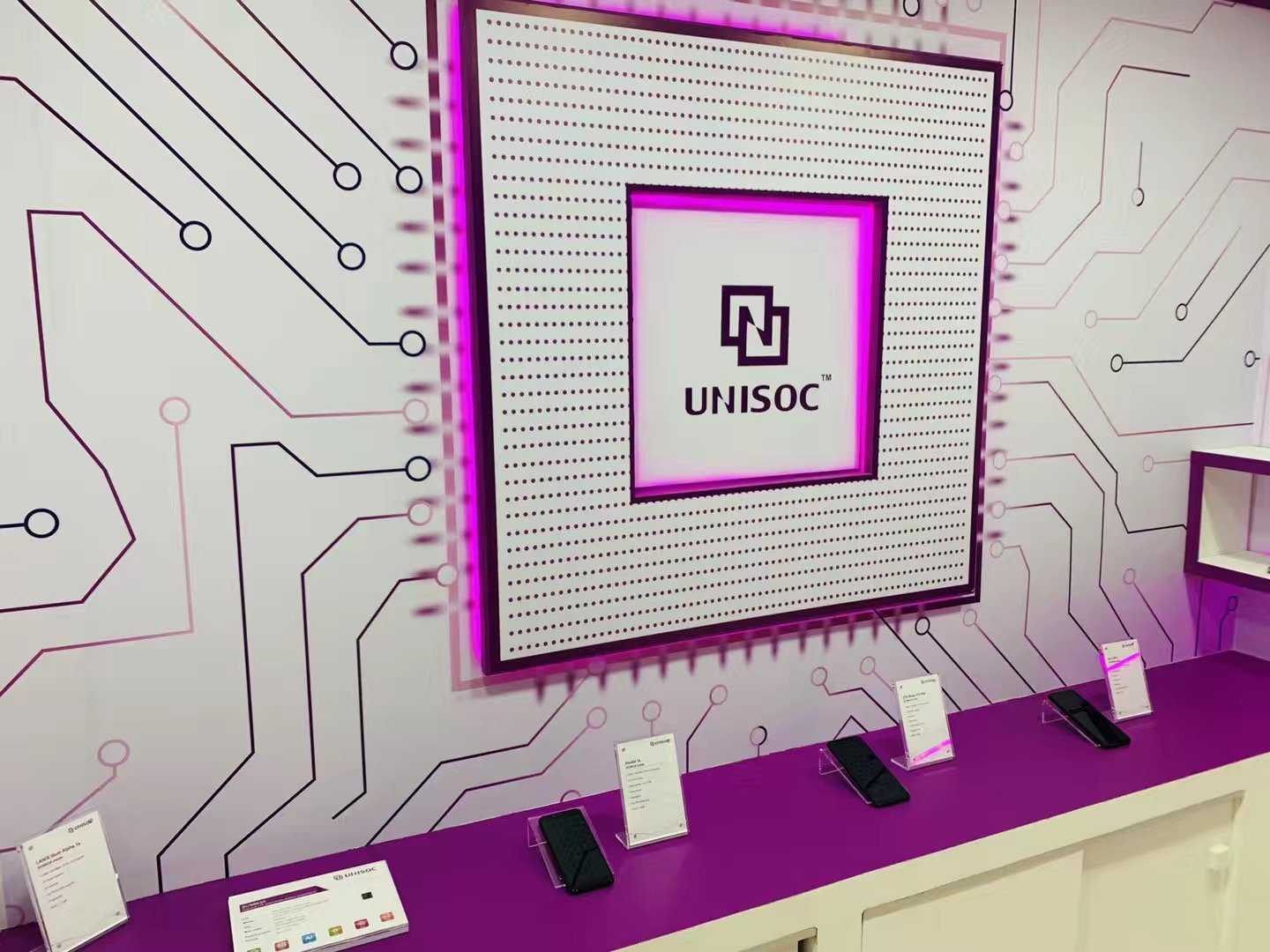
With Android 11 getting officially released, China-based Unisoc has today announced that it will be upgrading six of its smartphone chipsets to have support for the newly launched version of the Android mobile operating system.
The chipsets, which are getting Android 11 support include Huben T618, Huben T610, Huben T310, SC9863A, SC9832E, and SC7731E, reports ITHome. The company says that it will provide equipment manufacturers with pre-tested, pre-certified, and fully compatible Android 11 one-stop solution.
Along with this, Unisoc has also launched a six-in-one quick upgrade program which as the name indicates, is a single upgrade package that can be adopted for six different smartphone platforms.
As for Android 11, it comes with some new features but the primary focus on the new version is to improve the user experience. It seems to be focusing on three areas — User Experience, Privacy, and Permission Control.
Google has started rolling out the new update to the Pixel series smartphones. Other smartphone manufacturers have also joined Google for the release of Android 11, including OnePlus, OPPO, Xiaomi, and Realme.
The on-going battle between iPhone maker and software developers has intensified as Apple has countersued Epic Games, the maker of Fortnite. The WSJ report mentions that it has accused the company of breaching a contract when it introduced a new in-app payment system within the game.
Apple is seeking punitive damages and is asking the judge to restrict Epic from continuing what it describes as “unfair business practices”. The filing comes just days after Epic Games sought an injunction for Apple to put the popular videogame back in its App Store.
In its filing this Tuesday, Apple said that “Epic’s lawsuit is nothing more than a basic disagreement over money. Although Epic portrays itself as a modern corporate Robin Hood, in reality, it is a multi-billion dollar enterprise that simply wants to pay nothing for the tremendous value it derives from the App Store.”
The legal battle between both the companies started when the gaming firm introduced its own in-app payments system on Fortnite which skirted the 30 percent fee that Apple charges for each transaction.
Within hours, Apple removed the Fortnite game from its App Store for violating the rules. Soon after that, Epic Games sued Apple in California federal court, accusing the company of anticompetitive conduct.
Apple has been focusing on generating revenue from services, reducing its dependence on hardware. In line with that, Sensor Tower estimates that in the first seven months of this year, the company generated about $39 billion in revenue just from the in-app purchases, subscriptions, and premium app downloads.
Fortnite, on the other hand, one of the most popular battle royale game, has been downloaded more than 130 million times through the App Store ever since it made its debut in 2018. As per the court documents, Epic Games earned over $600 million from its relationship with Apple.
China-based BOE Technologies has today launched its latest intelligent dimming solutions that can control the rotation of dye molecules to change the transmittance under-voltage drive and offer continuous adjustment of light.
As per the report, compared to other dimming solutions, these have advantages of high transparency, low power consumption, and faster response. The company adds that they have the effects of sound insulation, heat insulation, and UV protection, and are suitable for passenger car sunroofs. As for the side window, it can be well-integrated into the passenger car smart cockpit.
BOE Skylight Dimming Window
It is based on BOE’s LCD dimming technology and adopts the free-form surface design of the sunroof, which the company claims is leading a new trend of the development of passenger car intelligent panoramic sunroof.
It supports dimming of the entire surface or partitions of it. It also has better heat insulation performance and can replace traditional sunshade curtains. There’s also support for voice-based and touch-based controls.
Similar to the sunroof model, the side-window offering from BOE also supports dimming of the entire glass or just a portion of it. It is based on the BOE’s ultra-thin intelligent dimming technology and matches the light-weight demand.
It can reduce glare and block ultraviolet rays, enabling users to enjoy the beautiful scenery through the window been during harsh sunlight. It also provides a more user-friendly approach for interaction.
The company adds that in addition to the side window for a car, it has broad use-case scenarios, such as in high-speed rail, shipbuilding, aviation, architectural lighting roofs, and curtain walls, among others.
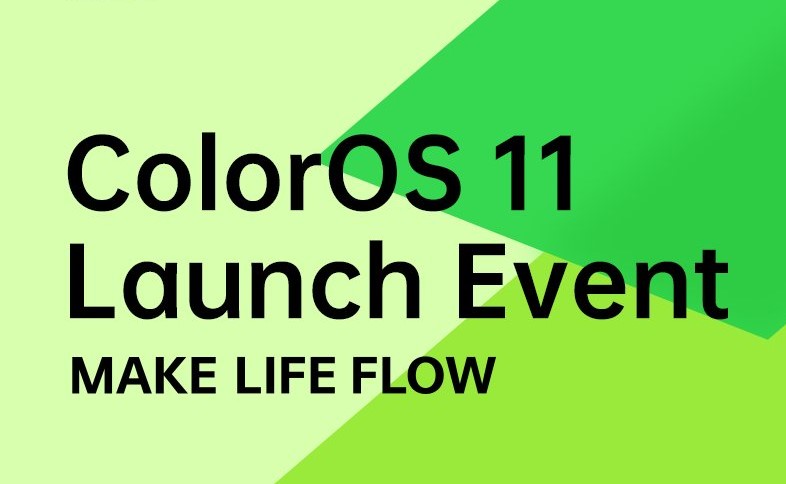
A few hours ago, OPPO opened Android 11 Beta registrations for a number of its devices worldwide. Some of the users who got recruited have already started receiving the build. Turns out the Chinese smartphone maker has made a great leap from ColorOS 7.2 to ColorOS 11. Now, the company also schedules an online event to launch ColorOS 11 globally on September 14 at 9 AM GMT.
Soon after Google released Android 11, partner OEMs like OPPO, OnePlus, realme, and Xiaomi also announced their beta programs. Actually, all of these brands had already teased or even begun (Xiaomi) beta recruitments a few days earlier.
Hence, certain selected users have already started receiving the update while some of them are rocking it for hours, at least in case of OPPO. Whereas, OnePlus released the update in the form of OxygenOS Open Beta and Xiaomi is yet to roll out the build.
Out of all brands, the beta update from OPPO came as a surprise. Because it comes with ColorOS 11 and not ColorOS 8 as expected. It is worth noting that OPPO is not the only company to align the version of their skin with the Android version.
When Android 8.0/8.1 Oreo was released, Huawei made a leap to EMUI 8 from EMUI 5. The very next year, OnePlus’ Android skin jumped from OxygenOS 5 to OxygenOS 9 with the release of Android 9.0 Pie.
That said, OPPO has only revealed the logo as well as the slogan (“Make Life Flow“) of ColorOS 11 so far. It is yet to tease any of the features. Anyway, we will know everything about it on September 14 when the company will launch it globally.
It seems like with each passing week, the trouble for Huawei keeps increasing. The Chinese giant has been under immense pressure to keep its smartphone business afloat ever since the Trump administration put the company on Entity List last year.
Recently, the United States put additional sanctions on Huawei, making it almost impossible for the company to procure high-end smartphone chipsets. Now, as per the report, Samsung Display and LG Display have stopped supplying panels to Huawei.
Earlier, it was estimated that the new sanctions are applicable only to semiconductors and foundries. But as chips driving displays are also included in the sanctions, display panel makers have also stopped supplying their panels.
Additionally, Samsung Electronics and SK Hynix will also stop supplying semiconductors to Huawei because of the sanctions, reports Chosun. The companies will not only stop supplying memory but also system semiconductors such as 5G and Mobile APs.
Huawei is now looking to replace Samsung and LG as the display supplier and the Chinese giant is reportedly testing panels from Visionox, Tianma, and CSOT (China Star). The company has also adopted BOE as the main supplier as per the guidelines of the Chinese government for expanding domestic parts.
It is being said that Huawei has set up new business units and is investing in the development of SMIC and driver IC for domestic foundry companies. However, the implementation of such components won’t be easy and very difficult to do in a short time.
From 15th September, to do business with Huawei, the companies must get special approval from the United States Department of Commerce. While some of the companies are seeking approval from the government without positive indication, they won’t be conducting business with Huawei for the foreseeable future.
Even if Huawei manages to somehow procure components from other companies, it will be difficult for the company to manage its position in the smartphone market without having access to the premium parts. We just have to wait and watch what Huawei has up its sleeves to keep its smartphone business afloat.
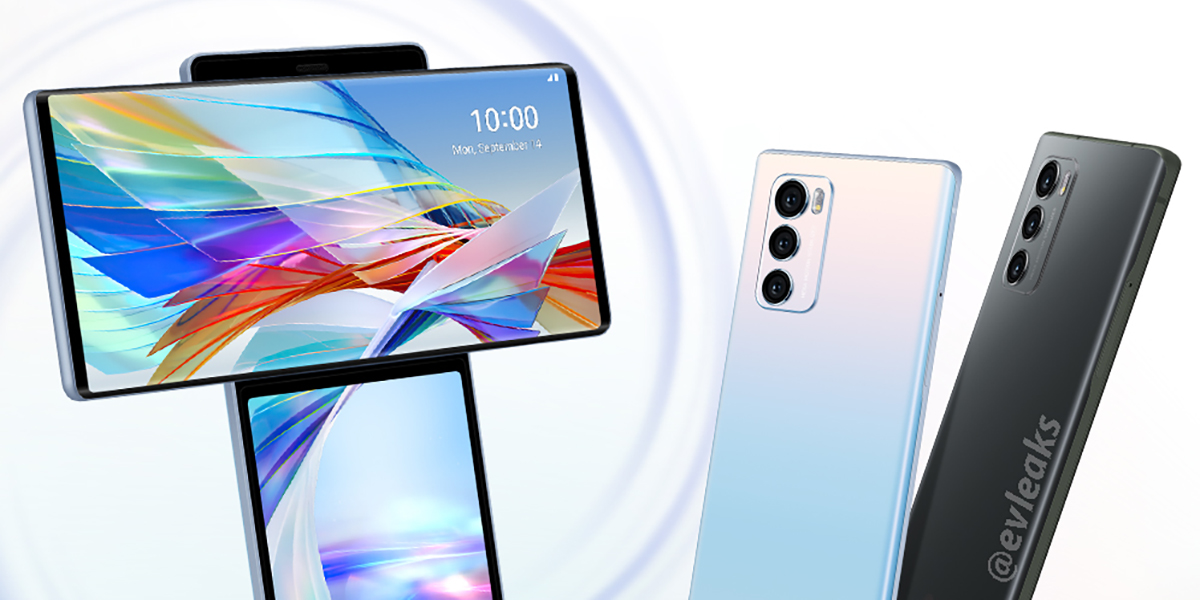
The LG Wing 5G is the next ambitious smartphone from LG. Debuting on Sept. 14, it is a dual-screen smartphone with a unique design. As it known, one can rotate the main display of the LG Wing 5G at a 90-degree angle in a T-like formation. It was at the end of the previous month that Android Authority had shared a video of the device to showcase its design in real. Now, popular tipster Evan Blass has shared a press render of the LG Wing 5G to reveal its rear design and color variants.
The press render shows that the main rotating display of the LG Wing 5G has thin bezels on its left and right edges. The upper and lower bezels are slightly thick but are symmetrical in appearance. It is speculated that the device has a 4-inch secondary screen. The second screen is expected to offer an aspect ratio of 1:1. A physical fingerprint sensor cannot be seen on the device. Probably, it could be incorporated in the main screen of the device. Also, unclear is the placement of the selfie camera on the smartphone.
The LG Wing 5G will come in two colorways such as a white-blue gradient and black. It has a protruding rectangle-shaped camera module on its back. It has three lenses and an LED flash. The camera design appears similar to the Samsung Galaxy Note 20 Ultra. Even though the LG Wing 5G has two screens, it does not appear very thick.
A leaked video that had surfaced earlier this week revealed the presence of a USB-C port and a speaker grille on the bottom edge of the LG Wing 5G. Unfortunately, the rumor mill has not revealed any details on the specs of the LG Wing 5G. Unconfirmed rumors have claimed that it may not be a flagship device since it may feature a Snapdragon 7-series chipset. The device could be debuting with a price tag of $1,000.
Just as reported back in July, Google did announce a stable update for Android 11 on September 8. However, the stable update arrives only for eligible Pixel phones while select phones from other manufacturers get open betas.
What’s new in Android 11?
Android 11 brings lots of new features such as:
Chat bubbles (for messaging apps) – google has adopted Facebook Messenger’s chat heads and dubbed it chat bubbles. You will now be able to continue conversations without the need for opening a chat app.
Screen Recorder – There is also a native screen recorder now which means you can discard those third-party screen-recording apps you installed. Users will able to choose if they want audio to be recorded and if screen touches should be visible too.
Power Menu for connected smart devices – need quick access to your connected smart home devices? Just press and hold the power button to bring up the menu that displays your connected smart home devices such as lights, locks, and cameras without the need for launching an app.
One-Time Permissions – Users will be able to grant one-time permissions to apps when they request access to the camera, microphone, or location. If you fire up the app again afterward, it will request access permissions afresh.
Permission Auto-Reset – With Android 11, apps previously granted permissions but have not been used in a while will have their requests automatically reset. What that means is that the permissions will be removed and will have to be granted when you launch the app again.
The update has begun rolling out to the Pixels save for the first-gen models that are no longer supported. This is different from last year where the stable update was available for some other non-Pixel phones such as the Essential PH-1 (whose support has ended) and the Redmi K20 Pro.
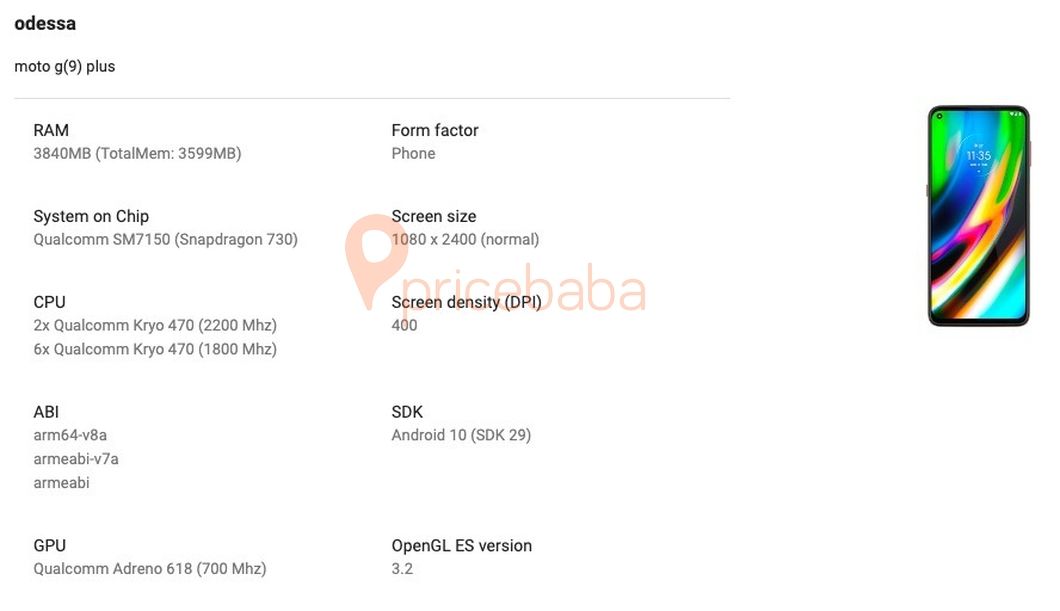
The Moto G9 Plus was briefly listed on the website of a European operator a few days ago. While the listing did reveal most of the key specifications of the upcoming device, it didn’t say the processor. Now, a Google Play Console listing has revealed what was hidden.
According to the listing which was first spotted by Pricebaba, the Moto G9 Plus will be powered by the Qualcomm SM7150 mobile platform. While the listing does say that it is the Snapdragon 730 processor, it may turn out to be the Snapdragon 730G as both chipsets have the same SM7150 part number. If you were to ask us which chipset it is, we will choose the Snapdragon 730G.
The listing confirms the phone has just 4GB of RAM, a 1080p display, and will run Android 10 out of the box.
Motorola will ship the phone with a 6.81-inch screen that has a hole in the top left corner of the screen. On the back of the phone will be a 64MP quad-camera setup and under the hood is a 5000mAh battery with support for 30W fast charging. Other features are dual SIM support, Bluetooth 5.0, and support for a MicroSD card.
We expect Motorola to announce the device anytime soon and availability should follow shortly after.
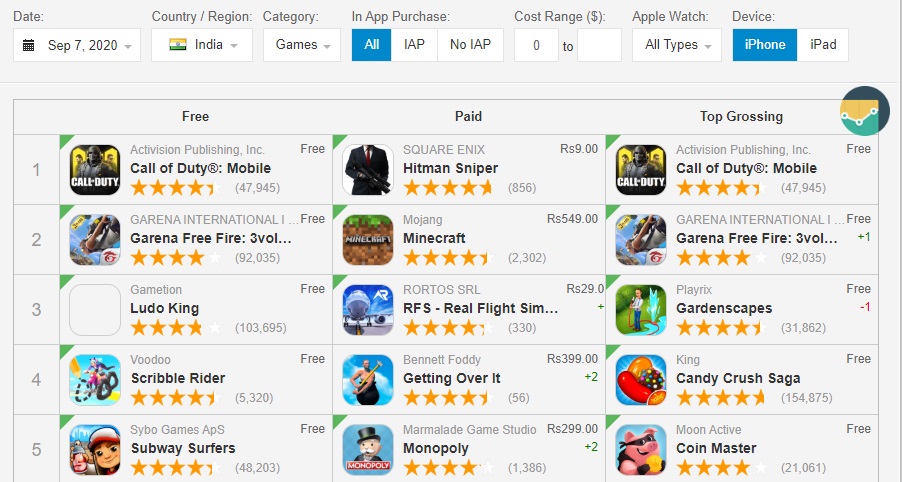
On September 2, the Indian government announced a ban on 118 Chinese apps, one of which is PUBG Mobile. This is a sequel to an earlier ban that hit 59 Chinese apps. Data released by Sensor Tower has revealed the apps that have seen a rise in their download numbers and revenue since PUBG Mobile was banned.
The top three most downloaded apps in India after the ban, both for iOS and Android includes Garena Free Fire, Ludo King and Call of Duty. The data is for downloads spanning a four-day period ranging from September 2 to September 5 and during this short period, Garena downloads reached 2.1 million downloads and Ludo King reached 1.52 million downloads. Although “Call of Duty: Mobile” recorded only 1.15 million downloads in the period, the arena game has been downloaded 1.56 million times in the past 30 days and also rank first on the Apple App Store.
Garena Free Fire is a battle royale game developed by a company based in Singapore (Sea Ltd), while Call of Duty is jointly developed by Tencent Tianmei Studios and Activision Blizzard, while Ludo King is a virtual board game.
In terms of revenue, Call of Duty: Mobile is the top-grossing mobile game during the period, followed by Garena Free Fire. Among the top 5 top-grossing mobile games are Gardenscapes, Candy Crush Saga and Coin Master.
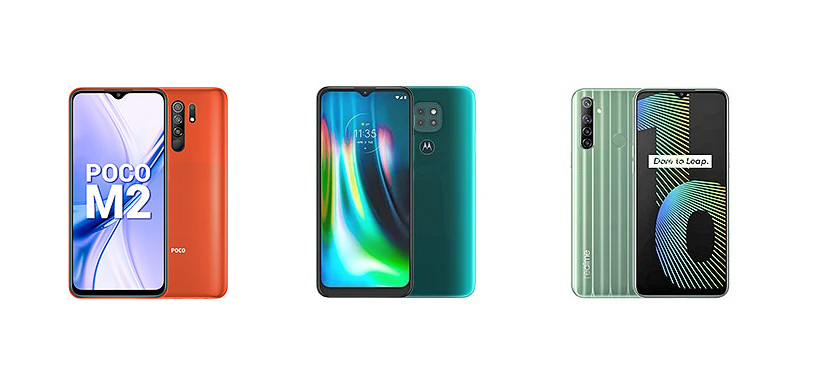
Gone are the days in which POCO only released flagship killers and midrange phones. The Xiaomi-backed brand just came up with an entry-level phone for the Indian market: the POCO M2. It has similar specifications to the Redmi 9 Prime, but it is not exactly the same phone. And it carries a very interesting price. But is its price more interesting than the offerings from the concurrence or you can get something better? Discover it through this specs comparison with the other great devices in the same price range sold in the Indian market: Motorola Moto G9 and Realme Narzo 10.
Motorola Moto G9 vs Xiaomi POCO M2 vs Realme Narzo 10
Quad 13 + 8 + 5 + 2 MP f/2.2, f/2.2, f/2.4 and f/2.4
8 MP f/2.0 front camera
Quad 48 + 8 + 2 + 2 MP f/1.8, f/2.3, f/2.4 and f/2.4
16 MP f/2.0 front camera
Triple 48 + 2 + 2 MP f/1.7, f/2.4 and f/2.4
8 MP f/2.2 front camera
BATTERY
5000 mAh, fast charging 18W
5000 mAh, fast charging 18W
5000 mAh, fast charging 20W
ADDITIONAL FEATURES
Dual SIM slot, water-repellent
Dual SIM slot, splash resistant
Hybrid Dual SIM slot, water-repellent
Design
POCO M2, Motorola Moto G9, and Realme Narzo 10 are nothing special if we talk about the design. They are cheap phones made of polycarbonate, but this does not mean they have bad aesthetics. These handsets come with narrow bezels around the display, waterdrop notches, and even protection against water (they are water-repellent but not waterproof). Despite it might look more outdated at a first glance, I like the Realme Narzo 10 due to its smaller camera module, and it is also slightly more compact than its two rivals.
Display
Realme Narzo 10 and Motorola Moto G9 are a bit disappointing when it comes to the display: not only they have IPS panels, but they come with below-average HD+ resolution. Instead, the POCO M2 features a Full HD+ panel providing a higher level of detail. Given that these phones feature wide 6.5-inch panels, the resolution might make the difference for a lot of users. In each case, you get a cheap IPS panel, nothing special, so you’d better focus on the rest of the specifications.
Specs & Software
Realme Narzo 10 and POCO M2 are built around a MediaTek Helio G80 chipset, while Motorola Moto G9 is powered by the Snapdragon 662. Despite most people trust Qualcomm more than MediaTek, the Helio G80 is actually a more powerful chipset than the Snapdragon 662: that is why Motorola Moto G9 loses this comparison. Between Realme Narzo 10 and POCO M2, the latter wins because it packs a higher amount of RAM (6 GB vs 4 GB). In each case, you get Android 10 out of the box, but while on the Motorola Moto G9 it is close to stock Android, on the Realme Narzo 10 and the POCO M2 it is highly customized.
Camera
On the paper, the most advanced camera department belongs to the Realme Narzo 10, which sports a 48 MP quad-camera including an ultrawide sensor and a pair of 2 MP lenses for macro and depth info. Even the front camera is superior on the Realme Narzo 10 with its 16 MP resolution. Right after, we got the Motorola Moto G9 with its 48 MP triple camera. POCO M2 is disappointing: it still features a quad-camera, but its main sensor is an inferior 13 MP unit. If you want a good camera phone, you should not choose the POCO M2.
Battery
POCO M2, Realme Narzo 10, and Motorola Moto G9 come with exactly the same battery capacity: 5000 mAh. But given that the POCO M2 features a Full HD+ display (higher resolution), we believe its battery life will be inferior. The Motorola Moto G9 should be better because it has an HD+ display and a more efficient processor built at 11 nm. Further, Motorola Moto G9 features a slightly faster charging technology with a 20W power (Realme Narzo 10 and POCO M2 have 18W). On the other hand, Realme Narzo 10 supports reverse charging. The battery life of the Realme Narzo 10 should be very close to the Motorola Moto G9, but unfortunately, we did not test both of these devices, so we can not give you a definitive verdict.
Price
The starting price of the Realme Narzo 10 in India is Rs. 11,999, which roughly translates into €138 or $163. Note that we are talking about the configuration with 4 GB of RAM and 128 GB of internal storage. The POCO M2 is priced Rs. 10,999 (equivalent to about €127 or $150) in the base variant with 6/64 GB. At last, the Motorola Moto G9 has a listing price of Rs. 11,499 in the base 4/64 GB configuration, which roughly translates into €132 or $155. If we exclude the cameras, POCO M2 is actually a better phone despite it is more affordable. But if you need better cameras, then you should go either for the Realme Narzo 10. The Motorola Moto G9 is still a great device, but I actually prefer the Realme Narzo 10 due to its better front camera and reverse charging support. Naturally, that is just my preference. You can let us know what do you think about these devices by using the comment box below.
Like other brands (OPPO and realme) under Oujia Holdings, OnePlus has also released Android 11 Beta for the public in the form of OxygenOS 11 Open Beta 1 for OnePlus 8 and OnePlus 8 Pro. But unlike its sister companies who have only allocated certain number of numbers to try out their software offerings based on the latest Android, OnePlus’s mobile software can be installed by any interested user.
OnePlus, in an official community post details all the new features OxygenOS 11 based on Android 11 brings to the users. We have all already reviewed the first release of this software, which was made available via OnePlus Android 11 Beta program last month.
Anyway, here are some of the highlights of OxygenOS 11.
Revamped UI (mimics Samsung’s One UI)
Always-on Display
New Game Space Features
Redesigned Dark Mode
Zen Mode 2.0
Overhauled Gallery App
As always, OnePlus warns users about potential bugs. Hence, if you are not used to weird unknown issues on smartphones, better stay away from it. On the other hand, users who know what they are getting into can pursue as usual.
Unfortunately, OnePlud did not release OxgenOS 11 Open Beta 1 builds for the Indian versions of OnePlus 8 and OnePlus 8 Pro. But it did confirm that these variants will be getting future releases.
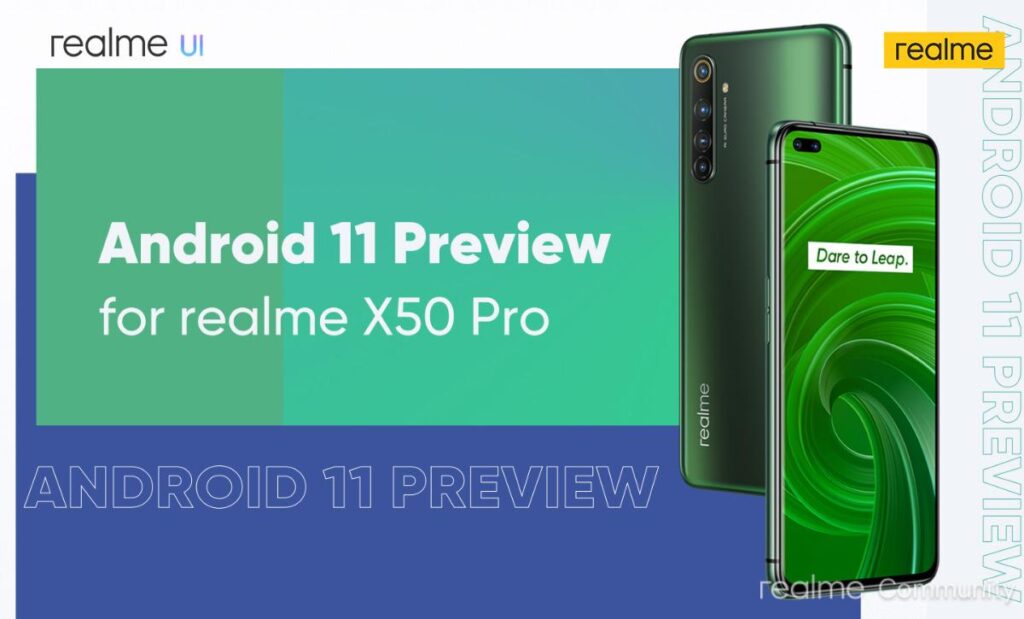
Just like OPPO, realme has also opened Android 11 Beta registrations. But unlike its sister company, the brand has only one device for this program and that’s none other than realme X50 Pro. In case you have forgotten, this phone is realme’s as well as India’ first 5G smartphone.
The realme X50 Pro was also part of the official Android 11 Beta program. This new build of latest Android for the device should be close to what end-users will be receiving in the coming weeks.
The brand calls this program Android 11 Preview instead of beta. The update should come with realme UI 2.0 but OPPO has jumped to ColorOS 11 from ColorOS 7.2. Unfortunately, although registrations are live, only 100 seats are made available, which is way lower than 2,000 seats allocated by OPPO for each of its eligible handsets.
Having said that, if you are interested in trying out the latest Android on your realme X50 Pro, then head over to Settings > Software Update > Gear Icon > Trial Version > Submit Details > Apply Now > Finish.
Do note that this is is an early release of Android 11 software for realme X50 Pro. Hence, there could be a number of bugs. Also, make sure to backup your data before updating in case if you get selected.
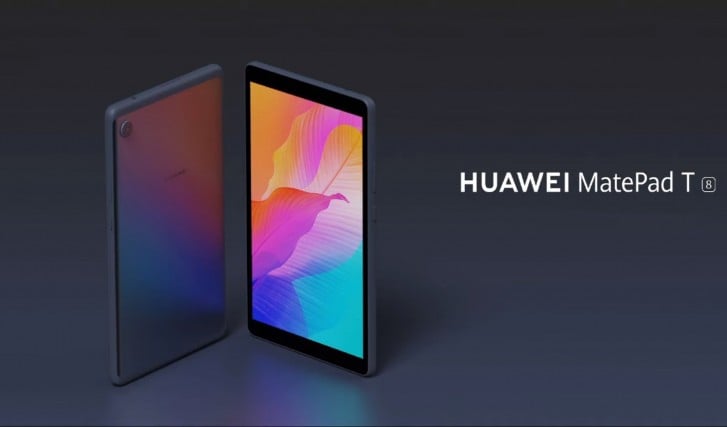
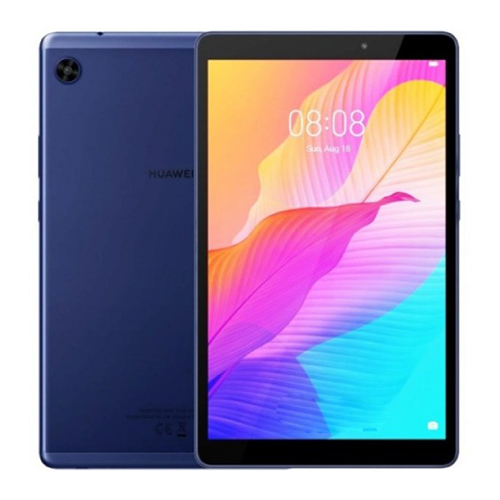
Huawei has officially launched the MatePad T8 in India. The tablet was first announced in May for the global market. Later in July, the company teased the impending launch of the tablet in India.
The MatePad T8 is offered in a single Deepsea Blue color and comes in Wi-Fi and LTE versions priced at Rs9,999 ($135) and INR10,999 ($150), respectively. The LTE model will be available for INR1,000 ($13) less during the pre-order phase on Flipkart, which begins on September 8, 2020, and ends on September 14, 2020. The slate will be available on open sale from September 15.
The Huawei MatePad T8 features an 8-inch LCD panel with 4.9mm left and right bezels. It also packs a screen resolution of 800 x 1200 pixels resolution, 80% screen-to-body ratio and 189ppi pixel density. The tablet also comes with an all metal-body.
Talking of the processor, the slate is powered by a MediaTek MT8768 chipset that includes four cores of Cortex-A53 CPU ticking at 2.0GHz and another four cores of Cortex-A53 CPU at 1.5GHz. The SoC includes IMG G38320 650 graphics.
The octa-core processor is paired with 2 GB of RAM and there are 16 GB and 32GB storage options expandable via microSD. The MatePad T8 is preinstalled with Android 10 OS with an overlay of Huawei’s EMUI 10.1 custom skin. The tablet lacks Google apps and services. Instead, Huawei provides its own AppGallery on the device. The table comes with educational content for children. Parental control mode and eye-comfort mode are also available on the MatePad T8.
The tablet gets its juice from a 5,100mAh batterywhich can deliver up to 12 hours of video playback. There is a 2-megapixel camera with f/2.4 aperture at the front while at the back, it sports a 5-megapixelcamera. It comes with support for Wi-Fi 802.11ac, Bluetooth 5.0, microUSB 2.0, USB OTG and 3.5mm audio jack. There is also LTE support on some models.
At the end of last week, OPPO announced Android 11 Beta recruitment for some of its devices such as the Find X2 series, Ace2 series, and Reno3 4G series. Now, the registrations for all these smartphones are live in China, India, Indonesia, and Thailand.
Talking about China first, users of six devices are eligible for this program in OPPO’s home country. The company has allocated 2,000 seats per handset model. If a user gets selected, they will be receiving the beta update within the next three days.
Here’s the exact list of phones whose Android 11 Beta registrations are open in China.
Just like China, 2,000 seats are allocated for each model. In case you are interested in applying in this program, head over to Settings > Software update > Gear icon > Apply for beta version.
There have been multiple leaks with respect to the launch dates for new Apple products. There were even reports that Apple will announce new products today, specifically a new Apple Series Watch and a new iPad but that didn’t happen. Rather, the Cupertino-based tech giant announced a launch date for an event.
Apple has announced that it will have a virtual event at 10 AM PDT (5 PM GMT) on September 15 which is exactly a week from today. There are already speculations regarding what will be announced. A lot of folks are anticipating the arrival of the iPhone 12 series but they may be disappointed.
According to Mark Gurman who writes for Bloomberg, Apple may actually not announce new phones but a new Apple watch. In a post, he revealed that the invite sent to media says “Time Flies” which hints at a timepiece and not the iPhone 12 series.
Apple is expected to announce the Series 6 Watch and also a budget watch that has been referred to as the Apple Watch SE. There is no confirmation that both watches will be announced together.
This will be Apple’s second virtual event this year. It had one back in June which was tagged a success. Several manufacturers have shifted to having their launch events online due to the COVID-19 pandemic.
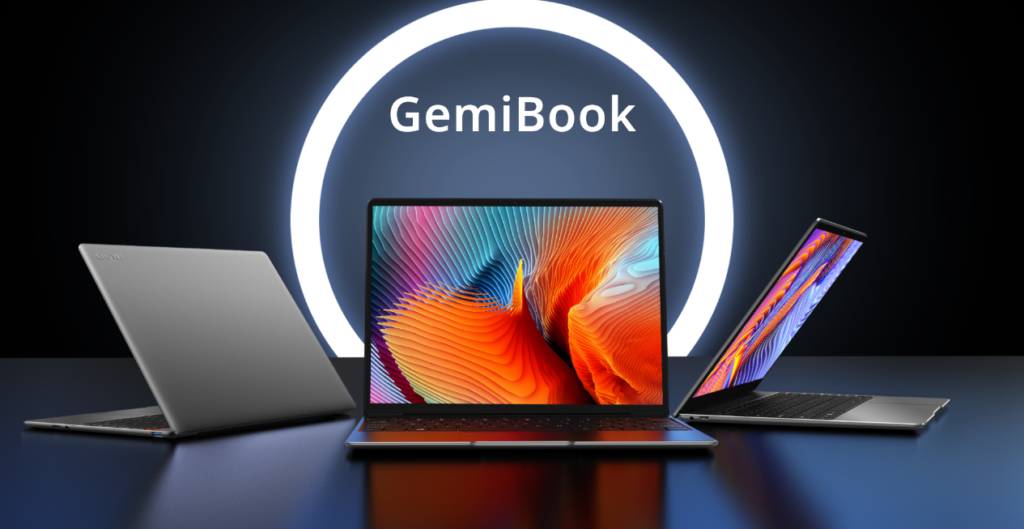
A little over a month ago, Chuwi unwrapped CoreBook Pro – an affordable laptop with a seemingly premium design but underwhelming internals. With the exact same strategy, Chumi has yet another laptop in the pipeline, the Chumi GemiBook.
The GemiBook release can happen in a couple of days and it’s going to be a 13-inch laptop powered by Intel Celeron J4115 CPU. If you’re wondering, the J4115 is a quad-core CPU released by Intel in late 2019 targeted at low-power laptops, mini-PCs, or Chromebooks. It runs at 1.8-2.5 GHz clock frequency. There is a built-in UHD 600 graphics card for smooth 4K videos decode and render graphic-intense games.
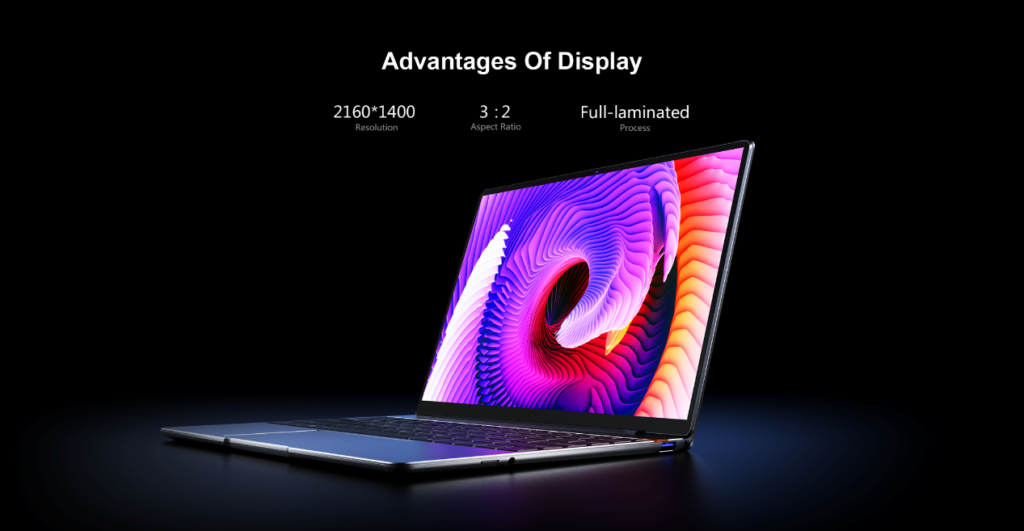
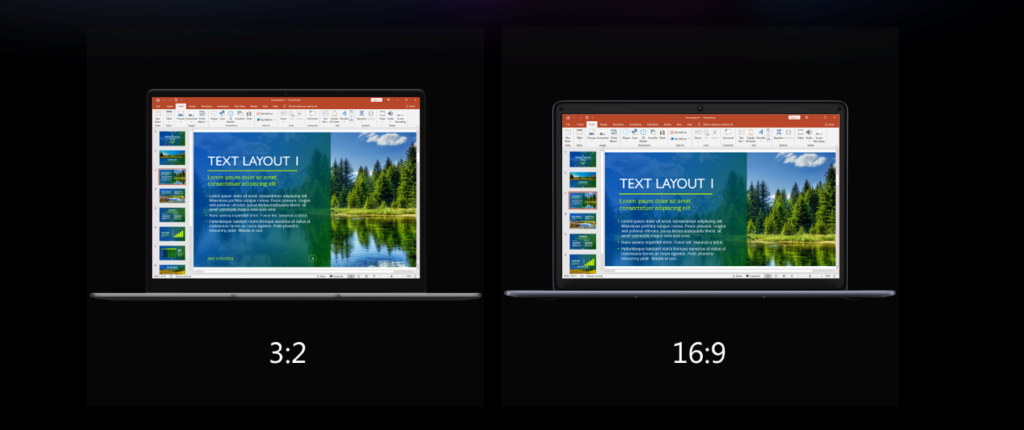
Additionally, the GemiBook offers features like a 13-inch 2K full screen, 12GB RAM, and 256GB SSD ROM which should prove adequate for light to medium tasks. Whatever, what makes GemiBook a laptop worth attention is its price tag. The laptop will officially go for open sale in mid-September at just $299.
In terms of design, the GemiBook looks similar to the CoreBook. The GemiBook is made up of a full metal body but the computing device is overall lightweight with just 1.34Kg. It’s also thin with the screen supporting up to 180° rotation.
For students and other professionals who have budget constraints can indeed look forward to the laptop. At the price tag of $299, it offers incredible specs and the build quality is also very satisfactory. Overall, the GemiBook is a competitive package in the price segment. More info about GemiBook can be obtained from Chuwi official website.
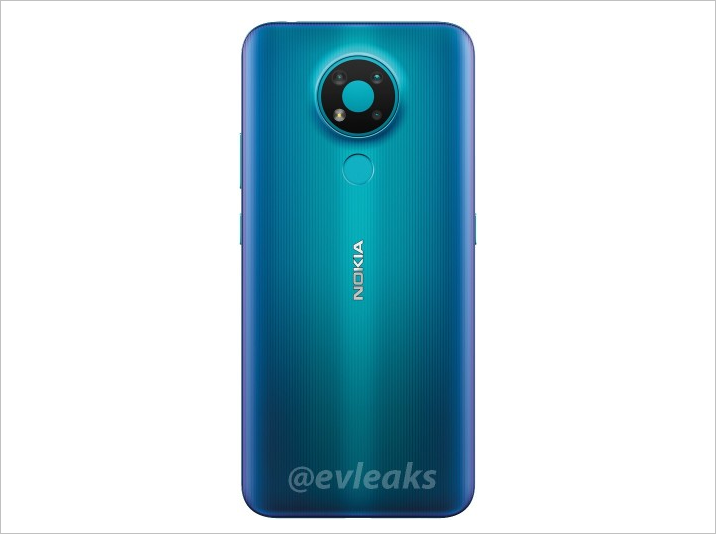
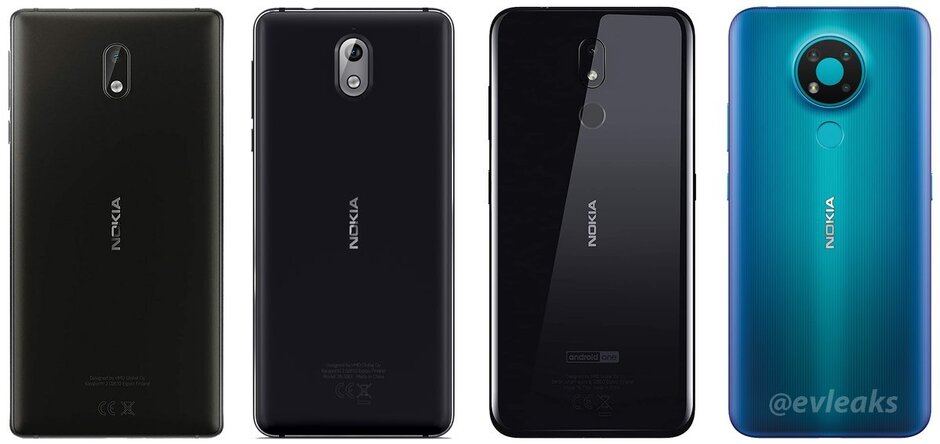
HMD Global has been somewhat slow in releasing this year’s budget Nokia Android smartphones but the company has got some goodies lying in wait for us. One of such goodies is the Nokia 3.4 and while there is no information yet on the launch date, the renders, specs and pricing details of the phone have appeared online.
The leaked render only shows the back panel with a round camera module. The module houses a triple camera setup and an LED flash. The latest leak shows the camera setup includes a 13-megapixel main shooter and unspecified 5-megapixel and 2-megapixel sensors which are likely a macro camera and depth sensor respectively. There is also an obvious fingerprint sensor at the back.
The leak also tips the device to pack a 6.5-inch display with a 20:9 aspect ratio and an HD+ resolution of 1600 x 720pixels. NokiaPowerUser says the phone will also have a punch-hole design which holds an 8-megapixel camera at the front.
The phone will be powered by a Snapdragon 460 SoC, an upgrade from the Snapdragon 429 chip on its predecessor. Nokia 3.4 will ship with 32GB of internal storage as standard, although a 64GB variant is also on the way. Both of these models include 3GB of RAM and 4,000mAh batteries. The phone will also run stock Android 10 as part of the Android One program.
Nokia-3-vs-Nokia-3.1-vs-Nokia-3.2-vs-Nokia-3.4
Nokia is expected to unveil the smartphone in late September or October with a release shortly after. The phone is tipped to come in blue, purple, and grey and will retail at £129 in the UK.
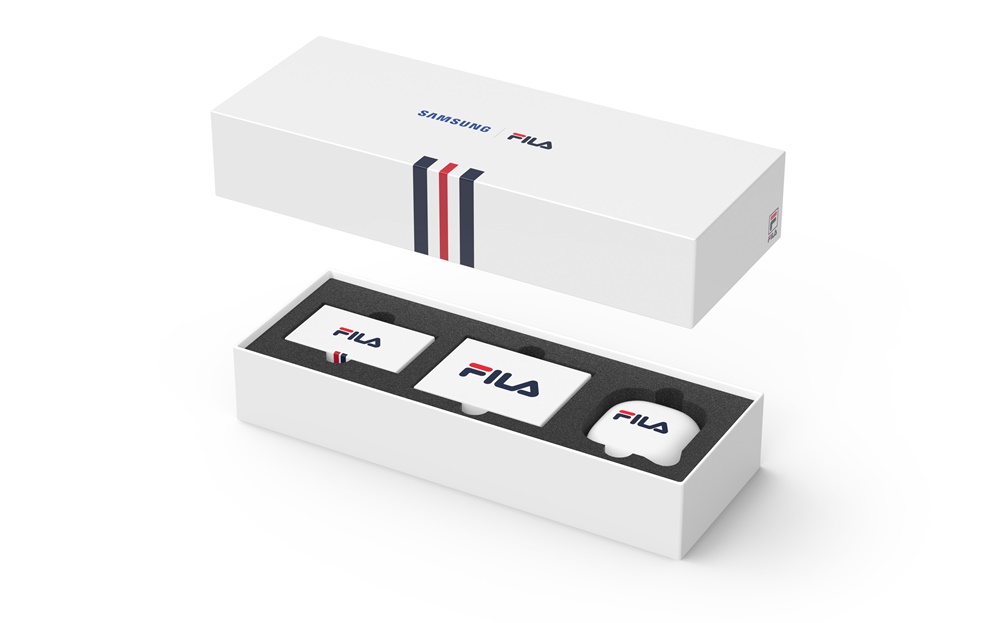
The Galaxy Buds Live comes in three colorways – Mystic Black, Mystic Bronze, and Mystic White. There is a fourth colorway but you can only get that if you are purchasing the Galaxy Z Fold 2 Thom Browne Edition. Today, Samsung has announced a limited-edition Galaxy Buds Live in collaboration with the sports apparel manufacturer, Fila.
The New Galaxy Buds Live Fila Edition comes in a special white retail box with Samsung’s and Fila’s logo at the top and the latter’s signature tri-color bands on the side. The package includes a Mystic White Galaxy Buds Live with Fila’s logo on top. There is another Fila-branded shoebox-styled case that serves as a case for the Buds Live’s own case. A third item in the package is a keyring that has the form of one of Fila’s Disruptor sneakers.
The Galaxy Buds Live Fila Edition will go on sale tomorrow in Korea for KRW 209,000 (~$176). Two thousand units are available and will first be sold during a live stream on the Kakao Shopping Live broadcast channel. Those who are lucky enough to purchase a unit during the live stream will get a free pair of Fila Drifter slides.
On September 10, the special edition earbuds will be available for purchase on Samsung’s own website and Fila’s online store.
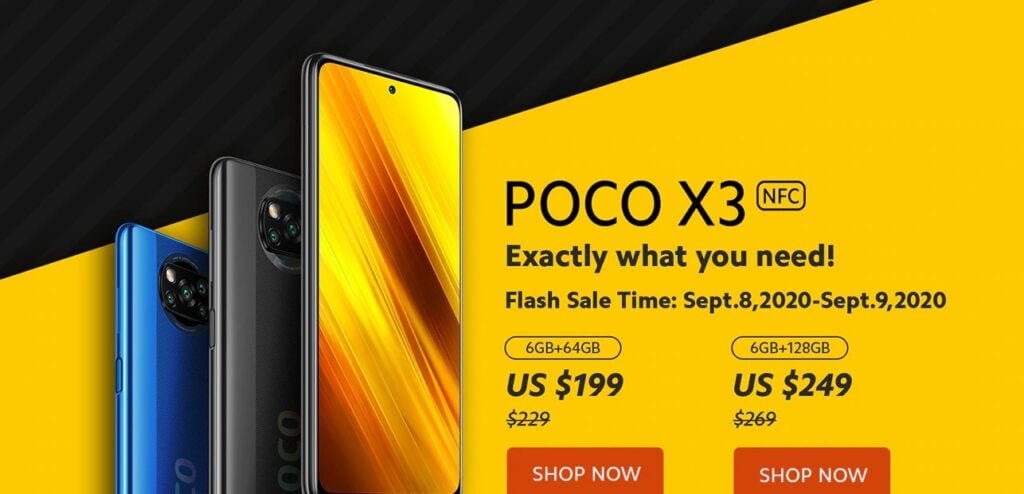
POCO has announced its latest phone, the Poco X3 NFC, or simply the POCO X3. The device is now on a flash sale at Xiaomi’s official store on AliExpress. Interestingly, the Poco X3 NFC is the first phone to use Qualcomm’s new Snapdragon 732G processor, which you can take it as an overclocked version of the 730G. It supports LTE and comes with 6GB of RAM. Storage options include 64GB or 128GB and have the facility to expand storage via a microSD card slot.
At AliExpress, the base 6/64GB is listed for just $199 (actual price: $229). While the top variant with the same RAM but 128 internal storage is available at $249 (actual price: $269). The discounted are applicable only during this flash sale which will end on 9th September 2020. Hence, don’t miss out on the chance to reserve one immediately. You’ll have the option to choose from two color variants as well – Cobalt Blue and Shadow Grey.
For the unversed, the POCO X3 has a display of a 6.67-inch LCD 1080p panel with a 120Hz refresh rate. The fingerprint sensor is on the power button rather than integrated into the display. For the sub $200 price range, the POCO X3 is a decent smartphone. If interested, head over to the flash sale page. Oh if we missed it, the first 1,000 buyers will have the chance to get a free limited edition T-Shirt. So hurry up!
We use cookies on our website to give you the most relevant experience by remembering your preferences and repeat visits. By clicking “Accept”, you consent to the use of ALL the cookies.
This website uses cookies to improve your experience while you navigate through the website. Out of these, the cookies that are categorized as necessary are stored on your browser as they are essential for the working of basic functionalities of the website. We also use third-party cookies that help us analyze and understand how you use this website. These cookies will be stored in your browser only with your consent. You also have the option to opt-out of these cookies. But opting out of some of these cookies may affect your browsing experience.
Necessary cookies are absolutely essential for the website to function properly. This category only includes cookies that ensures basic functionalities and security features of the website. These cookies do not store any personal information.
Any cookies that may not be particularly necessary for the website to function and is used specifically to collect user personal data via analytics, ads, other embedded contents are termed as non-necessary cookies. It is mandatory to procure user consent prior to running these cookies on your website.