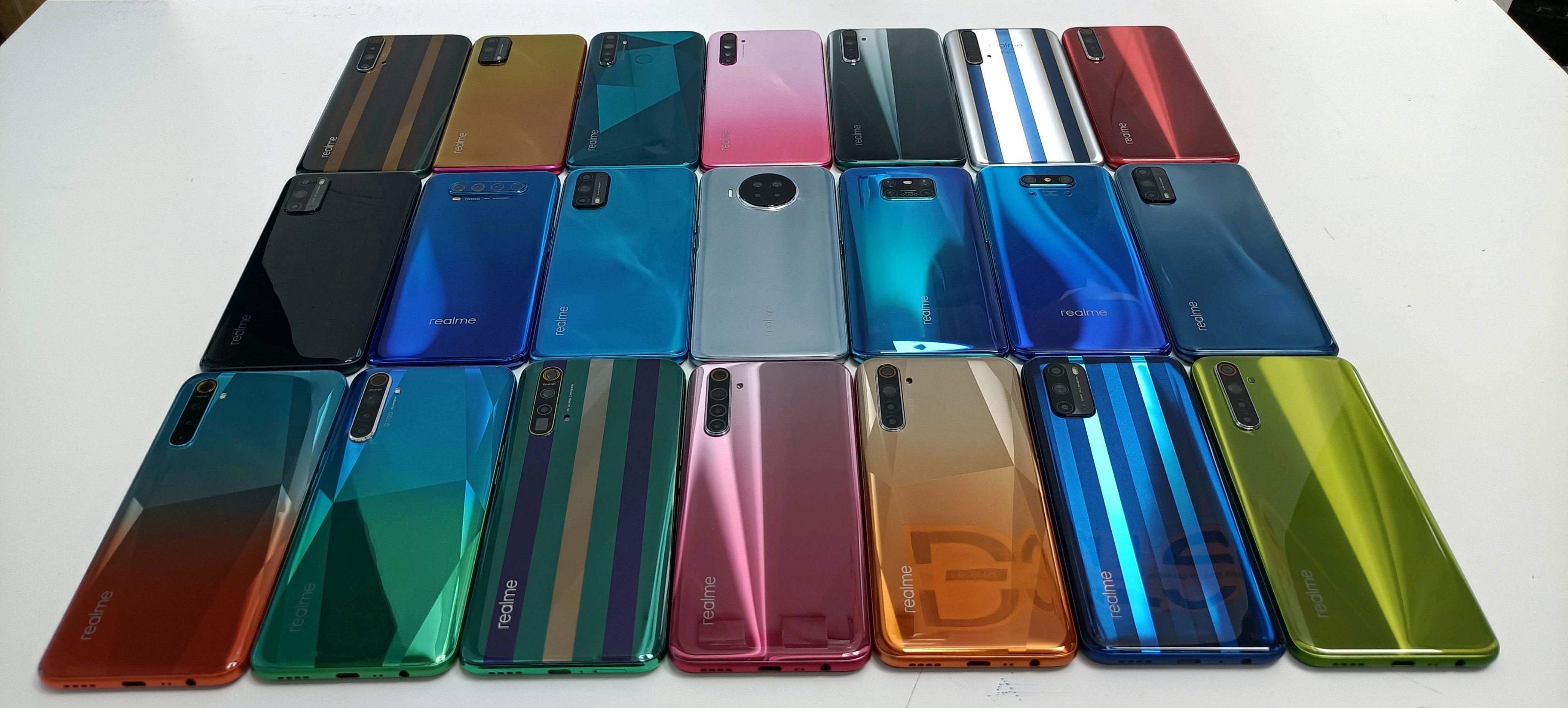
It took a while before Realme adopted a new design for its mobile phones. However, even when it still used the old design, it did come up with some really unique colorways such as the Realme X Onion and Garlic Master Editions.
Today, Madhav Sheth, the CEO of the young company shared images showing prototype phones with really interesting designs that didn’t make it to the final stage.
We constantly evolve our design strategy at #realme for the youth. Our smartphones undergo an extensive screening process before the talented #realmeDesignStudio picks the most unique one that instantly stands out. What do you expect the Faster7 to look like? #BuildingTheFaster7pic.twitter.com/97IY9JGbZA
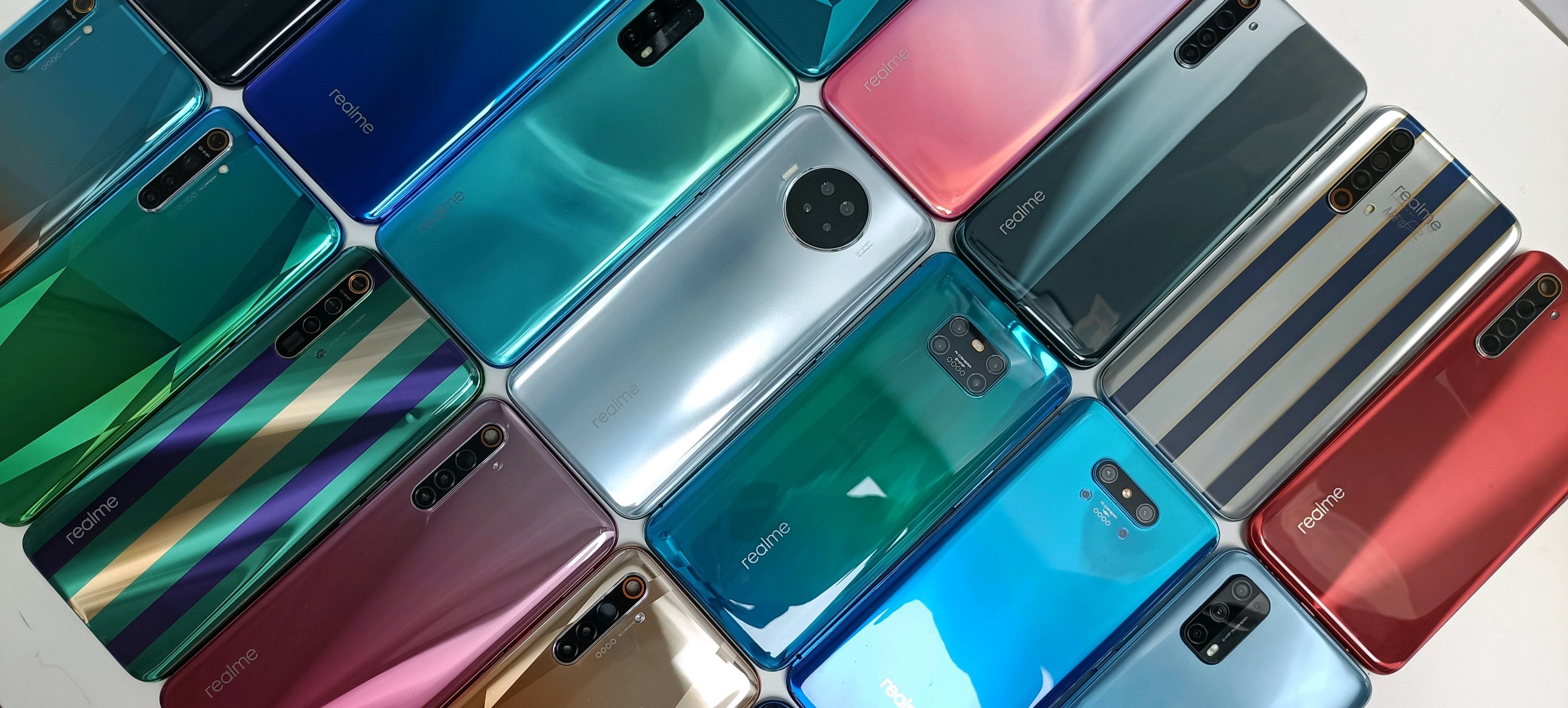
As you can see in the two photos, Realme did experiment with various designs (read camera housing and placement), some of which are familiar and others that are pretty unique.
There is also a phone with the cookie camera housing design made popular by Motorola. We can also spot a few with a horizontal camera setup similar to what we have seen on LG phones.
The camera housing is not the only thing Realme has played with. The images also show some pretty interesting colorways. The recurring theme for some of these designs is the vertical color bands running from top to bottom. I particularly like the second phone from the left on the top row.
Realme is not the first to share images of prototype designs and it most likely will not be the last. The move is a way to share with fans what goes on behind the scenes when designing a phone.
Which of these designs do you like best? Do let us know in the comment box below.
Huami’s Amazfit line of smartwatches is quite popular and if you own an Amzafit smartwatch, you most likely use the Amazfit companion app. At least that is what it used to be called before it got a new name.
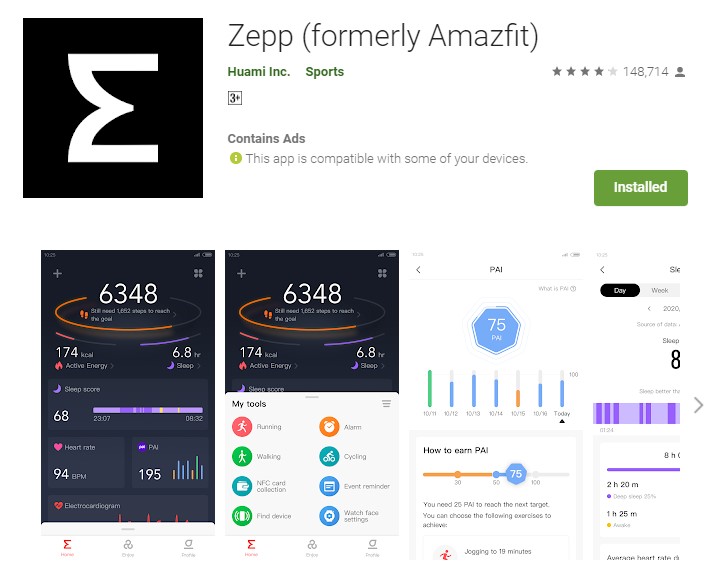
Yes, the Amazfit app has now been renamed on the Play Store. The app now goes by Zepp (formerly Amazfit) which seems like a pretty strange development. If you want to know what prompted the change in name, the app description provides an explanation.
It says the decision is to bring a more comprehensive and professional health management experience to a wider audience. It also says the official renaming will be on August 25 and will also include a new app icon. Huami assures users that Amazfit devices will continue to work as normal with the renamed and updated app.
Zepp is actually a company known for its smart sport accessories and sensors. If you do a search on the Play Store, you will find special Zepp apps made for its sensors for sports such as soccer, tennis, and golf. The developer for these apps is now Anhui Huami Information technology Co. Ltd, following the acquisition two years ago.
We have a feeling Huami plans to merge all the apps together which actually makes sense. So the new Zepp app should work for Zepp sensors and Amazfit products.
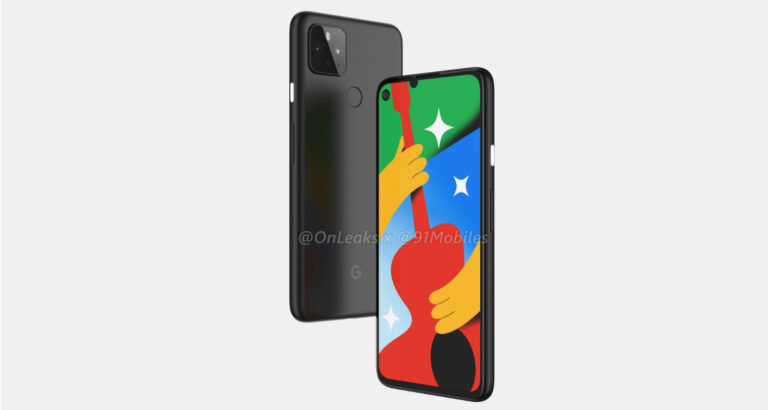
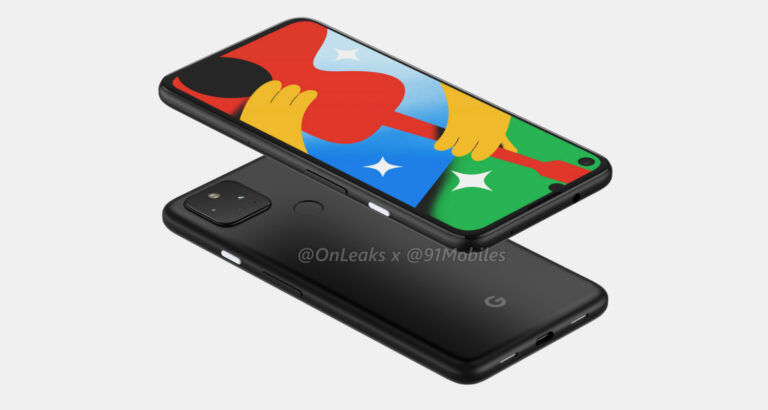
The Pixel 4a already launched albeit later than expected. However, Google revealed there will also be a 5G version that will be sold as the Pixel 4a 5G. Ahead of its release scheduled for this fall, renders of the phone have surfaced on the web.
The source of these CAD-based renders is OnLeaks and he has partnered with 91Mobiles this time.
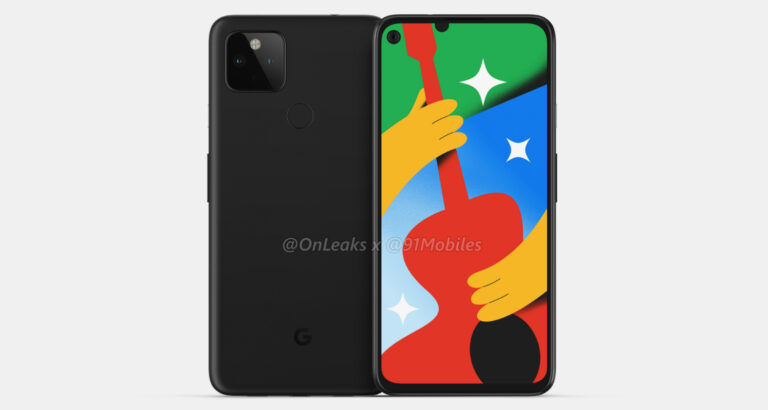
Just like the Pixel 4a and the Pixel 5 (whose renders were leaked yesterday), the Pixel 4a 5G will also have a punch-hole display. Google has made no attempt to switch the position of the hole, so you have it at the top left corner just like on the other phones.
On the back, the phone has a squircle camera housing that is home to dual cameras and an LED flash. There is also a fingerprint scanner on the back even though the display is an OLED panel.
The Pixel 4a 5G’s display is said to be between 6.1-6.2 inches, a bump up from the 5.81-inch screen of the LTE version. The dimensions provided are 153.9 x 74.0 x 8.6 millimeters. The thickness goes up to 9.5 millimeters when you factor in the camera bump.
The Pixel 4a 5G is expected to have a plastic unibody with power and volume control buttons on the right, a 3.5mm audio jack at the top, and a USB Type-C port at the bottom. It has also been reported that the device will be available in black and white color options, the latter which will be available after the device is launched.
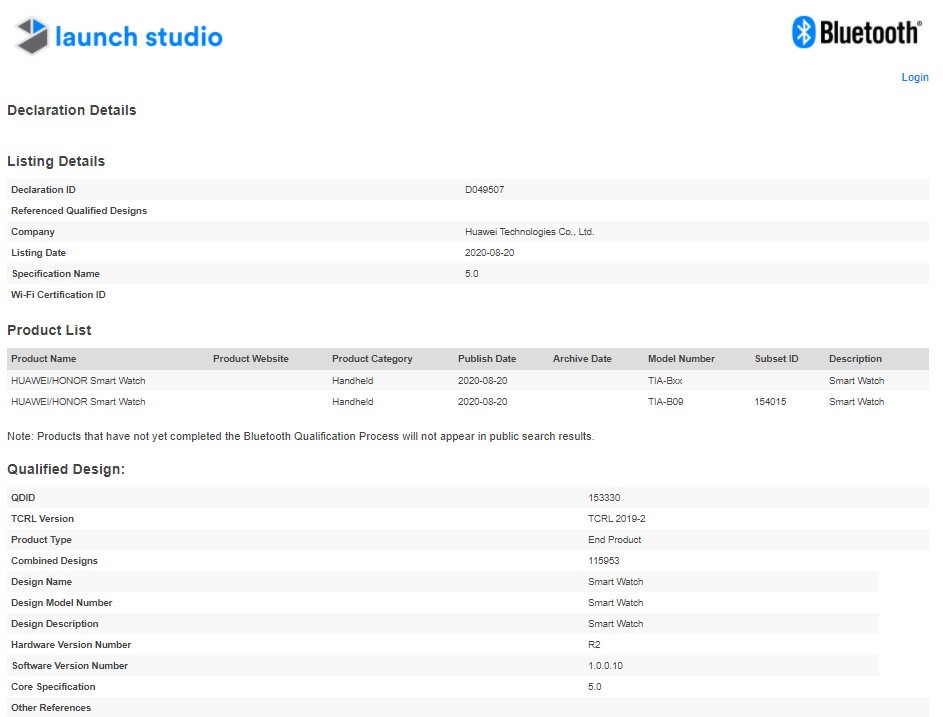
A new smartwatch has recently been certified by the Bluetooth Special Interest Group. The watch should launch under the Huawei brand but the model number is different from those we already know.
The watch has model number TIA-B09 which is different from the model numbers of that of the upcoming Huawei Watch GT 2 Pro (VID-B19) and that of the Honor Watch GS Pro (KAN-B19).
Huawei trademarked the “Mate Watch” this year and the smartwatch was rumored to launch alongside the Mate 40 series, but there is a chance it may not be announced this year. So which smartwatch is this? There is a high chance that this is the Huawei Watch Fit that leaked a few weeks ago.
The Huawei Watch Fit has a 1.64-inch AMOLED rectangular display. The watch can track running, swimming, and cycling activities, and has a built-in GPS and barometer. It also has sleep tracking, a heart rate sensor, and boasts a 10-day battery life. It has been reported to have a price tag of €119 and is expected to launch next month.
HMD Global is about to announce two new phones in India. The official Nokia Mobile India account released a teaser video earlier today that shows the two phones will launch soon.
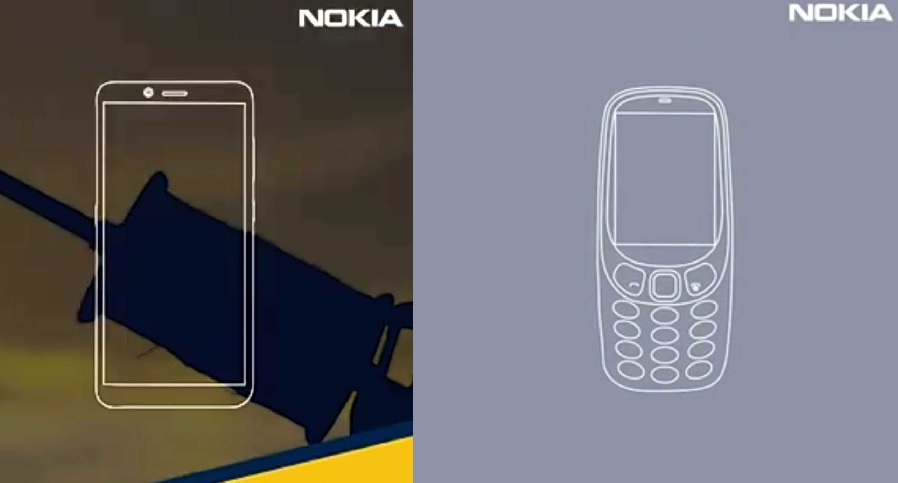
The video shows the outline of the two phones, and from it, we can see that one is a feature phone while the other is a smartphone.
There is a high chance that the smartphone is the Nokia C3 which appeared in a leak earlier today. The outline in the video matches the image of the Nokia C3 from today’s leak. The identity of the feature phone is unknown but it is expected to be a 4G feature phone.
The Nokia C3 is an entry-level device that already launched in China at the beginning of this month. It has a 5.99-inch HD+ display, a UNISOC processor, 3GB of RAM, and 32GB of storage. There is a single 8MP camera on the back of the phone along with an LED flash and a fingerprint scanner and a 5MP camera is in front for selfies. The phone packs a removable 3040mAh battery that charges via a MicroUSB port.
Based on the new teaser, HMD global will be announcing three new products next week including the already confirmed Nokia 5.3.
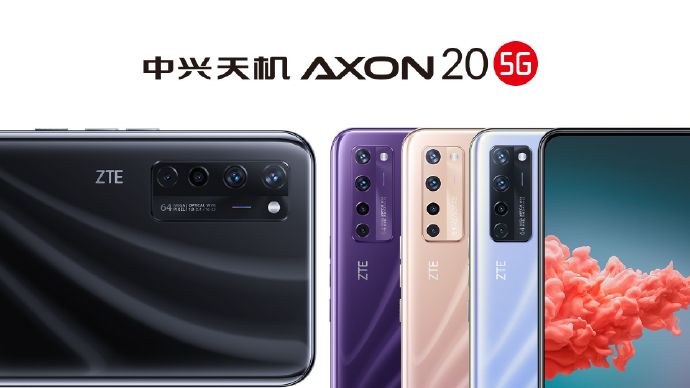
The Axon 20 5G will launch as the first smartphone in the world with an in-display camera. The mid-range phone will be unveiled on September 1, and the president of ZTE Mobile, Ni Fei, has been teasing us with new details. The latest is an image that shows the color variants the phone will be available in.
We already know the phone will come in black but the new render shows the phone in three other colors. There is a really pretty purple variant alongside gold and sky blue colorways. All four colors have light streaks that run across their backs.
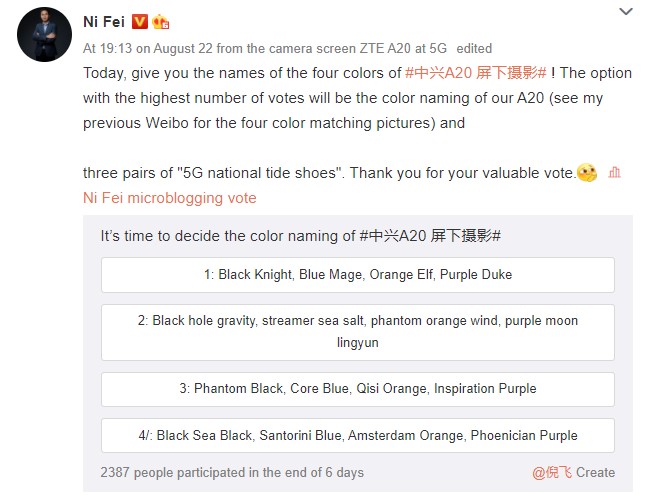
The top executive also created a poll asking fans to choose the official names for the colorways. The option with the highest number of votes will be chosen.
The Axon 20 5G will have a 6.29-inch AMOLED screen with a fingerprint scanner underneath. It will be powered by the Snapdragon 765G Mobile Platform paired with up to 12GB of RAM while storage options will go up to 256GB.
The device will pack quad rear cameras in a 64MP + 8MP + 2MP + 2MP configuration while the in-display selfie camera is a 32MP sensor. ZTE will ship the phone with a 4120mAh battery with support for fast charging and it will run Android 10 out of the box.
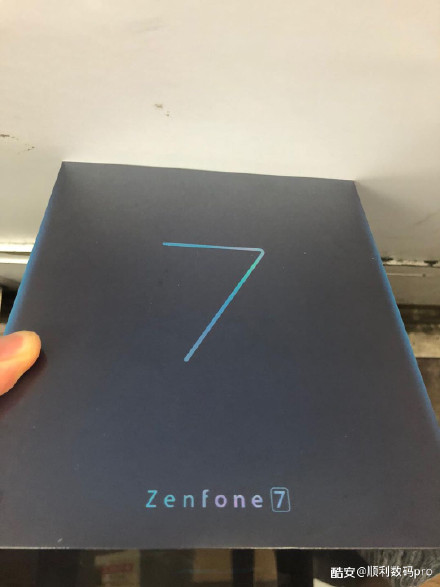
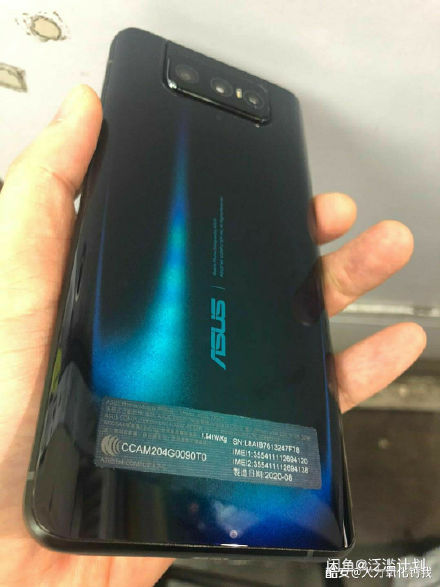
We are just a few days from the launch of the Zenfone 7 on August 26, and live photos have surfaced that give us an early look at the flagship. The photos were posted on Weibo earlier today.
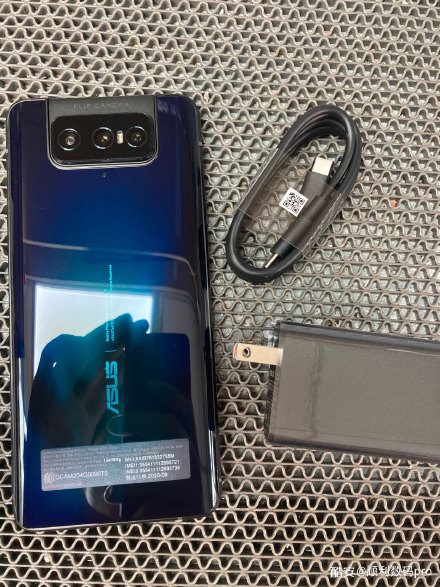
ASUS has added an extra camera sensor to the back of the phone but we are not sure what type of lens it has. A leak from a few days ago says the third sensor is a ToF camera and it has been paired with a 64MP Sony IMX686 main camera and a 12MP ultrawide angle camera.
An additional camera is not the only change with respect to the design of the Zenfone 7. As you can see in the image above, there is no rear-mounted fingerprint scanner.
It has been reported that the device has an LCD display which means the fingerprint scanner should be on the side, possibly buried under the power button. However, we can’t seem to see any indentation on the sides of the phone which is a common feature of phones with side-mounted fingerprint scanners. Hopefully, we get to see another image before the launch that shows the fingerprint scanner.
The Zenfone 7 is shown in blue and is covered in glass. We hope there will be more colorways available compared to its predecessor. The leaker also shared a picture of its retail box which is quite pretty big.
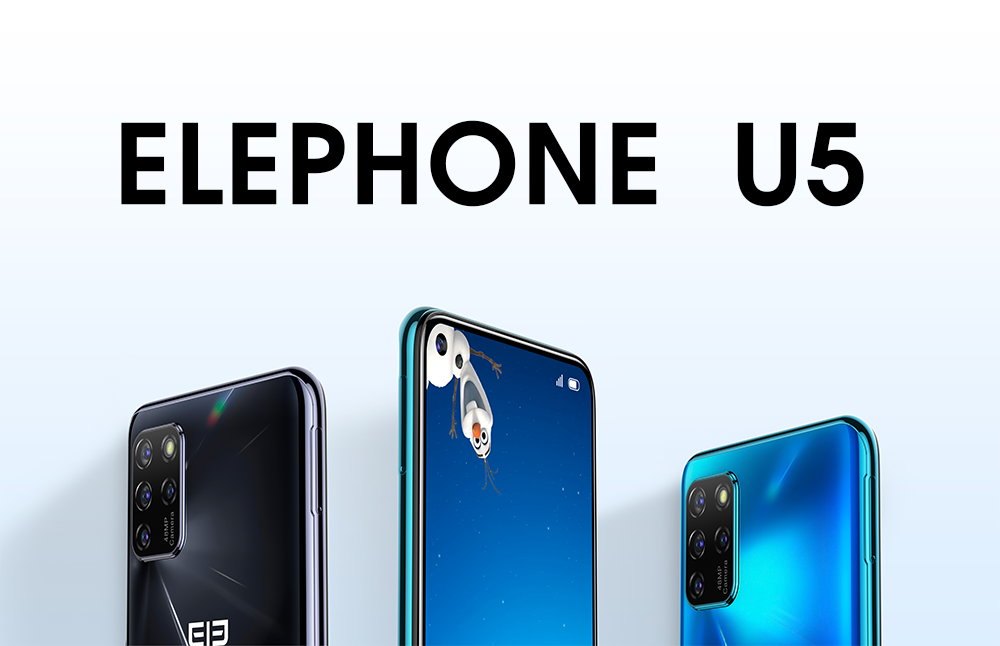
Elephone always work to bring affordable yet useful smartphones for its fans and potential customers. The company always keeps cultivating new ideas to bring down the manufacturing cost without compensating the quality. Similarly, Elephone launched Elephone U5 featuring some splendid specification at an attractive price of $159.99. The smartphone is available at a limited-time discount from Elephone Official store.
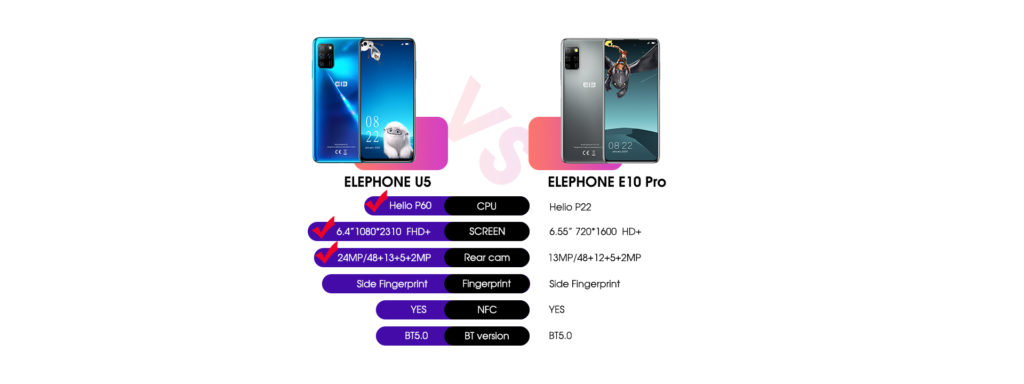
In a comparison of Elephone U5 with Elephone E10 Pro, the newly launched smartphone fares well against the old buddy in almost every aspect. The Elephone U5 is the latest offering with some efficient and upgraded hardware over the Elephone E10 Pro. Let’s see the full comparison of Elephone U5 vs Elephone E10 Pro below.
Performance
Elephone U5 proudly houses a powerful Helio P60 SoC with an octa-core processor and a Mali G72 MP3 GPU. It is coupled with 4GB RAM and 128GB internal storage which is enough for multitasking. Meanwhile, the Elephone E10 Pro possesses an Helio P22 chipset comprising an octa-core processor and PowerVR GE8320 GPU.
Display
Elephone U5 houses a large 6.4-inch Full HD+ display having a resolution of 1080 x 2310 pixels. The Elephone E10 Pro features a 6.5-inch HD display with a resolution of 720 x 1560 pixels. The Elephoen U5 can bring you a better viewing experience with crispier photos and videos. However, both the smartphones feature a punch-hole for its front camera.
Camera
Elephone U5 smartphone packs a better 24-megapixel selfie camera which can capture quality selfies and can even enhance video calling feature. There’s a quad-rear camera featuring a 48-megapixel primary sensor, a 13-megapixel ultrawide sensor, a 5-megapixel depth sensor, and a 2-megapixel macro camera.
On the other side, Elephone E10 Pro packs a 13-megapixel selfie camera while having the same quad-rear camera.
Other features
Apart from the above differences, both the smartphones features some similarities. Elephone E10 Pro and Elephone U5 packs Side Fingerprint sensor, supports NFC and have Bluetooth 5.0 for easy connectivity. Both the smartphones carry a 4000 mAh battery which can easily withstand for a day.
Samsung debuted One UI 2.5 based on Android 10 with Galaxy Note20 series and Galaxy Tab S7 series. It is an incremental update to One UI 2.1 released earlier this year with Galaxy S20 series. Since the new Note is on sale now, the company has begun to roll out the software shipped with it to the current-gen Galaxy S series. In the official announcement post, Samsung even revealed the list of devices that will be getting the new One UI 2.5 update.
The first version of One UI was introduced with Android Pie update in 2018. Since then, it has been updated with new features and optimization with the release of new flagships and Android 10. The latest version is One UI 2.5 and it brings the following features.
Camera
Pro Video mode: Support for controlling smartphone’s mic direction and external microphones.
8K video recording at 24fps
21:9 cinematic aspect ratio video recording
Samsung Notes
Audio Bookmarks: Synchronize notes with audio recordings of lectures or meeting
Support for importing and editing PDF files
Auto save and syn between Galaxy smartphones, Galaxy tablets, and PC
New template and background color options
Add handwritten text to typed documents
Samsung DeX
Wireless DeX support on TVs with Miracast
Support for multi-finger gestures to switch between applications
Connectivity
Share WiFi password with nearby Galaxy devices in the contact list
Know the speed of WiFi connections before connecting
Reminder
Preset time and location for upcoming meetings and tasks
Anyway, do note that all the above-mentioned features of One UI 2.5 may not be available for all the eligible/supported devices listed below.
Samsung One UI 2.5 Eligible/Supported Devices
Galaxy S Series
Galaxy S20 Ultra 5G
Galaxy S20 Ultra
Galaxy S20+ 5G
Galaxy S20+
Galaxy S20 5G
Galaxy S20
Galaxy S10 5G
Galaxy S10+
Galaxy S10
Galaxy S10e
Galaxy S10 Lite
Galaxy S9+
Galaxy S9
Galaxy Note Series
Galaxy Note10+ 5G
Galaxy Note10+
Galaxy Note10 5G
Galaxy Note10
Galaxy Note10 Lite
Galaxy Note9
Galaxy Z Series
Galaxy Z Flip 5G
Galaxy Z Flip
Galaxy Fold 5G
Galaxy Fold
The One UI 2.5 update for these Samsung Galaxy smartphones will be rolled out in batches across the world in the coming days. Unfortunately, the older Galaxy Tab S series will not be getting it even though the Galaxy Tab S7 series comes pre-installed with this new software.
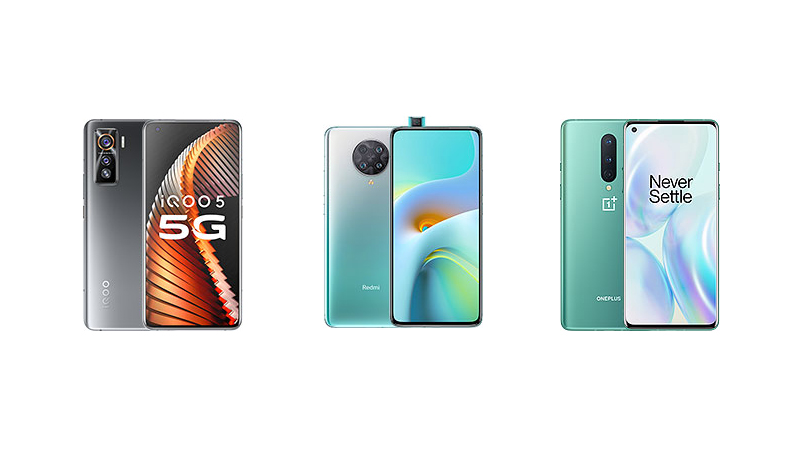
2020 is the year of upper-midrange phones and flagship killers. Despite prices hiked a lot during this year, there is a lot of value for money devices even for power users. In this article, we are comparing three of the best flagship killers out there in terms of value for money. We are talking about the newly-announced iQOO 5, the Redmi K30 Ultra which celebrated Xiaomi’s 10th anniversary alongside the Mi 10 Ultra, and the OnePlus 8 which reached very good prices because it is a phone released in the first half of 2020 (but still very actual). Let’s discover together who is the best.
Vivo iQOO 5 vs Xiaomi Redmi K30 Ultra vs OnePlus 8
Vivo iQOO 5
Xiaomi Redmi K30 Ultra
OnePlus 8
DIMENSIONS AND WEIGHT
160 x 75.6 x 8.3 mm, 197 g
163.3 x 75.4 x 9.1 mm, 213 grams
160.2 x 72.9 x 8 mm, 180 g
DISPLAY
6.56 inches, 1080 x 2376p (Full HD+), AMOLED
6.67 inches, 1080 x 2400p (Full HD+), 395 ppi, AMOLED
6.55 inches, 1080 x 2400p (Full HD+), Fluid AMOLED
Triple 50 + 13 + 13 MP camera, f/1.9 + f/2.5 + f/2.2
16 MP f/2.5 front camera
Quad 64 + 13 + 5 + 2 MP f/1.8, f/2.4, f/2.2 and f/2.4
20 MP front camera
Triple 48 + 16 + 2 MP camera, f/1.8 + f/2.2 + f/2.4
16 MP f/2.0 front camera
BATTERY
4500 mAh, fast charging 55W
4500 mAh, fast charging 33W
4300 mAh, fast charging 30W
ADDITIONAL FEATURES
Dual SIM slot, reverse charging, 5G
Dual SIM slot, 5G
Dual SIM slot, 5G
Design
None of these devices has the best design you can get from a phone, but they are all pretty nice. I like the OnePlus 8 with its curved screen and compact camera module, but it is a matter of tastes. In each case you get a premium design including an aluminum frame and a glass back. The OnePlus 8 and the iQOO 5 have a single punch-hole display, while Redmi K30 Ultra has a full-screen panel thanks to the presence of a motorized pop-up camera coming out of the upper border of the phone.
Display
iQOO 5, Redmi K30 Ultra, and OnePlus 8 come with great displays, despite we are not talking about flagship-class panels. They all feature the HDR10+ certification for very nice image quality on streaming platforms, and they have a Full HD+ resolution. The main difference which makes iQOO 5 and Redmi K30 Ultra better than OnePlus 8 is the refresh rate: you get 120 Hz with iQOO 5 and Redmi K30 Ultra, while OnePlus 8 has just 90 Hz. The Redmi K30 Ultra has a slightly wider diagonal than its two rivals. But at the end of the day, we are not talking about big differences. Note that iQOO 5 lacks stereo speakers, while Redmi K30 Ultra and OnePlus 8 have them.
Hardware/Software
Even when it comes to the hardware department, these devices are not so different. They all come with flagship-level hardware. Redmi K30 Ultra is inferior because it is fueled by the Dimensity 1000+ chipset instead of the Snapdragon 865 found on the iQOO 5 and OnePlus 8. In order to give you an idea of the performance of this chipset, we can tell you that Dimensity 1000+ got a score of fewer than 350,000 points on AnTuTu, while Snapdragon 865 scored over 400,000 points. Further, with Redmi K30 Ultra you get max 8 GB of RAM, while iQOO 5 and OnePlus 8 go up to 12 GB.
Camera
The iQOO 5 has the most stunning cameras, at least on the paper. It features the same 50 MP gimbal camera found on the Vivo X50 Pro+, paired with a portrait lens with 2x optical zoom and a 13 MP ultrawide sensor. This camera department is able to record 8K videos. Right after, we got the OnePlus 8 which is the only one to support OIS. With the Redmi K30 Ultra, you actually get more sensors but inferior photo quality.
Battery
iQOO 5 and Redmi K30 Ultra have the same 4500 mAh battery capacity, which is bigger than the 4300 mAh battery of the OnePlus 8. Unfortunately, we did not test their battery life, but we believe that iQOO 5 should last more because it has a Snapdragon 865 chipset instead of the Dimensity 1000+ found on the Redmi K30 Ultra. With the iQOO 5, you even get a faster charging tech with a 55W power.
Price
iQOO 5 is priced about €490/$578 in its base variant, Redmi K30 Ultra starts from €330/$390, and OnePlus 8 begins at €479/$565 but it is currently more affordable thanks to a lot of street prices. But despite that, the iQOO 5 wins the comparison because of its great cameras, 120 Hz display, big battery, and amazing hardware.
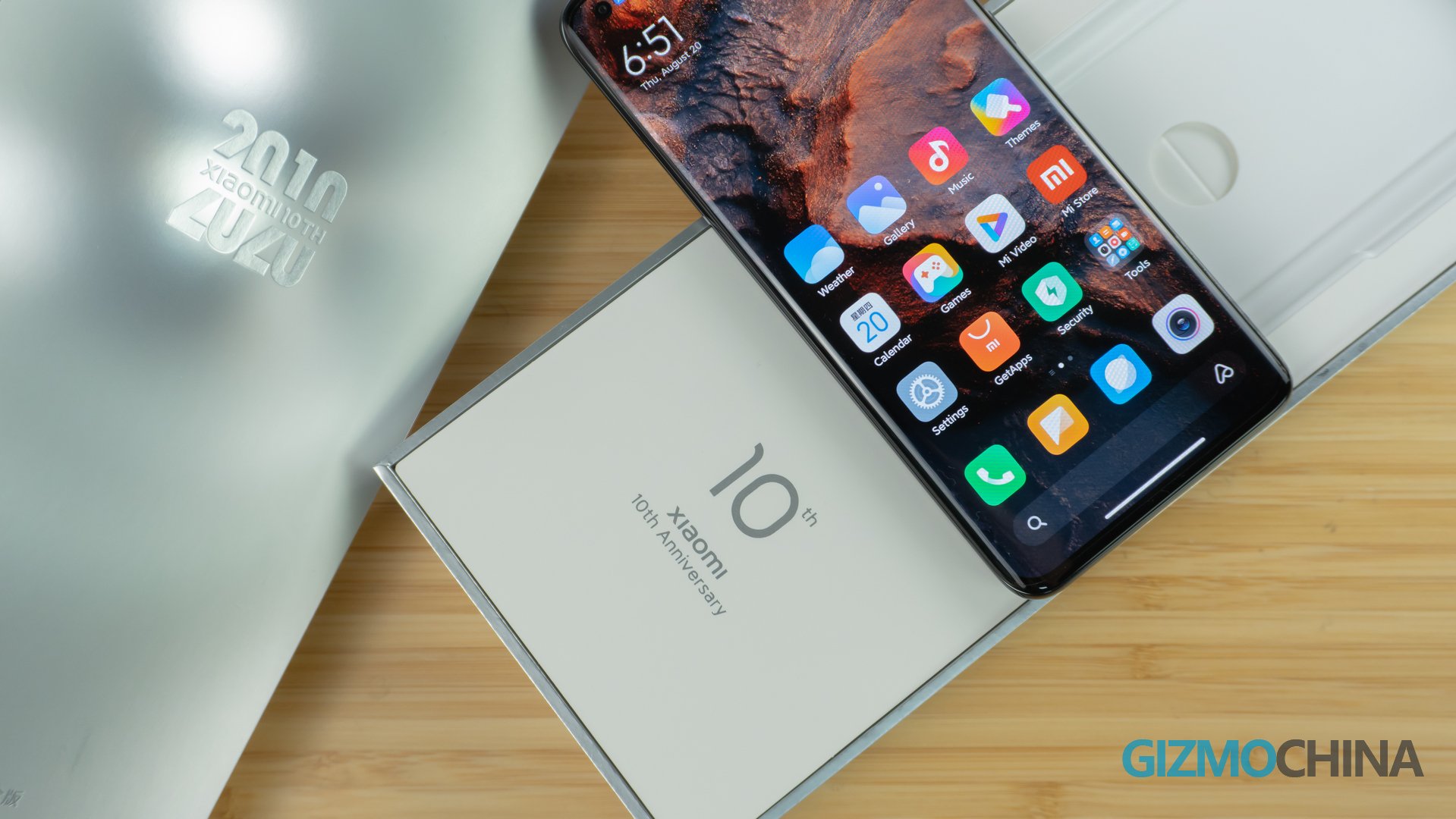
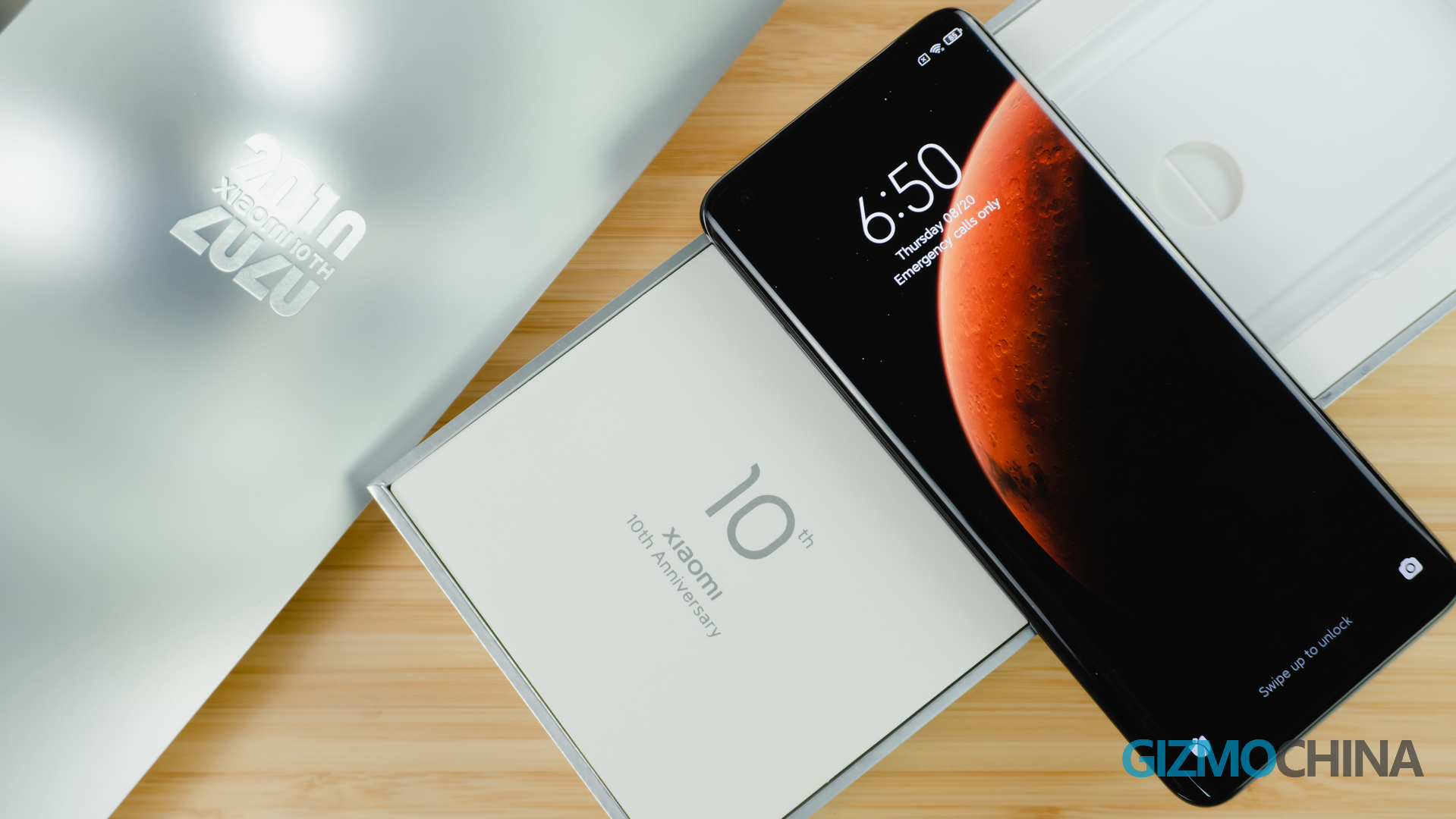
Last week, Xiaomi founder and CEO, Lei Jun gave a long speech to celebrate the 10th anniversary of the brand. Apart from reviewing its journey over the past 10 years, Xiaomi also released a bunch of products to celebrate its anniversary – Mi 10 Ultra, Redmi K30 Ultra, and Mi TV LUX Transparent TV. Today we’ve got the Mi 10 Ultra in for review. It’s the most powerful Xiaomi handset in the market right now and let’s see if it lives up to its ‘Ultra’ reputation.
Xiaomi Mi 10 Ultra Review: Design
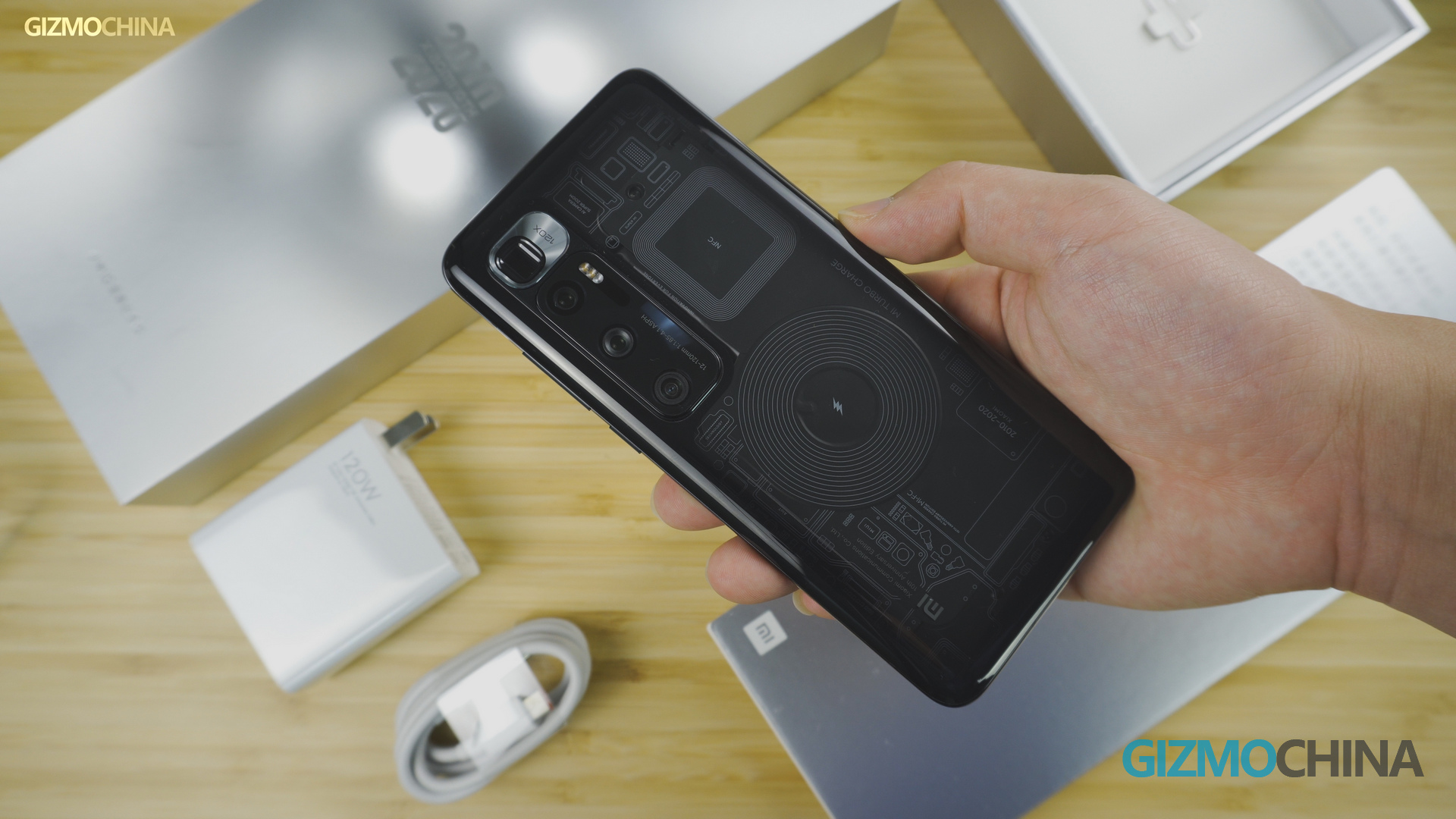
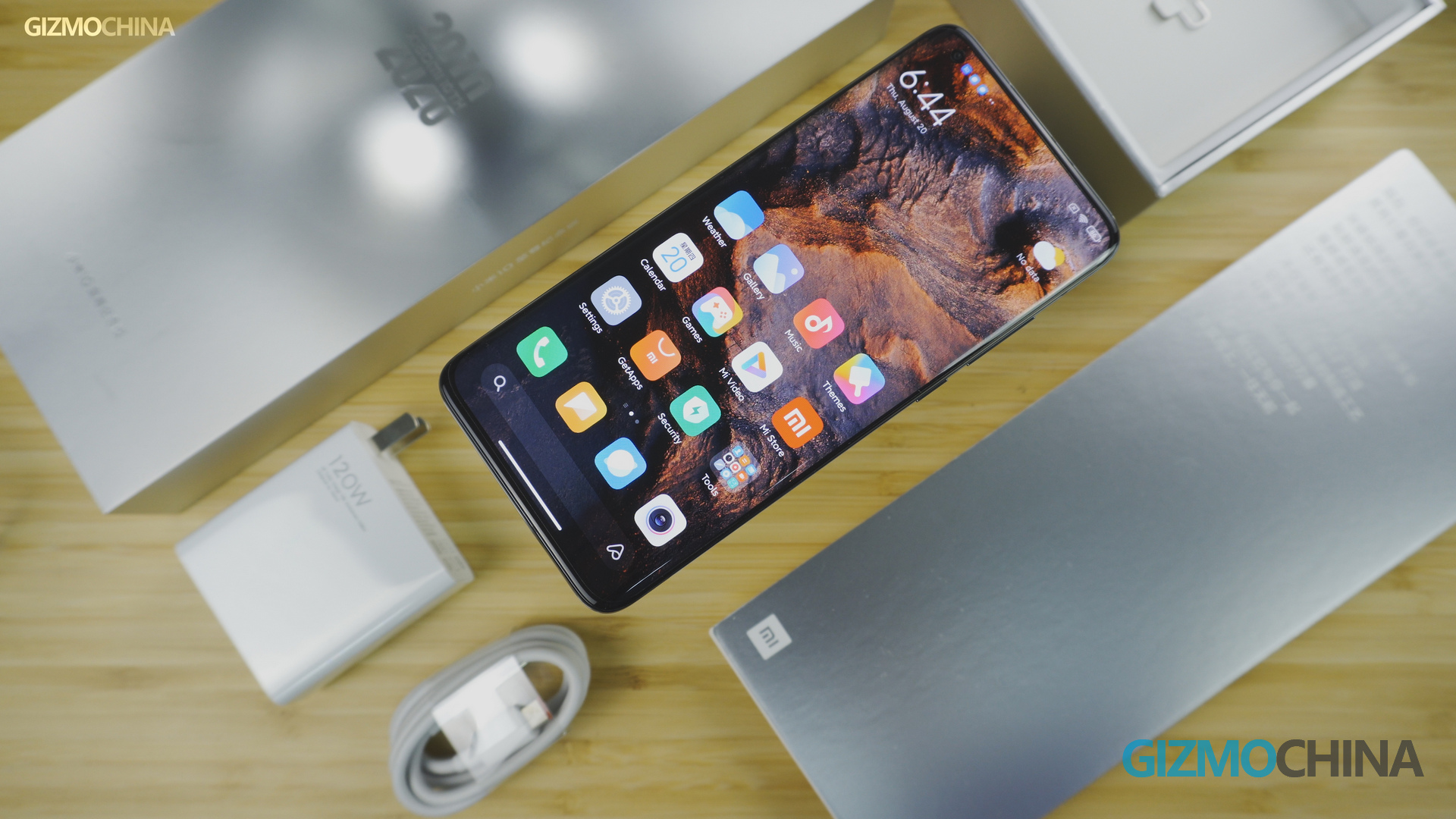
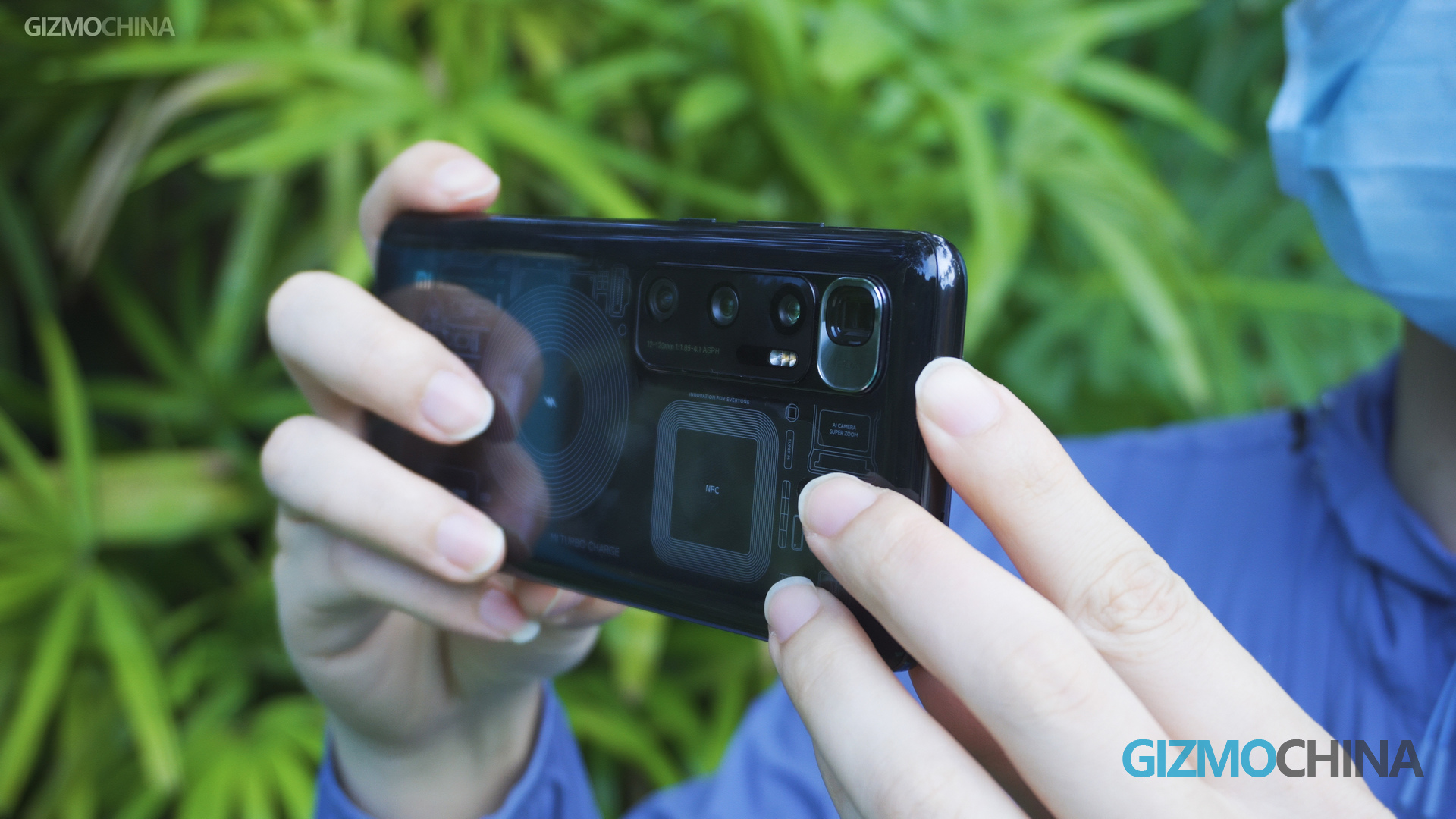
The Mi 10 Ultra we’ve got is the transparent version, which is one of the most special designs among all Mi-phones. From the transparent cover, we can see the 50W wireless charging sensor and an NFC sensor. Apart from these two main components, the internal structure is still covered by a layer of protection. You can also see the 10th-anniversary edition sticker on the back.
As compared to Mi 10 Pro, the Ultra makes up for almost all of its drawbacks. Not happy with the Mi 10 Pro’s display? Now you can have a 120Hz AMOLED display with better colors on the Ultra. The 50W charging speed not fast enough for you? Now you can have the up to 120W fast charging to give your Ultra a full charge in just 23 mins. Were you satisfied with the Pro’s camera performance? Now the Ultra’s new camera setup is even better than the Pro!
Apart from these improvements, all the good features from the Pro have been retained on the Ultra, such as the excellent dual-stereo speakers and the great performance.
However, we also found a new drawback of the Ultra. The hands-on feeling is not as comfortable as we had on the Mi 10 and Pro. The weight of 223g and the thickness of 9.5mm has made it one of those bulky flagships. Otherwise, the experience with the Mi 10 Ultra has been pretty great so far.
Xiaomi Mi 10 Ultra Review: Display
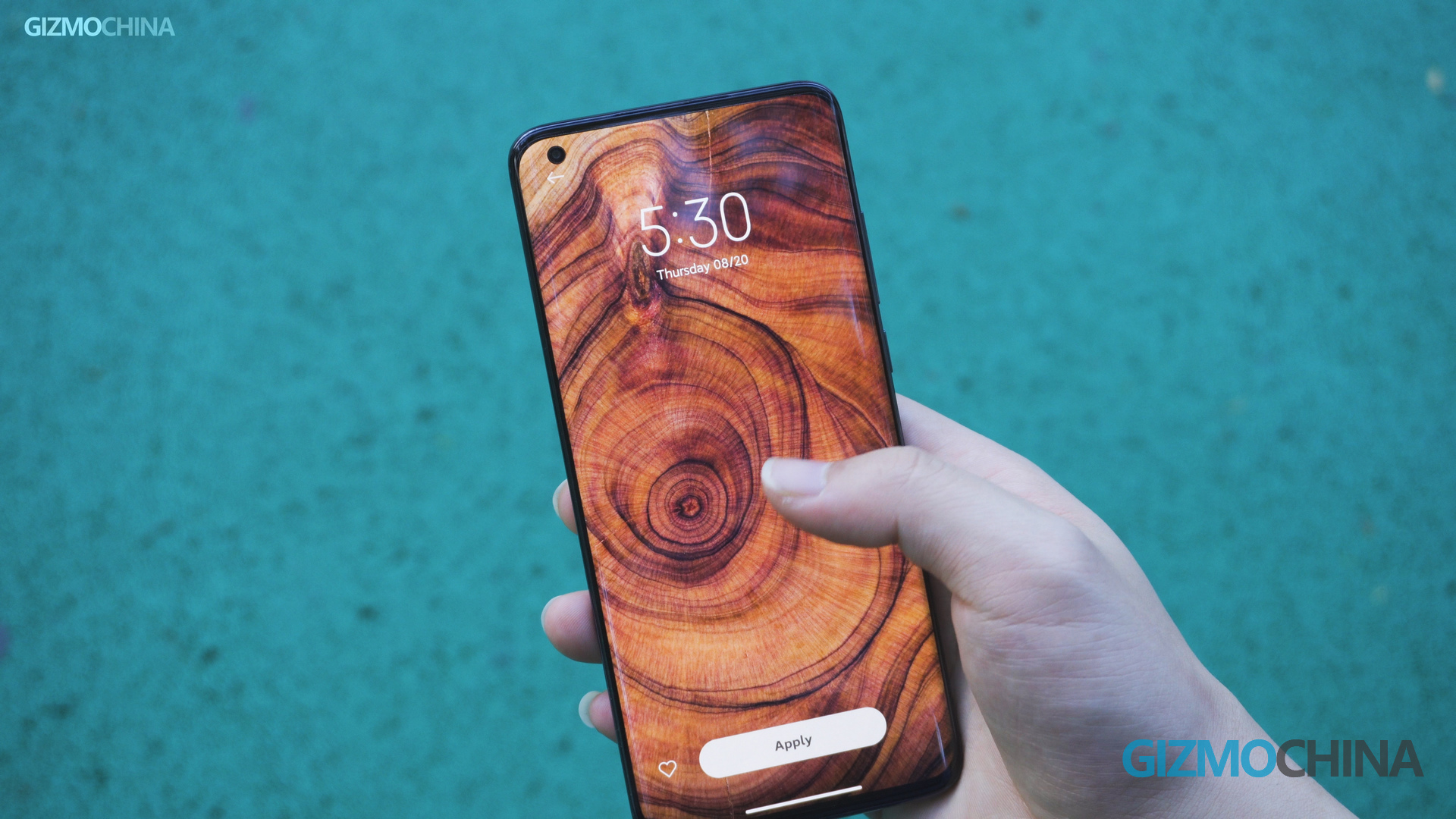
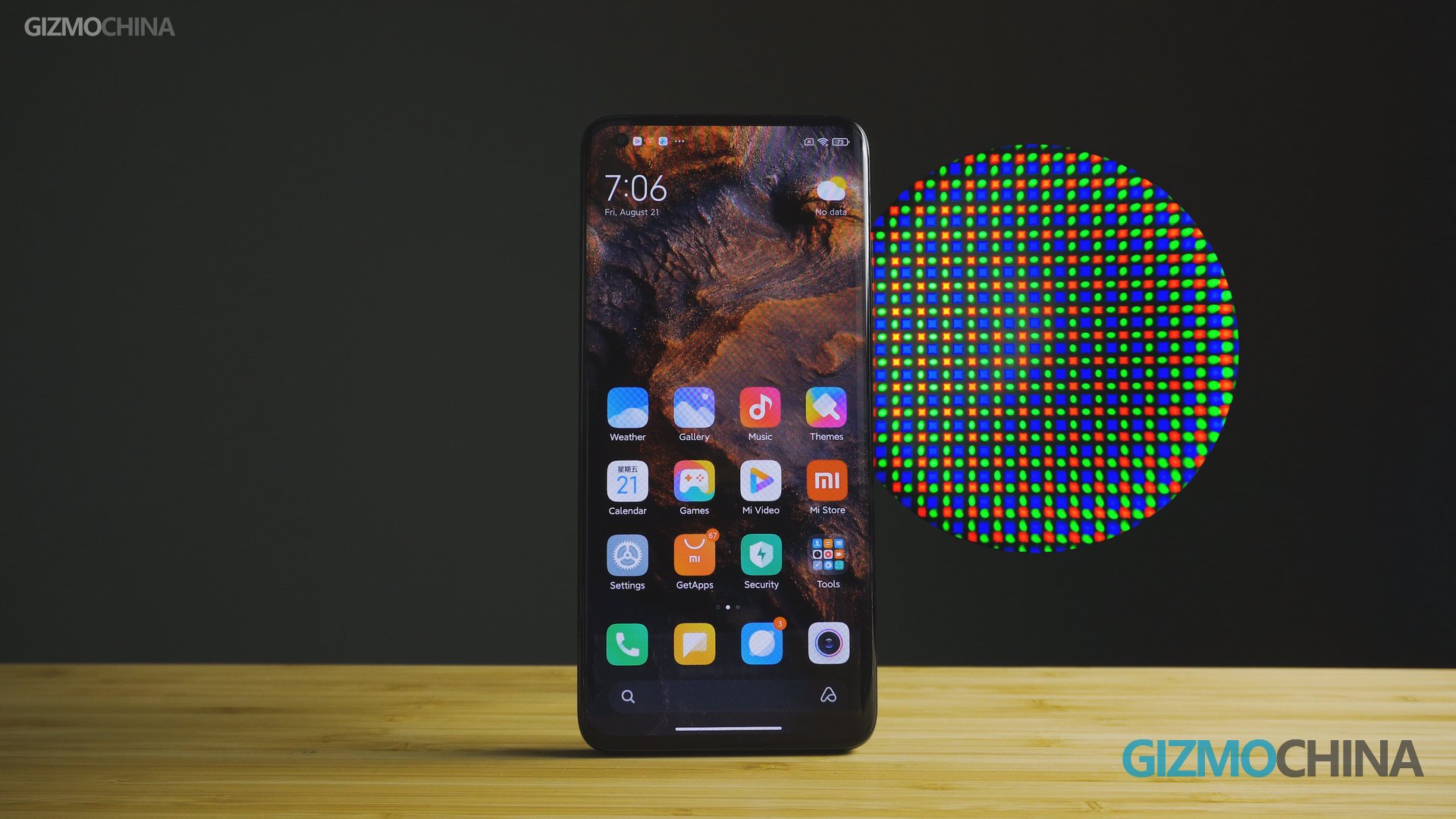
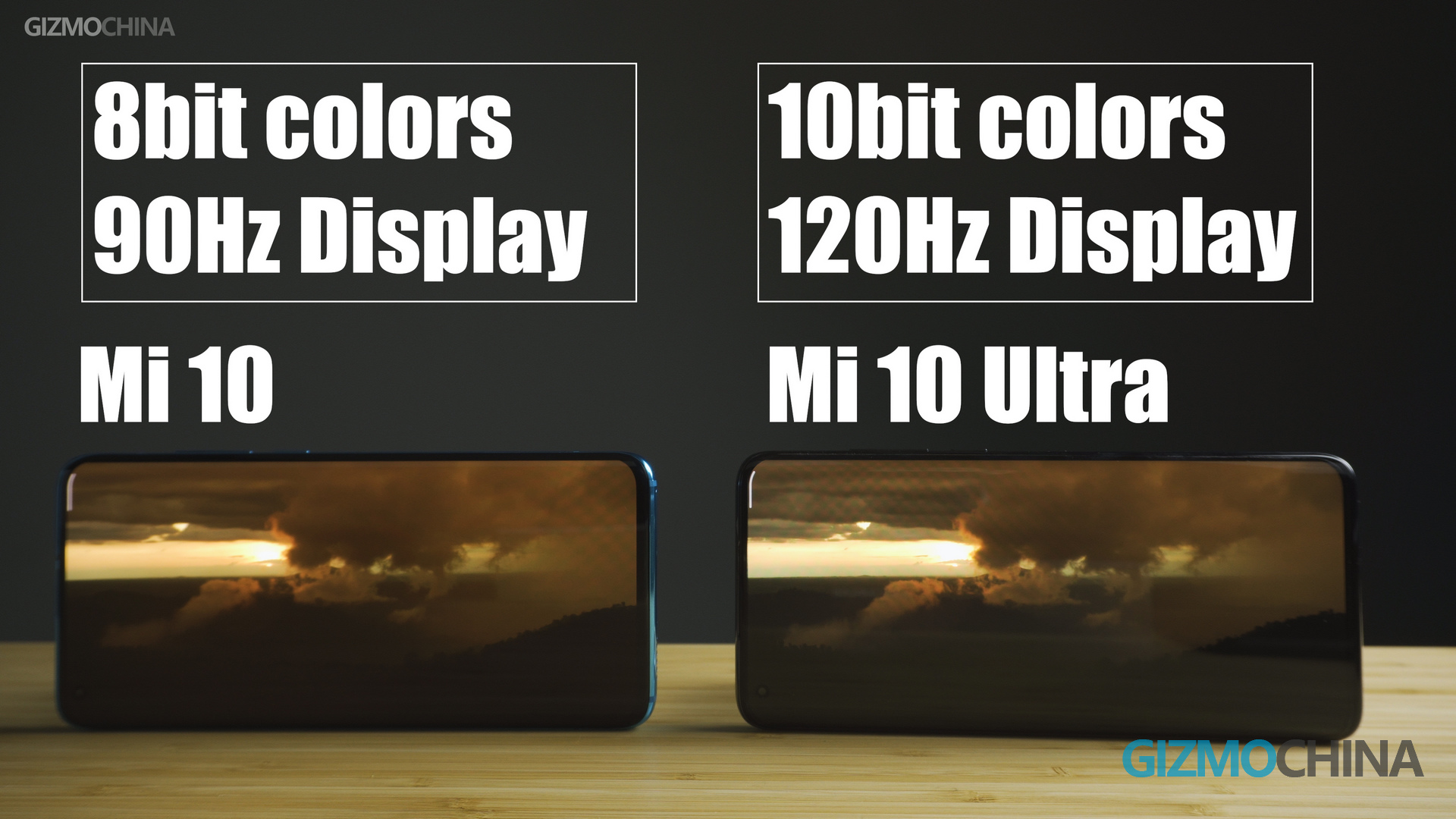
Let’s take a closer look at its improved display. Although the Ultra’s display panel is no longer from the famous supplier, Samsung, it still got improved with 10bits color output and 120Hz refresh rate based on the same level of color accuracy.
As we observed, the new display applied the same delta arrangement as the Mi 10’s display, which is recognized as one of the best pixel arrangements for a smartphone display. You also get a high 120Hz refresh rate. This higher refresh rate not only offers system fluency and smoother gaming experience but also better viewing experience when watching 120Hz professional videos without frame loss.
For low-framerate video playback, unfortunately, we did not find any frame interpolation solution as the MEMC solution on the Ultra similar to what we saw on the OnePlus 8 Pro.
As for gaming, the boost in performance is obvious given the higher refresh rate and a higher sampling rate of the display, eventually leveraging the CPU’s surplus performance and making the most of the Snapdragon 865.
Xiaomi Mi 10 Ultra Review: 120W Charging & Battery Life
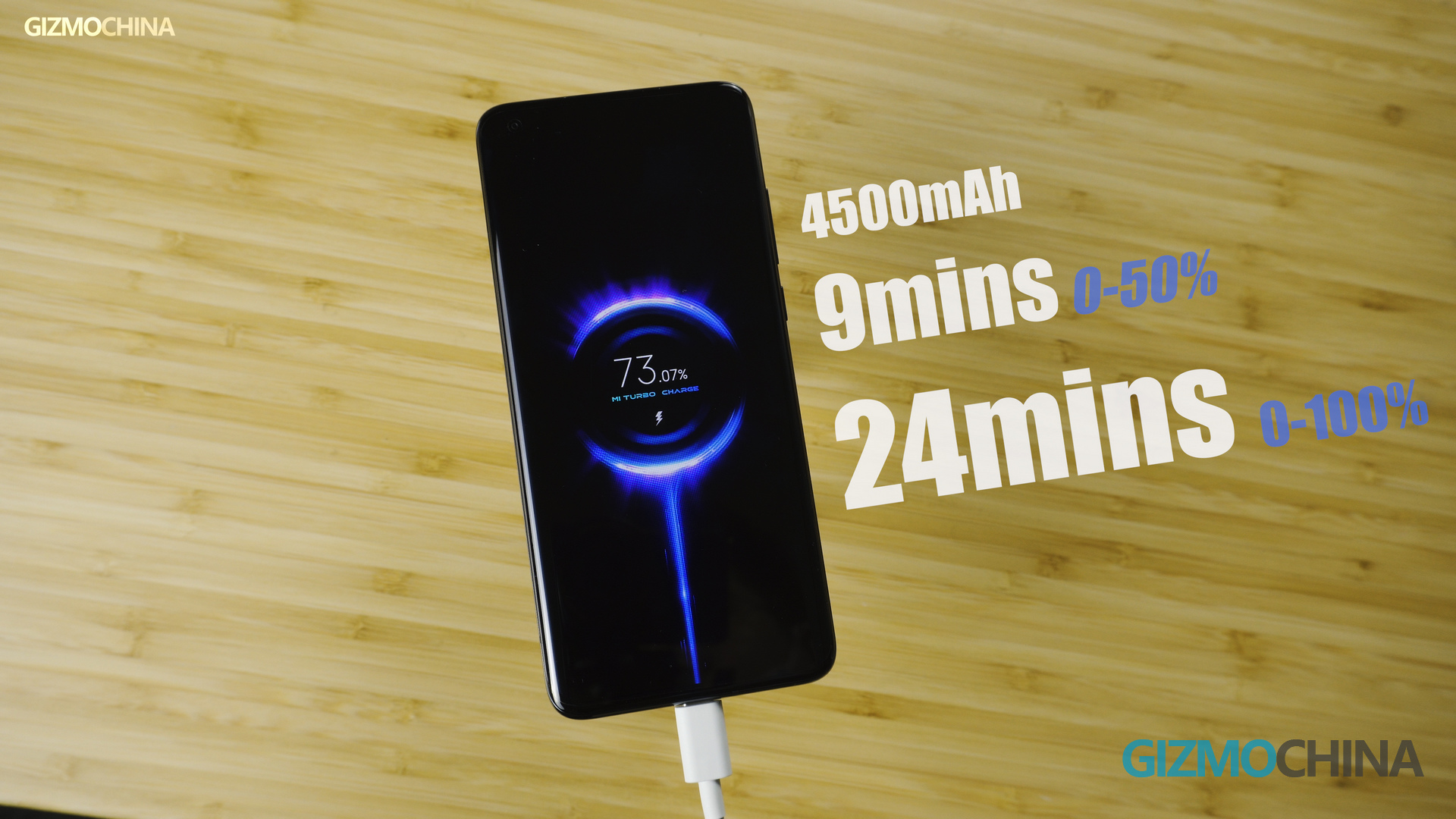
Now let’s check out the super-charging tech on the phone before we move on to the other areas. The included charger is the first one that can achieve over 100W charging efficiency. As we connected the charging cable, the charging animation showed a visible charging speed that we’ve not seen before. It’s pretty insane that it only took around 9 mins to get a 50% on its 4500mAh battery; and the full-charge test was finished in 24mins.
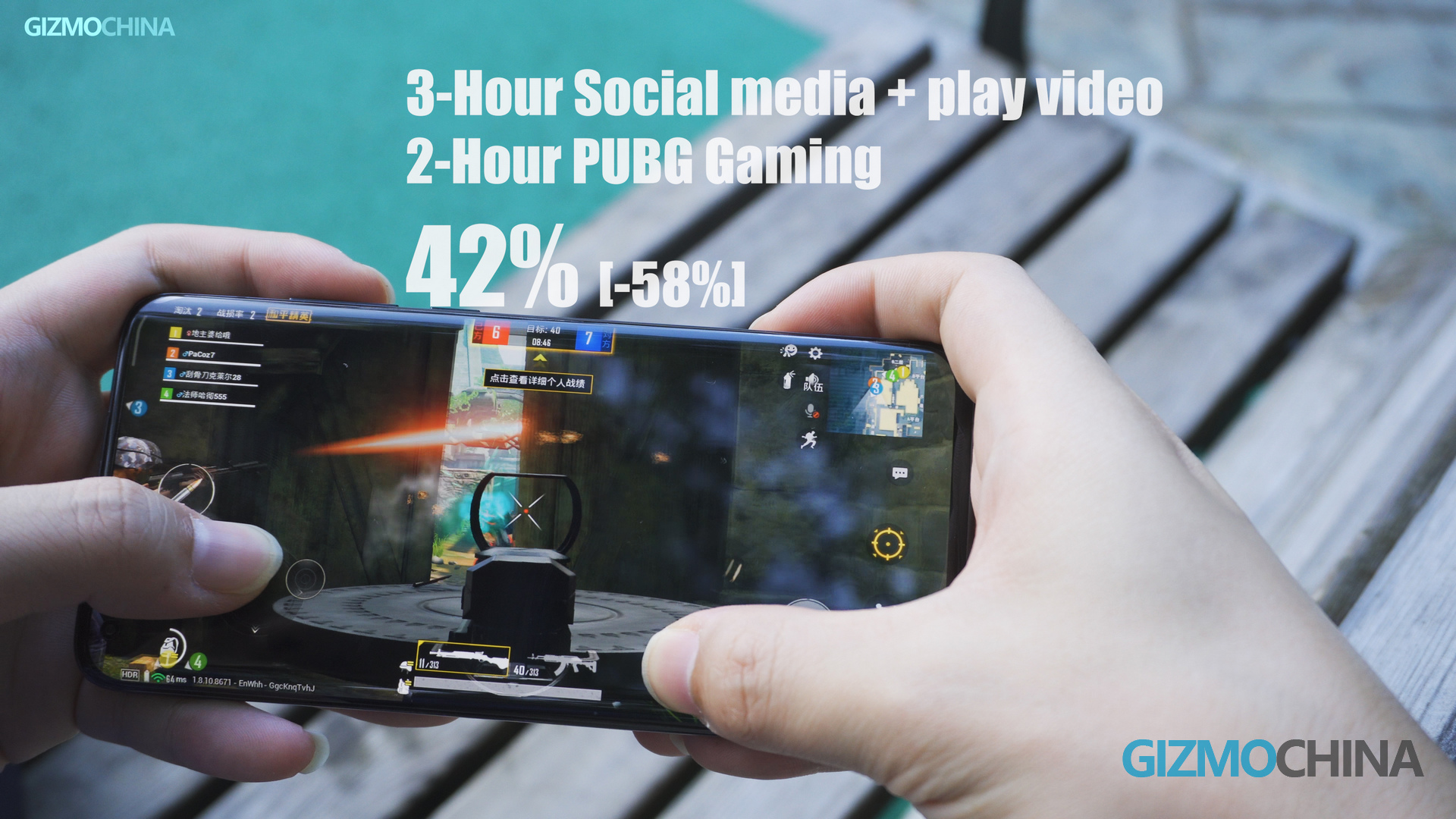
In 120Hz display mode, we watched videos for 2 hours and then spent another hour on social media apps for the battery life test. The Ultra eventually had 77% of the power left. And then 2-more-hour gaming in PUBG Mobile consumed another 35% of the power. The overall battery life is pretty decent and it should be good enough for an entire day’s usage.
Xiaomi Mi 10 Ultra Review: Gaming & Performance
As for its performance, according to the benchmark apps, it’s not much different from what we got on the Mi 10 and Pro.
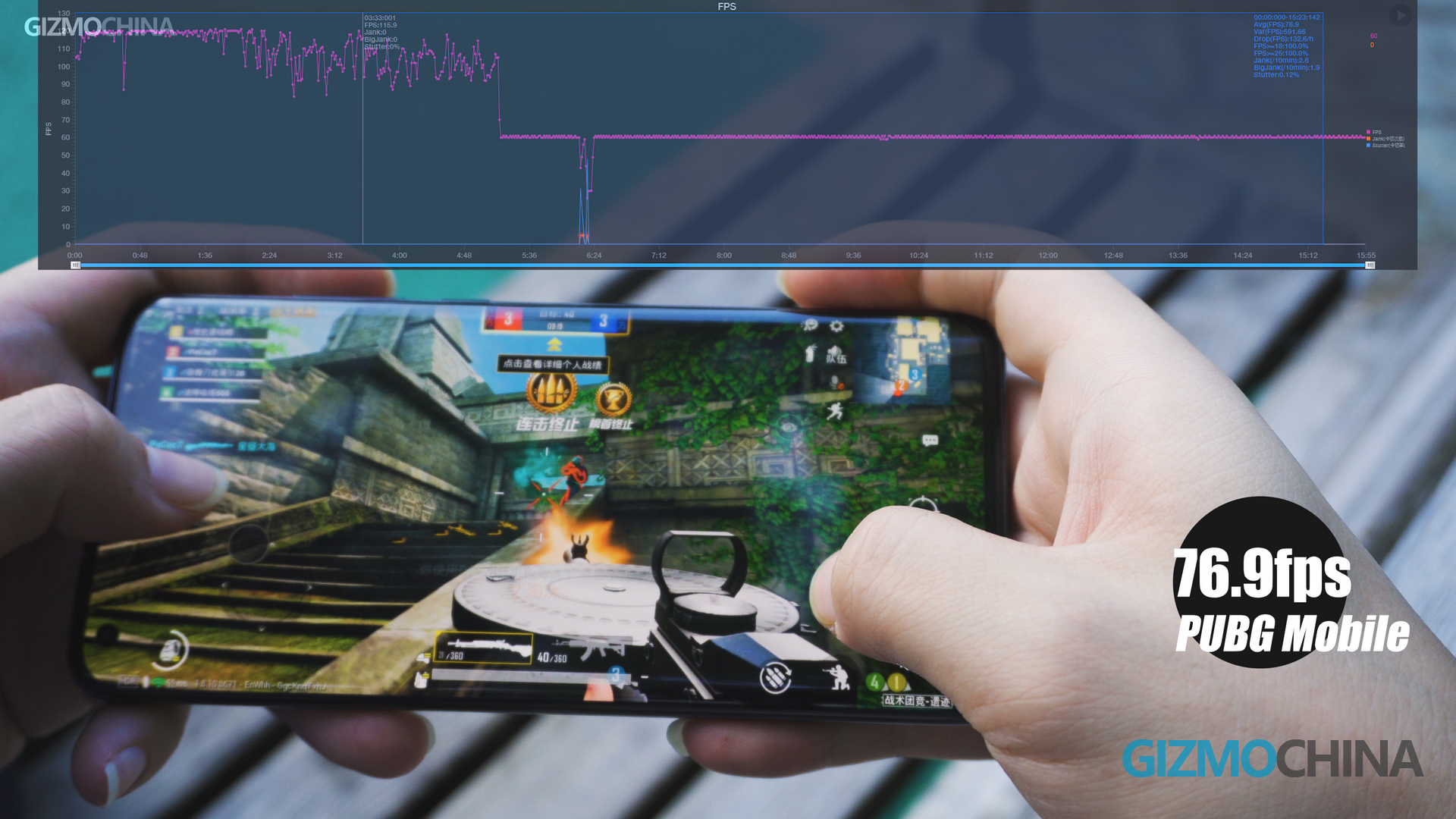
So let’s move on to the gaming test. In PUBG Mobile, although we unlocked the 120fps framerate, the Ultra ran the game at 120fps for a while and then automatically shifted down to 60fps framerate. It’s probably because the phone detected a heating problem and attempted to readjust the frame rate to a more stable state. The average framerate for PUBG eventually remained at 76.9fps, which is not an excellent result for a phone running snapdragon 865. But it should not be a problem for the Ultra to run PUBG at a stable 60fps.
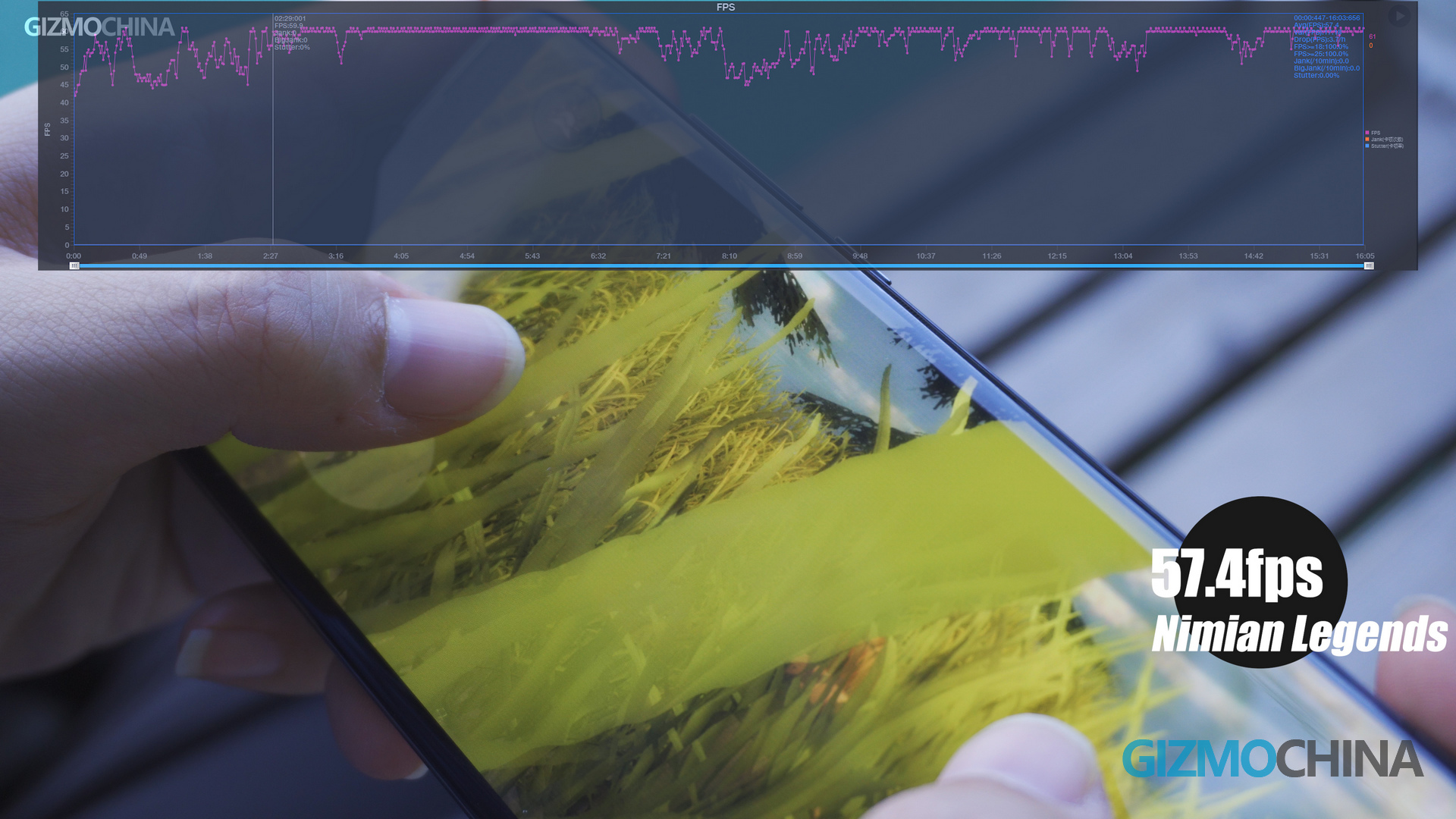
And then we decided to run Nimian Legends as a stress test. Unfortunately, due to the framerate locking issue, the average framerate on the Ultra is only around 57.4fps. So, it seems that the Ultra couldn’t unleash the full potential of both, the 865 chipset and the 120Hz display, in some games.
The Xiaomi Mi 10 Ultra’s dual stereo speakers also perform really well. You can watch the video review above to see the speakers in action.
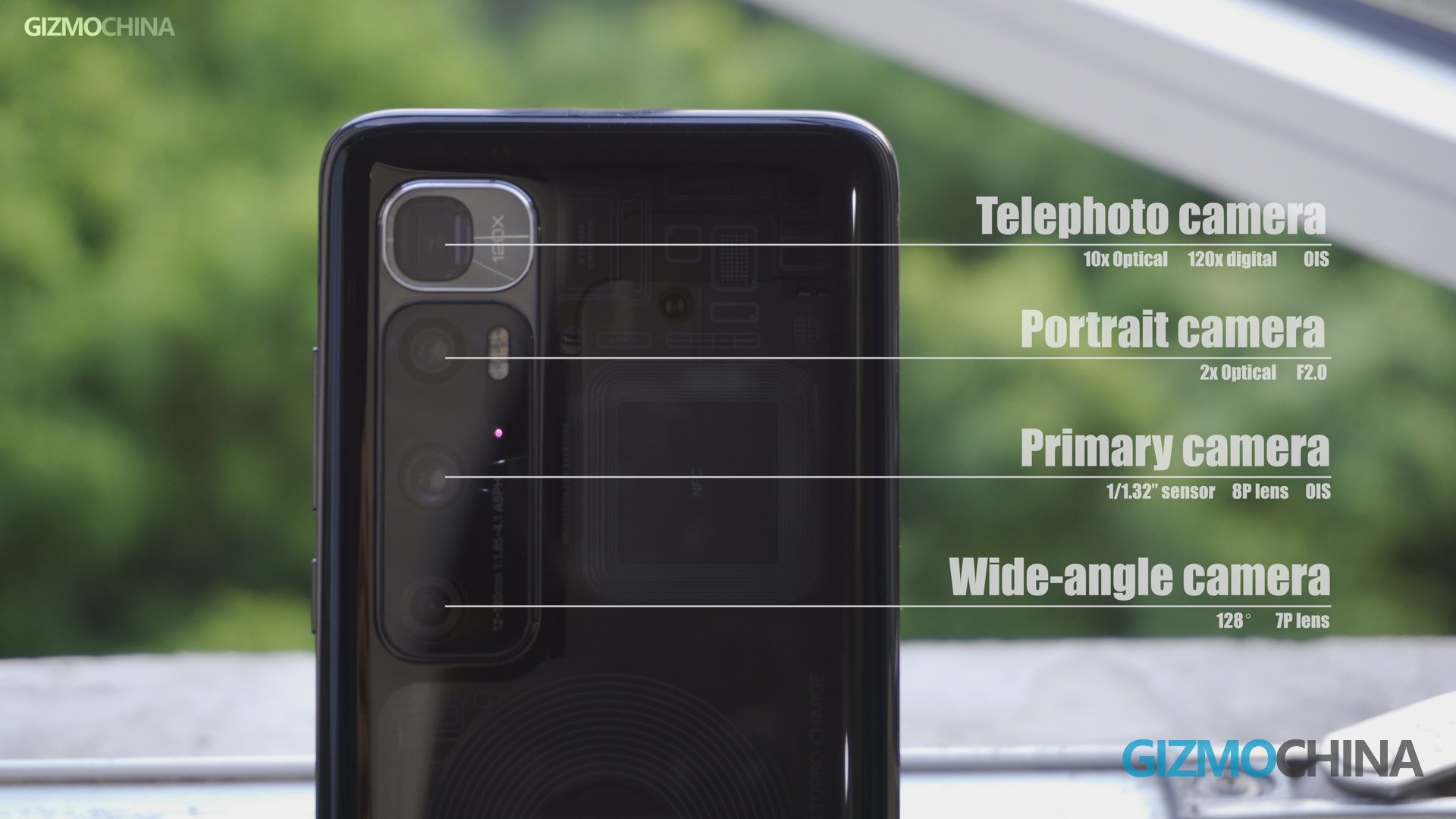
The biggest highlight of the Ultra is the new camera setup with 120x digital zooming capacity. The top camera sensor is the telephoto camera featuring a 5x optical zoom and up to 120 times digital zooming with OIS assistance. The second one is a portrait camera supporting a 2x optical zoom. The third sensor is the main camera. And the last one is a 128-degree super-wide-angle camera, which probably is the widest angle lens that we’ve seen on a smartphone camera.
1 of 2
primary high dynamic range
primary-colors
Let’s check out their samples. The main camera is one of the best cameras we’ve experienced, especially because it’s really good at reserving rich detail from bright to dark areas with super high dynamic range and correct exposure. As compared to Mi10’s 108MP sensor, the Ultra’s new 48MP sensor also presented good sharpness and excellent texture. Meanwhile, the color is also impressive as we turn on the HDR.
1 of 2
portrait-2
portrait-1
The Portrait camera also brings visible improvement. The bokeh effect is very smooth and natural. And the edge detection of the subject is pretty accurate when handling relatively simple background and edges. Even so, when we took photos under complicated light conditions, you might find a bit of unnatural blurring. But it’s not a serious problem.
1 of 3
primary-colors
wide-angle-2-colors
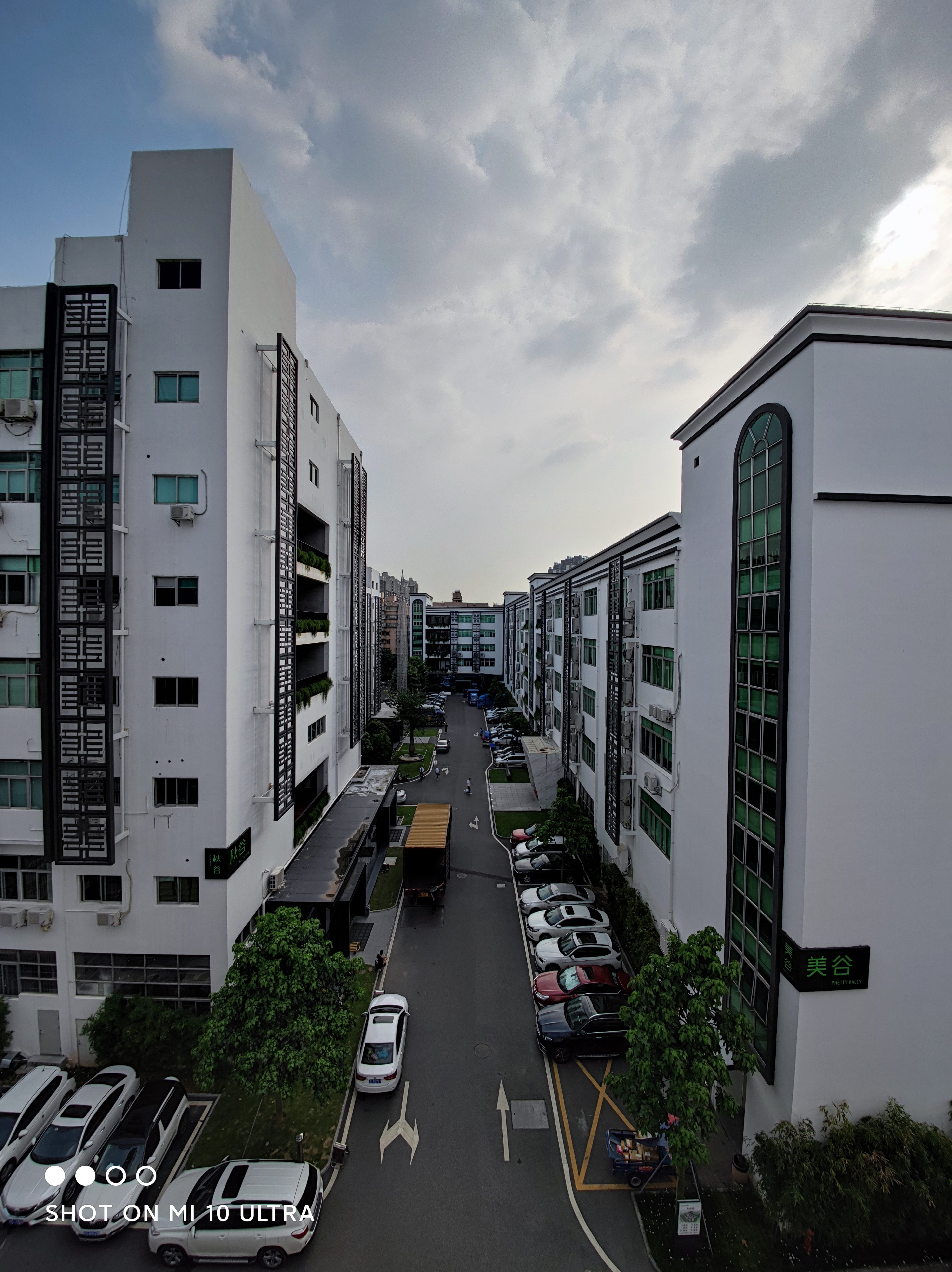
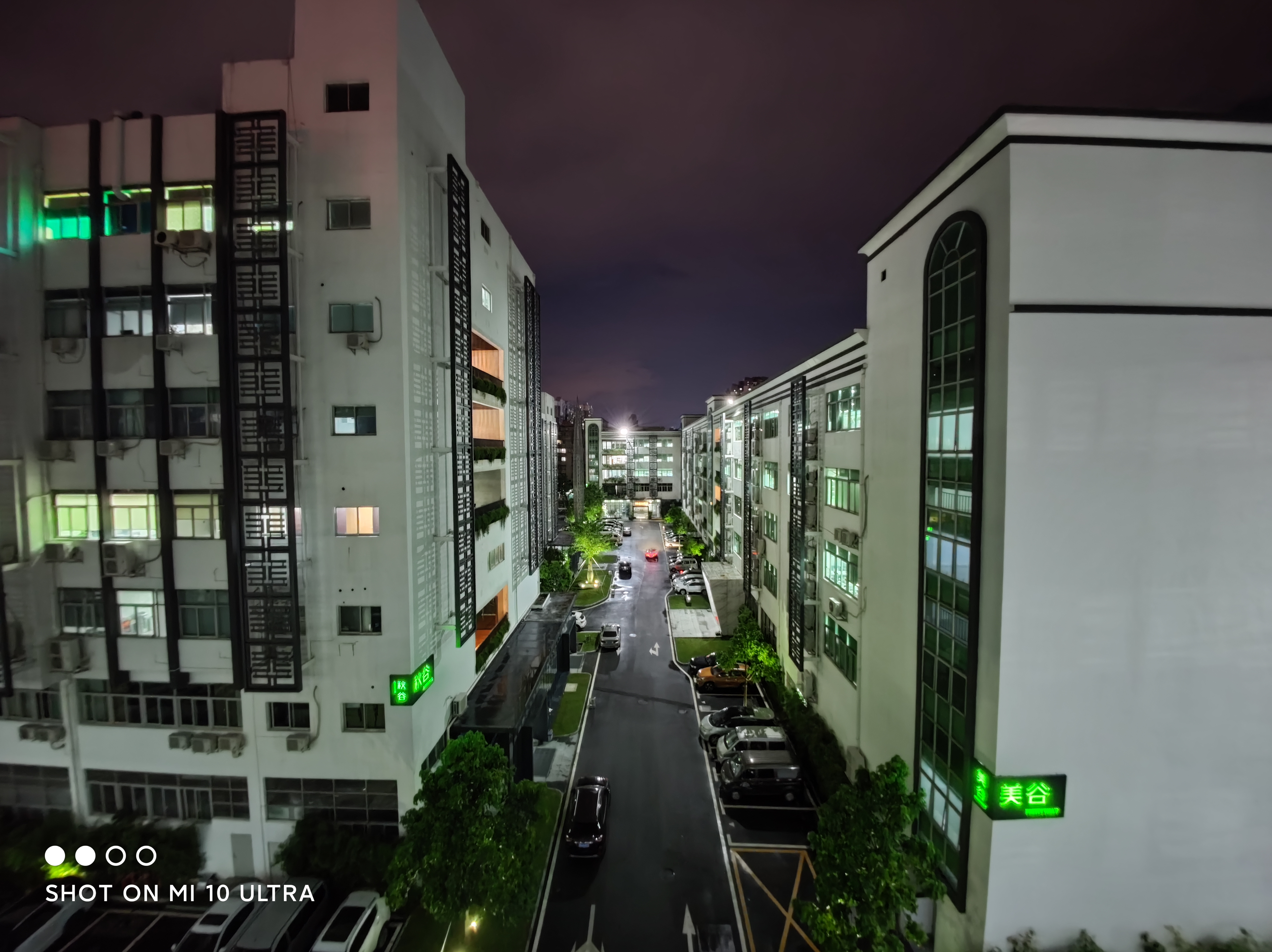
wide-angle night mode
The 128-degree wide-angle camera’s samples have excellent colors with a good dynamic range. Unlike most Android phones, the Ultra’s wide-angle camera is much more practical as it also achieved great sharpness and clarity. A small problem of the wide-angle samples is the lens distortion. We were not surprised that the edge distortion may occur to the samples as they have quite a wide angle-of-view. But I have to say that under most conditions, the wide-angle samples and main camera samples would have a similar white balance. And thanks to the f/2.2 big aperture, the wide-angle camera still performed well under low light conditions.
A minor issue with the main camera sensor is focus detection. In rare cases, the camera was not able to quickly auto-focus close subjects or sometimes it went out of focus.
1 of 3
wide-angle night mode
low light-normal
low light-night mode
Both primary and ultra-wide-angle sensors do really well at night, especially with the night mode. It not only has a brighter and clearer image than the normal mode but manages the exposure really well. The night mode reserved rich detail for both sensors to achieve a wider dynamic range. Meanwhile, the noise control is just perfect and I can easily say that the Mi 10 Ultra’s night camera performance is among the best in the market.
1 of 2
10x
120x
As for its telephoto camera, although we have to admire Xiaomi’s innovation, 120x zoom is not really that useful. At least for now, it’s just like a promotional stunt for the 10th-anniversary edition and doesn’t add much value. But regular 5x and 10x samples look as good as its predecessors.
You can check out the full resolution camera samples from the Xiaomi Mi 10 Ultra here.
Xiaomi Mi 10 Ultra Review: Verdict
So that’s it, there’s no doubt the Mi 10 Ultra is the best Xiaomi smartphone product of 2020. With Ultra’s release, Xiaomi is trying to deliver a message that the 10-year-old brand is capable of developing a extremely premium and advanced smartphone in this competitive market. Indeed, it feels as if the Mi 10 Ultra marks the start of a new chapter for Xiaomi (it’s also worth mentioning the Mi 10 Ultra is the top-rated camera phone on DxOMark right now!).
The Mi series is no longer about basic cost-effective flagships. And the Mi 10 Ultra is a prime example of how Xiaomi can make ultra-premium phones for the ultra-premium segment. You are really getting 120% value for your money here.
Unfortunately, the Xiaomi Mi 10 Ultra is not slated to land in the international markets anytime soon. However, you can get it from retailers like Giztop for around $800-$900.
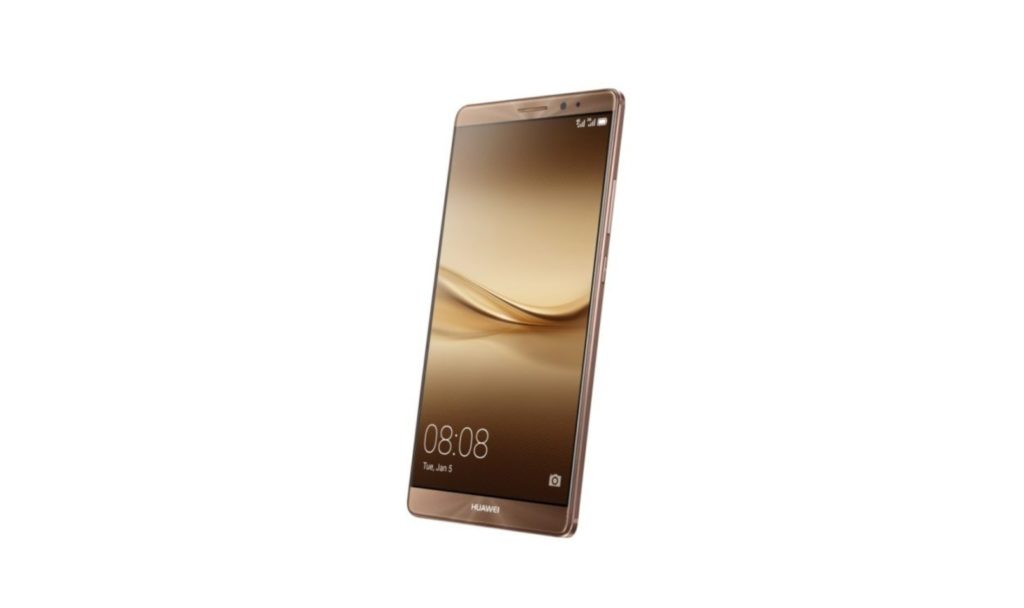
The Chinese telecom giant launched HUAWEI Mate 8 as its flagship smartphone for the second half of 2015. It has been almost 5 years since the handset’s initial release. For context, it debuted around the time when iPhone 6s/6s Plus, Galaxy S6/S6 Edge, and Galaxy Note 5 were the talk of the town. But even after these many years, the phone is getting a new system update, which is unheard in the Android world.
Out of all the smartphones launched in 2015, the Apple iPhone 6s and iPhone 6s Plus are the only devices to get regular software updates. These two are even eligible for iOS 14, which is set to release this fall.
Surprisingly, Huawei is rolling out a new system update to Mate 8 with build number 8.0.0.850 (C00) in China. It is probably the first time a five-year-old Android smartphone is getting an official software update from the company.
This handset currently runs EMUI 8.0 based on Android Oreo. For those unaware, it was the first Huawei device to launch with EMUI 4.0 based on Android 6.0 Marshmallow. It got two major Android and EMUI updates as promised by the firm.
The new update for the HUAWEI Mate 8, which is being seeded out after the end of its software support bumps up the security patch level to July 2020. Most importantly, it adds the “Smart Charge” feature, which reduces battery ageing by adapting and preventing the battery from being continuously charged when full.
That said, the OTA update weighs 222MB in size and is currently limited to the Chinese variant of the phone with model number NXT-AL10. We expect the global variants to get it in the coming days.
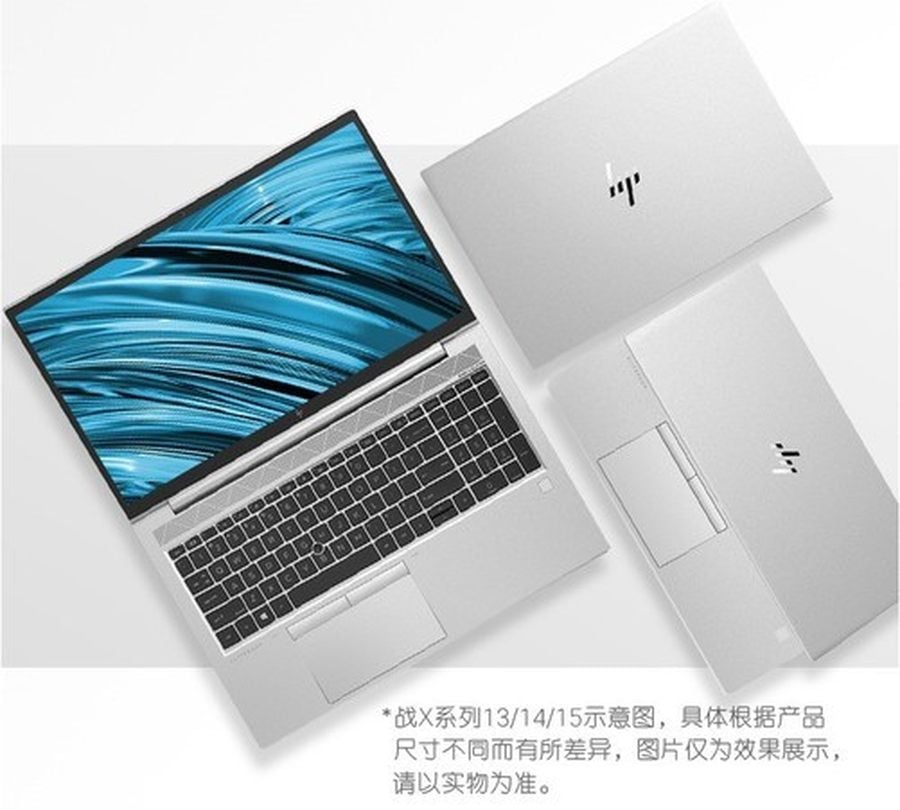
HP has launched a new laptop in China and it is dubbed HP War X. The laptop is a special edition embedded with a Ryzen processor and inspired by the Star Wars Animation. The new laptop model is available in 13, 14, and 15 inches screen sizes.
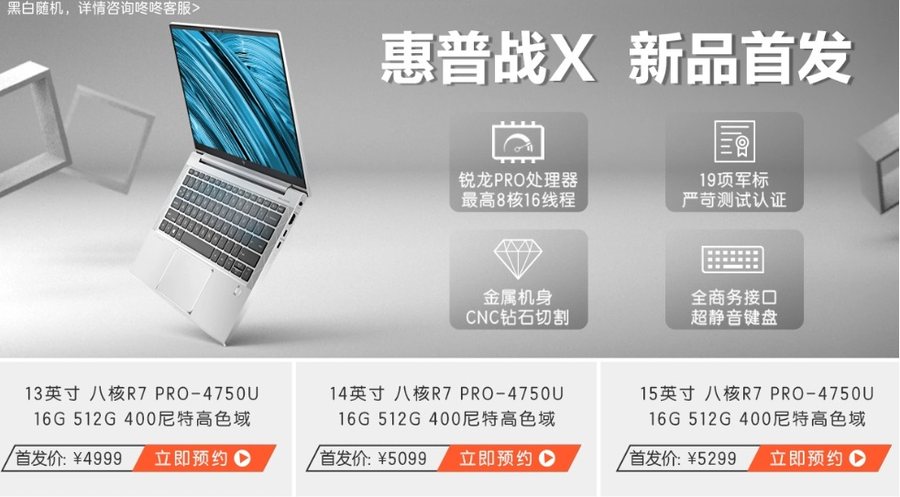
HP first introduced the Wars edition in 2015, and it was targeted at fans of Star Wars. This time around, the company integrated the laptop with AMD’s latest Ryzen 7 Pro -4750U chipset which is an added advantage considering the popularity of AMD’s Ryzen chipsets. There is even a slightly cheaper Ryzen 5 Pro – 4650U-powered model also available for all three screen sizes. The Ryzen 8 provides higher speeds, more memory, and wider bandwidth alongside 1080p to ultra-quality 4K resolution. The laptop comes with 16GB RAM and 512GB of internal storage. It also features the world’s first PCIe 4.0 connectivity, advantageous for the most advanced motherboards, graphics, and storage technologies available.
This HP War X has an all-metal body with the display capable of 400 nit brightness and 100% SRG color gamut. The notebook comes with an ultra-thin size 1.26kg and weighs just 1.69 kg.
As for the prices, the HP War X product carries a starting price of RMB 4,999 (~$722) for the 13 inches version, RMB 5,099 (~$736) for the 14 inches version, and RMB 5,299 (~$765) for the 15 inches version. It is presently on pre-sale on Jingdong and will go on sale from August 31.
HMD Global has scheduled an event for August 25 to launch Nokia 5.3 in India. Now, according to a new leak, the company may also unveil Nokia C3 for the country at the same. For those unaware, it is an entry-level smartphone, which made its debut earlier this month in China.
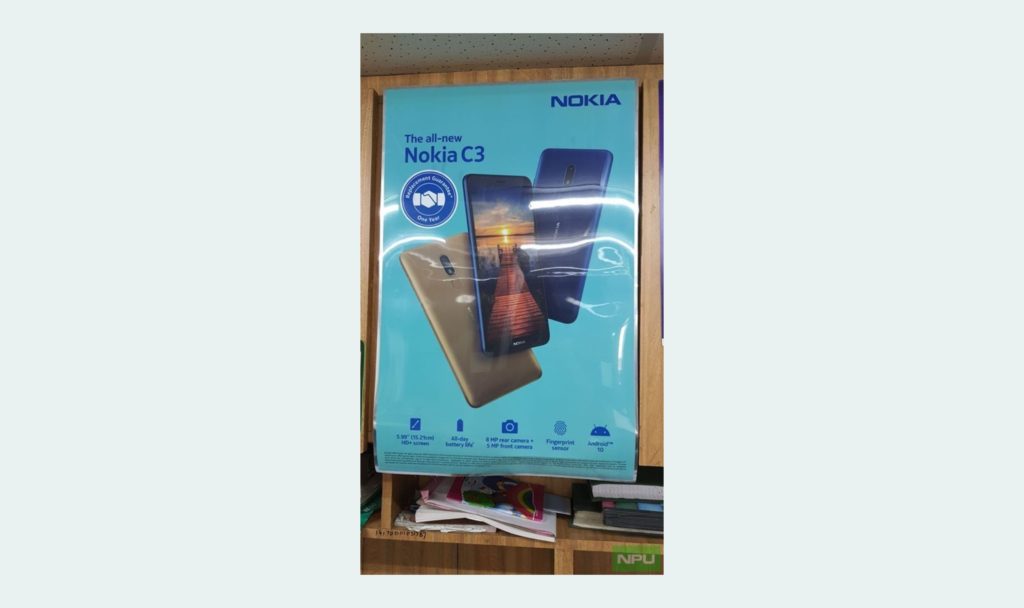
The news regarding the launch of Nokia C3 in India comes from NokiaPowerUser. A reader of the blog had shared a picture of the handset’s poster for offline retailers. This poster not only highlights the specs of the phone but also reveals that it will come with a one-year replacement guarantee.
As for specifications, the Nokia C3 is powered by a 1.2GHz 28nm UNISOC SC9863A octa-core processor paired with 3GB RAM and 32GB internal storage. It features a 5.99-inch HD+ (1440 x 720 pixels) 18:9 LCD panel on the front without a notch or punch-hole. Hence, the 8MP selfie camera sits at the top bezel, whereas the bottom chin houses the Nokia branding.
Other features of this phone include 8MP primary camera, fingerprint sensor, dedicated key for Google Assistant, microSD card slot, 3.5mm headphone jack, MicroUSB port, 3,040mAh battery, and Android 10.
It comes in two colors (Nordic Blue/Sand Gold) and costs 699 yuan ($101/₹7,569) in China.
Huami is expected to announce new Amazfit products soon. Among the expected products are successors to the Amazfit GTR and Amazfit GTS. Today, the manufacturer released an official teaser hinting at the arrival of new products.
The teaser was posted on Weibo and it hints at the new products launching this autumn. Autumn begins in September, which means there should be a series of launches next month.
The Amazfit GTR 2 and Amazfit GTS 2 are expected to come with AMOLED displays like their predecessors. However, it has been reported that the GTS 2 may have a round dial rather than a square one. Other features reported to be present in the 2nd-gen GTS 2 are NFC, Alexa voice assistant, and a new feature called Smart Crown.
What makes the Galaxy Note series special is the S Pen. It is practically the major difference between the Note series and the S series, and for the Galaxy Note 20 series, Samsung has improved the latency of the Bluetooth stylus such that it practically feels like you are using a real pen.
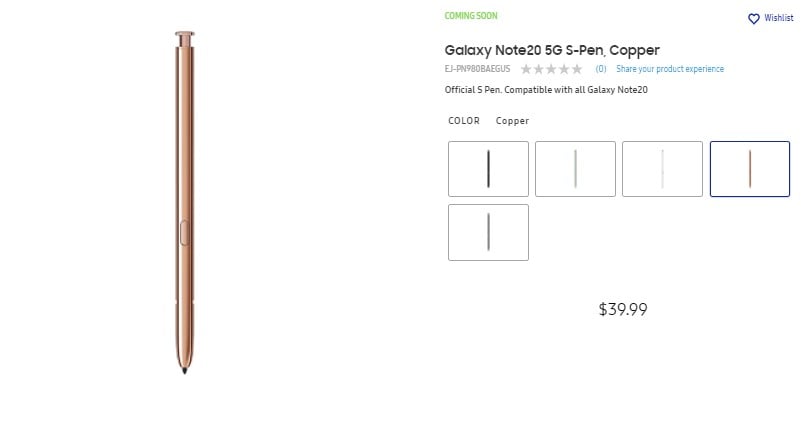
Even though the S Pen has a slot designed for it on the phone, one can still lose it or accidentally break it. If that happens, Samsung says you will be able to pick up a replacement for just $39.99!
Yes, you will be able to purchase an original replacement from Samsung and in the same color as your device. The pen is compatible with all variants of the Galaxy Note 20 and the Galaxy Note 20 Ultra and will work just like the original.
The Galaxy Note 20’s S Pen connects via Bluetooth and charges automatically when you put it back in its slot. It has support for 4096 levels of pressure and can perform a number of off-screen functions such as music playback control, remote for the camera, and as an air remote.
Samsung also sells replacement S Pens for its other devices. The one for the Tab S6 and Tab S6 Lite costs $59.99 and $49.99 respectively while that of the Galaxy Note10 and Galaxy Note9 go for $29.99.
You can purchase a replacement S Pen for the Galaxy Note20 on the official website but it is currently listed as coming soon.
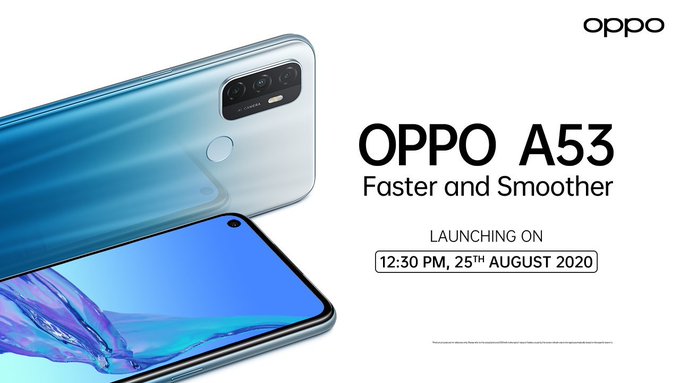
OPPO A53 2020 made its debut in Indonesia on Thursday. The handset costs Rp 2,499,000 ($169) in the country for 4GB + 64GB storage configuration. It is scheduled to launch in India on August 25. Ahead of it, a new leak suggests the world’s second-largest smartphone market will get a different memory variant.
The OPPO A53 2020 is known as the first smartphone to launch with Snapdragon 460. It is probably also the first handset to sport an HD+ (1600 x 720 pixels) LCD panel with 90Hz refresh rate. Also, it is priced competitively, compared to previous devices from the brand.
According to Mukul Sharma (@stufflistings), this phone will be available in 6GB + 128GB combo in India initially. He added that the price of this model could be somewhere between ₹14,000 and ₹15,000. Also, he mentioned that the lower 4GB + 64GB variant that launched in Indonesia will make its way to India sometime later.
At this price, the device will have to compete with POCO M2 Pro, Redmi Note 9 Po, Realme 6, and Samsung Galaxy M21 in the country. But since OPPO is an offline-focused company with a heavy emphasis on marketing, it can definitely manage to push handsome units of A53 2020 edition into the hands of customers.
Anyway, it is not a bad budget smartphone per se as it features a 12MP (wide) + 2MP (macro) + 2MP (depth) triple camera setup, 16MP punch-hole selfie camera, fingerprint sensor, microSD card slot, 3.5mm headphone jack, USB Type-C, 5,000mAh battery, 18W fast charging, and ColorOS 7.2based onAndroid 10.
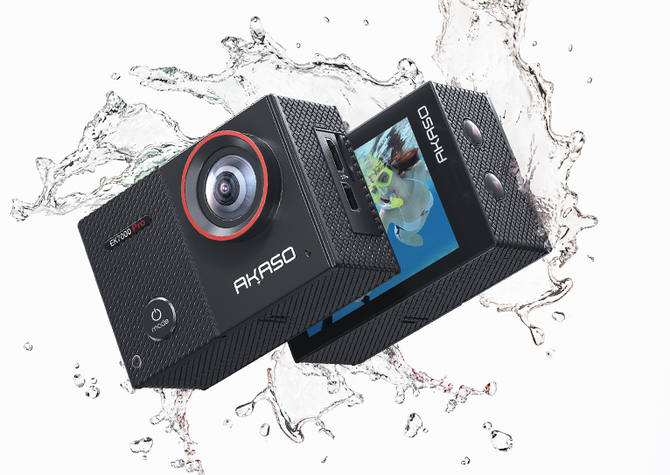
As a world-renowned camera manufacturer, AKASO’s action camera EK7000 Pro ranks as the top-selling action camera on Amazon. Only in July this year, AKASO’s sales of the EK700 Pro on Amazon reached 150,000+ which show the camera is a hot product. In order to expand its market, AKASO has now launched its first product in China and it is the EK7000 Pro.
The EK7000 Pro is a camera focused on sports photography, equipped with a 20.1-megapixel lens. The lens supports 4K 25fps video shooting and a 170° super wide-angle, far exceeding the 120° super wide-angle common to mobile phones. For a sports camera, anti-shake is undoubtedly the most important. AKASO E7000 Pro supports intelligent anti-shake algorithm, which can eliminate screen jitter through EIS+ gyroscope, and can also shoot relatively stable and clear videos under various severe jitter conditions to ensure that there will be no jelly effect.
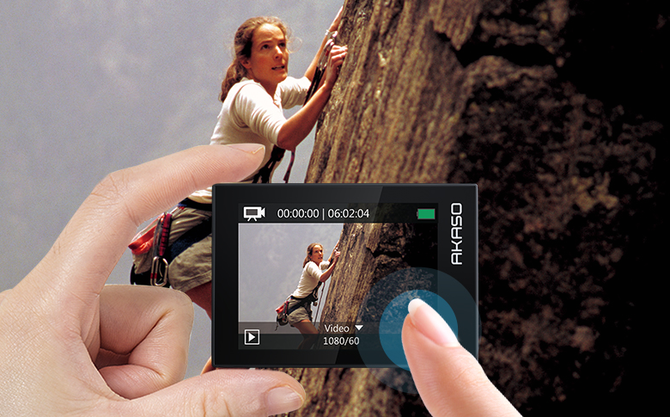
The EK7000 Pro action camera is also equipped with a 2.0-inch high-definition touch screen that supports one-click editing. It can also directly connect to a mobile phone via Wi-Fi and share the captured content on social platforms. In terms of battery life, the EK7000 Pro has a battery capacity of 1050mAh, which can continuously shoot videos for 90 minutes. It comes with two batteries.
As stated earlier, the EK7000 Pro is AKASO’s first product to be launched in its home market of China. It is already on sale on Tmall and is priced at 499 yuan (~$72). The company also promised to launch more products in China in September this year.
Recently, OPPO launched A53 2020 as the world’s first smartphone with Qualcomm Snapdragon 460 beating other phones which leaked with the same chipset. Now, it seems like the next handsets with this SoC will be mostly vivo Y20 and vivo Y20i respectively as their entire specs leak via marketing material.
The upcoming vivo Y20 and vivo Y20i will be identical with only three differences – RAM, charging speed, and color. The specifications of these devices were shared by Mukul Sharma aka @stufflistings on Twitter.
According to the pictures shared by the tech influencer, these two phones will sport a 6.51-inch Halo Full View Display (dew-drop notch). Though the leak does not mention the type and resolution of the panel, we believe it to come with an LCD screen with HD+ resolution.
Both the handsets will be powered by Snapdragon 460 but the Y20 will feature 4GB RAM, compared to 3GB RAM on Y20i. For optics, they will come equipped with a 13MP (wide) + 2MP (macro) + 2MP (depth) triple camera setup aligned vertically on a rectangular module on the rear panel. They will also feature an 8MP front-facing camera for selfies and video calls.
Further, these devices will ship with FunTouch OS 10.5 based on Android 10 and the whole package will be backed by a 5,000mAh battery, However, only Y20 gets 18W fast charging support, whereas, Y20i is mentioned to have normal charging (mostly 10W).
Last but not least, these upcoming vivo budget smartphones will feature a side-mounted fingerprint sensor and will be available Dawn White and Obisidian Black (Y20) / Nebula Blue (Y20i) color variants.
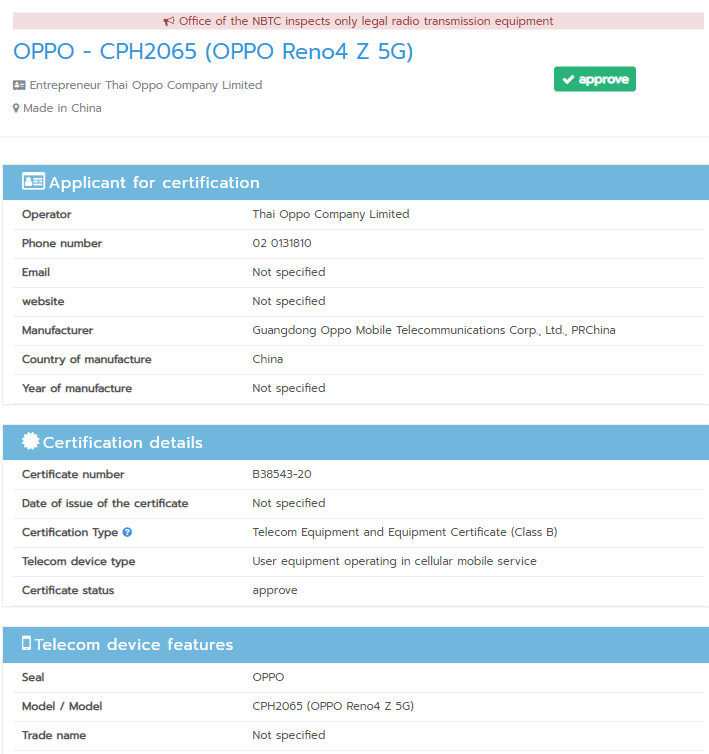
OPPO launched the A92s smartphone in China back in April this year packing a decent specs lineup. The phone has since gone on sale. There have been speculations that he A92s will hit the global turf as Reno4 Z 5G. That was recently touted when the phone was listed as “OPPO Reno4 Z 5G” by the Global Certification Forum. This has now been confirmed as the device has also been certified by Thailand’s NBTC as the Oppo Reno4 Z 5G (via).
The NBTC listing confirms the device will be powered by a MediaTek Dimensity 800 chipset. The processor is a 5G SoC which makes the device a 5G phone. The device is expected to pack an LCD screen with 12oHz refresh rate. However, it comes with support for 18W charging speed instead of the 65W fast charging capabilities of its siblings.
As of now, we don’t know the price of the Reno4 Z 5G or when it will be launched but for reference, the A92s comes with a retail 2,200 yuan (~$320). We expect the phone’s global pricing to be in this range.
We use cookies on our website to give you the most relevant experience by remembering your preferences and repeat visits. By clicking “Accept”, you consent to the use of ALL the cookies.
This website uses cookies to improve your experience while you navigate through the website. Out of these, the cookies that are categorized as necessary are stored on your browser as they are essential for the working of basic functionalities of the website. We also use third-party cookies that help us analyze and understand how you use this website. These cookies will be stored in your browser only with your consent. You also have the option to opt-out of these cookies. But opting out of some of these cookies may affect your browsing experience.
Necessary cookies are absolutely essential for the website to function properly. This category only includes cookies that ensures basic functionalities and security features of the website. These cookies do not store any personal information.
Any cookies that may not be particularly necessary for the website to function and is used specifically to collect user personal data via analytics, ads, other embedded contents are termed as non-necessary cookies. It is mandatory to procure user consent prior to running these cookies on your website.











 The Amazfit GTR 2 and Amazfit GTS 2 are expected to come with AMOLED displays like their predecessors. However, it has been reported that the GTS 2 may have a round dial rather than a square one. Other features reported to be present in the 2nd-gen GTS 2 are NFC, Alexa voice assistant, and a new feature called Smart Crown.