Advertisement

Xiaomi Youpin crowdfunds handheld printer for 499 Yuan ($72)

While you may have seen printers at home, shops or offices, they generally follow the same design of a box shaped product. However, the Xiaomi Youpin platform is crowdfunding a new handheld printer that can print anywhere on the go.

Xiaomi

The PrinterPods handheld DIY printer is essentially a product made for users that want the ability of personalized customizability. It can be used on various different surfaces, with users being able to print on cups, computers, clothes, and even skin. In other words, the handheld DIY printer is not limited to just paper like a traditional printer, and offers a variety of other possibilities as well.

It uses a special ink which can be used on skin, food, and clothes as well to cover them with distinctive logo or patterns. The surface or object that is being printed does not have to be completely flat either, making the product really versatile. This means that you can also print on curved surfaces like cups. The length of the PrinterPods handheld DIY printer is just 95mm, which is smaller than many smartphones as well.

Xiaomi

The body contains an integrated ink cartridge that is built into a sleek and streamlined design that is easy to grip. Its primary selling point is the fact that you can print anytime and anywhere on the go. The printer also offers skin friendly, invisible, edible, and even permanent ink options to choose fro mas well. So it is safe to use it on yourself or on food. One can use the accompanying apps default fonts and patterns or just add your own by uploading pictures. It is currently being crowdfunded for 499 Yuan (roughly 72 US Dollars) on the Xiaomi Youpin platform.


Huawei patents a smartphone design with a secondary display alongside camera module

Huawei is going through difficult times but the company continues to launch new products, at least in its home market where it is stronger than ever before. Also, it keeps on patenting new designs like the recently published smartphone design patent with a secondary display alongside camera module at the back of the phone.

Huawei Smartphone Design Patent Secondary Display Camera Module Featured

This Huawei patent was unearthed by LetsGoDigital. The Chinese telecom giant applied for it earlier this year but it only got published on August 14 by CNIPA (China National Intellectual Property Administration) after approval.

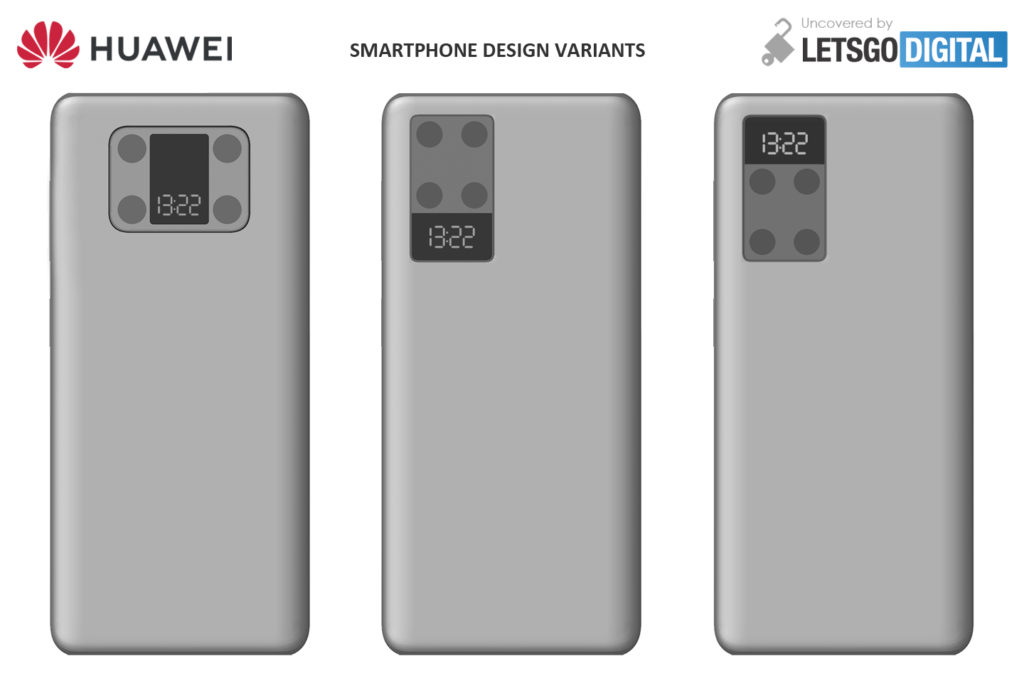
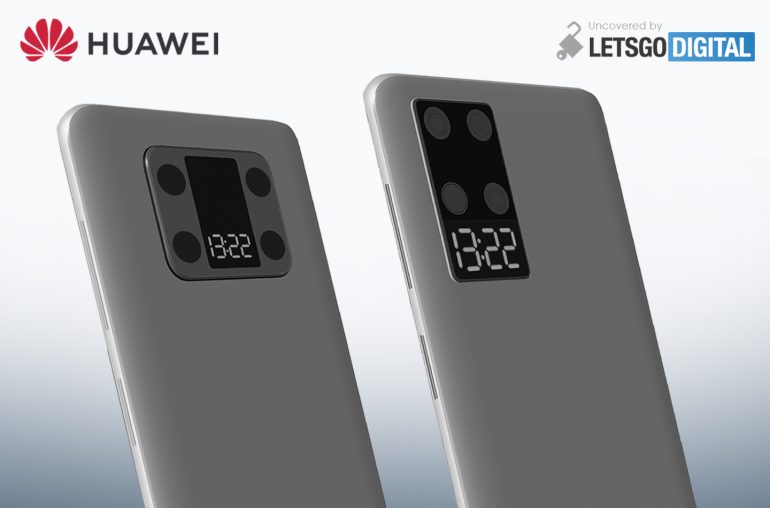
The concept of this design is about integrating a small display with the camera module. The pictures from the documents only showcase it displaying time but the description mentions other use cases as well.

This is a second such smartphone design by Huawei. The previous model looked like a Mate series device with a better use case of the circular display around the camera. Whereas, this one resembles a P series handset with little information about this secondary display’s use.

Huawei Smartphone Design Patent Secondary Display Camera Module 01

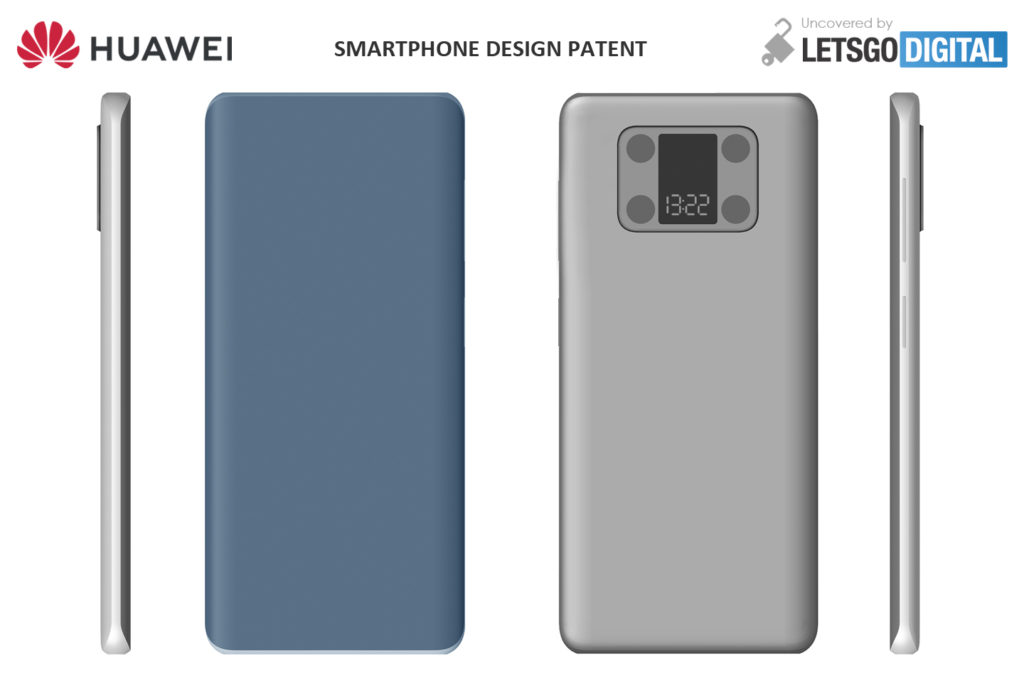
As for the design, the phone sports a quad-curved display like the HUAWEI P40 series but without a punch-hole or notch. There’s nothing at the top but the right side houses the power key and volume rockers. Whereas, the bottom features a USB Type-C at the center flanked by speaker grille on either side.

Talking about the secondary display placement, the first design is symmetrical with the display at the center of the device’s back surround by four cameras. Whereas, in the other two designs, the quad-camera module is placed on the top left corner of the handset’s rear panel with the secondary display on top and below.

Huawei Smartphone Design Patent Secondary Display Camera Module 02

This design will probably never see the light of the day but it does look intriguing. Personally, I would prefer that Mate series circular display patent to come into life.


Pentagon attains temporary waiver from Trump Administration’s Huawei ban

The Pentagon has managed to receive a brief waiver from the Trump administration regarding a government wide ban on contractors that use Huawei, or other Chinese made telecommunications equipment.

Pentagon

According to a Defense News report, an obtained internal memo has revealed that the Pentagon has received a weeks long reprieve, until 30th September 2020, for doing business with the Department of Defense. The request for the waiver arrives after the firms were still reeling from the economic effects of the coronavirus pandemic. The original provision was to take effect on 14th August 2020.

At the moment, the administration is finalizing regulations that would prohibit government contracting with companies that have their supply chains contain products from certain high risk Chinese vendors. These include Huawei as mandated under of Section 889 of the 2019 National Defense Authorization Act. The government has considered the Chinese tech giant as an espionage threat.

Huawei Logo MWC 2019

John Ratcliffe, Director of National Intelligence, granted he Pentagon a temporary waiver, citing US national security interests. This brief reprieve will also offer time to further assess a broader waiver request from the Department of Defense. The move arrives as a temporary win for firms and trade associations representing them, who lobbied against the ban.


Realme may soon launch phones 4,300mAh, 4,500mAh batteries and 65W fast charging
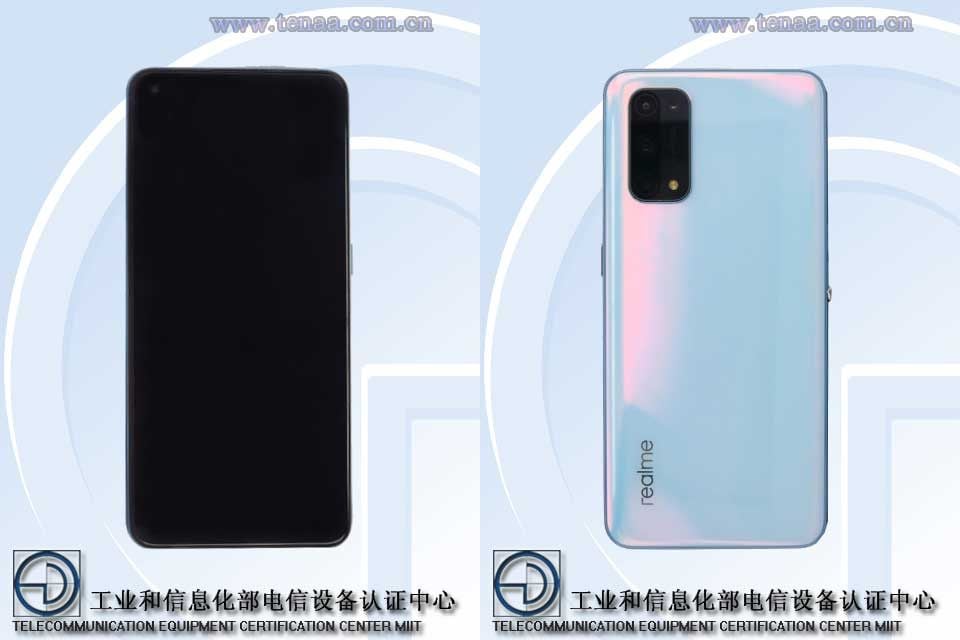
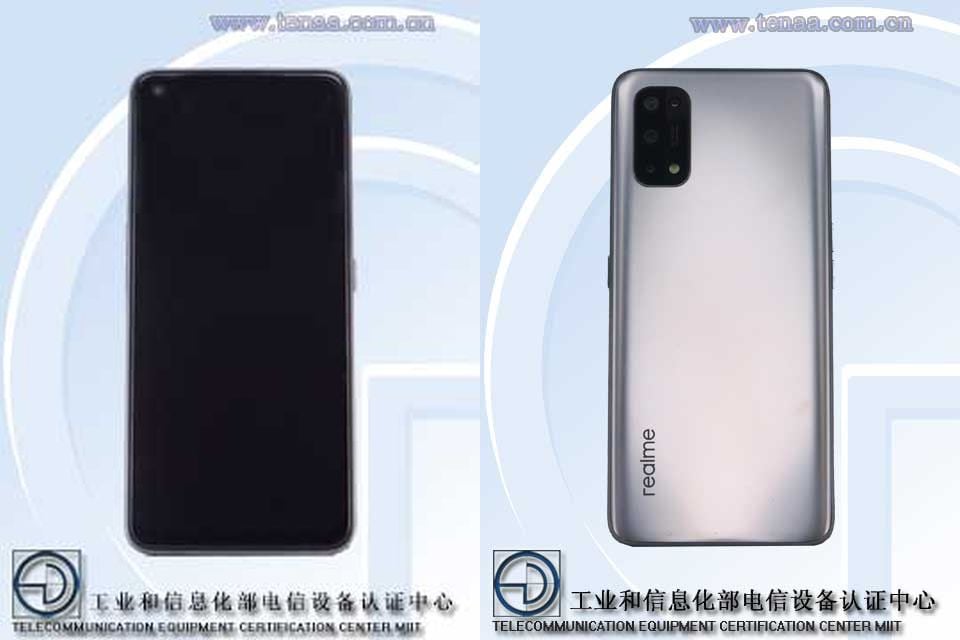
There are three unannounced Realme phones with model numbers RMX2121, RMX2176, and RMX2200 / RMX2201 have been certified by TENAA authority of China. TENAA has full specs and images of the RMX2176 and RMX2200 / RMX2201 phone. However, the Chinese telecom regulatory body has only a few information on the specs of the RMX2121. A reliable tipster from China has revealed some information on the upcoming Realme 8 series of smartphones. Hence, it appears that two of the above-mentioned phones could end up as Realme 8 series handsets. A reliable tipster has shared key details of the upcoming Realme phones for China.

According to the tipster, the upcoming Realme series has a standard model and a higher model. The former has a 4,300mAh battery and the latter has a 4,500mAh battery. Both phones carry support for 65W fast charging.

The mysterious Realme phones do not weigh more than 200 grams. Also, they flaunt a slim profile of 8.Xmm. It is unclear whether the tipster is talking about the Realme X lineup or V5 series. The RMX2200 / RMX2201 does not seem to be one of the phones that the leakster is talking about since it houses a larger 4,980mAh rated battery.

Realme RMX2121 front
Realme RMX2121

Realme RMX2121The Realme RMX2121 and Realme RMX2176 phones both measure around 8mm. They are packed with dual-cell batteries. Hence, the exact battery capacity of these phones is not known. The RMX2121 phone was spotted with a 65W charger at China’s 3C certification last month. Since the RMX2176 phone has a dual-part battery, it is likely that it may also support for 65W fast charging.

Realme RMX2176 TENAA
Realme RMX2176

The RMX2176 has an AMOLED display with a punch-hole design. It supports Full HD+ resolution and 20:9 aspect ratio. It is powered by a 2.4GHz octa-core processor and 6 GB / 8 GB of RAM. The handset may arrive in China in 128 GB and 256 GB storage choices. It has a 32-megapixel front camera and a 64-megapixel + 8-megapixel + 2-megapixel + 2-megapixel quad-camera system. The handset Is loaded with Android 10 OS and is expected to release in blue, white, and symphony colors.


Huawei to launch HarmonyOS 2.0 for Smartwatches, PCs and Tablets later this year: Report

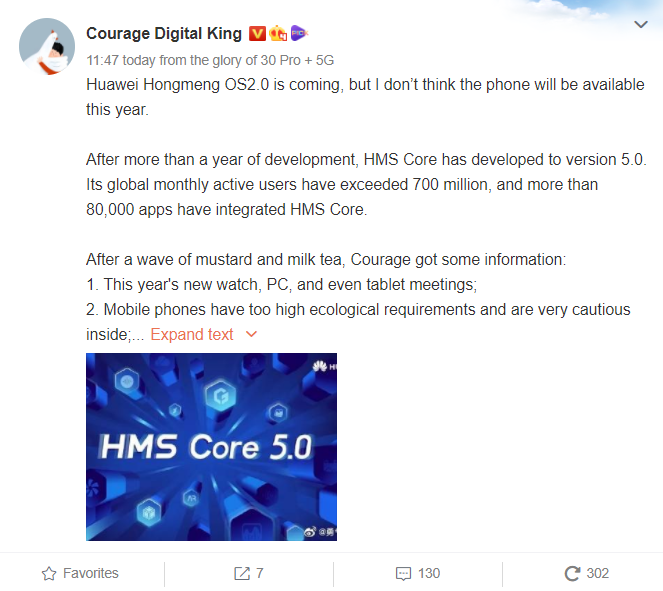
Huawei is reportedly planning on launching HarmonyOS 2.0 (also known as HongMengOS in China) later this year. The second iteration of the company’s proprietary operating system is said to arrive for the Chinese tech giant’s smartwatch, PCs, and even tablet offerings soon.

Huawei

The news arrives from a blogger @勇气数码君 on Weibo, a Chinese microblogging website. According to the social media post, HarmonyOS is arriving soon, but might not be available for smartphones this year. Furthermore, the launch arrives with HMS Core 5.0 (Huawei Mobile Services), which has been in development for more than a year and has exceeded 700 million monthly active users from across the globe, with over 80,000 applications and 1.6 million registered developers.

Huawei

The new HarmonyOS iteration is said to arrive for PC’s this year, in other words, Huawei notebooks, like the Matebook X, which would mark a departure from Windows. Notably, the company’s CEO, Yu Chengdong, had previously revealed that smartwatches and other IoT products will be equipped with HarmonyOS in the future. Unfortunately, this report is still unconfirmed and we will have to wait for an official announcement, so take it with a pinch of salt for now.


AutoX launches RoboTaxis in Shanghai, partners with Letzgo

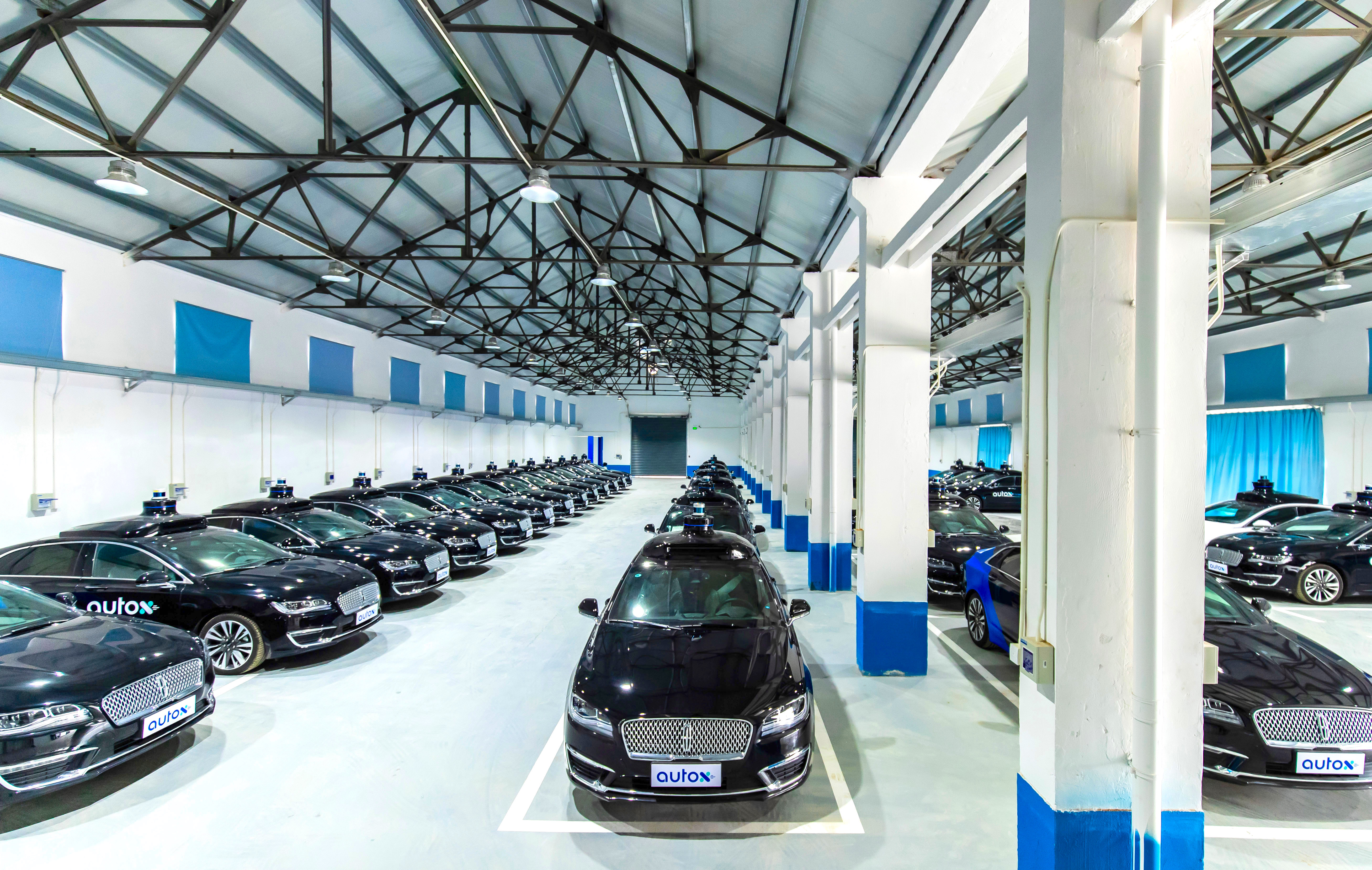
A couple of months prior, we had reported on AutoX and Alibaba’s Amap partnering to launch a RoboTaxi ride service in China. Now, AutoX has officially launched this service in Shanghai, just shortly after its successful pilot.

AutoX

The RoboTaxi ride hailing service is now open to the general public, marking a transmit milestone for China’s largest city. AutoX RoboTaxis are booked via Alibaba’s AutoNavi (also known as Amap, Gaode, or 高德) smartphone app. Furthermore, its launch also arrives after AutoX entered into a strategic partnership with Letzgo, a major taxi based firm in Shanghai. In other words, the RoboTais can also be hailed through Letzgo’s smartphone app as well.

Letzgo currently operates over 16,000 vehicles in more than 18 cities including Shanghai, in China. The company will also employ trained staff to operate RoboTaxis. This partnership will have AutoX provide its AutoX Driver platform while Letzgo will operate its daily fleet operations. Notably, the company is also taking various precautionary steps to keep customers safe during this time of crisis.

AutoX

Before starting a trip, riders will have to say the last four digits of heir phone numbers to a voice recognition system within the vehicle. While on the way, passengers can also monitor their progress through a display. Additionally, this screen will also showcase the objects around the vehicle and display information that reveals how an autonomous vehicle views the world and makes decisions.


OPPO Reno4 Pro Artist Limited Edition launches in China for 4,299 yuan ($619)

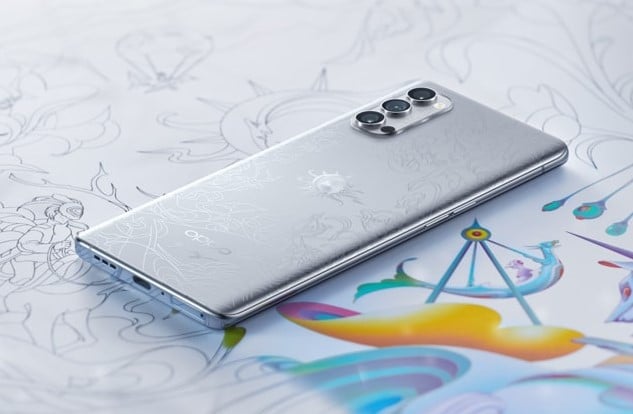
OPPO officially launches Reno4 Pro Artist Limited Edition in collaboration with James Jean after teasing it for a few days. It is priced at 4,299 yuan ($619) and comes in a  single 12GB + 256GB storage configuration. As for availability, it can be only purchased in China from the company’s official online store and selected retailers.

Oppo Reno 4 Pro Artist Limited Edition Featured

The specifications of the newly launched OPPO Reno4 Pro Artist Limited Edition remains the same as the regular version. The only difference is the new paint job with engraved art.

James Jean is a well-known Taiwanese-American artist known for his cover art for Marvel Comics and DC Comics. He even painted posters for movies like mother!, The Shape of Water, and Blade Runner 2049.

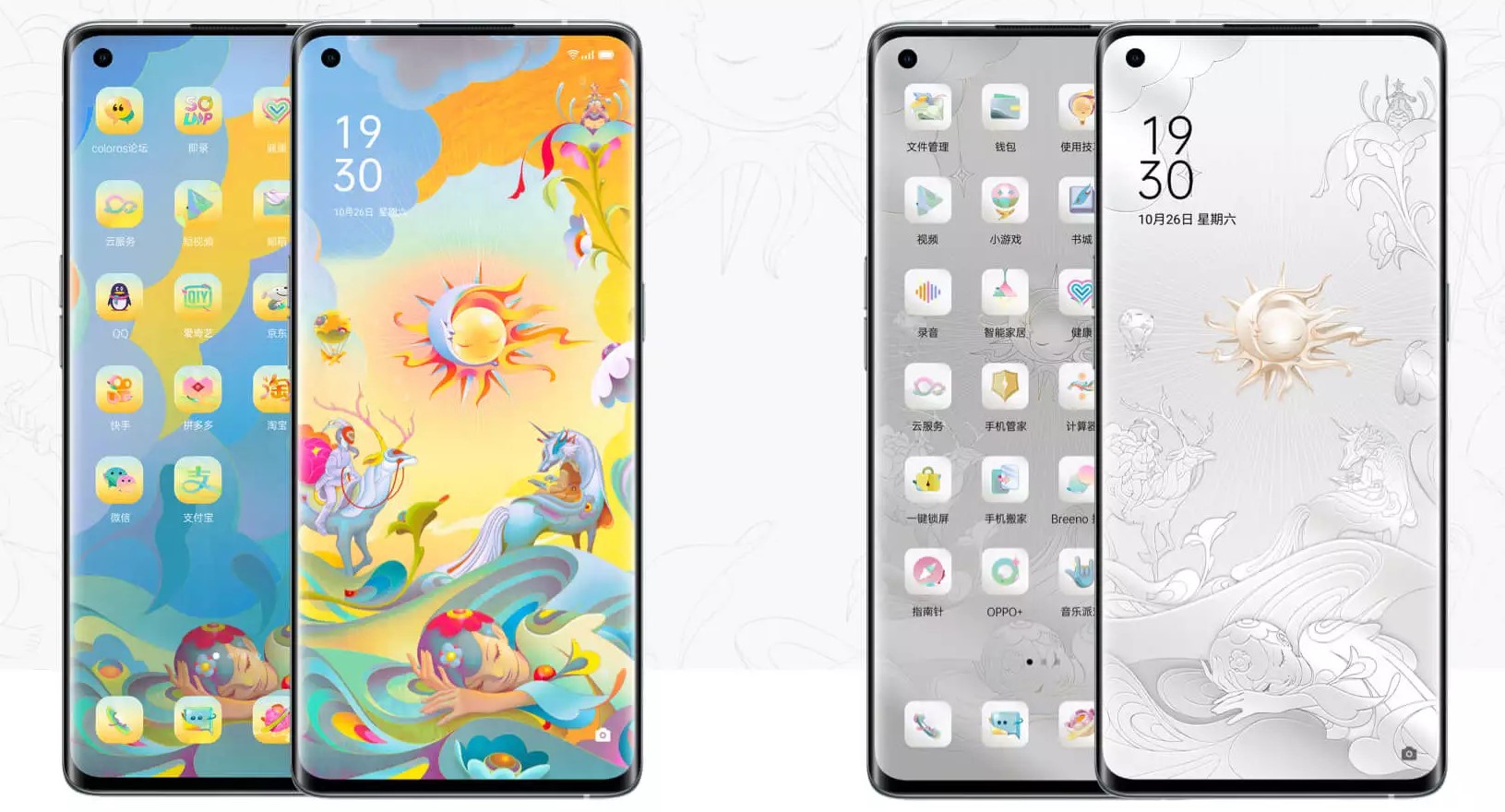
For Reno4 Pro, he created an art depicting “Summer Carnival of Dreams” with mystical creatures like unicorns. This painting is etched on the phone’s rear AG glass with a “SoleLuna” logo at the centre as it was the name of this project. The smartphone also ships with two dedicated themes based on this painting

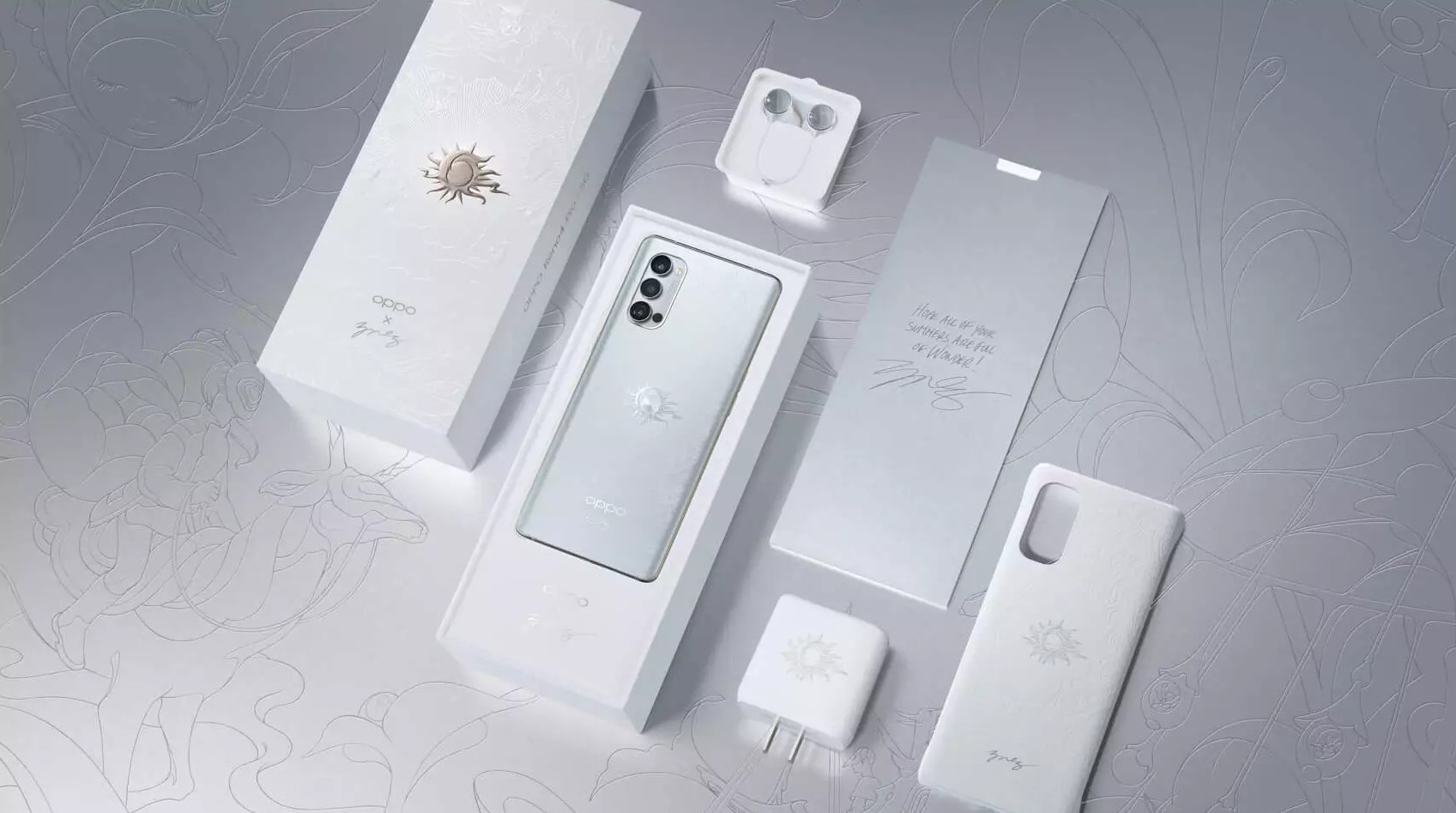
Further, the special edition of the phone comes in silver color, which is different than the other four colors of the handset. This helps in reflecting the engraved painting very well. Even the box contents such as earphones, case, and the 65W SuperVOOC 2.0 charger are themed after the painting.

That said, if you wish to get his variant of OPPO Reno4 Pro, you will have to import one as there’s no word on international availability


Xiaomi brings in four new executives on the Partners Board to push AI and IoT

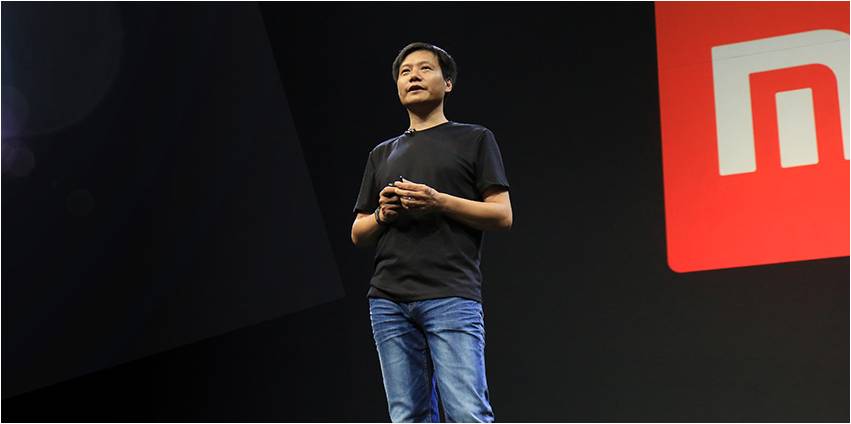
Lei Jun, Xiaomi CEO and Chairman, has brought in 4 new senior executives to the company’s partner board. These new executives will affect the Chinese tech giant’s future direction and development and will help push the company’s AI and IoT portfolio.

Xiaomi CEO Lei Jun
Xiaomi CEO Lei Jun

The CEO sent a letter to his staff, announcing the appointment of four new executives onto its senior management board. The newly hired individuals include Xiaomi president Wang Xiang, Xiaomi senior vice president Chew Shouzi, Xiaomi vice president Zhang Feng and Xiaomi vice president Lu Weibing. This including the five founding partners, makes the team consist of nine partners at the moment.

According to Lei Jun, “The partnership system is a collective decision-making mechanism for Xiaomi’s core corporate affairs and is responsible for passing on the company’s cultural values.” He added that the new appointments will also help shape its 10 year strategy focusing on smartphones, artificial intelligence (AI), and the Internet of Things (IoT).

mi logo

Earlier this year, Lei Jun had said that the company will invest at least 50 billion Yuan (roughly 7.2 billion US Dollars) in 5G, AI, and IoT over the course of five years. This effort was to expand its electronic portfolio, which would consist of interconnected products and services that were made by either Xiaomi or its partners. So, the move can be said to be a part of its plans that were announced in early 2020.


iQOO 5, iQOO 5 Pro launched with 120W fast charging, 120Hz curved display, and 50MP triple cameras

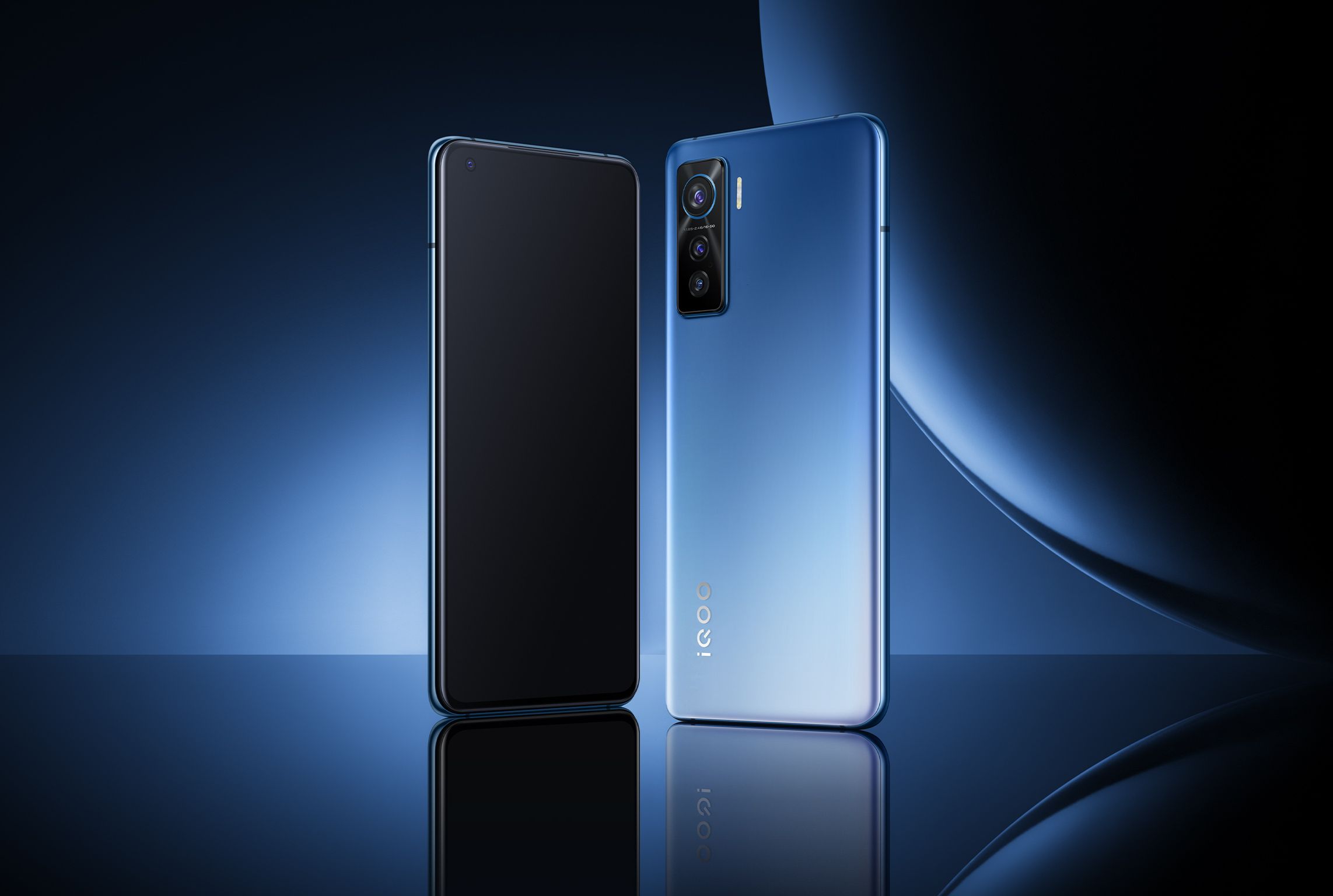
Today, iQOO unveiled the iQOO 5 series of flagship phones in China. The lineup includes two phones such as iQOO 5 and iQOO 5 Pro. The iQOO 5 series offers users with high refresh rate display and top-notch cameras. The major attraction of the series is that the iQOO 5 Pro comes with support for 120W fast charging.

iQOO 5 and iQOO 5 Pro specifications

The iQOO 5 series has a 120Hz refresh rate supporting AMOLED display that measures 6.56 inches. The display of the iQOO 5 is flat whereas the iQOO 5 Pro features a screen with curved edges. The 20:9 aspect ratio display with punch-hole design supports 1,300nits brightness, 100 percent P3 color gamut, and HDR10+ These phones are equipped with in-display fingerprint readers. The series measures 8.32mm in thickness and weighs 197 grams.

iQOO 5
iQOO 5

The iQOO 5 and iQOO 5 Pro phones are equipped with 16-megapixel front cameras. The rear side of the iQOO 5 series features a triple camera system. It comprises of the Samsung GN1 50-megapixel as the primary lens. It is the same primary shooter that is available on the Vivo X50 Pro+. The rear camera setup of the iQOO 5 Pro includes a 13-megapixel ultrawide lens with 120-degree field-of-view, and a 13-megapixel periscope telephoto lens. The other lenses in the iQOO 5’s camera setup include a 13-megapixel ultrawide lens and an 8-megapixel portrait lens. The iQOO 5 supports EIS and 20x digital zoom whereas the iQOO 5 Pro comes with support for OIS, 5x optical zoom, 60x hybrid zoom, and 8K video recording.

The Snapdragon 865 fuels the iQOO 5 series with LPPDR5 RAM and UFS 3.1 storage.  It comes with a larger VC liquid cooling heat dissipation system with thermal conductivity gel. The iQOO 5 series runs on iQOO UI 5.0 based Android 10 OS.

iQOO 5 Pro
iQOO 5 Pro

The iQOO 5 houses a 4,500mAh battery with 55W fast charging support. On the other side, the Pro edition is packed with a smaller 4,000mAh battery that comes with 120W fast charging. As the company has previously claimed, the 120W charging technology takes only 15 minutes to completely charge the iQOO 5 Pro. The iQOO 5 duo offers other features such as dual SIM support, 5G, Wi-Fi 6, Bluetooth 5.1, NFC, GPS, X-axis linear motor, USB-C, stereo speakers with built-in audio chip, facial recognition, and Hi-Res audio support.
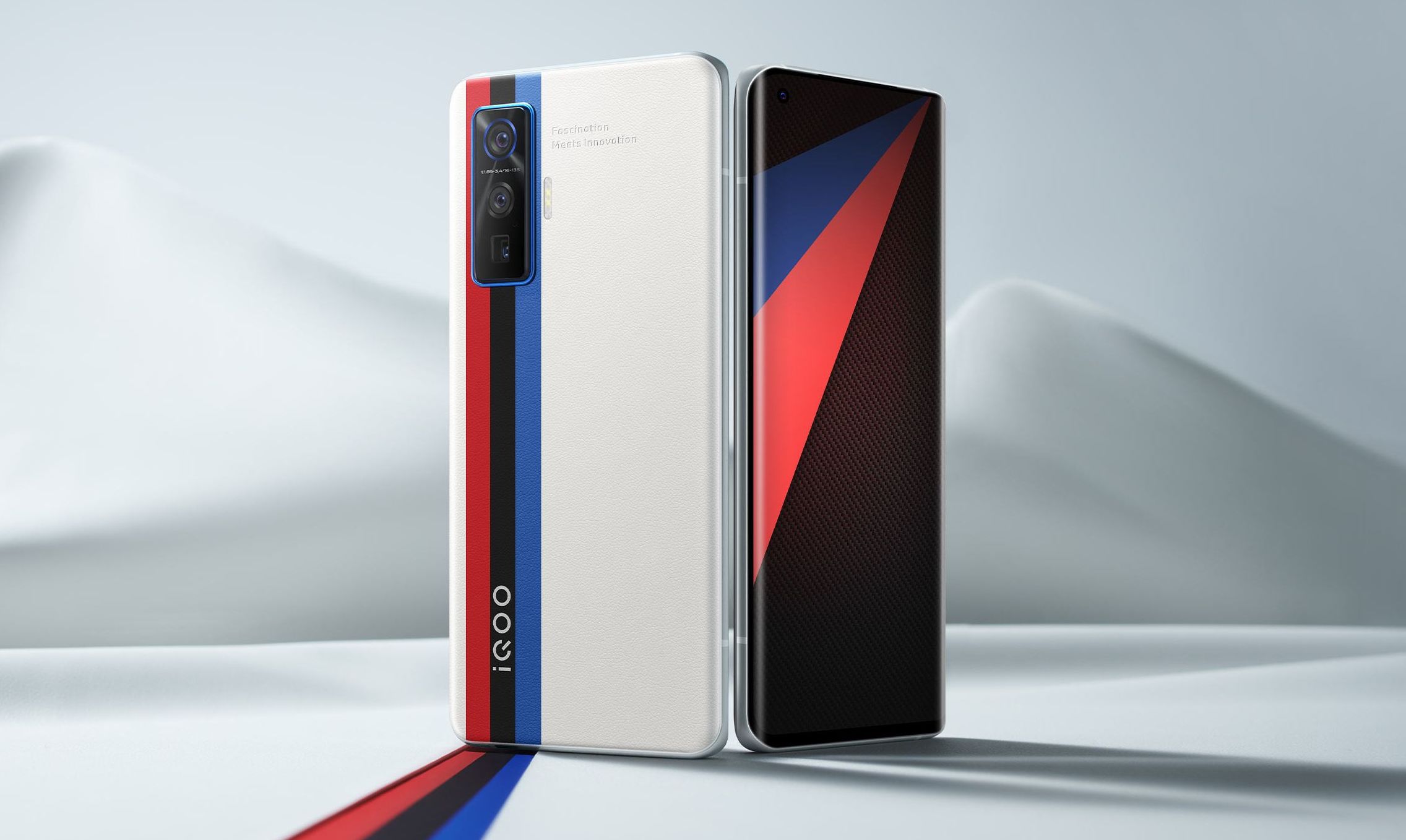
iQOO has become the global partner of the BMW M Motorsport. Hence, in partnership with BMW, iQOO has launched the iQOO 5 Pro in special color variants. The Track Version comes with a carbon textured matt glass rear along with blue accents at edges. On the other side, the Legendary Edition color variant is made out of pure leather.

iQOO 5 and iQOO 5 Pro price and availability

Here is all the pricing and availability of the iQOO 5 and iQOO 5 Pro smartphones:

iQOO 5

  • 8 GB RAM + 128 GB storage – 3,998 Yuan (~$576)
  • 12 GB RAM + 128 GB storage – 4,298 Yuan (~$619)
  • 12 GB RAM + 256 GB storage – 4,598 Yuan (~$662)
    Colors: Star Trace and Hao Ying

iQOO 5 Pro

  • 8 GB RAM + 256 GB storage – 4,998 Yuan (~$720)
  • 12 GB RAM + 256 GB storage – 5,498 Yuan (~$792)
    Colors: Track Version and Legendary Edition

The pre-sales of the iQOO 5 and iQOO 5 Pro smartphones have started in China. The sales of both models will begin on Aug. 24.

Huawei Chairman: Global 5G users cross 100 million with focus now shifting towards industry applications

Earlier today (17th August 2020), Guo Ping, Huawei Rotating Chairman said in a conference that the global 5G userbase has crossed 100 million users, with over 92 operators working to develop 5G commercial networks. With success on the commercial side, the focus is now expected to shift towards industrial applications.

Huawei

Notably, the press conference commemorated Shenzhen becoming the first mainland city to be covered with the latest generation of telecom network. According to Guo Ping, there are three things to build a smart city. The first being city operation and management network that can”see, use, and think.” The senior official believes that the future would bring more sophisticated services through smart decisions being made by a command system. This system would provide real time feedback regarding the city’s data while utilizing 5G based smart connections.

Secondly, the network would also expand to include a data system that operates in offices, bureaus, industries, and other professional fields. In other words, bring data interconnection between different industries that can be operated and managed by one network. Lastly, a big role in the development of smart city’s would include AI integration. Artificial intelligence and its applications could help boost the capabilities of so various workplaces across different industries and bring a smart overhaul to the pre existing systems.

Huawei

At the moment, Chinese tech giants like Xiaomi and ZTE led the boost in 5G stocks with their telecom equipment which helped make Shenzhen become a first city to be covered with 5G networks. Xiaomi jumped 8.2 percent today and is currently heading for its biggest gain in almost six weeks. According to experts, “The upward tech cycle brought by 5G will probably last for between two and three years.”


Apple considers iPhone assembly in Vietnam, checks worker’s living condition: Report

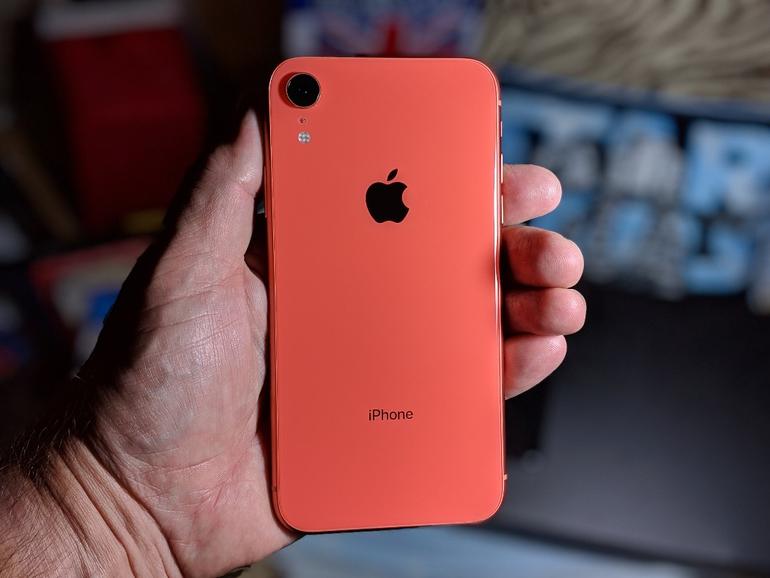
Apple might be considering to bring the assembly of its iPhones to Vietnam. A new report has suggested that the company recently visited a factory run by Luxshare, an assembly partner, to check on the living conditions of the workers and the facility.

Apple

According to Apple Insider, Apple representatives visited Luxshare’s facility to check the viability of iPhone production in the region. Tang Due Bang, Luxshare Foreign Affairs Manager, apparently said to local media that the factory in Van Trung Industrial Park was scouted to see if it was the right scale, had the proper facilities, and if it had investment capital to start assembling iPhones.

“The Apple side continually surveyed the workshop of Luxshare in Bac Giang on iPhone production conditions. Apple Corporation is impressed by the speed at which our fast facility is built here. At the same time, through practical research, Apple highly appreciates the potential in Bac Giang province and hard-working workers.” For those unaware, Luxshare is one of the Vietnamese firms that also assembles the Cupertino based giant’s AirPods.

Recently, the company sought financial support to expand the AirPods production, and has reportedly received it. Furthermore, the 30 hectare factory was finished in 5 months, according to Bang, after Apple requested to expand production. At the moment, Luxshare employs around 28,000 workers, which could easily rise to 50,000 to even 60,000 if it gains approval for iPhone assembly.


Xiaomi Wiha 3-in-1 flashlight launched in China for 249 yuan ($35)

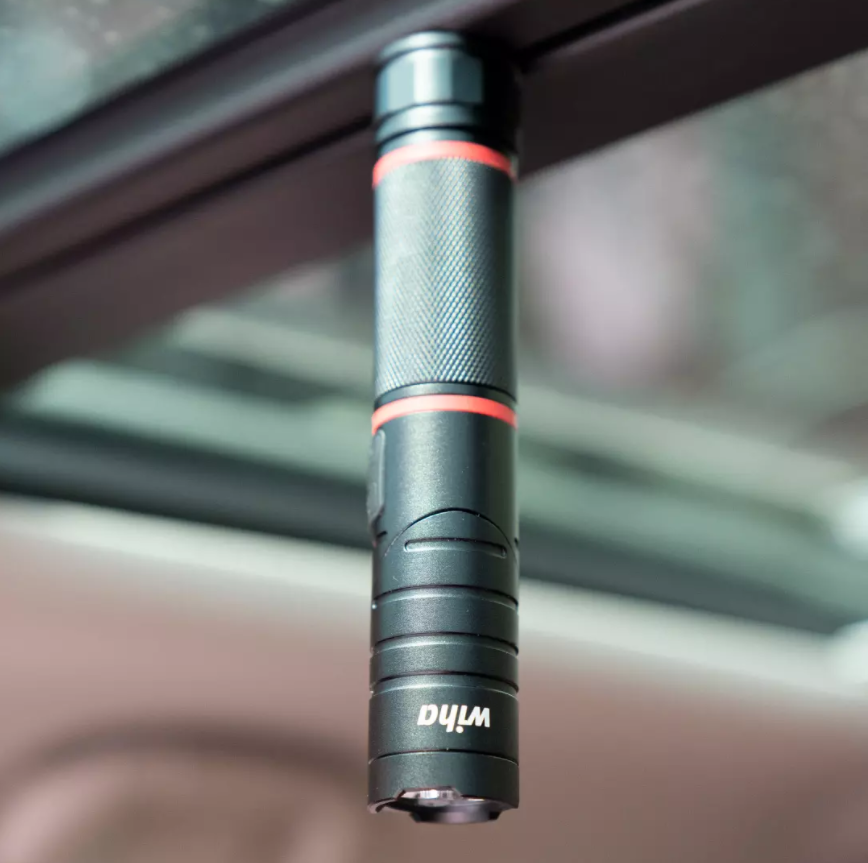
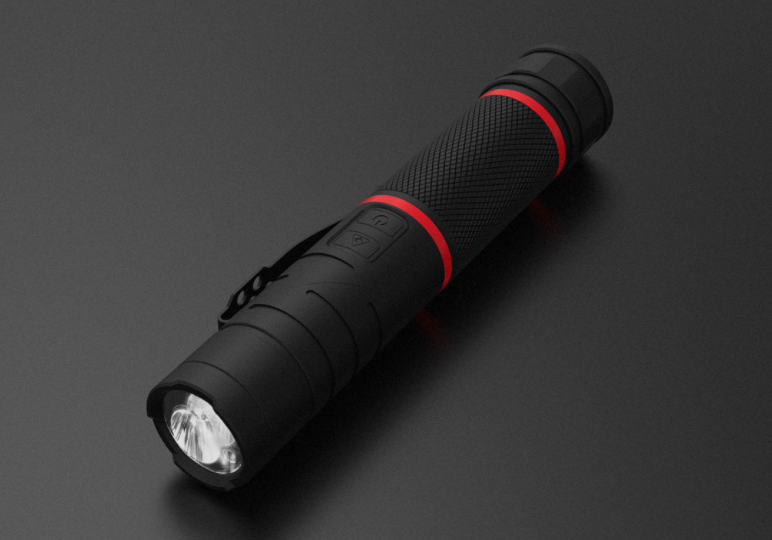
Riding on the on-going launch spree, Xiaomi has launched yet another product in its home market — Xiaomi Wiha multi-function flashlight. The 3-in-1 device comes with Dual-LED Flashlight, Ultraviolet Light, and Infrared Spotlight.

The company has revealed that the multi-function flashlight offers 100/310 lumens dual-speed safe and cold-light LED light that has a maximum range of 65 meters, ensuring that it meets the needs for different use-cases.

Xiaomi Wiha 3-in-1 Flashlight

EDITOR’S PICK: Redmi G Gaming Laptop launches with 144Hz display, Core i7-10750H, GTX 1650 Ti, and more

The product is powered by three AAA batteries and has a strong magnet at the bottom so that it can easily get attached to the iron-based surface. Thanks to Infrared Laser Light, it can be used for precise positioning.

Xiaomi Wiha 3-in-1 Flashlight

With support for Ultraviolet (UV) light, it can be used as a fluorescent color mark tool and identify several different things. It is made up of high-strength alloy and can easily break the window of a car if needed. It is rated IPX4, making it waterproof.

It weighs around 252 grams and the lamp holder can be rotated at 180-degree. The total length is 152mm and the diameter is 30mm. After 180-degree rotation, the length becomes 125.7mm and width 54.3mm. The Xiaomi Wiha Multi-Function Flashlight is priced at 249 yuan, which is about $35 and is now on sale in China.


Lenovo and HP captured almost 50% of the notebook market in Q2 2020

According to the latest report published by Strategy Analytics, the notebook devices or the mobile productivity devices registered a 27 percent year-on-year growth in the second quarter of this year.

The growth in demand is being attributed to the COVID-19 pandemic which forced consumers, companies, and schools to purchase such devices as the majority of them started operating through Work from Home model.

Notebook Sales Q2 2020 - Strategy Analytics

EDITOR’S PICK: Redmi G Gaming Laptop launches with 144Hz display, Core i7-10750H, GTX 1650 Ti, and more

Interestingly, two leading companies in this segment — Lenovo and HP controlled almost 50 percent of the market share in Q2 2020. As per the report, Lenovo accounted for 25 percent of the share, taking the pole position, while HP managed to grab a 24.8 percent market share in the second quarter.

On the other hand, brands like Dell, Apple, and Acer were ranked third, fourth, and fifth in terms of global notebook shipments, with a market share of 15.6 percent, 8.5 percent, and 6.7 percent respectively.

The report reveals that there was robust demand from consumers, who mostly purchased devices for work, studying, and playing games. Chromebooks also witnessed high demand, mostly from schools and consumers to support e-learning efforts. It remains to be seen if this pandemic-induced demand continues or slows down in upcoming quarters.


Samsung could partly shift its smartphone production to India

With smartphone manufacturers planning to diversify their production facility and supply chain, companies are now looking to shift some of the production to countries like India. Several Chinese smartphone companies, which are among the leading brands in the market, are already making most of the phones in India.

Now, it seems that some of the biggest names in the smartphone industry are also eyeing production in India. Recently Apple started manufacturing its high-end iPhone 11 for the first time in India and now its turn for Samsung.

Samsung

As per the report coming from the Economic Times, the South Korean giant is planning to shift some portion of its smartphone production from Vietnam and some other countries to India. It adds that the company is planning to produce devices worth $40 billion in India.

Citing people aware of the development, the report claims that Samsung has already submitted estimates with the government for making smartphones worth over $40 billion in India for the next five years under PLI (Production Linked Incentive) scheme.

EDITOR’S PICK: ZTE Axon 20 5G’s launch date is September 1 in China

It is also being reported that most of the phones manufactured in India with a factory price of over $200, which could account for over $25 billion, will be exported. Currently, Vietnam is the second-largest exporter of smartphones after China.

After closing down two smartphone factories in China in 2018, Samsung recently shut down its last smartphone production facility in China. The company’s smartphone ODM operations, which were halted because of the COVID-19 pandemic, have now been resumed and could account for around 10 percent of the company’s total smartphones.

A couple of months ago, Samsung announced a new factory, touted as the world’s largest mobile factory. It is located in Sector 81 in Noida and has a production capacity of 120 million mobile devices a month. This comes at a time when smartphone users in the country are about to touch the 340 million mark by the end of this year.


Realme Buds Classic with half in-ear design to launch in India on August 18

Last month, Realme India CEO Madhav Sheth had revealed that the company plans to launch new earphones in the market in August. Now, the company has officially confirmed that the Realme Buds Classic will be launched in India on 18th August.

The launch of these new earphones will take place along with the launch of two budget smartphones from the company — Realme C12 and Realme C15, both of which are powered by a 6,000mAh battery.

Realme Buds Classic

EDITOR’S PICK: Qualcomm Snapdragon 732G SoC rumored to launch in September as an upgraded SD 730G

Coming back to the earphones, the company has already been confirmed that the wired Realme Buds Classic will come with a new half in-ear design compared to in-ear design in the earlier models.

Further, it has been revealed that they will feature bigger 14.2mm drivers and will offer richer bass and clear vocals. There’s also a single-button remote for controlling calls and music along with an in-line microphone and built-in cable organizer.

The company’s teaser image also hints that the earphones will be made available in two color options — Black and White. The pricing for the Reale Buds Classic is expected to be lower than the original Realme Buds. They will go on sale exclusively through Amazon and Realme India online store. To know more, we will have to wait for a few more hours.


Xiaomi sold 1,660 units of its Redmi Smart TV Max 98 in a single day in China

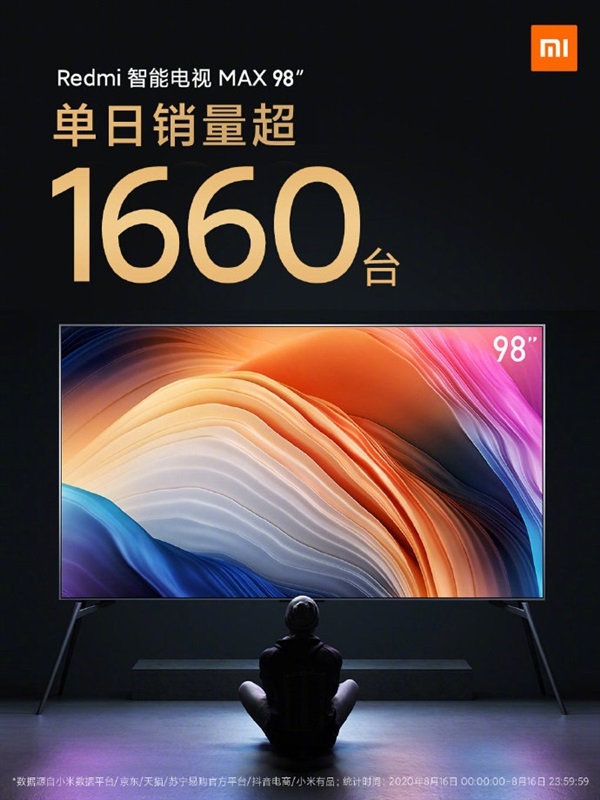
Xiaomi has today released a sales report related to the company’s 10th anniversary sale season. In the report, the company reveals that it managed to sell more than 1,660 units of the Redmi Smart TV Max 98.

Making the announcement on Weibo, the company said that “the 98-inch TV models sold less than 100 units per month in the market but now Redmi sold more than 1,000 units in a single day.” The company believes that it has now managed to popularize the big-screen Smart TVs and has facilitated people to have high-end big-screen TV in their homes.

Redmi Smart TV Max 98-Inch Sale China

The numbers posted by Xiaomi are quite impressive given that almost a 100-inch TV is a new category and now many people are interested in having such as massive-sized TV in their homes nor many have the facility for this. Even if they want, not everyone is ready to shell out the money.

The Redmi Smart TV Max 98 costs 19,999 Yuan, which roughly converts to around $2,825, which is comparatively less than what other companies in this same segment charges. Thus, the pricing could a major factor behind such demand for the 98-inch TV from Xiaomi.

EDITOR’S PICK: Redmi G Gaming Laptop launches with 144Hz display, Core i7-10750H, GTX 1650 Ti, and more

For those who are unaware, the Redmi Smart YV Max 98, announced in March, comes with a 98-inch 4K UHD display panel, having 85 percent NTSC, 192 dynamic backlight zones, MEMC motion compensation, and more image quality tuning technology

It is powered by a custom 12nm processor along with 4GB of RAM and 64GB of internal storage. The company is also offering a special one-to-one professional customer care service with this new TV, which includes pre-sales, site survey, installation plans, a special delivery vehicle, and a professional installation team.


OPPO Reno4 Z 5G bags GCF certification; Could be rebranded OPPO A92s

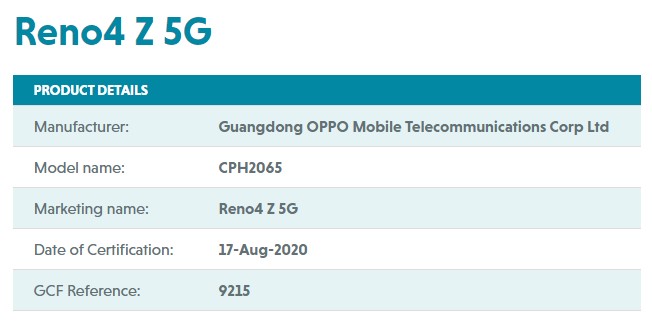
Recently, an OPPO phone with model number CPH2065 was approved by the Bluetooth SIG and Federal Communications Commission (FCC) authorities. While the Bluetooth certification revealed the key specs of the phone, the FCC listing revealed its rear schematic. The FCC appearance also confirmed that it will be arriving in the market as OPPO Reno4 Z 5G. Today, the smartphone approval from the Global Certification Forum (GCF). The listing again confirmed that the CPH2065 will debut as Reno4 Z 5G. The GCF certification is yet another hint that its launch could be closed at hand.

The Bluetooth SIG listing of the phone had revealed that it has a 6.57-inch HD+ display, a 4,000mAh battery, and it is powered by a 2.0GHz octa-core processor by MediaTek.  It also revealed that the device is loaded with ColorOS 7.1 and carries support for dual-band Wi-Fi and Bluetooth 5.1.

OPPO Reno4 Z CPH2065

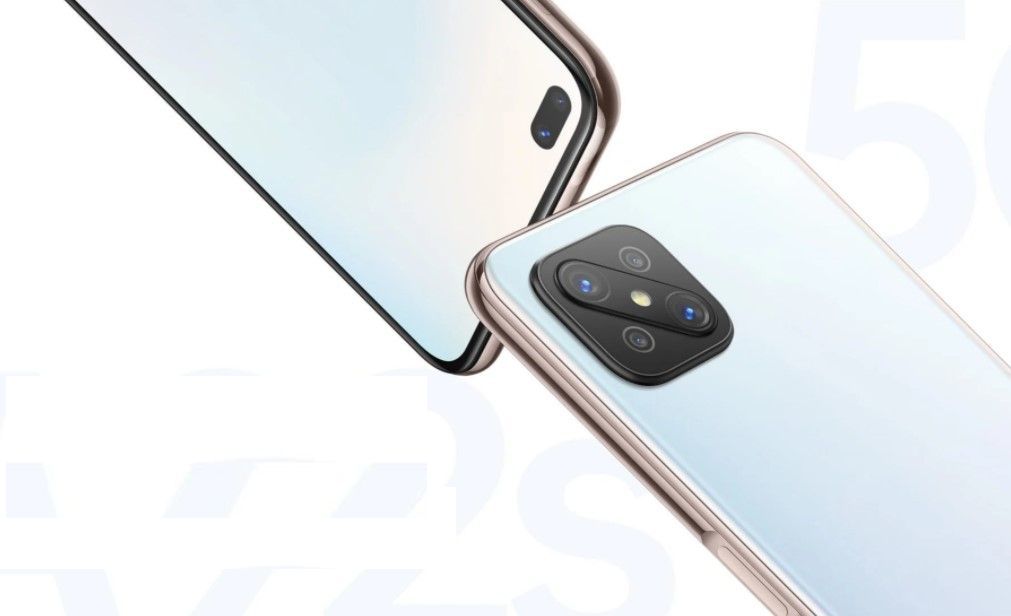
The FCC listing had revealed that the Reno4 Z 5G has a square-shaped camera module with four cameras and an LED flash unit inside it. The rear design of the phone is similar to the OPPO A92s 5G phone that debuted a few months ago in China. Hence, there is a possibility that the Reno4 Z 5G could be debuting as a rebranded version of the OPPO A92s 5G.

OPPO A92s 5G specifications

The OPPO A92s has a dual punch-hole IPS LCD panel of 6.57 inches. The FHD+ screen supports 120Hz refresh rate and houses a 16-megapixel + 2-megapixel dual selfie camera system. It has a rear-mounted quad-camera system featuring a 48-megapixel main camera, an 8-megapixel ultrawide lens, a 2-megapixel macro shooter, and a 2-megapixel depth sensor.

OPPO A92s
OPPO A92s

The Dimensity 800 5G chipset powers the OPPO A92s with 8 GB of RAM. The phone comes with up to 256 GB of built-in storage. Its 4,000mAh battery supports 18W fast charging.


Nokia 9.3 PureView, Nokia 7.3, 6.3 could be debuting in Q4, Nokia 2.4 and 3.4 launch could be near

The Nokia 8.3 5G, which is HMD Global’s first 5G-capable is now being made available in Europe for purchase. It is speculated that the Nokia 9.3 PureView and Nokia 7.3 mid-ranger are the next 5G phones from the Finnish brand. The company is also reportedly working on Nokia 6.3 smartphone. Citing sources who are familiar with the developments of Nokia 6.3, Nokia 7.3 5G, and Nokia 9.3 PureView 5G, Nokia Power User has reported that these phones will break cover in Q4 2020.

The report reveals that the development work of the Nokia 6.3, Nokia 7.3, and Nokia 9.3 PureView is almost over. The Finnish firm may soon begin with their final testing and then begin their production in September or October. The report also states the company may launch the Nokia 2.4 and Nokia 3.4 smartphones in September.

Nokia

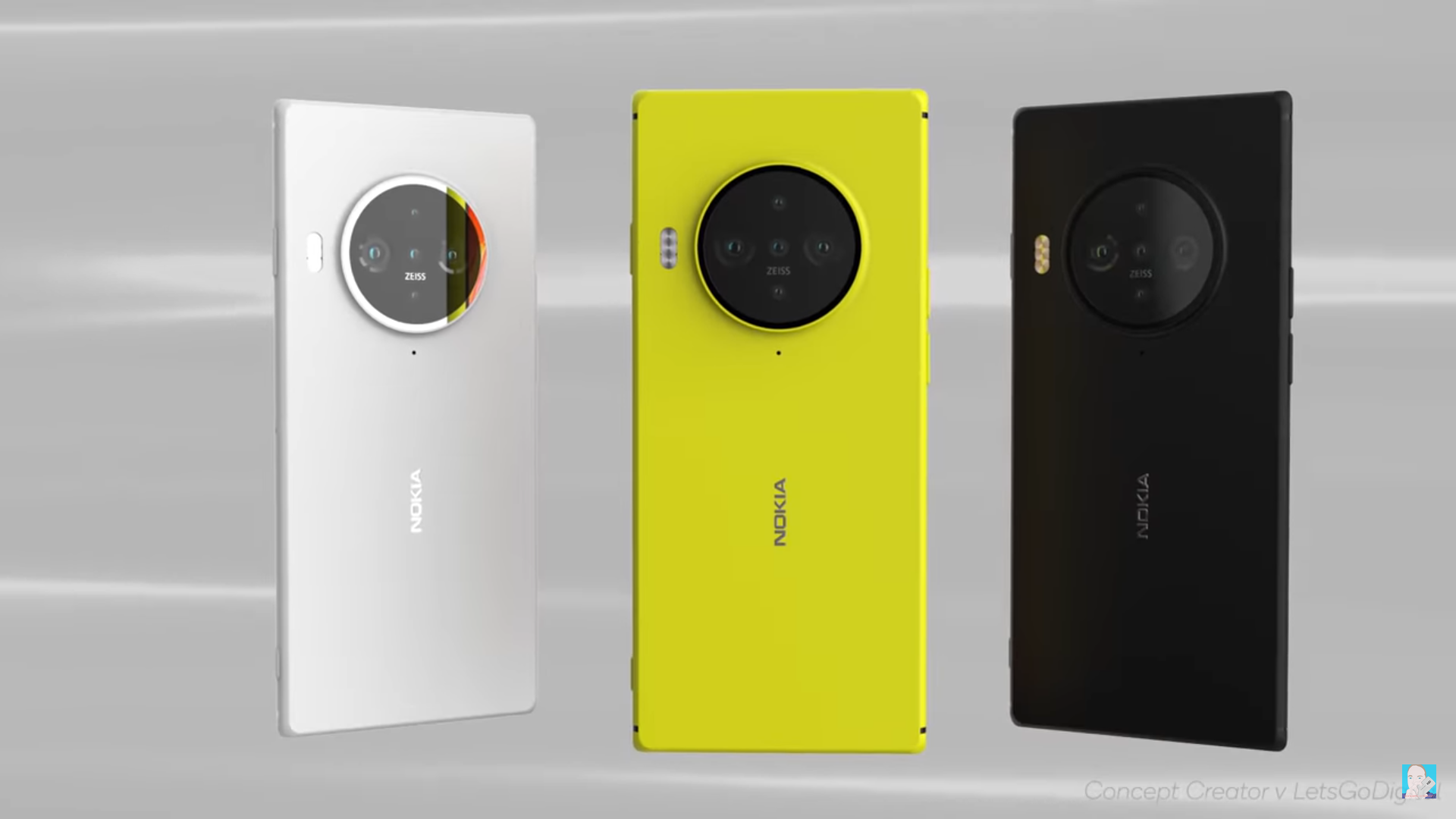
Previous reports have revealed that the Nokia 9.3 PureView 5G is driven by Snapdragon 865. The smartphone is expected to arrive with a world-class penta-lens setup on its rear. The phone may sport a 120Hz refresh rate supporting display. There are speculations that it could be equipped with an under-screen camera technology.

The Nokia 7.3 5G could be a Snapdragon 690 powered smartphone. It could be coming with other specs such as 6.3-inch 20:9 Full HD+ display, 48-megapixel / 64-megapixel quad-camera setup, 24-megapixel front camera, and 4,000mAh battery with 18W fast charging support.
The Nokia 6.3 may come with Snapdragon 670 or Snapdragon 675 chipset. It may come with specs like a 6.2-inch display, quad camera setup, 16-megapixel front camera, and 4,000mAh battery with 18W rapid charging support.
 

ZTE Axon 20 5G’s launch date is September 1

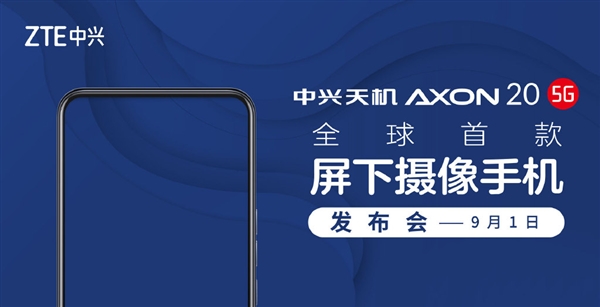
Today, ZTE took to Weibo to confirm that it will be announcing the ZTE Axon 20 5G phone on Sept. 1 in China. As it is known, it will be introduced as the world’s first smartphone with under-display camera technology.

Last week, ZTE’s President for Mobile Devices Ni Fei first confirmed that ZTE will be the world’s first smartphone brand to announce a smartphone with under-display camera technology. The Weibo post through which Fei confirmed the smartphone revealed that it could be called ‘ZTE A20 5G.’

It is known through SRRC and TENAA certification that the model number of the device is ZTE A2121. Since the ZTE 2020 debuted as an Axon series phone called ZTE Axon 10 Pro 5G, it appeared that the ZTE A2121 could be an Axon series handset. Today, the Chinese firm confirmed that the device will be breaking cover as ZTE Axon 20 5G on Sept. 1

ZTE Axon 20 5G specifications

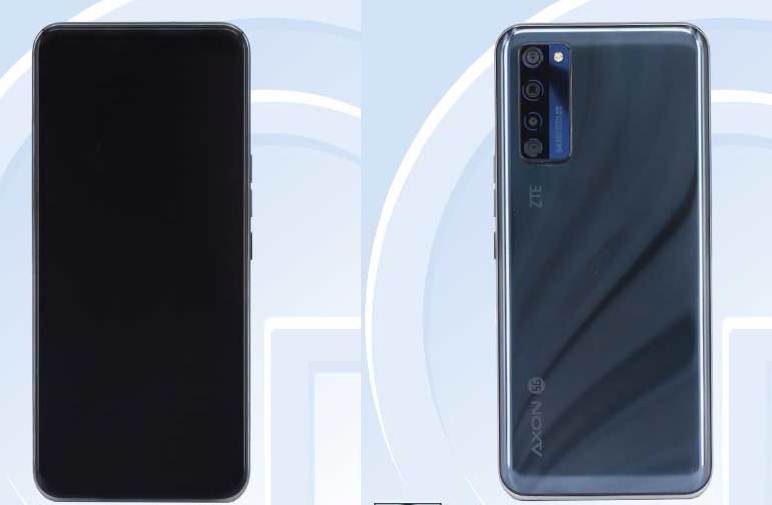
The TENAA appearance of the ZTE Axon A20 5G revealed that its dimensions are 172.1 x 77.9 x 7.9mm. The handset is fitted with a 1080 x 2460 pixels Full HD+ resolution supporting screen of 6.92 inches. There is no selfie camera notch or punch-hole on the display. The 32-megapixel front-facing camera is embedded under the display. It is speculated that ZTE has incorporated China-based Visionox’s under-display camera technology.

ZTE Axon 20 5G TENAA

An unidentified 2.4GHz octa-core smartphone powers the smartphone. The device may arrive in 6 GB, 8 GB, and 12 GB RAM variants and 64 GB, 128 GB, and 256 GB storage models in China. The phone will come preinstalled with Android 10 OS.

The Axon 20 5G will be flaunting a 64-megapixel + 8-megapixel + 2-megapixel + 2-megapixel quad-camera system. It is backed by a rated battery of 4,120mAh and it supports rapid charging.


Mobvoi renames its ANC headphones and ANC earbuds

A lot of us know Mobvoi as the brand behind the TicWatch line of smartwatches and TicPods TWS earbuds. Last month they announced the TicKasa ANC Headphones, and back in June, they announced the TicPods ANC. Yesterday, Mobvoi issued a statement on Twitter saying the two products will now go by new names.

According to the tweet, the headphones will now be known as the Mobvoi Headphones ANC while the earbuds will be called the Mobvoi Earbuds ANC. If you are wondering why the change of name, the manufacturer said the new names “are more compatible with our business strategy and brand identity”.

The name change shows that Mobvoi has dropped the TicKasa and TicPods name. We are actually more concerned about the latter as it is like a household name for its earbuds. We want to believe future products will also not have TicPods in their names.

Mobvoi says the change in name will not affect or delay current orders of these two products. At the moment, both products still go by their old names on Mobvoi’s website. We also want to believe the current stock of the two products that will be shipping to buyers will have the old name.