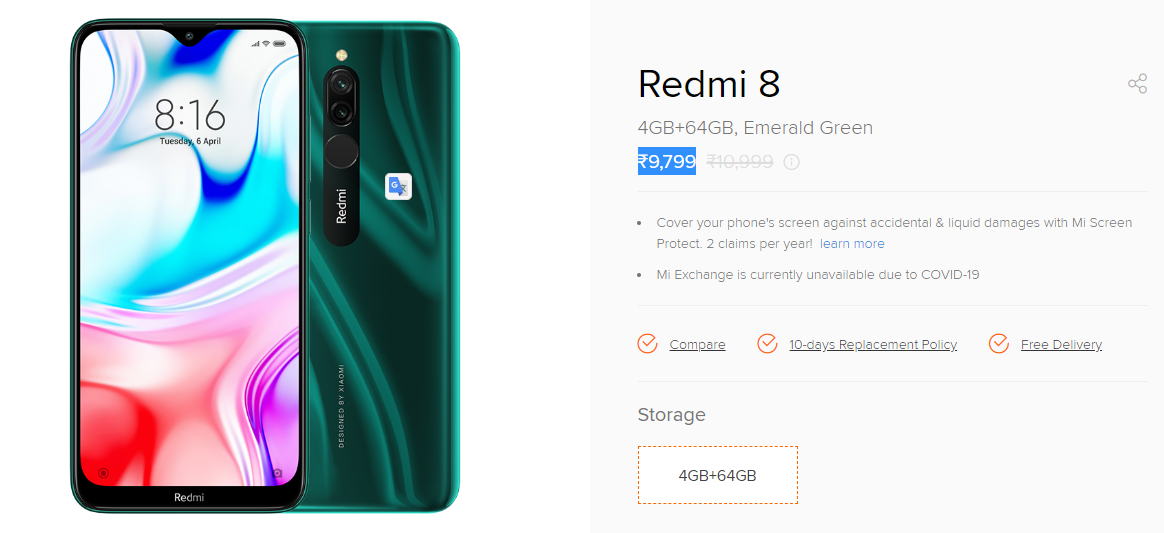
According to Mi.com, the Redmi 8 will now sell for ₹9,799 (~$131). The phone launched for ₹7,999 (~$107), then got increased to ₹8,999 (~$120) following the increase in Goods and Services Tax. In early May, its price was increased to ₹9299 (~$125), and then in late May, it got a third price increase to ₹9,499 (~$127).
No reason has been given regarding the increase in price.
The Redmi 8 was launched in India last year. It has a 6.22-inch HD+ display with a waterdrop notch. There is a Snapdragon 439 processor inside the phone along with 4GB of RAM and 64GB of storage.
The phone has 12MP + 2MP dual rear cameras, an 8MP selfie camera, and a rear-mounted fingerprint scanner. There is a 5000mAh battery inside the phone with support for 18W fast charge. The Redmi 8 has an audio jack but you don’t need earphones for the FM radio to work. It also has a dedicated MicroSD card and charges via a USB-C port.
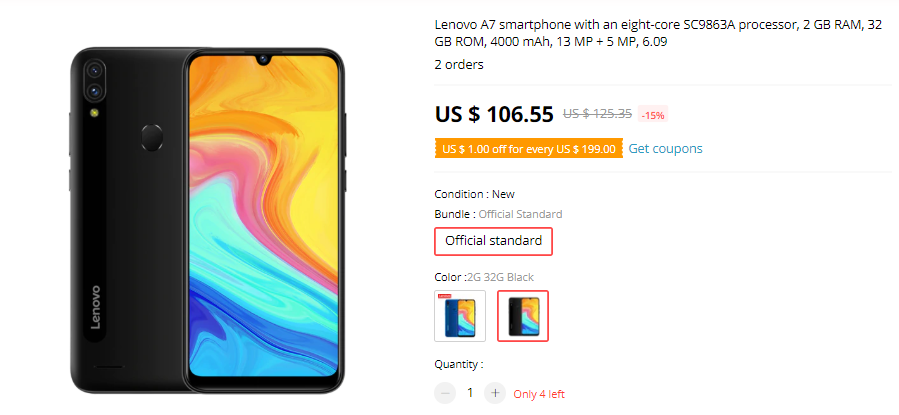
Back in April, Lenovo announced a new entry-level phone called the Lenovo A7. The phone is powered by the UNISOC SC9863A processor, has dual rear cameras, and packs a 4000mAh battery. When it was announced, Lenovo didn’t reveal its price and availability details. The phone has now been spotted on sale on AliExpress.
The Lenovo A7 will set you back $106.55 (excluding shipping). For that price, you get a phone with a 6.09-inch HD+ display with a notch, 2GB of RAM, and 32GB of storage. The Spreadtrum SC9863A inside the phone is made up of eight Cortex-A55 cores with a cluster clocked at 1.6GHz and another cluster clocked at 1.2GHz.
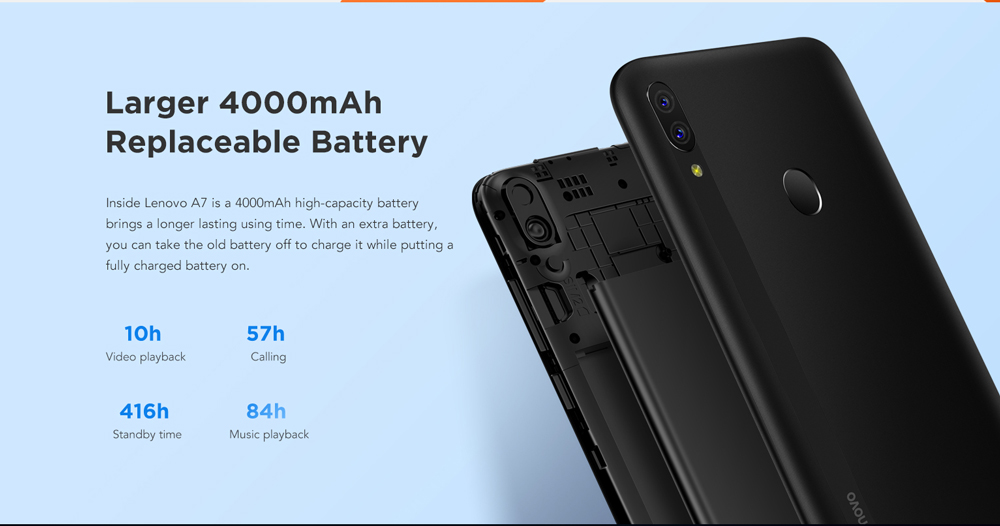
On the back of the phone are a 13MP + 2MP dual-camera setup and a fingerprint scanner. The phone’s 4000mAh battery is also user-replaceable; a feature not common on phones these days. This means you can easily remove the polycarbonate plastic cover.
Other features include a dedicated MicroSD card slot (triple card tray/128GB max.), Android Pie, and support for 5W charging (yeah, disappointing). It also has support for LTE Band 20 and Band 28. The Lenovo A7 is available in Blue and Black. As at the time of writing, only four units of each color variant remain.
If you want one, hurry and grab one through the source link below.
When it comes to keeping your phone secure, there are multiple options available. Most phones ship with at least three or more of the following security methods – Pattern, Password, PIN, Fingerprint Scanner, and Face Unlock. Our focus for this week’s poll is on the last two.
Most phones released in the past few years have a fingerprint scanner (under the display, side-mounted, or rear-mounted). Face Unlock has also become a popular feature that is bundled as an additional security option or as an alternative to a fingerprint scanner on some devices.
Both methods have their advantages and disadvantages, so it is no surprise that folks will prefer one over the other.
For this week’s poll, we want to know which you prefer, Fingerprint Scanner or Face Unlock? So please take the poll below and also let us know why you prefer one over the other in the comment box below.
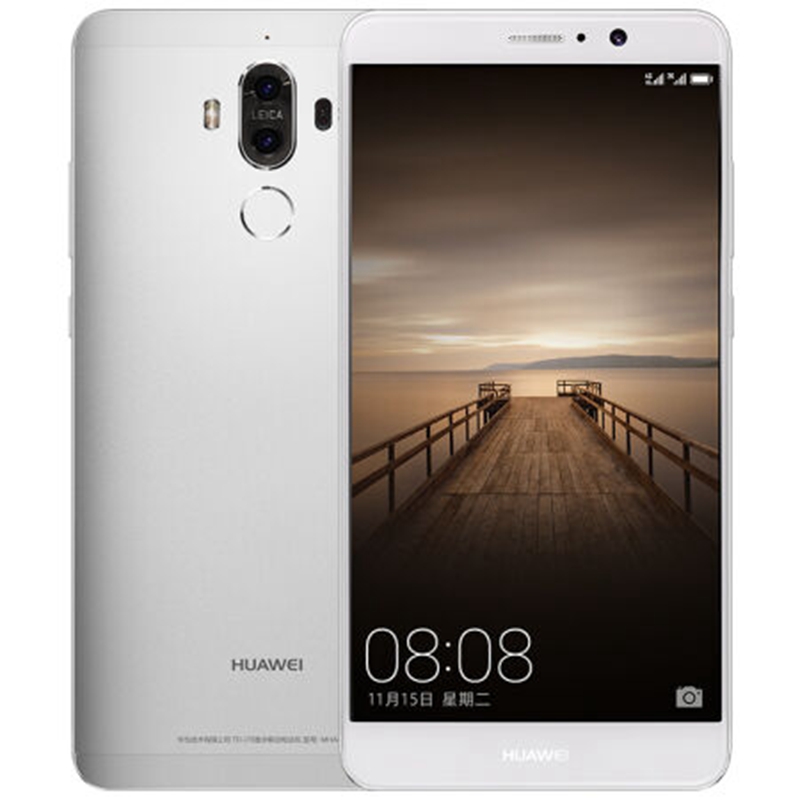
The Mate 9 series already has three successors but Huawei is still rolling out updates to the phones. A new update has begun rolling out in China that brings new features to the 2016 phones.
The update arrives as EMUI 9.1.0.228 and is over 3.20GB in size. According to the changelog the update brings a new feature called Screen Sharing that allows you to share your screen with a friend or relative during a video call. This comes in handy if you need help with your device.
Another feature the update brings is a smart charging mode that learns your usage pattern and proceeds to apply it when charging. The smart charging mode will prevent overcharging when a device is plugged in overnight. It does this by automatically slowing down the charging process before it reaches 100%. The smart charging mode should ensure the battery’s aging process slows down and battery life is extended.
The update also brings May 2020’s security patch to the Mate 9 series, thus protecting it from vulnerabilities.
The Mate 9 series includes the Mate 9, Mate 9 Pro, Mate 9 Porsche Design, and the Mate 9 Lite. The first three phones are powered by the Kirin 960 processor while the lite version (sold as the Honor 6X and Huawei GR5 2017) in some markets has a Kirin 665 chipset.
Baseus is known for its wide array of accessories ranging from charging adapters, USB cables, power banks, earphones and more. The company which is an ecological partner of Xiaomi has now launched its latest Encok W04 Pro TWS earphones at the Youpin platform.
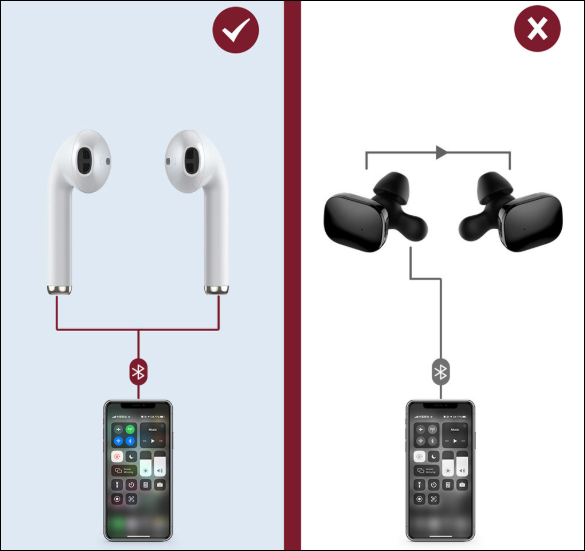
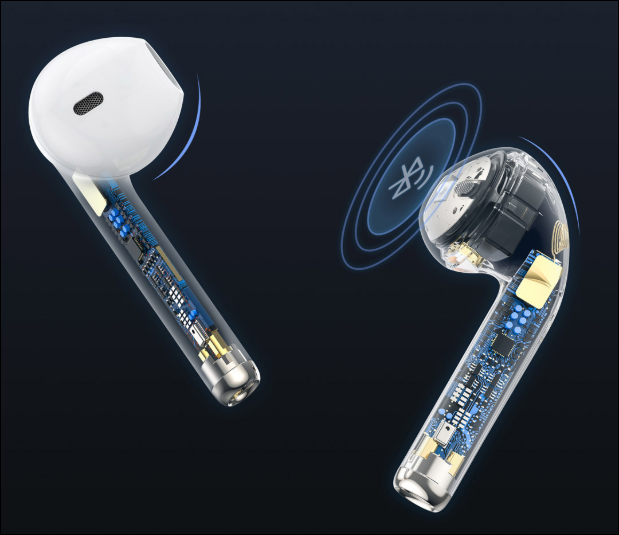
The headphones utilise the semi-in-ear design which should be comfortable to the ears and doesn’t irritate the ear canals. It is equipped with an intelligent dual-processing chip. After the mobile phone transmits a signal, the left and right headphones can be connected at the same time.
The Baseus Encok W04 Pro TWS earphones feature Bluetooth 5.0 which reduces signal loss and disconnection caused by 2.4GHz band interference. The transmission speed can reach 24Mbps, and there is no barrier-free fast transmission at a distance of 10 meters.
It also uses a 13mm moving coil speaker supplemented by a high-elastic PU composite diaphragm which can restore delicate vocal, instrumental music and a solid surging drumbeat. You also get built-in capacitive touch-sensitive control which requires you to simply double-click the side of the headset to pause or play.
The headset is equipped with a 400mAh capacity charging compartment which can charge the headset 4 times in a row. The battery life of the headsets can be extended up to 20 hours with the charging box.
The Baseus Encok W04 Pro TWS earphones come in two versions, a standard version priced at 158 yuan (~$22) and a wireless charging version which is priced at 188 yuan (~$26). They are both available in four sleek colour options including the popular white colour option, pink, grey, and black.
Xiaomi Youpin is the Chinese brand’s crowdfunding platform and home to several amazing products that are launched in China. Last year, the brand made its debut outside China with the launch of the WalkingPad R1 Pro and Oclean X for the international market on Indiegogo. The crowdfunding exercises were hugely backed and that has prompted the company to launch an improved model of the foldable treadmill dubbed WalkingPad S1.
The WalkingPad S1 is an upgraded version of the WalkingPad R1 and it is 20lbs lighter than the previous version. It also takes up to 45% less space than the older model and operational noise has been minimized for a calm workout session. The frame and running belt are also manufactured using premium materials of the frame and the running belt.
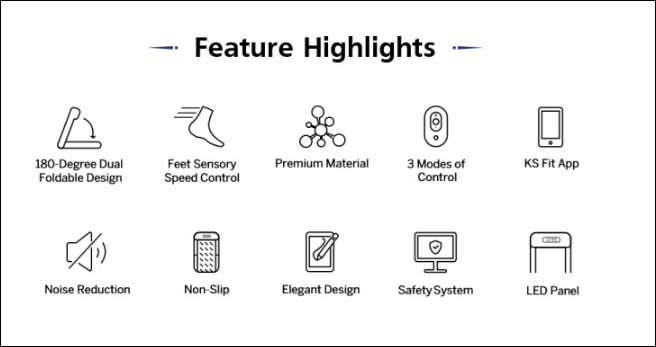
The design is similar to that of its predecessor and it includes the patented 180-degree foldable design that allows the WalkingPad S1 to be easily stored anywhere. Once folded, it takes less than 95% of space, and you can store it either vertically or horizontally at home or in your office.
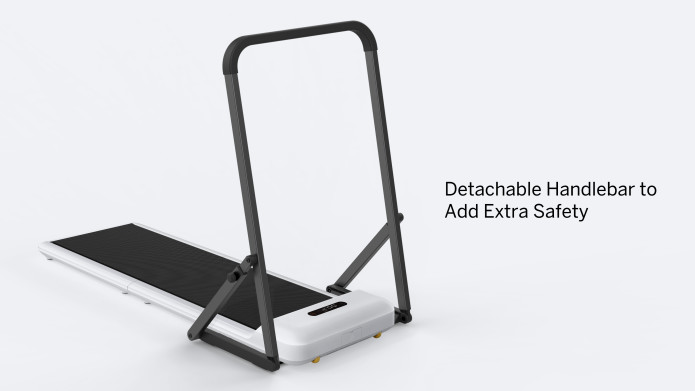
This time around, Xiaomi is offering the WalkingPad S1 with front handles to provide additional balance to keep you safe while you exercise. The handlebar is sold separately and is of immense importance to senior users to help maintain safety. Even without the handlebar, the WalkingPad S1 comes with an in-built safety system to ensure your safety while working out. The S1 will automatically stop if no movements were detected on the running belt.
Also, the anti-slip mat is made out of EVA material which has less friction coefficient when exercising. The device can also be controlled using the remote control or the KS Fit App. Alternatively, it can be controlled by walking, and the Feet Sensory Speed Control Technology will adjust your speed automatically by monitoring the pace of your movement in real-time.
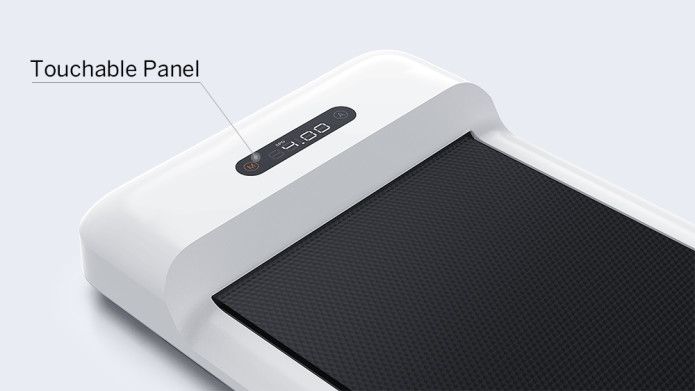
Furthermore, there is an LED touch panel on the front of the WalkingPad S1 provides which shows a clear summary of your workout speed and data. The panel also displays the speed, time, step, and the number of calories burned. Also, the LED panel is a touchscreen one can be toggled between manual and automatic modes.
The WalkingPad S1 foldable treadmill comes with a crowdfunding price of $469 but if you would like to also order the detachable handlebar, the price comes down to $599. Check out the Indiegogo page from the source link below.
Back in May, Vivo announced the Vivo Y70s as the first phone to be powered by Samsung’s Exynos 880 processor. They are now set to announce a new phone with similar specs called the Vivo Y70. The spec sheet of the phone has been posted on Weibo.
Vivo Y70s will get a sibling with nearly similar specs called the Vivo Y70
The Vivo Y70 will pack an LCD display with a 2400 x 1080 resolution supplied by JDI. Just like the Y70s, Vivo is sticking to a 60Hz refresh rate for this phone. Unfortunately, the screen size wasn’t mentioned.
The phone will be powered by the Exynos 880 chipset and will come with 6GB or 8GB of RAM and 128GB of storage. We don’t expect it to have support for storage expansion just like its sibling.
For cameras, the Vivo Y70 will have a 48MP Samsung GM1 primary camera along with an 8MP ultrawide angle camera, and a 2MP depth sensor. This is the same camera configuration of the Y70s but Vivo is giving the Y70 a different selfie camera – an OV8856 8MP sensor. The spec sheet mentions the phone has electronic image stabilization.
The Vivo Y70 will pack a 4500mAh battery with support for 18W fast charging via a USB Type-C port. Unlike the Vivo Y70s that has stereo speakers, the Vivo Y70 has only one speaker according to the spec sheet.
The leak also revealed the price of the phone. The 6GB RAM + 128GB version will be priced for ¥1798 (~$254) while the 8GB RAM + 128GB version will sell for ¥1998 (~$283). There is no news of the phone’s release date but we expect it to launch this month.
The Realme Buds Q was first launched in China before making its way to India. However, while India got the earbuds in Quite Yellow, Quite Black, and Quite White color variants China only got it in two colors – Black and Yellow. Today, Realme announced that the white variant which is dubbed Daydream is now available for purchase in China.
The new colorway is already available for purchase on the official online store for ¥129 (~$18) which is the same discounted price the earbuds originally launched for. If you want the yellow version, you will have to fork out ¥149 (~$21).
The Realme Buds Q has a pebble-like case. The earbuds itself has 10mm drivers and connect via Bluetooth 5.0. They support touch controls, have a game mode, and a battery life that goes up to 20 hours with the case. Realme said the earbuds can be configured via the Realme Link app. The app can also be used to upgrade the firmware.
A few days ago, it announced it sold over 25,000 units on its first sale date in India. We are pretty sure it has sold way higher than that in China since its launch on May 25.
As much as OnePlus is popular for its devices, it is also in the news for security breach every now and then. Once again, the company fixes a flaw in its system but there’s no evidence of exploit so far.
This new security flaw was tipped by Eric Lang, a reader of Android Police on June 30. The said publication disclosed OnePlus about the issue and received confirmation from the company on July 2 that they had fixed the vulnerability and there was no exploit.
The security vulnerability was in the OnePlus’ US out-of-warranty repair invoicing system. It is run by a third-party vendor and could have only affected a small subset of US customers.
It could have exposed the details of customers through their unpaid invoices for out-of-warranty repairs. But the chance of such exploit is very low and even OnePlus’ internal audit confirmed “no evidence of any purposeful attempts to access these URLs”.
If it was ever exploited, then it could have revealed the following data of customers to the attacker.
Thanks to the latest MediaTek’s chipset Dimensity 800, several 5G smartphones were released at an incredibly affordable price. The latest one is the Honor 30 Youth by Huawei which just debuted in the Chinese market. In this article, we decided to compare it with other affordable 5G phones in order to give you all the possible alternatives to get an affordable 5G phone with the best specifications for you. For this comparison, we chose another device fueled by the same mobile platform: the Redmi 10X. Further, we included a device that is still affordable, but it is equipped with a Qualcomm 5G chipset: the Xiaomi Mi 10 Youth. Let’s discover together which device is the most interesting.
Xiaomi Redmi 10X vs Huawei Honor 30 Youth vs Xiaomi Mi 10 Youth
Xiaomi Mi 10 Youth
Huawei Honor 30 Youth
Xiaomi Redmi 10X 5G
DIMENSIONS AND WEIGHT
164 x 74.8 x 7.9 mm, 192 g
160 x 75.3 x 8.4 mm, 192 grams
164.2 x 75.8 x 9 mm, 205 grams
DISPLAY
6.57 inches, 1080 x 2400p (Full HD+), Super AMOLED
Quad 48 + 8 MP + 2 MP f/1.8, f/2.4 and f/2.4
Single 16 MP f/2.0 front camera
Triple 48 + 8 + 2 MP f/1.8, f/2.2 and f/2.4
16 MP f/2.3 front camera
BATTERY
4160 mAh, fast charging 20W
4000 mAh
Fast charging 22.5W
4520 mAh, Fast charging 22.5W
ADDITIONAL FEATURES
Dual SIM slot, 5G
Dual SIM slot, 5G
Dual SIM slot, 5G
Design
You should not expect a high-end design with these handsets. Redmi 10X, Honor 30 Youth and Xiaomi Mi 10 Youth come with plastic materials and they do not sport a sturdy aluminum frame like the most premium phones. Their front panel includes a classic waterdrop notch, but they have pretty narrow bezels around the display. I personally like the Honor 30 Youth more due to its reflective color variant, but in terms of design, it is just a matter of tastes and we can not pick a winner which is valid for everyone like we do in other comparisons.
Display
Redmi 10X and Xiaomi Mi 10 Youth sport the same AMOLED panel with a 6.57-inch diagonal, the HDR10+ certification, and a Full HD+ resolution. This panel is actually better than the display found on the Honor 30 Youth in terms of image quality. On the other hand, Honor 30 Youth offers a higher refresh rate with 90 Hz, so it is more suitable for gamers and it provides a smoother viewing experience. A lot of people prefer a 60 Hz AMOLED display instead of a 90 Hz IPS panel: which would your choice be?
Hardware/Software
Redmi 10X and Honor 30 Youth are powered by the Dimensity 800 chipset by MediaTek, while Xiaomi Mi 10 Youth is equipped with a Snapdragon 765G. This is exactly the reason why Xiaomi Mi 10 Youth wins the hardware comparison: the Snapdragon 765G is a more powerful chipset than the Dimensity 800. The highest-end memory configuration of each device offers the same amount of RAM: 8 GB. And all of these devices ship with Android 10 out of the box.
Camera
The most impressive camera department is the one offered by the Xiaomi Mi 10 Youth. The main 48 MP sensor is the same on each device, as well as the 8 MP ultrawide lens and the 2 MP sensor. But unlike its two rivals, the Mi 10 Youth has an additional periscope lens with OIS and 5x optical zoom allowing to get a better photo quality. Naturally, this only happens when you use the zoom. With its 16 MP f/2.0 front camera, Honor 30 Youth should provide a better photo quality with selfies.
Battery
Redmi 10X sports the biggest battery with a 4520 mAh capacity and it lasts longer than Honor 30 Youth and Xiaomi Mi 10 Youth on a single charge. Xiaomi Mi 10 Youth most likely takes the second place because it has a bigger battery than Honor 30 Youth and a more efficient display. Note that our sentences are only based on the specs on the paper, the result may change depending on the software optimization and usage scenarios.
Price
Redmi 10X carries a €200/$225 starting price, Honor 30 Youth is priced €220/$247, and Xiaomi Mi 10 Youth costs €270/$304. The Mi 10 Youth wins this comparison due to its better cameras and chipset. Redmi 10X comes right after with its big battery and good display.
OnePlus Nord will be the brand’s first-ever midrange smartphone in years after the OnePlus X. Unfortunately, the company will be only launching it in India and Europe. It could have been a good deal for customers in the US, however, the brand’s co-founder Carl Pei has a good explanation on why it is not bringing this handset to North America.
In the last few days, OnePlus executives have been giving exclusive interviews to well-known tech publications. Recently, Carl Pei, the co-founder of OnePlus sat down with Android Authority to talk about the brand’s next device – OnePlus Nord.
According to him, OnePlus is doing well in India and is growing quickly in Europe and thus, it makes sense for them to focus on those markets where they think the Nord will be a success.
Additionally, the US smartphone market is known for high-end devices as mid-range smartphones are losing their shares in the recent quarters as per analytics firms.
For instance, as per Canalys, smartphones in the $300-$500 price segment only accounted for 10% of the whole market in Q1 2020. Also, $200-$600 tier witnessed a decline from 23% market share in Q1 2019 to 19% in Q1 2020.
This could be the primary reason why OnePlus is not launching the Nord in the US. Hence, it will be conducting a smaller beta program in the region to test the waters. On the bright side, the brand does have plans to launch future Nord series devices in the said region.
Samsung will announce the Galaxy Note20 series next month. The phones will pack new features including a more powerful processor, improved cameras, and displays with a high refresh rate. These features and other unmentioned ones are why we are not surprised at the report that says it will be the most expensive in the history of the series.
According to a tweet by a Twitter user that goes by @Ricciolo1, the Galaxy Note20 series will be the most expensive (Galaxy) Note ever.
and YES … the Note 20 Series will be the most EXPENSIVE note EVER …
(with Covid19 still here,U think is a good idea eh Samsung ?)
There is no info on the price from the source but seeing as the Galaxy Note10 had a launch price of $950, the Note20 will most likely have a starting price of $999 or more. The Galaxy Note20 Ultra whose official renders leaked a few days ago should sell for a much higher price tag.
The Galaxy Note20 series will be powered by Qualcomm’s Snapdragon 865+ processor which isn’t expected to be cheap based on the price of the slightly-less powerful Snapdragon 865. It has also been reported that the variant that will be sold outside the US and China will come with the new Exynos 992 processor which is an upgraded version of the Exynos 990 in the Galaxy S20 series.
Will you be purchasing the Galaxy Note20 series regardless of the price tag? Do let us know in the comment box below.
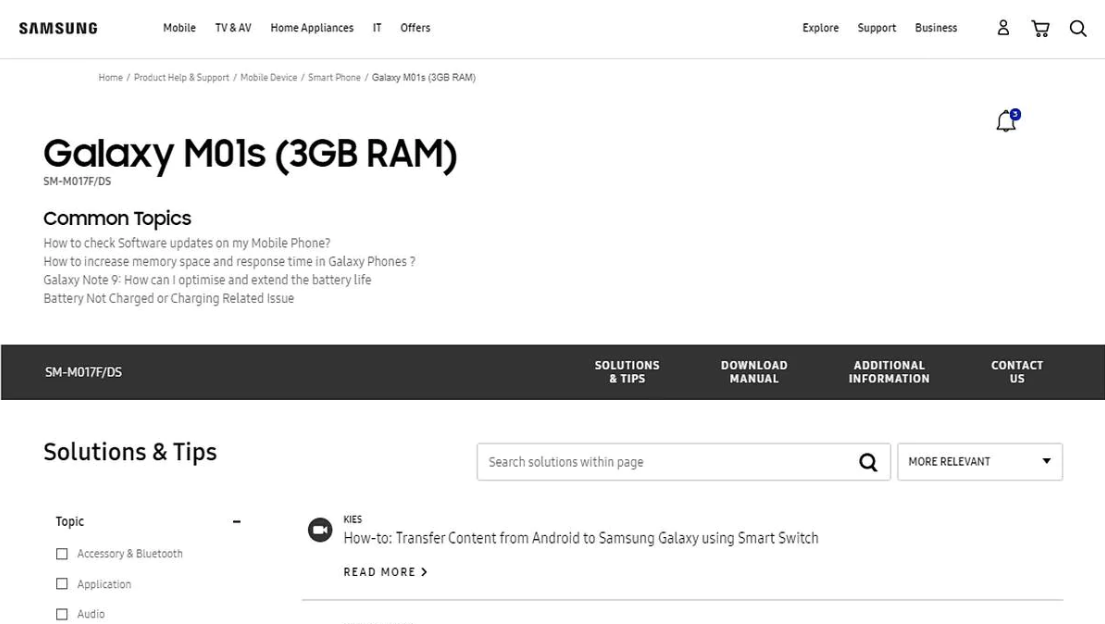
Recent reports have revealed the existence of the Samsung Galaxy M01s smartphone. Recently, the handset that has a model number of SM-M017F/DS was spotted at the database of the Bureau of Indian Standards (BIS). The smartphone has now surfaced on the official support page on Samsung India.
The official support page listing of the Galaxy M01s carries its aforementioned model number. The listing also reveals that it is the 3 GB RAM variant of the device. Hence, there is a possibility that the phone may also exist in a higher or lower RAM edition.
Recently, the Galaxy M01s was spotted at the Google Play Console with key specs. The listing revealed that it is equipped with HD display, Android 9 Pie OS, Helio P22 SoC, and 2 GB of RAM. The Play Console listing mentioned the device as “Samsung Galaxy M01sGalaxyA10s,” which suggested that it could be a rebadged version of the Galaxy A10s. The appearance of the model number of the phone at the TUV Rheinland website revealed that it could be coming with a 4,000mAh battery.
The Galaxy A10s debut last year in August that it has a 6.2-inch IPS LCD display waterdrop notch. It is powered by Helio P22 SoC, 3 GB of RAM, and a 4,000mAh battery. It has an 8-megapixel selfie camera and a rear-facing 13-megapixel + 2-megapixel dual-camera system. The handset has a rear-mounted fingerprint scanner.
The Galaxy M01 debuted last month in India with a pricing of Rs. 8,999 (~$120). The M01s could be costing priced less than Rs. 10,000 (~$134).
Apple is expected to announce the iPhone 12 series later this year powered by 5nm A14 chipset manufactured by TSMC. Now, according to a new tip by Twitter user @L0vetodream, the Taiwanese chipmaker will ship 80 million units of A15 chips to Apple in 2020.
TSMC will prepare 80 million A14 chips for Apple, in this year.
The Americal tech giant is reported to make a radical move with its iPhone 12 lineup this year. First, these handsets will be the first-ever 5G-ready iPhones from the company. Secondly, they are expected to come without a bundled charger and EarPods.
Now, as per a new tip, TSMC will be manufacturing 80 million units of 5nm A14 chip for Apple this year. But this goes against a recent report, which suggested the Cupertino-based company to only ship 15-20 million units of iPhone 12 devices in 2020.
So why Apple ordered these many units of A14 chips if it is going to ship less than half of that amount of iPhone 12 series? Maybe because the company might use the same chip or say A14X for new iPad Pros and ARM Macs.
But that does not make sense either as the iPad Pro 2020 was only introduced a few months back. Further, how can the iPhone maker expect to ship a large number of the first-gen ARM (aka Apple Silicon) Macs?
Hence, we highly recommend you to consider this information with a large pinch of salt.
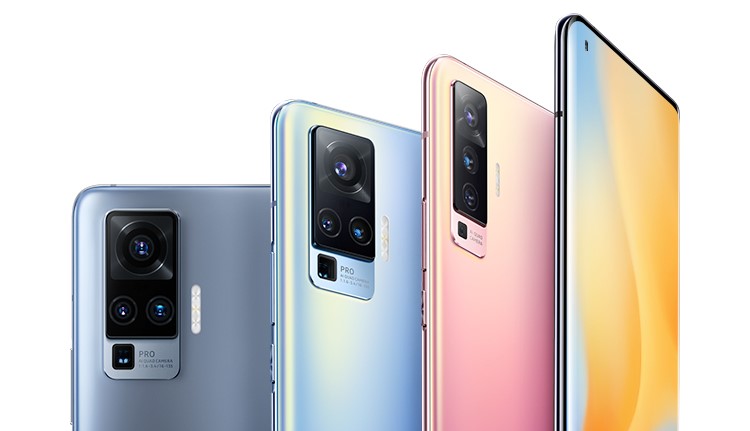
At the beginning of June, Vivo announced the Vivo X50 series of smartphones in China. By the end of the month, the Chinese firm officially revealed the global arrival of the Vivo X50 series. The X50 series page is now active on its global site. Fresh information reveals that the global launch of the Vivo X50 series may happen in the third week of this month.
It is speculated that the Vivo X50 series may break in the several international markets on July 16 or July 17. It seems that the company will be only releasing the Vivo X50 and Vivo X50 Pro models outside of China. In other words, the Snapdragon 865 mobile platform powered Vivo X50 Pro+ could remain exclusive to the Chinese markets.
The Vivo X50 could be available in colors like Frost Bleu and Glaze Black in global markets. The Vivo X50 Pro could be arriving in Alpha Grey color only. Global markets that are expected to receive the Vivo X50 and Vivo X50 Pro smartphones include Malaysia, Singapore, Cambodia, Vietnam, Thailand, Indonesia, and India.
The Vivo X50 and X50 Pro smartphones have 90Hz 6.56-inch AMOLED Full HD+ displays with punch-hole design. The FunTouch OS 10.5 flavored Android 10 OS runs on X50 and X50 Pro. The Snapdragon 765G fuels both smartphones. The X50 duo comes with 8 GB of RAM and 128 GB / 256 GB of internal storage.
The Vivo X50 and X50 Pro are equipped with 32-megapixel front cameras. The X50 has a 48-megapixel + 13-megapixel (portrait) + 8-megapixel (ultrawide) + 5-megapixel (macro) quad camera setup. The Vivo X50 Pro has a 48-megapixel (with gimbal OIS) + 8-megapixel (periscope telephoto) + 13-megapixel (portrait) + 8-megapixel (ultrawide) quad-camera unit. The Vivo X50 has a 4,200mAh battery whereas the X50 Pro has a 4,315mAh battery. Both come with 33W fast charging.
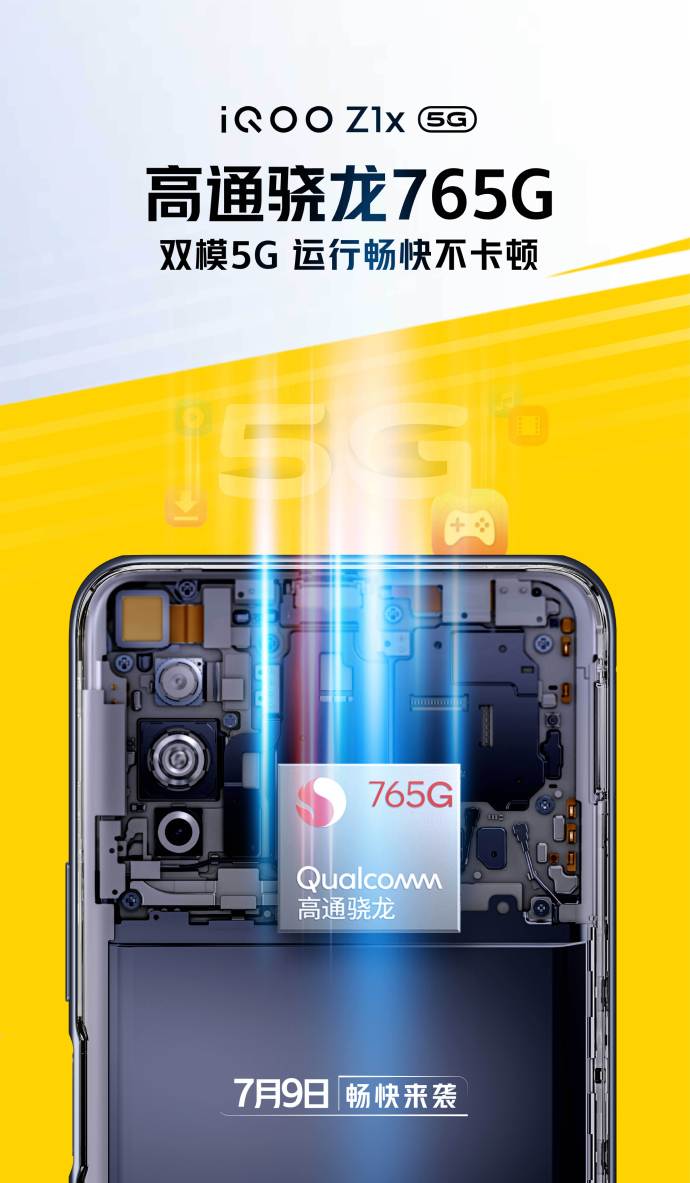
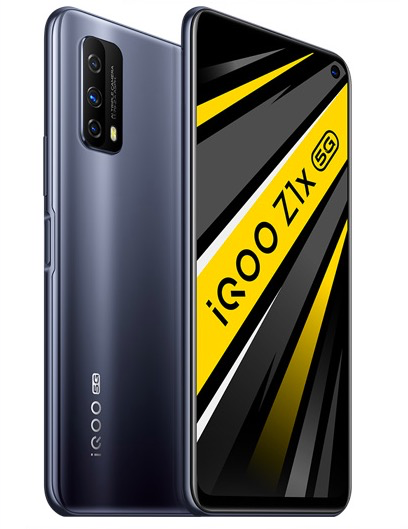
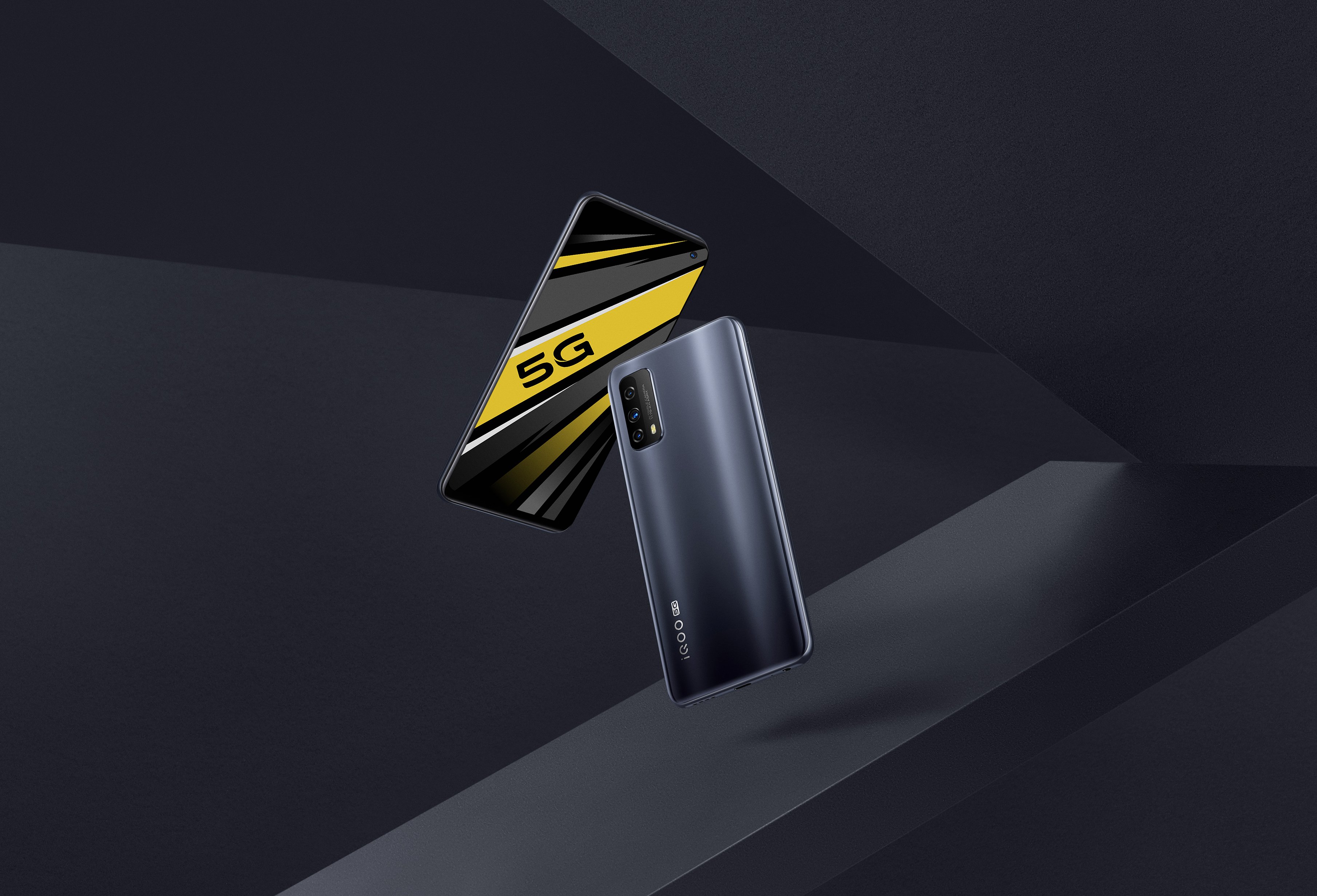
The iQOO brand was introduced in April last year. All the iQOO smartphones that have launched so far have featured Snapdragon 8XX series flagship chipsets. The Chinese firm is now gearing up to launch the iQOO Z1x as its first mid-range phone powered by a non-flagship chipset. The handset is scheduled to debut on July 9. Various reports have claimed that the iQOO Z1x will be equipped with Snapdragon 765G mobile platform. Today, the company officially confirmed that it will be arriving with the SD765G SoC.
The inclusion of the Snapdragon 765G will bring support for NA / NSA dual-mode 5G connectivity on the iQOO Z1x 5G. The smartphone is pegged to arrive as the cheapest iQOO phone. Hence, it is likely to be priced under 2,000 Yuan (~$283).
The Chinese firm has already revealed that the iQOO Z1x 5G will be sporting a 120Hz refresh rate display. It will be housing a 5,000mAh battery that will come along with 33W fast charging support. New renders of the iQOO Z1x 5G have appeared online. The renders reveal that the handset will be available in colors like black, blue, and white.
1 of 6
iQOO Z1x
iQOO Z1x
Reports have revealed that the iQOO Z1x 5G houses a 6.57-inch IPS LCD display with punch-hole design. It has a side-facing fingerprint reader. The iQOO UI based Android 10 OS will come preloaded on the smartphone.
It has a front camera of 16-megapixel. A 48-megapixel + 2-megapixel + 2-megapixel triple camera unit along with an LED flash can be found on the backside of the phone. The handset also features a microSD card slot, a USB-C port, and a 3.5mm audio jack.
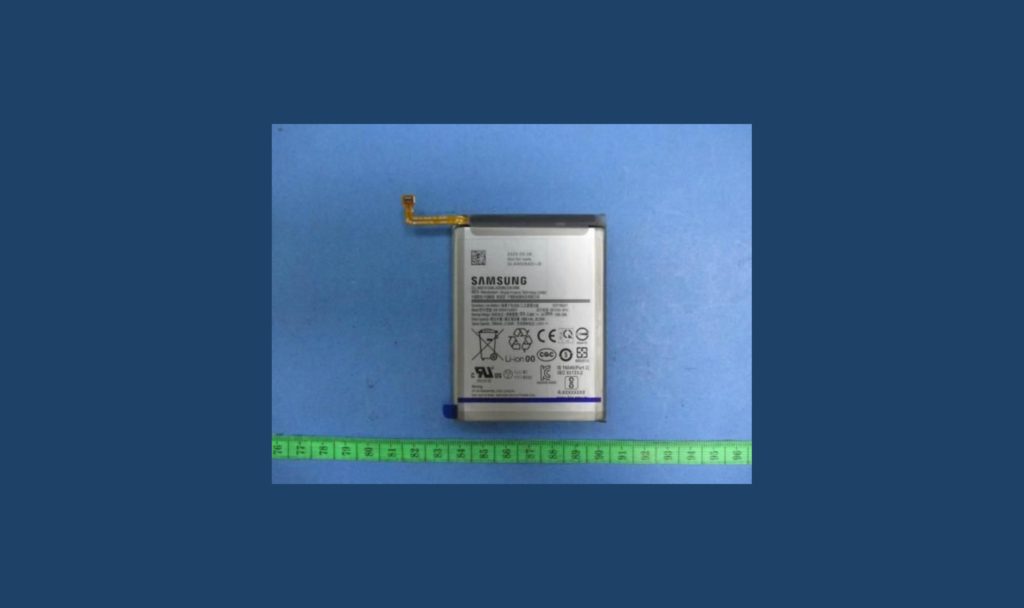
The Samsung Galaxy M41 was reported to be canceled but that does not seem to be the case. A massive 6,800 mAh battery has now popped up on China’s 3C and Safety Korea certification bureaus, which could be of this handset, Galaxy M51 or both.
The Galaxy M41 first came into light in March when @OnLeaks shared renders of a device, which he said to be either Galaxy M41 or Galaxy M51. Then, in mid-June, it was reported to be the first Samsung smartphone with an OLED display from a Chiese supplier. A few days later, the handset was claimed to be canceled.
Now, in July, a humongous 6,800 mAh battery with model number EB-BM415ABY clears 3C and Safety Korea certifications. Though MySmartPrice claims it to be of Galaxy M41, a cancelled device, we believe there is a possibility that this battery could be of Galaxy M51 instead or maybe even both.
For those unaware, Galaxy M21, Galaxy M30s, and Galaxy M31 share the same EB-BM207ABY 6,000 mAh battery. If we go by the model number, then this battery should be of Galaxy M20 but it isn’t.
Likewise, the newly certified battery could be included with the so-canceled Galaxy M41, Galaxy M51 or both. Having said that, the latter device has leaked more, including camera specs, Geekbench, launch details, and even a production claim. Therefore, this battery could be more likely of Galaxy M51.
Huawei has been releasing some of the best camera smartphones every year since its partnership with Leica begun. We are half past 2020 but the P40 Pro is still leading the DxOMark Camera chart. The versatile optical zoom camera setup on this handset proves it to be one of the best in the market. Now, as per a patent filed by the company, it has bigger ambitions to continue its lead in the smartphone zoom technology.
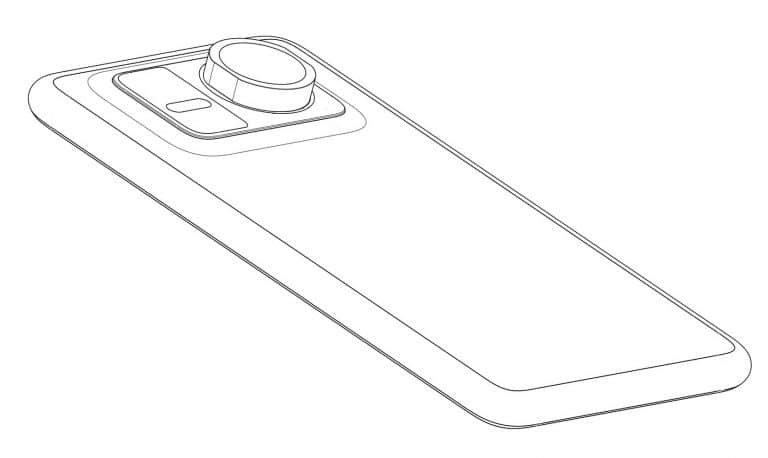
The Huawei P40 Pro Plus is currently the only smartphone to offer 10x optical zoom using a periscope lens. The company has further plans to lead in this segment as it patents a design for a unique zoom camera smartphone at European Union Intellectual Property Office (EUIPO).
Pericope lens offers optical zoom on phones by using lesser space than conventional zoom system. But it still falls behind the traditional zoom technology with larger sensors and lenses.
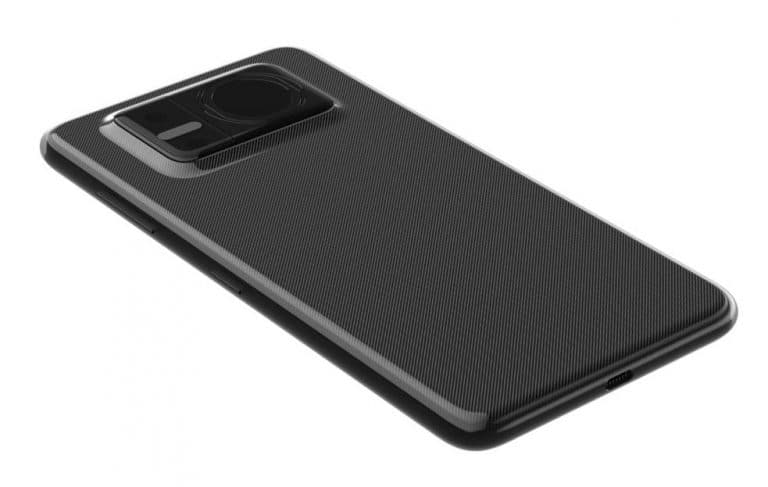
Huawei aims to fix this by adding support for attachable lenses just like regular cameras. This particular design patent seems to have a triple camera setup consisting of two smaller sensors, an elongated flash module (Xeon?) and a larger sensor which can be used with removable lenses.
Further, the design of the phone is showcased in black color with a textured rear panel for grip. Also, there is a USB Type-C port, a power key, and volume rockers.
That said, Huawei will not be the first to offer an attachable camera lens as Motorola already tried it with its failed Moto Mod. Anyway, it is not sure if this design patent will ever see the light of the day like numerous other patents.
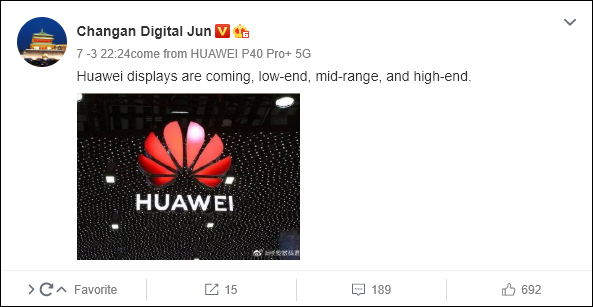
There have been several rumours pertaining to Huawei launching its own branded PC display monitors but nothing has been mentioned officially by the tech giant. However, a Weibo user has again fuelled speculations about the Huawei Display.
The Weibo user not only indicated that the displays are coming but also added that they will be available in three models -high-end, mid-range and low-end. It is believed that all three variants will be released at the same time.
This rumour aligns with previous ones which also point to the existence of three different variants. The Huawei Displays have reportedly been tested over a year ago and is expected to be released in the next few months.
Interm of the specifications, one of the displays is said to be a 32-inch display using a 512 partition or 1024 partition similar to miniLED backlight. Of course, the display will also be included in Huawei’s own ecosystem and has a special compatible collaboration model with Huawei mobile phones.
Apart from Display monitors, Huawei may have also got plans to launch desktop PCs. A Huawei model was spotted on 3DMark last month. The model is equipped with an AMD Ryzen 5 PRO 4400G CPU having 6 cores, 12 threads and clock frequency ranging from 3.7-4.3GHz. The CPU is integrated with the Vega 7 GPU clocked at 1800MHz. However, the absence of a discrete graphics card has led to speculations that this may be a mini desktop computer with a small form factor.
Not many days have passed since the launch of OUKITEL WP5 Pro rugged smartphone. In case if you didn’t expect a new device from the company anytime soon, then you’re wrong as a new OUKITEL device has been launched today powered by Android GO with aggressive pricing. The brand new OUKITEL C19 is priced at just $59.99 and the global sale will begin on 13th July.
OUKITEL C19 may not have all the bells and whistles that you’d see on the modern devices. The device is all about value for money as it is powered by the Android 10 GO platform. For the asking price, it packs all the necessities that would make it a great daily driver.
OukiteL C19 Features
Coming to the specs, the C19 boasts a 13MP Sony IMX214 rear camera bolstered by AI Scene Recognition which would render clear and natural-looking photos. Not only that, but the 13MP sensor is also accompanied by three other sensors of varying capabilities giving rise to an aesthetically appealing rear quad camera setup.
As they say, “Display is the face of a smartphone”, the C19 features a brilliant 6.49 inch IPS screen with an HD+ display resolution (1560×720 pixels). A 4000mAh battery powers the device. So, the device is a good package for content consumers with its big display and decent battery capacity. Don’t forget the price, it’s just around $60!
As of the processor, the C19 packs MediaTek MT6737 and pairs a 2GB of RAM with the light-weight Android 10 GO. The C19 offers dual-SIM connectivity and comes with 16GB of internal storage capable of expanding up to 256GB. OUKITEL has made available the device in four different colours – Black, Green, Purple and Blue Gradient.
Like mentioned earlier, the OUKITEL C19 is set to go on sale starting from July 13 as per the company. Given its affordable price tag, the device ought to have a lot of potential buyers worldwide. You can head over to the official website for more details about the Oukitel C19. The company is also hosting a free giveaway for 5 Oukitel C19 units. You can add the device to cart to grab the device when it goes live for open sale.
We use cookies on our website to give you the most relevant experience by remembering your preferences and repeat visits. By clicking “Accept”, you consent to the use of ALL the cookies.
This website uses cookies to improve your experience while you navigate through the website. Out of these, the cookies that are categorized as necessary are stored on your browser as they are essential for the working of basic functionalities of the website. We also use third-party cookies that help us analyze and understand how you use this website. These cookies will be stored in your browser only with your consent. You also have the option to opt-out of these cookies. But opting out of some of these cookies may affect your browsing experience.
Necessary cookies are absolutely essential for the website to function properly. This category only includes cookies that ensures basic functionalities and security features of the website. These cookies do not store any personal information.
Any cookies that may not be particularly necessary for the website to function and is used specifically to collect user personal data via analytics, ads, other embedded contents are termed as non-necessary cookies. It is mandatory to procure user consent prior to running these cookies on your website.