Realme C11 has kept the rumour mills buzzing in recent times right after the company confirmed it will be launched as the first Helio G35-powered model. The specs of the model were recently leaked, confirming it is indeed an entry-level model. On the heels of that leak, Realme has confirmed the C11 will be launched in Malaysia on June 30. The company disclosed this in a poster released on the Realme India Facebook page. The post also hinted that the launch will be an online event. The poster equally reiterates that the Realme C11 will be the first model to pack the MediaTek Helio G35 which is still unannounced. However, the processor is said to be an Octa-Core SoC manufactured uses 12nm process, similar to other G series SoC, but this is clocked up to 2.3 GHz, and adopts the Cortex A53 cores.
As a reminder, the Realme C11 will sport a 6.5-inch display with a waterdrop notch. The processor is paired with 2GB of RAM. The device will also have 32GB of storage and three SIM slots whereby one will be a microSD card.
For photography, the Realme C11 is said to pack an AI dual camera setup at the rear. The main sensor will be a 13MP sensor but the second sensor wasn’t disclosed. The camera is also said to bring support for Super Nightscape mode. Unfortunately, the phone won’t have a fingerprint sensor.
At WWDC, Apple unveiled the next-generation iOS operating system for the iPhones — iOS 14, which comes with several improved features and significant changes. Here’s the list of major features coming with the newer version.
Home screen and Widgets
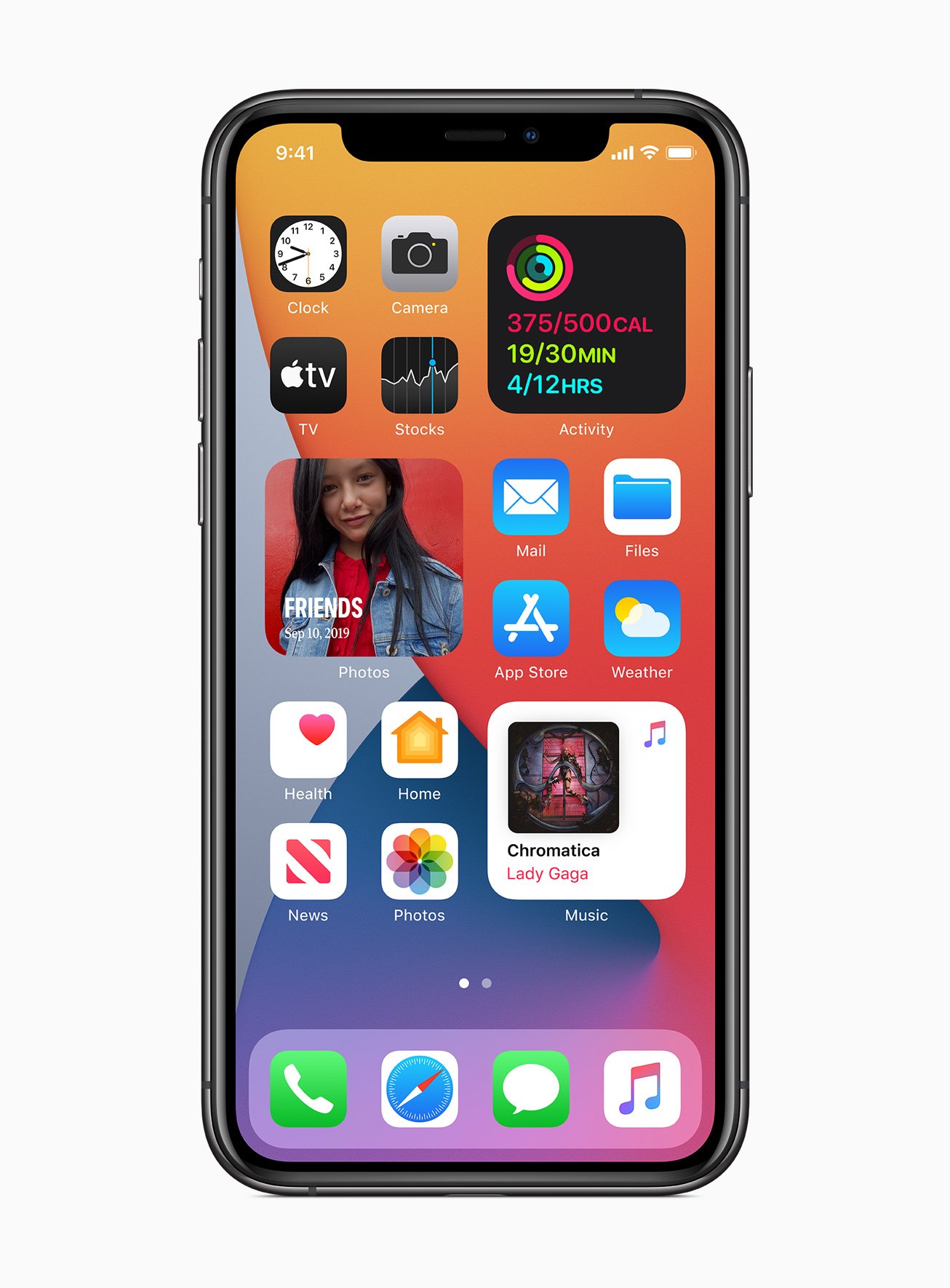
The first major change that you’ll notice in the iOS 14 is the redesigned home screen. For the first time ever, it now supports widgets which can be dragged from the Today screen to the home screen. Also, the widgets can be pinned to the home screen in different sizes.
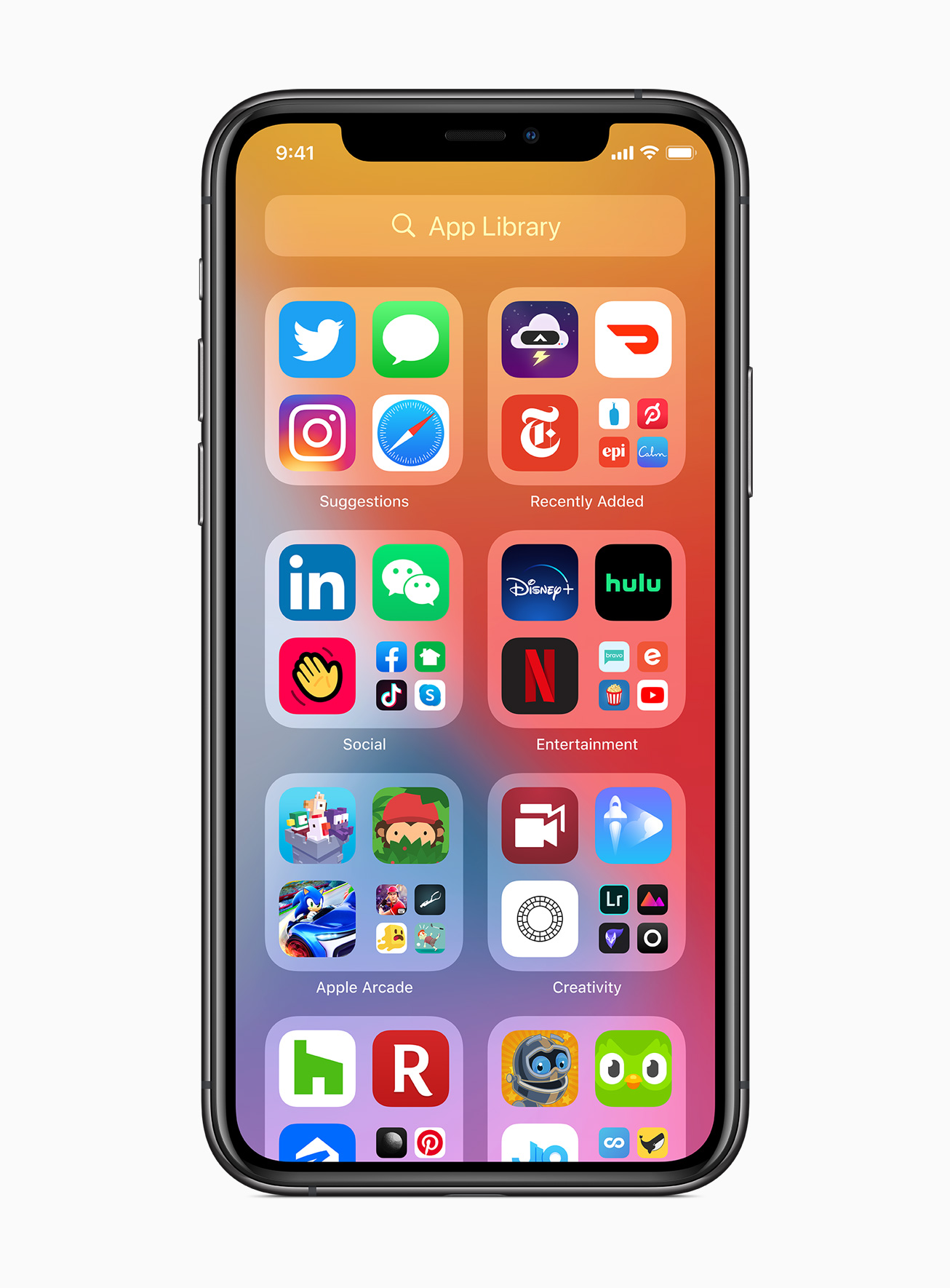
Swiping right from the home screen is a new App Library where every application on the device has bene organized neatly into the folder system. You can also remove apps from the home screen but keep them in the App Library.
There’s also a new Smart Stack feature that intelligently stacks widgets based on time, location, and activity. Through the widgets gallery, you will now be able to choose widgets from the app as well as customize them.
Compact Calling Screen
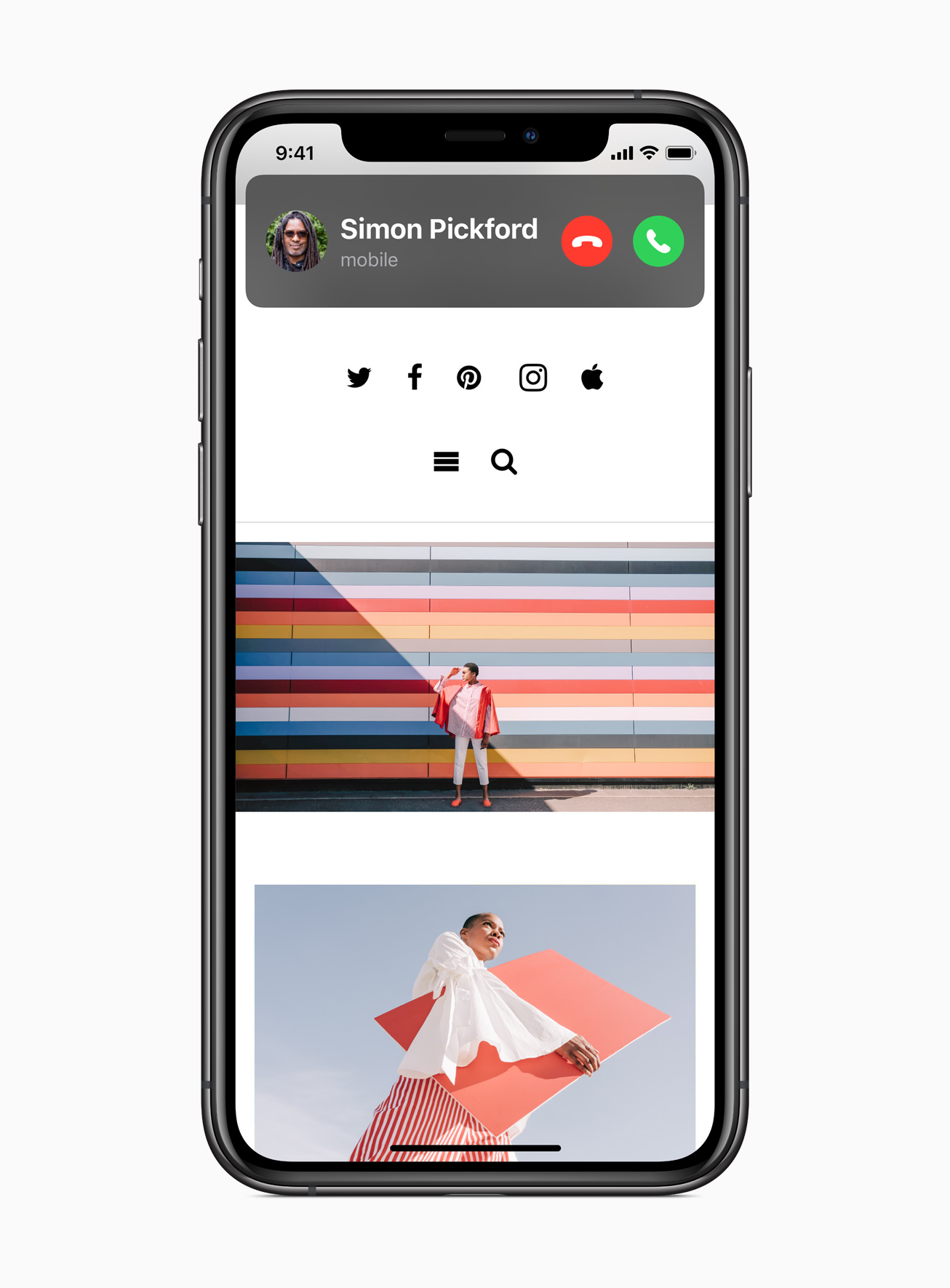
Till now, whenever you receive a call, it covered the full screen on the phone. But now, with the new iOS 14, the incoming phone calls appear as a notification on the top instead of taking over the entire screen.
New Siri Interface
Similar to the new compact calling screen, the Siri interface has also been redesigned. Instead of taking over the whole display area, the new interface just opens up a Siri blob at the bottom of the screen when triggered. The output result is then displayed on top of the screen as rich notifications.
App Clips
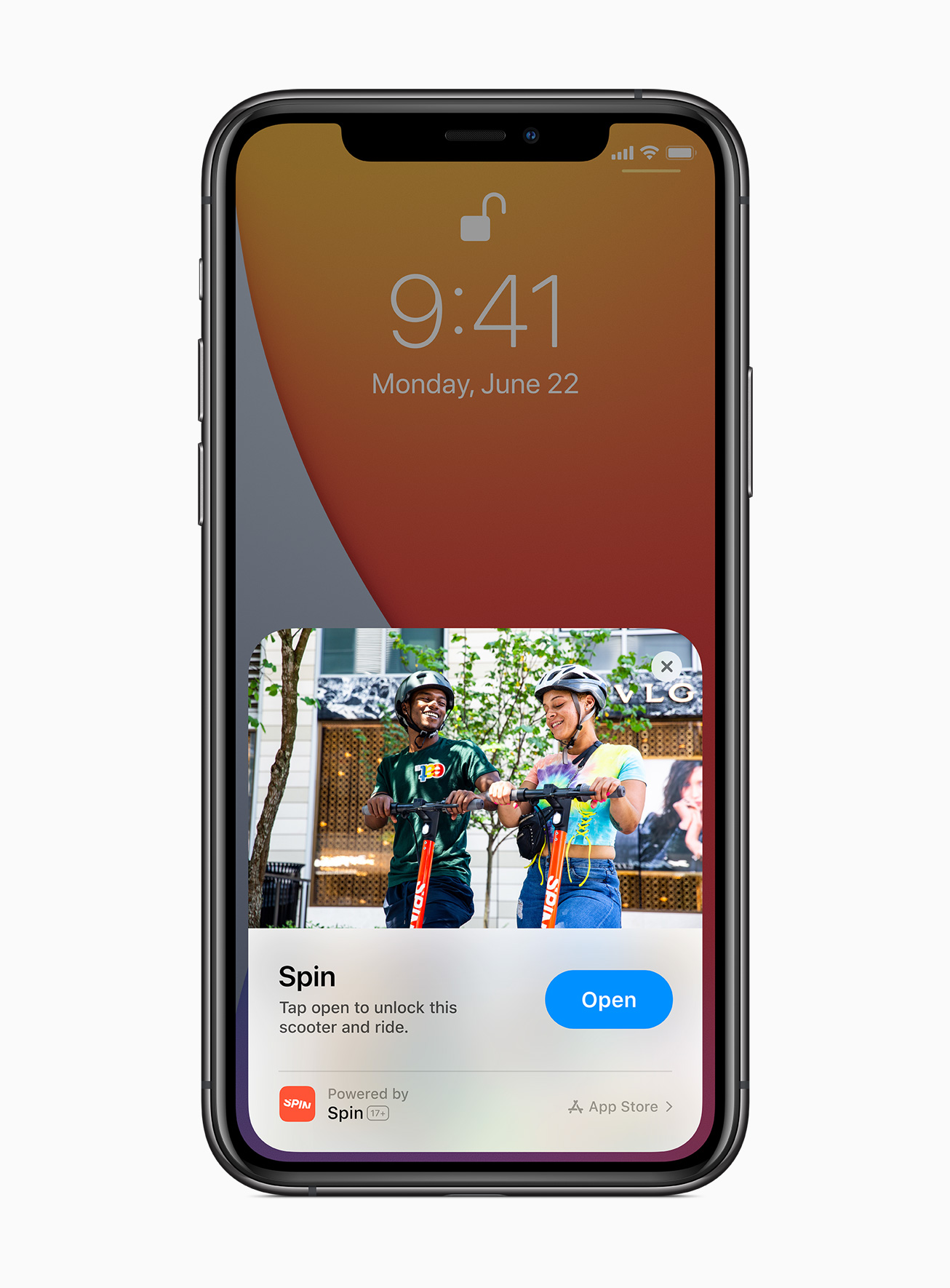
Apple has also added a new App Clips support to iOS 14. This enables users to take advantage of some app features without the need to download the full application. So, you will be able to do things like purchase coffee, make restaurant reservations, etc. just by scanning a code without downloading the app.
The company added that the App Clips work through Apple-designed App Clip codes, NFC tags, or QR codes, and can also be shared in Messages or from Safari.
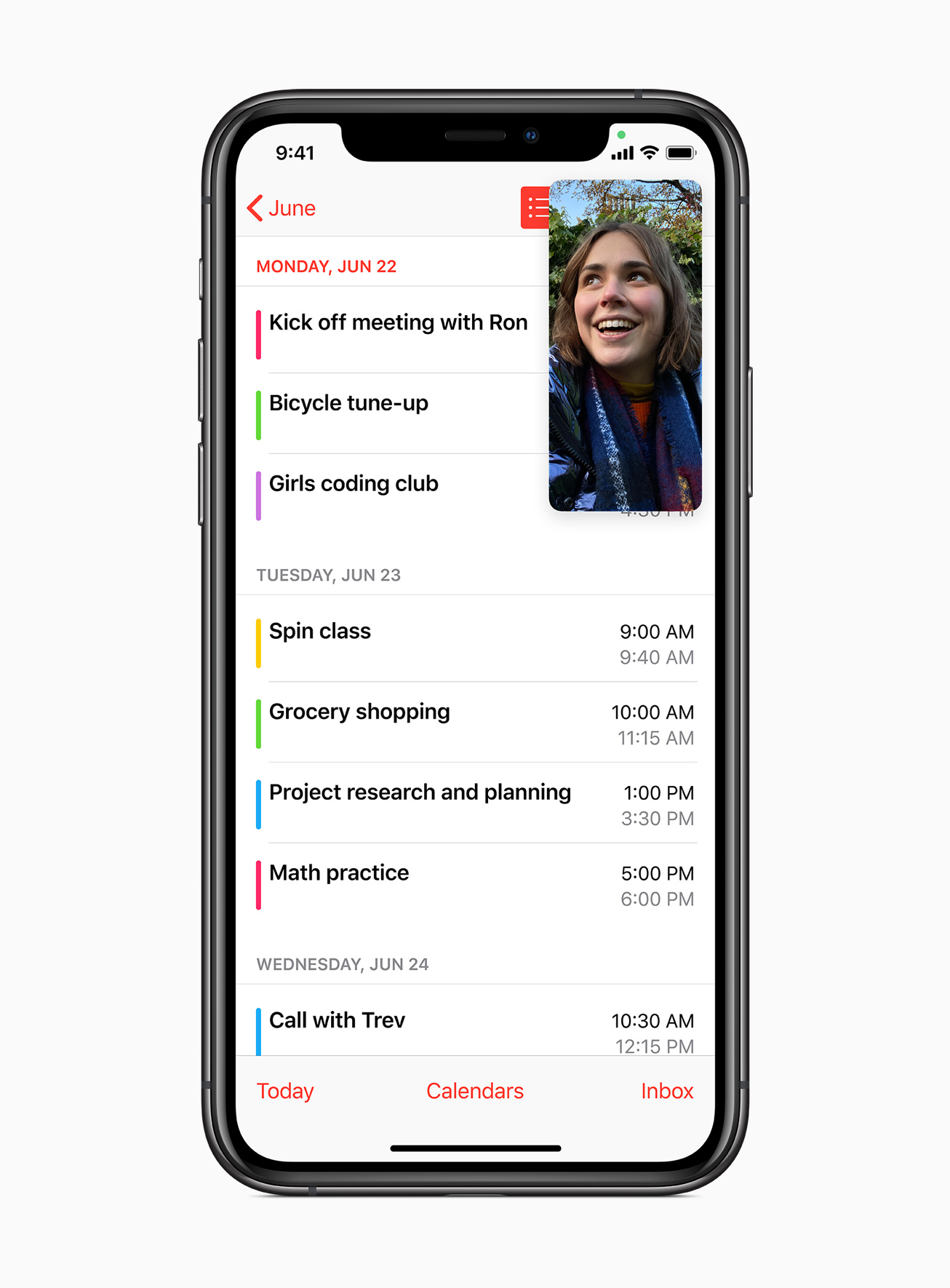
Picture-In-Picture
This picture-in-picture mode, which was already available on the iPad, is now finally making its way to the iPhone with iOS 14. With this feature, the FaceTime video call can continue in a small floating window, allowing you to keep using your phone at the same time. You can also drag the box anywhere on the screen.
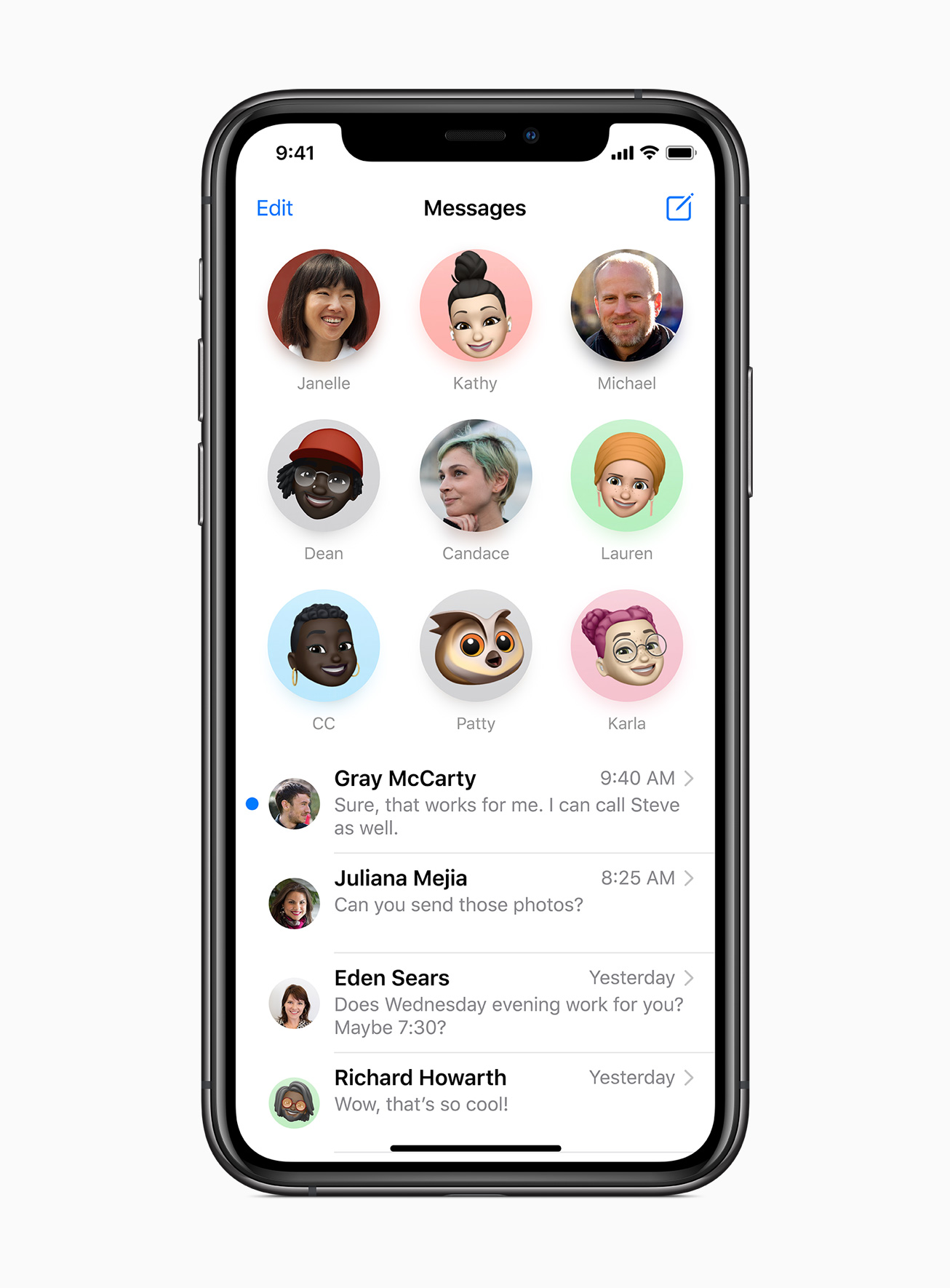
Messages
The Messages application has received several major improvements. The company has now added support for pinning nine conversations at the top of the app. It also comes with support for new in-line replies so that you can reply to a specific message in a conversation instead of a general message.
Further, it now has support for mentions, allowing you to mention a user and then send a message so that only that person will get notified. The group chat name, as well as the photo, can now be customized.
It also comes with new Memoji option that includes additional hairstyles, face coverings, age, headwear, and more Memoji stickers. With the revamped facial and muscle structure, the feature has now become more expressive.
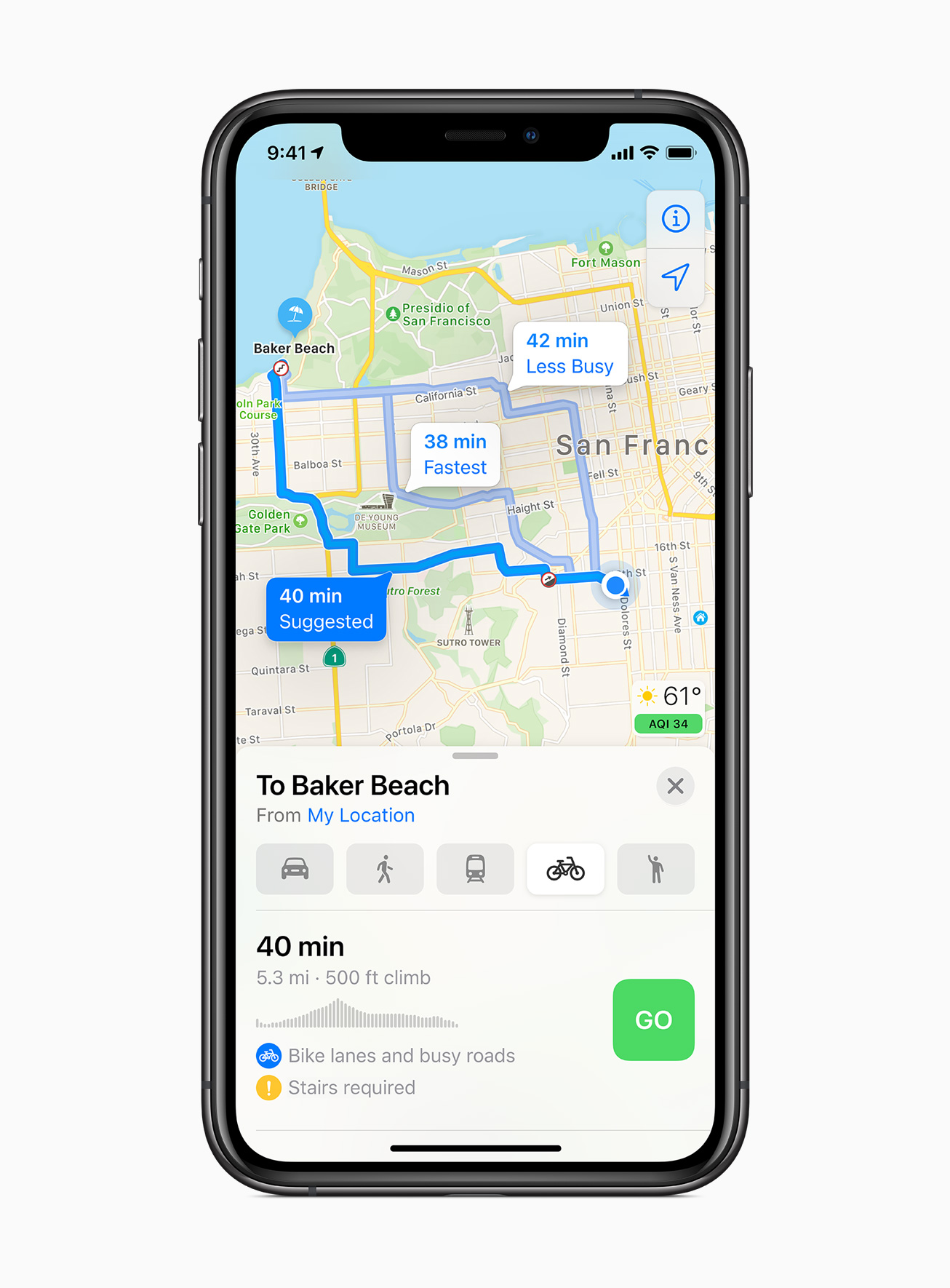
Apple has been making some solid improvements in Maps. The company said that it will start rolling out new map data to more countries this year. Further, the company is adding cycling directions that can take into account elevation changes, bike lanes, and stairs.
It will also show location of known speed cameras and red light cameras. The Maps is now being updated to provide specialized electric vehicle routes. It also enables you to keep track of things like current charge status, and show compatible chargers on route.
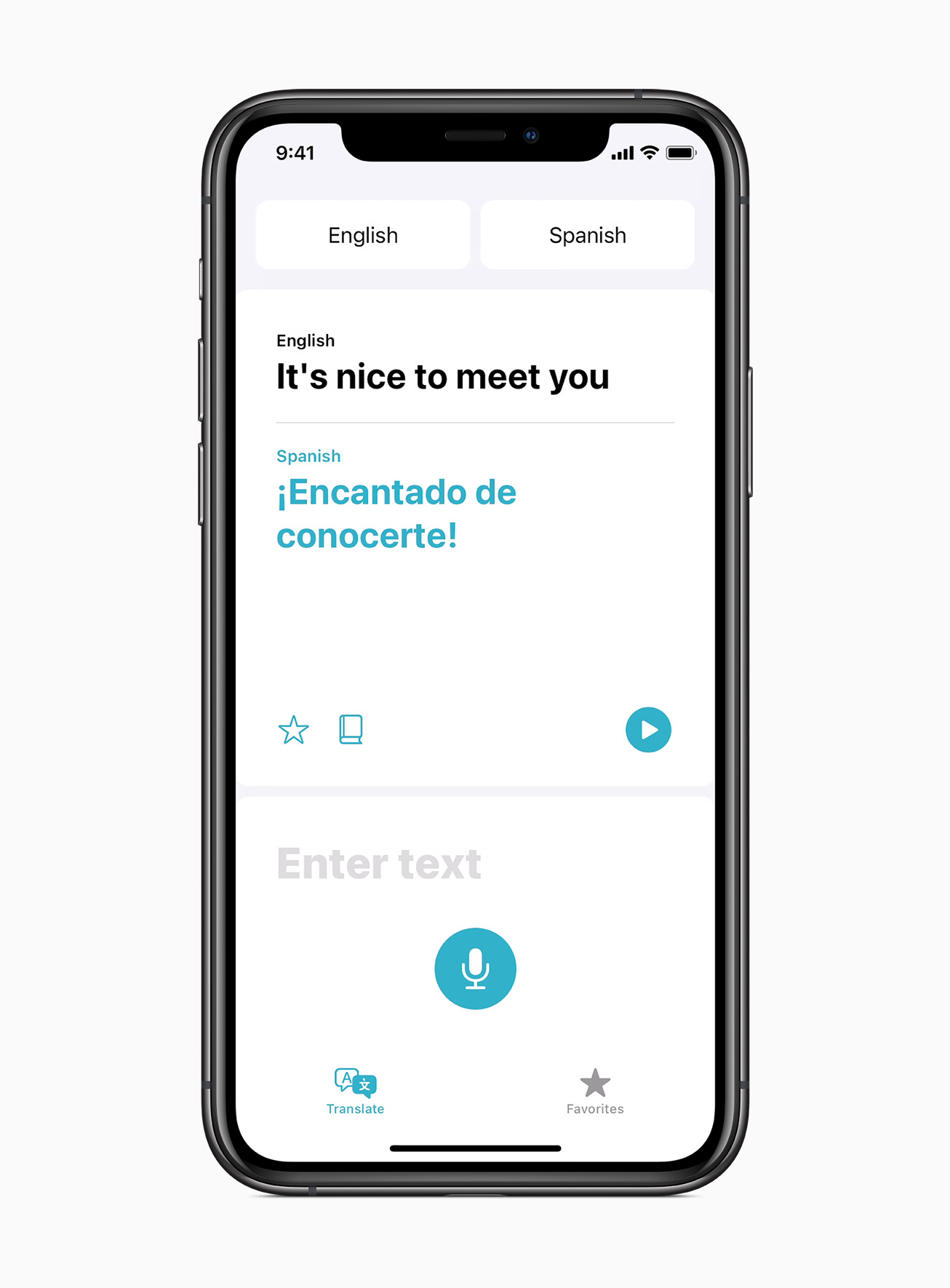
Translate App
The company is adding a new first-party application with the iOS 14 — Translate. Similar to the Google Translate app, you can choose two languages and hit the mic button. The app will then listen to your voice and provide text as well as voice translations. The app works offline and allows you to download more languages.
Car Keys
The Digital car keys feature allows you to unlock and start your car with the iPhone or even Apple Watch. With the new update, the company is adding support for U1 chip, which will be able to unlock cars without the need to take your iPhone out of the pocket. Also, the car keys can be shared through Messages.
Updated Privacy Protections
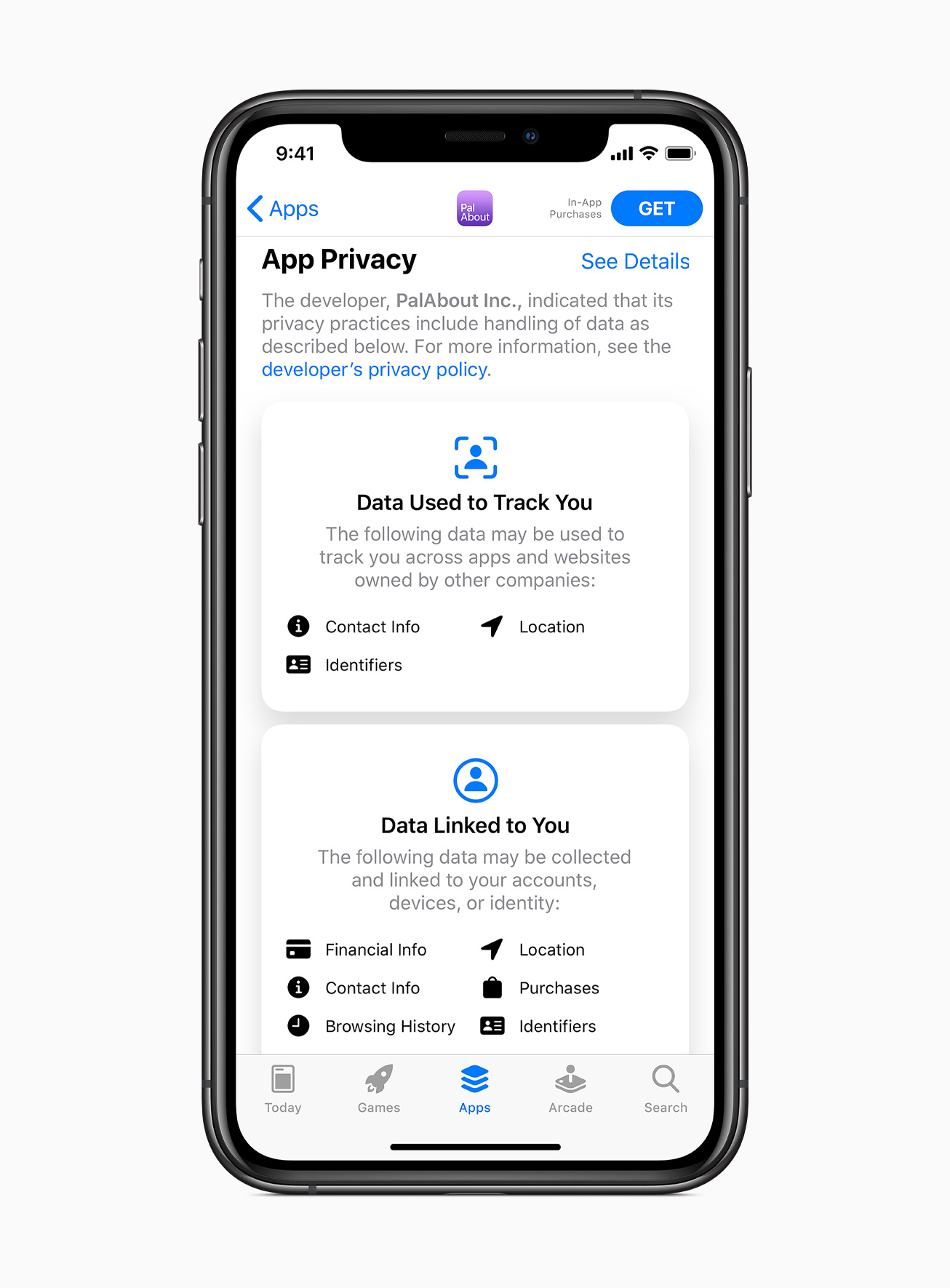
The newly updated privacy protections in the iOS 14 now require developers to get permission before accessing devices on local network. Apple has also introduced new options for limiting access to select photos or providing apps with only approximate location data. Further, apps need to get permission before tracking across websites. There’s a new icon that shows on the home screen when the app is using camera or mic.
Apart from these, there are few more new features added with the iOS 14 that include password monitoring, built-in Safari translation, support for third-party products, and accessories in Find My app, among others.
iOS 14 Release Date
Apple has not revealed the exact date for the rollout of this new iOS 14 update but has said that it will be available later this year. Typically, the new iOS rollout begins in September, just in time for the new iPhone launch. However, it remains to be seen if Apple sticks to the same timeline.
Before releasing the public version, Apple is set to start offering a public beta test version from July this year.
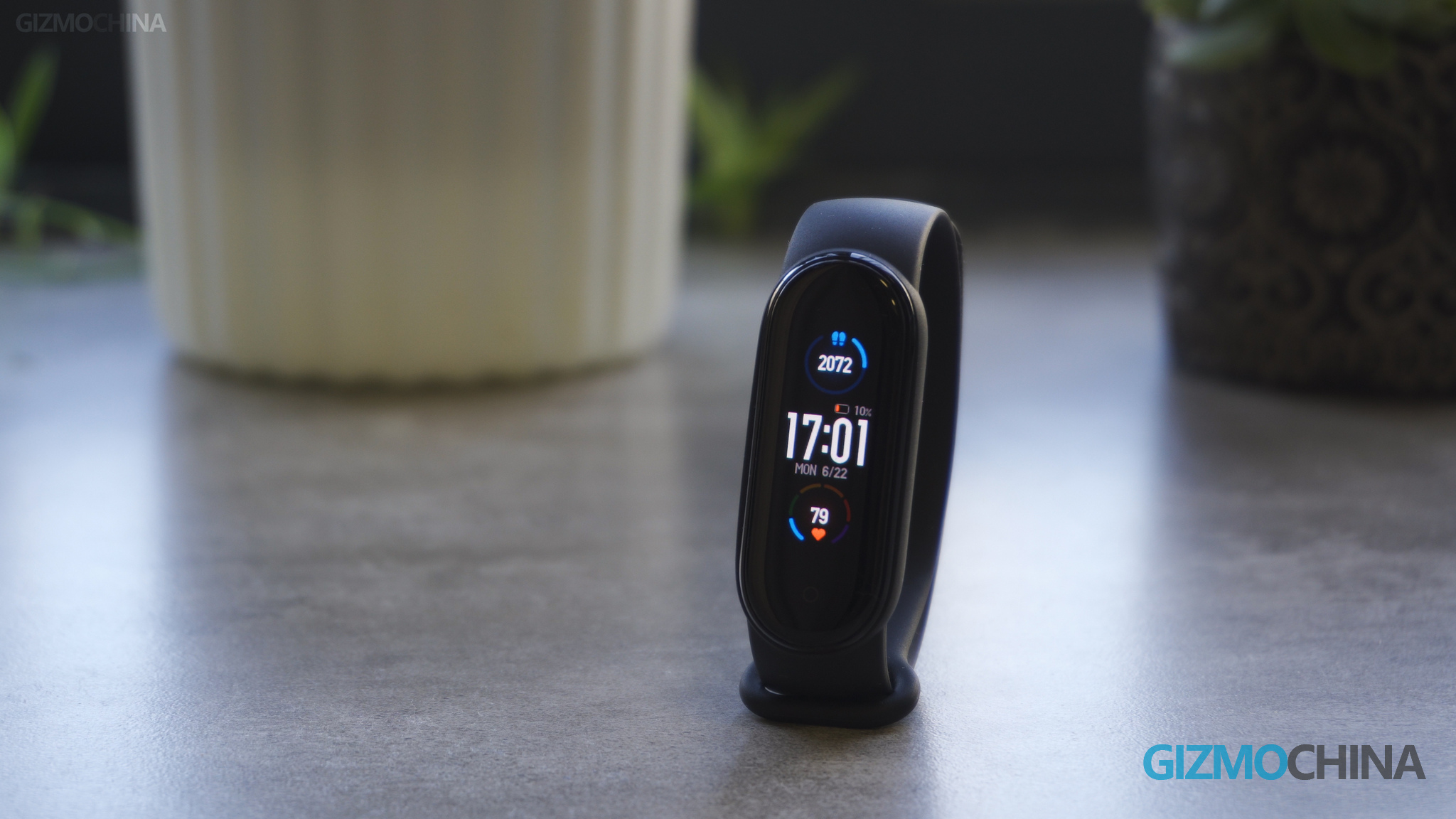
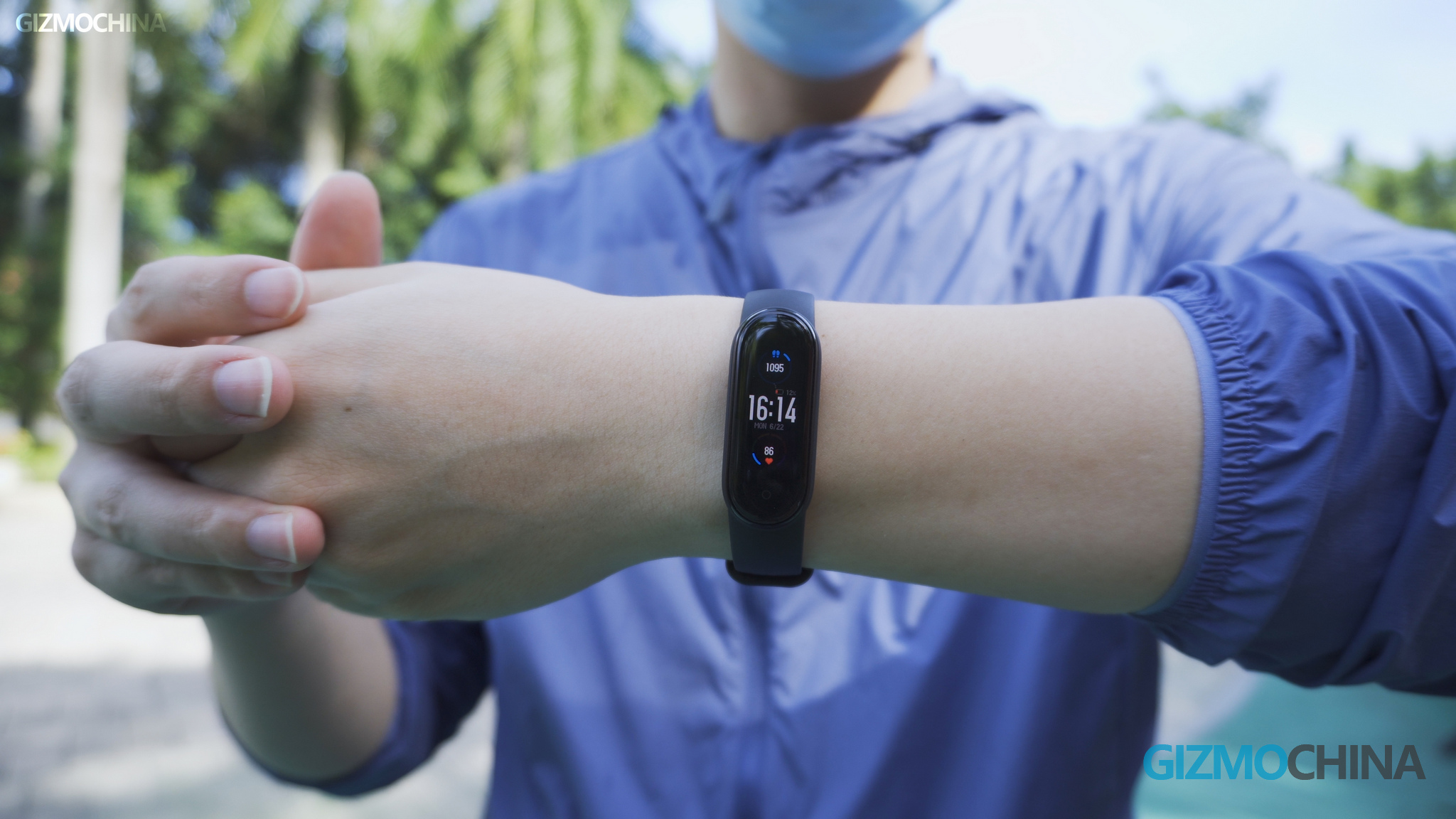
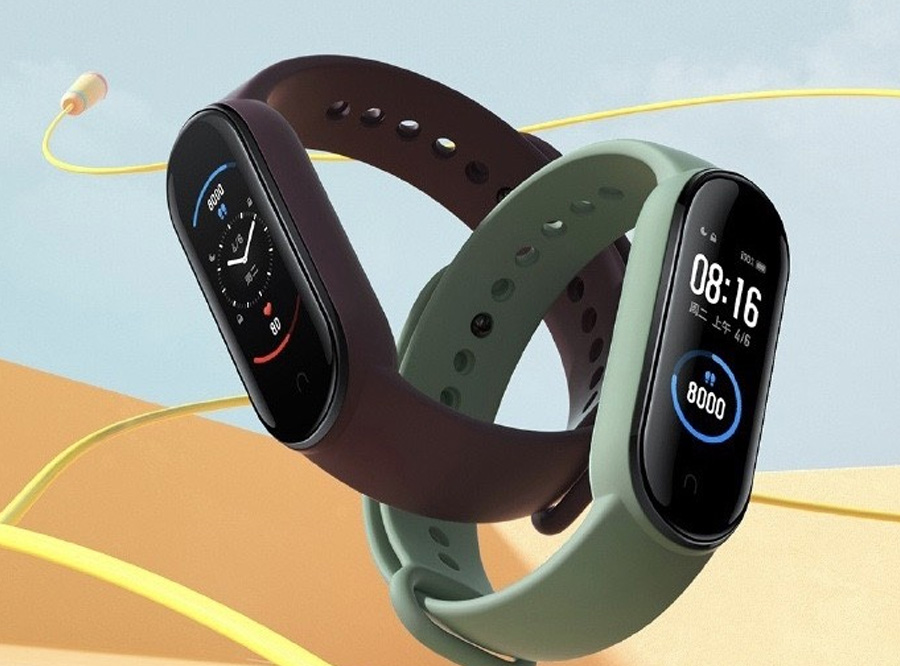
Xiaomi just recently launched the new Mi Band 5 model in China. And we have been using the smartband for the past few days. While it’s not a huge upgrade as compared to its predecessor, there are still some important features that give it a slight advantage over the Mi Band 4. So if you are planning to buy the Xiaomi Mi Band 5, make sure to read our review first.
Also, we are giving away the Mi Band 5 to one of our lucky YouTuber subscribers. You can participate in the giveaway from the link at the end of the article or from the review video that you see below.
What’s the difference between Mi band 5 and the Mi band 4?
There are only a few differences in their hardware and design.
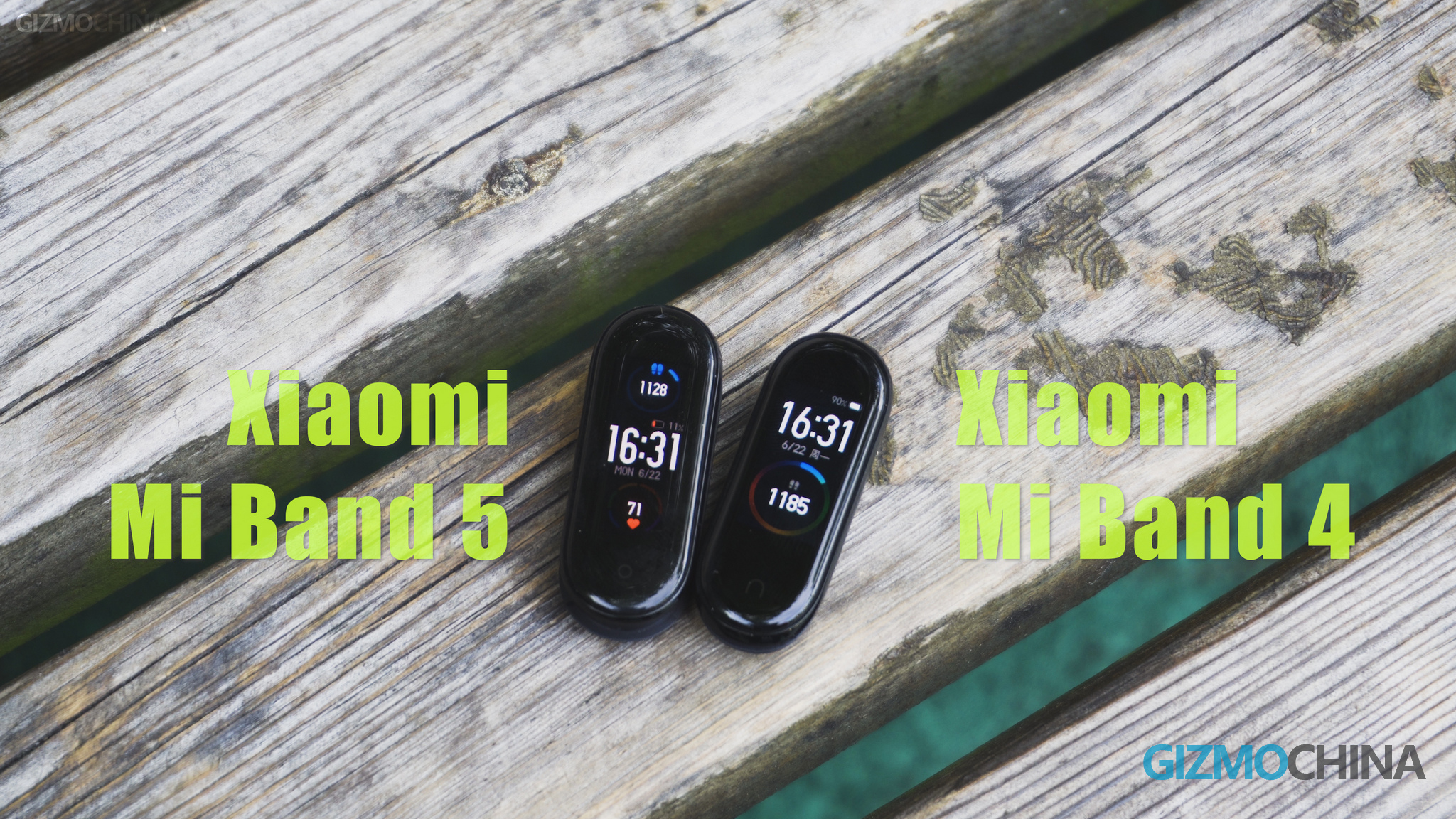
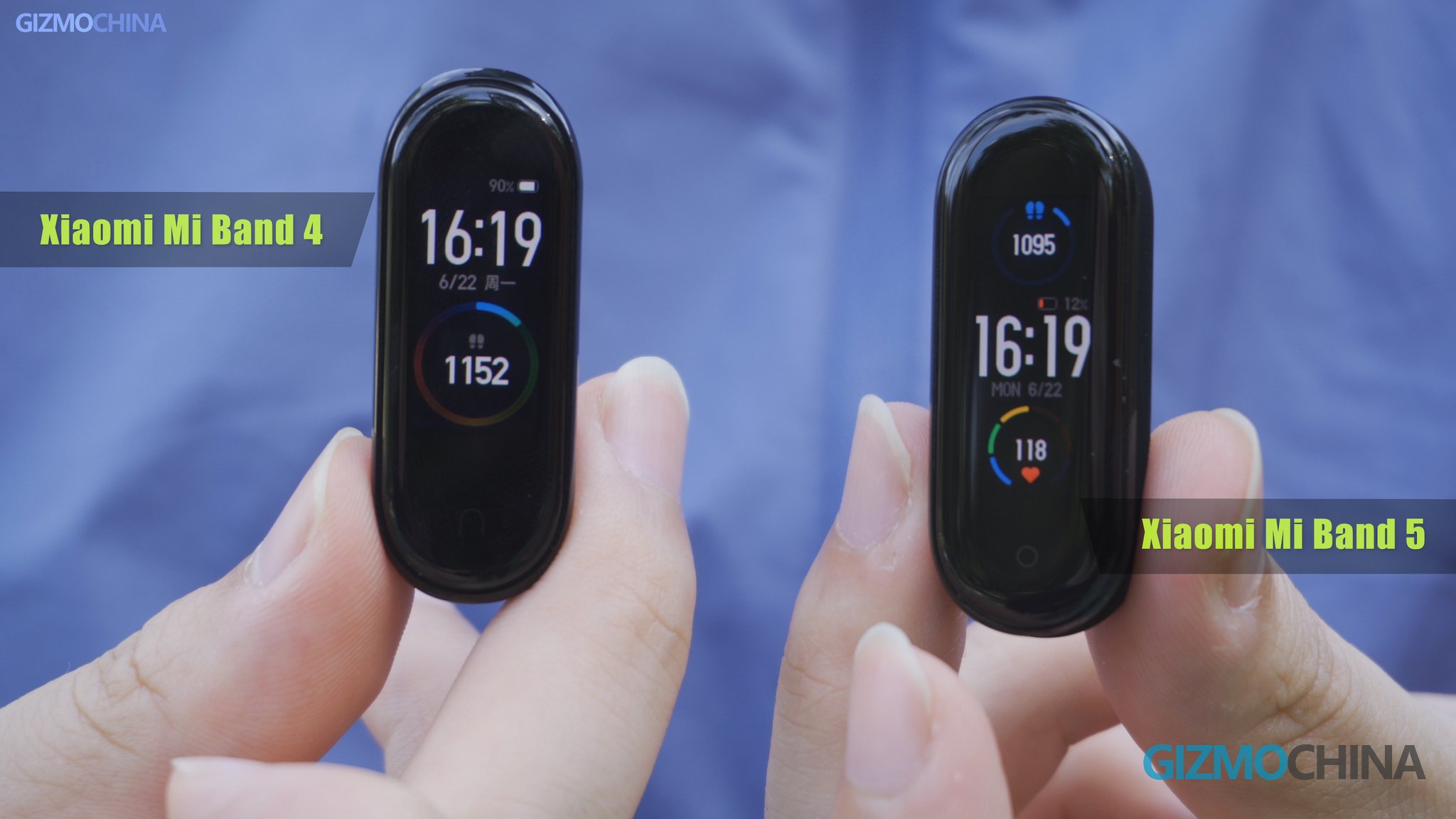
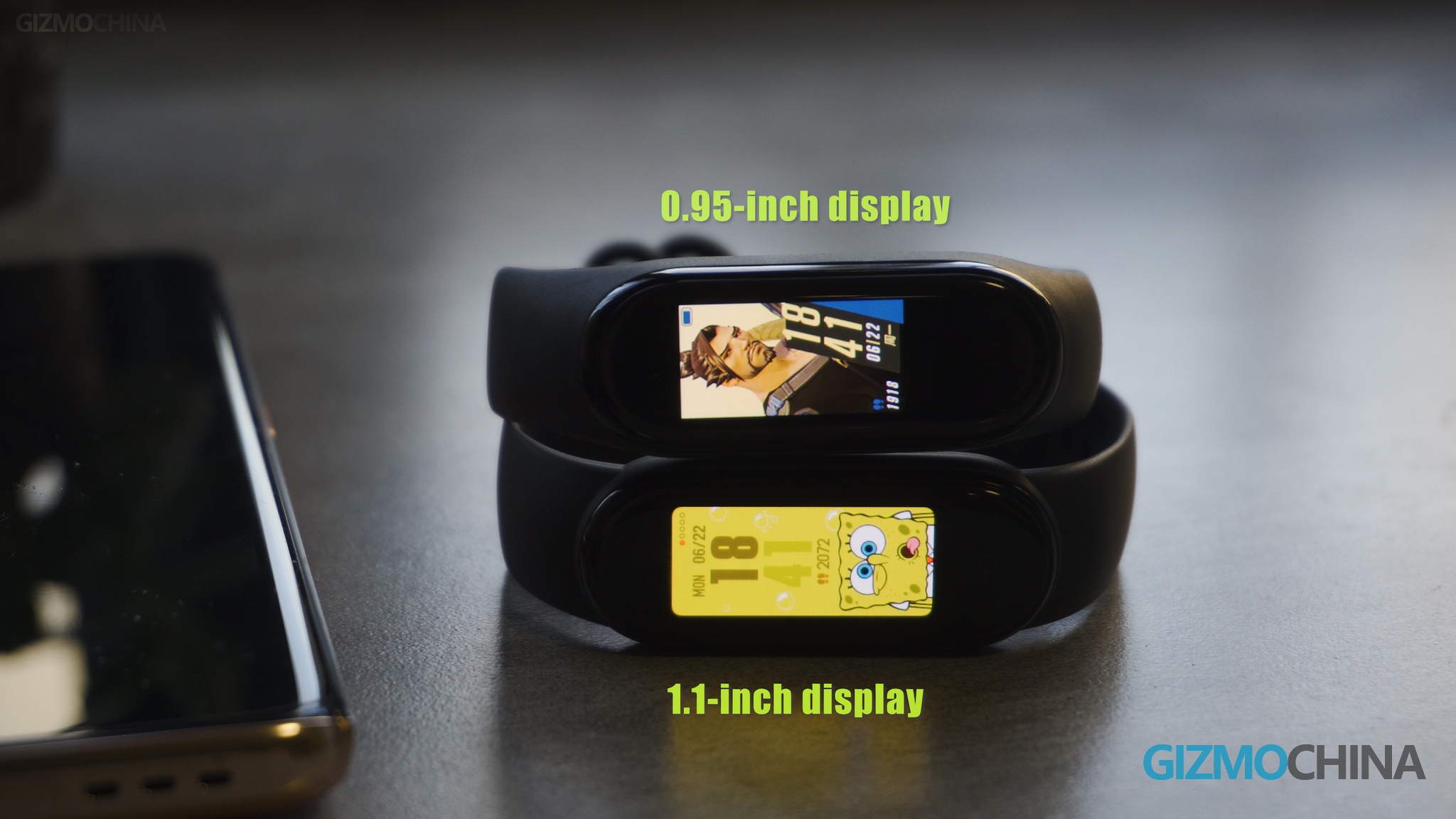
The most remarkable difference is that the Mi Band 5 features a slightly larger AMOLED display, up from 0.95 inches to 1.1 inches. That’s not much of a difference but the screen now has smaller bezels and a larger area to display more information. While the size difference is hard to perceive on a day to day basis, when we directly compare it with Mi Band 4, you can see the additional line of information available due to its larger screen size.
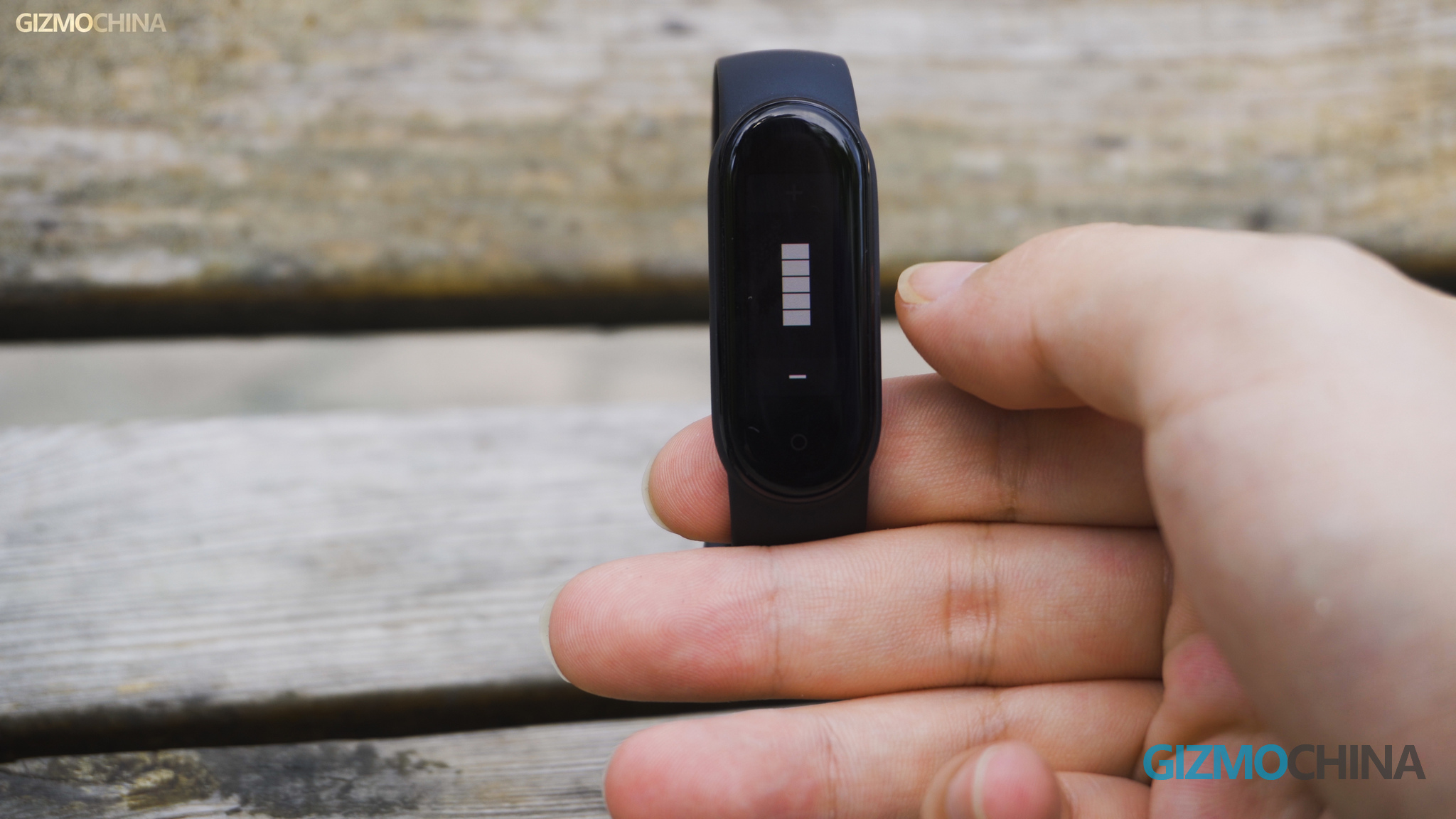
Another upgraded feature is the display brightness, which can reach up to 450 nits and allows you to view the display clearly under direct sunlight. But it still doesn’t have auto-brightness-adjustment, so you’ll have to max up the brightness manually. This could be a pain because the brightness setting is hidden deep inside the settings menu. But in most cases, you’d be happy with a set brightness level.
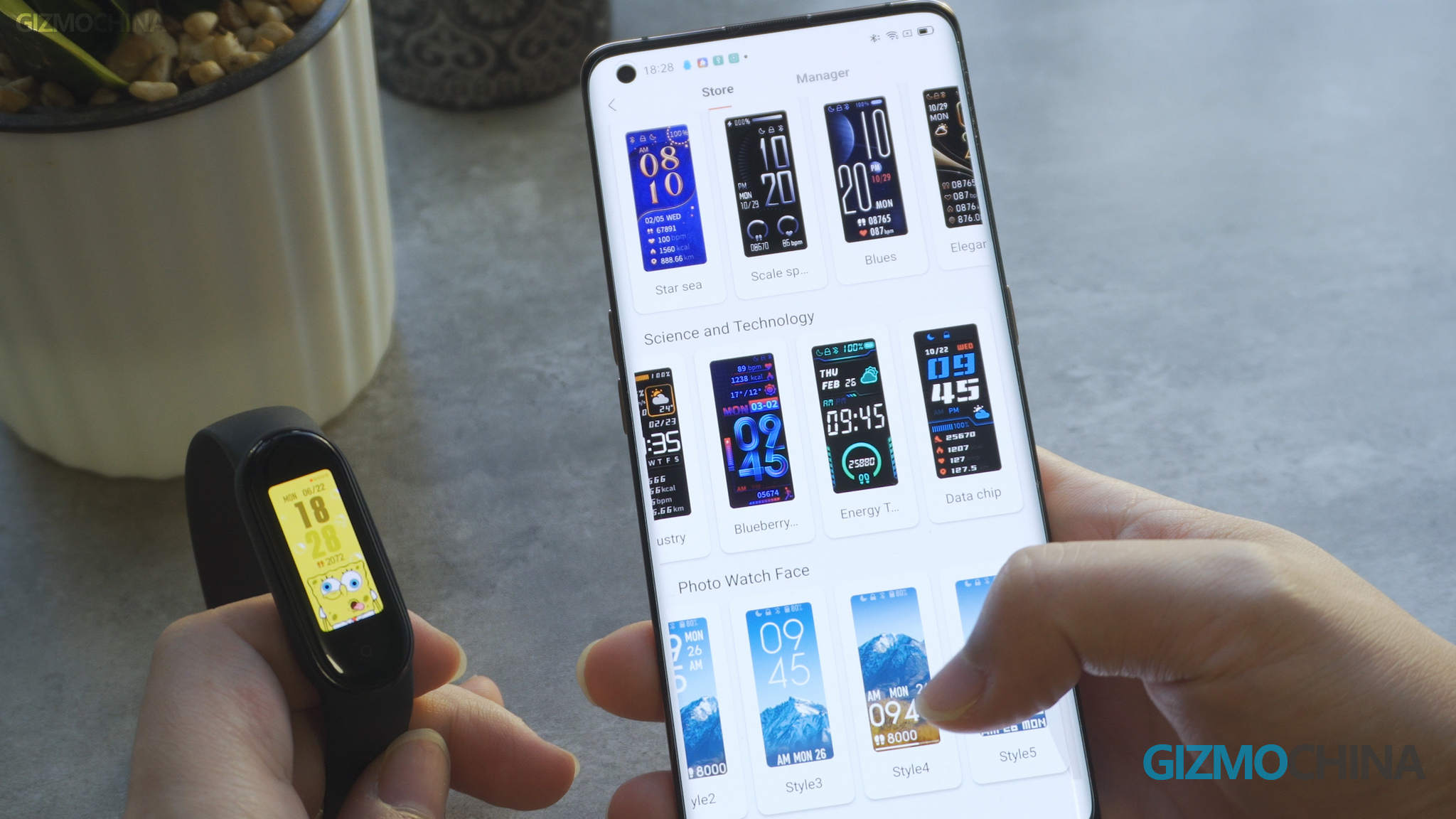
There are more than 100 new themed dials to choose from as claimed, including 54 famous IP themes such as Spongebob Squarepants, Neon Genesis Evangelion, and Ali the Fox. But so far, some special themes have not been found in the watch face store. It seems that some of them are only available in Chinese version.
Mi Band 5 vs Mi Band 4 watch faceMi Band 5 themes
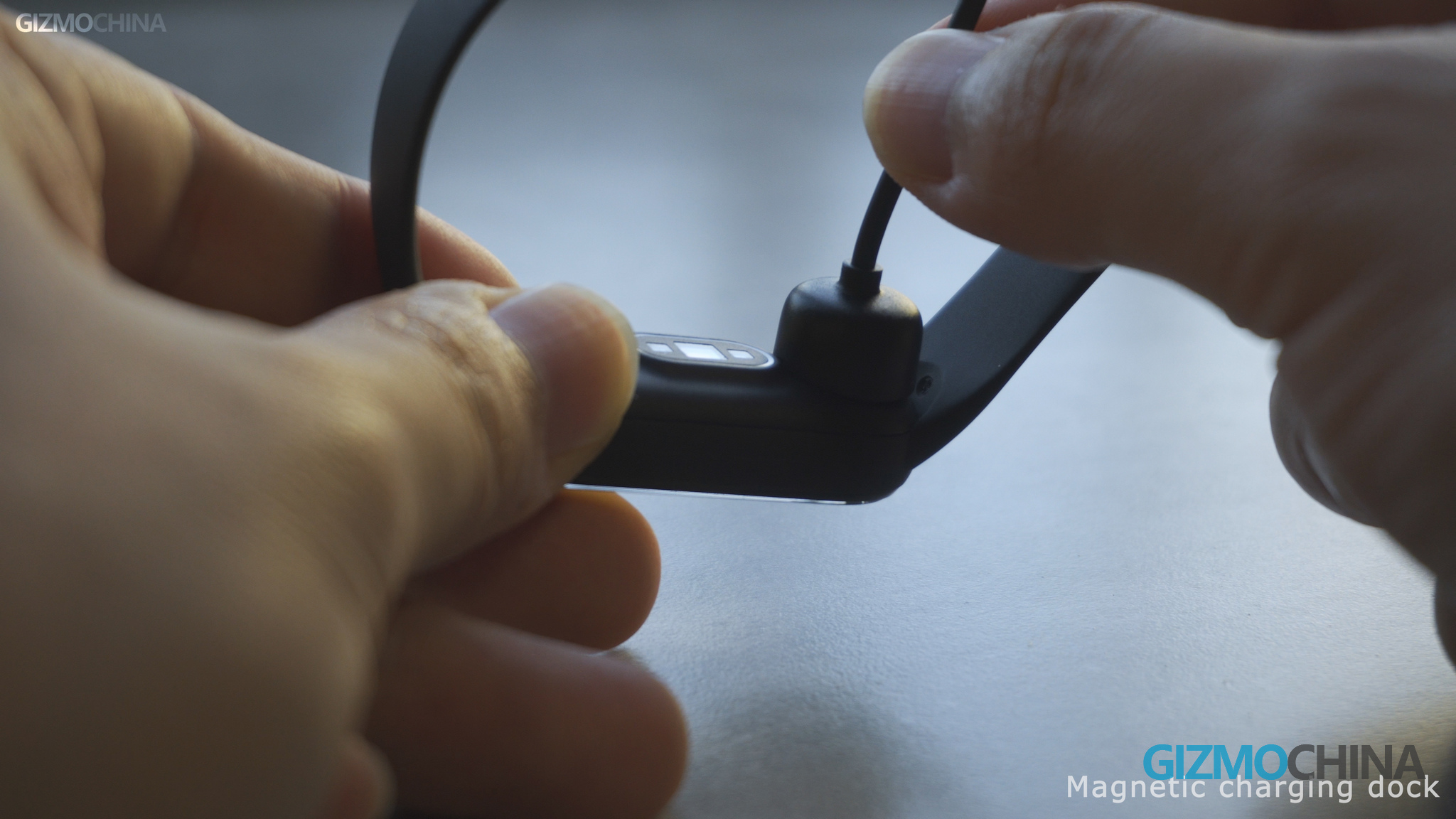
Another wonderful improvement is in its charging method. The Mi band 5 brings an all-new magnetic charging dock. If you had the Mi band 4, you’d how annoying it was to charge it, even if it was once every few weeks. That’s why I’m so grateful for the new charging method, even though we only charge it once every couple of weeks. But pay attention here, Xiaomi did not improve the charging speed, which is understandable as we don’t need to charge it frequently.
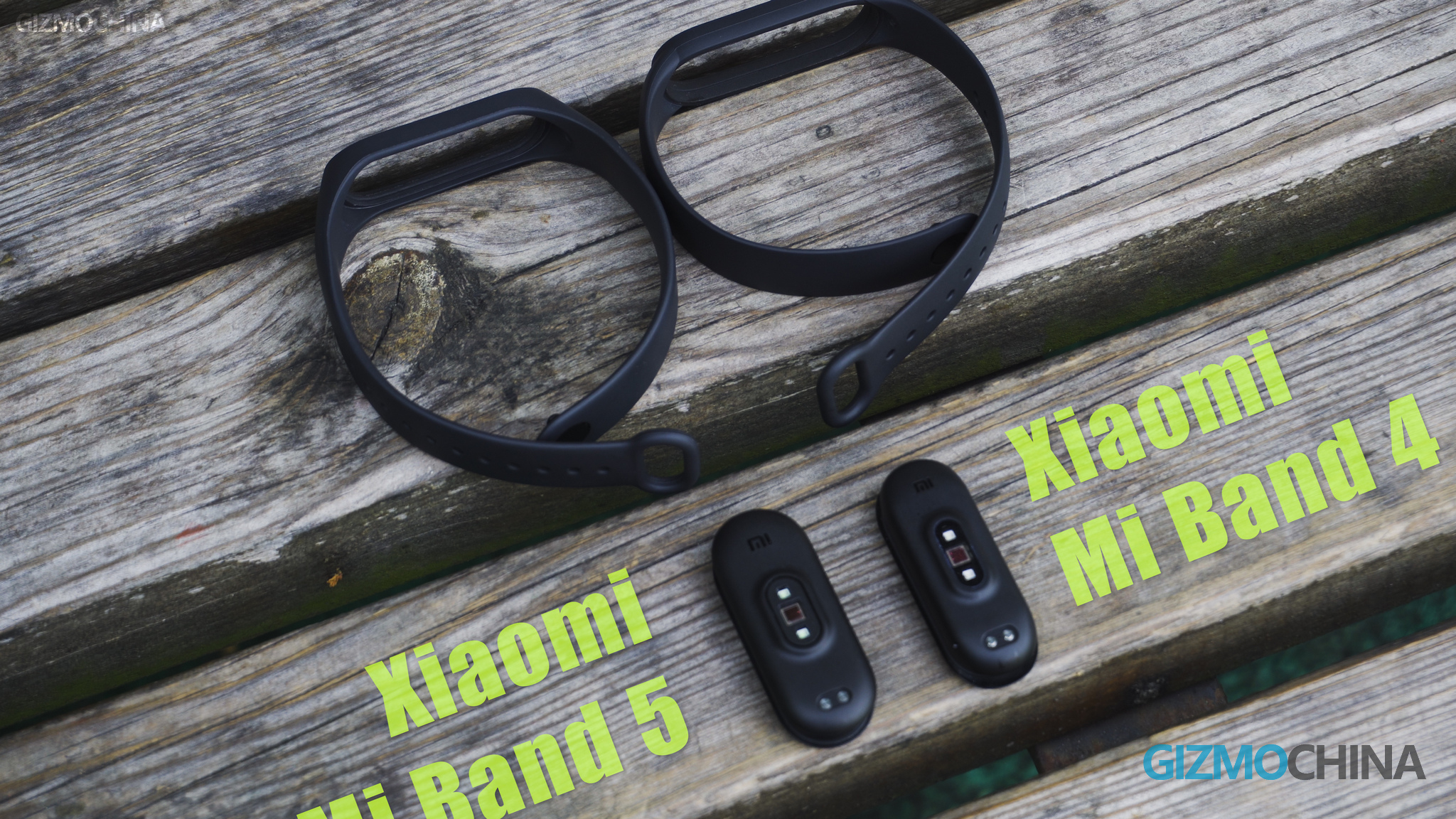
So that’s all the design difference between the Mi band 5 and 4. To be honest, they look almost identical. Since the size of the new body is the same as the Mi band 4 (only the bezels were reduced to increase its display size), we were able to replace the original strap with the Mi Band 4’s strap.
Mi Band 5 gets into Mi Band 4’s strap!
You can also check our out Mi Band 5 hands-on for some additional pictures of the device.
Mi Band 5 Review: Fitness Tracking Gets New Modes & PAI scores
Mi Band 5 Sports Modes
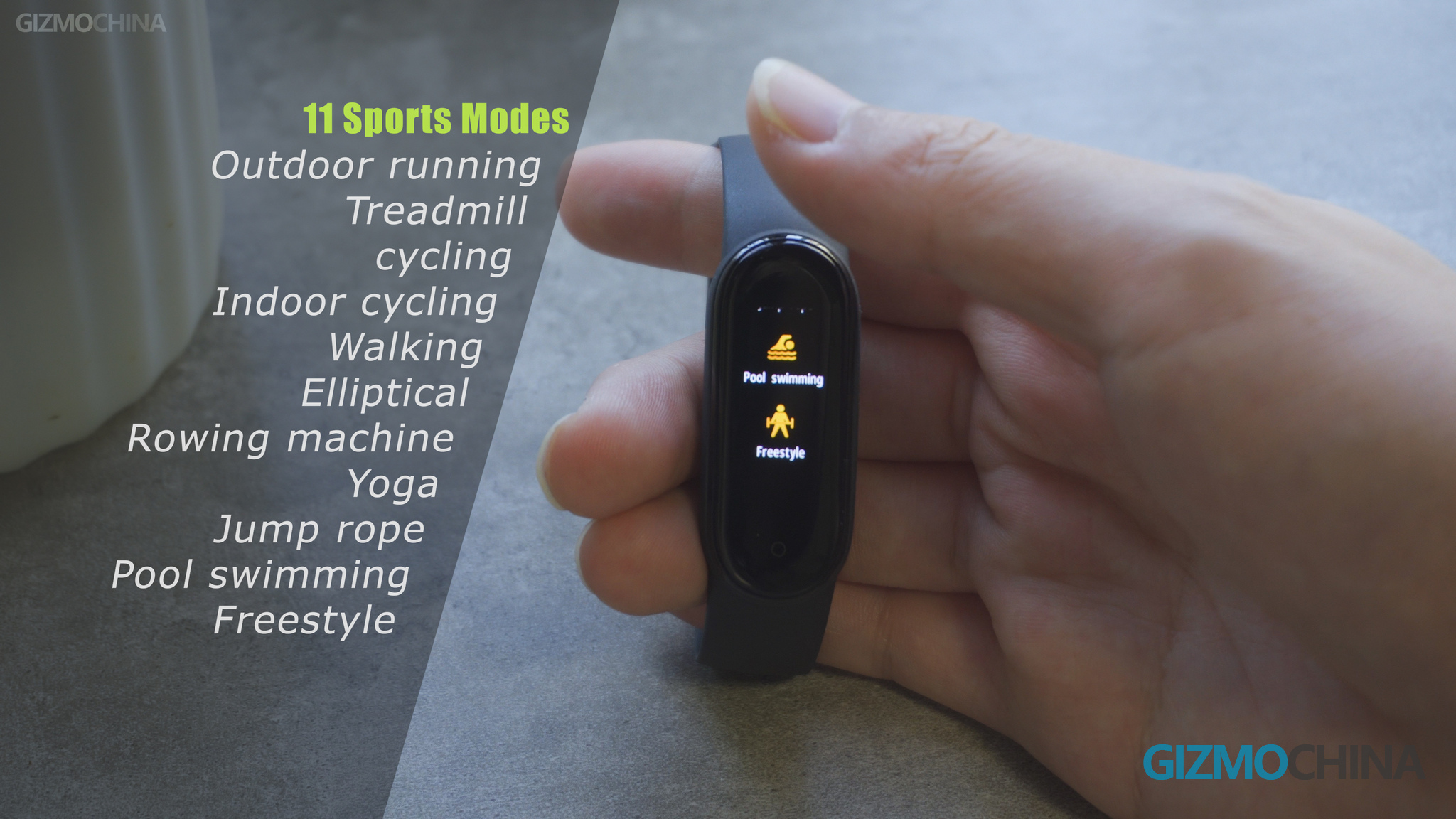
As one of the best cheap fitness trackers, Mi band series has been doing an excellent job in offering various health tracking features. In addition to Mi band 4’s six sports modes, the Mi band 5 supports several new exercise options, offering a total of 11 sports modes. We haven’t tested all the sport modes, but it should be a step up from what you get with the Mi band 4. And for swimming mode, the Mi band 5 also supports 5ATM waterproof as the Mi band 4 did. So, you can wear it even when taking a shower or while swimming.
Besides the sport modes tracking, the Mi band 5 supports some other important health tracking, including improved sleep tracking, blood oxygen tracking, smarter heart rate monitoring, stress test, PAI scoring system, and menstrual cycle tracking for women’s health.
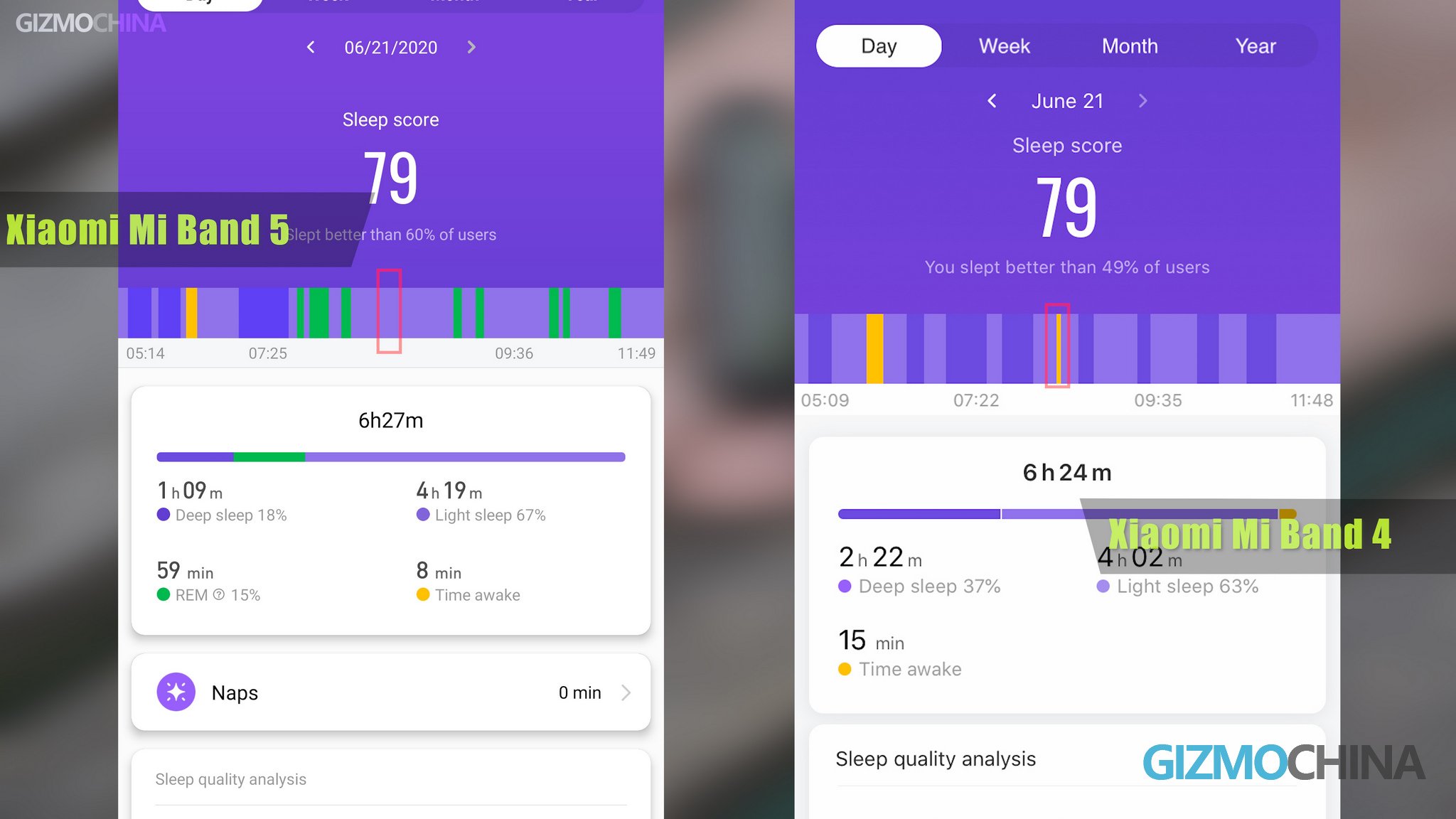
Mi Band 5 vs Mi Band 4 Sleep Tracking
To see if the sleep tracking is improved on the Mi Band 5, our colleague tracked his sleep wearing the two bands at the same time. Well, there was a slight difference in sleep tracking but it’s hard to say which one is more accurate. One detail worth mentioning is that he said he woke up to take a phone call at around 8:20 am. Only the Mi band 4 recorded it down while we couldn’t see it in the Mi band 5’s timeline.
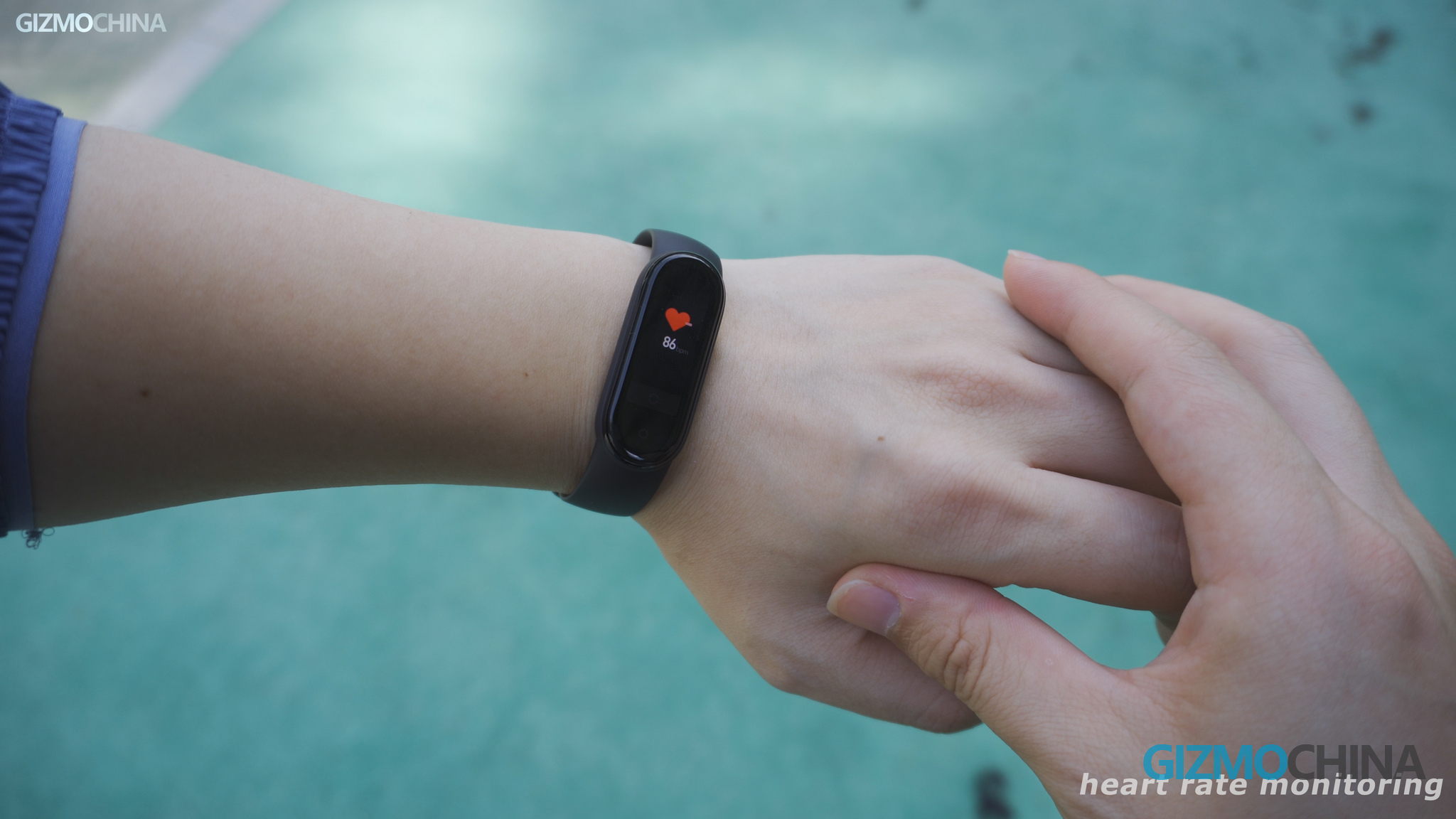
And the heart rate monitoring can be activated all day with different frequencies. But it could increase the power consumption of the band. And it also features a heart rate alert. Simply put, it can warn users about abnormal heart rate issues through vibration and notification.
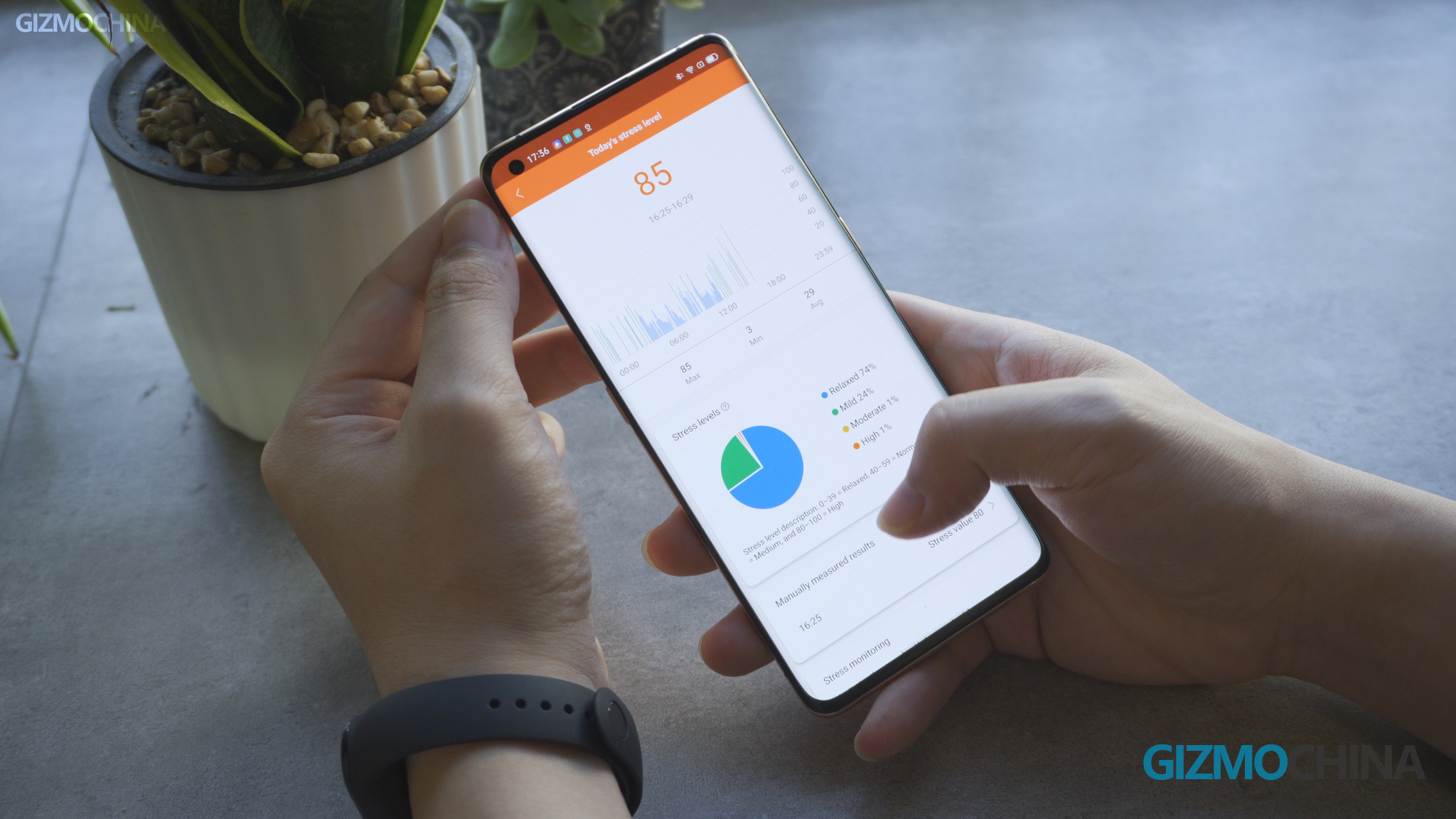
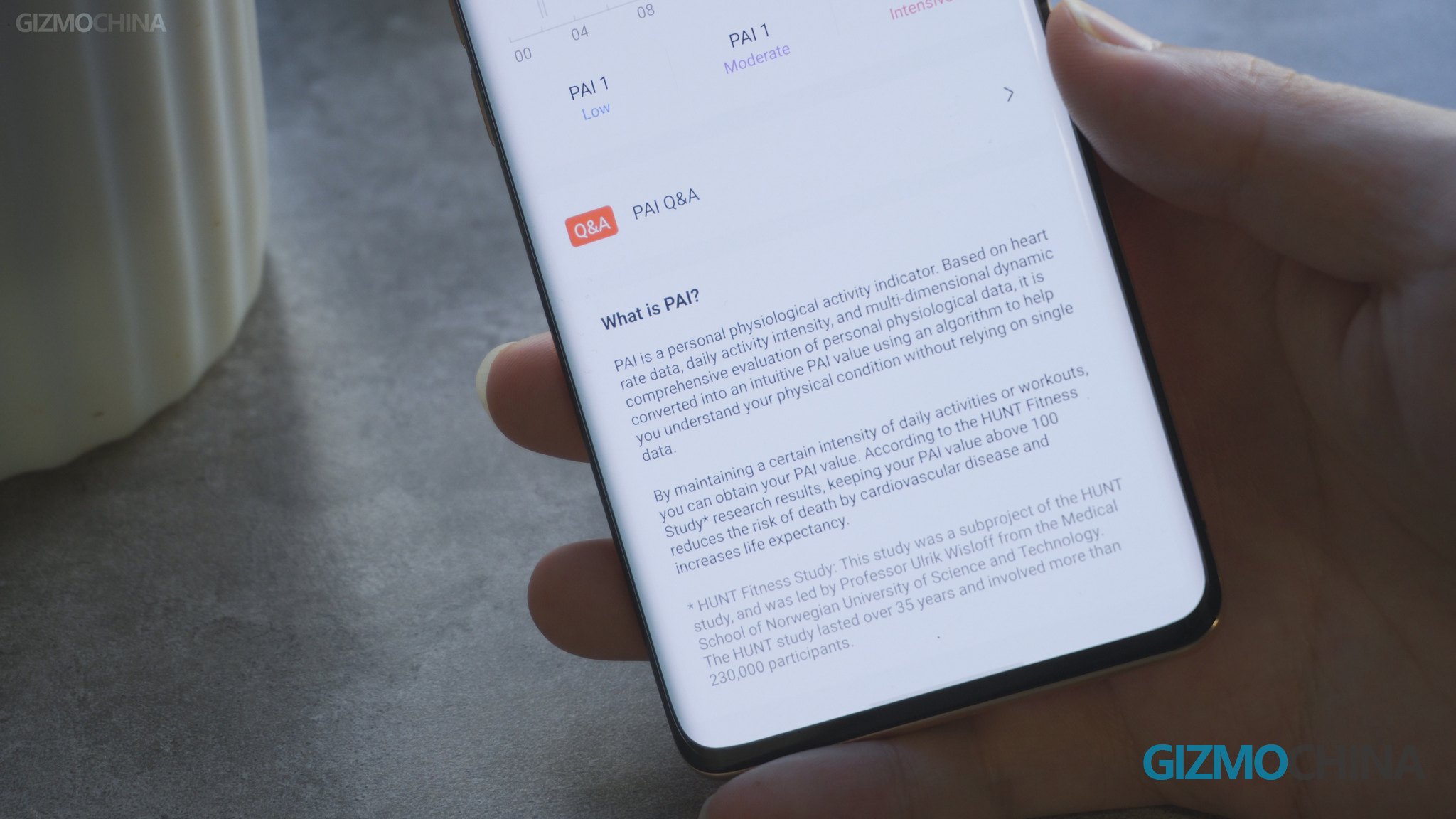
The new stress test and PAI scoring system can help users understand their physical state through tracking. Giving a numerical figure to your physical activity is a good way to see if you are moving towards your goal of becoming fit. The Mi Band 5 showed that I basically stayed at a relaxed state but had a poor fitness. Although it’s hard to say if the PAI score is accurate, at least it’s informational and will motivate users to be fit.
Mi Band 5 Review: New Remote Camera Shutter
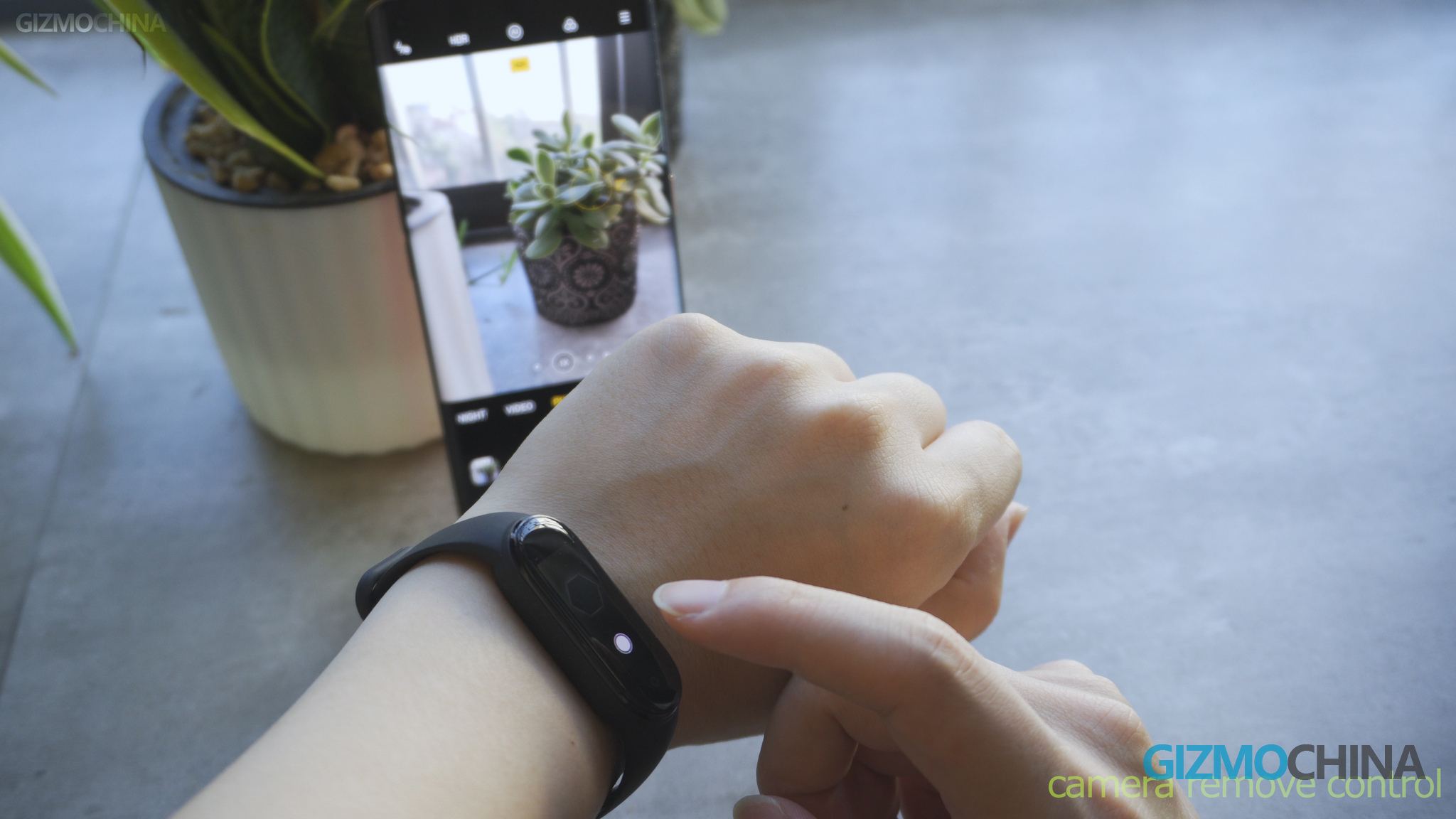
Besides working as an excellent health tracker, the Mi band 5 also reserves a lot of practical features as a helpful assistant. The smart band comes with features such as Idle alert, notification and call reminder, music control, weather reports, phone finder, and so on. We’ve introduced a lot about these features in the Mi Band 4 Review, so there’s nothing really new here. In addition to the above list, the Mi Band 5 has also added a remote camera control feature via Bluetooth. It can act as your phone’s camera shutter, but it’s still not capable of controlling video shooting. It’s nothing really special but for some, it’ll make shooting photos much more convenient, especially when you are traveling alone or need to take group shots.
Mi Band 5 Remote Shutter
Mi Band 5 Review: Same Battery Life As Its Predecessor
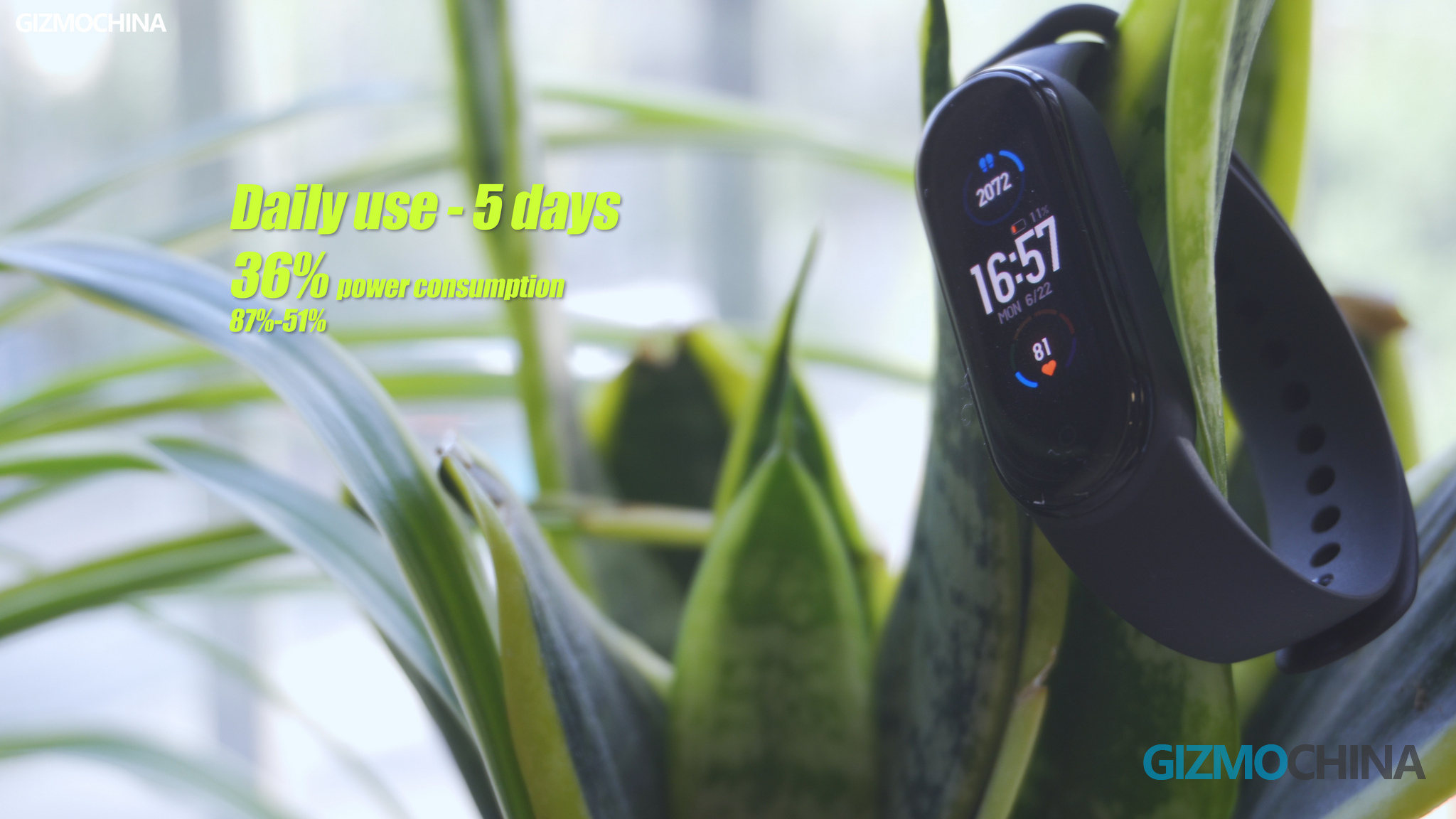
As for its battery, there is no remarkable improvement. The Mi band 5 can last for around 15 days without turning on some features like all-time heart rate monitoring.
After wearing it for five days, it consumed 36% of power, which is an acceptable result. But as mentioned at the start of this Mi Band 5 review, the magnetic charging makes it way easier to charge the device every couple of weeks.
So that’s everything about the Mi Band 5. It’s an excellent smart wearable with practical and useful features. And more importantly, it’s really hard to find a better choice at such a price tag.
As mentioned at the start of the review, we are giving away one unit of the Mi Band 5 to one of our YouTube subscribers! Just follow the steps in the gleam widget below to participate in it.
Chinese OEMs are raining budget 5G handsets every other week. iQOO Z1x is said to be the next mid-range 5G smartphone as per recent leaks. Now, a new leak reveals the device to come with a massive 5,000 mAh battery.
iQOO Z1 5G launched in mid-May as the world’s first smartphone powered by MediaTek Dimensity 1000+ (Plus). It was later followed by the leaks of a lite variant of this phone called iQOO Z1x starting early June.
So far, there’s no much information about this upcoming device except for some tidbits. The first-ever leak claimed it to launch with Snapdragon 765G underneath. Then, 3C certification revealed it to ship with 33W fast charger just like most other Vivo and iQOO smartphones.
Yesterday, another leak reportedly claimed the iQOO Z1x to feature 120HZ refresh rate display, a little lower than iQOO Z1’s 144Hz panel.
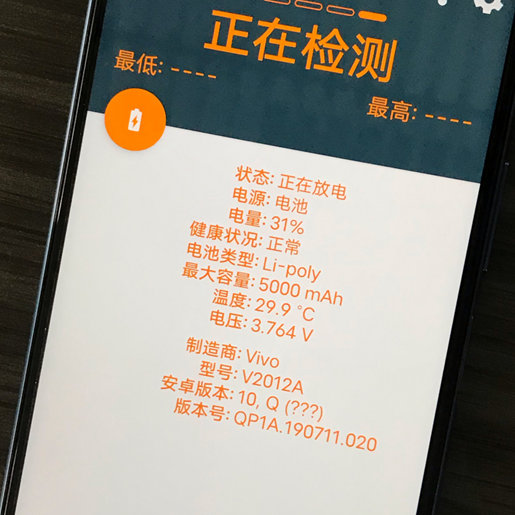
Now, a new spy shot of the smartphone (V2012A) running the Ampere app reveals its battery capacity to be 5000mAh battery, which will be really useful for that high refresh rate screen and 5G connectivity.
Unfortunately, nothing else is known about this upcoming budget 5G handset except for the above-mentioned few specifics.
It has been a long time coming. OnePlus has officially announced that it is launching a new series of smartphones that will be more affordable.
A post published today by Pete Lau on the official OnePlus Forums says they are bringing the premium and flagship experience to a “new, more affordable smartphone product line”.
OnePlus says the decision to make a new series is due to the several requests from “people who want a really solid smartphone that meets their everyday needs and for a far more accessible price”.
The post revealed the new product line will be introduced first in Europe and India. There are also plans to bring more affordable smartphones to North America in the near future.
The new product team has a new lead and that is Paul Yu (pictured above with Carl and Pete). This is most likely the face we will be seeing when it comes to announcements regarding the new line. Paul Yu has been working for OnePlus for more than 5 years. Before joining the team, he was a project manager at Coolpad.
The official OnePlus Twitter account, as well as Carl Pei, has also posted new tweets regarding the upcoming phone with the #NewBeginnings hashtag. Carl Pei also shared a link to an Instagram account with the name “onepluslitezthing”. The account is private but has made three posts.
A tweet by OnePlus says the first 100 followers will receive exclusive items. As at the time of writing, the account already has more than 2700 followers.
Every story has a beginning. And this one starts somewhere on Instagram 😉
The first phone from the new product line is believed to be the OnePlus Nord. The phone is expected to have an AMOLED display, a Snapdragon 765 processor, quad rear cameras, and support for 30W fast charge.
Yesterday, Digital Chat Station revealed that Redmi’s first Dimensity 1000+ smartphone could launch in about two months. But today, he says it will launch next month (July), followed by Mi 10 Pro Plus in August, and Mi Mix 4 in Q4 2020.
June is about to end but neither Xiaomi nor Redmi has launched any new smartphone in their home market. Though the Redmi 9 is launching this week in China, it is not a new handset as it has been already unveiled in other markets.
But next month, we might see a new device from the house of Redmi if Digital Chat Station’s tip is true. According to him, this phone will be powered by MediaTek Dimensity 1000+ (Plus) and could have features like 144Hz high refresh LCD panel, side-mounted fingerprint sensor, and 33W fast charging as per a 3C listing with model number M2006J10C.
The second new smartphone will come from Xiaomi in August. The leakster calls the device ‘Super Large Cup’, which means ultra flagship like the Huawei P40 Pro Plus and Samsung Galaxy S20 Ultra. So this handset could be the rumored Mi 10 Pro Plus.
The leakster also does not mention the name of the last device releasing in Q4 2020 with a hint ‘you know that’. This phone could be nothing but the long due Mi Mix 4.
Having said that, Digital Chat Station also clarifies that this is merely a tentative schedule and thus, the actual launch may vary. But he did confirm to update his followers if he comes to know about any change in Xiaomi’s plans.
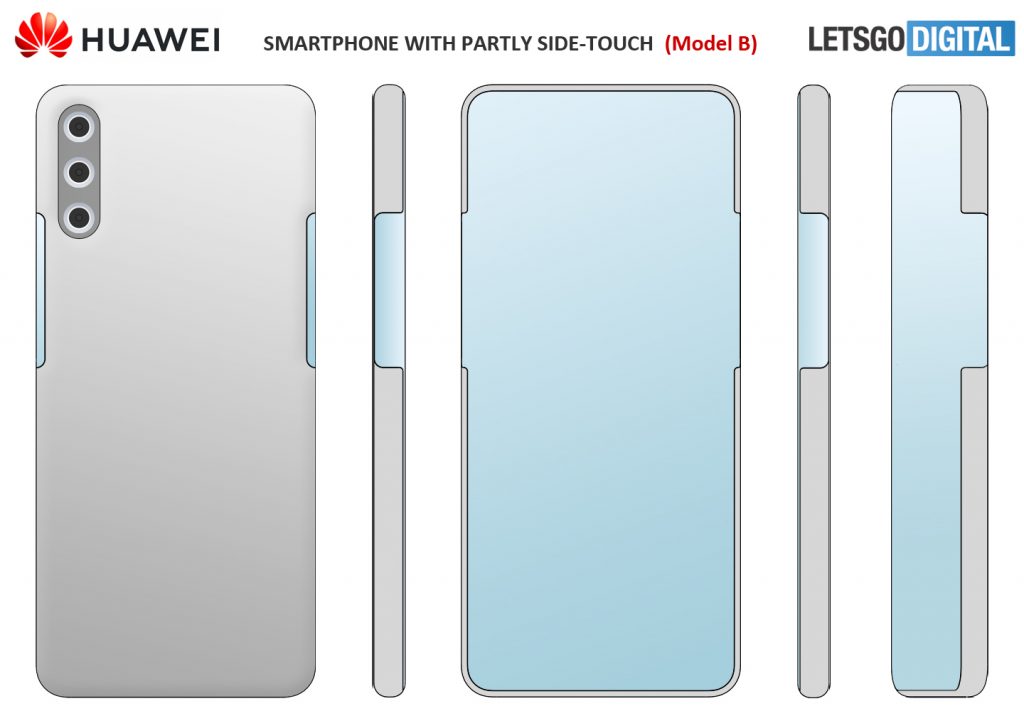
The new patent was filed with the CNIPA (China National Intellectual Property Administration) back in 2019, which was finally granted earlier this month. The patent was also included in the WIPO (World Intellectual Property Office) database and carried 14 images for two smartphones with only slight differences in their design.
The first patented device features a full screen body on the front, with minimal bezels on every side. There is no popup mechanism visible or punch hole camera visible, which means that an under display camera technology might be planned. One of its interesting aspects is on the sides, with the display crossing over and curving into small regions on the sides. This portion will house virtual buttons for both the volume rockers, power buttons, and possibly other functionalities as well.
The only difference between the two patented devices also lies here, with the first having just a slightly curved display cutout while the second has its cutouts reach till the back panel. In other words, a small portion of the display is visible from the back. Unfortunately, no finer details regarding the device are currently available and it might just be Huawei’s attempt to cover all bases. So stay tuned for any new updates.
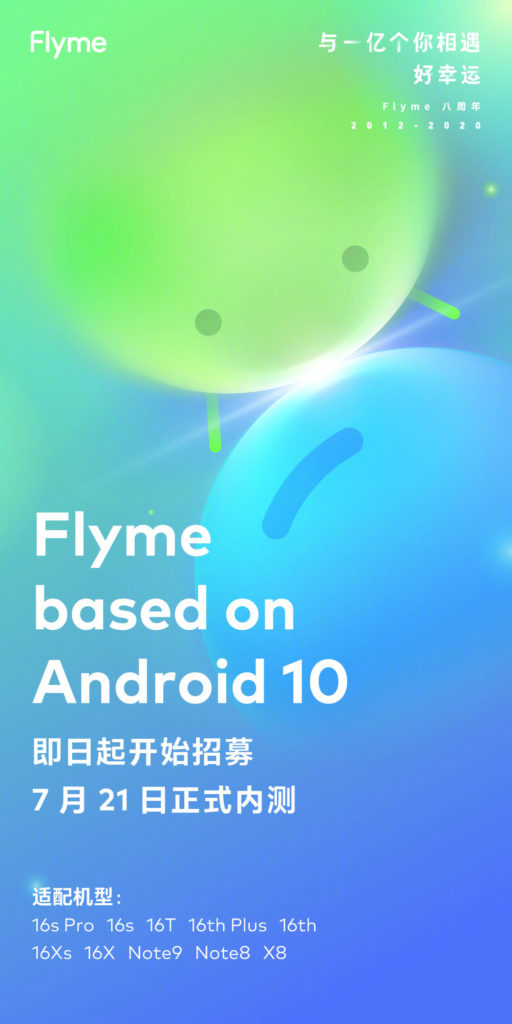
In the last week of May, Meizu released Flyme 8.1 stable update for all the eligible devices. However, the update was not based on the latest stable version of Android. But now, the brand has finally announced Android 10 closed beta recruitment for all those 10 devices that received the latest version of Flyme recently.
The Android 10 update for older Meizu smartphones will be first available to closed beta testers starting July 21. To participate, users will have to register themselves in the system update app.
Interested users must have Flyme 8.1. 0.0A Stable or Flyme 8.20.6.16 Beta installed on their handset. Users who are already enrolled in the beta program need not register again.
Having said that, here are all the 10 Meizu smartphones that will be updated to Android 10.
Meizu 16s Pro
Meizu 16s
Meizu 16th Plus
Meizu 16th
Meizu 16T
Meizu 16Xs
Meizu 16X
Meizu Note 9
Meizu Note 8
Meizu X8
Anyway, just like the Flyme 8.1 update, we are not sure when Android 10 update will be made available for Meizu devices running the global version of Flyme.
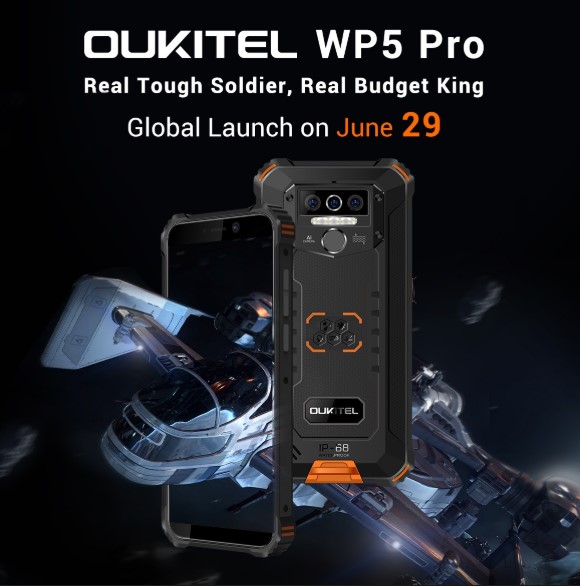
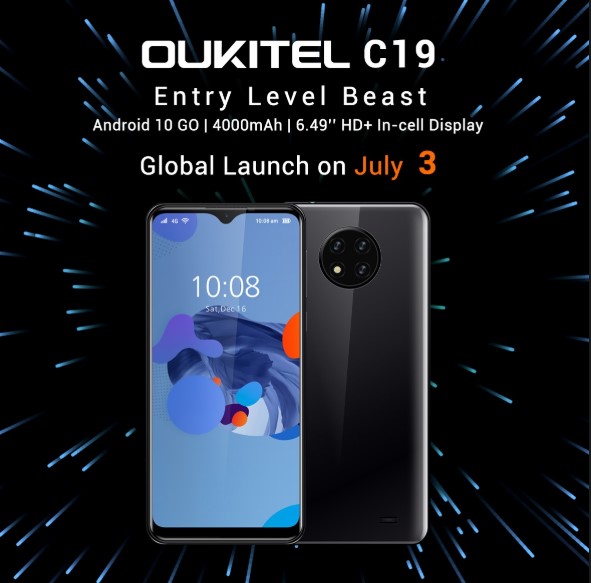
Oukitel is primarily known for its high-end rugged smartphones around the globe. After launching the Oukitel WP7 high-end rugged smartphone, the company is planning to launch Oukitel WP5 Pro rugged phone and Oukitel C19 smartphone on June 29 and July 3 respectively. The new information is recently posted on the Oukitel landing page.
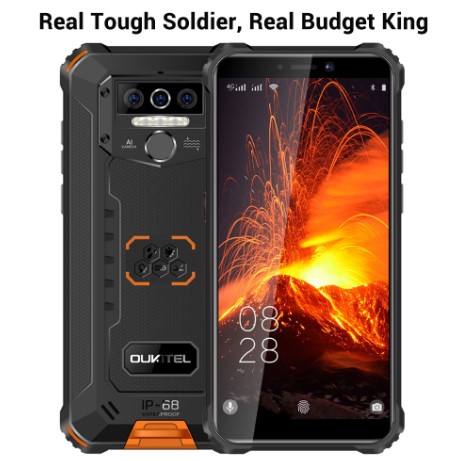
Oukitel WP5 Pro is a high-end rugged smartphone featuring IP68 and IP69 ratings for being dustproof and waterproof. Moreover, its stealthy and rugged design is MIL-STD-810G certified. It is a perfect companion for the users who work in a difficult environment or often go for adventure sport.
The smartphone houses a massive 8000 mAh battery which can sustain for up to 3 days with normal usage. It is another essential feature that might help you while traveling in remote areas.
Oukitel WP5 Pro carries MediaTek Helio A25 SoC featuring an Octa-Core processor and IMG PowerVR GE8320-class GPU. It is available with a 4GB RAM and 64 GB internal storage. The smartphone sports a large 5.5-inch In-cell Display for impressive view and houses a Corning Gorilla Glass 5. In the camera department, there’s a 13-megapixel single-rear camera for better photos.
It runs on the Android 10 Go Operating System with the stock-like experience. You can get it in four different colors of black, green, purple, and gradient blue.
Oukitel C19 is an entry-level smartphone featuring 6.49-inch HD in-cell display and 4000 mAh battery. It also runs on Android 10 Go version.
You can add both the Oukitel WP5 Pro and C19 to get a notification once global sales open. Moreover, you can get Oukitel WP5 Pro and C19 for free by participating in the Giveaway. More information about the giveaway is available on the official Oukitel website.
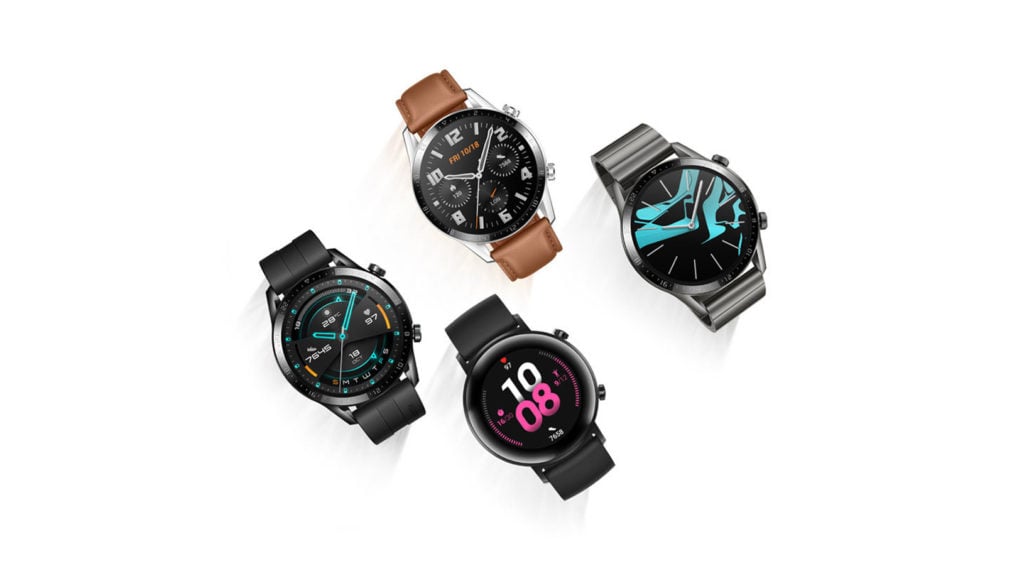
The Honor MagicWatch 2 is a smartwatch by Huawei’s sub-brand Honor. Announced back in November as its second smartwatch, Honor has now rolled out a new update that brings 85 new sports modes.
When the watch launched, it only came with 15 sports modes. With the update, you now have a total of 100 sports modes. The new sports modes include surfing, jet skiing (motorboat), canoeing, and rowing.
An #HONORMagicWatch2 on your wrist is like flippers on a swimmers feet. Keep track of your movements with its 85 new modes. Feeling adventurous? Try all 100. Just update your Huawei Health App and you’re set. pic.twitter.com/5YQsfrO6De
To get the update, all you have to do is update your Huawei Health App. When you connect your watch to your phone and launch the app, its firmware should be updated.
The Honor MagicWatch 2 has a 1.39-inch AMOLED display with a 454 x 454 resolution and Always. It has two physical buttons on the right and the dial has a tachymeter. It also has a built-in speaker and microphone
Just like the Huawei Watch GT 2, it is also powered by the Kirin A1 processor. There is 4GB of storage and 32MB of RAM Some of its features include 24-hour heart rate monitoring, sleep tracking, SpO2 measurement, and stress monitoring.
The smartwatch has GPS, NFC, 2.4GHz Wi-Fi, and Bluetooth 5.1. Its 455mAh battery should last up to 2 weeks on a single charge with standard usage. The battery life drops to 30 hours with GPS turned on.
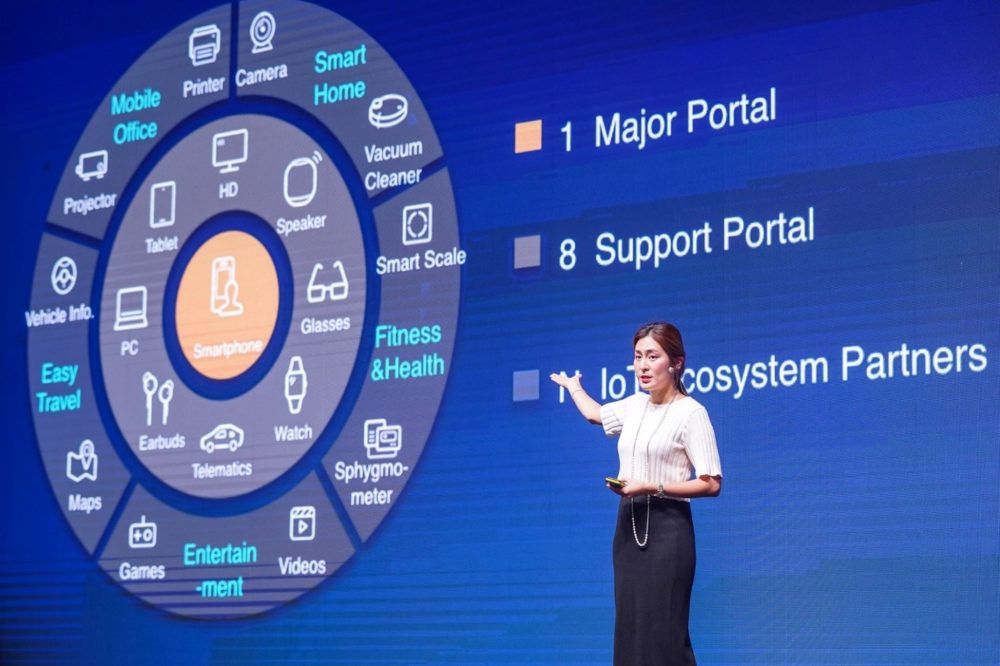
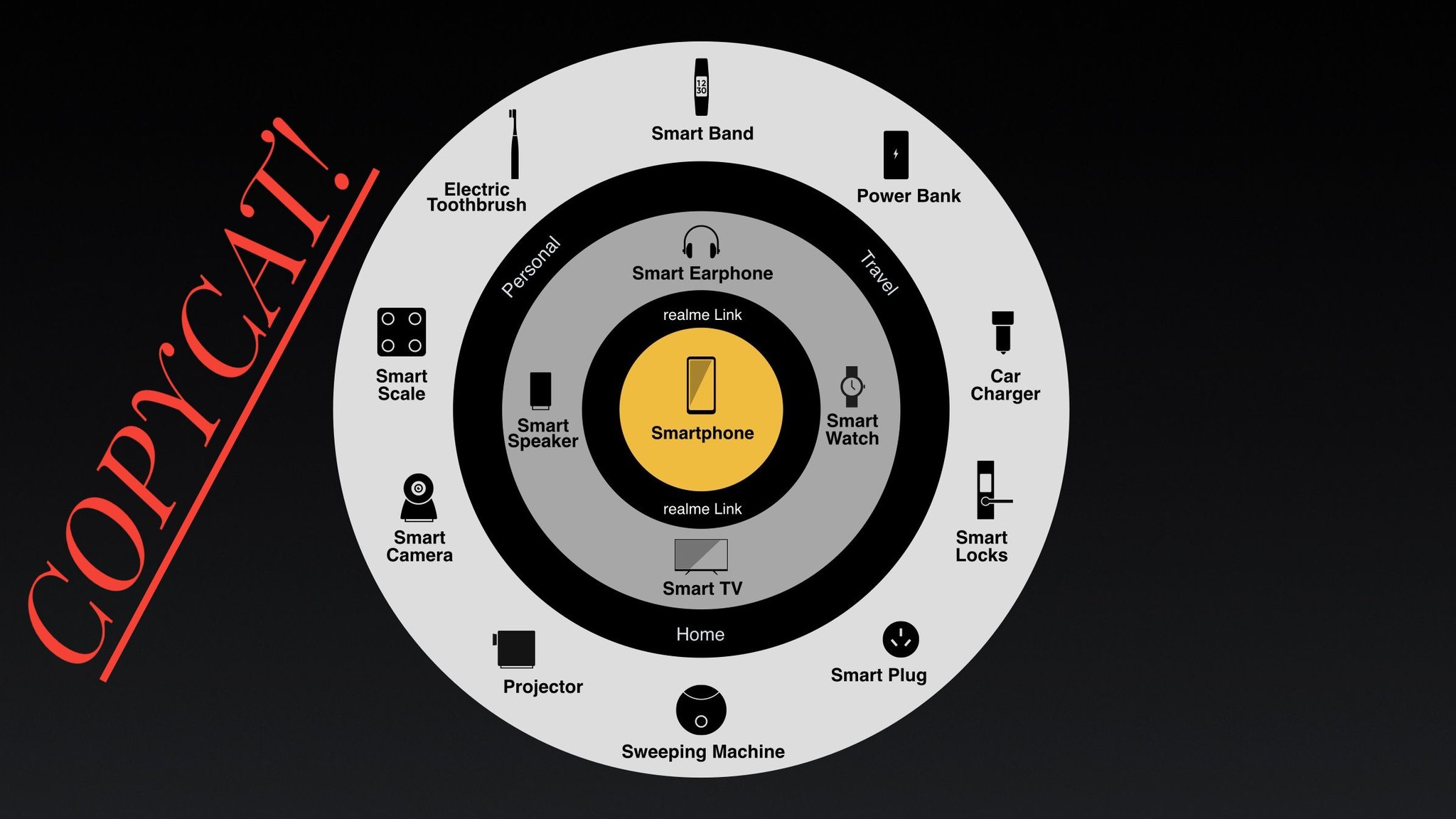
The Chinese company announced earlier today its new 1+4+N product strategy, were ‘1’ refers to smartphones, ‘4’ refers to various IoT products and upcoming IoT and lifestyle products with the ‘N’ standing for new. While this sounds quite elaborate it is nearly identical to Huawei’s 2019 1+8+N strategy. The ‘1’ also stood for smartphones, while the ‘8’ and ‘N’ stood for IoT devices and smart homes and more.
In other words, the new Realme product strategy seems heavily inspired if not a direct ripoff. The company could’ve easily gone for another branding or name, but the move was quite obvious. Interestingly, a Xiaomi representative took to Twitter to call out Realme’s action, calling them a copy cat and also sharing the product strategy wheel that both companies shared, albeit with a 1 year gap.
It's called as "originality". Dear #CopyCat brand, you should try it sometime. Now even copying slides.
BTW I am surprised – why did you leave the laptop category? We just launched it. Please add that too your slide too. 🙏
Looking at these images, even the illustrations seemed downright copied. This kind of incident isn’t exactly uncommon in the industry and direct inspirations have been seen in the past as well. But this one seems a little too lazy to say the least. To make matters worse, neither Huawei nor Realme’s product strategy is easy to say out loud, so was it even worthwhile?
TSMC has apparently replaced all of the canceled Huawei orders, according to a new report. The world’s largest contract chipmaker was the primary chip supplier of the Chinese tech giant but had to stop supplying the OEM due to recent US sanctions.
Huawei’s HiSilicon Kirin mobile chips were manufactured by TSMC
Huawei was a major client of TSMC, and losing this customer also implied losing a big chunk of their revenue. But it seems that TSMC has already replaced all o its canceled Huawei orders. The news from Kung Ming-hsin, the new head of the Taiwanese Economic planning agency, who revealed that the US sanctions weren’t to disrupt relations between Taiwan and China, but only aimed at Huawei.
Furthermore, he said that “As for TSMC, although their orders no longer have Huawei, they’ve quickly been filled up, as other people really need them.” The chairman of the contract chipmaker also backed this up by stating that there is ample demand from other companies that will quickly fill up the gap. Notably, the company is currently mass producing its latest 5nm chips for its various clients including Apple.
Kung stated that the reason for Huawei being targetted is due to possible ties with China’s government, although there are those that argue otherwise. While Huawei will face issues after the loss of its chip supply, the company is heavily investing in local sources and other non-US supply chains.
Xiaomi unveiled its long-awaited Mi 10 5G smartphone via an online-only event in China earlier this year. The new series includes the Mi 10 and the Mi 10 Pro premium flagship phones.
Touted as one of China’s most reliable e-tailers, Giztop is now offering multiple color and storage variants of the Xiaomi Mi 10 5G at considerably lowered prices. As if that weren’t enough, the popular online store is allowing its loyal users to save $50 more at checkout.
Available in black, gold, and Ice Blue color options, the 8GB RAM+128GB ROM model would normally set you back $699, but Giztop is offering it for an unbeatable price of only $599. On top of that, you can use coupon code M10C50 and get an extra $50 off. In short, this variant can be yours for only $549.
The slightly larger model that ships with 8GB of RAM and offers 256GB of internal storage space usually retails for $729, but Giztop is giving you a chance to get your tech greedy hands on this variant for a lowered price of only $629. By applying coupon code M10C50 at checkout, you can bring the already lowered asking price of the phone further down to only $579.
You can choose between three highly appealing color options including black, gold, and Ice Blue. If you fancy using a power-packed handset to offers bigger storage capacity, you might want to check out the 12GB RAM+256GB ROM model, which will normally set you back $769.
Much to the relief of those living on a tight budget, Giztop is now offering the aforesaid model for a reduced price of only $669. If that doesn’t impress you much, simply apply coupon code M10C50 for an extra $50 off during the check out process. The coupon helps you bring the original selling price of the model down to just $619.
The Xiaomi Mi 10 5G is an irresistible smartphone that sports a mammoth 6.67-inch Curved AMOLED punch-hole display with an FHD+ resolution of 2340x 1080 pixels. The phone packs a powerful Qualcomm Snapdragon 865 5G mobile platform along with an Adreno 650 GPU under the hood.
In the optics department, the phone houses a 108MP, 13MP, and a 2MP camera at the back. Upfront, it features a 20MP AI camera for selfies and video calling. Moreover, the phone runs MIUI 11 based on Android 10 OS and is backed by a 4780mAh battery that supports fast 30W wired charging, 30W wireless charging, and 10W reverse wireless charging.
You can head straight to this link to check out more details about the Xiaomi Mi 10 5G and place your order through Giztop. To avail of the discount, make sure you place your order before the coupon expires.
The Gizmochina Coupons is a community that finds, reports, and evaluates deals and coupons of Chinese products from online shops. Please visit it here to find more coupons to save money on mobiles and smart gadgets.
Xiaomi took the wraps off the long-awaited Mi Band 4 successor dubbed the Mi Band 5 on June 11, but the company refrained from divulging details about the newfangled fitness tracker on the listing page.
The global variant of the recently launched Xiaomi Mi Band 5 has gone up for sale bearing a considerably lowered price on Giztop. While the Mi Band 5 global model would normally set you back a pretty penny, you can now pre-order it for a lowered price of just $42.99 from the popular Chinese e-tailer.
This is a significant drop in the device’s original asking price of $49.99. An absolute steal at this price, the Mi Band 5 sports an easy to read 1.1-inch AMOLED Large Dynamic Color screen with a high resolution of 126 x 294 pixels.
Aside from a stunning visual experience, the screen offers an engaging interface and smart message notification. Much to the delight of health-conscious users, the Mi Band 5 is integrated with a 24 hours intelligent heart rate sleep monitoring and Women’s health mode, along with 11 professional sports modes.
The Mi Band 5 is 5ATM Water Resistance, meaning, it can withstand pressures equivalent to a depth of 50 meters. The device is backed by a 125mAh battery that lasts up to 14 days on a full charge. It can be charged fully in just 1.5 hours via a pogo pin charger.
To know more about the Xiaomi Mi Band 5 global model and to place your pre-order, all you need to do is to follow this link visit wasting time. Note that the fitness tracker’s shipping will start from June 30.
The Gizmochina Coupons is a community that finds, reports, and evaluates deals and coupons of Chinese products from online shops. Please visit it here to find more coupons to save money on mobiles and smart gadgets.
IDC has released its report on China’s wearable market for Q1 2020. According to it, Huawei led the market just like it did in smartphones. Apple and Garmin were the only non-Chinese companies performing well in the region. As a whole, the market shipped 17.62 million units, which translates to 11.3% YoY decline.
According to the report, the shipments of basic wearables that don’t have support for third-party apps (eg. fitness trackers) decreased by 5.5% YoY with 14.86 million units. On the other hand, the proper smartwatches (including adult and kids) also witnessed a whopping decline of 33.3% with only 2.76 million units.
The decrease in shipments is due to the COVID-19 pandemic but it also helped in the increased shipments of wireless earphones (26.5% YoY) and adult smartwatches (8.4%) as people are working as well as attending schools/colleges from their homes.
As per IDC, by the end of 2020, the overall wearable market of China will grow by 17.4% while wireless earphones and adult smartwatches will grow by 47.7% and 37.6% respectively.
China’s Top 5 Wearable Brands in Q1 2020
Huawei
Xiaomi
Apple
LifeSense
BBK Electronics
Huawei led the overall Chinese wearable market in Q1 2020 with shipments of 4.282 million units, which accounted for 24.3% market share. The company grew 18.8% YoY as its shipments and market share were 3.605 million and 18.1% at the same time last year (Q1 2019).
Xiaomi came a close second with 23.5% market share based on 4.144 million units of shipments. But it witnessed a decline of 0.6%. In the previous year, it led the market with 4.177 million units and 21.0% market share.
At the third position, Apple shipped 2.848 million units covering 16.2% of the market. The US tech giant grew 15.2% YoY from 12.4% market share and 2.473 million units.
The fourth position was occupied by LifeSense with 4.5% market share shipping 785K units. It was the only brand to show a huge increase in its market share by 72.9% YoY. For comparison, in Q1 2019, it only shipped 458K units and grabbed a mere 2.3% market share.
Lastly, the fifth place was held by BBK Electronics, which is known for its Okii XTC smartwatches for kids. It shipped 765K units down from 1.448 million units last year. It only accounted for 4.3% market share compared to last year’s 7.3%. In other words, it was the worst-performing of all the top brands with 47.1% YoY decline.
China’s Top 5 Adult Smartwatch Brands in Q1 2020
As adult smartwatch performed well in Q1 2020 in China, IDC also released a separate top 5 chart for it. Here’s a table to understand it better.
Brands
Q1 2020 Shipments
Q1 2020 Market Share
Q1 2019 Shipments
Q1 2019 Market Share
Increase/Decline YoY
Huawei
1.045 million
47.8%
493K
24.5%
111.9%
Apple
319K
14.6%
285K
14.1%
11.9%
Xiaomi
128K
5.9%
44K
2.2%
189.5%
Jiaming (Garmin)
110K
5.0%
131K
6.5%
-16.1%
Huami
98K
4.5%
345K
17.1%
-71.6%
From the table, we can clearly see that Xiaomi and Huawei were the most successful brands in Q1 2020 with an increase of 189.5% and 111.9% YoY respectively. However, Huami’s market share plunged by 71.6% YoY making it the worst-performing top brands in the same period.
Non-Chinese brands like Apple and Garmin’s Jiaming made it to the top list but only the former showed an increase of 11.9% YoY, whereas the latter declined by 16.1% YoY.
China has successfully launched its final satellite within its BeiDou constellation network earlier today (23rd June 2020). The launch of the final satellite completes its new global navigation system which has been in works for about a decade.
The Long March 3B rocket flew the final BeiDou Navigation Satellite (BDS) into orbit from the Xichang Satellite Launch Center in southwest China. Its lift off occurred at 9:43 am Beijing time, which had finally been given the green light after a delay that lasted nearly a week due to technical problems.
Images via CCTV
Previously, the initial satellite launched before the final one had only been announced after successful insertion into orbit. But in a rare turn of event, the Chinese government announced the launch in advance and even broadcasted the launch live on television and online platform, which also included an English translation that was available on state services.
For those unaware, China began the development of its BeiDou satellite system back in the 1990s, with the first satellite launching in 2000. The indigenous navigational system was developed to be a local offering similar to the GPS system from the US. The BDS system consists of 30 satellites, with its applications ranging from high-precision positioning to short message communications.
The new satellite system also features “higher bandwidth, enabling enhanced communication capability and carrying more accurate … atomic clocks to improve the precision of timing and navigation services.” Notably, the system had faced various delays due to the ongoing Coronavirus pandemic, but with the final satellite’s launch, the system can finally rival other navigational systems.
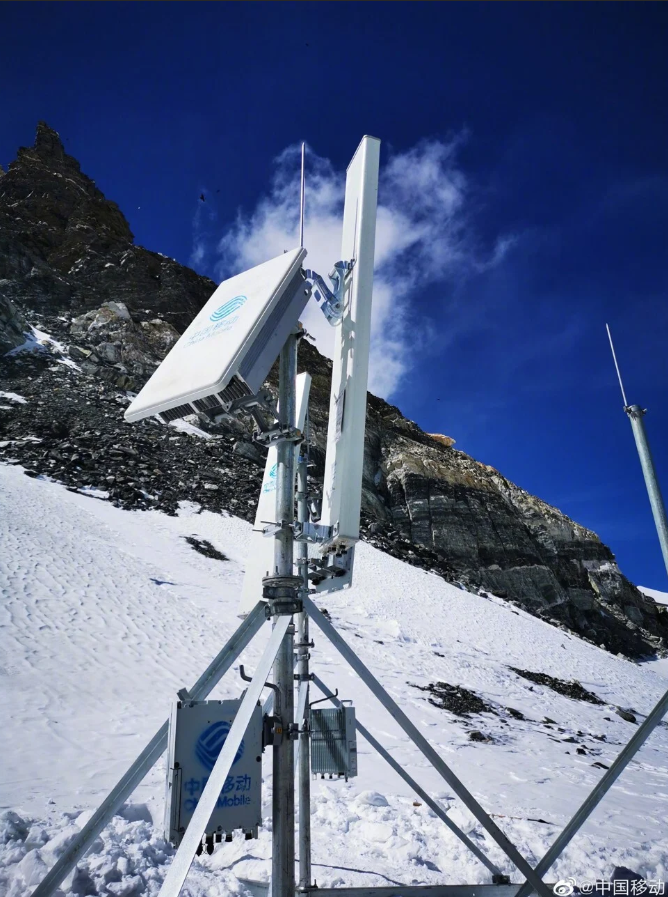
The telecom operators from the UK have been urged to stockpile on networking equipment made from Huawei. The move is being undertaken after growing fears that the latest US sanctions might impact operations for telecom firms in the region.
Huawei 5G Base Station
According to a fresh report from Reuters, the National Cyber Security Centre (NCSC) has written to BT and Vodafone, urging them to maintain a healthy supply of gear from all vendors. However, the Chinese tech giant’s networking equipment was specifically mentioned and the operators were also asked to provide updates regarding the matter.
For those unaware, Huawei is a known telecommunications equipment provider and has been in the UK for more than two decades. It is also a key supplier for major telecom operators like BT and Vodafone and through its role in the country, has been able to expand to other regions as well. The Chinese firm was also highly invested in the 5G development of the country but due to scrutiny from the west, it has had its position questioned.
At the moment, the UK is planning on removing all Huawei made equipment by 2023. Previously, the US had pressurized the region to ban the company outright, but a total ban is impossible without causing disruption within the country’s telecommunications infrastructure. Recent US sanctions have cut off chip supply from TSMC to Huawei, which will also affect its telecom equipment production. Thus, the move is understandable for a stable supply.
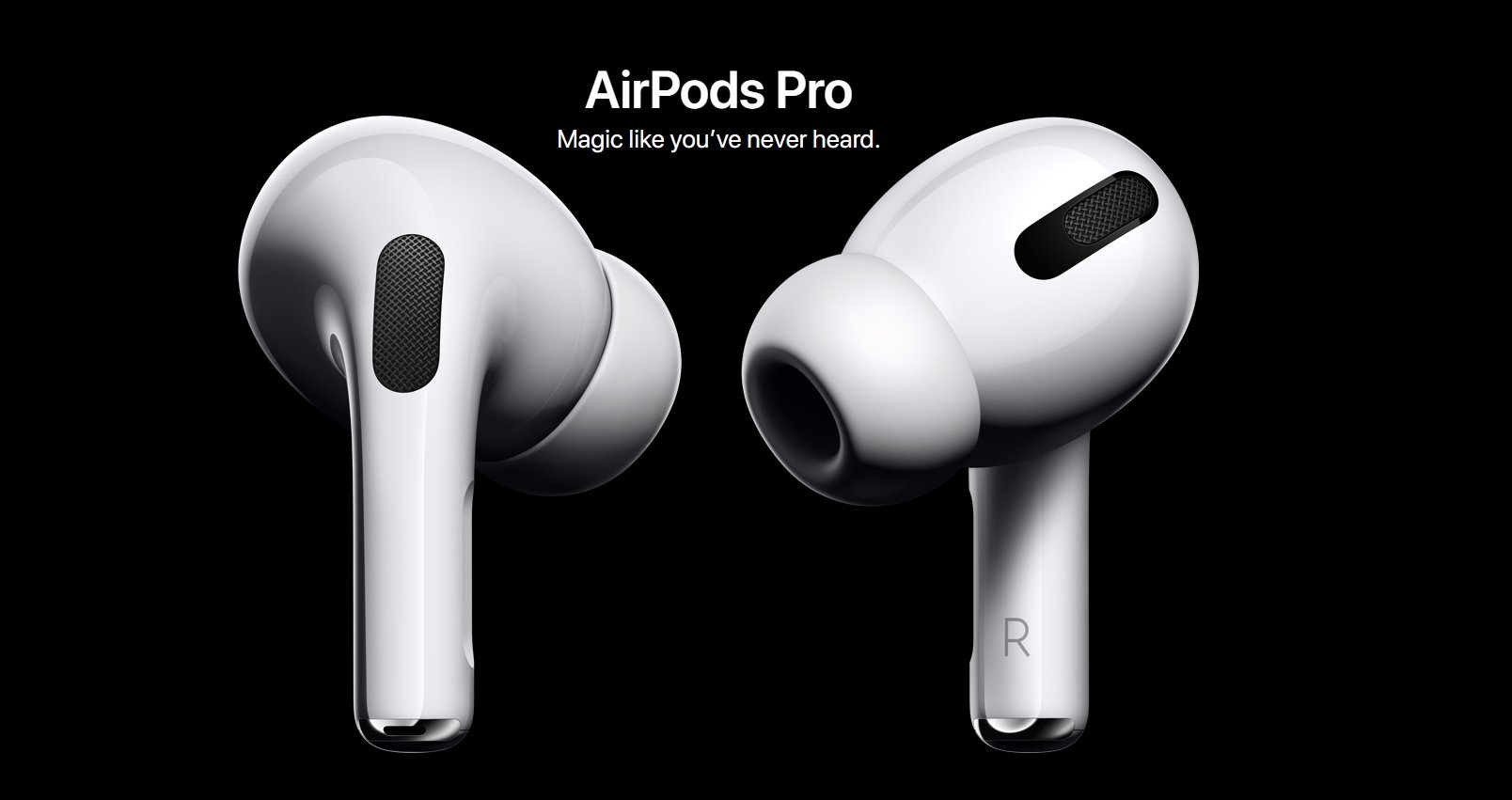
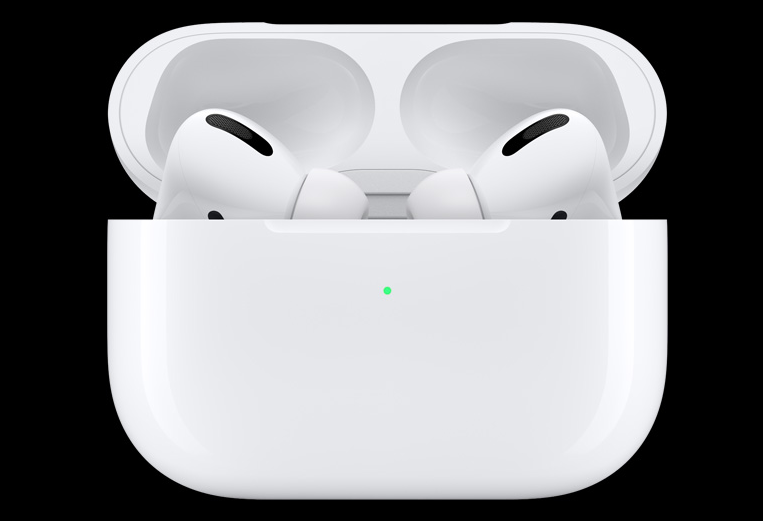
Apple is apparently planning on launching the third generation of its highly successful TWS earphones in the first half of 2021. According to known analyst Ming-Chi Kuo, the AirPods 3 will be launched in H1 of 2021 and will feature a design similar to the AirPods Pro.
Apple’s AirPods Pro was launched back in November 2019 and featured an in-ear design, which featured soft and flexible silicone tips. This was a notable departure from its traditional earphone designs. Furthermore, the Cupertino based giant also offered a number of improvements and offered great features like active noise cancellation, improved sound quality, and water resistance as well.
Kuo also stated that the upcoming iPhone 12 lineup will not feature EarPods in the box. This move from Apple is reportedly to boost its AirPods sales which seem likely since its hearables offerings are one of the top selling within its category. Unfortunately, the pricing of the next gen AirPods is unknown, but it might be around $199 (similar to the second-generation AirPods) or $249 (similar to the AirPods Pro).
Additionally, the analyst also expects the AirPods shipments will also be backed by a promotional campaign that will arrive in the second half of 2020. What this might entail is currently unknown, but the hearables might be offered at discounted rates alongside the new iPhone lineup. Although that is just speculation, hence, take it with a grain of salt and stay tuned for more updates.
Google is bringing a new feature to its popular search engine. Its system will have a ‘Fact Check’ label on its image search results to verify the visual content, starting from today.
The Fact Check label can be found on the image thumbnails in the image search category and will search as a verification effort in Search and news. According to a statement from Google, “Photos and videos are an incredible way to help people understand what’s going on in the world. But the power of visual media has its pitfalls—especially when there are questions surrounding the origin, authenticity, or context of an image.”
In other words, the new feature arrives to help people differentiate between authentic searches and unknown and possibly misleading sources. These labels will also help users make informed decisions regarding the content that they wish to see. Google also shared an example of this through its official Twitter handle. Say, someone, search Google Images for a shark swimming down the street in Houston, a fact check label will be attached below it, verifying the content.
Is that image of a shark swimming down a street in Houston real? Google Images now has "Fact Check" labels to help inform you in some cases like this (no, it was not real). Our post today explains more about how & when fact checks appear in Google Images: https://t.co/YisZuOyGEHpic.twitter.com/aRntlIo6qT
— Google SearchLiaison (@searchliaison) June 22, 2020
If a user clicks on the image to expand it, the fact checked search result will also display a preview of the image alongside a short summary of the information contained within the webpage and where the image is featured. Notably, these fact checks are present only on independent, authoritative sources and it is currently unknown what criteria a publisher needs in order to receive to also fall under this category. An algorithm determines trustable sources and offers the label.
Nokia, the Finland-based telecom equipment maker, has confirmed that it plans to cut around 1,233 hobs at its subsidiary Alcatel Lucent International. The number of jobs cited accounts for about one-third of the company’s workforce.
Currently, Alcatel Lucent International has about 3,640 employees. Of the total 1,233 jobs being cut, 831 jobs belong to the Nozay site, and 402 jobs belong to the Lannion site. Nokia France affiliate companies, including Radio Frequency Systems, Nokia Bell Labs France, and Alcatel Submarine Networks aren’t affected by the job cuts.
The development comes as the acquisition condition of not cutting the French jobs for at least five years is about the expire. This raises the question if Nokia intended to take this step as soon as it was allowed to or if the company is just trying to accommodate as per the market conditions.
However, Nokia has said in a statement that staff reduction is a necessary move because of the significant cost pressures. In the month of April, Nokia had said that the company planned to cut costs by 500 million euros by the end of this year, with 350 million euros targeted to come from operating expenses and 150 million from sales costs.
Nokia acquired the France-based Alcatel Lucent for €15.6 billion to strengthen its position in the market. During the acquisition, the French government was pretty clear about saving French jobs and put up a condition that Nokia would not cut French jobs for at least five years after the acquisition, the period which is about to expire.
The company is competing against the like of Huawei and Ericsson in the telecom equipment space. The job cuts at Nokia come at a time when it is the only company among the “big five” whose R&D investments have declined over the past years but it is higher than the other four when compared to the revenue.
We use cookies on our website to give you the most relevant experience by remembering your preferences and repeat visits. By clicking “Accept”, you consent to the use of ALL the cookies.
This website uses cookies to improve your experience while you navigate through the website. Out of these, the cookies that are categorized as necessary are stored on your browser as they are essential for the working of basic functionalities of the website. We also use third-party cookies that help us analyze and understand how you use this website. These cookies will be stored in your browser only with your consent. You also have the option to opt-out of these cookies. But opting out of some of these cookies may affect your browsing experience.
Necessary cookies are absolutely essential for the website to function properly. This category only includes cookies that ensures basic functionalities and security features of the website. These cookies do not store any personal information.
Any cookies that may not be particularly necessary for the website to function and is used specifically to collect user personal data via analytics, ads, other embedded contents are termed as non-necessary cookies. It is mandatory to procure user consent prior to running these cookies on your website.

 The company disclosed this in a poster released on the Realme India Facebook page. The post also hinted that the launch will be an online event. The poster equally reiterates that the Realme C11 will be the first model to pack the MediaTek Helio G35 which is still unannounced. However, the processor is said to be an Octa-Core SoC manufactured uses 12nm process, similar to other G series SoC, but this is clocked up to 2.3 GHz, and adopts the Cortex A53 cores.