Advertisement

A compilation of 2020′ April Fool’s Tech Jokes

Countries all over the world are battling the Coronavirus pandemic, so April Fool’s Day is the last thing on the minds of several people. However, it is also important we take a break from the gloomy news flooding the internet and read posts that help improve our moods and take our minds off worrying. So go on and read our compilation of April Fool’s Day jokes from your favorite tech companies.

While it should be obvious, we still want to remind our readers that these are jokes and should not be taken as real products.

DJI MAMO Flying Gimbal

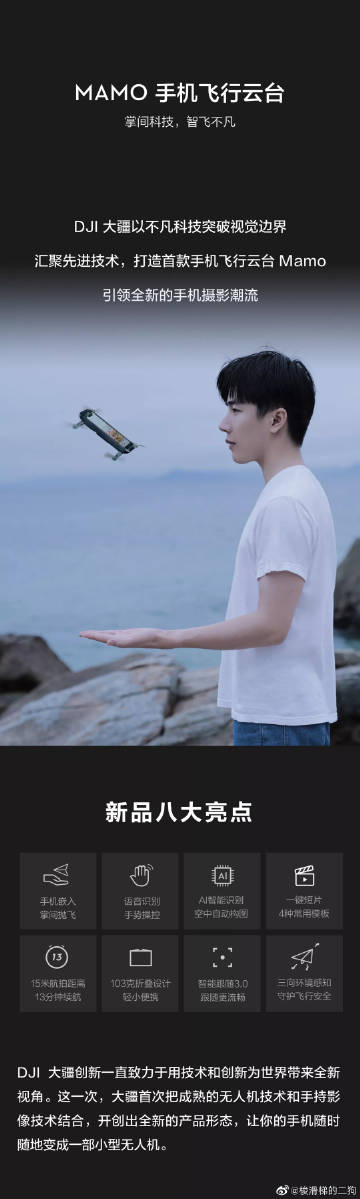
DJI is known for its drones as well as gimbals. For this year’s April Fool’s Day joke, the manufacturer has announced the MAMO Flying Gimbal for mobile phones. MAMO is said to be a portmanteau of DJI’s Mavic and Osmo line of drones and gimbals respectively.
DJI MAMO

The gimbal is a case that you slap on to your phone to turn it into a drone. The gimbal supports voice control and gesture control. It also has Smart Follow 3.0 and 3-way environmental awareness.


Huawei Animal Language Translation Circle


Huawei Animal Language Translation Collar

Tech giant, Huawei, has announced an animal language translation collar for its April Fool’s Day prank. The collar uses AI to translate an animal’s speech to words that are then transmitted to the companion app on your phone. Huawei says the collar records, translates and transmits the animal’s language in real-time.


OPPO FreeVOOC Air Charging Technology (OPPO Ace Infinity)

OPPO’s April Fool’s Day prank is a phone called the OPPO Ace Infinity. The Ace Infinity is a phone with support for a charging technology called FreeVOOC which charges the phone over the air.

The charger is a spherical glossy black ball that uses a laser system to detect the position of the device. When the device is located, it then transmits a beam to the phone which then charges the built-in battery.


Xiaomi Mi 6 Classic Edition

There are reports Xiaomi plans to launch a new version of its 2018 flagship, the Mi 6. Surprisingly, the rumored device is also what Xiaomi used for its April Fool’s Day prank.
Mi 6 Classic Edition

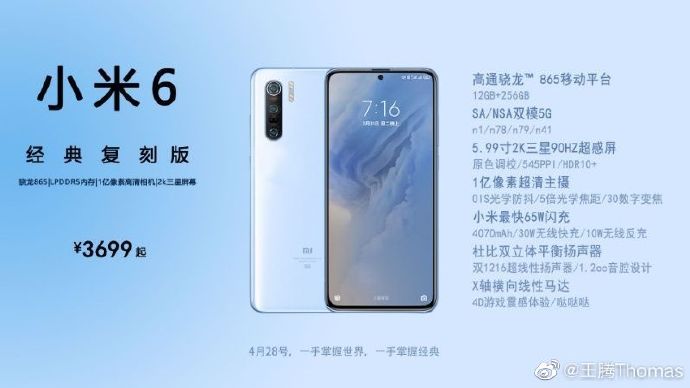
Wang Teng Thomas, product manager of Xiaomi, posted the specs of the upcoming phone along with a price tag and launch date.

The new Mi 6 has a 5.99-inch punch-hole 2K display with a 90Hz refresh rate and a 545 PPI. It comes with a Snapdragon 865 processor with 12GB of RAM and 256GB of storage. There are three cameras on the back of the phone. It also packs a 4070mAh battery with support for 65W wired charging, 30W wireless charging, and 10W reverse wireless charging.

The Mi 6 Classic Edition will sell for ¥3699 and will go on sale on April 28 according to the company executive.
 

Meizu 16T Daylight Orange with support for solar charging

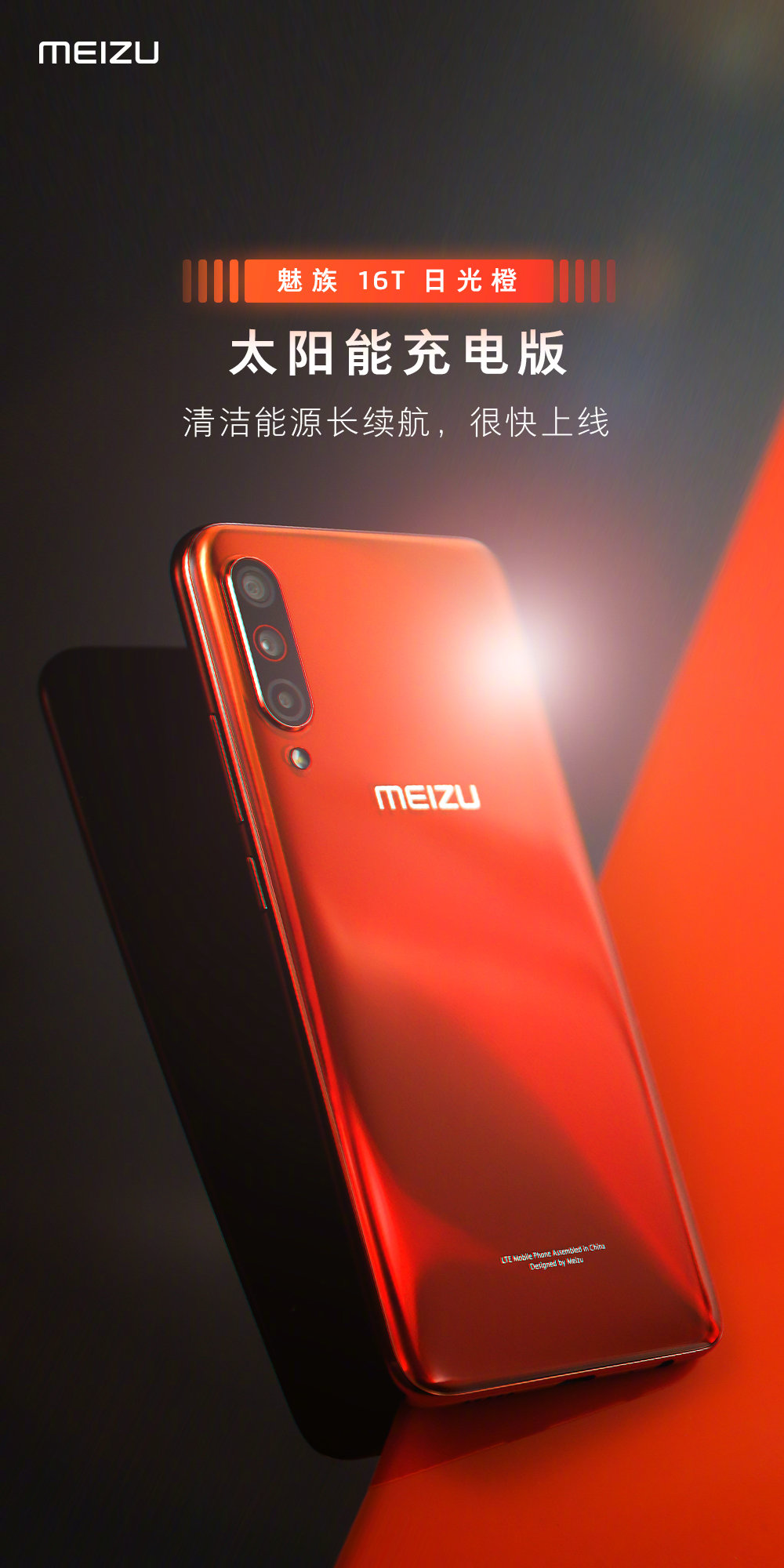
Meizu released multiple jokes for April Fool’s Day and one of them is the Meizu 16T Daylight Orange version. The manufacturer says the device doesn’t need a wired charger as it recharges its battery by drawing power from the sun.

[envira-gallery id=”314226″]

Realme

Realme’s April Fool’s Day prank is a new technology that allows you to use your Realme phone in ways you can only dream of. Want to charge your phone? All you have to do is think of the percentage you want your phone’s battery level to be and voila, your phone is charged. Want to go on a trip, open your phone, choose a location and you will be transported there.
Nreal Light Toe-Tracking 

The April Fool’s Day prank for Nreal, a manufacturer known for its mixed reality products, is what it calls Toe Tracking for its Nreal Light Augmented Reality Glasses.

With toe-tracking, you can use your toes to control your virtual environment just in case your hands are not free or for a more relaxing experience.

According to the company’s product manager, toe-tracking was developed as an alternative to hand-tracking and eye-tracking and can be used when you are sitting or lying back on a chair.


Ulefone Armor X7’s first hands-on video unveils its stealthy design

After unveiling all the hardware details of the device, the popular rugged smartphone maker has surfaced hands-on video revealing its rugged design and other features. The popularity of Ulefone’s Armor series leads to the advent of Armor X7. The rugged smartphone features a 13-megapixel camera and 5-megapixel selfie camera along with a power-efficient processor and 4G connectivity. It’s now time to see how the Ulefone Armor X7 fares in the real-life world with the help of its hands-o video below.

The stealthy body of the device can be seen in the video that is appropriately designed giving an outstanding look. The ruggedness along with the beautiful design makes the device suitable for daily and outdoor activities. It resembles the look of the popular Cat S41 smartphone.

UleFone Armor X7 smartphones come powered with MT6761 quad-core chipset coupled with the Quad-core processor and PowerVR GE8320 graphics processor. It can withstand all your social media chatter across Facebook and other messaging apps.  There’s a huge 5.0-inch IPS LCD display featuring a resolution of 720 x 1280 pixels and a 16:9 aspect ratio. Moreover, there’s a fingerprint scanner on the rear side for rapid authentication.

However, a 13-megapixel primary camera on the rear and a 5-megapixel selfie camera on the front can be seen in the video. Surprisingly, the user will find a 3.5mm audio jack along with Bluetooth 5.0, GPS, NFC, FM Radio, MicroUSB 2.0 and WiFi.

THere’s a huge Non-removable Li-Po 4000 mAh battery. It comes in Black and Orange color. Ulefone Armor X7 is available for a discounted price of $89.99. The user can grab a bicycle holder along with Armor X7 that costs $99.99. However, the offer is valid until April 5.

The interested users can know more about the device by visiting the official website.

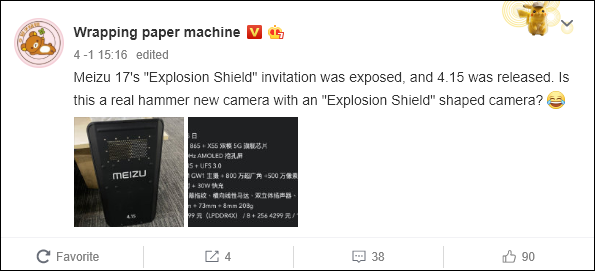
April Fool’s or Real? Meizu’s leaked invite for April 15 shows a Riot Shield

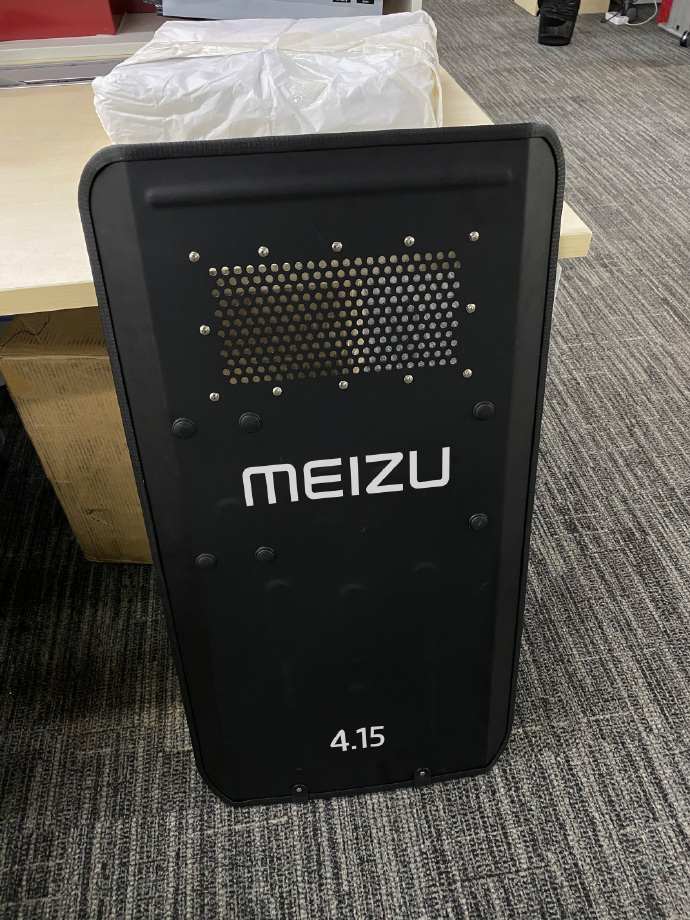
Meizu has already hinted that its flagship Meizu 17 smartphone will be unveiled this April. A leaked invitation of the Meizu 17 has appeared online revealing an April 15 launch date. The invite is, interestingly, a riot shield! Meizu 17

The leak comes from a blogger on China’s Weibo and apart from the launch date, it features some key specifications of the Meizu 17. While we can’t rule out the possibility of this being yet another April fool prank, Meizu is known to send out weirdly-packaged invitations. We recall some invitation boxes with sneakers, a wooden block, among other strange stuff. So. this could be one of Meizu’s surprising invitation.

Meizu 17

The riot shield features a rectangular-shaped mesh area and this suggests that the Meizu 17 will come with a horizontally-aligned rear camera setup with a rectangular module. The module is said to hold four camera sensors as well as a ring flash.Meizu 17

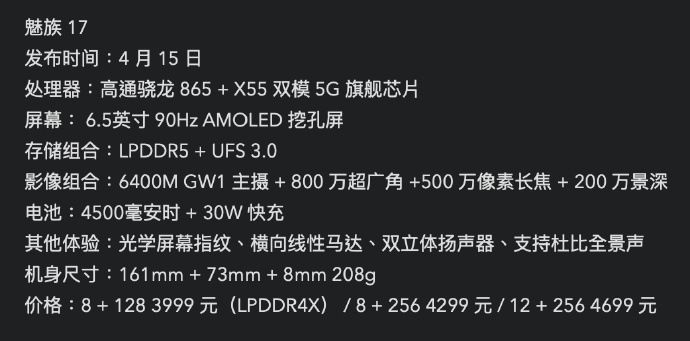
In terms of the specs, the Meizu 17 is listed to feature a 6.5-inch AMOLED display with 90Hz refresh rate. The device will be powered by a Snapdragon 865 chipset with a Snapdragon X55 modem bringing 5G connectivity onboard. The device will equally come with 8/12GB LPDDR5 RAM and 128/256GB UFS 3.0 storage options. The base model will use LPDDR4X RAM. For photography, it will use a 64-megapixel GW1 main camera. Other sensors include an 8-megapixel ultra-wide angle, a 5-megapixel telephoto and a 2-megapixel depth of field sensor. The Meizu 17 will cram a 4500mAh battery under the hood with support for 30W fast charge.  There will also be an under-screen fingerprint sensor. It will have a starting price of 3999 yuan.

We’ll take the leaked launch date with a pinch of salt until Meizu official reveals the launch date.


(source)


Samsung will stop making LCD panels by the end of 2020

Samsung is one of the largest display manufacturers in the world making a wide range of panels. But now, the company has announced to stop producing LCD panels by the end of the year. This move is motivated by the firm’s plan to expand production of quantum dot displays.

The South Korean conglomerate has a number of businesses and one of them is a display manufacturing unit called Samsung Display. The company makes all types of panels like LCDs, OLEDs, and quantum dots. But now, it has decided to end the production of LCD panels so that it could focus more on the other two modern panels.

The company will be halting the production only at the end of the year but has already reduced its capacity. However, it will still continue to supply LCD panels for the orders that have been placed earlier by its clients. It is worth noting that most of the panels made by the company are used in its own TV lineup.

The employees working in the LCD department will be shifted to OLED and QD Display businesses. Additionally, the company is also reported to have placed orders for equipment used in manufacturing quantum dot displays to ramp up its production.

The decision to shun the production of LCD displays was expected as Samsung had already announced its plans to shift focus to Quantum Dot display technology with $11 billion investment in October 2019.


(Source)

Xiaomi launches the MIJIA Internet Washing Machine & Dryer 1C with voice support

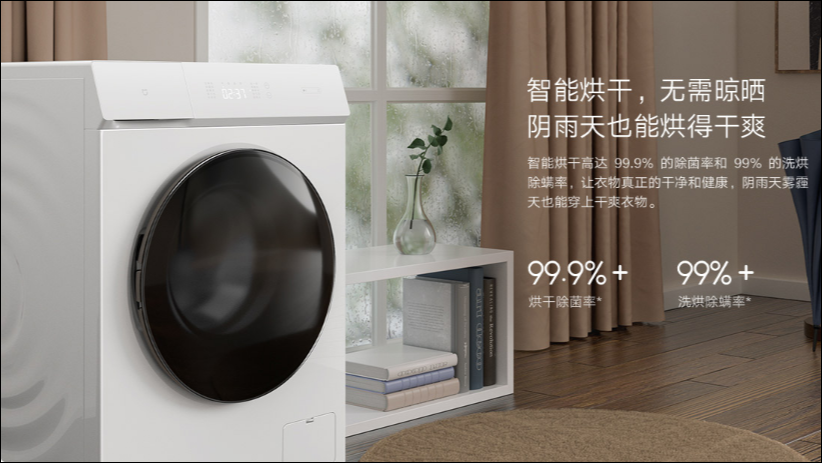
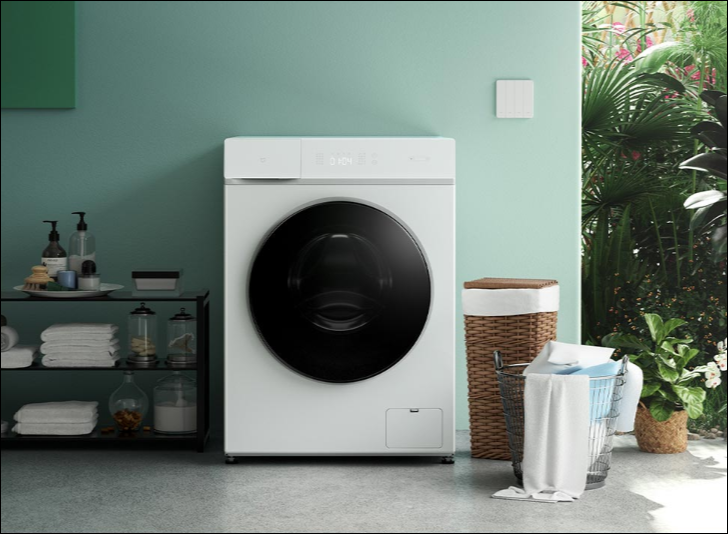
Xiaomi has launched a new product today and this isn’t an April fool prank. The MIJIA Internet Washing Machine and Dryer 1C, as it is called, is currently on presale on Xiaomi Mall. It adopts a price tag of 2099 yuan (~$295) and will go on sale in China from April 9.  MIJIA Internet Washing Machine and Dryer 1C

The new MIJIA Internet Washing Machine and Dryer 1C is an upgrade over the MIJIA Internet Washing Machine and Dryer Pro that was launched last year. Both models come with a 10kg capacity. This model has a control panel made from ABS injection moulding + thin-wall light transmission solution and is better integrated with the body of the machine. In contrast, the display of the Mijia Internet Washing and Drying Machine Pro 10kg is made from tempered glass.

This model equally comes with support for XiaoAI voice control support, something that is not on the previous model. This model equally has a more compact build, with a door diameter of 468mm, while the previous model had a wider door diameter of 480mm. This model equally comes with a cycle power of 0.873 kWh which is lower than the 0.960 kWh power on the MIJIA Internet Washing Machine and Dryer.MIJIA Internet Washing Machine and Dryer C1

The other specifications are basically the same. The MIJIA Internet Washing Machine and Dryer 1C use the industry-leading BLDC variable frequency motor to precisely control the washing rhythm. This motor is stable and efficient, and more energy-efficient and quiet. The maximum dehydration speed is 1400 rpm, and the dehydration and drying time is fast and efficient.

The washing machine features up to 22 different washing modes including smart air washing. You can reserve laundry and drying clothes in advance through the Mijia APP, choose more washing and drying modes, and support custom adjustments and save favourite washing methods.

The water-condensing hot-air drying technology can dry multiple pieces of clothing at one time, and the constant temperature control can make the dried clothes full and soft without ironing. The sterilization rate of the high-temperature barrel self-cleaning mode at 95 ° C is as high as 99.9% +.


(source)


A Samsung Chip Factory Worker tests Positive for Coronavirus, Production will Not be Affected

Coronavirus or COVID-19 originated from the Wuhan province of China in late 2019. Since then, it has now spread to 203 countries affecting nearly a million people with over 44,000 deaths. This has led to lockdowns, which is severely impacting lives as well as businesses. Samsung already became a victim of the pandemic when it had to temporarily shut down one of its smartphone factories in South Korea as a number of the plant’s employees tested positive for the virus. Now, the company confirms yet another case of coronavirus but in a chip factory.

Samsung 11nm

Samsung, in a statement, revealed that one of its workers at a foundry fab (chip manufacturing facility) in Giheung, Korea had tested positive for the COVID-19 virus. Thus, as a safety precaution, the firm has isolated all the people who were in close contact with that employee. It has even closed the work area of the positive employee for disinfection.

Despite this, the South Korean tech giant confirmed it won’t affect the output of this particular chip factory as other cleanrooms/work areas are in continuous operation. Also, this person is the first and the only Samsung chip factory worker to have caught the virus for now.

Earlier this month, another chip factory of Samsung in Hwaseong, Seoul caught fire but with no casualties. Even at that time, the company stated the production to remain unaffected. However, disruption of supply chain and other factors caused by the COVID-19 pandemic have led the conglomerate to reduce pay raise for its employees this year.


(Via)

The Galaxy S20 features an unofficial 96Hz refresh rate mode, here’s how to enable it

One of the major features onboard the Samsung Galaxy S20 series is the 120Hz refresh rate which it supports. The official introduction is that you can toggle the display between the standard 60Hz refresh rate and the top-end 120Hz refresh rate. XDA Developers have once again come through for those who would prefer a refresh rate in the 90Hz range found on the OnePlus 7T, OnePlus 7 Pro, Realme X2 Pro, Mi 10 Pro, Poco X2 and a few others.

XDA Developers have discovered that the flagship models have a few hidden refresh rates and resolutions than what Samsung made available. Running the shell command “dumpsys display,” shows several modes such as 48fps, 60fps, 120fps and a surprise 96fps. Just like the 120Hz refresh rate, the 96Hz mode is only available with 1080 pixels (FHD+) and 720 pixels (HD+) resolutions.

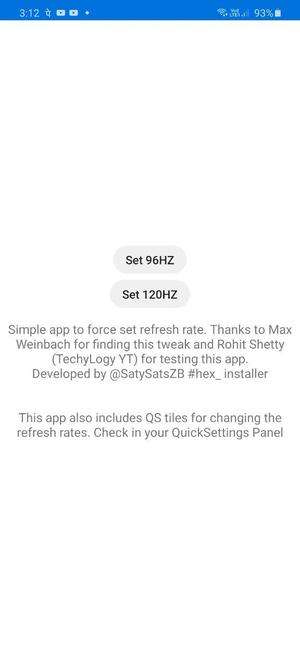
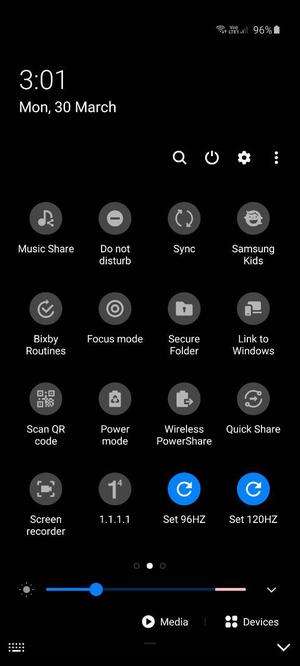
The team was able to force the Galaxy S20 to run on the hidden modes by changing the value of Settings.System.peak_refresh_rate and Settings.System.min_refresh_rate to 48.0 or 96.0. XDA Forum’s Senior Member SatySatsZB has even created an app which can be used to switch between 96Hz and 120Hz modes, saving those interested the stress of having to run shell commands. The app even adds two Quick Setting tiles to toggle between the refresh rate modes. You can confirm if the change is working by going to testufo.com.Samsung Galaxy S20 96Hz refresh rate

There is no doubt that 120Hz refresh rate offers users a peak display performance but it takes a toll on the battery life. Switching to 96Hz will increase the battery life slightly as the phone’s display won’t refresh content as often, The 96Hz is equally goign to provide a smoother display performance than 60Hz. Samsung Galaxy S20 96Hz refresh rate

However, there are reports by some Reddit users of issues with the 96Hz refresh mode on Exynos-powered versions of the S20 phones. The Exynos-powered models were released in Europe while the US got a Snapdragon 865 version. There’s already a petition seeking for Samsung stop using the Exynos SoC on its flagship models as it doesn’t offer the same performance as its Qualcomm counterpart. That may be the cause of the issue as some others say it works fine. But then, this is an official tweak, so expect some issues.


(source)


[Update: Mi 8 Lite too] Android 10 Stable Update now available for Xiaomi Mi 8, Mi 8 Pro, Mi 8 SE, Mi 9 SE and Mi 9 Lite

Update: Xiaomi has rolled out the Android 10 stable update to Mi 8 Lite as well. You can find download links for all the devices below.

Xiaomi has a long history of updating its entire smartphone lineup to the latest MIUI version available at the time. However, the same cannot be said for the underlying Android platform the MIUI builds are based on. And thus, five of the brand’s yesteryear flagships and their lite devices are receiving the Android 10 stable update only now. The list includes the likes of Mi 8, Mi 8 Pro, Mi 8 SE, Mi 9 SE, and Mi 9 Lite.

All the above-mentioned Xiaomi devices were already updated to MIUI 11 in Q4 2019. But all of them received releases based on Android 9.0 Pie rather than the latest version of Android. Following that, these devices did have several beta builds of Android 10 but the company did not roll out the stable releases to the normal users until now.

The stable MIUI 11 builds based on Android 10 is being currently rolled out to the users of Mi 8, Mi 8 Pro, Mi 8 SE, Mi 9 SE, and Mi 9 Lite via OTA. However, if you are one of those advanced users who don’t like to wait, you can download the respective ‘Recovery’ and ‘Fastboot’ builds of the update from the links provided below.

Xiaomi Mi 8

V11.0.3.0.QEAMIXM (Global) Recovery ROM Fastboot ROM
V11.0.2.0.QEARUXM (Russia) Recovery ROM Fastboot ROM
V11.0.6.0.QEACNXM (China) Recovery ROM Fastboot ROM

Xiaomi Mi 8 Pro

V11.0.3.0.QECMIXM (Global) Recovery ROM Fastboot ROM
V11.0.1.0.QECRUXM (Russia) Recovery ROM Fastboot ROM
V11.0.1.0.QECCNXM (China) Recovery ROM Fastboot ROM

Xiaomi Mi 8 SE

V11.0.2.0.QEBCNXM (China) Recovery ROM Fastboot ROM

Xiaomi Mi 8 Lite

V11.0.1.0.QDTMIXM (Global) Recovery ROM Fastboot ROM
V11.0.1.0.QDTRUXM (Russia) Recovery ROM

V11.0.1.0.QDTCNXM (China) Recovery ROM Fastboot ROM

Xiaomi Mi 9 SE

V11.0.2.0.QFBMIXM (Global) Recovery ROM Fastboot ROM
V11.0.2.0.QFBEUXM (Europe) Recovery ROM Fastboot ROM
V11.0.2.0.QFBRUXM (Russia Recovery ROM Fastboot ROM
V11.0.2.0.QFBCNXM (China) Recovery ROM Fastboot ROM

Xiaomi Mi 9 Lite

V11.0.1.0.QFCMIXM (Global) Recovery ROM Fastboot ROM
V11.0.1.0.QFCEUXM (Europe) Recovery ROM Fastboot ROM
V11.0.1.0.QFCRUXM (Russia) Recovery ROM Fastboot ROM
V11.0.1.0.QFCCNXM (China) Recovery ROM Fastboot ROM


(Via)

GoT Beyond the Wall will launch on Huawei’s AppGallery on April 3: Same day as the Play Store!

In what can be called as a small achievement for Huawei, the much-anticipated Game of Thrones Beyond the Wall will be available on the company’s App Gallery on the same day and time as the Google Play Store. The collectible strategy game will launch on the App Gallery on April 3.

Huawei AppGallery GoT

Ever since the US-ban, Huawei has been marketing the App Gallery as an alternative to the Play Store. And in the past year, the company has been slowly but steadily adding popular apps and their alternatives to its own store. The fact that Huawei has managed to convince a popular game developer to publish its app on the App Gallery is an important development.

Behaviour Interactive Inc., the developer behind the GoT Beyond the Wall game also benefits from this partnership. A few months back, we reported that Huawei was offering 85 percent of the revenue generated from an app on the App Gallery to the developer, which was significantly higher than the traditional 70:30 revenue split ratio offered by the Play Store and Apple App Store. Huawei’s software team has also worked closely with Behaviour Interactive Inc. to integrate Huawei’s own services like Account Kit and in-app purchases inside the new game.

The Game of Thrones Beyond the Wall game is set 48 years before the events that happened in the HBO series. The game is built around an original story and players will get to take command of the Night’s watch and recruit unique characters from around the Seven Kingdoms to defend Westeros. The game also offers collectibles like various costumed versions of popular characters from the original HBO series like Jon Snow, Daenerys Targaryen, Jamie Lannister, and even Melisandre. Users can master each of these character’s unique abilities in tactical PvP combat.
Just like the Play Store, the game will offer special rewards at the time of registration on the App Gallery as well. The Game of Thrones Beyond the Wall goes live on April 3.

Leaked OnePlus 8 Pro press renders reveal Ultramarine Blue colorway

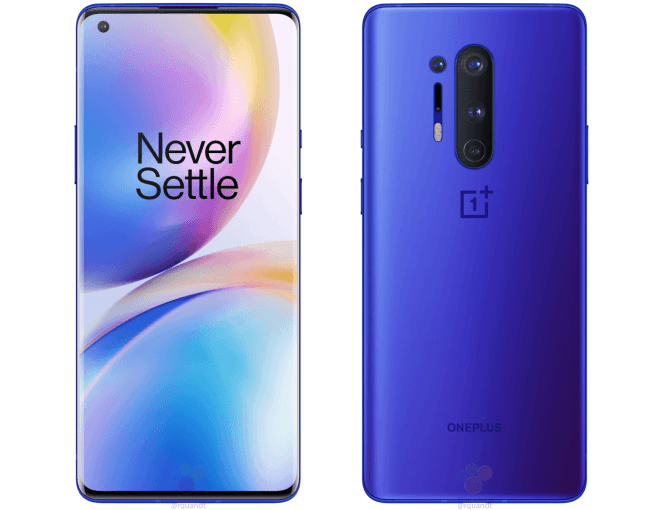
Press renders of the OnePlus 8 were leaked a few days ago, revealing all the color variants the phone will come in. One of the variants has a color gradient similar to Instagram’s logo. Now, the same source has released press renders of the OnePlus 8 Pro and it also provides a first look at a color variant we have not seen before.

OnePlus 8 Pro Ultramarine Blue

The OnePlus 8 pro will come in three colorways – Glacial Green, Onyx Black, and a new Ultramarine Blue.

The Ultramarine Blue has a much darker shade than the Really Blue first-gen Pixel. It is a nice color and will be quite popular among buyers. OnePlus is being smart with its color choices by not making both phones have the same color variants all through.

[envira-gallery id=”314151″]

The OnePlus 8 Pro will have a punch-hole display that measures 6.78-inches, has a QHD+ resolution, and a 120Hz refresh rate. Just like its predecessor, the OnePlus 7 Pro, its screen is also curved at the sides. It is reported that it has a maximum brightness of up to 1300 nits and has HDR10+ support.

The phone will come with the same Snapdragon 865 processor inside the standard version, up to 12GB of RAM, and 256GB of UFS 3.0 storage. On the back are quad rear cameras – a 48MP primary camera, a 48MP ultrawide angle camera, an 8MP telephoto camera with 3x optical zoom, and a 5MP color sensor. The front camera is a 16MP sensor.

[envira-gallery id=”314152″]

OnePlus will ship the phone with support for wireless charging and reverse wireless charging. We are really curious to know if OnePlus will launch its own wireless charger alongside the phone and have been on the lookout for details regarding the charger but nothing has come up yet.

The OnePlus 8 series launches on April 14, 2020, and will be live-streamed.

Which of the three colors is your favorite? Let us know in the comment box.


(Source)

Here’s the complete list of 50 officially supported LineageOS 17.1 Devices

LineageOS, formerly CyanogenMod is the most popular aftermarket distribution of Android after AOSP (Android Open Source Project). It is well-known in the custom ROM community as almost every other ROM is either based on it or at least inherit some of its features and functionalities. Recently, a newer version of this software called LineageOS 17.1 based on Android 10 was announced. Since then, the team has been updating the list of officially supported devices.

The first batch of officially supported LineageOS 17.1 devices included a total of 27 devices. The list comprised of a number of variants of Samsung Galaxy S4, LG G2, LG G3, LG G5, and LG V20. It also consisted of Fairphone FP 2, Motorola Moto Z1 as well as both single and dual SIM versions of HTC One (M8).

A couple of days later, the initial LineageOS 17.1 Android 10 build for all the above-mentioned devices went live on the official download page of LineageOS. Unfortunately, the builds were soon removed two days later as all those builds were broken due to signing issues.

But yesterday, the project added support for 23 more devices, however, builds for all these official devices are yet to be uploaded for the public to download. Hopefully, that will happen soon, until then, have a look at the complete list of 50 officially supported LineageOS 17.1 devices as of April 1st, 2020.


List of Officially Supported LineageOS 17.1 Devices

  1. Fairphone FP2 (FP2)
  2. Motorola Moto Z1 (griffin)
  3. HTC One (M8) (m8)
  4. HTC One (M8) Dual SIM (m8d)
  5. Samsung Galaxy S4 Active (jactivelte)
  6. Samsung Galaxy S4 (SGH-I337) (jflteatt)
  7. Samsung Galaxy S4 (SCH-R970, SPH-L720) (jfltespr)
  8. Samsung Galaxy S4 (SCH-I545) (jfltevzw)
  9. Samsung Galaxy S4 (GT-I9505/G, SGH-I337M, SGH-M919) (jfltexx)
  10. Samsung Galaxy S4 Value Edition (GT-I9515/L) (jfvelte)
  11. LG V20 (AT&T) (h910)
  12. LG V20 (T-Mobile) (h918)
  13. LG V20 (International) (h990)
  14. LG V20 (Sprint) (ls997)
  15. LG G5 (Unlocked US) (rs988)
  16. LG V20 (US Unlocked) (us996)
  17. LG V20 (Verizon) (vs995)
  18. LG G2 (AT&T) (d800)
  19. LG G2 (T-Mobile) (d801)
  20. LG G2 (International) (d802)
  21. LG G2 (Canadian) (d803)
  22. LG G3 (AT&T) (d850)
  23. LG G3 (T-Mobile) (d851)
  24. LG G3 (Canada) (d852)
  25. LG G3 (International) (d855)
  26. LG G3 (Korea) (f400)
  27. LG G3 (Verizon) (vs985)
  28. Motorola Moto One Power (chef)
  29. Razer Phone (cheryl)
  30. Xiaomi Mi MIX 2 (chiron)
  31. Xiaomi Poco F1 (beryllium)
  32. Xiaomi Mi 8 (dipper)
  33. Sony Xperia XA2 Ultra (discovery)
  34. OnePlus 6 (enchilada)
  35. OnePlus 6T (fajita)
  36. OnePlus 7 Pro (guacamole)
  37. Asus Zenfone 6 (ZS630KL) (I01WD)
  38. Motorola Moto Z2 Force (nash)
  39. OnePlus 3 / 3T (oneplus3)
  40. Motorola Moto X4 (payton)
  41. Sony Xperia XA2 (pioneer)
  42. Xiaomi Mi MIX 2S (polaris)
  43. Motorola Moto G7 (river)
  44. Xiaomi Mi 6 (sagit)
  45. ZUK Z2 Plus (z2_plus)
  46. Motorola Moto G6 Plus (evert)
  47. Galaxy Tab S5e (Wi-Fi) (gts4lvwifi)
  48. Sony Xperia 10 (kirin)
  49. Motorola Moto G7 Plus (lake)
  50. Sony Xperia 10 Plus (mermaid)


(Via)

Xiaomi launches the Roidmi NEX 2 & NEX 2 Pro Handheld Vacuum Cleaners

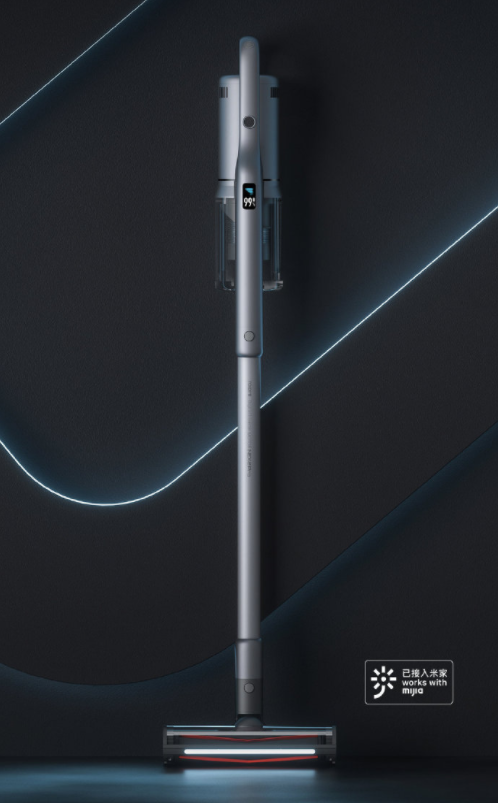
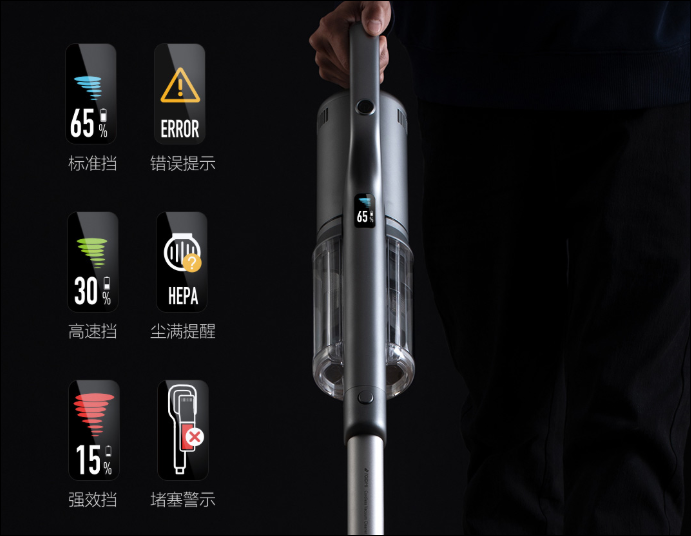
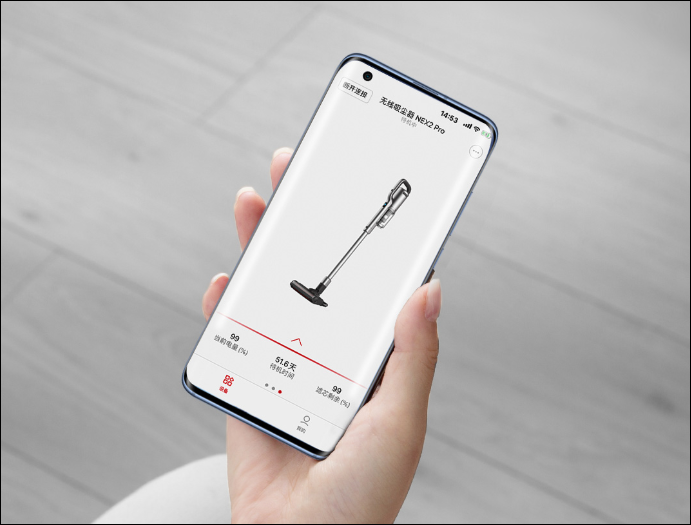
Xiaomi Youpin has launched two new handheld vacuum cleaners manufactured by eco-chain partner Roidmi. The two models- Roidmi Nex 2 and Nex 2 Pro both come with a display and other impressive features which place them ahead of the first-gen Roidmi NEX handheld vacuum cleaner.Roidmi NEX 2 Handheld Vacuum Cleaner

The Roidmi Nex 2 Pro is definitely the sleekest model of the duo but both seem to have the same capability. The models feature a display but while the Roidmi Nex 2 has an LED screen, the Nex 2 Pro features an OLED display. This seems to be the major difference between the two. The display shows the cleaning status in real-time. The Nex 2 Pro also has a grey paint job whereas the Nex 2 comes in white.Roidmi Nex 2

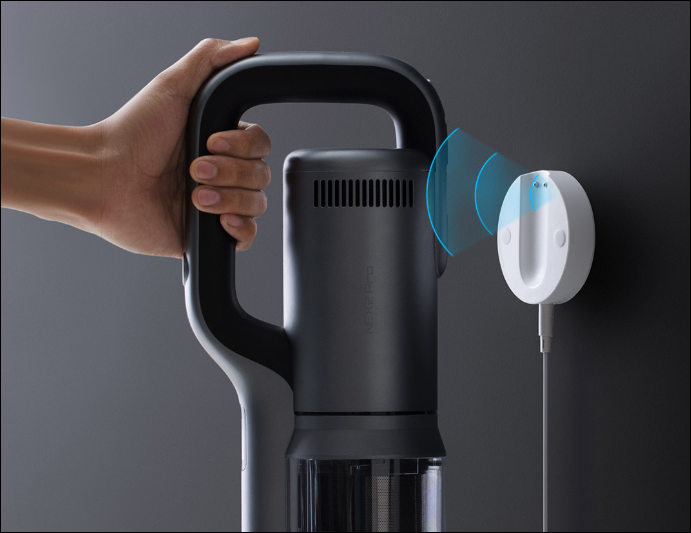
In terms of the features, both models have a total power rating of 435W as well as the same vacuum power of 26500pa. The bot equally presents with a massive 2500mAh/72Wh battery which can withstand several cleaning rounds. The vacuum cleaners feature a magnetic wireless charging system and can charge fully in just 2.5 hours. In addition, the models are equipped with a 0.55L dust storage compartment an uses a HEPA filter system.Roidmi Nex 2 Recall that Roidmi equally announced te F8 Pro handheld vacuum cleaner recently which is an upgrade of the Roidmi F8.Roidmi Nex 2 pro The Roidmi Nex 2 carries a 2099 yuan ($295) price tag while the Nex 2 Pro is priced at 2,499 yuan (~$352). They are available presently on Xiaomi Youpin for interested buyers in China. If you are interested in this product outside China, you’ll have to look at third-party retailers like GearBest, ALiExpress and others.


(source)


WhatsApp to get Expiring messages and Multi-device login

WhatsApp is pretty slow when incorporating new features compared to Telegram but like they – better late than never. The messaging app which is used by millions across the world will be getting some pretty useful features according to details found in the latest beta version.

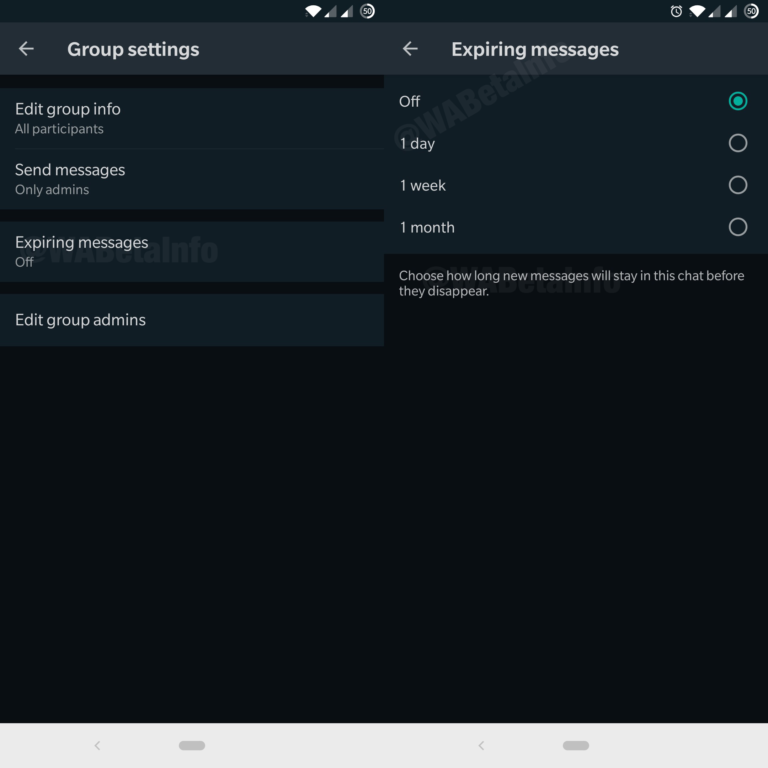
One of the features coming to WhatsApp is Expiring Messages. This is one feature that is long overdue and one I personally loved in Google’s now dead Allo messaging app. However, WhatsApp seems to be taking a different approach.

Expiring Messages will be available in both group chats and private chats and based on screenshots provided by WABetaInfo. Users will be able to set messages to delete after 1 day, 1 week, and 1 month. Apparently, there used to be an option for 1 hour before in previous versions but it has now been removed. Hopefully, it is added back to the final release.

WhatsApp Expiring Messages

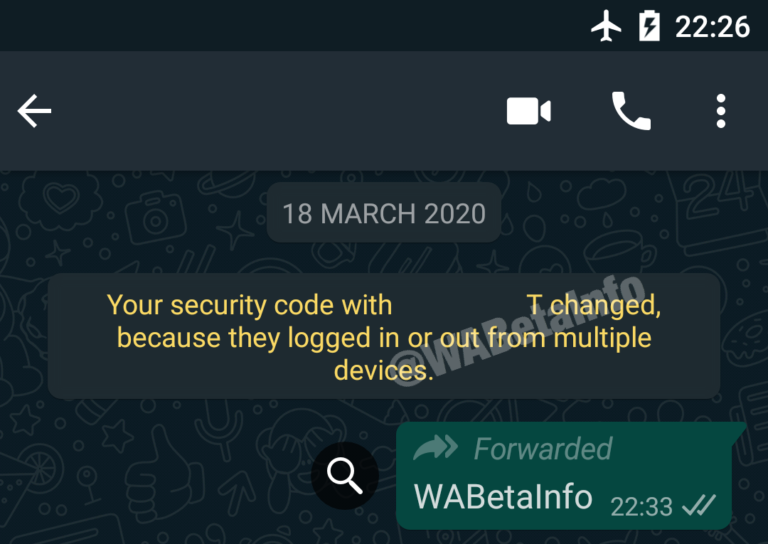
Another feature that was discovered in WhatsApp Beta v2.20.110 is support for multiple device login. You know how you can’t have WhatsApp active on two devices, that should change soon.

With the new feature, users will be able to log in to the same WhatsApp account on multiple devices at the same time. This is different from the way WhatsApp works on desktop or in your browser. When you log in on a new device, you (on your current device) and your contacts get a notification with a change of your security code.

WhatsApp multiple device login

Both Multiple-Device Login and Expiring Messages will be available for iOS and Android when it launches, though the former may get it first.


(Source, Via)

New Xiaomi phone certified by EEC, could it be the POCO F2?

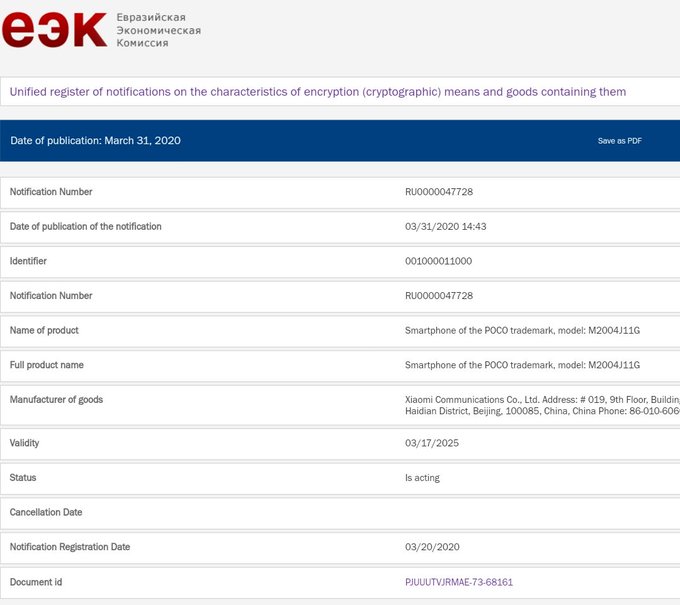
A new Xiaomi smartphone has just been certified by the Eurasian Economic Commission (EEC). The phone is thought to be the much-anticipated POCO F2 flagship. The phone clears EEC with model number M2004J11G which is similar to the model numbers of some Xiaomi models that have previously been certified by the EEC. For comparison, the Poco F1 had the model number M1805E10A, the Redmi K20 Pro came with the model number M1903F11C while the Redmi K30 Pro had the model number M2001J11C.Xiaomi phone EEC

The certified phone was listed on March 31 and is clearly indicated to be a Xiaomi phone under the Poco brand which is now an independent brand. It is interesting that the phone is listed as a Poco brand and not Pocophone. Recall that the first model was launched as Pocophone F1 in the global market. The company may have finally decided to stick with a shorter Poco branding.

The Poco F2 was expected to have launched in 2019 after the F1 was introduced with a surprise flagship lineup but that didn’t happen. Just when we thought the brand was going to launch the F2, the Poco X2 was unveiled as a rebranded Redmi K30. Xiaomi has already confirmed the Redmi K30 Pro won’t be launched as the Poco F2. Thus, the F2 will come with a design that is yet to leak, perhaps.

For now, we don’t have any other detail on the specifications or design of the F2 but we expect more details to emerge soon.


(via1, via2)


Microsoft patents a foldable device with three screens

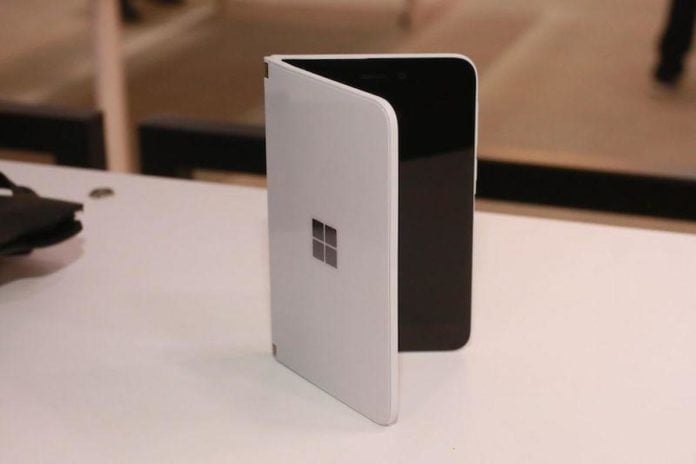
A recent Microsoft patent has revealed that the company is looking into developing a new Surface product. The patent depicts a peculiar device that resembles the Surface Duo but with three displays on a single hinge mechanism. This may be a new product the Microsoft Surface team is currently working on.

Microsoft

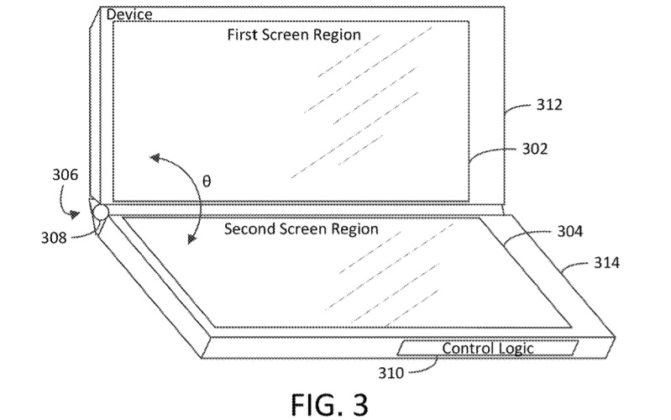
According to the patent, the new Microsoft device features two separate screens brought together with a single hinge mechanism in the middle. This also makes it quite similar to the Surface Duo and Neo. Apart from the twin primary displays, the patent also reveals a much smaller third display which looks like a status bar on the edge of the device.

Looking at the patent, the third screen has been labeled as Control Logic and might be an area for a few particular functionalities. This edge screen may have limited capabilities but could display, the time, notifications, show connected device and a lot more. Rather, Microsoft says users can also choose to have additional information being displayed through the smaller screen. An example of this could be missed calls and other important notifications being shown even if the primary displays aren’t active.

Microsoft
Microsoft Surface Duo

In the patent, a small description has also been found in the documents. It states that traditional smartphones have only one screen to display all the relevant information and notifications to users. So, Microsoft aims to address the issue with its newly patented idea for finding a new way to displays information, calls or even messages.


(Via)

Buy Amazfit PowerBuds for Just $129.99 from Giztop

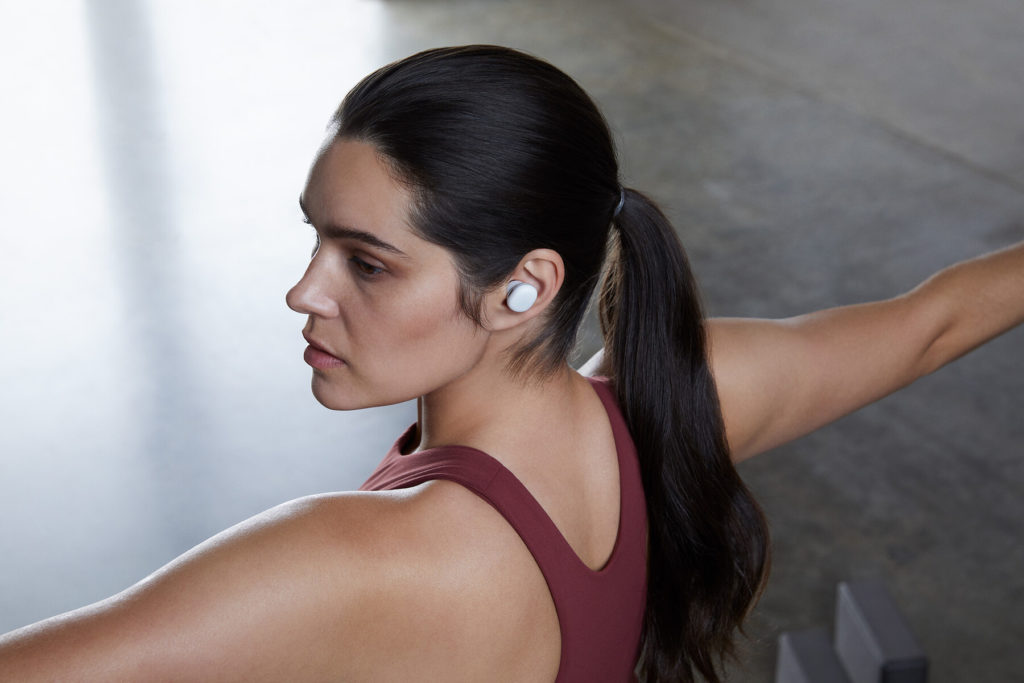
Amazfit PowerBuds is one of the most powerful earbuds in the market. These Powerbuds are available in three appealing color options including white, black, as well as yellow for just $129.99 on Giztop.

Amazfit PowerBuds

Touted as truly wireless earbuds, the Amazfit PowerBuds can monitor heart rate while you are performing sports along with the PPG heart rate sensor. It also provides you with feedback on your status of the exercise routine and there is a voice reminder that helps you to get rid of any kind of risk such as high heart rate.

This voice reminder ensures that your fitness routine is not only efficient and effective but also safe for your health. Another feature of the smart earbuds is its magnetic split earrings that ensure the earbuds to be more stable and worn firmly without worrying about dropping it while you are in your sports routine or even rushing towards the subway.
amazfit powerbuds

When you are not using the earbuds, the ear hooks can be removed directly and put back into the charging box for quick storage along with charging it immediately. The most important factor one might look forward to while purchasing an earbud is its battery life and Amazfit PowerBuds will never disappoint you in this department as it can be charged for eight hours straight.

With the help of the magnetic charging box, you can further extend the battery life up to 16 hours and that makes the total battery life to 24 hours. The battery of the earbuds is 55 mAh while the charging case is 450 mAh. Amazfit PowerBuds can be used as a professional headset during sports.
amazfit powerbuds

It is enabled with high-end composite diaphragms and high-sensitivity magnets. The ENC double broadcasting noise reduction technology that is adopted by the earbuds is effective enough to suppress all other disturbing sounds around you. You can follow this link to place your order.

The Gizmochina Coupons is a community that finds, reports and evaluates deals and coupons of Chinese products from online shops. Please visit it here to find more coupons to save money on mobiles and smart gadgets.

First 5G Services go Live in Hong Kong via China Mobile, Hutchison, and HKT

Hong Kong citizens and visitors finally have access to high-speed 5G networks in the city as the services go official today. It has become the first region outside mainland China to have this blessing. China Mobile, Hutchison, and HKT are the only telecom operators to offer 5G services in the region.

The 5G networks were commercially launched in China on 1st November 2019. The three primary telecom operators – China Mobile, China Telecom and China Unicom launched their 5G services on the same day. Similarly, China Mobile, Hutchison, and HKT have become the first three telcos to deploy 5G services in Hong Kong.

The first phase of China Mobile’s 5G coverage in Hong Kong includes almost the whole territory along with hotspots at public places like business centers and shopping malls. The telco has also enabled 5G roaming services in mainland China and Korea. Further, it expects to roll out roaming services in a number of Asian and European countries by the end of 2020.

Unfortunately, we do not have information regarding the services provided by the other two telcos namely HKT and Hutchison. However, you can still check our coverage on HKT’s 5G launch announcement to know more.


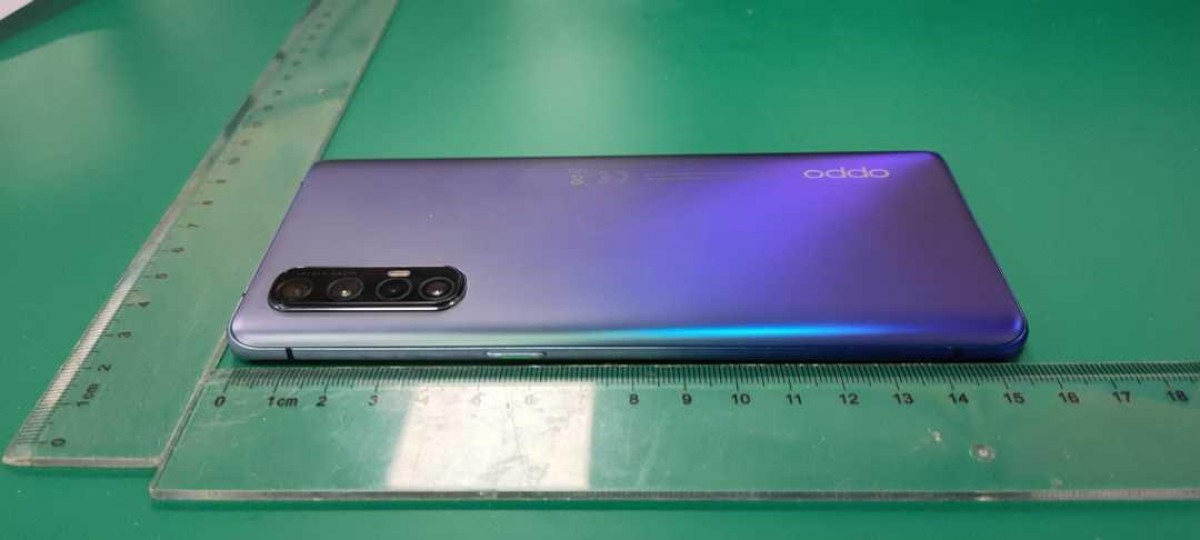
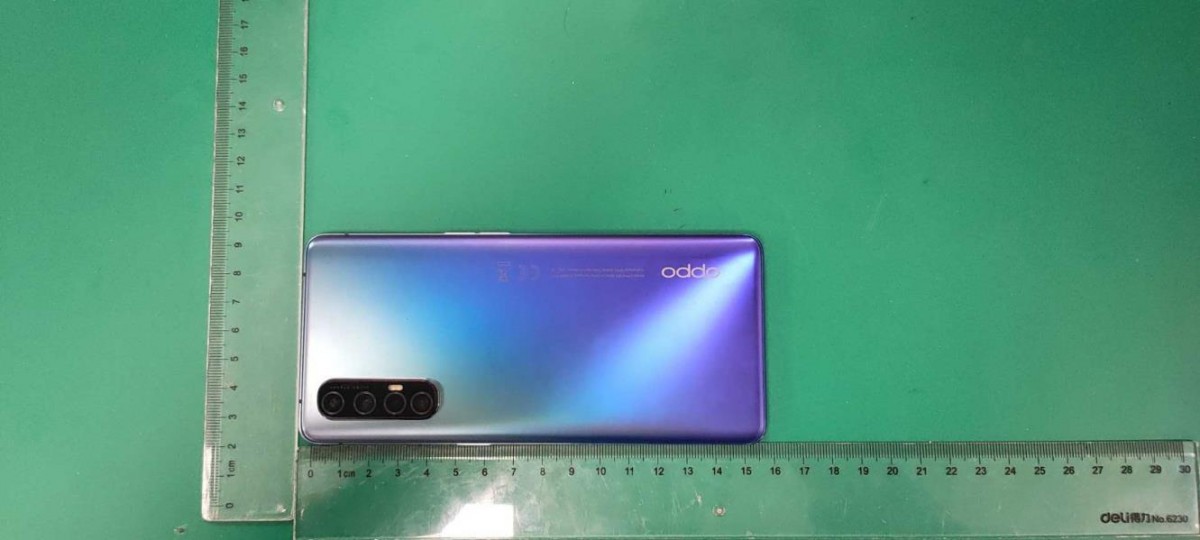
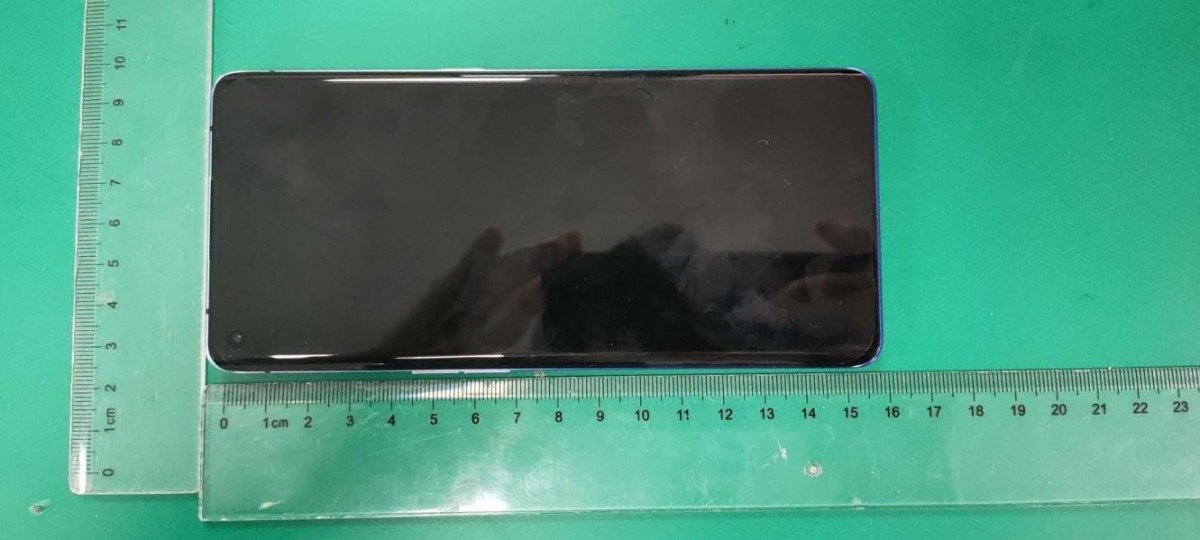
Alleged OPPO Find X2 Neo live shots revealed through FCC certification

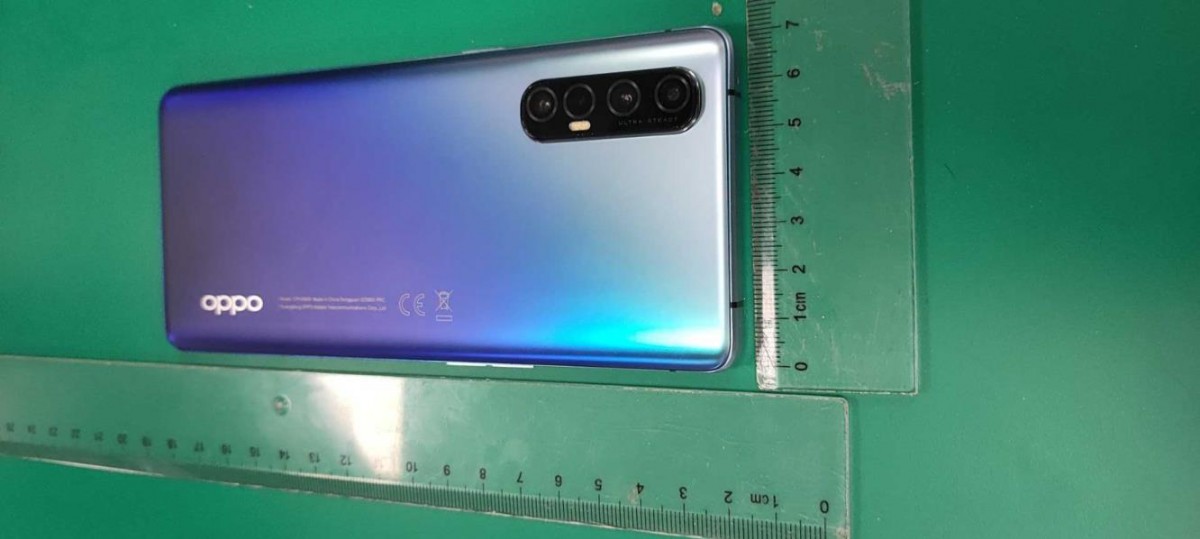
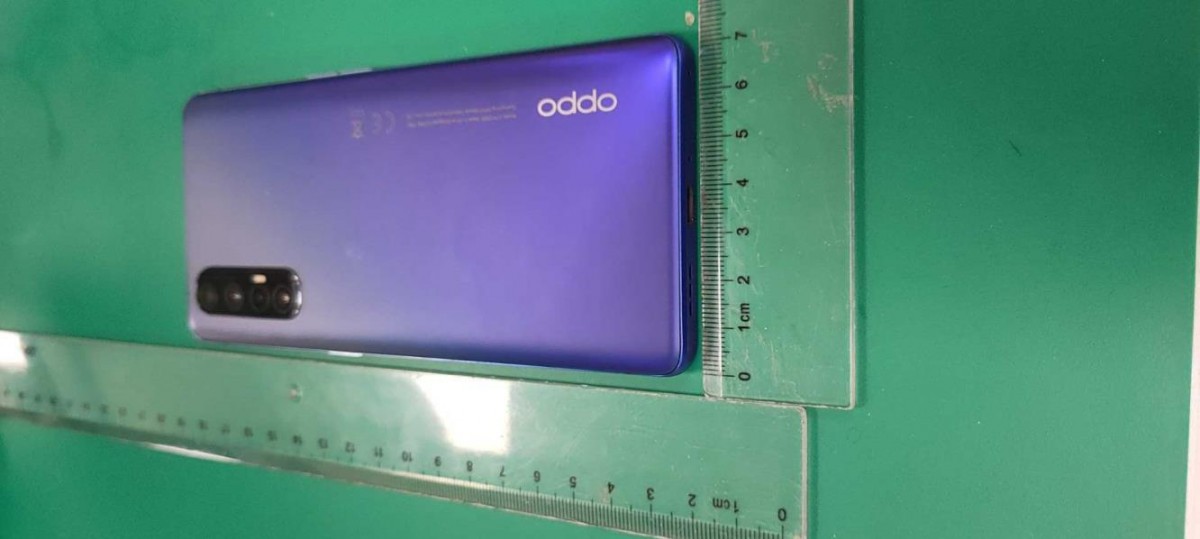
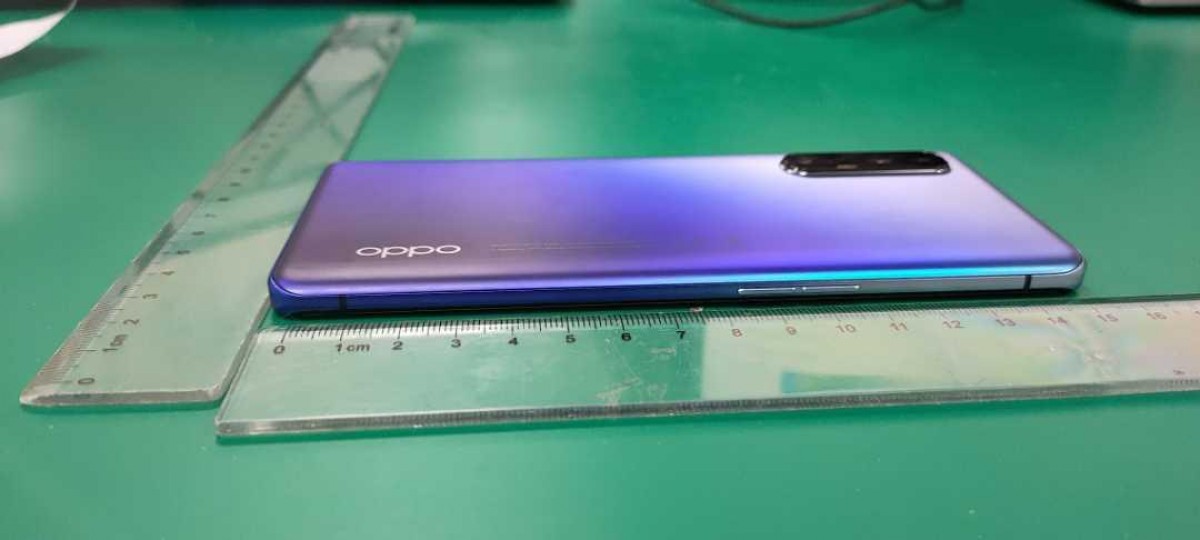
OPPO had launched the OPPO Reno3 Pro 5G phone driven by Snapdragon 765G in China in December 2019. Recent reports have claimed that there will be a global version of the Chinese Reno3 Pro 5G. A recent leak had claimed that it may debut in international markets as OPPO Find X2 Neo. Images of a handset (model number CPH2009) that match exactly with China’s Reno3 Pro 5G has appeared at the Federal Communications Commission in the U.S. It suggests that the Find X2 Neo has just passed FCC approval.

The images of the OPPO CPH2009 phone reveals that it has a curved display. A punch-hole can be seen at its top-left corner. The gradient blue colored glass rear has a vertical camera setup. It lacks a 3.5mm audio jack.

OPPO Find X2 Neo specifications (Rumored)

The Find X2 Neo has a 6.5-inch full HD+ AMOLED screen that support 90Hz refresh rate. The Snapdragon 765G fuels the phone with up 12 GB of RAM. The device may offer users with up to 256 GB of built-in storage.

The ColorOS 7 flavored Android 10 will be available on the Find X2 Neo. It has a front camera of 32-mgeapixel. The back panel features a 48-megapixel quad camera setup. The phone houses a 4,025mah battery that is coupled with 30W fast charging.

In related news, OPPO launched the Reno3 Vitality Edition in China last month. The same phone may debut in global market as Find X2 Lite.


(source|via)

Mi True Wireless Earphones 2 Basic gets Bluetooth Certification; should launch as Redmi AirDots 2

Xiaomi’s TWS lineup is messy and that is because one product can go by multiple names. For example, the Mi AirDots Lite, the Redmi AirDots, and the Mi True Wireless Earphones Basic are practically the same product. Now, a successor seems to be on the way.

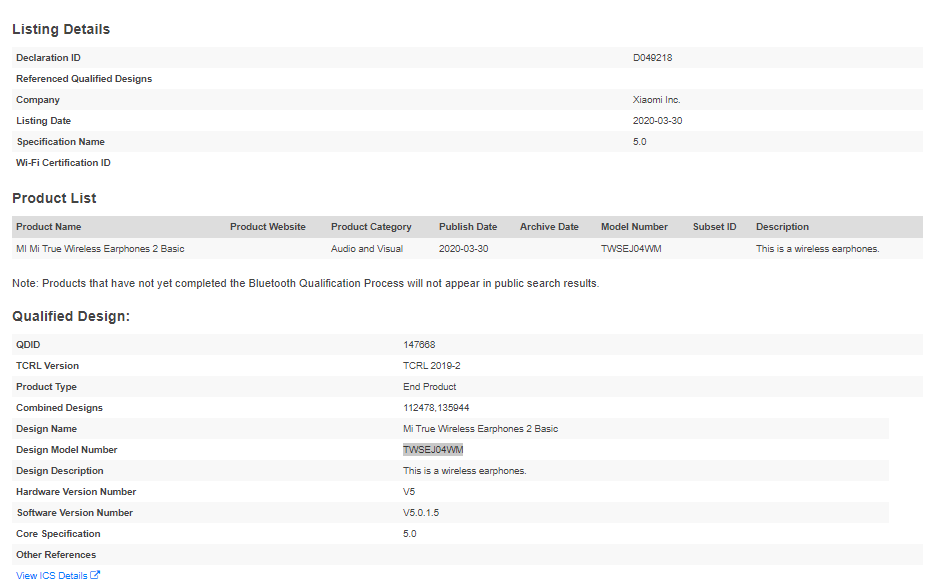
The Bluetooth SIG has certified a pair of TWS from Xiaomi called the Mi True Wireless Earphones 2 Basic. Going by the info in the first paragraph above, this should be the successor of the Mi AirDots Lite and should also be the successor of the Redmi AirDots.

Mi True Wireless Earphones 2 Basic

The Mi True Wireless Earphones 2 Basic has model number TWSEJ04WM and will connect via Bluetooth 5.0. We have no idea what it will look like, so we can’t say if it will keep the design of its predecessor.

While the design is important for comfort, the features are equally important. The Redmi AirDots, which I own, is terrible when it comes to calls as there is no noise-canceling microphone. Hopefully, this is fixed with the new iteration. We also would not mind it having a USB Type-C port and better battery life.

What features do you want to see in the Mi True Wireless Earphones 2 Basic? Let us know in the comment box.


(Source)

Huawei P40 series Chinese pricing leaked, 30% lower than global price

On 26th March 2020, Huawei had announced its latest flagship series, the Huawei P40, P40 Pro and P40 Pro+. Both smartphones arrived with top notch specs and pricing, with the top models crossing the $1,000 mark. But now, the pricing details for the Chinese launch have been leaked, which reveals pricing nearly 30 percent lower than its foreign launch in certain cases.

Huawei

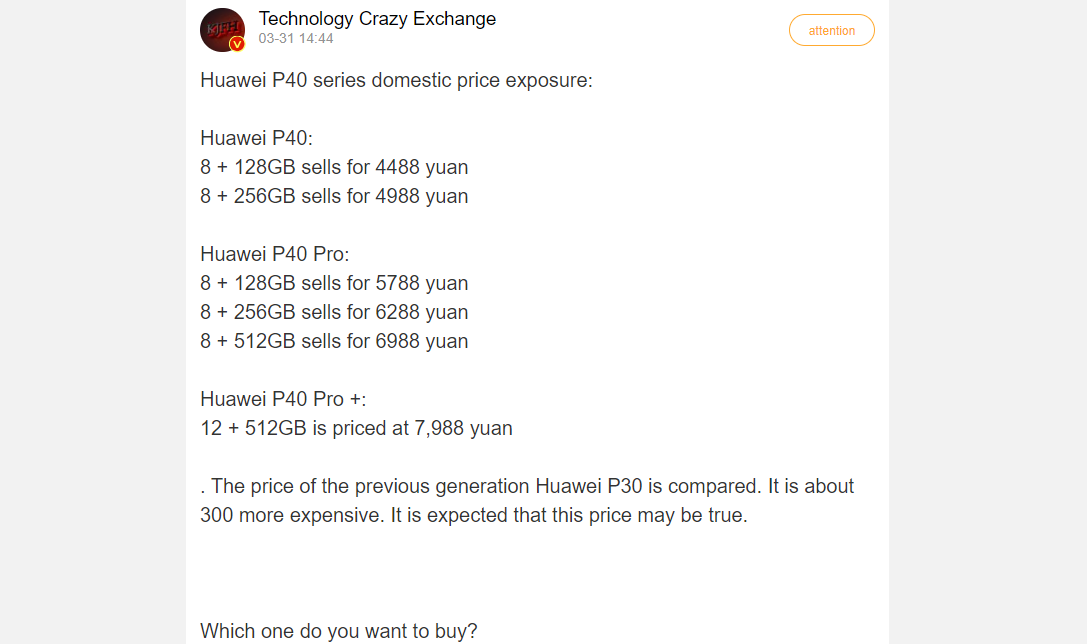
According to a new report, the Huawei P40 with 8GB of RAM and 128GB storage will sell for 4,488 Yuan (roughly 632 US Dollars). This is lower than the European pricing of 799 Euros (roughly 6,195 Yuan). Similarly, the Huawei P40 Pro 8GB + 128GB will sell for 5,788 Yuan (roughly 815 US Dollars) while the 8GB + 256GB variant will be sold for 6,288 Yuan (roughly 885 US Dollars).

Again, these prices are noticeably lower than the foreign launch that had the Huawei P40 Pro priced at 999 EUR for the 256GB models (roughly 7,745). Finally, the most pricey higher end model, Huawei P40 Pro, is reportedly priced at 7,988 Yuan (roughly 1,125 US Dollars), which is again lower than the 1,399 EUR price tag in Europe (roughly 10,845 Yuan).

Huawei P40 Pro Plus Ceramic

This makes the Huawei P40 series about 30 percent lower in price when compared to the global launch variant. Notably, it is about 200-300 Yuan higher than the last year’s Huawei P30 series, although that is expected since the newer version feature 5G networking with the general pricing logic also being considered. Unfortunately, this has yet to be confirmed by Huawei. So, it is unclear if this is the official pricing from the Chinese tech giant. Thus, take this report with a grain of salt for now.