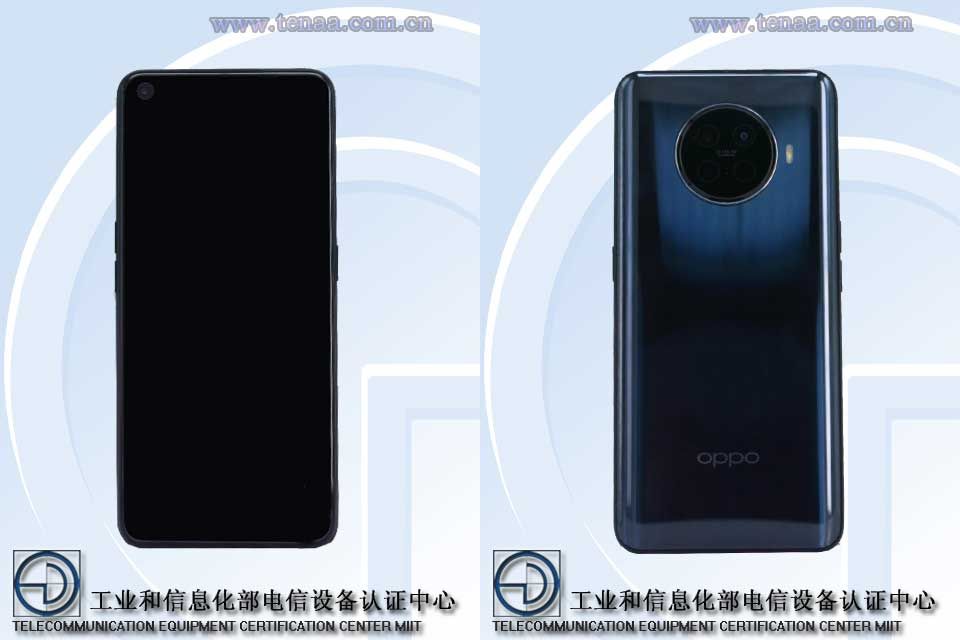
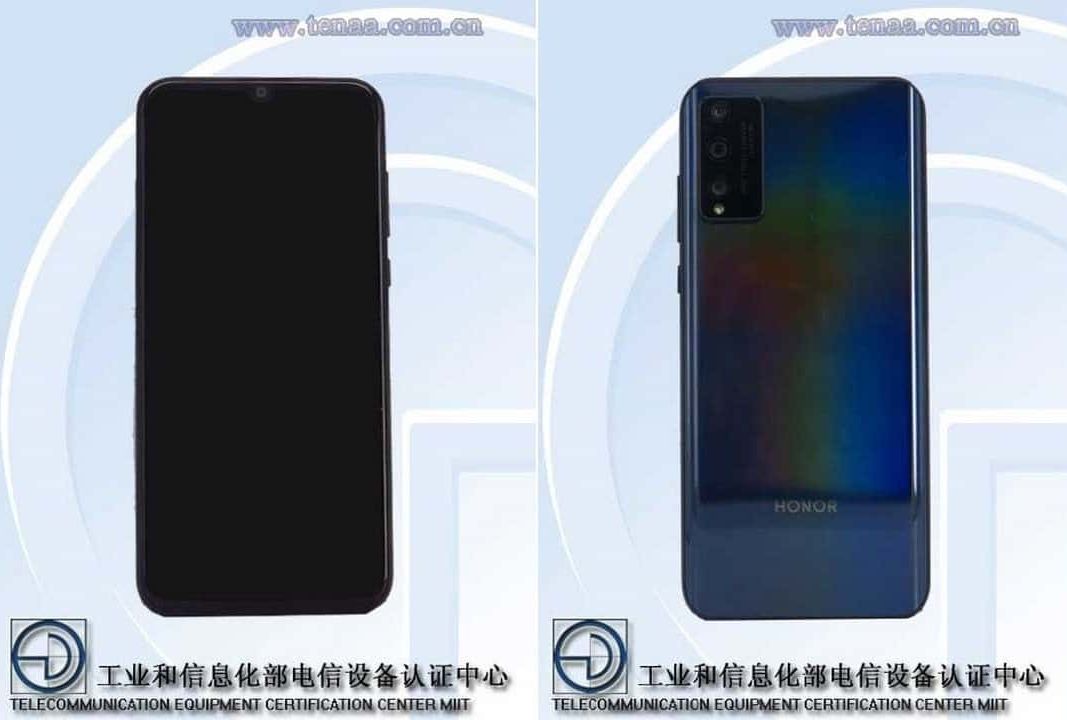
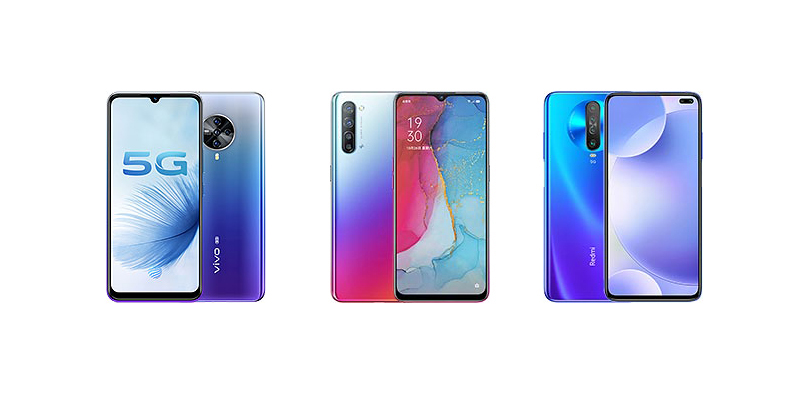
The Oppo Reno 5 series could be the direct successor to the Reno 3 series, according to a new report. The news arrives from Weibo, a Chinese microblogging website, from the account of Digital Chat Station.
For those unaware, the number ‘4’ is generally considered as bad luck in Chinese tradition. Thus, OEM’s sometimes skip the names of their products with this number. A popular example of this is the OnePlus 5 series which arrived directly after the OnePlus 3 series. As of right now, finer details regarding the Oppo Reno 5 series is unknown.
Unfortunately, its internal specifications are still at large at the moment, but going by the industry trend, a few educated guesses can be made. The Oppo Reno 5 series is likely to be a mid segment smartphone and may arrive with either Qualcomm’ Snapdragon 765G SoC or MediaTek’s new Dimensity chipsets. Furthermore, it is also possible that it may feature a high refresh rate display and quite possibly the newer and faster 5G network as well.
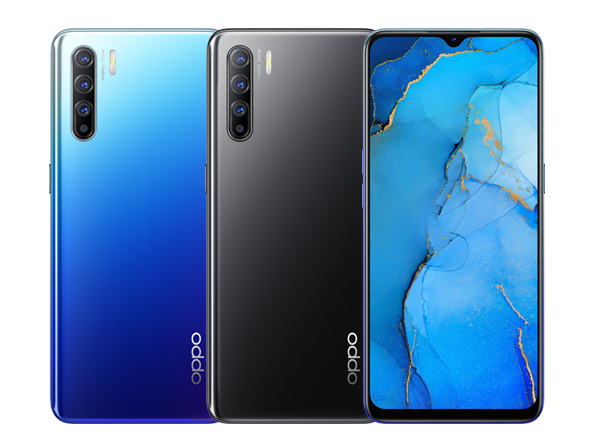
OPPO Reno 3 Global Version
Although, these are just speculations so take this with a grain of salt. Despite having the name revealed, we still don’t know a lot about the Reno 5 series. But the Weibo post did mention one crucial information, which is the release date that is set sometime in May 2020. So stay tuned for additional information that should arrive in the next couple of weeks.
Back in early 2019, Huawei had been hit with a ban from the US, that placed the company in the “Entity List.” Since then, the company’s operations have been severely hampered while it has also lost support from Google, due to the blacklist. While the company did launch its own alternatives, it seems the transition wasn’t as simple as they wished, with the company reportedly losing out on billions of dollars.
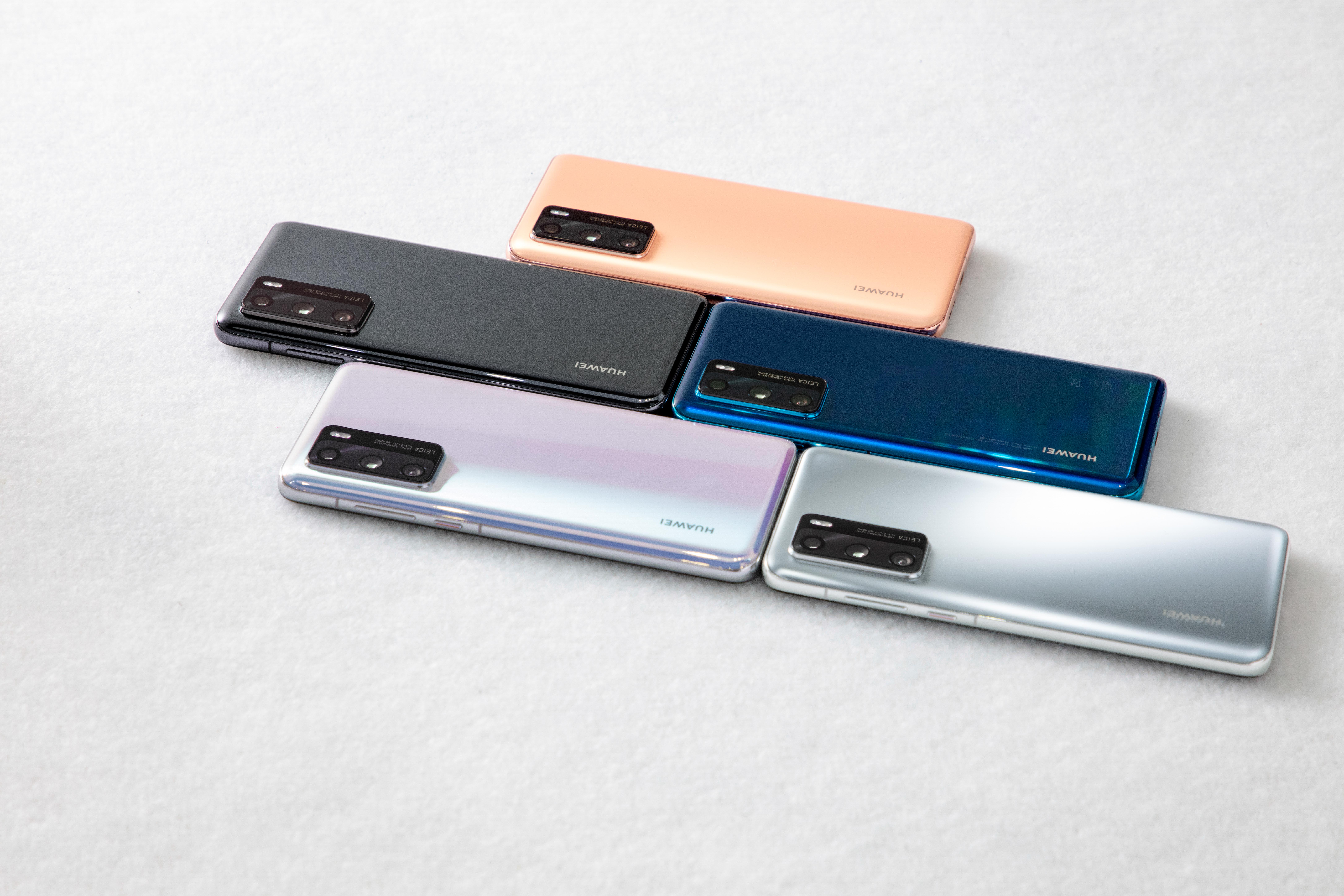
Huawei P40 Pro
According to Eric Xu, the Deputy Chairman and Rotating Chairman of Huawei, the company has lost out on nearly 12 billion US Dollars in 2019. Apparently, Huawei’s previous projections regarding the year had an estimated 135 billion US Dollars. However, the company has fallen just short of the amount, which was directly related to the various “US sanctions” that were against the Chinese tech giant.
A major chunk of the shortfall arrived from Huawei’s consumer division that accounts for over 54 percent of the company’s total sales in 2019. Xu stated that “it is the consumer business of Huawei that was hurt the most.” In other words, smartphones, tablets, laptops and more were affected by the US blacklisting. Reportedly, these consumer grade electronics products brought in 66.93 billion US Dollars in revenue in 2019, which was about 10 billion US Dollars less than what the company was originally targetting.
For those unaware, after the US ban, Huawei could not trade or buy products/services from US based companies. This caused it to lose Google’s mobile services, which in turn meant that Huawei smartphones now had to ship with vanilla Android. Thus, this caused the development of the HMS (Huawei Mobile Services), but unfortunately, the platform is still in its nascent stages. Huawei’s partnership with Google also meant that both companies profited greatly from one another, but that has since been terminated.
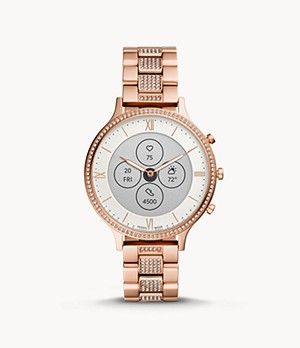
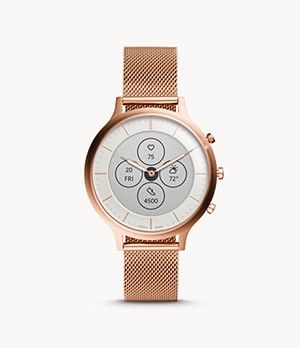
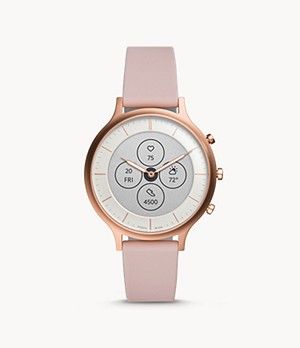
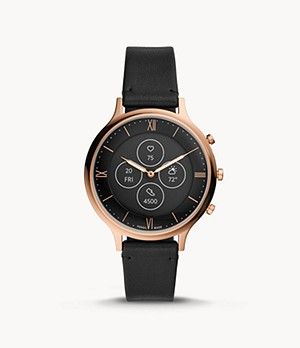
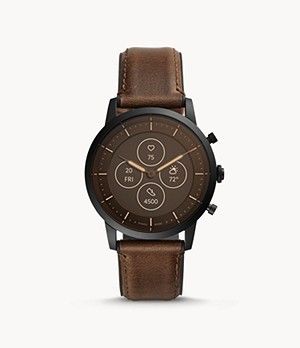
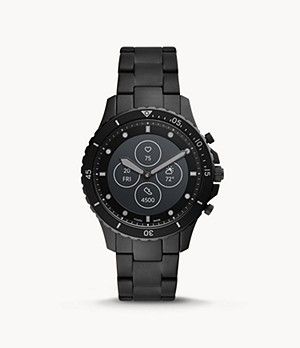
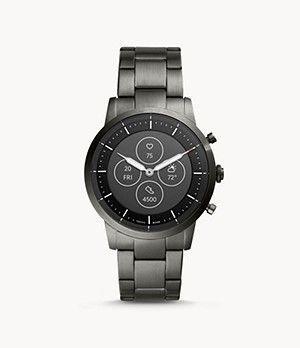
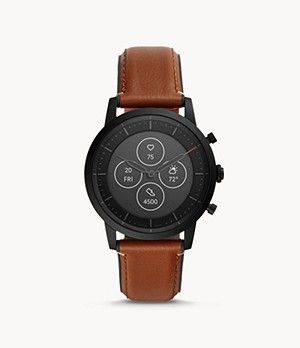
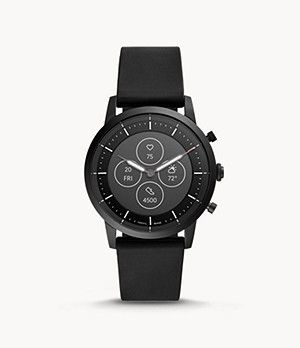
Fossil finally launches the Hybrid HR smartwatch in China for a starting price of 1890 Yuan ($266). This smartwatch with a fusion of classic design and smart features was first announced back in November of 2019.
The Fossil Hybrid HR is unlike other smartwatches in the market featuring a classic watch design complete with mechanical arms. But as a smart wearable, it also comes with a display – an e-ink one rather than an OLED panel. Further, it also has an accelerometer, optical heart rate sensor, water-resistance up to 3ATM.
The e-ink display on the Hybrid HR measures only 1.06-inch and is enclosed in a stainless steel casing with no support for touch input. And thus, the smartwatch has to be controlled using three push buttons on the right side, out of which the middle one resembles a crown but unfortunately it is not one.
The smart features of the watch include app notifications, call, and message alerts, music controls, weather, multiple time zones, stopwatch, timer, fitness tracking, and sleep tracking. The watch comes with Bluetooth 5.0 to connect with smartphones running iOS 10 / Android 5.0 and above.
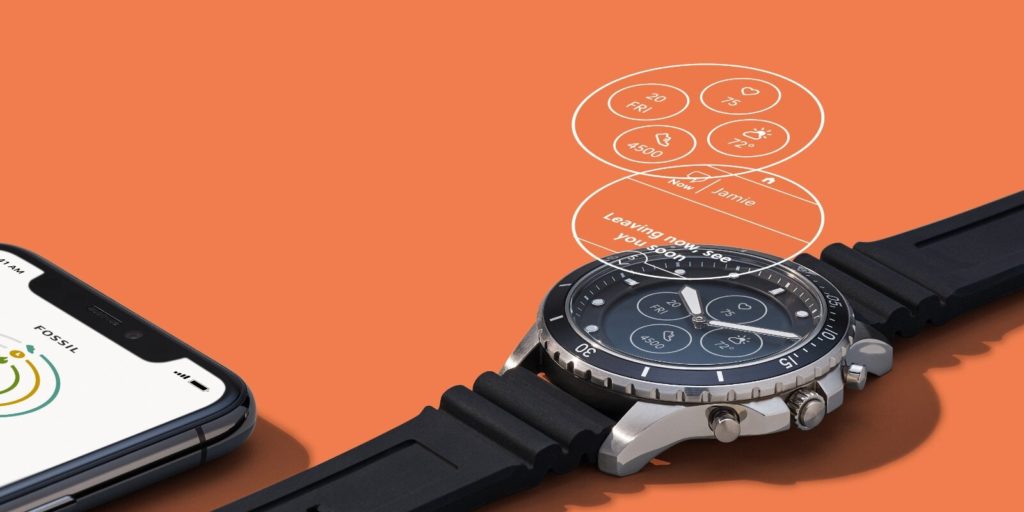
Fossil Hybrid HR Smartwatch
1 of 9
Also, like any other watch, the Fossil Hybrid HR smartwatch comes in a number of finishes with a wide range of straps to choose from.
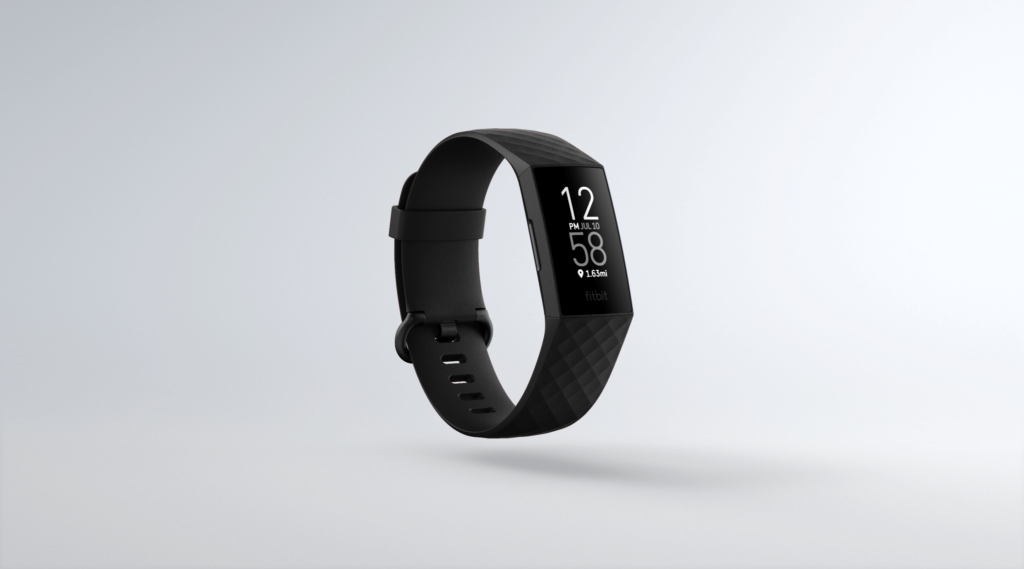
Earlier in November 2019, Google announced to buy Fitbit for $2.1 billion. Since then the popular fitness tracker company did not announce any new product. But now, it has, after five months since the buyout was announced. Unfortunately, the new wearable from the company is Fitbit Charge 4, which is nothing but a successor to Fitbit Charge 3 from 2018.
The Fitbit Charge 4 features the same design as its predecessor but comes with a built-in GPS, which is absent on the previous model. The tracker is made of aerospace-grade aluminum and is available in four options including a special edition.
The tracker sports an OLED greyscale display with support for touch inputs. The sensors present in it include 3-axis accelerometer, optical heart rate monitor, SpO2 blood oxygen level monitor and altimeter. For connectivity, it features Bluetooth 4.0 to connect with smartphones running both Android and iOS. It also has NFC to make contactless payments via Fitbit Pay.
As a fitness tracker, it does monitoring all-day including workouts like swimming as it is water-resistant up to 50m. Also, it has support for sleep monitoring, call and message alerts, app notifications, music playback controls, and more.
As far as price is concerned, the Fitbit Charge 4 standard variant in mauve, blue, and black colored staps will retail for $149.95. Whereas, the special edition with classic black woven and reflective bands is priced at $169.95. However, in India, the fitness tracker costs more as they have been priced at INR 14,999 and INR 16,999 respectively. Lastly, buyers in all regions will get 90 days free trial of Fitbit Premium subscription service.
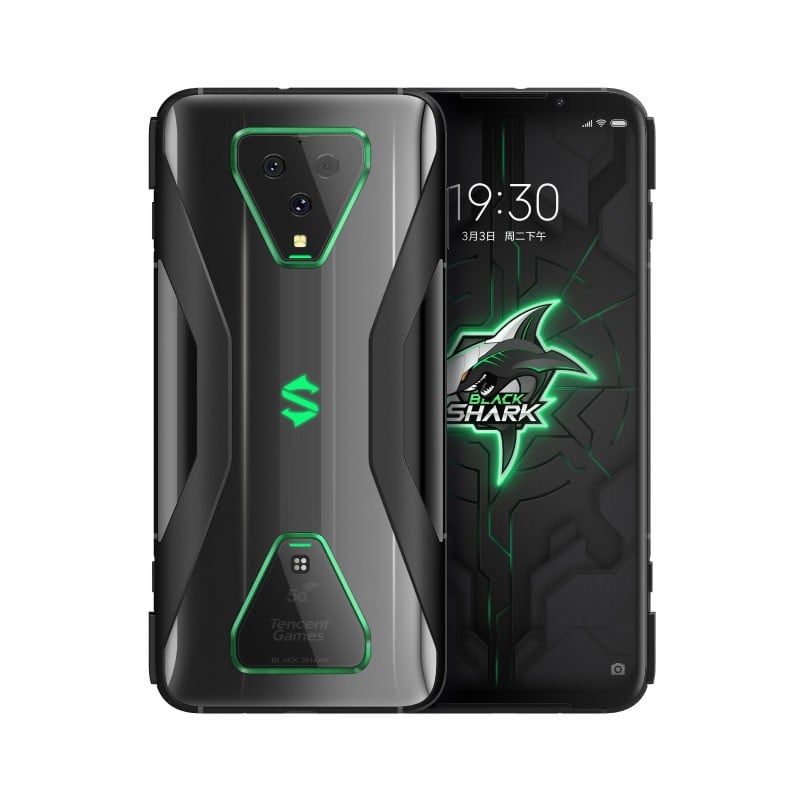
Xiaomi‘s Black Shark 3 Pro has just undergone a teardown from JerryRigEverything, the popular YouTube tech content creator. The new video shows an interestingly unique internal design and layout of the device and also highlights the big heat pipes that help keep the gaming smartphone cooler.
Peering into the insides, the Xiaomi Black Shark 3 Pro has two thick copper heat pipes that are connected to the metal shields on top of the CPU. To even get to this point, one must remove the bow tie shaped back panel, a design that has never been seen before. Notably, most smartphone OEMs follow relatively similar internal layouts, as they are the most efficient ways to pack in all the hardware.
However, we have to keep in mind that gaming smartphones require a few additional touches for thermal performance, so a unique new design is welcomed as well. Right off the bat, the back panel is noticeably smaller considering a few of the outer designs meld into the battery pack (referring to the angular design on the back). To remove the motherboard or even reach the battery pack, the front display had to be unmounted as well.
Typically, most, if not all internal components can be found or removed from just the rear panel, but this unique layout manages to utilize the smartphone’s angular design to a great degree. Once the motherboards is out, the most notable aspect are the two thick copper heat pipes that wrap around both sides of it. This essentially completely covers the processor and other crucial parts enabling better thermals.
On the other hand, Xiaomi uses twin battery pack systems that surround the motherboard on both sides. This means that Xiaomi charges both the batteries separately to achieve the advertised 65W fast charging rates on the Black Shark 3 Pro. For more details on the teardown, you can check out JerryRigEverything’s video above.
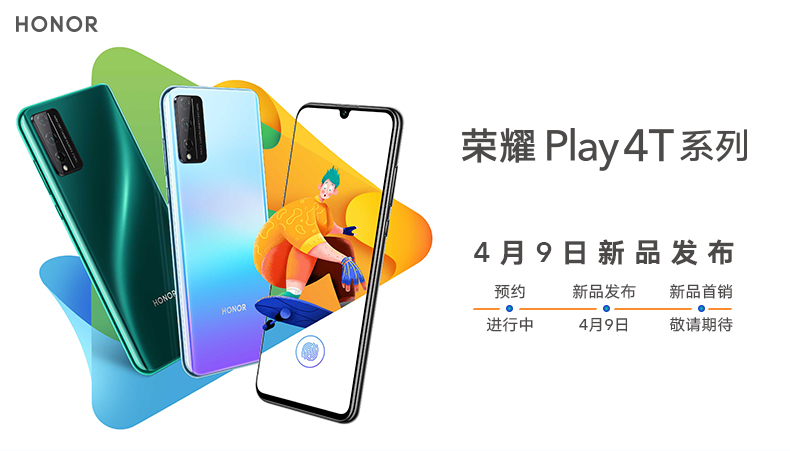
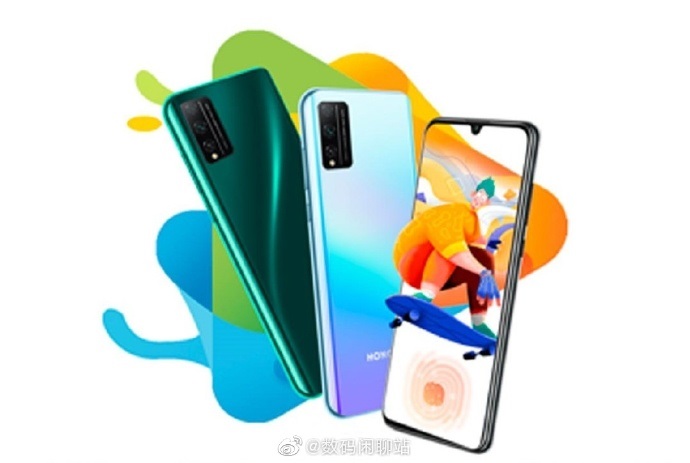
The Honor Play 4T will be made official on April 9. Ahead of the launch, some of the known retailer sties of China such as JD, Suning and Tmall have started with the reservations of the Play 4T. Interestingly, the reservation pages on JD reveals that the company will be not only launching the Play 4T and Play 4T Pro phones.
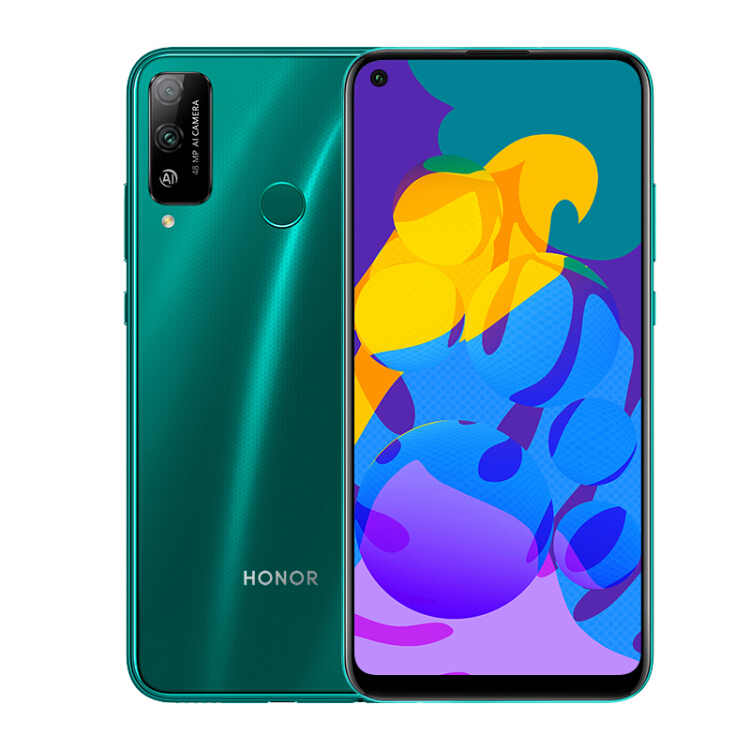
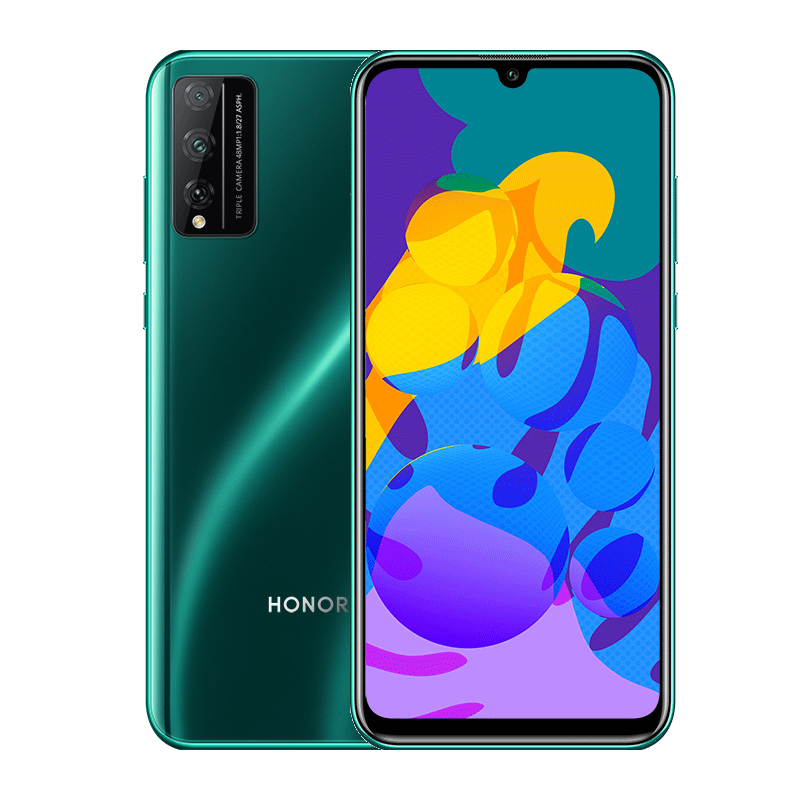
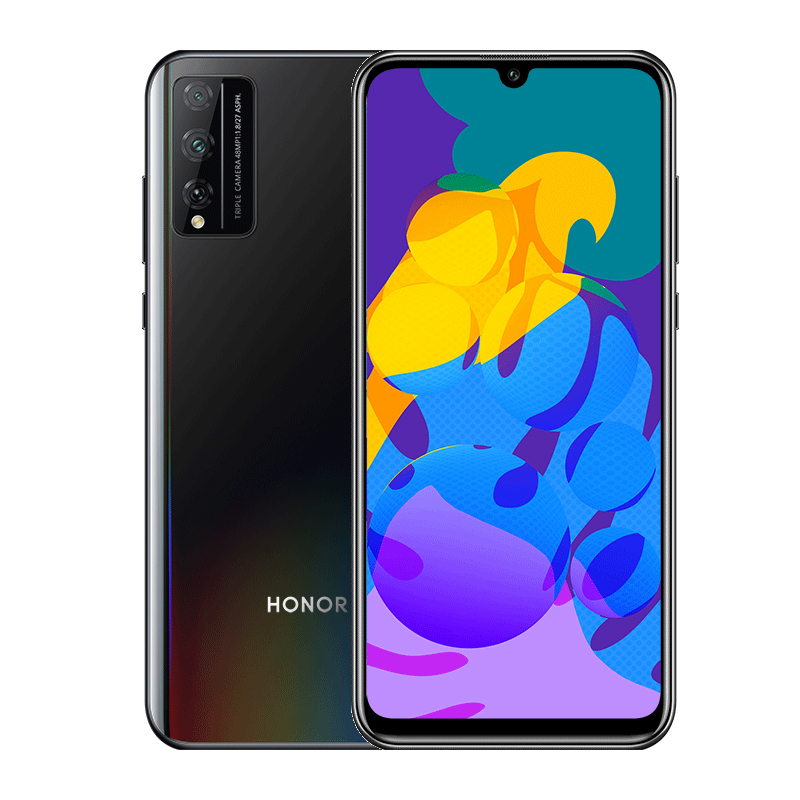
The images that have surfaced on reservations pages show that there are two kinds of Play 4T. One of them has a waterdrop notch and under-display fingerprint sensor. This handset could be the Honor Play 4T Pro. The handset can be seen in black, green and gradient white colors.
On the other side, there is a variant that features a punch-hole screen and a conventional fingerprint sensor on its rear. This device is likely to debut as Honor Play 4T. Apart from green, the handset could be available in other color choices.
The image of the Honor Play 4T Pro resembles with the AQM-AL10 phone that was certified by TENAA telecom regulatory body of China in March. The TENAA listing revealed that it has a full HD+ 6.3-inch AMOLED display with 20:9 aspect ratio, Kirin 810 chipset, 6 GB / GB RAM, 128 GB / 256 GB storage, 48-megapixel + 8-megapixel + 2-megapixel triple cameras, 16-megapixel front camera and 4,000mAh battery with 22.5W rapid charging support.
Honor Play 4T specifications
1 of 3
Honor Play 4T Pro
Honor Play 4T Pro
The Honor Play 4T seems to be AKA-AL10 smartphone which also received TENAA certification last month. It features a 6.39-inch IPS LCD display with HD+ resolution support, 2.0GHz octa-core processor, 4 GB / 6 GB RAM, 64 GB / 128 GB storage, 48-megapixel + 2-megapixel dual camera, 8-megapixel selfie snapper and 4,000mAh battery. The Android 10 OS is preinstalled on both phones. There is no word on their pricing.
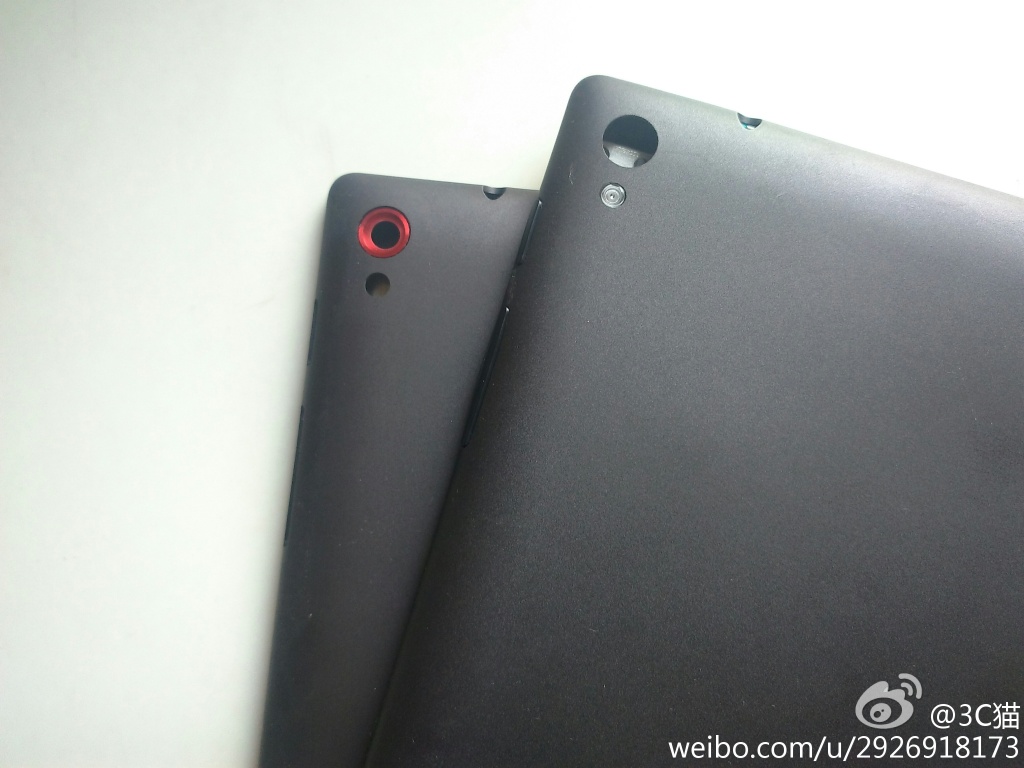
Xiaomi has apparently not given up on tablets in its technological ecosystem. The news arrives after a Li Chuangqi answered a few questions regarding tablets earlier this week. So, a new tablet might still be in the plans for some time in the future.
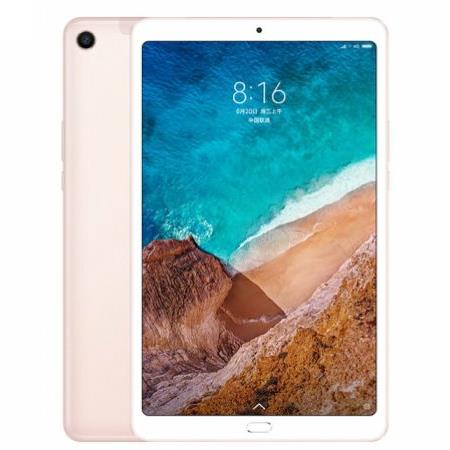
Xiaomi Mi Pad 4 Plus
Previously, Xiaomi had released the Mi Pad 4 and Mi Pad 4 Plus back in 2018. These devices featured Qualcomm’s Snapdragon 660 AIE SoC alongside 4GB of RAM and a large 6,000 or 8,620mAh battery. However, it’s been more than a year since the Mi Tab 4 series was launched, while it has remained unclear if a successor would be launched at all.
According to industry experts, the tablets and their entertainment features have largely been replaced by taller and wider smartphones. Although the viability of tablets still exists in certain professional cases, they are still not as viable in comparison to their smaller counterparts. Apple’s iPad Pro is one such example with it being the first choice for creative professionals or working on the go.
Although the future of the tablets is uncertain, there might be a notable jump in performance and battery life that many chip manufacturers are hoping to achieve. Generally, smartphones have also been faster than tablets, in most cases, especially when comparing flagships. So, more power might make them more viable for additional workloads and more useful. However, this is still speculation, so take it with a grain a salt.
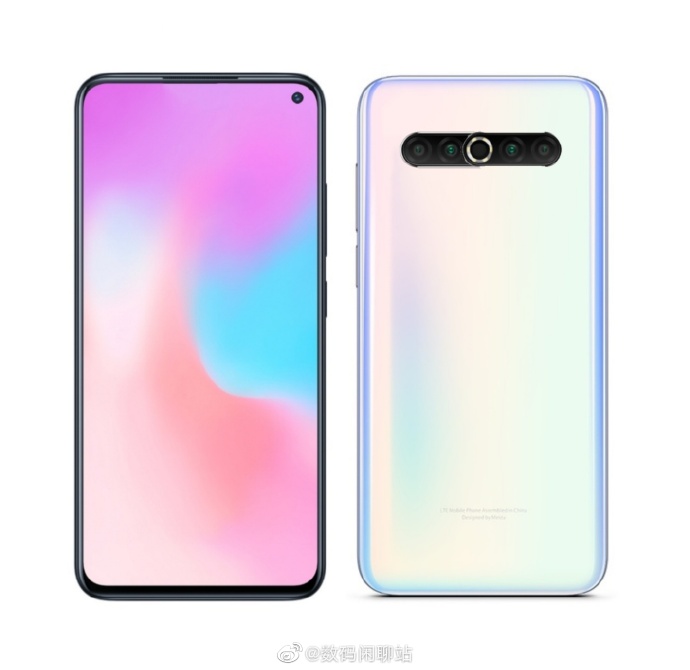
Meizu 17 will be debuting at some point this month. Meizu phones are known for sporting symmetrical bezels. However, a new render of the Meizu 17 shared by a reliable Chinese tipster reveals that it won’t be coming symmetrical bezels. The render also reveals the rear design of the phone.
The Meizu 17’s newly leaked render shows that it is equipped with a small round-shaped cutout at the top-left corner. The upper and side bezels surrounding the screen are quite thin. The chin of the device is slightly thick. The right side of the phone has a volume rocker and a power key.
It is said that the phone has a 6.5-inch S-AMOLED display that supports full HD+ resolution and 90Hz refresh rate. The screen is embedded with a fingerprint reader.
Meizu 17 render
The gradient colored back panel of the Meizu 17 could be made out of glass. It has a horizontal camera strip that houses four camera sensors with a LED flash positioned at the center. The render resembles with a recently leaked image. The camera setup reportedly includes a 64-megapixel Samsung GW1 sensor, an 8-megapixel ultrawide lens, a 5-megapixel telephoto lens and a 2-megapixel depth assist sensor.
Reports surrounding the Meizu 17 have revealed that it is driven by Snapdragon 865 mobile platform and LPDDR5 RAM. The base model of the Meizu 17 will feature LPDDR4X RAM. The phone is expected to offer users with UFS 3.0 storage.
The Meizu 17 is equipped with a 4,500mAh battery. The handset’s 3C certification has revealed that is supports 30W mCharge technology. Some of its other rumored features like include dual stereo speakers, horizontal linear motors, NFC and Wi-Fi 6. The handset is expected to land in China with a base price of 3,999 Yuan (~$563).
Readers to advised to take the leaked render with a grain of salt since it is not very difficult to create a photoshopped render based on leaks.
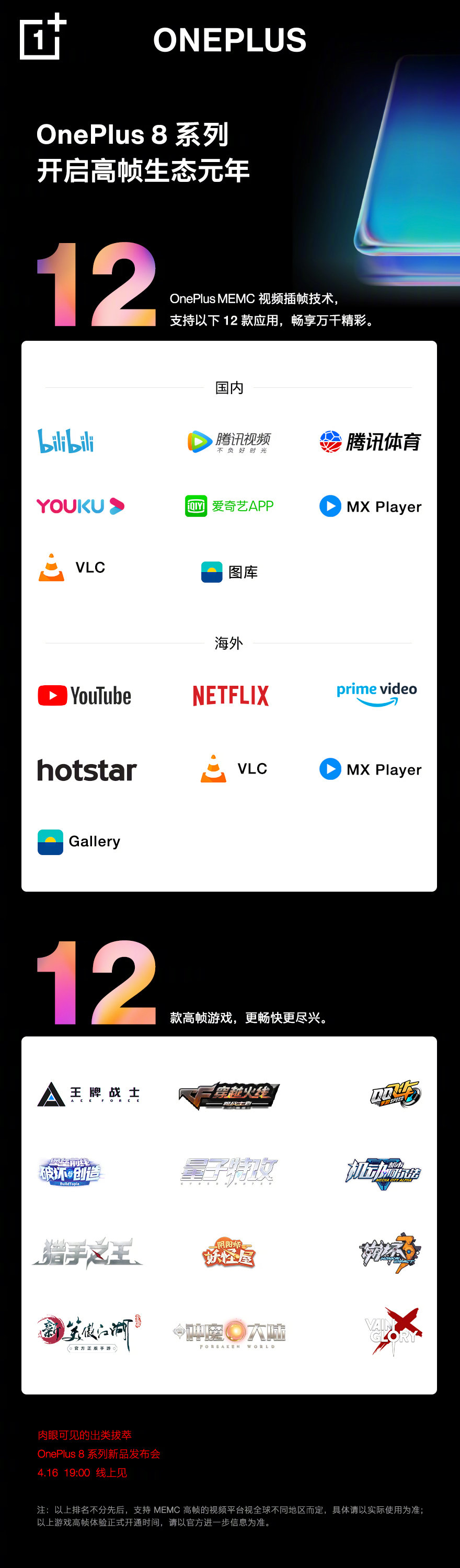
Since the OnePlus 7 series, the company has decided to move over to the higher refresh rate panel standards for its annual flagship series. This holds true even now for the OnePus 8 series as it is confirmed to arrive with a 120Hz display as well. Now, Pete Lau, the CEO of OnePlus, has explained the new MEMC technology on the device and also revealed the apps that will support the new system.
The OnePlus 8 series, as stated above, will feature a high refresh rate and take advantage of this, it will also arrive with MEMC technology (Motion Estimation And Motion Compensation). This technology enables the smoothening of visual content which was not natively captured in such a high frame rate to be displayed in a manner that fits the high refresh rate of the display. As a rough example, a movie that is generally shot in 21-24fps can now be watched at a higher 120Hz refresh rate.
OnePlus achieves this by housing a dedicated chip alongside an exclusive algorithm to bring about it calls a “high frame ecology.” This includes both games, movies and even online streaming applications that can now be consumed at smoother frame rates. The new MEMC technology from the company has been labeled as High Frame 2.0, and has been included to solve the problem of high refresh rate screens on smartphones not having any high refresh rate content to be displayed.
Apps that will support the new MEMC Technology
The apps that will support this new feature include YouTube, Netflix, Amazon Prime Video, Hotstar, VLC, MX Player, and even its proprietary Gallery application. Similarly, other known Chinese multi media apps are also supported while various gaming titles are also a big inclusion. It is generally known that gaming at higher refresh rates lowers latency and improves the players’ overall gaming performance as well.
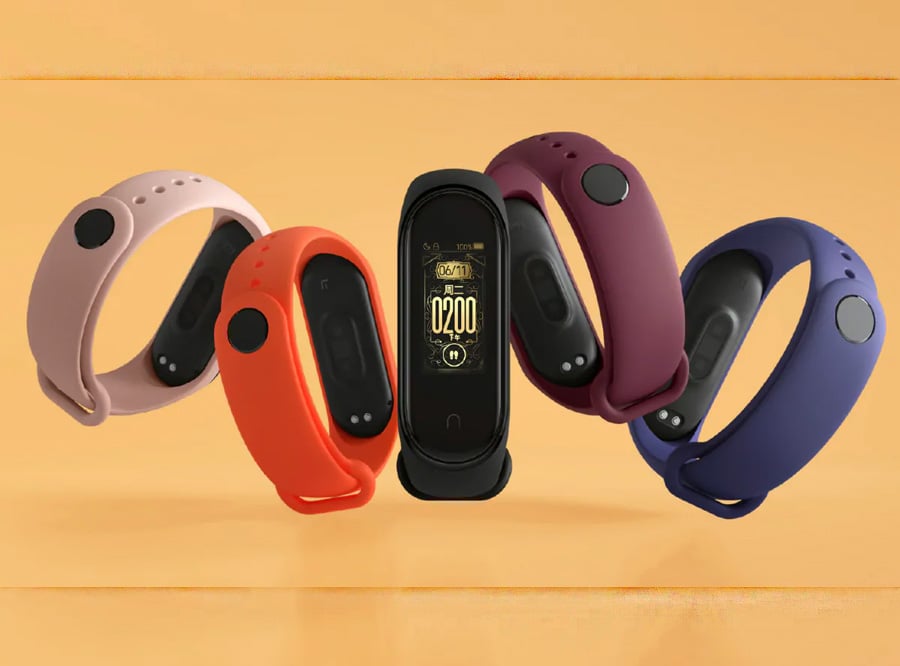
Xiaomi sells a number of popular products apart from smartphones. One such series is the company’s lineup of fitness bands. Currently, the Mi band is in its fourth generation with Mi Band 4 launched back in June 2019. This wearable has so far received multiple updates bringing new features and fixing bugs. Now, the company is rolling out a new firmware update for both Mi Band 4 and Mi Band 3 from 2018 that adds new functionality to let users unlock laptops running Windows 10.
Xiaomi Mi Band 4
The Mi Band 4 has been receiving firmware updates almost every month. However, since November these updates have almost always fixed bugs instead of adding any new features to Mi Band 3 or Mi Band 4. Now the latest firmware that is being rolled out by the company is finally bringing a change to these fitness trackers in a very long time.
The latest update bumps up the firmware version of Mi Band 4 to V1.0.9.42 from V1.0.9.34 and adds a function to unlock Windows 10 laptops. Unfortunately, this functionality is only limited to users in India as of now. Although unlocking laptops via Mi Band 3 and 4 was possible earlier, it required a third-party app. But now the function has been officially integrated into the Mi Fit app.
Additionally, the new firmware update on both trackers also brings improvement in step counter by fixing ghost steps issues. Also, as the firmware update comes bundled with the Mi Fit app update, the app’s version has been now incremented to 4.0.17 with improved user experience by fixing known bugs and adding support for Apple ID sign-in.
Meizu will be launching the Meizu 17 5G phone this month. However, it is yet to confirm on its launch date. Some reports have claimed that Meizu 17 5G will be accompanied by Meizu 17 Pro 5G phone. At present, there is no official confirmation on it yet. A new Meizu phone that has a model number M081Q has been approved by the 3C authority of China. It appears to be the upcoming Meizu 17 5G phone.
The M081Q Meizu phone that has appeared on 3C is a 5G-capable phone. The charger that is mentioned in the listing has a model number of UP1030. It carries support for maximum charging speeds of 30W. The 3C listing has no information on the other specs of the device.
A leaked image of the UP1030 Meizu charger was recently spotted. The support for 30W charger was found mentioned on the device. Last year’s Meizu 16s Pro supported 24W mCharge technology. The upcoming Meizu 17 5G will be arriving with 30W fast charging support. There is no word on whether the Meizu 17 or Meizu 17 Pro will be equipped with wireless charging technology.
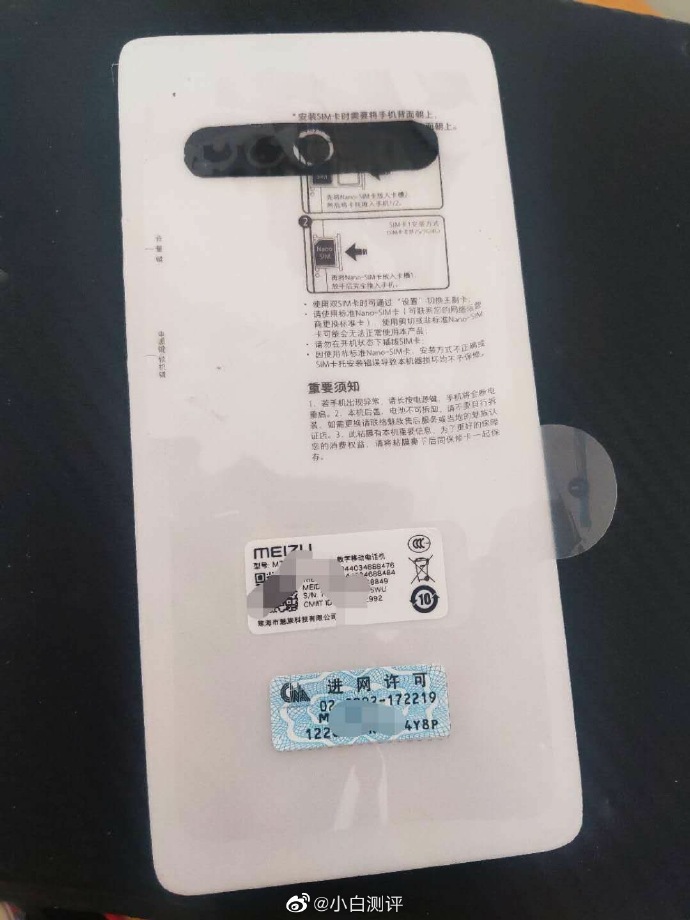
In related news, a leaked photo of the Meizu 17 has appeared on China’s social platforms. The white-colored rear of the phone is seen sporting a horizontal camera setup. The module features four cameras with an LED flash ring at the center. The image also reveals that the Meizu 17 will be equipped with support for dual SIM dual standby.
The Meizu 17s is rumored to house a 90Hz refresh rate supporting 6.5-inch full HD+ punch-hole display. It will be fueled by Snapdragon 865 mobile platform and LPDDR5 RAM. The rear side of the phone could be fitted with 64-megapixel (Samsung GW1) + 8-megapixel (ultrawide) + 5-megapixel (telephoto) + 2-megapixel (depth) quad camera system. It may come with UFS 3.0 storage, Wi-Fi 6and in-screen fingerprint reader. It may arrive with a staring price of 3,999 Yuan (~$563).
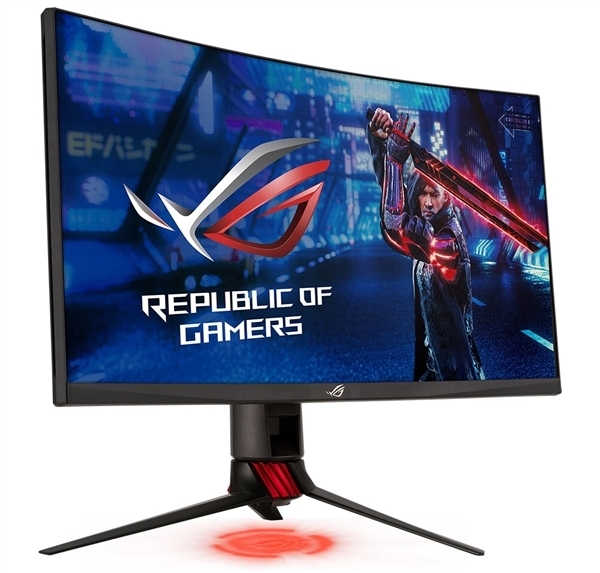
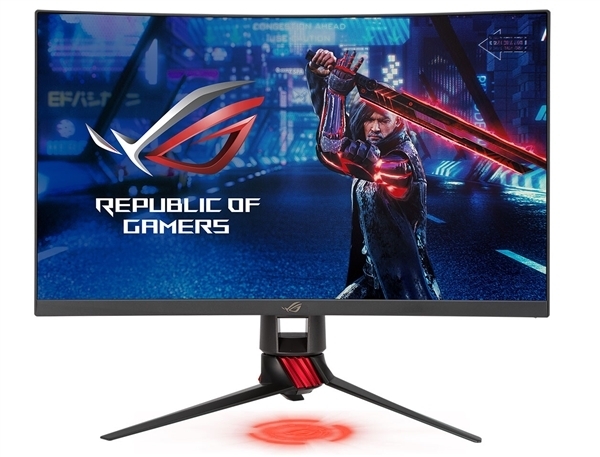
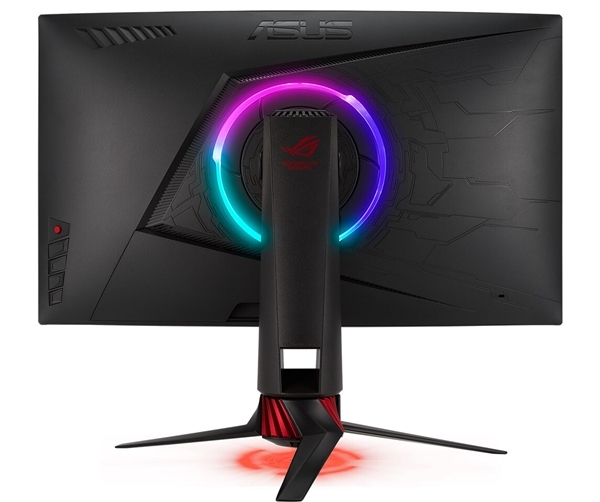
ASUS announces a new 27-inches curved gaming monitor in China called ROG Strix XG27WQ. Being a Republic of Gamers product, it features a modern design with a unique stand and RGB lighting to go with.
The ROG Strix XG27WQ sports a 27-inches VA panel of 2K resolution ( 2560×1440 pixels) with up to 165Hz refresh rate and 15000R curvature. It has also got 1ms (GTG) response time, 3000: 1 contrast ratio, and covers 125% as well as 92% of sRGB and DCI-P3 colour gamuts.
Further, the monitor has a 178-degree viewing angle and also supports AMD FreeSync Premium Pro. Additionally, the monitor is also certified for both DisplayHDR 400 and HDR10.
As for I/O, the monitor comes equipped with a DisplayPort (DP1.2a), two HDMI 2.0 ports, two USB 3.0 ports, and a 3.5mm headphone jack.
ASUS ROG Strix XG27WQ Curved Gaming Monitor
1 of 3
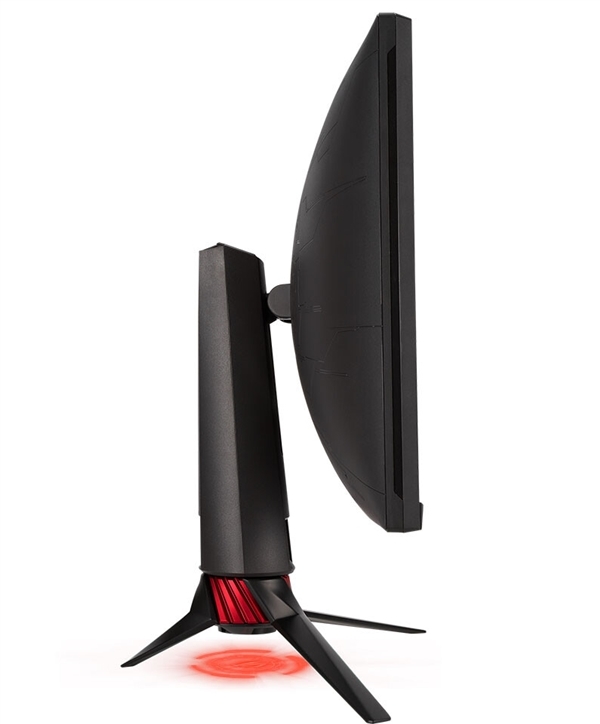
Talking about the design, the new monitor features almost zero bezels at the sides and the top with a slightly larger chin at the bottom marked with the ROG logo. Then, the tripod stand of the monitor extends from the rear center and emits LED light on the surface. Also, there is a large RGB lighting ring at the rear of the monitor encircling the center where the stand starts from.
With all that being said, ASUS is yet to announce the price of its new ROG Strix XG27WQ curved gaming monitor.
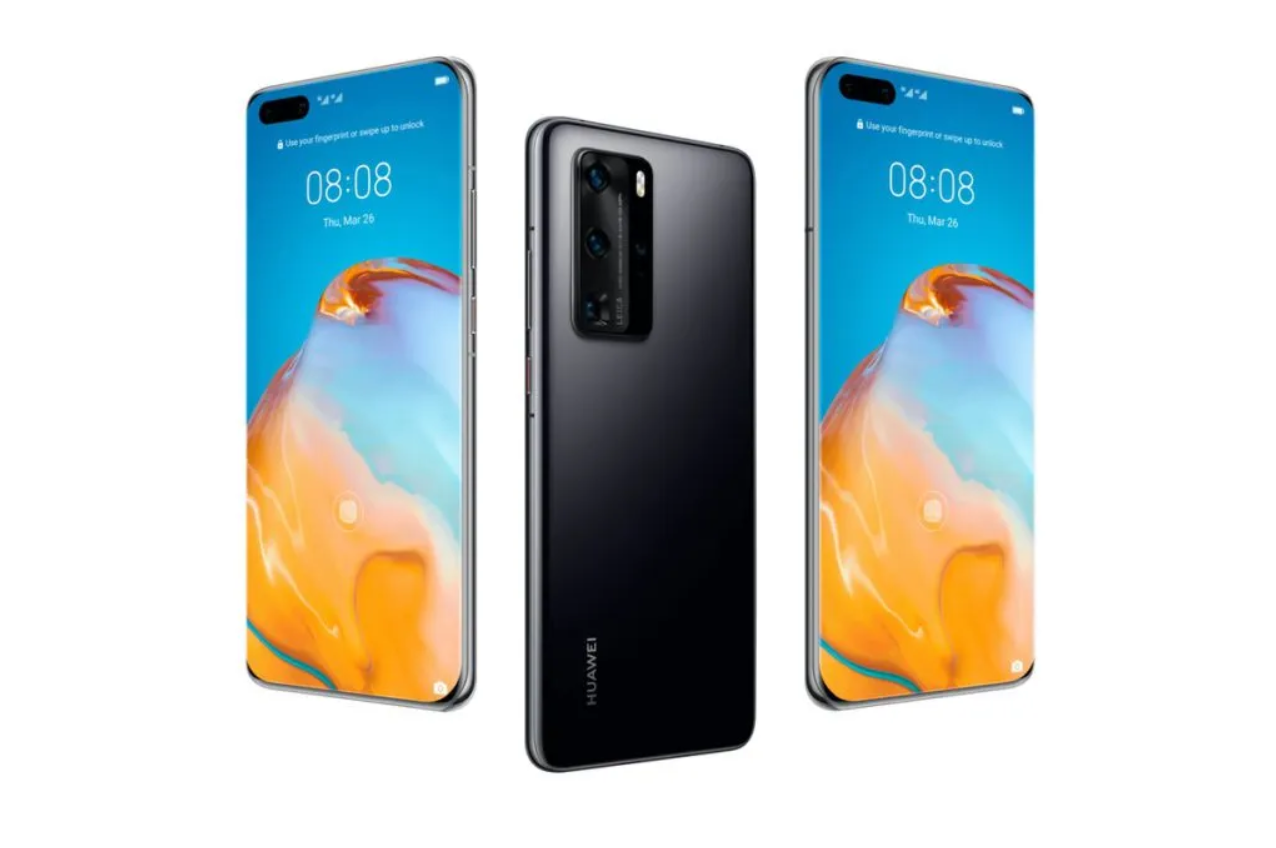
Huawei recently announced its Huawei P40 flagship series smartphones which is now set to go on sale in China next week. Now, ahead of that, a tipster has shared an image of Huawei P40 Pro Plus prototype which reveals an easter egg.
It shows that the Leica penta-camera setup on the smartphone has a note that reads “Let It Go”. This confirms that the smartphone, which is codenamed “Elsa” has been named after the “Frozen” movie.
okay now it is confirmed that the P40 series code names really are from the Frozen. no more doubts. This is "Elsa" aka P40Pro+ proto and its leica label have note "Let it go" Kinda nice little easter egg😏 #HuaweiP40Propic.twitter.com/BEksEUol7W
Earlier, there were reports which claimed that the Huawei P40 series smartphones have been codenamed from Frozen, with P40 and the Pro model being codename Anna and Elsa and now the latest tweet from the tipster also reveals that the Pro+ variant also carries the “Elsa” codename.
Ahead of the launch of the P40 series in China, its pricing details have leaked online. As per the leak, the Huawei P40 with 8GB of RAM and 128GB storage will sell for 4,488 Yuan (roughly $632). On the other hand, the Huawei P40 Pro 8GB + 128GB will sell for 5,788 Yuan (~$815) while the 8GB + 256GB variant will be sold for 6,288 Yuan (~$885).
Finally, the most pricey higher-end model, Huawei P40 Pro, is reportedly priced at 7,988 Yuan, which roughly converts to $1,125. This pricing of the smartphones for the Chinese variant is significantly lower than the pricing in the European market.
The Huawei P40 Pro has been up for paid pre-orders in China and recently exceeded 80,000 units. The phone features a 6.58-inch 19.8:9 aspect ratio display with 2640 x 1200 pixels screen resolution and 441 PPI and 90Hz refresh rate. There are two punch-hole cameras in its display — a 32MP AF camera and another IR camera for Face Unlock and depth sensing.
Under the hood, the device comes powered by the company’s own Kirin 990 processor. It comes with support dual-mode SA/NSA 5G networks and the device also has a 4-layer VC Liquid Super Cooling system to ensure that the smartphone stays cool, even under heavy load and usage.
The P40 Pro smartphone features a quad-camera setup on the back which includes a 40 MP f/1.8 Ultra Wide Cine Lens, an upgraded 50MP RYYB f/1.9 sensor with OIS, a 12 MP Periscope Telephoto camera, and a ToF depth sensor.
The smartphone comes with Wi-Fi 6 Plus support with transfer speeds up to 2600 Mbps. It runs EMUI 10.1 out of the box with the latest Android 10 operating system. Do note that the P40 models don’t have Google services and instead the phone comes with Huawei Mobile Services with its own AppGallery App Store.
OnePlus 8 series flagship smartphones are set to go official on 14th April through an online launch event. Now, a couple of weeks ahead of the launch event, the OnePlus 8 series flagship is up for blind sale in Germany.
Deutsche Telekom has started a blind sale campaign for the upcoming OnePlus flagship smartphone and the promo commemorates the six-year partnership between the carrier and OnePlus, giving users a chance to get their hands on the latest phone and be among the first to receive the device.
The bundle in the blind sale offers the latest flagship OnePlus smartphone, limited edition packaging and some additional OnePlus accessories. While the campaign does not specific which phone you’ll get but its likely that the offer is for the premium 8 Pro model.
As for the pricing, it ranges from €590 with a €95/month two-year plan to €890 with a €50/month plan. This confirms our estimate that the OnePlus 8 series will come with a significantly higher pricing than their predecessors.
The blind sale offer from Deutsche Telekom in Germany is valid through April 7th or while stocks last. The company has mentioned an estimated delivery time between 3 to 4 weeks.
Based on the reports, the OnePlus 8 series will feature Qualcomm’s Snapdragon 865 SoC alongside LPDDR5 RAM and UFS 3.0 storage. This updated hardware enables “fast and smooth” performance and will give the series a 20 percent bump in CPU and a 25 percent jump in GPU performance.
The display is also claimed to be top-notch with a 2K+ screen resolution and a high pixel density of 512 PPI and 120Hz refresh rate. On the back, there will be quad-camera setup with a 48MP primary camera, a 48MP ultrawide angle camera, an 8MP telephoto camera with 3x optical zoom, and a 5MP color sensor. On the front side, the device will come with a 16 MP snapper for taking selfies and video calling.
Along with the IP ratings for water resistance and dust proof, the company will ship the upcoming smartphones with support for wireless charging and reverse wireless charging. While the pricing is expected to be on the higher side, some reports indicate that it won’t exceed $1,000 price tag in the United States. To know for sure, we’ll have to wait for the official launch event on 14th April.
Last month, OPPO VP Brian Shen confirmed that the successor for the OPPO Reno Ace phone from last year will be made official in April. Today, the OPPO VP revealed that the OPPO Ace2 will be announced on April 13. The successor of the OPPO Reno Ace will not have “Reno” in its moniker. Hence, it will be debuting as OPPO Ace2.
The Weibo post from Shen also suggests that the next Ace product will be called OPPO Ace2. It is speculated that Ace will be a new smartphone series that will include gaming-centric phones. The Ace2 and the forthcoming Ace phones are expected to offer users with higher screen refresh rate and touch sampling rate. Probably, the Ace series will rival with iQOO lineup from Vivo.
The PDHM00 OPPO phone that was recently approved by TENNA and 3C authorities is the OPPO Ace2 phone. The handset features a 6.5-inch AMOLED screen that offers full HD+ resolution. The screen that supports an aspect ratio of 20:9 has a punch-hole for its 16-megapixel selfie camera. The screen is integrated with a fingerprint sensor.
The PDHM00 phone is fueled by 2.8GHz octa-core processor which could be the Snapdragon 865 SoC. The phone is expected to arrive in 8 GB and 12 GB RAM choices and 128 GB and 256 GB storage versions. It lacks a microSD card slot.
The OPPO Ace2 will house a dual-part battery. The capacity of its single cell is 1,955mAh. The 3C appearance of the phone revealed that it may come with 65W fast charger. OPPO has already confirmed that Ace2 will have support for 40W fast wireless charging. The ColorOS 7 based Android 10 will come preinstalled on the device. The handset features a 48-megapixel + 8-megapixel + 2-megapixel + 2-megapixel quad camera system.
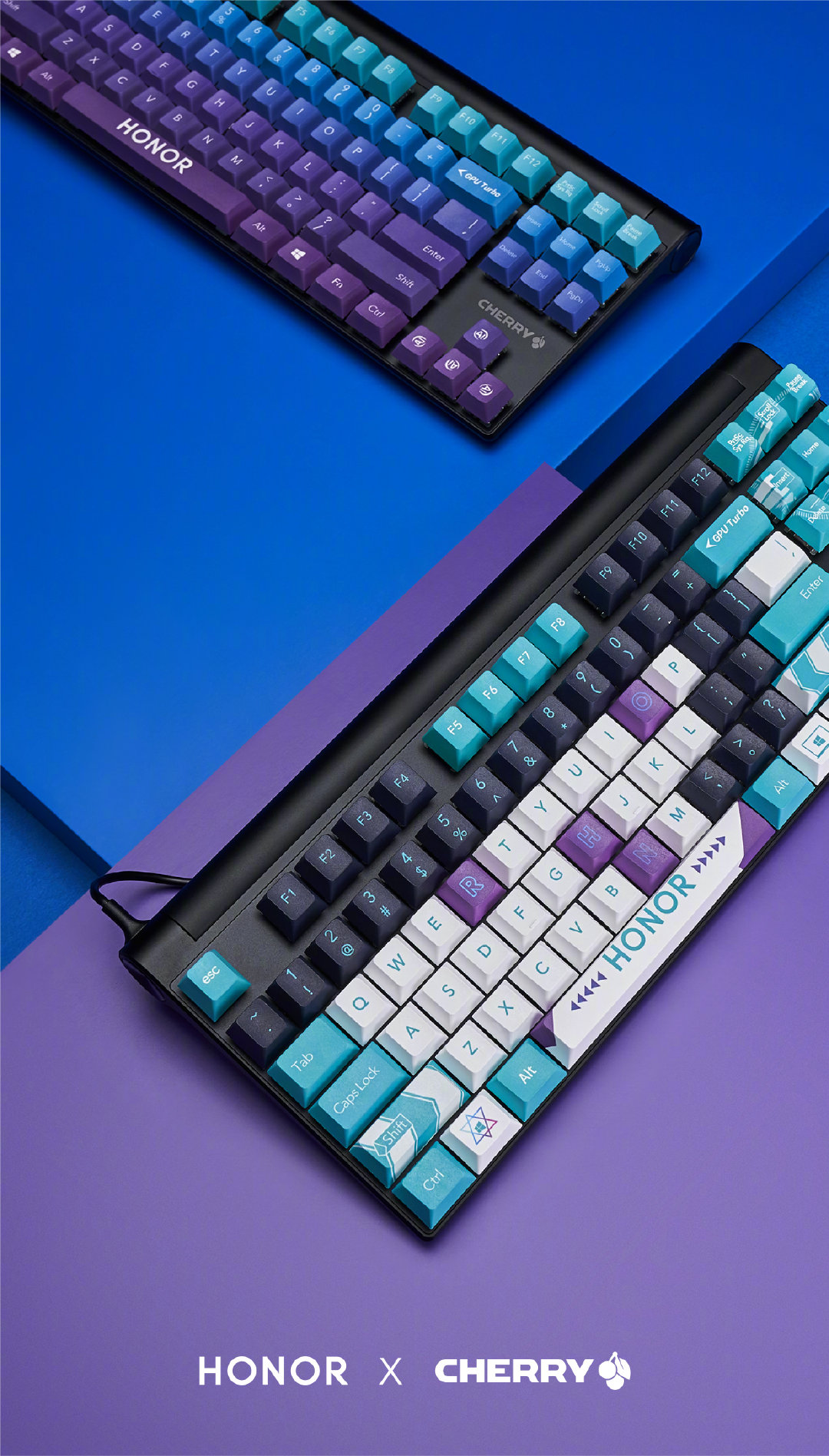
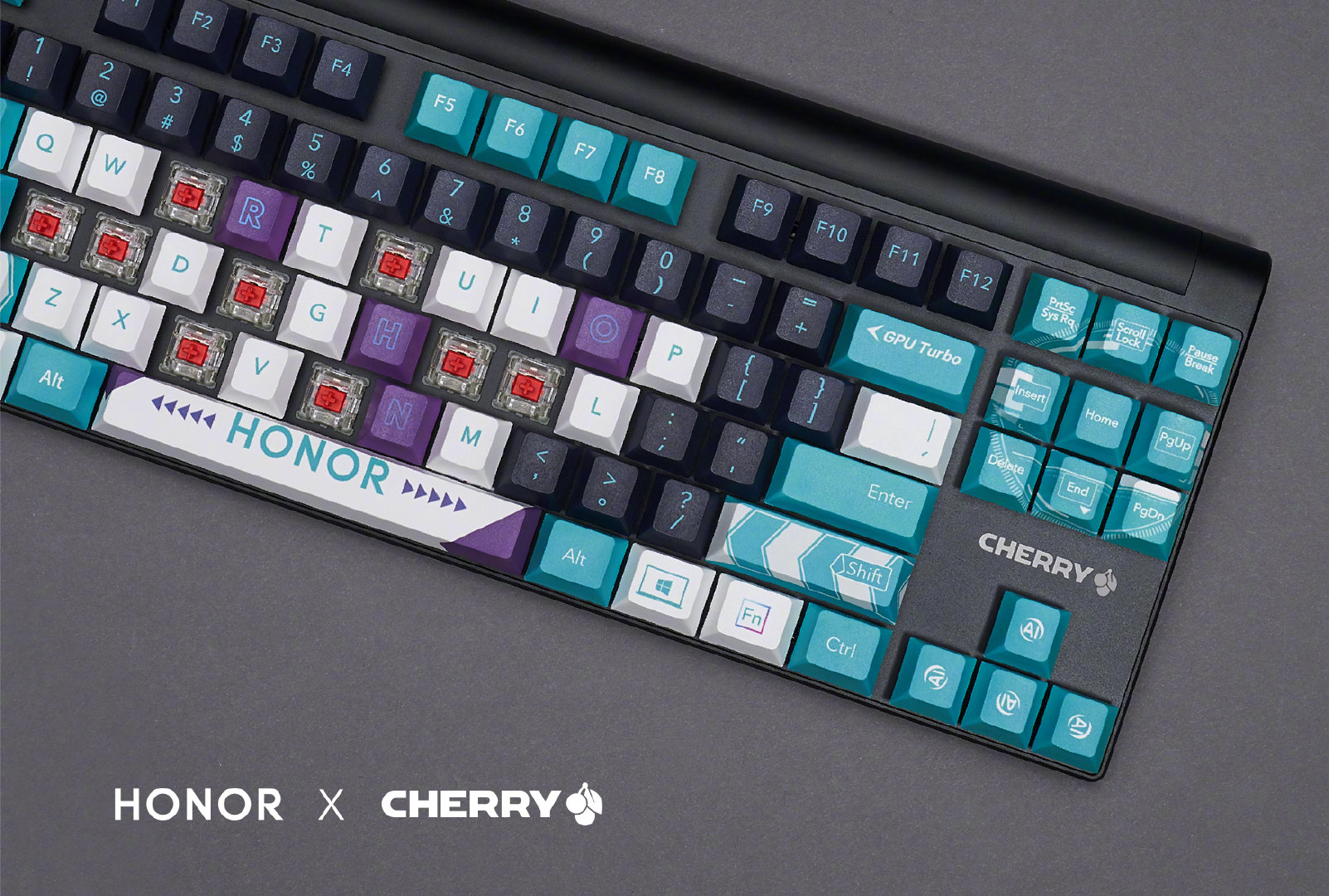
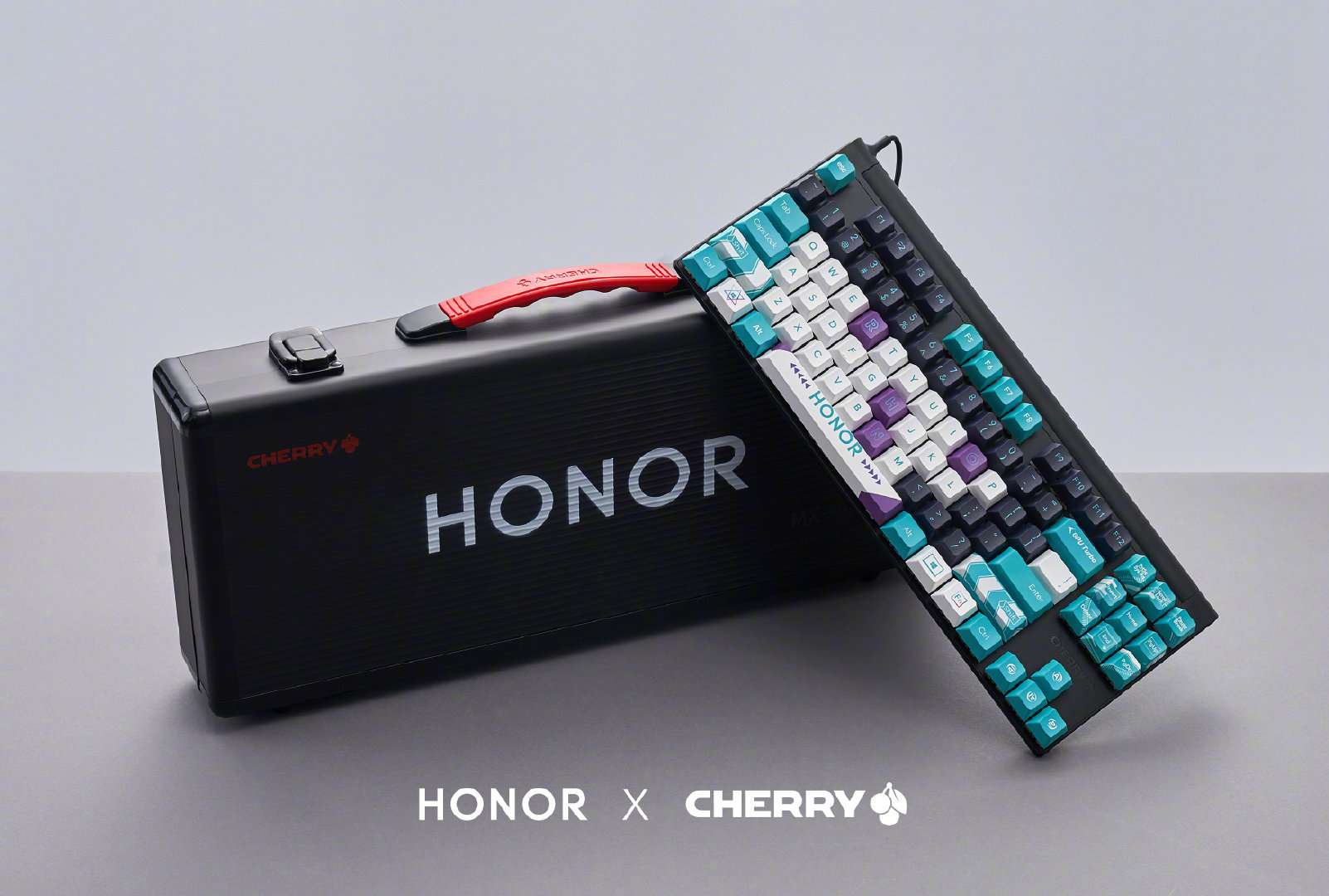
Huawei’s sub-brand Honor has partnered with Cherry and has launched a new mechanical keyboard that is touted to have features like artificial intelligence (AI), GPU Turbo and a few other features.
The keyboard, which has a black base, comes in two color options. While one color option has keycaps in black, blue, purple and white, the other color option features the color gradient from purple to blue, covering all the keycaps.
It seems that the new keyboard coming from Honor is a customised version of the Cherry MX Board 8.0 (G80-3888) and comes with the “Arms Box” packaging that also has RGB backlight. The difference is that the primary color of the package is now black.
The Chinese company has not yet revealed much information about this keyboard. However, since Honor has partnered with Cherry and the keyboard is a customised version of the existing offer from the brand, it’s obvious that it comes with Cherry keys.
While this keyboard uses the Cherry Red keys, it remains to be seen if the company release the keyboard with option for other type of keys as well. The pricing details is yet to be made official but given that the Cherry MX Board 8.0 is priced around 1,800 yuan (~$253) to 1,900 yuan (~$267), we expect the similar pricing for this Honor mechanical keyboard as well. It seems that to know for sure, we’ll have to wait for a few more days.
Few minutes ago, Honor confirmed that it will be launching a new phone called Honor Play 4T on April 9. Soon after the announcement, a well-known tipster from China shared a poster of the phone to reveal its design. The leakster also shared the key specs of the handset. It appears that the Honor Play 4T is the AQM-AL10 phone that was approved by China’s TENAA telecom authority recently.
Honor Play 4T leaked poster
The leaked poster of the Honor Play 4T revels that it will be sporting a waterdrop notch screen. The rear side of the device has the trendy rectangle-shaped camera module. It houses three cameras and an LED flash. The poster reveals that the Play 4T will arrive in green and blue shades.
The key specs shared by the tipster is an exact match the specifications of the AQM-AL10 phone. Also, the above shown poster resembles with the TENAA images of AQM-AL10.
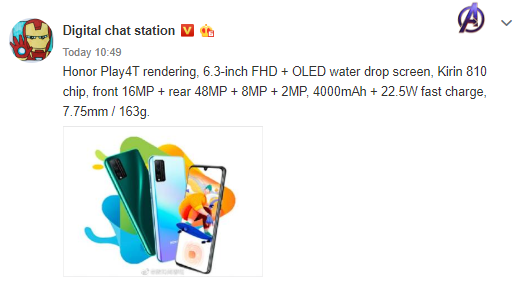
Considering that the Honor Play 4T has AQM-AL10 model, it can be said that it will be arriving with a 6.3-inch OLED panel that supports 1080 x 2400 pixels and 20:9 aspect ratio. The device houses a 4,000mAh battery. The 3C appearance of the AQM-AL10 revealed that it will carry support for 22.5W fast charging. The phone measures 157.4 x 73.2 x 7.5mm and it weighs 163 grams.
Honor AQM-AL10 TENAA images
The 2.27GHz Kirin 810 chipset will power the device with 6 GB / 8 GB of RAM. The handset will land in China in 128 GB and 256 GB storage choices. The Android 10 OS will be preinstalled on the device.
For shooting selfies, it possesses a 16-megapixel selfie camera. The rear shell of the phone has a 48-megapixel + 8-megapixel + 2-megapixel triple camera system. Lastly, the handset features an in-screen fingerprint reader.
Honor recently unveiled the Honor 30S phone as the company’s first phone driven by the Kirin 820 5G chipset. Alongside it, the Honor 9A entry-level smartphone was made official. The Honor 30 and Honor 30 Pro are scheduled to go official on April 15. Today, the Chinese firm took to Weibo to confirm that a new device called Honor Play 4T will go official on April 9.
The launch poster only confirms the Honor Play 4T moniker and does not reveal any details on its specifications. The Weibo post links to Wei Xialong who has been newly appointed as the Product Manager of the Play series. Xialong’s Weibo has a single post through which he has introduced himself. He stated that the “Play series is an interesting product series” (machine translated). There is no information available on the specifications of the Honor Play 4T smartphone. Hopefully, the Chinese firm will be teasing some of the features of the upcoming Honor Play 4T phone before making it official.
At the unveil event of the Honor 30S, Honor President Zhao Ming confirmed that the brand has four product lines such as V, N, X and Play. The Play series is focused on bringing gaming-centric features for young people.
Last year, Honor had launched the Honor Play 3 and Play 3e smartphones in China. The Play 3 was a mid-ranger powered by the Kirin 710F chipset and the Play 3e was an entry-level phone fueled by the Helio P22 chipset. Interestingly, the Honor Play phone that launched in 2018 was a flagship phone with gaming capabilities. Like the Honor Play 3 series, the upcoming Play 4T could be arriving with mid-range specs.
AQM-AL10, AKA-AL10 and HLK-AL00av are some of the Honor phones that were recently approved by the TENAA telecom authority of China. Probably, one of these phones could end up as the Honor Play 4T.
If you want a 5G phone, you do not need to buy a flagship anymore. Currently, there are a lot of mid-rangers supporting 5G connectivity just like flagships: only 5G entry-level devices are missing. A bunch of hours before we published this post, Vivo unveiled its most affordable 5G mid-ranger: the Vivo S6 5G. That is the reason why we decided to write a new comparison. If you need a 5G device but you are also searching for the best value for money, you should definitely check this specs comparison between Vivo S6 5G, Oppo Reno3 5G, and Redmi K30 5G.
Vivo S6 5G vs Oppo Reno3 5G vs Xiaomi Redmi K30 5G
Quad 64 + 8 + 5 + 2 MP, f/1.9, f/2.2, f/2.4 and f/2.4
Dual 20 + 2 MP f/2.2 and f/2.4 front camera
Quad 48 + 8 + 2 + 2 MP, f/1.8, f/2.2, f/2.4 and f/2.4
32 MP f/2.1 front camera
Quad 64 + 8 + 2 + 2 MP, f/1.8, f/2.2 and f/2.4
32 MP f/2.4 front camera
BATTERY
4500 mAh, fast charging 30W
4500 mAh, fast charging 18W
4025 mAh, fast charging 30W with VOOC Flash Charge 4.0
ADDITIONAL FEATURES
Hybrid Dual SIM slot, 5G
Dual SIM slot, 5G
Dual SIM slot, 5G
Design
Despite Redmi K30 5G adopts a punch-hole display, I personally prefer the design and build quality of the Oppo Reno3 5G. I would go for it because it is more compact and it has a more minimalistic look, thanks to a small camera module, smaller dimensions, and a thinner profile. Right after, we got the Redmi K30 5G which still comes with a premium design including an aluminum frame and a glass back. Vivo S6 5G has a pretty nice design too, but its big camera module and its lower screen-to-body ratio do not make it shine in this comparison.
Display
A lot of people may like the color reproduction of Vivo S6 5G and Oppo Reno3 5G more than Redmi K30 5G because they sport an AMOLED panel. And they even come with under display fingerprint reader. The Redmi K30 5G does not offer these qualities because it has an IPS display, but it is still an amazing panel, even more interesting than Vivo S6 5G and Oppo Reno3. Redmi K30 5G is one of the most affordable phones sporting a display with a high 120 Hz refresh rate providing a very smooth viewing experience. Further, the panel is HDR10-compliant, so it delivers a high image quality despite not being an OLED display.
Hardware/Software
While Exynos 980 and Snapdragon 765G are two upper-midrange chipsets that should provide a similar level of performance on Vivo S6 5G and Redmi K30 5G, the MediaTek Dimensity 1000L found on the Oppo Reno3 should actually be more performing. Further, Oppo Reno3 5G is available with up to 12 GB of RAM, while its rivals stop at 8 GB. On the other hand, Exynos 980 and Snapdragon 765G offer a better 5G connectivity since Dimensity 1000L only supports sub-6 GHz frequencies. Android 10 is installed out of the box.
Camera
Oppo Reno3 wins the camera comparison with better rear cameras and even a better front camera on the paper. It is the only supporting OIS and, besides shooting better photos, it should also allow capturing the best 4K videos. Redmi K30 5G comes right after with its 64 MP quad-camera, but it does not stand a chance against Oppo Reno3 which can be considered more than a simple midrange camera phone.
Battery
Vivo S6 5G is supposed to offer a longer battery life than Redmi K30 5G and Oppo Reno3 5G. It has a bigger battery than Oppo Reno3 and a smaller display than Redmi K30 5G, with a standard refresh rate. Given that Redmi K30 5G has an IPS display with a 120 Hz refresh rate, it may have a way shorter battery life than Vivo S6 5G. Oppo Reno3 charges faster thanks to its 30W technology and lower battery capacity.
Price
Vivo S6 5G sells for about €347/$380 in China, in the 6/128 GB version. The starting price of Redmi K30 5G is about €247/$270 (6/64 GB), while Oppo Reno3 starts from €440/$482. The Oppo Reno3 is the best phone here since it features a more powerful chipset and higher-end cameras, but it has a lower battery capacity and it does not support mmWave. But the value for money award goes to Redmi K30 5G.
China is the world’s second-largest economy after the US and data provided by the country’s National Development and Reform Commission showed that consumer spending contributed to 57.8 per cent of China’s GDP growth in 2019. The country’s GDP is forecast to drop from 6 per cent to 4.5 per cent as a result of the coronavirus pandemic that swept through China since December 2019.
The projected drop will usher in China’s weakest gross domestic product (GDP) growth since it began keeping records in 1990. In order to curtail the effect of a reduction in consumer spending on the economy, 23 central government departments had issued guidance in March proposing an increase in consumer spending in an attempt to limit the economic impact of the health crisis.
In this light, several local governments in China have commenced the distribution of free digital coupons usable on mobile payment platforms like Alipay and WeChat Pay, the South China Morning Posts reports. This is in a bid to help stimulate domestic consumption as the country trie to recover from the COVID-19 outbreak. The Chinese central government is also reportedly encouraging officials to lead the effort in local consumption. Several government heads from Nanjing city, Shandong, Hunan, Guangdong and Hainan were sighted in public doing activities such as shopping and dining at restaurants.
The report reveals that the Jiaxing city in Zhengjiang province had announced on Sunday that it would issue 200 million yuan (US$28.2 million) worth of digital consumer coupons to the public, of which 150 million yuan could be redeemed through Tencent’s WeChat Pay.
Further, the Hunan Federation of Trade Unions is reported to have announced last Thursday that employees and trade union members in the province would receive vouchers that can be used at 340,000 merchants in Hunan, also via WeChat Pay. In addition, Hangzhou, the capital of Zhejiang province, is said to have perfected plans to dole out 1.68 billion yuan worth of consumption coupons to support more than six million local offline merchants, in sectors ranging from retail to catering, to stimulate consumption. The city is reported to have commenced the distribution of the first batch of two million coupons valued at 50 yuan each last Friday. The coupons are said to be redeemable when paying for items, either online or offline, using Alipay. In Nanjing, the capital of Jiangsu province, 318 million yuan worth of consumption coupons that can be used for services such as catering, sports and tourism, as well as welfare for low-income communities, have been distributed. Nanjing citizens were reportedly able to apply for the coupons, which provided discounts of 50 or 100 yuan, through the local public service app “My Nanjing” between March 15 and March 22. The coupons were then redeemed as discounts on Alipay.
Finally, in Guangxi city, distribution of coupons will run from March 26 to May 26, with a daily quota offered to residents and tourists visiting the province. The coupons are redeemable via Alipay for dining, shopping and hotel rent.
We use cookies on our website to give you the most relevant experience by remembering your preferences and repeat visits. By clicking “Accept”, you consent to the use of ALL the cookies.
This website uses cookies to improve your experience while you navigate through the website. Out of these, the cookies that are categorized as necessary are stored on your browser as they are essential for the working of basic functionalities of the website. We also use third-party cookies that help us analyze and understand how you use this website. These cookies will be stored in your browser only with your consent. You also have the option to opt-out of these cookies. But opting out of some of these cookies may affect your browsing experience.
Necessary cookies are absolutely essential for the website to function properly. This category only includes cookies that ensures basic functionalities and security features of the website. These cookies do not store any personal information.
Any cookies that may not be particularly necessary for the website to function and is used specifically to collect user personal data via analytics, ads, other embedded contents are termed as non-necessary cookies. It is mandatory to procure user consent prior to running these cookies on your website.