Oppo’s next budget smartphone for India just had its pricing leaked. The Oppo A6x model is expected to debut in the global market soon. But ahead of the official release, this device had its Indian pricing leaked. So here are all the details.
Oppo A6x India Price Leak Reveals Rs 12,499 Starting Price
The latest information arrives from known tipster Abhishek Yadav, who shared the details on X (formerly Twitter). He claims that the Oppo A6x will debut in India in three storage options, namely 4GB + 64GB, 4GB + 128GB, and 6GB + 128GB. This model will reportedly have a starting price tag of Rs 12,499, while the higher storage variants will be priced at Rs 13,499 and Rs 14,999, respectively. It is unclear if this price includes any kind of discounts.
Oppo A6x
That was all the details revealed in the tweet. However, a previous leak from the same tipster revealed most of the key specs and features of the Oppo A6x 5G model. It will reportedly sport a tall 6.75-inch+ LCD panel with HD+ resolution and a 120Hz refresh rate. Under the hood, this budget model could be equipped with the MediaTek Dimensity 6300 SoC. A huge 6,500mAh battery pack powers this device, which supports 45W wired fast charging.
For optics, the rear has a 13MP camera with a VGA secondary sensor while the front houses a 5MP shooter for selfies and video calls. Out of the box, this budget phone runs on the Android 15 OS based ColorOS 15 custom skin. Other notable features include an IP64 rating for water and dust resistance, and an 8.58mm body that weighs 212 grams.
For more daily updates, please visit our News Section.
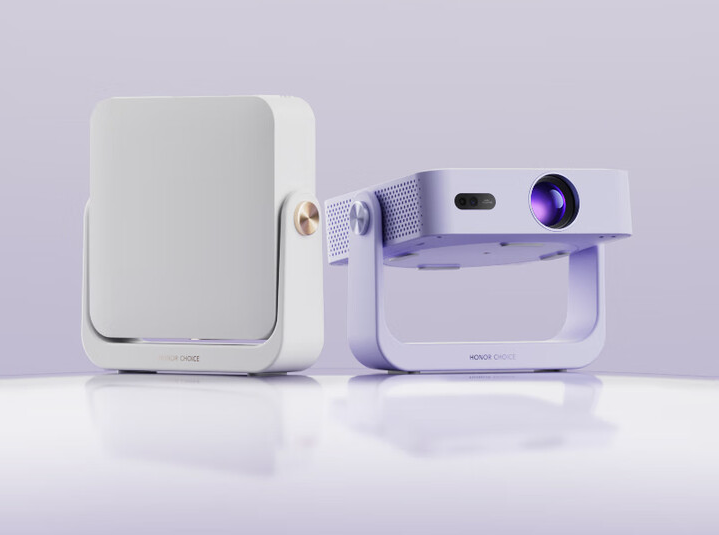
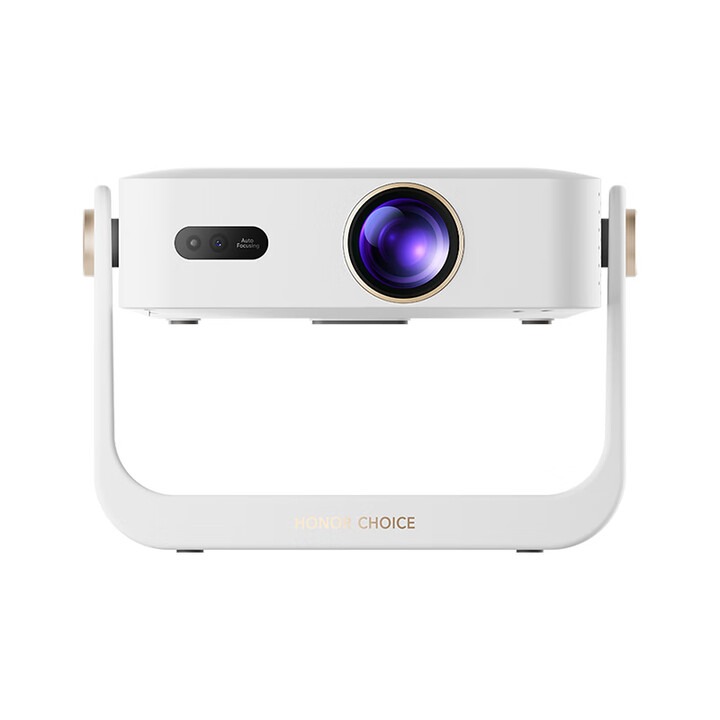
Honor has introduced the Honor Choice Firefly AI Projector Air at the Honor 500 Series launch event. The compact 1080p projector is powered by the HiSilicon 352 quad-core chip, paired with 32GB of storage to support smoother system performance and faster video processing. It uses a 1LCD optical engine and a 4-element lanthanide glass lens designed to reduce light loss and improve clarity.
The projector delivers 280 CVIA lumens of brightness and a 2500:1 contrast ratio, targeting home viewing and small-room projection needs. It supports AI air-gesture control, enabling slide, tap, drag, and select actions without touching a remote. AI touch projection and remote-based air-operation are also included, giving users multiple hands-free interaction options.
For setup and calibration, the device offers a full AI image-adjustment system, featuring auto keystone correction, auto focus, auto obstacle avoidance, and auto screen alignment. The system can detect borders, screens, and environmental obstacles to optimize framing without manual input.
Design-wise, the Firefly AI Projector Air weighs 1.22 kg, measures 55 mm, and features an integrated U-shaped gimbal stand with 160° tilt adjustment. Its compact profile allows it to be stored upright like a book and carried easily. Color options include Starry White and Mauve Purple.
Pricing & availability
The Honor Choice Firefly AI Projector Air will go on sale on December 8 at 10:00. It is priced at 599 yuan (~$84), and will be available via JD.com.
For more daily updates, please visit our News Section.
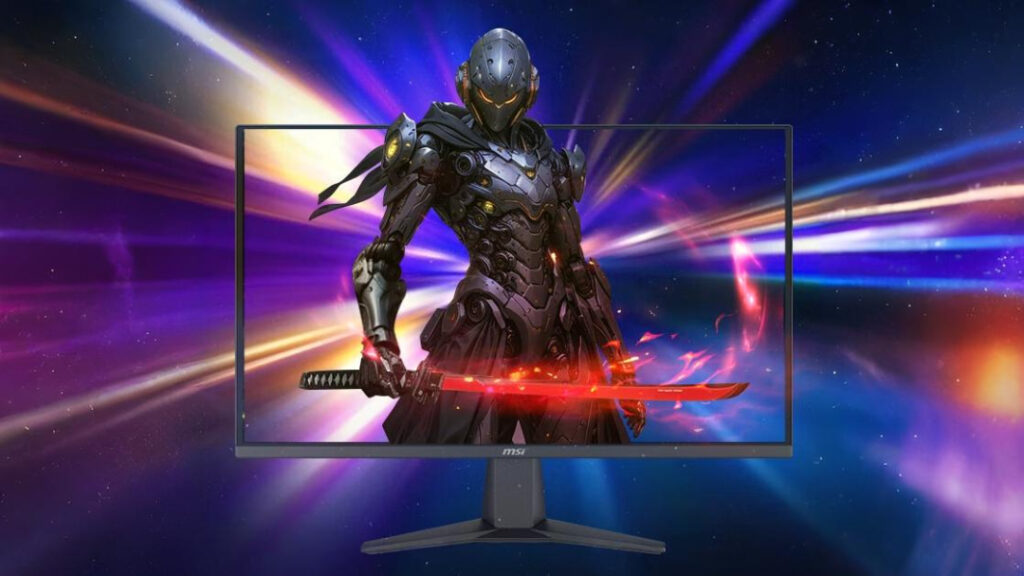
MSI has introduced a new budget gaming monitor under its MAG series in China. The MAG 275QF E20 is aimed at gamers looking for a fast and immersive experience without spending too much. The product is now available at a retail price of 789 yuan ($111).
MSI MAG 275QF E20 Specifications
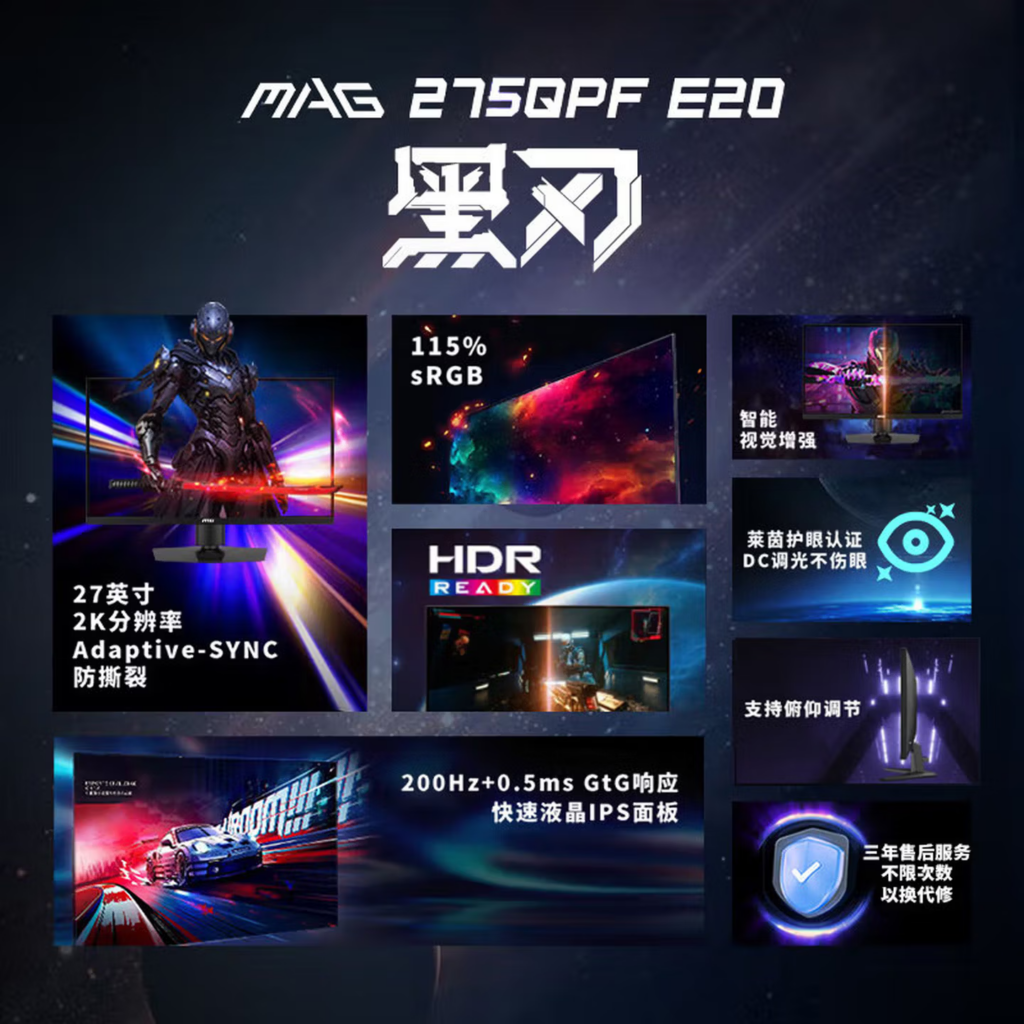
The MAG 275QF E20 uses a 27-inch flat Fast IPS panel with a native QHD resolution of 2560 × 1440. It supports a 200Hz refresh rate when connected through DisplayPort, while HDMI reaches up to 144Hz. MSI rates the response time at 0.5ms GtG, which helps reduce motion blur and ghosting during fast action. The panel works with Adaptive Sync to limit screen tearing and lower input lag.
The monitor delivers 101% sRGB coverage under the CIE 1976 standard and uses an 8-bit panel with FRC to simulate 10-bit color output. It reaches a typical brightness of 300 nits and maintains a 1000:1 contrast ratio, which is standard for IPS panels in this range. MSI lists HDR support, although the 300 nit brightness indicates entry-level HDR capabilities. The panel offers wide 178° viewing angles both horizontally and vertically.
MSI equips the display with TÜV Rheinland-certified low blue light and flicker-free modes, DC dimming, and a matte anti-glare coating to reduce eye strain and reflections.
Connectivity includes two HDMI 2.0b ports, a DisplayPort 1.4a, and a 3.5mm audio output jack. The monitor supports tilt adjustments from -5° to 20°, and users can mount it using a 100×100mm VESA bracket. MSI also provides internal cable routing options to keep desk setups clean. The monitor weighs 3.95kg with the stand and 3.57kg without it.
The monitor uses smart visual enhancement tools that adjust brightness, saturation, and contrast in real time to improve visibility in darker scenes. It also sports a dynamic crosshair that shifts its color based on the background, making aiming clearer during gameplay.
In related news, AOC recently introduced the Q27G4SP, a 27-inch QHD IPS gaming monitor with a 320Hz refresh rate, and also unveiled the Q27G4SMN, a Mini LED gaming model that features a QHD panel, 300Hz support, and HDR1000 certification.
For more daily updates, please visit ourNews Section.
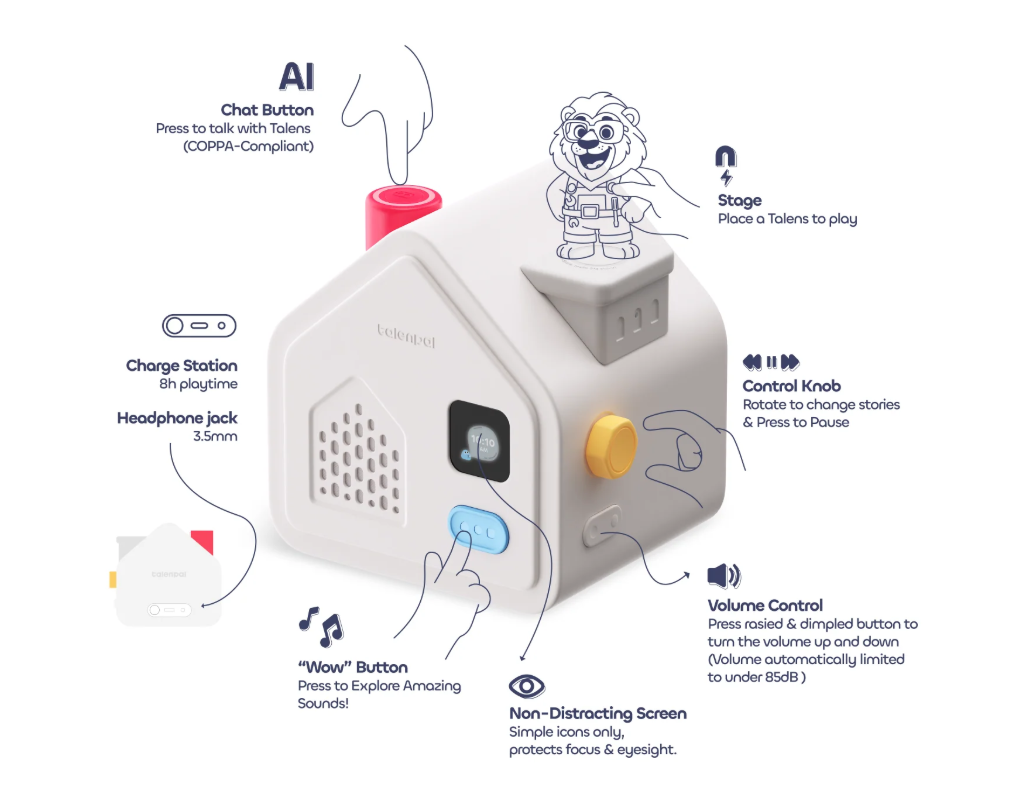
Talenpal is designed to inspire children through storytelling, music, and safe AI conversations. It helps kids explore ideas, express creativity, and build confidence, all through a playful and interactive experience. Whether they want to listen, talk, or create, Talenpal supports independent learning while keeping fun at the center. Every interaction feels natural, warm, and engaging, making it a perfect everyday companion for young minds.
Interactive AI Chats That Spark Curiosity
Kids can talk to Talens anytime and enjoy real-time, kid-safe AI conversations. These chats are designed to be gentle, informative, and age-appropriate. Children can ask questions, explore new topics, and enjoy discussions that fuel imagination and learning. With built-in safety controls, parents can trust every chat to be wholesome and secure.
Personalized Stories and Voice Replication
Talenpal creates personalized stories that reflect your child’s world, featuring their interests, routines, and characters they love. The built-in voice replication feature lets parents record their own voice, turning each story into a warm and familiar experience. This transforms story time into something magical, emotional, and truly personal.
A Growing World of Songs, Stories & Talens
Each Talen unlocks new songs, stories, and adventures. Children can explore a wide range of content that changes every month, keeping them inspired and excited. Talens attach magnetically and are made from safe PVC materials. They encourage kids to discover new worlds and stay engaged through fresh storytelling experiences.
Kid-Friendly, Safe, and Worry-Free for Parents
Every Talenpal Player experience is made with safety in mind, no ads, no unsafe browsing, and fully parent-controlled. Parents can track their child’s developmental journey, understand what interests them, and enjoy peace of mind knowing the environment is trustworthy. Volume levels are designed for child safety, with a limit below 85 dB.
Simple Controls Made for Kids
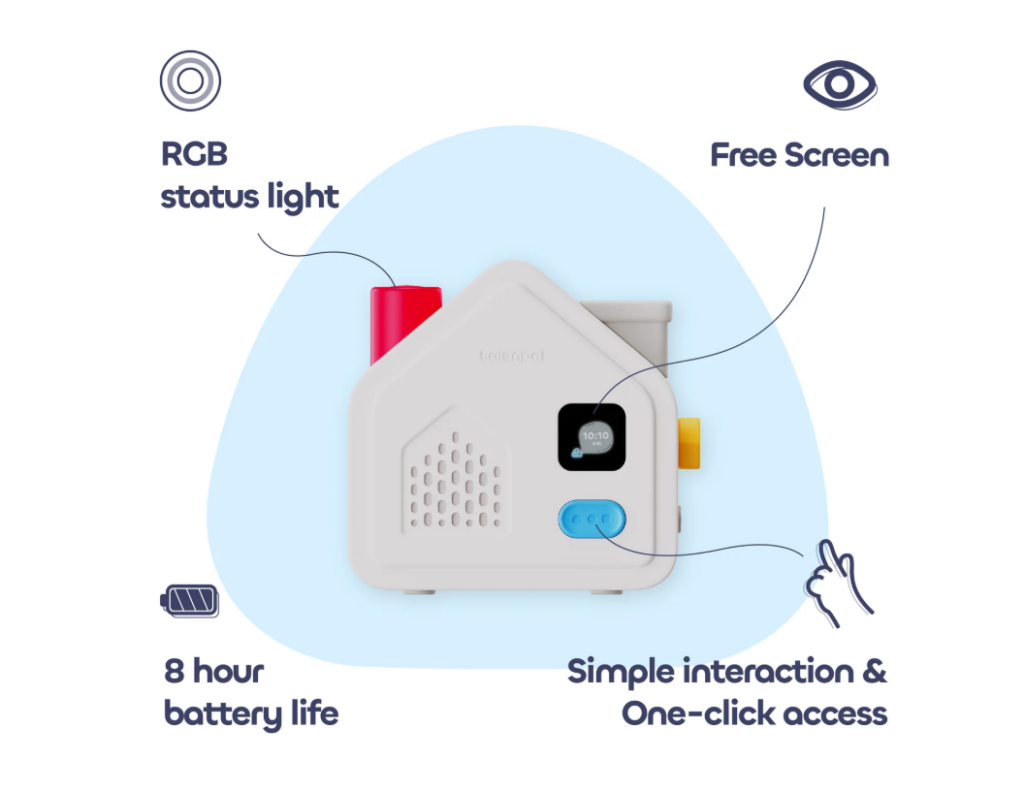
Talenpal Player uses large, easy-to-press buttons for power, volume, play/pause, AI activation, and voice recording. The 1.3-inch color LCD screen is bright and clear, while the durable ABS body is water-resistant and safe for daily kiddie adventures. With 8 hours of battery life and wired headphone support, it works perfectly for bedtime routines, quiet play, outings, and parent-child bonding time.
Powerful, Kid-Safe Hardware
Inside, Talenpal Player runs on a secure Armv8-M MCU with TrustZone protection. It supports Wi-Fi and Bluetooth LE for smooth connectivity. The device includes 8GB of storage, an omnidirectional microphone, and high-quality audio tuned for children’s hearing. It’s built to withstand drops, splashes, and everyday handling.
Designed for Durability and Comfort
Weighing 496g with dimensions of 128 × 102 × 121.5 mm, Talenpal Player is sturdy yet child-friendly. Made from safe ABS material, it passes drop tests and offers IPX-rated water and dust resistance. It ensures long-lasting performance even in energetic play environments.
A Companion That Grows With Your Child
From independent play to bedtime storytelling, Talenpal supports every moment of a child’s day. It encourages imagination, builds communication skills, and keeps learning fun. Backed by a 30-day happiness guarantee and a 1-year warranty, it’s a thoughtful, reliable companion for growing minds.
Big Savings on Talenpal Player
Grab the Talenpal Player now! Regular price $169.99, only $99.99 during Black Friday. And when your order crosses $100, you can take an extra $20 off using the code WELCOME20. There’s no better moment to bring home this kid-safe, creativity-boosting storytelling companion at an incredible deal.
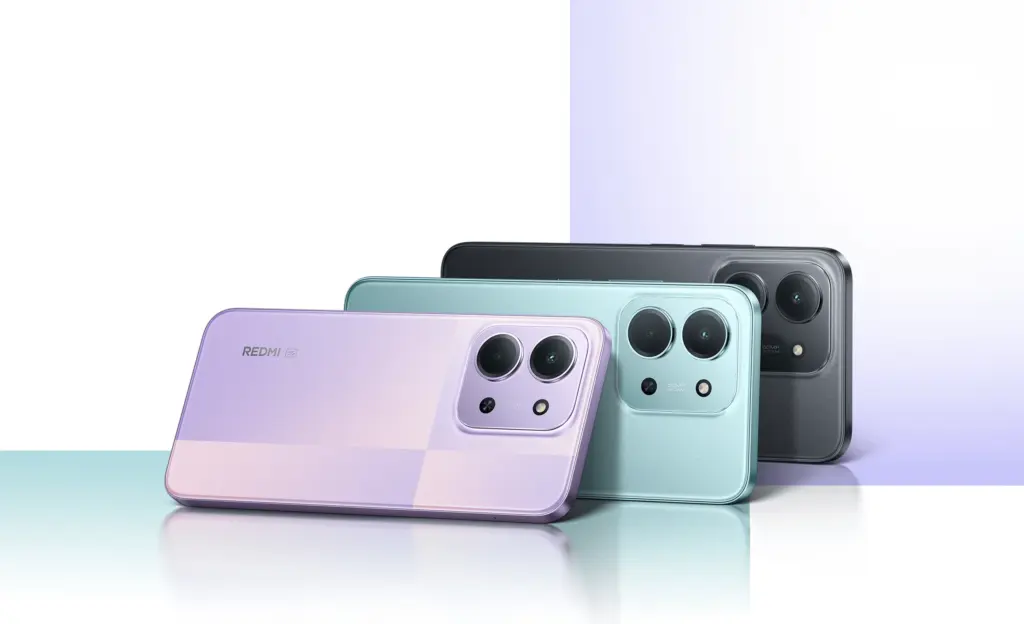
Xiaomi is gearing up to launch a new budget smartphone in India from its Redmi sub-brand soon. The Redmi 15C has just been teased in the region following its wider release. This model will be launching next month, so here’s everything we know so far.
Redmi 15C: When does it debut in India?
In a fresh teaser, the Chinese tech giant confirmed that the Redmi 15C will debut in India on 3rd December 2025. Looking at the image poster, we also get a glimpse of the upcoming budget phone. The rear appears to have a dual camera setup on the rear. However, the 4G version made its debut in China back in September 2025, with a European release of the 5G model following a few weeks later. So we can speculate regarding its key specs and features.
Redmi 15C 5G
What to expect?
To recall, the Redmi 15C sports a tall 6.9-inch LCD panel with an HD+ resolution, a 120Hz refresh rate, and 810 nits of peak brightness. Under the hood, this model is equipped with the MediaTek Dimensity 6300, unlike the Helio G81 Ultra on the Redmi 15C 4G version. This is paired with up to 8GB of RAM and 256GB of internal storage. Xiaomi also offered a microSD card slot for storage expansion up to 1TB.
A massive 6,000mAh battery pack powers this device, which supports 33W wired fast charging. On the rear, there is a 50MP dual camera setup, while the front houses an 8MP shooter for selfies and video calls. Other notable features include an IP64 rating for water and dust resistance, a 3.5mm audio jack, Bluetooth 5.4, a side mounted fingerprint scanner, NFC, and Android 15 OS based HyperOS 2.0.
For more daily updates, please visit our News Section.
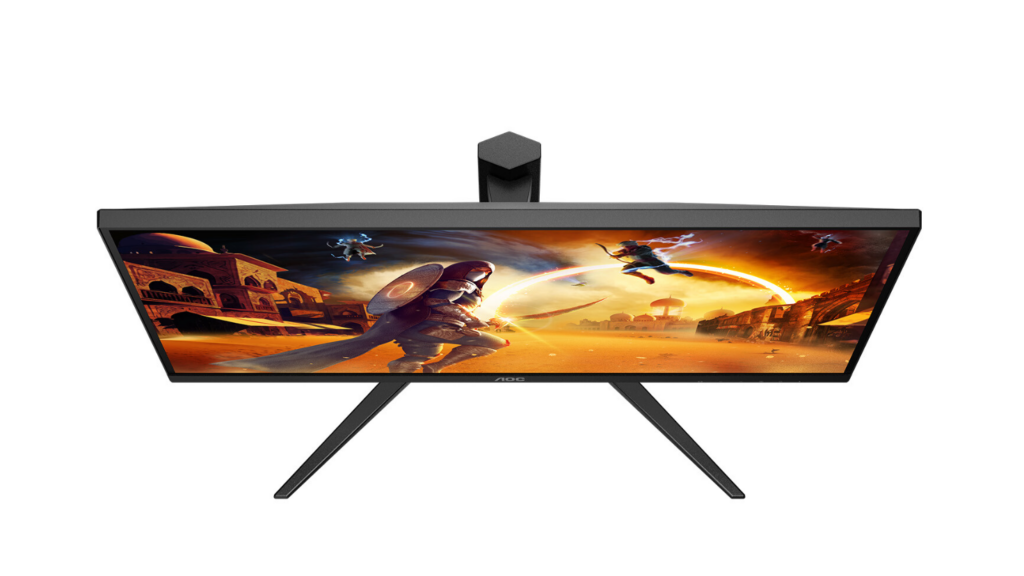
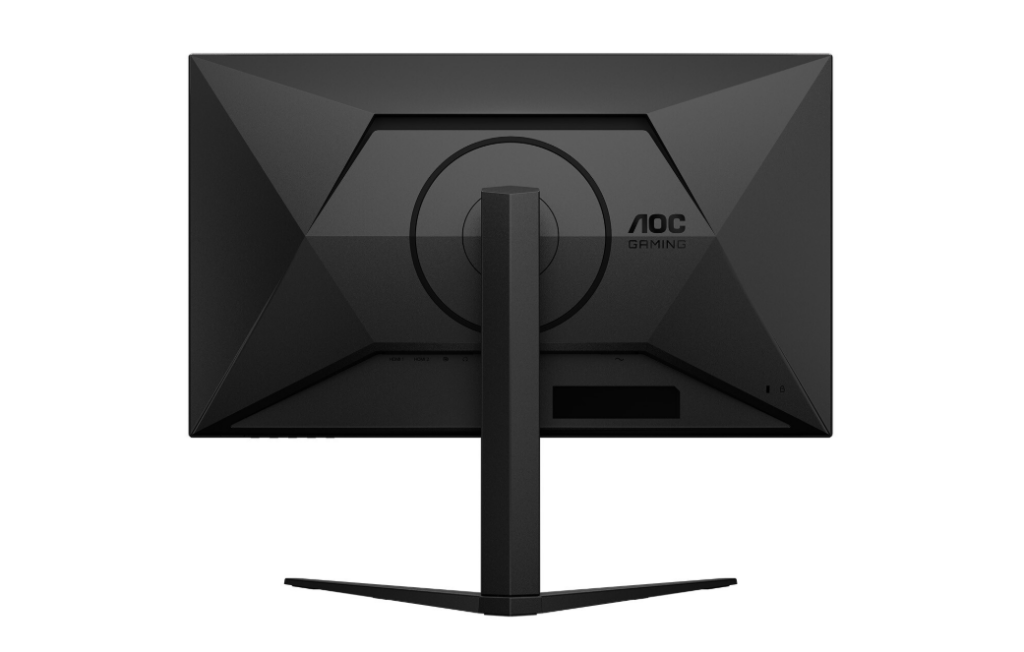
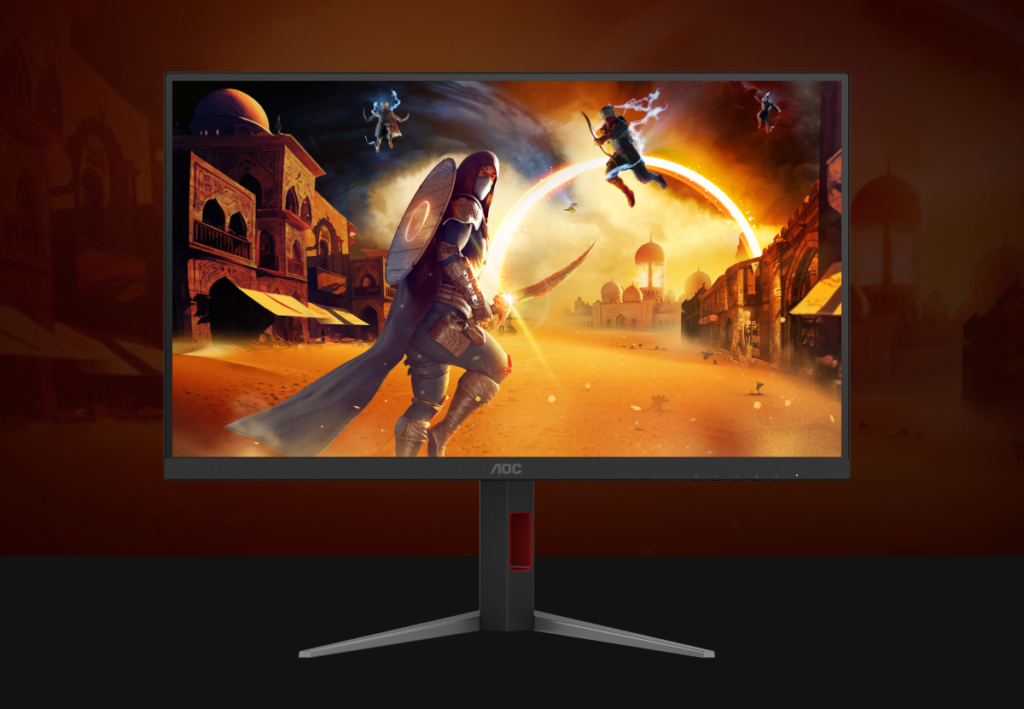
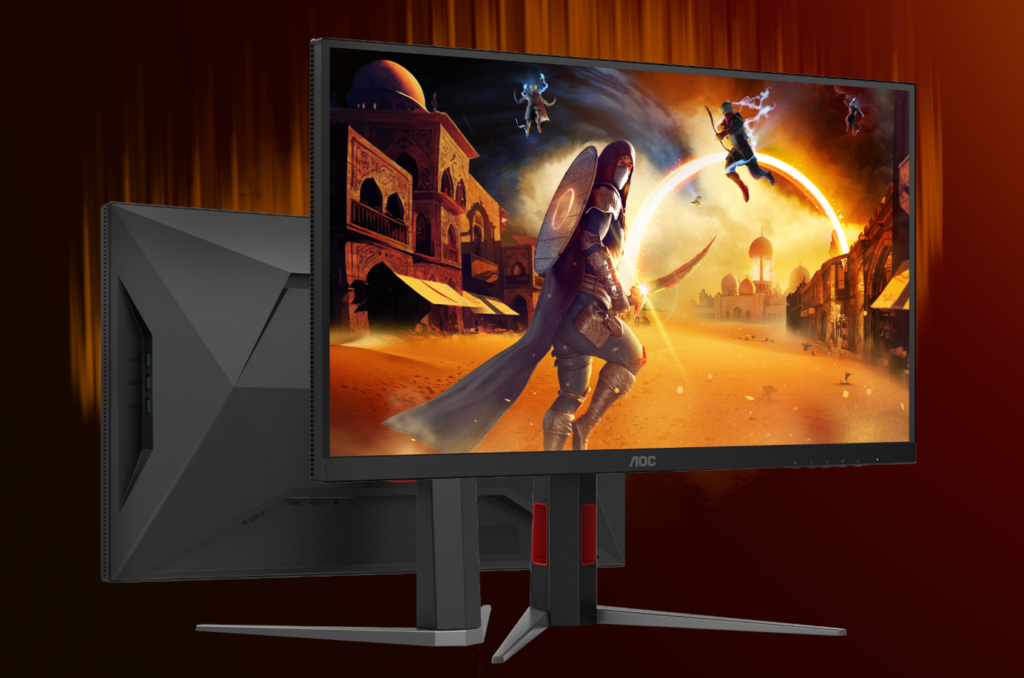
AOC is expanding its high-refresh gaming lineup with another 27-inch QHD option — and this one’s all about speed. The new Q27G4SP joins the Q27G4SMN, giving players two different display technologies to pick from without changing much else on the outside.
Both models look nearly identical, share the same stand, and even offer the same ports. But what’s underneath the glass sets them apart. The Q27G4SMN uses a mini-LED-backlit Fast VA panel with 1,152 dimming zones and serious contrast. The Q27G4SP, meanwhile, switches to Fast IPS and cranks the refresh rate up to 320 Hz — a slight but meaningful bump over the SMN’s 300 Hz.
That move to IPS comes with the usual pros and cons. You lose the deep blacks and eye-popping HDR of the mini-LED model — brightness is rated at 450 nits HDR and 350 nits SDR, and there’s no local dimming here. Color coverage lands at 95% DCI-P3, a touch behind the SMN’s 97%, though AOC says it should arrive well-calibrated with a ΔE under 2. On the upside, you get the wider viewing angles IPS is known for and a 1 ms GtG response time tailored for competitive play.
As for usability, nothing changes: tilt, swivel, 130 mm height adjustment, and pivot all come standard, and the stand can be swapped for a VESA mount. Connectivity includes two HDMI 2.1 ports, one DisplayPort 1.4, and audio out — same as its sibling.
In short, the Q27G4SP is aimed squarely at gamers or anyone who wants motion clarity and a wider viewing angle above all else, while the Q27G4SMN remains the more “cinematic” alternative for those who care just as much about HDR performance.
Pricing and release timing are still a mystery, but once AOC fills in those blanks, players will have a clearer idea which 27-inch, 1440p G4-series monitor suits their style better.
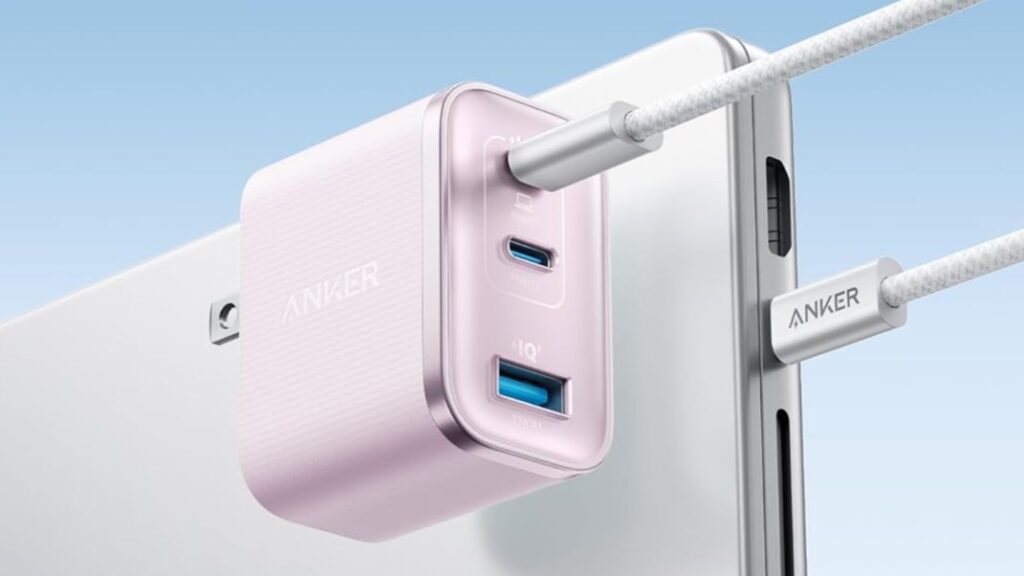
If you like your gadgets small but your charging speeds big, Anker has a little treat — the company has quietly added two new colors to its compact 70W Nano Charger lineup in the US and Europe. The extra options, a pastel-style blue and a soft pink, join the existing black and white versions.
Nothing about the hardware has changed: it’s still the same 3-port GaN charger that can fast-charge a MacBook while topping up a phone and earbuds at the same time. The two USB-C ports can each push up to 70W on their own, and there’s still a USB-A port for anything older. This USB-A port can deliver up to 33W on its own, but once all three ports are active, the first USB-C takes 45W, and the other two have to share just 7.5W.
The new color options are priced at $49.99 on Amazon US. But if you don’t mind the original look, the black and white models are going for noticeably less right now, dipping into the low-$30 range depending on which store and promo you land on.
Europe is also getting the blue version in multiple countries, and early listings suggest a similar temporary price drop there as well.
The Nano 70W first launched in China earlier this year before arriving in the US and EU in September, and it’s been one of Anker’s most popular “small but mighty” chargers since — especially with the folding prongs that make it suitcase-friendly.
More colors may not be groundbreaking, but if you’ve ever tried to tell chargers apart in a bag of identical white bricks, a little personality goes a long way.
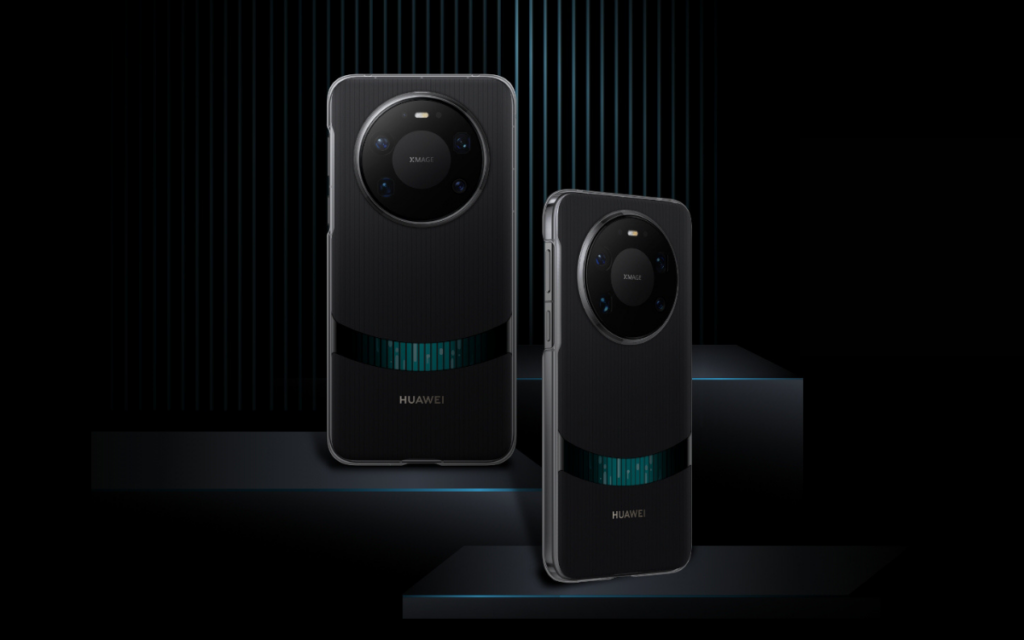
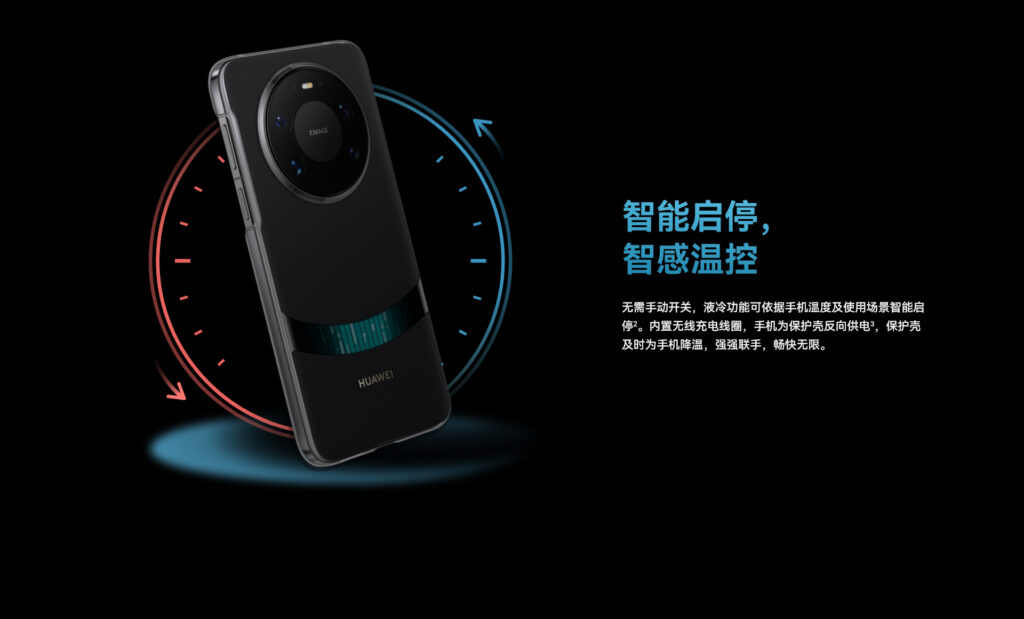
Huawei has launched new micro-pump liquid cooling cases for its latest Mate 80 series smartphones in China. The new accessory supports the Mate 80, Mate 80 Pro, and Mate 80 Pro Max models. Huawei has priced each version at 299 yuan ($42) and says the design improves on the earlier cases built for the Mate 70 and Mate 60 series.
The case now adopts a full-cover structure instead of the partial design used in previous generations. The upgraded layout allows the entire back surface of the phone to cool more evenly.
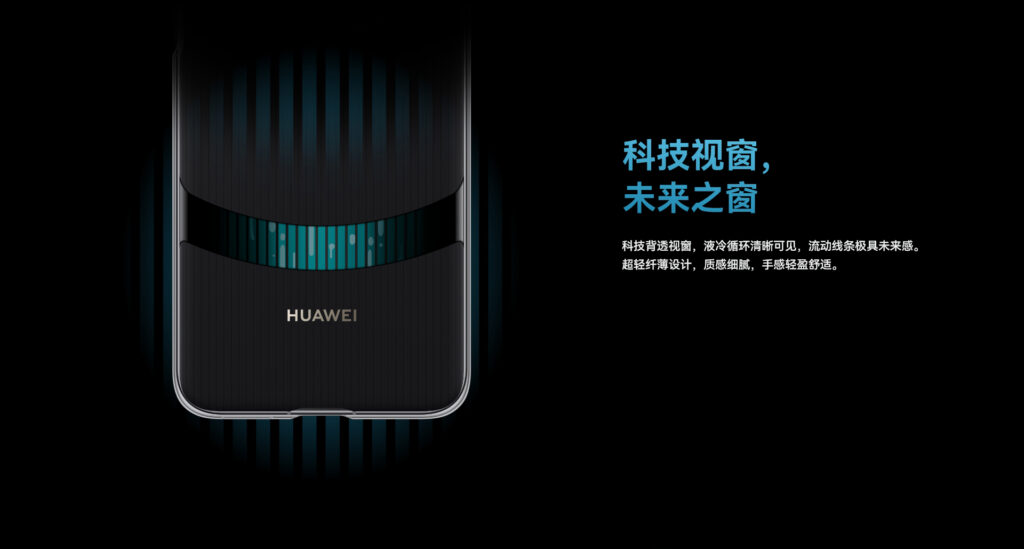
Huawei has designed the case with a slim and lightweight PU build to maintain a comfortable in-hand feel. It includes a transparent window on the lower rear section that makes the internal liquid circulation system visible. The window gives the case a more high-tech and futuristic look.
The internal hardware uses an ultra-thin liquid cooling layer paired with a high-precision micro-pump. The system relies on a high-efficiency heat absorption sheet that helps reduce the phone’s surface temperature during heavy workloads. The case keeps the device cooler in scenarios like gaming, video rendering, or using navigation at high brightness.
The micro-pump runs automatically and adjusts its behavior based on the phone’s temperature and workload. It turns on or shuts down without any manual input, since the case does not include a physical switch. The system draws power wirelessly from the smartphone through reverse wireless charging, so the case does not require separate cables or an external power source.
The accessory is currently listed on Vmall for sale in China.
For more daily updates, please visit ourNews Section.
IKEA’s latest audio products are a great conversational piece. Its new wireless speakers aren’t built just for audio, but also as an accessory for your home. The brand has worked with a designer to make these hearables a bright new aesthetic and unique shapes. So let’s check them out.
IKEA’s New Wireless Speakers: Loud Sound Meets Bold Design
IKEA Solskydd Circular Wireless Speaker
The known furniture brand has used its expertise in home furnishings along with Swedish designer Tekla Evelina Severin, to make the Solskydd range of speakers. The new Solskydd is a Swedish word for ‘sun shade’, and arrives in three color options. This includes an 8-inch, an 11-inch, and the largest 18-inch sizes. To add to their premium look and feel, the brand houses the audio drivers under a fabric mesh. While the smallest model has a single driver, the larger models get dedicated tweeters and subwoofers.
On the other hand, the second wireless speaker is the IKEA Kulglass, which looks like a lamp. It carries fluorescent hues, and the designer states that it is also designed to resemble ice cream swirls. According to Teklan, “I wanted this inviting shape to contrast the technical complexity we usually associate with high-quality sound. While the inside is advanced, the outside feels warm, open, and easy to understand.”
Ikea Kulglass Lamp Speakers
It also houses a 1-inch tweeter and a 3.5-inch subwoofer. This also doubles as a regular lamp, housing a standard bumb holder. IKEA’s Solskydd range of speakers starts from 99.99 US Dollars and goes up to 139.99 US Dollars. On the other hand, the Kulglass speakers carry a 129.99 US Dollars price tag.
For more daily updates, please visit our News Section.
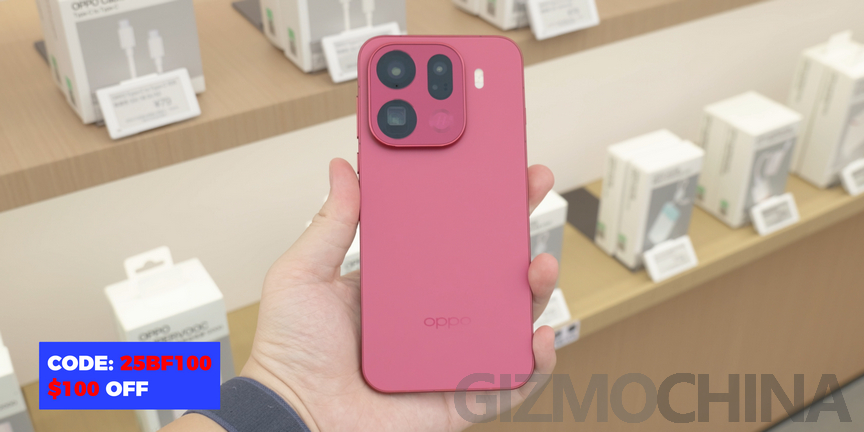
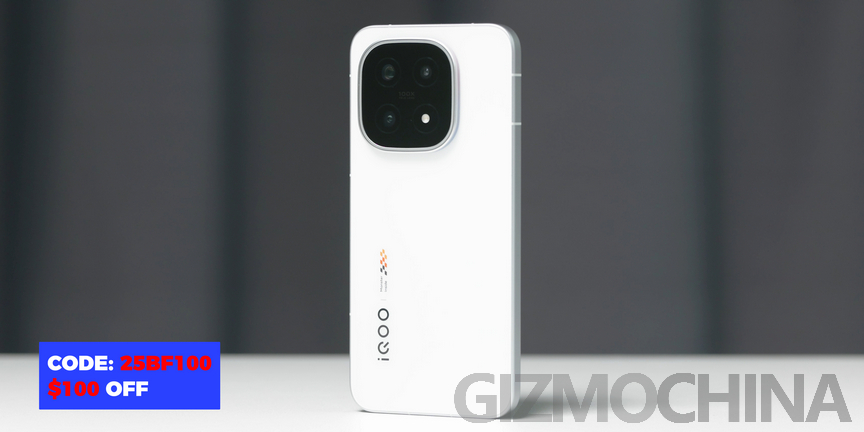
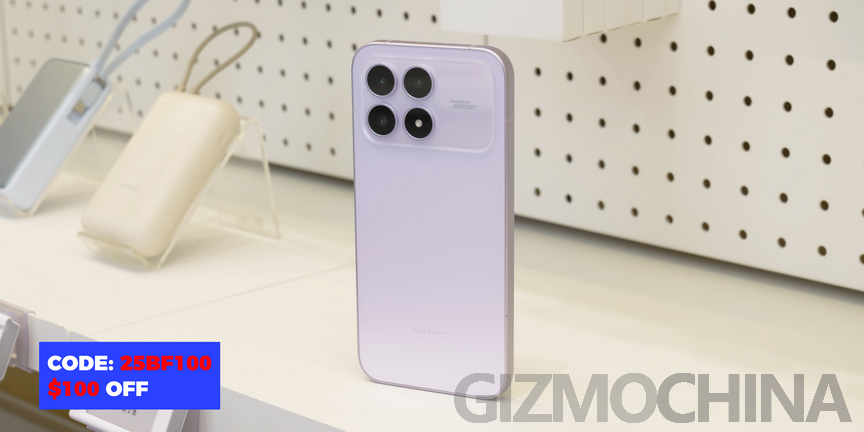
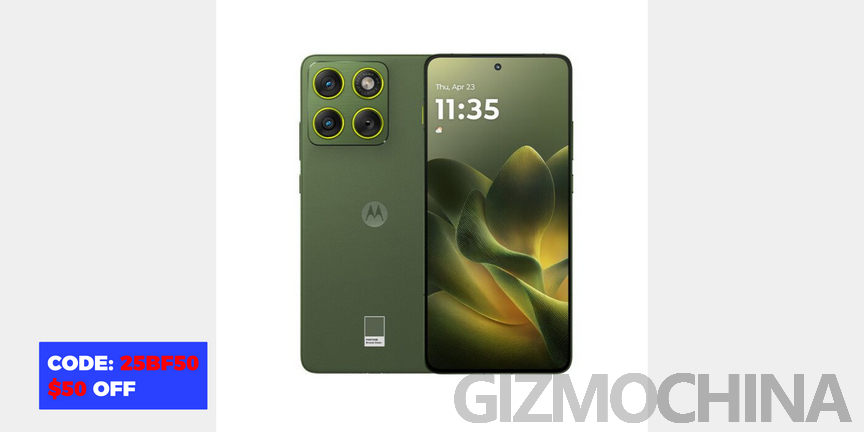
We’re probably the reviewer who’s done the most phone reviews across all of YouTube this new phones season, and we’ve purchased every single unit ourselves as soon as they are available. So if you ask us: Do we have a list of your most recommended phones right now? Well, this article is our answer.
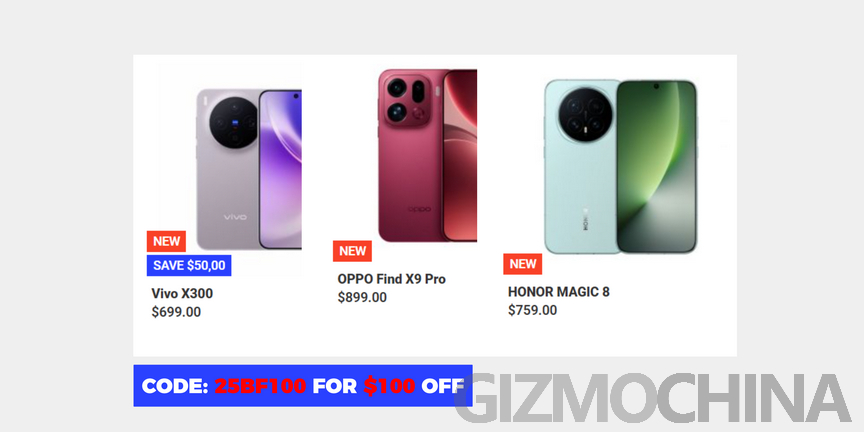
And Christmas is just around the corner—have you thought about buying a new phone as a gift for your family, or even for yourself? With Black Friday happening now, most shopping platforms are running promotions, and of course, GeekWills is no exception. We picked out 14 phones that are worth recommending. If you purchase any of these phones before Christmas, you can use a discount code for either 100 or 50 dollars off. For those of you who are interested in Chinese-version phones, you can click this link to buy them.
Xiaomi 17 Pro Max
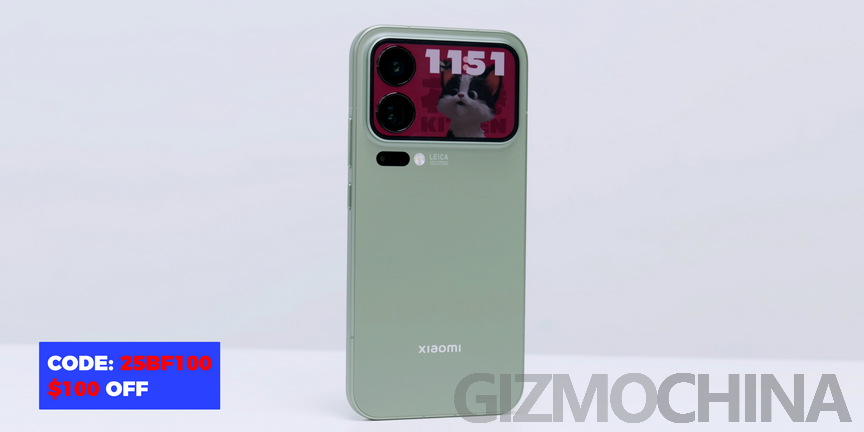
Without a doubt, the first phone I recommend is the Xiaomi 17 Pro Max. Don’t be fooled by how much I complained in the review—actually, I like it quite a lot. I’m personally not interested in the rear display, but I’ve seen many people who really like this screen, for taking selfies with the rear camera. Many women in China also bought it because they can customize the wallpaper on that display. This phone has all the Pro Max features and is more unique—of course, also cheaper than Apple’s version. The only part that’s technically not very strong is the ultra-wide camera, but besides that, I can hardly find anything wrong with it. As the best-selling Android flagship in China, the Xiaomi 17 Pro Max should also be very appealing to users in other regions. So, yes, I recommend fans with a higher budget give this most unique Xiaomi phone a try.
REDMI K90 Pro Max
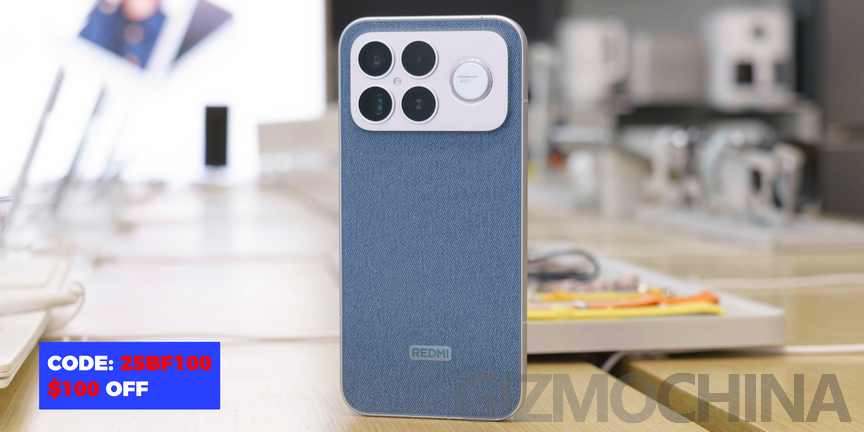
For fans who don’t have such a big budget but still want a Pro Max-level experience, you can check out this one: the REDMI K90 Pro Max. It offers a similar user experience to the Xiaomi 17 Pro Max. For example, it uses the same display panel with the latest RGB S-Stripe arrangement. The focal lengths of the three cameras, the battery size, the charging speed, and the charging protocols are almost identical. Like me, if you’re not interested in the rear display, REDMI replaced it with a subwoofer on the K90 Pro Max. With its 2.1-channel audio, this phone has the best speakers I’ve ever heard on a smartphone, period. Plus, with its reasonable price, this is my favorite Pro Max phone of the year.
OPPO Find X8 Ultra
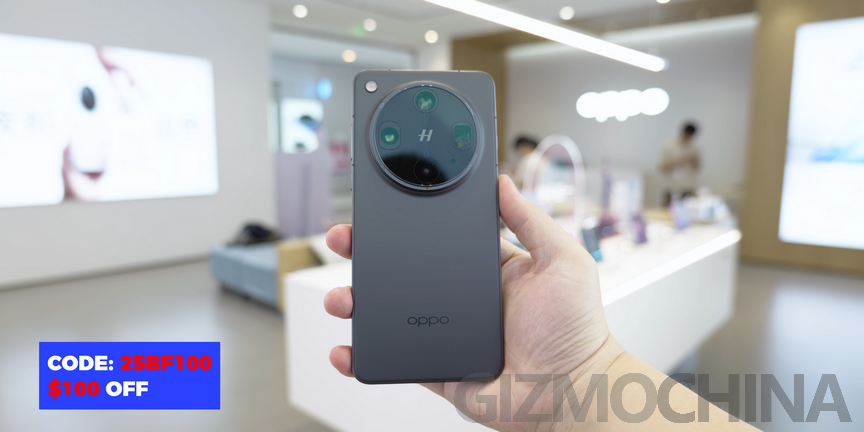
So which one is my favorite Ultra phone? The answer is the OPPO Find X8 Ultra. The reason is simple: I like phones without obvious weaknesses, and with an amazingly powerful camera system. This is the phone I cannot find flaws in. The newly released Find X9 Pro is also a very well-balanced phone—so why didn’t I pick that one? Simply because the X8 Ultra is on another level. It has a one-inch sensor for the main camera, and the two telephoto cameras are arranged with very practical focal lengths. The camera system alone already puts it far above the competition. Until other brands release their next-generation Ultra models, the Find X8 Ultra is the best ultra-tier phone without question.
iQOO 15
Among these phones, the iQOO 15 is the most ordinary one, and also the most balanced one. Although it is a sub-brand of Vivo, it follows a completely different path from the X300 series. The iQOO 15 uses the Qualcomm Snapdragon 8 Elite Gen5, and its vapor chamber is the largest I’ve ever seen, so its gaming performance is the best among all these phones. And with the major upgrade to the telephoto camera this gen, its camera performance doesn’t lag much behind vivo’s flagship phones. For people who love the vivo X300 but dislike the MediaTek platform, the iQOO 15 is made exactly for them.
REDMI K90 & MOTO X70 Air
After introducing so many expensive phones, is there a cheaper option? Yes. I think the REDMI K90 is a great mid-range phone. It has Bose-tuned dual speakers, a screen with a new pixel arrangement, 100W charging, and a 7100mAh battery. Although it uses the Snapdragon 8 Elite processor, considering the relatively small improvement of the 8 Elite Gen5, this is a reasonable choice.
Think the K90 is too ordinary? No problem. The MOTO X70 Air, at the same price, gives you a completely different experience. As a phone with “Air” in its name, it truly achieves lightness and thinness. It weighs under 160g, less than 6mm thick, yet still has a 4800mAh battery. The only drawback is that the Snapdragon 7 Gen4 processor is slightly weaker in performance. Even so, it is currently the cheapest “Air” model on the market, and I’m sure some people will like it.
Other
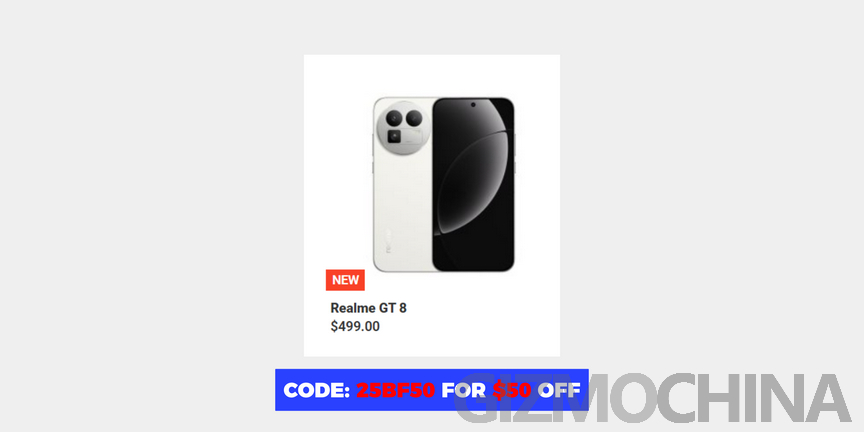
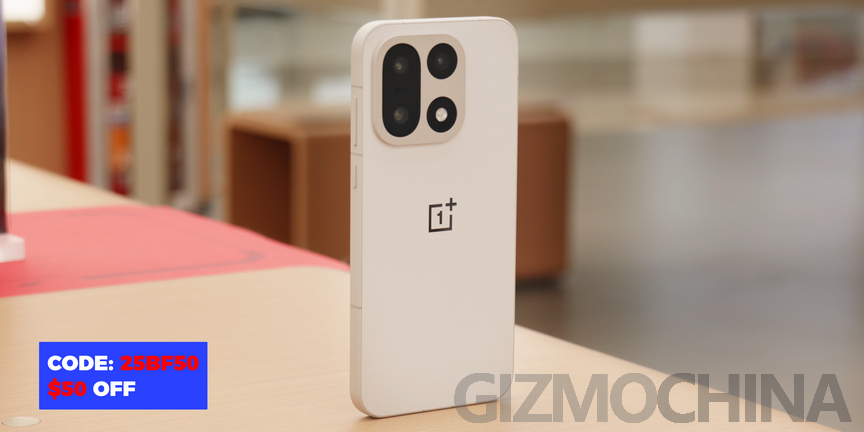
There are many other excellent phones with big Black Friday discounts. For example, the vivo X300 series with highly-praised camera system, the OPPO Find X9 series with the fewest weaknesses, the realme GT8 series co-branded with the well-known camera company Ricoh, and the HONOR Magic 8 Pro with its extremely eye-friendly display. Although the OnePlus 15 has some downgrades this year, the discounted Chinese version is still worth buying. Because there’s an old saying: there are no bad phones, only bad prices. These phones all have their own characters and large fanbases. If you want to buy a new phone before 2025 ends, I believe now is the best time. By the way, if the phone you want isn’t on this list, GeekWills also has a $30 off coupon for orders over $500. You can use this coupon on any phone that costs more than $500.
Summary
Due to the rising demand for AI, the cost of RAM and ROM continues to increase. Next year’s phones will definitely become more expensive because of this. This year’s phones have much larger batteries, and the new Snapdragon chips perform well. Each brand’s phones also have their own unique characters. If you want to buy a phone that can last you several years, I think now is the best time to buy one. Whether you want to buy it or not, you can still check GEEKWILLS. Maybe the price is lower than you expect, so you can decide whether to buy one.
GeekWills - Black Friday Phone Deals
🎁 Black Friday Phone Deals – now thru Dec 24! ✅ $100 OFF top flagships: Xiaomi 17 Pro Max, Redmi K90 series, OPPO Find X8 Ultra, vivo X300 / Pro, Find X9 / Pro, iQOO 15, Honor Magic 8 Pro → code 25BF100 ✅ $50 OFF: MOTO X70 Air, OnePlus 15, Realme GT8 series, Honor Magic 8 → code 25BF50 ✅ $30 OFF any phone value over $500+ → code 25BF30
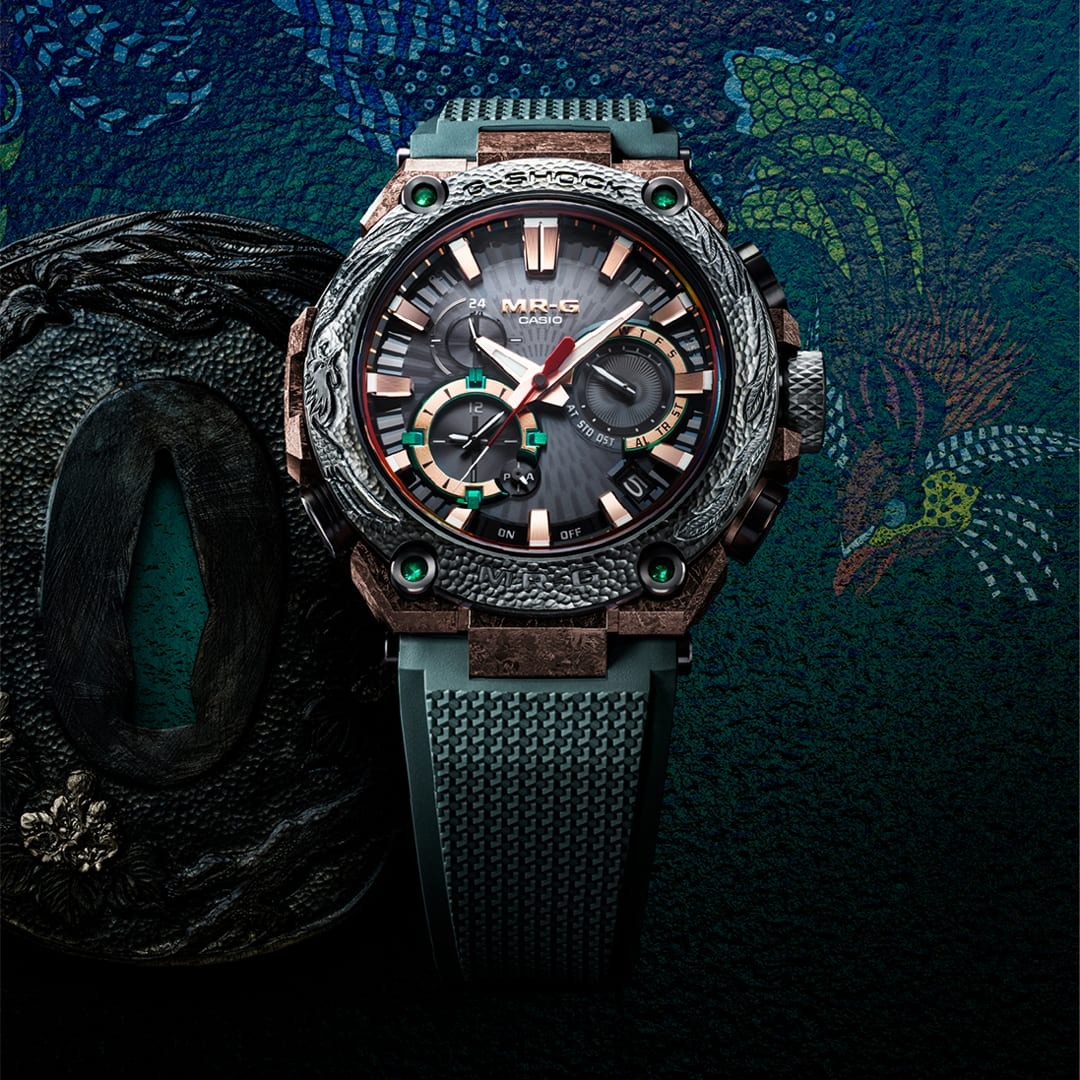
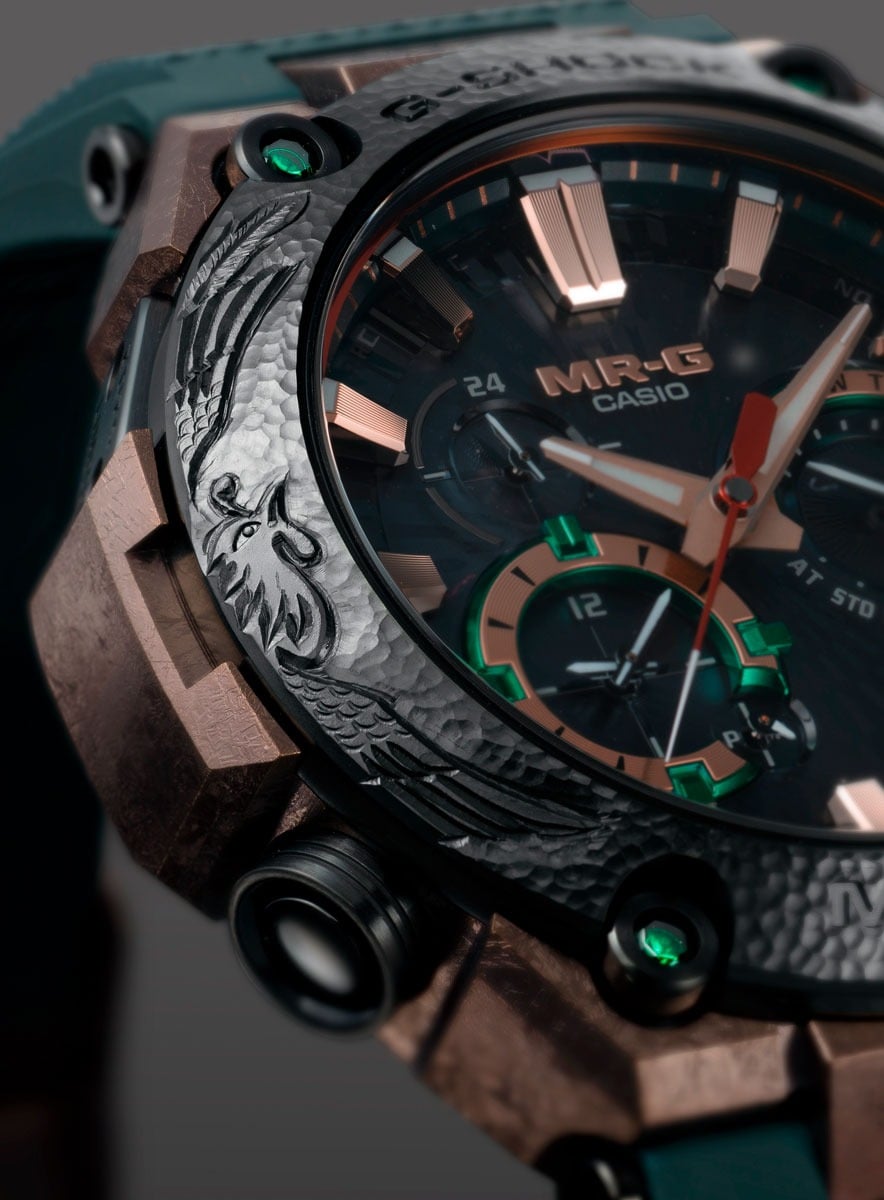
Casio is bringing the new G-Shock MRG-B2000KT-3A to the UK. The watch was first launched in Japan earlier in November 2025 and has now appeared on Casio’s UK online store. It is priced at £6,200, which makes it one of the most expensive model currently listed on the site. The product page states that it will be available in November 2025. Only 800 units are being made worldwide, each with its own serial number, but the number coming to the UK is not mentioned.
G-Shock MRG-B2000KT-3A features
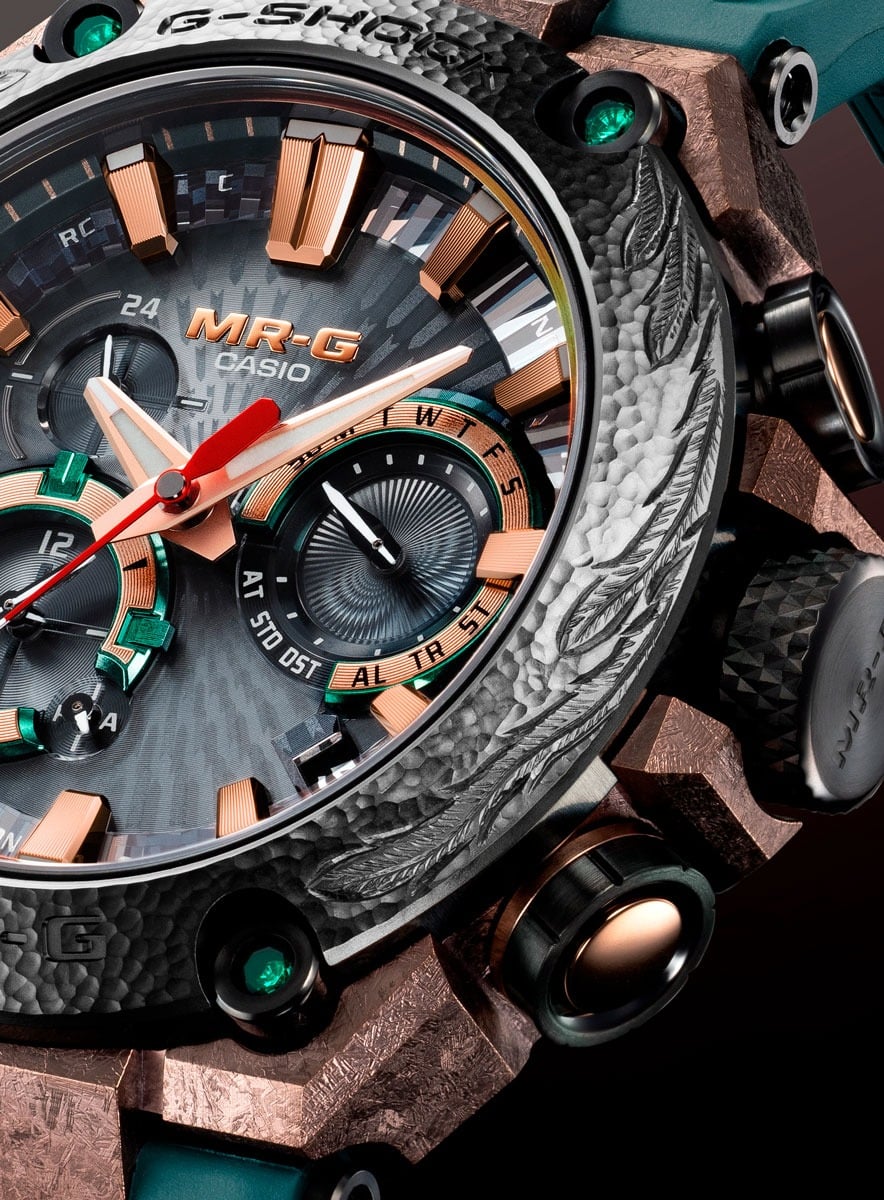
The design is inspired by the tsuba, the guard between a sword blade and its handle. The bezel carries a phoenix engraving made through the Shishi-Aibori hammering technique. Each phoenix design is hand-carved with a hammer and chisel, so no two pieces are exactly the same. The bezel is made of titanium with a green DLC coating that matches the “kuroganeiro” black iron look used in forged steel. Four emeralds are placed in the bezel screws to symbolize wisdom and spiritual strength.
The case uses a pattern based on “nie”, the crystallized edge pattern found on tempered swords. It is made by recrystallizing pure titanium and finished with brown AIP coating for hardness and a copper tone. A metal plate with “2025 LIMITED” is fixed on the side at the 9 o’clock position. The dial ring has a gradient that shifts from red to orange. The dial includes an arrow feather design that refers to the hamaya charm used for protection. All these details are produced with precision machining at Yamagata Casio.
The strap is made of dark green Durasoft fluorine rubber. It is soft, durable, and resistant to wear and discoloration. It also features a Bishamon tortoiseshell pattern. The titanium clasp is deep hardened and finished with the same brown AIP coating.
The MRG-B2000KT-3A includes 20-bar water resistance, Bluetooth time correction, solar charging, and multi-band radio control for Japan, North America, Europe, and China. Other features include a Super Illuminator LED light, world time for 300 cities, stopwatch, timer, alarm, and power-saving mode. The watch measures 54.7 x 49.8 x 16.9 mm, weighs 138 g, and uses a sapphire crystal with anti-reflective coating. The case and bezel are titanium, and the crown uses a screw-lock structure. Accuracy is rated at plus or minus 15 seconds per month without radio or Bluetooth syncing.
For more daily updates, please visit our News Section.
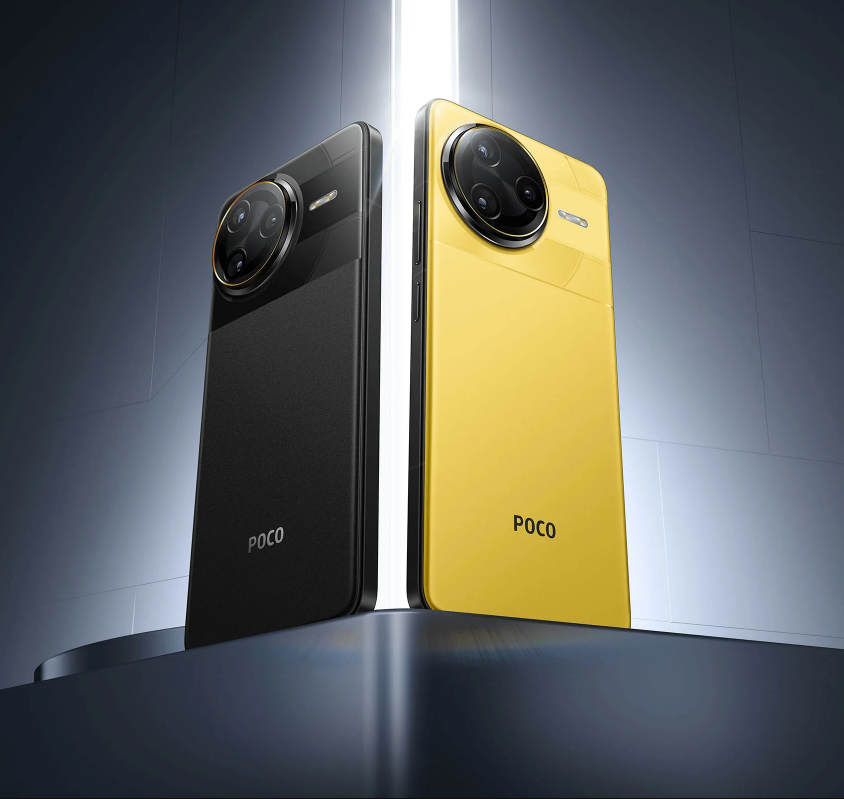
POCO has just confirmed the release timeline for the HyperOS 3 update. Xiaomi has already released a list of Xiaomi, Redmi, and some POCO models that would receive the major OS upgrade, but now, POCO has revealed the HyperOS 3 rollout schedule for its devices.
HyperOS 3 on POCO Phones: When does it roll out & Which devices get the update
Just yesterday (27th November 2025), the Chinese brand unveiled its flagship POCO F8 Pro and POCO F8 Ultra smartphones globally, along with the POCO Pad M1 and POCO Pad X1. But during the launch event, POCo also revealed the rollout schedule of the HyperOS 3 for its smartphones. Xiaomi has already started rolling out its next gen Android 16 OS based custom skin in the global market, bringing various new features and changes.
What does it offer?
Hyper Island is a big new addition, which functions similarly to Apple’s Dynamic Island. So it also displays active notifications and other live activities.
Deeper AI integration with improved screen recognition, smart widgets, AI writing tools, and much more.
Better security features along with better Apple ecosystem compatibility.
Enhanced UI with smoother and more fluid UI, refined animations, and faster app launch speeds.
POCO F7 Ultra
Which POCO devices are eligible for the HyperOS 3 update?
October to November 2025
POCO F7 Ultra
POCO F7 Pro
POCO F7
POCO X7 Pro
POCO X7 Pro Iron Man Edition
POCO X7
October to November 2025
POCO F6 Pro
POCO F6
POCO M6+
POCO M6
POCO M7 Pro
POCO M7
December to March 2026
POCO F5 Pro
POCO F5
POCO F5 X6
POCO M7 Pro
POCO C85
POCO Pad
POCO Pad X1
POCO Pad M1
For more daily updates, please visit our News Section.
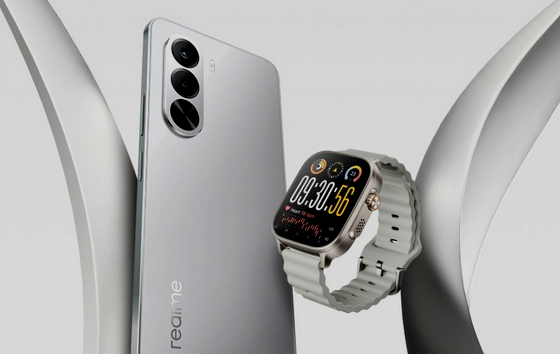
The upcoming Realme P4x is shaping up to be a compelling mid-range smartphone. Early teasers have confirmed some of its key specs and features, and leaks have revealed more details as well. So here’s everything you need to know and everything you can expect from the new device.
Realme P4x: What does it offer?
Looking at a tweet from Anvin, the Realme P4x is expected to launch with a tall display AMOLED display with a 144Hz refresh rate and 1000 nits of peak brightness. Under the hood, this model will be equipped with the MediaTek Dimensity 7400 Ultra, with Realme claiming that this is the fastest smartphone in its segment. You also get at least 8GB of RAM with support for virtual RAM expansion of up to 10GB.
Realme P4x and Realme Watch 5
For storage, the Realme P4x houses 256GB of UFS 3.1 storage. A massive 7,000mAh battery pack powers this model, which supports 45W wired fast charging. The Chinese brand also states that gamers can experience 90fps gaming on BGMI and 120fps on Free Fire. Keeping the hardware cool is a large 5300mm² VC cooling system. For optics, the rear appears to have multiple image sensors with a 50MP main camera.
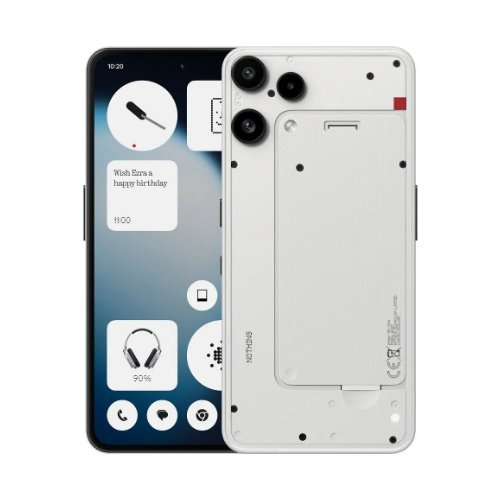
Nothing has launched the Nothing Phone (3a) Lite in India, following its global release last month. The Phone (3a) Lite is the most affordable smartphone launched by the brand till date, if we exclude devices from its sub-brand CMF.
Nothing Phone (3a) Lite features
Nothing Phone (3a) Lite
The phone features a 6.77-inch FHD+ Super AMOLED display with a 120Hz adaptive refresh rate, 480Hz touch sampling rate, HDR10+, 2160Hz PWM dimming, and up to 3000 nits peak brightness. It also comes with Panda Glass protection.
The device runs on the MediaTek Dimensity 7300 Pro processor with Mali G615 MC2 GPU. It has 8GB of LPDDR4X RAM, up to 8GB of virtual RAM, and 128GB or 256GB of UFS 2.2 storage. Storage can be expanded up to 2TB using a microSD card. It ships with Android 15 and Nothing OS 3.5. The company has confirmed that Android 16 with Nothing OS 4.0 will arrive in early 2026. Users will receive three OS updates and six years of security patches.
The phone comes with Instagram and Facebook pre-installed, but both can be removed. Lock Glimpse is also included and can be switched off. Essential Space is a new AI-powered setup for notes and ideas, and the Essential Key offers shortcuts such as single press to save content, long press to record voice notes, and double tap to view everything saved.
The Nothing Phone (3a) Lite has a triple rear camera setup with a 50MP main camera using a 1/1.57 inch Samsung sensor, an 8MP ultra-wide camera, and a 2MP macro camera. It supports EIS, 10x digital zoom, and 4K video recording at 30fps. On the front, there is a 16MP camera that records up to 1080p at 60fps.
The phone includes an in-display fingerprint scanner, USB Type C audio, a bottom speaker, and an IP54 rating. Connectivity options include 5G SA and NSA, Dual 4G VoLTE, Wi-Fi 6, Bluetooth 5.3, GPS, NFC, and USB Type C. The device measures 164 x 78 x 8.3 mm and weighs 199 grams.
It has a 5000mAh battery with 33W fast charging. The battery can reach 50 percent in 20 minutes and maintains above 90 percent health after 1200 cycles, according to the company. A charger is not included in the box.
Pricing & availability
The Nothing Phone (3a) Lite is priced at Rs 20,999 for the 8GB and 128GB model and Rs 22,999 for the 8GB and 256GB model. Sales start on December 5 through Flipkart, Flipkart Minutes, and select offline stores. A limited batch drop will take place at Blue Tokai Coffee Roaster in Greater Kailash 2, New Delhi, on November 29 at 3 PM. The first 20 buyers will get a free pair of Ear open. Launch offers include up to Rs 1000 bank discount.
For more daily updates, please visit our News Section.
AOC is set to bring its new Agon U27G4XM gaming monitor to global markets. This follows the launch of the Q27G4SMN in China, which uses a Mini LED backlight with a 27-inch VA panel. The U27G4XM takes a different approach with a Fast IPS panel while keeping the Mini LED backlight system.
The monitor delivers a native 4K resolution of 3840 x 2160 at 160 Hz. With Dual Frame Mode, users can switch to 1080p at 320 Hz. It has 1,152 local dimming zones and can reach up to 1,200 nits peak brightness in HDR. It is VESA DisplayHDR 1000 certified. AOC lists a 1 ms GtG response time and support for Adaptive Sync and NVIDIA G-SYNC Compatible.
The U27G4XM covers 151.8 percent sRGB, 98 percent DCI-P3 and 96.5 percent Adobe RGB. The Mini LED system improves contrast, reduces blooming and produces more uniform brightness. The screen measures 27 inches, has a 16:9 aspect ratio, uses an antiglare coating and offers 178 degree viewing angles. It has a static contrast ratio of 1000:1 and a dynamic contrast ratio of 80M:1. The panel displays 1.07 billion colours with 8 bit plus FRC.
Port selection includes one HDMI 2.1, one DisplayPort 1.4, four USB Type A ports, one USB Type B port and a 3.5 mm audio jack. There are no built in speakers and no USB Type C port. The monitor also supports PiP and PbP.
AOC includes an ergonomic stand with 130 mm height adjustment, tilt from minus 3 to 21 degrees, swivel from minus 28 to 28 degrees and pivot from minus 90 to 90 degrees. The design is 3 sided frameless on the front. The monitor has a black and red finish on the back and supports a 100 x 100 VESA mount.
AOC adds features such as Low Input Lag mode, a USB hub and the G-Menu software for extra controls.
The Agon U27G4XM will go on sale in the UK early next year for 399.99 pounds (~US$530). It will reach the Eurozone in January 2026 for 519 euros which is about 601 dollars.
For more daily updates, please visit our News Section.
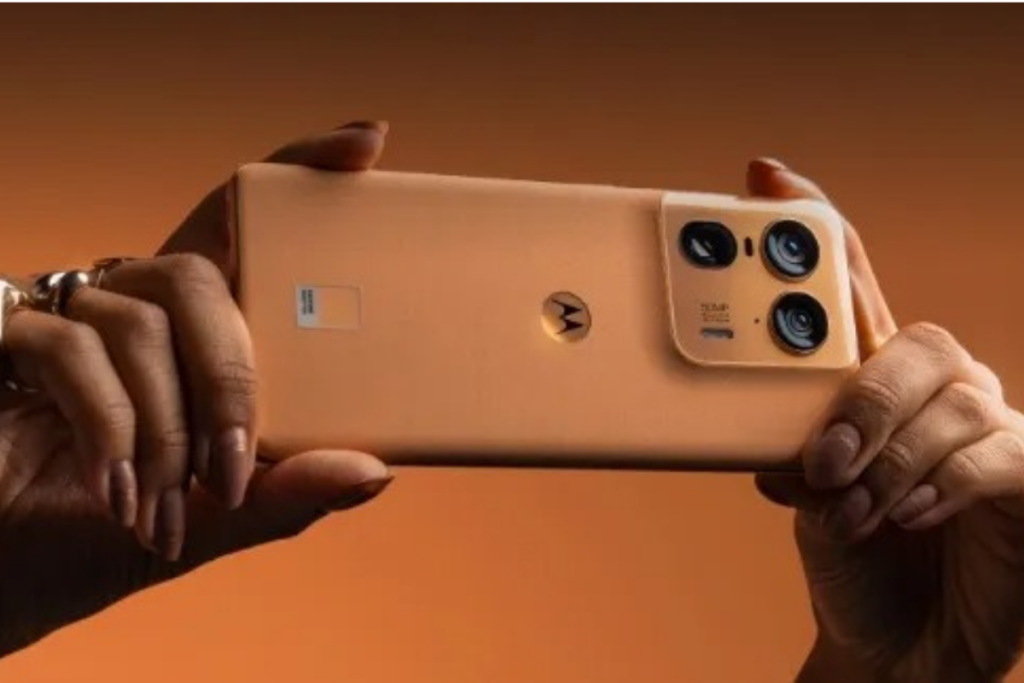
The Motorola Edge 50 Ultra entered Android 16 beta testing last month, and now that phase has ended as users have started receiving the stable update. This major upgrade brings essential upgrades, security enhancements, and several new features.
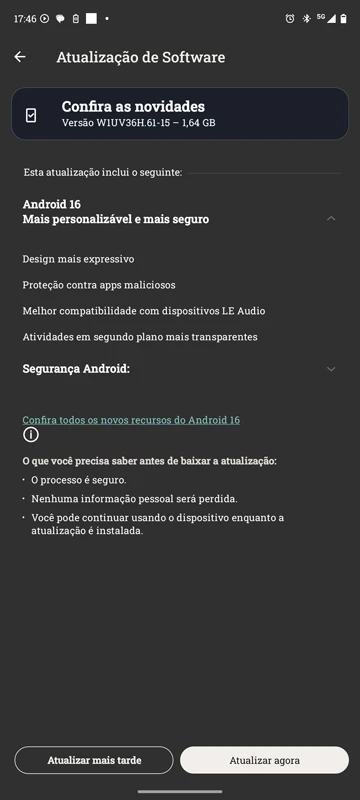
The Android 16 update for the Motorola Edge 50 Ultra is currently rolling out in Brazil, as spotted by folks at Ytechb. It comes with the firmware version W1UV36H.61-15 and has a download size of about 1.64GB. The update usually rolls out in stages, so it may take a few days to reach all the users.
If you’re rocking an Edge 50 Ultra and the update still hasn’t popped up in the notification center, navigate to Settings > System updates > Check for updates to manually check for available updates.
The Edge 50 Ultra was launched last year with Android 14 out of the box, and later it got upgraded to Android 15. That means Android 16 is the second major OS upgrade for the smartphone, and it will receive one more such upgrade before reaching the end of major upgrades. However, it will continue to receive security patches at least until April 2028.
What’s new in Android 16 for Motorola phones?
After upgrading to Android 16, you won’t see a major visual refresh on your Motorola device, but minimal changes to several areas, including the Settings app. However, there are many useful upgrades and some new features to elevate the software experience. This includes a new Flash notification feature that flashes the camera or the screen when receiving calls and notifications.
The update also introduces the Notification cooldown feature on Motorola phones, which helps prevent you from getting annoyed by multiple notifications from an app in quick succession. This feature basically lowers the volume of incoming notifications for that app in that case. Furthermore, the update offers Advanced protection, a suite of security features designed to protect the device against incoming threats and vulnerabilities.
Motorola phones running Android 16 now have access to custom modes in the Settings app, allowing you to create profiles for different activities. Additionally, users can now connect to a Wi-Fi network or a hotspot with a single tap, without entering a password. The only condition is that both devices must use the same Google account. The Android 16 update also includes better compatibility with LE Audio devices.
Do regularly visit the Android 16 section on Gizmochina for the updates. Or, if you prefer your news instant and on the go, hop into our Telegram channel for instant notification about the latest software updates and all the biggest tech headlines.
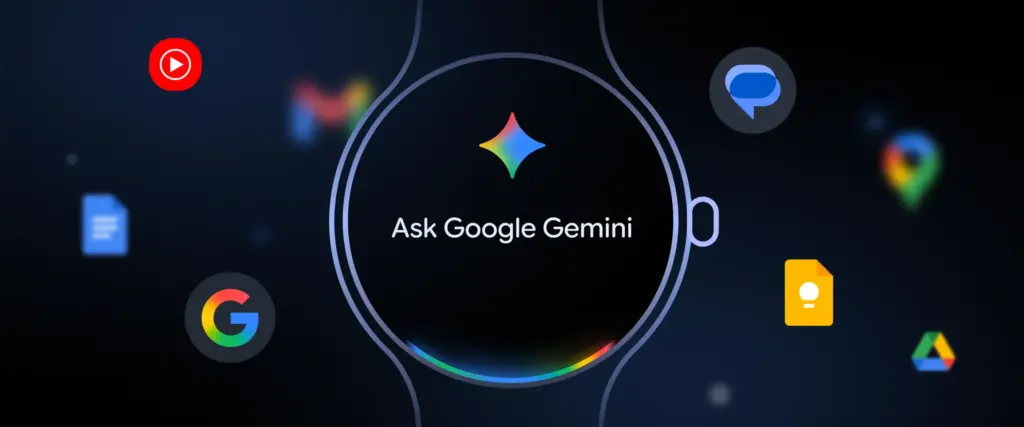
Google‘s Gemini is no longer just a phone-first AI assistant; it’s now on your wrist, fundamentally changing how you interact with your smartwatch. Since its rollout earlier this year, Gemini has begun replacing Google Assistant on smartwatches running Wear OS 4 and above.
Whether you own a Pixel Watch 4, Galaxy Watch 8, or OnePlus Watch 3, Gemini has arrived to turn your smartwatch into a more helpful, conversational, and context-aware tool.
Gemini for Wear OS isn’t just a name swap. Google rebuilt the assistant experience to be more intelligent, responsive, and useful across everyday scenarios. Instead of basic prompts like “set a timer” or “call Mom,” you can now ask Gemini to summarize your last email from Emily, create a running playlist, or remember that you parked on level 4, spot 27.
It uses the same foundational AI models as on phones and tablets, which allows for far more natural interactions. Gemini understands follow-up questions, interprets your intent with greater precision, and surfaces contextual results by tapping into your Gmail, Calendar, and other Google services. It’s the closest thing to having a lightweight AI companion right on your wrist, one that understands more than just commands.
2. Do more with fewer steps
Using Gemini on a smartwatch simplifies tasks that typically require multiple app hops. Mid-run, you can dictate a message to your manager without breaking stride. You can schedule a reminder for your kid’s next five cricket matches or ask for turn-by-turn directions to your dentist, all through voice.
It supports hotword detection “Hey Google”, app icon tapping, or pressing and holding the side button. Some watches even allow “Raise to Talk” gestures to wake Gemini when you lift your wrist.
All this means that the watch becomes a true productivity tool, not just a notification mirror. You don’t need to pull out your phone to check your schedule, respond to a quick email, or get updates. You just talk.
3. Deep integration with Google services
The biggest strength of Gemini lies in its ability to pull data from your Google account. It can read recent emails, look up locations mentioned in messages, check your calendar for conflicting events, or draft quick replies, all without requiring your phone to be unlocked.
And if your watch upgrades to Wear OS 6, Gemini’s utility jumps even higher. That’s because Wear OS 6 introduces a new App Functions API, letting Gemini control or extract data from brand-specific watch apps.
On Samsung watches, for example, this could mean better integration with Samsung Health or Calendar. On Pixel, it could pull from Recorder or Weather. It marks a step toward more personalized and brand-aware assistants.
4. Tiny but practical features
Beyond smart replies and deep app hooks, Gemini is useful for the small stuff too. You can tell it to remember your locker number, your preferred coffee order, or where you left your sunglasses.
Reminders can be location-aware. If you leave work, it can ping you to pick up groceries. If you ask for heart rate tracking or a workout summary, Gemini can trigger the supported app if it has those permissions.
It also works with Google Home devices, letting you broadcast messages, adjust lights, or check if the door’s locked, all from your wrist, even with hands full.
For more daily updates, please visit ourNews Section.
Sony has officially launched the LYT-901 mobile camera sensor, built for future flagship smartphones. Over the past few weeks, details about its sensor size, HDR approach, and zoom modes have been appearing in leak-based updates, when the hardware was known internally as Sony IMX09E. This marks Sony’s first 200-megapixel image sensor designed for phones, and it is expected to compete directly with Samsung’s 200-megapixel sensor platforms. Read on to know all the important details about this new camera technology.
Sony LYT-901 key specifications
Sony LYT-901
The Sony LYT-901 centres on a very large 1/1.12″ imaging surface paired with 0.7μm pixels and a 200-megapixel output, the brand’s first sensor at this resolution designed for mobile use. An earlier code linked to this hardware was IMX09E before Sony aligned it with its simpler LYTIA series labeling. Instead of traditional Bayer, Sony expands the base pixel grid using a Quad-Quad Bayer mosaic and completes the translation to a 2×2 Bayer pattern through a dedicated hardware Remosaic path.
The company layers AI logic into the sensor’s internal rebayer circuit, reducing translation penalties and making dense pixel data easier for phone SoCs to handle. A 12-bit analogue-to-digital pipeline, backed by a Fine 12-bit ADC, adds extra latitude in gradation and helps keep fully resolved reads clean with lower noise.
For HDR, Sony merges two common approaches by using Dual Conversion Gain HDR as the backbone and combining it with a Hybrid Frame-HDR design that briefly samples one microsecond-class very-short extra frame. This keeps highlight clipping in check while avoiding obvious ghosting in fast scenes. Combined dynamic range exceeds 100dB, roughly 17 photographic stops. Zoom modes are a core strength: the sensor handles 2x hardware zoom for photos and 4x sensor-in-zoom for stills and video. At 4x zoom, phones can tap the stream much like a virtual telephoto view without an added optical lens step.
Unlike competing options, this is the only current sensor that covers 4x hardware zoom and 4K video at 30fps, with 120fps 4K capture available in 4x binning configurations. Pixel-binned profiles include 50-megapixel (2×2) and 12.5-megapixel (4×4), which help night capturing and high-zoom crops look more composed. It’s tuned for stage, show, and arena moments, where far-distance crops are the default. Concert photography is one of its most convincing use cases.
Oppo Find X9 Ultra, Vivo X300 Ultra expected to Sony LYT-901
The first debuts built on this sensor could land in the Ultra tier. The Find X9 Ultra from Oppo is expected to introduce the hardware in March 2026, based on rumor timelines. Sony’s sensor could also reach Vivo’s X300 Ultra, which may break cover in Q2 2026, according to current rumors.
For more daily updates, please visit our News Section.
It’s official now: OnePlus will announce the Ace 6T in China on December 3. It’s the second phone in the series after the OnePlus Ace 6, and the first to debut with Qualcomm’s new Snapdragon 8 Gen 5 processor.
The OnePlus Ace 6T will borrow some features from its sibling, including the Fengchi Gaming Core and a 165Hz refresh-rate display. OnePlus claims the device can hit 3,561,559 points on AnTuTu.
Previously, OnePlus confirmed that the phone will come in three colors: Flash Black, Fleeting Green, and Electric Violet. Its left edge also carries a dedicated “Plus key” for summoning Mind Space and other frequently used features.
OnePlus Ace 6T Specifications
For the rest of the specs, the phone will sport a 6.7-inch, 1.5K-resolution, 165Hz OLED display with an ultrasonic fingerprint sensor.
The camera setup includes a 50MP main and 8MP ultra-wide sensor on the back, while the front houses a 32MP selfie camera. It will run ColorOS 16–based Android 16.
The OnePlus Ace 6T is also expected to feature IP68, IP69, and IP69K ratings, along with vapor chamber cooling. It will pack an 8,000mAh+ battery and is expected to support 100W fast charging. The phone will ship with the latest ColorOS 16 in China.
For global markets, OnePlus is renaming the Ace 6T as the OnePlus 15R. The latter is also the first Snapdragon 8 Gen 5 phone globally. Teasers for the device have already started rolling out, and it will launch alongside the Pad Go 2 and OnePlus Watch Lite on December 17.
Huawei is barely done showing off the Mate 80 series, and rumors about what’s next from the brand are already starting to surface online.
Tipster Digital Chat Station on Weibo has shared possible specs for the upcoming Huawei Nova 15 lineup, and it looks like three models are in the works: the Huawei Nova 15, Nova 15 Pro, and Nova 15 Ultra.
Nova 15 / Nova 15 Pro
The base Nova 15 will reportedly sport a 6.7-inch screen, while the Nova 15 Pro is said to feature a slightly larger 6.84-inch panel. Both phones are expected to use 1.5K LTPO OLED displays.
The Pro model may also include a dual front-camera setup consisting of 50MP and 8MP sensors. The base model will likely stick to a single 50MP unit.
On the back, the Nova 15 Pro is expected to feature a 50MP main camera, a 50MP periscope telephoto lens, and an additional ultra-wide camera. Digital Chat Station also mentions a “multispectral sensor,” which Huawei often uses to improve color accuracy and low-light performance.
Lastly, both the standard and Pro versions are reportedly powered by new Kirin 8-series chips.
Nova 15 Ultra
The Nova 15 Ultra is, of course, the headline device. It’s expected to use a more powerful Kirin 9-series chip and a larger 1/1.3-inch 50MP main sensor. Although the tipster doesn’t mention it, it’s safe to assume the Ultra will also get a periscope, an ultra-wide lens, and the multispectral sensor at the very least.
All three models are tipped to pack batteries exceeding 6,000mAh.
As for the launch, the series is rumored to debut before China’s Spring Festival, which typically falls in February, meaning an early 2026 release.
For more daily updates, please visit our News Section.
We use cookies on our website to give you the most relevant experience by remembering your preferences and repeat visits. By clicking “Accept”, you consent to the use of ALL the cookies.
This website uses cookies to improve your experience while you navigate through the website. Out of these, the cookies that are categorized as necessary are stored on your browser as they are essential for the working of basic functionalities of the website. We also use third-party cookies that help us analyze and understand how you use this website. These cookies will be stored in your browser only with your consent. You also have the option to opt-out of these cookies. But opting out of some of these cookies may affect your browsing experience.
Necessary cookies are absolutely essential for the website to function properly. This category only includes cookies that ensures basic functionalities and security features of the website. These cookies do not store any personal information.
Any cookies that may not be particularly necessary for the website to function and is used specifically to collect user personal data via analytics, ads, other embedded contents are termed as non-necessary cookies. It is mandatory to procure user consent prior to running these cookies on your website.