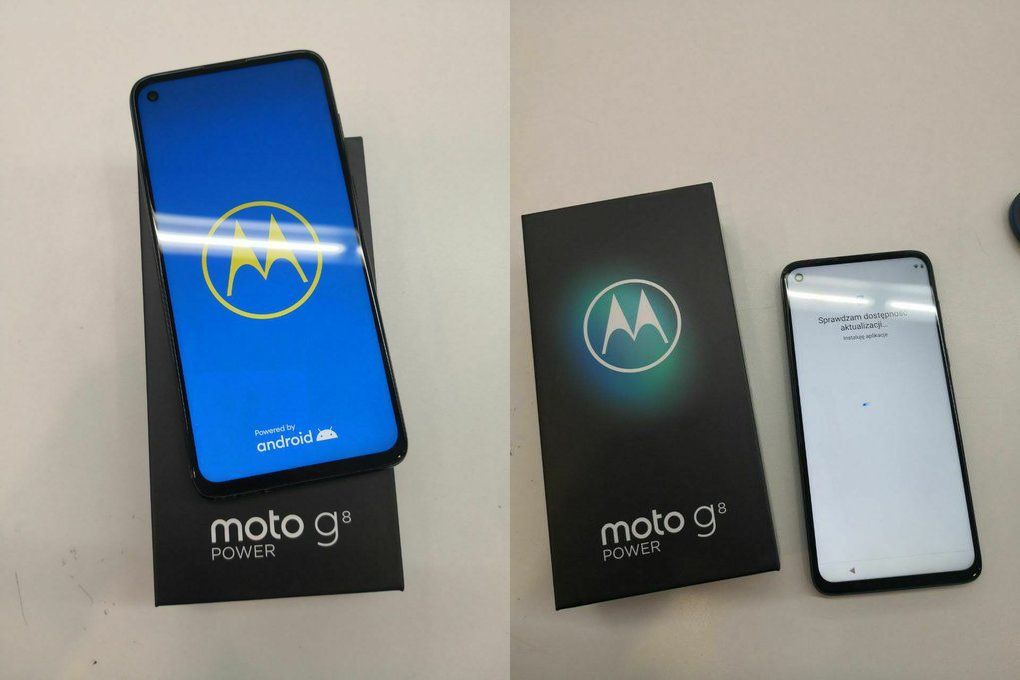
The upcoming Motorola Moto G8 Power was listed for a short period on Amazon UK earlier today. Although the retailer was quick to take down the listing, the damage was already done as enthusiastic fans captured screenshots of the device and specifications. The Moto G8 Power is expected to launch at the Mobile World Congress (MWC) 2020 scheduled to be held in Barcelona, Spain later this month. A separate leak has revealed the live shots of the smartphone.
The Moto G8 Power is rumored to be unveiled alongside the Moto G8 and the G Stylus. The renders of these phones are already available online. According to the live shots and other images that have appeared on Amazon UK, the Moto G8 Power sports a punch-hole camera at the front. The smartphone flaunts a quad-camera setup at the rear next to the centrally-placed Motorola logo which is embedded with a fingerprint reader.
Moto G8 Power live shots
The device is water-resistant and can withstand a few raindrops. But users are advised to avoid drowning it in a pool. The retailer listing revealed that it will be available in Smoke Black and Capri Blue color variants.
The Moto G8 Power Amazon UK listings revealed that it flaunts a 6.36-inch IPS LCD capacitive touchscreen with a resolution of 2280 x 1080 pixels. The G8 Power runs on a 2.0 GHz octa-core SoC with 4GB of RAM and 64GB of native storage. Past reports have revealed that it will be driven by the Snapdragon 665 chipset. The same SoC is rumored to power the Moto G8 and Moto G Stylus phones.
The quad-camera setup includes a 16-megapixel primary sensor with an 8-megapixel ultrawide lens, an 8-megapixel telephoto sensor and a 2-megapixel macro sensor. The G8 power flaunts a 25-megapixel lens at the front.
Moto G8 Power in Smoke Black and Capri Blue
Powering the Moto G8 Power is a 5,000 mAh battery. It is said to be arriving with support for 18W fast charging. The smartphone runs on Android 10 and boasts dual speakers. Connectivity options include VoLTE, Wi-Fi 802.11ac, Bluetooth v5.0 USB Type-C, USB OTG, GPS and a 3.5 mm audio port.
Last week, Apple had filed a patent application that was titled “Apple Patent Reveals Apple Watch’s Digital Crown being eliminated and replaced with an Optical based System.” In other words, an upcoming next gen Apple Watch with Touch ID support.
Earlier today (7th February 2020), the US Patent & Trademark Office published this patent application from Apple. The patent reveals that the Cupertino based giant is working on a new Apple Watch that will make the digital crown of the wearable more useful to the user through the addition of the Touch ID fingerprint scanner support.
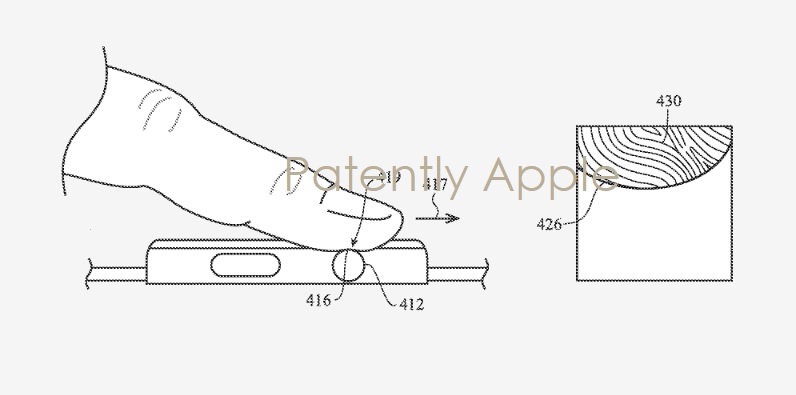
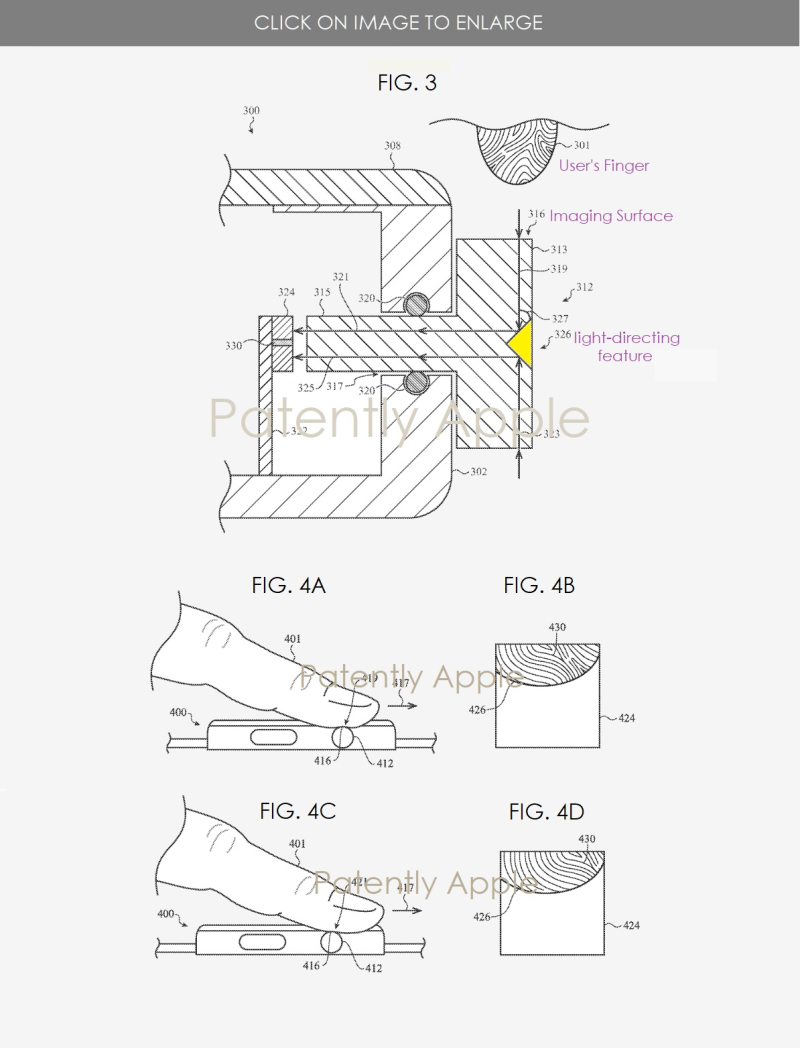
According to the Apple patent, the side surface of the smartwatch will feature a transparent cover alongside image sensors that will be extended via the Watch’s crown. This mechanism will enable biometric security on the wearable product, or in other words, Touch ID security. The mechanism is housed below the primary display of the Apple Watch and also seems to have a light transmitting and an image sensing surface.
The images reveal that to input the fingerprint from users’ fingers, one must place it on the circular surface of the digital crown and rotate it. Meaning, it is not a simple touch input but a sliding action across the round dial. This is an interesting functionality that the company could add in its future iterations of its Apple Watch which will also make the popular wearables more secure as well.
Some Android smartphone manufacturers are having a tough time with the Android 10 rollout. Meanwhile, a Pixel 2XL is seen running Android 11 R build, a couple of months before its official announcement. After a Geekbench appearance on Pixel 4 a few weeks ago, Android 11 R was found running on a three-year-old Pixel by folks over at the Piunikaweb.
According to a photo posted by a Twitter user Droidivan, Pixel 2 is running on Android R bearing the build number aosp_talmen-user debug R.AOSP.MASTER6165648test-keys with January 2020 security patch. It is quite a surprising situation to see an Android 11 build running on the Pixel 2 XL.
However, it is believed that the device is running a Generic System Image of Android 11/R. These builds are usually sent to OEMs and developers for early access to make the required changes. The Twitter user would have received one of such early build that he managed to flash on Pixel 2XL. These builds are the full stock Android builds without any alterations or modifications.
It’s too early to comment on the features and availability of Android 11. The first developer preview is also a couple of months away. However, the chances of Android 11 availability on Pixel 2XL has gradually improved with this leak.
Some leaks and rumors suggest Android 11 will feature a Dark Mode scheduling, fully secure Wireless ADB, and video recording support larger than 4GB.
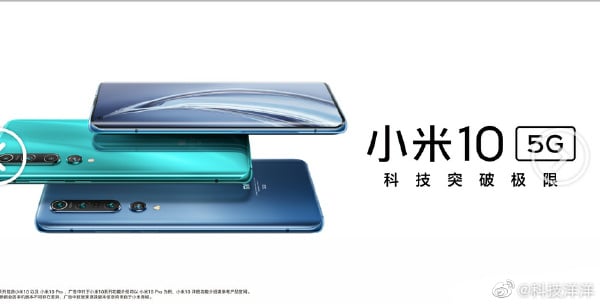
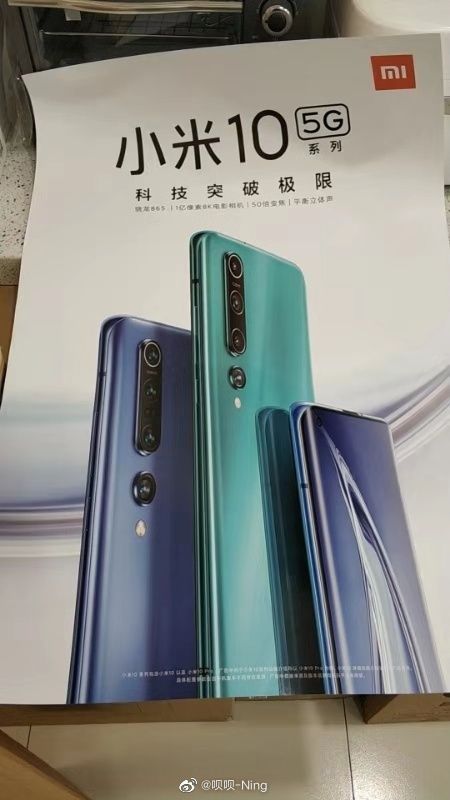
Xiaomi is still silent on the launch date of the Mi 10 series. However, it is being said that the Mi 10 and Mi 10 Pro smartphones will be made official on Feb. 13 at 2 PM (local time) in China. It will go official through an online live conference event. There is no confirmation yet whether the company will be also launching the Xiaomi Mi 10 Explorer Edition with a transparent rear. Last month, several live shots of the Xiaomi Mi 10 had appeared to reveal its design. A snapshot of a promo material of the Xiaomi MI 10 series and a screenshot of what looks like an official image are now doing rounds on Weibo. These new images have revealed the front and rear designs of the Xiaomi Mi 10 and Mi 10 Pro smartphone phones.
In the new images, there are two Mi 10 handsets with a slightly different camera arrangement. The green variant that has a smaller number of cameras seems to be the Xiaomi Mi 10 whereas the bluish model could be the Xiaomi Mi 10 Pro as it features an additional camera.
The Xiaomi Mi 10’s camera setup includes three lenses that are stacked together and a separately placed fourth sensor and an LED flash. On the other side, the Xiaomi Mi 10 Pro seems to feature an additional sensor between the second and third lenses. As past reports have revealed, the Mi 10 series will be equipped with a 108-megapixel main lens. The Chinese text in the promo image reveals the Snapdragon 865 mobile platform powered Mi 10 series will arrive with camera features like 8K videography and 50x hybrid zoom.
Coming to the display of the Xiaomi Mi 10 series, it appears that the Mi 10 and Mi 10 Pro could be sporting the same kind of screen. The leaked photos show that they are equipped with a curved display that has a punch-hole at the upper-left corner. The display of the phone is surrounded by ultra-slim bezels. An earpiece seems to be present in the thin top bezel of the Mi 10 phone. It is speculated that the display of the Mi 10 series will support a refresh rate of 120Hz. Also, it will feature an in-display fingerprint sensor.
Yesterday, Xiaomi announced that its upcoming Mi 10 series will feature the new-age LPDDR5 memory across the entire lineup. Micron was first to confirm this news and it announced the mass production of the first LPDDR5 RAM chip for Mi 10.
LEi Jun confirms Samsung made LPDDR5 RAMs for Mi 10
However, soon after this announcement, netizens on Weibo wondered whether Xiaomi planned to use Samsung made LPDDR5 memory chips as well. This was a valid question given how the upcoming Samsung Galaxy S20 series, Nubia’s Red Magic 5G flagship are expected to use Samsung’s new memory chip. And yesterday night, Xiaomi’s CEO Lei Jun confirmed that the Mi 10 series will be using Samsung as well as Micron’s LPDDR5 memory chips.
Both Samsung and Micron LPDDR5 memory chips promise speeds of up to 6.4 Gbps, which a significant 50% boost as compared to previous LPDDR4X generation. The new age chips also promise a 20-30% reduction in power consumption. And if Samsung is supplying LPDD5 memory chips for the Xiaomi Mi 10, we can’t entirely rule out the possibility of the top-end variant featuring a Samsung made 16 GB LPDDR5 RAM. After all, Samsung had revealed that it was working on a 16GB RAM module for 2020.
Xiaomi has never been shy to include high RAM modules inside its flagships. For example, its most recent Mi 9 Pro 5G has a 12 GB RAM variant as well. So, it won’t be surprising to see a 16GB LPDDR5 RAM module in the top-end Xiaomi Mi 10 Pro 5G model.
Apple is one of the many companies that have been facing production issues after the recent Coronavirus outbreak in China. Previously, we had reported on its iPhone production witnessing an impact through Foxconn, and now even its AirPods supply might be affected as well.
The new breed of virus has been a cause of alarm in the Southeast Asian region and originated from the Wuhan city in China. This had caused the local government to enforce a halt on various factories and production lines in the country. The move was done to curb the infection spreading further in environments with a high number of workers.
Apple AirPods Pro
Notably, Apple had ordered the production of 45 million units of its popular AirPods series of wireless earbuds before the first incident of Coronavirus occurred. The Cupertino based giant had ordered this massive order after the demand for its hearables crossed expectations.
As of right now, production lines and factories have been shut down, in accordance with the Government’s ruling, till the 10th of February 2020. Reportedly, this will affect the production of AirPods since the supply of certain crucial components has fallen short due to the factory shutdown. Apple supplied AirPods through three key manufacturers, all of which had to halt a major part of their production recently.
According to a report, these three companies only have two weeks worth of materials and components to make AirPods. Thus, Apple might face a crunch for AirPod shipments till the time they can find another supplier for the different components. Currently, Apple is focusing its supply of AirPods on its online stores and various retail locations. Older AirPod models are still in supply but the Pro variants buyers are seeing a month long wait before shipping.
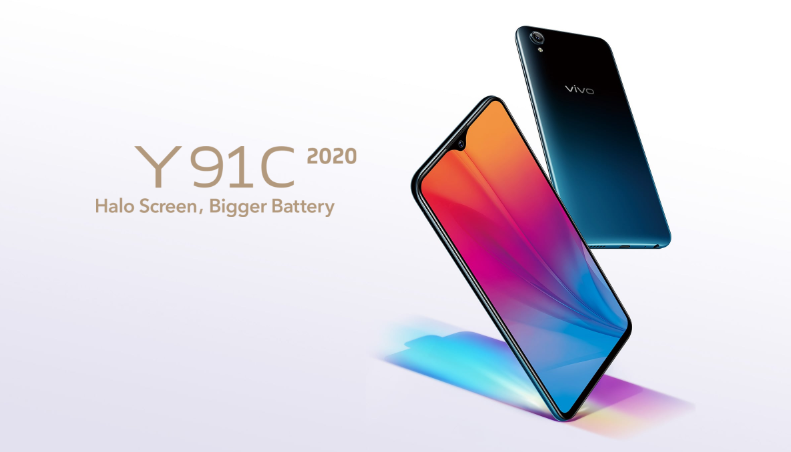
Vivo has discreetly announced a new smartphone dubbed as Vivo Y91C 2020 in Bangladesh. Last year, some countries like Malaysia and Thailand had received the Vivo V91C smartphone. The newly unveiled Vivo Y91C 2020 is nothing but a rebranded version of the same phone for Bangladesh.
Vivo Y91C 2020 specifications
The Vivo Y91C 2020 measures 155.11 x 75.09 x 8.28mm and weighs 163.5 grams. The phone flaunts a Halo FullView 6.22-inch IPS LCD display with waterdrop notch. The screen offers HD+ resolution of 720 x 1520 pixels. The company claims that the Vivo Y91C offers a screen space of 88.6 percent. The rear shell of the phone is made out of polycarbonate material and has a curvy appeal.
The MediaTek Helio P22 (MT6762R) octa-core processor powers the smartphone along with 2 GB of RAM. The entry-level Vivo phone offers users with a 32 GB of built-in storage. Users can expand its storage by a microSD card. It is quite a bummer to see the phone ship with older Android 8.1 Oreo OS that is skinned with the FunTouch OS 4.5 UI.
The rear side of the phone features a 13-megapixel single camera with f/2.2 aperture and LED flash. A 5-megapixel camera with f/1.8 aperture rating is available on the display notch. The device lacks a fingerprint reader which means users will be provided with only face unlock biometric security feature.
The Vivo Y91C 2020 comes with a 4,030mAh battery. It does not support fast charging. The connectivity features that are added on the phone are dual SIM support, 4G VoLTE, 2.4GHz Wi-Fi, Bluetooth 5.0, GPS, microUSB 2.0 and 3.5mm audio jack.
Vivo Y91C price and availability
In Bangladesh, the Vivo Y91C phone carries a price tag of 9,990 BDT (~$117). It can be bought in two colors like Fusion Black and Ocean Blue. In Thailand, the Blue option is not available for Vivo Y91C. Instead, the country has received the phone in Fusion Black and Sunset Red color variants.
Motorola recently announced its first foldable smartphone — Motorola RAZR and after the initial delay, the device is now up for purchase. While the shipping was set to start on 25th February, some unit of the phone seems to have already shipped out.
With this, a teardown of the smartphone revealed the internals. As per the dismantle video by PBKreviews, the Motorola Razr comes with two batteries, a thin display panel. With number of screws to hold everything, the phone seems quite difficult to repair.
To get to the 6.2-inch paper-thin display panel also seems to be a major task as one needs to navigate through numerous wires, screws and components. It is also reportedly difficult to take off the front cover that houses the display.
Along with careful prying, it also needs quite a good amount of heat to make sure that the glue holding it together loses the grip. The video also shows the two batteries of the phone placed on two sides of the hinge.
While the repairability score of the Motorola Razr may not be good, it seems that the cost to get the device repaired isn’t very high. The company has revealed that it will be charging $299 for replacing the display which Motorola itself says is prone to bumps and lumps.
This is quite good for a device that costs $1,500. In comparison, South Korean-giant Samsung is charging $599 to fix the foldable screen of the Galaxy Fold, which retails for around $2,000.
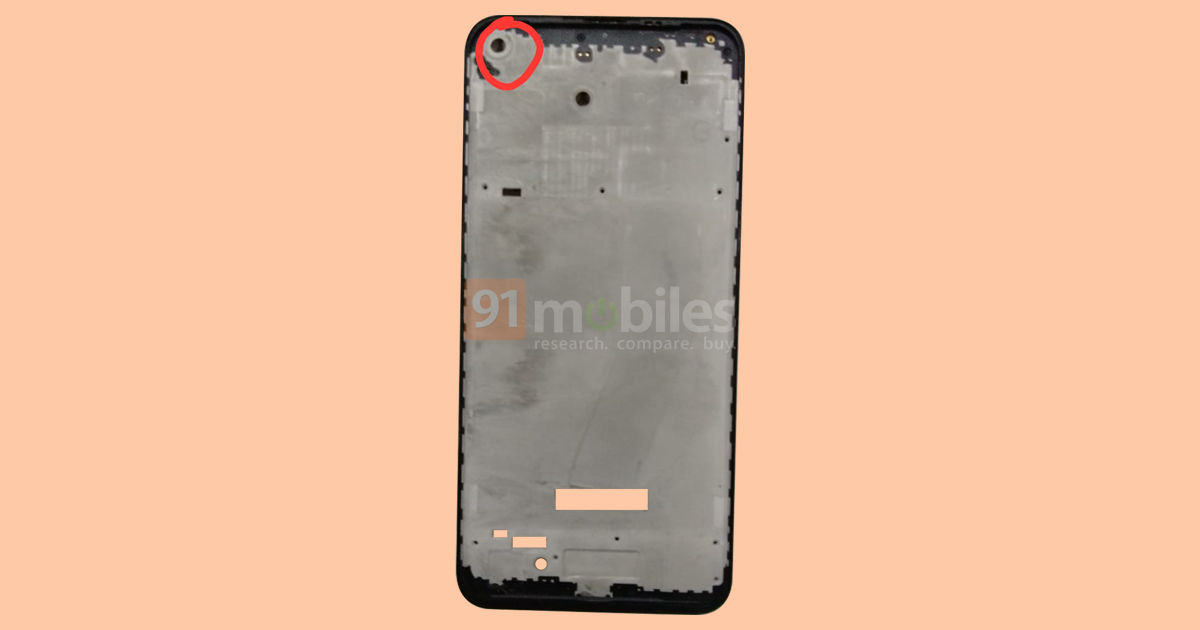
The Samsung Galaxy A11 that has a model number of SM-A115F was recently spotted receiving clearance from the United States Federal Communications Commission (FCC) and the Wi-Fi Alliance certification, fueling rumors of an imminent release. 91mobiles has just received exclusive images of the upcoming Galaxy A11’s underlying frame, revealing a few major hardware components. The images show that it will be sporting a punch-hole screen and triple cameras.
Among the list of interesting updates, the Galaxy A11 seems to sport a single punch-hole at the upper-left corner of the screen. The handset is rumored to flaunt a triple-camera rear setup, although, the post on the publication could not confirm its presence due to a lack of physical sensors. If true, this would be a major update for the Galaxy A11, which hopes to compete with feature-rich smartphones from Realme and Xiaomi in the segment.
The report also states that Galaxy A11 will be housing a mammoth 5,000 to 6,000 mAh battery, which contradicts the FCC listing that mentions the presence of a 4,000 mAh unit. Previous reports also mentioned that the Galaxy A11 could sport up to 128GB of internal memory, further expandable via a microSD card. The smartphone will likely run on Android 10 with the One UI 2.0 skin on top and sport 2.4 GHz Wi-Fi connectivity. The Galaxy A11 is rumored to be available in four color options, namely red, blue, black and white.
A benchmark listing of the alleged Samsung Galaxy A11 could be powered by the Snapdragon 625/626, which is a older but more potent CPU than the Exynos 7884 found on the Galaxy A10. The FCC documents also confirm the presence of a rear-mounted fingerprint scanner. The smartphone is expected to feature at least 2 GB of RAM and 32GB of native storage. Additional features include an HD+ display and a rectangular module for the rear camera, complete with an LED flash unit.
In related news, Samsung also plans to unveil the Galaxy M31 soon. The smartphone will likely retain the specifications of the predecessor Galaxy M30s albeit a few changes. This means that the device would flaunt the same 6.4-inch Infinity-U Super AMOLED display found on the M30s. The device is likely to draw power from an Exynos 9611 SoC with 6GB of RAM and 128GB of internal storage. The primary camera flaunts a 64-megapixel GW1 sensor with an ultra-wide lens, a macro lens, and a depth sensor. The device reportedly draws power from a 6,000 mAh battery and runs on Android 10 out of the box with the overlying One UI 2.0 skin. The Galaxy M31 may debut as early as this month in India.
The US seems to be extremely worried about Huawei’s dominance in the 5G market. So much so that the US attorney general suggested that American investors should buy a controlling stake in Nokia and/ or Ericsson in order to transform them into formidable competitors to the Chinese telecommunications giant.
“There are only two companies that can compete with Huawei right now: Nokia and Ericsson,” Barr said in his speech at a conference on China’s security threat at the Center for Strategic and International Studies in Washington. “Putting our large market and financial muscle behind one or both of these firms would make it a far more formidable competitor and eliminate concerns over its staying power.”
He raised concerns about Nokia and Ericsson’s ability to take on Huawei. Barr said that neither of these companies had Huawei’s scale or backing from a powerful country which put them at a disadvantage when compared to the Chinese telecommunications giant.
And given how 5G is expected to power a range of emerging technologies in the coming years, Barr is worried that China will be able to influence and control these technologies if Huawei dominates this new-age communications market. In his speech, he added, “From a national security standpoint, if the industrial internet becomes dependent upon Chinese technology, China would have the ability to shut countries off from technology and equipment upon which their consumers and industries depend.”
5G will be at the forefront of new technologies
In order to avoid such a situation, he said the US is considering a few proposals that align itself “with Nokia and/or Ericsson through either American ownership of a controlling stake or through a “consortium or private American and allied companies.”
Barr’s comments reveal how important 5G is for the US. And if Nokia and Ericsson are bought by American investors, the race for 5G will essentially be a fight between two superpowers: China and the US.
Meanwhile, Huawei has sued Verizon in the US for infringing 12 patents in the field of computer networking, download security and video services.
The OPPO Find X2 launch event will be held on Feb. 22 Barcelona, Spain and the phone will be display at the Mobile World Congress (MWC) 2020 tech exhibition that will be held between Feb. 24 and Feb. 27. The certification platforms like Thailand’s NBTC and Malaysia’s SIRIM have revealed that the Find X2 series has two phones such as Find X2 and Find X2 Pro. The differences between the two phones are not known yet. OPPO has confirmed that the Find X2 series will be arriving with topnotch specs. Recent reports have already spilled plenty of information on the series. Today, a Chinese leakster shared some screenshots of the alleged OPPO Find X2 smartphone. The new images reveal the supported screen resolutions and refresh rates.
The new screenshots show the automatic screen resolution and refresh rate settings that will be available on the Find X2 series. As it can be seen, the Find X2 will let users to seamlessly switch between two refresh rate options like 60Hz and 120Hz. When in 120Hz refresh rate mode, the phone will be able to support quad HD+ resolution of 3168 x 1440 pixels and full HD+ resolution of 2376 x 1080 pixels. Higher refresh rate displays are known for consuming more battery juice. With options to choose a lower resolution and refresh rate, the users of Find X2 series may not be plagued with battery life problems.
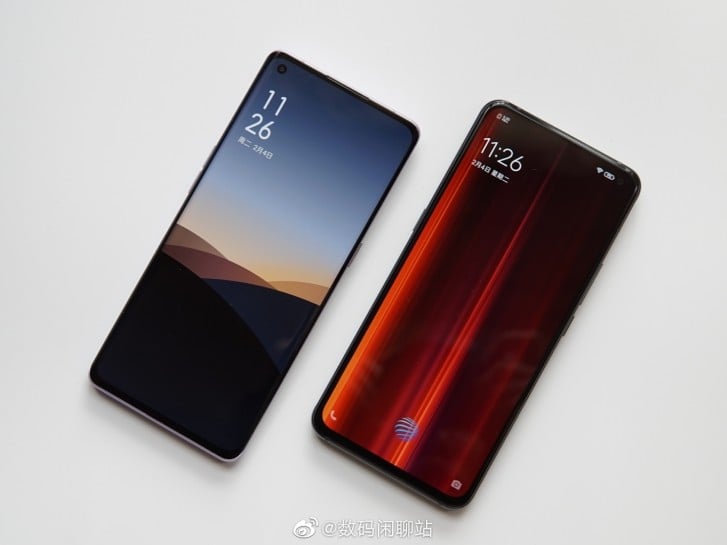
It is speculated that the OPPO Find X2 series will be equipped with a 6.5-inch display. A vacant spot at the top-left corners of the screenshot suggests that the phone will be equipped with a punch-hole display. Past reports have claimed that the Find X2 series will be featuring a punch-hole screen with curved edges. The screen is very likely to be integrated with a fingerprint reader. The below shown image seemingly shows that upcoming OPPO Find X2 on the left and the upcoming iQOO 3 on the right.
Allegegd iQOO 3 (right) with purported OPPO Find X2 (left)
It is yet to be confirmed whether the Find X2 will be equipped with a triple camera or quad camera setup. OPPO has reportedly teamed up with Sony to build the 48-megapixel Sony IMX689 custom sensor for the Find X2 smartphone. This lens is said to be coupled with the yet to announced Sony IMX708 ultrawide lens and a 13-megapixel telephoto shooter. For shooting selfies, the Find X2 may possess a Sony IMX616 32-megapixel selfie camera.
The Snapdragon 865 mobile platform along with LPDDR5 RAM will be powering the Find X2 series. The SoC could be coupled with OPPO M1 co-processor and a 65W fast charger. The Find X2 models will be also equipped with other features like UFS 3.0 storage, Wi-Fi 6 and NFC support.
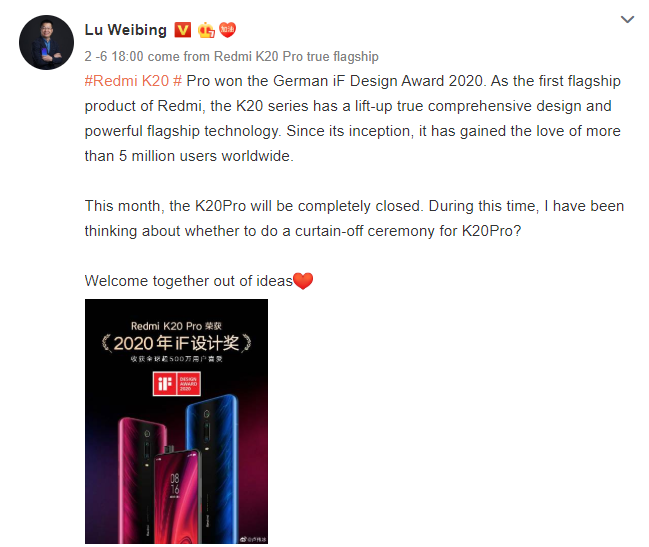
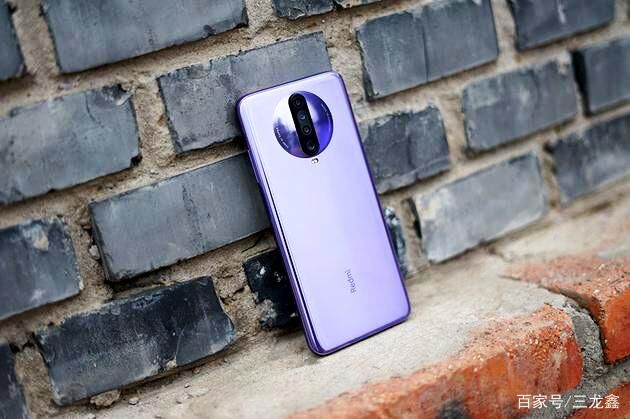
Xiaomi is expected to launch the Xiaomi Mi 10 series of flagship phones on Feb. 13 in China. The Xiaomi Mi 10 and Mi 10 Pro will be driven by the Snapdragon 865 mobile platform. Its independent sub-brand Redmi too is working on the Snapdragon 865 powered Redmi K30 Pro smartphone. It seems that the arrival of the Redmi K30 Pro is drawing close as Lu Weibing who is the General Manager of the Redmi brand confirmed that the company will be killing the sales of the Redmi K20 Pro this month.
The Redmi K20 and Redmi K20 Pro had debuted in May last year in China as Redmi’s first high-end and flagship phones. The Redmi K20 came with an attractive glass rear, a notch-less screen and a pop-up selfie snapper. The K20 Pro sported an identical design. Weibing praised the K20 series by stating that it has won the German iF Design Award 2020. The K20 series gained the love of more than 5 million users across the world, added Redmi GM.
Weibing revealed that the company will stop the sales of the Redmi K20 Pro probably to pave way for its successor – the Redmi K30 Pro. A quick visit to the official page of the phone on Xiaomi China’s website revealed that the ‘Buy’ button is missing from the product page of the Redmi K20 Pro.
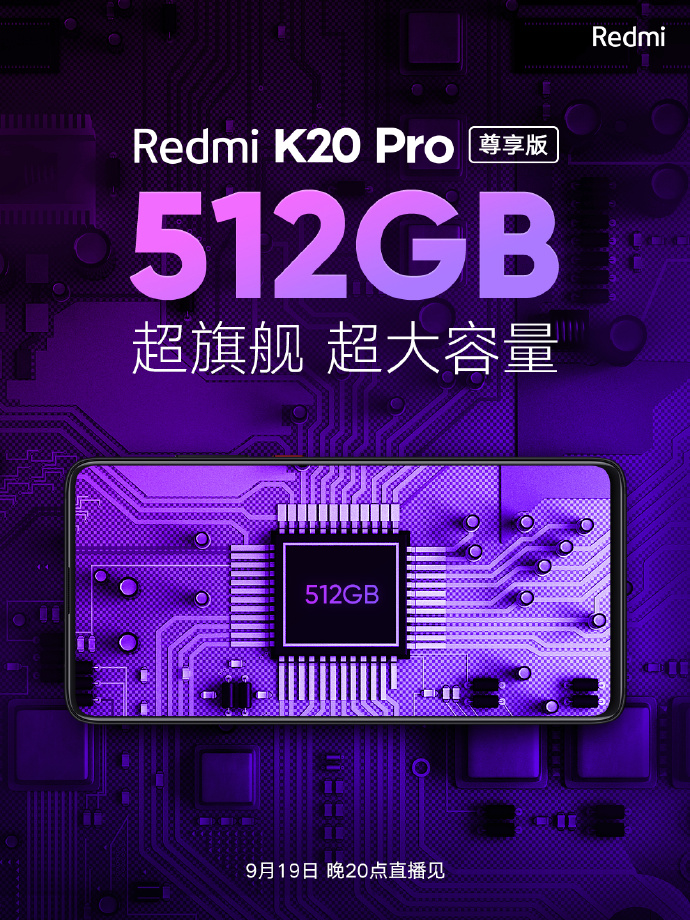
It now seems to be selling only the Redmi K20 Pro Premium Edition that features 8 GB of RAM and 512 GB of storage with a price tag of 2,799 Yuan (~$400). This model was introduced in September 2019 with a price tag of 3,299 Yuan (~$472). It was unveiled in 128 GB and 256 GB storage versions, but these models are not available for purchase now. With Weibing claiming that the sales of Redmi K20 Pro ending this month, it appears that the Pro Premium Edition will also be axed soon in the home market.
The Redmi K30 Pro will be reportedly equipped with a flat display. Some leaks have claimed that it could be retaining the notch-less display and pop-up selfie camera design from the predecessor model. The Snapdragon 865 mobile platform powered phone will also feature the latest LPDDR5 RAM. On Geekbench, it was spotted with 8 GB of RAM and Android 10 OS in the past month.
Redmi K30 5G
For photography, it may borrow the Sony IMX686 lens from the Redmi K30 phone. It is speculated that the phone will be flaunting a round-shaped camera module for its quad camera setup. The 4,700mAh battery of the phone could be equipped with a 33W fast charger.
The Redmi K30 Pro is expected to launch in March. It could be priced between 3,000 Yuan (~$429) and 3,500 Yuan (~$499).
In January, a Vivo phone with model number V1955A was approved by the 3C authority of China. It revealed that it is a 5G phone and it could be equipped with flagship specs. Moreover, it was also found that the phone could be shipping with a 55W rapid charger. The smartphone has been rumored to debut in Chinese markets as iQOO 3. However, the iQOO brand has been silent on its existence. It appears that its arrival may not be far away as it has surfaced on TENAA’s database with full specifications.
iQOO 3 specifications (Rumored)
The TENAA listing states that the iQOO V1955A measures 158.51 x 74.88 x 9.16mm and it weighs 214.5 grams. The phone is a bit hefty and is slightly on a thicker side. It may arrive in multiple color editions, but the listing reveals only the existence of a Black model. The images of the phone did not appear on TENAA at the time of writing this post.
The V1955A iQOO phone has a 6.44-inch AMOLED display. It offers full HD+ resolution of 1080 x 2400 pixels and a tall aspect ratio of 20:9. A recent leak had revealed that the phone will only sport 60Hz refresh rate despite possessing gaming capabilities. The phone is said to be fitted with the same screen that it is available on some other Vivo phones such as X30, X30 Pro, S5 and the Indian version of V17. That means the iQOO 3 will be equipped with a punch-hole display. Its front design was recently revealed through leaked images. The display of the iQOO 3 will be integrated with a fingerprint sensor like all the other predecessor iQOO phones.
The rumored iQOO 3 is equipped with 2.84GHz octa-core processor. It could be the latest Snapdragon 865 mobile platform. China may receive the iQOO 3 in RAM variants like 6 GB, 8 GB and 12 GB. It could be coming in storage versions like 128 GB and 256 GB. The handset is unlikely to feature an external storage slot for additional memory.
The Android 10 OS is likely to come preloaded on the iQOO 3 smartphone. The phone has a minimum rated battery of 4,370mAh capacity. As leaks have revealed, its typical size could be 4,410mAh. As it is known, the phone may ship with a 55W fast charger.
The backside of the phone is rumored to be fitted with a vertical quad camera system at the top-left corner. It will have a primary lens of 64-megapixel. It is not known whether it features a Sony IMX686 or Samsung GW1 lens. There are two 13-megapixel sensors and a 2-megapixel lens in the quad camera setup of the smartphone. For shooting selfies, the handset is equipped with a 16-megapixel front camera.
Realme just launched its latest entry-level smartphone in India. We are talking about Realme C3, a device packing amazing specifications and sold at an incredibly affordable price. In my personal opinion, on the paper, it is the most interesting last-generation smartphone available for less than €100. But it has a few important rivals in the Indian market which will not make it easy for Realme to dominate the entry-level segment with this device in the coming months. Among the most convincing ones, there are Redmi 8 and Infinix Hot 8. We chose them since they are the most suitable candidates for a specs comparison between the best smartphones in the entry-level niche.
Triple 13 + 2 MP + QVGA f/1.8
8 MP f/2.0 front camera
Dual 12 + 2 MP f/1.8 and f/2.4
5 MP f/2.4 front camera
Dual 12 + 2 MP f/1.8
8 MP f/2.0 front camera
BATTERY
5000 mAh
5000 mAh, battery charging 10W
5000 mAh, fast charging 18W
ADDITIONAL FEATURES
Dual SIM slot
Dual SIM slot, reverse charging
Dual SIM slot
Design
When it comes to smartphone design, it is not everything about look. Materials and build quality often play a key role in the aesthetics. Infinix Hot 8 is the only device with a glass back and it provides more premium materials. Both Realme C3 and Redmi 8 are entirely made of plastic (except for the display, naturally), but they are both splash resistant. Infinix Hot 8 has the best materials, but Redmi 8 has the most compact design since it sports a smaller display. Note that Realme C3 does not have a fingerprint reader, we think it is the only big thing missing on this device.
Display
There are no big differences between the display quality of these devices, so we recommend you to focus on other specifications. All of them feature an IPS panel with a Full HD resolution. Realme C3 delivers a slightly higher brightness, but what really differs is the display size. Realme C3 and Infinix Hot 8 sport 6.5 and 6.52-inch displays respectively, while Redmi 8 is more compact with its 6.22-inch display.
Specs & Software
The most powerful handset here is the Realme C3 with its new MediaTek Helio G70 chipset. It is essentially a toned-down version of the Helio G90 and it provides very high CPU and GPU performance. Realme C3 is also the only device of this trio to ship with Android 10 out of the box, customized by the new Realme UI. The silver medal goes to Redmi 8 fueled by a Snapdragon 439 chipset. Infinity Hot 8 has two configurations with Helio A22 and Helio P22, both inferior to Helio G70 and Snapdragon 439.
Camera
Given that they are entry-level devices, none of these handsets is a camera phone. But they still deliver a decent photo quality, especially if compared to all the other devices with the same price tag. The most convincing is the Infinix Hot 8 since it provides an interesting photo quality even in low light conditions and it has a more powerful quad-LED flash on the back, as well as a front-facing LED flash. The cameras are one of its strongest points. Right after, we got the Redmi 8.
Battery
Infinix Hot 8, Realme C3 and Redmi 8 all feature a huge 5000 mAh battery and they are all battery life champions. All got a 12 nm chipset, so there will be no important difference when it comes to battery life. Redmi 8 has a faster charging technology (18W), while Realme C3 is the only to support reverse charging (wired and via a micro USB port).
Price
Realme C3 starts from just Rs. 6,999/€90/$99 in India, Redmi 8 has an Rs. 7,999/€102/$112 starting price and Infinix Hot 8 starts from Rs. 8,800/€112/$123. In our opinion, Realme C3 looks more interesting due to its amazing chipset, but some may prefer Infinix Hot 8 due to its more convincing cameras and a more premium design. Do not forget that, despite having interesting special features such as like reverse charging, Realme C3 does not feature a fingerprint scanner, unlike Redmi 8 and Infinix Hot 8.
Motorola‘s Moto G series is undoubtedly its most popular series. Little wonder the Lenovo-owned company recently rolled out the drums to celebrate the cumulative sales of over 100 million G-series units. The company is already working on three new G-series models – the Moto G8, Moto G8 Power and Moto G Stylus. Tipster Evan Blass (@evleaks) has released a picture containing the real renders of the three Moto G8 models.
The renders show the Moto G8 models will all pack a full-screen design with a punch-hole screen housing the front camera. The tipster says the renders are for the three models which means they will all have the same design, save for some few differences. The Moto G8 seems to have a slightly bigger chunk of bezel at the chin. All three models feature a punch-hole at the top left corner that houses the selfie shooter. At the rear, the models pack a quad camera setup. A fingerprint sensor seems to be embedded under the logo at the back.
As for the expected specs, the Moto G8 is tipped to come with a 6.39-inch display with support for 720 x 1560 pixels HD+ resolution. The G8 Power could be coming with a 6.36-inch display with support for 1080 x 2300 pixels full HD resolution. Both models are said to be powered by the Snapdragon 665 mobile platform.
On the other hand, the Moto G Stylus will have a 6.36-inch 2300 x 1080 display with a hole in the top left corner for the selfie camera. There will be a Snapdragon 665 processor inside and it will be paired with 64GB or 128GB of storage. The device is said to have a Stylus pen, hence the name.
The G8-series is expected to all run Android 10 out of the box. Motorola is yet to disclose when the models will be launched.
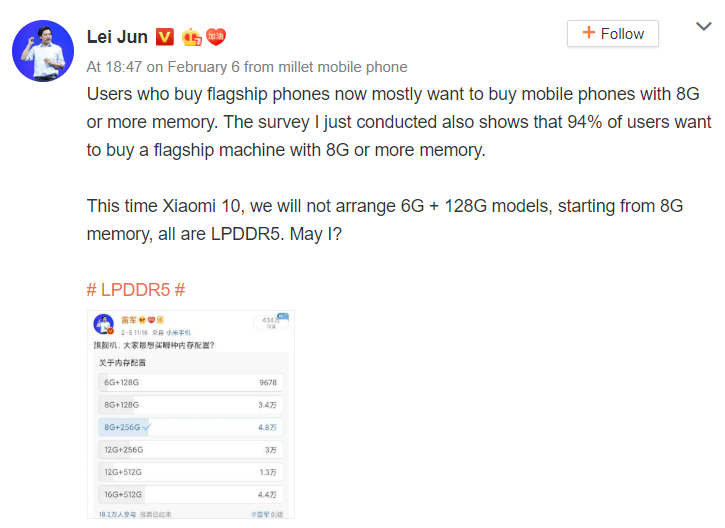
Over the years, manufacturers have increased the RAM in their phones, especially flagships. A lot of flagship phones start at 8GB and go up to 12GB RAM. This year, we will even see phones launch with 16GB of RAM. Ahead of the launch of the Mi 10 series, CEO of Xiaomi, Lei Jun, has revealed that the Mi 10 will start at 8GB RAM.
This is important news as last year’s Mi 9 has a 6GB RAM base model with 64GB of storage. For this year’s Mi 10, the base model will have 8GB of RAM and 128GB of storage.
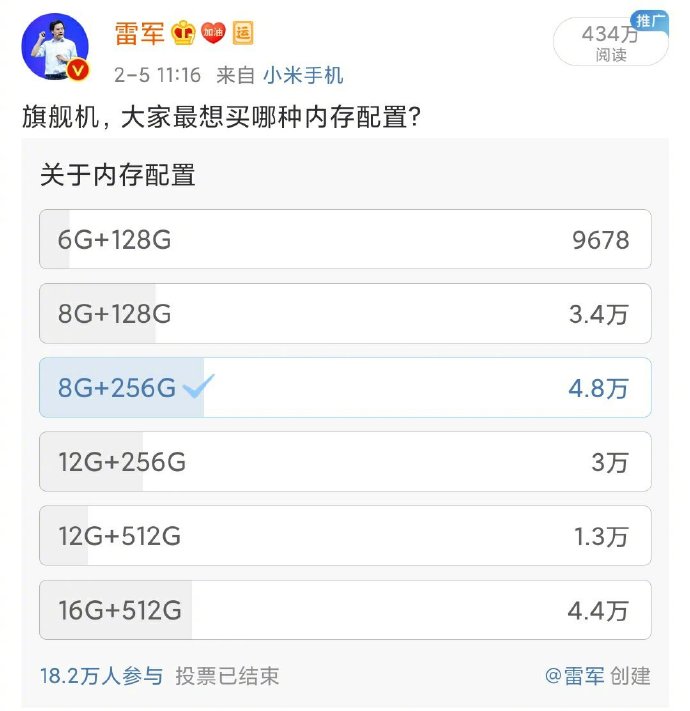
In a Weibo post made today, the company executive said most users want to buy flagship phones with 8GB or more of RAM, based on the result of a poll he conducted that showed 94% of users want more memory. “Thus this year’s Mi 10 will not have a 6GB RAM + 128GB version but start at 8GB of LPDDR5 memory,” he said.
Even if users were to request for 6GB RAM, it would not be possible as it has been reported that Micron cannot manufacture a 6GB LPDDR5 RAM.
It has also been reported that Lei Jun’s response to a question asking if there will be an 8GB + 64GB version is “There will be no such configuration”.
Based on the above, the Mi 10 series are expected to be available in the following configurations:
Things are definitely looking up for Japanese tech giant Sony. It is a widely known news that Sony’s smartphone business has almost crumbled. But in recent time, after some reorganisation, the tech giant launched new models that deviated from the traditional design style Sony is known for. The organisation seems to have started yielding some results. Sony has released its financial report for the fourth quarter of 2019 (October-December 2019) showing some improvement in sales.
Sony shipped 1.3 million smartphones during the period. That may not look like a spectacular feat especially when it is compared to what Huawei or Samsung achieved during the same period. Samsung and Huawei shipped 68.8 million and 56.0 million smartphones respectively in Q4. However, when compared to the 600,000 units Sony managed to ship in Q3, the result is impressive.
Away from the smartphone business, Sony says demand for image sensors has been strong during the quarter. The financial report shows the profit from sensor business went up by 62 percent to 75.2 billion yen (~$684 million). Sony had earlier hinted that demand for its image sensors ave been overwhelming.
The Japanese tech giant’s gaming business did not record the same impressive result like the mobile phone and image sensor business. Sales of PlayStation 4 console declined during the quarter under review. This resulted in a fall in profit from 27 percent to 53.5 billion yen (~$487 million) during the period. This may be as a result of expectations that the Tokyo-headquartered company will replace the 4-year-old console with the PlayStation 5 very soon. The new console is expected to be released later this year.
Overall, Sony saw a 20 percent decline in profits in Q4 2019. The company’s operating profits dropped to 300 billion yen (around $2.73 billion) from 377 billion yen (~$3.43 billion) a year earlier. This is due to the acquisition of music publisher EMI. If not for that, the profit would have been up by about six percent. Further, Sony expects its annual operating profit to increase by about five percent to 880 billion yen (~$8.1 billion). However, the firm is concerned that the spread of the coronavirus may impact its global supply chain. Sony’s image sensor business would be hit severely if its clients suspend their assembly plants in China for a prolonged period.
“We can’t deny the possibility of the virus threat expanding to a scale large enough to wipe out our latest upward earnings revision,” said Hiroki Totoki, Chief Financial Officer at Sony.
When Samsung unveils the Galaxy S20 series next week, it will also announce a new pair of wireless earbuds called the Galaxy Buds+. We already know what it looks like and some of its features but a new leak reveals the full specs of the earbuds as well as the features and price.
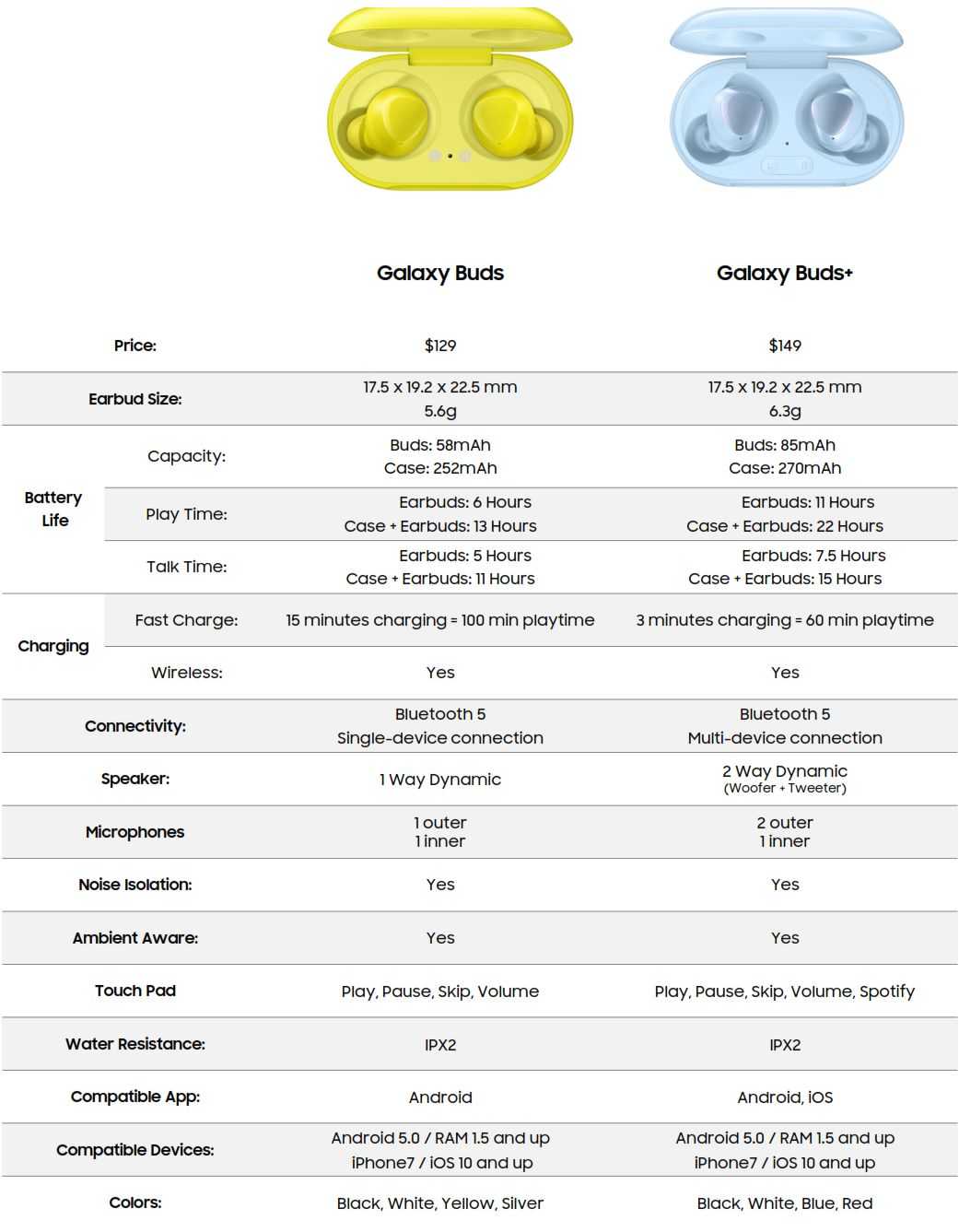
The source of the leak is Evan Blass (@evleaks) and the leak is a comparison sheet of the specs of the Galaxy Buds and the Galaxy Buds+.
Galaxy Buds+ Price
The first thing on the list is the price, buyers will be paying more for this year’s Galaxy Buds+. Samsung has put a $149 price tag on the earbuds, $20 more than last year’s model. However, if you will be pre-ordering the Galaxy S20 series, you would not have to pay for the earbuds as Samsung will include a free pair with all pre-orders.
Galaxy Buds+ Specs and Features
The Galaxy Buds+ measures 17.5 x 19.2 x 22.5 millimeters. These are the same dimensions as that of the Galaxy Buds. However, the new buds are slightly heavier at 6.3 grams as against the Galaxy Buds that is 5.6 grams.
As reported, the battery capacity and thus the battery life of the Galaxy Buds+ are better than that of its predecessor. The buds themselves now have a battery capacity of 85mAh which will provide up to 11 hours of play time. This is an increase of almost 100% from the Galaxy Buds’ 6-hour battery life. Talk time has increased by 2.5 hours to 7.5 hours.
The battery capacity of the case is 270mAh, 18mAh more than its predecessor’s. The play time of the Galaxy Buds+ combined with the case is now 22 hours while the talk time is 15 hours, which are significant improvements when compared to the 13 hours of play time and 11 hours of talk time of the Galaxy Buds.
There is also fast charge included. The spec sheet says a 3-minute charge will provide 60 minutes of play time.
The new earbuds will connect via Bluetooth 5 and will support multi-device connection, unlike last year’s model that can only be connected to one device at a time. The Galaxy Buds+ also has 2-way dynamic speakers (a woofer and tweeter). It also has an extra outer microphone which should help with canceling noise for clearer calls.
The Samsung Galaxy Buds+ will have noise isolation, ambient awareness, and support touch controls. It also has an IPX2 rating, so you don’t have to worry about sweat damaging it when you use it during workouts.
The spec sheet says the new earbuds will also work with iOS devices running iOS 10 and up while Android devices running Android 5.0 and up and with at least 1.5GB RAM are supported.
The Galaxy Buds+ will be available in black and white color variants like its predecessor but will swap the yellow and silver variants for blue and red.
After Counterpoint predicted around a 30% decline in smartphone shipments in China in the first quarter of the year, Digitimes has also predicted a significant decline in shipments in the same period. According to the Taiwanese publication’s report, the market could see a drop of around 9% in the best-case scenario, assuming the epidemic is controlled by the end of February 2020.
Digitimes notes that Chinese consumer demand has significantly weakened due to the coronavirus outbreak. Further, government measures to contain the epidemic is likely to affect the supply of smartphone and notebook component supply in the region. The report further adds that smartphone makers such as Huawei, OPPO, Vivo, and Xiaomi are all sitting on high inventory levels. These companies were planning to sell off a significant chunk of its smartphone stock in the Chinese New Year period but failed to do so.
MediaTek, who is an important player in the Chinese smartphone market will also bear the brunt of the recent epidemic. Digitimes predicts that the chipmaker could see a sequential decline of nearly 15% in its revenues in the first quarter of the year.
Even if the outbreak is controlled by the end of February, its effects are likely to be felt in the second and third quarters of 2020. It remains to be seen whether smartphone makers revise their quarterly and yearly targets in the coming weeks.
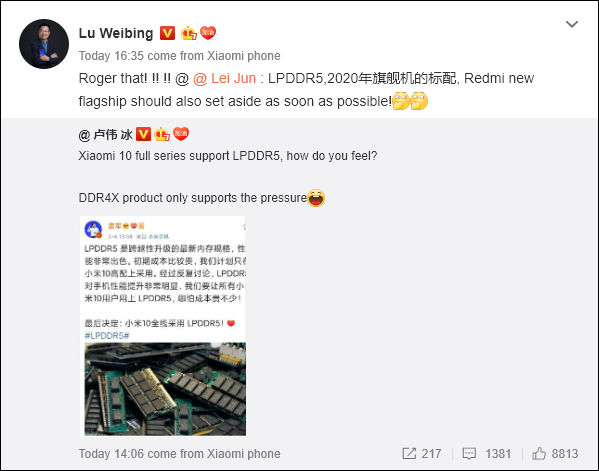
Chipmaker Micron Technology today announced that it has successfully commenced mass-production of the world’s first low-power LPDDR5 DRAM chip. Xiaomi‘s product director, Wang Teng Thomas later confirmed that the LPDDR5 DRAM will feature first on the Mi 10 flagship. The Redmi GM Lu Weibing has now equally confirmed that Redmi’s upcoming flagship will make use of the LPDDR5 DRAM.
The Xiaomi VP made this statement on Weibo but did not mention the flagship device that would feature the new memory. However, the flagship Redmi K30 Pro is expected to be the device on which the flash memory will be. Mr Weibing had earlier hinted in December last year that an LPDDR5 memory-packing Redmi device was coming in Q1 2020. Lu Weibing also clarified that LPDDR5 will become the standard for flagship mobile phones in this 5G era.
Micron’s LDDR5 make use of industry-leading packaging technology for its 12 GB RAM. The low-power DDR5 offers a transmission rate of up to 6.4Gbps. In terms of speed, it is twice as fast as LPDDR4 and 20 percent faster than LPDDR4x RAM. The data access speed has been upped by 50 percent on the LPDDR5.
Compared to the previous generation, it consumes 20 percent less power. According to Micron Technology, just because LPDDR5 is faster, the app processing and operation speed also becomes fast. Hence, devices equipped with LPDDR5 can help in extending the battery life by 5 to 10 percent.
We use cookies on our website to give you the most relevant experience by remembering your preferences and repeat visits. By clicking “Accept”, you consent to the use of ALL the cookies.
This website uses cookies to improve your experience while you navigate through the website. Out of these, the cookies that are categorized as necessary are stored on your browser as they are essential for the working of basic functionalities of the website. We also use third-party cookies that help us analyze and understand how you use this website. These cookies will be stored in your browser only with your consent. You also have the option to opt-out of these cookies. But opting out of some of these cookies may affect your browsing experience.
Necessary cookies are absolutely essential for the website to function properly. This category only includes cookies that ensures basic functionalities and security features of the website. These cookies do not store any personal information.
Any cookies that may not be particularly necessary for the website to function and is used specifically to collect user personal data via analytics, ads, other embedded contents are termed as non-necessary cookies. It is mandatory to procure user consent prior to running these cookies on your website.