The ROG Phone II was announced last September in India. The phone is the second gaming smartphone from ASUS’s ROG gaming line. Today, the official Twitter account for ASUS ROG India announced that there will be a temporary shortage of the phone.
ASUS informed its fans through an open letter that the ROG II will face temporary shortages due to the “disruption in the supply chain caused by the prevailing situation in Asia”. While not stated, the cause for the disruption is the recent outbreak of the coronavirus which has caused factories to suspend work.
The open letter goes on to say that work is underway to make sure that the device is available soon. As at the time of writing, the ROG Phone II is still available for purchase on Flipkart
The ROG Phone II has a 6.59-inch 2340 x 1080 display with a 120Hz refresh rate. It is powered by the Snapdragon 855+ processor and comes with 8GB or 12GB of RAM and up to 1TB of storage. There is a 48MP + 13MP dual-camera setup on the back of the phone while a 24MP camera is in front for selfies and video calls.
The phone has DTS:X stereo speakers, an audio jack, aptX HD audio, and Bluetooth 5.0. It has a USB 3.1 port for charging at the bottom while a second one is on the side for connecting peripherals and also for charging. It also has touch-sensitive trigger buttons built-in to the right side of the frame.
The ROG Phone II tops up its impressive specs with a massive 6000mAh battery with support for 30W fast charge and 10W reverse charging.
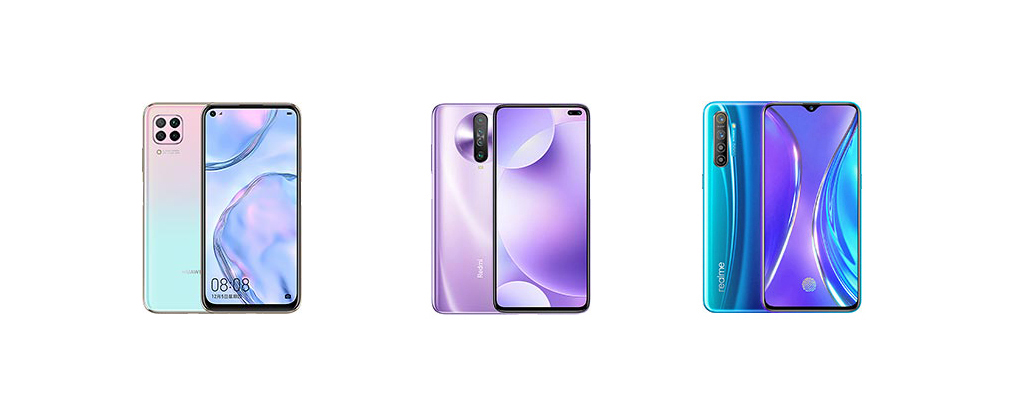
Huawei just launched the Nova 7i: it is not a completely new device but it is just a rebranded version of the Huawei Nova 6 SE for markets outside of China. So you would get exactly the same specifications which you can consider midrange-class. But given that many people outside of China did not care about the Nova 6 SE since it was not for their market, we decided to compare it with other trending mid-rangers in order to give you a satisfying idea of what this handset is able to offer. We think there is nothing better than Redmi K30 and Realme X2 for such a specs comparison.
Huawei Nova 7i vs Xiaomi Redmi K30 vs Oppo Realme X2
Quad 64 + 8 + 2 + 2 MP f/1.9, f/2.2, f/2.4 and f/2.4
Dual 20 + 2 MP f/2.2 and f/2.4 front camera
Quad 64 + 8 + 2 + 2 MP f/1.8, f/2.3, f/2.4 and f/2.4
32 MP f/2.0 front camera
Quad 48 + 8 + 2 + 2 MP f/1.8, f/2.4, f/2.4 and f/2.4
16 MP f/2.0 front camera
BATTERY
4500 mAh, fast charging 27W
4000 mAh, fast charging 30W
4200 mAh, fast charging 40W
ADDITIONAL FEATURES
Hybrid Dual SIM slot
Hybrid Dual SIM slot
Dual SIM slot
Design
I consider Redmi K30 as the most impressive device in terms of aesthetics for a simple reason: the materials used. Redmi K30 is the only one to come with both a glass back (protected by Corning’s Gorilla Glass 5 just like the display) and an aluminum frame. Realme X2 has a glass back as well, but it sports a plastic frame, while Huawei Nova 7i has a full plastic design, despite it has a very nice look due to its single punch hole and its modest dimensions. Naturally, your personal tastes will play an important role in this kind of decision.
Display
On the display side, it is a close fight between Redmi K30 and Realme X2. The former comes with an LCD panel that is not a trending technology, but it boasts a very high 120 Hz refresh rate and even the HDR10 technology. The latter has a pleasing AMOLED display which even comes with an in-display fingerprint reader, unlike Redmi K30 and Huawei Nova 7i. Do you prefer a higher refresh rate delivering a smoother user experience or an AMOLED panel and an under-display biometric sensor?
Specs & Software
The Snapdragon 730G chipset that you can find on the Redmi K30 and Realme X2 is definitely a more interesting SoC than the Kirin 810, despite Kirin 810 is built with a better production process. Indeed, it comes with very high graphics performance, you have more option for modding and even an amazing CPU. Both Redmi K30 and Realme X2 sport up to 8 GB of RAM and up to 256 GB of UFS 2.1 internal storage, so what makes the difference is the software. MIUI is currently more advanced than the ColorOS found on the Realme X2, but the phone will soon update to Realme UI and its software department will improve a lot. But for now, Redmi K30 takes the crown.
Camera
It is a very close fight between Realme X2 and Redmi K30 even when it comes to cameras. They have essentially the same quad camera on the rear side, both better than Huawei Nova 7i on the paper. But their front cameras are different: the Redmi K30 has a dual front camera including a depth sensor, while Realme X2 has a single 32 MP sensor (better than the 20 MP one found on the Redmi K30) but it lacks a depth sensor.
Battery
Redmi K30 has the biggest battery: with 4500 mAh it should last more than Huawei Nova 7i and Realme X2. The Realme X2 has just 4000 mAh but it charges faster thanks to a 30W charging technology. Huawei Nova 7i sits in the middle in terms of battery capacity, but it has the fastest charging technology with 40W, and that is why it wins the battery comparison.
Price
Huawei Nova 7i debuted with a €300 price tag, Realme X2 starts from €300 globally ($254 in China) and Redmi K30 starts from €255 in China (we learned it will launch globally as the Poco X2). At the end of the day, Redmi K30 is more interesting due to its bigger battery, 120 Hz display, good software, and more. But Realme X2 is not so far with its AMOLED panel, same hardware, good cameras and an upcoming software update which will add interesting improvements.
01-February Update: The update has bricked some devices in the last couple of days. In the wake of such reports, Realme has removed the download page and is further investigating the issue. As a precautionary measure, we have removed the download links and request users to wait for the official OTA.
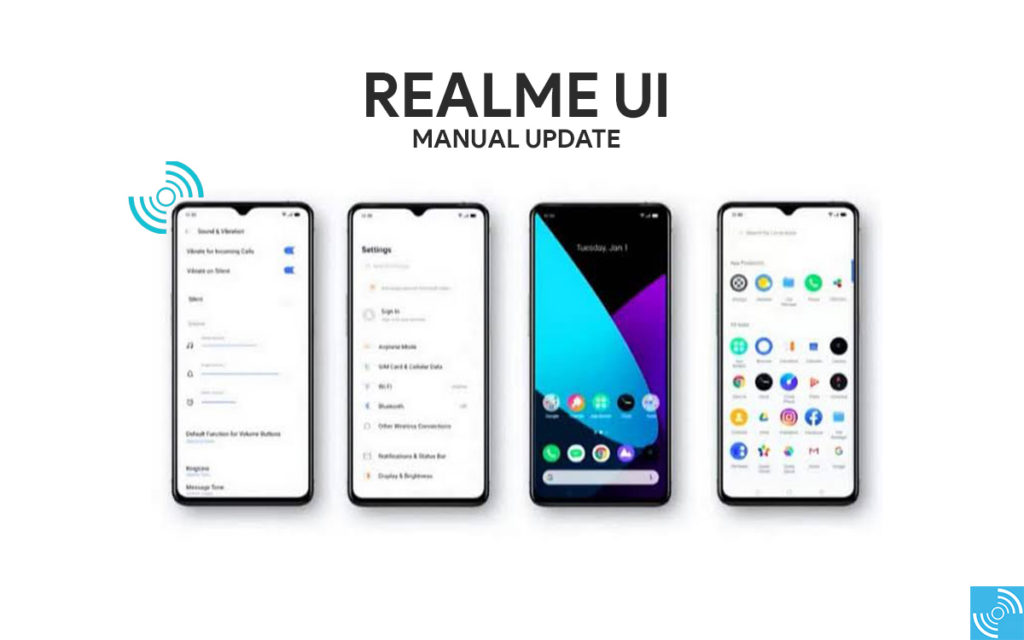
Realme is working to bring the recently unveiled Realme UI to most of its devices. The users who are fed up with the gradual rollout of Realme UI across various Realme smartphones can now manually upgrade. Yesterday, Realme CEO Madhav Seth took to Twitter to make a formal announcement about the update.
The unusual wait for Realme UI has ended with the availability of the manual OTA files from Realme. The user can easily sideload the Android 10 based OTA update by downloading them on their smartphones. Both the Realme XT and Realme 3 Pro users can now manually update to Android 10.
There are many new features that have been a part of the Realme UI. It is more like an Android-based device than iOS. It is more like Stock Android experience rather than the iOS. However, the Realme UI is much lighter than the MIUI and offers a neat and clean experience.
Features of Realme UI
Improved Typography and Refined UI – Realme UI is more refined and minimal skin in comparison with the MIUI. The system offers round shaped icons, fewer animations, and more intuitiveness.
More customization – The user can choose custom icon styles – material, Pebble or Default. There’s also an ability to tweak a lot of system-based features. Several new static and live wallpapers are part of the new Realme UI.
New Gestures – The Realme UI engrossed some features from OxygenOS, some from EMUI and others from stock Android. The new system offers double tap to lock, optimized three-finger screenshot and additional Android 10 gestures.
Improved Camera UI – The new camera UI has been tweaked slightly for ease of accessibility to features. Simple swipes in either direction can switch modes.
Enhanced Security, Audio and Communication – Realme UI also supports file sharing between Xiaomi, Oppo, and Vivo. The presence of Dual Mode Music makes it connect with Bluetooth and wired earphones.
Focus Mode – It also adds the new Focus Mode as the Zen Mode in OnePlus smartphones.
Riding Mode – Bikers would love the new Riding Mode along with the existing Smart Driving Mode. In Riding Mode, the phone mutes all alerts except for incoming calls. There are various other changes that Riding Mode makes for the riders.
Dark Mode – As like the native Android 10, Realme UI has received the global Dark Mode support.
Apart from these, there are a ton of other changes for Realme UI.
Manually Update Realme UI on Realme 3 Pro and Realme XT
It’s quite an easy process to install the Realme UI update manually.
Note: The update has bricked some devices in the last couple of days. In the wake of such reports, Realme has removed the download page and is further investigating the issue. As a precautionary measure, we have removed the download links and request users to wait for the official OTA.
Prerequisites
Realme 3 Pro / Realme XT are only compatible devices right now.
The battery should be at least up to considerable levels.
Download the respective Realme UI update file.
Realme 3 Pro Update file
Realme XT Update file
Steps to update Realme 3 Pro and Realme XT
Download the respective update file from the above links.
Now, move the file from the computer to your device.
Open the File Manager App on your phone and navigate to download location.
Now, tap on the Realme UI update file and install it.
Your device will automatically boot into recovery and will install the update.
Your phone will automatically reboot into Android 10 based on Realme UI after a successful installation.
Enjoy!
This is the little procedure to install the Realme UI on Realme XT and Realme 3 Pro devices. If you get any problem, then let us know via the comments below.
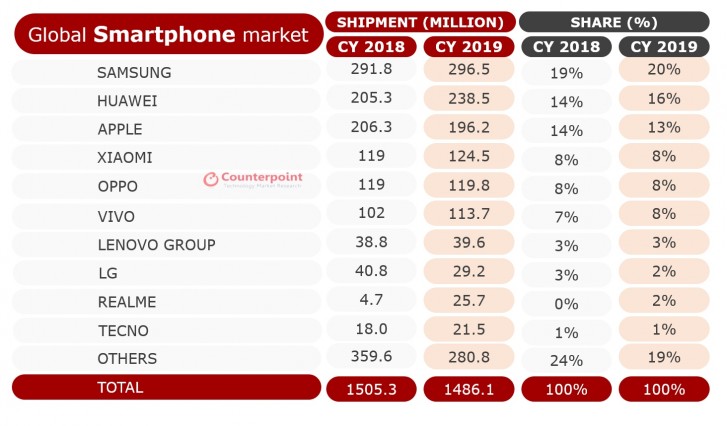
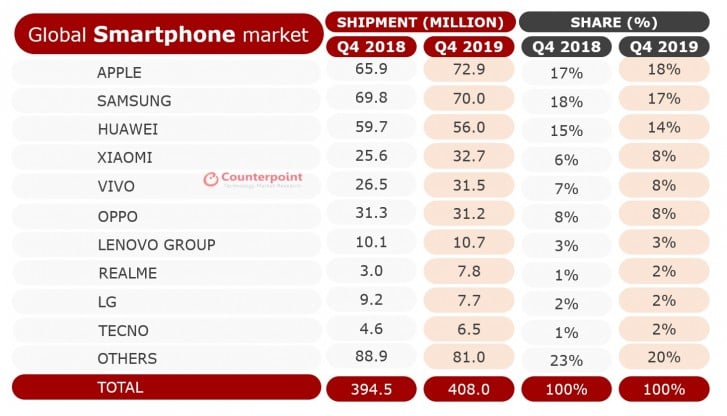
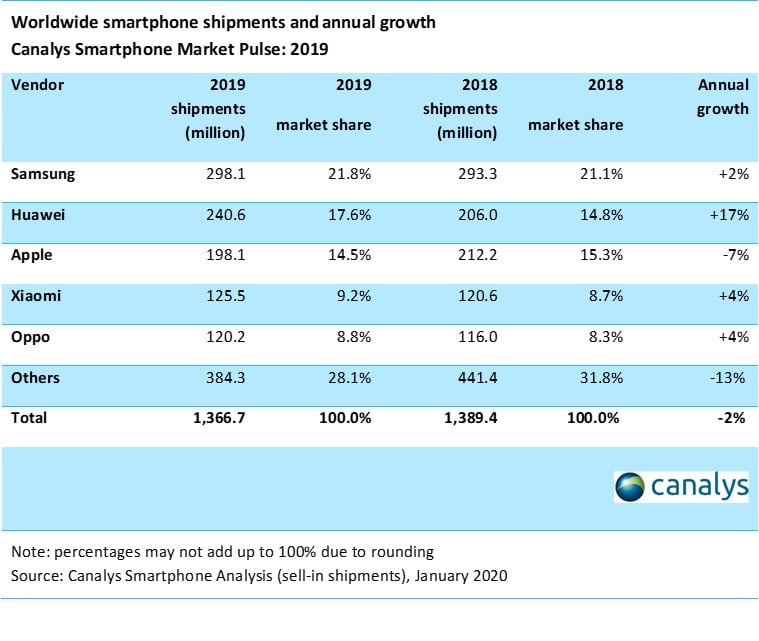
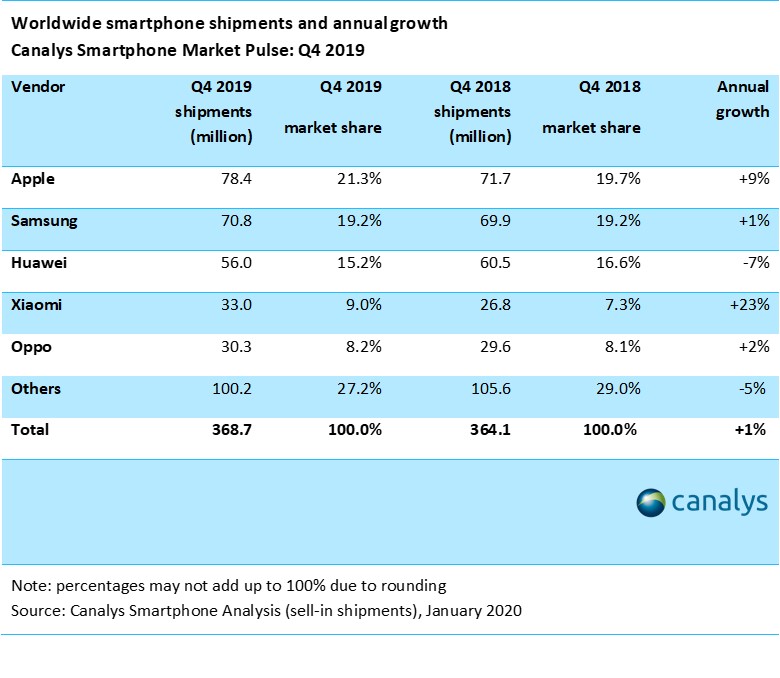
Three of the major market research firms Counterpoint, Canalys and Strategy Analytics (SA) have all published their report showing the shipping estimates of the major smartphone companies. The data all seem to correspond with each other and shows Samsung retained its position as the number one brand in terms of smartphone shipment for the whole of 2019.
Huawei maintained its 2018 record by staying ahead of Apple to become the world’s second best selling smartphone manufacturer in 2019. This is especially surprising considering that the brand has been grappling with an obnoxious ban by the US government hinged on security concerns. Huawei shipped an estimated 240 million mobile phones, a tad higher than its entire shipment in 2018. On the other hand, Apple managed to corner 200 million units, representing a slight drop in shipment.
Xiaomi emerged as the fourth largest phone maker in 2019 with shipments estimated at 125 million. The figure is slightly higher than the company’s feat in 2018. Oppo rounded out the list of the top five manufacturers.
Despite individual gains, all three reports reveal that the industry experienced a slump with fewer phones sold in 2019 than in 2018. Counterpoint Research notes that this is the first time the smartphone market has ever declined for two years in a row. With the US’s trade wars still ongoing, and China’s coronavirus scare having potential implications for supply chains, 2020 could be another challenging year.
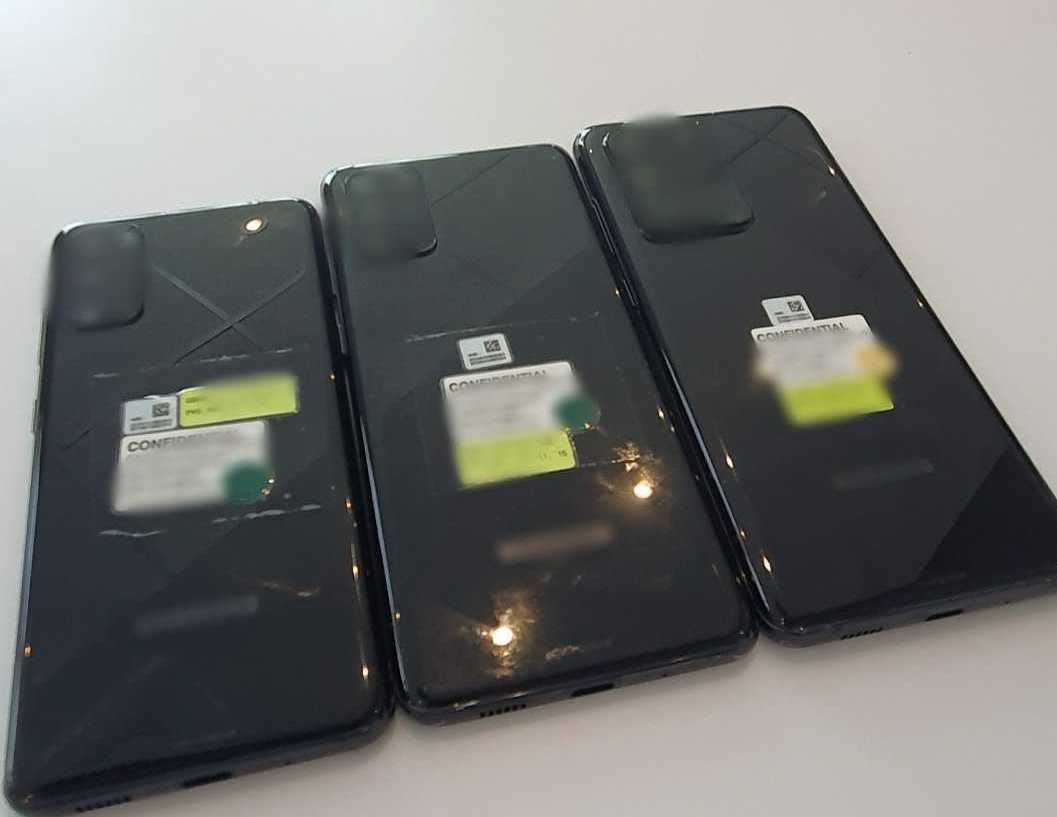
Samsung has been pretty generous with leaks regarding the Galaxy S20 series that is expected to go official on February 11. Almost everything is practically known about the series and more still keep coming. The latest is a photo of the three Galaxy S20 models lying side by side.
The image which is said to be making the rounds on Twitter shows the rear aspect of all three Galaxy S20 models. Even though the rear cameras were blurred in this image, we can make out the fact that the three models will differ slightly in sizes. Also, we also get to see how much of a camera bump the Galaxy S20 models would have.
The series is made up of the Galaxy S20, S20 Plus and S20 Ultra. Samsung will be confirming the pricing of the S20 models at the launch event on Feb. 11. Rumors have it that the Galaxy S20 Ultra 5G will be costing $1,300. In the Europe, the Galaxy S20 4G will cost 899 euros and its 5G variant could be priced at 999 euros. The S20+ 5G may cost 1,099 euros. The South Korean company is also rumored to debut the Galaxy Z Flip at the same event. The clamshell Galaxy Z Flip which is the second phone from the company to sport a flexible screen is expected to be priced at $1,500 in the U.S.
Xiaomi’s ecological chain company Yuemi Technology has gained a solid reputation as a manufacturer of mechanical keyboards. Since the first mechanical keyboard was introduced in 2016, it has launched several other models, including the Yuemi mechanical keyboard Cherry version, the Yuemi mechanical keyboard Pro, Yuemi mechanical keyboard 104-key keyboard products with prices ranging from 329 yuan-699 yuan.
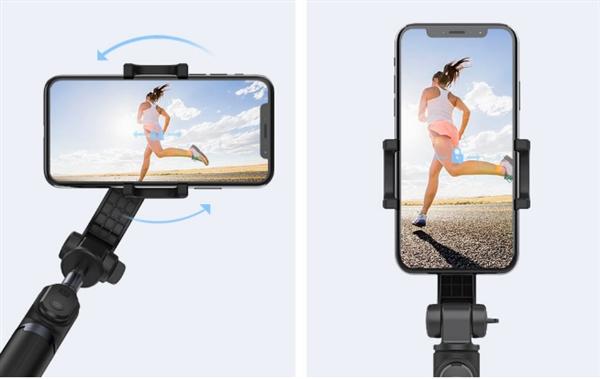
The brand has now expanded its product category form just PC peripherals with the launch of a new single-axis Stabilizing Gimbal. The device allows a single-click stable recording of mobile phone videos. It is also dual-use, having a bracket for holding the phone in addition to the stabilizer.
The Yuemi single-axis stabilizer uses a 32-bit ARM processor, is equipped with a 6-axis acceleration gyro sensor, a flight control stabilization algorithm, and a dedicated brushless motor magnetic force sensor. The powerful movement gyroscope, combined with high-precision motor control and advanced camera-stabilization algorithm, can improve the shake and shake of mobile phones in real-time.
The handle can be extended up to a distance of 420 ± 10mm, and the stretching distance of the mobile phone clip is up to 11mm. When it is folded, it is only 190mm long and has a net weight of 229g, making it easy to carry around.
Further, Yuemi single-axis stabilizer gimbal supports 180° automatic horizontal lock, 360° horizontal and vertical screen switching. You don’t require an app to control the device. There is a remote control which can pair with a smartphone via Bluetooth and can be used to control the gadget remotely.
The device crams a built-in 450mAh capacity battery which meets your daily beauty shooting needs. When the stabilizer is out of power, you can use your hand to turn the stabilizer to use it as an ordinary selfie stick.
Pricing details and availability were not disclosed.
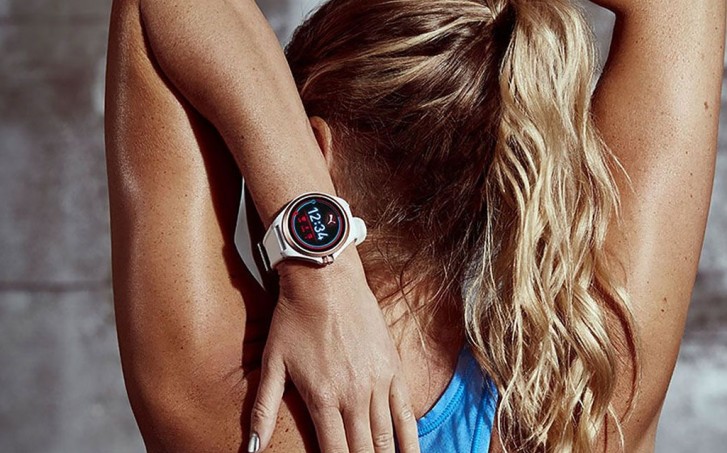
Sports brand Puma and watchmaker Fossil first teamed up in September 2019 to launch the Puma PT9100 smartwatch. The smartwatch has now been launched in India just four months after its initial debut.
The new smartwatch features a classic design similar to the Galaxy Watch series. It features a 1.19-inch AMOLED touchscreen with a resolution of 390 x 390 pixel. The watch is encased in a casing that is 44mm in diameter and has a digital crown just like a mechanical wristwatch. Some of the features include a heart rate monitor, NFC, water-resistance up to 5ATM and all the standard fitness tracking modes you’d find on other smartwatches.
The Puma smartwatch runs on the Snapdragon Wear 3100 chipset paired with 512MB RAM and 4GB storage. Battery life is rated at 24 hours of endurance with constant GPS usage. It runs Google WearOS. The Wear OS interface can be operated via the touch screen or through the digital crown. The watch syncs over Bluetooth 4.2 and is compatible with any iOS 9.3+ and Android OS 4.4+ phones.
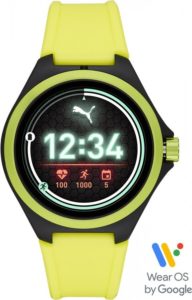
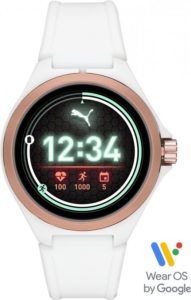
As for the price, the Puma PT9100 is on offer for Rs 19,995 (~$280). The watch is available in black, yellow and white colours.
The countdown is already on towards the February 4 launch of the Poco X2. POCO India has been consistent in releasing teasers of the upcoming device which will be the brand’s first model since it went solo. The tech giant has released yet another teaser video on its official Twitter handle.
The teaser basically erases any doubt that the upcoming model is a rebadged Redmi K30. The video shows what looks very much like the Redmi K30 purple variant. The video lived up to its billing as a teaser since it didn’t allow us to have a focused look at the design., However, the side-mounted fingerprint sensor which doubles as the power button. The rear camera arrangement is also similar to what the K30 utilised.
This discovery really shouldn’t hit anyone as a surprise. The cues have been everywhere this past few days. Even though we have seen the signs, some still wish they were untrue. The Poco X2 is coming two years after the company first launched the Poco F1. So, we had expected an upgrade. That befitting upgraded model may still be in the works.
It is no longer news that Motorola plans to announce a phone with a stylus. The device which will launch as the Moto G Stylus has been in the news a lot lately. Now a new leak reveals the full spec sheet as well as features of the stylus and a render of the device.
The Moto G Stylus will have a 6.36-inch 2300 x 1080 display with a hole in the top left corner for the selfie camera. There will be a Snapdragon 665 processor inside and it will be paired with 64GB or 128GB of storage. There is no mention of storage expansion but XDA Developers reports that the phone will come in single SIM and dual-SIM variants
With respect to cameras, it turns out the Moto G Stylus has three sensors on its back and not four. We erroneously reported it has four cameras but on closer inspection, the fourth hole actually houses a laser focus system and not a sensor.
The primary camera is a 48MP f/1.7 Samsung S5KGM1 camera and it is paired with a 16MP f/2.2 117° wide-angle “Action Cam”. The wide-angle camera is the same one that debuted on the Motorola One Action. The camera allows users to record wide-angle videos even though the phone is held in portrait mode. The third sensor is a 2MP f/2.2 macro camera. Motorola has put a 25MP f/2.0 camera in front for selfies.
The Moto G Stylus has a rear-mounted fingerprint scanner and packs a 4000mAh battery. While we expect it to have support for at least 15W fast charge, it is said that the FCC filing for the device says it supports just 10W fast charge.
The phone will have NFC in some regions while other regions will miss out on the feature. What is consistent across all markets is that it will run Android 10 out of the box.
The phone will have four regional variants – North America, Latin America, China, and an international variant.
The source also mentions some software features of the phone. The Moto G Stylus will have an app that can be configured to launch an app or shortcut when the stylus is removed from its slot. There is also a feature called “Moto Note” whose function doesn’t need to be explained. However, it has been revealed that users will be able to erase with a finger while using the stylus. They will also be able to add a watermark with a date on written notes.
This app will also record the time and location you removed the stylus and send you a notification if the stylus has not been reinserted after a certain duration. This way, you can keep track of the location of the stylus.
A render of the phone’s bottom shows the stylus is positioned at the bottom right corner of the phone. There is an audio jack to the far left while a USB Type-C port sits in the middle and a speaker grill flanks it on the right.
The launch date for the Moto G Stylus is still unknown.
Lenovo-owned Motorola has announced that the Moto G-series has sold up to 100 million units since inception. This was revealed by the company on Thursday. To mark the milestone, the US company is on a discount spree which will see customers purchase selected Moto models at pocket-friendly prices. The models include the Moto G7 series, Moto Z3 Play, Moto Z4, Motorola One Zoom, and Motorola One Action.
The most spectacular offer is that of a free smartphone with each purchase of select models. In this regard, customers who opt for the Moto G7, Moto G7 Power, Motorola One Action, Motorola One Zoom or Moto Z4 will get a 32GB Deep Indigo Moto G6 or Moto G6 Play free of charge. Regardless of the free phone offer, all the models listed above are also available at jaw-dropping price tags.
In addition, Motorola is offering a BOGO deal for customers who specifically choose to buy a Moto G6 or Moto G6 Play. Here are the listed price tags.
Moto G7 – $200 ($100 off)
Moto G7 Power – $180 ($70 off)
Moto G7 Play – $130 ($70 off)
Moto Z3 Play – $230 (up to $320 off + two Moto style shells)
Motorola One Action – $250 ($100 off)
Motorola One Zoom – $350 ($100 off)
Moto E6 – $100 ($50 off)
Moto Z4 – $400 ($100 off + Moto 360 camera mod or Polaroid Insta-Share Printer)
Moto G6 – $150 ($170 off)
Furthermore, military personnel that are on active service including veterans, retired officers, and reservist personnel are eligible to receive a further 10% military discount. This also applies to students who are interested in any of the models in this discount promo.
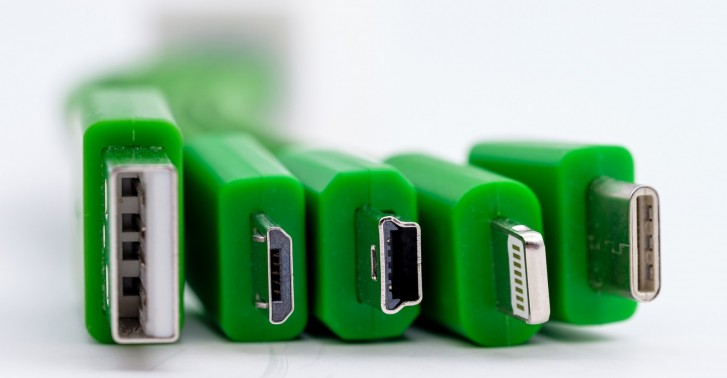
Despite Apple’s protest, the European Parliament voted strongly in favour of adopting a common charger. The resolution received massive support of 582-40. The parliament enjoined the European Commission to adopt new rules by July that would eliminate the need for buyers to get a new charger with each new device.
The EU had, a decade ago, enacted a policy that enjoined major phone makers (including Apple) to voluntarily move towards a common standard. That has not happened and the members of the EU parliament believe that it was due to the voluntary approach so, saw a need to pass new legislation.
The resolution extols wireless chargers as a way to reduce electronic waste but notes that the rules written by the Commission should ensure that chargers can work with various phone brands.
Apple had earlier released a response while the legislative process was in motion. The company argued against a common charger saying that it will stifle innovation and inadvertently create e-waste as existing Lightning chargers and cables are swapped out for USB-C, the preferred common standard. However, the argument seems not to have had any effect on the resolution. This may be because Apple is sort of a lone ranger. Other OEMs have mostly migrated their flagship and upper midrange models to USB-C ports.
A research by Sustainably SMART had earlier shown that most of the e-waste is generated by the charging brick, not the cable. They recommended that the inclusion of a charger in the retail packaging for smartphones should be banned or disincentivized. Buyers will then have to use their old chargers instead.
This would have formed part of the resolution but there is no unified charging standard. some phones ship with 40/60W fast charging technology and would definitely charge slower when connected to a USB PD adapter. The same thing applies to wireless charging technology. However, new legislation may hit the charging brick especially as the move is aimed at reducing e-waste. The resolution notes that in 2016 the global average was 6kg of e-waste per person per year while the average for EU citizens was 16.6kg. It also calls for increased volumes of collection and recycling of old cables and chargers.
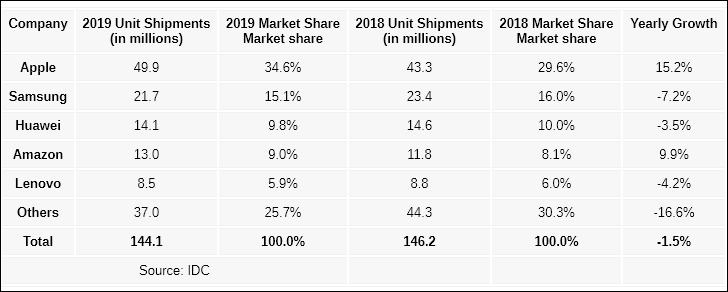
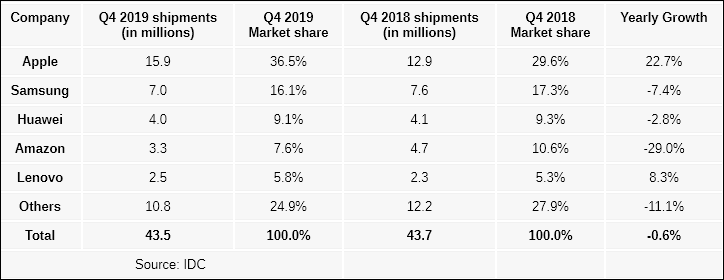
After a slight upsurge during the third quarter of 2019, overall tablet sales have once more declined in the final quarter of 2019. As per the most recent IDC report, the tablet sales decline is somewhere around 0.6% year over year as a total of 43.5 million units were shipped during the October-December period.
Unsurprisingly, Apple is as yet the runaway leader as it figured out how to sell an estimated 15.9 million units in Q4 2019. The US company is the only brand which recorded an increase in shipment YoY. Samsung with 7 million and Huawei with 4 million round up the top three. Amazon saw a precarious decay of 29% contrasted with Q4 2018 with simply 3.3 million shipments this time around while Lenovo sits in the fifth spot with its 2.5 million sales.
For the entire 2019, the tablet shipment shrank by 1.5% as worldwide shipments totalled 144.1 million units. Apple sold the most tablets with 49.9 million, more than twofold of runner up Samsung which oversaw 21.7 million units. Huawei sits at third with 14.1 million shipments, trailed by Amazon with 13 million and Lenovo with 8.5 million shipments. Apple (+15.2%) and Amazon (+9.9%) were the main two merchants to see deals development in 2019
HMD Global Oy is prepping up a launch event holding pretty soon. The company behind the Nokia brand has started sending out invites to an event that would be held during the Mobile World Congress (MWC) in Barcelona Spain. The event will hold on February 23 at 4.30 PM local time. Registration for the event will commence half an hour earlier.
The invitation didn’t reveal any detail on the product that the company will be unveiling but there have been talks of a new true Nokia flagship in the works. The device is said to come later in the year. The device might spring up a surprise by featuring the world’s first under-display camera. We won’t get our hopes too high on that one as Xiaomi’s VP LU Weibing and OPPO’s head had earlier adduced reasons why the innovation is not feasible right now.
In terms of models expected, Nokia is likely to go official with the Nokia 8.2 packing a mid-range Snapdragon 765 SoC as well as 5G connectivity. The chipset will team up with 8GB of RAM and 128GB of storage. The device is expected to also sport a pop-up selfie camera and a rear-mounted fingerprint scanner. It may likely adopt a price tag under €500.
In addition, HMD may also announce the Nokia 5.2 and Nokia 1.3. The Nokia 5.2 will pack a 6.2-inch LCD notch display and be powered by a Snapdragon 632 SoC with dual rear cameras. The device will come in 3/4GB of RAM, 32/64GB of storage options. The Nokia 5.2 would likely sell for around €169.
On the other hand, the Nokia 1.3 will be a cheap device priced around €79. The device will feature a 6-inch LCD screen and will be powered by a MediaTek chipset. Other features are basically entry-level such as 1GB of RAM, 8GB of storage, and Android 10 (Go Edition) on board. The others should all be part of the Android One program and run the full version of Android 10 out of the box.
Nokia may also announce the Android feature phone – Nokia 400 – that it is rumoured to have got in the works as well as a fitness tracker. We can’t say if the company may also showcase the Nokia 9.2 Pureview at the event.
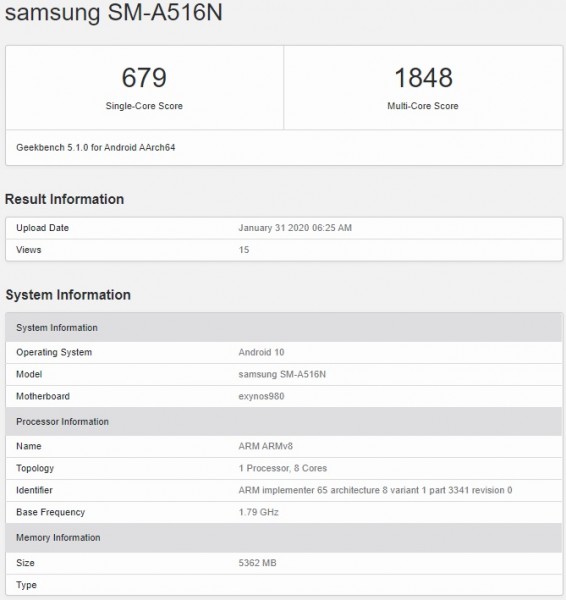
Samsung‘s Galaxy A-series is presently its top-selling series, thanks to the dynamism which the Korean giant introduced last year. The Galaxy A51 was one of the models released late last year. The brand is about getting a 5G variant as was seen in a recent GeekBench listing.
The Galaxy A51 appeared with the model number SM-A516N. The benchmark database also contained some of the key specifications of the device. These include an Exynos 980 System-on-Chip (SoC), 6GB RAM, and Android 10 operating system which will definitely get a touch of Samsung’s custom OneUI.
Of course, you won’t get a lot of details of the Galaxy A51 5G from Geekbench but previous rumours point to the presence of 128GB storage on the base model. The device is expected to be launched in South Korea in no distant time. Before that’ll happen, we expect more details of the Galaxy A51 5G to emerge online as time goes on.
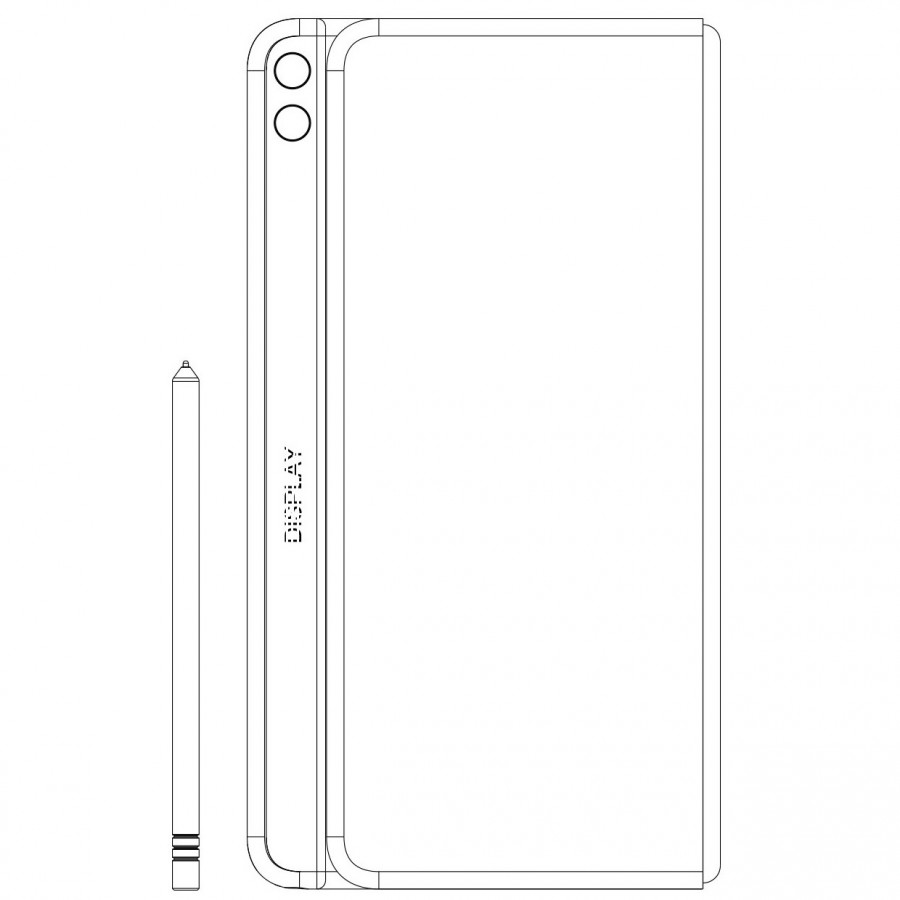
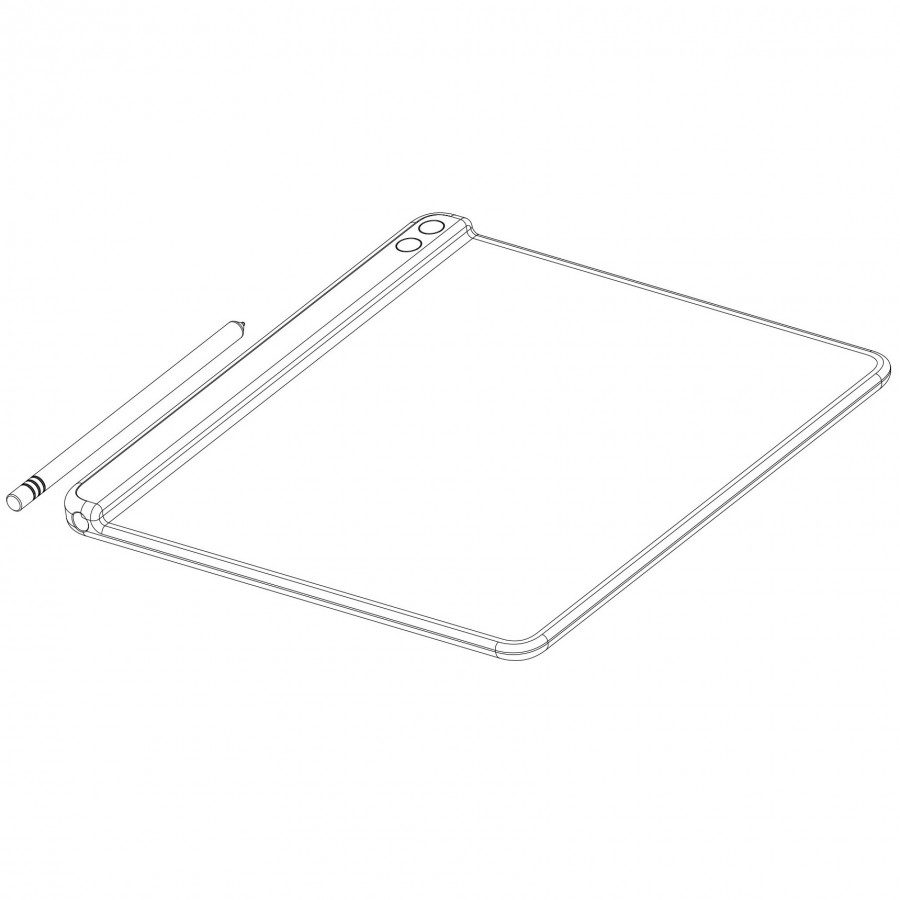
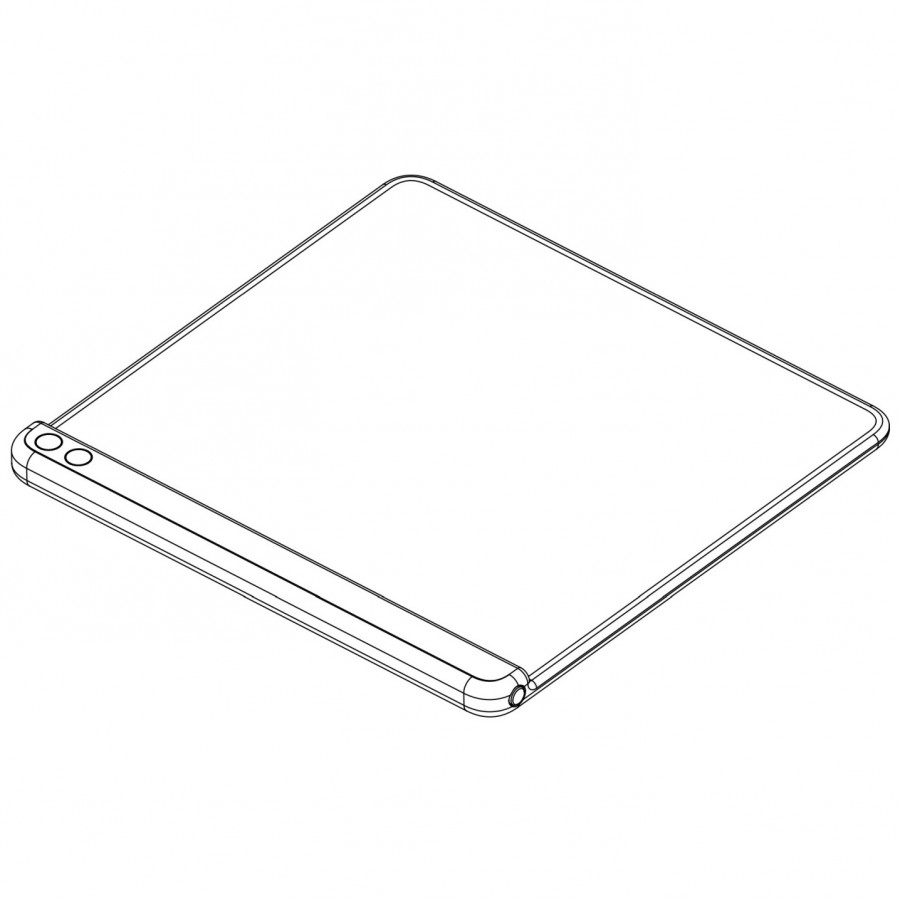
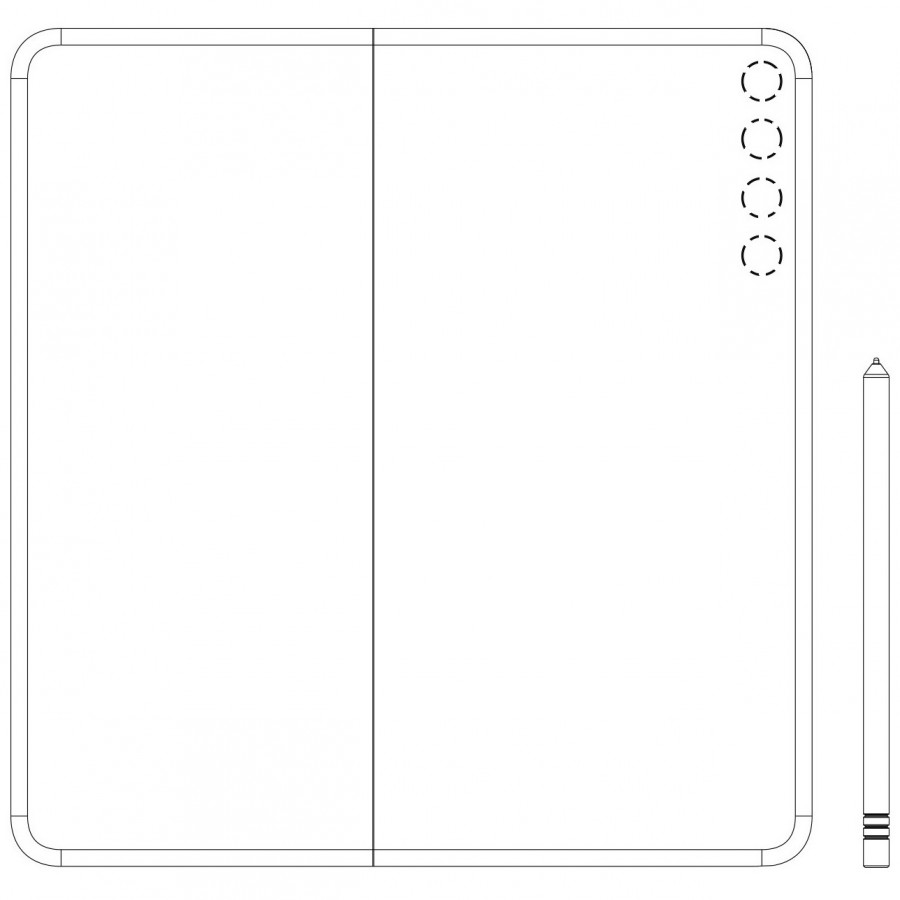
Huawei first unveiled the Mate X foldable smartphone in February last year but it wasn’t until September that the device was launched. The device was only made available in limited quantity due to mass production challenges. The tech giant is readying a successor to the Mate and may have just filed a patent for the device.
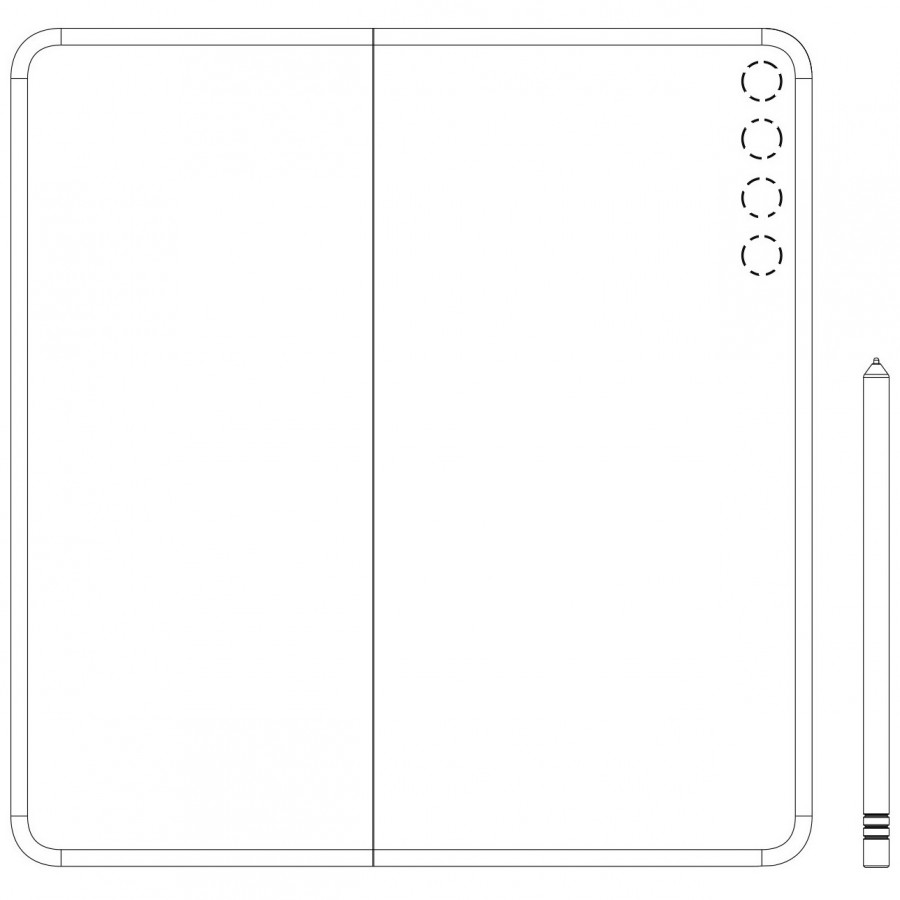
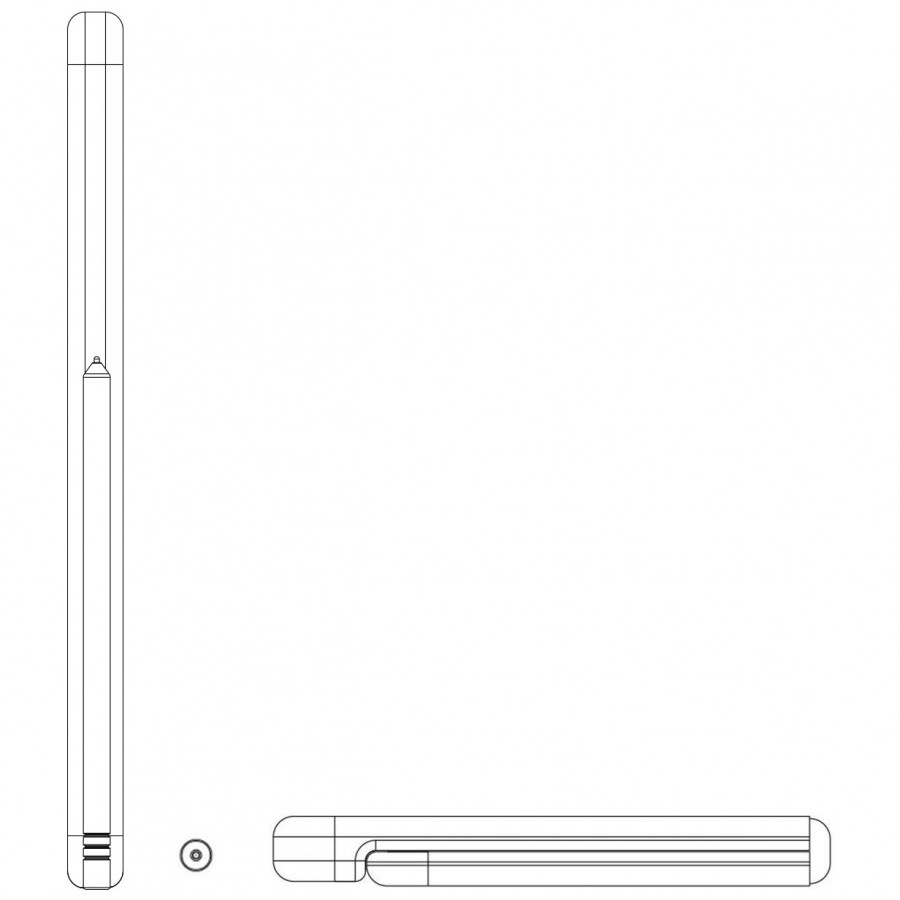
The patent was filed with the European Union Intellectual Property Office (EUIPO) for a new foldable smartphone. The description and schematics show that the device will come with Stylus support. The patent describes a form factor similar to the first-gen Mate X, but there are some differences.
The most spectacular difference is that the patented phone utilises an inward-fold design while the Mate X folds outwards. Another interesting aspect is the camera setup onboard. The device packs a whopping six-camera setup as against four cameras on the Mate X. Two of the sensors are housed on the front housed on the vertical sidebar, and four at the back.
The sidebar looks different from that of the Mate X. It sports the secondary display and houses the stylus. You can check out the sketches of the device from below.
YouTube is presently the hub for tutorials and other guide covering various subjects and facets of life. The app is presently owned by Google but the tech giant has developed another app which it hopes will replace YouTube. The app is called Tangi and will solely host tutorial videos and similar contents.
Tangi is an experimental app born out of Google’s Area 120 lab. The app hosts short-form video guides and how-to clips. The search giant says Tangi’s name comes from “the words TeAch aNd GIve and ‘tangible’ — things you can make.” The videos will have to have a maximum of 60 seconds in duration. This may be applauded by some while others may find it a turn off. However, we believe where there is a need to upload a 15 minutes video, for instance, users can split it into 15 different 60-seconds videos. That again may become tiresome to watch except there will be a feature to play the next video automatically after each one ends.
Tangi is categorized into different categories such as Art, Cooking, DIY, Fashion and Beauty, and Lifestyle. Tech is believed to be one of the most popular categories on YouTube but Tangi doesn’t have a Technology section just yet. So, you may have to stick with YouTube or any other source for tech-related tutorials.
Do note that the mobile version of the app is only available for mobile phones running iOS. In other words, it is not available on the Google Play Store presently. If you own an Android phone, you can only gain access to the web version.
It is doubtful if Tangi can exist successfully alongside YouTube considering the large supply of resources available on the tube. This may end up as one of those apps that Google launched only to discontinue them a short while later. But then, this is an experimental app. It might just turn out to be a tremendous success just like TikTok, another short video app.
Samsung Electronics on Wednesday unveiled a new washing machine and dryer featuring artificial intelligence (AI) technology. The AI-powered device is built to offer more “effective ways” for consumers to do their laundry. It is also believed to accelerate Samsung’s drive to attain leadership of the market over arch-rival LG Electronics.
The device dubbed Grande AI Washer and Dryer was showcased at Samsung’s Digital Plaza retail store in Gangnam, southern Seoul. With the AI technology, Samsung said the front-loading washer offers an “all-in-one” function, enabling users to control their dryer via the washer. The company said it also improved the appliances’ self-hygiene feature so consumers do not need to worry about dust inside the machine, water residue or rust.
Samsung claimed to have run more than 12 million laundry cycles for the AI feature, demonstrating it could get smarter, as the machines remember frequently used cleaning and drying cycles and suggest optimal settings. The company also highlighted the appliances’ eco-friendly functions that use less water and detergent compared to previous models.
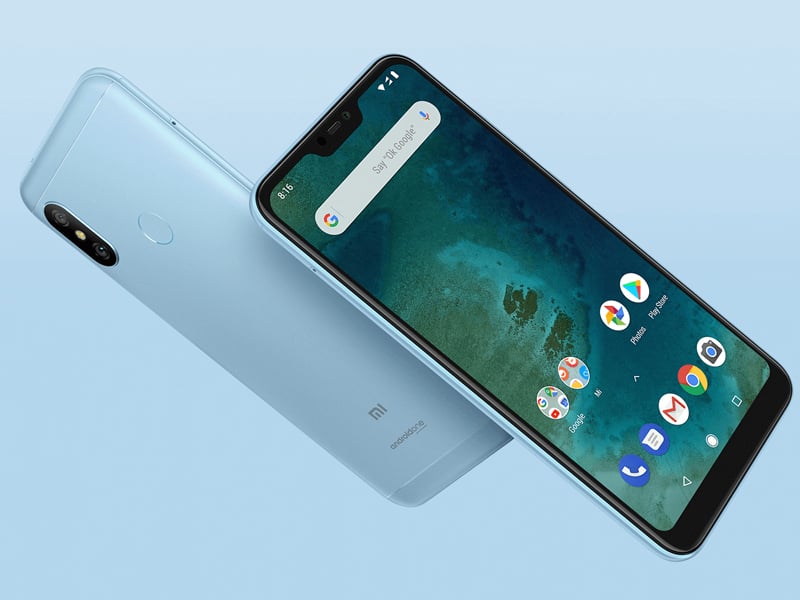
Chinese electronics conglomerate Xiaomi had announced the Android 10-based MIUI update for the Xiaomi Mi A2 earlier last month. The same has now been confirmed for the Mi A2 Lite this week. However, the confirmation has arrived after disgruntled users filed a petition for not receiving Android 10 update on Change.org.
Xiaomi had earlier mentioned that there were no plans to bring the Android 10 update to the Mi A2 Lite, causing mass criticism from the fans and the users. According to the company’s official statement on the Mi forum, a spokesperson said, “There is no tentative deadline for the rollout of the new Android 10 update for the A2 Lite. We can only assure users at the time that development is underway”.
The company has just rolled out an update for the Xiaomi Mi A3, although, it is said to be plagued with unknown issues. Xiaomi plans to take its time with the Mi A2 Lite, as to avoid further controversy with the OTA. If early reports are to be believed, the new update brings a host of additional features including gesture guidance, dark mode, smart reply, location controls, and additional privacy, etc.
The Xiaomi Mi A2 Lite flaunts a 5.84-inch IPS LCD display with a resolution of 2280 x 1080 pixels along with an aspect ratio of 19:9. The device flaunts a dual-camera setup at the rear comprising of a 12-megapixel primary sensor along with a 5-megapixel depth-sensing unit.
The smartphone draws power from a 2.0 GHz octa-core Snapdragon 625 SoC with Adreno 506 GPU and packs a 4,000 mAh battery. The smartphone packs 4GB of RAM along with 64GB of native storage. It comes with Android 8.1 Oreo with MIUI out-of-the-box, upgradable to Android 9. The device sports a fingerprint scanner for additional security. In terms of connectivity, the Mi A2 Lite gets Bluetooth 4.2, dual-band Wi-Fi, microUSB 2.0, and 4G LTE.
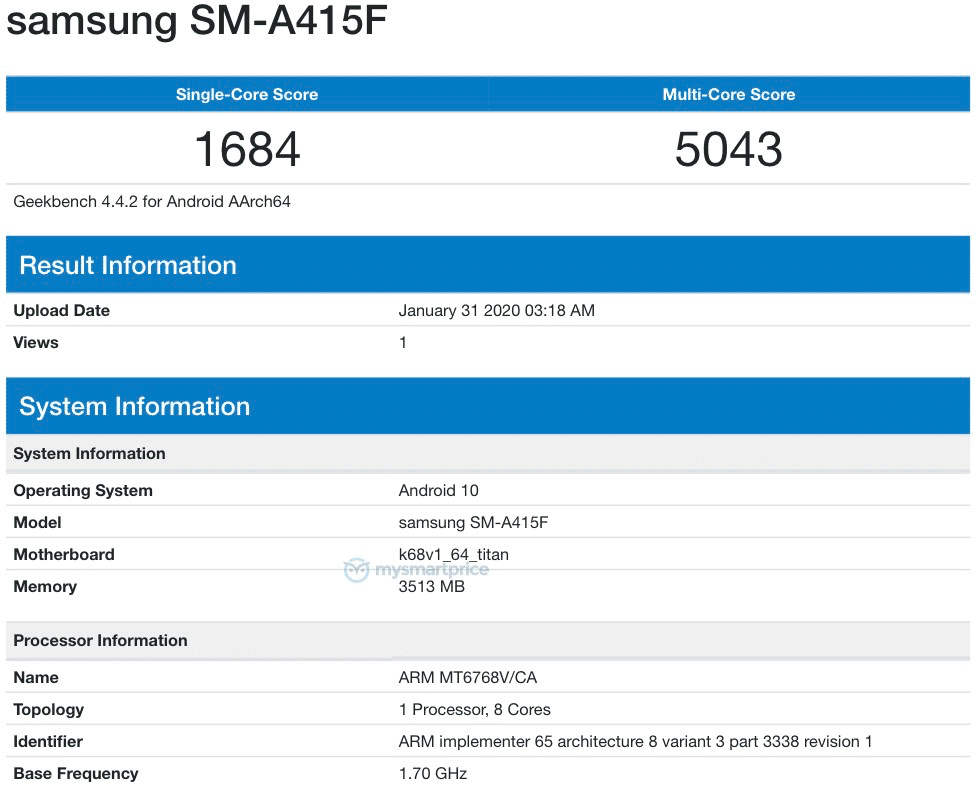
The purported Samsung Galaxy A41 with model number SM-A415F has appeared on Geekbench. The appearance of Samsung Galaxy A41 on the benchmarking platform today hints at Samsung’s plan of expanding its 2020 Galaxy A-series. Last year, Samsung’s Galaxy A-line was a huge success and the company would certainly want to cash on it with newer additions that would continue to impact in the budget and mid-range smartphone segments. Prior to this, the company had launched the Galaxy A40 model in March 2019.
According to the Geekbench listing, the SM-A415F phone has recorded 1684 and 5043 in the single-core and multi-core tests of Geekbench 4. Like its predecessor, the Galaxy A41 would run on Android 10 OS. It could be overlaid with Samsung’s latest One 2.0 UI.
The handset is powered by MT6768V octa-core chipset that has a 1.70 base frequency. It is nothing but the MediaTek Helio P65 processor. The Geekbench listing further states that it will be equipped with 4 GB of RAM.
The appearance of the Galaxy A41’s battery on South Korea’s certification website SafetyKorea suggested a battery pack certified with model number EB-BA415ABY. The Galaxy A41 phone may come with have a slightly higher battery life than Galaxy A40 at 3500mAh and rumours also suggest a 15W fast charging support
An upgrade over Galaxy A40, the Galaxy A41 phone may sport a triple rear camera setup with a 48-megapixel primary camera and an unknown secondary lens. The third lens could be a 2-megapixel macro sensor. The job of taking selfies would however be handled by a high resolution 25MP front camera. The device may come with a 64 GB native storage. Samsung is yet to confirm on the existence of Galaxy A41. The predecessor smartphone had launched in March last year. This hints at a first-quarter launch for its successor as well.
The South Korean company may also unveil the Galaxy A31 smartphone alongside the Galaxy A41. Rumors have so far revealed that the Galaxy A31 has a 5,000mAh battery and a 48-megapixel + 5-megapixel + macro triple camera setup. It could be arriving in 64 GB and 128 GB storage choices.
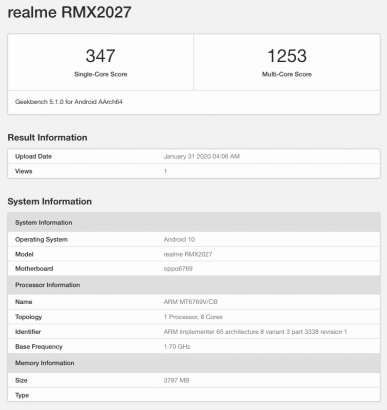
Realme India has recently confirmed that it will be announcing the Realme C3 smartphone in the country on Feb. 6. The smartphone will be arriving as the successor of the Realme C2 from last year. The Chinese firm has revealed that the Helio G70 will be the driving force of the smartphone. The SoC was unveiled earlier this month mainly to bring gaming capabilities on entry-level smartphones. Today, a Realme phone with model number RMX2027 has been spotted on Geekbench. It is speculated that it could be the Realme C3 phone.
The Realme RMX2027 phone has recorded a score of 347 in the single-core test of Geekbench. On the others side, it reached 1253 in the multi-core test of the benchmarking platform. The octa-core processor that powers the device is a MediaTek with 1.70GHz base frequency. The Helio G70 has the same base frequency. Hence, it appears that the RMX2027 could be the forthcoming Realme C3 smartphone.
The SoC of the Realme RMX2027 is coupled with 4 GB of RAM. The handset is preloaded with Android 10 OS. It is unclear whether the phone will ship with the latest ColorOS skin. Recently, the RMX2020 phone was certified by Thailand’s NBTC body as Realme C3. The RMX2027 appears to be its country variant. The Realme RMX2027 has also been approved by BIS (Bureau of Indian Standards) and Eurasian Economic Commission (EEC) in the U.S.
The landing page of the Realme C3 on Flipkart states that it will be arriving with a 6.5-inch display with mini dewdrop notch. It is likely to support only HD+ resolution. The predecessor phone came with a smaller 6.1-inch display with teardrop notch and it housed a 4,000mAh battery. The successor phone is confirmed to come with a massive battery of 5,000mAh capacity.
The Realme C3 does not seem to be equipped with a fingerprint sensor on its back. It has a vertical dual camera setup that uses a 12-megapixel lens as a primary shooter. It is confirmed that the Realme C3 will be arriving in India in two options such as 3 GB RAM + 32 GB storage and 4 GB RAM + 64 GB storage. The pricing of the phone is currently under the wraps. Like the predecessor, it may arrive as the cheapest Realme phone in the market.
We use cookies on our website to give you the most relevant experience by remembering your preferences and repeat visits. By clicking “Accept”, you consent to the use of ALL the cookies.
This website uses cookies to improve your experience while you navigate through the website. Out of these, the cookies that are categorized as necessary are stored on your browser as they are essential for the working of basic functionalities of the website. We also use third-party cookies that help us analyze and understand how you use this website. These cookies will be stored in your browser only with your consent. You also have the option to opt-out of these cookies. But opting out of some of these cookies may affect your browsing experience.
Necessary cookies are absolutely essential for the website to function properly. This category only includes cookies that ensures basic functionalities and security features of the website. These cookies do not store any personal information.
Any cookies that may not be particularly necessary for the website to function and is used specifically to collect user personal data via analytics, ads, other embedded contents are termed as non-necessary cookies. It is mandatory to procure user consent prior to running these cookies on your website.