Advertisement

These Samsung phones are eligible for One UI 8 beta program

Samsung One UI 8 beta eligible phones

Samsung announced the One UI 8 beta program towards the end of May 2025, with the Galaxy S25, Galaxy S25+, and Galaxy S25 Ultra being the first phones to get access to One UI 8 beta. It was a quick turnaround from Samsung after a frustrating One UI 7 rollout, but the beta program long remained exclusive to the S25 series, until this week, when Samsung announced its plans for beta expansion to more Galaxy models.

The company said that the One UI 8 beta update will be released to more Galaxy devices. This also includes several mid-range Galaxy phones. Samsung has also revealed when users can expect the beta update. We’ll also get to that in a minute, but first, let’s take a look at the list of eligible devices for the One UI 8 beta program.

Samsung One UI 8.0 beta program: list of eligible devices

  • Galaxy S25
  • Galaxy S25+
  • Galaxy S25 Ultra
  • Galaxy S24
  • Galaxy S24+
  • Galaxy S24 Ultra
  • Galaxy S23
  • Galaxy S23+
  • Galaxy S23 Ultra
  • Galaxy Z Fold 6
  • Galaxy Z Flip 6
  • Galaxy Z Fold 5
  • Galaxy Z Flip 5
  • Galaxy A55 5G
  • Galaxy A54
  • Galaxy A36 5G
  • Galaxy A35 5G

If your Galaxy device is on the list, you’re in luck. You can install the beta update (when it’s released) and test new features and changes before they roll out to the public.

Related:
1. Samsung makes significant changes to One UI rollout strategy
2. One UI 8 will be the last big upgrade for these Samsung devices

Samsung One UI 8 beta: release timeline and installation steps

The One UI 8 beta program has been available to the Galaxy S25 series since May, and it’s about to reach more devices in the coming days and weeks. Samsung announced that the Galaxy S24 series, Galaxy Z Fold 6, and Galaxy Z Flip 6 will gain access to the One UI 8 beta program starting next week in Korea, the U.S., the U.K., and India.

The remaining devices, including the Galaxy S23 series, Galaxy Z Fold 5, Galaxy Z Flip 5, Galaxy A55 5G, Galaxy A54, Galaxy A36 5G, and Galaxy A35 5G, will receive the One UI 8 beta in September.

How to join the One UI 8 beta program?

To participate in the One UI 8 beta program, you must have an eligible Samsung device (check the above list) and reside in any of the eligible countries (Korea, the U.S., the U.K., or India).

Before jumping to the steps, please note that beta builds may contain bugs and unfinished features. I recommend testing the software on a non-primary device. Also, there’s no easy way to revert to One UI 7 without erasing your entire smartphone.

Here are the steps to follow:

Step 1: Open the Samsung Members app. (Download it if you don’t have it already)

Step 2: Look for the One UI beta banner and tap on it.

Step 3: Follow on-screen instructions to join the beta program.

Step 4: Open Settings and tap Software update.

Step 5: Click Download and install to get One UI 8 beta.

Step 6: Download the package and install it.

Is your Samsung Galaxy getting One UI 8 beta? Please share your expectations from One UI 8 in the comments below. Also, remember to check back our One UI 8 section for the latest updates.

Please Note: When you buy something using the links in our articles, we may earn a small commission at no cost to you.

Also read:
1. Samsung devices that are eligible for One UI 8 update
2. Here are the top 6 features in One UI 8

Best Android Tablets of 2025

Android tablets have entered a new phase in 2025. Manufacturers are no longer pushing out half-hearted iPad alternatives. Instead, they are launching serious machines with flagship processors, premium displays, and deep software integration. From productivity to gaming, these tablets push boundaries in every direction.

Here’s a look at the best Android tablets of 2025 so far.

1. OnePlus Pad 3

OnePlus Pad 3 open sale

OnePlus launched the Pad 3 as its most powerful tablet to date. It features a large 13.2-inch 3.4K LCD with a 144Hz variable refresh rate and up to 900 nits of brightness. The Snapdragon 8 Elite chipset runs the show, paired with up to 16GB of LPDDR5T RAM and UFS 4.0 storage. The tablet supports Android 15 out of the box with OxygenOS 15, offering smooth multitasking and tight OnePlus ecosystem integration.

The Pad 3 includes eight speakers with intelligent audio channel switching for immersive sound. Its 12,140mAh battery supports 80W SuperVOOC charging, which takes the tablet from 0 to 100% in about 92 minutes. OnePlus also redesigned the keyboard with larger keycaps, added a dedicated AI key, and introduced an adjustable hinge for more flexible typing angles.

Please Note: When you buy something using the links in our articles, we may earn a small commission at no cost to you.

2. Xiaomi Pad 7 Ultra

Xiaomi launched the Pad 7 Ultra during its 15th anniversary event in China. The tablet features a massive 14-inch OLED display with a 3.2K resolution, a 120Hz refresh rate, and 1600 nits peak brightness. The screen supports Dolby Vision, HDR10+, and TÜV Rheinland eye comfort certifications. It also offers a nano-soft light version that reduces glare and reflection for a paper-like writing experience.

Xiaomi equipped the tablet with its custom XRING 01 3nm chipset. The processor includes dual Cortex-X925 cores, a 16-core Immortalis-G925 GPU, and a 6-core NPU. It delivers up to 44 TOPS of AI performance.

The tablet runs HyperOS 2 and supports advanced cross-device tools, such as Apple device file sharing and wireless secondary screen use. The battery capacity sits at 12,000mAh with 120W charging support.

Please Note: When you buy something using the links in our articles, we may earn a small commission at no cost to you.

3. Lenovo Legion Y700 (Gen 4)

Lenovo Legion Y700 (Gen 4)

Lenovo launched the Legion Y700 (Gen 4) in China as a compact gaming-focused tablet. It features an 8.8-inch 3K LCD screen with a 165Hz refresh rate. The Snapdragon 8 Elite processor powers the device, paired with up to 16GB LPDDR5X RAM and UFS 4.0 storage. Lenovo added a high-efficiency cooling system with a 12000mm² VC and layered composite architecture to keep temperatures in check.

The tablet supports attachable G9 controllers that transform it into a portable gaming console. These controllers include ABXY keys, macro buttons, and dual triggers. The Y700 also supports Android 15 with Lenovo’s ZUI 16. It features a 7600mAh battery with 68W fast charging and comes in Black and Ice Soul White color options.

4. Redmi K Pad

Redmi K Pad

Xiaomi introduced the Redmi K Pad as a performance-focused compact tablet. It features an 8.8-inch 3K LCD with a 165Hz refresh rate and Gorilla Glass 5 protection. The Dimensity 9400+ chipset runs at the core, with LPDDR5X RAM options up to 16GB and UFS 4.1 storage up to 1TB.

The Redmi K Pad includes Xiaomi’s first dual USB-C interface, supports bypass charging, and uses a chip-centered liquid cooling setup with a large VC plate. It houses a 7500mAh battery with 67W fast charging support. The tablet also features Dolby Vision support, high touch sampling rates, and dual X-axis linear motors for enhanced gaming feedback.

5. Red Magic Astra

Red Magic Astra Gaming Tablet

Red Magic launched the Astra Gaming Tablet globally after its China debut. The tablet features a 9.06-inch 2.4K OLED screen with a 165Hz refresh rate and 1600 nits peak brightness. It runs on the Snapdragon 8 Elite chipset and comes with up to 24GB of LPDDR5T RAM and up to 1TB UFS 4.1 Pro storage.

The Astra includes dual 1620 speakers with DTS:X Ultra support and runs Android 15 with Redmagic OS 10.5. Red Magic added a fingerprint sensor on the power button, Wi-Fi 7 support, and USB 3.2 Gen 2 Type-C ports. The 8200mAh battery supports 80W charging. The tablet targets gamers and ships with early bird offers, including discounts and accessories.

6. Vivo Pad 5 Pro

Vivo pad 5 Pro

Vivo introduced the Pad 5 Pro as a productivity and entertainment tablet. It features a 13-inch 3.1K LCD with a 144Hz adaptive refresh rate and a sleek design. The ultra-light model is just 5.96mm thick and weighs 578g. Vivo uses the Dimensity 9400 chipset with up to 16GB RAM and up to 512GB storage.

The Pad 5 Pro includes an eight-speaker system and supports 66W fast charging for its 12,000mAh battery. It runs Android 15 with OriginOS 5. The tablet also supports NFC, Wi-Fi 7, and Type-C audio. Vivo designed the software to support multitasking and cross-device clipboard sharing.

7. Lenovo Yoga Tab Plus

Lenovo Yoga Tab Plus

Lenovo recently launched the Yoga Tab Plus in India as its first AI-powered tablet. It was first unveiled at CES 2025 earlier this year. The device features a 12.7-inch 3K LCD screen with a 144Hz refresh rate and 900 nits peak brightness. It includes six Harman Kardon speakers with Dolby Atmos and supports Lenovo’s Tab Pen Plus and keyboard accessories.

The Yoga Tab Plus runs Android 14 with ZUI 16 and promises three OS upgrades and four years of security updates. Lenovo bundled AI tools like AI Note and AI Transcript along with features like App Streaming and Smart Clipboard. It is powered by the Snapdragon 8 Gen 3 and a Qualcomm Hexagon NPU. The 10,200mAh battery supports 45W fast charging.

Please Note: When you buy something using the links in our articles, we may earn a small commission at no cost to you.

8. Final Thoughts

Android tablets in 2025 are no longer one-size-fits-all. Whether you want an Ultra-grade screen, a compact gaming device, or an AI-focused productivity tool, the choices are both powerful and diverse. From OnePlus and Xiaomi to Lenovo and Red Magic, brands are finally giving Android tablets the flagship treatment they deserve.

For more daily updates, please visit our News Section.

Stay ahead in tech! Join our Telegram community and sign up for our daily newsletter of top stories! 💡

Xiaomi Youpin Launches AMD Ryzen AI Max+ 395 Mini PC with RTX 4070 Laptop GPU

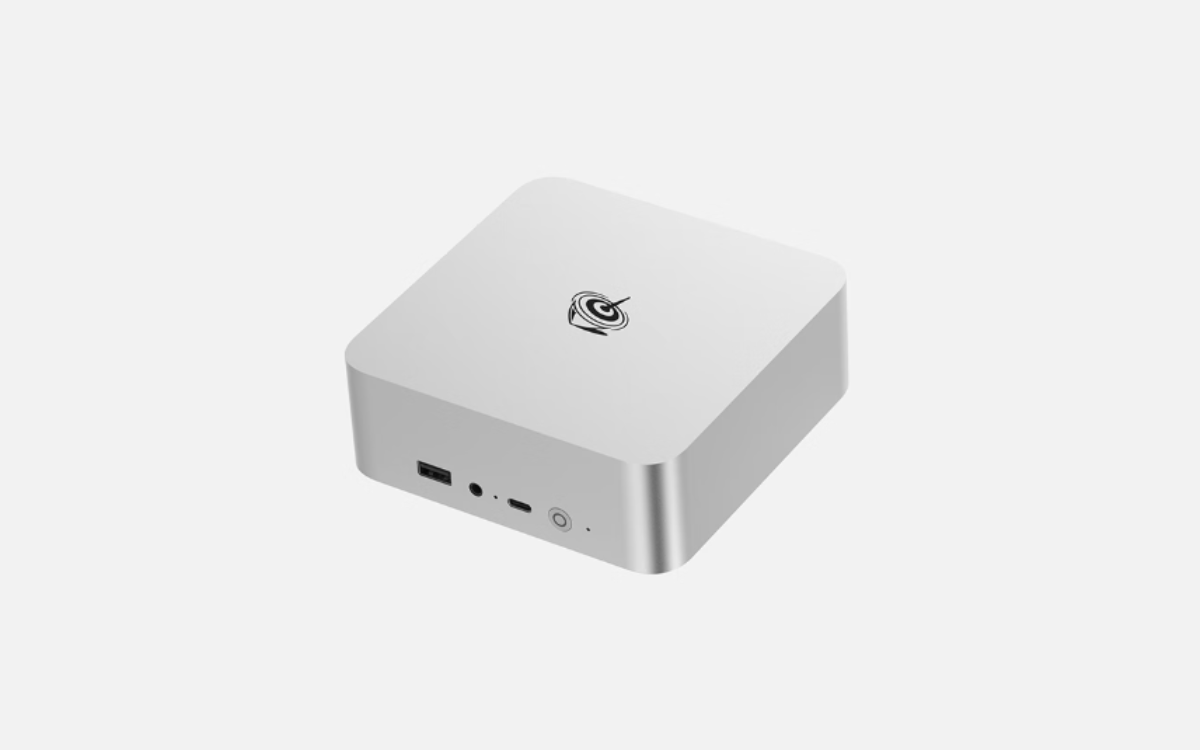
Xiaomi has added the Star Core Super AI Computer to its Youpin crowdfunding platform. The mini PC is powered by the Ryzen AI Max+ 395 processor with 128 GB of LPDDR5 RAM and 2 TB of storage.

Xiaomi AMD Strix Halo mini PC

Although listed by Xiaomi, the system is made by the Chinese company Linglong. Its design closely resembles the H02 from Lenovo subsidiary LCFC, which itself is similar to the Corsair AI Workstation 300.

The system allows 96 GB of its RAM to be allocated as VRAM for the Radeon 8060S integrated GPU, enabling strong AI processing capabilities and gaming performance comparable to the NVIDIA RTX 4070 Laptop GPU. Connectivity includes multiple USB ports, HDMI 2.1, DisplayPort 1.4, 2.5G Ethernet, and a 3.5 mm audio jack, along with support for Wi-Fi 7 and Bluetooth 5.4. Storage can be expanded through two PCIe 4.0 SSD slots, and the system features a 120 W performance mode in a compact form factor.

Pricing & availability

The Linglong Strix Halo mini PC is priced at CNY 13,999 (approximately $1,941) during the crowdfunding phase, and the price will increase to CNY 15,999 (around $2,218) once the campaign ends. A global launch seems unlikely. However, international customers can choose from other options such as the Corsair AI Workstation 300, Colorful Smart 900 and Bosgame M5, all of which are powered by the Ryzen AI Max+ 395 CPU.

Don’t miss a thing! Join our Telegram community for instant updates and grab our free daily newsletter for the best tech stories!

For more daily updates, please visit our News Section.

(Source, via)

Rogbid launches Model S 4G smartwatch with ChatGPT support and K1 kids’ watch with SOS button

Rogbid has launched two new smartwatches targeting different audiences. The AI-powered Model S focuses on performance and versatility with features like 4G connectivity and a rotating camera, while the K1 is designed for children with advanced safety tools such as real-time tracking and an SOS button.

Rogbid Model S specifications and features

Rogbid Model S
Rogbid Model S

The Rogbid Model S features a 2.4-inch square display with 720 x 720 pixels resolution and supports customizable watch faces. It offers dual modes, letting users switch between Bluetooth and 4G Android systems, with global band support. A 5-megapixel 190-degree retractable rotating camera allows photos, video calls, and facial recognition unlock.

Preloaded with Deepseek and ChatGPT, the Rogbid Model S supports smart voice interactions. Powered by 3GB RAM, 32GB storage, and a 1500mAh battery, it provides up to 10 days of standby in Bluetooth mode. The watch also includes GPS with 3D navigation, heart rate, blood oxygen, and sleep monitoring, along with multiple sports modes.

Rogbid K1 specifications and features

Rogbid K1
Rogbid K1

Designed for kids, the Rogbid K1 features a 1.78-inch AMOLED display and 4G global connectivity. Safety tools include triple positioning through GPS, LBS, and Wi-Fi, plus an SOS button for emergencies. It supports 200W pixel HD photography and clear video calls, alongside learning and entertainment apps. The 800mAh battery delivers up to 7 days of standby, and IP67 protection guards against splashes.

Rogbid Model S and K1: Price, availability, and color options

The Rogbid Model S is priced at $109.99 and comes in Aurora Gold and Shadow Black, while the Rogbid K1 costs $69.99 and is available in Pink, Blue, and Black. Both models are on sale through the official Rogbid store.

For more daily updates, please visit our News Section.

Stay ahead in tech! Join our Telegram community and sign up for our daily newsletter of top stories.

Oppo Find N6 Flip tipped to launch in 2026

In 2023, Oppo launched the Oppo Find N3 Flip, a clamshell foldable phone. While the brand has continued to launch new generations of book-style foldable phones, the latest being the Find N5 that debuted earlier this year, it has not launched a flip phone after the N3 Flip. Likely, the brand may return to the flip phone market in 2026.

Oppo Find N6, Find N6 Flip leak

Oppo Find N6, Find N6 Flip leak

As seen in the above screenshot, tipster Smart Pikachu has shared details about Oppo’s upcoming foldables. Previous reports have claimed that the Find N6 will debut as the world’s first Snapdragon 8 Elite 2-powered foldable phone. Apart from reiterating this, the tipster claimed that the foldable will incorporate a significant amount of titanium in its build.

Past reports have claimed that the Find N6 will be slimmer and lighter than the Find N5v. To recall, the N5 weighs 229 grams and has a slim profile of 4.2mm in the unfolded state. It is speculated that the device will launch in the first quarter of 2026. It may break cover before the Find X9 Ultra, which is likely to hit the Chinese market in March 2026.

Oppo Find N3 Flip
Oppo Find N3 Flip

The tipster also adds that Oppo plans to restart the development of its smaller clamshell foldables next year, signalling a return to the compact foldable segment. At present, there is no information available about the core specs and launch timeframe of the device. Also, it remains to be seen whether it will be called the Find N6 Flip or something else.

For more daily updates, please visit our News Section.

Stay ahead in tech! Join our Telegram community and sign up for our daily newsletter of top stories.

OnePlus 15 may ditch circular camera design, leak suggests

OnePlus is gearing up for a fresh design direction with its next flagship, the OnePlus 15. According to a new leak from reliable Digital Chat Station, the company is finally moving away from the circular camera layout that’s become a design staple in recent years.

Instead of the large round camera bump, the OnePlus 15 is reportedly switching to a small square-shaped module, tucked into the top-left corner of the back panel. The leak suggests that the rear camera system will feature a 50MP triple-lens setup with a main camera, an ultra-wide lens, and a periscope telephoto sensor.

On the front, the OnePlus 15 will use a 1.5K flat display with minimal bezels. It will use LIPO (Low Injection Pressure Overmolding) display packaging tech, a process that replaces traditional buffer protection with polymer liquid materials. 

The result is much narrower bezels and a cleaner, more immersive look. LIPO also promises improved durability and better consistency during manufacturing, something we’ve previously seen Apple experiment with in its higher-end models.

Snapdragon 8 Elite 2, 7000mAh battery and more

While the design is a noticeable change, the OnePlus 15 isn’t holding back on performance either. Under the hood, it’s expected to run Qualcomm’s upcoming Snapdragon 8 Elite 2 chip. 

The chip features a custom Oryon CPU and a new Adreno 840 GPU with a 16MB dedicated cache. Powering the hardware is a battery reportedly over 7,000mAh, which would be among the largest capacities in a mainstream flagship. Likewise, charging might cap at 100W. It is also expected to feature other features, an ultrasonic in-screen fingerprint sensor, and an IP68/69-rated body.

The OnePlus 15 is currently set for an October launch and will reportedly debut alongside the OnePlus Ace 6

For more daily updates, please visit our News Section.

Stay ahead in tech! Join our Telegram community and sign up for our daily newsletter of top stories.

Motorola unveils Swarovski-studded Razr 2025, Buds Loop in Pantone Ice Melt

Motorola has officially announced its latest fashion-focused collaboration with Swarovski, bringing a crystal-studded twist to its foldable lineup and audio accessories. The company has introduced a special edition bundle called the Brilliant Collection, offering the Razr 2025 and Moto Buds Loop in a new Pantone Ice Melt finish.

Motorola Razr 2025 and Buds Loop in Pantone Ice Melt

Swarovski-studded Motorola Razr 2025

The Brilliant Collection introduces the Razr 2025 in a limited Pantone Ice Melt finish. Its quilt-like leather-inspired back is decorated with 35 Swarovski crystals, including a precision-cut larger crystal with 26 facets on the hinge. The flip phone’s design is paired with slimmer bezels, a full outer display, and crystal-inspired volume keys.

Motorola Razr 2025 in Pantone Ice Melt

Motorola includes a transparent crossbody bag to highlight the phone’s aesthetic. Priced at $999.99, the bundle is based on the regular Razr variant, which runs on a Dimensity 7400X chip and typically retails for $599.99.

Matching Moto Buds Loop in Pantone Ice Melt

Alongside the phone, the Moto Buds Loop appear in the same Ice Melt colourway with Swarovski crystals embedded along their looped stems. These open-style earbuds, developed with Bose-tuned audio, support spatial sound and deliver up to 37 hours of playback.

Motorola Buds Loop in Pantone Ice Melt

The bundle will be available in the US starting Aug. 7 through Motorola.com and select retailers.

For more daily updates, please visit our News Section.

Stay ahead in tech! Join our Telegram community and sign up for our daily newsletter of top stories.

Galaxy Z Fold 7 survives 200,000 folds in real-world test

Samsung’s latest book-style foldable, the Galaxy Z Fold7, has drawn global attention for its slim design and impressive performance in durability tests. However, repairability—and the potential cost involved—remains a major concern for any device that uses a large, flexible AMOLED screen protected by soft plastic.

While the hinge and body do a good job shielding the inner display when the phone is closed, what about scratches from regular use? Or accidental drops while the phone is open? Unlike older phones with retractable front cameras, foldables don’t offer features like fall detection or automatic closing to protect themselves. This is where repairability becomes important—and iFixit’s latest teardown video of the Z Fold7 dives right into that, examining how easy, cost-effective, and practical it is to repair Samsung’s $1,999 flagship foldable.

iFixit teardown reveals repair challenges

iFixit gave the Galaxy Z Fold7 a repairability score of just 3 out of 10. For starters, the combination of a slim design and strong adhesive makes it difficult to open the outer display or back panel for repairs. More concerning is the inner display, which, despite using a thicker version of Ultra Thin Glass inside, remains fragile and prone to damage from dust, debris, or even fingernail pressure.

Worse still, if the inner screen is damaged, it’s not just a matter of replacing the panel. In many cases, it may require swapping out the entire screen and chassis assembly—a costly solution for what could be a simple accident.

iFixit also pointed out that the battery is firmly glued into the frame, unlike the Galaxy S25 Ultra, which uses an adhesive wrapper that’s easier and safer to remove. In short, Samsung may have succeeded in making the Fold7 slimmer and more durable, but repairability clearly wasn’t a top priority for this $1,999 device.

With Samsung reportedly receiving over 210,000 pre-orders in India alone, plenty of customers could be affected if issues arise down the line. For buyers, the takeaway is clear — treat the device with care. Until Samsung improves access to parts and simplifies its foldable designs, repairability will remain a weak spot in an otherwise impressive product lineup.

Don’t miss a thing! Join our Telegram community for instant updates and grab our free daily newsletter for the best tech stories!

For more daily updates, please visit our News Section.

(Source)

Samsung Galaxy S26 Edge leak hints at bigger battery and slimmer design

Samsung‘s upcoming Galaxy S26 Edge could be getting a meaningful upgrade that directly tackles one of the most common complaints about its predecessor: battery life. A new leak suggests the 2026 model will not only be slimmer but could also pack a significantly larger battery—an unusual and potentially impressive combination.

Galaxy S25 Edge

A significantly bigger battery without the bulk

According to a new post by tipster Setsuna Digital on Weibo, the Galaxy S26 Edge may feature a 4,400mAh battery—up from the 3,900mAh cell found in the Galaxy S25 Edge. That’s a 500mAh increase, which could go a long way in addressing user frustrations over the previous model’s relatively short battery life. A recent leak pointed to a smaller 4,200mAh battery, so this latest number suggests Samsung is still fine-tuning the hardware.

Interestingly, the S26 Edge is also rumored to be thinner than the S25 Edge, which already measured just 5.8mm thick. That raises the question: how is Samsung squeezing in a bigger battery while slimming down the phone? One possibility is the use of advanced battery materials like silicon-carbon, which can hold more energy than conventional lithium-ion cells. It’s still unclear whether Samsung will fully adopt this tech, but if it does, it could allow for that larger battery without compromising on design.

The Galaxy S26 Edge is also expected to take the place of the S26 Plus in the lineup, leaving the base S26 to be replaced by the S26 Pro, and the S26 Ultra expected to stick with its current 5,000mAh battery. While the 4,400mAh battery in the Edge would still fall short of the 4,900mAh found in the outgoing S25 Plus, Samsung seems to be positioning the Edge as a sleek, mid-tier flagship with enough upgrades—such as a rumored 50MP ultrawide camera—to justify the tradeoff. While none of this is confirmed just yet, the Galaxy S26 Edge is shaping up to be a more refined and relatively well-balanced entry in Samsung’s flagship series.

Don’t miss a thing! Join our Telegram community for instant updates and grab our free daily newsletter for the best tech stories!

For more daily updates, please visit our News Section.

Pixel 10 Pro Fold reportedly delayed until October, launch still set for August 20

Google’s Pixel 10 lineup is shaping up to be one of the most exciting smartphone releases of the year — but not everything is arriving on time. According to a new report, the company is planning a staggered rollout, with its foldable flagship and some wearables expected to ship later than the rest.

Google Pixel 10 Pro Fold

Citing “well-informed sources”, WinFuture reports that while the Pixel 10, 10 Pro, and 10 Pro XL will be available for pre-order on August 20, with shipping starting August 28, the Pixel 10 Pro Fold won’t be available until October 9. The delay also affects the upcoming Pixel Watch 4 and Pixel Buds 2a, though all three are still expected to go up for pre-order during Google’s main “Made by Google” event on August 20.

This means fans of Google’s foldable devices will have to wait nearly six weeks longer for delivery — even though the product will be officially unveiled alongside the rest of the lineup.

Possible supply chain or production hurdles

While Google hasn’t commented publicly on the delay, the holdup may be due to production challenges. The Pixel 10 Pro Fold reportedly shares the new Tensor G5 chip with the standard Pixel 10 models, but its unique hardware — including a redesigned hinge and IP68 water and dust resistance — may be proving more complex to manufacture at scale.

Similarly, the Pixel Watch 4 is expected to debut a new charging system, and the Pixel Buds 2a are rumored to include upgraded internals for better sound and connectivity — all of which could be contributing to the slower rollout.

Even with the delay, the Pixel 10 Pro Fold is shaping up to be a serious competitor to Samsung’s upcoming Galaxy Z Fold 7. Alongside a larger 5,015mAh battery, the foldable is also expected to support Qi2 wireless charging and include a refined camera setup — upgrades that make the wait more palatable for those holding out for a premium foldable experience.

Don’t miss a thing! Join our Telegram community for instant updates and grab our free daily newsletter for the best tech stories!

For more daily updates, please visit our News Section.

(Source)

Redmi Pad 2 Pro to match Xiaomi’s flagship tablet in fast charging

Xiaomi could be gearing up to launch a new high-performance tablet under its Redmi brand, if a recent leak is anything to go by. The rumored Redmi Pad 2 Pro is expected to bring faster charging and possibly arrive alongside the company’s next big smartphone release, the Redmi K90 series.

Redmi Pad 2
Redmi Pad 2

Fast charging puts the Redmi Pad 2 Pro in premium territory

Tipster Digital Chat Station shared on Weibo that a new tablet with model number 25091RP04C has appeared on China’s 3C certification site. While the listing doesn’t confirm the name, it’s believed to be the upcoming Redmi Pad 2 Pro. The listing also reveals support for 67W fast charging — a notable upgrade for the Redmi tablet line, putting it on par with Xiaomi’s more premium Pad 7 Pro, and ahead of the standard Pad 7, which tops out at 45W.

Another model, 25097RP43C, was also spotted in the same certification batch, though its identity remains unclear. It could be an early version of the Xiaomi Pad 8, which is rumored to retain 45W charging of its predecessor. For now, though, the main focus is on the alleged Pad 2 Pro, which might be either a follow-up to the Redmi Pad Pro from last year or an enhanced version of the recently launched Redmi Pad 2. The exact naming strategy is still unknown.

Could launch alongside Redmi K90 series

The Redmi Pad 2 Pro is expected to launch later this year, possibly at the same event as the Redmi K90 series, which is tipped for a late October 2025 reveal. Xiaomi has a track record of unveiling tablets alongside major smartphone launches, and this would align with that trend.

So far, there’s no word on the tablet’s display size, chipset, or battery capacity, but the presence of 67W charging suggests that Xiaomi is pushing for more performance-focused features in its mid-range tablets. If priced competitively, the Redmi Pad 2 Pro could challenge popular options from Samsung’s Galaxy Tab A and S series.

Don’t miss a thing! Join our Telegram community for instant updates and grab our free daily newsletter for the best tech stories!

For more daily updates, please visit our News Section.

(Source)

Meet Portronics Movo: A Wireless Charger, LED Mirror, and Bluetooth Speaker in One

Portronics has introduced the Movo, a compact 3-in-1 device that functions as a wireless charger, LED mirror, and Bluetooth speaker. It is priced at ₹4,099 and is available through Portronics’ official website, Amazon.in, Flipkart, and retail stores across India.

Portronics Movo 3-in-1 15W Magnetic wireless charger

The Movo features a round mirror with three LED lighting modes, including warm, neutral, and bright white tones. The mirror tilts up to 90 degrees, making it suitable for both grooming and work setups.

For charging, the device offers 15W magnetic wireless output and is Qi2 certified. It supports MagSafe-compatible smartphones and uses a magnetic base to keep devices securely aligned during charging. Dual USB Type-C ports support both input and output functions, and a 30W USB-C power adapter is included in the package.

The integrated 5W speaker supports Bluetooth 5.3, allowing faster pairing, lower latency, and reduced power consumption. Physical buttons placed on the side of the base offer direct control over lighting and volume.

Designed for desks, bedside tables, or dressing areas, the Movo provides a space-saving solution for users who want essential tech features in one unit. The device comes in silver and includes a one-year manufacturer warranty.

Please Note: When you buy something using the links in our articles, we may earn a small commission at no cost to you.

Don’t miss a thing! Join our Telegram community for instant updates and grab our free daily newsletter for the best tech stories!

For more daily updates, please visit our News Section.

Could the iPhone 17 Air Kick Off a New Industry Trend?

The iPhone 17 Air might be the new model that brings a breath of fresh ‘air’ to Apple’s flagship smartphone lineup. While the iPhone 17 Pro and 17 Pro Max are rumored to have a new redesign, the iPhone 17 Air could be responsible for kick-starting a new trend in the market, making ultra thin flagships the next fad. Read on to see why.

iPhone 17 Air
Apple iPhone 17 Air

1. Ultra-Thin Design & Titanium Frame

The Cupertino based giant is expected to replace the iPhone 17 Plus model with this new iPhone 17 Air. As the name would imply, the “Air” in the iPhone 17 series is a super thin and light smartphone. Rumors hint that this device could measure anywhere between 5.5mm and 6mm (possibly 5.8mm). This would make it the thinnest iPhone from Apple yet. While Samsung did beat Apple to the market with its own ultra slim flagship, the Galaxy S25 Edge, the iPhone maker joining the race will likely cement this as a proper trend. If you’re worried about durability, a leak has suggested that the iPhone 17 Air will be the only 2025 iPhone model with a titanium frame.

2. Weight & Build: Designed to Be Light and Strong

Since it exclusively uses titanium, the iPhone 17 Air would offer a strong yet light build similar to the Galaxy S25 Edge. This would allow it to avoid the infamous bendgate issue that plagued the iPhone 6 series. Reports have pointed to this model being even lighter than Samsung’s super slim flagship, with a weight of just 145 grams (S25 Edge weighs 163 grams).

3. Battery Trade-Off, But Not for All

Packing all of the specs in such a slim chassis has its drawbacks, with battery size likely taking a sizeable hit. With leaks suggesting a 2,800mAh battery pack, Apple’s razon thin iPhone has a tiny cell. But iPhones aren’t known for their massive battery capacities, so the company would likely make some optimizations. Regardless, its endurance would still fall below its iPhone 17 siblings.

However, this is not a major issue for Android manufacturers. To recall, the Infinix Hot 60 Pro+ just debuted with a sizeable 5,160mAh battery despite measuring just 5.95mm. When considering new battery technology (e.g. Silicon Carbide), Chinese brands like Xiaomi, Oppo, and Vivo would likely find ways around the battery size problem since the newer cells pack higher energy density.

4. Design Language That May Influence the Industry

Apple’s decision to make titanium exclusive to the Air model sets it apart within its own lineup and could inspire competitors. The device embraces minimalist design cues, potentially ditching physical SIM trays and multi-camera systems in favor of a single 48MP rear lens and a refined camera bar. In the past, brands have often looked to the latest iPhones for inspiration, and this might jump start another trend. As phones get bulkier and heavier, a thin and light phone might shake up the market. Despite all of its flaws, the S25 Edge still felt great to use. Apple always focused on a premium and refined design, so this could be an area it could definitely succeed in.

For more daily updates, please visit our News Section.

Tech enthusiast? Get the latest news first! Follow our Telegram channel and subscribe to our free newsletter for your daily tech fix! ⚡

This $65 Redmi A24 Monitor Offers More Than Most in the Budget Category: 144Hz Display, Slim Bezels, & More

Redmi has just refreshed one of its affordable monitors, bringing impressive specs and features. The brand just announced the Redmi A24 (2026) with slight improvements, which also makes it suitable for gaming enthusiasts. So here’s everything you need to know.

Redmi A24 (2026): Cheap, Sleek, and Now Smoother

Xiaomi just announced the Redmi A24 (2026) with a 23.8-inch IPS LCD display that offers FHD (1920 x 1080p) resolution, 99 percent sRGB color gamut, and 300 nits of peak brightness. The older version came with a 100Hz refresh rate, but the 2026 model features a higher 144Hz refresh rate. This makes it great for those looking for an affordable gaming monitor since its response time is also at 6ms.

Redmi A24 2026
Redmi A24 2026

It even offers TÜV low blue light certification for eye protection. The screen is surrounded by ultra slim bezels on three corners, except the chin. This adds to its overall appeal, also making it perfect for multi monitor setups. Connectivity options include DisplayPlay 1.4 and HDMI 2.0 ports, with a VESA mount support (so it is compatible with third party monitor arms as well).

As of right now, this model is exclusively available in the Chinese market for 469 Yuan, which is roughly around 65 US Dollars. The Chinese tech giant is also offering three years of warranty. There is still no word regarding a wider global release, so stick around for more. In related news, Xiaomi is expected to unveil the Redmi Turbo 5 in December, while the POCO X8 could make an early debut. Recent leaks have also revealed that Redmi is working on 165Hz displays for future smartphones, with rumors also hinting at the Snapdragon 8 Elite 2 chips for the next-gen Redmi K90 series.

For more daily updates, please visit our News Section.

Don’t miss a thing! Join our Telegram community for instant updates and grab our free daily newsletter for the best tech stories!

Nubia Z80 Ultra spec leak: Snapdragon 8 Elite 2, 7,100mAh+ battery, and improved UDC

Nubia may be gearing up for the release of its next Ultra phone, the Z80 Ultra. A new leak suggests the device will pack cutting-edge hardware, including a next-generation Qualcomm chip, an improved under-display selfie camera, and a battery that could outlast most flagships on the market. The phone is expected to launch towards the end of this year.

Nubia Z70 Ultra
Nubia Z70 Ultra

According to reliable tipster Digital Chat Station on Weibo, the Z80 Ultra—expected to succeed last year’s Z70 Ultra—will pack an improved under-display front camera. This feature allows for a full-screen experience without punch holes or notches, maintaining a clean 1.5K display.

Under the hood, the Z80 Ultra could be one of the first phones to feature Qualcomm’s upcoming Snapdragon 8 Elite 2 processor, which is set to be announced in September 2025. Early benchmark leaks suggest a notable jump in performance, with the chip reportedly hitting 3.8 million points on AnTuTu—over 50% higher than the Z70 Ultra’s score of around 2.5 million.

The rear camera setup reportedly includes at least two 50MP sensors—a main camera and a periscope telephoto. However, the tipster didn’t share any specifics about the sensors or lenses.

Moving on, the Z80 Ultra is said to pack a significantly larger battery—over 7,100mAh compared to 6,150mAh in its predecessor. It’s reportedly a single-cell silicon-carbon unit, which, if accurate, could deliver multi-day battery life even with heavy use—an appealing upgrade for gamers and power users alike.

While RAM and storage details haven’t leaked yet, the Z80 Ultra is expected to carry over key design elements from its predecessor, such as an IP68/IP69-rated build and a high-refresh-rate 144Hz AMOLED display.

Nubia hasn’t officially confirmed any of these details yet, but if the brand follows its usual schedule, the Z80 Ultra could launch in November 2025. With a combination of cutting-edge specs and unique design features like an invisible selfie camera, the Z80 Ultra might be one of the most distinctive flagships to close out the year.

Don’t miss a thing! Join our Telegram community for instant updates and grab our free daily newsletter for the best tech stories!

For more daily updates, please visit our News Section.

(Source: DCS on Weibo)

Why I Never Got Used to Wireless Charging in Phones

Wireless charging has been around for more than a decade now, yet I still find myself reaching for a cable every single time I have to charge my phone.

It’s not that I don’t understand the appeal. The convenience it offers is real. Just place your phone on a pad and let it charge. No plugging, no wear and tear on your charging port, and no need to find the right orientation in the dark. But even after all these years, wireless charging still feels more inconvenient than it’s worth.

Why I hate wireless charging on phones

It’s just… frustrating. In small but constant ways. And that’s why, even with wireless charging support baked into almost every flagship phone I’ve used so far, I never really got used to it.

1. It’s not wireless, is it?

I don’t think it’s a hidden fact, but wireless charging still needs wires. Not for your phone, sure, but for the charger. You still have to find an outlet, plug in a pad or a stand, and place it exactly right. 

So instead of skipping the wire completely, you just move it a level down, from the phone to the furniture. This sounds convenient until you realize that the charger is now part of your table setup. You can’t walk away with it. You can’t lend it to a friend. And once you’ve placed your phone on it, you kind of have to leave it there.

Wireless charging, in its current form, is more like “contact charging.” And while that’s technically true, the branding still feels a little too optimistic.

2. The alignment game

If you’ve used a flat wireless charging pad, you already know the drill. Your phone has to sit in the exact right spot to actually charge. You miss by a centimeter, and it stops charging. 

I picked up a mousepad with a built-in wireless charger, thinking it would keep my phone juiced up while I worked at my PC. But even at my slightest (unknowing) nudge knocks it off alignment, and suddenly, it’s not charging anymore.  

It’s especially frustrating when I’m relying on it with a low battery, only to realize later that the phone’s been sitting there, doing absolutely nothing.

3. You can’t really use the phone while it’s charging

This might be my biggest deal-breaker.

With a wired charger, I can still hold the phone, doomscroll Instagram, respond to messages, or check the weather. The cable might get in the way sometimes, but it’s manageable.

However, that’s in no way possible with wireless charging. That would be fine if I were the kind of person who put my phone down and left it alone. But I’m not. I use my phone constantly. I don’t want to wait until it finishes charging to use it, and I certainly don’t want to keep picking it up and placing it back like I’m playing a game of hot potato.

Yes, some wireless stands allow for better ergonomics, but they still limit the angles and the convenience. If I’m trying to use my phone while watching something or following a recipe, I want flexibility. Not constraints.

4. It isn’t built for a tropical climate

If you live somewhere hot and humid, like much of South Asia, South America, or parts of Africa, wireless charging starts to feel like a bad idea.

These chargers already generate heat under normal use. However, in places where the ambient temperature is regularly above 30°C (86°F), the heat builds up even more quickly.

Phones tend to throttle charging speeds when they get too hot. Some even stop charging completely. I’ve seen phones on wireless chargers become too hot to touch, especially during the day when the room is already warm. In some cases, the phone doesn’t just charge slower, it warns you to cool it down before continuing.

That’s not to say wired charging doesn’t heat up the phone. However, refueling is more efficient this way, and you can unplug the phone as soon as it’s full. It makes more sense in hot places where managing temperature is part of daily life.

5. It doesn’t travel well

Wireless chargers are also not portable. Yes, technically, you can carry them. But do you want to?

They’re often bulkier than a standard cable, harder to pack, and require their own power bricks. And if you’re staying somewhere that doesn’t have a flat surface near an outlet, or any outlet at all, you’re out of luck.

Meanwhile, a single USB-C cable and a compact adapter can do everything: charge your phone, your tablet, your earbuds, even your laptop.

Wireless charging doesn’t replace that versatility. It just adds another layer of stuff to carry.

6. The ecosystem tax

Wireless charging accessories are usually more expensive than their wired counterparts. A basic fast charger costs $15–20. But a decent wireless pad will set you back somewhere between $40–60. 

And let’s not forget the constant compatibility issues. Apple’s MagSafe doesn’t always play nice with Qi chargers. Samsung’s fast wireless chargers won’t deliver top speed to other brands. And budget phones often have the hardware but not the firmware to unlock the full speeds.

7. It doesn’t solve a real problem

When I think about why I never adopted wireless charging, it really comes down to this: it doesn’t fix anything that was broken.

Plugging in a phone was never a major issue. USB-C is a reversible, fast, and reliable solution that doesn’t demand extra care. 

Wireless charging doesn’t make it dramatically better. It makes it different. More futuristic-looking, sure. But in everyday life, I feel it’s more restrictive, at least for me.

I don’t mind seeing wireless charging grow and evolve. I think it’s great that the tech is moving forward. But it’s telling that after all these years, it’s still not the default way most people charge their phones, because it’s not better. Just newer.

Don’t miss a thing! Join our Telegram community for instant updates and grab our free daily newsletter for the best tech stories!

For more daily updates, please visit our News Section.

Google Pixel 9a hits record low price

The Pixel 9a was already shaping up to be one of the best-value Android phones for a clean UI experience — but now it’s even more tempting. A new deal has dropped the price significantly, making it an easy pick for anyone after clean software and a great camera without spending a fortune.

Google Pixel 9a in Obsidian, Porcelain, and Iris (from left to right)

Originally launched at $499, the Pixel 9a is now available for just $399 for the 128GB model — a full $100 off — at both Best Buy and Amazon US. That’s the lowest price we’ve seen to date, undercutting last month’s $424 deal. The 256GB version is also discounted, now selling for $499, down from $599. You’ll only have your pick of two colors — Obsidian and Porcelain — and given the popularity of this discount, stock may not last long.

At this price point, the Pixel 9a punches well above its weight. It’s powered by Google’s Tensor G4 chip — the same one found in the flagship Pixel 9 and 9 Pro — and backed by 8GB of RAM. While it’s not built for intense gaming or sustained heavy tasks, performance is snappy and smooth for everyday use.

Google Pixel 9a

The dual-camera setup delivers great results in daylight and decent low-light shots — something many mid-range phones still struggle with. As Android Authority notes, image quality comes impressively close to Google’s flagship models.

The phone also includes a 5,100mAh battery, larger than even the Pixel 9 Pro XL’s, offering excellent battery life with support for 23W wired charging. Other highlights include a compact 6.3″ size and IP68 dust and water resistance.

And then there’s the long-term value: Google is promising seven years of Android updates, starting with Android 15. Add in Gemini’s capabilities, and you’ve got a phone that’s built to last well into the next decade. Just be quick — this one probably won’t stay in stock for long.

Please Note: When you buy something using the links in our articles, we may earn a small commission at no cost to you.

Don’t miss a thing! Join our Telegram community for instant updates and grab our free daily newsletter for the best tech stories!

For more daily updates, please visit our News Section.

(Source: Amazon)

Xiaomi just launched a split air conditioner that purifies air, cools fast & kills viruses

Xiaomi has officially launched the Mijia Health Wind 1.5HP Air Conditioner in China, priced at 2999 yuan ($418). The new wall-mounted split-type inverter model combines fast cooling and heating performance with advanced air purification and smart home integration.

Xiaomi Mijia Health Wind 1.5HP AC

Xiaomi Mijia Health Wind 1.5HP AC Specifications

The air conditioner features a minimal white design and supports both cooling and heating modes. It is powered by a high-efficiency compressor and Xiaomi’s custom outdoor unit, which enables quick climate control, delivering cooling in 30 seconds and heating in 60 seconds. The unit supports a wide operating temperature range from -32°C to 60°C, making it suitable for various environments across seasons.

Xiaomi has equipped the Mijia Health Wind with a 108mm cross-flow fan that generates an airflow of up to 780m³/h. The system can adjust the room temperature within three minutes. Indoor noise levels are as low as 18dB(A), while the outdoor unit reaches a maximum of 51dB(A) under full load.

The air conditioner features Xiaomi’s advanced multi-effect ion purification technology, which targets a wide range of airborne contaminants. It removes up to 99.99% of H1N1 virus particles and white staphylococcus, along with 99% of formaldehyde, black mold, and pollen allergens.

The air quality can further be improved by adding optional filtration modules, including MIFD filters, formaldehyde-decomposing filters, and a mosquito-repelling filter that uses non-toxic methoxyfenozide compounds. The purification system relies on a triple-layer setup consisting of ion generators, primary dust filters, and electrostatic filters that capture fine particulate matter.

The Mijia Health Wind AC offers smart control via Xiaomi’s HyperOS Connect platform and the Mi Home app. It allows users to monitor air quality, set personalized comfort modes, and automate functions. The unit also includes an LED display that shows pollution levels using color-coded indicators.

The model holds China’s new Grade 1 energy efficiency certification with an APF (Annual Performance Factor) of 5.32. Xiaomi claims it can save up to 207kWh of electricity per year compared to third-grade models.
The indoor unit measures 860 x 311 x 208mm and weighs 10.5kg, while the outdoor unit measures 860 x 551 x 331mm and weighs 24.5kg. The product carries a six-year warranty and includes features such as intelligent defrosting, self-cleaning for both indoor and outdoor units, and a child-safe antibacterial filter.

In related news, Xiaomi recently launched two new humidifiers featuring silent operation, no visible mist, and HyperOS integration. The company also unveiled the Robot Vacuum Mop 5 Pro, which comes with AI-powered cleaning and 23,000Pa suction.

For more daily updates, please visit our News Section.

Stay ahead in tech! Join our Telegram community and sign up for our daily newsletter of top stories! 💡

(Source)

Samsung Display launches ‘MONT FLEX’ foldable brand ahead of K-Display 2025

Samsung Display has launched a new foldable display brand called MONT FLEX, ahead of the K-Display 2025 exhibition in Seoul. The brand aims to strengthen Samsung’s leadership in foldable OLED technology and signal its continued focus on premium innovation.

The name “MONT FLEX” is inspired by the French word mont, meaning “mountain”, which Samsung says reflects its goal of reaching the peak of foldable display development. The brand name also functions as an acronym that highlights four key strengths of its foldable OLED technology. “M” stands for mechanical durability, “O” for opto-mechanically flat design, “N” for narrow bezels, and “T” for thin and lightweight construction.

MONT FLEX

Samsung Display has been mass-producing foldable OLED panels since 2019. Over the years, the company has introduced several technical advancements, including Ultra Thin Glass (UTG) and LEAD, a polarizer-free optical film. The latest foldable panel is slimmer and lighter than previous versions and is rated to withstand 500,000 folds.

With MONT FLEX, Samsung Display plans to better communicate the distinct value of its foldable OLED panels to both consumers and partners. The company sees foldables as a core area for future growth and product differentiation.

“We have continued to drive technological innovation to perfect the product,” said Jae-Nam Yun, Executive Vice President and Head of the Mobile Display Marketing Team at Samsung Display. “Following the launch of a foldable panel with a shock-resistant structure that passed the 500,000-fold durability test, we will continue to push the boundaries of what foldables can offer.”

MONT FLEX will be officially introduced during the K-Display 2025 event, held from August 7 to 9 at COEX Hall A in Seoul. While Samsung has not confirmed which future products will use MONT FLEX panels, the technology is likely to appear in upcoming foldable devices, possibly including the Galaxy Z Fold 8, expected in 2026.

In related news, the Galaxy S26 Ultra is tipped to feature an f/1.4 aperture for enhanced low-light photography. We also recently reported that Samsung’s more affordable Galaxy Buds 3 FE may outlast the premium Buds 3 Pro in battery life.

For more daily updates, please visit our News Section.

Stay ahead in tech! Join our Telegram community and sign up for our daily newsletter of top stories! 💡

Xiaomi’s Latest TV Box Brings 4K Streaming, Faster Chip, & More to Europe on a Budget

Back in March 2025, Xiaomi unveiled the 3rd generation TV Box S in the global market. The company is now rolling out this smart TV box in various regions in Europe for an affordable price tag. This model brings high resolution streaming, a faster processor, and much more. So let’s check it out.

Turn Any TV into a Smart One with Xiaomi’s Compact TV Box S (3rd Gen)

The Xiaomi TV Box S (3rd Gen) is a compact streaming device. It brings 4K streaming along with support for Dolby Vision and HDR10+ standards. For audio, you also get Dolby Atmos and DTS:X audio. Under the hood, the smart TV box is powered by a 6nm quad-core ARM CPU (up to 2.5GHz) and an ARM G310 V2 GPU. Xiaomi claims that this chip offers 25% faster CPU performance and 130% upgrade in GPU performance. This chipset is paired with 2GB of RAM and 32GB of internal storage.

Xiaomi TV Box S (3rd Gen)

Connectivity optics include WiFi 6, Bluetooth 5.2, HDMI 2.1, USB 2.0, and a power input. You get the Xiaomi TV Box S (3rd Gen) with a Bluetooth remote that supports voice control input via Google Assistant and access to Google TV features. This TV Box S has a tiny form factor, measuring 97 x 97 x 17mm in dimensions and weighing 91.2 grams in weight.

As of right now, the Xiaomi TV Box S (3rd Gen) can be purchased in France for 69.99 Euros, while Amazon is selling this gadget for slightly cheaper in Germany. Spain has the most expensive pricing, selling for 74.99 Euros. Details regarding wider availability in other European countries are still unclear, so stick around for more.

For more daily updates, please visit our News Section.

Tech enthusiast? Get the latest news first! Follow our Telegram channel and subscribe to our free newsletter for your daily tech fix! ⚡