Samsung‘s upcoming Galaxy S26 lineup is rumored to be the end of the road for one of its long-standing models. A new leak reaffirms rumors that the Galaxy S26+ won’t be part of Samsung’s 2026 lineup. Instead, the company is preparing for mass production of the Galaxy S26 Edge, alongside the base and Ultra models.
Samsung is replacing the ‘Plus’ model with the ‘Edge’
A report from ETNews claims Samsung will drop the ‘Plus’ model from its 2026 Galaxy S26 series, replacing it with the Galaxy S26 Edge. The lineup will reportedly include three models: the Galaxy S26 (possibly with a ‘Pro’ branding), the Galaxy S26 Edge, and the Galaxy S26 Ultra.
The shift appears to be driven by declining demand for the Plus model, which reportedly accounted for only 22% of Galaxy S25 series pre-orders in South Korea. In comparison, the standard S25 made up 52%, while the Ultra accounted for 26%.
Samsung has reportedly informed suppliers to prepare for mass production of the new Edge variant, and confirmed internally that the S26+ is being discontinued. This move also comes amid similar changes on the horizon from Apple, which is rumored to be replacing its iPhone Plus model with a thinner “iPhone 17 Air” in 2025.
The S26 Edge is expected to sit between the base and Ultra models, offering a sleek design. Leaks suggest it will feature a 6.7-inch display and run on either Samsung’s upcoming 2nm Exynos 2600 or Qualcomm’s Snapdragon 8 Elite Gen 2 chipset, depending on the region.
Samsung is expected to unveil the Galaxy S26 lineup in early 2026, likely during its usual January Unpacked event. By focusing on slimmer, more distinct devices, the company seems to be reshaping its flagship strategy to better appeal to changing consumer tastes—and possibly to compete more directly with Apple’s evolving iPhone lineup.
As Apple prepares to unveil its ultra-slim iPhone 17 Air this September, a surprising new contender has entered the conversation. The “Nubia Air”, an unannounced smartphone from ZTE’s sub-brand Nubia, has surfaced in a leak that shows off a design strikingly similar to Apple’s upcoming model — enough to raise eyebrows. But a closer look reveals a more nuanced story.
Nubia Air
A fresh leak from tipster Evan Blass reveals the Nubia Air in what appears to be marketing material or internal documentation. The phone features a sleek, minimalist rear panel with a pill-shaped camera module — a main sensor on the left, LED flash on the right — and a small rectangular zone below that may house the NFC chip. It’s a layout that mirrors the iPhone 17 Air’s rumored design almost exactly.
A deeper look reveals a twist
At first glance, the similarities are hard to ignore. But dig a little deeper, and the story gets more interesting. Back in the day, ZTE — Nubia’s parent company — released a phone called the ZTE Grand S Flex, which sported a very similar rear design. The camera placement, module shape, and even the lower section of the back panel evoke strong parallels to what we’re seeing in both the Nubia Air and iPhone 17 Air leaks.
ZTE Grand S Flex from 2013
This raises the possibility that Nubia may not be blatantly copying Apple, but instead reviving and refining one of its past designs. Whether it’s a coincidence or a strategic move to preempt Apple’s narrative, the resemblance to the older Grand S Flex adds a layer of credibility — and perhaps even originality — to Nubia’s effort.
The Nubia Air’s front does break from Apple’s rumored design. Instead of a notch or Dynamic Island, the phone appears to feature a centered punch-hole camera — paired with an under-display fingerprint sensor.
There’s no official word yet on specs or pricing, but if the Nubia Air follows typical Nubia and ZTE strategy, it will likely target cost-conscious markets — and undercut the iPhone 17 Air’s rumored $899 starting price.
Xiaomi is preparing to launch another feature-packed smartphone under its Poco sub-brand, and this time it’s aimed squarely at budget-conscious users. The new Poco M7 Plus, expected to debut in India on August 13, brings impressive hardware, including a massive battery.
Likely a rebranded Redmi 15 5G
The Poco M7 Plus appears to be a rebranded version of the Redmi 15 5G, which was recently introduced in Europe. The two models are expected to share the same core specs, including a 6.9-inch IPS LCD display with Full HD+ resolution and a 144Hz refresh rate — a rare feature in this price range that should appeal to gamers and heavy scrollers alike.
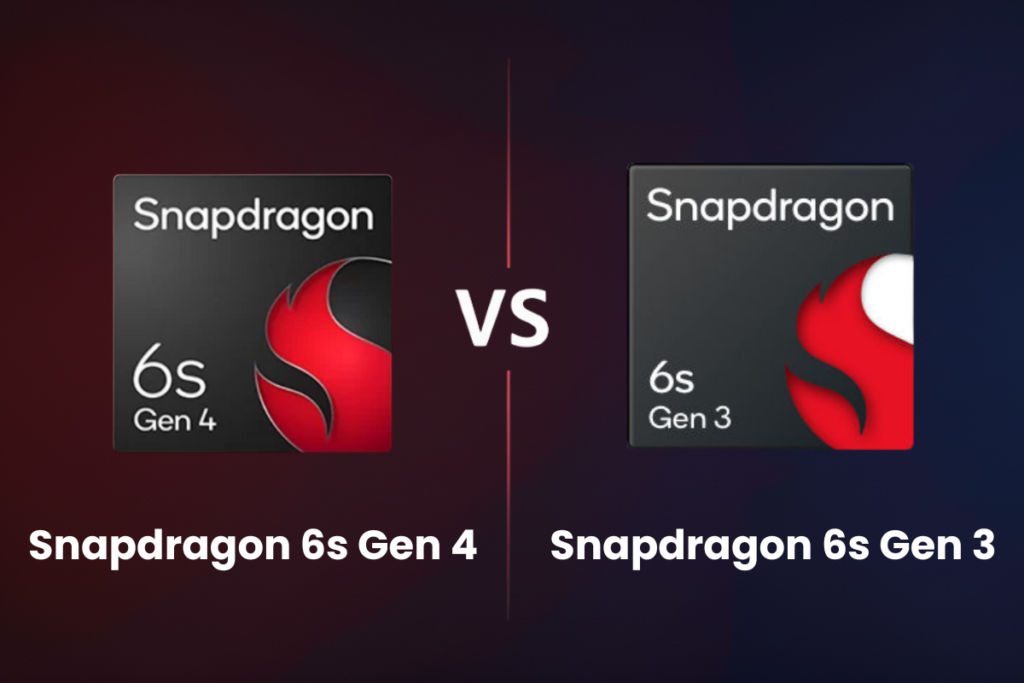
Powering the phone is the Snapdragon 6s Gen 3 chipset, paired with 4GB of RAM and 128GB of storage, with microSD card support for expansion. On the camera front, the device is said to offer a 50MP main camera, an 8MP ultrawide, and an 8MP front-facing camera for selfies and video calls.
Redmi 15 5G
But the real highlight is the battery: a 7,000mAh unit with 33W fast charging and 18W reverse charging, making it one of the longest-lasting phones in its segment. It will ship with Android 15 out of the box, running Xiaomi’s HyperOS skin, and is reportedly eligible for three years of software updates.
Other features include IP64 certification for dust and splash resistance, a side-mounted fingerprint scanner, and dual speakers for an enhanced multimedia experience. Flipkart has already begun teasing the phone, showing off a sleek black model with a dual-camera layout and Poco’s “Power for All” tagline.
For now, the Poco M7 Plus is confirmed only for India. There’s no official word on whether the device will launch in other markets, but given its specs-to-price ratio, it could gain traction globally if Xiaomi decides to expand availability.
Samsung’s latest foldable, the Galaxy Z Fold 7, has attracted significant attention with its slim design and reduced crease—but one big question has remained: how durable is it in everyday use? Samsung claims the hinge and flexible inner display can withstand 500,000 folds under normal conditions, and YouTube creator Tech IT, a creator known for hands-on experiments, took the time and effort to manually put that claim to the test.
Samsung Galaxy Z Fold 7
This wasn’t a controlled lab test with robotic arms and perfect conditions. Instead, it offered a more practical look at how the hinge and display hold up under normal wear and tear. Along the way, a few minor issues emerged. The phone rebooted unexpectedly somewhere between 6,000 and 10,000 folds. At 46,000 folds, the hinge started to creak. And at around 75,000 folds, viewers noticed a mysterious liquid near the hinge, though it didn’t seem to impact functionality.
By the 100,000 mark, the crease became more visible and the hinge made a slight crackling sound. Still, the display panel and the folding mechanism continued working as expected.
At 175,000 folds, the Fold 7’s speaker stopped working—a glitch that appeared to be unrelated to the folding process itself. Despite that hiccup, the phone made it all the way to 200,000 folds without any critical failures.
That number is significant: it’s equivalent to over five years of use if you fold and unfold the phone about 100 times a day. While the test did reveal some minor aging signs—like the noisy hinge and the visible crease—the Galaxy Z Fold 7’s ability to keep functioning after 200,000 real-world folds is impressive. For anyone hesitant about investing in a foldable due to concerns about long-term durability, this hands-on test offers a clear message: the Fold 7 can take a beating and still deliver.
Xiaomi has launched the Smart Outdoor Camera 4 Pro Triple-Cam Zoom Edition in China, following the recent debut of the Dual-Cam Edition. Priced at 449 yuan (around $62), the new model is now available for purchase.
Xiaomi Smart Outdoor Camera 4 Pro Specifications
The camera includes three 5-megapixel sensors, each capable of recording in 3K ultra-clear resolution at 2880×1620 pixels. All three lenses use an f/1.6 large aperture, allowing the system to capture sharp and detailed footage even in low-light conditions.
Xiaomi pairs these lenses with a dual-fill lighting system that includes both infrared and white LEDs. When the system detects a person at night, the lights automatically activate to enable full-color night vision.
The device supports 9x hybrid zoom through a combination of wide-angle, 4mm short-focus, and 12mm long-focus lenses. The new edition adds motorized horizontal gimbal control to the fixed lens, allowing users to adjust its angle remotely through the Mi Home app.
The camera tracks moving targets in real time using the mobile lens, which automatically zooms in when needed. This allows users to monitor large outdoor areas without sacrificing detail.
Xiaomi has integrated AI-driven human and vehicle detection. The system can identify license plates and send alerts when unauthorized vehicles are detected within custom parking zones.
The app pushes real-time alerts with captured footage, and users can set custom polygon zones to define virtual fences. If suspicious activity occurs, the camera activates a siren and high-frequency flashing lights as a deterrent.
The device is IP66-rated for water and dust resistance, making it suitable for use in harsh outdoor environments. It supports dual-band Wi-Fi 6, Bluetooth 5.0 for fast pairing, and a wired Ethernet connection for stable performance in areas with high interference.
For storage, users can choose between local microSD cards (up to 256GB), cloud storage (subscription required), or NAS systems. The camera uses H.265 video encoding to reduce storage and bandwidth use by up to 50%.
Additionally, it includes two-way audio communication, dual-angle time-lapse photography, and compatibility with Xiaomi smart TVs and displays.
In related news, Xiaomi recently launched a new split air conditioner with fast cooling, air purification, and virus-killing capabilities. The company has also introduced two new humidifiers featuring quiet operation, invisible mist output, and HyperOS support.
For more daily updates, please visit ourNews Section.
Samsung Electronics has updated its AI-powered Bixby voice assistant for the 2025 TV lineup. The new version is designed to make finding information and controlling devices faster and more natural.
Bixby can now be activated by voice or the mic button without using specific commands or menus. It understands context and follow-up questions, allowing for back-and-forth conversations. Powered by generative AI, it can answer general questions like “How tall is Mount Everest?” or give suggestions such as “Play chill playlists for a rainy day.” It can also provide details about on-screen content and display them without interrupting what is playing.
Click to Search Integration
Bixby is now built into Click to Search, making it easier to find details about actors, shows, or topics while watching live TV, cable channels, or Samsung TV Plus. It can also handle unrelated questions like “Give me a pasta recipe” or “Recommend movies about chefs” by pulling in external information.
Smart Home Control with SmartThings
The updated Bixby works with Samsung SmartThings to control connected appliances. Commands such as “Turn off the oven” or “Set the air conditioner to 25 degrees” can be given directly to the TV, making it a hub for smart home control.
Privacy and Security
Bixby is protected by Samsung Knox. No voice data is stored on servers or TVs, allowing users to access personalized AI features while keeping their information private.
Availability and Future Plans
The new Bixby will be available on 2025 Neo QLED, OLED, The Frame, and QLED models. It will launch in South Korea first, followed by a global rollout. In October 2025, Samsung will release an upgraded Vision AI, available through its 7-year free Tizen OS Upgrade program, which offers ongoing software updates and feature improvements.
For more daily updates, please visit ourNews Section.
Samsung has launched the 16-inch Galaxy Book5 Pro in India, adding to the Galaxy Book5 series that arrived in March 2025. Until now, only the 14-inch version of the Galaxy Book5 Pro was sold in the country. The larger model has the same specifications as the 14-inch version, with the difference being the bigger display.
Galaxy Book5 Pro features
The Galaxy Book5 Pro 16-inch has a 16.0-inch Dynamic AMOLED 2X touchscreen with WQXGA+ resolution, a variable refresh rate of 48 to 120Hz, and peak brightness of 500 nits. The display offers vivid colours, smooth visuals, and reduced blue light for eye comfort.
It runs on the Intel Core Ultra 7 processor (256V or 258V) with Intel’s AI NPU that delivers up to 47 TOPS performance. It comes with up to 32 GB RAM and up to 1 TB storage. Galaxy AI features such as AI Select and Recall are included, allowing users to search and revisit past content easily. A Copilot key on the keyboard gives quick access to AI tools.
Other features include a 2 MP webcam, dual microphones, and quad speakers with Dolby Atmos. The Pro Keyboard includes a numeric keypad. It runs Windows 11 Home.
Battery life is up to 25 hours of video playback. It has a 76.1Wh battery and supports 65W USB Type-C charging. Ports include two Thunderbolt 4, one USB-A, HDMI 2.1, a MicroSD slot, and a headphone/mic combo jack. The touchpad supports adaptive palm rejection and has subdivided zones for accuracy.
The laptop supports Samsung’s Galaxy ecosystem features like Quick Share, Multi Control, Second Screen, and Phone Link. It measures 355.4 × 250.4 × 12.5 mm, weighs 1.56 kg, and comes in a grey finish.
ASUS has introduced a new budget-friendly desktop PC aimed at casual users, students, and office environments. While it doesn’t carry the top of the line specs of a gaming rig, the ASUS V500 Mini Tower is a compact desktop PC that is both practical and reliable. ASUS previously announced the Mini Tower PC in the Indian market, but with slightly different specs. So here’s everything you need to know about the global version.
ASUS V500 Mini Tower PC: What does it offer?
ASUS managed to pack all of the hardware of this mini tower PC in just a 24 liter chassis, which measures 34.7 x 29.6 x 15.5 cm in dimensions. It can be configured with up to an Intel Core i7-13620H CPU, a laptop grade processor. This helps keep the thermals cool since mobile chips run on lower power. So the V500 Mini Tower PC can run a lot quieter compared to traditional desktop systems (38dB under load), while saving power consumption.
ASUS V500 Mini Tower PC
All of this is particularly useful in cramped spaces like offices, as they take up less space, generate less noise, and consume less power, which in turn reduces the heat the computer generates. The base model of the V500 Mini Tower isn’t particularly powerful, although, you can configure this compact desktop with an Nvidia GeForce RTX 4060 GPU. Unlike the processor, the RTX 4060 is a desktop grade graphics card via a PCIe 4.0 x8.
Other notable features include up to 64GB of RAM and 4TB of SSD storage, 180W power supply, DisplayPort, HDMI, 1xUSB-C, 6x-USB-A ports, WiFi 6, and Bluetooth 5.4. The ASUS V500 Mini Tower PC is listed for purchase with a starting price tag of 549.99 US Dollars for the i5-13420H variant with 8GB RAM and 512GB SSD. The i7 variant with more memory and storage costs a couple of hundred dollars more.
UGREEN has launched a powerful new charging dock that can charge up to five laptops and one phone at the same time. It’s called the UGREEN 500W desktop charging base, and it’s now on sale in China. The company says this is the first 500W charging dock in the industry.
This charger comes with six ports: five USB-C ports and one USB-A port. The top port, USB-C1, supports up to 240W of power, which is enough to charge even big gaming laptops. The other four USB-C ports (C2 to C5) support up to 100W each. The USB-A port gives 20W, which is good for phones or smaller devices.
Different configurations for different use cases
Depending on how many devices you plug in, the charger will automatically change the power delivery to make sure each device gets what it needs.
For example:
If you use only one port, you can get the full power, up to 240W.
If you use two ports, the charger might split it to 240W + 100W, or 100W + 100W, depending on which ports you use.
With three, four, or even six devices connected, the charger keeps adjusting the power. Some ports might give 100W, others 60W, and the USB-A port always gives 20W.
You can see all the different power setups in the images below.
The charging dock also supports PD 3.1, the latest fast charging standard. That means your devices will charge quickly and safely.
UGREEN says the charger has smart safety tech built in. If the dock gets knocked over or overheats, it will automatically adjust the power to protect your devices and the charger itself.
Even with all this power, the dock is not too heavy. It weighs about 1.7 kilograms, and the total power it can give at once is 500W.
Price and Availability
The behemoth charging dock is available at a price of 899 yuan (around $125) in China. There’s no word on global availability yet.
For more daily updates, please visit our News Section.
The Exynos 2500 chipset, released earlier this month with the Galaxy Z Flip 7, brings serious upgrades across the board over its predecessor, Exynos 2400. However, it couldn’t stand strong against the Snapdragon 8 Elite (see the comparison here). Can it beat the Snapdragon 8 Gen 3 from 2023?
We’ll examine the benchmark data and real-world differences to find out who has the edge.
Let’s begin with the spec sheet:
Exynos 2500
Snapdragon 8 Gen 3
Announced
June 2025
October 2023
Process node
3nm
4nm
Manufacturer
Samsung
TSMC
CPU
1 x 3.3 GHz — Cortex-X925 2 x 2.74 GHz — Cortex-A725 5 x 2.36 GHz — Cortex-A725 2 x 1.8 GHz — Cortex-A520
1 x 3.3 GHz — Cortex-X4 3 x 3.15 GHz — Cortex-A720 2 x 2.96 GHz — Cortex-A720 2 x 2.27 GHz — Cortex-A520
GPU
Samsung Xclipse 950 GPU Ray tracing support
Adreno 750 GPU Ray tacing support Snapdragon Elite Gaming features
NPU
Yes 59 TOPS
Qualcomm Hexagon NPU
Memory
LPDDR5x, up to 4.2 GHz
LPDDR5x, up to 5.3 GHz
Storage
UFS 4.0
UFS 4.0
Camera
Up to 320MP single camera Up to 8K video recording
Spectra triple 18-bit ISP Up to 200MP single camera Real-time semantic segmentation Up to 8K video recording
Connectivity
Download speed: 12.1 Gbps (peak) Upload speed: 3.67 Gbps (peak) Wi-Fi 7 Bluetooth v5.4 Satellite messaging support
Exynos 2500 vs Snapdragon 8 Gen 3: Benchmark comparison
Note: The tests were conducted on the Galaxy Z Flip 7 (Exynos 2500) and Galaxy S24 Ultra (Snapdragon 8 Gen 3).
AnTuTu performance
The Snapdragon 8 Gen 3 outperforms the Exynos 2500 on AnTuTu with a score of 1,768,372 vs 1,514,821, showing about a 17% overall performance lead. It leads across all key areas — CPU is 16% higher, while GPU performance is 23% better, which directly benefits gaming and graphics-heavy tasks. Memory and UX scores are also slightly in Qualcomm’s favor.
So, while the Exynos 2500 brings solid improvements over past Exynos chips, the Snapdragon 8 Gen 3 remains strong in synthetic benchmarks.
Exynos 2500
Snapdragon 8 Gen 3
AnTuTu score
1,514,821
1,768,372
CPU
379,468
441,650
GPU
529,420
653,105
Memory
360,718
371,609
UX
245,215
302,008
Geekbench performance
In Geekbench testing, the results show an interesting split: the Snapdragon 8 Gen 3 leads in single-core performance with a score of 2,216, about 7.7% higher than the Exynos 2500’s 2,058.
However, the Exynos 2500 fights back in multi-core performance, scoring 7,583 versus Snapdragon’s 6,791 — an 11.7% advantage. That suggests Samsung’s 10-core CPU architecture performs better in handling sustained workloads, such as multitasking, background processing, and content creation.
Exynos 2500
Snapdragon 8 Gen 3
Single core
2,058
2,216
Multi core
7,583
6,791
While benchmark data are helpful, they don’t tell about the camera capabilities, connectivity, and other important aspects of a chip. So, let’s look at the real-world differences to get the complete picture.
Exynos 2500 vs Snapdragon 8 Gen 3: Key differences explained!
Manufacturing
The Exynos 2500 is built on Samsung’s second-generation 3nm GAA process, whereas the Snapdragon 8 Gen 3 uses TSMC’s proven 4nm process (N4P).
While Samsung’s chip uses a more advanced process node, TSMC’s 4nm process is widely regarded for its reliability and consistent performance.
CPU
The two chips greatly differ in terms of CPU. The Exynos 2500 features two additional CPU cores and uses a different set of cores.
Here’s what the Exynos 2500’s CPU looks like:
1x Cortex-X925 @ 3.3 GHz
2x Cortex-A725 @ 2.74 GHz
5x Cortex-A725 @ 2.36 GHz
2x Cortex-A520 @ 1.8 GHz
The Snapdragon 8 Gen 3 features an 8-core CPU, which includes:
1x Cortex-X4 @ 3.3 GHz
3x Cortex-A720 @ 3.15 GHz
2x Cortex-A720 @ 2.96 GHz
2 x Cortex-A520 @ 2.27GHz
On paper, the Exynos 2500 has a powerful CPU, but the AnTuTu score suggests otherwise. Geekbench, however, prefers the Exynos 2500 chip over the Snapdragon 8 Gen 3 for multi-core tasks.
GPU
The Exynos 2500 features a 4th-generation Xclipse 950 GPU, offering higher pipeline and floating-point operations per second (FLOPS) than the Adreno 750 GPU on the Snapdragon 8 Gen 3. The latter, though, has higher shading units.
The Snapdragon 8 Gen 3 also features a full range of Snapdragon Elite Gaming features, providing an enhanced gaming experience. Both chips, however, bring support for hardware ray tracing.
NPU
The Exynos chip has a powerful NPU that can run up to 59 trillion operations per second (TOPS). The on-device AI performance is 39% better than its predecessor. On the other hand, the Snapdragon 8 Gen 3 features a hexagon NPU that’s 98% better than its predecessor. Both NPUs support various LLMs and on-device generative AI.
Camera
The Exynos 2500 supports up to 320MP camera resolution and up to 8K/60fps video recording. While not going into detail, Samsung states that there’s a new ISP capable of capturing vivid images and videos in high resolution. It also features several on-device generative AI capabilities, including removing unnecessary objects and expanding the background.
The Snapdragon 8 Gen 3, on the other hand, has an 18-bit Spectra triple ISP with support for up to 200MP camera and 8K/30fps video recording. The chip offers a range of camera features, including real-time semantic segmentation, Video super resolution, Mega low-light photography, and Multi-frame Noise Reduction (MFNR).
Connectivity
The Exynos chip offers higher speeds on a 5G connection, with download speeds of up to 12.1 Gbps and upload speeds of up to 3.67 Gbps, while the Snapdragon 8 Gen 3 peaks at 10 Gbps (download) and 3.5 Gbps (upload). It also supports satellite messaging.
On the plus side, the Snapdragon chip integrates premium audio features, including aptX Lossless and XPAN, for enhanced spatial audio. Wi-Fi 7 and Bluetooth 5.4 are present on both chipsets.
Exynos 2500 vs Snapdragon 8 Gen 3: Which one should you choose?
The Exynos 2500 is a big step forward for Samsung’s in-house silicon. With a more advanced 3nm process, a 10-core CPU, improved AI performance, and support for cutting-edge camera and connectivity features, it finally feels like a competitive flagship chip — something that couldn’t always be said about past Exynos offerings.
However, when stacked up against the Snapdragon 8 Gen 3, Qualcomm’s chip still holds a lead where it matters most. It delivers stronger benchmark scores in AnTuTu, better GPU performance for gaming, and more mature software and thermal optimizations, thanks to TSMC’s rock-solid 4nm process. However, the Exynos 2500 does pull ahead in multi-core CPU performance and offers faster 5G connection speed.
So, while the Exynos 2500 narrows the gap, the Snapdragon 8 Gen 3 continues to offer a more balanced and proven performance package, particularly for users who prioritize gaming and stability.
Xiaomi has just expanded its accessory lineup in Europe with two new power banks. One model supports MagSafe for magnetic wireless charging, while the other has a massive capacity and an in-built USB-C cable. Both models are available for affordable prices, so let’s check them out.
Xiaomi Magnetic Power Bank
The first is the Xiaomi 33W Magnetic Power Bank, which has a sizeable 10,000mAh capacity. This model is rolling out across more European countries right now and brings MagSafe compatibility. This model has a magnetic wireless charging pad, which can charge supported devices at 7.5W. Its total charging output is 33W from the USB-C port and the built-in USB-C cable.
Xiaomi 33W Magnetic Power Bank
As per official claims, it can charge an iPhone 16 Pro to 58 percent in just 30 minutes. Users can charge this power bank at 30W, with a full charge taking a little over two hours. There are LED indicators for battery levels, and the power bank weighs just 238 grams.
Xiaomi Power Bank 20000
The second power bank arriving in Europe is the Xiaomi Power Bank 20000. As the name suggests, this model packs a massive 20,000mAh cell. Just like the Magnetic Power Bank, this model also packs a built-in USB-C cable for wired charging. There is also a USB-C and USB-A port, each of which supports up to 22.5W charging output. This model was just recently announced in the Indian market, and it is now making its way to more European regions.
Xiaomi Power Bank 20000
Xiaomi claims that an iPhone 16 Pro can charge to 56 percent in just 30 minutes. It has a heftier body that weighs 342 grams. Thanks to its built-in cable and ports, users can simultaneously charge up to three devices. Xiaomi’s new power bank can even charge smartwatches and other accessories that require low power delivery.
Pricing
The Chinese tech giant unveiled the Xiaomi 33W Magnetic Power Bank 10,000mAh in Europe in two color options, namely White and Black. It is listed for sale via the brand’s official website in Spain for 30.99 Euros. On the other hand, Xiaomi Power Bank 20000 also has the same two color variants, but is more affordable with a 20.99 Euro price tag.
iQOO has officially teased its upcoming Z10 Turbo+ smartphone, showcasing its gaming-centric features for the display. Recent teasers have basically confirmed a bunch of its key specs, and the latest one showcases some eye protection features. So let’s check it out.
iQOO Z10 Turbo+ Teaser
Earlier this week, the Chinese brand shared a teaser that showcased the iQOO Z10 Turbo+’s impressive AnTuTu performance of 3.26 million points. It managed to achieve such a high score thanks to MediaTek’s flagship Dimensity 9400+ SoC. Powering this large chip is a massive 8,000mAh battery pack with 90W wired fast charging, which is complemented by a large VC liquid cooling system for thermal management. Now, iQOO has revealed that the smartphone’s display will have an ultra high 4,320Hz PWM dimming along with support for DC dimming.
iQOO Z10 Turbo+
For those unaware, the high frequency and DC dimming enable a more comfortable viewing experience for users. The eyes of some users can be sensitive to lower PWM frequencies, so this lowers eye strain overall. Considering how the brand positions this model as a high-end gaming smartphone, this is perfect for long gaming sessions. Other notable display features include a 1.5K OLED display with a 144Hz refresh rate and 2,000 nits of peak brightness.
To recall, iQOO is collaborating with Riot Games to bring special optimizations for Valorant’s mobile version. So the brand claims that the iQOO Z10 Turbo+ will support 144Hz gameplay in Valorant: Primal. As of right now, this is all the information we have at the moment, so stick around for more as we will be covering the launch event tomorrow.
For more daily updates, please visit our News Section.
TP-Link has officially launched its first Wi-Fi 7 travel router, the TL-WR3602BE. It carries an original price of $139.99 but is currently available on Amazon for $109.99 after applying a $30 coupon.
TP-Link TL-WR3602BE Specifications
The TL-WR3602BE supports BE3600 dual-band Wi-Fi 7 and delivers speeds of up to 2882 Mbps on the 5 GHz band and 688 Mbps on the 2.4 GHz band.
The router is designed for mobile users who need stable and fast internet in different environments. TP-Link has equipped it with seven operating modes, including Router Mode, USB Tethering, 3G/4G/5G USB Modem Mode, Hotspot Mode (WISP), Access Point Mode, Range Extender Mode, and Client Mode. These modes allow the router to function across a wide range of travel and home setups.
The device features a 2.5 Gbps WAN port and a 1 Gbps LAN port for wired connections. It also includes a USB 3.0 port for file sharing and USB internet access, along with a USB-C port for power input. The router can run on a standard wall adapter or a 5V/3A power bank, making it suitable for travel use in airports, hotels, cruise ships, or remote work locations.
For security, the TL-WR3602BE supports multiple VPN protocols, including OpenVPN, WireGuard, PPTP, and L2TP, enabling both VPN client and server configurations directly on the router. It also features captive portal support via the Tether app, allowing users to log in to public Wi-Fi networks while ensuring connected devices remain isolated and secure.
The device supports WPA3 encryption, guest networks, IP and MAC binding, and application-level gateway features. TP-Link has integrated HomeShield for added protection, enabling parental controls, network scanning, and QoS prioritization.
The TL-WR3602BE can connect up to 90 devices simultaneously. It supports the latest Wi-Fi 7 technologies such as Multi-Link Operation, 4K-QAM, and multi-resource units for improved speed and efficiency.
In related news, TP-Link recently launched its new BE6400 Wi-Fi 7 router featuring a 2.5G port, game acceleration, and mesh networking support. Meanwhile, Asus has introduced the ROG Strix GS-BE18000 router with tri-band Wi-Fi 7 and eight 2.5GbE ports.
London-based tech company Nothing has rolled out a new update to its Essential Space platform, bringing improved sharing options and quality-of-life enhancements for users of its latest smartphones. Following a series of updates over the past few months, the latest changes aim to make the AI-powered hub more versatile and easier to use.
Sharing gets smarter on Essential Space
Announced on August 6, 2025, the update focuses on making it easier to share content created and stored in Essential Space. One standout feature is the ability to share “Flip-to-Record” audio clips in multiple formats—audio, image, PDF, or Markdown—making them more useful for everything from note-taking and presentations to posting online.
In addition to voice clips, the update now lets users share Memories—such as saved images and screenshots—using the same format options. Whether you want to send something to a colleague, include it in a document, or post it on social media, the new sharing tools give users more flexibility.
The update is available through the Google Play Store for Nothing’s recent launches, including the Phone (3), Phone (3a), and Phone (3a) Pro. Users who haven’t received it yet can manually check the Play Store for updates.
This release builds on previous improvements to Essential Space, including better organization and search features powered by AI. Nothing has been actively refining the platform based on community feedback, often engaging with users through social media and forums.
As Essential Space continues to evolve, Nothing is shaping it into more than just a media or productivity tool—it’s becoming a central part of the company’s ecosystem. By offering smart features like multi-format sharing and AI-driven organization, the platform is becoming especially appealing to creators, students, and professionals who rely on their phones for more than just basic tasks.
Xiaomi has launched the Magnetic Power Bank Stand 10000mAh 7.5W in China. The new power bank is now available for pre-order on JD.com. It supports up to 33W wired fast charging and 15W wireless charging, and is priced at 169 yuan ($24).
Xiaomi Magnetic Power Bank Stand Specs
The device features a built-in stand that opens to a maximum angle of approximately 80 degrees. This allows users to prop up their smartphones while charging. Xiaomi has used 17 N52H-grade magnets for strong magnetic suction, enabling secure attachment to iPhones that support MagSafe. The magnetic charging function works with iPhone 12 series and newer, except the iPhone 16e. Xiaomi recommends using the feature with bare phones or official MagSafe accessories.
The power bank includes a USB-C cable with an L-shaped connector built directly into the unit. The cable supports a maximum output of 33W and an input of up to 30W when using a 12V/2.5A charger. Wireless output supports 5W, 7.5W, 10W, and 15W charging, covering most Qi-compatible smartphones and accessories. The power bank can charge up to three devices at the same time using two wired connections and one wireless.
Xiaomi has added a digital display on the front of the power bank to show battery percentage, charging status, and error indicators. The device uses two internal 5000mAh battery cells with a total rated energy of 37Wh. According to Xiaomi’s lab testing, it can fully charge the Xiaomi 15 Pro or iPhone 16 Pro twice under controlled conditions.
The power bank supports multiple charging protocols, including PD3.0, QC3.0, PPS, Apple 2.4A, and BC1.2. It offers compatibility with devices from Xiaomi, Apple, Huawei, OnePlus, Oppo, and Vivo. The unit also includes nine layers of safety protection, covering temperature control, short circuit protection, overvoltage protection, and safe pass-through charging.
The design is available in four colors: light blue, light purple, light brown, and dark grey. It has a rounded, ergonomic build for comfortable handling. Xiaomi has confirmed that the product meets CCC certification and conforms to aviation safety standards with its 37Wh rating, making it suitable for air travel.
Xiaomi might soon expand its tablet lineup with two new models. The upcoming devices were recently spotted on China’s 3C certification database, and based on a Chinese tipster, they are a part of the Xiaomi Pad 8 series.
The new devices carry the model numbers 25091RP04C and 25097RP43C, and both have cleared China’s 3C regulatory process, which means they’re now approved for sale in the country.
While Xiaomi hasn’t made anything official yet, the certifications offer a few early clues, especially around charging speeds.
Xiaomi Pad 8 series 3C certification
According to the database, model 25091RP04C supports 67W fast charging, the same power rating seen on the Pad 7 Pro. Meanwhile, model 25097RP43C is listed with 45W charging, which matches the standard Xiaomi Pad 7. That could mean Xiaomi is preparing to launch both standard and Pro versions again, just like last year.
There’s also speculation that these devices might debut around late September, possibly alongside the upcoming flagship smartphone, the Xiaomi 16. The timing lines up with the typical fall refresh window the company uses for its higher-end mobile devices.
What the predecessor offers
Last year’s Xiaomi Pad 7 Pro, for reference, features an 11.2-inch 3.2K LCD display with a 144Hz refresh rate, Snapdragon 8s Gen 3 chipset, and quad speakers.
The standard Pad 7 came with the Snapdragon 7+ Gen 3 and similar design touches but slightly trimmed-down features. Both tablets were launched with Xiaomi’s HyperOS and included extras like optional matte anti-glare displays, keyboard accessories, and fast charging.
There’s a good chance that Xiaomi will maintain the same industrial design, which features a slim metal chassis and quad-speaker audio tuned for streaming and casual gaming.
Now that the 3C listing is public for the Pad 8 series, it likely won’t be long before more official information surfaces. We will keep you updated on that.
Lenovo is expanding its tablet lineup in China with two distinct new offerings: the flagship-grade Xiaoxin Pro GT, powered by Qualcomm’s Snapdragon 8 Gen 3, and the budget-friendly Xiaoxin Pad 12.1. This launch brings a new gaming tablet with the Pro GT, while the other model is built for casual users. So here’s everything you need to know.
Lenovo Xiaoxin Pro GT
Over the last couple of weeks, the Chinese tech giant shared a bunch of teasers for its latest gaming tablet. The Xiaoxin Pro GT sports an 11.1-inch display LCD panel with a 3.2K resolution (3,200 x 2,000p), a 144Hz refresh rate, and 98 percent DCI-P3 color gamut. The tablet is also paired with a stylus with 8192-level pressure and 0.3ms ultra-low latency.
Lenovo Xiaoxin Pro GT
Under the hood, it is equipped with Qualcomm’s Snapdragon 8 Gen 3, which is its last gen flagship processor. Since it is a gaming device, this chip offers high-end performance that can run graphically intense titles. The processor is paired with up to 12GB of RAM and 256GB of internal storage. A sizeable 8,860mAh battery pack, which supports 68W wired fast charging. All of this is packed in an ultra slim 5.99mm chassis, with the body weighing 458 grams.
Lenovo Xiaoxin Pad 12.1
On the other hand, the Xiaoxin Pad 12.1 is a budget tablet offering from Lenovo. It has a taller 12.1-inch LCD panel with a 2.5K resolution (2,560 x 1600p), 90Hz refresh rate, DC dimming, TÜV Rheinland eye protection certification, and 800 nits of peak brightness. This model is a budget tablet that packs the MediaTek Dimensity 6400 SoC, which is paired with 8GB of RAM and up to 128GB of internal storage. A larger 10,200mAh battery pack powers the Xiaoxin Pad 12.1, with support for 45W wired fast charging. It comes with a metal body that measures 6.29mm thick and 530 grams in weight.
Lenovo Xiaoxin Pad 12.1
Pricing
Lenovo has just announced its Xiaoxin Pro GT gaming tablet for a starting price tag of 1,799 Yuan (~$250) for the 8GB + 128GB variant, while the 8GB + 256GB and 12GB + 256GB options cost 1,999 Yuan (~$278) and 2,299 Yuan (~$320) respectively. Meanwhile, the budget Xiaoxin Pad 12.1 model arrives in either an 8GB + 128GB configuration for 1,199 Yuan (~$167) and 1,399 Yuan (~$195) for the 8GB + 256GB version.
For more daily updates, please visit our News Section.
Apple’s next ‘Ultra’ smartwatch is taking shape, and a new leak is giving us an early look at what to expect. With the official unveiling expected in September, the Apple Watch Ultra 3 could bring meaningful upgrades — starting with a slightly larger display.
Apple Watch Ultra 2
The latest clues come from the iOS 26 beta, where MacRumors discovered references to the Apple Watch Ultra 3. Among the findings: an image revealing a display resolution of 422 x 514, which is a small bump from the Ultra 2’s 410 x 502.
While the difference may seem minor, it likely points to thinner bezels rather than a bigger case — meaning Apple is squeezing more screen into the same 49mm size. This could improve how apps, fitness metrics, and notifications appear on the wrist.
In addition to the display tweaks, several rumored upgrades are making rounds. One of the most talked-about is satellite connectivity, which would allow for communication in areas without cell service — a potential game-changer for outdoor adventurers.
The Ultra 3’s slightly larger display is also rumored to be brighter and support a higher refresh rate for smoother scrolling. Under the hood, it may run on Apple’s next-generation S11 chip, promising better performance, efficiency, and battery life.
Health tracking could see a boost too. Blood pressure monitoring has been floated as a possible new feature, though it’s unclear whether it will make it into this year’s model. The overall rugged aesthetic and titanium body are expected to stay, with Apple likely focusing on incremental refinements rather than a full redesign.
Gizmochina Review has been looking for systems suitable for building an all-flash SSD NAS. My needs were clear: at least 4 U.2 NVMe slots with expandable self-contained 10GbE and above network ports. However, if anyone like us searches in the market so hard, he/she knows that this is not easy. Many manufacturers are still producing all-flash systems with 2.5GbE ports. Therefore, we expect a lot from the LincPlus LincStation N2, which will be reviewed soon. It features 4 quick-release M.2 ports, 2 2.5″ SATA disks, and, crucially, a 10GbE RJ45 port. The article will be a detailed story of reviewing the LincStation N2.
Power supply: DC5.5 x 2.1 12V 5A 60W external power supply.
The Intel N100 was released in 2023, and while it may seem a bit old, its successors, the N150, N200, and N250, have only increased their operating frequency, with the architecture and number of threads remaining unchanged. With UNRAID, you can enable core SR-IOV virtualization to take full advantage of the performance. Memory is limited by the CPU, up to 16GB LPDDR5 4800MT/s, which is larger and faster than traditional manufacturers and can easily run a large number of Docker containers with a lower crash probability than the ZimaBoard 2.
Intel N100 Soc has only 9 Pci-e peripherals, and the LincStation N2 offers 4 NVMe slots, 2 SATA slots, and Aquantech N150, N200, and N250 offer 4 NVMe slots, 2 SATA slots, and 4 NVMe slots, and 2 SATA slots. The LincStation N2 offers 4 NVMe slots, 2 SATA slots, 2 for the Aquantia AQC113C, and 1 for the built-in eMMC. Theoretically, it supports WLAN and Bluetooth but only supports Intel WLAN cards with CNVio channels.
Design
There are 7 LEDs in the center of the front that correspond to the 6 hard drives and network statuses, and all 7 will blink at the same time if they are not driven correctly.
The top cover is frosted plastic, which feels good to the touch but is prone to fingerprints. The bottom half is an aluminum alloy panel with 4 M2 slots with thermal spacers to help dissipate heat. Open the front cover, there is one SATA slot on each side, no quick-release design, and installation requires the included screws and screwdriver. These two 2.5″ SATA slots support 15 mm-thick disks such as high-capacity HDDs.
System experience
Comes with a one-year UNRAID subscription. UNRAID offers flexibility in array formation, allowing you to form data-protected arrays like HDDs with different capacities.
It’s easy to configure Docker. For example, to deploy Docker for LAN speed testing, you just need to search for it in the APPS search results and install it with the default template to test it. It’s also easy to create a DACINVI collaborative database with PostgreSQL. The store is rich in application data, with 3600 APPs in the Downloaders category.
Performance
Two Intel® Solid-State Drive DC S3500 Series 800 GB are installed in 2.5-inch disk space, with one set as a checksum disk and the other as a data disk, allowing the unRAID to synchronize checksums to simulate 784 GB writes.
At the end of the test, the SATA SSD temperature peaked at 68° and stabilized at 44° after standby, which is an average temperature performance.
Toshiba GX7 NVME SSD was installed in the M2 slot, and the maximum temperature was 48° after writing 2TB of data continuously, with an operating power of 8.35W, which is a better temperature performance than the SATA disk.
Using IPerf3 to test the performance of the NIC, the uplink and downlink speed can reach 9.5Gbps, and it is ready to run at 10000Mbps.
Enable SMB sharing, and change the MTU of the PC and N2 NIC to 9000. The read speed is full of 10Gbps due to cache, and the write speed is only 1000MB/s due to Gen3 X1 bandwidth limitation. Set up 3 SSD RAID-Z1 arrays to test, and found that the performance of ZFS arrays is weaker than that of direct read/write, but it is still close to the limit of 10Gbps transmission, which is probably due to the internal bus bandwidth of the Alder Lake-N series processors. This may be due to the small internal bus bandwidth of the Alder Lake-N series processors.
Summarize
The actual performance of the LincPlus LincStation N2 is a good match for my ideal 10Gb all-flash NAS. As one of the few entry-level NAS products with 10Gb RJ45 ports, the NIC has an excellent power consumption ratio, and the N100 processor is powerful enough to support 10Gb network transfers. The device is quiet, with the fan barely audible except during the boot-up detection phase, and the NVMe NAS have excellent heat dissipation, so it’s ideal for noise-sensitive scenarios such as desktops or bedrooms.
However, there is some controversy over the SATA slot. If an SSD is inserted, it may overheat during long-term reading and writing; if an HDD is inserted, there is no obvious advantage in terms of speed and capacity compared to an SSD. If LincPlus comes out with a next-generation LincStation, it would be a nice innovation to replace the SATA drive with a U.2 drive.
We’ll be using this product for a long time to come, and I’ll be on the lookout for similar products that are even better.
This is the new DOOGEE V Pad, in DOOGEE’s lineup, it is positioned as the high-end, made for business and office tablet. Overall the build quality is very good, you can confirm that the second you have it in hand. For other specs, we will talk about them in this video. When I look at the prices, right now it is $303.99 for the basic version, and just an extra $16, you can get a whole pack of accessories, this is actually an incredible deal. Whether it is truly worth it, you will know after reading this review.
20% off code: KOLV20 + 30-day quality assurance + 1 year warranty Basic Edition-Final Price: $303.99 VIP Edition-Final Price: $319.9
Unboxing & Design
The box is simple and classy. In the box, there is the pad, a charger and an A-C cable. Underneath the pad, there is a SIM card pin, and some papers. So here you should know it supports 5G network, which enables you to use it anywhere.
The color we received is this black, there is also a green one I think. Like some previous tablets we reviewed, it is a somewhat unibody build. I mean the bottom half is made of metal, and the other half is plastic. The good thing is that the color and structure remain consistent, so it still looks fine. On the front, you will be glad to see that the bezels are equal on all four sides, so the screen is better looking also. On the sides, there are the buttons, speakers, and the SIM card slot, which also support an extra SD card.
Display
The tablet has a 12-inch display, the resolution is 2.4k. Overall it is a good display, the resolution is high enough to go through any pixel peeping. When watching some videos, the colors are vibrant. DOOGEE did not disclose the brightness, after comparing to some other tablets, I am guessing it is about 500nits on this one.
The aspect ratio is 5:3, and the bezel they say is 7mm, It’s good for watching content or office work. We have a slightly bigger tablet, 12.6 inches, when showing an Excel, the DOOGEE V Pad can show even slightly more columns, although the rows are two fewer. When watching content, it also managed to show less trim up and down, both for the bigger tablet and the slightly smaller one. So you know this tablet is better for productivity.
The display also support eye protection, there are three modes for displaying content, whether you pretty cooler tone, or warm tone. The refresh rate is 90Hz, it is very fluid swiping through every page, and the gesture controls are also very smooth.
Performance
The DOOGEE V Pad comes with Mediatek D7050 chip, made by 6nm process, LPDDR5 and 5G support. The one we have here is 8GB+256GB, and it can take an extra 12GB of virtual RAM from the storage. You will be happy to see there is an SD card slot here, to expand the storage up to 2TB, not many tablets are offering this right now.
So performance-wise, it is not going to blow the roof off, but rather be good enough for daily tasks. Since we did not receive the keyboard combo, we tried to pair it with a keyboard, the experience is still good. It can support a stylus, highly recommend you get the combo from DOOGEE, that way you can get the best user experience.
Battery
The battery capacity is 8800mAh, with 18W max charging power. For a 30-minute video play, it takes 11% of battery, and a 30mins of office work, it takes about 8%. so it’s safe to say this tablet can last more than a day without any problem. And it supports reverse charging, it can charge some small devices like your earbuds.
Daily Experience
In terms of some user experience, since it has Wi-Fi 6 support, downloading stuff or watching content is pleasant, there won’t be any stutter doing those things; And there are 4 speakers in total, placed at both sides, it claims to output 120dB of sound, which is really loud actually; The camera setup is a 13MP at the back, and 8MP at the front. There is also flash for the rear camera. Again these are practical for everyday use, like video conferencing, taking virtual classes and stuff; The tablet is fairly thin and light, it is 572g in weight, and 7.9mm thick. At this size, it maintained a good balance. Lastly, it comes with Android 15, and a clean and smooth operation is guaranteed.
Verdict
To sum up, the DOOGEE V Pad is a solid tablet for productivity and entertainment. 12 inches is sort of the sweet spot, not too big, not too small. And the 5:3 aspect ratio just made it the machine for office stuff, or watching some content. To support all these, there is a big battery support, and 4 speakers. For such a tablet that is just about $300, I’d say it is a very good value. Now it has just started to sell, you can get more info from the link in this review.
We use cookies on our website to give you the most relevant experience by remembering your preferences and repeat visits. By clicking “Accept”, you consent to the use of ALL the cookies.
This website uses cookies to improve your experience while you navigate through the website. Out of these, the cookies that are categorized as necessary are stored on your browser as they are essential for the working of basic functionalities of the website. We also use third-party cookies that help us analyze and understand how you use this website. These cookies will be stored in your browser only with your consent. You also have the option to opt-out of these cookies. But opting out of some of these cookies may affect your browsing experience.
Necessary cookies are absolutely essential for the website to function properly. This category only includes cookies that ensures basic functionalities and security features of the website. These cookies do not store any personal information.
Any cookies that may not be particularly necessary for the website to function and is used specifically to collect user personal data via analytics, ads, other embedded contents are termed as non-necessary cookies. It is mandatory to procure user consent prior to running these cookies on your website.