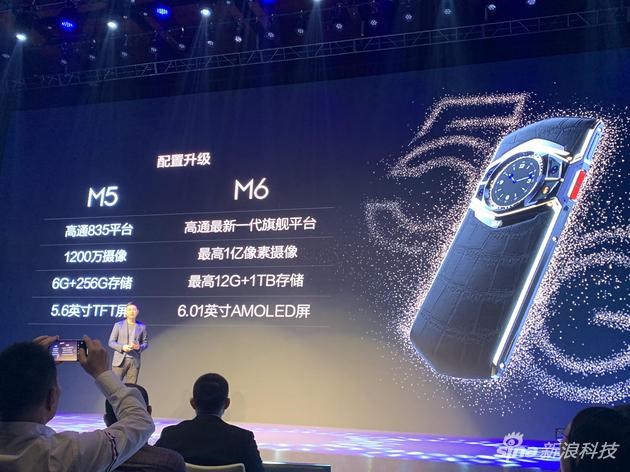
Chinese luxury smartphone manufacturer, 8848, had an event today in Beijing where it discussed its plan for the future. The company, which celebrated its 5th anniversary this year, also announced its first 5G smartphone, the 8848 Titanium M6.
The 8848 Titanium M6 is not only the first luxury 5G smartphone but also the first Snapdragon 865-powered device. The phone has a 6.01-inch AMOLED display, 12GB of RAM and 1TB of storage. It also has a 64MP camera that can shoot 100MP photos.
The rest of the M6’s specs were not revealed and that is because the phone will not be available until the first quarter of 2020 when Qualcomm’s Snapdragon 865 processor will be already available.
8848 also announced a plan called “5G Zero Distance”. The plan has been designed to make switching to 5G easy. 8848 says to subscribe to the plan, all you have to do is purchase its current phone, the 8848 Titanium M5, and when the M6 launches next year, you will be able to purchase it at the same price you bought the M5.
8848 also announced a personal assistant service for its customers. While other companies are launching AI-based smart assistants, 8848’s assistant service is made up of real people that will handle trivial tasks for customers. The company said it believes smart assistants can’t provide good enough services to people, so it decided to launch a personal assistant service made of real people.
Xiaomi was the first company in India to sell online exclusive smartphones in the country. In the year 2014, it unveiled the MI 3 which was available for purchase only via Flash sales hosted on Flipkart.com. The company had a completely different approach towards marketing its products as the costs saved by eliminating the middlemen like distributors & sub-distributors were passed on to the consumers.
Therefore, Xiaomi was able to price its devices much more aggressively in comparison to its competitors. And it was only a matter of time until these competitors started following suit in order to stay relevant in the industry. As of today, about 40% of the smartphones sold in India are sold while online channels, out of which the most prominent ones are Amazon.in, Flipkart.com and every OEMs respective online stores.
Even though the number of devices sold online is still less than the number of devices sold offline, the gap is getting narrower with each passing day. Undoubtedly, the online sales model has contributed in making technology more affordable for the end-user, it has been a nightmare for small or medium scale business owners who have been establishing their business for years, if not decades.
Report Begins here
While associations of such business owners, in the past, have been protesting so that the online exclusivity of these devices is stopped, which would allow them to sustain their business, no concreate laws have been enforced until now. However, this might change early next year, as smartphone OEMs currently have an ongoing contract with these online retailers which will end on the 31st of December 2019.
According to Arvinder Khurana who is the president of All India Mobile Retailers Association (AIMRA),
Realme has decided that there will be complete parity between online and offline retailers with no exclusive model, an exclusive period of launch, price or brand offers from January.
Even Oppo and Vivo have assured us that they would do something similar, though official communication is awaited,
Readers who are unaware, all three of these brands are owned by BBK electronics which is based out of China. According to Counterpoint research, these three brands make up 30% of collective sales in the India smartphone industry.
Arvinder Khurana even said that “Over 30,000 cellphone stores have shut in the past year and a few thousand jobs have been lost. We need brand support to revive offline business,”
After AIMRA presidents made the statement ET India sent out mails to India’s five largest smartphone brands which include Xiaomi, Samsung, Vivo, Realme and Oppo.
Madhav Sheth, the CEO Realme India said the “company believes in fair trade practices, offering similar benefits to online and offline customers, with the same price for its products. Any offers available on platforms are run by respective retailers and not by the brand,”
An Oppo spokesperson made this statement “Having an aggressive omni-channel approach has helped us achieve healthy growth in the Indian smartphone market. Keeping in lieu of the same, we plan to continue launching our products across channels going forward,”.
While emails sent to Vivo, Xiaomi and Samsung have not been replied yet which would either accept or deny the previously mentioned statements.
We will have to wait until further developments are made to verify “whether the scheme of selling online exclusives martphones comes to an end in India or not”. we will keep you updated on the subject so stay tuned.
Google Pixel 4’s new set of sensors on top of the display was the talk of the town over the past few weeks. Such a setup warranted powerful features like Motion Sense and an ultra-fast Face Unlock. But once the phone was launched, reviewers noted that the soli radar based ‘Motion Sense’ experience was underwhelming. Even the Face Unlock feature on the Pixel 4, which was very secure on paper, came with a major flaw.
Over the past couple of years, Face Unlock has become a huge part of our smartphone experience. But most Android smartphone makers have so far opted for a less expensive and less secure Face Unlock technology. So it was exciting to see Google’s own version of Face Unlock which was secured. But it turns out, Google’s Face Unlock has a major flaw, it works even when the user’s eyes are closed. So, if the Pixel 4 user is sleeping or even dead, Face Unlock will be able to open the phone.
Most Face Unlock mechanisms, even the ones that just rely on the front camera, cannot unlock your smartphone if your eyes are shut. For example, OnePlus 7T‘s Face Unlock needs at least one eye to be open in order to unlock the device. This is a very important feature to ensure no one can unlock your phone while you are sleeping. But Google has confirmed that Pixel 4’s Face Unlock works even when your eyes are shut and unfortunately, there’s no workaround to the issue.
Technically, Google doesn’t consider this as an issue as it believes this allows for a seamless and ultra-fast unlocking experience. But many don’t share the same feeling. BBC’s Chris Fox was the first to spot this issue. He even tweeted with video proof.
Google doesn’t confirm whether it will add an option to fix this (issue?). But given how this particular point has got global coverage, it’s quite possible that the company adds a toggle setting via a future update to force ‘eyes to be open’ before unlocking the device.
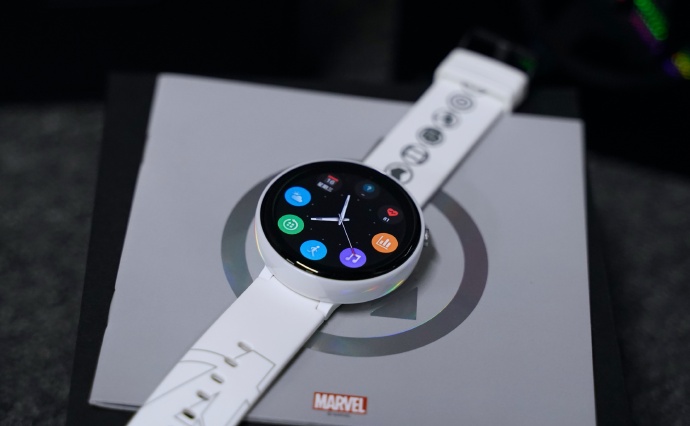
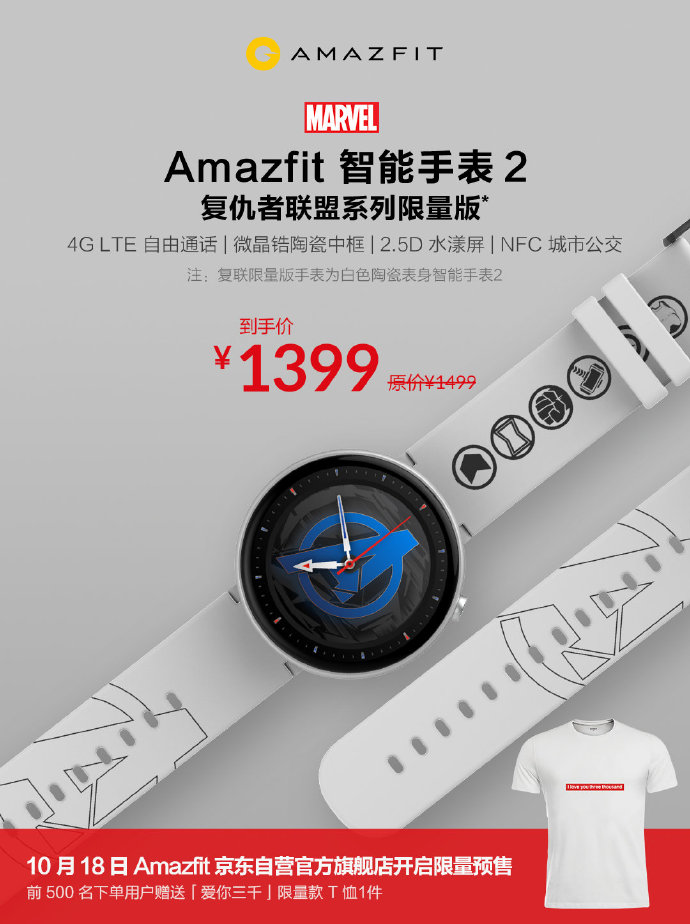
Huami has put up the much-anticipated Amazfit Verge 2 Avengers Limited Edition for pre-sale in China. The Verge 2 Avengers customized edition was launched on July 11 alongside the Amazfit Verge 2 and ECG version. The regular Verge 2 was immediately available to pre-order but the ECG and Avengers Limited Edition was billed to go on sale at the end of July. That obviously didn’t happen until now. The company cites the complexity of the ceramic body and the high processing difficulty for the inability to meet up with the schedule.
The presale has now opened on Amazfit’s official flagship store on Jingdong (JD.com). The device is on offer for 1399 yuan (~$197).
The Amazfit Verge 2 smartwatch comes with a spectacular design manufactured using a new material different from the plastic body which the first-gen Verge utilises. It has a Microcrystalline zirconium ceramic body with skin texture and extremely high hardness. Huami says the ceramic body comes out after 35 days of precision processing and that it wet through 24 complex processes. The Avengers edition comes with a wite frame as well as a white rubber strap designed with the Avengers logo. We expect the watch face to have an Avengers theme in addition to special watch faces.
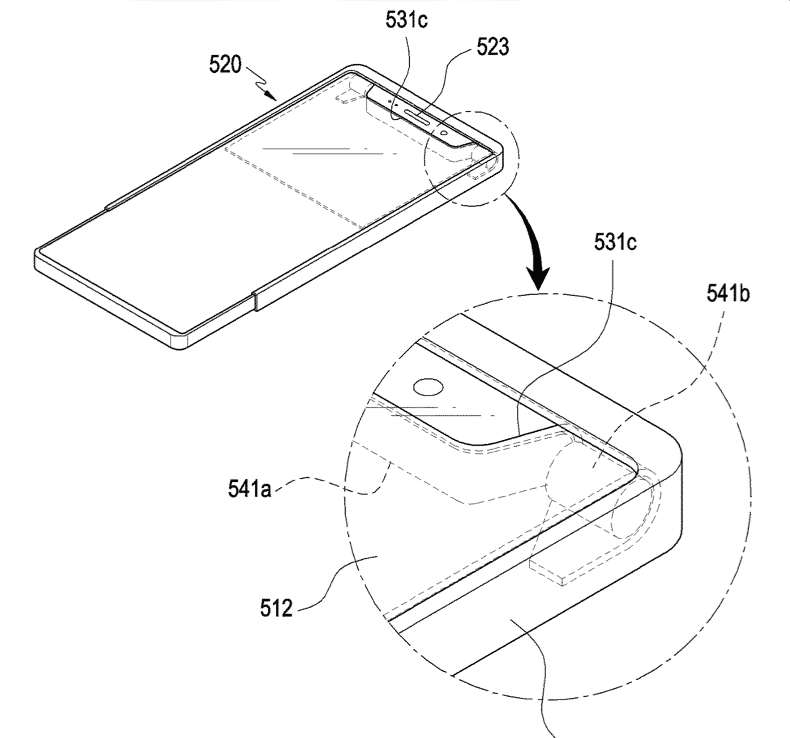
Samsung has been granted a new patent by the US Patent and Trademark Office (USPTO) for a flexible phone. The phone extends outwards to create a bigger display on a smaller body.
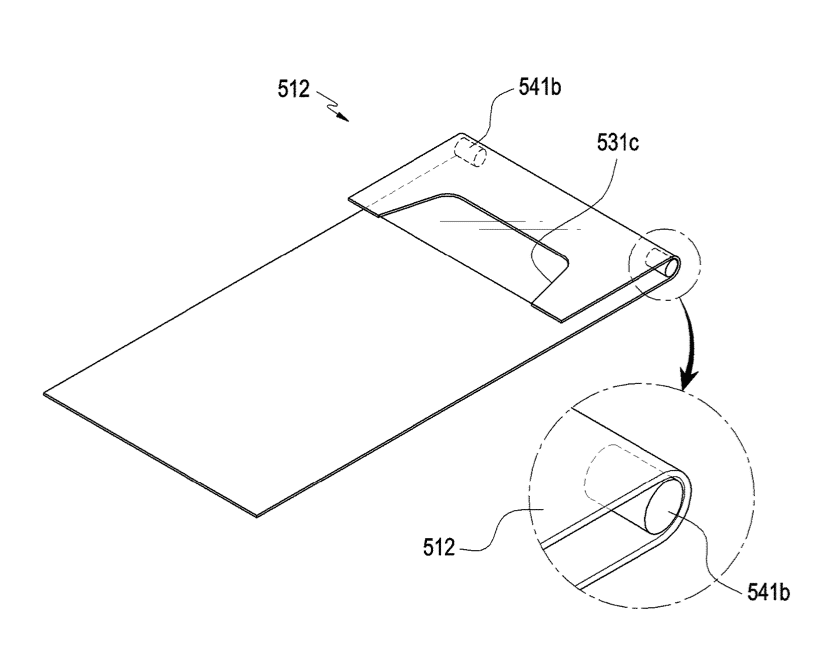
The patent description is for a smartphone that has a 16:9 display in standard mode but when it is unfolded, it changes to a larger display with 18:9 aspect ratio when the display is stretched fully. Samsung had earlier on patented a similar design but that one is for a smartphone which pops up in order to extend the display. In this case, the flexible display stretch from the bottom edge to roll out to its full size.
The flexible display rolled out fully to show the notch and the sensors in the front. While most of the display will be visible when unfolded, there will still be a portion that when the display is not stretched fully, the screen will not show the earpiece, selfie sensor, etc. This can provide a more immersive experience while watching videos, reading a text message, browsing, etc.
The sketch shows the flexible display hides the notch and sensor under the back panel when it is rolled up. When there is a call or the selfie camera is activated, the phone’s screen will stretch out to its full length, revealing the notch that houses all the sensors. We can’t tell if the mechanism will operate automatically or manually but it unrolls via a swivel mechanism.
Flexible screens are usually very fragile so the display and the swivel mechanism are all enclosed in a back panel which covers the frame on the left and right sides too. We can’ b sure if this design would be commercialized anytime soon.
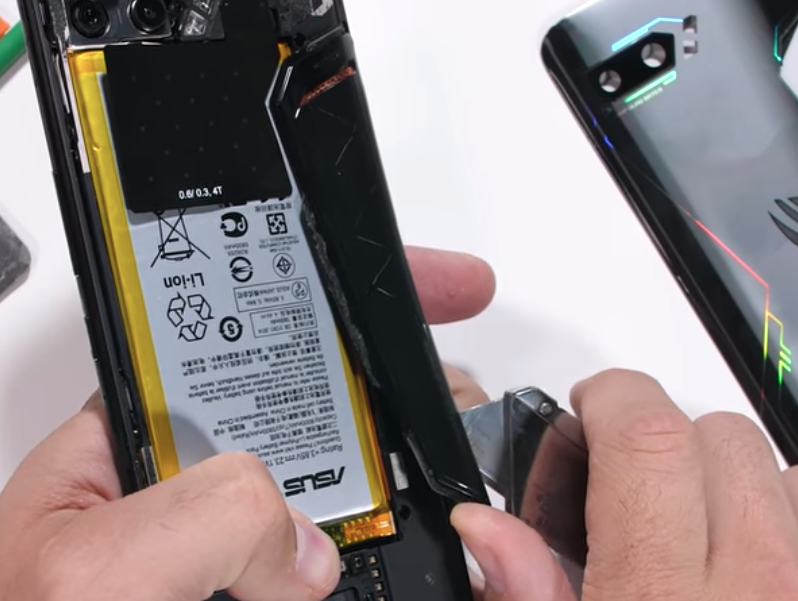
Last month, Asus released its latest gaming-centric smartphone, the ROG Phone 2. As we already know the device packs impressive features some of which include a gigantic 6,000 mAh battery and a 6.6 inch AMOLED display with a remarkable refresh rate of 120 Hz. Recently, the device was subjected to a teardown by the famous Youtuber JerryRigEverything that has revealed shocking findings of the design preferences chosen by Asus.
The trapezoidal plastic piece with a metal grille on its back which originally seemed like a vent to provide active cooling while the CPU is processing heavy loads, turned out to be a sham and is nothing more than a cosmetic addition.
Besides, the narrow metal grille makes it one of the least water-resistant smartphones of 2019. As liquid would seep right in, even when dripped at an angle, leave alone sub-merging it underwater. Having said that, Asus never claimed the device to be water-resistant but this could be a downer for some especially the ones who have been spoiled by the laudable IP ratings on other flagships from Apple or Samsung.
ROG Phone 2’s Massive Copper Cooling Chamber
Nonetheless, the teardown did reveal some praiseworthy bits of the Asus ROG Phone 2 as well. While the Youtuber had to sacrifice the display on his unit to reveal this, the device packs one of the largest copper chamber found on any smartphone. For those who do not know, copper is an excellent conductor of metal, therefore, heat dissipation on the device will be superb.
Accordingly, temperatures on the device would stay well under the acceptable range even when its Snapdragon 855+ is rendering complex bits of data while playing PUBG on high settings or executing similar resource-hungry tasks.
What else did the teardown reveal? A massive 6,000 mAh battery which by the way popped right off after the pull tab was easily removed (unlike Apple), dual vibration motors to provide powerful haptic feedback and cleverly implemented RGB LED logo on the back.
What are your thoughts on the Asus ROG Phone 2’s innards? Do you think IP rating is a must in today’s day and age? Let us know in the comments below.
Tech companies are obsessed with achieving a true 100% screen to body ratio on their smartphones. And the front camera is the biggest obstacle that comes in between this dream. We have already seen technologies such as a punch-hole camera, pop-up camera, and even a rotating camera to maximize the screen real estate on smartphones. However, future implementations are going to be even more exciting with the front camera going under the display. And it looks like we could see our first under-display camera (UDC) module as soon as early 2020 as a report reveals that Samsung is already prepping the technology for mass production.
Galaxy A8S was the first Infinity-O punch-hole camera phone
South Korean media website, The Elec reports that Samsung’s Under Display Camera Technology (UDC) will make its way on to a smartphone by the first half of 2020. Samsung Display has brought two pieces of equipment to its campuses: the HIAA1 and HIAA2. The term HIAA stands for Hole In Active Area which reportedly helps Samsung to cut out a display in the OLED for the camera.
Samsung is reportedly testing the HIAA1 equipment for standard punch-hole displays while the HIAA2 will be used for the Under Display Camera technology. While the HIAA1 was brought to Samsung’s campus back in August, the HIAA2 was brought to the facility this month. Mass production of the UDC OLED panels is expected to kick off around H1 2020.
How Will Samsung’s Under Display Camera Technology Work?
The Elec reports that Samsung will use the HIAA2 equipment to create a transparent display where the UDC will be placed. The equipment comes with a laser to drill a number of tiny holes in the display to improve the transmission of light to the camera below it. The process is called Laser Etching.
Samsung’s current R&D team is focused on reducing the size and number of pixels in that area and increasing the transparency and permeability of the substrate. The current OLED substrate is not transparent and has a yellow tint.
After testing out HIAA2 this month, Samsung Display will reportedly send it out to mass production facilities early next year. A true Under Display Camera smartphone from Samsung can be expected by the first half of 2020.
Oppo’s prototype under-display camera smartphone
The First-Gen Under Display Cameras May Not Be Great
Samsung has a lot of challenges to overcome in order to perfect this technology. Apart from making a specific area of the OLED display transparent for the camera underneath, the company will also have to work on the algorithms to effectively balance the yellow glow and slight blurriness of the photos captured from the camera.
While this might take some time, the UDC technology is expected to improve in the coming years, just like the under-display fingerprint sensor which improved after a couple of generations.
There Could Be Multiple Smartphones Featuring UDC In 2020.
Samsung would most likely use this UDC technology on an S series flagship, possibly the S11. But it is said that this technology is more likely to end up on the successor to the Galaxy Fold next year.
Samsung could be the first smartphone company to release an Under Display Camera smartphone but it could soon be joined by multiple companies. OPPO, Xiaomi, and Honor have confirmed that they are working on an Under Display Camera smartphone. In fact, Xiaomi and OPPO both have showcased their technologies a few months back.
But will they be any good? We’ll have to wait and see!
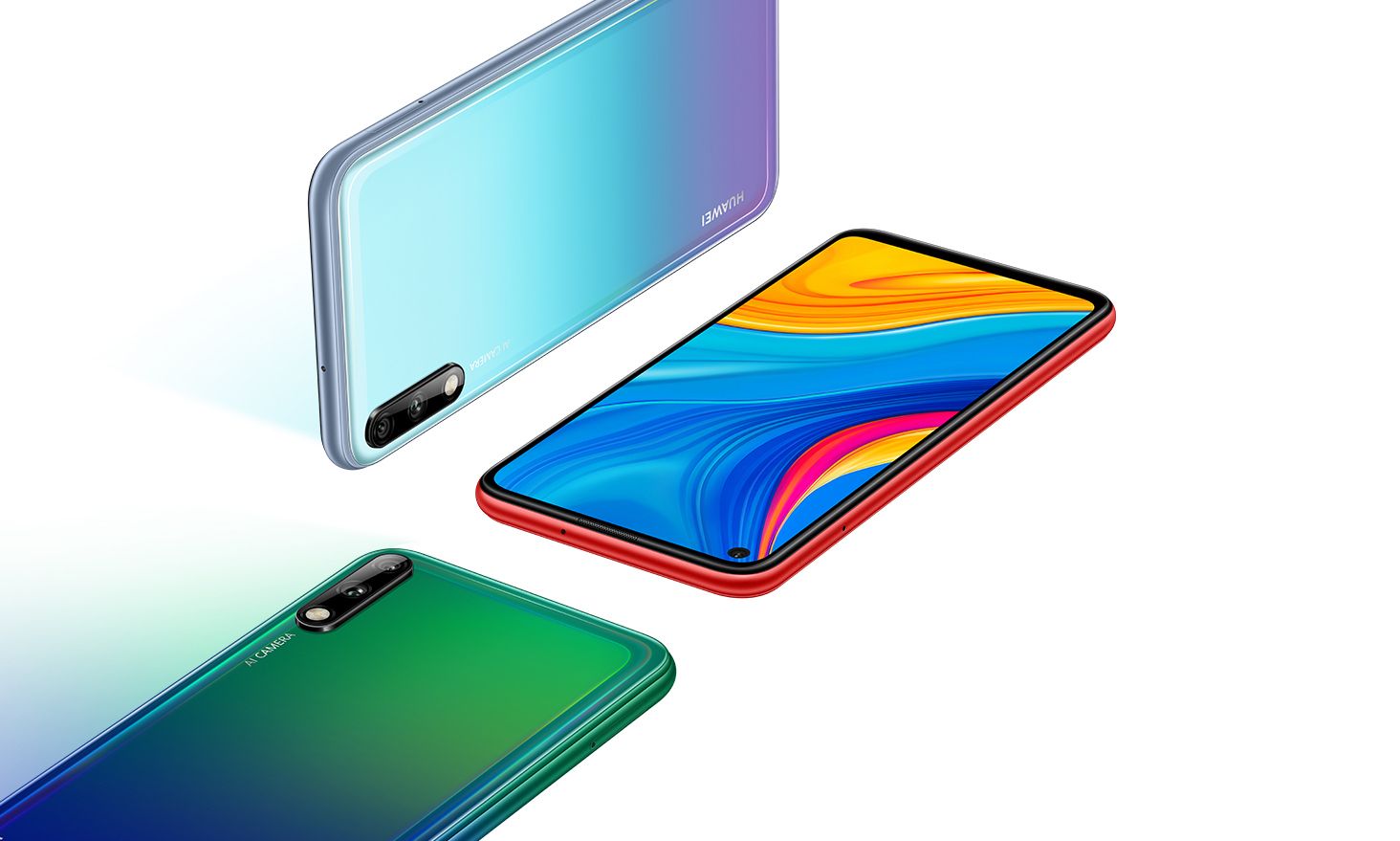
In September, Huawei had launched the Enjoy 10 Plus smartphone with notch-less display, a pop-up selfie camera and triple rear cameras for 1,499 Yuan (~$211). Today, it has announced the Enjoy 10 phone as its inferior sibling. With a starting price of 1,199 Yuan (~$169), the Enjoy 10 offers users with features like punch-hole display and dual rear cameras.
Huawei Enjoy 10 Specifications
The Huawei Enjoy 10 measures 159.1 x 76.13 x 8.13mm and it weighs around 176 grams. It is fitted with a punch-hole display of 6.39 inches that produces HD+ resolution of 720 x 1560 pixels. The Kirin 710F SoC fuels the smartphone with up to 6 GB of RAM. It has a native storage of up to 128 GB. A microSD card slot is available on the device for expanding its storage.
The EMUI 9.1 based Android 9 Pie OS comes preloaded on the Huawei Enjoy 10. The GPU Turbo 3.0 technology optimizes the phone’s performance while gaming. The smartphone houses a big battery of 4,000mAh. However, there is no support for rapid charging on the device.
The rear-facing dual camera system has an f/1.8 aperture 48-megapixel main lens and an f/2.4 aperture 2-megapixel depth sensor. The Enjoy 10 supports 480fps slow-motion video shooting and handheld super night scene mode. The 4.5mm sized punch-hole present on the screen has an f/2.0 aperture 8-megapixel selfie snapper. The handset lacks a fingerprint reader.
Huawei Enjoy 10 Pricing and Availability
The pricing of the different variants of the Huawei Enjoy 10 are as follows:
4 GB RAM + 64 GB storage – 1,199 Yuan (~$169)
6 GB RAM + 64 GB storage – 1,399 Yuan (~$198)
4 GB RAM + 128 GB storage – 1,399 Yuan (~$198)
Color Variants: Magic Night Black, Aurora Blue, Breathing Crystal and Acacia Red
The pre-sale of the Huawei Enjoy 10 begins today in the home market. Its shipments will kick off on Nov. 1
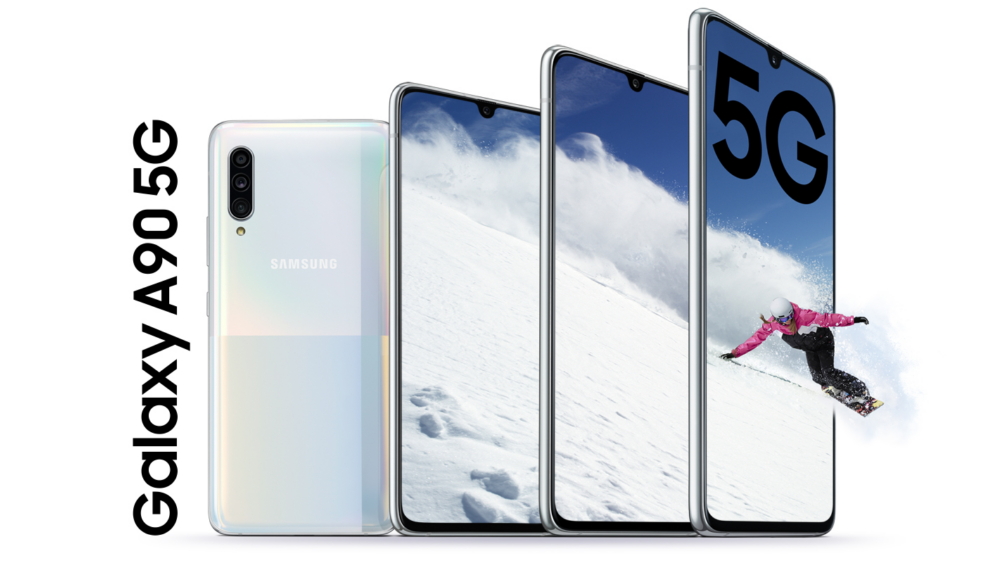
Samsung revealed the Galaxy A90 5G as the cheapest 5G smartphone in South Korea back in September. It is the latest device to feature 5G capability after the flagship Galaxy S10 5G and the Note 10 5G. Samsung has today introduced the A90 5G in China. The smartphone features the powerful Snapdragon 855 SoC and supports the NSA network through external bandwidth.
Samsung Galaxy A90 Specifications and Price in China
The Samsung Galaxy A90 5G flaunts a 6.7-inch Super AMOLED full HD+ Infinity-U display with a Infinity-U notch and an in-display fingerprint scanner. The device has arrived in China with 8 GB of RAM and 128 GB of native storage.
The primary camera is a 48-megapixel unit with an aperture rating of f/2.0, which is paired to a 5-megapixel depth sensor with an aperture rating of f/2.2 along with an 8-megapixel depth sensor with a 12-degree wide-angle field-of-view. The Samsung Galaxy A90 draws power from a 4,500 mAh battery with 25W rapid charging. The device runs on Android 9.0 Pie-based One UI and features face unlock for additional security.
The Samsung Galaxy A90 starts from 4,499 Yuan (~$635). The smartphone is available in two color options, namely Space White and Holographic Black. The rear panel is designed using a splicing scheme last seen on the Huawei P30 Pro. Samsung is calling it their holographic plaid pattern. The design has a gradient finish on the upper half and a solid color on the lower portion.
Pre-sales of the A90 5G will begin in China from Oct. 25 and its shipments will start on Oct. 31. The Samsung Galaxy A90 rivals the iQOO and Xiaomi’s 5G lineup in China.
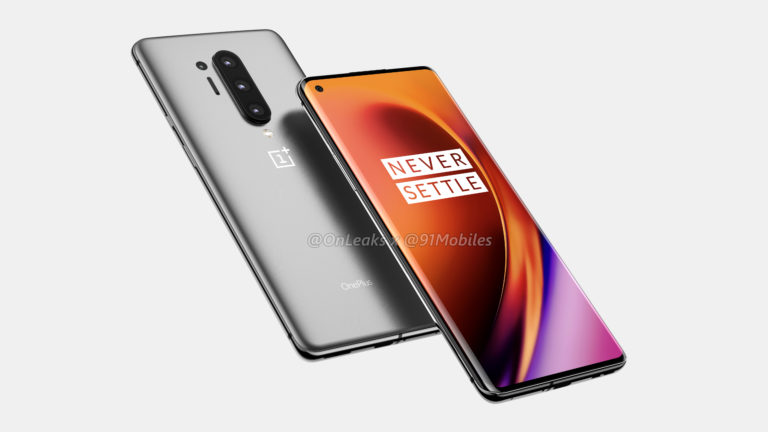
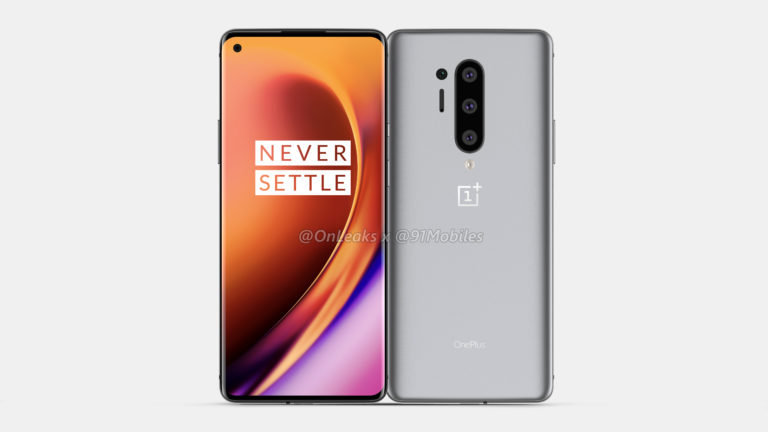
It has barely been a week since OnePlus launched the OnePlus 7T Pro, but rumors of the OnePlus 8-series have already started flowing in. While the initial renders of the OnePlus 8 were revealed earlier this month, 91mobiles in association with reliable tipster and industry expert Onleaks has just released detailed renders of the OnePlus 8 Pro.
OnePlus 8 Pro Renders and Rumored Specs
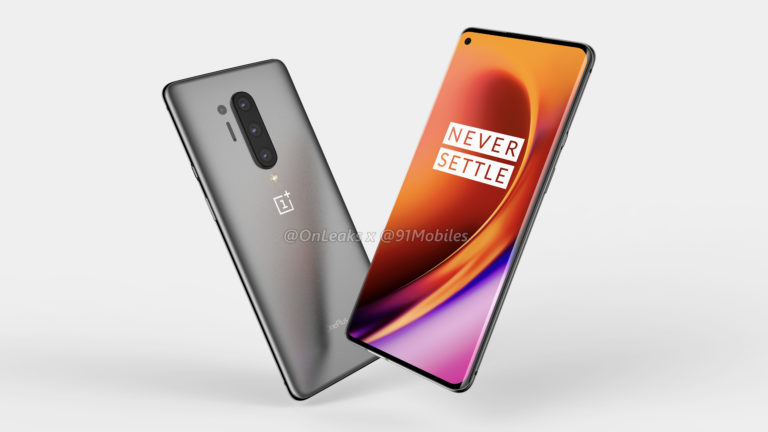
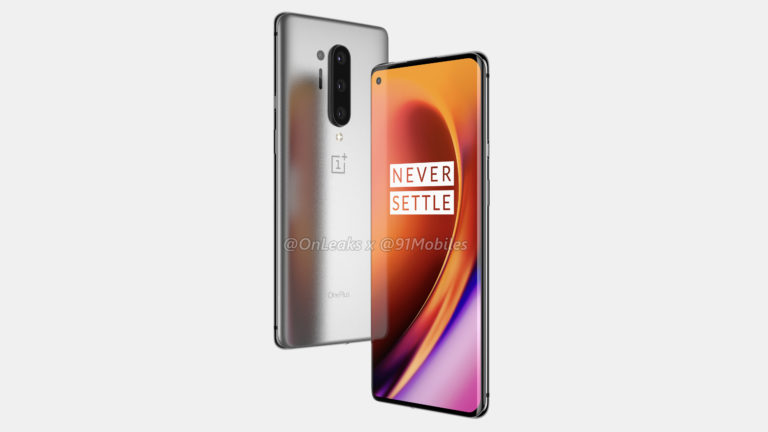
The renders clearly show that the OnePlus 8 Pro will be sporting a punch-hole display instead of a notch or a pop-up module along with a quad-camera setup at the rear. The OnePlus 8 is the first smartphone in the company’s portfolio to feature four lenses on the back. The OnePlus 8 Pro carries the tradition forward.
The renders reveal that the OnePlus 8 Pro features similar design elements as the OnePlus 8. The smartphone is expected to flaunt a 6.65-inch display instead of the 6.5-inch screen seen on the OnePlus 8. The OnePlus 7T Pro however still has the biggest display in the lineup, featuring a 6.67-inch unit. The company has already confirmed a standard 90Hz refresh rate on all future smartphones. It is safe to assume that the 8 Pro will not miss out on the action. The smartphone could be fueled by the upcoming Snapdragon 865 flagship chipset.
Coming to the rear panel, the three primary lenses are placed in a vertical alignment with the 3D depth sensor positioned next to the unit, along with a few other undisclosed sensors. An LED flash module completes the setup. The OnePlus logo is etched right below the camera module. The left edge features the volume rockers while the power button and alert slider are positioned on the right edge.
The OnePlus 8 Pro features a redesigned speaker grille on the bottom edge, with the USB Type-C port in the middle. The top edge only has a hole for the mic, since OnePlus ditched the pop-up camera module. The smartphone measures 165.3 x 74.4 x 8.8 mm. The thickness increases to 10.8 mm along the lines of the camera bump.
The OnePlus 8 Pro does not feature revolutionary design changes. People hoping to upgrade to the OnePlus 8 lineup next year will have to stay content with the quad-camera setup and the 3D ToF (depth sensor) for now. OnePlus might introduce 5G capabilities from the 8-series. The 7T Pro currently misses out on the 5G spectrum. Detailed specifications of both smartphones are expected soon. There is no word on software either. Expect the Oneplus 8 Pro to feature AR, 3D photography and portrait mode thanks to the advanced 3D sensor.
What’s your opinion on the design of the OnePlus 8 Pro? Share us your views by posting your comments below.
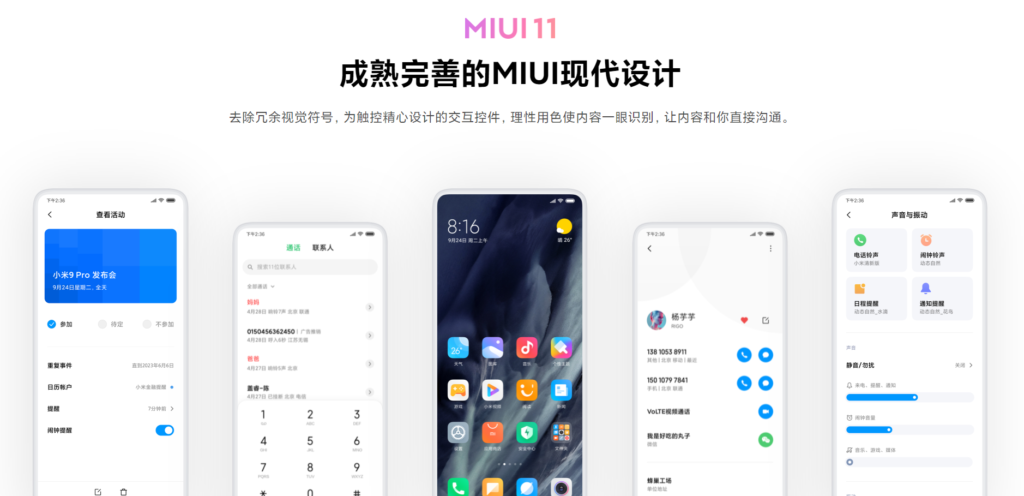
Late last month, Xiaomi took covers off its latest Android skin which is called MIUI 11. While its open beta had already been available, its stable version has started rolling out today in China via an OTA update, confirmed Xiaomi on Weibo. Initially, the MIUI 11 update will be provided for 12 devices while the remaining handset that were promised to get the update will start receiving in the following weeks.
The list of devices which that have started receiving the MIUI 11 update are as follows:
Readers who are are wondering, why don’t you see the Redmi K20 Pro and the Mi 9 in this list, there hasn’t been a mistake while writing. Xiaomi has confirmed that the stable version of these two devices based on Android 10 is in its final stages which will be rolled out soon.
To recall here are some of the features that MIUI 11 introduces:
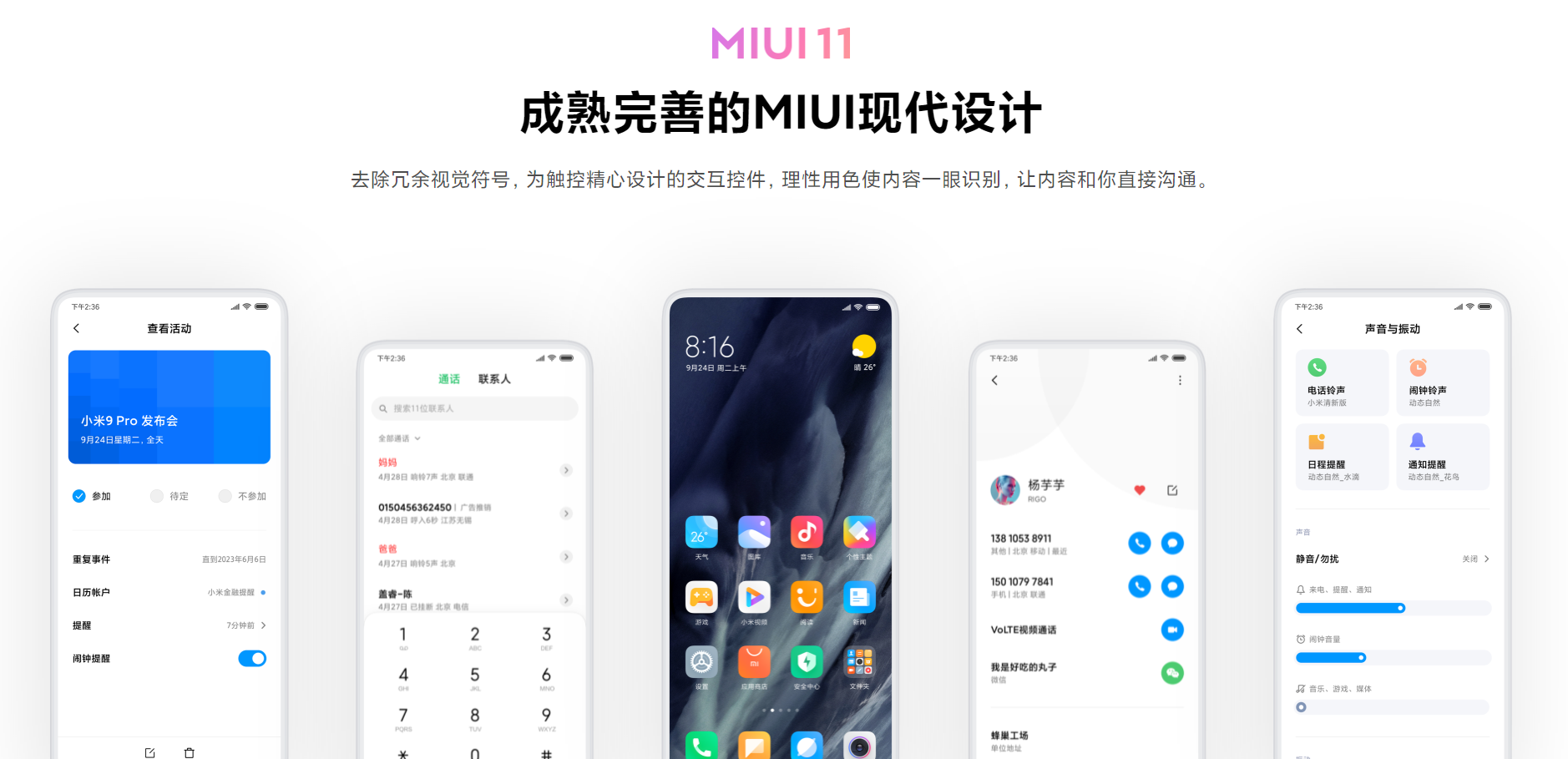
New Icons and smoother animations: With the latest MIUI 11, Xiaomi has tweaked the look of the icons found in the UI and they now have a minimalist yet appealing look. The company has also tweaked the animations which are slower in comparison to MIUI 10 but they now provide for a rich and immersive experience.
Ultra Power Saving Mode: As the name suggests, this mode is meant for prolonging battery life when running out of charge. According to the company, while in this mode, a device can provide a battery backup of upto 24 hours with just 5% of battery. When this mode is turned on, the device turns off the Wi-Fi module, hides non-essential apps, turns the display colour to black/white whilst restricting background processes.
Kids Mode: This mode is meant for parents who want to create a safe digital environment for their kids. While in kids mode, the device will only be able to run applications that are whitelisted by their parent or guardian. Besides, it also has an education space which Xiaomi claims is an intuitive manner to teach young kids.
Digital Wellbeing: With this feature, device owners will be able to check how much time they spend on each application and if needed they can cut down the usage time in order to maintain a healthy mental and physical well-being.
Earthquake alerts: With the help of data provided by regional offices, devices running MIUI 11 can notify its owner in case of an ongoing earthquake or after one takes place. Moreover, it will also provide additional details like nearby relief centres and places to avail medical service in case of a mishap.
Casting to external display: This feature will allow smartphones running on MIUI 11 to wirelessly cast onscreen content which includes games, videos, documents and other applications to TV, given the TV also supports this functionality. Xiaomi has thoughtfully designed this feature so users can even hide personal items to keep all sensitive things private. Moreover, the device can continue to cast even when its display has been turned off.
While these are just a handful of new introductions to MIUI 11, if you want to read about other features that the latest update brings, you can do so by clicking here.
Our Indian readers who are curious about the update schedule in the country can learn all the details by clicking here.
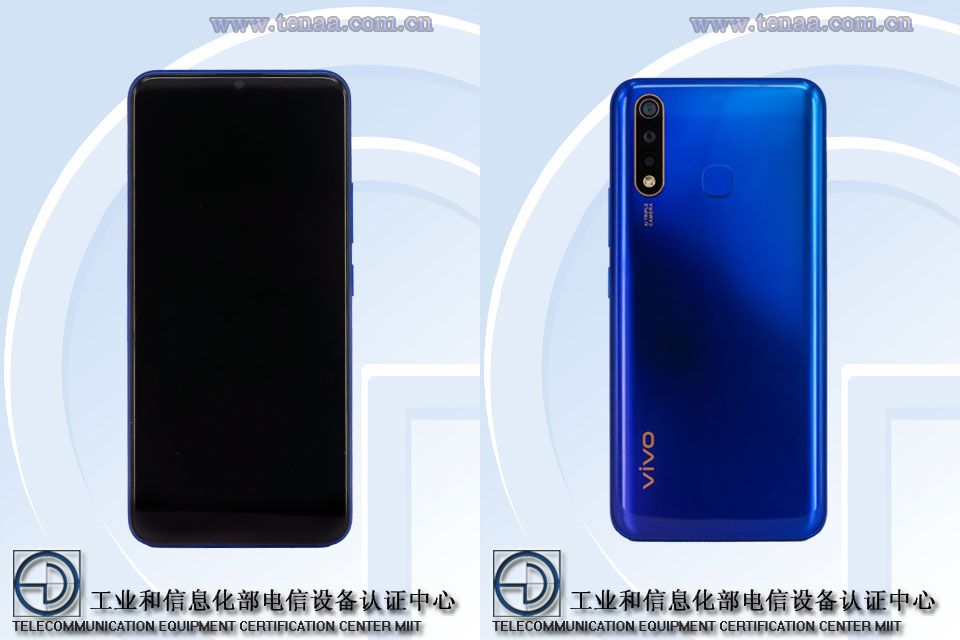
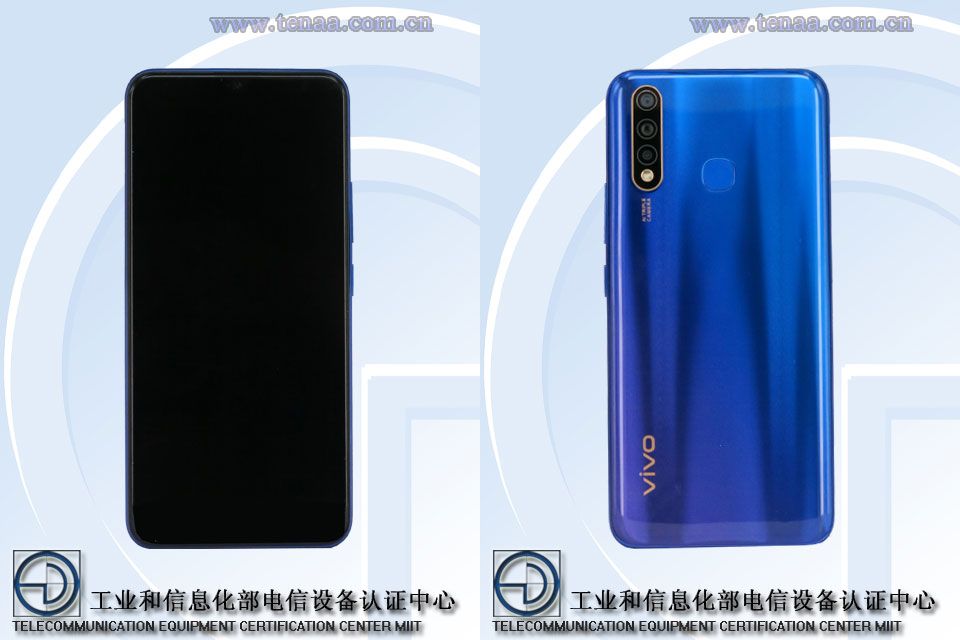
Update: The images of the Vivo V1941A/T have appeared on TENAA.
Original story follows…
The Vivo V1941A/T is the latest phone to surface on TENAA with its full specifications. It appears to be an upcoming entry-level phone from the Chinese firm. The exact identity of the smartphone is currently under the wraps.
Vivo V1941A/T Specifications
The Vivo V1941A/T has 162.15 x 76.47 x 8.69mm dimensions and it weighs 193 grams. The exact design of the phone is not known yet since the TENAA listings lack its images. The handset has a 6.53-inch screen that offers full HD+ resolution. Since there are no images, there is no confirmation on whether its features a waterdrop notch screen or a notch-less design or a punch-hole display.
The Android 9 Pie OS comes preinstalled on the device. It is expected to be customized with Vivo’s FunTouch OS UI. The smartphone is fueled by 2.0GHz octa-core processor. The Vivo V1941A/T is expected to release in RAM editions of 4 GB, 6 GB and 8 GB. It is likely to hit the Chinese markets in 64 GB and 128 GB storage editions. For more storage, the handset is equipped with a microSD card slot.
Above image is NOT of V1941A/T It belongs to Vivo V1934A/T
The Vivo V1941A/T draws power from a battery that has a minimum capacity of 4,920mAh. Its typical capacity could be 5,000mAh. It has a triple camera system on its back, and it comprises of a 16-megapixel main lens, an 8-megapixel secondary shooter and a third lens of 2-megapixel. On its front is a 16-megapixel selfie snapper. The handset does not seem to support fast charging and it lacks a fingerprint scanner. Hence, it appears that it could be an entry-level model.
In related news, earlier today, Vivo had teased that it will be launching a new budget phone fueled by the Snapdragon 675 chipset in China in the next few days. It seems that the Vivo V1934A/T that had appeared on TENAA earlier this week could be the mysterious Vivo SD675 phone. The Vivo V1934A has a full HD+ waterdrop notch screen of 6.53 inches and it powered by 2.0GHz octa-core processor along with up to 6 GB of RAM. The handset has a native storage of 128 GB and it features a microSD card slot.
The back panel of the Vivo V1934A/T has a 16-megapixel + 8-megapixel + 2-megapixel triple camera system. It has a front camera of 16-megapixel. The Android 9 Pie OS runs on the phone and it is backed by a 5,000mAh battery.
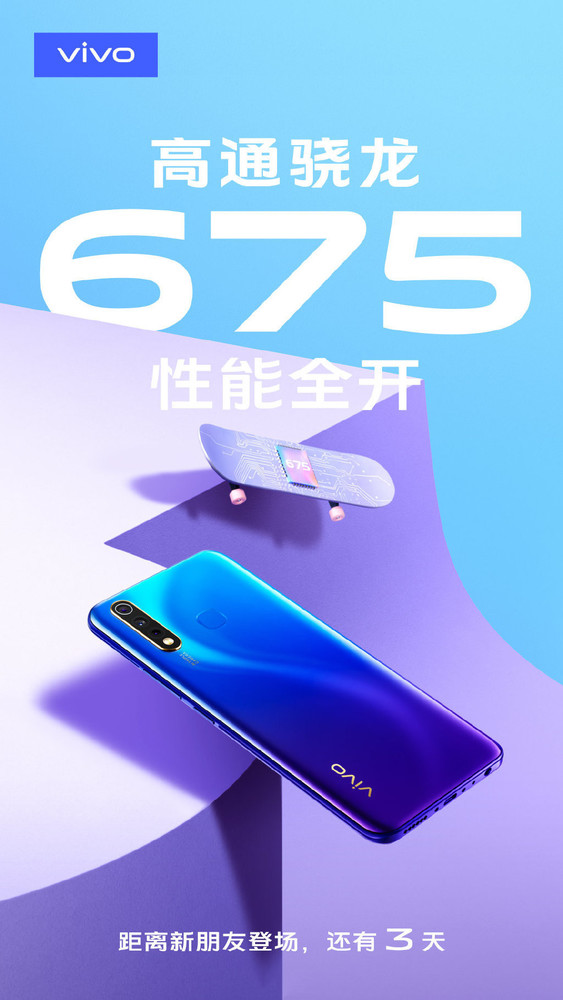
Vivo has started teasing a new budget-friendly smartphone in China. The teaser released by the company showcases the rear design of the smartphone. Also, the poster confirms that it will be powered by Snapdragon 675 chipset.
Vivo has so far released three Snapdragon 675 powered smartphones in this year such as Vivo V15 Pro, Vivo S1 Pro and Vivo V17 Pro. All of them are upper mid-range phones that are equipped with in-screen fingerprint reader. However, the phone shown in the below image has a rear-positioned fingerprint reader.
The upcoming SD675 Vivo phone has a vertical triple camera system placed at the upper-left corner of the phone’s rear shell. The Vivo branding can be seen at the bottom-left corner of the backside of the device. The left edge is not visible in the images. Its right spine has a volume rocker and a power button. The front design of the phone is a mystery
The bottom side of the smartphone features an external speaker, a microUSB port and a 3.5mm audio jack. It is difficult to identify whether the smartphone features a polycarbonate rear with glossy appeal or a glass rear. The presence of a rear-positioned fingerprint sensor and a microUSB is a clear giveaway that it is a budget-friendly device. Hopefully, more details of the smartphone may appear on the device in the coming days.
The handset appears to be the Vivo V1934A/T phone that recently showed up with full specifications on TENAA. Probably, it may debut as a new Y-series or U-series device.
The V1934A/T measures 162.15 x 76.47 x 8.89mm and its weight is 193 grams.The device comes with a 6.53-inch LCD full HD+ display with waterdrop notch. It is powered by 2.0GHz octa-core chipset. The handset may come in 4 GB and 6 GB RAM options. Both models may feature 128 GB of native storage. There is a dedicated microSD card slot on the device.
The Vivo V1934A/T has a front-facing camera of 16-megapixel. The rear side of the device has a 16-megapixel + 8-megapixel + 2-megapixel triple camera system. It has a rear-mounted fingerprint reader. The Android 9 Pie OS runs on the device along with FunTouch OS 9.1 UI. It is backed by a 5,000mAh battery and it may come with up to 18W fast charging support.
Earlier this year, in July, Honor launched it latest fitness tracker named Honor Band 5. Now, the company has been teasing the launch of another variant of the same, which is dubbed Honor Band 5i.
Today, the upcoming Honor Band 5i, which is expected to launch in China on 22nd October, is up for reservation on TMALL. However, the pricing of the device remains unknown as the eCommerce listing shows a placeholder price of 9,999 Yuan.
The listing as well as the poster shared by the company confirms that the Honor Band 5i will be made available in three color options — Pink, Black, and Olive Green. As for the design, it looks similar to the original device with an elongated body and silicone strap.
While the display size is yet to be confirmed, it looks similar to the standard Honor Band 5 that features a 0.95 inch OLED AMOLED display which is capable of displaying 43 characters at once. The teaser shared by the company also confirms that Band 5i variant will have an Spo2 meter to measure blood oxygen and will also come with a step counter.
Usually, the “i” suffix are used for watered down and affordable variants of the standard handset and similar strategy is expected to be adopted with the Honor Band 5i. Even though this cannot be confirmed, we assume the only major alteration with this variant will be the new type of charging connector and the lack of NFC.
Xiaomi recently launched its latest MIUI 11 custom user interface based on the latest Android 10 operating system. Last week, the company announced the global rollout of the same and revealed a list of devices set to receive this new update as well as its roadmap.
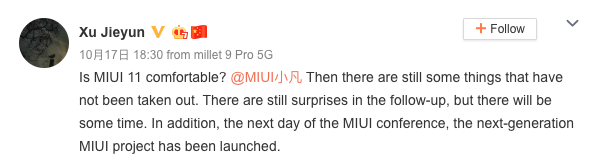
Now, just days after the global rollout of the MIUI 11, the company’s executive, Xu Jieyun, General Manager of Public Relations has confirmed that Xiaomi has already started working on its successor MIUI 12.
At this stage, nothing is known about the upcoming MIUI 12 operating system. However, we expect to know more about this as the development on this custom user interface keeps on progressing.
The recently launched MIUI 11 is a big update for Xiaomi that changes up a lot of things for the popular custom operating system. Starting with the visual aspects, you get slightly softer icons, a system-wide dark mode, new Mi Lan Pro system font and improved always-on display functionality. There are also new animations, themes, wallpapers and improved notification system.
It also focuses on enhancing the audio experience with all-new dynamic natural sound effects and alarms. Xiaomi also announced the new Mi Go Travel suite which will help you with booking tickets for a broad range of transport ranging from airplane to rail and bus alongside currency conversion and an extreme power-saving mode.
As for the rollout schedule, the company has revealed the update roadmap for India and said that the global rollout schedule will be announced soon. This first wave of stable update will begin on October 22nd for popular devices like the POCO F1, Redmi K20, Redmi Y3, Redmi 7, Redmi Note 7, Redmi Note 7S, and Redmi Note 7 Pro.
Following that, the Redmi K20 Pro, Redmi 6, Redmi 6 Pro, Redmi 6A, Redmi Note 5, Redmi Note 5 Pro, Redmi 5. Redmi 5A, Redmi Note 4, Redmi Y1, Redmi Y1 lite, Redmi Y2, Redmi 4, Mi Mix 2, and Mi Max 2 will get the update in phase 2 which begins on 4th November.
The Phase 3 for the stable update rollout will begin on 13th November and the devices included for this are the Redmi Note 6 Pro, Redmi 7A, Redmi 8, Redmi 8A, and Redmi Note 8. The Redmi Note 8 Pro will be the sole device for Phase 4 which will start on 18th December and will end on 26th December.
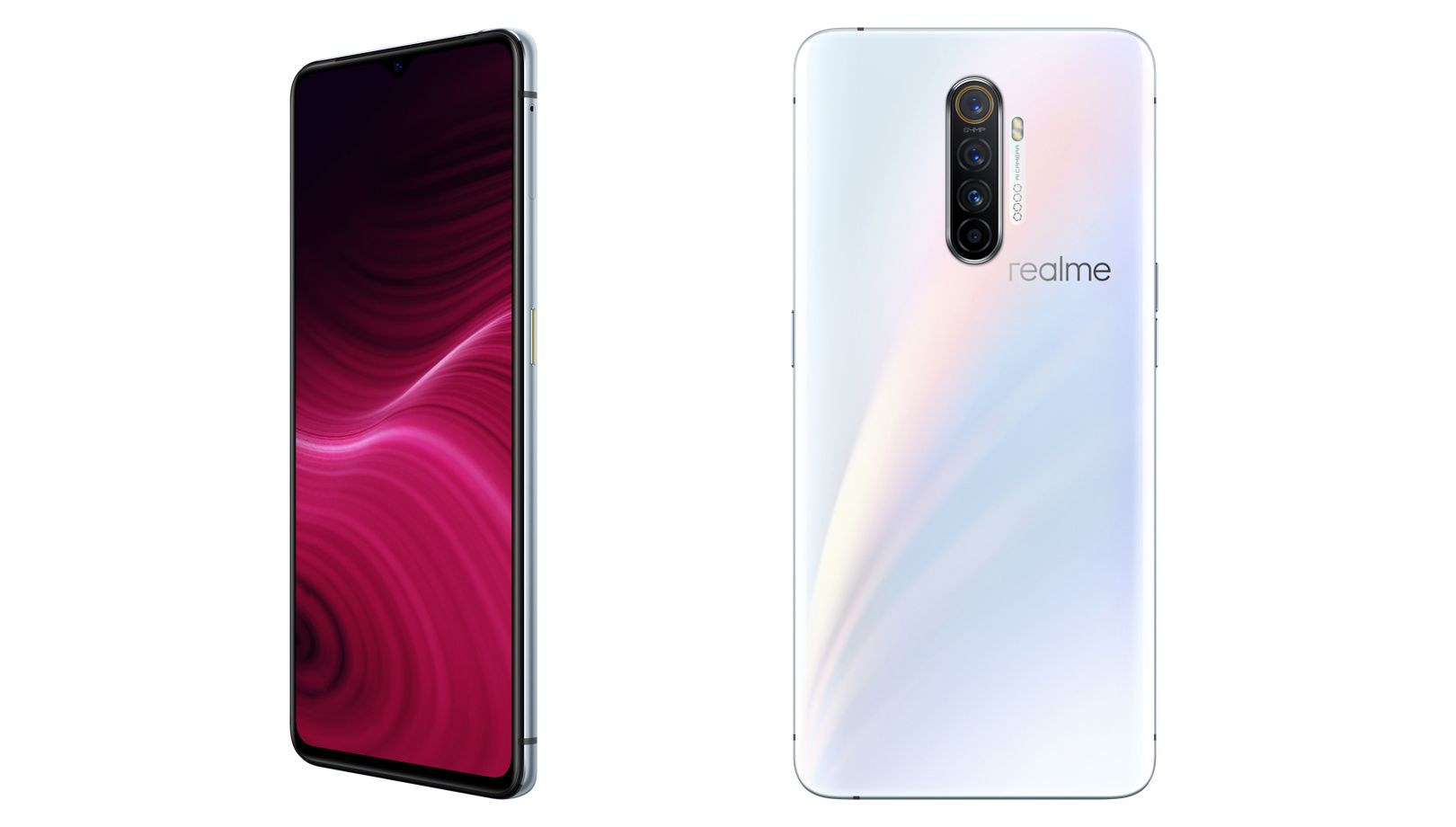
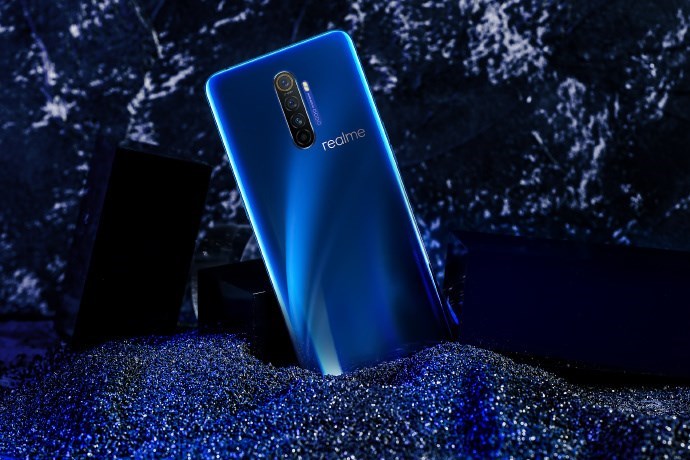
Realme X2 Pro, the first premium flagship smartphone from the Oppo-backed company, launched in China last week. The phone was available for pre-order till 17th October and today, i.e. on 18th October, it will go on sale for the first time.
The smartphone comes in three variants in the Chinese market — 6GB RAM + 64GB storage, 8GB RAM + 128GB storage, and 12GB RAM + 256GB storage, costing 2,599 Yuan (~$367), 2,799 Yuan (~$395), and 3,199 Yuan (~$452) respectively. It comes in two color options — Luna (White) and Poseidon (Blue).
Realme X2 Pro Luna
The company had also announced Realme X2 Pro Master Edition which comes in Red Brick and Cement color, crafted by Japanese designer Naoto Fukasawa. It is priced at 3,199 Yuan (~$452) and will go on sale in China from 11th November.
Coming to the specifications of the Realme X2 Pro, the smartphone flaunts a 6.5-inch Full HD+ AMOLED display with waterdrop notch and offers screen resolution of 1080 x 2340 pixels that carries support for 90Hz refresh rate. The smartphone promises a screen-to-body ratio of 91.7 percent.
The device also comes with an in-display fingerprint scanner that is claimed to unlock the device in just 0.23 seconds. Under the hood, the display is powered by Qualcomm Snapdragon 855 Plus chipset which is clocked 2.96GHz and packs Adreno 640 GPU.
The phone features vapor chamber liquid cooling, superconducting carbon fiber multi-layer scheme, multi-layer graphite sheet and other heat-dissipating materials. As for the memory configuration, it packs 8GB of RAM and 256GB of UFS 3.0 internal storage.
In the camera department, the phone has a quad-camera setup on the back that consists of Samsung GW1 64-megapixel lens with f/1.8 aperture, a telephoto lens of 13-megapixel with support for up to 20x hybrid zoom, a ultrawide lens of 8-megapixel with 115-degree field-of-view and a 2-megapixel depth sensor.
On the front side, the device features an AI driven 16-megapixel selfie shooter that has support for super night scene along with 4-in-1 pixel merging technology. Connectivity options on the device include Dual SIM, 4G VoLTE, Wi-Fi 802.11ac, Bluetooth 5.0, USB-C, dual frequency GPS, and NFC.
The phone is also equipped with stereo dual speakers coupled with Dolby Atmos and Hi-Res audio technologies. The device runs Android 9 Pie operating system out-of-the-box with ColorOS 6.1 on top. The phone features tactile linear motor which assists in 4D in-game vibrations. The handset is powered by a 4,000mAh battery with 50W SuperVOOC Flash Charging technology.
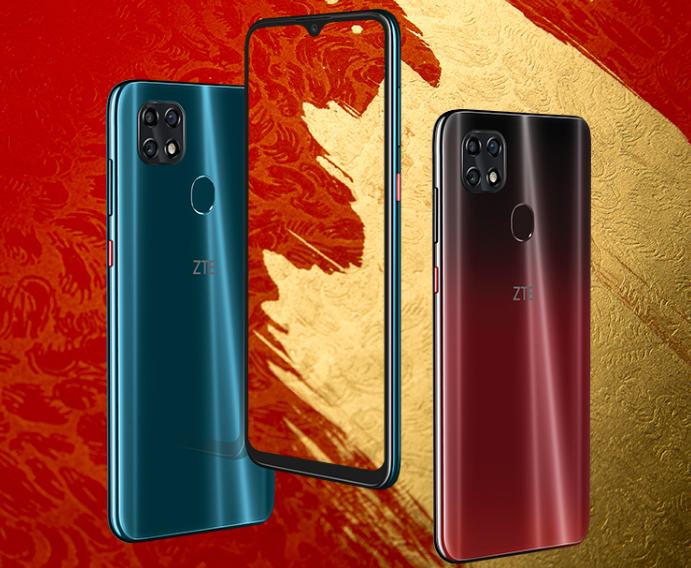
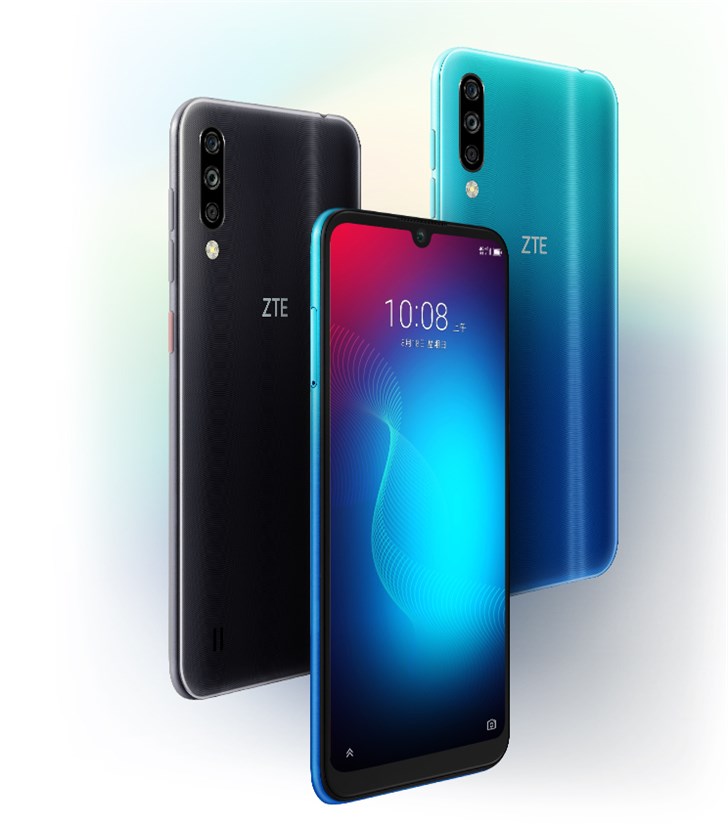
ZTE has announced two new phones in China. The first one is the Blade A7s that had appeared on the official My ZTE Mall in the previous week. Starting from today, the Blade A7s is available for purchase in the country with a price tag of 799 Yuan (~$113) The Blade 20 Smart Xiaoxin edition is the other phone that sports a square-shaped triple camera module and a waterdrop notch display has also gone official today. It carries a price tag of 999 Yuan (~$141).
ZTE Blade 20 Smart Specifications
The ZTE Blade 20 Smart Xiaoxin edition is fitted with a 6.49-inch IPS LCD panel that offers 720 x 1560 pixels resolution. The display offers an aspect ratio of 19.5:9. The Chinese firm claims that the phone offers 91.1 percent screen-to-body ratio. Present under the hood of the device is the MediaTek Helio P60 that clock at 2.0GHz. The SoC is coupled with 4 GB of RAM. The device offers users with a big internal storage of 128 GB and it also features a microSD card slot.
Placed at the top-left corner on the back of the Blade 20 Smart Xiaoxin edition is a square-shaped module that houses a 16-megapixel primary lens, an ultrawide lens of 8-megapixel with 120-degree field-of-view, a 2-megapixel depth sensor and an LED flash. The front notch is the home for its 16-megapixel selfie camera. The handset is equipped with a massive 5,000mAh battery. A fingerprint reader is positioned on the backside of the device. Lastly, the device runs on MiFavor 9.1 UI.
Turquoise and Magic Red are the two color variants of the Blade 20 Smart Xiaoxin edition. Priced at 999 Yuan (~$141), it will be available for purchase starting from Oct. 25.
The entry-level Blade A7s is an updated edition of the Blade A7 smartphone that had debuted earlier this year. It has a waterdrop notch enabled 6.088-inch IPS LCD full HD+ display with 19.5:9 aspect ratio. The smartphone promises a screen space of 89 percent. The modest Helio P22 powers the phone with 4 GB of RAM. It has a 64 GB native storage and carries support for external storage.
The rear side of the Blade A7s has a triple camera system with a 16-megapixel main lens, an 8-megapixel ultrawide lens with 120-degree field-of-view and a 2-megapixel lens for adding depth effects. It has a frontal shooter of 5-megapixel. It is equipped with a 4,000mAh battery. It lacks a fingerprint scanner.
Blue and Black are the two color editions of the Blade A7s. It is now available for purchase with a price tag of 799 Yuan (~$113).
Xiaomi-backed Redmi had launched its own laptop in the form of RedmiBook 14 and now the company is gearing up to launch a new variant of the same. The company has already announced that RedmiBook 14 Ryzen Edition will be launched in China on 21st October.
While some of the features of the upcoming laptop have already been teased by the company, Redmi has now revealed the pricing and availability information of the RedmiBook 14 Ryzen edition.
The company has confirmed that the device will be available for pre-booking from 21st October in China with a starting price of 2,999 Yuan which roughly converts to $424. Here are the variants and pricing details:
Xiaomi has also revealed that the device will come with a 14-inch display that will offer 81.2 percent screen-to-body ratio. The device is also expected to come with support for Dolby DTS audio for an immersive experience.
Recently, the company had revealed that the RedmiBook 14 Ryzen Edition will come in two variants in terms of processor — AMD Ryzen 5 3500U and AMD Ryzen 7 3700U processor. The device is confirmed to pack up to 16GB of RAM and 512GB of storage.
Yesterday, the company has also revealed that it will come with support for a new feature on the device — support for the company’s new cross-brand file transfer feature. The feature was launched earlier this year in cooperation with Xiaomi, Oppo, and Vivo for transferring files between the devices from these brands. It can transfer files between laptops and smartphones without any file size limit and can transfer over 1000 images and HD videos in a blink of an eye.
Xiaomi had claimed that with the launch of this RedmiBook 14 Ryzen Edition, the company will be declaring war on the unreasonably high-priced premium laptops. The company also added that it aims to balance the price to performance ratio.
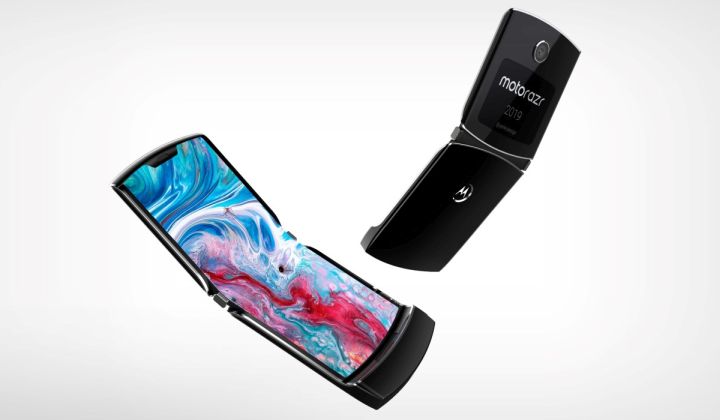
Motorola has sent out invitations for a launch event that will be held on Nov. 13, CNET reported. The launch event has a gif that showcases a silhouette of the yesteryear RAZR V3 phone with a foldable design. It is speculated that the Lenovo-owned company will launch the Motorola RAZR foldable phone on the said date.
There are couple of taglines for the Motorola phone that will be announced in the coming month such as “an original unlike any other”, “highly anticipated unveiling of a reinvented icon” and “You’re going to flip.” The publication has further reported that the special guests and music performers will be present at the Motorola event.
Rumors surrounding the Motorola RAZR foldable phone have revealed that it will be sporting a flexible 6.2-inch OLED display that will carry support for 876 x 2142 pixels. Rumors are rife that the RAZR foldable phone could be sporting a clamshell design like the RAZR V3 from the past. It is expected to sport an additional exterior display that will allow users to view notifications without opening the device. Also, instead of the physical keypad, the lower portion of the display may serve as an on-screen keyboard. The inner display may feature a notch for housing a selfie camera.
While Samsung Galaxy Fold and Huawei Mate X foldable phones are powered with flagship processor, it is speculated that the Snapdragon 710 SoC could be present under the hood of the RAZR foldable phone. It may arrive in 4 GB and 6 GB RAM editions and storage models like 64 GB and 128 GB. A fingerprint scanner could be present on the backside of the device. The foldable phone could be backed by a 2,730mah battery. It could be available exclusively through Verizon in the U.S.
The Motorola RAZR foldable phone could be made available for purchase in December. In Europe, the device may command a hefty price tag of 1,500 euros. Hopefully, more details on the device will appear as the launch date draws near.
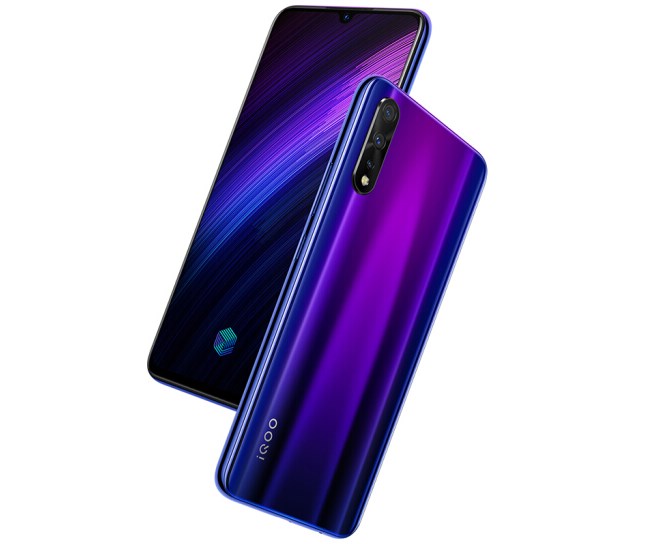
In July, iQOO had launched the Vivo iQOO Neo smartphone with Snapdragon 845 chipset onboard. Yesterday, the company confirmed that it will be launching the iQOO Neo Snapdragon 855 edition smartphone on Oct. 24. Starting from today, the iQOO Neo Snapdragon 855 version is available for reservations on Jingdong Mall. The renders of the smartphone along with its variants have appeared on the reservations page.
iQOO Neo Snapdragon 855 Electro-optic Purple
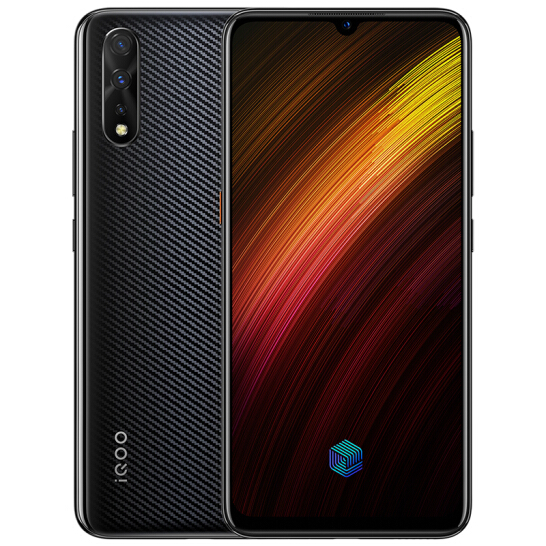
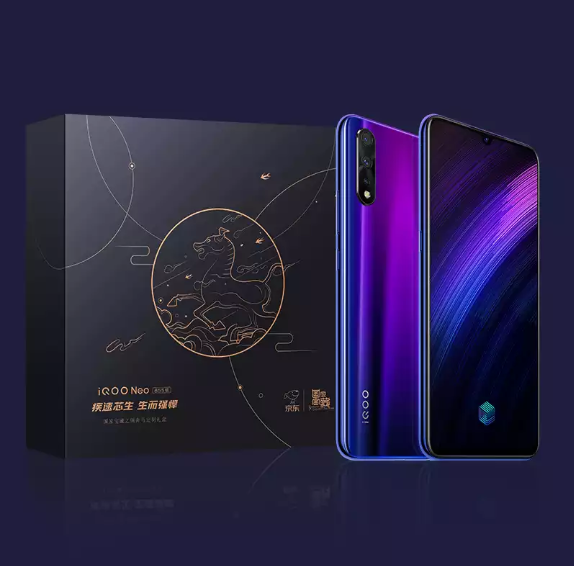
The iQOO Neo Snapdragon 855 version smartphone’s reservations page reveal that it will be releasing in three color editions such as Carbon Black, Electro-optic Violet and Icelandic Aurora. The listing also reveals that the smartphone will be available in three variants such as 6 GB RAM + 64 GB storage, 6 GB RAM + 128 GB storage and 8 GB RAM + 128 GB storage. JD has another listing for a custom gift box edition of the iQOO Neo Snapdragon 855 edition.
iQOO Neo Snapdragon 855 Carbon Black
The images of the phone once again confirm on the design of the iQOO Neo Snapdragon 855 smartphone. The frontside of the phone features an OLED display with waterdrop notch and in-screen fingerprint sensor. The back panel of the phone has a vertical triple camera system and an LED flash. The edges of the phone feature a volume rocker, a power key and a dedicated button for accessing the Jovi AI assistant.
Renders that were released yesterday by the company had revealed the smartphone also features a 3.5mm headphone jack, a microphone, a USB-C port and an external speaker on its bottom edge. The design of the phone is reminiscent with other iQOO phones that are available in the market.
iQOO Neo Snapdragon 855 custom gift box edition
So far, past reports have revealed that the iQOO Neo Snapdragon 855 edition’s display will support 1080 x 2340 pixels. The Snapdragon 855 chipset powers the smartphone. The AnTuTu appearance of the phone had revealed that there will be an 8 GB RAM variant with 256 GB of storage. However, the JD listing of the phone has no mentioning of it. The handset is loaded with Android 9 Pie OS.
As of this writing, there is no information available on the configurations of iQOO Neo Snapdragon 855 edition’s cameras. It is expected to house a 4,500mAh battery. The 3C listing of the phone has revealed that it will be coupled with 33W rapid charging.
We use cookies on our website to give you the most relevant experience by remembering your preferences and repeat visits. By clicking “Accept”, you consent to the use of ALL the cookies.
This website uses cookies to improve your experience while you navigate through the website. Out of these, the cookies that are categorized as necessary are stored on your browser as they are essential for the working of basic functionalities of the website. We also use third-party cookies that help us analyze and understand how you use this website. These cookies will be stored in your browser only with your consent. You also have the option to opt-out of these cookies. But opting out of some of these cookies may affect your browsing experience.
Necessary cookies are absolutely essential for the website to function properly. This category only includes cookies that ensures basic functionalities and security features of the website. These cookies do not store any personal information.
Any cookies that may not be particularly necessary for the website to function and is used specifically to collect user personal data via analytics, ads, other embedded contents are termed as non-necessary cookies. It is mandatory to procure user consent prior to running these cookies on your website.

 Therefore, Xiaomi was able to price its devices much more aggressively in comparison to its competitors. And it was only a matter of time until these competitors started following suit in order to stay relevant in the industry. As of today, about 40% of the smartphones sold in India are sold while online channels, out of which the most prominent ones are Amazon.in, Flipkart.com and every OEMs respective online stores.

 We will have to wait until further developments are made to verify “whether the scheme of selling online exclusives martphones comes to an end in India or not”. we will keep you updated on the subject so stay tuned.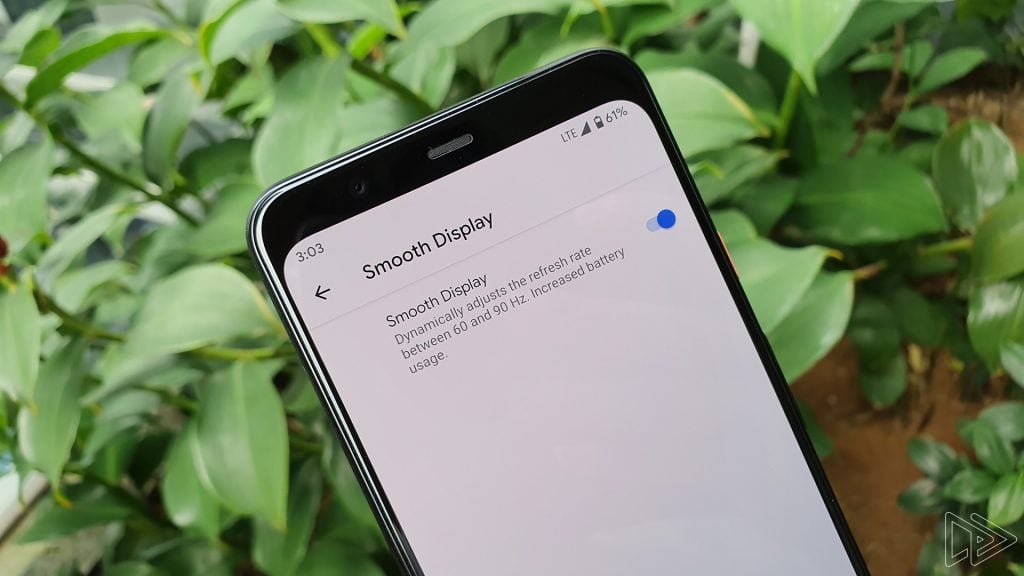
 The trapezoidal plastic piece with a metal grille on its back which originally seemed like a vent to provide active cooling while the CPU is processing heavy loads, turned out to be a sham and is nothing more than a cosmetic addition.






UP NEXT: Vivo Z1x with 8GB RAM tipped to debut with Rs. 21,990 pricing