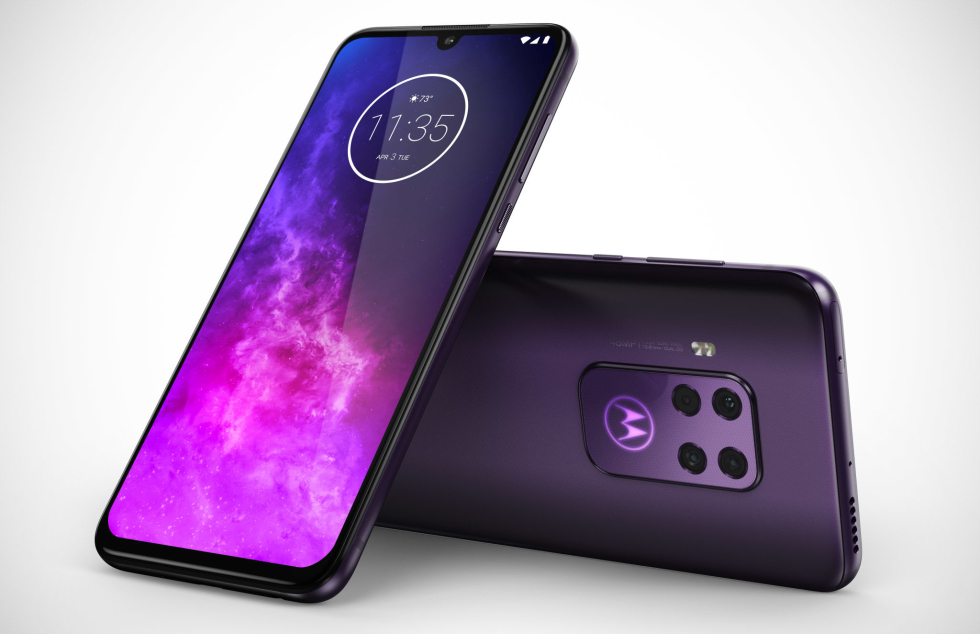
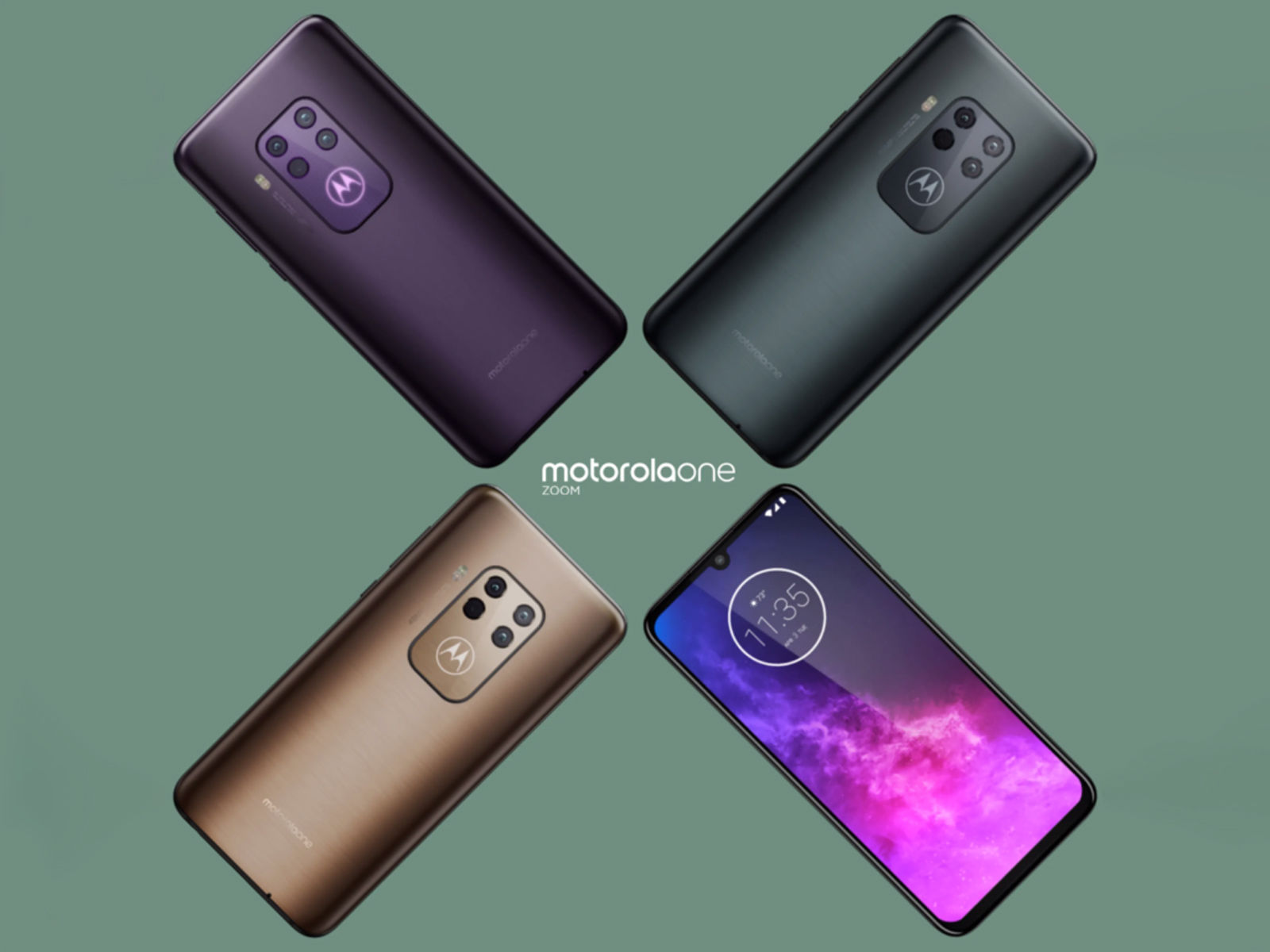
Motorola has been gifting us some solid smartphones under its One series. Not quite long ago, the company launched the Moto One Action with a camera setup that makes the device performs well as an action camera. The Lenovo-owned smartphone maker has now launched the Moto One Zoom at IFA Berlin with a strong focus on the camera.
The One Zoom smartphone comes with a rare 21:9 display which we have seen on the Sony Xperia 1 and the latest Xperia 5. The device packs a glass panel at the front and rear with the glass at the back having a satiny finish. The phone sports a 6.39-inch OLED FHD+ display with a waterdrop notch which houses a 25MP front camera for selfies. That promises to bring some stunning selfie output.
At the heart of the device is an upper-mid-range Snapdragon 675 chipset paired with 4GB of RAM and 6GB of RAM. There is also 64GB and 128GB of internal storage onboard.
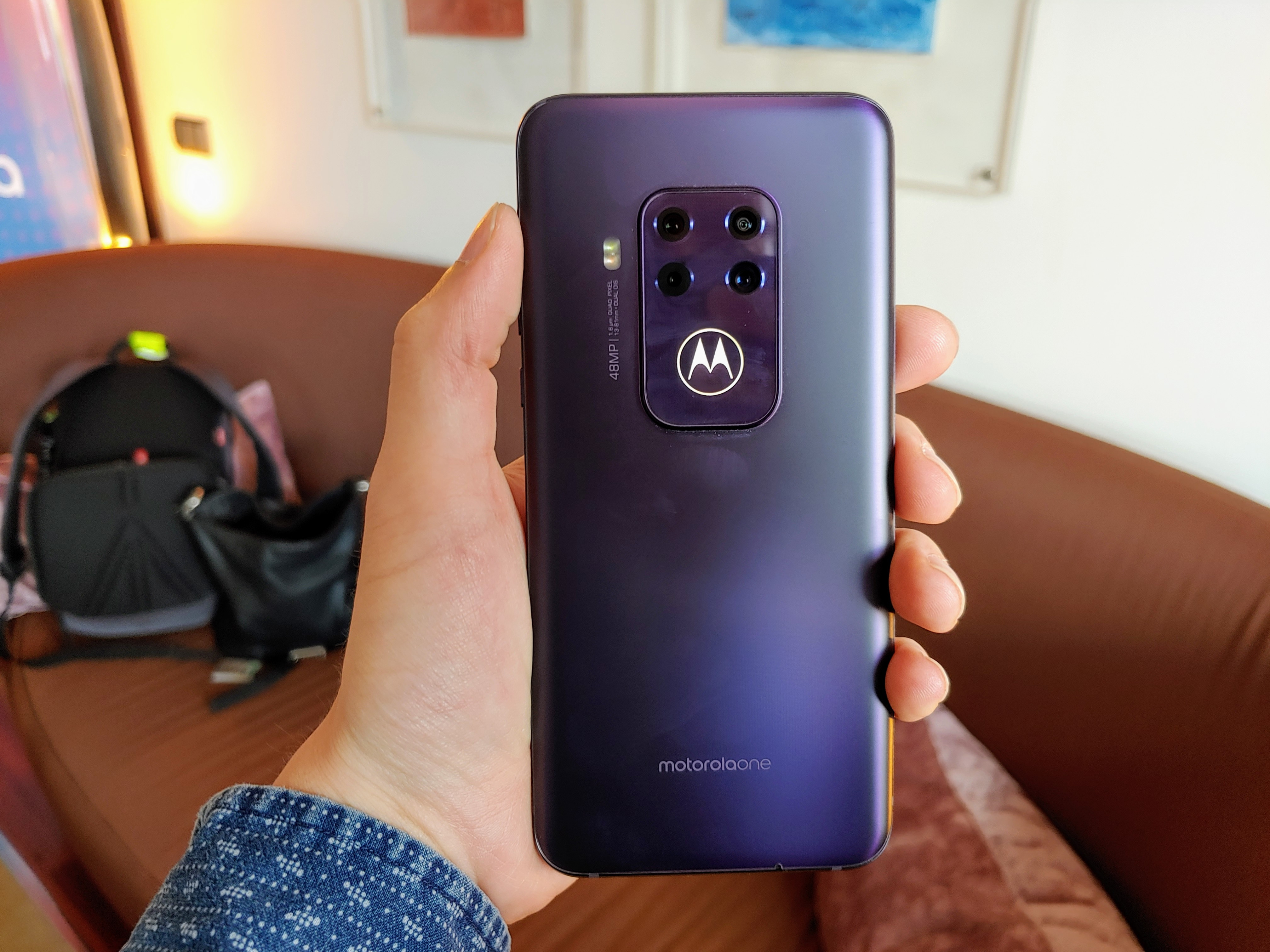
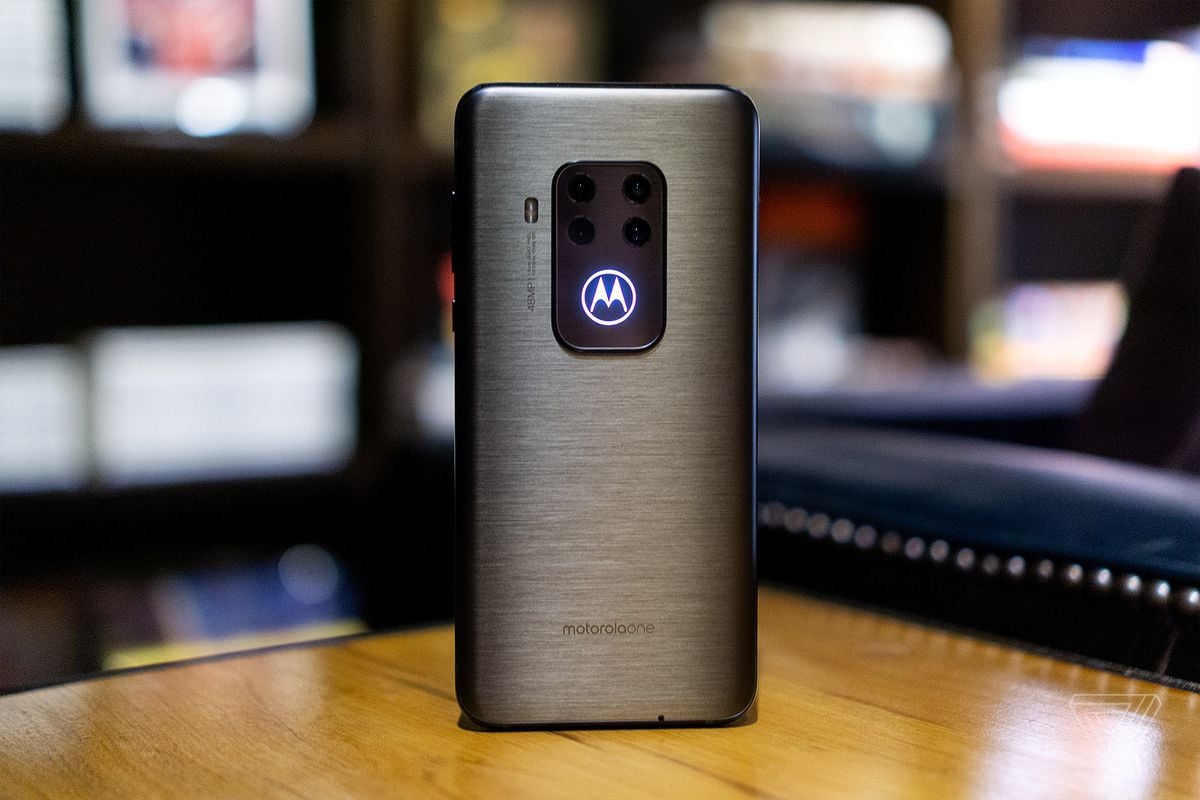
The rear panel definitely holds the most interesting feature of the One Zoom and that is the quad-camera setup. The four cameras are arranged in two pairs stacked vertically at the middle with the LED flash at the side. Just underneath the camera, there is the legendary Motorola logo which also doubles as a notification light. That’s cool but since it is at the back, you could easily miss out on a notification.
The main camera is a 48MP sensor but which actually shoots at 12MP by default because of pixel binning. The second sensor is a 16MP wide-angle camera that captures a 117-degree field of view. The third is an 8MP telephoto camera with 3x optical zoom plus OIS, and lastly, there is a 5MP depth sensor. We’ll have to wait to see how the cameras perform.
The device runs on Android Pie with an overlay of Motorola’s custom UI. The phone isn’t packing a waterproof build but comes with some level of splash resistance.
The device is already available to buy in the US from September 5 via Motorola’s website for $449.99. The phone is also available internationally for 429 euros also starting September 5.
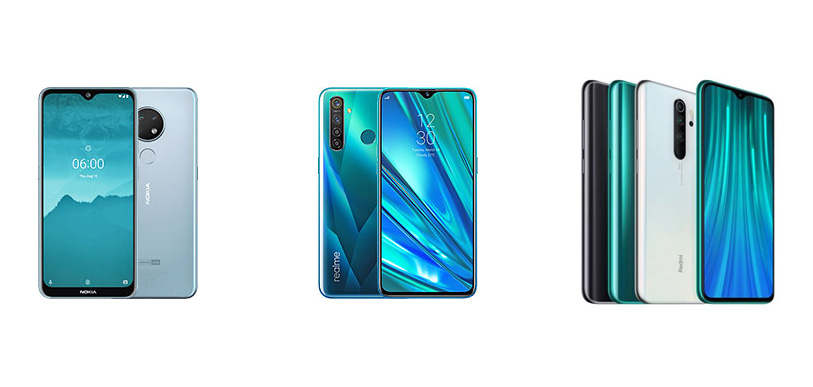
After several months of silence, HMD Global finally renewed its midrange lineup with two brand new devices. The company took advantage of the IFA 2019 which just kicked off in Berlin to unveil Nokia 6.2 and Nokia 7.2 at the same time. Meanwhile, Chinese companies released a lot of new phones, especially value for money ones. That is why we think it is worth making a comparison between the Nokia 6.2 and the latest mid-rangers of the same kind. For this specs comparison, we chose two potential best-sellers of the upcoming period: the powerful and gaming-centric Redmi Note 8 Pro, and the best-buy Realme 5 Pro which debuted with a very affordable price tag despite offering upper-midrange specifications.
Quad 64 + 8 + 2 + 2 MP f/1.8, f/2.2, f/2.4 and f/2.4
20 MP front camera
Triple 16 + 8 + 5 MP f/1.8, and f/2.2
8 MP f/2.0 front camera
Quad 48 + 8 + 2 + 2 MP f/1.8, f/2.2, f/2.4 and f/2.4
16 MP f/2.0 front camera
BATTERY
4500 mAh, fast charging 18W with Quick Charge 4+
3500 mAh, fast charging 10W
4035 mAh, fast charging 20W with VOOC 3.0
ADDITIONAL FEATURES
Hybrid Dual SIM slot
Dual SIM slot
Dual SIM slot
Design
The presence of a glass back and a body that is more compact than Redmi Note 8 Pro would make me go for the Nokia 6.2. To be accurate, Realme 5 Pro is the most compact phone of the trio, but it is also the only built with cheaper plastic materials. That is why my choice would be Nokia 6.2. However, do not forget that Realme 5 Pro is splash resistant, unlike its opponents. If you do not care about dimensions, then you would better go for the Redmi Note 8 Pro as it offers a more resistant glass back thanks to the Gorilla Glass 5 protection, as well as more interesting color variants, at least according to my tastes.
Display
The display is one of the strongest points of Nokia 6.2. Despite being just an affordable phone, the Nokia 6.2 boasts an HDR10-compliant display, so it is able to provide better colors, especially with multimedia content. Redmi Note 8 Pro and Realme 5 Pro offer just the classic IPS panels that you can find on most of the midrange phones, so they have nothing special to give you in terms of viewing quality. On the other hand, Redmi Note 8 Pro with its bigger display size is more comfortable for gaming and advanced users.
Specs & Software
Nokia 6.2, Realme 5 Pro and Redmi Note 8 Pro are all sold at mid-end prices, but when it comes to performance, there is an abyss between the Redmi Note 8 Pro and its two rivals. Its stunning Helio G90T processor is much faster and it provides way better graphics performance than both the Snapdragon 636 and the Snapdragon 712 found on the Nokia 6.2 and the Realme 5 Pro. Redmi Note 8 Pro even comes with an advanced liquid cooling system which makes the phone stay cool even after long gaming sessions. Note that Nokia 6.2 is the only to feature Android One, so it will get updated faster and more constantly for a longer period. But it is the phone with the lowest-end hardware department here.
Camera
Even though it is a gaming-centric device, Redmi Note 8 Pro is also a great camera phone. Alongside the Realme XT (which is not in this comparison) it is the world’s first phone with a 64 MP main cameras (very high resolution but still a midrange sensor), and it provides the best photo quality compared to Realme 5 Pro and Nokia 6.2. Right after, there is the quad-camera setup found on the Realme 5 Pro with a 48 MP main sensor, while Nokia 6.2 has a main sensor with just a 16 MP resolution. However, we are sure that it will give us surprises given the advanced camera enhancing technologies described by HMD Global at IFA 2019.
Battery
The big 4035 mAh battery paired with a 10 nm processor and a compact display should make Realme 5 Pro last more than Redmi Note 8 Pro, despite the latter has almost the same battery capacity. The weak point of the Helio G90T SoC is the production process, which influences the efficiency in a negative way. Nokia 6.2 has a 3500 mAh battery, so we do not think it can compete.
Price
Nokia 6.2 will cost €200/$220 in its base variant, Realme 5 Pro starts from €175/$193 and Redmi Note 8 Pro has a €180/$198 starting price. Unless you need the best display and faster updates, we do not think it is worth going for the Nokia 6.2. At the end of the day, Redmi Note 8 Pro is way more convincing than Nokia 6.2 and Realme 5 Pro as it offers higher performance, a better camera on the paper, a bigger display, and a great build quality.
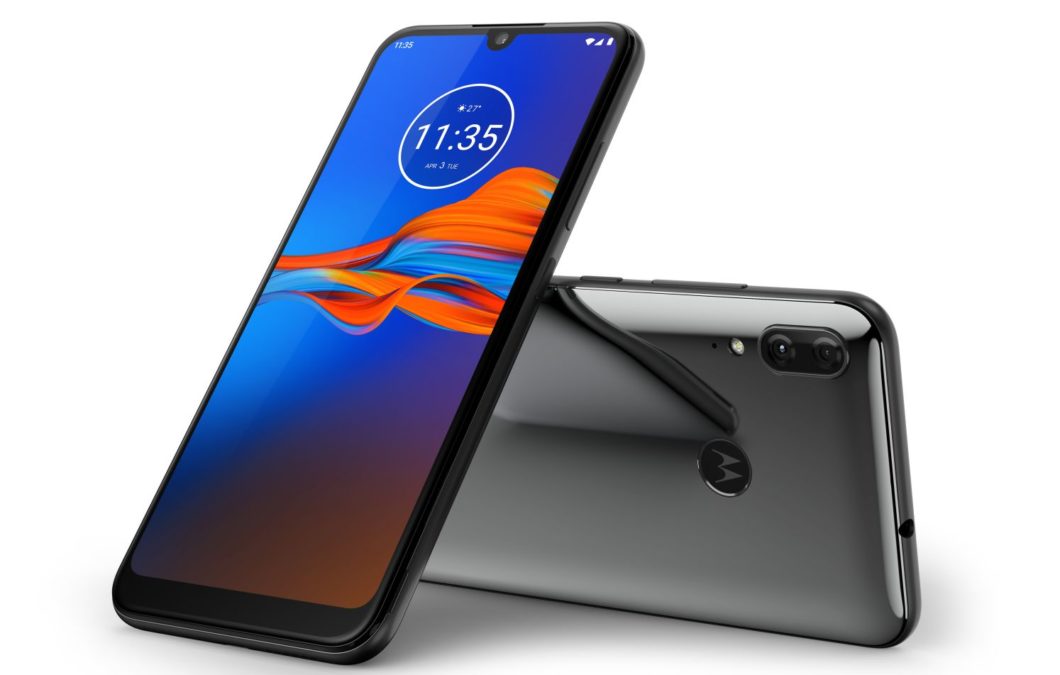
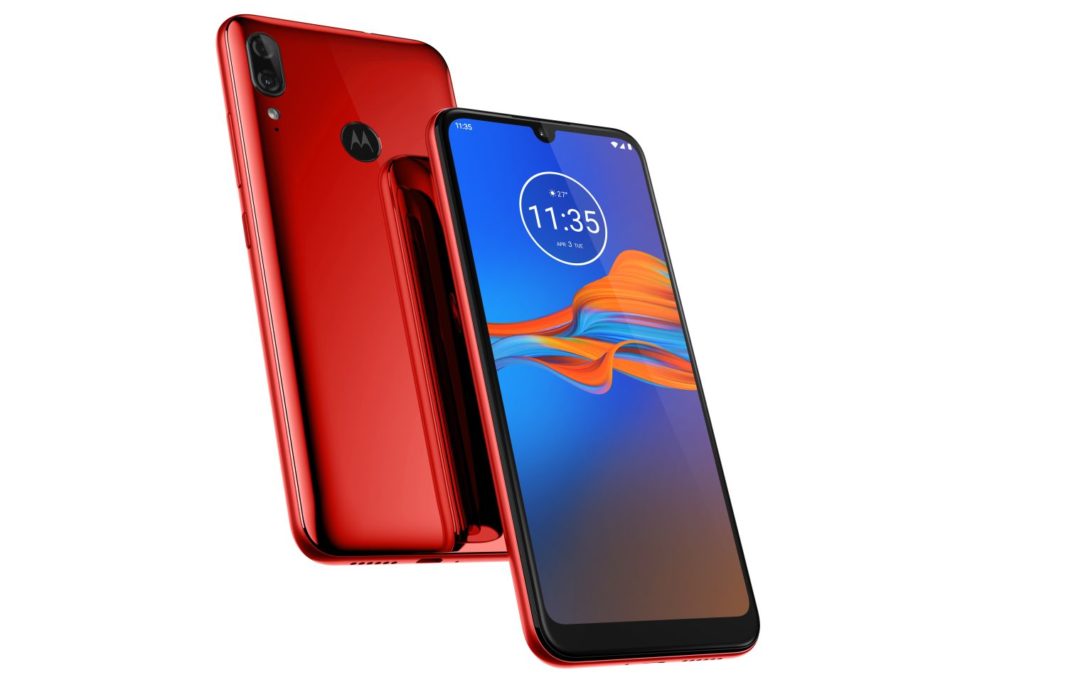
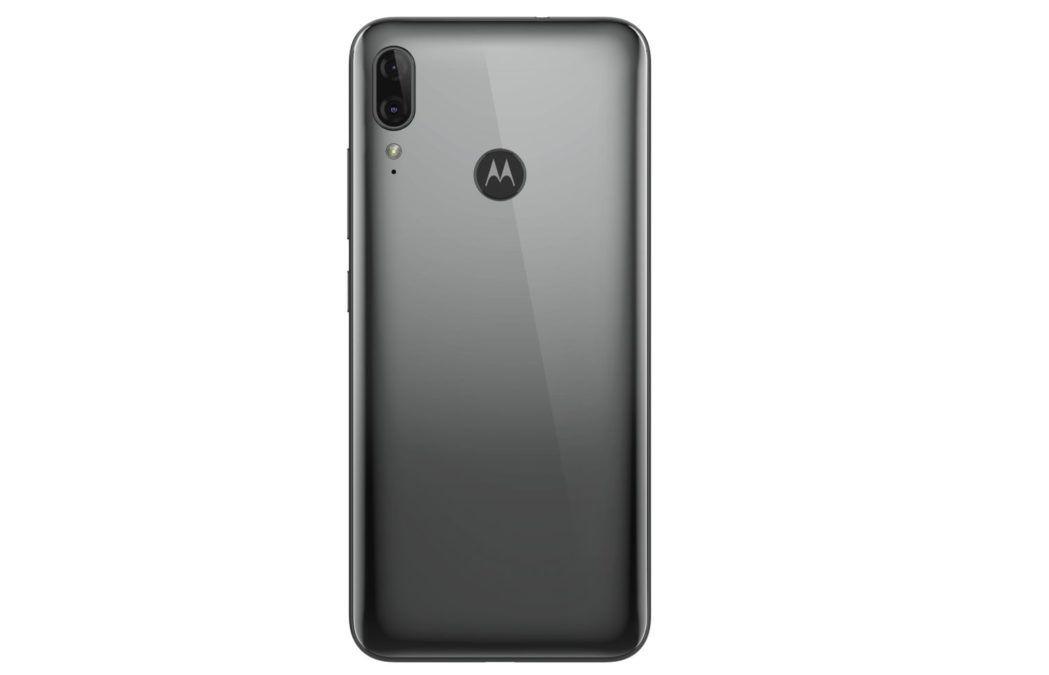
Motorola is one company that has continued to churn out quality pones and the company doesn’t look like it is ready to relent. At the ongoing IFA trade show in Berlin, the Lenovo-owned company has announced the Moto E6 Plus, a bigger and improved version of the E6 which was launched earlier this year.
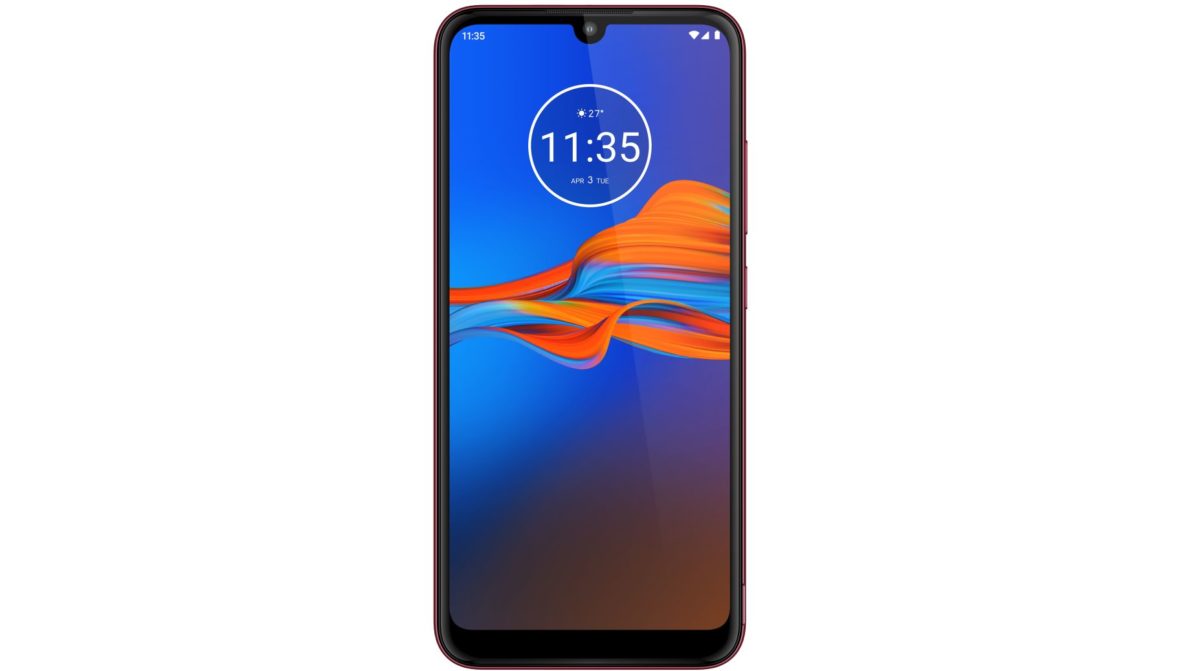
The Moto E-series is basically a budget series and contains some of the company’s most affordable phones. So, the design and hardware setup usually reeks of an entry-level model and the E6 Plus is no different despite its plus-size build. The device packs a 6.1-inch display with a waterdrop notch and an HD+ resolution of 720p. The device utilises a 19.5:9 aspect ratio and has an 80% screen-to-body ratio. Motorola didn’t indicate if the screen is an OLED type or LCD but since this is a budget phone, it is most definitely LCD.
A MediaTek Helio P22 chipset is at the heart of the Moto E6 Plus. The device comes in 2GB RAM and 4GB RAM versions and 32GB/64GB of internal storage. The phone packs a 3000mAh removable battery under the hood. The rear cover is actually made from plastic and can be removed easily. There is no 3.5mm audio jack on board while the device features a micro-USB connector for charging and data transfer. Connectivity options include GPS/GLONASS, Bluetooth 4.2, and Wi-Fi. There is also an FM radio on board but looks like there is no fingerprint sensor at the back.
For photography, the Moto E6 Plus comes as the first E series model to pack a vertical dual-camera setup nested at the top left corner. The main camera has a 13MP sensor with an f/2 aperture while the second camera is a 2MP depth sensor. At the front, there is an 8MP selfie camera with f/2 aperture for capturing cool selfies. The front camera can be assisted by a screen flash when shooting in darker spaces.
The E6 Plus comes in four colours; Blue, Cranberry, Cherry, and Graphite. No word yet on its pricing and availability.
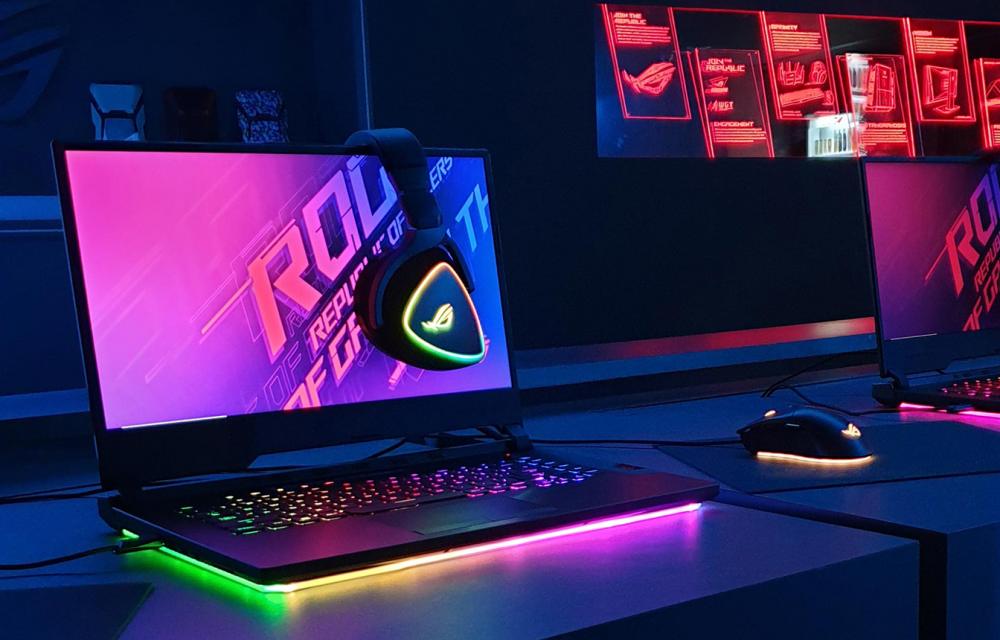
Together with the announcement of the professional desktop and monitor of the ProArt Series, Asus also announced 3 new laptop workstations that will be part of the series in the event that took place ahead of the IFA 2019 show. In addition, the company teased the gaming community with the upcoming Asus ROG Zephyrus S GX701 that boasts a crazy 300Hz display refresh rate! Let’s check out what they’ve got.
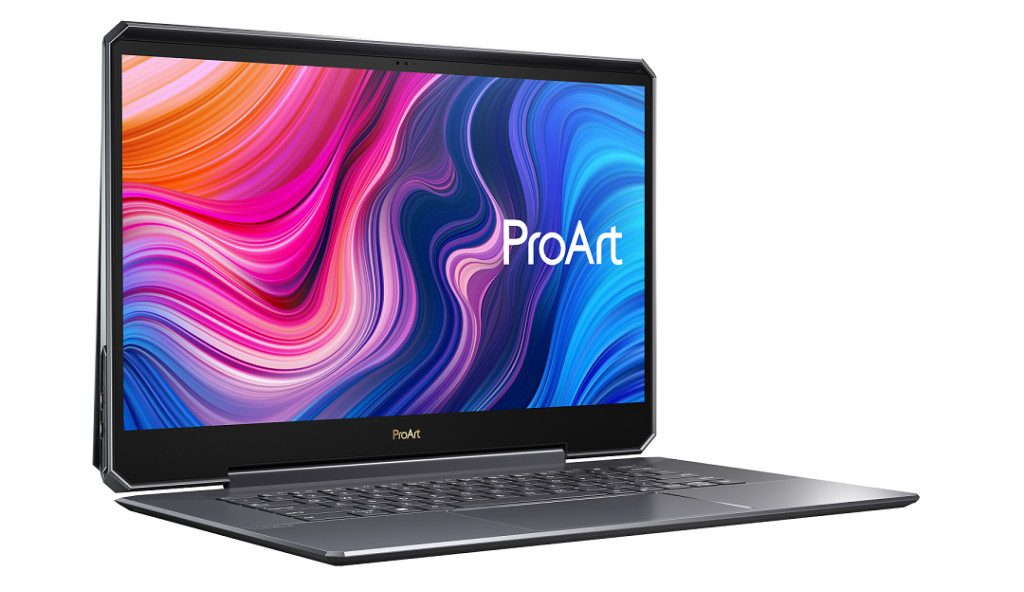
Asus ProArt StudioBook One
Taking the top performer spot of the ProArt series, the StudioBook One is the first laptop to feature an Nvidia Quadro RTX 6000 professional-grade graphics card according to Asus. Of course, a top performer needs a top CPU and Asus chose the Intel 9th generation CPUs that together with the 4K Pantone validated display with 120Hz refresh rate and edge-to-edge glass, results in a real beast. The display also features a wide color gamut with 100% of the Adobe RGB spectrum and a Delta-E value of less than 1.0. As Asus claims, the device sports a powerful cooling system featuring a lightweight aerospace-grade aluminum alloy thermal module. When the lid is open, the chassis is tilted by 4.57 degrees to maximize airflow.
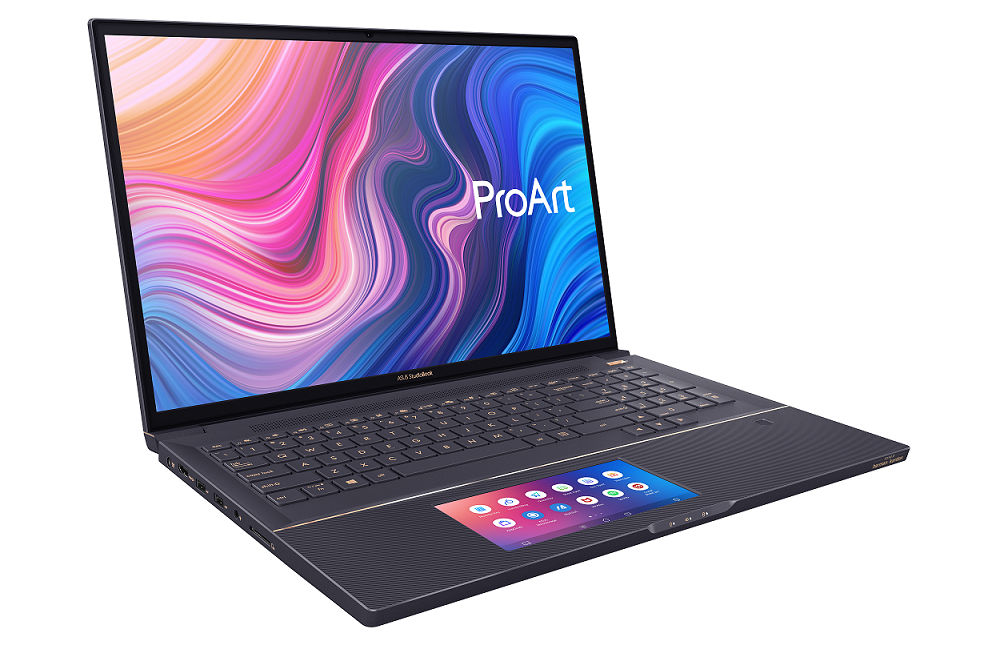
Asus ProArt StudioBook Pro X
The StudioBook Pro is the 1st Nvidia Quadro-powered StudioBook to come with the company’s ScreenPad 2 -a touch display instead of a classic trackpad- and a four-sided NanoEdge display. Thanks to the slim bezels, the overall size of the 17″ laptop is about the same as an average 15″ one. Of course, the display features a wide gamut and covers 97% of the DCI-P3 color space. To power the device, Asus went with Intel’s Xeon and 9th Gen Core i7 CPUs, Nvidia Quadro 5000 Series GPU while the storage options include RAID 0 configuration capable of speeds of up to 6GBps.
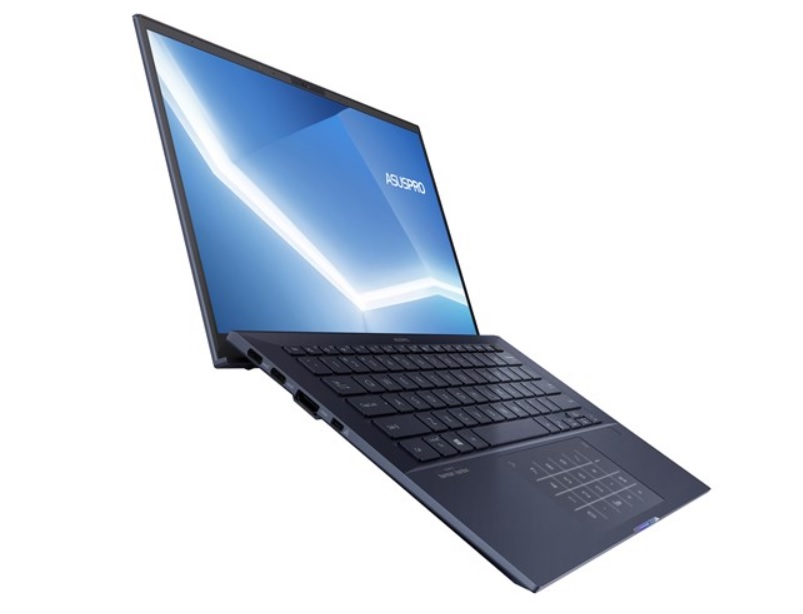
AsusPro B9 (B9450)
Besides the powerful StudioBook models, Asus also revealed the AsusPro B9 (B9450), “the world’s lightest business laptop” according to the company with a weight of 880g. Thanks to the very slim bezels, the 14.1″ laptop has the volume of a typical 13.3″ laptop which is great. The AsusPro B9 is just 14.9mm thick and as the company officials say, it has a long-lasting battery. This is mainly achieved thanks to Intel’s 10th Gen Core CPUs that are very power-efficient. Storage can reach up to two 1TB PCIe SSDs with support for RAID 0 or 1, there’s WiFi 802.11ax, the fastest to date with up to 1.32Gbps speed, and Thunderbolt 3. This too is tested for MIL-STD 810G military standard, has a Trusted Platform Module 2.0 (TPM) security chip for data security, and an IR camera for Windows Hello authentication.
Asus ROG Zephyrus S GX701
But Asus reserved a surprise for gamers too. During the event, they teased an upcoming laptop, which should be the world’s first laptop to have a 300Hz refresh rate display! The Zephyrus S GX701 will be available in October of this year and will feature Intel’s 9th Gen CPUs, an Nvidia RTX 2080 GPU, and Pantone-validated display. Of course, it will have the company’s Active Aerodynamic System for cooling, Aura Sync lighting, and GPU Switch. More details are yet to be revealed as we approach the launch date.
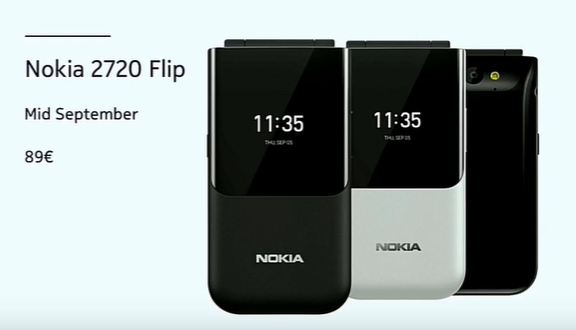
Today’s Nokia IFA 2019 event wasn’t only about smartphones. HMD Global also announced three new feature phones – the Nokia 2720 Flip which is a modern version of the 2009 Nokia 2720 Fold, the Nokia 800 Tough which is a rugged phone in all the ways a phone can be, and the Nokia 110 which build upon the features of the Nokia 105.
Nokia 2720 Flip
Ever since HMD Global took over the Nokia brand, it has made it a tradition to breathe new life into old Nokia phones, at least the features ones. In its first year, it announced the Nokia 3310 which comes in 2G, 3G, and 4G variants. Last year, it announced the Nokia 8810 4G and today, it has brought back a new version of the Nokia 2720.
The Nokia 2720 Flip might as well be the classiest feature phone when it goes on sale. Just like the name says, the phone has a flip/clamshell design. There is one screen on the outside – a 1.3-inch 240 x 240 display – which will display caller ID, the clock and date, or even news alert. On the inside is a 2.8-inch QVGA display.
The phone’s keypad features big buttons that make it easier to type and dial numbers. It also supports a large font to make it easier to read messages. The phone runs KaiOS and comes with the Google Assistant. So you can simply call up the assistant and ask it about the weather, carry out a search or dial or text a contact.
[envira-gallery id=”274589″]
The Nokia 2720 Flip has an emergency call button (doubles as Google Assistant button) which when pushed will send an SMS and call five pre-configured contacts in the address book one at a time over loudspeaker until it connects to one of them. There is also ICE which helps emergency responders access to important info such as medical details of the owner of the phone.
The phone is powered by Qualcomm’s Snapdragon 205 processor. It has 512MB of RAM and 4GB of built-in storage which can be expanded up to an additional 32GB via a MicroSD card slot. It has a 2MP rear camera with an LED flash. The Nokia 2720 has an audio jack and is also compatible with hearing aids.
It comes in single SIM and dual-SIM variants and both versions use a Nano-SIM. The phone packs a 1500mAh battery which can last up to 28 days in standby and provide up to 6.6 hours of talk time on 4G. The Nokia 2720 Flip comes bundled with WhatsApp and Facebook. It can also serve as a hotspot, allowing you to share internet access to other devices.
The phone is priced at €89 and will be available next week in gray and black.
Nokia 800 Tough
The Nokia 800 Tough is HMD Global’s first rugged phone and it is a feature phone with 4G. The phone is designed to withstand the toughest conditions. It has an IP68 rating which makes it waterproof (up to 30 minutes in waters 1.5m deep). It is also dustproof and sandproof and will survive accidental drops from heights up to 1.8m. HMD Global says it will even survive a fall on concrete. The phone is also MIL-STD-810G compliant and will survive at temperatures between -20°C and 55°C. It also has a dedicated 198 lumens flashlight at the top.
[envira-gallery id=”274597″]
The Nokia 800 Tough has a 2.4-inch QVGA screen with a keypad with large rubberized buttons and a speaker at the top and bottom. It has a non-slip frame and a safety loop at the bottom for a wrist strap or lanyard and you can see screws around the body of the phone.
There is a Snapdragon 205 processor inside the phone along with 512MB of RAM 4GB of storage. It has a hybrid dual SIM slot for two nano-SIMs or one SIM and a MicroSD card (32GB Max.). There is a 2MP camera on the back of the phone with an LED flash.
The Nokia 800 Tough runs KaiOS and comes with Facebook, Whatsapp, and the Google Assistant. It has a 2100mAH battery that boasts 43.7 days on standby and will provide up to 9.4 hours of 4G talk time. There is a MicroUSB port at the bottom for charging. It also has GPS+GLONASS, WiFi, and Bluetooth 4.1
The phone is priced at €110 and will be available in October in Black Steel and Desert Sand.
Nokia 110
The Nokia 110 is being marketed as a phone that doubles as an MP3 player. It comes in a curvy and sturdy polycarbonate body available in three colors. There is a 1.77” QQVGA display with an alphanumeric keyboard underneath.
The phone has 4MB of RAM and 4MB of storage. There is a MicroSD card slot (32GB Max.) for more storage which you can load up with audio files. It also has a QVGA camera, FM radio, and a 3.5mm audio jack.
The Nokia 110 comes in single SIM and dual SIM variants and packs an 800mAh battery with a standby time of 18.5 days and u to 14 hours of talk time. It can also provide up to 18 hours of FM radio playback. The popular Snake game is preloaded in addition to four try-and-buy games including Doodle Jump.
[envira-gallery id=”274603″]
The phone is priced at just $20 making it the cheapest Nokia phone announced at IFA 2019. It will be available next week in pink, black, and ocean blue.
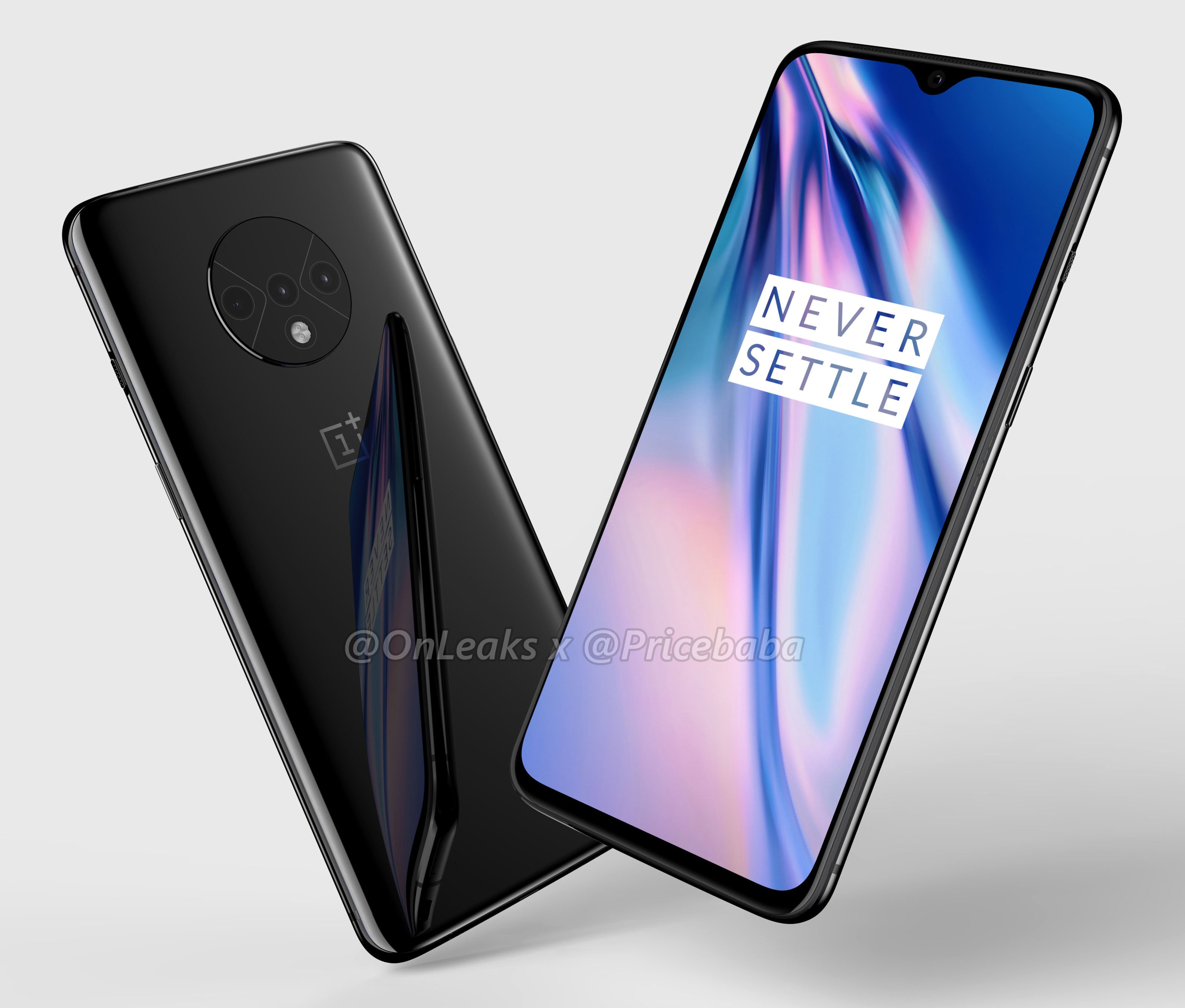
It’s already been three months since the launch of the OnePlus 7 and 7 Pro globally. This also means that the company is all set to tease new models launching in the second half of the year. Well, unlike past couple of years, we might not have to wait until October for the ‘T’ version, at least not in India. Rumors say that the new OnePlus 7T and 7T Pro could be announced as early as September 26, alongside its new TV. Now, OnePlus‘ CEO Pete Lau has revealed one key feature of the upcoming device.
In an email interview with CNET, OnePlus CEO revealed that its upcoming flagship will continue to use a 90Hz display. What’s even more interesting is that he said the phone will be cheaper than the current OnePlus 7 Pro which retails at $699 globally.
This is actually in line with what the Indian leakster Ishan Agarwal had revealed earlier. He had said that the OnePlus 7T (smaller version) will feature a notch and a 90Hz 2K display. So it’s very likely that Pete was talking about the OnePlus 7T and not the OnePlus 7T Pro!
According to rumors, the OnePlus 7T will be powered by the Snapdragon 855 Plus and will come in two variants featuring 8GB of RAM and 128GB or 256GB of storage. The camera setup at the back is said to come with a 48MP primary camera paired with 16MP and 12MP sensors.
High screen refresh rates are becoming an important feature among flagships. Even the Nubia Red Magic 3S that was announced today comes with a 90Hz AMOLED display and 240Hz touch sampling rate to ensure super smooth scrolling.
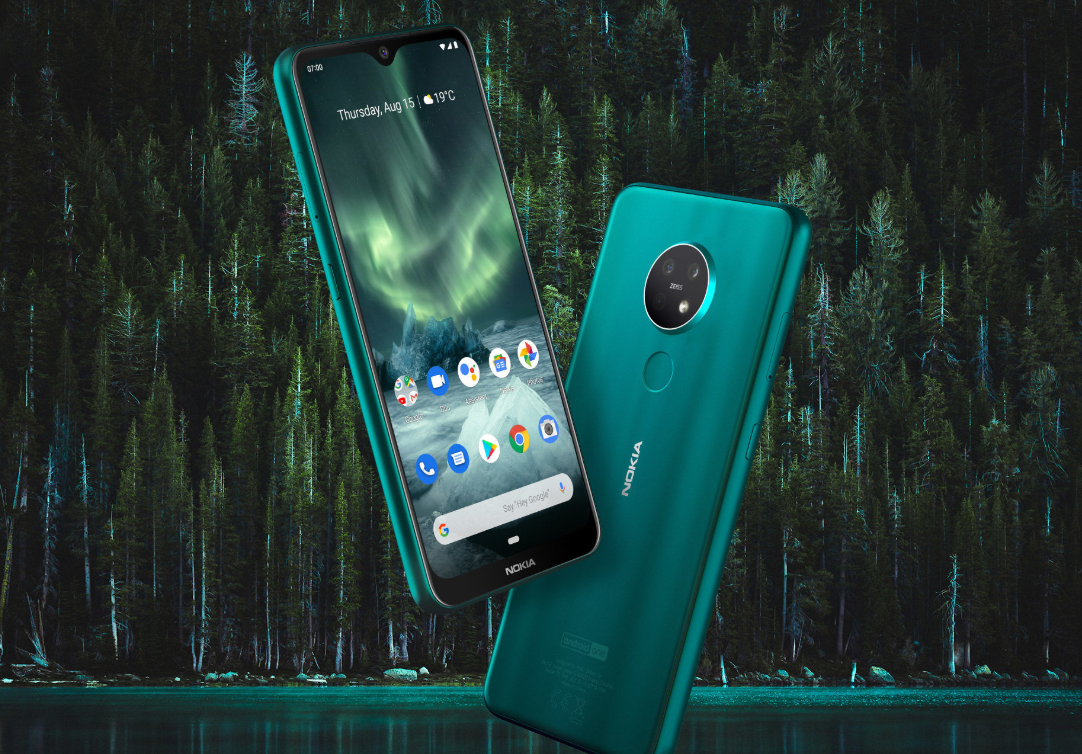
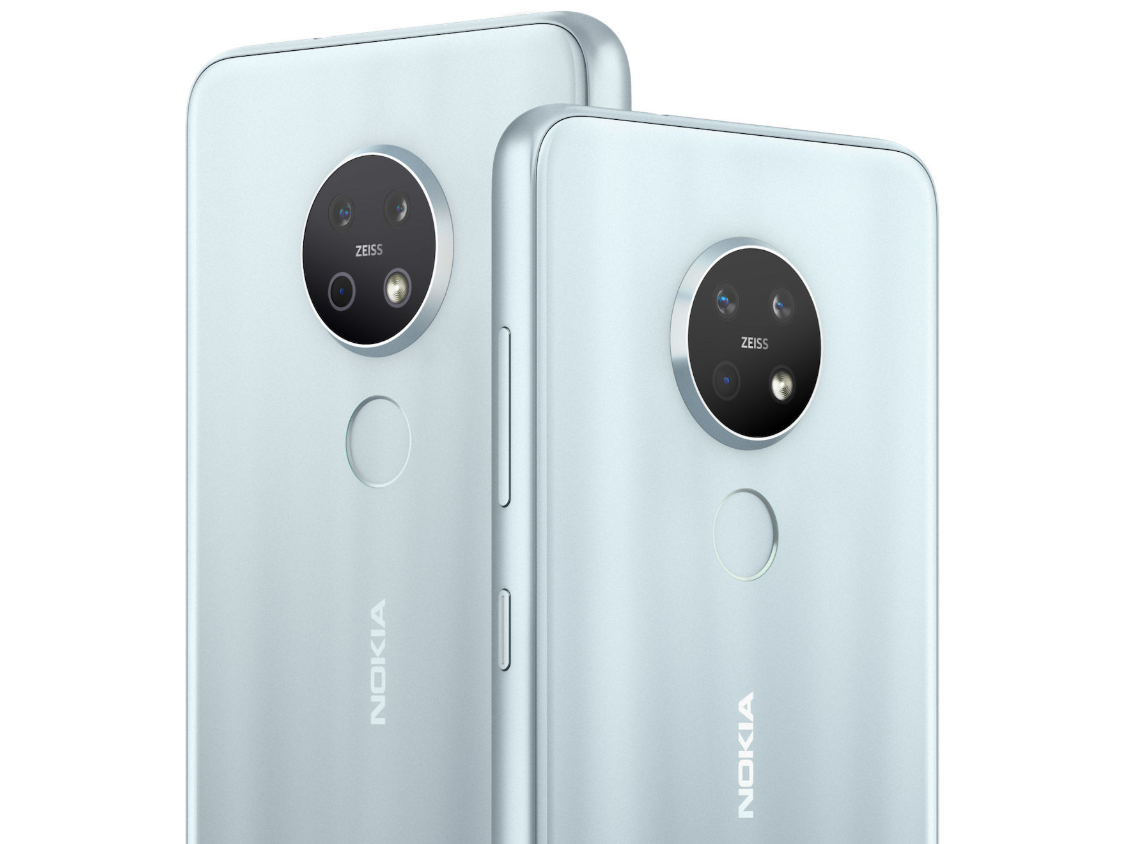
Alongside the Nokia 6.2, HMD Global also announced the Nokia 7.2 at IFA 2019. Both phones share not only a similar design but also similar key features.
HMD Global says the Nokia 7.2 is made with a high-tech polymer composite that is 2x stronger than polycarbonate but half the weight of aluminum. However, the core is made of metal. The display is covered with 2.5D Gorilla Glass and there is also Gorilla Glass on the rear, but HMD Global doesn’t specify which type. The design is finished with a multi-layer coating that gives the phone a metallic look.
The Nokia 7.2 also has a 6.3-inch FHD+ PureDisplay with the same PixelWorks processor for real-time HDR conversion. It also has a notch at the top which houses a 20MP camera with Carl Zeiss lens.
The phone is powered by the Snapdragon 660 processor, an upgrade over the Snapdragon 636 of its predecessor. It comes in 4GB RAM and 6GB RAM variants with 64GB and 128GB of expandable storage respectively. The maximum capacity MicroSD card supported is 512GB.
The Nokia 7.2 also has triple rear cameras like the Nokia 6.2 but Zeiss optics. The primary sensor is a 48MP camera with Quad-Pixel technology and is paired with a 5MP depth sensor and an 8MP 118° ultrawide angle camera. The phone comes with bokeh effects such as ZEISS Modern, ZEISS Swirl, and ZEISS Smooth for adjusting several features when you take a portrait photo. There is also a Night Mode which uses a combination of advanced image fusion and multiple exposures for brighter images with rich details. The Nokia 7.2 an also record in 4K with spatial audio recording. The Dual Sight feature has also been enhanced.
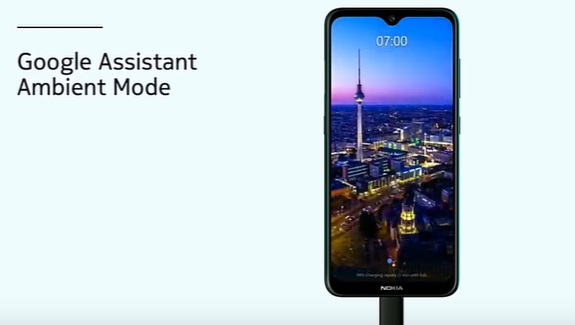
The Nokia 7.2 has a dedicated Google Assistant button but it (and the Nokia 6.2) come with a new feature called Google Assistant Ambient Mode which allows you to check the weather, your to-do list, control your smart home devices, etc. without touching your phone.
The device has a 3500mAh battery and with AI features like Adaptive Battery, HMD Global promises 2-day battery life. Sadly, it also supports only 10W charging via a USB Type-C port. There is Bluetooth 5.0, NFC (select markets), a 3.5mm audio jack, dual-SIM (nano), an FM radio, and aptX audio. The Nokia 7.2, just like the Nokia 6.2 is an Android One phone. It runs Android 9 Pie and will also get 2 years of OS updates and 3 years of security updates.
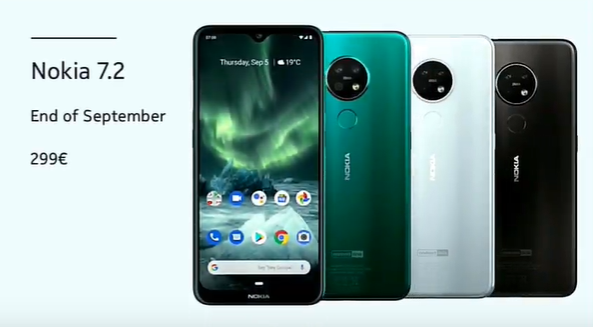
The phone comes in Ice, Turquoise, and Anthracite. It is priced at €299 and will be available by the end of September.
As the biggest electronics show -IFA 2019- is going to open its gates to the public tomorrow, big brands are holding events to announce their upcoming events that visitors will have the chance to see during the show. Asus made a big impression with its ProArt Series that, besides the desktop and monitor, includes 3 laptops.
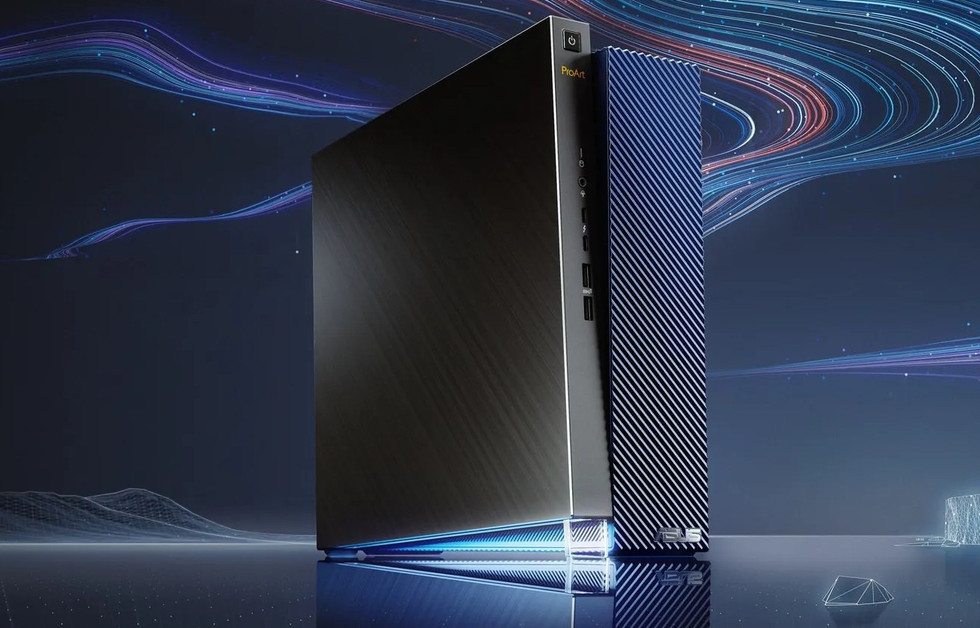
Asus ProArt Station D940MX
Taking advantage of the evolution in hardware power that comes in a smaller package, Asus ProArt Station D940MX is a workstation-grade desktop that sports a just 8-liter chassis which makes it one of the smallest out there. Asus chose to go with Intel’s latest CPUs so it is powered by Intel’s 9th Gen CPUs and can be equipped with up to 64GB of DDR4 RAM. As for the GPU, two options are available: Either the Nvidia Quadro RTX 4000 or RTX 2080 Ti. Of course, a pro-workstation must come with a fast storage option so the D940MX comes with a 512GB PCIe SSD and an 1TB hard drive.
Connectivity is taken care of the dual Thunderbolt 3 ports on the front panel of the stylish chassis that features an LED indicator at the bottom of the chassis. As far as cooling is concerned, the system uses a 2D vapor chamber and heat pipes for controlling the temperatures while the 4 fans help dissipate heat quickly. Also, noise shouldn’t be a problem since Asus claims it generates up to 37dB of noise at full load. Lastly, it comes with MIL-STD 810G certification.
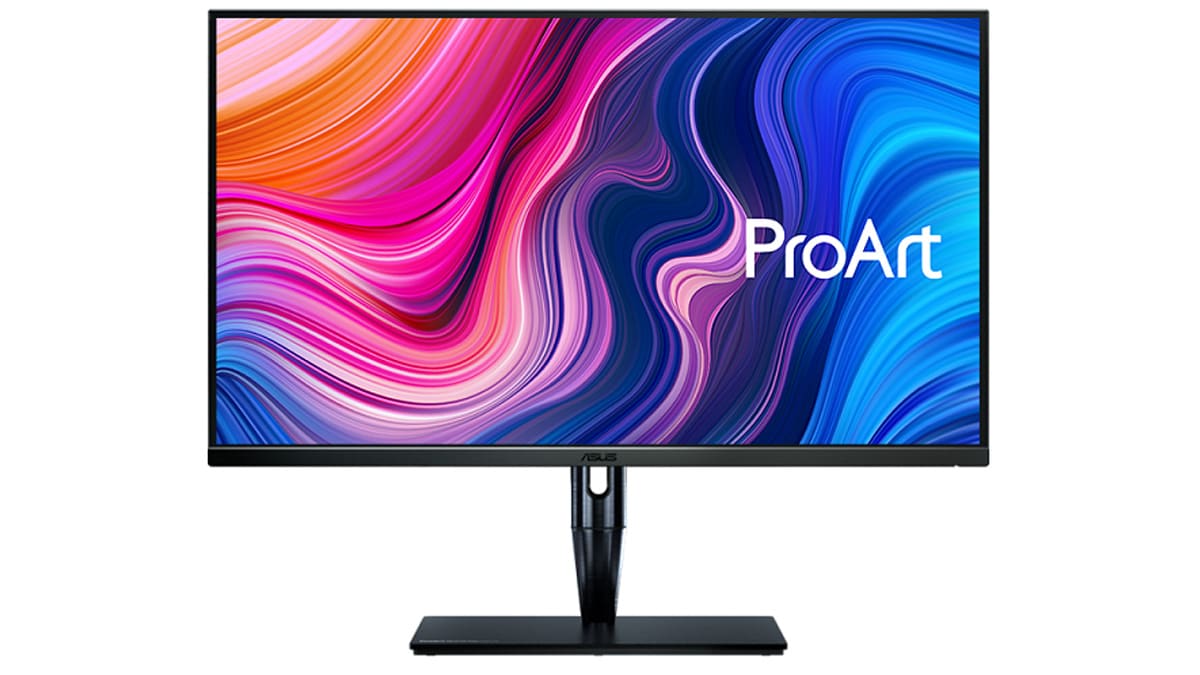
Asus ProArt Display PA32UCG
At this year’s WWDC Apple announced its new ProDisplay addressed at professionals and the new ProArt Display from Asus is the attempt to compete in this market segment. The new PA32UCG monitor claims to be the world’s 1st HDR 1600 display with a 120Hz refresh rate. The resolution offered is 4K and the mini LED backlight is supposedly capable of offering 1000nits of sustained brightness and 1600nits of peak brightness as well as a contrast ratio of 1.000.000:1.
In addition, it supports HDR 10, HLG, and Dolby Vision with the panel using Quantum Dot technology and offers DCI-P3, Adobe RGB, sRGB, Rec. 709 and Rec. 2020 color spaces and 10-bit color depth. There is no need for calibration as it comes pre-calibrated from the factory and, according to Asus, it has a Delta-E rating of less than 1.0. Refresh rate, on the other hand, can vary from 48Hz to 120Hz which usually benefits game development workflows. Finally, it comes with plenty of connectivity options as there are 2x Thunderbolt 3 ports, 1x DisplayPort, 3x HDMI ports, and a built-in USB hub.
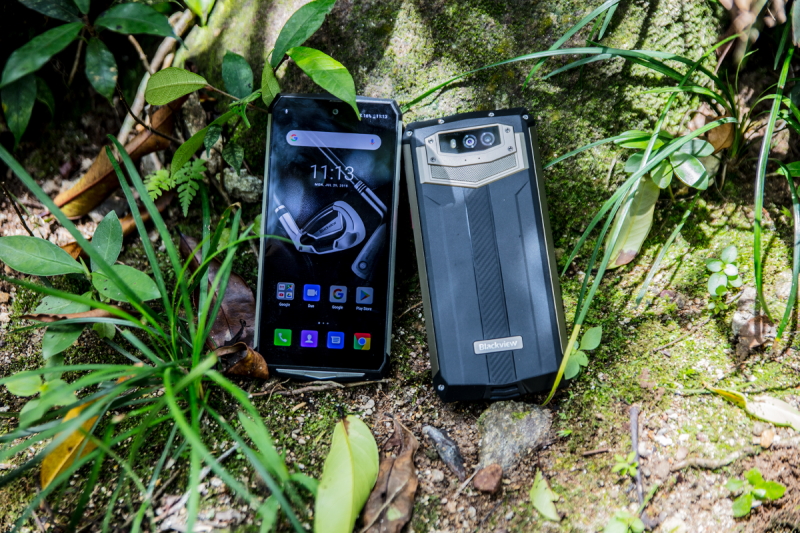
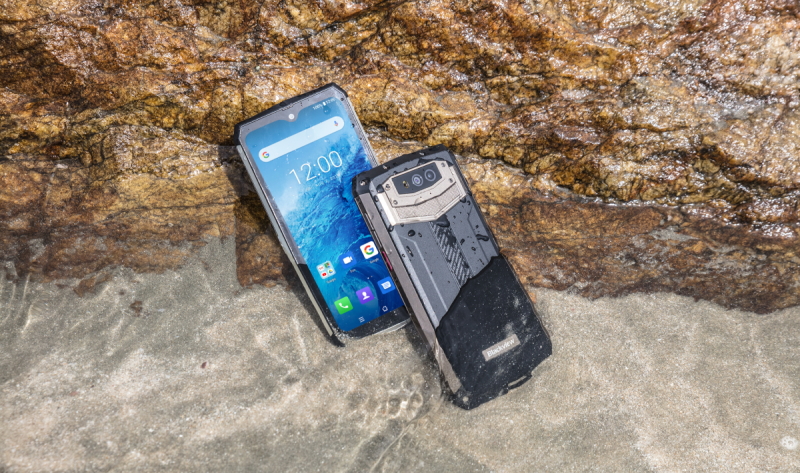
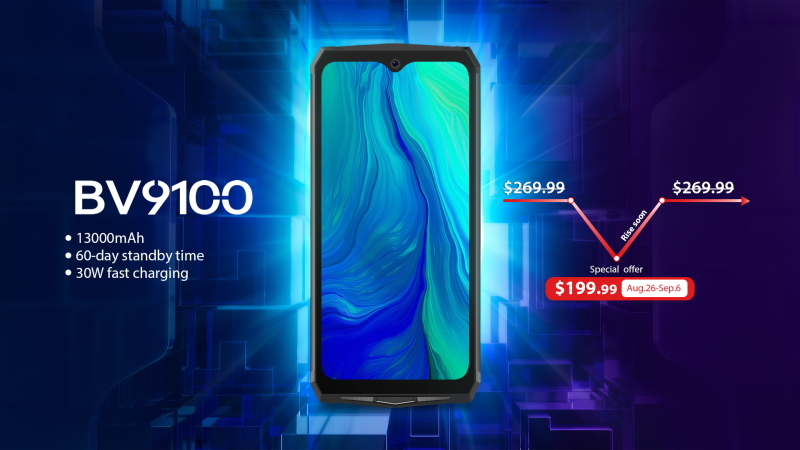
If someone told you to name the smartphone with the biggest battery, Blackview BV9100 would definitely be one of the first to come in mind. The 13000mAh monster hit the market last month and it can easily get you about 3 days of daily use on a single charge or more if you are a conservative user. And thanks to its 30W super-fast charging, you can go from 0% to 100% in just 2.5 hours.
In addition to the long battery life it provides, it can also act as a 13000mAh power bank to charge other devices thanks to its “reverse charge” capabilities. for example, you can recharge the iPhone XS from 0% to 100% almost 4 times! Pretty helpful when you are going to be on the road for several days.
Besides the big battery, the rest of the specs are no slouch either. Given it’s a rugged phone, one would think that it comes with mediocre specs. That’s not the case with the BV9100 as the phone comes with a 6.3″ FHD+ IPS waterdrop display, Android 9 Pie, and a power-efficient MediaTek Helio P35 octa-core SoC backed by 4GB of RAM and 64GB of internal storage upgradeable up to 128GB more via the microSD slot. Also, there is a dual rear camera with dual Sony 16MP sensors while the selfie shooter hosts a 16MP Samsung sensor.
Being a rugged device means it is mandatory to have excellent GPS reception in case you get lost out in the wild. The Blackview BV9100 does an excellent job since it supports GPS, GLONASS, Beidou, and Galileo systems which offer top-level navigation accuracy.
And finally, the big news: The Blackview BV9100 just went on a special offer and you can get it for just $199.99 instead of the $269.99 original price. The offer is valid until September 6th so the clock is ticking!
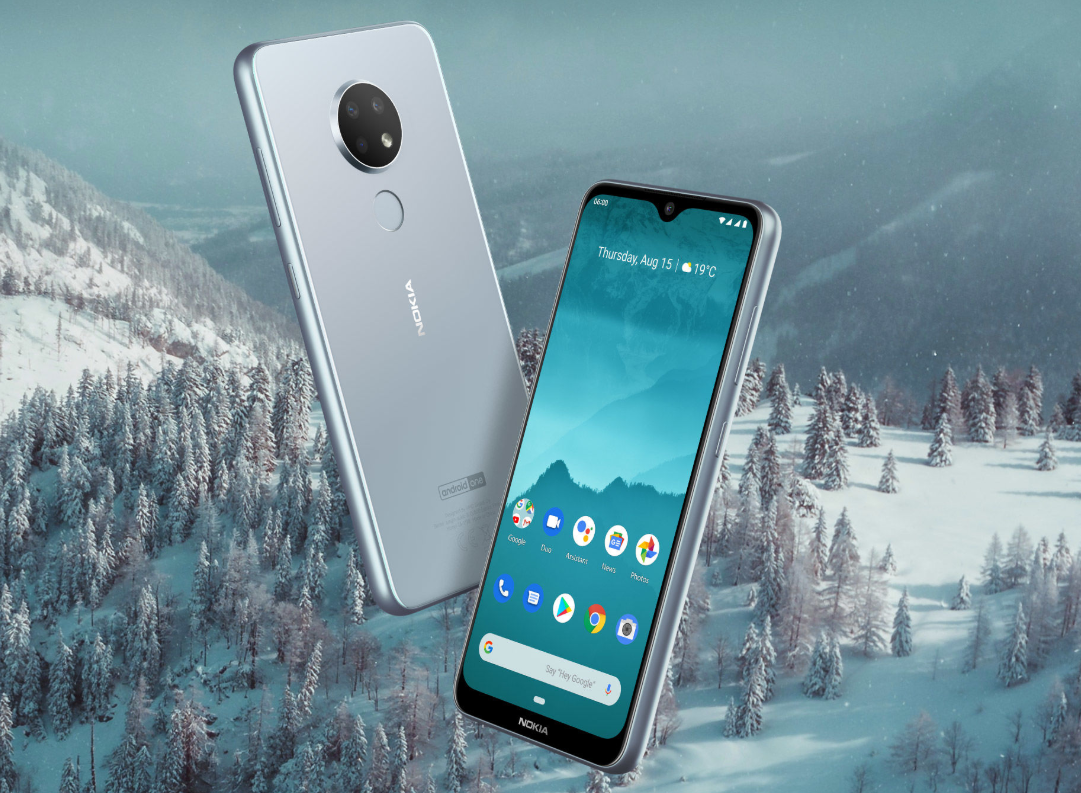
After months of waiting, HMD Global Oy has finally announced a third-generation Nokia 6 at IFA 2019. The Nokia 6.2 brings new features and a new design that greatly differs from its predecessors.
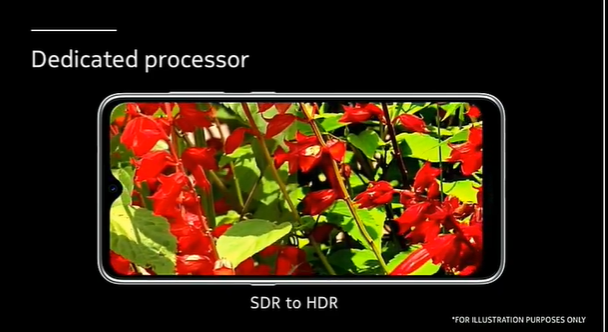
The Nokia 6.2 has a 6.3-inch FHD+ PureDisplay. It has a dedicated PixelWorks display processor that converts whatever you are viewing from SDR to HDR. So rather than 17 million colors, the Nokia 6.2 can display up to a billion shades. The Nokia 6.2 ditches the thick bezels of its predecessor for a waterdrop notch and a slightly less thick lower bezel. It is covered in Gorilla Glass 3 on both sides.
The phone is powered by a Snapdragon 636 processor paired with 3GB or 4GB of RAM and 32GB, 64GB or 128GB of storage. It also has a MicroSD card slot for up to an additional 512GB of storage.
The Nokia 6.2 also gets a significant upgrade in the camera department. It now comes with triple rear cameras that are housed in a circular housing with a bump. The primary camera is a 16MP sensor and it is paired with a 5MP depth sensor and an 8MP ultrawide angle camera. An LED flash is housed together with the sensors while a fingerprint scanner sits underneath. There is an 8MP camera in front for selfies.
The Nokia 6.2 runs Android 9 Pie out of the box with 2 years of Android updates and 3 years of security updates guaranteed. It also has a dedicated Google Assistant button. The phone will come with 3-months of Google One 100GB storage worth €1.99 per month.
It packs a 3500mAh battery with support for 10W fast charging. It has a 3.5mm audio jack, FM radio, and Qualcomm aptX audio. It also has dual SIM support, NFC (except for Latin America, USA, and India models), and a USB Type-C port.
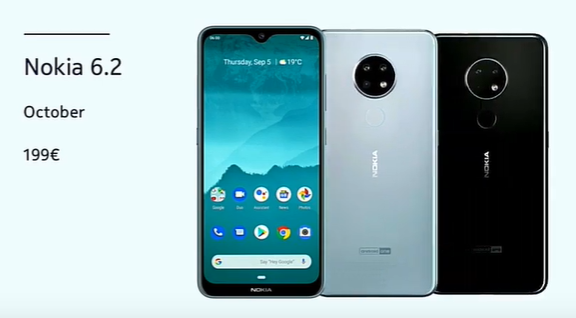
The Nokia 6.2 is priced at €199 and will be available in October. It comes in Ice and Black color variants.
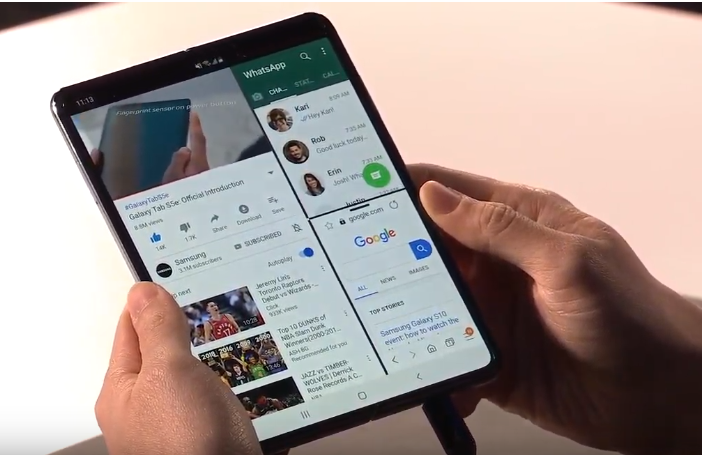
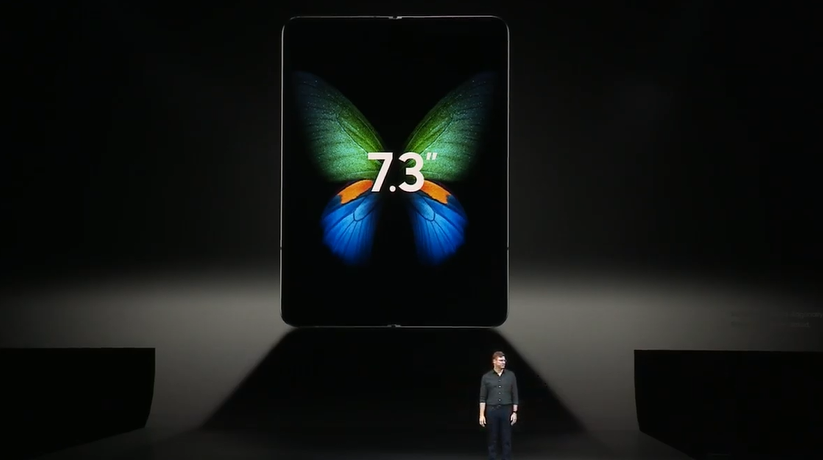
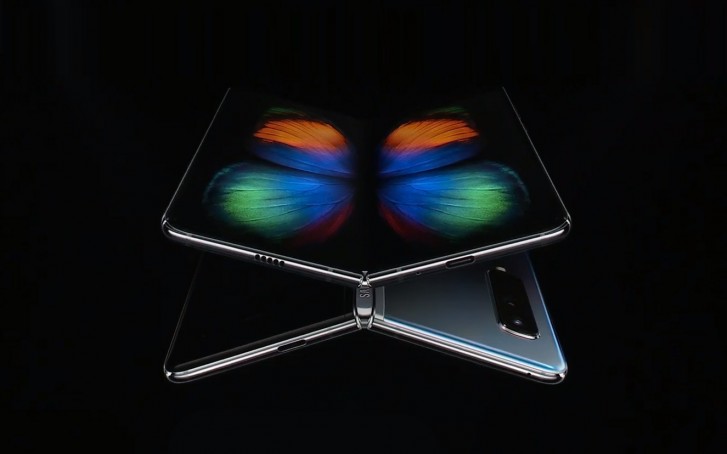
Samsung has finally relaunched the Galaxy Fold, its first foldable phone. The Galaxy Fold was first unveiled in February this year with the release set for April. However, the release was put off by Samsung following a number of issues that were encountered by early users. The foldable smartphone is now officially in the market again but with some improvements in its design and construction.
The overall design of the Galaxy Fold still remains the same as the ill-fated original version. That is a 7.3-inch Infinity Flex Display on the inside a 4.6-inch Super AMOLED panel on the outside. However, Samsung says it has fixed the hinge and the protective layer of the flexible screen. The foldable mechanism is now hidden behind a rubbery protective layer in order to protect it from dust and other particles getting in the mechanism through the foldable part. Samsung also extended the layer on top that protects the digitizer from scratches beyond the edges, so that it can’t be peeled accidentally.
The camera configuration and those of other hardware components are unchanged. The Samsung Galaxy Fold packs a total of six cameras and is still powered by a Snapdragon 855, coupled with 12 GB RAM and 512GB of storage. Keeping the lights on is a 4,380 mAh battery but the 5G model has a slightly lesser 4,235mAh battery due to the internal architecture.
The Galaxy Fold will go on sale for the first time tomorrow in South Korea. The phone will launch subsequently in select countries, including France, Germany, Singapore, the United Kingdom, and the United States. The price has not been revealed but it is expected to retain the original price of around €2,000.
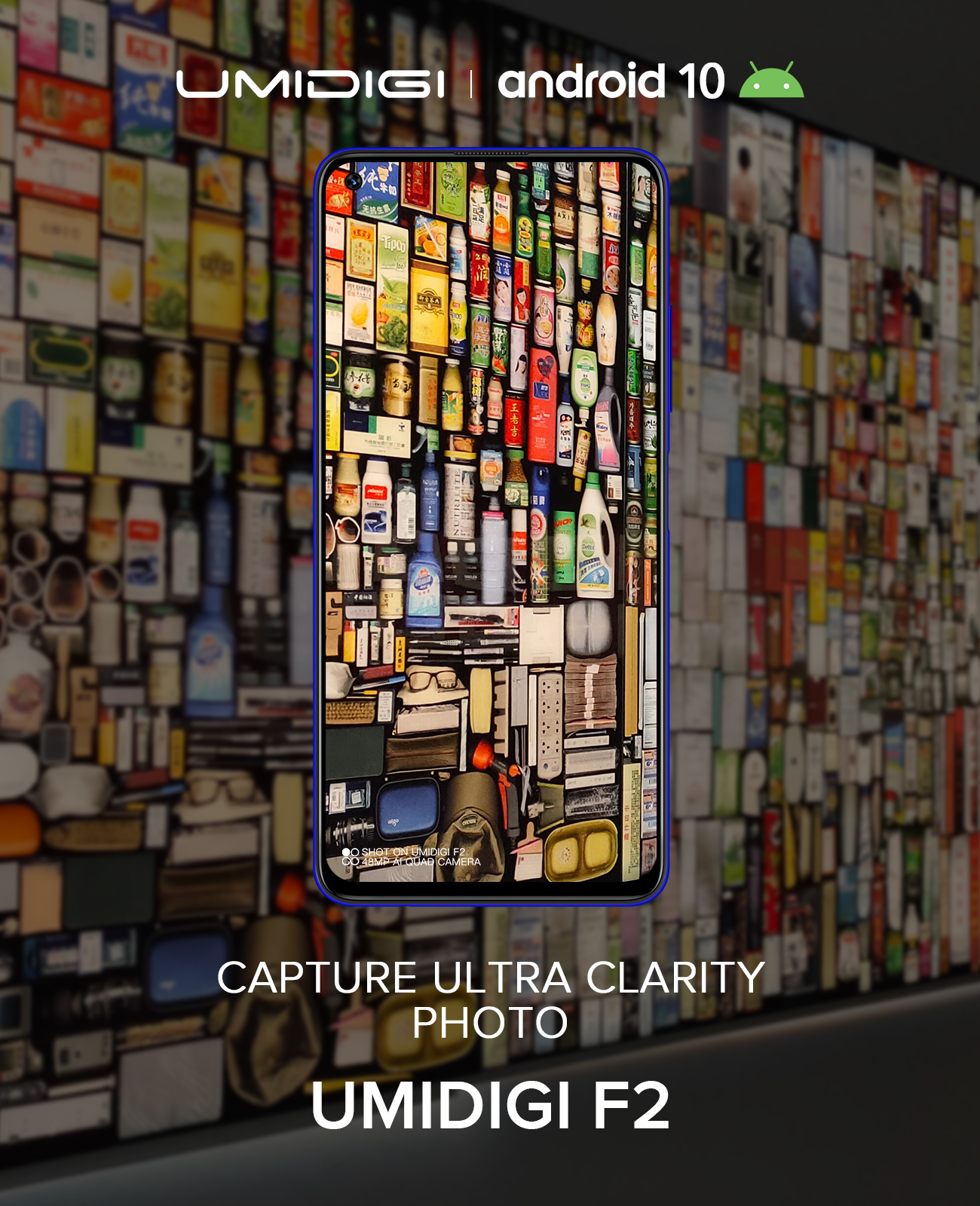
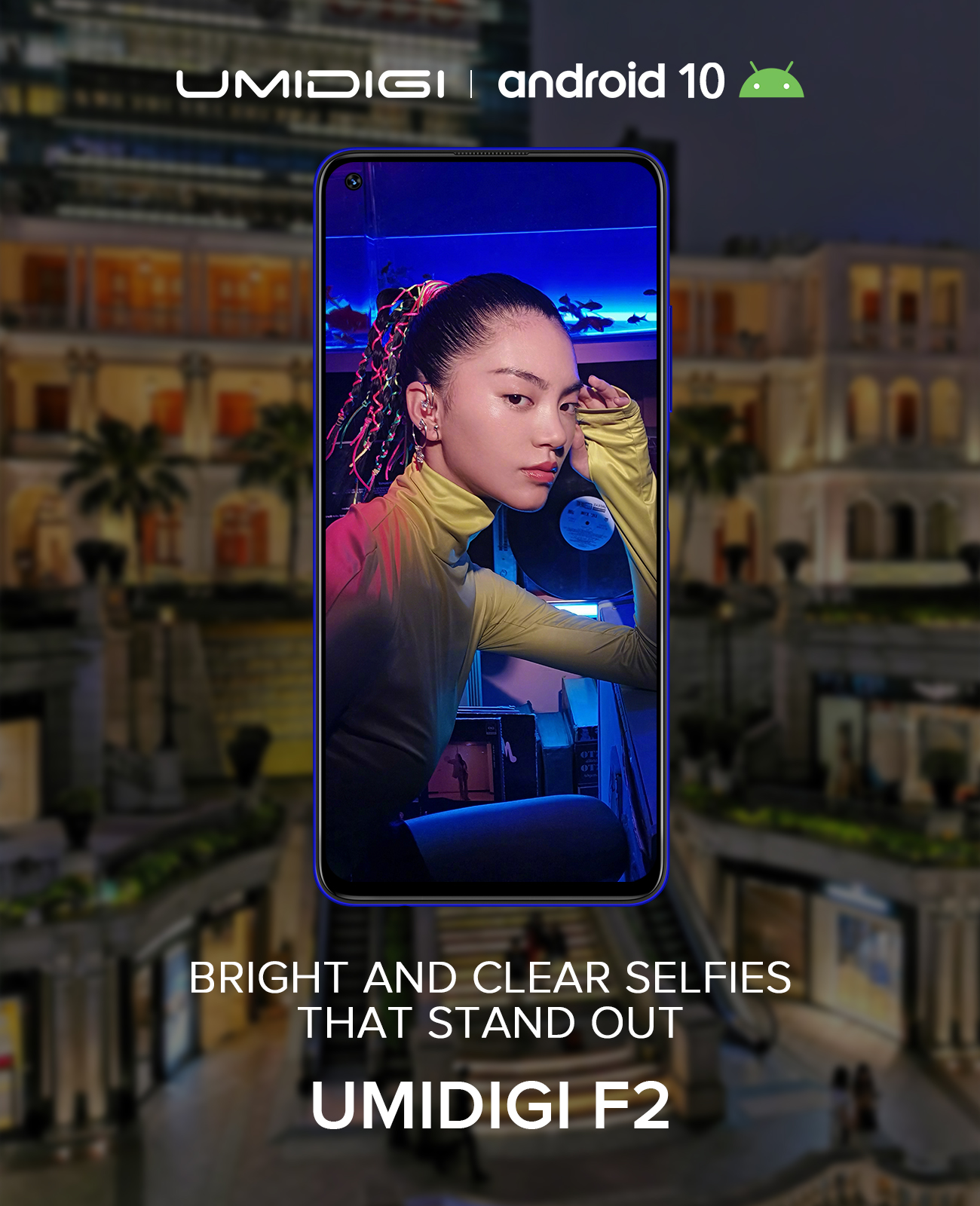
Although UMIDIGI has been consistent when it comes to software updates in already released devices but in order to get an Android 10 phone from the Chinese manufacturer soon, you’ll have to wait until the release of its next flagship, UMIDIGI F2. According to three posters leaked earlier, the successor of the very successful F1 will be the 1st device of the company to come with Android 10 preinstalled.
Besides the Android version, one of the most notable elements is the notch-less design. There is no pop-up camera as the UMIDIGI F2 will be coming with a punch hole at the top left corner of the display, covering a small area like Samsung’s flagship Galaxy Note 10 and the Honor 20 Pro. Also, the chin at the bottom is very thin and the rest of the specs, virtually non-existent. Judging from the frame color, it is safe to assume that it will come with a gradient blue back-cover to pair the blue frame.
Some more information is revealed from the watermark citing “SHOT ON UMIDIGI F2 48MP AI QUAD CAMERA” at the bottom left corner of the screen, which means the F2 will have a quad-camera setup with a 48 MP primary sensor. The photo showing a close-up shot of a butterfly implies that there will be a macro lens in the setup. The 2nd poster mentions “bright and clear selfies” and it should come as no surprise if the selfie shooter will be the 32MP Samsung GD1 sensor which can intelligently combine four pixels into one larger pixel for brighter and clearer selfies.
Currently, there are no launch date and price available. Some information talks about a late-September launch. In the meantime, UMIDIGI is globally recruiting 10 trial users to test its new smart device UMIDIGI Uwake to help improve the user experience. You can learn all the latest news for UMIDIGI’s devices on their Facebook page and join the giveaway on their official website.
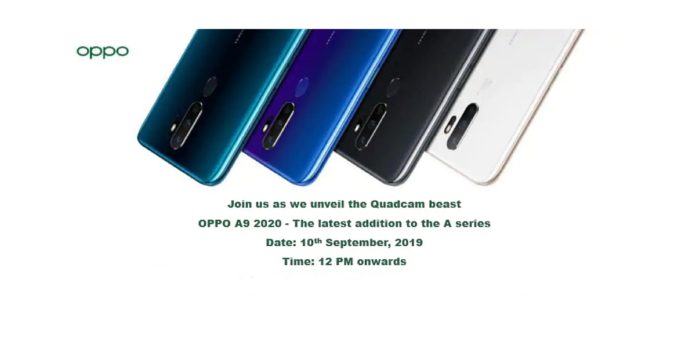
Oppo has now confirmed that it will be launching Oppo A9 2020 in India on September 10. The company has now started sending invites to various media organisations for the launch event on the said date. The invite posters confirm that the upcoming smartphone will feature a quad-rear camera setup alongside a rear-mounted fingerprint scanner. There will also be four color options to be released for the handset.
As per the invite, the Oppo A9 2020 will come in White, Blue, Purple, and Black colour options. It shows that the phone will be featuring a quad camera setup with the three sensor aligned vertically, and another small sensor placed below the flash. The rear of the phone will also feature a fingerprint sensor below the quad camera setup.
In teasers, OPPO reveal that the device features 8GB RAM and 128GB storage. There will be a beefy 5000mAh battery capacity and the quad camera setup consists of a 48MP primary rear sensor, another 8MP rear sensor and a couple of 2MP sensors as well. Under the hood, it will have Qualcomm Snapdragon 665 processor.
Oppo A9 2020 was recently spotted on the official Oppo Vietnam Facebook page. Oppo has now also started teasing the Oppo A9 2020 smartphone in Malaysia, Thailand, and Indonesia as well. There’s a high probability it’ll come running Android 9 Pie-based ColorOS 6.1, though we’d like to see Android 10 since it’s coming out next year. The phone is likely to be priced at around Rs 20,000 in India.
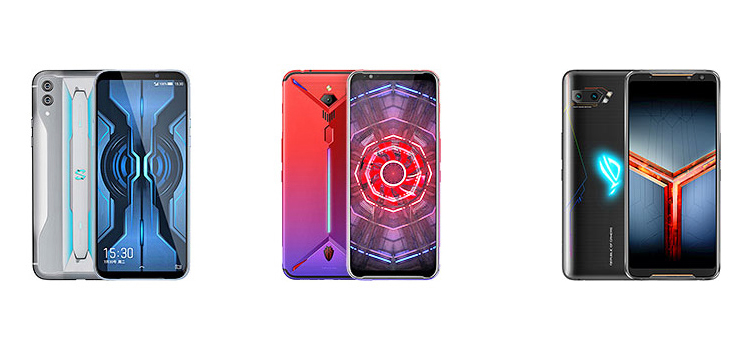
IFA 2019 just kicked off and two gaming phones have already debuted. The first is the Nubia Red Magic 3S, an upgraded version of the Red Magic 3 with improved specifications. The second one is the global version of the Asus ROG Phone 2 which now comes with up to 1 TB of internal storage (in its Ultimate Edition) and the best memory configuration you can expect on a mobile phone in 2019. Given that two gaming phones just debuted, we naturally couldn’t overlook a gaming phones comparison. We included a third phone in the comparison because it is yet another gaming-centric device to sport the most powerful Qualcomm’s chipset, the SD855+. The third candidate is none other than the Black Shark 2 Pro.
Nubia Red Magic 3S vs Xiaomi Black Shark 2 Pro vs Asus ROG Phone 2
Xiaomi Black Shark 2 Pro
Asus ROG Phone 2
Nubia Red Magic 3S
DIMENSIONS AND WEIGHT
163.6 x 75 x 8.8 mm, 205 grams
171 x 77.6 x 9.7 mm, 240 grams
171.7 x 78.5 x 9.7 mm, 215 grams
DISPLAY
6.39 inches, 1080 x 2340p (Full HD+), 403 ppi, AMOLED
Dual 48 + 12 MP f/1.8 and f/2.2
20 MP f/2.0 front camera
Dual 48 + 13 MP f/1.8 and f/2.4
24 MP f/2.2 front camera
48 MP f/1.7
16 MP f/2.0 front camera
BATTERY
4000 mAh, Fast Charging 27W
6000 mAh, Fast Charging 30W, Reverse charging 10W
5000 mAh, Fast Charging 27W
ADDITIONAL FEATURES
Dual SIM slot
Dual SIM slot
Dual SIM slot
Design
Gaming phones usually have aggressive gaming-centric aesthetics and they are all but elegant. So which look should you choose depends on your personal taste. Asus ROG Phone 2 has a better build quality, it has AirTriggers and other physical keys for gamers, and it even supports a lot of external accessories. That is why it is definitely the best choice for gaming when it comes to aesthetics. On the other hand, Xiaomi Black Shark 2 Pro remains interesting as it is the most compact one. The Red Magic 3S also supports external accessories, but overall, there’s no denying that ROG Phone 2 looks beautiful.
Display
Despite having the most interesting aesthetics for a public of gamers (or republic, lol), the Asus ROG Phone 2 is also equipped with the best display. It has the highest refresh rate (120 Hz), a high touch-sensing (240 Hz) and even the best color reproduction, thanks to an excellent AMOLED panel which supports both the HDR10 technology and a 108 percent DCI-P3 coverage.
Nubia Red Magic 3S offers 240Hz touch sensing and a high refresh ratio (90 Hz). The Xiaomi Black Shark 2 Pro has a better touch-sensing (240 Hz) but limits the refresh rate to just 60Hz. On paper, the Red Magic 3S triumphs the BS2P in the display department.
Specs & Software
The amazing Snapdragon 855+ chipset (the best you can actually find in the Android market) and up to 12 GB of RAM are common on all the phones in this trio. What makes the difference is the internal storage (besides the cooling system, but each of them has a very efficient cooling system): Asus ROG Phone 2 will debut in the global market with up to 1 TB of storage (UFS 3.0), while Nubia Red Magic 3S and Xiaomi Black Shark 2 Pro stop at 256 GB. Further, Asus ROG Phone II allows switching between a stock Android user interface and a custom UI, and it is the only gaming phone that allows you to do this.
But for a gamer on a budget, you end up getting larger storage on the Black Shark 2 Pro instead of the Red Magic 3S at a similar price tag. However, in terms of sheer specs, all three smartphones will handle everything you throw at it without any hiccups.
The ASUS ROG Phone 2 is undoubtedly the king of mobile gaming with 2 x USB Type-C ports, Air triggers, a dedicated 3.5mm headphone jack, and support for a slew of accessories like a heat sink, ROG Active Cooler II, Mobile desktop dock, and even a TwinView Dock II.
However, if you look at the Red Magic 3S, it doesn’t lag very far behind. Nubia’s new phone also features virtual buttons on the side for additional controls (you can even use the fingerprint sensor as a button during gameplay), liquid and active fan cooling, a 3.5mm headphone jack, and separate pins for special accessories like the e-sport RedMagic docking station.
Unfortunately, the Black Shark 2 Pro doesn’t have a separate port/ pins for docking accessories. It doesn’t even have AirTriggers or virtual buttons on the side, so you have to rely on its Master touch 2.0, which is basically customized touch zones on the left and right side of the screen. You do have a few accessories like portable gamepads, but both Red Magic 3S and ROG Phone II does better when it comes to gaming-centric features.
Camera
The camera is the weakest point of gaming phone and these are no exception. Nubia Red Magic 3S is equipped with just a single camera on its rear side and that is a bit disappointing, while Xiaomi Black Shark 2 Pro and Asus ROG Phone 2 sport dual camera configurations. The former has a secondary telephoto lens with 2x optical zoom, while the latter has an ultrawide sensor. However, the differences between camera quality will be marginal.
Battery
The 6000 mAh battery on board of the Asus ROG Phone 2 will provide the longest battery life. Nubia Red Magic 3S has a 5000 mAh battery but it has to manage a real cooling fan, so we do not believe it will be at the same level as the ROG Phone 2 in any scenario. You should also consider that Asus ROG Phone 2 is the only to support reverse charging (not wireless) and it can be used as a power bank to charge other devices.
Black Shark 2 Pro has the smallest battery among in this trio, so it shouldn’t be at par as the ROG Phone 2 or even the Red Magic 3S.
Price
Overall, Asus ROG Phone 2 wins this comparison because of its better display, long-lasting battery and more additional features. But it costs more: in the global market, it is debuting with a $509/€460 price tag. However, it is worth spending a bit more to get a way better phone.
The value for money prize goes to the Nubia Red Magic 3S and its $420/€380 price tag. Xiaomi Black Shark 2 Pro is available at the same starting price, but Nubia’s flagship has slightly more interesting features (air cooling system, 4D vibration feedback, 3D surround sound, pressure-sensitive zones, and more).
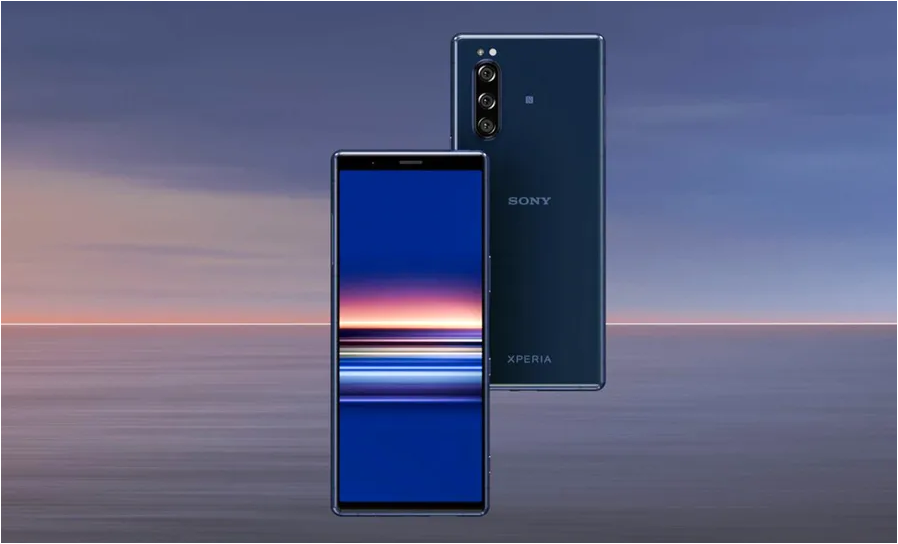
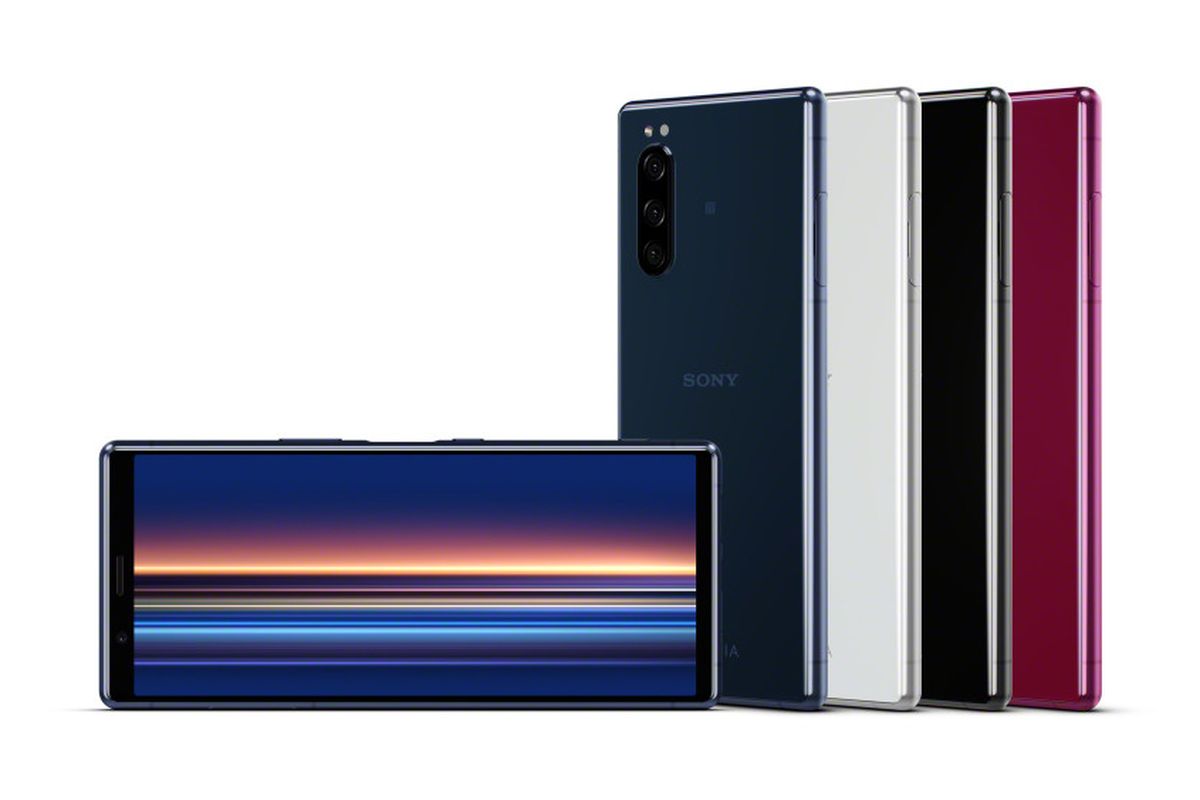
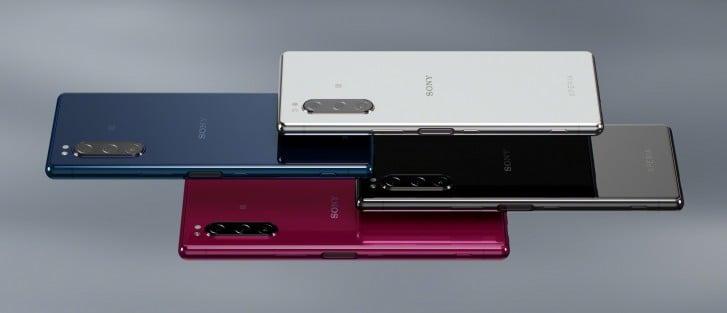
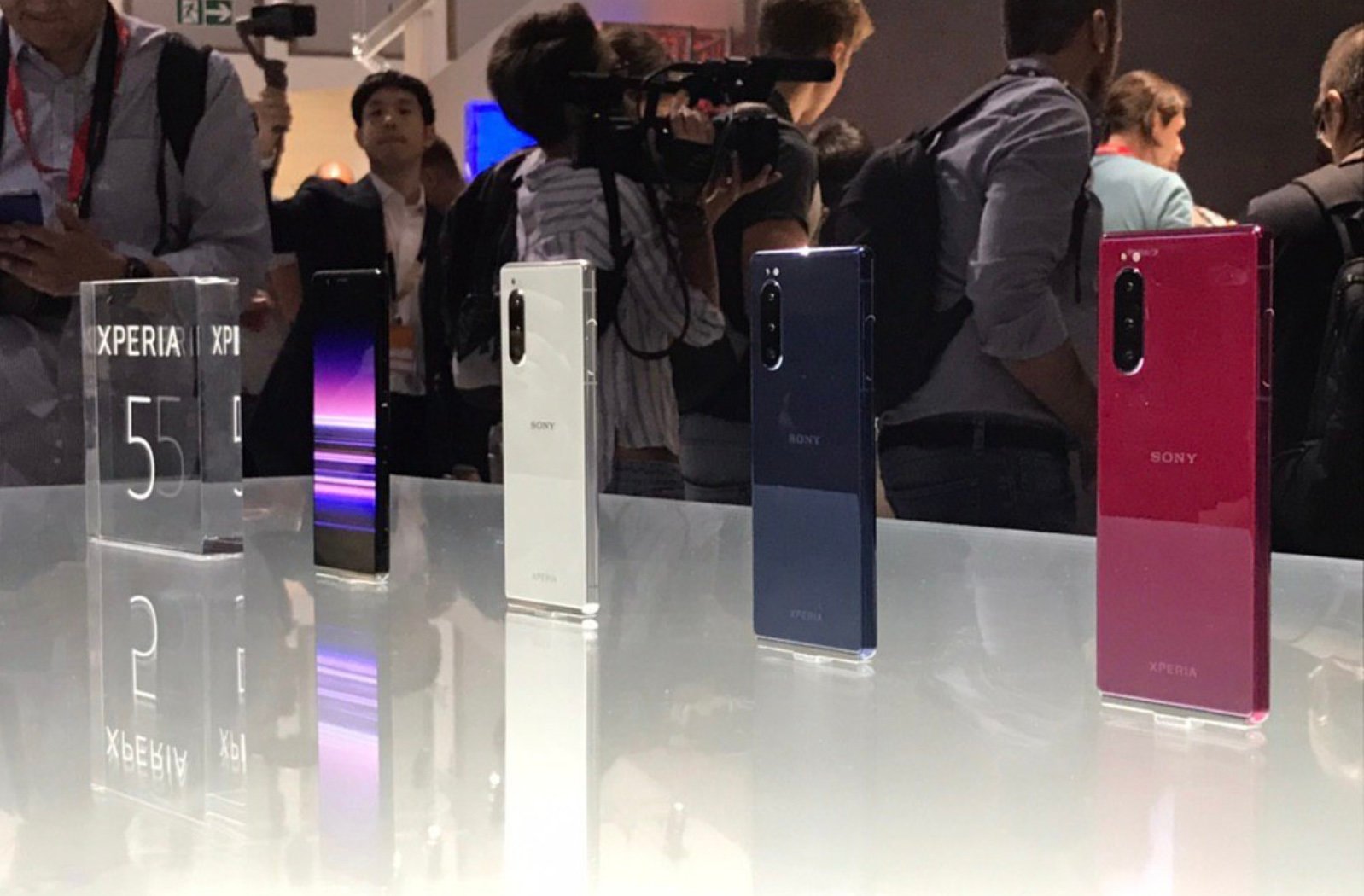
Sony was expected to announce the successor to the Xperia 1 today and the device was tipped to go by the moniker Xperia 2. However, the Japanese tech giant sprang a surprise hours ago when it announced the Xperia 5 at IFA 2019 with all the dressing of the expected Xperia 2.
The Sony Xperia 5 flagship smartphone adopts the same 21:9 aspect ratio of its predecessor. The phone packs a 6.1-inch HDR-compatible OLED display with Full HD+ resolution of 2520 x 1080 pixel. The phone also comes with Dolby Atmos sound built-in. Even though the device still packs a rather long frame, it has a slim, 68mm wide design. This, in addition to a lightweight build which is 14g lighter than the Xperia 1, Sony says makes it easy-to-use.
The Xperia 5 is powered by a Qualcomm Snapdragon 855 chipset with the regular X24 LTE modem. For photography, the Xperia 5 packs a triple-camera array of 12MP sensors with built-in eye AF feature. The eye AF feature uses algorithms from Sony’s Alpha ILC camera series of interchangeable lens cameras to keep the focus on the human eye.
The flagship device also comes with Sony’s ‘smart connectivity’ software which deploys a deep learning engine to analyze WiFi signals and predict any chances of shaky connectivity. When a poor connection is detected, the feature will automatically switch to LTE when it predicts any compromise in WiFi connection to ensure you always have optimal connectivity. The Xperia 5 equally comes with DualShock support for haptic gaming on Fortnite.
As for the pricing and availability, Sony is yet to reveal the details but the phone will go on preorder next week and will be launched on October 4 in the UK.
Yesterday, Samsung announced the Exynos 980 processor, its first mobile phone processor with an integrated 5G modem. However, the Exynos 980 isn’t a flagship chipset but a mid-range one, and today, Vivo has announced it will launch a phone powered by the new chipset later this year.
Yes, Vivo will announce a mid-range 5G smartphone this year and it will have an Exynos processor under its hood. This is a big move for Samsung and Vivo! The smartphone should be the first Vivo phone not to be powered by a Qualcomm or MediaTek processor.
Vivo first confirmed the use of Samsung Exynos 980 processor, vivo said Samsung has developed this processor, this year will release the Exynos 980 smartphone, Exynos 980 is Samsung's first integrated 5G SoC, support SA / NSA, A77 architecture CPU. pic.twitter.com/agauTd2vPO
Samsung has been making big strides this year with its semi-conductor business. Its Exynos processors have not only powered its own phones this year but have also been found in Motorola’s One Action and One Vision smartphones. Now, it is making its way into a Vivo smartphone.
The Exynos 980 is an 8nm octa-core processor with 2x high-performance Cortex-A77 cores clocked at 2.2GHz and 6x efficient Cortex-A55 cores clocked at 1.8GHz. It has a Mali-G76 MP5 GPU which is said to be built for gaming. It supports LPDDR4x RAM and UFS 2.1 and eMMC 5.1 storage. The maximum display resolution supported is WQHD+ and supports 20MP dual cam and 108MP single camera. The chipset also supports WiFi 6, Bluetooth 5.0, and GNSS.
There is also an NPU which works with the DSP for AI-related tasks and better camera features. Its 5G modem also supports 4G LTE, 3G, and 2G networks and provides up to 2.55 Gbps speeds for 5G.
Xiaomi currently holds the record for the fastest wireless charging technology. The 20W fast wireless charging technology was announced for the Mi 9 and is yet to show up in another Xiaomi device. Nevertheless, Xiaomi is set to unveil a new wireless charging technology tomorrow that is faster than the current one.
The official Weibo account for Xiaomi Mobile announced today that it will unveil a new wireless charging technology designed for the 5G era. The attached poster shows a charge-time graph where wireless charging technology surpasses wired charging in the future.
Xiaomi’s new wireless charging technology will definitely be faster than 20W but we don’t know if it will surpass Huawei’s 30W wireless charger which was certified by the FCC last month. Unfortunately, the 30W wireless charger will reportedly only charge the Mate 30 Pro at 25W.
Xiaomi is marketing this new wireless charging technology for 5G devices and it makes sense since 5G phones need bigger batteries due to the technology’s power consumption. So when it launches, we expect it to be available on Xiaomi’s upcoming 5G devices such as the Mi 9S and the Mi MIX 4 5G.
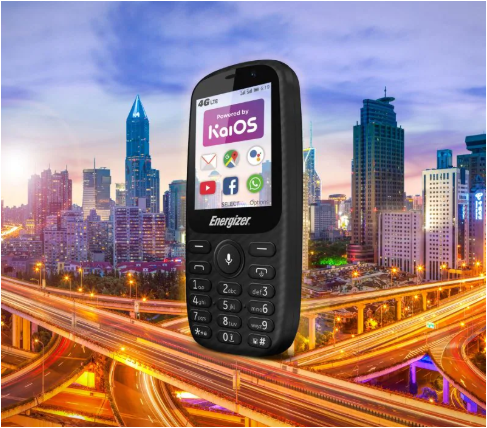
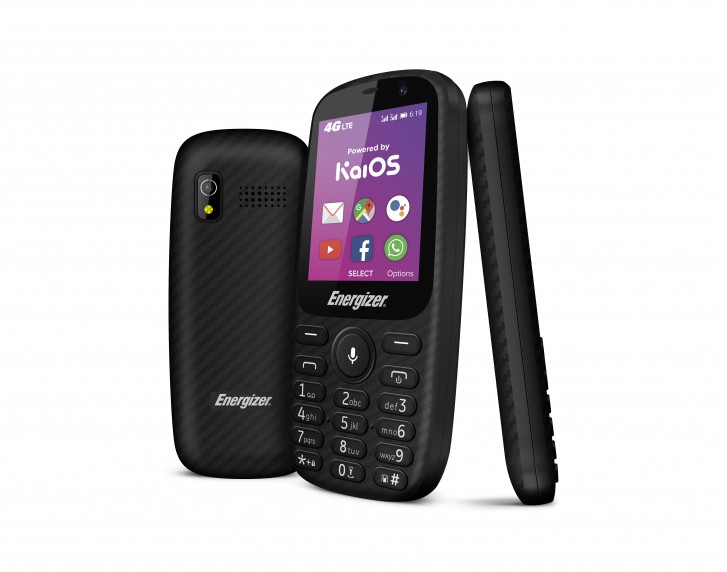
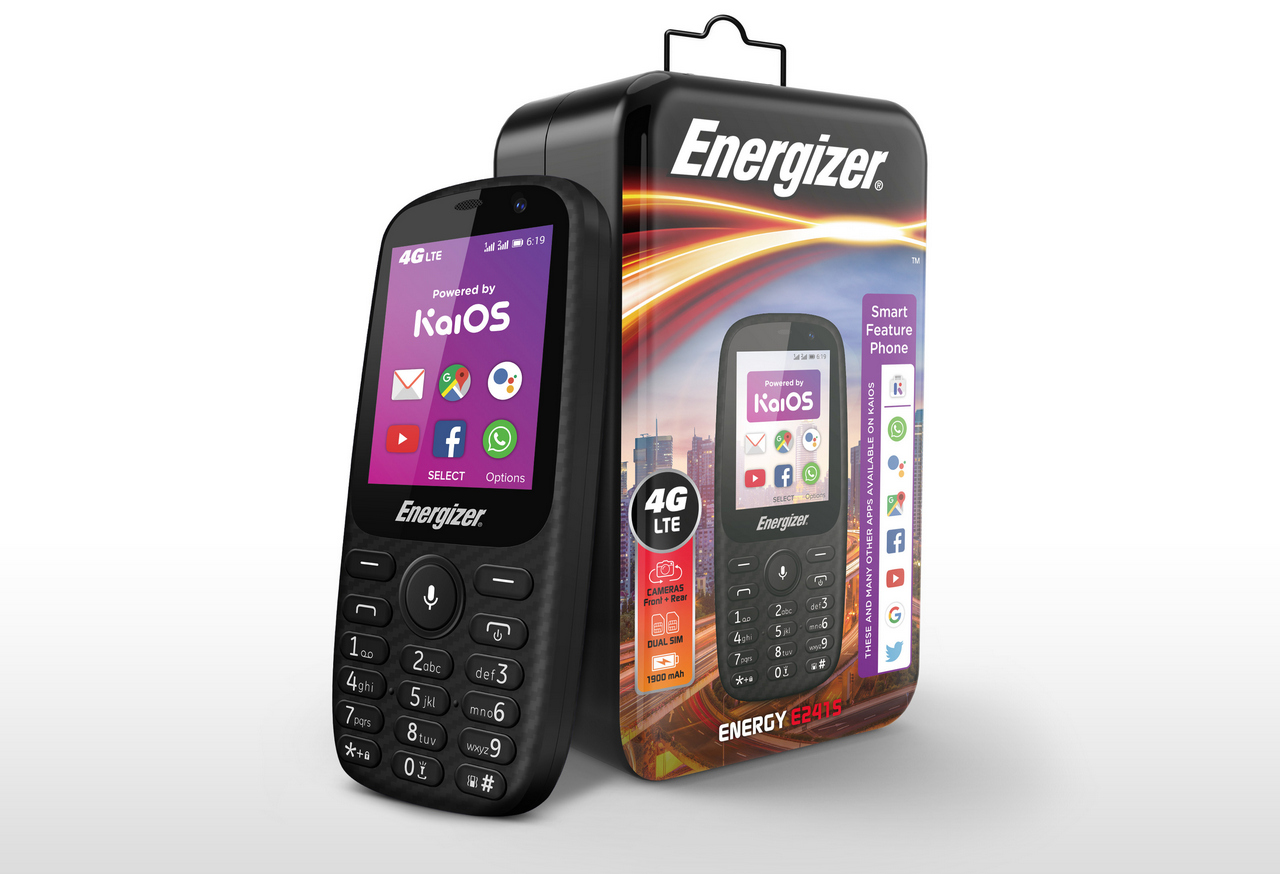
Energizer has unveiled a couple of new feature phones at IFA 2019 dubbed Energizer E241 and E214S. The two phones adopt a similar design but differ in the aspect of cellular connectivity. The E241 comes with 3G connectivity while the E241S has 4G connectivity onboard.
The feature phones pack a 2.4-inch non-touch sensitive screen and also utilise the traditional T9 physical keyboard. There is a round navigation button just under the screen which is also the Google Assistant.
Both phones run KaiOS that brings some level of smartness” to feature phones. The OS brings along some frequently used apps that are pre-installed such as WhatsApp, YouTube, Facebook, Google Assistant, and Google Maps. There is even a KaiStore which offers users dozens more apps to choose from.
Both the Energizer E217 and E217S feature dual-SIM support, Wi-Fi, and GPS. The phone equally packs a 1,900 mAh battery that can last for 6 days on standby, 28 hours of calling, and 9 hours of video playback. You also get rear and front cameras on both models with the rear camera having an LED flash.
As for the pricing, the 3G-enabled Energizer E241 is priced at €29.99 while the E241S with 4G connectivity comes with a €34.99 price tag. Both phones will be available in black or blue colour options.
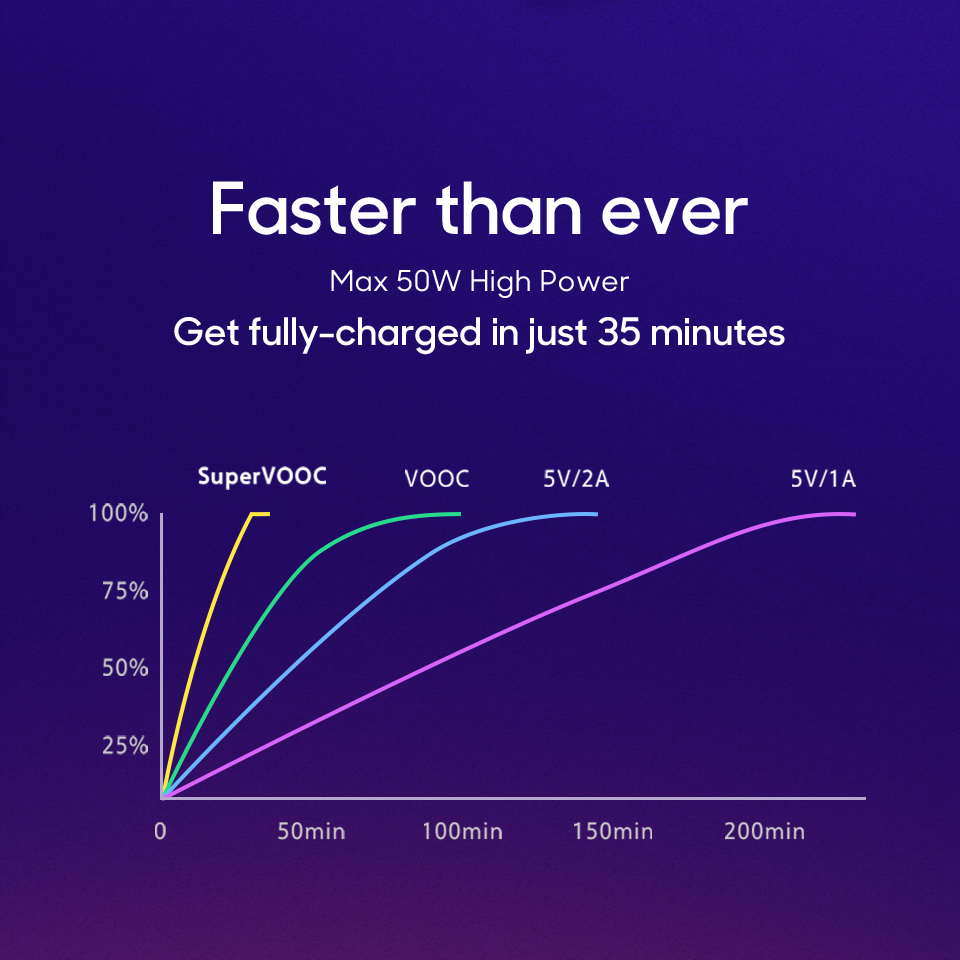
OPPO Vice President Brian Shen revealed the big move that OPPO is about to unveil. According to the Shen, OPPO will soon be updating their SuperVOOC fast charging to be even more impressive than it already is. Yes, SuperVOOC is getting faster, and it’s speculated to become the world’s highest capacity mass produced fast charging solution.
The current version of SuperVOOC fast charging is rated at 50W, so pushing this higher would be a fairly impressive feat. No specific numbers have been given yet, but even a slight improvement would already be a worthy upgrade. These are some staggering speeds already, seeing it go higher would be ridiculous.
Brian Shen also announced that the new OPPO Reno device, the Oppo Reno2 5G, will feature support for the new and upgraded SuperVOOC. Regrettably, Shen Yiren did not disclose the release time of the new OPPO Reno, though he did not rule out the possibility that we would see it launch this year.
Unfortunately, it seems like the previous devices with SuperVOOC support won’t support the new version of the fast charging technology. This includes popular devices like the OPPO R15 and R17, though this was to be expected. We’re definitely looking forward to the new SuperVOOC technology, as well as the devices that will support it.
UPDATE: A Weibo post from Brian Shen claims that the updated SuperVOOC version will feature a rating of 80W. The post can be seen below. Apparently it’ll also be able to completely charge a 4000mAh battery in 20 minutes.
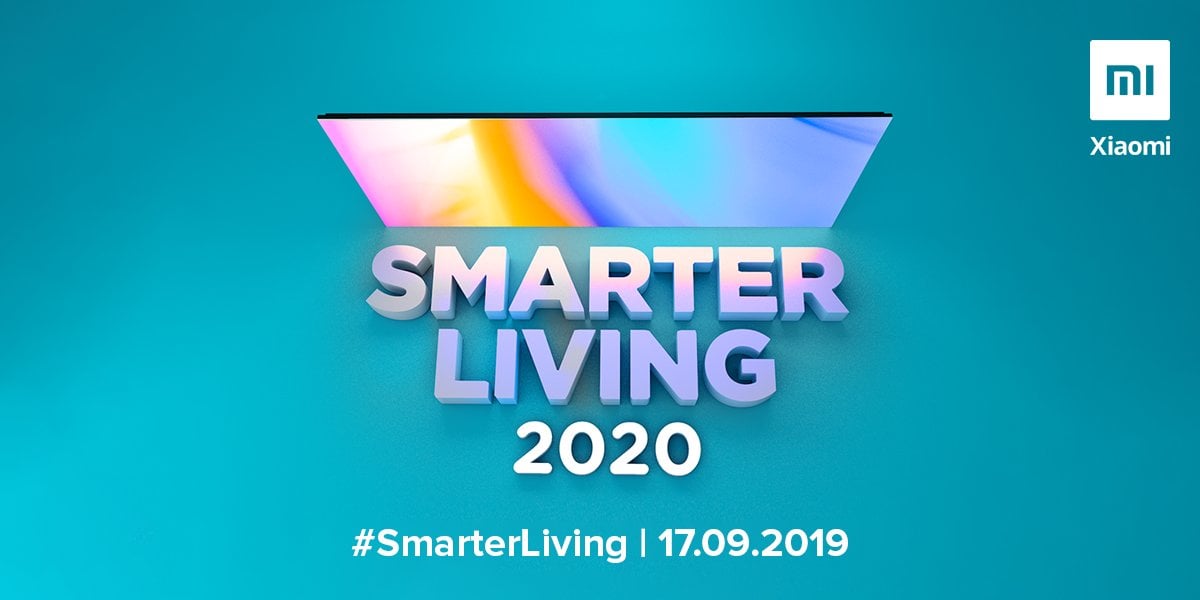
Xiaomi India has announced today that it will have an event on September 17 where it plans to announce multiple smart-home devices.
According to Manu Kumar Jain, head of Xiaomi India, the event will be the biggest smart-home devices launch in India. While there is no info on what products will be unveiled, the poster does include a TV. However, we are not sure if this is a Mi TV or the 70-inch Redmi TV.
It makes sense that a new TV will be announced seeing as OnePlus is scheduled to announce its very first smart TV in India a little over a week after the Xiaomi event. A lot of folks are excited about the OnePlus TV, and with Xiaomi being the leader in India’s smart TV market, it sure wouldn’t want to lose market share.
Xiaomi has a plethora of smart home products, so it is hard to guess which ones will be announced at the event. Nevertheless, we have a few guesses too which include a water filter, a new air purifier, a successor to the Mi Body Composition Scale which already launched in China back in April, and new security cameras.
We expect Xiaomi will tease some of these products in the days leading up to the event.
We use cookies on our website to give you the most relevant experience by remembering your preferences and repeat visits. By clicking “Accept”, you consent to the use of ALL the cookies.
This website uses cookies to improve your experience while you navigate through the website. Out of these, the cookies that are categorized as necessary are stored on your browser as they are essential for the working of basic functionalities of the website. We also use third-party cookies that help us analyze and understand how you use this website. These cookies will be stored in your browser only with your consent. You also have the option to opt-out of these cookies. But opting out of some of these cookies may affect your browsing experience.
Necessary cookies are absolutely essential for the website to function properly. This category only includes cookies that ensures basic functionalities and security features of the website. These cookies do not store any personal information.
Any cookies that may not be particularly necessary for the website to function and is used specifically to collect user personal data via analytics, ads, other embedded contents are termed as non-necessary cookies. It is mandatory to procure user consent prior to running these cookies on your website.