The Galaxy S10 series family is a large one already with members including the Galaxy S10, Galaxy S10e, Galaxy S10+, and Galaxy S10 5G. In the past couple of weeks, news of a new model called the Galaxy S10 Lite has surfaced. The latest info is the phone’s battery capacity and it dwarfs that of some of its siblings.
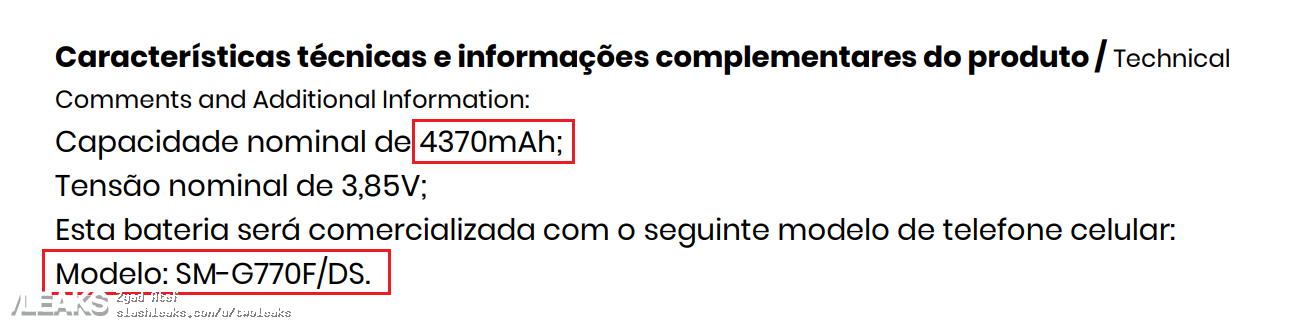
The info is from Brazil’s equivalent of the FCC, ANATEL. Technical documents reveal the Galaxy S10 Lite with model number SM-G770/DS will have a 4370mAh battery. This is larger than that of the Galaxy S10e, Galaxy S10, and Galaxy S10+ but just a little smaller than that of the Samsung Galaxy S10 5G.
The Galaxy S10 Lite will have a Snapdragon 855 processor, 8GB of RAM and run Android 10 according to a Geekbench result. It has also been reported to pack a 6.7-inch FHD+ sAMOLED screen, triple rear cameras in a 48MP + 12MP + 5MP configuration and a 32MP selfie camera. However, its release date is still unknown.
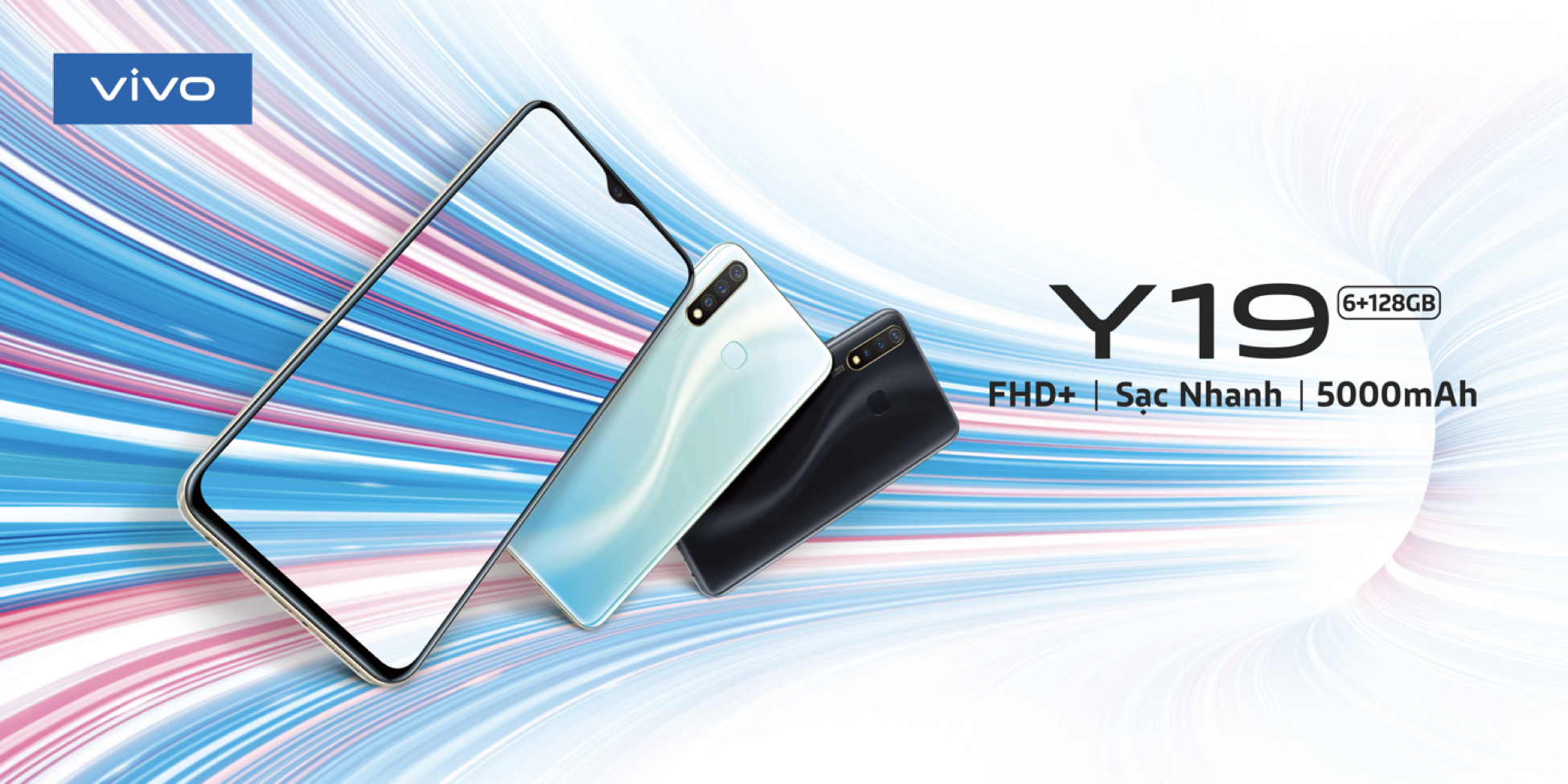
Vivo has announced a new mid-range smartphone in Vietnam and Thailand. Called the Vivo Y19, the device was announced on Friday, November 1.
The Vivo Y19 has a 6.53-inch FHD+ screen with a waterdrop notch and a 90.3% screen-to-body ratio. There is an Helio P65 processor inside the phone along with 6GB of RAM and 128GB of storage. There is no mention of storage expansion but 128GB should be enough.
Vivo has included a 16MP primary camera + 8MP ultrawide angle camera + 2MP depth sensor on the back of the device. The selfie camera is a 16MP sensor. The Vivo Y19 comes with camera features such as portrait mode and beauty mode.
The phone has a rear-mounted fingerprint scanner. It also packs a 5000mAh battery which Vivo claims will last up to 17 hours of continuous use on a single charge. There is support for 18W fast charging via a MicroUSB port so you can refill the battery quickly. The phone also supports reverse charging up to 5W.
[envira-gallery id=”287236″]
The Vivo Y19 comes in two variants – Black and Morning Dew White and both have an S-curve on the back reminiscent of the Realme X. It ships with Funtouch OS 9.2 based on Android 9 Pie and is priced at 4,990,000 VND (~$215) in Vietnam and THB 6,999 (~$232) in Thailand. It is available for purchase on Lazada, VinPro, FPT, and Viettel.
The Nokia 2.2 was announced in June 2019 as an entry-level smartphone. it launched with an Helio A22 quad-core processor and a 5.71-inch HD+ screen with a waterdrop notch. Now, it seems HMD Global is ready to launch a successor that will arrive as the Nokia 2.3.
Nokia 2.2 (above) may get a successor earlier than expected
According to a post by NokiaPowerUser, a leak from a distributor’s database has revealed that the Nokia 2.3 is coming. The distributor’s database was also the source of a Nokia 7.2 leak prior to its release, which lends credibility to this new leak.
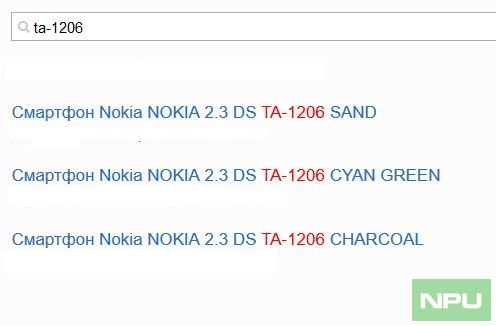
The database entries reveal the Nokia 2.3’s model number is TA-1206 and has dual SIM support. It also mentions the phone will come in Sand, Cyan Green, and Charcoal color variants.
While the leak does state the Nokia 2.3’s model number as TA-1206, this is not the first time it has shown up online. A device with the same model number recently passed through the FCC but it was earlier thought to be the Nokia 5.2.
The specs of the Nokia 2.3 are still unknown but there are speculations the upgrades may not be too significant seeing as it is arriving not so long after the Nokia 2.2. The Nokia 2.2 arrived with a larger display than the Nokia 2.1. It swapped the 28nm Snapdragon 425 for MediaTek’s 12nm Helio A22 and also got RAM and storage boost (2+16GB and 3+32GB). HMD Global also upgraded the rear camera from 8MP to 13MP but cut the battery capacity from 4000mAh to 3000mAh.
The Nokia 2.3 will launch as an Android One phone but we are not sure if it will run Android 10 out of the box but you can rest assured that it will get updated if it arrives with Android Pie.
Do you own a OnePlus 6 or OnePlus 6T smartphone? Then you should head to phone settings to check for an update as OnePlus has begun rolling out a stable Android 10 update to both devices.
The update arrives as OxygenOS 10.0 to both phones and it began rolling out today. With the new update, you get a new user interface, game space, and Android 10 features such as Share Wi-Fi which allows you to connect to a WiFi network by simply scanning a QR code. There is also new customization available for notifications that allows you to set which notifications are silent and which alert you. OnePlus says the option to hide the notch is not available with this version.
Below is the full changelog for the update:
System
Upgraded to Android 10.
Brand new UI design.
Enhanced location permissions for privacy.
New customization feature in Settings allowing you to choose icon shapes to be displayed in the Quick Settings.
General bug fixes and improvements.
Full-Screen Gestures
Added inward swipes from the left or right edge of the screen to go back.
Added a bottom navigation bar to allow switching left or right for recent apps.
Game Space
New Game Space feature now joins all your favorite games in one place for easier access and better gaming experience.
Contextual Display
Intelligent info based on specific times, locations and events for Ambient Display (Settings – Display – Ambient Display – Contextual Display).
Message
Now possible to block spam by keywords for Message (Messages – Spam – Settings – Blocking settings).
As expected, this is a staged roll-out, so if the update is not available yet on your device, you will have to wait until it arrives. OnePlus adds that using a VPN to download the update may not work as it is not rolling it out based on regions but to a limited number of random devices first.
The Vivo Z5 launched in August as an upper mid-range phone. It was originally available in three colors – Forest Night, Aurora Illusion, and Holographic Illusion. Vivo has announced a fourth variant called Speed Phantom Blue and it is now available for purchase.
The new color variant is available in three configurations – 6+64GB, 6+128GB, and 6+256GB unlike the other three color variants that come in the above variants and a fourth variant with 8GB of RAM and 128GB of storage.
The price starts at ¥1598 (~$227) and goes up to ¥1898 (~$270). You can grab a unit on Tmall.
The Vivo Z5 has a 6.38-inch AMOLED screen with a 1080 x 2340 resolution. Like several other phones released this year, it has a waterdrop notch and it is home to a 32MP selfie camera. The phone has a Snapdragon 712 processor under the hood which is practically a slightly faster Snapdragon 710 processor with enhanced gaming performance. There are three cameras on its back – a 48MP primary camera, an 8MP 120° ultrawide angle camera, and a 2MP depth sensor.
Vivo has included an in-display fingerprint scanner, a dedicated Jovi Assistant button, and a 4500mAh battery with support for 22.5W FlashCharge fast charging technology. There is dual-SIM support but no slot for storage expansion. You also get an audio jack, a USB Type-C port, and Bluetooth 5.0. The Z5 ships with Android Pie out of the box.
A new month, a new bunch of smartphones released. And October was one of the hottest months of this year. Like every month, we selected the best flagship smartphones actually available in the market. A lot of devices debuted in the last period, so we decided to take into consideration only the smartphones released recently. That is why you won’t find smartphones like the latest Samsung flagships. So, for the best but older flagship smartphones, you can refer to our previous article related to September 2019. Below, you will find only devices with flagship-grade hardware: if you want to know about the best affordable phones, stay tuned as tomorrow we will publish another article about the best value for money smartphones.
Best flagship smartphones of the moment
Huawei Mate 30 Pro
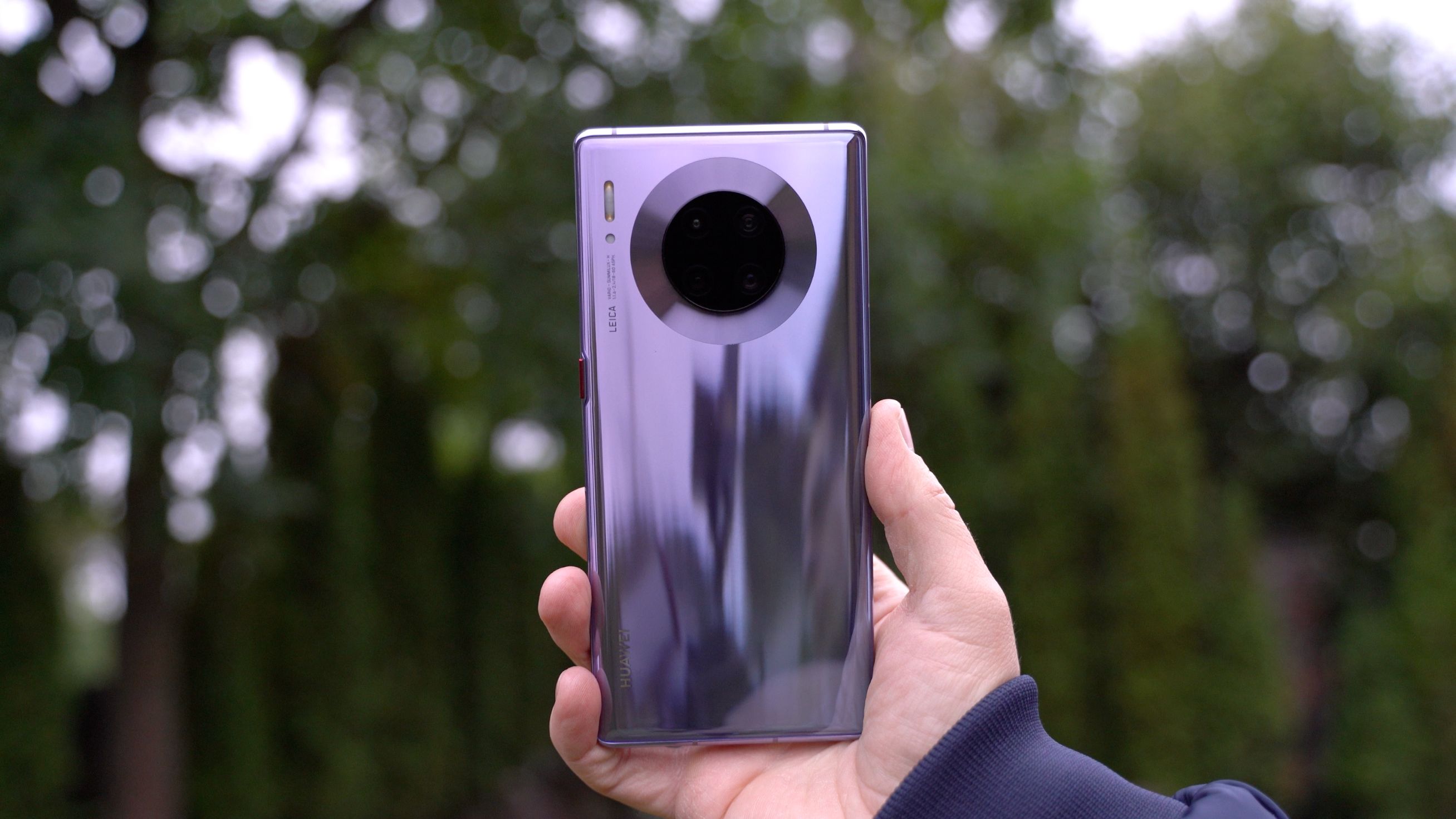
Due to the U.S. ban on Huawei, the Mate 30 Pro is one of the most under-rated smartphones in the global market. But it is something amazing. First of all, on the paper, we have never seen a more amazing camera setup on a mobile device. The Mate 30 Pro is equipped with a quad camera including not one but two 40 Megapixel sensors, OIS, and 3x optical zoom. It even comes with a 32 MP dual camera on the front supporting 3D facial authentication. The Mate 3 Pro is equipped with the Kirin 990+ chipset and it even has a 5G variant. Even the battery is huge with a 4500 mAh capacity, 40W fast charging and reverse wireless charging. And how not to talk about the new Horizon display? It makes physical keys totally useless thanks to the side touch technology, that is why the company ditched it for a cleaner design.
If you need the max performance, OnePlus has been among the best options for years, and it still is. The OnePlus 7T Pro has the best hardware department you can expect in 2019, with a Snapdragon 855+ chipset paired with up to 12 GB of RAM and UFS 3.0 storage, as well as an incredible software optimization. It runs Android 10 out of the box and it even sports one of the best display panels out there, with a Quad HD+ resolution, the support to HDR10+ standard, Full DCI-P3 coverage and even a high 90 Hz refresh rate. Its battery has a satisfying 4085 mAh capacity, while the rear side houses a high-end triple camera with OIS and 3x optical zoom. Not as incredible as the Mate 30 Pro when it comes to photo quality, but still awesome.
Xiaomi Mi 9 Pro is born as an affordable flagship, but this does not mean that it comes with a lot of compromises. It still has premium features such as reverse wireless charging and the fastest commercial wireless charging technology with a power of 30W. Further, it has a very advanced hardware side with the Snapdragon 855+ chipset which is currently the most powerful by Qualcomm, up to 12 GB of RAM and up to 512 GB of internal storage. The phone is even equipped with an HDR10 display with Full DCI-P3 coverage, and a 4000 mAh battery. Unfortunately, the rear cameras lack OIS, but the price will let a lot of people to ignore this.
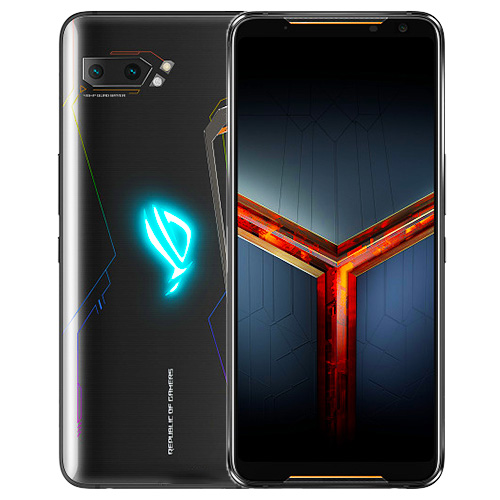
The Asus ROG Phone 2 is the most advanced smartphone for the most demanding gamers. First of all, you can find no better hardware: it includes a Snapdragon 855+ SoC, up to 12 GB of RAM and up to 1 TB of internal storage. Even the display is the most suitable for gamers, thanks to its 120 Hz refresh rate and its 240 Hz touch sensing. The ROG Phone 2 has a very gaming-centric design with RGB lights and the support to external accessories, as well as a very advanced cooling system. Last but not least, it sports a mammoth 6000 mAh so that your gaming sessions will never end, and it supports reverse charging (non wireless).
I personally believe that Realme X2 Pro is the flagship killer of the year, at least for the global market. It carries a starting price tag of just €399 in Europe, yet it offers the best Qualcomm’s chipset (Snapdragon 855+) and an amazing display with a 1000 nits peak brightness, the support to HDR10+ and a 90 Hz refresh ratio. Currently, you can not find any smartphone in the global market with such an affordable price and so amazing specifications. The Realme X2 Pro even comes with a 4000 mAh battery supporting a blazing 50W fast charging technology. And it is a 64 MP quad camera phone.
Just like last year, Vivo tried to innovate once again by releasing the NEX 3 5G. Besides bringing the 5G connectivity, it comes with the brand new Waterfall display: a panel with extremely curved bezels just like the Mate 30 Pro. And given that it is the main Vivo flagship of the year, it was kinda obvious that it would be powered by the Snapdragon 855+ chipset.
Pixel 4 doesn’t support 90Hz refresh rate in some apps
A few days ago Google officially launched the Pixel 4 and 4 XL. Two phones that are able to take advanced of all the AI-related Android features. They run stock Android just like all other Pixel devices, and they will be among the first smartphones to get new important updates for years. The Pixel 4 XL is our favorite one since it sports a bigger battery as well as a better display coming with a Quad HD+ resolution and a 90 Hz refresh rate. It is powered by the Snapdragon 855 mobile platform and includes a dual camera with OIS and a very advanced night mode. It even offers a new radar for touch-free gesture control.
The Honor 20 Lite is a mid-range phone that was recently announced in China. The phone is actually different from the Honor 20 Lite a.k.a. Honor 20i that launched outside China back in April.
Honor has partnered with luxury hair accessory maker, SHE’S, for a custom handbag for the Honor 20 Lite. The handbag is a mix of various design elements and materials. It is made from crystals, feathers, and metals. The handbag is said to have undergone as many as 20 processes including up to 8 hours of polishing.
The handbag actually matches the Icelandic Fantasy color variant of the series. There is no price yet for the handbag as it will be auctioned. Apparently, there seems to be just one made.
[envira-gallery id=”287190″]
The Honor 20 Lite has a 6.3-inch AMOLED display with an FHD+ resolution and a waterdrop notch for a 16MP f/2.0 camera. It is powered by the Kirin 710F processor and comes in 4GB+ 64GB, 6GB + 64GB, 6GB + 128GB, and 8GB + 128GB versions. There is a 48MP camera on the back of the phone along with an 8MP ultrawide camera and a 2MP depth sensor.
Other features include a 4000mAh battery with support for 20W fast charge via a USB Type-C port, an in-display fingerprint scanner, an audio jack, dual-SIM support, and a MicroSD card slot.
When it comes to TWS earphones, the Apple AirPods are one of the most popular offerings in its segment. However, due to their steep price, several consumers tend to skip it. Having said that, if you are looking for a feature-laden TWS that won’t burn a hole in your wallet, you could consider the 360PlayBuds which cost Yuan 199 ($ 70).
To begin with, these draw a lot of inspiration from Apple AirPods. It has a white coloured oval-shaped carrying case with “360” branding on the front. The bottom of the case features a micro USB charging port and a multi-coloured LED light. It has a soft close flap which when lifted up reveals two independent wireless earbuds.
The 360PlayBuds have an ergonomic design which resembles the Apple AirPods, accordingly, it can be even be used for extended periods of time. Moreover, they have a thoughtful design and they don’t tend to slip out easily even when performing activities like running or working out.
As soon as the user pulls the 360Playbuds out of its case, the earbuds automatically enable Bluetooth discovery. The earphones also support auto-connect feature, therefore, it can automatically connect with the device that it was last paired with.
The earbuds sport a multi-function button which when pressed once pause/resume the music or answer an incoming call. Clicking the button twice toggles the voice assistant i.e Google assistant in case of Android and Siri in case of an iOS device.
The sound quality of 360Playbuds is quite satisfactory, music is clear, the sound does not crackle at higher volumes. In terms of battery, it charging/carrying case features a 500 mAh powerhouse which is claimed to provide a battery backup of 20 hours in multiple charges. Exh headphone also has a built-in battery that is rated to 30 mAh.
In terms of connectivity, 360Playbuds have Bluetooth 5.0 which provides for a stable connection. The earbuds can support an effective distance of upto 10 metres, without any obstruction between it and the user’s smartphone.
Bluetooth headset is very convenient for our daily life, including wearing without wires, driving for commuting, one-handed operation to listen to the phone and using voice assistant, 360Playbuds mini size, plus the convenience of carrying this advantage, in my view Come, 360Playbuds is a qualified Bluetooth headset, enough for everyday listening to the songs to listen to the phone.
On the 5th of November, Xiaomi will launch the Mi CC9 Pro which, as the name suggests, is a beefed-up variant of the Mi CC9 that was launched in Q3 of 2019. In order to build hype around the upcoming device, Xiaomi continuously keeps on teasing some of its features. Earlier today, the company has shared a bunch of teasers that exhibit details “breathing light” display function and a couple of other features.
Instead of incorporating a notification light, Xiaomi has come up with a thoughtful method to alert the user about notifications on the Mi CC9 Pro. The side of the upcoming smartphone’s AMOLED display will flicker when the device receives a phone call, message or any other type of notification. This is the feature that Xiaomi is referring to as “breathing light” display.
Xiaomi has revealed that the Mi CC9 Pro will pack a 1CC loudspeaker that is upto 2X loud in comparison to any of their previously launched offerings. Moreover, the device has been confirmed to 3.5 mm headphone jack that has slowly been disappearing on the latest high-end smartphones.
All in all, the Mi CC9 Pro seems like a worthy mid-range smartphone. In order to know its price and availability information, we will have to wait until the official launch which is nearing fast.
What do you think should be the fair price for the Mi CC9 Pro, considering all its features? Let us know in the comments below.
Even with the launch just a few days away, Xiaomi is not done releasing more details of its upcoming smartphone, the Mi CC9 Pro. There is a lot we already know about the phone but there are others that are still under wraps.
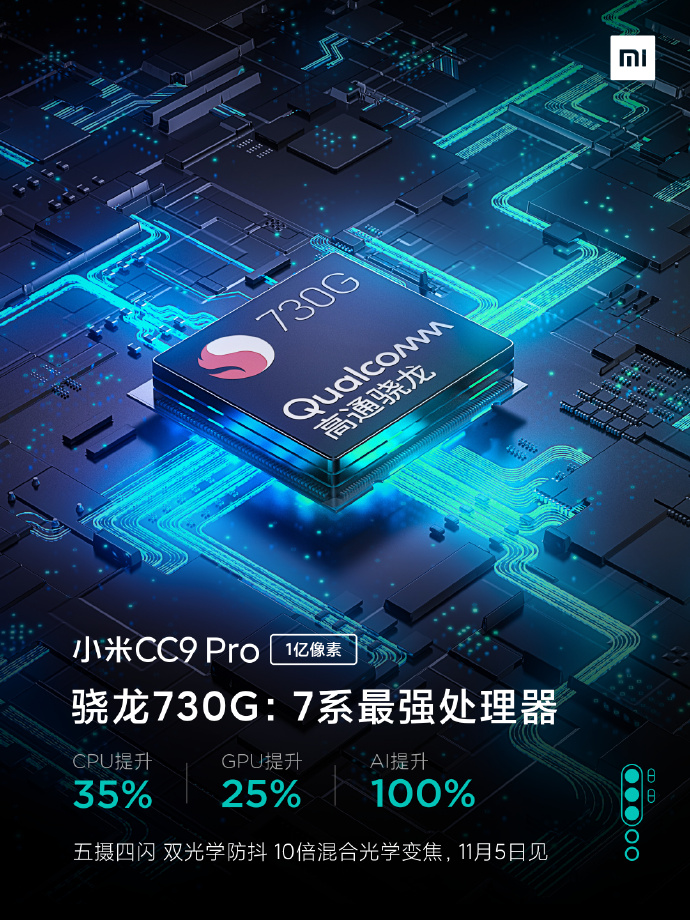
Today, the official Xiaomi Weibo account confirmed the processor inside the Mi CC9 Pro. The post revealed the penta camera-toting phone will come with a Snapdragon 730G processor. This info was first revealed in a leak a few weeks ago.
The Snapdragon 730G is the most powerful processor in Qualcomm’s 700 series. It was announced this year and it powers phones such as the Samsung Galaxy A80, Realme X2, OPPO Reno 2, and OPPO K5.
Since the Mi Note 10 is the global version of the Mi CC9 Pro, it too will be powered by the Snapdragon 730G processor. The Mi Note 10 arrives on November 14. A leak from a few days ago said the Mi Note 10 Pro will have a Snapdragon 855+ processor.
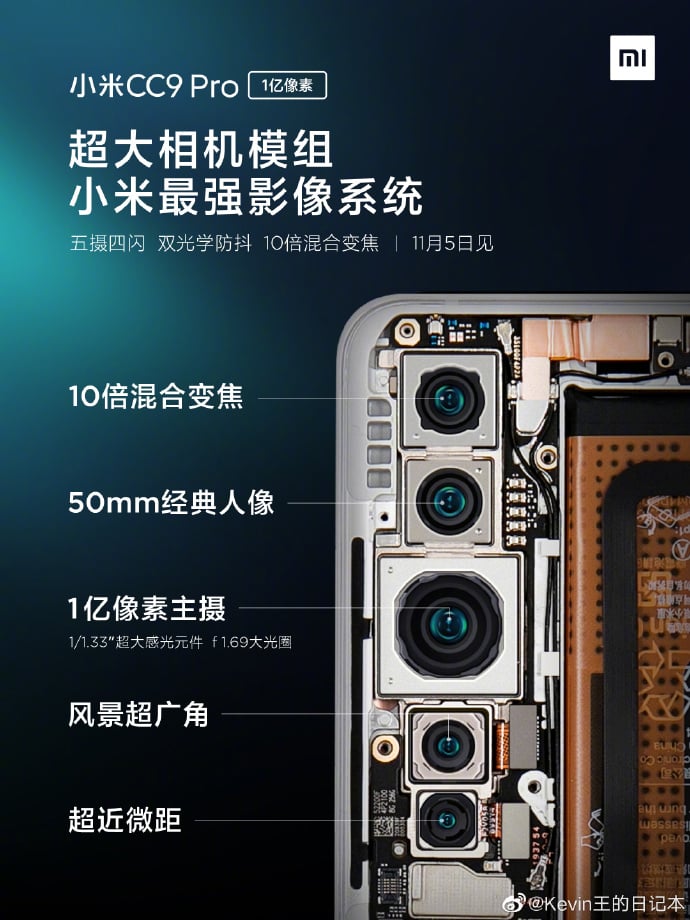
Alongside confirming the processor inside the phone. Xiaomi’s CEO, Lei Jun, shared a photo showing the phone’s internals to give us a look at the penta-camera system.
The top camera is the 5MP camera with 10x hybrid zoom. This camera has optical image stabilization. It is followed by the 12MP 50mm portrait camera. The 108MP sensor is the next and the biggest of all five cameras. It has a large 1/1.33” pixel size, an f/1.69 aperture size, and optical image stabilization. The fourth sensor is the 20MP ultrawide angle camera and it is followed by a 2MP camera with a macro lens.
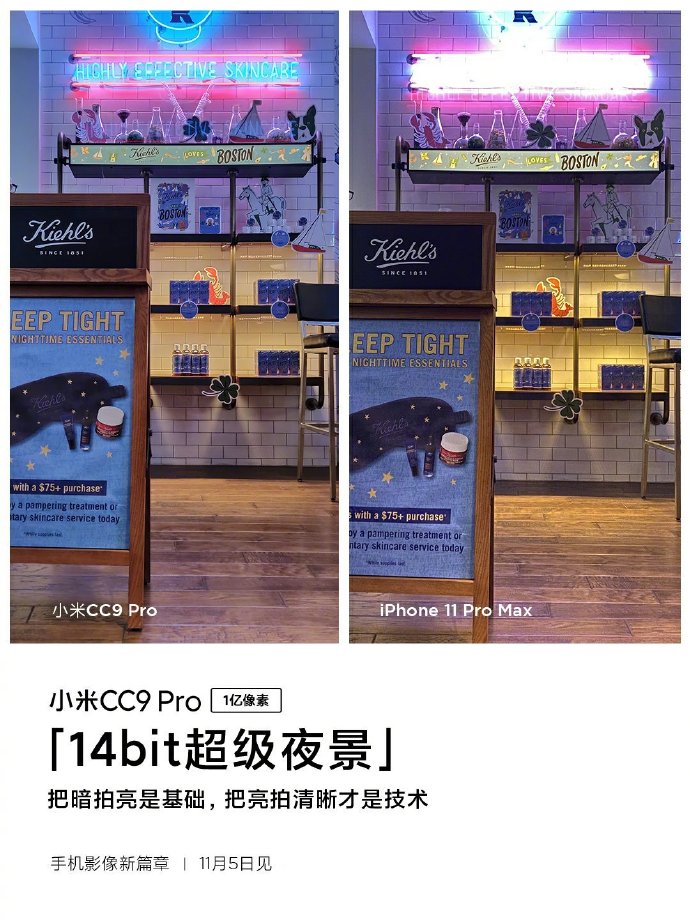
The selling point of the Mi CC9 Pro is its camera system and Xiaomi appears to have gone all out with the phone. A few days ago, it revealed sample photos taken with Super Night Mode. Lei Jun revealed that the phone’s night mode which is actually called 14bit Super Night Scene is based on RAW’s lossless high-precision algorithm.
[envira-gallery id=”287155″]
Today, he shared a collage photo comparing a night photo that was taken with the Mi CC9 Pro and one taken with the iPhone 11 Pro Max.
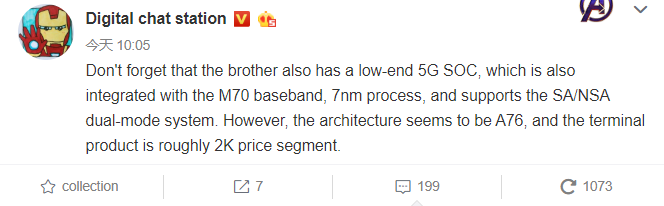
MediaTek is yet to announce the name of its first 5G processor which should appear in a number of devices soon. We know the processor will have the Helio M70 modem integrated into it. We also know it will come with Arm’s Cortex-A77 CPU cores and Mali-G77 GPU cores. Now, information has surfaced about another 5G modem from MediaTek but one that is less powerful and of course, cheaper.
The info comes from @Digital Chat Station, the same source that revealed a few days ago that Redmi is developing a phone that will come with MediaTek’s 5G processor. He revealed on Weibo that MediaTek has a second 5G SoC coming that will also feature the Helio M70 modem but will have the Cortex-A76 CPU cores instead of the more powerful A77 cores.
He adds that the processor will be a 7nm chip, supports SA and NSA networks, and will power devices priced around ¥2000 (~$284). A 5G phone priced under $300 should definitely sell like hot cakes. Since it features the same modem as the more powerful processor, you should get the same download speeds too.
There is no mention of when the processor will be announced neither did he reveal which manufacturers will be adopting it for their phones. We believe more information will surface as time goes on.
It looks like electronics lovers are in for a treat! While electronic devices such as smartphones, laptops, etc come in handy in day to day life, they aren’t necessarily easy on the pocketbook.
Those living on a tight budget settle for low-priced alternatives that usually fail to meet their needs. To make top-branded, feature-rich electronic devices that are in almost-new conditions available to cost-conscious buyers, AliExpress is gearing up to launch a new promotion.
Dubbed as High-Quality Used Electronics, the promotion sale is slated to kick off on November 13th, 12:00 AM PT. While we wait with bated breath for the sale to begin, here’s what you can expect in terms of discounts and products.
The High-Quality Used Electronics promotion sale will feature numerous products across various categories. Moreover, you can use a $2 OFF Coupon starting from November 11th, 12:00 AM PT – November 12th, 11:59 PM PT and save more money during the activity period.
In addition to a 15.6 Inch 4GB RAM 64GB ROM Notebook, Apple Used iPhone 8 / iPhone 8 Plus Smartphone, an unlocked Apple iPhone 6, the upcoming promotion will give you a chance to get your hands on several other used products without spending a lot of money. The Used iPhones section features the iPhone 6, iPhone 8 and several other well-received variants of the coveted smartphone.
More importantly, you can get noteworthy discounts on the handsets available under the aforesaid section. For example, there’s a noteworthy 29 percent off on the Unlocked Apple iPhone 6 which usually retails for $169, but is currently available for a lowered price of just $119.99.
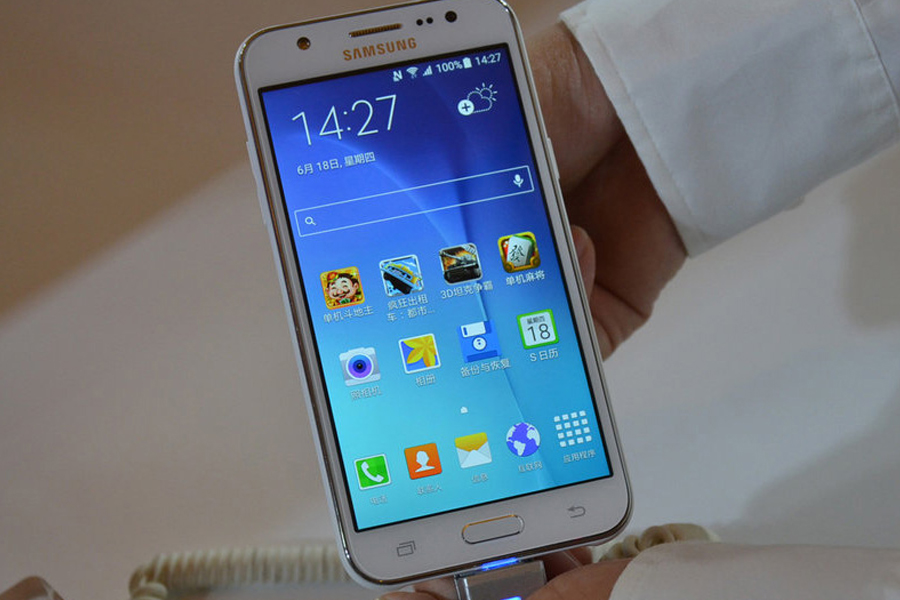
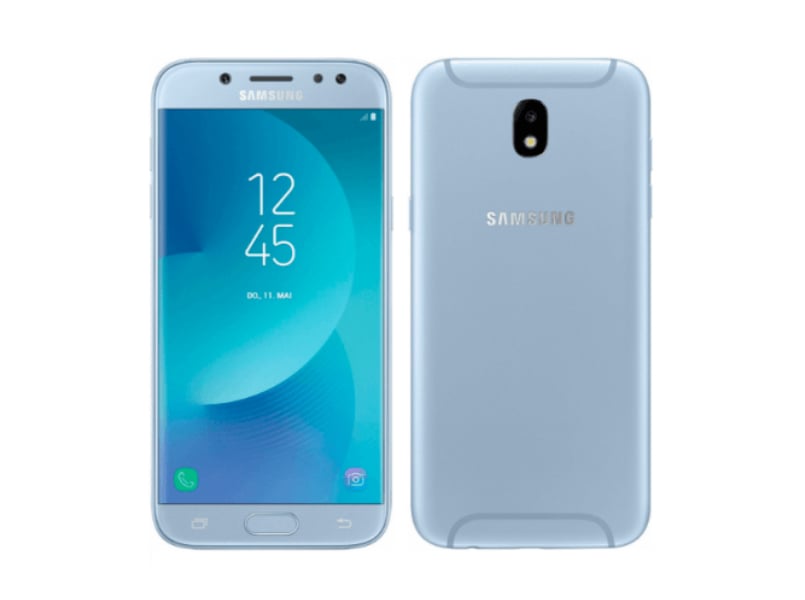
The next category dubbed Used Samsungs includes the Unlocked Samsung B2710, as well as the Samsung Galaxy J5 J500F, both carrying considerably reduced price tags. For instance, the 1.5GB RAM+8GB ROM Galaxy J5 J500F variant would normally set you back $88, but you can buy it for just $73.92, thanks to a 16 percent off.
The next section is called Used Brand Name Smart Phones. If you have restlessly been waiting to get your hands on a top-branded smartphone without burning a hole in your pocket, you might want to check out this category, which offers great discounts on handsets from popular manufacturers including Apple, and Xiaomi.
Those interested in buying repaired smartphones to avoid spending a lot of money can head straight to the Refurbished Smart Phones section. Loaded with smartphones that are still in good condition, this section is worth checking out if you a Samsung, Nokia, or an iPhone fan, but refrain from buying their phones due to the steep price tags attached to them.
Students who need to work on assignments while traveling to school or college do not fancy spending tens of thousands of dollars on a high-end laptop. If you have been looking for a budget laptop that suits your fancy, the Refurbished Laptops is the section you need to check out.
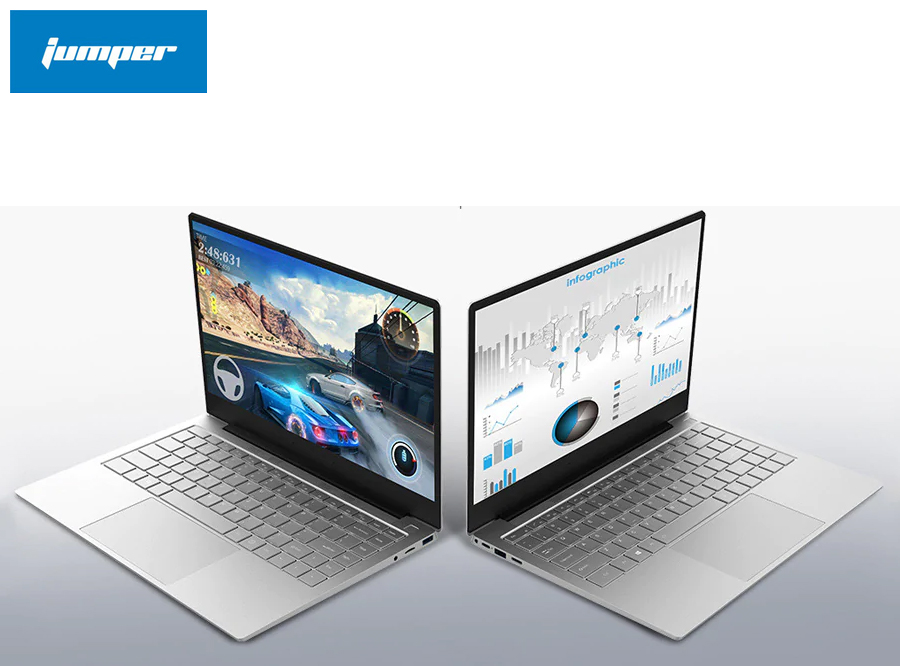
AliExpress is doling out great discounts on laptops with top-end specifications. Keeping in line with that, the Alibaba-owned Chinese online retail service is offering the Jumper EZbook X4 laptop for an unbelievably reduced price of just $261.63, while it normally sells for $373.75.
The concluding section on the promotion page is called More to Love and it features the rest of the mobile devices that will go up for sale bearing reduced prices as part of the upcoming promotion sale.
You can click here to visit the promotion page ahead of its launch and be ready with the products you want to buy before they get sold out. Note that the promo will be valid for a limited period.
It is that time of the year again! Online shoppers wait with bated breath for the year’s biggest discounts to roll out, along with a slew of unmissable deals. The 2019 11.11 Sale at GeekBuying is all set to kick-off and it is going to be nothing short of fascinating this year as well.
With GeekBuying’s long-11.11 SALE just around the corner, online shoppers would want to leave no stone unturned in a bid to take full advantage of it. Here are a few things that you need to know for making the most of the 2019 11.11 Shopping Festival.
Starting from November 1st until November 10th, there will be an activity dubbed “Daily Check-in.” Those who simply visit the promotion page during the aforesaid activity period will be eligible for sharing $11,000,000 coupons. Featuring this year’s craziest deals, the shopping festival also offers big coupon codes that you can use to save money.
Each participant will be eligible for one Check-In coupon only. If you are one of the first 100 participants that check into the promotion daily during the activity period, you will win $11.11 OFF coupon on orders valued at $12 or more. The rest of the participants will receive an $11.11 OFF coupon on orders valued at $50 or more.
To win an $11.11 OFF coupon on orders valued at $70 or more, you’d need to ensure that you check-in at least 7 of the 10 days. Those checking in at least 5 of the 10 days, on the other hand, will get an $11.11 OFF coupon on orders valued at $90 or more. Note that these coupons will be valid from November 11th 10:00 to November 13th 16:00 (UTC+8). It is also worth mentioning here that the coupons will not be valid for Lightning and Flash Deals of 11.11 promotion.
Moreover, you can stand a chance of winning free gift if you check-in during 11.04 10:00-11.05 10:00, 11.07 10:00-11.08 10:00 and 11.10 10:00-11.11 10:00 (UTC+8). There is more for you to cheer about.
For orders over $300, you can apply coupon code 1111GKB30 and get $30 off. If the value of your shopping is more than $150 at checkout, you can use coupon code 1111GKB15 and save $15. Likewise, coupon code 1111GKB05 can be used to get $5 off on orders over $60, while coupon code 1111GKB02 enables you to get $ 2 on orders exceeding $10.
The promotion page is crammed with amazing products across various categories. To expedite the search process, these items have carefully been placed under specific categories. The Flash Deals section, for instance, comprises the On Sale Now sub-category wherein you can buy top-notch items at lowered prices.
Likewise, you can grab noteworthy discounts on a myriad of items that have been added to the next category called Top Sellers. Tech buffs and gadget lovers might want to check out the following section dubbed Top Tech, which features smartphones, laptops, etc.
Electronics lovers might want to head straight to the Hot Electronics section, which is teeming with all sorts of awe-inspiring electronic devices. More importantly, you can buy these electronic products without burning a hole in your pocket.
A must-checkout for sports and adventure junkies, the Outdoors & Toys category offers great discounts on electronic bicycles, gimbal stabilizers, RC drones, and other equally awesome products. While home appliances aren’t easy on the pocketbook, GeekBuying is bent on making these products available at lowered prices to its loyal users.
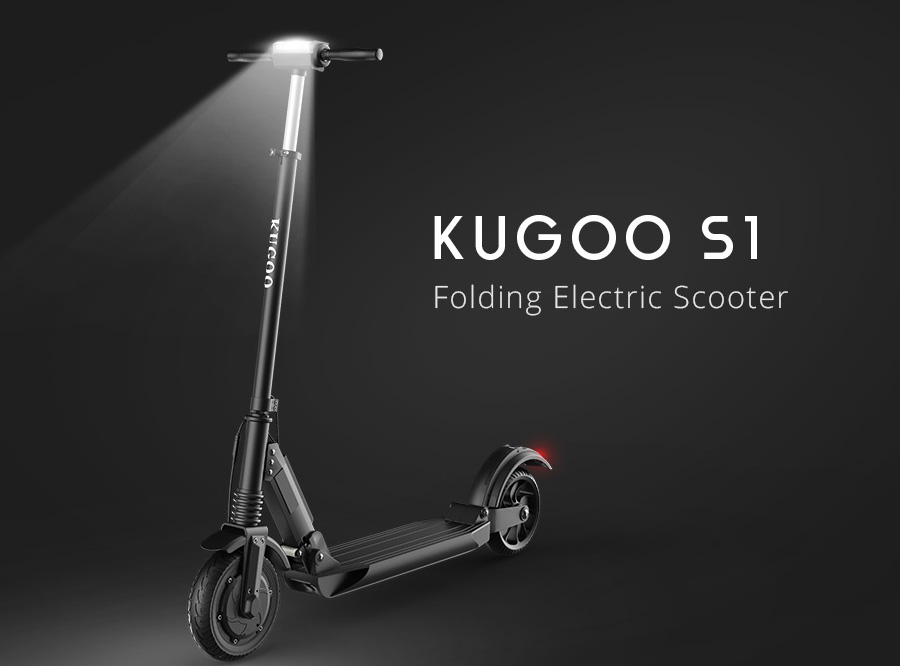
Keeping in line with that, the Chinese online store has added a Smart Home section on the promotion page. As part of the 24Hr Flash Deals, GeekBuying will be dolling out significant discounts on laptops, TV Boxes, cameras, drones, and apparel. Moreover, lucky participants will receive free Xiaomi Mix 3 smartphone, KUGOO S1 electronic bicycle, Tronsmart T6 Plus Bluetooth speaker and the AMAZFIT GTR smartwatch.
The 11.11 Lightning Deals promotion page on GeekBuying has been split into multiple categories. The currently active category is called Top Electronics, and there are no prizes for guessing that it is loaded with amazing items that you can buy without emptying your pocket.
The aforesaid section features the AMAZFIT GTR smartwatch, QCY T2C Bluetooth 5.0 TWS Earbuds, KUGOO KIRIN S2 Mini Folding Electric Scooter, and lots more. It is worth noting that the discounts will be available on the remaining pieces of each product.
For instance, the AMAZFIT GTR smartwatch that usually sells for $260.99 will be available for a lowered price of only $126.99; however, this 51 percent off will only be valid for the remaining 191 pieces. To take advantage of this price drop, you need to place your order without wasting time.
Amazfit GTR is its most recent smartwatch
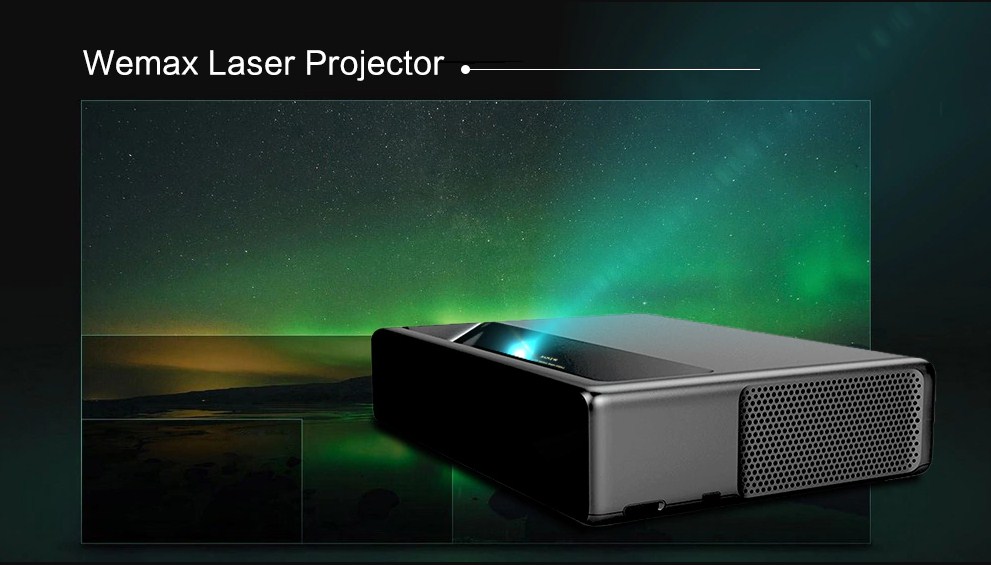
Among various other products, GeekBuying is offering the Xiaomi Wemax ONE PRO Laser Projector for a considerably lowered price. We will not only shed light on the discount but also show how you can save more money before placing your order.
Cinephiles usually end up spending a lot of money on high-end laser projectors that are crafted to deliver a superior visual experience. Those on a tight budget; however, go for low-priced alternatives that offer disappointing performance.
If you have restlessly been looking for a high-end laser projector that doesn’t cost a bomb, you might want to check out the Xiaomi Wemax ONE PRO, which is currently available for a reduced price on GeekBuying. Marketed as the world’s first ultra-short projector to adopt the ALPD (advanced laser display) technology, Wemax ONE PRO would normally set you back a pretty penny.
Much to the relief of cost-conscious buyers, GeekBuying is offering the feature-laden laser projector from Xiaomi for just $ 1659. This is a noteworthy 59 percent reduction in the device’s original asking price. Moreover, you can even extend this discount with the help of coupon code 1111GKB30.
The above-mentioned coupon enables you to save $30 more. In other words, you can bring the already lowered asking price of the Xiaomi Wemax ONE PRO further down to just $1629 during the checkout process.
An absolute bargain at this price, the Wemax Laser Projector adopts the latest ALPD technology by Appotronics for delivering up to 150 inches of full HD quality images in 50cm, coupled with an impressive product life of up to 25,000 hours. To acquire the user-friendly design goals, the projector resorts to using a compact minimalist “box” design language, while retaining the style consistency of Bluetooth remote control design.
Controlling the laser projector from any corner of the room is a child’s play. Furthermore, you can access voice assistants and other interactive ways to find your favorite TV series, movies, programs, and other content. The WEMAX ONE PRO Laser Projector generates a maximum of 7000 lumens source brightness and a native contrast of 3000:1.
To know more about this coveted laser projector, simply follow this link. You can use a 2% OFF Coupon for an extra discount if this is your first order with GeekBuying. Note that the promo was on the verge of wrapping up at the time of writing.
GeekBuying is touted as one of China’s best online stores when it comes to buying electronics and other products at unbeatable prices!
News emanating from Huawei‘s Pollen Club indicates that the Honor 10 Lite has started receiving EMUI 10 open beta update in China. This isn’t an OTA update so it is available to users who registered for the open beta program. The program grants the registered users first-hand access to test the latest EMUI features before they are commercially available. Beta testers are mandatorily required to send feedback in order to help improve the overall outlook of the custom ROM and fix bugs before the stable ROM is released. The open beta testing is usually the last step before the stable ROM is pushed.
The Honor 10 Lite was first released in November last year as a toned-down version of the premium Honor 10. The device features a 6.21-inch IPS LCD Full HD+ display with a screen resolution of 2280 x 1080 pixels and 19:9 aspect ratio. The device also has about 90 percent screen-to-body ratio. Under the hood, the device is powered by the company’s own Kirin 710 chipset. The device is available in 4GB+64GB, 6GB+64GB and 6GB+128GB memory combo. Huawei launched a 3GB RAM variant in March this year in India.
EMUI 10 brings a redesigned layout, fluid and snappier animations as well as a refreshed camera application, among others. The new ROM also improves on the Dark mode feature on Android 10.
Thanks to Chinese smartphone manufacturers such as Oppo and Vivo, high-end smartphones became every day more affordable. Both the companies released some flagship killers in the last period and we think it is very interesting to compare their specifications in order to let the potential buyers know which one is the perfect one for their needs and their pockets. Oppo released two similar affordable flagships recently: the Oppo Reno Ace and the Realme X2 Pro under its sub-brand. Vivo came up with the iQOO Neo 855, an upgraded version of the iQOO Neo with higher performance but a still amazing price tag. Here is a complete specs comparison between them.
Oppo Realme X2 Pro vs OnePlus 7T vs Oppo Reno 2
Oppo Realme X2 Pro
Oppo Reno Ace
Vivo iQOO Neo
DIMENSIONS AND WEIGHT
161 x 75.7 x 8.7 mm, 199 g
161 x 75.7 x 8.7 mm, 200 grams
159.5 x 75.2 x 8.1 mm, 198.5 g
DISPLAY
6.5 inches, 1080 x 2400p (Full HD+), Fluid AMOLED
6.5 inches, 1080 x 2400p (Full HD+), AMOLED
6.38 inches, 1080 x 2340p (Full HD+), Super AMOLED
Quad 48 + 13 + 8 + 2 MP, f/1.7, f/2.4 and f/2.2
16 MP f/2.0 front camera
Triple 12 + 8 + 2 MP, f/1.8, f/2.2 and f/2.4
16 MP f/2.0 front camera
BATTERY
4000 mAh, fast charging 50W with SuperVOOC Flash Charge
4000 mAh, fast charging 65W
4500 mAh, fast charging 33W
ADDITIONAL FEATURES
Dual SIM slot
Hybrid Dual SIM slot
Dual SIM slot
Design
I feel like the Oppo Reno Ace has a slightly more attractive design due to more attention to details and better build quality. Unlike the Realme X2 Pro and the Vivo iQOO Neo, its front panel is protected by Gorilla Glass 6. I am not a fan of that Realme logo which Oppo’s sub-brand put on the upper part of the rear side, but a lot of people like it for the originality. Due to its plastic frame, Vivo iQOO Neo 855 is an inferior choice, but it is still an elegant and good looking phone.
Display
Despite its affordable price even in the global market, the Realme X2 Pro features the best display and it is even a flagship-grade panel. The only thing missing is the Quad HD+ resolution since it is a Full HD+ panel. But it is a Super AMOLED display with a high 90 Hz refresh rate, the support to the advanced HDR10+ standard, a full DCI P3 coverage and even a very high 1000 nits max brightness. Realme X2 Pro features a wide 6.5-inch screen as well as powerful stereo speakers with the support to Dolby Atmos. In the second place, there is the Oppo Reno Ace: it still features a 90 Hz refresh rate and a full DCI P3 coverage, but it does not support HDR10+ (just HDR) and its peak brightness is lower. Vivo iQOO Neo has an HDR10 display but it lacks the 90 Hz refresh rate and the 100 percent DCI P3 coverage.
Hardware/Software
Oppo Reno Ace and Realme X2 Pro feature a better hardware department than the Vivo iQOO Neo 855 since they are fueled by a better Snapdragon 855+ which offers up to 15 percent higher graphics performance as well as a high clock frequency (2.96 GHz vs 2.84 GHz) compared to the Snapdragon 855. In their most expensive configurations, Oppo Reno Ace and Realme X2 Pro have exactly the same hardware department as well as the same custom user interface (Color OS 6.1 based on Android 9 Pie). So the performance level is very similar.
Camera
When it comes to cameras, the clear winner is the Oppo Reno Ace since it features better sensors as well as optical stabilization. Its main sensor is a great Sony 48 MP lens with a bright f/1.7 aperture, and there is also a 13 MP telephoto lens for 2x optical zoom. Right after, we find the Realme X2 Pro with a 64 MP quad camera but without OIS, and with a midrange Samsung sensor.
Battery
Vivo iQOO Neo wins the battery life comparison simply because it features a bigger battery, with a capacity of 4500 mAh. On the other hand, Oppo Reno Ace has the fastest charging technology as it can reach 100 percent of battery charge in just 30 minutes.
Price
Oppo Reno Ace starts from about $478/$428 in Asia, Realme X2 Pro costs €399/$445 globally, and Vivo iQOO Neo 855 starts from €260/$290 in China. The winner of the comparison is the Oppo Reno Ace due to its better camera capabilities and a faster charging technology, even though Realme X2 Pro has a better display.
Xiaomi fans usually associate the Chinese electronics company with manufacturing a wide selection of exciting mobile phones. It might come as a surprise to some of us that Xiaomi also makes a slew of other equally amazing products in collaboration with Mi ecosystem companies.
As part of one such partnership with Mijia, Xiaomi has come up with the Mijia 150PSI Tire Inflator Air Pump, which generates wind strong enough to fill up tires, bicycles, motorbike and even cars. The easy-to-use air pump is crafted to save our energy and time that we invest in filling the aforesaid devices.
Sporting a striking resemblance to a power bank, the Xiaomi Mijia 150PSI Tire Inflator Air Pump has now gone up for sale for a lowered price through Gearbest. While you would usually end up shelling out $142.91 on the air pump, it can now be yours for just $49.99. This noteworthy 65 percent discount enables you to save $92.92.
While the Xiaomi Mijia 150PSI is without an iota of doubt an absolute steal at this price, the burning question that might be popping inside your head would be is it worth your money. To figure that out, let us check out some of the awe-inspiring features this Xiaomi Mijia branded air pump has to offer.
Backed by a built-in 2000mAh battery, the Xiaomi Mijia Smart Pump can effortlessly fill up motorbikes, bicycles, footballs, and what’s most impressive about this device is that it can fill up even cars. Its user-friendliness is the icing on the cake.
Furthermore, the Xiaomi Mijia 150PSI not only serves as an electric inflatable bank that you can carry everywhere you go, but it also works as a digital tire pressure detector. Housed in a high-precision alloy die-casting cylinder the device can effortlessly pressurize to 150PSI, meeting the high inflation force required to fill up road bikes, regular bicycle tires, ball, inflatable toys, etc.
It features a digital sensor that accurately measures the pressure inside the tire, allowing you to regularly test it to avoid any sort of mishaps while driving. The tire pressure preset enables you to know the current tire pressure so that you can add needed tire pressure.
Moreover, the Xiaomi Mijia 150PSI features a Micro USB charging interface and works with most smartphone charging lines. It adopts an LED light that is good and convenient to use in dark environments. There’s no power button on the device. To turn on the pump, all you need to do is to pull out the high-pressure gas tube.
You can check out more details about the Xiaomi Mijia 150PSI Tire Inflator Air Pump and place your order by following this link. With over 90 pieces sold at the time of writing, this promo is slated to end in just one day.
A couple of days ago, it was reported that Google is in talks to acquire Fitbit. Today, the company has confirmed that it is all acquiring the wearable company Fitbit for $2.1 billion. This means that Google will be paying a price of $7.35 per share for acquiring Fitbit in an all-cash deal.
Google is paying a premium of over 70 percent to the Fitbit share price before the shares were suspended earlier this week amid the speculations of takeover. However, the price is a fraction of the company’s value when it started in 2015.
Initially, the company’s shares were priced at $20 but soared to more than $50 in the weeks following the initial public offering (IPO). However, due to the competition from bigger companies like Apple, Samsung, and Xiaomi, its shares suffered.
Commenting on this acquisition, Google SVP of devices and services Rick Osterloh said that the Fitbit purchase is “an opportunity to invest even more in Wear OS as well as introduce Made by Google wearable devices into the market.”
Fitbit CEO and co-founder James Park said in a statement: “Google is an ideal partner to advance our mission. With Google’s resources and global platform, Fitbit will be able to accelerate innovation in the wearables category, scale faster, and make health even more accessible to everyone. I could not be more excited for what lies ahead.”
Google has struggled to establish its presence in the wearables market. However, the company now seems to be focused on making a dent in the wearable market, which is still pretty young and is growing rapidly.
It’s noteworthy that this acquisition of Fitbit isn’t the first one for Google. Earlier this year, in January, the company had purchased a major chunk of IP from Fossil related to smartwatch technology for a sum of $40 million.
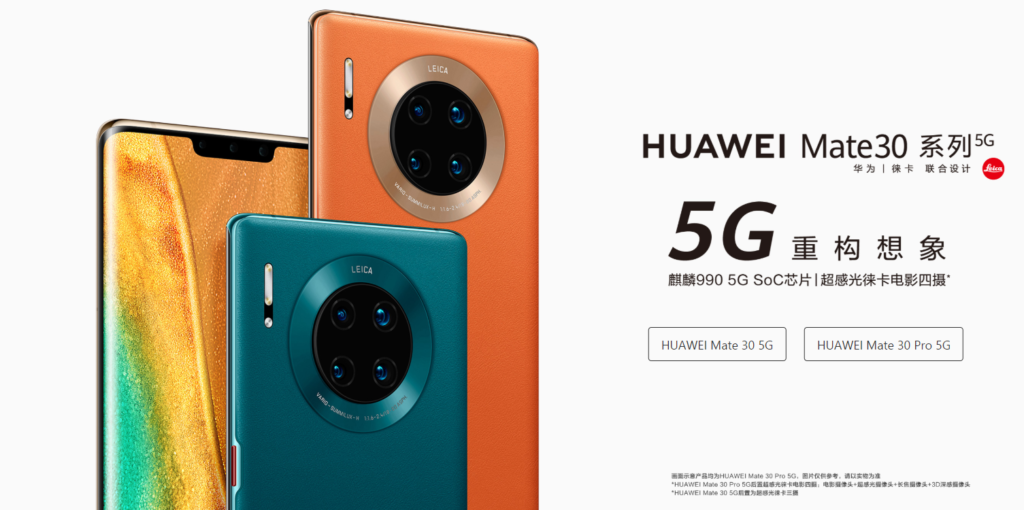
On the 31st of October, three Chinese telecom operators announced the commercial availability of 5G services in the country. The following day i.e 1st of November, netizens who pre-booked a unit of one of the Huawei Mate 30 series 5G smartphones can make the final payment and start the delivery process. Surprisingly, users without a pre-order can also purchase a unit starting today.
To lure in customers, Huawei is giving away free Huawei Band 4e to the first 10,000 buyers. The prices of different variants are of the two flagships are as follows:
Huawei has also partnered with a number of Chinese banks through which consumers can buy either one of the Mate 30 series smartphones with 6 easy monthly instalments without additional fees. The list of these banks includes Agricultural Bank of China, China Merchants Bank, Industrial and Commercial Bank of China, China Ping An, Guangfa Card, Shanghai Pudong Development Bank, Bank of China, China Construction Bank, Shanghai Bank bank.
Users interested in checking out the full specifications of the Mate 30 5G and Mate 30 Pro 5G can do so by clicking the respective hyperlinked text in blue. To see the official listing on Vmall you can click the following links 1, 2.
Late last month, Realme released a software update (version number RMX1901EX_11.A.09) for its mid-range Realme X which introduced the long-awaited Dark Mode and updated the security patch to October. However, due to a critical bug, the company has currently halted the rollout of this staged update. Apart from this, the company has also revealed the Android 10 rollout roadmap for its Realme X lineup of smartphones in China
According to Realme developers, they “have found a critical bug before the update reached more devices. As a consequence, the update has been put off temporarily.”. While some units have already received the latest update, the company has postponed the staged rollout until the bug has been fixed and the software is secure for the end consumers. Even though Realme has not provided a particular date, the update is expected to be started seeding once again in a couple of weeks.
Talking about the release of Android 10 based ColorOS, the Realme X and its Youth edition will be the first handsets to receive it in the Q1 of 2020. The Realme Q (rebranded Realme 5 Pro) that was launched in China in the month of September will also receive this variant of colour os in Q1 of 2020. Shockingly, the Realme X2 and Realme X2 Pro that pack superior features will receive the update in Q2 of 2020. Nevertheless, this rollout is meant for the Chinese region, and global rollout roadmap is yet to be revealed.
Earlier this year, in July, Vivo had launched the Vivo Z1 Pro smartphone in the Indian market which then went on open sale within few weeks. Today, the company has announced a price on all three variants of the smartphone.
The 4GB RAM model has got ₹1,000 price cut and is now available for ₹13,990 (~$198) instead of ₹14,990. Both the models with 6GB RAM have got ₹2,000 price cut and with that, the effective price of 64GB storage model is ₹14,990 (~$212) while the pricing of 128GB storage model is ₹15,990 (~$226).
The Vivo Z1 Pro smartphone comes with a 6.53-inch LCD panel with a punch-hole design that offers 19.5:9 aspect ratio, Full HD+ resolution, and a screen-to-body ratio of 90.77 percent. Under the hood, the device is powered by Snapdragon 712 SoC which brings along Adreno 616 graphics on the device.
The smartphone boasts a 32-megapixel selfie camera that is housed inside the small round-shaped cutout on the display. It supports 4-in-1 pixel binning technology that makes. On the back side, it has an AI-powered triple camera setup that features Sony IMX499 16-megeapixel primary sensor with f/1.78 aperture, a 120-degree 8-megapixel superwide lens and a 2-megapixel depth sensor.
The FunTouch OS 9 based Android 9 Pie operating system is loaded on the device and comes with Multi Turbo technology onboard for improving the device’s overall performance. It includes Game Turbo that accelerates the GPU performance for enhanced gaming experience. Other gaming related features of the phone are 4D in-game vibrations and blue light filter.
The device comes with Widevine L1 certification, rear-mounted fingerprint scanner, face unlock, dual 4G VoLTE, Wi-Fi 802.11ac, Bluetooth 5.0, GPS, microUSB and 3.5mm headphone slot. The smartphone boasts long-lasting performance since it is backed by a behemoth battery of 5,000mAh capacity which comes with support for 18W dual-engine fast charging.
We use cookies on our website to give you the most relevant experience by remembering your preferences and repeat visits. By clicking “Accept”, you consent to the use of ALL the cookies.
This website uses cookies to improve your experience while you navigate through the website. Out of these, the cookies that are categorized as necessary are stored on your browser as they are essential for the working of basic functionalities of the website. We also use third-party cookies that help us analyze and understand how you use this website. These cookies will be stored in your browser only with your consent. You also have the option to opt-out of these cookies. But opting out of some of these cookies may affect your browsing experience.
Necessary cookies are absolutely essential for the website to function properly. This category only includes cookies that ensures basic functionalities and security features of the website. These cookies do not store any personal information.
Any cookies that may not be particularly necessary for the website to function and is used specifically to collect user personal data via analytics, ads, other embedded contents are termed as non-necessary cookies. It is mandatory to procure user consent prior to running these cookies on your website.






























 To lure in customers, Huawei is giving away free