In the previous month, Honor confirmed that it will be launching the Honor 20 series of smartphones on May 21 in London. The Chinese firm has today revealed through a Weibo post that it will be launching on Honor 20 series in the home market on May 31 in Shanghai, China. The company has also started receiving reservations on Vmall for the Honor 20 series from 10:08am from today.
The tagline of the Honor 20 series suggest it will include attractive looking devices capable at shooting impressive photos. The rumor mill has revealed that the series will comprise of Honor 20 and Honor 20 Pro. The reservations of the Honor 20 series will continue until May 31 which indicates its sales will probably from the very same date.
Honor 20 posters have revealed that Honor 20 and Honor 20 Prov phones will be arriving with quad rear cameras. Rumors have it that the Honor 20 will have an f/1.8 aperture 48-megapixel main sensor, a ultrawide lens of 16-megapixel, a 2-megapixel depth sensor and a 2-megapixel macro camera. The Honor 20 Pro may feature a 48-megapixel camera with f/1.8 aperture, a 16-megapixel ultrawide 16-megapixel sensor, an 8-megapixel telephoto lens with 3x optical zoom and a 2-megapixel macro camera. Some other reports have revealed that the Honor 20 Pro will be featuring a Sony IMX600 40-megapixel main sensor which can be found on Huawei P30 Pro phone.
The Honor 20 and Honor 20 Pro smartphones will be powered by Kirin 980 chipset. These phones may respectively feature 6 GB and 8 GB of RAM. Both smartphones are rumored to be equipped with front-facing cameras of 32-megapixel.
The Honor 20 and Honor 20 Pro are rumored to be respectively equipped with 6.1-inch and 6.5-inch OLED displays. Frontal images of the Honor 20 and 20 Pro phones have suggested that they will be arriving with punch-hole displays. The Honor 20 will house a 3,650mAh battery that will be support for 22.5W rapid charging. The Honor 20 Pro could be equipped with a battery of around 4,000mAh capacity. The Honor 20 duo will be loaded with Android 9 Pie OS customized with the latest version of EMUI. The Pro model is expected to arrive in at least black, pearl white and blue color options. The Chinese firm is also expected to announce Honor 20 Moschino Edition through the upcoming launch events.
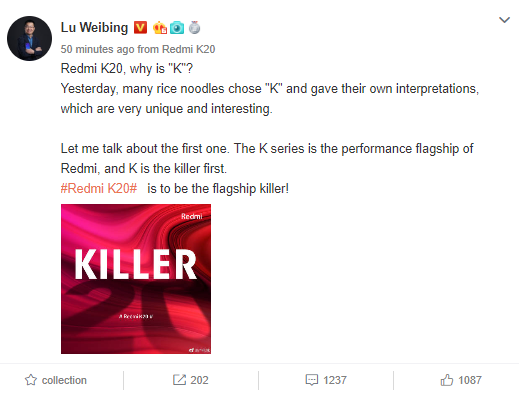
Update: Lu Weibing has revealed on Weibo that the Redmi K20 is a flagship killer and he added that the K-series will include performance driven flagship phones. So, K stands for Killer!
Original Story:
Yesterday, Redmi General Manager Lu Weibing had claimed through Weibo the name of Redmi’s forthcoming flagship phone will be confirmed today. Also, few hours later, a leak had revealed that Redmi’s upcoming flagship smartphones will be dubbed as Redmi K20 and Redmi K20 Pro. The leak has turned out to be correct since the Chinese firm has officially confirmed Redmi K20 moniker through its new Weibo account.
Redmi has only confirmed the Redmi K20 name, but it is yet to reveal its launch date. There is a possibility that the phone may go official by the end of this month in China. As mentioned above, the company is also expected to launch Redmi K20 Pro alongside it. It is speculated that one of these phones may end up as Poco F2 in the international markets.
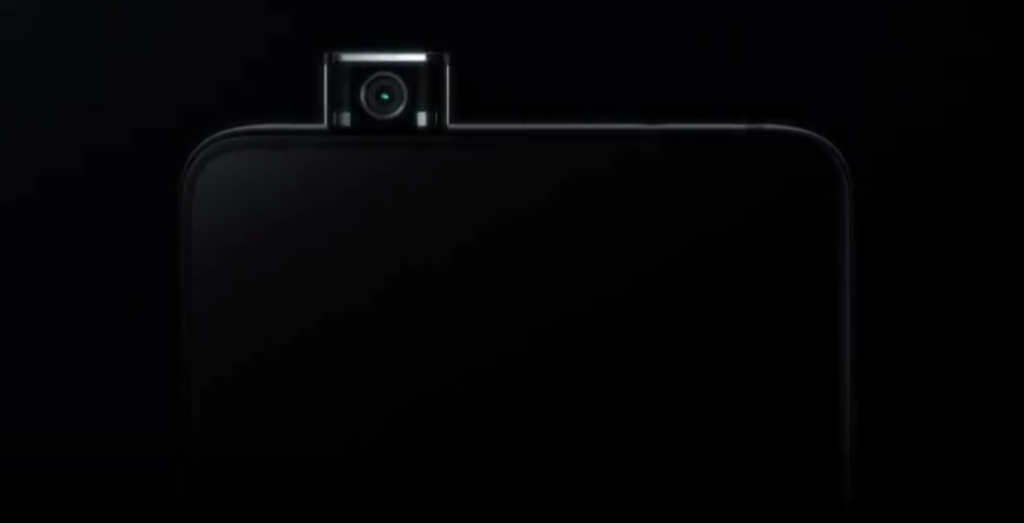
So far, the rumor mill has revealed plenty of information on the specs of Redmi K20 Pro smartphone. It is speculated to arrive with a 6.39-inch AMOLED display that is embedded with an in-screen fingerprint reader. The smartphone’s screen is protected by Gorilla Glass 6. As Redmi has already teased, the phone will be sporting a notch-less screen.
The rear side of the Redmi K20 Pro may feature a triple camera setup. It may comprise of 48-megapixel primary sensor, an ultrawide lens of 8-megapixel and a telephoto lens of 16-megapixel. The pop-up camera module of the phone may feature a 20-megapixel selfie shooter. It is likely to house a 4,000mAh battery that could be assisted by 27W rapid charging.
The Redmi K20 Pro is likely to be powered by Snapdragon 855 mobile platform whereas the non-Pro model dubbed as Redmi K20 could feature Snapdragon 730 SoC. These phones are expected to be available in RAM options of 6 GB and 8 GB. Also, they are likely to come with storage choices such as 64 GB, 128 GB and 256 GB. Carbon Black, Blue and Red are the rumored color variants of both phones. The pricing of both phones is under the wraps. Now that the company has officially confirmed the name of the phone, it may start rolling out teasers to reveal some of its features.
Are you satisfied with Redmi K20 and Redmi K20 Pro names for Redmi’s forthcoming flagship phones? Share us your views by posting your comments below.
Every once in a while, Huawei tries to show us it can take its crazy naming scheme up a notch. The Huawei P20 Lite 2019 is its latest attempt at doing so. The last time it pulled such a trick was in 2017 when it launched the Huawei P8 Lite 2017 a.k.a. Huawei P9 Lite (2017) which is totally different from the 2015 Huawei P8 Lite.
Renders of the Huawei P20 Lite 2019 along with its specs and price have surfaced thanks to Winfuture.de. The phone is a successor to last year’s Huawei P20 Lite and it comes with a bunch of new features and a pretty nice design.
The Huawei P20 Lite 2019 ditches the notch of its predecessor for a punch hole display. The hole is pretty small and is positioned at the top left corner of the display. There is a bit of bezel at the bottom but that is expected. The screen is still 5.84-inches and the resolution is FHD+.
On the back, the phone packs a quad camera setup, a big upgrade from the dual camera setup of last year’s edition. The primary rear camera is said to be a 24MP f/1.8 sensor but the resolution of the other sensors are unknown. Three of the cameras are arranged vertically while the fourth is housed separately. We believe one of the sensors is an ultra-wide angle camera while another should be a depth sensor. Images of the device show it has a camera bump.
[envira-gallery id=”253033″]
Winfuture reports the phone is powered by the Kirin 710 processor and it is paired with 4GB of RAM and 64GB/128GB of expandable storage. Battery capacity is expected to remain unchanged since the screen size hasn’t increased, so expect a 3000mAh battery.
The Huawei P20 Lite 2019 will have a rear-mounted fingerprint scanner, Bluetooth 5.0, dual-band Wi-Fi, and dual-SIM support. It will be available in blue, black, and red. The last two colors have a gradient finish. It will also have a plastic frame.
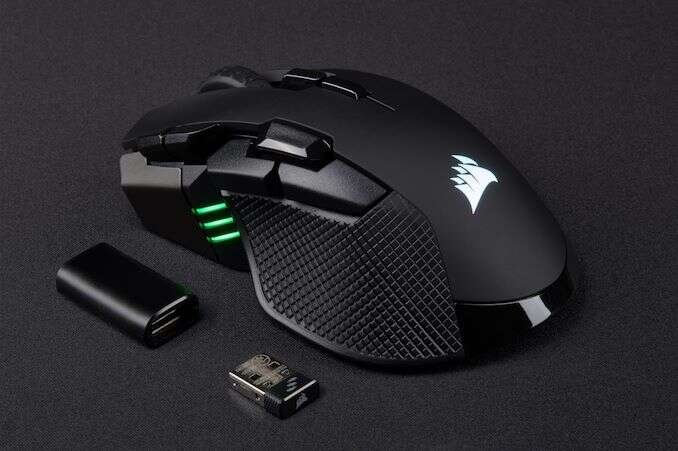
Corsair has added a new wireless mouse to its growing range of PC gaming peripherals. The mouse dubbed Ironclaw RGB Wireless Gaming Mouse. Just as the name implies, the mouse is indeed shaped like a claw rather than a mouse. The design is similar to its predecessor, the wired Ironclaw RGB mouse but this new wireless model is said to feature Corsair’s Slipstream Wireless technology and features an 18,000 dpi optical sensor. It also comes with support for wired and wireless use.
When it comes to performance, Corsair Ironclaw RGB Wireless mouse features a PMW 3391 sensor similar to that on the wired version. The sensor allows users to push the sensitivity all the way up to 18,000 dpi. The mouse is equipped with ten programmable buttons which can be customized through the Corsair iCUE software. There are also three customizable RGB lighting zones that can also be altered within the iCUE software. In addition, the Ironclaw mouse makes use of Omron Japanese switches which are tested to a high standard and are rated at 50 million left and right clicks.
As stated earlier, the mouse can be used in the wireless mode and via a wired connection. For wireless, you can use standard Bluetooth to connect or via the Slipstream wireless USB dongle. While for a wired connection, there is a 1.8-meter braided cable inside the package. The Slipstream wireless USB connectivity mode is the best, though, due to the presence of Corsair’s Slipstream Wireless technology. This tech allows for low input lag gaming thanks to a sub-1 ms response time. The tech also incorporates Corsair’s Intelligent Frequency Shift technology, which monitors the connection and automatically uses the most reliable wireless signal it can.
The Ironclaw RGB wireless mouse is powered by a rechargeable lithium-polymer battery, which the company says will last 16 hours with RGB lighting enabled in wireless USB mode. Without the RGB lights, it can last up to 24 hours. The battery can last up to 30 hours in Bluetooth mode with RGB lights turned on. This goes up to 50 hours with the lighting off completely.
The mouse comes with a retail price of $80 and is already available via some major retailers.
Xiaomi has four phones with 48MP cameras. There is the Redmi Note 7, the Redmi Note 7 Pro, the Mi 9 (including Mi 9 Transparent Edition), and the Mi 9 SE. Today, the official Redmi India account confirmed there is another 48MP phone on the way.
The info was revealed in the tweet celebrating the sales of over 2 million Redmi Note 7 series. Manu Kumar Jain, the MD of Xiaomi India also mentioned the arrival of another 48MP phone in his own celebration tweet.
RUNAWAY SUCCESS! Proud that we sold 2M+ #RedmiNote7 & Pro in 2 months! = 2.5 Lakh/week. 🎉
Everyone loved the crazy #48MP @ #RedmiNote7Pro. The demand was probably >1M/week. ❤️
To celebrate, we're bringing another #48MP phone! 📸
Leaked specs of the upcoming Redmi K20 Pro phone have revealed the phone will have a 48MP primary rear camera. However, we are pretty sure it is definitely not this phone launching in India soon.
Last month, Mr. Kumar revealed in a tweet that there will be a new Xiaomi phone with the latest Snapdragon 700 series processor launching in India very soon. We believe it is the same device that is being referred to in the above-mentioned tweets. The identity of the phone remains unconfirmed. While we strongly believe it is the Mi A3 Android One phone, there are others that think it is a different device entirely.
Chinese phone maker Coolpad is known for cool smartphones with amazing prices. The company’s alliance with LeEco had potentials to be one of the big things that could have happened in the smartphone industry but that was not to be due to LeEco’s financial woes. Going solo, Coolpad continues to stay cool with amazing smartphones in its arsenal. One of such is the newly launched Coolpad Legacy.
The phone is referred to as a flagship model by Coolpad but we’ll have to correct that. It isn’t a flagship per se, in terms of its processor but could best be referred to as a “budget flagship” if any categorization as that exists. We say so because the Legacy smartphone comes with an amazing $130 price tag whereas the specs and design seem to suggest it is cheaply priced. Let’s take a look at the key specs.
The Coolpad Legacy is the product of a collaborative effort between Metro by T-Mobile and Coolpad. The phone sports a 6.36-inch display with FullHD+ resolution. There is also Gorilla Glass 3 protection over the display. The device gets its juice from a mammoth 4000mAh battery and on top of that, it features Qualcomm Quick Charge 3.0. Powering the device is a Qualcomm Snapdragon 450 processor paired with 3GB of RAM while there is 32GB of storage onboard, expandable up to 128GB. On the camera aspect, there is a 16MP+5MP dual camera setup at the rear while up front is a 13MP selfie shooter. There is also a rear-mounted fingerprint sensor. On the software end, the Coolpad Legacy runs on Android 9.0 Pie.
After much fanfare, OnePlus is finally going to unveil its 2019 flagship series tomorrow. OnePlus 7 and 7 Pro will be officially announced at an event which will be held in New York at Pier 94 and will take place at 11 am EDT. For a lot of reasons, it will be a very different event from the ones we have witnessed in the past. It is not just about affordable flagships anymore and a lot of new features and improvements will let OnePlus compete with the best smartphone manufacturers out there on equal terms.
Here we tell you 7 reasons why you should definitely be excited about the OnePlus 7 and 7 Pro launch tomorrow.
OnePlus 7 Pro Nebula Blue Source: Roland Quandt
1. OnePlus 7 will have a 5G variant
For the first time in the OnePlus’ history, the company will launch two variants of its flagship at the same time: the vanilla OnePlus 7 and the OnePlus 7 Pro. But this is not the only special thing: the OP7 Pro will not only be the first Pro variant of a OnePlus flagship, but it will also be the first 5G smartphone from the company. Alongside the Snapdragon 855 chipset, the handset will be equipped with the Snapdragon X50 modem which supports the 5G connectivity. So, as soon as a 5G network becomes available in your country, you will be able to take advantage of blazing speeds without changing your phone!
2. An amazing display
A lot of people complained about the fact that displays of OnePlus devices have never been at the same level as the most expensive flagships from Samsung and Apple. But OnePlus 7 Pro will sport the most impressive display ever seen on a OnePlus handset, and it will be able to compete with the best flagships out there. According to CEO Pete Lau, the phone will come with a display that is super smooth and very crisp. Besides being big-sized (6.67 inches), it will offer a high 90 Hz refresh ratio, a high Quad HD+ resolution with 1440 x 3120 pixels and even an outstanding color reproduction thanks to the DCI-P3 coverage and HDR10+ technology. At least on the paper, it has not so much to envy to the Galaxy S10 and the iPhone Xs Max which come with the most impressive AMOLED panels!
3. OnePlus joins the pop-up revolution
With the OP7 Pro, OnePlus has adopted a new and more innovative technology in order to get rid of bezels around the display. We are talking about the pop-up selfie camera which will come out through a futuristic motorized mechanism. A solution that was first adopted by Vivo, and now it is becoming a real trend. Unlike the notch, it does not hinder the display experience in any way, but at the same time, it helps to provide the highest screen-to-body ratio possible.
4. UFS 3.0 storage and up to 12 GB RAM
Speed was always among the most important advantages of OnePlus devices, and that will not change with the new line-up. A few days ago, CEO Pete Lau confirmed that the OnePlus 7 Pro will boast internal storage based on the UFS 3.0 technology, the fastest one ever seen on a phone. So, the phone will reach incredibly high data transfer speeds and, consequently, the overall performances will improve, especially when opening apps. Samsung Galaxy Fold should have been the first phone to hit the market with UFS 3.0 storage, but it was retired due to display problems and now OnePlus 7 Pro will be the first. The handset will even be equipped with 12 GB of RAM in its most expensive variant, so you can even expect an amazing multi-tasking experience!
5. 3x optical zoom
With the OnePlus 7 line-up, you will see huge improvements even in the camera department. Among them, on the Pro variant, there will be the support to 3x optical zoom thanks to an 8 MP telephoto sensor with OIS. It is not as high as the Huawei P30 Pro, but it is still amazing. The first camera sample with 3x optical zoom shared come out with plenty of detail and a way higher image quality if we compare it with previous OnePlus devices.
A few days ago, at Google I/O 2019, Big G unveiled Android Q, the next major version of its operating system. Two betas of the new operating system were already released until then, and during the event, Google officially announced the third beta. Unlike the previous betas which were only available on its Pixel devices, there will be plenty of phones which will get the third Android Q beta. And the OnePlus 7 will be among them! Further, let’s not forget how light, user-friendly and well optimized OxygenOS will be, and the blazing speeds it will deliver.
7. Finally a top-tier flagship for OnePlus!
Despite the prices of OnePlus devices constantly being raised over the years, the company always tried to cut down on areas where it could save some money. With the OP7 series the strategy changes. Now, we are finally going to see a true top-tier flagship from the company: the OnePlus 7 Pro. Finally, no more compromises (except for the IP certification): the company chose not to cut down anything and pushed most of the departments to their current limits!
So, what are your thoughts about the OnePlus 7 Pro? Are you excited for the event?
The Redmi flagship which has been reported will be called the Redmi K20 is expected to launch soon. The phone which will also have a Pro variant will be powered by the Snapdragon 855 processor and sport a pop-up selfie camera.
In the past few weeks, the phone has been seen with Xiaomi executives. Today is no different. A new picture has surfaced on the web and it shows the device in the hands of Xiaomi’s president, Lin Bin.
[envira-gallery id=”252987″]
The phone is shown to have a pop-up selfie camera and a blue coat of paint. We believe this is the Glacier Blue variant as a leak from earlier today revealed the phone will come in Carbon Fiber Black, Flame Red, and Glacier Blue. The source of the image says the Redmi flagship has its rear cameras and pop-up selfie camera in the middle.
The Redmi K20 and Redmi K20 Pro will be available in multiple variants. There will be a 6GB RAM + 64GB version, a 6GB RAM + 128GB version, and an 8GB RAM + 256GB version.
The Redmi Note 7 is a pretty popular phone. It is available in a lot of countries including China, India, Nigeria, UK, and Ukraine. As at early April, Redmi revealed it has sold 4 million units globally, and even then, it wasn’t yet available in some of the aforementioned countries. Today, Xiaomi India claims it has sold 2 million units in just 2 months.
The figure includes sales of the Redmi Note 7 Pro too. According to Manu Kumar Jain, MD Xiaomi India, they sold 2.5 lakh (250,000 units) per week while demand was probably over 1 million units.
While the figure is impressive, it will likely be higher if Xiaomi/Redmi didn’t resort to flash sales. The company still struggles with meeting demands when it launches a new phone. We explained why that happens in this post. However, Xiaomi itself has revealed that it sometimes uses flash sales to its own advantage.
Vivo‘s blossoming smartphone business can’t be better idolized than by the company’s new industrial park/headquarters that have been completed in China. The massive and beautiful campus house several buildings with modern architecture. The headquarters sits in a massive land spanning several hectares and overlooking a major highway. The landscape is yet another beauty. From a distance, the complex looks very beautiful and even the inside looks more beautiful.
From the look of things, the headquarter complex is designed to offer employees a rich blend of technology, living quarters and recreation, a perfect blend for the birth of creative and innovative ideas. The main building is an oval-shaped high-rising building located close to the main entrance. The buildings are connected with each other by overhead walkways supported by V-shaped piers. The essence of this is to allow ease of movement even during strong typhoons. At one end are three skyscrapers which are said to be accommodation for employees. Interestingly, the industrial park has a football pitch, gym and other areas for sporting and recreational activities. There are office complex, halls for presentation. There’s also a dance studio, a yoga room and a reading room
The complex will be fully completed in mid-May but some departments will reportedly start operating from the park beginning this May. Quite an impressive edifice.
Recent reports had claimed that Vivo India will be launching a new variant of the Vivo V15 Pro smartphone soon. The official announcement has come today as the Chinese firm has introduced 8 GB RAM version of the smartphone. The company has also announced the Aqua Blue color variant for the Vivo V15 phone.
The Vivo V15 Pro that was announced in February in India has been selling in 6 GB RAM version. It includes a native storage of 128 GB. The newly announced 8 GB RAM variant of the V15 Pro also features 128 GB of storage. The 8 GB RAM model has been introduced with a price tag of Rs. 29,990 (~$425). Its 6 GB RAM edition is selling for Rs. 28,990 (~$410). Both phones are available in colors like Topaz Blue and Ruby Red.
The Vivo V15 smartphone was made official in India in March. Even though the smartphone was announced in color variants, it has been only available in Frozen Black model. Today, Vivo India has introduced the Aqua Blue edition of the Vivo V15 smartphone in India. The handset is available in the country with a price tag of Rs. 21,990 (~$311).
Vivo V15 Pro and Vivo V15 Specifications
The Vivo V15 Pro and V15 smartphones respectively feature 6.39-inch AMOLED and 6.53-inch IPS LCD displays. Both the notch-less screens carry support for full HD+ resolution. The V15 Pro comes with an in-display fingerprint reader whereas the V15 has a regular rear-mounted fingerprint reader.
The Vivo V15 Pro comes in 6 GB / 8 GB RAM editions that includes 128 GB of storage. It is packed with a 3,700mAh battery. On the other side, the Vivo V15 has 6 GB of RAM and an internal storage of 64 GB. It includes a big battery of 4,000mAh capacity. The V15 Pro and V15 are respectively powered by Snapdragon 675 and Helio P70 chipsets. These phones are loaded with Android 9 Pie OS that is skinned with FunTouch OS 9 custom UI. They also carry support for dual-engine fast charging through microUSB 2.0.
An OPPO smartphone with PCDM10 / PCDT10 model number was certified by China’s TENAA regulatory body in the previous month. The same phone has now been spotted on the China Unicom’s website with full specifications, renders and price.
OPPO Reno Z specifications and renders
The OPPO Reno Z smartphone has a 6.4-inch AMOLED display with a Dewdrop notch. It supports full HD+ resolution of 1080 x 2340 pixels. It could be the first phone to arrive with MediaTek Helio P90 onboard. The SoC includes an octa-core processor that works at 2.0 GHz. It will be coupled with 6 GB of RAM. The handset is expected to arrive with a massive inbuilt storage of 256 GB.
The front notch is the home for the 32-megapixel selfie camera. On the backside of the phone is a 48-megapixel + 5-megapixel dual camera setup. The smartphone features a 48-megapixel + 5-megapixel dual camera setup. It will be arriving with a 3,950mAh battery that will be equipped with support for VOOC 3.0 Flash Charge technology. The handset will be arriving with an in-display fingerprint scanner.
The frontside of the OPPO Reno Z smartphone is mainly occupied by the display. Its side bezels are slim, but the chin is quite thick. The rear design of the device resembles with the recently released OPPO Reno Standard Edition and OPPO Reno 10x Zoom smartphones. The Reno Z seems to be equipped with a glass rear that gradient color appeal. The smartphone measures 157.3 x 74.9 x 9.1mm and it weighs 186 grams.
The company’s branding is present in the vertical strip at the center. The edges of the phone features volume buttons, power key, 3.5mm audio jack, USB-C port, external speaker and SIM tray. The China Telecom listing reveals that the OPPO Reno Z will be available in color options like Extreme Night Black, Bead White and Coral Orange.
The China Telecom website listing of the OPPO Reno Z smartphone carries a price tag of 2,599 Yuan (~$377). This pricing is lower than of Reno Standard Edition that costs 2,999 Yuan (~$436) in the home market. As of this writing, there is no information on the release date of the OPPO Reno Z. Since lot of information of the smartphone have been leaked, its arrival seems to be close at hand.
In the last years, innovation is not just a thing limited to flagship phones, but it also started regarding midrange smartphones. Recently, Samsung started testing a lot of its innovative features on midrange devices first: just look at the Galaxy A8s which was the first company’s device with a punch-hole display. Recently, the company even launched the Galaxy A80, its first smartphone with a rotating camera. A few weeks after, Google came up with its Pixel 3a series including the Pixel 3a and the Pixel 3a XL: the first midrange Pixels. Even Oppo launched a brand new line-up which includes Reno and Reno 10x zoom, and the former is an upper-midrange handset. Here, we will compare the three upper mid-rangers Galaxy A80, Oppo Reno and Google Pixel 3a XL as we loved their specs and performances, and we think they are among the best choices in the upper-midrange segment. But which one is the best? Let’s discover it together.
Samsung Galaxy A80 vs Oppo Reno vs Google Pixel 3a XL
Samsung Galaxy A80
Oppo Reno
Google Pixel 3a XL
DIMENSIONS AND WEIGHT
165.2 x 76.5 x 9.3 mm
156.6 x 74.3 x 9 mm, 185 grams
160.1 x 76.1 x 8.2 mm, 167 grams
DISPLAY
6.7 inches, 1080 x 2400p (Full HD+), 393 ppi, Super AMOLED
6.4 inches, 1080 x 2340p (Full HD+), 402 ppi, AMOLED
Dual 48 + 5 MP f/1.7 and f/2.4
16 MP f/2.0 front camera
12.2 MP f/1.8
8 MP f/2.0 front camera
BATTERY
3700 mAh, fast charging 25W
3765 mAh, fast charging with VOOC 3.0
3700 mAh, Fast Charging 18W
ADDITIONAL FEATURES
Dual SIM slot
Dual SIM slot
Dual SIM with eSIM
Design
Both the Samsung Galaxy A80 and the Oppo Reno offer stunning and futuristic design. They feature a notch-less display with a very high screen-to-body ratio thanks to their pop-up and rotating cameras. My favorite one is the Oppo Reno because I like its glass back more. On the other hand, Samsung Galaxy A80 seems to have a better build quality. In my opinion, Google Pixel 3a comes with a design which is far from being impressive due to its thick bezels around the display and a full plastic body. It even lacks an IP certification, unlike its older siblings from the Pixel 3 line-up.
Display
All of these phones feature very nice OLED displays with vivid colors and deep blacks. I liked very much the color accuracy of the Oppo Reno, but there is also to mention that Samsung Galaxy A80 has a bigger display size due to its taller 20:9 aspect ratio. As a multimedia lover, I would choose the Google Pixel 3a not only for the display but also because it is equipped with louder stereo speakers.
Specs & Software
If you are looking for the highest performances, then Samsung Galaxy A80 is the right choice for you. It comes with the most powerful midrange processor by Qualcomm: the octa-core Snapdragon 730 running at a max frequency of 2.2 GHz. And it only has a configuration with whopping 8 GB of RAM and 128 GB of internal storage. But you can not expand the storage. On the other hand, Google Pixel 3a XL has a stock operating system which will get updated faster and it will also be safer as it will get security patches more quickly. But in terms of performances, even the Oppo Reno is better due to its Snapdragon 710 chipset and up to 8 GB of RAM and 256 GB of internal storage.
Camera
The most stunning camera belongs to the Google Pixel 3a XL, even though it is just a single rear camera. It is the same sensor as the vanilla Pixel 3 and it even works with the same algorithm. Its performances in low light conditions are amazing and it can shoot flagship class photos. At the second place, there is the Samsung Galaxy A80 which even includes an ultrawide sensor, as well as a 3D TOF camera. It is a rotating camera setup, so you can also use it for selfies.
Battery
Oppo Reno has a slightly bigger battery, but just slightly. Samsung Galaxy A80 and Pixel 3a XL have the same battery capacity. So we do not expect big differences in battery life. We still did not test it, but given the usual software optimization, Google Pixel 3a XL might last more on a single charge.
Price
Google Pixel 3a XL debuted with a €480/$540 price, Oppo Reno carries a €500/$562 price tag and Samsung Galaxy A80 costs €650/$730. Overall, I personally prefer the Galaxy A80 due to its better chipset and its amazing build quality, but the price would let me go for the Pixel 3a XL and its astonishing camera performances.
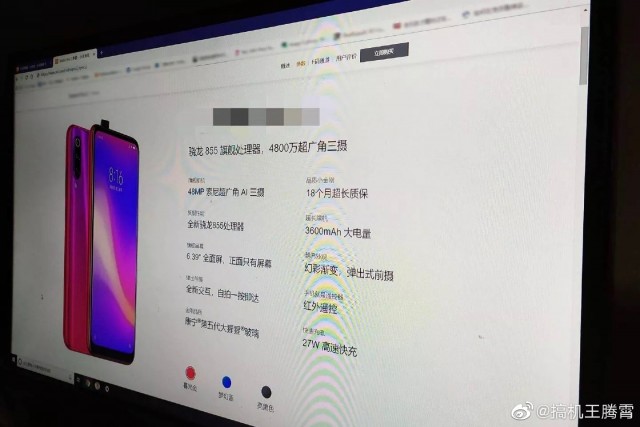
A new leak has revealed that the upcoming Redmi flagship phones will be arriving in the Chinese markets as Redmi K20 and Redmi K20 Pro. However, at the same time, a specs sheet leak of a smartphone called Redmi Pro 2 has appeared on Weibo. The render of the phone that has also leaked with the specs sheet has revealed its front and rear design.
The leak reveals that the Redmi Pro 2 will be sporting a gradient colored rear panel like the Redmi Note 7 Pro. In fact, the image of the phone appears to be fan-made render that had surfaced in the previous month. The smartphone is equipped with a notch-less display and a pop-up selfie camera. The placement of the elevating camera is different than what was shown in the official teaser of the company’s flagship phone. The official teaser had revealed that the Redmi SD855 phone will be coming with a pop-up selfie camera placed towards the left of its upper edge.
The specs leak of the Redmi Pro 2 will be equipped with 48-megapixel AI driven triple rear cameras. The SD855 fueled phone will be equipped with a 6.39-inch display with notch-less design. An in-display fingerprint scanner will be available on the device. The marvelous display of the Redmi Pro 2 will be protected by Gorilla Glass 5. The pop-up selfie camera module of the phone includes a 20-megapixel selfie camera. It features a 3,600mAh battery that carries support for 27W rapid charging. It also carries support for IR blaster. The color variants of the smartphone are Black, Red and Blue. The leak has no information on the launch date and pricing of the Redmi Pro 2.
Redmi is expected to release two flagship phones soon. The company will be declaring the official names of these smartphones tomorrow. It is very likely that they will be announced with Redmi K20 and Redmi K20 Pro monikers. Hence, it appears that the Redmi Pro 2 could be fake. The Chinese firm is also expected to announce the launch date of the Redmi K20 and K20 Pro phones.
What’s your take on the Redmi K20 and Redmi K20 Pro names? Share us your thoughts by posting your comments below.
There are two ways to purchase Xiaomi’s products. You can order online from Xiaomi’s online store or partner sites or you can walk into a retail shop and purchase one. Today, Xiaomi has unveiled a new way for its fans to purchase its products – the Mi Express Kiosk.
The Mi Express Kiosk is actually a vending machine for selling Xiaomi (including Redmi and POCO) products. It has a camera on the top which is actually a Mijia Smart Camera to capture the faces of those who make purchases. There is a large touch display on the right for operating the machine. You will be able to browse the catalog of available products, see specs, make color selections and complete purchase using the display.
The machine has a slot for your credit/debit card and will also accept cash and UPI. There is also a slot that prints out receipts.
Photos of the launch shared on Twitter by Xiaomi India’s MD, Manu Kumar Jain, show the Mi Express Kiosk loaded with power banks, chargers, earphones, tripod selfie sticks, Bluetooth speakers, and phones from Xiaomi, POCO, and Redmi. Xiaomi’s top executives Lin Bin and Lei Jun were at the unveiling of the Mi Express Kiosk.
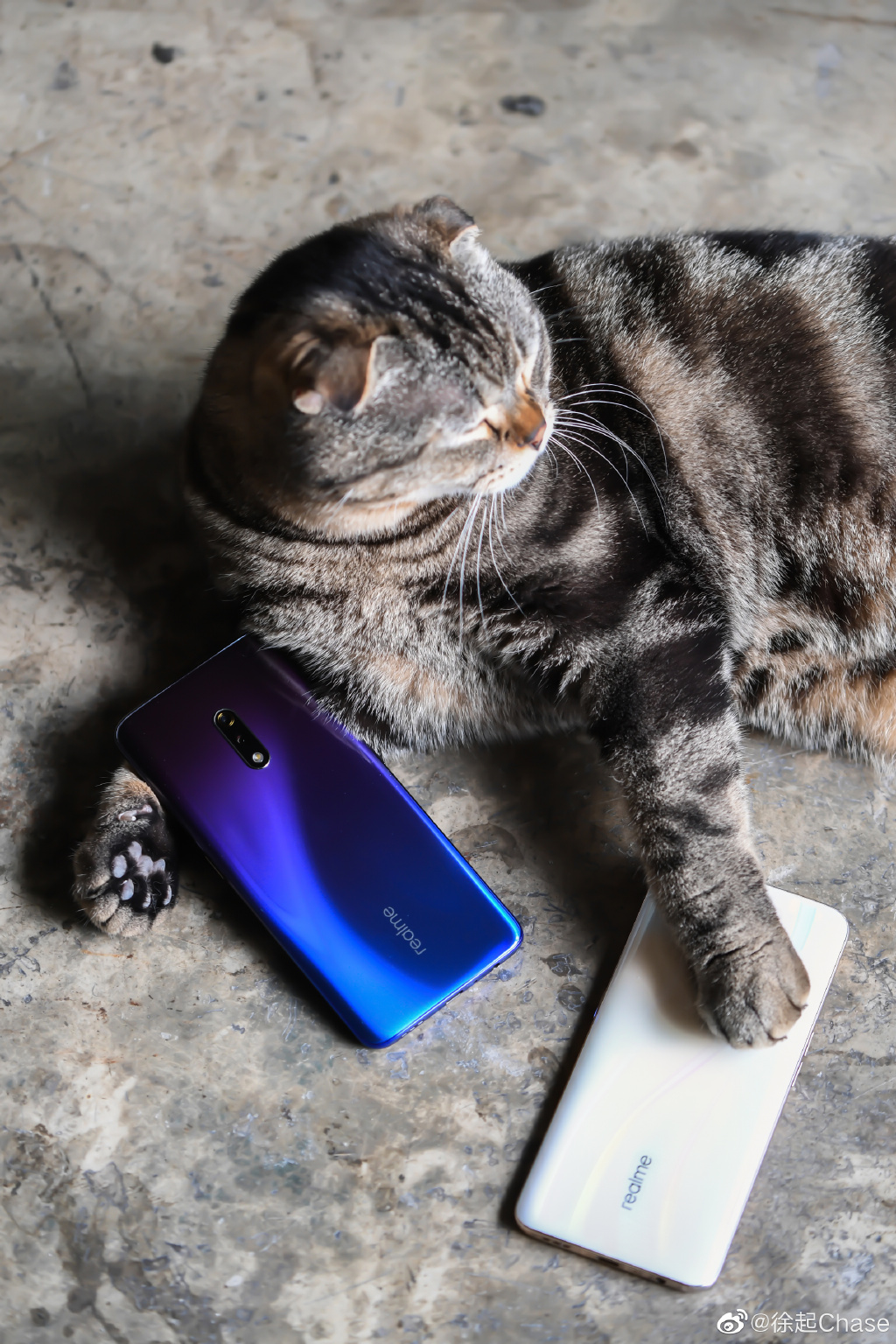
The Realme X will launch on Wednesday, May 15. Save for the price, there is nothing we don’t already know about the upcoming phone. Earlier today, Realme shared an official poster that showed the phone’s design. Its Chief Marketing Officer, Xu Qi Chase, has now shared live photos of the phones on his Weibo page.
The new photos show the phone in the two color variants (Punk Blue and Steam White) it will be available in, albeit only the rear. We are not bothered since Realme already showed us a live photo of the phone’s front last week.
The Realme X has a dual camera setup that is made up of a 48MP primary camera and a 5MP secondary sensor. The cameras are positioned in the middle and share the same housing with the LED flash. Both color variants have the Le-Mans inspired Speedway pattern of the Realme 3 Pro and you can see that S-curve that runs from the top to the bottom.
[envira-gallery id=”252883″]
Another image of both phones together shows the Realme X will have an audio jack flanking the charging port at the bottom. On the opposite side is a three-hole speaker grille.
Xiaomi has got a number of phones under the works and the models have kept the rumour mill buzzing for quite a while. The leaks keep coming out and the latest surround a new feature that would be in the camera software of upcoming Xiaomi models, possibly in MIUI 11.
XDA Developers claimed to have discovered through code investigation that Xiaomi is chipping away at another photograph altering feature for its phones that will enable users to supplant the “sky” with various sky presets. This new “sky replacement” effect will be included as part of the photo editing functionality within the MIUI Gallery application. With this forthcoming effect, users can take pictures with a transcendent sky component and swap it with a bundle of various presets that alters the sky in various scenes. The presets won’t just modify the look of the sky but will also add important lighting effects to the remainder of the picture and objects so as to make it match the time of day or weather condition that the sky depicts. There will likewise be a slider to control this lighting effect. There is even a video of the functionality in action, as activated by an XDA member, kackskrz.
The code revealed the sky replacement effect will first feature on upcoming models codenamed “raphael”, “davinci” and “pyxis”. We can’t say for sure which models go by these codenames. From previous leaks, “raphael” and “davinci” are upcoming Snapdragon 855-powered Xiaomi models with pop-up camera setup and an optical, in-display fingerprint scanner. We expect one of them to be the Mi Mix 4. The model codenamed “pyxis” is said to be the MIUI version of an upcoming Android One gadget from Xiaomi (Mi A3) which is suspected to be the successor to the Mi 6X. The gadget will likewise, at any rate, have a 32MP front camera with pixel binning innovation.
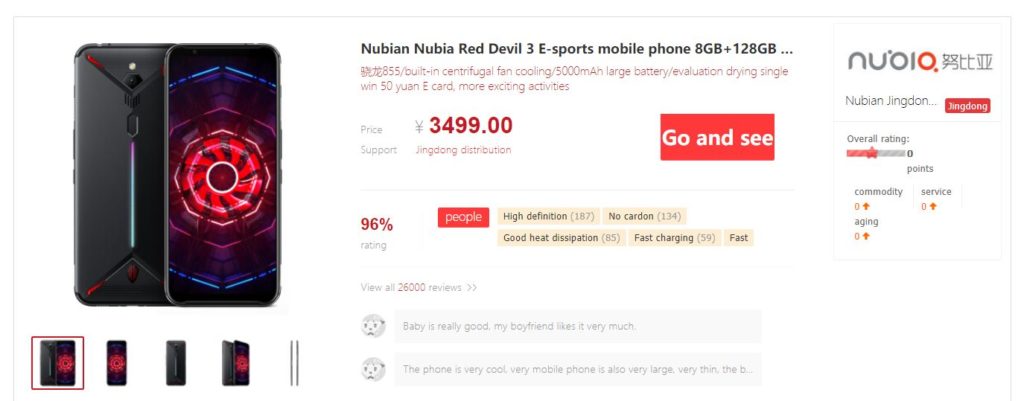
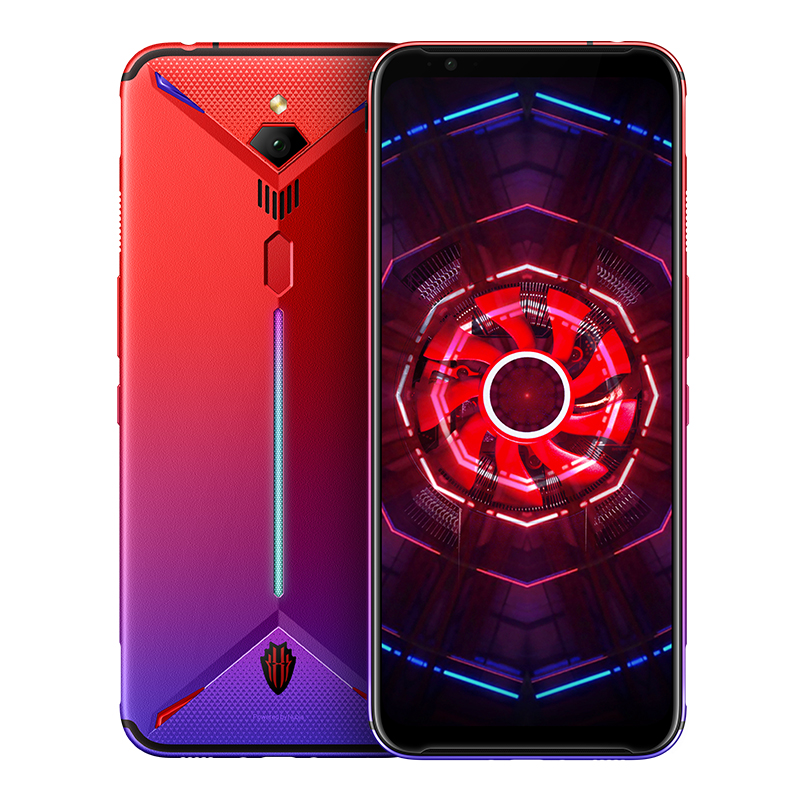
Nubia launched the new gaming smartphone – Nubia Red Magic 3 in China on April 28 featuring high-end specifications. Now after a couple of weeks, the company has made it available through an open sale in China. Interested Users can grab the 6GB+128GB internal storage version for 3199 Yuan which roughly translates to $465, whereas the 8GB+128GB internal storage version is available for 3499 Yuan (~$508) from JD.com.
Nubia Red Magic 3 Open Sale details:
6GB+128GB – Black – 3199 Yuan (~$464)
8GB+128GB – Black, Red – 3499 Yuan (~$508)
12GB+256GB – Blue gradient edition and Camouflage edition – 4299 Yuan (~$624)
Nubia Red Magic 3 carries a 6.65-inch OLED display having the resolution of 2340 x 1080 pixels with 90Hz of refresh rate. It also supports DC Dimming technology to reduce eye strain while using the device in low brightness. The phone is powered with Qualcomm Snapdragon 855 chipset and is coupled with 6/8/12GB RAM and 64/128/256GB internal storage combinations.
As like of other gaming smartphones, the Nubia Red Magic 3 also features a cooling system – ICE 2.0 cooling technology to get rid of extra heat while playing graphics intensive games. The game-centric device carries a dedicated noise-canceling mic, two shoulder buttons and an ability to use the fingerprint sensor as an additional button during gameplay. The 4D smart shock for systematic vibrations further enhances the gameplay on the device.
The device features a huge 5000 mAh battery with 27W PD fast charging for continuous gameplay. Additional features such as a 3.5 mm audio jack, DTS 7.1 channel, and 3D surround sound speakers are also part of the device. Nubia Red Magic 3 runs on Android Pie with Red Magic OS 2.0 on the top.
Redmi General Lu Weibing had confirmed earlier today that the name of the first flagship phone by Redmi will be confirmed tomorrow. He has even hinted the Redmi’s flagship smartphone could be called P20 Pro, X20 Pro, T20 Pro and K20 Pro. Before the official confirmation tomorrow, reliable tipster Ishan Agarwal has revealed that the upcoming flagship phones from the Chinese firm will be called Redmi K20 and Redmi K20 Pro.
The tipster has not shared any other details on the forthcoming Redmi K20 and K20 Pro smartphones. In the last week, he had revealed that both phones will be made available in China in colors like Blue, Red and Carbon fibers. He had also claimed that theses phones will be arriving in four models such as 6 GB RAM + 64 GB storage, 6 GB RAM + 128 GB storage, 8 GB RAM + 128 GB storage and 8 GB RAM + 256 GB storage. It is speculated that one of these phones will be released outside of China as Poco F2.
The Redmi K20 and Redmi K20 Pro don’t really sound exciting names for flagship phones. Through tomorrow’s announcement Redmi will probably let it fans know why it decided to use K20 moniker for its flagship phone. Also, the Chinese firm may confirm the launch date of the Redmi K20 and Redmi K20 Pro smartphones.
Redmi K20 Pro and K20 are expected to be fueled by Snapdragon 855 SoC. There is a possibility that the non-Pro model could be fueled by Snapdragon 730 SoC. Both models are expected to arrive with full HD+ 6.39-inch S-AMOLED with notch-less design. These phones could be equipped with 20-megapixel pop-up selfie cameras.
The rear shell of the smartphone may feature a 48-megapixel triple camera setup with Sony IMX586 primary sensor and a ultrawide lens. Both phones may feature 4,000mAh batteries with support for 27W fast charging. Some reports claim that the device may arrive with support for Android Q beta. Rumors have it that the Redmi K20 Pro may launch outside of China as Poco F2.
Tencent, the company behind the PUBG game recently announced a replacement for the PlayerUnknown’s Battlegrounds (PUBG) Mobile with a game called ‘Game of Peace’. As per the report, within just 72 hours of its launch, the game has started generating revenue and has collected over $14 million.
Also, the Game for Peace iOS version was the most downloaded free game and top-grossing game in Apple’s China App Store, according to data from Sensor Tower. Tencent, which is the world’s biggest games publisher by revenue, is now finally generating income from the massive user base for the popular battle royale genre.
Tencent wasn’t able to make money from the mobile version of the PUBG game because of regulatory delays and a government crackdown on content. So the company closed the title last week and launched the new ‘Game for Peace’.
It has similar gameplay and also allows users to migrate their data from PUBG Mobile automatically. Tencent received approval to generate revenue from the new title from regulators last month, which means users can buy skins and other in-game items immediately when they start playing the game.
Besides regulatory reshuffle, China has also banned violent, sexual, and politically sensitive content across many platforms, from TV shows to video games. As a nod to the government’s campaign to protect children’s health and prevent gaming addiction, Game for Peace is only available to players aged 16 or above.
Further, the company has said in a statement that it will limit the gameplay period for those aged 16 to 18 to two hours per day. As per the game’s description on the website, Game for Peace pays tribute to the People’s Liberation Army Air Force in defending the country’s territory.
We use cookies on our website to give you the most relevant experience by remembering your preferences and repeat visits. By clicking “Accept”, you consent to the use of ALL the cookies.
This website uses cookies to improve your experience while you navigate through the website. Out of these, the cookies that are categorized as necessary are stored on your browser as they are essential for the working of basic functionalities of the website. We also use third-party cookies that help us analyze and understand how you use this website. These cookies will be stored in your browser only with your consent. You also have the option to opt-out of these cookies. But opting out of some of these cookies may affect your browsing experience.
Necessary cookies are absolutely essential for the website to function properly. This category only includes cookies that ensures basic functionalities and security features of the website. These cookies do not store any personal information.
Any cookies that may not be particularly necessary for the website to function and is used specifically to collect user personal data via analytics, ads, other embedded contents are termed as non-necessary cookies. It is mandatory to procure user consent prior to running these cookies on your website.