After teasing the arrival of the iQOO 15 for the past few days, iQOO has finally confirmed its India launch date. It will arrive as one of the first Snapdragon 8 Elite Gen 5-powered smartphones in the country. Here’s everything to expect from iQOO’s next flagship phone.
iQOO 15 launch date for India
iQOO 15 India launch date-
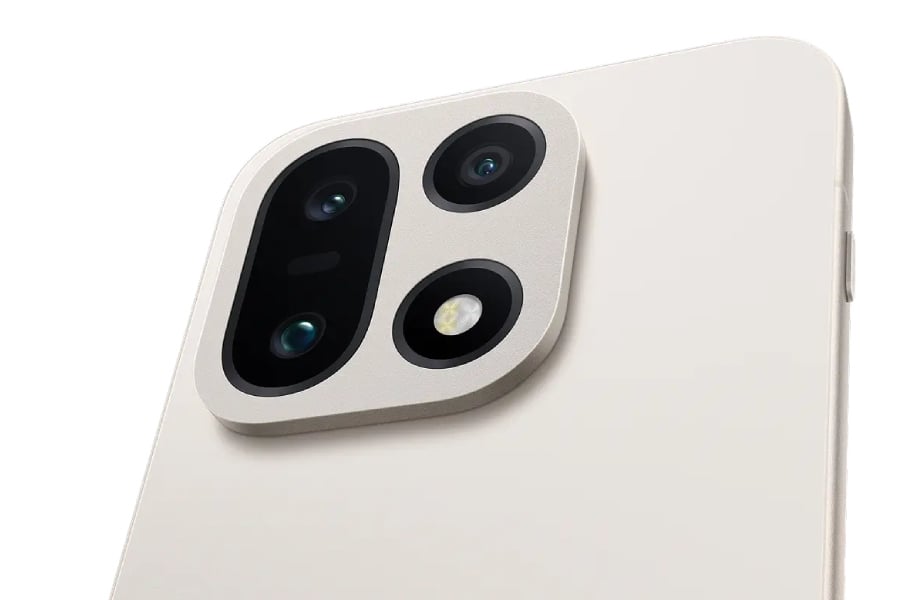
The iQOO 15 is all set to launch on Nov. 26 in India. The teaser not only confirms the date but also offers a good look at one of the color variants heading to the market. In terms of design, it appears to be a refined version of what was seen on the iQOO 13.
iQOO 15 specifications
The iQOO 15’s specifications are no secret since it has already debuted in China. One of its major highlights is that it will be iQOO India’s first phone to run the OriginOS 6 UI.
The device features a 6.86-inch AMOLED M14 LTPO display offering a 2K resolution and a 144Hz refresh rate. In China, it is available with up to 16GB of LPDDR5x RAM and up to 1TB of UFS 4.1 storage.
For photography, the phone is equipped with a 60-megapixel primary camera with OIS support, a 50-megapixel ultra-wide lens, and a 50-megapixel periscope telephoto camera. On the front, it has a 32-megapixel camera for selfies and video calls.
The iQOO 15 is an IP68/69-rated device featuring a metal middle frame and an ultrasonic in-screen fingerprint sensor. It also includes dual speakers, Wi-Fi 7, Bluetooth 6.0, NFC, an IR blaster, and a USB-C (3.2 Gen 1) port. Despite offering a large battery, the phone measures just 8.1mm thick and weighs around 215 grams.
iQOO 15’s price in India
At present, there is no information about the iQOO 15’s price for India. However, it is likely to be cost between Rs 60,000 to Rs 70,000 in the country.
For more daily updates, please visit our News Section.
Honor recently unveiled the Magic 8 and Magic 8 Pro in China. Rumours suggest that the brand is now working on the Magic 8 Ultra to rival the likes of the Xiaomi 17 Ultra, Oppo Find X9 Ultra, and Vivo X300 Ultra. A new Weibo post from a reliable tipster has revealed the key specifications of the Magic 8 Ultra.
Honor Magic 8 Ultra key specifications leaked
Honor Magic 8 Ultra specs leak by DCS
According to the leak, the Honor Magic 8 Ultra will feature the Snapdragon 8 Elite Gen 5 chipset. It is said to pack a 6.7-inch LTPO OLED display with a quad-curved design. The screen will support a 1.5K resolution and include an ultrasonic in-screen fingerprint sensor. It will also support 3D face recognition.
The Magic 8 Ultra’s rear camera setup is tipped to include a 50-megapixel OmniVision OV50R main camera with ultra-high dynamic range. A previous leak indicated that this new sensor would enter mass production in the first quarter of 2026. The rear camera setup will also include a periscope telephoto camera backed by a large sensor, which may offer a 200-megapixel resolution with 4.3x to 7x optical zoom.
The Magic 8 Ultra is expected to run MagicOS 10 based on Android 16. It is also said to house a large battery of around 7,000mAh capacity. While the latest leak does not mention charging speeds, it may support 120W wired and 50W wireless charging like the Magic 8 Prov.
According to other reports, the Magic 8 Ultra will debut in the first half of 2026. It is also likely to be accompanied by the Dimensity 9500-powered Magic 8 Mini, a compact flagship phone. As for 2025, Honor is expected to unveil the Honor 500 series in November in China, followed by the GT 2 lineup in December.
For more daily updates, please visit our News Section.
OnePlus has just announced the OnePlus 15 and Ace 6 flagship phones in China, and the rumor mill is already buzzing with information about an upcoming OnePlus phone. There have been reports that the company may unveil the OnePlus Ace 6 Turbo before the end of this year in China. A new report, courtesy of SmartPrix has revealed almost everything about the device.
OnePlus Ace 6 Turbo key specifications (rumored)
OnePlus Ace 6
Designed for the gaming audience, the Ace 6 Turbo, having the “Macan” codename, will feature a 6.7-inch OLED screen that supports a 1.5K resolution and a 165Hz refresh rate. Qualcomm’s new Snapdragon 8 Gen 5 chipset is expected to power the device.
The Ace 6 Turbo is expected to house a massive 8,000mAh battery with 100W wired charging. For photography, it will have a 32-megapixel front camera and a 50-megapixel (main) + 8-megapixel (ultra-wide) dual-camera setup on the back. It will run on ColorOS 16-based Android 16 in China.
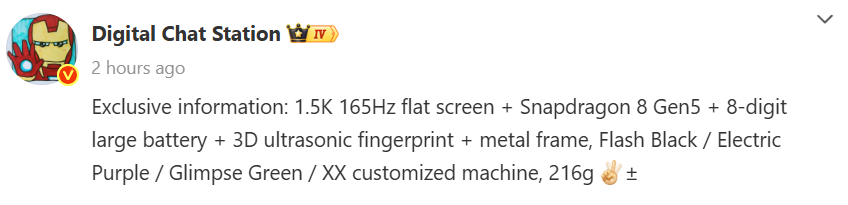
The Ace 6 Turbo will also have other features, such as an ultrasonic fingerprint scanner, an X-axis linear motor, dual speakers, and NFC. As per a new Weibo post (now deleted) by tipster Digital Chat Station, it will feature a metal frame and weigh around 216 grams. It will be available in four shades, such as Fresh Black, Electric Purple, Shadow Green, and a special customized edition.
OnePlus Ace 6 Turbo key details by DCS
While the device is almost confirmed to launch in China, the device is also being tested in India for a release. There’s a possibility that it may hit the Indian market too before the end of this year. In China, the device is expected to rival the likes of the Redmi Turbo 5 series, the iQOO Z11 Turbo series, and the Realme Neo 7 series.
For more daily updates, please visit our News Section.
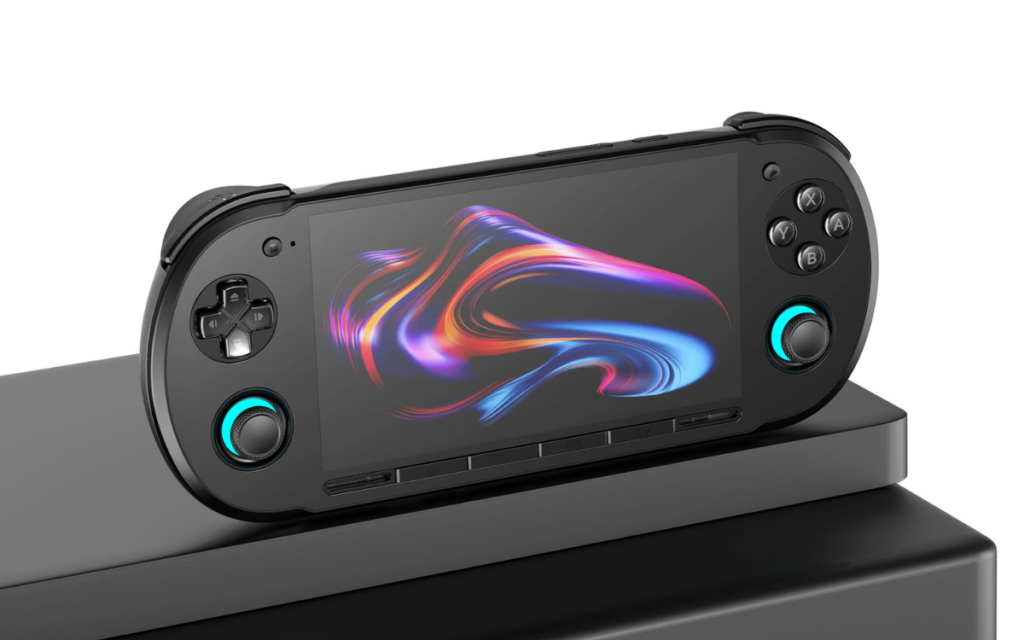
Retroid has launched its most powerful Android handheld console yet, the Retroid Pocket 6. The device is powered by the Qualcomm Snapdragon 8 Gen 2 chipset and is aimed at users who want smooth emulator performance along with native Android gaming support.
Pricing
The Pocket 6 comes in two configurations. The base model has 8GB LPDDR5X RAM and 128GB UFS 3.1 storage, priced at $209. The higher-end version has 12GB RAM and 256GB storage, priced at $259. Both variants support microSD card expansion.
Retroid Pocket 6 Specifications
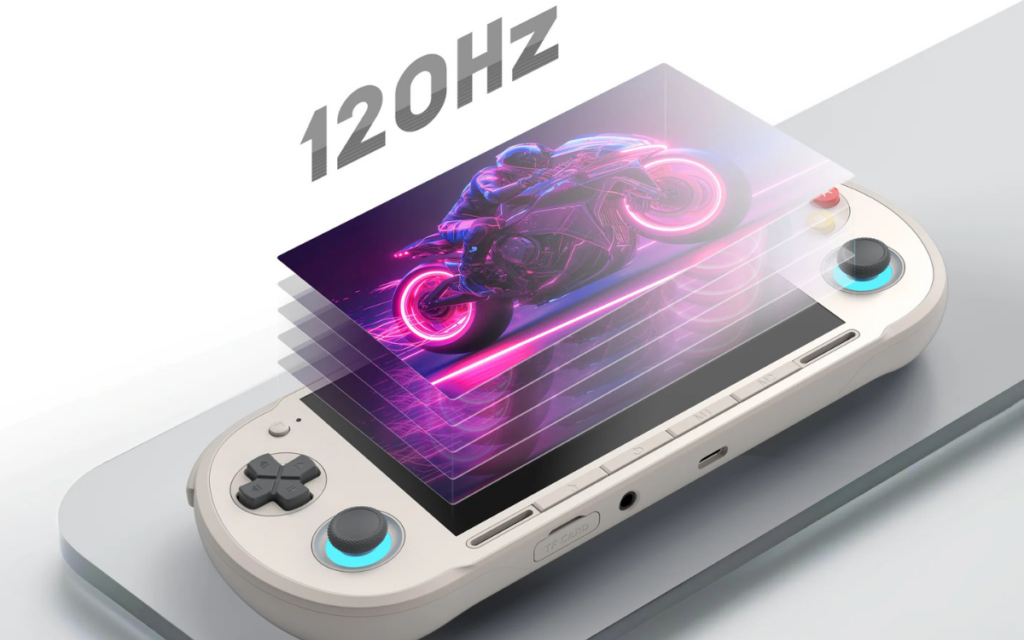
Retroid has retained the same 5.5-inch AMOLED panel from the G2. The screen supports a 1920×1080 resolution and a 120Hz refresh rate. The device also includes additional shortcut keys below the display for better usability. The body measures 210.4 × 86.6 × 17.2 mm and weighs 320 grams.
In terms of raw performance, the Snapdragon 8 Gen 2 provides flagship-tier power comparable to 2022-2023 Android flagships. It easily handles demanding emulators, high-end Android games, and high-frame-rate content without noticeable lag or stutter.
The console houses a 6000mAh battery supporting 27W fast charging and features an active cooling system to sustain performance during longer sessions. For connectivity, it includes Wi-Fi 7, Bluetooth 5.3, and a USB 3.1 Type-C port with DisplayPort 4K@60fps output, enabling direct connection to TVs or monitors.
The handheld also includes analog L2/R2 triggers, hall-effect 3D joysticks, and a 3.5mm headphone jack. It runs Android 13 and features official OTA support for incremental software updates.
Shipping for the Retroid Pocket 6 is scheduled to begin in early January 2026.
In related handheld news, Ayaneo recently introduced the Pocket Air Mini, a compact Android gaming handheld featuring the Helio G90T chip, 4.2-inch LCD, Hall joysticks, and active cooling, starting at $69.99.
For more daily updates, please visit our News Section.
OnePlus has introduced a new range of official magnetic cases for the OnePlus 15, announced at the end of its latest launch event. The lineup includes three versions: a heat-dissipation “Custom Dot” case, an aramid fiber case, and a sandstone-textured variant. All models support the Oppo Mag magnetic ecosystem and are tailored to fit the OnePlus 15 precisely.
Design Details
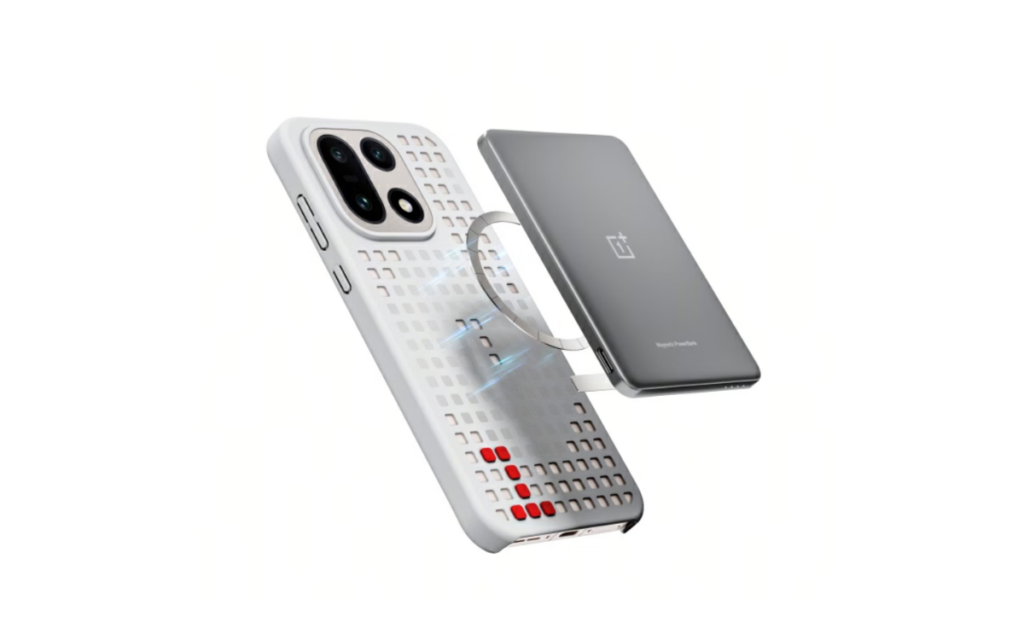
The Custom Dot Magnetic Case features a perforated matrix design that allows users to insert small red silicone blocks to create custom letters, shapes, or patterns. These blocks also double as pressable elements that provide a satisfying, stress-relieving tactile experience similar to fidget toys.
OnePlus has designed the hollow structure to improve airflow and cooling during gaming or charging. The case uses polycarbonate material that retains the feel of a bare phone while enhancing protection against scratches and drops.
The case includes a built-in magnetic ring that delivers up to 10N of magnetic force. It works with the Oppo Mag ecosystem, allowing users to attach wireless charging banks, cooling fans, magnetic stands, or car mounts.
The case has passed multiple tests covering magnet strength, material endurance, and overall reliability. It weighs 25 grams and measures 16.36 × 8.03 × 1.29 cm. It uses a combination of polycarbonate, silicone, and magnetic materials to offer strength, flexibility, and conductivity.
The aramid fiber case provides a thinner and more rugged option with a high-tech woven finish. The sandstone version uses OnePlus’s classic textured design for better grip.
Pricing and Availability
The Custom Dot magnetic case costs 99 yuan ($14), or 69 yuan ($10) in a bundle. The aramid fiber case is priced at 199 yuan ($28), or 169 yuan ($24) in a bundle. The sandstone version also costs 99 yuan ($14) individually and 69 yuan ($10) in a bundle.
For more daily updates, please visit our News Section.
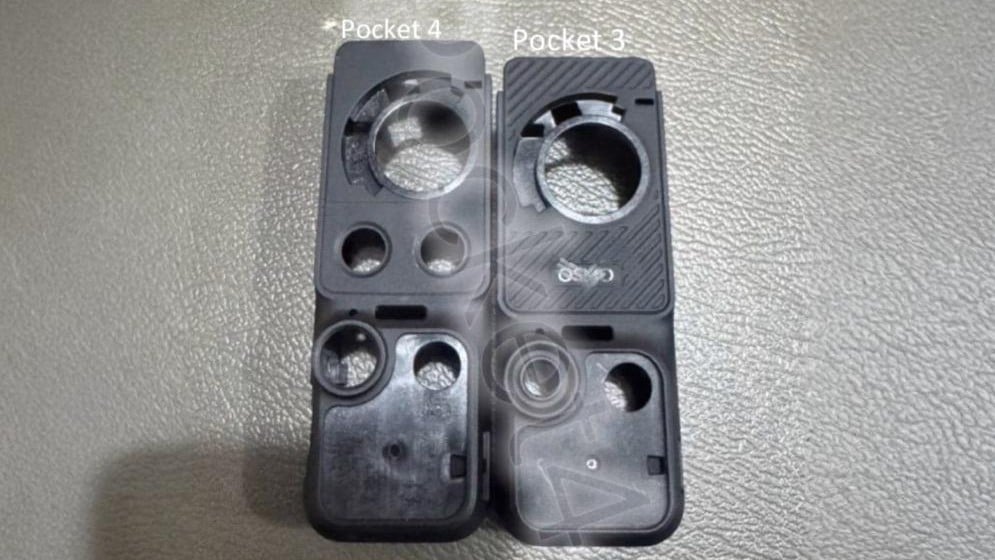
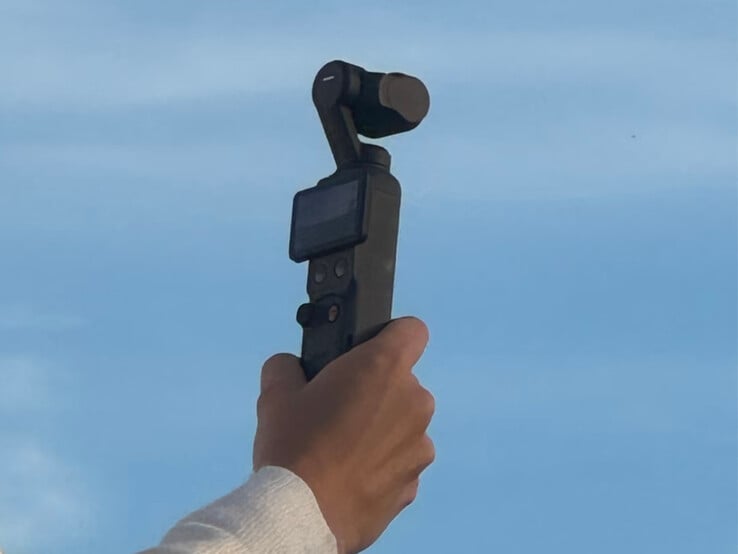
DJI’s compact camera line looks set for a refresh. Nearly two years after the Osmo Pocket 3 made its debut, leaked images of what’s believed to be the Osmo Pocket 4 have surfaced online. The upcoming model adds new physical controls and slight tweaks to its overall shape and size.
Pocket 4 (left), Pocket 3 (right)
A side-by-side comparison shot of the Osmo Pocket 3 and Pocket 4’s chassis has emerged online, showing the Pocket 4 stands slightly taller and narrower than the Pocket 3. Still, the redesign keeps that signature pocketable feel. This leak lines up with earlier footage from Barcelona, where what looked like a Pocket 4 prototype was spotted filming in public.
The most visible change is a new set of hardware buttons placed below the rotatable touchscreen, replacing the “Osmo” logo found on the Pocket 3. These could serve as shortcuts for recording, focus, or gimbal controls—making one-handed shooting much easier. Combined with reports that production is already underway, the leak suggests a launch could happen before early 2026.
The Osmo Pocket 3 set a high bar back in 2023 with its 1-inch CMOS sensor, 4K/120fps recording, and 2-inch rotatable OLED screen, though its 179g weight and short battery life left room for improvement. Previous rumors point to the Pocket 4 possibly adding a dual-camera setup. If true, it could mean a telephoto or depth camera for added versatility alongside the 1″ main camera.
DJI seems ready to respond with a more ergonomic, creator-friendly design. Whether it lands before the holidays or in early 2026, the Osmo Pocket 4 looks poised to be a small but meaningful upgrade for handheld storytellers everywhere.
It’s the season of flagship Android wars in China. Almost every major brand has unveiled a new device in the last month or so, each equipped with the latest processors, top-tier displays, and, thankfully, bigger batteries.
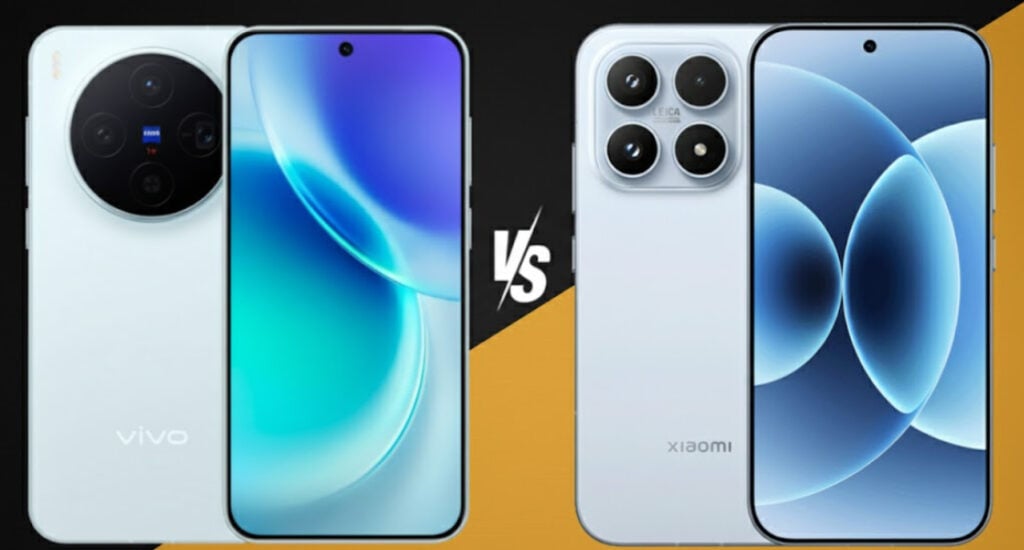
The Vivo X300 and Xiaomi 17 are two such contenders. On paper, both devices come loaded with high-end hardware, eye-catching designs, and the latest chips from MediaTek and Qualcomm.
But peel back the specs and the differences start to show. So let’s break down what really sets them apart.
Both the Vivo X300 and Xiaomi 17 share similar dimensions. It measures around 150mm tall and weighs just under 200 grams. They’re slim, premium slabs that feel engineered to impress.
Vivo’s design features glass on both sides, paired with an aluminum alloy frame, while Xiaomi opts for Dragon Crystal Glass on the front, complemented by an aluminum frame.
Both phones are IP68 rated, meaning they can withstand accidental water drops and dusty environments. However, Vivo takes it a step further with an IP69 rating, enabling it to withstand high-pressure water jets. That’s rare even among flagships, though it’s unlikely to make a meaningful difference in real-life use.
2. Display
Both phones use LTPO AMOLED panels with 120Hz refresh rates and 2160Hz PWM dimming, making them easier on the eyes at low brightness. Vivo’s display measures 6.31 inches, while Xiaomi’s is roughly the same at 6.3 inches.
Brightness is where Vivo pulls ahead. The X300 peaks at a massive 4,500 nits, while Xiaomi reaches up to 3,500 nits. Both are extremely bright and should deliver great outdoor visibility, regardless of the numbers.
In terms of color, both screens support HDR10+, HDR Vivid, and advanced tone mapping. Xiaomi adds Dolby Vision to the mix, giving it an edge when watching supported content on Netflix or YouTube.
Resolution-wise, both hover in the 1220–1260p range, offering crisp text and smooth visuals.
3. Performance: MediaTek vs Snapdragon
The two phones take very different approaches to performance. The X300 runs MediaTek’s Dimensity 9500, a 3nm chip with ARM C1 cores clocked up to 4.21GHz.
Xiaomi, on the other hand, ships with Qualcomm’s Snapdragon 8 Elite Gen 5, also built on a 3nm process and equipped with custom Oryon V3 cores running up to 4.6GHz.
On paper, Snapdragon’s architecture has the upper hand. It uses two 4.6GHz Oryon V3 Phoenix L cores and six 3.62GHz Phoenix M cores, paired with an Adreno 840 GPU—delivering top-tier gaming and raw compute performance. The Dimensity 9500’s 4.21GHz C1-Ultra and 3.5GHz C1-Premium cores aren’t far behind, and MediaTek’s Arm G1-Ultra GPU is also powerful.
In real-world use, both phones should feel incredibly fast. Scrolling, multitasking, and gaming happen without hesitation. Vivo’s OriginOS 6 (based on Android 16) feels smooth and responsive, while Xiaomi’s HyperOS 3 offers deep customization and similarly slick performance.
4. Cameras
This is where things get interesting. The Vivo X300 features a bold 200MP main sensor with OIS, a 50MP periscope telephoto, and a 50MP ultrawide. The system is tuned by Zeiss and includes Zeiss T* lens coating, laser autofocus, and even 3D LUT import for pro-grade color work.
The Xiaomi 17, meanwhile, sticks to a more traditional 50MP triple setup—50MP main, 50MP telephoto (2.6x optical), and 50MP ultrawide—with Leica-co-engineered optics.
Both phones offer flagship camera performance, and the final quality will come down to ISP tuning and post-processing. However, Vivo holds a clear advantage in flexibility, thanks to support for external photography accessories, including a telephoto extender that can deliver crisp shots at up to 200mm.
On the front, both devices use 50MP selfie cameras with 4K video support, but Xiaomi goes further with HDR10+ video capture and gyro-EIS.
5. Battery and Charging
Battery life is where Xiaomi dominates. The Xiaomi 17 packs a huge 7,000mAh cell along with 100W wired, 50W wireless, and 22.5W reverse wireless charging.
Vivo’s 6,040mAh battery with 90W wired and 40W wireless charging still offers strong endurance, easily lasting a day and a half, but Xiaomi simply goes farther. The difference between 6,040mAh and 7,000mAh will be noticeable, especially for heavy users.
6. Audio and Connectivity
Both phones skip the headphone jack but feature stereo speakers. Xiaomi’s setup is tuned for Dolby Atmos and Snapdragon Sound, with Hi-Res 24-bit/192kHz playback. Vivo’s speakers are clean, but lack Dolby branding.
Connectivity is top-tier on both devices, including Wi-Fi 7, Bluetooth 5.4, NFC, infrared, and multi-band GPS. Vivo adds eSIM support internationally, which Xiaomi lacks, while Xiaomi includes DisplayPort output over USB-C, allowing it to connect directly to a monitor.
7. Verdict
The Vivo X300 and Xiaomi 17 show how differently two brands can approach the same idea: a compact 2025 flagship.
The Vivo X300 stands out with its brighter display, Zeiss-tuned 200MP camera, and cleaner design. It’s ideal for users who prioritize photography and aesthetics.
The Xiaomi 17 shines with its massive battery, Leica tuning, Snapdragon performance, and superior audio. It’s the better fit for power users who value endurance and versatility.
There’s no outright winner—just two flagships excelling in their own way.
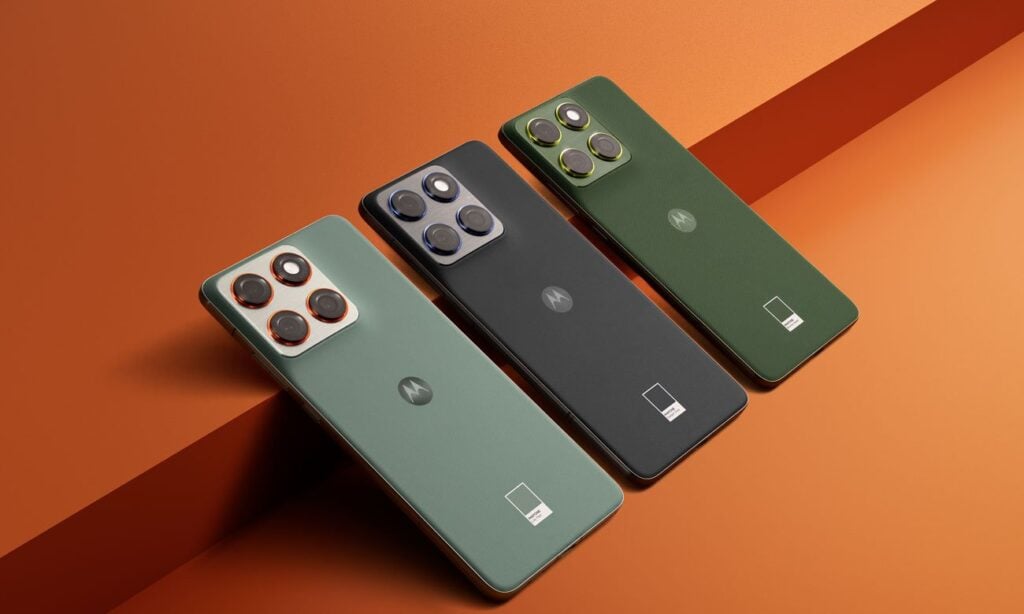
Motorola is stirring excitement for its next mid-range entry, the Edge 70. This phone blends a super-slim profile with surprisingly generous launch deals. With the official reveal set for November 5, the company has already started teasing specs that make this phone look like an appealing option for casual users who prioritize design and in-hand experience.
Moto Edge 70
The Edge 70 packs a 4,800mAh silicon-carbon battery—larger than the iPhone Air’s 3,149mAh and even the Galaxy S25 Edge’s 3.900mAh—yet the chassis stays impressively thin at 5.99mm. Charging speeds are solid too, with 68W wired and 15W wireless support, promising up to two days of battery life.
Under the hood, Motorola is opting for Qualcomm’s Snapdragon 7 Gen 4, paired with 12GB of LPDDR5X RAM and 512GB of UFS 3.1 storage.
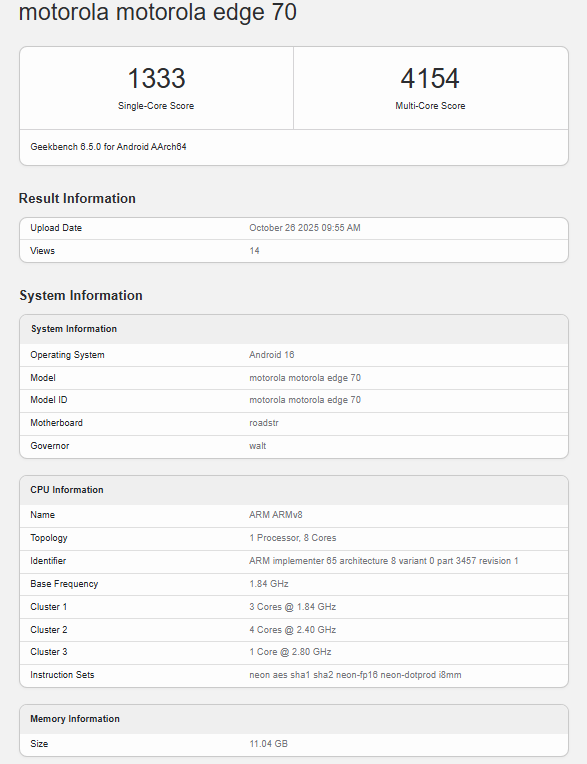
Leaked Geekbench 6 CPU scores suggest performance on par with the MediaTek Dimensity 8350 of the Edge 60 Pro. The display sounds premium as well: a 6.7-inch 1.5K pOLED panel with 120Hz refresh, 4,500 nits peak brightness, and Gorilla Glass 7i protection. The camera setup features 50MP main and ultrawide lenses on the back, paired with a 50MP selfie shooter.
Where things really heat up is pricing. While Motorola hasn’t confirmed global prices yet, the Edge 70—sold in China as the X70 Air—appears to be positioned as an affordable rival to Apple’s iPhone Air and Samsung’s Galaxy S25 Edge. In China, it’s available in two variants: 12GB + 256GB for 2,599 yuan (~$365) and 12GB + 512GB for 2,899 yuan (~$410).
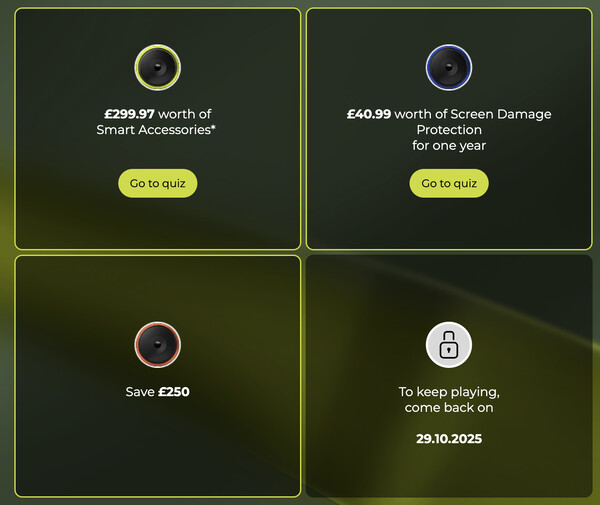
For international buyers, Motorola appears to be stacking generous launch offers that could amount to over €550 (~$640) in savings through early-bird vouchers and regional promos. If those carry over to the final pricing, the expected €699 (~$760) tag could dip into Pixel 9a territory—a seriously competitive spot for what’s shaping up to be a near-flagship phone.
The Edge 70 will debut in Europe first, with India and the US expected to follow by December.
All the festival discounts end with Diwali, but there are some good offers. The Acer TravelLite series is designed specifically for digital nomads, offering a sleek, portable build. Amazon is providing an excellent discount on the Acer TravelLite Smart FHD TL04-51M laptop, allowing you to buy it for as low as ₹38,999.
The original Amazon listing price is ₹45,999, but applying the coupon reduces it by ₹7,000 to reach that lower price. Moreover, if you make a payment through a credit/debit card, you can get Rs 1500 discount, which makes the effective price of Acer’s laptop just Rs. 37,499.
Please Note: When you buy something using the links in our articles, we may earn a small commission at no cost to you.
Acer TravelLite Smart FHD TL04-51M Specification
Coming to the major specifications of the laptop. At its core, the TravelLite packs an Intel Core i5 processor 13th generation. Paired with 8GB of RAM and a spacious 512GB SSD, it should effortlessly handle everything from spreadsheets in Excel to video editing in Adobe Premiere or seamless Zoom calls and much more.
What truly sets the TravelLite apart is its travel or business-friendly DNA. Weighing under 1.5 kg with a slim 14-inch Full HD display boasting anti-glare tech and vibrant IPS panels, it’s built for long flights or other outside hustles. The battery life is claimed to last up to 10 hours on a single charge, perfect for all-day unplugged adventures. The laptop is packed with USB-C, HDMI, and Thunderbolt ports, ensuring you stay plugged into your ecosystem. Running on Windows 11 Home, it integrates smoothly with Microsoft 365 and offers Acer’s Care Center for easy diagnostics.
That being said, although priced originally higher, this Rs. 7,000 coupon slash brings premium specs into budget territory. So, if you’re looking for a reliable daily driver that won’t weigh you down, then bag the Acer TravelLite now from Amazon India.
Baseus has officially launched a new 100W power bank in China. The product is now available on JD.com with a retail price of 199 yuan ($28). It features a 20,000mAh battery, a 3C + 1A output layout, and built-in dual USB-C charging cables that eliminate the need to carry separate cables.
Baseus 100W Power Bank Specifications
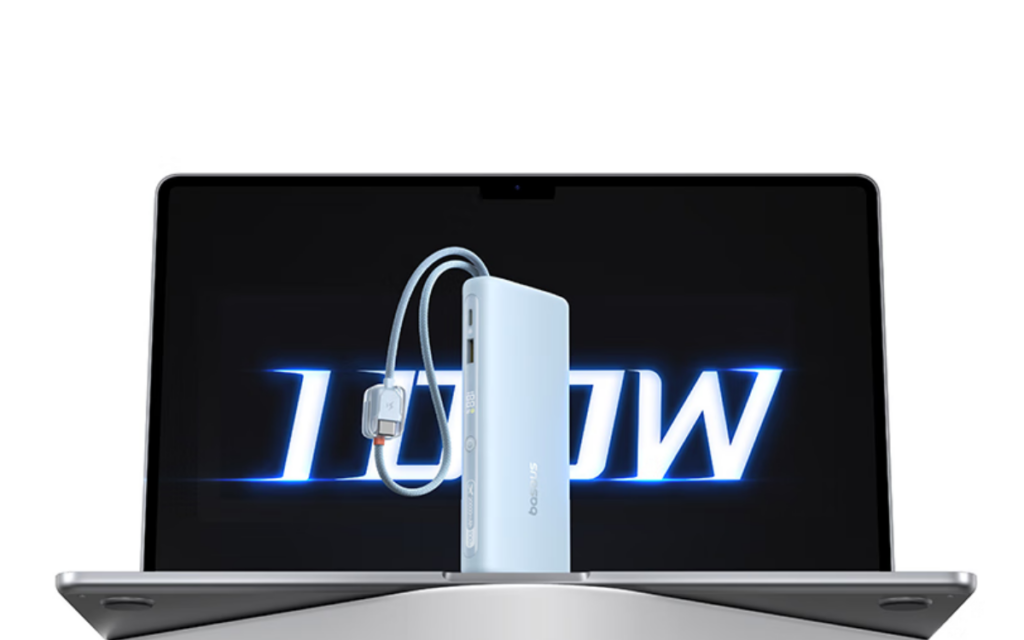
The power bank supports 100W fast charging and is designed to work with a wide range of devices, including smartphones, tablets, laptops, handheld consoles, and cameras. According to Baseus, it can charge a 13-inch MacBook Air up to 36% in just 30 minutes. It also supports up to 65W input for self-charging and can fully recharge itself in approximately 2.5 hours.
Baseus has included support for several charging protocols such as PD, PPS, UFCS, QC, FCP, AFC, and SCP. The power bank is compatible with major brands, including Apple, Xiaomi, Huawei, Oppo, Vivo, and Samsung. It delivers up to 100W via its USB-C port and the USB-C1 cable, 50W via the USB-C2 cable, and 22.5W via the USB-A port. It can charge Xiaomi phones at 55W and iPhones at up to 45W.
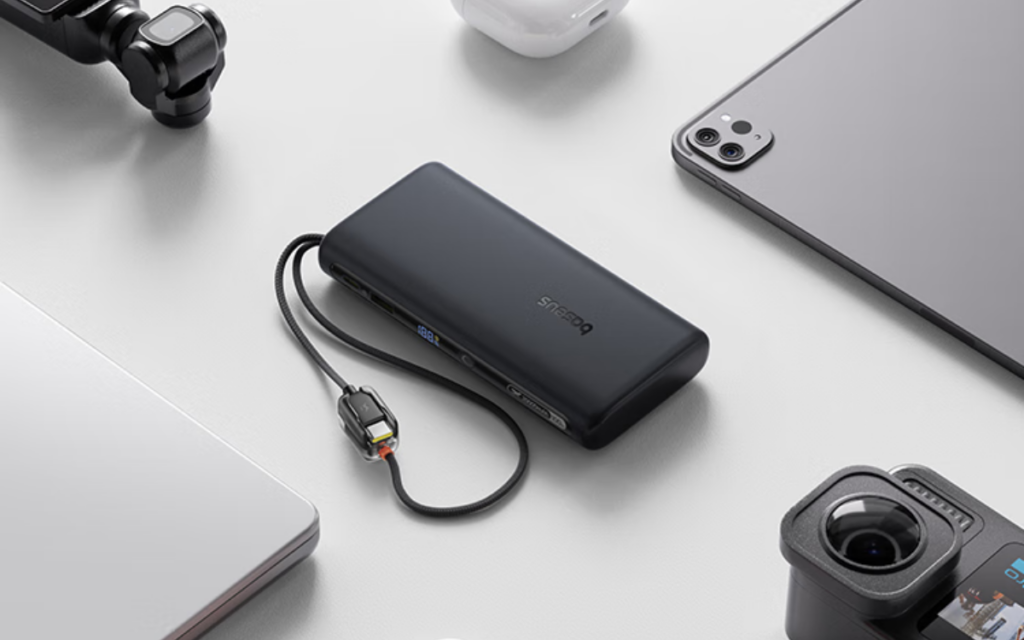
The device features an ergonomic and compact design that is 24% smaller and 40% thinner than typical 20,000mAh power banks. It weighs around 420 grams and measures 152.1 × 66 × 26.5mm. The surface uses a smooth, skin-friendly coating, and the body includes soft R-shaped edges for improved grip. The built-in charging cables are made from dual-weave high-density braiding and interlock to form a convenient carrying loop.
Internally, the power bank houses four high-density 5000mAh cells with a total energy rating of 73Wh. It uses a graphene-based dual heat dissipation system to prevent overheating. It also comes with an onboard AI temperature control chip that monitors thermal conditions 36,000 times per hour to ensure stable performance.
Baseus has added nine layers of protection, covering overvoltage, overcurrent, short circuit, temperature, and electromagnetic interference. The product is available in Starry Blue, Moonlight Beige, and Interstellar Black color options.
For more daily updates, please visit our News Section.
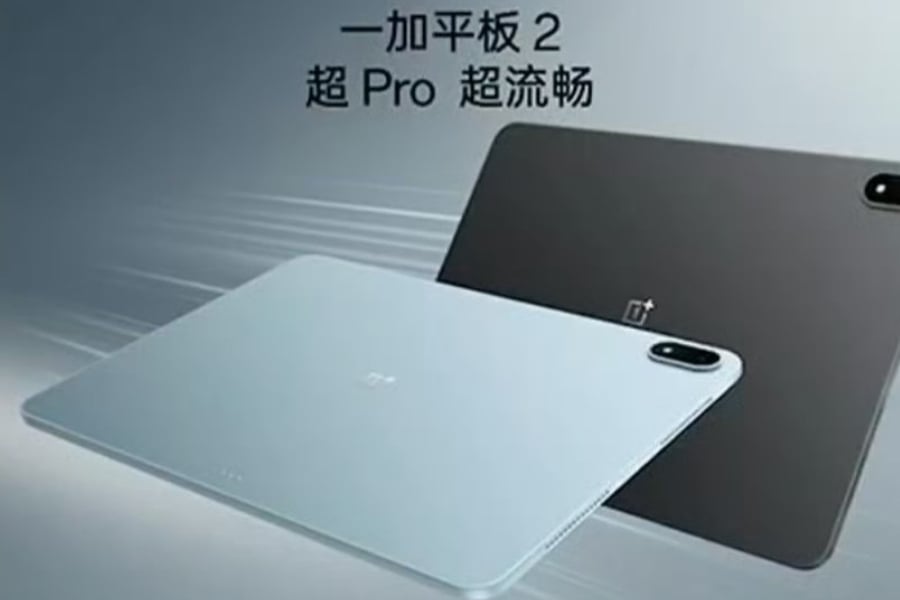
OnePlus’ latest launch event wasn’t just about phones. Alongside the OnePlus 15 and Ace 6, the company also unveiled the OnePlus Pad 2 for the Chinese market.
Before we get into the details, there’s one thing to clear up. OnePlus’ tablet naming scheme differs internationally and in the mainland.
Globally, the company has already launched the OnePlus Pad 3 with the Snapdragon 8 Elite chip. It’s the successor to 2024’s Pad 2 that comes with Snapdragon 8 Gen 3.
This means the China branding is technically a generation behind. Still, the Pad 2’s hardware lines up with what you’d expect from a premium 2025 tablet.
OnePlus Pad 2 Specifications
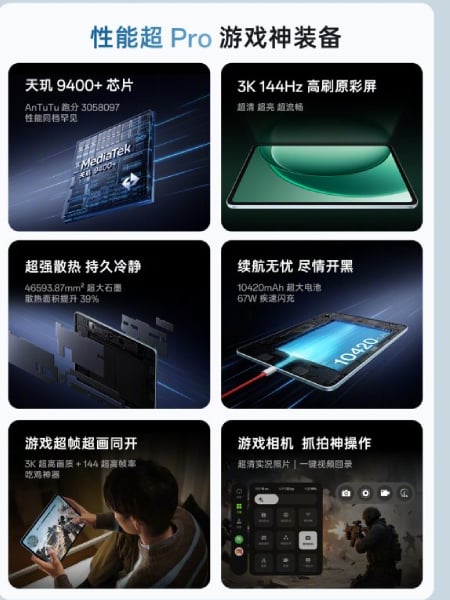
The OnePlus Pad 2 features a 12.1-inch 3K display (3000 × 2120) with a 144Hz dynamic refresh rate, a 540Hz touch sampling rate, and 900 nits of peak brightness. OnePlus claims it can push 144fps in select mobile titles.
Powering the device is the MediaTek Dimensity 9400+, a flagship-tier chip with an AnTuTu score of over 3.05 million, paired with an ultra-large vapor-cooling system covering more than 46,000mm².
Despite the horsepower, the tablet remains slim at 5.99mm and weighs just 579 grams.
On the software side, it runs ColorOS 16, which includes a few additions for gamers and students alike. A new “Game Camera” feature lets users capture ultra-clear Live Photo screenshots or replay up to 30 seconds of gameplay.
For note-takers, the OS brings handwriting beautification and intelligent content extraction tools to improve the experience during online classes. The Pad 2 also supports a panoramic virtual screen mode that can open three apps side-by-side, along with two additional floating windows.
Inside, there’s a 10,420mAh battery with 67W SuperVOOC charging, and OnePlus claims the system is optimized for “five years of lasting smoothness.” The tablet also supports PC-level WPS Office, multi-window workflows, and even custom font installations.
Price and Availability
The OnePlus Pad 2 starts at 2,799 yuan (≈ $380) for the 8GB + 256GB model, with 12GB + 256GB and 16GB + 512GB variants priced at 3,099 yuan and 3,599 yuan, respectively.
Open sales begin on October 30, and early buyers will receive a one-year screen protection plan worth 249 yuan at no additional cost. Meanwhile, students can claim a free stylus worth 399 yuan during the pre-sale period.
For more daily updates, please visit our News Section.
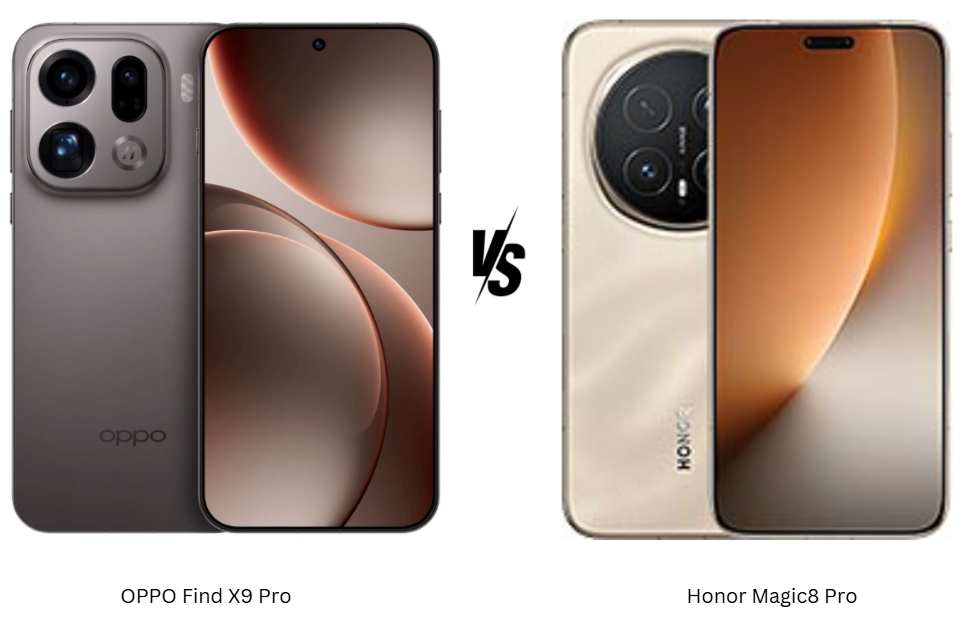
As smartphone innovation hits new heights, the battle between Oppo Find X9 Pro and Honor Magic8 Pro captures the essence of next-gen flagship competition. Both models redefine performance, camera prowess, and design finesse in 2025’s premium segment. This comparison matters because it highlights how two leading brands interpret “ultimate innovation” differently, balancing endurance, photography, and speed to meet the demands of modern power users seeking the perfect all-rounder.
Both the Oppo Find X9 Pro and Honor Magic8 Pro deliver premium craftsmanship, but their design philosophies differ subtly. Oppo leans toward a sleek, minimalist look with a Gorilla Glass build and aluminum frame, offering a smooth, unified aesthetic. The Honor Magic8 Pro, meanwhile, opts for Giant Rhino Glass protection with a slightly more robust, futuristic edge that aligns with its flagship identity. Both feature IP68/IP69 ratings, ensuring resistance to dust, immersion, and even high-pressure water jets, ideal for rugged or outdoor users.
In practical terms, the Find X9 Pro feels slightly denser and solid in the hand, while the Magic8 Pro balances its weight more efficiently, offering better grip comfort during prolonged use. The overall ergonomics favor the Honor slightly due to its narrower frame, though Oppo’s precision finish gives it a more luxurious touch.
Verdict: The Oppo Find X9 Pro wins on aesthetic elegance and seamless finish, whereas the Honor Magic8 Pro offers better hand-feel and durability. For users valuing style and refinement, Oppo stands out; for those prioritizing practicality and toughness, Honor is more compelling.
Display Quality:
The Oppo Find X9 Pro’s LTPO AMOLED panel boasts 1B colors, Dolby Vision, HDR10+, and a 3600-nit peak brightness, more than sufficient for outdoor visibility and vibrant contrast. In contrast, the Honor Magic8 Pro raises the bar with a 4320Hz PWM dimming frequency, HDR Vivid, and a staggering 6000-nit peak brightness, making it one of the brightest smartphone displays available.
Color reproduction is rich on both, though Honor’s calibration tends toward natural, slightly warmer tones, while Oppo delivers deeper blacks and cinematic contrast ideal for HDR streaming. Motion handling is equally fluid at 120Hz, but the Magic8 Pro’s ultra-high PWM ensures superior eye comfort during long use, minimizing flicker fatigue.
Verdict: The Honor Magic8 Pro clearly leads in display brightness and visual comfort, making it the better pick for media consumption and outdoor use. However, Oppo’s color depth and Dolby Vision integration give it a more refined multimedia experience. Users prioritizing brightness and longevity will appreciate Honor’s edge.
2. Specifications
Performance:
The Oppo Find X9 Pro runs on MediaTek’s Dimensity 9500, a 3nm powerhouse, while the Honor Magic8 Pro wields the latest Snapdragon 8 Elite Gen 5, one of Qualcomm’s most powerful chips to date. The Snapdragon offers better thermal control and higher sustained performance, especially for gaming, AI tasks, and multitasking.
While Oppo’s C1 custom cores deliver impressive speeds and stability, the Honor Magic8 Pro’s Oryon cores demonstrate superior efficiency and raw output in benchmark comparisons. GPU performance also tilts toward Honor’s Adreno 840, offering smoother rendering in demanding 3D environments. Both pair with fast UFS 4.0/4.1 storage and up to 16GB RAM, ensuring fluid multitasking.
Verdict: The Honor Magic8 Pro takes the lead with its Snapdragon 8 Elite Gen 5, which provides more consistent peak performance and better optimization across apps and games. The Oppo Find X9 Pro, though slightly behind, remains highly capable and thermally efficient, making it a more battery-friendly performer.
Battery and Charging:
Battery life is a key differentiator here. Oppo’s 7500mAh battery provides impressive endurance with balanced 80W wired and 50W wireless charging, plus 10W reverse wireless support. Honor counters with a 7200mAh global variant (6270mAh in Europe), but compensates with faster 120W wired and 80W wireless charging.
In real-world use, Oppo offers slightly longer runtime due to its power-efficient chipset and larger capacity, while Honor’s faster charging system can restore power in nearly half the time. The inclusion of reverse wired and high-power wireless charging options makes Honor a more versatile charging hub for other devices.
Verdict: Oppo wins in longevity and energy optimization, while Honor dominates in speed and convenience. For heavy users needing quick top-ups, the Magic8 Pro’s 120W system is unmatched; for endurance-focused users, the Find X9 Pro’s 7500mAh cell remains superior.
3. Camera
Main and Secondary Lenses:
Both flagships bring exceptional camera setups, but their imaging philosophies diverge. Oppo’s collaboration with Hasselblad delivers natural color science and precise dynamic range tuning, supported by a 50MP wide, 200MP periscope, and 50MP ultrawide trio. Honor’s setup mirrors this but with slightly larger sensors, particularly its 200MP periscope and 50MP ultrawide, optimized for low-light clarity and fine detail.
Honor’s 3.7x optical zoom offers sharper telephoto results, while Oppo’s color calibration provides a more balanced, true-to-life tone, particularly in daylight scenes. In the video, both offer 4K up to 120fps with 10-bit HDR and OIS, but Oppo’s Dolby Vision recording gives it a cinematic advantage.
Verdict: Honor edges ahead for zoom and low-light performance, but Oppo counters with superior color depth and professional-grade color science. For photography enthusiasts, Honor’s sensor array offers more versatility, while content creators will prefer Oppo’s cinematic HDR video output.
Selfie Camera:
Oppo’s 50MP front camera produces sharp, natural portraits, enhanced by its precise color calibration and gyro-EIS for steady 4K video. Honor’s 50MP sensor is equally capable but gains an edge through its additional TOF 3D sensor, enhancing facial depth, biometric accuracy, and background separation in portrait shots.
Honor’s dual-sensor setup delivers better face mapping for secure Face ID and more professional bokeh effects, while Oppo focuses on clarity and dynamic range, particularly under mixed lighting.
Verdict: The Honor Magic8 Pro secures the win with its dual-sensor system and Face ID capabilities, giving it more functionality and accuracy. Oppo’s single-lens system still excels in realism and sharpness, ideal for those who value natural tones over AI processing.
4. Pricing
The Oppo Find X9 Pro is priced around $800, while the Honor Magic8 Pro costs approximately $850. Given the minor $50 difference, both deliver flagship-grade specifications, but Honor offers a longer software promise, 7 major Android upgrades versus Oppo’s 5.
Honor’s inclusion of faster charging, higher peak brightness, and the more powerful Snapdragon chip justifies the slight premium. However, Oppo delivers greater value through its larger battery, refined design, and Hasselblad-backed camera tuning.
Verdict: For future-proofing and raw power, Honor’s extra investment feels warranted. For balanced value and endurance, Oppo remains the smarter buy for those seeking flagship performance without the highest price tag.
5. Conclusion
Both phones push flagship innovation, but in different ways. The Oppo Find X9 Pro stands out with Hasselblad color tuning, ultrasonic fingerprint technology, and satellite connectivity (exclusive to its 1TB variant). The Honor Magic8 Pro differentiates itself with Face ID, emergency SOS satellite calls, 6000-nit display brightness, and industry-leading 120W charging.
Each device caters to a different flagship philosophy. Oppo emphasizes design finesse, endurance, and balanced performance, while Honor targets users wanting cutting-edge display tech and superior connectivity.
Verdict: The Honor Magic8 Pro emerges as the more future-forward device with its extended software support and superior hardware integration. However, the Oppo Find X9 Pro offers a more cohesive, refined flagship experience, appealing to users seeking luxury, endurance, and timeless reliability.
The OnePlus 15 has barely launched in China, but it’s already finding its way into the hands of eager international buyers. Thanks to import retailers like Giztop, the phone is available globally ahead of its official release — packing Qualcomm’s new Snapdragon 8 Elite Gen 5 chip and flagship hardware at a surprisingly aggressive price.
Launched in China on October 27, the OnePlus 15 is the company’s first phone powered by Qualcomm’s 3nm Snapdragon 8 Elite Gen 5 processor. In China, pricing starts at CNY 3,999 (~$561) for the 12GB/256GB variant and goes up to CNY 5,399 (~$758) for 16GB/1TB. Importers like Giztop currently list it at the following prices:
12GB/256GB – $699
12GB/512GB – $799
16GB/512GB – $849
16GB/256GB – $749
16GB/1TB – $949
Buyers can choose between Black, Purple, and Titanium color options.
Early import units run ColorOS 16 (Android 16-based) with multi-language support, but also come with pre-installed regional apps and reportedly no official warranty — meaning any issues rely on seller policies.
The specs are undeniably premium: a 6.78-inch, 1.5K LTPO AMOLED display with 165Hz refresh rate. Thanks to the 8 Elite Gen 5, it can even hit 165fps in supported games, including Call of Duty Mobile, League of Legends Mobile, and Naruto Mobile. There’s a massive 7,300mAh battery this year, up from 6000 mAh of the OnePlus 13.
The phone packs a 7,300mAh silicon-carbon battery with 120W wired and 50W wireless charging, along with a 50MP triple-camera setup that includes a 3.5x periscope telephoto lens. Interested readers can check out our launch coverage for a full breakdown of features.
And for those willing to wait for the global version with localized software and warranty, November 13 seems to be the date to mark.
OnePlus has launched the Ace 6 in China, targeting gamers with powerful performance, vibrant visuals, and smart power management. The device sits below the OnePlus 15 in the lineup and is expected to launch globally as the OnePlus 15R.
OnePlus Ace 6 Specifications
The OnePlus Ace 6 has a 6.83-inch flat OLED display with a 2800×1272 resolution and 450ppi density. It supports adaptive refresh rates from 60Hz to 165Hz, 10-bit color, full DCI-P3 coverage, and up to 1,800 nits peak brightness.
The screen includes TÜV Rheinland Intelligent Eye Protection 5.0, low-flicker PWM dimming, and DC-like dimming above 70 nits. It also offers AI blink reminders, adaptive color temperature, sunlight mode for outdoor visibility, and a night reading mode for comfort in low light.
Under the hood, the device runs on the Snapdragon 8 Elite chip built on a 3nm process, featuring an octa-core CPU and Adreno 830 GPU clocked at 1.1GHz. It integrates a WindChaser Gaming Engine that synchronizes CPU, GPU, and NPU to maintain 165fps performance in games.
The phone also includes an eSports Triple-Chip setup with a dedicated performance chip, G2 network chip, and Lingxi touch chip to cut latency and stabilize frames. It offers up to 16GB LPDDR5X RAM and 1TB UFS 4.1 storage.
The device runs ColorOS 16 based on Android 16, offering new AI-based features such as AI Flash Notes, cross-device collaboration with iPhones and Macs, and real-time multi-screen connectivity.
Talking about optics, the rear camera setup includes a 50MP Sony IMX906 main sensor with OIS and EIS and an 8MP ultra-wide camera. It supports 4K video recording at up to 120fps. The front camera features a 16MP sensor with support for 1080p video at 30fps.
The phone packs a dual-cell 7,800mAh battery that supports 120W SuperVOOC charging. OnePlus claims the phone charges to 50% in 16 minutes and fully charges in 43 minutes. The device includes a bypass charging feature to reduce heat during gaming and supports multiple fast-charging standards such as UFCS, PPS, PD, and QC.
The OnePlus Ace 6 offers IP66, IP68, and IP69K water and dust resistance. It features an under-display ultrasonic fingerprint sensor, an X-axis haptic motor, dual stereo speakers with OReality Audio effects, and NFC. For connectivity, it includes dual-SIM 5G, Wi-Fi 7, and Bluetooth 5.4 with LHDC 5.0.
Pricing and Availability
The OnePlus Ace 6 is available in Quick Silver, Racing Black, and Flash White. Pricing in China is as follows:
12 GB + 256 GB: 2,599 yuan (≈ $364)
16 GB + 256 GB: 2,899 yuan (≈ $406)
12 GB + 512 GB: 3,099 yuan (≈ $434)
16 GB + 512 GB: 3,399 yuan (≈ $476)
16 GB + 1 TB: 3,899 yuan (≈ $546)
The phone is currently on sale in China, with a global launch expected in the near future.
For more daily updates, please visit our News Section.
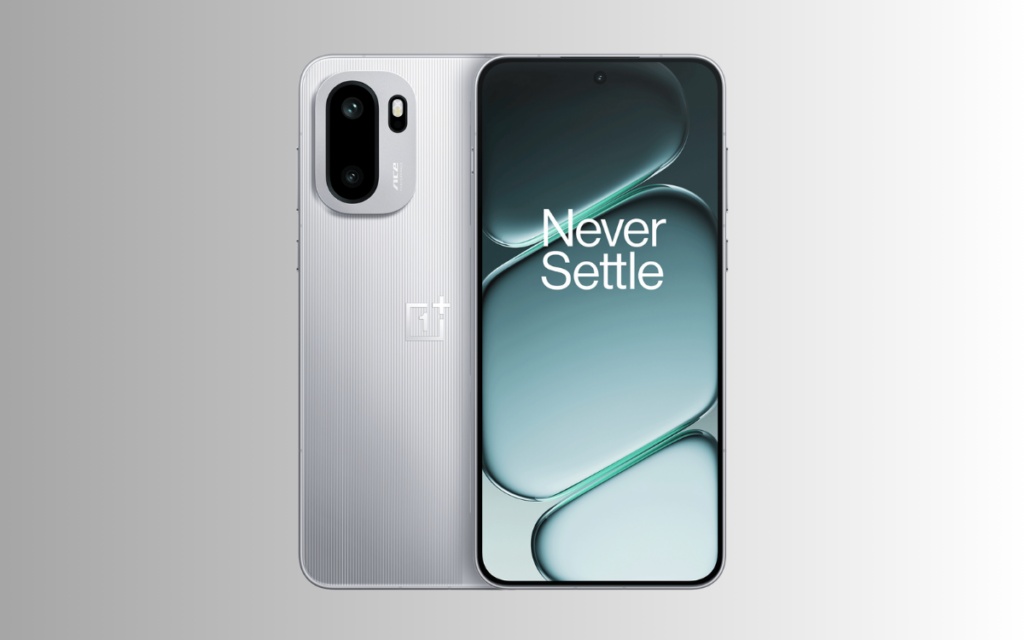
OnePlus has officially unveiled the OnePlus 15 in China, featuring Android’s best chip, a 165Hz screen, and a big battery. It’s also the first OnePlus phone in years to move past the Hasselblad camera partnership. Instead, the company is introducing its own LUMO Imaging technology.
The OnePlus 15 is a spec-heavy device in most areas, but the display is clearly the star of the show. At the launch event, OnePlus spent most of its time talking about the screen — and it’s easy to see why.
A world first
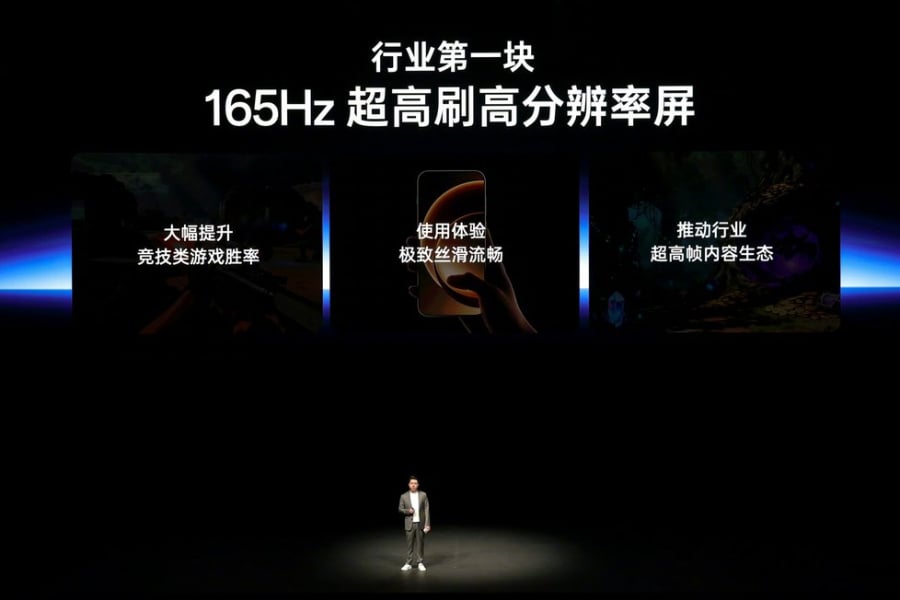
OnePlus claims the 15 is the first phone in the world with a 165Hz refresh rate. To be specific, 165Hz with 1.5K resolution. And the claims are that it improves response time by 10 milliseconds and display speed by 27%.
The company is leaning into gaming to make full use of this ultra-high refresh rate. The screen supports native 165fps gameplay for popular esports titles like Call of Duty Mobile, League of Legends Mobile, and Naruto Mobile, while it is also compatible with 144Hz and 120Hz modes.
The display itself is the third-generation “Oriental Screen ” from BOE built on OnePlus’ self-developed production line. OnePlus says its display metrics surpass DisplayMate A++ standards, with hardware-level low blue light, a 1-nit true dark mode, and industry-low flicker (SVM < 0.12) for improved eye comfort. It’s also the first display to receive the new “Little Gold Label” eye-protection certification in China.
Under the Hood
The OnePlus 15 runs on Qualcomm’s Snapdragon 8 Elite Gen 5 chipset. According to OnePlus, the SoC delivers 20% higher CPU performance, 35% lower CPU power draw, and 23% better GPU performance, all while consuming 20% less energy.
To make use of that power, OnePlus introduced what it calls a “Fengchi Gaming Core (in Chinese),” a system-level gaming optimization engine that enables sustained 165fps gameplay. The company also says it’s the first Android phone with touch-display synchronization for improved touch accuracy and consistency during long gaming sessions.
Networking performance also gets a boost from the new G2 esports network chip, which reduces latency by up to 65%, speeds up game updates by 71%, and improves video upload speeds by 42% under network congestion.
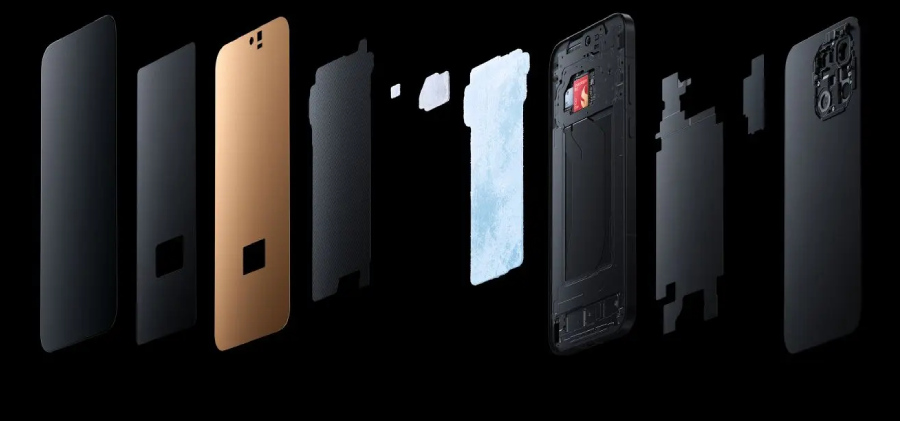
Of course, this level of performance generates heat. To manage that, the OnePlus 15 uses a “Glacier Cooling System” featuring an ultra-thin steel vapor chamber that increases liquid cooling space by 43% and doubles capillary water absorption efficiency. It also incorporates aerospace-grade supercritical aerogel to keep the phone cool to the touch.
Powering everything is a 7,300mAh battery with 120W wired and 50W wireless charging. OnePlus says a 5-minute charge gives up to 6 hours of video playback, while 13 minutes can refill 5,000mAh.
In real-world testing, the company claims the OnePlus 15 can run large FPS games at 165fps for up to 7.6 hours, stream short videos for 19 hours, or handle navigation for 12 hours straight.
The OnePlus 15 borrows a page from console gaming as it has a gyroscope of the same specifications used in the PS5 controller. Its 200Hz sampling rate improves aiming accuracy by 77% and cuts latency by 11%, claims OnePlus.
Cameras
For imaging, the OnePlus 15 debuts the LUMO Imaging System, pairing a 50MP Sony sensor with OIS, a 50MP ultrawide, and a 3.5x optical periscope telephoto lens of the same megapixel count. The camera supports 4K 120fps Dolby video recording. There is a 32MP sensor on the front for selfies.
On the software side, it ships with ColorOS 16, offering AI tools such as automatic video summaries, AI mind mapping, and quick bill recording. The phone also supports multi-device mirroring across Mac, iPhone, smartwatch, and PC. Other features include an IP69K rating, USB 3.2 Gen 1, and dual stereo speakers.
Price and Availability
The OnePlus 15 starts at 3,999 yuan (around $560) in China and is set to go on sale beginning on October 28.
Here’s the full pricing breakdown:
12GB + 256GB: 3,999 CNY (~Rs 49,530 | ~$560)
12GB + 512GB: 4,299 CNY (~Rs 53,250 | ~$600)
16GB + 256GB: 4,599 CNY (~Rs 56,970 | ~$645)
16GB + 512GB: 4,899 CNY (~Rs 60,680 | ~$690)
16GB + 1TB: 5,399 CNY (~Rs 66,890 | ~$760)
The phone comes in Mist Purple, Sand Storm, and Absolute Black.
For more daily updates, please visit our News Section.
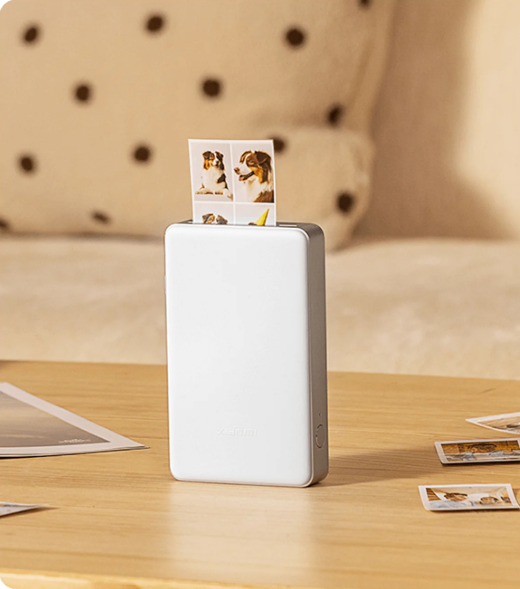
Xiaomi has added the Portable Photo Printer Pro to its global website. The compact printer is designed to bring professional-quality photo printing to everyday users.
The printer uses professional dye-sublimation printing technology to produce sharp, high-definition photos. It supports a 313 dpi resolution, a wide 16.7 million colour gamut, and 256 levels of greyscale, ensuring smooth colour transitions and realistic details. Each print captures accurate tones and true-to-life clarity.
Each photo is automatically laminated during printing, protecting it from moisture, fingerprints, and fading. Xiaomi says this feature keeps prints bright and clear over time, helping preserve memories for years. The Portable Photo Printer Pro is small enough to fit in one hand (measures 86.8 x 142.5 millimeters and 26.8 millimeters thick) and can easily be carried in a backpack or jacket pocket.
The printer connects directly to smartphones through Bluetooth using the Xiaomi Home app. It also supports multi-user connections for up to three users, allowing friends and family to print from their own phones without additional setup.
Users can print live photos and AR photos that include short videos (up to 15 seconds) or audio clips (up to 60 seconds). You can also add borders, dates, and watermarks, or use photo templates for collages, stickers, and creative layouts. The Portable Photo Printer Pro has an inbuilt 880 mAh battery.
Price and Availability
The Xiaomi Portable Photo Printer Pro is currently available in the UK for £109.99 and in Europe for €129.99. It is expected to roll out to other regions soon, depending on local distribution channels.
Thinking about giving your creativity a new spark this Halloween? Whether you’re crafting spooky decor, engraving personalized gifts, or looking for the ultimate maker’s treat, a Creality Falcon Laser Engraver could be the best gift for yourself or a loved one. This season of creativity and mischief is the perfect time to bring ideas to life with precision and style.
But with so many models to choose from, it’s natural to wonder, which Falcon should you buy? Should you start small or go all-in with a professional-grade engraver? This Creality Falcon Buyer’s Guide breaks down different models, from the beginner-friendly Falcon A1 to the smart and powerful A1 Pro, and the industrial Falcon2 Pro, helping you find your perfect creative match and grab the best festive discounts.
Step 1: Understand What You Need
Before you buy, think about how you’ll use your engraver.
Are you a hobbyist or student wanting to create art and gifts?
Do you run a small business selling custom products?
Or are you a professional looking for an industrial-grade tool for batch production?
For Beginners & Hobbyists: The Creality Falcon A1 Series
If you’re new to laser engraving, the Falcon A1 (10W) is a fantastic place to start. It’s pre-assembled, compact, and extremely beginner-friendly; just unpack, plug in, and start creating. With its CoreXY motion system, it engraves up to three times faster than similar models while maintaining sharp precision.
The A1’s built-in auto material recognition system detects your material and automatically adjusts settings, so there’s no guesswork. Its smart camera allows live previews, drag-and-drop alignment, and accurate positioning, perfect for first-time creators.
You can engrave on wood, leather, paper, dark acrylic, and fabric, ideal for making gifts, keychains, nameplates, and home décor. Compact enough for desktops and classrooms, it’s safe, easy, and efficient, a truly “plug-and-play” start to your laser journey.
Step Up Your Skills: Falcon A1 Pro (20W)
Once you’re ready to go beyond simple crafts, the Falcon A1 Pro (20W) unlocks a new level of speed, detail, and versatility. It doubles the power of the A1, handles thicker materials, and even supports an optional 2W Infrared Laser Head for direct metal engraving.
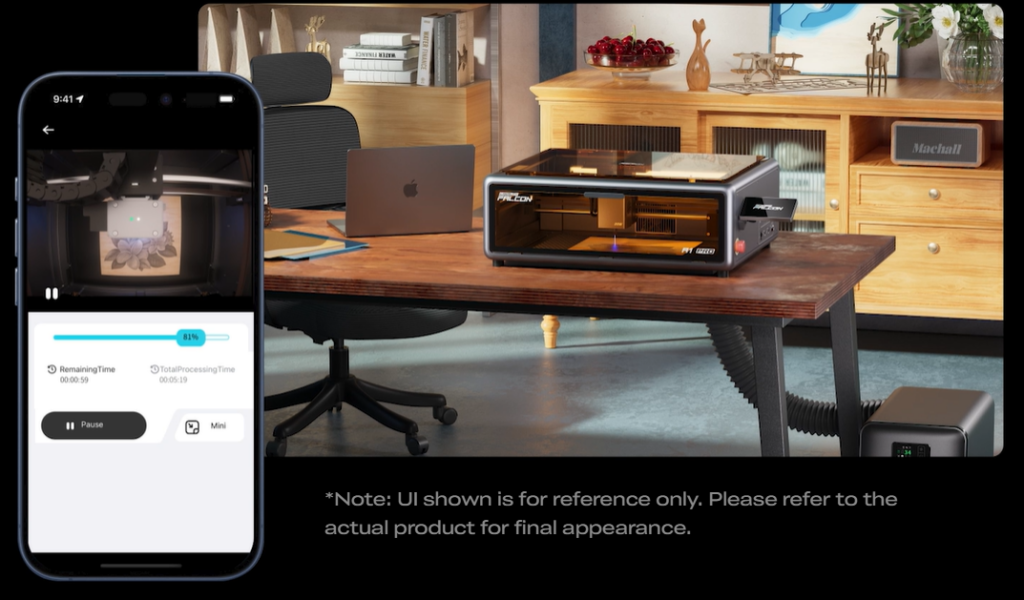
You can work with over 350 materials, including wood, acrylic, glass, metal, stone, and ceramics. The AI Vision Autofocus system ensures every engraving is sharp to within 0.012 inches, while the HD camera helps trace designs or batch-process multiple pieces at once.
The A1 Pro is also smart. With app control, you can monitor progress, receive safety alerts, and start or stop jobs remotely. Its intuitive touchscreen interface feels like using a smartphone. For creators running small online shops (like on Etsy), this machine delivers professional results without the industrial footprint.
For Professionals: Falcon2 Pro (40W / 60W)
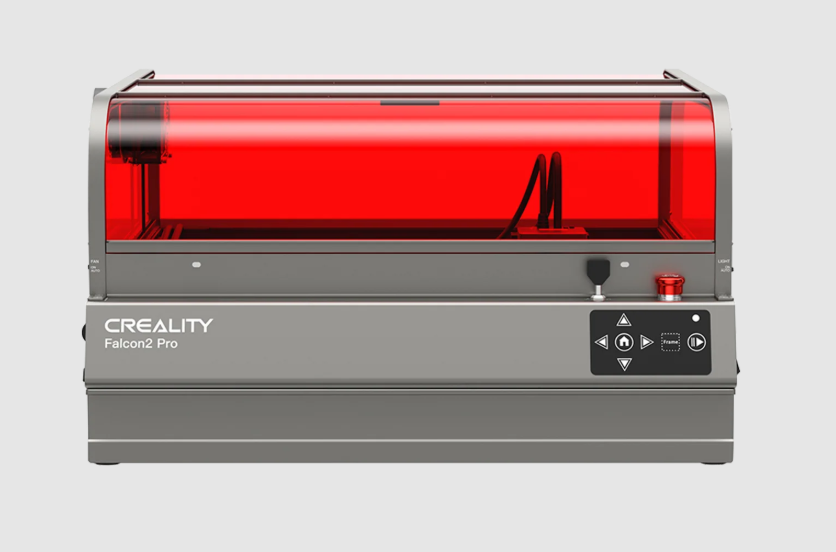
For professionals and small businesses, the Falcon2 Pro Series is the powerhouse of the lineup. Available in 22W, 40W, and 60W, it’s an enclosed, safety-certified, industrial-grade laser engraver and cutter.
Built for high-volume production, the Falcon2 Pro can cut through 22mm wood, 30mm acrylic, and even 0.2mm stainless steel in a single pass. It’s equipped with integrated air assist, adjustable laser beams, and a bonus 1.6W fine-engraving laser module (included with 40W and 60W versions).
The built-in HD camera and auto-positioning system simplify alignment and batch production. With FDA Class 1 certification, multiple safety sensors, and an enclosed design, it’s safe for workshops, studios, and home businesses alike.
Professionals will appreciate its rotary engraving compatibility, enabling 360° engraving on bottles, cups, and cylindrical items. It also supports Creality’s AP1 Air Purifier, keeping your workspace smoke-free and clean.
Choosing the Right Creality Falcon for You
Your Goal
Recommended Model
Why It Fits
Learn laser engraving & create at home
Falcon A1 (10W)
Affordable, compact, and ready-to-use
Grow a small craft or online business
Falcon A1 Pro (20W)
More power, smarter workflow, wider material support
Run a professional workshop or studio
Falcon2 Pro (40W/60W)
Industrial-grade precision, enclosed safety, and large-scale production capabilities
Halloween 2025 Sale Highlights
If you’ve been waiting for the right time to buy, now’s your chance:
Falcon A1 Series: Up to 18% OFF
Falcon2 Pro Series: Up to 15% OFF Sale Period: October 20–30, 202
Create, Upgrade, or Go Pro
Laser engraving isn’t just a hobby anymore; it’s a creative gateway. Whether you’re designing Halloween ornaments, making custom gifts for friends, or running a growing craft business, Creality’s Falcon Series gives you the right mix of power, safety, and smart features for every stage of your journey.
The Falcon A1 makes creation effortless for beginners, while the A1 Pro bridges the gap between passion and profit with faster speeds and advanced controls. For professionals and small studios, the Falcon2 Pro delivers unmatched precision, cutting depth, and enclosed safety, built to handle large-scale production with ease.
This Halloween, don’t just buy another gadget, invest in creativity. With up to 18% off the Falcon A1 Series and 15% off the Falcon2 Pro, it’s the perfect moment to treat yourself (or surprise a fellow maker) with a gift that keeps on creating all year long. From spooky engravings to festive crafts, your next masterpiece starts with a Creality Falcon.
OPPO has announced a new phase of collaboration with Google to improve how users experience AI on their phones. The partnership focuses on three main areas: personalized AI features, better AI model deployment, and stronger privacy protection.
Kai Tang, President of Software Engineering at OPPO, said, “Working closely with partners like Google allows us to integrate next-generation AI experiences that are not only powerful but also highly personalized and secure.”
Mind Space integrated with Gemini
A key part of this collaboration is a new app called Mind Space, launching with the OPPO Find X9 Series, which is scheduled to debut on October 28. Mind Space helps users collect and organize on-screen content, such as text, images, or web pages, using a simple three-finger swipe. All saved content is stored in one place and automatically sorted for easy access.
OPPO has worked with Google to connect Mind Space to Gemini. This integration allows Gemini to access content from Mind Space and help users take action with it. For example, someone planning a trip can save articles and notes in Mind Space and then ask Gemini to create a detailed itinerary. Users can choose exactly what Gemini can see or use from within Mind Space, keeping control over their data.
Gemini-powered features on Find X9 Series
Gemini will also work with other OPPO apps. Users can chat with Gemini to get help, edit photos using the Nano Banana image editing model, or ask questions through Gemini Live. Gemini Live can respond to what users see on their screen or through their camera, offering visual help such as showing steps to fix a device or organize storage.
Built on privacy and trust
All these features are backed by OPPO’s AI Private Computing Cloud, which uses Google Cloud’s confidential computing services. This setup ensures that all AI processing happens in a secure and encrypted environment. Sensitive data remains private and cannot be accessed by any third party, including OPPO.
Launching with Find X9 Series
The full range of these AI features will be available on the OPPO Find X9 Series and ColorOS 16. Buyers of the Find X9 or Find X9 Pro will get a free three-month subscription to Google AI Pro, which includes access to premium Gemini tools and 2TB of cloud storage.
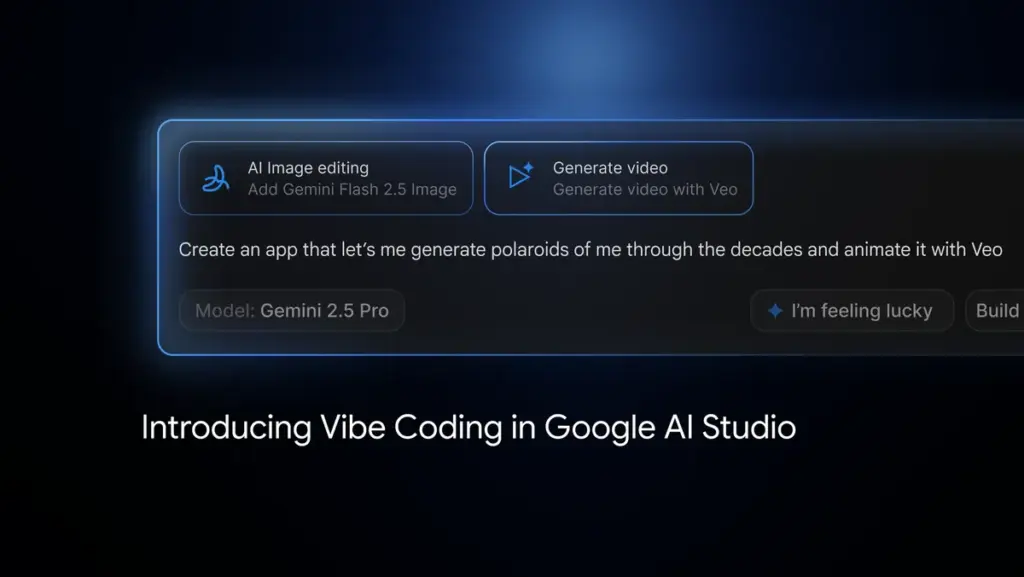
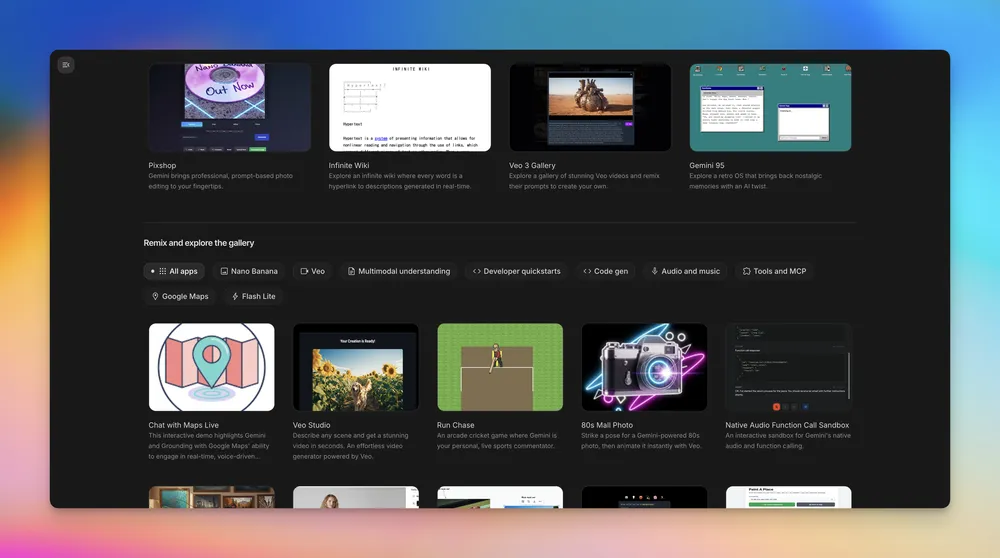
Google has redesigned AI Studio with a new AI-powered vibe coding feature that lets anyone go from a simple prompt to a working AI app in minutes. The update removes the need to handle API keys or connect multiple models manually, making app creation faster and easier.
Start with a Prompt
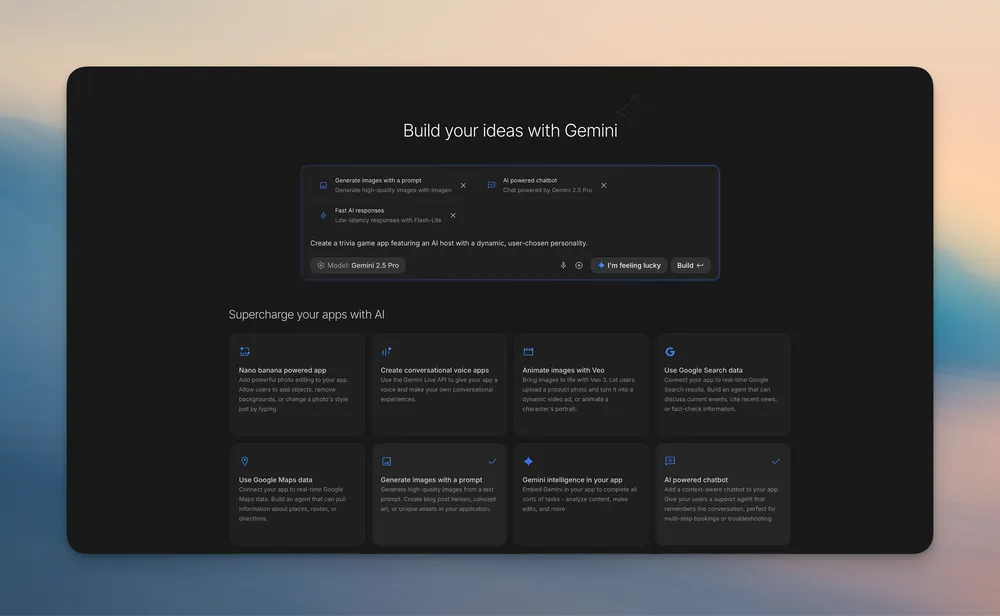
Users can now describe the kind of app they want, and AI Studio automatically connects the right models and APIs using Gemini. For example, you can build tools like Veo to generate videos from a script, or Nano Banana for AI-powered image editing. You can even create a writing app that checks sources through Google Search. The new system removes the need to work with separate APIs, SDKs, or services. Just describe your idea, and AI Studio builds it. If you need a quick idea, the “I’m Feeling Lucky” button can generate a random project for you.
Get Ideas and Inspiration
The App Gallery has been redesigned into a visual library of sample projects made with Gemini. You can explore them, view starter code, and remix them into your own. The new Brainstorming Loading Screen shows Gemini-generated ideas while your app is building, giving you more inspiration as you wait.
Edit Apps Easily
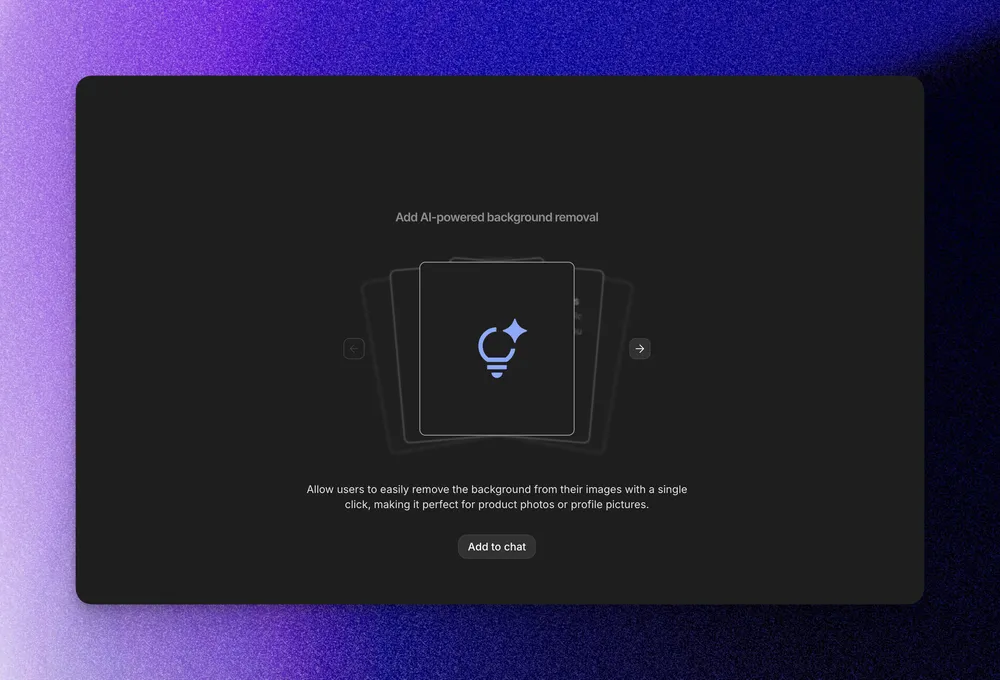
The new Annotation Mode makes editing simple. You can point to any part of your app and tell Gemini what to change. For example, you can say “make this button blue” or “animate the image from the left,” and it will update right away. You no longer need to dig through lines of code to make small changes.
Keep Working Without Stops
If you reach your free usage limit, you can add your own API key and continue coding. AI Studio will switch back automatically when your free tier renews.
So the rumors were true after all. Nothing has officially confirmed the launch of its next smartphone, the Nothing Phone (3a) Lite, and it’s arriving very soon on October 29, just two days from now.
Unlike most Nothing launches that come with weeks of cryptic teasers and marketing buzz, this one’s happening almost instantly. The first teaser dropped today, and the phone will hit the stage on Wednesday. A bit surprising to come from Nothing.
Still, it aligns with earlier leaks, which revealed that the device’s first sale could begin on November 4.
What to expect from the Nothing Phone (3a) Lite
The Phone (3a) Lite will reportedly be offered in a single variant with 8GB of RAM and 128GB of storage, and will be available in the brand’s signature black and white color options.
Under the hood, the device is said to be powered by MediaTek’s Dimensity 7300 chipset, featuring four Cortex-A78 cores clocked at 2.5GHz and four Cortex-A55 cores at 2GHz, paired with a Mali-G615 GPU.
The device has appeared on Geekbench running Android 15, but it could launch with Android 16 instead, as Nothing has now begun rolling out Android 16 to existing Phone (3a) users.
As for pricing, the phone is expected to cost €249.99 (around $290) in France, with some European markets possibly getting it for as low as €239.99. For comparison, the regular Phone (3a) starts at €349.99.
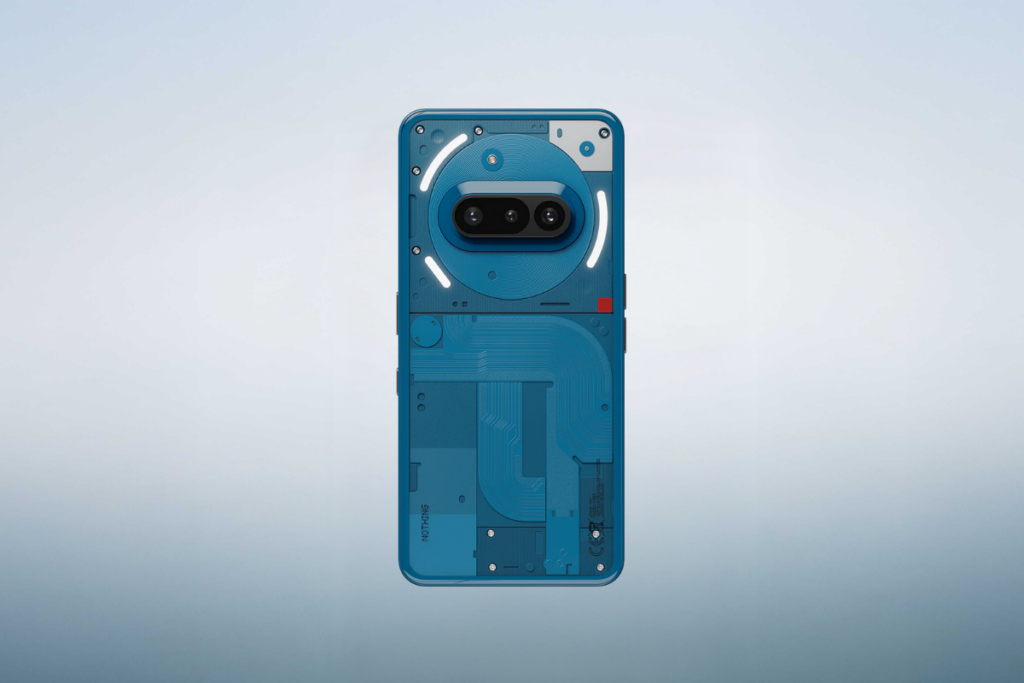
There’s no word yet on whether the trademark Glyph Interface or Nothing’s minimalist design will see changes. But given the company’s track record, we can expect the same transparent aesthetic. The teaser shows a blinking light on the back, though.
For more daily updates, please visit our News Section.
We use cookies on our website to give you the most relevant experience by remembering your preferences and repeat visits. By clicking “Accept”, you consent to the use of ALL the cookies.
This website uses cookies to improve your experience while you navigate through the website. Out of these, the cookies that are categorized as necessary are stored on your browser as they are essential for the working of basic functionalities of the website. We also use third-party cookies that help us analyze and understand how you use this website. These cookies will be stored in your browser only with your consent. You also have the option to opt-out of these cookies. But opting out of some of these cookies may affect your browsing experience.
Necessary cookies are absolutely essential for the website to function properly. This category only includes cookies that ensures basic functionalities and security features of the website. These cookies do not store any personal information.
Any cookies that may not be particularly necessary for the website to function and is used specifically to collect user personal data via analytics, ads, other embedded contents are termed as non-necessary cookies. It is mandatory to procure user consent prior to running these cookies on your website.