Since the release of the Mi 9 flagship in February this year, the device has risen to become a popular model. The premium smartphone has courted lots of attention from fans in Europe, in addition to China and elsewhere. Xiaomi has released the model in several Europe countries, including Sweden. A Swedish tech company known as Golden Concept has produced a limited edition 24K Gold plated customized design just for the Mi 9 users!
The company is known for manufacturing customized iPhone accessories with luxurious materials such as premium leather and precious stones. The firm’s gold plated iPhone cases are reported to sell for as high as $40,000 USD. There are still buyers for these luxury-designed phones such as sports stars and celebrities who won’t find it difficult shelling out such huge sums to customize their iPhones.
While designing gold-plated cases for iPhones isn’t strange, a 24K gold-plated Mi 9 case is very uncommon. The gesture could be an indication of the increase in popularity of the Mi brand in Europe. We won’t be surprised if someone out there snags up the luxurious phone soon. The Mi 9 customization sees the back panel gets replaced with a gold-plated case, with a dragon engraved on the panel. We don’t have the release itinerary for the custom model.
China-based Xiaomi has today shared the financial report for the first quarter of 2019 and reported adjusted net profit growth by 22.4 percent year-over-year compared to 2.1 billion yuan (approximately $300 million).
It also reported that its total revenue climbed 27.2 percent to 43.8 billion yuan (approximately $6.33 billion). The biggest source of revenue for the company continues to be the smartphone business.
Xiaomi is currently dominating the smartphone market in India and is also doing well in a few other countries outside of its home market China. International markets generated over 38 percent of its total revenue over the first quarter, representing a 35 percent increase. Xiaomi’s overseas momentum came amid a global slowdown in the sector.
As per the report from Canalys, Xiaomi was the world’s fourth-largest smartphone maker by units shipped in the first quarter. Further, the company’s “IoT and lifestyle” unit, which has a wide range of home appliances saw its share of revenue jump from 22.4 percent to 27.5 percent year-over-year.
The company says that the growth of this segment was primarily driven by smart TV sales, a new area of focus for the company. In January, Xiaomi had announced taking a 0.48% stake in TV manufacturer TCL. This deepens an existing alliance under which Xiaomi’s operating system was integrated into TCL products.
Till March-end, the company reported that it owned 261 million monthly active users through its MIUI operating system installed across all devices, which represent a 37.3 percent growth YoY. The number of IoT devices, excluding smartphones and laptops, have jumped 70 percent to reach approximately 171.0 million units.
Xiaomi is working very hard to grow its software and internet services segment but the strategy so far hasn’t been much effective as it accounted for 9.7 percent of the company’s total revenue, compared to 9.1 percent a year before. The company has said that it won’t make more than 5 percent profit from the hardware business, so it makes sense for Xiaomi to focus more on software and internet services.
Szymon Kopec, more popularly known as the Product Lead at OnePlus, has revealed a bunch of new features coming soon to Indian OnePlus 6 and OnePlus 6T devices. While new features being added through software updates is nothing new, this case is slightly different. These features were all developed in-house at OnePlus’ R&D center in Hyderabad, and are tailor-crafted for the Indian market.
The new features are Work-life Balance, a Smart SMS app, Caller Identification, OnePlus Roaming, and Cricket Scores. These names thankfully aren’t finalized and are subject to change before launch. The India-specific features will be rolling out to OnePlus 6 and 6T devices in the Open Beta build of OxygenOS at the end of June.
Caller Identification
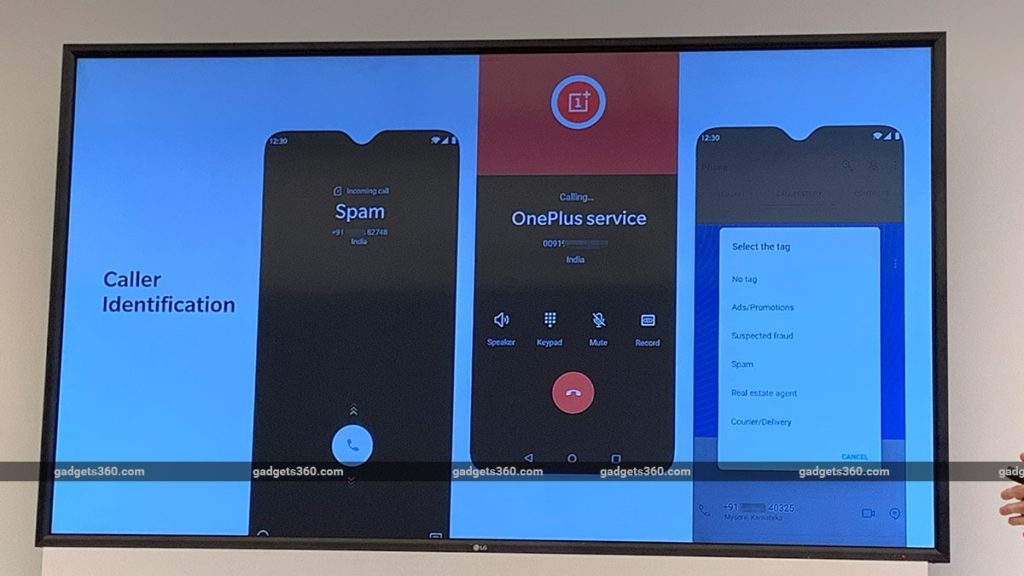
First up, we’ve got Caller Identification. This feature will be rolled into the dialer, and it will help the user to identify unknown callers before picking up. The feature smartly recognizes and labels both spam and legitimate business calls as you’d expect. On top of this, it also allows the user to tag unknown numbers as Spam, Real Estate Agent, Courier/Deliver, etc themselves.
Smart SMS
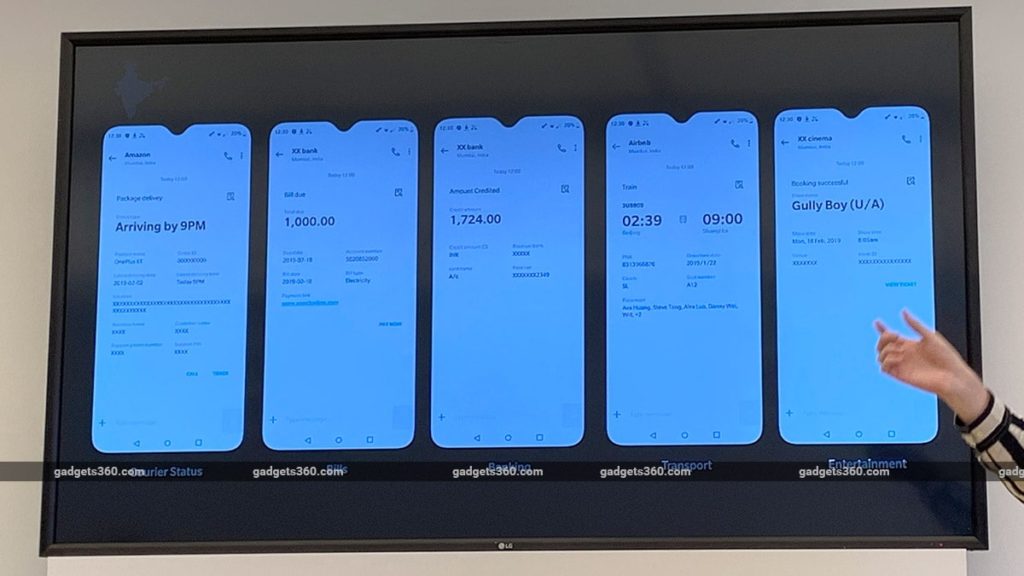
Next, we have the Smart SMS app. How we understand it, the app will identify different types of service SMSes, be it bills, banking, transport, etc. It will then categorize them and display the relevant information accordingly. For example, an SMS from a courier will have the ETA for the arrival and contextual buttons to track your package. OnePlus claims the app can identify 39 different types of service messages, impressive!
Work-life Balance
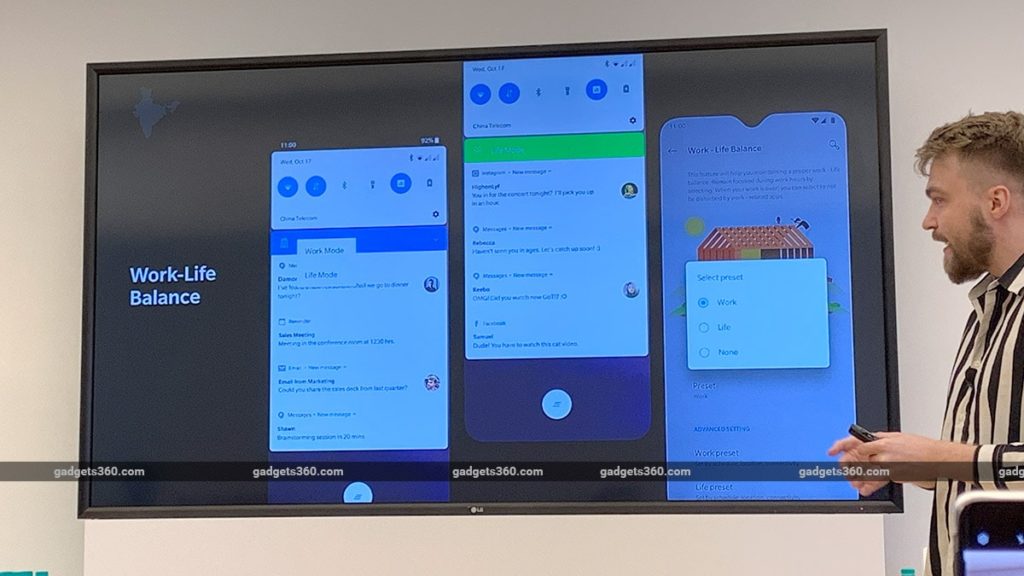
Perhaps the most interesting feature in the lineup, Work-life Balance is essentially a time and lifestyle management app. It lets you record when you go to and leave from work, and accordingly lets you choose what notifications you see both the times. You can block social media notifications at work, and hide work emails at home. You can categorize apps under ‘Work’ and ‘Life’, and see how much time you’ve spent on both via a bar chart.
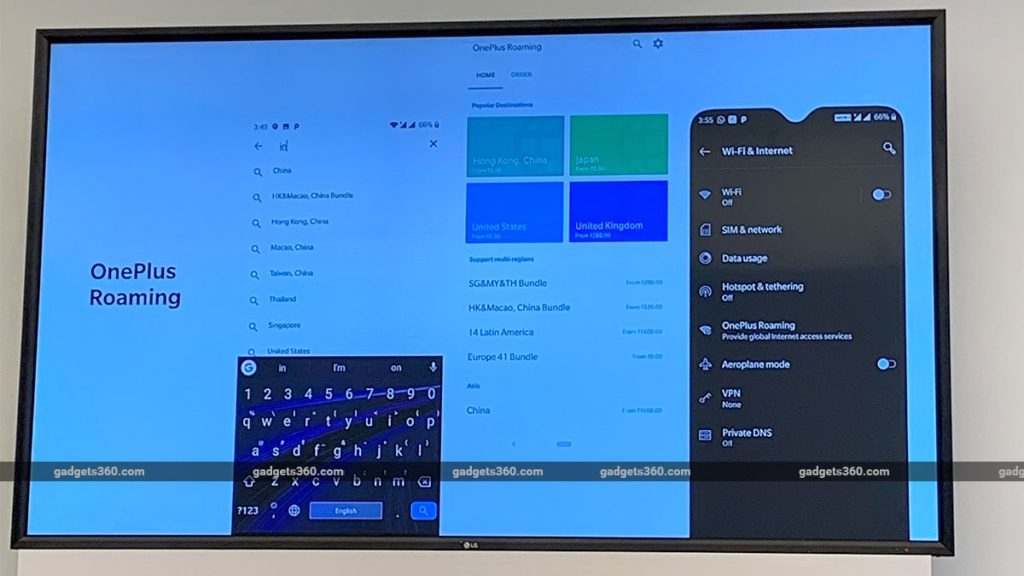
OnePlus Roaming, on the other hand, seems decidedly simple. It’s similar to Oppo‘s ORoaming which offers you affordable data packs when you travel overseas. You get to keep your own SIM card and save money from buying a brand new one. This feature will be baked right into the settings under the ‘Wi-Fi & Internet’ options.
Cricket Scores
Last, of all, we’ve got Cricket Scores which is pretty self-explanatory. Working with ESPNCricinfo, your OnePlus device will showcase current big cricket matches, as well as provide live score updates for them. Cricket Scores will be accessible straight from the Shelf, which is the OnePlus equivalent of the Google Now screen.
We haven’t been given a solid release date for these features, though we know we’re going to see them in the Open Beta builds of OxygenOS in June. We can expect to see these features roll out to the OnePlus 7 Pro soon enough as well, though the OnePlus 6 and 6T take higher priority for now. We’re looking forward to seeing how the features work, as well as what else OnePlus has in store.
Google unveiled Android Q Beta 3 at the Google I/O 2019 developer conference. It was confirmed that the OnePlus 7 series would support the latest beta build after launch. Just like OnePlus said, now it has shared the latest Android Q beta for both the OnePlus 7 and OnePlus 7 Pro devices. The interested users can follow the published guide to install it on the latest OnePlus flagship device.
The Android Q Beta 3 update carries various advancements and support for new APIs. Unfortunately, it is not recommended for everyday use as it is riddled with multiple bugs. The Beta 3 build is meant for developers and early adopters. Features like Ambient display, navigation gesture, recovery mode are not working as of now. Users won’t be able to use SMS service when VoLTE is active. There are many other issues related to system stability and apps which will cause inconvenience for daily users.
We have released Android Q Developer preview for OnePlus 6 and 6T right after Google I/O, and now we are super excited to offer OnePlus 7 Series users an early glimpse at the future of Android.
As the name suggests, this build of Android Q is best suited for developers and early adopters. As it is still in an early stage of development, we do not recommend flashing this ROM if you have little or no experience in software development or flashing custom ROMs. Proceed at your own risk!
Users are advised to backup data before installing Android Q Beta update on OnePlus 7/7 Pro. The upgrade from stable to developer build will erase all important content from the device.
OnePlus recommends ensuring above 30% battery level and 3GB of minimum space for successful Android Q Beta installation on both the devices. We recommend you to follow detailed steps (from the source below) if you aren’t familiar with flashing a ROM.
Android Q Beta 3 is penultimate increment before the release of final APIs and official SDK with Beta 4.
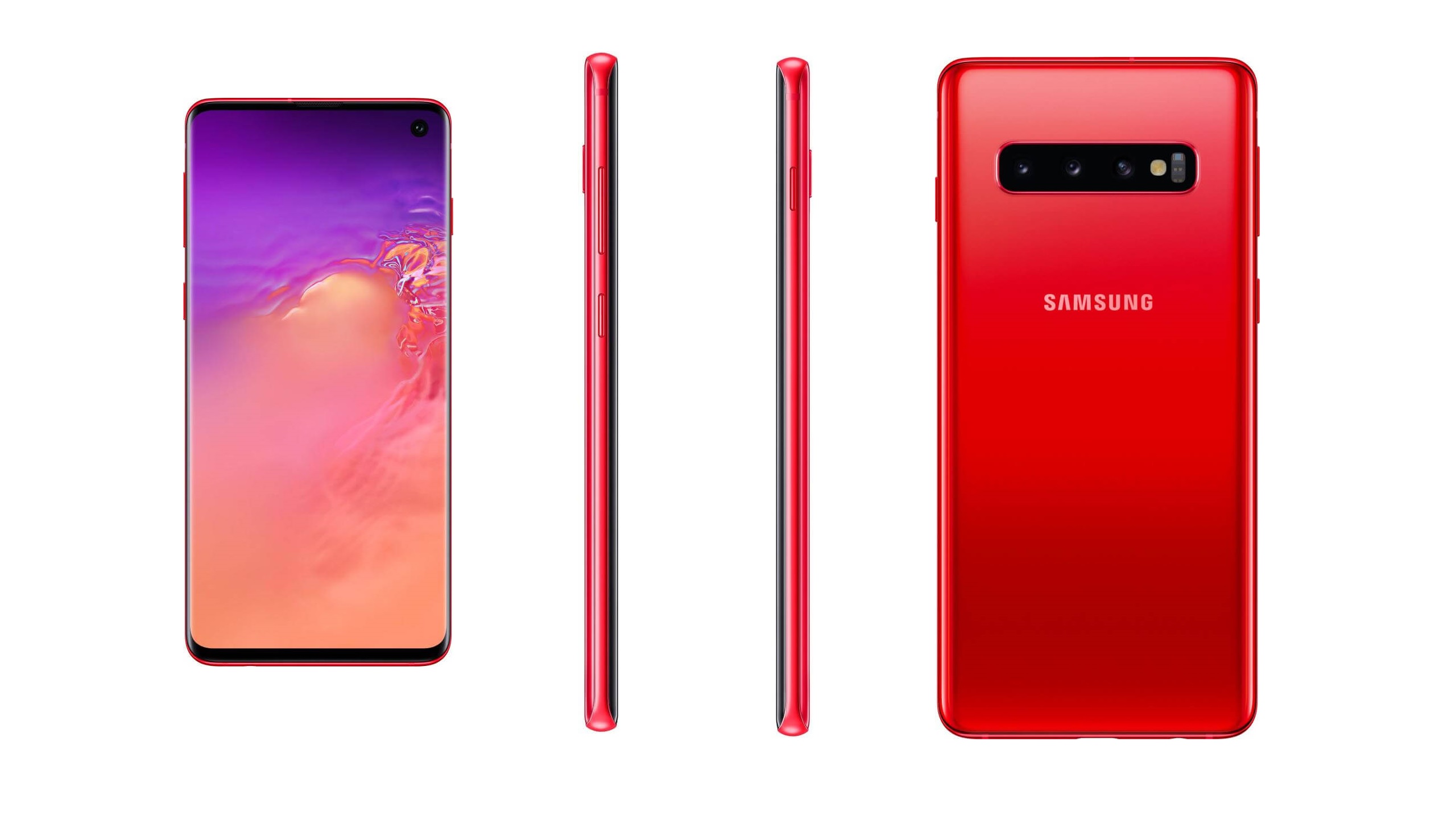
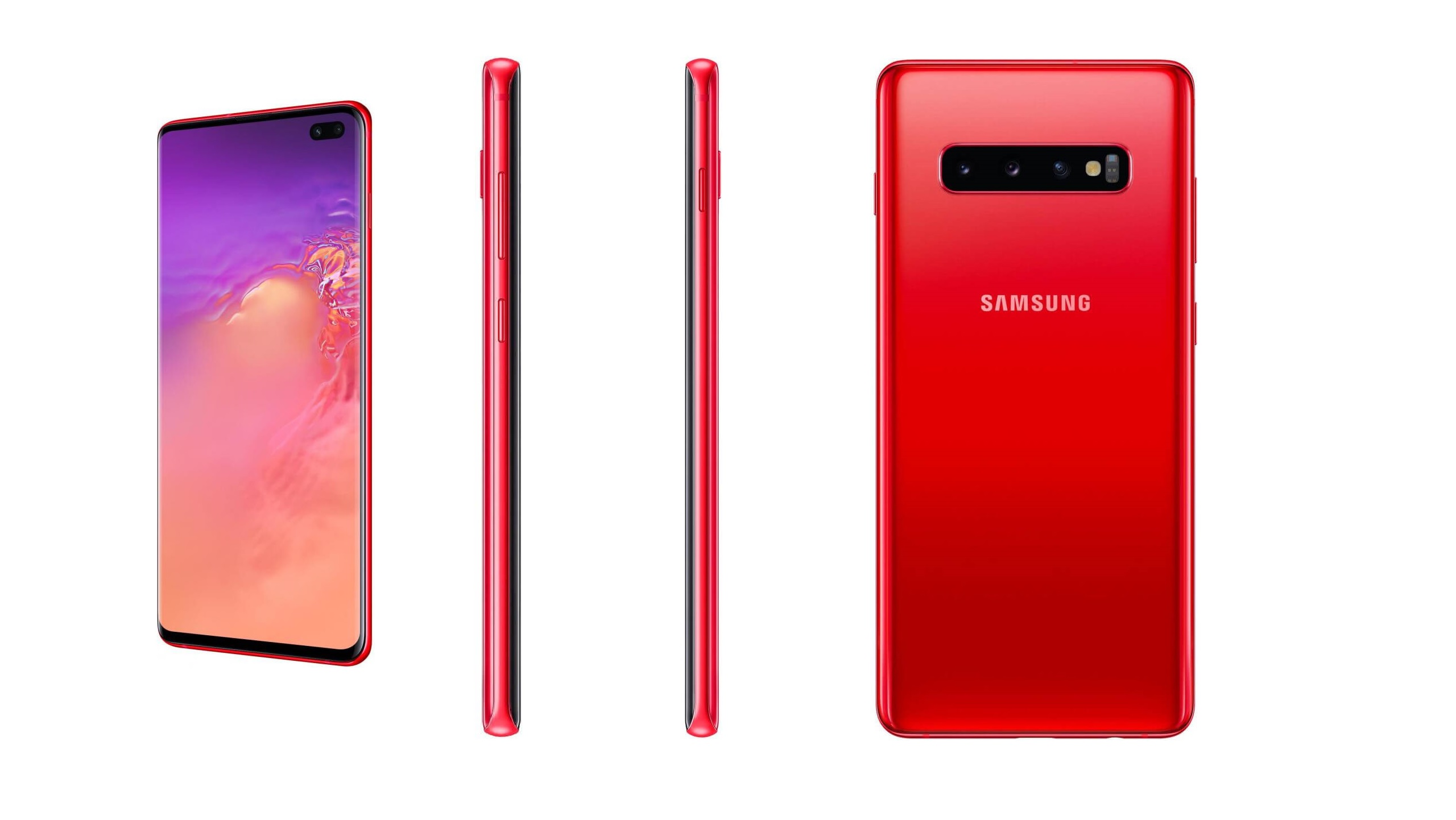
The Samsung Galaxy S10 and Galaxy S10+ come in a variety of colors from white to blue to black to green and even pink. The Galaxy S10e even comes in a bright Canary Yellow. A new report says the S10 and S10+ will get a new Cardinal Red color variant.
The info was revealed by Roland Quandt on Twitter (@rquandt) along with press renders of the new color variant. Actually, this is not the first time we have heard of a red Galaxy S10. Back in February before the phone launched, there was a leaked render of a red Galaxy S10 called Cinnabar Red. Unfortunately, it wasn’t announced alongside the other color variants.
This color variant is quite different from the Burgundy Red of the Galaxy S9/S9+. It is significantly brighter but there is a chance it might appear a little different in real life.
Other than the red paint job, there should be no difference between this color variant and the others. However, there is a possibility availability might be limited to certain markets.
Announcing a new color variant of its flagships is now a tradition Samsung has adopted for a while now. It is a smart marketing move and a sort of way to reinvigorate interest in the phones.
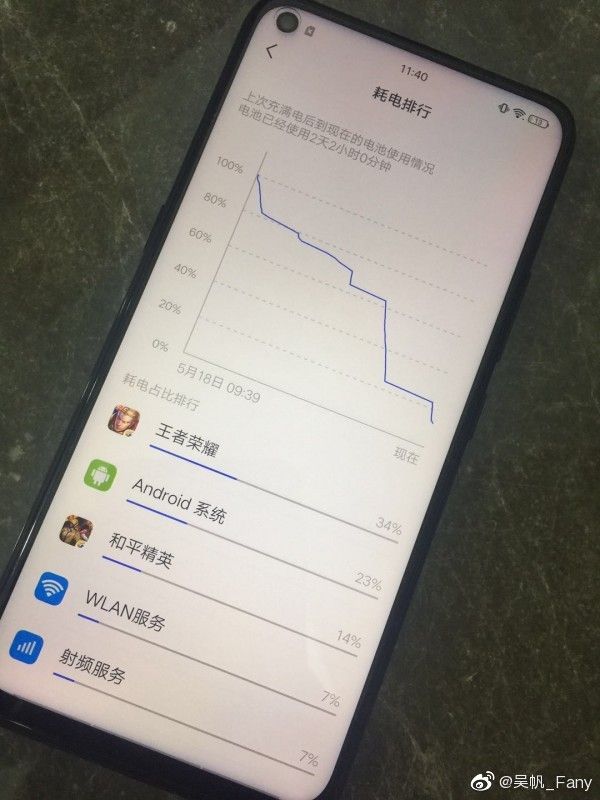
The Vivo Z5x smartphone is scheduled to go official on May 24. Few live shots of the phone that have appeared recently have revealed that it will be company’s first phone with punch-hole display. It was recently spotted on Geekbench some key specs. Starting from today, the Chinese manufacturer is receiving the reservations of the smartphone. The Jingdong Mall listing of the Vivo Z5x contains the official renders of the phone. The listing has also confirmed that it will be arriving in four variants.
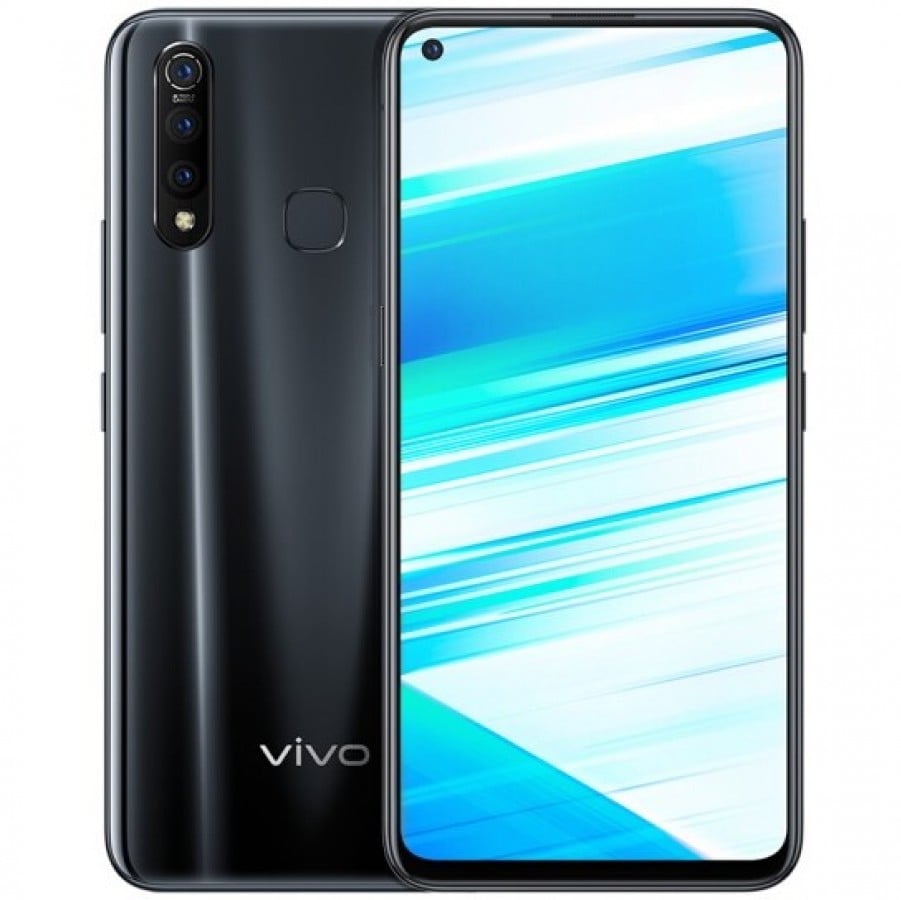
The Vivo Z5x images reveal that its display will be equipped with a small hole for the front-facing camera at the top-left corner. The display is surrounded by super-slim bezels.
The rear shell of the phone feature a vertical triple camera setup along with an LED flash. A fingerprint scanner is also available on the rear shell of the device. The left edge of the phone features a key for accessing the Jovi AI assistant. The volume rocker and power key are available on the right side of the phone. The JD listing of the smartphone reveals that it will be releasing in Extreme Night Black and Phantom Black color options.
The $9999 Yuan pricing for the Vivo Z5x on the JD listing is only a placeholder. There is no information on the actual pricing of the phone. The smartphone will be releasing in four models in China such as 4 GB RAM + 64 GB storage, 6 GB RAM + 64 GB storage, 6 GB RAM + 128 GB storage and 8 GB RAM + 128 Gb storage.
Previous reports have revealed that the Vivo Z5x will be arriving with a 6.53-inch IPS LCD panel that will produce full HD+ resolution. The Geekbench listing of the phone has revealed that it will be powered by Snapdragon 710 chipset and it will come loaded with the latest Android 9 Pie OS. The handset will include a 5,000mAh battery. It has been found through the 3C certification of the phone that it will carry support for 18W rapid charging.
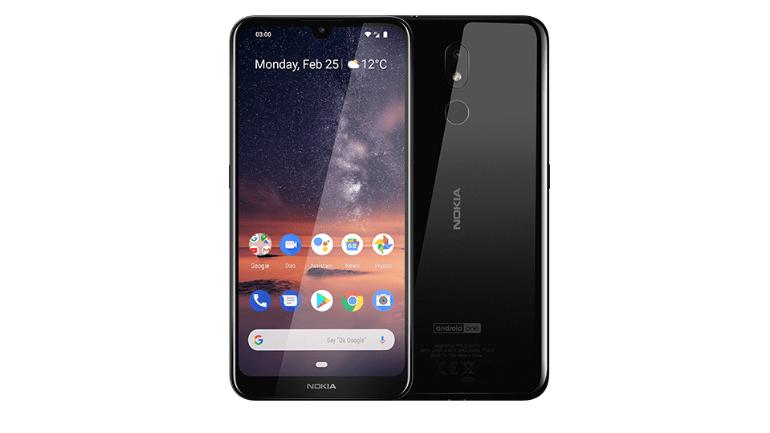
After unveiling the Nokia 4.2 a month ago, HMD Global has now launched Nokia 3.2 in India. The new device carries improved specification and form factor than the more affordable Nokia 4.2. It is available in two different size variants of 2GB RAM + 16GB internal and 3GB RAM + 32GB internal storage. Nokia 3.2 will be on sale from May 23 via offline as-well-as online retail outlets in India.
Nokia 3.2 Specification
The Nokia 3.2 is powered by Qualcomm Snapdragon 429 processor coupled with Adreno 504 GPU. It carries a 6.29-inch HD+ a-Si TFT LCD with 720 x 1520 pixels resolution having an aspect ratio of 19:9. Its waterdrop notch embeds a 5-megapixel sensor with f/2.2 aperture and 1.12um pixel size for selfies. Whereas, a single 13-megapixel sensor with a dedicated LED unit is present on the rear side.
A new dedicated button for Google Assistant is present on the device. It is a part of the Android One program and runs on Android 9 Pie out of the box. In connectivity, Nokia 3.2 comes with Bluetooth 4.2, micro USB, GPS/AGPS/GLONASS/BeiDou, and 4G VoLTE. Unlike the flagship devices, it supports a 3.5 mm headphone jack and micro USB interface. Other features include a 4000 mAh battery with 10W charging, rear fingerprint sensor (32 GB internal storage version only) and Qualcomm aptX technology for better sound quality.
Pricing and Offers
Nokia 3.2 with 2GB RAM + 16GB internal is available for Rs 8,990 and 3GB RAM + 32GB internal retails at Rs 10,790. Buyers can choose between two color options of Back and Steel. Nokia 3.2 is available with several launch offers.
Vodafone and Idea subscribers can avail Rs 2500 cashback offer in the form of Rs 50 vouchers. Interested users can use promo code ‘ LAUNCHGIFT’ to receive Rs 1000 gift card while placing an order from nokia.com. A limited time free screen-replacement insurance for six months is bundled at no extra cost.
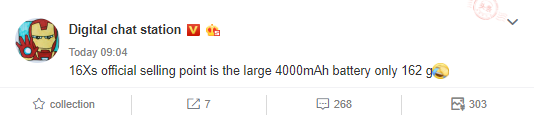
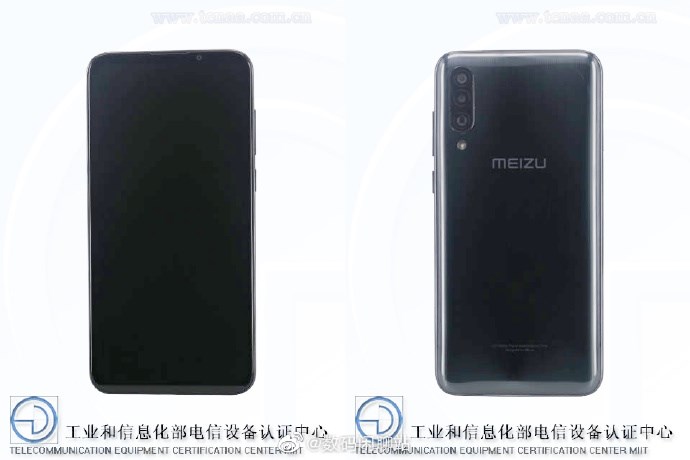
Recently, a Meizu phone with M926Q model number was approved by China’s TENAA authority. The entire specifications along with the images of the phone have been leaked through its TENAA listing. Teasers released by Meizu suggests that the phone may go official on May 23. What’s interesting about it is that it will be the first Meizu phone to arrive with triple rear cameras. Rumors are rife that it could be releasing with Meizu 16Xs moniker. According to a reliable tipster, the official selling point of the Meizu 16Xs will be that it will be packing a 4,000mAh battery inside a lightweight chassis.
The TENAA listing of the Meizu 16Xs has revealed that it will be featuring a minimum capacity battery of 3,900mAh. Its typical capacity could be 4,000mAh. The handset measures 8.35mm in thickness and it weighs 162 grams. Most of the recently released phones with 4,000mAh battery such as Lenovo Z6 Pro, Honor View 20 Redmi Note 7 Pro, Poco F1 and so on weigh around 180 grams. Meizu has somehow managed to reduce the weight of the device while still despite packing high-end internals in the Meizu 16Xs smartphone.
The triple camera setup of the Meizu 16Xs features a 48-megapixel primary sensor, a 5-megapixel sensor and an 8-megapixel lens. For capturing selfie shots, the phone features a front-facing camera of 16-megapixel. The Meizu 16Xs continues to sport a symmetrical design thanks to its thin-sized upper and lower bezels. It features a 6.2-inch AMOLED display that carries support for full HD+ resolution of 2232 x 1080 pixels and an aspect ratio of 18.5:9.
The Meizu 16Xs smartphone will be fueled by an octa-core processor of 2 GHz. The SoC is supported by 6 GB of RAM. The Android 9 Pie OS along with Flyme 7.3 UI will come preloaded on the device. The handset lacks support for a microSD card slot. Lastly, the handset is equipped with an in-display fingerprint reader. It will be available in the market in color variants like Black, Gradient Blue and Coral. At present, there is no information available on the price tag of the phone.
According to the latest report coming from Canalys, the United States is no longer the leading market when it comes to the smart speaker. Instead, China is now leading the market and has reported a 500 percent growth in the first quarter of this year, capturing 51 percent of the market.
The report adds that more than 10.4 million units of smart speakers were shipping in the Chinese market, which was mostly driven by the festive season offerings and promotions.
Chinese internet giant Baidu had a huge quarter thanks to an exclusive sponsorship deal with China’s national TV channel, CCTV, on its New Year’s Gala on Chinese New Year’s Eve, which is one of the biggest entertainment shows in terms of viewer numbers.
This promotion prompted users to download the Baidu app, which distributed more than 100 million coupons to an audience of 1.2 billion during the show, and drove awareness around the brand’s smart speakers, reports Canalys.
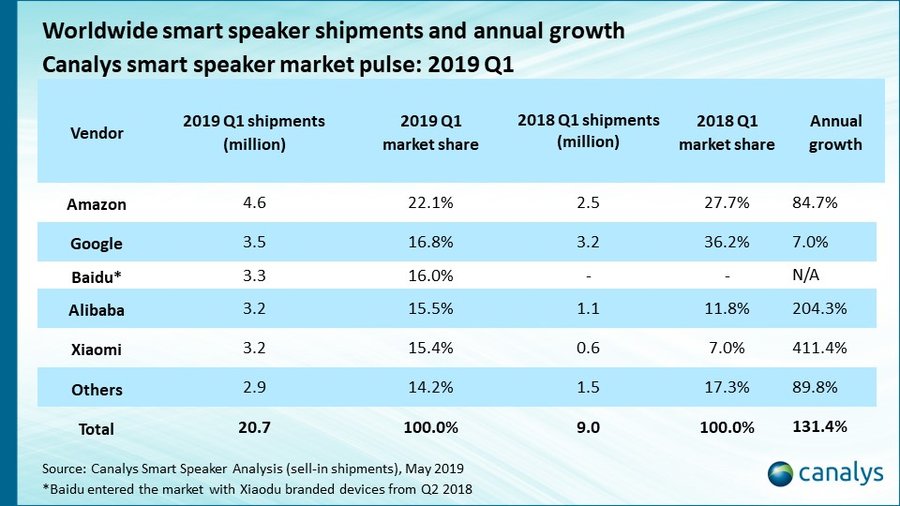
Coming to the numbers, Baidu shipped 3.3 million speakers in Q1 2019, which puts the company in the third place, just behind Amazon which shipped 4.6 million units and Google, which shipped 3.5 million units.
Following Baidu are Alibaba and Xiaomi, with each of them shipping around 3.2 million units of smart speakers, the sales of which were mostly driven during the Chinese New Year promotions.
Other brands, combined, accounted for over 2.9 million shipments. It also includes Apple’s HomePod, whose market share was so small it got wrapped into this “Others” section instead of being broken out on its own.
Commenting about the development of the Chinese market for smart speakers, Nicole Peng, VP of Mobility at Canalys, notes:
“The lightning-fast development in China is largely driven by vendors pouring in large amounts of capital to achieve dominant share quickly. This strategy is favored by internet service providers like Baidu, Alibaba, and Tencent who are used to spending billions on traffic acquisition and know how to reach critical installed base fast.”
In comparison to the 10.6 million units shipped in China, the United States witnessed 5 million shipments. While China captured 51 percent market share, the share of the U.S. dropped from 44 percent in Q4 2018 to 24 percent in Q1 2019. Overall, the global smart speaker market saw triple-digit annual growth of 131 percent in the quarter.
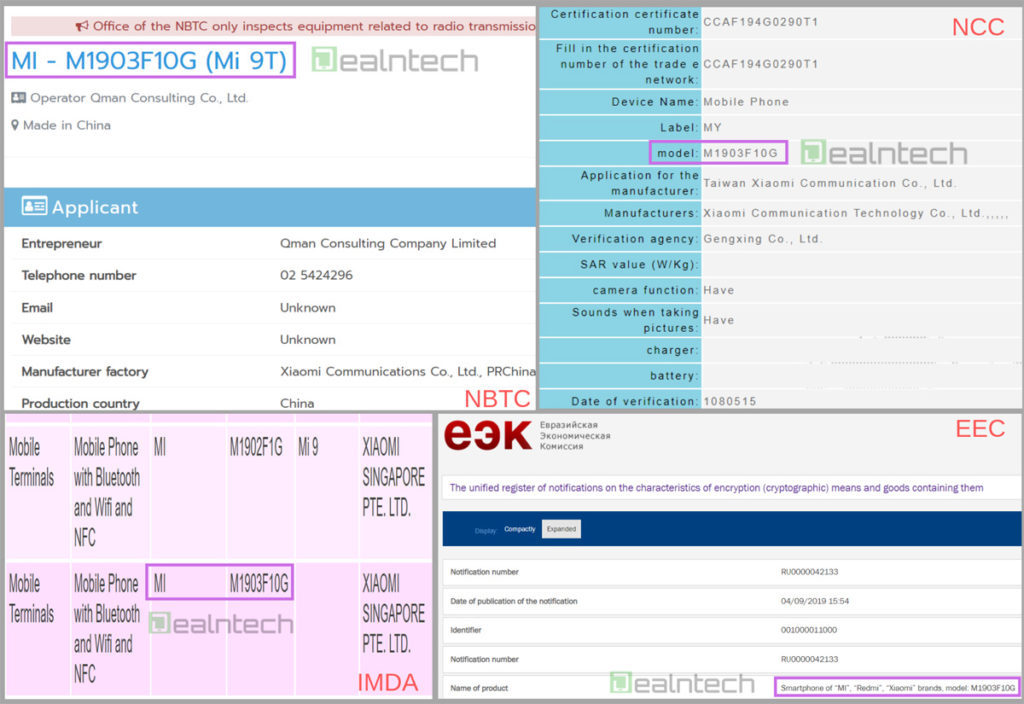
Xiaomi’s launch itinerary for this year may include another variant of the flagship Mi 9 series. The series already has the Mi 9, Mi 9 SE and Mi 9 Transparent Edition. Just like last year, there are indications that the Mi 9 may get another variant that will adopt the moniker Mi 9T. The model has been certified by NBTC in Thailand where it is listed with the model number M1903F10G. The listing also gave us a hint of the Mi 9T moniker.
The device has also received certification in Taiwan, Singapore and by the Eurasian Economic Commission bearing the same model number M1903F10G. Among the details gathered from the listing include that the model is part of the Mi 9 series.
Xiaomi is yet to reveal any detail or even confirm the existence of the purported Mi 9T but we expect that to happen soon. The device may turn out to be the Mi 9 Pro, a successor to the Mi 8 Pro which was launched last year.
In addition to smartphones and bags, OnePlus has still launched some of peripheral products, such like notebook, pen, phone case and so on.
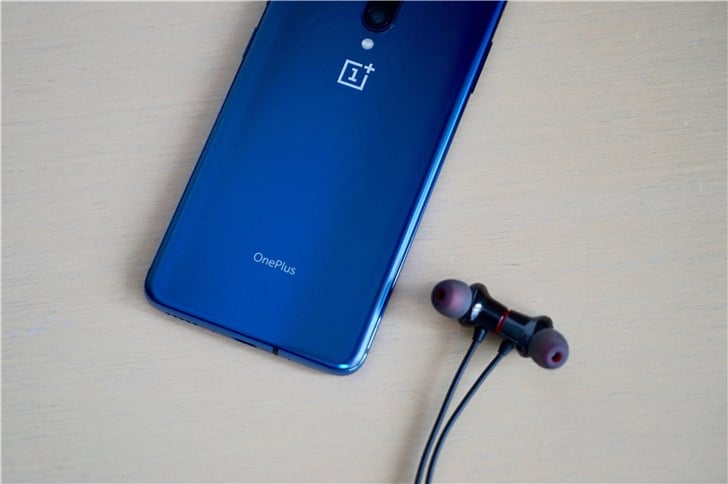
As the OnePlus 6T lacks the 3.5mm earphone jack, OnePlus has spent more on wireless earphones. In the launch event of OnePlus 6T, OnePlus also launched OnePlus Bullets Wireless earphones priced at $69, which has good performance.
In the OnePlus 7 series launch event, OnePlus Bullets Wireless 2 was launched, which is priced at $99. Compared with its predecessor, OnePlus Bullets Wireless 2 has better performance.
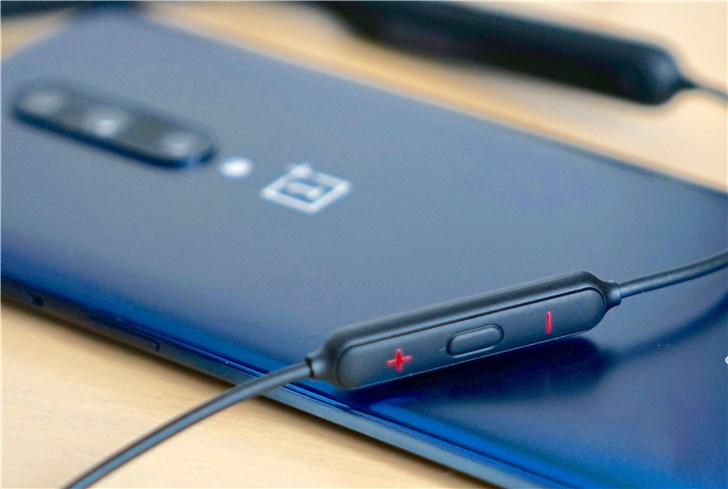
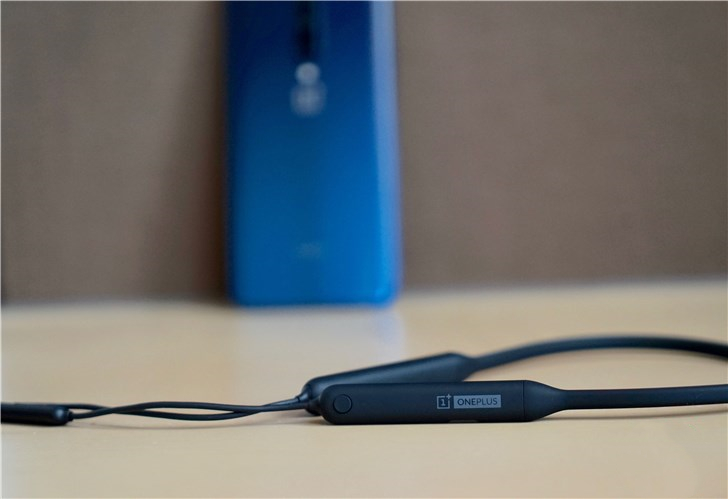
OnePlus Bullets Wireless 2 still adopts neck hanging design with silicone material, and the chipset, battery, charging port and other components are set in the necklet. There is a conventional wire-control module on the left headphone line, which is used to control the volume, play/pause music, and switch track.
Why the latest earphones of OnePlus don’t adopt the TWS design? Peter Lau, the CEO of OnePlus, explains that TWS earphones cannot meet all people’s needs. In addition, neck hanging earphones can get advantages in the aspect of stability and sound quality.
The design of OnePlus Bullets Wireless 2 is ordinary, but the details show well.
The Bullets Wireless 2 comes with the seashell-inspired stainless steel design which is delicate. The attractive point of the earphones is the magnetic control, which is simple for you to turn on/off them. You can simply clip the Bullets together magnetically to turn them off. When you want to resume playback, just separate them.
What’s more, OnePlus Bullets Wireless 2 has another feature, which can switch between devices easily. If the Bullets Wireless 2 is paired with two devices, you can switch directly between the two devices by double-clicking the button on the outside of the left necklet when both devices’ Bluetooth is on.
Also, as same as the Bullets Wireless, you can use Bullets Wireless 2 to pair your OnePlus smartphone quickly.
The sound quality is the biggest improvement of the OnePlus Bullets Wireless 2.
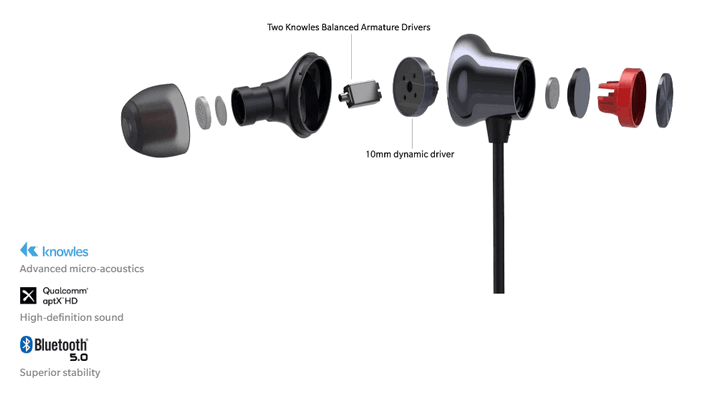
OnePlus Bullets Wireless 2 comes with two Knowles Balanced Armature Drivers and one 10mm dynamic driver in each earbud.
Compared with OnePlus Bullets Wireless, Bullets Wireless 2 has a great improvement in sound quality, which is clear, powerful and premium. The balance of soft trebles and low basses performs well. It is suitable to hear pop music.
There’s no doubt that OnePlus Bullets Wireless 2 is the best sound we’ve ever heard.
Thanks to the canalearphone design, Bullets Wireless 2 can achieve good passive noise reduction effect with a little big size silicon earbuds. But the earphones don’t have active noise reduction feature.
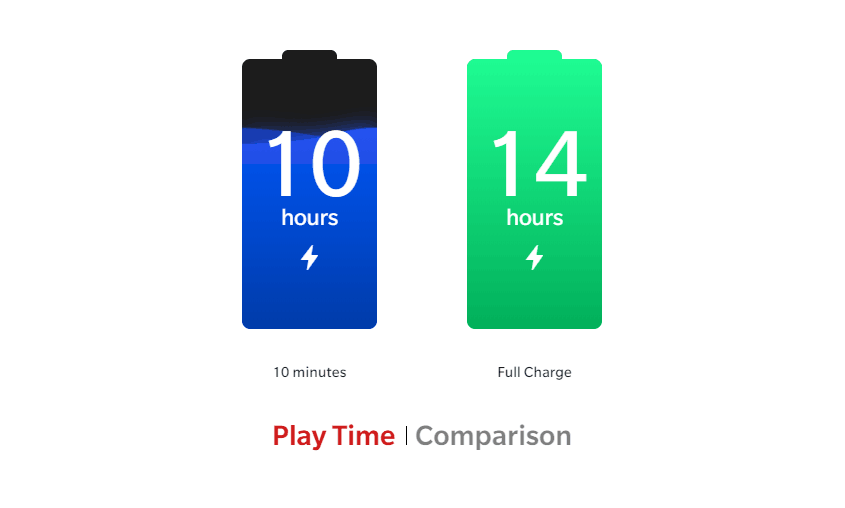
OnePlus Bullets Wireless 2 supports fast charging, the earphones charges to 70% in just 10 minutes, which can give you 10 hours of listening time, while a full charge can give 14 hours of listening time.
OnePlus Bullets Wireless 2 comes with warp charge, which can charge quickly with a 5V/0.6A charging brick and a Type-C cable.
Overall, the appearance of OnePlus Bullets Wireless 2 is conventional, but it performs well in terms of sound quality, charging and features.
With new technologies getting introduced for smartphones such as powerful display, chipsets, communication, and connectivity upgrades, among others, the one thing that hasn’t seen much improvement is the battery capacity.
The phone’s battery capacity still averages between 3,500mAh and 5,000mAh but the battery charging rate has been increasing with every major smartphone launch. So, power banks remain a vital source of mobile charging on the move.
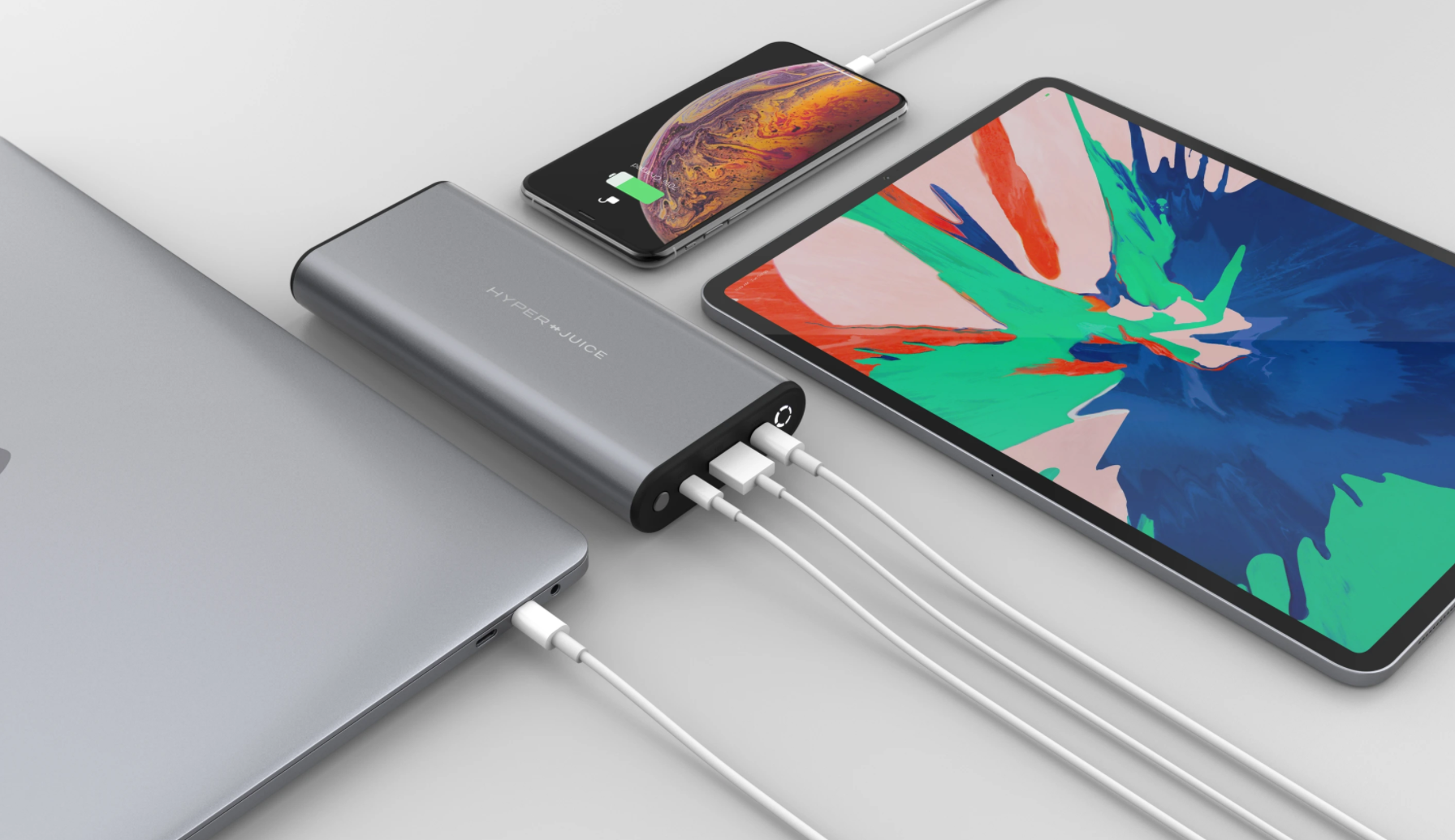
Today, Hyper has launched a new powerbank named HyperJuice which comes with support for 130W power output. It comes with two USB Type-C ports, enabling the device to charge two devices at the same time.
The company also said that it is the world’s first power bank to come with USB Type-C port supporting over 100W of power output. One Type-C port supports 100W power output while the other port supports 60W output.
Apart from smartphones, the powerbank can also be used to charge any USB Type-C powered laptop, including the Apple MacBook Air and MacBook Pro. It also comes with the standard USB port which supports 18W output.
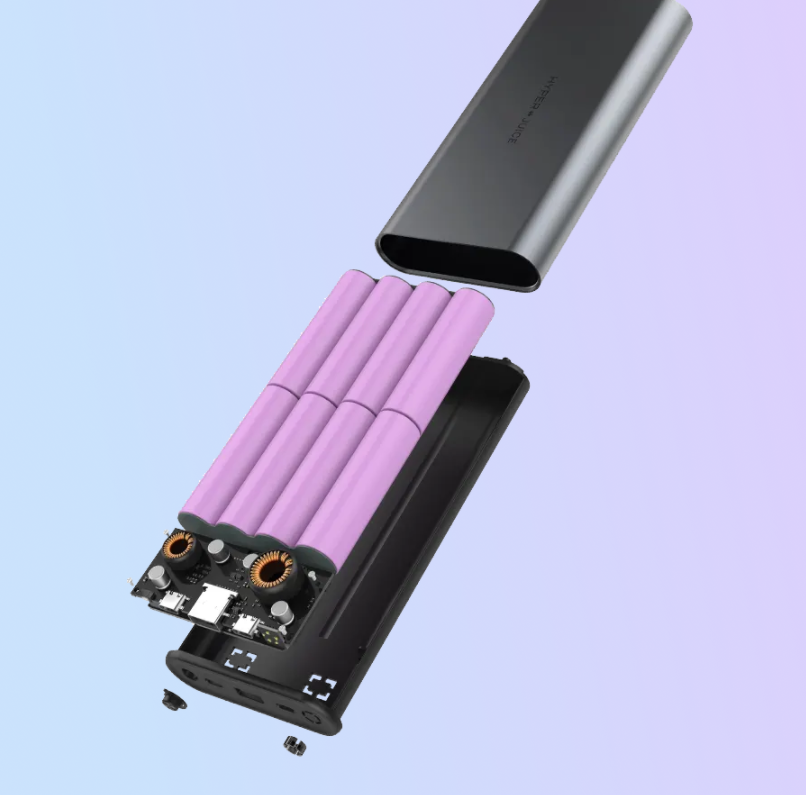
The powerbank comes with a 27,000mAh battery, which the company says is enough to fully charge the Apple MacBook Pro. It is also claimed to be complying regulations of the airline and is allowed to be carried on airplanes.
The HyperJuice power bank also supports 100W input and the company says that the device can be fully charged in just one hour with the help of the 112W power adopter, which is included in the box.
The powerbank, which measures 164.33 x 77.15 x 25 mm and weighs 661g, is made up of an aluminum shell and is available in two color options — Silver and Deep Gray. It is priced at RMB 1,728 (approximately $250) and is available for purchase through the company’s official website.
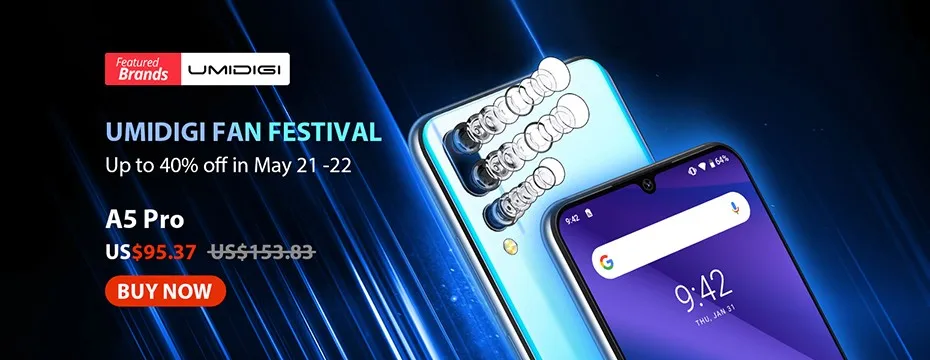
In collaboration with AliExpress, Chinese Mobile Phone firm Umidigi has launched the ‘Umidigi Fan Festival.’ Thanks to this recently kicked-off promo, you can avail up to 40 percent off on a wide range of mobile phones and other Umidigi-branded items.
Aside from that, Umidigi has launched the global open sales for the Umidigi A5 Pro smartphone, which was made available to the public in April this year. This recently unveiled handset has now gone up for presale bearing a considerably lowered $95.37 price tag.
It is worth mentioning here that the Umidigi A5 Pro smartphone would normally set you back $153.83 without the aforesaid discount. If that doesn’t impress you much, you can use a $6 dedicated coupon to bring the already lowered retail price of the phone under $89.
On the downside, the coupon is slated to expire in just two hours. You can head straight to this link in order to take full advantage of the coupon before it lapses. Regrettably, only 3000 coupons are available, which can be used today from 10 to 12 hours of Moscow time.
An absolute steal at this price, the Umidigi A5 Pro offer the following features:
3-inch Incell FHD+ display with 2280×1080 pixels resolution
Starting from May 23rd, the price of the A5 Pro will be $99.99 until the end of the week. Once the global open sale comes to an end, the smartphone’s price will increase to $159.99.
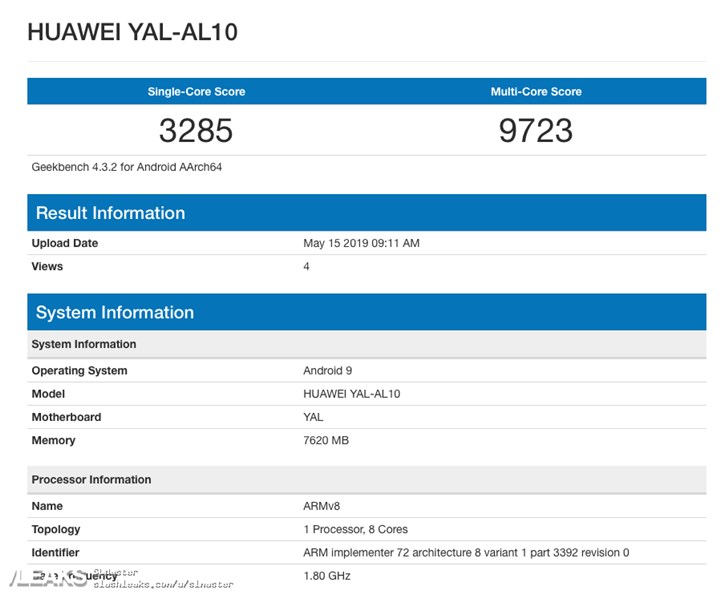
In a few hours, Huawei’s sub-brand Honor will be launching its all-new Honor 20 series smartphone, which also includes the Honor 20 Pro — the top-end model in the upcoming lineup. Now, ahead of the launch, the smartphone has appeared on benchmarking platform Geekbench, shedding light on its performance score.
The benchmark listing reveals that the smartphone will be powered by an octa-core processor clocked at 1.8GHz, coupled with 8GB of RAM. It runs Android 9 Pie operating system out-of-the-box. The phone scored 3,285 points in the single-core test and 9,723 points in the multi-core test.
Previously, it was reported that the smartphone will be powered by the company’s own Kirin 980 octa-core chipset, coupled with 8GB of RAM and 128GB of internal storage. It will come packed with a 3,750mAh battery which will support 22.5W fast charging.
It is said that the handset will come with four camera sensors, consisting of a 48MP primary Sony IMX586 sensor, a 16MP super wide-angle lens, an 8MP telephoto lens, and a 2MP sensor for depth sensing. On the front side, it will come equipped with a 32MP snapper for taking selfies and video calling.
Recently, Zhao Ming, President of Honor smartphone, revealed new sample photos taken from Honor 20 Pro (Full Specs) showcasing its ability to capture photos in low-light conditions. Upon extracting EXIF data from photos, it is confirmed that the phone carriers the world’s first f/1.4 aperture on a smartphone.
As for the variants and pricing, a recent leak shows that the Honor 20 Pro will be coming with 8GB RAM + 128GB storage and 8GB RAM + 256GB storage. These models are respectively priced at 3,699 Yuan (~$535) and 4,199 Yuan (~$607).
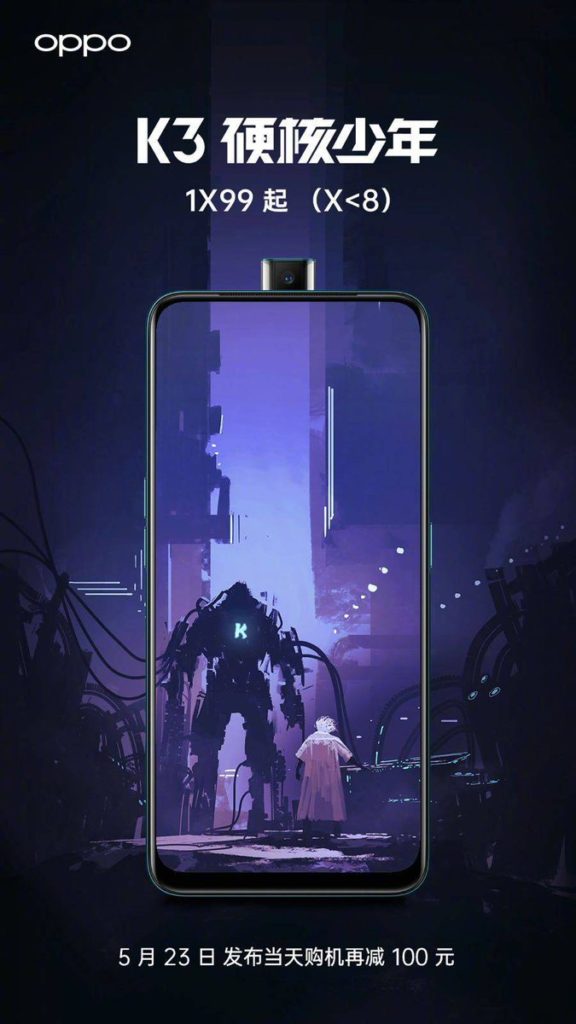
OPPO will be launching the OPPO K3 smartphone on May 23. Yesterday, the Chinese firm teased its pricing by stating that it will be costing 1X99 Yuan. It gave birth to speculations that the starting edition of the OPPO K3 could be priced at 1,999 Yuan (~$289). However, a new teaser that was released earlier today hints that the smartphone will cost less than 1,899 Yuan (~$275).
Recent reports have revealed that the OPPO K3 will be arriving with a 6.5-inch AMOLED display. It will be sporting a notch-less screen that carries support for full HD+ resolution of 1080 x 2340 pixels. The display of the phone will be equipped with an in-screen fingerprint reader. Rumors have also claimed that the phone may arrive with Always-On Display feature. The handset is fitted with a pop-up selfie camera module that includes a 16-megapixel lens.
The Snapdragon 710 chipset will be fueling the smartphone with up to 8 GB of RAM. It may offer up to 256 GB of native storage. The handset will be loaded with ColorOS 6.0 based Android 9 Pie OS. The OPPO K3 will also include OPPO’s own features like GameBoost 2.0 for accelerated GPU performance while gaming, FrameBoost for allocating system resources according to the requirements of specific game resources, LinkBoost 2.0 for faster network performance, and TouchBoost for the improved response of the touchscreen.
The OPPO K3 will be packed with a 3,765mAh battery that will carry support for VOOC 3.0 Flash Charge technology through USB-C. Recent reports have revealed that it will be equipped with a 16-megapixel + 2-megapixel dual camera setup on its rear. The photography features that will be available on the handset include Ultra Clear Night View 2.0, handheld night screen mode, and multi-frame noise reduction technology.
OPPO is currently accepting reservations for the OPPO K3. Rumors surrounding the phone suggest that it could be available in two models such as 6 GB RAM + 128 GB storage and 8 GB RAM + 256 GB storage. Probably, the base model of the OPPO K3 will carry a price tag of 1,899 Yuan (~$275). The phone is expected to be available in Nebula Purple, Morning White and Farm Black color options.
Banggood has launched the ‘Festival de Cannes Sale,’ wherein the Chinese online store will be offering an exclusive 30 percent off coupon and other great discounts.
The discounts will be valid on a wide selection of top-end products that have been split into multiple categories such as The Brightest Star, The Top Sellers, Exclusive Coupon, The Best New Arrival, etc.
Keeping in line with that, you can avail noteworthy discounts on the FIMI X8 SE RC quadcopter, the Ulefone Armor 6E smartphone and the H96 Max Plus TV box under the ‘The Brightest Star’ section. For example, the FIMI X8 SE would normally set you back $599, but you can reduce its retail price to just $499 from Banggood.
Moreover, you can extend this 17 percent discount by using coupon code 05bb96. The aforesaid coupon helps you bring the already lowered asking price of the FIMI X8 SE further down to just $420 before you click the ‘Place your Order’ button.
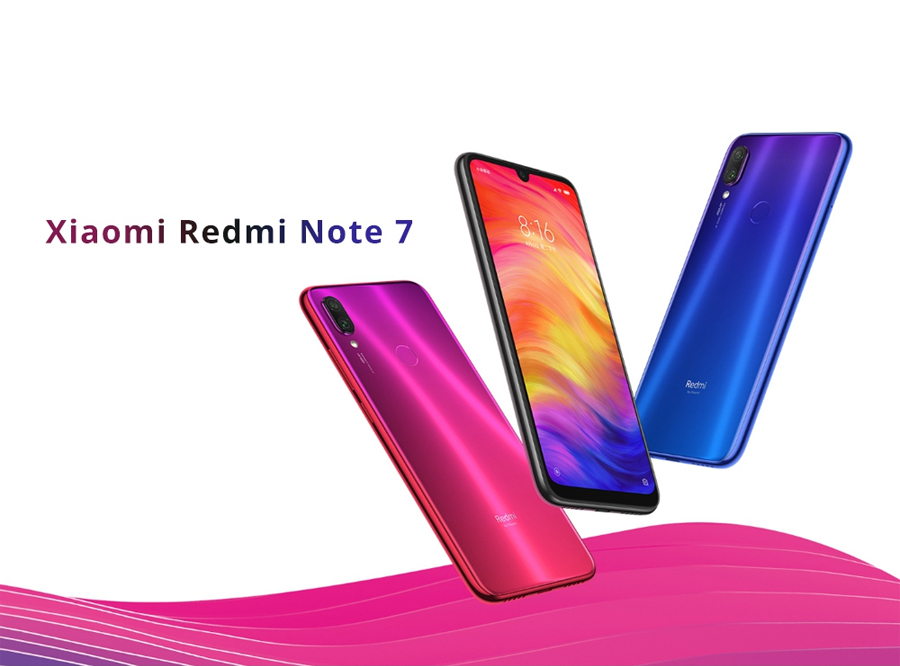
Likewise, you can avail significant discounts on various items like the Redmi Note 7, Xiaomi Mi3 smartwatch and lots more. The ‘Cannes Exclusive Coupon’ category features coupon code 30Can, which you can use on items available in this category for an extra 30 percent off.
Brand conscious buyers can head straight to the ‘The Best Brands’ section which is crammed with products from leading manufacturers such as Xiaomi, BlitzWolf, Eachine and Geekcreit. More importantly, you can buy these items at heavily discounted prices.
The rest of the categories including The Most Affordable, The Top 3 Categories, and More Best Choices offer unmissable discounts on products that would normally set you back a pretty penny on both online as well as offline stores. You can click here to visit the promotion page and take advantage of the discounts.
Designed for those who fancy capturing memorable moments from behind the lens, the DJI Osmo Action comes with dual screens that allow you to record your world with just touch of a button.
Its vivid front screen enables you to effortlessly frame yourself in any setting, while the back-mounted screen offers a hyper-responsive display. This versatile action camera adopts advanced technology that lets you live the action rather than worry about equipment.
You can get your hands on the DJI Osmo Action FPV action camera from multiple online stores. We have listed the best online stores where you can buy this highly durable action camera at an unbeatable price, and we’ll also show how you can save a considerable amount of money at checkout.
Banggood
The DJI Osmo Action has gone up for pre-order on Banggood, the Chinese online store known for offering the best bang for your buck! You can pre-order this waterproof FPV action camera for $487.88.
As part of its promo, Banggood will be offering free shipping on orders over $19.99. Moreover, you can earn 487 BG points as well. You can visit this link to place your order; however, note that the processing time is slated for May 29.
While you’d normally end up shelling out $549.99 on the DJI Osmo Action waterproof action camera, GearVita is giving its loyal users an unmissable chance to get a great discount on the feature-laden action camera’s original asking price.
In order to save $100, all you need to do is to apply coupon code RODJOsmo during the check out process. In other words, you can reduce the original asking price of the DJI Osmo Action to just $449.99 with the help of the aforesaid coupon. You can click here to use the coupon.
The DJI OSMO Action FPV Action Camera usually retails for $529.99 on both online as well as offline stores, but you can now buy it for a lowered price of just $429.99 from GeekBuying. You can extend this 19 percent discount by applying coupon code JJUNVGSI.
The coupon brings the already reduced selling price of the DJI OSMO Action to just $419.99. In other words, you can get an extra $10 by applying the coupon before you click the ‘Place Your Order’ button.
You can visit this link to grab the discount. Note that the promo is slated to end in just two days.
The DJI Osmo Action is a must-have action camera for those looking for capturing stable, shake-free footages. The coveted action cam digital camera will set you back $499.99 on Amazon. With only three pieces left in stock, you can head straight to this link to place your order without wasting time.
The DJI OSMO Waterproof FPV Action Camera normally carries a steep $568.70 price tag. Much to the relief of those living on a tight budget, Gearbest is offering a 6 percent off to those whose order exceeds $30.
To avail the discount, all you need to do is to apply coupon code IBXPXH192H during the checkout process. You can follow this link to use the coupon, which is likely to expire soon.
Vivo has confirmed through a Weibo post today that it will be announcing the Vivo Z5x smartphone in China on May 24 at 19:30PM (local time). The launch poster has no details on the specs of the phone. However, recent reports have revealed some of its information such as display size and capacity of its battery. Also, the Geekbench appearance of the phone has revealed that it will be powered by the Snapdragon 710 chipset.
Leaked live shots of the Vivo Z5x handset that have appeared in the recent past revealed that it will be arriving as the company’s first smartphone with a punch-hole display. Also, one of the teasers of the phone further confirms that it will be flaunting a punch-hole screen.
Rumors have it that it could be featuring a 6.53-inch IPS LCD display that will probably carry support for full HD+ resolution. The handset is rumored to house a 5,000mAh battery and still sport a slim profile of around 8mm. There is no confirmation on whether the phone will be equipped with fast charging. Probably, the handset could be arriving with a rear mounted triple camera setup. The Chinese text that can be seen on the Vivo Z5x launch poster states that it will be a performance-driven smartphone.
Vivo Z5x Geekbench Listing
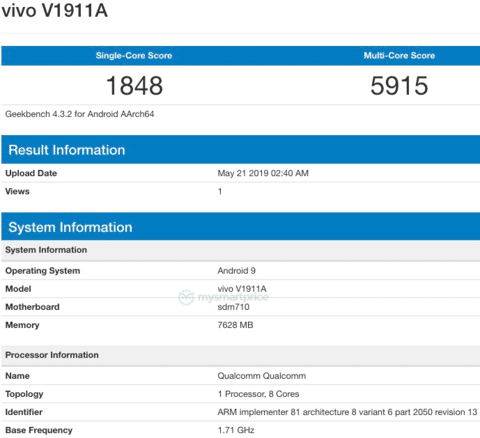
The Vivo Z5x that has a model number of V1911A has appeared on Geekbench today (spotted first by MySmartPrice) to reveal that it will be fueled by the Snapdragon 710 mobile platform. The SoC will be coupled with 8 GB of RAM. The phone will come loaded with Android 9 Pie OS that will be skinned with the latest edition of FunTouch OS UI. In the single-core and multi-core tests of Geekbench, the Vivo Z5x has respectively scored 1848 and 5915 points.
As of this writing, there is no information available on the price tag of the Vivo Z5x phone. The smartphone is now up for reservations in China through the official website. Hopefully, the rumor mill will reveal more information on the Vivo Z5x before its launch date.
After South Korea started rolling out 5G services, it’s now China’s turn to start offering 5G services to its customers. As per new reports, China is all set to kick-off its 5G rollout in the first phase from 1st October, which covers about 40 cities.
Michael Gao Wenhao, Deputy General Manager of ZTE‘s 5G industrial product line, appeared at the Hong Kong 5G Forum of the Hong Kong Productivity Council headquarters and said that China plans to start commercialization of 5G technology nationwide from October 1st.
As per the reports, the base stations for the 5G rollout in Mainland China are expected to be provided by three companies — Huawei, ZTE, and Ericsson. With this, China will become one of the first countries to offer commercialized 5G.
The report adds that by 1st October, China Mobile, China Unicom, and China Telecom will deploy 30,000 to 50,000 base stations in around 40 cities in China for the 5G services. The 5G deployment in 40 cities is a big task and compared to the USA and South Korea, China will have wider 5G coverage.
Last month, after various estimations and calculations, China’s first 5G network went live in the Qianhai-Shekou Free Trade Zone in country’s southern tech hub Shenzhen. China’s state telecom carrier China Unicom built 111 5G base stations by joining hands with FTZ (Free Trade Zone) in Shenzhen.
It will help the companies and locals to enjoy and experience the new technology. The low latency and higher speeds will lead to improved opportunities and will boost tech startups and companies. The capacity will be gradually increased to 7,000 base stations across Shenzhen before 2020.
China Unicom has been testing 5G network in Beijing, Tianjin, Qingdao, Hangzhou, Nanjing, Wuhan, Chengdu, Fuzhou, Zhenzhou and Shenyang. On the other hand, China Mobile is aiming to bring 5G network in multiple cities and is also planning to build around 10,000 5G base stations by the year 2020.
Google confirmed yesterday that the upcoming Huawei phones won’t be featuring Google apps and services. The search engine giant took this decision after Huawei was recently added by the US Commerce Department to the list of companies that are banned from trading. Fresh information reveals that the US has delayed the ban by 90 days starting today allowing Android OS updates to be certified on existing Huawei and Honor phones.
According to Reuters, during the temporary license period of 90 days, Huawei can buy components made by the US companies in a bid to maintain existing networks and also for delivering software updates for existing Huawei devices. However, the Chinese firm is restricted from placing new orders for parts and components from the US firms to build new devices without seeking license approvals that are most likely to be denied.
For telecommunications providers that depend on Huawei equipment, the delay in ban will provide them with time for making other arrangements. The US Commerce Department said that it will review whether to delay the ban beyond 90 days.
During the 90 days, Huawei will be able to certify software updates with Google for currently available smartphones and tablets. Huawei’s sub-brand Honor will be launching the Honor 20 and Honor 20 Pro flagship phones today through an unveil event in London. The owners of the Honor 20 duo and the Mate X foldable smartphone will be able to use Google services since they have been already certified by it. However, the future remains bleak for devices releasing later this year.
Huawei and Honor will be launching new flagship phones in the second half of the year. Hopefully, Huawei and China can come to an agreement with the US government soon so that the upcoming devices from the Chinese firm continue to feature Google apps and services.
Huawei is the world’s largest telecommunications equipment maker and it has a huge advantage over its competitors in the upcoming 5G mobile technology. However, US intelligence considers Huawei a national security threat and does not want US firms to buy or sell to the Chinese firm without seeking approval from the government. Companies like Qualcomm, Broadcom, Intel, Xilinx and more have reportedly stopped supplying components and services to Huawei. A recent report had claimed that in preparations to trade war uncertainties, Huawei has already stockpiled crucial components for up to 12 months.
We use cookies on our website to give you the most relevant experience by remembering your preferences and repeat visits. By clicking “Accept”, you consent to the use of ALL the cookies.
This website uses cookies to improve your experience while you navigate through the website. Out of these, the cookies that are categorized as necessary are stored on your browser as they are essential for the working of basic functionalities of the website. We also use third-party cookies that help us analyze and understand how you use this website. These cookies will be stored in your browser only with your consent. You also have the option to opt-out of these cookies. But opting out of some of these cookies may affect your browsing experience.
Necessary cookies are absolutely essential for the website to function properly. This category only includes cookies that ensures basic functionalities and security features of the website. These cookies do not store any personal information.
Any cookies that may not be particularly necessary for the website to function and is used specifically to collect user personal data via analytics, ads, other embedded contents are termed as non-necessary cookies. It is mandatory to procure user consent prior to running these cookies on your website.