Advertisement

These Google Pixels won’t receive Android 17 update

Android 17 for Google Pixel

Google is expected to release Android 17 this week. It’s one of the most significant Android upgrades to date, bringing deeper integration of Gemini Intelligence across the entire OS, major multitasking improvements, granular privacy controls, and a polished visual interface, leveling up the Android experience. However, several Pixel devices will miss out on this significant upgrade.

According to the update policy for Pixel devices, only Pixel 6 and newer models are eligible to receive the Android 17 update. Older models won’t be upgraded to the new OS.

Android 17 update won’t reach these Google Pixel devices

  • Pixel 5
  • Pixel 5a 5G
  • Pixel 4
  • Pixel 4 XL
  • Pixel 4a
  • Pixel 4a 5G
  • Pixel 3
  • Pixel 3 XL
  • Pixel 3a
  • Pixel 3a XL
  • Pixel 2
  • Pixel 2 XL
  • Pixel
  • Pixel XL

If your Pixel is on the list, now might be the best time to upgrade to a newer model.

Android 17 isn’t just an annual refresh but a pretty significant upgrade with a major focus on Gemini Intelligence. It moves Gemini from a standalone app into a proactive system assistant capable of automating tasks across applications, creating on-the-fly assets, and managing deep user workflows. It allows users to generate widgets, such as custom tracking goals or countdown timers, with the help of Gemini AI.

The new OS finally has a native app lock. Speaking of privacy, Android 17 also introduces limited contact sharing that grants apps one-time or strict temporary access to chosen contacts rather than your entire phonebook. Furthermore, Android 17 allows users to have separate toggles for Wi-Fi and mobile data. The bubble feature expands to all apps, allowing users to run multiple floating apps without leaving the full-screen app.

There are many other exciting upgrades to Android 17. You can read more about them on this page. Lastly, if your Pixel is ineligible for Android 17, go buy a newer model, because Android 17 is too big an upgrade to ignore.

Don’t miss out on the latest Android news. Check back on our Google section regularly, or follow us on Telegram to get notified the second a new story drops.

Also read:
1. Here’s when your Google Pixel will receive Android 17 update
2. 8 Android 17 features in development I can’t wait to use

Vivo X Fold 6 seen running Atmoic Workbench in new leak

Just hours after Vivo confirmed the X Fold 6 yesterday, live images of the foldable surfaced online, showing off the device in a blue-green finish. Now, another leak is shedding light on what could be one of the phone’s biggest software additions.

A video posted today by a Weibo account shows the X Fold 6 running a feature reportedly called Atomic Workbench. It is a multitasking system built specifically for foldables to make better use of the device’s expansive inner display.

Vivo X Fold 6 multi-tasking gets an upgrade

According to the leaked video, the Atomic Workbench includes a serial mode that allows users to run up to five applications simultaneously. The interface is optimized to provide more screen space for foreground apps.

Alongside serial mode, the video also shows a one-screen four-use mode, which allows four applications to run on the same screen simultaneously. The system reportedly supports a parallel mode as well, allowing each app to operate independently without interrupting the others.

The leaked footage also reveals several gesture-based controls. In one-screen four-use mode, users can reportedly drag the central corner marker to adjust how much screen space each application occupies. Additionally, placing four fingers on the display enlarges a selected window, making it easier to view content in greater detail.

The new multitasking will be a part of OriginOS 6 Fold, which will debut alongside the Vivo X Fold 6. Previous teasers from Vivo suggest that the software will place a strong emphasis on foldable productivity and AI-powered features.

Vivo has already confirmed that the X Fold6 will launch in June. Additionally, Huang Tao, Vivo’s Vice President of Product, previously revealed that the device will introduce several new features, including the upgraded Atomic Workbench, an AI Assistant, dual-device support, and further improvements to on-device AI capabilities and AI interaction experiences.

For more daily updates, please visit our News Section.

Stay ahead in tech! Join our Telegram community and sign up for our daily newsletter of top stories! 💡

(Source)

Honor X80 Pro Max live shots emerge, it packs an 11,000mAh battery and Snapdragon 6 Gen 5

Reports have claimed that Honor is gearing up to launch a new X80-series phone this month in China. Today, tipsters Digital Chat Station and Experience More confirmed that this device will be called the Honor X80 Pro Max when it hits the market. One of the major highlights of this device is that it will pack the largest battery ever seen on a smartphone sold by a mainstream phone brand.

Honor X80 Pro Max specs, live shots

Honor X80 Pro Max’s specs tipped

According to DCS, the Honor X80 Pro Max has a massive 6.8-inch OLED panel with super-slim bezels and rounded corners. While the screen refresh rate has not been revealed, the leak states that it will support a 1.5K resolution of 2788 x 1280 pixels.

In May, Qualcomm unveiled the Snapdragon 6 Gen 5, a chip designed to bring premium AI, photography, and gaming capabilities to affordable smartphones. It appears that the X80 Pro Max will be the first phone to feature it. The device is said to pack a huge 11,000mAh battery, and it will also support 90W fast charging.

DCS further revealed that the X80 Pro Max will have a drop-resistant body that offers full-level water resistance. In terms of design, the device is said to sport a flagship-grade appearance.

As can be seen in the images shared by tipster Experience More, the X80 Pro Max indeed has ultra-thin bezels on the front. The variant shown in the image has 8GB of RAM and 256GB of storage, and it runs MagicOS 10 based on Android 16.

The X80 Pro Max’s model number has been revealed as BSN-AN00, which was previously spotted with a 90W charger at China’s 3C certification. It appears to feature a premium vegan leather back with a dual-tone finish, combining an elegant ivory-white rear panel with a bold orange accent strip at the bottom for a distinctive look. The circular camera module on the back seems to house a single 50-megapixel camera.

For more daily updates, please visit our News Section.

Stay ahead in tech! Join our Telegram community and sign up for our daily newsletter of top stories!

Global Oppo Reno 16 Geekbench listing reveals Snapdragon chip, will be different from Chinese version

Last month, Oppo unveiled the Oppo Reno 16 and Reno 16 Pro in China. While the Dimensity 8500 Super chip powers the former, the latter comes equipped with the Dimensity 9500s. It appears that the brand is now gearing up for the global launch of the series, as devices such as the Reno 16F, Reno 16, and Reno 16 Pro have already been spotted on certification platforms across different countries. In a new development, the Reno 16’s global version has also appeared on Geekbench, revealing that it will be different from its Chinese counterpart.

Oppo Reno 16 spotted on Geekbench

As can be seen above, an upcoming Oppo smartphone with model number CPH2865 has emerged on Geekbench. Previously spotted on certification platforms such as TDRA (UAE) and NBTC (Thailand), this model number has been linked to the global version of the Reno 16.

The Geekbench listing confirms that the Reno 16 is powered by the Snapdragon 7 Gen 4, which also powers the global version of the Reno 15. As usual, the listing does not directly mention the chipset’s name, but its part number (SM7750), CPU configuration, and GPU details available through Geekbench metadata confirm the presence of the Snapdragon 7 Gen 4.

The Reno 16’s Geekbench listing further reveals 12GB of RAM and Android 16. In the single-core and multi-core tests, the device scored 1,240 and 3,994 points, respectively. While there is no official confirmation regarding the Reno 16 series’ launch date, the Geekbench appearance suggests that Oppo could be internally testing the device ahead of its debut. It may launch later this month or in the first half of July.

The other details of the Reno 16’s global version remain under wraps. However, considering that it is launching in the same year as the Reno 15, it may not arrive with major upgrades.

For more daily updates, please visit our News Section.

Stay ahead in tech! Join our Telegram community and sign up for our daily newsletter of top stories!

(via)

Ugreen launches compact 2-bay and 4-bay NAS with proprietary UGOS Pro

Ugreen has launched an all-new NASync DXP GT series with two NAS devices, the DXP2800 GT and the DXP4800 GT.

The GT name is inspired by the spirit of Grand Touring, and Ugreen says the lineup is built around speed, endurance, and sustained performance, much like the vehicles.

Both models are powered by the AMD Ryzen Embedded R2514 processor of 4 cores, 8 threads, and a boost frequency of up to 3.7GHz. This allegedly gives a 26% improvement in CPU performance compared to select older DXP models. 

Each device starts with 8GB of DDR4 RAM, expandable up to 64GB, along with 64GB of eMMC storage for the operating system. Both run UGOS Pro, Ugreen’s own NAS operating system.

How is Ugreen DXP2800 GT different from DXP4800 GT

Where the two models differ is in storage and networking. The DXP2800 GT is an entry-level model with a 2-bay device with two SATA HDD slots and two M.2 NVMe SSD slots, supporting up to 80TB of total storage. 

It comes with a single 10GbE RJ45 port for fast network access, and connectivity includes a USB-C 10Gbps port and a USB-A 10Gbps port on the front panel, plus additional USB-A ports on the rear and an HDMI 2.1 output.

UGREEN NASync DXP2800 GT Features

Meanwhile, the DXP4800 GT is a 4-bay model that supports up to 144TB of total storage, again combining four SATA HDD bays with two M.2 NVMe SSD slots. 

The bigger upgrade here is networking. It serves dual 10GbE ports, which can be used together for link aggregation up to 20Gbps. As a result, it can handle everything from 4K or 8K video editing to even running virtual machines. 

It also has an SD 3.0 card reader on the front panel, and the DXP4800 GT RAID support is broader too, covering JBOD, RAID 0, 1, 5, 6, and 10.

UGREEN NASync DXP4800 GT Features

Both NAS runs Ugreen’s proprietary UGOS Pro with ecosystem support like Docker, virtual machines, AI-powered photo organization, a built-in surveillance center for managing cameras, and Ugreen’s Ugreenlink remote access service that allows secure file access from anywhere without needing to configure a public IP. 

The hardware design is identical too. Both have a space gray aluminum body with gold trim accents, a rear magnetic dust mesh filter, and a hydraulic fan that maintains noise between 29 and 34 dB for quiet around-the-clock operation.

Price and Availability

The Ugreen DXP2800 GT is available for purchase at $509.99. The DXP4800 GT, on the other hand, will set you back  $659.99 in the US. Both come with a 2-year warranty and a 30-day return window. And of course, the storage drives are sold separately.

For more daily updates, please visit our News Section.

Stay ahead in tech! Join our Telegram community and sign up for our daily newsletter of top stories! 💡

(Source 1, 2)

Here’s when your Google Pixel will receive Android 17 update

Google pixel Android 17 release date

Android 17 will be a significant upgrade, especially for newer models like the Pixel 9 and Pixel 10, which are confirmed to receive major AI upgrades. Even for older Pixels, there are plenty of improvements and some exciting features to look forward to. But when will Google release Android 17? We may have an answer to that.

The short answer: Google may release Android 17 today or any time this week.

Google switched to a dual-release schedule last year with Android 16 instead of pushing out a single major update a year. As per the new strategy, Google will push a major release around Q2, followed by a minor release later in the year.

Android 17 also follows the new release strategy, so its major release is expected around the same time as last year, in June. Surprisingly, Google didn’t release any Developer Preview builds and moved directly to the public beta.

Related: 8 Android 17 features in development I can’t wait to use

The first Android 17 beta was released on February 13, followed by the second beta later that month. While these initial builds arrived later than those of Android 16, the gap narrowed with upcoming builds. The new OS reached platform stability with Beta 3 on March 27, two weeks later compared to Android 16.

Beta 4 landed on April 17, followed by a minor Beta 4.1 release on June 1, which should be the final beta. The next build will likely be stable and may be released at any time now. Google usually releases a new Android OS on Tuesday, which is today (Jun 9). If not today, the update will most likely be released any day this week.

Android 17Release date
Beta 1Feb 13, 2026
Beta 2Feb 26, 2026
Beta 3Mar 26, 2026
Beta 4Apr 16, 2026
Beta 4.1Jun 1, 2026
StableSecond week of June (expected)

If you have an older Google Pixel, you may want to check whether it is eligible for the upcoming major upgrade. Review the list of eligible devices here to find out.

Stay tuned to Gizmochina for the latest tech updates. You can visit the news section regularly for the latest updates, or follow us on Telegram to receive instant alerts.

Redmi Turbo 5 key specs confirmed for India ahead of next week’s launch

The Redmi Turbo 5 is just days away from its India debut, and the brand has now started filling in the details. A microsite has gone live on Amazon that reveals key specs of the phone ahead of the June 16 launch.

Here are the Redmi Turbo 5 Specifications for India

The official promo material confirms that the Redmi Turbo 5 features a 7540mAh battery paired with 100W HyperCharge charging support. This is interesting because the Chinese variant has a slightly larger 7560mAh cell. 

The difference is only 20mAh, which is unlikely to affect real-world usage, but it does suggest the Indian model could be a slightly tweaked version.

At the front of the phone will be a 120Hz fluid display with 1.5K resolution and a 20MP selfie camera. The back will carry a 50MP main rear camera with both OIS and EIS, alongside an 8MP ultra-wide lens. 

Under the hood, the Redmi Turbo 5 is powered by the MediaTek Dimensity 8500 SoC. It will be paired with up to 12GB of LPDDR5X Ultra RAM and UFS 4.1 storage. However, the end note confirms the LPDDR5X Ultra RAM configuration will only be available on the higher-end variant. 

Other expected features include an in-screen fingerprint scanner, dual speakers, an X-axis linear motor, an IR blaster, a metal middle frame, and IP68/IP69-rated dust and water resistance.

Redmi Turbo 5
Redmi Turbo 5

With the launch now just days away, Redmi will likely reveal additional details about pricing, availability, and variant options soon.

Moreover, reports also suggest that Redmi could unveil the Redmi 17 alongside the Turbo 5, although the company has yet to confirm any details. You can learn more about the Redmi 17 in our dedicated post here.

For more daily updates, please visit our News Section.

Stay ahead in tech! Join our Telegram community and sign up for our daily newsletter of top stories! 💡

(Via)

This limited-edition Infinix phone comes with a JBL speaker in the box

Infinix has introduced a special version of its Note Edge smartphone in India, aimed at users who spend a lot of time listening to music, watching videos, and gaming on their phones. Called the Infinix Note Edge JBL Edition, the device combines the existing Note Edge hardware with JBL-focused audio features and a bundled wireless speaker.

Infinix Note Edge JBL Edition price in India and availability

The Infinix Note Edge JBL Edition is available in a single 8GB+25GB configuration priced at Rs 24,999 (around $290). The smartphone comes exclusively in a Solar Orange colour option and will be sold through Flipkart. Infinix says only 5,000 units of this edition will be available, making it a limited-run offering.

As part of the package, buyers receive a MagPower Speaker worth Rs 3,999 at no extra cost. The company is also offering applicable bank discounts during the sale period, which can further reduce the effective purchase price.

Infinix Note Edge JBL Edition specifications and features

Infinix Note Edge JBL Edition

The biggest difference between this version and the regular Note Edge is the bundled speaker and its entertainment-focused positioning. The handset itself retains JBL-engineered dual stereo speakers with Hi-Res Audio support, while the MagPower Speaker is intended to extend the audio experience beyond the smartphone.

The Infinix Note Edge features a 3D curved 1.5K AMOLED display with a slim profile and edge-to-edge design. Under the hood, it is powered by the MediaTek Dimensity 7100 5G chipset paired with 8GB RAM and 256GB storage. The processor supports up to 90fps gaming in compatible titles and is designed to handle multitasking, streaming, and gaming workloads comfortably.

Power comes from a 6,500mAh battery with support for 45W fast charging. For photography, the smartphone includes a 50-megapixel primary rear camera and a 13-megapixel front-facing camera. Other notable features include Corning Gorilla Glass 7i protection, an IP65 rating for dust and water resistance, and software features aimed at media consumption.

For more daily updates, please visit our News Section.

Stay ahead in tech! Join our Telegram community and sign up for our daily newsletter of top stories!

Infinix Smart 20 launched with a 120Hz display, Helio G81 chip and IP64 rating

Infinix has introduced the Smart 20 in India, targeting buyers looking for an affordable smartphone with a large display and everyday performance. The new handset arrives as the successor to the Smart 10 and brings upgrades across the screen, hardware, and battery departments while maintaining a slim design.

Infinix Smart 20 specifications and features

Infinix Smart 20
Infinix Smart 20

The Infinix Smart 20 sports a 6.78-inch HD+ IPS LCD screen with a 120Hz refresh rate and a centred punch-hole cut-out. The panel supports up to 700 nits brightness in high-brightness mode and includes a Dynamic Bar interface for notifications and status updates.

Powering the device is the MediaTek Helio G81 Ultimate processor paired with 4GB LPDDR4X RAM and up to 128GB eMMC 5.1 storage. Infinix also offers virtual RAM expansion and support for microSD cards up to 2TB, giving users additional flexibility for apps, photos, and videos.

For photography, the Smart 20 features an 8-megapixel rear camera accompanied by an auxiliary sensor and dual-LED flash. Selfies and video calls are handled by an 8-megapixel front camera. The device runs XOS 16 based on Android 16 and packs a 5,200mAh battery with support for 15W charging and 5W reverse wired charging.

Additional features include stereo speakers with DTS audio, a side-mounted fingerprint scanner, an infrared sensor, IP64 dust and splash resistance, and UltraLink offline communication technology that enables compatible Infinix devices to connect over distances of up to 1km without a mobile network.

Infinix Smart 20 price in India and availability

The Infinix Smart 20 is available in two variants. The 4GB+64GB storage model is priced at Rs 12,499 (~$145), while the 4GB+128GB storage version costs Rs 13,999 (~ $163). Customers can choose from Sunlike Orange, Cloudline Blue, Shadow Black, and Polaris Titanium color options.

As part of the launch offers, buyers can avail of an instant discount of Rs 500 on major bank cards, reducing the effective starting price to Rs 11,999. The smartphone will go on sale from 12 June through Flipkart and the Infinix India online store.

For more daily updates, please visit our News Section.

Stay ahead in tech! Join our Telegram community and sign up for our daily newsletter of top stories!

All new features in iOS 27 and iPadOS 27: “Siri AI” with personal context, improved Liquid Glass

Apple opened WWDC with a closer look at iOS 27 and iPadOS 27, and unsurprisingly, AI was the main theme of the presentation. Alongside a number of visual tweaks and performance improvements, Apple spent a lot of time talking about the next generation of Apple Intelligence and what it means for everyday iPhone and iPad use.

The biggest announcement was the new Siri AI experience. Apple is giving Siri a much larger role across its software, even introducing a dedicated app for the assistant. According to the company, Siri can now better understand personal context, what’s currently on your screen, and information from the web, allowing for more natural conversations and more useful actions.

Whether it lives up to that promise is something users will find out once the software reaches more devices, but it’s clear Apple is trying to make Siri feel less like a voice command tool and more like a genuine AI assistant.

Apple also made a few changes to the Liquid Glass design language introduced previously. Users can now adjust transparency levels with a slider, and the interface itself looks a bit cleaner thanks to “more uniform refraction and improved contrast”.

There are some performance gains as well. Apple says apps launch up to 30% faster, photos appear in the library more quickly, and AirDrop transfers can be 80% faster than before. The company also highlighted improvements to network switching between Wi-Fi and cellular connections.

A number of smaller features were announced too. Mail search is getting smarter, VoiceOver can provide more detailed image descriptions, and subtitles now support automatic syncing and translation. One update that stood out is support for full-resolution contributions to iCloud Shared Albums from Android and Windows users, something many people have wanted for quite a while.

On the iPad side, Apple is adding a tool that can turn a collection of photos and videos into a customizable slideshow complete with transitions, music, and export options. Calendar events can also be created or edited using natural language, and file transfers to external storage devices are reportedly up to five times faster.

As usual, not every feature will be available on every device. The more advanced Apple Intelligence features require newer hardware, while many of the broader improvements will work on older supported iPhones and iPads.

Developer builds are available starting today, with a public beta expected next month and a wider rollout planned for later this year. AI may have dominated the keynote, but a lot of the updates Apple showed were actually about making everyday tasks a little faster and a little less frustrating.

(Apple)

OnePlus to launch all-new ‘N Series’ in India by July

OnePlus could launch a brand-new lineup in India, called the OnePlus N Series, according to an exclusive tip by well-known leaker Yogesh Brar. The launch is expected to happen as early as July, with some models in the series priced under ₹20,000.

OnePlus has traditionally focused on flagship and mid-range phones and has not had a strong presence in the budget segment. Its most affordable recent launch, the Nord CE6 Lite, starts at ₹22,999, making the sub-₹20K price point a new frontier for the brand.

The new N Series is said to target different segments within the budget category, meaning OnePlus could offer multiple phones for entry-level buyers. However, Brar has not specified how many devices the lineup will include or what exact names the phones will carry. 

India is one of the biggest smartphone markets in the world, and the budget smartphone sector is quite competitive, with companies such as Xiaomi, Lava, and iQOO bringing out products at aggressive pricing. 

For OnePlus, a dedicated N series could open the door to a much wider audience who’ve previously found OnePlus phones out of reach.

The Nord N Legacy

The “N” name isn’t entirely new for OnePlus globally. The company had previously used it as part of the Nord N sub-series — including phones like the Nord N10, N100, N200, N300, N20, and N30 — all of which were part of the Nord lineup. 

Notably, though, these phones were primarily sold in the US and select global markets and never officially launched in India.

OnePlus Nord N30 SE 5G

The last phone in that line was the Nord N30 SE, launched in 2023. The fact that OnePlus is now reviving the “N” branding as a standalone series in India suggests the company may be deliberately separating its entry-level budget identity from the Nord brand, which has gradually climbed upmarket with flagship-grade specs on phones like the Nord 6.

For more daily updates, please visit our News Section.

Stay ahead in tech! Join our Telegram community and sign up for our daily newsletter of top stories! 💡

Source: Yogesh Brar (X/Twitter)

Xiaomi MiMo-V2.5-Pro gets UltraSpeed Mode, breaks 1,000 tokens/second speed on standard GPUs

Xiaomi‘s large language model family, MiMo, has officially launched UltraSpeed mode for MiMo-V2.5-Pro. Developed jointly with TileRT, the 1-trillion-parameter model can run on general-purpose GPUs while breaking the 1,000 tokens-per-second generation barrier.

Xiaomi says this milestone is possible through the “ultimate co-design” of the model and its underlying system.

Xiaomi MiMo-V2.5-Pro UltraSpeed Mode
Make a Snake game in 10 seconds

To put that in perspective, MiMo-V2-Flash, an earlier model in the family, was already generating responses at 150 tokens per second when it launched in December 2025. It translates to roughly 110 words per second, meaning the AI is generating text faster than the fastest human can read or speak.

The new UltraSpeed mode pushes that ceiling much higher, with Xiaomi claiming roughly 10 times faster output than standard MiMo-V2.5-Pro API access.

Xiaomi MiMo-V2.5-Pro ​​UltraSpeed ​​mode is more expensive to use

That speed-up comes at a cost. Literally. The MiMo-V2.5-Pro-UltraSpeed API is priced at 3x the standard rate. For reference, the regular MiMo-V2.5-Pro charges 0.025 yuan per million tokens on a cache hit, 3 yuan on a cache miss for input, and 6 yuan per million tokens for output. 

Meanwhile, Xiaomi says the UltraSpeed mode is a “3x price increase” but offers a “10x output experience.” Note that the Token Plan is not supported for UltraSpeed; this is API trial access only.

Due to the constrained supply of high-speed inference resources, Xiaomi is running an application-based trial from June 9 to June 23, 2026. There’s no guaranteed approval timeline or success rate, and Xiaomi says it will prioritize enterprises and professional developers with genuine business needs.

Those who get the approval will get a two-week free Chat experience, with some guardrails to keep things fair: a maximum of 10 queue entries per account per day, sessions capped at 30 minutes, and an automatic resource release if idle for more than 5 minutes.

MiMo-V2.5-Pro itself launched in April 2026 as part of Xiaomi’s growing model family, which now spans text, voice, and multimodal capabilities. 

For more daily updates, please visit our News Section.

Stay ahead in tech! Join our Telegram community and sign up for our daily newsletter of top stories! 💡

IVia)

Nintendo hit with €35 million fine over Switch Joy-Con drift issue

Nintendo is settling a long-running dispute in France over the original Switch’s notorious Joy-Con drift, agreeing to pay a €35 million ($40 million) fine to the country’s consumer protection agency, the DGCCRF.

Nintendo-Switch

The French watchdog accused Nintendo of misleading commercial practices and planned obsolescence. According to the investigation, Nintendo was aware of the widespread stick drift issue, where the controller’s analog sticks register phantom movements, as early as 2018.

However, the company failed to properly notify consumers until 2020. Because Nintendo remained quiet about the defect, many players simply bought replacement controllers instead of utilizing the company’s free repair program.

Despite the €35 million payout, Nintendo is standing its ground. In a statement to Le Monde, the company denied intentionally misleading buyers, stating that the fine does not constitute an admission of guilt and reflects only the amicable resolution of legal proceedings. Recent financial filings from the company show a matching ¥6.4 billion loss on litigation, effectively confirming the settlement on the balance sheet.

Joy-Con drift was a defining, frustrating hardware flaw for the original Switch’s 155 million user base. Investigations by consumer groups previously attributed the drift to a fundamental design flaw, specifically rapid wear on the joystick slider’s plastic circuit boards.

While Nintendo quietly revised later Joy-Con models to mitigate the wear, it has historically avoided discussing the exact hardware changes. Fortunately for current players, the company seems to have learned from the hardware misstep. The Switch 2 has been on the market for a year now, and so far, there are no widespread reports of the dreaded drift returning to Nintendo’s newest console.

For more daily updates, please visit our News Section.

Stay ahead in tech! Join our Telegram community and sign up for our daily newsletter of top stories! 💡

(Source 1,2, Via)

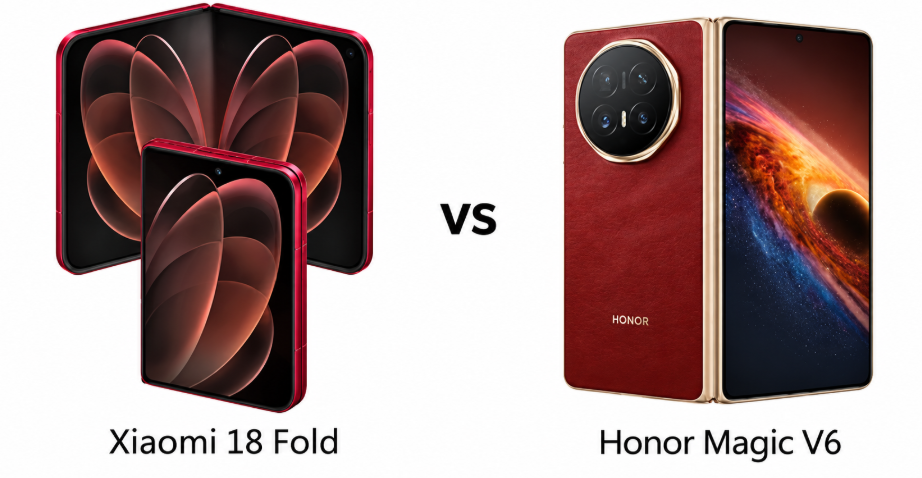
Xiaomi HyperOS leak reveals Xiaomi’s iPhone Ultra rival

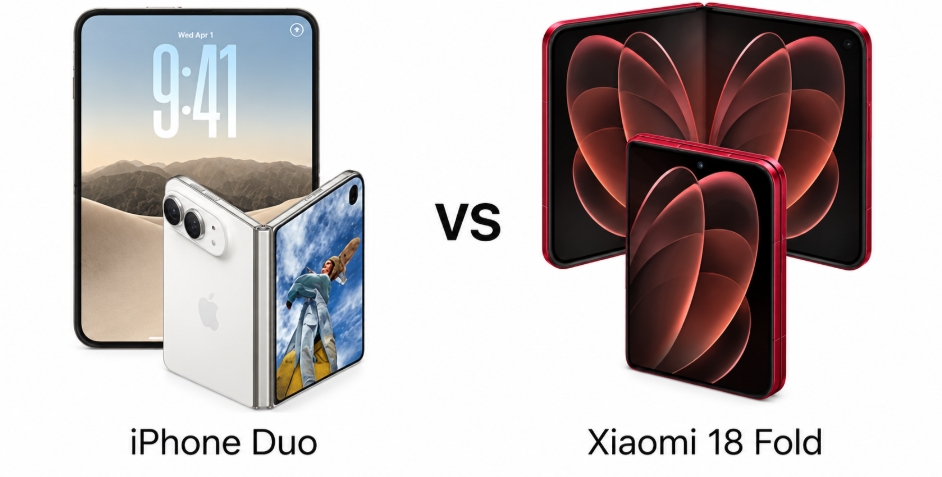
Huawei has been experimenting with the widescreen foldable form factor for quite a while, and Apple is also doing the same for its first foldable handset. The wider design improves the usability of the phones whether they are folded or unfolded.

The latest HyperOS leak suggests Xiaomi may be heading in the same direction. After skipping a direct successor to the Mix Fold 4 from 2024, the company is reportedly working on a new foldable with a wider form factor.

Some enthusiasts have already overlaid the leaked UI onto renders of Huawei’s Pura X Max, and the fit is surprisingly convincing. While that doesn’t confirm anything on its own, it does add weight to the idea that Xiaomi is experimenting with a wider form factor.

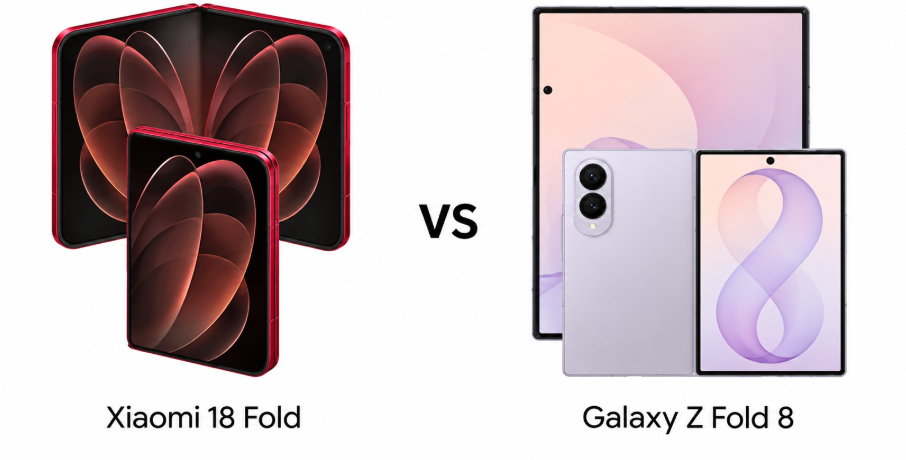
The device is currently being referred to by several possible names, including the Xiaomi Mix Fold 5 and Xiaomi 18 Fold, though some leaks still mention Xiaomi 17 Fold.

Early reports point to a triple-camera setup developed in partnership with Leica, potentially led by a 200MP primary sensor.

Power is expected to come from Xiaomi’s in-house Xring O3 chipset, another sign of the company’s growing focus on developing key technologies internally. Rumors also mention improvements to multitasking in HyperOS, a refined hinge mechanism, and the kind of performance expected from a premium flagship device.

There is still plenty we don’t know. Xiaomi hasn’t officially acknowledged the device, and specifications could change before launch. Still, the HyperOS findings suggest development is moving forward at a fairly advanced stage. Current reports point toward a possible debut in China around August 2026, although international availability remains unclear.

Don’t miss a thing! Join our Telegram community for instant updates and grab our free daily newsletter for the best tech stories!

For more daily updates, please visit our News Section.

(Source: Beginner’s Review on Weibo)

Apple announces device compatibility for iOS 27, iPadOS 27, macOS 27 Golden Gate, and watchOS 27

Apple has officially shared which devices will support its next round of major software updates following the announcements at WWDC 2026. As expected, the new releases bring a mix of upgrades, including improvements to Apple Intelligence, a smarter “Siri AI” experience, and a refreshed design in several areas. But support isn’t exactly the same across every product category.

For iPhone users, the news is pretty straightforward. iOS 27 will be available on all iPhone models that currently support iOS 26. That means devices ranging from the iPhone 11 lineup to the latest iPhone 17 series will be covered, along with the iPhone 16e, iPhone Air, and iPhone SE (2nd generation and newer). It’s a broad support list and gives a lot of users another year without worrying about replacing their phone.

The iPad story is a bit different. Apple is trimming support for a handful of older models this time around. Devices losing compatibility include the 2018 versions of the 11-inch and 12.9-inch iPad Pro, the 8th-generation iPad, the 5th-generation iPad mini, and the 3rd-generation iPad Air. Newer models remain supported, including iPad Pro models from the 2nd-generation 11-inch and 4th-generation 12.9-inch onward, as well as newer iPad Air, iPad, and iPad mini models.

Mac users are seeing an even bigger shift. With macOS 27 Golden Gate, Apple is effectively closing the chapter on Intel support. The update will only be available on Macs powered by Apple silicon. That includes recent MacBook Air and MacBook Pro models, the Mac mini, iMac, Mac Studio, Mac Pro, and the newly introduced MacBook Neo. If you’re still using an Intel Mac, this appears to be the end of the road for major macOS upgrades.

The biggest surprise initially came from watchOS 27. When Apple first published its compatibility list, the Apple Watch Series 9 was missing, leading many users to assume it had been dropped. That quickly raised questions, especially since the Series 9 shares the same S9 chip as the Ultra 2. Apple later confirmed the omission was a mistake and updated its website to include the Series 9 among supported devices.

With that correction, watchOS 27 is compatible with the Apple Watch Series 9, Series 10, Series 11, Ultra 2, Ultra 3, and the latest Apple Watch SE.

These software updates are expected to arrive this fall. For users with supported devices, there’s plenty to look forward to, from new AI-powered features to performance improvements.

(Source)

Lenovo launches new gaming desktop that pairs Intel or AMD CPUs with RTX 50-series GPUs

Lenovo has released a new pre-built desktop PC in China. The Bellator Feng 7000X is a mid-range system that offers a mix of Intel and AMD processors alongside Nvidia graphics cards. It is positioned as a straightforward, upgrade-friendly option for PC users looking for a standard 1080p or 1440p gaming setup.

Lenovo Bellator Feng 7000X

Pricing and Availability

The system is available in three primary configurations. The base model pairs an Intel Core 5 205H with an Nvidia RTX 3050 for 5,499 yuan ($812). Stepping up to 6,999 yuan ($1,034) upgrades the GPU to an RTX 5060 Ti, which can be configured with either the Intel Core 5 205H or an AMD Ryzen 5 5600G. Across the board, Lenovo is equipping these desktops with 16GB of DDR4 memory and a 512GB PCIe solid-state drive.

Lenovo Bellator Feng 7000X Specifications

Aesthetically, the Bellator Feng 7000X features a rigid, industrial design, but the internal construction is focused heavily on practicality. The 25-liter chassis measures 374 x 170 x 393mm and is built using 0.8mm SGCC galvanized steel panels. The motherboard tray, rear panel, and side panels are thickened to 1mm for extra structural integrity. Lenovo also includes a dedicated GPU support bracket to prevent motherboard strain over time and protect the components during shipping.

Lenovo Bellator Feng 7000X

Cooling is managed by a side-intake airflow design that Lenovo refers to as its Hurricane thermal architecture. The case supports up to three fans, two 120mm in the front and one 90mm in the rear. It accommodates CPU coolers up to 136mm tall and graphics cards up to 290mm long, which can be extended to 305mm if the front fans are removed. For storage expansion, there is a dual-layer drive cage that holds one 3.5-inch and one 2.5-inch drive.

For connectivity, the front panel has two USB 3.2 Gen 1 ports. On the back, there are four USB 3.2 Gen 1 ports, four USB 2.0 ports, a Gigabit Ethernet port, and three audio jacks. The discrete graphics cards provide three DisplayPort connections and one HDMI port. The system also supports Wi-Fi 6 and Bluetooth 5.3 for wireless connectivity.

In related news, Asus has recently unveiled the ExpertCenter P200 AiO PC with AMD Ryzen processors, while MSI has introduced the MEG Vision X2 AI+ desktop featuring a built-in holographic AI pet.

For more daily updates, please visit our News Section.

Stay ahead in tech! Join our Telegram community and sign up for our daily newsletter of top stories! 💡

(JD)

Edifier launches LolliClip SE clip-on earbuds with Dolby Spatial Audio, AI transcription & 40h battery life

Edifier has released the LolliClip SE, a new pair of open-ear wireless earbuds. They are launching with an official retail price of 499 yuan ($74) and come in black and gold color options.

Edifier LolliClip SE

Edifier LolliClip SE Specifications

Like other open-ear models, the LolliClip SE is designed to let you hear your surroundings while listening to audio. They attach to the ear using a flexible bridge structure that Edifier says is shaped to distribute pressure evenly and avoid pressing on the ear canal or cartilage. These also boast adaptive channel recognition, automatically detecting which ear they are on so you can just grab them and go without ever checking for left or right labels.

For audio, the earbuds use a 12mm dynamic driver with a dual-magnet setup and a composite diaphragm made from polyurethane and titanium-coated PET. Because open-ear designs naturally lose some bass response due to the lack of a physical seal, Edifier included a dynamic bass compensation algorithm to help balance the low-end frequencies.

They support LHDC 5.0 decoding for high-resolution audio up to 990kbps, and hold Hi-Res Audio Wireless and HWA certifications. This is also Edifier’s first clip-on model to include Dolby Spatial Audio, which is intended to create a wider soundstage for music, movies, and games.

The software side includes several AI features powered by Doubao and DeepSeek. Through the Edifier Connect app, users can access real-time translation for 21 languages, a basic AI assistant for answering questions, and tools for recording, transcribing, and summarizing meetings. The app also handles standard settings like EQ adjustments, earbud tracking, and battery monitoring.

The LolliClip SE uses Bluetooth 6.1 and supports multipoint connectivity, allowing them to stay connected to two devices at the same time. Battery life is rated at 10 hours on a single charge, with the charging case providing an additional 30 hours for a total of 40 hours of playback.

Edifier LolliClip SE

For voice calls, they use a dual-microphone setup with noise reduction to filter out background sounds. The earbuds also have an IP56 rating, meaning they can handle dust and light water exposure like sweat or rain.

In related news, Baseus has recently introduced the Bowie MC2 clip-on earbuds featuring 11mm dynamic drivers, LDAC audio support, IP67 protection, and up to 55 hours of battery life.

For more daily updates, please visit our News Section.

Stay ahead in tech! Join our Telegram community and sign up for our daily newsletter of top stories! 💡

(JD)

Portronics launches new 20,000mAh 35W power bank with built-in cables an LED display

Portronics has added a new high-capacity power bank to its lineup in India with the launch of the Titan 35. As the name suggests, the new accessory offers 35W fast charging alongside a substantial 20,000mAh battery capacity. However, its most practical selling point is the inclusion of integrated charging cables, designed to keep users from having to carry their own cords.

Portronics Titan 35 20000mAh power bank

Portronics Titan 35 Specifications

The Titan 35 features a matte black, fire-resistant casing and weighs in at 440 grams. While 20,000mAh power banks are inherently bulky, Portronics has attempted to streamline the hardware by building in both Type-C and 8-pin (Lightning) cables. In a clever design choice, these flat cables double as a carrying strap when slotted into the chassis. It is a straightforward hardware decision that caters to users carrying a mix of Android and Apple devices.

On the performance front, the power bank supports up to 35W Power Delivery (PD) via its Type-C connection. Portronics markets this as being capable of charging a MacBook Air. While 35W is on the lower end for laptop charging, it is sufficient to keep an Air powered during use or to provide a steady charge while the laptop is asleep, making it a viable emergency backup.

For smartphones and tablets, the 35W output is much more capable. The power bank also supports PPS technology, allowing it to dynamically adjust voltage and current.

In terms of I/O, the Titan 35 offers a standard array of ports alongside its built-in cables. There is a dedicated Type-C port that handles both input and output, plus a standalone 18W USB-A output port for legacy devices or smaller accessories like wireless earbuds and smartwatches. It also features a digital LED display sitting on the front panel to provide an exact percentage of the remaining battery life.

Internally, the device includes standard safety protocols, featuring an intelligent chip to regulate voltage and protect against overcharging, short circuits, and overheating.

Pricing and Availability

The Portronics Titan 35 is available now. While it carries an official MRP of Rs. 4,999, it is currently selling at a launch price of Rs. 2,049. It can be purchased directly from the Portronics website, as well as through Amazon India, Flipkart, and various offline retail stores. The device comes with a standard 12-month warranty.

In related news, Belkin recently launched a 25,000mAh laptop power bank with 140W fast charging, a built-in USB-C cable, and an airline-friendly design.

For more daily updates, please visit our News Section.

Stay ahead in tech! Join our Telegram community and sign up for our daily newsletter of top stories! 💡

Motorola devices eligible for Android 17 update: Complete list

Motorola Android 17 eligible devices

Google is preparing to release Android 17 very soon. It will be rolled out to Google Pixels initially, and then other brands, including Motorola, will start pushing the update to their devices.

If you have a Motorola device, you may be wondering if it will receive the Android 17 update. Well, the good news is that Motorola is expected to release the update to dozens of devices ranging from high-end razr models to affordable G-series phones. Review the list below to find out if yours is included.

Note that Motorola has yet to announce the list of eligible devices. So, our team reviewed the update policy for every single Motorola device to prepare the list, which should be mostly accurate.    

These Motorola devices are eligible for the Android 17 update

Motorola Razr series

  • Motorola Razr 70 (Razr 2026)
  • Motorola Razr 70+ (Razr+ 2026)
  • Motorola Razr 70 Ultra (Razr Ultra 2026)
  • Motorola Razr 60 (Razr 2025)
  • Motorola Razr+ 2025
  • Motorola Razr 60 Ultra (Razr Ultra 2025)
  • Motorola Razr 50 (Razr 2024)
  • Motorola Razr 50 Ultra (Razr+ 2024)

Motorola Edge series

  • Motorola Edge 70
  • Motorola Edge 70 Pro
  • Motorola Edge 70 Pro+
  • Motorola Edge 70 Fusion
  • Motorola Edge 70 Fusion+
  • Motorola Edge 60
  • Motorola Edge 60 Pro
  • Motorola Edge 60 Neo
  • Motorola Edge 60 Fusion
  • Motorola Edge 60 Stylus
  • Motorola Edge 50
  • Motorola Edge 50 Pro
  • Motorola Edge 50 Ultra
  • Motorola Edge 50 Neo
  • Motorola Edge 50 Fusion
  • Motorola Edge (2026)
  • Motorola Edge (2025)

Motorola Moto G series

  • Moto G Stylus 5G (2026)
  • Moto G Stylus 5G (2025)
  • Moto G Power 5G (2026)
  • Moto G Power 5G (2025)
  • Moto G Play (2026)
  • Moto G (2026)
  • Moto G (2025)
  • Moto G87
  • Moto G86
  • Moto G77
  • Moto G75
  • Moto G67
  • Moto G57
  • Moto G57 Power
  • Moto G47
  • Moto G37
  • Moto G37 Power

Motorola Pad series

  • Moto Pad (2026)
  • Moto Pad 60 Neo

Other Motorola phones

  • Motorola ThinkPhone 25
  • Motorola Signature

If your Motorola device is on the list, it’s almost certain to receive the Android 17 update, as the list is prepared according to the current update policy.

It’s worth noting that Motorola hasn’t officially announced the update policy for every device it has launched so far. So, we didn’t include devices that we weren’t confident about. A couple of them may still be eligible for the upgrade.

Also read:
1. 8 Android 17 features I can’t wait to use
2. How to get Android 17 beta on your Motorola phone

Motorola hasn’t announced a release date for Android 17. However, the Android 17 beta releases so far have largely mimicked last year’s Android 16, and therefore Android 17 is expected to be released by Google in June. Based on that, we can expect Motorola to release Android 17 around the same time as last year, around September.

We’ll keep you updated with the latest details in our Motorola section. You can visit the page regularly or join our Telegram channel to get the fresh information.

ASUS Just Launched a Mouse Pad Built by Pro Esports Players

ASUS Republic of Gamers (ROG) has introduced the new ROG Hone Control Ace L Vitality Edition mouse pad at COMPUTEX 2026 in Taipei. Developed in partnership with Team Vitality, one of the world’s leading esports organizations, the new mouse pad is designed specifically for competitive FPS players who demand precision and consistency. It is also the first control-oriented cloth mouse pad in the ROG lineup and has been tested and approved by Team Vitality’s professional Counter-Strike 2 and VALORANT players.

Designed for Precision Gaming

The ROG Hone Control Ace L Vitality Edition features a control-focused cloth surface with a high-friction texture. Unlike speed-focused mouse pads, this surface is designed to provide stronger stopping power, helping gamers make accurate flick shots, precise aim corrections, and controlled movements during intense matches. ASUS says the surface also delivers consistent X-Y tracking, ensuring predictable mouse movement across the entire pad.

Comfort-Focused Design

To improve comfort during long gaming sessions, ASUS has equipped the mouse pad with a 4mm high-density polyurethane memory foam base. The cushioning helps absorb minor vibrations and provides better support for the wrist and arm. The stitch-less curved edge design further enhances comfort by reducing friction against the wrist and forearm, making wide mouse movements feel smoother.

Built for Esports and Everyday Use

With dimensions of 490 × 420 mm, the mouse pad offers ample space for both low-DPI and high-DPI gamers. It also features a water-resistant surface that helps protect against accidental spills and makes cleaning easier. The bright yellow Team Vitality-inspired design gives the mouse pad a distinctive esports look while highlighting the collaboration between the two brands.

Specifications:

FeatureDetails
Product NameASUS ROG Hone Control Ace L Vitality Edition
TypeControl-Oriented Cloth Mouse Pad
CollaborationTeam Vitality
SurfaceHigh-Friction Cloth
TrackingConsistent X-Y Tracking
Thickness4 mm
Base MaterialHigh-Density PU Memory Foam
Edge DesignStitch-Less Curved Edges
Water ResistanceYes
Dimensions490 × 420 mm
ColorTeam Vitality Yellow
Target UsersCompetitive FPS Gamers
Supported GamesCounter-Strike 2, VALORANT, FPS Titles

Read More:

(via)