Advertisement

Apple launches Watch Ultra 4 with smarter health tracking and on-device AI features

Apple has introduced the Apple Watch Ultra 4. On the outside, it looks largely identical to previous iterations, though it is now available in a black titanium finish alongside the standard natural titanium. The actual changes this year are internal, focusing on more frequent health data sampling, a longer-lasting battery, and the integration of Apple Intelligence.

Apple Watch Ultra 4

Apple Watch Ultra 4 Specifications

Just like the Series 12, the Watch Ultra 4 also features the new S11 chip and Apple’s upgraded Health Sensing System. The updated optical and electrical sensors can measure your heart rate every five seconds throughout the day, while heart rate variability (HRV) is recorded up to 24 times more frequently than on the Ultra 3.

Apple Watch Ultra 4

Apple is using the increased health data to introduce a new Readiness score. The feature provides a daily score from 0 to 10 based on your sleep, training load, and daytime vitals, helping you decide whether to train harder or take a rest day. Apple has also improved the pedometer for more accurate step counting and distance tracking during indoor walks and runs.

In terms of battery life, the Ultra 4 offers up to 50 hours of regular use or up to 84 hours with Low Power Mode enabled. The new Max Extended Workout mode provides up to 45 hours of continuous GPS tracking for outdoor activities. Apple has also improved charging speeds, with a 15-minute charge providing up to 18 hours of regular use.

Apple Watch Ultra 4

For software, watchOS 27 adds some new AI tools that Apple is calling Audio Intelligence. If you ever get distracted and miss what someone said, a tool called Live Rewind lets you double-press the Digital Crown to read a quick transcript of the last 15 seconds. Siri can also summarize longer conversations for you. To address privacy concerns, Apple says the watch processes all of this audio locally in a secure part of the chip, meaning nothing is recorded, saved, or sent to their servers.

Apple Watch Ultra 4

Pricing and Availability

🔌 You’ll NeedA 15-minute charge only nets 18 hours of use, so keeping a fast charger cable on hand pays off. Check Apple Watch Ultra fast charger cable price on Amazon →

The Apple Watch Ultra 4 maintains its predecessor’s pricing, starting at $799. Preorders are open now, and the device will be available in stores starting Friday, September 18.

For more daily updates, please visit our News Section.

Stay ahead in tech! Join our Telegram community and sign up for our daily newsletter of top stories!

Apple Watch Series 12 debuts with new Health Sensing System, Audio Intelligence & Readiness score

Apple has announced the Watch Series 12, an update that primarily focuses on more frequent health data collection and a new set of audio-based AI features. The new smartwatch starts at $399, is available for pre-order today, and will ship on September 18th.

Apple Watch Series 12

Apple Watch Series 12 Specifications

The new series comes with what Apple calls the Health Sensing System, which includes redesigned optical and electrical sensors with larger green LEDs. The upgraded sensors allow the watch to record your heart rate every five seconds in the background and measure Heart Rate Variability (HRV) up to 24 times more frequently than the Series 11.

This increased data collection feeds into a new Readiness metric. Catching up to features already standard on Garmin and Oura devices, the Apple Watch now provides a daily score from 0 to 10 based on recent activity, sleep, and daytime vitals. It advises users whether to rest or proceed with a workout.

Apple Watch Series 12

The watch also adds passive notifications for potential hypertension and sleep apnea. On the iPhone side, a redesigned Health app introduces a Health Age metric to compare user data against age-based averages.

The new S11 chipset also brings a suite of microphone-dependent features branded as Audio Intelligence. The standout is Live Rewind, which transcribes the last 15 seconds of audio when the user double-clicks the Digital Crown, designed for when you miss a detail in conversation. Another feature, Siri Recap, generates text summaries of recent chats.

For privacy, Apple says all audio processing takes place directly on the watch using the S11 chip’s Secure Exclave, so raw audio is neither stored nor sent to the cloud. Live Rewind also plays an audible chime and shows an on-screen animation to let people nearby know when transcription is active.

Apple Watch Series 12

The Series 12 comes in 42mm and 46mm sizes. Apple is offering aluminum and titanium cases, alongside the return of a ceramic option in white and blue. Aluminum models get an updated Ceramic Shield 2 glass, which Apple claims is 60% tougher than the previous generation.

Battery life remains at 24 hours for standard use, though Apple says outdoor workout tracking now lasts up to 10 hours. Charging speeds have improved slightly, with a 15-minute charge yielding 12 hours of use. The device ships with watchOS 27, which includes a new Siri AI integration for more conversational queries.

🔌 You’ll NeedFaster charging only helps if you have a compatible dock — the Series 12 still relies on Apple’s magnetic charger. Check Apple Watch magnetic charging dock price on Amazon →

At the event, Apple launched its first foldable smartphone, the iPhone Duo, featuring dual 120Hz displays, a titanium build, and the A20 Pro chip. The company also introduced the iPhone 18 Pro and iPhone 18 Pro Max, which come with a variable aperture camera and the 2nm A20 Pro chip.

For more daily updates, please visit our News Section.

Stay ahead in tech! Join our Telegram community and sign up for our daily newsletter of top stories!

Apple launches AirPods 5 with improved ANC, on-stem volume controls

Apple is updating its standard, unsealed earbuds with the announcement of the AirPods 5, featuring improved active noise cancellation. The new generation is divided into two separate models: a base version and a slightly upgraded tier that adds a wireless charging case and a few extra hardware controls.

Apple AirPods 5

Apple AirPods 5 Specifications

While Apple introduced ANC to its open-ear design with the previous generation, the AirPods 5 aim to make it significantly more effective. To achieve this, Apple says it redesigned the internal acoustics and updated its computational audio processing algorithms.

The company claims this new setup removes up to 50% more ambient noise compared to the AirPods 4 with ANC. Alongside the upgraded noise cancellation, the AirPods 5 support transparency mode, adaptive audio for automatically mixing the two settings based on your surroundings, and conversation awareness, which drops the volume of whatever you are listening to when you start talking.

Apple AirPods 5

The AirPods 5 also bring deeper Apple Intelligence integration, giving you access to the updated Siri directly through the earbuds. You can also respond to Siri prompts using head gestures, such as nodding to accept or shaking your head to dismiss them.

There is also a new Live Translation feature tied to the iOS Translate app. By pressing both earbud stems at the same time, users can listen to real-time translations of spoken conversations directly in their ears.

🔌 You’ll NeedThe charging case has no built-in protection against drops — a silicone cover keeps it scratch-free. Check AirPods charging case cover price on Amazon →

If you opt for the higher-tier model, Apple includes swipe-based volume controls directly on the earbud stems, a feature it previously kept exclusive to the AirPods Pro line. This version also comes with a wireless charging case that works with USB-C, standard Qi pads, and Apple Watch chargers.

Apple AirPods 5

For battery life, you get up to five hours of listening time with ANC enabled and up to 22 hours with the charging case. Both models also use 40% recycled materials overall, including recycled cobalt in the batteries.

Pricing

As for the pricing, the base model of the AirPods 5 costs $129. The upgraded version, which gets you the wireless charging case, the on-stem volume swipes, and the battery improvements, is priced at $149. Both are available to preorder today and will start shipping on September 18th.

At the event, Apple has launched its first foldable iPhone Duo with dual 120Hz displays, a titanium build, and the A20 Pro chip. The company has also unveiled the iPhone 18 Pro and Pro Max with a variable aperture camera and 2nm A20 Pro chip.

For more daily updates, please visit our News Section.

Stay ahead in tech! Join our Telegram community and sign up for our daily newsletter of top stories!

Apple launches its first foldable iPhone Duo with dual 120Hz displays, titanium build & A20 Pro chip

After years of watching competitors like Samsung and Google iterate on flexible displays, Apple has officially entered the foldable smartphone market. Announced today, the iPhone Duo is a book-style foldable that starts at a steep $1,999, bringing the company’s hardware design to a category it has long observed from the sidelines.

Apple iPhone Duo

Apple iPhone Duo Specifications

The iPhone Duo features a 5.4-inch outer display and opens to reveal a 7.6-inch inner screen. Both are Super Retina XDR panels equipped with 120Hz ProMotion, always-on support, and a peak outdoor brightness of 3,000 nits.

Apple iPhone Duo

The two screens share the same aspect ratio, which should help apps scale consistently when moving between the cover and the main display. The inner screen utilizes a nano-texture finish designed to reduce glare and minimize the visibility of the center crease. It also houses an under-display FaceTime camera, keeping the 7.6-inch panel free of a notch or hole-punch cutout.

To address the standard durability concerns associated with foldables, Apple has built the Duo’s chassis from grade 5 titanium, paired with a 3D-printed hinge cover. The device carries an IP68 rating for water and dust resistance. According to Apple, the hinge relies on over 100 components to keep the flexible display flat when open, while a custom polymer layer and a titanium base plate reinforce the inner screen against daily wear.

Apple iPhone Duo

Internally, the phone runs on the A20 Pro chip, the same processor powering the iPhone 18 Pro lineup. Because foldables present unique thermal challenges, Apple has included a custom vapor chamber. Power is managed by a dual-battery system split between the two halves of the device, which Apple claims will provide up to 31 hours of video playback on the inner screen and 44 hours on the outer screen.

Apple iPhone Duo

The rear camera system consists of a 48MP main sensor and a 48MP ultrawide lens. With the new form factor, Apple is adopting several software features that will be familiar to anyone who has used an Android foldable. This includes Duo Preview, which uses the cover screen as a viewfinder for high-resolution selfies, and Kid Cue, which plays animations on the outer display to get children to look at the camera.

Apple iPhone Duo

On the software side, the Duo ships with iOS 27, which introduces native Split View multitasking to the iPhone for the first time, allowing users to run two apps side-by-side. The interface has also been tweaked for the hardware, moving elements like the Dynamic Island and the app dock to the side of the screen to maximize vertical space.

Pricing and Availability

The iPhone Duo is an eSIM-only device worldwide and supports Wi-Fi 7. It will be available in two colors, Star White and Night Sky. Pricing starts at $1,999 for the base 256GB model, with the 512GB version priced at $2,199, and a 1TB option available for $2,399.

Apple iPhone Duo

Pre-orders begin on October 16 ahead of general availability on October 23. Apple has also said that the device will gain support for the USB-C Apple Pencil in a software update later this year.

For more daily updates, please visit our News Section.

🔌 You’ll NeedThe inner display’s nano-texture finish is scratch-prone, so a folding-safe screen protector adds extra protection. Check Foldable phone screen protector price on Amazon →

Stay ahead in tech! Join our Telegram community and sign up for our daily newsletter of top stories!

Apple iPhone 18 Pro & Pro Max debut with variable aperture camera & 2nm A20 Pro chip

Apple has announced the iPhone 18 Pro and iPhone 18 Pro Max today. The new phones focus on hardware adjustments to the camera system, a shift to a 2-nanometer processor, and improved internal cooling.

iPhone 18 Pro

iPhone 18 Pro & Pro Max Specifications

The primary hardware update is the 48-megapixel main camera, which now features a mechanical variable aperture. Using a six-blade system, the lens can physically adjust between f/1.48 for low-light situations and f/4.0 for a wider depth of field.

iPhone 18 Pro

This allows for optical adjustments to light and focus rather than relying entirely on software processing. To accompany this, Apple is updating the default iOS camera app with manual controls, allowing users to adjust shutter speed and white balance, and view a live histogram.

Apple is also introducing a feature called Apple Reference Image. When enabled, the camera signs the sensor data at the moment of capture, creating an unalterable reference file. This is designed to help users and platforms verify whether a photo is an original, unedited shot or if it has been altered or generated by AI.

Internally, the phones are powered by the A20 Pro chip, manufactured on a 2-nanometer process. It includes a 6-core CPU, a 7-core GPU, and a 32-core Neural Engine for on-device AI tasks. Apple has also redesigned the internal cooling system.

iPhone 18 Pro

The chip now attaches directly to a vapor chamber that has three times the surface area of the one used in the iPhone 17 Pro, which should help maintain performance during sustained workloads without overheating.

The phones will ship with iOS 27, which includes an updated version of the company’s voice assistant, branded as Siri AI. The software is designed to read on-screen context and pull data from across different apps. Additionally, the Dynamic Island interface has been adjusted to display up to three Live Activities simultaneously.

For connectivity, the devices support Wi-Fi 7, Bluetooth 6, and use a new Apple-designed C2 cellular modem. In the US and several other regions, the phones will be eSIM-only. Apple says that removing the physical SIM tray allowed them to increase the battery size, giving the Pro Max an estimated 45 hours of video playback.

iPhone 18 Pro

Pricing and Availability

The new models come with a price increase over previous generations. The iPhone 18 Pro starts at $1,199, and the Pro Max starts at $1,299. Both base models include 256GB of storage, with higher capacity options available at 512GB, 1TB, and 2TB.

Color options are black, silver, glacier, and burgundy. Pre-orders begin on September 12, with general availability on September 18.

For more daily updates, please visit our News Section.

Stay ahead in tech! Join our Telegram community and sign up for our daily newsletter of top stories!

🔌 You’ll NeedWith no charger in the box and a glass back to protect, a case is the first thing most buyers add. Check Apple iPhone 18 Pro clear case price on Amazon →

Casio launches new collab DW-5600 G-Shock with striking gold and black finish

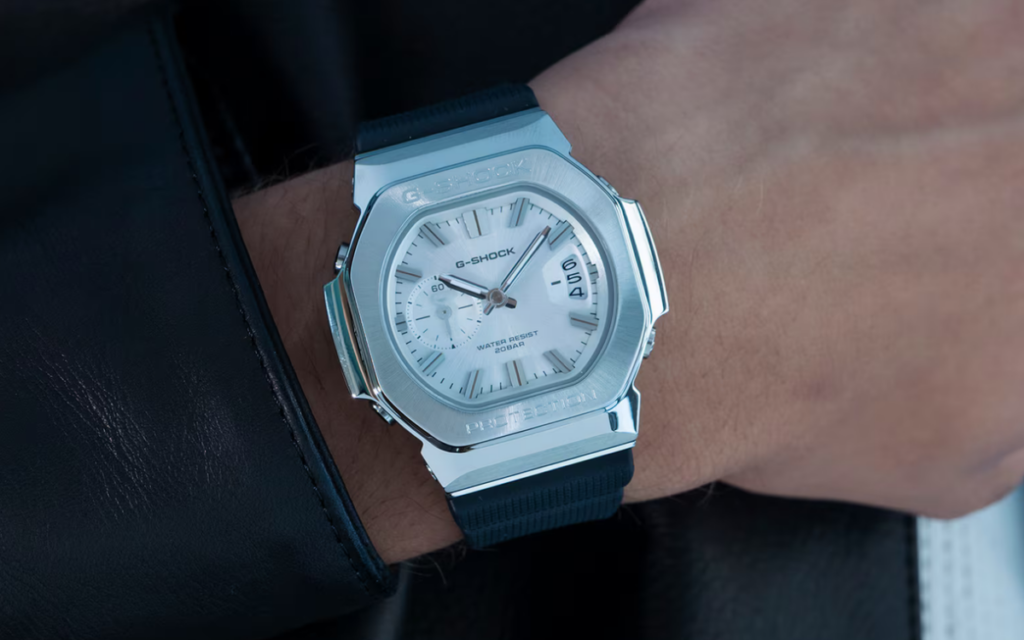
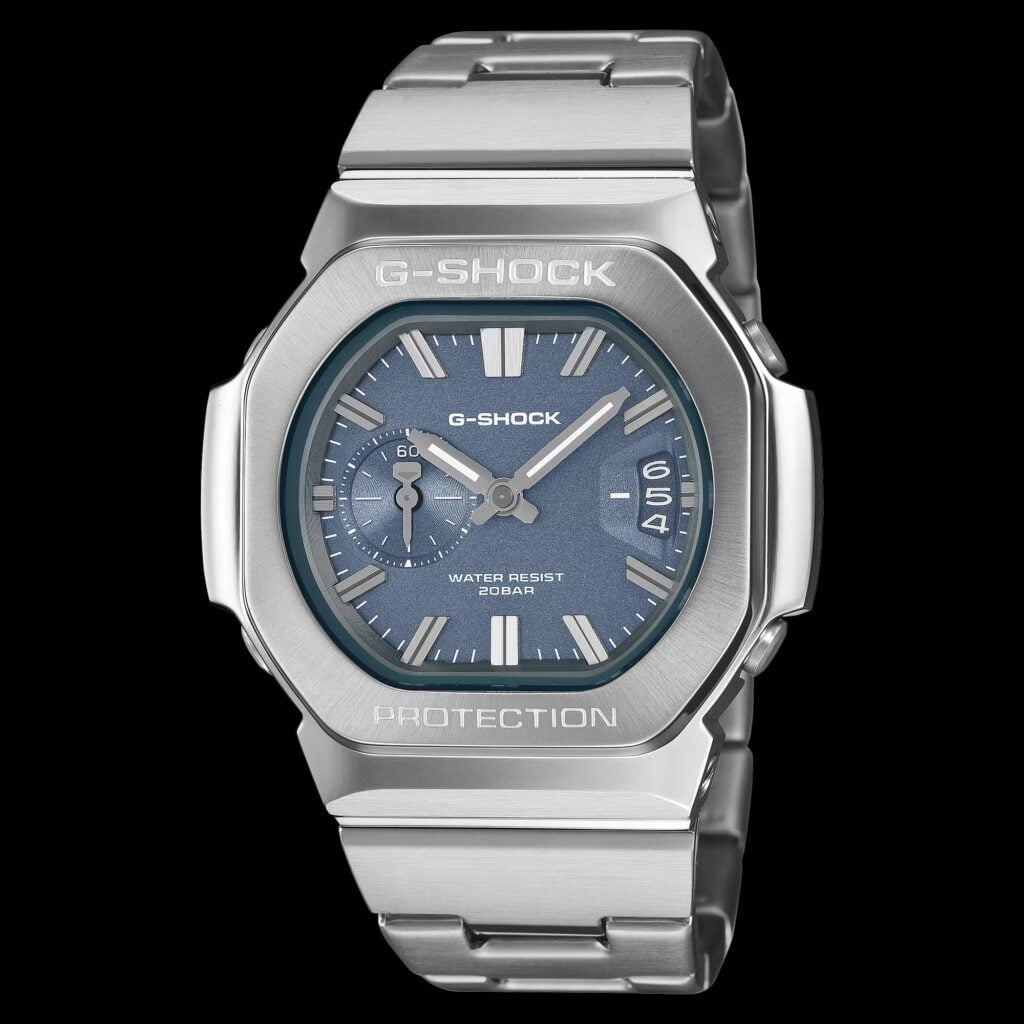
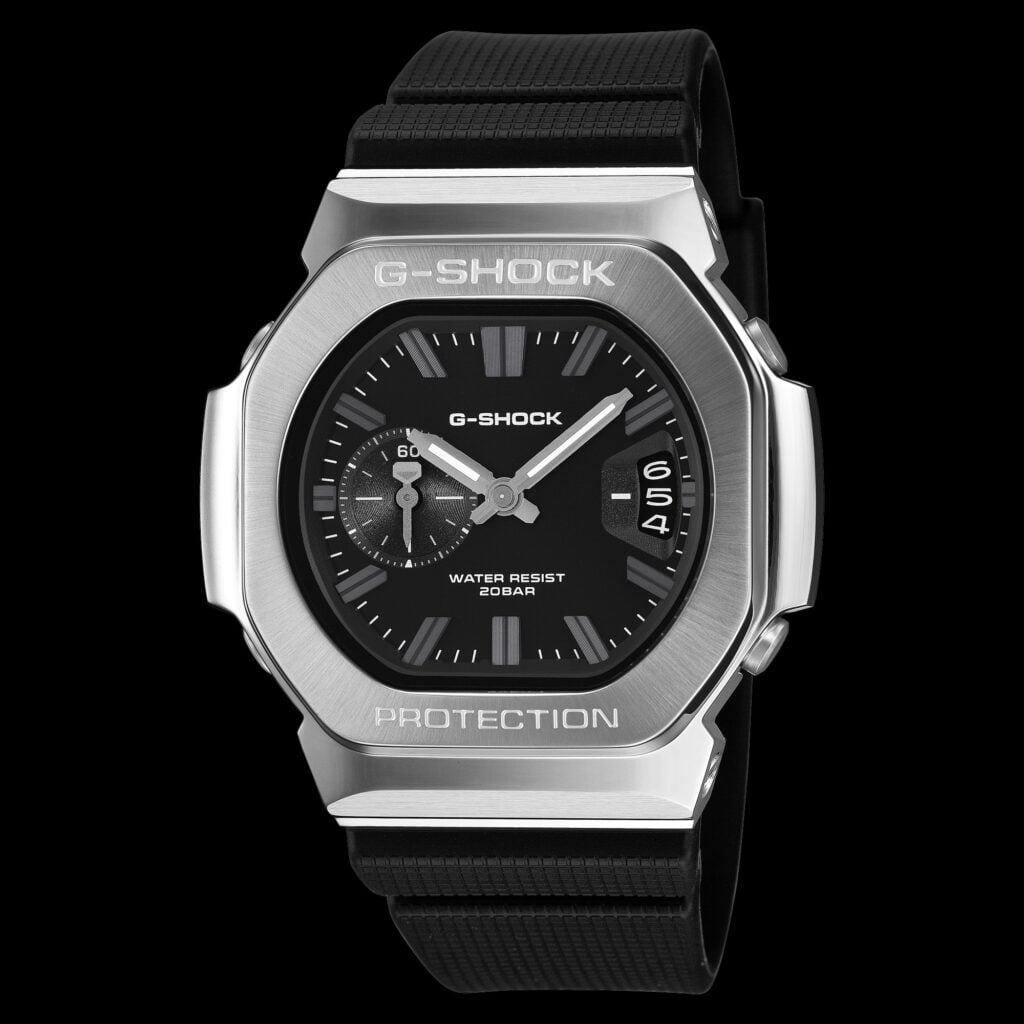
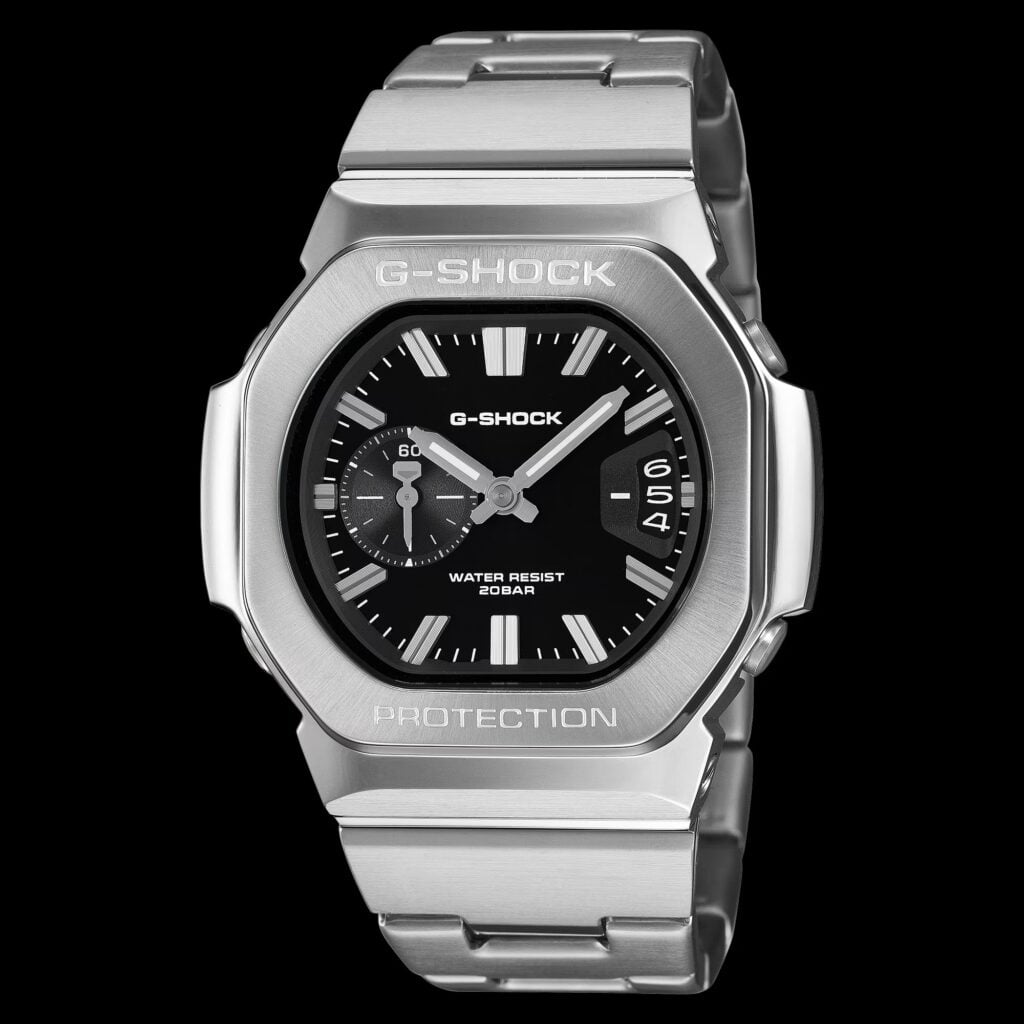
Casio is releasing a new G-Shock watch in collaboration with the Tokyo-based streetwear label BlackEyePatch. This marks the third time the two companies have partnered on a release. The new model, the DW-5600BEP-9, is scheduled to launch in October 2026. It will retail for ¥19,800 ($129) in Japan, and its appearance on Casio’s global website indicates it will be available in international markets as well.

Casio DW-5600BEP-9 G-Shock

Design Details

The watch is a modified version of the DW-5600, which is Casio’s standard square-faced digital watch. The main difference for this release is the color scheme. The bezel and the strap are molded in a bright gold tone, which is paired with a standard black digital display.

Casio says that the design is meant to reference hip-hop culture, which aligns with BlackEyePatch’s usual apparel output. Aside from the color, the watch features an engraved BlackEyePatch logo on the stainless steel case back and comes in custom packaging.

From a materials standpoint, the bezel and band are made from bio-based resin. Casio has been transitioning most of its new G-Shock models to this material over the last couple of years as a renewable alternative to traditional petroleum-based plastics.

Casio DW-5600BEP-9 G-Shock

Internally, the DW-5600BEP-9 is a standard DW-5600. It has a case size of 48.9 x 42.8 x 13.4 mm and weighs 53 grams. It includes the standard G-Shock shock resistance and 200 meters of water resistance. The watch runs on a CR2016 battery, which Casio estimates will last for about five years.

🔌 You’ll NeedThe digital display sits exposed on the resin case, so a fitted screen protector guards against scratches during daily wear. Check G-Shock DW-5600 screen protector price on Amazon →

The software features are also standard for this module. It includes a 1/100-second stopwatch, a 24-hour countdown timer, a multi-function alarm, and an hourly time signal. The backlight is a white LED that can be set to flash when an alarm or timer goes off. The calendar is pre-programmed through the year 2099, and the timekeeping is accurate to plus or minus 15 seconds per month.

In related news, Casio has recently launched new premium Frogman and Mudmaster watches built for extreme conditions, along with three new Master of G models in the US featuring a striking Horizon Gold finish.

For more daily updates, please visit our News Section.

Stay ahead in tech! Join our Telegram community and sign up for our daily newsletter of top stories!

(Casio)

Huawei launches affordable eSIM portable WiFi with up to 9h battery life & 16-device support

Huawei has introduced a new portable hotspot, the Mobile WiFi 5 eSIM edition (model E5586-822-E), in the Chinese market. The device is currently available for an introductory price of 269 yuan ($40), with a regular retail price set at 299 yuan ($44). As the name indicates, it includes a built-in eSIM, which allows you to connect to cellular networks without needing to purchase or insert a physical SIM card.

Huawei Mobile WiFi 5 eSIM Specifications

The hotspot is designed to be carried easily on a daily basis. It weighs 96 grams and measures 13.7mm in thickness. According to Huawei, this makes the device about 15% thinner than the previous version. It is currently sold in a single cyan color option with a textured finish, making it small enough to fit inside a pocket or a small bag compartment.

The eSIM functionality is the main feature of this model. It supports networks from both China Mobile and China Unicom. By default, the device is configured to automatically switch between these two carriers based on which one provides a better signal in a given location. You also have the option to manually select their preferred network using the companion app. If you prefer to use a standard data plan, the device still retains a physical SIM card slot. However, this slot only accepts standard carrier SIMs and is not compatible with IoT SIM cards.

Huawei Mobile WiFi 5 eSIM

Managing the device and purchasing data plans is done entirely through the Huawei Smart Life app. The app displays available data packages, current data usage, and plan expiration dates. Huawei says that you must be careful with the eSIM profile: once the service is activated, the assigned number cannot be written to the device again. Deleting or deactivating the SIM data will result in the permanent loss of that specific number.

The wireless specifications are basic. The hotspot operates exclusively on the 2.4GHz Wi-Fi band and does not support the 5GHz band. It offers a maximum theoretical wireless transmission rate of up to 300Mbps. While Huawei says that download speeds are 30% faster than the older Mobile WiFi 3 model, the reliance on 2.4GHz means you might experience interference in areas with many competing Wi-Fi signals. Despite this, the device can support up to 16 devices connected at the same time.

Huawei Mobile WiFi 5 eSIM

The hotspot is powered by a 2400mAh battery. This provides around eight to nine hours of continuous operation per charge. It includes a USB Type-C port for charging, allowing it to share cables with most current smartphones, tablets, and laptops.

🔌 You’ll NeedThe 2400mAh battery only lasts 8-9 hours, so a USB-C power bank keeps you connected on longer trips. Check 20000mAh USB-C power bank price on Amazon →

In related news, Lenovo has recently launched the Legion LM50S portable Wi-Fi with Wi-Fi 6, 4G LTE, and up to 12 hours of battery life, while ZTE introduced the U15S 4G portable Wi-Fi with Wi-Fi 6 and a 10,000mAh battery.

For more daily updates, please visit our News Section.

Stay ahead in tech! Join our Telegram community and sign up for our daily newsletter of top stories!

(JD)

Sony WH-1000XM4C, WH-CH730N and WH-CH530 are on Amazon now, from $69.99

Sony launched three pairs of headphones on Monday:- the WH-1000XM4C at $299.99, the WH-CH730N at $179.99, and the WH-CH530 at $69.99. All three are listed on Amazon. We covered the CH-series leak and the XM4C design images before the announcement, so here is where they actually land on price.

Sony WH-CH530 – $69.99

The one to buy. It is ten dollars more than the WH-CH520 launched at in 2023 and for that you get 55 hours instead of 50, multipoint, and a three-minute charge that returns an hour and a half of playback. Swivel design, DSEE upscaling, recycled plastic in the body. At seventy dollars that is a lot of headphone.

WH-CH530 standard view in black

Amazon and Sony split two exclusive colours between them – Coral and Mint – alongside the Black, Cobalt, White and Pink you will find anywhere.

The trade-off is that it is on-ear, not over-ear. If you wear glasses or you are sensitive to clamping pressure over a long flight, spend the extra and go over-ear. There is no ANC either, which at this price is not surprising.

Sony WH-CH730N — $179.99

Here is the awkward one. The CH730N is genuinely improved: 50 hours with ANC running, Dual Noise Sensor, multipoint, a foldable frame, better call handling than the 720N managed. Oat is the Amazon and Sony exclusive colour.

But the WH-CH720N it replaces launched at $149.99 is still around. Unless you specifically want the extra fifteen hours of battery or the new colours, the old one at half the money is not a bad buy.

Buy the 730N if you are coming off something with no ANC at all and you want one pair that lasts a working week between charges.

Sony WH-1000XM4C – $299.99

Sony has brought the 2020 XM4 back. Same swivel-fold design, same four-mic array, same QN1 noise-cancelling chip. What is new is a 10-band equaliser in place of the original five-band, a retuned sound profile, and a Lavender finish that Sony and Amazon have to themselves. Pre-orders are open with delivery quoted between 23 September and 1 October.

You get 27 hours with ANC on and 34 with it off, against 30 and 38 on the original XM4. That is a strange thing to find in a 2026 relaunch.

At $299.99 it also runs into the XM5. If you can find the XM5 near that number, buy that instead.

There is one real reason to choose the XM4C, and it is the hinge. The XM5 does not fold – it only swivels flat, and the case is a slab. The XM4C folds into something you can drop in a backpack pocket. If you travel constantly and that has annoyed you about the XM5, this is the answer, and the QN1 is still a very good ANC chip.

Honor Magic 9 Pro Max camera samples showcase periscope and telephoto converter capabilities

Honor has officially lifted the lid on the camera architecture powering its upcoming top-tier flagship. Honor Product Line President Fang Fei released a Weibo post to reveal how the company intends to bridge professional filmmaking tools and everyday mobile hardware with the Honor Magic 9 Pro Max. She has also shared some samples to showcase its camera capabilities.

ARRI color science meets dual 200MP sensors

The optical system relies on a 200-megapixel primary camera alongside a 200-megapixel periscope telephoto lens, both developed in close collaboration with cinema brand ARRI. These large sensors work alongside expansive physical apertures to retain fine textures across diverse lighting setups.

To maintain film-like dynamic range, the camera pipeline supports ARRI LogC3 gamma curves alongside 10-bit 4:2:2 APV recording, ensuring natural skin tones and preserving highlight details from burning out.

Honor Magic 9 Pro Max
Honor Magic 9 Pro Max camera sample using native periscope telephoto camera

Image clarity requires steady framing, which is why the main sensor incorporates 3-degree mechanical gimbal stabilization rated for CIPA 8.0 standards. The dedicated telephoto camera also achieves CIPA 7.5-level stabilization. This setup triples conventional physical shake compensation limits, smoothing out jerky hand movements during fast walking or light jogging.

Powering the CIPA 8.0 performance is the company’s proprietary TrueShift stabilization system. Unlike legacy setups that track movement solely through inertial measurement units, TrueShift tracks full image frames and runs multimodal AI motion prediction calculations 1,000 times per second to eliminate sub-pixel jitters.

Honor Magic 9 series pre-reservations
Honor Magic 9 series

To overcome the distance limitations of handheld concert and stage shooting, two bespoke teleconverter accessories have been detailed. The G500 unit provides a 5.88x optical extension factor, while the compact G200 lens cuts 55 percent of its predecessor’s weight to offer a 2.35x zoom boost inside a lipstick-sized chassis.

Shown above are camera samples captured using the Honor Magic 9 Pro Max. The 85mm image is captured using phone’s native periscope telephoto camera, while the 1000mm and 500mm images have been shot using the teleconverter attachment.

The Honor Magic 9 series is set to break cover on Sept. 28 in China.

For daily updates, please visit our News Section.

Stay ahead in tech! Join our Telegram community and sign up for our daily newsletter of top stories!
Global Oppo A7 Pro Max, A7 Pro surface on Geekbench, revealing chipsets and RAM

Oppo’s latest A7 series phones could soon make their way beyond the Chinese market. The company recently introduced the A7 Pro and A7 Pro Max in China, and their international versions have already started appearing across certification databases. Now, two Geekbench 7 listings provide additional clues about what to expect from the upcoming global models.

The Oppo A7 Pro 5G has appeared with model number CPH2931, while the A7 Pro Max 5G is listed as CPH2909. Both models have previously surfaced on certification platforms, including Thailand’s NBTC, adding further weight to their potential international release.

Oppo A7 Pro series Geekbench listings

The Geekbench listings show that the Oppo A7 Pro (CPH2931) and A7 Pro Max (CPH2909) are powered by the MediaTek MT6835 and Qualcomm SM4850 chipsets, respectively. These findings suggest that the A7 Pro could be powered by a Dimensity 6300-series chip, most likely the Dimensity 6360 Max, while the A7 Pro Max could use the Snapdragon 4 Gen 5.

Both devices have 8GB of RAM and run Android 16, which will have the ColorOS 16 skin on top. The A7 Pro recorded 719 points in the single-core test and 2,074 points in the multi-core test, whereas the Pro Max edition achieved 834 points in single-core and 2,181 points in multi-core testing.

Oppo A7 Pro 5G
Oppo A7 Pro 5G

These listings suggest that the global A7 Pro and A7 Pro Max could be identical to their Chinese counterparts. The A7 Pro’s Chinese version has a 6.57-inch OLED FHD+ 120Hz screen, an 8,000mAh battery with 45W charging, a 50-megapixel rear camera, and an 8-megapixel front camera.

Oppo A7 Pro Max
Oppo A7 Pro Max

On the other hand, the A7 Pro Max’s Chinese edition has a 6.78-inch FHD+ 120Hz display, a massive 10,000mAh battery with 80W charging, a 50-megapixel primary camera with a 2-megapixel secondary camera, and a 50-megapixel selfie camera.

For daily updates, please visit our News Section.

Stay ahead in tech! Join our Telegram community and sign up for our daily newsletter of top stories!
(via)

Vivo X500 series roundup: Specs, leaks, and launch details

Vivo X500 Pro Max

The Vivo X500 series’ launch event is set for September 21st. That’s when it will launch in China, while the global launch has yet to be announced. Ahead of the launch event, the company has teased many key specs of the upcoming X500 series phones, and the leaks have spilled the rest of the details.

So, while the launch event is still at least two weeks away, we already know pretty much everything about the upcoming X500 series phones. This article is a roundup of leaks and confirmed details we know so far.

Vivo X500 series: Here’s everything we know so far

The upcoming X500 series will be a successor to the popular X300 series. But unlike last year, there’ll be a new “Pro Max” model this time. Vivo has confirmed three models in the lineup: X500, X500 Pro, and X500 Pro Max. More models, including the X500 Ultra and X500s, might launch next year, but there’s no official confirmation right now.

The standard X500 will focus on delivering flagship value and a large battery, while the Pro model will be a compact flagship with powerful hardware. The Pro Max will bring top-tier camera hardware, a larger battery, and a bigger display.

Vivo X500 Pro Max

The X500 Pro Max retains the large circular camera module on the back, featuring four sensors. The official image confirms the phone will have hardware compatibility for camera grips and optical lens attachments. It will be available in four color options as shown below.

Vivo has confirmed that the X500 Pro Max will feature the same 1/1.4-inch 200MP Samsung HP0 telephoto sensor as in the X300 Ultra, with CIPA 7.0 stabilization and up to 30x zoom. The device also supports the 400mm professional teleconverter kit.

The smartphone is confirmed to use a new custom Phantom 900 sensor, developed by Sony and Vivo’s Blueprint imaging team, which enables up to 17 EV of dynamic range and 3-axis gimbal stabilization. The X500 Pro Max is also confirmed to offer 4K slow-motion video recording at 240 fps, 480 fps, and 960 fps. It will also feature dedicated professional Log video hardware, enabling 4K 120fps 10-bit Log recording.

The X500 Pro Max is confirmed to feature a 2nm Dimensity chip, which is likely to be the Dimensity 9600 Pro, and a 6.85-inch 2K LTPO display with a 144Hz refresh rate and a total battery capacity of around 8000mAh.

Vivo X500 Pro

The X500 Pro will reportedly be a successor to last year’s “mini” model. It’s said to feature a 6.37-inch 1.5K OLED screen with a 144Hz refresh rate. The phone is confirmed to feature the same 2nm Dimensity chip as the Pro Max model, likely the Dimensity 9600 Pro.

The X500 Pro is confirmed to feature a 64MP APO telephoto camera with a custom Sony LYT-610 sensor. It will use a GG 1×1 and RB 2×2 pixel structure to deliver better focusing performance. The camera will offer 85mm focal length, CIPA 7.0 stabilization, 4K 120fps slow-motion video recording and 4K 60fps HDR video output.

The Vivo X500 Pro will also use a new custom Phantom 900 sensor, and could feature a 50MP resolution. The ultrawide unit is also said to carry a 50MP resolution.

Vivo X500

The standard Vivo X500 will reportedly feature a 6.59-inch 1.5K OLED display and a 7500mAh battery with 90W wired and 40W wireless charging. The phone will be offered in four color options as shown below.

Recent leaks suggest the phone may not use a 2nm Dimensity 9600-series chipset but instead a 3nm Dimensity 9500-series processor. This shouldn’t be too surprising, considering the significant rise in chip prices. We reported about this back in April.

Vivo has confirmed that the X500 will feature the same camera sensor as the X300 Pro. That means it will use a 50MP 1/1.28-inch Sony LYT-828 sensor with Zeiss gimbal-level stabilization and a CIPA 5.5 professional stabilization rating.

The telephoto camera will use the same 64MP Sony LYT-610 sensor as the X500 Pro. It will also offer a CIPA 5.5 stabilization rating and support 4K 120fps slow-motion video recording. The device is confirmed to support a 200mm teleconverter.

Here’s the spec sheet based on the confirmed and leaked details we have so far:

Vivo X500Vivo X500 ProVivo X500 Pro Max
Launch dateSeptember 21, 2026September 21, 2026September 21, 2026
Display6.59-inch 1.5K OLED6.37-inch 1.5K OLED
144Hz refresh rate
6.85-inch 2K LTPO OLED
144Hz refresh rate
ProcessorDimensity 9500-series (3nm)MediaTek Dimensity 9600 Pro (2nm)MediaTek Dimensity 9600 Pro (2nm)
Rear cameraMain: 50MP (Sony LYT-828), 1/1.28″, CIPA 5.5
Telephoto: 64MP (Sony LYT-610), CIPA 5.5
4K slow-mo recording at 120fps
200mm teleconverter kit support
Main: custom Phantom 900 sensor
Telephoto: 64MP (Sony LYT-610), CIPA 7.0
4K slow-mo recording at 120fps
4K 60fps HDR video output
Main: custom Phantom 900 sensor
Telephoto: 200MP Samsung HP0, 1/1.4″
3-axis gimbal stabilization
4K slow-mo recording at 240/480/960fps
4K 120fps 10-bit Log recording
400mm teleconverter kit support
Battery7500mAh~8000mAh
Charging90W (wired)
40W (wireless)

We’ll keep posting fresh detais in our Vivo section. You can visit the page to stay updated, or simply join our Telegram channel to get instant alerts.

HMD Asha 305 announced: it’s an Android with 5″ LCD, 145g body, 2,500mAh battery

HMD has dusted off a familiar name from Nokia’s past and is bringing the Asha sub-brand back with a new entry-level smartphone, which is built on top of the Android Open Source Project. It’s a clear move toward simple, affordable devices for people who just want the basics without the extra cost of more capable Android phones.

It comes in black and lime green, is 10.2 mm thick, and weighs just 145 grams. Up front there’s a 5″ LCD screen with 854×480 resolution and a 2MP selfie camera. On the back sits a matching 2MP main camera with an LED flash.

Inside, it runs a Unisoc T137 processor with 2GB of RAM and 16GB of storage, which you can expand with a microSD card up to 128GB. It has a removable 2,500mAh battery that charges at 5W and is claimed to last up to 32 hours. Connectivity covers dual 4G SIMs, Wi-Fi, Bluetooth 4.2, GPS, and a USB Type-C port.

The phone runs on Pulse OS, which is based on Android. One notable difference is that it doesn’t come with Google Play services or the usual Google apps pre-installed. Instead, HMD offers its own app store with a selection of lighter apps. While the brand didn’t mention any supported apps except for TikTok Lite in their website, unofficial reports name Facebook Lite, Instagram Lite, WhatsApp, and YouTube. The idea is to keep the system simple and focused on core communication and entertainment.

Pricing:

HMD hasn’t announced official global pricing yet, though the phone has shown up in places like the Philippines for about 3,990 Philippine pesos (around $65 / ₹6,000). It’s being positioned as a lite smartphone that sits between HMD’s basic feature phones and more capable (and more expensive) budget Android devices.

It doesn’t have the high-resolution cameras or larger display you’d find on a regular Android phone, but that also means it should feel less distracting. The one trade-off is that it leans a bit more into the app ecosystem, including social media, compared to HMD’s more digital-detox-friendly feature phones. Still, it could make a solid secondary device that’s neither too dumb nor too boring.

The removable battery, compact size, and Asha branding only add to the appeal for anyone who owned the original Nokia Asha 305.

Don’t miss a thing! Join our Telegram community for instant updates and grab our free daily newsletter for the best tech stories!

🔌 You’ll NeedStorage is capped at 16GB, but a 128GB microSD card gives you room for photos and apps. Check 128GB microSD card price on Amazon →

For more daily updates, please visit our News Section.

(Source: HMD)

DOOGEE Anymoving M1 Pro Sports Watch: GPX Navigation and AI Fitness Analysis

DOOGEE has introduced the Anymoving M1 Pro, a dual-band GPS sports watch designed for outdoor exploration, fitness tracking, and everyday use. The new smartwatch combines GPX route navigation, Track Back functionality, AI-powered sports analysis and long battery life, positioning it as a feature-rich companion for users who spend time both training and exploring outdoors.

GPX Navigation and Track Back for Outdoor Use

A key feature of the Anymoving M1 Pro is its support for GPX offline route navigation. Users can import planned routes to the watch before starting their journey, allowing them to access navigation information in areas with limited connectivity.

This could be particularly useful for activities in mountains, wilderness areas and other remote locations. The watch also records the user’s activity track in real time. Its Track Back feature can then help users retrace their recorded route when returning, reducing the chances of losing their way during an outdoor adventure.

The smartwatch uses dual-band GPS positioning to support more precise location tracking during activities such as hiking, running and cycling.

AI-Powered Insights for Smarter Training

Beyond navigation, the Anymoving M1 Pro includes an AI-powered sports analysis system designed to provide users with a better understanding of their workout performance and physical condition.

The watch tracks and evaluates information such as training load, VO₂ max and daily fitness vitality. These insights can help users monitor their recovery status and manage training intensity more effectively.

By providing multidimensional workout data, the system is designed to help users adjust their training plans based on their physical condition and potentially avoid overtraining.

More Than 170 Sports Modes

The Anymoving M1 Pro supports more than 170 sports modes, covering a broad range of fitness and outdoor activities. These include running, cycling, hiking, swimming and skiing, along with many other activities.

The wide selection makes the watch suitable for users with different exercise routines. Whether it is used for regular fitness training or more demanding outdoor adventures, the device is designed to track a variety of activities from a single wearable.

Up to 30 Days of Battery Life

Long battery life is another major feature of the smartwatch. In typical mode, the Anymoving M1 Pro can offer up to 30 days of battery life.

With the Always-On Display enabled, battery life is rated at around seven days. Under heavier use, the watch can operate for approximately four days. The device also supports magnetic charging for added convenience.

This extended battery performance could be useful during multi-day hikes, long-distance cycling trips and other activities where regular access to charging may be limited.

Bright AMOLED Display and Outdoor Protection

The watch features a 1.5-inch AMOLED HD display with peak brightness of up to 1,000 nits. This is designed to keep information visible and easy to read in bright outdoor conditions.

For additional durability, the Anymoving M1 Pro comes with 5ATM water resistance and an IP68 protection rating. These features are intended to help the watch handle water, sweat and the conditions often associated with outdoor activities and workouts.

Voice Memos and Multiple Style Options

DOOGEE has also included a built-in Voice Memo function, allowing users to record voice notes with a single tap while on the move.

The Anymoving M1 Pro will be available with silicone, leather and stainless steel strap options. This gives users a choice between styles suited to sports, outdoor activities and everyday wear.

With GPX route navigation, Track Back, dual-band GPS, AI-powered sports analysis and support for more than 170 sports modes, the DOOGEE Anymoving M1 Pro brings together navigation and fitness features in a single device. Combined with a bright AMOLED display, strong protection, and up to 30 days of battery life, it is designed for users looking for a smartwatch that can support both active lifestyles and everyday use.

Price and Availability

The DOOGEE Anymoving M1 Pro is priced at $219 and is available in Black, Gray and Blue color options. For more product details and purchase information, visit the official DOOGEE website.

WalkingPad G5i Auto Incline Foldable Treadmill: Powerful Incline Training in a Compact Design

WalkingPad G5i Auto Incline Foldable Treadmill is designed for people who want a powerful and versatile home fitness machine without dedicating an entire room to it. Priced at $1899, the treadmill combines automatic incline training, a high-performance motor, a spacious running deck, and a foldable design. It is built for everything from casual walking to more demanding running workouts while offering practical features for modern homes.

Up to 18% Incline for Intense Workouts

One of the G5i’s standout features is its adjustable incline, which reaches up to 18%. Incline walking and running can make workouts more challenging while placing greater emphasis on muscles such as the glutes and hamstrings. This allows users to add more variety and intensity to their training without leaving home.

The G5i supports speeds from 1 to 10 mph, making it suitable for a wide range of fitness routines. Whether users prefer a relaxed walk, brisk cardio session, or faster run, the treadmill offers flexibility for different training levels.

Powerful Motor and Spacious Running Surface

At the heart of the treadmill is a 4.5 HP brushless motor designed to deliver smooth and consistent performance. The brushless design also aims to provide quieter operation and long-term durability, making the G5i more suitable for regular home use.

The treadmill features a generous 51.2 x 19.7-inch running area, giving users enough room to move comfortably. Its reinforced frame supports a maximum user weight of 300 lb or 136 kg, providing stability during both flat and uphill workouts.

For additional comfort, the G5i uses SoftStep Incline cushioning with EVA and PET materials. The shock absorption system is designed to reduce the impact on the joints while maintaining a supportive running surface.

Fully Assembled and Easy to Store

The WalkingPad G5i arrives fully assembled, eliminating the need for complicated installation. Users can simply unbox the treadmill, unfold it, and begin their workout. A foot brake provides a simple one-step unlocking mechanism for setting up the machine.

When not in use, the treadmill can fold into a compact form and be stored flat or vertically against a wall. Its folded dimensions measure 45.7 x 33.4 x 10.2 inches, while the slim design helps save valuable floor space.

Despite its 68 kg net weight, the G5i includes transport wheels and a built-in handle to make moving and storing the treadmill easier.

Smart Features for Connected Workouts

The G5i supports the free KS Fit app, allowing users to track workouts, access personalized training plans, and use AI-powered fitness insights. Speed can be adjusted through the app or using the SpeedDial knob.

Apple Watch connectivity is another useful feature. By pairing the KS Fit app with an iPhone and Apple Watch, users can monitor their heart rate during workouts. The control knob can also provide an alert when the heart rate exceeds 180 bpm.

Bluetooth connectivity allows users to integrate their workout data with compatible fitness platforms. There is also a holder for tablets up to 11 inches, making it easier to follow workout videos or enjoy entertainment while exercising.

Built for Convenient Home Fitness

The G5i also includes supportive foldable side handles for added stability during more intense workouts. Once finished, the handles fold away to maintain the treadmill’s clean and compact profile. Its handrail also lowers with a controlled descent, helping make folding safer and easier.

With its 18% automatic incline, 4.5 HP motor, large running deck, smart connectivity, and space-saving design, the WalkingPad G5i is a feature-packed option for users looking to bring a more complete cardio training experience into their home.

iQOO 16 vs. OnePlus 16 camera specifications emerge: Which one would you choose?

The iQOO 16 and OnePlus 16, two upcoming performance-focused flagships, are drawing closer to their respective launches. The iQOO model is already confirmed to launch in China this month, potentially towards the end of September. Meanwhile, rumors suggest the OnePlus 16 could be unveiled in October, and a new leak has now revealed the camera specifications of both models.

iQOO 16 and OnePlus 16 camera specifications leaked

According to tipster Digital Chat Station, the two upcoming flagships will take notably different approaches to their camera hardware. The iQOO 16 is said to feature a triple-camera setup built around a 50-megapixel OV50Q primary sensor with a 1/1.3-inch size.

The main camera is reportedly joined by a 50-megapixel ultrawide lens and a 50-megapixel Sony IMX882 periscope telephoto camera with 3x optical zoom. This would give the iQOO 16 three 50-megapixel sensors, with the larger main sensor potentially offering an advantage in low-light photography and overall image quality.

The OnePlus 16, meanwhile, is tipped to feature a much higher-resolution 200-megapixel primary camera. The sensor is reportedly a 1/1.4-inch unit, although the leak does not identify its exact model.

It could be paired with a 50-megapixel ultrawide camera and the same 50-megapixel Sony IMX882 sensor for 3x periscope telephoto shots. On paper, the OnePlus 16 therefore combines a high-resolution main camera with two 50-megapixel secondary sensors.

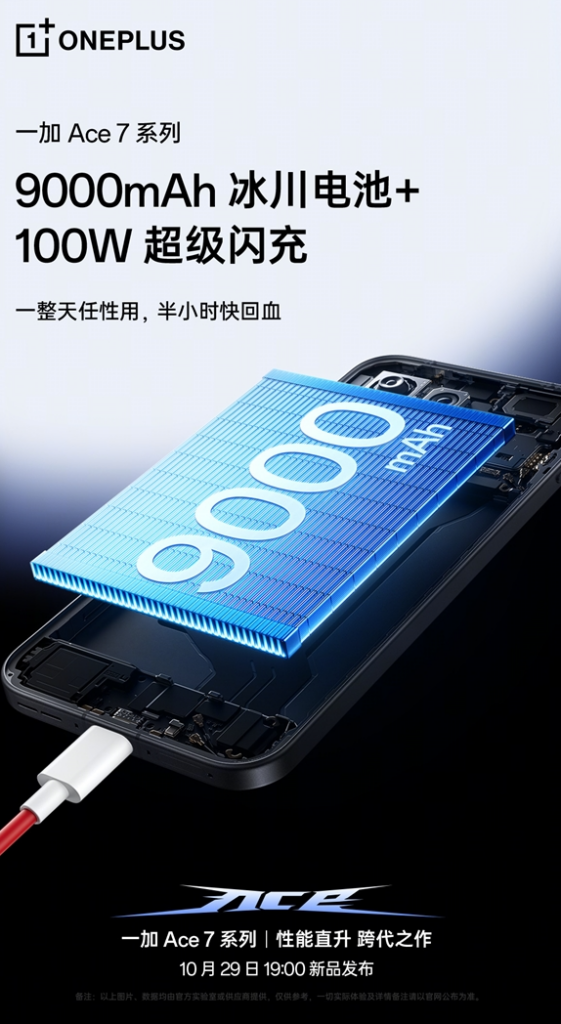
As far as the other specifications are concerned, both phones are expected to feature top-notch displays. The iQOO 16 could get a 2K 165Hz Samsung AMOLED panel, while the OnePlus 16 is tipped to feature a 1.5K 185Hz OLED display. Both phones are expected to be powered by the upcoming Snapdragon 8 Elite Gen 6 Pro chip, with the iQOO 16 reportedly packing an 8,400mAh battery and the OnePlus 16 a larger 9,000mAh unit.

Both could support 100W wired charging, while wireless charging may reach 40W on the iQOO 16 and 50W on the OnePlus 16. On the software front, both are expected to run Android 17 with their respective OriginOS 7 and ColorOS 17 interfaces.

Which camera setup and overall package looks more exciting to you: the iQOO 16’s triple 50-megapixel system or the OnePlus 16’s 200-megapixel main camera?

For daily updates, please visit our News Section.

Stay ahead in tech! Join our Telegram community and sign up for our daily newsletter of top stories!
Asus Vivobook lineup gets a fresh new look with up to 38-hour battery life

Asus is preparing to bring a refreshed Vivobook lineup to India later this month. The upcoming range focuses on a more personal design approach while covering different laptop formats and processor platforms. Asus has also revealed the launch date and some key details ahead of the announcement.

Asus Vivobook lineup gets a fresh design

The new Vivobook range will launch in India on September 16 at 12 noon, with Asus positioning the refreshed lineup around its “Your Vibe. Your Colour.” theme. The laptops will feature all-metal construction and a new choice of Cool Silver, Matte Gray and Light Blue finishes.

The lineup will cover the Vivobook 14 Flip, Vivobook S14 Flip, Vivobook S14, Vivobook S16 and Vivobook 16. The Flip models will offer convertible form factors, while the other laptops will follow traditional clamshell designs.

Asus has also confirmed that the new range will span AMD, Intel and Qualcomm Snapdragon processor options, although the company has not yet detailed the chips used in each model.

Battery capacity figures have not been revealed yet, but Asus claims up to 38 hours of battery life for the upcoming Vivobook models. Actual endurance will vary depending on the configuration and usage conditions.

Launch offer and availability

Alongside the new laptops, Asus will introduce a limited-period launch offer in India. Buyers will be able to get a two-year extended warranty and three years of accidental damage protection, together valued at Rs 5,599, for Rs 99 during the promotional period.

Pricing, detailed specifications and individual processor configurations are expected to be announced at the September 16 launch. The event will also clarify how the different Vivobook models and configurations will be positioned in the Indian market.

For daily updates, please visit our News Section.

Stay ahead in tech! Join our Telegram community and sign up for our daily newsletter of top stories!

Xiaomi’s Xring O100 chip hits 330TPS thanks to 1.22TB/s memory bandwidth

Xiaomi has taken another step in its self-developed chip plans, introducing three new Xring chips, one of which is a specialized accelerator meant to handle more powerful AI processing right on the device. Founder, chairman and CEO Lei Jun announced it at the company’s Autumn flagship product launch event.

The new AI accelerator chip, called the Xring O100, delivers up to 1.22TB/s of memory bandwidth. Xiaomi is calling it the world’s first 6nm 3D wafer-level stacked advanced packaging solution.

It uses an advanced hybrid bonding process, with the bonding pitch getting very close to the physical limit According to the company, this design gives it 16 times the memory bandwidth of traditional mobile phones and enables an on-device inference speed of 330 tokens per second.

The key idea is stacking the logic and high-speed DRAM dies vertically using wafer-on-wafer technology and hybrid bonding. That shortens the physical distance between the compute parts and the memory.

Xiaomi says this near-memory approach helps overcome the long-standing memory bottleneck that has limited how well large language models can run on edge devices. Even when regular mobile SoCs have decent compute power, they often get held back by slow data transfer. The O100’s high bandwidth and dense connections are meant to let on-device models generate tokens much faster.

It uses a multi-core NPU setup optimized for different stages of inference and supports dynamic data routing. Xiaomi has already shown prototypes, including tablet-style devices and “Xiaomi AI Cube” mini-PC form factors that pair the O100 with other Xring chips for sustained local AI workloads. Commercial use is expected in 2027, with potential applications in smartphones, tablets, robotics, and more.

As mentioned above, the O100 is part of Xiaomi’s broader Xring chip family, which also includes flagship mobile SoCs and chips aimed at cars. Instead of just chasing smaller process nodes, Xiaomi is focusing on bandwidth and packaging improvements. The aim is to make generative AI feel responsive, private, and usable even when you’re offline.

Don’t miss a thing! Join our Telegram community for instant updates and grab our free daily newsletter for the best tech stories!

For more daily updates, please visit our News Section.

(Source)

Apple’s foldable iPhone Duo could start at $2,000 with 256GB storage

Apple’s long-rumoured foldable iPhone is getting closer to becoming a reality, with more details now emerging ahead of its expected arrival. The device has been referred to by different names during its development, but a new report points towards a different branding strategy. The latest information also gives us an idea of how much Apple could charge for it.

iPhone Duo price and availability details

iPhone Duo AI-generated image

According to Bloomberg’s Mark Gurman, Apple could call its first foldable smartphone the iPhone Duo instead of the previously rumored iPhone Ultra. The name appears to highlight the device’s dual-screen design, while also distinguishing it from Apple’s existing iPhone lineup. The report claims that the entry-level model could cost $2,000, and come with 256GB of storage.

Higher storage configurations could reportedly push the price close to $3,000, or around Rs 2.5 lakh. Apple is said to have faced higher production costs, partly due to the ongoing memory shortage, but could absorb some of those expenses to keep the base model near the $2,000 mark. The company may instead pass more of the cost to buyers opting for higher storage capacities.

The iPhone Duo is reportedly expected to go on sale as early as October, with white and dark blue colour options. This would put its availability after the expected iPhone 18 Pro and iPhone 18 Pro Max launch, although the gap may not be particularly long.

As per other reports, the foldable iPhone is tipped to feature Apple’s A20 Pro chip and C2 modem, along with two 48-megapixel rear cameras and a 12-megapixel front camera. A magnetic hinge system is also expected, while Apple Pencil support could bring a more tablet-like experience to the larger internal display. Rumors also point to side-by-side app support and iPad-style multitasking.

For daily updates, please visit our News Section.

Stay ahead in tech! Join our Telegram community and sign up for our daily newsletter of top stories!
5 Reasons to Buy the Xiaomi 18 Fold (and 2 Reasons to Wait)

If you’ve been following foldable phones from China over the past few years, you’ve probably noticed the trend. Honor, Oppo, and Vivo have all been making foldables with good cameras, large batteries, and flagship hardware, while Samsung has kept treating the Galaxy Z Fold series as productivity-focused devices.

The all-new Xiaomi 18 Fold fits right into that trend, and in a few areas, it pushes it further than anyone else has so far. It launched in China this month and is now available to international buyers through resellers, so you don’t have to be in China to get one.

Xiaomi 18 Fold

The question isn’t whether this phone has strong specs; spoilers: it clearly does. The question is whether it’s the right foldable for you specifically, given the price and the fact that Xiaomi hasn’t confirmed an official launch outside China. Here’s what makes the case for buying one, and what might make you wait.

1. The 6,000mAh battery is bigger than what Samsung and Apple offer

Battery life is one of the biggest compromises with book-style foldables, but Xiaomi is trying to change that with the 18 Fold. The phone packs a 6,000mAh Jinshajiang battery. It uses a new stacking process with 20% silicon content and an energy density of 920Wh/L.

For comparison, the Galaxy Z Fold8 has a battery of around 4,800mAh. That gives the Xiaomi 18 Fold more than 1,000mAh of extra capacity without making the phone significantly larger. Xiaomi also supports 67W wired charging and 50W wireless charging, so you won’t have to spend too much time plugged in.

🔌 You’ll NeedThe 18 Fold supports 67W wired charging, but you’ll need a compatible GaN charger to actually hit that speed. Check Xiaomi 67W GaN charger price on Amazon →

2. Xring O3 gives Xiaomi its own flagship chip

The Xiaomi 18 Fold is powered by Xring O3, Xiaomi’s second in-house mobile chip. The chip has already attracted attention because of its benchmark results. Xiaomi claims the Xring O3 can reach an AnTuTu score of 5.22 million, making it the first mobile chip to cross that mark. 

The chip is built on a 3nm process and has a 10-core CPU paired with a 16-core G2-Ultra NX GPU. It also brings the first commercial use of LPDDR6 memory, with bandwidth reaching up to 113.8GB/s. 

The bigger advantage is that Xiaomi designed the Xring O3 specifically for its own hardware. It isn’t a chip that has to be adapted for phones from several different manufacturers.

3. The camera setup is better than what you usually get on a foldable

Chinese foldables have generally offered better camera hardware than Samsung’s Galaxy Z Fold series, and the Xiaomi 18 Fold continues that trend. It has a 200MP Leica main camera with a 1/1.56-inch sensor, OIS, and an f/1.7 aperture. 

It is joined by a 50MP periscope camera with 3.5x optical zoom and up to 7x optical-quality zoom, along with a 50MP ultra-wide camera. All three cameras also use Leica-tuned Summilux optics. In comparison, Samsung’s Galaxy Z Fold8 does not have a dedicated zoom camera, instead relying on digital cropping. 

4. Both displays are bright enough for outdoor use

The Xiaomi 18 Fold has a 7.58-inch inner AMOLED display with a 2364 × 1672 resolution and a 120Hz refresh rate. The outer screen measures 5.38 inches, has a 1712 × 1168 resolution, and also runs at 120Hz.

Both panels can reach up to 4,000 nits of peak brightness and support HDR10+ and Dolby Vision. Xiaomi also uses its HyperRGB panel technology with a full RGB subpixel structure.

You’re also covered by foldable UTG glass and a new dragon-bone hinge that Xiaomi says survives a 1.2-meter drop, so durability isn’t an afterthought either.

5. It is surprisingly thin and light

At 219g, this is the lightest foldable Xiaomi has ever built, and it measures just 5.02mm thick when unfolded. Xiaomi is calling it a “mid-fold” as the form factor is something in between the tall, narrow foldables and clamshell ones. 

There’s also a Ceramic Special Edition with an ultra-narrow four-sided bezel layout, big rounded corners, and a completely flat wraparound frame. 

Reasons to wait

6. The price is still high

All that hardware comes at a price. The Xiaomi 18 Fold starts at ¥10,999 (~$1,640) in China. International buyers face an even higher price because it is currently exclusive to mainland China, meaning importing is the only option for those who want one.

Global resellers are listing the phone from around $1,999, putting it close to the Galaxy Z Fold 8 and well above what most people are willing to spend on a smartphone. Chinese foldables have traditionally offered better hardware than Samsung at lower prices. With the Xiaomi 18 Fold, that price advantage is much smaller.

7. There is no official global launch yet

As of now, Xiaomi hasn’t confirmed an international launch for the 18 Fold. Buyers outside China are relying on import resellers, which usually means longer shipping windows, import duties depending on where you live, and less certainty around warranty support if something goes wrong down the line. Software is the other wrinkle. 

The phone runs HyperOS 4 on top of Android 17, and while Xiaomi’s global software support has improved a lot in recent years, a China-first release always carries some risk of missing features, delayed updates, or app quirks until an international version shows up, assuming one ever does.

For daily updates, please visit our News Section.

Stay ahead in tech! Join our Telegram community and sign up for our daily newsletter of top stories!
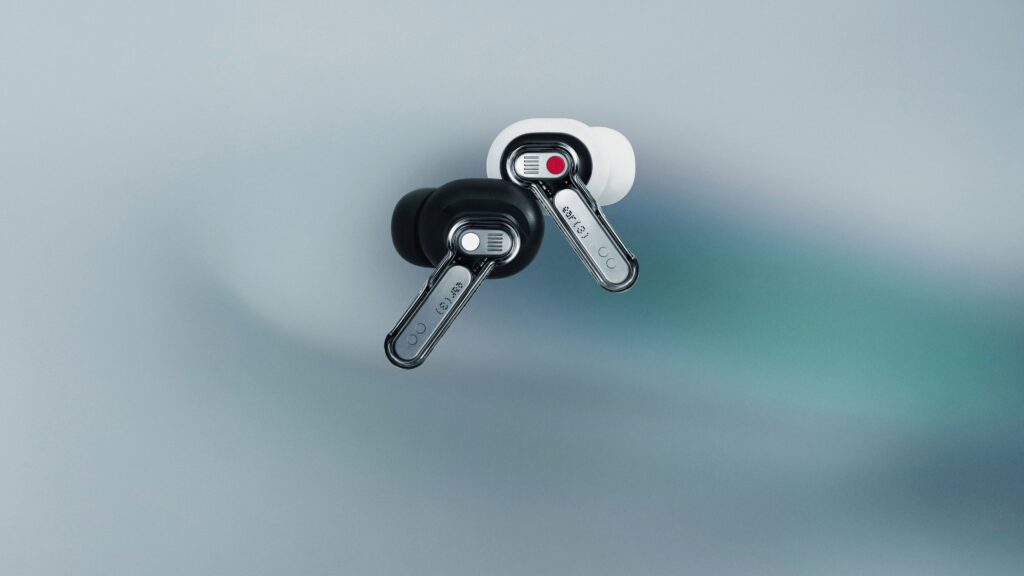
Nothing explains why the Phone (2) won’t get Android 17

Nothing Phone 2

Nothing has recently published the rollout timeline for Nothing OS 5.0, and three phones were missing from the list: the original Phone (1), Phone (2), and CMF Phone 1. The Phone (1) is too old to receive an OS upgrade, but many Phone (2) users were expecting to receive Android 17.

During a recent “Ask Me Anything” session on Reddit, many users expressed their disappointment over the Phone (2) not getting the Android 17-based Nothing OS 5.0 update. Responding to the query, Nothing’s CEO, Carl Pei, said the kernel is unfortunately too old, and that Android 17 won’t be supported by the chip vendor.

The kernel is unfortunately too old, and Android 17 won’t be supported by the chipset vendor. This phone was originally advertised as having 3 major updates but got 4 (13/A14/A15/A16), with security patches to 2027. So I think what we’ve done is pretty fair if we were clear about the support at the time of purchase, and then went above that,” said Carl Pei

Carl incorrectly claimed that the Phone (2) received four major upgrades, but in reality, it received three. Later, he edited the message to include the correct details.

Even though the Phone (2) isn’t getting the Android 17 update, Nothing stood by its promise. At the launch, the brand committed to offering three major OS releases to the device, and it did. The last major OS upgrade was Android 16, and that will be it for the rest for the lives for Phone (2) users.

The Nothing Phone (2) will continue to receive security updates until July 2027, per the official update policy.

From the users’ point of view, it’s fair to ask for more OS updates, especially when brands like Samsung offer their mid-range phones up to six major Android updates. Many budget Galaxy phones also carry the same update policy, while Nothing is stuck with three for most of its phones.

Only the flagship Nothing Phone (3) is eligible for five major OS updates. Even that can’t match what Samsung and Google promise to their high-end phones.

In 2026, three OS updates for mid-range phones sound like an outdated update policy. Nothing needs to rework on its update policy and offer longer OS support to its devices.

We’ll keep updating you with the latest Nothing OS details in our Nothing section. You can visit the page regularly or join our Telegram channel to stay updated.