Honor has quietly introduced its latest entry-level smartphone, the Honor Play 10. This model is designed for budget conscious buyers, running on the lightweight version of Android, a 4G chipset, and a sizeable battery to meet the buyer’s everyday use.
Honor’s New Affordable Android Go Phone is Here
The Chinese brand’s latest Play 10 model was announced with a tall 6.74-inch LCD panel with an HD+ resolution. Honor’s budget phone is equipped with the MediaTek Helio G81 SoC, which is paired with up to 4GB of RAM and 128GB of internal storage. While the RAM capacity is quite low, the Play 10 runs on the Android Go edition. Meanwhile, the storage can be expanded by up to 1TB via a microSD card slot.
Honor Play 10
A sizeable 5,000mAh battery pack powers this device, which supports standard 10W charging from the USB Type-C 2.0 port. The Honor Play 10 measures 8.55mm in terms of thickness and weighs 189 grams. The Play 10 also arrives with an IP52 rating, which supports water and dust resistance. Other notable features include a 3.5mm audio jack, an FM radio, Bluetooth 5.1, WiFi 5, and a side mounted fingerprint scanner.
For photography, you get a 13MP camera on the rear and a 5MP selfie shooter. Honor announced the Play 10 in multiple storage configuration, namely Midnight Black, Starry Purple, and Ocean Cyan. As of right now, the pricing details are still at large, but more details should surface soon. In related news, the company’s upcoming flagship Honor Magic 8 Pro is rumored to be the only Snapdragon 8 Elite Gen 5 powered phone with a 3D Face ID.
For more daily updates, please visit our News Section.
Xiaomi is getting ready to launch its next big flagship lineup, and even though the company hasn’t officially revealed the name, we know what’s coming. The Xiaomi 16 series has already gone up for blind orders in China, which usually means we’re only weeks away from a proper unveiling.
The Xiaomi 16 series will be the first to show off Qualcomm’s new Snapdragon 8 Elite Gen 5, which succeeds the Snapdragon 8 Elite from the Xiaomi 15 series. Here’s everything we know about the Xiaomi 16 lineup ahead of launch.
According to leaks, Xiaomi is preparing four different models this time:
Xiaomi 16
Xiaomi 16 Pro
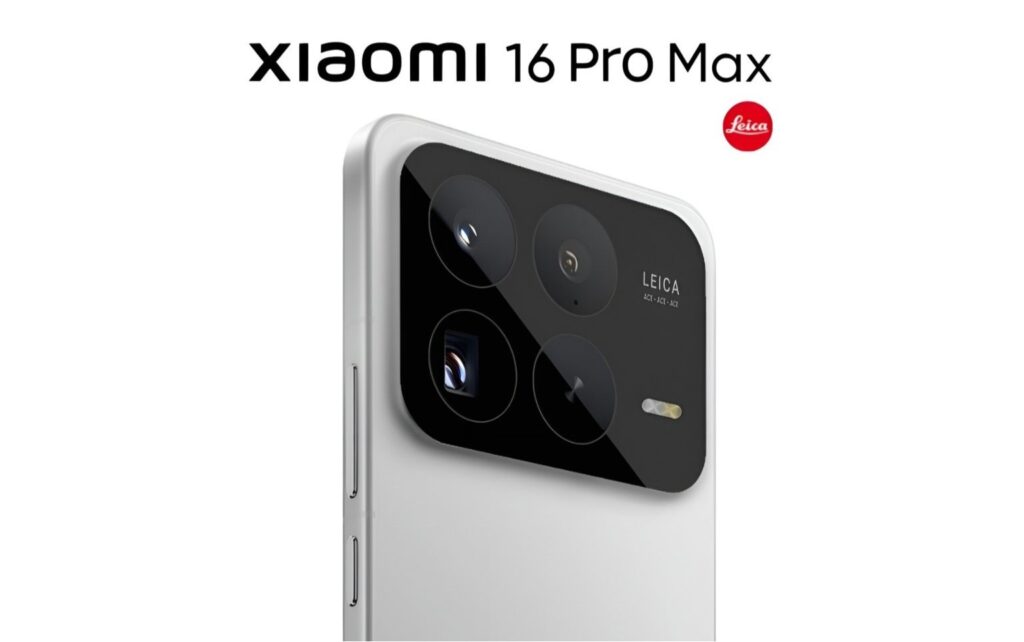
Xiaomi 16 Pro Mini (or Pro Max, depending on naming)
Xiaomi 16 Ultra
The Xiaomi 16, 16 Pro, and possibly the Pro Max are expected to arrive right after Qualcomm’s Snapdragon Summit (September 23–25, 2025). The Xiaomi 16 Ultra will likely follow later, sometime in the first half of 2026.
Chinese certification listings already confirm new devices with model numbers 25113PN0EC (Xiaomi 16) and 25098PN5AC (Xiaomi 16 Pro). Another device, believed to be the Pro Max, has also surfaced under the model code 2509FPN0BC.
2. Design and displays
From what’s leaked so far, the Xiaomi 16 may bring a new design this year. The Pro Max, in particular, has appeared in leaks with a camera bar stretching across the width of the phone. It’s even rumored to include a rear display similar to the Xiaomi 11 Ultra.
The Xiaomi 16 and Xiaomi 16 Pro are said to feature 6.3-inch displays with ultra-thin bezels, while the larger Pro Max/Ultra could stretch to 6.8 inches. Xiaomi also seems to be experimenting with a compact Pro variant for the first time, which might appeal to users who want flagship specs in a smaller size.
As for screen tech, it’s safe to expect OLED panels with 2K resolution and high refresh rates, consistent with previous top-end Xiaomi flagships.
On the hardware side, Xiaomi may use 3D-printed metal frames for the Pro models. The idea is to reduce weight while maintaining durability. Depending on whether the company chooses aluminum or titanium, the effect on thermals could differ. Interestingly, mass manufacturing might actually make 3D-printed frames cheaper, not more expensive.
3. Snapdragon 8 Elite Gen 5 is almost here
Qualcomm is expected to unveil the Snapdragon 8 Elite Gen 5 between September 23 and 25 at the Snapdragon Summit 2025 in Hawaii.
Early benchmarks show single-core scores above 4,000 and multi-core results crossing 11,000. On the software side, the Xiaomi 16 series is tipped to ship with HyperOS 3.0 on top of Android 16.
Tipster Digital Chat Station, a reliable source on Chinese smartphones, claims Xiaomi is lining up its launch for September 24–26, immediately after Qualcomm’s announcement. That timing would be in line with Xiaomi’s history of being the first brand to showcase Qualcomm’s latest flagship chip.
4. Charging and battery life
All three certified models list the same charger: the MDY-18-EW, a 100W power brick. That means 100W wired charging should be standard across the lineup, regardless of size or tier.
However, battery sizes will vary across models. According to reports, the base Xiaomi 16 will pack around 7,000mAh, while the larger Pro Max (or Ultra) could climb as high as 7,500mAh. Even the rumored compact Pro Mini is said to include a sizable 6,300mAh cell, with wireless charging support.
5. Cameras
The Xiaomi 16 is expected to feature a 50MP OV50Q main sensor, accompanied by telephoto and ultra-wide cameras on the rear.
The Xiaomi 16 Pro and Pro Max are rumored to upgrade to a SmartSens 590 50-megapixel main sensor, a 50-megapixel ultra-wide, and a 50-megapixel periscope telephoto with macro support. On the front, all three models could include a 50-megapixel selfie camera with autofocus.
6. A global rollout
Like most Xiaomi flagships, the 16 series will debut in China first. A device believed to be the global Xiaomi 16 has already appeared in the EEC certification database, confirming variants for China, India, and international markets.
But a global release won’t be immediate. The Xiaomi 15 received EEC certification in May 2024 but didn’t launch outside China until March 2025. If that pattern holds, the Xiaomi 16 might not reach international markets until early 2026.
For more daily updates, please visit our News Section.
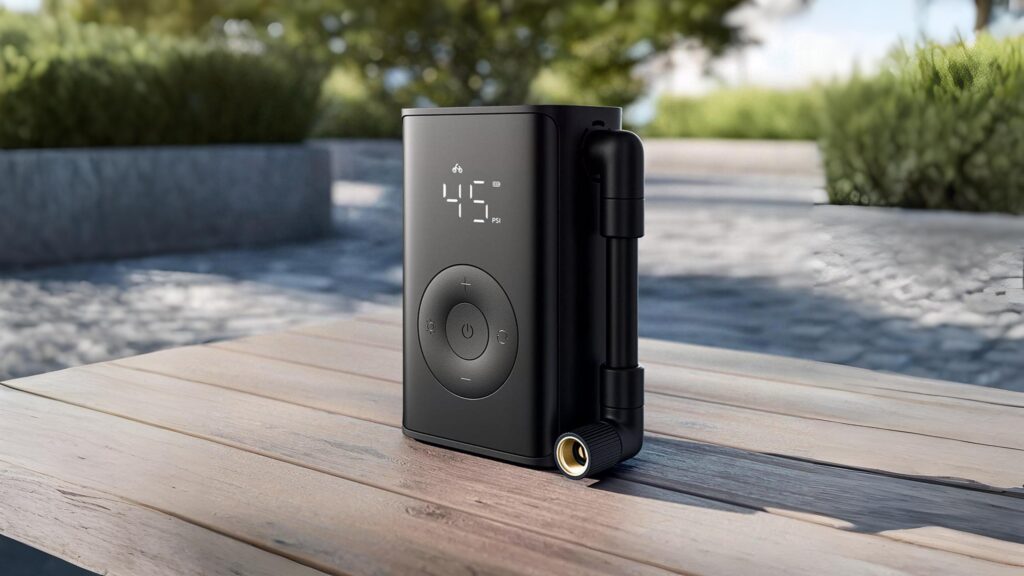
Xiaomi has introduced the Mijia Portable Inflator, a compact and lightweight air pump designed for a wide range of inflation needs. The product is now listed on Xiaomi Youpin and will be available for crowdfunding pre-orders starting September 15 at a launch price of 159 yuan ($22).
Xiaomi Mijia Portable Inflator Specifications
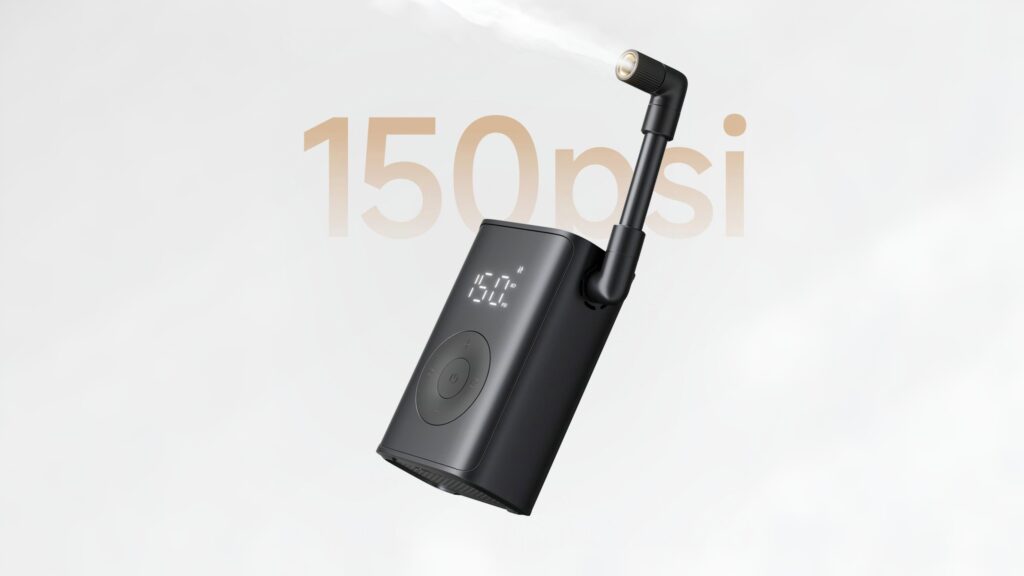
The inflator features a high-precision cast alloy cylinder capable of delivering up to 150psi air pressure. It can inflate bicycle tires, motorcycle tires, car tires, and sports balls. Xiaomi has reduced the device’s weight to 240 grams, which is approximately 50% lighter than the Mijia Air Pump 2, making it easier to carry during travel.
Xiaomi has equipped the device with a 2000mAh lithium-ion battery. This battery allows the inflator to fully inflate up to eight empty bicycle tires or top up electric scooter tires up to 43 times on a single charge. The inflator uses a brushless motor to ensure consistent pressure output while minimizing heat buildup during extended use. It also includes thermal protection to maintain safe operation in outdoor environments.
The Mijia Portable Inflator comes with multiple preset modes for bicycles, motorcycles, scooters, balls, and cars. It also supports a custom mode where users can manually adjust the pressure between 0.2 and 10.3 bar or 3 to 150psi. Once the target pressure is reached, the inflator automatically shuts off to prevent over-inflation.
The device includes an LCD display with a micro-border design. It shows real-time tire pressure and remaining battery life. The system performs automatic pressure calibration during startup and provides ±1psi pressure detection accuracy, even at high altitudes.
The inflator includes an LED flashlight designed for nighttime use and emergencies, with both standard white light and SOS flashing modes. It comes with adapters for French and American air valves, a needle nozzle for inflating sports equipment, and a dedicated carrying pouch with an inner pocket for convenient storage.
The device features a matte IML-coated finish for scratch resistance and a minimalist look. It takes about 60 seconds to inflate a bicycle tire and around 105 seconds to top up a car tire from 2.0 to 2.5 bar.
Huawei Pura 80 and Pura 80 Ultra represent two distinct tiers of Huawei’s flagship smartphone strategy. While the Pura 80 delivers strong performance at a premium price, the Ultra version pushes boundaries with camera innovations, faster charging, and refined hardware. This comparison is important because it highlights whether the Ultra’s upgrades justify its significantly higher cost or if the standard Pura 80 provides better overall value.
Build and Feel: Both devices share a premium glass and aluminum construction with IP68/IP69 dust and water resistance. The Pura 80 feels slightly lighter and easier to handle, making it more comfortable for daily use. The Pura 80 Ultra, however, adds sturdier protection with second-generation Crystal Armor Kunlun Glass and offers an extra eSIM option. This gives the Ultra an edge in durability and flexibility, but the Pura 80 remains more compact and practical.
Verdict: The Ultra is better built, but the Pura 80 is easier to carry.
Display Quality: The Pura 80 sports a 6.6-inch LTPO OLED with 2800 nits peak brightness, while the Ultra upgrades to a larger 6.8-inch LTPO OLED panel reaching 3000 nits. Both deliver sharp resolution at 459 ppi, smooth 120Hz refresh, and HDR vivid support. The Ultra’s screen is slightly brighter and more immersive, aided by tougher protection. However, the Pura 80 offers nearly the same quality in a more manageable size.
Verdict: the Ultra edges ahead with brightness and durability, though the Pura 80 is more balanced for one-handed use.
Verdict: Overall, the Pura 80 Ultra offers superior durability and a brighter, larger display, making it the better choice for those who prioritize premium build and immersive viewing. The Pura 80, however, is more ergonomic and still delivers flagship-quality visuals, making it the practical pick for compact phone lovers.
2. Specifications
Huawei Pura 80 Ultra
Performance: The Pura 80 is powered by the Kirin 9010s, paired with 12GB RAM, while the Pura 80 Ultra runs on the upgraded Kirin 9020 with 16GB RAM. The Ultra also includes the newer Maleoon 920 GPU, ensuring stronger multitasking and graphics performance. For high-end gaming, creative apps, and demanding use, the Ultra clearly outpaces the standard Pura 80. However, the Pura 80 remains more than capable for everyday flagship tasks.
Verdict: The Ultra is the performance leader, but the Pura 80 offers good balance for its price.
Battery and Charging: Battery life is solid on both, with the Pura 80 carrying up to 5600 mAh in China and the Ultra offering up to 5700 mAh. The real difference lies in charging: the Pura 80 supports 66W wired and 50W wireless charging, while the Ultra doubles down with 100W wired and 80W wireless speeds. Reverse charging also jumps significantly on the Ultra, making it a better hub for powering other devices.
Verdict: The Ultra dominates in charging speed and versatility, though both provide reliable endurance.
Verdict: The Pura 80 Ultra delivers clear advantages in processing power and charging speeds, making it the powerhouse of the two. The Pura 80 still provides reliable efficiency but cannot match the Ultra’s next-level hardware refinements.
3. Camera
Huawei Pura 80 Ultra
Main and Secondary Lenses: The Pura 80 has a capable triple-lens setup: a 50MP variable-aperture main sensor, a 12MP periscope telephoto with 5x optical zoom, and a 13MP ultrawide. The Pura 80 Ultra, however, raises the bar with a quad system: a 1-inch 50MP main sensor, dual telephoto lenses (3.7x and 9.4x optical zoom), and a 40MP ultrawide. The Ultra’s dual telephoto design makes it far more versatile for photography, while the larger sensor improves low-light performance.
Verdict: Ultra is clearly superior for professional-grade photography.
Selfie Camera: Both devices use a 13MP ultrawide autofocus selfie lens capable of 4K video. While quality is nearly identical, the Ultra benefits from stronger image processing thanks to its upgraded chipset. This results in slightly sharper selfies and smoother HDR in difficult lighting. Verdict: the Ultra has a small but noticeable edge in selfie quality.
Verdict: The Pura 80 Ultra is the definitive winner in camera performance, with its quad-lens system, larger main sensor, and dual telephoto zooms providing unmatched flexibility. The Pura 80 remains a strong performer but is geared more toward casual users rather than camera enthusiasts.
4. Pricing
Huawei Pura 80 is priced at around $800, while the Huawei Pura 80 Ultra costs nearly $1500. This nearly double price difference is significant. The Ultra delivers major upgrades in cameras, performance, and charging, but the Pura 80 offers far better value for users who want flagship features without overspending.
Verdict: Pura 80 is the better value choice, while the Pura 80 Ultra is justified only for those who need cutting-edge photography and performance.
Disclaimer: Prices are approximate and may vary based on country, region, and applicable taxes.
5. Conclusion
Huawei Pura 80
The Pura 80 Ultra introduces standout features such as dual telephoto zoom lenses, faster 100W wired and 80W wireless charging, and advanced Kunlun Glass protection. It also supports satellite calling in China, which the standard Pura 80 lacks. The Pura 80, however, remains unique for being a compact yet premium flagship that balances practicality with price efficiency.
Verdict: For users who prioritize top-tier photography, blazing-fast charging, and durability, the Pura 80 Ultra is worth the investment despite its steep cost. For those seeking a more budget-conscious flagship with strong all-around performance, the Pura 80 offers a smarter and more balanced purchase.
Xiaomi has launched a new electric toothbrush under its Mijia brand. The Mijia Servo-Sonic Electric Toothbrush Pro will be available starting September 10 on Xiaomi’s online store. It is priced at 269 yuan ($38).
Mijia Electric Toothbrush Pro Specs
The new toothbrush uses a servo-sonic motor capable of 60-degree sweeping oscillations, which Xiaomi claims simulates the Bass brushing technique. This motion is said to increase the cleaning range up to three times compared to previous models. It also features a built-in six-axis gyroscope that identifies tooth surfaces, enabling precise, zone-based cleaning.
The device includes an LCD color display that provides real-time brushing feedback. It shows brushing duration, coverage, and plaque detection status directly on the screen. The handle also integrates a smart pressure sensor. If a user applies excessive pressure, the toothbrush flashes a red warning light, vibrates, and reduces power automatically to protect the gums.
Xiaomi provides two copper-free cushioned brush heads with the toothbrush. The standard cleaning head features dual vortex pillars and crescent-shaped bristles for removing plaque. The second brush head is designed for gum care and uses a circular bristle layout. Both heads include color-fading bristles to indicate when they need replacement.
The Mijia app lets users fine-tune brushing modes by adjusting power and motion settings. It also provides comprehensive brushing reports, including duration, pressure zones, and plaque risk analysis
The toothbrush features a one-piece body with a smooth, UV-coated ceramic-like finish and a metallic trim around the display. It is available in purple, blue, and white. The device is rated IPX8 waterproof and includes a travel lock feature. It also remembers the last used mode.
Xiaomi claims a battery life of up to 180 days in soft mode and 100 days in standard mode. The toothbrush charges via a USB-C port, and a 2-minute charge is sufficient for a single brushing session.
In related news, Xiaomi has launched the Mijia Brushless Drill 2, featuring a 1700 RPM motor and 50N·m torque. The company also unveiled the Mijia 5C Robot Vacuum, equipped with 15,000Pa suction power and Xiaomi’s first edge-mopping technology.
For more daily updates, please visit our News Section.
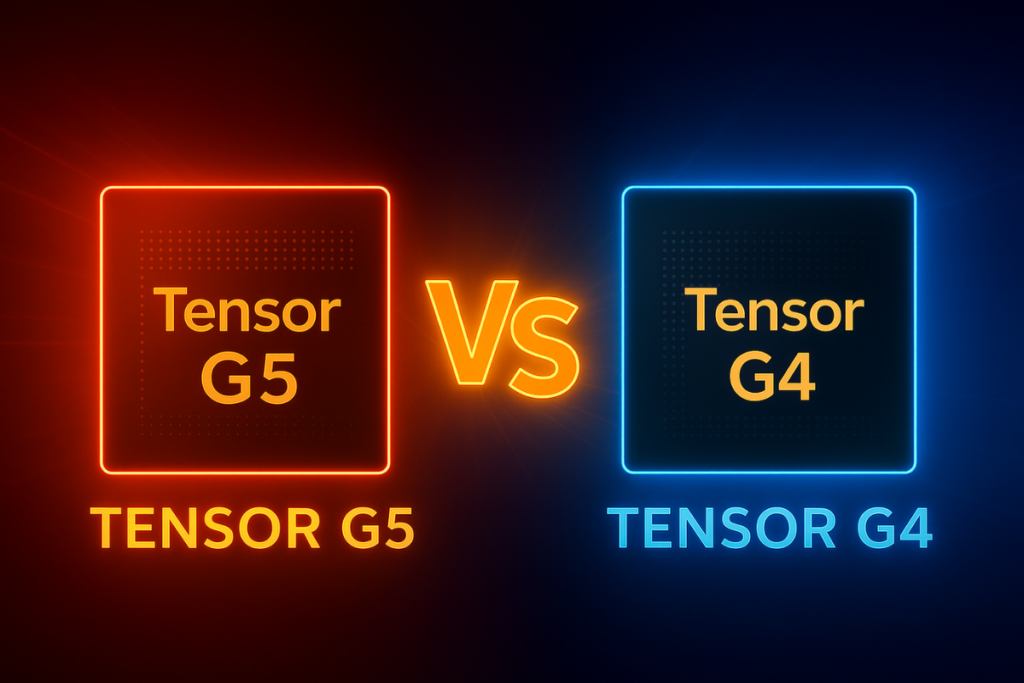
Google’s in-house Tensor chips have steadily improved over the years to become a reliable daily driver with solid battery efficiency. Still, performance has often been a sticking point. While previous Tensor chips have handled everyday tasks well, they fell short when it came to gaming and other demanding workloads. The latest Tensor G5 could change that as it promises significant performance upgrades.
The tech giant says “Tensor G5 is our biggest upgrade yet and delivers a major performance boost.” The latest Tensor chip, debuted last month with the Pixel 10 series, is claimed to have 60% more powerful TPU and 30% faster average CPU. This is also Google’s first mobile chipset manufactured at TSMC’s factory (previous Tensor chips were made by Samsung). The Tensor G5 utilizes a more advanced 3nm process node, which promises improved performance and enhanced battery efficiency.
Google promises significant upgrades for Tensor G5, but will that bring a substantial boost to benchmark numbers where previous Tensor chips have not performed well? We’ll look at the benchmark figures. Before that, here’s the spec sheet to see the differences on paper:
Samsung Exynos 5400 5G modem Wi-Fi 7, Wi-Fi 6E Bluetooth 6.0
Samsung Exynos 5400 5G modem Wi-Fi 7 Bluetooth 6.0
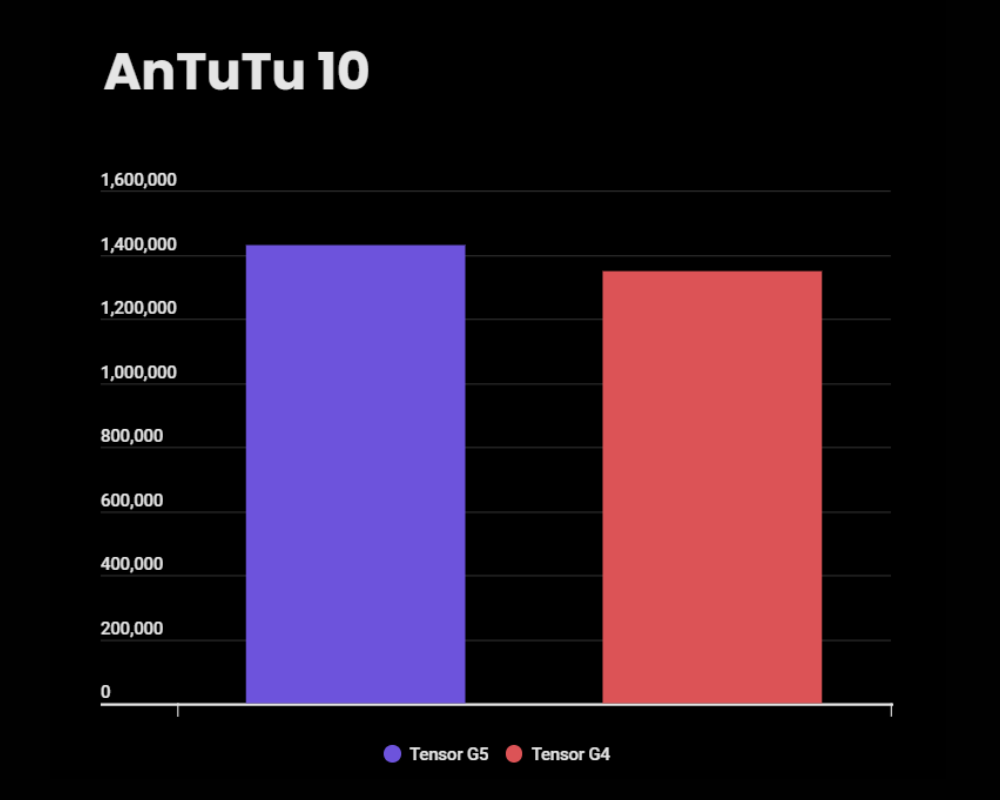
Google Tensor G5 vs Tensor G4: AnTuTu score
AnTuTu (version 10) benchmark shows a modest overall gain for the new Tensor G5 chip with a score of 1,429,557 compared to Tensor G4’s 1,348,226 — that’s a 6% gain. The CPU, however, shows a nice 20% increase (483,989 vs 401,746). The memory and UX scores also favor the newer chip with an increase of around 10%.
The most surprising of all is the GPU score, which is actually lower than last year’s G4 — the difference is about 10%. This suggests Google may have focused more on efficiency rather than pushing raw graphics performance.
Tensor G5
Tensor G4
AnTuTu score
1,429,557
1,348,226
CPU
483,989
401,746
GPU
416,313
462,415
Memory
293,467
266,535
UX
235,788
217,530
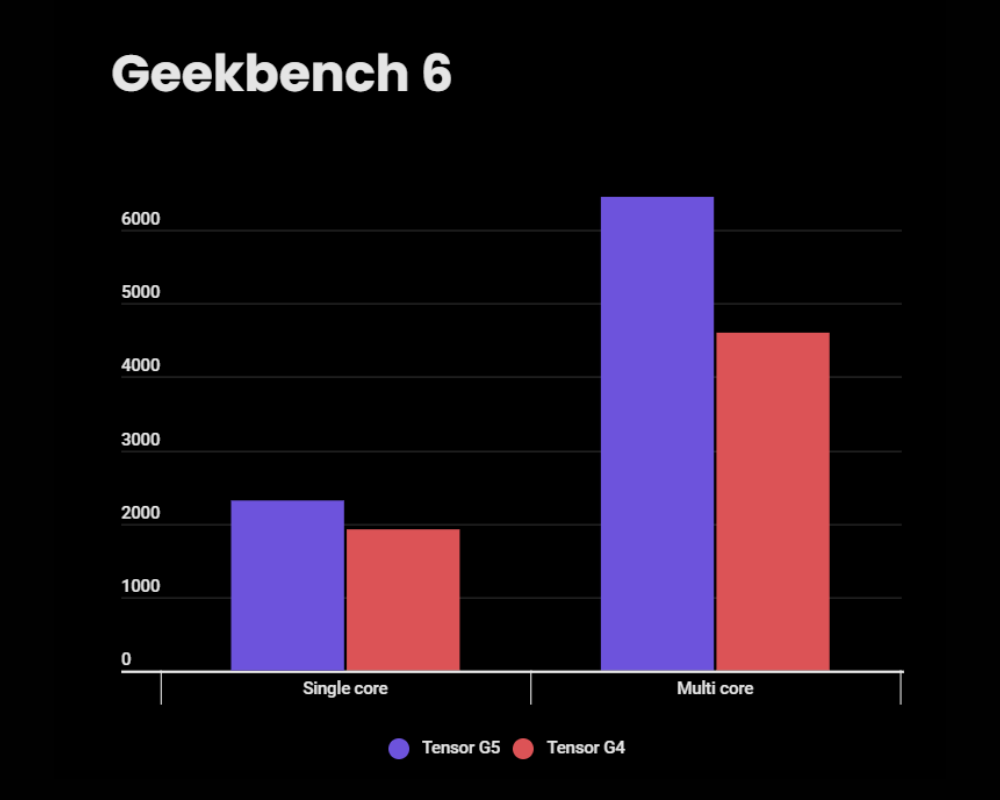
Google Tensor G5 vs Tensor G4: Geekbench score
On Geekbench 6, the Tensor G5 shows clear improvements over the Tensor G4. In the single-core test, it scores 2,316, about 20% higher than the G4’s 1,923, meaning faster responsiveness in everyday tasks like app launches and UI navigation.
The multi-core score jumps to 6,452, a massive 40% gain over the G4’s 4,602, highlighting stronger performance in multitasking, productivity apps, and heavier workloads.
Overall, Geekbench results suggest promising improvements for Tensor G5 in raw CPU performance, especially in multi-core efficiency, which should translate into much smoother performance.
Tensor G5
Tensor G4
Single core
2,316
1,923
Multi core
6,452
4,602
Google Tensor G5 vs Tensor G4: 3DMark score
The Tensor G5 shows a clear improvement over the Tensor G4 in the 3DMark Wild Life Extreme Stress Test, which measures sustained GPU performance under heavy load. The G5 achieves a best loop score of 3,319, compared to the G4’s 2,603, marking an impressive 27% uplift in peak graphics performance.
More importantly, the G5 also delivers better consistency. Its lowest loop score is 2,954, while the G4 drops to 2,071. That’s not only higher performance, but also much greater stability — 89% vs 79.6%. This means the Tensor G5 is far less prone to thermal throttling and should provide smoother, more reliable gaming performance over longer sessions.
Tensor G5
Tensor G4
Best loop score
3,319
2,603
Lowest loop score
2,954
2,071
Stability
89%
79.6%
Tensor G5 vs Tensor G4: Verdict
The Tensor G5 shows promising upgrades to CPU performance, thanks to more advanced TSMC manufacturing and improved CPU cores. The 3DMark test shows that GPU performance and consistency have also improved noticeably. This should result in snappier everyday performance and a better gaming experience. The new chip also addresses most of the heating and throttling issues reported by users with previous Tensor chips.
While the newer Tensor chip brings notable upgrades, Google still has a lot to catch up to compete with the best from Qualcomm and MediaTek. We’ve compared the Tensor G5 with Snapdragon 8 Elite and Snapdragon 8 Gen 3. You can explore those comparisons to find out how Google’s latest chip stacks up against the industry best.
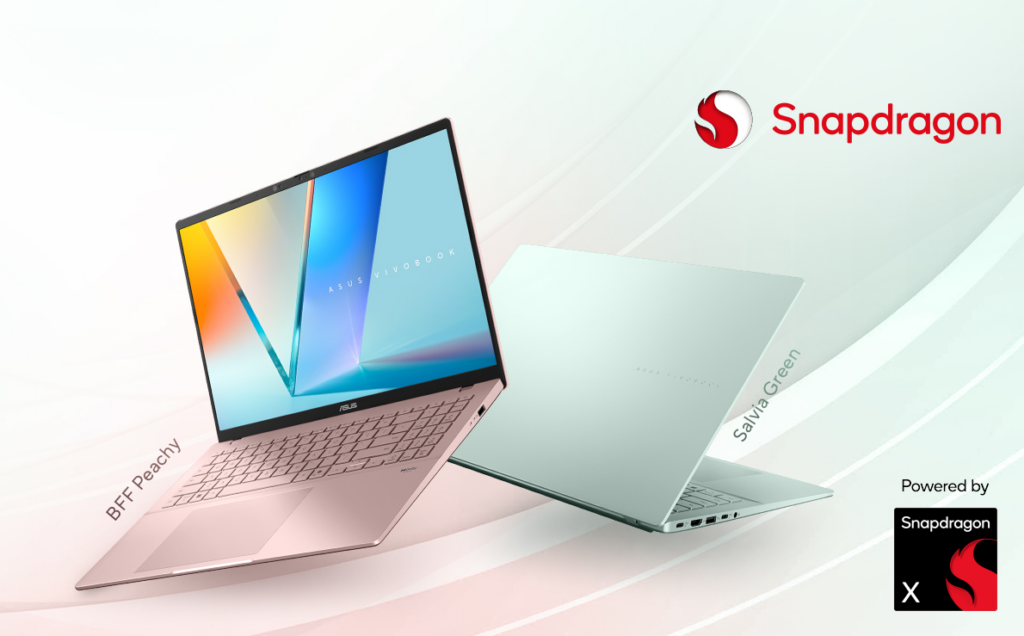
As promised, ASUS has launched new color variants of the Vivobook S16 (S3607QA) in India as part of its Vivobook Multicolor Series. The laptop comes in two new colors, BFF Peachy and Salvia Green, in addition to the previously released Matte Gray and Cool Silver.
The Vivobook S16 has a 16-inch OLED display with a 16:10 aspect ratio, a resolution of 1920 × 1200, 95 percent DCI-P3 color gamut, 89 percent screen-to-body ratio, 0.2 ms response time, and 300 nits brightness.
It runs on a Snapdragon X processor with 8 cores and 8 threads, reaching up to 2.97 GHz, and includes a 30 MB cache. The Qualcomm Hexagon NPU delivers up to 45 TOPS. ASUS uses IceCool Thermal Technology and MyASUS fan controls to support performance up to 30W TDP. The system includes 16 GB LPDDR5X memory running at 8448 MHz and a 512 GB PCIe Gen 4 SSD. It ships with Windows 11 Home, Microsoft Office Home 2024 lifetime access, and a one-year subscription to Microsoft 365 Basic.
The 70 Wh battery provides up to 32 hours of use and supports fast charging through a 65W Type-C adapter. Connectivity options are two USB4 Type-C ports with 40 Gbps bandwidth and 4K UHD output, two USB 3.2 Gen 1 Type-A ports, one HDMI 2.1 port, an audio jack, Wi-Fi 6E, and Bluetooth 5.3.
The backlit ErgoSense keyboard includes a dedicated Copilot key for Recall, Windows Studio Effects, Live Captions, and ASUS StoryCube. Other features are an ErgoSense touchpad with smart gestures, Dolby Atmos certified speakers with a smart amplifier, AI noise-canceling microphones, and a FHD IR camera with Windows Hello, privacy shutter, and Microsoft Pluton chip security.
It measures 1.59 cm in thickness, weighs 1.74 kg, and has a metal finish with a CNC-engraved logo. It is also US MIL-STD 810H certified.
Pricing & availability
The ASUS Vivobook S16 (S3607QA) is priced at Rs. 67,990 and is available through the ASUS E-shop and Flipkart. The first 200 customers can claim benefits worth Rs. 8,098 for Rs. 1, which include two years of additional warranty, three years of accidental damage protection, and a Mokobara laptop sleeve through asuspromo.in.
For more daily updates, please visit our News Section.
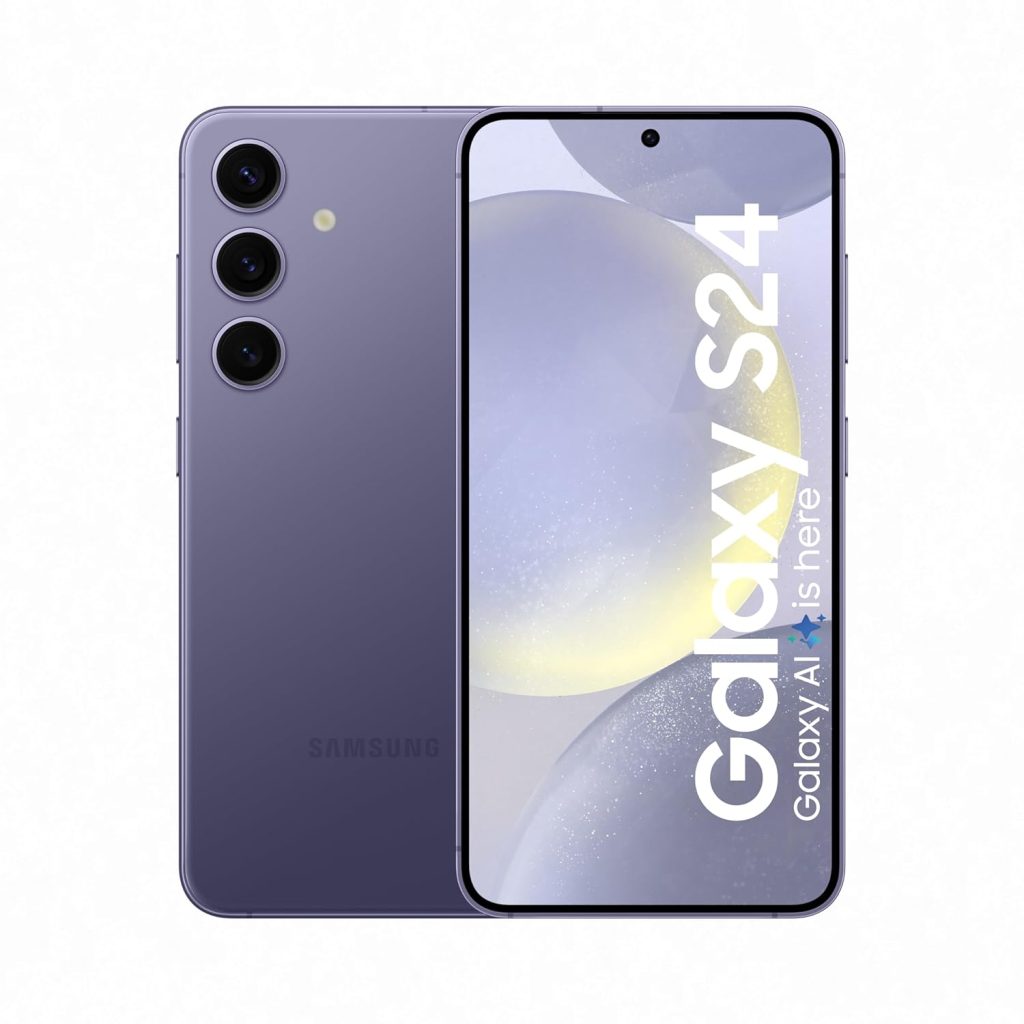
Samsung is gearing up to relaunch the Galaxy S24 in India, but this time with a Qualcomm twist. The original Galaxy S24 was released globally with the Exynos 2400 (except in the US and South Korea). Now, fresh teasers have confirmed the Snapdragon variant of this 2024 flagship phone is arriving in India soon. But it appears that the premium experience won’t carry a premium price tag.
Samsung is Re-Releasing Galaxy S24 at a Killer Price
Just last week, the South Korean tech giant confirmed the arrival of the Snapdragon powered Galaxy S24 right after the Galaxy S25 FE’s announcement. This model is set to arrive in India via Flipkart, and with the latest teaser, confirms the arrival of the smartphone for under 40,000 INR. So even with the Galaxy S25 FE arriving as a budget flagship phone, the Galaxy S24 could easily be the better pick.
Samsung Galaxy S24
The teaser showcases the smartphone with the price listed as “Rs 3_,__9”. Based on the image posters, Samsung will roll out the Galaxy S24 with the Snapdragon 8 Gen 3 in India in four color options. This includes Onyx Black, Marble Grey, Amber Yellow, and Cobalt Violet. To recall, the original Exynos Galaxy S24 variant for 79,999 INR. So the flagship is arriving in a new price range during Flipkart’s upcoming Big Billion Days Sale 2025.
The promo sales event will kick off on 23rd September 2025. Other notable features include a 50MP triple camera setup, a 6.2-inch compact AMOLED display, Android 15 OS, IP68 rating for water and dust resistance, and Galaxy AI powered features.
For more daily updates, please visit our News Section.
Samsung’s long-rumored tri-fold phone is edging closer to reality, and a new leak gives us a clearer idea of how the company plans to set it apart. Unlike Huawei’s Mate XT or the recently launched Mate XTs, which go for a Z-style layout, Samsung seems to be trying something different with its first triple-folding device.
Shared by leaker @TechHighest on X, official-looking One UI animations show the Galaxy Tri-Fold folding around a central cover display. That means when the device is shut, the usable front screen sits in the middle section instead of on the outermost panel. It’s a departure from expectations, but one that could have some practical benefits—like making it easier to use the main cameras for selfies, since they sit just to the side of the cover screen.
This central positioning could improve ergonomics, letting users hold the folded device by the inactive panels while avoiding smudges on the cover screen. For those wondering, the wireless and reverse wireless charging coil is placed below the camera module, meaning the phone can be used much like a regular bar phone while charging wirelessly or sharing power. It looks like Samsung has put some thought into making the tri-fold practical in everyday use.
The main display size isn’t confirmed, though earlier reports suggest something close to 10 inches when fully unfolded. That would put it in the same ballpark as Huawei’s Mate XTs. Samsung is also expected to keep its traditional Fold lineup going, so the Galaxy Z Fold7 remains an option for buyers who prefer the classic two-panel design.
The leaked One UI animations suggest Samsung isn’t just following Huawei’s lead but carving out its own identity in the tri-fold space. The company has already confirmed that the ‘Galaxy Z TriFold’ will debut before 2026, with a recent leak pointing to an October launch.
Skullcandy has officially launched its latest Ink’d ANC true wireless earbuds in India. These expand the brand’s audio product line in the region, bringing notable features like ANC (Active Noise Cancellation), multipoint pairing, and much more. So here are all the details.
Skullcandy Ink’d ANC Debut in India with a Huge Discount
The brand’s latest Ink’d ANC earbuds house 10mm audio drivers and connect to your smartphone via Bluetooth 5.4. It even supports multipoint pairing, allowing it to connect with multiple devices seamlessly. There is also a low latency mode that makes it great for gaming enthusiasts. One notable feature is the ANC that is powered by the 4 microphone setup, with two of these mics available for clearer calls.
Skullcandy Ink’d ANC TWS Earbuds
On a single full charge, the Skullcandy Ink’d ANC TWS can offer up to 43 hours of battery life when paired with the charging case. It also supports rapid charging, offering up to 2 hours of audio playback with a quick 10 minute charge via a USB Type-C port. The brand arrives with an IPX4 rating for water and sweat resistance, which is perfect for physical fitness enthusiasts.
As of right now, the Skullcandy Ink’d ANC TWS earbuds have been announced for an official price tag of 12,999 INR. However, the company is offering a massive launch discount of 10,000 INR. In other words, the Ink’d ANC has an introductory price tag of just 2,999 INR. It is available in a single Black Glossy variant and can be purchased from the brand’s official website or Amazon India. This release also arrives a while after the company announced the Skullcandy Icon Headphones Go Live in India.
For more daily updates, please visit our News Section.
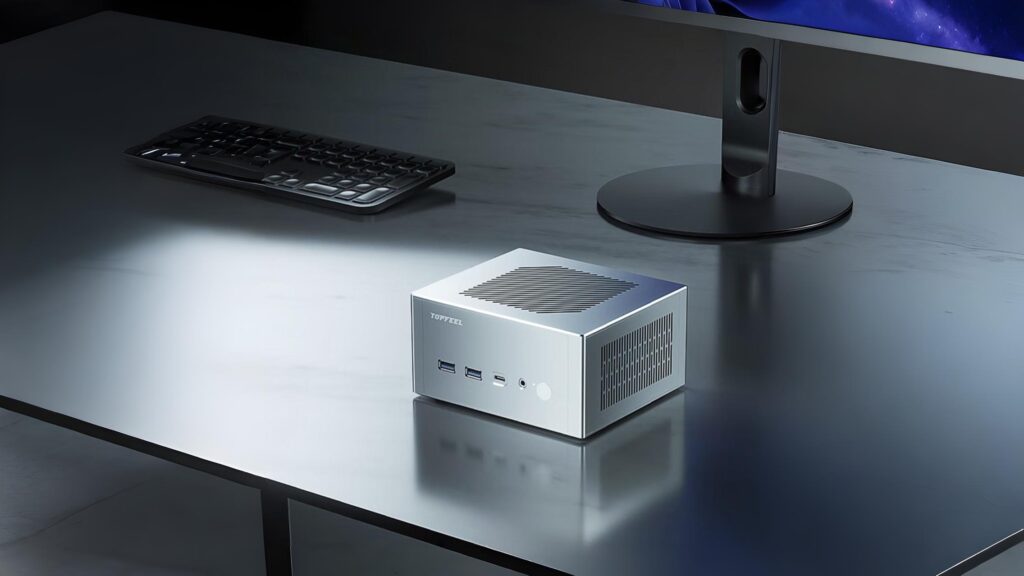
Topfeel has launched the DeskOne T2, a compact mini PC that combines AMD Ryzen performance with high-speed connectivity and efficient cooling. The system will go on sale on September 22, with pre-sale listings already live on JD.com.
Pricing
The DeskOne T2 is available in four configurations. The base model features an AMD Ryzen 7 H255 processor and is priced at 2,399 yuan ($336) without RAM or storage. The same processor is available with 32GB of DDR5 memory and a 1TB SSD for 3,349 yuan ($469).
For users requiring higher performance, Topfeel also offers a version with the Ryzen AI 9 HX 370 processor, starting at 4,499 yuan ($630) for the barebone variant and 5,499 yuan ($770) for the fully configured model with 32GB RAM and 1TB storage.
Topfeel DeskOne T2 Specifications
The mini PC features a CNC-machined aluminum alloy chassis with 2-3mm thick panels and a compact 1.3-liter volume. It measures 126 × 146 × 73 mm and uses a dual-fan cooling system. This includes a large top-down fan, a rear-mounted fan, four full copper heat pipes, phase-change thermal materials, and high-density cooling fins. The system supports adjustable power modes ranging from 15W to 85W, controlled via BIOS.
Topfeel equips the DeskOne T2 with up to 128GB DDR5-5600 RAM and triple M.2 PCIe 4.0 SSD slots. The device allocates a total of 16 PCIe lanes across two full-speed M.2 2280 slots, one additional M.2 slot, an OCuLink 4i interface for external GPUs, and Intel 226V dual 2.5G LAN ports.
Front panel ports include two USB-A 10Gbps ports, one USB4 Type-C port, and a 3.5mm audio jack. The rear panel features one HDMI 2.1 port, one DisplayPort 2.1, another USB4 Type-C port, an OCuLink 4i port, two USB-A ports (5Gbps and 480Mbps), a second audio jack, and two 2.5GbE LAN ports.
The DeskOne T2 ships with a 120W GaN power adapter. The system supports Windows 10, Windows 11, and Linux, but no operating system comes pre-installed.
For more daily updates, please visit ourNews Section.
After years as the Android customization go-to, things are seeming dire for Nova Launcher, and we might be saying our goodbyes to the iconic launcher that helped shape the Android platform. It was known for being one of the best of its kind, but it is officially shutting down soon.
End of the Road for Nova Launcher
The founder and developer behind Nova Launcher, Kevin Barry, recently shared that he has officially left the project. This move puts the platform’s future in question as people believe this could be the end of Android’s most iconic launcher. After Nova was acquired by Branch in 2022, Barry decided to part ways now, stating that there is barely any active development on the platform.
Nova Launcher
He further added that he was working on making Nova open source, however, he was asked to stop work on this before he left. While there were initial promises that the platform would go open source if Barry left, this development hints that this probably will not be the case. Nova Launcher was one of the biggest third party launchers that helped bring deeper customization if your Android smartphone’s original custom skin was lacking.
To recall, it allowed users to bring changes to their home screens, gestures, app drawer, and much more. Many believe that Nova helped improve the Android experience overall, inspiring new features and bringing great quality of life features even before official OS builds on certain smartphones. This is all the information we have at the moment, so stick around for more.
For more daily updates, please visit our News Section.
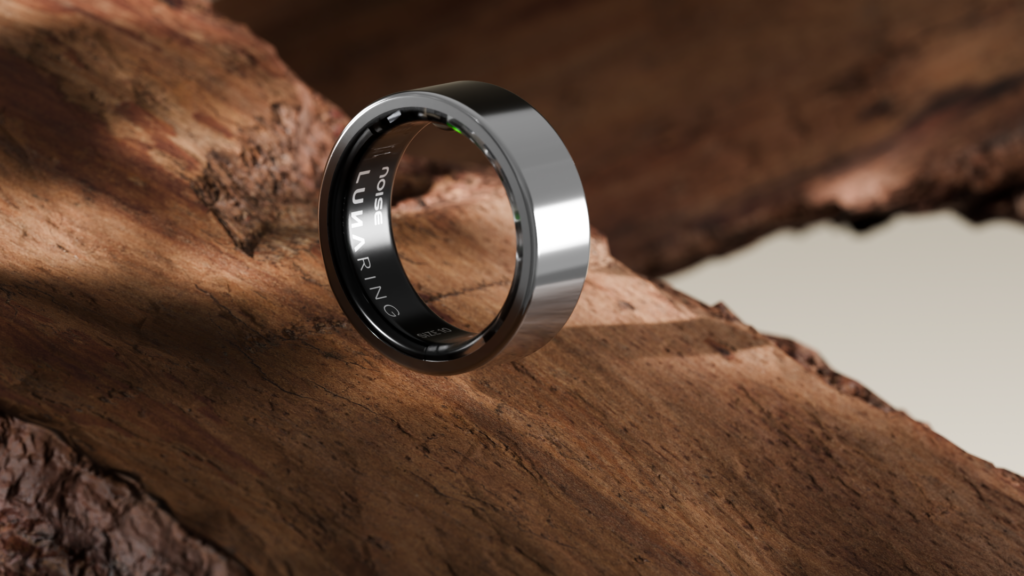
Luna’s next gen smart ring has just been announced globally during the IFA 2025 event. The company’s Luna Ring 2.0 brings various upgrades over its predecessors, including an impressive battery life, better health tracking, and AI powered health features. So let’s check it out.
Luna Ring 2.0 Brings LifeOS, AI Health Score & Long Battery Life
Luna 2.0 smart ring arrives with a durable titanium body that is 5ATM water resistant. It runs on the new LifeOS, which arrives with AI integration that can learn your body’s internal clock. The smart wearable arrives with Luna AI 2.0, which now supports an AI voice coach. This new feature allows the Luna Ring 2.0 to personalized health and fitness related insights.
Luna Ring 2.0
The smart ring also uses AI for health scoring, along with support for blood oxygen monitoring, heart rate tracking, and pulse oximetry as well. Luna has improved the sleep tracking on its 2.0 Ring with in-depth sleep analysis with various metrics like sleep efficiency, sleep cycles, and circadian rhythm. Weighing around 3.5 grams, the Luna Ring 2.0 can double as an unintrusive fashion/tech accessory as well.
One of the big highlights is the long battery life. On a single full charge, the Luna Ring 2.0 can last for up to 5 days, with the charging case bringing the total battery life to over 21 days. Although, the ring box-like charging case is sold separately. The Surge Charger Bundle is priced at 349 US Dollars, while the Luna Ring 2.0 alone costs 300 US Dollars. It is also listed in the Indian market for 24,999 INR.
For more daily updates, please visit our News Section.
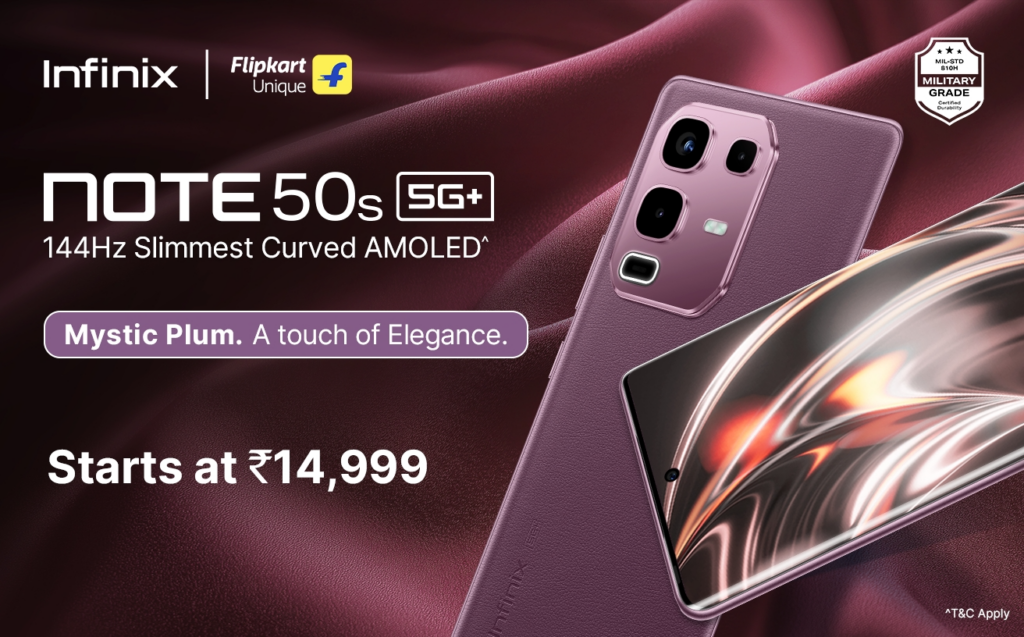
Infinix has unveiled a new colour option for the Infinix Note 50s, dubbed Mystic Plum, in India. Starting today, the new variant is available for purchase with a price tag of Rs 14,999 (~$170) via Flipkart and offline stores.
Infinix Note 50s 5G Mystic Plum price in India
Infinix Note 50s in Mystic Plum
The Infinix Note 50s 5G Mystic Plum edition comes in two configurations: 6GB+128GB and 8GB+256GB. These variants are priced at Rs 14,999 (~$170) and Rs 15,999 (~$180), respectively.
The Mystic Plum edition features a premium vegan leather finish similar to its Blue edition. It also comes in three other shades, namely Titanium Grey, Marine Drift (Blue), and Burgundy Red.
Infinix Note 50s specifications
The Infinix Note 50s 5G has a 6.78-inch curved-edge AMOLED screen that supports an FHD+ resolution and a 144Hz refresh rate. The device ships with XOS 15-based Android 15. It is confirmed to receive two years of Android OS upgrades and three years of security updates.
The Note 50s 5G is powered by the Dimensity 7300 Ultimate chip and packs a 5,500mAh battery with 45W charging support. It has a 13-megapixel front-facing camera and a rear setup comprising a Sony IMX682 64-megapixel main camera, a 2-megapixel auxiliary lens, and an Active Halo Lighting LED.
The Note 50s 5G comes with other features like a side-mounted fingerprint sensor, JBL dual speakers, a microSD card slot, and an IR blaster. In terms of durability, the Note 50s features an IP64-rated chassis and MIL-STD-810H military-grade certification.
For more daily updates, please visit our News Section.
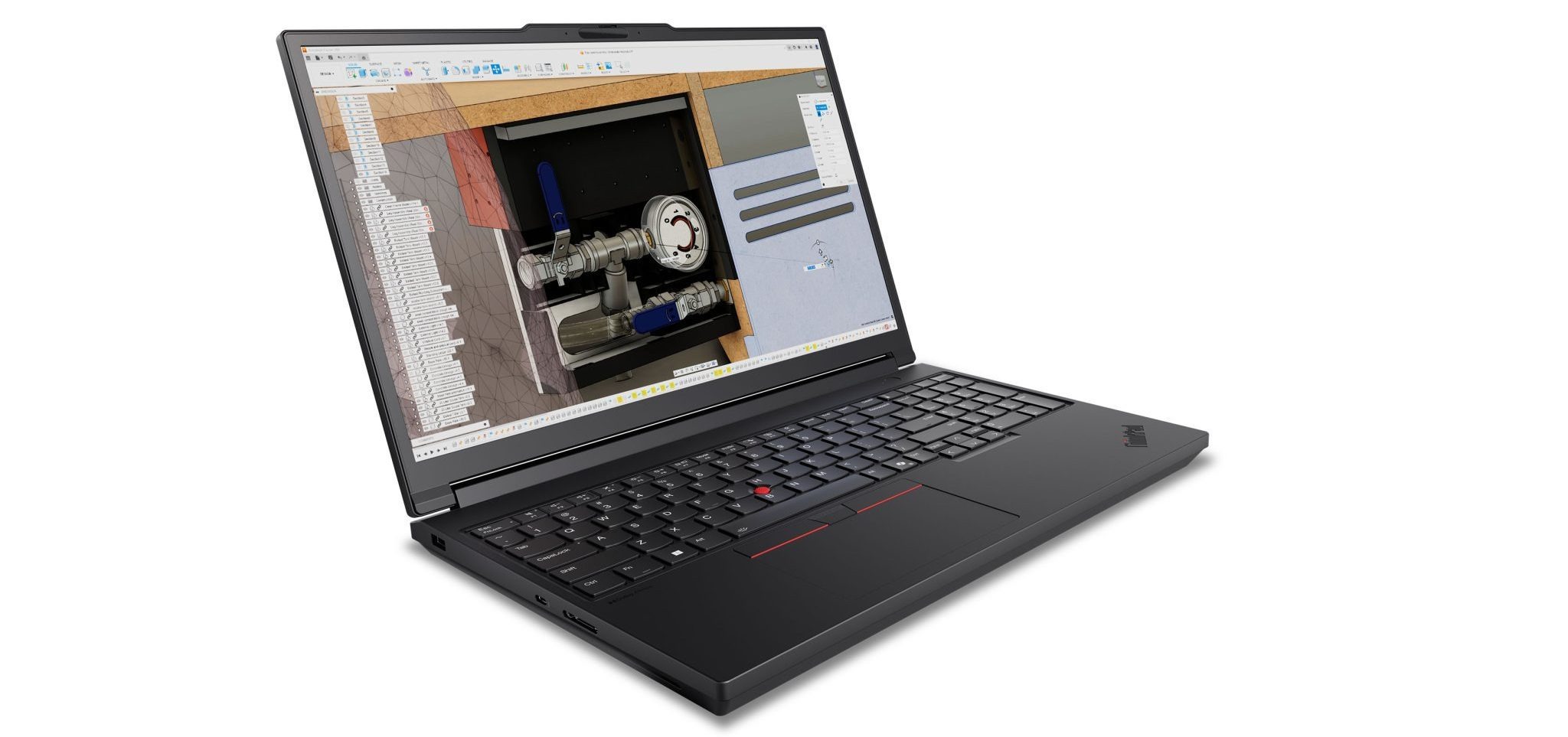
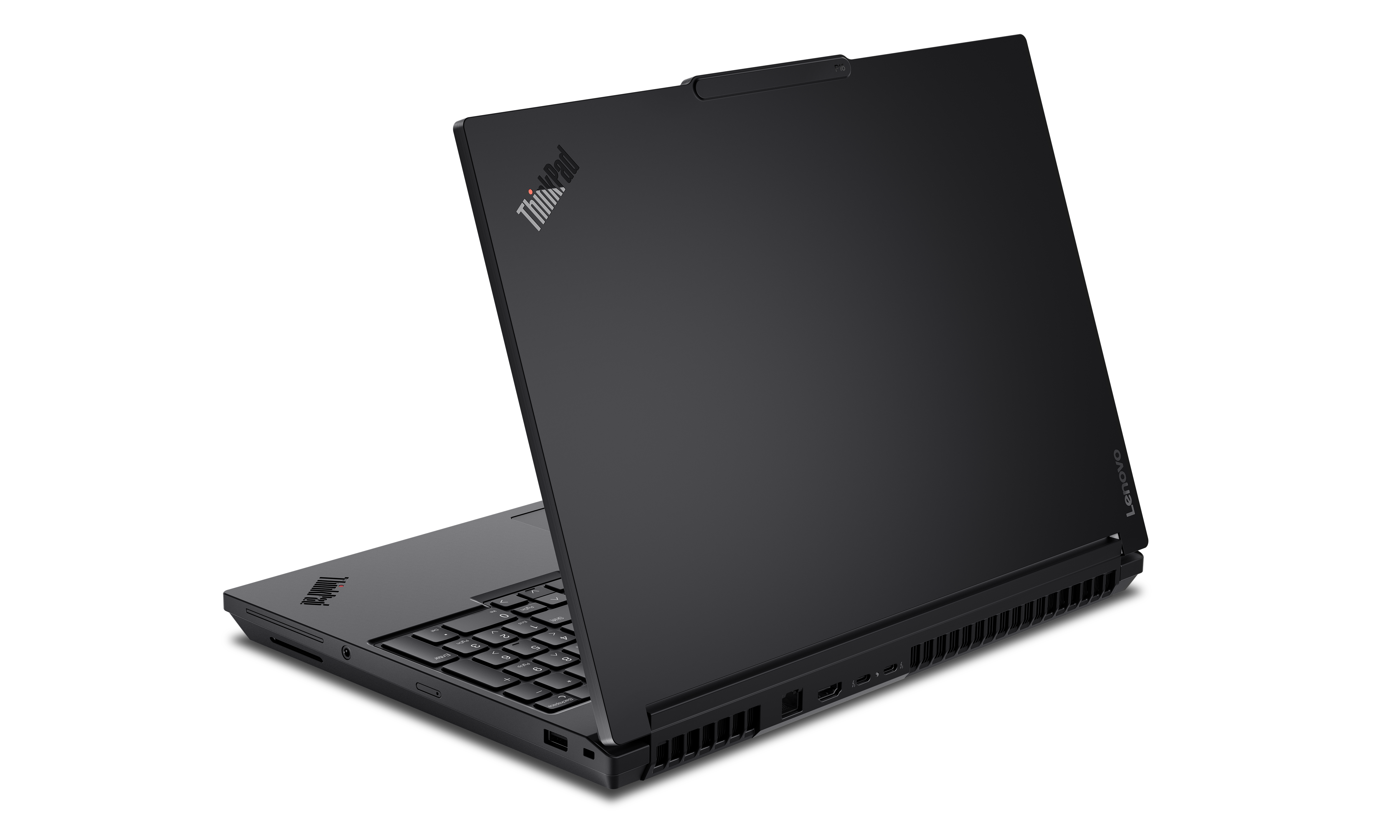
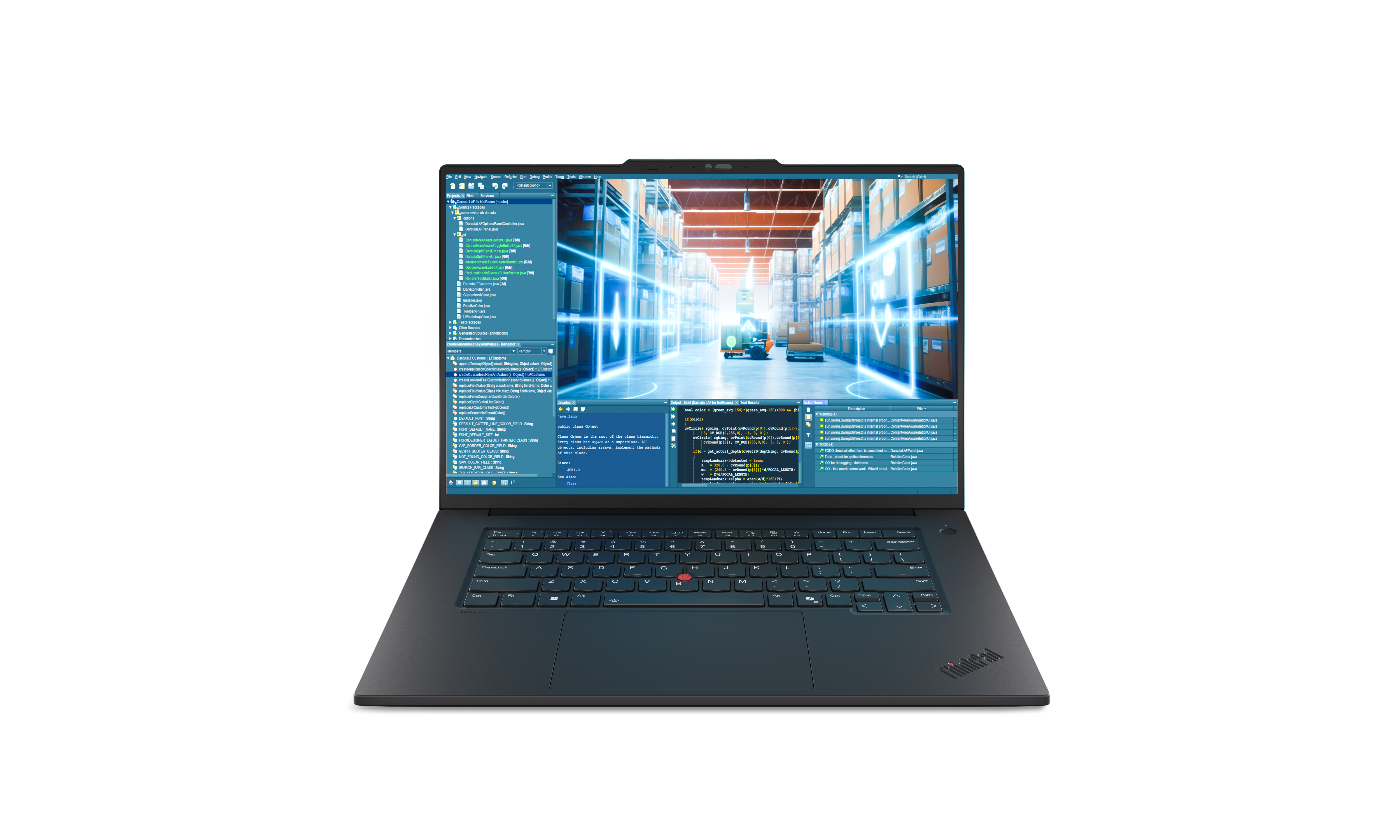
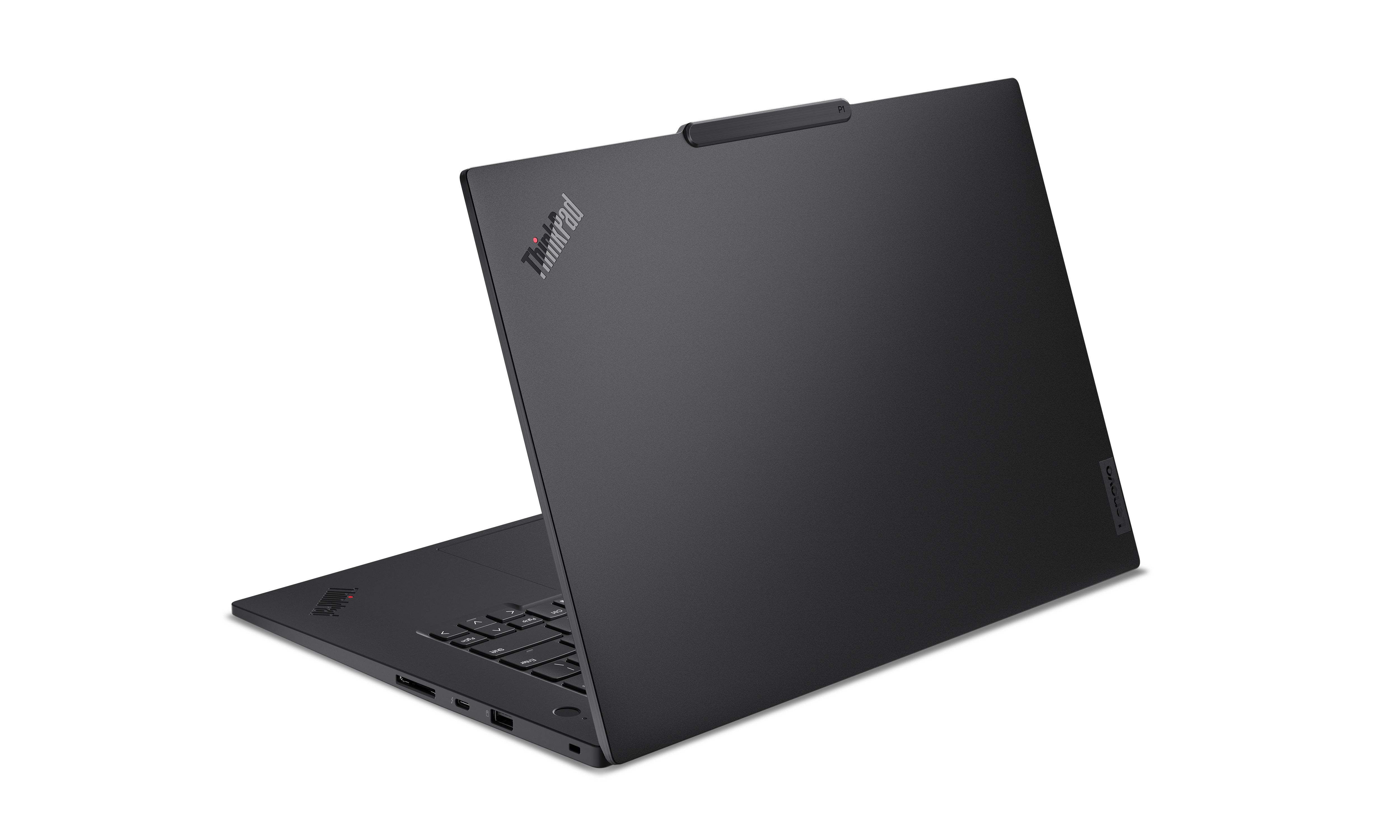
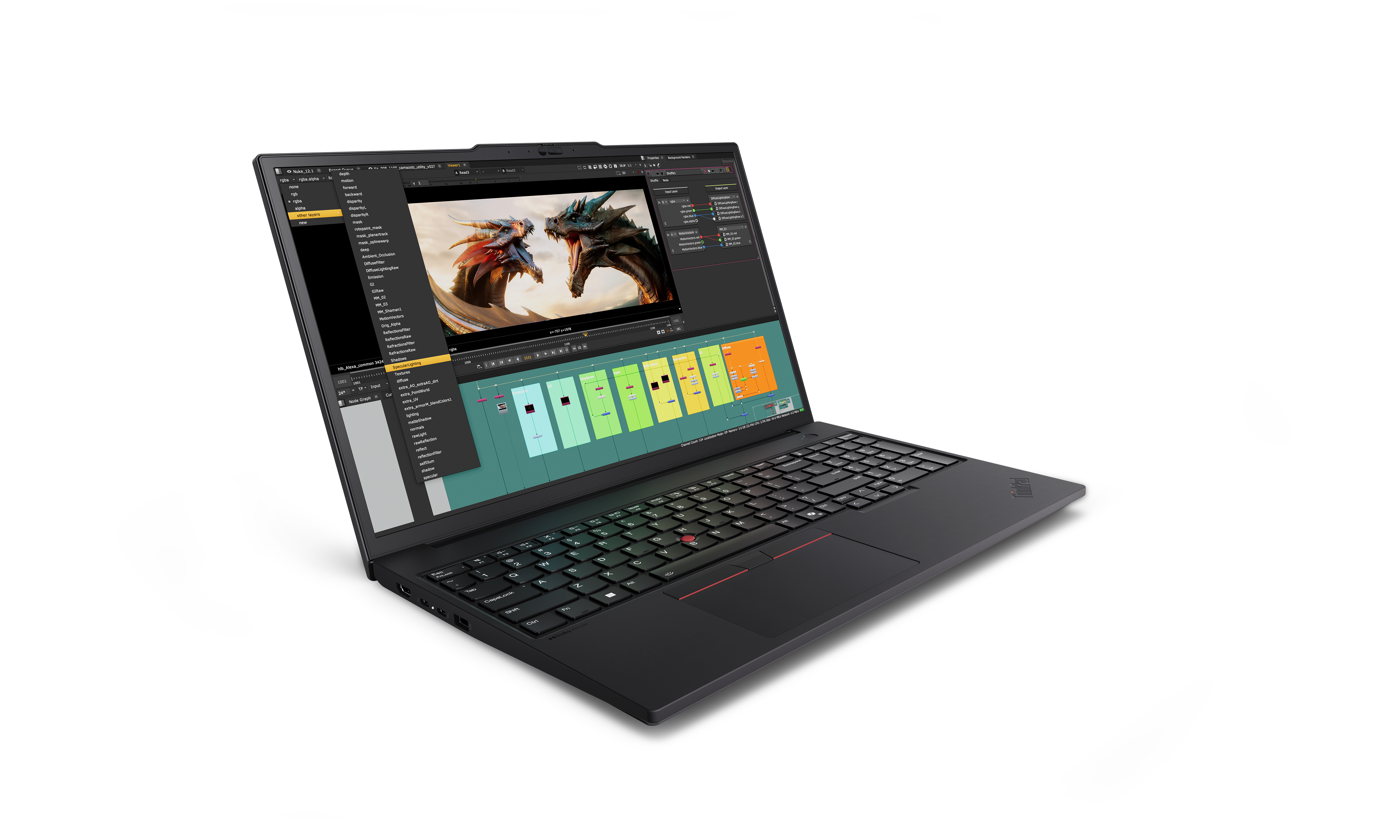
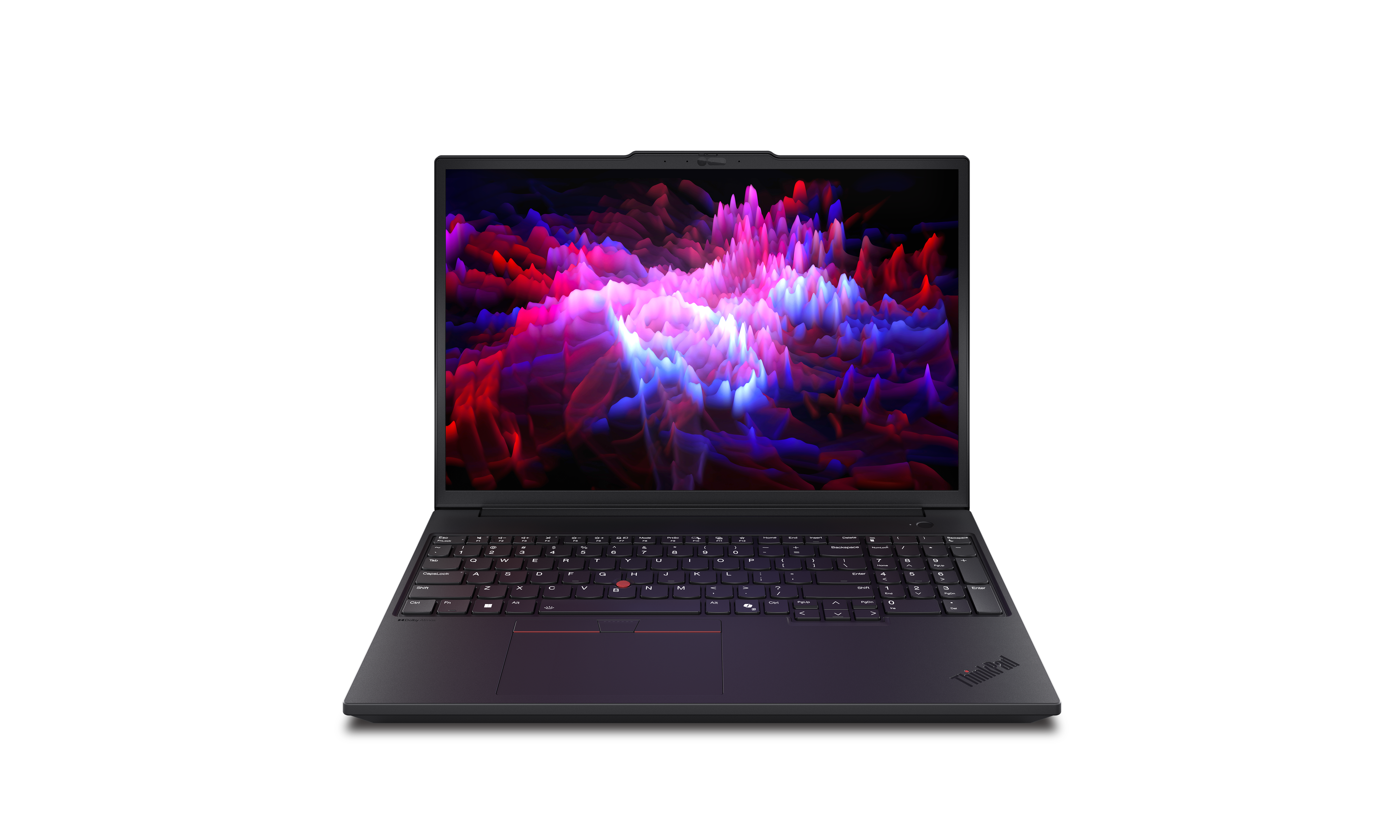
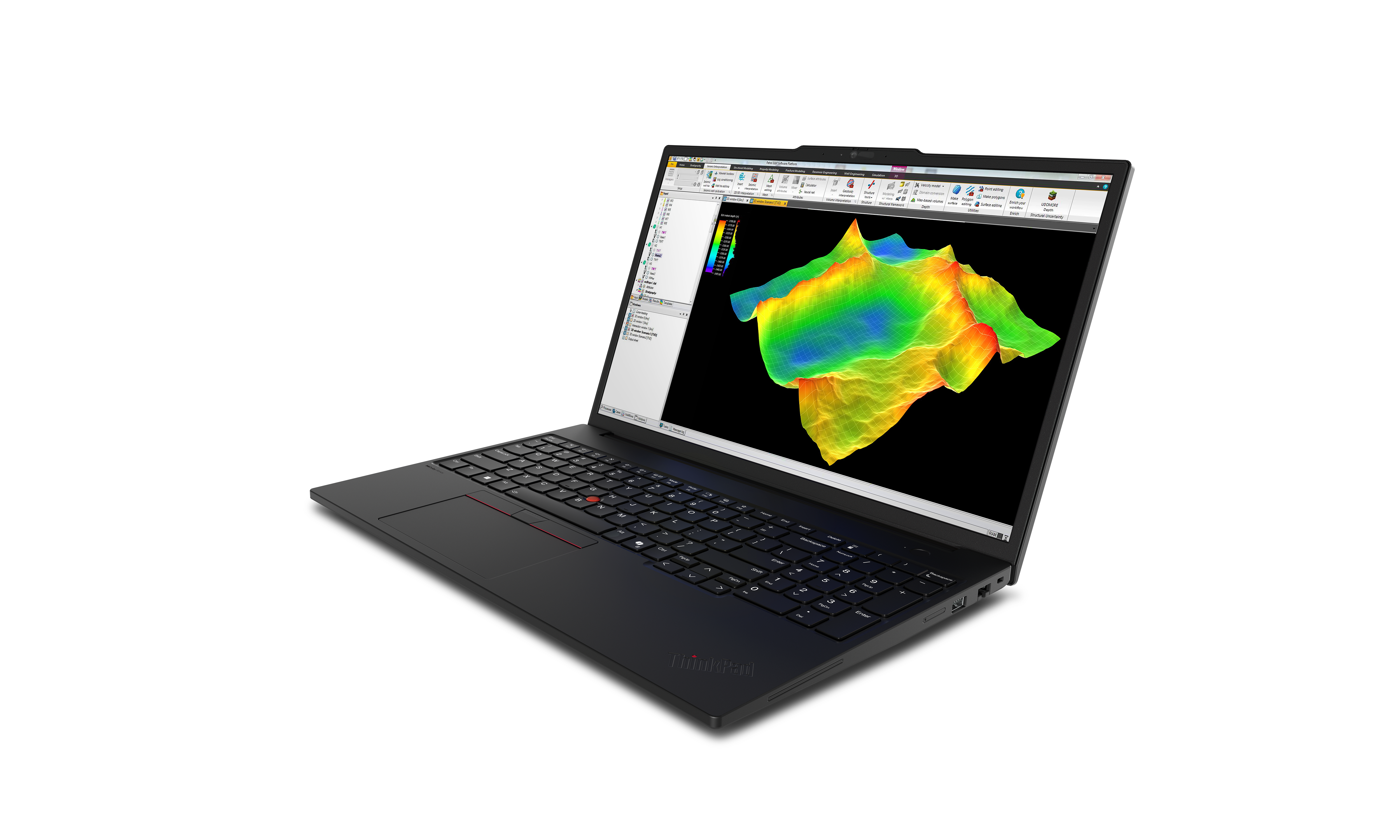
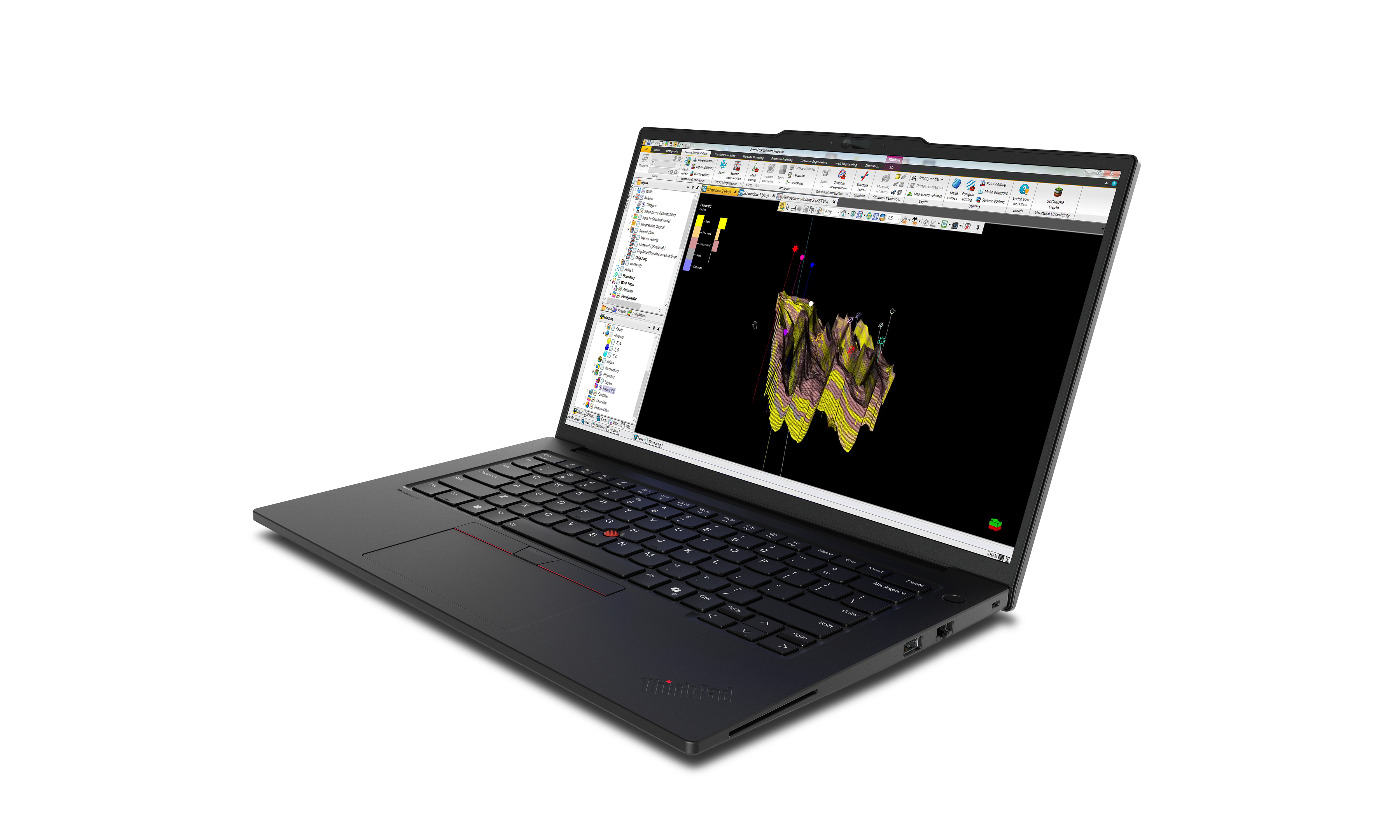
Lenovo has updated its ThinkPad P series mobile workstations at IFA 2025, introducing new models focused on AI power, enhanced graphics, and improved portability. These machines are designed for professionals in engineering, data science, and creative fields.
ThinkPad P16 Gen 3
The ThinkPad P16 Gen 3 is the most powerful model in the series. It is equipped with Intel Core Ultra 200HX processors with up to 24 cores and includes an integrated NPU for AI acceleration. Graphics configurations go up to NVIDIA RTX PRO 5000 Blackwell GPUs with 24GB GDDR7 VRAM. Memory scales to 128GB DDR5 5600MT/s ECC or 192GB DDR5 5600MT/s non-ECC, and storage supports up to 12TB M.2 PCIe Gen5 NVMe SSDs with three 4TB drives.
The 16-inch screen comes in FHD+, UHD+, 3.2K, and OLED options. It carries a 99.9Whr replaceable battery and weighs 2.54kg. The design uses recycled aluminum, magnesium, and plastics, and the system is EPEAT Gold and ENERGY STAR certified.
ThinkPad P1 Gen 8
The ThinkPad P1 Gen 8 is built for mobility while maintaining strong performance. It runs on Intel Core Ultra Series 2 processors with up to 16 cores and AI-ready NPUs. Graphics support includes up to NVIDIA RTX PRO 2000 Blackwell GPUs. Memory is capped at 64GB LPDDR5x 7467MT/s, with storage up to 8TB PCIe Gen5 SSDs and two 4TB drives.
It features a 16-inch display with the same resolution and OLED options as the P16 Gen 3. It weighs 1.84kg and comes with a 90Whr replaceable battery. Materials include 90 percent recycled magnesium aluminum and 75 percent recycled aluminum.
ThinkPad P16v Gen 3
The ThinkPad P16v Gen 3 balances price and performance. It uses Intel Core Ultra 200H processors with up to 16 cores, up to 64GB DDR5 5600MT/s or 96GB DDR5 6400MT/s memory, and NVIDIA RTX PRO 2000 Blackwell GPUs. Storage supports up to 4TB PCIe Gen5 SSDs with two drives.
The 16-inch display includes FHD+, UHD+, OLED, and 3K choices with slimmer bezels and a high screen-to-body ratio. The P16v weighs 2.1kg and comes with either a 50Wh or 86Wh battery. Its build uses 75 percent recycled aluminum and 30 percent post-consumer recycled plastics.
ThinkPad P16s i Gen 4 and P14s i Gen 6
The ThinkPad P16s i Gen 4 and P14s i Gen 6 are Lenovo’s thinnest and lightest workstations. Both run on Intel Core Ultra 200H processors with up to 16 cores. The P16s supports up to 96GB DDR5 6400MT/s, while the P14s supports up to 96GB DDR5. Graphics options include NVIDIA RTX PRO 1000 Blackwell GPUs or integrated Intel graphics.
ThinkPad P16s i Gen 4ThinkPad P14s i Gen 6
Display choices include WQUXGA, 3K, WQXGA, and FHD+ IPS with anti-glare, low blue light, Dolby Vision, and TÜV certifications. The P16s weighs 1.82kg with a 75Whr battery, while the P14s starts at 1.6kg with the same battery capacity. Both models use up to 90 percent recycled materials, including 50 percent recycled aluminum, and FSC-certified packaging.
Shared Features Across the Lineup
All models in the series run Windows 11 Pro, with support for Linux distributions such as Ubuntu, Red Hat, and Fedora. Security includes Intel vPro, ThinkShield, dTPM 2.0, fingerprint readers, webcam privacy shutters, human presence detection, and Kensington locks. Connectivity features Wi-Fi 7, Bluetooth 5.4, NFC, and a range of ports that include Thunderbolt, HDMI, RJ-45, SD Express, and smart card readers. Audio systems use Dolby Atmos or Dolby Audio speakers with dual microphones.
Availability and Pricing
The ThinkPad P16v Gen 3, P16s i Gen 4, and P14s i Gen 6 will be available in September, priced at 1,939€, 1,599€, and 1,569€. The ThinkPad P16 Gen 3 and P1 Gen 8 will launch in October, starting at 2,899€ and 2,959€.
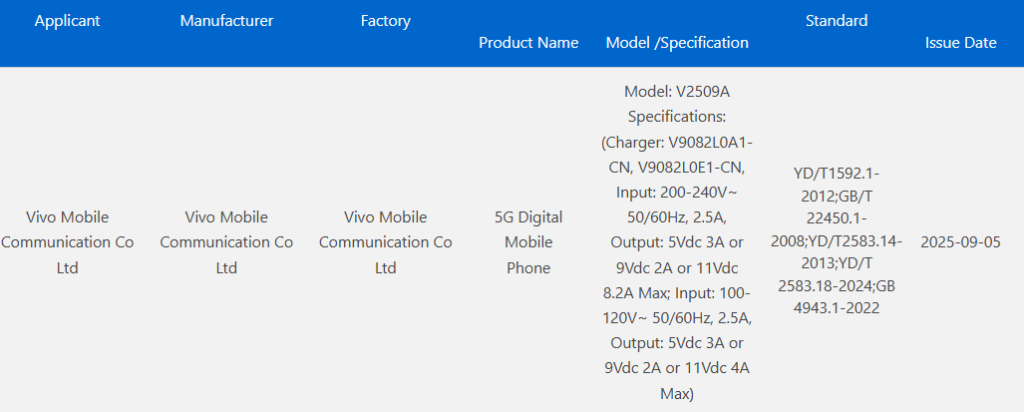
Vivo has been consistently revealing new details about the Vivo X300 series. So far, the brand has shared the display design and some camera details about the Vivo X300 and X300 Pro. The Pro variant was recently spotted at China’s 3C certification, an important step before the phone debuts in the country. Now, the standard edition has also acquired the same certification.
Vivo X300 3C certified
Vivo X300 3C certified
As can be seen above, a forthcoming Vivo smartphone with model number V2509A has received approval from the 3C authority. The said phone has been spotted with a V9082L0A1-CN / V9082L0E1-CN charger that supports 90W fast charging.
The same device was recently spotted on Geekbench with the Dimensity 9500. It was spotted with 16GB of RAM and Android 16.
Vivo X300 specifications (rumored)
Recent reports have revealed that the Vivo X300 will feature a 6.3-inch flat OLED display featuring a customized BOE Q10 Plus panel that supports a 1.5K resolution and a 120Hz refresh rate. Under the hood, the device will feature the Dimensity 9500 chip and a 6,000mAh+ battery. The device will run on OriginOS 6-based Android 16.
The Vivo X300’s rear camera setup will feature a 200-megapixel Samsung HPB primary camera, a 50-megapixel Samsung JN5 ultra-wide lens, and a 50-megapixel Sony LYT-602 periscope telephoto camera. For selfies, it will feature a 50-megapixel front camera with a 92-degree field-of-view and autofocus support.
The Vivo X300 series also features the Vivo X300 Ultra, which will pack a more powerful camera setup along with the Snapdragon 8 Elite Gen 5 SoC. The Ultra edition is expected to debut in the first half of 2026.
For more daily updates, please visit our News Section.
Honor is expected to unveil the Honor Magic 8 series of smartphones in October. Recent teasers released by the brand suggest that the Magic 8 Pro will come equipped with a 200-megapixel periscope telephoto camera like the Vivo X300 Pro and the Oppo Find X9 Pro. However, while the Vivo and Oppo offerings will have the Dimensity 9500 onboard, the Magic 8 Pro will set itself apart by featuring the Snapdragon 8 Elite Gen 5. Today, the tipster shared the key details about the Magic 8 Pro.
Honor Magic 8 Pro key specifications (rumored)
Honor Magic 8 Pro key specifications tipped
The tipster claims that the Honor Magic 8 Pro will be the only Snapdragon 8 Elite Gen 5-powered flagship to feature both 3D ToF face recognition and an ultrasonic in-display fingerprint scanner like the Magic 7 Pro from last year. In terms of cameras, the device is said to feature a 50-megapixel 1/1.3-inch main sensor, a 50-megapixel ultra-wide lens, and a 200-megapixel periscope telephoto camera with a large 1/1.4-inch sensor, wide aperture, and an 85mm focal length (to be determined).
He added that the Magic 8 Pro is also expected to pack a battery with a capacity starting in the 7,000mAh range. The device, which reportedly bears the BKQ-AN00 / AN80 model number, was recently spotted with a 90W fast charger in the database of China’s 3C certification platform.
Reports suggest that the Magic 8 Pro will feature a 6.7-inch flat OLED panel, whereas the Magic 8, expected to launch alongside, will have a slightly smaller 6.58-inch flat OLED screen.
Honor Magic 7 Pro
Apart from these two devices, the lineup is also expected to include the Magic 8 Miniand Magic 8 Ultra. The former is said to feature a 6.3-inch screen and a Dimensity 9500, whereas the latter could be a Snapdragon 8 Elite Gen 5-powered ultimate camera flagship featuring a 50-megapixel 1/0.98-inch OV LOFIC sensor, an ultra-wide camera, and a 200-megapixel Samsung HP9 periscope lens capable of 4.3x to 7x optical zoom. The Mini and Ultra editions are expected to launch in the first half of 2025 in China.
For more daily updates, please visit our News Section.
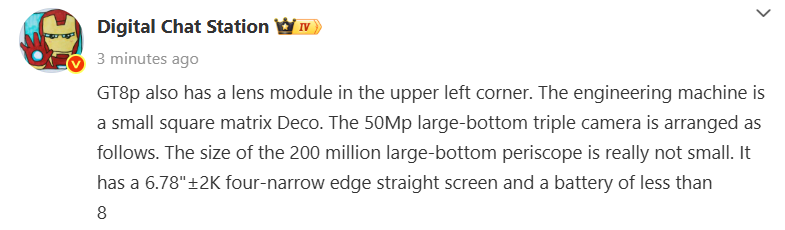
Realme is expected to unveil the Realme GT 8 and GT 8 Pro flagship phones in October in China. Tipster Digital Chat Station recently shared the key specifications of the GT 8 Pro. In the comments section of the same Weibo post, the tipster shared key details about the standard GT 8.
Realme GT 8 key details tipped
Realme GT 8 key details tipped
According to DCS, the standard version of the Realme GT 8 will focus primarily on the display, battery, and overall performance. He added that its imaging capabilities will be relatively average compared to the Pro variant. As per other reports, the GT 8 could be equipped with the Snapdragon 8 Elite Gen 5, which is also expected to power the GT 8 Pro.
He added that in the second half of the year, Realme has adjusted its strategy by dropping the idea of bringing periscope cameras to the regular GT 8 model. Instead, the company is concentrating on equipping the GT 8 Pro with high-end camera hardware and advanced imaging features.
Previous reports have revealed that the Realme GT 8 may feature a 6.6-inch flat display and is likely to be powered by a battery of around 7,000mAh capacity.
The Realme GT 8 Pro reports have revealed that it will feature a 200-megapixel periscope telephoto camera, a 50-megapixel ultra-wide lens, and a 50-megapixel primary camera. Under the hood, the device will have the Snapdragon 8 Elite Gen 5 chip and a huge battery. Furthermore, it is expected to feature a flat 6.78-inch BOE-supplied 2K display with an ultrasonic fingerprint sensor.
For more daily updates, please visit our News Section.
Realme is all set to launch the Realme 15 series on Sept. 15 in China. After that, the company is expected to shift its focus to the Realme GT 8 series. As per reports, the lineup will comprise the GT 8 and GT 8 Pro, both reportedly powered by the Snapdragon 8 Elite Gen 5 chip. New leaks from tipsters Digital Chat Station and Smart Pikachu have revealed key details about the GT 8 Pro’s cameras.
Realme GT 8 Pro camera details tipped
Realme GT 8 Pro camera module design hint
Starting with the camera module design, DCS’ leak reveals that the Realme GT 8 Pro will feature a square camera island placed at the top-left corner. The following image gives a hint about the GT 8 Pro’s camera module.
DCS revealed that the Realme GT 8 Pro’s camera setup will comprise a 50-megapixel main camera and a 200-megapixel periscope telephoto camera. While he did not specify the details about the third camera sensor, it could be a 50-megapixel ultra-wide snapper.
Realme Ricoh collab tipped
Tipster Smart Pikachu hints that Realme will collaborate with Ricoh for the upcoming GT 8 Pro. The collaboration will allow GT 8 Pro users to access Ricoh’s signature “Negative Film” colour style and humanistic photography approach.
Realme GT 8 Pro specifications (rumored)
As far as other specs are concerned, the Realme GT 8 Pro is tipped to feature a BOE-supplied 6.78-inch flat AMOLED display offering slim bezels on all four sides, 2K resolution, and an ultrasonic in-screen fingerprint sensor. Under the hood, it will feature the Snapdragon 8 Elite Gen 5 and a battery with a capacity just under 8,000mAh. Other rumoured features include an x-axis linear motor, dual speakers, and Realme UI 6-based Android 16. It is expected to debut in October in China.
For more daily updates, please visit our News Section.
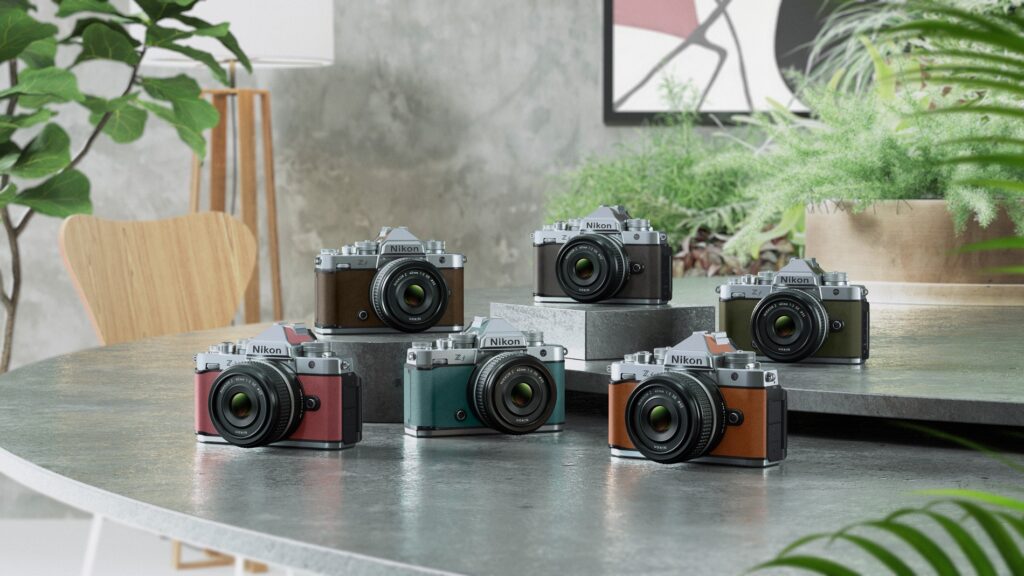
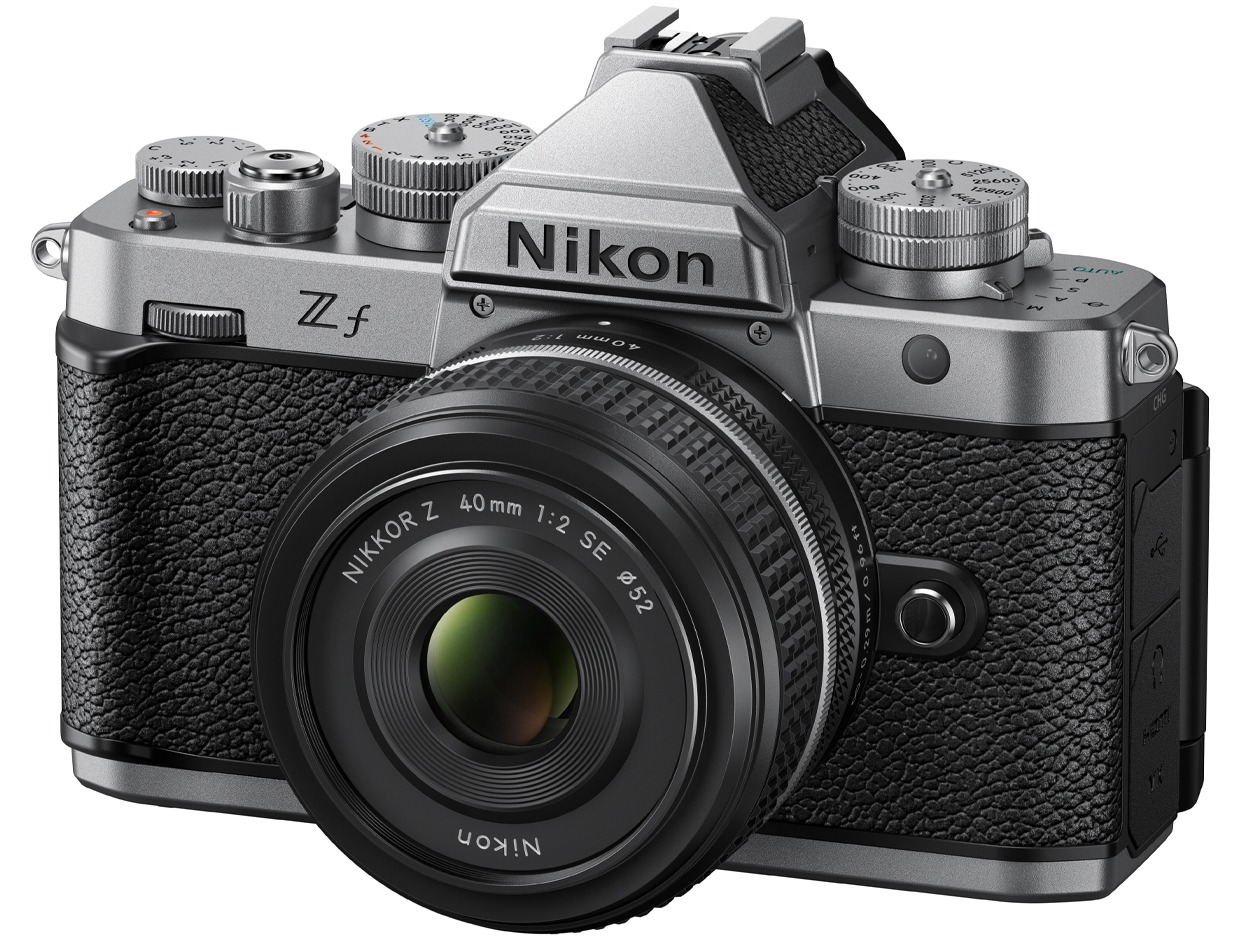
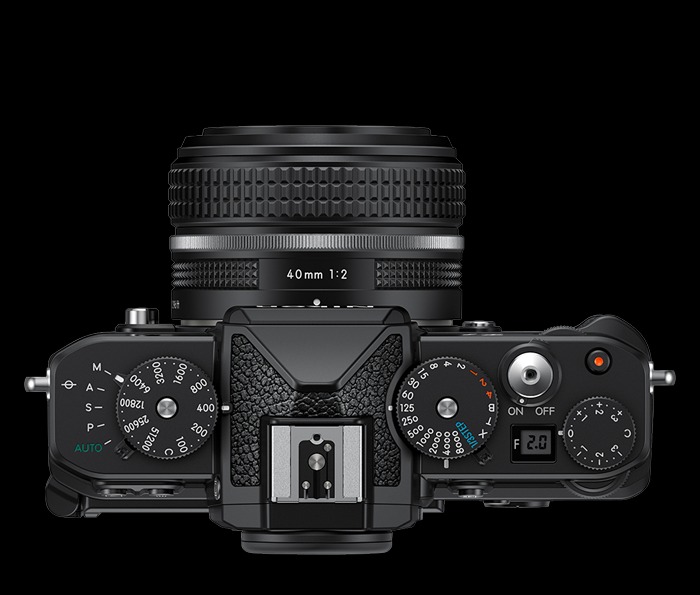
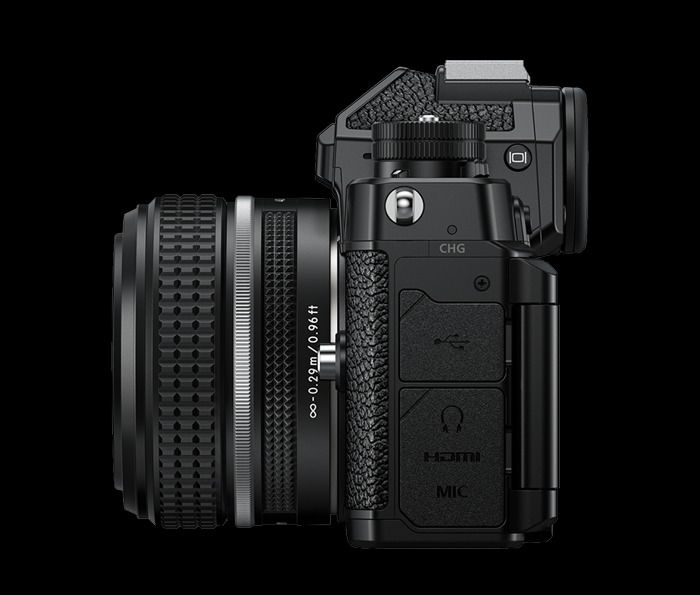
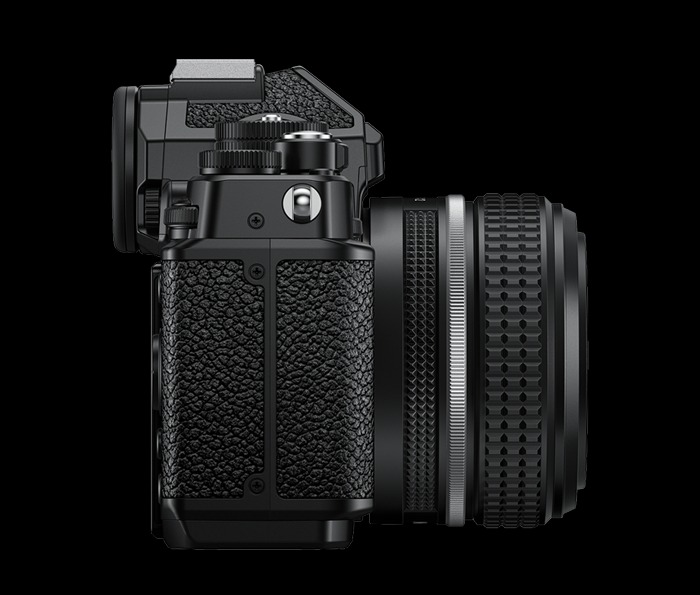
Nikon has released a new silver version of its full-frame FX-format mirrorless camera, the Nikon Z f. The launch follows requests from users who wanted a model that matched the look of Nikon’s classic film cameras while keeping the performance of a modern full-frame system.
The silver finish is designed to resemble the chrome plating used on film-era cameras like the Nikon F. The texture gives the camera a metal-like appearance, highlighting its heritage design. Nikon has also expanded customization options with three new Premium Exterior colors: Cognac Brown with an embossed texture, Teal Blue, and Mauve Pink. These additions give users more ways to personalize the look of their camera.
Alongside the new design, Nikon will add a Film Grain feature through a future firmware update. This feature lets users apply grain to photos and videos with three grain size options and six strength levels. It can also be combined with Imaging Recipes, which are downloadable presets created by Nikon and collaborating photographers, as well as with existing Picture Controls. This allows for a film-like style that can be adjusted to match different creative needs.
The Z f has been popular since its release for blending a vintage-inspired design with full-frame performance. The silver version and expanded exterior colors aim to add more visual variety while keeping the same imaging capabilities.
Nikon says it will continue to focus on advancing optical performance while adding features that respond to user demand. The company sees the Z f as a camera that not only delivers technical quality but also supports creative expression in both photography and video.
The Nikon Z f silver edition is available for pre-order on the Nikon website for $2,199.95.
For more daily updates, please visit our News Section.
We use cookies on our website to give you the most relevant experience by remembering your preferences and repeat visits. By clicking “Accept”, you consent to the use of ALL the cookies.
This website uses cookies to improve your experience while you navigate through the website. Out of these, the cookies that are categorized as necessary are stored on your browser as they are essential for the working of basic functionalities of the website. We also use third-party cookies that help us analyze and understand how you use this website. These cookies will be stored in your browser only with your consent. You also have the option to opt-out of these cookies. But opting out of some of these cookies may affect your browsing experience.
Necessary cookies are absolutely essential for the website to function properly. This category only includes cookies that ensures basic functionalities and security features of the website. These cookies do not store any personal information.
Any cookies that may not be particularly necessary for the website to function and is used specifically to collect user personal data via analytics, ads, other embedded contents are termed as non-necessary cookies. It is mandatory to procure user consent prior to running these cookies on your website.